Surface Reconstruction Strategies for Stable Halide Perovskite Nanocrystals: Mitigating Ion Migration in Mixed-Halide Systems
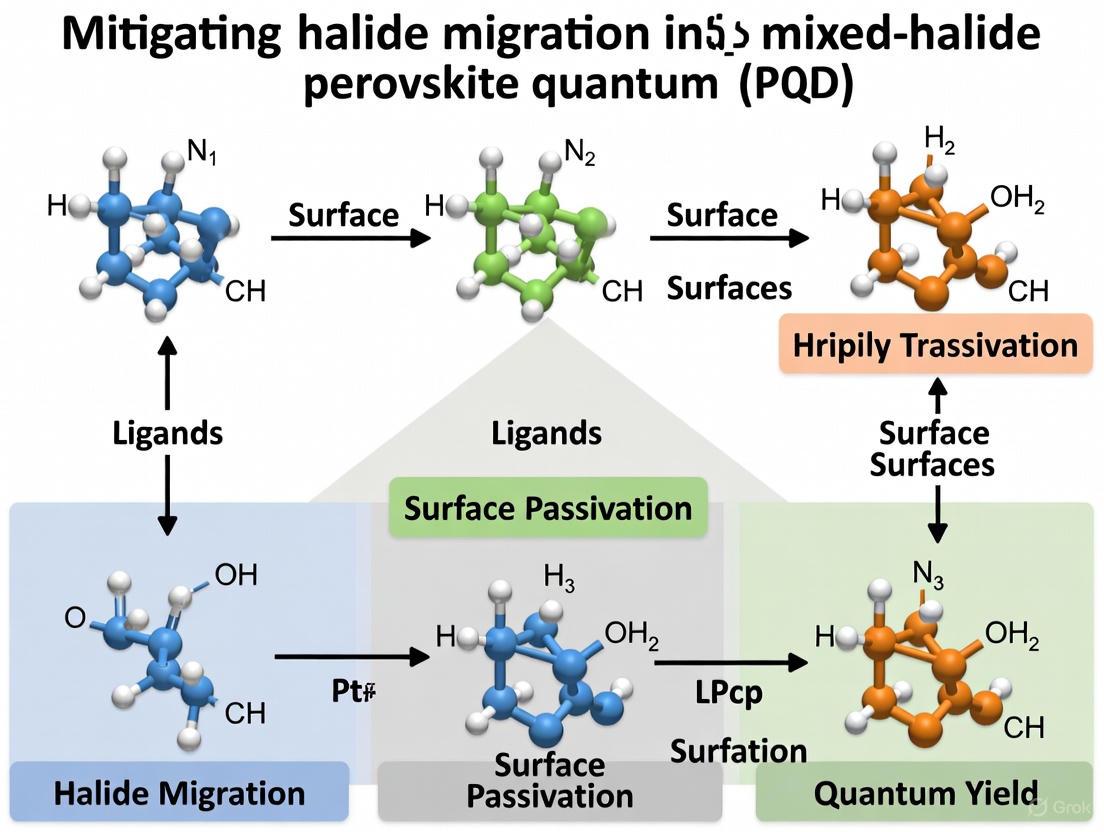
This comprehensive review addresses the critical challenge of halide ion migration in mixed-halide perovskite quantum dots (PQDs), which significantly undermines the operational stability and performance of optoelectronic devices.
Surface Reconstruction Strategies for Stable Halide Perovskite Nanocrystals: Mitigating Ion Migration in Mixed-Halide Systems
Abstract
This comprehensive review addresses the critical challenge of halide ion migration in mixed-halide perovskite quantum dots (PQDs), which significantly undermines the operational stability and performance of optoelectronic devices. Targeting researchers and scientists in material science and nanotechnology, we systematically explore the fundamental mechanisms driving ion migration, advanced characterization techniques for mapping ionic pathways, and innovative surface engineering strategies to suppress this deleterious phenomenon. By integrating foundational knowledge with methodological applications, troubleshooting frameworks, and comparative validation approaches, this article provides a multidisciplinary perspective on developing stable, high-performance PQD-based systems with enhanced spectral stability and extended operational lifetimes, ultimately bridging the gap between laboratory innovation and commercial viability.
Understanding Halide Migration: Fundamental Mechanisms and Characterization Challenges in PQDs
The Crystal Structure and Defect Landscape of Mixed-Halide Perovskites
Troubleshooting Guide: Common Experimental Issues in Mixed-Halide Perovskite Research
FAQ 1: Why does my mixed-halide perovskite film exhibit unstable photoluminescence (PL) under illumination?
Issue: The bandgap of your material is not stable during operation, often manifesting as a continuous red-shift in the PL peak under constant illumination [1].
Underlying Cause: This is characteristic of photoinduced halide segregation [1]. In mixed iodide-bromide perovskites (e.g., MAPb(I₁₋ₓBrₓ)₃ or CsPb(I₁₋ₓBrₓ)₃), illumination creates electron-hole pairs whose energy can be transferred to the lattice, providing the activation energy for halide ions to migrate. This leads to the phase separation into I-rich (lower bandgap) and Br-rich (higher bandgap) domains [1]. The I-rich domains act as low-energy traps for charge carriers, causing the observed red-shift in emission [1].
Solutions:
- Application of a Passivation Layer: Cap the perovskite quantum dots (PQDs) with an insulating layer. PbSO₄-oleate has been shown to form a peapod-like morphology over CsPbX₃ PQDs, physically hindering halide exchange between neighboring dots. This can retard the kinetics of halide segregation for several hours [2].
- Surface Defect Passivation: Employ pseudohalogen engineering. A post-synthetic treatment using pseudohalogen inorganic ligands (e.g., in acetonitrile) can etch lead-rich surfaces and passivate halide vacancies in-situ. This suppresses halide migration and non-radiative recombination, enhancing both stability and photoluminescence quantum yield (PLQY) [3].
- Stoichiometry Optimization: Carefully control the precursor stoichiometry during synthesis. Deviations from ideal ratios (e.g., PbI₂ vs MAI content) directly influence the density of halide vacancies ((VI^+)) and methylammonium vacancies ((V{MA}^-)), which are primary mobile ionic defects [4].
FAQ 2: Why is the photoluminescence quantum yield (PLQY) of my synthesized mixed-halide PQDs low?
Issue: The synthesized PQDs exhibit weak emission, indicating a high rate of non-radiative recombination.
Underlying Cause: Surface defects, particularly halide vacancies, are dominant. In mixed-halide systems, these vacancies are not only non-radiative recombination centers but also provide pathways for accelerated halide migration [2]. The trapped electrons at these vacancy sites undergo non-radiative recombination, directly lowering the PLQY [2].
Solutions:
- Ligand Engineering: Introduce surface-capping ligands that specifically bind to undercoordinated lead atoms on the PQD surface. Molecules containing sulfonate, thiol, or pseudohalogen (e.g., SCN⁻) groups can effectively passivate these sites [3].
- Use of Molecular Additives: Incorporate additives like dodecyl dimethylthioacetamide (DDASCN) and pentaerythritol tetrakis(3-mercaptopropionate) (PTMP) directly into the PQD ink. These molecules can enhance surface passivation and improve the conductivity of the subsequent PQD film, leading to higher efficiency in light-emitting devices [3].
- Control Synthesis Environment: Ensure rigorous removal of water and oxygen from solvents using molecular sieves and N₂ purging during synthesis, as these can exacerbate defect formation [2].
FAQ 3: Why does my perovskite solar cell exhibit significant current-voltage (J-V) hysteresis?
Issue: The power conversion efficiency (PCE) measured in a solar cell changes depending on the voltage scan direction (forward vs. reverse).
Underlying Cause: The migration of mobile ionic defects under an applied electric field [4]. These ions redistribute at the interfaces between the perovskite and charge transport layers, modifying the local electric field and leading to hysteresis. The most common mobile ions are iodide interstitials ((Ii^-)) and methylammonium interstitials ((MAi^+)) [4].
Solutions:
- Stoichiometric Precision: As with halide segregation, optimizing the precursor stoichiometry to minimize the formation of native point defects is crucial. Capacitance-voltage profiling shows that the effective doping density ((N_{eff})) increases with non-stoichiometry, correlating with higher defect densities [4].
- Interface Engineering: Introduce efficient charge extraction layers (e.g., PC61BM and BCP for electrons) that can selectively extract charges while blocking the movement of ionic species to the contacts [4].
- Characterization to Guide Optimization: Use techniques like Impedance Spectroscopy (IS) and Deep-Level Transient Spectroscopy (DLTS) to quantify the ionic defect landscape in your specific films and understand the impact of processing changes [4].
Experimental Protocols for Key Mitigation Strategies
Aim: To synthesize a protective inorganic shell around PQDs to suppress anion migration.
Materials:
- Synthesized CsPbBr₃ and CsPbI₃ PQDs.
- Tetrabutylammonium hydrogen sulfate (TBAHS).
- Oleic acid.
- Lead precursors (e.g., PbCl₂, PbBr₂, or PbI₂).
- Anhydrous n-hexane, chloroform, acetone.
Methodology:
- PQD Synthesis: Synthesize CsPbX₃ PQDs via the standard hot-injection method in a 1-Octadecene/Oleic acid/Oleylamine solvent system.
- PbSO₄-Oleate Cluster Formation: React a lead precursor (e.g., PbCl₂) with TBAHS in a binary solvent of chloroform and acetone. This precipitates PbSO₄-oleate clusters.
- Capping Reaction:
- Purify the as-synthesized PQDs by centrifugation and re-disperse in hexane.
- Mix the PQD solution with the precipitated PbSO₄-oleate clusters.
- Stir the mixture at a controlled temperature (e.g., 30-60°C) for several hours to allow the clusters to assemble onto the PQD surfaces, forming the peapod-like structure.
- Purification: Centrifuge the capped PQDs to remove unbound clusters and re-disperse in an anhydrous solvent for further use.
Validation: Monitor the success of the capping and its effect on halide exchange kinetics using in situ UV-Vis absorption and photoluminescence spectroscopy. Mix capped CsPbBr₃ and CsPbI₃ PQDs and track the shift in their absorption and emission peaks over time compared to uncapped controls.
Aim: To characterize the type, density, and migration properties of ionic defects in a perovskite film.
Materials:
- Completed perovskite solar cell device (e.g., Glass/ITO/PEDOT:PSS/Perovskite/PC61BM/BCP/Ag).
- Precision impedance analyzer.
- Cryostat for temperature control (200-350 K).
Methodology for IS:
- Measurement: Perform impedance measurements over a wide frequency range (e.g., 0.6 Hz to 3.2 MHz) at different temperatures (5 K increments from 200 to 350 K).
- Analysis:
- Model the cell as a combination of resistors and capacitors.
- The capacitance is calculated as (C=\frac{\text{Im}(1/Z)}{\omega}).
- The low-frequency response (<10² Hz) at high temperatures is often associated with the response of mobile ions.
- Extract the relative permittivity (εᵣ) from the geometrical capacitance at reverse bias.
Methodology for DLTS:
- Measurement: Apply a voltage pulse to fill trap states, then monitor the transient capacitance as the traps emit their charge carriers.
- Analysis: Use an extended regularization algorithm for inverse Laplace transform on the transient data. This reveals a distribution of migration rates for the ionic species, rather than a single rate, providing a more detailed picture of the defect landscape.
Data Presentation
| Defect Type | Formation Condition | Impact on Electronic Landscape | Characterization Signature |
|---|---|---|---|
| Iodide Vacancies ((V_I^+)) | Slight MAI deficiency in precursors | Increases effective doping density ((N{eff})); can reduce built-in potential ((V{bi})) | Contributes to low-frequency capacitance in IS; detected by DLTS as a fast species (t < ms) |
| Iodide Interstitials ((I_i^-)) | Excess Iodide / MAI-rich conditions | Increases (N_{eff}); acts as recombination center; linked to J-V hysteresis | DLTS signal as a fast species with a specific activation energy |
| MA Vacancies ((V_{MA}^-)) | MAI deficiency | Increases (N_{eff}); can influence ionic transport | Impacts the diode characteristics and (V_{bi}) |
| MA Interstitials ((MA_i^+)) | MAI-rich conditions | Increases (N_{eff}); linked to J-V hysteresis | DLTS signal as a slow species (t ~ s) with a different activation energy |
| PQD System | Capping Layer / Treatment | Activation Energy (Eₐ) for Halide Exchange | Key Findings |
|---|---|---|---|
| CsPbBr₃ / CsPbI₃ Mix | Uncapped (Control) | Lower Eₐ | Rapid halide exchange completes within minutes, leading to a single, intermediate emission wavelength. |
| CsPbBr₃ / CsPbI₃ Mix | PbSO₄-oleate | Increased Eₐ | Halide exchange kinetics are significantly hindered, preserving original emission for >3 hours. |
| CsPb(Br/I)₃ | Pseudohalogen (SCN⁻) Ligands | N/A (Study showed suppressed migration) | In-situ defect passivation led to suppressed halide migration and enhanced PLQY. |
Experimental Workflow Visualization
The following diagram illustrates a logical workflow for diagnosing and mitigating halide segregation, integrating the troubleshooting and protocols outlined above.
The Scientist's Toolkit: Key Research Reagent Solutions
Table 3: Essential Materials for Mitigating Halide Migration
| Reagent / Material | Function in Research | Key Application Note |
|---|---|---|
| PbSO₄-oleate clusters | Forms an insulating, peapod-like shell on PQD surfaces to physically impede halide ion exchange between dots [2]. | The capping reaction temperature can be varied to control the coverage and thus the degree of kinetic retardation [2]. |
| Pseudohalogen Ligands (e.g., SCN⁻) | Passivates surface halide vacancies and etches lead-rich surfaces, reducing pathways for halide migration and non-radiative recombination [3]. | Often applied in a post-synthetic treatment using solvents like acetonitrile [3]. |
| Tetrabutylammonium hydrogen sulfate (TBAHS) | Used as a sulfate source for the synthesis of PbSO₄-oleate capping clusters [2]. | Reacts with lead precursors in a chloroform/acetone binary solvent system [2]. |
| Dodecyl dimethylthioacetamide (DDASCN) | An organic pseudohalogen additive that passivates defects and improves film conductivity when incorporated into PQD inks [3]. | Used in combination with other ligands for synergistic effects [3]. |
| Stoichiometric Precursor Solutions (MAI, PbI₂, etc.) | Fundamental for controlling the intrinsic defect chemistry (vacancies, interstitials) in the bulk perovskite crystal [4]. | Precise fractional changes are used to systematically tune the defect landscape [4]. |
Frequently Asked Questions (FAQs)
Q1: What are the primary external drivers that trigger ion migration in mixed-halide Perovskite Quantum Dots (PQDs)? Ion migration in mixed-halide PQDs is primarily activated by three external forces: electric fields, light illumination, and thermal energy [5] [6]. Under an electric field, halide ions (e.g., I⁻, Br⁻) can become highly mobile, leading to phase segregation and device degradation [5]. Light illumination provides the energy for ions to migrate, with studies showing it causes iodide ions to move from the PQD surface, creating halide vacancies and quenching photoluminescence [7]. Finally, thermal energy at elevated temperatures accelerates ion diffusion by providing the necessary activation energy for ions to overcome migration barriers, exacerbating material instability [6].
Q2: Why does the photoluminescence (PL) of my mixed-halide PQD film quench under continuous illumination, and can it recover? Yes, this quenching can be reversible. The phenomenon is attributed to light-induced halide ion migration [7]. Under illumination, iodide ions migrate out from the PQD surface and associate with adjacent lead ions, creating halide vacancies and lattice distortions that cause fluorescence quenching [7]. This is not necessarily permanent degradation. When the light is turned off, a spontaneous "self-healing" process can occur at room temperature where the migrated iodide ions drift back to fill the vacancies, restoring the original structure and fluorescence emission [7].
Q3: What are the most effective experimental strategies to suppress ion migration in PQDs? Several core strategies have proven effective in suppressing ion migration:
- Ligand Engineering: Replacing dynamic, long-chain ligands (e.g., oleic acid, oleylamine) with shorter, multidentate, or cross-linkable ligands strengthens the binding to the PQD surface, passivating surface defects and inhibiting ion migration pathways [8] [6].
- Metal Ion Doping: Doping the PQD lattice with suitable metal cations (e.g., at the B-site) can alter bond lengths and strengthen the crystal structure, thereby reducing halide vacancy formation and increasing the activation energy for ion migration [6].
- Steric Confinement: Designing the crystal structure to create physical barriers, such as through inorganic layers in low-dimensional perovskites or specific dopants, can effectively block ion diffusion channels [9] [10].
Troubleshooting Guides
Problem: Rapid Photoluminescence Quenching Under Light
Symptoms: The photoluminescence intensity of your PQD film or solution drops significantly within minutes of light exposure.
Possible Causes and Solutions:
| Cause | Diagnostic Steps | Solution |
|---|---|---|
| High density of surface defects | Measure Time-Resolved PL (TRPL); a short lifetime indicates defect-assisted recombination. | Implement post-synthesis ligand passivation with strong-binding ligands like 2-aminoethanethiol (AET) or triphenylphosphine oxide (TPPO) to heal uncoordinated Pb²⁺ sites [6] [11]. |
| Weak ligand binding | Perform FT-IR spectroscopy before and after purification; a significant drop in ligand-related peaks indicates detachment. | Employ ligand engineering to replace OA/OAm with bidentate or covalent short-chain ligands (e.g., TPPO dissolved in non-polar solvents) for more robust surface passivation [8] [11]. |
| Intense light exposure | Check if quenching is power-dependent. | For characterization, use lower illumination intensities to minimize photo-driving force for ion migration [7]. |
Problem: Phase Segregation in Mixed-Halide Perovskites
Symptoms: Under light bias or electric field, the emission spectrum of your mixed-halide PQDs (e.g., for white light) shifts, or new emission peaks appear, indicating the formation of halide-rich domains.
Possible Causes and Solutions:
| Cause | Diagnostic Steps | Solution |
|---|---|---|
| Low activation energy for halide migration | First-principles calculations can quantify migration energy barriers. | Apply steric confinement strategies. For low-dimensional perovskites, inorganic CsI layers in Ruddlesden-Popper structures can inhibit halide diffusion between octahedral slabs [9]. |
| Presence of internal electric fields | Characterize current-voltage (I-V) hysteresis. | Optimize device interfaces and charge transport layers to minimize charge accumulation and internal fields that drive ion migration [5]. |
| High halide vacancy concentration | Conduct thermal admittance spectroscopy. | Incorporate metal doping (e.g., Ag⁺) to act as a vacancy filler, which has been shown to suppress Cu⁺ electromigration in other ionic systems and can be adapted for PQDs [10] [6]. |
The following table summarizes key quantitative data related to ion migration drivers and material properties.
Table 1: Quantified Driving Forces and Material Properties in Ion Migration
| Driver/Material Property | Quantified Value / Metric | Impact/Observation | Source Context |
|---|---|---|---|
| Light Illumination | Complete PL recovery in the dark at room temperature. | Supports reversible "self-healing" mechanism, not permanent degradation. | [7] |
| Crystal Phase Stability (CsPbI₃) | Phase transition from black phase (α, β, γ) to non-perovskite yellow phase (δ) at room temperature. | Intrinsic structural instability facilitates ion migration and material degradation. | [8] |
| Ligand Engineering (TPPO) | PCE of CsPbI₃ PQD solar cells improved to 15.4%; >90% initial efficiency retained after 18 days in ambient conditions. | Covalent ligands in non-polar solvents effectively passivate surface traps and improve stability. | [11] |
| Steric Confinement (Ag/Se doping) | A peak zT of 1.33 @ 873 K and superior electrical stability under dynamic DC-current achieved in Cu–S system. | Demonstrated the efficacy of steric confinement for suppressing ion (Cu⁺) migration. | [10] |
| Ligand Engineering (AET) | PLQY improved from 22% to 51%; PL intensity remained >95% after 60 min water/120 min UV exposure. | Strong ligand-Pb²⁺ affinity creates a dense barrier, inhibiting defect formation from ion loss. | [6] |
Detailed Experimental Protocols
Protocol: Post-Synthesis Surface Passivation with TPPO Ligand
This protocol details surface stabilization of ligand-exchanged CsPbI₃ PQD solids using covalent TPPO ligands dissolved in a non-polar solvent, a method shown to significantly reduce surface traps and improve optoelectrical properties and ambient stability [11].
Workflow:
Key Research Reagent Solutions:
| Reagent | Function / Explanation |
|---|---|
| Oleic Acid (OA) / Oleylamine (OLA) | Long-chain ligands used in initial synthesis for nucleation control and size stabilization. Dynamic binding leads to easy detachment [8] [11]. |
| Sodium Acetate (NaOAc) in Methyl Acetate (MeOAc) | Polar solvent-based ionic ligand solution for solid-state exchange, replacing anionic OA ligands. Polar solvents can damage PQD surface [11]. |
| Phenethylammonium Iodide (PEAI) in Ethyl Acetate (EtOAc) | Ionic ligand solution for replacing cationic OLA ligands with short-chain ammonium cations [11]. |
| Triphenylphosphine Oxide (TPPO) in Octane | Critical Solution: Covalent short-chain ligand in non-polar solvent. TPPO strongly coordinates to uncoordinated Pb²⁺ sites via Lewis-base interaction. Non-polar octane prevents further PQD surface damage [11]. |
Protocol: Enhancing Stability via Metal Ion Doping
This strategy involves doping metal ions into the PQD lattice during synthesis to enhance intrinsic stability by modifying the bond strength and energy landscape for ion migration [6].
Workflow:
Key Research Reagent Solutions:
| Reagent | Function / Explanation |
|---|---|
| Lead Precursor (e.g., PbO, PbI₂) | Source of Pb²⁺ cations for the B-site of the ABX₃ perovskite structure. The bond strength with halides influences halide vacancy formation energy [6]. |
| Dopant Metal Salt | Source of doping ions (e.g., Ag⁺, Sn²⁺). The selected metal ion should have a suitable ionic radius to maintain the perovskite structure (consider Goldschmidt tolerance factor) and can strengthen the lattice or fill vacancies [10] [6]. |
| Cesium Precursor (e.g., Cs₂CO₃) | Source of Cs⁺ cations for the A-site of the perovskite structure [8]. |
| Halide Precursors (e.g., PbBr₂, NH₄I) | Source of halide anions (I⁻, Br⁻, Cl⁻). The low formation energy of their vacancies is the root cause of halide migration [6]. |
Experimental Toolsets for Observing and Quantifying Ionic Movement
Frequently Asked Questions (FAQs)
Q1: My experiment shows no detectable single-channel current, even though I am confident the synthetic ion channels are present. What could be wrong? Several factors in your experimental setup could prevent detection [12]:
- Lipid Bilayer Composition: The specific lipid composition of your bilayer membrane (BLM) is critical and influenced by numerous variables. An incorrect composition can prevent proper channel incorporation or function.
- Channel Partitioning: The synthetic ion channels may not be partitioning sufficiently into the BLM. This can be due to an overly small bilayer surface area or because the channels are excessively hydrophobic.
- Low Transport Rates: The ion transport rate of your channels might be below the detection threshold of your potentiostat.
- Electrode Connection: A faulty electrode connection can create pA-level currents that mask the true signal. Always use a potentiostat designed for pA-level measurements and verify your connections.
Q2: I observe multiple, varying current levels instead of a single, stable open-state current. What does this mean? This sample heterogeneity often indicates the coexistence of two or more distinct ion channels or pores with different active structures [12]. This is more common in supramolecular assemblies than in unimolecular channels. Time-dependent variations in current levels can also suggest the presence of intermediate states during the final pore formation.
Q3: What are the key software considerations for analyzing Ion Mobility Spectrometry-Mass Spectrometry (IM-MS) data? The availability of robust, open-source software for IM-MS data is still developing [13]. Key steps in the workflow where software is needed include:
- CCS Calibration: Converting raw drift time measurements into collision-cross section (CCS) values, which are reproducible structural descriptors.
- Peak Detection and Annotation: Identifying and assigning ions based on their mobility and mass-to-charge ratio.
- Data Extraction and Filtering: Especially for targeted analyses in fields like proteomics and lipidomics. Tools like Skyline and MS-DIAL are commonly used for these tasks [13].
Q4: My electrolyte conductivity measurements are inconsistent. How can I improve the reliability of my analysis? Ensure you are using a standardized, automated analysis platform to minimize human error [14]. For conductivity data derived from Electrochemical Impedance Spectroscopy (EIS), you should:
- Use software like the Modular and Autonomous Data Analysis Platform (MADAP) to automate the fitting of EIS data and the subsequent Arrhenius analysis for determining activation energy [14].
- Implement pre-processing steps to detect and handle outliers in your dataset automatically [14].
- Maintain full data provenance tracking to ensure all analysis parameters are recorded and reproducible [14].
Troubleshooting Guides
Issue 1: Low or Unstable Ionic Current in Lipid Bilayer Experiments
This guide addresses the problem of measuring faint picoampere (pA) level currents across an artificial lipid bilayer, a technique crucial for studying single ion channel behavior [12].
Step 1: Verify Bilayer Integrity Confirm a stable bilayer has formed by monitoring capacitance, which is typically 80-150 pF for a stable membrane [12]. An unstable or leaking bilayer will not provide reliable results.
Step 2: Confirm Channel Incorporation Ensure the synthetic ion channel solution is added to the chamber (e.g., cis side) under gentle stirring. The hydrophobic and electrostatic interactions will drive the molecules to incorporate spontaneously into the bilayer. The final concentration in the chamber should be around 1 µM [12].
Step 3: Optimize Potentiostat Settings Using a potentiostat with high sensitivity is non-negotiable. For example, the Reference 620 potentiostat has dedicated 60 pA and 600 pA full-scale current ranges for this purpose [12]. Using a less sensitive instrument will result in poor resolution and an inability to detect small currents. Configure the chronoamperometry method to apply a constant voltage (e.g., ±50 mV or ±150 mV) across the bilayer [12].
Step 4: Run Controls and Seek Corroborating Evidence Always perform a control experiment under identical conditions but without the synthetic ion channel present. The current trace should be silent, with no stochastic on-off transitions [12]. Furthermore, single-molecule experiments are prone to artifacts, so it is highly recommended to use complementary methods, such as fluorescence spectroscopy with large unilamellar vesicles (LUVs), to validate your findings [12].
Issue 2: Interpreting Complex Signals in Ion Mobility-Mass Spectrometry (IM-MS)
This guide helps navigate the computational challenges of analyzing IM-MS data, particularly for complex mixtures where ion separation is crucial [13].
Step 1: Select the Appropriate Software Tool Choose a software based on your analysis type (targeted vs. untargeted) and the molecules of interest (proteomics, lipidomics, metabolomics). For a broad overview of available tools, refer to the table in the "Research Reagent Solutions" section below [13].
Step 2: Ensure Proper CCS Calibration The method for calibrating drift time into a collision-cross section (CCS) value depends on your instrument type [13]. Drift Tube IMS (DTIMS) and Trapped IMS (TIMS) use a linear calibration function, while Traveling Wave IMS (TWIMS) requires a non-linear calibration. Using the wrong calibration will produce inaccurate structural data.
Step 3: Leverage Multi-Dimensional Data The power of IM-MS lies in combining separation dimensions. Use software that can align and score data based on retention time (LC), collision-cross section (IM), mass-to-charge ratio (MS), and fragmentation spectra (MS/MS) to confidently identify isomers and isobaric species [13].
Step 4: Account for Instrument-Specific Limitations Be aware of your platform's resolving power. While standard TWIMS might have a resolving power of 30-40, newer technologies like cyclic TWIMS or SLIM TWIMS can achieve much higher resolution (e.g., >750 for multi-pass cycles), which may be necessary to separate very similar ions [13].
Experimental Protocols
Protocol 1: Measuring Single-Channel Currents Across a Lipid Bilayer
Objective: To characterize the single-channel conductance of synthetic ion channels or pores incorporated into a planar lipid bilayer [12].
Materials:
- Diphytanoylphosphatidylcholine (diPhyPC) in chloroform (10 mg/mL)
- n-decane
- Delrin cup with a 200 µm aperture
- Ag/AgCl electrodes
- Aqueous NaCl solution or buffer
- Potentiostat with pA-level sensitivity (e.g., Reference 620)
- Solution of synthetic ion channel in DMSO
Method:
- Lipid Membrane Preparation: Evaporate 20 µL of diPhyPC solution under nitrogen gas to form a thin film. Re-dissolve this film in 20 µL of n-decane. Inject 0.5 µL of this lipid solution onto the aperture of a Delrin cup and spread it with a nitrogen gas flow to form the bilayer [12].
- Chamber Setup: Fill both the chamber (cis side) and the Delrin cup (trans side) with your aqueous electrolyte solution (e.g., 1 M NaCl) [12].
- Electrode Connection: Place Ag/AgCl electrodes in both the cis and trans solutions. Ground the cis electrode and connect it to the working/work sense leads of the potentiostat. Connect the trans electrode to the counter/reference leads [12].
- Channel Incorporation: Add a small volume (< 5 µL) of your synthetic ion channel solution (in DMSO) to the cis chamber with stirring to reach a final concentration of ~1 µM [12].
- Data Acquisition: Using a chronoamperometry script, apply a constant voltage (e.g., +50 mV, +150 mV) across the bilayer. Record the current over time. The incorporation of a single channel will be observed as a stochastic "jump" in the current to a higher, stable level (the "on" state) [12].
- Data Analysis: Average the current from multiple "on" events at different applied voltages to create a current-voltage (I–V) plot. The slope of the linear fit gives the single-channel conductance [12].
Protocol 2: Determining Ionic Conductivity and Activation Energy of Electrolytes
Objective: To measure the ionic conductivity of a liquid electrolyte formulation across a temperature range and determine the activation energy for ionic conduction [14].
Materials:
- High-throughput electrolyte formulation system (e.g., robotic dispenser)
- Electrochemical cell and potentiostat
- Temperature chamber
- Analysis software (e.g., MADAP Python package) [14]
Method:
- Electrolyte Formulation: Prepare a series of electrolyte solutions by varying the composition (e.g., mass ratios of ethylene carbonate, propylene carbonate, ethyl methyl carbonate) and the concentration of the conducting salt (e.g., LiPF₆) using gravimetric dosing [14].
- Impedance Measurement: Perform Electrochemical Impedance Spectroscopy (EIS) measurements on each electrolyte. A typical protocol uses an AC voltage of 40 mV over a frequency range of 50 Hz to 20 kHz [14].
- Temperature Series: Place the electrochemical cell in a temperature chamber. Equilibrate at each target temperature (e.g., from -30 °C to 60 °C in 10 °C steps) for 2 hours before performing the EIS measurement [14].
- Data Analysis:
- Use the EIS data to extract the bulk resistance of the electrolyte, which is then used to calculate the ionic conductivity [14].
- Input the temperature and corresponding conductivity data into an analysis tool like MADAP.
- The software will perform an Arrhenius fit (plotting ln(σ) vs. 1/T, where σ is conductivity and T is temperature). The activation energy (Eₐ) is derived from the slope of the linear fit (Slope = -Eₐ/R, where R is the gas constant) [14].
Data Presentation
Table 1: Performance Characteristics of Commercial IM-MS Platforms
This table compares different Ion Mobility Spectrometry platforms coupled with Mass Spectrometry, highlighting key characteristics for instrument selection [13].
| Acronym | Full Name | Separation Principle | CCS Calibration Function | Typical Resolving Power (Max Reported) |
|---|---|---|---|---|
| DTIMS | Drift Tube Ion Mobility Spectrometry | Temporal dispersive | Linear | 50 - 60 (200 for Atmospheric Pressure) |
| TIMS | Trapped Ion Mobility Spectrometry | Trapping & release | Linear | 200 - 400 |
| TWIMS | Traveling Wave Ion Mobility Spectrometry | Temporal dispersive | Nonlinear | 30 - 40 |
| Cyclic TWIMS | Cyclic Traveling Wave IMS | Temporal dispersive | Nonlinear | 60 - 80 (one pass), >750 (multi-pass) |
| SLIM TWIMS | Structures for Lossless Ion Manipulations | Temporal dispersive | Nonlinear | 200 - 1500 |
| FAIMS | Field Asymmetric IMS | Spatial dispersive | Not Applicable | < 30 |
Table 2: Key Reagents and Materials for Ion Channel and Conductivity Experiments
This table details essential materials used in experiments for observing ionic movement [14] [12].
| Item | Function / Application | Key Notes |
|---|---|---|
| Diphytanoylphosphatidylcholine (diPhyPC) | Forms stable planar lipid bilayers (BLMs) for single-channel recording [12]. | Branched lipid tails increase membrane stability and reduce phase transitions. |
| Ag/AgCl Electrodes | Provide a stable, non-polarizable interface for applying potential and measuring current in electrochemical cells [12]. | Essential for accurate potential control in low-current experiments. |
| Ethylene Carbonate (EC) / Propylene Carbonate (PC) | Solvents in liquid electrolyte formulations for batteries [14]. | High dielectric constant solvents that dissociate lithium salts (e.g., LiPF₆). Their ratio affects viscosity and conductivity. |
| Lithium Hexafluorophosphate (LiPF₆) | Conducting salt in lithium-ion battery electrolytes [14]. | Concentration and identity of the salt directly impact ionic conductivity. |
| Reference 620 Potentiostat | Measures ultra-low currents (picoampere level) for single-channel experiments [12]. | Features dedicated 60 pA and 600 pA current ranges for high accuracy and resolution. |
Experimental Workflow Visualization
Single-Channel Conductance Workflow
Electrolyte Conductivity Analysis
Impact of Halide Segregation on Optoelectronic Properties and Device Performance
FAQs: Understanding Halide Segregation
What is halide segregation and why does it occur in mixed-halide perovskites? Halide segregation, also known as phase segregation, is a phenomenon in mixed-halide perovskites (e.g., APb(BrₓI₁₋ₓ)₃) where the material separates into distinct iodide-rich and bromide-rich domains under external stimuli like light, electric fields, or heat. This occurs due to the relatively low ionic migration energy within the perovskite lattice, which facilitates the movement of halide ions (I⁻ and Br⁻) under operational stresses. The soft ionic lattice of perovskites allows ions to easily diffuse through the corner-sharing octahedral network, leading to this demixing process [15] [16] [17].
How does halide segregation directly impact solar cell performance? Halide segregation primarily accelerates charge-carrier recombination in mixed-halide perovskite solar cells, which can translate into significant voltage losses. However, research shows that the increased radiative efficiency of the phase-segregated material can sometimes counterbalance these voltage losses to some extent. Surprisingly, charge-carrier mobilities remain largely unaffected despite the formation of segregated domains, meaning transport properties are relatively preserved even as recombination dynamics change dramatically [15].
Why is halide segregation particularly problematic for light-emitting diodes (LEDs)? In perovskite LEDs (PeLEDs), halide segregation causes spectral instability and color shift because the I-rich domains that form have narrower bandgaps and emit light at different wavelengths. This effect is pronounced due to the comparatively large electric field magnitude across the thin (~30 nm) emitter layer used in LED devices, which drives ion migration. The resulting compositional changes lead to unpredictable emission color and reduced device lifetime [17] [18].
Troubleshooting Guides
Problem: Rapid Performance Degradation in Mixed-Halide Perovskite Solar Cells
Symptoms:
- Decreasing open-circuit voltage (VOC) over time under illumination
- Color changes in the active layer visible under microscope
- Increased non-radiative recombination observed in photoluminescence measurements
Solutions:
- Implement lower-dimensional perovskite structures: Incorporate large cations such as guanidinium (GA⁺), phenylethylammonium (PEA⁺), or butyl ammonium (BA⁺) to disrupt 3D phase continuity. This reduces ion diffusion coefficients (Dion) from 10⁻⁸-10⁻¹¹ cm²/s in 3D perovskites to 10⁻¹²-10⁻¹⁵ cm²/s in 2D/3D mixed structures [17].
- Optimize extraction layers and contacts: Use non-reactive interface materials that can tolerate migrating ions without triggering degradation pathways. Proper interface engineering has demonstrated improvement in T80 stability (time for 20% degradation) from a few hours to over 10,000 hours for MA₀.₁Cs₀.₀₅FA₀.₈₅Pb(I₀.₉₅Br₀.₀₅)₃ formulations [17].
- Control environmental factors: Implement strict management of temperature and illumination intensity during operation and testing, as both factors significantly accelerate halide segregation processes [16].
Problem: Spectral Instability in Mixed-Halide PeLEDs
Symptoms:
- Shift in emission wavelength during device operation
- Reduced color purity over time
- Appearance of multiple emission peaks in electroluminescence spectra
Solutions:
- Surface reconstruction of perovskite nanocrystals: Implement resurfacing strategies to passivate surface defects that facilitate halide ion migration. This approach directly addresses the primary factor causing performance degradation in PeLEDs [18].
- Ligand engineering: Replace conventional ligands like oleic acid (OA) and oleylamine (OAm) with alternatives that provide better surface coverage and stronger binding to surface atoms. For example, 2-aminoethanethiol (AET) with thiolate groups binds strongly with Pb²⁺ sites, creating a dense barrier layer that inhibits halide migration [6].
- Metal doping: Introduce appropriate metal ions at A- or B-sites to strengthen the perovskite lattice. This approach changes B-X bond lengths and increases migration activation energy, significantly improving structural stability against halide segregation [6].
Table 1: Charge-Carrier Mobility in Mixed-Halide Perovskites Before and After Phase Segregation
| Material Condition | Photoexcitation Wavelength | Charge-Carrier Mobility (cm²/(Vs)) | Measurement Technique |
|---|---|---|---|
| Before segregation (MAPb(I₀.₅Br₀.₅)₃) | 400 nm | 37.3 ± 2.7 | Optical-pump terahertz-probe (OPTP) spectroscopy [15] |
| After segregation (MAPb(I₀.₅Br₀.₅)₃) | 400 nm | 37.2 ± 0.6 | Optical-pump terahertz-probe (OPTP) spectroscopy [15] |
| I-rich domains after segregation | 720 nm | 49 (range: 35-66) | Optical-pump terahertz-probe (OPTP) spectroscopy [15] |
Table 2: Impact of Perovskite Dimensionality on Ion Migration and Device Stability
| Perovskite Formulation | Dimensionality | Ion Diffusion Coefficient (Dion, cm²/s) | Typical T80 Stability | Key Characteristics |
|---|---|---|---|---|
| MAPbI₃ | 3D | ~10⁻⁸ | 5-12 hours | High PCE but poor stability [17] |
| FA-based mixed compositions | 3D | 10⁻⁸-10⁻¹¹ | Few hours | Better efficiency but still degrades quickly [17] |
| GA/MA formulations | Quasi-2D/3D | 10⁻¹² | ~750 hours | Moderate PCE, improved stability [17] |
| Ruddlesden-Popper (n=2-5) | 2D/3D | 10⁻¹²-10⁻¹⁵ | Hundreds of hours | Lower mobility but high stability [17] |
| CsPbBr₃ | 3D | 10⁻¹²-10⁻¹³ | High | Suitable for LEDs and radiation detectors [17] |
Experimental Protocols
Protocol 1: Assessing Halide Segregation via Photoluminescence Spectroscopy
Purpose: To monitor phase segregation dynamics in mixed-halide perovskite films under controlled illumination.
Materials:
- Mixed-halide perovskite film (e.g., MAPb(I₀.₅Br₀.₅)₃)
- Continuous-wave (CW) laser source (532 nm)
- Spectrometer with fiber-coupled detection
- Neutral density filters for intensity control
- Temperature-controlled sample stage
Procedure:
- Mount the perovskite film in the measurement setup and ensure no prior light exposure.
- Collect initial photoluminescence (PL) spectrum using low-intensity pulsed photoexcitation (400 nm, 11 μJ/cm²) to establish baseline without inducing segregation.
- Expose the film to segregation-driving CW illumination (532 nm, 100 W/cm² intensity) while maintaining constant temperature.
- Monitor PL spectral changes at regular time intervals during CW exposure.
- Continue measurements until PL spectrum stabilizes, indicating completion of the segregation process.
- Analyze the emergence and growth of low-energy PL peak associated with I-rich domains.
Expected Results: The initial single PL peak of the mixed-halide phase will gradually develop a second red-shifted peak around 720-780 nm, indicating formation of I-rich domains through halide segregation [15].
Protocol 2: Measuring Ion Migration Effects via Optical-Pump Terahertz-Probe (OPTP) Spectroscopy
Purpose: To investigate charge-carrier dynamics and transport properties in phase-segregated mixed halide perovskite films.
Materials:
- Mixed-halide perovskite films on suitable substrates
- Femtosecond laser system for photoexcitation
- Terahertz generation and detection apparatus
- CW laser source for inducing segregation
- Environmental chamber for controlled atmosphere
Procedure:
- Align OPTP setup and characterize THz transmission without photoexcitation.
- Measure initial photoconductivity using 400 nm pulsed photoexcitation before inducing segregation.
- Extract charge-carrier mobility from photoconductivity amplitude at zero time delay.
- Expose film to CW illumination to induce halide segregation while monitoring PL changes.
- Repeat OPTP measurements after PL stabilization to assess mobility changes in segregated material.
- Perform additional measurements with 720 nm photoexcitation to selectively probe I-rich domains.
- Analyze frequency-resolved photoconductivity spectra for Drude behavior and phonon modulations.
Expected Results: Charge-carrier mobilities remain largely unchanged despite dramatic PL changes, indicating preserved transport properties in the majority phase. Direct excitation of I-rich domains reveals high mobilities (35-66 cm²/Vs), suggesting minimal carrier localization in segregated domains [15].
Visualization: Halide Segregation Mechanisms and Mitigation Strategies
The Scientist's Toolkit: Research Reagent Solutions
Table 3: Essential Materials for Halide Migration Research
| Reagent/Material | Function/Application | Key Considerations |
|---|---|---|
| Phenethylammonium iodide (PEAI) | Forming 2D perovskite layers at interfaces | Enhances stability in FAPbI₃-based solar cells, enables PCE >25% [19] |
| 2-Aminoethanethiol (AET) | Surface ligand for PQD passivation | Thiolate groups strongly bind with Pb²⁺ sites, creating dense barrier layer [6] |
| Oleic Acid (OA) & Oleylamine (OAm) | Conventional ligands for PQD synthesis | Cause steric hindrance due to bent structures; low packing density [6] |
| Alkylammonium chlorides (RACl) | Volatile additives for crystalline phase control | Enable α-phase FAPbI₃ formation on SnO₂/FTO/glass substrates [19] |
| Guanidinium (GA⁺) cations | Large cations for low-dimensional perovskites | Reduces ion diffusion coefficients, improves stability [17] |
| Formamidinium (FA⁺) cations | Larger A-site cation for bandgap reduction | Provides higher photocurrent but phase stability challenges [19] [17] |
| Cesium (Cs⁺) cations | Inorganic cation for stability enhancement | Improves chemical stability in triple-cation formulations [19] |
The Role of Surface Defects versus Bulk Defects in Migration Pathways
Frequently Asked Questions
Q1: Under light illumination, my perovskite quantum dots (PQDs) lose their luminescence. Is this permanent degradation? Not necessarily. Research indicates that quenched emission can completely recover in the dark at room temperature through a spontaneous "self-healing" mechanism [7]. This reversible process is often linked to surface halide ion migration rather than permanent photo-degradation [7].
Q2: What is the primary mechanistic difference between surface and bulk halide ion migration?
- Surface Migration: Under illumination, iodide ions on the PQD surface migrate out and associate with adjacent lead ions. This creates halide vacancies and lattice distortions, leading to fluorescence quenching. This process is often reversible [7].
- Bulk Migration: In wide-bandgap mixed-halide perovskites, halide ion migration within the bulk lattice can lead to phase segregation, forming I-rich domains. This causes performance loss in solar cells (reducing voltage and current) and is often a more persistent issue [20].
Q3: How can I experimentally distinguish between performance issues caused by surface defects versus bulk defects? Monitor the reversibility of the phenomenon. A problem that "self-heals" after the light source is removed or under mild annealing is likely dominated by surface defect dynamics [7]. Performance losses that are persistent and linked to changes in absorption or emission wavelengths are indicative of bulk phase segregation caused by halide migration [20].
Q4: What are the most effective strategies to suppress surface-ion migration? Surface passivation is a key strategy. The introduction of bidentate ligands, such as 2-bromohexadecanoic acid (BHA), has been shown to effectively passivate surface defects, resulting in photoluminescence quantum yields (PLQY) as high as 97% and improved stability under ultraviolet irradiation [21].
Defect Characteristics and Impact: Surface vs. Bulk
The table below summarizes the core differences between surface and bulk defects in halide perovskites, helping to diagnose the root cause of experimental issues.
| Feature | Surface Defects | Bulk Defects |
|---|---|---|
| Primary Location | Outer layer of the nanocrystal; interface with ligands or environment [7] | Within the internal crystal lattice [20] |
| Key Migration Species | Iodide ions (I⁻) on the surface [7] | Halide ions (I⁻, Br⁻) within the bulk structure [20] |
| Primary Experimental Manifestations | Reversible photoluminescence quenching; "self-healing" in the dark [7] | Phase heterogeneity (separation into I-rich and Br-rich domains); persistent voltage (VOC) and current (JSC) loss [20] |
| Impact on Optoelectronic Properties | Creates non-radiative recombination pathways, quenching emission [7] | Alters bandgap; causes carrier funneling and reduces charge collection efficiency [20] |
| Common Mitigation Strategies | Ligand engineering (e.g., bidentate ligands); surface coating [21] | Additive engineering; compositional grading; interface engineering [20] |
Experimental Protocols for Investigating Defects
Protocol 1: Probing Reversible Surface Ion Migration
This methodology is adapted from studies on the emission quenching and recovery of CsPbX3 PQDs [7].
- 1. Sample Preparation: Synthesize all-inorganic CsPbI3 or mixed-halide PQDs using a standard hot-injection or ligand-assisted reprecipitation (LARP) method [21]. Disperse the PQDs in a non-polar solvent and deposit as a thin film on a substrate.
- 2. Illumination Stress Test: Place the sample under constant, high-intensity light illumination (e.g., a blue or UV LED) in an inert atmosphere (e.g., nitrogen glovebox). Monitor the photoluminescence (PL) intensity in real-time until a significant quenching (e.g., >50% of initial intensity) is observed.
- 3. Recovery in Dark: Turn off the illumination source and allow the sample to rest in complete darkness at room temperature. Continuously monitor the PL intensity over a period of several minutes to hours.
- 4. Data Interpretation: A complete or near-complete recovery of the PL signal indicates a reversible process dominated by surface ion migration. The recovery kinetics can provide insights into the activation energy for ion migration back to vacancy sites [7].
Protocol 2: Mapping Bulk Halide Migration via Phase Segregation
This protocol is based on research into performance loss in wide-bandgap mixed-halide perovskite solar cells [20].
- 1. Device Fabrication: Fabricate solar cells using a mixed-halide (e.g., I/Br) perovskite absorber layer with a bandgap ≥1.60 eV.
- 2. Operational Stability Testing: Operate the solar cell under continuous light soaking (1 Sun equivalent) at maximum power point or open-circuit conditions while maintaining a constant temperature (e.g., 45-50°C).
- 3. In-Situ Characterization:
- Electroluminescence (EL) or Photoluminescence (PL) Imaging: Use a hyperspectral imager to track the emergence of low-bandgap, I-rich domains (emitting at longer wavelengths) over time.
- Current-Voltage (J-V) Curves: Periodically measure J-V curves to quantify the loss in open-circuit voltage (VOC) and short-circuit current density (JSC) [20].
- 4. Data Interpretation: Correlate the appearance of red-shifted emission peaks in PL/EL maps with the observed drops in VOC and JSC. This spatial and electrical correlation is a hallmark of bulk halide migration and phase segregation [20].
The Scientist's Toolkit: Key Research Reagents
The table below lists essential materials for synthesizing stable PQDs and investigating defect pathways.
| Reagent / Material | Function / Explanation |
|---|---|
| Cesium Carbonate (Cs₂CO₃) | A common cesium precursor for the hot-injection synthesis of all-inorganic CsPbX3 PQDs [21]. |
| Lead Bromide/Iodide (PbBr₂, PbI₂) | The lead and halide source for the perovskite crystal structure. The ratio of I/Br can be tuned for desired bandgap [21]. |
| Oleic Acid (OA) & Oleylamine (OAm) | Common ligand pairs used in synthesis to control nanocrystal growth, stabilize the surface, and prevent aggregation [21]. |
| 2-Bromohexadecanoic Acid (BHA) | A bidentate ligand that provides superior surface passivation compared to OA/OAm, leading to higher PLQY and photostability [21]. |
| 1-Octadecene (ODE) | A high-boiling-point, non-coordinating solvent used as the reaction medium in the hot-injection synthesis method [21]. |
Visualization of Defect Pathways and Workflows
The following diagrams, generated using Graphviz DOT language, illustrate the core concepts and experimental logic discussed.
Diagram 1: Reversible surface ion migration cycle in PQDs.
Diagram 2: Irreversible bulk halide migration leading to performance loss.
Surface Engineering and Synthesis Approaches to Suppress Halide Migration
Advanced Surface Ligand Engineering for Defect Passivation
Perovskite quantum dots (PQDs), particularly lead halide perovskites with the formula ABX₃ (where A = Cs⁺, MA⁺, FA⁺; B = Pb²⁺; X = Cl⁻, Br⁻, I⁻), have emerged as promising materials for optoelectronic applications due to their exceptional optical and electrical properties [22] [6]. These materials exhibit high color purity, tunable bandgaps, high photoluminescence quantum yields (PLQYs), and remarkable defect tolerance [23] [24]. Despite these advantageous properties, PQDs face significant stability challenges that hinder their commercial application. The primary issues stem from their inherent ionic nature, which makes them susceptible to degradation under external stimuli such as moisture, heat, light, and polar solvents [6] [23].
The structural degradation of PQDs occurs mainly through two mechanisms: (1) defect formation on the surface caused by ligand dissociation, where weakly bound ligands detach from the PQD surface, and (2) vacancy formation in the crystal lattice due to halide migration with low activation energy [6]. These degradation pathways lead to surface defects that act as non-radiative recombination centers, reducing PLQY and overall device performance [22]. Surface ligand engineering has emerged as a crucial strategy to address these challenges by enhancing binding strength, improving surface coverage, and effectively passivating defects to create more stable and efficient PQDs [23].
Troubleshooting Guides: Common Experimental Challenges & Solutions
Rapid Degradation During Purification
Observed Problem: Significant decrease in photoluminescence intensity and quantum yield after purification steps.
| Possible Cause | Diagnostic Steps | Recommended Solution | Preventive Measures |
|---|---|---|---|
| Ligand detachment during polar solvent exposure [6] | Monitor PLQY before and after each centrifugation step; use FTIR to confirm ligand loss. | Implement post-synthesis ligand exchange with strongly-binding ligands (e.g., thiols) [6]. | Reduce purification cycles; use less polar antisolvents; add new ligands before purification. |
| Surface defect formation [6] [23] | Characterize with TEM (morphology changes) and XRD (phase changes). | Apply halide-rich ligand solutions to maintain surface stoichiometry [23]. | Optimize ligand-to-precursor ratio during synthesis; use excess halide sources. |
| Quantum dot aggregation [23] | Observe solution turbidity; use DLS to measure size distribution. | Introduce branched or multidentate ligands to enhance steric protection [23]. | Increase initial ligand concentration; use solvents with appropriate polarity. |
Poor Film Quality in Device Fabrication
Observed Problem: Non-uniform films with poor surface coverage and low conductivity in LED or solar cell devices.
| Possible Cause | Diagnostic Steps | Recommended Solution | Preventive Measures |
|---|---|---|---|
| Insufficient ligand removal [22] | Measure film conductivity; use TGA to analyze ligand content. | Perform controlled washing with polar solvent mixtures [22]. | Optimize ligand chain length balance for desired film properties. |
| Excessive inter-dot distance [6] | Characterize with TEM; measure charge transport properties. | Employ ligand exchange with short-chain conductive ligands [6]. | Use hybrid ligand systems with mixed chain lengths. |
| Incompatible surface energy [23] | Measure contact angle; inspect film morphology. | Add solvent additives to modulate drying dynamics [23]. | Pre-treat substrate with self-assembled monolayers. |
Halide Segregation in Mixed-Halide Compositions
Observed Problem: Color shift and phase separation under operational conditions.
| Possible Cause | Diagnostic Steps | Recommended Solution | Preventive Measures |
|---|---|---|---|
| Low halide migration activation energy [25] | Track emission spectra under illumination; use XRD to detect phase separation. | Incorporate metal dopants (e.g., Zn²⁺, Mn²⁺) to strengthen lattice [6]. | Optimize halide composition to minimize thermodynamic driving force. |
| Surface halide vacancies [25] | Measure PL lifetime; use XPS to quantify surface composition. | Passivate with halide-rich ligands (e.g., ammonium halides) [23]. | Maintain halide-rich environment during synthesis and processing. |
| Strain in crystal lattice [22] | Analyze XRD peak shifts; calculate tolerance factor. | Use larger A-site cations to improve lattice matching [22]. | Fine-tune composition with mixed cations (Cs⁺/FA⁺). |
Core Defect Passivation Mechanisms
The following diagram illustrates the primary defect passivation mechanisms employed in advanced surface ligand engineering for PQDs:
Experimental Protocols: Detailed Methodologies
Protocol 1: Post-Synthesis Ligand Exchange with Short-Chain Ligands
Objective: Replace long-chain native ligands (OA/OAm) with short-chain conductive ligands to enhance charge transport while maintaining stability [6].
Materials:
- CsPbX₃ PQDs stabilized with OA/OAm
- Short-chain ligand (e.g., 2-aminoethanethiol hydrochloride, butylamine)
- Solvents: hexane, methyl acetate, toluene
- Centrifuge tubes
Procedure:
- Purify Native PQDs: Precipitate 5 mL of as-synthesized PQD solution with 10 mL methyl acetate, centrifuge at 7500 rpm for 5 minutes, discard supernatant [6].
- Prepare Ligand Solution: Dissolve short-chain ligand in toluene at 10 mg/mL concentration.
- Ligand Exchange: Redisperse purified PQD pellet in 2 mL hexane, add 5 mL ligand solution, stir for 30 minutes at room temperature.
- Purification: Add methyl acetate (1:2 v/v) to precipitate PQDs, centrifuge at 7500 rpm for 5 minutes.
- Final Dispersion: Redisperse final product in 2 mL toluene for characterization and device fabrication.
Critical Parameters:
- Timing: Complete entire process within 2 hours to minimize degradation
- Molar Ratio: Maintain ligand:PQD ratio of 1000:1 for complete surface coverage
- Atmosphere: Perform under inert atmosphere (N₂ glovebox) for oxygen-sensitive ligands
Protocol 2: Multidentate Ligand Passivation for Enhanced Stability
Objective: Implement bidentate or tridentate ligands for stronger binding and improved resistance to environmental stressors [23].
Materials:
- Purified CsPbBr₃ PQDs
- Multidentate ligand (e.g., 2,2'-iminodibenzoic acid, thioglycolic acid)
- Dimethylformamide (DMF), toluene
- Ultrasonic bath
Procedure:
- Ligand Solution Preparation: Dissolve multidentate ligand in minimal DMF (0.1 M concentration).
- PQD Preparation: Purify PQDs twice using standard procedure to remove excess native ligands.
- Surface Treatment: Add ligand solution dropwise to 5 mL PQD solution (1 µM in toluene) under vigorous stirring.
- Annealing: Heat mixture to 60°C for 30 minutes with stirring to facilitate ligand binding.
- Purification: Precipitate with methyl acetate, centrifuge at 8000 rpm for 5 minutes.
- Washing: Wash pellet twice with hexane to remove unbound ligands.
- Storage: Redisperse in anhydrous toluene at desired concentration for further use.
Critical Parameters:
- Solvent Compatibility: Use minimal DMF (≤ 5% v/v) to prevent PQD dissolution
- Binding Confirmation: Monitor PLQY increase (typically 20-30%) as indicator of successful passivation
- Storage: Store in dark at 4°C for long-term stability
Protocol 3: In Situ Halide-Rich Ligand Engineering
Objective: Incorporate halide-rich ligands during synthesis to suppress halide vacancy formation and mitigate ion migration [23] [25].
Materials:
- Precursors: Cs₂CO₃, PbBr₂, oleic acid, oleylamine
- Halide-rich ligand (e.g., didodecyldimethylammonium bromide, octylammonium bromide)
- 1-octadecene (ODE)
- Syringe pumps, three-neck flask, thermocouple
Procedure:
- Precursor Preparation:
- Cs-oleate: 0.4 g Cs₂CO₃ in 15 mL ODE with 1.25 mL OA at 120°C under N₂
- Pb-precursor: 0.3 g PbBr₂ in 15 mL ODE with 1.5 mL OA and 1.5 mL OAm at 120°C
- Hot-Injection Synthesis:
- Heat Pb-precursor to 170°C under N₂ atmosphere
- Quickly inject 1 mL Cs-oleate solution with rapid stirring
- After 5 seconds, cool reaction mixture in ice bath
- Ligand Addition: Immediately add halide-rich ligand (0.1 M in toluene) at 50°C
- Purification: Centrifuge crude solution at 6000 rpm for 10 minutes, redisperse in toluene
Critical Parameters:
- Timing: Add halide-rich ligands immediately after synthesis for optimal surface coverage
- Temperature: Maintain below 80°C during ligand addition to prevent Ostwald ripening
- Stoichiometry: Use 20% molar excess of halide-rich ligands relative to surface sites
Ligand Performance Comparison
The table below summarizes the properties and performance characteristics of different ligand classes used in PQD surface engineering:
| Ligand Class | Representative Examples | Binding Strength | PLQY Improvement | Stability Enhancement | Conductivity | Key Applications |
|---|---|---|---|---|---|---|
| Short-chain amines [6] | Butylamine, Octylamine | Medium | 10-20% | Moderate | High | LEDs, Solar cells |
| Thiol-based ligands [6] | 2-aminoethanethiol, Thioglycolic acid | High | 20-30% | High | Medium | Photodetectors, Stable LEDs |
| Multidentate ligands [23] | Iminodiacetic acid, 2,2'-iminodibenzoic acid | Very High | 30-50% | Very High | Low | High-stability applications |
| Halide-rich ammonium [23] [25] | Didodecyldimethylammonium bromide | Medium | 15-25% | High | Medium | Mixed-halide systems |
| Polymeric ligands [6] | Zwitterionic polymers | High | 20-40% | Very High | Low | Flexible devices, patterning |
| Crosslinkable ligands [6] | Vinyl-containing amines, Acrylic acids | Medium (pre) → High (post) | 25-35% | Extreme | Low | Extreme environments |
Research Reagent Solutions
Essential materials for implementing advanced surface ligand engineering strategies:
| Reagent Category | Specific Examples | Function/Purpose | Supplier Notes |
|---|---|---|---|
| Native Ligands [23] | Oleic acid (OA), Oleylamine (OAm) | Initial stabilization during synthesis, size control | Sigma-Aldrich (≥99% purity), store under N₂ |
| Short-chain Ligands [6] | Butylamine, Octylamine, Propylamine | Enhance charge transport, reduce inter-dot distance | TCI Chemicals (anhydrous grades recommended) |
| Strong-binding Ligands [6] [23] | 2-aminoethanethiol, Thioglycolic acid, Cysteamine | Defect passivation, stability improvement | Alfa Aesar (store in amber vials, moisture-sensitive) |
| Halide-rich Ligands [23] [25] | Didodecyldimethylammonium bromide, Octylammonium bromide | Suppress halide vacancies, mitigate ion migration | Sigma-Aldrich (handle in glovebox, hygroscopic) |
| Multidentate Ligands [23] | Iminodiacetic acid, 2,2'-iminodibenzoic acid | Enhanced binding strength, stability | TCI Chemicals (purify before use if needed) |
| Crosslinking Agents [6] | Divinylbenzene, Bisfunctional azides | Create networked ligand shells, extreme stability | Fisher Scientific (includes radical initiators) |
| Solvents [23] | Octadecene, Toluene, Hexane, Methyl acetate | Synthesis, purification, processing | Sigma-Aldrich (anhydrous grades, store over molecular sieves) |
Frequently Asked Questions (FAQs)
Q1: Why do we need to replace the native OA and OAm ligands if they work well during synthesis?
A1: While OA and OAm are excellent for controlling nucleation and growth during synthesis, they create several limitations in final devices: (1) Their long insulating chains impede charge transport between quantum dots, reducing device efficiency [6]; (2) Their bent molecular structure creates steric hindrance that reduces packing density, leaving significant surface areas unprotected [6]; (3) They bind weakly to the PQD surface and easily detach during purification steps or under operational stress, creating surface defects [23].
Q2: How do I choose between short-chain ligands and multidentate ligands for my specific application?
A2: The choice depends on your priority in the target application:
- Short-chain ligands (butylamine, octylamine): Choose when high electrical conductivity is priority (solar cells, LEDs) [6]
- Multidentate ligands (iminodiacetic acid): Choose when environmental stability is priority (outdoor applications, harsh environments) [23]
- Thiol-based ligands (2-aminoethanethiol): Choose for balanced requirements, offering both reasonable conductivity and enhanced stability [6]
- Hybrid approaches: Using mixed ligand systems can sometimes provide balanced properties [23]
Q3: What is the fundamental mechanism by which ligand engineering suppresses halide migration?
A3: Ligand engineering addresses halide migration through multiple mechanisms: (1) Surface vacancy passivation - Halide-rich ligands provide extra halide ions to fill vacancies that initiate migration pathways [25]; (2) Lattice stabilization - Strong-binding ligands reduce surface dynamics and prevent the initiation of vacancy chains [23]; (3) Barrier formation - Crosslinked ligand shells create physical barriers that impede ion diffusion between PQDs [6]; (4) Strain reduction - Properly engineered ligand surfaces reduce lattice strain that facilitates ion migration [22].
Q4: How can I quantitatively characterize the effectiveness of my ligand passivation strategy?
A4: Several characterization methods provide quantitative assessment:
- Photoluminescence Quantum Yield (PLQY): Measure before and after passivation (target >90% for excellent passivation) [23]
- Time-resolved PL decay: Calculate lifetime improvement (2-3x increase indicates reduced non-radiative recombination) [6]
- FTIR spectroscopy: Quantify ligand binding and surface coverage [23]
- XPS analysis: Measure surface elemental composition and halide-to-lead ratios [25]
- Stability testing: Track PL retention under continuous illumination or environmental stress (target >80% after 100 hours for good stability) [6]
Q5: What are the most common pitfalls in ligand exchange procedures and how can I avoid them?
A5: Common pitfalls and solutions:
- Pitfall 1: Complete loss of colloidal stability during ligand exchange
- Solution: Optimize solvent mixture polarity gradually; use bridging solvents [23]
- Pitfall 2: Significant red-shift in emission wavelength after processing
- Solution: Reduce processing temperature and time to prevent Ostwald ripening [6]
- Pitfall 3: Incomplete ligand exchange leaving mixed ligand populations
- Solution: Use excess new ligand (1000:1 molar ratio) and multiple exchange cycles [23]
- Pitfall 4: Introduction of new defects during the exchange process
- Solution: Perform exchange under inert atmosphere with carefully purified ligands [6]
Ligand Engineering Workflow
The following diagram outlines the comprehensive workflow for implementing advanced surface ligand engineering strategies:
Nanocrystal Resurfacing Techniques for Robust Surface Reconstruction
Frequently Asked Questions (FAQs)
Q1: What are the primary causes of surface defects in perovskite quantum dots (PQDs) during fabrication?
Surface defects in PQDs primarily occur during the ligand exchange process, where native insulating ligands are replaced with conductive alternatives. This process often introduces structural defects that act as traps for charge carriers, greatly reducing photoluminescence quantum yield (PLQY) and colloidal stability [26]. Furthermore, the conventional purification process using anti-solvents like methyl acetate (MeOAc) inevitably removes surface ligands, creating a large number of defects such as halide (I⁻) vacancies and suspended Pb²⁺ ions [27] [6].
Q2: How does halide ion migration relate to surface defects, and why is it a critical issue?
Halide ion migration is closely related to defects on the PQD surface and at the grain boundaries of their thin films. Due to the low ionic migration energy within PQD lattices, halide vacancies form easily. This ion migration is a primary factor causing performance degradation in PQD-based light-emitting diodes (LEDs), leading to spectral instability and reduced device operational lifetime [18] [6].
Q3: Can the photoluminescence of aged or "dead" PQDs be recovered?
Yes, the photoluminescence of aged PQDs that have lost their emission can be effectively recovered. Research demonstrates that trioctylphosphine (TOP) can instantly restore the luminescence of aged red-emitting CsPbBr₁.₂I₁.₈ PQDs. This treatment also results in a narrower emission profile (full width at half maximum reduced from 46 nm to 36 nm) and significantly enhances stability against long-term storage, heat, UV irradiation, and polar solvents [28].
Q4: What is the role of multidentate ligands in surface resurfacing?
Multidentate ligands, such as ethylene diamine tetraacetic acid (EDTA), perform a "surface surgery treatment." They can chelate and remove suspended Pb²⁺ ions from the PQD surface and simultaneously passivate I⁻ vacancies. A key advantage is their ability to crosslink adjacent PQDs, acting as a "charger bridge" to improve electronic coupling between dots, which substantially facilitates charge carrier transport within PQD solid films [27].
Troubleshooting Guides
Common Experimental Challenges & Solutions
| Problem Phenomenon | Possible Root Cause | Proposed Solution & Supporting Data |
|---|---|---|
| Severe drop in PLQY after ligand exchange | Introduction of structural defects (lattice perforations) and non-radiative recombination centers during ligand exchange [26]. | Post-treatment with L-type ligands: Add Lewis base ligands like DMP. Result: Tenfold increase in PLQY and recovery of structural integrity [26]. |
| Aged PQDs lose all emission ("dead" QDs) | Accumulation of surface defects over time, creating non-radiative pathways [28]. | Chemical treatment with TOP: Add 80-120 µL of TOP to aged PQD solution. Result: PL intensity recovers to 110% of original fresh QDs and the emission profile narrows [28]. |
| Poor charge transport in PQD solid films | Inefficient electronic coupling between PQDs due to insulating native ligands or chaotic surface states [27]. | Resurfacing with multidentate ligands: Use EDTA for surface surgery. Result: Power conversion efficiency in QD solar cells increased from 13.67% to 15.25% [27]. |
| Structural degradation under polar solvents or heat | Weak binding of native ligands (OA/OAm) and low formation energy of halide vacancies [28] [6]. | Ligand modification with short-chain, strong-binding ligands: Perform ligand exchange with AET. Result: PLQY improved from 22% to 51%; PQDs maintained >95% PL intensity after 60 min water/120 min UV exposure [6]. |
Detailed Experimental Protocol: Surface Reconstruction via Wet Annealing
This protocol is adapted from a method proven to heal ligand exchange-induced defects in CdSe nanoplatelets, resulting in a 230-fold PLQY recovery [26].
- Starting Material: Begin with a dispersion of ligand-exchanged, damaged nanocrystals in water. The example in the study used CdSe nanoplatelets with thiostannate ligands after a damaging exchange process using NH₄OH [26].
- Heating Process: Place the dispersion in a suitable reaction vial and heat it to 100 °C while stirring. This process is known as "wet annealing" (WA) [26].
- Monitoring Reaction Progress:
- At 5 minutes of WA: Immediately take an aliquot. Characterize via UV-Vis and PL spectroscopy. A red-shift of about 10 nm in both absorption and PL peaks is expected, indicating structural modification. PLQY should show significant recovery (up to 4.5% in the cited study) [26].
- At 10 minutes of WA: Take another aliquot. Further red-shifting (additional ~5 nm) and broadening of the excitonic absorption peaks may occur, suggesting continued surface reconstruction and potential onset of nanocrystal "soldering" [26].
- Termination: Cool the dispersion to room temperature to stop the healing process. The NPs are now reconstituted with whole surfaces and significantly improved optoelectronic properties [26].
Detailed Experimental Protocol: Emission Recovery of Aged PQDs using TOP
This protocol details the use of TOP to recover the luminescence of fully aged, non-emissive PQDs [28].
- Preparation: Start with a toluene solution of aged CsPbBr₁.₂I₁.₈ PQDs that have visually lost their fluorescence emission under UV light [28].
- Titration:
- To the aged PQD solution, add trioctylphosphine (TOP) in incremental amounts.
- For example, add 20 µL of TOP at a time to a standard solution volume, mixing thoroughly.
- Optimization: After each addition, measure the PL intensity. The intensity will increase with added TOP until it plateaus. The cited study found that adding 80-120 µL of TOP restored the PL intensity to 104%-110% of the original value of the fresh PQDs [28].
- Characterization: The treated PQDs will show a longer average PL lifetime (e.g., an increase from 32.5 ns to 51.9 ns), indicating effective surface passivation and suppression of non-radiative recombination pathways [28].
The Scientist's Toolkit: Key Research Reagent Solutions
| Reagent / Material | Function in Resurfacing | Key Experimental Insight |
|---|---|---|
| Trioctylphosphine (TOP) | Emission recovery agent and stabilizer for aged PQDs [28]. | Instantly recovers PL of "dead" PQDs; enhances stability against heat, UV light, and polar solvents like ethanol [28]. |
| Ethylene Diamine Tetraacetic Acid (EDTA) | Multidentate ligand for surface surgery; chelator and crosslinker [27]. | Removes suspended Pb²⁺; passivates I⁻ vacancies; crosslinks PQDs to improve electronic coupling in solid films [27]. |
| 2-Aminoethanethiol (AET) | Short-chain, strong-binding surface ligand [6]. | Thiol group binds strongly to Pb²⁺; creates a dense passivation layer; significantly improves stability against moisture and UV [6]. |
| DMP (2,6-Dimethylpyridine) | L-type (Lewis base) promoter ligand for defect healing [26]. | Repairs structural damage (e.g., holes) from prior ligand exchange; leads to a tenfold increase in PLQY [26]. |
| Na₄SnS₄ / (NH₄)₄Sn₂S₆ | Conductive thiostannate ligands for enhanced charge transport [26]. | Replaces insulating oleate ligands; enables high conductance but can introduce defects requiring subsequent healing steps [26]. |
Workflow Diagram: Nanocrystal Resurfacing Strategies
Compositional Engineering and Dopant Strategies for Intrinsic Stability
Troubleshooting Guides and FAQs
This technical support center provides solutions for common experimental challenges in mitigating halide migration in mixed-halide Perovskite Quantum Dot (PQD) surfaces. The guidance is based on current research in compositional engineering and dopant strategies.
Frequently Asked Questions
Q1: What are the primary mechanisms causing structural degradation in my PQD samples? The structural degradation of PQDs is primarily caused by two intrinsic mechanisms:
- Ligand Dissociation: Weakly bound surface ligands (e.g., oleic acid, oleylamine) can detach during purification or when exposed to ambient conditions. This creates surface defects and facilitates PQD aggregation, accelerating degradation from moisture and oxygen [29].
- Halide Migration and Vacancy Formation: Due to the low migration energy of halide ions within the PQD lattice, halide vacancies can form easily. This ion migration is a major driver of phase segregation and decomposition under external stimuli like heat and electric fields [29].
Q2: When I incorporate Methylammonium (MA) into my FAPbI₃-based perovskites to improve efficiency, I observe faster degradation. Why? Research indicates that incorporating MA into FAPbI₃-based perovskites can be harmful to long-term operational stability. This is primarily due to defect-induced degradation. Even low dopant content (e.g., 1%) can increase the trap density of the perovskite film, making it more susceptible to degradation over time [30].
Q3: Which compositional strategies are most effective for enhancing intrinsic stability against halide migration? Effective strategies focus on suppressing the trap density and strengthening the perovskite lattice. Key approaches include:
- Bromine Incorporation: Adding Bromine (Br) into FAPbI₃-based perovskites has been shown to suppress trap density, thereby enhancing intrinsic operational stability [30].
- Mixed-Metal Alloying: Simultaneously alloying with a trivalent metal cation (e.g., Sb³⁺) and a divalent chalcogen anion (e.g., S²⁻) into the perovskite structure (e.g., FAPbI₃) enhances ionic binding energy and alleviates lattice strain. This suppresses humidity- and thermal-induced degradation at an intrinsic level [31].
- Metal Doping: Doping the B-site with specific metal ions (e.g., Bi³⁺) can tune the crystal structure and bond lengths, improving structural stability. The efficacy of a dopant is highly dependent on the host composition, a critical factor in doping design [29] [32].
Q4: My doped perovskite films show inconsistent results. What could be a key factor I'm overlooking? The effectiveness of a dopant is not solely an intrinsic property but is critically dependent on its interplay with the host material's existing elements. For example, in a Co-free, Ni-rich cathode system, the benefits of Al, B, and Mg dopants were diminished due to functional overlap with Manganese (Mn) already present. In contrast, Titanium (Ti) provided a complementary stabilizing function, leading to significantly enhanced performance [32]. Always consider synergistic or antagonistic interactions within the doped system.
Quantitative Data on Stability-Enhancing Additives
The following table summarizes data on various additives used to improve the intrinsic stability of perovskite materials.
Table 1: Compositional Additives for Enhanced Perovskite Stability
| Additive/Dopant | Host Perovskite | Key Finding on Stability | Reference |
|---|---|---|---|
| Bromine (Br) | FAPbI₃ | Beneficial; suppresses trap density in films, enhancing long-term stability. | [30] |
| Methylammonium (MA) | FAPbI₃ | Harmful; increases defect-induced degradation despite unchanged morphological/optical properties. | [30] |
| Sb³⁺ and S²⁻ (alloyed) | FAPbI₃ | Significantly enhances humidity & thermal stability; promotes α-(200)c crystal growth and minimizes lattice strain. Unencapsulated solar cells retained ~95% of initial PCE after 1080 hours. | [31] |
| Silver Iodide (AgI) | CsPbIBr₂ | Improves film quality; acts as a nucleation promoter, leading to uniform films with larger grain size and fewer boundaries, which reduces defects. | [33] |
| Bismuth (Bi³⁺) | MASn₀.₆Pb₀.₄I₃ | Maintains crystal structure and enables bandgap narrowing; stability effect is highly dependent on the A-site cation (e.g., adverse in Cs-based Sn-Pb perovskites). | [34] |
Experimental Protocols for Enhanced Stability
Protocol 1: Sequential Air-Processed Alloying for FAPbI₃ Stability
This methodology details the incorporation of Sb³⁺ and S²⁻ into FAPbI₃ to enhance intrinsic stability [31].
- Preparation of Sb-TU Complex Solution: Dissolve SbCl₃ and Thiourea (TU) in a suitable solvent (e.g., DMSO) to form a complex. Concentrations of 0.5, 1.0, and 2.0 mol% (with respect to PbI₂) are typical for optimization.
- Deposition of Precursor Layer: Mix the Sb-TU complex solution with PbI₂. Spin-coat this mixture onto the substrate.
- Annealing: Anneal the spin-coated film at 150°C to form the precursor layer.
- Formamidinium Iodide (FAI) Deposition: Apply a solution of FAI onto the precursor layer to initiate the perovskite formation reaction via a sequential intramolecular exchange process.
- Final Crystallization: Anneal the film again to crystallize the final Sb³⁺ and S²⁻ alloyed FAPbI₃.
Workflow Diagram: Sequential Alloying Process
Protocol 2: Metal Ion Doping for PQD Stability
This protocol outlines the general strategy for metal doping of PQDs, typically performed in-situ during synthesis (e.g., via hot-injection) [29] [34].
- Precursor Preparation: Prepare the standard perovskite precursor solutions (e.g., Cs-oleate, Pb-halide). Separately, prepare a solution of the metal dopant salt (e.g., BiI₃, AgI, SbCl₃) in the same solvent.
- Doping Introduction: Introduce the dopant solution into the main perovskite precursor mixture under inert atmosphere and with vigorous stirring. The concentration of the dopant should be carefully controlled (e.g., mol% with respect to the B-site cation).
- Nanocrystal Synthesis: Proceed with the standard hot-injection or ligand-assisted reprecipitation (LARP) method. Rapidly inject the precursor into a hot solvent to induce instantaneous nucleation and growth of the doped PQDs.
- Purification and Characterization: Purify the resulting doped PQDs using antisolvents (e.g., methyl acetate) to remove unreacted precursors and excess ligands. Characterize the optical properties, crystal structure, and elemental composition to confirm successful doping.
The Scientist's Toolkit: Research Reagent Solutions
Table 2: Essential Materials for Stability Experiments
| Reagent/Material | Function in Experiment | Key Consideration |
|---|---|---|
| Antimony Trichloride (SbCl₃) | Source of Sb³⁺ cation for alloying; enhances ionic binding energy and lattice strain relaxation. | Used in combination with a sulfur source like thiourea [31]. |
| Thiourea (TU) | Source of S²⁻ anion; co-alloyed with Sb³⁺ to stabilize the perovskite lattice [31]. | Forms a complex with SbCl₃ for more controlled incorporation. |
| Bismuth Triiodide (BiI₃) | A common Bi³⁺ dopant precursor for B-site doping; can narrow bandgap and modify structural properties. | Effect is highly dependent on A-site cation (e.g., works well in MA-based but not Cs-based Sn-Pb perovskites) [34]. |
| Silver Iodide (AgI) | Additive for nucleation promotion; improves film morphology by increasing grain size and reducing grain boundaries. | Enhances film quality of inorganic perovskites like CsPbIBr₂, leading to better performance [33]. |
| Oleic Acid (OA) / Oleylamine (OAm) | Standard surface ligands to control PQD growth and provide colloidal stability. | Prone to detachment, leading to defects. Consider post-synthesis ligand exchange for higher stability [29]. |
| 2-Aminoethanethiol (AET) | Short-chain ligand for post-synthesis ligand exchange; strongly binds to Pb²⁺ via thiolate groups, creating a dense passivation layer. | Improves resistance to water and UV degradation more effectively than OA/OAm [29]. |
Logical Framework for Selecting a Stability Strategy
The following diagram illustrates a decision-making pathway for selecting the most appropriate stability strategy based on your primary research goal and material system.
Diagram: Strategy Selection Logic
This technical support center provides troubleshooting guides and FAQs for researchers working to mitigate halide migration in mixed-halide perovskite quantum dot (PQD) surfaces.
Troubleshooting FAQs: Core-Shell Structures for PQD Stabilization
Q1: My core-shell PQDs show reduced photoluminescence quantum yield (PLQY) after shell growth. What could be causing this?
- Potential Cause: Non-radiative recombination at defective core-shell interfaces.
- Solution: Implement post-synthesis surface passivation. A study demonstrated that using bidentate ligands like 2-bromohexadecanoic acid (BHA) effectively passivates surface defects, achieving a PLQY as high as 97% and maintaining stability under ultraviolet irradiation [21].
- Prevention: Ensure precursor reactivity matching and use controlled, slower shell precursor injection rates during synthesis to promote epitaxial growth and minimize interfacial defects.
Q2: My mixed-halide PQDs undergo undesirable color shifts (halide segregation) under illumination. How can I prevent this?
- Root Cause: Light-induced ion migration, where halides demix into low-bandgap domains [35].
- Mitigation Strategy: Construct a confinement structure. A promising approach is growing a stable shell material (e.g., a wider-bandgap perovskite or a porous covalent organic framework) around the PQD core. This shell can physically impede the migration pathways of halide ions [36] [35].
- Experimental Tip: Use machine learning force fields (MLFFs) to model the phase stability landscape of your specific mixed-halide composition (
CsPbIₓBr₃₋ₓ,FAPbIₓBr₃₋ₓ). This can predict stability under varying temperatures and identify compositions less prone to segregation [35].
Q3: I am encountering poor adhesion between my core and shell layers. How can I improve the interface?
- Potential Cause: Lack of effective chemical or physical interaction between the core surface and shell precursors.
- Solution: Functionalize the core surface before shell growth. For example, research on other core-shell systems has successfully used components that promote hydrogen bonding or π-π interactions to create firm, compact core-shell structures [37].
- Application to PQDs: Consider synthesizing your PQD core with ligands that have terminal functional groups (-NH₂, -COOH) which can act as anchoring sites for the subsequent shell material.
Experimental Protocols for Core-Shell PQD Synthesis
Protocol 1: Hot-Injection Method for Core-Shell PQDs
This is a widely used method for synthesizing high-quality core-shell PQDs [21].
- Preparation: Dry and purge all glassware. Prepare precursor solutions for both the core and shell in an inert atmosphere glovebox.
- Core Synthesis: Heat the core reaction mixture to a specific high temperature (e.g., 150-200°C). Rapidly inject the core precursor solution with vigorous stirring. Allow nanocrystals to nucleate and grow for 10-60 seconds.
- Shell Growth: Lower the reaction temperature to a predetermined range for shell growth (e.g., 100-140°C). Slowly and dropwise, inject the shell precursor solution. The slower injection rate is critical for controlled, epitaxial shell layer deposition.
- Purification: After the growth period, cool the reaction flask rapidly using an ice bath. Purify the core-shell PQDs by centrifugation with anti-solvents.
- Ligand Exchange (Optional): Re-disperse the purified PQDs in a solvent and introduce new functional ligands (e.g., bidentate ligands) to passivate surface defects [21].
Protocol 2: In Situ Polymerization for a Protective Matrix
This method creates a polymer shell around pre-synthesized PQDs, offering a different type of protection [37].
- PQD Dispersion: Disperse your synthesized PQDs in a solvent compatible with the polymer monomer.
- Monomer Adsorption: Add the shell monomers to the PQD dispersion with continuous stirring. Allow time for the monomers to adsorb onto the PQD surface.
- Initiation: Introduce a polymerization initiator and adjust the temperature to initiate the reaction. The polymerization reaction occurs directly on the PQD surface, forming a contiguous shell.
- Isolation: Once polymerization is complete, isolate the PQD@polymer composite by filtration or centrifugation.
Research Reagent Solutions
The table below summarizes key materials used in the synthesis and stabilization of core-shell mixed-halide PQDs.
| Reagent / Material | Function / Explanation |
|---|---|
| Cesium Lead Halide Precursors (e.g., Cs₂CO₃, PbX₂) | Forms the inorganic core of the PQD, determining the initial bandgap and optoelectronic properties [21]. |
| Bidentate Ligands (e.g., 2-Bromohexadecanoic Acid) | Used for post-synthesis passivation to cap under-coordinated surface atoms, reducing defect states and non-radiative recombination [21]. |
| Shell Matrix Components (e.g., TFB, Diamine monomers) | Pyridine-based organic ligands or monomers used to construct covalent organic framework (COF) shells that enhance stability and impede ion migration [36]. |
| Polymer Monomers (e.g., Dopamine) | Used in in situ polymerization to form a compact, insulating polymer shell around the PQD core, providing physical and environmental protection [37]. |
Experimental Workflow and Data Analysis
The following diagram illustrates a generalized experimental workflow for developing and characterizing stable core-shell PQDs.
Core-Shell PQD Development Workflow
Quantitative Data from Literature
The table below summarizes key performance metrics from relevant studies on material stabilization, which can serve as benchmarks for your core-shell PQD systems.
| Material System | Key Performance Metric | Result | Reference |
|---|---|---|---|
| Ion-functionalized [email protected] | CO₂ Conversion Yield | Excellent yields for cyclic carbonates | [36] |
| CsPbX₃ NCs with BHA passivation | Photoluminescence Quantum Yield (PLQY) | Up to 97% | [21] |
| α-CsPbI₃ Perovskite NWs | Photodetector Responsivity | 1294 A/W | [21] |
| Hybrid Polymer Scaffold | Mechanical Mimicry | Close match to bone morphology and stiffness | [38] |
Perovskite nanocrystals (PNCs), particularly inorganic cesium lead halide (CsPbX3) varieties, have emerged as highly promising materials for optoelectronic applications due to their exceptional properties, including bright photoluminescence quantum yield (PLQY), narrow emission linewidths, and tunable bandgaps [39] [21]. Among the various synthesis techniques, Hot-Injection (HI) and Ligand-Assisted Reprecipitation (LARP) have garnered significant attention. The HI method involves rapidly injecting a precursor into a high-temperature solvent to induce instantaneous nucleation and controlled crystal growth [21] [40]. In contrast, LARP is a simpler, room-temperature method where precursors dissolved in a polar solvent are reprecipitated into a non-polar antisolvent in the presence of coordinating ligands, making it particularly feasible for mass production [41] [42]. This technical support center provides a detailed troubleshooting guide for researchers employing these methods, framed within the critical context of mitigating halide migration in mixed-halide PNCs, a key challenge for device stability and commercial application [39] [42].
Hot-Injection Synthesis: Troubleshooting & FAQs
Frequently Asked Questions
Q1: What is the primary cause of broad size distribution in my HI-synthesized QDs? A1: Broad particle size distributions (PSDs) often result from inadequate mixing during the precursor injection step. Studies using automated HI systems have shown that controlled stirring and defined injection rates are crucial for achieving reproducible and focused PSDs. Inconsistent mixing can lead to local concentration gradients, causing variations in nucleation and growth rates across the reaction vessel [40].
Q2: Why are my CsPbI3 QDs unstable at room temperature? A2: The metastable black perovskite phase of CsPbI3 is prone to transitioning into a non-perovskite yellow phase at room temperature. This instability is intrinsic to its low formation energy. Strategies to improve stability include precise control over reaction temperature, the use of longer-chain organic ligands for better surface passivation, and post-synthetic surface coating with stable oxides or polymers [39] [21].
Q3: How can I improve the reproducibility of my HI synthesis? A3: The manual HI process is complex and laborious, making reproducibility challenging. Implementing an automated synthesis platform with inline temperature monitoring, controlled injection rates, and defined stirrer geometry significantly enhances reproducibility by ensuring consistent process parameters across batches [40].
Troubleshooting Guide for Common Issues
| Problem | Possible Cause | Solution |
|---|---|---|
| Low Photoluminescence Quantum Yield (PLQY) | High density of surface defects due to insufficient ligand coverage. | - Increase the concentration of organic ligands (e.g., oleic acid, oleylamine).- Consider using bidentate ligands for stronger passivation [21]. |
| Poor Size Distribution (Defocusing) | Inefficient mixing during injection; incorrect temperature. | - Optimize stirring speed and injector position for turbulent mixing [40].- Ensure a sufficiently high temperature (e.g., 150-180°C for CdSe) to promote "self-focusing" [40]. |
| Phase Instability (CsPbI3) | Low formation energy of the desired perovskite phase. | - Synthesize at a higher temperature to stabilize the cubic phase.- Employ a post-synthesis passivation layer (e.g., SiO2, PMMA) [39]. |
| Irregular Morphology | Overly rapid nucleation or growth. | - Modify injection speed to be slower for more controlled nucleation.- Use a higher solvent volume to dilute precursors. |
| Poor Batch-to-Batch Reproducibility | Manual process inconsistencies. | - Automate the synthesis using a robotic platform for precise control over timing, temperature, and mixing [41] [40]. |
Experimental Protocol: Standardized Hot-Injection for CsPbBr3 NCs
This protocol is adapted from high-throughput automated synthesis principles to maximize reproducibility [40].
- Preparation:
- Cs-oleate Precursor: Load 0.2 g of Cs2CO3, 0.6 mL of oleic acid, and 7.5 mL of octadecene (ODE) into a flask. Heat at 150°C under N2 until fully dissolved.
- Pb-Br Precursor Solution: Load 0.069 mmol of PbBr2, 5 mL of ODE, and appropriate amounts of oleylamine and oleic acid into a three-neck reaction flask.
- Reaction:
- Dry and degas the Pb-Br mixture under vacuum at 100°C for 30 minutes.
- Under a N2 atmosphere, raise the temperature to the desired injection temperature (e.g., 150-180°C).
- Rapidly inject the preheated Cs-oleate solution (typically 0.4-1.0 mL) into the vigorously stirred reaction flask.
- Quenching and Purification:
- Let the reaction proceed for 5-10 seconds, then immediately cool the reaction mixture in an ice-water bath.
- Add a non-solvent (e.g., ethyl acetate) to precipitate the nanocrystals.
- Centrifuge the mixture (e.g., 8000 rpm for 10 minutes) to obtain a pellet. Redisperse the pellet in a non-polar solvent like toluene or hexane.
Ligand-Assisted Reprecipitation (LARP): Troubleshooting & FAQs
Frequently Asked Questions
Q1: Why do my mixed-halide CsPb(Br/I)3 PNCs show poor color purity or phase segregation? A1: Halide segregation, leading to color instability, is a major challenge in mixed-halide PNCs synthesized via LARP [42]. This is often triggered by the inherent ionic mobility and the polar environment of the antisolvent. The ligand ratio and the specific choice of antisolvent are critical and require delicate adjustment based on the target Br-to-I ratio to stabilize the mixed lattice [42].
Q2: Why do I get non-emissive precipitates or no formation of nanocrystals? A2: This typically indicates a failure of the reprecipitation and stabilization process. Using short-chain ligands, which cannot provide sufficient steric hindrance to prevent aggregation and Oswald ripening, is a common cause. Long-chain ligands like oleylamine are essential for forming homogeneous and stable PNCs [41]. Additionally, an excessive amount of amine or a highly polar antisolvent can degrade the perovskite structure into a non-perovskite phase [41].
Q3: How can I optimize the LARP process for a specific emission wavelength? A3: High-throughput robotic synthesis combined with machine learning (ML) has shown that the LARP synthesis space is multidimensional [41] [42]. Key parameters to optimize include the ligand-to-Pb ratio, the type of antisolvent, and the halide (Br:I) ratio. ML algorithms like SHAP can assess the impact of each parameter on the final functionality, guiding the rational design of PNCs with target properties [41].
Troubleshooting Guide for Common Issues
| Problem | Possible Cause | Solution |
|---|---|---|
| Halide Segregation / Color Shift | High ionic mobility; polar antisolvent; surface defects. | - Optimize ligand ratio and antisolvent polarity for specific Br/I mix [42].- Embed NCs in a dual-protection matrix (e.g., silicone/PMMA) to suppress ion diffusion [39]. |
| Formation of Non-Perovskite Phase | Excessive amines; overly polar antisolvent. | - Precisely control the amount of alkyl amines in the precursor solution [41].- Screen for less polar antisolvents that still induce reprecipitation. |
| Poor Colloidal Stability / Aggregation | Insufficient ligand coverage; short-chain ligands. | - Use long-chain ligands (e.g., oleylamine, oleic acid) for effective steric stabilization [41].- Increase the overall ligand concentration. |
| Large Size Distribution | Uncontrolled reprecipitation kinetics. | - Adjust the injection speed of the precursor into the antisolvent.- Ensure vigorous and uniform stirring during the reprecipitation step. |
| Low PLQY | Inadequate surface passivation; surface defects. | - Fine-tune the acid-to-amine ligand ratio [41].- Explore post-synthetic passivation with additives like 2-bromohexadecanoic acid (BHA) [21]. |
Experimental Protocol: High-Throughput Informed LARP for CsPbBr3 NCs
This protocol leverages insights from high-throughput and ML-guided studies [41].
- Precursor Solution:
- Dissolve CsBr and PbBr2 in a polar aprotic solvent (e.g., DMSO or DMF) with a molar ratio of ~1:1.
- Add a mixture of coordinating ligands, typically oleic acid (OA) and oleylamine (OAm). The OAm/OA ratio is critical and should be optimized (e.g., between 2:1 and 1:2).
- Antisolvent:
- Place a non-polar solvent (e.g., toluene or chloroform) in a vial. The volume ratio of antisolvent to precursor is typically high (e.g., 10:1).
- Reprecipitation:
- Under vigorous stirring, rapidly inject the precursor solution (e.g., 0.1-0.5 mL) into the antisolvent (e.g., 5-10 mL).
- The immediate formation of a colloidal solution indicates successful nanocrystal formation.
- Purification:
- Centrifuge the crude solution at low speed (e.g., 3000-5000 rpm for 5 minutes) to remove any large aggregates.
- Precipitate the NCs from the supernatant by adding a larger non-solvent (e.g., ethyl acetate) and centrifuging at high speed (e.g., 8000 rpm for 10 minutes).
- Redisperse the purified pellet in a non-polar solvent like toluene.
Advanced Stabilization Strategies for Mitigating Halide Migration
A primary focus of modern PNC research is mitigating halide migration, which is crucial for the stability of mixed-halide PNCs in devices like pure-red LEDs [39] [42]. The following diagram and table summarize a powerful dual-protection strategy.
Quantitative Data on Stabilization Effects
| Stabilization Strategy | Material System | Key Outcome | Reference |
|---|---|---|---|
| Dual-Protection (Silicone/PMMA) | CsPb(Br0.4I0.6)3 Film | PLQY > 43%; enhanced thermal & environmental stability; suppressed I- diffusion [39]. | [39] |
| Dual-Protection (Silicone/PMMA) | CsPbBr3 Film | PLQY > 94%; outstanding stability [39]. | [39] |
| ML-Optimized LARP Parameters | CsPb(BrxI1-x)3 PNCs | Enabled precise synthesis of stable I-rich red PNCs by refining ligand ratio & antisolvent choice [42]. | [42] |
| Bidentate Ligand Passivation | CsPbX3 NCs | PLQY up to 97% maintained after 48h UV irradiation, via reduced surface defects [21]. | [21] |
The Scientist's Toolkit: Essential Research Reagents
| Reagent / Material | Function in Synthesis | Key Considerations |
|---|---|---|
| Oleic Acid (OA) | Primary surface ligand (acid); coordinates with Pb2+ sites. | Ratio with amine (OAm) is critical for stability & PLQY. Excess can be detrimental [41]. |
| Oleylamine (OAm) | Primary surface ligand (amine); affects protonation & kinetics. | Excessive OAm can degrade perovskite structure. Required for LARP with long chains [41]. |
| Dimethylformamide (DMF) / Dimethyl Sulfoxide (DMSO) | Polar solvent for dissolving perovskite precursors in LARP. | Purity is essential. DMSO often offers better solubility. |
| Toluene | Common non-polar antisolvent in LARP. | Polarity affects reprecipitation kinetics and final NC properties [42]. |
| Octadecene (ODE) | High-boiling, non-coordinating solvent for Hot-Injection. | Must be purified and degassed to remove water and oxygen. |
| Silicone Resin | Protective matrix; forms Si-halide and Pb-O bonds to passivate surface and suppress ion diffusion [39]. | Enables formation of a hydrophobic, dense inner layer. |
| Poly(methyl methacrylate) (PMMA) | Polymer matrix for composite films; provides mechanical stability and a second protective layer [39]. | Synergistically strengthens Pb-O interaction when used with silicone resin [39]. |
Addressing Stability Challenges: Optimization Frameworks and Failure Analysis
Identifying and Mitigating Dominant Degradation Pathways
Frequently Asked Questions (FAQs)
What are the most common degradation pathways in mixed-halide Perovskite Quantum Dots (PQDs)? The two most common degradation pathways are:
- Ligand Dissociation: Weakly bound surface ligands (e.g., oleic acid, oleylamine) can detach, creating surface defects that serve as entry points for degradation and lead to nanoparticle aggregation [29].
- Halide Ion Migration: Due to their low migration energy, halide ions (I⁻, Br⁻) can move within the crystal lattice, especially under external stimuli like light or heat. This leads to phase segregation, where iodide-rich and bromide-rich domains form, altering the optical properties and causing color instability [29] [18] [20].
Why are mixed-halide PQDs less stable than their single-halide counterparts? Mixed-halide PQDs, such as CsPb(BrₓI₁₋ₓ)₃, are inherently less stable because the different halide ions have varying sizes and migration energies. This heterogeneity promotes ion migration and phase separation under operational stress, leading to rapid performance decay compared to single-halide variants like CsPbBr₃ [39].
What are the observable signs of PQD degradation in my experiments? You can identify degradation through several key indicators:
- Optical Changes: A shift in photoluminescence (PL) emission wavelength, a drop in photoluminescence quantum yield (PLQY), and broadening of the emission peak [20] [39].
- Structural Changes: A phase transition from a black perovskite phase to a yellow non-perovskite phase, observable in X-ray diffraction (XRD) patterns or even by color change [39].
- Material Changes: Aggregation of quantum dots in solution or the formation of cracks in films [29].
What strategies can I use to improve the stability of my mixed-halide PQDs? Research points to four primary strategies, often used in combination:
- Ligand Engineering: Exchanging long, weakly-bound ligands with shorter, bidentate (two-point binding) ligands or crosslinkable molecules to enhance surface coverage and binding strength [29] [18].
- Surface Passivation: Resurfacing the PQDs with protective layers, such as polymers (e.g., PMMA) or silicone resins, which form a physical barrier against moisture and oxygen and can chemically passivate surface defects [18] [39].
- Matrix Encapsulation: Embedding PQDs within an inert matrix to create a composite film that provides dual protection against environmental and thermal stress [39].
- Metal Doping: Incorporating metal ions (e.g., at the B-site) to strengthen the perovskite lattice and suppress ion migration by altering bond lengths and formation energies [29].
Troubleshooting Guides
Problem: Phase Segregation and Color Instability in Mixed-Halide PQD Films
Potential Cause: Halide ion migration driven by the low activation energy for vacancy-mediated diffusion and external stimuli like electric fields or continuous illumination [18] [20].
Solutions:
- Implement Surface Resurfacing: Perform a post-synthetic ligand exchange to cap the PQD surface with robust, defect-passivating ligands. This reduces surface vacancies that act as initiation points for halide migration [18].
- Apply a Dual-Protection Layer: Embed the PQDs in a hybrid matrix. For example, first mix PQDs with silicone resin to form a primary protective layer, then incorporate this composite into a PMMA polymer to form a stable film. This method has been shown to significantly improve stability against heat and air exposure [39].
- Optimize Film Fabrication: Ensure the film is processed at room temperature to avoid thermal stress. Using a hybrid protection method (e.g., PQDs@silicone/PMMA) allows for solidification without high-temperature annealing, preserving the perovskite phase [39].
Experimental Protocol: Creating Hybrid-Protected PQD Films
- Objective: To fabricate a stable mixed-halide PQD film with suppressed halide migration.
- Materials: CsPb(Br₀.₄I₀.₆)₃ PQDs in hexane, silicone resin, poly(methyl methacrylate) (PMMA), toluene.
- Procedure:
- Solvent Removal: Place the as-synthesized PQD solution in a vacuum to remove the hexane solvent [39].
- Primary Encapsulation: Mix the dried PQDs with silicone resin until a homogeneous PQDs@silicone composite is formed. This creates the first protective layer via the formation of Si-halide and Pb–O bonds [39].
- Secondary Encapsulation: Dissolve PMMA in toluene. Blend the PQDs@silicone composite with the PMMA solution for an optimal time [39].
- Film Formation: Cast or spin-coat the final mixture and allow it to solidify at room temperature, forming the PQDs@silicone/PMMA film [39].
- Validation: Characterize the film using TEM to confirm particle size and crystallinity, XRD to verify phase purity, and PL spectroscopy to measure and track PLQY and emission wavelength stability under thermal cycling or prolonged illumination [39].
Problem: Rapid Loss of Photoluminescence Quantum Yield (PLQY)
Potential Cause: Formation of surface defects (vacancies) due to ligand detachment during purification or exposure to ambient conditions. These defects cause non-radiative recombination, quenching the luminescence [29].
Solutions:
- Perform Defect-Passivating Ligand Exchange: Replace standard ligands like OA/OAm with ligands that have a stronger binding affinity to the PQD surface. For example, using 2-aminoethanethiol (AET), where the thiolate group strongly binds to Pb²⁺ sites, effectively healing surface defects and preventing further degradation [29].
- Avoid Harsh Purification: Optimize purification protocols to minimize ligand loss. If a drop in PLQY is observed, a post-synthesis ligand treatment can be used to restore it [29].
Experimental Protocol: Post-Synthesis Defect Passivation with AET
- Objective: To heal surface defects and improve the PLQY and stability of synthesized PQDs.
- Materials: Synthesized PQDs (e.g., CsPbI₃), 2-aminoethanethiol (AET), solvent (e.g., hexane).
- Procedure:
- PQD Preparation: Synthesize PQDs using standard methods (e.g., hot-injection or LARP) and purify them [29].
- Ligand Exchange: Redisperse the purified PQDs in hexane. Introduce a controlled amount of AET into the solution and stir for a specific duration to allow the ligand exchange to occur [29].
- Purification: Precipitate and wash the AET-capped PQDs to remove unbound ligands [29].
- Validation: Measure PLQY before and after treatment. The PLQY of CsPbI₃ QDs was reported to improve from 22% to 51% after AET treatment. Stability can be tested by monitoring PL intensity retention over time under UV light or water exposure [29].
Research Reagent Solutions
Table 1: Essential reagents for mitigating PQD degradation.
| Reagent | Function in Mitigating Degradation | Key Mechanism |
|---|---|---|
| 2-aminoethanethiol (AET) [29] | Surface passivating ligand | Strong Pb-S binding heals surface defects and suppresses non-radiative recombination. |
| Silicone Resin [39] | Primary encapsulation agent | Forms Si-halide and Pb-O bonds, creating a hydrophobic and thermally stable protective layer. |
| Poly(methyl methacrylate) - PMMA [39] | Secondary polymer matrix | Provides a rigid, inert encapsulation barrier, enhancing environmental and mechanical stability. |
| Oleic Acid / Oleylamine [29] | Standard synthesis ligands | Controls nanocrystal growth; however, their weak binding and steric hindrance often necessitate exchange for stable devices. |
Pathways and Workflow Diagrams
Degradation Pathways in Mixed-Halide PQDs
PQD Stabilization via Hybrid Encapsulation
Response Surface Methodology for Multi-factor Optimization
Frequently Asked Questions (FAQs)
Q1: Why is Response Surface Methodology particularly suited for optimizing mixed-halide perovskite quantum dot synthesis?
RSM is ideal because it efficiently models complex, non-linear relationships between multiple synthesis factors and desired optical properties using a sequence of designed experiments [43] [44]. For mixed-halide PQDs, where factors like precursor ratios, temperature, and reaction time interact to influence halide migration and photoluminescence quantum yield (PLQY), RSM can identify optimal conditions that maximize performance while mitigating instability [21] [45]. It moves beyond one-factor-at-a-time approaches to reveal critical interactions, such as how annealing temperature and halide composition jointly affect phase segregation [21].
Q2: My first-order model shows no significant lack of fit, but the steepest ascent path is not yielding improvement. What might be wrong?
This suggests the assumed direction of improvement may be incorrect. Verify the following:
- Factor scaling: Incorrectly coded factor levels can distort the path direction. Re-check the scaling of your natural units to coded units (e.g., -1, 0, +1) [44].
- Model significance: Ensure the first-order model itself is significant. Non-significant linear terms provide no reliable direction for ascent.
- Experimental region: The current experimental region might be too far from the optimum, or the true response surface may contain significant curvature or a saddle point not captured by the first-order model [43] [45]. Consider conducting a new screening design in a different region.
Q3: How do I handle multiple, potentially conflicting responses, such as maximizing PLQY while minimizing halide migration?
Use a desirability function approach [43] [46] [45]. This method converts each response into an individual desirability function (ranging from 0 to 1) and then combines them into a composite overall desirability. You can then optimize the factor settings to maximize this overall desirability, finding a balanced compromise for your multiple goals.
Q4: When should I move from the steepest ascent phase to a more detailed second-order model?
Transition to a second-order model when you detect significant curvature in the response surface [43] [44]. This is typically indicated by:
- A noticeable drop or plateau in the response during steepest ascent experiments.
- A statistically significant lack-of-fit test in your first-order model.
- The presence of significant quadratic terms when center points are added to a factorial design [43].
Q5: What is the difference between Central Composite Designs (CCD) and Box-Behnken Designs (BBD), and how do I choose?
The choice depends on your experimental constraints and the region of interest you need to explore [46].
| Feature | Central Composite Design (CCD) | Box-Behnken Design (BBD) |
|---|---|---|
| Design Points | Combines factorial points, center points, and axial (star) points [43] [46]. | Combines points from balanced incomplete block designs; no corner points [46]. |
| Experimental Region | Spherical or cuboidal, can explore a broader space beyond the original factorial cube [43]. | Spherical, strictly within the original factor range defined by -1 and +1 [46]. |
| Use Case | Ideal when you need to fit a full quadratic model and are willing to explore a wider area, including extreme conditions. | Ideal when you need to avoid the extreme corner points of the factorial cube (e.g., for safety or practical reasons) or when the corner points are impossible to run [46]. |
Troubleshooting Guides
Problem: The Fitted RSM Model Shows Significant Lack-of-Fit
Potential Causes and Solutions:
- Incorrect Model Choice: The chosen polynomial model (e.g., first-order) may be too simple for the complex curvature of the response. Solution: Upgrade to a second-order model using a CCD or BBD to capture quadratic effects [46] [45].
- Missing Important Factors: A key variable influencing the response may have been omitted from the experimental design. Solution: Use prior knowledge or screening designs to identify and include all potentially significant factors [45].
- Uncontrolled Noise Factors: Excessive external variability (e.g., ambient humidity affecting perovskite crystallization) can mask the true signal. Solution: Implement robust parameter design principles, control the experimental environment more strictly, or use blocking to account for known noise sources [45].
Problem: The Optimized Conditions from the Model Do Not Perform Well in Verification Runs
Potential Causes and Solutions:
- Model Inadequacy: The model may be a poor predictor due to an insufficient number of experimental runs or a poorly chosen design. Solution: Perform model validation checks (R², adjusted R², prediction R², residual plots) before optimization. Consider adding confirmation runs in the optimal region [45].
- Factor Constraints Violated: The mathematical optimum might lie in a region that is physically impossible or dangerous. Solution: Incorporate operational constraints directly into the optimization process using numerical optimization techniques with factor boundaries [45].
- Improper Scale of Factors: The model might be highly sensitive to small variations in factor settings near the optimum. Solution: Use canonical analysis to understand the shape of the response surface (maximum, minimum, or saddle point) and identify a region of robust performance rather than a single point [44].
Experimental Protocols for Key RSM Phases
Phase 1: Initial Screening and First-Order Experiment
Objective: Identify the most influential factors on halide migration and determine the initial direction for optimization using the method of steepest ascent [43] [44].
Methodology:
- Factor Selection: Select critical factors (e.g., Lead-to-Halide precursor ratio, reaction temperature, ligand concentration, injection speed).
- Design Setup: Use a two-level full or fractional factorial design. Augment with at least 3-5 center points to estimate pure error and check for curvature [43].
- Execution: Synthesize PQD batches according to the design matrix. Characterize responses (e.g., PLQY, emission peak shift over time as a proxy for halide migration).
- Analysis: Fit a first-order model with interaction terms (e.g., (y = \beta0 + \beta1x1 + \beta2x2 + \beta{12}x1x2 + \varepsilon)). Test for curvature using the center points. If curvature is insignificant, proceed to steepest ascent [44].
Phase 2: Method of Steepest Ascent
Objective: Rapidly move from the initial operating conditions to the vicinity of the optimum [43] [44].
Methodology:
- Calculate Path: From the fitted first-order model (\hat{y} = 40.34 + 0.775x1 + 0.325x2), the path of steepest ascent is proportional to the regression coefficients (0.775, 0.325) [44].
- Define Step Size: Choose a practical step size for one factor (e.g., 5°C for temperature). Calculate the corresponding step for other factors to move along the path.
- Conduct Experiments: Run experiments along the path until the response (e.g., PLQY) no longer improves and begins to decrease.
Phase 3: Second-Order Optimization
Objective: Build a detailed model near the optimum to find the exact factor settings that yield the best performance.
Methodology:
- Design Selection: Set up a Central Composite Design (CCD) or Box-Behnken Design (BBD) centered on the best conditions from Phase 2 [43] [46].
- Execution & Modeling: Conduct the experiments and fit a second-order quadratic model: (y = \beta0 + \sum \betai xi + \sum \beta{ii} xi^2 + \sum \sum \beta{ij} xi xj + \varepsilon) [46].
- Optimization: Use numerical optimization or graphical analysis (contour plots) to find the factor settings that maximize desirability for all responses [43].
Experimental Workflow and Signaling Pathways
Research Reagent Solutions for Mixed-Halide PQD Synthesis
This table details essential materials used in synthesizing and optimizing mixed-halide perovskite quantum dots, a core activity in the discussed thesis context [21].
| Item | Function in PQD Synthesis & Optimization |
|---|---|
| Lead Precursors(e.g., Pb(OAc)₂, PbBr₂) | Source of Pb²⁺ cations for the ABX₃ perovskite crystal structure. The choice of anion (e.g., acetate vs. bromide) can affect reaction kinetics and crystal growth [21]. |
| Halide Precursors(e.g., MABr, FAI, CsI, Octylammonium Halides) | Provide the halide anions (I⁻, Br⁻, Cl⁻) and A-site cations (Cs⁺, MA⁺, FA⁺). Precise stoichiometric ratios are critical for achieving target bandgap and suppressing halide migration [21]. |
| Organic Ligands(e.g., Oleic Acid, Oleylamine) | Cap the surface of the nanocrystals to control growth, prevent aggregation, and provide colloidal stability. Ligand engineering is a key strategy for passivating surface defects and improving PLQY [21]. |
| Solvents(e.g., Octadecene, DMF, DMSO) | Medium for dissolving precursors and facilitating the reaction. Properties like boiling point and coordination ability influence reaction temperature and kinetics, key factors in RSM studies [21]. |
| Antisolvents(e.g., Toluene, Butanol, Methyl Acetate) | Used to precipitate and purify the synthesized PQDs. The choice and volume of antisolvent are often critical parameters affecting yield and optical properties [21]. |
Accelerated Aging Tests and Operational Stability Assessment
FAQs: Addressing Halide Migration and PQD Stability
Q1: What are the primary factors that cause instability in mixed-halide Perovskite Quantum Dots (PQDs)?
The operational stability of mixed-halide PQDs is compromised by several intrinsic and extrinsic factors. Intrinsically, the ionic nature of the crystal lattice facilitates ion migration, particularly halide ion separation under external stimuli like electric fields or light illumination [47] [8]. This leads to phase segregation, where distinct halogen-rich domains form, causing spectral instability and efficiency losses in devices like LEDs [47] [48]. Extrinsically, environmental factors such as moisture, oxygen, elevated temperature, and exposure to polar solvents (e.g., DMF, DMSO used in synthesis) accelerate degradation by disrupting the ionic lattice and promoting ligand desorption [8].
Q2: How can ligand engineering mitigate halide migration in mixed-halide PQDs?
Ligand engineering is a core strategy to suppress halide migration by passivating surface defects and strengthening the PQD's surface. Traditional long-chain ligands like oleic acid (OA) and oleylamine (OAm) bind dynamically and can detach, creating unstable surfaces [8]. Advanced approaches include:
- Using Multidentate Ligands: These ligands, such as didodecyl dimethyl ammonium bromide (DDAB), have multiple binding sites to the PQD surface, creating a stronger, more stable coordination that reduces ion migration pathways [48] [8].
- Employing Zwitterionic Polymers: These can act as both ligands and matrices, providing robust surface coverage and enabling the formation of stable, patterned films that resist degradation [8].
- Post-Synthesis Ligand Exchange: Replacing native dynamic ligands with more strongly bound ones after synthesis can significantly enhance stability against humidity, heat, and light [8].
Q3: What accelerated aging test conditions are appropriate for assessing PQD stability for optoelectronic devices?
Standardized aging tests are crucial for evaluating operational lifetime and predicting real-world performance. Key parameters and typical conditions are summarized in the table below.
Table 1: Standardized Accelerated Aging Test Conditions for PQDs
| Stress Factor | Test Condition | Measured Parameters | Stability Benchmark (Exemplary Data) |
|---|---|---|---|
| Continuous Illumination | Standard solar illumination (e.g., AM 1.5G), UV light | Photoluminescence Quantum Yield (PLQY), Emission Wavelength, Full Width at Half Maximum (FWHM) | - |
| Thermal Stress | Elevated temperatures (e.g., 65°C, 85°C) in inert atmosphere | PLQY, Phase/Structural integrity (via X-ray Diffraction) | >92% initial PCE retained after 900h at ambient conditions [49] |
| Environmental (Air) | Ambient air with controlled humidity (e.g., 50-80% RH) | PLQY, Color Coordinates, Material Decomposition | ~80% initial PCE retained for control device after 900h [49] |
| Electrical Bias | Constant current or voltage density for LED devices | Luminance, External Quantum Efficiency (EQE), Emission Spectrum | - |
Q4: What are the key challenges in developing deep-blue emitting mixed-halide PQDs?
The development of deep-blue PeQLEDs (emission <470 nm) is significantly hindered by halide migration. PQDs requiring mixed Br/Cl compositions for blue-shifted emission are particularly prone to halogen separation under electrical bias [48]. This leads to spectral shifts towards longer wavelengths, efficiency roll-off, and short operational lifetimes. While sky-blue devices (475–495 nm) have seen progress, achieving efficient and stable pure-blue and deep-blue emission remains a major unsolved challenge [48].
Troubleshooting Guides for Common Experimental Issues
Issue 1: Rapid Degradation of PQD Films During Optical Testing
- Problem: Photoluminescence intensity drops rapidly during continuous illumination.
- Potential Causes:
- Phase Segregation: Dominant in mixed-halide perovskites due to light-induced halide migration [47].
- Poor Surface Passivation: Inadequate ligand coverage allows surface defects to act as non-radiative recombination centers [8].
- UV Light Damage: High-energy photons can decompose the perovskite lattice.
- Solutions:
- For Halide Migration: Utilize multidentate ligands or core-shell structures to suppress ion migration [49] [8].
- For Surface Passivation: Optimize ligand stoichiometry (OA/OAm ratio) or implement post-synthesis ligand exchange with more robust ligands [8].
- For UV Damage: Incorporate a UV-blocking filter in the testing setup or use downconversion materials to protect the PQD film [49].
Issue 2: Inconsistent Performance and Poor Reproducibility in PQD-LEDs
- Problem: Device efficiency, luminance, and lifetime vary significantly across batches.
- Potential Causes:
- Non-uniform PQD Films: Aggregation of PQDs during film deposition creates charge transport imbalances [8].
- Uncontrolled Halide Segregation: Leads to varying emission spectra and efficiency losses [47] [48].
- Variations in PQD Synthesis: Slight changes in temperature, precursor concentration, or ligand quality affect PQD size and surface chemistry [48].
- Solutions:
- Improve Film Morphology: Incorporate additives (e.g., DDAB) to improve dispersion and film uniformity [48].
- Stabilize Halide Distribution: Employ compositional engineering (e.g., adding Cs to mixed compositions) or advanced passivation strategies to lock halides in place [49].
- Standardize Synthesis: Strictly control reaction parameters like temperature, injection rate, and ligand concentration. Use pre-synthesized PbBr2 clusters for more uniform nucleation [48].
Experimental Protocols for Stability Assessment
Protocol 1: In Situ Integration of Core-Shell PQDs for Enhanced Stability
This methodology describes the incorporation of core-shell PQDs into a perovskite matrix to passivate grain boundaries, suppressing non-radiative recombination and ion migration [49].
Synthesis of MAPbBr3@tetra-OAPbBr3 Core-Shell PQDs:
- Prepare the core precursor by dissolving Methylammonium Bromide (MABr) and Lead Bromide (PbBr2) in DMF with Oleylamine and Oleic Acid.
- Prepare a separate shell precursor using Tetraoctylammonium Bromide (t-OABr).
- Heat Toluene to 60°C in an oil bath. Rapidly inject the core precursor into the heated toluene to form MAPbBr3 nanoparticles.
- Immediately inject the shell precursor to form the core-shell structure. Let the reaction proceed for 5 minutes.
- Purify the PQDs via centrifugation: first at 6000 rpm for 10 min (discard precipitate), then mix the supernatant with isopropanol and centrifuge at 15,000 rpm for 10 min.
- Redisperse the final core-shell PQDs in Chlorobenzene (CB) [49].
Integration into Perovskite Solar Cell Fabrication:
- Fabricate the mesoporous TiO2 layer on a cleaned FTO substrate.
- Deposit the perovskite film using a two-step spin-coating process.
- Critical Step: During the final 18 seconds of the spin-coating, introduce 200 µL of the core-shell PQD solution (in CB) at an optimized concentration (e.g., 15 mg/mL) as an antisolvent.
- Anneal the films at 100°C for 10 min and then at 150°C for 10 min to crystallize the perovskite film with in-situ integrated PQDs [49].
Protocol 2: Dual-Mode Sensing Platform for Dopamine Detection
This protocol leverages the synergistic effect of fluorescence and electrochemical impedance in a PQD-COF nanocomposite, demonstrating a methodology for creating highly sensitive and stable sensors [50].
Fabrication of CsPbBr3-PQD-COF Nanocomposites:
- Synthesize CsPbBr3 PQDs using standard Hot-Injection or LARP methods.
- Integrate the PQDs into a Covalent Organic Framework (COF) scaffold to enhance stability and provide a π-conjugated structure.
- Incorporate Rhodamine B as a visual indicator for a colorimetric readout [50].
Sensor Operation and Validation:
- Fluorescence Mode: Excite the nanocomposite and measure the fluorescence quenching upon exposure to dopamine. The limit of detection (LOD) can achieve 0.3 fM.
- Electrochemical Impedance Spectroscopy (EIS) Mode: Measure the change in charge transfer resistance. The LOD for this mode can achieve 2.5 fM.
- Specificity Testing: Validate against common interferents like ascorbic acid and uric acid to ensure minimal cross-reactivity (<6%).
- Real-Sample Validation: Test the sensor in complex matrices like human serum and PC12 cell supernatant, targeting excellent recovery rates (97.5–103.8%) [50].
Experimental Workflow and Stability Mechanisms
Diagram 1: Experimental Workflow for PQD Stability Assessment
Diagram 2: PQD Instability Mechanisms and Mitigation Pathways
The Scientist's Toolkit: Key Research Reagent Solutions
Table 2: Essential Materials for PQD Synthesis and Passivation Experiments
| Reagent / Material | Function / Purpose | Key Considerations |
|---|---|---|
| Cesium Carbonate (Cs₂CO₃) | Cesium precursor for all-inorganic CsPbX₃ PQDs [48]. | High purity is critical for reproducible optical properties. |
| Lead Bromide (PbBr₂) | Lead and halide source for perovskite matrix [48]. | Must be handled and stored in a dry environment. |
| Methylammonium Bromide (MABr) | Organic cation for hybrid PQDs (e.g., MAPbBr₃) [49]. | Contributes to thermal instability; requires careful storage. |
| Oleic Acid (OA) | L-type ligand; coordinates with Pb²⁺ on PQD surface [48] [8]. | Dynamic binding leads to easy detachment, affecting stability. |
| Oleylamine (OAm) | Co-ligand; binds to halide ions via hydrogen bonding [48] [8]. | Ratio with OA controls crystal growth and morphology [8]. |
| Didodecyl Dimethyl Ammonium Bromide (DDAB) | Multidentate ligand for enhanced passivation [48]. | Provides stronger binding, improves stability and film uniformity. |
| Tetraoctylammonium Bromide (t-OABr) | Shell precursor for core-shell PQD structures [49]. | Used to create a protective shell, suppressing ion migration. |
| 1-Octadecene (ODE) | Non-polar solvent for high-temperature synthesis (HI method) [48]. | Requires degassing to remove oxygen and water. |
| Dimethylformamide (DMF) | Polar solvent for precursor dissolution (LARP method) [48]. | Degrades PQDs; must be removed during purification. |
Interface Engineering for Enhanced Charge Transport and Reduced Hysteresis
Troubleshooting Guides and FAQs
Troubleshooting Common Experimental Issues
Q1: My perovskite quantum dot (PQD) solar cells show significant hysteresis in current-voltage (J-V) measurements. What could be the primary causes and solutions?
A: Hysteresis in J-V curves, where performance differs between forward and reverse voltage scans, is a common challenge [51]. The table below summarizes the primary causes and targeted solutions based on recent research.
Table: Troubleshooting Hysteresis in PQD Solar Cells
| Root Cause | Underlying Mechanism | Recommended Solution | Expected Outcome |
|---|---|---|---|
| Ion Migration & Interfacial Charge Trapping [51] | Mobile ions within the perovskite structure migrate under bias, accumulating at interfaces and modifying energy barriers, leading to capacitive and inductive-like electrical responses. | Implement interface engineering with a 3D star-shaped semiconductor (e.g., Star-TrCN) to passivate surface defects and provide a robust chemical bond with the PQD surface [52]. | Reduced trap-assisted recombination, suppression of ion migration pathways, and hysteresis-free J-V curves [52]. |
| Unbalanced Charge Extraction [51] | An imbalance in electron and hole transport leads to charge accumulation at the perovskite/charge-transport-layer interfaces, screening the internal electric field. | Design a cascade energy band structure at interfaces. Using an interlayer like Star-TrCN between the PQD film and the hole transport layer improves energy level alignment [52]. | Enhanced charge extraction efficiency, reduced charge accumulation, and improved fill factor [52]. |
| Insufficient Surface Passivation [52] | Surface defect sites on PQDs, generated during ligand exchange, act as traps for charge carriers and entry points for moisture, exacerbating ionic movement. | Passivate with functional groups. Employ molecules with functional groups like –CO, –CN, and –Cl that can bind to uncoordinated lead atoms on the PQD surface [52]. |
Increased photoluminescence quantum yield (PLQY), enhanced operational stability, and reduced hysteresis [52]. |
Q2: The charge carrier mobility in my mixed-halide PQD films is lower than expected. How can I improve it without compromising stability?
A: Low mobility often stems from poor electronic coupling between QDs due to insulating surface ligands and intrinsic trap sites [52]. The following integrated approach is recommended:
- Implement a Hybrid Passivation Strategy: Replace long-chain insulating ligands (e.g., oleic acid, oleylamine) with short-chain ligands (e.g., acetate) via a solid-state ligand exchange process to improve electronic coupling [52]. Follow this with a multi-functional organic semiconductor (e.g., Star-TrCN) that provides both surface passivation and a hydrophobic barrier [52].
- Explore Mixed-Metal Compositions: Consider using methylammonium-free, mixed metal (Pb/Sn) perovskite compositions. Research has shown these materials can exhibit reduced ion migration and reliably achieve hysteresis-free p-type transport with mobilities up to 5.4 cm² V⁻¹ s⁻¹ [53].
- Ensure Cascade Energy Alignment: Verify that the energy levels of the transport layers adjacent to the PQD film facilitate smooth charge extraction. A staggered ("cascade") alignment prevents bottlenecks that manifest as low mobility in device measurements [52].
Q3: The cubic phase stability of my all-inorganic CsPbI₃ PQDs is inadequate at room temperature and humidity. What interface engineering strategies can stabilize the phase?
A: The phase transition from the photoactive cubic phase (α-CsPbI₃) to a non-photoactive phase (δ-CsPbI₃) is a major stability concern [52]. The following method has been demonstrated to enhance phase stability:
- Application of 3D Star-Shaped Molecules: A 3D star-shaped conjugated molecule (Star-TrCN) can be designed to bond robustly with the PQD surface. Its twisted structure prevents excessive self-aggregation, improving compatibility and coverage on the PQD surface. The functional groups (
–CN,–Cl) passivate surface vacancies, while the large conjugated structure provides a hydrophobic shield against moisture [52]. - Experimental Validation: Devices incorporating Star-TrCN retained 72% of their initial power conversion efficiency (PCE) after 1,000 hours at ambient conditions (20-30% relative humidity), demonstrating significantly enhanced phase and operational stability [52].
Detailed Experimental Protocols
Protocol 1: Surface Passivation of CsPbI₃ PQDs using a 3D Star-Shaped Semiconductor (Star-TrCN)
This protocol details the procedure for creating a stable hybrid PQD film with enhanced charge transport and reduced hysteresis, adapted from a published high-performance method [52].
1. Objectives:
- To passivate surface defects on CsPbI₃ PQDs.
- To improve the cubic phase stability of CsPbI₃ PQDs under ambient humidity.
- To form a cascade energy level structure for enhanced charge extraction.
2. Materials:
- Synthesized CsPbI₃ PQDs in n-hexane solution (see Protocol 2 for synthesis).
- Star-TrCN solution: Dissolve the synthesized Star-TrCN molecule in chlorobenzene (CB) at a concentration of 5 mg mL⁻¹.
- Solvents: Anhydrous n-hexane, methyl acetate (MeOAc), chlorobenzene (CB).
- Substrate: Patterned ITO/glass substrate with deposited electron transport layers (e.g., compact/mesoporous TiO₂ or SnO₂).
3. Step-by-Step Procedure: 1. PQD Film Fabrication: Deposit the CsPbI₃ PQD solution onto the substrate using a layer-by-layer spin-coating method. After each layer deposition, rinse with methyl acetate (MeOAc) to remove residual solvent and facilitate ligand exchange. 2. Star-TrCN Interlayer Formation: After the final PQD layer deposition, dynamically spin-coat the Star-TrCN solution (5 mg mL⁻¹ in CB) at 3,000 rpm for 30 seconds. 3. Thermal Annealing: Transfer the film onto a hotplate and anneal at 70°C for 5 minutes to remove residual solvent and promote interaction between Star-TrCN and the PQD surface. 4. Completion: Proceed with the deposition of the hole transport layer (e.g., Spiro-OMeTAD) and metal electrodes to complete the solar cell device.
4. Critical Notes:
- Environmental Control: All processing should be conducted in a controlled inert atmosphere (e.g., nitrogen glovebox).
- Quality Check: The successful formation of the hybrid film is indicated by enhanced cubic-phase stability and a higher photoluminescence quantum yield (PLQY) compared to a control film.
Protocol 2: Synthesis of CsPbI₃ Perovskite Quantum Dots (PQDs) via Hot-Injection
This is a fundamental synthesis method for producing high-quality all-inorganic PQDs [52].
1. Objectives:
- To synthesize monodisperse, cubic-phase CsPbI₃ PQDs with high photoluminescence quantum yield.
2. Materials:
- Precursors: Cesium carbonate (Cs₂CO₃), Lead iodide (PbI₂).
- Solvents: 1-Octadecene (ODE).
- Ligands: Oleic acid (OA), Oleylamine (OLA).
- Equipment: Three-necked flask, Schlenk line, Syringes, Heating mantle.
3. Step-by-Step Procedure: 1. Cs-oleate Precursor: Load Cs₂CO₃ (0.407 g), ODE (20 mL), and OA (1.25 mL) into a 250 mL three-necked flask. Dry and degas under vacuum at 120°C for 30 minutes. Heat under N₂ to 150°C until all Cs₂CO₃ has reacted, forming a clear solution. 2. Pb-Iodide Precursor: Load PbI₂ (0.5 g) and ODE (25 mL) into a 100 mL three-necked flask. Dry under vacuum at 120°C for 30 minutes. Then, under N₂, add OA and OLA, and heat to 160°C until the PbI₂ is fully dissolved. 3. Hot-Injection: Once the Pb precursor solution is stable at 160°C, swiftly inject the preheated Cs-oleate solution (1.0 mL) and stir vigorously for 5-10 seconds. 4. Quenching: Immediately cool the reaction mixture using an ice-water bath to terminate crystal growth. 5. Purification: Centrifuge the crude solution at high speed (e.g., 8,000 rpm). Discard the supernatant and re-disperse the PQD pellet in anhydrous n-hexane. Repeat this centrifugation and re-dispersion process at least twice to remove unreacted precursors and excess ligands.
4. Critical Notes:
- Temperature Precision: The injection temperature is critical for controlling the size and size distribution of the PQDs.
- Air-free Conditions: The entire process must be conducted under an inert atmosphere to prevent oxidation and degradation.
The Scientist's Toolkit: Research Reagent Solutions
Table: Essential Materials for PQD Interface Engineering
| Research Reagent | Function / Role in Interface Engineering | Key Benefit / Rationale for Use |
|---|---|---|
| Star-TrCN [52] | 3D star-shaped semiconductor used as an interlayer to passivate PQD surface defects and create a hydrophobic barrier. | Its 3D structure suppresses self-aggregation, improving compatibility with PQDs. Functional groups (–CN, –Cl) chemically bond to surface vacancies, enhancing stability and charge transport. |
| Oleic Acid (OA) & Oleylamine (OLA) [52] | Long-chain native ligands used during synthesis to control nanocrystal growth and provide colloidal stability. | Essential for producing high-quality, monodisperse PQDs. Their replacement with shorter ligands in solid-state films is necessary for efficient charge transport. |
| Methyl Acetate (MeOAc) [52] | A solvent used for washing and ligand exchange during the layer-by-layer deposition of PQD films. | Effectively removes residual long-chain ligands and solvent without dissolving the underlying PQD layer, facilitating the introduction of short-chain ligands. |
| Phenethylammonium Iodide (PEAI) [54] | A surface passivation agent for perovskite films. | Its bulky ammonium cation can form a low-dimensional perovskite layer on the surface, passivating defects and suppressing non-radiative recombination. |
| Mixed Metal (Pb/Sn) Perovskite Compositions [53] | A material strategy to modify the bulk properties of the perovskite absorber. | Reduces inherent ion migration effects, leading to more stable and hysteresis-free charge transport properties in field-effect transistors. |
Table: Performance Metrics of Engineered PQD Solar Cells
| Interface Engineering Strategy | Reported Power Conversion Efficiency (PCE) | Stability Performance | Hysteresis Index / Notes |
|---|---|---|---|
| Star-TrCN Hybrid PQDs [52] | 16.0% | Retained 72% of initial PCE after 1000 h at 20-30% RH | Significantly reduced hysteresis; cascade band structure improves charge extraction. |
| Mixed A-site Colloidal QDs [54] | Certified 16.6% (Record for QD solar cells) | Not specified in context | Highlights the potential of compositional engineering for high performance. |
| Mesoporous PSC (Cs₀.₁₇FA₀.₈₃Pb(I₀.₈₃Br₀.₁₇)₃) [51] | 15.1% (Average device performance) | -- | Exhibited normal counterclockwise hysteresis, more pronounced at faster sweep rates. |
| Mixed Metal (Pb/Sn) Perovskite FETs [53] | -- | -- | Hysteresis-free p-type transport with a mobility of 5.4 cm² V⁻¹ s⁻¹. |
Conceptual Diagrams
Diagram Title: Charge Transport Hysteresis Mechanism
Diagram Title: Interface Engineering Solution Workflow
Troubleshooting Guides and FAQs
FAQ: Environmental Control and Material Stability
Q1: How do environmental factors like moisture and oxygen contribute to halide segregation in mixed-halide perovskite quantum dots (PQDs)?
Moisture and oxygen are primary drivers of degradation in mixed-halide PQDs. Water molecules can penetrate the crystal lattice, initiating hydrolysis reactions that break down the perovskite structure. Oxygen, especially under illumination, can cause photo-oxidation of the halide anions [21]. This degradation creates defects and vacancies on the PQD surface, facilitating the migration of halide ions (e.g., I⁻ and Br⁻). This migration leads to phase segregation, where distinct I-rich and Br-rich domains form, manifesting as changes in the emission wavelength and a reduction in photoluminescence quantum yield (PLQY) [21]. Precise environmental control is therefore not just beneficial but essential for maintaining compositional stability.
Q2: What are the critical environmental limits for thermal stress during accelerated stability testing of perovskite films?
Thermal stress accelerates degradation reactions, and critical limits depend on the specific material composition. For accelerated aging studies, the International Council for Harmonisation (ICH) Q1A guidelines prescribe standard conditions of 40°C ± 2°C and 75% ± 5% relative humidity (RH) [55] [56]. These conditions are used to predict shelf life. It is critical to note that even small deviations outside these tolerances can compromise test validity. Long-term studies, which simulate real-world storage, are typically conducted at 25°C ± 2°C and 60% ± 5% RH [55]. The reaction rate for many degradation processes, including halide migration, approximately doubles for every 10°C increase in temperature, as described by the Arrhenius equation [55].
Q3: What engineering and administrative controls are most effective for managing thermal stress in a laboratory environment?
A combination of controls is required to ensure consistent experimental conditions and researcher safety.
Engineering Controls:
- Ventilation and Air Treatment: Use general ventilation to dilute hot air and local exhaust systems for specific heat-generating equipment. Air conditioning or chillers can actively remove heat and humidity from the air [57].
- Heat Conduction Blocking: Install polished shields or insulation around hot surfaces like hotplates or ovens to reduce radiant heat [57].
- Local Air Cooling: Utilize portable air blowers or designated cool rooms to provide recovery areas for personnel [57].
Administrative Controls:
- Acclimatization: Gradually expose personnel to hot environments over 4-6 days to build tolerance [57].
- Work-Rest Cycles: Implement scheduled breaks in cool, recovery areas. Monitor heart rates to gauge heat strain; if a worker's heart rate exceeds 110 beats per minute at the start of a break, the next work period should be shortened [57].
- Fluid Replacement: Encourage frequent intake of cool water (e.g., one cup every 20 minutes) [57].
Troubleshooting Common Experimental Issues
Problem: Inconsistent results between batches of synthesized mixed-halide PQDs.
- Potential Cause: Uncontrolled fluctuations in laboratory temperature and humidity during the synthesis or film deposition process.
- Solution: Perform all synthesis and processing steps in a dedicated, climate-controlled fume hood or environmental chamber. Record and log temperature and humidity data for each experimental batch to identify and correlate environmental deviations with performance outcomes. Ensure the stability of precursor inks by regulating solvent selection and using additive engineering to control fluid dynamics and crystallization kinetics [58].
Problem: Observed redshift in photoluminescence (PL) emission of mixed-halide PQD films over time during optical testing.
- Potential Cause: Halide migration and phase segregation induced by localized heating from the excitation laser source and exposure to ambient oxygen.
- Solution:
- Attenuate Laser Power: Reduce the excitation power density to minimize photothermal effects.
- Implement Environmental Control: Conduct measurements in an inert atmosphere (e.g., nitrogen or argon glovebox) with oxygen and water levels maintained below 1 ppm.
- Active Cooling: Use a Peltier stage or heat sink to keep the sample at a constant, low temperature (e.g., 20°C) during testing.
- Surface Passivation: Incorporate bidentate ligands (e.g., 2-bromohexadecanoic acid) during synthesis to passivate surface defects and suppress ion migration pathways [21].
Problem: Failure to reproduce a published scalable deposition method for large-area perovskite films.
- Potential Cause: Inadequate control over the drying and crystallization environment, which is more critical for large-area films than for small-scale spin-coating.
- Solution: For meniscus-coating techniques (e.g., blade coating, slot-die coating), enclose the coating platform and actively control the atmosphere. Use a combination of:
- Substrate Heating: Precisely controlled to within ±1°C.
- Air Knife: To blow a steady, dry gas (e.g., N₂) over the wet film.
- Ambient Enclosure: Flood the enclosure with dry, inert gas to manage solvent evaporation kinetics and suppress premature crystallization, which is key to producing uniform, pinhole-free films [58].
Environmental Limits and Mitigation Data
Table 1: Critical Environmental Limits for Stability Testing and Material Handling
| Parameter | Accelerated Testing Limits | Long-Term Testing Limits | Typical Control Tolerance | Primary Impact on PQDs |
|---|---|---|---|---|
| Temperature | 40°C [55] [56] | 25°C [55] [56] | ±0.5°C [55] | Increases ion migration kinetics, triggers phase segregation [21]. |
| Relative Humidity | 75% RH [55] [56] | 60% RH [55] [56] | ±2.5% RH [55] | Initiates hydrolysis, creates surface defects, facilitates ion migration [21]. |
| Oxygen Level | N/A | N/A | <1 ppm (in gloveboxes) | Causes photo-oxidation, leading to degradation of halide anions and lattice collapse [21]. |
Table 2: Effectiveness of Combined Thermal Mitigation Strategies in a Hot-Humid Environment
| Mitigation Strategy | Reduction in Air Temperature (Tₐ) | Reduction in Globe Temperature (T𝑔) | Increase in Relative Humidity | Application Note |
|---|---|---|---|---|
| Sunshade only | 6.3°C [59] | 2.1°C [59] | +1.7% [59] | Reduces radiant heat load. |
| Sunshade + Misting + Fans | 9.3°C [59] | 6.3°C [59] | +17.2% [59] | Most effective strategy; fans mitigate humidity discomfort. |
Experimental Protocols for Environmental Control
Protocol 1: Environmental Chamber Qualification (IQ/OQ/PQ)
Ensuring that environmental chambers and gloveboxes function within specified parameters is foundational to reproducible research.
Installation Qualification (IQ):
- Verify the installation site has adequate floor space, correct power supply, and required operating conditions.
- Document all equipment details (model, serial number), firmware versions, and ensure all manuals and certifications are present.
- Check that the chamber is installed according to the manufacturer's checklist and that no physical damage exists [60] [55].
Operational Qualification (OQ):
- Identify and test key operational parameters that impact product quality.
- Verify temperature uniformity (±0.5°C) and humidity control (±2.5% RH) across the entire workspace by mapping the chamber with multiple calibrated sensors.
- Test the chamber's ability to maintain setpoints over time and validate its built-in error detection and alarm systems [60] [55] [56].
Performance Qualification (PQ):
- Demonstrate that the chamber can consistently create the required environmental conditions under load.
- Perform a final test using the actual conditions required for your experiments (e.g., 40°C/75% RH or 25°C/60% RH) over an extended period (e.g., 24-72 hours) and document the stability and uniformity of the parameters.
- This verifies that the chamber meets all user requirements for the intended application [60] [55].
Protocol 2: Inert Atmosphere Processing for PQD Film Deposition
This protocol outlines the steps for depositing PQD films in a controlled, inert environment to minimize exposure to moisture and oxygen.
- Preparation: Transfer all precursor inks and substrates into an argon-filled glovebox at least 12 hours before the experiment to allow for degassing and equilibrium. Maintain H₂O and O₂ levels below 1.0 ppm.
- Substrate Pre-treatment: Pre-heat the substrate on a hotplate inside the glovebox to the desired temperature (e.g., 100-150°C) to drive off any adsorbed moisture.
- Film Deposition: Perform the deposition (e.g., spin-coating, blade-coating) within the glovebox. For blade-coating, use an enclosed stage that can be purged with inert gas.
- Post-treatment: After deposition, immediately transfer the wet film to a pre-heated hotplate or an annealing chamber inside the glovebox for thermal annealing. Do not remove the film from the inert atmosphere until it has fully crystallized and cooled down.
- Storage: Store the finished films in a sealed container with desiccant inside the glovebox or, for long-term storage, in a nitrogen-purged freezer.
The Scientist's Toolkit: Research Reagent Solutions
Table 3: Essential Materials for Mitigating Halide Migration via Environmental Control
| Item | Function/Explanation | Example/Specification |
|---|---|---|
| Inert Atmosphere Glovebox | Provides a primary barrier against moisture and oxygen for synthesis, processing, and storage. | Typical specification: <1 ppm H₂O and O₂. |
| Stability/Environmental Chamber | Enables accelerated aging studies by providing precise, stable control of temperature and humidity. | ICH Q1A compliant; capable of 40°C/75% RH and 25°C/60% RH with tight tolerances [55] [56]. |
| Bidentate Ligands | Passivates surface defects on PQDs more effectively than monodentate ligands, creating a stronger barrier against ion migration and environmental ingress. | 2-Bromohexadecanoic Acid (BHA) [21]. |
| Encapsulation Materials | Provides a permanent physical barrier to protect finished devices from the environment. | UV-curable epoxy resins, glass-glass lamination. |
| Desiccant Packs | Used for localized dry storage of materials and precursor powders within sealed containers. | Silica gel, molecular sieves. |
| Calibrated Sensors | For independent verification and monitoring of environmental conditions inside chambers, gloveboxes, and lab spaces. | Traceable, NIST-certified temperature/humidity data loggers. |
Experimental Workflow for Environmental Control
The following diagram illustrates the logical workflow for integrating environmental control strategies into a research plan aimed at mitigating halide migration.
Performance Validation: Comparative Analysis of Mitigation Strategies and Metrics
Spectroscopic Validation of Spectral Stability and Color Purity Retention
Frequently Asked Questions (FAQs)
Q1: What is halide migration in mixed-halide Perovskite Quantum Dots (PQDs), and why is it a critical issue for spectroscopic validation? Halide migration is the ion displacement within the crystal lattice of mixed-halide perovskites, leading to phase segregation and the formation of iodide-rich and bromide-rich domains. This is critical because it directly causes unstable photoluminescence (PL) emission spectra, a significant reduction in color purity, and accelerated device degradation, which spectroscopic methods are designed to detect and quantify [61].
Q2: Which spectroscopic techniques are most effective for tracking halide migration and validating stability? Key techniques include:
- Steady-State Photoluminescence (PL) Spectroscopy: Tracks shifts in the peak emission wavelength over time or under stress, providing a direct measure of spectral stability [21].
- Time-Resolved Photoluminescence (TRPL): Monitors changes in charge-carrier lifetimes; a decrease often correlates with increased non-radiative recombination at defects induced by ion migration [31].
- Photoluminescence Quantum Yield (PLQY) Measurement: Quantifies the efficiency of light emission. A dropping PLQY indicates increased non-radiative pathways due to defect formation from halide segregation [21].
Q3: Are lead-based PQDs the only option, given the concerns about toxicity and stability? No. Lead-free alternatives are actively being developed. For instance, bismuth-based (e.g., Cs₃Bi₂Br₉) PQDs are emerging as promising candidates. They inherently avoid lead toxicity concerns and have demonstrated extended serum stability, making them suitable for applications with stringent safety requirements [62].
Q4: How can we improve the confidence of data interpretation from transient spectroscopic measurements? The interpretation of techniques like TRPL can be complicated by concurrent processes like charge trapping and ion motion. To improve confidence, researchers should employ complementary techniques and be cautious of qualitative comparisons. The trend towards using machine-learning-assisted analysis is also helping to achieve more reliable discrimination and interpretation of complex data [63] [62].
Troubleshooting Guide
This guide addresses common problems encountered during the spectroscopic validation of mixed-halide PQDs.
| Problem | Potential Cause | Solution & Verification Method |
|---|---|---|
| Unstable PL emission peak | Halide segregation under optical or electrical stress. | Implement surface passivation with bidentate ligands (e.g., 2-bromohexadecanoic acid) [21] or apply Laser Shock Annealing to suppress ion migration [61]. Verify by measuring PL spectra at regular intervals during continuous illumination. |
| Decreasing PLQY over time | Increased non-radiative recombination at surface defects, often aggravated by ion migration. | Employ ligand engineering to passivate surface defects. Using a bi-solvent engineering approach during film formation can also improve crystal quality and reduce intrinsic defect density [64]. Monitor PLQY before and after passivation or solvent treatment. |
| Non-exponential TRPL decays | Energetic disorder and a distribution of trap states, often resulting from inhomogeneous halide distribution. | Optimize crystallization kinetics. Techniques like Laser Shock Annealing have been shown to reduce defect density and yield more uniform carrier lifetimes [61]. Analyze TRPL data with distributed kinetic models instead of single-exponential fits [63]. |
| Inconsistent results between samples | Poor reproducibility in nanocrystal synthesis, leading to variations in size, composition, and surface chemistry. | Standardize synthesis protocols (e.g., hot-injection or LARP) with strict control over temperature, precursor concentration, and injection rate [21]. Use techniques like XRD and SEM to characterize batch-to-batch consistency. |
Key Experimental Protocols
Protocol: Steady-State PL for Monitoring Halide Segregation
Objective: To quantitatively assess the spectral stability of mixed-halide PQDs under light soaking.
Materials & Equipment:
- PQD thin-film or solution sample.
- Spectrofluorometer with a temperature-controlled sample holder.
- Continuous-wave laser or LED light source at relevant excitation wavelength.
- Computer for data acquisition and analysis.
Procedure:
- Baseline Measurement: Place the sample in the spectrometer and record the initial PL spectrum, noting the peak emission wavelength (λ₀) and Full Width at Half Maximum (FWHM).
- Light Soaking: Expose the sample to a constant, high-intensity light source (e.g., 100 mW/cm²). Ensure the sample temperature is stabilized.
- Kinetic Tracking: At predetermined time intervals (e.g., 0, 1, 5, 10, 30, 60 minutes), briefly pause illumination and acquire a new PL spectrum.
- Data Analysis: Plot the normalized PL intensity and the shift in peak wavelength (Δλ = λt - λ₀) as a function of illumination time. An increasing |Δλ| indicates ongoing halide segregation.
Protocol: Laser Shock Annealing (LSA) to Suppress Ion Migration
Objective: To use LSA post-processing to enhance the structural and spectral stability of mixed-halide perovskite films [61].
Materials & Equipment:
- Thermally annealed (TA) perovskite film.
- Nanosecond-pulsed laser system.
- Transparent confinement layer (e.g., glass).
- Spectral measurement setup (PL, UV-Vis).
Procedure:
- Sample Preparation: Deposit a confinement layer onto the pre-formed perovskite film.
- Laser Processing: Irradiate the sample through the confinement layer with a pulsed laser. The absorbed laser energy generates a plasma, whose rapid expansion creates a shockwave (0.95–1.64 GPa) and ultrafast thermal cycling on the perovskite beneath.
- Characterization: Remove the confinement layer. Characterize the treated film and compare it to a TA-only control.
- Validation:
- GIWAXS/XRD: Check for the elimination of non-photoactive phases (e.g., δ-phase).
- TOF-SIMS/XPS: Confirm a more uniform halide distribution.
- TRPL/SCLC: Measure the reduction in defect density and increase in carrier lifetime [61].
Workflow Diagram: Spectral Stability Validation
The diagram below illustrates the integrated workflow for preparing stable samples and validating their spectral stability.
The Scientist's Toolkit: Research Reagent Solutions
The table below lists essential materials and their functions for experiments focused on mitigating halide migration.
| Research Reagent | Function in Mitigating Halide Migration |
|---|---|
| Bidentate Ligands (e.g., BHA) | Passivate surface defects more effectively than monodentate ligands by chelating to surface ions, reducing defect-driven ion migration [21]. |
| Antimony-Thiourea (Sb-TU) Complex | Acts as a source of Sb³⁺ and S²⁻ for bulk alloying. This enhances ionic binding energy and relieves lattice strain, improving intrinsic stability against humidity and heat [31]. |
| Co-solvents (DMSO, AcN) | In solvent engineering, co-solvents modulate crystallization kinetics, leading to high-quality, pinhole-free films with fewer defects, which in turn suppresses ion migration pathways [64]. |
| Lead-Free Precursors (e.g., Cs₃Bi₂Br₉) | Provide a non-toxic alternative with inherently different lattice properties, which can reduce the propensity for halide ion migration compared to some lead-based perovskites [62]. |
| Laser Shock Annealing System | Applies ultrafast mechanical shock and thermal stress to perovskite films, enhancing the inorganic framework and optimizing crystallization to lock ions in place [61]. |
Mechanism Diagram: Ion Migration and Suppression Strategy
The following diagram visualizes the core problem of ion migration and the primary stabilization strategies discussed.
FAQs: Understanding Device Performance and Stability
Q1: What are the primary factors limiting the operational lifetime of blue-emitting PeLEDs?
The poor operational lifetime of blue-emitting PeLEDs is primarily caused by the inherent structural instability of the mixed-halide perovskite quantum dots (PQDs) used to achieve blue emission [48]. The key mechanisms are:
- Halide Migration: In mixed-halide (Br/Cl) PQDs, the halide ions have low migration energy, leading to vacancy formation and ion migration under electrical bias [6]. This causes spectral instability and a drop in efficiency over time [48].
- Ligand Detachment: The organic ligands (e.g., oleic acid, oleylamine) on the PQD surface are often weakly bound. They can detach during device operation or purification, leading to surface defects and accelerated degradation [6].
Q2: Why is the External Quantum Efficiency (EQE) of blue PeLEDs significantly lower than that of their green and red counterparts?
Blue PeLEDs face several specific challenges that limit EQE [48]:
- Defect Formation: The need for mixed halides (Br/Cl) or quantum confinement in smaller dots increases defect density, which promotes non-radiative recombination and reduces photoluminescence quantum yield (PLQY) [6] [48].
- Efficiency Roll-off: At high current densities, blue devices suffer from severe efficiency roll-off, which is a rapid decrease in EQE with increasing brightness. This is often linked to the imbalance of charge injection and Auger recombination [48].
- Inferior Film Quality: Achieving high-quality, uniform films of blue-emitting PQDs is more challenging, leading to more pinholes and leakage currents that degrade device performance [48].
Q3: What strategies can be employed to mitigate efficiency roll-off in PeLEDs?
Mitigating efficiency roll-off requires improving charge balance and reducing non-radiative pathways [48]:
- Charge Balance Engineering: Optimize the device structure by using advanced hole/electron transport layers to ensure balanced injection of electrons and holes into the perovskite emissive layer [48].
- Defect Passivation: Implement surface and interface engineering to passivate trap states on the PQDs. This reduces non-radiative recombination and suppresses roll-off at high currents [6] [48].
- Ligand Engineering: Employ ligands with stronger binding to the PQD surface or use crosslinking strategies to enhance stability and prevent degradation under electrical stress [6].
Troubleshooting Guides for Common Experimental Issues
Problem: Rapid Degradation and Short Lifetime During Device Operation
| Potential Cause | Diagnostic Steps | Solution |
|---|---|---|
| Halide Separation | Characterize electroluminescence (EL) spectrum over time; a spectral shift indicates halide migration [48]. | Use metal doping (e.g., at B-site) to strengthen the perovskite lattice and increase halide migration energy [6]. |
| Weak Surface Passivation | Measure PLQY of the PQD film before device fabrication; a low value suggests high surface defect density [6]. | Perform ligand exchange with short, strongly-binding ligands (e.g., thiols like AET) to improve packing density and passivation [6]. |
| Moisture/Oxygen Ingress | Test device lifetime in an inert atmosphere versus ambient; improved lifetime in glovebox points to environmental degradation. | Improve encapsulation techniques. Consider synthesizing PQDs with a core-shell structure to protect against ambient stimuli [6]. |
Problem: Low External Quantum Efficiency (EQE)
| Potential Cause | Diagnostic Steps | Solution |
|---|---|---|
| Charge Imbalance | Measure the current density-voltage-luminance (J-V-L) characteristics; imbalanced charge injection leads to low efficiency at operating voltages [48]. | Re-engineer the charge transport layers. For example, use a multi-layered hole transport layer or adjust energy level alignment [48]. |
| Low PLQY of Emissive Layer | Perform absolute PLQY measurement on the PQD film. A low PLQY (< 50%) is a direct indicator of poor emitter quality [6]. | Optimize synthesis and post-treatment. Apply ligand modification or crosslinking to heal defects and boost PLQY [6] [48]. |
| Poor Film Morphology | Use microscopy (SEM, AFM) to inspect the film for pinholes, cracks, or severe aggregation. | Refine the film-forming process (e.g., solvent engineering, anti-solvent treatment). Use additives to improve film uniformity and coverage [48]. |
Quantitative Device Performance Data
Table 1: Reported Performance Metrics for PeLEDs of Different Emission Colors
| Emission Color | Best Reported EQE (%) | Reported Luminance (cd/m²) | Key Challenges |
|---|---|---|---|
| Red | 23.5% [6] | 12,910 [6] | Stability at high brightness, achieving pure red emission [65]. |
| Green | 24.94% [6] | 25,566 [6] | Scaling up production, long-term operational stability. |
| Blue (Sky-Blue) | ~12.3% [48] | 8,136 [6] | Severe efficiency roll-off, short lifetime, spectral instability [48]. |
| Deep-Blue | < 5% [48] | Data not available in search results | Difficulty in synthesizing stable, high-quality Cl-rich PQDs [48]. |
Table 2: Impact of Stabilization Strategies on Device Performance
| Stabilization Method | Effect on EQE | Effect on Lifetime | Mechanism of Action |
|---|---|---|---|
| Ligand Exchange | Increased from 22% to 51% (PLQY) [6] | Maintained >95% PL intensity after water/UV exposure [6] | Stronger ligand binding improves surface passivation and inhibits ion detachment. |
| Metal Doping | Improved operational stability [6] | Enhanced resistance to heat and electrical bias [6] | Strengthens perovskite lattice, increases ion migration energy. |
| Mixed-Cation Engineering | Achieved 11.22% EQE in red LED [65] | Improved structural stability versus single-cation counterparts [65] | Optimizes Goldschmidt tolerance factor, leading to a more stable crystal structure. |
Experimental Protocols for Key Methodologies
Protocol 1: Ligand Exchange for Surface Defect Passivation
This protocol is based on a post-synthesis treatment to replace weakly bound OA/OAm ligands with 2-aminoethanethiol (AET) for improved stability [6].
- Synthesis: Synthesize CsPbI3 PQDs using the standard hot-injection method [48].
- Purification: Precipitate the PQDs by adding a polar solvent (methyl acetate or butanol) and separate via centrifugation.
- Ligand Solution Preparation: Dissolve AET ligands in a suitable solvent (e.g., hexane or toluene) to create a specific molar concentration.
- Exchange Reaction: Re-disperse the purified PQD pellet in the AET solution. Stir the mixture for a predetermined time (e.g., 1-2 hours) at room temperature.
- Purification: Precipitate the AET-capped PQDs by adding an anti-solvent. Centrifuge to collect the passivated PQDs and remove the supernatant containing the displaced ligands.
- Characterization: Re-disperse the final product in a non-polar solvent. Characterize using TEM, XRD, and PL spectroscopy to confirm retention of structure and improved PLQY.
Protocol 2: Cation Exchange for Mixed-Cation PQDs
This protocol describes an effective method to prepare mixed-cation Cs1−xFAxPbI3 PQDs by directly mixing monocation dispersions [65].
- Precursor Synthesis: Synthesize separate dispersions of CsPbI3 and FAPbI3 PQDs using the hot-injection method. Detailed steps for CsPbI3 synthesis include:
- Prepare Cs-oleate by reacting Cs2CO3 with OA and OAm in octadecene (ODE) at 120°C under N2 [65].
- In a separate flask, dissolve PbI2 in ODE with OA and OAm, degas at 100°C, then raise temperature to 180°C [65].
- Rapidly inject the Cs-oleate precursor into the PbI2 solution. Quench the reaction after 5-10 seconds with an ice-water bath [65].
- Purification: Purify both PQD dispersions via centrifugation.
- Cation Exchange: Mix the purified CsPbI3 and FAPbI3 PQD dispersions in different volume ratios to achieve the desired stoichiometry (x in Cs1−xFAxPbI3). For example, to achieve x=0.6, mix 40% CsPbI3 dispersion with 60% FAPbI3 dispersion [65].
- Stirring: Stir the mixed dispersion for several hours to allow the cation exchange to reach equilibrium.
- Characterization: Use techniques like PL spectroscopy and XRD to confirm the successful exchange and tunability of the emission wavelength.
Research Reagent Solutions
Table 3: Essential Materials for PQD Synthesis and Device Fabrication
| Reagent / Material | Function / Role | Example & Notes |
|---|---|---|
| Cesium Carbonate (Cs₂CO₃) | Cesium (Cs+) precursor for all-inorganic PQDs [65]. | Used in hot-injection synthesis of CsPbX3 QDs [65]. |
| Lead Iodide/Bromide (PbI₂, PbBr₂) | Lead (Pb2+) and halide (I-, Br-) source for the perovskite ABX3 structure [65]. | High purity (99.99%) is recommended for optimal device performance [65]. |
| Oleic Acid (OA) & Oleylamine (OAm) | Surface ligands to control nanocrystal growth and provide colloidal stability [6] [48]. | Can cause steric hindrance; often replaced or supplemented via post-synthesis ligand exchange [6]. |
| Octadecene (ODE) | A non-coordinating solvent used as the reaction medium in hot-injection synthesis [48] [65]. | Must be purified and dried for reproducible results. |
| 2-Aminoethanethiol (AET) | Short-chain ligand for post-synthesis defect passivation [6]. | Strong Pb-S binding provides superior surface passivation and stability against moisture/UV [6]. |
| Formamidinium Iodide (FAI) | Organic cation (FA+) precursor for mixed-cation perovskites [65]. | Used to form FAPbI3 or mixed Cs/FA cations to improve structural stability [65]. |
| Dimethylformamide (DMF)/ Dimethyl Sulfoxide (DMSO) | Polar solvents used to dissolve perovskite precursors in the LARP method [48]. | Must be handled carefully as they can degrade PQDs if not promptly removed [48]. |
Visualization of Key Concepts
Diagram 1: Mechanism of PQD Device Degradation and Mitigation Pathways. This diagram illustrates how the intrinsic ionic nature of perovskites, under external stimuli, leads to halide migration and ligand detachment, causing device degradation. The mitigation strategies directly target these failure mechanisms to improve performance.
Diagram 2: Experimental Workflow for Mixed-Cation PQD LED Fabrication. This workflow outlines the key steps, from synthesis to device testing, for creating stable mixed-cation perovskite quantum dot LEDs using a cation exchange method.
Benchmarking Against Commercial Standards and Alternative Materials
Troubleshooting Guides and FAQs on Mitigating Halide Migration
This technical support resource addresses common experimental challenges in stabilizing mixed-halide Perovskite Quantum Dots (PQDs), a critical issue for applications in photonics, optoelectronics, and solar cells [39] [66].
Frequently Asked Questions
Q1: Why does my mixed-halide CsPb(BrₓI₁₋ₓ)₃ film rapidly lose its photoluminescence quantum yield (PLQY) during processing?
This is typically caused by halide segregation and surface defect formation. The instability is particularly pronounced in red-emitting mixed-halide PQDs compared to their green CsPbBr3 counterparts [39]. Rapid degradation occurs when PQDs are exposed to polar solvents or high-temperature treatments during film formation, leading to ion migration and phase separation [39].
Solution: Implement a dual-protection strategy. Embed PQDs in silicone resin first to form a primary protective layer, then incorporate this composite into a PMMA matrix at room temperature. This method achieved a PLQY above 43% for red CsPb(Br₀.₄I₀.₆)₃ films, avoiding the high-temperature drying that degrades PQDs [39].
Q2: How can I improve the thermal and environmental stability of my PQD films for commercial applications?
The key is effective surface passivation and robust encapsulation to shield PQDs from oxygen and moisture [39] [66].
Solution: Use a composite matrix. Experimental and theoretical calculations confirm that combining silicone resin and PMMA strengthens Pb–O interactions, eliminates uncoordinated Pb²⁺ sites, and forms Si–halide bonds that hinder halide ion diffusion. This dual-protection yielded films stable after prolonged air exposure and thermal cycling [39].
Q3: What strategies can increase the modulation bandwidth of PQD-based color converters for optical wireless communication?
A reduced PQD particle size is theoretically linked to enhanced modulation bandwidth [66]. Furthermore, nanosecond photoluminescence lifetimes of PQDs inherently enable high modulation bandwidths, with systems demonstrated to exceed Gbps data transmission rates [66].
Solution: Focus on synthesis methods that control and reduce PQD particle size. Explore lead-free perovskite alternatives and advanced encapsulation techniques to maintain performance under operational stresses [66].
Quantitative Benchmarking Data
Table 1: Performance Comparison of PQD Stabilization Strategies
| Strategy/Material | Reported PLQY | Key Stability Findings | Primary Application Context |
|---|---|---|---|
| Dual-Protection (Silicone/PMMA) [39] | >43% (Red PQD) | Stable after prolonged air exposure; excellent thermal cycling stability. | High-stability films for displays & lighting. |
| Silicone Resin Only [39] | Not specified | Requires high-temperature (150°C) drying, degrading red PQDs. | Limited for unstable mixed-halide perovskites. |
| PMMA Only [39] | N/A (Rapid degradation) | Immediate degradation of CsPb(Br₀.₄I₀.₆)₃ PQDs observed. | Ineffective for pure-red mixed-halide PQDs. |
| PQD-based Color Converters [66] | High (general property) | Nanosecond lifetimes enable ~1 GHz modulation bandwidth. | Optical Wireless Communication (OWC). |
Table 2: Halide Perovskite Quantum Dot Compositions and Properties
| PQD Composition | Emission Color | Key Advantages | Notable Stability Challenges |
|---|---|---|---|
| CsPbBr₃ [39] [66] | Green | High stability; PLQY >94% achieved in composite films [39]. | Relatively more stable, but still requires protection from environment [39]. |
| CsPb(Br₀.₄I₀.₆)₃ [39] | Pure Red | Emission tunability; suitable for displays & wide color gamut. | Highly susceptible to ion migration, phase segregation, & degradation [39]. |
| CsPbI₃ [66] | Red | Enhanced thermal stability vs. mixed halides. | Challenges with phase stability in thin films [66]. |
| Lead-Free Alternatives [66] | Tunable | Avoids lead toxicity; emerging materials. | Ongoing research to match the efficiency & stability of lead-halide perovskites [66]. |
Detailed Experimental Protocol: Dual-Protection PQD Film Fabrication
This protocol details the synthesis of stable, high-efficiency mixed-halide PQD films, based on a validated methodology [39].
Objective: To fabricate a hybrid CsPb(Br₀.₄I₀.₆)₃ PQD film (HP film) with enhanced optical properties and stability against halide migration.
Materials Required: Refer to the "Research Reagent Solutions" table below for specific chemicals and their functions.
Step-by-Step Procedure:
- PQD Synthesis: Synthesize CsPb(Br₀.₄I₀.₆)₃ PQDs using a high-precision microfluidic system to control size and composition.
- Solvent Removal: Place the as-synthesized PQD solution in a vacuum to remove the hexane solvent, obtaining dried PQDs.
- Primary Encapsulation: Mix the dried PQDs with silicone resin thoroughly until a homogeneous
PQDs@siliconecomposite is formed. This creates the first protective layer via the formation of Si−I and Pb−O bonds. - Secondary Encapsulation: Blend the
PQDs@siliconecomposite with a PMMA polymer solution in toluene. This step facilitates solidification at room temperature, preventing thermal degradation. - Film Formation: Cast the final mixture and allow it to dry at room temperature to form the
PQDs@silicone/PMMA(HP) film.
Key Validation Points:
- XRD Analysis: Confirm the cubic perovskite phase and absence of phase impurities.
- TEM Imaging: Verify cubic morphology and an average particle size of ~15 nm.
- PL Measurement: Ensure the PLQY of the red film exceeds 43%.
Research Reagent Solutions
Table 3: Essential Materials for PQD Stabilization Experiments
| Reagent/Material | Function/Application | Key Rationale |
|---|---|---|
| Cesium Lead Halide PQD Precursors (Cs, Pb, Br/I salts) | Core PQD synthesis | Forms the light-absorbing/emitting ABX₃ perovskite structure [39] [66]. |
| Silicone Resin | Primary encapsulation agent | Forms Si–O–Si units that create Si–halide and Pb–O bonds, providing a dense first protective layer [39]. |
| Poly(Methyl Methacrylate) (PMMA) | Polymer matrix for secondary protection | Solidifies composite at room temperature; synergistically enhances Pb–O interaction for defect passivation [39]. |
| Toluene | Solvent for PMMA | Dissolves PMMA for uniform integration with the PQDs@silicone composite [39]. |
| pFBPA (2,3,4,5,6-pentafluorobenzylphosphonic acid) | Interface passivator (example from tandem cells) | Suppresses recombination at interfaces; a useful concept for surface passivation in PQDs [67]. |
| SiO₂ Nanoparticles | Substrate engineering additive | Improves film quality and quenches shunts; can be adapted for PQD composite substrates [67]. |
The Scientist's Toolkit: Experimental Workflow
The following diagram illustrates the logical workflow and protective mechanisms of the dual-protection strategy for fabricating stable mixed-halide PQD films.
Dual-Protection Fabrication Workflow
Technical Support Center: Troubleshooting Guides and FAQs
This technical support resource is designed for researchers working on the front lines of metal halide perovskite (MHP) and perovskite quantum dot (PQD) development. The following guides address common experimental challenges in quantifying and mitigating halide migration, a critical factor affecting device stability and performance.
Frequently Asked Questions
Q1: Our impedance spectroscopy data for ion migration is inconsistent between samples. What could be causing this?
Inconsistent impedance data often stems from variations in measurement conditions or sample preparation. To ensure consistent results:
- Control Environmental Factors: Strictly control humidity, temperature, and light exposure during both sample preparation and measurement, as perovskites are highly sensitive to these conditions [16].
- Verify Electrode Integrity: Ensure your metal top electrode is inert. Reactive electrodes can interact with migrating halide ions, forming metal halides and altering the ionic landscape of your device, which directly impacts the measured mobile ion concentration (No) [68].
- Standardize Pre-Measurement Biasing: Prior to measurement, apply a standard pre-bias voltage to all samples to ensure a consistent initial state of ion distribution, as the measured No can be influenced by the sample's history [68].
Q2: What is the most effective strategy to reduce ion migration: lowering mobile ion concentration or decreasing ionic mobility?
The most impactful strategy is to reduce the mobile ion concentration (No). Research has demonstrated that No has a larger direct impact on device stability than ionic mobility (µ). While µ increases with temperature due to a low activation energy, No in a prepared device remains constant. Therefore, focusing on synthesis methods and passivation strategies that minimize the formation of ionic defects (particularly halide vacancies) from the outset is more effective for enhancing long-term stability [68].
Q3: Our perovskite quantum dot (PQD) films show signs of rapid degradation during electrical testing. What is the likely mechanism?
The rapid degradation is likely driven by electrochemically-driven decomposition reactions initiated by ion migration. Iodide vacancies (VI+), which have a low formation energy, are highly mobile. Under an electric field and/or light, these I- ions can oxidize to form I2. This I2 can then trigger a cascade of reactions, often involving the organic A-site cation (e.g., MA+), leading to the formation of volatile compounds and the reduction of Pb²⁺ to metallic Pb⁰. This decomposes the perovskite structure [68].
Q4: How do small alkali metal cations (e.g., K+, Rb+) affect ion migration rates?
Small alkali metal cations (Na+, K+, Rb+) are used as additives to passivate defects and suppress ion migration. Their primary effect is a reduction in the measured mobile ion concentration (No). However, studies indicate that the choice of a stable, non-reactive top electrode can have a more significant impact on stabilizing No than the introduction of these cation additives. The exact mechanism involves occupying interstitial sites or grain boundaries, thereby blocking the migration pathways for halide ions [68].
Experimental Protocols for Key Measurements
Protocol 1: Quantifying Mobile Ion Concentration (N₀) via Transient Current Measurement
Purpose: To directly quantify the density of mobile ions in a perovskite film or device. Methodology:
- Sample Preparation: Prepare a complete device stack (e.g., Glass/ITO/ETL/Perovskite/HTL/Metal) or a capacitor-like structure (Metal/Perovskite/Metal).
- Measurement Setup: Place the sample in a dark, environmentally controlled box to exclude light, humidity, and temperature fluctuations [16].
- Voltage Application: Apply a constant DC bias voltage (e.g., 1.0 V) across the device terminals. This electric field prompts mobile ions to drift toward the respective electrodes.
- Current Transient Measurement: Measure the resulting current over time. The current will show a transient spike as ions move, decaying to a steady-state electronic current.
- Data Analysis: Integrate the transient portion of the current curve after subtracting the steady-state electronic current. The total charge (Q) extracted from this integration is proportional to the number of mobile ions. Calculate N₀ using the formula: ( N_0 = \frac{Q}{q \cdot V} ) where q is the elementary charge and V is the volume of the perovskite layer [68].
Protocol 2: Measuring Ionic Mobility (µ) via Impedance Spectroscopy
Purpose: To determine the mobility of ions within the perovskite lattice. Methodology:
- Sample Preparation: Use a device structure identical to that used for the N₀ measurement.
- Impedance Scan: Perform electrochemical impedance spectroscopy (EIS) in the dark. A small AC voltage (e.g., 20 mV amplitude) is applied over a wide frequency range (e.g., 1 MHz to 0.1 Hz) at zero DC bias.
- Extract Ionic Conductivity (σ): Fit the resulting Nyquist plot with an appropriate equivalent circuit model. The ionic conductivity (σ) can be extracted from the low-frequency response of the spectrum.
- Calculate Ionic Mobility (µ): Using the previously determined N₀ from Protocol 1, calculate the ionic mobility with the formula: ( \mu = \frac{\sigma}{q \cdot N_0} ) where q is the elementary charge [68].
Table 1: Quantified Ion Migration Parameters for Different Perovskite Compositions
| Perovskite Composition | Mobile Ion Concentration, N₀ (cm⁻³) | Ionic Mobility, µ (cm²/Vs) | Key Measurement Insight |
|---|---|---|---|
| MAPbI₃ | ~ 2.0 × 10¹⁷ | ~ 8.0 × 10⁻⁶ | High intrinsic N₀ is a primary source of instability [68]. |
| Triple Halide | ~ 5.0 × 10¹⁵ | ~ 3.0 × 10⁻⁴ | Advanced compositions achieve a significant reduction in N₀ [68]. |
| Silicon (Reference) | 0 | 0 | Covalently bonded lattice has no intrinsic mobile ions [68]. |
Table 2: Activation Energies (Eₐ) for Vacancy Migration in MAPbI₃
| Ionic Defect (Vacancy) | Activation Energy (Eₐ) |
|---|---|
| Iodide (Vᵢ⁺) | 0.58 eV |
| Methylammonium (Vₘₐ⁻) | 0.84 eV |
| Lead (Vₚᵇ²⁻) | 2.31 eV |
Source: Adapted from [68]
The Scientist's Toolkit: Essential Research Reagents & Materials
Table 3: Key Reagent Solutions for Ion Migration Studies
| Research Reagent | Function in Experiment |
|---|---|
| Cesium Salts (e.g., CsI, CsBr) | Primary inorganic cation source for all-inorganic PQDs to enhance thermal stability [54]. |
| Formamidinium Salts (e.g., FAI, FABr) | Organic A-site cation source for mixed-cation compositions to improve phase stability [54]. |
| Alkali Metal Salts (e.g., KI, RbI) | Additives for A-site substitution and defect passivation to reduce N₀ and suppress halide migration [68]. |
| Lead Halide Salts (e.g., PbI₂, PbBr₂) | B-site and X-site precursors for forming the perovskite crystal lattice [54]. |
| Lithium Bis(trifluoromethanesulfonyl)imide (Li-TFSI) | Common p-type dopant for hole transport layers (e.g., Spiro-OMeTAD); its ions can migrate into the perovskite layer [16]. |
| Solvent Engineering Additives (e.g., DMSO) | Coordinating solvents used in film processing to control crystallization and reduce defect density [54]. |
Experimental Workflow Visualization
Quantifying Ion Migration Workflow
Ion Migration Troubleshooting Guide
Structural and Morphological Stability Under Continuous Operation
Troubleshooting Guides
Guide: Addressing Phase Segregation in Mixed-Halide PQDs
Problem: Under continuous operation, my mixed-halide perovskite quantum dots (PQDs) exhibit phase segregation, leading to undesirable color shifts and reduced luminescence efficiency.
Explanation: Phase segregation in mixed-halide PQDs (e.g., Br/I systems) occurs due to the low migration energy of halide ions, particularly under electrical bias or photoexcitation. Halide vacancies facilitate ion migration, causing halide-rich domains to form and creating new non-radiative recombination centers [6].
Solutions:
- Metal Ion Doping: Incorporate metal ions like Sn²⁺ or Mn²⁺ at the B-site. This strengthens the metal-halide bond and increases the activation energy for halide migration, thereby stabilizing the mixed-halide structure [6].
- Surface Passivation: Implement ligand exchange with short-chain, bidentate ligands (e.g., 2-aminoethanethiol). These ligands bind more strongly to the PQD surface than traditional oleic acid/oleylamine, reducing surface defects that act as entry points for degradation and pathways for ion migration [6].
- Crosslinking: Introduce crosslinkable ligands on the PQD surface. After synthesis, these ligands can be crosslinked via light or heat, forming a robust protective network that physically inhibits halide ion migration and detachment [6].
Verification: Successful mitigation can be confirmed by measuring the consistent electroluminescence (EL) spectrum over time under constant current operation and an increase in photoluminescence quantum yield (PLQY), indicating reduced non-radiative recombination [6] [69].
Guide: Mitigating Luminescence Quenching Under Electrical Bias
Problem: The luminescence intensity of my PQD-based light-emitting diode (PeLED) decreases rapidly during continuous operation.
Explanation: Luminescence quenching often stems from the formation of defects, both intrinsic (within the lattice) and extrinsic (on the surface). Under electrical bias, these defects can trap charge carriers, leading to non-radiative recombination and heat generation, which further accelerates degradation [6].
Solutions:
- Defect Passivation: Perform post-synthesis treatment with passivating agents that have a strong affinity for Pb²⁺ sites on the PQD surface. Thiol-based ligands are particularly effective for this purpose [6].
- Core-Shell Structure: Encapsulate PQDs with a stable inorganic shell (e.g., metal oxides or more stable perovskites). This shell acts as a physical barrier against environmental stimuli like moisture and oxygen, and can also confine charge carriers within the core, reducing surface-related quenching [6] [21].
- Ligand Modification: Replace long, insulating ligands (OA, OAm) with shorter, more conductive ones. This improves charge injection balance, reduces Joule heating, and enhances overall device stability. Ensure the new ligands have high packing density to prevent ligand detachment [6].
Verification: Monitor the operating voltage and external quantum efficiency (EQE) over time. A stable operating voltage and slower decay of EQE indicate successful mitigation of quenching phenomena [69].
Frequently Asked Questions (FAQs)
Q1: What are the primary intrinsic factors that cause structural instability in PQDs? The two primary intrinsic factors are:
- Ligand Dissociation: Long-chain, weakly bound surface ligands (e.g., oleic acid, oleylamine) can easily detach during purification or operation, creating unprotected surfaces and defect sites [6].
- Halide Vacancy Formation and Migration: Due to the low migration energy of halide ions within the perovskite lattice, halide vacancies form easily. These vacancies facilitate ion migration under external stimuli, leading to phase segregation and decomposition [6].
Q2: How can I improve the morphological stability of my PQD films during thin-film fabrication? Key strategies include:
- Ligand Exchange: Replace bulky, bent ligands with straighter, shorter-chain ligands to improve packing density and inter-dot connectivity, which reduces aggregation [6].
- Crosslinking: Use crosslinkable ligands to create a networked structure that locks PQDs in place, preventing morphological changes and aggregation during film formation and operation [6].
- Matrix Encapsulation: Embed PQDs within a stable polymer or inorganic matrix to provide mechanical integrity and shield them from the environment [21].
Q3: Why do my mixed-halide PQDs show spectral shifts even in an inert atmosphere? Spectral shifts in an inert atmosphere are primarily driven by ion migration under an electric field or photoexcitation, not just by moisture or oxygen. The inherent low formation energy of halide vacancies allows ions to move readily, leading to phase separation even without environmental factors. This underscores the need for intrinsic stabilization methods like doping or passivation [6] [69].
Q4: What quantitative metrics should I track to assess long-term operational stability? You should monitor the following key metrics:
- T50 and T80: The time taken for the luminance or EQE to drop to 50% and 80% of its initial value, respectively [69].
- EQE Decay Curve: The external quantum efficiency over time under constant current density [69].
- Spectral Stability: Consistency of the EL or PL spectrum peak and shape, indicating resistance to phase segregation [69].
- Photoluminescence Quantum Yield (PLQY): A maintained high PLQY indicates successful suppression of defect formation [6].
Summarized Quantitative Data
Table 1: Performance Metrics of Stabilized PeLEDs
| Stabilization Method | Achieved EQE | Maximum Luminance (cd/m²) | Reported Color | Key Stability Improvement |
|---|---|---|---|---|
| Ligand Exchange/Passivation [6] | >15% (Blue), ~25% (Green) | 8,136 (Blue), 25,566 (Green) | Blue, Green | PLQY improved from 22% to 51%; maintained >95% PL after water/UV exposure |
| Metal Doping [6] | Information not quantified in sources | Information not quantified in sources | Full Color | Enhanced intrinsic structural stability by modifying B-X bond length |
| Core-Shell Structure [21] | Up to 30% (for QD LEDs) | Information not quantified in sources | Full Color | Improved environmental stability against moisture and oxygen |
| Crosslinking [6] | Information not quantified in sources | Information not quantified in sources | Full Color | Inhibited ligand dissociation and ion migration |
Table 2: Comparison of Common PQD Stabilization Strategies
| Strategy | Primary Mechanism | Typical Implementation | Advantages | Potential Drawbacks |
|---|---|---|---|---|
| Ligand Modification [6] | Enhances surface ligand packing density and binding strength | Post-synthesis ligand exchange | Improves electrical conductivity; heals surface defects | Short ligands may reduce colloidal stability |
| Metal Doping [6] | Increases halide migration energy; strengthens lattice | In-situ during synthesis (e.g., hot-injection) | Improves intrinsic thermal and operational stability | Requires careful control of Goldschmidt tolerance factor |
| Core-Shell [6] [21] | Provides a physical barrier against external stimuli | In-situ growth or post-synthesis coating | Excellent protection from moisture, oxygen, and heat | Complex synthesis; potential lattice mismatch |
| Crosslinking [6] | Forms a network to suppress ligand and ion movement | Post-synthesis treatment with UV or heat | Mechanically robust films; inhibits aggregation | May require specialized ligand design |
Experimental Protocols
Protocol: Surface Passivation via Ligand Exchange for CsPbX₃ PQDs
Purpose: To replace native long-chain ligands (OA/OAm) with short-chain, strongly-bound ligands to reduce surface defects and improve stability [6].
Materials:
- Synthesized CsPbX₃ PQDs in non-polar solvent (e.g., toluene).
- New ligand solution: 2-aminoethanethiol (AET) in a suitable solvent.
- Purification solvents: Methyl acetate, butanol, or hexane.
- Centrifuge.
Procedure:
- Purify PQDs: Centrifuge the as-synthesized PQD solution mixed with a polar solvent (e.g., methyl acetate) to remove excess original ligands and by-products. Decant the supernatant and re-disperse the pellet in a minimal amount of toluene [6].
- Ligand Exchange: Add the AET ligand solution dropwise to the purified PQD solution under vigorous stirring. The thiol group in AET will strongly coordinate with the Pb²⁺ on the PQD surface.
- Incubate: Allow the reaction mixture to stir for a predetermined time (e.g., 30-60 minutes) at room temperature.
- Purify Again: Add a polar antisolvent to precipitate the ligand-exchanged PQDs. Centrifuge the mixture, discard the supernatant containing displaced ligands, and re-disperse the purified PQDs in an appropriate solvent for film formation.
- Characterize: Measure PLQY and FT-IR spectroscopy to confirm successful ligand exchange and assess the reduction in surface defects [6].
Protocol: Hot-Injection Synthesis of Metal-Doped CsPbX₃ PQDs
Purpose: To synthesize monodisperse, metal-doped PQDs (e.g., Mn:CsPbCl₃) with enhanced intrinsic lattice stability [6] [21].
Materials:
- Precursors: Cs₂CO₃, PbX₂, MnCl₂.
- Solvents: 1-octadecene (ODE), oleic acid (OA), oleylamine (OAm).
- Three-neck flask, Schlenk line, temperature controller, syringe.
Procedure:
- Prepare Precursors:
- Cs-Oleate: Load Cs₂CO₃ into a flask with ODE and OA. Heat under vacuum until dissolved.
- Pb/Mn Precursor: Load PbX₂ and MnCl₂ into another flask with ODE, OA, and OAm. Heat under vacuum until a clear solution is obtained.
- Injection and Reaction: Under a nitrogen atmosphere, heat the Pb/Mn precursor to the target reaction temperature (e.g., 150-180°C). Rapidly inject the preheated Cs-oleate solution into the reaction flask.
- Crystallization: Let the reaction proceed for 5-10 seconds to allow nanocrystal growth.
- Quenching: Cool the reaction flask immediately using an ice-water bath to terminate the growth.
- Purification: Centrifuge the crude solution with added antisolvent to precipitate the PQDs. Re-disperse the final product in toluene or hexane for storage and characterization [21].
Experimental Workflow and Stabilization Pathways
The Scientist's Toolkit: Research Reagent Solutions
Table 3: Essential Reagents for PQD Stabilization Experiments
| Reagent / Material | Function / Role | Key Consideration |
|---|---|---|
| Oleic Acid (OA) / Oleylamine (OAm) | Standard long-chain ligands for initial PQD synthesis and size control. | Prone to detachment; cause steric hindrance and low packing density, leading to instability. Often require replacement [6]. |
| 2-Aminoethanethiol (AET) | Short-chain, bidentate ligand for post-synthesis surface passivation. | Thiol group has strong affinity for Pb²⁺, leading to a dense passivation layer that heals surface defects and blocks moisture [6]. |
| Dopant Salts (e.g., MnCl₂, SnI₂) | Source of metal ions for B-site doping to enhance intrinsic lattice stability. | The Goldschmidt tolerance and octahedral factors must be maintained to preserve the perovskite crystal structure [6]. |
| Crosslinkable Ligands (e.g., vinyl-terminated) | Ligands that can form a crosslinked network around PQDs upon UV or thermal activation. | Physically inhibits ligand dissociation and ion migration, improving mechanical stability of the film [6]. |
| Shell Precursors (e.g., TEOS, Metal Salts) | Precursors for forming a protective inorganic (e.g., silica, metal oxides) shell around the PQD core. | The shell acts as a physical barrier against external stimuli (moisture, oxygen, heat), significantly enhancing environmental stability [6] [21]. |
| Methyl Acetate / Butanol | Polar antisolvents used in the purification of PQDs to remove excess ligands and by-products. | The purification process itself can cause ligand detachment, necessitating careful control and subsequent passivation steps [6]. |
Conclusion
Mitigating halide ion migration in mixed-halide PQDs requires a multifaceted approach that integrates fundamental understanding of migration mechanisms with advanced surface reconstruction methodologies. The most promising strategies involve comprehensive surface defect passivation through ligand engineering and nanocrystal resurfacing, which directly target the primary pathways for ionic movement. Successful implementation of these approaches has demonstrated significant improvements in operational stability, with devices maintaining spectral integrity and performance under continuous operation. Future research directions should focus on developing more precise in situ characterization techniques to monitor ion dynamics in real-time, creating standardized stability testing protocols for meaningful cross-study comparisons, and exploring lead-free alternatives to address toxicity concerns while maintaining performance. The translation of these laboratory successes to industrially viable, large-scale manufacturing processes represents the next critical frontier, potentially enabling the widespread commercialization of stable PQD-based optoelectronic devices for displays, lighting, and photovoltaic applications.
References
- 1. The Electronic Disorder Landscape of Mixed Halide ... [https://pmc.ncbi.nlm.nih.gov/articles/PMC9841609/]
- 2. Effect of PbSO4-Oleate Coverage on Cesium Lead Halide ... [https://pmc.ncbi.nlm.nih.gov/articles/PMC8538890/]
- 3. Perovskite Quantum Dots (PQDs) [https://www.perovskite-info.com/perovskite-quantum-dots-pqds]
- 4. Probing the ionic defect landscape in halide perovskite ... [https://www.nature.com/articles/s41467-020-19769-8]
- 5. Methods of suppressing ion migration in n-i-p perovskite ... [https://www.sciopen.com/article/10.23919/IEN.2024.0029]
- 6. How to improve the structural stabilities of halide perovskite ... [https://pmc.ncbi.nlm.nih.gov/articles/PMC10821855/]
- 7. Emission Quenching and Recovery of Illuminated Perovskite Quantum... [https://pubmed.ncbi.nlm.nih.gov/32659092/]
- 8. Ligand Engineering of Inorganic Lead Halide Perovskite ... [https://pmc.ncbi.nlm.nih.gov/articles/PMC11280295/]
- 9. Ion migration mechanism in all-inorganic Ruddlesden ... [https://pubs.rsc.org/en/content/articlelanding/2022/cp/d1cp03631a]
- 10. Steric confinement for suppressing ion migration and ... [https://www.sciencedirect.com/science/article/pii/S1359645425007104]
- 11. Stabilized Perovskite Quantum Dot Solids via Nonpolar ... [https://pmc.ncbi.nlm.nih.gov/articles/PMC10427392/]
- 12. Measuring pA-level current flowing across artificial Ion ... [https://www.gamry.com/application-notes/physechem/measuring-pa-level-current/]
- 13. Computational tools and algorithms for ion mobility ... [https://pmc.ncbi.nlm.nih.gov/articles/PMC11632599/]
- 14. Conductivity experiments for electrolyte formulations and ... [https://www.nature.com/articles/s41597-023-01936-3]
- 15. Phase segregation in mixed-halide perovskites affects ... [https://www.nature.com/articles/s41467-021-26930-4]
- 16. Toolsets for assessing ionic migration in halide perovskites [https://www.sciencedirect.com/science/article/pii/S2542435124001065]
- 17. Assessing the Drawbacks and Benefits of Ion Migration in ... [https://pmc.ncbi.nlm.nih.gov/articles/PMC9578653/]
- 18. Mitigating halide ion migration by resurfacing lead ... [https://pubs.rsc.org/en/content/articlelanding/2023/cs/d3cs00179b]
- 19. Material properties and optoelectronic applications of lead ... [https://www.sciencedirect.com/science/article/abs/pii/S0379677923002576]
- 20. Deciphering halide ion migration and performance loss in... [https://pubs.rsc.org/en/content/articlelanding/2025/ee/d5ee03136b]
- 21. Halide Perovskite Nanostructures: Processing Methods ... [https://www.nature.com/articles/s44310-025-00090-5]
- 22. Surface manipulation and engineering strategies for high ... [https://www.sciencedirect.com/science/article/abs/pii/S1385894724071651]
- 23. Ligand Engineering of Inorganic Lead Halide Perovskite ... [https://www.mdpi.com/2079-4991/14/14/1201]
- 24. Advantageous properties of halide perovskite quantum ... [https://www.sciencedirect.com/science/article/pii/S2468025723000559]
- 25. Ion migration in halide perovskite solar cells [https://www.sciencedirect.com/science/article/abs/pii/S2095495621004290]
- 26. Repairing Nanoparticle Surface Defects - PMC [https://pmc.ncbi.nlm.nih.gov/articles/PMC5656888/]
- 27. Multidentate passivation crosslinking perovskite quantum ... [https://www.sciencedirect.com/science/article/abs/pii/S221128552200221X]
- 28. Emission Recovery and Stability Enhancement of Inorganic ... [https://pmc.ncbi.nlm.nih.gov/articles/PMC6265047/]
- 29. How to improve the structural stabilities of halide perovskite ... [https://nanoconvergencejournal.springeropen.com/articles/10.1186/s40580-024-00412-x]
- 30. Revealing the compositional effect on the intrinsic long- ... [https://pubs.rsc.org/en/content/articlelanding/2020/ta/d0ta01668c]
- 31. Enhanced stability and efficiency in perovskite solar cells ... [https://www.nature.com/articles/s41467-025-62125-x]
- 32. The critical role of dopant-host interplay in cobalt-free, high ... [https://www.sciencedirect.com/science/article/abs/pii/S1385894725097244]
- 33. Inorganic cesium lead mixed halide based perovskite solar ... [https://www.nature.com/articles/s41598-022-11729-0]
- 34. Bandgap Engineering via Doping Strategies for Narrowing ... [https://pmc.ncbi.nlm.nih.gov/articles/PMC11478006/]
- 35. Phase Stability and Transformations in Lead Mixed Halide ... [https://arxiv.org/html/2507.07926v1]
- 36. The mega-merger strategy: M@COF core-shell hybrid ... [https://www.sciencedirect.com/science/article/abs/pii/S0926337323009608]
- 37. The Art of Framework Construction: Core–Shell Structured ... [https://www.mdpi.com/1420-3049/26/18/5650]
- 38. Hybrid Core-Shell Polymer Scaffold for Bone Tissue ... [https://www.mdpi.com/1422-0067/23/9/4533]
- 39. Hybrid-Protected Perovskite Quantum Dot Films with Ultra ... [https://pmc.ncbi.nlm.nih.gov/articles/PMC11622189/]
- 40. Automated synthesis of quantum dot nanocrystals by hot ... [https://www.sciencedirect.com/science/article/pii/S1385894717303340]
- 41. Article Understanding the ligand-assisted reprecipitation of ... [https://www.sciencedirect.com/science/article/pii/S2590238523002412]
- 42. Understanding Synthesis Space in Ligand-Assisted ... [https://chemrxiv.org/engage/chemrxiv/article-details/688c67a2fc5f0acb5239ac83]
- 43. Response Surface Methods for Optimization [https://help.reliasoft.com/reference/experiment_design_and_analysis/doe/response_surface_methods_for_optimization.html]
- 44. Lesson 11: Response Surface Methods and Designs [https://online.stat.psu.edu/stat503/lesson/11]
- 45. Response Surface Methodology (RSM) in Design of ... [https://www.6sigma.us/six-sigma-in-focus/response-surface-methodology-rsm/]
- 46. Response Surface Methodology - Overview & Applications [https://www.neuralconcept.com/post/response-surface-methodology-overview-applications]
- 47. Direct laser writing on halide perovskites [https://www.light-am.com/en/article/doi/10.37188/lam.2024.004]
- 48. All–Inorganic Perovskite Quantum Dot–Based Blue Light ... [https://pmc.ncbi.nlm.nih.gov/articles/PMC9781770/]
- 49. In Situ Epitaxial Quantum Dot Passivation Enables Highly ... [https://pmc.ncbi.nlm.nih.gov/articles/PMC12250851/]
- 50. PQD-COF nanocomposites: a synergistic fluorescence and ... [https://www.sciencedirect.com/org/science/article/pii/S2046206925014779]
- 51. A New Approach to Characterize Charge Transport and ... [https://arxiv.org/html/2502.10805v1]
- 52. High-Performance Perovskite Quantum Dot Solar Cells ... [https://pmc.ncbi.nlm.nih.gov/articles/PMC9576836/]
- 53. Charge transport in mixed metal halide perovskite ... [https://pubmed.ncbi.nlm.nih.gov/36702888/]
- 54. Metal Halide Perovskites in Quantum Dot Solar Cells [https://www.sciencedirect.com/science/article/pii/S2542435120301756]
- 55. Stability Chamber Qualification: IQ/OQ/PQ Guide [https://fdm-makers.com/en/chamber-qualification-established-iq-oq-pq-guide/]
- 56. Importance of Environmental Chambers in Ensuring ... [https://www.mackpharmatech.com/blog-details/the-importance-of-environmental-chambers-in-ensuring-product-quality-]
- 57. Heat Stress Guide | Occupational Safety and Health ... [http://www.osha.gov/emergency-preparedness/guides/heat-stress]
- 58. Rational regulation strategies toward perovskite precursor ... [https://pubs.rsc.org/en/content/articlehtml/2025/ta/d5ta01221j]
- 59. Evaluating Combined Thermal Mitigation Strategies and ... [https://www.sciencedirect.com/science/article/abs/pii/S0360132325014039]
- 60. A Basic Guide to IQ, OQ, PQ in FDA-Regulated Industries [https://www.thefdagroup.com/blog/a-basic-guide-to-iq-oq-pq-in-fda-regulated-industries]
- 61. Mitigating Ion Migration in a Mixed-Halide Perovskite via ... [https://pubmed.ncbi.nlm.nih.gov/41032254/]
- 62. Next-Generation Biosensing with Perovskite Quantum Dots [https://www.sciencedirect.com/science/article/pii/S1872204025001860]
- 63. Challenges and opportunities for the characterization of ... [https://pubs.rsc.org/en/content/articlehtml/2025/sc/d5sc00504c]
- 64. Enhancing the MA-free mixed halide perovskite efficiency ... [https://www.light-am.com/article/doi/10.37188/lam.2025.039]
- 65. High-efficiency red perovskite quantum dot light-emitting ... [https://www.sciencedirect.com/science/article/abs/pii/S0272884224027718]
- 66. Emerging perovskite color converter for next-generation ... [https://www.oaepublish.com/articles/microstructures.2024.142]
- 67. efficient perovskite-Si tandem solar cells [https://www.sciencedirect.com/science/article/pii/S2542435124001995]
- 68. Quantifying and Reducing Ion Migration in Metal Halide ... [https://pmc.ncbi.nlm.nih.gov/articles/PMC10343672/]
- 69. Review Multi-color perovskite light-emitting diode via ... [https://www.sciencedirect.com/science/article/pii/S2590238525004606]