Surface Plasmon Resonance (SPR) Demystified: From Basic Principles to Advanced Applications in Biomolecular Interaction Analysis
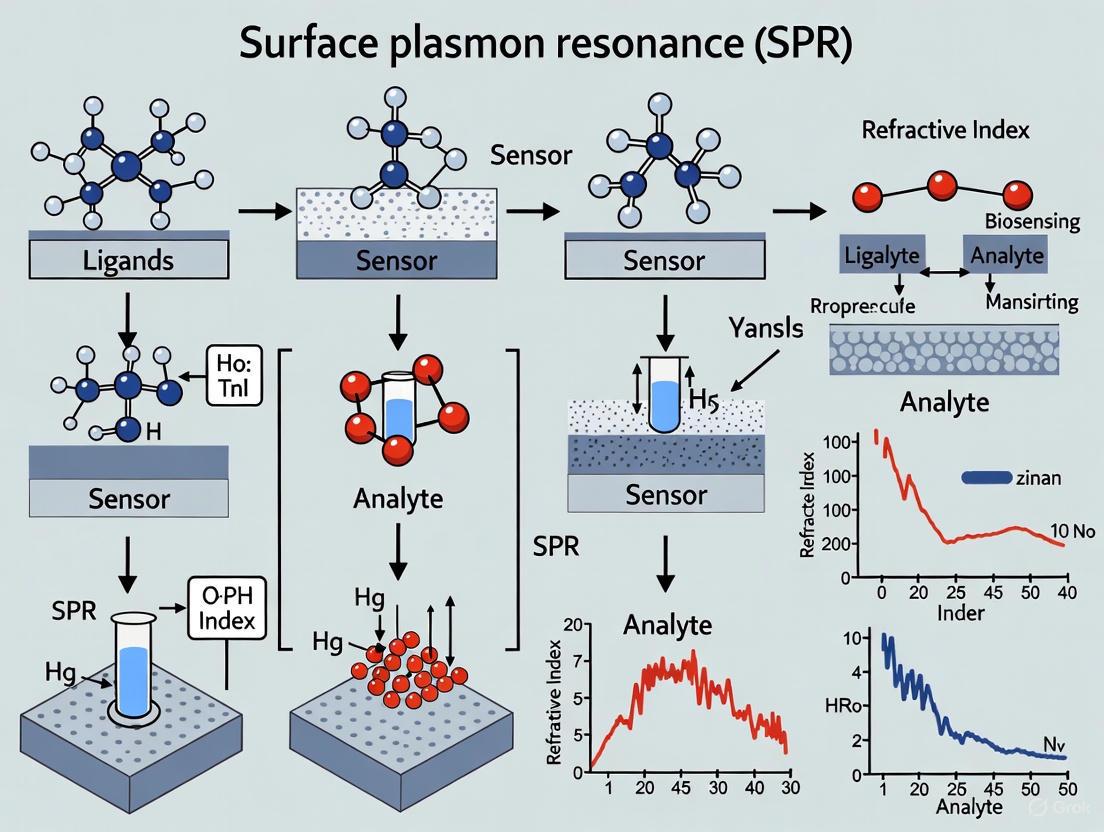
This article provides a comprehensive overview of Surface Plasmon Resonance (SPR), a powerful, label-free optical biosensing technique for real-time biomolecular interaction analysis.
Surface Plasmon Resonance (SPR) Demystified: From Basic Principles to Advanced Applications in Biomolecular Interaction Analysis
Abstract
This article provides a comprehensive overview of Surface Plasmon Resonance (SPR), a powerful, label-free optical biosensing technique for real-time biomolecular interaction analysis. Tailored for researchers, scientists, and drug development professionals, it covers foundational principles, including the physics of plasmon generation and sensorgram interpretation. The scope extends to detailed methodological guides for experimental setup and diverse applications in drug discovery, GPCR characterization, and clinical diagnostics. A dedicated troubleshooting section addresses common challenges like non-specific binding and mass transport limitations, while a comparative analysis validates SPR against other techniques. The article synthesizes these facets to highlight SPR's critical role in accelerating biomedical research and therapeutic development.
Understanding SPR: The Core Principles Behind the Technology
Surface Plasmon Resonance (SPR) is a powerful, label-free optical biosensing technique that enables researchers to monitor biomolecular interactions in real-time [1]. The phenomenon is central to modern drug discovery and biomolecular research, providing critical insights into the kinetics and affinity of interactions ranging from antibody-antigen recognition to small molecule binding to therapeutic targets [2] [1]. The technique's unique ability to provide quantitative analysis of binding events without requiring fluorescent or radioactive labels has made it indispensable for characterizing protein-protein interactions, lipid-protein interactions, and small molecule-nucleic acid interactions [2] [3] [4].
At its core, SPR measures changes in the refractive index at a metal surface, typically gold, which occur when biomolecules bind to or dissociate from this surface [1]. This physical principle allows for the detailed investigation of the fundamental forces driving biological action, providing essential parameters such as binding affinity (equilibrium constant, K), stoichiometry (n), and binding kinetics (association and dissociation rate constants) [4]. As the field of cellular research increasingly recognizes the importance of lipids and other biomolecules, SPR has emerged as a vital technique for rapidly and robustly screening newly identified proteins for membrane affinity and lipid specificity [2].
Fundamental Physical Principles
The Surface Plasmon Phenomenon
Surface Plasmon Resonance is fundamentally based on the physics of charge density waves known as surface plasmons [1]. These are coherent electron oscillations that propagate along the interface between a metal and a dielectric medium. In practical SPR instrumentation, this interface is typically formed between a thin gold film (approximately 50 nanometers thick) and a liquid sample buffer [1].
The excitation of surface plasmons occurs under specific conditions of total internal reflection [1]. When polarized light traveling through an optically dense medium (such as glass) reaches an interface with a less dense medium (such as buffer solution), it is completely reflected back if the angle of incidence exceeds a critical value. Although total internal reflection occurs, an evanescent wave penetrates a short distance (approximately the wavelength of light) into the less dense medium [1]. At the interface, this evanescent wave can couple with the free electrons in the metal film when the energy and momentum conditions are precisely matched, generating surface plasmon waves [1].
The resonance condition is highly sensitive to changes in the refractive index at the metal surface. When biomolecular binding events occur on the functionalized metal surface, they alter the local refractive index, leading to a measurable shift in the resonance angle [1]. This shift is directly proportional to the mass concentration at the sensor surface, enabling real-time monitoring of molecular interactions without any labeling requirements [1].
From Light to Electron Oscillations: Energy Transfer
The following diagram illustrates the fundamental process of surface plasmon excitation, from incident light to the generation of electron oscillations:
Diagram 1: Fundamental process of surface plasmon excitation.
SPR Instrumentation and Experimental Workflow
Core Instrument Components
SPR instruments consist of several key components that work in concert to generate and measure the resonance phenomenon. The optical system generates polarized light and directs it to the sensor surface, typically using prism-based configurations that enable precise control of the incident angle [1]. The sensor chip forms the heart of the system, comprising a glass substrate coated with a thin gold film (approximately 50 nm) that is often functionalized with a carboxymethylated dextran matrix to facilitate biomolecule immobilization [1] [4]. A microfluidic system delivers samples and buffers in a highly controlled manner across the sensor surface, while the detector system measures the intensity of reflected light across a range of angles to identify the precise resonance angle [1].
Proper instrument preparation is critical for successful SPR experiments. Regular maintenance procedures include weekly "Desorb" runs to remove absorbed compounds from previous experiments and monthly "Sanitize" protocols to prevent microbial growth in the fluidic system [4]. Before beginning any experiment, researchers must verify that the instrument is running properly by checking for air bubbles in the fluidic system, ensuring stable baselines, and confirming the integrity of the sensor chip surface [4].
Experimental Workflow and Sensorgram Generation
A typical SPR experiment follows a systematic workflow that generates a sensorgram—a real-time plot of binding response versus time. The following diagram outlines this complete experimental process:
Diagram 2: Complete SPR experimental workflow.
The sensorgram provides a visual representation of the entire binding interaction, with distinct phases corresponding to different stages of the molecular interaction [1]. During the baseline phase, buffer flows across the sensor surface to establish a stable reference signal and condition the sensor [1]. The association phase begins when the analyte is introduced into the system, with binding at the sensor surface leading to an increase in signal from which the association rate (kₒₙ) can be determined [1]. At steady state, the amount of analyte associating with and dissociating from the ligand is equivalent, allowing calculation of the equilibrium constant (K_D) [1]. During the dissociation phase, analyte solution is replaced with buffer, enabling determination of the dissociation rate (kₒff) [1]. For complexes with long half-lives, a regeneration phase using solutions with high salt concentration or low pH may be necessary to disrupt the interaction and restore the baseline [1].
Quantitative Analysis of Biomolecular Interactions
Kinetic and Equilibrium Constants
SPR biosensors provide comprehensive quantitative analysis of biomolecular interactions by simultaneously determining kinetic rate constants and equilibrium binding constants [4]. The association rate constant (kₒₙ) describes how quickly the complex forms, while the dissociation rate constant (kₒff) indicates how quickly the complex dissociates [1]. The equilibrium dissociation constant (K_D) represents the affinity between the interaction partners and is calculated as the ratio kₒff/kₒₙ [1]. For strong binding complexes with low spectroscopic signals or reaction heats, SPR offers significant advantages over traditional optical or calorimetric methods by working effectively at low concentrations down to nanomolar levels [4].
Table 1: Key Quantitative Parameters from SPR Analysis
| Parameter | Symbol | Definition | Typical Units | Biological Significance |
|---|---|---|---|---|
| Association Rate Constant | kₒₙ | Rate of complex formation | M⁻¹s⁻¹ | Indicates how quickly binding occurs |
| Dissociation Rate Constant | kₒff | Rate of complex breakdown | s⁻¹ | Determines complex stability and residence time |
| Equilibrium Dissociation Constant | K_D | kₒff/kₒₙ | M | Measure of binding affinity |
| Association Equilibrium Constant | K_A | 1/K_D | M⁻¹ | Alternative affinity measurement |
| Response Unit | RU | Change in resonance angle | RU | Proportional to bound mass (1 RU ≈ 1 pg/mm²) |
Experimental Methodologies: MCK vs. SCK
Two primary experimental approaches are commonly used for kinetic analysis in SPR: Multi-Cycle Kinetics (MCK) and Single-Cycle Kinetics (SCK) [5]. Each method has distinct advantages and limitations, making them suitable for different types of biomolecular interactions.
Multi-Cycle Kinetics (MCK) represents the traditional approach where each analyte concentration is injected in a separate cycle, followed by surface regeneration [5]. This method generates individual sensorgrams for each concentration, providing multiple binding curves that facilitate easier diagnosis of fitting issues and complex binding kinetics [5]. MCK is particularly valuable for interactions exhibiting complex behavior, as it allows researchers to identify and correct for artifacts such as baseline drift by including buffer blank injections that can be subtracted from individual binding curves [5].
Single-Cycle Kinetics (SCK) involves sequential injections of increasing analyte concentrations over the same ligand surface without regeneration between concentrations [5]. The highest concentration is followed by an extended dissociation phase [5]. This approach significantly reduces analysis time and minimizes the risk of ligand damage or inactivation that can occur during repeated regeneration cycles [5]. SCK is particularly advantageous for systems where surface regeneration is difficult or for capture-based immobilization methods where it eliminates the need for ligand recapture between analyte concentrations [5].
Table 2: Comparison of Multi-Cycle vs. Single-Cycle Kinetics
| Characteristic | Multi-Cycle Kinetics (MCK) | Single-Cycle Kinetics (SCK) |
|---|---|---|
| Throughput | Lower due to regeneration steps | Higher with reduced analysis time |
| Surface Usage | Requires regeneration between cycles | No regeneration between concentrations |
| Data Quality | Multiple curves for diagnosis | Single dissociation phase for all concentrations |
| Ligand Stability | Risk of damage from regeneration | Reduced regeneration protects ligand |
| Applications | Complex binding kinetics | Interactions difficult to regenerate |
| Error Handling | Poor injections can be omitted | Compromised segments can be removed |
The Scientist's Toolkit: Essential Research Reagents and Materials
Successful SPR experiments require careful selection and preparation of various reagents and materials. The following table details essential components of the SPR research toolkit:
Table 3: Essential Research Reagents and Materials for SPR Experiments
| Component | Function | Key Considerations |
|---|---|---|
| Sensor Chips | Platform for ligand immobilization | Gold surface with carboxymethylated dextran matrix most common [1] [4] |
| Ligand | Molecule immobilized on sensor surface | Protein, DNA, lipid, or small molecule; requires purity and activity [4] |
| Analyte | Molecule in solution interacting with ligand | Concentration series required; purity critical for accurate kinetics [5] |
| Running Buffer | Base solution for samples and continuous flow | Must maintain pH and ionic strength; affects binding interaction [4] |
| Regeneration Solution | Removes bound analyte without damaging ligand | High salt (e.g., 2-4 M NaCl) or low pH (e.g., 10-100 mM glycine-HCl) [1] |
| Coupling Reagents | Covalent immobilization of ligand | EDC/NHS chemistry for amine coupling most common [4] |
| Capture Reagents | Indirect immobilization approach | Antibodies, streptavidin, or Ni-NTA for His-tagged proteins [4] |
Applications in Biomolecular Interaction Research
SPR technology has revolutionized the study of biomolecular interactions across diverse research areas. In drug discovery and development, SPR is extensively used for fragment-based screening, kinetic evaluation of kinase inhibitors, characterization of antibody-drug conjugates (ADCs), quality assessment of bispecific antibodies, and measurement of PROTAC ternary complex kinetics [1]. The technology provides critical information about binding affinity, specificity, and kinetics that guides lead optimization and candidate selection [3].
For protein-protein interactions, SPR enables detailed characterization of association and dissociation rates, revealing the dynamics of complex biological processes such as immune recognition, signal transduction, and enzymatic regulation [2] [6]. The label-free nature of SPR detection makes it particularly valuable for studying interactions that might be perturbed by fluorescent or radioactive labeling [4].
In the emerging field of lipid-protein interactions, SPR has proven highly advantageous for cell biologists studying proteins that associate with cellular membranes [2]. Newly identified proteins can be rapidly and robustly screened for lipid specificity and membrane affinity, helping to elucidate unique lipid-protein interaction mechanisms [2]. The technique has been successfully applied to study how proteins containing specific lipid-binding domains recognize and interact with various membrane components [2].
For small molecule-nucleic acid interactions, SPR provides essential thermodynamic and kinetic characterization that is difficult to obtain by other methods [3] [4]. The technique has been particularly valuable for studying the binding of transcription factors, minor groove binders, and intercalators to DNA, revealing details about binding mechanisms, stoichiometry, and sequence specificity [3] [4].
Technical Considerations and Experimental Design
Optimizing Experimental Conditions
Successful SPR experiments require careful optimization of multiple parameters. Ligand immobilization level must be optimized to balance signal intensity against mass transport effects or steric hindrance [4]. Analyte concentration series should span a range above and below the expected K_D value, typically using 3-5 concentrations in a 2- or 3-fold dilution series [5]. Flow rate optimization balances mass transport limitations against sample consumption, with higher flow rates reducing mass transport effects but requiring more sample [3]. Contact time during the association phase must be sufficient to reach binding equilibrium, particularly for slower interactions [5].
Data Analysis and Quality Assessment
Proper data analysis is crucial for obtaining accurate kinetic and equilibrium constants. Experimental data is fitted to appropriate binding models, with the 1:1 Langmuir binding model being most common [4]. Quality assessment includes evaluating the randomness of residuals, consistency of fitted parameters across concentrations, and agreement between K_D values obtained from kinetic analysis versus steady-state analysis [3] [4]. For small molecule interactions, correction for refractive index increments may be necessary to accurately determine binding constants [4].
Surface Plasmon Resonance stands as a cornerstone technique in modern biomolecular research, providing unparalleled insights into the dynamics of molecular interactions. From its foundation in the physics of polarized light and electron oscillations to its practical application in drug discovery and basic research, SPR enables researchers to quantitatively characterize the fundamental forces driving biological processes. The continued evolution of SPR methodologies, including advanced kinetic analysis approaches and high-throughput capabilities, ensures that this technology will remain essential for unraveling the complexity of biomolecular recognition in health and disease. As the field progresses, SPR's label-free, real-time monitoring capabilities position it to address emerging challenges in characterizing novel therapeutic modalities and understanding the intricate interaction networks that underlie cellular function.
Surface Plasmon Resonance (SPR) is a powerful optical technique used for the real-time, label-free measurement of biomolecular interactions [7]. The phenomenon occurs when plane-polarized light strikes a metal film under conditions of total internal reflection, exciting collective oscillations of free electrons known as surface plasmons [8] [9]. The Kretschmann configuration, first introduced in 1968, has become the predominant experimental setup for exciting surface plasmons in sensing applications, particularly for studying binding kinetics and affinities between biomolecules [10] [11]. This architecture involves directing light through a prism onto a thin metal film deposited directly on the prism surface, creating the precise conditions necessary for SPR generation [10] [12]. The resonance condition is highly sensitive to changes in the refractive index at the metal-dielectric interface, enabling researchers to monitor molecular binding events with exceptional sensitivity [8].
The fundamental principle underlying SPR detection is that when molecules bind to the sensor surface, the local refractive index changes, altering the resonance condition [8] [9]. This shift can be monitored in real-time, providing a direct measure of binding kinetics without requiring fluorescent or radioactive labels [7]. The Kretschmann configuration specifically enhances this sensitivity by allowing efficient plasmon generation through the direct deposition of the metal layer on the total internal reflection (TIR) surface [10]. This technical guide explores the core principles, implementation, and applications of the Kretschmann configuration, framed within the context of SPR research on biomolecular interactions.
Fundamental Principles and Theoretical Framework
Optical Phenomenon of Surface Plasmon Resonance
Surface Plasmon Resonance occurs when p-polarized light strikes a metal-dielectric interface under specific conditions, exciting coherent electron oscillations known as surface plasmons [9]. For resonance to occur, the wavevector of the incident light must match that of the surface plasmon, a condition that depends on the optical properties of both the metal and dielectric medium [10]. In the Kretschmann configuration, this matching is achieved through the attenuated total reflection method, where a prism with a high refractive index enables the incident light to reach the necessary momentum for exciting surface plasmons on the thin metal film [10] [13].
The resonance condition manifests as a sharp dip in reflected light intensity at a specific angle of incidence, known as the resonance angle [9]. This dip occurs because at resonance, light energy is transferred to the surface plasmons rather than being reflected [13]. When molecules bind to the functionalized metal surface, the refractive index at the interface changes, leading to a measurable shift in the resonance angle [8]. This shift forms the basis for detecting and quantifying biomolecular interactions in real-time without labels [7].
Kretschmann Configuration vs. Alternative Approaches
The Kretschmann configuration differs fundamentally from other SPR excitation methods in its geometric arrangement and coupling mechanism:
Kretschmann vs. Otto Configuration: In the Kretschmann configuration, the metal layer is deposited directly on the prism surface, whereas the Otto arrangement maintains a gap between the metal and the total internal reflection surface [10]. The direct contact in the Kretschmann configuration enables more efficient plasmon generation for applications involving solutions, making it particularly suitable for biomolecular interaction studies [10].
Grating-Coupled Systems: Instead of using a prism, these systems employ a diffraction grating to provide the necessary momentum matching for SPR excitation [10]. While grating-coupled systems can be more compact, they typically offer lower sensitivity compared to prism-based configurations [10].
Optical Waveguide Sensors: These systems guide light through a waveguide structure and can measure both transverse electric (TE) and transverse magnetic (TM) modes, unlike SPR instruments that typically measure only TM modes [10]. This additional capability allows waveguide sensors to measure both density and thickness of adlayers [10].
Fibre Optic Sensors: Fibre optic SPR sensors use a wavelength sweep rather than an angle sweep to establish resonance conditions [10]. These sensors are inexpensive, compact, and suitable for disposable medical applications or multiple sensor arrays [10].
The Kretschmann configuration's superior plasmon generation efficiency and experimental versatility have established it as the gold standard for most quantitative biomolecular interaction studies [10] [7].
Implementation and Experimental Methodology
Core Components and Instrumentation
Implementing the Kretschmann configuration requires specific components carefully integrated to ensure optimal SPR generation and detection:
The light source typically consists of a monochromatic laser, often at 633 nm wavelength, which is passed through a polarizer to produce p-polarized light essential for SPR excitation [13]. The prism, usually made of BK7 glass or fused silica, serves as the high-refractive-index medium necessary to achieve the total internal reflection condition [12] [13]. The metal film, most commonly gold or silver with optimal thickness of 40-50 nm, is deposited directly on the prism surface [11]. A microfluidic flow cell integrated with the metal surface enables precise delivery of samples and buffers [8]. The detection system, comprising photodiodes or CCD arrays, measures the intensity of reflected light at various angles to determine the precise resonance condition [10] [9].
Sensor Chip Fabrication and Functionalization
The sensor chip forms the core of the SPR experiment, requiring precise fabrication and functionalization to enable specific biomolecular detection:
Table: Research Reagent Solutions for Kretschmann Configuration SPR
| Component | Specifications | Function in Experiment |
|---|---|---|
| Sensor Chip | Glass substrate with 50 nm gold film | Provides SPR-active surface for biomolecular immobilization |
| Coupling Prism | BK7 glass (n=1.5151 at 633 nm) or Fused Silica | Enables total internal reflection and momentum matching |
| Running Buffer | Phosphate-buffered saline with 0.05% Tween 20 | Maintains consistent refractive index and reduces non-specific binding |
| Ligand | Protein, antibody, or nucleic acid | The molecule immobilized on the sensor surface to capture analytes |
| Analyte | Small molecules, proteins, or nucleic acids | The binding partner flowed over the ligand-functionalized surface |
| Regeneration Solution | Desorb 1, Desorb 2, or Biadisinfectant | Removes bound analyte without damaging immobilized ligand |
Advanced sensor designs incorporate enhancement layers to improve performance. Recent research has investigated the use of graphene as a dielectric top layer, leveraging its large surface area and rich π conjugation structure to enhance SPR sensitivity and provide additional sites for biomolecular immobilization [14]. Similarly, MXene sheets (e.g., Ti₃C₂Tx), with their metallic Drude behavior and high carrier density, have shown promise for intensifying near-field confinement without severe damping when incorporated as sub-nanometer coatings on copper platforms [11]. Dielectric spacers such as silicon nitride (Si₃N₄) combine a high real refractive index with minimal extinction in the visible range, sharpening resonance dips and protecting the metal surface from oxidation [11]. Semiconductor materials like zinc selenide (ZnSe) paired with silver have demonstrated strong compatibility and charge transfer characteristics, further enhancing sensor performance [13].
Experimental Protocol for Kinetic Measurements
The following detailed methodology outlines a standard procedure for characterizing biomolecular interactions using the Kretschmann configuration:
System Preparation: Prime the microfluidic system with running buffer (typically phosphate-buffered saline with 0.05% Tween 20) to establish a stable baseline refractive index [8]. Ensure the light source has stabilized and the detector is calibrated according to manufacturer specifications.
Ligand Immobilization: Immobilize the ligand (e.g., protein, antibody) on the sensor surface using appropriate coupling chemistry. Common approaches include amine coupling, thiol coupling, or capture methodologies. The immobilization level should be optimized for the specific interaction being studied, typically ranging from 50-500 response units (RU) for kinetic measurements [8].
Baseline Establishment: Continue flowing running buffer over the sensor surface until a stable baseline is achieved, indicating minimal non-specific binding and system drift. This typically requires 5-10 minutes at a constant flow rate (often 10-30 μL/min) [8].
Association Phase: Inject the analyte at a series of concentrations (typically 3-5 different concentrations spanning a range above and below the expected KD) over the ligand surface. Monitor the binding in real-time, with the association phase typically lasting 2-5 minutes depending on the kinetic rates being measured [7].
Dissociation Phase: Return to running buffer flow to monitor dissociation of the bound complex. The dissociation phase duration depends on the off-rate of the interaction, typically ranging from 5-30 minutes [7].
Surface Regeneration: If the interaction is stable, use a regeneration solution (e.g., glycine-HCl, NaOH) to remove bound analyte without damaging the immobilized ligand. The regeneration conditions must be optimized for each specific interaction [8].
Data Analysis: Process the sensorgram data by subtracting signals from reference flow cells and buffer blanks. Fit the corrected data to appropriate binding models (e.g., 1:1 Langmuir binding) to extract kinetic parameters (association rate ka, dissociation rate kd) and calculate the equilibrium dissociation constant (KD = kd/ka) [7].
Throughout the experiment, maintain constant temperature (typically 25°C for most applications, though instruments allow control from 4-45°C) to ensure thermodynamic consistency [8].
Performance Metrics and Quantitative Analysis
Key Performance Parameters
SPR sensors based on the Kretschmann configuration are evaluated using several quantitative metrics that determine their effectiveness for specific applications:
Table: Performance Metrics for Kretschmann Configuration SPR Sensors
| Performance Parameter | Calculation Formula | Optimal Range | Significance in Biomolecular Research |
|---|---|---|---|
| Angular Sensitivity | S = Δθ/Δn [11] | 200-450 deg/RIU [11] [13] | Determines the smallest detectable refractive index change |
| Quality Factor (QF) | QF = S/FWHM [11] | 30-175 RIU⁻¹ [11] [13] | Balances sensitivity against resonance sharpness |
| Detection Accuracy (DA) | DA = Δθ/FWHM [11] | Higher values preferred | Measures precision in determining resonance angle |
| Figure of Merit (FoM) | FoM = S×(1-Rmin)/FWHM [11] | Higher values preferred | Comprehensive metric combining multiple performance factors |
| Limit of Detection (LoD) | LoD = (Δn/Δθ)×0.005° [11] | ~2×10⁻⁵ RIU [11] | The smallest refractive index change reliably detectable |
These parameters enable researchers to select appropriate sensor configurations for specific applications. For instance, kinetic studies of rapid biomolecular interactions require high detection accuracy and quality factors to accurately determine association and dissociation rates, while equilibrium binding assays for high-affinity interactions may prioritize sensitivity to detect small response changes [7].
Advanced Material Configurations and Their Performance
Recent research has explored various material combinations to enhance SPR sensor performance in the Kretschmann configuration:
Table: Advanced Material Configurations for Enhanced SPR Performance
| Sensor Configuration | Sensitivity (deg/RIU) | Quality Factor (RIU⁻¹) | Optimal Thickness | Key Advantages |
|---|---|---|---|---|
| Ag-ZnSe-Fused Silica [13] | 451 | 173.46 | Ag: 50 nm; ZnSe: 5-10 nm | Broad detection range (RI: 1.2-1.36) |
| Cu-Si₃N₄-MXene (Sys₃) [11] | 254 | 30-35 | Cu: 40 nm; Si₃N₄: 7 nm; MXene: 2 layers | Enhanced field confinement, functionalization sites |
| Cu-MXene (Sys₄) [11] | 312 | 48-58 | Cu: 45 nm; MXene: 1 layer | Lower optical loss (<8%), higher sensitivity |
| ITO-Coated BK7 [12] | N/A | N/A | ITO: optimized for LMR and SPR | Generates both LMR and SPR with same setup |
These advanced configurations demonstrate how material science innovations continue to push the boundaries of SPR sensitivity and specificity. The use of copper as an alternative to gold provides narrower resonance dips due to lower intraband damping, though it requires protective layers to prevent oxidation [11]. MXene sheets intensify surface charge oscillations while offering additional adsorption sites for biochemical functionalization [11]. The combination of silver with ZnSe leverages charge transfer characteristics to enhance sensitivity across a broad detection range [13].
Applications in Biomolecular Interaction Research
The Kretschmann configuration enables diverse applications in characterizing biomolecular interactions across various research domains:
Antibody-Antigen Interactions
SPR has become a standard orthogonal technique for characterizing therapeutic antibodies, providing critical information about epitopes, kinetics, specificity, and affinity [7]. Unlike endpoint immunoassays like ELISA, SPR provides real-time kinetic data (ka, kd) and affinity constants (KD) that are essential for antibody development and quality control [7]. For example, SPR has been used to characterize epratuzumab, a humanized monoclonal antibody targeting CD22 on B cells, providing kinetic parameters crucial for understanding its therapeutic mechanism [7].
Protein-Carbohydrate Interactions
Characterizing carbohydrate-protein interactions presents unique challenges due to the structural diversity of glycans and their typically low binding affinities [7]. SPR has proven valuable for studying these interactions without requiring complex sample preparation or labeling steps [7]. Researchers have successfully employed SPR to screen lectin panels against serum glycoproteins, demonstrating selective glycan recognition patterns that enable distinction between similarly structured glycoproteins [7]. Additionally, SPR has helped characterize conformational epitopes of bacterial polysaccharide antigens, identifying minimum epitope binding requirements for antibody recognition [7].
Protein-Nucleic Acid Interactions
SPR provides a robust, label-free platform for studying interactions between proteins and various nucleic acids, from short oligonucleotides to PCR products and larger RNA molecules [7]. The technique has enabled discovery and characterization of novel RNA-binding proteins, such as the regulator of calcineurin 1 (RCAN1) protein, revealing its interaction with a 23-nucleotide sequence of ANT1 mRNA through detailed kinetic analysis [7]. These studies have furthered our understanding of RNA-protein interactions in neurological disorders and facilitated the development of therapeutic aptamers [7].
Protein-Lipid Interactions
Understanding how proteins interact with lipid bilayers is crucial for elucidating cellular signaling and membrane trafficking mechanisms [7]. SPR has emerged as a well-established method for measuring lipid specificity and membrane affinity of peripheral proteins, including phosphatidylinositol-specific phospholipase C-δ (PLC-δ) and coagulation factor Va [7]. The technique enables researchers to quantify these high-affinity interactions that regulate critical biological processes, from lipid signaling to blood coagulation [7].
Emerging Trends and Future Perspectives
The continued evolution of Kretschmann configuration-based SPR focuses on enhancing sensitivity, throughput, and accessibility. Several emerging trends are shaping the future of this technology:
SPR Imaging (SPR+) Advanced systems like the Sierra SPR Pro series and Bruker SPR #64 employ Surface Plasmon Resonance imaging (SPR+) detection, enabling simultaneous monitoring of two-dimensional arrays with sensitivity levels traditionally restricted to linear arrays [10]. This technology combines traditional SPR imaging with high-intensity laser light and high-speed optical scanning, permitting more resonance measurements per scan and resulting in lower RMS noise and improved accuracy for measuring small response changes [10].
Theoretical Advances and Modeling Recent theoretical investigations have explored innovative approaches to enhance SPR performance. The equivalent transmission line circuit analysis provides a more physically intuitive understanding of individual layer contributions to the overall electromagnetic phenomenon compared to traditional plane wave cascaded matrix analysis [13]. This approach simplifies the system to a two-impedance circuit, facilitating identification of conditions necessary for mode excitation and enabling more efficient sensor design [13].
Clinical Translation and Point-of-Care Applications While current SPR instrumentation remains primarily a research tool, efforts are underway to develop compact, cost-effective systems suitable for clinical diagnostics and point-of-care testing [11]. The integration of novel materials like MXenes and graphene, combined with microfabrication advances, promises to create highly sensitive platforms that could eventually translate SPR from research laboratories to clinical settings for applications like early cancer detection [11].
These developments, building upon the fundamental Kretschmann configuration, continue to expand the applications and capabilities of SPR for studying biomolecular interactions with increasingly higher sensitivity, throughput, and biological relevance.
Surface Plasmon Resonance (SPR) is a powerful, label-free analytical technique that enables the real-time study of biomolecular interactions. At the heart of SPR analysis lies the sensorgram, a dynamic plot of response versus time that provides a visual narrative of the entire interaction lifecycle between a ligand immobilized on a sensor surface and an analyte in solution [15] [16]. For researchers and drug development professionals, mastering the interpretation of sensorgrams is fundamental to extracting accurate kinetic, affinity, and concentration data [15] [17]. This guide provides a detailed, phase-by-phase breakdown of SPR sensorgrams, framed within the broader principles of SPR research, to equip scientists with the knowledge to confidently design experiments, troubleshoot issues, and draw meaningful biological conclusions.
The Fundamentals of a Sensorgram
An SPR sensorgram is generated by monitoring the change in the SPR signal, which is proportional to the change in mass concentration on the sensor chip surface, expressed in Resonance Units (RU) [17]. When molecules bind, the local refractive index shifts, causing a measurable change in the angle or wavelength of the reflected light [15]. This change is plotted against time to produce the sensorgram, which captures the kinetics of the interaction from start to finish [15] [16].
A well-formed sensorgram for a specific 1:1 binding interaction typically follows a single exponential profile during its association and dissociation phases [18]. The quality of the sensorgram is paramount; curves exhibiting excessive drift, spikes, or "wobbly" patterns often indicate systemic problems such as contamination, improper buffer matching, or insufficient system equilibration, and data from such experiments should be treated with caution [18].
A Phase-by-Phase Guide to the Sensorgram
A typical sensorgram can be dissected into five distinct phases, each offering specific insights into the biomolecular interaction. The following diagram illustrates the complete workflow and the key processes occurring in each phase.
Baseline Phase
The baseline is the initial flat line of the sensorgram, established by flowing a running buffer (e.g., phosphate-buffered saline or HEPES-NaCl) over the sensor surface [15] [16]. This phase is critical for verifying system stability. A stable, straight baseline indicates a well-conditioned and clean system, ready for analyte injection. Significant baseline drift, injection spikes, or a high buffer response are warning signs that the instrument may require cleaning or that the buffer/sample contains contaminants [15] [16]. Proper baseline establishment ensures that any subsequent signal change can be reliably attributed to the specific binding event.
Association Phase
The association phase begins with the injection of the analyte over the ligand-immobilized surface [15]. This is marked by a sharp increase in the SPR response (RU) as analyte molecules bind to the ligands, forming complexes [16]. The shape of the association curve is governed by the association rate constant (kₐₙ or kₐ) and the analyte concentration [18]. In an ideal scenario, free from artifacts, the association curve is a single exponential [15]. A steep curve indicates fast binding, while a more gradual slope suggests slower binding kinetics [16]. It is crucial to recognize that the observed association rate can be limited by the speed at which analyte molecules diffuse from the bulk solution to the surface, a phenomenon known as mass transport limitation, which can result in a more linear initial binding profile [18].
Steady-State Phase
The steady-state phase, or equilibrium phase, is represented by the plateau region at the top of the sensorgram. Here, the rate of analyte association equals the rate of dissociation, resulting in a net rate of complex formation of zero [15]. The height of this plateau is related to the concentration of the analyte and the affinity of the interaction. For affinity analysis, measuring the response (RU) at steady-state across a range of analyte concentrations allows for the determination of the equilibrium dissociation constant (K_D) without the need for kinetic analysis [15].
Dissociation Phase
The dissociation phase is initiated by replacing the analyte solution with a buffer wash [16]. The subsequent decrease in the SPR signal reflects the breakdown of the ligand-analyte (LA) complexes as the analyte molecules unbind and are washed away [15] [16]. The slope of this downward curve is governed by the dissociation rate constant (kₒff or k_d) [18]. A steep downward slope indicates a unstable complex with fast dissociation, while a gradual decline signifies a stable complex with slow dissociation [16]. Ideally, the dissociation should follow a single exponential decay [15].
Regeneration Phase
The final phase, regeneration, involves flowing a regeneration solution (often a low-pH buffer like glycine) over the sensor surface to strip off all remaining bound analyte without permanently damaging the immobilized ligand [15] [16]. A successful regeneration resets the SPR signal back to the original baseline level, indicating that the sensor surface is free of analyte and ready for a new analysis cycle [15]. This allows the same sensor surface to be reused for dozens of experiments, making SPR highly efficient for screening applications [16]. The goal is to identify a regeneration condition that is strong enough to remove all bound analyte but gentle enough to maintain ligand functionality over multiple cycles.
Quantitative Data from Sensorgrams
The primary quantitative information derived from sensorgram analysis is summarized in the table below.
Table 1: Key Kinetic and Affinity Parameters from SPR Sensorgrams
| Parameter | Symbol | Unit | Description | How It is Determined |
|---|---|---|---|---|
| Association Rate Constant | kₐₙ or kₐ | M⁻¹s⁻¹ | Measures how quickly the analyte binds to the ligand. | Determined from the curvature of the association phase, often at multiple analyte concentrations [15] [16]. |
| Dissociation Rate Constant | kₒff or k_d | s⁻¹ | Measures how quickly the analyte unbinds from the ligand. | Determined from the exponential decay of the dissociation phase [15] [18]. |
| Equilibrium Dissociation Constant | K_D | M | Represents the binding affinity. A lower K_D indicates a higher affinity. | Calculated as the ratio KD = kd / k_a. Can also be determined from steady-state response vs. analyte concentration [15] [16]. |
| Response at Steady-State | R_eq | RU | The maximum response level at equilibrium for a given analyte concentration. | Measured directly from the plateau of the sensorgram [18]. |
Essential Experimental Protocols
Surface Preparation: Immobilizing the Ligand
The first critical step in any SPR experiment is the stable immobilization of the ligand onto a sensor chip. Different sensor chips are available for various applications. For protein-protein interactions, a CM5 chip (carboxymethyldextran-coated) is commonly used, allowing for covalent coupling via amine, thiol, or carboxyl groups. For lipid-protein interactions, the L1 chip is preferred as it uses hydrophobic interactions to capture intact lipid vesicles, creating a robust membrane-mimetic surface [17].
Protocol: Capturing Lipid Vesicles on an L1 Chip
- Clean the Surface: Wash the sensor chip with 25 μL of 40 μM CHAPS detergent, followed by 25 μL of β-octylglucoside at a flow rate of 30 μL/min to remove any residual contaminants [17].
- Prepare Vesicles: Prepare lipid vesicles (e.g., 97:3 Phosphatidylcholine:Phosphoinositide) at a concentration of 0.5 mg/ml in a suitable buffer (e.g., 20 mM HEPES, pH 7.4, 0.16 M KCl). Vortex vigorously and extrude the suspension through a 100-nm polycarbonate filter to create uniform, unilamellar vesicles [17].
- Coat the Surface: Inject 80 μL of the lipid vesicle solution at a slow flow rate of 5 μL/min. It is recommended to coat the active flow cell first, followed by the control flow cell to prevent lipid migration between cells [17].
- Stabilize the Layer: Stabilize the captured lipid layer with three injections of 20 μL of 0.1 M NaOH at 30 μL/min. This also serves as a regeneration solution for removing bound protein in subsequent cycles [17].
- Quality Control: Verify the quality of the lipid coating by injecting 0.1 mg/ml BSA. A well-coated surface will show less than 100 RU of non-specific BSA binding, whereas a poorly coated surface may exhibit over 1000 RU of binding [17].
Quality Control and Data Fitting
Before collecting data for analysis, the system stability must be validated. After immobilization, the system should be equilibrated with running buffer, sometimes overnight, to minimize baseline drift [18]. Several "dummy injections" of running buffer should be performed to validate the stability of the baseline and ensure there are no buffer mismatch issues that cause "buffer jumps" or spikes [18].
Once a high-quality sensorgram is obtained, the data is fit to a suitable binding model. For a simple 1:1 interaction, the data is fit to the following equations:
- Association: The integrated rate equation is Rt = Req (1 - e^(-(ka * C + kd)(t - t_0)) ), which describes a single exponential approach to equilibrium [18].
- Dissociation: The dissociation is described by Rt = R0 e^(-kd (t - t0)), a single exponential decay [18].
Modern SPR instruments like the P4SPR come with integrated software that performs this fitting automatically, calculating the ka, kd, and K_D values [15]. It is vital to choose the correct model; attempting to fit complex, biphasic curves with a simple 1:1 model can produce misleading results and should be avoided without further experimental optimization [18].
The Scientist's Toolkit: Research Reagent Solutions
Table 2: Essential Materials and Reagents for SPR Experiments
| Item | Function and Application |
|---|---|
| Running Buffer (e.g., PBS, HEPES-NaCl) | Provides a stable physiological pH and ionic strength environment for the interaction. Used to establish the baseline, dilute samples, and drive dissociation [15]. |
| Regeneration Buffer (e.g., Glycine-HCl, NaOH) | Removes tightly bound analyte from the immobilized ligand after a cycle to reset the sensor surface for reuse. Strength and type must be optimized for each specific interaction to avoid ligand denaturation [15] [16]. |
| Sensor Chips (e.g., L1 Chip, CM5 Chip) | The solid support with a thin gold film that forms the basis for the SPR signal. The L1 chip is designed to capture lipid vesicles for membrane-protein studies, while the CM5 chip has a dextran matrix for covalent coupling of proteins [17]. |
| Lipid Vesicles | Used to create a model membrane surface on L1 chips for studying lipid-protein interactions. Vesicles are typically composed of phosphatidylcholine with a small mol% (1-3%) of the lipid ligand of interest, such as a phosphoinositide [17]. |
| Detergents (e.g., CHAPS, β-Octylglucoside) | Used for stringent cleaning of the fluidic system and sensor chip surfaces to remove lipid and protein contaminants, crucial for maintaining low baseline drift and preventing non-specific binding [17]. |
Troubleshooting Common Sensorgram Anomalies
Even well-designed experiments can encounter issues. The table below outlines common problems and their solutions.
Table 3: Common SPR Issues and Recommended Solutions
| Problem | Possible Causes | Recommended Solutions |
|---|---|---|
| Baseline Drift | Contamination on sensor chip or in fluidics; buffer evaporation; temperature fluctuations; deteriorating sensor surface [16]. | Clean sensor chip and fluidic system with appropriate detergents; prepare fresh, degassed buffers; ensure temperature control; replace the sensor chip if necessary [16]. |
| Low Binding Signal | Analyte concentration too low; insufficient ligand immobilized on the surface; low affinity interaction; suboptimal buffer conditions (pH, ionic strength) [16]. | Increase analyte concentration; optimize ligand immobilization to achieve higher density; verify binding affinity is within detectable range; screen different buffer conditions [16]. |
| Non-Specific Binding (NSB) | Analyte interacting with the sensor surface itself (e.g., via hydrophobic or charged patches); impurities in the analyte sample; inadequate blocking after ligand immobilization [16]. | Use a different sensor surface chemistry (more hydrophilic/neutral); purify the analyte to remove aggregates; optimize the blocking procedure; include a control flow cell for subtraction [16]. |
| Mass Transport Limitation | Binding kinetics are faster than the rate of analyte diffusion to the surface, often due to very high ligand density [18]. | Lower the density of immobilized ligand; increase the flow rate of the analyte injection [18]. |
| Biphasic/Biphasic-like Curves | Multiple binding modes; heterogeneity in the immobilized ligand; or avidity effects [18]. | Do not attempt to fit with complex models blindly. Further optimize experimental conditions, ensure ligand homogeneity, and consider using a different immobilization strategy [18]. |
What are Response Units (RU)? Quantifying Binding Events
Surface Plasmon Resonance (SPR) has emerged as a cornerstone technology for the label-free analysis of biomolecular interactions. At the heart of SPR data interpretation lies the Response Unit (RU), a critical parameter that directly quantifies binding events in real-time. This technical guide details the fundamental principles of RU, establishing its relationship with mass concentration and structural changes on sensor surfaces. We further provide validated experimental protocols for immobilization strategies and binding assays, alongside key reagent specifications. Designed for researchers and drug development professionals, this resource underscores the indispensable role of RU in extracting kinetic and affinity constants, thereby forming the foundation for rigorous biomolecular interaction analysis.
Surface Plasmon Resonance (SPR) is an optical technique that enables the real-time, label-free detection of biomolecular interactions by measuring changes in the refractive index at a metal surface, typically gold [19] [1]. When a mobile molecule (analyte) binds to an immobilized molecule (ligand), the resulting increase in mass at the sensor surface alters the refractive index, which is detected as a shift in the resonance angle of reflected polarized light [19] [20]. The SPR response is quantified in Resonance Units (RU), which are directly proportional to the mass concentration of molecules bound to the sensor surface [8] [21]. This linear relationship between the RU signal and surface-bound mass makes SPR a powerful quantitative tool for determining interaction specificity, affinity, and kinetics, which are critical parameters in basic research and drug development [19] [22].
The Fundamentals of Response Units (RU)
Definition and Physical Meaning
A Response Unit (RU) is the fundamental measurement metric in an SPR experiment. Physically, 1 RU corresponds to a shift in the resonance angle of 10⁻⁴ degrees [8] [20]. This angular shift is a direct consequence of a change in the local refractive index caused by the binding or dissociation of molecules on the sensor chip's gold film. The SPR instrument's detector is designed to track this minute angular change with high precision, converting it into the RU signal that researchers observe on the sensorgram [15].
Relationship to Surface Mass Density
The profound utility of the RU stems from its consistent and predictable relationship with the mass density on the sensor surface. The response is linearly related to the number of bound molecules, and for proteins, 1 RU is equivalent to a surface concentration of approximately 1 pg per mm² [8] [21]. This relationship allows researchers to translate the raw RU signal into a quantitative measure of bound mass, enabling precise calculations of stoichiometry and binding capacity.
Table 1: Quantitative Relationship of SPR Response Units
| Parameter | Value | Interpretation |
|---|---|---|
| Angular Shift | 1 RU = 10⁻⁴ degrees | Minimum detectable shift in resonance angle [8] [20]. |
| Mass Sensitivity | ~1 RU / (pg·mm⁻²) | Mass of protein bound per unit area [8] [21]. |
| Detection Limit | ~10 pg/mL | Typical mass detection limit for an SPR biosensor [20]. |
The following diagram illustrates the core working principle of SPR and how molecular binding events are detected as a change in resonance angle, which is reported in RU.
Figure 1: SPR Working Principle. Binding of analyte to the immobilized ligand on the gold film changes the refractive index (RI), altering the resonance angle of reflected light, which is measured by the detector and reported as a change in RU.
The Sensorgram: A Quantitative Record of Binding
The sensorgram is a real-time plot of the SPR response (RU) versus time, providing a visual representation of the entire binding event [1] [15]. Interpreting the sensorgram is essential for quantifying binding events.
Phases of a Sensorgram
A typical sensorgram consists of five distinct phases, each yielding specific quantitative information [15]:
- Baseline: The initial flat line represents the signal from the immobilized ligand with buffer flowing over it. A stable baseline is critical for accurate measurement.
- Association: Beginning at t=0, the analyte is injected. The subsequent rise in RU signal indicates analyte binding to the ligand. The slope and shape of this curve are used to calculate the association rate constant (kₐ or k_on).
- Steady-State: The plateau region where the association and dissociation rates are equal. The RU value here indicates the amount of complex formed at equilibrium and is used for affinity (K_D) calculation.
- Dissociation: Upon switching back to buffer, the decrease in RU signal reflects the dissociation of the analyte-ligand complex. The slope of this curve determines the dissociation rate constant (kd or koff).
- Regeneration: A injection of a regeneration solution (e.g., low pH buffer) removes any remaining bound analyte, returning the RU signal to the baseline, readying the surface for a new experiment.
Deriving Kinetic and Affinity Constants
The primary kinetic and affinity constants are derived directly from the sensorgram data. The equilibrium dissociation constant (KD), a measure of binding affinity, is calculated as the ratio of the dissociation and association rate constants: KD = kd / ka [15] [23]. A lower K_D value indicates a higher affinity interaction. The sensorgram data is fitted to an appropriate binding model (e.g., 1:1 Langmuir binding) by the instrument's software to extract these precise values [21] [15].
Figure 2: Sensorgram Phases. A typical sensorgram showing the five phases of an SPR binding experiment and the quantitative data obtained from each phase.
Experimental Protocol: From Immobilization to Binding Analysis
This section provides a detailed methodology for a standard SPR experiment, focusing on the steps that directly influence the RU response and data quality.
Ligand Immobilization
The first critical step is the stable immobilization of the ligand onto a sensor chip.
- Sensor Chip Selection: Choose an appropriate sensor chip. The CM5 chip (carboxymethylated dextran) is a versatile, research-grade choice for most applications [19] [21]. See Table 3 for other options.
- Surface Activation: Inject a mixture of NHS (N-hydroxysuccinimide) and EDC (1-ethyl-3-(3-dimethylaminopropyl) carbodiimide) to activate the carboxyl groups on the dextran matrix, forming reactive esters [19].
- Ligand Coupling: Inject the purified ligand solution in a low-salt immobilization buffer (e.g., 10 mM sodium acetate, pH 4.0-5.5). The pH should be optimized to ensure sufficient ligand concentration and correct orientation near the surface [19] [21].
- Surface Blocking: Inject ethanolamine-HCl to deactivate and block any remaining reactive esters, preventing non-specific binding in subsequent steps [19].
Analyte Binding and Measurement
With the ligand immobilized, the interaction with the analyte can be quantified.
- Baseline Stabilization: Flow running buffer (e.g., HBS-EP or PBS with 0.05% surfactant P20) over the sensor surface until a stable baseline is achieved [19] [8]. The surfactant reduces non-specific binding.
- Analyte Injection: Inject a series of analyte concentrations (e.g., spanning 10-fold below to 10-fold above the estimated K_D) over the ligand surface and a reference surface [8] [21]. Use a flow rate high enough (e.g., 30 μL/min) to minimize mass transport effects [21].
- Dissociation Monitoring: Replace the analyte solution with running buffer to monitor the dissociation of the complex.
- Surface Regeneration: Inject a regeneration solution (e.g., 10 mM glycine-HCl, pH 1.5-3.0, or 50 mM NaOH) to remove all bound analyte without denaturing the immobilized ligand, returning the RU to the original baseline [19] [24]. The regeneration solution must be scouted for each specific interaction.
Table 2: Key Reagent Solutions for SPR Experiments
| Reagent/Solution | Function | Example |
|---|---|---|
| Running Buffer | Maintains a stable baseline and serves as the solvent for analyte dilutions. | HBS-EP (0.01 M HEPES, 0.15 M NaCl, 3 mM EDTA, 0.005% v/v Surfactant P20), pH 7.4 [19] [8]. |
| Immobilization Buffers | Creates optimal pH for ligand coupling to the activated sensor surface. | 10 mM Sodium Acetate, pH 4.0-5.5 [19]. |
| Activation Reagents | Chemically activates the sensor surface for covalent ligand attachment. | EDC and NHS mixture [19]. |
| Blocking Solution | Deactivates remaining active groups on the surface after immobilization. | 1.0 M Ethanolamine-HCl, pH 8.5 [19]. |
| Regeneration Solution | Dissociates tightly bound analyte from the ligand to reuse the sensor surface. | 10 mM Glycine-HCl, pH 1.5-3.0; or 50 mM NaOH [19] [24]. |
| Desorb Solution | For deep cleaning the instrument fluidic system to remove residual contaminants. | 0.5% SDS (BIAdesorb Solution 1) [19]. |
The Scientist's Toolkit: Essential SPR Materials
Successful SPR experimentation relies on a suite of specialized reagents and consumables. The selection of these materials is critical for generating reliable, quantitative RU data.
Table 3: Essential Research Reagents and Materials for SPR
| Item | Description and Function |
|---|---|
| Sensor Chips | Solid supports with a gold film and specialized coatings that anchor the ligand. CM5: General-purpose dextran chip [19] [21]. SA: Streptavidin-coated for capturing biotinylated ligands [21]. NTA: Nitrilotriacetic acid for capturing His-tagged proteins via metal chelation [21]. L1: Lipophilic dextran for capturing intact lipid vesicles or membranes [17]. |
| Buffers and Solutions | Pre-formulated, pH-adjusted buffers ensure reproducibility and minimize signal drift. HBS-N/EP: Standard running buffers with/without EDTA and surfactant [19]. Sodium Acetate Buffers: For ligand immobilization at acidic pH [19]. |
| Regeneration Cocktails | Solutions designed to break specific molecular interactions without damaging the immobilized ligand. Glycine-HCl (low pH): Common for disrupting antibody-antigen bonds [19]. High Salt Solutions: Can disrupt electrostatic interactions. |
| Instrument Cleaners | Strong detergents and disinfectants (e.g., BIAdesorb) for periodic maintenance of the microfluidic system to prevent clogging and signal artifacts [19] [8]. |
| Capture Reagents | Secondary molecules used for indirect ligand immobilization. Anti-His Antibodies: To capture and orient His-tagged ligands on certain chips [24]. Neutralvidin: A neutral form of avidin for biotin capture with reduced non-specific binding. |
The Response Unit (RU) is far more than an arbitrary signal output; it is the fundamental quantitative link between the observed SPR phenomenon and the physical binding of molecules on a sensor surface. Its direct proportionality to surface mass density allows researchers to move beyond simple detection to precise quantification of interaction kinetics and affinity. By following rigorous experimental protocols and selecting appropriate reagents from the available toolkit, scientists can harness the full power of RU measurement. This enables the generation of highly reliable data that is indispensable for advancing research in proteomics, drug discovery, and diagnostics, making SPR a cornerstone technique in the quantitative analysis of biomolecular interactions.
Surface Plasmon Resonance (SPR) technology has emerged as a powerful analytical technique for studying biomolecular interactions in real-time without the need for labels. This whitepaper examines the fundamental principles of SPR, its advantages over traditional biochemical techniques, and its critical applications in basic research and drug development. By providing label-free detection and quantitative kinetic data, SPR enables researchers to obtain detailed insights into binding mechanisms, affinity, and specificity that are essential for advancing biomedical research and therapeutic development.
Surface Plasmon Resonance (SPR) represents a transformative technology in the study of biomolecular interactions. As a label-free detection method, SPR provides real-time monitoring of binding events between biomolecules, offering significant advantages over traditional techniques that require fluorescent, radioactive, or chromogenic labels [25]. The technology has seen unprecedented growth over the past decade, with applications expanding across diverse fields including drug discovery, clinical diagnostics, and basic research [26] [25].
The fundamental significance of SPR lies in its ability to monitor interactions as they occur, without interfering with the native state of the molecules involved. This capability is particularly valuable for studying protein-protein interactions, which are fundamental to cellular signaling, enzyme catalysis, immune response, and viral infection mechanisms [27]. By eliminating the need for molecular labels that can alter binding properties or biological activity, SPR provides a more accurate representation of biomolecular behavior under physiological conditions.
Fundamental Principles of SPR
Basic Physical Phenomena
SPR technology is based on the excitation of surface plasmons—collective oscillations of free electrons at the interface between a metal (typically gold) and a dielectric medium (such as a buffer solution) [26]. When polarized light strikes a thin metal film under conditions of total internal reflection, it generates an evanescent wave that penetrates the metal layer and excites these electron oscillations [25]. The resonance condition is highly sensitive to changes in the refractive index at the metal surface, which alters when biomolecules bind to immobilized ligands on the sensor chip [25].
The resonance angle (θSPR) shifts in response to changes in mass concentration on the sensor surface, enabling direct monitoring of binding events in real-time. This physical principle forms the basis for SPR's exceptional sensitivity, allowing detection of minute changes in molecular interactions without any labeling requirements [26] [25].
Instrumentation and Measurement
A typical SPR instrument consists of four essential components: a monochromatic polarized light source, a glass prism, a thin metal film (typically gold) in contact with the prism base, and a photodetector [25]. This configuration, known as prism-coupled SPR, represents the most common platform for SPR instrumentation, though waveguide- or grating-coupled systems are also utilized [25].
The measurement process involves immobilizing a ligand (binding molecule) on the sensor chip surface and flowing analytes (potential binding partners) over this surface in solution. As analytes bind to the immobilized ligands, the increased mass at the sensor surface causes a change in the local refractive index, resulting in a shift in the SPR angle that is measured in real-time [25]. The resulting data output, called a sensorgram, provides a complete record of the binding interaction throughout its association and dissociation phases.
Key Advantages of SPR Technology
Label-Free Detection Environment
The label-free nature of SPR represents one of its most significant advantages. Traditional detection methods often require labeling with fluorescent dyes, radioactive tags, or enzymes, which can potentially alter the structure, activity, or binding properties of biomolecules [25]. These modifications can lead to artifacts or inaccurate representations of true biological interactions.
SPR eliminates this concern by directly detecting binding events through changes in refractive index, preserving the native state and function of the molecules being studied [25] [27]. This capability is particularly crucial for studying delicate interactions where even minor modifications could affect binding kinetics or for working with molecules that are difficult to label without compromising functionality.
Real-Time Kinetic Monitoring
SPR provides continuous, real-time monitoring of binding events, allowing researchers to observe interactions as they unfold rather than merely capturing endpoint measurements [25] [27]. This temporal resolution enables the determination of both association and dissociation rate constants (kₐ and kḍ), providing insights into the dynamics of molecular interactions that are inaccessible through traditional methods.
The real-time capability of SPR allows researchers to:
- Observe binding events as they occur, typically with data collected every 0.1 seconds [25]
- Monitor the complete interaction timeline from initial contact through complex formation and eventual dissociation
- Identify transient intermediates or complex binding mechanisms that might be missed in endpoint assays
- Optimize experimental conditions iteratively based on immediate feedback
Quantitative Analytical Capabilities
SPR technology provides robust quantitative data on multiple aspects of biomolecular interactions, extending beyond simple binding confirmation to detailed characterization of interaction parameters as summarized in the table below.
Table 1: Quantitative Parameters Measurable by SPR Technology
| Parameter | Symbol | Typical Range | Significance |
|---|---|---|---|
| Association Rate Constant | kₐ | 10³ - 10⁹ M⁻¹s⁻¹ | Measures how quickly molecules form complexes |
| Dissociation Rate Constant | kḍ | 10⁻⁵ - 1 s⁻¹ | Determines complex stability and lifetime |
| Equilibrium Dissociation Constant | KD | μM - pM | Defines binding affinity and strength |
| Active Concentration | — | Varies | Measures functionally active molecules in solution |
| Stoichiometry | — | Varies | Determines binding ratio between interaction partners |
SPR instruments can determine kinetic parameters across remarkably broad ranges, covering association on-rates from 10³ to 10⁹ M⁻¹s⁻¹ and dissociation off-rates from 10⁻⁵ to 1 s⁻¹, with equilibrium dissociation constants (KD) spanning from micromolar to picomolar affinities [25]. This extensive dynamic range makes SPR suitable for studying everything from weak transient interactions to extremely stable complexes.
Comparison with Alternative Technologies
SPR offers distinct advantages over other commonly used techniques in molecular interaction studies. The table below compares SPR with several traditional methods across key parameters relevant to research and drug development applications.
Table 2: SPR vs. Traditional Biochemical Techniques
| Technique | Label Requirement | Kinetic Data | Throughput | Sensitivity | Key Limitations |
|---|---|---|---|---|---|
| SPR | Label-free | Full real-time kinetics | Medium | High (pM-nM) | Requires immobilization |
| ELISA | Label required | Endpoint only | High | Moderate | Limited to equilibrium data |
| Fluorescence Polarization | Label required | Limited kinetics | High | Moderate | Size limitations, interference |
| ITC | Label-free | Thermodynamic only | Low | Moderate | High sample consumption |
| SPRi | Label-free | Limited kinetics | High | Lower than SPR | Reduced sensitivity for precise kinetics |
Unlike ELISA, which provides only endpoint affinity data, SPR captures complete kinetic profiles, enabling researchers to distinguish between interactions with similar affinities but different kinetic properties [28]. While SPR imaging (SPRi) offers higher throughput by simultaneously monitoring hundreds of binding sites using a CCD camera, it typically sacrifices some sensitivity compared to traditional SPR systems [28].
Experimental Protocols and Methodologies
Sensor Chip Preparation
The foundation of any successful SPR experiment is proper sensor chip preparation. Sensor chips typically consist of a glass substrate coated with a thin gold film (approximately 50 nm thick) functionalized with various chemical matrices to facilitate ligand immobilization [25]. Common immobilization strategies include:
- Amino Coupling: Utilizes carbodiimide chemistry to activate carboxyl groups on the sensor surface for reaction with primary amines on ligands
- Thiol Coupling: Employs maleimide or disulfide chemistry to capture thiol-containing molecules
- Streptavidin-Biotin: Takes advantage of the strong interaction between streptavidin on the sensor surface and biotinylated ligands
- Antibody Capture: Uses immobilized antibodies to capture specific ligands, preserving their native conformation
The choice of immobilization method depends on the nature of the ligand, the required orientation, and the need to maintain biological activity. Proper surface preparation is critical for minimizing non-specific binding and ensuring that observed interactions reflect true biological recognition rather than experimental artifacts.
Binding Experiment Workflow
A standard SPR binding experiment follows a systematic workflow designed to generate high-quality kinetic data:
- Baseline Establishment: Flow running buffer alone over the sensor surface to establish a stable baseline response
- Ligand Immobilization: Introduce the ligand solution to covalently attach molecules to the sensor surface
- Analyte Association: Inject analyte at various concentrations across the sensor surface to monitor binding
- Dissociation Monitoring: Replace analyte solution with running buffer to observe complex dissociation
- Surface Regeneration: Apply mild acidic or basic conditions to remove bound analyte without damaging the immobilized ligand
- Data Analysis: Process sensorgram data using appropriate binding models to extract kinetic parameters
This workflow can be implemented using either multi-cycle kinetics (with regeneration between each analyte concentration) or single-cycle kinetics (with sequential injections of increasing analyte concentrations without regeneration) [25]. Single-cycle kinetics reduces total experiment time and avoids potential damage from repeated regeneration steps.
Data Analysis and Interpretation
SPR data analysis involves fitting sensorgram data to appropriate binding models to extract quantitative kinetic parameters. The 1:1 binding model is most commonly used, but more complex models are available for interactions involving conformational changes, bivalent binding, or cooperative effects.
Key steps in data analysis include:
- Reference Subtraction: Removing non-specific binding and bulk refractive index changes by subtracting signals from reference surfaces
- Double Referencing: Further correcting for instrument artifacts by subtracting buffer blank injections
- Curve Fitting: Using non-linear regression to fit association and dissociation phases to appropriate binding models
- Quality Assessment: Evaluating goodness of fit through residual analysis and chi-squared values
Advanced analysis techniques like Calibration-Free Concentration Analysis (CFCA) enable determination of active analyte concentration without standard curves, providing particularly valuable information for characterizing biomolecules with uncertain activity [25].
Successful SPR experiments require specific reagents, materials, and instrumentation. The following table details essential components of the SPR researcher's toolkit.
Table 3: Essential Research Reagent Solutions for SPR Experiments
| Component | Function | Examples & Specifications |
|---|---|---|
| Sensor Chips | Provides immobilization surface | Gold film (~50nm) on glass substrate with various functionalizations (carboxyl, amine, streptavidin) |
| Coupling Reagents | Activates surface for ligand attachment | N-hydroxysuccinimide (NHS), N-ethyl-N'-(3-dimethylaminopropyl)carbodiimide (EDC) |
| Running Buffers | Maintains physiological conditions | HBS-EP (10mM HEPES, 150mM NaCl, 3mM EDTA, 0.05% surfactant P20, pH 7.4) |
| Regeneration Solutions | Removes bound analyte between cycles | Mild acids (10mM glycine-HCl, pH 2.0-3.0) or bases (10-50mM NaOH) |
| Ligand Molecules | Immobilized binding partner | Antibodies, receptors, enzymes, nucleic acids (typically >95% purity) |
| Analyte Solutions | Binding partner in solution | Small molecules, proteins, peptides, nucleic acids (serial dilutions for kinetics) |
Commercial SPR systems are available from multiple vendors, including BioRad, GE Healthcare, Reichert, and Nicoya, each offering specific advantages for different applications and budget constraints [25] [28]. System selection depends on required sensitivity, throughput needs, and available resources, with traditional SPR systems typically offering highest sensitivity and LSPR systems providing lower cost and simpler operation [28].
Applications in Basic Research and Drug Development
SPR technology has become indispensable across multiple research domains, with particularly significant impact in several key areas:
Drug Discovery and Development: SPR enables rapid screening of drug candidates, characterization of lead compounds, and optimization of therapeutic antibodies [25] [27]. The technology provides critical information on binding affinity and residence time, which are increasingly recognized as important determinants of drug efficacy and safety.
Antibody Characterization: Researchers employ SPR for comprehensive epitope binning, affinity maturation, and biosimilarity assessments [25]. The ability to measure both affinity and kinetic parameters makes SPR ideal for engineering therapeutic antibodies with optimized binding properties.
Protein-Protein Interaction Studies: SPR facilitates investigation of signaling complexes, receptor-ligand interactions, and multiprotein assemblies [27]. The label-free environment is particularly valuable for studying membrane proteins and other challenging targets that may be sensitive to modification.
Biomarker Validation: The technology supports translation of potential biomarkers from discovery to clinical application by confirming interactions with putative binding partners and determining affinity ranges relevant to physiological conditions [25].
Vaccine Development: SPR aids in characterizing immune responses to vaccine candidates by measuring antibody affinities against antigen targets and monitoring the evolution of immune recognition over time [25].
Future Perspectives and Technological Advancements
SPR technology continues to evolve with several promising directions enhancing its capabilities and applications. Miniaturization through photonic crystal fiber (PCF) designs and portable systems like the OpenSPR are making the technology more accessible and suitable for point-of-care applications [29] [28]. Integration of machine learning and deep learning algorithms with SPR data analysis enables more sophisticated pattern recognition, improved fitting of complex binding models, and enhanced quality control [29].
Multiplexed detection systems, particularly SPR imaging (SPRi), allow simultaneous monitoring of hundreds of interactions, significantly increasing throughput for screening applications [28]. Enhanced sensitivity approaches utilizing noble metal nanoparticles and advanced nanostructures continue to push detection limits, with some systems approaching single-molecule sensitivity [25]. These advancements, combined with ongoing developments in sensor surface chemistry and fluidic systems, ensure that SPR will remain at the forefront of label-free interaction analysis for the foreseeable future.
SPR in Action: Methodologies and Cutting-Edge Applications
Surface Plasmon Resonance (SPR) is a label-free optical biosensing technique that enables real-time monitoring of biomolecular interactions by measuring changes in the refractive index near a metallic sensor surface [1]. The technique operates on the principle of total internal reflection, where polarized light hits a sensor chip coated with a conducting metal film (typically gold), generating electron charge density waves known as plasmons [1] [20]. The angle at which resonance occurs is sensitive to minute changes in mass on the sensor surface, allowing researchers to study binding events as they happen [1]. While SPR instrumentation has advanced significantly, the quality of data generated remains heavily dependent on proper experimental design, particularly the strategic selection of the ligand and its method of immobilization [30] [31].
The foundation of a successful SPR experiment lies in creating a biologically active sensor surface where the immobilized ligand maintains its native conformation and binding capabilities. Poor surface design can lead to artifacts, non-specific binding, and loss of ligand activity, ultimately compromising data quality and reliability [32]. This technical guide provides a comprehensive framework for researchers designing SPR assays, with a focus on the critical decisions surrounding ligand orientation, immobilization chemistry, and experimental strategy to ensure the generation of high-quality, publication-ready data on biomolecular interactions.
Core Principles of SPR Assay Design
The Ligand-Analyte Relationship and Assay Objective
In SPR terminology, the ligand is the molecule immobilized on the sensor chip, while the analyte is the binding partner in solution that flows over the surface [33]. The first strategic decision in any SPR experiment is determining which interaction partner should serve as the ligand. This decision is guided by several factors: molecular size, availability, and the specific biological questions being addressed. Generally, the smaller molecule is preferred as the analyte to minimize mass transport limitations, though this is not an absolute rule [33].
The experimental objective profoundly influences immobilization strategy. Binding kinetics experiments require low ligand density to avoid mass transport effects and rebinding during dissociation, while concentration assays may use higher density for increased response [34]. For difficult-to-regenerate interactions, kinetic titration (single-cycle kinetics) approaches are valuable, where analyte is injected sequentially from low to high concentration without regeneration between steps [34] [30]. Understanding whether the goal is kinetic parameter determination, affinity measurement, or concentration analysis is essential for designing an appropriate surface.
The Critical Role of Ligand Density
A fundamental principle in SPR assay design is that the lowest immobilization level that gives a proper interaction response should be used [34]. Excessive ligand density can introduce several artifacts:
- Mass transport limitations: When the rate of analyte diffusion to the surface becomes slower than the binding reaction itself
- Aggregation or steric hindrance: High density can promote non-specific interactions or block binding sites
- Rebinding effects: During dissociation, analyte molecules dissociate and immediately rebind to neighboring ligands, artificially slowing the observed dissociation rate
The optimal immobilization level depends on the sensitivity of the instrument and the molecular weight of the analyte [34]. For kinetic analysis, lower density surfaces generally provide more accurate parameters, while concentration assays and screening applications may benefit from higher density formats.
Table 1: Strategic Considerations for Ligand and Immobilization Method Selection
| Factor | Chemical Coupling | Capture Methods |
|---|---|---|
| Ligand Stability | Suitable for stable ligands | Preferred for delicate ligands |
| Orientation Control | Random orientation | Specific orientation |
| pH Requirements | Requires low pH for amine coupling | Milder pH conditions |
| Surface Stability | Highly stable covalent bonds | Variable stability (except biotin) |
| Ligand Consumption | Moderate | Typically higher |
| Regeneration | Withstands harsh conditions | May require gentle conditions |
| Common Applications | Proteins, peptides, DNA fragments | His-tagged proteins, antibodies, biotinylated molecules |
Immobilization Strategies: Chemical Coupling Approaches
Surface Preparation and Activation
Before immobilization, the gold sensor surface must be properly cleaned and activated to ensure consistent modification. Common surface pre-treatments include immersion in piranha mixture (H₂SO₄/H₂O₂), concentrated NaOH solution, ammonia-peroxide water mixture (NH₄OH/H₂O₂/H₂O), or O₂-plasma etching [32]. Oxygen plasma has been shown to remove organic contaminants effectively while producing a smoother, more uniform surface structure compared to piranha treatment, which can increase surface hydrophilicity but may cause morphological changes to the gold film with repeated exposure [32].
Thiol-Based Self-Assembled Monolayers (SAMs)
Gold surfaces have a high affinity for thiol groups, leading to spontaneous formation of self-assembled monolayers (SAMs) when exposed to alkanethiols [32]. The most common linker is 11-mercaptoundecanoic acid (11-MUA), which provides a hydrophilic spacer with a terminal carboxyl group that can be activated for covalent coupling to primary amines in proteins and antibodies [32]. SAM formation typically requires at least 12 hours, and the resulting layers may lack long-term stability at room temperature, with risk of thiol group oxidation [32].
Mixed SAMs incorporating short-chain thiols like 1-octane thiol or 3-mercaptopropionic acid can reduce steric hindrance and minimize non-specific interactions [32]. One reported approach uses a combination of 3,3′-dithiodipropionic acid di(N-hydroxysuccinimide ester) (DSP) and 6-mercapto-1-hexanol (MCH) to create a surface that maintains ligand accessibility while reducing non-specific binding, successfully implemented in a thrombin immunosensor with a linear range of 1.0–500.0 nM [32].
Amine Coupling Protocol
Amine coupling is the most frequently used covalent immobilization method in published SPR studies [31]. The protocol utilizes EDC (1-Ethyl-3-(3-dimethylaminopropyl)carbodiimide) and NHS (N-hydroxysuccinimide) chemistry to activate carboxyl groups on the sensor surface for reaction with primary amines on the ligand:
- Surface Activation: Inject a fresh mixture of EDC and NHS (typically 1:1 ratio) over the carboxylated surface for 5-7 minutes to form reactive NHS esters
- Ligand Immobilization: Inject the ligand solution in a low ionic strength buffer at pH slightly below the ligand's isoelectric point (typically acetate buffer, pH 4.0-5.5) to promote electrostatic preconcentration
- Blocking: Deactivate remaining active esters by injecting ethanolamine hydrochloride (1.0 M, pH 8.5) for 5-7 minutes
- Washing: Perform multiple buffer washes to remove non-covalently bound ligand
While amine coupling is straightforward and versatile, its main disadvantage is the random orientation of immobilized ligands, which may block binding sites and reduce functional activity [31]. The low pH environment required can also potentially denature sensitive proteins.
Alternative Covalent Chemistries
Beyond amine coupling, several specialized covalent chemistries are available:
- Thiol coupling: Targets cysteine residues for directed immobilization
- Aldehyde coupling: Reacts with primary amines under neutral pH conditions
- Maleimide chemistry: Specifically reacts with thiol groups for oriented immobilization
These alternative approaches are particularly valuable when site-specific attachment is required to preserve binding activity or when the ligand is sensitive to low pH conditions.
Immobilization Strategies: Capture Approaches
Tag-Specific Capture Methods
Capture methods utilize non-covalent interactions to immobilize ligands in a specific orientation, typically through affinity tags [31]. The most common capture surfaces include:
- Nickel-NTA chips: Capture His-tagged proteins via coordination chemistry
- Streptavidin/NeutrAvidin chips: Bind biotinylated molecules with exceptionally high affinity
- Anti-Fc antibody surfaces: Capture IgG antibodies through their Fc regions
- Protein A/G surfaces: Bind antibodies similarly to anti-Fc approaches
Capture methods typically preserve ligand activity because they use milder immobilization conditions and ensure proper orientation of binding sites [31]. The biotin-streptavidin interaction is particularly robust, forming bonds nearly as strong as covalent linkages and withstanding most regeneration conditions.
Comparative Advantages and Limitations
The main disadvantage of capture methods is generally lower stability compared to covalent surfaces, with potential for ligand dissociation during extended runs or harsh regeneration [31]. Capture approaches also typically consume more ligand, as the surface must be replenished after regeneration cycles (with the notable exception of biotin-streptavidin) [31]. Additionally, capture methods usually achieve lower final ligand density due to single-point attachment [31].
Table 2: Comparison of Common Capture Methods for Oriented Immobilization
| Capture Surface | Ligand Requirement | Binding Strength | Advantages | Common Applications |
|---|---|---|---|---|
| Streptavidin | Biotinylation | Very high (K_D ~ 10⁻¹⁵ M) | Nearly irreversible, versatile | Biotinylated proteins, nucleic acids |
| Ni-NTA | His-tag (6xHis) | Moderate | General purpose, widely available | Recombinant proteins |
| Protein A | Antibody (Fc region) | Moderate | Specific orientation for antibodies | Monoclonal antibody studies |
| Anti-GST | GST-tag | Moderate | High specificity | GST fusion proteins |
Advanced Surface Design and Signal Enhancement
Nanomaterial-Enhanced Surfaces
Recent advances in SPR surface design incorporate nanomaterials to enhance sensitivity and reduce non-specific binding. Gold nanoparticles, magnetic nanoparticles, and 2D nanomaterials with outstanding optical and conductive properties have been reported to achieve excellent results by enhancing the electromagnetic field and increasing the surface area available for binding [32]. These nanomaterial-enhanced surfaces can significantly improve detection limits, particularly for low molecular weight analytes or in complex matrices where sensitivity and specificity are challenging [32].
The incorporation of gold nanoparticles in SPR setups shows particular promise for extending detection capabilities to new applications, as reviewed by Bedford et al. [30]. Similarly, magnetic nanoparticles can be used for pre-concentration of analytes or for creating dynamically reconfigurable surfaces that respond to external magnetic fields [32].
Addressing Common Surface Challenges
Several persistent challenges affect SPR-based detection, including non-specific interactions, protein fouling, and steric hindrance effects at active binding sites [32]. Strategic surface design can mitigate these issues:
- Mixed SAMs: Combining long-chain and short-chain thiols creates a more heterogeneous surface that reduces non-specific binding while maintaining ligand accessibility [32]
- Polymer brushes: Dextran-based surfaces and other polymer matrices provide a hydrophilic environment that resists protein fouling while increasing loading capacity
- Blocking agents: Using inert proteins (e.g., BSA, casein) or synthetic blocking solutions after immobilization can passivate unused surface areas
- Fractional factorial design: Systematically varying surface density, flow rate, and contact time during assay development can identify optimal conditions that minimize artifacts
For interactions with very slow dissociation rates, specialized injection strategies like the "short and long" experiment design can significantly speed up data acquisition by applying extended dissociation only to the highest analyte concentration [34].
Experimental Workflow and The Scientist's Toolkit
The following diagram illustrates the strategic decision process for selecting an appropriate immobilization method based on ligand properties and experimental goals:
The Scientist's Toolkit: Essential Research Reagent Solutions
Table 3: Key Reagents and Materials for SPR Immobilization
| Reagent/Material | Function | Application Notes |
|---|---|---|
| CMD Sensor Chips | Carboxymethylated dextran matrix | Provides hydrogel for increased capacity; standard for amine coupling |
| SA Sensor Chips | Streptavidin-coated surface | Captures biotinylated ligands with high affinity |
| NTA Sensor Chips | Nitrilotriacetic acid surface | Captures His-tagged proteins when charged with Ni²⁺ |
| EDC/NHS | Crosslinking chemistry | Activates carboxyl groups for amine coupling |
| Ethanolamine | Blocking agent | Quenches unreacted NHS esters after immobilization |
| Surfactant P20 | Additive to running buffer | Reduces non-specific binding (typically used at 0.05%) |
| HBS-EP Buffer | Standard running buffer | Provides consistent ionic strength and pH; contains P20 |
Strategic assay design for SPR biomolecular interaction studies requires careful consideration of multiple interdependent factors. The choice between covalent coupling and capture methods hinges on the nature of the ligand, the required orientation, stability concerns, and the specific experimental objectives. While covalent coupling provides stable surfaces with potentially high ligand density, capture methods often yield more homogeneously active surfaces due to controlled orientation. The integration of advanced nanomaterials and optimized surface chemistries continues to push the boundaries of SPR sensitivity and applicability. By systematically addressing ligand selection, immobilization strategy, and surface design using the frameworks presented in this guide, researchers can create robust SPR assays that generate high-quality, kinetically meaningful data for a wide range of biomolecular systems, ultimately advancing drug discovery and basic research in the life sciences.
In Surface Plasmon Resonance (SPR) biosensing, the sensor chip is far more than a passive substrate; it is the core of the technology that enables label-free, real-time monitoring of biomolecular interactions [35]. The meticulous design of the chip surface is critical, as it must immobilize an adequate density of bio-recognition molecules while simultaneously minimizing non-specific interactions to ensure the reliability and accuracy of the biosensor's performance [35]. The principle of SPR biosensing operates by detecting alterations in the refractive index (RI) of the medium adjacent to a metallic surface where bioreceptors are immobilized [35]. When analytes bind to these receptors, they induce localized RI changes, generating a measurable signal in real time [35]. The selection of an appropriate sensor chip, with its specific surface chemistry, is therefore the foundational step that dictates the success of any SPR experiment, influencing everything from ligand activity and data quality to the ultimate biological relevance of the findings.
Fundamental Architecture of an SPR Sensor Chip
A typical SPR biosensor chip is a sophisticated multi-layered structure. The base is usually a glass slide (e.g., BK7 glass) chosen for its specific refractive index [36]. This glass is coated with a thin, inert metal layer, most commonly gold (Au), which is responsible for generating the surface plasmon resonance phenomenon [37] [36]. Silver is also used for its superior optical properties but is less stable than gold [38].
On top of this metal layer lies an adhesive linker layer, often a Self-Assembled Monolayer (SAM) of alkanethiols [35] [36]. This SAM, typically 2–5 nm thick, provides an anchor for the subsequent layers and isolates the biomolecules from the denaturing influence of the metal surface [37] [36].
The final key component is the immobilization matrix, a hydrophilic polymer layer that minimizes non-specific binding and provides functional groups for attaching the ligand (your biomolecule of interest) [37]. The most common matrix is carboxymethylated dextran (CMD), which forms a flexible, three-dimensional hydrogel approximately 100–200 nm thick, offering a large surface area for ligand binding [35] [36]. Planar, two-dimensional matrices like short-chain dextran or SAMs are also available for studying larger analytes like viruses or whole cells [37].
The diagram below illustrates the layered structure and the process of ligand immobilization and analyte binding.
Diagram 1: SPR sensor chip structure and sensing principle.
Strategic Selection of Sensor Chip Surface Chemistry
The choice of surface chemistry is primarily determined by the nature of the ligand (the molecule to be immobilized) and the experimental goal. The two overarching strategies are covalent coupling and affinity-based capture.
Covalently Coupled Sensor Chips
Covalent immobilization involves forming a permanent chemical bond between the ligand and the sensor chip matrix. This method is renowned for creating a stable, reusable surface with lower ligand consumption [37].
- Amine Coupling: This is the most prevalent covalent method [37]. It utilizes primary amine groups (e.g., from lysine residues) on the ligand to react with carboxyl groups on a CMD matrix, which are pre-activated by a mix of NHS (N-hydroxysuccinimide) and EDC [37]. It is a general-purpose method but offers no control over ligand orientation, which can sometimes block the active site.
- Thiol Coupling: This method uses the thiol groups (-SH) of cysteine residues to form disulfide bonds with the surface [37]. It is more specific than amine coupling and allows for controlled orientation. The bond can be reversed with reducing agents, but not all ligands have native thiol groups.
- Aldehyde Coupling: This approach targets aldehyde groups, which can be naturally present on carbohydrates and glycoproteins or introduced via oxidation [37]. It is less common and typically used for specific ligands like sugars.
Affinity Capture Sensor Chips
Capture coupling relies on a high-affinity interaction between a capture molecule on the chip surface and a tag on the ligand. This method is prized for its ability to ensure a uniform and specific orientation of the ligand, preserving its activity [37].
- NTA (Nitrilotriacetic Acid) Chips: These are used to capture ligands with a polyhistidine tag (e.g., His₆-tag) [35] [37]. The NTA group chelates nickel ions (Ni²⁺), which then bind the histidine tag. The surface can be regenerated using imidazole or EDTA, which strips the Ni²⁺ and the ligand [37].
- Streptavidin/Biotin Chips: These surfaces capture biotinylated ligands with exceptionally high affinity and stability, making them almost irreversible [37]. This is ideal for creating a very stable surface, but it is difficult to regenerate.
- Protein A/G Chips: These are specialized for capturing antibodies via their Fc region [37]. This ensures the antigen-binding sites (Fab regions) are correctly oriented and accessible to the analyte in solution.
- Lipid-Based Chips: Specialized chips like the L1 chip, which uses hydrophobic interactions, are designed to capture intact liposomes and form supported lipid bilayers [17]. This is crucial for studying membrane-protein interactions in a physiologically relevant environment.
Table 1: Summary of Sensor Chip Types and Their Pharmaceutical Applications
| Chip Type / Surface Chemistry | Immobilization Mechanism | Best For Ligands With/Of: | Key Advantages | Key Limitations | Typical Pharmaceutical Application |
|---|---|---|---|---|---|
| CMD (e.g., CM5) | Amine coupling (covalent) | Primary amines (-NH₂); general proteins | High stability, low ligand consumption, high binding capacity | Random orientation may block active sites | General protein-protein interaction studies, antibody-antigen kinetics [37] |
| NTA | Affinity capture | Polyhistidine tag (His-tag) | Controlled orientation, easy surface regeneration | Decaying surface; requires re-charging with Ni²⁺ | Capture and analysis of recombinant His-tagged proteins in drug discovery [35] [37] |
| Streptavidin | Affinity capture | Biotin tag | Very high stability, specific orientation | Difficult to regenerate; nearly irreversible | Immobilizing biotinylated DNA aptamers or antibodies for high-sensitivity detection [37] [38] |
| Protein A/G | Affinity capture | Antibodies (Fc region) | Optimal antibody orientation | Specific to antibodies and Fc-fusion proteins | Characterizing therapeutic monoclonal antibodies [37] |
| L1 (Lipid Capture) | Hydrophobic capture | Liposomes, membrane proteins | Creates a biomimetic membrane environment | More complex surface preparation | Screening small molecule drugs against membrane-bound targets (GPCRs, ion channels) [17] |
| SAM / Planar | Direct adsorption or short-linker chemistry | Large particles (viruses, cells), proteins | Minimal steric hindrance for large analytes | Lower binding capacity than 3D hydrogels | Cell adhesion studies, viral particle binding [37] |
Experimental Protocol: Immobilization and Binding Analysis
This section provides a generalized, step-by-step protocol for a typical SPR experiment using amine coupling on a CMD chip, which can be adapted for other chemistries.
Step-by-Step Immobilization via Amine Coupling
- Surface Activation: Inject a 1:1 mixture of 0.1 M NHS (N-hydroxysuccinimide) and 0.1 M EDC for 7 minutes at a flow rate of 5-10 µL/min. This activates the carboxyl groups on the dextran matrix, converting them into reactive NHS esters [39].
- Ligand Immobilization: Inject the ligand (typically 5-100 µg/mL in a low-salt buffer with a pH below its pI, e.g., 10 mM sodium acetate, pH 4.0-5.5) over the activated surface. The low pH ensures the ligand is positively charged and attracted to the negatively charged dextran, promoting efficient coupling. The injection continues until the desired immobilization level (Response Units, RU) is achieved [39].
- Surface Deactivation/Blocking: Inject 1 M ethanolamine-HCl (pH 8.5) for 5-7 minutes to block any remaining reactive NHS esters, preventing non-specific binding in subsequent steps [39].
Binding Kinetics Experiment and Data Collection
- Preparation: Use HBS-EP (10 mM HEPES, 150 mM NaCl, 3 mM EDTA, 0.005% v/v surfactant P20, pH 7.4) or a similar buffer as the running buffer [39].
- Analyte Dilution Series: Prepare a minimum of five analyte concentrations, ideally spanning from 0.1 to 10 times the expected dissociation constant (KD) [40]. A serial dilution is recommended for accuracy.
- Binding Cycle: For each analyte concentration, perform the following cycle [39]:
- Baseline: Flow running buffer to establish a stable baseline.
- Association: Inject the analyte for a fixed time (e.g., 60-180 seconds) to monitor binding.
- Dissociation: Switch back to running buffer for a sufficient time (e.g., 300-600 seconds) to monitor complex dissociation.
- Regeneration: Inject a regeneration solution (e.g., 10 mM glycine-HCl, pH 2.0-3.0, or 10 mM NaOH for 5-30 seconds) to completely remove bound analyte without damaging the ligand [40]. The correct regeneration solution must be determined empirically.
The following diagram outlines the key stages of the SPR binding cycle and the resulting sensorgram.
Diagram 2: The key phases of an SPR binding cycle.
The Scientist's Toolkit: Essential Reagents and Materials
Table 2: Key Research Reagent Solutions for SPR Experiments
| Reagent / Material | Function / Purpose | Example & Notes |
|---|---|---|
| CMD Sensor Chip | General-purpose surface for covalent immobilization; 3D hydrogel for high capacity. | CM5 chip (Cytiva); used for amine, thiol, and aldehyde coupling [37]. |
| NHS/EDC Mix | Activates carboxylated surfaces (e.g., CMD) for covalent ligand coupling. | Standard amine-coupling kit reagent; must be prepared fresh [39]. |
| Ethanolamine | Blocks remaining activated ester groups after ligand immobilization to reduce NSB. | Typically 1 M, pH 8.5 [39]. |
| HBS-EP Buffer | Standard running buffer; provides stable pH and ionic strength, surfactant reduces NSB. | 10 mM HEPES, 150 mM NaCl, 3 mM EDTA, 0.005% P20, pH 7.4 [39]. |
| Regeneration Solutions | Strips bound analyte from the ligand to regenerate the surface for the next injection. | 10-100 mM Glycine-HCl (low pH), 10-50 mM NaOH (high pH), 0.5% SDS; must be optimized for each interaction [40]. |
| BSA | A blocking agent added to analyte buffers (typically 0.1-1%) to reduce NSB. | Does not coat the surface but occupies hydrophobic pockets in solution [40]. |
| L1 Sensor Chip | Specialized chip with hydrophobic patches to capture liposomes and form a lipid bilayer. | Essential for creating a biomimetic membrane to study membrane protein interactions [17]. |
Troubleshooting and Optimization for High-Quality Data
Even with a well-chosen chip, several artifacts can compromise data quality. Below are common issues and their solutions.
Non-Specific Binding (NSB): This occurs when the analyte interacts with the sensor surface itself rather than the ligand, inflating the response [40].
- Solution: Use a reference flow cell with no ligand immobilized. Subtract its signal from the active flow cell. Increase the salt concentration (e.g., NaCl) to shield charge-based interactions, or add a non-ionic surfactant like Tween 20 (0.005-0.01%) to disrupt hydrophobic interactions [40].
Bulk Refractive Index Shift (Solvent Effect): This manifests as a large, square-shaped signal shift at the start and end of an injection, caused by a difference in refractive index between the running buffer and the analyte sample [40].
- Solution: Match the composition of the analyte buffer to the running buffer as closely as possible. Use reference subtraction, but this may not fully correct for large shifts [40].
Mass Transport Limitation: This happens when the rate of analyte diffusing to the surface is slower than its rate of binding to the ligand, leading to an artificially low measured association rate [40].
- Solution: Use a lower ligand density to reduce the "binding sink." Increase the flow rate to enhance analyte delivery to the surface. If the effect persists, use a kinetic model that incorporates a mass transport parameter [40].
Incomplete Regeneration: Failure to remove all analyte between cycles leads to a decaying active surface and inaccurate kinetics [40].
- Solution: Empirically scout for a harsher (but still compatible) regeneration solution. Use shorter, more concentrated pulses. Always include a positive control to verify that the ligand activity remains unchanged after regeneration [40].
Surface Plasmon Resonance (SPR) is a label-free detection method that has emerged as a cornerstone technology for analyzing biomolecular interactions in real-time. This optical technique enables researchers to determine specificity, affinity, and kinetic parameters during binding events of various macromolecules, including protein-protein, protein-DNA, receptor-drug, and lipid membrane-protein interactions [20]. The fundamental principle of SPR involves measuring refractive index changes near a thin metal film, typically gold, in response to biomolecular binding events [17]. When a photon of incident light hits the metal surface at a specific angle of incidence (resonance angle), a portion of the light energy couples with electrons in the metal surface layer, generating plasmon oscillations that propagate parallel to the metal surface [20]. The SPR system is sensitive enough to detect picomolar amounts of analyte in bulk solution, with the mass of analyte bound to the fixed ligand being directly proportional to the resonance angle change, measured in Resonance Units (RU) [41]. This technical guide provides a comprehensive framework for executing critical steps in SPR experiments, from ligand immobilization through analyte injection, within the context of basic principles research on SPR biomolecular interactions.
Ligand Immobilization: Strategies and Methodologies
Fundamental Immobilization Principles
The initial step in any SPR interaction analysis involves immobilizing one of the interactants (the ligand) on the sensor chip surface. This process can be permanent through covalent bonding or transient via capturing systems [42]. The suitability of an immobilization technique should be determined based on multiple factors: the ligand type (protein, sugar, DNA, low molecular mass substance), the analyte characteristics (small or large interactants), and the experimental purpose (specificity, concentration, affinity, or kinetics determination) [42]. Critically, the ligand must retain its biological activity after immobilization, making the choice of immobilization strategy paramount to experimental success [42].
Table 1: Guide to Immobilization Method Selection Based on Ligand Properties
| Biomolecule Type | Amine Coupling | Thiol Coupling | Aldehyde Coupling | Streptavidin-Biotin |
|---|---|---|---|---|
| Acidic peptides/proteins | - | + | - | (#) |
| Neutral peptides/proteins | + | (+) | (#) | (#) |
| Basic peptides/proteins | + | (+) | (#) | (#) |
| Nucleic acids | - | - | - | # |
| Polysaccharides | - | - | - | # |
| Legend: + recommended, (+) acceptable, - unsuitable, # requires ligand modification [42] |
Covalent Coupling Chemistries
Several well-established covalent coupling procedures are available, utilizing different reactive groups on the ligand molecule. Amine coupling is the most generally applicable chemistry and should be the first consideration for most macromolecules, which typically contain accessible amine groups [42]. However, amine coupling is less suitable for acidic ligands (pI < 3.5), ligands with amines in the active site, or molecules possessing several amine groups that may lead to random orientation [42]. Thiol coupling offers a more robust alternative that depends on the availability of thiol groups on the ligand, though these can be relatively easily introduced through chemical modification [31]. Thiol chemistry is less sensitive to coupling conditions than amine chemistry but cannot be used under strong reducing conditions that would destabilize the disulfide bond [42]. Aldehyde coupling represents the best choice for specific applications, particularly with polysaccharides and glycoconjugates that contain cis-diols and sialic acids that can be oxidized to aldehydes [42].
The primary advantage of covalent coupling approaches lies in their ability to create a stable sensor surface with easily controlled immobilization levels and low ligand consumption [31]. However, a significant limitation is the potential for random orientation of the ligand on the sensor surface, which may block binding sites and reduce the number of available functional ligands [31] [42]. This random orientation can convert even a homogeneous ligand into a heterogeneous population, complicating data analysis and interpretation [42].
Affinity Capture Systems
Affinity capture strategies provide an effective solution to the orientation problem inherent in covalent coupling methods. These systems utilize specific interactions to position the ligand in a defined orientation on the sensor surface. Common capture surfaces include nickel-NTA chips for His-tagged proteins, streptavidin or NeutrAvidin chips for biotinylated molecules, hydrophobic chips for lipid capture, and anti-Fc antibody or protein A surfaces for IgG antibody capture [31]. The significant advantage of capture methods is their ability to position ligands with specific orientation, ensuring binding sites remain accessible to analytes [31] [42]. Additionally, these techniques typically employ milder conditions that help maintain ligand activity and allow for capture of ligands directly from crude mixtures such as culture media [42].
Despite these advantages, capture approaches present certain limitations. The non-covalent bonds formed in capture systems are generally less stable than covalent linkages, potentially leading to ligand dissociation from the surface during experiments [31]. Most capture methods also consume more ligand, as the ligand typically needs to be recaptured after each regeneration step, though the biotin-streptavidin method represents an exception with bonds nearly as strong as covalent linkages [31]. Additionally, capture systems generally result in lower ligand density on the sensor surface, as there is typically only one available site on the ligand for interaction with the capture molecule [31].
Specialized Immobilization for Lipid-Protein Interactions
SPR analysis of lipid-protein interactions requires specialized immobilization approaches to create biologically relevant membrane environments. The most popular and standardized methods use either a supported bilayer (HPA chip) or intact lipid vesicles (L1 chip) [17]. The HPA chip employs hydrophobic interactions between alkanethiol groups on the gold sensor surface and the hydrophobic tails of injected lipid molecules, forming a lipid monolayer on the alkanethiol referred to as a supported bilayer [17]. The L1 chip captures intact lipid vesicles using proprietary hydrophobic groups on the gold carboxymethyldextran sensor surface [17]. The L1 chip typically provides more reproducibility and longer sensor surface lifetime, while the HPA chip is preferable for proteins that may cause vesicle fusion, which can alter vesicle structure on the L1 chip surface [17].
To coat an L1 sensor surface, lipid vesicles are prepared at a concentration of 0.5 mg/ml in appropriate buffer (e.g., 20 mM HEPES, pH 7.4, containing 0.16 M KCl), vortexed vigorously, and passed through a 100-nm polycarbonate filter using an extruder according to manufacturer instructions [17]. Before coating, sensor surfaces are washed with 25 μl of 40 μM CHAPS detergent, followed by 25 μl of β-octylglucoside at a flow rate of 30 μl/min [17]. Residual detergent is removed by increasing the flow rate to 100 μl/min for 10 minutes or injecting 10 μl of 30% ethanol [17]. Lipid vesicles are then coated by injecting 80 μl of lipid vesicles at a flow rate of 5 μl/min, typically achieving coating levels between 5000-9000 RU, with pure zwitterionic vesicles giving the highest saturation values [17]. The lipid layers are stabilized with three injections of 20 μl of 0.1 M NaOH at 30 μl/min, which also serves as a regeneration solution for removing protein from the lipid layer [17].
Experimental Design Considerations
Optimizing Ligand Density for Specific Applications
The appropriate ligand immobilization level varies significantly depending on the experimental purpose, and optimizing this parameter is crucial for obtaining reliable data. The table below summarizes key considerations for different application types:
Table 2: Ligand Density Guidelines for Different SPR Applications
| Application Type | Recommended Ligand Density | Critical Factors |
|---|---|---|
| Specificity Measurements | Almost any density providing proper signal | Signal quality over precise density |
| Concentration Measurements | Highest possible density | Facilitate mass transfer limitation |
| Affinity Ranking | Low to moderate density | Analyte should saturate ligand within proper time frame |
| Kinetics | Lowest density still giving good response | Avoid secondary factors (mass transfer, steric hindrance) |
| Low Molecular Mass Binding | High-density sensor chips | Maximize signal through increased binding capacity |
| Sources: [43] |
For kinetic measurements, a total analyte response (Rmax) of maximal 100 RU is generally desired when the analyte is injected [43]. With this target value, the amount of ligand (in response units) to be immobilized can be calculated using the formula:
Rmax = (MWanalyte / MWligand) × RL × S
Where MWanalyte and MWligand are the molecular weights of analyte and ligand respectively, RL is the immobilization level of ligand in RU, and S is the stoichiometry (number of analyte binding sites per ligand molecule) [43]. This formula assumes all immobilized ligand molecules are fully accessible and functional, which may not reflect reality with standard amine coupling where a percentage of binding sites may be obstructed [43].
Surface Preparation and Quality Control
Proper surface preparation is essential for generating reproducible SPR data. For lipid-protein interaction studies, it is recommended to use only two flow cells simultaneously, with flow cell 1 serving as the control surface and flow cell 2 as the active test surface [17]. This configuration prevents migration of some lipid species (such as phosphoinositides and anionic sphingolipids) from the control flow cell to the active flow cell surface, which could alter lipid concentration and composition during experiments [17]. The lifetime of a lipid surface on an L1 chip typically lasts from 12 to 48 hours, requiring dedicated experimental planning to collect robust, reproducible data within this timeframe [17].
The quality of lipid surface preparation can be verified by injecting 0.1 mg/ml bovine serum albumin (BSA), as fewer than 100 RU of BSA should bind to a well-coated surface, while greater than 1000 RU of BSA will bind to an uncoated or poorly coated lipid surface [17]. Interestingly, BSA left on the sensor surface has been demonstrated not to influence lipid-binding parameters and may under some conditions reduce nonspecific binding to the L1 chip should the protein of interest nonspecifically associate with the carboxylmethyldextran layer [17].
Analyte Injection and Binding Analysis
Analyte Preparation and Injection Procedures
Proper preparation and injection of the analyte are critical steps in obtaining reliable SPR data. For protein analytes, it is recommended to follow established protein purification protocols, noting that large or bulky tags may interfere with authentic SPR signals, though hexahistidine tags generally do not pose significant problems [41]. If proteins are stored in glycerol for enhanced stability, the running buffer should contain 5% glycerol to minimize refractive index changes during injections [41]. Proteins should remain on ice until just prior to SPR analysis to maintain stability [41].
The SPR running buffer should ideally match the analyte storage buffer to minimize refractive index changes caused by differences in buffer components [41]. A common alternative SPR running buffer is HEPES-KCl (10 mM HEPES, 150 mM KCl, pH = 7.4) when buffer incompatibility exists between analyte storage buffer and optimal running conditions [41]. Unlike SPR experiments with protein-protein or protein-nucleic acid interactions, lipid-protein interaction studies must exclude detergents from SPR buffers, as these would destabilize lipid surfaces [17]. This requirement necessitates more frequent instrument cleaning (every 2-3 days), as protein may accumulate on the inner tube walls of the SPR system during experimentation [17].
Quantitative Analysis of Binding Interactions
SPR enables comprehensive quantitative analysis of biomolecular interactions through real-time monitoring of association and dissociation phases. The change in refractive index (Δnd) within a layer of thickness h can be calculated as:
Δnd = (dn/dc)vol × ΔΓ / h
Where (dn/dc)vol represents the increase of refractive index n with the volume concentration of analyte c, and ΔΓ is the concentration of the bound target on the surface [20]. This relationship allows researchers to extract key kinetic parameters, including the rate of association (kon) during the association phase, and the rate of dissociation (koff) when target molecules are removed from continuous flow by buffer washing [20]. These kinetic parameters collectively enable calculation of the binding affinity (KD) through the relationship KD = koff/kon.
For lipid-protein interactions, SPR has proven particularly valuable in characterizing the affinities of peripheral membrane proteins to intact liposomes of varying lipid compositions [41]. This application typically involves preparing control vesicles containing physiologically relevant compositions of lipids that minimally interact with the analyte, and variable component vesicles containing the same lipids as control vesicles with a single, additional lipid species "spiked" in to assess specific interactions [41]. A standard ratio for control vesicles is 100 mol% POPC or 80:20 mole percent POPC:POPE, which work effectively for protein analytes that bind anionic lipids [41].
The Scientist's Toolkit: Essential Research Reagents and Materials
Table 3: Essential Research Reagents and Materials for SPR Experiments
| Reagent/Material | Function/Application | Specifications/Notes |
|---|---|---|
| Sensor Chips | Platform for ligand immobilization | L1 chip for lipid vesicles; HPA for supported bilayers; CM5 for general covalent coupling |
| Running Buffer | Mobile phase for analyte delivery | HEPES-KCl (10 mM HEPES, 150 mM KCl, pH 7.4) common; should match analyte buffer |
| Lipids | Membrane modeling | Avanti Polar Lipids recommended for purity; POPC, POPE common choices |
| CHAPS Detergent | Surface cleaning and lipid stripping | 20-40 mM concentration in water; sterile filtered |
| β-Octylglucoside | Surface cleaning and lipid stripping | 40 mM concentration in water; sterile filtered |
| NaOH Solution | Surface regeneration and stabilization | 50-100 mM concentration; used for lipid layer stabilization |
| Whatman Filters | Vesicle size standardization | 0.1 μm pore size for LUV preparation; 19 mm diameter |
| Sources: [17] [41] |
Workflow Visualization: SPR Experimental Process
The following diagram illustrates the comprehensive workflow for SPR experiments, from initial setup through data analysis:
Surface Plasmon Resonance represents a powerful methodology for investigating biomolecular interactions in real-time without requiring molecular labels. The critical steps from ligand immobilization to analyte injection outlined in this technical guide provide a framework for generating robust, reproducible data across diverse experimental applications. By carefully selecting appropriate immobilization strategies, optimizing ligand density for specific research questions, preparing high-quality sensor surfaces, and executing controlled analyte injection procedures, researchers can leverage SPR technology to advance understanding of molecular recognition events fundamental to biological systems and therapeutic development. The continued refinement of SPR methodologies promises to further enhance our capability to interrogate complex biological interactions with increasing precision and throughput.
Surface Plasmon Resonance (SPR) is a powerful, label-free optical biosensing technology that has revolutionized the study of biomolecular interactions in real-time. By enabling the quantitative analysis of binding kinetics and affinities without the need for fluorescent or radioactive labels, SPR has become an indispensable tool in modern drug discovery pipelines [44]. Its application is particularly valuable in fragment-based drug discovery (FBDD), where detecting the weak binding of low-molecular-weight compounds requires exceptional sensitivity [45] [46].
SPR operates on the principle of exciting surface plasmons—coherent oscillations of free electrons—at the interface between a metal (typically gold) and a dielectric medium. This excitation occurs when polarized light strikes the interface at a specific angle under total internal reflection conditions, resulting in a measurable drop in reflected light intensity. The resonance angle is exquisitely sensitive to changes in the refractive index at the metal surface, which occur when molecules bind to or dissociate from immobilized targets [44]. This physical phenomenon provides the foundation for monitoring molecular interactions in real-time.
This technical guide explores the integral role of SPR in fragment-based screening and hit validation, detailing experimental methodologies, data analysis best practices, and advanced applications for challenging target classes.
Principles of SPR and Its Application to Fragment Screening
Fundamental SPR Principles
The underlying physics of SPR can be described mathematically, where the wavevector of the surface plasmon (Ksp) is given by:
[ K{sp} = \frac{2\pi}{\lambda} \left( \frac{\epsilonm \epsilond}{\epsilonm + \epsilon_d} \right)^{1/2} ]
where λ is the wavelength of incident light, εm is the dielectric constant of the metal, and εd is the dielectric constant of the adjacent dielectric medium [44]. In the most common Kretschmann configuration, a thin metal film is deposited directly onto a prism base, allowing light to pass through the prism and reflect off the metal layer. At a specific incident angle, the evanescent wave penetrates the metal film and excites surface plasmons at the outer interface, resulting in a characteristic dip in reflectivity [44].
For fragment-based screening, SPR's key advantage lies in its label-free detection mechanism. Unlike techniques requiring fluorescent tags or enzyme reporters, SPR detects changes in mass density at the sensor surface, eliminating artifacts that may arise from labeling and providing a more direct measurement of molecular binding [44]. This is particularly crucial for detecting the weak interactions typical of fragment binding, which often have affinities in the high micromolar to millimolar range [46].
Special Considerations for Fragment Screening
The implementation of SPR in FBDD presents unique technical challenges. Fragment libraries typically contain 500-5,000 compounds with molecular weights between 150-300 Da, resulting in low-affinity binders (KD ~ 0.1-10 mM) with correspondingly small signal responses [46]. Successful fragment screening therefore requires:
- High sensitivity instrumentation capable of detecting small refractive index changes
- Optimized surface chemistry to minimize nonspecific binding
- High ligand density to enhance weak binding signals
- Robust reference surfaces for reliable background subtraction
- Stable protein immobilization to maintain target activity throughout screening [45]
Despite these challenges, SPR provides significant advantages for FBDD, including the ability to obtain quantitative kinetic and affinity data for ranking fragments by ligand efficiency, supporting ongoing structure-activity relationship efforts during fragment hit-to-lead development [46].
Table 1: Key Advantages of SPR in Fragment-Based Drug Discovery
| Advantage | Technical Benefit | Impact on FBDD |
|---|---|---|
| Label-free detection | Eliminates fluorescent/radioactive tags | Prevents artifacts from label interference |
| Real-time monitoring | Continuous observation of association and dissociation phases | Provides direct kinetic information |
| High sensitivity | Detection of weak binding events | Identifies low-affinity fragment binders |
| Quantitative output | Measures ka, kd, and KD values | Enables ranking by affinity and ligand efficiency |
| Low sample consumption | Microfluidic flow systems reduce reagent requirements | Enables screening of precious targets |
Experimental Design and Workflow
Instrument Preparation and Assay Development
Successful SPR fragment screening begins with meticulous instrument preparation. The fluidics system should be thoroughly cleaned and calibrated according to manufacturer specifications to minimize baseline noise and drift [46]. Critical assay parameters including temperature, flow rate, and buffer composition must be optimized for each specific target. Running buffer should be carefully matched to analyte buffer to minimize bulk refractive index shifts, which can be particularly problematic when working with the low signals generated by fragment binding [47].
A double-referencing approach is recommended, combining in-line reference surface subtraction with blank buffer injections to correct for systematic artifacts and instrument noise [46]. For fragment screening, flow rates of 30-50 μL/min are typically employed to balance mass transport considerations with sample consumption. The screening temperature should be maintained constant (±0.1°C) throughout the experiment, as temperature fluctuations significantly impact binding kinetics and baseline stability [47].
Target Immobilization Strategies
The immobilization of the target protein onto the sensor chip surface is a critical determinant of screening success. The chosen method must preserve protein functionality and ligand accessibility while providing a stable baseline for binding measurements.
Table 2: Comparison of Protein Immobilization Methods for SPR
| Immobilization Method | Mechanism | Best For | Considerations for Fragment Screening |
|---|---|---|---|
| Amine coupling | Covalent attachment via primary amines | Stable, well-behaved proteins | Can generate heterogeneous orientation; may block binding site |
| Strep-tag capture | High-affinity capture via streptavidin surface | Orientation-controlled immobilization | Requires engineered protein; gentle regeneration possible |
| Antibody capture | Indirect immobilization via specific antibody | Targets requiring strict orientation | Maintains native conformation; higher cost |
| Ligand fishing | Capture via immobilized ligand | Active site-specific immobilization | Ensures binding competence; requires known ligand |
For fragment screening, oriented immobilization approaches are strongly preferred as they maximize the accessibility of the binding site and preserve protein stability [45]. The immobilization level must be carefully optimized—too low a density compromises sensitivity, while excessive density can promote mass transport effects and non-specific binding. For typical fragment screens, target densities of 5-15 kRU often represent a suitable compromise [46].
Fragment Library Design and Handling
Fragment libraries for SPR screening are designed to maximize chemical diversity while maintaining favorable physicochemical properties. The "Rule of 3" (molecular weight <300, ClogP ≤3, hydrogen bond donors/acceptors ≤3) provides a useful guideline for library design [46]. Compounds should exhibit high aqueous solubility (>1 mM) to ensure accurate concentration delivery and minimize aggregation artifacts.
Liquid stock solutions are preferred over DMSO stocks to eliminate solvent effects, though if DMSO must be used, its concentration should be carefully matched (typically ≤1%) across all samples and reference solutions [46]. Sample plates should include appropriate controls for quality assessment, including known binders and non-binders specific to the target.
Fragment Screening Protocol
Primary Screening Workflow
The following detailed protocol outlines a comprehensive SPR-based fragment screening campaign:
Step 1: Surface Preparation
- Activate a CM5 sensor chip using standard EDC/NHS chemistry
- Immobilize the target protein to a response level of 10-15 kRU using an oriented capture method
- Block remaining activated groups with ethanolamine
- Prepare a reference surface using identical chemistry but without protein [46]
Step 2: System Equilibration
- Condition the surface with multiple injections of running buffer until a stable baseline is achieved (±5 RU over 10 minutes)
- Inject a known binder to verify target activity and surface functionality [46]
Step 3: Primary Screening
- Prepare fragment solutions at 100-500 μM in running buffer containing ≤1% DMSO
- Using an autosampler, inject each fragment for 30-60 seconds at a flow rate of 30 μL/min
- Monitor dissociation for 60-120 seconds
- Include buffer blanks and control compounds at regular intervals throughout the screen
- Regenerate the surface if necessary between injections, using conditions determined during assay development [46]
Step 4: Hit Identification
- Process sensorgrams using double-referencing algorithms
- Identify potential hits based on significant binding responses (>3× standard deviation of buffer blanks)
- Flag compounds showing abnormal kinetics or significant bulk shifts for further investigation [47] [46]
Hit Confirmation and Validation
Primary screening hits must undergo rigorous confirmation to eliminate false positives resulting from non-specific binding, aggregation, or instrument artifacts:
Step 1: Dose-Response Analysis
- Prepare dilution series of each putative hit (typically 5-8 concentrations)
- Inject in randomized order with reference surface subtraction
- Determine steady-state affinity from equilibrium response values [47]
Step 2: Specificity Assessment
- Evaluate binding to unrelated reference proteins
- Test binding to binding-site mutants when available
- Assess competition with known orthosteric or allosteric ligands [45]
Step 3: Orthogonal Validation
- Confirm binding using complementary biophysical techniques (NMR, ITC, X-ray crystallography)
- Evaluate compound behavior in biochemical or cellular assays [46]
For targets with known ligands, a selectivity test can be performed in parallel on the main target with its binding site mutated or blocked with a low-off-rate ligand to decrease the rate of false negatives [45].
Data Analysis and Quality Control
Assessing Data Quality
High-quality SPR data is essential for reliable hit identification and characterization. The following criteria should be applied to evaluate binding curves:
- Association phase: Should follow a single exponential with visible curvature before injection completion for higher concentrations
- Equilibrium: Binding response should approach a plateau at the end of the injection for higher analyte concentrations
- Dissociation phase: Should follow a single exponential and be sufficiently long to observe at least a 5% signal decrease [47]
Common artifacts to identify and address include:
- Mass transport effects: Manifest as association phases lacking curvature; address by reducing ligand density, increasing analyte concentration, or increasing flow rate
- Non-specific binding (NSB): Creates false positives; identify using reference surface and minimize through buffer optimization
- Bulk shifts: Create square-shaped responses due to buffer mismatches; correct by matching running and analyte buffers exactly [47]
Kinetic and Affinity Analysis
For confirmed hits, quantitative kinetic and affinity parameters are obtained by fitting processed sensorgrams to appropriate binding models. The 1:1 Langmuir binding model is most commonly applied:
[ \frac{dR}{dt} = ka C (R{max} - R) - k_d R ]
where R is the response, C is the analyte concentration, Rmax is the maximum binding capacity, ka is the association rate constant, and kd is the dissociation rate constant [44]. The equilibrium dissociation constant (KD) is calculated as kd/ka.
For fragment screening, ligand efficiency (LE) is a critical metric calculated as:
[ LE = \frac{-RT \ln(IC{50} \text{ or } KD)}{N_{non-hydrogen atoms}} ]
where R is the gas constant, T is temperature, and N is the number of non-hydrogen atoms [46]. Fragments with LE >0.3 kcal/mol per heavy atom are generally considered high quality.
Data Presentation for Publication
When presenting SPR data for publication, include these essential elements:
- Corrected reference-subtracted sensorgrams with fitting curves overlaid
- Complete kinetic and affinity parameters with standard errors
- Immobilization conditions (ligand density, coupling chemistry)
- Experimental details (temperature, flow rates, buffer composition)
- Results from control experiments demonstrating specificity [47]
Raw data should be made available as supplemental material to allow independent evaluation of the fitted parameters.
Advanced Applications: GPCRs and Membrane Proteins
SPR-based fragment screening has been successfully extended to challenging targets including G protein-coupled receptors (GPCRs) and other membrane proteins. These targets require specialized immobilization strategies to maintain stability and function outside their native membrane environment [48].
The main approaches for GPCR immobilization include:
- Native membrane capture: Immobilizing whole cells or membrane fragments containing the GPCR
- Membrane mimetics: Incorporating GPCRs into lipoparticles, liposomes, nanodiscs, or planar lipid bilayers
- Stabilized receptors: Using engineered GPCRs stabilized by detergents or through mutagenesis [48]
Each strategy offers distinct advantages and limitations. Membrane-based captures preserve the native lipid environment but may increase non-specific binding. Nanodiscs provide a more controlled membrane-like environment with reduced background, while stabilized isolated receptors offer more uniform orientation but may exhibit altered pharmacology [48].
For GPCR fragment screening, activity-based immobilization using conformation-specific antibodies or modified G proteins can selectively capture receptors in specific functional states, enabling the identification of state-selective fragments [48].
The Scientist's Toolkit: Essential Research Reagents
Table 3: Key Research Reagent Solutions for SPR Fragment Screening
| Reagent/Category | Function in SPR Experiments | Examples & Notes |
|---|---|---|
| Sensor Chips | Provide immobilization surface | CM5 (carboxylated dextran); CAP (capture); NTA (histidine capture); L1 (lipophilic) |
| Immobilization Reagents | Covalent attachment of targets | EDC/NHS chemistry for amine coupling; streptavidin for capture approaches |
| Running Buffers | Maintain sample stability & minimize non-specific binding | HBS-EP (10 mM HEPES, 150 mM NaCl, 3 mM EDTA, 0.05% P20 surfactant); PBS-P |
| Regeneration Solutions | Remove bound analyte without damaging immobilized target | Glycine-HCl (pH 1.5-3.0); NaOH; SDS; optimized for each target-ligand pair |
| Positive Controls | Validate assay performance | Known binders with characterized kinetics |
| Fragment Libraries | Diverse collection of low MW compounds | Typically 500-5,000 compounds; MW 150-300 Da; comply with "Rule of 3" |
Recent Advances and Future Perspectives
Recent technological advances continue to expand SPR applications in fragment-based drug discovery. SPR imaging (SPRi) enables multiplexed screening by simultaneously monitoring multiple interactions across a sensor array [44]. Nanoparticle-enhanced SPR leverages the plasmonic properties of gold and silver nanoparticles to amplify signal changes, pushing detection limits to the femtomolar range and enhancing sensitivity for low-affinity fragments [44].
The integration of SPR with complementary analytical techniques represents another promising direction. Recent developments include hybrid systems combining SPR with organic thin-film transistors (OTFTs), allowing simultaneous electronic and optical sensing. This provides complementary information about collective charge carrier distribution in addition to mass-based binding signals, particularly valuable when studying charged analytes or conformational changes [49].
Future developments will likely focus on increasing throughput, enhancing sensitivity for membrane protein targets, and improving data analysis through artificial intelligence and machine learning algorithms [44] [50]. These advancements will further solidify SPR's role as a cornerstone technology in fragment-based drug discovery, enabling more efficient identification and validation of novel therapeutic candidates.
G protein-coupled receptors (GPCRs) and other integral membrane proteins represent one of the most important classes of therapeutic targets in drug discovery, with GPCRs alone accounting for approximately 30-40% of all modern pharmaceutical targets [51]. These proteins mediate crucial physiological processes including sensorial perception, hormonal response, metabolic regulation, and neurotransmission. However, their structural nature as transmembrane biomolecules presents significant experimental hurdles for detailed interaction analysis. The fundamental challenge lies in their inherent instability outside their native membrane environment, which complicates efforts to study their interactions with potential therapeutic compounds using traditional biochemical methods [48].
Surface Plasmon Resonance (SPR) technology has emerged as a powerful solution for studying biomolecular interactions in real-time without requiring molecular labeling [51]. This label-free approach provides not only qualitative binding information but also quantitative kinetic parameters including association (ka) and dissociation (kd) rates, from which equilibrium dissociation constants (KD) can be derived [52]. The application of SPR to membrane proteins, however, demands specialized methodologies to maintain receptor stability and native conformation throughout the analysis. This technical guide explores advanced SPR strategies specifically designed to overcome these challenges, enabling researchers to obtain reliable, high-quality data for these valuable but difficult targets.
Fundamental SPR Principles in Membrane Protein Studies
Core SPR Mechanism
Surface Plasmon Resonance operates on an optical phenomenon that occurs at the interface between a metal (typically a thin gold film ~50 nm) and a dielectric medium. When monochromatic, p-polarized light strikes this interface under conditions of total internal reflection, it generates an evanescent wave that penetches into the medium with lower refractive index [51] [53]. At a specific resonance angle, this energy transfer excites surface plasmons—collective oscillations of free electrons in the metal layer—resulting in a measurable drop in reflected light intensity [54]. The resonance angle is exquisitely sensitive to changes in the refractive index within approximately 300 nanometers of the sensor surface, enabling detection of biomolecular binding events as they occur in real-time [51].
Detection System Configuration
The Kretschmann configuration represents the most common optical arrangement for SPR experiments in biological research. In this setup:
- A glass prism is coated with a thin gold film (~50 nm)
- Polarized light passes through the prism and reflects off the gold film
- Total internal reflection generates an evanescent wave that penetrates the gold layer
- At the resonance angle, energy transfers to surface plasmons, reducing reflected light intensity
- A detector array precisely measures these intensity changes [53]
For membrane protein studies, this configuration enables researchers to monitor interactions between immobilized receptors and soluble analytes (ligands, drugs, antibodies) without requiring fluorescent or radioactive labels that might potentially interfere with native protein function [53].
Table 1: Key SPR Performance Metrics for Biomolecular Interaction Analysis
| Performance Metric | Typical Range for SPR | Significance in Membrane Protein Studies |
|---|---|---|
| Refractive Index Sensitivity | 50-100°/RIU [53] | Determines ability to detect small binding events with low molecular weight compounds |
| Detection Limit | Picomolar to femtomolar [53] | Crucial for detecting weak off-target interactions in safety profiling |
| Real-time Resolution | Milliseconds to seconds [51] | Enables monitoring of fast association/dissociation kinetics |
| Surface Mass Sensitivity | ~1 pg/mm² (1 RU) [51] | Allows precise quantification of immobilized membrane protein density |
Strategic Approaches for GPCR Immobilization
The successful application of SPR to GPCRs and other membrane proteins hinges on developing immobilization strategies that preserve native protein conformation and function. These approaches can be broadly categorized into three main paradigms, each with distinct advantages and considerations.
Native Membrane Environment Preservation
Maintaining GPCRs within a membrane context most closely approximates their physiological environment. Multiple systems have been developed for this purpose:
- Whole cell immobilization: Direct capturing of intact cells expressing the target receptor on the sensor surface
- Membrane fragment immobilization: Using purified plasma membrane sections containing the receptor of interest
- Membrane mimetics: Artificial systems including liposomes, nanodiscs, lipoparticles, lentiviral particles, and virus-like particles (VLPs) that provide a lipid bilayer environment [48] [55]
These approaches preserve the native lipid composition and potential protein-protein interactions that may be crucial for receptor function. The capture-stabilize method applied to CD52 in virus-like particles demonstrates how this approach can be used to study even complex membrane-anchored proteins in their native environment [56].
Isolated Receptor Stabilization
For studies requiring precise control over receptor presentation, isolation and stabilization methods have been developed:
- Detergent solubilization: Extraction and purification using mild detergents to maintain receptor activity
- Protein engineering: Introduction of stabilizing mutations or fusion domains that enhance structural stability without compromising function [48]
- Capture-stabilize approach: Combining affinity capture with limited chemical cross-linking to create a stable, regenerable sensor surface [56]
This isolated approach enables more controlled experimental conditions and eliminates potential interference from other membrane components, though it may remove receptors from functionally important lipid environments.
Advanced Site-Specific Immobilization
Controlling receptor orientation on the sensor surface is critical for ensuring binding sites remain accessible to analytes. Traditional amine coupling methods often result in random orientation, which can compromise activity [57]. Advanced site-specific techniques address this limitation:
- Sortase A-mediated immobilization: Utilizes the bacterial Sortase A enzyme to specifically conjugate proteins containing an LPXTG motif to oligo-glycine modified surfaces [57]
- HaloTag fusion systems: Covalent capture of HaloTag-fused receptors onto chloroalkane-functionalized surfaces [52]
- His-tag/NTA capture: Affinity-based immobilization of polyhistidine-tagged receptors on NTA sensor chips [51]
These methods ensure uniform orientation while maintaining consistent activity across the sensor surface, significantly improving data quality and reproducibility.
Experimental Protocols for GPCR SPR Analysis
Capture-Stabilize Methodology for Whole GPCR Assays
The capture-stabilize approach represents a significant advancement for creating robust, regenerable GPCR surfaces for SPR analysis [56]. The following protocol outlines the key steps for implementing this methodology:
Receptor Engineering and Expression
- Engineer GPCR with C-terminal tandem 6xHis/HPC4 tag
- Express in Sf9 insect cells using baculovirus expression system
- Purify via two-step Ni-NTA/HPC4 affinity chromatography
Surface Capture
- Capture purified receptor on NTA SPR sensor chip via Ni-mediated affinity
- Achieve desired receptor density (300-700 RU recommended)
Stabilization via Cross-linking
- Apply limited cross-linking with NHS/EDC (20µM/5µM) to stabilize captured receptor
- Wash surface with running buffer to remove excess cross-linker
Binding Kinetics Analysis
- Inject antibody/ligand samples at multiple concentrations (5-425µL, 1-100µL/min)
- Monitor association phase during sample injection
- Monitor dissociation phase during buffer flow
- Regenerate surface with 50mM HCl between cycles [56]
This method has demonstrated exceptional stability, allowing for up to 2000 regeneration cycles without significant loss of binding activity, enabling high-throughput screening applications [56].
Sortase A-Mediated Site-Specific Immobilization
A novel immobilization strategy leveraging bacterial transpeptidation enables precise orientation control without requiring protein purification [57]:
Construct Design
- Create fusion protein with SrtA-EPRS-β₂AR-LPXTG
- EPRS (endogenous protease recognition site) enables in situ cleavage
Expression and In Situ Processing
- Express fusion construct in E. coli
- Endogenous proteases cleave EPRS, releasing SrtA and β₂AR-LPXTG
- Use crude lysate directly without protein purification
Surface Preparation
- Functionalize gold sensor chip with oligo-Gly peptides
- Create surface receptive to SrtA-mediated transpeptidation
Site-Specific Immobilization
- Incubate oligo-Gly-functionalized chip with bacterial lysate
- SrtA mediates covalent immobilization of β₂AR via LPXTG motif
- Wash to remove non-specifically bound material [57]
This method demonstrates higher receptor activity compared to traditional EDC/NHS random coupling or HaloTag-mediated immobilization, highlighting the importance of orientation control for GPCR function [57].
Experimental Design Considerations
Proper experimental design is crucial for obtaining reliable kinetic data:
- Reference surface: Always include an appropriate reference surface to subtract bulk refractive index effects and non-specific binding
- Regeneration conditions: Optimize regeneration conditions to completely remove bound analyte without damaging the immobilized receptor
- Flow rate optimization: Use appropriate flow rates (typically 10-100 µL/min) to balance mass transport limitations with sample consumption
- Temperature control: Maintain consistent temperature (±0.1°C) as SPR is highly sensitive to thermal fluctuations [51]
- Data quality assessment: Evaluate sensorgrams for mass transport limitations, avidity effects, and non-ideal binding behavior
Table 2: Comparison of GPCR Immobilization Strategies for SPR
| Immobilization Method | Key Advantages | Limitations | Best Applications |
|---|---|---|---|
| Native Membranes [48] | Preserves native lipid environment; Maintains protein partnerships | Limited stability; Difficult regeneration; Potential for non-specific binding | Initial ligand discovery; Functional agonist studies |
| Capture-Stabilize [56] | High stability (>2000 cycles); Excellent reproducibility; Controlled density | Requires protein engineering; Potential for altered function due to cross-linking | High-throughput antibody screening; Detailed kinetics |
| Sortase A-Mediated [57] | Optimal orientation; No purification needed; Covalent attachment | Requires specific sequence (LPXTG); Enzyme optimization needed | Studies requiring maximal activity; Purification-free workflows |
| LIPID-Based [48] [51] | Flexible lipid composition; Controlled environment; Good stability | Complex preparation; Potential for heterogeneity; Limited density | Structure-function studies; Lipid dependency investigations |
Data Interpretation and Analytical Considerations
Kinetic Analysis and Artifact Recognition
Proper interpretation of SPR sensorgrams is essential for obtaining accurate kinetic parameters. For GPCR studies, several analytical considerations are particularly important:
- Avidity effects: Multivalent interactions can artificially slow dissociation rates, particularly when using bivalent antibodies or aggregated receptors
- Mass transport limitations: Inadequate flow rates can cause under-estimation of association rates for high-affinity interactions
- Non-specific binding: Hydrophobic compounds may exhibit non-specific binding to lipid environments or sensor surfaces
- Conformational heterogeneity: GPCRs exist in multiple conformational states, which can manifest as complex binding kinetics [51]
The real-time capability of SPR provides distinct advantages over endpoint assays for detecting transient interactions with fast dissociation rates, reducing false negatives in off-target screening [52].
Quantitative Comparison of Assay Formats
The choice of assay format significantly impacts the kinetic parameters obtained in GPCR studies:
Table 3: Quantitative Comparison of SPR Assay Formats for Anti-CXCR5 Antibodies
| Assay Format | Antibody Clone | ka (1/Ms) | kd (1/s) | KD (M) | Key Observations |
|---|---|---|---|---|---|
| Peptide Conventional [56] | 16D7 | 1.63 × 10⁵ | 5.20 × 10⁻³ | 3.19 × 10⁻⁸ | Limited resolution between clones |
| 79E7 | 1.69 × 10⁵ | 4.60 × 10⁻³ | 2.72 × 10⁻⁸ | ||
| MAB190 | 1.74 × 10⁵ | 4.30 × 10⁻³ | 2.47 × 10⁻⁸ | ||
| Peptide Reversed [56] | 16D7 | 1.41 × 10⁵ | 5.30 × 10⁻⁴ | 3.76 × 10⁻⁹ | Avidity effects apparent |
| 79E7 | 1.84 × 10⁵ | 3.20 × 10⁻³ | 1.74 × 10⁻⁸ | ||
| MAB190 | 1.72 × 10⁵ | 3.90 × 10⁻³ | 2.27 × 10⁻⁸ | ||
| Whole Receptor Capture-Stabilize [56] | 16D7 | 1.88 × 10⁵ | 1.70 × 10⁻³ | 9.04 × 10⁻⁹ | Excellent clone differentiation |
| 79E7 | 1.97 × 10⁵ | 5.60 × 10⁻³ | 2.84 × 10⁻⁸ | ||
| MAB190 | 1.65 × 10⁵ | 4.50 × 10⁻³ | 2.73 × 10⁻⁸ |
Emerging Applications and Future Directions
Advanced Screening Applications
SPR technologies continue to evolve with capabilities that directly benefit membrane protein research:
- High-throughput screening: Modern SPR systems like Carterra's technology enable detailed kinetics against thousands of drug candidates in a single experiment with minimal sample consumption [55]
- Off-target profiling: SPR's sensitivity to transient interactions makes it ideal for comprehensive safety pharmacology screening, detecting weak but potentially problematic off-target binding [52]
- Biosensor innovations: Technologies like Sensor-Integrated Proteome on Chip (SPOC) combine cell-free protein synthesis with SPR detection, creating high-density protein arrays for efficient screening [52]
The Scientist's Toolkit: Essential Research Reagents
Table 4: Key Research Reagents for Advanced SPR Studies of GPCRs
| Reagent / Material | Function in SPR Experiments | Example Applications |
|---|---|---|
| NTA Sensor Chips [51] [56] | Capture his-tagged proteins via nickel chelation | Purified GPCR immobilization; Capture-stabilize approaches |
| L1 Sensor Chips [51] | Incorporate lipophilic groups for membrane capture | Liposome and nanodisc immobilization; Native membrane studies |
| HaloTag Ligand [52] | Covalent capture of HaloTag fusion proteins | SPOC arrays; Site-specific immobilization |
| Sortase A Enzyme [57] | Mediates site-specific transpeptidation | Covalent immobilization via LPXTG motif; Orientation control |
| NHS/EDC Cross-linkers [56] | Amine-reactive chemical cross-linking | Stabilizing captured proteins; Creating durable surfaces |
| Lipid Nanodiscs [48] | Membrane mimetics for protein stabilization | Creating controlled lipid environments for GPCR studies |
The application of advanced SPR methodologies to GPCRs and membrane proteins has transformed our ability to study these therapeutically important targets with unprecedented detail. Through strategic immobilization approaches that maintain native protein conformation and function—including native membrane preservation, capture-stabilize techniques, and innovative site-specific methods—researchers can now obtain reliable kinetic and affinity data for even the most challenging membrane proteins. As SPR technologies continue to evolve with increased throughput, sensitivity, and integration with complementary methods, their role in membrane protein research and drug discovery will undoubtedly expand, enabling more efficient development of safer and more effective therapeutics targeting these critical biomolecules.
Surface Plasmon Resonance (SPR) is widely recognized in biophysical research for its ability to provide real-time, label-free analysis of biomolecular interactions, offering precise kinetic parameters such as association (kon) and dissociation (koff) rates and binding affinity (KD) [1] [58]. However, the utility of SPR extends far beyond these fundamental measurements. This technical guide explores two advanced, critical applications of SPR in therapeutic development: epitope mapping and biosimilar characterization. By providing detailed methodologies and data analysis frameworks, this document serves as a resource for researchers and scientists aiming to leverage SPR for deeper structural and functional insights into biologics.
The Principles of Surface Plasmon Resonance
At its core, SPR is an optical technique that detects changes in the refractive index near a sensor surface [1]. In a typical experiment, one interactant (the ligand) is immobilized on a dextran-coated, gold sensor chip. The other interactant (the analyte) is flowed over the surface in solution. Polarized light is directed at the sensor surface, and at a specific angle of incidence—the resonance angle—the energy from the light excites surface plasmons, electron charge density waves, in the metal film. When analyte binds to the immobilized ligand, the mass on the surface increases, causing a shift in the resonance angle that is directly proportional to the bound mass. This interaction is monitored in real-time and displayed as a sensorgram [1].
The sensorgram provides a rich source of information [1]:
- Association Phase: The period when analyte is injected over the ligand-coated surface. The binding response increases, and the slope provides the association rate constant (
kon). - Dissociation Phase: The period when buffer alone is flowed over the surface. The decrease in response as the analyte dissociates provides the dissociation rate constant (
koff). - Steady-State/Equilibrium: The point where the association and dissociation rates are equal, allowing for the calculation of the equilibrium dissociation constant (
KD =koff/kon).
This foundational principle enables the sophisticated applications detailed in the following sections.
SPR in Epitope Mapping
The Critical Role of Epitope Mapping
An epitope is the specific region on an antigen to which an antibody binds. Determining this site, a process known as epitope mapping, is crucial in therapeutic antibody development because the epitope often dictates the antibody's biological function and mechanism of action [59]. Relying solely on affinity-based selection of lead candidates can result in a narrow focus on antibodies targeting a limited set of epitopes, which may not be functionally relevant. This can lead to costly dead-ends later in development [59]. Epitope mapping enables the early classification and selection of antibodies based on their binding sites, increasing the likelihood of identifying candidates with the desired therapeutic effect.
Epitope Binning via SPR
Epitope binning is a competitive assay strategy used to group antibodies based on the overlap or proximity of their epitopes [59]. SPR is considered a gold-standard technique for this purpose due to its label-free nature and ability to handle complex molecules like bispecifics and antibody-drug conjugates (ADCs) [59]. In a typical binning experiment, antibodies are tested in a pairwise fashion to determine if they can bind the antigen simultaneously or if they compete for binding.
Table 1: Common SPR Epitope Binning Assay Formats
| Assay Format | Description | Advantages | Disadvantages |
|---|---|---|---|
| Sandwich Binning | The first mAb is immobilized. Antigen is bound, followed by injection of the second mAb. Binding of the second mAb indicates non-overlapping epitopes [59]. | Straightforward interpretation. | Requires the first mAb to not interfere with antigen binding to the second mAb. |
| Premix Binning | The first mAb is immobilized. The antigen is pre-mixed with the second mAb at saturation before injection [59]. | Reduces avidity effects for multivalent antigens. | Requires careful optimization of premix conditions. |
| Tandem Binning | The antigen is directly immobilized. The first mAb is injected to saturate its epitope, followed immediately by the second mAb [59]. | Well-suited for complex, multivalent antigens; requires low antigen [59]. | Immobilization may alter antigen conformation. |
Binning assays can be performed in symmetrical or asymmetrical formats. Symmetrical binning, where each antibody is tested in every possible role (as both the captured and analyte antibody), is preferable. This is because the order of binding can influence the results—a phenomenon known as "directionality of blocking"—and symmetrical testing provides a more complete and reliable interaction map [59].
Experimental Protocol: SPR Epitope Binning
The following workflow details a standard sandwich or tandem binning experiment:
- Sensor Chip Preparation: A CM5 or similar carboxymethylated dextran sensor chip is placed into the SPR instrument. The system is primed with running buffer.
- Ligand Immobilization:
- For sandwich binning, a monoclonal antibody (mAb) is immobilized onto one flow cell via amine coupling or capture-based methods (e.g., using an anti-Fc antibody).
- For tandem binning, the purified antigen is immobilized directly onto the sensor chip surface.
- Baseline Establishment: Buffer is flowed across the sensor surface to establish a stable baseline [1].
- Antigen Binding (Sandwich Format): A solution of the antigen is injected over the immobilized mAb surface to achieve binding.
- Analyte mAb Injection: A second mAb is injected over the surface.
- In sandwich binning, this is done after the antigen is bound.
- In tandem binning, this is done after the first mAb has saturated the immobilized antigen.
- Regeneration: A regeneration solution (e.g., low pH or high salt) is injected to disrupt the interactions without denaturing the immobilized ligand, returning the signal to baseline for the next cycle [1].
- Data Analysis: The response of the second mAb is analyzed. A significant response indicates the two mAbs can bind simultaneously (different bins), while a lack of response indicates competition (same bin).
Diagram 1: SPR sandwich binning workflow.
SPR in Biosimilar Characterization
The Biosimilar Development Challenge
Biosimilars are biological products highly similar to an already approved reference biologic product, with no clinically meaningful differences in safety, purity, or potency [60]. Unlike small-molecule drugs, biologics and biosimilars are large, complex molecules (e.g., peptides, proteins, antibodies) produced in living systems. This complexity leads to inherent structural variability, including post-translational modifications (e.g., deamidation, oxidation) and higher-order structure (HOS) differences [60]. Confirmation of structural similarity through extensive analytical characterization is therefore critical to ensure efficacy and patient safety.
Assessing Structural Similarity and Binding Affinity
SPR plays a pivotal role in the analytical toolbox for biosimilar development by providing a sensitive method to compare the binding attributes of a biosimilar candidate to its reference product.
- Affinity and Kinetics Comparison: SPR is used to directly compare the binding kinetics (
kon,koff) and affinity (KD) of the biosimilar and reference product to their target receptor(s). Equivalent kinetic profiles are a strong indicator of structural and functional similarity at the binding interface. - Higher-Order Structure (HOS) Probing: While techniques like NMR and HDX-MS are exquisitely sensitive to HOS changes at atomic resolution [60], SPR can indirectly detect HOS alterations. Changes in a protein's conformation can affect its interaction kinetics with a binding partner, which would be detectable as a deviation in the SPR sensorgram compared to the reference product.
Experimental Protocol: SPR Biosimilarity Assessment
A standard comparative binding study involves immobilizing the target antigen and analyzing the binding of both the reference and biosimilar products.
- Antigen Immobilization: The target antigen is immobilized onto a sensor chip surface at a low density to minimize mass transport limitations and avidity effects.
- Reference Product Analysis: A dilution series of the reference biologic is injected over the antigen surface. A concentration range spanning an order of magnitude above and below the expected
KD is typically used. The sensorgram data for each concentration is collected. - Biosimilar Product Analysis: An identical dilution series of the biosimilar candidate is injected over the same antigen surface.
- Regeneration: The surface is regenerated between sample injections to ensure consistent binding capacity.
- Data Processing and Analysis: The sensorgrams for both molecules are processed (e.g., reference flow cell subtraction, solvent correction). The data is then fit to a suitable binding model (e.g., 1:1 Langmuir) to extract the kinetic rate constants and affinity.
- Statistical Comparison: The derived kinetic and affinity parameters for the biosimilar and reference product are statistically compared (e.g., using confidence interval testing) to demonstrate analytical similarity.
Table 2: Orthogonal Techniques for Biosimilar Characterization
| Technique | Application in Characterization | Key Information Provided |
|---|---|---|
| SPR | Binding function and kinetics [60] [58]. | Affinity (KD), association (kon), and dissociation (koff) rates. |
| Hydrogen-Deuterium Exchange Mass Spectrometry (HDX-MS) | Higher-order structure and dynamics [60] [61]. | Protein flexibility, solvent accessibility, conformational changes. |
| Covalent Labeling Mass Spectrometry (e.g., DEPC-CL-MS) | Epitope mapping and conformational analysis [61]. | Residue-level binding site identification, structural changes upon binding. |
| Nuclear Magnetic Resonance (NMR) | Higher-order structure at atomic resolution [60]. | Direct structural evaluation in physiologically relevant conditions. |
Diagram 2: Multi-analytical strategy for biosimilar characterization.
The Scientist's Toolkit: Essential Reagents and Materials
Table 3: Key Research Reagent Solutions for SPR Experiments
| Item | Function / Description |
|---|---|
| Sensor Chips (e.g., CM5, C1) | Gold-coated glass substrates with a carboxymethylated dextran matrix that facilitates the covalent immobilization of ligands via amine coupling [1]. |
| Coupling Reagents (NHS/EDC) | N-hydroxysuccinimide (NHS) and N-ethyl-N'-(3-dimethylaminopropyl)carbodiimide (EDC) are used to activate the carboxyl groups on the dextran matrix for covalent ligand immobilization [62]. |
| Regeneration Solutions | Low pH buffers (e.g., glycine-HCl, 10-100 mM), high salt solutions, or mild detergents used to disrupt the ligand-analyte interaction without denaturing the immobilized ligand, allowing for surface re-use [1]. |
| Anti-Species Antibodies | Used in capture methods to immobilize antibodies (e.g., anti-human Fc) in a uniform orientation, preserving antigen-binding capacity and enabling analysis of crude samples [1]. |
| Running Buffers (e.g., HBS-EP+) | HEPES-buffered saline with EDTA and a surfactant, used to maintain stable pH and ionic strength, minimize non-specific binding, and condition the microfluidic system [62]. |
| Multiepitope / Chimeric Proteins | Engineered proteins containing multiple B- and T-cell epitopes, used as sensitive and selective biorecognition elements in diagnostic SPR assays [62]. |
Advanced SPR Methodologies and Future Directions
The application of SPR continues to evolve with technological advancements. The integration of Artificial Intelligence (AI) and machine learning represents a significant frontier for enhancing data analysis and diagnostic capabilities. For instance, Self-Organizing Maps (SOMs), an unsupervised AI technique, can be used to project high-dimensional SPR kinetic data onto a 2D map. This allows for automated, robust classification of complex samples—such as distinguishing infected from healthy patients based on serum antibody profiles—by identifying subtle patterns in the sensorgram data that may be missed by univariate analysis [62]. This approach can improve diagnostic sensitivity and specificity while potentially reducing analysis times [62].
Furthermore, SPR is being applied to increasingly complex modalities, including the characterization of antibody-drug conjugates (ADCs), such as calculating the accurate drug-to-antibody ratio (DAR), and the quality assessment of bispecific antibodies [60] [58]. These applications underscore SPR's versatility and enduring value in the biopharmaceutical landscape.
Core Principles of SPR Imaging
Surface Plasmon Resonance Imaging (SPRi) is a label-free optical technique that enables the real-time, simultaneous monitoring of multiple biomolecular interactions. It operates on the same fundamental principle as traditional SPR but adds spatial resolution, allowing for the analysis of hundreds or thousands of interactions in parallel [63] [1].
The core mechanism involves energy transfer from polarized light to electron charge density waves (plasmons) on a thin gold film sensor surface. When light traveling through a prism reaches the gold sensor interface under conditions of total internal reflection, it generates an evanescent field that penetrates a short distance (typically a few hundred nanometers) into the medium above the sensor. Any change in the refractive index within this evanescent field, such as that caused by biomolecules binding to the sensor surface, alters the resonance conditions. This shift is measured as a change in the reflected light intensity at a fixed angle, providing a quantitative measure of binding events in real-time without requiring fluorescent or radioactive labels [64] [1].
SPRi enhances this basic principle by using a charge-coupled device (CCD) camera to visualize the entire biochip surface simultaneously. This enables researchers to monitor numerous functionalized spots on the sensor array in real-time, tracking resonance signal changes across all spots to generate complete sensorgrams for each interaction point [63]. The technique is particularly valuable for clinical diagnostics because the light does not penetrate the sample, making it compatible with complex sample types including serum and other pathogenic materials that might be encountered in real-world diagnostic scenarios [1].
Experimental Protocols for Multiplexed Biomarker Detection
Sensor Chip Functionalization and Microfluidic System
A critical first step in SPRi multiplexing involves preparing the sensor chip and microfluidic delivery system. The protocol typically employs a 16-spot SPR chip array housed within a 3D-printed microfluidic channel that precisely controls the delivery of samples and reagents [63].
Primary Antibody Immobilization: The gold sensor surface is first functionalized with a self-assembled monolayer using 11-mercaptoundecanoic acid (11-MUA). The surface is then activated with a mixture of EDC (1-ethyl-3-(3-dimethylaminopropyl)carbodiimide) and NHS (N-hydroxysuccinimide) to create reactive esters. Primary antibodies (Ab1) against selected biomarkers are covalently immobilized onto these activated spots through amine coupling. Each spot is functionalized with a different capture antibody corresponding to specific targets—PSA, IGF-I, VEGF-D, and CD14 for aggressive prostate cancer detection. Bovine serum albumin (BSA) is typically immobilized on control spots to monitor non-specific binding [63].
Surface Blocking: After antibody immobilization, unreacted esters are deactivated with ethanolamine hydrochloride. Both BSA and ethanolamine are used in combination to effectively prevent nonspecific binding to any remaining activated sites on the sensor surface, which is crucial for maintaining assay specificity, especially when analyzing complex biological samples [63].
Magnetic Particle-Based Assay Workflow
A particularly effective approach for enhancing sensitivity involves using magnetic beads (MBs) as signal amplification tools in an offline capture protocol [63].
- Offline Antigen Capture: Magnetic beads are first conjugated with secondary antibodies (Ab2) specific to the target biomarkers. The sample containing the biomarkers of interest is incubated with these Ab2-MB conjugates, allowing the antigens to be captured onto the magnetic particles.
- Sample Introduction and Association: The complex of magnetic beads with captured antigens is flowed through the microfluidic channel over the functionalized SPRi chip. As the beads pass over the specific antibody spots, the captured antigens bind to their corresponding primary antibodies immobilized on the sensor surface.
- Real-Time Data Collection: The SPRi system collects signals in real-time as the binding occurs, monitoring the association between antigens captured on MBs and Ab1 on the chip surface.
- Signal Measurement at Equilibrium: The quantification of target antigens is performed after the binding reaction reaches equilibrium, providing accurate concentration measurements.
- Sensor Regeneration: Following data collection, the sensor surface is regenerated using solutions that disrupt the antibody-antigen interaction without damaging the immobilized primary antibodies. This typically involves high-salt concentration buffers or low-pH solutions, allowing the same sensor chip to be reused for multiple analyses [63].
On-line vs. Off-line Detection Methodologies
Researchers have compared entirely on-line detection formats, where antigens in solution bind directly to immobilized antibodies, with the offline magnetic bead-based approach. The magnetic particle method demonstrates significantly enhanced sensitivity due to the increased mass and refractive index change associated with the beads, effectively amplifying the SPR signal and enabling detection of biomarkers at picogram per milliliter concentrations [63].
Performance Data and Detection Limits
SPRi with magnetic bead amplification achieves exceptional sensitivity for multiplexed biomarker detection, as demonstrated in prostate cancer biomarker profiling.
Table 1: Dynamic Ranges of Detected Prostate Cancer Biomarkers
| Biomarker | Full Name | Dynamic Range | Clinical Relevance |
|---|---|---|---|
| PSA | Prostate-Specific Antigen | 10 fg/mL to 100 pg/mL | Traditional prostate cancer screening marker [63] |
| CD14 | Monocyte Surface Antigen | 1 to 100 pg/mL | Linked to inflammation and cancer risk [63] |
| IGF-I | Insulin-Like Growth Factor I | 1.1 to 110 pg/mL | Risk factor for prostate cancer development [63] |
| VEGF-D | Vascular Endothelial Growth Factor D | 0.5 to 100 pg/mL | Promotes tumor angiogenesis and lymphangiogenesis [63] |
Table 2: Multiplexed Assay Limits of Detection (LOD)
| Biomarker | Limit of Detection (LOD) | Comparison to ELISA |
|---|---|---|
| CD14 | 7.6 pg/mL | At least 100-fold more sensitive [63] |
| IGF-I | 5.8 pg/mL | At least 100-fold more sensitive [63] |
| VEGF-D | 5.3 pg/mL | At least 100-fold more sensitive [63] |
The multiplexed assay demonstrates dynamic ranges spanning three to four orders of magnitude, which is crucial for detecting biomarkers that can be present at varying concentrations in clinical samples. This performance is comparable to reported electrochemical techniques and significantly outperforms conventional ELISA, which typically requires extensive washing and labeling steps and only provides end-point measurements rather than real-time kinetic data [63].
Signaling Pathways and Molecular Mechanisms
The biomarkers detected using SPRi play critical roles in cancer progression through specific molecular pathways:
IGF-I Signaling: Insulin-like Growth Factor I has promitotic and anti-apoptotic effects on normal and altered cells. It induces cell development in various mesothelial cells and is a recognized risk factor for prostate cancer development. Increasing levels of IGF-I have been substantially related with elevated risk of prostate cancer [63].
VEGF-D Pathway: Vascular Endothelial Growth Factor D is a key regulator of tumor angiogenesis and lymphangiogenesis. It activates VEGFR-2 on endothelial cells and VEGFR-3 on lymphatic endothelium, promoting the formation of new blood and lymphatic vessels that support tumor growth and metastasis [63].
CD14 and Inflammation Link: CD14 is a glycoprotein receptor that acts as a critical component of the human innate immune system. The increase in soluble CD14 concentration in serum has been associated with inflammatory processes, and since inflammatory diseases increase the risk of developing many cancers, CD14 can be detected at elevated levels in patient blood as these cancers develop [63].
The SPRi technique is particularly valuable for studying these pathways because it can monitor binding events in real-time, providing insight into interaction kinetics beyond simple concentration measurements. This kinetic information is valuable for assay optimization, performance assessment, and validation of biomolecular interactions relevant to cancer progression [63].
Research Reagent Solutions and Essential Materials
Successful implementation of SPRi for multiplexed biomarker detection requires specific reagents and materials optimized for the platform.
Table 3: Essential Research Reagents for SPRi-Based Biomarker Detection
| Reagent/Material | Function in SPRi Assay | Specific Examples |
|---|---|---|
| Gold Sensor Chip | Platform for antibody immobilization and plasmon generation | 16-spot SPR chip array [63] |
| Primary Antibodies (Ab1) | Capture biomarkers onto sensor surface | Anti-PSA, anti-IGF-I, anti-VEGF-D, anti-CD14 [63] |
| Secondary Antibody-Conjugated Magnetic Beads (Ab2-MB) | Offline antigen capture and signal amplification | Magnetic particles coated with secondary antibodies [63] |
| Surface Chemistry Reagents | Facilitate antibody immobilization | 11-MUA, EDC, NHS [63] |
| Blocking Agents | Prevent non-specific binding | BSA, ethanolamine hydrochloride [63] |
| Regeneration Buffers | Dissociate bound complexes for chip reuse | High-salt or low-pH solutions [63] |
| Microfluidic Components | Control precise delivery of samples and reagents | 3D-printed microfluidic channels [63] |
Workflow and Molecular Interaction Visualization
SPRi Multiplex Detection Workflow
Molecular Interactions in SPRi with Magnetic Beads
Advantages and Future Perspectives in Diagnostic Applications
SPRi for multiplexed biomarker detection offers several significant advantages over conventional techniques. The method provides real-time kinetic information rather than just end-point measurements, allowing researchers to study association and dissociation rates in addition to affinity constants. The technology is label-free, eliminating the need for fluorescent or radioactive tags that might alter biomolecular behavior. Its compatibility with complex sample matrices like serum makes it particularly valuable for clinical diagnostic applications [63] [1].
The integration of magnetic particles for signal amplification has dramatically improved detection sensitivity, enabling identification of biomarkers at picogram per milliliter concentrations. The multiplexing capability allows researchers to simultaneously monitor multiple biomarkers from a single small sample volume, reducing analysis time and costs while providing more comprehensive diagnostic information [63].
While current research demonstrates strong potential for identifying prostate cancer at an early stage, future development will focus on applying these systems to the analysis of real clinical samples. The combination of SPRi with emerging nanomaterials and improved microfluidic designs promises to further enhance sensitivity and throughput, potentially revolutionizing point-of-care diagnostic platforms for cancer and other diseases [63] [65].
Mastering SPR: A Practical Guide to Troubleshooting and Optimization
Surface Plasmon Resonance (SPR) has established itself as a gold-standard, label-free technique for the real-time analysis of biomolecular interactions, providing critical insights into kinetics, affinity, and specificity for applications ranging from basic research to drug discovery [66] [52]. A paramount challenge in generating high-quality SPR data is the pervasive issue of non-specific binding (NSB), which occurs when the analyte interacts with the sensor surface or non-target sites on the immobilized ligand through non-cognate molecular forces [67] [68]. These unintended interactions—including hydrophobic interactions, hydrogen bonding, and charge-based electrostatic forces—inflate the measured response units (RU), leading to erroneous kinetic calculations and compromised data interpretation [67] [69]. Within the context of foundational SPR research, controlling NSB is not merely a technical optimization but a prerequisite for achieving accurate and physiologically relevant insights into molecular interaction mechanisms. This guide details a systematic, evidence-based approach to combating NSB through strategic optimization of buffer composition, pH, and key additives, providing researchers with a definitive framework for enhancing data reliability.
Non-specific binding fundamentally arises from the physicochemical properties of both the analyte and the sensor surface. A critical first step in any SPR experiment is to diagnose the presence and extent of NSB by running the analyte over a bare sensor surface without any immobilized ligand [67] [69]. A significant response in this control experiment confirms NSB and necessitates further optimization. The primary forces driving NSB can be categorized as follows:
- Electrostatic Interactions: These occur when a charged analyte (e.g., a protein with a net positive charge at the experimental pH) interacts with an oppositely charged sensor surface (e.g., a negatively charged carboxylated dextran matrix) [67] [70].
- Hydrophobic Interactions: Hydrophobic patches on the surface of analyte molecules can adhere to hydrophobic regions on the sensor chip surface. This is a common issue with certain proteins and nanoparticles [67] [71].
- Other Molecular Forces: Van der Waals forces and hydrogen bonding can also contribute to NSB, particularly in systems with low ionic strength or insufficient surface passivation [67].
Understanding the specific source is crucial for selecting the most effective mitigation strategy. The following diagram illustrates a systematic workflow for diagnosing and addressing the primary causes of NSB.
Core Strategies for Reducing Non-Specific Binding
Optimizing Buffer pH
The pH of the running buffer is a powerful parameter because it dictates the overall net charge of the biomolecules involved. A protein's isoelectric point (pI) is the pH at which it carries no net charge. Running an experiment at a pH where the analyte is highly charged, and the surface is oppositely charged, is a common source of electrostatic NSB [67] [69].
Mechanism of Action: Adjusting the buffer pH toward the pI of the analyte neutralizes its net charge, thereby reducing attractive electrostatic forces with the sensor surface. Alternatively, if the sensor surface itself is charged (e.g., a carboxylated surface is negatively charged), adjusting the pH can help neutralize the surface.
Experimental Protocol:
- Determine the pI: Calculate or look up the theoretical isoelectric point of your protein analyte.
- Preliminary Scouting: Prepare running buffers at a range of pH values (e.g., pI - 1, pI, pI + 1).
- NSB Control Test: Inject a high concentration of your analyte over a bare sensor chip at each pH condition.
- Evaluation: Identify the pH that yields the lowest non-specific response. It is critical to ensure that the selected pH maintains the stability and biological activity of both the ligand and analyte, as extreme pH conditions can cause denaturation [67] [69].
Utilizing Protein Blocking Additives
Blocking agents like bovine serum albumin (BSA) are workhorse additives for preventing NSB, particularly when working with protein analytes [67] [17] [68].
Mechanism of Action: BSA is a globular protein with a mix of hydrophilic and hydrophobic domains. When added to the buffer, it acts as a sacrificial protein, adsorbing to potential NSB sites on the sensor surface and tubing, thereby shielding the analyte from these non-specific interactions [67] [69].
Experimental Protocol:
- Preparation: Add BSA to your running buffer and analyte sample solution at a typical starting concentration of 1% (w/v) [67] [69].
- Critical Note: BSA should be included during analyte injection runs only. Adding BSA during the ligand immobilization phase will result in its irreversible binding to the sensor surface, potentially blocking the specific ligand [40].
- Validation: Perform the NSB control test with BSA in the buffer. If NSB persists, test slightly higher concentrations, but be aware that very high concentrations of BSA can increase the background signal.
Adding Non-Ionic Surfactants
Mild non-ionic detergents like Tween 20 are highly effective at disrupting NSB driven by hydrophobic interactions.
Mechanism of Action: Surfactants reduce the surface tension at the interface between the solution and the sensor surface. They competitively bind to hydrophobic patches, preventing the analyte from doing so [67] [40] [69].
Experimental Protocol:
- Low Concentration Start: Introduce Tween 20 at a very low concentration, typically 0.005% to 0.01% (v/v) [40].
- Titration: If NSB remains, incrementally increase the concentration (e.g., to 0.05%), ensuring that the surfactant does not disrupt the specific interaction of interest or denature the proteins.
- Application: Similar to BSA, Tween 20 is also beneficial in preventing analyte loss to the tubing and container walls of the SPR system [67].
Increasing Ionic Strength
The addition of salts, such as NaCl, is a targeted strategy for mitigating charge-based NSB.
Mechanism of Action: Dissolved ions in the solution create an ionic atmosphere around charged groups on the analyte and the sensor surface. This "shielding" effect screens the electrostatic fields, reducing the range and strength of attractive forces between them [67] [69].
Experimental Protocol:
- Scouting: Add NaCl to the running buffer, starting with a concentration of 150-200 mM.
- NSB Control Test: Inject the analyte over the bare sensor surface with the increased salt concentration.
- Optimization: Titrate the salt concentration to find the minimal level that effectively suppresses NSB. Be cautious, as very high salt concentrations can promote hydrophobic interactions or even precipitate proteins.
Table 1: Summary of Core Strategies to Combat Non-Specific Binding
| Strategy | Mechanism of Action | Typical Starting Conditions | Primary Use Case |
|---|---|---|---|
| Adjust Buffer pH | Neutralizes net charge on analyte/surface | pH at or near analyte's pI | Electrostatic interactions |
| Add BSA | Blocks NSB sites on surface & tubing | 1% (w/v) | General proteinaceous NSB |
| Add Tween 20 | Disrupts hydrophobic interactions | 0.005% - 0.01% (v/v) | Hydrophobic interactions |
| Increase Salt (NaCl) | Shields charged groups | 150 - 200 mM | Electrostatic interactions |
Integrated Experimental Workflows and Advanced Considerations
A Practical Workflow for Systematic NSB Troubleshooting
A robust NSB mitigation plan often requires combining multiple strategies. The following sequence is recommended for method development:
- Characterize: Determine the pI and hydrophobicity of your analyte. Run the initial NSB control.
- Address Charge: If NSB is suspected to be charge-based, first adjust the pH and/or add NaCl.
- Address Hydrophobicity: If NSB persists, introduce a low concentration of Tween 20.
- Block: For protein analytes, include BSA as a general blocking agent, introduced after the ligand is immobilized.
- Iterate: Re-run the NSB control after each modification to assess improvement.
This multi-faceted approach is summarized in the table below, which links common symptoms to specific solutions.
Table 2: Troubleshooting Guide for Non-Specific Binding
| Observed Symptom | Likely Cause | Recommended Action | Notes & Cautions |
|---|---|---|---|
| High NSB on bare carboxyl sensor | Electrostatic (positive analyte) | Adjust pH toward analyte pI; Add NaCl (150-200 mM) | Confirm protein stability at chosen pH |
| NSB persists across various sensor chemistries | Hydrophobic interactions | Add Tween 20 (0.005%-0.05%) | Test for impact on specific binding affinity |
| General background signal, analyte loss to tubing | Mixed/undefined | Add BSA (1%) to sample/running buffer | Do not use during ligand immobilization |
| NSB only partially reduced | Combined causes | Combine strategies (e.g., pH + Tween 20) | Use reference surface for signal subtraction |
The Scientist's Toolkit: Essential Reagents for NSB Reduction
Table 3: Key Research Reagent Solutions for Combating NSB
| Reagent | Function | Specific Application Notes |
|---|---|---|
| BSA (Bovine Serum Albumin) | Protein-based blocking agent that shields the analyte from non-specific interactions with charged surfaces, other proteins, and system tubing. | Use at ~1% in running buffer during analyte injection only. Avoid during ligand immobilization [67] [40]. |
| Tween 20 | Non-ionic surfactant that disrupts hydrophobic interactions between the analyte and the sensor surface. | Use at low concentrations (0.005-0.05%). Effective at preventing analyte loss to tubing [67] [40]. |
| Sodium Chloride (NaCl) | Ionic salt used to shield charged groups, thereby reducing charge-based (electrostatic) non-specific binding. | Start at 150-200 mM. Titrate to find optimal concentration without causing precipitation [67] [69]. |
| CHAPS & β-Octylglucoside | Detergents used for stripping lipid coatings and thoroughly cleaning sensor chips (e.g., L1 chip) between experiments. | Critical for maintaining a consistent surface and preventing carryover, especially in lipid-protein interaction studies [17]. |
| Ethanolamine | Common blocking agent used to deactivate and block excess reactive groups on the sensor surface after ligand immobilization via amine coupling. | Used post-coupling to cap unreacted NHS-esters, reducing NSB from the dextran matrix itself [70]. |
Special Considerations for Complex Systems
The standard strategies require careful adaptation for advanced SPR applications:
- Lipid-Protein Interactions: When working with lipid vesicles captured on an L1 chip, detergents like Tween 20 cannot be included in the running buffer as they would destabilize the lipid membrane [17]. In this context, BSA (at 0.1 mg/ml) can be a valuable additive, as it has been shown to reduce NSB to the carboxymethyldextran layer without disrupting the lipid surface [17]. The integrity of the lipid surface can be verified by injecting BSA and ensuring it binds at very low levels (<100 RU) [17].
- Nanoparticle Characterization: NanoRx and other nanoparticles present unique challenges due to their large size and complex surfaces. NSB can be particularly high, and careful optimization of surface chemistry is required. For instance, using a C1 chip (with a flat surface) instead of a CM5 chip (with a 3D dextran matrix) can improve nanoparticle access to the ligand but may also increase NSB, requiring more stringent blocking [71].
Within the rigorous framework of SPR-based biomolecular interaction research, the systematic control of non-specific binding is not an optional refinement but a fundamental component of experimental integrity. As detailed in this guide, a methodical approach—beginning with diagnostic controls and proceeding through the targeted optimization of pH, ionic strength, surfactants, and blocking agents—enables researchers to isolate and quantify specific binding signals with high confidence. The strategies and workflows presented here, from foundational principles to specialized protocols, provide a clear path for scientists to enhance the quality of their kinetic and affinity data. By diligently applying these principles, researchers can push the boundaries of SPR applications, ensuring that their conclusions about molecular mechanisms, drug-target engagement, and therapeutic specificity are built upon the most reliable experimental foundation possible.
Surface Plasmon Resonance (SPR) has established itself as a cornerstone technology for the real-time, label-free analysis of biomolecular interactions, providing critical insights into kinetics, affinity, and specificity [70] [7]. Despite its powerful capabilities, researchers frequently encounter the challenge of low signal intensity, which can compromise data quality, obscure weak interactions, and lead to inaccurate kinetic parameter estimation [70]. This technical guide, framed within the broader principles of SPR biomolecular interaction research, provides an in-depth examination of the root causes of low signal intensity and delivers systematic, actionable optimization strategies for both ligand and analyte parameters. Aimed at researchers, scientists, and drug development professionals, this whitepaper consolidates expert methodologies to empower users in achieving high-sensitivity, publication-ready data.
Core Principles: The Source of the SPR Signal
The SPR phenomenon occurs when electrons in a thin metal sheet (typically gold) become excited by light directed at a specific angle of incidence, generating electromagnetic surface waves (surface plasmon polaritons) that travel parallel to the sheet [23]. The resonance angle is exquisitely sensitive to changes in the refractive index at the metal surface; even the adsorption of a molecular monolayer causes a detectable shift [23]. In biochemical sensing, this translates to measuring the accumulation of mass (the analyte) on the sensor surface as it binds to an immobilized partner (the ligand). Low signal intensity, therefore, fundamentally arises from an insufficient change in this local refractive index, which can be caused by low ligand density, poor immobilization efficiency, suboptimal analyte concentration, or inherent properties of the molecules under investigation [70].
The following diagram illustrates the logical decision-making pathway for diagnosing and addressing the primary causes of low signal intensity.
Ligand-Centric Optimization Strategies
The immobilized ligand is the foundation of any SPR experiment. Its proper presentation and functionality are paramount for generating a robust signal.
Ligand Selection and Immobilization Chemistry
The initial choice of which binding partner to immobilize is critical. As a general rule, the smaller molecule should be designated as the ligand to maximize the signal upon binding of the larger analyte [40]. Furthermore, the ligand should be of high purity to prevent immobilization of contaminants that contribute to background noise [70] [40]. If one binding partner contains an affinity tag (e.g., His-tag, biotin), it is often advantageous to use it as the ligand, as this facilitates a uniform and properly oriented immobilization, maximizing binding site accessibility [40].
Experimental Protocol: Ligand Immobilization Scouting
- Surface Activation: For covalent coupling on a carboxymethylated dextran (CM5) chip, inject a 1:1 mixture of EDC and NHS for 7-10 minutes to activate the carboxyl groups [72].
- Ligand Injection: Dilute the ligand in a low-salt buffer (e.g., 10 mM sodium acetate, pH 4.0-5.5) and inject it over the activated surface for a set time (e.g., 5-10 minutes) to achieve the desired density.
- Surface Blocking: Inject ethanolamine-HCl for 5-7 minutes to deactivate any remaining ester groups and block the surface against non-specific binding [70].
- Density Titration: Repeat the process aiming for different final immobilization levels (e.g., 50, 100, 200, and 500 Response Units (RU)) to empirically determine the optimal density for your interaction.
Optimizing Ligand Density
Ligand density is a key parameter that must be carefully balanced. While a low density produces a weak signal, an excessively high density can cause steric hindrance, where analyte molecules cannot access all binding sites, and mass transport limitations, where the rate of analyte binding becomes limited by its diffusion to the surface rather than the intrinsic kinetics of the interaction [70] [40].
Table 1: Troubleshooting Ligand Immobilization
| Parameter | Issue | Consequence | Optimization Strategy |
|---|---|---|---|
| Ligand Density | Too Low | Weak signal, poor data quality | Increase ligand concentration or injection time during immobilization [70]. |
| Too High | Steric hindrance, mass transport limitation | Aim for lower densities; for kinetic analysis, use Rmax < 100 RU if possible [40]. | |
| Ligand Orientation | Random | Reduced binding site accessibility | Use tagged ligands (His, biotin) with corresponding sensor chips (NTA, SA) for directed coupling [40]. |
| Ligand Activity | Low/Denatured | Poor analyte binding despite high density | Ensure ligand is in a stable, native-state buffer; avoid harsh immobilization conditions [70]. |
Analyte-Centric Optimization Strategies
The composition, concentration, and delivery of the analyte are equally critical for achieving a strong, interpretable signal.
Analyte Concentration and Buffer Composition
A well-prepared dilution series is integral for confident kinetic analysis. Concentrations should ideally span a range from 0.1 to 10 times the expected dissociation constant (KD) [40]. This ensures the binding curves are evenly spaced, allowing for accurate fitting of both the association and dissociation phases. If the KD is unknown, a preliminary scouting experiment, starting at low nM concentrations and increasing until a binding response is observed, is necessary.
Buffer compatibility is crucial to prevent bulk refractive index (RI) shifts, which manifest as large, square-shaped artifacts at the start and end of analyte injection [40]. These shifts occur when the RI of the analyte solution differs from that of the running buffer. To mitigate this, always prepare analyte dilutions in the running buffer. If additives like DMSO are required to solubilize the analyte, ensure its concentration is perfectly matched between the sample and running buffer [72] [40].
Experimental Protocol: Analyte Series Preparation
- Stock Solution: Prepare a high-concentration stock of the analyte in the same buffer used for the running buffer.
- Serial Dilution: Perform a serial dilution to create a minimum of 5 concentrations, plus a zero-concentration (buffer only) sample for double-referencing. Serial dilution minimizes pipetting errors compared to individual dilutions.
- Buffer Matching: For small molecules dissolved in DMSO, first create a master stock of running buffer containing the same percentage of DMSO. Use this master stock for all serial dilutions.
Addressing Non-Specific Binding and Mass Transport
Non-specific binding (NSB) occurs when the analyte interacts with the sensor chip matrix or the immobilized ligand at non-target sites, inflating the response and skewing calculations [70] [40]. Mass transport limitation (MTL) arises when the rate of analyte diffusion to the surface is slower than its intrinsic association rate, leading to distorted kinetics.
Table 2: Troubleshooting Analyte-Related Issues
| Issue | Diagnostic Clues | Solution |
|---|---|---|
| Non-Specific Binding (NSB) | Signal on a reference (blank) flow cell; poor curve fitting. | - Add blocking agents (e.g., 0.1% BSA, 1 mg/mL CMC) to the running buffer [70] [40].- Add non-ionic surfactants (e.g., 0.05% Tween 20) [70].- Increase ionic strength (e.g., 150-500 mM NaCl) to shield charge interactions [40]. |
| Mass Transport Limitation | Linear, non-curving association phase; association rate (ka) increases with higher flow rates. | - Reduce ligand density [70] [40].- Increase the flow rate (e.g., 50-100 µL/min) [70].- Use a sensor chip with a shorter dextran matrix (e.g., C1) [70]. |
| Bulk Refractive Index Shift | Large, instantaneous "square" signal at injection start/stop. | Precisely match the composition of the analyte buffer to the running buffer, including salts and co-solvents like DMSO [40]. |
Advanced and Emerging Optimization Techniques
For particularly challenging interactions, advanced strategies and new technologies can provide solutions.
- High-Sensitivity Sensor Chips: If working with weak interactions or low molecular weight analytes, consider switching to sensor chips with enhanced sensitivity, such as those with a higher surface area or specialized coatings (e.g., CM5, PlexChip) [70].
- Instrument and Configuration Check: Ensure the SPR instrument is properly calibrated. The Kretschmann configuration is the most common and practical implementation for exciting surface plasmons and is used in most commercial instruments [23].
- Integration of Machine Learning: Emerging trends show the integration of Artificial Intelligence (AI) and Machine Learning (ML) with SPR to enhance data analysis, improve signal-to-noise ratios through predictive modeling, and assist in automated optimization of experimental parameters [73].
- Multiple Analyte Injections: To increase throughput for screening campaigns, researchers have developed methods for injecting multiple analytes simultaneously. This requires sophisticated data analysis that can account for differing refractive index increments between compounds [72].
The Scientist's Toolkit: Essential Research Reagents
A successful SPR experiment relies on a suite of specialized reagents and materials. The following table details key solutions used in the optimization process.
Table 3: Key Research Reagent Solutions for SPR Optimization
| Reagent / Material | Function in SPR Experiment | Example Usage |
|---|---|---|
| CM5 Sensor Chip | A gold surface coated with a carboxymethylated dextran matrix that enables covalent ligand immobilization via amine coupling. | General-purpose protein immobilization [70] [72]. |
| NTA Sensor Chip | Surface is functionalized with nitrilotriacetic acid for capturing His-tagged proteins via nickel chelation. | Oriented immobilization of recombinant His-tagged ligands [70] [40]. |
| SA Sensor Chip | Surface is coated with streptavidin for capturing biotinylated ligands. | Highly stable immobilization of biotinylated DNA, antibodies, or proteins [70] [23]. |
| EDC/NHS Mixture | Cross-linking agents used to activate carboxyl groups on the sensor chip surface for covalent coupling. | Standard surface activation for amine coupling on CM5 chips [70] [72]. |
| HBS-EP Buffer | A common running buffer (HEPES buffered saline with EDTA and a surfactant) providing a stable pH and ionic strength, while reducing NSB. | Standard running and dilution buffer for many protein-protein interaction studies [72]. |
| Ethanolamine | A blocking agent used to deactivate excess reactive ester groups on the sensor surface after ligand immobilization. | Blocking step after ligand coupling to reduce non-specific binding [70] [72]. |
| Regeneration Buffers | Solutions (e.g., low pH, high salt, mild detergent) used to remove bound analyte without damaging the ligand. | 10 mM Glycine-HCl (pH 2.0-3.0) for antibody-antigen complexes [40]. |
Addressing low signal intensity in SPR is a systematic process that demands a meticulous approach to both ligand and analyte. By rigorously applying the strategies outlined in this guide—from strategic ligand selection and density optimization to careful analyte preparation and buffer matching—researchers can transform weak, unreliable data into robust, high-quality kinetic and affinity data. As SPR technology continues to evolve with advancements in sensor chip design, fluidics, and data analysis powered by AI, the sensitivity and applicability of this powerful technique will only expand, further solidifying its role as a golden standard in biomolecular interaction analysis [73] [7] [66].
Surface Plasmon Resonance (SPR) stands as a powerful, label-free technique for studying biomolecular interactions in real-time, providing critical insights into kinetics, affinity, and specificity across basic research and drug development [20]. Despite its robust theoretical foundation, the technique is susceptible to a significant reproducibility crisis, a concern increasingly recognized throughout bioanalysis [74]. A core pillar of this challenge lies in the inconsistent preparation of the sensor surface and a lack of standardized controls. Variations in immobilization chemistry, ligand density, surface activation, and analytical instrument qualification (AIQ) can introduce substantial variability, rendering data unreliable and potentially useless [74]. This technical guide outlines a systematic framework to overcome these hurdles, focusing on standardizing immobilization protocols and implementing rigorous controls to ensure reproducible and high-quality SPR data, which is fundamental for validating research findings and making critical decisions in drug discovery.
Core Principles for Reproducible SPR Analysis
Achieving reproducibility requires a holistic approach that extends beyond the experimental run to encompass pre-experimental planning, instrument health, and post-experimental data evaluation. The following principles are foundational:
- Analytical Instrument Qualification (AIQ): AIQ is a prerequisite for any analytical method validation and consists of four parts: Design Qualification (DQ), Installation Qualification (IQ), Operational Qualification (OQ), and Performance Qualification (PQ). A regularly executed PQ, under actual running conditions, is essential for continuously controlling instrument performance [74].
- Systematic Troubleshooting: Common issues such as baseline drift, weak signal, and non-specific binding must be systematically addressed through buffer degassing, surface cleaning, flow rate optimization, and the use of appropriate blocking agents [75].
- Control Charts for Statistical Process Control: Implementing control charts for key performance parameters (e.g., Rmax, ka, kd) provides a clear, visual tool to monitor the system status and identify when parameters are running out of specification (OOS). This tool is standard in pharmaceutical manufacturing and is highly applicable to SPR analytics [74].
Standardizing Immobilization: Strategies and Protocols
The immobilization of the ligand onto the sensor chip is arguably the most critical step affecting the outcome of an SPR experiment. Inconsistencies here can lead to variable activity, orientation, and stability, directly impacting binding kinetics and affinity measurements.
Surface Activation and Functionalization
Before immobilization, the sensor surface must be consistently activated and functionalized. Gold, the preferred substrate for SPR due to its chemical stability, is typically functionalized via gold-thiol chemistry [32]. A common and robust linker is 11-mercaptoundecanoic acid (11-MUA), which forms a self-assembled monolayer (SAM) and presents carboxyl groups for subsequent coupling [32]. To reduce steric hindrance and minimize non-specific interactions, mixed SAMs, such as those containing 3,3′-dithiodipropionic acid di(N-hydroxysuccinimide ester) (DSP) and 6-mercapto-1-hexanol (MCH), can be employed [32]. Prior to coating, the gold surface must be cleaned of contaminants using methods like oxygen plasma etching or piranha solution treatment, with the former often yielding a smoother and more uniform structure [32].
Immobilization Chemistry Selection
The choice of immobilization strategy depends on the nature of the ligand and the required experimental conditions. The table below summarizes the primary covalent and non-covalent methods.
Table 1: Common Ligand Immobilization Strategies in SPR
| Strategy | Chemistry | Mechanism | Best For | Considerations |
|---|---|---|---|---|
| Amine Coupling [70] | EDC/NHS chemistry | Covalent bond between ligand's primary amines and carboxylated surface (e.g., CM5 chip). | Proteins with accessible lysine residues; stable, long-term interactions. | Random orientation; may block active site. Requires pH 4-5 coupling buffer. |
| Thiol Coupling | Maleimide chemistry | Covalent bond between ligand's free thiols and maleimide-activated surface. | Ligands with free cysteine residues. | Allows for site-specific orientation. |
| Streptavidin-Biotin [70] | Non-covalent affinity | High-affinity capture of biotinylated ligands on a streptavidin-coated chip (e.g., SA chip). | His-tagged proteins, DNA, any biotinylated molecule. | Excellent orientation and control. Reversible. Potential for non-specific binding. |
| NTA-Nickel His-Tag [70] | Coordinate chemistry | Capture of His-tagged ligands on an NTA-coated chip charged with Ni²⁺. | His-tagged proteins. | Good orientation. Requires a chelating agent for regeneration. |
Optimizing Ligand Density
The density of the immobilized ligand is a crucial parameter that must be optimized for each system. A density that is too high can cause steric hindrance or mass transport limitations, distorting kinetic measurements, while a density that is too low yields a weak signal [70]. The optimal density is often lower for high-molecular-weight analytes and for measuring fast kinetics. A series of scouting experiments with varying ligand concentrations during immobilization is necessary to find the optimal density that provides a strong signal without introducing artifacts.
Implementing a System of Controls and Performance Qualification
A comprehensive system of controls is indispensable for attributing signal changes to the specific interaction of interest and for verifying the consistent performance of the SPR instrument over time.
Experimental Controls for Binding Assays
- Reference Surface: A mandatory control involving a surface treated identically to the active ligand surface but without the ligand (e.g., blocked with ethanolamine after activation). This controls for bulk refractive index shifts, non-specific binding, and instrument drift [70].
- Blank Injection: Injecting running buffer alone verifies that the signal returns to baseline and confirms the absence of significant carryover from previous cycles.
- Negative Control Analyte: An analyte that is known not to bind to the ligand should be tested to confirm the specificity of the observed interaction [70].
Performance Qualification (PQ) with a Standardized System
For ongoing quality assurance, a Performance Qualification (PQ) method should be run regularly (e.g., monthly) using a well-characterized model system. This allows for the monitoring of critical performance parameters over time. A proven PQ protocol involves the antibody-antigen system of a mouse antibody against human β2-microglobulin (β2m) [74].
Table 2: Key Performance Parameters for SPR Qualification
| Parameter | Description | Acceptance Criterion | Impact on Data |
|---|---|---|---|
| Rmax [74] | Maximum binding capacity of the surface. | Consistent value across runs (monitored via control chart). | Drift indicates surface degradation or immobilization issues. |
| Association Rate (ka) [74] | Rate constant for complex formation. | Consistent value within statistical variance. | Inconsistency suggests changes in ligand activity or instrument fluidics. |
| Dissociation Rate (kd) [74] | Rate constant for complex breakdown. | Consistent value within statistical variance. | Inconsistency suggests surface or analyte instability. |
| Chi² (χ²) [74] | Goodness-of-fit between data and kinetic model. | Low value (e.g., < 10% of Rmax). | High value indicates poor model fit, often from noise or experimental artifacts. |
Detailed PQ Experimental Protocol [74]:
- Immobilization: Immobilize the anti-β2m antibody on a CM5 sensor chip using standard amine coupling (EDC/NHS) to a level of approximately 5000 Response Units (RU).
- Binding Analysis: Run a dilution series of the β2m antigen (e.g., 0, 12.5, 25, 50, 100 nM) in HBS-EP+ buffer using a multi-cycle kinetics method.
- Regeneration: Regenerate the surface with a 60-second pulse of 10 mM Glycine-HCl, pH 1.5, to remove bound analyte without damaging the antibody.
- Data Evaluation: Fit the resulting sensorgrams to a 1:1 binding model and extract the parameters Rmax, ka, kd, and Chi².
- Control Charts: Plot these parameters on control charts to track system performance and identify any deviations or trends indicating OOS conditions.
The Scientist's Toolkit: Essential Reagents for SPR
Table 3: Key Research Reagent Solutions for SPR Experiments
| Item | Function | Example Use Case |
|---|---|---|
| CM5 Sensor Chip [70] | A carboxymethylated dextran matrix for covalent immobilization. | General-purpose protein immobilization via amine coupling. |
| SA Sensor Chip [70] | Streptavidin-coated surface for capturing biotinylated ligands. | Immobilization of biotinylated DNA, peptides, or proteins with precise orientation. |
| EDC/NHS [32] | Cross-linking reagents for activating carboxyl groups on the sensor surface. | Essential for amine coupling chemistry on CM5 and similar chips. |
| HBS-EP+ Buffer | A common running buffer (HEPES, NaCl, EDTA, surfactant). | Provides a stable, low-non-specific-binding environment for most interactions. |
| Ethanolamine [70] | A blocking agent to deactivate and cap unreacted NHS-esters. | Used after immobilization to block remaining activated groups on the surface. |
| Glycine-HCl, pH 1.5 [74] | A low-pH regeneration solution. | Efficiently removes bound analyte from an antibody surface without denaturing the ligand. |
Integrated Workflow for Reproducible SPR Analysis
The following diagram illustrates the integrated experimental and quality control workflow, from surface preparation to data verification, which is critical for ensuring reproducibility.
Reproducibility in SPR is not a matter of chance but the result of a disciplined, systematic approach centered on standardization and control. By rigorously standardizing immobilization protocols—through careful surface design, chemistry selection, and density optimization—and by implementing a robust system of experimental controls and ongoing Performance Qualification, researchers can generate reliable, high-quality data. This framework transforms SPR from a technique prone to variability into a robust pillar for basic biomolecular interaction research and critical decision-making in drug development. The consistent application of these practices is fundamental to overcoming the reproducibility crisis and advancing scientific knowledge with confidence.
Correcting Baseline Drift and Bulk Refractive Index Effects
Surface Plasmon Resonance (SPR) is a label-free, real-time technique for biomolecular interaction analysis, generating critical data on binding specificity, affinity, and kinetics for researchers and drug development professionals [20]. The evanescent field of SPR extends hundreds of nanometers from the sensor surface, making the signal sensitive to both surface binding events and changes in the solution composition [76]. This dual sensitivity introduces two significant analytical challenges: baseline drift, a gradual shift in the baseline signal over time, and the bulk response, a signal from molecules in solution that do not specifically bind to the immobilized ligand [77] [76]. These artifacts complicate data interpretation and can lead to erroneous conclusions regarding binding kinetics and affinities [76]. Within the broader thesis on SPR biomolecular interactions, mastering the correction of these effects is fundamental to achieving accurate, reproducible, and quantitatively reliable data. This guide provides an in-depth technical overview of the sources and solutions for these challenges, equipping scientists with the methodologies to enhance the quality of their SPR research.
Understanding and Correcting Baseline Drift
Baseline drift manifests as a gradual upward or downward shift in the resonance signal when no active binding is occurring, complicating the accurate measurement of binding responses [77].
Primary Causes of Baseline Drift
- System Inequilibration: A primary cause of initial baseline drift is a poorly equilibrated system or sensor surface. This is often observed directly after docking a new sensor chip, immobilizing a ligand, or changing the running buffer [77]. The system requires time for rehydration, wash-out of immobilization chemicals, and adjustment to the flow buffer.
- Buffer-Related Issues: Poor buffer hygiene, such as using old buffers or buffers stored at 4°C without proper degassing, can introduce drift and air spikes [77] [78]. Furthermore, inadequate priming after a buffer change causes the previous buffer to mix with the new one in the pump, creating a "waviness pump stroke" in the signal until mixing is complete [77].
- Flow and Temperature Effects: Initiating fluid flow after a standstill can cause start-up drift, particularly on certain sensor surfaces [77]. This drift typically levels out within 5-30 minutes. Fluctuations in instrument temperature can also contribute to baseline instability.
Experimental Strategies for Minimizing Drift
A proactive experimental setup is the most effective defense against baseline drift.
- Buffer Management: Prepare fresh running buffer daily, filter it through a 0.22 µm filter, and degas it thoroughly just before use. Avoid adding fresh buffer to old stocks [77] [78].
- System Equilibration: After priming the system, flow the running buffer over the sensor surface at the experimental flow rate until a stable baseline is achieved. This can sometimes require running the buffer overnight for a new or recently immobilized chip [77].
- Incorporating Start-up and Blank Cycles: Add at least three start-up cycles to your experimental method. These are identical to sample cycles but inject only running buffer. This "primes" the system and surface, stabilizing them before data collection begins [77]. Additionally, incorporate regular blank (buffer) injections throughout the experiment to aid in double referencing.
The following workflow integrates these key procedures to minimize baseline drift in an SPR experiment.
Data Processing: Double Referencing
The data processing technique of double referencing is crucial for compensating for residual drift and other artifacts [77]. This two-step procedure involves:
- Reference Surface Subtraction: The response from a reference flow cell (coated with an inert material or non-specific ligand) is subtracted from the active flow cell. This step compensates for a significant portion of the bulk effect and systemic drift.
- Blank Injection Subtraction: The response from injections of running buffer alone (blank cycles) is subtracted from the reference-subtracted data. This step compensates for any remaining differences between the reference and active channels, and for drift inherent to the sensor surface itself [77]. For optimal results, blank cycles should be spaced evenly throughout the experiment.
Understanding and Correcting Bulk Refractive Index Effects
The bulk response is a signal shift caused by a difference in the refractive index (RI) between the running buffer and the analyte solution [78]. This occurs because the SPR evanescent field probes a volume extending hundreds of nanometers from the surface, sensing all molecules present, whether bound or free in solution [76].
- Buffer Mismatch: The most common cause is an imperfect match between the running buffer and the analyte solution [78]. Even small differences in salt concentration, DMSO content, or other buffer components can cause significant RI jumps.
- Evaporation: Evaporation from analyte sample vials can increase solute concentration, altering the RI of the solution before it is even injected [78].
- Excluded Volume Effects: Differences in ligand density between reference and active surfaces can cause them to react differently to changes in ionic strength or organic solvents, leading to channel-specific artifacts upon analyte injection [78].
Experimental Strategies for Minimizing Bulk Effects
- Sample Preparation: The optimal strategy is to eliminate the RI difference. Dialyze the analyte into the running buffer or use size exclusion columns for buffer exchange [78]. If additives like DMSO are necessary, prepare the running buffer to contain the exact same concentration.
- Reference Surface Utilization: Using a reference flow cell is a standard approach. However, this method requires the reference surface to perfectly repel the injected molecules and have a coating thickness identical to the active surface, conditions that can be difficult to meet in practice [76].
- Instrumental Solutions: Some modern SPR instruments, like those from BioNavis, feature PureKinetics, a function that measures the bulk refractive index of the solution in real-time to compensate for the bulk shift [78] [76].
Advanced Data Correction Method
A recent advanced method allows for direct bulk response correction without a reference channel by utilizing the response at the Total Internal Reflection (TIR) angle [76]. The TIR angle is sensitive to changes in the bulk RI but insensitive to surface binding events. This physical model uses the TIR signal to isolate and subtract the bulk contribution from the total SPR signal.
The protocol below details the steps for implementing this advanced correction.
Experimental Protocol: Bulk Correction Using TIR Angle [76]
- Instrument Setup: Conduct experiments on an SPR instrument capable of simultaneously monitoring the SPR resonance angle and the TIR angle. Maintain a constant temperature (e.g., 25°C).
- Data Collection: Perform analyte injections across a range of concentrations. For each injection, record both the SPR angle (θSPR) and the TIR angle (θTIR) over time.
- System Characterization: Inject a non-interacting protein (e.g., BSA) to determine the effective field decay length (L) for your specific sensor setup. This parameter describes the penetration depth of the evanescent field.
- Bulk Contribution Calculation: For every data point in the sensorgram, calculate the bulk refractive index change (Δnbulk) from the TIR angle shift (ΔθTIR). Then, compute the bulk contribution to the SPR signal (Δθbulk) using the relationship: Δθbulk = (L / nbuffer) * Δnbulk, where n_buffer is the RI of the buffer.
- Signal Correction: Subtract the calculated bulk contribution (Δθbulk) from the total measured SPR angle shift (ΔθSPR) to obtain the surface-specific binding signal: Δθsurface = ΔθSPR - Δθ_bulk.
- Data Analysis: Analyze the corrected sensorgram (Δθ_surface) using standard kinetic or equilibrium models to determine accurate binding parameters.
The Scientist's Toolkit: Essential Reagents and Materials
The following table summarizes key reagents and materials essential for implementing the correction strategies discussed in this guide.
Table 1: Key Research Reagent Solutions for SPR Artifact Correction
| Item | Function/Description | Application in Correction |
|---|---|---|
| Running Buffer | A fresh, filtered (0.22 µm), and degassed aqueous solution (e.g., HEPES, PBS). | Serves as the liquid phase; proper preparation minimizes baseline drift and air spikes [77] [78]. |
| CHAPS Detergent | A zwitterionic detergent used for cleaning. | Strips lipid surfaces from L1 sensor chips and cleans the instrument flow path [17]. |
| NaOH Solution (e.g., 0.1 M) | A strong base. | Used to stabilize coated lipid layers on L1 chips and as a regeneration solution to remove bound analyte from the surface [17]. |
| PEG (Polyethylene Glycol) | An inert polymer used to modify the refractive index of the liquid phase. | Applied in advanced methods to separate SPR signals into refractive index and thickness components of an adsorbed layer [79]. |
| BSA (Bovine Serum Albumin) | A non-interacting protein. | Used to test the quality of a lipid coating on an L1 chip and to characterize the effective field decay length in bulk correction methods [17] [76]. |
| Size Exclusion Columns | Pre-packed columns for buffer exchange. | Desalting or buffer exchange of analyte samples to perfectly match the running buffer composition, minimizing bulk effects [78]. |
The table below consolidates key quantitative information from the search results to aid in experimental planning and troubleshooting.
Table 2: Summary of Key Quantitative Parameters in SPR Correction
| Parameter | Typical Value / Range | Context and Significance |
|---|---|---|
| Filter Pore Size | 0.22 µm | Standard for buffer filtration to remove particulates and microbes [77] [78]. |
| Lipid Vesicle Coating Concentration | 0.5 mg/mL | Used for coating L1 sensor chips to create a membrane mimic [17]. |
| Coating Response (L1 Chip) | 5,000 - 9,000 RU | Target range for a well-saturated lipid layer on an L1 sensor chip [17]. |
| BSA Binding Signal (for L1 Chip QC) | < 100 RU | Indicates a well-coated surface. >1000 RU suggests a poorly coated surface [17]. |
| Salt Bulk Effect | ~10 RU per 1 mM NaCl | A 50 mM NaCl difference can cause a >550 RU bulk shift [78]. |
| Instrument Noise Level | < 1 RU | A low noise level is achievable in a well-equilibrated system [77]. |
| Start-up Drift Duration | 5 - 30 minutes | The time for the baseline to stabilize after initiating flow [77]. |
Baseline drift and bulk refractive index effects are inherent challenges in SPR technology, but they can be successfully managed through rigorous experimental practice and sophisticated data analysis. A foundation of fresh buffers, thorough system equilibration, and strategic experimental design with start-up and blank cycles forms the first line of defense against drift. For bulk effects, meticulous buffer matching and the use of reference surfaces are standard practices. The emergence of advanced instrumental features and data processing methods, such as real-time bulk correction and TIR-angle-based subtraction, offers powerful pathways to isolate the true surface-specific binding signal. By systematically applying the principles and protocols outlined in this guide, researchers can significantly enhance the accuracy and reliability of their biomolecular interaction data, ensuring robust conclusions in basic research and drug development.
Optimizing the Regeneration Step for Complete Surface Recovery
In Surface Plasmon Resonance (SPR) research, the regeneration step is not merely a cleaning procedure; it is a critical determinant of experimental success and data integrity. SPR is a powerful, label-free optical biosensing technique that enables the real-time monitoring of biomolecular interactions by detecting changes in the refractive index near a sensor surface [25] [50] [44]. The ability to study these interactions in real-time without fluorescent or radioactive labels has made SPR indispensable in life sciences, drug discovery, and diagnostics [25] [7].
A typical SPR experiment involves immobilizing a ligand on a sensor chip and flowing an analyte over it. The binding event is observed in real-time, producing a sensorgram that details the association and dissociation phases [25]. For interactions with slow off-rates, where the analyte takes a very long time to dissociate naturally, a regeneration step is essential to remove the bound analyte and prepare the surface for a new injection cycle [80]. Effective regeneration is the cornerstone of reusing sensor chips, making SPR a cost-effective technique, and is vital for obtaining high-quality, reproducible binding constants (k~on~, k~off~, and K~D~) from multiple analyte concentrations [25] [80]. This guide provides an in-depth technical framework for mastering this crucial step.
The Principles and Critical Importance of Regeneration
The primary goal of regeneration is to disrupt the specific interactions between the ligand and analyte without compromising the ligand's activity or the stability of the sensor surface. The necessity for regeneration is intrinsically linked to the dissociation rate (k~off~) of the ligand-analyte complex [80]. If the off-rate is high, the analyte will dissociate from the surface rapidly (e.g., within minutes), and regeneration may not be needed. Conversely, if the off-rate is low, dissociation could take hours, making a regeneration step imperative for efficient data collection [80].
An ideal regeneration buffer is harsh enough to remove all bound analyte but mild enough that it does not severely damage the functionality of the immobilized ligand [80]. The success of regeneration can be directly monitored in the sensorgram. Key indicators of successful regeneration include a stable baseline that returns to its original level after each cycle and consistent analyte binding responses (response units, RU) upon repeated injections of the same analyte concentration [80]. Failure to achieve this compromises the entire dataset, leading to inaccurate kinetic and affinity calculations.
Table 1: Assessing Regeneration Effectiveness from Sensorgram Data
| Sensorgram Observation | Interpretation | Impact on Data Quality |
|---|---|---|
| Stable baseline and consistent analyte binding response after regeneration | Optimal regeneration | High-quality, reproducible data reliable for kinetic analysis. |
| Progressively decreasing baseline and reduced analyte binding | Regeneration too harsh; ligand is being damaged or removed. | Underestimation of binding affinity and activity; inaccurate kinetics. |
| Rising baseline and inconsistent (often increasing) binding response | Regeneration too mild; analyte is accumulating on the surface. | Overestimation of binding due to surface carry-over; invalid kinetics. |
A Methodological Guide to Regeneration Optimization
Strategic Selection of Regeneration Buffers
Regeneration scouting should begin with the mildest conditions and progressively increase in intensity until the surface is completely regenerated without damaging the ligand [80]. The optimal buffer is highly specific to the chemistry of the molecular interaction being studied.
Table 2: Common Regeneration Buffers and Their Typical Applications
| Regeneration Buffer | Common Concentration Range | Typical Applications & Molecular Interactions |
|---|---|---|
| Acid (e.g., Glycine-HCl) | 5 - 150 mM | Proteins; Antibodies and their antigens [80]. |
| Sodium Dodecyl Sulfate (SDS) | 0.01% - 0.5% | Peptides; Proteins; Nucleic acid complexes [80]. |
| Sodium Hydroxide (NaOH) | 10 mM - 50 mM | Nucleic acids; DNA-DNA hybrids [80] [41]. |
| Isopropanol:HCl | 1:1 ratio | Lipids and lipid-protein interactions [80]. |
In practice, a cocktail of different components or multiple cycles of different solutions may be required to fully remove a stubborn analyte [80]. Furthermore, sensor chips can be reconditioned for entirely new experiments by removing the immobilized ligand with enzymatic treatment (e.g., Pronase E) or chemical treatments, a process that can be completed within a day [25].
Experimental Protocol for Systematic Regeneration Scouting
The following detailed protocol provides a step-by-step method for identifying the optimal regeneration conditions for a novel molecular interaction.
Materials:
- SPR Instrument: Primarily uses a prism-coupled configuration with a polarised light source and a photodetector [25] [44].
- Sensor Chip: A gold-coated glass slide, often functionalized with a dextran matrix (e.g., CM5 chip) or a lipophilic surface (e.g., L1 chip for capturing lipid vesicles) [25] [41].
- Running Buffer: Degassed, detergent-free buffer matching the analyte storage buffer to minimize refractive index changes (e.g., HEPES-KCl: 10 mM HEPES, 150 mM KCl, pH 7.4) [41].
- Analyte Sample: A mid-range concentration of the purified analyte.
- Regeneration Buffer Candidates: A panel of solutions, such as those listed in Table 2.
Procedure:
- Surface Preparation: Immobilize your ligand onto the sensor chip using standard amine, thiol, or capture coupling chemistries [25]. A stable and well-coupled ligand is more resilient to regeneration conditions.
- Surface Conditioning (Optional but Recommended): Perform 1-3 injections of a regeneration buffer to condition the ligand surface. Injecting a high concentration of analyte and regenerating 1-3 times can also help stabilize the surface for subsequent cycles [80].
- Initial Analyte Binding: Inject your mid-range concentration analyte sample for a sufficient time to achieve a robust binding response (e.g., 200-500 RU).
- First Regeneration Test: Switch to running buffer to monitor the initial dissociation. Then, inject a mild regeneration candidate (e.g., 10 mM Glycine-HCl, pH 2.5) for a short contact time (e.g., 30 seconds).
- Evaluate Regeneration: Monitor the sensorgram for the return of the baseline to its original level.
- Ligand Integrity Test: Re-inject the same concentration of analyte. Compare the new binding response (RU~max~) to the initial binding response.
- Iterate and Intensify: If the baseline did not return fully (indicating mild conditions), repeat steps 3-6 with a slightly harsher condition (e.g., lower pH, higher salt, or a different buffer). If the ligand activity decreased (lower RU~max~), the previous condition was too harsh. The goal is to find the condition that allows for complete baseline recovery while maintaining >90% of the original ligand activity over multiple cycles.
- Final Validation: Once a candidate buffer is identified, perform a full multi-cycle kinetic experiment with a series of analyte concentrations to confirm that the derived kinetic parameters are consistent and reproducible.
The following workflow diagram summarizes this optimization process:
The Scientist's Toolkit: Essential Reagents for SPR Regeneration
Successful regeneration and SPR experimentation rely on a core set of reagents and materials. The following table details these essential components.
Table 3: Key Research Reagent Solutions for SPR Experiments
| Reagent / Material | Function / Purpose | Technical Notes |
|---|---|---|
| Sensor Chip L1 | Specifically designed for capturing lipid vesicles or liposomes to study membrane-protein interactions [41]. | The hydrophobic alkyl chains anchor the lipid bilayer, creating a biomimetic membrane surface. |
| NaOH Solution | Common regeneration agent for nucleic acid interactions and general cleaning [41]. | A 50 mM solution is used for instrument cleaning and desorbing tightly bound contaminants [41]. |
| Acid Regeneration Buffers | Disrupts protein-protein interactions (e.g., antibody-antigen) by protonating acidic amino acids. | Glycine-HCl buffers in the pH range of 1.5-3.0 are widely used. Must be optimized for each pair. |
| Detergent Solutions | Disrupts hydrophobic interactions and removes lipids or membrane proteins. | SDS (0.01-0.5%) is common. CHAPS and Octyl-β-D-Glucopyranoside are milder alternatives [41]. |
| HEPES-KCl Running Buffer | Provides a physiologically relevant, stable pH environment for biomolecular interactions during analysis. | A common formulation is 10 mM HEPES, 150 mM KCl, pH 7.4. Must be degassed [41]. |
The regeneration step in SPR is a delicate balance between complete surface recovery and the preservation of ligand integrity. A methodical approach to optimization, starting with mild conditions and systematically scouting a panel of buffers, is non-negotiable for generating publication-quality binding data. Mastering this art ensures the cost-effective and reproducible use of SPR technology, solidifying its role as a gold standard in the real-time, label-free analysis of biomolecular interactions [80] [7]. As SPR technology continues to advance, with developments in multiplexing, high-throughput arrays, and integration with other analytical modalities [25] [50] [44], the fundamental principles of robust surface regeneration will remain a cornerstone of reliable biosensing.
Identifying and Overcoming Mass Transport Limitations
Surface Plasmon Resonance (SPR) is a powerful, label-free biophysical technique used to study biomolecular interactions in real-time. A fundamental challenge inherent to this method is mass transport limitation (MTL), a phenomenon where the rate of analyte diffusion from the bulk solution to the sensor surface becomes slower than the intrinsic association rate of the binding reaction [81]. When present, MTL causes the observed binding kinetics to reflect the diffusion process rather than the true molecular interaction, leading to inaccurate estimates of kinetic rate constants and affinity [81] [82]. This guide details the core principles of MTL, provides methodologies for its identification, and outlines robust experimental and computational strategies to overcome it, ensuring the accurate biophysical characterization of interactions crucial for basic research and drug development.
The binding of an analyte to an immobilized ligand on an SPR sensor chip is fundamentally a two-step process. First, the analyte must be transferred from the bulk solution to the sensor chip surface via a combination of convection (flow) and diffusion. Second, the binding reaction between the analyte and the ligand occurs [82]. Each step has an associated rate constant. Mass transport limitation arises when the rate of the first step (diffusion) becomes comparable to or slower than the rate of the second step (binding) [83]. This creates a concentration gradient, where the analyte concentration at the sensor surface is lower than its concentration in the bulk solution [81]. Consequently, the binding progress is artificially slowed, and the calculated association rate constant underestimates the true value.
The following diagram illustrates the key processes and their interplay in a mass transport limited interaction.
Diagram 1: The core processes in an SPR binding experiment. The dashed line highlights the critical competition between mass transport and the binding reaction that leads to limitation.
Theoretical Foundation and Kinetic Models
Ideal Pseudo-First Order Binding Kinetics
In the absence of complicating factors like MTL, the interaction between an immobilized ligand and a soluble analyte under constant flow is described by ideal pseudo-first order kinetics. The binding progress, ( s(t) ), follows the rate equation:
[ \frac{ds}{dt} = k{on} \cdot c \cdot (s{max} - s) - k_{off} \cdot s ]
where ( k{on} ) is the association rate constant (M⁻¹s⁻¹), ( k{off} ) is the dissociation rate constant (s⁻¹), ( c ) is the analyte concentration in the bulk solution (M), ( s_{max} ) is the maximum binding capacity (RU), and ( s ) is the bound complex at time ( t ) (RU) [81]. The association phase, when analyte is injected, follows a single-exponential approach to a steady-state signal:
[ sa(c,t) = s{eq}(c)(1 - e^{-(k{on}c + k{off})(t - t_0)}) ]
The steady-state response is given by:
[ s{eq}(c) = \frac{s{max}}{1 + (K_D / c)} ]
where ( KD = k{off}/k_{on} ) is the equilibrium dissociation constant. After analyte injection stops, the dissociation phase is a single-exponential decay [81]. This model serves as the reference for identifying deviations caused by MTL.
Mathematical Models Incorporating Mass Transport
When MTL is significant, the simple model above is insufficient. The differential equations must account for the analyte concentration at the surface (( c{surface} )) being different from the bulk concentration (( c{bulk} )). A common formulation includes a mass transfer coefficient, ( k_t ) [82]:
[ \frac{dc{surface}}{dt} = kt (c{bulk} - c{surface}) - k{on} \cdot c{surface} \cdot (L{total} - LA) + k{off} \cdot LA ] [ \frac{dLA}{dt} = k{on} \cdot c{surface} \cdot (L{total} - LA) - k{off} \cdot LA ]
Here, ( kt ) (s⁻¹) is the mass transfer coefficient, ( L{total} ) is the total ligand concentration on the surface, and ( LA ) is the concentration of the ligand-analyte complex. The value of ( kt ) depends on the flow cell geometry, the diffusion coefficient of the analyte, and the flow rate [82]. Fitting data to this "1:1 binding with mass transport" model allows for the simultaneous calculation of the true kinetic constants (( k{on} ), ( k_{off} )) and the mass transfer coefficient, thereby correcting for the MTL artifact.
Experimental Identification of Mass Transport Limitations
Diagnostic Symptoms in Sensorgram Data
Recognizing the characteristic signatures of MTL in sensorgrams is the first critical step in diagnosis. The table below summarizes the key diagnostic features.
Table 1: Sensorgram Characteristics of Ideal vs. Mass Transport Limited Binding
| Feature | Ideal Pseudo-First Order Kinetics | Mass Transport Limited Kinetics |
|---|---|---|
| Association Phase Shape | Standard single-exponential approach to equilibrium [81] | Linear, less curved shape; "straight-line" appearance during initial association [81] |
| Dissociation Phase Shape | Single-exponential decay [81] | Rapid initial drop followed by a slower, prolonged dissociation phase [81] [82] |
| Flow Rate Dependence | Kinetic constants ((k{on}), (k{off})) are independent of flow rate [83] | Apparent association rate increases with higher flow rates [83] |
| Ligand Density Dependence | Kinetic constants are independent of ligand density [83] | Apparent association rate increases with lower ligand density [83] |
Experimental Protocols for Diagnosis
Protocol 1: Flow Rate Variation Assay
This is the most straightforward experimental test for MTL.
- Immobilize your ligand to a medium surface density.
- Inject a single concentration of analyte over the ligand surface.
- Repeat the injection using the same analyte concentration but at least three different flow rates (e.g., 10 µL/min, 50 µL/min, and 100 µL/min).
- Analyze the resulting sensorgrams globally using a 1:1 Langmuir binding model.
- Diagnosis: If the calculated association rate constant (( k_{on} )) increases significantly with increasing flow rate, the interaction is mass transport limited [83].
Protocol 2: Ligand Density Series Assay
This test examines the dependence of observed kinetics on the number of available binding sites.
- Prepare multiple flow cells or sensor spots with varying surface densities of the ligand (e.g., high, medium, and low density).
- Inject a series of analyte concentrations over each surface density.
- Analyze the data for each surface density separately using a 1:1 Langmuir binding model.
- Diagnosis: If the apparent association rate constant (( k_{on} )) increases as the ligand density decreases, the system is under mass transport influence [83].
Protocol 3: Model Comparison Analysis
This is a computational method performed during data analysis.
- Collect a full kinetic dataset (multiple analyte concentrations) under a single set of conditions.
- Fit the data globally using two different models: the "1:1 Langmuir" model and the "1:1 Langmuir with Mass Transport" model.
- Compare the results and the quality of the fits.
- Diagnosis: If the simpler model yields a poorer fit and a significantly lower ( k_{on} ) value than the mass-transport-corrected model, MTL is present [83].
Strategies to Overcome Mass Transport Limitations
Experimental Design Solutions
The most robust approach to MTL is to minimize its impact through careful experimental design.
- Use Higher Flow Rates: Increasing the flow rate enhances convective delivery of the analyte to the sensor surface, reducing the depletion zone and minimizing the concentration gradient [83]. A flow rate of 50-100 µL/min is often a good starting point for troubleshooting. Trade-off: Very high flow rates with small sample volumes may lead to insufficient contact time during the association phase.
- Reduce Ligand Surface Density: This is one of the most effective strategies. Lowering the number of immobilized ligand molecules reduces the total "sink" for analyte binding, thereby lessening the degree of local depletion [81] [83]. Trade-off: A lower signal-to-noise ratio due to a decreased maximum binding capacity (( R_{max} )) [83].
- Optimize the Immobilization Matrix: Using a thin, highly porous hydrogel matrix (e.g., carboxymethyl dextran) can facilitate analyte diffusion. However, very dense or thick matrices can exacerbate mass transport issues and should be avoided.
The following workflow diagram integrates these diagnostic and mitigation strategies.
Diagram 2: A practical workflow for identifying and overcoming mass transport limitations in SPR experiments.
Data Analysis Solutions: Mass Transport Corrected Models
Even with optimized experiments, some level of MTL may persist. In such cases, using a mass-transport-corrected model during data analysis is essential.
- Implementation: All modern SPR data analysis software (e.g., TraceDrawer, Biacore Evaluation Software) includes a "1:1 binding with mass transport" or similar model as a standard option [83].
- Advantage: This model explicitly incorporates the mass transfer coefficient (( kt ) or ( km )) as a global fitting parameter, allowing it to disentangle the effects of diffusion from the true binding kinetics [81] [82].
- Best Practice: It is often good practice to fit data with both the simple and the mass-transport-corrected models. If the calculated ( k{on} ) and ( k{off} ) are consistent between models and the fit is not improved with the more complex model, then MTL is negligible. If the values differ and the fit improves, the results from the corrected model are more reliable [83].
The Scientist's Toolkit: Essential Reagents and Materials
Table 2: Key Research Reagent Solutions for MTL Studies
| Item | Function in MTL Context |
|---|---|
| Sensor Chips (e.g., CM5, C1) | The solid support with a carboxymethylated dextran matrix for ligand immobilization. Chip type and matrix thickness can influence mass transport [81]. |
| Immobilization Chemicals (e.g., EDC/NHS) | Cross-linking reagents for covalently coupling ligands (proteins, nucleic acids) to the sensor chip surface via amine or other chemical groups [81]. |
| Ligand (Protein, Antibody, DNA) | The molecule immobilized on the sensor surface. Its stability and activity after immobilization are critical. Lower density reduces MTL [83]. |
| Analyte | The soluble binding partner injected over the surface. Its molecular weight and diffusion coefficient directly impact the mass transfer rate [82]. |
| HBS-EP Buffer | A standard running buffer (HEPES, Saline, EDTA, Polysorbate 20). The surfactant (Polysorbate 20) minimizes non-specific binding to the sensor surface and flow system [81]. |
Mass transport limitation is an intrinsic and common challenge in SPR biosensing that, if unaddressed, compromises the accuracy of kinetic and affinity measurements. Successful management of MTL requires a combined strategy of vigilant experimental design and rigorous data analysis. By systematically diagnosing MTL through flow rate and ligand density experiments, minimizing its effects by using high flow rates and low ligand densities, and finally accounting for any residual effects through mass-transport-corrected kinetic models, researchers can confidently extract the true molecular interaction parameters. Mastering these principles is fundamental for generating reliable data that advances our understanding of biomolecular interactions in basic research and accelerates the development of novel therapeutic agents.
Surface Plasmon Resonance (SPR) is a powerful, label-free optical technique for monitoring biomolecular interactions in real-time. Its ability to determine the affinity, specificity, and kinetic parameters of binding events—including protein-protein, protein-DNA, receptor-drug, and lipid-protein interactions—has made it indispensable in basic research and drug development [20]. However, the quality and reliability of SPR data are highly dependent on the preparation phase. A rigorous pre-experimental checklist is paramount for ensuring sample quality and system readiness, forming the foundation for obtaining accurate, reproducible, and meaningful kinetic and affinity constants (KD, kon, koff) [17] [1]. This guide provides a detailed, technical framework for researchers to standardize their SPR setup, focusing on the critical steps that precede data collection.
System Readiness: Instrument and Sensor Chip
Before introducing any samples, the SPR instrument and sensor surface must be properly prepared and stabilized. Neglecting this step can lead to signal drift, high background noise, and unreliable data.
Instrument Priming and Stabilization
A stable baseline, typically varying by less than 5-10 Resonance Units (RU) per minute, is a prerequisite for any quantitative SPR experiment [1].
- Buffer Compatibility: Use the same running buffer for priming the system as will be used in the experiment. Crucially, do not include detergents in the running buffer when working with lipid surfaces, as they can destabilize the lipid layer on the sensor chip [17].
- System Cleaning: If the instrument has been idle, perform a cleaning cycle to remove any protein or debris from the fluidic path. A recommended wash involves injecting 25 µL of 40 µM CHAPS followed by 25 µL of β-octylglucoside at a flow rate of 30 µL/min, followed by a wash with running buffer at a high flow rate (e.g., 100 µL/min for 10 minutes) to remove residual detergents [17].
- Baseline Conditioning: Prime the system with running buffer and allow sufficient time for the signal to stabilize. A drifting baseline often indicates air bubbles, contaminants, or temperature fluctuations that must be resolved before proceeding.
Sensor Chip Selection and Preparation
The choice of sensor chip depends on the nature of the ligand and the interaction being studied.
Table 1: Common Sensor Chip Surfaces for SPR Experiments
| Chip Type | Surface Chemistry | Best For Immobilizing | Key Considerations |
|---|---|---|---|
| CM5 / Dextran | Carboxymethylated dextran matrix | Proteins, antibodies, DNA | Versatile; allows for covalent coupling via amine, thiol, or other chemistries. |
| L1 Chip | Lipophilic groups on a dextran matrix | Intact lipid vesicles, membrane proteins | Captures vesicles via hydrophobic interactions; ideal for studying lipid-protein interactions [17]. |
| HPA Chip | Alkanethiol monolayer | Lipid monolayers, supported bilayers | Forms a flat lipid monolayer; suitable for proteins that induce vesicle fusion [17]. |
| NTA Chip | Nitrilotriacetic acid | His-tagged proteins | Requires charging with Ni²⁺; offers directed capture and regeneration. |
For lipid-protein interaction studies, the L1 chip is highly recommended for its ability to capture intact lipid vesicles, providing a more native membrane environment [17]. Before coating with lipids, the L1 chip surface should be cleaned with 40 µM CHAPS and β-octylglucoside to ensure optimal vesicle capture.
Diagram 1: System readiness workflow
Sample Quality Assessment
The integrity of the analyte and ligand samples is the single greatest factor influencing the success of an SPR experiment. Contaminated, aggregated, or poorly characterized samples will produce uninterpretable data.
Ligand and Analyte Preparation
- Purity and Homogeneity: Proteins and other biomolecules should be of the highest possible purity (>95% as assessed by SDS-PAGE or other methods) and should be monomeric in solution. Analytes should be centrifuged (e.g., at high speed for 10 minutes) or filtered (0.22 µm) immediately before injection to remove any aggregates, which are a common cause of nonspecific binding and clogging of the microfluidics [17].
- Buffer Compatibility: The ligand and analyte must be in a compatible buffer. The running buffer and sample buffers should have matching pH, ionic strength, and composition to prevent "buffer mismatch" effects, which cause large refractive index shifts and can destabilize the baseline.
- Concentration Verification: Accurately determine the concentration of both ligand and analyte using a validated method (e.g., UV absorbance at 280 nm, BCA assay). For kinetic studies, a series of analyte concentrations (typically a 2- or 3-fold dilution series covering a range from well below to above the expected KD) is required.
- Stability Assessment: Confirm that both ligand and analyte are stable for the duration of the experiment. Perform activity assays or size-exclusion chromatography to rule out degradation or aggregation over time.
Quantitative Sample Specifications
The following table summarizes the key quality control checkpoints for samples prior to an SPR run.
Table 2: Pre-Experimental Sample Quality Checklist
| Parameter | Acceptance Criterion | Validation Method |
|---|---|---|
| Purity | >95% | SDS-PAGE, HPLC, Mass Spec |
| Aggregation State | Monomeric | Dynamic Light Scattering (DLS), Size-Exclusion Chromatography (SEC) |
| Concentration Accuracy | Within 10% of target | UV-Vis Spectrophotometry, Amino Acid Analysis |
| Buffer Composition | Matches running buffer | pH meter, conductivity meter |
| Stability | Stable for >24 hours at run temperature | Pre- and post-run SEC or activity assay |
| Clarity | Clear, particle-free | Centrifugation/Filtration (0.22 µm) before injection |
Surface Preparation: Immobilization and Coating
The method of attaching the ligand to the sensor chip is critical. The goal is to achieve a stable, homogeneous, and active ligand surface with an appropriate density for the experiment.
Ligand Immobilization
For protein ligands, covalent immobilization to a dextran chip (e.g., CM5) via amine coupling is a standard procedure. The density of the immobilized ligand must be optimized; too high a density can cause steric hindrance and mass transport limitation, while too low a density may yield a weak signal. For kinetic studies, a low ligand density (50-100 RU) is often preferable.
Lipid Surface Coating (for L1 Chip)
Studying lipid-protein interactions requires a robust and well-formed lipid membrane on the sensor surface. The following protocol is recommended for coating an L1 chip [17]:
- Vesicle Preparation: Prepare small unilamellar vesicles (SUVs) by extruding lipid solutions through a 100 nm polycarbonate filter. A typical lipid concentration of 0.5 mg/mL in HEPES buffer (e.g., 20 mM HEPES, pH 7.4, 160 mM KCl) is used. The lipid composition should reflect the biological question, often using phosphatidylcholine (PC) as a control and PC with 1-3 mol% of the lipid of interest (e.g., a phosphoinositide) for the active surface [17].
- Surface Coating: Inject 80 µL of the lipid vesicle solution at a very slow flow rate of 5 µL/min. Always coat the active flow cell first, followed by the control flow cell. This allows for adjustment of the coating level in the control cell to match the active surface in Resonance Units (RU). A well-coated surface typically reaches 5000-9000 RU [17].
- Surface Stabilization: Stabilize the captured lipid layer with three injections of 20 µL of 0.1 M NaOH at 30 µL/min.
- Quality Control: Validate the integrity of the lipid surface by injecting 0.1 mg/mL Bovine Serum Albumin (BSA). A properly coated surface will show less than 100 RU of BSA binding, whereas a poorly coated surface may show >1000 RU of binding, indicating exposed dextran and requiring recoating [17].
Diagram 2: Lipid surface preparation
The Scientist's Toolkit: Essential Research Reagents and Materials
A successful SPR experiment relies on a suite of specialized reagents and materials. The following table details key items and their functions.
Table 3: Research Reagent Solutions for SPR Experiments
| Reagent / Material | Function / Purpose | Example / Notes |
|---|---|---|
| Sensor Chips (L1) | Captures intact lipid vesicles for membrane-protein studies. | L1 Chip (Cytiva); essential for creating a biomimetic membrane environment [17]. |
| Running Buffer | Serves as the mobile phase; defines the experimental environment. | HBS-EP (10 mM HEPES, 150 mM NaCl, 3 mM EDTA, 0.05% P-20 surfactant); omit detergent for lipid surfaces [17]. |
| Lipids | Forms the membrane surface for lipid-binding studies. | Phosphatidylcholine (PC) as a base; Phosphoinositides (PIs) at 1-3 mol% for specificity studies [17]. |
| Regeneration Solution | Removes bound analyte without damaging the immobilized ligand. | 0.1 M NaOH; 10 mM Glycine pH 2.0-3.0; solution must be optimized for each specific interaction. |
| Chemical Coupling Kits | Enables covalent immobilization of ligands to the sensor chip. | Amine Coupling Kit (Cytiva) containing NHS, EDC, and ethanolamine HCl. |
| Detergents (for cleaning) | Strips lipid and protein from the sensor chip for re-use. | 40 µM CHAPS and β-octylglucoside for cleaning L1 chips [17]. |
Final Pre-Run Checklist
Before initiating the binding experiment, perform this final confirmation:
- Instrument baseline is stable (< ±5 RU/min).
- All samples are centrifuged/filtered and at the correct temperature.
- Analyte dilution series is prepared accurately.
- Ligand surface is stable, and the immobilization/coating level is appropriate.
- The method file (on the instrument software) is correctly configured with the correct flow rates, injection times, and dissociation times.
- Waste container has sufficient capacity for the entire run.
By adhering to this comprehensive pre-experimental checklist, researchers can significantly enhance the reliability and quality of their SPR data, ensuring that the insights gained into biomolecular interactions are built upon a solid experimental foundation.
Validating SPR Data and Comparative Analysis with Other Techniques
Surface Plasmon Resonance (SPR) has established itself as a cornerstone technology for the real-time, label-free analysis of biomolecular interactions. Within the broader thesis on SPR principles and research, understanding its capabilities relative to other established techniques is fundamental for selecting the appropriate tool for specific scientific questions. This guide provides an in-depth technical comparison of SPR against three other pivotal methods: the Enzyme-Linked Immunosorbent Assay (ELISA), Isothermal Titration Calorimetry (ITC), and the Quartz Crystal Microbalance (QCM). Each technique offers unique insights, with variations in the type of information gained, sensitivity, sample requirements, and operational complexity. The following sections and comparative tables will delineate these core characteristics to inform researchers and drug development professionals in their experimental design and technology selection.
Core Principles and Comparative Analysis
Fundamental Operating Principles
Surface Plasmon Resonance (SPR): SPR is an optical technique that measures changes in the refractive index on a thin gold sensor surface. When biomolecules bind to the surface, the mass change alters the refractive index, shifting the resonance angle of incident light. This allows for real-time, label-free monitoring of binding events [20]. The resulting sensorgram provides a direct readout of association and dissociation, from which kinetic rate constants (kon, koff) and the equilibrium dissociation constant (KD) are derived [84].
Enzyme-Linked Immunosorbent Assay (ELISA): ELISA is a plate-based, endpoint assay that relies on the specific binding of an antibody to its target antigen. Detection is achieved through an enzyme-linked antibody that catalyzes a colorimetric or chemiluminescent reaction, requiring multiple incubation and washing steps. Unlike SPR, it does not provide real-time kinetic data [84].
Isothermal Titration Calorimetry (ITC): ITC is a solution-based technique that directly measures the heat released or absorbed during a biomolecular binding event. By titrating one binding partner into another, it provides a complete thermodynamic profile—including binding affinity (KD), enthalpy (ΔH), entropy (ΔS), and stoichiometry (n)—in a single experiment, without requiring immobilization or labeling [85] [86].
Quartz Crystal Microbalance (QCM): QCM is an acoustic technique that measures the change in frequency of a oscillating quartz crystal sensor when mass, including coupled solvent, binds to its surface. QCM with dissipation monitoring (QCM-D) can also provide information about the viscoelastic properties, or "softness," of the adsorbed molecular layer, which is a key differentiator from optical techniques like SPR [87] [88].
Comprehensive Technique Comparison
The table below synthesizes the key features of these four analytical techniques to facilitate a direct comparison.
Table 1: Comprehensive comparison of SPR, ELISA, ITC, and QCM for biomolecular interaction analysis.
| Feature | SPR | ELISA | ITC | QCM |
|---|---|---|---|---|
| Detection Principle | Optical (Refractive index) | Optical (Colorimetric/Chemiluminescent) | Calorimetric (Heat change) | Acoustic (Mass & Viscoelasticity) |
| Label-Free | Yes | No (Requires enzyme-label) | Yes | Yes |
| Real-Time Monitoring | Yes | No (Endpoint assay) | No (Stepwise titration) | Yes |
| Primary Data Output | Kinetics (kon, koff), Affinity (KD) | Affinity (KD, semi-quantitative), Concentration | Thermodynamics (KD, ΔH, ΔS, n) | Adsorbed Mass (including hydrodation shell), Viscoelasticity |
| Sensitivity | High (pM - nM) [85] | High (pM - nM) [84] | Moderate (µM - nM) [85] | Varies with system |
| Kinetics Measurement | Yes (Excellent) | No | No | Yes (Possible, but SPR is standard) [88] |
| Throughput | Moderate to High | High | Low | Moderate |
| Sample Consumption | Low volume and amount [85] | Moderate volume and amount | High concentration and volume [85] | Low volume |
| Immobilization Required | Yes (One partner) | Yes (One partner) | No | Yes |
| Key Advantage | Label-free kinetic and affinity data | Highly accessible and cost-effective | Complete thermodynamic profile in solution | Measures hydrated mass and structural changes |
| Main Limitation | Immobilization can cause artifacts; High instrument cost for some systems | No kinetic data; Prone to false negatives for low-affinity binders [84] [89] | High sample consumption; Low throughput | Sensed mass includes coupled water, complicating quantification [87] |
Experimental Workflows
A generalized workflow for conducting an SPR experiment, which often serves as a reference for interaction analysis, involves several key stages.
Diagram 1: A typical SPR experimental workflow. The process begins with immobilizing one interaction partner (ligand) onto the sensor chip. After establishing a stable baseline with buffer, the analyte is injected, and the binding (association) is monitored in real-time. Replacing the analyte solution with buffer allows observation of the complex's breakdown (dissociation). The sensor surface is often regenerated for repeated use. The resulting data is fitted to a binding model to extract kinetic and affinity constants.
In contrast, the workflow for ITC, which provides complementary thermodynamic information, is fundamentally different as it occurs in free solution.
Diagram 2: A typical ITC experimental workflow. The macromolecule is loaded into the sample cell, and the ligand is loaded into the injection syringe. The system is brought to a constant temperature. The experiment consists of a series of sequential injections of the ligand into the macromolecule solution. The instrument measures the heat required to maintain the same temperature between the sample and reference cells after each injection. The resulting isotherm (heat vs. molar ratio) is fitted to a model to obtain thermodynamic parameters.
Research Reagent Solutions
The successful implementation of interaction analysis techniques relies on a suite of specialized reagents and materials. The following table details key components essential for SPR, which shares some common requirements with ELISA and QCM.
Table 2: Key research reagents and materials for biomolecular interaction analysis.
| Reagent/Material | Function | Application Notes |
|---|---|---|
| Sensor Chips | Provides the functionalized surface for ligand immobilization. | SPR and QCM use different sensor substrates (e.g., gold for SPR, various coatings for QCM) [88]. ELISA uses plastic microplates. |
| Immobilization Chemistries | Covalently attaches the ligand to the sensor surface. | Common for SPR and QCM. Examples include carboxymethyl dextran (CM5) for amine coupling, and streptavidin chips for biotin capture [87]. |
| Running Buffers | Maintains a stable baseline and provides the matrix for analyte dilution. | Critical for all techniques. Must be optimized for pH and ionic strength to preserve biological activity and minimize non-specific binding. |
| Regeneration Solutions | Removes bound analyte without damaging the immobilized ligand. | Essential for re-using SPR sensor surfaces. Common reagents include low pH buffers (e.g., Glycine-HCl) or high salt concentrations [84]. |
| Detection Antibodies | Enzyme-conjugated antibodies for signal generation. | Used only in ELISA. Requires careful selection to avoid cross-reactivity [84]. |
| Calorimeter Cells/Syringes | Holds the interacting partners for heat measurement. | Specific to ITC. Requires meticulous cleaning and degassing of samples [85]. |
The selection of an analytical technique for studying biomolecular interactions is not a one-size-fits-all process. Each method—SPR, ELISA, ITC, and QCM—occupies a unique niche. SPR stands out for its ability to provide rich, real-time kinetic and affinity data without labels. ELISA remains a high-throughput, cost-effective workhorse for quantitative concentration measurement, though it lacks kinetic insight. ITC is unparalleled for its comprehensive thermodynamic profiling in solution, and QCM offers unique information on hydrated mass and structural changes. The most robust research strategies often employ these techniques in a complementary fashion, using SPR or ITC for detailed characterization and ELISA for high-throughput validation, thereby leveraging the strengths of each to build a complete and accurate understanding of molecular interactions.
Within the framework of surface plasmon resonance (SPR) biomolecular interaction research, the principle of measuring changes in the refractive index at a metal-dielectric interface is well-established [90]. However, the transformation of this raw signal into reliable, high-confidence data is not automatic; it is achieved through the rigorous application of controls and reference surfaces. These elements are the bedrock of experimental integrity, serving to isolate the specific binding signal from a background of non-specific interactions and systemic noise. For researchers and drug development professionals, a robust reference strategy is not merely a best practice—it is a prerequisite for generating kinetically and thermodynamically sound data that can confidently inform critical decisions in drug discovery and development [66]. This guide details the strategic implementation of these surfaces and controls to ensure data confidence in SPR experiments.
Core Principles: Reference Surfaces and Experimental Controls
The foundation of any confident SPR analysis is a well-designed sensor chip surface. This involves immobilizing the ligand (e.g., a receptor, protein, or lipid surface) while strategically preparing reference surfaces to account for non-specific effects.
Types of Reference Surfaces
Reference surfaces are used in real-time during the analyte injection to correct for signals arising from everything except the specific binding event of interest.
- Blank Surface: A flow cell on the sensor chip that has been activated and deactivated without any ligand immobilization. This is the most common type of reference surface.
- Non-functional Surface: A flow cell immobilized with an inert protein (e.g., BSA) or a scrambled peptide/aptamer sequence that does not bind the analyte.
- Scrambled Sequence/Mutant Surface: For oligonucleotide or protein ligands, a flow cell with a functionally inactive version of the ligand can provide a highly specific reference.
Types of Experimental Controls
Experimental controls are individual injections or entire experiments that validate the system's and the assay's performance.
- Buffer Controls: The repeated injection of running buffer throughout the experiment serves as a system sanity check, confirming stable baselines and the absence of significant bulk shift drift.
- Specificity/Counter-Target Controls: Injecting an analyte known not to bind the ligand should produce a minimal response, validating the specificity of the primary interaction.
- Regeneration Controls: Injecting the running buffer immediately after a regeneration step verifies that the baseline has returned to its pre-injection level, confirming the success and completeness of the regeneration process.
Experimental Protocols for Robust Surface Design
The following protocols, adapted from established methodologies, provide detailed workflows for creating reliable SPR surfaces, particularly for challenging targets like GPCRs and lipid-binding proteins [48] [17].
Protocol 1: Immobilization on an L1 Chip for Membrane Protein Studies
This protocol is ideal for studying interactions with membrane-associated targets, such as G Protein-Coupled Receptors (GPCRs), in a native-like lipid environment [48] [17].
1. Sensor Chip Preparation:
- Install an L1 sensor chip, which has a carboxymethyldextran matrix modified with lipophilic groups.
- Prime the instrument with running buffer (e.g., HEPES Buffered Saline).
- Perform a conditioning wash with two 25 µL injections of 40 mM CHAPS detergent at a flow rate of 30 µL/min, followed by a 25 µL injection of β-octylglucoside.
- Remove residual detergent by flushing the system with running buffer at a high flow rate (100 µL/min) for 10 minutes or with a 10 µL injection of 30% ethanol.
2. Lipid Vesicle (Liposome) Preparation:
- Combine lipids in an organic solvent to create the desired membrane composition (e.g., 97% Phosphatidylcholine, 3% Phosphatidylinositol).
- Dry the lipid mixture under a stream of nitrogen gas to form a thin film, then desiccate under vacuum for at least 1 hour.
- Hydrate the lipid film with running buffer to a concentration of 0.5 mg/mL and vortex vigorously.
- Extrude the lipid suspension through a 100 nm polycarbonate membrane filter using a mini-extruder to create monodisperse, unilamellar vesicles.
3. Surface Coating and Stabilization:
- Inject 80 µL of the prepared lipid vesicles at a very slow flow rate (5 µL/min) over the reference flow cell first, then the active flow cell. Aim for a coating level between 5,000 and 9,000 Resonance Units (RU).
- Stabilize the captured lipid vesicles with three 20 µL injections of 0.1 M NaOH at a flow rate of 30 µL/min.
- Validate the quality of the lipid surface by injecting 0.1 mg/mL Bovine Serum Albumin (BSA). A well-coated surface will show less than 100 RU of BSA binding; a signal over 1000 RU indicates a poorly coated surface.
4. Ligand Immobilization:
- For GPCRs or other membrane proteins, the receptor can be incorporated into the lipid vesicles prior to extrusion or captured onto the pre-formed lipid surface from a detergent-solubilized preparation, followed by detergent removal.
Protocol 2: Establishing a Functional Assay with Aptamer Ligands
This protocol outlines the steps for deploying stable aptamers as ligands, an emerging alternative to antibody-based capture [90].
1. Sensor Chip Selection and Activation:
- Install a carboxymethyldextran sensor chip (e.g., CM5).
- Activate the carboxyl groups on the dextran matrix with a 1:1 mixture of 0.4 M EDC (N-Ethyl-N'-(3-dimethylaminopropyl)carbodiimide) and 0.1 M NHS (N-hydroxysuccinimide) for 7 minutes.
2. Aptamer Preparation and Immobilization:
- Synthesize the aptamer with a 5' or 3' modification, typically an amine group, to facilitate covalent coupling.
- Dilute the amino-modified aptamer in a suitable coupling buffer (e.g., sodium acetate buffer, pH 5.0) to a concentration of 0.1-1 µM.
- Inject the aptamer solution for 5-15 minutes to achieve a low to moderate immobilization level (50-500 RU), which helps minimize mass transport effects.
- Block any remaining activated ester groups with a 5-7 minute injection of 1 M ethanolamine-HCl, pH 8.5.
3. Reference Surface Preparation:
- On a separate flow cell, activate the surface with EDC/NHS and immobilize a scrambled-sequence aptamer that lacks target-binding capability. Use the same immobilization chemistry and aim for a similar density as the active surface.
- Deactivate the surface with ethanolamine.
Quantitative Data from Controlled Experiments
The following table summarizes key quantitative parameters and the specific role of controls in their accurate determination.
Table 1: Quantitative SPR Parameters and the Role of Controls
| Parameter | Definition | How Controls Ensure Data Confidence |
|---|---|---|
| Response Unit (RU) | A unit representing the change in mass concentration on the sensor surface; 1 RU ≈ 1 pg/mm² [17]. | The reference surface signal is subtracted in real-time to yield a sensorgram of specific binding in RU, eliminating bulk refractive index shift and instrument drift. |
| Equilibrium Dissociation Constant (KD) | The analyte concentration at which half of the ligand binding sites are occupied at equilibrium; a measure of affinity. | Accurate fitting of binding isotherms requires a signal from specific binding only, which is provided by reference surface subtraction. |
| Association Rate Constant (kon) | The rate at which the ligand-analyte complex forms. | Reference surface correction ensures the initial slope of the association phase reflects the true on-rate, free from artifacts. |
| Dissociation Rate Constant (koff) | The rate at which the ligand-analyte complex breaks apart. | A stable baseline, confirmed by buffer controls, is essential for accurately measuring the exponential decay during the dissociation phase. |
| Specific Binding Signal | The binding response attributable only to the target interaction. | Calculated as: Response (Active Flow Cell) - Response (Reference Flow Cell). |
| Lipid Coating Efficiency | The amount of lipid captured on an L1 chip, typically 5,000-9,000 RU [17]. | Coating levels outside this range may indicate suboptimal surface formation. The BSA binding validation (<100 RU) confirms a sealed bilayer. |
The Scientist's Toolkit: Essential Research Reagents
A successful SPR experiment relies on a suite of specialized reagents and materials. The table below lists key solutions for the protocols described in this guide.
Table 2: Key Research Reagent Solutions for SPR Experiments
| Reagent/Material | Function in SPR Assay |
|---|---|
| L1 Sensor Chip | A sensor chip with lipophilic groups covalently attached to the dextran matrix to capture intact lipid vesicles or lipoparticles, creating a biomimetic membrane [48] [17]. |
| CM5 Sensor Chip | A general-purpose sensor chip with a carboxymethyldextran matrix that can be chemically modified for covalent immobilization of proteins, peptides, or aptamers. |
| EDC/NHS Coupling Kit | A chemical cross-linking kit used to activate carboxyl groups on the dextran matrix for covalent immobilization of amine-containing ligands [90]. |
| Amino-Modified Aptamer | A synthetic oligonucleotide probe with a terminal amine group, allowing for site-directed covalent immobilization on an activated CM5 chip surface [90]. |
| HPA Sensor Chip | A hydrophobic association sensor chip used to form a supported lipid monolayer, an alternative to the L1 chip for certain membrane-protein studies [17]. |
| Running Buffer | The continuous buffer flowing through the instrument, establishing a stable baseline and providing the chemical environment for the interaction. |
| Regeneration Solution | A solution (e.g., 0.1 M NaOH, low pH glycine) that disrupts the ligand-analyte interaction without damaging the immobilized ligand, allowing for surface re-use [17]. |
Visualizing the SPR Experimental Workflow
The following diagram illustrates the logical flow of a complete SPR experiment, highlighting the points where controls and reference surfaces are critical for ensuring data confidence.
Diagram 1: SPR experimental workflow with key control points.
In the precise world of SPR biomolecular interaction analysis, confidence is not assumed but built. It is constructed through the meticulous application of reference surfaces that isolate the true signal and validated by systematic controls that challenge the assay's robustness. From handling unstable GPCRs in membrane mimetics [48] to deploying novel aptamer ligands [90], the principles outlined in this guide form an immutable standard. For researchers driving drug discovery, adhering to this rigorous framework is what separates actionable, high-confidence data from mere experimental output.
The quantification of binding kinetics—specifically the association rate (k~on~), dissociation rate (k~off~), and equilibrium dissociation constant (K~D~)—is fundamental to understanding biomolecular interactions in research and drug development. Surface Plasmon Resonance (SPR) has emerged as a premier label-free technology for determining these parameters in real-time. This in-depth technical guide details the core principles, methodologies, and critical validation steps required to extract reliable kinetic and affinity data from SPR experiments. Framed within the broader context of SPR biomolecular interaction research, this whitepaper provides researchers and drug development professionals with a comprehensive framework for robust kinetic analysis, from experimental design to data interpretation and validation.
The real-time monitoring capability of Surface Plasmon Resonance (SPR) technology revolutionizes the study of biomolecular interactions by providing direct access to binding kinetics and affinity. In SPR, one interactant (the ligand) is immobilized on a sensor chip, while the other (the analyte) flows over the surface in solution [91]. The key parameters derived from such experiments are:
- Association Rate Constant (k~a~ or k~on~): This parameter represents the rate at which the analyte binds to the ligand, measured in M⁻¹s⁻¹ [91]. A higher k~on~ indicates faster complex formation.
- Dissociation Rate Constant (k~d~ or k~off~): This parameter represents the rate at which the analyte-ligand complex dissociates, measured in s⁻¹ [91]. A lower k~off~ signifies a more stable complex with a longer half-life.
- Equilibrium Dissociation Constant (K~D~): K~D~ is a thermodynamic parameter representing the affinity between the ligand and analyte, calculated as k~off~/k~on~ and expressed in molar units (M) [92] [91]. A smaller K~D~ value indicates a tighter, higher-affinity interaction [92].
The K~D~ value holds particular biological significance; at an analyte concentration equal to the K~D~, half of the ligand's binding sites will be occupied at equilibrium [92]. For antibody-antigen interactions, high-affinity binders typically exhibit K~D~ values in the low nanomolar (10⁻⁹ M) to picomolar (10⁻¹² M) range [92].
Experimental Workflow for SPR Kinetic Analysis
The following diagram illustrates the core workflow for an SPR kinetic experiment, from setup to data acquisition:
Ligand Immobilization
The first critical step involves immobilizing the ligand on the sensor chip surface while maintaining its biological activity. Several chemistries are available:
- Covalent Coupling: Using chips like the CM5, ligands are attached via amine groups with NHS/EDC chemistry [93] [94]. This method is versatile but can lead to heterogeneous attachment orientations [94].
- Directed Capture: Utilizing tags such as 6X-His, biotin, or Fc portions, ligands can be uniformly oriented on specialized chips (e.g., Ni-NTA, Streptavidin, Protein A) [94]. This approach often preserves better activity and yields more consistent data.
The immobilization level must be optimized. For kinetic measurements, especially with small analytes, proper ligand density is crucial to avoid mass transport limitations and to achieve an adequate signal [94]. The response at saturation (R~max~) can be approximated using the formula: R~max~ = (Ligand Response × Analyte Mass × Ligand Valency) / Ligand Mass [94].
Sample Injection and Data Acquisition
The analyte is injected over the ligand surface at a series of concentrations, typically in a 3- to 5-fold dilution series spanning a range from below to above the expected K~D~ [95]. Critical experimental parameters include:
- Running Buffer: Must maintain appropriate pH and ionic strength to reflect biological conditions. For proteins requiring specific cofactors (e.g., ATP-dependent enzymes), these must be included [94].
- Solvent Correction: When analytes are dissolved in organic solvents like DMSO, the same solvent percentage must be present in all samples and the running buffer to avoid bulk effect distortions [94].
- Flow Rate and Contact Time: Higher flow rates (≥30 µL/min) help minimize mass transport effects [95]. Sufficient association and dissociation times must be allowed to reach equilibrium for accurate parameter estimation [94].
Reference Subtraction and Regeneration
- Reference Surface: A control flow cell without the specific ligand (or with an irrelevant ligand) is used to subtract signals arising from bulk refractive index changes and non-specific binding [96] [95].
- Surface Regeneration: To enable multiple analysis cycles on the same ligand surface, a regeneration solution (e.g., low pH buffer or high salt) is injected to disrupt the interaction without damaging the ligand [91] [94]. Optimal regeneration conditions are determined empirically.
Data Processing and Curve Fitting
Sensorgram Interpretation
SPR data is displayed as sensorgrams—plots of response (RU) versus time. The shape of these curves reveals critical information about the interaction:
| Sensorgram Shape | Interaction Characteristics | Typical Parameters |
|---|---|---|
| Simple 1:1 Binding | Rapid increase during association, gradual decrease during dissociation [91] | Ideal for standard kinetic analysis |
| Steady-State Binding | Association reaches a clear plateau; indicates high-affinity binding [91] | K~D~ can be calculated from plateau responses |
| Slow Dissociation | Prolonged dissociation phase; indicates a stable, long-lived complex [91] | Low k~off~ value; high affinity |
| Fast Dissociation | Rapid signal drop during dissociation; indicates transient, weak binding [91] | High k~off~ value; low affinity |
| Non-Specific Binding | Unusual shapes, signal drift, or failure to return to baseline [91] | Requires experimental optimization |
Kinetic Modeling and Fitting
To extract kinetic parameters, sensorgrams are fitted to appropriate mathematical models:
- 1:1 Binding Model: The most common model, assuming homogeneous ligands and monovalent binding [91]. It is appropriate for simple bimolecular interactions.
- Global Fitting: This preferred method simultaneously fits all concentration curves from an experiment to a single model, yielding more robust and reliable k~a~ and k~d~ values compared to local fitting (analyzing curves individually) [91].
- Complex Models: For more complicated interactions, models accounting for bivalent binding, heterogeneous ligands, or conformational change may be required [91].
The following diagram illustrates the decision pathway for selecting an appropriate kinetic model and validating the fit:
Validation of Kinetic Parameters
Critical Checks for Reliable Results
Simply accepting the values output by analysis software is insufficient. Rigorous validation is essential [95]:
- Visual Curve Inspection: The fitted curve should closely follow the experimental data across all analyte concentrations. Deviations suggest an inappropriate model or experimental artifacts [95].
- Residual Analysis: The differences between experimental data and fitted curve should be randomly distributed without systematic patterns. Systematic residuals indicate model inadequacy [95].
- Parameter Sanity Checks:
- The dissociation phase should show at least 5% decay from the start of dissociation for reliable k~d~ estimation [95].
- Calculated parameters should be biologically plausible and within the instrument's detection range [95].
- The R~max~ value should be consistent with theoretical expectations based on immobilization level and molecular weights [95].
- Self-Consistency Tests: The K~D~ value obtained from kinetic analysis (k~off~/k~on~) should be consistent with the K~D~ derived from equilibrium responses (steady-state analysis) [95]. Similarly, the k~d~ obtained from the association phase should approximate that from the dissociation phase [95].
Troubleshooting Common Issues
When validation fails, consider these experimental adjustments:
- Mass Transport Limitation: If binding rate is limited by analyte diffusion to the surface, try lower ligand density or higher flow rates [95].
- Ligand Heterogeneity: If the ligand population is not uniform, use different immobilization methods or densities [95].
- Bulk Effects: Ensure perfect matching of running buffer and sample buffer, especially when using DMSO [94].
- Carryover Effects: Inject analyte concentrations in random order to identify concentration-dependent artifacts [95].
- Surface Activity: Regenerate the surface completely between cycles without damaging the ligand [91] [94].
Quantitative Data and Instrument Ranges
The table below summarizes typical ranges for kinetic parameters achievable with various SPR instruments:
| Instrument | k~a~ Range (M⁻¹s⁻¹) | k~d~ Range (s⁻¹) | K~D~ Range (M) |
|---|---|---|---|
| Biacore 2000 | 10³ – 5×10⁶ | 5×10⁻⁶ – 10⁻¹ | 10⁻⁴ – 2×10⁻¹⁰ |
| Biacore 3000 | 10³ – 10⁷ | 5×10⁻⁶ – 10⁻¹ | 10⁻⁴ – 2×10⁻¹⁰ |
| Biacore X100 | 10³ – 10⁷ | 1×10⁻⁵ – 10⁻¹ | 10⁻⁴ – 1×10⁻¹⁰ |
| SensiQ Pioneer | < 10⁸ | 1×10⁻⁶ – 10⁻¹ | 10⁻³ – 10⁻¹² |
| IBIS-MX96 | - | - | 10⁻⁵ – 10⁻¹² |
| Reichert SR7500DC | - | - | 10⁻³ – 10⁻⁹ |
| SierraSensors SPR-2 | 10³ – 10⁶ | 10⁻¹ – 10⁻⁵ | 10⁻⁴ – 10⁻¹¹ |
Source: Adapted from SPR-Pages [95]
Essential Research Reagent Solutions
Successful SPR kinetic analysis requires careful selection of reagents and materials:
| Reagent / Material | Function in SPR Kinetic Analysis |
|---|---|
| CM5 Sensor Chip | Gold surface with carboxymethylated dextran for covalent ligand immobilization via amine coupling [93] [94] |
| NHS/EDC Mixture | Activates carboxyl groups on sensor chip surfaces for covalent ligand attachment [93] |
| Ethanolamine HCl | Blocks remaining activated groups on the sensor surface after ligand immobilization [93] |
| HBS-EP Buffer | Common running buffer (HEPES pH 7.4, NaCl, EDTA, Surfactant P20) for maintaining sample stability and reducing non-specific binding [94] |
| Glycine-HCl (pH 2.0) | Acidic regeneration solution for dissociating tightly bound analytes from the ligand surface between cycles [94] |
| Ni-NTA Sensor Chip | For capturing His-tagged ligands in a defined orientation, often preserving better activity [94] |
| Protein A Sensor Chip | For capturing antibody Fc regions with proper orientation for antigen-binding studies [96] |
| Nanodiscs | Membrane mimetics for incorporating membrane proteins like receptors (e.g., CB1) into a native-like lipid environment for SPR studies [94] |
Case Study: Protein A / IgG Interaction
A representative SPR study characterized the binding between Protein A and human IgG using a 2-channel OpenSPR instrument [96]. Protein A was immobilized on a carboxyl sensor chip, and four concentrations of IgG (111 nM, 37 nM, 12.1 nM, and 4.1 nM) were injected [96]. The processed sensorgrams fitted well to a 1:1 binding model, yielding the following parameters [96]:
- k~a~ = 1.3 × 10⁵ M⁻¹s⁻¹
- k~d~ = 9.4 × 10⁻⁵ s⁻¹
- K~D~ = 0.76 × 10⁻⁹ M (0.76 nM)
This high-affinity interaction (K~D~ in the nanomolar range) demonstrates the capability of SPR to characterize biologically relevant protein-protein interactions with high precision [96].
Extracting reliable k~on~, k~off~, and K~D~ values from SPR data requires meticulous attention to experimental design, appropriate model selection, and rigorous validation. By following the methodologies and validation procedures outlined in this guide, researchers can generate kinetically and thermodynamically sound data to advance understanding of biomolecular mechanisms, guide drug design, and optimize therapeutic candidates. The strength of SPR lies not only in its label-free, real-time monitoring capability but also in its capacity to provide both kinetic and equilibrium constants that collectively paint a comprehensive picture of molecular interactions.
Surface Plasmon Resonance (SPR) is a label-free optical biosensing technique that enables real-time, quantitative analysis of biomolecular interactions [1]. The technology is grounded in the principles of total internal reflection and the generation of surface plasmons—collective oscillations of electrons at a metal-dielectric interface [97]. When polarized light hits a sensor surface coated with a thin metal layer (typically gold), an energy transfer occurs at a specific incident angle (the resonance angle), generating these plasmon waves. Any change in the refractive index near the sensor surface, such as when a biomolecule binds to its immobilized partner, causes a measurable shift in the resonance angle [1]. This shift is directly proportional to the mass concentration on the sensor surface, allowing for precise monitoring of binding events without the need for fluorescent or radioactive labels [97].
In the context of cancer diagnostics, SPR offers significant advantages for detecting protein biomarkers due to its high sensitivity, capacity for multiplexing, and ability to analyze complex fluids like serum [98]. For epithelial ovarian cancer (EOC)—the most lethal gynecologic malignancy often diagnosed at late stages—SPR presents a promising technological solution for early detection [98] [99]. The ability of SPR biosensors to simultaneously detect multiple biomarkers like CA125 and HE4 with low limits of detection addresses a critical need in clinical practice, where current methods lack sufficient sensitivity and specificity for early-stage diagnosis [98] [100]. This case study details the experimental validation of an SPR biosensor platform for the quantitative detection of these key EOC biomarkers.
Ovarian Cancer Biomarkers: CA125 and HE4
Epithelial Ovarian Cancer (EOC) is the fifth leading cause of cancer-related deaths among women, with a five-year survival rate of approximately 50.8% [98]. This poor prognosis is primarily due to the absence of reliable early detection methods, as symptoms are often non-specific and most cases are diagnosed at advanced stages [99]. When detected early (Stage I), the five-year survival rate exceeds 90%, highlighting the critical need for sensitive diagnostic tools [100].
Table 1: Key Serum Biomarkers for Epithelial Ovarian Cancer
| Biomarker | Full Name | Clinical Significance | Limitations of Current Detection |
|---|---|---|---|
| CA125 | Cancer Antigen 125 | Primary serum biomarker; elevated in >80% of advanced EOC cases [98] | Lacks specificity (elevated in benign conditions); limited early-stage sensitivity [100] |
| HE4 | Human Epididymis Protein 4 | Complementary biomarker; higher specificity for EOC than CA125 [98] | Lower sensitivity compared to CA125; most effective in combination with other markers [98] |
The combination of CA125 and HE4 has emerged as a clinically valuable approach for distinguishing malignant from benign pelvic masses [98]. Research continues to validate novel biomarker panels to improve diagnostic accuracy further. A 2025 study presented at the European Society of Gynaecological Oncology introduced the "Vienna Index" (combining CA125, MIF, and age) and "Top Vienna Index" (CA125, HE4, MIF, and age), which demonstrated superior diagnostic performance over existing models [101].
Experimental Validation of SPR for CA125 and HE4 Detection
Experimental Design and Sensor Preparation
The validation of an SPR biosensor for EOC detection requires a meticulously designed experimental protocol to ensure specificity, sensitivity, and reproducibility.
Sensor Chip Functionalization: The foundational step involves preparing the SPR sensor surface. A prism-based sensor chip is coated with a ≈50 nm gold layer via magnetron sputtering, often with a 1 nm chromium adhesion layer [102]. This gold surface is then functionalized with a carboxymethylated dextran matrix that facilitates the covalent immobilization of ligands [1].
Ligand Immobilization: For CA125 and HE4 detection, specific monoclonal antibodies (mAbs) against each biomarker are immobilized onto separate sensor channels. This is typically achieved using standard amine-coupling chemistry: the dextran surface is activated with a mixture of N-hydroxysuccinimide (NHS) and N-ethyl-N'-(3-dimethylaminopropyl)carbodiimide (EDC) to create reactive esters. The antibody solutions are then injected over the surface, forming stable amide bonds. Remaining reactive groups are deactivated with ethanolamine [1]. This process creates a biospecific surface ready for analyte capture.
Sample Introduction and Binding Analysis: Diluted human serum samples or buffer standards containing known concentrations of CA125 and HE4 antigens are flowed over the functionalized sensor surface. The SPR instrument continuously monitors the binding interactions in real-time [1].
Key Performance Data and Validation
Recent studies have demonstrated the exceptional capability of SPR biosensors in detecting CA125 and HE4 at clinically relevant concentrations. The quantitative performance data from recent research is summarized in the table below.
Table 2: Performance Metrics of SPR Biosensors for EOC Biomarker Detection
| Biomarker | Reported Limit of Detection (LOD) | Dynamic Range | Assay Time | Key Advantage |
|---|---|---|---|---|
| CA125 | 0.01 U/mL [98] | Not specified | Real-time (minutes) | Ultra-high sensitivity, superior to conventional immunoassays [98] |
| HE4 | 1 pM [98] | Not specified | Real-time (minutes) | Detects low physiological levels, enabling early-stage diagnosis [98] |
The SPR biosensor's performance surpasses that of conventional immunoassays like ELISA (Enzyme-Linked Immunosorbent Assay) in terms of sensitivity [98]. Furthermore, the label-free nature of SPR eliminates the need for secondary detection reagents, simplifying the assay workflow and reducing costs and time [1] [97]. The real-time monitoring capability also allows for the determination of binding kinetics—association (k~on~) and dissociation (k~off~) rate constants—and the equilibrium dissociation constant (K~D~), providing a deeper understanding of the antibody-antigen interaction [1].
The Scientist's Toolkit: Essential Reagents and Materials
Successful implementation of an SPR-based assay for ovarian cancer biomarkers requires a suite of specialized reagents and materials. The following table details the key components and their functions in the experimental workflow.
Table 3: Research Reagent Solutions for SPR-based Biomarker Detection
| Item | Function / Role in the Assay |
|---|---|
| High-NA Objective & Prism | Enables coupling of incident light to generate surface plasmons at the sensor interface [102]. |
| Gold Sensor Chip (Cr/Au coated) | The plasmon-active metal surface that serves as the foundation for biomolecular immobilization [102]. |
| Carboxymethylated Dextran Matrix | A hydrogel layer on the gold chip that provides a versatile platform for covalent ligand immobilization with low non-specific binding [1]. |
| Anti-CA125 & Anti-HE4 mAbs | Highly specific capture ligands immobilized on the sensor surface to bind target antigens from the sample [98]. |
| NHS/EDC Coupling Reagents | Activate carboxyl groups on the dextran matrix for covalent amine coupling of antibodies [1]. |
| Ethanolamine HCl | Blocks unreacted activated esters on the sensor surface after ligand immobilization [1]. |
| Running Buffer (e.g., HBS-EP+) | Provides a consistent ionic strength and pH environment; contains additives to minimize non-specific binding [1]. |
| Regeneration Solution (e.g., low pH buffer) | Dissociates bound analyte from the immobilized ligand, regenerating the sensor surface for a new analysis cycle [1]. |
The experimental validation of Surface Plasmon Resonance for the detection of CA125 and HE4 establishes it as a powerful and versatile platform poised to address the critical need for early and accurate diagnosis of epithelial ovarian cancer. Its key advantages of being label-free, providing real-time kinetic data, and achieving exceptional sensitivity position it favorably against traditional immunoassays. The demonstrated low limits of detection for both CA125 (0.01 U/mL) and HE4 (1 pM) meet or exceed the requirements for detecting these biomarkers at clinically relevant levels [98].
The future of SPR in this field lies in the development of robust multiplexed biosensors capable of simultaneously quantifying a panel of EOC biomarkers from a single small-volume serum sample [98]. While current research has successfully validated single-analyte detection, a multiplex platform incorporating CA125, HE4, and other promising biomarkers like MIF would provide a more comprehensive diagnostic profile, potentially matching the clinical power of emerging indices like the "Vienna Index" [101]. Overcoming challenges related to validating performance characteristics (specificity, sensitivity, LOD, dynamic range) for each biomarker in a multiplex panel will be the next crucial step [98]. With continued development, SPR biosensors hold the significant promise of translation into clinical settings, offering a cost-effective, highly efficient tool for monitoring EOC biomarkers and ultimately improving patient outcomes.
Advantages and Inherent Limitations of the SPR Methodology
Surface Plasmon Resonance (SPR) is a powerful, label-free technology used for the real-time monitoring of biomolecular interactions [103]. When one interactant is immobilized on a sensor surface and another is passed over it in solution, the technique allows researchers to measure the associated association and dissociation events, providing a detailed readout known as a sensorgram [103]. The core principle hinges on the excitation of surface plasmons—collective oscillations of free electrons at a metal-dielectric interface—by incident light [26]. This excitation occurs at a specific resonance angle or wavelength, which is exquisitely sensitive to changes in the refractive index at the sensor surface, such as those caused by molecular binding events [26]. Originally developed for fundamental research, SPR has become an indispensable tool in pharmaceutical development, medical diagnostics, and the broader life sciences due to its ability to provide detailed kinetic and affinity data without the need for fluorescent or radioactive labels [50] [104].
Core Principles of SPR
The fundamental mechanism of SPR sensing involves the generation of an evanescent field that probes changes at the metal-dielectric interface. In a typical prism-based Kretschmann configuration, a thin layer of gold (approximately 50 nanometers) is exposed to a polarized light source [26]. At a specific angle of incidence, the energy from the light couples with the free electrons in the metal, generating surface plasmon polaritons (SPPs). This results in a sharp dip in the intensity of reflected light, known as the resonance angle [26].
The propagation constant of the SPP is given by:
k_sp = (2π / λ) * √(ε_m * ε_s / (ε_m + ε_s))
where λ is the wavelength of incident light, ε_m is the dielectric constant of the metal, and ε_s is the dielectric constant of the dielectric material (analyte) [26]. Any alteration in the refractive index of the dielectric medium (ε_s), such as when a protein binds to its ligand immobilized on the sensor chip, causes a measurable shift in this resonance condition. This shift is the primary signal measured in SPR experiments, allowing for the detection of binding events in real-time without any labels [103] [50].
Table 1: Key Physical Principles and Their Sensing Implications
| Principle/Term | Description | Role in Sensing |
|---|---|---|
| Surface Plasmons | Collective oscillations of free electrons at a metal-dielectric interface [26]. | Form the basis of the detection mechanism; their excitation is sensitive to the local environment. |
| Evanescent Field | An electromagnetic field that extends a short distance (~200 nm) beyond the metal surface [105]. | Probes changes in the refractive index within this limited range upon molecular binding. |
| Resonance Angle | The specific angle of incident light at which surface plasmon resonance occurs, causing a drop in reflected light intensity [26]. | The measurable parameter that shifts in response to binding-induced refractive index changes. |
| Refractive Index (RI) | A property that describes how light propagates through a medium. | The fundamental property that SPR measures changes in; it is directly affected by mass concentration on the sensor surface. |
Diagram 1: SPR Experimental Workflow and Signal Generation.
Advantages of SPR Methodology
Real-Time and Label-Free Analysis
A paramount advantage of SPR is its capacity for real-time, label-free analysis [50]. This allows researchers to observe biomolecular interactions—such as those between proteins, DNA, antibodies, or small molecules—as they happen, without the need for fluorescent tags or radioactive labels that can potentially sterically hinder binding or alter natural molecular function [103] [50]. The technology provides a continuous readout, enabling researchers to see not just if binding occurs, but also how fast it happens (kinetics) and how stable the resulting complex is.
High Sensitivity and Low Detection Limits
SPR sensors are renowned for their high sensitivity, capable of detecting minute changes in refractive index corresponding to the adsorption of picogram amounts of material per square millimeter on the sensor surface [26]. This sensitivity is being continually pushed forward by innovations in material science and sensor design. For instance, the development of a bowtie-shaped photonic crystal fiber (PCF) SPR sensor demonstrated a phenomenal wavelength sensitivity of 143,000 nm/RIU and a resolution on the order of 10⁻⁷ RIU, allowing for the detection of analytes at exceptionally low concentrations [105].
Comprehensive Kinetic and Affinity Profiling
Beyond simple detection, SPR is unparalleled in its ability to extract detailed kinetic parameters, including the association rate constant (k_on) and dissociation rate constant (k_off), from which the equilibrium dissociation constant (K_D) is derived [103]. This information is crucial in drug discovery for characterizing lead compounds, understanding mechanism of action, and optimizing therapeutic efficacy and specificity.
Versatility and Interdisciplinary Applications
The applicability of SPR spans a wide range of fields, making it a versatile tool in the researcher's arsenal. It is extensively used in pharmaceutical research for drug target validation and antibody characterization [106], in medical diagnostics for detecting biomarkers, nucleic acids, viruses, and bacteria [104], and in environmental monitoring for tracking harmful substances [50]. Its utility extends to interactions between diverse pairs like DNA-protein, lipid-protein, and even hybrid biological-non-biological systems [103].
Table 2: Key Advantages of SPR Methodology and Their Impact
| Advantage | Technical Basis | Impact on Research & Development |
|---|---|---|
| Label-Free Detection | Direct measurement of mass-induced refractive index change [50]. | Preserves native biomolecular activity; eliminates time and cost associated with label preparation. |
| Real-Time Monitoring | Continuous measurement of the resonance angle or wavelength shift [103]. | Enables observation of binding events as they unfold, providing direct access to kinetic rate constants. |
| High Sensitivity | Enhanced by novel materials (e.g., 2D materials, nanomaterials) and optimized sensor designs (e.g., PCF, bowtie) [26] [105]. | Allows detection of low-abundance analytes and weak interactions, crucial for early disease diagnosis and fragment-based drug discovery. |
| Kinetic Profiling | Analysis of the time-dependent sensorgram data during association and dissociation phases [103]. | Yields crucial parameters (kon, koff, K_D) for mechanistic understanding and lead optimization in drug development. |
Inherent Limitations of SPR Methodology
Bulk Instrumentation and Limited Portability
Traditional prism-based SPR instruments are often large and bulky, incorporating complex optical systems that require precise alignment [26] [105]. This inherent lack of portability has historically restricted their use to centralized laboratory settings, making them unsuitable for point-of-care testing or field-based environmental monitoring. While recent research has made significant strides in miniaturization through fiber-optic SPR sensors and streamlined optical components, size and portability remain a challenge for mainstream systems [26] [105].
Non-Specific Binding and Signal Interference
A significant challenge in SPR analysis, especially when working with complex biological matrices like blood serum or cell lysates, is the issue of non-specific binding [106]. This occurs when non-target molecules adsorb to the sensor surface, leading to a background signal that can obscure the specific interaction of interest and complicate data interpretation. Advances in surface chemistry, such as the development of zwitterionic coatings and other novel functionalization strategies, are actively being pursued to minimize this effect and improve signal-to-noise ratios in complex media [106].
Dependency on Refractive Index Changes
Since SPR is a refractive index-based technique, it is inherently non-specific. Any change in mass at the sensor surface, whether from a specific binding event, a change in buffer composition, or a fluctuation in temperature, will produce a signal [103]. This necessitates carefully controlled experimental conditions and underscores the critical importance of including proper reference channels and controls to distinguish specific binding from bulk effects.
High-Quality Reagents and Expertise
Obtaining reliable, publication-quality kinetic data from SPR requires not only a well-maintained instrument but also high-purity reagents and significant technical expertise [103]. The immobilization of one interactant to the sensor surface must be performed in a way that preserves its activity and minimizes avidity effects. Furthermore, experimental design and subsequent data analysis are non-trivial and require a deep understanding of the underlying principles to avoid misinterpretation.
Table 3: Inherent Limitations and Current Mitigation Strategies
| Limitation | Technical Challenge | Current Mitigation Strategies |
|---|---|---|
| Bulk Instrumentation | Large optical components (e.g., prisms) hinder portability [105]. | Development of fiber-optic SPR, PCF-SPR sensors, and grating-based systems that eliminate prisms [26] [105]. |
| Non-Specific Binding | Non-target adsorption in complex samples causes false positives [106]. | Advanced surface chemistries (e.g., self-assembled monolayers, zwitterionic coatings) [106]. |
| Refractive Index Dependency | Inability to distinguish specific binding from bulk buffer effects [103]. | Use of reference flow cells and careful experimental design with buffer blanks. |
| Expertise-Intensive | Requires skilled operation for immobilization, experimental design, and complex data analysis [103]. | Development of automated systems, user-friendly software, and AI-assisted data analysis tools [106]. |
The Scientist's Toolkit: Essential Research Reagents and Materials
The successful execution of an SPR experiment relies on a suite of specialized materials and reagents. The choice of sensor chip and immobilization chemistry is particularly critical and depends on the nature of the interactants being studied.
Table 4: Key Research Reagent Solutions for SPR Experiments
| Item | Function/Description | Key Considerations |
|---|---|---|
| Sensor Chips (Gold Film) | The core plasmonic material; typically a ~50 nm gold film on a glass substrate. | Provides a surface for functionalization and plasmon excitation. |
| Carboxymethylated Dextran (CMD) Chip | A common hydrogel-based chip that creates a 3D matrix for ligand immobilization, reducing steric hindrance. | Excellent for capturing large amounts of ligand; can cause mass transport limitations for very high-affinity interactions [106]. |
| Nitrilotriacetic Acid (NTA) Chip | Used for capturing histidine-tagged proteins via chelation of nickel ions. | Ideal for reversible capture of recombinant proteins; requires a his-tag and can be sensitive to chelating agents [106]. |
| Self-Assembled Monomer (SAM) Chips | Provide a flat, 2D surface with defined functional groups (e.g., COOH, OH) for covalent coupling. | Offers a more homogeneous surface and minimizes non-specific binding compared to some hydrogel surfaces [106]. |
| Running Buffer | The solution in which analytes are dissolved and passed over the sensor surface. | Must be optimized for pH and ionic strength to maintain biomolecule stability and minimize non-specific binding. |
| Regeneration Solution | A solution that dissociates bound analyte from the immobilized ligand without damaging the ligand. | Critical for reusing the sensor surface; must be empirically determined for each interaction (e.g., low pH, high salt). |
Diagram 2: Schematic of the Kretschmann SPR Configuration.
Detailed Experimental Protocol for a Kinetic SPR Assay
This protocol outlines the key steps for characterizing the kinetics of a protein-protein interaction.
Surface Preparation: Select an appropriate sensor chip (e.g., CMD for covalent coupling). Activate the carboxyl groups on the chip surface with a mixture of EDC (N-Ethyl-N'-(3-dimethylaminopropyl)carbodiimide) and NHS (N-hydroxysuccinimide). Dilute the ligand protein in a suitable low-pH acetate buffer and inject it over the activated surface to achieve a desired immobilization level (typically 50-200 Response Units, RU). Deactivate any remaining active esters with ethanolamine. A reference flow cell should be activated and deactivated without ligand immobilization to serve as a control.
System Equilibration: Pass a continuous flow of HBS-EP (HEPES-buffered saline with EDTA and a surfactant polysorbate) running buffer over the ligand and reference surfaces until a stable baseline is achieved. This ensures a consistent chemical and thermal environment.
Analyte Binding Kinetics: Prepare a series of analyte (the soluble binding partner) concentrations in running buffer, typically using a 2- or 3-fold dilution series. Inject each concentration over both the ligand and reference surfaces for a set period (e.g., 2-3 minutes) to monitor the association phase, followed by a switch to pure running buffer to monitor the dissociation phase for a similar or longer duration. The flow rate must be kept constant and high enough to avoid mass transport limitations.
Surface Regeneration: After each analyte injection cycle, inject a regeneration solution (e.g., 10 mM glycine-HCl, pH 2.0) to completely remove all bound analyte from the immobilized ligand, returning the signal to baseline. Verify that the ligand activity remains stable over multiple regeneration cycles.
Data Analysis: Subtract the signal from the reference flow cell from the ligand flow cell signal to correct for bulk refractive index shift and non-specific binding. Fit the resulting, double-referenced sensorgrams for all concentrations globally to a suitable interaction model (e.g., 1:1 Langmuir binding) using the instrument's software. The fit will provide the kinetic rate constants (
k_on,k_off) and the equilibrium dissociation constant (K_D = k_off / k_on).
Surface Plasmon Resonance methodology stands as a cornerstone technology for the analysis of biomolecular interactions, offering the unique combination of label-free detection, real-time monitoring, and detailed kinetic profiling. Its strengths are demonstrated by its widespread adoption in academic research and industrial drug discovery pipelines. However, scientists must also navigate its inherent limitations, including challenges related to instrument portability, non-specific binding, and the expertise-intensive nature of the technique. The future of SPR is bright, with ongoing research focused on miniaturization, integration with complementary techniques like mass spectrometry, the development of novel surface chemistries, and the application of AI for data analysis [106] [50]. These advancements promise to further solidify SPR's role as a critical tool for scientific discovery and innovation in the life sciences.
Supporting Regulatory Submissions with High-Quality SPR Data
Surface Plasmon Resonance (SPR) has emerged as a powerful, label-free biophysical technique for the real-time analysis of biomolecular interactions. Its ability to provide detailed kinetic and affinity data (e.g., association rate, kon, dissociation rate, koff, and equilibrium dissociation constant, K_D) makes it invaluable in drug discovery and development, often forming a critical component of regulatory submissions for biologics and small-molecule drugs. When framed within the broader context of basic research on biomolecular principles, the data generated by SPR translates fundamental interaction mechanisms into validated, regulatory-ready information. This guide details the methodologies and standards required to generate high-quality SPR data that meets the stringent requirements of regulatory agencies.
Core Principles and Regulatory Relevance of SPR
SPR is an optical technique that measures changes in the refractive index at a metal sensor surface, allowing for the real-time monitoring of molecular binding events without the need for labels [103]. One interactant (the ligand) is immobilized on the sensor chip, while the other (the analyte) is flowed over the surface in solution. As binding occurs, the accumulation of mass on the chip surface shifts the resonance angle, producing a signal—measured in resonance units (RU)—that is displayed in a sensorgram [17] [103]. This real-time readout provides a rich data source from which both the affinity (KD) and the kinetics (kon and k_off) of the interaction can be extracted.
The transition from a basic research tool to a method supporting regulatory filings hinges on its label-free nature and its capacity for kinetic profiling. Unlike endpoint assays (e.g., ELISA), SPR can identify low-affinity interactions that might be lost during multiple washing steps, providing a more complete picture of the binding event [84]. For regulatory submissions, this translates into a robust characterization of a drug candidate's interaction with its target, which is critical for demonstrating its mechanism of action, potency, and potential immunogenicity.
Experimental Design and Methodologies
A well-designed SPR experiment is fundamental to generating reliable data. The following sections outline the critical protocols, from surface preparation to data analysis.
Sensor Surface Preparation: Capturing Lipid Membranes
For studies involving membrane proteins or lipid-binding domains, creating a reliable membrane mimic on the sensor chip is a critical first step. The Sensor Chip L1, which captures intact lipid vesicles, is widely used for this purpose [17].
Detailed Protocol: Coating an L1 Chip with Lipid Vesicles
- Lipid Vesicle Preparation: Prepare control and test lipid vesicles. A typical control vesicle contains 100% POPC (1-palmitoyl-2-oleoyl-sn-glycero-3-phosphocholine) or an 80:20 molar ratio of POPC:POPE (phosphatidylethanolamine). Test vesicles may incorporate 1-3 mol% of a target lipid (e.g., a phosphoinositide) into the POPC background [17] [41]. Mix lipid stocks in organic solvent, dry under a stream of N₂ gas, and resuspend in SPR running buffer (e.g., 10 mM HEPES, 150 mM KCl, pH 7.4) to a concentration of 0.5 mM. Vortex vigorously and extrude the mixture 41 times through a 100 nm polycarbonate filter using a mini-extruder to create large unilamellar vesicles (LUVs) [17] [41].
- Sensor Chip Conditioning: Dock the L1 chip and condition the surface with a 25 μL injection of 40 μM CHAPS detergent, followed by a 25 μL injection of β-octylglucoside at a flow rate of 30 μL/min. Remove residual detergent by increasing the flow rate to 100 μL/min for 10 minutes or with a 10 μL injection of 30% ethanol [17].
- Vesicle Coating: Inject 80 μL of the prepared lipid vesicles at a slow flow rate of 5 μL/min. It is recommended to coat the active (test) flow cell first, followed by the control flow cell. A well-coated surface typically achieves a saturation response between 5,000 and 9,000 RU. Stabilize the lipid layer with three 20 μL injections of 0.1 M NaOH [17].
- Quality Control: Validate the coating by injecting 0.1 mg/mL Bovine Serum Albumin (BSA). A properly coated surface will show less than 100 RU of BSA binding, whereas a poorly coated surface may exhibit over 1000 RU of binding [17].
Immobilization and Binding Assays
For protein-protein or small molecule interactions, the ligand is typically immobilized on a carboxymethyl-dextran (CM) sensor chip. The specific experimental setup must be tailored to the biological question, whether determining kinetics, specificity, or concentration.
Detailed Protocol: Kinetic Titration Experiment
- Ligand Immobilization: Purify and buffer-exchange the ligand into a suitable immobilization buffer (e.g., sodium acetate, pH 4.0-5.5). Activate the CM chip surface with a mixture of N-ethyl-N'-(3-dimethylaminopropyl)carbodiimide hydrochloride (EDC) and N-hydroxysuccinimide (NHS). Inject the ligand to achieve an optimal immobilization level (typically 50-100 RU for kinetics), and deactivate any remaining active esters with ethanolamine [103].
- Analyte Preparation: Serially dilute the analyte in the SPR running buffer to cover a concentration range that is both below and above the expected K_D (e.g., 0.5 nM to 500 nM). A minimum of five concentrations is recommended. Using the same buffer for analyte dilution and as the running buffer is critical to minimize refractive index artifacts [41].
- Data Collection: Set the instrument to flow the analyte solutions over the ligand and reference surfaces sequentially. Use a contact time long enough to observe the association approaching equilibrium (e.g., 2-5 minutes) and a dissociation time sufficient to observe a significant drop in signal (e.g., 5-10 minutes). The flow rate should be high enough (e.g., 30 μL/min) to minimize mass transport effects [17].
- Surface Regeneration: After each binding cycle, regenerate the ligand surface by injecting a solution that disrupts the interaction without denaturing the immobilized ligand. Common regeneration solutions include 10-50 mM NaOH, 10 mM glycine-HCl (pH 1.5-3.0), or a mild detergent [17].
The following diagram illustrates the core workflow of an SPR experiment, from surface preparation to data analysis.
Data Analysis and Quality Control
The raw sensorgram data must be processed and fitted to a binding model to extract kinetic and affinity parameters.
- Reference Subtraction: Subtract the sensorgram from the reference flow cell (coated with a non-interacting surface) from the active flow cell sensorgram to correct for bulk refractive index shift and non-specific binding.
- Double-Referencing: Further subtract the response from a buffer blank injection to remove systematic artifacts [103].
- Model Fitting: Fit the processed data to a suitable interaction model. The 1:1 Langmuir binding model is most common. The software will iteratively adjust the kon and koff parameters until the theoretical curve best fits the experimental data. The KD is then calculated as koff / k_on.
- Quality Assessment: A high-quality fit will have the theoretical curve closely overlapping all experimental data points across the entire concentration range, with small, randomly distributed residuals.
Table 1: Key Parameters for Assessing SPR Data Quality in Regulatory Contexts
| Parameter | Description | Impact on Data Quality | Acceptance Consideration |
|---|---|---|---|
| Chi² Value | Goodness-of-fit statistic; lower values indicate a better fit. | High values suggest the data does not fit the model well, potentially due to aggregation or avidity. | Should be <10% of Rmax value for a good fit. |
| Residuals | Difference between experimental and fitted data. | Should be small and randomly distributed; patterned residuals indicate a poor fit. | Visual inspection is critical; no systematic patterns. |
| Rmax | Theoretical maximum binding capacity. | Should be consistent with expected stoichiometry and immobilization level. | Significant deviation may suggest incorrect activity estimates. |
| U-value | (Software specific) Measure of the randomness of residuals. | Values closer to 0 indicate random residuals; values >5 suggest poor fit. | Should be a low single-digit number. |
| Mass Transport | Limitation of analyte diffusion to the surface. | Can distort kinetic rates, making k_on appear slower. | Use high flow rates and low immobilization levels to minimize. |
The Scientist's Toolkit: Essential Reagents and Materials
Table 2: Key Research Reagent Solutions for SPR Experiments
| Reagent / Material | Function / Description | Example & Notes |
|---|---|---|
| Sensor Chips | Solid support with a gold film and specialized coating for ligand attachment. | L1 Chip: Captures intact lipid vesicles [17]. CM5 Chip: Carboxymethyl-dextran chip for covalent coupling. HPA Chip: Forms a supported lipid monolayer [17]. |
| Lipids | Building blocks for creating membrane mimics on sensor chips. | POPC (16:0-18:1 PC): Common zwitterionic "background" lipid [41]. Phosphoinositides (PIPs): Key signaling lipids tested at 1-3 mol% [17]. |
| Running Buffer | Continuous phase for analyte delivery; maintains pH and ionic strength. | HEPES-KCl (10 mM HEPES, 150 mM KCl, pH 7.4) is a common choice [41]. Must be detergent-free to preserve lipid surfaces. |
| Regeneration Solutions | Removes bound analyte without damaging the immobilized ligand. | 10-100 mM NaOH, low pH glycine buffer, or mild detergents. Must be empirically determined for each interaction [17]. |
| Detergents | For instrument cleaning and stripping lipid surfaces from L1 chips. | CHAPS (40 μM) and β-Octylglucoside are used for routine cleaning and lipid removal [17] [41]. |
Advancing SPR Technology: Emerging Applications
SPR technology continues to evolve, enhancing its utility in drug discovery. Recent developments include:
- SPR Microscopy: This advancement allows for the detection and quantification of individual biological nanoparticles, such as extracellular vesicles and viruses, by functionalizing the gold sensor surface with specific antibodies [107]. It enables sizing and concentration measurements without biological labeling.
- Polarization Parameter SPR Imaging: A highly sensitive variant that uses polarization parameters to achieve a significantly higher sensitivity compared to traditional intensity-based SPR imaging, showing promise for the detection of small molecules and viruses like H1N1 [108].
- Medium-Throughput Screening: Modern SPR systems, particularly those employing localized SPR (LSPR) and digital microfluidics, are being developed for higher throughput, making them viable for screening applications in drug discovery [50] [84].
Conclusion
Surface Plasmon Resonance stands as an indispensable, versatile technology in modern bioscience, uniquely enabling the real-time, label-free dissection of biomolecular interactions. By mastering its foundational principles, rigorous methodologies, and optimization strategies, researchers can generate highly reliable kinetic and affinity data. The continued evolution of SPR—through higher throughput, improved sensitivity for challenging targets like GPCRs, and integration into multiplexed clinical diagnostics—solidifies its pivotal role. As drug discovery and biomedical research advance, SPR's ability to provide quantitative, high-quality interaction data will remain fundamental to validating therapeutic mechanisms, de-risking development pipelines, and paving the way for novel clinical applications.
References
- 1. An Introduction to Surface Plasmon Resonance [https://www.jacksonimmuno.com/secondary-antibody-resource/immuno-techniques/an-introduction-to-surface-plasmon-resonance/]
- 2. Surface plasmon resonance: a useful technique for cell ... [https://pubmed.ncbi.nlm.nih.gov/23533209/]
- 3. quantitative analysis of small molecule-nucleic acid interactions [https://pubmed.ncbi.nlm.nih.gov/17472897/]
- 4. Biosensor‐Surface Plasmon Resonance Methods for ... [https://www.sciencedirect.com/science/article/abs/pii/S0091679X07840039]
- 5. Two common methods for kinetic analysis with SPR [https://nicoyalife.com/blog/analyzing-binding-kinetics-mck-sck/]
- 6. Kinetic analysis of macromolecular interactions using ... [https://www.sciencedirect.com/science/article/pii/S0958166997801577]
- 7. SPR for Characterizing Biomolecular Interactions [https://www.rapidnovor.com/spr-characterizing-biomolecular-interactions/]
- 8. Surface Plasmon Resonance (SPR) [https://cmi.hms.harvard.edu/surface-plasmon-resonance]
- 9. How Does Surface Plasmon Resonance Work? [https://biosensingusa.com/technologies/surface-plasmon-resonance/surface-plasmon-resonance-work/]
- 10. Configurations [https://www.sprpages.nl/spr-overview/configurations]
- 11. A novel Mxene-SPR-based sensor for sensing different types ... [https://pmc.ncbi.nlm.nih.gov/articles/PMC12364876/]
- 12. Experimental demonstration of lossy mode and surface ... [https://opg.optica.org/abstract.cfm?uri=ol-40-20-4739]
- 13. Highly-sensitive surface plasmon resonance optical sensor ... [https://link.springer.com/article/10.1007/s12596-025-02879-1]
- 14. Recent advances in the development of graphene-based surface ... [https://pubmed.ncbi.nlm.nih.gov/23314618/]
- 15. SPR Sensorgram Explained [https://www.affiniteinstruments.com/post/spr-sensorgram-explained]
- 16. Surface Plasmon Resonance Sensorgram: A Step-by-Step ... [https://www.iaanalysis.com/surface-plasmon-resonance-sensorgram-guide.html]
- 17. Surface plasmon resonance: a useful technique for cell ... [https://pmc.ncbi.nlm.nih.gov/articles/PMC3608497/]
- 18. Exponential [https://www.sprpages.nl/sensorgrams/exponential]
- 19. Surface Plasmon Resonance (SPR) Analysis of Binding ... [https://pmc.ncbi.nlm.nih.gov/articles/PMC2864718/]
- 20. Surface Plasmon Resonance: A Versatile Technique for ... [https://pmc.ncbi.nlm.nih.gov/articles/PMC4481982/]
- 21. Principle and Protocol of Surface Plasmon Resonance (SPR) [https://www.creativebiomart.net/resource/principle-protocol-principle-and-protocol-of-surface-plasmon-resonance-spr-361.htm]
- 22. Biomolecular Interaction Analysis (BIA) Core Facility [https://dhvi.duke.edu/programs-and-centers/shared-resources/cores/biomolecular-interaction-analysis-bia-core-facility]
- 23. Surface plasmon resonance [https://en.wikipedia.org/wiki/Surface_plasmon_resonance]
- 24. Surface Plasmon Resonance Protocol & Troubleshooting [https://www.creativebiolabs.net/surface-plasmon-resonance.htm]
- 25. - Real and time - Label Bio-sensing of Molecular Interactions by... free [https://pmc.ncbi.nlm.nih.gov/articles/PMC3529553/]
- 26. Advancements in surface plasmon resonance sensors for real ... [https://pubs.rsc.org/en/content/articlehtml/2025/tc/d4tc04890c]
- 27. : A Powerful Tool for Protein-Protein... Surface Plasmon Resonance [https://www.reichertspr.com/insights/blog-posts/surface-plasmon-resonance-a-powerful-tool-for-protein-protein-interaction-studies]
- 28. Comparison: Surface Plasmon Resonance (SPR) vs. ... [https://nicoyalife.com/comparison-study/surface-plasmon-resonance-imaging/]
- 29. SPR-based PCF sensors for next generation research [https://www.sciencedirect.com/science/article/pii/S2211379725003031]
- 30. Assay design [https://www.sprpages.nl/experimental/assay-design]
- 31. Immobilization Strategies - Surface Plasmon Resonance [https://www.reichertspr.com/insights/blog-posts/immobilization-strategies]
- 32. Strategies for Surface Design in Surface Plasmon ... [https://pmc.ncbi.nlm.nih.gov/articles/PMC10136606/]
- 33. 4 Types of Binding Assays you can do with SPR [https://nicoyalife.com/blog/types-of-binding-assays-with-spr/]
- 34. Strategy [https://www.sprpages.nl/experiments/strategy]
- 35. Review Surface plasmon resonance biosensor chips [https://www.sciencedirect.com/science/article/abs/pii/S0731708525003590]
- 36. Sensor chips [https://www.sprpages.nl/spr-overview/sensor-chips]
- 37. Explained: Sensor Chips for Surface Plasmon Resonance ... [https://bitesizebio.com/34644/biosensor-chips-surface-plasmon-resonance/]
- 38. Surface Plasmon Resonance Aptasensors: Emerging ... [https://pmc.ncbi.nlm.nih.gov/articles/PMC12190323/]
- 39. Publications [https://www.sprpages.nl/sensorgrams/publications]
- 40. Top 10 tips for high quality SPR data | SPR Guide [https://nicoyalife.com/blog/spr-tips/top-10-tips-for-high-quality-spr-data/]
- 41. Using Surface Plasmon Resonance to Quantitatively ... [https://pmc.ncbi.nlm.nih.gov/articles/PMC5964981/]
- 42. Immobilization theory [https://www.sprpages.nl/immobilization/theory]
- 43. Strategy [https://www.sprpages.nl/immobilization/strategy]
- 44. Surface Plasmon Resonance: A Comprehensive Review of ... [https://www.ovid.com/journals/jpdts/pdf/10.4103/jpdtsm.jpdtsm_40_25~surface-plasmon-resonance-a-comprehensive-review-of]
- 45. Developments in SPR Fragment Screening [https://pubmed.ncbi.nlm.nih.gov/26948323/]
- 46. From experimental design to validated hits a ... [https://pubmed.ncbi.nlm.nih.gov/21371592/]
- 47. Technical Guide: Expert Tips on Publishing Your SPR Data [https://nicoyalife.com/blog/publishing-spr-data/]
- 48. Latest surface plasmon resonance advances for G protein- ... [https://www.sciencedirect.com/science/article/pii/S2095177925001984]
- 49. A hybrid OTFT-SPR system for simultaneous electronic and ... [https://www.nature.com/articles/s41598-025-99656-8]
- 50. Surface plasmon resonance technology: Recent advances ... [https://www.sciencedirect.com/science/article/pii/S0165993623001668]
- 51. Surface plasmon resonance applied to G protein-coupled ... [https://pmc.ncbi.nlm.nih.gov/articles/PMC3898597/]
- 52. Real-Time SPR Biosensing to Detect and Characterize ... [https://pmc.ncbi.nlm.nih.gov/articles/PMC12190930/]
- 53. and plasmonic biosensors | Fiveable Surface plasmon resonance [https://fiveable.me/biophotonics/unit-8/surface-plasmon-resonance-plasmonic-biosensors/study-guide/sli5yVb3zgbClC5e]
- 54. -Based Biodetection Systems... Surface Plasmon Resonance [https://pubmed.ncbi.nlm.nih.gov/39852086/]
- 55. GPCR and Transmembrane Proteins [https://carterra-bio.com/applications/gpcr-and-transmembrane-proteins/]
- 56. Capture-stabilize approach for membrane protein SPR ... [https://www.nature.com/articles/srep07360]
- 57. In situ cleavage-based sortase A-mediated site-specific ... [https://www.sciencedirect.com/science/article/abs/pii/S0956566325003264]
- 58. How does SPR work in Drug Discovery? [https://denovobiolabs.com/how-does-spr-work-in-drug-discovery/]
- 59. Epitope Binning With SPR For Antibody Drug Discovery [https://www.rapidnovor.com/epitope-binning-with-spr/]
- 60. Biologics and Biosimilars Characterization [https://www.bruker.com/en/applications/pharma/biopharma-and-biotech/biologics-and-biosimilars-characterization.html]
- 61. Mass Spectrometry-Driven Epitope Mapping [https://pmc.ncbi.nlm.nih.gov/articles/PMC12232381/]
- 62. Interpretating SPR-Derived Reaction Kinetics via Self- ... [https://pmc.ncbi.nlm.nih.gov/articles/PMC12560123/]
- 63. Ultrasensitive multiplexed detection of cancer biomarker ... [https://www.sciencedirect.com/science/article/abs/pii/S0026265X25019162]
- 64. Surface Plasmon Resonance Monitoring of Cell Monolayer ... [https://pmc.ncbi.nlm.nih.gov/articles/PMC2967768/]
- 65. Multiplexed Optical Nanobiosensing Technologies for ... [https://pmc.ncbi.nlm.nih.gov/articles/PMC12562344/]
- 66. Optimizing drug discovery: Surface plasmon resonance ... [https://www.sciencedirect.com/science/article/pii/S2667022423002530]
- 67. 4 Ways to Reduce Non-Specific Binding in SPR Experiments [https://nicoyalife.com/blog/4-ways-reduce-non-specific-binding-spr/]
- 68. Understanding and Controlling Non-Specific Binding in ... [https://www.amerigoscientific.com/resource-understanding-and-controlling-non-specific-binding-in-spr-experiments.html?srsltid=AfmBOopCIrZRWu3JwVAilFx5StM19yAY_0lhN8EhTRNNbUcWaIoKSc8v]
- 69. 4 Ways To Reduce Non-specific Binding in Surface ... [https://www.technologynetworks.com/drug-discovery/news/4-ways-to-reduce-nonspecific-binding-in-surface-plasmon-resonance-experiments-184611]
- 70. Troubleshooting and Optimization Tips for SPR Experiments [https://www.creative-proteomics.com/resource/troubleshooting-optimization-tips-for-spr-experiments.htm]
- 71. Surface plasmon resonance as a high throughput method ... [https://pmc.ncbi.nlm.nih.gov/articles/PMC4656072/]
- 72. Optimizing Multiple Analyte Injections in Surface Plasmon ... [https://www.nature.com/articles/srep15855]
- 73. Advances in PCF-SPR sensors: a comprehensive review of ... [https://www.sciencedirect.com/science/article/abs/pii/S0263224125025850]
- 74. Performance qualification for reproducible Surface ... [https://www.sciencedirect.com/science/article/abs/pii/S0003269717305389]
- 75. Surface Plasmon Resonance (SPR) Troubleshooting Guide [https://knowledge.kactusbio.com/trouble-shooting-guide-for-surface-plasmon-resonance-spr]
- 76. Accurate Correction of the “Bulk Response” in Surface ... [https://pmc.ncbi.nlm.nih.gov/articles/PMC9040059/]
- 77. Baseline drift [https://www.sprpages.nl/troubleshooting/baseline-drift]
- 78. Bulk and Spikes [https://www.sprpages.nl/troubleshooting/bulk-and-spikes]
- 79. Separation of shifts in surface plasmon resonance into ... [https://www.sciencedirect.com/science/article/pii/S0925400523013217]
- 80. Master the Art of Regeneration in SPR Experiments [https://nicoyalife.com/blog/regeneration-buffer-spr-experiment/]
- 81. The Role of Mass Transport Limitation and Surface ... [https://pmc.ncbi.nlm.nih.gov/articles/PMC4134667/]
- 82. Mass-transfer kinetics [https://www.sprpages.nl/data-fitting/kinetic-models/mass-transfer]
- 83. 3 Ways to Limit Mass Transfer Effects in SPR [https://nicoyalife.com/blog/3-ways-to-limit-mass-transfer-effects/]
- 84. SPR vs ELISA | Comparing techniques for biomolecular ... [https://nicoyalife.com/blog/spr-vs-elisa-comparing-techniques-for-biomolecular-detection/]
- 85. Surface Plasmon Resonance (SPR) vs. Isothermal Titration ... [https://www.labmanager.com/surface-plasmon-resonance-spr-vs-isothermal-titration-calorimetry-itc-analyzing-molecular-interactions-33668]
- 86. SPR, ITC, MST & BLI: What's the optimal interaction ... [https://nicoyalife.com/blog/spr-vs-itc-vs-mst-vs-bli/]
- 87. Comparison of surface plasmon resonance spectroscopy ... [https://www.sciencedirect.com/science/article/abs/pii/S0956566305000199]
- 88. QCM-D vs. SPR - What are the differences, and which ... [https://www.nanoscience.com/blogs/qcm-d-vs-spr-what-are-the-differences-and-which-technique-fits-your-application/]
- 89. SPR vs. ELISA: SPR Guides Accurate ELISA Results [https://www.rapidnovor.com/spr-vs-elisa/]
- 90. Surface Plasmon Resonance Aptasensors: Emerging ... [https://www.mdpi.com/2079-6374/15/6/359]
- 91. Biacore Data Analysis and Interpretation [https://www.creative-proteomics.com/resource/biacore-data-generation-analysis.htm]
- 92. Quantitative Antibody Affinity Measurement [https://www.creative-diagnostics.com/quantitative-antibody-affinity-measurement.htm]
- 93. Surface Plasmon Resonance (SPR) for the Binding ... [https://www.mdpi.com/1422-0067/26/8/3692]
- 94. Use of Surface Plasmon Resonance (SPR) to Determine ... [https://pmc.ncbi.nlm.nih.gov/articles/PMC8489108/]
- 95. Validation [https://www.sprpages.nl/data-fitting/validation]
- 96. Binding Kinetics of Protein A and IgG using 2-Channel ... [https://nicoyalife.com/blog/faster-high-affinity-binding-data-2-channel-openspr/]
- 97. SPR Principles [https://www.weistron.com/spr-principles/]
- 98. Recent Advances in Surface Plasmon Resonance (SPR) ... [https://pmc.ncbi.nlm.nih.gov/articles/PMC10705257/]
- 99. Advancing ovarian cancer care: recent innovations and ... [https://pubs.rsc.org/en/content/articlehtml/2025/ma/d5ma00520e]
- 100. Discovery and Validation of Novel Biomarkers for Detection ... [https://www.mdpi.com/2073-4409/8/7/713]
- 101. New Diagnostic Index Improves Ovarian Cancer Detection [https://www.emjreviews.com/oncology/news/new-diagnostic-index-improves-ovarian-cancer-detection-esgo-2025/]
- 102. Surface plasmon resonance microscopy: achieving a ... [https://pmc.ncbi.nlm.nih.gov/articles/PMC5116909/]
- 103. SPR Overview [https://www.sprpages.nl/spr-overview]
- 104. Surface plasmon resonance biosensors and their medical ... [https://www.sciencedirect.com/science/article/pii/S0956566325001824]
- 105. A highly optimized and sensitive bowtie shape-based SPR biosensor for different analyte detection - Nanoscale Advances (RSC Publishing) DOI:10.1039/D4NA00812J [https://pubs.rsc.org/en/content/articlehtml/2025/na/d4na00812j]
- 106. Surface plasmon resonance biosensor chips: Fabrications and pharmaceutical applications - PubMed [https://pubmed.ncbi.nlm.nih.gov/40516235/]
- 107. The Employment of the Surface Plasmon Resonance (SPR ... [https://pmc.ncbi.nlm.nih.gov/articles/PMC10136938/]
- 108. Surface plasmon resonance sensor based on polarization ... [https://opg.optica.org/oe/abstract.cfm?uri=oe-31-25-41569]