Surface Passivation Methods for Enhanced Electronic Transport: From Fundamentals to Advanced Applications
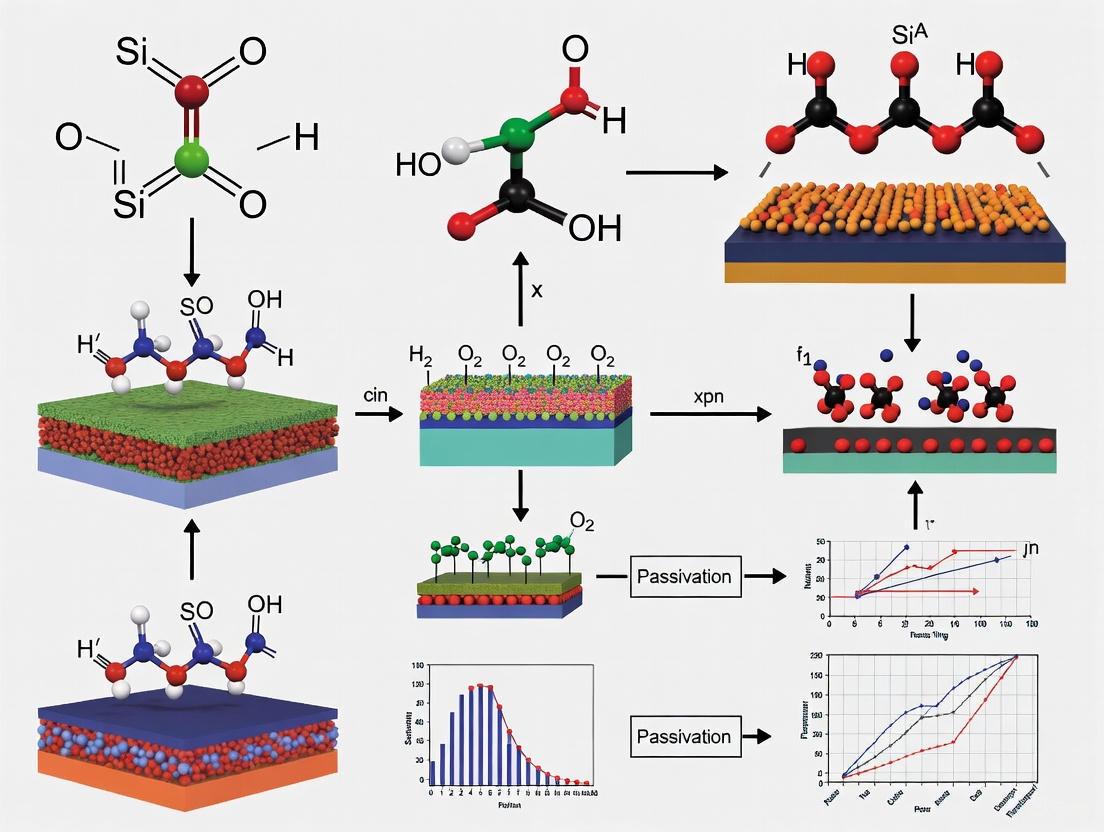
This article comprehensively explores surface passivation strategies, a critical engineering approach for mitigating detrimental surface defects and significantly improving charge transport in electronic materials and devices.
Surface Passivation Methods for Enhanced Electronic Transport: From Fundamentals to Advanced Applications
Abstract
This article comprehensively explores surface passivation strategies, a critical engineering approach for mitigating detrimental surface defects and significantly improving charge transport in electronic materials and devices. We examine the fundamental mechanisms of surface recombination and the role of chemical and field-effect passivation. The review details a variety of passivation methodologies, including atomic layer deposition, ligand engineering, and solution-based treatments, across material systems from silicon and III-V semiconductors to organic electronics and perovskite quantum dots. Practical guidance for troubleshooting common issues like defect-mediated recombination and interfacial instability is provided. Finally, we present a comparative analysis of passivation techniques, validating their performance through key metrics such as carrier mobility, external quantum efficiency, and operational stability, offering valuable insights for researchers developing next-generation optoelectronic and electronic devices.
Understanding Surface Passivation: Fundamental Mechanisms and Critical Need
Surface passivation is a critical technological process aimed at stabilizing a material's surface by reducing its reactivity through the chemical termination of dangling bonds or the physical creation of a protective energy barrier. [1] In semiconductor physics and electronic device engineering, this process is paramount for mitigating surface recombination, a phenomenon where electrons and holes recombine at the surface of a semiconductor, thereby reducing the number of available charge carriers and degrading the performance of optoelectronic devices. [1] [2] Unpassivated semiconductor surfaces contain a high density of defects, such as dangling bonds—bonds at the surface that are not satisfied by a neighboring atom. These defects introduce energy levels within the bandgap that act as efficient recombination centers, facilitating the non-radiative recombination of electron-hole pairs. [3] [1] Furthermore, these surfaces are exposed to the ambient environment, where they can absorb impurities that further increase the concentration of defect states. [3] The recombination of charge carriers at the surface competes with bulk recombination mechanisms and limits key device parameters, including carrier lifetime, open-circuit voltage, and short-circuit current. [1]
The fundamental goal of surface passivation is to reduce the surface recombination velocity (S), a key parameter quantified in cm/s that represents the effective velocity at which carriers recombine at the surface. [1] A lower S value indicates a better-passivated, less reactive surface. For instance, well-passivated silicon surfaces can achieve S values below 10 cm/s, whereas unpassivated surfaces can exceed 1000 cm/s. [1] Effective passivation is, therefore, not merely a supplementary step but a foundational requirement for advancing electronic transport research and enabling next-generation devices across disciplines, from organic field-effect transistors (OFETs) and photovoltaics to biological single-molecule studies. [4] [5] [6]
The Science of Surface Defects and Recombination
Types and Origins of Surface Defects
Surface defects fundamentally alter the electronic properties of a material. The most common defects include:
- Dangling Bonds: A strong perturbation of the crystal lattice at the surface creates unsaturated bonds that are highly reactive. [3] [1] On a SiO₂ surface, for instance, these dangling bonds act as charge traps, severely impacting charge transport in adjacent semiconductor layers. [4]
- Structural Defects: These include vacancies (missing atoms) and interstitials (atoms occupying non-lattice sites), which disrupt the periodic potential of the crystal lattice. [1]
- Adsorbed Impurities: The exposed surface can absorb contaminants from the ambient environment, which become localized defect centers. [3]
These defects create electronic energy states within the semiconductor bandgap. Their high concentration at the surface significantly increases the probability of non-radiative recombination, a process detrimental to device efficiency. [3] [1]
Recombination Mechanisms at Surfaces
Three primary recombination mechanisms are active at semiconductor surfaces, with their relative dominance depending on the material and surface conditions. The following diagram illustrates these pathways and the role of passivation in suppressing them.
Shockley-Read-Hall (SRH) Recombination
This is the dominant non-radiative recombination mechanism at surfaces in most semiconductors. [1] It is a two-step process mediated by trap states within the bandgap. [3] These defect states, introduced by dangling bonds or impurities, capture first an electron and then a hole (or vice versa), facilitating their recombination. [3] [1] The energy released during this process is typically transferred to lattice vibrations (phonons), i.e., heat. [3] The rate of SRH recombination is directly proportional to the density of these surface defect states. [1]
Auger Recombination
Auger recombination is a three-carrier, non-radiative process. [3] [1] It occurs when an electron and a hole recombine, and the resulting energy is transferred to a third carrier (another electron or hole), exciting it to a higher energy level within the same band. [3] This excited carrier then relaxes back to its equilibrium state by dissipating energy as heat. [3] Auger recombination becomes more significant in heavily doped semiconductors or under high injection conditions, and its rate can be enhanced by surface states. [1]
Radiative Recombination
Radiative recombination involves the direct recombination of an electron in the conduction band with a hole in the valence band, resulting in the emission of a photon. [3] [2] While this is the desired mechanism in light-emitting devices, it is generally less significant in indirect bandgap semiconductors like silicon. [1] Surface states and surface potential can influence the rate of radiative recombination. [1]
Quantitative Analysis of Passivation Efficacy
The effectiveness of a passivation strategy is quantitatively evaluated using specific performance metrics and electrochemical parameters. The following table summarizes key quantitative data from recent passivation studies across different material systems.
Table 1: Quantitative Efficacy of Surface Passivation Methods Across Applications
| Material System | Passivation Method | Key Performance Metric | Result | Reference |
|---|---|---|---|---|
| RR-P3HT (OFET) | OTS-F (10 mM in octadecene, 100°C, 48 h) | Saturated Hole Mobility (μsat) | 0.18 cm²V⁻¹s⁻¹ (>150x increase vs. control) | [4] |
| Blade-coated FAPbI₃ (PSC) | Bimolecular Amine Vapor (PEA & EDA) | Champion Power Conversion Efficiency (PCE) | 25.2% | [6] |
| Thermal Stability (85°C, N₂) | 99.4% retention after 2616 h | [6] | ||
| HRB400 Steel (Concrete) | Oxide Passive Film in Concrete | Electrode Resistance (from EIS) | Significant increase & stabilization after 5 days | [7] |
| Silicon | Advanced Dielectric Passivation | Surface Recombination Velocity (S) | < 10 cm/s (Unpassivated: >1000 cm/s) | [1] |
The data in Table 1 demonstrates the profound impact of optimized passivation. In organic electronics, the correct OTS passivation protocol can improve charge carrier mobility by orders of magnitude. [4] In photovoltaics, effective defect mitigation leads to both high initial efficiency and exceptional long-term operational stability, a critical combination for commercialization. [6] For metals, the stabilization of electrochemical parameters confirms the formation of a protective layer. [7]
Electrochemical methods are particularly powerful for characterizing passivation processes in situ. For steel in concrete, the stabilization of the open-circuit potential (OCP) indicates a transition from an active to a passive state. [7] Meanwhile, a continuous increase in the diameter of the impedance arc in Electrochemical Impedance Spectroscopy (EIS) measurements indicates the dynamic formation and development of a protective passive film. [7]
Experimental Protocols for Surface Passivation
This section provides detailed methodologies for two highly effective passivation techniques relevant to electronic transport research: chemical passivation of a dielectric surface for OFETs and a vapor-phase passivation for perovskite solar cells.
Protocol: OTS Passivation of SiO₂ for Enhanced OFET Performance
Background: This protocol details the formation of an octadecyltrichlorosilane (OTS) self-assembled monolayer (SAM) on a SiO₂ gate dielectric to create a uniform, hydrophobic surface that reduces charge-trapping defects and promotes favorable molecular orientation in overlying organic semiconductors, thereby enhancing charge carrier mobility. [4]
Experimental Workflow:
Materials
- Substrate: Heavily doped silicon with a thermal SiO₂ layer.
- Passivation Agent: Octadecyltrichlorosilane (OTS). [4]
- Solvents: Super-dehydrated toluene and super-dehydrated octadecene. [4] Note: The solvent choice is critical.
- Equipment: Cleanroom environment (glovebox or fume hood), immersion apparatus, hotplate, ultrasonic bath.
Step-by-Step Procedure
Substrate Cleaning and Activation:
- Clean SiO₂/Si substrates using a standard oxygen plasma treatment or piranha solution (Caution: Piranha solution is extremely corrosive and must be handled with extreme care). This step removes organic contaminants and activates the surface by generating silanol (Si-OH) groups, which are essential for SAM bonding.
OTS Solution Preparation:
- Prepare the OTS solution immediately before use in a moisture-free environment (e.g., a nitrogen glovebox).
- Two optimized formulations from the literature are [4]:
- OTS-A (Standard): 5 mM OTS in super-dehydrated toluene.
- OTS-F (Enhanced): 10 mM OTS in super-dehydrated octadecene.
- The use of octadecene as a solvent and higher temperature promotes a denser, more ordered SAM. [4]
SAM Formation via Immersion:
- Immerse the freshly cleaned substrates into the OTS solution.
- The immersion time and temperature are critical and depend on the solution [4]:
- For OTS-A (Toluene): Immerse for 12-36 hours at room temperature.
- For OTS-F (Octadecene): Immerse for 48 hours at 100°C.
- Ensure the container is sealed to prevent moisture ingress.
Rinsing and Curing:
- After immersion, remove the substrates and rinse thoroughly with fresh anhydrous toluene (or the corresponding solvent) to remove any physisorbed OTS molecules.
- Dry the substrates under a stream of nitrogen.
- Cure the SAM on a hotplate at approximately 110-120°C for 10-15 minutes to improve the stability and order of the monolayer.
Semiconductor Deposition and Device Fabrication:
- Deposit the organic semiconductor (e.g., RR-P3HT) onto the OTS-passivated substrate. The Floating Film Transfer Method (FTM) is highly effective for producing oriented films on such surfaces. [4]
- Complete OFET fabrication by defining source and drain electrodes atop the semiconductor layer.
Characterization and Validation
- Water Contact Angle: A significant increase (e.g., >90°) indicates successful formation of a hydrophobic SAM. [4]
- X-ray Diffraction (XRD): Can show improved crystallinity or edge-on orientation of the semiconductor on the passivated surface. [4]
- Electrical Characterization: Measure output and transfer characteristics of the OFET. Successful passivation is indicated by a high saturated mobility (>0.1 cm²V⁻¹s⁻¹ for P3HT), low threshold voltage, and high on/off ratio. [4]
Protocol: Bimolecular Amine Vapor Passivation for Perovskite Solar Cells
Background: This protocol describes a solvent-free vapor-phase technique to passivate blade-coated formamidinium lead triiodide (FAPbI₃) perovskite films. It uses two amines with complementary functions: 2-phenylethylamine (PEA) to coordinate with unpassivated Pb²⁺ and ethylenediamine (EDA) to react with FA⁺ ions, thereby reducing deep and shallow traps and improving interface energy alignment. [6]
Materials
- Perovskite Substrate: Blade-coated FAPbI₃ film on a suitable electrode (e.g., ITO/PEDOT:PSS).
- Passivation Agents: 2-phenylethylamine (PEA) and Ethylenediamine (EDA). [6]
- Solvent: Anhydrous toluene.
- Equipment: Sealed Petri dish, hotplate, temperature controller.
Step-by-Step Procedure
Perovskite Film Preparation:
- Prepare the FAPbI₃ perovskite film via blade-coating under low-humidity air conditions.
- Anneal the film at 120°C for 30 minutes to form the crystalline perovskite phase.
BAVP Solution Preparation:
- In a chemical fume hood, prepare a dilute solution of PEA and EDA in anhydrous toluene inside a Petri dish.
Vapor Passivation Process:
- Seal the Petri dish containing the amine solution and heat it until the amines are fully vaporized.
- Place the annealed perovskite films into the sealed Petri dish environment.
- Heat the entire system at an optimized temperature of 70°C for a predetermined time to facilitate the interaction between the perovskite surface and the amine vapors. [6]
Device Completion:
- Remove the passivated films and complete the solar cell device by depositing the electron transport layer (e.g., C₆₀) and top electrodes.
Characterization and Validation
- X-ray Photoelectron Spectroscopy (XPS): A shift of the Pb 4f peaks to lower binding energy confirms coordination between PEA and uncoordinated Pb²⁺ ions. [6]
- Kelvin Probe Force Microscopy (KPFM): A narrow surface potential distribution (e.g., 5.5 mV) indicates superior surface uniformity compared to solution-passivated films. [6]
- Device Performance: Successful passivation yields higher power conversion efficiency (PCE), enhanced open-circuit voltage (VOC), and dramatically improved thermal stability. [6]
The Scientist's Toolkit: Essential Reagents and Materials
Table 2: Key Research Reagent Solutions for Surface Passivation
| Reagent/Material | Function in Passivation | Application Field |
|---|---|---|
| Octadecyltrichlorosilane (OTS) | Forms a hydrophobic SAM on SiO₂, neutralizing charge-trapping silanol groups and promoting edge-on semiconductor orientation. [4] | Organic Field-Effect Transistors (OFETs) |
| 2-Phenylethylamine (PEA) | Lewis base that coordinates strongly with undercoordinated Pb²⁺ ions on perovskite surfaces, mitigating deep-level traps. [6] | Perovskite Solar Cells (PSCs) |
| Ethylenediamine (EDA) | Amine with high nucleophilicity that reacts preferentially with FA⁺ ions, reducing shallow traps and optimizing interfacial energy alignment. [6] | Perovskite Solar Cells (PSCs) |
| Beta-casein | Protein that effectively passivates hydrophobic nitrocellulose-coated surfaces, preventing non-specific binding of biomolecules. [5] [8] | Single-Molecule Biophysics |
| Aluminum Oxide (Al₂O₃) | Dielectric layer providing field-effect passivation via fixed negative charges that repel electrons from the surface. [1] | Silicon Photovoltaics |
| Hydrogen (H₂) | Used in a reducing atmosphere to create a thin rock salt passivation layer on cathode materials, suppressing oxygen loss. [9] | Lithium-Ion Batteries |
Surface passivation stands as an indispensable strategy for controlling surface defects and recombination, directly enabling advancements in electronic transport research. As demonstrated, the meticulous application of tailored passivation protocols—from OTS SAMs on dielectrics to bimolecular amine vapors on perovskites—can yield order-of-magnitude improvements in key performance metrics like charge carrier mobility, power conversion efficiency, and device stability. The quantitative frameworks and detailed experimental protocols provided herein serve as a foundational toolkit for researchers aiming to master surface effects. The continued refinement of these methods, guided by a deep understanding of the underlying recombination physics and defect chemistry, is critical for pushing the boundaries of electronics, optoelectronics, and energy storage technologies.
Surface passivation is a cornerstone of modern semiconductor technology, essential for maximizing the performance of electronic and optoelectronic devices ranging from solar cells to transistors [10]. The uncontrolled recombination of charge carriers (electrons and holes) at semiconductor surfaces, where the crystal lattice terminates, is a major source of efficiency loss [10]. Surface passivation refers to techniques that minimize the influence of these electrically active surface defects, thereby reducing undesired carrier recombination [10].
Effective passivation is achieved by addressing two fundamental requirements for surface recombination: the presence of electronic defect sites where recombination occurs, and the simultaneous availability of both electrons and holes at these sites [10]. This leads to two primary, complementary mechanisms for controlling surface recombination:
- Chemical Passivation: Reduces the density of electronic defect states (dangling bonds) at the semiconductor surface by forming chemical bonds that saturate these sites [10].
- Field-Effect Passivation: Reduces the concentration of one type of charge carrier near the surface by using an electric field to repel it, thus preventing encounters between electrons and holes at the interface [10].
The following diagram illustrates the elementary processes of carrier recombination and the distinct operating principles of these two passivation mechanisms.
Comparative Analysis: Mechanisms and Material Implementations
While both mechanisms aim to reduce recombination, they operate on fundamentally different physical principles and are often implemented using different materials. The table below provides a structured comparison of their core characteristics, enabling researchers to select the appropriate strategy for their specific application.
Table 1: Core Principle Comparison of Passivation Mechanisms
| Feature | Chemical Passivation | Field-Effect Passivation |
|---|---|---|
| Primary Goal | Reduce interface defect density (Dit) [10] | Reduce minority carrier concentration at the surface [10] |
| Fundamental Mechanism | Saturation of dangling bonds via chemical bonding [10] | Induction of band bending via fixed charges (Qf) or work function difference [10] |
| Key Metric | Low interface defect density (Dit) | High fixed charge (Qf) density |
| Typical Materials | Hydrogen (H), Sulfur (S), Chlorine (Cl), Nitrogen (N) [11]; Thin oxides (SiO2, Al2O3) [10] | Dielectrics with high intrinsic charge (e.g., Al2O3 for p-type, SiNx for n-type) [10] |
| Impact on Recombination | Directly eliminates recombination centers | Creates a energy barrier that repels carriers |
| Synergistic Effect | Provides the foundation for effective field-effect passivation by minimizing defect-mediated tunneling. | Complements chemical passivation by making the remaining defects less accessible to carriers. |
The efficacy of these mechanisms is quantified using specific parameters. The most critical metrics are the interface defect density (Dit), which chemical passivation aims to minimize, and the fixed charge (Qf), which is the source of field-effect passivation. For photovoltaic applications, the result is measured as an effective surface recombination velocity (Seff)
Table 2: Quantitative Performance of Passivation Schemes in Various Materials
| Semiconductor | Passivation Scheme/ Material | Passivation Type | Key Performance Metric | Reference |
|---|---|---|---|---|
| Silicon (Si) | Al2O3 | Chemical & Field-effect | J0 < 1 fA cm-2, iVOC ~740 mV [12] | [12] |
| Germanium (Ge) | a-Si / Al2O3 stack | Combined | Seff < 3 cm/s [11] | [11] |
| Indium Phosphide (InP) | POx / Al2O3 stack | Combined | Exceptional passivation quality reported [10] | [10] |
| Perovskite | PEAI (2D Layer) | Primarily Chemical | Defect passivation, moisture protection [13] [14] | [13] |
| Perovskite | MgFx | Primarily Field-effect | Interface dipole, improves electron transfer [13] | [13] |
Experimental Protocols and Workflows
Achieving high-quality surface passivation requires meticulous experimental procedures. The following protocols outline detailed methodologies for implementing both chemical and field-effect passivation, drawing from state-of-the-art research.
Protocol: Chemical Passivation of Perovskite Films using 2D Cations
This protocol details the formation of a two-dimensional (2D) perovskite capping layer on a three-dimensional (3D) perovskite film using phenethylammonium iodide (PEAI), a method widely used to achieve superior chemical passivation [13] [14].
- Primary Function: The ammonium group (-NH3+) in PEAI coordinates with undercoordinated Pb2+ ions on the perovskite surface, passivating halogen vacancy defects and forming a stable (PEA)2PbI4 2D layer that blocks moisture erosion [13] [14].
Materials:
- Passivation Solution: Phenethylammonium iodide (PEAI) or n-hexylammonium bromide (C6Br) dissolved in isopropanol (IPA) at a concentration of 2.5 mg/mL [14]. Optimized concentration for PEAI is 2 mg/mL [13].
- Substrate: A pre-synthesized 3D perovskite film (e.g., Cs0.03FA0.97PbI2.96Br0.04) on a charge transport layer [14].
- Equipment: Spin coater, hotplate, nitrogen blow gun.
Step-by-Step Procedure:
- Solution Deposition: Pipette 60 µL of the PEAI/IPA solution onto the center of the perovskite film.
- Spin-Coating: Immediately spin-coat the film at 4000 rpm for 30 seconds to form a uniform liquid film [14].
- Annealing: Transfer the film to a hotplate and anneal at 100°C for 5-10 minutes to facilitate the reaction between PEAI and the residual PbI2 in the perovskite film, leading to the crystallization of the 2D perovskite capping layer [13].
Protocol: Field-Effect Passivation using Atomic Layer Deposition (ALD) of Al2O3
This protocol describes the deposition of an aluminum oxide (Al2O3) thin film via ALD to induce field-effect passivation on silicon, a benchmark process known for its high negative fixed charge [10].
- Primary Function: The deposited Al2O3 layer introduces a high density of fixed negative charges (Qf) near the semiconductor surface. This induces band bending that creates an electric field, repelling minority carriers (electrons in p-type silicon) from the surface and drastically reducing recombination [10].
- Materials:
- Precursors: Trimethylaluminum (TMA) as the aluminum source and deionized water (H2O) as the oxidant.
- Carrier and Purging Gas: High-purity nitrogen (N2).
- Substrate: Chemically cleaned silicon wafer (with or without a thin native chemical oxide).
- Step-by-Step Procedure:
- Substrate Loading: Load the silicon substrate into the ALD reactor chamber and heat to a temperature of 200°C.
- TMA Dose: Expose the substrate to a TMA vapor pulse for a duration of 0.1 seconds.
- First Purge: Purge the reactor with N2 for 2-10 seconds to remove all non-chemisorbed precursors and reaction by-products.
- H2O Dose: Expose the substrate to an H2O vapor pulse for 0.1 seconds.
- Second Purge: Purge the reactor again with N2 for 2-10 seconds.
- Cycle Repetition: Repeat steps 2-5 for 20-100 cycles to achieve a film thickness of approximately 2-10 nm.
- Post-Deposition Anneal: Optional but critical for performance. Anneal the film at 400°C for 30 minutes in a N2 atmosphere to stabilize the film and activate the passivation properties.
The workflow below integrates these protocols, illustrating how chemical and field-effect passivation can be applied sequentially in a device fabrication process.
The Scientist's Toolkit: Essential Reagents and Materials
Successful implementation of passivation strategies relies on a specific set of research-grade materials and reagents. The following table catalogues key solutions used in the featured experiments and broader field.
Table 3: Key Research Reagent Solutions for Surface Passivation
| Reagent / Material | Function / Passivation Role | Example Application & Notes |
|---|---|---|
| Phenethylammonium Iodide (PEAI) | Chemical Passivator: Ammonium group passivates Pb-related defects; forms 2D (PEA)2PbI4 perovskite layer on 3D perovskite, enhancing stability and Voc [13] [14]. | Perovskite Solar Cells. Dissolved in Isopropanol (2-2.5 mg/mL) for spin-coating [13] [14]. |
| n-Hexylammonium Bromide (C6Br) | Chemical Passivator: Short-chain alkylammonium cation for 2D perovskite formation; bromide anion can assist in halide vacancy healing [14]. | Carbon-based PSCs. Champion PCE of 21.0% reported; reduces ionic conductivity [14]. |
| Trimethylaluminum (TMA) | ALD Precursor: Source of aluminum for depositing Al2O3 passivation layers. Creates films with high negative fixed charge for field-effect passivation [10]. | Silicon, Germanium, III-V Solar Cells & Transistors. Used in ALD cycles with H2O or O3 as co-reactant [12] [10]. |
| Magnesium Fluoride (MgFx) | Field-Effect Passivator: Creates an interface dipole layer that realigns energy levels, improving electron extraction and reducing voltage loss [13]. | Wide-Bandgap Perovskite Solar Cells. Used in a dual-layer stack with PEAI; optimal thickness ~1.5 nm [13]. |
| (18-Crown-6) Potassium (18C6-K+) | Molecular Passivator: Crown ether complex passivates surface defects on metal oxides like SnO2 via Sn-ether and O-ether interactions, reducing trap states [15]. | Electron Transport Layers (e.g., SnO2) in PSCs. First-principles calculations show it increases defect formation energy [15]. |
| Aluminum-Doped Zinc Oxide (AZO) | Multifunctional Layer: Serves as a Transparent Conducting Oxide (TCO) while also providing field-effect passivation to underlying silicon [12]. | Silicon Heterojunction (SHJ) & Tandem Solar Cells. ALD-deposited AZO/AlOx stacks achieve J0 < 1 fA cm-2 [12]. |
Analyzing Interface Defect Density (Dit) and Fixed Charge (Qf)
The performance and stability of modern electronic and optoelectronic devices are profoundly influenced by the quality of their material interfaces. Interface Defect Density (Dit) and Fixed Charge (Qf) have emerged as two critical, interconnected metrics for quantifying surface passivation quality. Effective management of these parameters directly correlates with enhanced electronic transport properties, a cornerstone of research in photovoltaics, light-emitting diodes, and advanced transistors. Dit represents the density of electronic trap states at an interface that promote carrier recombination, directly limiting device efficiency by capturing free charge carriers. Simultaneously, Qf denotes the density of static, built-in electrical charges within a passivating layer, which governs field-effect passivation by repelling minority carriers from the defective interface, thereby reducing recombination even without eliminating the traps themselves. A comprehensive analysis of these parameters is not merely a characterization exercise but a fundamental requirement for rational passivation engineering aimed at superior device performance.
Fundamental Concepts and Interrelationships
Defining the Core Metrics
Interface Defect Density (Dit) is a measure of the number of electrically active traps per unit area and per unit energy within the semiconductor bandgap at an interface. These defects, often originating from dangling bonds, impurities, or lattice mismatches, act as recombination centers (Shockley-Read-Hall recombination), reducing the minority carrier lifetime. A lower Dit indicates superior chemical passivation, meaning the chemical structure of the interface has been engineered to minimize the creation of these trap states.
Fixed Charge Density (Qf), typically reported in units of cm⁻², refers to a stable, built-in charge density located within a dielectric or passivation layer. These charges are immobile and create a permanent electric field at the interface. The polarity and magnitude of Qf are material-dependent; for instance, aluminum oxide (AlOₓ) often possesses negative fixed charges, while silicon nitride (SiNₓ) can exhibit positive fixed charges. The primary role of Qf is to induce field-effect passivation. In a silicon solar cell, for instance, a high density of negative fixed charges (Qf < 0) will repel electrons from the surface, creating a region depleted in minority carriers and thus drastically reducing surface recombination.
Synergistic Passivation Mechanism
The interplay between Dit and Qf is not merely additive but synergistic. The ultimate surface recombination velocity (SRV) is determined by both factors. Even with a low Dit, a negligible Qf can result in substantial recombination if the interface carrier concentration is high. Conversely, a high Qf can provide excellent passivation even on an interface with a moderate Dit by electrostatically "shielding" the carriers from the traps. This synergy is formalized in the passivation quality, which depends on the product of the minority carrier concentration at the interface and the Dit. The fixed charges directly modulate the former through field-effect. Research on interdigitated back contact (IBC) silicon heterojunction solar cells has demonstrated that fixed charges in the transition region can compensate for poor chemical passivation, with negative polarity charges (|Qf| > 5 × 10¹¹ cm⁻²) significantly enhancing hole/electron transport and boosting power conversion efficiency [16].
Table 1: Impact of Fixed Charge Polarity and Density on Passivation Quality
| Fixed Charge Density | Q_f | (cm⁻²) | Recommended Polarity | Key Effect on Device Performance |
|---|---|---|---|---|
| > 1 × 10¹² | Negative (generally superior) | Superior Power Conversion Efficiency (PCE) achievable, less dependent on chemical passivation quality [16] | ||
| 5 × 10¹¹ to 1 × 10¹² | Negative | Enhances carrier transport across transition regions; boosts efficiency [16] | ||
| 2 × 10¹¹ to 5 × 10¹¹ | Transition Region | Performance becomes highly dependent on the quality of chemical passivation (S_gap) [16] | ||
| < 2 × 10¹¹ | Positive | Allows for high efficiency if interface defect density is low [16] |
Measurement and Characterization Techniques
Accurately quantifying Dit and Qf is essential for passivation engineering. Several established characterization methods are employed, each with its own strengths and specific applications.
Capacitance-Voltage (C-V) Measurements
This is a primary technique for characterizing metal-oxide-semiconductor (MOS) structures. High-frequency (HF) and quasi-static (QS) C-V measurements are used in tandem.
- Principle: The shift of the C-V curve along the voltage axis is directly related to the effective fixed charge density (Qf) at the dielectric/semiconductor interface. The stretch-out of the curve, indicating a deviation from the ideal, is caused by the response of interface traps (Dit) to the changing surface potential.
- Data Extraction: Qf is calculated from the flatband voltage shift. Dit is extracted by comparing the high-frequency and quasi-static C-V curves, or by using the Terman method which analyzes the stretch-out of the HF C-V curve.
Conductance Method
This is considered one of the most accurate and sensitive methods for determining D_it, especially for low defect densities.
- Principle: It measures the AC loss due to the capture and emission of carriers by interface traps as a function of frequency and bias voltage.
- Data Extraction: The equivalent parallel conductance is measured and analyzed to directly extract the D_it and the capture cross-sections of the traps.
Photo-Luminescence (PL) and Modulated Photo-Luminescence (MPL)
These are contactless, non-destructive optical techniques ideal for in-line monitoring and in-situ studies.
- Principle: They measure the effective minority carrier lifetime (τeff), which is a direct reflection of the overall passivation quality. The lifetime is influenced by both bulk and surface recombination. For well-prepared wafers with high bulk lifetime, τeff is dominated by surface recombination, which is a function of Dit and Qf.
- Data Extraction: The effective surface recombination velocity (Seff) is calculated from τeff. While it provides a combined measure of passivation quality, advanced in-situ MPL setups, as used in a study on AlOₓ, can monitor the activation kinetics of Q_f during annealing processes in real-time. This approach was used to detect stable positive fixed charge densities on the order of +1 × 10¹² cm⁻² in AlOₓ layers [17].
Table 2: Comparison of Primary Characterization Techniques for D_it and Q_f
| Technique | Measured Parameter | Extracted Metrics | Advantages | Limitations |
|---|---|---|---|---|
| Capacitance-Voltage (C-V) | Capacitance vs. Voltage | Qf, Dit | Standard, well-understood, provides info on charge and traps. | Requires MOS capacitor fabrication; can be affected by series resistance, leakage. |
| Conductance Method | AC Conductance vs. Frequency/Bias | D_it, Capture Cross-section | Highly accurate and sensitive for low D_it. | Complex data analysis; requires sophisticated instrumentation. |
| Photo-Luminescence (PL) | Minority Carrier Lifetime | Effective Surface Recombination Velocity (S_eff) | Contactless, fast, non-destructive, can be mapped. | Provides combined effect of Dit and Qf; requires modeling to deconvolute. |
| In-situ Modulated PL (MPL) | Lifetime during processing (e.g., annealing) | Passivation kinetics, Q_f activation | Real-time monitoring of passivation quality evolution. | Specialized setup required; interpretation of kinetics can be complex. |
Experimental Protocols for Passivation and Analysis
The following section outlines a generalized yet detailed experimental workflow for the deposition, passivation, and characterization of a dielectric layer on a semiconductor substrate, incorporating specific case studies.
Protocol: Passivation Quality Analysis of ALD-AlOₓ on c-Si
This protocol is adapted from studies on achieving excellent surface passivation for silicon solar cells [17].
1. Substrate Preparation:
- Material: Use double-side polished (DSP) n-type Float-Zone (FZ) silicon wafers (e.g., 280 µm thick, ~3 Ω·cm resistivity). FZ wafers are preferred for their high bulk lifetime, ensuring that measured lifetime is surface-limited.
- Cleaning: Immerse wafers in a 5% hydrofluoric (HF) acid solution for 30 seconds to remove the native silicon oxide. This ensures a clean, hydrogen-terminated surface prior to deposition. Rinse and dry.
2. Dielectric Deposition (AlOₓ):
- Technique: Thermal Atomic Layer Deposition (ALD).
- Parameters: Deposit a ~9 nm thick AlOₓ film at 150°C using precursors such as trimethylaluminum (TMA) and H₂O vapor. ALD provides exceptional conformity and thickness control.
3. Post-Deposition Annealing:
- Purpose: This step is crucial for activating the fixed charges in the AlOₓ layer and for reducing the interface defect density (D_it) through chemical rearrangement.
- Process: Anneal the samples in a controlled atmosphere (e.g., N₂) at temperatures ranging from 300°C to 450°C for 15-30 minutes. The exact temperature and time must be optimized.
4. In-situ Characterization (Modulated Photo-Luminescence - MPL):
- Setup: Integrate an in-situ MPL tool with the annealing furnace or PECVD reactor.
- Measurement: Continuously monitor the minority carrier lifetime at a fixed injection level (e.g., 1 x 10¹⁵ cm⁻³) throughout the annealing and cooling cycle. This allows observation of the passivation kinetics, such as a lifetime drop at high temperature followed by recovery during cooling, indicative of Q_f activation [17].
5. Ex-situ Electrical Characterization:
- Capacitance-Voltage (C-V): Fabricate MOS capacitors by evaporating metal dots onto the AlOₓ layer. Perform high-frequency (1 MHz) C-V measurements. The flatband voltage shift (ΔVfb) is used to calculate the fixed charge density: Qf = -Cox * ΔVfb / q, where C_ox is the oxide capacitance per unit area and q is the elementary charge.
- Photo-Luminescence (PL) Mapping: Perform a full-wafer PL map to assess the spatial uniformity of the effective minority carrier lifetime (τ_eff), which translates to the uniformity of the passivation quality.
Case Study: Binary Synergistical Post-Treatment in Perovskite Solar Cells
This protocol highlights defect passivation in state-of-the-art perovskite photovoltaics [18].
1. Perovskite Film Fabrication:
- Prepare a high-quality formamidinium lead iodide (FAPbI₃) perovskite film using a modified two-step deposition method on a substrate that includes an electron transport layer (e.g., SnO₂).
2. Post-Treatment Passivation:
- Passivation Solution: Prepare a binary solution by blending 4-tert-butyl-benzylammonium iodide (tBBAI) and phenylpropylammonium iodide (PPAI) in isopropanol (IPA).
- Application: Spin-coat the binary passivation solution directly onto the perovskite surface without further annealing. This forms a thin passivating layer.
3. Characterization of Passivation Efficacy:
- X-ray Photoelectron Spectroscopy (XPS): Analyze the Pb 4f and I 3d core-level spectra. A higher Pb:I ratio in passivated samples indicates effective filling of iodine vacancies (a common defect), demonstrating a reduction in D_it.
- Grazing-Incidence Wide-Angle X-Ray Scattering (GIWAXS): Characterize the molecular packing and crystallinity of the passivation layer. A more ordered, parallel orientation of the organic molecules enhances charge transport alongside passivation.
- Device Performance: Fabricate complete n-i-p perovskite solar cells. Measure the power conversion efficiency (PCE), open-circuit voltage (VOC), and fill factor (FF). A significant increase in VOC and PCE (e.g., to a certified 26.0%) is direct evidence of suppressed non-radiative recombination due to reduced D_it [18].
The Scientist's Toolkit: Research Reagent Solutions
Table 3: Essential Materials for Surface Passivation Research
| Material / Reagent | Function in Research | Application Example |
|---|---|---|
| Aluminum Oxide (AlOₓ) | Passivation layer providing high negative fixed charge density (Qf ~ -10¹² to -10¹³ cm⁻²) and low Dit on c-Si. | Rear surface passivation in PERC, TOPCon, and HJT silicon solar cells [17]. |
| Phenylpropylammonium Iodide (PPAI) | Organic halide salt used for surface passivation of perovskite films; coordinates with under-coordinated Pb²⁺ ions. | Binary synergistical post-treatment for defect mitigation in high-efficiency perovskite solar cells [18]. |
| 4-tert-butyl-benzylammonium Iodide (tBBAI) | Co-passivator that enhances molecular packing and energy level alignment when mixed with other salts. | Used in a blended system with PPAI to improve crystallinity and hole extraction in PSCs [18]. |
| 1-ethylpyridine hydrobromide (EPB) | Zwitterionic pyridine derivative for interfacial defect passivation; N atom coordinates Pb²⁺, Br⁻ fills I⁻ vacancies. | Post-treatment of FA₁₋ₓMAₓPbI₃₋ᵧBrᵧ perovskite films to reduce non-radiative recombination [19]. |
| Hydrofluoric Acid (HF) 5% solution | Etchant for removing native silicon oxide from wafer surfaces prior to passivation layer deposition. | Critical pre-deposition cleaning step for achieving low D_it on c-Si wafers [17]. |
| ZnMgO Nanoparticles (ZMO NPs) | Electron transport layer (ETL) material in QLEDs and photodiodes; requires passivation of its own surface -OH groups. | ETL in quantum dot optoelectronic devices; performance enhanced by alcohol treatment to remove charge traps [20] [21]. |
The systematic analysis and control of Interface Defect Density (Dit) and Fixed Charge (Qf) form the bedrock of advanced surface passivation engineering. As demonstrated across silicon and perovskite technologies, a deep understanding of the synergistic relationship between chemical passivation (low Dit) and field-effect passivation (high |Qf|) is indispensable. The presented experimental protocols and characterization techniques provide a framework for researchers to quantitatively evaluate and optimize these parameters. The ongoing development of novel passivation materials and sophisticated in-situ analysis methods, as highlighted in the provided research, continues to push the boundaries of electronic device performance. Mastering the interplay of Dit and Qf is not just a metric for analysis but a powerful strategy for enabling the next generation of high-efficiency, stable electronic and optoelectronic devices.
The Impact of High Surface-to-Volume Ratios in Modern Semiconductor Devices
The relentless drive toward miniaturization and enhanced performance in semiconductor technology has led to the proliferation of device architectures with increasingly high surface-to-volume ratios. This transition from planar to three-dimensional structures—including fin field-effect transistors (finFETs), gate-all-around nanosheets, and advanced memory cells—fundamentally alters the relative influence of surface properties on device performance. While enabling continued scaling in accordance with Moore's Law and improved electrostatic control, these designs present a formidable challenge: surfaces become the dominant factor determining electronic characteristics. Unpassivated surfaces host a high density of electrically active defects, or "dangling bonds," that act as trapping and recombination centers for charge carriers, severely degrading device efficiency, performance, and reliability [10].
Surface passivation has therefore emerged as a cornerstone of modern semiconductor technology, comprising a suite of engineering techniques designed to neutralize these surface defects. Effective passivation is no longer a secondary consideration but a primary enabler for devices ranging from high-performance computing chips and ultra-efficient solar cells to next-generation microLED displays and quantum dot-based optoelectronics [10] [20]. This document outlines the fundamental principles, quantitative metrics, and experimental protocols for implementing surface passivation schemes critical for maintaining superior electronic transport in high-surface-area semiconductor devices, providing a practical framework for researchers and process engineers.
Fundamental Principles and Key Challenges
The Surface Recombination Problem
In semiconductor devices, the precise control of charge carriers (electrons and holes) is essential for functionality. At the surface of a semiconductor, the crystalline lattice terminates, giving rise to unsaturated bonds known as dangling bonds. These defects create electronic energy states within the bandgap that facilitate the recombination of electrons and holes, a process known as surface recombination. This phenomenon reduces the population of free carriers available for conduction, leading to increased power consumption, reduced switching speeds, and diminished efficiency in photonic devices [10].
The impact of surface recombination is quantified by the surface recombination velocity (S). A lower 'S' value indicates more effective passivation. The detrimental effect of surface recombination is exponentially amplified in devices with high surface-to-volume ratios because a larger proportion of the total semiconductor material is in close proximity to a surface, making the bulk properties of the material less relevant than its interface properties.
Mechanisms of Surface Passivation
Effective surface passivation targets the root causes of recombination and can be achieved through two primary mechanisms, often employed in concert:
- Chemical Passivation: This approach reduces the density of electronic defect states (interface trap density, Dit) at the semiconductor surface. It is typically achieved by saturating the dangling bonds with strong chemical bonds, forming a continuous, stable interface. For silicon, a thin, thermally grown silicon dioxide (SiO₂) layer provides excellent chemical passivation. For other semiconductors, suitable dielectric layers or chemical treatments must be identified to form a low-defect interface [10].
- Field-Effect Passivation: This mechanism reduces the concentration of one type of charge carrier (electrons or holes) near the surface via electrostatic fields. It can be induced by fixed charges (Qf) within the passivating film or by a difference in work function between the semiconductor and the passivation layer. This field creates a energy barrier that repels minority carriers from the surface, thereby minimizing their interaction with any remaining defects. Atomic layer deposition (ALD) of Al₂O₃ on silicon, for instance, provides outstanding field-effect passivation due to a high density of negative fixed charges [10].
Quantitative Analysis of Passivation Performance
The performance of various semiconductor and passivation layer combinations can be evaluated using key metrics. The following table summarizes the passivation properties and typical applications for prominent materials.
Table 1: Passivation Approaches and Performance for Different Semiconductors
| Semiconductor | Passivation Scheme | Key Passivation Mechanism | Surface Recombination Velocity (cm/s) | Common Applications |
|---|---|---|---|---|
| Silicon (Si) | Thermal SiO₂ | Chemical Passivation | < 10 | CMOS transistors, Solar cells [10] |
| Silicon (Si) | ALD Al₂O₃ | Field-Effect (High negative Qf) | < 2 | PERC/TOPCon solar cells, finFETs [10] |
| Germanium (Ge) | PECVD a-Si / PEALD Al₂O₃ stack | Chemical + Field-Effect | >10x improvement vs. native oxide | High-mobility channels [10] |
| Indium Phosphide (InP) | ALD POₓ / Al₂O₃ stack | Chemical (P-reservoir) + Field-Effect | Significant improvement | High-frequency transistors, Photonics [10] |
| Zinc Magnesium Oxide (ZMO) | Alcohol Treatment (MeOH, EtOH, IPA) | Removal of surface -OH groups | N/A (Reduces charge traps) | QLEDs, Photodiodes (as ETL) [20] |
Table 2: Comparison of Thin-Film Deposition Techniques for Passivation
| Deposition Technique | Thickness Control | Conformality on 3D Structures | Typical Deposition Temperature | Suitability for High-Volume Manufacturing |
|---|---|---|---|---|
| Plasma-Enhanced Chemical Vapor Deposition (PECVD) | Moderate | Good | Medium to High | Excellent (Established) |
| Atomic Layer Deposition (ALD) | Excellent (Atomic Scale) | Excellent | Low to High | Excellent (Growing, esp. for solar cells) [10] |
| Spatial ALD | Excellent | Good | Low to Medium | Excellent for throughput-sensitive apps (e.g., solar) [10] |
| Physical Vapor Deposition (PVD) | Moderate | Poor (Line-of-sight) | Low to Medium | Good (Limited by conformality) |
Experimental Protocols for Surface Passivation
Protocol 1: ALD of Al₂O₃ for Silicon Surface Passivation
Application: This protocol is widely used in the fabrication of high-efficiency silicon solar cells (PERC, TOPCon) and for passivating the 3D surfaces of advanced CMOS transistors [10].
Materials and Equipment:
- Substrate: Single-crystal silicon wafer (p-type or n-type)
- Precursors: Trimethylaluminum (TMA) and H₂O (or O₃)
- Equipment: Thermal or Plasma-Enhanced ALD reactor
- Characterization: Spectroscopic Ellipsometry (for thickness), Quasi-Steady-State Photoconductance (QSSPC) for lifetime measurement
Procedure:
- Substrate Pre-cleaning: Perform a standard RCA clean (SC-1 and SC-2) to remove organic and metallic contaminants from the silicon surface. Terminate the surface with a thin chemical oxide using a dilute HF dip followed by an SCI clean.
- Load Substrate: Transfer the cleaned wafer into the ALD reactor chamber. Pump down to base pressure (typically < 1 Torr).
- Deposit Al₂O₃ Film:
- Heat the substrate to a temperature between 150°C and 300°C.
- Expose the surface to TMA vapor for a pulse duration sufficient for complete surface reaction (e.g., 100-500 ms). The reaction is self-limiting.
- Purge the reactor with an inert gas (N₂ or Ar) to remove all non-reacted TMA and by-products.
- Expose the surface to the co-reactant (H₂O or O₃) for a similar pulse duration.
- Purge again with inert gas.
- Repeat this cycle until the desired film thickness is achieved (typically 5-30 nm). Each cycle adds approximately 0.1-0.13 nm of material.
- Post-Deposition Anneal: After deposition, anneal the film at 400-450°C for 15-30 minutes in a N₂ ambient. This step is critical for activating the negative fixed charge and optimizing the passivation quality.
- Passivation Quality Assessment: Measure the minority carrier lifetime using a QSSPC tool. Calculate the surface recombination velocity (S) to quantify passivation effectiveness.
Protocol 2: Alcohol Treatment for Hydroxyl-Free ZnMgO Nanoparticles
Application: This protocol is designed to remove surface hydroxyl groups (-OH) from solution-processed ZnMgO nanoparticles (ZMO NPs) used as electron transport layers (ETLs) in quantum-dot light-emitting diodes (QLEDs) and photodiodes (QPDs) [20].
Materials and Equipment:
- Synthesized ZMO NPs in ethanol (EtOH) dispersion
- Alcohol solvents: Methanol (MeOH), Ethanol (EtOH), or Isopropanol (IPA)
- Substrate: ITO-coated glass
- Equipment: Spin coater, hot plate
Procedure:
- Deposit ETL Layer: Spin-coat the ZMO NP dispersion onto a pre-cleaned ITO substrate at 2500-3500 rpm for 60 seconds.
- Alcohol Treatment (Rinse-Spin Cycle):
- Immediately after deposition, while the film is still wet, flood the substrate with the selected alcohol solvent (e.g., MeOH).
- Spin the substrate at 3500 rpm for 30 seconds to rinse away residual solvents and ligands and facilitate the removal of surface -OH groups via hydrogen bonding and proton transfer.
- Repeat the rinse-spin cycle a second time to ensure complete treatment.
- Annealing: Place the substrate on a hot plate and anneal at 80°C for 30 minutes in ambient air to remove residual solvent and stabilize the film.
- Validation: The success of the -OH removal can be confirmed via Fourier-Transform Infrared Spectroscopy (FTIR) by observing the reduction in -OH absorption peaks. The enhanced performance is validated by measuring the current density, luminance, and external quantum efficiency (EQE) of the fabricated QLEDs, with treated devices showing significantly improved operational lifetime (e.g., 28 hours vs. 4 minutes for untreated devices) [20].
Visualization of Passivation Concepts and Workflows
Passivation Mechanism Flow
ALD Passivation Protocol
The Scientist's Toolkit: Essential Research Reagents and Materials
Table 3: Key Research Reagents for Surface Passivation Experiments
| Reagent / Material | Function / Application | Key Consideration |
|---|---|---|
| Trimethylaluminum (TMA) | Aluminum precursor for ALD of Al₂O₃ films. | Pyrophoric; requires careful handling. Enables field-effect passivation on Si [10]. |
| High-Purity H₂O or O₃ | Co-reactants for thermal and plasma-enhanced ALD processes. | O₃ can lead to higher film density but may cause oxidation of sensitive substrates. |
| Beta-Casein | A protein used for effective biological surface passivation in single-molecule studies. | Cost-effective; minimizes non-specific adsorption of biomolecules like chromatin [22]. |
| Alcohol Solvents (MeOH, EtOH, IPA) | Used in rinse-spin cycles to remove surface hydroxyl (-OH) groups from metal oxide NPs. | Critical for stabilizing ZMO NP ETLs in QLEDs, preventing charge trap formation [20]. |
| ALD POₓ Layer | Acts as a phosphorus reservoir for passivating InP surfaces. | Mitigates deep-level defects caused by phosphorous vacancies. Often capped with Al₂O₃ for stability [10]. |
| PECVD amorphous Silicon (a-Si) | Used as an intermediate layer for passivating germanium surfaces. | Prevents the formation of unstable native germanium oxide [10]. |
Surface defects in semiconductor materials are a critical area of research, directly impacting the performance and stability of electronic and optoelectronic devices. Uncoordinated atoms, oxygen vacancies, and hydroxyl groups represent three predominant classes of surface imperfections that introduce charge traps, promote non-radiative recombination, and accelerate material degradation. This article details the characteristic behaviors of these defects and provides standardized application notes and experimental protocols for their effective passivation, framed within a broader research thesis on enhancing electronic transport through advanced surface engineering. The methodologies outlined are designed for researchers and scientists developing high-performance electronic materials, with particular relevance to photovoltaic and thin-film semiconductor technologies.
Defect-Specific Passivation Protocols
Uncoordinated Lead Ions (Pb²⁺) in Perovskites
1. Defect Characteristics and Impact: Uncoordinated Pb²⁺ ions form at perovskite surfaces and grain boundaries where the crystalline lattice terminates abruptly, leaving undercoordinated atoms. These sites act as deep-level traps for charge carriers, severely limiting open-circuit voltage (VOC) and overall power conversion efficiency (PCE) in solar cells by promoting non-radiative recombination [23].
2. Passivation Reagents and Mechanisms: Lewis base functional groups, such as sulfone, ammonium, and carbonyl, effectively passivate these sites by donating electron density to the empty orbitals of undercoordinated Pb²⁺. The molecular geometry and charge distribution of the passivator are critical for optimal binding and minimal disruption to charge transport.
- Recommended Reagents:
- 4-Hydroxyphenylethyl Ammonium Iodide (p-OHPEAI): The ammonium group (-NH₃⁺) coordinates with uncoordinated Pb²⁺, while the hydroxyl group (-OH) enables parallel molecular adsorption on the perovskite surface via synergistic interactions. This configuration eliminates the formation of insulating two-dimensional (2D) phases that hinder charge extraction [24].
- Diphenylsulfone Derivatives (e.g., DMPS): Molecules with a Lewis base sulfone group and an electron-rich conjugated structure (D-π-A) demonstrate strong passivation capacity. The optimized charge distribution in DMPS enhances the interaction with the perovskite surface and improves energy level alignment [25].
- Short-Chain Ligands (e.g., PEABr): For perovskite quantum dots, 2-phenethylammonium bromide (PEABr) effectively passivates Br⁻ vacancies and uncoordinated Pb²⁺, suppressing non-radiative recombination and improving photoluminescence quantum yield (PLQY) to 78.64% [26].
- NH₃ Gas: Gaseous ammonia significantly increases the iodine vacancy formation energy (by 1.54 eV) and bonds directly with uncoordinated Pb²⁺, achieving non-destructive, solvent-free surface passivation [27].
3. Quantitative Performance Data:
Table 1: Performance enhancement via uncoordinated ion passivation.
| Passivation Method | Device Type | Key Performance Improvement | Stability Retention |
|---|---|---|---|
| DMPS Molecule [25] | Perovskite Solar Cell | PCE: 23.27% | 92.5% after 1000 h at 30% RH |
| p-OHPEAI Molecule [24] | Wide-Bandgap PSC (1.77 eV) | VOC: 1.344 V (Deficit: 0.426 V) | >90% after 350 h operation |
| NH₃ Gas + PT [27] | Perovskite Solar Cell | PCE: 24.51% (Certified) | 90% after 2000 h in air |
| PEABr Ligand [26] | CsPbBr₃ QLED | EQE: 9.67% (3.88x control) | N/A |
4. Standardized Experimental Protocol: Title: Solution-Based Molecular Passivation of Perovskite Surfaces Objective: To passivate uncoordinated Pb²⁺ defects on a perovskite film using p-OHPEAI to reduce non-radiative recombination.
- Materials: Pre-formed perovskite film (e.g., FA₀.₈₅MA₀.₁₅PbI₃), p-OHPEAI powder, isopropanol (IPA, anhydrous), dimethyl sulfoxide (DMSO).
- Procedure:
- Solution Preparation: Dissolve p-OHPEAI in anhydrous IPA at a concentration of 1-2 mg/mL. Stir for 1-2 hours at 60°C until fully dissolved.
- Film Deposition: Transfer the pre-cleaned perovskite substrate to a spin coater. Dynamic spin-coating of the p-OHPEAI solution at 3000 rpm for 30 seconds is initiated.
- Annealing: The film is immediately transferred to a hotplate and annealed at 100°C for 10 minutes to remove residual solvent and promote molecular adhesion.
- Integration: The passivated film is directly integrated into the subsequent stack fabrication (e.g., deposition of electron transport layer and electrodes) without further processing.
- Quality Control: Characterize passivation efficacy via photoluminescence (PL) lifetime measurements and Fourier-transform infrared (FTIR) spectroscopy to confirm molecular binding.
Oxygen Vacancies in Metal Oxides
1. Defect Characteristics and Impact: Oxygen vacancies (Vꝋ) are common in metal oxide semiconductors (e.g., TiO₂, IZO, SnO₂). These vacancies create trap states below the conduction band minimum, which capture free electrons and degrade electron mobility. Upon air exposure, ambient oxygen adsorbs into these vacancies, trapping electrons and causing large threshold voltage (Vth) shifts and on-current degradation in transistors [28] [29].
2. Passivation Reagents and Mechanisms: The primary strategy involves filling the vacancy with an oxygen species or blocking it with a strongly electronegative element like fluorine.
- Recommended Reagents:
- UV/O⁻ Ion Treatment: Exposure to ultraviolet light and negative oxygen ions effectively reduces surface oxygen vacancy concentration. This treatment passivates vacancies and improves field-effect mobility up to 41 cm² V⁻¹ s⁻¹ in solution-processed indium zinc oxide (IZO) transistors [28].
- Gaseous Fluorine (F₂): A surface passivation method with gaseous fluorine targets TiO₂ surface oxygen vacancies. Fluorine atoms fill the vacancies, reducing trap states, mitigating interface structure distortion, and enhancing interfacial charge transfer [29].
- Potassium Tripolyphosphate (PT): When used at the SnO₂/perovskite interface, the ─P═O group in PT mitigates charged defects, including oxygen vacancies, and lowers carrier transport barriers [27].
3. Quantitative Performance Data:
Table 2: Performance enhancement via oxygen vacancy passivation.
| Passivation Method | Material/Device | Key Performance Improvement | Stability Enhancement |
|---|---|---|---|
| UV/O⁻ Ion [28] | Solution-Processed IZO FET | Mobility: 41 cm² V⁻¹ s⁻¹; On/off: 10⁸ | Vth shift reduced from 5 V to 0.07 V after 2 days in air |
| Gaseous Fluorine [29] | TiO₂-based PSC | PCE: 20.43% (7.7% increase vs. control) | N/A |
| PT Interlayer [27] | SnO₂ in PSC | Enables PCE of 24.51% in full device | 90% after 2000 h in air |
4. Standardized Experimental Protocol: Title: UV/O⁻ Ion Passivation of Metal Oxide Films Objective: To reduce oxygen vacancy concentration on a solution-processed IZO surface for improved transistor stability.
- Materials: Solution-processed IZO film on substrate, UV ozone cleaner, oxygen gas source.
- Procedure:
- Setup: The IZO sample is placed inside a vacuum chamber equipped with a UV light source and an oxygen inlet.
- Gas Introduction: Oxygen gas is introduced into the chamber at a controlled flow rate to maintain a low-pressure environment (~1 Torr).
- UV Exposure: The UV light source is activated for 15-30 minutes. UV radiation dissociates O₂ molecules, generating reactive oxygen species and negative ions.
- Processing: The sample is maintained under UV and O⁻ exposure for a total treatment time of 20 minutes.
- Recovery: The sample is retrieved from the chamber and immediately transferred for subsequent dielectric or active layer deposition.
- Safety Note: Proper shielding from UV radiation and adherence to vacuum chamber protocols are mandatory.
- Validation: Use X-ray photoelectron spectroscopy (XPS) to monitor the change in the O 1s peak, specifically the reduction of the component associated with oxygen-deficient regions.
Surface Hydroxyl Groups (-OH)
1. Defect Characteristics and Impact: ZnMgO nanoparticles (ZMO NPs) and other metal oxides readily adsorb hydroxyl groups from ambient moisture. These -OH groups introduce charge traps and dipole moments, disrupt electron transport, and significantly reduce device stability, particularly in quantum-dot-based optoelectronics [20].
2. Passivation Reagents and Mechanisms: Removal is achieved through solvent-assisted desorption or replacement via ligand exchange.
- Recommended Reagents:
- Alcohol Treatment (AT): A facile method using methanol, ethanol, or isopropanol. These solvents remove surface -OH via hydrogen bonding and proton transfer, effectively reducing trap states and dipole moments without damaging the material [20].
3. Quantitative Performance Data:
Table 3: Performance enhancement via hydroxyl group removal.
| Passivation Method | Device Type | Key Performance Improvement | Stability Enhancement |
|---|---|---|---|
| Methanol Treatment [20] | PbS QD Photodiode | Improved current density & responsivity | N/A |
| Methanol Treatment [20] | CdZnSeS/ZnS QLED | Enhanced luminance & EQE | Operational lifetime: ~28 h (vs. 4 min for UT device) |
4. Standardized Experimental Protocol: Title: Alcohol Treatment for Hydroxyl Group Removal from ZMO NPs Objective: To desorb surface -OH groups from a ZMO NP electron transport layer to improve charge transport and device stability.
- Materials: Spin-coated ZMO NP film, anhydrous alcohol solvents (MeOH, EtOH, IPA).
- Procedure:
- Film Deposition: ZMO NPs are spin-coated onto the substrate at 2500 rpm for 60 s.
- Rinse-Spin Cycle 1: The substrate is flooded with the chosen anhydrous alcohol solvent and spun at 3500 rpm for 30 s.
- Rinse-Spin Cycle 2: The rinse-spin process is immediately repeated a second time to ensure complete surface coverage and reaction.
- Annealing: The film is annealed on a hotplate at 80°C for 30 minutes to remove any residual solvent.
- Note: This entire process can be performed under ambient conditions without the need for a nitrogen glovebox.
- Characterization: The success of -OH removal can be confirmed via FTIR spectroscopy by observing the reduction in O-H stretching vibration peaks (~3200-3600 cm⁻¹).
The Scientist's Toolkit: Essential Research Reagents
Table 4: Key reagents for surface passivation research.
| Reagent Name | Chemical Class | Primary Function | Compatible Systems |
|---|---|---|---|
| p-OHPEAI [24] | Halide Salt | Passivates uncoordinated Pb²⁺; eliminates insulating 2D phases | Wide-bandgap Perovskites |
| DMPS [25] | Sulfone-based Molecule | Lewis base passivation of Pb²⁺; optimizes energy alignment | Perovskite Solar Cells |
| NH₃ Gas [27] | Inorganic Gas | Non-destructive passivation of Pb²⁺ and I⁻ vacancies | Perovskite Surfaces |
| Gaseous F₂ [29] | Halogen Gas | Fills oxygen vacancies on metal oxide surfaces | TiO₂, SnO₂ ETLs |
| Potassium Tripolyphosphate (PT) [27] | Inorganic Salt | Passivates interface defects via ─P═O groups | SnO₂/Perovskite Interface |
| Methanol (Anhydrous) [20] | Alcohol Solvent | Removes surface -OH via proton transfer | ZnMgO NPs, Metal Oxides |
Visualizing Passivation Workflows and Mechanisms
The following diagrams illustrate the logical workflow for selecting a passivation strategy and the mechanistic details of how key reagents interact with surface defects.
Diagram 1: Passivation strategy selection workflow.
Diagram 2: Molecular mechanisms of surface passivation.
Advanced Passivation Techniques and Material-Specific Applications
Atomic Layer Deposition (ALD) for Conformal High-Quality Passivation Layers
Atomic Layer Deposition (ALD) has emerged as a cornerstone surface passivation technology, enabling unprecedented control over electronic transport properties in advanced materials and devices. As a variant of chemical vapor deposition, ALD relies on sequential, self-limiting surface reactions to deposit ultra-thin films with atomic-scale precision [30] [31]. This technique provides exceptional conformality, allowing uniform coating of complex three-dimensional structures with high aspect ratios—a critical capability for next-generation electronic devices where surface defects significantly impact performance and reliability [32] [33]. The self-limiting nature of ALD surface reactions ensures precise thickness control and excellent reproducibility, making it indispensable for surface passivation applications requiring nanoscale accuracy [30] [32].
This application note examines ALD-based passivation strategies within the broader context of surface passivation methods for improved electronic transport research. We detail specific applications across semiconductor devices, photovoltaics, and displays, providing quantitative performance data and standardized protocols for implementing ALD passivation in research settings.
Fundamental Principles of ALD
The ALD process operates through cyclical, self-limiting reactions between gaseous precursors and substrate surfaces. Each complete ALD cycle consists of four distinct steps: (1) exposure to the first precursor (typically a metalorganic compound), which chemisorbs onto the substrate surface until all reactive sites are occupied; (2) purging with inert gas to remove excess precursor and reaction byproducts; (3) exposure to a second reactant (often an oxidant or nitriding agent), which reacts with the adsorbed layer to form a solid film; and (4) a second purging step to prepare the surface for the next cycle [31] [32]. This sequential approach enables digital control over film thickness, with each cycle typically depositing 0.05-0.1 nm of material [34].
Two primary ALD variants are employed for passivation applications. Thermal ALD utilizes thermally activated reactions at temperatures ranging from room temperature to 350°C [31]. Plasma-enhanced ALD (PEALD) incorporates plasma activation, enabling lower processing temperatures suitable for temperature-sensitive substrates and facilitating the use of precursors that are difficult to activate thermally [35]. PEALD is particularly valuable for coating plastics and other thermally labile materials while maintaining high-quality film properties [35].
ALD Cyclic Process. The four-step, self-limiting reaction mechanism enables atomic-scale thickness control.
A key advantage of ALD for passivation applications is its unparalleled conformality, enabling uniform coating of high-aspect-ratio structures such as trenches, vias, and complex nanoscale architectures [33]. This capability stems from the self-limiting surface reactions that ensure continuous, pinhole-free film growth even on challenging topographies [32]. The resulting films exhibit excellent thickness control, high density, and minimal defects—properties essential for effective surface passivation that mitigates electronic trap states and enhances carrier transport [30] [33].
Application-Specific Performance Data
Semiconductor Device Passivation
Table 1: ALD Passivation Performance in Semiconductor Devices
| Device Type | ALD Material | Thickness | Key Performance Metrics | Reference |
|---|---|---|---|---|
| Micro-LEDs | Al₂O₃ | Not specified | 570x optical power advantage over PECVD for <5µm devices; significantly reduced leakage current | [34] |
| GaN HEMTs | AlN (PEALD) | 2 nm | 22.1% current collapse with V_DSQ at 40V; BV = 687V at 150°C | [36] |
| IGTO TFTs | Al₂O₃ | 5-15 nm | Superior radiation hardness; thinner layers (5nm) showed optimal performance | [37] |
| Perovskite Solar Cells | Al₂O₃ | 1 nm | VOC improvement up to 25 mV; PCE increase from 15.2% to 17.1% | [38] |
| Perovskite-Silicon Tandem Cells | Al₂O₃ | Not specified | 60 mV VOC improvement; certified PCE of 29.9% | [38] |
In micro-LED applications, ALD significantly outperforms conventional plasma-enhanced chemical vapor deposition (PECVD) passivation, particularly as device dimensions shrink below 5µm [34]. The large surface-to-volume ratio of smaller devices makes them increasingly susceptible to sidewall defects induced during dry etching processes. ALD's conformal, dense films effectively mitigate these defects, reducing leakage current pathways and enhancing optical efficiency [34]. Comparative studies demonstrate that ALD-passivated micro-LEDs maintain significantly higher optical power at smaller dimensions compared to PECVD-passivated devices, with ALD showing a 570x optical power advantage versus 850x for PECVD as size decreases [34].
For GaN-based high electron mobility transistors (HEMTs), ALD-grown aluminum nitride (AlN) passivation layers effectively suppress current collapse—a phenomenon where electrons become trapped at surface states, creating a virtual gate that depletes channel carriers and increases dynamic on-resistance [36]. Proper surface pre-treatment using H₂/NH₃ plasma to remove native gallium oxide prior to ALD-AlN deposition is critical for achieving optimal passivation effectiveness and thermal stability at operating temperatures up to 150°C [36].
Photovoltaic and Energy Device Passivation
Table 2: ALD Passivation Performance in Energy Devices
| Device Type | ALD Material | Key Findings | Stability Improvement | Reference |
|---|---|---|---|---|
| Perovskite Solar Cells (p-i-n) | Al₂O₃ | Fill factor improvement >2.5%; VOC increase up to 25 mV | >95% performance retention after 2000h illumination | [38] |
| Perovskite Solar Cells (n-i-p) | Al₂O₃ | VOC increase 60-70 mV; PCE increase from 18.2% to 20.9% | 95% initial efficiency after 3200h shelf storage | [38] |
| Perovskite-Silicon Tandem | Al₂O₃ | Suppression of metallic Pb⁰ and PbI³⁻ species at interface | 94% PCE retention after 140h; T₈₀ ≈ 530h | [38] |
| Flexible OLED Displays | Al₂O₃ | Effective moisture and oxygen barrier | WVTR <10⁻⁴ g/m²-day | [34] |
In perovskite photovoltaics, ALD passivation addresses critical challenges in both performance and stability. Ultrathin ALD Al₂O₃ layers (approximately 1 nm) effectively passivate interfacial defects, reducing non-radiative recombination losses and enhancing charge extraction [38]. The optimal thickness is critical, as thicker insulating layers can impede charge transport by introducing high energy barriers, emphasizing the need for sub-nanometer precision in ALD processes [38]. For perovskite solar cells (PSCs), ALD Al₂O₃ deposited at buried interfaces between the perovskite and charge transport layers has demonstrated remarkable stability, maintaining 95% of initial efficiency after 3200 hours of shelf storage and 90% after 300 hours of light soaking [38].
Beyond Al₂O₃, other metal oxides such as zirconium oxide (ZrO₂) and tin oxide (SnOₓ) have shown promising passivation properties in PSCs. These materials provide similar defect-passivating functionality while potentially offering improved compatibility with specific perovskite compositions [38]. The combination of ALD metal oxides with organic passivants like octylammonium iodide (OAI) has demonstrated synergistic effects, simultaneously improving device performance and stability under damp heat conditions (85°C and 85% relative humidity) [38].
Experimental Protocols
Standard Thermal ALD Al₂O₃ Passivation Protocol
Principle: This protocol describes the deposition of aluminum oxide (Al₂O₃) using trimethylaluminum (TMA) and water (H₂O) as precursors for surface passivation applications. The self-limiting surface reactions enable precise thickness control and excellent conformality on high-aspect-ratio structures [32].
Materials and Equipment:
- ALD reactor (thermal type)
- Trimethylaluminum (TMA) precursor
- Deionized water precursor
- High-purity nitrogen or argon carrier/purge gas
- Substrates (semiconductor wafers, photovoltaic films, etc.)
- Substrate holders
Procedure:
- Substrate Preparation: Clean substrates using standard RCA cleaning procedure. For silicon substrates, ensure hydroxyl-terminated surface for optimal ALD nucleation [33].
- Reactor Conditions: Load substrates into ALD reactor chamber. Pump down to base pressure (<10⁻² Torr). Set substrate temperature to 150-300°C [32].
- ALD Cycle Sequence:
- TMA Dose: Introduce TMA vapor into chamber using pulse duration of 0.1-0.5 seconds. Ensure sufficient exposure to saturate all surface sites [32] [36].
- Purge 1: Purge chamber with inert gas for 5-20 seconds to remove unreacted TMA and reaction byproducts [34].
- H₂O Dose: Introduce water vapor pulse for 0.1-0.5 seconds to react with adsorbed TMA layer.
- Purge 2: Purge chamber for 5-20 seconds to remove reaction byproducts and excess water [34].
- Cycle Repetition: Repeat sequence until desired film thickness is achieved. Growth per cycle typically 0.08-0.12 nm/cycle [32].
- Post-processing: After deposition, anneal samples at 300-500°C in nitrogen or forming gas (N₂/H₂) to improve film quality and reduce interface states [38].
Quality Control:
- Measure film thickness using spectroscopic ellipsometry
- Verify film uniformity across substrate (>95% typical)
- Confirm conformality on trench structures using cross-sectional SEM [33]
Plasma-Enhanced ALD (PEALD) AlN Passivation for GaN HEMTs
Principle: This protocol describes the deposition of aluminum nitride (AlN) using plasma-activated nitrogen species for passivation of GaN-based high electron mobility transistors. PEALD enables lower processing temperatures and improved film quality compared to thermal ALD [36].
Materials and Equipment:
- PEALD reactor with remote plasma source
- Trimethylaluminum (TMA) precursor
- High-purity N₂ or NH₃ plasma gas
- Argon purge gas
- GaN HEMT structures on appropriate substrates
Procedure:
- Surface Pre-treatment:
- Load samples into PEALD reactor
- Perform in situ H₂/NH₃ remote plasma treatment (1500W, 36 cycles of 5s pulse/5s purge) to remove native gallium oxide [36]
- AlN Deposition Conditions:
- Set substrate temperature to 300-350°C
- For N₂-based process: Use 2800W plasma power with Ar flow of 160 sccm [36]
- ALD Cycle Sequence:
- Cycle Repetition: Continue for 19-45 cycles to achieve 2-5 nm thickness
- Characterization:
- Verify refractive index: 1.94 at 633 nm for N₂-based AlN, 2.04 for NH₃-based AlN [36]
- Analyze interface quality using XPS to confirm oxide removal
PEALD AlN Process. Sequential steps for plasma-enhanced atomic layer deposition of aluminum nitride passivation layers.
The Scientist's Toolkit: Research Reagent Solutions
Table 3: Essential Research Reagents for ALD Passivation
| Reagent/Material | Function | Application Examples | Handling Considerations |
|---|---|---|---|
| Trimethylaluminum (TMA) | Aluminum precursor for Al₂O₃ and AlN | Semiconductor passivation, barrier layers | Pyrophoric; requires inert atmosphere handling |
| Deionized Water (H₂O) | Oxygen source for oxide depositions | Al₂O₃, ZrO₂, HfO₂ passivation layers | High purity (>18 MΩ·cm) essential |
| Anhydrous ZrCl₄ | Zirconium precursor for ZrO₂ | High-κ dielectrics, perovskite passivation | Moisture-sensitive; corrosive byproducts |
| N₂ Plasma | Nitrogen source for nitride films | AlN passivation for GaN HEMTs | Remote plasma configuration minimizes damage |
| NH₃ Plasma | Alternative nitrogen source | AlN with higher refractive index | May enable lower temperature processing |
| High-purity Argon | Inert purge gas | All ALD processes | Essential for removing excess precursors |
| High-purity Nitrogen | Carrier and purge gas | Most thermal ALD processes | Must be oxygen-free for sensitive applications |
ALD technology provides an indispensable toolkit for achieving conformal, high-quality passivation layers that significantly enhance electronic transport properties across diverse applications. The self-limiting surface reactions inherent to ALD enable atomic-scale thickness control, exceptional conformality on complex structures, and superior film density compared to alternative deposition methods [32] [33]. These characteristics make ALD particularly valuable for passivating nanoscale devices where surface-to-volume ratios are high and interfacial defects dominate electronic performance.
The protocols and data presented herein demonstrate that successful ALD passivation requires careful optimization of multiple parameters, including precursor chemistry, deposition temperature, plasma conditions (for PEALD), and post-processing treatments. The remarkable performance improvements achieved through ALD passivation—including reduced leakage currents in micro-LEDs, suppressed current collapse in GaN HEMTs, and enhanced stability in perovskite photovoltaics—underscore its critical role in advancing electronic materials research [34] [36] [38]. As device dimensions continue to shrink and performance requirements become more stringent, ALD-based passivation strategies will remain essential for enabling continued progress in electronic transport research and development.
Surface passivation is a cornerstone of modern materials science, directly governing the electronic transport properties of nanostructured materials. Colloidal nanocrystals (NCs) and quantum dots (QDs), prized for their size-tunable optoelectronic properties, are typically synthesized with long-chain, insulating organic ligands that ensure colloidal stability but severely impede charge carrier transport between adjacent particles. Ligand exchange—the process of replacing these native, long-chain ligands with compact, conductive counterparts—is therefore a critical step in transforming these individual, insulating nanostructures into functional, conductive solid-state materials for advanced optoelectronic applications. This application note details the underlying principles, quantitative performance metrics, and standardized protocols for implementing effective ligand exchange strategies, providing a practical framework for researchers aiming to enhance electronic transport in nanomaterial-based devices.
Fundamental Principles and Key Performance Metrics
The efficacy of a ligand exchange process is governed by the interplay between the incoming short-chain ligand and the nanocrystal surface. Successful exchange minimizes interparticle distance, thereby enabling strong electronic coupling and efficient charge transport across the nanocrystal solid. The following parameters are critical for evaluating exchange outcomes:
- Interparticle Distance: Reduction from >2 nm (with long-chain ligands) to sub-nanometer scales.
- Electrical Conductivity: Increase by several orders of magnitude, transitioning from insulating to conductive or semiconductive behavior.
- Optoelectronic Quality: Passivation of surface traps, leading to enhanced photoluminescence quantum yield (PLQY) for semiconductors and reduced non-radiative recombination.
Table 1: Quantitative Impact of Ligand Exchange on Material Properties
| Material System | Long-Chain Ligand | Short-Chain Ligand | Key Performance Improvement | Reference |
|---|---|---|---|---|
| Ag NCs | Oleic Acid (OA) | NH₄SCN | Electrical conductivity of 1.99 × 10⁷ S/m in printed films | [39] |
| PbS QD Film | Oleic Acid (OA) | Tetrabutylammonium Iodide (TBAI) / Ethanedithiol (EDT) | Enabled all-printed IR photodiodes with sub-10-µm pixels | [39] [21] |
| CsPbBr₃ QDs | Oleic Acid (OA) | 2-Phenethylammonium Bromide (PEABr) | PLQY increased to 78.64%; LED EQE of 9.67% (3.88x enhancement) | [26] |
| Perovskite QD Solar Cells | Oleate (OA⁻) | Benzoate (from MeBz hydrolysis) | Certified solar cell efficiency of 18.3% | [40] |
| ZnMgO NPs | Surface hydroxyls (-OH) | Alcohol treatment (e.g., Methanol) | Improved electron transport; LED operational lifetime extended to 28 hours | [21] |
Experimental Protocols for Ligand Exchange
The following sections provide detailed methodologies for two highly effective ligand exchange techniques: a foundational solid-state exchange and an advanced solution-phase process incorporating alkaline augmentation.
Protocol 1: Solid-State Ligand Exchange for EHD-Printed Nanocrystals
This protocol, adapted from a pioneering nano-printing study, enables the functionalization of patterned nanocrystal structures at room temperature [39].
Workflow Overview:
Materials and Reagents:
- Nanocrystal Ink: Colloidal NCs (e.g., Ag, PbS) capped with oleic acid/oleylamine in a non-polar solvent (e.g., dodecane, octane) [39] [21].
- Ligand Solution: Short-chain ligand (e.g., 1 mg/mL NH₄SCN for Ag NCs; 10 mg/mL TBAI in ethanol for PbS QDs; 0.02 vol% EDT in acetonitrile for PbS QDs) [39] [21].
- Substrates: Si/SiO₂, glass, or flexible polymers.
- Rinsing Solvents: Polar solvents orthogonal to the NC film (e.g., ethanol, acetonitrile).
Step-by-Step Procedure:
- Printing: Utilize electrohydrodynamic printing (EHDP) to deposit the NC ink onto the target substrate, forming the desired patterns or thin films. The as-printed structures are electrically insulating due to the presence of long-chain ligands [39].
- Ligand Treatment: Apply the short-chain ligand solution to completely cover the printed NC structures. Allow the reaction to proceed at room temperature for 30–120 seconds. This step displaces the long-chain ligands via a thermodynamically favorable reaction [39].
- Rinsing: Rinse the film thoroughly with the appropriate polar solvent (e.g., ethanol for TBAI-treated films; acetonitrile for EDT-treated films) to remove the reaction by-products and excess ligand. Spin-rinsing at 3500 rpm for 30 seconds is effective [21].
- Drying: Dry the film under a gentle nitrogen stream or with a brief annealing step at a low temperature (e.g., 80°C for 30 minutes) [21].
- Iteration (Optional): For multi-layer structures, repeat the printing and exchange process. The orthogonal surface polarity after exchange prevents the redissolution of underlying layers [39].
Protocol 2: Alkali-Augmented Antisolvent Rinsing for Perovskite QDs
This advanced protocol enhances the conventional ester rinsing method for perovskite QD films, promoting more complete ligand substitution and superior device performance [40].
Workflow Overview:
Materials and Reagents:
- Perovskite QD Film: Layer-by-layer deposited film of, for example, FA₀.₄₇Cs₀.₅₃PbI₃ QDs with pristine oleate/oleylammonium ligands [40].
- Alkali-Augmented Antisolvent (AAA): Methyl benzoate (MeBz) antisolvent supplemented with a controlled amount of potassium hydroxide (KOH). MeBz is preferred due to its suitable polarity and the robust binding of its hydrolysis product (benzoate) to the QD surface [40].
- Rinsing Solvent: Anhydrous solvent for removing excess antisolvent.
Step-by-Step Procedure:
- Film Deposition: Spin-coat a layer of perovskite QD ink to form a solid film.
- Antisolvent Rinsing: During the layer-by-layer deposition process, rinse the QD solid film with the KOH-supplemented methyl benzoate antisolvent.
- In Situ Hydrolysis and Exchange: The alkaline environment facilitates the rapid and spontaneous hydrolysis of the ester antisolvent, generating short-chain carboxylic acid anions (e.g., benzoate from MeBz). These anions efficiently substitute the pristine insulating oleate ligands on the QD surface. This process can introduce up to twice the conventional amount of conductive ligands [40].
- Rinsing and Drying: Briefly rinse with a dry solvent to remove the antisolvent and dry the film.
- Iteration: Repeat the deposition and alkali-augmented rinsing steps until the desired film thickness is achieved.
The Scientist's Toolkit: Essential Reagents and Materials
Table 2: Key Research Reagent Solutions for Ligand Exchange
| Reagent | Typical Concentration / Formula | Function in Ligand Exchange |
|---|---|---|
| Tetrabutylammonium Iodide (TBAI) | 10 mg/mL in ethanol | Halide source for p-type passivation of PbS QDs; replaces oleate ligands [21]. |
| Ethanedithiol (EDT) | 0.02% (v/v) in acetonitrile | Cross-linking ligand for PbS QDs; enhances interdot coupling and charge transport [21]. |
| NH₄SCN Solution | 1 mg/mL in a polar solvent (e.g., methanol) | Thiocyanate source for Ag NCs; replaces long-chain ligands, enabling high conductivity [39]. |
| 2-Phenethylammonium Bromide (PEABr) | Solid powder or solution | Passivates Br⁻ vacancies in CsPbBr₃ QDs; suppresses non-radiative recombination [26]. |
| Alkali-Augmented Antisolvent (e.g., KOH/MeBz) | KOH in Methyl Benzoate | Enhances ester hydrolysis for efficient in-situ anionic ligand exchange on perovskite QDs [40]. |
| Alcohol Treatment Solvents (MeOH, EtOH, IPA) | Neat solvent | Removes surface hydroxyl groups (-OH) from metal oxide transport layers (e.g., ZnMgO), reducing trap states [21]. |
The strategic transition from insulating long-chain ligands to conductive short-chain ligands is a transformative step in unlocking the electronic and optoelectronic potential of nanocrystal and quantum dot assemblies. The protocols and data outlined herein provide a validated roadmap for implementing these critical surface passivation strategies. By carefully selecting ligand chemistry and exchange methodology—be it solid-state treatment for patterned structures or advanced alkaline-assisted hydrolysis for perovskite QDs—researchers can precisely engineer interfacial properties to achieve enhanced charge transport, reduced trap densities, and ultimately, superior device performance in applications ranging from photodetectors and solar cells to light-emitting diodes and printed electronics.
Surface passivation plays a critical role in enhancing the performance and stability of solution-processed electronic and optoelectronic devices. A predominant challenge in this domain is the presence of surface hydroxyl groups, which introduce charge traps, inhibit charge transport, and ultimately degrade device performance and operational lifetime. This Application Note details recent advances in alcohol treatments and solvent engineering strategies for the effective removal of detrimental surface hydroxyl species. Framed within broader thesis research on surface passivation methods for improved electronic transport, this document provides structured quantitative data, detailed experimental protocols, and essential resource guides to support research and development activities aimed at mitigating hydroxyl-induced defects in functional materials.
Comparative Analysis of Passivation Strategies
The following table summarizes two prominent hydroxyl removal strategies, their applications, and key performance outcomes.
Table 1: Comparison of Hydroxyl Removal Passivation Strategies
| Passivation Strategy | Target Material/System | Key Mechanism | Quantitative Outcome | Reference |
|---|---|---|---|---|
| Alcohol Treatment (AT) | ZnMgO Nanoparticles (NPs) | Proton transfer from alcohol to surface -OH groups, leading to their removal. | - Operational lifetime of ~28 hours under ambient conditions.- Improved current density and luminance. | [41] |
| Hydroiodic Acid (HI) Additive | PbS Quantum Dot (QD) Ink | HI deprotonates, reacting with hydroxyl ligands to form water and enabling iodide ion binding to Pb sites. | - Power Conversion Efficiency (PCE) of 10.78% (vs. 9.56% for control).- Increased carrier diffusion length. | [42] |
| Solvent Evaporation | Deoxyribose Degradation Assay | Complete evaporation of organic solvents to prevent hydroxyl radical scavenging interference. | ~9-fold difference in assay results between samples with and without residual ethanol. | [43] |
| Aminomethylphosphonic Acid (AMPA) | ZnO-nps/AgNWs Window Layer | Molecular chemisorption on ZnO-nps surface, passivating surface defects including hydroxyls. | Certified device efficiency of 14.3% for all-solution-processed kesterite solar cells. | [44] |
Detailed Experimental Protocols
Alcohol Treatment (AT) for ZnMgO Nanoparticles
This protocol describes a method to remove surface hydroxyl groups from ZnMgO nanoparticles (ZMO NPs) to improve their performance as electron transport layers.
3.1.1 Primary Materials
- ZnMgO Nanoparticles (ZMO NPs): Synthesized via sol-gel or other wet-chemical methods.
- Alcohol Solvent: Methanol, ethanol, or isopropanol (anhydrous grade).
- Inert Atmosphere: Nitrogen or argon glovebox or Schlenk line.
3.1.2 Step-by-Step Procedure
- Preparation: Place the as-synthesized ZMO NP powder or concentrated dispersion in a round-bottom flask.
- Solvent Addition: Add a sufficient volume of anhydrous alcohol to fully disperse the NPs, typically achieving a concentration of 10-50 mg/mL.
- Reaction: Stir the mixture vigorously at room temperature for 6-12 hours under an inert atmosphere to prevent contamination.
- Washing: Recover the NPs via centrifugation (e.g., 10,000 rpm for 10 minutes). Decant the supernatant.
- Purification: Re-disperse the pellet in fresh anhydrous alcohol and repeat the centrifugation wash step at least twice.
- Drying: Dry the purified NPs under vacuum at 60-80°C for 4-6 hours to remove residual solvent.
- Storage: Store the resulting hydroxyl-free ZMO NPs in an inert atmosphere glovebox until device fabrication.
3.1.3 Validation & Notes
- Characterization: Confirm the removal of -OH groups using Fourier-Transform Infrared (FT-IR) spectroscopy by noting the significant reduction in the broad O-H stretching vibration peak around 3200-3600 cm⁻¹.
- Key Parameters: The purity of the alcohol solvent is critical for effective passivation. The duration of stirring and number of washing cycles can be optimized based on the initial hydroxyl content of the NPs.
HI Additive Engineering for PbS Quantum Dot Inks
This protocol outlines the use of hydroiodic acid (HI) as an additive in the ligand exchange process of PbS QD inks to suppress detrimental hydroxyl ligands.
3.2.1 Primary Materials
- OA-capped PbS CQDs: Synthesized following established procedures.
- Lead Iodide (PbI₂): 99.99% purity.
- Hydroiodic Acid (HI): 45% concentration in water.
- Dimethylformamide (DMF), Butylamine (BTA), Octane.
3.2.2 Step-by-Step Procedure
- Ligand Solution Preparation:
- Prepare a control ligand solution by dissolving PbI₂ in DMF (e.g., 10 mg/mL).
- Prepare the modified ligand solution by adding a controlled amount of HI (e.g., 1-5 µL per mL of PbI₂/DMF solution) and mix thoroughly.
- Ligand Exchange:
- Mix the OA-capped PbS CQDs in octane with an equal volume of the PbI₂/DMF (w/HI) ligand solution.
- Vortex or stir the mixture for 2-5 minutes to facilitate the phase transfer of QDs from octane to DMF and the concurrent ligand exchange.
- Purification: Separate the ligand-exchanged QDs via centrifugation. Discard the octane supernatant and any residual solvents.
- QD-Ink Formulation: Dry the resulting QD powder under a gentle nitrogen flow and re-disperse in a mixed solvent of BTA and DMF to the desired concentration for film deposition.
3.2.3 Validation & Notes
- Characterization: FT-IR and
H NMRspectroscopy can verify the reduction of hydroxyl and oleate ligand signals. - Device Performance: The success of the passivation is ultimately validated by a reduction in sub-bandgap states, increased carrier mobility in QD films, and enhanced power conversion efficiency in fabricated solar cells.
- Safety: HI acid is corrosive and should be handled with appropriate personal protective equipment in a fume hood.
Passivation Workflow and Material Interactions
The following diagram illustrates the logical pathway for selecting and implementing a solution-processed passivation strategy, from problem identification to validation.
The Scientist's Toolkit: Essential Research Reagents
Table 2: Key Reagents for Hydroxyl Passivation Experiments
| Reagent/Material | Function/Application | Key Characteristic | Example Use Case |
|---|---|---|---|
| Methanol / Ethanol (Anhydrous) | Proton donor solvent for direct alcohol treatment of metal oxides. | Anhydrous grade to avoid introducing water. | Passivation of ZnMgO NPs [41]. |
| Hydroiodic Acid (HI) | Additive for ligand exchange; removes hydroxyls and introduces iodide passivation. | Provides I⁻ ions for stable surface binding. | Suppressing hydroxyl ligands in PbS QD ink [42]. |
| Aminomethylphosphonic Acid (AMPA) | Molecular passivator for metal oxide surfaces. | Binds to surface defects and can improve energy level alignment. | Passivating hydroxyl defects in ZnO-nps [44]. |
| Lead Iodide (PbI₂) | Primary halide source for lead chalcogenide QD ligand exchange. | Standard precursor for iodide passivation of PbS QDs. | Constituent of the QD ink ligand solution [42]. |
| Octadecene | High-boiling-point non-polar solvent for SAM formation and reactions. | High temperature stability, low polarity. | Used as a solvent for OTS passivation layers [45]. |
Surface passivation is a foundational technology in modern semiconductor devices, aimed at minimizing the detrimental effects of electrically active defects at the semiconductor surface. The disruption of the periodic crystal lattice at the surface creates "dangling bonds," which act as sites for charge carrier recombination, severely hampering device performance and efficiency. This challenge becomes critically important in devices with high surface-to-volume ratios, such as advanced transistors, high-efficiency solar cells, and microLEDs [10].
Effective passivation operates through two primary mechanisms: chemical passivation, which saturates dangling bonds to reduce the interface defect density (Dit), and field-effect passivation, which uses fixed charges (Qf) within a passivation layer to create an electric field that repels minority carriers from the surface, thereby reducing recombination probability [11] [10]. The pursuit of optimal passivation is a common thread across silicon, germanium, and III-V semiconductors, though the specific approaches and challenges vary significantly by material.
Silicon Surface Passivation
Application Notes
Silicon surface passivation is a mature yet continuously evolving field, driven primarily by the demands of the photovoltaic industry for higher efficiency solar cells. The explorative study of novel materials beyond traditional silicon nitride (SiNx) has revealed that factors such as a pre-grown interfacial oxide, passivation layer thickness, annealing conditions, and the use of capping layers profoundly influence the final passivation quality [46]. For instance, atomic layer deposition (ALD) of aluminum oxide (Al₂O₃) has become a cornerstone technology for silicon solar cells due to its combination of excellent chemical passivation and high negative fixed charge, which provides exceptional field-effect passivation for p-type silicon [10]. The development of passivating contacts, which provide both surface passivation and carrier selectivity, represents a significant advancement, enabling silicon solar cell efficiencies to approach their theoretical limits [10].
Key Experimental Protocols
ALD Al₂O₃ for Silicon Solar Cells
Objective: Achieve superior surface passivation on crystalline silicon (c-Si) for high-efficiency solar cells. Materials: Double-side polished c-Si wafer, Trimethylaluminum (TMA) precursor, Ozone (O₃) or H₂O oxidant, N₂ carrier gas. Equipment: Atomic Layer Deposition system, Tube furnace for annealing, Photoconductance decay tester for lifetime measurement.
Procedure:
- Substrate Cleaning: Perform standard RCA cleaning. Immerse wafer in RCA1 (NH₄OH:H₂O₂:H₂O = 1:1:5) at 75°C for 10 min to remove organic contaminants. Rinse with DI water. Follow with RCA2 (HCl:H₂O₂:H₂O = 1:1:6) at 75°C for 10 min to remove metal ions. Rinse thoroughly. Dip in diluted HF (1-2%) for 15-30 seconds to remove chemical oxide and create a hydrogen-terminated surface [47].
- ALD Al₂O₃ Deposition: Load wafer into ALD chamber. Set substrate temperature to 150-300°C. Implement the following cycle for ~13 nm film:
- TMA pulse: 0.1-0.5 s
- N₂ purge: 2-10 s
- O₃ or H₂O pulse: 0.1-0.5 s
- N₂ purge: 2-10 s
- Repeat for desired thickness (typically 100-300 cycles) [10].
- Post-deposition Annealing: Transfer sample to tube furnace. Anneal at 350-450°C in N₂ atmosphere for 15-60 minutes to activate the passivation properties [46].
- Passivation Quality Assessment: Measure effective minority carrier lifetime (τ_eff) using a photoconductance decay tester. Calculate surface recombination velocity (Seff) using Equation (2) from Section 2.2.2.
A-Si:H(i) Passivation for Silicon Heterojunction (SHJ) Solar Cells
Objective: Deposit hydrogenated amorphous silicon layers to achieve ultra-high open-circuit voltages (>730 mV) in SHJ solar cells. Materials: C-Si wafer, Silane (SiH₄) gas, Hydrogen (H₂) gas. Equipment: Plasma-Enhanced Chemical Vapor Deposition system.
Procedure:
- Surface Preparation: Perform texturing and RCA cleaning as described in Protocol 2.2.1, concluding with HF dip to ensure H-termination [47].
- a-Si:H(i) Deposition: Load wafer into PECVD chamber. Set substrate temperature to 150-250°C.
- Introduce SiH₄ and H₂ gases at controlled flow rates.
- Apply RF power to generate plasma.
- Deposit 5-10 nm intrinsic a-Si:H layer on both sides of the wafer [47].
- Doped Layer Deposition: Without breaking vacuum, deposit thin (5-15 nm) boron-doped a-Si:H(p) on one side and phosphorus-doped a-Si:H(n) on the opposite side.
- Characterization: Measure implied VOC and τ_eff via photoconductance decay to verify surface passivation quality.
Silicon Passivation Performance
Table 1: Performance of Silicon Surface Passivation Schemes
| Passivation Scheme | Deposition Method | Surface Recombination Velocity (cm/s) | Fixed Charge (cm⁻²) | Key Applications |
|---|---|---|---|---|
| Al₂O₃ | ALD | <5 [10] | ~10¹³ (negative) [10] | PERC solar cells |
| a-Si:H(i) | PECVD | <2 [47] | - | SHJ solar cells |
| SiO₂ | Thermal Oxidation | ~10 [10] | ~10¹⁰ - 10¹¹ [10] | Laboratory reference |
| SiNx | PECVD | ~20 [10] | ~10¹² (positive) [10] | Industrial solar cells |
Figure 1: Silicon surface passivation methods and their mechanisms
Germanium Surface Passivation
Application Notes
Germanium has experienced a resurgence of interest for applications in CMOS transistors, quantum technology, infrared photonics, and particularly thermophotovoltaic (TPV) converters [11]. However, the native oxide of germanium (GeO₂) is thermodynamically unstable and forms volatile GeO at temperatures around 400°C, creating a significant challenge for surface passivation [48]. This instability is a principal reason why silicon became the dominant semiconductor material despite germanium's superior carrier mobility. For Ge-based TPV converters to reach the efficiency threshold needed for industrial deployment (approaching 30%), surface recombination velocities below 100 cm/s are required [11]. Recent advances have demonstrated remarkably low surface recombination velocities of 2.7 cm/s for p-type and 1.3 cm/s for n-type germanium, though the key challenge remains integrating these techniques into robust and reliable device processes [11]. The dominance of perimeter leakage current in planar Ge diodes highlights the critical importance of effective surface passivation [48].
Key Experimental Protocols
GeON/HfO₂ Stack for Germanium CMOS
Objective: Passivate germanium surface with improved thermal stability for MOSFET applications. Materials: Ge substrate, Hf target for sputtering, O₂ and N₂ gases. Equipment: Molecular Beam Epitaxy system, Sputtering system, Rapid Thermal Annealing system.
Procedure:
- Surface Preparation: Chemically clean Ge substrate with acetone, isopropanol, and DI water. Etch in diluted HF (1%) for 1 min to remove native oxide.
- GeON Formation: Load wafer into MBE chamber. Expose Ge surface to nitrogen plasma at room temperature for 5-10 min to form ultrathin GeON interlayer (~1-2 nm) [48].
- HfO₂ Deposition: Deposit 3-4 nm HfO₂ by reactive sputtering of Hf target in Ar/O₂ atmosphere or by ALD.
- Post-deposition Annealing: Perform rapid thermal annealing at 400-500°C in N₂ ambient for 30-60 s to improve interface quality.
- Electrical Characterization: Measure capacitance-voltage (C-V) characteristics to extract interface state density (D_it). Perform current-voltage (I-V) measurements on fabricated diodes to assess leakage current.
a-Si/Al₂O₃ Stack for Germanium TPV Converters
Objective: Achieve ultralow surface recombination velocity for high-efficiency germanium thermophotovoltaic cells. Materials: Ge substrate, Silane gas, TMA precursor. Equipment: PECVD system, ALD system.
Procedure:
- Surface Preparation: Clean Ge wafer as in Protocol 3.2.1.
- a-Si Deposition: Deposit 5-10 nm intrinsic amorphous silicon using PECVD at 150-200°C to provide chemical passivation without forming unstable germanium oxide [10].
- Al₂O₃ Capping: Without breaking vacuum, transfer sample to ALD chamber. Deposit 10-20 nm Al₂O₃ at 150-250°C using TMA and H₂O to provide field-effect passivation [10].
- Contact Formation: Pattern and deposit metal contacts ensuring minimal contact area to reduce surface recombination.
- Performance Validation: Measure photoconductance decay to extract τ_eff and Seff. For TPV devices, measure quantum efficiency and current-voltage characteristics under TPV-relevant illumination conditions.
Germanium Passivation Performance
Table 2: Performance of Germanium Surface Passivation Techniques
| Passivation Scheme | Surface Recombination Velocity (cm/s) | Interface State Density D_it (cm⁻²eV⁻¹) | Stability | Key Applications |
|---|---|---|---|---|
| a-Si/ALD Al₂O₃ stack | 1.3 (n-type), 2.7 (p-type) [11] | Low 10¹¹ [10] | High [10] | TPV converters |
| GeON/HfO₂ | ~100-500 [48] | Mid 10¹¹ [48] | Moderate [48] | MOSFETs |
| SiNx (CVD) | ~1000 [48] | >10¹² [48] | Moderate [48] | p-n junctions |
| ALD Al₂O₃ alone | >1000 [10] | High 10¹² [10] | Low [10] | Research |
III-V Semiconductor Passivation
Application Notes
III-V semiconductors (GaAs, InP, GaN, etc.) possess exceptional electronic properties including high electron mobility and direct bandgaps, making them ideal for high-frequency electronics, photonics, and optoelectronics. However, they suffer from high surface state densities (>10¹³ cm⁻²) and Fermi level pinning due to the poor quality of their native oxides [49]. Unlike silicon, which has a stable, high-quality thermal oxide, the native oxides of III-V materials like GaAs have complicated chemistry where both As₂O₃ and Ga₂O₃ form, leaving elemental arsenic at the interface that acts as recombination centers [49]. Various passivation strategies have been developed including sulfur passivation, plasma treatments, and ultrathin film deposition. The Si interface control layer (ICL) method has shown particular promise, where an ultrathin Si layer is inserted between the III-V semiconductor and the dielectric to unpin the Fermi level and reduce interface state density [50]. For emerging applications like quantum technology and infrared photonics, achieving unpinned surfaces with low D_it is essential for device performance and reliability [11] [50].
Key Experimental Protocols
Sulfur Passivation with Alkanethiol SAMs for GaAs
Objective: Passivate GaAs surface using self-assembled monolayers for improved stability. Materials: GaAs substrate, 1-eicosanethiol (C₂₀H₄₁SH) or 1-octadecanethiol, Isopropanol, Ammonium hydroxide. Equipment: Nitrogen glovebox, Beakers for chemical processing, Hotplate.
Procedure:
- Surface Preparation: Degrease GaAs substrate with acetone and isopropanol. Etch in NH₄OH:H₂O (1:10) for 1 min to remove native oxide.
- SAM Formation: Transfer substrate to nitrogen glovebox. Prepare 10 mM solution of long-chain alkanethiol (e.g., 1-eicosanethiol) in degassed isopropanol. Immerse GaAs substrate in the solution for 12-24 hours to allow self-assembly of well-ordered monolayer [49].
- Rinsing and Drying: Remove substrate from solution, rinse thoroughly with clean isopropanol, and dry under N₂ stream.
- Characterization: Use X-ray photoelectron spectroscopy to verify oxide removal and S-bond formation. Perform photoluminescence measurements to assess non-radiative recombination reduction. Compare stability under ambient exposure for different chain lengths.
Si Interface Control Layer for III-V MOSFETs
Objective: Implement Si ICL to achieve unpinned Fermi level at III-V/dielectric interface for high-performance MOSFETs. Materials: GaAs or InGaAs substrate, Si source, HfO₂ target or precursor. Equipment: Molecular Beam Epitaxy system, ALD or Sputtering system.
Procedure:
- Surface Preparation: Prepare atomically clean III-V surface by thermal desorption of native oxide in MBE chamber at high temperature under As overpressure.
- Si ICL Deposition: Deposit ultrathin Si layer (2-5 monolayers) using MBE at room temperature to 300°C [50].
- Dielectric Deposition: Without breaking vacuum, deposit high-k dielectric (e.g., HfO₂, Al₂O₃) by ALD or sputtering. For ALD, use TMA and H₂O for Al₂O₃ or TDMA-Hf and H₂O for HfO₂.
- Post-processing: Perform post-deposition annealing at 400-600°C in inert gas to improve interface quality.
- Electrical Characterization: Fabricate MOS capacitors and transistors. Measure C-V characteristics to extract D_it profile. Evaluate transistor performance parameters (mobility, subthreshold swing).
POₓ/Al₂O₃ Stack for InP Passivation
Objective: Achieve excellent InP surface passivation by addressing phosphorus vacancy formation. Materials: InP substrate, TMA precursor, Trimethylphosphate or other P precursor. Equipment: Plasma-Enhanced ALD system.
Procedure:
- Surface Preparation: Clean InP substrate with organic solvents followed by HF-last treatment (0.5% HF for 30 s) to remove native oxide.
- POₓ Deposition: Deposit 1-2 nm POₓ layer by PEALD using phosphorus precursor and O₂ plasma at 150-300°C. This serves as phosphorus reservoir to mitigate vacancy formation [10].
- Al₂O₃ Capping: Without vacuum break, deposit 10-20 nm Al₂O₃ by PEALD using TMA and O₂ plasma to provide stable capping and additional field-effect passivation [10].
- Characterization: Measure minority carrier lifetime using photoconductance decay. For complete devices, measure interface state density using MOS capacitor structures.
III-V Passivation Performance
Table 3: Performance of III-V Semiconductor Passivation Techniques
| Passivation Scheme | Semiconductor | Interface State Density D_it (cm⁻²eV⁻¹) | Key Findings | Applications |
|---|---|---|---|---|
| Si ICL + high-k | GaAs | Low 10¹¹ [50] | Unpinned Fermi level | MOSFETs |
| Long-chain alkanethiol SAMs | GaAs | Mid 10¹¹ [49] | Stable for >30 min in air | Photonics |
| POₓ/Al₂O₃ stack | InP | Low 10¹¹ [10] | Superior thermal stability | MicroLEDs, lasers |
| (NH₄)₂S in isopropanol | GaSb | - | Minimal residual oxygen [49] | Infrared detectors |
| ALD Al₂O₃ with "self-cleaning" | InGaAs | High 10¹¹ - Low 10¹² [49] | Native oxide reduction | MOSFET channels |
Figure 2: III-V semiconductor passivation challenges and solutions
The Scientist's Toolkit: Essential Research Reagents
Table 4: Key Research Reagents for Semiconductor Passivation Studies
| Reagent/Material | Function | Application Examples | Key Considerations |
|---|---|---|---|
| Trimethylaluminum (TMA) | ALD precursor for Al₂O₃ | Silicon, Germanium, III-V passivation | Moisture-sensitive; requires dry processing |
| (NH₄)₂S solution | Sulfur passivation agent | GaAs, GaSb, InGaAs surfaces | Limited stability; alcoholic solutions preferred [49] |
| Long-chain alkanethiols (e.g., 1-eicosanethiol) | SAM formation for passivation | GaAs, InP surfaces | Requires long assembly time (hours) but excellent stability [49] |
| Hydride gases (SiH₄, GeH₄) | Precursor for a-Si:H, a-Ge:H | Intrinsic passivation layers | Concentration critical for film quality |
| HF (hydrofluoric acid) | Oxide removal, surface termination | All semiconductors | Concentration and time critical for H-termination |
| Ozone (O₃) | Oxidizing agent for ALD, surface cleaning | Silicon surface preparation | Strong oxidizer for organic removal [47] |
Surface passivation technologies for inorganic semiconductors have evolved from simple chemical treatments to sophisticated nanoscale engineering of interfaces. While silicon passivation has reached industrial maturity with ALD Al₂O₃ and a-Si:H schemes dominating photovoltaic manufacturing, germanium and III-V semiconductor passivation continue to present distinctive challenges rooted in materials science fundamentals. The instability of germanium native oxides and the Fermi level pinning at III-V surfaces require innovative approaches such as tailored passivation stacks and interface control layers. Atomic-scale processing techniques like ALD have become indispensable across all material systems, enabling the precise deposition of passivation layers with excellent conformality and thickness control. As semiconductor devices continue to evolve toward higher surface-to-volume ratios in 3D architectures, the role of surface passivation will only grow in importance, making it a cornerstone of future electronic and photonic technologies.
Surface passivation has emerged as a critical engineering strategy for improving the performance and stability of emerging semiconductor materials in optoelectronic applications. For materials such as perovskite quantum dots (QDs) and organic semiconductors (e.g., P3HT), uncontrolled surface defects and chemical instability present significant barriers to commercial implementation. These defects, including dangling bonds, halide vacancies, and surface disorders, create trap states that promote non-radiative recombination of charge carriers, ultimately reducing device efficiency and operational lifetime [51] [52]. Effective passivation mitigates these issues by chemically or physically stabilizing the surface, leading to enhanced electronic transport properties and environmental resilience.
The fundamental challenge stems from the high surface-to-volume ratio inherent in nanoscale and solution-processed materials. In perovskite QDs, surface defects such as lead dangling bonds and halide vacancies act as recombination centers that capture photogenerated electrons and holes before they can be collected, severely limiting photovoltaic and light-emitting performance [52]. Similarly, in organic semiconductors like P3HT, surface oxidation and morphological disorder at interfaces impede efficient charge transport. Passivation strategies address these limitations through two primary mechanisms: chemical passivation, which involves saturating dangling bonds to reduce interface defect density (D𝑖𝑡), and field-effect passivation, which utilizes fixed charges (Q𝑓) to create an electric field that repels one type of charge carrier from the surface, thereby reducing recombination probability [10].
Passivation of Perovskite Quantum Dots
Defect Types and Passivation Mechanisms
Perovskite quantum dots exhibit exceptional optoelectronic properties including high photoluminescence quantum yield, tunable bandgaps, and solution processability. However, their performance is severely compromised by surface defects that act as non-radiative recombination centers. The predominant defects in perovskite QDs include halide vacancies (particularly iodine vacancies), lead dangling bonds at crystal surfaces, and uncoordinated ions that disrupt the periodic lattice structure [52]. These defects create trap states within the bandgap that capture charge carriers, reducing both efficiency and stability.
Effective passivation employs multiple mechanistic approaches: ionic passivation utilizes ammonium salts (e.g., MABr) or other compounds containing complementary ions to fill halide vacancies; coordination bonding employs molecules with Lewis base functional groups (e.g., carboxyl, amine, phosphine oxide) to coordinate with unsaturated lead sites; and dimensional engineering creates core-shell or quasi-core/shell structures where the shell material physically isolates the perovskite core from environmental degradation [52]. The strategic selection of passivation agents based on their chemical functionality enables targeted defect neutralization while preserving the advantageous intrinsic properties of the perovskite material.
Quantitative Performance Data
The following table summarizes reported performance improvements through passivation of perovskite quantum dots:
Table 1: Quantitative Performance Improvements via Passivation of Perovskite Quantum Dots
| Passivation Strategy | Material System | Performance Improvement | Reference |
|---|---|---|---|
| MABr additive (quasi-core/shell) | CsPbBr₃/MABr | EQE increased from ~17% to 20.3% in PeLEDs | [52] |
| Amino acid additives (5-AVA) | FA-based perovskite | EQE of 20.7% in near-infrared PeLEDs | [52] |
| MABr surface treatment | Cs₀.₈₇MA₀.₁₃PbBr₃ | Brightness of 91,000 cd/m² in PeLEDs | [52] |
| Polymer interface layer (PVP) | Cs₀.₈₇MA₀.₁₃PbBr₃/ZnO | Current efficiency of 33.9 cd/A in PeLEDs | [52] |
| Oligomeric PEG passivation | Carbon quantum dots | Enhanced fluorescence quantum yield | [52] |
Experimental Protocol: MABr Surface Passivation for High-Efficiency PeLEDs
Principle: This protocol describes the formation of a CsPbBr₃/MABr quasi-core/shell structure through sequential crystallization, which passivates surface defects and enhances the photoluminescence quantum yield (PLQY) of perovskite films for light-emitting applications [52].
Materials:
- Cesium bromide (CsBr, 99.99%)
- Lead bromide (PbBr₂, 99.99%)
- Methylammonium bromide (MABr, 99.5%)
- Dimethyl sulfoxide (DMSO, anhydrous, 99.9%)
- Chlorobenzene (anhydrous, 99.8%)
- Poly(methyl methacrylate) (PMMA, MW ≈ 120,000)
- Zinc oxide (ZnO) nanoparticles
Procedure:
- Perovskite Precursor Preparation: Prepare a 0.5 M CsPbBr₃ precursor by dissolving stoichiometric ratios of CsBr (108.7 mg) and PbBr₂ (183.2 mg) in 1 mL DMSO. Stir at 60°C for 12 hours until fully dissolved.
- MABr Solution Preparation: Dissolve MABr in isopropanol at a concentration of 10 mg/mL.
- Substrate Preparation: Clean ITO-coated glass substrates sequentially with acetone, isopropyl alcohol, and deionized water in an ultrasonic bath for 15 minutes each. Treat with UV-ozone for 30 minutes.
- ZnO ETL Deposition: Spin-coat ZnO nanoparticle dispersion (30 mg/mL in ethanol) at 4000 rpm for 30 seconds. Anneal at 150°C for 30 minutes.
- Perovskite Film Deposition: Spin-coat the CsPbBr₃ precursor solution at 4000 rpm for 30 seconds. During the spin-coating process, add 100 μL of chlorobenzene as an anti-solvent 10 seconds before the end of the program.
- MABr Treatment: Immediately after film formation, spin-coat the MABr solution at 4000 rpm for 30 seconds onto the perovskite film.
- Thermal Annealing: Transfer the film to a hotplate and anneal at 100°C for 10 minutes to facilitate the formation of the quasi-core/shell structure.
- PMMA Interlayer Deposition (Optional): For enhanced charge balance, spin-coat a PMMA solution (0.5 mg/mL in chlorobenzene) at 4000 rpm for 30 seconds.
- Device Completion: Transfer the substrate to a thermal evaporation chamber for deposition of remaining organic hole transport layers (e.g., CBP) and metal electrodes (e.g., MoO₃/Al).
Critical Parameters:
- Environmental control: Perform steps 5-7 in a nitrogen-filled glovebox with O₂ and H₂O levels <0.1 ppm.
- Timing: The MABr treatment must be applied immediately after perovskite film formation for effective surface passivation.
- Optimization: The MABr concentration may require adjustment (5-15 mg/mL) based on specific perovskite composition and film morphology.
Figure 1: Experimental workflow for MABr surface passivation of perovskite quantum dot films, highlighting the critical timing of MABr application and the resulting defect passivation mechanisms.
Passivation of Organic Semiconductors (P3HT)
Interface Engineering for Enhanced Stability
While comprehensive search results specific to P3HT passivation are limited in the provided set, general principles of organic semiconductor passivation can be derived. Organic semiconductors like poly(3-hexylthiophene-2,5-diyl) (P3HT) suffer from degradation pathways including photo-oxidation of thiophene rings, morphological instability under thermal stress, and interface reactivity with adjacent charge transport layers. These degradation mechanisms create trap states that impede charge transport and reduce device performance over time [51].
Effective passivation strategies for organic semiconductors focus on interface engineering to block environmental contaminants while maintaining efficient charge injection. Potential approaches include: cross-linking of surface molecules to create diffusion barriers against oxygen and moisture; energetic alignment through interface layers that reduce injection barriers while protecting the organic layer; and composite formation with stabilizing additives that mitigate degradation without compromising charge transport. The large surface area and π-conjugated structure of polymers like P3HT require passivation schemes that address both chemical and electronic defects at interfaces with electrodes and charge transport layers.
Research Reagent Solutions for Passivation Studies
Table 2: Essential Research Reagents for Passivation Studies
| Reagent/Category | Function/Application | Examples/Specific Compounds |
|---|---|---|
| Aluminum Oxide (Al₂O₃) | Field-effect passivation layer with high fixed charge density | Atomic layer deposited Al₂O₃ for silicon, germanium [10] |
| Pluronic Surfactants | Surface passivation for biomolecular condensates studies | Pluronic F127 for minimizing nonspecific binding [53] |
| Polymer Passivants | Interface layer for charge balance and defect passivation | Polyvinyl pyrrolidone (PVP), PEG [52] |
| Molecular Additives | Defect passivation via coordination or vacancy filling | MABr, 5-aminovaleric acid (5AVA) [52] |
| ALD Precursors | Precise deposition of ultrathin passivation layers | Trimethylaluminum (TMA) for Al₂O₃, various metal precursors [10] |
| Alcohol Solvents | Surface hydroxyl group removal from metal oxide NPs | Methanol, ethanol, isopropanol for ZnMgO NPs [20] |
Advanced Passivation Techniques and Characterization
Atomic Layer Deposition for Ultrathin Passivation Layers
Atomic layer deposition (ALD) has emerged as a powerful technique for applying conformal, pinhole-free passivation layers with precise thickness control at the atomic scale. The unique value of ALD for passivation lies in its ability to uniformly coat high-aspect-ratio structures and complex morphologies, making it particularly suitable for nanostructured materials and 3D device architectures [10]. ALD-enabled passivation schemes have become instrumental in high-volume manufacturing of high-efficiency silicon solar cells, with Al₂O₃ serving as the benchmark passivation material due to its high fixed charge density and excellent interface quality.
Recent advances in ALD passivation have expanded beyond conventional materials to include novel metal oxides (TiO₂, Nb₂O₅, Ta₂O₅, MgO) and engineered stacks such as POₓ/Al₂O₃, which combine extremely high positive fixed charge with excellent chemical passivation [10]. The development of spatial ALD has further addressed throughput challenges, enabling industrial-scale application of ultrathin passivation layers. For thermally sensitive organic semiconductors and perovskite materials, plasma-enhanced ALD (PEALD) and low-temperature processes (<100°C) provide viable pathways for integrating high-quality passivation without damaging the underlying materials.
Protocol: Alcohol Treatment for Hydroxyl-Free ZnMgO Nanoparticles
Principle: This protocol describes an alcohol treatment method to remove surface hydroxyl groups (-OH) from ZnMgO nanoparticles, which are commonly used as electron transport layers in quantum dot optoelectronic devices. Surface -OH groups introduce charge traps and dipole moments that degrade electron transport and device stability [20].
Materials:
- Synthesized ZnMgO nanoparticles in ethanol (concentration ~20-30 mg/mL)
- Anhydrous alcohol solvents: methanol (MeOH), ethanol (EtOH), isopropanol (IPA)
- Acetone (anhydrous, 99.8%)
- ITO-coated glass substrates
- Oxygen-free nitrogen or argon gas
Procedure:
- NP Film Deposition: Spin-coat the as-synthesized ZnMgO NP dispersion onto cleaned ITO substrates at 2500 rpm for 60 seconds to form a uniform film.
- Initial Rinse Cycle: Immediately after deposition, while the film is still wet, spin-coat the substrate at 3500 rpm and dispense 1 mL of selected alcohol solvent (MeOH, EtOH, or IPA) onto the center of the spinning substrate. Spin for 30 seconds.
- Second Rinse Cycle: Repeat the rinse process with a fresh aliquot of the same alcohol solvent using identical spin parameters.
- Drying: Anneal the treated films at 80°C for 30 minutes in a nitrogen environment.
- Characterization: Confirm -OH removal through FTIR spectroscopy (reduction of O-H stretching peak at ~3300 cm⁻¹) and contact angle measurements (increased hydrophobicity).
Critical Parameters:
- Timing: The alcohol treatment must be performed immediately after NP deposition to prevent irreversible -OH adsorption.
- Solvent selection: Methanol typically provides the most effective -OH removal due to its small molecular size and strong hydrogen bonding capability.
- Environmental control: Perform the entire process in an inert atmosphere or with minimal ambient exposure to prevent moisture re-adsorption.
Figure 2: Alcohol treatment workflow for removing surface hydroxyl groups from ZnMgO nanoparticles, illustrating the sequential rinse steps and resulting passivation mechanisms that improve electron transport properties.
Analytical Methods for Passivation Quality Assessment
Evaluating passivation effectiveness requires multidisciplinary characterization techniques that probe both chemical and electronic properties:
Electronic Characterization:
- Surface photovoltage (SPV) spectroscopy measures surface band bending and recombination velocity.
- Transient photoluminescence (TRPL) quantifies carrier lifetime improvements by monitoring decay kinetics.
- Field-effect transistor (FET) measurements evaluate charge transport mobility in passivated films.
- Electrochemical impedance spectroscopy (EIS) characterizes interface charge transfer resistance.
Chemical and Structural Characterization:
- Fourier-transform infrared spectroscopy (FTIR) identifies chemical bonding changes and surface group modifications.
- X-ray photoelectron spectroscopy (XPS) determines elemental composition and chemical states at surfaces.
- Transmission electron microscopy (TEM) with elemental mapping visualizes core-shell structures and interface quality.
- Atomic force microscopy (AFM) probes morphological changes and surface roughness at nanoscale.
Surface passivation has established itself as an indispensable strategy for unlocking the full potential of emerging semiconductor materials. For perovskite quantum dots, coordinated passivation approaches that address both A-site cation and halide anion vacancies have demonstrated remarkable improvements in device efficiency and operational stability. The development of multidimensional and core-shell architectures represents a particularly promising direction, offering simultaneous defect passivation and environmental protection. In organic semiconductors like P3HT, future research should focus on molecular design of passivants that selectively target degradation-prone sites while maintaining favorable energy level alignment for charge transport.
The field is advancing toward multifunctional passivation schemes that combine the benefits of chemical, field-effect, and dimensional stabilization. Emerging techniques including atomic layer etching for surface pre-treatment, machine learning-guided passivant design, and in situ characterization during passivation processes will accelerate optimization cycles. As device architectures continue to evolve toward increasingly complex 3D nanostructures, the development of conformal, selective, and scalable passivation methodologies will remain critical for both fundamental research and industrial application of these promising semiconductor materials.
This application note details a systematic investigation into enhancing the charge carrier mobility of regioregular poly(3-hexylthiophene) (RR-P3HT) based organic field-effect transistors (OFETs) through optimized surface passivation of SiO₂ gate dielectrics using octadecyltrichlorosilane (OTS). The study demonstrates that OTS passivation, particularly when processed with octadecene solvent under elevated temperature and extended duration, significantly improves molecular ordering in floating film transfer method (FTM)-processed P3HT thin films. Optimal treatment conditions achieved a saturated hole mobility (μsat) of 0.18 cm²V⁻¹s⁻¹, representing a >150-fold enhancement compared to conventional OTS processing methods. These findings establish OTS passivation as a critical interface engineering strategy for advancing the performance of solution-processed organic electronic devices.
Organic field-effect transistors (OFETs) have garnered significant research interest for their potential in flexible displays, wearable electronics, RFID tags, and sensors [4]. Among conjugated polymers, regioregular P3HT (RR-P3HT) serves as a benchmark p-type semiconductor due to its solution processability, self-assembly characteristics, and relatively high charge carrier mobility [4] [54]. However, the performance of P3HT-based OFETs is often limited by charge trapping at grain boundaries, non-optimal molecular orientation, and interfacial defects at the semiconductor-dielectric interface [4].
The semiconductor-dielectric interface plays a crucial role in OFET performance, where surface energy, roughness, and trap states profoundly influence charge carrier accumulation and transport [4]. SiO₂ surfaces inherently possess dangling bonds and silanol groups (Si-OH) that act as charge traps, degrading device performance. Surface passivation through self-assembled monolayers (SAMs) has emerged as an effective strategy to mitigate these issues. OTS excels as a passivation agent due to its long alkyl chains that form a well-ordered, densely packed monolayer on SiO₂, creating a uniform hydrophobic interface that promotes favorable semiconductor morphology [4].
This case study examines the implications of OTS surface passivation on the in-plane charge transport in oriented RR-P3HT thin films fabricated via the Floating Film Transfer Method (FTM). We present optimized protocols and quantitative performance data to guide researchers in implementing these methods for enhanced OFET performance.
Experimental Data and Results
Quantitative Performance Comparison of OTS Passivation Conditions
Table 1: Electrical Performance of P3HT OFETs Under Different OTS Passivation Conditions
| OTS Condition | Solvent | Concentration (mM) | Temperature (°C) | Time (h) | μsat (cm²V⁻¹s⁻¹) | Threshold Voltage (V) | On/Off Ratio |
|---|---|---|---|---|---|---|---|
| OTS-A | Toluene | 5 | Room Temp | 12 | 0.0012 | - | - |
| OTS-B | Toluene | 5 | Room Temp | 24 | 0.0024 | - | - |
| OTS-C | Toluene | 5 | Room Temp | 36 | 0.0025 | - | - |
| OTS-D | Octadecene | 10 | 100 | 3 | 0.0045 | - | - |
| OTS-E | Octadecene | 10 | 100 | 24 | 0.052 | - | - |
| OTS-F | Octadecene | 10 | 100 | 48 | 0.18 | Reduced | >10⁴ |
Data sourced from systematic optimization study [4]. OTS-F treatment demonstrated superior performance with a saturated mobility >150 times greater than OTS-A treatment.
Table 2: Comparative Performance of P3HT OFETs Across Different Processing Methods
| Processing Method | Surface Treatment | Mobility (cm²V⁻¹s⁻¹) | On/Off Ratio | Reference |
|---|---|---|---|---|
| FTM | OTS-F (Optimized) | 0.18 | >10⁴ | [4] |
| FTM (Ribbon-shaped) | SAM | 2 × 10⁻² | 10⁴ | [55] |
| Spin-coating (Blended solvent) | OTS | 0.038 | ~10³ | [56] |
| Spin-casting | SAM | 2.1 × 10⁻³ | 10² | [55] |
Material Characterization Findings
Optical and structural characterization confirmed the relationship between OTS treatment conditions and film properties:
- Polarized Absorption Spectroscopy: Films on OTS-passivated substrates showed enhanced optical anisotropy with increased dichroic ratio, indicating preferred molecular orientation [4].
- X-ray Diffraction (XRD): Analysis revealed improved crystallinity in P3HT films on optimally passivated surfaces, with the (100) diffraction peak confirming edge-on molecular orientation favorable for in-plane charge transport [4].
- Water Contact Angle Measurements: OTS treatment significantly increased contact angles from approximately 40° (untreated SiO₂) to over 100°, confirming enhanced hydrophobicity that promotes favorable P3HT self-assembly [4].
Experimental Protocols
OTS Passivation Protocol
Materials Required:
- Octadecyltrichlorosilane (OTS) (electronic grade)
- Super-dehydrated toluene and octadecene solvents
- SiO₂/Si substrates (300 nm oxide thickness recommended)
- Nitrogen drying system
Optimized OTS-F Passivation Procedure:
Substrate Cleaning:
- Clean SiO₂/Si substrates via sonication in acetone and isopropanol for 30 minutes each
- Dry with nitrogen stream
- Perform oxygen plasma treatment for 30 seconds to activate surface
OTS Solution Preparation:
- Prepare 10 mM OTS solution in super-dehydrated octadecene
- Use moisture-free environment to prevent premature hydrolysis
SAM Formation:
- Immerse substrates in OTS solution at 100°C for 48 hours
- Maintain constant temperature using precision hotplate or oven
- For comparison, standard treatment: 5 mM OTS in toluene at room temperature for 12 hours (OTS-A)
Post-treatment:
- Rinse substrates thoroughly with cyclohexane to remove physisorbed molecules
- Dry with nitrogen stream
- Anneal at 100°C for 1 hour to improve SAM ordering
Critical Parameters:
- Solvent choice significantly impacts SAM quality (octadecene superior to toluene)
- Extended processing time (48 hours) and elevated temperature (100°C) essential for optimal performance
- Moisture control is critical for consistent SAM formation
FTM P3HT Film Fabrication
Materials:
- RR-P3HT (electronic grade, regioregularity >95%)
- Super-dehydrated chloroform
- Ethylene glycol (EG) and glycerol (GL) blend (3:1 ratio) as liquid substrate
Procedure:
Solution Preparation:
- Prepare RR-P3HT solution in chloroform at 40 mg/mL concentration
- Stir for 4-6 hours to ensure complete dissolution
FTM Processing:
- Blend EG and GL in 3:1 ratio to create viscous liquid substrate (viscosity ~10.22 cSt)
- Pour liquid substrate into rectangular tray
- Deposit 15 μL of P3HT solution at interface of PTFE slider and liquid surface
- Spread solution at controlled speed to form uniform film as solvent evaporates
- Maintain casting temperature at 40°C
- Carefully bring OTS-passivated substrate into contact with floating film
- Lift substrate to transfer adhered film
Post-processing:
- Anneal transferred films at 80°C for 30 minutes to improve molecular ordering
- Store in nitrogen environment before device characterization
OFET Fabrication and Characterization
Device Structure: Bottom-gate top-contact configuration
Electrode Deposition:
- Thermal evaporation through shadow mask
- 2 nm Cr adhesion layer at 0.5 Å/s
- 50 nm Au at 1.5 Å/s
- Channel dimensions: L = 60 μm, W = 1 mm (optimized for characterization)
Electrical Characterization:
- Perform current-voltage measurements using semiconductor parameter analyzer
- Extract saturated mobility from transfer characteristics in saturation regime (VDS = -50 V) using: μsat = (2ISATL) / (WCi(VGS - VTH)²)
- Determine threshold voltage (VTH) from extrapolation of √ISAT vs VGS plot
- Measure output characteristics for various gate voltages
Visualization of Experimental Workflow and Performance Relationship
Experimental Workflow for Enhanced OFET Fabrication
Mechanistic Relationship Between OTS Passivation and OFET Performance
The Scientist's Toolkit: Essential Research Reagents and Materials
Table 3: Key Research Reagents for OTS-Passivated P3HT OFETs
| Reagent/Material | Specification | Function | Critical Notes |
|---|---|---|---|
| RR-P3HT | Electronic grade, >95% regioregularity, Mw ~50,000-100,000 | p-type semiconducting polymer | High regioregularity essential for molecular ordering |
| OTS | Electronic grade, 98% purity | Surface passivation agent | Forms self-assembled monolayer on SiO₂ |
| Octadecene | Super-dehydrated, anhydrous | OTS solvent | Superior to toluene for SAM formation |
| Chloroform | Super-dehydrated, HPLC grade | P3HT solvent for FTM | Maintain anhydrous conditions |
| SiO₂/Si wafers | 300 nm thermal oxide | Gate dielectric/substrate | Standard heavily-doped n-type |
| Ethylene Glycol | Anhydrous, 99.8% | FTM liquid substrate component | EG:GL 3:1 ratio for optimal viscosity |
| Glycerol | 99.5% purity | FTM liquid substrate component | Controls viscosity with EG |
| Gold wire | 99.99% purity | Source/drain electrodes | Thermal evaporation with Cr adhesion layer |
Discussion and Implementation Guidelines
The dramatic enhancement in P3HT OFET performance with optimized OTS passivation can be attributed to multiple synergistic factors. The OTS monolayer effectively neutralizes silanol groups (Si-OH) on the SiO₂ surface that otherwise act as charge traps, reducing Coulomb scattering and improving charge transport [4]. The long alkyl chains of OTS create a well-ordered, densely packed monolayer that provides a uniform, low-energy surface, promoting the growth of larger, more ordered P3HT domains with favorable edge-on orientation where π-π stacking direction aligns parallel to the substrate for efficient in-plane charge transport [4].
The superior performance of OTS-F treatment (octadecene solvent, 100°C, 48 hours) compared to OTS-A (toluene, room temperature, 12 hours) highlights the critical importance of processing parameters. Octadecene's higher boiling point and different solvent properties facilitate more complete SAM formation and better surface coverage at elevated temperatures. The extended processing time allows for more thorough SAM organization and covalent bonding to the SiO₂ surface.
Troubleshooting Considerations:
- Inconsistent Mobility: Ensure strict moisture control during OTS processing
- High Threshold Voltage: Verify complete SAM coverage and minimize oxide defects
- Film Non-uniformity: Optimize FTM spreading speed and solution concentration
- Poor On/Off Ratio: Check electrode definition and semiconductor channel integrity
This case study demonstrates that optimized OTS passivation of SiO₂ dielectric surfaces significantly enhances P3HT OFET performance, with OTS-F treatment (10 mM OTS in octadecene at 100°C for 48 hours) achieving a remarkable mobility of 0.18 cm²V⁻¹s⁻¹. The protocols and data presented provide researchers with a validated methodology for implementing surface passivation strategies to advance organic electronic device performance. The combination of OTS SAM formation with FTM processing of P3HT represents a powerful approach for controlling molecular orientation and optimizing charge transport in solution-processed organic transistors.
Within the broader research on surface passivation for enhanced electronic transport in optoelectronic devices, ligand engineering has emerged as a critical strategy for improving the performance of all-inorganic perovskite quantum dot light-emitting diodes (QLEDs). CsPbBr3 quantum dots (QDs) possess exceptional optoelectronic properties, including color-tunability, narrow-band emission, and high photoluminescence quantum yield (PLQY). However, their practical application is intrinsically limited by inefficient electrical carrier transport capacity, often originating from surface defects and the insulating nature of long-chain native ligands [26]. This application note details a comparative investigation into two distinct ligand passivation strategies—using phenethylammonium bromide (PEABr) and didodecyldimethylammonium bromide (DDAB)—to suppress nonradiative recombination and enhance electroluminescent efficiency in CsPbBr3 QLEDs.
Passivation Mechanisms & Performance Comparison
Surface passivation aims to mitigate point defects on QD surfaces, notably bromide (Br⁻) vacancies, which act as nonradiative recombination centers, quenching photoluminescence and reducing device efficiency. Both PEABr and DDAB function as halide-rich, short-chain ligands that effectively passivate these vacancies, but their molecular structures impart different secondary effects on film properties and device performance.
2.1 PEABr (Phenethylammonium Bromide) Passivation PEABr is a short-chain, aromatic ammonium salt. Its passivation mechanism involves:
- Bromide Vacancy Suppression: The bromide ions from PEABr directly fill Br⁻ vacancies on the CsPbBr3 QD surface [26] [57].
- Ligand Exchange: The phenethylammonium cation can replace a portion of the original long-chain insulating ligands (e.g., oleic acid and oleylamine), improving inter-dot charge transport [57].
- Refractive Index Tuning: The organic moieties of PEABr incorporated into the QD film lower its refractive index, reducing the waveguide loss and enhancing light outcoupling efficiency [57].
- Morphology Improvement: PEABr treatment improves the film morphology, reducing surface roughness from 3.61 nm to 1.38 nm, which is crucial for obtaining high-surface-coverage films with low current leakage [26].
2.2 DDAB (Didodecyldimethylammonium Bromide) Passivation DDAB is a di-alkyl ammonium salt that provides:
- Defect Passivation: Similar to PEABr, its bromide content serves to fill Br⁻ vacancies [57].
- Surface Capping: The dual alkyl chains provide effective steric stabilization for the QDs [57].
Table 1: Summary of Optical and Material Properties Post-Passivation
| Property | Unpassivated CsPbBr3 QDs | PEABr-Passivated | DDAB-Passivated | Measurement/Notes |
|---|---|---|---|---|
| Photoluminescence Quantum Yield (PLQY) | Not Reported (Lower) | 78.64% [26] | Reported Improvement [57] | Indicator of suppressed non-radiative recombination |
| Photoluminescence Lifetime (τ avg) | Not Reported (Shorter) | 45.71 ns [26] | Not Reported | Longer lifetime indicates reduced trap-assisted recombination |
| Film Surface Roughness | 3.61 nm [26] | 1.38 nm [26] | Not Reported | Atomic Force Microscopy (AFM); smoother films reduce current leakage |
| Refractive Index (at 516 nm) | ~1.87 [57] | ~1.77 [57] | Not Reported | Reduced index mismatch improves light outcoupling |
Table 2: QLED Device Performance Comparison
| Device Performance Metric | Control Device (Unpassivated) | PEABr-Passivated Device | DDAB-Passivated Device | Test Conditions |
|---|---|---|---|---|
| Max. Current Efficiency (Cd A⁻¹) | Not Explicitly Reported | 32.69 Cd A⁻¹ [26] | Not Explicitly Reported | Measured during J-V-L sweep |
| Max. External Quantum Efficiency (EQE) | ~1.0% [57] | 9.67% [26] | >15% [57] | EQE is a key figure of merit for LEDs |
| Max. Luminance (Cd m⁻²) | ~1,300 [57] | Not Explicitly Reported | ~21,470 [57] | |
| EQE Enhancement Factor | 1 (Baseline) | 3.88-fold [26] | >15-fold [57] | Compared to respective control devices |
The data demonstrates that both ligands significantly enhance device performance compared to unpassivated controls. PEABr passivation delivers a remarkable 3.88-fold increase in EQE, attributed to its comprehensive role in defect passivation, morphology control, and optical management [26]. DDAB is also noted as a highly effective passivant, with literature reporting devices exceeding 15% EQE [57].
Experimental Protocols
Synthesis of CsPbBr3 Quantum Dots
The following protocol is adapted from the ligand-assisted reprecipitation (LARP) method [58].
Materials:
- Precursors: Cesium carbonate (Cs₂CO₃, 99.9%), Lead bromide (PbBr₂, 99.99%)
- Ligands: Oleic acid (OA, 90%), Oleylamine (OAm, 80-90%)
- Solvents: 1-Octadecene (ODE, 90%), Dimethylformamide (DMF, 99.8%), Toluene (99.5%), Ethyl acetate
- Passivating Agents: PEABr (>98.0%), DDAB (>98%)
Procedure:
- Cs-Oleate Precursor: Load 0.4 g Cs₂CO₃, 1.25 mL OA, and 15 mL ODE into a 50 mL 3-neck flask. Dry and degas at 120°C for 1 hour. Then, heat under N₂ to 150°C until all Cs₂CO₃ has reacted and the solution is clear.
- Perovskite Precursor Solution: In a glovebox, dissolve 0.15 mmol PbBr₂ in 5 mL DMF in a vial. Add 0.5 mL OA and 0.5 mL OAm as coordinating ligands. Stir until completely dissolved.
- Nanocrystal Precipitation: Quickly inject 0.4 mL of the warm Cs-oleate precursor into the PbBr₂ solution under vigorous stirring. The solution will turn bright yellow immediately, indicating CsPbBr3 QD formation.
- Purification: Centrifuge the crude solution at 8000 rpm for 5 minutes. Discard the supernatant. Re-disperse the pellet in 5 mL of toluene and precipitate again by adding 10 mL of ethyl acetate. Repeat this washing step twice.
- Final Dispersion: After the final centrifugation, disperse the purified QD pellet in 5 mL of octane. Filter through a 0.22 μm PTFE filter before film fabrication. The concentration can be adjusted to ~50 mg/mL.
Post-Deposition Surface Passivation of QD Films
This procedure is for passivating a spin-coated film of CsPbBr3 QDs and is critical for device performance.
Materials:
- Passivation Solution: 2 mg/mL of PEABr in anhydrous isopropanol (IPA) [57].
- Substrate: A glass/ITO substrate with a freshly spin-coated CsPbBr3 QD film.
Procedure:
- QD Film Deposition: Spin-coat the purified CsPbBr3 QD solution in octane onto the prepared substrate at 2000-3000 rpm for 30-60 seconds to form a uniform film.
- Ligand Passivation: While the QD film is still wet, dynamically spin-coat the PEABr-IPA solution onto it (e.g., 3000 rpm for 30 seconds) [57]. This facilitates ligand exchange and defect passivation at the film surface.
- Rinsing: Immediately after passivation, spin-rinse the film with pure IPA to remove excess, unbound PEABr salts and reaction by-products.
- Annealing: Thermally anneal the film on a hotplate at 70-80°C for 10 minutes to remove residual solvent and improve film stability.
Inverted QLED Device Fabrication
The device structure is ITO/ZnMgO NPs (ETL)/CsPbBr3 QDs:Passivant (EML)/CBP (HTL)/MoO₃/Al [26] [21].
Procedure:
- Substrate Cleaning: Clean patterned ITO glass substrates sequentially in an ultrasonic bath with acetone, isopropyl alcohol, and deionized water for 15 minutes each. Dry with N₂ gas and treat with UV-ozone for 15 minutes.
- Electron Transport Layer (ETL) Deposition: Spin-coat a dispersion of ZnMgO nanoparticles (NPs) in ethanol onto the ITO at 2500-3500 rpm for 60 s. Perform two rinse-spin cycles with an alcohol solvent (e.g., MeOH, EtOH) to remove surface hydroxyl groups and reduce charge traps [21]. Anneal at 80°C for 30 min.
- Emissive Layer (EML) Deposition: Spin-coat the passivated CsPbBr3 QD solution (from Sec. 3.1 & 3.2) onto the ETL at 2000 rpm for 10-30 s.
- Thermal Evaporation: Transfer the substrate to a thermal evaporation chamber under high vacuum (~10⁻⁶ Torr). Sequentially deposit the following layers:
- Hole Transport Layer (HTL): 4,4'-Bis(carbazol-9-yl)biphenyl (CBP) at a rate of 1 Å/s.
- Anode Interlayer: Molybdenum trioxide (MoO₃) at 0.5 Å/s.
- Top Anode: Aluminum (Al) at 2 Å/s through a shadow mask to define the pixel area.
Workflow and Passivation Mechanism
The following diagram illustrates the experimental workflow for fabricating a high-efficiency QLED, integrating the key passivation steps for both the electron transport layer and the quantum dot emissive layer.
Diagram 1: Experimental workflow for fabricating a passivated, inverted QLED.
The core function of ligand passivation is to suppress nonradiative recombination pathways. The following diagram details the mechanism by which PEABr and DDAB passivate surface defects on a CsPbBr3 quantum dot.
Diagram 2: Mechanism of surface defect passivation by PEABr and DDAB ligands.
The Scientist's Toolkit: Research Reagent Solutions
Table 3: Essential Materials for CsPbBr3 QLED Passivation Research
| Reagent / Material | Function / Role | Example Application & Notes |
|---|---|---|
| Phenethylammonium Bromide (PEABr) | Short-chain, aromatic passivating ligand. Provides Br⁻ ions to fill vacancies and replaces insulating ligands to improve charge transport and light outcoupling. | Post-deposition treatment of CsPbBr3 QD films [26] [57]. Typically dissolved in IPA (e.g., 2 mg/mL). |
| Didodecyldimethylammonium Bromide (DDAB) | Halide-rich, short-chain ligand for defect passivation and surface capping. | Used to passivate QD surfaces, significantly boosting EQE and luminance in devices [57]. |
| ZnMgO Nanoparticles (ZMO NPs) | Electron Transport Layer (ETL). High electron mobility and solution processability. | Requires surface passivation itself (e.g., alcohol treatment) to remove charge-trapping hydroxyl groups [21]. |
| Alcohol Solvents (MeOH, EtOH, IPA) | Proton-transfer agents for ETL passivation. Remove surface hydroxyl (-OH) groups from metal oxide ETLs. | Used in rinse-spin cycles after ZMO NP deposition to reduce trap states and improve device stability [21]. |
| Benzylphosphonic Acid (BPA) | Lewis base passivator. Phosphonate groups bind strongly with uncoordinated Pb²⁺ on the QD surface. | Effective for stabilizing phase structure and passivating defects in mixed-halide perovskite QDs without shifting emission peaks [59]. |
| Guanidine Bromide (GABr) | Ionic passivation agent. Enhances crystallinity and passivates defects via GA⁺ and Br⁻ ions. | Added during QD synthesis (LARP method) to create a tri-ligand structure, improving PLQY and device stability [58]. |
This case study demonstrates that surface passivation with short-chain ligands like PEABr and DDAB is a profoundly effective strategy for mitigating electronic transport limitations in CsPbBr3 QLEDs. By targeting the critical challenge of surface defects, particularly Br⁻ vacancies, these ligands significantly suppress nonradiative recombination. The documented protocols for post-deposition passivation and device integration provide a reliable roadmap for researchers aiming to reproduce and build upon these results. The performance enhancements—marked by up to a 3.88-fold increase in EQE with PEABr and devices exceeding 15% EQE with DDAB—validate the central thesis that sophisticated surface passivation methods are indispensable for unlocking the full potential of perovskite nanomaterials in advanced optoelectronic applications.
Troubleshooting Passivation Failures and Performance Optimization Strategies
Identifying and Mitigating Incomplete Passivation and Persistent Trap States
In the pursuit of advanced electronic and optoelectronic devices, the effective passivation of material surfaces and the mitigation of trap states constitute a critical research frontier. Incomplete passivation leaves behind active defect sites that can capture charge carriers, while persistent trap states within the bandgap act as centers for non-radiative recombination and scattering. These phenomena collectively degrade device performance by reducing charge carrier mobility, accelerating operational instability, and diminishing power conversion efficiency [60] [61]. This application note details standardized protocols for the identification and mitigation of these detrimental states, providing a framework for researchers to enhance electronic transport in semiconductor materials.
Quantitative Characterization of Trap States and Passivation Efficacy
Trap State Parameters and Characterization Techniques
Table 1: Common Techniques for Trap State Characterization
| Technique | Measured Parameters | Key Advantages | Inherent Limitations |
|---|---|---|---|
| Thermally Stimulated Current (TSC) | Trap Density (Nt), Energetic Position (Et), Capture Rate (cp) [61] | Extracts all three key trap parameters; applicable to full devices [61] | Analysis can be complex; requires low-temperature equipment |
| Space Charge Limited Current (SCLC) | Trap Density (Nt) [61] | Experimentally simple to implement [61] | Provides no information on trap energetics or dynamics [61] |
| Electrochemical Impedance Spectroscopy (EIS) | Charge-Transfer Resistance, Passive Film Integrity [62] | Provides insights into surface layer structure and effectiveness [62] | Capacitance can be influenced by other layers in a device stack [61] |
Quantitative Metrics for Passivation
Electrochemical methods provide powerful, quantitative metrics for characterizing the passivation process.
Table 2: Electrochemical Signatures of Successful Passivation
| Electrochemical Technique | Parameter | Active State | Passive State |
|---|---|---|---|
| Open Circuit Potential (OCP) | Corrosion Potential | Low and unstable | Gradually increases and stabilizes at a higher value [62] |
| Electrochemical Impedance Spectroscopy (EIS) | Arc Diameter / Impedance | Small arc diameter | Significant increase in arc diameter, indicating film formation [62] |
| Tafel Plot Analysis | Anode Tafel Slope | Higher slope | Decrease in slope, indicating formation of a protective oxide film [62] |
Experimental Protocols for Identification and Mitigation
Protocol 1: Quantifying Trap States via Thermally Stimulated Current (TSC)
This protocol is adapted for thin-film semiconductor devices, such as perovskites or organic solar cells [61].
Workflow for Trap State Characterization via TSC
Materials:
- Cryostat: A temperature-controlled stage capable of cooling samples to below 100 K and executing a linear temperature ramp.
- Source Measure Unit (SMU) or Semiconductor Parameter Analyzer: For applying bias and measuring resulting currents with high sensitivity.
- Light Source (Optional): A pulsed LED or laser for photo-exciting charge carriers to fill traps.
Procedure:
- Device Cooling: Mount the device in the cryostat and cool it to a low temperature (typically < 100 K) to freeze out thermal emission from traps [61].
- Trap Filling: At this low temperature, fill the trap states by either:
- Applying a forward voltage bias (Vload).
- Illuminating the device with a light pulse to generate free carriers that subsequently become trapped [61].
- Rest Period: Allow a short rest time for transient currents to decay.
- Temperature Ramp and Measurement: Initiate a linear ramp of temperature (e.g., 10-20 K/min). During the ramp, apply a small extraction voltage (Vextract) and measure the external current as trapped charges are released [61].
- Data Analysis: Analyze the resulting TSC current vs. temperature plot.
- Initial Rise Method: The current rise at low temperatures follows ( I \propto \exp(-E_t / kT) ). Plot ln(I) vs. 1/T to extract Et [61].
- Slow/Bimolecular Model Fitting: Fit the entire TSC peak using analytical models to extract Et, Nt, and cp. Drift-diffusion simulations (e.g., with Setfos) are recommended for robust analysis in complex devices [61].
Protocol 2: Electrochemical Evaluation of Surface Passivation
This protocol uses electrochemical methods to quantitatively assess the formation and quality of a passive layer, exemplified for steel in concrete but applicable to various material surfaces [62].
Workflow for Electrochemical Passivation Assessment
Materials:
- Potentiostat/Galvanostat: For controlling potential/current and measuring electrochemical response.
- Electrochemical Cell: A three-electrode setup consisting of:
- Working Electrode (WE): The sample material under investigation.
- Counter Electrode (CE): Typically a graphite or platinum rod.
- Reference Electrode (RE): e.g., Ag/AgCl, to maintain a stable potential reference.
- Electrolyte: A solution relevant to the material's operating environment (e.g., simulated concrete pore solution for steel) [62].
Procedure:
- Sample Preparation: Prepare the working electrode by polishing to a smooth finish, cleaning, and encapsulating to expose only the working surface [62].
- Open Circuit Potential (OCP) Monitoring: Immerse the WE in the electrolyte and monitor the OCP versus time. A gradual increase and stabilization of the potential indicates the transition from an active to a passive state [62].
- Electrochemical Impedance Spectroscopy (EIS): Once the OCP stabilizes, perform EIS. Apply a small AC voltage perturbation (e.g., 10 mV) over a wide frequency range (e.g., 100 kHz to 10 mHz). A significant increase in the impedance modulus and the diameter of the arc in the Nyquist plot indicates successful formation of a resistive passive film [62].
- Potentiodynamic Polarization: Perform a linear sweep voltammetry (LSV) or cyclic voltammetry (CV) scan around the OCP. A decrease in the anodic Tafel slope and a lower passive current density confirm the formation of a protective layer [62].
Protocol 3: Molecular Passivation of Metal Oxide Defects
This protocol outlines a computational and experimental strategy for passivating specific defects on metal-oxide surfaces using designer molecules [15].
Materials:
- Passivation Molecule: Selected based on target defects. Example: (18-crown-6) potassium (18C6-K+) for passivating various Sn and O defects on SnO2 [15].
- Substrate: The metal-oxide film (e.g., SnO2, IZO) requiring passivation.
- Deposition System: Equipment for spin-coating, dip-coating, or vapor-phase deposition of the passivation molecule.
Procedure:
- Defect Identification & Modeling: Use first-principles calculations (e.g., Density Functional Theory) to model the surface and identify prevalent defect types (e.g., vacancies, interstitials, anti-sites) and their formation energies [15].
- Molecule Selection & Screening: Screen candidate passivation molecules based on their computed adsorption energy on defect sites. A stable, negative adsorption energy indicates favorable passivation. Calculate the electronic density of states (DOS) before and after adsorption; effective passivation should eliminate defect-induced gap states [15].
- Solution Preparation: Dissolve the selected passivation molecule in an appropriate solvent to the desired concentration.
- Surface Treatment: Apply the passivation solution onto the substrate surface via the chosen deposition method (e.g., spin-coating).
- Validation: Characterize the treated surface using techniques like XPS to confirm molecular adsorption and TSC or SCLC to quantify the reduction in trap state density.
The Scientist's Toolkit: Research Reagent Solutions
Table 3: Key Reagents for Passivation and Trap State Studies
| Reagent / Material | Function / Application | Example Use-Case |
|---|---|---|
| Beta-Casein | A protein used as a blocking agent to prevent non-specific adsorption on hydrophobic surfaces in single-molecule biophysics assays. | Effective passivation of nitrocellulose-coated flow cells for chromatin stretching experiments, preserving biomolecule structure and function [22]. |
| (18-Crown-6) Potassium (18C6-K+) | A crown ether complex used for molecular passivation of metal-oxide surfaces. The ether oxygen atoms coordinate with surface atoms, while K+ donates charge. | Passivation of complex defects (e.g., Sni, VO+Sni) on SnO2 (110) surfaces, suppressing trap states and improving carrier transport [15]. |
| 4-Hydroxy-TEMPO (HT) | A redox-active organic molecule studied for flow battery catholytes. | Its oxidation can lead to electrode passivation via formation of a polymeric layer, a side effect that must be managed for battery longevity [63]. |
| Empirical Pseudopotentials (EPMs) | Computational parameters used to simulate the electronic structure of nanostructures. | Automated surface passivation parameter selection for nanostructures via the DIRECT global optimization algorithm [64] [65]. |
Surface passivation is a critical enabling technology for enhancing the performance and stability of electronic and optoelectronic devices. By mitigating surface states and defects that act as charge traps, effective passivation significantly improves electronic transport properties across a range of materials systems, including organic semiconductors, quantum dots, and perovskite-based devices. The efficacy of passivation layers is profoundly influenced by their processing parameters, particularly temperature, time, and solvent environment. This protocol provides a detailed framework for optimizing these key parameters to achieve superior electronic transport in thin-film devices, supporting advanced research in surface passivation methodologies.
Quantitative Parameter Analysis
The optimization of passivation processes requires careful balancing of multiple interacting parameters. The following tables summarize critical processing conditions and their corresponding outcomes for different passivation strategies reported in recent literature.
Table 1: Temperature and Time Optimization for Various Passivation Methods
| Passivation Method | Temperature Range | Time Duration | Key Outcome | Citation |
|---|---|---|---|---|
| OTS in Octadecene (OTS-F) | 100°C | 48 hours | Highest mobility (0.18 cm²V⁻¹s⁻¹) in P3HT OFETs | [45] |
| Phosphoric Acid Passivation | 60–71°C (140–160°F) | 20–60 minutes | Meets ASTM A967 standards; forms stable Cr₂O₃ layer | [66] |
| Citric Acid Passivation (Method 1) | 60–71°C (140–160°F) | 4 minutes | Effective free iron removal; shorter dwell times at higher temperatures | [67] |
| Citric Acid Passivation (Method 2) | 49–60°C (120–140°F) | 10 minutes | Balanced process for moderate contamination | [67] |
| Citric Acid Passivation (Method 3) | 21–49°C (70–120°F) | 20 minutes | Extended time compensates for lower temperature | [67] |
| Sulfur-based (NH₄)₂S + Al₂O³ Capping | 150°C (for Al₂O³ ALD) | 10 min immersion + ALD | Reduced RF linewidth in QDs from 43.23 ± 22.53 GHz to 19.68 ± 6.48 GHz | [68] |
| AlOx Activation Annealing | 400–450°C | Not specified | Achieved Seff below 6.33 cm/s on p-type Silicon | [69] |
Table 2: Solvent Environment and Chemical Composition Parameters
| Passivation System | Solvent/Chemical Environment | Concentration | Impact on Electronic Properties | Citation |
|---|---|---|---|---|
| OTS Passivation | Toluene vs. Octadecene | 10 mM | Octadecene superior due to prolonged reaction time and intrinsic solvent-SiO₂ interactions | [45] |
| Citric Acid Passivation | Aqueous Solution | 4-10% by weight | Effective iron removal; environmentally friendly alternative to nitric acid | [67] [70] |
| Nitric Acid Passivation | Aqueous Solution | 20-50% by weight | Traditional method; effective but hazardous fumes | [70] |
| Alcohol Treatment (AT) of ZMO NPs | Methanol, Ethanol, IPA | Not specified | Removes surface -OH groups; extends QLED lifetime to 28 hours | [20] |
| 2D Perovskite Passivation | Isopropanol (for C6Br, PEAI, OAI) | 2.5 mg/mL | Champion PCE of 21.0% for C6Br; reduces ionic conductivity | [14] |
Experimental Protocols
Protocol: OTS Passivation for Organic Field-Effect Transistors
Objective: To form a high-quality octadecyltrichlorosilane (OTS) self-assembled monolayer on SiO₂ substrates for enhanced performance of P3HT organic field-effect transistors (OFETs) through optimized solvent and temperature parameters.
Materials:
- Substrates: Heavily doped silicon with thermal oxide (SiO₂)
- Chemicals: OTS (≥90% purity), anhydrous toluene, anhydrous octadecene
- Equipment: Nitrogen glovebox, thermal annealer, UV-ozone cleaner
Procedure:
- Substrate Pre-cleaning:
- Clean SiO₂/Si substrates sequentially in acetone, isopropyl alcohol, and deionized water via ultrasonication for 10 minutes each.
- Perform UV-ozone treatment for 15 minutes to activate the SiO₂ surface.
OTS Solution Preparation:
- Prepare 10 mM OTS solution in two different solvents: anhydrous toluene and anhydrous octadecene.
- Conduct all solution preparation in a nitrogen glovebox to prevent moisture contamination.
SAM Formation:
- Immerse pre-cleaned substrates in the OTS solutions.
- For OTS in octadecene (OTS-F), heat at 100°C for 48 hours.
- For OTS in toluene (OTS-A), process at room temperature for 24 hours.
- Rinse passivated substrates thoroughly with corresponding solvent to remove physisorbed molecules.
Semiconductor Deposition:
- Deposit regioregular P3HT via floating film transfer (FTM) method onto OTS-passivated substrates.
- Complete device fabrication by thermal evaporation of source/drain electrodes.
Characterization:
- Perform electrical characterization using semiconductor parameter analyzer.
- Conduct structural analysis via X-ray diffraction (XRD) and atomic force microscopy (AFM).
Protocol: Citric Acid Passivation for Metallic Surfaces
Objective: To passivate stainless steel surfaces using citric acid solutions per ASTM A967 standards, removing free iron and promoting formation of a protective chromium oxide layer.
Materials:
- Chemicals: Citric acid (food/pharmaceutical grade), deionized water, alkaline cleaner
- Equipment: Immersion tank (polypropylene, PVC, or 316L stainless steel), temperature control system, agitation system, DI water rinse station
Procedure:
- Pre-cleaning (Critical Step):
- Degrease parts using alkaline cleaner or solvent to remove all oils, greases, and organic contaminants.
- Perform water-break test according to ASTM A380 section 7.2.4 to verify surface cleanliness.
- Rinse thoroughly with DI water before passivation.
Passivation Bath Preparation:
- Prepare 4-10% citric acid solution by weight using DI water.
- Heat solution to specified temperature based on selected method (see Table 1).
- Maintain temperature within ±5°C throughout process.
Immersion and Dwell Time:
- Fully submerge parts in citric acid solution, ensuring no air pockets.
- Maintain agitation for uniform treatment.
- Process for specified time according to selected method (4-20 minutes).
Post-treatment:
- Rinse immediately with flowing DI water for 2-3 minutes until pH neutral.
- Air dry in clean environment or use forced air.
- Handle only with clean gloves to prevent recontamination.
Verification Testing:
- Perform copper sulfate test per ASTM A967: apply solution for 6 minutes, examine for copper deposition.
- Alternative tests: salt spray (ASTM B117), high humidity, or water immersion tests.
Protocol: Sulfur-Based Passivation for Quantum Dots
Objective: To passivate near-surface semiconductor quantum dots using optimized sulfur-based chemistry combined with ALD capping for improved resonance fluorescence properties.
Materials:
- Substrates: DBR-CBG structures with embedded InAs/GaAs QDs
- Chemicals: (NH₄)₂S aqueous solution (20%), filtered through 0.02-μm syringe filters
- Equipment: Custom passivation system (glove box connected to ALD), atomic layer deposition system
Procedure:
- Sample Preparation:
- Etch sample surface to achieve dot-to-surface distance <40 nm.
- Transfer to glove box with inert atmosphere (H₂O and O₂ <1 ppm).
Sulfur Passivation:
- Immerse sample in 20% (NH₄)₂S solution for 10 minutes at room temperature.
- Ensure uniform coverage without bubbles.
ALD Capping:
- Transfer sample to ALD load-lock chamber under inert atmosphere.
- Deposit 10 nm Al₂O₃ at 150°C to protect sulfur passivation layer.
Optical Characterization:
- Measure resonance fluorescence (RF) linewidth before and after passivation.
- Quantify improvement via reduction in RF linewidth and noise level.
- Perform Rabi oscillation measurements to confirm coherent manipulation.
Signaling Pathways and Workflow Diagrams
The following diagrams visualize the critical relationships between processing parameters and their effects on electronic transport properties in passivated devices.
Parameter-to-Performance Relationship
Parameter Impact Mechanisms
The Scientist's Toolkit: Essential Research Reagents
Table 3: Key Reagents for Surface Passivation Research
| Reagent/Material | Function/Application | Key Considerations | Citation |
|---|---|---|---|
| Octadecyltrichlorosilane (OTS) | SAM formation on SiO₂ for OFET passivation | Solvent choice (toluene vs. octadecene) critically affects molecular ordering | [45] |
| Citric Acid | Chemical passivation of stainless steel | 4-10% concentration; environmentally friendly alternative to nitric acid | [67] [70] |
| Phosphoric Acid | Chemical passivation (ASTM A967 Type VI) | 20-25% concentration; safer handling than nitric acid | [66] |
| Ammonium Sulfide ((NH₄)₂S) | Sulfur-based passivation for quantum dots | Requires filtration to remove polysulfides; needs Al₂O₃ capping | [68] |
| n-Hexylammonium Bromide (C6Br) | 2D perovskite passivation layer | Short-chain bromide cation enhances defect healing and band alignment | [14] |
| ZnMgO Nanoparticles | Electron transport layer in QLEDs | Alcohol treatment removes surface -OH groups, reducing trap states | [20] |
| Al₂O₃ (ALD precursor) | Capping layer for passivation films | Prevents degradation of underlying passivation layers | [68] [69] |
The optimization of temperature, time, and solvent parameters represents a critical pathway toward achieving high-performance electronic devices through effective surface passivation. The protocols and data presented herein demonstrate that precise control of these parameters directly influences molecular ordering, defect passivation, and interface quality, ultimately governing charge transport characteristics. Researchers should carefully consider the specific interactions between these parameters for their material systems, as optimal conditions vary significantly across organic semiconductors, quantum dots, and perovskite devices. The continued refinement of these processing parameters will enable further advancements in electronic and optoelectronic device performance.
Surface passivation is a critical technology for enhancing the stability and performance of materials and devices in electronic transport research. Its primary function is to mitigate degradation caused by environmental factors such as ambient conditions and thermal stress. Unpassivated or poorly passivated surfaces are riddled with defects and dangling bonds that act as recombination centers, trapping charge carriers and accelerating material decomposition. This degradation manifests as increased surface roughness, altered electronic properties, and ultimately, device failure. This Application Note details specific, validated passivation protocols that directly combat these instability mechanisms, enabling reliable electronic transport measurements and extended device lifespans.
Surface Passivation Protocols
This section provides detailed methodologies for two distinct passivation strategies proven to enhance stability against ambient and thermal degradation.
Bimolecular Amine Vapor Passivation for Perovskite Films
This protocol describes a vapor-phase technique for passivating blade-coated formamidinium lead triiodide (FAPbI₃) perovskite solar cells (PSCs), significantly improving their thermal stability and performance. The method uses two amines with complementary functionalities to address different surface defects [6].
Experimental Protocol
Step 1: Film Preparation and Annealing Prepare FAPbI₃ perovskite films using a dry-air-knife assisted blade-coating technique under low-humidity air conditions. Subsequently, anneal the films at 120°C for 30 minutes on a hotplate [6].
Step 2: Preparation of Passivation Vapor In an inert atmosphere glovebox (H₂O and O₂ < 1 ppm), dilute 2-phenylethylamine (PEA) and ethylenediamine (EDA) in anhydrous toluene. Place this solution into a Petri dish [6].
Step 3: Vapor Passivation Process Heat the Petri dish until the amine mixture is fully vaporized. Transfer the annealed FAPbI₃ films into the Petri dish and heat at an optimized temperature of 70°C for a defined period to facilitate interaction between the perovskite surface and the amine vapors [6].
Step 4: Post-Passivation Handling After treatment, remove the films from the Petri dish. They are now ready for the deposition of subsequent layers, such as the C60 electron transport layer [6].
Mechanism of Action: The two amines work synergistically. PEA, with its strong coordination ability, binds to uncoordinated Pb²⁺ sites on the perovskite surface, mitigating deep traps. EDA, with higher nucleophilicity, reacts preferentially with FA⁺ ions, promoting the formation of iodine vacancies (V˅I) which are benign shallow traps, and optimizing energy level alignment at the interface for enhanced charge extraction [6].
Sulfur-Based Passivation for Near-Surface Semiconductor Quantum Dots
This protocol outlines an optimized sulfur passivation combined with atomic layer deposition (ALD) to protect near-surface semiconductor quantum dots (QDs), reducing surface state density and stabilizing optical properties under resonant excitation [68].
Experimental Protocol
Step 1: Sample Preparation and Surface Exposure Begin with a molecular beam epitaxy (MBE)-grown sample containing a layer of self-assembled InAs/GaAs QDs embedded in a GaAs layer. Use a controlled etching process to reduce the dot-to-surface distance to less than 40 nm, thereby enhancing surface effects [68].
Step 2: Optimized Sulfur Treatment Within an inert atmosphere glovebox (H₂O and O₂ < 1 ppm), filter a 20% (NH₄)₂S aqueous solution using a 0.02-μm syringe filter to remove polysulfide particles. Immerse the etched sample in the filtered solution for 10 minutes [68].
Step 3: Atomic Layer Deposition Capping Immediately transfer the sample from the glovebox to the load-lock chamber of an ALD system without breaking the inert atmosphere. Deposit a 10 nm-thick film of Al₂O₃ at a substrate temperature of 150°C to encapsulate the sulfur-passivated surface and prevent re-oxidation [68].
Mechanism of Action: The (NH₄)₂S treatment effectively eliminates surface dangling bonds on the semiconductor, which are a primary source of surface states. The subsequent Al₂O₃ capping layer acts as a physical barrier, protecting the freshly passivated surface from degradation due to ambient exposure, thereby stabilizing the QD's electronic environment [68].
Quantitative Performance Data
The efficacy of these passivation protocols is demonstrated by quantitative improvements in key performance metrics, as summarized in the tables below.
Table 1: Quantitative Improvements in Perovskite Solar Cells from Bimolecular Amine Vapor Passivation (BAVP) [6]
| Performance Metric | Control Device | BAVP-Treated Device | Improvement / Notes |
|---|---|---|---|
| Champion Power Conversion Efficiency (PCE) | Not specified | 25.2% | Achieved with inverted, blade-coated architecture |
| Thermal Stability (Unencapsulated) | Not specified | 99.4% of initial PCE retained | After 2616 hours at 85°C in N₂ (ISOS-D-2 protocol) |
| Thermal Cycling Stability | Not specified | 97.5% of initial PCE retained | After 500 cycles between -5°C and 55°C in N₂ (ISOS-T-1) |
| Minimodule Efficiency (6.25 cm²) | 18.7% (solution passivation) | 21.3% | Demonstrates scalability of the vapor method |
Table 2: Quantitative Improvements in Semiconductor Quantum Dots from Sulfur-Based Passivation [68]
| Performance Metric | Before Passivation | After Passivation | Improvement / Notes |
|---|---|---|---|
| Average Non-Resonant PL Linewidth | 21.32 ± 5.48 GHz | 16.49 ± 2.03 GHz | 22.7% reduction, indicates suppressed charge noise |
| Average Resonance Fluorescence (RF) Linewidth | 43.23 ± 22.53 GHz | 19.68 ± 6.48 GHz | 54.5% reduction, indicates superior spectral purity |
| Pulsed-RF Signal Revival | No RF signal | Clear RF with Rabi oscillation observed | Enabled coherent manipulation of a previously inactive QD |
| Noise Level (Variance of photon number) | 0.2749 (for QD2) | 0.1587 (for QD2) | 42.3% reduction for a specific QD |
Experimental Workflows
The following diagrams illustrate the key procedural workflows for the passivation protocols described in this note.
Bimolecular Amine Vapor Passivation Workflow
Sulfur-Based Passivation for Quantum Dots
The Scientist's Toolkit: Essential Research Reagents & Materials
Table 3: Key Reagents and Materials for Surface Passivation Protocols
| Item Name | Function / Role in Passivation | Application Context |
|---|---|---|
| 2-Phenylethylamine (PEA) | Coordinates with uncoordinated Pb²⁺ ions on the perovskite surface to mitigate deep trap states [6]. | Perovskite Solar Cells |
| Ethylenediamine (EDA) | Reacts with FA⁺ ions to optimize energy level alignment and passivate shallow traps at the perovskite interface [6]. | Perovskite Solar Cells |
| Ammonium Sulfide ((NH₄)₂S) | Aqueous solution used to eliminate surface dangling bonds on semiconductor surfaces, reducing surface state density [68]. | Semiconductor Quantum Dots |
| Atomic Layer Deposition (ALD) System | Used to deposit a uniform, pinhole-free Al₂O₃ capping layer that protects the passivated surface from ambient re-degradation [68]. | Semiconductor Quantum Dots, General Passivation |
| Inert Atmosphere Glovebox | Provides a controlled environment (H₂O and O₂ < 1 ppm) to prevent surface oxidation during sensitive passivation and sample transfer steps [6] [68]. | Universal for air-sensitive materials |
| Beta-Casein | Protein used to effectively passivate hydrophobic surfaces like nitrocellulose, preventing non-specific binding and preserving biomolecule function in single-molecule studies [5] [8]. | Single-Molecule Biophysics (e.g., Chromatin Studies) |
Surface passivation is a critical engineering strategy for optimizing the performance of nanomaterials in electronic and optoelectronic devices. The process involves using chemical agents, known as ligands, to bind to the surface of nanomaterials, thereby neutralizing defective sites that would otherwise degrade performance. However, a fundamental challenge emerges: the very ligands that effectively passivate these surfaces often function as electrical insulators, creating a significant barrier to charge transport between adjacent particles. This conflict between achieving perfect passivation and maintaining optimal electrical conductivity constitutes the insulating ligand dilemma.
This dilemma is particularly acute in devices reliant on efficient charge carrier movement, including solar cells, light-emitting diodes (LEDs), and thermoelectric generators. The insulating nature of traditional long-chain organic ligands hampers the inter-particle charge transport necessary for high device efficiency. Consequently, research has focused on developing innovative ligand exchange strategies that simultaneously provide excellent defect passivation and facilitate superior electrical conduction. This document details the quantitative evidence behind this challenge and provides structured protocols for implementing advanced solutions.
Quantitative Data: Performance Trade-offs and Solutions
The following tables summarize key quantitative findings from recent research, highlighting the impact of different ligand strategies on passivation quality and electrical properties.
Table 1: Impact of Ligand Exchange on Perovskite Nanocrystal LED Performance [71]
| Ligand Type | External Quantum Efficiency (EQE) | Maximum Current Efficiency (CEmax) | Key Property Altered |
|---|---|---|---|
| Pristine (Reference) | 2.4 % | 7.8 cd A⁻¹ | Baseline insulating ligands |
| Benzylammonium Bromide | 5.88 % | 19.5 cd A⁻¹ | π-bond conjugation enhances conductivity |
| Benzylammonium Chloride | 5.50 % | 16.6 cd A⁻¹ | π-bond conjugation enhances conductivity |
Table 2: Photoluminescence Quantum Yield (PLQY) of All-Inorganic Nanocrystals via Metal Salt Treatment [72]
| Nanocrystal Type | PLQY with Organic Ligands | PLQY as All-Inorganic (ILANs) | Passivation Mechanism |
|---|---|---|---|
| Red-emitting CdSe/ZnS | 97 % | 97 % | Metal cations passivate Lewis basic sites |
| Green-emitting CdSe/CdZnSeS/ZnS | 84 % | 80 % | Metal cations passivate Lewis basic sites |
| Blue-emitting CdZnS/ZnS | 82 % | 72 % | Metal cations passivate Lewis basic sites |
Table 3: Comparative Analysis of Ligand Classes and Their Properties
| Ligand Class | Examples | Passivation Quality | Electrical Conductivity | Key Mechanism |
|---|---|---|---|---|
| Long-Chain Organic | Oleic Acid, Oleylamine | High | Very Low | Spatial separation of nanocrystals [73] |
| Short-Chain / Conjugated Organic | Benzylammonium Halides | Moderate to High | Moderate to High | Reduced tunneling distance, π-orbital overlap [71] |
| Inorganic Anions | Halides (I⁻, Br⁻, Cl⁻), Chalcogenides | High | High | Direct surface defect termination [73] |
| Inorganic Cations | Cd²⁺, Zn²⁺, In³⁺ | Very High | High | Passivation of Lewis basic sites; minimal insulating volume [72] |
Experimental Protocols
This protocol describes a method to replace native insulating ligands with benzylammonium halides, improving charge transport in perovskite NC films for light-emitting diodes (LEDs).
Research Reagent Solutions
| Item | Function/Benefit |
|---|---|
| Cesium Lead Bromide (CsPbBr₃) NCs | Core optoelectronic material with high defect tolerance. |
| Benzylammonium Bromide (BABr) | Aromatic ligand for surface binding; conjugated ring enhances charge injection. |
| Hexane | Non-polar solvent for initial NC dispersion. |
| Dimethylformamide (DMF) | Polar solvent for ligand exchange and phase transfer. |
| Toluene | Anti-solvent for NC precipitation and purification. |
| Centrifuge | Equipment for separating NCs from solution after reactions. |
Detailed Methodology:
- Initial Dispersion: Disperse the synthesized CsPbBr₃ NCs, which are capped with native long-chain organic ligands (e.g., oleate), in hexane to create a stable colloidal solution.
- Ligand Exchange Solution: Prepare a separate solution of Benzylammonium Bromide (BABr) in DMF at a concentration of 10 mg/mL.
- Phase Transfer: Add the NC hexane solution to the BABr/DMF solution. Vigorously stir the two-phase mixture. The NCs will transfer from the hexane (top) phase to the DMF (bottom) phase, indicating successful ligand exchange.
- Purification: Precipitate the ligand-exchanged NCs from the DMF solution by adding a excess of toluene. Isolate the NCs via centrifugation (e.g., 7500 rpm for 5 minutes).
- Washing and Re-dispersion: Decant the supernatant and re-disperse the NC pellet in a clean polar solvent like DMF or butanol for further processing into thin films.
- Validation: Confirm successful ligand exchange and improved properties through:
- Photoluminescence Quantum Yield (PLQY): Measure the increase in PLQY, indicating reduced non-radiative recombination from defect passivation.
- Fourier-Transform Infrared (FTIR) Spectroscopy: Verify the removal of original organic ligand signatures (C-H stretches).
- Device Fabrication: Fabricate LEDs and measure external quantum efficiency (EQE) and current efficiency (CE) to confirm improved charge transport.
This protocol outlines a general strategy for stripping organic ligands and passivating the surface with inorganic metal cations, resulting in highly luminescent NCs with good charge transport.
Research Reagent Solutions
| Item | Function/Benefit |
|---|---|
| Core/Shell NCs (e.g., CdSe/ZnS) | High-quality nanocrystals with initial organic ligand coverage. |
| Metal Salts (e.g., Cd(NO₃)₂, Zn(BF₄)₂, In(OTf)₃) | Source of metal cations (Cd²⁺, Zn²⁺, In³⁺) for ligand exchange and passivation. |
| Nitrate (NO₃⁻), Tetrafluoroborate (BF₄⁻), Triflate (OTf⁻) Anions | Non-coordinating anions that stabilize NCs in solution without insulating barriers. |
| Hexane & Toluene | Non-polar solvents for initial dispersion and precipitation. |
| Dimethylformamide (DMF) | Polar solvent for stabilizing all-inorganic NCs. |
Detailed Methodology:
- One-Phase Method Setup: Create a homogeneous mixture by adding a DMF solution containing the selected metal salt (e.g., Cd(NO₃)₂) to a toluene solution of the organically capped NCs.
- Ligand Stripping and Passivation: Stir the mixture vigorously. The metal cations (e.g., Cd²⁺) have a higher binding affinity for the organic ligands (e.g., oleate) than the NC surface, stripping them away. The freed cations then bind directly to unpassivated, Lewis basic sites on the NC surface (e.g., selenium atoms).
- Precipitation and Isolation: Once the exchange is complete, the NCs will precipitate out of solution. Separate them by centrifugation.
- Washing: Wash the pellet to remove any residual reactants and ligand byproducts.
- Final Dispersion: Re-disperse the resulting "cationic bare" NCs in a polar solvent like DMF. The NCs are stabilized electrostatically by a diffuse layer of non-coordinating anions.
- Validation:
- Nuclear Magnetic Resonance (NMR) Spectroscopy: Confirm the complete removal of organic ligands by the disappearance of characteristic proton signals.
- Absolute PLQY Measurement: Quantify the luminescence efficiency, which can reach over 95% for red-emitting NCs, indicating nearly perfect surface passivation.
- Inductively Coupled Plasma Optical Emission Spectroscopy (ICP-OES): Quantitatively confirm the binding of metal cations to the NC surface.
Visualization of Ligand Exchange and Charge Transport
The following diagrams illustrate the core concepts and workflows involved in resolving the insulating ligand dilemma.
Ligand Exchange Pathways
Ligand Exchange Pathways for Charge Transport
Charge Transport Mechanism
Charge Transport Mechanisms Across Ligand Types
Interface engineering has emerged as a critical discipline for enhancing the performance and stability of electronic and optoelectronic devices. By strategically designing the interfaces between different material layers, engineers can significantly reduce detrimental effects such as charge recombination and interfacial energy losses, which can account for up to 30% of efficiency losses in semiconductor devices [74]. Passivation technology has evolved substantially from simple oxide layers to sophisticated multi-layer structures employing advanced deposition techniques like atomic layer deposition (ALD) and plasma-enhanced chemical vapor deposition (PECVD) [74]. The primary objectives of modern interface engineering include neutralizing surface defects, maintaining excellent carrier transport properties, and ensuring long-term stability under various operational conditions including high temperatures, humidity, and prolonged light exposure [74].
Two predominant approaches have emerged in passivation technology: chemical passivation and field-effect passivation. Chemical passivation focuses on reducing interface state density by forming chemical bonds with dangling bonds at interfaces, with silicon dioxide (SiO₂) remaining the gold standard for silicon-based devices, achieving interface defect densities as low as 10¹⁰ cm⁻²eV⁻¹ [74]. Field-effect passivation operates by creating an electric field that repels one type of charge carrier from the interface, thereby reducing recombination rates, often implemented through charged dielectric layers such as aluminum oxide (Al₂O₃) for p-type surfaces and silicon nitride (SiNₓ) for n-type surfaces [74]. The most effective strategies increasingly combine both mechanisms in hybrid passivation schemes to simultaneously address multiple loss pathways.
Multi-Layer Stack Passivation Strategies
Tunnel Oxide Passivated Contact (TOPCon) Structures
The TOPCon structure represents a sophisticated multi-layer stack approach that has demonstrated exceptional passivation quality for silicon solar cells. Recent research has optimized this structure for textured p-type surfaces, achieving an impressive implied open-circuit voltage (iVOC) of 715-716 mV and a saturation current density (J₀,s) of 12.9 fA·cm⁻² [75]. This performance approaches the theoretical limits for silicon and enables the fabrication of perovskite/silicon tandem solar cells with open-circuit voltages exceeding 1.9 V and power conversion efficiencies reaching 28.20% (certified 27.3%) [75].
The optimized TOPCon stack incorporates several key layers and processing strategies:
- Ultrathin Silicon Oxide (SiOₓ) Interlayer: Grown using strong thermal oxidation conditions (650-940°C for 5-9 minutes) to create a high-quality interface with minimal defect density [75].
- p-type Polycrystalline Silicon (Poly-Si) Layer: Approximately 30nm thick, deposited via in situ plasma-enhanced chemical vapor deposition (PECVD) [75].
- Enhanced Boron In-diffusion: Achieved through high-temperature annealing at 940°C to improve field-effect passivation [75].
- Thick Aluminum Oxide Hydrogenation Layer: 35nm AlOₓ:H layer for superior chemical passivation through hydrogenation, sometimes capped with SiNₓ for additional passivation and anti-reflection properties [75].
Table 1: Performance Metrics of Optimized TOPCon Structures
| Parameter | Control Sample | Optimized TOPCon | Measurement Conditions |
|---|---|---|---|
| Implied VOC (iVOC) | 689 mV | 715-716 mV | 1 Sun illumination |
| Saturation Current Density (J₀,s) | 34.2 fA·cm⁻² | 12.9 fA·cm⁻² | Minority carrier density of 5×10¹⁵ cm⁻³ |
| Effective Carrier Lifetime (τeff) | 273 μs | 788 μs | Minority carrier density of 2×10¹⁵ cm⁻³ |
| Completed Cell VOC | N/A | 710 mV | Double-sided TOPCon bottom cell |
Nitrogen-Engineered Multi-Layer Stacks for Oxide TFTs
In the domain of thin-film transistors, multi-layer passivation stacks have demonstrated remarkable efficacy in mitigating hydrogen-related instabilities in amorphous indium-gallium-zinc oxide (a-IGZO) channels. The SiON and nitrogen dioxide plasma treatment layer (SNL) technique incorporates nitrogen engineering to simultaneously address multiple degradation mechanisms [76]. This approach reduces hydrogen incorporation in the passivation layer while impeding hydrogen diffusion pathways through nitrogen doping within the channel layer [76].
The SNL structure delivers substantial performance enhancements compared to conventional SiH₄-based dielectrics:
- Breakdown Voltage: Improvement from 90V to 177V, indicating enhanced dielectric strength and device reliability [76].
- Threshold Voltage Stability: Significant reduction in Vₜₕ shifts under positive bias temperature stress (from -9.36V to -4.64V) and negative bias temperature illumination stress (from -177mV to -18mV) over 11 hours [76].
- Transient Current Stability: Marked suppression of transient current deviation during stress measurements—from 1.42% to 0.23% after high-current stress and from 1.27% to 0.10% after low-current stress—indicating reduced hydrogen-related shallow trapping [76].
- Channel Encroachment Control: Effective suppression of hydrogen-induced channel edge encroachment (ΔL) due to thermal stress, limiting the increase to only 0.11μm compared to conventional approaches [76].
Experimental Protocol: Fabrication of Optimized TOPCon Structure
Objective: To fabricate a highly passivated p-type TOPCon structure on textured silicon wafers for enhanced photovoltaic performance.
Materials and Equipment:
- Textured p-type silicon wafers with random pyramids
- Thermal oxidation furnace (capable of 650-940°C)
- Plasma-enhanced chemical vapor deposition (PECVD) system
- High-temperature annealing furnace (capable of 920-940°C)
- Atomic layer deposition (ALD) system for Al₂O₃
- Lifetime tester (e.g., Sinton Instruments WCT-120)
- Ellipsometer for thickness measurements
Procedure:
- Wafer Preparation: Clean textured silicon wafers using standard RCA cleaning procedure to remove organic, ionic, and metallic contaminants.
- Thermal Oxidation:
- Load wafers into thermal oxidation furnace
- Perform strong oxidation at 650°C for 9 minutes under controlled oxygen flow
- Target SiOₓ thickness: 1.2-1.5nm (verified by ellipsometry)
- Poly-Si Deposition:
- Transfer wafers to PECVD system without breaking vacuum if possible
- Deposit 30nm intrinsic amorphous silicon layer
- Deposit 150nm boron-doped amorphous silicon layer
- High-Temperature Annealing:
- Anneal at 940°C for 30 minutes in inert atmosphere (N₂)
- This step enables boron in-diffusion and crystallization of amorphous silicon to poly-Si
- Hydrogenation:
- Deposit 35nm Al₂O₃ layer via ALD at 200°C
- Optional: Deposit SiNₓ capping layer via PECVD
- Characterization:
- Measure effective carrier lifetime using photoconductance-based lifetime tester
- Calculate implied VOC and saturation current density
- Verify film thickness and composition using spectroscopic ellipsometry
Critical Parameters:
- Oxidation temperature and time must be precisely controlled to achieve optimal SiOₓ quality
- Annealing thermal budget determines boron diffusion profile and field-effect passivation strength
- Al₂O₃ thickness directly correlates with hydrogenation efficiency and passivation quality
Hybrid Passivation Schemes
Electronegativity-Guided Molecular Passivation
Hybrid passivation schemes employing molecular additives have demonstrated exceptional effectiveness in perovskite solar cells. Research on carbon-based hole-transport-layer-free CsPbI₂Br solar cells has revealed that biphenyl oxyacid additives can simultaneously address multiple defect types through tailored molecular design [77]. The strategy employs electronegativity principles to optimize passivation efficacy, with [1,1'-biphenyl]-4,4'-diphosphonic acid (BDPA) exhibiting superior performance due to the reduced electronegativity of its central phosphorus atom, which strengthens oxygen coordination capability [77].
The molecular passivation mechanism involves multiple coordinated functions:
- Para-positioned Oxyacid Double Bonds: Coordinate with uncoordinated Pb²⁺ to form stable Pb─O bonds, neutralizing cationic defects [77].
- Hydroxyl Groups: Anchor mobile I⁻ ions via hydrogen bonding, reducing halide vacancy migration [77].
- Opposing Oxyacid Double Bonds: Bind with uncoordinated Sn⁴⁺ in SnO₂ electron transport layers to form stable Sn─O bonds, inhibiting oxygen vacancy formation [77].
- Symmetric Oxyacid Groups: Bridge the SnO₂ and CsPbI₂Br layers via coordination, enabling the biphenyl structure to function as an electron transport channel [77].
This multi-site passivation strategy delivered remarkable device performance improvements, achieving a champion power conversion efficiency of 15.55%—approximately 24% increment over the control device's 11.80%—along with improved operational stability and reduced current-voltage hysteresis [77].
Hybrid Bonding for 3D Integration
Hybrid bonding represents a cutting-edge approach for 3D device integration that combines dielectric and metallic bonding in a single process. Recent advancements have enabled pitch scaling from 10μm in manufacturing to 1μm in research and development [78]. This technology enables direct interchip connectivity with minimal interfacial resistance while providing mechanical stability.
The hybrid bonding process involves two primary approaches:
- Wafer-to-Wafer (W2W) Bonding: Suitable for same-size chiplet bonding, enables finer pitch, and offers more mature technology [78].
- Die-to-Wafer (D2W) Bonding: Accommodates different die sizes, uses only known-good dies, but requires more sophisticated process control for accurate placement [78].
Critical considerations for hybrid bonding implementation include:
- Placement Accuracy: Requires nanometer-level precision, with intra-die accuracy control becoming increasingly important at sub-micron pitches [78].
- Process Control: Sophisticated control of warpage, die shaping, and bond wave propagation at every chiplet level [78].
- Thermocompression Bonding: Typically performed at 300°C with 1.06 MPa pressure for copper-copper interfaces [78].
- Carrier Wafer Reuse: Enabled by infrared debonding for lower cost of ownership [78].
Table 2: Performance Comparison of Passivation Strategies
| Passivation Strategy | Application | Key Performance Metrics | Stability Improvements |
|---|---|---|---|
| TOPCon Multi-Layer Stack | Silicon Solar Cells | iVOC: 715-716 mV, J₀,s: 12.9 fA·cm⁻² | High temperature stability |
| SNL Nitride Engineering | Oxide TFTs (a-IGZO) | Breakdown voltage: 177V, ΔVₜₕ: -18mV (PBTS) | Suppressed hydrogen diffusion |
| Molecular Passivation (BDPA) | CsPbI₂Br Perovskite Solar Cells | PCE: 15.55% (24% increase) | Reduced J-V hysteresis |
| Hybrid Bonding | 3D Device Integration | Pitch scaling to 1µm, high interconnect density | Mechanical stability at interfaces |
Experimental Protocol: Electronegativity-Guided Molecular Passivation
Objective: To implement molecular passivation for carbon-based hole-transport-layer-free CsPbI₂Br solar cells using biphenyl oxyacid additives.
Materials:
- Cesium iodide (CsI), lead iodide (PbI₂), lead bromide (PbBr₂) precursors
- [1,1'-biphenyl]-4,4'-diphosphonic acid (BDPA) additive
- Dimethylformamide (DMF) and dimethyl sulfoxide (DMSO) solvents
- SnO₂ colloidal dispersion for electron transport layer
- Carbon paste for back electrode
Procedure:
- Precursor Solution Preparation:
- Dissolve CsI, PbI₂, and PbBr₂ in DMF:DMSO (4:1 v/v) mixture at 1.2M concentration
- Add BDPA additive at 0.5-2.0 mol% concentration relative to Pb²⁺
- Stir at 60°C for 12 hours until complete dissolution
- Substrate Preparation:
- Clean FTO glass substrates sequentially in detergent, deionized water, acetone, and ethanol
- Deposit compact SnO₂ layer by spin-coating followed by annealing at 150°C for 30 minutes
- Perovskite Film Deposition:
- Spin-coat perovskite solution at 4000 rpm for 30 seconds
- During spinning, apply chlorobenzene anti-solvent drip 10 seconds before end of program
- Anneal at 250°C for 10 minutes to form crystalline CsPbI₂Br film
- Device Completion:
- Doctor-blade carbon electrode onto perovskite layer
- Anneal at 100°C for 20 minutes to ensure good contact
- Characterization:
- Current-voltage measurements under AM 1.5G illumination
- External quantum efficiency analysis
- Electrochemical impedance spectroscopy for defect analysis
Critical Parameters:
- Additive concentration must be optimized for specific device architecture
- Anti-solvent timing significantly affects film morphology and coverage
- Annealing temperature and time critically determine perovskite crystallinity
Research Reagent Solutions
Table 3: Essential Research Reagents for Interface Passivation Studies
| Reagent/Material | Function | Application Examples | Key Characteristics |
|---|---|---|---|
| Aluminum Oxide (Al₂O₃) | Field-effect passivation, hydrogen source | TOPCon structures, surface passivation | Negative fixed charge, high stability |
| Silicon Nitride (SiNₓ) | Hydrogenation, anti-reflection coating | Silicon solar cells, TFT passivation | Tunable refractive index, hydrogen reservoir |
| [1,1'-biphenyl]-4,4'-diphosphonic acid (BDPA) | Molecular passivation | Perovskite solar cells | Multi-site coordination, electron transport |
| 2-phenethylammonium bromide (PEABr) | Quantum dot surface passivation | CsPbBr₃ QLEDs | Halide vacancy suppression, morphology control |
| Silicon Oxide (SiOₓ) | Tunnel layer, chemical passivation | TOPCon interlayer, gate dielectrics | Ultra-thin uniformity, low defect density |
| Polycrystalline Silicon (Poly-Si) | Conducting passivation layer | TOPCon contacts, heterojunction devices | Dopable, excellent passivation quality |
| Copper Precursors | Hybrid bonding interconnects | 3D integration, advanced packaging | High conductivity, diffusion resistance |
Visualization of Passivation Strategies
Workflow for Optimized TOPCon Fabrication
Molecular Passivation Mechanism
Hybrid Passivation Scheme Integration
Diagnosing Charge Imbalance and Interfacial Leakage in Device Architectures
Charge imbalance and interfacial leakage current are critical performance-limiting factors in advanced electronic and optoelectronic devices. These phenomena can lead to significant efficiency losses, reduced stability, and premature device failure. Within the broader research context of surface passivation methods for improved electronic transport, understanding and diagnosing these issues becomes paramount for developing next-generation devices. This application note provides a structured framework for identifying, quantifying, and addressing charge imbalance and interfacial leakage through standardized measurement protocols and analytical techniques, with a particular emphasis on how surface and interface engineering can mitigate these challenges.
The fundamental principle underlying these issues lies in the disruption of ideal charge transport dynamics. Incomplete charge recombination outside the emissive layer, poor interfacial contact, and the presence of defect states at material interfaces can lead to parasitic loss pathways that compete with the desired device function [79]. Surface passivation approaches serve to address these problems by reducing the density of interfacial trap states, thereby promoting more balanced charge injection and reducing non-radiative recombination.
Quantitative Data on Charge Management and Passivation Efficacy
Table 1: Performance Enhancement Through Interface Morphology Regulation in PeLEDs
| Parameter | Control Device | Optimized Device | Improvement | Measurement Method |
|---|---|---|---|---|
| Luminance (cd/m²) | 31,650 | 72,941 | 230% | Electroluminescence measurement [79] |
| Current Efficiency (cd/A) | 59.9 | 94.3 | 157% | J-V-L characterization [79] |
| External Quantum Efficiency (%) | 12.6 | 19.7 | 156% | EQE measurement system [79] |
| Leakage Current | Significant | Significantly reduced | Qualitative improvement | Multiscale capacitance characterization [79] |
| Charge Accumulation | Severe | Substantially reduced | Qualitative improvement | C-V derivative analysis [79] |
Table 2: Performance of 2D-Passivated Carbon-Based Perovskite Solar Cells
| Passivation Agent | Chemical Structure | Power Conversion Efficiency (%) | Key Mechanism | Stability Retention (500h) |
|---|---|---|---|---|
| n-hexylammonium bromide (C6Br) | Short alkyl chain, bromide anion | 21.0 | Superior defect passivation, improved charge extraction | 100% (N₂ atmosphere) [14] |
| Phenethylammonium iodide (PEAI) | Aromatic ring, iodide anion | 19.7 | Surface trap passivation, increased Voc | Not specified [14] |
| n-octylammonium iodide (OAI) | Long alkyl chain, iodide anion | 17.6 | Hydrophobicity, environmental resilience | 100% (N₂ atmosphere) [14] |
Experimental Protocols for Diagnosis and Characterization
Protocol: Multiscale Capacitance-Voltage Characterization for Leakage Current Assessment
Purpose: To quantitatively evaluate leakage current and charge accumulation phenomena in thin-film device architectures, particularly perovskite light-emitting diodes (PeLEDs) and solar cells.
Materials and Equipment:
- Impedance analyzer or LCR meter with capacitance-voltage capability (e.g., Keithley 2400 Source Meter)
- Probe station with shielding for low-current measurements
- Temperature-controlled stage (optional)
- Device under test (DUT)
Procedure:
- Initial Setup: Calibrate the impedance analyzer and connect the DUT using a four-probe configuration to minimize contact resistance effects.
- DC Bias Sweep: Apply a DC bias voltage sweep covering the operational range of the device (e.g., -5V to +5V) while superimposing a small AC signal (typically 10-50 mV) at frequencies from 10 Hz to 1 MHz.
- Data Acquisition: Measure the capacitance and conductance response at each bias point and frequency. For PeLED characterization, focus particularly on the frequency range of 1-100 kHz where interface effects are most prominent [79].
- First Derivative Analysis: Calculate the first derivative of the capacitance-voltage (C-V) curves (dC/dV) versus voltage. Peaks in dC/dV indicate charge accumulation regions.
- Leakage Current Quantification: Fit the capacitance and reactance data to equivalent circuit models to separate bulk and interface contributions. The reduction in low-frequency capacitance dispersion correlates directly with suppressed leakage current.
Interpretation: Devices with modified interface morphology typically exhibit significantly reduced leakage current, evidenced by decreased low-frequency capacitance dispersion. The increased specific surface area between electron transport layer and emitting layer substantially reduces charge accumulation, visible as attenuated peaks in dC/dV plots [79].
Protocol: Surface Passivation Efficacy via Transient Ion-Drift Characterization
Purpose: To evaluate the effectiveness of surface passivation layers in suppressing ionic migration and associated leakage pathways, particularly in perovskite-based devices.
Materials and Equipment:
- Voltage source with high temporal resolution
- Current preamplifier and digitizer
- Sample holder with appropriate electrical contacts
- Light source (for photoconductivity measurements, if needed)
Procedure:
- Device Preparation: Fabricate control and passivated devices with identical architecture except for the passivation layer.
- Bias Application: Apply a DC bias voltage sufficient to drive ionic migration but below device breakdown threshold.
- Current Transient Measurement: Monitor the current transient response following bias application. The initial current spike represents electronic response, followed by slower ionic drift components.
- Data Analysis: Extract the ionic conductivity from the transient response using appropriate models. For 2D-passivated perovskites, C6Br and OAI treatments have demonstrated reduction of ionic conductivity by 2-3 orders of magnitude [14].
- Correlation with Performance: Relate the measured ionic conductivity to device performance parameters, particularly operational stability under continuous illumination.
Interpretation: Effective passivation layers significantly reduce the magnitude of current transients associated with ionic migration, correlating with enhanced device stability and reduced interfacial leakage.
Diagnostic Visualization and Workflows
Device Diagnosis and Passivation Workflow
Interfacial Charge Dynamics
Research Reagent Solutions for Surface Passivation
Table 3: Essential Materials for Interface Engineering and Charge Management
| Reagent/Material | Function | Application Protocol | Key Mechanism |
|---|---|---|---|
| n-Hexylammonium bromide (C6Br) | 2D perovskite passivator | Spin-coating (2.5 mg/mL in IPA) at 4000 rpm for 30s on perovskite surface [14] | Halide-mediated defect healing, interfacial band alignment [14] |
| ZnMgO nanoparticles (ZMO NPs) | Electron transport layer | Spin-coating at 2500-3500 rpm, followed by alcohol rinse-spin cycles [20] | Hydroxyl group removal, reduced charge traps [20] |
| Alcohol treatment solvents (MeOH, EtOH, IPA) | Surface hydroxyl removal | Two rinse-spin cycles at 3500 rpm for 30s after ETL deposition [20] | Proton transfer for -OH desorption, trap state reduction [20] |
| Temperature-controlled perovskite nanocrystals | Homogeneous emitting layer | Synthesis via ice water bath reaction temperature control [79] | Smaller, uniform NCs for lower roughness, reduced pinholes [79] |
| BaTiO3 (BTO) nanoparticles | Dielectric interface modifier | Sol-gel coating on electrode particles [80] | Built-in electric field for SCL suppression [80] |
Effective diagnosis and mitigation of charge imbalance and interfacial leakage require a multifaceted approach combining precise electrical characterization, morphological control, and targeted surface passivation. The protocols and data presented herein demonstrate that strategic interface engineering can dramatically improve device performance by addressing fundamental charge transport limitations. As research in surface passivation continues to evolve, these diagnostic frameworks will enable researchers to systematically optimize electronic transport in increasingly complex device architectures.
Validation and Comparative Analysis of Passivation Method Efficacy
Surface passivation is a cornerstone of modern semiconductor technology, critically influencing the performance and reliability of electronic and optoelectronic devices [10]. It refers to the process of reducing the electrical activity of defects at a semiconductor surface, thereby minimizing the undesirable trapping and recombination of charge carriers [10]. As devices continue to shrink towards nanoscale dimensions and adopt complex three-dimensional architectures, the surface-to-volume ratio increases, making effective passivation not merely beneficial but essential for achieving high performance [10]. This application note provides a detailed framework for quantifying the efficacy of surface passivation schemes through key electronic transport metrics: mobility, on/off ratio, and threshold voltage. The protocols and benchmarks outlined herein are designed to enable researchers to perform a comprehensive and consistent comparison of new passivation materials and methods, accelerating development in fields ranging from silicon solar cells to organic transistors and quantum dot LEDs [10] [81] [41].
The Critical Role of Surface Passivation
The performance of semiconductor devices is fundamentally limited by defects at surfaces and interfaces. A pristine semiconductor lattice is periodically ordered, but this order is disrupted at the surface, leading to "dangling bonds" and other defects that create electronic energy states within the bandgap [10]. These surface states act as traps for charge carriers, leading to two primary detrimental effects:
- Recombination Losses: Trapped electrons and holes can recombine, losing their energy non-radiatively and reducing the efficiency of light-emitting devices and solar cells [10].
- Coulombic Scattering: The trapped charges scatter mobile carriers in the channel of a transistor, reducing their effective drift velocity and degrading key device parameters like mobility and subthreshold swing [10].
Surface passivation aims to mitigate these effects through two main mechanisms, which can be employed simultaneously [10]:
- Chemical Passivation: This involves saturating the dangling bonds at the semiconductor surface, for instance, by forming strong chemical bonds with a passivating layer. This directly reduces the density of interface traps (
D_it). - Field-Effect Passivation: This involves introducing fixed charges (
Q_f) within the passivation layer or creating a built-in electric field that repels one type of charge carrier (electrons or holes) from the surface. This reduces the probability of carriers encountering the remaining traps, even ifD_itis not fully minimized.
The ultimate goal is to create a surface that is electronically "inert," allowing the intrinsic properties of the semiconductor bulk to dictate device behavior.
Quantitative Performance Benchmarks
The success of a passivation strategy must be evaluated using quantitative, electrically measurable benchmarks. The following parameters, most commonly derived from transistor current-voltage (I-V) characteristics, are the most critical indicators of electronic transport quality.
Charge Carrier Mobility (µ)
Definition: Charge carrier mobility quantifies how quickly an electron or hole can move through a semiconductor material when subjected to an electric field. It is a direct measure of the ease of charge transport and is expressed in units of cm²/V·s. Significance of Passivation: A high density of surface traps acts as scattering centers, impeding the flow of charge. Effective surface passivation reduces this scattering by neutralizing trap states, leading to a significant increase in measured mobility [45]. For example, in organic field-effect transistors (OFETs) based on P3HT, passivation of trap states on the SiO₂ gate dielectric using octadecyltrichlorosilane (OTS) has been shown to increase hole mobility by up to two orders of magnitude [45]. Benchmark Values: Table 1: Benchmark Mobility Values for Different Material Systems with Passivation.
| Material System | Device Type | Passivation Scheme | Typical Mobility Range (cm²/V·s) | Key Influencing Factors |
|---|---|---|---|---|
| RR-P3HT [45] | OFET | OTS in Toluene/Octadecene | 0.01 - 0.18 | SAM formation quality, molecular ordering, interfacial traps |
| Silicon [10] | MOSFET/Solar Cell | Thermal SiO₂, ALD Al₂O₃ | 100 - 1000 | Interface defect density (D_it), fixed charge (Q_f) |
| Germanium (Ge) [10] | MOSFET | a-Si/PECVD + Al₂O₃/PEALD | 200 - 800 | Suppression of unstable native GeOₓ |
| Indium Phosphide (InP) [10] | MOSFET/HEMT | POₓ / ALD Al₂O₃ stack | 1000 - 5000 | Mitigation of surface phosphor vacancies |
On/Off Current Ratio (Ion/Ioff)
Definition: This is the ratio of the maximum drain current (Ion, in the "on" state) to the minimum drain current (Ioff, in the "off" state) in a transistor. It represents the ability of the device to switch between a highly conductive and a highly resistive state.
Significance of Passivation: A high I_on/I_off ratio requires both a high I_on (facilitated by high mobility) and a low I_off. Surface traps can lead to elevated leakage currents in the off-state by providing a path for trap-assisted tunneling or by preventing the channel from being fully depleted. Effective passivation suppresses this trap-mediated leakage, dramatically lowering I_off and increasing the overall ratio [45]. The specific chemical nature of the passivation layer can influence this balance; for instance, different OTS-based SAMs can lead to trade-offs between achieving the highest mobility and the highest on/off ratio [45].
Benchmark Values:
Table 2: Benchmark On/Off Ratio for Different Device Applications.
| Application | Device Type | Typical On/Off Ratio | Passivation's Primary Role |
|---|---|---|---|
| Digital Logic | CMOS Transistor | 10⁶ - 10⁸ | Minimizing off-state leakage and power consumption |
| Display Switching | TFT (e.g., in LCDs) | 10⁶ - 10⁸ | Ensuring pixel holding ratio |
| High-Performance OFETs [45] | OFET (P3HT) | 10³ - 10⁵ | Balancing mobility enhancement with off-state leakage control |
| Biosensing [81] | OECT | 10¹ - 10⁴ | Stabilizing the channel material's electrochemical response |
Threshold Voltage (V_th)
Definition: The threshold voltage is the minimum gate voltage required to form a conductive channel between the source and drain of a transistor, effectively "turning it on."
Significance of Passivation: Fixed charges (Q_f) within a passivation layer directly modulate the electrostatic potential at the semiconductor surface [10]. A positive fixed charge will shift the V_th of a silicon n-MOSFET negatively, while a negative fixed charge will cause a positive V_th shift. Therefore, V_th is a highly sensitive probe of the charge state of the passivation layer and interface. A stable and controlled V_th is critical for circuit operation, and passivation enables this by providing a stable, well-defined interface with minimal charge trapping and detrapping [45]. Passivation schemes that reduce interfacial trap density also lead to a steeper subthreshold swing, which is closely linked to V_th control.
Experimental Protocols for Characterization
This section provides detailed methodologies for characterizing the electronic performance of passivated semiconductor surfaces, primarily through field-effect transistor (FET) measurements.
Fabrication of Test Structures
The most sensitive test structure for evaluating surface passivation is a field-effect transistor (FET) built on the semiconductor of interest.
Protocol: Fabrication of a Passivated FET
- Substrate Preparation: Begin with a heavily doped silicon wafer with a thermal oxide layer (e.g., 100-300 nm SiO₂) to serve as the global gate dielectric. Clean the substrate using standard RCA or piranha cleaning protocols to remove organic and metallic contaminants.
- Source/Drain Electrode Patterning: Deposit source and drain electrodes (e.g., 50 nm Au for p-type organics, Al for silicon) via physical vapor deposition (PVD) through a shadow mask or using photolithography and lift-off processes. The channel length (L) and width (W) should be designed according to the needs of the measurement system (typical L = 20-100 µm).
- Semiconductor Layer Deposition:
- For Silicon: The substrate itself is the semiconductor.
- For Organic/Other Materials: Deposit the semiconductor layer (e.g., RR-P3HT from a chlorobenzene solution via spin-coating) onto the substrate, covering the channel between the source and drain electrodes.
- Surface Passivation Treatment: Apply the passivation layer to the semiconductor surface.
- Example: OTS SAM on SiO₂ [45]:
- Prepare a 10 mM solution of OTS in a solvent (e.g., toluene or octadecene).
- Treat the SiO₂/Si substrate in the OTS solution. Conditions can vary from ambient temperature for several hours to 100°C for 48 hours, depending on the desired SAM quality.
- Rinse thoroughly with the pure solvent and anneal to remove solvent residues and improve SAM ordering.
- Electrical Contacting: Mount the device in a probe station and make electrical contact to the source, drain, and gate (the silicon substrate) terminals using micromanipulator probes.
Electrical Characterization Protocol
All measurements should be performed in a shielded probe station, preferably in a dark environment to prevent photo-effects.
A. Output Characteristics (ID vs. VDS)
- Purpose: To study contact resistance and the linear/saturation regimes of the transistor.
- Procedure:
- Set the gate voltage (
V_GS) to a specific value (e.g., from 0 V to the maximum gate voltage in steps). - For each
V_GS, sweep the drain-source voltage (V_DS) from 0 V to a maximum value (e.g., ±40 V for OFETs). - Record the resulting drain current (
I_D).
- Set the gate voltage (
- Data Analysis: In the linear region (low
V_DS), the slope gives the conductance, which is related to mobility andV_th.
B. Transfer Characteristics (ID vs. VGS) & Parameter Extraction
- Purpose: To extract the key figures of merit: mobility (µ), threshold voltage (
V_th), and on/off ratio (I_on/I_off). - Procedure:
- Set
V_DSto a fixed value in the saturation regime (e.g.,V_DS= ±40 V). - Sweep
V_GSfrom the off-state to the on-state and back again (e.g., +20 V to -40 V for a p-type device). - Record
I_Das a function ofV_GSon a logarithmic scale. It is critical to sweep in both directions to check for hysteresis, which is a key indicator of charge trapping at the interface [45].
- Set
- Parameter Extraction Methodology:
- On/Off Ratio (
I_on/I_off): Calculate the ratio of the maximumI_D(Ion) to the minimumI_D(Ioff) from the transfer curve. - Threshold Voltage (
V_th):- Plot the transfer characteristic on a linear scale (
|I_D|^1/2vs.V_GSfor the saturation regime). - Fit a straight line to the linear portion of the curve in the on-state.
- Extrapolate this line to the x-axis (
I_D = 0). The x-intercept is the threshold voltage,V_th.
- Plot the transfer characteristic on a linear scale (
- Charge Carrier Mobility (µ_sat)`:
- In the saturation regime, the drain current is given by:
I_D,sat = (W/2L) * µ_sat * C_i * (V_GS - V_th)², whereC_iis the capacitance per unit area of the gate dielectric. - Using the
V_thextracted above, the mobility can be calculated from the slope (m) of the|I_D|^1/2vs.V_GSplot:µ_sat = (2L / W C_i) * m².
- In the saturation regime, the drain current is given by:
- On/Off Ratio (
Visualization of Passivation Impact on Device Performance
The following diagrams, generated from the provided DOT scripts, illustrate the logical relationships and experimental workflows central to this application note.
Passivation Mechanisms and Performance Outcomes
Diagram 1: Passivation mechanisms and their impact on device performance parameters.
Experimental Workflow for Benchmarking
Diagram 2: Experimental workflow for fabricating and characterizing passivated electronic devices.
The Scientist's Toolkit: Research Reagent Solutions
Table 3: Key materials and reagents for surface passivation research.
| Reagent/Material | Function & Mechanism | Example Application Notes |
|---|---|---|
| Aluminium Oxide (Al₂O₃) | Provides excellent chemical and field-effect passivation for p-type Si due to high negative fixed charge (Q_f). Deposited via ALD. |
Industry standard for PERC/TOPCon silicon solar cells [10]. |
| Octadecyltrichlorosilane (OTS) | Forms a self-assembled monolayer (SAM) on oxide surfaces, passivating interface trap states via hydrocarbon chains. | Used to passivate SiO₂ in OFETs; solvent (toluene vs. octadecene) and temperature critically impact SAM order and performance [45]. |
| Phosphorus Oxynitride (POₓ) | Acts as a phosphorus reservoir to compensate for surface phosphor vacancies in III-V semiconductors like InP. | Used in a stack with Al₂O₃ to achieve exceptional passivation quality for InP [10]. |
| Citric Acid | A weak organic acid used for chemical passivation of stainless steel, removing surface iron and promoting a chromium-rich passive layer. | Eco-friendly alternative to nitric acid; effective for corrosion resistance [82] [83]. |
| Nitric Acid | A strong oxidizing mineral acid used for passivating stainless steel by dissolving free iron from the surface. | A traditional, well-understood method, but hazardous to handle [82] [83]. |
| ZnMgO Nanoparticles (ZMO NPs) | Serve as electron transport layers. Surface hydroxyl (-OH) groups can be removed via alcohol treatment to reduce charge traps. | Used in quantum-dot LEDs and photodiodes to improve efficiency and operational lifetime [41]. |
Surface passivation is a critical technology in modern electronic and optoelectronic device fabrication, aimed at stabilizing interfaces and enhancing performance by reducing the density of electrically active defects. Unpassivated surfaces often possess dangling bonds and surface states that act as charge traps, facilitating non-radiative recombination, increasing leakage currents, and accelerating device degradation. This application note provides a comprehensive comparative analysis of prominent passivation schemes—metal oxides (Al2O3, SiO2), phosphorus-based oxides (POx), and organic self-assembled monolayers (SAMs)—framed within a broader thesis investigating surface passivation for improved electronic transport. We synthesize recent research advances to guide material selection and implementation for specific device applications, providing detailed protocols for experimental realization.
Passivation Layer Technologies: Mechanisms and Properties
Metal Oxide Passivation Layers
Aluminum Oxide (Al2O3) is widely utilized in silicon photovoltaics and nano-electronics due to its excellent surface passivation properties, particularly for p-type silicon. Its effectiveness stems from a combination of chemical passivation (reducing interface state density) and field-effect passivation (due to its high fixed negative charge density, ~10¹²–10¹³ cm⁻²). This negative charge repels electrons and attracts holes, forming an accumulation layer at the p-type silicon surface that suppresses minority carrier recombination.
Silicon Dioxide (SiO2) represents the historical cornerstone of silicon device technology, providing outstanding chemical and electrical stability with well-understood interface properties. Its passivation mechanism is primarily chemical, through the termination of silicon dangling bonds at the Si-SiO2 interface. However, its fixed charge density is generally lower than Al2O3, and its performance can be compromised by a higher density of interface states if not grown optimally.
Phosphorus-Based Oxides (POx)
Phosphorus-based oxides offer unique passivation properties, particularly for silicon solar cells. The passivation mechanism involves both chemical passivation through dangling bond termination and field-effect passivation arising from a high density of fixed positive charges. POx layers are often formed through phosphorus diffusion processes, creating n⁺ regions that provide additional passivation via doping profiles, making them particularly effective in passivated emitter and rear cell (PERC) solar cell architectures.
Organic Self-Assembled Monolayers (SAMs)
Organic SAMs provide passivation through molecular binding to substrate surfaces, forming dense, ordered monolayers that physically isolate the surface and reduce interface states. A prominent example is octadecyltrichlorosilane (OTS), which features long alkyl chains that form well-ordered structures on oxide surfaces. Recent research demonstrates that solvent choice during SAM deposition significantly impacts passivation quality. For instance, using octadecene instead of toluene for OTS deposition resulted in significantly enhanced charge carrier mobility in poly[3-hexylthiophene] (P3HT) organic field-effect transistors (OFETs), with mobility increasing by approximately two orders of magnitude [45]. SAMs offer advantages of molecular-level thickness, tailorable surface energy, and compatibility with delicate organic semiconductors.
Table 1: Comparative Analysis of Passivation Layer Properties
| Passivation Material | Primary Mechanism | Fixed Charge Density (cm⁻²) | Key Advantages | Application Examples |
|---|---|---|---|---|
| Al₂O₃ | Chemical + Field-effect | ~10¹²–10¹³ (Negative) | Excellent for p-type Si, high negative charge | Silicon photovoltaics, PERC cells |
| SiO₂ | Chemical passivation | ~10¹⁰–10¹¹ (Positive) | Superior interface quality, well-understood | MOSFET gate dielectric, CCDs |
| POₓ | Chemical + Field-effect | ~10¹²–10¹³ (Positive) | Compatible with diffusion processes, creates n⁺ regions | PERC solar cells, emitter passivation |
| Organic SAMs (OTS) | Chemical + Morphological | Not typically quantified | Molecular thickness, surface energy tuning, solution processable | OFETs, organic electronics [45] |
| ZnMgO Nanoparticles | Chemical defect passivation | Varies with treatment | Solution processable, electron transport layer | QLEDs, photodiodes [20] [21] |
Experimental Protocols and Methodologies
Alcohol Treatment Passivation for ZnMgO Nanoparticles
Objective: To remove surface hydroxyl groups (–OH) from ZnMgO nanoparticles (ZMO NPs) used as electron transport layers (ETLs) in optoelectronic devices, thereby reducing charge traps and improving device stability and performance [20] [21].
Materials:
- ZnMgO NPs: Synthesized from zinc acetate dihydrate and magnesium acetate tetrahydrate in DMSO with tetramethylammonium hydroxide in ethanol.
- Alcohol solvents: Methanol (MeOH), ethanol (EtOH), or isopropanol (IPA) of high purity.
- Substrate: ITO-coated glass.
- Cleaning solvents: Acetone, isopropyl alcohol, deionized water.
Procedure:
- Substrate Preparation: Clean ITO substrates sequentially in acetone, isopropyl alcohol, and deionized water using ultrasonic bath for 10 minutes each. Perform UV-ozone treatment for 15 minutes.
- ZMO NP Deposition: Spin-coat ZMO NP dispersion onto ITO substrates at 2500-3500 rpm for 60 seconds.
- Alcohol Treatment: Immediately perform two rinse-spin cycles with selected alcohol solvent (MeOH, EtOH, or IPA) at 3500 rpm for 30 seconds each.
- Annealing: Anneal the films at 80°C for 30 minutes to remove residual solvent.
- Device Fabrication: Continue with subsequent layer deposition (quantum dots, electrodes) to complete device fabrication.
Key Parameters:
- Alcohol Selection: Methanol provides most effective –OH removal due to stronger hydrogen bonding capability.
- Treatment Timing: Immediate treatment after ZMO deposition prevents –OH re-adsorption.
- Ambient Conditions: Method enables stable fabrication in ambient conditions without nitrogen or argon requirements.
Performance Outcomes: Methanol-treated quantum dot LEDs (QLEDs) demonstrated operational lifetime of approximately 28 hours under ambient conditions, compared to just 4 minutes for untreated devices [20] [21].
OTS SAM Passivation for Organic Field-Effect Transistors
Objective: To passivate SiO₂ dielectric surfaces in OFETs using OTS SAMs to reduce interface trap states and enhance charge carrier mobility in regioregular P3HT (RR-P3HT) semiconductor layers [45].
Materials:
- OTS precursors: Octadecyltrichlorosilane.
- Solvents: Anhydrous toluene or octadecene.
- Substrate: Heavily doped silicon with thermal SiO₂ layer.
- Semiconductor: Regioregular P3HT.
Procedure:
- SiO₂ Surface Activation: Clean SiO₂/Si substrates with standard cleaning procedures, followed by oxygen plasma treatment to enhance surface hydroxyl groups.
- OTS Solution Preparation: Prepare 10 mM OTS solution in either anhydrous toluene or octadecene.
- SAM Formation:
- For toluene-based OTS (OTS-A): Immerse substrates at room temperature for 18-24 hours.
- For octadecene-based OTS (OTS-F): Immerse substrates at 100°C for 48 hours.
- Rinsing and Drying: Thoroughly rinse passivated substrates with corresponding solvent to remove physisorbed molecules, followed by drying under nitrogen stream.
- Annealing: Anneal at 110-120°C for 10-15 minutes to improve SAM ordering.
- Semiconductor Deposition: Deposit RR-P3HT via floating film transfer method (FTM) or spin-coating.
- Electrode Fabrication: Deposit source/drain electrodes (e.g., gold or silver) through thermal evaporation.
Key Parameters:
- Solvent Selection: Octadecene produces superior passivation with higher mobility (0.18 cm²V⁻¹s⁻¹) compared to toluene, attributed to enhanced molecular ordering.
- Reaction Conditions: Elevated temperature and extended reaction time improve SAM quality and coverage.
- Surface Characterization: Contact angle measurements confirm successful SAM formation with increased hydrophobicity.
Performance Outcomes: OTS-F passivation demonstrated mobility enhancement of two orders of magnitude compared to non-passivated devices, with significantly improved optical anisotropy and molecular ordering in P3HT films [45].
Surface Reduction Passivation for Battery Cathodes
Objective: To stabilize high-voltage high-nickel layered oxide cathodes (e.g., LiNi₀.₆Co₀.₂Mn₀.₂O₂ - NCM622) for lithium-ion batteries through surface reduction passivation, suppressing interface degradation mechanisms [9].
Materials:
- Cathode Material: NCM622 powder.
- Reducing atmosphere: H₂/Ar gas mixture (typically 5% H₂ in Ar).
- Electrolyte: Standard lithium-ion battery electrolyte (e.g., LiPF₆ in carbonate mixtures).
Procedure:
- Material Preparation: Synthesize or acquire high-nickel NCM622 cathode material with appropriate particle size distribution.
- Reduction Treatment: Heat cathode material in H₂/Ar reducing atmosphere at controlled temperature (typically 300-500°C) for several hours.
- Material Characterization: Analyze surface chemistry using time-of-flight secondary ion mass spectrometry (TOF-SIMS) and structure via X-ray diffraction.
- Electrode Fabrication: Prepare cathode slurry with passivated material, conductive carbon, and binder; coat onto aluminum foil current collector.
- Cell Assembly: Assemble coin cells or pouch cells with lithium metal anode and standard electrolyte in argon-filled glove box.
- Electrochemical Testing: Perform cycling tests at high voltage (4.5 V) with in-situ differential electrochemical mass spectrometry (DEMS) to monitor gas evolution.
Key Parameters:
- Atmosphere Composition: Precise control of H₂ concentration critical to achieve optimal surface reduction without bulk modification.
- Temperature Optimization: Balance between sufficient surface modification and avoidance of structural degradation.
- Interface Analysis: TOF-SIMS and DEMS provide direct evidence of suppressed oxygen evolution and transition metal dissolution.
Performance Outcomes: Surface-reduced NCM622 demonstrated significantly enhanced cycling stability (92.2% capacity retention after 100 cycles at 4.5 V vs. 85.0% for pristine) and improved rate capability (148 mAh·g⁻¹ at 5 C vs. 127 mAh·g⁻¹ for pristine) [9].
The Scientist's Toolkit: Essential Research Reagents
Table 2: Key Research Reagents for Passivation Studies
| Reagent/Material | Function in Passivation | Application Context | Key Considerations |
|---|---|---|---|
| Tetramethylammonium hydroxide | Base for nanoparticle synthesis | ZnMgO NP preparation [20] | Concentration affects NP size and dispersion |
| Octadecyltrichlorosilane (OTS) | SAM formation on oxides | OFET dielectric passivation [45] | Solvent and temperature critical for ordering |
| Zinc acetate dihydrate | ZnO precursor for NPs | Electron transport layer fabrication [20] | Anhydrous conditions prevent hydroxide formation |
| Magnesium acetate tetrahydrate | MgO dopant for bandgap engineering | ZnMgO NP synthesis [20] | Controls band alignment in heterostructures |
| Lead oxide | PbS QD precursor | IR photodetectors [20] | Stoichiometry with sulfur source critical |
| Bis(trimethylsilyl)sulfide | Sulfur source for QD synthesis | PbS QD preparation [20] | Air-sensitive, requires inert atmosphere |
| Methanol/Ethanol/IPA | Hydroxyl removal agents | ZMO NP surface treatment [20] | Methanol most effective for –OH desorption |
| Octadecene | High-boiling solvent for SAMs | OTS deposition medium [45] | Enables high-temperature SAM processing |
Passivation Selection Workflow
The following diagram illustrates the decision-making process for selecting appropriate passivation strategies based on device requirements and material systems:
Performance Comparison and Applications
Table 3: Quantitative Performance Metrics of Passivation Schemes
| Passivation Scheme | Device Performance Metrics | Stability Improvement | Application Context |
|---|---|---|---|
| ZnMgO NPs with AT | Enhanced current density,\nluminance, EQE in QLEDs | Operational lifetime: 28 h (AT)\nvs. 4 min (UT) [20] | Quantum dot LEDs,\nphotodiodes [20] [21] |
| OTS-F SAM | Mobility: 0.18 cm²V⁻¹s⁻¹ in\nP3HT OFETs [45] | Improved environmental\nstability, reduced hysteresis | Organic field-effect\ntransistors [45] |
| Surface Reduction | Capacity retention: 92.2% vs.\n85.0% after 100 cycles [9] | Suppressed oxygen evolution,\nreduced metal dissolution | High-nickel LIB cathodes,\nNCM622 [9] |
| Al₂O₃ (Reference) | Surface recombination\nvelocity < 10 cm/s | Excellent long-term\nstability | Silicon photovoltaics,\nPERC cells |
This comparative analysis demonstrates that optimal passivation strategy selection depends critically on the specific material system, device architecture, and operational requirements. Recent advances highlight the importance of surface chemical engineering at the nanoscale, whether through alcohol treatment of metal oxide nanoparticles, solvent-optimized SAM deposition, or controlled reduction of battery cathode surfaces. The experimental protocols provided herein offer practical methodologies for implementing these passivation schemes, with performance metrics serving as benchmarks for development. As electronic devices continue to evolve toward thinner layers, higher surface-to-volume ratios, and more demanding operational conditions, sophisticated passivation strategies will remain essential for achieving both performance and stability targets in advanced electronic and energy storage systems.
Surface passivation is a critical strategy for improving electronic transport in semiconductor materials by mitigating the detrimental effects of surface defects. These defects act as non-radiative recombination centers, reducing charge carrier lifetimes and overall device performance. This Application Note details the use of two complementary spectroscopic techniques—Time-Resolved Photoluminescence (TRPL) and Photoluminescence Quantum Yield (PLQY)—to quantitatively assess the efficacy of surface passivation methods through the quantification of non-radiative recombination losses. The protocols herein are framed within broader research on surface passivation for enhanced electronic transport, providing researchers with validated methods to accurately characterize material interfaces.
The following tables consolidate key quantitative parameters and their interpretations from spectroscopic validation of passivated surfaces.
Table 1: Key Parameters Extracted from TRPL and PLQY Measurements
| Parameter | Symbol | Description | Information Provided |
|---|---|---|---|
| Average Carrier Lifetime | τₐᵥₑ / τₐᵥₑ | The mean time a charge carrier exists before recombining. | Quantifies overall recombination rate; higher values indicate better passivation. [84] |
| Radiative Lifetime | τᵣₐ𝒹 | The carrier lifetime limited only by radiative recombination. | Fundamental material property; used to calculate quasi-Fermi-level splitting. |
| Non-Radiative Lifetime | τₙᵣ | The carrier lifetime limited by non-radiative defect recombination. | Direct measure of defect-mediated recombination; primary indicator of passivation quality. |
| PL Quantum Yield | PLQY | The ratio of emitted photons to absorbed photons. | Direct measure of radiative efficiency; lower values indicate dominant non-radiative pathways. [85] |
| Bimolecular Rec. Coefficient | B | Coefficient for band-to-band electron-hole recombination. | Second-order recombination rate. |
| Trap-Assisted Rec. Coefficient | C | Coefficient for trap-mediated (Shockley-Read-Hall) recombination. | Quantifies the strength of non-radiative recombination via defects. |
Table 2: Interpretation of TRPL and PLQY Results for Passivation Assessment
| Observation | Typical TRPL Decay | Typical PLQY Value | Interpretation |
|---|---|---|---|
| Excellent Passivation | Slow, mono- or bi-exponential decay | High (e.g., >20% in thin films) | Low density of non-radiative traps; τₐᵥₑ is long and dominated by τᵣₐ𝒹. |
| Poor Passivation | Fast, multi-exponential decay | Low (e.g., <1%) | High density of non-radiative traps; τₐᵥₑ is short and dominated by τₙᵣ. |
| Effective Passivation | Increased τₐᵥₑ post-treatment | Significant increase post-treatment | Passivation treatment has successfully suppressed non-radiative recombination centers. |
| Ineffective Passivation | Minimal change in τₐᵥₑ | Minimal change post-treatment | Passivation treatment has failed to neutralize performance-limiting defects. |
Experimental Protocols
Sample Preparation Protocol
Materials:
- Substrate: ITO-glass or other relevant conductive substrates.
- Perovskite Precursor: e.g., Cs₀.₀₅FA₀.₈₅MA₀.₁PbI₃ in suitable solvents [84].
- Passivation Agent: e.g., Me-4PACz, EDAI, or Spiro-OMeTAD solution [84] [86].
- Solvents: Anhydrous DMF, DMSO, chlorobenzene, etc.
Procedure:
- Substrate Cleaning: Clean substrates sequentially in Hellmanex solution, deionized water, acetone, and isopropanol via sonication for 15 minutes each. Treat with UV-ozone for 20 minutes.
- Perovskite Film Deposition: Deposit the perovskite layer onto the substrate via a validated spin-coating process (e.g., two-step consecutive spin-coating program with anti-solvent quenching) in a nitrogen-filled glovebox. Anneal on a hotplate at 100°C for 30-60 minutes.
- Passivation Treatment: a. For Me-4PACz, spin-coat a diluted solution (e.g., 1 mg/mL in chlorobenzene) directly onto the perovskite surface and anneal mildly [84]. b. For EDAI, dissolve EDAI in isopropanol (e.g., 0.5-1.0 mg/mL). Spin-coat this solution onto the perovskite film and anneal at 100°C for 10 minutes to form a passivating layer [86].
- Control Sample: Prepare an identical perovskite film without the passivation treatment step.
- Storage: Store all finished samples in a nitrogen environment or desiccator until measurement to prevent degradation.
Data Acquisition Protocol
Equipment:
- TRPL Setup: Picosecond pulsed laser (e.g., ~400-500 nm excitation wavelength), time-correlated single photon counting (TCSPC) module, fast-response photodetector, and spectrometer.
- PLQY Setup: Integrating sphere coupled to a spectrometer and a calibrated light source, or an equivalent absolute PLQY measurement system.
TRPL Measurement Steps:
- System Calibration: Measure the instrument response function (IRF) of the TRPL system using a scattering sample (e.g., Ludox). Ensure the IRF FWHM is << than the expected sample decay time.
- Sample Mounting: Place the sample in a controlled atmosphere or vacuum cryostat. For temperature-dependent studies, stabilize at the target temperature.
- Excitation: Focus the pulsed laser beam to a spot larger than the typical grain size to ensure a representative measurement. Use a low fluence (e.g., <50 nJ/cm²) to ensure excitation density is within the linear regime and avoid high-injection effects.
- Data Collection: Collect the photoluminescence decay curve at the peak emission wavelength. Ensure a sufficient number of counts in the peak channel (e.g., >10,000) for good signal-to-noise ratio. Repeat for control and passivated samples under identical conditions.
PLQY Measurement Steps:
- System Calibration: Calibrate the integrating sphere and spectrometer using a standard light source with known spectral radiance.
- Baseline Measurement: Record a spectrum with the sample placed outside the sphere and the excitation beam directed into the empty sphere.
- Sample Measurement (Direct Excitation): Place the sample inside the sphere. Record the emission spectrum with the excitation beam directly hitting the sample.
- Sample Measurement (Indirect Excitation): Record another emission spectrum with the excitation beam directed at the wall of the sphere (the sample is indirectly excited by the diffuse reflectance).
- Reference Measurement: Repeat steps 2-4 with a calibrated reference standard (e.g., a diffuse reflector with known reflectance) if using a relative method.
Data Analysis Protocol
TRPL Analysis:
- Fitting the Decay Curve: Fit the measured decay curve, I(t), using multi-exponential models reconvolved with the measured IRF.
- Bi-exponential model:
I(t) = A₁exp(-t/τ₁) + A₂exp(-t/τ₂) + Background
- Bi-exponential model:
- Calculate Average Lifetime: Compute the amplitude-weighted average lifetime:
τₐᵥₑ = (A₁τ₁² + A₂τ₂²) / (A₁τ₁ + A₂τ₂)
- Parameter Extraction: Use the average lifetime and PLQY value to calculate the radiative and non-radiative lifetimes:
PLQY = τₐᵥₑ / τᵣₐ𝒹1/τₐᵥₑ = 1/τᵣₐ𝒹 + 1/τₙᵣ
PLQY Analysis:
- Absolute Method (Integrating Sphere): Calculate PLQY using the formula:
PLQY = (Lₑₘ,𝒹ᵢᵣₑ𝒸ₜ - (1 - ρ)Lₑₘ,ᵢₙ𝒹ᵢᵣₑ𝒸ₜ) / ρΦₐ𝒷ₛ- Where
Lₑₘare the integrated luminescence signals,ρis the sample reflectance, andΦₐ𝒷ₛis the absorbed photon flux.
Workflow and Pathway Visualization
The Scientist's Toolkit: Research Reagent Solutions
Table 3: Essential Materials for Surface Passivation and Characterization
| Material / Reagent | Function / Role | Example Usage |
|---|---|---|
| Me-4PACz ([4-(3,6-dimethyl-9H-carbazol-9-yl)butyl]phosphonic acid) | A self-assembled monolayer (SAM) hole transport layer and passivant. Facilitates strong electrostatic interaction with the perovskite surface, passivating iodine vacancies. [84] | Spin-coated from a solution in chlorobenzene onto the perovskite surface. |
| EDAI (Ethylenediamine iodide) | Molecular passivant. Suppresses mid-gap defect states, mitigating non-radiative recombination and improving open-circuit voltage. [86] | Spin-coated from a solution in isopropanol onto the perovskite film. |
| Spiro-OMeTAD (2,2′,7,7′-Tetrakis-(N,N-di-4-methoxyphenylamino)-9,9′-spirobifluorene) | Hole transport material (HTM). Provides effective charge extraction while inducing low interface recombination. [84] | Deposited via spin-coating from a chlorobenzene solution with dopants. |
| OTS (Octadecyltrichlorosilane) | Surface passivation agent for dielectric layers (e.g., SiO₂). Forms a hydrophobic SAM that neutralizes charge traps and promotes ordered growth of overlying semiconductors. [4] | Used to treat SiO₂/Si substrates before depositing organic semiconductors like P3HT. |
Evaluating Operational Stability and Lifetime Enhancement in Real-World Conditions
Surface passivation is a critical process for enhancing the performance and longevity of electronic and optoelectronic devices. It involves the application of a thin protective layer or chemical treatment to stabilize a material's surface, thereby reducing the density of surface defects that can degrade electronic transport properties and operational stability [52]. In real-world conditions, devices are subjected to a range of environmental stresses, including thermal cycling, UV exposure, oxygen, and moisture, which can accelerate performance degradation [87]. This document outlines application notes and standardized protocols for evaluating the effectiveness of surface passivation methods in mitigating these effects and enhancing device lifetime, framed within broader research on improved electronic transport.
Key Surface Passivation Methods and Quantitative Performance
Various surface passivation strategies have been developed for different material systems, each with distinct mechanisms and impacts on device performance. The following table summarizes prominent methods and their quantitatively reported enhancements.
Table 1: Performance Enhancement from Surface Passivation Methods
| Material System | Passivation Method | Key Performance Metric | Reported Improvement | Reference / Context |
|---|---|---|---|---|
| Metal Oxide Transistors (Solution-processed IZO) | UV & Negative Oxygen Ion Treatment [28] | Field Effect Mobility | Increased to 41 cm² V⁻¹ s⁻¹ [28] | |
| Threshold Voltage Shift (in air over 2 days) | Reduced from 5 V to 0.07 V [28] | |||
| On-Off Current Ratio | 10⁸ [28] | |||
| Semiconductor Quantum Dots (InAs/GaAs) | (NH₄)₂S Solution + Al₂O₄ Capping [68] | Non-resonant PL Linewidth (Average) | Reduced from 21.32 ± 5.48 GHz to 16.49 ± 2.03 GHz [68] | |
| Resonance Fluorescence Linewidth (Average) | Reduced from 43.23 ± 22.53 GHz to 19.68 ± 6.48 GHz [68] | |||
| Perovskite Crystals | MABr Additive (Quasi-core/shell) [52] | Photoluminescence Quantum Yield (PLQY) | Up to 80% [52] | |
| LED External Quantum Efficiency (EQE) | Over 20% [52] | |||
| Amino-acid Additives (e.g., 5AVA) [52] | LED External Quantum Efficiency (EQE) | 20.7% [52] | ||
| Silicon Photovoltaics | MoOₓ, Nb₂O₅, TiOx, ZnO, POx [46] | Surface Passivation Quality | Highly dependent on pre-grown oxide, film thickness, annealing, and capping layers [46] |
Experimental Protocols for Stability Evaluation
This section provides detailed methodologies for key experiments cited in Table 1, adapted for standardized evaluation of operational stability.
Protocol for Passivation of Solution-Processed Metal Oxide Transistors
This protocol outlines the procedure for enhancing the air stability of n-type metal oxide semiconductors (e.g., Indium Zinc Oxide - IZO) using a surface passivation treatment, based on the method demonstrated in [28].
- Objective: To significantly reduce oxygen vacancy-induced threshold voltage shifts and improve field-effect mobility in solution-processed metal oxide transistors under ambient conditions.
- Materials:
- Substrates (e.g., polyimide)
- IZO precursor solution (prepared from metal-salt precursors)
- (NH₄)₂S aqueous solution (20%)
- Atomic Layer Deposition (ALD) system with Al₂O₃ precursor
- Glove box (H₂O and O₂ < 1 ppm)
- Procedure:
- Fabricate IZO FETs on substrates using standard sol-gel processes and top-gate architecture.
- Transfer devices into an inert atmosphere glove box.
- Filter the (NH₄)₂S solution using a 0.02-μm syringe filter to remove polysulfide particles.
- Immerse the sample in the filtered 20% (NH₄)₂S solution for 10 minutes.
- Transfer the sample directly to the load-lock chamber of the ALD system under an inert atmosphere to prevent reoxidation.
- Deposit a 10 nm capping layer of Al₂O₃ at 150°C via ALD.
- Stability Assessment:
- Characterize transfer characteristics (ID–VG curves) immediately after fabrication.
- Store devices in ambient air.
- Re-measure transfer characteristics after 48 hours.
- Quantify the shift in threshold voltage (ΔVth) and change in on-current (Ion).
Protocol for Passivation of Near-Surface Semiconductor Quantum Dots
This protocol describes an optimized sulfur-based passivation technique to improve the optical properties of near-surface quantum dots (QDs) for quantum light sources [68].
- Objective: To reduce resonance fluorescence (RF) linewidth and noise, and revive RF signals in near-surface QDs by mitigating surface state effects.
- Materials:
- Sample with near-surface self-assembled InAs/GaAs QDs (dot-to-surface distance < 40 nm).
- Customized passivation system: glove box integrated with an ALD system.
- Filtered (NH₄)₂S aqueous solution (20%).
- ALD precursors for Al₂O₃.
- Procedure:
- Etch the sample surface to achieve the desired QD proximity (<40 nm).
- Transfer the sample into the inert atmosphere glove box (H₂O and O₂ < 1 ppm).
- Filter the (NH₄)₂S solution with a 0.02-μm syringe filter inside the glove box.
- Immerse the sample in the filtered solution for 10 minutes.
- Transfer the sample directly to the ALD load-lock chamber without breaking the inert atmosphere.
- Deposit a 10 nm film of Al₂O₃ at 150°C via ALD to encapsulate the sample.
- Optical Evaluation:
- Perform dot-to-dot comparisons using both non-resonant photoluminescence (PL) and pulsed resonance fluorescence (RF).
- For randomly selected QDs, measure and compare the PL and RF linewidths before and after passivation.
- For QDs showing no initial RF, check for signal revival post-passivation under pulsed-resonant excitation.
- Quantify linewidth narrowing and reduction in photon number fluctuation variance (noise level).
Accelerated Lifetime Testing for Transport Devices
This protocol simulates real-world operational stresses to evaluate the long-term stability benefits of passivation layers in electronic and photovoltaic devices [87].
- Objective: To assess the durability and lifetime enhancement provided by surface passivation under accelerated stress conditions relevant to transportation applications (e.g., VIPVs).
- Materials:
- Passivated and non-passivated (control) device samples.
- Environmental test chamber capable of thermal cycling, controlled humidity, and UV illumination.
- Vibration table.
- Characterization equipment (e.g., IV sweeper, impedance analyzer).
- Procedure:
- Baseline Characterization: Measure initial performance parameters (e.g., efficiency, mobility, on-current, Voc, Isc for PV) for all samples.
- Subject samples to accelerated aging sequences in the environmental chamber:
- Thermal Cycling: Cycle between -40°C and +85°C for 100-200 cycles.
- Damp Heat: Exposure to 85% relative humidity at 85°C for 1000 hours.
- UV Exposure: Subject to UV irradiation equivalent to several sun-years.
- Mechanical Stress: Optional: Expose to vibration profiles simulating road or flight conditions [87].
- Interim Monitoring: Periodically remove samples and repeat baseline characterization at set intervals (e.g., every 100 hours of damp heat, every 50 thermal cycles).
- Post-Test Analysis: Perform final characterization. Analyze degradation rates and failure modes (e.g., microcracks, delamination, increased series resistance).
- Data Analysis:
- Compare the degradation trajectories of passivated vs. control devices.
- Calculate the acceleration factor and extrapolate operational lifetime under standard conditions.
Workflow and Signaling Visualization
The following diagram illustrates the logical workflow for developing and evaluating a surface passivation strategy, from identifying the degradation mechanism to final validation.
Figure 1: Workflow for Passivation Strategy Evaluation
The Scientist's Toolkit: Research Reagent Solutions
The following table details key materials and their functions for implementing the surface passivation methods described in this document.
Table 2: Essential Research Reagents and Materials for Surface Passivation
| Item Name | Function / Application | Key Consideration |
|---|---|---|
| (NH₄)₂S Aqueous Solution | Sulfur-based passivator for III-V semiconductors (e.g., QDs) and metal oxides. Eliminates surface dangling bonds [68]. | Requires filtration to remove polysulfides. Use in an inert atmosphere to prevent reoxidation [68]. |
| ALD Al₂O₃ Precursors | (e.g., Trimethylaluminum + H₂O). Deposits a dense, conformal capping layer to protect the passivated surface from environmental degradation [28] [68]. | Layer thickness (e.g., 10 nm) and deposition temperature (e.g., 150°C) are critical parameters. |
| MABr (Methylammonium Bromide) | Passivating agent for perovskite crystals. Reduces halide vacancy defects on surfaces and grain boundaries, leading to enhanced luminescence [52]. | Can form a quasi-core/shell structure for comprehensive passivation. |
| Amino-Acid Additives (e.g., 5-AVA) | Forms a thin organic layer around perovskite platelets, passivating surface defects and improving film morphology [52]. | Promotes the formation of a pinhole-free film, minimizing leakage current in devices. |
| Inert Atmosphere Glove Box | Provides a controlled environment (H₂O and O₂ < 1 ppm) for preparation and treatment steps, preventing premature degradation of sensitive surfaces [68]. | Essential for air-sensitive processes before final encapsulation. |
| Metal-Salt Precursors | Forms the metal oxide semiconductor layer (e.g., IZO) via sol-gel process for transistor fabrication [28]. | Stoichiometry control is vital to manage intrinsic oxygen vacancy concentration. |
Surface passivation has emerged as a critical engineering strategy for enhancing the performance and stability of electronic and optoelectronic devices. By reducing the density of trap states and mitigating undesired chemical interactions at surfaces and interfaces, passivation techniques directly address fundamental challenges in charge transport and material degradation. This application note provides a detailed comparison of the two predominant methodologies for applying passivation layers: solution-based and vapor-phase techniques. Framed within the broader context of improving electronic transport properties in semiconductor devices, this analysis synthesizes current research to guide researchers and development professionals in selecting and optimizing passivation strategies for specific applications, ranging from photovoltaics and thin-film transistors to advanced semiconductor devices.
Fundamental Principles and Mechanisms
What is Surface Passivation?
Surface passivation involves the chemical or physical treatment of a material's surface to create a protective layer or modify its surface chemistry. This process aims to:
- Reduce surface recombination by sativating dangling bonds and electronic trap states.
- Enhance electronic transport by minimizing charge carrier scattering and trapping.
- Improve environmental stability by blocking ingress of moisture, oxygen, or other degradative species.
- Modify interfacial properties to optimize energy level alignment and charge injection/extraction.
The effectiveness of a passivation strategy is governed by its ability to form a high-quality, defect-free interface with the underlying semiconductor, whether through the formation of a dedicated capping layer or via chemical modification of the existing surface.
Distinct Mechanistic Pathways
The fundamental mechanisms of passivation differ significantly between solution and vapor-phase approaches, influencing their ultimate effectiveness and application scope.
Solution-based passivation typically relies on coordination chemistry, where passivation molecules in a solvent vehicle directly bond to unsaturated sites on the semiconductor surface. For instance, in perovskite solar cells, solution-based passivators dissolved in organic solvents can bind to uncoordinated Pb²⁺ ions or halide vacancies during the spin-coating process [27]. Similarly, in oxide semiconductors, aqueous solutions of Ga₂O₃ can form passivating layers that reduce surface roughness and suppress trap states [88]. The process is often governed by solvation dynamics, surface wettability, and the chemical affinity between dissolved species and surface defects.
Vapor-phase passivation operates through gas-surface interactions, where precursor molecules in the vapor state adsorb onto and react with the target surface. This approach, as demonstrated by NH₃ gas treatment on perovskite films, allows molecules to significantly enhance iodine vacancy formation energy and bond with uncoordinated Pb²⁺ without solvent-induced redistribution of surface components [27]. The vapor-phase method enables non-destructive contact and minimal residual passivator, as the reacting species can access the entire surface uniformly without solvent-related surface tension effects.
Table 1: Fundamental Characteristics of Passivation Techniques
| Characteristic | Solution-Based Passivation | Vapor-Phase Passivation |
|---|---|---|
| Primary Mechanism | Coordination chemistry in liquid medium | Gas-surface interactions and adsorption |
| Spatial Control | Limited by fluid dynamics and wettability | Atomic-scale precision via surface reactions |
| Typical Thickness | Variable, often dependent on concentration | Highly uniform, monolayer to few nanometers |
| Molecular Ordering | Variable, influenced by solvent properties | Often superior due to gas-phase mobility |
| Residual Contamination | Potential solvent residues | Minimal, primarily gas byproducts |
Performance Comparison and Quantitative Analysis
Direct comparisons of solution-based and vapor-phase passivation reveal distinct performance advantages across different material systems and device architectures.
Performance in Electronic Devices
In oxide semiconductor applications, solution-based passivation has demonstrated significant improvements in device performance. For solution-processed 2D In₂O₃ transistors, an aqueous-processed ultrathin Ga₂O₃ passivation layer increased field-effect mobility from 32.93 cm² V⁻¹ s⁻¹ to 45.69 cm² V⁻¹ s⁻¹ while improving the on/off current ratio beyond 10⁸ [88]. This enhancement was attributed to reduced surface roughness, suppressed surface trap states, and the high conduction band minimum of Ga₂O₃ that blocks charge transfer between the In₂O₃ and ambient species.
Vapor-phase techniques excel in applications requiring precise interface engineering without solvent compatibility issues. For GaN Schottky barrier diodes, passivation using high-k dielectrics deposited via vapor-phase methods can significantly increase breakdown voltage by smoothing the peak electric field at the edge of the Schottky contact [89]. Optimized PECVD SiNₓ/SiNₓ multi-layer passivations have demonstrated exceptional soft breakdown strength exceeding 8 MV/cm with leakage currents below 1 nA/mm² up to the soft breakdown point [90].
Performance in Energy Devices
In perovskite photovoltaics, where interface defects critically impact non-radiative carrier recombination, both techniques show distinct advantages. Vapor-phase approaches address the fundamental challenge of disordered surface component distribution that plagues solution-based methods in perovskite systems [27]. A novel NH₃ gas-assisted all-inorganic dual-interface passivation strategy for perovskite solar cells achieved exceptional power conversion efficiency of 24.51% with significant fill factor (81.88%) and open-circuit voltage (1.229 V) [27]. This represents one of the highest reported efficiencies for methylammonium-containing perovskite solar cells employing gas-phase passivation.
Solution-based approaches, while more established in perovskite research, face challenges in achieving uniform passivator distribution without disrupting underlying layers. However, they benefit from easier implementation and rapid screening of passivation molecules in laboratory settings.
Table 2: Quantitative Performance Comparison Across Device Platforms
| Device Platform | Passivation Method | Key Performance Metrics | Stability Enhancement |
|---|---|---|---|
| In₂O₃ Transistors [88] | Solution-based Ga₂O₃ | Mobility: ↑ 32.93 to 45.69 cm²/V·sOn/Off Ratio: >10⁸ | Improved bias-stress stability |
| Perovskite Solar Cells [27] | Vapor-phase NH₃ | PCE: 24.51%, FF: 81.88%VOC: 1.229 V | 90% initial efficiency after 2000h aging |
| GaN HEMTs [90] | PECVD SiNₓ multi-layer | Breakdown strength: >8 MV/cmLeakage: <1 nA/mm² | Stress-neutral deposition for wafer bow minimization |
| ZnMgO NPs in QLEDs [21] | Alcohol treatment | Operational lifetime: 4 min → 28h | Enhanced stability under ambient conditions |
Experimental Protocols
Solution-Based Passivation Protocol: Ga₂O₃ on In₂O₃ Transistors
Principle: This protocol utilizes aqueous-phase deposition to apply an ultrathin Ga₂O₃ passivation layer that suppresses surface trap states and reduces surface roughness in 2D oxide semiconductors [88].
Materials:
- Precursor Solutions: Indium nitrate hydrate (InN₃O₉·xH₂O) and gallium nitrate hydrate (GaN₃O₉·xH₂O) dissolved in deionized water
- Substrate: Heavily doped silicon with thermal oxide (100 nm SiO₂)
- Processing Solvents: Deionized water, acetone, isopropanol
- Equipment: Spin coater, hotplate, oxygen plasma system
Procedure:
- Substrate Preparation: Clean Si/SiO₂ substrates by sequential ultrasonication in acetone and isopropanol for 15 minutes each, followed by oxygen plasma treatment.
- In₂O₃ Channel Deposition: Spin-coat 0.05 M In₂O₃ precursor solution at 3000 rpm for 30 seconds, then anneal at 350°C for 1 hour in air.
- Ga₂O₃ Passivation Layer: Immediately after channel formation, spin-coat 0.1 M Ga₂O₃ precursor solution at 3000 rpm for 30 seconds, followed by annealing at 350°C for 1 hour in air.
- Electrode Deposition: Define source/drain electrodes (e.g., 50 nm Au) through shadow mask using thermal evaporation.
Critical Parameters:
- Precursor concentration: 0.05-0.2 M for In₂O₃, 0.1-0.2 M for Ga₂O₃
- Annealing temperature: 350°C in air atmosphere
- Layer thickness: ~3 nm for both In₂O₃ and Ga₂O₃ layers
Quality Control:
- Characterize film thickness by spectroscopic ellipsometry
- Verify surface morphology by atomic force microscopy (RMS roughness <0.5 nm)
- Confirm elemental composition by X-ray photoelectron spectroscopy
Vapor-Phase Passivation Protocol: NH₃ on Perovskite Solar Cells
Principle: This protocol employs controlled NH₃ gas exposure to achieve non-destructive passivation of perovskite surfaces by enhancing iodine vacancy formation energy and bonding with uncoordinated Pb²⁺ ions [27].
Materials:
- Passivation Agent: Anhydrous ammonia gas (NH₃, high purity)
- Substrate: Glass/ITO/SnO₂/Perovskite stack
- Inert Atmosphere: Nitrogen glove box or sealed chamber
- Equipment: Gas flow system with mass flow controllers, sealed reaction chamber
Procedure:
- Perovskite Film Preparation: Deposit perovskite active layer (e.g., MAPbI₃) using standard fabrication methods (solution processing or vapor deposition).
- Gas Passivation Setup: Place perovskite samples in sealed chamber connected to NH₃ gas source with precise mass flow controllers.
- Surface Treatment: Introduce controlled concentration of NH₃ (optimized at 1-5% in N₂ carrier gas) into chamber at elevated temperature (80-100°C) for 5-15 minutes.
- Post-treatment: Purge chamber with pure N₂ to remove residual NH₃ before subsequent layer deposition.
Critical Parameters:
- NH₃ concentration: 1-5% in N₂ balance
- Process temperature: 80-100°C
- Treatment duration: 5-15 minutes
- Chamber pressure: Near atmospheric pressure
Quality Control:
- Monitor work function changes by Kelvin probe force microscopy
- Quantify defect density reduction through photoluminescence quantum yield measurements
- Verify non-destructiveness through X-ray diffraction (maintained crystal structure)
The Scientist's Toolkit: Essential Research Reagents and Materials
Table 3: Essential Research Reagents for Passivation Studies
| Reagent/Material | Function | Application Examples | Key Considerations |
|---|---|---|---|
| Gallium Nitrate (GaN₃O₉) | Precursor for Ga₂O₃ passivation layer | Solution-passivated In₂O₃ transistors [88] | Aqueous processing; concentration-dependent thickness |
| Anhydrous Ammonia (NH₃) | Gas-phase passivator for perovskites | Perovskite solar cell interface passivation [27] | Concentration control critical; moisture-sensitive |
| Phosphonic Acids (PAs) | Self-assembled monolayer formation | Area-selective ALD inhibition [91] | Chain length affects packing density & blocking ability |
| Alcohol Solvents (MeOH, EtOH, IPA) | Surface hydroxyl removal | ZnMgO nanoparticle treatment [21] | Polarity affects desorption efficiency |
| PECVD SiNₓ Precursors | Dielectric passivation layer | GaN HEMT passivation [90] | Stress engineering via multi-layer deposition |
| Citric Acid | Metal passivation agent | Stainless steel corrosion resistance [92] | Environmentally-friendly alternative to nitric acid |
Implementation Considerations and Selection Guidelines
Technical and Economic Factors
Choosing between solution and vapor-phase passivation requires careful consideration of multiple technical and practical factors:
Material Compatibility: Solution-based methods face limitations when subsequent processing involves solvent exposure that may dissolve or redistribute the passivation layer [27]. Vapor-phase methods offer advantage for multi-layer structures where solvent orthogonality is challenging.
Scalability and Manufacturing: Vapor-phase deposition processes dominate established thin-film manufacturing and are progressing toward commercialization in perovskite photovoltaics [93]. Solution-based approaches benefit from lower initial equipment costs but may face challenges in large-area uniformity and process control.
Process Control and Reproducibility: Vapor-phase methods typically offer superior process control with precise regulation of pressure, temperature, and gas flow rates. Solution-based processes can be influenced by ambient conditions (humidity, temperature) affecting solvent evaporation and film formation.
Environmental, Health, and Safety: Solution processing often involves organic solvents requiring proper handling and waste disposal. Vapor-phase methods may utilize toxic or reactive gases necessitating specialized gas handling and abatement systems.
Application-Specific Recommendations
High-Performance Electronic Devices: For advanced transistor applications requiring atomic-layer precision, vapor-phase techniques such as ALD or optimized PECVD provide superior interface control and electrical characteristics [89] [90].
Photovoltaic Devices: Both approaches show promise, with vapor-phase offering potentially better reproducibility [27] while solution-based allows rapid screening of passivation molecules.
Corrosion Protection: For metallic components, solution-based passivation remains dominant, with citric acid emerging as environmentally-friendly alternative to traditional nitric acid treatments [92].
Research and Development: Solution-based methods offer accessibility for initial screening of passivation approaches, while vapor-phase techniques may be reserved for optimized device fabrication.
Solution-based and vapor-phase passivation techniques offer complementary advantages for enhancing electronic transport properties in semiconductor devices. Solution-based methods provide accessibility, low-cost implementation, and rapid screening capabilities, making them ideal for initial research and development phases. Vapor-phase techniques deliver superior uniformity, precise thickness control, and enhanced reproducibility, positioning them as critical for commercial applications requiring high reliability and performance. The optimal choice depends on specific material systems, device architectures, and manufacturing considerations, with emerging research suggesting potential synergies through hybrid approaches that leverage the strengths of both methodologies. As electronic devices continue to push the boundaries of performance and stability, advanced passivation strategies will remain essential for unlocking the full potential of next-generation semiconductor technologies.
Correlating Structural Properties (Crystallinity, Morphology) with Electronic Performance
In modern materials science and electronic device engineering, the correlation between structural properties and electronic performance is a fundamental principle guiding the development of next-generation technologies. Crystallinity (the degree of structural order) and morphology (the shape, size, and arrangement of material features) directly dictate critical electronic parameters including charge carrier mobility, recombination rates, and overall device efficiency. This application note establishes detailed protocols for characterizing these structural properties and demonstrates their direct impact on electronic performance within the overarching research context of surface passivation methods for improved electronic transport. The insights provided are essential for researchers developing advanced semiconductor devices, including transistors, photodetectors, and energy conversion systems, where precise control over material structure enables optimization of electronic functionality.
Experimental Characterization Protocols
Accurately quantifying structural properties is a prerequisite for establishing meaningful correlations with electronic performance. The following protocols detail standardized methodologies for key characterization techniques.
X-Ray Diffraction (XRD) for Crystallinity Analysis
XRD is a non-destructive technique that provides comprehensive information about the crystal structure, phase purity, and crystallite size of a material [94].
Protocol: Phase Identification, Crystallite Size, and Percent Crystallinity
- Sample Preparation: For thin-film samples, ensure a flat, uniform surface. Powder samples should be finely ground and packed smoothly into a sample holder to minimize preferred orientation.
- Instrument Setup: Use a Cu Kα X-ray source (λ = 1.5406 Å) operating at 40 kV and 40 mA. Configure the scan range (typically 10°–60° 2θ) and a step size of 0.02° [95].
- Data Collection: Acquire the diffraction pattern, ensuring sufficient signal-to-noise ratio.
- Data Analysis:
- Phase Identification: Identify crystalline phases by matching peak positions and intensities with reference patterns in the International Centre for Diffraction Data (ICDD) database.
- Crystallite Size Estimation: Use the Scherrer equation: ( D = \frac{K \lambda}{\beta \cos\theta} ), where ( D ) is the crystallite size, ( K ) is the shape factor (~0.9), ( \lambda ) is the X-ray wavelength, ( \beta ) is the full width at half maximum (FWHM) of the diffraction peak in radians, and ( \theta ) is the Bragg angle. This is crucial as smaller crystallites can enhance ion diffusion kinetics in devices like batteries [94].
- Percent Crystallinity: For semi-crystalline materials, integrate the area under the crystalline peaks and the total area under the diffraction pattern (including the amorphous halo). Calculate % Crystallinity = [(Area under crystalline peaks) / (Total area)] * 100 [96].
Electron Microscopy for Morphological and Structural Analysis
Scanning Electron Microscopy (SEM) and Transmission Electron Microscopy (TEM) offer direct visualization of material morphology and structure at the nanoscale [97].
Protocol: SEM and TEM for Nanomaterials
- Sample Preparation:
- SEM: Sputter-coat non-conductive samples with a thin layer (5-10 nm) of gold or platinum to prevent charging.
- TEM: For bulk materials, prepare ultra-thin sections (≤100 nm) via ultramicrotomy or focused ion beam (FIB) milling. Nanoparticle suspensions can be drop-casted onto holy carbon-coated TEM grids [97].
- Imaging and Analysis:
- SEM Imaging: Operate at an accelerating voltage of 5-15 kV for high-resolution surface morphology imaging. Use secondary electron detectors for topographical contrast and backscattered electron detectors for compositional contrast.
- TEM Imaging:
- High-Resolution TEM (HRTEM): Use aberration-corrected TEM to resolve atomic-scale lattice fringes. This allows for direct imaging of the crystallographic structure and identification of defects like dislocations and stacking faults [97].
- Selected Area Electron Diffraction (SAED): Insert a selected-area aperture to obtain diffraction patterns from specific regions, confirming crystallinity and crystal structure [97].
- Spectroscopic Analysis: Couple with Energy-Dispersive X-ray Spectroscopy (EDS) in either SEM or TEM mode for elemental mapping and compositional analysis [97] [95].
Electronic Transport Measurement via Field-Effect Transistor (FET) Configuration
The electronic performance of semiconductor nanomaterials is effectively quantified by fabricating and characterizing them as the channel material in a FET [98].
Protocol: Nanowire-FET (NW-FET) Fabrication and Characterization
- Device Fabrication:
- Substrate: Use a heavily doped silicon wafer with a thermal oxide layer (e.g., 300 nm SiO₂) as a global back gate.
- Nanomaterial Transfer: Dispersedly transfer synthesized nanostructures (e.g., nanowires) onto the substrate.
- Electrode Patterning: Define source and drain electrodes (typically 50-100 nm Au or Ti/Au) via electron-beam or photolithography, followed by metal deposition and lift-off to make electrical contact to the nanostructures [98].
- Electrical Characterization:
- Use a semiconductor parameter analyzer in a probe station.
- Measure the output characteristics (( I{DS} ) vs. ( V{DS} ) at constant ( V{GS} )) and transfer characteristics (( I{DS} ) vs. ( V{GS} ) at constant ( V{DS} )).
- Key Performance Metrics:
- Carrier Mobility (μ): Calculate from the transconductance in the linear regime: ( μ = \frac{L gm}{W C{ox} V{DS}} ), where ( L ) and ( W ) are the channel length and width, ( gm ) is the transconductance (( dI{DS}/dV{GS} )), and ( C{ox} ) is the gate oxide capacitance.
- On/Off Ratio: The ratio of maximum to minimum drain current (( I{on}/I{off} )).
- Threshold Voltage (( V{th} )): Extrapolated from the transfer characteristic.
The following workflow integrates these characterization techniques into a cohesive experimental strategy for correlating structure and electronic properties.
Integrated Workflow for Structure-Property Correlation
Correlating Structural and Electronic Properties: Data Presentation
Quantitative data from characterization techniques must be systematically correlated to draw meaningful conclusions about how structure dictates performance. The following tables synthesize exemplary data from research findings.
Table 1: Impact of Crystallinity and Morphology on Electronic Performance in Selected Materials
| Material | Synthesis Parameter | Structural Property | Electronic Performance | Research Context |
|---|---|---|---|---|
| InSb Nanowires [98] | Growth Temperature (330–450 °C) | NW Length, Tapering Factor | n-type conductivity, Carrier Mobility | Epitaxial growth control for high-speed electronics. |
| PFO-DBT Polymer [99] | Unidirectional FTM, CYTOP passivation | Polymer chain orientation, Film morphology | Charge Carrier Mobility: ( 7.8 \times 10^{-3} ) cm²/V·s, On/Off Ratio: ( 3.1 \times 10^{5} ) | Anisotropic charge transport in organic phototransistors. |
| BiVO₄ Photoanodes [95] | Pulse Voltage (1.5-1.7 V) | Preferential (121) orientation, Reduced crystallite size | Donor Density: ( 8.65 \times 10^{20} ) cm⁻³, Charge Injection Efficiency: 60.1% | Photoelectrochemical water splitting. |
Table 2: Quantitative Analysis of Passivation Impact on Electronic Properties
| Passivation Strategy | Material System | Key Structural/Morphological Change | Performance Improvement | Primary Passivation Mechanism |
|---|---|---|---|---|
| CYTOP vs. HMDS [99] | PFO-DBT OFET | Improved thin film morphology, reduced interface traps | Enhanced mobility & on/off ratio; Photosensitivity of ( 10^4 ), Responsivity 17 A/W | Chemical passivation (reduced interface trap density, ( D_{it} )) |
| POₓ / Al₂O₃ Stack [10] | InP, Si, Ge | Provides phosphorus reservoir, blocks moisture | Exceptional passivation quality for InP | Chemical + Field-effect passivation (high fixed charge, ( Q_f )) |
| ALD Al₂O₃ [10] [100] | Silicon Solar Cells | Conformal, pinhole-free thin film | Enables high-efficiency PERC/TOPCon solar cells | Field-effect passivation (negative ( Q_f )) |
Case Study: Surface Passivation for Enhanced Electronic Transport
Surface passivation is a cornerstone strategy for mitigating the detrimental effects of surface defects, which are particularly prevalent in high-surface-area nanostructures and severely limit electronic performance by trapping charge carriers and promoting recombination [10] [100].
Protocol: Implementing Surface Passivation Layers
- Passivation Method Selection: Choose a deposition technique suited to the material and application.
- Atomic Layer Deposition (ALD): Ideal for ultrathin, conformal, and pinhole-free films. Provides exceptional thickness control at the atomic scale. Commonly used for metal oxides (Al₂O₃, TiO₂, ZnO) [10] [100].
- Spin-Coating: A solution-based method for polymers (e.g., CYTOP) or nanoparticle suspensions. Offers rapid processing but less uniform coverage on rough surfaces [99].
- Chemical Treatment: Immersion in solutions to form self-assembled monolayers (e.g., HMDS) or to saturate dangling bonds (e.g., sulfur, chlorine) [11].
- Optimization of Passivation Parameters:
- Thickness: Optimize the passivation layer thickness (often 2-30 nm) to effectively neutralize defects without introducing excessive series resistance or inhibiting charge transfer.
- Post-Deposition Annealing: Many passivation layers (e.g., ALD Al₂O₃) require a thermal annealing step (300-450 °C) to activate the passivation properties by improving the interface quality and stabilizing fixed charges [10].
- Validation: Correlate the presence of the passivation layer with an increase in the effective minority carrier lifetime (( τ{eff} )) and a reduction in surface recombination velocity (( S{eff} )), as measured by techniques like photoconductance decay [11]. The ultimate validation is the enhancement in end-device performance metrics (e.g., mobility, on/off ratio, photocurrent density).
The diagram below illustrates how surface passivation functions at the interface to improve electronic transport.
Surface Passivation Mechanism
The Scientist's Toolkit: Essential Reagents and Materials
Table 3: Key Research Reagent Solutions for Electronic Material Studies
| Reagent / Material | Function/Application | Exemplary Use Case |
|---|---|---|
| CYTOP | Amorphous fluoropolymer for surface passivation. | Passivation of SiO₂ dielectric in OFETs to reduce interface traps and enhance mobility [99]. |
| HMDS (Hexamethyldisilazane) | Forms a self-assembled monolayer for surface passivation. | Hydrophobic treatment of SiO₂ dielectric before OSC deposition [99]. |
| ALD Precursors (e.g., TMA, H₂O) | Depositing ultrathin, conformal passivation layers. | Growth of Al₂O₃ films for surface passivation of Si, Ge, and III-V semiconductors [10]. |
| VO(acac)₂ | Vanadium precursor for metal oxide synthesis. | Fabrication of BiVO₄ photoanodes for PEC water splitting [95]. |
| Au Nanoparticle Catalyst | Catalyzes the growth of semiconductor nanowires. | Au-assisted VLS/VSS growth of InSb nanowires via CVD [98]. |
Conclusion
Surface passivation has firmly established itself as a cornerstone of modern semiconductor technology, essential for unlocking high-performance electronic transport across a diverse range of materials. The key takeaway is that effective passivation is not a one-size-fits-all solution but requires a tailored approach, considering the specific defect types, material chemistry, and intended device application. As evidenced, successful strategies range from ALD-grown thin films for conventional semiconductors to innovative ligand engineering for solution-processed quantum dots and polymers. Looking forward, the field is moving towards increasingly sophisticated multi-functional passivation stacks that simultaneously suppress recombination, enhance stability, and facilitate charge injection. Future research will likely focus on developing novel passivation materials with atomic-scale precision, understanding and mitigating degradation pathways under operational stresses, and integrating these advanced passivation schemes into complex, multi-junction, and flexible electronic devices. The continued refinement of surface passivation methods will be a critical driver for the next generation of high-efficiency, stable, and scalable optoelectronic and electronic technologies.
References
- 1. Surface recombination | Semiconductor Physics Class Notes [https://fiveable.me/physics-models-semiconductor-devices/unit-4/surface-recombination/study-guide/HjwT1jzgrnZZZEqo]
- 2. Carrier generation and recombination [https://en.wikipedia.org/wiki/Carrier_generation_and_recombination]
- 3. The Types of Recombination in Semiconductors [https://resources.system-analysis.cadence.com/blog/msa2022-the-types-of-recombination-in-semiconductors]
- 4. Implication of Surface Passivation on the In-Plane Charge ... [https://www.mdpi.com/2673-3978/6/2/6]
- 5. Protocol for effective surface passivation for single ... [https://www.sciencedirect.com/science/article/pii/S2666166724006658]
- 6. Bimolecular amine vapor passivation for efficient perovskite ... [https://pubs.rsc.org/en/content/articlehtml/2025/ee/d5ee04570c?page=search]
- 7. Quantitative Characterization of Passivation Process ... [https://www.mdpi.com/2076-3417/14/3/1297]
- 8. Protocol for effective surface passivation for single-molecule ... [https://pubmed.ncbi.nlm.nih.gov/39693223/]
- 9. A universal surface reduction passivation strategy towards ... [https://www.sciopen.com/article/10.26599/NR.2025.94907599]
- 10. Surface passivation as a cornerstone of modern ... [https://www.atomiclimits.com/2025/01/07/surface-passivation-as-a-cornerstone-of-modern-semiconductor-technology-highlighting-a-comprehensive-review-paper-on-surface-passivation-for-silicon-germanium-and-iii-v-materials/]
- 11. A Review on Passivation Strategies for Germanium-Based ... [https://pmc.ncbi.nlm.nih.gov/articles/PMC12347745/]
- 12. Impact of precursor dosing on the surface passivation of AZO ... [https://pubs.rsc.org/en/content/articlehtml/2025/ya/d4ya00552j]
- 13. Chemical and field-effect passivation coupling for ... [https://www.sciencedirect.com/science/article/abs/pii/S138589472504197X]
- 14. Optimizing 2D passivation for enhancing performance of fully ... [https://pubs.rsc.org/en/content/articlehtml/2025/el/d5el00099h]
- 15. Passivation Mechanism of (18-Crown-6) Potassium on ... [https://pmc.ncbi.nlm.nih.gov/articles/PMC12565757/]
- 16. The role of transition region charges between dopant-free ... [https://www.sciencedirect.com/science/article/abs/pii/S0038092X1930667X]
- 17. Detection of stable positive fixed charges in AlO x activated ... [https://www.sciencedirect.com/science/article/abs/pii/S0927024821002154]
- 18. Enhanced charge carrier transport and defects mitigation of ... [https://www.nature.com/articles/s41467-024-52925-y]
- 19. Defect control based on interfacial passivation via post ... [https://www.sciencedirect.com/science/article/abs/pii/S0169433222025703]
- 20. Surface passivation engineering for stable optoelectronic ... [https://nanoconvergencejournal.springeropen.com/articles/10.1186/s40580-025-00493-2]
- 21. Surface passivation engineering for stable optoelectronic ... [https://pmc.ncbi.nlm.nih.gov/articles/PMC12149040/]
- 22. Protocol for effective surface passivation for single ... [https://pmc.ncbi.nlm.nih.gov/articles/PMC11719840/]
- 23. Recent Progress of Surface Passivation Molecules for ... [https://www.techscience.com/jrm/v11n4/50668/html]
- 24. Hydroxyl-functionalized molecular engineering mitigates ... [https://www.sciencedirect.com/science/article/abs/pii/S1000681825000840]
- 25. Engineering an organic electron-rich surface passivation ... [https://www.sciencedirect.com/science/article/pii/S2666386424002996]
- 26. Surface passivation strategies for CsPbBr 3 quantum dots ... [https://pubs.rsc.org/en/content/articlelanding/2025/dt/d4dt02705a]
- 27. Gas Molecule Assisted All‐Inorganic Dual‐Interface ... [https://pmc.ncbi.nlm.nih.gov/articles/PMC11425670/]
- 28. Surface Passivation Treatment to Improve Performance ... [https://pmc.ncbi.nlm.nih.gov/articles/PMC8655209/]
- 29. TiO2 surface oxygen vacancy passivation towards ... [https://www.sciencedirect.com/science/article/abs/pii/S0169433220333419]
- 30. Review Atomic layer deposition of metal and metal oxides [https://www.sciencedirect.com/science/article/abs/pii/S0925838825054258]
- 31. Atomic layer deposition [https://en.wikipedia.org/wiki/Atomic_layer_deposition]
- 32. What is Atomic Layer Deposition (ALD)? [https://www.samcointl.com/news-events/tutorials/ald-basics/]
- 33. Emerging applications and trends in atomic layer ... [https://link.springer.com/article/10.1007/s11998-025-01154-z]
- 34. Advanced Atomic Layer Deposition Technologies for Micro ... [https://pmc.ncbi.nlm.nih.gov/articles/PMC8602599/]
- 35. Plasma-enhanced atomic layer deposition [https://www.trumpf.com/en_US/solutions/applications/plasma-technology/plasma-enhanced-atomic-layer-deposition/]
- 36. AlN Surface Passivation of GaN-Based High Electron ... [https://pmc.ncbi.nlm.nih.gov/articles/PMC5407397/]
- 37. Effects of Al2O3 surface passivation on the radiation ... [https://www.sciencedirect.com/science/article/abs/pii/S0169433221031305]
- 38. Atomic Layer Deposition Strategies for Surface Passivation ... [https://link.springer.com/article/10.1007/s13391-025-00563-x]
- 39. Ligand-exchange-assisted printing of colloidal ... [https://www.nature.com/articles/s41467-025-64596-4]
- 40. Enriching conductive capping by alkaline treatment of ... [https://pmc.ncbi.nlm.nih.gov/articles/PMC12480046/]
- 41. Surface passivation engineering for stable optoelectronic ... [https://pubmed.ncbi.nlm.nih.gov/40490572/]
- 42. Hydroiodic Acid Additive Enhanced the Performance and Stability of... [https://link.springer.com/article/10.1007/s40820-020-0372-z]
- 43. effects and improvements in the deoxyribose degradation... Solvent [https://pubmed.ncbi.nlm.nih.gov/23870931/]
- 44. Multi-interface engineering for all-solution-processed ... [https://www.sciencedirect.com/science/article/abs/pii/S2542435125002727]
- 45. Implication of Surface Passivation on the In-Plane Charge ... [https://www.mdpi.com/2673-3978/6/2/6/review_report]
- 46. Explorative studies of novel silicon surface passivation ... [https://www.sciencedirect.com/science/article/pii/S0927024818303659]
- 47. Surface Cleaning and Passivation Technologies for the ... [https://pmc.ncbi.nlm.nih.gov/articles/PMC10145110/]
- 48. Impact of germanium surface passivation on the leakage ... [https://www.sciencedirect.com/science/article/abs/pii/S136980010600165X]
- 49. Brief Review of Surface Passivation on III-V Semiconductor [https://www.mdpi.com/2073-4352/8/5/226]
- 50. Surface passivation technology for III–V semiconductor ... [https://www.sciencedirect.com/science/article/abs/pii/S0169433208015754]
- 51. Review of Interface Passivation of Perovskite Layer - PMC [https://pmc.ncbi.nlm.nih.gov/articles/PMC8003181/]
- 52. Surface Passivation - an overview [https://www.sciencedirect.com/topics/materials-science/surface-passivation]
- 53. Advanced surface passivation for high-sensitivity studies of ... [https://pmc.ncbi.nlm.nih.gov/articles/PMC11145189/]
- 54. Poly(3-hexylthiophene) as a versatile semiconducting polymer ... [https://pubs.rsc.org/en/content/articlehtml/2025/mh/d5mh00096c]
- 55. Large area polymer thin film towards high-sensitivity BGBC ... [https://www.sciencedirect.com/science/article/abs/pii/S0925346723011862]
- 56. New strategy for enhancing performance of P3HT-based ... [https://www.sciencedirect.com/science/article/abs/pii/S0142941820313738]
- 57. Tailoring the refractive index and surface defects of CsPbBr ... [https://www.sciencedirect.com/science/article/abs/pii/S1385894721022646]
- 58. Enhancement of luminescence and stability of CsPbBr3 ... [https://www.sciencedirect.com/science/article/abs/pii/S002223132500136X]
- 59. Enhanced efficiency of CsPbBrxI3-x pure-red light-emitting ... [https://www.sciencedirect.com/science/article/abs/pii/S0042207X25001964]
- 60. Retention framework for analysing trapping dynamics in ... [https://www.nature.com/articles/s41427-025-00623-6]
- 61. Quantifying Trap States in Perovskite & Organic Solar Cells [https://www.fluxim.com/research-blogs/trap-states-perovskite-solar-cells]
- 62. Quantitative Characterization of Passivation Process ... [https://www.mdpi.com/2076-3417/14/3/1297?]
- 63. Investigation of electrode passivation during oxidation of a ... [https://pubs.rsc.org/en/content/articlehtml/2025/ta/d5ta00481k]
- 64. Surface Passivation Optimization Using DIRECT [https://research-hub.nrel.gov/en/publications/surface-passivation-optimization-using-direct-2/]
- 65. Surface passivation optimization using DIRECT [https://www.sciencedirect.com/science/article/abs/pii/S002199910600550X]
- 66. Why Proper Stainless Steel Passivation Matters [https://alliancechemical.com/blogs/articles/why-proper-stainless-steel-passivation-matters?srsltid=AfmBOor0mCEEdC7kxU7BBw3w1RFpk8t1bQkPZ0uJ98I7uFPS7LDx9W3_]
- 67. Citric Acid Passivation for Stainless Steel [https://www.besttechnologyinc.com/passivation-systems/citric-acid-passivation/]
- 68. Deterministic resonance fluorescence improvement of ... [https://www.nature.com/articles/s41377-025-01838-6]
- 69. Oxide-nitride nanolayer stacks for enhanced passivation of ... [https://www.sciencedirect.com/science/article/pii/S0927024824005439]
- 70. Unpacking ASTM A967 - Industry Standard for Chemical ... [https://astropak.com/astm-a967/]
- 71. Improving the charge transport of perovskite nanocrystal ... [https://www.sciencedirect.com/science/article/pii/S2666523925000078]
- 72. Surface passivation of intensely luminescent all-inorganic ... [https://www.nature.com/articles/s41467-022-35702-7]
- 73. Ligand Passivation → Term [https://energy.sustainability-directory.com/term/ligand-passivation/]
- 74. Optimizing Passivation to Minimize Interfacial Energy Loss [https://eureka.patsnap.com/report-optimizing-passivation-to-minimize-interfacial-energy-loss]
- 75. Highly passivated TOPCon bottom cells for perovskite ... [https://www.nature.com/articles/s41467-024-52309-2]
- 76. Mitigating hydrogen-related instabilities in oxide thin-film ... [https://www.sciencedirect.com/science/article/pii/S2666523925001497]
- 77. Electronegativity-Guided Molecular Passivation and ... [https://pubmed.ncbi.nlm.nih.gov/41083860/]
- 78. Novel Assembly Approaches For 3D Device Stacks [https://semiengineering.com/novel-assembly-approaches-for-3d-device-stacks/]
- 79. Suppressing leakage current and charge accumulation via ... [https://www.sciencedirect.com/science/article/abs/pii/S1385894724050095]
- 80. In-situ visualization of the space-charge-layer effect on ... [https://www.nature.com/articles/s41467-020-19726-5]
- 81. A guide for the characterization of organic electrochemical ... [https://pubs.rsc.org/en/content/articlehtml/2023/cs/d2cs00920j]
- 82. What Chemicals Are Used to Passivate and Why? [https://astropak.com/what-chemicals-used-to-passivate/]
- 83. Passivation (chemistry) [https://en.wikipedia.org/wiki/Passivation_(chemistry)]
- 84. Evaluation of interfacial photophysical processes by time ... [https://www.sciencedirect.com/science/article/pii/S2590238524003163]
- 85. Advanced spectroscopic techniques for characterizing ... [https://www.nature.com/articles/s43246-023-00379-y]
- 86. Studying the effect of EDAI passivation on surface defects ... [https://www.sciencedirect.com/science/article/abs/pii/S0304399125001597]
- 87. Recent Advances in Solar Cell Technology for ... [https://www.altenergymag.com/article/2025/09/recent-advances-in-solar-cell-technology-for-transportation-applications-/46071]
- 88. Overcoming Mobility–Off Current and Mobility–Stability ... [https://www.sciencedirect.com/science/article/pii/S2542529325002925]
- 89. Influence of passivation, doping and geometrical ... [https://link.springer.com/article/10.1007/s10825-025-02430-2]
- 90. PECVD SiNx passivation with more than 8 MV/cm ... [https://www.sciencedirect.com/science/article/pii/S2772370422000293]
- 91. Selective metal passivation by vapor-dosed phosphonic acid ... [https://nanoconvergencejournal.springeropen.com/articles/10.1186/s40580-025-00490-5]
- 92. What is Passivation? How Does Stainless Steel ... [https://www.besttechnologyinc.com/passivation-systems/what-is-passivation/]
- 93. deposition of perovskite photovoltaics: short track to... Vapor phase [https://pubs.rsc.org/en/content/articlelanding/2024/ee/d3ee03273f]
- 94. X-Ray Diffraction (XRD) for Crystalline Structure Analysis ... [https://www.labx.com/resources/x-ray-diffraction-xrd-for-crystalline-structure-analysis-of-battery-electrode-materials/5460]
- 95. Structure–property–performance correlation in BiVO 4 ... [https://pubs.rsc.org/en/content/articlehtml/2025/na/d5na00667h]
- 96. Percent Crystallinity by the XRD Integration Method [https://mcl.mse.utah.edu/xrd-crystallinity-by-integration/]
- 97. Advancements in transmission and scanning electron ... [https://www.sciencedirect.com/science/article/abs/pii/S2352940725002483]
- 98. Epitaxial Growth Control of Crystalline Morphology and ... [https://www.mdpi.com/2079-4991/15/18/1436]
- 99. Influence of surface passivation aiming towards enhancing ... [https://www.sciencedirect.com/science/article/abs/pii/S0379677925000451]
- 100. Passivation strategies for enhanced photoelectrochemical ... [https://www.sciencedirect.com/science/article/abs/pii/S0378775324018123]