Surface Defects and Electronic Transport: From Fundamental Mechanisms to Advanced Applications
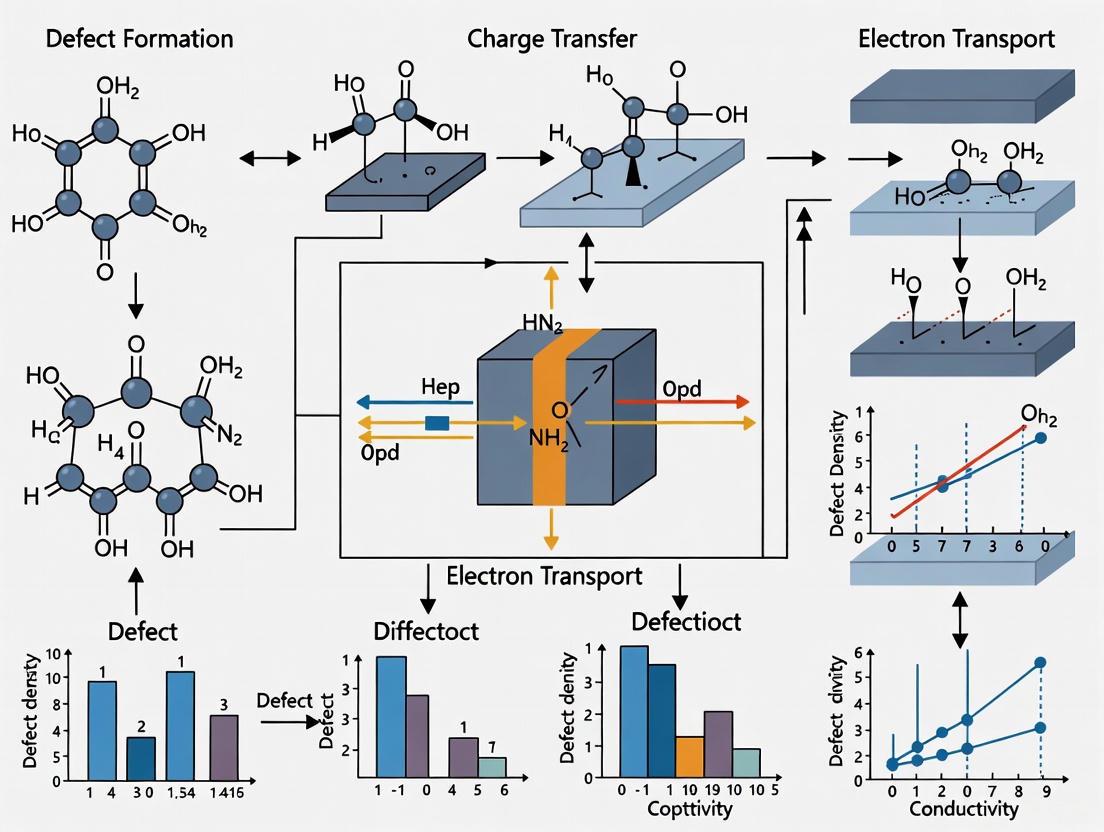
This comprehensive review examines the critical role of surface defects in determining the electronic transport properties of semiconductor materials and nanostructures.
Surface Defects and Electronic Transport: From Fundamental Mechanisms to Advanced Applications
Abstract
This comprehensive review examines the critical role of surface defects in determining the electronic transport properties of semiconductor materials and nanostructures. Drawing from recent experimental and theoretical studies, we explore the fundamental mechanisms of defect-induced transport, advanced characterization methodologies, and strategic defect engineering for performance optimization. The article provides a detailed analysis of various material systems, including metal oxide nanowires, wide-bandgap semiconductors, and low-dimensional materials like graphene, highlighting how controlled defect manipulation can enhance device functionality. For researchers and drug development professionals, this synthesis offers valuable insights into material design principles relevant to biosensing, nanoelectronics, and biomedical applications, bridging fundamental science with practical implementation.
Fundamental Mechanisms: How Surface Defects Govern Electronic Transport
This technical guide provides a comprehensive analysis of defect-induced charge transport mechanisms in functional materials, with a specific focus on thermal activation, hopping conduction, and space-charge-limited conduction. The controlled introduction and management of defects has emerged as a critical strategy for tailoring electronic properties in semiconductor devices, photovoltaic systems, and thermoelectric materials. This whitepaper synthesizes current research findings to establish robust correlations between defect characteristics—including type, density, and distribution—and their profound influence on charge transport behavior. By integrating fundamental theoretical frameworks with experimental validation and advanced characterization methodologies, this work aims to equip researchers with the practical knowledge necessary to harness defect engineering for optimizing material performance across diverse electronic and energy applications.
The traditional perception of defects as undesirable material imperfections has evolved significantly, with contemporary research recognizing their potential as strategic design parameters for controlling electronic properties. Within the context of surface defects in electronic transport properties research, precisely engineered defects can selectively enhance or suppress specific conduction mechanisms, enabling performance optimization in semiconductor devices, sensors, and energy conversion systems. The fundamental challenge lies in understanding the complex relationships between defect characteristics and their resultant transport signatures, which requires sophisticated characterization techniques and theoretical modeling.
Different classes of defects—including vacancies, interstitials, antisites, and extended defects—create distinctive localized electronic states within the band structure of host materials. These states can act as trapping centers, recombination sites, or stepping stones for charge carriers, thereby governing the overall electrical behavior. The strategic manipulation of these defect states allows researchers to deliberately introduce transport phenomena such as thermal activation across defect-induced barriers, phonon-assisted hopping between localized states, and space-charge modulation of bulk conductivity. This whitepaper systematically examines these mechanisms, establishing connections between theoretical foundations, experimental evidence, and practical applications in advanced electronic materials research.
Fundamental Transport Mechanisms Governed by Defects
Thermally Activated Conduction
Thermally activated conduction represents a predominant transport mechanism in defective semiconductors and insulators, where charge carriers require sufficient thermal energy to overcome potential barriers associated with defect states. This process follows an Arrhenius relationship, σ = σ₀exp(-Eₐ/kT), where the activation energy (Eₐ) corresponds to the energy difference between the defect level and the relevant band edge or transport level. In Li₃Mg₂NbO₆ ceramics, impedance spectroscopy reveals a thermally activated hopping mechanism with an activation energy of 1.16 eV, governed by non-Debye relaxation processes associated with defect-mediated transport [1]. The structural disorder in this material, quantified by an Urbach energy of 3.78 eV, directly influences the charge transport by creating a distribution of potential barriers [1].
The activation energy serves as a crucial indicator of the dominant defect type and its energetic position within the band gap. Shallow defects with small activation energies typically contribute to extrinsic conduction at moderate temperatures, while deep-level defects with larger activation energies dominate transport at elevated temperatures. In metal-semiconductor-metal (MSM) devices, thermionic emission across Schottky barriers at metal-semiconductor interfaces represents another manifestation of thermally activated transport, where the barrier height (ΦB) and ideality factor (n) serve as key extraction parameters for characterizing interface defects [2].
Hopping Conduction
Hopping conduction involves the quantum-mechanical tunneling of charge carriers between localized defect states, typically without requiring promotion to delocalized band states. This mechanism dominates in highly disordered systems, amorphous semiconductors, and materials with significant defect concentrations. Several distinct hopping regimes exist, including variable-range hopping (VRH), where carriers optimize between spatial distance and energetic separation between states, and nearest-neighbor hopping, which prevails at higher temperatures or in materials with high defect densities.
In MSM device structures, variable-range hopping produces a characteristic temperature dependence described by ρ(T) = ρ₀exp(T₀/T)^(1/(d+1)), where d represents the dimensionality of the system, and T₀ reflects the degree of localization and density of states near the Fermi level [2]. The extraction of the characteristic temperature T₀ provides insights into the spatial distribution and density of defect-induced localized states. Similarly, Poole-Frenkel emission describes field-enhanced thermal excitation of trapped carriers into extended states, exhibiting a specific signature in both temperature and field dependence that distinguishes it from other transport mechanisms [2].
Space-Charge-Limited Conduction (SCLC)
Space-charge-limited conduction emerges when the density of injected carriers exceeds the intrinsic free carrier concentration, creating a space-charge region that modulates current flow. This mechanism is particularly relevant in low-mobility materials, insulators, and structures with injecting contacts. The current-voltage characteristics progress through several distinct regimes: ohmic conduction at low fields, followed by a quadratic dependence (Child's law) in the trap-free limit, and ultimately rapid current increase as traps become filled at the trap-filled limit voltage (V({}_{\text{TFL}})).
The analysis of SCLC provides powerful insights into defect properties, as the critical voltage at the trap-filled limit relates directly to the trap density through N({}{\text{trap}}) = (2εε₀V({}{\text{TFL}})/(eL²), where ε is the dielectric constant, ε₀ is the vacuum permittivity, e is the electronic charge, and L is the sample thickness [2]. The SCLC exponent, derived from the power-law relationship J ∝ V^m, offers additional diagnostic information: m = 1 indicates ohmic behavior, m = 2 signifies trap-free SCLC, while m > 2 suggests the presence of exponential or discrete trap distributions [2].
Table 1: Key Parameters for Defect-Induced Transport Mechanisms
| Transport Mechanism | Governing Equation | Key Parameters | Defect Information Obtained |
|---|---|---|---|
| Thermally Activated Conduction | σ = σ₀exp(-Eₐ/kT) | Activation energy (Eₐ), pre-exponential factor (σ₀) | Defect energy level, attempt frequency |
| Variable-Range Hopping | ρ(T) = ρ₀exp(T₀/T)^(1/4) (3D) | Characteristic temperature (T₀), density of states | Localization length, defect density at Fermi level |
| Space-Charge-Limited Conduction | J = (9/8)εε₀μV²/L³ (trap-free) | Trap-filled limit voltage (V({}_{\text{TFL}})), SCLC exponent (m) | Trap density (N({}_{\text{trap}})), trap distribution |
| Poole-Frenkel Emission | J ∝ Eexp[-(Φₜ-β√E)/kT] | Trap ionization energy (Φₜ), high-frequency dielectric constant (εₛ) | Coulombic trap potential, defect nature |
Experimental Methodologies for Characterizing Defect Transport
Material Synthesis and Defect Engineering
Controlled defect introduction begins with precise material synthesis protocols. For Li₃Mg₂NbO₆ ceramics, researchers employ a conventional solid-state reaction route using high-purity precursors: lithium carbonate (Li₂CO₃, 99%), magnesium oxide (MgO, 99%), and niobium oxide (Nb₂O₅, 99.9%) [1]. The stoichiometrically weighed powders undergo dry ball-milling in an agate mortar for 2 hours to ensure uniform mixing, followed by calcination in an alumina crucible at 900°C for 8 hours in a muffle furnace. This critical step decomposes carbonates and initiates phase formation, with intermittent grinding to promote reactivity [1]. The calcined powder is subsequently re-milled for 1 hour to refine particle size and improve homogeneity, then uniaxially pressed into pellets (8 mm diameter, ∼1 mm thickness) at 150 MPa before final sintering at 900°C for 2 hours in air to achieve densification and crystallize the desired phase [1].
Defect concentration and type can be systematically varied through non-stoichiometric processing, as demonstrated in Cu₃BHT conjugated coordination polymers, where the molar ratio between copper precursor and benzenehexathiol (BHT) ligand is deliberately altered from the ideal stoichiometric ratio of 3:1 to values ranging from 2 to 7 [3]. This approach controllably introduces BHT vacancies, with densities quantified from one vacancy every 3 unit cells (Cu/BHT ratio of 2) to one vacancy every 1.4 unit cells (Cu/BHT ratio of 6.5) [3]. Such precise defect engineering enables systematic investigation of structure-property relationships and reveals unexpected phenomena, including defect-tolerant metallic electron transport alongside defect-sensitive glassy heat transport in these materials [3].
Structural and Chemical Characterization
Comprehensive defect analysis requires multi-technique characterization to correlate structural and chemical properties with electronic behavior. X-ray diffraction (XRD) analysis using a Philips powder diffractometer with Cu Kα radiation (λ ≈ 1.54187 Å) operating at 40 kV and 40 mA provides essential structural information [1]. Rietveld refinement of XRD patterns confirms phase purity, crystal structure, lattice parameters, and identifies secondary phases. Quantitative analysis of structural disorder can be achieved through Warren-Averbach analysis, which distinguishes between paracrystalline disorder (g) and strain-related lattice parameter fluctuations [3]. In Cu₃BHT films, this approach reveals paracrystallinity values increasing from 4.8% to 13% with rising defect density, accompanied by decreasing X-ray coherence length from 18.5 nm to below 8 nm [3].
Chemical composition and defect density quantification employ energy-dispersive X-ray spectroscopy (EDX), which directly measures elemental ratios and identifies non-stoichiometry [3]. For Cu₃BHT films, EDX confirms Cu-rich compositions across all growth conditions, with Cu/S atomic ratios exceeding the ideal value of 0.5, indicating predominant BHT vacancies as the major chemical defect [3]. Additional characterization techniques including Raman spectroscopy, X-ray photoelectron spectroscopy (XPS), and scanning electron diffraction (SED) provide complementary information about coordination environment, chemical bonding, and local structure around defect sites [3].
Electrical Transport Measurements
Temperature-dependent impedance spectroscopy serves as a powerful technique for delineating various transport mechanisms and extracting relevant parameters. For Li₃Mg₂NbO₆ ceramics, measurements are performed using a Solartron 1260 Impedance Analyzer across a frequency range of 10 Hz to 5 MHz with an AC amplitude of 500 mV [1]. Temperature control from 493 K to 673 K enables investigation of thermal activation processes, with data typically represented in Nyquist plots (complex impedance) and Bode plots (frequency-dependent modulus) to distinguish bulk and grain boundary contributions [1].
Current-voltage (I-V) characterization across varying temperatures provides critical insights into conduction mechanisms, particularly for identifying SCLC behavior and extracting trap parameters. For MSM devices, these measurements reveal nonlinear I-V characteristics analyzable through logJ-logV plots, where specific slopes indicate different transport regimes: ohmic conduction (slope ≈ 1), trap-free SCLC (slope ≈ 2), or trapped SCLC (slope > 2) [2]. The transition voltage to trap-filled limit offers direct calculation of trap density, while temperature-dependent studies enable separation of field-enhanced emission processes like Poole-Frenkel effect from other conduction mechanisms [2].
Table 2: Experimental Techniques for Defect Transport Characterization
| Technique Category | Specific Methods | Measurable Parameters | Defect Information Obtained |
|---|---|---|---|
| Structural Characterization | X-ray Diffraction (XRD), Rietveld Refinement, GIWAXS | Lattice parameters, phase purity, paracrystallinity (g), coherence length | Crystalline quality, strain, disorder type and magnitude |
| Chemical Analysis | Energy-Dispersive X-Ray Spectroscopy (EDX), X-Ray Photoelectron Spectroscopy (XPS) | Elemental composition, stoichiometry, oxidation states, bonding environment | Defect chemistry, vacancy concentrations, impurity identification |
| Electrical Characterization | Impedance Spectroscopy, Temperature-Dependent I-V, C-V Measurements | Activation energy (Eₐ), trap density (N({}_{\text{trap}})), mobility (μ), dielectric constant | Dominant transport mechanism, trap energy distribution, defect signatures |
| Optical Characterization | UV-Vis Spectroscopy, Photoluminescence, Raman Spectroscopy | Band gap, Urbach energy (Eᵤ), defect luminescence, vibrational modes | Band structure modification, defect levels, electron-phonon coupling |
Case Studies: Defect-Controlled Transport in Advanced Materials
Defect-Mediated Hopping in Li₃Mg₂NbO₆ Ceramics
In Li₃Mg₂NbO₆ ceramics, which crystallize in an orthorhombic rock-salt-derived structure (space group Fddd), impedance spectroscopy reveals a defect-dominated hopping conduction mechanism [1]. The material exhibits a direct bandgap of 3.78 eV determined by UV-Vis spectroscopy, while an Urbach energy of 0.92 eV indicates significant structural disorder that influences charge transport pathways [1]. Temperature-dependent measurements demonstrate thermally activated behavior with an activation energy of 1.16 eV, attributed to lithium-ion hopping between available sites within the partially disordered cation sublattice [1]. The observed non-Debye relaxation, characterized by depressed semicircles in complex impedance plots, further confirms the prevalence of defect-mediated mechanisms with distributed relaxation times rather than single time constants [1]. This behavior originates from the complex crystal structure where Li⁺, Mg²⁺, and Nb⁵⁺ ions share multiple octahedral positions in a partially ordered arrangement, creating diverse hopping pathways with varying energy barriers [1].
Defect-Tolerant Metallic Transport in Cu₃BHT Coordination Polymers
A remarkable example of defect-enabled transport optimization emerges in copper benzenehexathiol (Cu-BHT) conjugated coordination polymers, where unconventional defect tolerance creates an ideal thermoelectric transport regime [3]. Contrary to conventional wisdom, highly defective films with paracrystallinity exceeding 10% exhibit superior electrical conductivity (up to 2000 S cm⁻¹) with metallic temperature dependence, while more crystalline counterparts show lower conductivity (636 ± 245 S cm⁻¹) and thermally activated behavior [3]. This defect-tolerant electron transport coexists with defect-sensitive phonon transport, yielding exceptionally low lattice thermal conductivity of 0.2 W m⁻¹ K⁻¹ below Kittel's limit [3]. The combination produces an unprecedented σ/κ({}_{\text{latt}}) ratio of up to 60 × 10⁴ S K W⁻¹, 5-16 times higher than state-of-the-art thermoelectric materials [3]. This anomalous behavior arises because structural and chemical defects—primarily BHT vacancies—strongly scatter phonons but minimally affect charge transport due to the unique electronic structure of these conjugated coordination polymers, where charge delocalization persists despite significant structural disorder [3].
Defect-Induced Anomalous Transport in SnSe₂ Nanosheets
SnSe₂ nanosheets demonstrate thickness-dependent anomalous electrical transport governed by surface defect states [4]. Mechanically exfoliated nanosheets exhibit a counterintuitive semiconducting-to-metallic resistivity transition with decreasing thickness, opposite to conventional 2D system behavior [4]. Low-temperature conduction analysis reveals an increased density of states at the Fermi level in thinner flakes, attributed to n-type doping from surface defect states [4]. Thickness-dependent Raman spectroscopy directly probes the evolution of these defect states, confirming their enhanced influence in ultra-thin specimens [4]. This defect-dominated transport enables strategic tuning of electronic properties through thickness control and surface engineering, providing a versatile platform for designing novel electronic devices based on defect manipulation.
Interface Defect Effects in SnO₂/CsPbI₂Br Solar Cells
First-principles density functional theory (DFT) calculations of SnO₂/CsPbI₂Br perovskite interfaces reveal how specific defect types critically influence charge transport in photovoltaic devices [5]. Among various interface configurations, O'/CsBr, SnO/CsBr, and SnO/PbI interfaces exhibit distinct defect formation energies and electronic properties [5]. Specifically, Pbᵢ (lead interstitial) and Iᵢ (iodine interstitial) defects form deep-level states that hinder charge transfer, leading to detrimental carrier accumulation and non-radiative recombination [5]. In contrast, Oᵢ (oxygen interstitial) defects effectively compensate for charge loss and passivate interface defect states at SnO/PbI interfaces [5]. These insights guide targeted interface engineering strategies, demonstrating that defect control—rather than wholesale defect minimization—enables optimized device performance through selective passivation of harmful defects while introducing beneficial ones.
Table 3: Defect Transport Characteristics in Different Material Systems
| Material System | Dominant Defect Types | Primary Transport Mechanism(s) | Key Performance Metrics | Defect-Property Relationship |
|---|---|---|---|---|
| Li₃Mg₂NbO₆ Ceramics | Cation disorder, oxygen vacancies | Thermally activated hopping, ionic conduction | Eₐ = 1.16 eV, Eᵤ = 0.92 eV | Structural disorder creates distributed energy barriers for hopping transport |
| Cu₃BHT Coordination Polymers | BHT vacancies, paracrystalline disorder | Defect-tolerant metallic transport | σ = 2000 S cm⁻¹, κ({}_{\text{latt}}) = 0.2 W m⁻¹ K⁻¹ | Defects strongly scatter phonons but preserve charge delocalization |
| SnSe₂ Nanosheets | Surface defect states, thickness-dependent vacancies | Metal-insulator transition, defect-assisted hopping | Increased DOS at E({}_{\text{F}}) with reduced thickness | Surface defects induce n-type doping and metallic behavior |
| SnO₂/CsPbI₂Br Interfaces | Pbᵢ, Iᵢ, Oᵢ interstitials, interface traps | Trap-assisted recombination, interface-limited transport | Deep-level states from Pbᵢ and Iᵢ, passivation by Oᵢ | Specific defects create recombination centers while others passivate interfaces |
Visualization of Defect-Transport Relationships
Defect-Induced Transport Mechanisms Diagram
Experimental Workflow for Defect Transport Characterization
The Scientist's Toolkit: Essential Research Reagents and Materials
Table 4: Essential Research Reagents and Materials for Defect Transport Studies
| Reagent/Material | Function/Purpose | Application Examples | Key Considerations |
|---|---|---|---|
| High-Purity Precursor Powders (Li₂CO₃, MgO, Nb₂O₅, etc.) | Base materials for solid-state synthesis with controlled stoichiometry | Li₃Mg₂NbO₆ ceramic synthesis [1] | Purity ≥99%, controlled particle size, moisture-free storage |
| Metal-Organic Coordination Compounds (BHT, metal precursors) | Building blocks for conjugated coordination polymers | Cu₃BHT film fabrication [3] | Ligand purity, stoichiometric control, oxygen-free processing |
| Perovskite Precursors (CsI, PbI₂, PbBr₂, organic cations) | Formation of halide perovskite films and interfaces | SnO₂/CsPbI₂Br interface studies [5] | Moisture sensitivity, stoichiometric accuracy, solution processing |
| Sputtering Targets/Evaporation Sources (SnO₂, Au, Ag, etc.) | Electrode deposition and functional layer fabrication | MSM device fabrication [2] | Purity, composition uniformity, deposition rate control |
| Impedance Analysis Electrodes (Ag paste, sputtered contacts) | Electrical contact formation for transport measurements | Li₃Mg₂NbO₄ impedance spectroscopy [1] | Contact geometry, work function matching, non-rectifying behavior |
| Capping Layers/Encapsulation Materials | Environmental protection for air-sensitive materials | Perovskite solar cell stabilization [5] | Moisture barrier properties, optical transparency, compatibility |
This technical guide has established a comprehensive framework for understanding defect-induced transport mechanisms, emphasizing the critical transition from defect minimization to defect engineering in advanced electronic materials. The case studies presented demonstrate that deliberate defect control enables unprecedented material functionalities, from defect-tolerant metallic transport in coordination polymers to selectively tuned interface properties in photovoltaic heterostructures. The systematic characterization methodologies and analytical approaches outlined provide researchers with practical tools for correlating specific defect configurations with their resultant transport signatures across diverse material systems.
Future research directions will likely focus on predictive defect engineering through advanced computational modeling, machine learning-assisted defect characterization, and multimodal in situ monitoring of defect evolution during device operation. The emerging paradigm of defect-functional materials—where specific defects are intentionally incorporated to produce desired electronic, optical, or thermal properties—represents a significant opportunity for developing next-generation electronic devices, energy conversion systems, and quantum technologies. By embracing defects as design elements rather than imperfections, researchers can access previously unexplored regions of materials property space and develop optimized functional materials for specific technological applications.
Surface defects are critical features in solid-state materials that significantly influence their electronic transport properties. These imperfections in an otherwise perfect crystal lattice can alter charge carrier concentration, mobility, and recombination dynamics. Defects are generally classified into three main categories based on their dimensionality: point defects (zero-dimensional), dislocations (one-dimensional), and extended defects (two and three-dimensional). Understanding the nature, formation, and behavior of these defects is essential for controlling material performance in electronic devices, particularly in semiconductors where defect engineering plays a crucial role in device optimization. This guide provides a comprehensive technical overview of defect classification, characterization methodologies, and their specific impacts on electronic transport properties relevant to current materials research.
Fundamental Defect Classifications
Point Defects (Zero-Dimensional Defects)
Point defects are localized disruptions that occur at zero-dimensional points within a crystal structure, typically involving single atoms or atomic sites. These defects form during crystal growth, solidification, or processing and are thermodynamically inevitable at finite temperatures. Their localized nature means they affect only their immediate atomic environment, yet their collective presence significantly influences material properties [6] [7].
Table 1: Classification and Characteristics of Point Defects
| Defect Type | Atomic Configuration | Formation Process | Key Influencing Factors | Common Materials Examples |
|---|---|---|---|---|
| Vacancy | Missing atom from its normal lattice site | Solidification, thermal processing, irradiation | Temperature, cooling rate, compositional stoichiometry | Metals (Cu, Al), semiconductors (GaAs, Si) [6] |
| Interstitial | Foreign or host atom positioned in normally unoccupied site | Alloying, impurity incorporation, irradiation | Atom size ratio (<85% of host atom), processing conditions | Carbon in iron (steel) [6] |
| Substitutional | Host atom replaced by solute atom | Deliberate alloying, impurity inclusion | Size mismatch with host atom, chemical compatibility | Doped semiconductors (Si, GaAs) [6] |
| Frenkel Defect | Atom displaced from lattice site to interstitial position (vacancy-interstitial pair) | Radiation damage, ion implantation | Crystal structure, bonding energy | Ionic crystals, molecular crystals [7] |
| Schottky Defect | Paired cation and anion vacancies in ionic crystals | Thermal equilibrium processes | Charge balance requirements, temperature | Alkali halides, ionic compounds [7] |
| Antisite Defect | Atoms swapping lattice positions in compound materials | Non-stoichiometric growth conditions | Elemental volatility, growth kinetics | Compound semiconductors (GaAs, SiC) [6] |
The concentration of point defects in thermal equilibrium follows an Arrhenius relationship with temperature, expressed as:
[ n = N \exp\left(-\frac{GV}{kB T}\right) ]
where (n) is the defect concentration, (N) is the number of atomic sites, (GV) is the Gibbs free energy of defect formation, (kB) is Boltzmann's constant, and (T) is temperature [6]. In semiconductors, this equilibrium concentration is further influenced by the Fermi level, creating a complex dependence on doping and temperature that uniquely affects electronic properties [6].
Dislocations (Line Defects)
Dislocations are one-dimensional crystallographic defects representing the boundary between slipped and unslipped regions of a crystal. They are characterized by their dislocation line and Burgers vector, which specifies the magnitude and direction of lattice distortion [8] [9]. The movement of dislocations under applied stress enables plastic deformation at stresses much lower than theoretical strength predictions for perfect crystals [8] [10].
Table 2: Types and Characteristics of Dislocations
| Dislocation Type | Structural Features | Burgers Vector Orientation | Stress Field Characteristics | Motion Mechanisms |
|---|---|---|---|---|
| Edge Dislocation | Extra half-plane of atoms inserted into crystal structure | Perpendicular to dislocation line | Compressive above, tensile below dislocation line; hydrostatic and shear components | Glide (conservative), climb (non-conservative) [8] [9] |
| Screw Dislocation | Spiral distortion of crystal lattice around dislocation line | Parallel to dislocation line | Pure shear stress, no hydrostatic component | Glide along multiple slip planes [8] [9] |
| Mixed Dislocation | Combination of edge and screw character | At an angle to dislocation line | Combined edge and screw characteristics | Complex glide paths [9] |
| Partial Dislocation | Burgers vector is fraction of lattice vector; associated with stacking fault | Crystal structure dependent | Limited range due to stacking fault association | Constrained to specific slip systems [9] |
Dislocation density ((ρ)), defined as the total length of dislocation lines per unit volume ((ρ = L/V)), is a key parameter influencing mechanical properties. In well-annealed metals, dislocation density ranges from (10^{10} - 10^{12}) m/m³, increasing to (10^{15} - 10^{16}) m/m³ in heavily deformed materials [8] [9]. The relationship between flow stress ((τ)) and dislocation density follows the Taylor relationship:
[ τ ∝ \sqrt{ρ} ]
This relationship explains work hardening behavior, where increasing plastic deformation generates more dislocations, thereby increasing strength [8].
Extended Defects
Extended defects encompass two-dimensional and three-dimensional imperfections that extend beyond single atomic positions. These defects include planar faults, grain boundaries, and volume defects that significantly alter material properties across larger length scales than point or line defects [11] [7].
Table 3: Classification of Extended Defects
| Defect Category | Specific Types | Structural Characteristics | Formation Mechanisms | Electronic Effects |
|---|---|---|---|---|
| Planar Defects | Stacking faults | Incorrect atomic stacking sequence | Vacancy or interstitial aggregation, growth faults | Carrier scattering, recombination centers [11] [7] |
| Grain boundaries | Interfaces between crystallites of different orientations | Solidification, recrystallization | Charge trapping, potential barriers [7] | |
| Crystallographic shear planes | Planar arrangement of coordinated defects | Non-stoichiometry in oxides | Modified electronic structure [7] | |
| Three-Dimensional Defects | Voids (vacancy clusters) | Three-dimensional clusters of vacancies | Vacancy aggregation, irradiation | Light scattering, stress concentration [7] |
| Precipitates | Clusters of impurity or alloying atoms | Phase separation, impurity aggregation | Strain fields, charge trapping [7] | |
| Extended dislocation structures | Complex arrangements of multiple dislocations | Plastic deformation, recovery processes | Enhanced carrier recombination [11] |
In semiconductor applications, extended defects like threading screw dislocations (TSDs), threading edge dislocations (TEDs), and basal plane dislocations (BPDs) significantly impact device performance. In silicon carbide (SiC) devices, for example, BPDs are particularly detrimental as they can lead to bipolar degradation, increasing on-resistance and leakage current in power devices [11].
Experimental Characterization Methodologies
Point Defect Analysis Techniques
Positron Annihilation Spectroscopy is a powerful technique for detecting vacancy-type defects with parts-per-million sensitivity. The method relies on the trapping of positrons in open-volume defects where annihilation characteristics differ from defect-free regions. When a positron encounters an electron, they annihilate, producing gamma rays whose energy distribution and timing provide information about defect concentration and type [6].
Experimental Protocol:
- Prepare a radioactive positron source (typically (^{22})Na)
- Implant positrons into the sample material
- Detect annihilation gamma rays using high-purity germanium detectors
- Measure Doppler broadening of the annihilation peak or positron lifetime
- Analyze spectra using specialized software to extract defect parameters
This technique has been successfully applied to measure gallium vacancy concentrations in Te-doped GaAs, revealing power-law dependencies on arsenic overpressure [6].
Depth-Dependent Hall Effect Measurements determine point defect concentrations by correlating electrical properties with defect density. This method involves:
- Preparing samples with controlled defect populations through thermal treatments
- Performing sequential etching to access different depth regions
- Measuring Hall voltage and resistivity at each depth
- Calculating carrier concentration and mobility profiles
- Correlating electrical changes with known defect behavior
Pearson and Chiang utilized this approach to establish the relationship between arsenic overpressure and gallium/arsenic vacancy concentrations in bulk GaAs crystals equilibrated at 800°C for 24 hours [6].
Dislocation Imaging Techniques
Etch Pit Analysis reveals dislocation emergence points at crystal surfaces through preferential chemical attack. The protocol for sodium chloride illustrates this approach:
- Cleave sample to create fresh {100} surface using razor blade
- Apply controlled surface damage (e.g., SiC particle impact from 10cm height)
- Etch with iron (III) chloride in glacial acetic acid for 30-60 seconds
- Rinse with acetone to stop etching process
- Examine under optical microscope at 100x magnification
- Identify rosette patterns around deformation sites and count etch pit density
This method reveals dislocation movement along specific crystallographic directions and enables quantification of dislocation density [10].
Transmission Electron Microscopy (TEM) provides direct imaging of dislocations at near-atomic resolution. The technique exploits diffraction contrast mechanisms:
- Prepare electron-transparent samples (<100nm thickness) via mechanical thinning and ion milling
- Align sample in TEM goniometer to select appropriate diffraction conditions
- Operate in bright-field mode with specific Bragg reflections excited
- Image dislocations as dark lines due to localized diffraction contrast
- Analyze dislocation character using contrast extinction rules
- For high-resolution imaging, align along major zone axes to resolve atomic structure
Advanced TEM techniques can directly image the atomic structure around dislocation cores in materials like TiAl, providing crucial information about core reconstruction and strain fields [10].
Extended Defect Characterization
High-Resolution X-Ray Diffraction (HRXRD) characterizes extended defects through analysis of diffraction peak broadening and strain fields:
- Employ multiple-crystal monochromator for high angular resolution
- Perform ω-2θ scans around symmetric and asymmetric reflections
- Record reciprocal space maps for strain analysis
- Analyze peak broadening using Williamson-Hall or Warren-Averbach methods
- Correlate broadening components with defect density and type
This approach is particularly valuable for quantifying threading dislocation densities in epitaxial semiconductor layers like SiC, where dislocations significantly impact electronic device performance [11].
Cathodoluminescence (CL) Spectroscopy detects extended defects through their influence on radiative recombination:
- Mount sample in scanning electron microscope
- Operate at electron beam energies of 5-15 keV with beam currents of 1-10 nA
- Collect luminescence using parabolic mirror or ellipsoidal collector
- Disperse light through monochromator and detect with photomultiplier or CCD
- Acquire spectrally resolved CL maps with sub-micrometer resolution
- Correlate dark spots or specific spectral features with extended defects
This technique effectively identifies non-radiative recombination at dislocations and stacking faults in semiconductors like GaN and SiC [11].
Defect Visualization
Figure 1: Defect Formation Pathways and Classification Hierarchy
Figure 2: Dislocation Motion Mechanisms Under Applied Stress
Impact on Electronic Transport Properties
Point Defect Electronic Effects
Point defects introduce discrete energy levels within the bandgap of semiconductors that significantly alter electronic transport. First-principles density functional theory calculations on Ge₀.₈Si₀.₂ reveal that vacancies and interstitials introduce mid-gap states that narrow the effective bandgap and enhance optical absorption, while antisite defects cause more subtle performance changes [12]. In GaAs, point defect concentrations exhibit complex dependencies on Fermi level position, creating a feedback loop where doping influences defect population which in turn affects electronic properties [6].
At the SnO₂/CsPbI₂Br interface in perovskite solar cells, specific point defects including lead interstitials (Pbᵢ) and iodine interstitials (Iᵢ) create deep-level states that hinder charge transfer and promote recombination. Oxygen interstitials (Oᵢ), however, can passivate these detrimental states by compensating charge loss around lead atoms [5]. This defect-dependent behavior significantly impacts power conversion efficiency in photovoltaic devices.
Dislocation Electronic Effects
Dislocations affect electronic transport through several mechanisms: introducing band bending through their strain fields, creating dangling bonds that act as recombination centers, and providing preferential diffusion paths for impurities. In silicon carbide, different dislocation types exhibit varying impacts on device performance. Threading dislocations generally show limited effects on blocking capability, while basal plane dislocations cause severe bipolar degradation through recombination-enhanced dislocation glide [11].
The dislocation core structure determines its electronic activity. Reconstruction of dangling bonds can passivate some electronic states, while dislocation decoration by impurities or point defects can either enhance or reduce recombination activity. In GaAs, dislocation motion is remarkably enhanced under carrier injection and non-radiative recombination, where energy release from electron-hole recombination provides the necessary activation for dislocation glide [6].
Extended Defect Electronic Effects
Extended defects create complex perturbation fields that significantly modify electronic transport. Stacking faults in hexagonal SiC introduce quantum-well-like states that localize charge carriers and reduce mobility [11]. Grain boundaries in polycrystalline materials create potential barriers through trapped charge and band bending, necessitating thermionic emission or tunneling for carrier transport across boundaries.
In BiOBr semiconductors, extended defects in the form of surface pits approximately 2nm in diameter increase specific surface area and create coordinatively unsaturated sites that enhance charge carrier trapping and separation. These extended defects reduce surface resistance and accelerate charge carrier migration to catalytic sites, demonstrating beneficial effects in photocatalytic applications [11].
Table 4: Defect Impacts on Electronic Transport Properties
| Defect Type | Carrier Scattering | Recombination Activity | Mobility Degradation | Influence on Doping |
|---|---|---|---|---|
| Point Defects | Neutral impurity scattering | Shockley-Read-Hall recombination centers | Moderate effect | Compensation, Fermi level pinning |
| Dislocations | Strain field scattering, Coulomb scattering | High through dangling bonds | Strong anisotropic effects | Pipe diffusion, gettering |
| Stacking Faults | Planar defect scattering | Quantum well recombination | Layer-dependent effects | Limited direct influence |
| Grain Boundaries | Interface scattering, potential barriers | High surface recombination | Severe in polycrystalline materials | Dopant segregation, barrier formation |
The Scientist's Toolkit: Research Reagent Solutions
Table 5: Essential Research Reagents and Materials for Defect Studies
| Reagent/Material | Composition/Type | Primary Function | Application Examples |
|---|---|---|---|
| Iron (III) Chloride Etchant | FeCl₃ in glacial acetic acid | Selective dislocation revelation | Etch pit formation on NaCl for dislocation density mapping [10] |
| Positron Sources | Radioactive (^{22})Na encapsulated in thin foil | Positron emission for vacancy detection | Positron annihilation spectroscopy for vacancy concentration measurements [6] |
| Molecular Beam Epitaxy Sources | High-purity elemental sources (Ga, As, etc.) | Controlled crystal growth with defined stoichiometry | GaAs epitaxy with controlled V/III ratios for point defect engineering [6] |
| Chemical Vapor Deposition Precursors | Metal-organic compounds, hydrides | Thin film deposition with controlled defect incorporation | SiC epitaxial growth for extended defect studies [11] |
| TEM Sample Preparation Chemicals | Electrolytes for electropolishing, ion milling gases | Sample thinning for electron transparency | Preparation of electron-transparent samples for dislocation imaging [10] |
| Dopant Sources | Elemental dopants, compound sources | Controlled introduction of substitutional defects | Fermi level control for point defect population studies [6] |
Surface defects fundamentally influence electronic transport properties through diverse mechanisms spanning multiple length scales. Point defects introduce discrete energy levels that trap carriers and facilitate recombination. Dislocations create strain fields and dangling bonds that scatter charge carriers and enhance non-radiative recombination. Extended defects form potential barriers and interface states that limit carrier mobility and device performance. Understanding these defect-property relationships enables defect engineering strategies for optimizing electronic devices, whether through deliberate defect introduction for beneficial effects or stringent defect control for performance maximization. The continuing development of characterization techniques with improved spatial and energy resolution will further elucidate defect roles in electronic transport, facilitating advanced materials design for next-generation electronic and optoelectronic applications.
The Role of Defect Concentration in Determining Conductivity Regimes
Defect concentration serves as a fundamental determinant of electronic transport properties in materials, governing transitions between insulating, semiconducting, and metallic conduction states. This technical review examines the intricate relationship between defect engineering and conductivity regimes through integrated analysis of defect chemistry principles, experimental characterization methodologies, and emerging research across material systems including perovskites, 2D materials, and conjugated polymers. The article establishes a comprehensive framework for understanding how deliberate manipulation of point defects, vacancy concentrations, and structural disorder enables precise control over charge carrier dynamics, facilitating tailored material design for applications ranging from solid oxide fuel cells to advanced thermoelectrics and biosensing platforms.
The strategic introduction and management of defects has emerged as a sophisticated materials design paradigm, transcending traditional views of defects as undesirable imperfections. In electronic materials, defect concentration directly modulates charge carrier density, mobility, and scattering mechanisms, thereby determining macroscopic conductivity behavior. The central thesis of this review posits that defect concentration thresholds trigger fundamental transitions between distinct conductivity regimes, while defect type and distribution govern the stability and application-specific performance of these states.
Surface defects, in particular, create localized electronic states that significantly influence charge injection, transport, and recombination processes at material interfaces and within nanoscale structures. Contemporary research focuses on establishing quantitative relationships between defect parameters—density, energy distribution, and spatial organization—and their resultant electronic signatures, enabling predictive defect engineering for advanced electronic applications.
Theoretical Foundations: Defect Chemistry and Charge Transport
Defect Equilibrium and Charge Carrier Formation
The intrinsic relationship between defect formation and electronic charge compensation establishes the foundation for defect-mediated conductivity. In oxide perovskites such as La({0.49})Sr({0.31})Ti({0.94})Fe({0.03})Ni({0.03})O(3) (LSFNT), the prevailing defect type transitions between strontium vacancies ((V{Sr}^{\prime\prime})) and oxygen vacancies ((VO^{\bullet\bullet})) across different oxygen partial pressure environments [13]. Under oxidizing conditions, charge compensation occurs primarily through cation vacancies:
[ \text{VSr}^{\prime\prime} + \text{OO}^\times \rightarrow \frac{1}{2}\text{O}_2 + 2e^\prime ]
This oxygen extraction mechanism annihilates strontium vacancies while generating electron carriers, illustrating the direct coupling between defect chemistry and electronic charge generation [13]. Under reducing atmospheres, oxygen vacancy formation becomes dominant:
[ \text{OO}^\times \rightarrow \text{VO}^{\bullet\bullet} + \frac{1}{2}\text{O}_2 + 2e^\prime ]
The resulting conductivity exhibits a characteristic (pO_2^{-1/6}) dependence in the intermediate pressure range ((10^{-14}) to (10^{-18}) bar), deviating at extreme reducing conditions due to vacancy annihilation and nanoparticle exsolution phenomena [13].
Defect-Tolerant versus Defect-Sensitive Transport Regimes
Recent investigations have revealed that certain material classes exhibit fundamentally different electronic and thermal transport responses to structural imperfections. In quasi-two-dimensional conjugated coordination polymers like copper benzenehexathiol (Cu-BHT), an exceptional defect-tolerant electron transport regime coexists with defect-sensitive phonon transport [3].
Table 1: Contrasting Transport Responses to Defects in Cu-BHT Films
| Transport Property | Defect-Tolerant Behavior | Defect-Sensitive Behavior |
|---|---|---|
| Electrical Conductivity | Maintains metallic transport (up to 2000 S/cm) even with paracrystallinity >10% | N/A |
| Thermal Conductivity | N/A | Drops to ultralow values (0.2 W/m·K) below Kittel's limit |
| Structural Requirement | Does not require high crystallinity | Enhanced by disorder-limited vibrational scattering |
| Transport Mechanism | Delocalized electron states through π-conjugated system | Localized lattice vibrations with short mean free paths |
This unusual transport dichotomy creates an ideal combination for thermoelectric applications, where high electrical conductivity and low thermal conductivity are simultaneously required [3]. The origin of this behavior lies in the preservation of electronic delocalization through conjugated pathways despite structural disorder, while phonon transport suffers from strong scattering at defect sites.
Experimental Methodologies for Defect-Transport Correlation
Defect Characterization Techniques
Establishing quantitative correlations between defect concentration and conductivity requires precise defect quantification methods. Contemporary research employs multi-modal characterization approaches to correlate structural, chemical, and electronic defect signatures.
Table 2: Experimental Techniques for Defect Concentration and Conductivity Analysis
| Technique | Measured Parameters | Defect Sensitivity | Applications in Conductivity Studies |
|---|---|---|---|
| Differential Thermal Expansion (Δl/l - Δa/a) | Vacancy concentration via lattice vs. dimensional expansion [14] | ~10(^{-5}) for vacancy detection | Direct correlation of vacancy concentration with electrical resistivity in metals and simple crystals |
| Positron Annihilation Spectroscopy | Positron lifetime τ related to electron density at vacancy sites [14] | 10(^{-6})-10(^{-7}) for vacancy concentration | Temperature-dependent vacancy formation energies and trapping characteristics |
| Admittance Spectroscopy | Ionization energy of shallow levels (donor/acceptor) [15] | Depth-resolved defect profiling | Identification of levels controlling doping efficiency in semiconductors |
| Deep Level Transient Spectroscopy (DLTS) | Thermal emission rates, capture cross-sections of deep levels [15] | 10(^{-3})-10(^{-5}) of dopant concentration | Carrier lifetime limitations by recombination-active defects |
| GIWAXS (Grazing-Incidence Wide-Angle X-ray Scattering) | Paracrystallinity, coherence length, strain fluctuations [3] | Quantitative disorder parameters | Structure-property relationships in disordered crystalline materials |
Spectroscopy-Informed Machine Learning Framework
Advanced correlation of defect characteristics with electronic properties now incorporates machine learning methodologies. In graphene field-effect transistors (GFETs), a neural network regression model trained on Raman spectral parameters (peak intensity, position, FWHM, area) successfully predicts field-effect mobility and charge-neutral Dirac point voltage [16]. Feature importance analysis identified the D'-band full width at half maximum (FWHM) as the strongest predictor of mobility degradation, establishing it as a sensitive indicator of surface defect density [16]. This approach enables non-invasive, spatially resolved evaluation of device performance with high sensitivity to interfacial and surface defect variations.
Case Studies: Defect Engineering for Targeted Conductivity Regimes
Perovskite Oxide for Solid Oxide Fuel Cells
The deliberate A-site deficiency (20%) in LSFNT perovskites creates a controlled vacancy concentration that enhances reduction kinetics and facilitates B-site element exsolution under reducing conditions [13]. This defect-engineered material demonstrates exceptional mixed ionic and electronic conductivity (MIEC), with oxide ion conductivity reaching 0.054 S/cm at 850°C—surpassing yttria-stabilized zirconia (8YSZ) and comparable to gadolinium-doped ceria (CGO) [13]. Simultaneously, the electronic conductivity approaches ~10 S/cm after reduction at 1100°C for 24 hours, ideal for fuel electrode applications [13].
The defect chemistry model for LSFNT explains the conductivity regime transition: as oxygen partial pressure decreases, the dominant defect changes from strontium vacancies to oxygen vacancies, with associated increase in electronic charge carriers. This controlled defect-mediated transition enables stable operation across wide oxygen partial pressure ranges (0.21 to 10(^{-21}) bar) while maintaining structural integrity [13].
Defect-Engineered Conductivity Transitions in Bi₂O₂Se
Native defects in Bi₂O₂Se, particularly selenium vacancies (V({Se})) and selenium antisites (Se({Bi})), traditionally enforce n-type conductivity with carrier concentrations spanning 10(^{15})-10(^{21}) cm(^{-3}) [17]. Manganese doping (Bi({2-x})Mn(x)O(2)Se) demonstrates deliberate defect compensation, where Mn dopants reduce electron concentration by interacting with native defect structure, ultimately inducing a conductivity regime transition from n-type to p-type [17]. This represents the first experimental realization of p-type Bi(2)O(_2)Se, achieved through defect engineering rather than conventional doping.
The transition mechanism involves Mn substitution at Bi sites (Mn(_{Bi})) counteracting the native selenium vacancy donor behavior, with the material exhibiting a thermal band gap of ≈0.9 eV in its compensated state [17]. This case illustrates how targeted defect interaction enables fundamental conductivity regime engineering in semiconductors.
Defect-Mediated Transport in Graphene Nanoribbons
Controlled introduction of Stone-Wales (sw) and divacancy (dv) defects in graphene nanoribbons (GNRs) creates distinct electronic transport signatures valuable for biosensing applications [18]. Pristine GNRs exhibit well-defined conduction channels, while defected GNRs show localized states that interact with delocalized states, generating pronounced Fano resonances characterized by sharp dips in transmission spectra [18].
The defect-engineered GNRs demonstrate enhanced sensitivity for DNA nucleobase detection, with dvGNR devices showing particular effectiveness due to high current sensitivity and distinct responses across different nucleobases [18]. This application illustrates how controlled defect introduction creates specialized conductivity regimes tailored for specific electronic sensing functions.
Research Reagent Solutions and Methodologies
Table 3: Essential Research Reagents and Materials for Defect-Transport Studies
| Material/Reagent | Function in Defect Studies | Application Examples |
|---|---|---|
| A-site Deficient Perovskites (e.g., La({0.49})Sr({0.31})Ti({0.94})Fe({0.03})Ni({0.03})O(3)) | Controls vacancy formation kinetics and exsolution behavior [13] | Solid oxide fuel cell electrodes, catalytic materials |
| Transition Metal Dopants (Mn, Fe, Cr in Bi(2)O(2)Se) | Compensates native defects, modulates carrier concentration [17] | Semiconductor conductivity type conversion |
| Conjugated Coordination Polymers (Cu-BHT) | Enables defect-tolerant electron transport [3] | Thermoelectric generators, flexible electronics |
| Defect-Engineered Graphene Nanoribbons (prGNR, dvGNR, swGNR) | Creates tailored quantum transport properties [18] | DNA sequencing biosensors, nanoelectronics |
| Positron Source ((^{22})Na typically) | Enables positron annihilation lifetime spectroscopy [14] | Vacancy concentration measurements in metals and semiconductors |
Defect concentration establishes fundamental boundaries between conductivity regimes through discrete electronic structure modifications rather than gradual property variations. The experimental evidence surveyed demonstrates that targeted defect engineering enables precise conductivity control across diverse material systems—from the defect-mediated mixed conduction in perovskite fuel cells to the defect-tolerant metallic transport in conjugated coordination polymers and the defect-enhanced sensing capabilities in graphene nanoribbons.
Future research directions will likely focus on multidimensional defect characterization correlating atomic-scale structure with nanoscale electronic properties, accelerated by machine learning frameworks that decode complex defect-property relationships. The emerging paradigm recognizes defect engineering not as materials compromise but as sophisticated design strategy for next-generation electronic, energy, and sensing technologies.
Diagrams
Defect-Conductivity Relationship Diagram
Experimental Workflow for Defect-Transport Studies
The study of surfaces and interfaces forms a cornerstone of modern semiconductor physics, a field profoundly shaped by the pioneering work of John Bardeen. His insights into the electronic behavior at surfaces continue to inform contemporary research into topological insulators and low-dimensional quantum systems. In today's era of nanoscale electronics, the precise control of surface properties has become paramount, as surface-to-volume ratios increase dramatically in advanced device architectures. This whitepaper examines how Bardeen's legacy underpins our current understanding of surface states and band bending phenomena, particularly through the lens of topological insulators where surface states are protected by time-reversal symmetry. The critical interplay between surface defects, band bending, and electronic transport properties represents a vibrant research frontier with significant implications for quantum computing, spintronics, and next-generation semiconductor devices.
Theoretical Foundations: From Surface States to Band Bending
Surface States and Fermi Level Pinning
Bardeen's seminal work established that electronic states at semiconductor surfaces arise from the termination of the crystal lattice, creating dangling bonds that introduce energy levels within the band gap. These surface states can trap charge carriers, leading to Fermi level pinning—a phenomenon that fundamentally governs electron transport at interfaces. In modern terminology, this manifests as band bending near the surface due to the equilibration of distinct Fermi levels between the bulk and surface. The direction and magnitude of this bending—whether upward or downward—critically determines whether carriers accumulate or deplete at the surface, thereby controlling conductive pathways.
Topological Surface States
Recent advances have revealed a special class of surface states in topological insulators (TIs)—states protected by time-reversal symmetry that are immune to non-magnetic perturbations. These topological surface states (TSS) arise from band inversion caused by strong spin-orbit coupling and form spin-helical Dirac fermions that enable unique quantum phenomena. Unlike conventional surface states, TSS maintain high mobility despite the presence of defects, offering revolutionary potential for quantum technologies. In materials like (BiₓSb₁₋ₓ)₂Te₃, precise tuning of the Bi/Sb ratio allows control over the Fermi level position, enabling researchers to minimize bulk conduction and isolate the exotic transport properties of these surface states [19].
Current Research: Band Bending in Topological Insulators
Evidence of Upward Band Bending
Advanced transport measurements in (Bi₀.₄₅Sb₀.₆₀)₂Te₃ single crystals provide compelling evidence for upward band bending in topological insulator systems. This phenomenon manifests as a depletion of bulk carriers near the surface, creating conditions favorable for observing surface-dominated transport. Key experimental findings include:
- Shubnikov-de Haas (SdH) oscillations originating from topological surface states with a measured Berry phase of 1.21π, consistent with Dirac fermions [19]
- Fermi wave vector k_F = 0.0404 Å⁻¹ matching angle-resolved photoemission spectroscopy (ARPES) data [19]
- Surface carrier density of n_s = 1.30 × 10¹² cm⁻² indicating hole conduction [19]
- Non-saturating magnetoresistance reaching ~347% attributed to multichannel quantum coherent transport [19]
Table 1: Fermi Surface Parameters from SdH Oscillations in (Bi₀.₄₅Sb₀.₆₀)₂Te₃
| Parameter | Value | Significance |
|---|---|---|
| Berry Phase | 1.21π | Indicates non-trivial topology and Dirac fermion nature |
| Fermi Wave Vector (k_F) | 0.0404 Å⁻¹ | Matches ARPES measurements of topological surface states |
| Surface Carrier Density | 1.30 × 10¹² cm⁻² | Confirms upward band bending with hole accumulation |
| Fermi Velocity | ~Surface carrier mobility significantly higher than bulk | Characteristic of topological protection |
Defect-Mediated Band Bending Phenomena
The interplay between intrinsic topological protection and defect-induced band bending creates complex transport behavior in real material systems. While topological surface states are theoretically protected against back-scattering from non-magnetic defects, the presence of defects can still influence transport through band bending effects:
- Anti-site defects in (BiₓSb₁₋ₓ)₂Te₃ can pin the Fermi level within the valence band, creating a mismatch between surface and bulk Fermi levels [19]
- Band bending magnitude determines whether quantum well states (in downward bending) or topological surface states (in upward bending) dominate quantum oscillations [19]
- Defect engineering through compositional tuning (Bi/Sb ratio) enables control over band bending direction and magnitude [19]
Experimental Methodologies
Advanced Defect Detection Protocols
Terahertz-STM Nanoscopy
A breakthrough technique combining scanning tunneling microscopy (STM) with terahertz laser pulses enables unprecedented detection of single-atom defects in semiconductors. This protocol allows direct imaging of individual silicon atom defects in gallium arsenide with atomic precision [20] [21].
Experimental Workflow:
- Sample Preparation: Intentional doping of gallium arsenide with silicon defect atoms
- STM Setup: Approach conducting tip to sample surface within tunneling distance (~1 nm)
- Terahertz Excitation: Illumination of STM junction with laser pulses at trillion oscillations/second (terahertz frequency)
- Signal Detection: Monitor electron tunneling current while scanning tip across surface
- Defect Identification: Detect characteristic resonant "ringing" signal when tip encounters silicon defect [20] [21]
Key Parameters:
- Terahertz frequency matches natural oscillation frequency of silicon defects in GaAs matrix
- Signal disappears when tip moves single atom away from defect site
- Technique resolves defects that were theoretically predicted but undetectable for 40+ years [21]
Surface Photovoltage Spectroscopy (SPS)
Surface photovoltage spectroscopy provides a contactless, non-destructive method for characterizing quantum well structures and surface states through work function measurements [22].
Experimental Protocol:
- Kelvin Probe Setup: Reference electrode positioned above sample surface without physical contact
- Monochromatic Illumination: Tungsten halogen light source passed through dual monochromators
- Work Function Measurement: Detect contact potential difference (CPD) between reference and sample
- Spectral Scanning: Measure CPD changes across wavelength range (250-1500 nm)
- Data Analysis: Identify transition energies from spectral features [22]
Key Applications:
- Determination of quantum well widths and composition
- Measurement of electric fields in heterostructures
- Estimation of carrier lifetimes in confined structures
- Extraction of band alignment parameters [22]
Magneto-Transport Characterization
Complete transport characterization of topological insulators requires sophisticated measurement protocols to disentangle surface and bulk contributions:
Electrical Transport Measurements:
- Sample Fabrication: Cleave single crystals along natural cleavage planes
- Contact Formation: Pattern electrodes using photolithography (Van der Pauw geometry)
- Resistivity Measurements: Temperature-dependent (1.8-300 K) four-probe resistance
- Magnetoresistance: Longitudinal and transverse measurements up to high magnetic fields (14 T)
- Hall Measurements: Carrier density and mobility extraction using two-band model fitting [19]
Quantum Oscillation Analysis:
- SdH Oscillation Extraction: Isolate oscillatory component from background magnetoresistance
- Lifshitz-Kosevich Fitting: Analyze oscillation amplitude versus field and temperature
- Berry Phase Determination: Extract phase offset from Landau level fan diagram
- Fermi Surface Reconstruction: Calculate Fermi wave vector and velocity [19]
Table 2: Experimental Techniques for Surface State Characterization
| Technique | Key Measurements | Information Obtained | Limitations |
|---|---|---|---|
| Terahertz-STM Nanoscopy | Single-atom defect resonance | Atomic-scale defect position and electronic structure | Requires ultra-high vacuum, complex implementation |
| Surface Photovoltage Spectroscopy | Contact potential difference vs. wavelength | Band gaps, transition energies, surface potentials | Limited spatial resolution, indirect interpretation |
| Shubnikov-de Haas Oscillations | Quantum oscillations in magnetoresistance | Fermi surface topology, carrier mobility, Berry phase | Requires high mobility samples and low temperatures |
| Two-band Hall Analysis | Nonlinear Hall resistivity | Separate surface and bulk carrier densities/mobilities | Assumes simplified band structure model |
The Scientist's Toolkit: Essential Research Reagents and Materials
Table 3: Essential Materials and Reagents for Surface State Research
| Material/Reagent | Function/Application | Key Characteristics | Research Significance |
|---|---|---|---|
| (BiₓSb₁₋ₓ)₂Te₃ Single Crystals | Platform for topological surface studies | Tunable Fermi level via Bi/Sb ratio | Enables separation of surface and bulk conduction |
| High-Purity Elements (Bi, Sb, Te: 99.999%) | Crystal growth via modified Bridgman method | Minimal impurity concentrations | Redces extrinsic defect density for cleaner measurements |
| Gallium Arsenide (Si-doped) | Model system for defect studies | Well-characterized defect physics | Benchmark for atomic-scale defect detection methods |
| ALD Al₂O₃ Precursors | Surface passivation layers | High fixed charge density (Q_f) | Enables field-effect passivation of interfaces |
| PECVD Amorphous Silicon | Interface passivation for germanium | Suppresses germanium oxide formation | Provides chemical passivation without interfacial reactions |
| ALD POₓ Layers | Passivation of III-V semiconductors | Acts as phosphorus reservoir | Mitigates surface phosphor vacancy formation |
Visualization of Surface-Bulk Transport Relationships
Implications for Electronic Transport Properties
The interplay between surface defects and band bending has profound consequences for electronic transport in modern semiconductor devices:
Transport Regimes in Topological Insulators
Temperature-dependent resistivity measurements in (Bi₀.₄₅Sb₀.₆₀)₂Te₃ reveal three distinct transport regimes governed by surface defect interactions:
- High-Temperature Regime (250-300 K): Thermal activation behavior dominates as bulk carriers overcome band gap [19]
- Intermediate Regime (50-250 K): Metallic conduction prevails with reducing defect scattering at lower temperatures [19]
- Low-Temperature Regime (<50 K): Variable range hopping conduction indicates strongly localized transport through defect states [19]
Defect-Engineered Quantum Transport
Strategic control of defects enables unprecedented quantum transport phenomena:
- Mobility Enhancement: Surface states in (Bi₀.₄₅Sb₀.₆₀)₂Te₃ exhibit significantly higher mobility than bulk channels (two-band model analysis) [19]
- Quantum Coherence: Multichannel quantum interference between surface and bulk states generates giant, non-saturating magnetoresistance [19]
- Topological Protection: Time-reversal symmetry preserves surface state coherence against non-magnetic defect scattering [19]
Bardeen's foundational work on surface states continues to illuminate contemporary research into topological materials and nanoscale semiconductor devices. The precise detection and manipulation of atomic-scale defects—now achievable through techniques like terahertz-STM nanoscopy—enable unprecedented control over band bending and electronic transport pathways. As device dimensions approach the atomic scale, the management of surface-to-bulk interactions through advanced passivation schemes and defect engineering will become increasingly critical. Future research directions will likely focus on harnessing topological protection for fault-tolerant quantum computation, developing atomic-scale defect engineering protocols, and creating heterostructures with designed band bending profiles for specialized electronic and photonic applications. Through these advances, Bardeen's legacy continues to shape the frontier of semiconductor physics.
The electronic transport properties of low-dimensional copper oxide systems, particularly CuO and Cu₂O nanowires, are not intrinsic material properties but are dominantly governed by their defect landscape. In nanostructured materials, the increased surface-to-volume ratio magnifies the influence of defects, boundaries, and surfaces on electron dynamics [23]. This case study examines the fundamental role of defect engineering in controlling charge transport mechanisms across different copper oxide nanowire systems, framed within broader research on surface defects in electronic transport properties. The systematic investigation of defect-transport correlations provides critical insights for designing nanoelectronic devices with tailored performance characteristics, moving beyond the conventional paradigm of defect minimization toward purposeful defect control.
Fundamental Defect Types and Their Electronic Structures
Predominant Defects in Copper Oxide Systems
The defect landscape in copper oxides is characterized by point defects, complex defect structures, and extended boundaries that collectively determine electronic behavior.
Copper Vacancies (VCu): These are the predominant acceptor defects in both CuO and Cu₂O, characterized by low formation energies and responsible for the natural p-type conductivity observed in these materials [24] [25]. In Cu₂O, copper vacancies can exist in both normal (VCu) and split configurations (V_Cu,split) [25]. First-principles calculations indicate copper vacancies are particularly stable defects, consistent with experimental observations [24].
Oxygen Vacancies (V_O): These donor defects compete with copper vacancies but typically have higher formation energies in oxidizing conditions [24]. Their concentration depends strongly on synthesis conditions and oxygen partial pressure.
Interstitial Defects: Both copper (Cui) and oxygen (Oi) interstitials can form, with oxygen interstitials identified as particularly stable defects in certain configurations [24].
Complex Defects: Advanced characterization techniques including positron annihilation spectroscopy (PAS) have revealed the presence of large complex defects in Cu₂O thin films, whose concentration varies dramatically with deposition parameters [25].
Extended Defects: Grain boundaries, surfaces, and stacking faults create mesoscopic defects that scatter charge carriers and modify overall transport behavior [23].
Substitutional Dopants: Anion substitution with elements such as nitrogen and chlorine can significantly enhance conductance, with nitrogen and chlorine doping showing experimentally confirmed conductance enhancement [24].
Defect Formation and Stability
The relative abundance of different defect types is governed by their formation energies, which depend on synthesis conditions, particularly oxygen chemical potential. Computational studies using density functional theory (DFT) with hybrid functionals have provided quantitative insights into defect thermodynamics [24]. In Cu₂O, copper vacancies exhibit particularly low formation energies, explaining their prevalence and the natural p-type character of this material [24] [25]. The stability of copper vacancies has been confirmed through both theoretical calculations and experimental observations across multiple studies [24].
Table 1: Dominant Defect Types in Copper Oxide Nanostructures and Their Electronic Signatures
| Defect Type | Symbol | Electronic Role | Formation Energy | Characterization Techniques |
|---|---|---|---|---|
| Copper vacancy | V_Cu | Acceptor (p-type) | Low | PAS, DFT, Transport measurements |
| Oxygen vacancy | V_O | Donor (n-type) | Medium-high | DFT, PL spectroscopy |
| Oxygen interstitial | O_i | Acceptor | Variable | DFT, Raman spectroscopy |
| Copper interstitial | Cu_i | Donor | Medium | DFT calculations |
| Frenkel defect | VO + Oi | Complex behavior | Dependent on configuration | DFT, Transport measurements |
| Nitrogen substitutional | N_O | Acceptor | Dependent on synthesis | XPS, Hall effect |
| Chlorine substitutional | Cl_O | Donor | Dependent on synthesis | XPS, Transport measurements |
Quantitative Correlation Between Defect Concentration and Transport Properties
Defect-Dependent Transport Regimes in CuO Nanowires
Statistical analysis of temperature-dependent electrical characteristics from approximately 200 individual CuO nanowires has revealed a direct correlation between defect concentration and dominant transport mechanisms [26] [27]. The current-voltage (I-V) characteristics of these nanowires can be categorized into three distinct types based on their conduction behavior, each associated with a specific range of defect concentrations.
Type I Nanowires: Exhibit the highest resistance with a trap-filling threshold voltage (Von) of approximately 10 V. The high Von indicates a high density of trap states, suggesting significant defect concentrations. These nanowires represent approximately 23.5% of the measured population [27].
Type II Nanowires: Display intermediate characteristics with V_on values between those of Type I and Type III. This category represents the majority of nanowires (approximately 60.5%), indicating this is the most common defect concentration range achieved under standard synthesis conditions [27].
Type III Nanowires: Show the lowest resistance with V_on of approximately 0.51 V, indicating lower defect concentrations and fewer trap states. These constitute approximately 20.5% of the measured nanowire population [27].
The transition between these transport regimes occurs in the ohmic conduction region, before the current-voltage curves enter the trap-filling stage governed by space-charge-limited currents (SCLC) [26] [27]. For sufficiently high applied voltages (around 10 V), space-charge-limited currents become dominant across all defect concentration regimes [26].
Defect Engineering in Cu₂O Thin Films and Junctions
In Cu₂O systems, deliberate control of defect concentrations through processing parameters enables precise tuning of electronic properties. Atmospheric-pressure spatial atomic layer deposition (AP-SALD) of Cu₂O thin films at 260°C with varying oxygen fractions demonstrates dramatic changes in electrical properties [25]:
Table 2: Transport Properties of Cu₂O Thin Films Deposited at 260°C with Varying Oxygen Fractions
| Oxygen Fraction During Deposition | Resistivity (Ω·cm) | Carrier Concentration (cm⁻³) | Mobility (cm²/V·s) | Dominant Defects |
|---|---|---|---|---|
| 0% | 94 | 7 × 10¹⁴ | ~85 | Isolated copper vacancies |
| 5% | 0.4 | 1 × 10¹⁷ | ~85 | Moderate complex defects |
| 15% | 0.4 | ~10¹⁸ | ~6 | High copper vacancy concentration |
| 25% | 3.11 | ~10¹⁸ | ~6 | Complex defect assemblages |
| 50% | >10³ | Too resistive | Too resistive | Over-oxidation, copper vacancies |
The ultra-low resistivity value of 0.4 Ω·cm achieved at 260°C with 5-15% oxygen fraction represents the lowest reported value for Cu₂O films, even when compared to those deposited using physical methods at higher temperatures [25]. This demonstrates the powerful influence of defect engineering on transport properties.
First-principles calculations on Au-(Cu₂O)ₙ-Au junctions further reveal that different defect types affect conductance differently [24]. Bulk-like defects generally enhance conductance more effectively than near-interface defects, with the exception of oxygen vacancies and chlorine substitutional defects. Specific defect pairs, including Cu deficiency combined with N substitution, as well as Cl substitution with N interstitials in thick Cu₂O junctions, produce similar transmission behavior [24]. Frenkel defects (superpositions of oxygen interstitials and vacancies) lead to remarkably high conductance, highlighting the potential of complex defects for transport enhancement [24].
Diagram 1: Defect-Property Relationships in Copper Oxide Systems
Experimental Methodologies for Probing Defect-Transport Relationships
Nanowire Fabrication and Electrical Characterization
The correlation between defect concentration and transport properties in CuO nanowires was established through systematic experimental protocols:
Nanowire Synthesis: CuO nanowires were synthesized via thermal oxidation of copper foils in air at 450°C for 360 minutes, with a controlled heating rate of approximately 2°C/min [27]. Prior to oxidation, copper foils were etched in HCl (10%), cleaned in acetone, alcohol, and deionized water in an ultrasonic bath, and dried with nitrogen gas [27].
Device Fabrication: Individual nanowires were dispersed in alcohol and transferred to quartz-glass substrates by spin-casting. Electrodes were fabricated using UV photolithography with a lift-off process, creating Ni or Au electrodes approximately 200 nm thick with both electrode widths and gaps of about 2 μm [27]. Nickel electrodes were preferred due to their compatible work function (Φ = 4.99 eV) with CuO (Φ = 4.78 eV), facilitating ohmic contact formation [27].
Electrical Measurements: Current-voltage (I-V) characteristics were measured using a semiconductor parameter analyzer from -10 V to +10 V in 0.02-0.1 V steps [27]. Temperature-dependent measurements were performed from 213 K to 393 K in a nitrogen atmosphere to minimize surface adsorption effects [27]. Samples were annealed at 413 K for 240 minutes before measurements to stabilize properties [27].
Structural Characterization: Transmission electron microscopy (TEM) was employed to correlate nanowire structure with electrical properties, enabling direct comparison between defect density and transport characteristics [26] [27].
Thin Film Deposition and Defect Probing Techniques
For Cu₂O thin films, sophisticated deposition and characterization methods were employed to establish defect-property relationships:
Film Deposition: Cu₂O thin films were deposited using atmospheric-pressure spatial atomic layer deposition (AP-SALD) at temperatures ranging from 180°C to 260°C [25]. The process used copper(I) hexafluoroacetylacetonate codiene (Cu(hfac)(cod)) as precursor, with water vapor as co-reactant, and controlled oxygen introduction (0-50% in N₂) during deposition [25].
Defect Characterization: Positron annihilation spectroscopy (PAS) was utilized to probe the size and concentration of defects in Cu₂O thin films, providing direct insight into the defect landscape [25]. This was complemented by Raman spectroscopy and photoluminescence measurements to correlate electronic properties with defect signatures [25].
Transport Measurements: Temperature-dependent Hall effect measurements using the van der Pauw configuration provided carrier concentration, mobility, and resistivity data, enabling correlation with defect characteristics revealed by PAS [25].
Computational Approaches
First-principles calculations using density functional theory (DFT) with the Perdew-Burke-Ernzerhof (PBE) version of the generalized gradient approximation (GGA) provided theoretical insights into defect formation energies and their impact on electronic structure [24]. The nonequilibrium Green's function (NEGF) method implemented in the SMEAGOL code enabled calculation of transport properties through defective Au-(Cu₂O)ₙ-Au junctions, modeling realistic device configurations [24].
Table 3: Experimental Techniques for Defect-Transport Correlation Studies
| Technique | Physical Principle | Information Obtained | Applications in Copper Oxides |
|---|---|---|---|
| Temperature-dependent I-V | Charge transport response to electric field and temperature | Transport mechanisms (NNH, TAC, SCLC) | Identification of three transport regimes in CuO nanowires [26] [27] |
| Positron Annihilation Spectroscopy (PAS) | Positron-electron annihilation lifetime and momentum | Size and concentration of open-volume defects | Identification of large complex defects in Cu₂O films [25] |
| Hall Effect Measurements | Charge carrier deflection in magnetic field | Carrier concentration, mobility, conductivity type | Correlation of oxygen fraction with hole concentration in Cu₂O [25] |
| Transmission Electron Microscopy (TEM) | Electron scattering from crystal structure | Crystal defects, grain boundaries, morphology | Direct correlation of defect density with transport type in CuO nanowires [27] |
| Scanning Tunneling Microscopy (STM) | Quantum tunneling between tip and surface | Surface electronic structure, localized states | Probing defect-induced charge inhomogeneities [23] [28] |
| Photoluminescence Spectroscopy | Radiative recombination of photoexcited carriers | Defect energy levels, band-to-band transitions | Identification of defect-related emission in Cu₂O [25] |
| First-Principles Calculations (DFT/NEGF) | Quantum mechanical modeling of electronic structure | Defect formation energies, transport coefficients | Prediction of conductance enhancement by specific defects [24] |
Transport Mechanisms and Their Defect Dependencies
Dominant Charge Transport Pathways
The electrical transport in copper oxide nanowires transitions through several distinct mechanisms depending on defect concentration, temperature, and applied voltage:
Ohmic Regime: At low applied voltages (below V_on), conduction follows ohmic behavior where current is proportional to voltage. In this regime, three primary transport mechanisms have been identified, their prevalence determined by defect concentration [26]:
- Defect-induced nearest-neighbor hopping (NNH): Charge carriers hop between localized defect states
- Trap activation conduction (TAC): Thermal excitation of trapped carriers to the conduction band
- Intrinsic excitation: Band-like transport dominated by intrinsic semiconductor properties
Space-Charge-Limited Current (SCLC) Regime: When the applied voltage exceeds Von, the injected carrier density exceeds the thermally generated carrier concentration, leading to space-charge-limited transport [26] [27]. This regime exhibits nonlinear I-V characteristics and reveals the trap density through the threshold voltage Von [27].
Trap-Filling Stage: At voltages above V_on, the SCLC regime includes a distinct trap-filling process where injected carriers populate empty trap states, leading to a rapid increase in current with voltage until all traps are filled [27].
The specific transport mechanism dominating the ohmic regime depends critically on the defect concentration, with numerical calculations successfully fitting experimental data to confirm the proposed mechanisms [26].
Defect-Mediated Transport in Nanoscale Devices
In nanoscale junctions, defects play a particularly pronounced role due to the limited volume and enhanced surface contributions. First-principles calculations of Au-(Cu₂O)ₙ-Au junctions reveal that defects can enhance conductance through several mechanisms [24]:
Creation of Conduction Pathways: Specific defects like Frenkel pairs (combined oxygen vacancies and interstitials) create highly conductive pathways through the material [24].
Modification of Interface Properties: Defects near metal-semiconductor interfaces can reduce Schottky barriers or create tunneling paths, enhancing carrier injection [24].
Band Structure Modification: Defects introduce states within the band gap that facilitate hopping conduction or resonance-enhanced tunneling [24].
The impact of defects is strongly position-dependent, with bulk-like defects generally more effective at enhancing conductance than near-interface defects, except for oxygen vacancies and chlorine substitutional defects which show different behavior [24].
Diagram 2: Defect-Dependent Transport Mechanisms in CuO Nanowires
The Scientist's Toolkit: Essential Research Reagents and Materials
Table 4: Key Research Reagents and Materials for Defect-Transport Studies
| Material/Reagent | Specification/Purity | Function in Research | Example Application |
|---|---|---|---|
| Copper foil | 99.998% purity | Substrate for nanowire growth via thermal oxidation | CuO nanowire synthesis by thermal oxidation at 450°C [27] |
| Copper(I) hexafluoroacetylacetonate codiene (Cu(hfac)(cod)) | High purity precursor | Copper source for ALD/AP-SALD deposition | Cu₂O thin film deposition by AP-SALD [25] |
| Hydrochloric acid (HCl) | 10% aqueous solution | Surface etching and cleaning | Removal of native oxide and contaminants from Cu foils [27] |
| Nitrogen gas | High purity (99.999%) | Inert carrier gas, oxygen exclusion | Creating oxygen-controlled atmosphere during deposition [25] |
| Oxygen gas | High purity (99.999%) | Controlled oxidant for defect engineering | Tuning defect concentration in Cu₂O during AP-SALD [25] |
| Nickel sputtering target | High purity (99.99%) | Electrode fabrication for ohmic contacts | Creating work-function-matched contacts to CuO [27] |
| Gold evaporation source | High purity (99.999%) | Electrode fabrication for transport measurements | Creating contacts for Hall effect measurements [25] |
| Silicon/SiO₂ wafers | Standard semiconductor grade | Substrate for device fabrication | Supporting nanowires for electrical characterization [27] |
| Quartz-glass substrates | Optically flat | Substrate for optical and electrical measurements | Supporting thin films for characterization [25] |
Implications for Electronic Device Applications
The defect-dependent transport properties of copper oxide nanowires have significant implications for their implementation in electronic devices:
Device Uniformity Control: The statistical distribution of transport properties among nanowires synthesized under identical conditions (47 Type I, 121 Type II, and 41 Type III out of 209 measured) highlights the challenge of device uniformity [27]. Improving uniformity requires precise control over defect concentrations within a narrow range.
Application-Specific Defect Engineering: The ability to tune transport properties through defect control enables optimization for specific applications. High-defect nanowires (Type I) with their high resistance and pronounced nonlinearity may suit memristor applications, while low-defect nanowires (Type III) with higher conductivity are better suited for interconnects or transistor channels [27].
Stability Considerations: Defect-dependent transport properties may exhibit different environmental stability and aging characteristics. Surface oxidation and adsorption can significantly alter transport, particularly in nanostructures with high surface-to-volume ratios [28].
Interface Engineering: The dominant influence of defects on transport necessitates careful interface engineering in devices. Metal-semiconductor contacts must account for defect-mediated transport to achieve desired current-voltage characteristics [24].
This case study establishes that defect concentration is the primary parameter determining electronic transport in copper oxide nanowire systems, superseding dimensional parameters as the dominant factor. The systematic classification of transport behavior into three distinct types based on defect concentration provides a framework for understanding and controlling nanoscale electronic properties in these materials.
Future research directions emerging from these findings include:
Advanced Defect Characterization: Correlative microscopy approaches combining structural, chemical, and electronic characterization at the nanoscale will provide deeper insights into specific defect types and their individual roles in transport.
Precision Defect Engineering: Developing synthesis methods with finer control over defect populations, potentially through laser annealing, plasma treatment, or chemical passivation.
Multifunctional Defect Utilization: Purposeful incorporation of specific defects to achieve novel functionalities beyond conventional transport, such as magnetism, optical response, or catalytic activity.
Computational-Experimental Integration: Enhanced multiscale modeling approaches that bridge from quantum-level defect properties to macroscopic device behavior, accelerating the design of defect-engineered materials.
The paradigm of defect engineering represents a fundamental shift from defect minimization to defect utilization, offering a powerful approach for tailoring the electronic properties of copper oxide nanomaterials for next-generation electronic and optoelectronic devices.
Characterization Techniques and Defect Engineering Applications
The performance and reliability of modern electronic and optoelectronic devices are profoundly influenced by their nanoscale surface and interface properties. Defects and compositional fluctuations at these critical regions can dominate electronic transport properties, leading to efficiency losses and unpredictable device behavior. Investigating these phenomena requires analytical techniques with high spatial and temporal resolution. This technical guide details the principles and methodologies of two advanced probing methods—Scanning Capacitance Microscopy (SCM) and Time-Resolved Photoemission—framed within the context of surface defect research. By enabling the correlation of nanoscale electronic structure with macroscopic transport properties, these techniques provide indispensable insights for researchers and scientists developing next-generation semiconductor devices, energy storage systems, and quantum materials.
Scanning Capacitance Microscopy (SCM)
Core Principles and Technical Basis
Scanning Capacitance Microscopy is a scanning probe technique that measures spatial variations in carrier concentration and dielectric properties at the nanoscale. The method operates by scanning a conductive atomic force microscope (AFM) tip in contact mode across a semiconductor surface. A thin native or grown oxide layer between the tip and the semiconductor forms a metal-oxide-semiconductor (MOS) capacitor at the nanoscale [29] [30].
The primary measured quantity is dC/dVAMP—the derivative of capacitance with respect to the applied AC voltage—detected by an ultra-high-frequency (UHF) capacitance sensor. This signal is inversely proportional to the local carrier concentration, and its sign indicates the carrier type: positive for n-type and negative for p-type semiconductors [29] [30]. This capability makes SCM particularly powerful for mapping two-dimensional carrier concentration profiles across layered structures and device cross-sections.
When applied to studying surface defects, SCM can detect localized variations in electronic properties caused by defect clusters, strain fields, or compositional inhomogeneities. These variations manifest as anomalies in the dC/dV signal, revealing regions with altered charge trapping behavior or modified band bending due to surface states.
Experimental Protocol for SCM Analysis
The following protocol outlines a standard methodology for SCM characterization of semiconductor structures, with specific application to investigating surface defects:
Sample Preparation: For analysis of epitaxial layer structures, prepare cross-sectional samples by cleaving or polishing. Ensure the surface has a high-quality native or thermal oxide. For device analysis, delay surface passivation until after SCM measurement to preserve native electronic properties [29] [31].
Instrumentation Setup: Configure an AFM system (e.g., Bruker Multimode Nanoscope V) with a scanning capacitance module. Use conductive diamond-coated or heavily doped silicon probes with typical tip radii of <25 nm. Apply an AC bias (typically 1-10 V) with a frequency of ~10-100 kHz to the tip, while the sample stage is grounded [29].
Measurement Execution: Perform SCM imaging in constant contact mode with controlled scan rates (typically 0.5-1 Hz) to maintain consistent tip-sample interaction. Simultaneously collect topography and dC/dV amplitude/phase data. For enhanced defect sensitivity, perform photo-SCM measurements by integrating a wavelength-tunable light source (e.g., 800-1600 nm) to probe optically active defects and deep-level transitions [29] [30].
Data Interpretation: Correlate SCM signal anomalies with topographic features. Identify regions with unexpected carrier type reversal or localized variations in dC/dV amplitude as potential defect sites. Quantitative carrier concentration profiling requires calibration against standard samples with known doping levels [29] [31].
Table 1: Key Parameters in SCM Measurements of Semiconductor Structures
| Parameter | Typical Range | Impact on Measurement |
|---|---|---|
| AC Bias Voltage | 1-10 V | Controls depletion region width and signal strength |
| Tip Radius | <25 nm | Determines ultimate spatial resolution |
| Oxide Thickness | 1-5 nm (native) | Affects capacitance sensitivity and signal-to-noise ratio |
| Modulation Frequency | 10-100 kHz | Must be optimized for specific capacitance sensor |
| Light Wavelength (Photo-SCM) | 800-1600 nm | Selective excitation of specific defect transitions |
Application to Surface Defect Analysis
SCM provides unique capabilities for investigating the role of surface defects in electronic transport. In studies of GaAsN epitaxial layers, photo-SCM revealed spatial variations in energy states and discrete nitrogen-rich regions that acted as electronic trap states. These compositional fluctuations, attributed to non-uniform nitrogen incorporation during growth, created localized potential variations that significantly impacted carrier transport across the material [29] [30].
Furthermore, SCM investigations of MoS2 demonstrated that surface defects lead to surface electron accumulation (SEA), where the surface electron concentration was nearly four orders of magnitude higher than in the bulk. This surface-dominated transport resulted in strongly thickness-dependent conductivity, with thinner flakes exhibiting disproportionately higher conductivity—a direct consequence of defect-induced band bending at the surface [31].
Time-Resolved Photoemission Spectroscopy
Fundamental Concepts
Time-Resolved Photoemission Spectroscopy (TRPES) combines the elemental and chemical state specificity of traditional photoemission with ultrafast pump-probe methodologies to investigate electronic dynamics on femtosecond to picosecond timescales. The technique employs an initial "pump" laser pulse to optically excite a sample, followed by a time-delayed "probe" pulse (typically extreme ultraviolet, XUV) that ejects photoelectrons for energy analysis.
Key measurable parameters include:
- Energy- and momentum-resolved band structure via Angle-Resolved Photoemission (ARPES)
- Chemical state evolution through core-level and valence band shifts
- Carrier relaxation dynamics (thermalization, cooling, recombination)
- Surface and bulk electronic structure with tunable depth sensitivity
When applied to surface defect studies, TRPES can directly track charge trapping and recombination at defect sites, map the energetic positions of defect states within the bandgap, and quantify how these states influence charge carrier lifetimes.
Experimental Methodology
A standard protocol for time-resolved photoemission studies of surface defects includes:
Ultra-High Vacuum (UHV) Requirements: Maintain base pressure <5×10⁻¹¹ mbar to preserve surface cleanliness during measurements. Incorporate in situ sample cleavage, annealing, or sputtering capabilities for surface preparation.
Pump-Probe Configuration: Employ a Ti:Sapphire laser system producing ~35 fs pulses at 1.5 eV photon energy for pumping. Generate high-harmonic radiation in a gas cell (e.g., Ar or Xe) to produce XUV probe pulses (20-100 eV) with femtosecond temporal resolution. Implement a mechanical delay stage to control pump-probe temporal overlap and delay (typically 0-1 ns).
Energy and Momentum Detection: Direct photoelectrons into a hemispherical analyzer with 2D detection capability. Measure kinetic energy with <5 meV energy resolution and simultaneous momentum resolution along one angular dimension.
Sample Considerations: Prepare atomically clean surfaces via in situ cleavage, annealing, or epitaxial growth. For defect studies, intentionally create surfaces with controlled defect densities through ion bombardment, controlled oxidation, or non-ideal growth conditions.
Data Acquisition Strategy: Acquire energy-momentum maps at multiple pump-probe delays. Monitor temporal evolution of specific spectral features (defect states, band edges, core levels). Utilize high repetition rates (1-100 kHz) for improved statistics while managing space-charge effects.
Table 2: Technical Specifications for TRPES Systems in Defect Studies
| System Component | Performance Parameter | Typical Specification |
|---|---|---|
| Laser System | Pulse Duration | <35 fs |
| Repetition Rate | 1-100 kHz | |
| High-Harmonic Generation | Probe Photon Energy | 20-100 eV |
| Probe Bandwidth | <100 meV | |
| Electron Analyzer | Energy Resolution | <5 meV |
| Angular Resolution | <0.1° | |
| Time Resolution | System Response | <50 fs |
| Spatial Resolution | (With focusing optics) | <5 μm |
Connecting Photoemission to Surface Defects
While conventional photoemission identifies defect states through characteristic features in the valence band and bandgap regions, the time-resolved capability enables direct observation of defect-mediated charge transfer processes. In complex materials systems, ARPES measurements have revealed kz broadening and low-dispersion features indicative of structural imperfections that modify electronic transport pathways [32].
For layered materials like MoS2, photoemission studies have directly identified surface states associated with sulfur vacancies, which pin the Fermi level and create the observed surface electron accumulation. This defect-induced surface conductivity fundamentally alters the material's transport properties from bulk-like to surface-dominated behavior [31].
Comparative Analysis and Complementary Applications
Technique Cross-Validation
SCM and TRPES provide complementary information when correlated in surface defect studies:
SCM excels at mapping nanoscale variations in electronic properties with high spatial resolution but provides indirect information about chemical identity and band structure.
TRPES directly measures electronic structure, chemical states, and dynamics but typically with lower spatial resolution (micron-scale) and greater surface sensitivity.
The combination is particularly powerful when SCM identifies spatially-localized electronic anomalies that are subsequently investigated with TRPES to determine their chemical origin and dynamic behavior.
Integrated Experimental Workflow
Diagram 1: Experimental workflow for correlated SCM and TRPES analysis
Essential Research Reagent Solutions
Successful implementation of these advanced probing methods requires specific materials and instrumentation. The following table details key research reagents and their functions in SCM and photoemission experiments.
Table 3: Essential Research Reagents and Materials for Advanced Probing
| Category | Specific Reagent/Material | Function in Experiment |
|---|---|---|
| SCM Consumables | Conductive AFM Probes (diamond-coated) | Nanoscale MOS capacitor formation; topography sensing |
| Tiron Electrolyte | Electrochemical C-V profiling for validation [29] | |
| Growth Precursors | Tertiarybutylhydrazine (TBHy) | Nitrogen source for GaAsN epitaxial growth [29] [30] |
| Trimethylgallium (TMGa) | Gallium source for III-V semiconductor epitaxy [29] [30] | |
| Diethylzinc (DEZn), Silane (SiH₄) | p-type and n-type dopant sources, respectively [29] [30] | |
| Characterization Standards | High-Purity GaAs Substrates | Reference material for SCM signal calibration |
| Single-Crystal MoS₂ | Reference for 2D material surface defect studies [31] | |
| UHV Components | High-Purity Argon/Xenon Gas | High-harmonic generation for TRPES probe pulses |
| Electron Gun Evaporation Sources | In situ deposition of calibration materials |
Scanning Capacitance Microscopy and Time-Resolved Photoemission Spectroscopy provide powerful and complementary approaches for investigating the fundamental role of surface defects in electronic transport properties. SCM offers unparalleled nanoscale mapping of carrier concentration variations and their response to optical stimulation, directly linking defect distributions to local electronic behavior. TRPES delivers unprecedented insight into the dynamic electronic structure and time-resolved charge transfer processes at surfaces and interfaces. Together, these advanced probing methods enable researchers to establish crucial structure-property relationships from the atomic to micrometer scale, guiding the rational design of materials and devices with optimized electronic performance for applications spanning semiconductor electronics, quantum technologies, and energy conversion systems.
Micro-Four-Point Probe Measurements for Surface-State Conductance
The electrical properties of semiconductor surfaces play a decisive role in modern electronics, tracing back to the invention of the transistor in 1947. Surface states—electron energy levels characteristic of surface atoms—were instrumental in this discovery, yet conduction through these states remains poorly understood both theoretically and experimentally. This knowledge gap persists because surface states are restricted to a region only a few atom layers thick, making their signal vulnerable to being swamped by conduction through the underlying bulk crystal and greatly perturbed by surface defects [33].
Micro-four-point probes (micro-4PP) have emerged as a powerful tool for directly measuring electronic transport through surface states. These probes represent a natural descendant of the point-contact transistor used by Brattain and Bardeen, refined using modern microfabrication technology to achieve electrode spacing down to 1.1 μm [34]. When applied to well-defined semiconductor surfaces prepared under ultra-high vacuum (UHV) conditions, these probes enable researchers to isolate and characterize the unique transport properties of surface states, providing crucial insights for both fundamental physics and next-generation electronic devices [33].
Within the context of surface defect research, micro-4PP measurements offer a sensitive method to quantify how point defects and step edges alter local electronic transport. As microelectronic devices continue to shrink, and surface-to-volume ratios increase, understanding these defect-mediated processes becomes increasingly critical for device optimization and performance [33] [35].
Theoretical Background of Surface-State Transport
Semiconductor Surface States
At a crystal surface, the termination of the bulk periodicity creates unsaturated "dangling" bonds. For covalent semiconductors like silicon and germanium, these highly reactive bonds naturally reconstruct to form new, lower-energy arrangements known as surface superstructures—two-dimensional crystalline systems with electronic properties distinct from the underlying bulk [33].
These surface states can exhibit metallic or semiconducting character depending on their atomic arrangement and band structure. For example, the Si(111) surface can display different electronic behaviors:
- The clean Si(111)-(7×7) surface possesses a metallic surface state [33]
- The Si(111)-(√3×√3)-Ag surface superstructure exhibits a semiconducting character [33]
The fundamental challenge in measuring conduction through these states lies in their extreme dimensionality—being confined to just a few atomic layers—and the competing contribution from bulk conduction. Bardeen's initial insight recognized that surface states could screen external electric fields, necessitating specialized approaches to probe their intrinsic conductivity [33].
Fundamental Principles of Four-Point Probe Measurements
The four-point probe method eliminates errors caused by contact resistance between electrodes and the sample. In standard collinear configuration:
- The two outermost electrodes serve as current injector and collector
- The resulting voltage drop is measured using the two inner electrodes in a currentless fashion [34]
For microscopic probes, reduced electrode spacing provides enhanced surface sensitivity because the effective probing depth in a homogeneous sample is approximately proportional to the inter-electrode spacing. This enables researchers to preferentially measure conduction through surface states rather than through the bulk semiconductor [34].
The relationship between measured resistance and material conductivity differs between two-dimensional and three-dimensional systems. For a two-dimensional sheet with conductivity σ, the relationship is R = 1/(2σ) for an infinitely large sheet, while for a semi-infinite 3D material with conductivity σ, the relationship is R = 1/(2πσs), where s is the probe spacing [35].
Micro-Four-Point Probe Technology
Probe Design and Fabrication
Micro-four-point probes are fabricated using silicon-based microfabrication technology requiring only two photolithographic patterning steps. The final fabrication step involves an unmasked deposition of the conducting probe material, allowing flexibility in material selection based on the specific application [34].
Key design and fabrication aspects include:
- Cantilever Design: Four parallel insulating cantilevers covered with a thin conductive layer, without sharp tips
- Spring Constant: Designed for sufficient flexibility to ensure gentle sample contact while maintaining mechanical robustness
- Electrode Spacing: Achievable down to 1.1 μm pitch using shadow masking photolithography
- Cantilever Separation: As small as 200 nm between adjacent cantilevers [34]
This fabrication approach produces probes that are mechanically flexible and robust, capable of repeated measurements with high reproducibility (within 3% accuracy for polythiophene films) [34].
Measurement Systems and Configuration
Micro-4PP systems are typically integrated with nanomanipulation equipment capable of precise positioning. The basic experimental setup includes:
- Nanomanipulator: Mounting system with 50 nm resolution three-axis motion control
- Motorized XYZ Stage: Air-sprung stage for nanoresolution alignment
- Microscope: For maintaining cantilever endpoints in focus during positioning
- Current-Voltage Measurement Equipment: Semiconductor parameter analyzer or equivalent instrumentation [34]
For surface science applications, these systems are often incorporated into UHV chambers equipped with scanning electron microscopy (SEM) for in-situ surface conductivity measurements, allowing correlation of transport properties with surface morphology [34].
Experimental Protocols and Methodologies
Sample Preparation Requirements
Proper sample preparation is crucial for meaningful surface-state conductance measurements, particularly for eliminating contamination effects.
Table 1: Sample Preparation Requirements for Surface-State Conductance Measurements
| Requirement | Specification | Purpose/Rationale |
|---|---|---|
| Surface Cleanliness | Ultra-high vacuum (UHV) conditions (<10⁻¹⁰ mbar) | Prevents surface contamination and oxidation |
| Surface Reconstruction | Well-defined superstructures (e.g., Si(111)-(7×7)) | Ensures reproducible surface electronic structure |
| Bulk Crystal Properties | Known doping type and concentration | Enables separation of surface and bulk contributions |
| Surface Morphology | Characterized step density and defect distribution | Correlates transport with defect structures |
Measurement Protocol for Surface-State Conductance
The following protocol provides a standardized approach for obtaining reliable surface-state conductance measurements:
UHV System Preparation
- Bake UHV chamber to achieve base pressure <5×10⁻¹¹ mbar
- Outgas micro-four-point probe by current heating until stable contact resistance achieved
Surface Preparation and Characterization
- Prepare clean semiconductor surface via repeated sputter-anneal cycles (e.g., 1 keV Ar⁺ sputtering followed by 1150°C flash annealing for Si(111))
- Verify surface quality and reconstruction using low-energy electron diffraction (LEED) and scanning tunneling microscopy (STM)
- For metal-deposited surfaces: evaporate sub-monolayer coverage (e.g., Ag or In) at controlled substrate temperature
Micro-4PP Measurement Configuration
- Approach probe to surface using nanomanipulator with microscope monitoring
- Establish gentle contact with all four electrodes, confirming contact through I-V characteristics
- Configure measurement: DC current injection (1-100 nA range) through outer contacts, voltage measurement at inner contacts
- Verify linear I-V response to ensure ohmic contact behavior
Temperature-Dependent Measurements
- Conduct measurements across temperature range (e.g., 100-300 K) using liquid nitrogen cryostat
- Allow sufficient thermal stabilization at each temperature point (±0.1 K stability)
- Monitor surface quality throughout temperature cycle
Data Collection and Validation
- Perform multiple measurement cycles at different locations to assess homogeneity
- Vary probe spacing if possible to verify dimensional scaling of conductance
- Compare with through-space tunneling measurements after probe retraction
This protocol emphasizes the critical importance of in-situ surface characterization, as the presence of defects or contamination significantly alters surface-state transport properties [33] [35].
Data Analysis and Interpretation
Extracting surface conductivity from raw micro-4PP measurements requires careful modeling due to the parallel conduction pathways through surface states, space-charge layer, and bulk semiconductor. Finite-element modeling approaches have been developed to address this complexity [35].
The numerical simulation methodology involves:
- Solving the Poisson equation ∇(σ(r)∇Φ(r)) = 0 for the potential distribution
- Implementing finite-element calculations in Cartesian or pseudo-cylindrical coordinates
- Incorporating realistic sample geometry and contact arrangement
- Iteratively determining surface and bulk conductivity contributions that best match measured data [35]
For the Si(111)-(7×7) surface, this approach has yielded a surface conductivity of 8×10⁻⁹ Ω⁻¹ at 100 K, resolving longstanding discrepancies in reported values that ranged from 10⁻⁴ to 10⁻¹⁰ Ω⁻¹ [35].
Figure 1: Experimental workflow for micro-four-point probe measurements of surface-state conductance, highlighting key considerations for reliable data acquisition and interpretation.
The Impact of Surface Defects on Electronic Transport
Defect Types and Their Electronic Signatures
Surface defects significantly alter electronic transport properties by modifying the local potential landscape and scattering charge carriers. The interaction between these defects and surface states creates distinct signatures in micro-4PP measurements:
Point Defects: Vacancies, interstitials, and antisite defects introduce mid-gap states that can narrow effective bandgaps and enhance optical absorption, as demonstrated in GeSi compounds [12]. These defects act as trapping centers, reducing carrier mobility through increased scattering.
Step Edges: Atomic steps on Si(111) surfaces create potential barriers that impede electron transport across terraces. Numerical simulations reveal that step edges significantly perturb current flow, particularly when probe spacing approaches the terrace width [35].
Adsorbates: Foreign atoms or molecules can either passivate dangling bonds (reducing surface state density) or introduce new states within the bandgap, depending on their electronic structure and bonding configuration [33].
Quantifying Defect Effects on Transport
Micro-4PP measurements enable quantitative assessment of defect impacts through several approaches:
Spatial Mapping: Scanning the micro-4PP across millimeter-sized areas while measuring conductivity reveals localized variations correlated with step edges and defect clusters [34].
Temperature-Dependent Studies: Defect-dominated transport typically exhibits characteristic thermal activation energies distinct from intrinsic surface state conduction.
Probe Spacing Dependence: Varying electrode spacing probes different length scales, separating short-range defect scattering from long-range intrinsic transport.
Table 2: Defect Signatures in Surface-State Conductance Measurements
| Defect Type | Effect on Surface Conductance | Characteristic Experimental Signature |
|---|---|---|
| Point Defects | Reduction in conductance, especially at low temperatures | Non-exponential temperature dependence |
| Step Edges | Anisotropic transport across vs. along steps | Conductance modulation in spatial mapping |
| Surface Contamination | Drastic reduction in surface state conductance | Irreversible changes after gas exposure |
| Reconstruction Domains | Local conductance variations | Boundary effects in nanoscale mapping |
For Si(111)-(7×7) surfaces, defects have been shown to cause orders-of-magnitude variations in reported conductivity values, highlighting the critical importance of controlling and characterizing surface structure in transport measurements [35].
Figure 2: Relationship between surface defects and electronic transport properties, showing how different defect types produce distinct signatures in micro-four-point probe measurements.
Research Reagent Solutions and Essential Materials
Successful micro-four-point probe measurements require specific materials and instrumentation capable of maintaining ultra-high vacuum conditions and providing precise nanoscale manipulation.
Table 3: Essential Research Reagents and Materials for Micro-4PP Experiments
| Category | Specific Materials/Equipment | Function/Purpose |
|---|---|---|
| Semiconductor Substrates | Silicon wafers (various orientations), Germanium crystals | Provide well-defined surfaces for measurement |
| Surface Preparation | Sputter ion sources (Ar⁺, Ne⁺), Electron beam evaporators | Clean surfaces and deposit metal layers |
| UHV Systems | Base pressure <10⁻¹⁰ mbar, Sample heating stages (to 1150°C) | Maintain surface cleanliness and control |
| Characterization Tools | LEED, STM/AFM, XPS | Verify surface structure and composition |
| Micro-Four-Point Probes | Silicon-based microfabricated probes (1-20 μm spacing) | Direct measurement of surface conductance |
| Calibration Standards | Reference wafers with known resistivity | Verify probe performance and accuracy |
| Cryogenic Equipment | Liquid nitrogen/helium cryostats | Temperature-dependent measurements |
Calibration standards are particularly important for quantitative measurements. Silicon wafers with narrow resistivity ranges serve as reliable reference materials, though care must be taken to account for radial resistivity variation (typically <5% for (100) oriented wafers) [36].
Case Studies and Applications
Metallic Surface States on Silicon
The Si(111)-(7×7) surface provides a classic example of metallic surface states on an otherwise semiconducting material. Micro-4PP measurements have resolved longstanding controversies regarding this surface's conductivity, determining a value of 8×10⁻⁹ Ω⁻¹ at 100 K that is independent of bulk doping [35]. This independence from bulk properties confirms the two-dimensional nature of the conduction channel.
Temperature-dependent measurements reveal that surface state conductance increases with temperature, contrasting with the decreasing conductance typically observed in doped semiconductors. This distinctive temperature dependence provides a valuable fingerprint for identifying surface-state transport mechanisms [33].
Metal-Modified Silicon Surfaces
Deposition of submonolayer metal coverage creates surface superstructures with unique electronic properties. For example:
- The Si(111)-(√3×√3)-Ag surface exhibits a semiconducting character with a small bandgap [33]
- The Si(111)-(4×1)-In surface reconstruction shows one-dimensional metallic behavior [33]
These metal-modified surfaces demonstrate that deposited metal atoms do not simply form metallic layers but instead create complex, ordered superstructures with electronic properties determined by the specific atomic arrangement rather than the constituent elements alone [33].
Spatial Mapping of Conductivity Variations
Micro-4PP technology enables automated scanning across millimeter-sized areas, creating high spatial resolution maps of in-plane conductivity. This capability has revealed conductivity variations correlated with:
- Domain boundaries in self-assembled polythiophene monolayers [34]
- Step distributions on clean silicon surfaces [35]
- Local variations in metal coverage on modified surfaces [33]
Such spatial mapping provides direct visualization of how microscopic defects and structural variations impact electronic transport at the mesoscale.
Micro-four-point probe measurements represent a powerful methodology for investigating surface-state conductance and its modification by defects. As semiconductor devices continue to shrink toward nanoscale dimensions, understanding and controlling surface electronic properties becomes increasingly critical for device performance and reliability.
Future developments in this field will likely include:
- Further miniaturization of probe spacing to the sub-100 nm range for enhanced surface sensitivity
- Integration with additional in-situ characterization techniques, particularly non-contact optical probes
- Advanced computational models that more accurately describe the interplay between surface defects, electronic structure, and charge transport
- Application to emerging materials systems including two-dimensional materials and topological insulators
The relationship between surface defects and electronic transport properties remains a rich area for fundamental research, with micro-four-point probes providing a unique experimental platform for establishing quantitative structure-property relationships at the nanoscale.
For researchers investigating the role of surface defects in electronic transport, micro-4PP measurements offer the unique capability to directly correlate local structural features with electronic performance, bridging the gap between atomic-scale characterization and device-level measurements.
Defect engineering represents a critical discipline in materials science, involving the deliberate introduction and subsequent passivation of crystal imperfections to manipulate and enhance the electronic, optical, and transport properties of functional materials. In the context of electronic transport properties research, surface and bulk defects can either serve as detrimental recombination centers that degrade performance or as beneficial sites that modulate charge carrier dynamics. The core thesis of this field posits that precise control over defect type, density, and distribution enables researchers to tailor material behavior for specific applications, from photovoltaics and thermoelectrics to semiconductor devices. This guide provides a comprehensive technical examination of both fundamental principles and advanced methodologies for controlling defects, with particular emphasis on their profound influence on electronic transport characteristics across multiple material systems.
Defect Classification and Electronic Impact
Defects in crystalline materials can be systematically categorized based on their dimensionality, origin, and electronic behavior. Understanding this classification is fundamental to developing effective engineering strategies.
Table 1: Classification of Defects and Their Impact on Electronic Properties
| Defect Type | Dimensionality | Formation Energy | Impact on Electronic Transport | Common Passivation Method |
|---|---|---|---|---|
| Iodine Interstitial (Iᵢ) | 0D (Point) | Low | Creates deep-level states, traps charges, hinders interfacial charge transfer [5] | Controlled oxidation, hydrogen bonding [37] |
| Lead Vacancy (V_Pb) | 0D (Point) | Variable with chemical potential | Undercoordinated Pb²⁺ acts as non-radiative recombination center; primary cause of open-circuit voltage loss [37] | Sulfonium coordination, Pb-O bond formation [37] [38] |
| Oxygen Interstitial (Oᵢ) | 0D (Point) | Moderate | Compensates charge loss, passivates interface defect states, can shift states toward conduction band [5] | Controlled air annealing [38] |
| Linear Defects (LnDs) | 1D | N/A | Dramatically alters band structure, transmission spectra, and current-voltage characteristics in nanoribbons [39] | N/A (Often intentionally introduced) |
| Grain Boundaries | 2D | N/A | Acts as recombination centers; increases non-radiative recombination losses [37] | Crystallization regulation, grain boundary passivation [37] |
The electronic impact of these defects is primarily mediated through their influence on charge carrier dynamics. Deep-level defects such as Csi and Pbi form trap states within the band gap, capturing charge carriers and significantly reducing carrier mobility and lifetime [5]. In perovskite solar cells, defect densities reaching 10¹⁵ cm⁻³ have been identified as the primary cause of open-circuit voltage loss [37]. Conversely, properly engineered defects can enhance specific electronic properties; for instance, linear defects in armchair silicene nanoribbons can substantially improve thermoelectric performance by modifying the density of states and electronic transmission spectra [39].
Experimental Methodologies for Defect Engineering
Additive Engineering for Multi-Site Defect Passivation
Additive engineering represents a sophisticated "two-wins-in-one-move" strategy for simultaneously regulating crystallization kinetics and passivating multiple defect types in perovskite films [37]. The methodology employs multifunctional molecular additives designed to interact specifically with perovskite components.
Protocol: MDPS-TFB Additive Incorporation in Perovskite Solar Cells
Precursor Solution Preparation: Prepare a CsFAMA (Cs₀.₀₅FA₀.₉₀MA₀.₀₅PbI₃) perovskite precursor solution in appropriate solvents (typically DMF/DMSO mixtures) [37].
Additive Introduction: Introduce methyldiphenylsulfonium tetrafluoroborate (MDPS-TFB) additive directly into the precursor solution at optimized concentration (exact percentage should be determined experimentally for specific system).
Film Deposition: Deposit the additive-containing precursor solution onto substrates using appropriate techniques (spin-coating, blade-coating, etc.).
Crystallization Control: During thermal annealing, the MDPS group interacts with Pb and I elements, while the BF₄ group forms hydrogen bonds with FA⁺ cations in the perovskite structure [37].
Characterization: Employ ¹H NMR to verify interactions between MDPS-TFB and perovskite precursors. Use photoluminescence spectroscopy and electrical measurements to quantify non-radiative recombination reduction.
This approach achieves dual functionality: the sulfonium cations coordinate with undercoordinated Pb²⁺ defects, while the tetrafluoroborate anions stabilize organic cations through hydrogen bonding [37]. The result is significantly reduced defect density and improved electronic transport, demonstrated by power conversion efficiency increases from 24.61% to 25.63% in champion devices [37].
Controlled Oxidation for Defect Passivation and Stress Mitigation
Controlled oxidation represents a precision methodology for passivating surface defects while managing the detrimental compressive stresses that often accompany oxidation processes.
Protocol: Atmosphere-Controlled Annealing for CsPbI₂Br Films
Film Preparation: Deposit CsPbI₂Br perovskite films using preferred deposition technique (spin-coating, evaporation, etc.).
Annealing Atmosphere Optimization: Place films in controlled atmosphere furnace with precise oxygen partial pressure control.
Thermal Treatment: Anneal films at optimized temperature (typically 100-200°C for perovskites) for duration sufficient to facilitate Pb-O bond formation without excessive oxidation.
Stress Management Implementation: Employ slow-cooling protocol (0.5-2°C/min cooling rate) to allow gradual lattice relaxation and reduce internal thermal stress [38].
Characterization: Use XRD ψ-tilt measurements to quantify residual stress. Employ XPS to confirm Pb-O bond formation. Measure open-circuit voltage improvements.
This controlled oxidation protocol facilitates the formation of Pb-O bonds that effectively passivate surface Pb²⁺ defects, enhancing open-circuit voltage from 1.08 V to 1.31 V [38]. The slow-cooling protocol significantly reduces internal stress from 50.4 MPa to 31.1 MPa, critical for long-term operational stability [38].
First-Principles Computational Screening of Interface Defects
Computational methods provide powerful tools for predicting defect formation tendencies and electronic impacts, particularly at buried interfaces inaccessible to direct experimental observation.
Protocol: DFT Analysis of SnO₂/CsPbI₂Br Buried Interface Defects
Interface Modeling: Construct atomistic models of possible interface configurations between SnO₂ (110) surfaces and CsPbI₂Br (100) surfaces using DFT-optimized lattice constants [5].
Adhesion Energy Calculation: Compute interfacial adhesion energies to identify thermodynamically stable interface structures using the formula: Ead = (Einterface - ESnO₂ - ECsPbI₂Br)/A, where A is the interface area [5].
Defect Formation Energy Analysis: Calculate defect formation energies for all possible point defects (interstitials, vacancies, anti-sites) at the identified stable interfaces.
Electronic Structure Calculation: Perform density of states (DOS) and band structure calculations for each defective interface to identify trap states and band alignment modifications.
Charge Transfer Analysis: Evaluate Bader charges and charge density differences to understand defect-induced charge redistribution and its impact on electronic transport [5].
This computational protocol reveals that among all possible interfaces, O'/CsBr, SnO/CsBr, and SnO/PbI interfaces are most prone to formation, with Pbi, Oi, and Ii defects easily forming at these boundaries [5]. The calculations further identify Ii and Pbi as particularly detrimental to electronic properties, while Oi can effectively compensate for charge loss and passivate interface defect states [5].
Research Reagent Solutions for Defect Engineering
Table 2: Essential Research Reagents for Defect Engineering Experiments
| Reagent/Material | Function in Defect Engineering | Application Example |
|---|---|---|
| Methyldiphenylsulfonium tetrafluoroborate (MDPS-TFB) | Multifunctional additive for simultaneous crystallization control and multi-site defect passivation [37] | Perovskite solar cells; coordinates with undercoordinated Pb²⁺ and stabilizes FA⁺ via hydrogen bonding [37] |
| Controlled Atmosphere Annealing System | Enables precise oxidation control for defect passivation while managing residual stress [38] | CsPbI₂Br solar cells; facilitates Pb-O bond formation for surface defect passivation with minimal compressive stress [38] |
| Sulfur-Based Additives (Thiourea derivatives) | Strong coordination with Pb²⁺ defects through Pb-S bonding [37] | Perovskite films; passivation of lead-based defects through strong coordination chemistry [37] |
| Fluorinated Groups (-CF₃, -BF₄) | Form hydrogen bonds with organic cations, suppress ion migration, enhance hydrophobicity [37] | Organic-inorganic hybrid perovskites; lattice stabilization and inhibition of halide migration [37] |
Visualization of Defect Engineering Workflows
Defect Passivation Strategy Selection Algorithm
Multi-Site Defect Passivation Mechanism
Defect Impact on Electronic Transport Properties
Defect engineering has evolved from merely mitigating detrimental imperfections to proactively designing defect landscapes that optimize electronic transport properties for specific applications. The strategies outlined in this technical guide—from multi-site passivation using molecular additives to computational prediction of interface defects—provide researchers with a comprehensive toolkit for controlling defect behavior. The critical balance between beneficial defect introduction and detrimental defect passivation represents the forefront of electronic materials research. As characterization techniques continue to improve and computational models become increasingly predictive, defect engineering will undoubtedly remain central to advancing electronic and energy technologies through precise manipulation of material properties at the atomic scale.
Graphene nanoribbons (GNRs), one-dimensional strips of graphene, have emerged as a forefront material in the development of next-generation biosensors. Their exceptional electrical properties, high surface-to-volume ratio, and tunable electronic structure make them particularly suited for detecting biomolecules such as DNA. While much early research focused on pristine graphene structures, recent investigations have revealed that the intentional introduction of surface defects can profoundly enhance GNRs' sensing capabilities. This technical guide explores the cutting-edge research on defect-engineered GNRs, focusing on how strategic defect incorporation alters electronic transport properties to create highly sensitive DNA detection platforms. The controlled modification of GNR surfaces represents a paradigm shift in biosensor design, moving from idealized structures to engineered materials where defects are not imperfections but functional components that enable unprecedented detection sensitivity and specificity for diagnostic applications.
Fundamental Mechanisms of Defect-Enhanced DNA Sensing
Types and Properties of Defects in Graphene Nanoribbons
The deliberate introduction of defects into graphene nanoribbons creates localized alterations in the carbon lattice that significantly modify electronic properties. Two predominant defect types have demonstrated particular promise for DNA sensing applications:
Stone-Wales (SW) Defects: These topological defects involve a 90° rotation of a carbon-carbon bond, transforming four hexagons into two pentagons and two heptagons without removing any carbon atoms. This rearrangement creates localized strain fields that modify the charge distribution and electron transport pathways at the GNR surface [40] [41].
Divacancy (DV) Defects: Formed by the removal of two adjacent carbon atoms, divacancies reconstruct the lattice into alternative ring structures, typically featuring two pentagons and one octagon. These defects create more pronounced electronic perturbations than Stone-Wales defects and introduce stronger scattering centers for charge carriers [40].
The presence of these defects alters the binding energy between DNA nucleobases and the GNR surface. When dispersion interactions are properly accounted for using van der Waals-corrected density functional theory (DFT) methods, defected GNRs exhibit binding energies ranging from -0.55 to -0.80 eV (PBE-D2) and -0.59 to -0.78 eV (vdW-DF2), with the binding affinity following the order G > A > T > C [40]. This variation enables discrimination between different nucleobases based on their interaction strength with the defected GNR surface.
Electronic Transport Modulation via Defects
Defects fundamentally alter quantum transport in GNRs by introducing localized states that interact with delocalized conduction channels. In pristine GNRs, electron transport occurs through well-defined conduction channels with characteristic transmission spectra. However, defect engineering creates several distinct electronic phenomena:
Fano Resonances: Defect-induced localized states interact with the continuous states of the delocalized system, generating characteristic asymmetric, sharp dips in the transmission spectra. These Fano resonances are highly sensitive to the local electrostatic environment and serve as precise indicators of biomolecule adsorption [40].
Resonant Transport States: Certain defect configurations create electron states that strongly enhance electron transport between electrodes at specific energy levels, appearing as peaks in the transmission function [41].
Defect Localized States: Other defect-induced states remain spatially confined around the defect sites, acting as charge trapping centers that modify the overall conductance [41].
The interaction between adsorbed DNA nucleobases and these defect-modified electronic states induces unique resonance peaks in the transmission function, creating distinct electronic signatures for each nucleobase type [40]. This forms the fundamental mechanism for DNA sequence identification using defect-engineered GNRs.
Table 1: Defect Types and Their Characteristics in Graphene Nanoribbons
| Defect Type | Structural Characteristics | Electronic Effects | Influence on DNA Binding |
|---|---|---|---|
| Stone-Wales (SW) | Bond rotation creating pentagon-heptagon pairs | Localized strain fields, moderate scattering centers | Creates distinct Fano resonance profiles for different nucleobases |
| Divacancy (DV) | Two adjacent atom vacancies forming reconstructed rings | Strong localized states, pronounced charge scattering | Higher current sensitivity for nucleobase discrimination |
| Edge Notches/Corrugations | Selective removal of carbon atoms at ribbon edges | Can induce metallic flat bands or open band gaps | Modifies charge distribution at binding interfaces |
Experimental Approaches and Methodologies
Synthesis and Defect Engineering of Graphene Nanoribbons
The fabrication of defect-engineered GNRs for DNA sensing applications employs both top-down and bottom-up approaches:
GNR Synthesis from Carbon Nanotubes: A common method involves the longitudinal "unzipping" of multi-walled carbon nanotubes (MWCNTs) through oxidative processes or intercalation strategies. This approach produces GNRs with high aspect ratios and a high density of reactive edge states, which are particularly advantageous for biosensing applications [42].
Controlled Defect Introduction: Defects can be introduced through several post-synthesis processing techniques:
- Ion/Electron Beam Irradiation: Directed beams of ions or electrons can displace carbon atoms to create precise vacancy defects with controlled density [41].
- Thermal Processing: Controlled annealing at specific temperatures can induce Stone-Wales transformations or vacancy migrations to achieve desired defect configurations [40].
- Chemical Processing: Oxidative treatments or other chemical modifications can create specific defect types while also facilitating functionalization for DNA probe attachment [42].
Surface Functionalization: The GNR surface is functionalized with appropriate linker molecules that facilitate the immobilization of single-stranded DNA (ssDNA) probes. These probes serve as selective capture elements for complementary DNA sequences through hybridization. Common functionalization approaches include π-π stacking interactions, covalent bonding strategies, and van der Waals interactions [43] [44].
Quantum Transport Measurement Techniques
The evaluation of DNA sensing performance in defect-engineered GNRs relies on sophisticated quantum transport measurements:
Field-Effect Transistor Configuration: GNRs are typically incorporated as the conducting channel in a field-effect transistor (FET) architecture. In this configuration, the binding of charged DNA molecules to the defected GNR surface modulates the channel conductance, which is measured as a change in source-drain current [40] [45].
Non-Equilibrium Green's Function (NEGF) Formalism: Combined with density functional theory (DFT), this computational approach enables quantum mechanical modeling of electron transport through defected GNR structures before and after DNA adsorption. This method provides insights into the transmission spectra, density of states, and current-voltage characteristics [40] [41].
Current-Voltage (I-V) Characterization: Detailed I-V analysis reveals the sensitivity of defected GNR devices to different DNA nucleobases. Studies have demonstrated that divacancy-defected GNRs (dvGNR) show particularly high current sensitivity and distinct responses across all four nucleobases, while Stone-Wales-defected GNRs (swGNR) effectively differentiate nucleobases through distinct current signals in the 0.6-0.8 V bias range [40].
Debye Length Engineering: For detection in physiological solutions, strategic deformation of graphene into crumpled or notched structures creates 'electrical hot spots' where the Debye screening effect is reduced in concave regions. This approach enables detection limits as low as 600 zeptomolar (zM) in buffer solutions and 20 attomolar (aM) in human serum, effectively overcoming charge screening limitations in high-ionic-strength environments [45].
Diagram 1: GNR Biosensor Fabrication Workflow
Performance Metrics and Sensing Capabilities
Quantitative Sensing Performance of Defect-Engineered GNRs
Defect engineering significantly enhances the DNA detection capabilities of GNR-based biosensors across multiple performance parameters:
Table 2: Performance Comparison of Defect-Engineered GNR DNA Sensors
| Sensor Configuration | Detection Limit | Key Sensing Metrics | Discrimination Capability | Optimal Bias Range |
|---|---|---|---|---|
| Pristine GNR (prGNR) | ~100 fM | Fano resonances in transmission spectra | Moderate distinction between nucleobases | Varies by design |
| Divacancy GNR (dvGNR) | Sub-fM to aM | High current sensitivity in I-V characteristics | Effective distinction across all four nucleobases | Device-specific optimization |
| Stone-Wales GNR (swGNR) | aM range | Distinct current signals for each nucleobase | Effective differentiation between all nucleobases | 0.6-0.8 V |
| Deformed/Crumpled Graphene | 600 zM (buffer), 20 aM (serum) | Debye length modulation, band gap opening | High sensitivity for miRNA and cfDNA | Millivolt range |
The exceptional sensitivity of defect-engineered GNRs enables detection of ultralow DNA concentrations, with some configurations achieving zeptomolar (10⁻²¹ M) detection limits. This corresponds to the ability to detect approximately 600 DNA molecules in a 50 µL sample, surpassing the sensitivity of conventional amplification-based methods like PCR while eliminating the need for target amplification [45].
Nucleobase Discrimination Capabilities
A critical advantage of defect-engineered GNR sensors is their ability to discriminate between different nucleobases without labeling, a fundamental requirement for DNA sequencing applications:
- Guanine (G) Recognition: Exhibits the strongest binding affinity to defected GNR surfaces (-0.78 eV with vdW-DF2 method), producing the most significant electronic perturbation [40].
- Adenine (A) Detection: Shows intermediate binding strength, creating distinct Fano resonance profiles distinguishable from other nucleobases [40].
- Thymine (T) and Cytosine (C) Identification: These nucleobases exhibit weaker but still measurable binding interactions, enabling their discrimination through precise transmission spectrum analysis [40].
The specificity of nucleobase discrimination is further enhanced by the unique electronic signatures induced by different defect types. For instance, divacancy defects generate particularly distinct current responses for each nucleobase in I-V measurements, while Stone-Wales defects create identifiable current differentiations in the 0.6-0.8 V bias range [40].
Advanced Sensor Architectures and Applications
Innovative Device Configurations
Recent advances in defect-engineered GNR DNA sensors have led to the development of sophisticated device architectures that further enhance sensing performance:
Negative Capacitance GNRFETs: The integration of a ferroelectric layer in a metal-ferroelectric-metal (MFM) gate stack creates negative capacitance effects that amplify the gate voltage, significantly enhancing sensitivity to DNA-induced electrostatic changes. This approach leverages the dielectric modulation concept, where DNA hybridization increases the effective dielectric constant in the sensing cavity, producing measurable shifts in transfer characteristics and threshold voltage [46].
Deformed Graphene Channel Sensors: Creating controlled nanoscale deformations in graphene channels forms 'electrical hot spots' in concave regions where the Debye screening length is effectively increased. This design overcomes the fundamental limitation of charge screening in physiological solutions, enabling direct detection of nucleic acids in human serum without purification or amplification [45].
Notched and Edge-Corrugated GNRs: Intentional introduction of notch-like corrugations at GNR edges creates unique electronic states, including metallic flat bands near the Fermi energy. These engineered states enable sharp conductance peaks and enhanced sensitivity to biomolecular adsorption, with transport properties primarily governed by second-nearest neighbor hopping parameters [47].
Functional Material Systems and Reagents
The successful implementation of defect-engineered GNR DNA sensors relies on a specialized set of research reagents and materials:
Table 3: Essential Research Reagents for Defect-Engineered GNR DNA Sensors
| Material/Reagent | Function/Purpose | Application Notes |
|---|---|---|
| Multi-walled Carbon Nanotubes (MWCNTs) | Precursor material for GNR synthesis via unzipping | Provides controlled starting material for high-quality GNRs |
| Phosphate Buffered Saline (PBS) | Pre-treatment and washing solution | Removes contaminants; maintains ionic strength |
| Linker Molecules | Surface functionalization for DNA probe attachment | Enables covalent or non-covalent probe immobilization |
| ssDNA Capture Probes | Selective target recognition through hybridization | Sequence-specific elements for DNA detection |
| Peptide Nucleic Acid (PNA) Probes | Enhanced specificity recognition elements | Alternative to DNA probes with higher binding affinity |
| Hafnium Zirconium Oxide (HZO) | Ferroelectric material in MFM gate stacks | Provides negative capacitance for signal amplification |
Future Perspectives and Research Directions
The field of defect-engineered GNR DNA sensors continues to evolve rapidly, with several promising research directions emerging:
Multiplexed Detection Platforms: Integrating multiple defect-engineered GNR sensors with different specificity profiles into array configurations enables simultaneous detection of multiple DNA targets, which is crucial for comprehensive genetic analysis and point-of-care diagnostics [44].
Advanced Theoretical Models: Refining computational approaches to more accurately predict defect-DNA interactions, including machine learning-assisted density functional theory and multiscale modeling that bridges quantum mechanical effects with device-level performance [40] [41].
In Vivo Sensing Applications: Developing biocompatible defect-engineered GNR sensors for direct nucleic acid detection within complex biological environments, potentially enabling real-time monitoring of gene expression or pathogen detection in living systems [43].
Integration with CMOS Technology: Optimizing fabrication processes to ensure compatibility with conventional semiconductor manufacturing, enabling mass production of GNR-based DNA sensors with integrated electronic readout circuits [46] [44].
The strategic incorporation of defects into graphene nanoribbons represents a transformative approach to biosensor design, fundamentally altering electronic transport properties to achieve unprecedented DNA detection sensitivity. As research continues to refine defect engineering techniques and elucidate the underlying quantum transport mechanisms, defect-modified GNRs are poised to enable a new generation of rapid, accurate, and accessible DNA analysis platforms that will advance personalized medicine, disease diagnostics, and fundamental biological research.
Diagram 2: DNA Detection Signaling Mechanism
Surface defects play a determining role in the electronic transport properties of functional materials used in energy and electronic technologies. The controlled preparation and reconstruction of material surfaces represent a powerful strategy for engineering defect populations to optimize performance. This whitepaper examines recent advances in understanding and manipulating surface defects, highlighting how deliberate control of defect types, concentrations, and distributions can dramatically alter electronic properties. The insights gathered here frame a broader thesis on the fundamental relationship between defect engineering and electronic transport, providing researchers with both theoretical foundations and practical methodologies for advancing materials design.
The strategic management of surface defects has become particularly crucial for next-generation technologies including perovskite solar cells, electrocatalysts, and two-dimensional semiconductors. As this review will demonstrate, defects are not merely imperfections to be eliminated but can be functional components when properly controlled. Through a synthesis of recent research, we establish a framework for categorizing defect types based on their electronic impacts and present validated protocols for their characterization and manipulation.
Defect Types and Their Electronic Impacts
Surface defects exist in multiple forms—vacancies, interstitials, antisites, and grain boundaries—each with distinct electronic signatures that can either enhance or degrade material performance. Table 1 summarizes major defect types, their formation characteristics, and electronic consequences across material systems.
Table 1: Defect Types, Formation, and Electronic Impacts
| Defect Type | Material System | Formation Energy | Electronic Impact | Deep/Shallow Level |
|---|---|---|---|---|
| Pbi (Pb interstitial) | SnO2/CsPbI2Br interface [5] | Easily formed | Forms deep-level states, detrimental to interface electronic properties | Deep-level |
| Ii (I interstitial) | SnO2/CsPbI2Br interface [5] | Easily formed | Hinders charge transfer, causes charge accumulation at SnO/PbI interface | Deep-level |
| Oi (O interstitial) | SnO2/CsPbI2Br interface [5] | Easily formed | Compensates charge loss, passivates interface defect states | Shallow-level |
| Chalcogen Vacancies | MoS2 grain boundaries [48] | Prevalent native defects | Modifies bonding environments and transport properties | Deep-level |
| BHT Vacancies | Cu-BHT conjugated coordination polymers [3] | Varies with synthesis ratio | Creates paracrystallinity; enables defect-tolerant charge transport | Determines metallic vs. semiconducting behavior |
| Halide Vacancies | Reduced-dimensional perovskites [49] | Facilitated by ion migration | Causes shallow-state defects and trap-assisted nonradiative recombination | Shallow-state |
The electronic impact of specific defects is strongly dependent on their local chemical environment. For instance, in SnO2/CsPbI2Br interfaces, iodine interstitials (Ii) exhibit interface-dependent behavior: while they hinder charge transfer at SnO/PbI interfaces, they become beneficial at O'/CsBr and SnO/CsBr interfaces where no defect states are generated [5]. This context-dependence underscores the importance of holistic interface design rather than indiscriminate defect elimination.
In MoS2 grain boundaries, point defects can be categorized by their symmetry response: "defect-sensitive" boundaries lose metallic states due to symmetry breaking, while "defect-robust" boundaries preserve metallic conduction through symmetry retention [48]. This classification provides a valuable framework for predicting electronic behavior in 2D semiconductor systems.
Surface Reconstruction Mechanisms and Defect Transformation
Surface reconstruction describes the structural and compositional rearrangements that occur at material surfaces under operational conditions, serving as a powerful pathway for defect control. These processes can be strategically induced through chemical, electrochemical, or thermal treatments to transform detrimental defects into beneficial configurations.
In electrocatalytic materials such as Fe-P-B/NF, a collaborative mechanism of dynamic surface reconstruction and electron rearrangement under operational potentials creates truly active surfaces [50]. During oxygen evolution reaction (OER), anion leaching (of B and P species) dynamically accelerates surface reconstruction while enhancing interfacial electron transfer. The reconstructed surface generates multiphase FeOOH identified as the actual catalytic centers, which facilitate OH⁻ adsorption and enhance OER kinetics [50].
The following diagram illustrates the sequential transformation from a pre-catalyst to a reconstructed active surface:
For reduced-dimensional perovskites (RDPs) used in deep-blue light-emitting diodes (PeLEDs), an in situ chlorination (isCl) post-treatment strategy regulates phase reconstruction and renovates multiple defects [49]. This approach simultaneously addresses both shallow-state defects (halide vacancies) and deep-state defects (lead-chloride antisite defects) through C=O coordination and hydroxy-group-derived hydrogen bonds. The treatment also suppresses the formation of small-n phases, enabling superior carrier cooling (0.88 ps) and extraordinary exciton binding energy (122.53 meV) [49].
Experimental Methods for Defect Characterization and Control
Advanced Characterization Techniques
Quantifying defect populations and their electronic impacts requires sophisticated characterization methods. Table 2 summarizes key techniques with their specific applications in defect analysis.
Table 2: Defect Characterization Methods and Applications
| Characterization Technique | Application in Defect Analysis | Key Parameters Measured | Material Systems |
|---|---|---|---|
| First-principles DFT calculations [5] [48] | Predicting defect formation energies and electronic structures | Defect formation energy, Bader charge, band structure, density of states | SnO2/CsPbI2Br interfaces, MoS2 GBs |
| Grazing-incidence wide-angle X-ray scattering (GIWAXS) [3] | Quantifying structural disorder and paracrystallinity | Paracrystallinity (g), X-ray coherence length, strain fluctuations | Cu-BHT films |
| X-ray Photoelectron Spectroscopy (XPS) [50] [3] | Determining chemical states and defect-induced electronic changes | Work function, valence band maximum, chemical composition | Fe-P-B catalysts, Cu-BHT |
| Raman Spectroscopy [50] [3] | Probing local coordination imperfections and structural defects | Phonon modes, coordination fingerprint regions | Fe-P-B catalysts, Cu-BHT |
| Scanning Electron Diffraction (SED) [3] | Visualizing nanoscale stacking orientation and disorder | Zone axis orientation, crystalline vs. amorphous regions | Cu-BHT films |
| In situ infrared spectroscopy [50] | Identifying reaction intermediates on defective surfaces | Surface species (e.g., OOHad), reaction pathways | Fe-P-B catalysts during OER |
Synthesis and Defect Control Protocols
Controlled defect engineering requires precise synthesis methods. The following experimental protocols have been demonstrated to effectively control defect populations:
Liquid-liquid interfacial synthesis of Cu-BHT films with tunable defect density [3]:
- Prepare growth solutions with varying molar ratios between Cu precursor and BHT ligand (typically 2 to 7, with ideal stoichiometric ratio of 3 for Cu3BHT)
- For Cu-rich conditions (ratio >3), BHT vacancies become the dominant defect type
- Lower Cu/BHT ratios (≈2) yield higher crystallinity with paracrystallinity of 4.8% and coherence length of 18.5 nm
- Higher Cu/BHT ratios (≈6.5) increase paracrystallinity to 13% and reduce coherence length to <8 nm
- The actual Cu-to-S atomic ratio positively correlates with the Cu/BHT molar ratio used during film growth
In situ chlorination (isCl) post-treatment for reduced-dimensional perovskites [49]:
- Dissolve p-fluorocinnamoyl chloride (p-FCACl) in antisolvent at optimized concentration (3 mg mL⁻¹)
- Apply during typical one-step crystal-pinning method with antisolvent
- The treatment releases chloride ions and transforms into p-fluorocinnamic acid (p-FCA)
- p-FCA interacts with halide vacancies and lead-chloride antisite defects via C=O coordination and hydroxy-group-derived hydrogen bonds
- Results in renovation of both shallow-state and deep-state defects and reconstruction of phase distribution
Chemical deposition and dealloying for amorphous Fe-P-B catalysts [50]:
- Deposit amorphous Fe-P-B material on Ni foam by chemical deposition to form continuous folded nanosheet structures
- Immerse in 1 M HCl for rapid reaction (30 s) to trigger dealloying
- Dealloying generates numerous holes and defects on original folded nanosheets, creating porous cross-linked nanosheet structure
- Subsequent electrochemical operation induces surface reconstruction forming multiphase FeOOH active centers
The experimental workflow for systematically investigating defect effects on grain boundaries, as applied to MoS2, can be visualized as follows:
Research Reagent Solutions Toolkit
Table 3 provides key research reagents and materials for defect engineering experiments, drawn from the cited studies.
Table 3: Essential Research Reagents for Defect Engineering Studies
| Material/Reagent | Function in Defect Control | Application Example |
|---|---|---|
| p-fluorocinnamoyl chloride (p-FCACl) [49] | In situ chlorination source for defect passivation | Renovates halide vacancies and lead-chloride antisite defects in reduced-dimensional perovskites |
| Cu precursor and BHT ligand [3] | Building blocks for conjugated coordination polymers | Controls BHT vacancy density in Cu-BHT films through precursor ratio tuning |
| HCl (1 M solution) [50] | Dealloying agent for creating porous structures | Induces surface reconstruction in Fe-P-B catalysts by leaching B and P species |
| Hydrogen gas/plasma [48] | Chemical functionalization agent | Tunes grain boundary conduction in MoS2; reverses effects of point defects |
| Triethylene glycol dimethacrylate (TEGDMA) [51] | Diluent monomer for composite resins | Controls viscosity and filler loading in composite resin formulations |
Electronic Property Tuning Through Defect Engineering
Defect-Tolerant and Defect-Sensitive Transport
A significant advancement in defect engineering has been the discovery of materials exhibiting defect-tolerant electron transport coupled with defect-sensitive phonon transport—an ideal combination for thermoelectric applications. In Cu-BHT conjugated coordination polymers, this advantageous regime enables metallic electrical conductivity (up to 2000 S cm⁻¹) while maintaining exceptionally low lattice thermal conductivity (0.2 W m⁻¹ K⁻¹) [3]. This unusual combination results in a σ/κlatt ratio of up to 60 × 10⁴ S K W⁻¹, 5-16 times higher than state-of-the-art thermoelectric materials.
The electrical conductivity in Cu-BHT films exhibits a remarkable defect-driven metallic transition. Unlike conventional materials where disorder degrades conductivity, Cu-BHT films with higher paracrystallinity (>10%) show increased electrical conductivity with metallic temperature dependence, while more crystalline compositions exhibit lower conductivity with weakly thermally activated behavior [3]. This defect tolerance originates from the unique electronic structure where charge transport remains delocalized despite significant structural disorder.
Defect-Induced Electronic Transitions
In MoS2 grain boundaries, hydrogenation provides a reversible switching mechanism for electronic properties [48]. Hydrogenation can reverse the effects of point defects, restoring metallic states in defect-sensitive GBs and opening band gaps in defect-robust ones. This controllable mechanism enables precise tuning of grain boundary conduction through defect engineering and chemical functionalization, offering pathways for nanoscale interconnects and reconfigurable 2D electronic devices.
For ZnO nanofilms, strain-induced structural phase transformations between body-centred cubic (BCT-ZnO) and graphitic (g-ZnO) phases enable band gap engineering [52]. Compressive strain favors the BCT-ZnO phase, while tensile strain induces transformation to g-ZnO. Combined with quantum confinement effects from varying nanofilm thickness, this approach provides distinct and significant effects on electronic properties, particularly band gap and band edge character.
Surface preparation and reconstruction methodologies have evolved from simple defect elimination to sophisticated defect engineering approaches that actively employ defects as functional components. The research surveyed demonstrates that rational defect control enables precise tuning of electronic transport properties across diverse material systems—from perovskite interfaces to 2D semiconductors and electrocatalysts. The experimental protocols and characterization methods detailed here provide researchers with a toolkit for implementing these strategies in their own investigations. As the field advances, the deliberate integration of defect engineering into materials design workflows promises to unlock further enhancements in electronic device performance, pushing beyond the limitations of conventional approaches that treat defects merely as imperfections to be minimized.
Addressing Performance Challenges Through Defect Management
In the field of semiconductor research, the interplay between material surfaces and their electronic transport properties presents both a fundamental challenge and an opportunity for innovation. Surface defects in low-dimensional and thin-film materials dominantly influence their electronic transport properties, often leading to significant recombination losses that degrade device performance [28]. The surface-to-volume ratio becomes exceptionally high in two-dimensional (2D) and nano-scale materials, making their electronic characteristics profoundly sensitive to surface conditions [31]. When crystal defects and surface adsorbates create trap sites, they directly impact carrier mobility and concentration by facilitating non-radiative recombination pathways [28]. This whitepaper examines the mechanisms of carrier trapping and recombination, then details advanced experimental strategies to mitigate these losses, providing researchers with methodologies to enhance the performance of electronic and optoelectronic devices.
Theoretical Foundations of Carrier Trapping and Recombination
Carrier Generation and Recombination Mechanisms
In semiconductors, the equilibrium between carrier generation and recombination determines the available charge carrier density. Mobile charge carriers (electrons and holes) are continuously created through generation processes and eliminated through recombination [53]. The electron-hole pair represents the fundamental unit in these processes, corresponding to electron transitions between the valence and conduction bands [53]. Under thermal equilibrium, generation and recombination rates balance to maintain constant charge carrier density, following Fermi-Dirac statistics. The product of electron and hole densities (n and p) remains constant at nᵢ² (the square of the intrinsic carrier density) for a given material at thermal equilibrium [53].
When this balance is disturbed—such as by optical excitation or electrical injection—non-equilibrium carrier dynamics dominate, leading to several recombination pathways:
- Band-to-band radiative recombination: Electrons directly recombine with holes across the bandgap, emitting photons. This process is significant in direct bandgap materials and is the operating principle behind LEDs [53].
- Shockley-Read-Hall (SRH) trap-assisted recombination: Charge carriers become trapped at defect sites within the bandgap before recombining, typically a non-radiative process that releases energy as heat [53] [54].
- Auger recombination: An electron and hole recombine and transfer energy to a third carrier (electron or hole), which thermalizes back to the band edge [54].
- Surface recombination: Occurs at material interfaces and surfaces where dangling bonds and surface states create abundant trap sites [54].
Defect Physics and Recombination Dynamics
The impact of defects on recombination kinetics reveals surprising behavior in some emerging semiconductors. In metal halide perovskite films, research has uncovered a broad distribution of electron traps with energies extending 0.5 eV from the band edges [55]. Surprisingly, despite significant trap densities (>10¹⁶ cm⁻³), trapped electrons recombine with free holes unexpectedly slowly—on microsecond timescales—rather than nanosecond scales typical of conventional semiconductors [55]. This slow trap-mediated recombination enables remarkably high open-circuit voltages in perovskite solar cells, approaching 1.3 V for a 1.6 eV bandgap material, much closer to the theoretical radiative limit than would be possible with rapid trap-assisted recombination [55].
Table 1: Common Recombination Mechanisms and Their Characteristics
| Mechanism | Carrier Dependence | Typical Lifetime | Primary Effect |
|---|---|---|---|
| Radiative (Band-to-Band) | Bimolecular (∝ np) | Nanoseconds to microseconds | Photon emission, fundamental limit |
| SRH (Trap-Assisted) | Monomolecular (∝ n or p) | Nanoseconds to milliseconds | Voltage losses, heat generation |
| Auger | Three-carrier (∝ n²p or np²) | Picoseconds to nanoseconds | Efficiency droop at high carrier density |
| Surface Recombination | Monomolecular (∝ n or p) | Nanoseconds to microseconds | Performance degradation in nanoscale devices |
Surface Effects on Electronic Transport in Material Systems
Two-Dimensional Transition Metal Dichalcogenides
In 2D materials like MoS₂, the surface itself can become a dominant source of doping. Studies reveal that the surface electron concentration in MoS₂ is nearly four orders of magnitude higher than its inner bulk concentration [31]. This surface electron accumulation (SEA) leads to pronounced thickness-dependent conductivity, where thinner flakes exhibit disproportionately higher conductivity than expected from classical models [31]. For MoS₂ nanoflakes, conductivity follows an inverse power law relationship with thickness (σ ∝ t⁻ᵝ, with β ≈ 1.1), deviating fundamentally from bulk transport behavior [31]. The pristine surface of as-exfoliated MoS₂ exhibits this heavy n-type character, while in situ-cleaved fresh surfaces show nearly intrinsic properties without electron accumulation, suggesting that environmental exposure induces the doping effect [31].
Topological Insulators (Bi₂Se₃, Bi₂Te₃)
Topological insulators represent another material class where surface states critically influence transport properties. These materials possess unique spin-polarized conducting surface states that encapsulate an insulating bulk [28]. However, exploiting these surface states for electronic applications faces challenges from environmental degradation and surface oxidation. In Bi₂Se₃ nanostructures, surface oxidation occurs rapidly, forming BiOₓ and SeOₓ visible in X-ray photoelectron spectroscopy [28]. This oxidation induces additional scattering events where oxidized radicals act as trap sites or create charge fluctuations, compromising the topological surface state transport properties [28]. Additionally, strain from substrates introduces further mobility limitations in thin films, with most devices showing clear weak anti-localization effects but lacking well-defined Shubnikov-de Haas oscillations indicative of high-quality surface transport [28].
Metal Halide Perovskites
Perovskite semiconductors demonstrate unusually tolerant defect physics despite their solution-processed nature. These materials exhibit a broad distribution of sub-bandgap electron traps, yet maintain remarkably high photovoltages in solar cells [55]. The key insight lies in the recombination kinetics: although electron trapping occurs rapidly (∼100 ns lifetime), the subsequent recombination of trapped electrons with free holes proceeds slowly (microsecond timescale) [55]. This slow trap-assisted recombination enables quasi-Fermi level splitting much closer to the radiative limit than conventional semiconductors with similar defect densities. At solar fluences, this translates to most traps being filled, thereby reducing their detrimental impact on open-circuit voltage [55].
Experimental Strategies for Mitigating Recombination Losses
Surface Passivation Techniques
Surface passivation has emerged as a cornerstone strategy for reducing trap-state density and suppressing non-radiative recombination. The fundamental challenge lies in the trade-off between defect passivation effectiveness and charge transport capability, as many effective passivation agents exhibit poor electrical conductivity [56].
Advanced passivation approaches include:
Binary Synergistical Post-Treatment (BSPT): Combining multiple passivation agents can yield superior results compared to unitary treatments. Research demonstrates that blending 4-tert-butyl-benzylammonium iodide (tBBAI) with phenylpropylammonium iodide (PPAI) creates a passivation layer with enhanced crystallinity and improved molecular packing [56]. This binary system strengthens π-π bonding between phenyl functional groups, creating more ordered molecular configurations that facilitate vertical charge transport while effectively passivating surface defects [56].
Multi-mechanism Passivation Agents: Employing additives that simultaneously engage in multiple interaction types with the perovskite surface. Difluorobenzene derivatives like 4-bromo-2,6-difluorobenzonitrile (BrFBN) demonstrate this principle effectively, utilizing coordination bonds (-CN groups), hydrogen bonding, and halogen bonding to passivate various perovskite surface sites [57]. Density functional theory calculations confirm that BrFBN effectively passivates diverse perovskite surfaces while outcompeting its own dimerization, ensuring high affinity and availability for surface passivation [57].
Table 2: Effectiveness of Passivation Strategies in Perovskite Solar Cells
| Passivation Strategy | VOC (V) | PCE (%) | Stability (MPP Tracking) | Key Improvement |
|---|---|---|---|---|
| Unpassivated Control | ~1.10 | ~23.0 | ~50% after 450 h | Baseline reference |
| PPAI Unary Treatment | ~1.13 | ~24.1 | ~70% after 450 h | Defect reduction |
| Binary Treatment (tBBAI+PPAI) | ~1.18 | 26.0 | 81% after 450 h | Enhanced crystallinity, improved band alignment |
| BrFBN Additive | ~1.15 | 24.42 | Significant improvement | Multi-mechanism surface binding |
Substrate Engineering and Strain Control
The substrate choice profoundly influences electronic transport in 2D materials through several mechanisms: charge fluctuations, strain induction, and surface roughness. Studies comparing graphene on conventional SiO₂ substrates versus suspended graphene or hexagonal boron nitride (hBN) substrates reveal dramatic mobility differences [28]. Suspended graphene exhibits ultrahigh electron mobility exceeding 200,000 cm²/V·s, while graphene on hBN shows approximately 3× improvement over SiO₂-supported devices [28]. These improvements stem from hBN's atomically smooth surface, small lattice mismatch (~1.7%), and large bandgap (5.97 eV), which collectively reduce microscopic charge inhomogeneity and scattering sites [28].
For topological insulator thin films, minimizing strain from lattice mismatch is crucial for preserving the high mobility of topological surface states. This requires careful substrate selection and growth optimization to balance interface stability with minimal strain transfer [28].
Defect Engineering Through Irradiation
Controlled irradiation presents a counterintuitive approach to defect engineering. In Sb₂Te₃ thin films, sequential Ni ion irradiation at precisely controlled fluences (5×10¹¹ to 1×10¹³ ions/cm²) systematically tunes native defects and strain state [58]. This approach demonstrates that irradiation-induced defects can modify structural parameters and increase resistivity up to a certain fluence threshold (3×10¹² ions/cm²), beyond which property degradation occurs [58]. Such methods provide routes for precise defect control rather than complete elimination, enabling fundamental studies of defect-property relationships.
Characterization and Measurement Techniques
Probing Trap States and Recombination Kinetics
Comprehensive characterization of carrier trapping and recombination requires complementary techniques:
Fourier Transform Photocurrent Spectroscopy: Measures sub-bandgap photocurrent spectral response to reveal trap state energy distribution. This technique directly identifies transitions involving sub-gap states and can detect trap distributions extending 0.5 eV from band edges [55].
Transfer Length Method (TLM): Differentiates between 2D and 3D current transport behavior in layered materials. In MoS₂, TLM confirms that electronic transport follows 2D behavior rather than conventional 3D modes, highlighting the dominance of surface effects [31].
Scanning Tunneling Microscopy/Spectroscopy (STM/STS): Provides direct evidence of surface electron accumulation at the nanoscale. Combined with angle-resolved photoemission spectroscopy (ARPES), these techniques confirm the presence and nature of surface states in topological insulators and 2D materials [28] [31].
Grazing-Incidence X-ray Diffraction (GIXRD) and GIWAXS: Characterize surface crystallization quality and molecular packing orientation in passivation layers. These techniques reveal improved crystallinity and more ordered molecular packing in binary passivation systems compared to unitary treatments [56].
Monitoring Passivation Effectiveness
Evaluating passivation success requires multiple complementary measurements:
X-ray Photoelectron Spectroscopy (XPS): Detects surface chemical states and elemental ratios. Successful passivation typically shows reduced surface oxidation and improved stoichiometry (e.g., higher Pb:I ratio indicating filled iodine vacancies) [56].
Temperature-Dependent Conductivity Measurements: Reveal different carrier activation energies in nanoflakes versus bulk crystals. In MoS₂, nanoflakes exhibit much smaller activation energies (6 meV) compared to bulk crystals (68 meV), indicating different carrier origins [31].
Photoconductivity Kinetics: Monitor trapped charge recombination dynamics on microsecond timescales, providing critical information about trap-mediated recombination rates [55].
Diagram 1: Experimental workflow for mitigating surface recombination losses, incorporating characterization feedback loops.
The Scientist's Toolkit: Essential Research Reagents and Materials
Table 3: Key Research Reagents and Materials for Surface Passivation Studies
| Reagent/Material | Function/Application | Key Properties | Experimental Notes |
|---|---|---|---|
| 4-tert-butyl-benzylammonium iodide (tBBAI) | Organic passivation agent for perovskites | Forms crystalline passivation layer; improves energy band alignment | Use in binary mixtures with PPAI; enhances molecular packing order |
| Phenylpropylammonium iodide (PPAI) | Organic passivation agent for perovskites | Strong surface binding; defect passivation | Binary mixtures show enhanced crystallinity vs unitary treatment |
| 4-bromo-2,6-difluorobenzonitrile (BrFBN) | Multi-mechanism passivation additive | Coordination (-CN), H-bonding, and halogen bonding capabilities | High affinity for perovskite surfaces; outcompetes dimerization |
| Hexagonal Boron Nitride (hBN) | Substrate for 2D materials | Atomically smooth surface; small lattice mismatch (~1.7%) | Reduces charge inhomogeneity vs SiO₂; improves mobility 3× |
| Spiro-OMeTAD | Hole-transport layer material | Hole extraction; partial surface passivation | Commonly used in perovskite solar cell architectures |
| PCBM | Electron-transport material | Electron extraction; surface passivation | [6,6]-Phenyl C₆₁ butyric acid methyl ester |
| PMMA | Encapsulation/inert layer | Environmental protection; reduces surface oxidation | Poly(methyl methacrylate) |
Surface defects inevitably influence electronic transport properties in modern semiconductor materials, particularly in low-dimensional systems where surface-to-volume ratios are high. The strategies outlined herein—from multi-mechanism surface passivation to substrate engineering and controlled defect implantation—provide researchers with diverse approaches to mitigate detrimental recombination losses. The experimental protocols and characterization methods detailed in this technical guide enable systematic investigation and optimization of surface properties. As semiconductor devices continue scaling toward nanoscale dimensions, mastering surface defect control will remain essential for achieving optimal performance in electronic, optoelectronic, and quantum devices.
Defect-Induced Inhomogeneities in AlGaN/GaN Heterostructures and Their Impact
AlGaN/GaN high-electron-mobility transistors (HEMTs) represent a cornerstone of modern high-power and high-frequency electronics, leveraging the exceptional properties of wide-bandgap III-nitride semiconductors. The performance and reliability of these devices are fundamentally governed by the electronic transport properties of the two-dimensional electron gas (2DEG) formed at the heterojunction interface. However, intrinsic and extrinsic defects within these heterostructures create nanoscale inhomogeneities that profoundly influence electron transport, device electrostatics, and ultimately system performance. Understanding the role of surface defects in electronic transport properties is paramount for advancing the state-of-the-art in GaN-based electronics. This review comprehensively examines the origins, characterization, and impacts of defect-induced inhomogeneities in AlGaN/GaN heterostructures, providing both theoretical frameworks and experimental methodologies essential for researchers in the field.
Defect Origins and Classification in AlGaN/GaN Heterostructures
Crystallographic Defects and Strain-Induced Imperfections
The lattice mismatch between AlGaN and GaN layers, along with the thermal expansion coefficient differences with substrates, generates significant biaxial strain during epitaxial growth. This strain directly influences defect formation and distribution. For AlGaN/GaN heterostructures grown by metalorganic chemical vapor deposition (MOCVD), defects in the GaN channel layer near the heterointerface are directly induced by strain from the AlGaN barrier layer, with density strongly dependent on the Al mole fraction [59]. Characterization studies reveal that the density of these strain-induced defects can reach approximately 1 × 10¹⁸ cm⁻³, peaking at a depth of ~10 nm from the heterointerface for Al₀.₂₄Ga₀.₇₆N/GaN samples [59].
The introduction of an AlN interlayer between the AlGaN barrier and GaN channel has been confirmed to effectively suppress the formation of these strain-induced defects, subsequently improving 2DEG mobility through reduced remote scattering [59]. This defect engineering approach highlights the critical relationship between structural perfection and electronic transport properties in these heterostructures.
Surface Defects and Their Electronic Impact
Surface defects in AlGaN/GaN heterostructures represent a significant source of electronic inhomogeneity. Unlike bulk defects, surface imperfections directly influence the electrostatic environment of the 2DEG channel through several mechanisms:
- Surface charge states: Creating fluctuating electrostatic potentials that scatter charge carriers
- Surface oxidation: Leading to time-dependent performance degradation through trap state formation
- Interface disorder: Generating localized states that pin Fermi levels and modify threshold characteristics
The significance of surface effects is magnified in nanoscale devices where the surface-to-volume ratio increases substantially. This phenomenon parallels observations in two-dimensional transition metal dichalcogenides, where surfaces represent a major n-doping source with surface electron concentration nearly four orders of magnitude higher than the inner bulk [31].
Quantitative Impact of Defects on Electronic Properties
Table 1: Correlation between Defect Density and 2DEG Transport Properties
| Defect Type | Characterization Method | Impact on 2DEG Mobility | Impact on Sheet Carrier Density | Reference |
|---|---|---|---|---|
| Strain-induced defects (without AlN interlayer) | Steady-state photocapacitance | Severely reduced due to remote scattering | Minimal direct impact | [59] |
| Strain-induced defects (with AlN interlayer) | Steady-state photocapacitance + magnetotransport | Clearly improved | Minimal direct impact | [59] |
| Schottky barrier inhomogeneities | I-V-T characterization + Tung's model | Increases ideality factor (1.26-1.20 for Mo contacts) | Affects barrier height (0.85-0.89 eV for Mo contacts) | [60] |
| Lateral Al composition variation | Silvaco ATLAS simulation | 30% reduction in on-resistance | 20% increase in saturation current | [61] |
Table 2: Aluminum Composition Effects on Electronic and Thermoelectric Properties
| Al Concentration (x) | Bandgap (eV) | Seebeck Coefficient at 300K (μV/K) | Power Factor at 900K (×10¹¹ W/m·K²·s) | 2DEG Density Enhancement |
|---|---|---|---|---|
| 0.125 | 1.04 | N/A | 1.48 | Moderate |
| 0.1875 | 1.07 | N/A | N/A | Moderate |
| 0.25 | 1.24 | 1850.20 | N/A | High |
| 0.3125 | 1.41 | N/A | N/A | High |
The quantitative relationships presented in Tables 1 and 2 demonstrate the complex interplay between defect structures, material composition, and electronic properties. Increasing Al content systematically widens the bandgap while enhancing 2DEG density through stronger polarization effects [62]. However, this benefit comes with increased susceptibility to strain-induced defects unless appropriate interlayer strategies are implemented [59].
Advanced Device Architectures for Defect Mitigation
Field Plate Engineering for Performance Enhancement
Field plate techniques represent a critical strategy for mitigating the adverse effects of defect-induced electric field inhomogeneities in GaN HEMTs. These structures work by modifying the electric field distribution along the channel, particularly in the high-field gate-drain region where defect-related trapping effects are most pronounced. The implementation of field plates significantly improves breakdown voltage while reducing current collapse - a phenomenon directly linked to defect states [63].
Table 3: Comparison of Field Plate Architectures in AlGaN/GaN HEMTs
| Field Plate Type | Breakdown Voltage (V) | Key Advantages | Drawbacks | |
|---|---|---|---|---|
| Gate Field Plate | ~570 (conventional) to 900 (dual FP) | Effective electric field spreading | Increased parasitic capacitance | |
| Source Field Plate | Moderate improvement | Simpler integration | Less effective than gate FP | |
| Dual Field Plate | Up to 1008 | Superior field control | Complex fabrication | |
| Slant Field Plate | High | Gradient field distribution | Fabrication challenges | |
| π-Gate with PN-junction FP | 1817 | Exceptional breakdown voltage with maintained RF performance | Most complex fabrication | [64] |
Research demonstrates that optimized lateral inhomogeneous AlGaN FP-HEMT structures achieve breakdown voltages up to 1008 V while increasing saturation current by approximately 20% and decreasing on-resistance by approximately 30% compared to conventional structures [61]. The record-breaking 1817 V breakdown voltage achieved with the π-gate PN-junction field plate architecture further highlights the critical importance of field management in overcoming defect-related limitations [64].
Lateral Compositional Engineering
A novel approach to defect management involves the implementation of lateral inhomogeneous AlGaN barrier layers, where the Al composition varies strategically across different device regions. This architecture typically divides the barrier into three distinct regions with tailored Al contents connected to the source, gate, and drain, respectively [61]. This design enables independent optimization of threshold voltage (determined primarily by the gate region Al content) and current carrying capability (influenced by source and drain region Al content), providing an additional degree of freedom for device designers to compensate for inherent material inhomogeneities [61].
Experimental Characterization Methodologies
Defect Profiling Techniques
Diagram 1: Defect characterization and mobility correlation workflow
The steady-state photocapacitance method with controlled bias voltage and incident photon energy represents a powerful approach for quantifying defect distributions in AlGaN/GaN heterostructures [59]. This methodology enables depth-resolved profiling of defect states with particular sensitivity to strain-induced defects near the critical heterointerface region. When correlated with magnetotransport measurements, this approach directly links specific defect populations to 2DEG mobility degradation, providing crucial insights for epitaxial growth optimization.
Electrical Characterization of Schottky Barrier Inhomogeneities
The analysis of temperature-dependent current-voltage (I-V-T) characteristics provides critical information about Schottky barrier inhomogeneities resulting from structural defects. For Mo/AlGaN/GaN Schottky diodes, the ideality factor decreases from 1.26 to 1.20 while the barrier height increases from 0.85 to 0.89 eV across a temperature range of 25-150°C [60]. This behavior follows thermionic emission dominance with minimal tunneling components, enabling application of Tung's model to quantify barrier inhomogeneities.
The extracted inhomogeneity concentration of 2 × 10⁹ cm⁻² aligns well with the dislocation density in typical AlGaN/GaN heterostructures, providing direct evidence of the connection between structural defects and electronic transport inhomogeneities [60]. This methodology offers researchers a robust approach for quantifying metal-semiconductor interface quality and its impact on device performance.
The Scientist's Toolkit: Essential Research Reagents and Materials
Table 4: Key Research Reagents and Materials for AlGaN/GaN Defect Studies
| Material/Reagent | Specification/Purity | Function in Research | Experimental Notes | |
|---|---|---|---|---|
| Silicon (111) substrates | 625 μm thickness | Primary substrate material | Cost-effective alternative to SiC or sapphire | [61] |
| MOCVD precursors | Metalorganic sources for Ga, Al, N | Epitaxial growth of heterostructures | Enables precise thickness and composition control | [61] [59] |
| Molybdenum sputtering target | 99.95% purity | Schottky contact formation | Superior thermal stability and adhesion | [60] |
| Ti/Al/Ti metallization | Electronic grade | Ohmic contact formation | Annealed at 600°C in N₂ atmosphere | [60] |
| Silvaco ATLAS software | Academic/licensed version | Device simulation and modeling | Includes polarization models and defect parameters | [61] |
| SiNx passivation layers | PECVD or LPCVD deposited | Surface passivation | Reduces surface state effects and current collapse | [63] |
Performance Optimization Pathways
Diagram 2: Defect mitigation strategies and performance outcomes
The interconnected strategies depicted in Diagram 2 highlight the multifaceted approach required to address defect-induced inhomogeneities in AlGaN/GaN heterostructures. Successful device optimization requires simultaneous attention to epitaxial growth quality (through strain management), compositional design, field management, and surface passivation to achieve comprehensive performance enhancement across DC, breakdown, and RF metrics.
Defect-induced inhomogeneities in AlGaN/GaN heterostructures present significant challenges for high-performance electronic devices, yet simultaneously offer opportunities for performance optimization through strategic materials and device engineering. The profound influence of these inhomogeneities on electronic transport properties manifests through multiple mechanisms including remote Coulomb scattering, Schottky barrier inhomogeneities, and electric field localization. Advanced characterization methodologies combining electrical, optical, and structural techniques enable quantitative correlation between specific defect populations and device performance metrics. Furthermore, innovative device architectures incorporating field plates, lateral compositional grading, and optimized heterostructure designs demonstrate the potential to not only mitigate the negative impacts of defects but to transform performance limitations into opportunities for device optimization. As research in this field continues to evolve, the fundamental understanding of defect-induced inhomogeneities will remain essential for unlocking the full potential of AlGaN/GaN heterostructures in next-generation electronic applications.
Optimizing Surface Morphology to Minimize Resistivity Variations
The performance and reliability of electronic and energy devices are profoundly influenced by their electrical transport properties, which are, in turn, highly sensitive to surface and interface morphology. Within the context of a broader thesis on the role of surface defects in electronic transport properties, this technical guide addresses the critical challenge of resistivity variations induced by surface and interface imperfections. Surface morphology—comprising topography, defect density, and chemical termination—directly governs charge carrier scattering, trapping, and recombination, leading to significant deviations from ideal bulk transport behavior [31] [65]. Understanding and controlling these factors is therefore paramount for advancing materials for applications ranging from semiconductor devices to photovoltaic cells.
This document provides an in-depth examination of the fundamental relationships between surface morphology and electrical resistivity, summarizes key experimental findings across material systems, and offers detailed protocols for characterizing and optimizing surface properties to achieve minimal and predictable resistivity.
Fundamental Links Between Surface Morphology and Electrical Transport
The electrical resistivity of a material is not solely an intrinsic bulk property but is significantly modulated by its surface and interface conditions. Several key mechanisms underpin this relationship.
Surface Electron Accumulation (SEA): In some materials, particularly certain transition metal dichalcogenides (TMDs) and III-V semiconductors, electrons spontaneously accumulate at the surface, creating a highly conductive surface layer. This phenomenon, distinct from bulk doping, leads to a situation where the surface electron concentration can be nearly four orders of magnitude higher than in the bulk. This results in a two-dimensional electronic transport mechanism where the overall conductance becomes dominated by the surface channel rather than the bulk, especially in thin films and nanostructures [31].
Defect-Mediated Transport: Surface defects, including vacancies, interstitials, and adatoms, create electronic states within the bandgap that can act as trapping or scattering centers for charge carriers. At low temperatures, or in highly disordered systems, charge transport can occur via hopping between these localized defect states. The specific mechanism—whether variable-range hopping or nearest-neighbor hopping—depends on the defect concentration and temperature [27] [4]. For instance, in CuO nanowires, the dominant conduction mechanism can shift based on the defect density, directly impacting the current-voltage (I-V) characteristics [27].
Thickness-Dependent Conductivity: Contrary to the expectation that conductance should scale linearly with thickness in a uniform 3D conductor, materials with significant surface effects often exhibit anomalous thickness-dependent conductivity. Studies on MoS₂ have shown that conductivity (σ) can increase by over an order of magnitude as thickness decreases from 385 nm to 33 nm, following an inverse power law (σ ∝ t⁻¹). This confirms that surface-dominated transport overwhelms the bulk contribution in thinner specimens [31]. Conversely, in SnSe₂ nanosheets, a semiconducting-to-metallic transition is observed with decreasing thickness, attributed to n-type doping from surface defect states [4].
Interfacial Defect States in Heterostructures: In device architectures involving multiple material layers, such as perovskite solar cells, the buried interfaces between layers become critical. High concentrations of defects at these interfaces, such as Pbₓ and Iᵢ antisites at the SnO₂/CsPbI₂Br interface, can form deep-level trap states that capture charge carriers, hinder charge transfer, and lead to non-radiative recombination, thereby increasing series resistance and reducing device efficiency [5].
Table 1: Defect Types and Their Impact on Electronic Transport
| Defect Type | Material System | Impact on Electronic Transport |
|---|---|---|
| Surface Electron Accumulation | MoS₂ [31] | Creates a high-conductivity surface channel; leads to thickness-dependent conductivity. |
| Oxygen Interstitials (Oᵢ) | SnO₂/CsPbI₂Br Interface [5] | Can passivate interfacial defect states and compensate charge loss. |
| Lead-Iodine Antisites (Pbₓ, Iᵢ) | SnO₂/CsPbI₂Br Interface [5] | Form deep-level trap states, hindering charge transfer and causing recombination. |
| General Defect States | CuO Nanowires [27] | Govern transport mechanism (hopping vs. activation); higher concentrations reduce conductivity. |
| Nano-voids & Dislocations | LB-PBF Mo-SiC [66] | Act as scattering centers, increasing electrical resistivity. |
Quantitative Relationships: Key Data and Findings
Empirical and theoretical studies across diverse material systems have quantified how specific morphological and structural parameters influence resistivity.
Additive Manufacturing and Nanocomposites
In Laser Powder Bed Fusion (LB-PBF) of Molybdenum-SiC alloys, the addition of 80 nm SiC nanoparticles at a linear energy density (LED) of 2.0 J/mm was found to reduce sheet resistance by 6%. This improvement is linked to the role of SiC in serving as an oxygen scavenger, reducing porosity, and forming secondary phases that mitigate microcracking and nano-defects which otherwise scatter electrons [66].
Porous Media and Geomaterials
The relationship in porous media is often governed by connectivity. In unsaturated loess, a characteristic two-stage decay of electrical resistivity with water content is observed: an exponential decrease from 420 Ω·m (at 10% water saturation) to 90 Ω·m (at 40% saturation), followed by an asymptotic stabilization at higher saturation levels. This highlights how the formation of connected pathways for charge transport (in this case, ionic) dramatically lowers resistivity [67].
Low-Dimensional and 2D Materials
As previously mentioned, the thickness dependence in 2D materials is a clear indicator of surface-dominated transport. The conductivity of MoS₂ flakes can surge from ~0.1 Ω⁻¹cm⁻¹ in bulk to 360 Ω⁻¹cm⁻¹ in a 33 nm thick flake [31]. Similarly, the defect concentration in CuO nanowires directly dictates their operational voltage regime, with higher defect concentrations leading to a larger trap-filling threshold voltage (Vₒₙ) [27].
Table 2: Quantitative Data on Morphology-Driven Resistivity Changes
| Material/System | Key Parameter | Quantitative Effect on Resistivity/Conductivity |
|---|---|---|
| LB-PBF Mo-0.1SiC [66] | 80 nm SiC addition at 2.0 J/mm LED | Sheet resistance decreased by 6% |
| Unsaturated Loess [67] | Water Saturation (S𝓌) | Resistivity drops from 420 Ω·m (S𝓌=10%) to 90 Ω·m (S𝓌=40%) |
| MoS₂ Nanoflakes [31] | Thickness (t) | Conductivity increases from ~0.1 Ω⁻¹cm⁻¹ (bulk) to 360 Ω⁻¹cm⁻¹ (t=33 nm); σ ∝ t⁻¹•¹ |
| CuO Nanowires [27] | Defect Concentration | Threshold voltage (Vₒₙ) varies from 0.51 V (low defects) to >10 V (high defects) |
| SnSe₂ Nanosheets [4] | Thickness | Semiconducting-to-metallic transition with decreasing thickness |
Experimental Protocols for Characterization and Optimization
A multi-faceted experimental approach is essential to correlate surface morphology with electrical properties and to develop optimization strategies.
Protocol 1: Correlating Nano-Defects and Resistivity in Alloys
This protocol is adapted from studies on laser-powder bed fused alloys [66].
- Objective: To quantify the relationship between nanoparticle additives, processing-induced nano-defects, and electrical resistivity.
- Materials & Synthesis:
- Base Material: High-purity Molybdenum (Mo) powder.
- Additive: Silicon Carbide (SiC) nanoparticles (e.g., 80 nm average size).
- Processing: Blend Mo powder with a fixed mass fraction (e.g., 0.1%) of SiC nanoparticles. Fabricate samples using Laser Powder Bed Fusion (LB-PBF) across a range of Linear Energy Densities (LED: 0.5 - 2.0 J/mm).
- Characterization:
- Electrical Measurement: Measure sheet resistance using a four-point probe system.
- Microstructural Analysis: Use Scanning Electron Microscopy (SEM) to quantify micro-porosity.
- Defect Analysis: Employ Positron Annihilation Lifetime Spectroscopy (PALS) to characterize the concentration and type of nano-voids and dislocation defects.
- Data Correlation: Statistically correlate LED parameters, PALS defect intensities, and measured sheet resistance to establish the influence of nano-defects on resistivity.
Protocol 2: Probing Buried Interface Defects in Heterostructures
This protocol is derived from first-principles studies of perovskite solar cell interfaces [5].
- Objective: To identify dominant defect types at buried interfaces and calculate their formation energies and electronic impact.
- Computational Modeling:
- Model Construction: Use Density Functional Theory (DFT) to construct atomic models of relevant heterointerfaces (e.g., SnO₂/CsPbI₂Br). Test different surface terminations.
- Interface Stability: Calculate the adhesion energy (E_adh) of different interface configurations to identify the most stable structures.
- Defect Energetics: Introduce point defects (vacancies, interstitials, antisites) into the stable interface model and calculate their formation energies under different chemical potentials.
- Electronic Structure Analysis: Compute the density of states (DOS) and band structures for defective interfaces. Identify the presence of defect states within the band gap and classify them as shallow or deep traps.
- Output: A ranked list of easily formed, detrimental defects at the buried interface, providing a theoretical guide for experimental passivation strategies.
Protocol 3: Optimizing Surface Morphology for Electrical Contact
This protocol integrates methodologies from surface machining and electrical measurement [68] [65].
- Objective: To minimize resistivity by optimizing the surface morphology and doping profile of a silicon substrate.
- Substrate Preparation:
- Texturing: Create pyramidal structures on an n-type crystalline silicon (c-Si) wafer using a wet chemical etch (e.g., KOH solution). Control the pyramid angle.
- Planarization: For comparison, prepare samples with a flat (0° pyramid angle) rear surface.
- Surface Passivation & Doping:
- TOPCon Structure: Deposit a tunnel oxide (SiO₂) and a phosphorous-doped poly-Si layer via Plasma-Enhanced Chemical Vapor Deposition (PECVD).
- Doping Optimization: Vary the ion implantation current (e.g., up to 300 mA) and subsequent high-temperature annealing (e.g., ~840 °C) to achieve an optimal dopant activation profile.
- Electrical Characterization:
- Contact Resistivity (ρc): Measure using the Transfer Length Method (TLM). Optimize process parameters until ρc is reduced below 5 mΩ·cm².
- Surface Passivation Quality: Evaluate using photoconductance decay measurements.
The Scientist's Toolkit: Essential Research Reagents and Materials
Table 3: Key Reagents and Materials for Surface and Resistivity Studies
| Item | Function/Brief Explanation |
|---|---|
| Silicon Carbide (SiC) Nanoparticles | Used as an additive in metal powders (e.g., Mo) for LB-PBF to act as an oxygen scavenger, reduce porosity, and form secondary phases that improve electrical consolidation [66]. |
| Molybdenum Wire (φ 0.18 mm) | Serves as the tool electrode in Wire Electrical Discharge Machining (WEDM) for shaping conductive materials like Inconel 718, where its properties affect the machined surface's characteristics [69]. |
| n-type Crystalline Silicon (c-Si) Wafer | The base substrate for developing and optimizing surface passivation contacts (e.g., TOPCon). Its surface morphology (flat vs. textured) is a key variable in photovoltaics research [68]. |
| Demineralized Water | Used as the dielectric fluid in WEDM processes. It cools the workpiece, removes debris from the spark gap, and influences the overall machining stability and final surface quality [69]. |
| Phosphorus Dopant Source | Used in ion implantation to create an n+ doped poly-Si layer in TOPCon solar cell structures, which is critical for achieving low contact resistivity with the metal electrode [68]. |
The optimization of surface morphology is a critical and multi-disciplinary endeavor for minimizing resistivity variations in advanced materials and devices. As evidenced by research spanning additive manufacturing, photovoltaics, and low-dimensional materials, controlling factors such as nano-porosity, interfacial defect density, and surface topography directly and powerfully impacts electronic transport. Success in this field relies on an integrated methodology combining precise synthesis and fabrication, multi-faceted characterization, and theoretical modeling. The experimental protocols and data summarized in this guide provide a framework for researchers to systematically diagnose and mitigate the root causes of resistivity variations, thereby enhancing the performance and reliability of next-generation electronic, energy, and sensor technologies.
Controlling Defect Density for Improved Device Uniformity and Reliability
In the study of electronic transport properties, defect density is a pivotal parameter controlling the performance, uniformity, and long-term reliability of electronic and optoelectronic devices. Surface and interface defects directly influence charge carrier dynamics by introducing trapping and recombination centers that dissipate energy and reduce charge mobility. This in-depth technical guide synthesizes current research to provide researchers with a foundational understanding of defect density's role, methodologies for its control and measurement, and its direct impact on key electronic transport properties. The principles discussed are broadly applicable across semiconductor materials systems, from metal oxides to perovskites.
Theoretical Background: Defects and Electronic Transport
Defects, including vacancies, interstitials, and impurities, introduce electronic states within the forbidden band gap of semiconductors. The density and energetic distribution of these states govern their interaction with charge carriers.
- Carrier Trapping and Recombination: Defect states can capture free electrons or holes, temporarily immobilizing them (trapping) or facilitating their recombination, which annihilates the charge carrier pair and releases energy as heat or photons. A high defect density leads to significant non-radiative recombination, reducing the efficiency of light-emitting and photovoltaic devices [70].
- Charge Transport Suppression: Trapped charges are unavailable for electrical conduction. Furthermore, trapped charges can scatter mobile charges, reducing their mobility and, consequently, the device's current and overall performance. Studies on Cu₂O photoelectrodes have demonstrated that surfaces with high defect densities show strongly suppressed carrier transport compared to pristine surfaces [70].
- Band Bending and Energetics: Charged defects at surfaces and interfaces create local electric fields that bend the energy bands of the semiconductor. This band bending can either aid or hinder charge separation and transport towards interfaces, directly impacting parameters such as the open-circuit voltage (Voc) in solar cells [70] [71].
Experimental Methodologies for Controlling Defect Density
Surface Preparation and Passivation
Controlled surface preparation is a critical step for defining initial defect density.
- Surface Reconstruction Control: On Cu₂O(111) surfaces, the defect density can be controlled by varying sputtering and annealing parameters. A pristine, bulk-terminated (1×1) surface with low defect density is achieved using soft Ar⁺ sputtering (~0.65 keV) followed by annealing at ~970 K. In contrast, a reconstructed, defect-rich (√3×√3)R30° surface is formed with higher energy sputtering (1.1 keV) and lower temperature annealing (~900 K) [70].
- Surface Passivation Layers: The application of thin, wide-bandgap layers can pacify surface defects. In Cu₂O-based devices, nanolayers of TiO₂, ZnO, or Ga₂O₃ are used to chemically stabilize the surface and reduce the density of interfacial trap states, leading to improved device performance and longevity [70].
Material Synthesis and Interface Engineering
- Electron Transport Layer (ETL) Selection: In perovskite solar cells, the choice of ETL material (e.g., TiO₂ vs. SnO₂) and its quality significantly influence the interface defect density. Numerical simulations using SCAPS-1D show that varying the ETL/Perovskite interface defect density (Nt) directly correlates with device performance, underscoring the need for high-quality heterointerfaces [71].
- Optimization of Working Temperature: The operating temperature of a device influences defect activity. SCAPS-1D simulations reveal that the efficiency of a perovskite solar cell (with TiO₂ ETL) peaks at around 300 K and degrades at higher temperatures, partly due to increased thermal activation of defects and enhanced carrier recombination [71].
Table 1: Impact of Surface Preparation on Defect Density and Electronic Properties in Cu₂O(111)
| Surface Preparation | Surface Structure | Defect Density | Carrier Transport to Surface | Dominant States in Spectrum |
|---|---|---|---|---|
| Soft Ar⁺ Sputtering (0.65 keV) + Anneal at ~970 K | Pristine (1x1) | Low | Ultrafast, elastic | Conduction Bands |
| Hard Ar⁺ Sputtering (1.1 keV) + Anneal at ~900 K | Reconstructed (√3x√3)R30° | High (Oxygen vacancies) | Strongly suppressed | Defect States |
Characterization Techniques
A combination of techniques is essential for quantifying defect density and understanding its impact.
- Time-Resolved Two-Photon Photoemission (tr-2PPE): This surface-sensitive pump-probe technique can directly track the population dynamics of photoexcited electrons in the conduction band and defect states on femto- to picosecond timescales, revealing trapping and relaxation pathways [70].
- Ultraviolet Photoelectron Spectroscopy (UPS): Used to determine the valence band maximum (VBM) position relative to the Fermi level and identify the presence of defect states within the band gap [70].
- Low-Energy Electron Diffraction (LEED): Provides information on surface crystalline structure and periodicity, which can be correlated with defect density, as different surface reconstructions exhibit distinct defect concentrations [70].
- Numerical Simulation (SCAPS-1D): A software tool for simulating the electrical characteristics of thin-film solar cells. It allows researchers to systematically vary parameters like interface defect density and layer thickness to study their impact on device performance metrics (Voc, Jsc, FF, PCE) [71].
Table 2: Performance Metrics of Perovskite Solar Cells (Simulated with SCAPS-1D) vs. Key Defect-Related Parameters [71]
| Parameter Variation | Open-Circuit Voltage, Voc (V) | Short-Circuit Current Density, Jsc (mA/cm²) | Fill Factor, FF (%) | Efficiency, PCE (%) |
|---|---|---|---|---|
| ETL Type (Default Thickness) | ||||
| • TiO₂ | 1.09 | 20.75 | 76.76 | 12.84 |
| • SnO₂ | 1.06 | 18.54 | 74.49 | 10.10 |
| ETL/Perovskite Interface Defect Density, Nt (cm⁻²) (TiO₂ ETL) | ||||
| • 10¹⁰ | 1.09 | 20.75 | 76.76 | 12.84 |
| • 10¹² | 1.06 | 20.68 | 75.20 | 12.13 |
| • 10¹³ | 1.03 | 20.66 | 73.97 | 11.54 |
| • 10¹⁵ | 0.90 | 20.52 | 66.85 | 8.54 |
| Working Temperature (K) (TiO₂ ETL) | ||||
| • 300 | 1.09 | 20.75 | 76.76 | 12.84 |
| • 320 | 1.06 | 20.76 | 76.21 | 12.39 |
| • 350 | 1.01 | 20.76 | 75.38 | 11.62 |
The Scientist's Toolkit: Key Research Reagents and Materials
Table 3: Essential Materials and Tools for Defect Density Research
| Item | Function / Relevance |
|---|---|
| Single-Crystal Substrates (e.g., Cu₂O) | Provides a well-defined, high-purity platform for fundamental studies of surface defects and carrier dynamics without the complicating factors of polycrystalline grain boundaries [70]. |
| Electron Transport Layers (ETLs) | Materials like TiO₂ and SnO₂ are critical for charge separation and transport in devices. Their quality and interface with the absorber layer are a primary source of, and solution for, performance-limiting defects [71]. |
| Surface Passivation Precursors | Sources for depositing thin passivation layers (e.g., for Ga₂O₃, Al₂O₃) that pacify dangling bonds and reduce surface defect density [70]. |
| SCAPS-1D Simulation Software | A numerical tool for modeling thin-film solar cells, enabling the virtual investigation of defect density impact on device performance before costly fabrication [71]. |
| tr-2PPE Experimental Setup | A laser-based system for directly probing ultrafast electron dynamics at surfaces and interfaces, providing direct evidence of defect trapping timescales [70]. |
Experimental Workflow and Defect Impact Pathways
The following diagrams outline a generalized experimental workflow for controlling and analyzing defect density, followed by a logic map of how defects influence electronic properties.
Diagram 1: Experimental Workflow for Defect Density Control & Analysis
Diagram 2: How Defects Govern Electronic Transport Properties
Controlling defect density is not merely a materials processing challenge but a fundamental prerequisite for advancing electronic transport property research and device engineering. As demonstrated in studies from Cu₂O photoelectrodes to perovskite photovoltaics, high defect densities at surfaces and interfaces are a primary source of performance degradation, leading to suppressed carrier transport, voltage losses, and compromised reliability. The path to improved device uniformity and reliability lies in the meticulous application of controlled synthesis, surface passivation, interface engineering, and sophisticated characterization. By systematically implementing the protocols and understanding the relationships outlined in this guide, researchers can effectively mitigate the detrimental effects of defects, paving the way for the next generation of high-performance, durable electronic devices.
Surface Passivation Techniques for Defect State Reduction
Surface defects are irregularities or imperfections at the atomic level on a material's surface, including vacancies, interstitials, and antisite defects. These defects create electronic trap states within the bandgap that capture charge carriers, significantly degrading electronic and optoelectronic device performance. In electronic transport properties research, these defect states act as non-radiative recombination centers, reducing charge carrier mobility, lifetime, and overall device efficiency [12] [5]. The passivation process aims to neutralize these detrimental defects through chemical functionalization, thin-film coating, or other treatments that eliminate trap states and restore optimal electronic function.
The fundamental challenge stems from under-coordinated atoms at material surfaces, which create dangling bonds and electronic states within the bandgap. These states capture charge carriers and facilitate non-radiative recombination pathways, ultimately diminishing the performance of semiconductors in photovoltaic, detection, and catalytic applications [72] [73]. For instance, in perovskite solar cells, unpassivated interface defects can cause significant efficiency losses far below the theoretical Shockley-Queisser limit [5] [56].
Defect Types and Their Electronic Impacts
Classification of Surface Defects
Surface defects manifest in various forms, each with distinct structural characteristics and electronic consequences:
- Vacancies: Missing atoms in the crystal lattice that create unsaturated bonds and localized electronic states. Examples include oxygen vacancies (VO) in SnO2 and lead vacancies in perovskites [5] [73].
- Interstitials: Atoms positioned in non-lattice sites that strain the crystal structure and introduce mid-gap states. Common interstitials include Pbi (lead interstitial) in perovskites and Sni (tin interstitial) in SnO2 [12] [5].
- Antisite Defects: Atoms occupying sites typically filled by different elements in compound semiconductors, potentially creating deep-level traps [12].
- Complex Defects: Combinations of simple defects that exhibit synergistic electronic effects, such as VSn + SnO (tin vacancy with adjacent oxygen interstitial) in SnO2 [73].
Electronic Impacts of Specific Defects
Table 1: Electronic Impacts of Common Surface Defects Across Material Systems
| Material | Defect Type | Electronic Impact | Experimental Evidence |
|---|---|---|---|
| GeSi Compounds | Vacancies (Ge, Si) | Introduce mid-gap states, narrow bandgap, enhance optical absorption | First-principles DFT calculations show bandgap reduction [12] |
| GeSi Compounds | Interstitials | Create mid-gap states, reduce charge carrier mobility | DFT reveals enhanced absorption despite mobility loss [12] |
| GeSi Compounds | Antisite defects | Cause subtle performance changes with minimal electronic disruption | Theoretical calculations show limited effect on band structure [12] |
| SnO₂/CsPbI₂Br Interfaces | Pbi (Pb interstitial) | Forms deep-level states, hinders charge transfer | First-principles calculations identify trap states within bandgap [5] |
| SnO₂/CsPbI₂Br Interfaces | Ii (I interstitial) | Creates deep-level defect states, causes charge accumulation | DFT shows hindered charge transfer at SnO/PbI interface [5] |
| SnO₂/CsPbI₂Br Interfaces | Oi (O interstitial) | Passivates interface defect states, compensates charge loss | Calculations demonstrate elimination of SnO/PbI interface states [5] |
| Steel Reinforcement | Oxide film discontinuities | Enables corrosive attacks, reduces structural integrity | Electrochemical measurements show potential shift toward active state [74] |
Surface Passivation Characterization Techniques
Electrochemical Methods for Passivation Quality Assessment
Electrochemical techniques provide quantitative insights into the passivation process, particularly for metallic surfaces and corrosion-prone systems:
Open Circuit Potential (OCP) Monitoring: Tracks the potential shift of a material in electrolyte solution, indicating the transition from active to passive states. For HRB400 steel in concrete environments, OCP gradually increases and stabilizes after approximately 5 days, confirming stable passive film formation [74].
Electrochemical Impedance Spectroscopy (EIS): Measures the impedance response of the electrode-electrolyte interface across frequency spectra. The increasing diameter of the impedance arc over time indicates progressive passive film development, with stabilization occurring after approximately 5 days of immersion for steel in concrete pore solutions [74].
Potentiodynamic Polarization: Scans the electrode potential to determine corrosion potential, corrosion current density, and Tafel slopes. Decreasing anode Tafel slopes and increasing corrosion potentials confirm the formation and stabilization of protective oxide films on steel surfaces [74].
Table 2: Electrochemical Parameters for Quantitative Passivation Assessment
| Technique | Measured Parameters | Interpretation for Passivation Quality | Application Example |
|---|---|---|---|
| Open Circuit Potential (OCP) | Corrosion potential vs. reference electrode | Gradual increase and stabilization indicates passive state | HRB400 steel in concrete: stabilization after 5 days [74] |
| Electrochemical Impedance Spectroscopy (EIS) | Charge transfer resistance, film capacitance | Increasing impedance magnitude indicates effective barrier formation | Steel reinforcement: arc diameter increases over 5 days then stabilizes [74] |
| Tafel Analysis | Anodic/Cathodic Tafel slopes, corrosion current | Decreasing anodic slope indicates oxide film protection | Steel in concrete: reduced anodic slope confirms passivation [74] |
| Mott-Schottky Analysis | Donor density, flatband potential | Lower donor density indicates fewer defects in passive film | Used to characterize passive film on carbon steel in alkaline solutions [74] |
Electronic Characterization Methods
Electronic characterization techniques directly probe the electronic structure modifications induced by passivation:
First-Principles Calculations: Density functional theory (DFT) simulations model defect formation energies, electronic density of states, and charge transfer mechanisms at atomic scale. These methods have revealed that 18C6-K+ molecules increase defect formation energies on SnO2 surfaces, thermodynamically suppressing defect generation [73].
Density of States (DOS) Analysis: Computational method identifying electronic state distributions within the bandgap. DOS calculations demonstrate that effective passivators like 18C6-K+ eliminate or reduce peak defect states near band edges [73].
Charge Density Difference (CDD) Analysis: Visualizes electron redistribution at passivator-material interfaces, revealing coordination bonds and charge transfer pathways that neutralize defect states [73].
Diagram 1: Surface Passivation Characterization Workflow (Width: 760px)
Advanced Passivation Techniques and Materials
Molecular Passivation Strategies
Molecular passivation employs specifically designed compounds that coordinate with surface defect sites, neutralizing electronic trap states through chemical bonding and charge transfer:
Crown Ether Complexes: (18-crown-6) potassium (18C6-K+) effectively passivates multiple defect types on SnO2 (110) surfaces through Sn-ether and O-ether interactions. The molecule demonstrates stable adsorption on six common defect configurations (Sni + SnO, Oi + OSn, VO + Sni, VSn + SnO, VSn + Sni, and Sni), significantly increasing defect formation energies and thermodynamically suppressing defect generation [73].
Binary Organic Halide Systems: Blended organic ammonium salts like 4-tert-butyl-benzylammonium iodide (tBBAI) with phenylpropylammonium iodide (PPAI) create synergistic passivation layers on perovskite surfaces. This binary approach enhances crystallinity, improves molecular packing, and provides better energy band alignment compared to unary passivation, enabling record-certified quasi-steady power conversion efficiency of 26.0% in perovskite solar cells [56].
Conjugated Organic Molecules: Compounds with extended π-conjugated frameworks optimize interfacial energy level alignment while simultaneously passivating defects and improving charge transport. These molecules inhibit desorption processes and enhance device stability [73].
Thin-Film and Interface Passivation
Depositing ultrathin functional layers represents another effective strategy for surface defect management:
Metal Oxides: Materials like MoOx, Nb2O5, TiOx, and ZnO provide excellent silicon surface passivation when applied with optimal thickness and annealing conditions. The passivation performance strongly depends on pre-grown interfacial oxides, film thickness, annealing parameters, and capping layers [72].
Two-Dimensional Perovskite Layers: Organic ammonium salts such as phenethylammonium iodide (PEAI) form 2D perovskite capping layers on 3D perovskite surfaces, reducing defect density and suppressing non-radiative recombination while maintaining efficient charge transport [56].
Silicon-Based Passivators: Tetraethyl orthosilicate (TEOS) selectively passivates external surface acidity of zeolite catalysts without significantly affecting internal pore structure, improving shape selectivity in catalytic reactions [75].
Experimental Protocols for Surface Passivation
Protocol for Effective Surface Passivation of Hydrophobic Substrates
This protocol details surface passivation for single-molecule studies of chromatin and topoisomerase II, applicable to various biomolecules [76] [77]:
Surface Coating Preparation:
- Clean glass coverslips or flow cell surfaces with oxygen plasma treatment
- Prepare 0.1% (w/v) nitrocellulose solution in amyl acetate
- Spin-coat surface with nitrocellulose solution at 2000 rpm for 30 seconds
- Air-dry coated surface for 30 minutes before use
Beta-Casein Passivation Solution:
- Prepare passivation buffer: 50 mM Tris-HCl (pH 7.5), 10 mM NaCl, 2 mM MgCl2
- Dissolve beta-casein to final concentration of 0.2 mg/mL in passivation buffer
- Add oxygen scavenger system (e.g., protocatechuate dioxygenase with protocatechuic acid) to minimize photodamage
Surface Passivation Procedure:
- Incubate nitrocellulose-coated surface with beta-casein solution for 30 minutes at room temperature
- Rinse gently with passivation buffer to remove unbound protein
- Assemble flow cell if using fluidic system
- Introduce biomolecules (chromatin arrays) in appropriate experimental buffer
Quality Assessment:
- Verify passivation quality through single-molecule imaging
- Ensure minimal non-specific binding while maintaining biomolecule functionality
- Confirm proper surface anchoring for mechanical manipulation studies
Electrochemical Passivation Protocol for Metallic Surfaces
This protocol describes the passivation process for steel reinforcement in concrete, with applicability to other metallic systems [74]:
Sample Preparation:
- Cut steel samples to 1 cm sections using precision cutter
- Progressively polish working surfaces with 1000#, 1200#, 1500#, and 2000# sandpaper
- Clean ultrasonically in ethanol for 10 minutes
- Weld copper wire to non-working surface for electrical connection
- Encapsulate non-working surfaces with polytetrafluoroethylene (PTFE) to prevent electrolyte contact
Electrochemical Setup:
- Prepare simulated concrete pore solution (saturated Ca(OH)2 solution, pH ~12.5-13)
- Use standard three-electrode configuration: steel sample as working electrode, platinum counter electrode, and Ag/AgCl reference electrode
- Maintain temperature at 25±1°C using water bath
Passivation Monitoring:
- Immerse prepared electrode in simulated concrete pore solution
- Record open circuit potential (OCP) at regular intervals until stabilization (typically 5 days)
- Perform electrochemical impedance spectroscopy (EIS) measurements daily with 10 mV amplitude across 100 kHz to 10 mHz frequency range
- Conduct Tafel analysis upon stabilization using potentiodynamic polarization from -250 mV to +250 mV vs. OCP at 0.166 mV/s scan rate
Data Interpretation:
- Monitor OCP shift toward noble values indicating passive state formation
- Track increasing diameter of Nyquist plot semicircles confirming passive film growth
- Calculate corrosion rate from Tafel analysis to quantify protection effectiveness
Diagram 2: Surface Passivation Techniques and Mechanisms (Width: 760px)
The Scientist's Toolkit: Essential Reagents and Materials
Table 3: Key Research Reagents for Surface Passivation Studies
| Reagent/Material | Function/Application | Examples/Specific Use Cases |
|---|---|---|
| (18-crown-6) potassium (18C6-K+) | Molecular passivation of metal oxide surfaces | Passivates multiple defect types on SnO2 through Sn-ether/O-ether interactions [73] |
| Tetraethyl orthosilicate (TEOS) | Silicon-based passivation of external surfaces | Modifies zeolite acidity, shrinks and blocks micropores in mordenite catalysts [75] |
| 4-tert-butyl-benzylammonium iodide (tBBAI) | Binary organic passivation of perovskites | Combined with PPAI for synergistic defect passivation in perovskite solar cells [56] |
| Phenylpropylammonium iodide (PPAI) | Organic ammonium salt passivator | Forms 2D perovskite layer on 3D perovskite surface, reducing non-radiative recombination [56] |
| Beta-casein | Biomolecular surface passivation | Passivates hydrophobic nitrocellulose-coated surfaces for single-molecule studies [76] [77] |
| Nitrocellulose | Hydrophobic coating substrate | Provides anchoring surface for biomolecular studies after beta-casein passivation [76] |
| Simulated concrete pore solution | Electrochemical passivation studies | Saturated Ca(OH)2 solution for steel reinforcement passivation experiments [74] |
| Transition metal oxides (MoOx, Nb2O5, TiOx) | Thin-film passivation materials | Provide effective silicon surface passivation with optimal processing conditions [72] |
Surface passivation represents a critical materials engineering strategy for mitigating the detrimental effects of surface defects on electronic transport properties. Through various mechanisms—including coordination bonding, charge transfer, and barrier film formation—passivation techniques effectively reduce defect state densities within bandgaps, thereby minimizing non-radiative recombination and improving charge carrier transport. The continued development of sophisticated characterization methods and novel passivation materials will enable further optimization of electronic and optoelectronic devices, ultimately enhancing their performance, stability, and efficiency across diverse applications from photovoltaics to quantum computing and biological sensing.
Experimental Validation and Material System Comparisons
Statistical Validation of Defect-Transport Relationships Across Material Systems
Surface and point defects are not merely imperfections; they are fundamental design parameters that govern electronic transport properties in functional materials. The precise characterization and statistical validation of defect-transport relationships form a critical pillar in the development of next-generation electronic, photovoltaic, and quantum devices. In electronic transport properties research, understanding how defects influence charge carrier dynamics is paramount for optimizing performance and stability. This guide provides a comprehensive technical framework for establishing statistically robust defect-transport relationships, bridging atomic-scale simulations with experimental validation across diverse material systems. The growing complexity of modern materials, including chemically complex systems and heterostructures, demands rigorous methodologies that can disentangle multiple influencing factors and provide predictive insights for material design.
Fundamental Defect Properties and Electronic Structure
Defects profoundly alter electronic properties by introducing localized states within the band structure, acting as trapping, recombination, or scattering centers. At heterointerfaces, which are critical in devices like perovskite solar cells, defect formation and behavior become particularly complex.
Defect Formation at Buried Interfaces
First-principles calculations, particularly Density Functional Theory (DFT), reveal that specific defects tend to form preferentially at interfaces such as the SnO₂/CsPbI₂Br heterointerface common in perovskite photovoltaics. Research shows that Pbi (Lead interstitial), Oi (Oxygen interstitial), and Ii (Iodine interstitial) defects form most readily at these interfaces [5].
These defects exhibit markedly different influences on electronic transport: Ii and Pbi defects are typically detrimental, creating deep-level states that hinder charge transfer and lead to deleterious charge accumulation. In contrast, Oi defects can sometimes play a beneficial passivation role, effectively compensating for charge loss and eliminating detrimental interface defect states at SnO/PbI interfaces [5]. The net impact on electronic transport depends critically on the specific interface characteristics, as exemplified by the O'/CsBr interface exhibiting superior electronic transport properties compared to SnO/CsBr and SnO/PbI interfaces [5].
Table 1: Defect Properties at SnO₂/CsPbI₂Br Interface from DFT Calculations
| Defect Type | Formation Tendency | Impact on Electronic Properties | Defect State Characteristics |
|---|---|---|---|
| Pbi (Lead interstitial) | High | Detrimental | Creates deep-level states |
| Oi (Oxygen interstitial) | High | Beneficial (Passivating) | Compensates charge loss |
| Ii (Iodine interstitial) | High | Context-dependent | Can hinder charge transfer |
| Csi (Cesium interstitial) | Medium | Detrimental | Forms deep-level states |
Energetic Landscapes in Defect Migration
The kinetic and thermodynamic parameters of defect migration are captured by two key metrics: the energy barrier (Eb) and the energy difference between states (ΔE). Eb represents the kinetic activation energy required for a defect to transition between configurations, directly governing transition rates through the Arrhenius equation. ΔE reflects the thermodynamic driving force or stability difference between defect configurations [78].
In chemically complex materials (CCMs), the lack of long-range chemical order creates a vast distribution of local atomic environments around defects. This complexity leads to a combinatorial explosion of possible migration pathways, each with unique Eb and ΔE values, making traditional exhaustive sampling methods impractical [78].
Computational Methodologies for Defect-Transport Mapping
First-Principles Defect Characterization
Density Functional Theory (DFT) provides the foundational approach for quantifying defect formation energies and electronic properties at the atomic scale. The standard methodology involves:
Calculation Details and Modeling: Simulations typically employ the Vienna ab initio simulation package (VASP) using the projection-augmented wave method. Standard parameters include an energy cutoff of 500 eV, ionic relaxation until forces converge to 0.05 eV/Å, and the DFT+D3 scheme for dispersion interaction correction [5].
Interface Adhesion Energy Calculation: The thermodynamic stability of interfaces is assessed through adhesion energy calculations: Ead = (Einterface - Eslab1 - Eslab2)/A, where Einterface is the total energy of the heterointerface, Eslab1 and E_slab2 are the energies of isolated slabs, and A is the interface area [5].
Defect Formation Energy Analysis: Defect formation energies are calculated under different chemical potentials to identify the most probable defect types under various experimental conditions [5].
Automated Workflow for Defect Transport in Complex Materials
The Hop-Decorate (HopDec) workflow addresses the challenge of modeling defect migration in chemically complex materials through a high-throughput, Python-based atomistic approach [78].
Key Workflow Components:
- State Definition: Atomic configuration characterized by atom positions, cell dimensions, and species type.
- Transition Pathway Mapping: Atomic pathways connecting initial and final states annotated with kinetic and thermodynamic information.
- Decoration and Redecoration: Mapping user-defined chemical compositions onto Connections, Transitions, or States to sample diverse local environments.
- State-Space Graph Construction: Building a network where nodes represent stable defect minima and edges represent transitions with associated kinetic parameter distributions [78].
Computational Implementation:
- Initial defect configuration with fixed decoration serves as the starting point
- Molecular dynamics (MD) via LAMMPS-Python interface discovers new stable defect states
- New state identification using displacement cutoff after local energy minimization
- Automated Nudged Elastic Band (NEB) calculations triggered for energy barrier determination
- State characterization using defect-centered volume and Weisfeiler-Lehman graph hashing for unique identification
- Iterative construction of defect state-space graph with distributed kinetic parameters [78]
Table 2: Key Parameters in HopDec Workflow for Defect Transport Analysis
| Parameter | Description | Typical Calculation Method |
|---|---|---|
| Energy Barrier (Eₐ) | Kinetic activation energy for defect migration | Nudged Elastic Band (NEB) Calculations |
| Energy Difference (ΔE) | Thermodynamic stability between defect states | DFT Energy Comparison |
| Defect Formation Energy | Energy cost to form a specific defect | DFT with Varying Chemical Potentials |
| Adhesion Energy | Interface stability metric | Interface vs. Isolated Slab Energy Difference |
| Coordination Environment | Local atomic arrangement around defect | Centro-symmetry Parameter Analysis |
Experimental Validation and Defect Detection Protocols
Statistical Validation Framework
Robust statistical validation is essential for establishing reliable defect-transport relationships. The following methodologies provide quantitative rigor:
Sensitivity Analysis: Evaluates the stability of defect-transport relationships under varying conditions, identifying critical parameters that most significantly influence outcomes. This is particularly important in multi-criteria decision-making frameworks where defect properties must be weighted against other material considerations [79].
Pearson Correlation: Measures the consistency and alignment of relationships between defect characteristics and electronic transport properties, providing insights into interdependencies and validating theoretical models against experimental data [79].
Confidence Interval Estimation: Quantifies the precision and reliability of defect-transport parameters, essential for comparing results across different material systems or experimental conditions. This approach strengthens analysis by providing statistical bounds on defect formation energies and transport coefficients [79].
Defect Detection in Operational Environments
Advanced detection systems provide experimental validation of computational predictions:
Wayside Inspection Systems: For railway components, indigenously developed data acquisition systems with multiple cameras (e.g., GoPro Hero 9) capture defect imagery under operational conditions. System specifications include illumination setups with LED panels to mitigate shadow effects and adjustable camera positioning (height, distance) to optimize capture of critical components [80].
Image Processing and Deep Learning: The FaultSeg dataset exemplifies standardized defect annotation with classes including Cracks/Scratches, Shelling, and Discoloration. Deep learning models like YOLOv9 achieve approximately 87% accuracy in defect detection, providing automated assessment of defect occurrence and severity [80].
In-Situ Electronic Characterization: Techniques such as impedance spectroscopy, Hall effect measurements, and time-resolved photoluminescence provide direct quantification of how defects influence charge carrier concentration, mobility, and recombination dynamics, enabling direct correlation with computational predictions [5].
Research Toolkit: Essential Materials and Reagents
Table 3: Research Reagent Solutions for Defect-Transport Studies
| Reagent/Material | Function/Application | Specifications |
|---|---|---|
| Vienna ab initio Simulation Package (VASP) | First-principles electronic structure calculations | DFT+PAW method; 500 eV energy cutoff |
| LAMMPS Molecular Dynamics Package | Defect migration sampling | Python interface; displacement cutoff detection |
| Atomic Simulation Environment (ASE) | Nudged Elastic Band calculations | Transition state search implementation |
| Hop-Decorate (HopDec) Python Workflow | Automated defect transport mapping | High-throughput state-space sampling |
| GoPro Hero 9 Camera | Experimental defect imaging | Wayside inspection system integration |
| SnO₂/CsPbI₂Br Heterostructure | Model interface for defect studies | n-i-p architecture for photovoltaic applications |
| Nitrogen-Vacancy (NV) Centers | Quantum sensing of charge dynamics | Diamond platforms for environmental sensing |
Integration Pathways and Future Directions
The integration of computational predictions with experimental validation enables closed-loop optimization of materials for specific electronic transport applications. Key integration pathways include:
Multi-scale Modeling Frameworks: Bridging atomic-scale simulations with mesoscale predictions through kinetic Monte Carlo (KMC) methods, using the defect-state graphs generated by workflows like HopDec to access timescales far beyond molecular dynamics limitations [78].
Environmental Influence Mapping: Accounting for operational environments, as demonstrated in studies of nitrogen-vacancy centers in diamonds where surface hydrophilicity, charge transfer dynamics with solvated ions, and temperature-induced fluctuations significantly impact charge stability and defect behavior [81].
Machine Learning Acceleration: Leveraging the extensive datasets generated by high-throughput workflows to train machine learning models that can predict defect properties without explicit calculation, dramatically accelerating materials discovery and optimization cycles [78].
The statistical validation of defect-transport relationships represents a critical capability for advancing electronic materials research. By integrating robust computational workflows with systematic experimental validation and statistical assessment, researchers can establish predictive relationships that guide material design with unprecedented precision. This approach enables targeted defect engineering to optimize electronic transport properties across diverse material systems and applications.
In the relentless pursuit of advanced electronic and energy storage technologies, the role of material defects has evolved from an unavoidable nuisance to a powerful design parameter. This whitepaper presents a comparative analysis of how crystallographic and interfacial defects govern the electronic transport and charge storage properties in two prominent material classes: metal oxides and two-dimensional (2D) materials. Surface defects and engineered disorder systematically influence electronic structure, charge/ion transport kinetics, and redox activity across these material systems. Framed within broader thesis research on surface defects in electronic transport properties, this analysis reveals fundamental differences in defect behavior between 3D metal oxide structures and atomically thin 2D materials, providing critical insights for researchers and scientists working on next-generation electronic devices, energy storage systems, and catalytic applications.
The strategic introduction of defects—including vacancies, dopants, and structural disorders—offers a powerful pathway to tailor material properties beyond their intrinsic limitations. However, the manifestation and utility of these defects differ dramatically between the strongly bonded, often ionic, lattice of metal oxides and the covalently bonded, surface-dominated world of 2D materials. Understanding these distinctions is crucial for rational material design in applications ranging from supercapacitors and electrocatalysts to advanced CMOS electronics and biosensors.
Fundamental Defect Classifications and Their Electronic Signatures
Crystallographic Defect Taxonomy
Defects in crystalline materials can be systematically categorized based on their dimensionality, as each category produces distinct effects on electronic transport properties. Table 1 summarizes the primary defect types and their characteristic influences on material behavior.
Table 1: Classification of Defects and Their Electronic Effects in Metal Oxides and 2D Materials
| Defect Type | Dimensionality | Key Characteristics | Electronic Transport Effects |
|---|---|---|---|
| Oxygen Vacancies | 0D (Point) | Common in metal oxides; act as electron donors | Introduce donor states, enhance n-type conductivity, facilitate small polaron formation [82] |
| Metal Vacancies | 0D (Point) | Prevalent in non-stoichiometric compounds; create acceptor states | Generate p-type conductivity, limit electron mobility through scattering [82] |
| Aliovalent Doping | 0D (Point) | Intentional substitution with different valence elements | Modifies carrier concentration, can enhance ionic and electronic conductivity [82] [83] |
| Stone-Wales Defects | 0D (Point) | Bond rotation in 2D materials (e.g., graphene); no atoms removed | Creates pentagon-heptagon pairs, modifies local electronic structure without significant scattering [18] |
| Edge/Termination States | 1D (Line) | Prevalent in 2D materials and nanoscale oxides; unsaturated bonds | Act as charge trapping sites or catalytic centers; strongly dependent on crystallographic orientation [82] [84] |
| Grain Boundaries | 2D (Planar) | Interfaces between crystalline domains with different orientations | Create potential barriers, enhance ion migration paths, scatter charge carriers [82] |
| Wrinkles/Folds | 3D (Out-of-plane) | Unique to 2D materials; bending and collapsing of layers | Modify interlayer coupling, create pseudo-gauge fields, enable interlayer tunneling [84] |
Electronic Structure Modifications
The introduction of defects fundamentally alters the electronic structure of host materials. In metal oxides, oxygen vacancies (Vₒ) typically create donor states within the band gap, effectively lowering the conduction band minimum and reducing the effective band gap for electronic transitions [82]. These vacancies enable mixed valence states and facilitate small-polaron conduction, where charge carriers become self-trapped through lattice distortion. The resulting charge transport occurs through hopping mechanisms between localized states, contrasting with the band transport in pristine materials.
In 2D materials, defect-induced electronic modifications exhibit greater variety. Point vacancies in graphene introduce sharp resonance states near the Dirac point, while Stone-Wales defects cause more subtle perturbations to the electronic structure [18]. For 2D transition metal dichalcogenides like MoSe₂ and WSe₂, chalcogen vacancies create in-gap states that can pin the Fermi level and dictate carrier type availability [85]. In GeSi bulk materials, vacancies and interstitials introduce mid-gap states that narrow the bandgap and enhance optical absorption, while antisite defects cause more subtle performance changes [12].
A critical distinction emerges in the spatial influence of defects: in 3D metal oxides, point defects affect the local electronic environment but their influence is moderated by the bulk crystal field. In 2D materials, the same classes of defects can dramatically alter the entire electronic character due to the absence of out-of-plane screening and the predominance of surface effects.
Material-Specific Defect Behaviors and Transport Mechanisms
Defect-Property Relationships in Metal Oxides
Metal oxides exhibit distinctive defect-property relationships governed by their strong ionic character and 3D bonding networks. Oxygen vacancy formation represents perhaps the most consequential defect process in metal oxides, particularly for electrochemical applications. These vacancies not only increase carrier concentration but also create preferential diffusion pathways for ion migration, critically enhancing pseudocapacitive charge storage in supercapacitor electrodes [82]. The presence of accessible vacant sites adjacent to catalytically active metal centers, often introduced through defect formation, serves as a key descriptor governing oxygen evolution reaction (OER) activity [83].
Aliovalent doping represents another powerful defect engineering strategy in metal oxides. By substituting host cations with elements of different valence states (e.g., substituting Zr⁴⁺ with Y³⁺ in yttria-stabilized zirconia), designers can deliberately introduce oxygen vacancies for charge compensation, dramatically enhancing ionic conductivity while maintaining structural stability. This approach enables the fine-tuning of trade-offs between rate capability, stability, and safety in energy storage devices [82].
Small-polaron conduction constitutes a particularly important charge transport mechanism in defective metal oxides. Unlike conventional band transport, polaronic conduction involves localized charge carriers that distort their surrounding lattice environment, leading to thermally activated hopping behavior. Defects can significantly influence polaron formation and migration barriers, directly impacting electronic conductivity in materials such as lithium manganese oxides for battery applications or resistive switching layers in memristive devices [82].
Unique Defect Phenomena in 2D Materials
The restricted dimensionality of 2D materials creates unique defect phenomena without parallel in 3D metal oxides. Out-of-plane disorder—including ripples, wrinkles, and folds—represents a particularly important class of defects that fundamentally alter charge carrier transmission. In graphene, these complex structures result from the interplay between self-adhesion and bending rigidity, inevitably scattering charge carriers and modifying electronic transport properties [84]. The electronic consequences depend critically on atomic-scale details: commensurate wrinkles with Bernal stacking exhibit transmission oscillations due to quantum interference between intra- and interlayer transport channels, while incommensurate wrinkles show vanishing backscattering and retain transport properties closer to pristine graphene [84].
Edge states and termination effects play an outsized role in 2D material properties compared to their 3D counterparts. In graphene nanoribbons, edge crystallographic orientation (armchair versus zigzag) determines electronic character, with zigzag edges exhibiting localized states near the Fermi level. Defects along these edges, such as divacancies or Stone-Wales reconstructions, introduce localized states that interact with delocalized ones, generating pronounced Fano resonances characterized by sharp dips in transmission spectra [18]. These defect-induced resonance states enable applications in biosensing, where they produce unique electronic signatures for DNA nucleobase detection [18].
For 2D transition metal dichalcogenides like WSe₂, defects dominate contact interface physics—a critical determinant in transistor performance. Selenium vacancies in WSe₂ create trap states that pin the Fermi level, leading to substantial Schottky barriers at metal-semiconductor interfaces despite using high-work-function contact metals [85]. This Fermi-level pinning severely degrades p-type transistor performance by increasing contact resistance and limiting on-state current, presenting a major bottleneck for complementary metal-oxide-semiconductor (CMOS) technology based on 2D materials [85].
Experimental Characterization and Computational Methodologies
Advanced Characterization Techniques
Multimodal spectroscopy approaches combined with in situ/operando methods provide powerful tools for quantifying defect populations and their evolution under working conditions. For metal oxide systems, techniques including electron paramagnetic resonance (EPR) spectroscopy, X-ray photoelectron spectroscopy (XPS), and Raman spectroscopy offer insights into defect identity, concentration, and electronic impact. In situ/operando methods enable real-time tracking of oxygen vacancy formation and migration during electrochemical operation, directly correlating defect dynamics with device performance [82].
For 2D materials, scanning tunneling microscopy (STM) and spectroscopy (STS) provide atomic-scale visualization of defect structures and their local density of states. Transmission electron microscopy (TEM) techniques reveal the atomic structure of defects such as vacancies, grain boundaries, and stacking disorders. Raman spectroscopy serves as a rapid, non-destructive method for quantifying defect density in graphene-based materials through the evolution of characteristic D and G bands [18].
Table 2: Experimental Methodologies for Defect Analysis in Metal Oxides and 2D Materials
| Methodology | Physical Principle | Information Obtained | Material-Specific Considerations |
|---|---|---|---|
| Electron Paramagnetic Resonance (EPR) | Detection of unpaired electron spins | Identification and quantification of paramagnetic defect centers (e.g., Vₒ⁺ in oxides) | Particularly sensitive for oxygen vacancies in metal oxides; limited for diamagnetic defects [82] |
| X-ray Photoelectron Spectroscopy (XPS) | Photoemission from core electron levels | Chemical states, elemental composition, oxidation states | Surface-sensitive technique; requires ultra-high vacuum; quantitative for vacancy concentration [82] |
| Raman Spectroscopy | Inelastic light scattering | Phonon modes, crystal quality, strain, defect density | D/G ratio in graphene quantifies defect density; specific modes reveal oxide crystallinity [82] [18] |
| Scanning Tunneling Microscopy/Spectroscopy (STM/STS) | Quantum tunneling current | Atomic-scale topography, local density of states | Requires conductive samples; provides direct atomic-scale defect visualization [18] |
| In Situ/Operando Methods | Real-time characterization during operation | Defect dynamics under working conditions | Electrochemical cells compatible with spectroscopy; reveals defect-property relationships [82] |
| Transmission Electron Microscopy (TEM) | Electron transmission through thin samples | Atomic structure of defects, grain boundaries | Potential for beam-induced damage; especially powerful for 2D materials [84] |
Computational Modeling Approaches
Computational methods provide indispensable insights into defect formation energies, electronic structure modifications, and charge transport phenomena. Density functional theory (DFT) calculations enable precise determination of defect formation energies, electronic band structures, and charge density distributions in both metal oxides and 2D materials. For example, DFT studies of GeSi compounds reveal how vacancies and interstitials introduce mid-gap states that narrow the bandgap and enhance optical absorption [12].
The non-equilibrium Green's function (NEGF) formalism combined with DFT enables quantum transport calculations through defective structures. This approach has been successfully applied to model ballistic charge-carrier transmission across graphene wrinkles and folds, revealing quantum interference effects that depend critically on interlayer commensuration [84]. Similarly, NEGF-DFT methodologies elucidate the role of metal-induced gap states (MIGS) and Fermi-level pinning at metal/2D material interfaces in vertical heterostructures [86].
For larger-scale systems involving extended defects or disorder, classical force-field molecular dynamics and tight-binding approximations provide complementary insights. These methods have revealed how lattice relaxation around defect sites influences electronic transport properties in graphene with out-of-plane disorder [84].
Computational and Experimental Workflow for Defect Analysis: This diagram illustrates the integrated methodology combining computational modeling and experimental characterization to understand defect effects in metal oxides and 2D materials.
Defect Engineering Strategies for Targeted Applications
Defect-Enabled Performance Optimization
Strategic defect engineering enables performance optimization across diverse applications. Table 3 summarizes key defect engineering approaches for both material classes.
Table 3: Defect Engineering Strategies for Metal Oxides and 2D Materials
| Engineering Strategy | Mechanism of Action | Target Applications | Material Examples |
|---|---|---|---|
| Oxygen Vacancy Control | Creates donor states, enhances ion diffusion | Supercapacitors, electrocatalysts, resistive switching memories | Transition metal oxides (MnO₂, TiO₂, HfO₂) [82] |
| Aliovalent Doping | Modifies carrier concentration, stabilizes phases | Fuel cell electrolytes, battery electrodes, thermoelectrics | Yttria-stabilized zirconia, Li-doped NiO [82] [83] |
| Phase/Strain Engineering | Modifies electronic band structure, creates active sites | Catalysis, flexible electronics | Strain-engineered perovskites, 2H-1T phase transitions [82] |
| Edge/Termination Control | Tailors surface reactivity, creates magnetic moments | Catalysis, spintronics, sensors | Zigzag vs. armchair graphene nanoribbons [82] [18] |
| Interlayer Spacing Design | Modifies ion intercalation, charge transfer | Batteries, supercapacitors | Expanded graphite, tuned TMD interlayers [82] |
| Defect Passivation | Reduces trap states, improves carrier mobility | Transistors, photodetectors | CH₃NH₃PbI₃ perovskites, WSe₂ with NO₂ treatment [85] |
In supercapacitor electrodes, defect engineering strategies including vacancy control, aliovalent doping, and phase/strain engineering translate defect chemistry into targeted performance gains [82]. For metal oxides, oxygen vacancy formation directly increases the density and accessibility of pseudocapacitive sites, enhancing charge storage capacity. Similarly, in 2D materials, edge termination states and lattice disorder govern charge storage by shaping electronic structure and charge/ion transport pathways.
For electrocatalytic applications such as the oxygen evolution reaction (OER), defect engineering enables tailoring of electronic properties through structural modifications. The presence of accessible vacant sites adjacent to catalytically active metal centers—introduced via intrinsic or extrinsic defect formation—serves as a key descriptor governing OER activity in metal oxide catalysts [83]. Additional factors including the ease of oxidation of the active metal, the d-orbital electron configuration in octahedrally coordinated environments, and metal-ligand covalency further determine catalytic performance.
In electronic devices, defect engineering approaches diverge significantly between material classes. For 2D materials like WSe₂ in p-type transistors, defect passivation strategies become essential to mitigate performance limitations. Techniques including NO₂ or (NH₄)₂S exposure effectively passivate selenium vacancies, inducing p-doping and positive threshold voltage shifts [85]. More intensive doping approaches utilize O₂ or O₃ to oxidize the top layer of WSe₂ into WO₃, creating a p-type dopant layer that injects holes into the channel via charge transfer [85].
The Scientist's Toolkit: Essential Research Reagents and Materials
Table 4: Essential Research Reagents and Materials for Defect Engineering Studies
| Reagent/Material | Function in Research | Application Context |
|---|---|---|
| High-Purity Metal Precursors | Source materials for controlled synthesis of metal oxides and 2D materials | CVD, MOCVD, and ALD growth of defect-engineered materials [85] |
| Dopant Sources (Y, Nb, N, B) | Aliovalent doping to modify carrier concentration | Intentional introduction of charge carriers in oxides and 2D materials [82] [83] |
| Passivation Agents (NO₂, (NH₄)₂S) | Chemical treatment to saturate dangling bonds | Defect passivation in 2D TMDs (e.g., Se vacancy healing in WSe₂) [85] |
| Transfer Polymers (PMMA, PDMS) | Support layers for 2D material transfer | Minimizing introduction of wrinkles and folds during fabrication [84] |
| High-κ Dielectrics (HfO₂, Al₂O₃) | Gate insulation in transistor structures | Studying defect-dielectric interfaces in electronic devices [85] |
| Metallic Contacts (Ni, Pd, Pt) | Electrode materials for transport measurements | Investigating metal-semiconductor interface defects and Fermi-level pinning [85] [86] |
This comparative analysis reveals fundamental distinctions in how defects influence electronic transport properties in metal oxides versus 2D materials. In metal oxides, defects primarily function as modifiers of bulk properties—creating donor/acceptor states, enabling ion migration pathways, and facilitating polaron conduction. In 2D materials, defects often dominate the entire electronic character—introducing quantum interference phenomena, creating edge-specific states, and governing interface physics. These differences necessitate material-specific defect engineering approaches: vacancy control and aliovalent doping for metal oxides versus edge termination control and wrinkle engineering for 2D materials.
Despite these differences, unifying principles emerge across both material classes. Defects systematically control the trade-offs between rate capability, stability, and safety in electronic and energy devices. Multimodal spectroscopy combined with in situ/operando methods provides essential insights into defect populations under working conditions. Computational approaches spanning multiple scales—from DFT to NEGF to tight-binding methods—enable predictive design of defect-engineered materials with targeted properties.
For researchers and scientists working on electronic transport properties, these insights provide a roadmap for harnessing defects as design parameters rather than limitations. Future research directions should focus on dynamic defect control under operational conditions, interfacial defect engineering in heterostructures, and the development of multiscale models that accurately predict defect-property relationships across length scales. By embracing the fundamental differences and unifying principles identified in this analysis, the research community can accelerate the development of next-generation electronic, energy, and sensing technologies through rational defect engineering.
Quantifying Transport Property Modifications Through Defect Engineering
Defect engineering serves as a foundational strategy for modulating the electronic and thermal transport properties of advanced functional materials. Within the broader context of surface defects research in electronic transport properties, deliberate introduction and control of crystallographic defects enables precise manipulation of charge and heat carriers through scattering mechanisms. This technical guide synthesizes contemporary research breakthroughs and methodologies for quantifying the profound impact that engineered defects exert on transport behavior, providing researchers with a comprehensive framework for experimental design and data interpretation in material property optimization.
The theoretical underpinning of defect-mediated transport modification lies in the complex interplay between charge carriers, phonons, and intentionally introduced crystal imperfections. By strategically creating point defects, vacancy complexes, and substituted impurities, researchers can disrupt periodic lattice potentials to selectively scatter specific carriers while preserving desirable transport characteristics. This approach has proven particularly transformative for thermoelectric materials, where the conflicting relationship between electrical conductivity (σ) and thermal conductivity (κ) necessitates sophisticated compromise solutions achievable only through defect engineering at multiple length scales.
Fundamental Mechanisms and Quantitative Relationships
Theoretical Framework of Defect-Transport Interactions
Engineered defects influence transport properties through several well-established physical mechanisms that operate across different frequency and length scales. The phonon scattering mechanism involves disruption of regular lattice vibrations through mass contrast, strain field fluctuations, and local modifications of interatomic force constants. Point defects effectively scatter high-frequency phonons, while extended defects target mid-frequency phonons, and grain boundaries scatter low-frequency phonons. This multi-scale scattering approach significantly reduces lattice thermal conductivity (κ_L) without severely compromising electronic transport [87].
The electronic structure modification mechanism occurs when defect states introduce resonant levels, modify band degeneracy, or alter band gaps near Fermi surfaces. These changes directly impact the Seebeck coefficient (S) and electrical conductivity through density-of-states engineering and carrier concentration optimization. The carrier scattering mechanism involves interactions between charge carriers and defect potentials, with ionized impurities creating long-range Coulomb potentials that preferentially scatter charge carriers, influencing carrier mobility and electrical conductivity.
The thermoelectric figure of merit, ZT = (S²σT)/κ, quantifies material performance, where S represents the Seebeck coefficient, σ electrical conductivity, T absolute temperature, and κ total thermal conductivity (comprising electronic κe and lattice κph components). Defect engineering strategies primarily target enhancement of the power factor (S²σ) while suppressing κ through phonon scattering [87].
Quantitative Impact of Specific Defect Types
Table 1: Quantitative Impact of Defect Engineering on Transport Properties
| Material System | Defect Type | Synthetic Method | Thermal Conductivity Reduction | Electrical Property Modification | Overall ZT Enhancement |
|---|---|---|---|---|---|
| Cubic In₂O₃ [87] | Pb-Tl diatomic defects | First-principles DFT calculation | 9.5× reduction (12.35 to 1.3 Wm⁻¹K⁻¹) | Band structure modification | Not quantified |
| Cu₃SbSe₄ [88] | SnSe surface complexes | Solution-based surface treatment | Not specified | Power factor: 1.1 mW·m⁻¹·K⁻² | 0.80 at 640 K |
| Cu₃SbSe₄ [88] | Conventional Sn atomic doping | Bulk doping | Moderate reduction | Improved electrical conductivity | Lower than surface engineering |
| Cu₃SbSe₄ [88] | SnSe nanocrystal blends | Nanocomposite formation | Intermediate reduction | Intermediate performance | Intermediate between doping and surface treatment |
The quantitative data reveals that diatomic Pb-Tl defects in cubic In₂O₃ induce dramatic thermal conductivity reduction by a factor of 9.5 at room temperature, decreasing from 12.35 Wm⁻¹K⁻¹ in pure In₂O₃ to 1.3 Wm⁻¹K⁻¹ in the defective structure. This extraordinary suppression originates from highly localized low-energy vibrational modes associated with Pb and Tl atoms, broader three-phonon scattering phase space, shorter phonon mean free paths, and enhanced lattice anharmonicity [87].
For Cu₃SbSe₄, surface treatment using SnSe molecular complexes demonstrates superior performance over conventional atomic doping and nanocomposite approaches, achieving a power factor of 1.1 mW·m⁻¹·K⁻² and maximum ZT of 0.80 at 640 K. This represents exceptional performance among solution-processed Cu₃SbSe₄-based materials and highlights the remarkable efficacy of surface defect engineering over bulk modification strategies [88].
Experimental Methodologies and Characterization Protocols
First-Principles Computational Analysis
Computational Workflow for Defect Analysis
Density Functional Theory (DFT) provides the foundational methodology for predicting defect formation energies, electronic structure modifications, and phonon transport properties. The protocol implemented for Pb-Tl defects in cubic In₂O₃ exemplifies this approach [87]:
Calculation Parameters: Employ the Quantum ESPRESSO package with Perdew-Burke-Ernzerhof (PBE) generalized gradient approximation for exchange-correlation functionals. Utilize ultrasoft pseudopotentials with plane-wave energy cutoffs of 60 Ry (wavefunctions) and 480 Ry (charge density). Implement 4×4×4 k-point mesh for Brillouin zone sampling to ensure numerical convergence.
Defect Structure Modeling: Construct supercells containing defect complexes at specific crystallographic sites. For Pb-Tl defects in In₂O₃, position Pb at structural vacancies (c-site) and Tl at substituting sites (b-site), forming diatomic defects enclosed within cages (~7×4×4 ų) surrounded by In and O atoms. Perform full geometry optimization until interatomic forces converge below threshold values (typically 0.001 eV/Å).
Thermal Property Calculation: Compute harmonic and anharmonic force constants using density functional perturbation theory. Solve the phonon Boltzmann transport equation to obtain lattice thermal conductivity. Calculate three-phonon scattering rates and phonon lifetimes to quantify the defect-induced suppression of thermal transport.
Solution-Processed Surface Defect Engineering
Surface Defect Engineering Workflow
The comparative methodology for Cu₃SbSe₄ thermoelectric material development demonstrates experimental protocols for evaluating different defect engineering strategies [88]:
Precursor Synthesis: Prepare Cu₃SbSe₄ nanocrystals using solution-based methods with metal salt precursors (copper(I) chloride, antimony(III) chloride, selenium powder) in organic solvents with coordinating ligands (oleylamine). Control reaction temperature, time, and precursor ratios to regulate nanocrystal size and composition.
Defect Engineering Approaches: Implement three parallel defect strategies: (1) Conventional atomic doping with Sn ions during nanocrystal synthesis; (2) Surface treatment with SnSe molecular complexes post-synthesis; (3) Blending with pre-formed SnSe nanocrystals to form nanocomposites.
Material Processing: Subject all three material variants to identical thermal processing conditions: annealing under controlled atmosphere followed by hot pressing to form dense pellets for transport measurements. Maintain consistent sintering parameters (temperature, pressure, duration) across all samples to enable direct comparison.
Transport Property Characterization: Measure electrical conductivity (σ) using four-point probe method. Determine Seebeck coefficient (S) through differential temperature method with precision thermocouples. Assess total thermal conductivity (κ) via laser flash analysis or steady-state methods. Calculate ZT values across temperature ranges (300-640 K) to evaluate performance enhancement.
The Researcher's Toolkit: Essential Materials and Methods
Table 2: Research Reagent Solutions for Defect Engineering Studies
| Reagent/Material | Function in Defect Engineering | Application Example | Key Considerations |
|---|---|---|---|
| Quantum ESPRESSO Package [87] | First-principles DFT calculations | Electronic structure and phonon dispersion in In₂O₃:Pb-Tl | Open-source; supports phonon transport calculations |
| Metal Salt Precursors (CuCl, SbCl₃) [88] | Nanocrystal synthesis | Cu₃SbSe₄ base material formation | Purity >99.99%; oxygen-free handling |
| SnSe Molecular Complexes [88] | Surface defect engineering | Surface treatment of Cu₃SbSe₄ nanocrystals | Concentration-dependent optimization required |
| Hot Pressing System | Material consolidation | Densification of nanocrystalline powders | Controlled atmosphere capability essential |
| Four-Point Probe Station | Electrical conductivity measurement | Temperature-dependent σ measurement | Shielding for low-voltage signals |
| Laser Flash Analyzer | Thermal diffusivity measurement | κ determination for ZT calculation | Requires sample dimension precision |
| Ultrasonic Guided Wave System [89] | Defect detection and characterization | Pipeline surface defect identification | Multi-dimensional feature analysis |
Advanced Characterization and Data Interpretation
Multimodal Defect Analysis Approaches
Advanced defect characterization employs multimodal fusion techniques that combine 2D imaging with 3D point cloud data for comprehensive defect quantification. The Multimodal Defect Detection System (MDDS) utilizes binocular vision systems with high-precision industrial cameras to capture detailed 2D images while generating corresponding 3D point clouds through advanced reconstruction algorithms [90].
This methodology establishes precise mapping between 2D defect locations and 3D coordinate systems, enabling quantitative assessment of defect dimensions, depth, and spatial distribution. Enhanced Faster R-CNN networks with Res2Net backbones and Cascade Region Proposal Networks improve defect localization, while normal vector aggregation and Fast Point Feature Histogram (FPFH) descriptors enable precise defect quantification through fuzzy C-means clustering [90].
Data-Driven Defect Prediction Frameworks
Machine learning approaches facilitate defect-property relationship mapping through sophisticated algorithms like the PKO-RF-Importance-CNN-BiLSTM framework, which integrates Pied Kingfisher Optimizer (PKO) with Random Forest feature importance analysis, Convolutional Neural Networks (CNN), and Bidirectional Long Short-Term Memory (BiLSTM) networks [89].
This multi-dimensional feature boosting method enhances spatio-temporal characterization of defect signals and improves model learning capacity for nonlinear features and subtle weakly correlated patterns in complex data streams. The approach demonstrates particular efficacy for ultrasonic guided wave (UGW) signal interpretation in pipeline defect detection, enabling accurate prediction of defect characteristics from waveform features [89].
Defect engineering continues to evolve as a precision tool for transport property optimization in functional materials. The quantitative relationships and experimental methodologies detailed in this technical guide provide researchers with robust frameworks for designing, synthesizing, and characterizing defect-engineered materials with tailored transport properties. Future advancements will likely integrate high-throughput computational screening with machine learning-assisted defect design to accelerate discovery of optimal defect configurations for specific transport applications, particularly in thermoelectric energy conversion, electronic devices, and thermal management systems.
Cross-Platform Assessment of Characterization Techniques
The electronic transport properties of functional materials, particularly in applications ranging from photovoltaics to biomedical nanodevices, are profoundly influenced by their surface and interface defects. These defects, which can act as trapping or recombination centers, often dictate the efficiency and stability of the final device. A comprehensive understanding of their nature—chemical identity, concentration, energy levels, and spatial distribution—is therefore paramount. Such an understanding requires a cross-platform approach, leveraging complementary characterization techniques to build a complete picture of the structure-property relationship. This guide synthesizes advanced methodologies from materials science and nanotechnology, providing researchers with a unified framework for assessing defects and their direct impact on electronic characteristics across different material systems and technological platforms.
Techniques for Topological and Internal Structural Analysis
The initial phase of characterization focuses on elucidating the morphology and internal structure of materials, as these features directly provide the context in which defects exist. The following techniques are essential for this purpose.
Table 1: Techniques for Topological and Internal Structure Analysis
| Technique | Primary Function | Key Outputs | Cross-Platform Utility |
|---|---|---|---|
| Field Emission Scanning Electron Microscopy (FESEM) [91] | High-resolution surface morphology imaging | Topographical data, particle size and shape | Correlate surface features with electrochemical activity; pre-screening for higher-resolution techniques. |
| Scanning Probe Microscopy (SPM) [91] | Mapping surface topography and electronic properties at the atomic scale | 3D surface profile, local electronic properties (e.g., conductivity, work function) | Directly link nanoscale surface defects with local variations in electronic transport. |
| Near-field Scanning Optical Microscopy (NSOM) [91] | Breaking the optical diffraction limit for optical characterization | Sub-wavelength optical images, photoluminescence mapping | Identify defect-rich regions via spatial variations in optical emission or absorption. |
| Transmission Electron Microscopy (TEM) [91] | Atomic-resolution imaging of internal structure and crystallography | Crystal structure, lattice defects (dislocations, vacancies), grain boundaries | Provide direct visual evidence of structural defects that can act as charge scattering centers. |
| X-ray Diffraction (XRD) [91] | Bulk crystal structure and phase analysis | Crystallographic phase, lattice parameters, strain, crystallite size | Context for electrical measurements by identifying phases prone to specific defect types. |
Experimental Protocol: Super-Resolution Microscopy with nanoFeatures
Single-Molecule Localization Microscopy (SMLM), including techniques like STORM and PAINT, is powerful for studying nanostructures used in applications such as drug delivery. The following protocol details the use of the nanoFeatures application for quantitative analysis [92].
- Sample Preparation and Imaging: Prepare the nanoparticle sample according to standard protocols for SMLM (e.g., STORM, PALM, or PAINT). Acquire super-resolution images, resulting in a raw data file containing a list of localizations (x, y coordinates and intensity for each detected molecule).
- Data Input and Preprocessing: Launch the
nanoFeaturesapplication (a cross-platform Matlab-based app). Import the raw localization list. The application will apply initial quality controls to filter out noise and localizations associated with artifacts. - Particle Identification and Clustering: Use the built-in clustering algorithms (e.g., DBSCAN) within
nanoFeaturesto group localizations into discrete nanoparticles. This step automatically identifies individual particles from the dense localization data. - Feature Extraction: For each identified nanoparticle cluster,
nanoFeaturesautomatically extracts a suite of quantitative metrics, including:- Size: Measures based on the point cloud of localizations.
- Shape: Parameters such as eccentricity or roundness.
- Molecular Abundance: Counts of localizations per particle, proportional to the number of target molecules.
- Data Output and Analysis: Export the quantitative data for single-particle and population-level statistical analysis. The data can be used to correlate nanoparticle structural features (which can be influenced by synthesis defects) with functional performance, such as drug loading or release efficiency.
Diagram 1: Workflow for nanoFeatures SMLM analysis.
Techniques for Composition and Defect Electronic Analysis
Beyond structure, it is critical to determine the chemical composition and directly probe the electronic structure of defects. The techniques in this section provide insights into elemental makeup, chemical states, and the energy levels of defect states within the band gap.
Table 2: Techniques for Composition and Defect Electronic State Analysis
| Technique | Primary Function | Key Outputs | Relevance to Electronic Properties |
|---|---|---|---|
| X-ray Photoelectron Spectroscopy (XPS) [91] | Determining elemental composition and chemical states | Elemental identity/stoichiometry, oxidation states, chemical environment | Identify charged defects (e.g., vacancies, interstitials) and their impact on Fermi level positioning. |
| Energy Dispersive X-ray Spectroscopy (EDS) [91] | Elemental composition analysis coupled to EM | Spatial elemental distribution, stoichiometry | Correlate compositional inhomogeneities with regions of poor conductivity or high recombination. |
| Auger Electron Spectroscopy (AES) [91] | High-resolution surface elemental analysis | Surface elemental map, chemical state | Probe surface defects that dominate interface charge transfer in heterostructures. |
| First-Principles Calculations (DFT) [5] | Computational modeling of defect formation and electronic states | Defect formation energy, charge transition levels, density of states | Predict which defects are likely to form and whether they create shallow or deep-level traps. |
| Magnetic Resonance Force Microscopy (MRFM) [91] | Detecting magnetic moments with high spatial resolution | Nanoscale magnetic resonance spectra | Probe the local environment and spin states of paramagnetic defects (e.g., NV centers). |
Experimental Protocol: First-Principles Analysis of Interface Defects
Density Functional Theory (DFT) calculations are indispensable for interpreting experimental data and understanding the fundamental impact of defects. The following protocol outlines a computational approach for investigating defects at a material interface, as applied to the SnO2/CsPbI2Br heterointerface in perovskite solar cells [5].
- Interface Model Construction: Identify the most stable surface terminations of the two materials (e.g., SnO2 (110) and CsPbI2Br (100)). Construct a coherent supercell model of the heterointerface, minimizing lattice mismatch.
- Geometry Optimization: Relax the atomic positions of the pristine interface model using a DFT code (e.g., VASP). Employ van der Waals corrections (DFT-D3) and set a force convergence criterion (e.g., 0.05 eV/Å). Calculate the adhesion energy to validate the interface stability.
- Defect Introduction and Energetics: Systematically introduce point defects (e.g., interstitial Oi, Pb antisite Pbi, I interstitial Ii) at various sites within the interface model. For each defective supercell, perform a new geometry relaxation. Calculate the defect formation energy under different chemical potential conditions to determine which defects are most likely to form.
- Electronic Structure Analysis: For both the pristine and defective interface models, compute the electronic density of states (DOS), partial density of states (PDOS), and the electronic band structure. Analyze the presence of defect-induced states within the band gap.
- Charge Density Difference Analysis: Plot the charge density difference to visualize charge redistribution, charge trapping at defect sites, and the formation of interfacial dipoles. This helps explain how specific defects (e.g., Oi at a SnO/PbI interface) can passivate deleterious defect states.
Diagram 2: DFT workflow for analyzing interface defects.
The Scientist's Toolkit: Key Research Reagent Solutions
This section details essential materials, software, and computational tools used in the advanced characterization techniques discussed in this guide.
Table 3: Essential Research Reagents and Tools
| Item | Function/Description | Application Context |
|---|---|---|
| nanoFeatures App [92] | A cross-platform (Matlab-based) application for the automatic, quantitative analysis of SMLM images. | Extracts metrics on nanoparticle size, shape, and molecular abundance from STORM/PALM/PAINT data, linking nanostructure to function. |
| Vienna Ab initio Simulation Package (VASP) [5] | A software package for performing first-principles quantum mechanical calculations using DFT. | Models interface atomic structures, calculates defect formation energies, and simulates electronic properties like density of states. |
| Projection-Augmented Wave (PAW) Pseudopotentials [5] | A method within DFT calculations to efficiently handle the core and valence electron interactions. | Used in conjunction with VASP for accurate and computationally feasible modeling of materials containing heavy elements like Pb and I. |
| Nitrogen-Vacancy (NV) Center Diamond [81] | A diamond crystal containing NV defects, which are sensitive quantum sensors for magnetic and electric fields. | Used as a platform for quantum sensing to study charge dynamics and surface-related noise in complex (e.g., aqueous) environments. |
Integrated Workflow for Defect-Property Correlation
To fully understand the role of defects in electronic transport, data from the various techniques above must be integrated. The following workflow provides a strategic framework for this cross-platform assessment.
- Hypothesis and Computational Screening: Begin with first-principles DFT calculations [5] to predict stable interface structures and identify the most probable defect types and their predicted electronic signatures (e.g., deep-level traps). This guides the experimental effort.
- Structural and Chemical Validation: Use TEM and XRD [91] to confirm the bulk crystal structure and observe extended defects. Employ XPS and EDS [91] to verify the elemental composition and oxidation states, confirming the presence of elements and defects predicted computationally.
- Nanoscale Morphology and Optical Probing: Use FESEM and SPM [91] to characterize surface morphology and electronic inhomogeneity. Apply NSOM [91] or other optical methods to map photoluminescence yield, which can spatially resolve non-radiative recombination centers (defects).
- Direct Electronic Measurement and Correlation: Perform electrical measurements (e.g., impedance spectroscopy, hall effect, device J-V characterization) on the actual device. Correlate the electrical data (e.g., recombination losses, series resistance) with the identified defects and their densities from the previous steps.
- Iterative Feedback and Defect Engineering: Use the consolidated dataset to validate the computational models. These refined models can then propose targeted defect passivation strategies (e.g., the introduction of beneficial Oi interstitials) [5], which are subsequently tested experimentally, closing the design loop.
Diagram 3: Integrated workflow for correlating defects with electronic properties.
Bridging Theoretical Predictions with Experimental Measurements in Defective Systems
In the research of electronic transport properties, surface defects are not merely imperfections but pivotal elements that can dramatically alter material behavior. The integration of theoretical predictions with precise experimental measurements is fundamental to understanding these complex relationships. This guide details the methodologies and tools required to effectively bridge this gap, with a focus on technologically relevant materials such as SnS for photovoltaics and hexagonal boron nitride (hBN) for quantum emission applications [93] [94]. The anomalies observed between bulk and surface electrical properties in these materials underscore the necessity of a combinatorial approach that leverages both computational and experimental materials science to decode the definitive role of native defects.
Theoretical Prediction Methods
First-Principles Calculations for Defect Analysis
First-principles density functional theory (DFT) calculations provide a foundational approach for predicting the electronic structure of defective systems. For surface defect studies, the workflow involves constructing surface slab models from the bulk crystal structure. For instance, the SnS (111) surface can be modeled by creating slabs separated by a vacuum layer (e.g., 15 Å) to prevent interaction between periodic images [93]. Key parameters for these calculations, as applied to SnS, include:
Table 1: Key DFT Parameters for Surface Defect Calculations (SnS Example)
| Parameter | Specification | Purpose |
|---|---|---|
| Software | Vienna Ab initio Simulation Package (VASP) | DFT Code [93] |
| Functional | Perdew-Burke-Ernzerhof (PBE) | Exchange-Correlation Functional [93] |
| Treatment | Projector Augmented Wave (PAW) | Core-Valence Electron Interaction [93] |
| k-point grids | 7×9×1 for (111) surface | Brillouin Zone Sampling [93] |
| Defect Types | Vacancies (VSn, VS), Interstitials (Sni, Si), Antisites (SnS, SSn) | Model Native Point Defects [93] |
These calculations yield electronic density of states and band structures for both pristine and defective surfaces, enabling the identification of defect-induced states within the band gap that are crucial for interpreting experimental transport measurements [93].
Machine Learning for Tight-Binding Parameterization
For larger supercells where pure ab-initio methods become computationally prohibitive, semi-empirical tight-binding (TB) methods parameterized with machine learning (ML) offer a powerful alternative [94]. The core challenge in defective supercells is the complex back-folding of bands, which makes traditional fitting to DFT bands difficult. The innovative solution is to fit the TB parameters to the atom and orbital projected density of states (PDOS) instead, thus avoiding the problem of band disentanglement [94].
The ML workflow involves:
- Training Data Generation: A large dataset is created by varying the parameters of a TB Hamiltonian for the defective system and computing the corresponding PDOS. This is done without performing numerous DFT calculations [94].
- Defect Perturbation Model: The defect is introduced as a perturbation to the pristine TB model through a minimal set of physical parameters: different on-site energies and hopping parameters for the substitutional atom, a Gaussian distance-dependent shift of on-site energies for nearby atoms, and an extra hopping parameter between the defect's nearest neighbors [94].
- Parameter Prediction: Once trained, the ML model takes the PDOS from a single DFT calculation of the defective supercell and predicts the optimal TB parameters that reproduce both the PDOS and the electronic band structure [94].
This approach has been successfully demonstrated for carbon monomer and dimer substitutions in hBN, providing a path to understanding complicated defect landscapes with high computational efficiency [94].
Experimental Measurement Techniques
Fabrication and Bulk Characterization
Controlled fabrication of thin films is the first critical step for experimental validation. Radio Frequency (RF) magnetron sputtering is a robust technique for depositing high-quality films of materials like SnS [93]. A standard protocol involves:
- Substrate Preparation: Use ultrasonically cleaned substrates (e.g., soda lime glass) [93].
- Deposition Parameters: Maintain a constant RF power (e.g., 50 W), chamber pressure (e.g., 11.0 × 10⁻³ mbar with Argon gas), and vary substrate temperature (e.g., 303 K to 623 K) to study its effect on defect formation [93].
Following fabrication, a suite of characterization techniques is employed to analyze the bulk properties:
Table 2: Core Experimental Techniques for Bulk and Surface Analysis
| Technique | Function | Key Application in Defect Studies |
|---|---|---|
| Grazing Incidence XRD (GIXRD) | Determines phase, crystallite size, and preferred orientation. | Identifies the most oriented surface (e.g., SnS (111)) for subsequent theoretical modeling [93]. |
| Hall Effect Measurement (HEMS) | Measures bulk resistivity, carrier concentration, and mobility. | Reveals anomalies in transport properties indicative of defect density and type [93]. |
| UV-vis-NIR Spectrophotometry | Determines optical band gap and absorption coefficient. | Correlates optical properties with electronic structure changes from defects [93]. |
| X-ray Photoelectron Spectroscopy (XPS) | Analyzes surface chemical states and elemental composition. | Detects the presence and chemical environment of native defects [93]. |
| Scanning Tunneling Microscopy/Spectroscopy (STM/STS) | Measures local surface topography and electronic density of states at the nanoscale. | Directly probes defect-induced electronic states (e.g., semi-metallic behavior) on surfaces [93]. |
Surface-Specific Electrical Characterization
While Hall measurements provide bulk averages, scanning tunnelling spectroscopy (STS) is indispensable for directly probing the local electronic structure around surface defects. The standard protocol is [93]:
- STM Imaging: Acquire topographical images (e.g., 1 μm × 1 μm) of the film surface using a conductive tip (e.g., Pt/Ir).
- STS I-V Characterization: Record current-voltage (I-V) characteristics at multiple locations (e.g., 21 points) on the captured image by applying a bias voltage (e.g., ±0.8 V).
- Data Correlation: Compare the local STS spectra, which can show defect-induced gap states or semi-metallic behavior, with the averaged bulk electrical properties from Hall measurements to identify discrepancies and pinpoint surface-specific effects [93].
Integrated Workflow: From Theory to Experiment
Bridging theoretical predictions with experimental measurements is not a linear process but an iterative cycle of validation and refinement. The following workflow diagram synthesizes the methods discussed in the previous sections into a cohesive framework for studying defective systems.
The Scientist's Toolkit: Essential Research Reagents and Materials
Successful research in this field relies on a suite of specialized materials, software, and characterization tools.
Table 3: Essential Research Reagents and Solutions
| Category / Item | Specification / Example | Function / Purpose |
|---|---|---|
| Target Materials | SnS target (2" diameter, 3mm thick) [93] | High-purity source for thin film deposition via sputtering. |
| Substrates | Soda Lime Glass (SLG) [93] | Platform for film growth; provides an amorphous, insulating base. |
| Process Gases | Argon gas (99.99% purity) [93] | Sputtering atmosphere for plasma generation and film deposition. |
| Electrical Contact | Silver paint [93] | Establishes electrical continuity for STM/STS measurements. |
| DFT Software | Vienna Ab initio Simulation Package (VASP) [93] | Performs first-principles electronic structure calculations. |
| Visualization Software | VESTA (Visualization for Electronic and Structural Analysis) [93] | Constructs and visualizes crystal structures, slabs, and defects. |
| STM/STS Tip | Pt/Ir tip (PT-10, 0.25mm diameter) [93] | Nanoscale probe for scanning surface topography and local density of states. |
The path to mastering the role of surface defects in electronic transport requires a disciplined synergy between theory and experiment. By employing first-principles DFT and machine-learning-accelerated tight-binding models for prediction, and correlating the results with data from advanced experimental techniques like STS and HEMS, researchers can move beyond mere observation to genuine understanding. The integrated workflow and toolkit detailed in this guide provide a robust framework for systematically unraveling the complex influence of defects, thereby accelerating the development of next-generation electronic and quantum materials.
Conclusion
Surface defects play a determinative rather than incidental role in governing electronic transport properties across material systems. The evidence confirms that defect concentration and type directly control conduction mechanisms, carrier dynamics, and ultimately device performance. Strategic defect engineering emerges as a powerful approach for optimizing materials for specific applications, from enhanced biosensing interfaces to improved electronic devices. Future research directions should focus on precise atomic-scale defect control, understanding defect dynamics under operational conditions, and developing standardized characterization protocols. For biomedical applications, particularly in sensing and detection platforms, harnessing defect-property relationships offers promising pathways to next-generation diagnostic and therapeutic technologies. The convergence of advanced characterization, computational modeling, and controlled synthesis will enable unprecedented manipulation of electronic transport through defect engineering, opening new frontiers in materials science and biomedical engineering.
References
- 1. Interrelated lithium-ion transport, NTCR behavior, and ... [https://pubs.rsc.org/en/content/articlehtml/2025/ra/d5ra06717k?page=search]
- 2. Carrier transport mechanisms in metal-semiconductor ... [https://www.sciencedirect.com/science/article/pii/S2949822825004356]
- 3. Defect-tolerant electron and defect-sensitive phonon ... [https://www.nature.com/articles/s41467-025-61920-w]
- 4. Anomalous Electrical Transport in SnSe$_2$ Nanosheets [https://arxiv.org/abs/2509.10228]
- 5. Exploring the defect properties and effect on the electronic ... [https://www.sciencedirect.com/science/article/abs/pii/S0038092X25005596]
- 6. Point Defect - an overview [https://www.sciencedirect.com/topics/materials-science/point-defect]
- 7. Defects in solids | Research Starters [https://www.ebsco.com/research-starters/science/defects-solids]
- 8. Dislocation [https://en.wikipedia.org/wiki/Dislocation]
- 9. Line defects and dislocations | Solid State Physics Class ... [https://fiveable.me/solid-state-physics/unit-11/line-defects-dislocations/study-guide/zRPUvqc8kKTHUSVF]
- 10. Introduction To Dislocations (all content) [https://www.doitpoms.ac.uk/tlplib/dislocations/printall.php]
- 11. Extended Defect - an overview [https://www.sciencedirect.com/topics/engineering/extended-defect]
- 12. Impact of surface point defects on the electronic and optical ... [https://pubs.rsc.org/en/content/articlelanding/2025/cp/d5cp02567b]
- 13. Defect chemistry, ionic and electronic conductivity of an Fe/ ... [https://www.sciencedirect.com/science/article/abs/pii/S0167273825001365]
- 14. 4. Experimental Techniques for Studying Point Defects [http://dtrinkle.matse.illinois.edu/MatSE584/kap_4/backbone/r4_1_1.html]
- 15. Electronic Defects Study [https://gallia-project.fr/science/electronic-defects-study/]
- 16. Surface Defect–Mobility Correlation in Graphene FETs ... [https://www.sciencedirect.com/science/article/pii/S2468023025018000]
- 17. Mn-doping reveals a thermal gap and natural p-type ... [https://pubs.rsc.org/en/content/articlehtml/2025/ma/d5ma00543d]
- 18. Defect-Engineered Graphene Nanoribbons for Enhanced ... [https://pmc.ncbi.nlm.nih.gov/articles/PMC12498413/]
- 19. Evidence of topological surface states with upward band ... [https://www.sciencedirect.com/science/article/abs/pii/S1359645424003136]
- 20. Single-Atom 'Defect Detection' To Allow Enhanced ... [https://metrology.news/single-atom-defect-detection-to-allow-enhanced-semiconductor-performance/]
- 21. Semiconductors' atomic defects now detectable with ... [https://interestingengineering.com/science/semiconductors-atomic-defects-detectable-lasers]
- 22. Characterization of quantum well structures using surface ... [https://www.sciencedirect.com/science/article/abs/pii/S0921510799005474]
- 23. Spatially-resolved studies on the role of defects and ... [https://www.sciencedirect.com/science/article/abs/pii/S0079681617300199]
- 24. Defect engineering of the electronic transport through ... [https://www.nature.com/articles/srep27049]
- 25. Chemical deposition of Cu2O films with ultra-low resistivity [https://www.nature.com/articles/s41467-022-32943-4]
- 26. Defect-concentration dependence of electrical transport ... [https://pubs.rsc.org/en/content/articlelanding/2018/ra/c7ra11862g]
- 27. Defect-concentration dependence of electrical transport ... [https://pmc.ncbi.nlm.nih.gov/articles/PMC9077248/]
- 28. Surface effects on electronic transport of 2D chalcogenide ... [https://pmc.ncbi.nlm.nih.gov/articles/PMC5270969/]
- 29. Photo-Scanning Capacitance Microscopy and ... [https://www.mdpi.com/2079-4991/15/14/1066]
- 30. Photo-Scanning Capacitance Microscopy and ... [https://pmc.ncbi.nlm.nih.gov/articles/PMC12299825/]
- 31. Two-dimensional electronic transport and surface ... [https://www.nature.com/articles/s41467-018-03824-6]
- 32. Investigating the Electrical Transport Properties and ... [https://arxiv.org/html/2508.18135v1]
- 33. Electronic transport at semiconductor surfaces––from point ... [https://www.sciencedirect.com/science/article/abs/pii/S0039602801015333]
- 34. Scanning microscopic four-point conductivity probes [https://www.sciencedirect.com/science/article/abs/pii/S0924424701007658]
- 35. Numerical simulations of four point probe measurements [https://www.sciencedirect.com/science/article/abs/pii/S0039602808001386]
- 36. Four Point Probe Method: Sheet Resistance & ... [https://www.universitywafer.com/four-point-probe.html?srsltid=AfmBOorU6SXbgK0qk-fwccUEEBHvRAE45iRXL0d43UmvO1qbN21q74LJ]
- 37. Two wins in one move of additive engineering [https://www.sciencedirect.com/science/article/abs/pii/S1385894725109340]
- 38. Stress mitigation and defect passivation in CsPbI2Br solar ... [https://pubs.rsc.org/en/content/articlelanding/2025/ta/d5ta05242d]
- 39. Role of Linear Defects on the Electronic, Transport, and ... [https://link.springer.com/article/10.1007/s11664-023-10392-z]
- 40. Defect-Engineered Graphene Nanoribbons for Enhanced ... [https://pubmed.ncbi.nlm.nih.gov/40977290/]
- 41. Electronic transport properties of graphene with Stone ... [https://www.sciencedirect.com/science/article/abs/pii/S0169433220321048]
- 42. Graphene nanoribbon derived from multi-walled carbon ... [https://www.sciencedirect.com/science/article/pii/S2211715624000894]
- 43. Interplay of graphene–DNA interactions: Unveiling sensing ... [https://pmc.ncbi.nlm.nih.gov/articles/PMC11115426/]
- 44. Graphene-Based Biosensors: Enabling the Next ... [https://www.mdpi.com/2079-6374/15/9/586]
- 45. Ultrasensitive detection of nucleic acids using deformed ... [https://www.nature.com/articles/s41467-020-15330-9]
- 46. New Label-Free DNA Nanosensor Based on Top-Gated ... [https://www.mdpi.com/2079-4991/14/24/2038]
- 47. A tight binding study of electron transport in notched ... [https://www.nature.com/articles/s41598-025-03707-z]
- 48. Defect engineering and hydrogen-induced reversibility in ... [https://pubs.rsc.org/en/content/articlehtml/2025/nr/d5nr02232k]
- 49. Multiple defects renovation and phase reconstruction of ... [https://www.nature.com/articles/s41377-025-01768-3]
- 50. Electron rearrangement and surface reconstruction ... [https://www.sciencedirect.com/science/article/abs/pii/S0925838825009363]
- 51. Quantitative evaluation of surface roughness and mass ... [https://www.frontiersin.org/journals/materials/articles/10.3389/fmats.2025.1614811/full]
- 52. Tuning the electronic properties of ZnO nanofilms via strain ... [https://pubs.rsc.org/en/content/articlehtml/2025/nr/d4nr05206d]
- 53. Carrier generation and recombination [https://en.wikipedia.org/wiki/Carrier_generation_and_recombination]
- 54. Recombination Loss - an overview [https://www.sciencedirect.com/topics/engineering/recombination-loss]
- 55. Carrier trapping and recombination: the role of defect physics ... [https://pubs.rsc.org/en/content/articlehtml/2016/ee/c6ee01729k]
- 56. Enhanced charge carrier transport and defects mitigation of ... [https://www.nature.com/articles/s41467-024-52925-y]
- 57. Mitigating trap states in halide perovskite solar cells through ... [https://pubs.rsc.org/en/content/articlehtml/2025/ta/d5ta02332g?page=search]
- 58. Impact of defects on the structural and electrical transport ... [https://www.sciencedirect.com/science/article/pii/S2590150821000545]
- 59. Effect of strain-induced defects in GaN channel on two- ... [https://ui.adsabs.harvard.edu/abs/2025ApPhL.127j1602S/abstract]
- 60. Thermionic emission conduction in Mo AlGaN/GaN diodes ... [https://www.nature.com/articles/s41598-025-20312-2]
- 61. Effect of lateral inhomogeneous AlGaN barrier layer on ... [https://www.sciencedirect.com/science/article/abs/pii/S2773012324001201]
- 62. The effect of low Al concentration on the electronic ... [https://www.nature.com/articles/s41598-025-20741-z]
- 63. A comprehensive review of AlGaN/GaN High electron ... [https://www.sciencedirect.com/science/article/abs/pii/S0026269223002641]
- 64. Modelling and Simulation of a New π-Gate AlGaN/GaN ... [https://www.mdpi.com/2079-9292/14/15/2947]
- 65. Analytical prediction of surface morphology and residual ... [https://www.sciencedirect.com/science/article/abs/pii/S1755581725001336]
- 66. Surface Resistivity Correlation to Nano-Defects in Laser ... [https://www.mdpi.com/2504-4494/9/6/174]
- 67. Quantitative Relationship Between Electrical Resistivity ... [https://www.mdpi.com/2076-3263/15/8/302]
- 68. Optimization of rear surface morphology in n-type TOPCon ... [https://www.sciencedirect.com/science/article/abs/pii/S0927024824004549]
- 69. Experimental investigation and parametric optimization of ... [https://www.nature.com/articles/s41598-025-11188-3]
- 70. Influence of surface defect density on the ultrafast hot ... [https://www.nature.com/articles/s41598-020-67589-z]
- 71. Effect of Electron Transport Layers, Interface Defect Density ... [https://periodicals.karazin.ua/eejp/article/view/22689]
- 72. Explorative studies of novel silicon surface passivation ... [https://www.sciencedirect.com/science/article/pii/S0927024818303659]
- 73. Passivation Mechanism of (18-Crown-6) Potassium on ... [https://pmc.ncbi.nlm.nih.gov/articles/PMC12565757/]
- 74. Quantitative Characterization of Passivation Process ... [https://www.mdpi.com/2076-3417/14/3/1297]
- 75. Comparison of surface passivation modification of two ... [https://pmc.ncbi.nlm.nih.gov/articles/PMC9623558/]
- 76. Protocol for effective surface passivation for single ... [https://www.sciencedirect.com/science/article/pii/S2666166724006658]
- 77. Protocol for effective surface passivation for single-molecule ... [https://pubmed.ncbi.nlm.nih.gov/39693223/]
- 78. An Automated Atomistic Workflow for Generating Defect ... [https://arxiv.org/html/2506.16835v2]
- 79. A hybrid AHP and statistical validation approach for ... [https://link.springer.com/article/10.1007/s43621-025-01416-1]
- 80. FaultSeg: A Dataset for Train Wheel Defect Detection [https://www.nature.com/articles/s41597-025-04557-0]
- 81. Simulation of Defects: Interplay of Structural and Electronic ... [https://schedule.aps.org/smt/2025/events/MAR-C49/4]
- 82. Defect structures in supercapacitor electrodes: non-oxide 2D ... [https://pubs.rsc.org/en/content/articlehtml/2025/ta/d5ta04716a?page=search]
- 83. Metal oxides for the oxygen evolution reaction: tailoring ... [https://pubs.rsc.org/en/content/articlelanding/2025/dt/d5dt01174d]
- 84. Electronic transport in graphene with out-of-plane disorder [https://www.nature.com/articles/s41699-023-00437-6]
- 85. Advancing 2D CMOS electronics with high-performance p- ... [https://www.nature.com/articles/s41467-025-66263-0]
- 86. Electronic properties and transport in metal/2D material ... [https://arxiv.org/html/2502.03318v1]
- 87. Defect engineering of thermal transport in cubic In2O3 with ... [https://www.sciencedirect.com/science/article/abs/pii/S0921452625008063]
- 88. Band and defect engineering in solution-processed ... [https://www.sciopen.com/article/10.26599/NR.2025.94907072]
- 89. Precise identification of pipeline surface defects utilizing ... [https://www.sciencedirect.com/science/article/pii/S2667143325001374]
- 90. Quantitative estimation method for complex part surface ... [https://link.springer.com/article/10.1007/s40747-025-01874-0]
- 91. Advanced characterization techniques for nanostructured ... [https://www.sciencedirect.com/science/article/pii/S2542504823000180]
- 92. nanoFeatures: a cross-platform application to characterize ... [https://pubs.rsc.org/en/content/articlelanding/2024/nr/d4nr02573c]
- 93. Anomalies in the bulk and surface of SnS... electronic properties [https://pubs.rsc.org/en/content/articlehtml/2022/tc/d1tc04738h]
- 94. A machine learning approach to predict tight-binding ... [https://www.nature.com/articles/s41524-025-01634-1]