Strategies for Enhancing Batch-to-Batch Reproducibility of Perovskite Quantum Dots for Reliable Electronic and Biomedical Applications
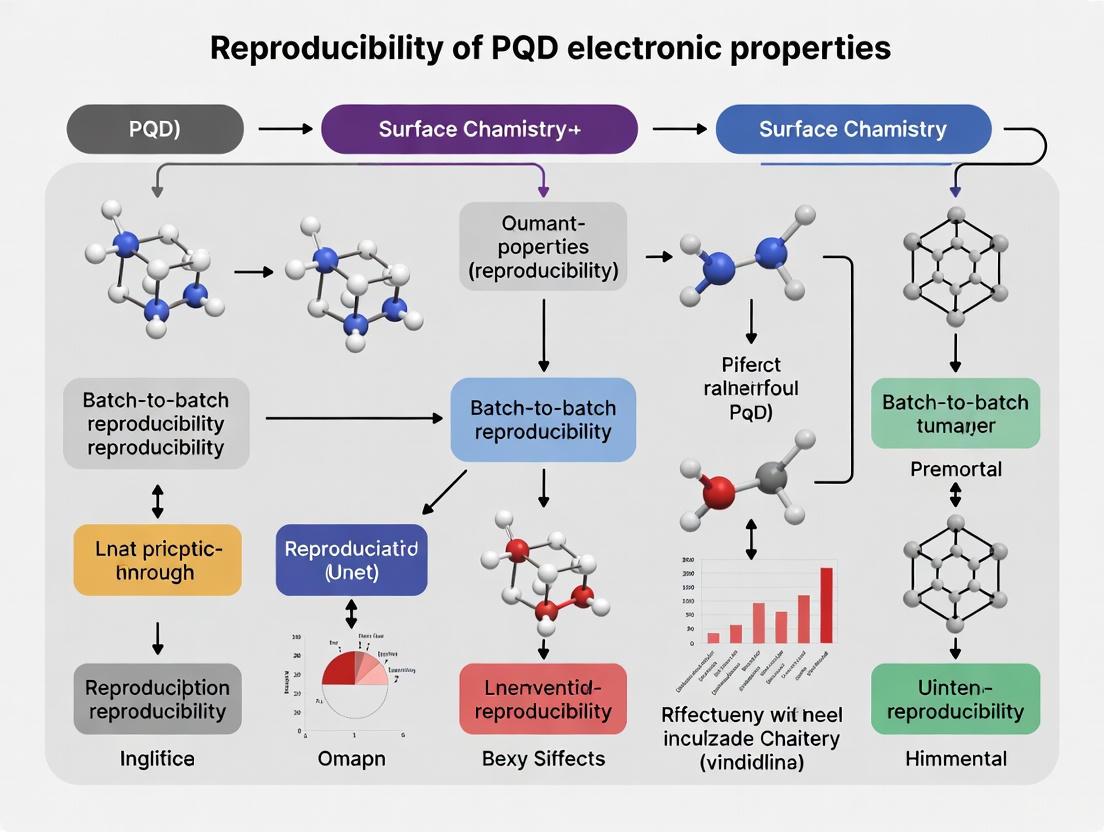
This article addresses the critical challenge of batch-to-batch reproducibility in Perovskite Quantum Dot (PQD) synthesis, a key bottleneck for their reliable integration into advanced electronics and biomedical devices.
Strategies for Enhancing Batch-to-Batch Reproducibility of Perovskite Quantum Dots for Reliable Electronic and Biomedical Applications
Abstract
This article addresses the critical challenge of batch-to-batch reproducibility in Perovskite Quantum Dot (PQD) synthesis, a key bottleneck for their reliable integration into advanced electronics and biomedical devices. We explore the fundamental sources of property variation, from nucleation kinetics to ligand chemistry. The scope covers advanced synthetic methodologies, stabilization strategies to combat environmental degradation, and rigorous statistical and biological validation frameworks. Tailored for researchers and drug development professionals, this review provides a holistic roadmap for achieving consistent PQD performance, which is paramount for developing robust biosensors, diagnostic tools, and other clinical applications.
Understanding PQD Complexity and Reproducibility Challenges
Troubleshooting Guides & FAQs
Tunable Bandgap
Q1: Why is my measured bandgap inconsistent with literature values for the same PQD composition? A: This is a common batch-to-batch issue. The bandgap is highly sensitive to nanocrystal size and halide distribution.
- Cause 1: Inaccurate Size Control. Slight variations in reaction temperature, precursor injection speed, or ligand concentration can alter the final nanocrystal size.
- Troubleshooting:
- Calibrate your thermocouple and ensure vigorous, consistent stirring.
- Precisely control the injection rate using a syringe pump.
- Monitor growth by withdrawing aliquots for UV-Vis measurement during synthesis.
- Cause 2: Halide Segregation. In mixed-halide perovskites (e.g., Br/I), phase separation under illumination can lead to a shifting bandgap.
- Troubleshooting:
- Synthesize under a controlled atmosphere (e.g., N₂ glovebox) to prevent surface defects that catalyze segregation.
- Incorporate passivating ligands (e.g., Phenethylammonium Iodide) to stabilize the mixed halide lattice.
Q2: How can I precisely tune the bandgap of my PQD batch? A: The primary method is through compositional engineering and quantum confinement.
- For CsPbX₃ PQDs: Systematically vary the halide ratio (X = Cl, Br, I) during synthesis. A higher Br/I ratio yields a larger bandgap (blue-shifted emission).
- For Size Control: Adjust the reaction time and temperature. Longer reaction times and higher temperatures generally yield larger particles with a smaller bandgap.
Experimental Protocol: Bandgap Measurement via Tauc Plot
- Sample Preparation: Disperse your purified PQDs in a non-solvent (e.g., toluene) to create an optically clear, dilute solution.
- UV-Vis Spectroscopy: Acquire an absorbance spectrum from a wavelength range of 300-800 nm.
- Data Analysis:
- Plot (αhν)² vs. hν (photon energy), where α is the absorption coefficient and hν is the photon energy. This assumes a direct bandgap.
- Extrapolate the linear region of the plot to the x-axis. The intercept is the direct bandgap energy.
Bandgap Ranges for Common CsPbX₃ PQDs
| PQD Composition | Approximate Bandgap Range (eV) | Corresponding Emission Wavelength (nm) |
|---|---|---|
| CsPbI₃ | 1.70 - 1.80 | 690 - 730 |
| CsPbBr₃ | 2.30 - 2.50 | 500 - 540 |
| CsPbCl₃ | 2.90 - 3.10 | 400 - 430 |
| CsPb(Br/I)₃ | 1.80 - 2.30 | 540 - 690 |
Diagram: Bandgap Tuning Workflow
Photoluminescence Quantum Yield (PLQY)
Q1: My PQD batch has a low PLQY (< 60%). How can I improve it? A: Low PLQY indicates a high density of non-radiative recombination centers, often due to surface defects.
- Cause 1: Incomplete Surface Passivation. Under-coordinated Pb²⁺ ions and halide vacancies on the PQD surface act as trap states.
- Troubleshooting:
- Optimize the concentration of surface ligands (e.g., Oleic Acid, Oleylamine). Too little leads to defects; too much can cause aggregation.
- Introduce specific passivating ligands like Zwitterionic molecules or PbSO₄ that strongly bind to surface sites.
- Cause 2: Synthesis Quenching. If the reaction is quenched too early or too late, it can result in a high defect density.
- Troubleshooting: Determine the optimal reaction time by tracking PL intensity in aliquots over time.
Q2: Why does my PQD solution's PLQY decrease over time (hours/days)? A: This is typically a stability issue related to ligand dynamics and environmental factors.
- Cause: Ligand Desorption. Dynamic binding of ligands means they can fall off over time, exposing surface defects.
- Troubleshooting:
- Store PQD solutions in the dark and at low temperatures (e.g., 4°C).
- Perform all purification and handling in an inert atmosphere to prevent oxidation.
- Consider post-synthetic treatment with a "passivation soup" to replenish ligands.
Experimental Protocol: Absolute PLQY Measurement using an Integrating Sphere
- Setup: Place a cuvette containing your PQD dispersion (in a transparent solvent) inside the integrating sphere.
- Excitation Measurement: Direct the excitation laser beam into the empty sphere and record the signal (Iexempty). Then, place the sample in the beam path and record the signal (Iexsample).
- Emission Measurement: With the sample in place, move the beam to excite the sample directly inside the sphere. Record the total luminescence signal (Iemsample).
- Calculation:
- PLQY = Iemsample / [Iexempty - Iexsample]
Factors Affecting PLQY Reproducibility
| Factor | Impact on PLQY | Method to Improve Reproducibility |
|---|---|---|
| Ligand Purity | Impurities compete for binding sites. | Use high-purity (>99%) ligands. |
| Precursor Ratio | Off-stoichiometry creates defects. | Maintain precise Pb:X (halide) ratio. |
| Reaction Temperature | Affects crystallization kinetics. | Use a calibrated, high-stability bath. |
| Purification | Incomplete removal of precursors/quenching solvents. | Standardize antisolvent volume & centrifuge speed/time. |
Diagram: PLQY Optimization Logic
Charge Carrier Mobility
Q1: My measured charge carrier mobility values have high variance between batches. Why? A: Mobility is extremely sensitive to inter-dot coupling and film morphology.
- Cause 1: Inconsistent Film Morphology. Variations in solvent, drying temperature, and ligand shell thickness affect how close PQDs pack, changing tunneling probability.
- Troubleshooting:
- Use a consistent film deposition technique (e.g., spin-coating with fixed speed, time, and acceleration).
- Implement a controlled post-deposition treatment (e.g., solvent vapor annealing) to gently reduce inter-dot distance.
- Cause 2: Variable Ligand Shell. Long, insulating ligands (e.g., Oleic Acid) are necessary for stability but hinder charge transport.
- Troubleshooting: Develop a reproducible ligand exchange protocol to replace long-chain ligands with shorter ones (e.g., formate, acetate) after film formation.
Q2: Which measurement technique is most suitable for PQD films? A: The choice depends on your device structure and the specific property you wish to isolate.
- Space-Charge-Limited Current (SCLC): Good for measuring mobility in diode structures (hole-only or electron-only devices). It probes the bulk transport of the majority carrier.
- Field-Effect Transistor (FET): Measures mobility in a transistor configuration. Can be challenging for PQDs due to ionic migration and instability under gate bias.
- Time-of-Flight (ToF): Provides direct measurement of carrier drift mobility but requires thick, high-quality films, which are difficult to achieve with PQDs.
Experimental Protocol: Hole Mobility by SCLC
- Device Fabrication: Fabricate a hole-only device (e.g., ITO/PEDOT:PSS/PQD Film/MoO₃/Ag).
- Current-Voltage (I-V) Measurement: Sweep the voltage and measure the current in the dark.
- Data Analysis:
- Plot log(Current) vs log(Voltage).
- Identify the region where the slope is 2 (the Child's Law region).
- Use the Mott-Gurney Law to calculate the hole mobility (μh):
- J = (9/8)εε₀μh(V²/d³)
- Where J is current density, ε is dielectric constant, ε₀ is vacuum permittivity, V is voltage, and d is film thickness.
Comparison of Mobility Measurement Techniques
| Technique | Required Sample Form | Key Output | Pros & Cons for PQDs |
|---|---|---|---|
| SCLC | Diode (Hole/Electron-only) | Bulk Mobility (μ) | Pro: Relatively simple analysis. Con: Requires trap-free film for accurate result. |
| FET | Transistor (Gate, Source, Drain) | Field-Effect Mobility (μ_FE) | Pro: Measures tunable transport. Con: Highly sensitive to interface; ionic effects can distort data. |
| ToF | Thick Film (>1 μm) between contacts | Drift Mobility (μ_drift) | Pro: Direct measurement, less ambiguous. Con: Difficult sample preparation for PQDs. |
Diagram: Mobility Measurement Decision Tree
The Scientist's Toolkit: Research Reagent Solutions
| Reagent/Material | Function | Critical for Reproducibility |
|---|---|---|
| Cesium Carbonate (Cs₂CO₃) | Precursor for Cs⁺ ions. | Use high-purity (>99.9%) source. Dry thoroughly before use to prevent hydroxide formation. |
| Lead Bromide (PbBr₂) | Precursor for Pb²⁺ and Br⁻ ions. | Purify via recrystallization to remove trace metals and Pb⁰. |
| Oleic Acid (OA) | Surface ligand; binds to Pb sites, provides colloidal stability. | Monitor acid value; store under inert gas to prevent oxidation. |
| Oleylamine (OAm) | Surface ligand; passivates halide vacancies. | Use in a precise ratio with OA; batch variability is high, so test new batches. |
| 1-Octadecene (ODE) | Non-coordinating solvent for high-temperature synthesis. | Purify by heating under vacuum to remove polar impurities and water. |
| Methyl Acetate (MeOAc) | Antisolvent for purifying and precipitating PQDs. | Use anhydrous grade and ensure consistent volume across batches. |
| Didodecyldimethylammonium Bromide (DDAB) | Short-chain ligand for post-synthetic treatment to improve mobility. | Standardize the concentration and treatment time for ligand exchange. |
Troubleshooting Guides
Nucleation Kinetics Defects
Problem: Inconsistent crystal nucleation between batches. High supersaturation, often essential to promote nucleation of macromolecular crystals, is far from ideal for growth and leads to competition between crystal formation and amorphous precipitates [1]. This variation in the early stage of crystallization is a primary source of batch differences.
- Issue: Uncontrolled secondary nucleation
- Root Cause: Supersaturation levels that are too high, leading to excessive nucleation sites and inconsistent crystal growth initiation [1].
- Impact: Variable crystal size, morphology, and electronic properties in final batches [1].
- Solution: Implement controlled supersaturation profiling and use seeding techniques to ensure consistent primary nucleation events.
Experimental Protocol for Seeding:
- Prepare a saturated solution of your material at precisely controlled temperature
- Generate seed crystals by creating a brief, high supersaturation pulse
- Characterize seed size distribution using dynamic light scattering
- Introduce standardized seed quantity to new batches at precisely 5% below metastable zone width
- Monitor nucleation events with in-situ particle size analysis
Surface Ligand Dynamics Variation
Problem: Inconsistent surface chemistry between batches. Surface ligand dynamics significantly impact the electronic properties of quantum dots and other crystalline materials, where inconsistent ligand binding or exchange creates batch-to-batch variability in performance.
- Issue: Fluctuating ligand coverage and binding stability
- Root Cause: Variable reaction kinetics during ligand exchange processes and inconsistent purification efficacy [2].
- Impact: Altered surface electronic states, variable charge transport properties, and inconsistent device performance [2].
- Solution: Standardize ligand exchange protocols with real-time monitoring and implement rigorous purification quality control.
Experimental Protocol for Ligand Exchange Monitoring:
- Establish baseline ligand coverage using FTIR spectroscopy
- Implement real-time UV-Vis monitoring during exchange processes
- Standardize quenching methodology across all batches
- Deploy consistent precipitation/redispersion cycles (recommended: 3 cycles minimum)
- Verify final ligand density through TGA analysis
Crystal Defects and Imperfections
Problem: Structural defects that vary between production batches. Crystal defects significantly impact the degree of molecular and lattice order, which affects functional properties like charge carrier mobility and recombination kinetics [1].
- Issue: Variable dislocation density and point defect concentrations
- Root Cause: Non-uniform thermal profiles during growth, impurity incorporation, and inconsistent lattice matching [1] [3].
- Impact: Reduced charge carrier lifetime, altered bandgap characteristics, and inconsistent electronic performance between batches [1].
- Solution: Implement optimized thermal protocols with verification through structural characterization.
Experimental Protocol for Defect Characterization:
- Perform X-ray diffraction analysis to determine crystalline size and strain
- Conduct photoluminescence spectroscopy to identify defect states
- Use atomic force microscopy to visualize surface defects
- Employ transmission electron microscopy for lattice-level defect identification
- Correlate defect density with electronic performance metrics
Frequently Asked Questions (FAQs)
Q: What are the primary factors influencing batch-to-batch variation in crystal growth? A: The major factors include: (1) Nucleation kinetics controlled by supersaturation levels [1], (2) Surface ligand dynamics affecting interfacial properties [2], and (3) Crystal defect formation during growth processes [1]. Controlling these parameters through standardized protocols is essential for reproducibility.
Q: How can I quantify batch-to-batch variation in my experimental system? A: Implement a rigorous characterization protocol including:
- Size exclusion chromatography for molecular weight distribution [4] [5]
- Cyclic voltammetry for electrochemical consistency [2]
- X-ray diffraction for crystalline structure analysis [1]
- Spectroscopic methods for surface chemistry verification [2]
Q: What analytical techniques are most sensitive for detecting batch variations? A: The most sensitive techniques include:
- Cyclic voltammetry (detects variation in electrochemical properties) [2]
- Chromatographic methods (SE-UPLC detects physicochemical differences) [4] [5]
- Mass spectrometry (identifies compositional variations) [6]
- Atomic force microscopy (visualizes nanoscale defects) [1]
Q: How does nucleation kinetics specifically impact batch reproducibility? A: Nucleation kinetics determines critical parameters including:
- Crystal size distribution
- Polymorph selection
- Defect density
- Molecular order within the lattice [1]
Variation in nucleation conditions leads to divergent crystalline materials with different properties, even with identical chemical composition.
Table 1: Measured Batch-to-Batch Variation Across Material Systems
| Material System | Measurement Type | Observed Variation | Impact on Properties | Reference |
|---|---|---|---|---|
| Laser-Inscribed Graphene (LIG) | Electrochemical Performance | <5% (bare LIG), ~30% (metallized LIG) | Specific capacitance, peak current | [2] |
| Transferon (Biopharmaceutical) | Chromatographic Profile | <0.2% (retention time), <30% (peak area) | Biological activity, consistency | [4] [5] |
| Advair Diskus (Pharmaceutical) | Pharmacokinetic Parameters | Failed bioequivalence tests | Drug absorption, therapeutic effect | [7] |
| Direct Infusion Mass Spectrometry | Analytical Precision | 15.9% median RSD | Metabolite detection accuracy | [6] |
Table 2: Troubleshooting Solutions for Common Batch Variation Issues
| Problem Category | Detection Methods | Corrective Actions | Preventive Measures |
|---|---|---|---|
| Nucleation Inconsistency | Light scattering, microscopy | Seeding protocols, supersaturation control | Standardized nucleation triggers |
| Surface Ligand Variability | FTIR, XPS, TGA | Ligand exchange optimization | Real-time reaction monitoring |
| Crystal Defects | XRD, TEM, AFM | Thermal profile adjustment | Lattice matching protocols |
| Impurity Incorporation | Chromatography, spectrometry | Purification process enhancement | Raw material quality control |
Workflow Visualization
Experimental Optimization Pathway
Material Characterization Workflow
Research Reagent Solutions
Table 3: Essential Materials for Batch Reproducibility Research
| Reagent/Material | Function | Application Notes |
|---|---|---|
| Polyimide Film | Substrate for LIG formation | Electrical grade, 0.0050" thickness recommended [2] |
| Size Exclusion UPLC | Physicochemical characterization | Validated method for batch comparison [4] [5] |
| Reference Electrodes (Ag/AgCl) | Electrochemical standardization | Essential for consistent voltammetry [2] |
| Calibrated Weights | Weighing system verification | Prevention of dosing inaccuracies [8] |
| Standardized Solvents | Purification and processing | High purity with lot-to-lot consistency |
| Ligand Libraries | Surface modification | Pre-characterized for purity and reactivity |
Research Reagent Solutions
The following table details key reagents and their critical functions in ensuring reproducible Perovskide Quantum Dot (PQD) synthesis and electronic properties.
| Reagent/ Material | Primary Function | Impact on Reproducibility & Electronic Properties |
|---|---|---|
| High-Purity Precursors (e.g., CsX, PbX₂) | Source of primary elements for perovskite crystal structure. | Purity directly dictates defect density and trap states, profoundly influencing photoluminescence quantum yield (PLQY) and charge carrier mobility [9]. |
| Spectrophotometric Grade Solvents (e.g., DMF, DMSO, γ-butyrolactone) | Dissolving precursors to form the reaction medium. | Solvent purity (e.g., water content), coordinating ability, and viscosity affect precursor reactivity, nucleation rates, and final nanocrystal stability, impacting batch-to-burst size distribution [10] [11]. |
| Ligands (e.g., Oleic Acid, Oleylamine) | Capping agents that control nanocrystal growth and stabilize the colloidal suspension. | The ligand chain length, concentration, and binding affinity determine surface passivation, influencing PLQY and electronic properties by mitigating surface defects [9]. |
| Silica, Polymer, or MOF Coatings | Encapsulating matrix to enhance PQD stability. | Protects the sensitive PQDs from environmental degradation (moisture, oxygen, heat), preserving their electronic and optical properties over time and across batches [9]. |
| Antisolvents (e.g., Toluene, Hexane, Ethyl Acetate) | Triggering supersaturation and nanocrystal precipitation. | The chemical nature, purity, and addition kinetics of the antisolvent are critical for achieving a narrow size distribution during the crystallization process [9]. |
Troubleshooting Guides
Issue 1: Inconsistent Optical Properties (PLQY and Emission Wavelength)
Problem: Batch-to-batch variations in photoluminescence quantum yield (PLQY) and emission peak position.
| Potential Cause | Diagnostic Experiments | Corrective Action & Protocol |
|---|---|---|
| Variable Precursor Purity & Stoichiometry | - Perform elemental analysis of precursors.- Titrate Pb:Cs molar ratio in small increments (e.g., ±5%) and monitor optical output. | - Source precursors from a single, reputable supplier with Certificate of Analysis.- Establish and strictly adhere to a fixed stoichiometric ratio. Pre-mix large batches of precursor stock solutions for multi-batch studies [12]. |
| Uncontrolled Hydrolysis of Solvents | - Test solvents for water content via Karl Fischer titration.- Compare PL results from "as-opened" vs. dried/stored solvents (over molecular sieves). | - Use anhydrous, spectrophotometric-grade solvents. Employ proper storage and handling under inert atmosphere to prevent water absorption [10] [11]. |
| Irregular Ligand Binding Dynamics | - Characterize PQDs via FTIR to monitor ligand binding states.- Systematically vary the OA:OAm ratio while keeping other parameters constant. | - Standardize the purity, concentration, and ratio of all surface ligands. Pre-mix ligand stocks. Implement a highly consistent injection and reaction temperature protocol [9]. |
Experimental Protocol for Diagnosing Solvent-Induced Variability:
- Prepare a master batch of precursor solution (e.g., 1.5 M CsPbBr₃ in anhydrous DMF).
- Split this master batch into three equal parts.
- Control: Use one part immediately with dry antisolvent.
- Test 1: Intentionally add 0.1% v/v water to the second precursor part, then proceed with synthesis.
- Test 2: Use the third part with an antisolvent batch known to have higher water content.
- Characterize all three resulting PQD batches using UV-Vis absorption, PL spectroscopy, and calculate PLQY. The difference in emission intensity and peak shift between the control and test samples will quantify the impact of solvent purity.
Issue 2: Poor Batch-to-Batch Size Uniformity
Problem: Wide variations in particle size and size distribution between syntheses.
| Potential Cause | Diagnostic Experiments | Corrective Action & Protocol |
|---|---|---|
| Fluctuating Reaction Temperature | - Calibrate the heating mantle/oil bath thermometer.- Run replicates with tight (±1°C) vs. loose (±5°C) temperature control. | - Use a calibrated thermocouple in the reaction flask. Employ heating systems with high stability and use a stirring hotplate to ensure even heat distribution [13]. |
| Inconsistent Antisolvent Addition | - Record the addition rate (drops/sec) and vigor of stirring.- Synthesize batches with manual vs. syringe pump addition. | - Replace manual, dropwise addition with an automated syringe pump for a fixed, reproducible addition rate (e.g., 5 mL/min). Standardize stirring speed (e.g., 800 rpm) [13]. |
| Unoptimized Ligand Concentration | - Conduct a synthesis series where ligand concentration is the only variable.- Use TEM to measure the resulting nanocrystal size and size distribution. | - Determine the optimal ligand concentration that provides the smallest, most monodisperse particles and adhere to it strictly. Avoid under- or over-passivation of surfaces [9]. |
Frequently Asked Questions (FAQs)
FAQ 1: Why is precursor purity so critical for the electronic properties of PQDs? Impurities in precursor materials (e.g., metal ions, halides, organic contaminants) act as defect sites within the perovskite crystal lattice. These defects create electronic trap states that non-radiatively capture charge carriers (electrons and holes). This process severely quenches photoluminescence (low PLQY) and degrades charge transport properties, which are essential for electronic devices like LEDs and solar cells. High-purity precursors minimize these defects, leading to more efficient and predictable electronic performance [9].
FAQ 2: How do solvent properties beyond purity affect my PQD reaction? The choice of solvent is not merely a passive medium. Its properties—such as dielectric constant, viscosity, boiling point, and coordinating ability—directly influence:
- Solvation of Precursors: How well ions are separated, affecting reactivity.
- Nucleation Rate: A higher dielectric constant can promote rapid nucleation, leading to smaller particles.
- Growth Kinetics: Viscosity affects diffusion rates and thus crystal growth.
- Stability of Intermediate Complexes: Solvents like DMSO strongly coordinate with Pb²⁺, forming complexes that can alter the reaction pathway. Changing the solvent system changes the fundamental energy landscape of the synthesis, making consistency paramount [10] [11].
FAQ 3: What are the most common sources of variability in the reaction environment? The most pervasive yet often overlooked sources of variability are:
- Temperature Gradients: Inconsistent heating within the reaction vessel.
- Ambient Atmosphere: Exposure to oxygen and moisture during synthesis or purification.
- Human Operational Factors: Inconsistent timing, manual injection rates, and stirring efficiency.
- Reagent Age and Storage: Degradation of precursors or solvents over time, especially under improper storage. Implementing automation for fluid handling, using inert atmosphere gloveboxes, and standardizing all timings and physical setups are the most effective ways to mitigate these issues [13].
FAQ 4: How can I quickly assess if my new batch of PQDs is consistent with previous ones? Perform a set of rapid, routine characterizations immediately after synthesis and purification:
- UV-Vis Absorption Spectroscopy: Check the position and sharpness of the first excitonic absorption peak. A shift indicates a change in bandgap or size distribution.
- Photoluminescence (PL) Spectroscopy: Measure the emission peak wavelength and, crucially, the full width at half maximum (FWHM). A broadening FWHM signals increased size dispersion.
- PL Quantum Yield (PLQY): Measure the absolute or relative PLQY to confirm the intrinsic optoelectronic quality has been maintained. A significant drop in PLQY suggests a high density of defects [9].
Experimental Workflow for Reproducible PQD Synthesis
The following diagram outlines a standardized workflow that integrates quality control checkpoints to enhance batch-to-batch reproducibility.
Quality Control Verification Pathway
This decision tree helps troubleshoot a new batch of PQDs that shows inconsistent properties, guiding you to the most likely root cause.
Troubleshooting Guide & FAQs
Q1: Why is there significant variation in the photoluminescence quantum yield (PLQY) between my synthesis batches?
A: PLQY is highly sensitive to the halide ratio and reaction temperature. Even minor deviations can lead to large variations in defect density and non-radiative recombination.
- Root Cause: Non-stoichiometric Pb:Br ratios and temperature fluctuations during injection and growth.
- Solution: Precisely control precursor stoichiometry and implement a rigorous temperature control system for the reaction flask. Use an excess of PbBr2 (e.g., 5-10%) to ensure full conversion and reduce lead vacancy defects.
Q2: My synthesized CsPbBr3 PQDs exhibit broad size distribution and poor crystallinity. What step is most critical to control?
A: The ligand-assisted reprecipitation (LARP) process is highly sensitive to the antisolvent addition rate and the choice of ligands/cosolvents.
- Root Cause: Rapid antisolvent addition causes uncontrolled nucleation and Ostwald ripening. Ineffective ligand binding leads to particle aggregation.
- Solution: Use a syringe pump for slow, dropwise addition of the precursor solution into the antisolvent under vigorous stirring. Optimize the ratio of oleic acid (OA) to oleylamine (OAm) to enhance surface passivation.
Q3: How does the ligand ratio (OA:OAm) specifically affect the electronic properties of the final PQD film?
A: The OA:OAm ratio directly influences surface defect passivation and charge transport in films. An imbalance can create insulating layers or trap states.
- Root Cause: Oleylamine alone passivates lead-rich sites but can create excess ligands. Oleic acid passivates bromine-rich sites. An imbalance leaves unpassivated surface sites.
- Solution: A balanced molar ratio (e.g., 1:1 to 3:1 OA:OAm) is typically optimal. See Table 1 for quantitative data on its impact.
Q4: Why do my PQD films have poor charge carrier mobility and high trap density?
A: This is often a result of poor inter-dot coupling due to long, insulating ligand chains and residual solvent trapped in the film.
- Root Cause: Long-chain OA/OAm ligands create large inter-dot distances. Incomplete purification leaves oleate/oleylammonium species that act as traps.
- Solution: Implement a solid-state ligand exchange process post-deposition using short-chain ligands like ethylenediamine bromide (EDABr). Ensure thorough washing with polar antisolvents (e.g., methyl acetate) during purification.
Table 1: Impact of Synthesis Parameters on CsPbBr3 PQD Properties
| Parameter | Typical Range Tested | Optimal Value | Effect on PLQY | Effect on FWHM (nm) | Key Finding |
|---|---|---|---|---|---|
| Pb:Br Precursor Ratio | 1:2 to 1:4 | 1:3 (with 5% Pb excess) | 45% -> 85% | 22 -> 18 | Slight Pb excess suppresses Br vacancies, boosting PLQY. |
| Reaction Temperature (°C) | 20 - 80 | 40 ± 2 | 30% -> 75% | 25 -> 19 | Higher temps increase defect density; precise control is vital. |
| OA:OAm Molar Ratio | 1:5 to 5:1 | 3:1 | 60% -> 90% | 20 -> 17 | Balanced ratio ensures complete surface passivation. |
| Antisolvent Addition Rate (mL/min) | 0.5 - 5 | 1.0 | 50% -> 80% | 28 -> 20 | Slower rate promotes monodisperse nucleation. |
| Purification Solvent | Toluene, EA, MA | Methyl Acetate (MA) | 70% -> 90%* | - | MA most effectively removes unbound ligands without damaging PQDs. |
*PLQY after purification.
Experimental Protocol: Optimized LARP Synthesis for High-Reproducibility CsPbBr3 PQDs
Methodology (Based on ):
- Precursor Solution: Dissolve 0.16 mmol CsBr, 0.21 mmol PbBr2 (5% excess Pb) in 1 mL of Dimethyl Sulfoxide (DMSO). Add Oleic Acid (0.5 mL) and Oleylamine (0.25 mL) to achieve a 3:1 OA:OAm ratio. Stir at 60°C until fully dissolved.
- Antisolvent: Load 20 mL of Toluene into a 50 mL three-neck flask. Equip the flask with a magnetic stirrer and a temperature probe. Set and maintain the temperature at 40°C.
- Injection and Nucleation: Using a syringe pump, inject 0.5 mL of the precursor solution into the vigorously stirring (1000 rpm) toluene at a constant rate of 1.0 mL/min.
- Reaction and Growth: Allow the reaction to proceed for 10 minutes at 40°C. The solution will turn from clear to a bright greenish-yellow, indicating PQD formation.
- Purification: Centrifuge the crude solution at 8000 rpm for 10 minutes. Discard the supernatant. Re-disperse the pellet in 1 mL of hexane and add 4 mL of methyl acetate (MA) to precipitate the PQDs again. Centrifuge at 8000 rpm for 5 minutes. Repeat this washing step once more.
- Storage: Finally, disperse the purified PQD pellet in 2 mL of hexane for storage and characterization.
Workflow and Parameter Relationship Diagrams
PQD Synthesis Workflow & Critical Parameters
Parameter Impact on Electronic Properties
The Scientist's Toolkit: Research Reagent Solutions
Table 2: Essential Materials for CsPbBr3 PQD Synthesis
| Reagent / Material | Function / Role | Critical Consideration for Reproducibility |
|---|---|---|
| Cesium Bromide (CsBr) | Cs+ precursor for the perovskite lattice. | High purity (>99.99%) is essential to minimize ionic impurities. Must be stored in a desiccator. |
| Lead Bromide (PbBr2) | Pb2+ and Br- precursor for the lattice. | High purity (>99.99%). Slight excess (5-10%) is often used to compensate for Pb-related defects. |
| Dimethyl Sulfoxide (DMSO) | Solvent for precursor salts. | Anhydrous grade. Acts as a coordinating solvent, influencing precursor stability. |
| Oleic Acid (OA) | Surface ligand (L-type). Passivates bromine-rich sites. | Must be stored under inert atmosphere. Titrate to determine acid content if reproducibility is an issue. |
| Oleylamine (OAm) | Surface ligand (L-type). Passivates lead-rich sites. | Technical grade (~70%) is common but can introduce variability. Use high-purity (>98%) for better control. |
| Toluene | Antisolvent for the LARP process. | Anhydrous grade. Polarity and saturation pressure critically influence nucleation kinetics. |
| Methyl Acetate (MA) | Purification solvent (polar antisolvent). | Effectively precipitates PQDs and removes unbound ligands without causing degradation. |
Advanced Synthesis and Stabilization Techniques for Consistent PQDs
Troubleshooting Guides & FAQs
Hot-Injection (HI) Method Troubleshooting
Q1: Why do I observe a wide photoluminescence (PL) full width at half maximum (FWHM) in my HI-synthesized perovskite quantum dots (PQDs), indicating poor size uniformity?
A: A wide PL FWHM (>25 nm for CsPbBr3) typically stems from non-uniform nucleation and growth. This is often caused by:
- Insufficient Temperature: The injection temperature is too low, leading to slow nucleation.
- Improper Injection Speed: Slow injection causes a gradient in precursor concentration, resulting in sequential nucleation events.
- Unstable Ligand Coverage: An imbalance in the ratio of oleic acid (OA) to oleylamine (OAm) fails to effectively passivate the PQD surface and control growth.
Protocol for Optimization:
- Calibrate the thermocouple in your heating mantle to ensure accurate temperature reporting.
- Systematically vary the injection temperature between 140-180°C for CsPbBr3.
- Practice a rapid, single-motion injection. Use syringes with wide-bore needles.
- Optimize the OA:OAm ratio. A common starting point is 1:1, but this should be tuned for your specific precursors and target size.
Q2: Why is my HI synthesis batch-to-batch reproducibility poor, with significant variations in PL peak wavelength and quantum yield (QY)?
A: Batch-to-batch variance is frequently due to inconsistent reaction conditions or precursor quality.
- Precursor Degradation: Metal halide precursors (e.g., PbBr2) are hygroscopic. Absorbed water leads to inconsistent reactivity.
- Oxygen and Moisture: The reaction is sensitive to O2 and H2O, which can create defect states.
- Timing Inconsistencies: The time between injection and cooling (reaction quenching) is critical.
Protocol for Optimization:
- Precursor Handling: Always use high-purity, anhydrous precursors. Store them in a nitrogen-filled glovebox and dry them under vacuum before use.
- Schlenk Line Technique: Ensure your Schlenk line provides a consistent, high-quality vacuum and inert gas flow. Purge the reaction flask for at least 30 minutes before heating.
- Standardize Quenching: Use a precise timer and a standardized cooling method (e.g., transferring the flask to a water bath at a specific time, such as 10 seconds post-injection).
Ligand-Assisted Reprecipitation (LARP) Method Troubleshooting
Q3: Why does my LARP synthesis result in immediate precipitation or cloudiness instead of a clear, luminescent colloid?
A: Immediate precipitation indicates uncontrolled, bulk crystallization instead of confined nanocrystal growth. The primary cause is an excessive anti-solvent polarity or a too-rapid mixing process.
Protocol for Optimization:
- Modify Anti-Solvent Polarity: Instead of using pure toluene or chloroform as the anti-solvent, create a gradient by pre-mixing it with a small percentage (5-20%) of a solvent that has higher solubility for the precursors, such as N,N-Dimethylformamide (DMF) or Dimethyl sulfoxide (DMSO).
- Optimize Mixing Dynamics: Implement vigorous stirring (e.g., using a vortex mixer) during the anti-solvent addition to ensure instantaneous and homogeneous mixing, preventing local supersaturation spikes.
Q4: How can I improve the photoluminescence quantum yield (PLQY) and stability of my LARP-synthesized PQDs?
A: Low PLQY and poor stability are linked to surface defects and inadequate ligand binding.
- Ligand Concentration: The concentration of ligands (OA and OAm) in the "good solvent" is too low to effectively cap all nucleation sites.
- Ligand Ratio: An improper OA:OAm ratio can lead to non-stoichiometric surfaces and unpassivated lead or halide sites.
Protocol for Optimization:
- Systematically vary the total ligand concentration from 50-200 µL per mL of DMF.
- Titrate the OA:OAm ratio. A slight excess of OAm is often beneficial for lead-rich surfaces, but too much can destabilize the colloid. A ratio between 0.8:1 to 1.2:1 (OA:OAm) is a good range to explore.
- Consider post-synthesis treatments like dilution with anti-solvent and centrifugation to remove unbound ligands and poorly emitting aggregates.
Table 1: Optimized HI Synthesis Parameters for CsPbBr3 PQDs
| Parameter | Sub-optimal Range | Optimal Range | Typical Target Value | Key Impact |
|---|---|---|---|---|
| Injection Temp. | 120-140 °C | 150-170 °C | 160 °C | Controls nucleation burst; higher temp = smaller size. |
| OA:OAm Ratio | <0.5 or >2.0 | 0.8 - 1.5 | 1:1 | Determines surface passivation & stability. |
| Reaction Time | >30 s | 5 - 15 s | 10 s | Governs growth phase; longer time = larger dots. |
| Pb:Br Ratio | <0.9 or >1.1 | 1:2 - 1:3 | 1:2.5 | Affects stoichiometry & defect density. |
| PL FWHM | >25 nm | 18 - 22 nm | ~20 nm | Indicator of size distribution uniformity. |
| PLQY | <50% | 70 - 95% | >80% | Measure of emissive efficiency. |
Table 2: Optimized LARP Synthesis Parameters for CsPbBr3 PQDs
| Parameter | Sub-optimal Range | Optimal Range | Typical Target Value | Key Impact |
|---|---|---|---|---|
| Precursor Conc. | >0.1 M | 0.05 - 0.08 M | 0.06 M | High conc. leads to aggregation. |
| Good:Anti-Solvent | <1:3 | 1:5 - 1:10 | 1:7 | Governs supersaturation level. |
| Total Ligand Vol. | <50 µL/mL | 75 - 150 µL/mL | 100 µL/mL | Ensures sufficient surface coverage. |
| Mixing Method | Gentle stirring | Vortex / Vigorous | Vortex | Ensures instantaneous mixing. |
| PL FWHM | >28 nm | 20 - 25 nm | ~22 nm | Indicator of size distribution uniformity. |
| PLQY | <40% | 50 - 85% | >70% | Measure of emissive efficiency. |
Experimental Workflow Diagrams
Title: Hot-Injection Synthesis Workflow
Title: LARP Cloudiness Troubleshooting
The Scientist's Toolkit: Research Reagent Solutions
| Item | Function | Key Consideration |
|---|---|---|
| Lead Bromide (PbBr₂) | Metal cation precursor for the PQD lattice. | Must be high-purity (≥99.99%), anhydrous, and stored in a glovebox. Hygroscopicity is a major source of batch variance. |
| Cesium Carbonate (Cs₂CO₃) | Source for Cs-oleate precursor. | Reacts with oleic acid to form the Cs-Oleate stock solution used in HI. Must be thoroughly dried. |
| Oleic Acid (OA) | Primary surface ligand (carboxylate). | Passivates the PQD surface, controlling growth and preventing aggregation. Quality and age can affect deprotonation. |
| Oleylamine (OAm) | Primary surface ligand (amine). | Co-passivates the surface, often acts as the proton scavenger. The ratio to OA is critical for stability and PLQY. |
| 1-Octadecene (ODE) | Non-coordinating solvent for HI. | High boiling point allows for high-temperature reactions. Must be purified and stored over molecular sieves. |
| N,N-Dimethylformamide (DMF) | "Good solvent" for LARP. | Highly polar solvent that dissolves perovskite precursors. Anhydrous grade is essential. |
| Toluene | Common "anti-solvent" for LARP. | Low polarity induces supersaturation and nucleation when added to the DMF precursor solution. |
Troubleshooting Guide: Common Issues in Perovskite Quantum Dot (PQD) Research
This guide addresses frequent challenges in PQD research, providing solutions to improve the consistency and performance of your materials.
Table 1: Common PQD Experimental Issues and Solutions
| Problem Category | Specific Symptom | Potential Root Cause | Recommended Solution | Key References |
|---|---|---|---|---|
| Optical Properties | Low Photoluminescence Quantum Yield (PLQY) | Surface defects (e.g., uncoordinated Pb²⁺ sites) acting as non-radiative recombination centers. [14] [15] | Implement post-synthetic passivation with Lewis base ligands (e.g., trioctylphosphine oxide, didodecyldimethylammonium bromide). [16] [15] | |
| Batch-dependent emission wavelength | Uncontrolled growth/aggregation due to variable ligand coverage during synthesis or purification. [15] | Standardize purification protocols (precipitant volume, centrifugation speed/time). Monitor ligand concentration in supernatant. [17] [18] | ||
| Material Stability | Rapid degradation in aqueous environments | Instability of lead-based compositions; ligand desorption. [16] | Develop core-shell structures or encapsulate PQDs within stable matrices (e.g., Metal-Organic Frameworks, SiO₂). [16] [19] | |
| Loss of colloidal stability over time | Dynamic binding nature of traditional ligands (e.g., oleate) leading to aggregation. [15] | Employ multidentate or zwitterionic ligands that offer stronger, more stable surface binding. [15] | ||
| Electrical & Device Performance | Poor charge carrier transport in films | Excessive insulating organic ligands creating barriers between NCs. [14] | Perform controlled ligand exchange to shorter, conductive ligands (e.g., formate, acetate) or use inorganic ligands (e.g., halide salts). [14] [15] | |
| High device-to-device variation (e.g., in LEDs) | Inconsistent surface passivation and uncontrolled grain boundaries in thin films. [14] [17] | Adopt multi-functional passivation strategies (e.g., combining ionic and coordinate bonds) and implement statistical quality control for film characterization. [14] [17] |
Frequently Asked Questions (FAQs)
Q1: What are the most effective chemical strategies for passivating defects on PQD surfaces? Effective passivation leverages specific chemical interactions to tie up surface defects, primarily uncoordinated Pb²⁺ ions and halide vacancies. The most successful strategies often combine multiple approaches [14]:
- Ionic Bonding: Using alkylammonium halides (e.g., oleylammonium iodide) to provide halide ions that fill vacancies and ammonium groups to electrostatically interact with the surface. [14] [15]
- Coordinate Bonding: Employing Lewis base molecules (e.g., trioctylphosphine oxide, thiocyanates) that donate electron pairs to coordinate with under-coordinated Pb²⁺ sites. This is highly effective for boosting PLQY. [14] [16]
- Hydrogen Bonding: Molecules with appropriate donor/acceptor groups can stabilize the surface crystal lattice and help bind other passivating agents. [14]
Q2: How can we quantitatively track and improve batch-to-batch reproducibility in PQD synthesis? Improving reproducibility requires a two-pronged approach: rigorous process control and statistical quality assessment.
- Process Standardization: Precisely control synthesis parameters (temperature, injection speed, ligand ratios) and establish fixed, documented purification protocols to minimize procedural drift. [18]
- Adopt Statistical Quality Control (QC): Implement a QC workflow similar to those used for other nanomaterials like laser-inscribed graphene. [17] This involves:
- High-Throughput Screening: Use rapid characterization techniques like photoluminescence spectroscopy or cyclic voltammetry on a large number of samples (e.g., n ≥ 36). [17]
- Statistical Clustering: Apply hierarchical clustering algorithms to the characterization data (e.g., PL spectra, voltammogram shapes) to group batches with similar performance and identify outliers. [17] This data-driven method allows researchers to select high-quality, consistent batches for device fabrication, reducing performance variation.
Q3: What are the best characterization techniques to verify successful surface passivation? A combination of techniques is necessary to confirm both the chemical and functional outcomes of passivation:
- Optical Spectroscopy: A direct increase in PLQY and a reduction in PL emission linewidth (FWHM) are primary indicators of successful defect passivation. [16] [15]
- Structural & Chemical Analysis: Fourier-Transform Infrared (FTIR) Spectroscopy and Nuclear Magnetic Resonance (NMR) Spectroscopy can confirm the binding of passivating ligands to the PQD surface. [15] X-ray Photoelectron Spectroscopy (XPS) can reveal changes in surface elemental composition and chemical states. [15]
- Functional Performance: In devices, improved external quantum efficiency (EQE) in LEDs and solar cells, along with enhanced operational stability, is the ultimate validation of effective passivation. [14] [15]
Experimental Protocols for Reproducible PQD Passivation
Protocol 1: Post-Synthetic Halide-Anion Exchange Passivation
This protocol details a method to enrich the surface halide coverage of CsPbX₃ PQDs, mitigating halide vacancy defects. [14] [15]
1. Principle Lead-halide PQDs are prone to losing surface halide ions (e.g., Br⁻), creating positive charges and uncoordinated Pb²⁺ sites that quench luminescence. This passivation method introduces a source of halide ions (e.g., from PbX₂) in the presence of a Lewis acid scavenger (e.g., Lewis acid M⁺), which promotes the dissolution of PbX₂ and the subsequent binding of X⁻ to the PQD surface. [15]
2. Materials
- Research Reagent Solutions:
- Synthesized CsPbBr₃ PQDs in non-polar solvent (e.g., toluene, hexane).
- Lead Bromide (PbBr₂): Source of halide ions for passivation.
- Didodecyldimethylammonium Bromide (DDAB): Provides both halide ions and ammonium-based surface stabilization.
- Anhydrous Solvents (e.g., N,N-Dimethylformamide (DMF), Dimethyl Sulfoxide (DMSO)): For dissolving PbBr₂.
3. Step-by-Step Procedure 1. Pre-treatment Solution Preparation: Dissolve 10 mg of PbBr₂ in 1 mL of DMSO. In a separate vial, dissolve 20 mg of DDAB in 1 mL of toluene. 2. PQD Preparation: Transfer a known quantity (e.g., 5 mL) of the as-synthesized CsPbBr₃ PQD solution to a clean vial. 3. Passivation: Under vigorous stirring, add the DDAB solution (e.g., 100-200 µL) to the PQD solution. 4. Incubation: Continue stirring the mixture for 5-10 minutes at room temperature. 5. Purification: Precipitate the passivated PQDs by adding a polar anti-solvent (e.g., ethyl acetate). Centrifuge the mixture, discard the supernatant, and re-disperse the pellet in a non-polar solvent. 6. Characterization: Compare the PLQY and PL lifetime of the PQDs before and after passivation to quantify the improvement.
Protocol 2: Quality Control Screening Using Hierarchical Clustering
This protocol adapts a statistical QC method from LIG manufacturing for assessing batch-to-batch consistency in PQD optical properties. [17]
1. Principle By characterizing a large batch of samples and using an unbiased clustering algorithm, researchers can objectively group similar-performing PQDs and identify outliers. This moves beyond single-point measurements to a more robust, data-driven selection process.
2. Workflow The following diagram illustrates the sequential steps for implementing this quality control process.
3. Step-by-Step Procedure 1. High-Throughput Characterization: Prepare a large batch of PQD samples (e.g., n=36). Acquire PL emission spectra for all samples under identical instrument settings. 2. Data Extraction & Pre-processing: Extract key parameters from each spectrum, such as peak emission wavelength, Full Width at Half Maximum (FWHM), and integrated PL intensity. Normalize the data if necessary. 3. Hierarchical Clustering Analysis: Use statistical software (e.g., R, Python) to perform hierarchical clustering on the extracted dataset. The open-source algorithm from Qian et al. (2024) for LIG electrodes can be adapted for this purpose. [17] This will group PQD samples with similar optical properties into distinct clusters on a dendrogram. 4. Cluster Identification & Selection: Analyze the dendrogram to identify the cluster(s) that contain samples with the desired properties (e.g., highest PL intensity, narrowest FWHM). Samples outside these clusters are considered outliers and can be excluded. 5. Validation: Use the selected PQDs from the optimal cluster for device fabrication. The performance variation (e.g., in LED efficiency) across devices should be significantly reduced compared to using randomly selected batches. [17]
The Scientist's Toolkit: Essential Research Reagents
Table 2: Key Reagents for PQD Surface Engineering and Defect Mitigation
| Reagent Category | Specific Example(s) | Primary Function | Brief Mechanism of Action |
|---|---|---|---|
| Lewis Base Ligands | Trioctylphosphine Oxide (TOPO), Oleylamine | Coordinate bonding to under-coordinated Pb²⁺ sites. [15] | Electron pair donation from the P=O or amine group fills the empty orbital of Pb²⁺, suppressing non-radiative recombination. [15] |
| Halide Source Ligands | Oleylammonium Iodide (OAmI), Didodecyldimethylammonium Bromide (DDAB) | Ionic bonding to fill halide vacancies. [14] [15] | Provides halide anions (I⁻, Br⁻) to fill vacancies, while the ammonium cation provides electrostatic stabilization. [14] [15] |
| Inorganic Salts | Lead Bromide (PbBr₂), Cesium Oleate (Cs-Ol) | Post-synthetic surface reconstruction and defect healing. [15] | Provides a source of both metal and halide ions to repair the perovskite lattice at the surface, often driven by Lewis acid-base interactions. [15] |
| Polymeric / Multidentate Ligands | Poly(ethylenimine) (PEI), Multidentate Zwitterions | Enhanced binding stability and aqueous compatibility. [16] | Multiple binding sites per molecule reduce ligand desorption, while hydrophilic groups can impart stability in water or buffer solutions. [16] |
| Encapsulation Matrices | Metal-Organic Frameworks (MOFs), SiO₂ precursors | Formation of a core-shell structure. [16] | Creates a physical barrier that protects the PQD core from environmental factors (moisture, oxygen) and inhibits ion migration. [16] |
Troubleshooting Guides
Poor Crystallinity in Composite COF Materials
Problem: The synthesized COF composite exhibits poor crystallinity, as evidenced by weak or absent peaks in Powder X-Ray Diffraction (PXRD) analysis.
Possible Causes and Solutions:
| Possible Cause | Diagnostic Steps | Solution |
|---|---|---|
| Insufficient interaction with matrix | Analyze hydroxyl group density on matrix via FTIR; test different wood pre-treatment methods (e.g., delignification, plasma etching). | Pre-treat wood substrate to increase hydroxyl groups for stronger chemical bonding with COF building blocks [20]. |
| Unoptimized synthesis conditions | Perform PXRD after varying reaction time, temperature, and monomer concentration. | For quinoline-linked COFs (e.g., TFPA-TAPT-COF-Q), use a one-pot Povarov reaction with BF₃·OEt₂ catalyst in 1,4-dioxane/mesitylene to improve crystallinity over post-modification approaches [21]. |
| Rapid, irreversible reaction | Compare crystallinity of frameworks formed with reversible vs. irreversible linkers. | Introduce a degree of reversibility in linkage formation where possible, as this allows for error correction and defect healing, which are critical for achieving high crystallinity [22]. |
Weak Bonding Between COF and Stabilizing Matrix
Problem: The COF material detaches or leaches from the stabilizing matrix (e.g., wood, polymer) during application, especially in liquid-phase environments.
Possible Causes and Solutions:
| Possible Cause | Diagnostic Steps | Solution |
|---|---|---|
| Poor interfacial compatibility | Use SEM to inspect the COF-matrix interface for gaps or poor adhesion. | Select a matrix with functional groups that can chemically interact with the COF. The abundant hydroxyl groups in wood can chemically bond with the functional groups of MOFs/COFs, enhancing the stability of the composite material [20]. |
| Physical adsorption only | Perform a stability test by vigorously stirring or sonicating the composite in a solvent. | Design the synthesis to promote covalent bonding or strong coordination between the COF and the matrix, rather than relying on weaker physical adsorption [20]. |
| Matrix pore size mismatch | Characterize the pore size distribution of the matrix (e.g., wood channels) and compare it with COF particle size. | Use a matrix with a hierarchical pore structure that can accommodate COF growth and interlocking. The microporous structure of wood provides ample physical space for the efficient loading of COFs [20]. |
Inadequate Chemical Stability in Harsh Conditions
Problem: The COF-based composite degrades, dissolves, or loses its structural integrity when exposed to harsh conditions such as strong acids, bases, or oxidants.
Possible Causes and Solutions:
| Possible Cause | Diagnostic Steps | Solution |
|---|---|---|
| Inherently weak imine linkages | Perform stability tests by immersing the COF in aqueous solutions of varying pH and analyzing the supernatant and solid residue via NMR or PXRD. | Replace inherently labile linkages (e.g., imine) with more robust ones. Convert imine linkages in photoactive COFs into quinoline groups, which display improved stability and maintained crystallinity under harsh photocatalytic conditions [21]. |
| Unstable matrix | Test the stability of the bare matrix separately under the target application conditions. | Select a chemically resistant matrix. For example, certain wood treatments can enhance its stability. Combine this with a robust COF to create a composite suitable for applications in harsh environments [20]. |
| Framework lacks cross-linking | Evaluate the dimensionality and connectivity of the COF structure via molecular modeling. | Employ building blocks that promote the formation of 3D COF networks, which can exhibit higher stability compared to some 2D structures [23]. |
Frequently Asked Questions (FAQs)
Q1: Why is the batch-to-batch reproducibility of my COF-composite's electronic properties so poor? Reproducibility issues often stem from inconsistencies in the COF's crystallinity, porosity, and the uniformity of its integration with the stabilizing matrix. Key factors to control include:
- Linkage Robustness: Using chemically robust linkages (e.g., quinoline, triazine) reduces framework degradation during synthesis and application, leading to more consistent electronic structures [22] [21].
- Matrix Functionalization: Ensure consistent pre-treatment of the stabilizing matrix (e.g., wood) to guarantee a uniform density of functional groups (e.g., -OH) available for bonding with the COF [20].
- Synthetic Protocol: Precisely adhere to reaction parameters (catalyst amount, solvent ratio, temperature, time). For example, the one-pot synthesis of TFPA-TAPT-COF-Q provides higher yield and better reproducibility than post-synthetic modification routes [21].
Q2: Which stabilizing matrices are most effective for enhancing the mechanical robustness of COFs? Natural wood is a highly promising matrix due to its unique compositional and structural advantages [20].
- Mechanical Support: Wood provides a strong, lightweight scaffold that enhances the overall mechanical strength of the composite.
- Chemical Bonding: The abundance of hydroxyl groups on wood fibers can form chemical bonds with COF functional groups, preventing shedding and enhancing interfacial stability.
- Hierarchical Porosity: The natural pore structure of wood allows for efficient loading of COFs and provides a rich network of transport pathways.
Q3: How can I rapidly screen for COF-composites with the desired thermal and mechanical properties? Traditional trial-and-error is time-consuming. A more efficient strategy involves the synergistic use of computational tools [24] [23]:
- Density Functional Theory (DFT): Use to calculate electronic structure, binding energies, and predict intrinsic thermal/mechanical stability at the atomic level.
- Molecular Dynamics (MD): Employ to simulate ion transport, polymer chain dynamics, and framework response to mechanical stress or heat flow.
- Machine Learning (ML): Leverage data-driven models trained on existing COF databases to predict properties like thermal conductivity and bulk modulus for new structures, dramatically accelerating the design cycle.
Q4: My COF-composite performs well in the lab but fails in real-world harsh condition applications. How can I improve its operational stability? The key is to proactively design for stability under application-relevant harsh conditions [21]:
- Strong Oxidative Environments: For applications like photocatalytic H₂O₂ production, imine-linked COFs can decompose. Replacing them with quinoline-linked COFs (e.g., TFPA-TAPT-COF-Q) can yield a stable photocatalyst with high efficiency (up to 11831.6 μmol·g⁻¹·h⁻¹) and long-term recyclability.
- Extreme pH: Select a COF linkage known for its stability in acidic or basic environments (e.g., β-ketoenamine, quinoline) and pair it with a matrix that is similarly inert under those conditions.
Experimental Protocols & Data Presentation
Protocol: Synthesis of a Robust Quinoline-Linked COF (TFPA-TAPT-COF-Q)
This protocol describes a one-pot synthesis for creating a highly stable, photoactive COF, suitable for harsh condition applications [21].
1. Reagents and Equipment:
- Tris(4-formylphenyl)amine (TFPA)
- 1,3,5-tris-(4-aminophenyl)triazine (TAPT)
- Phenylacetylene
- Boron trifluoride diethyl etherate (BF₃·OEt₂)
- Anhydrous 1,4-dioxane
- Anhydrous mesitylene
- Pyrex tube (10 mL)
- Freeze-pump-thaw setup
- Oven (120°C)
2. Step-by-Step Procedure:
- Step 1: In a 10 mL Pyrex tube, combine TFPA (0.05 mmol), TAPT (0.05 mmol), and phenylacetylene (0.4 mmol).
- Step 2: Add a solvent mixture of 1,4-dioxane (1.0 mL) and mesitylene (1.0 mL).
- Step 3: Add BF₃·OEt₂ (0.2 mL) as a catalyst to the reaction mixture.
- Step 4: Sonicate the mixture until all solids are fully dissolved.
- Step 5: Subject the solution to three freeze-pump-thaw cycles to remove oxygen.
- Step 6: Seal the tube under vacuum and heat it in an oven at 120°C for 3 days.
- Step 7: After cooling, collect the resulting yellow solid by filtration.
- Step 8: Wash the solid thoroughly with anhydrous 1,4-dioxane and anhydrous acetone.
- Step 9: Activate the product by drying under vacuum at 120°C for 12 hours to yield TFPA-TAPT-COF-Q.
3. Characterization:
- PXRD: Confirm crystallinity. Key peaks for TFPA-TAPT-COF-Q should appear at 2θ = 4.48° (100), 7.74° (110), 8.92° (200), and 11.82° (210) [21].
- FTIR: Monitor the disappearance of aldehyde C=O stretches and the formation of C=N and C=C stretches characteristic of the quinoline ring.
- N₂ Sorption: Analyze porosity and surface area (BET).
Quantitative Comparison of Robust COF Linkages
The following table summarizes key performance data for different COF linkages, highlighting the superiority of robust designs.
Table 1: Performance Comparison of COF Linkages and Composites
| Material / Linkage Type | Key Stability Feature | Performance Metric | Application & Result |
|---|---|---|---|
| Quinoline-linked COF (TFPA-TAPT-COF-Q) [21] | High stability under strong oxidative conditions | H₂O₂ production: 11,831.6 μmol·g⁻¹·h⁻¹; Maintains crystallinity over multiple cycles | Photocatalysis: Effective and recyclable under conditions that decompose imine-linked COFs. |
| COF/Wood Composite [20] | Chemical bonding between wood -OH and COFs | Significant improvement in composite stability and functionality vs. powdered COFs. | Environmental Remediation: Enhanced adsorption properties, catalytic activity, and separation efficiency. |
| Theoretical Screening (High-throughput) [23] | Identification of COFs with high bulk modulus and thermal conductivity | Bulk Modulus: <0.1 to 100 GPA; Thermal Conductivity: ~0.02 to 50 W m⁻¹ K⁻¹ | Multifunctional Design: Data-driven discovery of COFs with tailored mechanical and thermal properties. |
Workflow and Relationship Visualizations
COF Stabilization Strategy Map
Composite Material Synthesis Workflow
The Scientist's Toolkit: Research Reagent Solutions
Table 2: Essential Materials for Robust COF and Composite Synthesis
| Reagent / Material | Function | Example Use Case |
|---|---|---|
| Tris(4-formylphenyl)amine (TFPA) | Electron-donating, photoactive aldehyde monomer for COF synthesis. | Building block for constructing photoactive COFs like TFPA-TAPT-COF-Q for photocatalysis [21]. |
| 1,3,5-tris-(4-aminophenyl)triazine (TAPT) | Electron-accepting, planar triazine-based amine monomer. | Co-monomer with TFPA to create donor-acceptor COFs with enhanced π-communication and crystallinity [21]. |
| Boron Trifluoride Diethyl Etherate (BF₃·OEt₂) | Lewis acid catalyst for facilitating specific linkage formation. | Catalyst for the Povarov reaction, converting imine linkages into more robust quinoline groups in COFs [21]. |
| Phenylacetylene | A reactant in the Povarov cyclization reaction. | Used as a dienophile to convert imine bonds in COFs into substituted quinoline linkages, enhancing stability [21]. |
| Delignified Wood Scaffolds | A natural, porous, and mechanically strong stabilizing matrix. | Serves as a substrate for in-situ growth of COFs, enhancing composite stability via chemical bonding with wood hydroxyl groups [20]. |
| Anhydrous 1,4-Dioxane & Mesitylene | Solvent system for COF synthesis. | Mixed solvent used in the one-pot synthesis of quinoline-linked COFs (e.g., TFPA-TAPT-COF-Q) to achieve optimal crystallinity [21]. |
Leveraging Machine Learning for Predictive Synthesis and Inverse Design
Technical Support Center
Troubleshooting Guides
Issue 1: Inconsistent Model Performance and Poor Reproducibility Between Experimental Batches
Problem Description: A model that accurately predicts Perovskite Quantum Dot (PQD) properties, such as photoluminescence (PL) or absorbance, during training performs erratically when used to guide new synthesis batches, leading to inconsistent electronic properties in the final product.
Diagnosis and Solutions:
- Check Data Consistency and Versioning: Inconsistent data is a primary culprit for poor reproducibility [25]. Ensure that the exact dataset version used for model training is employed for all predictions. Implement data version control tools like DVC (Data Version Control) to create immutable snapshots of your training data [25].
- Control Randomness: Machine learning training processes inherently involve randomness from weight initialization, data shuffling, and dropout layers, which can lead to significant variations in outcomes [25]. Set and record random seeds for all random number generators in your code (e.g., in Python, NumPy, and deep learning frameworks like TensorFlow/PyTorch) to ensure consistent model initialization and data sampling [25].
- Verify Hyperparameters and Environment: Even minor undocumented changes to hyperparameters or the software environment can drastically alter results [25]. Meticulously log all hyperparameters (e.g., learning rate, batch size, number of layers) and use environment management tools like Docker or Conda to replicate the exact software library versions and system dependencies used during the initial successful training [25] [26].
- Audit the Surrogate Model: In iterative design workflows, the performance of the ML surrogate model (e.g., a Graph Convolutional Neural Network) can degrade when applied to newly generated molecules that are structurally different from its original training data [27]. Continuously evaluate the model's prediction error (e.g., Mean Absolute Error) on new batches and retrain the model with data from the new chemical space to maintain accuracy [27].
Issue 2: Failure of Inverse Design to Generate Feasible or High-Performing Candidates
Problem Description: The generative model (e.g., a Masked Language Model or Variational Autoencoder) produces molecular structures that are chemically invalid, have low synthetic accessibility, or do not possess the target electronic properties.
Diagnosis and Solutions:
- Validate and Filter Outputs: Implement a post-generation filtering step. Use validity, uniqueness, and similarity metrics to assess generated ligands or molecules [28]. Leverage tools like RDKit to check molecular validity and compute synthetic accessibility scores to prioritize candidates that are feasible to synthesize in the lab [28].
- Refine Model Conditioning: The generative model may not be adequately constrained by the target property. Ensure the model is correctly conditioned on the desired outcome (e.g., a specific HOMO-LUMO gap for PQDs) [27]. In architecture design, this involves learning the conditional distribution of design features relative to performance objectives [29].
- Expand and Rebalance Training Data: If the model consistently generates structures with little diversity or poor performance, the training data may lack sufficient examples of high-performing candidates or be biased towards certain structural motifs [27]. Curate a larger, more balanced dataset that includes both positive and negative examples (failed syntheses) to improve the model's coverage of the chemical space [28].
Frequently Asked Questions (FAQs)
Q1: What are the most suitable machine learning models for predicting the properties of Perovskite Quantum Dots (PQDs)? Different ML models offer varying advantages. A study focusing on predicting the size, absorbance, and photoluminescence of CsPbCl₃ PQDs found that Support Vector Regression (SVR) and Nearest Neighbour Distance (NND) models demonstrated the highest accuracy [30]. The table below summarizes the performance of various models evaluated in this context.
Table 1: Performance of ML Models for Predicting CsPbCl₃ PQD Properties [30]
| Machine Learning Model | Reported Strengths / Performance |
|---|---|
| Support Vector Regression (SVR) | One of the best for accurate property prediction, achieving high R², low RMSE, and low MAE on test data. |
| Nearest Neighbour Distance (NND) | One of the best for accurate property prediction, achieving high R², low RMSE, and low MAE on test data. |
| Random Forest (RF) | High performance; often used for predicting synthesis parameters like time and temperature. |
| Gradient Boosting Machine (GBM) | Used for property prediction. |
| Decision Tree (DT) | Used for property prediction. |
| Deep Learning (DL) | Used for property prediction; neural networks can learn faster with growing dataset sizes. |
Q2: Our dataset of successful PQD syntheses is relatively small. Can we still use machine learning effectively? Yes. The study on CsPbCl₃ PQDs utilized a dataset of 708 data points (531 input parameters, 177 output properties) and found it sufficient for accurate prediction of nanocrystal properties [30]. The key is to use models that perform well with smaller datasets, such as SVR, Random Forest, or Gradient Boosting [30]. Furthermore, you can employ techniques like data augmentation and leverage pre-trained models on larger chemical databases, fine-tuning them on your specific PQD data.
Q3: In an inverse design workflow, what is a common reason for a large discrepancy between a surrogate model's prediction and the actual measured property of a synthesized molecule? This is often a problem of generalization error. The surrogate model (e.g., a Graph Neural Network) may have been trained on a molecular dataset that does not adequately cover the region of chemical space explored by the generative model [27]. For instance, if your generative model creates molecules with more atoms or strained rings not present in the original training data, the surrogate model's predictions become less reliable. The solution is to implement an iterative workflow where the surrogate model is periodically retrained using new experimental data from the generated candidates, thus improving its accuracy for the relevant chemical space [27].
Q4: What core technical components are required to build a reproducible ML-driven inverse design pipeline? A reproducible pipeline rests on three core pillars [25] [26]:
- Code Versioning and Tracking: Use Git to track every change to model architecture, hyperparameters, and preprocessing steps.
- Data Versioning and Consistency: Use tools like DVC to create immutable snapshots of training datasets, preventing silent failures from data drift.
- Environment and Dependency Management: Use Docker or Conda to document and replicate the exact software environment, including library versions and system dependencies.
Experimental Protocol: Iterative Inverse Design for Molecules with Target Electronic Properties
This protocol details a workflow for the inverse design of molecules, such as PQDs, with a target HOMO-LUMO gap (HLG), integrating elements from several successful studies [28] [27] [31].
1. Objective To iteratively generate and screen novel molecular structures with a user-specified HOMO-LUMO gap.
2. Materials and Computational Resources
- High-Performance Computing (HPC) Cluster: For running quantum chemical calculations.
- Quantum Chemistry Software: For example, a Density-Functional Tight-Binding (DFTB) package [27] or Density Functional Theory (DFT) software for generating reference property data.
- Machine Learning Libraries: Python libraries such as scikit-learn, PyTorch/TensorFlow, and RDKit.
3. Methodology The following diagram illustrates the iterative workflow for inverse molecular design:
Table 2: Key Research Reagent Solutions for Computational Workflow
| Item / Software | Function in the Workflow |
|---|---|
| DFTB/DFT Software | Generates high-fidelity ground truth data for molecular properties (e.g., HOMO-LUMO gap) used to train the surrogate model [27]. |
| Graph Convolutional Neural Network (GCNN) | Acts as a fast surrogate model to predict the target property (e.g., HLG) for new molecules, bypassing slow quantum chemistry calculations [27]. |
| Masked Language Model (MLM) | A generative model that creates novel molecular structures by mutating selected molecular data from the database [27]. |
| RDKit | An open-source cheminformatics toolkit used to handle molecular descriptors, check chemical validity, and compute synthetic accessibility scores [28]. |
| SynMOF Database / Similar | Example of a specialized database (here for Metal-Organic Frameworks) that provides structured data linking synthesis parameters to resulting structures, essential for training [31]. |
Step-by-Step Procedure:
- Initial Data Preparation: Begin with a curated database of molecular structures and their associated properties. For organic molecules, a common starting point is the GDB-9 database [27].
- Generate Ground Truth Data: Use an approximate quantum chemical method like DFTB (or higher-accuracy DFT if resources allow) to calculate the target property, the HOMO-LUMO gap, for all molecules in the starting database. This creates the "ground truth" dataset [27].
- Train Surrogate Model: Train a Graph Convolutional Neural Network (GCNN) as a surrogate model. The input is the molecular structure (e.g., from a SMILES string), and the output is the predicted HLG. Validate the model's performance using metrics like Mean Absolute Error (MAE) [27].
- Generate New Candidates: Use a pre-trained generative model, such as a Masked Language Model (MLM), to create new molecular structures. This is done by mutating the molecular structures in the current database [27].
- Predict and Filter: Use the trained GCNN surrogate model to rapidly predict the HLG for the newly generated molecules. Filter the candidates to select those with HLG values closest to your target.
- Iterate and Retrain: Add the newly generated molecules and their predicted properties to the database. To maintain prediction accuracy, periodically retrain the GCNN surrogate model on the expanded dataset. This step is crucial for keeping the model accurate as the generative process explores new regions of chemical space [27].
- Experimental Validation: Synthesize the top-performing candidate molecules predicted by the final iteration of the workflow and experimentally characterize their electronic properties to validate the model's predictions.
Transitioning a synthesis from laboratory to industrial production presents significant challenges for researchers and scientists, particularly in achieving consistent batch-to-batch reproducibility. At the laboratory scale, processes are conducted under ideal, controlled conditions. However, scaling up introduces new physical constraints and variables that can drastically alter process outcomes and final product properties [32] [33]. A successful scale-up strategy requires meticulous planning, a deep understanding of chemical processes, and anticipation of potential issues that do not manifest at smaller scales [32]. This technical support center provides targeted troubleshooting guides and FAQs to help bridge this critical gap, with a specific focus on maintaining electronic property consistency in advanced materials.
Troubleshooting Common Scale-Up Issues
Troubleshooting Guide: Process Inconsistencies
Problem: Inconsistent product quality or yield between laboratory and pilot-scale batches.
| Problem | Potential Causes | Recommended Solutions |
|---|---|---|
| Poor Heat Transfer [32] | Inefficient heating/cooling at larger scales; different surface-to-volume ratios. | Implement advanced heating/cooling systems; adjust process parameters to maintain optimal reaction temperature. |
| Mixing & Mass Transfer Inefficiencies [32] | Altered flow patterns; formation of dead zones; insufficient shear. | Optimize reactor design and impeller type/ speed; adjust viscosity; consider staged addition of reagents. |
| Inconsistent Reaction Kinetics [33] | Changes in oxygen transfer or concentration gradients. | Conduct pilot tests (e.g., 10-100 L); monitor and control dissolved oxygen (DO), pH, and agitation. |
| Unoptimized Scale-Up Ratio [32] | Linear scaling without accounting for nonlinear changes in process dynamics. | Use simulation tools and pilot trials to determine the optimal scale-up factor; employ step-wise scaling. |
| Raw Material Variability [32] | Differences in quality or purity between lab and production-grade materials. | Secure a consistent supply; evaluate and qualify suppliers; implement strict raw material quality control. |
Troubleshooting Guide: Equipment & Operational Issues
Problem: Equipment malfunctions or operational failures during scaled-up production.
| Problem | Potential Causes | Recommended Solutions |
|---|---|---|
| Failed Batches [33] | Unforeseen process deviations; equipment not suited for the scaled process. | Use pilot-scale equipment for validation; develop robust Standard Operating Procedures (SOPs); invest in automation for traceability. |
| Equipment Not to Specification [34] | Incorrect equipment selection for the specific product or process requirements. | Consult with equipment suppliers early; select machinery based on product characteristics (viscosity, shear sensitivity). |
| Supply Chain Disruptions [32] | Inability to secure consistent quantities of required raw materials for larger batches. | Develop robust supply chain strategies; diversify suppliers; explore alternative materials where possible. |
Frequently Asked Questions (FAQs) for Scale-Up
Q1: What is the most critical first step in planning a scale-up? A: The most critical step is to thoroughly understand and document your lab-scale process, including all key steps and critical parameters like mixing speed, temperature, and time [34]. This documentation provides the essential baseline for identifying which parameters are most sensitive to change during scaling.
Q2: Why is heat transfer often a problem during scale-up? A: Heat transfer does not scale linearly. As batch size increases, the surface area-to-volume ratio decreases, making heat dissipation less efficient [32] [34]. This can lead to hot spots, degraded product quality, or safety hazards. Advanced cooling systems and process adjustments are often required.
Q3: How can we improve batch-to-batch reproducibility at the industrial scale? A: Key strategies include: 1) Implementing rigorous quality control protocols with in-process checks [32]; 2) Developing and adhering to detailed Standard Operating Procedures (SOPs) [34]; 3) Using automation and monitoring systems to control process parameters like pH, DO, and temperature in real-time [33]; and 4) Ensuring raw material consistency [32].
Q4: What role does pilot plant testing play? A: Pilot testing (typically at 10-100 L scales) is essential for validating process parameters, identifying unforeseen challenges like mixing inefficiencies, and generating data for the design of the full-scale commercial process [32] [33]. It is a critical risk-reduction step.
Q5: How do we choose the right equipment for scale-up? A: Equipment selection should be driven by the product and process needs, not just a desire for larger capacity. Key factors include the type of agitation, heating/cooling capabilities, material of construction (e.g., 316L stainless steel), and scalability. Consulting with an experienced equipment supplier is highly recommended [34].
Methodologies and Experimental Protocols
General Scale-Up Workflow
The following workflow outlines a systematic approach for transitioning a process from laboratory synthesis to industrial production.
Protocol for a Pilot Plant Trial
Objective: To validate and optimize a laboratory-derived process at an intermediate (pilot) scale, ensuring it can be successfully transferred to full industrial production.
Key Parameters to Monitor:
- Temperature: Profile throughout the reaction vessel, not just at a single point.
- Agitation/Shear Rate: Adjust impeller speed to achieve mixing dynamics similar to the lab scale.
- pH and Dissolved Oxygen (DO): Monitor and control in real-time if critical to the process.
- Pressure: If the reaction is not run at ambient pressure.
- Reaction Progress: Use in-line analytics or frequent sampling to track conversion/yield.
Procedure:
- Preparation: Based on lab data, define the critical process parameters (CPPs) and their acceptable ranges. Calibrate all sensors and instruments on the pilot equipment [33].
- Charge Reactor: Load raw materials into the pilot-scale bioreactor or reactor. The sequence of addition (if any) should mimic the lab process.
- Process Initiation: Start agitation and heating/cooling to begin the reaction. Record all parameters from the start.
- In-Process Monitoring: Continuously monitor CPPs. Take samples at predefined time intervals for off-line analysis (e.g., purity, yield, particle size).
- Parameter Adjustment: Based on real-time data and sample analysis, fine-tune parameters (e.g., adjust agitation speed to improve mixing, modify temperature set-point) within the predefined acceptable ranges.
- Process Completion: Once the reaction is complete, proceed with downstream processing (e.g., purification, isolation) as planned.
- Data Analysis & Evaluation: Compare the pilot-scale product quality, yield, and process consistency with lab-scale data. Identify any deviations and their root causes.
- Iteration: If the first trial does not meet all objectives, use the data to refine the process and conduct additional pilot trials.
Note: This is an iterative process. The goal of the pilot trial is to uncover scale-dependent issues in a controlled environment before committing to full-scale production [32] [33].
The Scientist's Toolkit: Essential Research Reagent Solutions
The following table details key materials and their critical functions in process development and scale-up, particularly relevant to advanced materials and reproducibility research.
| Item / Reagent | Function / Role in Scale-Up |
|---|---|
| Pilot-Scale Bioreactor/Reactor [33] | Allows for process testing at an intermediate scale (10-100 L); essential for identifying scale-dependent variables like oxygen transfer and heat distribution before full-scale investment. |
| Non-Halogen Solvents [35] | Replacement for toxic halogenated solvents (e.g., chloroform) in processing; critical for developing sustainable and commercially viable production methods, though they can challenge molecular pre-aggregation. |
| Small Molecule Donors (SMDs) [35] | Photoactive components with well-defined chemical structures; preferred over polymer donors for better batch-to-batch reproducibility, a key consideration for commercial application. |
| Customized Culture Media / Raw Materials [33] | Consistent, high-quality raw materials are crucial for securing a reliable supply chain and ensuring that process outcomes are not adversely affected by material variability at larger scales [32]. |
| Advanced Sensor Packages [33] | Integrated sensors for real-time monitoring of pH, DO, temperature, and foam; provide critical data for process control, traceability, and validation during scale-up. |
Troubleshooting Instability and Implementing Optimization Strategies
Frequently Asked Questions (FAQs)
Q1: What are the most critical factors causing batch-to-batch variations in the electronic properties of Perovskite Quantum Dots (PQDs)? The primary factors hindering batch-to-batch reproducibility include an unclear understanding of the PQD formation mechanism, the complex chemistry and dynamic instabilities at the surface of the PQDs, and the inefficient or unbalanced charge transportation in devices built from them. Gaining control over these aspects is vital for achieving consistent electronic properties [36].
Q2: How does ambient moisture and oxygen during synthesis or processing affect my PQD samples? Exposure to ambient moisture and oxygen is a major source of degradation, leading to rapid decomposition of the perovskite crystal structure. This manifests as changes in photoluminescence quantum yield, shifts in emission spectra, and overall device performance degradation. It is crucial to use controlled environments, such as nitrogen gloveboxes, for synthesis and processing.
Q3: My PQD films show inconsistent performance under optical excitation. What could be the cause? Inconsistencies under light (photo-instability) are often linked to surface defects and imperfect passivation, which vary from batch to batch. These defects act as trap states, leading to non-radiative recombination and accelerated degradation under light stress. Implementing robust and consistent post-synthesis treatments is key to mitigating this [36].
Q4: What is the role of temperature in the degradation of PQD-based devices? Elevated temperatures accelerate detrimental chemical reactions within the perovskite material and at its interfaces, such as ligand desorption and ion migration. This thermal stress exacerbates performance inconsistencies and shortens device lifespan. The level of physical activity or workload of the device is a key risk factor for heat stress [37].
Q5: Are there standardized protocols for characterizing PQD stability? While research is ongoing, key stability tests include tracking performance metrics (e.g., PLQY, EQE) over time under controlled stressors. The table below outlines standard environmental stress tests.
Table: Standardized Environmental Stress Tests for PQD Stability
| Stress Factor | Accelerated Test Condition | Key Metric to Monitor | Typical Measurement Interval |
|---|---|---|---|
| Heat | 85°C in inert atmosphere | PLQY, Absorption Spectrum | Every 24 hours |
| Light | Continuous illumination at 100 mW/cm² | PL Intensity, Emission Peak Shift | Every hour initially |
| Moisture | 50-85% Relative Humidity | PLQY, Visual Inspection | Every 15-30 minutes |
Troubleshooting Guides
Problem: Inconsistent Photoluminescence Quantum Yield (PLQY) Between Batches
Diagnosis: Variations in surface chemistry and defect density are the most likely culprits.
Solution:
- Standardize Synthesis Protocol: Ensure precise control over precursor ratios, injection temperatures, and reaction times. Maintain meticulous logs.
- Implement Rigorous Purification: Use a consistent number of centrifugation cycles with pure solvents to remove unreacted precursors and ligands.
- Apply a Uniform Passivation Strategy: Introduce a post-synthetic treatment step with Lewis acids/bases (e.g., PbSO₄, MABr) to consistently pacify surface defects [36].
Problem: Rapid Performance Degradation Under Operating Conditions
Diagnosis: The combined effects of environmental stressors—heat, light, and moisture—are causing accelerated degradation.
Solution:
- Encapsulation: Immediately after fabrication, encapsulate the PQD film or device using glass-glass epoxy seals or barrier films to block moisture and oxygen.
- Thermal Management: For high-power applications, design device architectures that facilitate heat dissipation, such as using substrates with high thermal conductivity.
- Optical Filtering: Incorporate UV-blocking filters in your optical setup to reduce high-energy photon damage.
Problem: Unbalanced Charge Injection in PQD Light-Emitting Diodes (LEDs)
Diagnosis: The charge transport layers (CTLs) are not optimally matched to the PQD layer, leading to efficiency roll-off and poor stability.
Solution:
- Characterize Energy Levels: Use cyclic voltammetry and UV-Vis spectroscopy to accurately determine the HOMO and LUMO levels of your specific PQD batch.
- Optimize CTL Materials: Select hole and electron transport materials whose energy levels align with the PQDs to facilitate balanced charge injection. The following table lists common research reagents for this purpose.
Table: Essential Research Reagent Solutions for PQD Device Fabrication
| Reagent / Material | Function | Key Consideration |
|---|---|---|
| Lead Halide Precursors | Pb²⁺ ion source for crystal lattice | High purity (>99.99%) is critical to reduce defects. |
| Organic Ammonium Salts | A-site cation source (e.g., FAI, Cs₄) | Stoichiometry directly impacts crystal phase and bandgap. |
| Oleic Acid / Oleylamine | Surface ligands and colloidal stabilizers | Ligand density and length govern charge transport. |
| Metal Oxide NPs | Electron transport layer (e.g., ZnO, TiO₂) | Surface traps on the NPs themselves can affect performance. |
| Conductive Polymers | Hole transport layer (e.g., PEDOT:PSS, TFB) | Energy level alignment with PQDs is essential for hole injection. |
| Anti-Solvents | Used in purification and film crystallization | Purity and water/oxygen content must be strictly controlled. |
Experimental Protocols for Reproducibility
Protocol 1: Reproducible Synthesis of CsPbBr₃ PQDs via Ligand-Assisted Reprecipitation (LAR)
Objective: To produce a consistent batch of green-emitting CsPbBr₃ PQDs with narrow emission linewidth.
Materials:
- Precursors: Cesium bromide (CsBr, 99.999%), Lead(II) bromide (PbBr₂, 99.999%)
- Solvents: Dimethylformamide (DMF, anhydrous), Toluene (anhydrous)
- Ligands: Oleic Acid (OA, 90%), Oleylamine (OAm, 90%)
- Equipment: Schlenk line, Centrifuge, UV-Vis/NIR Spectrophotometer, Fluorometer
Methodology:
- Precursor Preparation: In a nitrogen glovebox, dissolve 0.2 mmol CsBr and 0.2 mmol PbBr₂ in 5 mL of DMF in a 20 mL vial. Add 0.5 mL of OA and 0.5 mL of OAm. Stir at 60°C for 1 hour until fully dissolved.
- Injection and Crystallization: In a separate 50 mL flask, add 10 mL of toluene and place it on a stirrer. Rapidly inject 0.5 mL of the warm precursor solution into the toluene under vigorous stirring (1000 rpm).
- Purification: Immediately after the solution turns bright green, centrifuge the crude solution at 8000 rpm for 5 minutes. Discard the pellet. Re-precipitate the PQDs by adding a non-solvent (e.g., methyl acetate) and centrifuging again. Repeat this purification step twice to ensure consistency [36].
- Characterization: Re-disperse the final pellet in 5 mL of hexane. Characterize the batch by measuring its absorption spectrum, photoluminescence spectrum, and full-width-at-half-maximum (FWHM) of the emission peak.
Protocol 2: Stability Test Under Combined Heat and Light Stress
Objective: To quantitatively assess the operational stability of a PQD film.
Materials: PQD film sample, Thermal stage with temperature control, Solar simulator or high-power LED, Spectrometer.
Methodology:
- Baseline Measurement: Place the PQD film in a controlled atmosphere (e.g., nitrogen). Measure the initial PLQY and record the PL spectrum.
- Apply Stress: Subject the film to continuous illumination from the solar simulator (AM 1.5G, 100 mW/cm²) while maintaining the substrate temperature at 65°C using the thermal stage.
- Monitor Degradation: At fixed intervals (e.g., 0, 1, 2, 4, 8, 24 hours), temporarily turn off the light and allow the sample to cool to room temperature. Quickly measure the PLQY and PL spectrum.
- Data Analysis: Plot the normalized PLQY as a function of stress time (T₅₀, T₉₀). A rapid drop indicates poor stability, often linked to surface defects or inadequate encapsulation. This workflow is visualized in the diagram below.
Experimental Workflow Visualization
Diagram 1: Stability Test Workflow
Diagram 2: PQD Reproducibility Problem & Solution
FAQs on Reaction Parameter Optimization
FAQ 1: Why is controlling the precursor reactivity so critical for achieving batch-to-batch reproducibility in quantum dot synthesis?
Precursor reactivity is a fundamental parameter that governs reaction kinetics at the nanoparticle surface, directly impacting the structural quality of the final product. Uncontrolled reactivity can lead to rough surfaces, crystalline defects, and irregular grains, which negatively affect electronic properties. A key advancement is the use of precursors whose reactivity can be predictably modulated with chemical additives, rather than requiring the synthesis of entirely new precursor molecules. For instance, an organoboron-based sulfur precursor (9-mercapto-BBN) allows for fine-tuning of reactivity by adding commercially available Lewis bases like pyridine derivatives. The strength of the Lewis base's affinity to boron determines the extent to which the precursor's B–S bond is weakened, thereby controlling its activation temperature and reaction rate. This enables systematic optimization using a single precursor, leading to high-quality QDs with consistent electronic structures across batches [38].
FAQ 2: How can a predefined biomass profile improve reproducibility in microbial cultures for recombinant protein production?
Guiding a fermentation process along a predefined path of total biomass, derived from a desired specific growth rate profile, drastically improves batch-to-batch reproducibility. This strategy directly controls an integral variable (total biomass) that is more reliable to estimate and control than the specific growth rate itself. Deviations from the desired biomass path are corrected using a simple adaptive control algorithm that adjusts the substrate feed rate. This method ensures that the process is robust against common fluctuations, leading to high homogeneity not only in biomass accumulation but also in the final product titer. This approach represents a significant improvement over traditional methods, making the entire production process more predictable and consistent, which is crucial for the quality of subsequent downstream processing [39].
FAQ 3: Beyond precursor ratios, what other parameters are commonly optimized in high-throughput reaction screening?
High-throughput optimization explores a wide variety of "reaction spaces" to maximize yield, reduce byproducts, and improve reproducibility. The parameters varied extend far beyond simple precursor ratios and can include [40]:
- Reaction Conditions: Temperature, pressure, solvent composition, and carrier gas type.
- Processing Conditions: The sequence and timing of reactant addition.
- Reaction Interferences: The concentration of various species, including catalysts and structure-directing agents. The goal is to find the most robust set of conditions that work over a broad range of starting materials, ensuring optimal and consistent results for an entire library of expected products.
Troubleshooting Guide: Common Issues and Solutions
| Problem | Potential Cause | Recommended Solution |
|---|---|---|
| High batch-to-batch variability in nanoparticle size | Inconsistent precursor reactivity and surface-reaction kinetics [38]. | Implement a precursor system with chemically tunable reactivity (e.g., BBN-SH with Lewis bases) to ensure consistent nucleation and growth rates across batches. |
| Low product titer and variability in microbial fermentations | Uncontrolled specific growth rate leading to divergent biomass profiles [39]. | Guide the process along a predefined total biomass profile using adaptive control of the substrate feed rate, correcting for deviations in real-time. |
| Spatial inhomogeneity in polymer materials | Suboptimal chemical and processing parameters during synthesis [40]. | Use high-throughput screening tools (e.g., optical spectroscopy) to non-invasively measure spatial variability and optimize parameters for uniformity. |
The table below consolidates quantitative data and methodologies from the cited research for easy comparison and implementation.
Table 1: Experimental Parameters for Reproducibility Optimization
| Parameter | System | Optimization Method / Value | Key Outcome / Metric | Reference |
|---|---|---|---|---|
| Precursor Reactivity | QD Shell Growth | Use of BBN-SH precursor with Lewis bases (e.g., DMAP, Picoline). Activation temperature (Tact) tuned from 100°C to 200°C [38]. |
High structural quality (crystallinity, spherical shape); narrow PL profile (25 nm) [38]. | [38] |
| Specific Growth Rate (μ) | E. coli Fed-Batch | Exponential feeding to maintain μ_set at 0.5 h⁻¹. Control based on predefined biomass profile from Eq. (2) [39]. |
Drastically improved reproducibility in biomass and product titer [39]. | [39] |
| Biomass Control Limits | E. coli Fed-Batch | Substrate feed rate F constrained between 0.7Fref and 1.3Fref to avoid over-correction from measurement noise [39]. |
Robust process control, maintaining trajectory despite disturbances [39]. | [39] |
| Color Contrast (For Diagrams) | Data Visualization | Minimum ratio for large text: 3:1; for body text: 4.5:1; for UI components: 3:1 [41] [42]. | Ensures legibility for users with low vision or color blindness [41]. | [41] [42] |
Detailed Experimental Protocols
Protocol 1: Chemically Modulated Shell Growth for Quantum Dots
This protocol describes growing a CdS shell on CdSe cores using the tunable BBN-SH precursor [38].
- Reaction Setup: In a standard Schlenk line or glovebox environment, load CdSe cores, metal precursor (e.g., Cadmium oleate), and the BBN-SH precursor into a reaction vessel.
- Additive Introduction: Add the selected Lewis base (e.g., Picoline, DMAP). The choice of Lewis base will determine the precursor reactivity.
- Temperature Program: Slowly heat the reaction vessel while monitoring photoluminescence (PL) in real-time.
- Growth Initiation Detection: Observe the PL spectrum for a redshift, which indicates the initiation of shell growth. Record this as the activation temperature (
Tact). - Shell Growth: Maintain the temperature until the PL peak shift reaches a plateau, indicating the completion of the shell growth for that precursor addition.
- Verification: Confirm shell thickness and morphology using Transmission Electron Microscopy (TEM). The measured thickness should match the expected value based on the amount of precursor injected.
Protocol 2: Adaptive Control of Fed-Batch Fermentation
This protocol outlines the adaptive procedure for guiding a fermentation along a predefined biomass profile [39].
- Offline Training: Train an Artificial Neural Network (ANN) on historical process data (e.g., Oxygen Uptake Rate OUR, Carbon Dioxide Production Rate CPR, base consumption) to provide accurate real-time estimates of total biomass (
x_est). - Profile Definition: Define the desired setpoint profile for total biomass (
x_set(t)) based on the optimal specific growth rate profile (μ_set), using the equation:dx/dt = μ_set * x. - Real-Time Estimation: During fermentation, the ANN provides continuous estimates of the current biomass (
x_est). - Deviation Calculation: At each control interval, compute the deviation from the setpoint:
Δx = x_set - x_est. - Adaptive Feed Correction: Use the deviation
Δxto correct the growth yield value (Y_xs) in the substrate feed rate calculation:F = (μ_set * x_est) / ((Y_xs - α) * S_f)whereS_fis the substrate concentration in the feed. The feed rateFis logically constrained to prevent excessive adjustments (e.g., between 70% and 130% of a reference feed rateF_ref).
The Scientist's Toolkit: Essential Research Reagents & Materials
Table 2: Key Reagent Solutions for Enhanced Reproducibility
| Item | Function / Application | Specific Example |
|---|---|---|
| Tunable Sulfur Precursor | Enables fine-control of shell growth kinetics and crystallinity in QD synthesis. | 9-mercapto-BBN (BBN-SH); reactivity modulated by Lewis bases [38]. |
| Lewis Base Additives | Modulates precursor reactivity; allows for a "dial-in" activation temperature. | Pyridine derivatives (e.g., DMAP, Picoline, 4-Cyanopyridine) [38]. |
| Artificial Neural Network (ANN) | Provides reliable, real-time estimates of process variables that are difficult to measure directly (e.g., total biomass). | Feedforward ANN with tanh activation functions, trained on historical fermentation data [39]. |
| High-Throughput Analysis Tools | Non-invasively measures spatial homogeneity and chemical composition during synthesis optimization. | Fiber-optic spectroscopic probes for spatial evaluation of polymer arrays [40]. |
Workflow and Signaling Pathway Diagrams
Diagram 1: Systematic Workflow for Parameter Optimization and Reproducibility.
Diagram 2: Signaling Pathway for Chemically-Modulated Precursor Reactivity.
Frequently Asked Questions (FAQs)
Q1: What are the primary causes of photoluminescence (PL) degradation in perovskite quantum dots (PQDs) during storage? The primary cause of PL degradation in PQDs during storage is the formation of surface defects due to the highly dynamic and labile nature of the ligands binding to the PQD surface. Even when stored in an inert environment, ligands can detach, leading to the formation of non-radiative recombination pathways that quench luminescence [43]. Furthermore, their ionic nature makes them sensitive to polar solvents, which can accelerate degradation [43].
Q2: How does an inorganic shell coating protect PQDs? An inorganic shell, such as SiO₂, forms a dense, amorphous protective layer that acts as a physical barrier. This barrier shields the PQD core from environmental factors like moisture and oxygen, prevents ligand detachment, and suppresses ion migration, thereby preserving the intrinsic luminescent properties of the core material [44].
Q3: What is the role of surface passivation before encapsulation? Surface passivation with organic ligands (e.g., DDAB) addresses surface defects before applying a thicker shell. These ligands bind to under-coordinated surface atoms, reducing surface trap states that cause non-radiative recombination. This initial passivation enhances the initial PL quantum yield (PLQY) and provides a more stable surface for subsequent shell growth, leading to a more effective overall encapsulation [44].
Q4: Can encapsulation truly recover the emission of already-degraded PQDs? Yes, certain chemical treatments can recover emission. Research has shown that adding trioctylphosphine (TOP) to aged CsPb(Br,I)₃ PQD solutions that had lost their fluorescence resulted in an instant recovery of PL intensity to over 100% of their original value. This process is attributed to the molecule passivating surface defects without altering the core structure [43].
Q5: Why is a hybrid organic-inorganic encapsulation strategy often more effective? A hybrid strategy leverages the complementary strengths of both materials. The organic passivation layer (e.g., DDAB) effectively eliminates surface defects to maximize initial optoelectronic performance. The subsequent inorganic shell (e.g., SiO₂) provides a robust, hermetic seal against long-term environmental stressors. This synergy results in significantly enhanced overall stability compared to using either method alone [44].
Troubleshooting Common Experimental Issues
Issue 1: Rapid Photoluminescence Quenching During Synthesis or Purification
| Observed Problem | Potential Causes | Solutions & Reagent Recommendations |
|---|---|---|
| PL quenching during washing/purification; aggregation of PQDs. | Loss of surface ligands, leading to defect formation and particle aggregation [44]. | Optimize ligand concentration: Use a combination of long-chain (e.g., Oleic Acid, Oleylamine) and short-chain ligands (e.g., DDAB). DDAB has a strong affinity for halide anions and can improve surface coverage [44]. Gentle purification: Reduce the speed and number of centrifugation steps. Use antisolvents that are not highly polar. |
Issue 2: Inconsistent Shell Coating and Poor Core-Shield Interface
| Observed Problem | Potential Causes | Solutions & Reagent Recommendations |
|---|---|---|
| Inhomogeneous shell growth; low PLQY after coating; poor aqueous stability. | Incomplete surface passivation before shell growth; unsuitable reaction kinetics for shell precursor decomposition and deposition [44]. | Pre-passivation: Ensure the PQD surface is well-passivated with ligands like DDAB before initiating shell coating [44]. Controlled hydrolysis: For SiO₂ shells from TEOS, control the reaction rate (water and catalyst concentration) to ensure a uniform and dense shell forms [44]. |
Issue 3: Poor Stability Under Operational Stresses (Heat, Light, Solvents)
| Observed Problem | Potential Causes | Solutions & Reagent Recommendations |
|---|---|---|
| Emission intensity drops under UV light, elevated temperature, or in polar environments. | Incomplete or defective encapsulation layer allows environmental penetrants to reach the PQD core [43]. | Hybrid Encapsulation: Implement a dual-layer protection strategy. For example, use TOP treatment to enhance intrinsic stability against heat and UV light [43], followed by an inorganic SiO₂ shell for superior solvent resistance [44]. |
Experimental Protocols for Key Techniques
Protocol 1: Surface Passivation with Didodecyldimethylammonium Bromide (DDAB)
Principle: DDAB, with its relatively short alkyl chains and strong halide affinity, effectively binds to the PQD surface, passivating halide vacancies and reducing non-radiative recombination sites [44].
Materials:
- DDAB (Didodecyldimethylammonium Bromide): Surface passivator for defect reduction [44].
- Toluene or Hexane: Anhydrous solvents for dispersion.
Procedure:
- Synthesize Cs₃Bi₂Br₉ PQDs using the standard antisolvent method.
- Redisperse the purified PQD precipitate in anhydrous toluene to create a stable suspension.
- Prepare a stock solution of DDAB in toluene (e.g., 10 mg/mL).
- Under inert atmosphere and stirring, add the DDAB solution dropwise to the PQD suspension. Typical mass ratios of DDAB to PQDs range from 1:1 to 1:10 (w/w).
- Continue stirring for 30-60 minutes to allow complete ligand exchange/passivation.
- Purify the passivated PQDs (Cs₃Bi₂Br₉/DDAB) by centrifugation and redisperse in a non-polar solvent for further use [44].
Protocol 2: Inorganic Silica (SiO₂) Shell Coating via Sol-Gel
Principle: Tetraethyl orthosilicate (TEOS) undergoes hydrolysis and condensation to form an amorphous SiO₂ network around the pre-passivated PQDs, providing a robust protective shell [44].
Materials:
- TEOS (Tetraethyl orthosilicate): Precursor for the SiO₂ shell [44].
- Ammonium Hydroxide (NH₄OH): Catalyst for the hydrolysis and condensation reactions.
Procedure:
- Start with pre-passivated Cs₃Bi₂Br₉/DDAB PQDs dispersed in a mixture of toluene and a small amount of surfactant (e.g., Triton X-100) to facilitate a microemulsion.
- In an inert atmosphere, inject a controlled amount of TEOS (e.g., 2.4 mL) into the vigorously stirring PQD suspension.
- Subsequently, add a catalytic amount of ammonium hydroxide to initiate the sol-gel process.
- Allow the reaction to proceed for 4-12 hours with continuous stirring. The SiO₂ shell thickness can be controlled by varying the amount of TEOS and the reaction time.
- Purify the core-shell Cs₃Bi₂Br₉/DDAB/SiO₂ PQDs by repeated centrifugation and washing with ethanol. Finally, redisperse in the desired solvent [44].
Quantitative Data on Encapsulation Efficacy
Table 1: Stability Enhancement of PQDs with Different Coating Strategies
| Coating Strategy | Initial PLQY | PL after 15 days (Ambient) | PL after Heating to 90°C | PL after 400μL Ethanol | Key Findings |
|---|---|---|---|---|---|
| Unencapsulated CsPb(Br,I)₃ | Baseline (100%) | 2.1% [43] | 16% of initial [43] | Nearly 0 [43] | Rapid degradation under all stressors. |
| TOP-Treated CsPb(Br,I)₃ | 110% of fresh sample [43] | Stable for 6 weeks [43] | 43% of initial; 93% recovery upon cooling [43] | No obvious change [43] | Enhances intrinsic stability against heat, UV, and solvents. |
| DDAB Passivated Cs₃Bi₂Br₉ | Increased [44] | Data Not Available | Data Not Available | Data Not Available | Effective surface defect passivation. |
| DDAB + SiO₂ Coated Cs₃Bi₂Br₉ | High [44] | High retention [44] | High retention [44] | High retention [44] | Hybrid strategy provides superior, comprehensive protection. |
Table 2: Research Reagent Solutions for PQD Encapsulation
| Reagent | Function & Rationale |
|---|---|
| Trioctylphosphine (TOP) | Surface Defect Passivator: Instantly recovers and enhances PL in aged or fresh PQDs by binding to surface sites, suppressing non-radiative pathways. Also improves stability against heat, UV light, and polar solvents [43]. |
| Didodecyldimethylammonium Bromide (DDAB) | Organic Passivation Ligand: Its DDA⁺ cation has a strong affinity for halide anions, effectively passivating surface defects. Shorter chain length compared to OA/OAm allows for better surface coverage and improved charge transport [44]. |
| Tetraethyl Orthosilicate (TEOS) | Inorganic Shell Precursor: Hydrolyzes to form a dense, amorphous SiO₂ shell that acts as a physical barrier against moisture, oxygen, and other environmental degradants, significantly enhancing long-term stability [44]. |
| Oleic Acid (OA) / Oleylamine (OAm) | Primary Synthesis Ligands: Used during initial synthesis for colloidal stability and size control. Their cis-conformation can lead to kinked structures and suboptimal surface coverage, necessitating additional passivation [44]. |
Workflow and Signaling Pathway Diagrams
Diagram 1: Hybrid Organic-Inorganic Encapsulation Workflow
Diagram 2: Mechanism of Stability Enhancement via Encapsulation
Frequently Asked Questions (FAQs)
Q1: What are the primary factors hindering the batch-to-batch reproducibility of Perovskite Quantum Dots (PQDs) for electronic devices?
The main challenges for achieving consistent batch-to-batch reproducibility of PQDs are rooted in an unclear understanding of their fundamental formation mechanisms and the complex, dynamically unstable chemistry at the surface of the quantum dots [36]. These surface instabilities and the presence of unpassivated defects significantly impact the resulting electronic and optical properties [45].
Q2: Which PQD fabrication method shows superior batch-to-batch repeatability for research and development?
In-situ fabrication methods, where PQDs are synthesized directly within a polymeric matrix (e.g., MA₃Bi₂X₉ or Cs₂SnX₆ in a PAN polymer), demonstrate excellent batch-to-batch repeatability [45]. This method produces quantum dots with a homogeneous dispersion in the matrix, resulting in a reported deviation of the central wavelength of less than 1 nm across multiple batches, a key metric for reproducibility [45].
Q3: Why is high transparency and a tunable transmittance spectrum important for PQDs in spectrometer applications?
For quantum dot spectrometers, the PQDs act as spectral filters, not light emitters [45]. A high transparency (e.g., ~90% transmittance beyond the absorption edge) and a precisely tunable transmittance spectrum across a broad wavelength range (e.g., 250–1000 nm) are critical. These properties allow the device to capture a wide range of spectral information with high resolution, enabling the construction of hyperspectrometers that surpass human visual capabilities [45].
Q4: How can the lifecycle approach improve the transition from lab-scale process design to commercial production of PQDs?
A lifecycle approach that integrates advanced characterization, standardized synthesis protocols, and robust post-treatment processes ensures consistent electronic properties across batches. This involves meticulous control at each stage: from precursor purification and reaction condition optimization during process design, to surface ligand engineering and encapsulation during post-treatment, and finally, the implementation of rigorous in-line quality control metrics during commercial production.
Troubleshooting Guide for PQD Experiments
Table 1: Common Experimental Issues in PQD Synthesis and Characterization
| Error / Problem | Potential Cause | Solution |
|---|---|---|
| Low Photoluminescence Quantum Yield (PLQY) | Unpassivated surface defects and non-emissive recombination centers [45]. | Optimize surface ligand chemistry (type, concentration, and passivation protocol). Consider post-synthetic treatments to repair surface defects. |
| Poor Batch-to-Batch Reproducibility | Slight variations in precursor concentration, reaction temperature, timing, or mixing dynamics [36]. | Implement a standardized synthesis protocol with strict environmental control. Use high-purity, consistently sourced precursors and employ in-situ monitoring techniques. |
| Uncontrolled Crystal Growth & Aggregation | Improper ligand density or reaction conditions leading to Ostwald ripening. | Fine-tune the ligand-to-precursor ratio and optimize the reaction quenching process. Utilizing a polymeric matrix for in-situ fabrication can enhance stability and prevent aggregation [45]. |
| Inconsistent Optical Density (OD) / Transmittance | Variations in PQD film thickness, concentration, or inhomogeneous dispersion [45]. | Standardize the film-casting process (e.g., spin-coating speed, solution volume). For in-situ methods, ensure complete and homogeneous dissolution of precursors in the polymer matrix. |
Experimental Protocol: In-Situ Fabrication of Non-Emissive PQD-Embedded Films
This protocol details the methodology for creating highly reproducible, non-emissive PQD-embedded films (PQDFs) suitable for applications like hyperspectrometers [45].
1. Objective: To fabricate MA₃Bi₂X₉/PAN and Cs₂SnX₆/PAN-based PQDFs with precisely tunable transmittance spectra and high batch-to-batch reproducibility.
2. Materials (Research Reagent Solutions):
Table 2: Essential Materials for In-Situ PQDF Fabrication
| Item | Function / Explanation |
|---|---|
| MA₃Bi₂X₉ Precursors | (MA = CH₃NH₃; X = Cl, Br, I) Provides the core perovskite material. Halide composition (X) is varied to precisely tune the bandgap and transmittance spectrum [45]. |
| Cs₂SnX₆ Precursors | A lead-free perovskite alternative. Halide composition (X) is varied to tune the absorption spectrum, particularly in the 550–1000 nm range [45]. |
| Polyacrylonitrile (PAN) Polymer | Serves as the inert, transparent matrix. It provides good solubility in DMF, high transparency in Vis-NIR regions, and a structure for homogenous dispersion of in-situ fabricated PQDs [45]. |
| N,N-Dimethylformamide (DMF) | High-purity solvent for dissolving both the perovskite precursors and the PAN polymer matrix. |
3. Methodology:
- Solution Preparation: Dissolve the chosen perovskite precursors (e.g., MA₃Bi₂Br₉, MA₃Bi₂I₉) and PAN polymer in anhydrous DMF. The content of the perovskite in the polymer is a critical parameter (e.g., 40 wt.%) and must be precisely controlled [45].
- Film Casting: Deposit the precursor-polymer solution onto a clean substrate (e.g., glass slide). Use a doctor blade or spin coater to create a uniform wet film. Control the thickness precisely (e.g., 20 μm), as this directly affects the Optical Density.
- In-Situ Crystallization: Induce the crystallization of PQDs within the PAN matrix. This is typically achieved through controlled solvent evaporation or thermal treatment under an inert atmosphere.
- Characterization:
- Transmittance Spectroscopy: Measure the transmittance spectra (e.g., from 250–1000 nm) to confirm the targeted absorption edge and high transparency.
- X-ray Diffraction (XRD): Confirm the crystal structure and phase purity of the formed PQDs by matching patterns to reference standards [45].
- Transmission Electron Microscopy (TEM): Verify the homogeneous dispersion of PQDs within the polymer matrix and assess their size and morphology [45].
4. Workflow Visualization:
Diagram 1: PQDF Fabrication Lifecycle
5. Key Quantitative Parameters for Reproducibility:
Table 3: Key Parameters for Consistent PQDF Fabrication
| Parameter | Target Value / Range | Impact on Reproducibility |
|---|---|---|
| Perovskite Content in PAN | 40 wt.% (Example) | Directly influences film Optical Density and absorption profile [45]. |
| Film Thickness | 20 μm (Example) | Critical for consistent transmittance and Optical Density values across batches [45]. |
| Central Wavelength Deviation | < 1 nm | Key performance indicator for batch-to-batch reproducibility of optical properties [45]. |
| Transmittance Beyond Absorption Edge | ~90% | Indicator of high film quality and minimal scattering losses [45]. |
Validation Frameworks and Comparative Analysis for PQD Quality
Troubleshooting Guides and FAQs
Frequently Asked Questions (FAQs) for Analytical Instrumentation
This section addresses common challenges encountered during chromatographic and spectroscopic analysis of Perovskite Quantum Dots (PQDs) and other advanced materials.
1. Why are my chromatographic peaks tailing or fronting? Asymmetrical peaks signal issues within the chromatographic system.
- Causes:
- Tailing often arises from secondary interactions between analyte molecules and active sites on the stationary phase or from column overload (too much analyte mass).
- Fronting is typically caused by column overload (too large an injection volume or too high a concentration) or a physical change in the column, such as packing collapse.
- General Causes: Injection solvent mismatch, too large an injection volume, or physical problems like voids at the column inlet or frit blockage [46].
- Solutions:
- Check and reduce sample load (injection volume or concentration).
- Ensure the sample solvent strength is compatible with the initial mobile phase.
- Use a column with less active residual sites (e.g., end-capped silica).
- If the issue is physical, examine the inlet frit, guard cartridge, or in-line filter, and consider reversing or flushing the column [46].
2. What causes ghost peaks or unexpected signals in my chromatogram? Unexpected peaks can compromise data interpretation.
- Causes:
- Carryover from prior injections due to insufficient cleaning of the autosampler or injection needle.
- Contaminants in the mobile phase, solvent bottles, or sample vials.
- Column bleed or decomposition of the stationary phase, especially at high temperature or extreme pH.
- Sample matrix components that were not fully removed during preparation [46].
- Solutions:
- Run blank injections (solvent only) to identify ghost peaks.
- Thoroughly clean the autosampler and change or clean the injection needle/loop.
- Use fresh, high-quality mobile phases and check solvent bottles for contamination.
- Replace or clean the column if bleed is suspected. Use a guard column to capture contaminants early [46].
3. How can I handle batch-to-batch variability in spectroscopic data? Batch effects are a major challenge for reproducibility in large-scale studies.
- Causes: Systematic variation from differences in sample processing protocols, experimental conditions (e.g., temperature, humidity), and data acquisition techniques [47].
- Solutions:
- Advanced Data Correction: Employ Batch Effect Removal Neural Networks (BERNN). These are deep learning models, such as Variational Autoencoders (VAE) or Domain Adversarial Neural Networks (DANN), designed to remove technical batch variations while preserving essential biological or chemical variability. These models are trained to maximize sample classification performance on batches not seen during training, ensuring generalizability [47].
- Model Updating: For applications like Near-Infrared (NIR) spectroscopy, use semi-supervised, parameter-free calibration enhancement (PFCE) approaches. This method allows a model developed on a primary batch to be updated for new batches with new variability, maintaining high predictive performance without extra parameter optimization [48].
4. How can I differentiate between column, injector, or detector problems? Systematically isolating the source of a problem saves time and resources.
- Column Issues: Often affect all peaks in the chromatogram. Look for a universal drop in efficiency, increased tailing for many analytes, or a general loss of resolution [46].
- Injector Issues: Tend to manifest as problems in the early part of the chromatogram, such as peak distortion, split peaks, or inconsistent peak areas/heights between injections. Carryover is also a key indicator [46].
- Detector Issues: Often result in baseline noise, drift, or a sudden loss of sensitivity. A subset of peaks may be altered if the detector saturates [46].
- Practical Test: Replace the column with a known good one or a short "dummy" column. If the problem disappears, the original column was the culprit. If it persists, the issue is likely with the injector or detector [46].
| Problem | Common Causes | Recommended Solutions |
|---|---|---|
| Peak Tailing/Fronting | Column overload, solvent mismatch, active sites on stationary phase, column physical damage [46] | Reduce sample load; ensure solvent compatibility; use a more inert column; check/replace inlet frit or guard column [46] |
| Ghost Peaks | Carryover, mobile phase/sample contaminants, column bleed [46] | Run blank injections; clean autosampler/needle; use fresh, high-purity solvents; replace column if needed [46] |
| Retention Time Shifts | Mobile phase composition/pH change, flow rate variance, column temperature fluctuation, column aging [46] | Verify mobile phase prep; check flow rate accuracy; ensure stable column temperature; compare with historical controls [46] |
| Pressure Spikes | Blockage in system (frit, tubing, guard column), high viscosity mobile phase [46] | Disconnect column to isolate blockage; reverse-flush column; use in-line filters; check mobile phase viscosity [46] |
| Batch Variability (Spectroscopy) | Differences in sample prep, instrument conditions, data acquisition [47] | Use batch effect correction algorithms (e.g., BERNN) [47] or model updating approaches (e.g., PFCE) [48] |
Experimental Protocols for Key Experiments
Protocol 1: Batch-to-Batch Quality Consistency Evaluation using Chromatographic Fingerprinting and Multivariate Analysis
This protocol, adapted from quality control methods for botanical drugs, provides a robust framework for assessing the reproducibility of PQD syntheses by monitoring the consistency of precursor compositions or reaction by-products [49].
1. Sample Collection & Data Acquisition:
- Collect data from a large number of historical production batches (e.g., 50+ batches) to ensure the model is representative of common-cause variation [49].
- For each batch, perform High-Performance Liquid Chromatography (HPLC) analysis. Example conditions include:
- Column: C18 reversed-phase column (e.g., 4.6 × 250 mm, 5.0 μm).
- Mobile Phase: Gradient of water and acetonitrile.
- Detection: Photodiode array detector at a relevant wavelength (e.g., 203 nm for certain organics) [49].
- Immediately analyze one sample per completed batch to build a consistent dataset [49].
2. Preprocessing of Fingerprint Data:
- Construct a data matrix X (N × K), where N is the number of batches and K is the number of characteristic peaks in the fingerprint [49].
- Weighting: Standardize and weight each characteristic peak according to its variability among production batches. This prevents major peaks from dominating the analysis and ensures small but highly variable peaks are adequately considered [49].
3. Multivariate Statistical Modeling & Control Charts:
- Principal Component Analysis (PCA): Establish a PCA model on the preprocessed fingerprint data after modifying or removing any outliers. This model captures the common-cause variation of the process [49].
- Statistical Monitoring: Use multivariate control charts to evaluate new batches.
- Hotelling's T²: Monitors the variation within the PCA model (major process variation).
- Distance to Model (DModX): Monitors how well a new batch fits the established PCA model (residual variation) [49].
- Batches that fall within the control limits for both statistics are considered consistent with historical quality.
Protocol 2: A Chromatographic Approach for Estimating Hydrocarbon–Water Partition Coefficients (Log D)
Predicting membrane permeability is key for many electronic and biomedical applications of nanomaterials. This protocol uses chromatography to estimate a key lipophilicity parameter [50].
1. Chromatographic Method Development:
- Column Selection: Use a C18 column. Polystyrene-backed (PRP-C18) or traditional silica-backed columns can be used, with the former potentially providing a more apolar environment [50].
- Method: An isocratic method (e.g., 60% organic solvent) is effective.
- Calibration: Measure the retention time (converted to the capacity factor, LogK') for a training set of compounds with known shake-flask partition coefficients (Log Ddd/w) [50].
2. Data Analysis and Model Fitting:
- Fit the relationship between LogK' and Log Ddd/w using a nonlinear regression model. An exponential fit has been shown to provide accurate predictions, especially at higher lipophilicities [50].
- The derived model (e.g., Log EDdd/w = a × exp(b × LogK') + c) can then be used to estimate the partition coefficients for unknown samples based on their chromatographic retention [50].
3. Application to Permeability Assessment:
- The estimated Log EDdd/w can be combined with a calculated "bulk lipophilicity" descriptor (e.g., ALogP) to derive the Lipophilic Permeability Efficiency (LPE), a metric that predicts passive membrane permeability [50].
Workflow and Relationship Diagrams
Integrated QC Workflow for PQD Research
Batch Effect Correction in Spectral Data
The Scientist's Toolkit: Research Reagent Solutions
Essential Materials for Chromatographic and Spectroscopic QC
| Research Reagent / Material | Function / Explanation |
|---|---|
| C18 Reversed-Phase Column | The workhorse stationary phase for separating a wide range of organic compounds, including PQD precursors and ligands, based on their hydrophobicity [49] [50]. |
| High-Purity Solvents (e.g., Acetonitrile, Water) | Used as mobile phase components. High purity is critical to minimize baseline noise, ghost peaks, and column contamination [46]. |
| Reference Standard Compounds | Pure compounds used for instrument calibration, method validation, and as retention time markers to ensure analytical consistency across batches [49]. |
| Quality Control (QC) Samples | A pooled sample or a standard mixture analyzed periodically throughout a batch sequence. Used to monitor instrument stability and correct for technical drift (e.g., using QC-RLSC) [51]. |
| Guard Column / In-Line Filter | A small, disposable cartridge placed before the main analytical column. It protects the more expensive column from particulate matter and strongly adsorbed contaminants, extending its lifespan [46]. |
| Perovskite Quantum Dot Precursors | High-purity salts (e.g., CsX, PbX₂) and organic ligands (e.g., oleic acid, oleylamine). Consistent supplier and purity of these precursors are fundamental to achieving batch-to-batch reproducibility in PQD electronic properties [36] [16]. |
| Redox Probe (e.g., Ferro/Ferricyanide) | A standard electrochemical probe used for label-free biosensing and characterizing surface modifications on electrodes, which can be adapted for monitoring PQD surface chemistry [52]. |
Statistical Methods for Assessing Batch-to-Batch Variation
Frequently Asked Questions (FAQs)
Q1: What is a batch effect and why is it important in materials research? A batch effect is a systematic difference between groups of materials (batches) produced at different times or under different conditions. It is a nuisance factor that can significantly alter the measured properties of a material, such as the electronic properties of Perovskite Quantum Dots (PQDs) or the electrochemical behavior of laser-inscribed graphene (LIG) electrodes [18] [53]. If not accounted for, a batch effect can lead to incorrect conclusions, poor reproducibility, and failed experiments, ultimately hindering scientific progress and scalable manufacturing [18] [53].
Q2: What are the common graphical methods to detect batch-to-batch variation? Several graphical techniques are effective for an initial assessment of batch variation:
- Bihistogram: Plots histograms for two or more batches on the same scale to visually compare their central tendency (mean/median) and spread (variance) [53].
- Quantile-Quantile (Q-Q) Plot: Helps determine if the difference between batches is a simple location shift or involves more complex differences in distribution shape, such as variation and skewness [53].
- Box Plot: Effectively displays the median, spread, and potential outliers for each batch, making it easy to compare multiple batches simultaneously [53].
- Block Plots: Useful for investigating if a batch effect is consistent across other factors in an experiment, such as different laboratories or process parameters [53].
Q3: Which quantitative statistical tests are used to confirm batch variation? After graphical analysis, quantitative tests can formally confirm the presence of a batch effect.
- F-Test: This test compares the variances of two batches. The null hypothesis (H₀) is that the batch variances are equal (σ₁² = σ₂²) [53].
- Two-Sample t-Test: This test compares the means of two batches. It is often performed after an F-test. If variances are equal, a pooled standard deviation is used. The null hypothesis (H₀) is that the batch means are equal (μ₁ = μ₂) [53].
The table below summarizes the key elements of these tests.
Table 1: Statistical Tests for Batch Variation Analysis
| Test | Null Hypothesis (H₀) | Purpose | Key Output |
|---|---|---|---|
| F-Test | Variances of two batches are equal (σ₁² = σ₂²) | To assess if the variability within each batch is statistically similar. | F-statistic, Critical Value |
| Two-Sample t-Test | Means of two batches are equal (μ₁ = μ₂) | To determine if there is a statistically significant difference between the average responses of two batches. | t-statistic, Pooled Standard Deviation, Critical Value |
Q4: How can quality control (QC) be implemented for high-throughput manufacturing? For scalable manufacturing, a robust QC process is essential. One effective method involves:
- High-Throughput Electrochemical Characterization: Using techniques like Cyclic Voltammetry (CV) to rapidly screen the performance of numerous electrodes (e.g., n ≥ 36) [17].
- Statistical Workflow and Clustering: Applying a hierarchical clustering algorithm to the CV data (e.g., based on voltammogram shape, peak current, and charge density) to group electrodes with similar performance characteristics [17].
- Selection: Identifying and selecting clusters of electrodes that exhibit both high similarity and optimal functionality (e.g., high surface charge density and peak current) for use in sensor fabrication. This process can significantly reduce device-to-device variation [17].
Troubleshooting Guide: Common Batch Variation Issues
Table 2: Troubleshooting Batch Variation Problems
| Problem | Potential Causes | Solutions & Diagnostic Steps |
|---|---|---|
| High Within-Batch Variation | Inconsistent process parameters (e.g., laser power, reagent mixing), raw material impurities, or operator error. | 1. Standardize operating protocols [18].2. Implement real-time in-situ monitoring of process parameters [54].3. Use control charts for key input variables. |
| Significant Mean Difference Between Batches (Batch Effect) | Drift in instrument calibration, changes in raw material supplier, or environmental fluctuations (temperature, humidity) [53]. | 1. Perform a two-sample t-test to confirm the mean difference is statistically significant [53].2. Use block plots to see if the effect is consistent across all labs or settings [53].3. Institute rigorous calibration schedules and material qualification procedures. |
| Failed QC in High-Throughput Screening | Electrodes or materials do not cluster into a tight, functional group during hierarchical clustering analysis [17]. | 1. Re-evaluate the criteria for the pretest (e.g., stable CV output with <5% deviation) [17].2. Optimize the parameters used for clustering (e.g., peak current vs. charge density) [17].3. Check for and address any underlying manufacturing inconsistencies identified by the failed clustering. |
| Increased Variation After Metallization | Uncontrolled electrodeposition process, leading to inconsistent material deposition on the base substrate [18]. | 1. Optimize and tightly control electrodeposition parameters (e.g., use frequency-modulated methods) [18].2. Recognize the design trade-off that metallization for enhanced performance may increase batch variability [18].3. Extend the QC clustering process to post-metallization electrodes [17]. |
Experimental Protocol: Assessing Batch Variation for an Electrode Material
This protocol outlines a methodology to assess batch-to-batch variation for a material like Laser-Inscribed Graphene (LIG), which is relevant to ensuring the reproducibility of electronic properties in conductive substrates.
Aim: To fabricate multiple batches of electrodes and use statistical methods to quantify the batch-to-batch variation in their electrochemical properties.
Materials and Reagents: Table 3: Key Research Reagent Solutions
| Item | Function / Relevance |
|---|---|
| Polyimide Film | Substrate for laser-induced graphitization to create LIG electrodes [18] [17]. |
| CO2 Laser System | Instrument for one-step fabrication of LIG patterns on the polyimide film [18]. |
| Potassium Ferri/Ferrocyanide | Redox couple ([Fe(CN)₆]³⁻/⁴⁻) used in Cyclic Voltammetry (CV) to probe the electrochemical activity of the electrodes [18] [17]. |
| Potassium Chloride (KCl) | Supporting electrolyte for CV measurements to ensure ionic conductivity [18]. |
| Chloroplatinic Acid | Precursor for platinum metallization of LIG, used to modify and enhance electrode properties [18]. |
| Potentiostat | Instrument for performing electrochemical characterization (e.g., Cyclic Voltammetry) [17]. |
Methodology:
- Batch Fabrication:
- Design electrode patterns using computer-aided design (CAD) software [18].
- Fabricate multiple batches (e.g., 3+ batches) of electrodes (e.g., n=36 per batch) using a CO2 laser system on polyimide film. Maintain consistent laser settings (power, speed, density) between batches where possible [18] [17].
- For some batches, perform post-fabrication metallization (e.g., platinum electrodeposition) using either galvanostatic or frequency-modulated methods [18].
Data Collection - Electrochemical Characterization:
- Perform Cyclic Voltammetry (CV) on all electrodes from all batches in a solution containing a redox probe (e.g., 1mM Potassium Ferricyanide in 1M KCl) [17].
- From each CV curve, extract key quantitative response variables. Common variables include:
Data Analysis - Statistical Workflow:
- Step 1 - Pretest: Screen individual electrodes for functionality. Discard any that do not achieve a stable output (e.g., <5% deviation in successive CV sweeps) [17].
- Step 2 - Graphical Analysis: For the remaining electrodes, create bihistograms, box plots, and Q-Q plots of the response variables (Ip,c, Area) to visually inspect for differences between batches [53].
- Step 3 - Quantitative Testing: Perform an F-test and a two-sample t-test (or ANOVA for more than two batches) to statistically compare the variances and means, respectively, of the different batches [53].
- Step 4 - Quality Control Clustering (Optional for QC): Apply a hierarchical clustering algorithm to the CV data from a large batch of electrodes to group them by similarity. Select the cluster with the desired performance characteristics for further use [17].
The following diagram illustrates the core experimental and statistical workflow.
Experimental & Statistical Workflow
Advanced Strategies for Minimizing Batch Variation
Emerging strategies focus on moving from passive assessment to active control of batch variation.
- Flow Synthesis for Perovskite Quantum Dots (PQDs): Replacing traditional batch synthesis with continuous flow synthesis allows for better control over reaction parameters (temperature, residence time), leading to more uniform PQDs. Integrating in-situ diagnostic probes provides real-time feedback on the material's properties during synthesis [54].
- AI-Guided Manufacturing: Combining modular flow synthesis platforms with artificial intelligence (AI) creates a closed-loop system. The AI can analyze data from in-situ probes, map the parameter space rapidly, and guide the synthesis parameters to achieve the target electronic properties, thereby autonomously minimizing batch-to-batch variation [54].
- Dynamic Process Monitoring: For batch processes, Multiway Principal Component Analysis (MPCA) can be used for online monitoring. Enhanced algorithms, such as EWMA-filtered Hybrid-wise unfolding MPCA (E-HMPCA), consider batch dynamics and can better detect faults or deviations during the process, allowing for corrective action before a whole batch is compromised [55].
Technical Troubleshooting Guides
FAQ 1: How can I improve the aqueous stability and reproducibility of CsPbBr3 PQD-based sensors?
Problem: The photoluminescence (PL) intensity and sensing performance of CsPbBr3 Perovskite Quantum Dot (PQD) sensors degrade significantly in aqueous environments, leading to poor batch-to-batch reproducibility [56] [57].
Root Cause: The inherent instability of lead halide perovskite quantum dots in water causes rapid hydration-induced degradation, which undermines the reliability and sensitivity of the sensor [57].
Solution: Implement a robust encapsulation strategy.
- Detailed Protocol: Polydimethylsiloxane (PDMS) Encapsulation
- Synthesize CsPbBr3 PQDs using standard hot-injection methods.
- Prepare a PDMS precursor solution by thoroughly mixing the base and curing agent in a 10:1 weight ratio.
- Blend the CsPbBr3 PQD solution with the PDMS precursor. Ensure homogeneous mixing.
- Cast the PDMS/PQD mixture onto your desired substrate.
- Cure the film at 70°C for 2 hours to form a solid, waterproof composite.
- Expected Outcome: This treatment results in a waterproof PQD-based film that maintains 99.8% of its initial PL intensity after 2 hours of water immersion. The films also demonstrate amplified spontaneous emission (ASE), enabling an emission intensity one order of magnitude stronger than conventional PL for highly sensitive detection [57].
FAQ 2: How can I achieve consistent conductive capping on PQD surfaces to enhance photovoltaic performance and reproducibility?
Problem: Inefficient ligand exchange during the processing of PQD solid films leads to incomplete conductive capping, resulting in surface defects, particle agglomeration, and high batch-to-batch variation in solar cell efficiency [58].
Root Cause: Neat ester antisolvents like methyl acetate (MeOAc) hydrolyze inefficiently under ambient conditions, failing to fully substitute the pristine insulating oleate (OA⁻) ligands with short conductive ligands [58].
Solution: Adopt an Alkali-Augmented Antisolvent Hydrolysis (AAAH) strategy.
- Detailed Protocol: Alkaline Treatment for Interlayer Rinsing
- Select methyl benzoate (MeBz) as the antisolvent due to its suitable polarity.
- Add Potassium Hydroxide (KOH) to the MeBz antisolvent to create an alkaline environment. The optimal concentration must be determined experimentally to balance effective ligand exchange with the structural integrity of the PQDs.
- Perform layer-by-layer deposition of the PQD solid film.
- For each deposited layer, rinse with the KOH/MeBz antisolvent solution. This alkaline environment facilitates rapid hydrolysis, substituting insulating ligands with conductive ones.
- Expected Outcome: This method enables up to twice the conventional amount of conductive short ligands to cap the PQD surface. The resulting solar cells show fewer trap-states and homogeneous orientations, achieving a certified power conversion efficiency (PCE) of 18.3% with high reproducibility (average PCE of 17.68% over 20 devices) [58].
FAQ 3: How can I control the molecular weight of photovoltaic polymers to eliminate batch-to-batch performance variations?
Problem: The power conversion efficiency (PCE) of organic solar cells (OSCs) varies significantly between different batches of the same polymer due to fluctuations in molecular weight and dispersity (Ð) from step-growth polymerizations like Stille coupling [59] [60].
Root Cause: The polymerization degree is highly sensitive to reaction conditions (catalyst activity, moisture, temperature), and traditional offline analysis cannot provide real-time control [60].
Solution: Implement an in-situ photoluminescence (PL) monitoring system to track the polymerization degree in real-time.
- Detailed Protocol: Real-Time Polymerization Monitoring
- Set up the Stille polycondensation reaction as usual.
- Use a fiber-optic probe immersed in the reaction vessel to continuously collect PL spectral data.
- Monitor key PL parameters in real-time: Peak Position (PP), Peak Intensity (PI), and Peak Position at the center of Full width at half maximum (PPC).
- Correlate these spectral features with the target degree of polymerization (DP) established from previous successful batches.
- Terminate the polymerization reaction once the predefined PL signature, corresponding to the ideal DP, is reached.
- Expected Outcome: This protocol allows for the precise synthesis of polymer batches with a consistent DP, effectively eliminating batch-to-batch variations in device performance [60].
Comparative Data on Reproducibility Strategies
The table below summarizes quantitative data on the effectiveness of different reproducibility strategies.
Table 1: Benchmarking Reproducibility Strategies in PQDs and Organic Photovoltaics
| Material System | Reproducibility Challenge | Strategy Implemented | Key Performance Metric | Result & Improvement |
|---|---|---|---|---|
| CsPbBr₃ PQD Films [57] | Aqueous instability for sensing | PDMS polymer encapsulation | PL Intensity Retention in Water | 99.8% retention after 2 hours |
| FA₀.₄₇Cs₀.₅₃PbI₃ PQD Solar Cells [58] | Inefficient surface ligand exchange | Alkali-Augmented Antisolvent Hydrolysis (AAAH) | Certified PCE / Average PCE (n=20) | 18.3% certified / 17.68% average |
| PBCT-2F Donor Polymer [61] | Batch-to-batch variation in molecular weight | Novel 3-cyanothiophene (CT) building block | PCE Range (over 6 batches, Mw: 18-74 kDa) | 15.9% - 17.1% (with Y6 acceptor) |
| Double-Cable Polymer Solar Cells [62] | Inhomogeneous films in large-area devices | Single-component photoactive layer | PCE Drop (0.04 cm² to 1.0 cm²) / Standard Deviation | Drop: 9.56% to 8.49% / σ: 0.18 to 0.57 |
Essential Experimental Protocols
Protocol 1: Alkaline Treatment for PQD Surface Engineering
This workflow details the Alkali-Augmented Antisolvent Hydrolysis (AAAH) strategy for achieving reproducible, high-performance PQD solar cells [58].
Workflow Overview: The process begins with the synthesis of PQDs, followed by the preparation of an alkaline antisolvent. The core improvement involves rinsing the spin-coated PQD films with this solution, which enables a complete X-site ligand exchange. This creates a stable, conductive foundation for subsequent A-site exchange and final device assembly, leading to highly reproducible and efficient solar cells [58].
Protocol 2: Real-Time Monitoring for Polymerization Control
This workflow illustrates the use of in-situ photoluminescence (PL) spectroscopy to control the batch-to-batch reproducibility of organic photovoltaic polymers during synthesis [60].
Workflow Overview: A PL probe is inserted into the reaction vessel to monitor the polymerization in real-time. The evolving PL spectra (tracking PP, PI, and PPC) are compared against a model that correlates these features with the optimal degree of polymerization. The reaction is stopped precisely when the target signature is achieved, ensuring consistent polymer quality across batches [60].
Research Reagent Solutions
The table below lists key reagents and their functions for improving reproducibility in PQD and OSC research.
Table 2: Essential Reagents for Enhancing Experimental Reproducibility
| Reagent / Material | Function / Application | Key Benefit for Reproducibility |
|---|---|---|
| Polydimethylsiloxane (PDMS) [57] | Encapsulation matrix for CsPbBr₃ PQDs | Creates a waterproof barrier, enabling stable and reproducible sensor operation in aqueous environments. |
| Methyl Benzoate (MeBz) with KOH [58] | Alkaline antisolvent for PQD film rinsing | Promotes complete ligand exchange, yielding consistent conductive capping and reduced trap-states. |
| 3-Cyanothiophene (CT) Monomer [61] | Building block for donor polymer PBCT-2F | Enables high-performance polymers with excellent batch-to-batch reproducibility across a wide molecular weight range (18-74 kDa). |
| Double-Cable Conjugated Polymers [62] | Single-component photoactive layer for OSCs | Eliminates component phase separation, drastically improving reproducibility when scaling from small-area to large-area devices. |
| Palladium Catalysts (e.g., Pd(PPh₃)₄) [60] | Catalyst for Stille polycondensation | Catalyst purity and selection are critical for achieving consistent polymerization kinetics and final molecular weight. |
Correlating Physicochemical Properties with Functional Performance in End-Use Applications
Perovskite Quantum Dot (PQD) Research: FAQs & Troubleshooting
This technical support center is designed to assist researchers in overcoming challenges related to the batch-to-batch reproducibility of perovskite quantum dots (PQDs), with a focus on correlating their physicochemical properties to functional performance in optoelectronic applications.
Frequently Asked Questions
1. What are the most critical physicochemical properties to monitor for ensuring PQD batch-to-batch reproducibility? The most critical properties are optical density (OD), transmittance spectra, and nanocrystal size distribution. For PQD-embedded films (PQDFs), the central wavelength at a specific transmittance level (e.g., ~45%) is a key metric; its batch-to-batch deviation should be within 1 nm. Homogenous dispersion of nanocrystals within the polymeric matrix, confirmed by TEM, is also essential for consistent performance [45].
2. How can I improve the consistency of PQD film optical properties? Utilize an in situ fabrication method where PQDs are formed directly within a polymeric matrix, such as polyacrylonitrile (PAN). This method demonstrates excellent batch-to-batch repeatability, with a deviation in the central wavelength of less than 1 nm across multiple batches. This approach promotes a homogeneous dispersion of nanocrystals, leading to high transparency and consistent optical filters [45].
3. My PQD spectrometer has poor spectral resolution. What could be the cause? Poor resolution can stem from an insufficient variety of spectral filters and inadequate algorithmic reconstruction. Ensure your filter array contains a large number of spectra-tunable PQDFs (e.g., 361 variants). Combining this with a robust compressive-sensing-based total-variation optimization algorithm can achieve a high spectral resolution of approximately 1.6 nm across a broad range [45].
4. Why are my in-situ fabricated PQD-embedded films non-luminescent? The non-emissive feature in certain lead-free PQDFs (like MA₃Bi₂X₉ and Cs₂SnX₆) is likely due to an indirect bandgap and the presence of unpassivated defects on the surface of the nanocrystals. For spectrometer applications that rely on absorption rather than photoluminescence, this is not necessarily a detriment [45].
Troubleshooting Guide
Problem: Inconsistent Optical Density (OD) in PQDFs
- Symptoms: Variations in light blocking efficiency between batches, leading to unreliable spectrometer readings.
- Root Cause: Inconsistent precursor concentrations, film thickness, or nanocrystal size during the in situ fabrication process.
- Solution:
- Standardize Fabrication: Precisely control the concentration of perovskite precursors (40 wt.% is a common reference) and the thickness of the cast film (e.g., 20 μm) [45].
- Verify OD: Measure OD using a calibrated setup. A 405 nm laser can be used as the incident light source. The intensity of the excitation beam (I₀) and the signal beam (I) after passing through the PQDF are measured to calculate the Transmittance (T = I/I₀) and OD (OD = -log₁₀(T)) [45].
- Target Values: For a 20 μm thick MA₃Bi₂Br₉/PAN film, the OD at 405 nm should be approximately 6.70 [45].
Problem: Poor Batch-to-Batch Reproducibility of Transmittance Spectra
- Symptoms: The cutoff wavelength or spectral profile of PQDFs varies significantly from one batch to another.
- Root Cause: Slight variations in halide composition ratio or insufficient mixing during the film preparation.
- Solution:
- Control Halide Composition: Precisely tune the transmittance spectra by varying the halides (X = Cl, Br, I) in the MA₃Bi₂X₉ and Cs₂SnX₆ precursors. For example, MA₃Bi₂X₉/PAN can cover 250–550 nm, and Cs₂SnX₆/PAN can cover 550–1000 nm [45].
- Ensure Homogeneity: Use techniques like XRD and TEM to verify the crystal structure and spatial distribution of the PQDs within the polymer matrix. A homogeneous dispersion is key to high transparency and reproducible spectra [45].
- Quality Control Metric: Monitor the central wavelength at a fixed transmittance level (e.g., 45%). The variation across batches should be maintained within 1 nm [45].
Table 1: Key Performance Metrics for Reproducible PQDFs [45]
| Physicochemical Property | Target Value / Range | Measurement Technique | Importance for Reproducibility |
|---|---|---|---|
| Central Wavelength Deviation | < 1 nm | Spectrophotometry | Indicates batch-to-batch consistency of spectral properties. |
| Optical Density (OD) at 405 nm | ~6.70 (for MA₃Bi₂Br₉/PAN) | Using a laser and spectrometer | Ensures consistent light-blocking efficiency for filter performance. |
| Film Thickness | 20 μm (example) | Profilometer | Critical for consistent transmittance and OD. |
| Nanocrystal Dispersion | Homogeneous | Transmission Electron Microscopy (TEM) | Ensures uniform optical properties and high transparency. |
| Transmittance Beyond Absorption Edge | ~90% | Spectrophotometry | Confirms high quality and transparency of the composite film. |
Experimental Protocol: In-Situ Fabrication of PQDFs
Methodology for creating non-emissive, spectra-tunable MA₃Bi₂X₉/PAN films [45]:
- Solution Preparation: Dissolve polyacrylonitrile (PAN) in N,N-Dimethylformamide (DMF). Separately, prepare precursor solutions of MA₃Bi₂X₉ by varying the halide ratio (X = Cl, Br, I).
- Mixing: Combine the PAN and precursor solutions under vigorous stirring to ensure initial homogeneity.
- Film Casting: Pour the mixture onto a clean, flat substrate (e.g., glass plate) and control the thickness using a doctor blade.
- In-Situ Crystallization: Allow the solvent to evaporate under controlled conditions (temperature, humidity). During this phase, perovskite quantum dots form in situ within the PAN polymer matrix.
- Characterization:
- Transmittance Spectra: Use a UV-Vis-NIR spectrophotometer.
- Crystallography: Use X-ray diffraction (XRD) to confirm crystal structure matches reference patterns.
- Morphology: Use Transmission Electron Microscopy (TEM) to verify homogeneous nanocrystal dispersion.
Experimental Workflow and Signaling Pathways
Diagram Title: PQDF Fabrication and QA Workflow
The Scientist's Toolkit: Research Reagent Solutions
Table 2: Essential Materials for Reproducible PQDF Research [45]
| Material / Reagent | Function / Role in Experiment |
|---|---|
| Polyacrylonitrile (PAN) | Polymer matrix for dispersing PQDs; provides good solubility in DMF and high transparency in Vis-NIR regions. |
| MA₃Bi₂X₉ Precursors (X=Cl, Br, I) | Provides the source for lead-free perovskite quantum dots; halide variation allows precise tuning of absorption spectra. |
| Cs₂SnX₆ Precursors (X=Cl, Br, I) | An alternative lead-free perovskite system for extending the spectral tuning range into the near-infrared (NIR). |
| N,N-Dimethylformamide (DMF) | Solvent for dissolving PAN and perovskite precursors to create a homogeneous film-forming solution. |
| Silicon-based CCD/Photodetector | The detector array for integrating with the PQDF filter array to construct a functional hyperspectrometer. |
Conclusion
Achieving high batch-to-batch reproducibility in Perovskite Quantum Dots is not a single-step solution but a multifaceted endeavor. It requires the synergistic integration of precision synthesis, robust stabilization techniques, and rigorous validation frameworks. The convergence of advanced material engineering with data-driven approaches like machine learning presents a powerful path forward. For biomedical and clinical research, particularly in biosensing and diagnostics as demonstrated by CsPbBr3-PQD-COF sensors, this reproducibility is the cornerstone of reliability and regulatory approval. Future efforts must focus on standardizing characterization protocols, developing accelerated stability testing, and creating open datasets to foster collaborative innovation. By systematically addressing these challenges, PQDs can fully transition from promising lab-scale materials to dependable components in next-generation biomedical technologies and electronic devices.
References
- 1. Mechanisms, kinetics, impurities and defects [https://pmc.ncbi.nlm.nih.gov/articles/PMC3976052/]
- 2. Batch-to-Batch Variation in Laser-Inscribed Graphene (LIG) ... [https://pmc.ncbi.nlm.nih.gov/articles/PMC11279040/]
- 3. Troubleshooting Common Defects in Batch Assembled PCBs [https://www.allpcb.com/blog/pcb-assembly/troubleshooting-common-defects-in-batch-assembled-pcbs.html]
- 4. -to- Batch of Transferon batch reproducibility [https://pubmed.ncbi.nlm.nih.gov/24099727/]
- 5. Batch-to-batch reproducibility of Transferon™ [https://www.sciencedirect.com/science/article/pii/S0731708513004299]
- 6. Characterising and correcting batch variation in an ... [https://pubmed.ncbi.nlm.nih.gov/23455646/]
- 7. Batch‐to‐batch pharmacokinetic variability confounds ... [https://pmc.ncbi.nlm.nih.gov/articles/PMC5102576/]
- 8. Batch weighing Troubleshooting [https://powderprocess.net/Mixing/Weighing_Batching_Troubleshooting.html]
- 9. Bromide Perovskite Quantum Dot Fluorescent Sensors for ... [https://www.sciencedirect.com/science/article/pii/S2666154325008488]
- 10. Solvents and sustainable chemistry - PMC - PubMed Central [https://pmc.ncbi.nlm.nih.gov/articles/PMC4685879/]
- 11. The green solvent: a critical perspective [https://link.springer.com/article/10.1007/s10098-021-02188-8]
- 12. Propolis Standardized Extract (EPP-AF®), an Innovative ... [https://pmc.ncbi.nlm.nih.gov/articles/PMC3314192/]
- 13. Fine-tuning the Tools that Enhance Reproducibility [https://www.slas.org/publications/electronic-laboratory-neighborhood/2024-eln-articles/fine-tuning-the-tools-that-enhance-reproducibility/]
- 14. Passivation strategies for mitigating defect challenges in ... [https://www.sciencedirect.com/science/article/pii/S2542435123000399]
- 15. Defect Passivation in Lead‐Halide Perovskite Nanocrystals ... [https://pmc.ncbi.nlm.nih.gov/articles/PMC8518834/]
- 16. Pioneering perovskite quantum dot nanosensors for heavy ... [https://pubs.rsc.org/en/content/articlehtml/2025/ra/d5ra06200d?page=search]
- 17. Improving high throughput manufacture of laser-inscribed ... [https://www.nature.com/articles/s41598-024-57932-z]
- 18. Batch-to-Batch Variation in Laser-Inscribed Graphene (LIG) ... [https://www.mdpi.com/2072-666X/15/7/874]
- 19. Surface modifications of biomaterials in different applied ... [https://pmc.ncbi.nlm.nih.gov/articles/PMC10331796/]
- 20. Harnessing the potential of porous MOF/COF@wood ... [https://www.sciencedirect.com/science/article/abs/pii/S0010854525003480]
- 21. Robust links in photoactive covalent organic frameworks ... [https://www.nature.com/articles/s41467-024-45457-y]
- 22. Chemically Robust Covalent Organic Frameworks [https://www.sciencedirect.com/science/article/pii/S2590238520305051]
- 23. Guiding the Design of Multifunctional Covalent Organic ... [https://pmc.ncbi.nlm.nih.gov/articles/PMC12613323/]
- 24. Covalent organic framework-based solid polymer ... [https://www.sciencedirect.com/science/article/abs/pii/S2405829725006695]
- 25. Reproducibility in Machine Learning: A Beginner's Guide [https://www.guvi.in/blog/what-is-reproducibility-in-machine-learning/]
- 26. Why Reproducibility is Important for ML | JFrog ML [https://www.qwak.com/post/why-reproducibility-is-important-for-ml]
- 27. Deep learning workflow for the inverse design of molecules ... [https://pmc.ncbi.nlm.nih.gov/articles/PMC10654498/]
- 28. Inverse ligand design: a generative data-driven model for ... [https://www.sciencedirect.com/science/article/pii/S0021951725006037]
- 29. Deep Inverse for High-Level Design Synthesis [https://arxiv.org/html/2407.08797v3]
- 30. Machine learning models for accurately predicting ... [https://www.nature.com/articles/s41598-025-08110-2]
- 31. MOF Synthesis Enabled by Automatic Data Mining and... Prediction [https://pmc.ncbi.nlm.nih.gov/articles/PMC9310626/]
- 32. Guide of Pilot Plant Scale-Up Techniques [https://adesisinc.com/a-comprehensive-guide-to-pilot-plant-scale-up-techniques/]
- 33. How to scale up a process from a laboratory to an industrial ... [https://techmigroup.com/en/how-to-scale-up-a-process-from-a-laboratory-to-an-industrial-plant/]
- 34. How to Scale Up from Lab to Production: A Guide ... [https://www.maxwell-machine.com/how-to-scale-up-from-lab-to-production]
- 35. Efficient all-small-molecule organic solar cells processed with non-halogen solvent | Nature Communications [https://www.nature.com/articles/s41467-024-46144-8]
- 36. Review article Perovskite quantum dots: What's next? [https://www.sciencedirect.com/science/article/pii/S2949821X24000577]
- 37. Heat Hazard Recognition | Occupational Safety and Health ... [http://www.osha.gov/heat-exposure/hazards]
- 38. Controllable modulation of precursor reactivity using ... [https://www.nature.com/articles/s41467-020-19573-4]
- 39. Improving the batch - to - batch in microbial cultures... reproducibility [https://link.springer.com/article/10.1007/s00449-006-0080-1]
- 40. Reaction Optimization - an overview [https://www.sciencedirect.com/topics/biochemistry-genetics-and-molecular-biology/reaction-optimization]
- 41. Elements must meet minimum color contrast ratio thresholds [https://dequeuniversity.com/rules/axe/4.8/color-contrast]
- 42. Color contrast - Accessibility - MDN Web Docs - Mozilla [https://developer.mozilla.org/en-US/docs/Web/Accessibility/Guides/Understanding_WCAG/Perceivable/Color_contrast]
- 43. Emission Recovery and Stability Enhancement of Inorganic ... [https://pmc.ncbi.nlm.nih.gov/articles/PMC6265047/]
- 44. Synergistic defect passivation in lead-free perovskite ... [https://www.sciencedirect.com/science/article/abs/pii/S1010603025006598]
- 45. Broadband perovskite quantum dot spectrometer beyond ... [https://pmc.ncbi.nlm.nih.gov/articles/PMC7190644/]
- 46. LC Troubleshooting Essentials: A Guide to Common ... [https://www.chromatographyonline.com/view/lc-troubleshooting-essentials-a-guide-to-common-problems-and-solutions-for-peak-tailing-ghost-peaks-and-pressure-spikes]
- 47. BERNN: Enhancing classification of Liquid ... [https://www.nature.com/articles/s41467-024-48177-5]
- 48. Handling batch-to-batch variability in portable ... [https://www.sciencedirect.com/science/article/pii/S0003267021005973]
- 49. Batch-to-Batch Quality Consistency Evaluation of Botanical ... [https://pmc.ncbi.nlm.nih.gov/articles/PMC3665986/]
- 50. Chromatographic Determination of Permeability-Relevant ... [https://pmc.ncbi.nlm.nih.gov/articles/PMC11571107/]
- 51. A batch correction method for liquid chromatography–mass ... [https://pmc.ncbi.nlm.nih.gov/articles/PMC4757603/]
- 52. Single‐Response Duplexing of Electrochemical Label‐ ... [https://pmc.ncbi.nlm.nih.gov/articles/PMC11468374/]
- 53. 1.4.2.10.3. Analysis of the Batch Effect [https://www.itl.nist.gov/div898/handbook/eda/section4/eda42a3.htm]
- 54. Flow Synthesis of Metal Halide Perovskite Quantum Dots [https://www.sciencedirect.com/science/article/pii/S2590238520303829]
- 55. Improved methods in statistical and first principles ... [https://repositories.lib.utexas.edu/items/4966e01a-2cd0-4443-b0cc-d3277f33f3a4]
- 56. Next-Generation Biosensing with Perovskite Quantum Dots [https://www.sciencedirect.com/science/article/pii/S1872204025001860]
- 57. Polydimethylsiloxane encapsulated CsPbBr3 quantum ... [https://pubs.rsc.org/en/content/articlelanding/2025/an/d5an00719d]
- 58. Enriching conductive capping by alkaline treatment of ... [https://pmc.ncbi.nlm.nih.gov/articles/PMC12480046/]
- 59. Advances of batch-variation control for photovoltaic polymers [https://www.sciencedirect.com/science/article/abs/pii/S2211285524001459]
- 60. Real-time monitoring polymerization degree of organic ... [https://www.nature.com/articles/s41467-024-45510-w]
- 61. A donor polymer based on 3-cyanothiophene with superior ... [https://pubs.rsc.org/en/content/articlelanding/2021/ee/d1ee01957k]
- 62. Enhancing the reproducibility of large-area organic solar ... [https://www.sciencedirect.com/science/article/abs/pii/S1385894723008550]