Layer-by-Layer Solid-State Ligand Exchange for High-Efficiency CsPbI3 Perovskite Quantum Dot Solar Cells
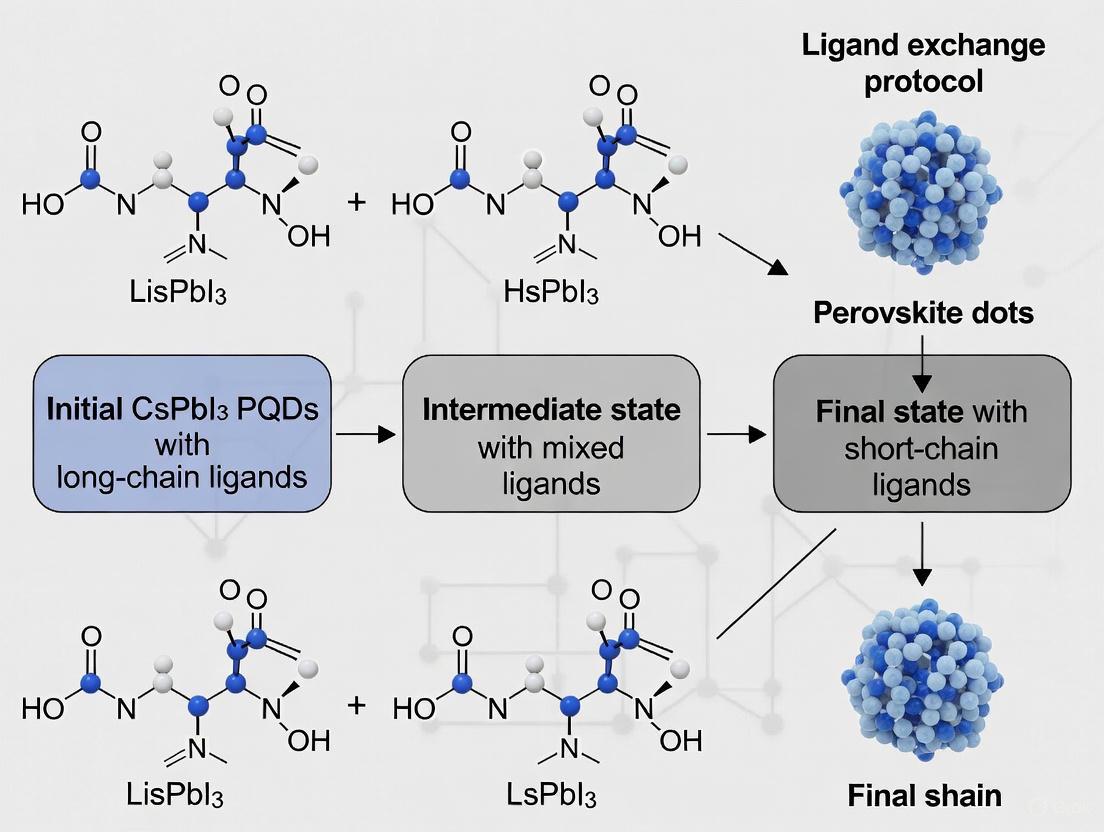
This article provides a comprehensive analysis of the layer-by-layer (LbL) solid-state ligand exchange protocol for CsPbI3 perovskite quantum dots (PQDs), a critical technology for enhancing the performance and stability of...
Layer-by-Layer Solid-State Ligand Exchange for High-Efficiency CsPbI3 Perovskite Quantum Dot Solar Cells
Abstract
This article provides a comprehensive analysis of the layer-by-layer (LbL) solid-state ligand exchange protocol for CsPbI3 perovskite quantum dots (PQDs), a critical technology for enhancing the performance and stability of next-generation solar cells. It explores the foundational principles of ligand chemistry and the limitations of long-chain insulating ligands. The content details advanced methodological approaches, including the use of short-chain organic and covalent ligands, and discusses common challenges such as surface trap generation and phase instability, offering practical optimization strategies. By validating these techniques through comparative performance metrics and stability tests, this resource offers researchers and scientists a validated framework for developing efficient and stable CsPbI3 PQD-based optoelectronic devices.
The Science of Ligand Exchange: Unlocking Charge Transport in CsPbI3 Quantum Dot Solids
The Critical Role of Surface Ligands in Colloidal CsPbI3 PQD Synthesis
The synthesis of colloidal CsPbI3 Perovskite Quantum Dots (PQDs) typically employs long-chain insulating ligands such as oleic acid (OA) and oleylamine (OAm) to control crystal growth and ensure colloidal stability in non-polar solvents [1] [2] [3]. While essential for synthesis, these ligands form a detrimental insulating barrier that severely impedes charge transport in solid films, rendering them unsuitable for high-performance optoelectronic devices like solar cells [2] [3]. Consequently, a layer-by-layer (LBL) solid-state ligand exchange protocol is critical for replacing these native long-chain ligands with shorter, conductive alternatives. This process transforms the PQD film from an insulating state to a highly conductive semiconductor, enabling efficient carrier transport while simultaneously passivating surface defects to enhance both performance and environmental stability [1] [2]. This application note details the advanced protocols and key considerations for executing this vital process.
Quantitative Comparison of Ligand Exchange Strategies
The development of ligand exchange strategies has led to significant improvements in the performance of CsPbI3 PQD solar cells. The table below summarizes the key metrics for different approaches reported in the literature.
Table 1: Performance Metrics of CsPbI3 PQD Solar Cells with Different Ligand Management Strategies
| Ligand Strategy | Short Ligand Used | Key Improvement | Reported PCE (%) | Stability Retention | Citation Context |
|---|---|---|---|---|---|
| PEAI-LBL Exchange [1] | Phenethylammonium Iodide (PEAI) | Balanced carrier transport/injection, defect passivation | 14.18 (Champion) | Excellent humidity stability (unencapsulated) | Primary research article |
| TPPO in Octane [2] | Triphenylphosphine Oxide (TPPO) | Covalent binding to uncoordinated Pb2+, non-destructive solvent | 15.4 (Champion) | >90% after 18 days (ambient) | Primary research article |
| 5A-3C Treatment [4] | 5-Aminopyridine-3-Carboxylic Acid | Multifunctional short-chain ligand, reduced vacancy defects | 15.03 (Champion) | Improved operational stability | Primary research article |
| Di-n-propylamine (DPA) [5] | Di-n-propylamine (DPA) | Simultaneous OA/OAm removal, 8x synthesis yield increase | ~15 (Approaching) | Not specified | Primary research article |
| Alkali-Augmented Hydrolysis [6] | Benzoate (from MeBz) | Doubled ligand density, fewer trap-states, homogeneous film | 18.30 (Certified) | Improved storage/operational stability | Primary research article |
Detailed Experimental Protocols
Standard Layer-by-Layer Solid-State Ligand Exchange
This foundational protocol is essential for constructing thick, conductive PQD films for solar cells [1] [2].
- Step 1: Substrate Preparation. Pre-patterned Fluorine-doped Tin Oxide (FTO) or Indium Tin Oxide (ITO) substrates should be meticulously cleaned with ultrasonic treatment in detergent, deionized water, acetone, and isopropanol sequentially, each for 15-20 minutes, followed by UV-ozone or oxygen plasma treatment for 15-20 minutes to improve wettability [1].
- Step 2: Initial PQD Film Deposition. Spin-coat the synthesized CsPbI3 PQDs (capped with OA/OAm) dispersed in n-hexane or n-octane (concentration ~30-50 mg mL⁻¹) onto the substrate at 2000-3000 rpm for 20-30 seconds [2].
- Step 3: Anionic Ligand Exchange (Interlayer Rinsing). Immediately after deposition, while the film is still wet, dynamically rinse the film with methyl acetate (MeOAc) or a modified antisolvent (e.g., Methyl Benzoate (MeBz) with KOH [6]) to replace the long-chain OA ligands with short-chain acetate or benzoate ligands. This step removes the ligand shell and causes rapid supersaturation, leading to a densely packed solid film [6] [2].
- Step 4: Layer Buildup. Repeat Steps 2 and 3 for 3-5 cycles to achieve the desired film thickness (typically 300-500 nm), building the film in a layer-by-layer manner [1].
- Step 5: Cationic Ligand Exchange (Post-Treatment). After the final layer is deposited and rinsed, spin-coat a solution of short cationic ligands, such as Phenethylammonium Iodide (PEAI) or Formamidinium Iodide (FAI) (e.g., 2-5 mg mL⁻¹ in Ethyl Acetate (EtOAc) or 2-pentanol [6]), onto the completed PQD solid film. This step replaces residual OAm ligands and passivates surface defects [1] [2].
Advanced Protocol: PEAI Layer-by-Layer (PEAI-LBL) Exchange
This modified protocol integrates the cationic exchange directly into the layer-building process for superior results [1].
- Procedure: The key difference from the standard protocol is the substitution of the MeOAc rinse in Step 3 with a rinse solution containing the short cationic ligand. Specifically, after spin-coating each layer of CsPbI3 PQDs, the film is treated with a PEAI solution dissolved in EtOAc [1].
- Advantages: This method ensures more complete and uniform removal of both OA and OAm ligands throughout the entire film thickness during its construction. It promotes enhanced inter-dot coupling, superior defect passivation, and regulates balanced electron and hole transport, leading to higher open-circuit voltages and power conversion efficiencies [1].
Post-Synthetic Passivation with Covalent Ligands
This supplemental protocol can be applied after the standard ligand exchange to further enhance surface passivation and stability [2].
- Procedure: After completing the standard LBL exchange and post-treatment, spin-coat a solution of a covalent Lewis base ligand, such as Triphenylphosphine Oxide (TPPO) (e.g., 0.5-1.0 mg mL⁻¹), dissolved in a non-polar solvent (n-octane) onto the fabricated PQD solid film [2].
- Mechanism & Benefit: The non-polar solvent prevents the dissolution or further degradation of the ionic PQD surface. The TPPO ligand covalently binds to uncoordinated Pb²⁺ sites on the PQD surface via strong Lewis acid-base interactions. This robust binding effectively reduces non-radiative recombination centers and enhances the film's resistance to moisture [2].
Workflow and Ligand Binding Mechanisms
The following diagram illustrates the key procedural and chemical decision points in the ligand management process for CsPbI3 PQD films.
Diagram 1: Workflow for ligand management in CsPbI3 PQD film fabrication, highlighting strategic choices between standard and advanced exchange protocols.
The efficacy of ligand exchange hinges on the molecular interactions at the PQD surface. The following diagram categorizes common ligands and their binding modes.
Diagram 2: Classification of common short-chain ligands by their binding mechanism to the CsPbI3 PQD surface, determining film conductivity and stability.
The Scientist's Toolkit: Essential Reagents and Materials
Successful execution of the LBL solid-state ligand exchange protocol requires careful selection of reagents. The following table lists essential materials and their specific functions.
Table 2: Key Research Reagent Solutions for CsPbI3 PQD Ligand Exchange
| Reagent Category | Specific Examples | Primary Function in Protocol | Critical Considerations |
|---|---|---|---|
| Antisolvents for Rinsing | Methyl Acetate (MeOAc), Ethyl Acetate (EtOAc) | Removes OA ligands via anionic exchange; induces supersaturation & film densification [1] [2]. | Purity is critical. MeOAc is highly volatile. Efficiency relies on ambient hydrolysis [6]. |
| Advanced Antisolvents | Methyl Benzoate (MeBz) with KOH additive | Creates alkaline environment for enhanced hydrolysis; provides benzoate ligands for superior capping vs. acetate [6]. | KOH concentration must be optimized to avoid perovskite core degradation [6]. |
| Cationic Ligand Salts | Phenethylammonium Iodide (PEAI), Formamidinium Iodide (FAI) | Replaces OAm ligands; passivates cationic (A-site) vacancies; modulates energy levels [1] [2]. | FAI can induce phase instability if treatment is over-extended [1]. PEA+ offers better moisture resistance [1]. |
| Covalent Passivators | Triphenylphosphine Oxide (TPPO) | Strong covalent binding to uncoordinated Pb²⁺ sites; drastically reduces trap states [2]. | Typically dissolved in non-polar solvents (e.g., octane) to prevent PQD surface damage [2]. |
| Non-Polar Solvents | n-Octane, n-Hexane | Disperse as-synthesized OA/OAm-capped PQDs for film deposition; dissolve covalent ligands without damaging PQDs [2]. | Enable uniform film formation. Octane's higher boiling point can offer better processing control. |
Inherent Limitations of Long-Chain Insulating Ligands (OA/OAm) on Charge Transport
Colloidal quantum dots (QDs), particularly lead halide perovskite quantum dots (PQDs), represent a promising class of materials for next-generation optoelectronic devices, including solar cells, light-emitting diodes (LEDs), and photodetectors. The solution-based colloidal synthesis of these nanomaterials typically utilizes long-chain organic ligands such as oleic acid (OA) and oleylamine (OAm) to stabilize the nanocrystals and prevent aggregation. While these ligands are indispensable for achieving monodisperse QDs with excellent colloidal stability, they form insulating barriers around individual QDs that severely impede inter-dot charge transport. This fundamental limitation creates a significant bottleneck for optoelectronic devices that rely on efficient charge carrier extraction and injection.
For CsPbI3 PQD solar cells, which operate within a planar heterojunction architecture similar to both photovoltaic and light-emitting devices, achieving balanced electron and hole transport is essential for maximizing device performance. The presence of insulating OA/OAm ligands not only reduces overall charge mobility but also exacerbates charge recombination losses at surface defects, ultimately limiting power conversion efficiency and electroluminescent performance. This application note examines the inherent limitations of long-chain insulating ligands on charge transport and outlines methodological frameworks for addressing these challenges through advanced ligand exchange strategies.
Fundamental Limitations of OA/OAm Ligands
Interparticle Spacing and Electronic Coupling
Long-chain OA/OAm ligands create substantial physical separation between adjacent quantum dots, severely limiting electronic coupling and charge transport efficiency:
Interparticle Distance Analysis: Comparative TEM studies of CsPbBr3 nanocrystals reveal that native OA/OAM-capped QDs maintain an average interparticle distance of approximately 2.8 nm, which is more than halved to 1.3 nm following ligand exchange with compact didodecyldimethylammonium bromide (DDABr) [7]. This reduced spacing enhances electronic coupling between neighboring QDs, facilitating improved charge transport.
Insulating Barrier Properties: The aliphatic carbon chains of OA and OAm act as dielectric barriers that exponentially reduce the probability of carrier tunneling between quantum dots. The cis-double bond in oleic acid further reduces van der Waals interactions between hydrocarbon chains, compromising the structural integrity of the QD solid film [7].
Dynamic Ligand Binding and Surface Defects
The weak, dynamic binding characteristics of conventional OA/OAm ligands present additional challenges for charge transport:
Ligand Desorption: OA and OAm ligands bind only weakly to QD surfaces and are highly dynamic, making them prone to desorption during processing and device operation [7]. This desorption creates unsaturated coordination sites (surface defects) that act as traps for charge carriers, promoting non-radiative recombination.
Proton Transfer Effects: During purification with polar antisolvents, proton transfer between deprotonated OA (OA⁻) and protonated OAm (OAmH⁺) leads to ligand loss from QD surfaces [8]. This process generates non-radiative recombination centers that further impede charge transport and reduce photoluminescence quantum yield (PLQY).
Impacts on Optoelectronic Device Performance
The compromised charge transport directly manifests in suboptimal device performance across multiple metrics:
Imbalanced Charge Injection: The inherent imbalance between electron and hole transport in OA/OAm-capped QDs enhances Auger recombination losses, reducing the efficiency of light-emitting diodes [7].
Voltage Deficits: In photovoltaic devices, insufficient charge transport contributes to open-circuit voltage (VOC) deficits by increasing trap-assisted recombination at interface states.
Electrical Inaccessibility: Nuclear magnetic resonance (NMR) spectroscopy studies confirm that reduced ligand coverage following exchange processes significantly improves the electrical accessibility of the QDs, enabling more efficient charge extraction [7].
Quantitative Analysis of Ligand Effects
Table 1: Comparative Analysis of Ligand Strategies and Their Impact on Charge Transport Properties
| Ligand System | Interparticle Distance | PLQY (%) | Device Performance | Key Advantages |
|---|---|---|---|---|
| Native OA/OAm | 2.8 nm [7] | <70% [8] | Limited PCE, EL efficiency | Excellent colloidal stability |
| PEAI-LBL | Significantly reduced [1] | Not reported | PCE: 14.18%, VOC: 1.23 V [1] | Enhanced inter-dot coupling, defect passivation |
| DDABr | 1.3 nm [7] | Not reported | Improved LED performance [7] | Reduced interparticle spacing, improved hole injection |
| NSA/NH₄PF₆ | Not reported | 94% [8] | EQE: 26.04% [8] | Inhibition of Ostwald ripening, strong surface binding |
| Alkaline Treatment | Not reported | Not reported | Certified PCE: 18.3% [6] | Dense conductive capping, fewer trap states |
Table 2: Impact of Ligand Engineering on Electronic Properties of QD Films
| Property | OA/OAm-Capped QDs | Short-Ligand Passivated QDs | Measurement Technique |
|---|---|---|---|
| Interparticle Distance | ~2.8 nm [7] | ~1.3 nm [7] | TEM |
| Ligand Coverage | High, densely packed | Reduced, partial coverage [7] | NMR spectroscopy |
| Trap-State Density | High due to dynamic binding | Reduced through strong binding ligands [8] | FTIR, XPS, PL analysis |
| Charge Injection Balance | Limited, hole-dominated | Improved balance [1] [7] | Single-carrier devices, DFT |
| Electronic Coupling | Weak | Enhanced [1] | Spectroelectrochemistry |
Experimental Protocols for Ligand Exchange
Layer-by-Layer Solid-State Ligand Exchange with PEAI
The following protocol details the layer-by-layer (LBL) solid-state ligand exchange procedure using phenethylammonium iodide (PEAI) for CsPbI3 PQD solar cells, as demonstrated by Wang et al. [1]:
Materials and Reagents:
- CsPbI3 PQD solution in n-hexane (concentration: ~20 mg/mL)
- Methyl acetate (MeOAc), anhydrous
- PEAI solution in ethyl acetate (concentration: 0.5 mg/mL)
- Substrates (e.g., FTO/glass with appropriate charge transport layers)
- Chlorobenzene for rinsing
Procedure:
- Substrate Preparation: Clean FTO substrates sequentially in detergent, deionized water, acetone, and isopropanol under ultrasonication for 15 minutes each. Treat with UV-ozone for 20 minutes before use.
Initial PQD Layer Deposition: Spin-coat the CsPbI3 PQD solution onto the substrate at 2500 rpm for 20 seconds. Immediately after spinning, rinse with methyl acetate (3000 rpm, 20 seconds) to remove residual solvents and initiate ligand exchange.
PEAI Treatment: While the film is still wet, spin-coat the PEAI solution (0.5 mg/mL in ethyl acetate) at 3000 rpm for 20 seconds. Allow the film to rest for 30 seconds before spinning again to remove excess solution.
Layer Buildup: Repeat steps 2-3 for 3-5 cycles to achieve the desired film thickness (typically 300-400 nm).
Final Processing: Anneal the completed film at 70°C for 5 minutes to remove residual solvents. Proceed with deposition of subsequent charge transport layers and electrodes.
Critical Notes:
- Maintain relative humidity below 30% during processing to prevent PQD degradation.
- Optimize PEAI concentration to balance defect passivation and inter-dot coupling.
- The conjugated phenyl group in PEA+ enhances inter-dot coupling while providing effective surface passivation [1].
Direct Synthesis of Iodide-Passivated PbS QDs
The Iodine-Complex Directed Synthesis (ICDS) method enables direct synthesis of iodide-passivated PbS QDs, bypassing the need for post-synthetic ligand exchange [9] [10]:
Materials and Reagents:
- Lead iodide (PbI2), 99.99%
- Diphenylthiourea (DphTA), 99%
- Dimethylformamide (DMF), anhydrous
- 1-Butylamine, anhydrous
- Toluene for purification
Procedure:
- Precursor Preparation: Dissolve PbI2 (0.5 mmol) and DphTA (0.5 mmol) in 5 mL DMF with stirring at 60°C until completely dissolved.
Nucleation and Growth: Rapidly inject 0.5 mL 1-butylamine to initiate nucleation. Maintain the reaction at 60°C for 60 seconds with vigorous stirring.
Size Control: Quench the reaction by adding 10 mL toluene. Centrifuge the mixture at 8000 rpm for 5 minutes to separate the QDs.
Purification: Redisperse the pellet in toluene and precipitate with acetonitrile. Repeat this washing step twice to remove unreacted precursors and excess ligands.
Film Formation: Deposit the PbS-I QDs directly by spin-coating without additional ligand exchange steps.
Mechanistic Insight: The ICDS method leverages iodine-complex equilibria (PbI₂ + I⁻ ⇌ [PbI₃]⁻ ⇌ [PbI₄]²⁻) to control nucleation rates and achieve in situ iodide passivation [9]. This approach eliminates long-chain insulating ligands entirely, resulting in enhanced electronic coupling between QDs.
The Scientist's Toolkit: Essential Research Reagents
Table 3: Key Research Reagent Solutions for Ligand Exchange Studies
| Reagent | Function | Application Context | Key Considerations |
|---|---|---|---|
| Phenethylammonium Iodide (PEAI) | Short conjugated ligand for LBL exchange | CsPbI3 PQD solar cells [1] | Enhances inter-dot coupling and defect passivation |
| Didodecyldimethylammonium Bromide (DDABr) | Compact quaternary ammonium salt | CsPbBr3 NC LEDs [7] | Reduces interparticle spacing, improves hole injection |
| 2-Naphthalene Sulfonic Acid (NSA) | Strong-binding ripening inhibitor | Strong-confined CsPbI3 QDs [8] | Suppresses Ostwald ripening, enhances stability |
| Ammonium Hexafluorophosphate (NH₄PF₆) | Inorganic ligand for surface passivation | Pure-red PeLEDs [8] | Strong binding energy (3.92 eV), improves conductivity |
| Methyl Benzoate (MeBz) | Ester antisolvent for alkaline hydrolysis | Hybrid A-site PQDSCs [6] | Suitable polarity, hydrolyzes to conductive ligands |
| Potassium Hydroxide (KOH) | Alkali catalyst for ester hydrolysis | Enhanced ligand exchange [6] | Lowers hydrolysis activation energy ~9-fold |
Visualization of Ligand Exchange Processes
Charge Transport Limitation Mechanism
Diagram 1: Charge transport limitation mechanism caused by OA/OAm ligands
Layer-by-Layer Ligand Exchange Workflow
Diagram 2: Layer-by-layer ligand exchange workflow
The inherent limitations of long-chain insulating ligands OA and OAm on charge transport represent a fundamental challenge in quantum dot optoelectronics. The spatial barrier and electronic decoupling imposed by these ligands directly compromise device performance by reducing charge mobility and promoting recombination losses. Advanced ligand engineering strategies, including layer-by-layer solid-state exchange with short conjugated ligands, direct synthesis with compact passivants, and alkaline-enhanced hydrolysis approaches, offer viable pathways to overcome these limitations.
The experimental protocols and analytical frameworks presented in this application note provide researchers with standardized methodologies for investigating and addressing charge transport limitations in CsPbI3 PQD systems. As the field progresses, the integration of machine learning approaches for ligand design and the development of multi-functional ligands that simultaneously address passivation, coupling, and stability challenges will further advance the performance of QD-based optoelectronic devices.
Fundamental Principles of Solid-State vs. Solution-Phase Ligand Exchange
Colloidal quantum dots (CQDs) and perovskite quantum dots (PQDs) have emerged as promising semiconductor materials for next-generation optoelectronic devices, including solar cells and light-emitting diodes (LEDs). The surface properties of these nanocrystals are critically determined by their organic ligand shells. While long-chain insulating ligands like oleic acid (OA) and oleylamine (OAm) are essential for achieving high-quality synthesis and colloidal stability, they severely impede charge transport between adjacent quantum dots in solid films. Ligand exchange engineering addresses this fundamental challenge by replacing long-chain ligands with shorter conductive alternatives, thereby enhancing electronic coupling and device performance. This application note examines the fundamental principles, methodologies, and applications of solid-state versus solution-phase ligand exchange processes, with particular emphasis on their implementation in CsPbI3 perovskite quantum dot (PQD) solar cell research [11] [1].
Fundamental Principles and Comparative Analysis
Core Objectives of Ligand Exchange
The primary goal of ligand exchange is to replace long-chain insulating ligands with shorter counterparts or atomic ligands to enhance inter-dot electronic coupling and charge carrier transport. This process simultaneously aims to passivate surface defects that act as trap states for charge carriers, reducing non-radiative recombination losses. In CsPbI3 PQDs, effective ligand management also contributes to phase stabilization of the photoactive black phase, which is crucial for maintaining device performance under operational conditions [11] [1] [12].
Solid-State Ligand Exchange
The solid-state ligand exchange method involves depositing a film of quantum dots capped with long-chain ligands onto a substrate, followed by surface treatment through immersion or drip-coating with a solution containing the target short-chain ligands. This approach typically employs a layer-by-layer (LBL) methodology where multiple cycles of spin-coating and ligand treatment are performed to build up thick, electronically-coupled quantum dot films [11] [1].
Key Principle: As original long-chain organic ligands are replaced with shorter target ligands, the inter-dot spacing decreases significantly, facilitating enhanced carrier transport through improved wavefunction overlap between adjacent quantum dots [11].
Solution-Phase Ligand Exchange
In solution-phase ligand exchange, quantum dots wrapped with long-chain alkyl ligands are dissolved in nonpolar solvents (e.g., octane, hexane), while short-chain ligands are dissolved in polar solvents (e.g., dimethylformamide, DMF). When these two solutions are mixed, ligand exchange occurs at the interface, transferring the quantum dots from the nonpolar to the polar solvent phase upon successful exchange. This process enables complete surface passivation before film deposition [11] [13].
Key Principle: The exchange is driven by the thermodynamic favorability of replacing weakly-coordinating long-chain ligands with strongly-binding short-chain ligands, facilitated by the phase transfer between immiscible solvents [11].
Comparative Analysis: Advantages and Limitations
Table 1: Comparative Analysis of Solid-State vs. Solution-Phase Ligand Exchange
| Parameter | Solid-State Ligand Exchange | Solution-Phase Ligand Exchange |
|---|---|---|
| Process Workflow | Layer-by-layer deposition with post-treatment | Pre-exchange in solution before film fabrication |
| Processing Time | Time-consuming due to multiple cycles | Potentially faster single-step exchange |
| Film Quality | Enables thick film fabrication | Risk of inhomogeneous agglomeration |
| Surface Passivation | May leave underlying defects unpassivated | More complete surface passivation |
| Carrier Transport | Improved but may have inhomogeneities | Enhanced inter-dot coupling and mobility |
| Scalability | Labor-intensive for large areas | More amenable to scalable ink-printing |
| Defect Formation | Dependent on treatment penetration | Minimized with optimized protocols |
The solid-state approach, particularly the layer-by-layer method, dominates CsPbI3 PQD solar cell fabrication due to its precise control over film thickness and morphology. However, this method can result in incomplete passivation of underlying layers and requires significant processing time. Solution-phase exchange offers more homogeneous passivation and streamlined fabrication but faces challenges in maintaining quantum dot stability during phase transfer [11] [1] [13].
Ligand Exchange Protocols and Methodologies
Layer-by-Layer Solid-State Ligand Exchange for CsPbI3 PQDs
Application Context: This protocol is specifically optimized for fabricating CsPbI3 PQD solar cells with enhanced photovoltaic performance and phase stability [1].
Materials Required:
- CsPbI3 PQDs synthesized with OA and OAm ligands
- Methyl acetate (MeOAc)
- Phenethylammonium iodide (PEAI) or formamidinium iodide (FAI)
- Ethyl acetate (EtOAc)
- Non-polar solvents (n-hexane, n-octane)
- Substrates (e.g., FTO glass with electron transport layer)
Experimental Procedure:
Substrate Preparation: Clean FTO substrates with transparent conductive oxide and deposit appropriate charge transport layers (e.g., TiO2 for electron transport).
PQD Ink Preparation: Disperse synthesized CsPbI3 PQDs with OA/OAm ligands in n-octane at optimal concentration (typically 10-20 mg/mL).
First Layer Deposition: Spin-coat the PQD ink onto the substrate at 2000-3000 rpm for 20-30 seconds.
Initial Ligand Treatment: During spin-coating, treat with methyl acetate (MeOAc) to partially remove original ligands and precipitate the PQD layer.
Short-Chain Ligand Treatment: After MeOAc treatment, immediately apply PEAI solution (5-10 mg/mL in EtOAc) via spin-coating or pipetting to introduce short conjugated ligands.
Layer Buildup: Repeat steps 3-5 for 3-5 cycles to achieve desired film thickness (typically 200-400 nm).
Final Treatment: Perform a final PEAI or FAI post-treatment to ensure complete surface passivation.
Annealing: Thermally anneal the film at 70-90°C for 5-10 minutes to remove residual solvent and enhance inter-dot coupling.
Critical Parameters:
- PEAI concentration optimization (typically 5-10 mg/mL) to balance ligand coverage and charge transport
- Strict control of treatment time (10-30 seconds) to prevent undesirable phase transformation
- Relative humidity control (<30%) during processing to prevent moisture-induced degradation
- Solvent selection (EtOAc preferred over more polar solvents) to preserve PQD structure [1]
Accelerated Solution-Phase Ligand Exchange Protocol
Application Context: This methodology minimizes trap state formation during solution exchange by accelerating the exchange kinetics, particularly beneficial for PbS CQD solar cells [13].
Materials Required:
- Oleate-capped PbS CQDs in octane
- Lead halides (PbI2, PbBr2)
- Ammonium acetate
- Dimethylformamide (DMF)
- Antisolvents (acetone, ethyl acetate)
- Polar solvents for purification
Experimental Procedure:
Precursor Solution Preparation: Dissolve lead halides (0.1 M PbI2 and 0.02 M PbBr2) and ammonium acetate (0.04 M) in DMF.
Concentrated CQD Solution: Prepare highly concentrated oleate-capped PbS CQD solution in octane (20-30 mg/mL instead of conventional 6 mg/mL).
Rapid Mixing: Add the CQD solution to the DMF phase with vigorous vortex mixing for complete phase contact.
Accelerated Exchange: Allow the mixture to stand for only 10-30 seconds (versus minutes in conventional protocols) before centrifugation.
Phase Separation: Centrifuge at 7000-10,000 rpm for 2-3 minutes to separate exchanged CQDs in DMF phase.
Purification: Precipitate exchanged CQDs with antisolvent (acetone or ethyl acetate) and redisperse in polar solvents (DMF, butylamine).
Film Fabrication: Deposit purified CQD ink via spin-coating or inkjet printing for device fabrication.
Critical Parameters:
- High CQD concentration to maximize ligand collision frequency and exchange rate
- Minimal exposure time to polar solvents (seconds scale) to reduce surface etching
- Optimized lead halide to ammonium acetate ratio for complete ligand replacement
- Controlled centrifugation parameters to prevent irreversible aggregation [13]
Advanced Ligand Exchange Strategies
Innovative Approaches in Ligand Management
Recent advances in ligand exchange methodologies have focused on addressing specific challenges in quantum dot optoelectronics:
Proton-Prompted In-Situ Exchange: This innovative strategy for CsPbI3 PQDs utilizes hydroiodic acid (HI) to provide protons that trigger desorption of long-chain OA and OAm ligands while promoting binding of short-chain ligands like 5-aminopentanoic acid (5AVA). The protonation of amine functional groups enhances their binding to the QD surface, maintaining quantum confinement while improving conductivity and optical properties [12].
Amine-Assisted Ligand Exchange (ALE): Developed for FAPbI3 nanocrystal solar cells, this approach uses 3-phenyl-1-propylamine (3P1P) to effectively remove long ligands without increasing defect states. ALE reduces exciton-binding energy in NC films, facilitating exciton dissociation and charge transport, leading to improved short-circuit current density (17.98 mA/cm²) and power conversion efficiency (15.56%) [14].
Perovskite Ligand Engineering: Formamidinium lead iodide (FAPbI3) has been employed as a capping ligand for PbS QDs through a binary-phase ligand exchange protocol. This strategy enhances thermal stability and carrier transport while maintaining strong quantum confinement, demonstrating the potential of hybrid organic-inorganic ligands in quantum dot optoelectronics [15].
Characterization and Quality Assessment
Analytical Techniques for Ligand Exchange Validation
Table 2: Key Characterization Methods for Ligand Exchange Analysis
| Technique | Application in Ligand Analysis | Key Parameters Measured |
|---|---|---|
| FTIR Spectroscopy | Chemical bonding analysis | Signal changes of C-H bonds in long carbon chains |
| NMR Spectroscopy | Quantitative ligand assessment | Composition and structure of surface-bound ligands |
| XPS | Surface element composition | Elemental states and ligand coverage |
| UV-Vis Absorption | Optical properties | Excitonic peak position and band tail states |
| PL Spectroscopy | Defect state analysis | Photoluminescence quantum yield (PLQY) |
| TRPL | Carrier dynamics | Carrier lifetime and recombination mechanisms |
| XRD | Crystal structure analysis | Phase identification and structural integrity |
| TEM/STEM | Morphology and spacing | Inter-dot distance and superlattice formation |
| FET Measurement | Charge transport | Mobility and trap state density in films |
Effective characterization is essential for validating successful ligand exchange and optimizing protocols. Fourier-transform infrared (FTIR) spectroscopy tracks the disappearance of characteristic C-H stretching vibrations from long-chain ligands, while nuclear magnetic resonance (NMR) provides quantitative analysis of ligand composition. X-ray photoelectron spectroscopy (XPS) determines surface element composition and chemical states, confirming the incorporation of target ligands [11].
Optical characterization techniques including UV-Vis absorption and photoluminescence (PL) spectroscopy monitor changes in excitonic features and emission properties that indicate enhanced electronic coupling. Time-resolved photoluminescence (TRPL) reveals carrier recombination dynamics, with reduced lifetimes often indicating improved charge transfer between quantum dots. Structural techniques such as X-ray diffraction (XRD) and transmission electron microscopy (TEM) verify maintained crystal structure and reduced inter-dot spacing, respectively [11] [15].
Electrical characterization through field-effect transistor (FET) measurements provides crucial information about carrier mobility and trap state density in ligand-exchanged quantum dot films, directly correlating with expected device performance [11].
The Scientist's Toolkit: Essential Research Reagents
Table 3: Essential Research Reagents for Ligand Exchange Protocols
| Reagent Category | Specific Examples | Function in Ligand Exchange |
|---|---|---|
| Long-Chain Ligands | Oleic acid (OA), Oleylamine (OAm) | Initial stabilization during synthesis; provide colloidal stability |
| Short Organic Ligands | Phenethylammonium iodide (PEAI), 3-phenyl-1-propylamine (3P1P) | Enhance charge transport; passivate surface defects |
| Perovskite Ligands | Formamidinium lead iodide (FAPbI3), Methylammonium lead iodide (MAPbI3) | Provide structural compatibility; enhance electronic coupling |
| Metal Halide Salts | Lead iodide (PbI2), Lead bromide (PbBr2) | Source of halide ions for surface passivation |
| Processing Additives | Ammonium acetate | Facilitate ligand removal and exchange kinetics |
| Polar Solvents | Dimethylformamide (DMF), Dimethyl sulfoxide (DMSO) | Dissolve short-chain ligands; enable phase transfer |
| Non-Polar Solvents | Octane, Hexane, Chlorobenzene | Disperse original quantum dots with long-chain ligands |
| Antisolvents | Methyl acetate, Ethyl acetate, Acetone | Precipitate quantum dots during purification |
Workflow Visualization
Performance Metrics and Optimization Guidelines
Impact on Device Performance
Effective ligand exchange significantly enhances key photovoltaic parameters in quantum dot solar cells:
Open-Circuit Voltage (VOC): Proper surface passivation reduces trap-assisted recombination, increasing VOC. Accelerated solution-phase exchange has demonstrated VOC improvement from 0.650 V to 0.670 V in PbS CQD devices [13].
Short-Circuit Current Density (JSC): Enhanced inter-dot coupling and charge transport boost JSC. Amine-assisted ligand exchange in FAPbI3 NC solar cells achieved JSC of 17.98 mA/cm² [14].
Fill Factor (FF): Reduced trap state density and improved carrier mobility contribute to higher FF, with reported values exceeding 70% in optimized ligand-exchanged QD solar cells [13].
Power Conversion Efficiency (PCE): Comprehensive improvements in photovoltaic parameters through optimized ligand management have enabled CsPbI3 PQD solar cells to reach PCE values exceeding 16% [1] [12].
Optimization Guidelines
For Solid-State Exchange:
- Optimize short-ligand concentration to balance complete exchange and surface aggregation
- Control treatment time to prevent solvent-induced degradation of quantum dot structure
- Implement intermediate annealing steps to enhance ligand binding and film morphology
- Utilize mixed ligand systems for synergistic passivation of different surface sites
For Solution-Phase Exchange:
- Maximize quantum dot concentration to accelerate exchange kinetics
- Minimize exposure time to polar solvents to reduce surface etching
- Optimize ligand-to-quantum dot ratio for complete surface coverage
- Implement rigorous purification protocols to remove exchange byproducts
The selection between solid-state and solution-phase ligand exchange ultimately depends on specific research goals, material systems, and device architectures. Solid-state methods offer superior control for complex multilayer devices, while solution-phase approaches provide advantages in scalability and homogeneous passivation. Recent innovations in both methodologies continue to push the performance boundaries of quantum dot-based optoelectronic devices.
In the field of CsPbI3 perovskite quantum dot (PQD) solar cells, understanding ligand chemistry is paramount for designing efficient and stable devices. Ligands are molecules that bind to the surface of quantum dots, serving critical functions in stabilization, passivation, and charge transport. The binding mechanism—whether predominantly ionic or covalent—fundamentally influences these functions and ultimately determines device performance. Metal-ligand interactions are fundamentally Lewis acid/base reactions, where the metal center acts as the electron pair acceptor (Lewis acid) and the ligand serves as the electron pair donor (Lewis base) [16]. In CsPbI3 PQDs, the lead-rich surface provides binding sites for various ligand chemistries, creating a dynamic interface where binding strength and character dictate material properties from colloidal stability to film conductivity [17] [18].
The strategic engineering of ligand binding mechanisms has enabled remarkable progress in PQD solar cells, with power conversion efficiencies now exceeding 17% [18]. This application note examines the fundamental principles of ionic and covalent ligand binding mechanisms within the context of layer-by-layer solid-state ligand exchange protocols for CsPbI3 PQD photovoltaics, providing researchers with practical frameworks for optimizing PQD surface chemistry.
Theoretical Foundations of Ligand Binding
Fundamental Bonding Concepts
Chemical bonds exist on a spectrum between purely ionic and purely covalent character, with most metal-ligand bonds exhibiting characteristics of both, often described as "coordinate covalent" bonds [16] [19]. In ionic bonding, electrons are effectively transferred from one atom to another, creating positively and negatively charged ions that attract each other through electrostatic forces [20] [19]. This type of bonding typically occurs between atoms with large differences in electronegativity (often metals and non-metals) and results in non-directional bonds with relatively high melting points and brittle mechanical properties [20] [19].
In covalent bonding, atoms share electron pairs, with the bond strength deriving from the reduction in kinetic energy when electrons occupy more spatially distributed orbitals [19] [21]. These bonds are directional and occur between atoms with similar electronegativities. The degree of electron sharing can vary, creating a continuum from nonpolar covalent (equal sharing) to polar covalent (unequal sharing) [21].
For PQD systems, this bonding continuum has profound implications. As one research group notes, "The bonding between metals and ligands can occur on a spectrum of covalence and strength. Some metal-ligand bonds are similar to ionic interactions, while others are essentially covalent" [16].
Electronic Effects in Metal-Ligand Complexes
The electronic structure of metal-ligand complexes directly influences their properties and functionality. Transition metal ions (such as Pb²⁺ in CsPbI3 PQDs) act as Lewis acids in metal-ligand interactions, and the resulting metal-ligand complex can itself act as a Brønsted acid [16]. This acid-base behavior means that "when a ligand has an acidic proton, interactions with a metal ion will make that acidic proton more acidic" [16], significantly impacting the chemical behavior of ligand-capped PQDs.
The directionality of covalent bonds enables the diverse coordination geometries observed in metal complexes, expanding far beyond the limited geometries available to carbon-based compounds [16]. This directionality influences how ligands arrange themselves on PQD surfaces, affecting packing density and inter-dot spacing in solid films.
Ligand Binding Mechanisms in CsPbI3 PQDs
Ionic Ligand Binding
Ionic ligand binding in CsPbI3 PQDs typically involves charge-assisted interactions between the inorganic PQD surface and ionic functional groups on ligands. These interactions are characterized by electrostatic attraction rather than shared electron pairs.
- Binding Characteristics: Ionic interactions are generally stronger in polar environments and result in more reversible binding compared to covalent linkages [16] [19]. The non-directional nature of ionic bonds allows for flexible coordination geometries but provides less control over surface arrangement.
- Common Examples: Inorganic halides (e.g., iodide, bromide) form primarily ionic bonds with the Pb²⁺ sites on CsPbI3 PQD surfaces [18] [22]. Ammonium salts (e.g., tetrabutylammonium iodide, TBAI) facilitate ionic binding through anion exchange, where the halide anion binds ionically to surface lead atoms while the ammonium cation provides electrostatic stabilization [22].
- Impact on PQD Properties: Ionic ligands typically enhance electronic coupling between PQDs by providing strong electrostatic stabilization without introducing bulky insulating barriers. This improves charge carrier transport through the PQD film, directly boosting solar cell performance [22]. As demonstrated in ZnO/PbS QD systems, TBAI-treated QD films showed superior air stability and higher short-circuit current density compared to their organic-ligand counterparts [22].
Covalent Ligand Binding
Covalent ligand binding involves shared electron pairs between the PQD surface and ligand molecules, creating directional bonds with specific bond angles and lengths.
- Binding Characteristics: Covalent bonds are generally stronger and more directional than ionic interactions, creating more stable surface attachments but potentially requiring more energy for exchange processes [16] [19]. The directionality enables precise control over ligand orientation and packing on PQD surfaces.
- Common Examples: Thiol-based ligands (e.g., 1,2-ethanedithiol, EDT) form coordinate covalent bonds with surface lead atoms [22]. Organic amines and phosphines can also form covalent bonds through donor-acceptor interactions with surface sites [16] [23]. Aromatic amines have shown particular promise in pseudo-solution-phase ligand exchange processes for CsPbI3 PQDs [23].
- Impact on PQD Properties: Covalently bound ligands typically provide robust surface passivation and enhanced environmental stability [24]. However, their strong binding and often bulky nature can increase inter-dot spacing, potentially compromising charge transport. Research has shown that "when the amide side chains of asparagine (N, Asn) and glutamine (E, Gln) bind to metals, they bind through their O atom, and not N" due to resonance stabilization [16], demonstrating how molecular structure influences binding mode in covalent interactions.
Comparative Analysis of Binding Mechanisms
Table 1: Comparative Properties of Ionic and Covalent Ligand Binding Mechanisms
| Property | Ionic Binding | Covalent Binding |
|---|---|---|
| Bond Character | Electrostatic, non-directional | Electron-sharing, directional |
| Binding Strength | Moderate to strong, environment-dependent | Strong, less environment-dependent |
| Exchange Kinetics | Faster, more reversible | Slower, less reversible |
| Common Ligands | Halide ions (I⁻, Br⁻), ammonium salts | Thiols (EDT), amines, phosphines |
| Impact on Conductivity | Higher inter-dot coupling | Often reduced conductivity due to ligand bulk |
| Role in PQD Solar Cells | Enhancing charge transport | Improving stability, surface passivation |
Table 2: Performance Metrics of CsPbI3 PQD Solar Cells with Different Ligand Chemistries
| Ligand Treatment | Bond Character | PCE (%) | Stability Retention | Reference |
|---|---|---|---|---|
| TBAI/EDT Bilayer | Ionic/Coordinate Covalent | 8.55 | >150 days in air | [22] |
| Aromatic Amine p-SPLE | Coordinate Covalent | 14.65 | Improved stability reported | [23] |
| Halide Exchange | Primarily Ionic | 13.4 | - | [18] |
| Bilateral Ligand Engineering | Mixed Character | 15.3 | 83% after 15 days | [24] |
| Short Choline Ligands | Ionic/Coordinate Covalent | 16.53 | - | [17] |
Experimental Protocols for Ligand Exchange
Layer-by-Layer Solid-State Ligand Exchange
The layer-by-layer solid-state ligand exchange protocol enables precise control over PQD film properties through sequential processing steps. The following methodology has been optimized for CsPbI3 PQD solar cells:
Materials Required:
- CsPbI3 PQDs synthesized with long-chain native ligands (typically oleic acid/oleylamine)
- Ionic ligand solution: 5-10 mg/mL TBAI in anhydrous methanol
- Covalent ligand solution: 0.01-0.02M 1,2-ethanedithiol (EDT) in acetonitrile
- Protic solvent (e.g., 2-pentanol) for mediating ligand exchange [17]
- Substrates (typically glass/ITO/ZnO or similar electron transport layer)
- Spin coater, annealing hotplate, nitrogen glovebox
Procedure:
- Native PQD Film Deposition: Spin-coat native CsPbI3 PQD solution (~15-20 mg/mL in hexane) onto substrate at 2000-3000 rpm for 30 seconds to form initial film.
- Ionic Ligand Treatment: Immediately flood surface with TBAI/methanol solution and let stand for 20-30 seconds, then spin-dry at 2500 rpm for 30 seconds. This replaces insulating long-chain ligands with conductive halide ions.
- Rinse Step: Flood surface with anhydrous methanol to remove excess ligands and byproducts, spin-dry.
- Repeat Layering: Repeat steps 1-3 to build desired film thickness (typically 8-12 layers).
- Covalent Ligand Treatment: For final layer, apply EDT/acetonitrile solution for 20 seconds followed by spin-drying. This creates a covalent surface passivation layer.
- Solvent-Mediated Optimization: For enhanced performance, incorporate 2-pentanol rinse step to maximize insulating ligand removal without introducing halogen vacancies [17].
- Annealing: Mild thermal treatment (70-90°C for 5-10 minutes) to improve inter-dot coupling.
Pseudo-Solution-Phase Ligand Exchange (p-SPLE)
For improved morphology control, the pseudo-solution-phase method offers advantages:
Procedure:
- Partial Ligand Exchange in Solution: Treat CsPbI3 QD solution with short organic aromatic ligands (e.g., phenylalkylammonium iodides) to partially replace long-chain ligands prior to film deposition [23].
- Film Deposition: Spin-coat partially exchanged PQD solution onto substrate.
- Solid-State Completion: Apply secondary ligand treatment (typically halide-based) to complete exchange process in solid state.
- Solvent Engineering: Utilize tailored solvent environments (e.g., 2-pentanol) to enhance ligand solubility and exchange efficiency [17].
Bilateral Ligand Stabilization
Recent advances demonstrate the efficacy of bilateral ligand approaches:
Procedure:
- Native Film Preparation: Deposit CsPbI3 PQD film with standard oleic acid/oleylamine ligands.
- Bilateral Ligand Treatment: Apply short, amphiphilic ligands that securely hold quantum dots from both sides, effectively "uncrumpling" distorted surfaces [24].
- Morphology Optimization: The bilateral ligands restore distorted lattice structure, significantly reducing surface defects and improving operational stability [24].
Visualization of Ligand Exchange Processes
Ligand Binding Mechanisms Diagram
Layer-by-Layer Ligand Exchange Workflow
Research Reagent Solutions
Table 3: Essential Reagents for PQD Ligand Exchange Studies
| Reagent | Chemical Class | Primary Function | Binding Mechanism | Example Concentration |
|---|---|---|---|---|
| Tetrabutylammonium Iodide (TBAI) | Quaternary ammonium salt | Ionic ligand exchange, conductivity enhancement | Primarily ionic | 5-10 mg/mL in methanol |
| 1,2-Ethanedithiol (EDT) | Dithiol compound | Covalent surface passivation, hole extraction layer | Coordinate covalent | 0.01-0.02M in acetonitrile |
| 2-Pentanol | Protic alcohol | Solvent mediation, ligand solubility enhancement | N/A (process solvent) | Neat or blended |
| Oleic Acid/Oleylamine | Carboxylic acid/amine | Native synthesis ligands, colloidal stabilization | Ionic/Coordinate covalent | Varies by synthesis |
| Phenylalkylammonium Iodides | Aromatic ammonium salts | p-SPLE processing, surface passivation | Mixed character | 5-15 mg/mL in appropriate solvent |
| Choline Chloride | Quaternary ammonium salt | Short conductive ligand, surface binding | Ionic/Coordinate covalent | 5-10 mg/mL in 2-pentanol [17] |
The strategic manipulation of ligand binding mechanisms—from ionic to covalent and mixed-character interactions—represents a powerful approach for optimizing CsPbI3 PQD solar cell performance. Ionic binding enhances inter-dot electronic coupling and charge transport, while covalent binding provides robust surface passivation and environmental stability. The most successful strategies employ precisely engineered combinations of both mechanisms, often through sophisticated layer-by-layer processing protocols.
Future developments in PQD ligand chemistry will likely focus on increasingly sophisticated molecular designs that optimize binding strength, steric effects, and electronic properties simultaneously. Bilateral ligand approaches that address surface distortions while maintaining conductivity show particular promise [24]. Additionally, solvent-mediated exchange processes using tailored solvents like 2-pentanol will continue to evolve, enabling more complete removal of insulating ligands without introducing surface defects [17]. As research progresses, the fundamental understanding of ionic versus covalent ligand binding mechanisms will remain central to unlocking the full potential of CsPbI3 PQD photovoltaics.
Achieving Cubic Phase Stability in CsPbI3 through Surface Engineering
The metastable cubic (α) phase of cesium lead iodide (CsPbI3) possesses an ideal bandgap for optoelectronic applications. However, at room temperature, it readily transitions into a non-perovskite, optically inactive orthorhombic (δ) phase, severely limiting its practical utility. Surface engineering, particularly through advanced ligand management protocols, has emerged as a critical strategy to overcome this stability challenge. By carefully tailoring the surface chemistry of CsPbI3 Perovskite Quantum Dots (PQDs), researchers can induce substantial surface strain and passivate defect sites, thereby effectively locking the material into its functionally superior cubic phase. This application note details the mechanisms, materials, and specific layer-by-layer solid-state ligand exchange protocols that have proven successful in achieving and stabilizing the α-CsPbI3 phase for high-performance solar cells.
Surface Engineering Mechanisms and Strategies
The inherent instability of the α-CsPbI3 phase stems from its ionic crystal structure and the high surface energy of its nanoscale forms. Surface engineering interventions primarily address this by:
- Inducing Constructive Surface Strain: Replacing long, insulating native ligands with shorter, chemically robust counterparts reduces the inter-dot distance. This creates a compressive surface stress on the PQD lattice, which stabilizes the cubic phase against transformation to the more relaxed δ-phase [25].
- Passivating Surface Defects: The ligand exchange process often leaves behind uncoordinated lead (Pb²⁺) ions and other surface defects that act as initiation points for phase degradation and non-radiative recombination. Effective surface engineering targets these sites with ligands having strong binding affinity, thereby removing electronic trap states and improving both stability and optoelectronic performance [2] [8].
The following table summarizes key surface engineering strategies developed for cubic phase stabilization.
Table 1: Surface Engineering Strategies for Cubic Phase Stabilization of CsPbI3 PQDs
| Strategy | Ligand / Material | Key Finding | Reported PCE | Phase Stability |
|---|---|---|---|---|
| LBL Ligand Exchange [1] | Phenethylammonium Iodide (PEAI) | Layer-by-layer (LBL) application enhances defect passivation & inter-dot coupling. | 14.18% | Excellent stability in high-humidity (30-50% RH) |
| Nonpolar Solvent Treatment [2] | Triphenylphosphine Oxide (TPPO) in Octane | Nonpolar solvent prevents surface dissolution; TPPO covalently passivates Pb²⁺ traps. | 15.4% | >90% initial PCE after 18 days in ambient |
| Alkali-Augmented Hydrolysis [6] | KOH with Methyl Benzoate (MeBz) | Alkaline environment doubles ligand density via enhanced ester hydrolysis. | 18.3% (certified) | Improved storage & operational stability |
| 3D Semiconductor Hybrid [25] | Star-Shaped Molecule (Star-TrCN) | Forms robust chemical bond with PQDs, providing a hydrophobic barrier. | 16.0% | 72% of initial PCE after 1000 h at 20-30% RH |
| Strong Binding Ligands [8] | 2-Naphthalene Sulfonic Acid (NSA) & NH₄PF₆ | Suppresses Ostwald ripening, passivates defects, and enhances conductivity. | N/A (Applied in PeLEDs) | PLQY maintained >80% after 50 days |
| Surface Stress Engineering [26] | Onium Cations | Introduces onium cations to regularize surface lattice and ameliorate surface stress. | 17.01% | Substantially improved phase stability |
Experimental Protocols: Layer-by-Layer Solid-State Ligand Exchange
The following protocol describes the fundamental layer-by-layer (LBL) solid-state ligand exchange process, which can be adapted for the specific strategies listed in Table 1.
Materials and Reagent Solutions
Table 2: Essential Research Reagent Solutions for LBL Ligand Exchange
| Reagent | Function / Role | Application Note |
|---|---|---|
| OA/OLA-capped CsPbI3 PQDs in n-hexane | Photovoltaic Absorber Precursor | Synthesized via hot-injection method; provides monodisperse, colloidal PQDs. |
| Methyl Acetate (MeOAc) | Anionic Ligand Exchange Solvent | Removes oleate (OA⁻) ligands and exchanges them with acetate ions. |
| Ethyl Acetate (EtOAc) | Polar Solvent for Post-treatment | Used as a solvent for cationic ligand salts (e.g., PEAI). |
| Phenethylammonium Iodide (PEAI) / Other Ammonium Salts | Cationic Short-Chain Ligand | Replaces residual oleylammonium (OAm⁺) ligands; passivates A-site defects. |
| Triphenylphosphine Oxide (TPPO) in Octane | Covalent Passivation Solution | Post-treatment for strongly passivating uncoordinated Pb²⁺ sites without damaging the PQD surface [2]. |
| Potassium Hydroxide in Methyl Benzoate | Alkali-Augmented Antisolvent | Facilitates rapid hydrolysis of ester, generating high density of conductive capping ligands [6]. |
Step-by-Step Workflow
Workflow Overview: The LBL process involves sequential deposition of PQD layers, with each layer undergoing a two-step ligand exchange to replace both anionic and cationic native ligands.
Detailed Protocol:
- Substrate Preparation: Begin with a pre-cleaned glass/FTO substrate with a deposited electron transport layer (e.g., compact TiO₂).
- Initial PQD Layer Deposition: Spin-coat a layer of OA/OLA-capped CsPbI3 PQDs dispersed in n-hexane (concentration: 20-30 mg/mL) onto the substrate at 2500-3000 rpm for 20-30 seconds.
- Anionic Ligand Exchange: Immediately after deposition, while the film is still wet, rinse it by dynamically dispensing a methyl acetate (MeOAc)-based solution (e.g., containing sodium acetate, NaOAc) during spinning. This step replaces the long-chain oleate (OA⁻) ligands with short-chain acetate ions, facilitating charge transport.
- Cationic Ligand Exchange: Following the MeOAc rinse and after the film has dried, perform a second rinse using a solution of the target cationic short-chain ligand (e.g., Phenethylammonium Iodide, PEAI, dissolved in ethyl acetate, EtOAc, at a typical concentration of 1-2 mg/mL). This step displaces the residual long-chain oleylammonium (OAm⁺) ligands.
- Layer Repetition: Repeat steps 2-4 for 3-5 cycles to build up the desired thickness of the conductive PQD solid film.
- Optional Advanced Post-treatment: Once the final layer is deposited, an additional post-treatment can be applied to further enhance passivation. For instance, spin-coat a solution of triphenylphosphine oxide (TPPO) in a nonpolar solvent like n-octane (e.g., 0.5-1.0 mg/mL) onto the completed film, followed by annealing at 70-80 °C for 5-10 minutes [2].
Key Operational Considerations
- Ambient Control: While some protocols are robust to moderate humidity (30-50% RH), performing the ligand exchange in an inert atmosphere (e.g., N₂ glovebox) can improve reproducibility and minimize premature degradation.
- Solvent Polarity: The choice of solvent is critical. Using nonpolar solvents (e.g., octane) for post-treatments prevents the dissolution of the ionic PQD surface and the loss of surface components, which is a limitation of polar solvents like EtOAc [2].
- Ligand Binding Affinity: Ligands with stronger covalent binding (e.g., TPPO, NSA) or those applied in higher density (via alkaline hydrolysis) provide more durable passivation and phase stabilization compared to conventional ionic ligands like acetate [2] [6].
Ligand Binding Mechanisms at the PQD Surface
The efficacy of a ligand is determined by its binding mechanism and affinity to the PQD surface. The following diagram illustrates the binding modes of key ligand types.
Mechanism Diagram: Molecular-level interactions of different ligand classes with the CsPbI3 PQD surface.
Key to Binding Mechanisms:
- Ionic Bonding (Green): Conventional ionic short-chain ligands (e.g., acetate, PEA⁺) electrostatically bind to the PQD surface. While they improve conductivity, their binding can be labile, leading to suboptimal passivation [2].
- Covalent/Lewis Base Bonding (Blue): Ligands like TPPO and NSA act as Lewis bases, donating electron density to coordinatively unsaturated Pb²⁺ sites. This forms a stronger, more stable covalent bond, effectively neutralizing deep trap states and inhibiting Ostwald ripening [2] [8].
- Multifunctional Passivation (Red): Advanced organic semiconductors, such as the star-shaped Star-TrCN molecule, can simultaneously passivate multiple types of surface defects (e.g., both Pb²⁺ and I⁻ sites) via different functional groups, while also providing a hydrophobic barrier against moisture [25].
Achieving and maintaining cubic phase stability in CsPbI3 is paramount for its application in optoelectronic devices. The protocols outlined herein demonstrate that a meticulous, multi-stage layer-by-layer solid-state ligand exchange strategy is highly effective. Moving beyond simple ionic ligand substitution towards the use of covalently-binding ligands in nonpolar solvents, alkaline-enhanced hydrolysis for denser ligand packing, and integration with multidimensional organic semiconductors represents the cutting edge of surface engineering. These approaches collectively address the intertwined challenges of phase instability and surface defects, paving the way for the development of highly efficient and durable CsPbI3 PQD-based solar cells and other optoelectronic devices.
Protocol in Practice: A Step-by-Step Guide to LbL Ligand Exchange for Optimal Film Fabrication
Layer-by-layer (LbL) solid-state ligand exchange has emerged as a critical protocol for fabricating high-performance CsPbI3 perovskite quantum dot (PQD) solar cells. This technique enables the construction of conductive and stable PQD solid films by systematically replacing long-chain insulating ligands with short-chain conductive alternatives in a cyclic deposition process. The precise execution of spin-coating, solvent washing, and short-ligand treatment cycles directly governs the photovoltaic performance by determining charge transport efficiency and defect passivation quality. These application notes provide a detailed protocol for implementing this core LbL process within research focused on advancing CsPbI3 PQD photovoltaics.
Experimental Protocols and Workflows
Substrate Preparation and ETL Fabrication
The foundation of a successful LbL process begins with proper substrate preparation and electron transport layer (ETL) fabrication. For flexible substrates, employ room-temperature processes such as UV-sintered SnO2 nanocrystals. Synthesize colloidal SnO2 nanorods capped with oleic acid (OA) and oleylamine (OAm), disperse them in hexane, and spin-coat onto indium tin oxide (ITO) substrates. Remove organic ligands via UV irradiation (20-30 minutes at 250-500 W power) to achieve uniform films without nanopores or shrinkage [27]. For enhanced performance, dope SnO2 with Ga³⁺ ions to reduce energy level mismatch with CsPbI3 PQDs, shifting the conduction band upward toward the vacuum level [27].
Core LbL Assembly and Ligand Exchange
The quintessential LbL process involves sequential deposition of PQD layers followed by solid-state ligand exchange. This cyclic methodology enables precise control over film thickness and optimal ligand replacement.
Diagram 1: LbL assembly workflow for CsPbI3 PQD solar cells.
Detailed Cyclic Procedure
PQD Deposition via Spin-Coating: Deposit CsPbI3 PQDs stabilized with long-chain OA/OAm ligands onto the substrate using static or dynamic spin-coating. For dynamic coating, initiate spinning first (typically 600-4000 rpm), then apply PQD dispersion (25-50 μL/cm²) using a pipette. The process involves four stages: deposition, spin-up, spin-off, and evaporation [28]. Optimize parameters to achieve uniform monolayers; higher spin speeds produce thinner films following the relationship ( hf \propto ω^{-1/2} ), where ( hf ) is final thickness and ( ω ) is angular velocity [28].
Solvent Washing Treatment: Following PQD deposition, immediately treat the film with a carefully selected solvent to initiate ligand exchange. Recent research identifies 2-pentanol as particularly effective due to its appropriate dielectric constant and acidity, which maximize removal of insulating oleylamine ligands without introducing halogen vacancy defects [17]. Apply solvent via pipette or spraying during or immediately after spin-coating, followed by a brief low-speed spin step (500-1000 rpm for 10-20 seconds) to remove excess solvent and displaced ligands.
Short-Ligand Treatment: Immediately following solvent washing, apply a solution containing short-chain ligands. For CsPbI3 PQDs, effective short ligands include choline, 5-aminopentanoic acid (5AVA), or halide ions [27] [29]. The ligand solution can be applied via spin-coating (1500-3000 rpm for 20-30 seconds) or drop-casting with subsequent spinning. For proton-promoted exchange, incorporate hydroiodic acid (HI) in the ligand solution to facilitate desorption of long-chain ligands and enhance binding of short ligands [29].
Cycle Repetition: Repeat steps 1-3 until achieving the desired PQD film thickness (typically 5-15 layers). Each cycle adds approximately one monolayer of PQDs, with thickness dependent on QD size and processing parameters.
Post-Treatment and Device Completion
After completing the LbL process, perform a final solvent wash with 2-pentanol or ethyl acetate to remove any residual unbound ligands. Subsequently, deposit the hole transport layer (HTL) and metal electrodes using thermal evaporation or additional spin-coating steps to complete the solar cell architecture [27].
Quantitative Data and Optimization Parameters
Solvent Selection Guidelines
Solvent properties critically influence ligand exchange efficiency and PQD film quality.
Table 1: Solvent Properties for LbL Processing
| Solvent | Dielectric Constant | Acidity | Optimal Application | Key Advantages |
|---|---|---|---|---|
| 2-Pentanol | ~13.9 [17] | Protic | Solvent washing | Maximizes insulating ligand removal without defect introduction |
| Chloroform | ~4.8 [30] | Aprotic | Cubical QD deposition | Achieves ~90% monolayer coverage |
| Hexane | ~1.9 [30] | Aprotic | Spherical QD deposition | Achieves 90-100% monolayer coverage |
| Ethyl Acetate | ~6.0 [29] | Aprotic | Purification | Effective anti-solvent for PQD precipitation |
Spin-Coating Parameters for Monolayer Formation
Achieving uniform PQD monolayers requires optimization of spin-coating conditions based on QD morphology and solvent properties.
Table 2: Spin-Coating Parameters for PQD Monolayers
| QD Morphology | QD Size (nm) | Optimal Solvent | Concentration (mg/mL) | Spin Speed (rpm) | Coverage |
|---|---|---|---|---|---|
| Spherical | 6-9 | Hexane | 10-15 | 2000-3000 | 90-100% |
| Cubical | 10-13 | Chloroform | 10-15 | 1500-2500 | ~90% |
The Scientist's Toolkit: Research Reagent Solutions
Table 3: Essential Materials for LbL Solid-State Ligand Exchange
| Research Reagent | Function | Application Notes |
|---|---|---|
| Cesium lead iodide (CsPbI3) QDs | Light absorber | Synthesize via hot-injection; maintain excess PbI₂ for defect passivation |
| Oleic acid (OA) & Oleylamine (OAm) | Long-chain capping ligands | Provide colloidal stability during synthesis; require replacement for charge transport |
| 2-Pentanol | Solvent washing medium | Superior ligand solubility; appropriate dielectric constant/acidity for ligand exchange |
| Choline ligands | Short conductive ligands | Enhance interdot coupling after exchange; improve charge transport |
| 5-Aminopentanoic acid (5AVA) | Bifunctional short ligand | Amine and carboxyl groups provide effective passivation; use with HI for proton-promoted exchange |
| Gallium-doped SnO₂ nanocrystals | Electron transport layer | Room-temperature processable; Ga doping reduces energy level mismatch |
| Hydroiodic acid (HI) | Proton source for exchange | Promotes desorption of long-chain ligands; enables binding of short ligands |
Key Considerations for Implementation
Quality Control Metrics
Monitor several parameters to ensure consistent LbL processing. Film uniformity can be assessed through atomic force microscopy (AFM), with root-mean-square roughness (Rq) values below 1.5 nm indicating high-quality monolayers [30]. Verify ligand exchange efficacy through Fourier-transform infrared spectroscopy (FTIR) to confirm the reduction of hydrocarbon vibrations from long-chain ligands [27]. Employ photoluminescence quantum yield measurements to ensure the exchange process enhances rather than diminishes optoelectronic properties.
Troubleshooting Common Issues
- Non-uniform Films: Optimize solvent evaporation rate by controlling ambient humidity and temperature. Ensure consistent substrate wettability through proper cleaning.
- Incomplete Ligand Exchange: Increase solvent washing duration or optimize solvent choice. Consider proton-promoted exchange with HI for more complete ligand replacement [29].
- PQD Aggregation: Moderate short-ligand concentration and ensure thorough washing between steps to prevent uncontrolled aggregation.
- Substrate Damage: For flexible substrates, maintain all processing steps at room temperature and employ UV sintering instead of thermal annealing [27].
The LbL solid-state ligand exchange protocol comprising spin-coating, solvent washing, and short-ligand treatment represents a robust methodology for fabricating high-efficiency CsPbI3 PQD solar cells. Through meticulous optimization of solvent systems, spin-coating parameters, and ligand chemistry, researchers can achieve highly conductive and stable PQD films with controlled thickness and enhanced optoelectronic properties. This detailed protocol provides a foundation for advancing PQD solar cell research toward higher efficiencies and commercial viability.
Phenethylammonium iodide (PEAI) has emerged as a highly effective passivation agent for perovskite-based optoelectronic devices, particularly in the context of layer-by-layer solid-state ligand exchange protocols for CsPbI3 perovskite quantum dot (PQD) solar cells. This organic ammonium salt functions through a dual-site passivation mechanism: the ammonium cation (NH3+) interacts with undercoordinated Pb2+ ions, while the iodide anion (I−) fills halide vacancies within the perovskite crystal structure [31]. The rational incorporation of PEAI into CsPbI3 PQD solar cell architectures addresses critical challenges associated with surface trap states and non-radiative recombination, which typically degrade both device efficiency and operational stability [32]. By effectively mitigating these interfacial and grain boundary defects, PEAI passivation significantly enhances photovoltaic parameters, particularly open-circuit voltage (VOC) and fill factor (FF), thereby pushing the performance of quantum dot photovoltaics closer to their theoretical limits.
The application of PEAI is especially compatible with layer-by-layer processing techniques common in PQD solar cell fabrication. Its molecular structure allows for effective penetration and interaction with the quantum dot surfaces during the solid-state ligand exchange process, leading to the formation of a more ordered and electronically coupled quantum dot solid with reduced charge recombination losses [33]. This application note provides a comprehensive overview of PEAI implementation protocols, quantitative performance metrics, and practical guidelines for integrating this advanced ligand system into CsPbI3 PQD research and development workflows.
Quantitative Performance Data
The following tables summarize key performance metrics achieved through PEAI passivation in various perovskite device architectures, providing crucial baseline data for experimental planning and benchmarking.
Table 1: Performance Enhancement of PEAI-Passivated Perovskite Solar Cells
| Device Architecture | PCE Control (%) | PCE PEAI (%) | VOC Enhancement | FF Improvement | Stability Retention | Citation |
|---|---|---|---|---|---|---|
| Flexible planar PSCs | 12.46 | 15.20 | Significant increase | Major improvement | 80% initial PCE (2x longer) | [33] |
| CsPbI3 PQD solar cells | 14.07 | 15.72 | Not specified | Not specified | Enhanced storage stability | [34] |
| All-inorganic PVSCs | Not specified | 21.00 | Not specified | Not specified | >90% after 500h at 60°C | [35] |
Table 2: Material Properties of PEAI and Derived Perovskite Structures
| Parameter | Value | Measurement Method | Context |
|---|---|---|---|
| Molecular Formula | C8H12IN | Chemical analysis | PEAI compound [36] |
| Molecular Weight | 249.09 g/mol | Calculated | PEAI compound [36] |
| Appearance | White powder | Visual inspection | Pure PEAI material [36] |
| Absorption Peak | ~630 nm | UV-vis spectroscopy | (PEA)2SnI4 thin films [37] |
| Exciton Energy | 2.04 eV | Electroabsorption | (PEA)2SnI4 at 15K [38] |
| Crystal System | Triclinic | Single-crystal XRD | (PEA)2SnI4 structure [38] |
Experimental Protocols
PEAI Solution Preparation
Materials Required:
- Phenethylammonium iodide (PEAI) powder (CAS 151059-43-7) [36]
- Anhydrous solvent (isopropanol, ethanol, or ethyl acetate)
- Inert atmosphere glovebox (<1 ppm O2 and H2O)
Procedure:
- Weighing: Transfer 10-50 mg of PEAI powder into a clean glass vial inside the glovebox environment.
- Solvent Addition: Add 1 mL of anhydrous solvent to achieve a concentration range of 10-50 mg/mL.
- Dissolution: Stir the mixture at 400-600 rpm for 30-60 minutes at room temperature until complete dissolution is achieved.
- Filtration: Filter the solution through a 0.22 μm PTFE syringe filter to remove any undissolved particles or contaminants.
- Storage: Store the filtered solution in a sealed vial protected from light for immediate use (within 24 hours).
Critical Parameters:
- Solvent Selection: Isopropanol is preferred for CsPbI3 PQDs due to its effective ligand exchange capability without excessive quantum dot dissolution.
- Concentration Optimization: Testing across 10-50 mg/mL range is recommended as optimal concentration varies with specific PQD film characteristics.
- Moisture Control: Strict anhydrous conditions are essential to prevent PEAI decomposition and CsPbI3 PQD degradation.
Layer-by-Layer Solid-State Ligand Exchange with PEAI
Materials Required:
- CsPbI3 PQD solution in octane (70 mg/mL) [34]
- PEAI solution in isopropanol (concentration optimized)
- Methyl acetate (MeOAc) for washing
- Substrate (TiO2-coated FTO for n-i-p architecture)
- Centrifuge capable of 2000-8000 rpm
Procedure:
- Substrate Preparation: Clean FTO/TiO2 substrates with UV-ozone treatment for 20 minutes to ensure surface wettability [34].
- Initial PQD Deposition: Spin-coat CsPbI3 PQD solution at 1000 rpm for 20 seconds followed by 2000 rpm for 15 seconds to form uniform quantum dot layer [34].
- Solid-State Ligand Exchange:
- PEAI Passivation:
- Apply 100 μL of optimized PEAI solution dynamically during spinning at 2000 rpm.
- Allow complete coverage for 30 seconds before spinning at 3000 rpm for 30 seconds to remove excess PEAI.
- Layer Buildup: Repeat steps 2-4 for 4 cycles to achieve optimal film thickness of ~400 nm [34].
- Post-treatment: Immerse the multilayer film in guanidine thiocyanate (GASCN) solution in ethyl acetate for final passivation, followed by MeOAc rinse and N2 drying [34].
Critical Parameters:
- Processing Environment: Maintain relative humidity below 10% in dry air-filled glovebox [34].
- PEAI Concentration: Optimize between 1-5 mg/mL to avoid excessive insulating layer formation.
- Application Timing: Immediate PEAI application after MeOAc treatment ensures optimal surface access.
- Centrifugation: 4000-8000 rpm for 3-5 minutes effectively separates purified QDs [34].
Schematic 1: PEAI Passivation Mechanism in Layer-by-Layer PQD Processing. The diagram illustrates the transition from initial defective quantum dot layers to fully passivated structures through coordinated PEAI interaction during solid-state processing.
The Scientist's Toolkit: Essential Research Reagents
Table 3: Key Reagent Solutions for PEAI-Enhanced CsPbI3 PQD Solar Cells
| Reagent | Function | Application Notes | Quality Specification |
|---|---|---|---|
| Phenethylammonium Iodide (PEAI) | Surface passivation of PQDs | Optimize concentration (1-5 mg/mL in IPA); apply immediately after MeOAc treatment | ≥99.5% purity; white crystalline powder; store in inert atmosphere [36] |
| Cesium Lead Iodide (CsPbI3) QDs | Light-absorbing layer | Synthesize via hot-injection; 70 mg/mL in octane; size distribution 8-12 nm [34] | Phase-pure cubic perovskite; PLQY >85%; narrow emission width (<40 nm) |
| Methyl Acetate (MeOAc) | Ligand exchange solvent | Use 3:1 ratio with QD solution for precipitation; anhydrous grade essential [34] | Anhydrous (99.5%); water content <50 ppm; store over molecular sieves |
| Titanium Dioxide (TiO2) | Electron transport layer | Deposit via chemical bath at 70°C; anneal at 200°C for 30 min [34] | Compact layer; UV-ozone treatment before use for improved wettability |
| Guanidine Thiocyanate (GASCN) | Co-passivation agent | Dissolve in ethyl acetate; use after PEAI treatment for enhanced passivation [34] | ≥98% purity; effectively passivate multiple defect types synergistically with PEAI |
The integration of PEAI passivation layers within the layer-by-layer solid-state ligand exchange protocol for CsPbI3 PQD solar cells represents a significant advancement in defect management strategies. The experimental protocols outlined herein provide a reproducible methodology for achieving consistent performance enhancements, particularly in open-circuit voltage and operational stability. Researchers should prioritize meticulous control of processing atmosphere, PEAI solution concentration, and application timing to maximize the beneficial effects of this passivation approach.
Future developments in this area will likely focus on multifunctional passivation systems that combine PEAI with complementary agents such as crown ethers [35] or other ammonium salts to address a broader spectrum of defect types. Additionally, the extension of these protocols to large-area deposition techniques and tandem device architectures presents promising avenues for further research. The quantitative benchmarks provided in this application note serve as essential reference points for gauging successful implementation of PEAI-based passivation strategies in advanced CsPbI3 PQD photovoltaic research.
The development of efficient and stable perovskite quantum dot solar cells (PQDSCs) is heavily dependent on the precise engineering of quantum dot (QD) surfaces. For CsPbI₃ PQDs, the ligand exchange procedure is a critical step enabling the fabrication of thick, conductive solid films that function as photovoltaic absorbers. This process typically involves replacing the long-chain insulating ligands used in synthesis (e.g., oleic acid and oleylamine) with shorter ligands that facilitate enhanced charge transport between QDs. However, conventional ligand exchange processes using ionic short-chain ligands dissolved in polar solvents often introduce significant surface defects, particularly uncoordinated Pb²⁺ sites, which deteriorate photovoltaic performance and ambient stability [39] [40]. These defects act as trap states, non-radiatively recombining charge carriers and reducing power conversion efficiency (PCE).
Within this context, triphenylphosphine oxide (TPPO) has emerged as a transformative covalent ligand when deployed in nonpolar solvent systems. Unlike conventional ionic ligands, TPPO features a electron-rich oxygen atom that can form covalent coordinate bonds with undercoordinated Pb²⁺ sites on the PQD surface. This binding mechanism effectively passivates surface traps while maintaining the structural integrity of the perovskite lattice [39]. When dissolved in nonpolar solvents such as octane, TPPO solutions completely preserve PQD surface components that might otherwise be stripped or damaged by polar solvents, creating a synergetic effect that simultaneously enhances optoelectrical properties and environmental stability [39] [40]. The integration of this ligand engineering approach within layer-by-layer (LbL) solid-state deposition protocols presents a promising pathway toward manufacturing high-performance PQDSCs with precisely controlled active layer thickness and superior operational longevity.
Application Notes: TPPO Engineering in Nonpolar Solvents
Rationale for TPPO and Nonpolar Solvent Selection
The selection of TPPO as a covalent ligand stems from its specific molecular structure and coordination chemistry. The phosphine oxide group (P=O) possesses a strong dipole moment with partial negative charge on the oxygen atom, creating an excellent donor for covalent coordination to uncoordinated Pb²⁺ sites [39]. This interaction is more stable than the electrostatic binding of ionic ligands, reducing ligand desorption during processing and device operation. Furthermore, TPPO's aromatic triphenyl groups provide steric bulk that protects the PQD surface from moisture ingress while maintaining sufficient molecular planarity to facilitate inter-dot electronic coupling through π-orbital overlap [39].
The complementary use of nonpolar solvents, particularly octane, addresses critical challenges in conventional ligand exchange methodologies. Polar solvents typically used in ligand exchange processes, such as ethyl acetate, can partially dissolve the PQD surface, removing essential components and generating halogen vacancy defects [17]. In contrast, nonpolar solvents exhibit minimal interaction with the native PQD surface, preserving structural integrity while effectively delivering TPPO ligands to the interface. Octane specifically offers optimal volatility characteristics for spin-coating processes and sufficient solubility parameters to maintain TPPO in solution without destabilizing the colloidal system [39]. This solvent-ligand combination represents a sophisticated materials design strategy that acknowledges the vulnerability of perovskite surfaces to polar environments while providing effective defect passivation.
Performance Advantages and Quantitative Outcomes
The implementation of TPPO ligands in nonpolar solvents delivers measurable improvements across multiple performance parameters for CsPbI₃ PQDSCs. Comparative analysis with control devices employing conventional ligand exchange protocols reveals significant enhancements in both efficiency and stability metrics.
Table 1: Performance Comparison of CsPbI₃ PQDSCs with Different Ligand Treatments
| Performance Parameter | Conventional Ligand Exchange | TPPO in Nonpolar Solvent | Improvement Factor |
|---|---|---|---|
| Power Conversion Efficiency (PCE) | Baseline | 15.4% [39] | Significant |
| Ambient Stability | Rapid degradation | Enhanced stability [39] | Substantial |
| Surface Trap Density | High due to uncoordinated Pb²⁺ sites | Reduced via covalent binding [39] [40] | Significant reduction |
| Charge Transport | Limited by insulating ligands | Improved inter-dot coupling [39] | Enhanced |
Table 2: Comparative Solvent Properties in Ligand Exchange Processes
| Solvent Type | Dielectric Constant | Effect on PQD Surface | Ligand Solubility | Compatibility with LbL |
|---|---|---|---|---|
| Polar Solvents (e.g., Ethyl Acetate) | High | Damaging, removes surface components | High for ionic ligands | Poor, causes dissolution |
| Protic Solvents (e.g., 2-Pentanol) | Intermediate | Selective ligand removal | Superior [17] | Moderate with optimization |
| Nonpolar Solvents (e.g., Octane) | Low | Preserves surface integrity | Moderate for covalent ligands | Excellent [39] |
The tabulated data demonstrates that TPPO-treated devices achieve a champion PCE of 15.4%, representing a substantial improvement over control devices employing conventional ligand chemistry [39]. This efficiency enhancement originates primarily from improved charge carrier transport through the PQD solid, enabled by TPPO's short-chain structure and effective trap passivation. Additionally, the nonpolar solvent environment preserves the intrinsic surface composition of CsPbI₃ PQDs, maintaining their optimal optoelectronic properties throughout the film formation process. Stability assessments further confirm that TPPO-treated devices retain their performance characteristics for extended durations under ambient conditions, addressing a critical limitation in previous PQDSC iterations [39] [40].
Experimental Protocols
TPPO Ligand Solution Preparation and Treatment
The successful implementation of TPPO-based ligand engineering requires precise control over solution preparation and application parameters. The following protocol details the optimal procedure for treating CsPbI₃ PQD films with TPPO in nonpolar solvents:
TPPO Stock Solution Preparation: Dissolve triphenylphosphine oxide (TPPO) in anhydrous octane at a concentration of 0.5-1.0 mg/mL [39]. The solution should be prepared in a nitrogen-filled glovebox to prevent moisture absorption and stirred for 30 minutes at 40°C to ensure complete dissolution. The resulting transparent solution remains stable for up to one week when stored in a sealed container under inert atmosphere.
PQD Film Deposition: Spin-coat CsPbI₃ PQDs (synthesized via standard hot-injection methods with native oleate/oleylammonium ligands) onto pre-cleaned ITO/glass substrates at 1500 rpm for 40 seconds to form an uniform thin film [41]. The film thickness can be controlled by adjusting the concentration of the PQD solution within the range of 1.30 ± 0.03 mg/mL Pb concentration [41].
Solid-State Ligand Exchange: Dynamic spin-casting of the TPPO/octane solution onto the PQD film represents the crucial ligand exchange step. Precisely deposit 200-300 μL of the TPPO solution onto the rotating substrate (1500 rpm) and allow the process to continue for 120 seconds [41]. This extended rotation time ensures complete ligand diffusion to the PQD surface and gradual solvent evaporation, forming a compact TPPO-passivated solid.
Post-Treatment Rinsing: Gently rinse the treated film with pure octane (50-100 μL) while spinning at 2000 rpm for 10 seconds to remove excess unbound TPPO ligands. This step prevents multilayer ligand adsorption that could impede inter-dot charge transport.
Layer-by-Layer Assembly: For multilayer deposition, repeat the sequence of PQD deposition followed by TPPO/octane treatment to build the desired film thickness. The TPPO treatment modifies the surface polarity after each layer, enabling subsequent deposition without redissolution of underlying layers [41]. This approach enables precise thickness control up to 385 nm as demonstrated in similar LbL processes [41].
Integration with Layer-by-Layer Solid-State Fabrication
The TPPO ligand exchange process integrates seamlessly with layer-by-layer (LbL) solid-state fabrication protocols, enabling the construction of thick, high-quality PQD films with precise architectural control. The following workflow outlines the optimized procedure:
First Layer Deposition: Spin-coat the initial CsPbI₃ PQD layer following the standard deposition parameters outlined in Section 3.1. The initial layer should be thin (typically 20-40 nm) to ensure uniform coverage and minimal defects.
Initial TPPO Treatment: Perform solid-state ligand exchange using the TPPO/octane solution as described in the previous section. This treatment passivates surface traps and modifies the film's surface energy, preparing it for subsequent layer deposition [41].
Solvent Selection for LbL Processing: Utilize octane throughout the LbL process, as its nonpolar nature preserves the PQD surface components and prevents dissolution of underlying layers during subsequent depositions [39] [41]. Strategic solvent polarity management is essential for successful LbL assembly, as polar solvents would damage existing layers while excessively nonpolar solvents might not properly disperse certain ligand types [41].
Iterative Deposition and Exchange: Repeat the cycle of PQD deposition and TPPO treatment until the desired film thickness is achieved. For each iteration:
- Deposit subsequent PQD layers using identical spin-coating parameters
- Immediately perform TPPO/octane treatment after each deposition
- Monitor film quality and thickness progression using spectroscopic ellipsometry or atomic force microscopy [41]
Final Optimization: After achieving the target thickness, perform a final TPPO treatment with slightly elevated concentration (1.0 mg/mL) to ensure complete surface coverage. Anneal the completed film at 70°C for 5 minutes in a nitrogen atmosphere to enhance ligand packing and inter-dot coupling.
This LbL approach with integrated TPPO passivation enables fabrication of PQD solids with superior optoelectronic properties, approaching 100% photoluminescence quantum yield (PLQY) in solid films – a critical parameter for high-performance photovoltaic devices [41].
Analytical Validation Methods
Comprehensive characterization of TPPO-treated PQD films confirms the effectiveness of this ligand engineering approach. The following analytical techniques provide critical validation:
Surface Binding Analysis: Employ Fourier-transform infrared spectroscopy (FTIR) to verify the covalent coordination between TPPO's phosphoryl oxygen and Pb²⁺ sites on the PQD surface. The characteristic P=O stretching vibration shifts from 1190 cm⁻¹ in free TPPO to 1145-1155 cm⁻¹ in the coordinated state [39].
Optoelectronic Assessment: Measure photoluminescence quantum yield (PLQY) using an integrating sphere system. TPPO-treated films typically exhibit PLQY values approaching 100%, significantly higher than the 36% observed for pristine CsPbBr₃ NC films [41]. Time-resolved photoluminescence (TRPL) further quantifies carrier lifetimes, with TPPO passivation typically extending lifetimes by 2-3x compared to control films.
Structural Integrity Evaluation: Utilize X-ray diffraction (XRD) to confirm phase purity and the absence of structural degradation after TPPO treatment. The characteristic peaks of cubic CsPbI₃ (at 14.5°, 20.8°, 29.3°, and 34.7° 2θ) should remain sharp without appearance of the non-perovskite yellow δ-phase [39] [42].
Morphological Characterization: Perform atomic force microscopy (AFM) and scanning electron microscopy (SEM) to verify film homogeneity, appropriate packing density, and absence of cracks or voids. TPPO-treated films typically demonstrate uniform morphology with root-mean-square roughness below 5 nm for 200 nm thick films [41] [43].
The Scientist's Toolkit
Table 3: Essential Research Reagent Solutions for TPPO Ligand Engineering
| Reagent/Material | Specifications | Function in Protocol | Handling Considerations |
|---|---|---|---|
| Triphenylphosphine Oxide (TPPO) | ≥99% purity, anhydrous | Covalent ligand for surface passivation | Store in glovebox; moisture-sensitive |
| Octane (nonpolar solvent) | Anhydrous, 99.9% purity | Preserves PQD surface during ligand exchange | Purge with nitrogen before use |
| CsPbI₃ PQD Solution | Pb concentration: 1.30±0.03 mg/mL [41] | Photovoltaic absorber material | Synthesize via hot-injection; store in dark |
| Didodecyldimethylammonium bromide (DDAB) | ≥98% purity | Alternative ligand for comparative studies [41] | Compatible with nonpolar solvents |
| Ammonium Thiocyanate (NH₄SCN) | ≥99% purity | Alternative ligand for trap passivation [41] | Use in controlled polarity solvents |
| 2-Pentanol | Anhydrous, 99.8% purity | Protic solvent for comparative ligand exchange [17] | Intermediate polarity alternative |
Comparative Ligand Engineering Strategies
While TPPO in nonpolar solvents represents a significant advancement, researchers should be aware of alternative ligand engineering approaches with complementary strengths:
Protic Solvent-Mediated Exchange: 2-Pentanol, with its appropriate dielectric constant and acidity, maximizes removal of insulating oleylamine ligands without introducing halogen vacancy defects [17]. This approach has achieved PCEs up to 16.53% with choline-based short ligands, highlighting the importance of solvent-ligand combination optimization [17].
Complementary Dual-Ligand Systems: Recent advances demonstrate that trimethyloxonium tetrafluoroborate and phenylethyl ammonium iodide can form a complementary dual-ligand system on PQD surfaces through hydrogen bonds [44]. This approach stabilizes the surface lattice while improving inter-dot electronic coupling, achieving a record PCE of 17.61% for inorganic PQDSCs [44].
Solid-State Ligand Exchange with DDAB/SCN: Didodecyldimethylammonium bromide (DDAB) and ammonium thiocyanate (NH₄SCN) represent effective alternative ligands for LbL assembly [41]. These ligands enhance PLQY and stability when processed with strategic solvent polarity control to prevent NC dissolution or damage [41].
The development of TPPO-based ligand engineering in nonpolar solvents represents a significant milestone in the pursuit of efficient and stable CsPbI₃ PQDSCs. This approach successfully addresses the fundamental challenge of surface trap formation that plagues conventional ligand exchange processes, while simultaneously enhancing inter-dot charge transport through the formation of covalent bonds with uncoordinated Pb²⁺ sites. The compatibility of this methodology with LbL solid-state fabrication protocols further enables precise control over film architecture and thickness, facilitating the optimization of light absorption and charge extraction in photovoltaic devices.
Looking forward, the integration of TPPO chemistry with emerging ligand design strategies—particularly complementary dual-ligand systems and advanced solvent engineering—promises additional performance enhancements. The recent demonstration of 17.61% efficiency using a dual-ligand approach [44] suggests that combining TPPO's covalent binding with other specialized ligands could potentially yield further improvements in both PCE and operational stability. Additionally, the continued refinement of solvent selection criteria based on dielectric properties and coordination strength will enable more precise control over the ligand exchange process, minimizing defect formation while maximizing charge transport. As these innovative ligand engineering strategies mature, they will undoubtedly accelerate the commercialization of PQD-based photovoltaics, ultimately contributing to the global transition toward sustainable energy solutions.
In the development of CsPbI₃ perovskite quantum dot (PQD) solar cells, the management of surface ligands is a critical factor determining the optoelectronic properties and ultimate device performance. Long-chain insulating ligands, such as oleylamine (OAM), are essential for stabilizing PQDs in solution but severely impede charge carrier transport in solid films. This application note details the use of the short-chain ligand octylamine (Octam) within a layer-by-layer solid-state ligand exchange protocol. Replacing long-chain ligands with Octam enhances inter-dot coupling and carrier transport, providing a straightforward and effective strategy for improving the efficiency of CsPbI₃ PQD solar cells.
Experimental Protocols & Methodologies
Synthesis of CsPbI₃ PQDs with Octam Ligands
The synthesis of CsPbI₃ PQDs via the hot-injection method can be adapted to incorporate Octam ligands directly [45].
- Precursor Preparation:
- Prepare the cesium oleate precursor by loading 320 mg of Cs₂CO₃, 9 mL of 1-octadecene (ODE), and 0.75 mL of oleic acid (OA) into a 50 mL flask.
- Heat the mixture under vacuum with stirring until the Cs₂CO₃ is completely dissolved.
- Lead Iodide Precursor Solution:
- In a separate flask, load 0.17 g of PbI₂ and 10 mL of ODE.
- Heat under vacuum with stirring until dissolved.
- Inject 1 mL of OA and 1 mL of Octam (replacing the more common OAM) into the lead iodide solution.
- Heat the complete mixture to 150 °C and maintain for 5 minutes.
- Quantum Dot Synthesis:
- Rapidly inject 0.8 mL of the preheated cesium oleate precursor into the lead iodide solution.
- Immediately cool the reaction flask in an ice-water bath after 5-10 seconds to initiate crystallization and control QD growth.
Purification and Ligand Exchange of PQDs
Post-synthesis purification is crucial for removing excess ligands and solvents, and for executing further ligand exchange [17] [45].
- Precipitation: Add methyl acetate (MeOAc) to the as-synthesized QD solution in a 1:1 volume ratio.
- Centrifugation: Centrifuge the mixture at 12,000 × g for 10 minutes. Discard the supernatant.
- Washing: Re-disperse the pellet in 1 mL of hexane, add 3 mL of MeOAc, and centrifuge again at 12,000 × g for 10 minutes.
- Final Dispersion: Disperse the final PQD pellet in 1 mL of octane (OCT) and centrifuge at 12,000 × g for 10 minutes to remove any large aggregates. Collect the supernatant, which contains the purified CsPbI₃ PQDs, for film deposition.
Layer-by-Layer Solid-State Film Deposition with Ligand Exchange
The layer-by-layer spin-coating technique enables the construction of thick, conductive PQD films [1].
- Substrate Preparation: Clean the substrate and deposit the electron transport layer.
- PQD Layer Deposition: Spin-coat the purified CsPbI₃ PQD solution in octane onto the substrate.
- Solvent Washing: During the spin-coating process, apply a solvent wash with methyl acetate (MeOAc) or ethyl acetate (EtOAc) to remove residual solvent and initiate the removal of long-chain ligands.
- Short-Chain Ligand Treatment: After the MeOAc wash step, apply a solution containing the short-chain ligand. This protocol can utilize a solution of Octam in a tailored solvent like 2-pentanol or phenethylammonium iodide (PEAI) in EtOAc for post-treatment.
- Layer Buildup: Repeat the sequence of spin-coating, washing, and short-chain ligand treatment for 3-5 cycles to build a film of the desired thickness.
The following workflow diagram illustrates this layer-by-layer process:
Data Presentation and Analysis
Performance Metrics of CsPbI₃ PQDSCs with Different Ligand Strategies
The following table summarizes the performance of CsPbI₃ PQD solar cells employing various ligand engineering strategies, as reported in the literature. This allows for a direct comparison of the effectiveness of Octam relative to other approaches.
- Table 1: Performance comparison of CsPbI₃ PQD solar cells using different ligand strategies.
| Ligand Strategy | Short Ligand Used | PCE (%) | VOC (V) | JSC (mA/cm²) | FF (%) | Key Improvement | Citation |
|---|---|---|---|---|---|---|---|
| Solvent-Mediated Exchange | Choline / 2-pentanol | 16.53 | - | - | - | Enhanced ligand removal & defect passivation | [17] |
| Direct Ligand Engineering | Octylamine (Octam) | 17.0 | 1.09 | 20.5 | 75.7 | Denser packing, smoother film | [45] |
| Pseudo-Solution-Phase Exchange | Aromatic amines | 14.65 | - | - | - | Improved stability | [23] |
| Layer-by-Layer Solid-State Exchange | Phenethylammonium Iodide (PEAI) | 14.18 | 1.23 | - | - | Balanced carrier injection | [1] |
| Binary-Disperse Mixing | Formamidinium (FA⁺) / Guanidinium (GA⁺) | 14.42 | 1.19 | 17.08 | 71.12 | Increased packing density | [46] |
Material Characterization Data
The efficacy of ligand exchange is confirmed through material characterization. The table below compares key properties of PQDs capped with traditional OAM versus Octam.
- Table 2: Characterization of CsPbI₃ PQDs with OAM versus Octam ligands.
| Characterization Method | OAM-Ligand PQDs | Octam-Ligand PQDs | Implication of Change |
|---|---|---|---|
| Average QD Size (TEM) | 10.19 nm | 14.37 nm | Short-chain ligands allow closer packing [45] |
| PL Emission Peak | 690 nm | 685 nm | Red-shift in OAM-QDs is consistent with smaller size [45] |
| Photoluminescence Quantum Yield (PLQY) | 40.2% | 38.9% | Comparable high quality for both ligand types [45] |
| Film Morphology | - | Denser grains, smoother surface | Improved inter-dot contact and charge transport [45] |
The Scientist's Toolkit
This section lists the essential reagents and materials required to implement the Octam ligand strategy, along with their primary functions.
- Table 3: Essential research reagents for Octam-based ligand exchange.
| Reagent | Function / Role in the Protocol | Key Note |
|---|---|---|
| Octylamine (Octam) | Short-chain ligand replacing OAM; improves inter-dot coupling and carrier transport. | Primary subject of this protocol [45]. |
| Oleic Acid (OA) & Oleylamine (OAM) | Long-chain ligands used during synthesis for stability and dispersion. | Require replacement or partial removal in solid film [1] [45]. |
| 1-Octadecene (ODE) | Non-polar solvent for high-temperature synthesis. | - |
| Lead Iodide (PbI₂) | Lead source for the perovskite crystal structure. | - |
| Cesium Carbonate (Cs₂CO₃) | Cesium source for synthesizing the cesium oleate precursor. | - |
| Methyl Acetate (MeOAc) | Washing solvent for purifying QDs and removing long-chain ligands during spin-coating. | Common antisolvent [17] [45]. |
| 2-Pentanol | Protic solvent for mediating ligand exchange. | Tailored properties (dielectric constant, acidity) enhance ligand removal [17]. |
| Phenethylammonium Iodide (PEAI) | Short conjugated ligand for post-treatment; passivates defects. | Can be used in layer-by-layer strategy alongside or after Octam treatment [1]. |
The integration of octylamine as a short-chain ligand in CsPbI₃ PQD solar cells, implemented via a layer-by-layer solid-state exchange protocol, presents a highly effective and accessible method for enhancing device performance. The primary mechanism of improvement lies in the replacement of long, insulating OAM ligands, which fosters denser packing of PQDs, reduces inter-dot distance, and significantly improves charge carrier transport within the film. The resultant solar cells demonstrate superior performance, with one study achieving a power conversion efficiency of 17.0% [45]. This strategy, especially when combined with optimized solvent systems and meticulous film processing, provides a robust pathway for advancing the performance of quantum dot-based photovoltaics.
Compatibility with Substrates and Charge Transport Layers in Full Device Fabrication
The integration of CsPbI3 perovskite quantum dots (PQDs) into high-performance solar cells is critically dependent on the successful execution of a layer-by-layer (LBL) solid-state ligand exchange protocol. This process directly governs the compatibility between the PQD active layer and adjacent charge transport layers (CTLs), as well as the underlying substrate. Proper ligand management reduces inter-dot spacing, enhances charge transport, and improves the mechanical stability of the final device, while inappropriate pairing with CTLs can lead to severe voltage losses and reduced efficiency. This application note details the materials, methods, and compatibility considerations essential for fabricating high-efficiency CsPbI3 PQD solar cells, providing a standardized framework for researchers in the field.
Substrate and Charge Transport Layer Compatibility
The performance of a CsPbI3 PQD solar cell is profoundly influenced by the choice of substrate and the energy level alignment with adjacent charge transport layers. The following tables summarize key compatibility parameters and performance outcomes for various configurations reported in the literature.
Table 1: Compatible Substrates for CsPbI3 PQD Solar Cell Fabrication
| Substrate Type | Thermal Stability Limit | Processing Compatibility | Key Advantages | Reported Device Performance |
|---|---|---|---|---|
| ITO/Glass | High (>450°C) | High-temperature ETL processing (e.g., TiO₂) | Excellent transparency, high conductivity, well-established | PCE up to 16.6% [47] |
| ITO/Polymer (e.g., PET) | Low (<150°C) | Requires low-temperature ETL processes (e.g., UV-sintered SnO₂) | Lightweight, flexible, compatible with roll-to-roll processing | PCE of 12.70% on flexible substrate [27] |
| FTO/Glass | High (>450°C) | Standard for mesoporous architectures (e.g., mp-TiO₂) | Haze for improved light trapping, chemically robust | Commonly used in high-efficiency mesoscopic structures [48] |
Table 2: Performance of CsPbI3 PQDSCs with Different Electron Transport Layers (ETLs)
| ETL Material | Processing Method | Band Alignment with CsPbI3 | Key Modifications | Reported PCE | Stability Performance |
|---|---|---|---|---|---|
| SnO₂ NPs | Low-temperature spin-coating | Mismatch (CBE difference ~0.7V) | – | 10.39% [27] | Baseline for comparison |
| Ga:SnO₂ CNRs | UV-sintering at room temperature | Improved alignment via Ga³⁺ doping | Gallium doping to raise conduction band | 15.06% (rigid) [27] | 94% of initial PCE after 500 bending cycles (flexible) [27] |
| ZnO | Low-temperature processing | Suitable for electron extraction | – | Commonly used in printed photodiodes [49] | – |
| TiO₂ | High-temperature annealing (>450°C) | Suitable for electron extraction | – | Used in conventional high-performance devices [48] | Limited to rigid substrates |
Table 3: Performance of CsPbI3 PQDSCs with Different Hole Transport Layers (HTLs) and Ligands
| HTL Material | Ligand Exchange Strategy | Voc (V) | Jsc (mA/cm²) | Reported PCE | Functionality |
|---|---|---|---|---|---|
| Spiro-OMeTAD | FAI Post-treatment | – | – | Up to 16.6% [47] | Standard HTL for high efficiency |
| Spiro-OMeTAD | PEAI-LBL | 1.23 | – | 14.18% [1] | Enables bifunctional (PV & EL) devices [1] |
| Not Specified | PEAI-LBL | – | – | – | Enhanced electroluminescence (130 Cd/m²) [1] |
Experimental Protocols
Layer-by-Layer Solid-State Ligand Exchange with PEAI
This protocol describes a modified solid-state ligand exchange procedure using phenethylammonium iodide (PEAI) to replace native long-chain ligands on CsPbI3 PQDs, enhancing inter-dot coupling and passivating surface defects [1].
Workflow: Layer-by-Layer Solid-State Ligand Exchange
Materials and Reagents:
- CsPbI3 PQDs: Synthesized via hot-injection method with oleic acid (OA) and oleylamine (OAm) ligands [1] [48].
- PEAI Solution: 1 mg/mL of phenethylammonium iodide in anhydrous ethyl acetate (EtOAc) [1].
- Washing Solvent: Methyl acetate (MeOAc) and ethyl acetate (EtOAc), anhydrous grade.
- Substrate: Patterned ITO or FTO glass, cleaned by standard procedures.
Procedure:
- PQD Ink Preparation: Synthesize CsPbI3 PQDs via the standard hot-injection method [48]. Re-disperse the purified PQDs in anhydrous n-octane at a concentration of 20 mg/mL under a nitrogen atmosphere [1].
- Substrate Preparation: Clean the conductive substrate (e.g., ITO/glass) sequentially with detergent, deionized water, acetone, and isopropanol via sonication for 15 minutes each. Treat with UV-ozone for 20 minutes to improve wettability.
- Layer Deposition and Ligand Exchange: a. Spin-coat PQD Layer: Deposit the PQD ink onto the substrate via dynamic spin-coating (e.g., 1500 rpm for 30 s) [1]. b. OA Removal: Immediately after deposition, flood the film with methyl acetate (MeOAc) and spin for 15 s to remove excess oleic acid and precipitate the film [1]. c. PEAI Exchange: Deposit the PEAI solution onto the film and let it sit for 30 seconds, followed by spin-coating to remove the excess solution. This step replaces the OAm ligands with PEAI [1]. d. Rinsing: Rinse the film with pure ethyl acetate (EtOAc) by spin-coating to remove reaction by-products and residual salts.
- Iteration: Repeat steps 3a to 3d for 3-5 cycles to build a film of the desired thickness (typically 200-400 nm).
- Post-treatment: The final film may be treated under limited UV exposure (wavelength 365 nm) for 20-30 minutes to enhance phase stability and passivate defects further [48].
Critical Considerations:
- Environmental Control: All steps should be performed in an inert atmosphere (e.g., nitrogen glovebox) with relative humidity maintained below 30-50% to prevent PQD degradation [1] [48].
- Solvent Purity: Use anhydrous solvents to prevent unwanted hydrolysis reactions that could degrade the PQDs.
- Timing: The timing of the PEAI solution contact is critical. Excessive time may lead to partial dissolution of the underlying layers.
Fabrication of UV-Sintered Ga-doped SnO₂ ETL on Flexible Substrates
This protocol outlines the preparation of a room-temperature-processed, gallium-doped tin oxide (Ga:SnO₂) electron transport layer, which is particularly suitable for flexible substrates due to its low processing temperature and excellent energy level alignment with CsPbI3 PQDs [27].
Workflow: UV-Sintered Ga:SnO₂ ETL Fabrication
Materials and Reagents:
- Ga:SnO₂ CNR Dispersion: Colloidal solution of Ga-doped SnO₂ curved nanorods (capped with OA/OAm) in hexane [27].
- Flexible Substrate: ITO-coated Polyethylene Terephthalate (PET) or similar polymer substrate.
- UV Lamp: High-power UV source (e.g., 500 W).
Procedure:
- Substrate Preparation: Clean the flexible ITO/PET substrate with IPA and treat with UV-ozone for 10 minutes. Avoid temperatures exceeding 150°C.
- ETL Deposition: Spin-coat the Ga:SnO₂ CNR dispersion onto the substrate at a optimized speed to form a uniform film.
- UV Sintering: Place the coated substrate under a UV lamp (500 W) for 20-30 minutes. This process removes the organic ligands (OA/OAm) without thermal annealing, producing a conductive and compact ETL film [27].
- Verification: Confirm the complete removal of organic ligands using Attenuated Total Reflectance–Fourier Transform Infrared (ATR–FTIR) spectroscopy, indicated by the disappearance of C–H stretching peaks [27].
Critical Considerations:
- UV Power and Time: Optimize UV irradiation time and power to ensure complete ligand removal without damaging the underlying flexible substrate. At 500 W, 20 minutes is typically sufficient [27].
- Doping Concentration: The Ga³⁺ doping concentration should be optimized to maximize the upward shift of the ETL's conduction band, reducing the energy level mismatch with CsPbI3 PQDs [27].
The Scientist's Toolkit: Essential Research Reagents
Table 4: Key Reagent Solutions for CsPbI3 PQD Solar Cell Research
| Reagent / Material | Function / Role | Application Notes |
|---|---|---|
| Phenethylammonium Iodide (PEAI) | Short, conjugated ligand for solid-state exchange; passivates defects and improves charge transport [1]. | Use in EtOAc (1 mg/mL) for LBL treatment. Enhances both PV and electroluminescent performance. |
| Formamidinium Iodide (FAI) | Conventional short ligand for post-treatment passivation of PQD films [1]. | Can induce phase instability if treatment time is not carefully controlled [1]. |
| Methyl Acetate (MeOAc) | Washing solvent to remove excess oleic acid and precipitate the PQD film during LBL deposition [1] [48]. | Essential for creating electronically coupled, insoluble films for multilayer deposition. |
| Ga:SnO₂ CNR Ink | Low-temperature, UV-sinterable ETL material for flexible devices [27]. | Ga doping reduces energy level mismatch with CsPbI3 PQDs, boosting Voc and PCE. |
| UV Lamp (365 nm) | Photo-sintering of ETLs; secondary treatment for PQD films to enhance stability and passivate defects [27] [48]. | Power and exposure time must be optimized to prevent degradation (e.g., 500W for 20-30 min for ETLs [27]). |
The successful integration of CsPbI3 PQDs into full photovoltaic devices hinges on a meticulous layer-by-layer solid-state ligand exchange protocol and the strategic selection of compatible substrates and charge transport layers. The use of conjugated short ligands like PEAI in an LBL fashion optimizes the optoelectronic properties of the PQD absorber, while innovative ETLs like UV-sintered Ga:SnO₂ enable high-performance flexible devices by ensuring good energy level alignment and low-temperature processing. The protocols and data summarized herein provide a robust foundation for researchers to fabricate efficient and stable CsPbI3 PQD solar cells, pushing the boundaries of next-generation photovoltaics.
Solving Real-World Challenges: Strategies for Enhanced Efficiency and Stability
Mitigating Surface Trap Formation and Uncoordinated Pb2+ Sites
Perovskite quantum dots (PQDs), particularly all-inorganic CsPbI3 PQDs, have emerged as a leading semiconductor material for next-generation photovoltaics due to their ideal optical bandgap (~1.8 eV), high absorption coefficients, and superior phase stability compared to bulk counterparts [50] [1]. However, their nanometer-scale grain size and high surface-to-volume ratio lead to significant exposure of grain boundaries, making them susceptible to surface trap states and uncoordinated Pb2+ sites that deteriorate charge carrier transport and device performance [50]. These surface defects primarily originate from incompletely passivated surfaces and the dynamic binding of innate insulating ligands (oleic acid/OA and oleylamine/OAm) used during synthesis [50] [1]. Consequently, while bulk perovskite solar cells have achieved power conversion efficiencies (PCEs) over 26%, the recorded PCE for Pe-CQD solar cells remains at 18.1%, highlighting the critical need for advanced surface manipulation strategies [50]. This application note details protocols for mitigating these defects through tailored ligand exchange and surface engineering within the context of layer-by-layer (LBL) solid-state ligand exchange protocols for CsPbI3 PQD solar cells.
Quantitative Analysis of Surface Manipulation Strategies
The following table summarizes key performance metrics achieved by recent surface manipulation strategies for CsPbI3 PQD solar cells.
Table 1: Performance Metrics of CsPbI3 PQD Solar Cells with Different Surface Manipulation Strategies
| Surface Strategy | Key Reagents/Methods | Reported PCE (%) | Open-Circuit Voltage (V) | Stability Retention | Key Improvements |
|---|---|---|---|---|---|
| Solvent-Mediated Ligand Exchange [17] | 2-pentanol solvent, Choline ligands | 16.53 | - | - | Improved charge transport, surface defect passivation |
| Alkali-Augmented Antisolvent Hydrolysis (AAAH) [6] | KOH, Methyl Benzoate (MeBz) antisolvent | 18.37 (Certified 18.30) | - | Improved storage & operational stability | Fewer trap-states, homogeneous orientations, minimal agglomeration |
| Layer-by-Layer (LBL) PEAI Treatment [1] | Phenethylammonium Iodide (PEAI) | 14.18 | 1.23 | Excellent moisture stability (30-50% RH, unencapsulated) | Balanced electron/hole transport, enhanced defect passivation |
| 3D Star-Shaped Molecule (Star-TrCN) [51] | Star-TrCN hybrid layer | 16.00 | - | ~72% initial PCE after 1000h at 20-30% RH | Cascade energy band, robust hydrophobic protection |
Experimental Protocols for Surface Ligand Engineering
Layer-by-Layer Solid-State Ligand Exchange with PEAI
This protocol details the modified solid-state ligand exchange using phenethylammonium iodide (PEAI) for depositing CsPbI3 PQD films, designed to enhance defect passivation and inter-dot coupling [1].
Materials:
- CsPbI3 PQD stock solution in n-hexane or n-octane (synthesized via hot-injection method)
- Methyl acetate (MeOAc), anhydrous (≥99.5%)
- PEAI solution: 0.5 mg/mL Phenethylammonium Iodide in ethyl acetate (EtOAc)
- Substrates: FTO or ITO coated glass, pre-cleaned and optionally coated with electron transport layer (e.g., TiO2)
Procedure:
- Spin-coat first PQD layer: Deposit the CsPbI3 PQD stock solution onto the substrate at 3000 rpm for 20 seconds.
- Initial rinsing: Immediately after deposition, while the substrate is spinning, rinse with MeOAc antisolvent (∼0.5 mL) to remove residual solvent and initiate the exchange of native OA ligands.
- PEAI treatment: Spin-coat the PEAI solution (0.5 mg/mL in EtOAc) onto the freshly rinsed PQD layer at 2500 rpm for 15 seconds. This step replaces insulating OAm+ ligands with conductive PEA+ ligands.
- Repeat cycle: Repeat steps 1-3 for 4-6 cycles to achieve the desired film thickness (typically 300-400 nm).
- Final annealing: Anneal the complete multi-layer film at 70°C for 5 minutes on a hotplate to remove residual solvents.
Critical Notes:
- The PEAI-LBL approach ensures more complete surface coverage and passivation of trap states throughout the film compared to a single post-treatment at the end.
- Environmental control (relative humidity <30-50%) during film processing is crucial to prevent premature degradation [1].
Alkali-Augmented Antisolvent Hydrolysis (AAAH) for Enhanced Ligand Capping
This protocol uses an alkaline environment during antisolvent rinsing to maximize the substitution of pristine insulating oleate (OA-) ligands with short, conductive ligands hydrolyzed from ester antisolvents [6].
Materials:
- CsPbI3 or hybrid FA0.47Cs0.53PbI3 PQD stock solution
- Methyl Benzoate (MeBz) antisolvent, anhydrous
- Potassium Hydroxide (KOH) solution: 0.2 M KOH in 2-pentanol (or isopropanol)
- Post-treatment solution: Short cationic ligands (e.g., FAI, PEAI) in 2-pentanol
Procedure:
- PQD film deposition: Spin-coat the PQD solution to form an "as-cast" solid film.
- Alkaline antisolvent preparation: Mix the MeBz antisolvent with the KOH solution at a pre-optimized volume ratio (e.g., 100:1 v/v) immediately before use.
- Interlayer rinsing: For each layer in the LBL process, rinse the film with the alkaline MeBz antisolvent mixture during spinning.
- Solvent removal: Ensure complete evaporation of the antisolvent after rinsing before depositing the next layer.
- A-site ligand exchange: After achieving the desired thickness, perform a final post-treatment with the short cationic ligand solution (e.g., FAI in 2-pentanol) to replace remaining long-chain OAm+ ligands [6].
Critical Notes:
- The alkaline environment dramatically enhances the hydrolysis kinetics of the ester antisolvent, promoting the generation of benzoate ligands that more effectively displace the pristine OA- ligands.
- This method is reported to approximately double the amount of conductive short ligands capping the PQD surface compared to conventional ester rinsing [6].
Visualization of Ligand Exchange Workflows
The following diagrams illustrate the key procedural and chemical relationships in the described surface ligand management strategies.
Diagram 1: PEAI Layer-by-Layer Ligand Exchange Workflow. This diagram outlines the cyclic process of depositing and treating individual PQD layers to build a thick, well-passivated film [1].
Diagram 2: Chemical Pathway of Alkali-Augmented Antisolvent Hydrolysis. This diagram shows how an alkaline environment promotes ester hydrolysis, generating conductive ligands that effectively replace insulating ones and reduce surface defects [6].
The Scientist's Toolkit: Essential Research Reagents
Table 2: Key Reagents for Surface Ligand Management in CsPbI3 PQD Research
| Reagent/Chemical | Function/Application | Key Consideration |
|---|---|---|
| Oleic Acid (OA) / Oleylamine (OAm) | Native insulating ligands for colloidal synthesis and stabilization [50] [1]. | Dynamically bound, must be partially removed or exchanged for efficient charge transport. |
| Methyl Acetate (MeOAc) | Ester-based antisolvent for initial interlayer rinsing; hydrolyzes to acetate ligands [1] [6]. | Standard method, but hydrolysis is inefficient and acetate binding is weak [6]. |
| 2-Pentanol (2-PeOH) | Protic solvent for short cationic ligand salts (e.g., FAI, PEAI) during post-treatment [17]. | Moderate polarity enables effective A-site ligand exchange without damaging PQD core [17]. |
| Phenethylammonium Iodide (PEAI) | Short-chain aromatic ammonium salt for A-site ligand exchange and defect passivation [1]. | Phenyl group enhances inter-dot coupling and provides better surface coverage than aliphatic chains. |
| Methyl Benzoate (MeBz) | Ester antisolvent for interlayer rinsing; hydrolyzes to benzoate ligands [6]. | Benzoate ligands bind more robustly to the PQD surface than acetate [6]. |
| Potassium Hydroxide (KOH) | Alkaline additive to create an environment that facilitates ester antisolvent hydrolysis [6]. | Critical for the AAAH strategy; makes hydrolysis thermodynamically spontaneous and lowers activation energy [6]. |
| Formamidinium Iodide (FAI) | Short cationic ligand for A-site exchange to enhance inter-dot electronic coupling [1]. | Can induce unwanted phase change from CsPbI3 to FA1-xCsxPbI3 if treatment time is not controlled [1]. |
Optimizing Ligand Concentration, Solvent Choice, and Processing Environment
The layer-by-layer (LbL) solid-state ligand exchange protocol is a cornerstone technique in the fabrication of high-performance CsPbI₃ perovskite quantum dot (PQD) solar cells (PQDSCs). This process is critical for transforming as-synthesized colloidal PQDs, which are capped with long-chain insulating ligands, into semiconducting solid films with efficient charge transport properties. The optimization of ligand concentration, solvent choice, and processing environment directly dictates the final film's morphology, defect density, and electronic coupling, thereby determining the photovoltaic efficiency and stability of the device. This protocol details the advanced strategies for managing these parameters, drawing on the latest research to guide the fabrication of PQDSCs with power conversion efficiencies (PCE) approaching and exceeding 18% [6].
Core Principles and Optimization Strategies
The Role of Ligands and Exchange Chemistry
The surface of CsPbI₃ PQDs is dynamically bound by a mixture of long-chain ligands, typically oleylammonium (OAm⁺) on the A-site and oleate (OA⁻) on the X-site. While essential for synthesis and colloidal stability, these ligands are electrically insulating and must be replaced with shorter, conductive counterparts to facilitate charge transport between adjacent QDs in a solid film [42] [3]. The LbL exchange process involves two complementary steps:
- X-site Ligand Exchange: During the interlayer antisolvent rinsing, pristine OA⁻ ligands are targeted for substitution by short anionic ligands (e.g., benzoate) hydrolyzed from ester-based antisolvents.
- A-site Ligand Exchange: During a subsequent post-treatment step, OAm⁺ ligands are substituted with short cationic ligands (e.g., formamidinium, choline) from a salt solution [6].
Effective ligand exchange must balance the complete removal of insulating ligands with the maintenance of a passivated, stable PQD surface to prevent defect formation and particle agglomeration.
Quantitative Optimization Parameters
The following table summarizes key parameters for optimizing the ligand exchange process, as derived from recent high-performance studies.
Table 1: Key Parameters for Optimizing Ligand Exchange in CsPbI₃ PQD Solar Cells
| Parameter | Optimal Value / Type | Impact on Device Performance | Citation |
|---|---|---|---|
| Ligand Concentration | Choline chloride (2.5 mg mL⁻¹ in 2-pentanol) | Achieved a PCE of 16.53% for all-inorganic CsPbI₃ PQDSCs. | [17] |
| Solvent Choice (Anionic Exchange) | Methyl Benzoate (MeBz) with KOH | Enabled a certified PCE of 18.3% for hybrid FA₀.₄₇Cs₀.₅₃PbI₃ PQDSCs. | [6] |
| Solvent Choice (Cationic Exchange) | 2-Pentanol (2-PeOH) | Its protic nature and moderate polarity mediate efficient A-site ligand exchange, improving charge transport. | [17] [6] |
| Processing Environment (Additive) | Potassium Hydroxide (KOH, 0.2% wt/vol in MeBz) | Creates an alkaline environment that makes ester hydrolysis thermodynamically spontaneous and lowers the activation energy, doubling the amount of conductive ligands. | [6] |
| Alternative Ligand Management | Di-n-propylamine (DPA) treatment | Simultaneously removes OA and OAm, leading to a PCE approaching 15% and an 8x increase in PQD synthesis yield. | [52] |
Experimental Protocols
Alkali-Augmented Antisolvent Hydrolysis (AAAH) for Interlayer Rinsing
This protocol is adapted from the method that achieved a certified 18.3% PCE [6].
Workflow Overview:
Materials:
- PQD Ink: CsPbI₃ or FA₀.₄₇Cs₀.₅₃PbI₃ PQDs in hexane or octane (concentration ~50 mg mL⁻¹).
- Antisolvent: Methyl Benzoate (MeBz), anhydrous.
- Additive: Potassium Hydroxide (KOH) pellets.
- Substrate: Patterned ITO/glass with deposited electron transport layer (e.g., SnO₂/PCBM).
Procedure:
- Preparation of Alkaline Antisolvent: In an argon-filled glovebox, dissolve KOH in anhydrous MeBz at a concentration of 0.2% (wt/vol). This solution should be prepared fresh and used within one day.
- Layer Deposition: Spin-coat the PQD ink onto the substrate at 2500 rpm for 30 seconds to form a uniform solid film.
- Interlayer Rinsing: Immediately after deposition, while the film is still wet, dynamically rinse the film by dripping 150 µL of the alkaline MeBz solution onto the center of the spinning substrate during the final 10 seconds of the spin cycle.
- Drying: Transfer the film to a hotplate and anneal at 70°C for 1 minute to remove residual solvent.
- Repetition: Repeat steps 2-4 until the desired film thickness is achieved (typically 5-8 layers).
Solvent-Mediated A-site Ligand Post-Treatment
This protocol details the cationic ligand exchange following interlayer rinsing [17] [6].
Workflow Overview:
Materials:
- Short Ligand Salt: Choline chloride (ChoCl) or Formamidinium iodide (FAI).
- Solvent: 2-Pentanol (2-PeOH), anhydrous.
Procedure:
- Ligand Solution Preparation: Dissolve the chosen short ligand salt (e.g., ChoCl at 2.5 mg mL⁻¹) in anhydrous 2-PeOH. The solution may require mild heating (~40°C) and vortexing to fully dissolve.
- Solution Deposition: After completing the LbL rinsing and drying the final layer, deposit 150 µL of the ligand solution onto the stationary film, ensuring complete coverage.
- Incubation: Allow the solution to sit on the film for 60 seconds without spinning. This incubation period is critical for the solid-state diffusion and exchange of cations.
- Spin-off: Spin the substrate at 4000 rpm for 30 seconds to remove the excess ligand solution.
- Final Annealing: Transfer the film to a hotplate and anneal at 90°C for 5 minutes to remove any residual solvent and crystallize the film.
The Scientist's Toolkit: Essential Research Reagents
Table 2: Key Reagent Solutions for CsPbI₃ PQD Ligand Exchange
| Reagent / Material | Function / Role in the Protocol |
|---|---|
| Methyl Benzoate (MeBz) | Ester antisolvent for interlayer rinsing. Hydrolyzes to form conductive benzoate ligands that replace insulating oleate on the PQD surface. |
| 2-Pentanol (2-PeOH) | Protic solvent for cationic ligand post-treatment. Its moderate polarity effectively dissolves short ligand salts without damaging the perovskite core. |
| Potassium Hydroxide (KOH) | Alkaline additive that catalyzes ester hydrolysis. Makes the hydrolysis of MeBz thermodynamically spontaneous and kinetically faster. |
| Choline Chloride (ChoCl) | Short-chain cationic ligand used in post-treatment. Replaces bulky oleylammonium, improving electronic coupling between PQDs. |
| Formamidinium Iodide (FAI) | Cationic ligand for A-site exchange. Can be used to create hybrid A-site PQD films, optimizing band alignment and carrier dynamics. |
| Di-n-propylamine (DPA) | Secondary amine for one-step ligand management. Simultaneously removes both OA and OAm ligands, simplifying processing and boosting yield. |
Discussion and Concluding Remarks
The meticulous optimization of ligand concentration, solvent properties, and the chemical environment during processing is non-negotiable for achieving high-performance CsPbI₃ PQD solar cells. The strategies outlined here, particularly the introduction of an alkaline environment to augment antisolvent hydrolysis, represent a significant leap in controlling PQD surface chemistry. This approach directly addresses the critical challenge of replacing long-chain insulating ligands with a dense and conductive capping layer, leading to fewer trap states, improved charge transport, and record-breaking efficiencies.
The synergy between a well-hydrolyzed anionic capping layer (from alkaline MeBz rinsing) and a carefully exchanged cationic layer (from 2-PeOH-based post-treatment) creates an ideal percolation path for charge carriers within the QD solid. Furthermore, the compatibility of these methods with various PQD compositions and their integration into standard LbL processing make them invaluable for the research community. Future work will likely focus on further refining the ligand exchange process, including the development of novel short ligands and the translation of these layer-by-layer insights into scalable, single-step deposition techniques for commercial application.
Preventing PQD Surface Degradation and Loss of Surface Components
In the development of high-performance, layer-by-layer (LbL) solid-state ligand exchange protocols for CsPbI₃ perovskite quantum dot (PQD) solar cells, preventing surface degradation and the loss of vital surface components presents a fundamental challenge. The exceptional optoelectronic properties of CsPbI₃ PQDs—including high absorption coefficients, defect tolerance, and bandgap tunability—are critically dependent on their surface integrity [42]. However, the high surface-area-to-volume ratio of PQDs renders them susceptible to surface ligand desorption, phase transformation, and ultimate degradation under thermal and environmental stress [53]. These degradation pathways directly compromise photovoltaic performance by introducing trap states that promote non-radiative recombination and impede charge transport [17]. Within the context of LbL processing, where multiple deposition and ligand exchange cycles are required, maintaining surface stability becomes increasingly critical with each successive layer. This application note details targeted protocols and analytical strategies to preserve PQD surface composition and structural integrity, thereby enabling the fabrication of high-efficiency CsPbI₃ PQD solar cells.
Degradation Mechanisms and Key Vulnerabilities
Understanding the specific mechanisms of PQD surface degradation is essential for developing effective countermeasures. The primary vulnerabilities stem from both intrinsic material instabilities and extrinsic processing conditions.
Thermal Degradation Pathways: The thermal stability of CsPbI₃ PQDs is intimately linked to their A-site cation composition and surface ligand binding energy. In situ studies reveal that Cs-rich PQDs typically undergo a phase transition from the black γ-phase to a non-perovskite yellow δ-phase upon heating, while formamidinium (FA)-rich PQDs with stronger ligand binding directly decompose into PbI₂ [53]. This degradation is accelerated when surface ligands are poorly bound or insufficiently cover the PQD surface.
Ligand Desorption and Surface Defect Formation: The dynamic binding nature of native long-chain insulating ligands (e.g., oleate [OA⁻] and oleylammonium [OAm⁺]) makes them prone to desorption during solid-state processing, particularly during antisolvent rinsing steps in LbL assembly [6]. This loss creates halogen vacancy defects that act as non-radiative recombination centers, reducing photoluminescence quantum yield (PLQY) and overall device performance [17] [54].
Phase Instability: The transition from the photoactive black phase (α/γ) to a non-perovskite yellow phase (δ) in CsPbI₃ is a major degradation route, initiated at under-coordinated surface sites [42]. LbL processing, which involves repeated exposure to solvents, can accelerate this phase change if the surface is not adequately passivated.
Table 1: Primary PQD Surface Degradation Pathways and Their Impacts
| Degradation Pathway | Primary Cause | Impact on PQD Film & Device |
|---|---|---|
| Thermal Phase Transition (Cs-rich PQDs) | Heating-induced lattice rearrangement [53] | Loss of absorption, transition to non-perovskite yellow δ-phase |
| Direct Thermal Decomposition (FA-rich PQDs) | Heating combined with weak ligand binding [53] | Formation of PbI₂ and loss of perovskite structure |
| Ligand Desorption | Polar solvent rinsing during LbL assembly [54] [6] | Creates surface traps, increases non-radiative recombination, reduces conductivity |
| Phase Instability | Ambient exposure (moisture, oxygen) of under-passivated surfaces [42] | Transition to non-perovskite yellow δ-phase, loss of photovoltaic activity |
Stabilization Strategies and Experimental Protocols
The following section outlines specific protocols and reagent formulations designed to mitigate the degradation pathways detailed above, with a focus on integration into a LbL solid-state ligand exchange process.
Alkali-Augmented Antisolvent Hydrolysis (AAAH) for Robust Anionic Capping
This protocol addresses the inefficient hydrolysis of ester antisolvents, which typically leads to inadequate replacement of pristine insulating OA⁻ ligands and consequent surface defect formation [6].
Objective: To achieve a dense and conductive capping of short anionic ligands on the PQD surface during the interlayer rinsing step of LbL assembly, thereby preventing ligand loss and surface degradation.
Materials and Reagents:
- Methyl Benzoate (MeBz): Selected as the primary antisolvent for its suitable polarity and the superior binding of its hydrolyzed product (benzoate) to the PQD surface [6].
- Potassium Hydroxide (KOH) Solution: Prepared in a low-concentration methanol or ethanol stock solution (e.g., 0.01-0.05 M) for precise addition to the antisolvent.
- PQD Solid Film: An initial layer of CsPbI₃ or FA₀.₄₇Cs₀.₅₃PbI₃ PQDs spin-cast onto a substrate.
Procedure:
- Antisolvent Preparation: Add a precisely controlled volume of the KOH stock solution to neat MeBz to achieve the desired alkalinity (e.g., 0.5-2 vol% of the stock). Mix thoroughly. The alkaline environment facilitates rapid and spontaneous hydrolysis of the ester, generating a high concentration of short-chain conductive ligands in situ [6].
- LbL Rinsing Step: Following the deposition of a PQD layer via spin-coating, immediately dispense the KOH/MeBz antisolvent mixture onto the spinning substrate.
- Rinsing and Drying: Allow the antisolvent to rinse the film for 5-10 seconds before spinning dry. This step simultaneously removes the pristine long-chain OA⁻ ligands and replaces them with the hydrolyzed short ligands.
- Layer Repetition: Repeat the deposition and alkaline-antisolvent rinsing steps until the desired film thickness is achieved.
- Cationic Post-treatment: After assembling the final layer, perform a standard post-treatment with a solution of short cationic ligands (e.g., formamidinium iodide or choline in 2-pentanol) to exchange the pristine OAm⁺ ligands [17] [6].
Proton-Prompted In Situ Short Ligand Exchange
This strategy is employed during the synthetic cooling phase or as a post-synthetic treatment to replace long-chain insulating ligands with shorter, bifunctional ligands without damaging the PQD core [29].
Objective: To introduce short conductive ligands that provide effective defect passivation and enhance inter-dot charge transport, while maintaining the quantum confinement and structural integrity of small-size CsPbI₃ PQDs.
Materials and Reagents:
- Short Ligand Solution: 5-aminopentanoic acid (5AVA) dissolved in hydroiodic acid (HI) and ethyl acetate. HI provides protons and an iodine-rich environment [29].
- PQD Crude Solution: As-synthesized CsPbI₃ PQDs in octadecene (ODE), capped with OA and OAm.
Procedure:
- Ligand Solution Preparation: Dissolve 5AVA in a slight molar excess of HI, then add ethyl acetate to achieve a workable concentration.
- In Situ Exchange: Upon completion of the hot-injection synthesis of CsPbI₃ PQDs, cool the reaction mixture to 100°C. Swiftly inject the prepared 5AVAI ligand solution into the crude reaction flask [29].
- Stirring and Cooling: Allow the mixture to stir for a brief period (1-2 minutes) as it cools to room temperature. The protons from HI trigger the desorption of long-chain OA/OAm, while the protonated amine group of 5AVA promotes its binding to the QD surface [29].
- Purification: Purify the resulting PQDs using standard centrifugation and anti-solvent washing procedures. The resulting PQDs, now capped with short 5AVA ligands, can be redispersed in an appropriate solvent for film deposition.
Solvent-Mediated Ligand Exchange for A-site Management
This protocol focuses on the post-treatment of the assembled PQD solid film to optimize the A-site cation and remaining surface ligands, which is crucial for final device performance [17].
Objective: To mediate the exchange of pristine long-chain OAm⁺ cations with short conductive cations without introducing halogen vacancy defects, thereby improving charge transport and defect passivation.
Materials and Reagents:
- Short Cationic Ligand Salt: Choline iodide or formamidinium iodide.
- Tailored Solvent: 2-pentanol, selected for its appropriate dielectric constant and acidity, which maximizes the removal of insulating ligands without damaging the PQD lattice [17].
Procedure:
- Treatment Solution Preparation: Dissolve the short cationic ligand salt (e.g., choline iodide) in 2-pentanol at a typical concentration of 0.5-1.0 mg/mL.
- Solid-State Post-treatment: After the final LbL assembly and rinsing steps, spin-coat the ligand solution onto the completed PQD solid film.
- Incubation and Removal: Allow the film to sit for 20-30 seconds to enable diffusion and exchange, then spin off the excess solution. The protic nature of 2-pentanol facilitates the ligand exchange process [17].
The Scientist's Toolkit: Essential Research Reagents
Table 2: Key Reagents for Preventing PQD Surface Degradation
| Reagent | Function/Role in Mitigating Degradation | Protocol Application |
|---|---|---|
| Methyl Benzoate (MeBz) | Ester antisolvent; hydrolyzes to form benzoate ligands that densely cap the PQD surface, preventing ligand loss [6]. | Alkali-Augmented Antisolvent Hydrolysis (AAAH) |
| Potassium Hydroxide (KOH) | Creates an alkaline environment to kinetically and thermodynamically enhance ester hydrolysis, boosting ligand exchange efficiency [6]. | Alkali-Augmented Antisolvent Hydrolysis (AAAH) |
| 2-Pentanol | Protic solvent with tailored polarity and acidity; mediates A-site ligand exchange without causing halogen loss or PQD dissolution [17]. | Solvent-Mediated Ligand Exchange |
| 5-Aminopentanoic Acid (5AVA) | Short, bifunctional ligand; replaces long-chain insulators, reduces steric hindrance, and improves defect passivation and conductivity [29]. | Proton-Prompted In Situ Exchange |
| Hydroiodic Acid (HI) | Proton source that prompts ligand desorption; provides an iodine-rich environment to inhibit iodine vacancy formation [29]. | Proton-Prompted In Situ Exchange |
| Choline Iodide | Short cationic ligand; replaces OAm⁺ during post-treatment, improves charge transport between PQDs [17]. | Solvent-Mediated Ligand Exchange |
| Didodecyldimethylammonium Bromide (DDAB) | Ligand for solid-state exchange; enhances film PLQY and stability, enabling multiple deposition cycles in LbL assembly [54]. | General LbL Solid-State Exchange |
Quantitative Data and Performance Metrics
The efficacy of the described protocols is quantified by key performance metrics in the resulting PQD solar cells, as summarized in the table below.
Table 3: Performance Outcomes of Stabilization Strategies
| Stabilization Strategy | Key Performance Metric | Reported Outcome | Impact on Degradation |
|---|---|---|---|
| Alkali-Augmented Antisolvent Hydrolysis (AAAH) | Certified PCE of PQD Solar Cells [6] | 18.3% | Suppressed trap-states, homogeneous film, minimal agglomeration |
| Solvent-Mediated Ligand Exchange (2-Pentanol/Choline) | Power Conversion Efficiency (PCE) [17] | 16.53% | Improved charge transport and surface defect passivation |
| Proton-Prompted Ligand Exchange (5AVA) | External Quantum Efficiency (EQE) of LEDs [29] | 24.45% | Maintained QD size/morphology, improved film conductivity |
| Proton-Prompted Ligand Exchange (5AVA) | Operational Half-Life (LEDs, relative) [29] | 70x improvement | Enhanced operational stability via robust surface passivation |
| Solid-State LbL Assembly with DDAB/NH₄SCN | Film Photoluminescence Quantum Yield (PLQY) [54] | Approaching 100% | Effective surface passivation and reduced non-radiative recombination |
Workflow and Decision Pathway
The following diagram illustrates the integrated experimental workflow for constructing a stable PQD solar cell using LbL assembly, incorporating the key stabilization protocols outlined in this document.
Integrated Workflow for Stable PQD Solar Cell Fabrication
Preventing surface degradation in CsPbI₃ PQDs is not a single-step intervention but a holistic strategy integrated throughout the LbL solid-state ligand exchange protocol. The methods detailed herein—alkali-augmented antisolvent hydrolysis, proton-prompted ligand exchange, and tailored solvent-mediated post-treatments—collectively address the core vulnerabilities of ligand desorption and phase instability. By implementing these protocols, researchers can construct PQD solid films with superior surface integrity, minimal trap states, and enhanced thermal and operational stability. This approach paves the way for the realization of high-performance, commercially viable PQD solar cells with power conversion efficiencies consistently exceeding 16-18% [17] [6]. The continued refinement of these surface management strategies remains paramount to unlocking the full potential of perovskite quantum dot photovoltaics.
Controlling Film Morphology and Avoiding Cracking during LbL Deposition
In the development of high-performance CsPbI3 perovskite quantum dot (PQD) solar cells, the layer-by-layer (LbL) solid-state ligand exchange protocol has emerged as a critical fabrication methodology. This technique enables precise control over film thickness and optoelectronic properties, which is essential for creating efficient photovoltaic devices. However, maintaining optimal film morphology and preventing crack formation during deposition present significant challenges that directly impact device performance and reproducibility. This application note provides detailed protocols and fundamental principles to address these critical issues, framed within the context of advanced CsPbI3 PQD solar cell research.
Fundamental Principles of LbL Deposition for CsPbI3 PQDs
The LbL assembly of CsPbI3 PQDs involves alternating deposition of quantum dot layers and ligand exchange steps to build thick, conductive films while maintaining quantum confinement and favorable charge transport properties. The cubic phase of CsPbI3 PQDs has a band gap of approximately 1.73 eV, making it suitable for photovoltaic applications, but its metastable nature at room temperature necessitates careful processing to prevent phase degradation [55]. Successful LbL deposition requires a balance between sufficient ligand exchange to ensure good charge transport and preservation of PQD structural integrity to prevent cracking and defect formation.
The fundamental challenge in LbL deposition stems from the inherent tension between creating electrically connected PQD films through ligand exchange and maintaining mechanical stability. Conventional ligand exchange procedures using polar solvents often remove essential surface components from PQDs, leading to the generation of surface traps and compromised mechanical properties that manifest as cracking [2]. Understanding these fundamental interactions is crucial for developing effective strategies to control film morphology.
Critical Parameters for Morphology Control
Quantitative Optimization Parameters
Table 1: Key Parameters for Controlling Film Morphology in CsPbI3 PQD LbL Deposition
| Parameter Category | Specific Parameter | Optimal Range/Value | Impact on Morphology |
|---|---|---|---|
| Solvent Properties | Solvent Polarity | Low to moderate polarity (e.g., octane, chlorobenzene) | Prevents PQD dissolution and surface damage [2] |
| Ligand Solubility | Complete dissolution at working concentration | Ensures uniform ligand distribution and exchange | |
| Ligand Characteristics | Ligand Chain Length | Short-chain covalent ligands (e.g., TPPO) | Improves charge transport while maintaining stability [2] |
| Binding Affinity | Strong covalent binding to Pb²⁺ sites | Reduces surface traps and prevents cracking [2] | |
| Processing Conditions | Spin-coating Speed | 1500 rpm | Ensures uniform film thickness and solvent removal [41] |
| Processing Time | 40-120 seconds | Balanced solvent evaporation and ligand exchange [41] | |
| Ligand Concentration | Optimized for PQD surface coverage | Precessive ligand amounts damage NCs and induce PL quenching [41] | |
| Environmental Factors | Ambient Conditions | Controlled atmosphere (air-free optional) | Prevents phase transition to non-perovskite orthorhombic phase [55] |
| Temperature | Room temperature (stabilized cubic phase) | Maintains crystal structure and prevents thermal degradation |
Research Reagent Solutions
Table 2: Essential Materials for CsPbI3 PQD LbL Deposition and Their Functions
| Reagent/Material | Function/Application | Key Considerations |
|---|---|---|
| CsPbI3 PQDs | Light-absorbing photovoltaic layer | Synthesized via hot-injection; ~10 nm size; capped with OA/OLA [41] |
| Didodecyldimethylammonium bromide (DDAB) | Ligand for exchange | Improves PLQY and stability; strong affinity to negative sites [41] |
| Ammonium thiocyanate (NH4SCN) | Ligand for exchange | Replaces 10-15% of negative surface atoms; removes shallow traps [41] |
| Triphenylphosphine oxide (TPPO) | Covalent short-chain ligand | Strong coordination with uncoordinated Pb²⁺ sites; dissolved in nonpolar solvents [2] |
| Octane | Nonpolar solvent for ligand solutions | Preserves PQD surface components; prevents additional trap formation [2] |
| Methyl acetate (MeOAc) | Polar solvent for initial ligand exchange | Removes native OA ligands; requires careful optimization to prevent damage [2] |
| Ethyl acetate (EtOAc) | Polar solvent for cationic ligand exchange | Replaces OLA ligands with short-chain ammonium ligands; can damage PQDs if misused [2] |
| PbI2 | Lead precursor | Ultra dry, 99.999% purity for synthetic consistency [55] |
| Cs2CO3 | Cesium precursor | 99.99% purity for optimal PQD formation [55] |
Experimental Protocols
Standard LbL Deposition with Solid-State Ligand Exchange
Principle: This protocol enables the construction of thick, conductive CsPbI3 PQD films through sequential deposition and ligand exchange steps, while maintaining morphological integrity and preventing crack formation [41].
Materials and Equipment:
- Synthesized CsPbI3 PQDs (8±2 nm cubic shape, dispersed in toluene)
- DDAB or NH4SCN ligand solutions
- Nonpolar solvent (octane or chlorobenzene)
- Spin coater
- ITO/glass substrates
- Glove box (optional for air-sensitive processing)
Procedure:
- Substrate Preparation: Clean ITO/glass substrates sequentially with detergent, deionized water, acetone, and isopropanol using ultrasonic bath for 15 minutes each. Treat with UV-ozone for 15 minutes to improve wettability.
Initial PQD Layer Deposition:
- Spin-coat CsPbI3 PQD solution (Pb concentration: 1.30±0.03 mg mL⁻¹) in static mode onto substrate
- Activate rotation at 1500 rpm for 40 seconds to form uniform initial layer
- Verify film quality by uniform photoluminescence under UV lamp
Solid-State Ligand Exchange:
- Immediately after deposition, dynamically spin-cast (1500 rpm, 120 seconds) DDAB or NH4SCN ligand solution dissolved in optimized solvent
- Critical: Adjust ligand concentration to match the amount of deposited NCs to prevent under- or over-treatment
- Use nonpolar solvents (octane) for covalent ligands like TPPO to preserve PQD surface components [2]
Layer Buildup:
- Repeat steps 2-3 sequentially for each additional layer
- Monitor film thickness growth after each cycle using profilometry
- Between 4-8 layers typically achieve optimal thickness (100-400 nm) for solar cells
Final Processing:
- After desired thickness is achieved, perform final ligand exchange treatment
- Rinse gently with nonpolar solvent to remove excess ligands
- Dry under nitrogen flow at room temperature
Troubleshooting:
- Cracking Observation: Reduce ligand solution concentration; optimize solvent polarity
- Non-uniform Layers: Ensure consistent spin speed and acceleration parameters
- PL Quenching: Verify ligand solution concentration not excessive; adjust solvent selection
Surface Stabilization Protocol with Nonpolar Solvents
Principle: This complementary protocol addresses surface trap formation and cracking issues by employing covalent ligands in nonpolar solvents after conventional ligand exchange, significantly improving both morphological stability and optoelectronic properties [2].
Materials and Equipment:
- Ligand-exchanged CsPbI3 PQD solids (from Protocol 4.1)
- TPPO ligand solution (dissolved in octane, 0.5-2 mg mL⁻¹)
- Spin coater
- Nitrogen flow system
Procedure:
- Prepare TPPO Solution: Dissolve TPPO in anhydrous octane at optimized concentration (typically 0.5-2 mg mL⁻¹). Octane's nonpolar nature preserves PQD surface components.
Surface Treatment:
- Spin-coat TPPO/octane solution onto ligand-exchanged PQD solids at 1500 rpm for 60 seconds
- The covalent TPPO ligands strongly coordinate with uncoordinated Pb²⁺ sites via Lewis-base interactions
Post-treatment:
- Allow films to stand for 30-60 seconds for complete ligand binding
- Remove excess solution by spin-rinsing with pure octane
- Dry under gentle nitrogen flow
Validation:
- Successful treatment shows enhanced PL intensity and uniform emission
- FT-IR spectroscopy confirms binding of TPPO to PQD surface
- Improved mechanical stability demonstrated through bend testing for flexible applications
Visualization of Workflows and Relationships
LbL Deposition and Ligand Exchange Workflow
Interparameter Relationships in Morphology Control
Discussion and Technical Insights
The protocols and parameters outlined in this application note address the fundamental challenges in CsPbI3 PQD LbL deposition by focusing on the balance between electrical performance and morphological stability. The key insight is that crack formation primarily results from excessive surface damage during ligand exchange, which can be mitigated through careful solvent selection and the use of covalent ligands with strong binding affinity.
The strategic use of nonpolar solvents like octane for dissolution of covalent ligands such as TPPO represents a significant advancement over conventional approaches using polar solvents. This method preserves the PQD surface components while still enabling effective ligand exchange, thereby maintaining the mechanical integrity of the film [2]. Additionally, the layer-by-layer approach with controlled thickness buildup allows stress dissipation across multiple interfaces, further reducing the propensity for cracking.
For researchers implementing these protocols, the most critical considerations are the precise optimization of ligand concentrations and the consistent maintenance of processing conditions. Small deviations in these parameters can significantly impact both morphological quality and photovoltaic performance. The quantitative guidelines provided in Tables 1 and 2 serve as robust starting points for optimization, but may require adjustment based on specific laboratory conditions and PQD synthesis batches.
Controlling film morphology and preventing cracking during LbL deposition of CsPbI3 PQDs requires an integrated approach addressing solvent selection, ligand chemistry, and processing parameters. The protocols detailed in this application note provide reproducible methodologies for creating high-quality, crack-free PQD films with optimal thickness control for solar cell applications. By implementing these strategies, researchers can achieve both improved morphological stability and enhanced photovoltaic performance in CsPbI3 PQD-based devices, advancing the development of efficient and durable perovskite quantum dot solar cells.
Balancing Ligand Removal for Conductivity with Surface Passivation for Stability
In the development of high-performance CsPbI3 perovskite quantum dot solar cells (PQDSCs), surface ligand chemistry plays a pivotal role in determining both charge transport and material stability. Colloidal CsPbI3 PQDs are typically synthesized with long-chain insulating ligands such as oleic acid (OA) and oleylamine (OLAM) that provide excellent colloidal stability and prevent agglomeration. However, these native ligands severely impede charge transport between adjacent QDs in solid films, limiting device performance. Complete removal of these insulating ligands, while beneficial for conductivity, often creates unprotected PQD surfaces with numerous defects—particularly undercoordinated Pb2+ sites—that act as centers for non-radiative recombination and phase degradation. Consequently, the central challenge in CsPbI3 PQDSC research involves developing ligand exchange protocols that effectively replace long-chain insulators with shorter conductive ligands while simultaneously passivating surface defects to enhance both device efficiency and operational stability.
The layer-by-layer (LBL) solid-state ligand exchange protocol has emerged as a powerful methodology for addressing this dual requirement. This approach enables precise control over the PQD solid film formation process while allowing for sequential introduction of tailored ligand solutions that mediate the critical balance between conductivity and passivation. This application note details advanced strategies and experimental protocols for optimizing this balance, drawing upon recent breakthroughs in solvent engineering, ligand selection, and processing techniques that have propelled CsPbI3 PQDSC efficiencies beyond 16.5% while significantly enhancing environmental stability.
Quantitative Analysis of Ligand Exchange Strategies
Table 1: Performance comparison of different ligand exchange strategies for CsPbI3 PQD solar cells
| Strategy | Key Reagents | PCE (%) | Stability Retention | Key Improvements |
|---|---|---|---|---|
| Solvent-mediated ligand exchange [17] | 2-pentanol + Choline ligands | 16.53 | N/P | Enhanced charge transport, reduced defects |
| Stepwise BPA management [56] | Benzylphosphonic acid (BPA) | 13.91 | 91% (800h storage), 92% (200h light) | Defect passivation, inhibited non-radiative recombination |
| Dynamic vacuum annealing [57] | Vacuum-assisted processing | 18.8 | N/P | Reduced trap-state density, suppressed recombination |
| DAO passivation [58] | 1,8-diaminooctane (DAO) | 17.7 | 92.3% (1500min MPPT, 30% RH) | Hydrophobic surface, reduced Pb defects |
| ETL interface modification [59] | MgSnOx interlayer | 18.5 | 98% (717h storage, 18-30% RH) | Reduced leakage current, improved carrier extraction |
Table 2: Solvent properties and their effect on ligand exchange efficiency
| Solvent | Dielectric Constant | Acidity | Ligand Solubility | Effect on PQD Surface |
|---|---|---|---|---|
| Methyl acetate (MeOAc) [56] | Low | Low | Limited | Incomplete OA removal, residual insulation |
| 2-pentanol [17] | Appropriate | Balanced | Superior | Maximum OLA removal without halogen vacancies |
| Ethyl acetate (EtOAc) [56] | Low | Low | Moderate | Limited short-chain ligand solubility |
| DMF [60] | High | N/P | High | Complete phase transfer, colloidal stability |
Experimental Protocols
Layer-by-Layer Solid-State Ligand Exchange with Solvent Engineering
Principle: This protocol employs precisely tailored solvent systems to maximize removal of native insulating ligands while mediating the binding of short conductive ligands to the CsPbI3 PQD surface. The strategy balances complete ligand exchange with defect passivation, addressing the core challenge of optimizing both conductivity and stability [17].
Materials:
- CsPbI3 PQD solution in octane (85 mg/mL)
- Native ligands: Oleic acid (OA), Oleylamine (OLA)
- Washing solvent: 2-pentanol (tailored for optimal dielectric constant and acidity)
- Short conductive ligands: Choline derivatives or Benzylphosphonic acid (BPA)
- Substrate: ITO/SnO2 (pre-cleaned)
Procedure:
- Substrate Preparation: Clean ITO-coated glass substrates sequentially with deionized water, acetone, ethanol, and isopropanol. Deposit SnO2 electron transport layer by spin-coating at 2500 rpm for 40s followed by annealing at 155°C for 25min in ambient air [56].
- PQD Film Deposition: Spin-coat CsPbI3 PQD solution (85 mg/mL in octane) onto substrate at 1000 rpm for 10s followed by 2000 rpm for 25s.
- Solvent-Mediated Ligand Exchange: Immediately after film deposition, apply washing solvent (2-pentanol) containing short ligands (0.5-1.0 mg/mL). Dropwise add the solution during spinning at 3s interval, then spin at 2000 rpm for 30s.
- Layer Buildup: Repeat steps 2-3 sequentially for 4 cycles to achieve ~400nm thick active layer.
- Post-treatment: Apply pure MeOAc or MeOAc with BPA to the completed PQD film. Let rest for 5s, then spin at 1000 rpm for 10s and 2000 rpm for 30s, followed by drying [56].
- Device Completion: Deposit spiro-OMeTAD as hole transport layer and evaporate Au electrodes.
Critical Parameters:
- Solvent dielectric constant directly impacts ligand solubility and exchange efficiency
- Solvent acidity influences halogen vacancy formation on PQD surface
- Short ligand concentration must balance between complete surface coverage and maintaining interdot conductivity
- Processing humidity should be controlled (<30% RH) to prevent phase transition [58]
Stepwise Process-Controlled Ligand Management with BPA
Principle: This approach implements benzylphosphonic acid (BPA) as a short-chain ligand with strong coordination capability through its P=O group, enabling effective defect passivation and phase stabilization in a two-step process during both PQD preparation and film formation [56].
Materials:
- Crude CsPbI3 PQD solution (synthesized via hot injection)
- Methyl acetate (MeOAc), anhydrous
- Benzylphosphonic acid (BPA)
- Toluene, anhydrous
- Octane, anhydrous
Procedure: A. PQD Post-synthesis Treatment:
- Transfer 6mL crude PQD solution to 50mL centrifuge tube.
- Add 12mL methyl acetate containing BPA (0.5-1mM).
- Centrifuge at 8500 rpm for 5min, collect precipitates.
- Redisperse precipitates in 2mL toluene.
- Perform second cycle cleaning with 3mL methyl acetate, centrifuge again at 8500 rpm for 5min.
- Redisperse final precipitate in octane for storage.
B. Film Fabrication with Secondary Modification:
- Prepare PQD active layer using standard LBL deposition (4 cycles).
- For final surface treatment, apply MeOAc incorporated with BPA (1mg/mL).
- Let solution rest on film for 5s before spinning at 1000 rpm for 10s and 2000 rpm for 30s.
- Dry film completely before subsequent layer deposition.
Key Advantages:
- Strong P=O coordination effectively passivates undercoordinated Pb²⁺ sites
- Two-step process ensures complete OA removal and surface protection
- Enhanced charge transport between adjacent QDs due to shorter chain length
- Improved phase stability against moisture-induced degradation [56]
The Scientist's Toolkit: Essential Research Reagents
Table 3: Key research reagents for ligand exchange in CsPbI3 PQDSCs
| Reagent | Function | Mechanism | Considerations |
|---|---|---|---|
| 2-pentanol [17] | Tailored washing solvent | Optimal dielectric constant/acidity maximizes insulating ligand removal | Superior ligand solubility without introducing halogen vacancies |
| Benzylphosphonic acid (BPA) [56] | Short-chain passivating ligand | P=O group strongly coordinates with Pb²⁺ sites, passivating defects | Enables defect passivation while maintaining conductivity |
| Choline derivatives [17] | Conductive short ligands | Replace long-chain insulators, enhance interdot charge transport | Often used with tailored solvents for optimal binding |
| 1,8-diaminooctane (DAO) [58] | Bifunctional passivator | Diamine groups coordinate defects, long alkyl chain provides hydrophobicity | Enhances moisture resistance while reducing surface recombination |
| NH4I [60] | Ionic ligand for in-solution exchange | I⁻ ions replace oleylamine, forming bonds with Pb⁺ surface states | Maintains colloidal stability in polar solvents after exchange |
| Methyl acetate (MeOAc) [56] | Conventional washing solvent | Removes excess ligands during LBL processing | Low polarity limits complete OA removal |
Workflow and Pathway Diagrams
Diagram 1: Ligand Exchange Balance Strategy - This workflow illustrates the core challenge and solution pathways for balancing conductivity and stability in CsPbI3 PQD films through optimized ligand exchange protocols.
Diagram 2: LBL Solid-State Ligand Exchange - This diagram visualizes the layer-by-layer solid-state ligand exchange process from initial insulated QDs to final conductive and stable films.
The layer-by-layer solid-state ligand exchange protocol for CsPbI3 PQD solar cells represents a sophisticated materials engineering approach that directly addresses the fundamental trade-off between charge transport and environmental stability. Through strategic solvent engineering with tailored dielectric properties and acidity, combined with selection of short-chain ligands possessing strong coordination capabilities, researchers have demonstrated remarkable progress in achieving both high conductivity and exceptional stability.
The continued development of novel ligand chemistries, including bifunctional molecules that combine surface passivation with hydrophobic properties, alongside advanced processing techniques such as dynamic vacuum annealing and interface modification, promises further enhancements in CsPbI3 PQDSC performance. The protocols and data summarized in this application note provide a foundation for optimizing this critical balance, moving closer to the theoretical efficiency limits of inorganic perovskite quantum dot photovoltaics while addressing the stability requirements for commercial application.
Performance Benchmarking: Quantifying the Impact of Advanced Ligand Management
The performance of photovoltaic devices, including perovskite quantum dot solar cells (PQDSCs), is quantitatively evaluated through four key parameters: Power Conversion Efficiency (PCE), Open-Circuit Voltage (VOC), Short-Circuit Current Density (JSC), and Fill Factor (FF). PCE represents the ultimate metric of a solar cell's ability to convert sunlight into electricity, calculated as the ratio of maximum power output to incident solar power [61]. VOC defines the maximum voltage available from a solar cell when no current is flowing, while JSC represents the current through the solar cell when the voltage across it is zero [62]. The FF is a measure of the "squareness" of the current-voltage (J-V) curve and is determined as the maximum power value divided by the product of VOC and JSC [62] [61].
For CsPbI3 perovskite quantum dot (PQD) solar cells, optimizing these parameters presents unique challenges due to the complex surface chemistry of quantum dots and the critical ligand exchange processes required to balance dot coupling, defect passivation, and charge transport [1]. This application note provides a comparative analysis of these photovoltaic parameters within the context of layer-by-layer solid-state ligand exchange protocols for CsPbI3 PQD solar cells, including structured data presentation, detailed experimental methodologies, and essential research tools.
Parameter Analysis and Performance Data
Fundamental Relationships and Definitions
The fundamental relationship between PCE, VOC, JSC, and FF is defined by the equation:
PCE = (JSC × VOC × FF) / Pin
where Pin represents the incident light power [61]. In CsPbI3 PQD systems, each parameter is profoundly influenced by the ligand exchange protocol, which governs inter-dot coupling, surface defect passivation, and carrier transport dynamics.
Quantitative Performance Comparison of CsPbI3 PQD Solar Cells
Table 1: Photovoltaic parameters of CsPbI3 PQD solar cells using different ligand exchange strategies
| Ligand Strategy | PCE (%) | VOC (V) | JSC (mA/cm²) | FF (%) | Reference |
|---|---|---|---|---|---|
| PEAI Layer-by-Layer | 14.18 | 1.23 | - | - | [1] |
| TPPO in Octane | 15.4 | - | - | - | [2] |
| Solvent-Mediated (2-pentanol) | 16.53 | - | - | - | [17] |
| PhDMAI2 Additive | 18.54 | 1.13 | 20.97 | 78.41 | [63] |
Parameter Interdependence and Optimization Challenges
The optimization of photovoltaic parameters involves navigating trade-offs and interdependencies. For instance, strategies to increase JSC often involve reducing the bandgap, which typically compromises VOC [62]. In CsPbI3 PQD systems, the ligand exchange protocol directly influences this balance—effective passivation of surface traps increases VOC, while enhanced inter-dot coupling improves JSC through better charge transport [1] [2].
The fill factor is particularly sensitive to series and shunt resistance, both of which are affected by the quality of the PQD film and the completeness of ligand exchange [62] [64]. Inefficient ligand management can lead to trap-assisted recombination, increasing series resistance and reducing FF [1] [2].
Experimental Protocols
Layer-by-Layer Solid-State Ligand Exchange for CsPbI3 PQDs
Materials and Reagents
- Synthesized OA/OLA-capped CsPbI3 PQDs in n-hexane
- Methyl acetate (MeOAc), anhydrous
- Ethyl acetate (EtOAc), anhydrous
- Phenethylammonium iodide (PEAI) or alternative short-chain ligands
- Substrates with deposited electron transport layer (e.g., SnO2, TiO2)
Step-by-Step Procedure
PQD Film Deposition:
- Spin-coat OA/OLA-capped CsPbI3 PQD solution onto substrate at 2000 rpm for 30 seconds.
- Immediately after spin-coating, treat with MeOAc for 10 seconds to initiate ligand exchange and remove excess solvent.
Anionic Ligand Exchange:
- Prepare NaOAc solution (10-20 mM) in MeOAc.
- Treat the deposited PQD film with NaOAc/MeOAc solution for 20-30 seconds to replace OA ligands with acetate ions.
- Spin-dry at 3000 rpm for 15 seconds.
Cationic Ligand Exchange:
- Prepare PEAI solution (1-2 mg/mL) in EtOAc.
- Treat the film with PEAI/EtOAc solution for 30 seconds to replace OLA ligands with PEA cations.
- Spin-dry at 3000 rpm for 15 seconds.
Layer Buildup:
- Repeat steps 1-3 for 3-5 cycles to achieve desired film thickness (300-500 nm).
- For PEAI layer-by-layer approach, apply PEAI solution after each PQD layer deposition instead of only during post-treatment [1].
Post-Treatment Stabilization (Optional):
- For enhanced stability, treat final film with TPPO solution in octane (0.1-0.5 mg/mL) for 30 seconds to passivate uncoordinated Pb2+ sites [2].
- Anneal completed film at 70-90°C for 5-10 minutes.
Critical Parameters and Optimization
- Solvent Selection: 2-pentanol demonstrates superior ligand solubility and appropriate acidity for effective ligand exchange without damaging PQD surface [17].
- Concentration Optimization: PEAI concentration should be optimized to balance complete ligand exchange and prevention of excessive surface modification.
- Environmental Control: Although recent advances enable ambient air processing [63], controlled humidity (<30% RH) typically improves reproducibility.
Characterization and Measurement Protocols
J-V Curve Measurement
- Use calibrated solar simulator with AM 1.5G spectrum at 100 mW/cm² intensity.
- Measure J-V curves using source measure unit with scan rate of 0.1-0.5 V/s.
- Employ appropriate masking to define active area and prevent overestimation of current.
External Quantum Efficiency (EQE)
- Measure spectral response using monochromatic light source with intensity calibration.
- Calculate JSC from EQE spectrum integration with AM 1.5G reference spectrum.
Workflow Visualization
The Scientist's Toolkit: Research Reagent Solutions
Table 2: Essential research reagents for CsPbI3 PQD solar cell fabrication
| Reagent | Function/Application | Key Properties |
|---|---|---|
| Oleic Acid (OA) / Oleylamine (OLA) | Long-chain capping ligands for PQD synthesis | Provides colloidal stability, monodisperse dots [1] [2] |
| Phenethylammonium Iodide (PEAI) | Short-chain ligand for cationic exchange | Conjugated phenyl group enhances inter-dot coupling and defect passivation [1] |
| Methyl Acetate (MeOAc) | Solvent for anionic ligand exchange | Polar solvent for OA removal and acetate ligand introduction [1] [2] |
| Ethyl Acetate (EtOAc) | Solvent for cationic ligand exchange | Polar solvent for OLA removal and ammonium ligand introduction [1] [2] |
| 2-Pentanol | Tailored solvent for ligand exchange | Appropriate dielectric constant and acidity for optimized exchange [17] |
| Triphenylphosphine Oxide (TPPO) | Covalent ligand for surface stabilization | Strong coordination with uncoordinated Pb2+ sites via Lewis-base interactions [2] |
| Octane | Nonpolar solvent for surface treatment | Preserves PQD surface components during stabilization [2] |
| 1,4-phenyldimethylamine iodine (PhDMAI2) | Additive for ambient air processing | Regulates intermediate phase transition, enhances humidity resistance [63] |
The comparative analysis of photovoltaic parameters in CsPbI3 PQD solar cells reveals the critical importance of tailored ligand exchange protocols in achieving high performance devices. The layer-by-layer solid-state approach enables precise control over surface chemistry, directly influencing VOC through defect passivation, JSC through enhanced charge transport, FF through reduced series resistance, and ultimately PCE through optimized parameter synergy. Recent advances in solvent engineering, covalent ligand stabilization, and ambient air processing provide promising pathways toward commercially viable CsPbI3 PQD photovoltaics with enhanced efficiency and stability.
The development of bifunctional optoelectronic devices based on cesium lead iodide perovskite quantum dots (CsPbI3 PQDs) represents a significant advancement in perovskite research. These devices are capable of both converting light into electricity as solar cells and converting electricity into light as light-emitting diodes (LEDs). This duality hinges on the precise management of the layer-by-layer (LBL) solid-state ligand exchange protocol, which directly governs the optoelectronic properties of the PQD films. By optimizing this process, researchers can balance the competing requirements of efficient charge transport for photovoltaics and effective radiative recombination for light emission. This application note details the protocols and performance metrics for achieving high electroluminescent performance in CsPbI3 PQD-based bifunctional devices, framed within a broader thesis on LBL solid-state ligand exchange.
Performance Metrics for Bifunctional Devices
The performance of bifunctional devices is quantified using key metrics from both the photovoltaic and light-emitting domains. Power Conversion Efficiency (PCE) and open-circuit voltage (VOC) are critical for the solar cell function, while External Quantum Efficiency of Electroluminescence (EQEEL) and luminance (in candela per square meter, cd/m²) are essential for evaluating the light-emitting capability. The table below summarizes the reported performance of CsPbI3 PQD devices from recent literature.
Table 1: Reported Electroluminescent Performance of CsPbI3 PQD Devices
| Device Type / Strategy | PCE (%) | VOC (V) | EQEEL (%) | Luminance (cd/m²) | Emission Wavelength (nm) | Citation |
|---|---|---|---|---|---|---|
| Bifunctional Solar Cell (PEAI-LBL) | 14.18 | 1.23 | Not Specified | 130 | ~691 | [1] |
| Pure-Red LED (NSA & NH₄PF₆ Ligands) | Not Applicable | Not Applicable | 26.04 | 4,203 | 628 | [8] |
| Bifunctional Solar Cell (TPPI Ligand) | 15.21 | Not Specified | 3.8 | Not Specified | Not Specified | [1] |
The data demonstrates that while dedicated PeLEDs can achieve remarkably high EQE and luminance, bifunctional devices strike a balance between photovoltaic and electroluminescent performance. The PEAI-LBL strategy is particularly effective for enabling this dual functionality.
Core Experimental Protocols
PEAI Layer-by-Layer Ligand Exchange Protocol
This protocol is designed to replace the insulating long-chain ligands from the synthesis process with short-chain ligands that enhance inter-dot coupling and charge transport while passivating surface defects [1].
Materials:
- CsPbI3 PQD Stock Solution: Synthesized via hot-injection method with oleic acid (OA) and oleylamine (OAm) ligands.
- Solvents: n-hexane, methyl acetate (MeOAc), ethyl acetate (EtOAc).
- Ligand Solution: 0.08 M phenethylammonium iodide (PEAI) in EtOAc.
- Substrate: Pre-patterned ITO/glass substrates.
Procedure:
- Substrate Preparation: Clean the ITO substrates thoroughly with sequential sonication in detergent, deionized water, acetone, and isopropanol. Treat with UV-ozone for 20 minutes.
- PQD Film Deposition (One Cycle): a. Spin-coat the CsPbI3 PQD stock solution in n-hexane (e.g., 3000 rpm for 15 seconds) onto the substrate. b. Immediately after spin-coating, while the film is still wet, rinse it with MeOAc to initiate the removal of OA ligands and replace them with acetate ions. This step is crucial for dissolving residual solvents and initiating ligand exchange. c. Apply the PEAI ligand solution (0.08 M in EtOAc) via spin-coating. This step replaces the residual OAm ligands with the shorter, conjugated PEA⁺ cations.
- Layer Buildup: Repeat Step 2 for a total of 3 to 5 cycles to achieve the desired film thickness (typically 300-400 nm). The use of PEAI after each MeOAc rinse, rather than as a single final post-treatment, is the key modification in this LBL protocol.
- Film Annealing: Anneal the completed film on a hotplate at 70°C for 5 minutes to remove any residual solvent.
Synthesis of Strongly Confined CsPbI3 QDs for High-Efficiency LEDs
This protocol focuses on synthesizing small, stable QDs for pure-red emission, utilizing strong-binding ligands to suppress Ostwald ripening [8].
Materials:
- Precursors: Cesium carbonate (Cs₂CO₃), 1-octadecene (ODE), Oleic Acid (OA), Oleylamine (OAm), Lead Iodide (PbI₂).
- Ligands: 2-naphthalene sulfonic acid (NSA), Ammonium hexafluorophosphate (NH₄PF₆).
- Solvents: n-hexane, ethyl acetate.
Procedure:
- Cs-Oleate Synthesis: Load Cs₂CO₃, ODE, and OA into a flask. Heat and stir under inert atmosphere until the Cs₂CO₃ is completely dissolved.
- PQD Nucleation: In a separate flask, mix PbI₂, ODE, OA, and OAm. Heat under vacuum to dissolve PbI₂, then increase temperature under N₂.
- NSA Ligand Introduction: Quickly inject the Cs-oleate solution into the lead precursor flask. After a brief reaction (5-10 seconds), swiftly inject a predetermined amount of NSA ligand (e.g., 0.6 M) to suppress Ostwald ripening and passivate surface defects.
- Purification and Ligand Exchange: Cool the reaction mixture in an ice-water bath. Centrifuge the QDs and redisperse in n-hexane. Add NH₄PF₆ solution to the QD suspension to exchange the remaining long-chain ligands with the strongly-bound PF₆⁻ anions, which enhances charge transport. Precipitate and redisperse the QDs in an appropriate solvent for film deposition.
Workflow Visualization
The following diagram illustrates the key procedural differences between the conventional method and the enhanced PEAI-LBL ligand exchange protocol.
Diagram 1: A comparison of the conventional and PEAI-LBL ligand exchange workflows for depositing CsPbI₃ PQD films. The key distinction is the integration of the short-chain ligand treatment after every layer in the LBL process, leading to superior surface passivation and inter-dot coupling.
The Scientist's Toolkit: Key Research Reagents
The following table catalogs essential materials used in the featured ligand exchange protocols for CsPbI3 PQD bifunctional devices.
Table 2: Essential Research Reagents for LBL Solid-State Ligand Exchange
| Reagent | Function / Role | Key Property / Rationale |
|---|---|---|
| Phenethylammonium Iodide (PEAI) | Short-chain cationic ligand for replacing OAm and passivating surface defects [1]. | Conjugated phenyl group enhances inter-dot coupling and provides better defect passivation compared to aliphatic chains. |
| Methyl Acetate (MeOAc) | Antisolvent for initial rinsing; hydrolyzes to provide acetate ions [1] [6]. | Removes long-chain OA ligands and solvents, initiating the anionic ligand exchange. Polarity preserves PQD structure. |
| 2-Naphthalene Sulfonic Acid (NSA) | Strong-binding ligand introduced during synthesis [8]. | Suppresses Ostwald ripening to maintain small QD size. Sulfonic acid group has high binding affinity with Pb atoms on the QD surface. |
| Ammonium Hexafluorophosphate (NH₄PF₆) | Inorganic ligand for purification and post-synthesis treatment [8]. | Exchanges long-chain ligands, passivates defects, and enhances the electrical conductivity of the QD film. |
| Triphenylphosphine Oxide (TPPO) | Covalent short-chain ligand for surface stabilization [2]. | Dissolved in non-polar solvents (e.g., octane) to strongly bind to uncoordinated Pb²⁺ sites via Lewis-base interaction without damaging the PQD surface. |
| Methyl Benzoate (MeBz) | Ester-based antisolvent for interlayer rinsing [6]. | Hydrolyzes to benzoate ligands, which offer superior binding to the PQD surface compared to acetate from MeOAc, especially in alkaline-augmented environments. |
Achieving high electroluminescent performance in bifunctional CsPbI3 PQD devices is intrinsically linked to the meticulous execution of the layer-by-layer solid-state ligand exchange protocol. The strategic use of conjugated short-chain ligands like PEAI within the LBL framework, as opposed to a simple final post-treatment, has been proven to enhance surface defect passivation, promote inter-dot electronic coupling, and ultimately regulate charge transport and injection balance. This enables the realization of devices that are not only efficient solar cells but also capable of respectable light emission. The continued refinement of ligand chemistry and exchange protocols, as exemplified by the reagents and methods detailed herein, is paramount for advancing the performance and stability of these multifunctional optoelectronic systems.
Within the broader research on layer-by-layer (LbL) solid-state ligand exchange protocols for CsPbI3 perovskite quantum dot (PQD) solar cells, understanding and quantifying stability is paramount for commercialization. These quantum dot solids, achieved through sophisticated ligand engineering, must demonstrate resilience against environmental stressors such as heat and humidity to ensure viable operational lifetimes and shelf-life. This document provides detailed application notes and protocols for evaluating the stability metrics of CsPbI3 PQD solar cells, framing them within the context of advanced LbL processing techniques that are central to current research efforts. The quantitative data and methodologies outlined herein are designed to equip researchers with the tools necessary for standardized stability assessment.
Stability Metrics and Performance Data
The stability of CsPbI3 PQD solar cells is typically evaluated by monitoring the retention of the initial Power Conversion Efficiency (PCE) under controlled stress conditions. The two primary metrics are ambient shelf-life stability (storage under specific humidity and temperature) and operational stability (continuous illumination). The following table summarizes key stability data from recent research utilizing LbL solid-state ligand exchange and related surface management techniques.
Table 1: Stability Metrics of CsPbI3 PQD Solar Cells from Recent Studies
| Surface Stabilization Strategy | Initial PCE (%) | Stability Test Conditions | Stability Outcome | Citation |
|---|---|---|---|---|
| PEAI Layer-by-Layer Ligand Exchange | 14.18 | High-humidity environment (30-50% RH, ~25 °C), unencapsulated | "Excellent stability" (specific PCE retention not quantified) | [1] [65] |
| Triphenylphosphine Oxide (TPPO) in Nonpolar Solvent | 15.4 | Ambient conditions (unencapsulated), 18 days | >90% of initial PCE retained | [2] |
| Star-Shaped Conjugated Molecule (Star-TrCN) | 16.0 | Ambient conditions (20-30% RH), unencapsulated, 1000 hours | ~72% of initial PCE retained | [51] |
| General CsPbI3 PQDs with Additive Engineering | 16.1 | Ambient conditions, 10 days | ~85% of initial PCE retained | [18] |
| Completely Annealing-Free Flexible Device | 12.70 | Mechanical bending (7.5 mm radius), 500 cycles | 94% of initial PCE retained | [27] |
Experimental Protocols for Stability Assessment
This section details the core methodologies for fabricating stable CsPbI3 PQD films and conducting standardized stability evaluations, as referenced in the data above.
Protocol: Layer-by-Layer Solid-State Ligand Exchange with PEAI
This protocol is adapted from studies achieving excellent stability in high-humidity environments [1] [65].
3.1.1 Principle The native long-chain insulating ligands (oleic acid/OA and oleylamine/OAm) used in PQD synthesis are replaced with short-chain phenethylammonium iodide (PEAI) ligands in a layer-by-layer (LbL) manner. This enhances inter-dot coupling and carrier transport while passivating surface defects, forming a hydrophobic barrier against moisture.
3.1.2 Materials
- CsPbI3 PQDs: Synthesized via hot-injection method and dispersed in non-polar solvent (e.g., octane).
- Methyl Acetate (MeOAc): For initial washing and anion exchange.
- PEAI Solution: Phenethylammonium iodide dissolved in ethyl acetate (EtOAc).
- Substrates: Pre-patterned ITO/ETL substrates.
3.1.3 Step-by-Step Procedure
- Substrate Preparation: Clean the electron transport layer (ETL)-coated ITO substrate and load it into a spin coater.
- First PQD Layer Deposition: Spin-coat the CsPbI3 PQD solution onto the substrate at a specified speed (e.g., 2000 rpm for 20 seconds).
- Anion Exchange & Washing: During the spin-coating process, drop-cast methyl acetate (MeOAc) onto the film to remove OA ligands and initiate precipitation.
- Cationic Ligand Exchange (PEAI-LbL): After the first layer is deposited, immediately spin-coat the PEAI solution in EtOAc onto the film. This step replaces the OAm ligands with PEA⁺ ions.
- Layer Buildup: Repeat steps 2-4 for a total of 3-5 cycles to achieve the desired PQD film thickness.
- Final Processing: The film is then transferred to a nitrogen-filled glovebox for the deposition of subsequent hole transport and electrode layers.
3.1.4 Critical Notes
- This PEAI-LbL method differs from conventional post-treatments by applying the short-chain ligand after each PQD layer, leading to more uniform passivation throughout the film thickness.
- The concentration of PEAI and spinning parameters must be optimized to avoid dissolving the underlying PQD layers.
Protocol: Ambient and Operational Stability Testing
3.2.1 Principle The device's performance is tracked over time under controlled environmental stressors to simulate real-world aging. Ambient shelf-life testing focuses on humidity, while operational testing focuses on continuous light and heat.
3.2.2 Equipment
- Environmental chamber with controlled temperature and relative humidity (RH).
- Solar simulator with calibrated light intensity (e.g., AM 1.5G, 100 mW/cm²).
- Source measurement unit (e.g., Keithley 2400).
- Maximum Power Point (MPP) tracking setup.
3.2.3 Step-by-Step Procedure for Ambient Shelf-Life Testing
- Baseline Measurement: Measure the current-density voltage (J-V) characteristics of the fresh, unencapsulated device to determine the initial PCE.
- Storage: Place the devices in the environmental chamber set to the desired test conditions (e.g., 20-30% RH, 25°C, in the dark).
- Periodic Monitoring: At defined intervals (e.g., every 24 hours initially, then weekly), remove the devices from the chamber and immediately re-measure the J-V characteristics under the same initial conditions.
- Data Analysis: Calculate the PCE for each measurement interval and plot PCE retention (%) over time.
3.2.4 Step-by-Step Procedure for Operational Stability Testing
- Baseline Measurement: As in step 3.2.3.1.
- Continuous Stress: Place the device under the solar simulator at Maximum Power Point (MPP) tracking mode under continuous 1-sun illumination at a controlled temperature (e.g., 45°C). The device should be in a sealed environment, with or without controlled humidity.
- Continuous Monitoring: The MPP tracking system records the stabilized power output over time.
- Data Analysis: Plot the normalized PCE or power output as a function of operational time.
Workflow Visualization
The following diagram illustrates the integrated process of film fabrication and stability assessment, as detailed in the protocols above.
The Scientist's Toolkit: Essential Research Reagents
The following table lists key materials and their functions crucial for developing stable CsPbI3 PQD solar cells via LbL protocols.
Table 2: Key Research Reagent Solutions for CsPbI3 PQD Solar Cell Research
| Reagent / Material | Function / Role in Research | Key Consideration | |
|---|---|---|---|
| CsPbI3 PQD Ink | Light-absorbing photovoltaic layer; pre-synthesized nanocrystals. | High photoluminescence quantum yield (PLQY) and monodispersity are critical for performance. | [18] [3] |
| Phenethylammonium Iodide (PEAI) | Short-chain cationic ligand for LbL exchange; replaces OAm. | Conjugated phenyl group enhances defect passivation and hydrophobicity. | [1] [2] |
| Methyl Acetate (MeOAc) | Polar solvent for solid-state ligand exchange; removes OA ligands. | Initiates film formation and anion exchange with acetate. | [18] [2] |
| Triphenylphosphine Oxide (TPPO) | Covalent short-chain ligand for post-treatment surface passivation. | Strong Lewis-base interaction with uncoordinated Pb²⁺ sites; used in non-polar solvents. | [2] |
| Star-Shaped Organic Semiconductor (e.g., Star-TrCN) | Hybrid passivator and charge transport enhancer. | 3D structure suppresses self-aggregation, improving compatibility with PQDs. | [51] |
| UV-Sintered Ga-doped SnO2 NCs | Low-temperature processable Electron Transport Layer (ETL). | Ga-doping adjusts energy level alignment with PQDs; UV sintering removes ligands. | [27] |
The layer-by-layer (LbL) solid-state ligand exchange protocol has become a cornerstone technique in the fabrication of high-efficiency CsPbI3 perovskite quantum dot (PQD) solar cells [1] [56]. This process is critical for transforming colloidal QDs stabilized by long-chain, insulating ligands into conductive solid-state films suitable for optoelectronic devices. The replacement of native long-chain ligands like oleic acid (OA) and oleylamine (OAm) with shorter, more conductive counterparts directly governs the final film's electronic coupling, defect density, and structural integrity [1] [2]. Consequently, rigorous characterization of the resulting PQD solids is indispensable for understanding the structure-property relationships that dictate device performance. This application note details the integrated use of Fourier-Transform Infrared Spectroscopy (FT-IR), Photoluminescence (PL), Time-Resolved Photoluminescence (TRPL), and Transmission Electron Microscopy (TEM) to provide a comprehensive picture of the ligand exchange efficacy, optoelectronic quality, and morphological state of CsPbI3 PQD films.
Characterization Techniques: Principles and Workflow
The four techniques employed in this protocol probe complementary aspects of the PQD film, from chemical composition to optical properties and nanostructure. The following workflow outlines their synergistic application.
Key Characterization Data and Analysis
The following tables summarize the key parameters and findings from the characterization of CsPbI3 PQD films treated with different ligand strategies.
Table 1: FT-IR Spectroscopy Analysis of Surface Ligands
| Ligand/Vibration Mode | Characteristic Peaks (cm⁻¹) | Observation after LbL Exchange | Functional Interpretation |
|---|---|---|---|
| Oleic Acid / ν(C–H) | ~2920, ~2850 [2] | Decreased intensity | Successful removal of long-chain alkyl groups |
| Oleic Acid / νₐₛ(COO⁻), νₛ(COO⁻) | ~1540, ~1450 [2] | Decreased intensity | Replacement of anionic OA with acetate/other |
| Oleylamine / ν(N–H₃⁺) | ~1500-1650 [2] | Decreased intensity, maintained with new ligands | Removal of OAm; incorporation of PEA⁺ etc. |
| Phenethylammonium (PEA⁺) / ν(C=C) | ~1600, ~1500 [1] [2] | Appearance of new peaks | Successful anchoring of aromatic ammonium ligand |
Table 2: Photoluminescence (PL) and Time-Resolved PL (TRPL) Analysis
| Characterization Metric | Typical Value for OA/OAm-capped PQDs | Observation after Optimal LbL Exchange | Physical Significance |
|---|---|---|---|
| PL Quantum Yield (PLQY) | ~38-40% [66] | Increase to >70% [66] | Reduction of non-radiative recombination centers |
| PL Emission Peak | ~678 nm [2] | Red-shift to ~683-691 nm [1] [2] | Reduced inter-dot distance, enhanced electronic coupling |
| TRPL Average Lifetime (τₐᵥ) | Shorter lifetime (e.g., <50 ns) | Longer lifetime (e.g., >100 ns) [66] | Improved passivation, lower trap-assisted recombination |
| Stability (PL Intensity Retention) | N/A | >86% after 20 days [66]; >90% after 800h [56] | Enhanced phase and environmental stability of PQD film |
Table 3: Transmission Electron Microscopy (TEM) Structural Analysis
| Analysis Type | Key Measurable Parameters | Expected Outcome after LbL Exchange | Implication for Device Performance |
|---|---|---|---|
| Low-Res TEM | Particle size distribution, agglomeration | Uniform ~10 nm cubes, dense packing without fusion [67] | Uniform light absorption, consistent quantum confinement |
| HR-TEM | Lattice fringes, crystallinity | Clear lattice fringes, d-spacing ~6.2 Å [67] | High crystallinity, intact perovskite structure post-exchange |
| FFT Pattern | Crystalline phase identification | Spot patterns corresponding to cubic γ-phase [67] | Stabilization of photoactive phase, crucial for efficiency |
Detailed Experimental Protocols
Fourier-Transform Infrared (FT-IR) Spectroscopy
Objective: To confirm the removal of native long-chain ligands (OA, OAm) and the successful binding of new short-chain ligands after the LbL solid-state exchange process.
- Sample Preparation:
- Deposit the CsPbI3 PQD film via the LbL protocol on a double-side polished silicon wafer, which is IR-transparent. The silicon substrate provides a clean background without interfering peaks in the mid-IR region.
- The film thickness should be equivalent to that used in solar cell devices (typically 3-5 layers, ~400 nm) to be representative [56].
- Measurement Parameters:
- Instrument: FT-IR Spectrometer equipped with a DTGS detector.
- Mode: Transmission or Attenuated Total Reflectance (ATR).
- Spectral Range: 4000 - 500 cm⁻¹.
- Resolution: 4 cm⁻¹.
- Scans: 64-128 scans per spectrum to achieve a high signal-to-noise ratio.
- Data Analysis:
- Collect a background spectrum on a clean Si wafer.
- Measure the spectrum of the OA/OAm-capped PQD film (control) and the ligand-exchanged film.
- Identify the characteristic peaks of OA and OAm (see Table 1). A significant decrease in the intensity of the C–H and COO⁻ stretches indicates successful ligand removal [2].
- For films treated with ligands like PEAI or benzylphosphonic acid (BPA), identify the appearance of new peaks, such as aromatic C=C stretches, to confirm the incorporation of the new ligand [1] [56].
Steady-State Photoluminescence (PL)
Objective: To assess the optical quality, defect density, and electronic coupling between PQDs in the solid film.
- Sample Preparation:
- Deposit the CsPbI3 PQD film on a fused silica or glass substrate. Ensure the substrate has no autofluorescence in the detection range.
- Measurement Parameters:
- Instrument: Fluorometer with a Xenon lamp source and PMT/CCD detector.
- Excitation Wavelength: 400 - 500 nm (e.g., 450 nm), typically using a monochromator or suitable bandpass filter.
- Emission Scan Range: 600 - 800 nm.
- Slit Widths: Adjust to balance signal intensity and spectral resolution.
- Data Analysis:
- Acquire the PL spectrum of the film. A narrow full-width at half-maximum (FWHM) is indicative of a monodisperse size distribution.
- Note the PL peak position. A red-shift compared to QDs in solution or OA/OAm-capped films suggests reduced inter-dot distance and stronger electronic coupling [2].
- The absolute PL Quantum Yield (PLQY) should be measured using an integrating sphere. An increase in PLQY directly correlates with better surface passivation and fewer non-radiative recombination centers [66].
Time-Resolved Photoluminescence (TRPL)
Objective: To quantify the charge carrier dynamics and recombination kinetics, providing insight into trap state density.
- Sample Preparation: Identical to steady-state PL samples.
- Measurement Parameters:
- Instrument: Time-Correlated Single Photon Counting (TCSPC) system.
- Excitation Source: Pulsed laser diode (e.g., 405 nm, <100 ps pulse width).
- Repetition Rate: 500 kHz - 1 MHz.
- Detection: At the PL emission peak (e.g., ~690 nm) using a fast photomultiplier tube.
- Collection: Until peak count reaches 10,000 for a good signal-to-noise ratio.
- Data Analysis:
- Fit the decay curve to a bi- or tri-exponential model:
I(t) = A + Σ Bᵢ exp(-t/τᵢ). - The fast decay component (τ₁) is typically associated with trap-assisted non-radiative recombination.
- The slow decay component (τ₂) is associated with radiative recombination in the PQD core.
- Calculate the amplitude-weighted average lifetime (
τ_avg = Σ(Bᵢτᵢ²) / Σ(Bᵢτᵢ)). A longerτ_avgsignifies a lower density of surface traps and more efficient passivation, as demonstrated by cysteine post-processing which drastically increases lifetime [66].
- Fit the decay curve to a bi- or tri-exponential model:
Transmission Electron Microscopy (TEM)
Objective: To evaluate the size, shape, crystallinity, and packing of PQDs before and after ligand exchange.
- Sample Preparation:
- For individual QDs: Dilute the PQD solution in hexane or octane and drop-cast onto a lacey carbon-coated copper TEM grid. Wick away excess solution immediately.
- For solid films: Float the PQD film off its substrate onto a water surface and carefully pick it up with a TEM grid. Alternatively, use a focused ion beam (FIB) to prepare a cross-sectional lamella for analyzing film structure and interfaces [67].
- Measurement Parameters:
- Instrument: HR-TEM operating at 200 kV.
- Imaging Modes: Low-magnification for size and morphology; High-resolution (HRTEM) for lattice fringes.
- Other Techniques: Acquire Selected Area Electron Diffraction (SAED) or Fast Fourier Transform (FFT) from HRTEM images to confirm crystal structure and phase [67].
- Data Analysis:
- From low-mag images, measure the size of >100 QDs to determine the size distribution and confirm uniformity (~10 nm cubes).
- Analyze HRTEM images for clear lattice fringes and measure the d-spacing (~6.2 Å for the (100) plane of cubic CsPbI3) [67].
- Inspect the FFT pattern for spot sharpness and symmetry, confirming the desired cubic (γ) phase.
The Scientist's Toolkit: Essential Research Reagents
Table 4: Key Reagents for LbL Solid-State Ligand Exchange and Characterization
| Reagent / Material | Function / Role | Example in Protocol |
|---|---|---|
| Oleic Acid (OA) / Oleylamine (OAm) | Native long-chain ligands for colloidal synthesis and stabilization. | Initial capping ligands on synthesized CsPbI3 PQDs [1] [2]. |
| Methyl Acetate (MeOAc) | Polar anti-solvent for washing and initiating anionic ligand exchange. | Used in LbL spin-coating to remove OA and exchange with acetate [1] [56]. |
| Phenethylammonium Iodide (PEAI) | Short-chain cationic ligand for passivation and enhanced charge transport. | Dissolved in EtOAc for post-treatment to replace OAm ligands [1] [2]. |
| Benzylphosphonic Acid (BPA) | Short-chain covalent ligand with strong surface binding for defect passivation. | Added to MeOAc washing solvent for stepwise ligand management [56]. |
| Triphenylphosphine Oxide (TPPO) | Covalent short-chain ligand dissolved in non-polar solvents for surface stabilization. | Post-treatment of ligand-exchanged films to passivate uncoordinated Pb²⁺ sites without damage [2]. |
| Cysteine | Tridentate short-chain ligand for defect passivation via post-processing. | Post-treatment of PQD solutions to suppress surface defects, significantly boosting PLQY and lifetime [66]. |
The synergistic application of FT-IR, PL, TRPL, and TEM provides an unambiguous and multi-faceted characterization of CsPbI3 PQD films processed via the LbL solid-state ligand exchange. This protocol allows researchers to directly correlate chemical surface modifications with optoelectronic quality and nanostructural order. By quantitatively tracking the reduction of insulating ligands, the enhancement of PL properties, the lengthening of carrier lifetimes, and the preservation of nanocrystal integrity, this comprehensive analytical approach is indispensable for rationally developing next-generation, high-performance PQD solar cells.
Head-to-Head Comparison of PEAI-LBL, FAI, and TPPO-Based Strategies
Within the research on layer-by-layer (LbL) solid-state ligand exchange protocols for CsPbI3 perovskite quantum dot (PQD) solar cells, surface ligand management has emerged as a critical determinant of both device performance and operational stability. The inherent conflict between the need for long-chain insulating ligands to achieve high-quality quantum dot dispersion and the requirement for efficient inter-dot charge transport presents a fundamental challenge. This application note provides a detailed technical comparison of three prominent surface ligand strategies: PEAI layer-by-layer (PEAI-LBL) processing, conventional FAI post-treatment, and TPPO-based surface stabilization. Each approach addresses the ligand exchange paradigm differently, offering distinct trade-offs between defect passivation, charge transport, and environmental stability.
Performance Comparison of Ligand Strategies
The quantitative performance metrics for photovoltaic devices fabricated using each ligand strategy are summarized in the table below. These values represent champion devices reported in the literature and illustrate the efficacy of each approach.
Table 1: Performance Metrics of CsPbI3 PQD Solar Cells with Different Ligand Strategies
| Ligand Strategy | PCE (%) | VOC (V) | JSC (mA/cm²) | FF (%) | Stability Retention | Key Innovation |
|---|---|---|---|---|---|---|
| PEAI-LBL [1] | 14.18 | 1.23 | N/R | N/R | Excellent stability in high humidity (30-50% RH, unencapsulated) | Layer-by-layer solid-state exchange with conjugated short-chain ligand |
| TPPO in Octane [2] | 15.4 | N/R | N/R | N/R | >90% initial PCE after 18 days (ambient conditions) | Covalent ligand in nonpolar solvent for surface stabilization |
| FAI Post-Treatment (Conventional) | ~16.6 (state-of-art) [1] | N/R | N/R | N/R | Induces undesirable phase stability [1] | Conventional short-chain ionic ligand |
Abbreviations: PCE: Power Conversion Efficiency; VOC: Open-Circuit Voltage; JSC: Short-Circuit Current Density; FF: Fill Factor; N/R: Not explicitly reported in the provided search results for the specific champion device.
Experimental Protocols
PEAI Layer-by-Layer (PEAI-LBL) Solid-State Exchange
This protocol details the modified LbL deposition using phenethylammonium iodide (PEAI) for each cycle to enhance inter-dot coupling and defect passivation simultaneously [1].
Materials:
- CsPbI3 PQDs: Synthesized via hot-injection method and dispersed in n-hexane or n-octane (50-100 mg/mL).
- Methyl Acetate (MeOAc): Anhydrous, for initial washing.
- PEAI Solution: Phenethylammonium iodide dissolved in anhydrous ethyl acetate (EtOAc) at a concentration of 1.0-2.0 mg/mL.
Procedure:
- Substrate Preparation: Clean the substrate (e.g., FTO, ITO, or electron transport layer) with oxygen plasma or UV-ozone treatment for 15-20 minutes.
- First PQD Layer Deposition: Spin-coat the CsPbI3 PQD solution onto the substrate at 2000-3000 rpm for 20-30 seconds.
- Initial Ligand Exchange: Immediately after deposition, while the film is still wet, drip 200-300 µL of MeOAc onto the center and spin at 3000-4000 rpm for 15 seconds. This step removes oleic acid (OA) ligands and solubilized impurities.
- PEAI Ligand Treatment: Drip 200-300 µL of the prepared PEAI/EtOAc solution onto the film and spin at 3000-4000 rpm for 15 seconds. This step replaces residual oleylamine (OAm) ligands with short-chain PEA⁺ ions.
- Layer Buildup: Repeat steps 2-4 for 5-10 cycles to achieve the desired film thickness (typically 300-500 nm).
- Final Rinse: After the final cycle, rinse the film with a small volume of octane or chlorobenzene and spin-dry to remove any residual solvents.
Critical Notes:
- All steps should be performed in an inert atmosphere (e.g., nitrogen glovebox).
- The PEAI treatment time and concentration are critical for balancing defect passivation and charge transport.
TPPO Surface Stabilization Post-Treatment
This protocol describes a surface stabilization strategy for conventionally ligand-exchanged CsPbI3 PQD solids using triphenylphosphine oxide (TPPO) dissolved in a nonpolar solvent [2].
Materials:
- Ligand-Exchanged CsPbI3 PQD Solids: Fabricated via conventional two-step LbL procedure using NaOAc in MeOAc and PEAI in EtOAc [2].
- TPPO Solution: Triphenylphosphine oxide dissolved in anhydrous octane (0.5-1.0 mg/mL).
Procedure:
- Conventional Ligand Exchange: First, prepare ligand-exchanged CsPbI3 PQD solids using the standard two-step LbL method.
- Step A (Anionic Exchange): For each layer, after PQD deposition, treat with NaOAc solution in MeOAc and spin-rinse.
- Step B (Cationic Exchange): After building the final thickness, post-treat the entire film with PEAI solution in EtOAc and spin-rinse.
- TPPO Treatment: Spin-coat the TPPO/octane solution onto the completed ligand-exchanged PQD solid film at 2000-3000 rpm for 30 seconds.
- Annealing: Briefly anneal the film on a hotplate at 60-70°C for 1-2 minutes to facilitate ligand binding.
Critical Notes:
- Using a nonpolar solvent (octane) is crucial to prevent further damage to the ionic PQD surface.
- The TPPO ligand covalently binds to uncoordinated Pb²⁺ sites via strong Lewis acid-base interactions, effectively passivating surface traps.
Conventional FAI Post-Treatment
This protocol outlines the conventional FAI post-treatment method, which serves as a reference point for the other advanced strategies [1].
Materials:
- CsPbI3 PQD Films: Built up via LbL deposition with MeOAc washing only.
- FAI Solution: Formamidinium iodide dissolved in anhydrous ethyl acetate (1.0-2.0 mg/mL).
Procedure:
- PQD Film Deposition: Build up the CsPbI3 PQD film through multiple cycles of spin-coating from nonpolar solvent followed by MeOAc washing.
- FAI Post-Treatment: After achieving the desired thickness, spin-coat the FAI/EtOAc solution onto the complete film at 2000-3000 rpm for 30 seconds.
- Rinsing: Rinse the film with a small volume of EtOAc or octane to remove excess FAI and by-products.
Critical Notes:
- Treatment time must be carefully controlled, as prolonged exposure can induce component change from CsPbI3 to FA₁₋ₓCsₓPbI₃, leading to phase instability issues [1].
- This method primarily passivates the top layer of the film, leaving underlying trap states less effectively addressed.
Workflow and Strategy Comparison
The following diagram illustrates the procedural differences and logical relationships between the three ligand management strategies.
Diagram 1: Workflow comparison of the three ligand management strategies for CsPbI3 PQD solar cells.
The Scientist's Toolkit: Essential Research Reagents
Table 2: Key Research Reagents for CsPbI3 PQD Ligand Exchange
| Reagent | Function | Key Considerations |
|---|---|---|
| Phenethylammonium Iodide (PEAI) | Short-chain cationic ligand for replacing OAm; enhances inter-dot coupling & passivation [1]. | Conjugated phenyl group improves carrier balance; used in LBL or post-treatment. |
| Triphenylphosphine Oxide (TPPO) | Covalent short-chain ligand; passivates uncoordinated Pb²⁺ via Lewis base interaction [2]. | Strong binding affinity; use in nonpolar solvents to preserve PQD surface. |
| Formamidinium Iodide (FAI) | Conventional ionic short-chain ligand for surface passivation [1]. | Risk of phase transformation to FA₁₋ₓCsₓPbI₃ with prolonged treatment. |
| Methyl Acetate (MeOAc) | Polar solvent for initial washing; removes OA ligands and solubilized impurities [1] [2]. | High volatility enables complete ligand exchange; standard in LBL processes. |
| Ethyl Acetate (EtOAc) | Polar solvent for cationic ligand exchange (PEAI, FAI solutions) [1]. | Moderate polarity balances ligand solubility and PQD surface integrity. |
| Octane | Nonpolar solvent for TPPO dissolution & final rinsing [2]. | Preserves PQD surface components; prevents additional trap formation. |
The strategic selection of ligand exchange protocols significantly influences the performance ceiling and operational stability of CsPbI3 PQD solar cells. The PEAI-LBL approach enables balanced carrier transport and impressive electroluminescent capability, making it suitable for bifunctional optoelectronic applications [1]. The TPPO-based stabilization strategy demonstrates superior trap passivation and environmental stability, achieving the highest PCE among the compared methods [2]. In contrast, the conventional FAI post-treatment, while effective, presents limitations in phase stability and incomplete bulk passivation [1]. The optimal choice depends on the specific application priorities—whether maximizing photovoltaic efficiency, enhancing operational stability, or enabling multifunctional device operation.
Conclusion
The layer-by-layer solid-state ligand exchange protocol is a transformative strategy for CsPbI3 PQD solar cells, directly addressing the core challenge of balancing excellent charge transport with superior material stability. By moving beyond conventional FAI treatments to advanced ligand systems like PEAI-LBL and TPPO in nonpolar solvents, researchers can simultaneously achieve high power conversion efficiencies exceeding 14-15% and remarkable moisture stability. The success of this methodology hinges on precise control over the PQD surface chemistry to passivate defects while maintaining strong electronic coupling between dots. Future directions should focus on developing novel, multi-functional ligand architectures, exploring lead-free alternatives for reduced toxicity, and adapting these protocols for flexible, large-area manufacturing. The continued refinement of ligand exchange is not only pivotal for pushing the boundaries of photovoltaic performance but also for enabling the application of PQDs in a broader range of robust and efficient optoelectronic devices.
References
- 1. Modified surface ligand management of CsPbI 3 perovskite ... [https://www.sciencedirect.com/science/article/abs/pii/S1566119924000570]
- 2. Stabilized Perovskite Quantum Dot Solids via Nonpolar ... [https://pmc.ncbi.nlm.nih.gov/articles/PMC10427392/]
- 3. CsPbI 3 perovskite quantum dot solar cells - RSC Publishing [https://pubs.rsc.org/en/content/articlehtml/2022/ma/d1ma01075a]
- 4. Tailoring Surface Chemistry of CsPbI3 Perovskite Quantum ... [https://figshare.com/collections/Tailoring_Surface_Chemistry_of_CsPbI_sub_3_sub_Perovskite_Quantum_Dots_Using_Multifunctional_Ligand_Enables_Efficient_and_Stable_Solar_Cells/7451405]
- 5. Surface Ligand Management Aided by a Secondary Amine Enables ... [https://research-hub.nrel.gov/en/publications/surface-ligand-management-aided-by-a-secondary-amine-enables-incr-2/]
- 6. Enriching conductive capping by alkaline treatment of ... [https://www.nature.com/articles/s41467-025-63618-5]
- 7. The role of alkyl ligands and polar electron transport layers [https://arxiv.org/html/2504.21557v1]
- 8. Stable and efficient CsPbI3 quantum-dot light-emitting ... [https://www.nature.com/articles/s41467-024-50022-8]
- 9. Iodine-complex directed synthesis of PbS quantum dots ... [https://www.frontiersin.org/journals/chemistry/articles/10.3389/fchem.2025.1677906/full]
- 10. Iodine-complex directed synthesis of PbS quantum dots ... [https://pmc.ncbi.nlm.nih.gov/articles/PMC12568700/]
- 11. PbS Colloidal Quantum Dots: Ligand Exchange in Solution [https://www.mdpi.com/2079-6412/14/6/761]
- 12. Proton-Prompted Ligand Exchange to Achieve High- ... [https://pmc.ncbi.nlm.nih.gov/articles/PMC10834927/]
- 13. Accelerated solution-phase exchanges minimize defects in ... [https://www.sciencedirect.com/science/article/abs/pii/S2211285519305762]
- 14. Amine-Assisted Ligand-Exchange Method to Enhance ... [https://www.osti.gov/biblio/2433787]
- 15. Solution Processing and Self-Organization of PbS ... [https://pmc.ncbi.nlm.nih.gov/articles/PMC7331203/]
- 16. 2: Introduction to Metal-Ligand Interactions [https://chem.libretexts.org/Courses/Saint_Marys_College_Notre_Dame_IN/CHEM_342%3A_Bio-inorganic_Chemistry/Assignments/Worksheets/2%3A_Introduction_to_Metal-Ligand_Interactions]
- 17. Tailoring solvent-mediated ligand exchange for CsPbI3 ... [https://www.sciencedirect.com/science/article/pii/S2542435122002343]
- 18. Perovskite Quantum Dots in Solar Cells - PMC [https://pmc.ncbi.nlm.nih.gov/articles/PMC8895128/]
- 19. Chemical bond [https://en.wikipedia.org/wiki/Chemical_bond]
- 20. Ionic and Covalent Bonding [https://www.chem.fsu.edu/chemlab/chm1020c/lecture%204/01.php]
- 21. Ionic and Covalent Bonding [https://www.masterorganicchemistry.com/2010/08/18/from-gen-chem-to-org-chem-pt-8-ionic-and-covalent-bonding/]
- 22. Improved performance and stability in quantum dot solar ... [https://pmc.ncbi.nlm.nih.gov/articles/PMC4110173/]
- 23. Aromatic amine-assisted pseudo-solution-phase ligand ... [https://pubs.rsc.org/en/content/articlelanding/2021/cc/d1cc02866a]
- 24. New ligand exchange process enables improved ... [https://www.perovskite-info.com/new-ligand-exchange-process-enables-improved-perovskite-quantum-dots-efficient]
- 25. High-Performance Perovskite Quantum Dot Solar Cells ... [https://link.springer.com/article/10.1007/s40820-022-00946-x]
- 26. Surface Stress Engineering of CsPbI3 Perovskite Quantum ... [https://pubmed.ncbi.nlm.nih.gov/40200822/]
- 27. Completely annealing-free flexible Perovskite quantum dot ... [https://www.nature.com/articles/s41528-024-00305-3]
- 28. Spin Coating: Complete Guide to Theory and Techniques [https://www.ossila.com/pages/spin-coating]
- 29. Proton-Prompted Ligand Exchange to Achieve High- ... [https://link.springer.com/article/10.1007/s40820-024-01321-8]
- 30. PbTe quantum dots highly packed monolayer fabrication ... [https://pmc.ncbi.nlm.nih.gov/articles/PMC11813154/]
- 31. Enhanced Performance of Perovskite Solar Cells via ... [https://www.sciencedirect.com/science/article/pii/S2590123025043312]
- 32. Defect Passivation Scheme toward High-Performance ... [https://www.mdpi.com/2073-4360/15/9/2010]
- 33. Phenethylammonium Iodide Passivation Layers for ... [https://resolver.tno.nl/uuid:bb44b778-29fc-4642-af2c-c72459adb5ed]
- 34. In Situ Iodide Passivation Toward Efficient CsPbI3 ... [https://pmc.ncbi.nlm.nih.gov/articles/PMC10310659/]
- 35. Top 681 papers published in the topic of Passivation in 2025 [https://scispace.com/topics/passivation-1arhp93l/2025]
- 36. Phenethylammonium iodide | CAS 151059-43-7 [https://www.greatcellsolarmaterials.com/phenethylammonium-iodide.html]
- 37. Synthesis of Hybrid Tin‐Based Perovskite Microcrystals for ... [https://pmc.ncbi.nlm.nih.gov/articles/PMC11425840/]
- 38. Bis(phenethylammonium) tin iodide - materials database [https://materials.hybrid3.duke.edu/materials/179]
- 39. Stabilized Perovskite Quantum Dot Solids via Nonpolar ... [https://impact.ornl.gov/en/publications/stabilized-perovskite-quantum-dot-solids-via-nonpolar-solvent-dis/]
- 40. Stabilized Perovskite Quantum Dot Solids via Nonpolar ... [https://pubmed.ncbi.nlm.nih.gov/37271856/]
- 41. Layer-by-layer assembly of CsPbX3 nanocrystals into large ... [https://pmc.ncbi.nlm.nih.gov/articles/PMC9612634/]
- 42. CsPbI₃ Quantum Dots for Photovoltaic Applications ... [https://www.sciencedirect.com/science/article/abs/pii/S0925838825053897]
- 43. Packing State Management to Realize Dense and ... [https://www.sciencedirect.com/science/article/pii/S2666386420301946]
- 44. Complementary Dual-Ligands Resurfacing CsPbI3 ... [https://pubmed.ncbi.nlm.nih.gov/40465317/]
- 45. Planar Perovskite Solar Cells Using ... [https://pmc.ncbi.nlm.nih.gov/articles/PMC9788023/]
- 46. Fostering the Dense Packing of Halide Perovskite ... [https://pmc.ncbi.nlm.nih.gov/articles/PMC10604077/]
- 47. CsPbI3 perovskite quantum dot solar cells [https://www.sciencedirect.com/org/science/article/pii/S263354092301321X]
- 48. Photo-Induced Black Phase Stabilization of CsPbI 3 QDs ... [https://www.mdpi.com/2079-4991/10/8/1586]
- 49. Ligand-exchange-assisted printing of colloidal ... [https://www.nature.com/articles/s41467-025-64596-4]
- 50. Surface manipulation and engineering strategies for high ... [https://www.sciencedirect.com/science/article/abs/pii/S1385894724071651]
- 51. High-Performance Perovskite Quantum Dot Solar Cells ... [https://pmc.ncbi.nlm.nih.gov/articles/PMC9576836/]
- 52. Surface Ligand Management Aided by a Secondary Amine ... [https://pubmed.ncbi.nlm.nih.gov/32609406/]
- 53. Thermal tolerance of perovskite quantum dots dependent ... [https://www.nature.com/articles/s41467-023-37943-6]
- 54. Layer-by-layer assembly of CsPbX 3 nanocrystals into large ... [https://pubs.rsc.org/en/content/articlehtml/2022/nr/d2nr04169c]
- 55. Room-temperature stable CsPbI3 perovskite quantum dots ... [https://www.sciencedirect.com/science/article/abs/pii/S0925838823017620]
- 56. Stepwise−Process−Controlled Ligand Management ... [https://pmc.ncbi.nlm.nih.gov/articles/PMC10708130/]
- 57. Preparation of Efficient and Stable CsPbI 3 Perovskite ... [https://link.springer.com/article/10.1007/s10812-025-02006-9]
- 58. Inverted CsPbI 3 perovskite solar cells with all solution ... [https://www.nature.com/articles/s43246-025-00796-1]
- 59. Interface modification of the electron transport layer via a ... [https://pubs.rsc.org/en/content/articlelanding/2025/ta/d5ta03780h]
- 60. Single-step, conformal, and efficient assembly of ligand ... [https://pubs.rsc.org/en/content/articlehtml/2025/nr/d4nr04620j]
- 61. Power Conversion Efficiency - an overview [https://www.sciencedirect.com/topics/engineering/power-conversion-efficiency]
- 62. Analyzing and Improving Solar Cell Metrics: FF, Voc, and Jsc [https://www.ossila.com/pages/solar-cells-low-device-metrics]
- 63. Ambient-air-processed solvent engineering for efficient and ... [https://www.sciencedirect.com/science/article/abs/pii/S1385894725062515]
- 64. Photovoltaic Parameters Affecting the Efficiency and ... [https://www.intechopen.com/chapters/1182226]
- 65. Modified Surface Ligand Management of Cspbi3 ... [https://papers.ssrn.com/sol3/papers.cfm?abstract_id=4622347]
- 66. Enhancing Photoluminescence and Stability of CsPbI 3 ... [https://www.mdpi.com/2073-4352/13/1/45]
- 67. CsPbI3 Perovskite Quantum Dot-Based WORM Memory ... [https://pmc.ncbi.nlm.nih.gov/articles/PMC11299139/]