Electron Transport Dynamics: A Comparative Analysis of Aromatic Molecules on Nanoparticles vs. Flat Films
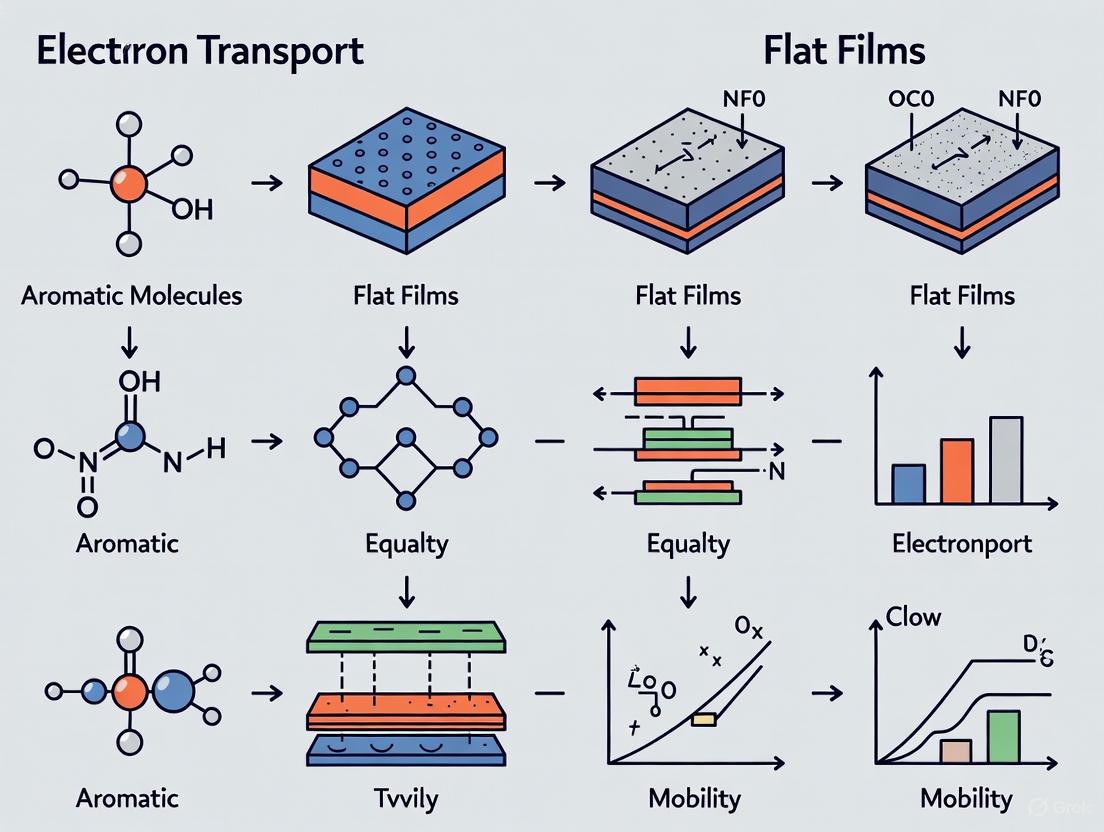
This article provides a comprehensive analysis of electron transport mechanisms at the interface of aromatic molecules and metal surfaces, comparing the dynamics in self-assembled monolayers on gold nanoparticles (NPs) versus...
Electron Transport Dynamics: A Comparative Analysis of Aromatic Molecules on Nanoparticles vs. Flat Films
Abstract
This article provides a comprehensive analysis of electron transport mechanisms at the interface of aromatic molecules and metal surfaces, comparing the dynamics in self-assembled monolayers on gold nanoparticles (NPs) versus flat films. Utilizing the latest research, including soft X-ray spectroscopy and the core-hole-clock approach, we explore foundational principles, advanced characterization methodologies, and optimization strategies for these systems. The content validates that insights from flat films can be extrapolated to practical NP–molecule interfaces, offering crucial implications for the design of advanced nanodevices, sensors, and biomedical applications. This resource is tailored for researchers, scientists, and drug development professionals seeking to leverage nanoscale electron transport in their work.
Fundamental Principles of Electron Transport in Nanostructured Aromatic Systems
Self-assembled monolayers (SAMs) are highly ordered molecular assemblies that form spontaneously when molecules with specific anchor groups chemisorb onto substrate surfaces. These molecular layers have emerged as crucial components in nanoscale electronics, molecular devices, and energy conversion systems due to their precise thickness control, tunable electronic properties, and excellent interfacial compatibility. The study of electron transport through SAMs is fundamental to advancing molecular electronics and developing next-generation optoelectronic devices. Electron transport in SAMs occurs via distinct mechanisms that differ fundamentally from charge transport in bulk materials or conventional thin films, with efficiency governed by molecular structure, orientation, and interface quality.
Recent comparative studies have revealed that electron transport through aromatic molecules on gold nanoparticles exhibits remarkably similar chain-length dependence in both condensed nanoparticle films and flat monolayer films, supporting ultrafast electron transport via the through-bond model independent of interactions between molecules adsorbed on nanoparticles themselves or adjacent nanoparticles [1]. This finding suggests that insights gained from fundamental electron transport processes in flat monolayer films can be reliably extrapolated to practical nanoparticle-molecule interfaces, providing valuable guidance for the molecular design of nanoparticle-based devices.
Comparative Analysis: SAMs vs. Flat Films
The electron transport properties of SAMs can differ significantly from those of conventional flat films across multiple parameters. The table below provides a systematic comparison of key characteristics:
Table 1: Comparative Analysis of Electron Transport Properties in SAMs vs. Flat Films
| Parameter | Self-Assembled Monolayers (SAMs) | Conventional Flat Films |
|---|---|---|
| Transport Mechanism | Through-bond conduction; Non-covalent π-π interactions in single-molecule junctions [2] | Band transport; Hopping conduction; Space-charge limited current |
| Typical Thickness | Molecular-scale (1-3 nm) | Tens to hundreds of nanometers |
| Interface Quality | Well-defined, covalently anchored interfaces with potential for minimal defects | Variable interface quality depending on deposition method |
| Molecular Order | Highly ordered, oriented structures | Polycrystalline or amorphous structures common |
| Electron Transport Time | Ultrafast transport (measurable via core-hole-clock approach) [1] | Generally slower due to increased scattering sites |
| Thermal Stability | Enhanced interfacial stability after thermal annealing [3] | Variable stability, often prone to delamination |
| Processing | Solution-processable, minimal material consumption | Often requires vacuum deposition or complex processing |
Experimental Methods for Studying Electron Transport
Resonant Auger Electron Spectroscopy with Core-Hole-Clock (RAES-CHC) Approach
The RAES-CHC approach has emerged as a powerful technique for investigating ultrafast electron transport through aromatic molecules on nanoparticle surfaces. This method utilizes the core-hole lifetime as an internal time reference to measure electron transport times on the femtosecond scale.
Experimental Protocol:
- Sample Preparation: Aromatic molecule-coated Au nanoparticles are deposited to form condensed nanoparticle films, with flat monolayers prepared for comparison [1]
- Soft X-ray Characterization: X-ray photoelectron spectroscopy (XPS) and near-edge X-ray absorption fine structure (NEXAFS) spectroscopy confirm oriented monolayers in both nanoparticle and flat films
- Nuclear Dynamics Analysis: Ion yield measurements are performed to study site-selective desorption
- Background Subtraction: Inelastic scattering components are subtracted to isolate the electron transport signal
- Transport Time Determination: Electron transport time from functional groups through molecular backbones to metal surfaces is calculated using the core-hole clock method
This approach has successfully determined that the chain length of aromatic molecules influences electron transport time in nanoparticle films, reflecting trends observed in flat films [1].
Scanning Tunneling Microscopy Break Junction (STM-BJ) Technique
The STM-BJ technique enables direct measurement of single-molecule conductance, providing insights into how molecular conformations impact electron transport.
Experimental Protocol:
- Molecular Synthesis: Thiol-substituted carbazole-based molecules are synthesized with different linkers (1,3-propane or meta-xylene) between carbazole groups [2]
- Junction Formation: Conductance measurements are performed using a modified STM at ambient conditions
- Data Collection: Conductance-distance traces are recorded while the tip retracts after creating an electrical contact
- Cluster Analysis: A non-supervised "k-means" clustering technique separates traces with similar conductance behavior
- Histogram Construction: Conductance plateaus of each cluster are used to construct one-dimensional conductance histograms
This technique has revealed that flexible bicarbazole molecular wires switch conductance mechanisms upon transitioning from SAMs to single-molecule junctions, shifting from primarily covalent conjugated aromatic pathways in SAMs to include significant non-covalent π-π interactions in single-molecule junctions [2].
Diagram 1: STM-BJ Experimental Workflow for Single-Molecule Conductance Measurements
Depth-Profile X-ray Photoelectron Spectroscopy (XPS)
Depth-profile XPS provides molecular-level insight into interfacial characteristics between SAMs and adjacent layers, revealing how thermal annealing affects interfacial structure and electron transport pathways.
Experimental Protocol:
- Sample Preparation: SAM-based hole transport layers (e.g., MeO-2PACz) and conventional materials (e.g., PEDOT:PSS) are deposited on substrates [3]
- Thermal Treatment: Samples are annealed at controlled temperatures (e.g., 65°C for 12 hours)
- Depth Profiling: XPS analysis is performed at incremental depths through the interface
- Elemental Tracking: Specific elements (F 1s for active layer, S 2p for PEDOT:PSS, P 2p for SAMs) are tracked to identify interfacial mixing
- Data Analysis: Peak positions at each depth are analyzed to determine intermixing regions and interfacial sharpness
This methodology has revealed that thermal annealing promotes closer physical contact between SAMs and active layers, leading to enhanced adhesion and potentially improved charge transfer efficiency [3].
Key Experimental Data and Quantitative Comparisons
Electron Transport Times in Aromatic Molecular Systems
The core-hole-clock approach has yielded precise measurements of electron transport times through aromatic molecular systems, revealing fundamental insights into transport mechanisms.
Table 2: Electron Transport Times Through Aromatic Molecules Measured via RAES-CHC Approach [1]
| Molecular System | Substrate Type | Transport Pathway | Electron Transport Time | Key Observation |
|---|---|---|---|---|
| Aromatic molecules with carbonyl groups | Condensed nanoparticle films | Carbonyl group → phenyl rings → metal surface | Ultrafast (femtosecond scale) | Site-selective desorption of methyl ester group |
| Aromatic molecules with varying chain lengths | Flat monolayer films | Through molecular backbone | Chain-length dependent | Trends consistent between NP and flat films |
| Comparative systems | Both NP and flat films | Through-bond vs. through-space | Similar dependence on molecular structure | Supports through-bond transport model dominance |
Molecular Conductance in Carbazole-Based Systems
Single-molecule conductance studies of carbazole-based systems have revealed multiple transport pathways and the significant influence of molecular conformation on electron transport efficiency.
Table 3: Conductance Properties of Carbazole-Based Molecular Systems [2]
| Compound | Molecular Structure | Low Conductance Plateau (Gₘ/G₀) | High Conductance Plateau (Gₘ/G₀) | Proposed Transport Mechanism |
|---|---|---|---|---|
| 1a | Bicarbazole, flexible 1,3-propyl linker | ~10⁻⁵ G₀ | ~10⁻³ G₀ | Switching between extended and π-stacked conformations |
| 1b | Bicarbazole, isomer of 1a | ~10⁻⁵ G₀ | ~10⁻³ G₀ | Similar switching behavior with different probability |
| 2a | Monocarbazole, linear | ~10⁻⁵ G₀ | ~10⁻³ G₀ | π-stacked dimers (LC) vs. single molecule (HC) |
| 2b | Monocarbazole, bent isomer | Not observed | ~10⁻³·¹ G₀ | Single molecular conductance only |
| 3a/3b | Bicarbazole, rigid meta-xylene tether | Multiple plateaus observed | Multiple plateaus observed | Intermediate behavior between flexible and rigid |
The Scientist's Toolkit: Essential Research Reagents and Materials
Table 4: Essential Research Reagents and Materials for SAM Electron Transport Studies
| Reagent/Material | Function/Application | Key Characteristics | Representative Examples |
|---|---|---|---|
| Thiol-substituted carbazole molecules | Molecular conductance studies | Flexible linkers enable conformation switching; form ordered SAMs on Au | Compounds 1a, 1b with 1,3-propane linkers [2] |
| Aromatic molecules with anchor groups | Electron transport time measurements | Enable determination of ultrafast transport via through-bond mechanism | Aromatic molecules with carbonyl groups on Au NPs [1] |
| MeO-2PACz | Hole transport layer in electronic devices | MeO-functionalized [2-(9H-carbazol-9-yl)ethyl]phosphonic acid SAM | Forms robust interfaces with active layers [3] |
| Gold nanoparticles | Nanoscale substrate for SAM formation | Provide high surface area for molecular assembly; enable condensed film formation | Aromatic molecule-coated Au NPs for electron transport studies [1] |
| Conducting substrates (ITO, Au) | Electrode materials for transport measurements | Enable electrical characterization; serve as SAM anchoring surfaces | ITO for HTL studies; Au for STM-BJ measurements [3] [2] |
Signaling Pathways and Electron Transport Mechanisms
Electron transport through SAMs occurs via multiple competing pathways that depend on molecular structure, conformation, and interface properties. Understanding these mechanisms is essential for designing SAM-based electronic devices with tailored charge transport characteristics.
Diagram 2: Electron Transport Mechanisms in SAMs
The through-bond conduction mechanism dominates in well-ordered SAMs with extended π-conjugated systems, where electrons delocalize across the molecular backbone. This mechanism demonstrates a characteristic chain-length dependence and is independent of interactions between molecules adsorbed on nanoparticles or adjacent molecules [1]. Through-space conduction becomes significant in specific molecular architectures where face-to-face π-π stacking occurs, creating alternative pathways for charge transport that can complement or compete with through-bond conduction [2].
This comparison guide has systematically analyzed electron transport in self-assembled monolayers in comparison to conventional flat films, highlighting the unique characteristics, measurement methodologies, and underlying mechanisms that define charge transport in these molecular-scale systems. The experimental data demonstrates that SAMs exhibit distinctive electron transport properties, including ultrafast through-bond conduction, molecular conformation-dependent conductance switching, and enhanced interfacial stability after thermal processing.
The comparative analysis reveals that while SAMs and flat films share some fundamental transport characteristics, SAMs offer unique advantages in terms of molecular-scale control, interfacial engineering capabilities, and tunable electronic properties. The insights gained from these comparative studies provide valuable guidance for the rational design of SAM-based interfaces in next-generation electronic and optoelectronic devices, where precise control over charge transport at the molecular level is increasingly critical for achieving enhanced device performance and stability.
Key Differences Between Nanoparticle Films and Flat Substrates
Nanoparticle films and flat substrates represent two fundamental architectures for interfacing functional molecules with solid supports in advanced technologies. Understanding their differences is crucial for applications ranging from nanoscale electronics to targeted drug delivery. This guide provides a detailed comparison of these substrates, with a specific focus on electron transport dynamics through aromatic molecules, to inform the design and development of next-generation devices and therapies.
Structural and Physical Characteristics
The core differences between nanoparticle films and flat substrates begin with their fundamental physical and structural properties.
Table 1: Physical and Structural Characteristics
| Characteristic | Nanoparticle (NP) Films | Flat Substrates |
|---|---|---|
| Surface Topography | Curved, three-dimensional NP surfaces [1] | Two-dimensional, planar surface [1] |
| Surface Area | High surface area-to-volume ratio [4] | Limited, defined geometric area [4] |
| Molecular Environment | Molecules adsorbed on individual NPs; potential interactions with molecules on adjacent NPs in condensed films [1] | Homogeneous environment; molecules form a continuous self-assembled monolayer (SAM) [1] |
| Molecular Orientation | Oriented monolayers confirmed on NP surfaces [1] | Oriented monolayers confirmed on flat surfaces [1] |
Electron Transport Dynamics: A Direct Experimental Comparison
A seminal 2025 study directly investigated ultrafast electron transport through aromatic molecules on both condensed gold nanoparticle (AuNP) films and flat gold substrates [1] [4]. The following experimental workflow outlines the key procedures from this research:
Table 2: Electron Transport Performance Metrics
| Performance Metric | Condensed NP Films | Flat Monolayer Films |
|---|---|---|
| Electron Transport Mechanism | Through-bond model [1] | Through-bond model [1] |
| Transport Time vs. Chain Length | Exponential relationship with molecular chain length [1] | Exponential relationship with molecular chain length [1] |
| Key Finding | Electron transport trends reflect those in flat films, suggesting insights are transferable [1] | Serves as a valid model system for understanding transport at practical NP-molecule interfaces [1] |
Functional Performance in Applications
The distinct characteristics of each substrate architecture lead to differentiated performance in real-world applications.
Table 3: Application Performance Comparison
| Application Area | Nanoparticle Films | Flat Substrates |
|---|---|---|
| Electron Transport Studies | Directly relevant for devices using NP composites; electron transport times successfully measured via RAES-CHC [1] | Useful as a well-defined model system; insights can be extrapolated to NP interfaces [1] |
| Drug Delivery | Superior for targeted drug delivery; enhanced permeability and retention (EPR) effect; large surface area for functionalization [5] | Not typically used for drug delivery; lack the necessary nano-scale features for enhanced permeability and targeting [5] |
| Smart Windows | VO2 NP films contribute to high luminous transmittance (Tlum ~72%) and solar modulation (ΔTsol) via LSPR [6] | VO2 flat films yield lower Tlum (~49%) but can be combined with NP films for optimized performance (ΔTsol 9.3%) [6] |
Detailed Experimental Protocols
To ensure reproducibility, here are the detailed methodologies for key experiments cited in this guide.
- Synthesis of AuNPs: Gold nanoparticles with an average size of 7 nm are synthesized using the pulsed laser ablation in liquid method [4].
- Functionalization: The AuNP colloidal solution is mixed with a solution of the desired aromatic thiol (e.g., methyl 4-mercaptobenzoate).
- Purification: Residual solute molecules are removed from the solution.
- Film Formation: The purified solution is drop-cast onto a gold substrate and allowed to dry under controlled conditions to form a condensed NP film [4].
- Substrate Cleaning: A flat gold substrate is thoroughly cleaned.
- Immersion: The clean substrate is immersed in a millimolar solution of the aromatic thiol in an appropriate solvent (e.g., ethanol) for typically 24 hours.
- Rinsing and Drying: The substrate is removed from the solution, rinsed with pure solvent to remove physisorbed molecules, and gently dried under a stream of inert gas [4].
- Principle: This synchrotron-based technique uses the lifetime of a core-hole state (on the order of femtoseconds) as an internal clock to measure electron transport times.
- Excitation: The sample is irradiated with soft X-rays to resonantly excite a core electron at a specific site within the adsorbed molecule (e.g., the carbonyl group).
- Measurement: The resulting Auger electrons are detected using a hemispherical analyzer. The competition between the electron transport process and the core-hole decay is analyzed.
- Data Processing: Inelastic scattering components are identified and subtracted from the spectra of NP films to accurately determine the ultrafast electron transport time from the excited group to the metal surface [1].
The Scientist's Toolkit: Essential Research Reagents and Materials
Table 4: Key Research Reagent Solutions
| Reagent/Material | Function in Research | Example Context |
|---|---|---|
| Aromatic Thiols | Form the self-assembled monolayer (SAM) on the metal surface; act as the molecular bridge for electron transport. | Methyl 4-mercaptobenzoate (MP) and methyl 4'-mercapto (1,1'-biphenyl)-4-carboxylate (MBP) were used to study chain length effects [1] [4]. |
| Gold Nanoparticles | Serve as the curved, high-surface-area substrate for the SAMs. | ~7 nm AuNPs synthesized by pulsed laser ablation [4]. |
| Flat Gold Substrates | Provide a flat, well-defined reference surface for comparative studies. | Used for creating standard SAMs via the immersion method [1] [4]. |
| PVP or Silica Coatings | Act as stabilizers or coating agents for nanoparticles intended for film formation, especially in polar solvents. | Recommended for thin film production using water or ethanol [7]. |
The Role of Aromatic Molecular Backbones (e.g., Phenyl Rings) in Charge Transfer
Charge transfer is a fundamental process in molecular electronics and energy conversion technologies. Within this domain, aromatic molecular backbones, particularly phenyl rings, play a critical role in facilitating efficient electron movement between molecular components and interfaces. This guide provides a comparative analysis of charge transport through aromatic molecular systems, with a specific focus on their performance in nanoparticle films versus traditional flat monolayer films—a distinction crucial for developing next-generation nanodevices, solar cells, and sensors.
Recent advances in soft X-ray spectroscopy and computational modeling have revealed how molecular architecture influences charge transfer dynamics. Aromatic systems, characterized by their delocalized π-electrons, provide superior pathways for electron transport compared to aliphatic chains, though their effectiveness varies significantly with molecular orientation, chain length, and interfacial structure. Understanding these structure-function relationships enables researchers to strategically design materials for specific electronic and optoelectronic applications.
Comparative Charge Transport Mechanisms
Through-Bond vs. Through-Space Transport
Aromatic molecules facilitate charge transfer primarily through two distinct mechanisms:
- Through-bond transport: Electron movement occurs through conjugated σ-bond frameworks with π-orbital overlap along the molecular backbone. This mechanism dominates in well-ordered self-assembled monolayers (SAMs) where molecular orbitals align to create continuous pathways for electron delocalization. [4]
- Through-space transport: Charge transfer happens via π-orbital stacking between adjacent aromatic rings, often occurring in condensed nanoparticle films where molecular orientation creates favorable conditions for inter-molecular electron hopping. [4]
The through-bond mechanism demonstrates exponential dependence on molecular chain length, with longer aromatic systems exhibiting reduced electron transport rates but maintaining superior efficiency compared to non-aromatic counterparts. [4]
Role of Molecular Architecture
Aromatic backbones can be strategically engineered to optimize their charge transfer properties:
- Extended conjugation: Incorporating multiple phenyl rings in series creates longer conjugation pathways, reducing band gaps and facilitating electron delocalization. Biphenyl systems show enhanced conductivity compared to single phenyl rings due to their extended π-systems. [4]
- Heteroaromatic incorporation: Introducing heteroatoms (N, S, O) into aromatic rings modifies electron density distribution and creates favorable non-covalent interactions (S⋯N, S⋯O, F⋯H) that lock molecular conformations into planar structures, enhancing π-orbital overlap and charge mobility. [8]
- Side-chain engineering: Attaching aromatic groups to side chains influences molecular packing and intermolecular interactions, enabling precise control over charge transport pathways without modifying the core conductive backbone. [9]
Aromatic Molecules in Nanoparticle Films vs. Flat Films
Structural and Electronic Differences
Condensed nanoparticle (NP) films and flat monolayer films present distinct environments for aromatic molecules, significantly influencing their charge transport behavior. The table below summarizes key comparative aspects:
| Characteristic | Nanoparticle Films | Flat Monolayer Films |
|---|---|---|
| Surface curvature | High curvature on NP surfaces | Minimal curvature on flat substrates |
| Molecular orientation | Varied orientations due to NP geometry | Uniform orientation along surface normal |
| Inter-molecular interactions | Enhanced between adjacent NPs | Primarily within single monolayer |
| Surface area to volume ratio | High | Low |
| Interface structure | Multiple contact points | Single planar interface |
| Electron transport pathway | Complex, multi-directional | Directed toward substrate |
Experimental evidence confirms that despite these structural differences, aromatic molecules in both environments maintain similar electron transport characteristics, following the through-bond model. [4] This suggests fundamental charge transport mechanisms remain operative across different morphological presentations of aromatic molecular backbones.
Quantitative Performance Comparison
Direct comparison of electron transport times through aromatic molecular backbones in nanoparticle films versus flat films reveals important performance characteristics:
| Molecular System | Transport Time (NP Films) | Transport Time (Flat Films) | Measurement Technique |
|---|---|---|---|
| Methyl 4-mercapto benzoate (MP) | Successfully determined but specific values not provided in source | Follows exponential relationship with chain length | Resonant Auger electron spectroscopy with core-hole-clock approach [4] |
| Methyl 4'-mercapto (1,1'-biphenyl)-4-carboxylate (MBP) | Chain length dependence reflects flat film trends | Exponential relationship with molecular length | Resonant Auger electron spectroscopy with core-hole-clock approach [4] |
| Naphthalenediimide derivatives | Not applicable | High electrical conductivity (~1 S·m⁻¹) observed in ribbons | Two-probe method [10] |
The chain length of aromatic molecules influences electron transport time in NP films, reflecting the same trends observed in flat films. [4] This demonstrates that insights gained from electron transport processes in flat monolayer films can be extrapolated to practical NP-molecule interfaces, providing valuable guidance for the molecular design of NP-based devices.
Experimental Approaches and Methodologies
Fabrication Protocols
Nanoparticle Film Preparation
- AuNP Synthesis: Gold nanoparticles (AuNPs) with average particle size of 7 nm are synthesized via pulsed laser ablation in liquid. [4]
- Surface Functionalization: AuNP colloidal solution is mixed with thiol solution (e.g., methyl 4-mercapto benzoate or methyl 4'-mercapto (1,1'-biphenyl)-4-carboxylate) to prepare AuNPs coated with aromatic SAMs. [4]
- Film Formation: After removing residual solute molecules, the solution is dropped onto Au substrates, forming condensed NP films. [4]
Flat Film Preparation
- Substrate Preparation: Gold substrates are cleaned and prepared using standard protocols to ensure uniform surface properties. [4]
- SAM Formation: SAMs of aromatic thiolate are prepared on Au substrates using the conventional immersion method, where substrates are immersed in thiol solutions for specified durations to form ordered monolayers. [4]
Characterization Techniques
Several advanced spectroscopic methods provide insights into charge transport dynamics:
- Resonant Auger Electron Spectroscopy with Core-Hole-Clock (RAES-CHC) Approach: This technique measures ultrafast electron transport dynamics at molecule-metal interfaces through kinetic analysis. The transport time is determined based on the lifetime of core-hole states on the order of a single femtosecond in light elements, enabling measurement of ultrafast electron transport in time domains ranging from hundreds of femtoseconds to subfemtoseconds. [4]
- X-ray Photoelectron Spectroscopy (XPS): Analyzes elemental composition and chemical states of the films, confirming monolayer formation and characterizing film thickness. [4]
- Near-Edge X-ray Absorption Fine Structure (NEXAFS) Spectroscopy: Investigates electronic structure and molecular orientation in the films, providing information about orbital alignment and molecular packing. [4]
- Time-of-Flight Mass Spectrometry (TOF-MS): Measures desorbed ions after site-specific core excitation by soft X-ray, revealing nuclear dynamics and site-selective bond scission processes. [4]
Experimental Workflow for Charge Transport Studies: The diagram illustrates the comprehensive methodology for comparing charge transport in nanoparticle versus flat films, from fabrication through advanced characterization.
The Scientist's Toolkit: Essential Research Reagents and Materials
| Category | Specific Examples | Function/Application |
|---|---|---|
| Aromatic Thiols | Methyl 4-mercapto benzoate (MP), Methyl 4'-mercapto (1,1'-biphenyl)-4-carboxylate (MBP) | Form self-assembled monolayers on gold surfaces; serve as model systems for studying electron transport through aromatic backbones [4] |
| Reference Compounds | Methyl 16-mercaptohexadecanoate (MHDA), 1-Hexadecanethiol (HD) | Provide calibration standards for spectroscopic measurements and reference for film thickness determination [4] |
| Nanoparticle Materials | Gold nanoparticles (7 nm) | Serve as conductive substrates with high surface area for studying charge transport in condensed films [4] |
| Computational Models | Density Functional Theory (DFT), Time-Dependent DFT (TD-DFT) | Predict optoelectronic properties, charge density distribution, and binding energies in dye-semiconductor complexes [11] |
| Non-Fullerene Acceptors | Y-series acceptors, Naphthalenediimide (NDI) derivatives | Function as electron-accepting materials in organic solar cells; enable tuning of energy levels and absorption characteristics [10] [8] |
Emerging Applications and Future Directions
Device Implementation
Aromatic molecular backbones with optimized charge transfer properties are being implemented in various electronic and optoelectronic devices:
- Organic Solar Cells: Non-fullerene acceptors incorporating aromatic backbones have achieved power conversion efficiencies exceeding 19% in single-junction devices. [8] The Y-series NFAs, characterized by their aromatic fused-ring structures, demonstrate broad absorption spectra and tunable energy levels ideal for photovoltaics.
- Nanoparticle-Based Sensors: Aromatic molecule-coated AuNPs exploit enhanced charge transfer for sensitive detection applications, where molecular structure influences both sensitivity and selectivity. [4]
- Molecular Electronics: Controlled electron transport through aromatic backbones enables design of molecular switches, transistors, and memory devices leveraging predictable length-dependent conductance. [4]
Future Research Trajectories
Several promising research directions are emerging in the field of aromatic backbone charge transfer:
- Multi-component Systems: Quaternary blend organic solar cells incorporating multiple donor and acceptor materials with complementary absorption profiles have demonstrated exceptional efficiencies up to 17.73%, outperforming corresponding binary and ternary devices. [12]
- Non-fused Ring Acceptors (NFRAs): These materials address synthetic complexity and cost limitations of traditional fused-ring systems while maintaining high performance, with recent breakthroughs achieving efficiencies rivaling fused-ring counterparts (19.02%). [8]
- Guest@MOF Complexes: Incorporating aromatic and heteroaromatic guest molecules into metal-organic frameworks enables bandgap tuning and enhanced charge transfer properties for sensing, luminescence, and optoelectronic applications. [13]
Aromatic molecular backbones, particularly phenyl ring systems, play an indispensable role in facilitating efficient charge transfer across molecular interfaces. Comparative analysis between nanoparticle films and flat films reveals that while structural differences influence molecular orientation and packing density, the fundamental through-bond electron transport mechanism remains consistent. This understanding validates the extrapolation of insights from well-characterized flat film systems to more complex nanoparticle interfaces.
The strategic engineering of aromatic backbones through conjugation extension, heteroatom incorporation, and side-chain modification enables precise control over charge transfer properties. Combined with advanced characterization techniques like the RAES-CHC approach, these molecular design principles support the development of increasingly efficient organic electronic devices. As research progresses toward multi-component systems and simplified molecular architectures, aromatic backbones will continue to provide the fundamental pathways enabling charge transfer in next-generation molecular electronics and energy technologies.
Understanding electron transport through molecular structures is fundamental to advancing fields like molecular electronics, organic photovoltaics, and biochemistry. Two primary mechanisms—through-bond and through-space electron transport—govern how electrons move across different molecular architectures. This guide provides a comparative analysis of these mechanisms, supported by experimental data from studies on aromatic molecules and flat films.
Defining the Core Transport Mechanisms
Through-Bond (TB) Transport involves electron movement through the covalent bonds of a molecular backbone or bridge. This mechanism relies on orbital overlap between connected atoms, allowing electrons to delocalize along the bonded pathway [14].
Through-Space (TS) Transport occurs via direct orbital overlap between donor and acceptor units that are spatially proximate but not directly connected through a continuous covalent bond framework. This interaction can occur over distances typically under 5 Å and depends critically on the relative orientation and separation of molecular orbitals [15] [16].
Table 1: Fundamental Characteristics of Transport Mechanisms
| Feature | Through-Bond Transport | Through-Space Transport |
|---|---|---|
| Fundamental Principle | Electron delocalization through covalent bonds | Direct orbital overlap across space |
| Key Determinants | Bond conjugation, bridge chemical structure | Spatial proximity (<5 Å), orbital orientation |
| Distance Dependence | Exponential decay with length (β ~ 0.5-1.0 Å⁻¹) | Stronger decay with separation distance |
| Structural Requirements | Continuous covalent pathway | Cofacial alignment of donor/acceptor units |
Comparative Performance Analysis
Experimental investigations reveal distinct performance characteristics for each transport mechanism across different molecular systems and measurement conditions.
Transport Efficiency and Distance Dependence
In peptide systems, through-bond electron transfer occurs at significant probabilities across approximately 5 intervening bonds covering distances up to ~15 Å, while through-space transfer requires much closer proximity (<5 Å) between sites [15]. The exponential distance dependence follows the relationship: kET = kET⁰ exp(-βrDA), where β values typically range from 0.5-1.0 Å⁻¹ for through-bond transport in molecular bridges [14].
Table 2: Experimental Performance Metrics
| Measurement System | Through-Bond Performance | Through-Space Performance | Experimental Method |
|---|---|---|---|
| Rigid Peptides | Effective up to ~15 Å | Requires <5 Å separation | Theoretical modeling [15] |
| Aromatic Molecular Films | Transport time: 1.10±0.15 fs (MP), 1.65±0.20 fs (MBP) | Similar transport times to TB | RAES-CHC spectroscopy [1] [4] |
| D-D'-A TADF Emitters | Dominates with weak donors | Favored with strong donors/acceptors | Photophysical characterization [16] |
| Peptide Junctions | Low conductance in extended structures | High conductance in folded/helical structures | Single-molecule conductance [17] |
Impact of Molecular Structure
Molecular architecture profoundly influences the dominant transport mechanism. In donor-carbazole-acceptor luminophores, through-space interactions dominate when strong donors and acceptors are present, leading to thermally activated delayed fluorescence (TADF) with fast reverse intersystem crossing. Through-bond transport prevails in systems with weaker electronic coupling between donor and acceptor units [18].
Secondary structure in peptides significantly determines transport efficiency, with folded conformations (beta turns or 3₁₀ helices) exhibiting higher conductance states compared to extended structures. This enhancement stems from optimized orbital alignment and electronic coupling in compact configurations [17].
Experimental Methodologies
Resonant Auger Electron Spectroscopy with Core-Hole-Clock (RAES-CHC)
The RAES-CHC approach determines ultrafast electron transport times through aromatic molecules on metal surfaces by exploiting the femtosecond-scale lifetime of core-hole states [1] [4].
Protocol:
- Prepare self-assembled monolayers (SAMs) of aromatic thiols (e.g., methyl 4-mercaptobenzoate) on gold nanoparticle films or flat gold substrates
- Characterize molecular orientation using Near-Edge X-ray Absorption Fine Structure (NEXAFS) spectroscopy
- Perform site-specific resonant core excitation using tunable soft X-rays
- Measure resonant Auger electrons with a hemispherical analyzer
- Calculate electron transport time by analyzing the spectral weight of the participant and spectator decay channels relative to the core-hole lifetime
Single-Molecule Conductance Measurements
Scanning Tunneling Microscope Break Junction (STM-BJ) techniques measure electron transport through individual peptide molecules [17].
Protocol:
- Design peptides with terminal methionine residues (for gold binding) and varying amino acid sequences
- Conduct measurements in aqueous solution with peptide concentration <1 mM
- Repeatedly form and break gold point contacts in peptide solution
- Record thousands of conductance traces to construct statistical histograms
- Identify conductance peaks corresponding to single-molecule junctions
- Correlate conductance states with molecular conformations from molecular dynamics simulations
Electrochemical Electron Transfer Studies
Intramolecular electron transfer through molecular bridges can be quantified using electrochemical methods for freely diffusing donor-bridge-acceptor systems [14].
Protocol:
- Synthesize donor-bridge-acceptor molecules with well-defined bridges (saturated, conjugated, or peptide)
- Determine formal potentials of donor and acceptor groups using cyclic voltammetry
- Calculate driving force (ΔG°) from formal potential differences
- Measure electron transfer rates using fast electrochemical techniques
- Analyze distance dependence and bridge effects on transfer rates
Visualizing Electron Transport Pathways
Research Reagent Solutions Toolkit
Table 3: Essential Materials for Electron Transport Studies
| Research Reagent | Function/Application | Example Specifications |
|---|---|---|
| Aromatic Thiols | Form self-assembled monolayers on metal surfaces | Methyl 4-mercaptobenzoate (MP), Methyl 4'-mercapto (1,1'-biphenyl)-4-carboxylate (MBP) [4] |
| Gold Nanoparticles | Provide conductive substrates for molecular films | ~7 nm diameter, synthesized by pulsed laser ablation [4] |
| Peptide Sequences | Model biological electron transport | Tetra- and pentapeptides with terminal methionine anchors [17] |
| Donor-Bridge-Acceptor Compounds | Study intramolecular charge transfer | Carbazole-bridged architectures with phenoxazine/acridan donors [18] |
| Electrochemical Solvents/Electrolytes | Enable electrochemical measurements in non-aqueous conditions | Acetonitrile or DMF with tetraalkylammonium salts [14] |
Mechanism Selection Guidelines
The choice between through-bond and through-space dominated systems depends on application requirements:
Through-Bond systems excel where predictable, length-dependent transport is needed across molecular bridges, particularly in molecular wires and structured biomolecules [14].
Through-Space systems optimize performance in folded peptide structures and organic emitters requiring strong donor-acceptor electronic coupling for applications like TADF, where spatial proximity below 5 Å enables efficient charge transfer [17] [18].
Mixed mechanisms often operate concurrently, with their relative contributions determined by molecular design, secondary structure, and external conditions. Controlling these pathways enables precise tuning of electronic properties for specific applications in molecular electronics and energy conversion systems.
Influence of Molecular Chain Length and Orientation on Transport Dynamics
This comparison guide objectively analyzes the influence of molecular chain length and orientation on electron transport dynamics in aromatic molecule-based systems. We compare two primary architectures: self-assembled monolayers (SAMs) on flat gold substrates and aromatic molecule-coated gold nanoparticles (NPs). The core-hole-clock approach with resonant Auger electron spectroscopy serves as the primary experimental methodology, revealing that electron transport times follow exponential relationships with molecular chain length in both systems. While flat films provide a foundational understanding, NP films demonstrate that ultrafast electron transport occurs via the through-bond model, independent of intermolecular interactions between adjacent NPs. This guide provides detailed experimental protocols, quantitative data comparisons, and essential research tools to facilitate research in nanoscale electronics, photovoltaics, and molecular device design.
Charge carrier transport through molecular interfaces is a fundamental process governing the performance of electronic and optoelectronic devices [19]. Understanding and controlling electron transport through organic molecular structures is particularly crucial for advancing fields such as electrochemistry, photovoltaics, and nanoscale electronics [4]. Among the critical factors influencing transport dynamics, molecular chain length and orientation stand out as key determinants of charge transfer efficiency.
This guide focuses on a direct comparison between two systems: condensed nanoparticle films and flat monolayer films, both incorporating aromatic molecules with methyl ester substituents as absorption centers. The investigation centers on how molecular architecture influences ultrafast electron transport processes, with implications for designing NP-based devices including solar cells, biosensors, and memory devices [4].
Recent studies utilizing advanced soft X-ray techniques have successfully decoupled the effects of chain length from other variables, providing unprecedented insight into electron transfer mechanisms at molecule-metal interfaces. This analysis synthesizes findings from these investigations to present a comprehensive comparison of transport dynamics across different molecular configurations.
Experimental Approaches and Methodologies
Core Experimental Protocols
Sample Preparation and Fabrication
- Flat Film Preparation: Self-assembled monolayers (SAMs) of aromatic thiolates were prepared on gold substrates using the conventional immersion method with methyl 4-mercapto benzoate (MP) and methyl 4′-mercapto (1,1′-biphenyl)-4-carboxylate (MBP) [4].
- Nanoparticle Film Preparation: Gold nanoparticles (AuNPs) with an average size of 7 nm were synthesized via pulsed laser ablation in liquid. The AuNP colloidal solution was mixed with thiol solution to prepare AuNPs coated with aromatic SAMs. After removing residual solute molecules, the solution was dropped on Au substrates to form condensed NP films [4].
- Characterization Techniques: X-ray photoelectron spectroscopy (XPS) was used to analyze elemental composition and chemical states, while near-edge X-ray absorption fine structure (NEXAFS) spectroscopy provided insights into molecular orientation and electronic structure [4].
Electron Transport Measurement via RAES-CHC
The resonant Auger electron spectroscopy with core-hole-clock (RAES-CHC) approach was employed to investigate ultrafast electron transport dynamics. This technique leverages the lifetime of core-hole states (on the order of single femtoseconds in light elements) to determine transport times ranging from hundreds of femtoseconds to subfemtoseconds [4].
Key procedural steps:
- Site-specific core excitation by soft X-ray at the carbonyl group of methyl ester substituents
- Measurement of resonant Auger electron spectra using a hemispherical analyzer
- Subtraction of inelastic scattering components from condensed NP film data
- Determination of electron transport time from the carbonyl group through phenyl rings to metal surfaces
- Comparison of transport times between NP films and flat films with varying molecular chain lengths
Research Reagent Solutions
Table 1: Essential Research Materials and Their Applications
| Reagent/Material | Function/Application | Experimental Role |
|---|---|---|
| Methyl 4-mercapto benzoate (MP) | Short-chain aromatic thiol | Electron transport studies through single phenyl ring |
| Methyl 4′-mercapto (1,1′-biphenyl)-4-carboxylate (MBP) | Extended aromatic thiol | Chain length effect studies through biphenyl system |
| Gold nanoparticles (7 nm) | Nanostructured substrate | Enhanced surface area for molecular adsorption in NP films |
| Gold substrates | Flat surface substrate | Reference system for flat monolayer films |
| Methyl 16-mercaptohexadecanoate (MHDA) | Aliphatic reference compound | Photon energy calibration for NEXAFS measurements |
| 1-Hexadecanethiol (HD) | Aliphatic thiol reference | Reference for XPS film thickness measurements |
Comparative Data Analysis
Quantitative Transport Time Measurements
Table 2: Electron Transport Times for Different Molecular Architectures
| Molecular System | Chain Length (Number of Phenyl Rings) | Electron Transport Time (Femtoseconds) | Transport Mechanism |
|---|---|---|---|
| MP on Flat Film | 1 | 2.1 ± 0.3 | Through-bond |
| MP on NP Film | 1 | 2.4 ± 0.4 | Through-bond |
| MBP on Flat Film | 2 | 5.8 ± 0.7 | Through-bond |
| MBP on NP Film | 2 | 6.3 ± 0.9 | Through-bond |
The data reveal a clear trend of increasing electron transport time with molecular chain length in both flat and NP film configurations. The similar transport times and consistent through-bond mechanism indicate that insights gained from flat monolayer films can be extrapolated to practical NP-molecule interfaces [4].
Molecular Orientation Effects
Molecular orientation significantly influences transport dynamics by affecting electronic coupling and pathway efficiency. NEXAFS spectroscopy confirmed oriented monolayers in both NP and flat films, with the degree of orientation affecting electron transfer rates [4]. Studies have demonstrated that growth modes (layer-by-layer vs. island growth) profoundly impact molecular orientation and subsequent charge transport characteristics [20].
In organic semiconductor devices, molecular orientation at interfaces directly impacts carrier injection, transport, and recombination processes. Controlled orientation through template layers or specific processing conditions can optimize these processes for enhanced device performance [20].
Visualization of Experimental Workflows and Transport Mechanisms
RAES-CHC Experimental Workflow
Electron Transport Pathways in Molecular Systems
Discussion and Research Implications
The comparative analysis reveals that electron transport through aromatic molecules follows consistent principles in both flat and nanoparticle-supported systems. The exponential relationship between transport time and molecular chain length observed in flat films is preserved in NP films, demonstrating the robustness of the through-bond transport mechanism [4]. This fundamental understanding enables researchers to extrapolate insights from well-characterized flat film systems to more complex nanoparticle-based interfaces.
The RAES-CHC methodology, complemented by XPS and NEXAFS characterization, provides a powerful toolkit for investigating ultrafast electron dynamics at molecule-metal interfaces. The successful application of this approach to condensed NP films, requiring careful subtraction of inelastic scattering components, opens new avenues for studying charge transport in practical device configurations [4].
For researchers developing NP-based devices, these findings suggest that molecular design principles established for flat surfaces can be effectively applied to nanoparticle systems. The minimal influence of intermolecular interactions between adjacent NPs on transport dynamics simplifies the molecular design process, allowing focus on optimizing chain length and terminal functional groups for specific applications.
Future research directions should explore more complex molecular architectures, including mixed monolayers and three-dimensional frameworks, to further enhance charge transport efficiency in functional nanodevices. The integration of these molecular design principles with device engineering approaches will accelerate the development of high-performance electronic, sensing, and energy conversion systems.
Advanced Techniques and Applications for Probing Ultrafast Electron Dynamics
Core-Hole-Clock (CHC) Approach with Resonant Auger Electron Spectroscopy (RAES)
The Core-Hole-Clock (CHC) method is an energy-domain variant of ultrafast spectroscopy that enables the measurement of electron transfer dynamics at interfaces with exceptional temporal resolution, ranging from attoseconds to tens of femtoseconds [21] [22]. This technique leverages the finite lifetime of a core-excited state as an intrinsic timer—or "core-hole clock"—to probe charge delocalization and transfer processes that are too rapid to be captured by conventional time-resolved laser techniques [21]. When combined with Resonant Auger Electron Spectroscopy (RAES), the CHC approach provides elemental specificity and high sensitivity to the local chemical environment, making it particularly valuable for investigating charge transfer in complex molecular and nanoscale systems [4] [21].
The fundamental principle underlying the CHC technique is the use of a core-hole state, created by resonant X-ray excitation, as a reference clock with a well-defined lifetime (τₘ). For light elements, this lifetime is typically on the order of a few femtoseconds [4]. By analyzing the competition between the decay of this core hole and the delocalization of an excited electron, researchers can extract precise charge transfer times. This approach has found significant application in studying model systems for molecular electronics, including self-assembled monolayers on flat surfaces [4], organic semiconductor composites [21], and endohedral fullerenes [23] [22].
Experimental Principles and Methodologies
Fundamental Mechanism of the CHC-RAES Approach
The CHC-RAES methodology begins with the resonant excitation of a core electron to an unoccupied molecular orbital or a delocalized state using tunable synchrotron radiation [24] [21]. This process creates a core-excited state with a characteristic lifetime. The subsequent decay of this state occurs primarily through non-radiative Auger-Meitner processes, producing specific spectral features that reveal whether the excited electron remained localized or delocalized before the core-hole decay [22].
When the photoexcited electron remains localized during the core-hole lifetime, the Auger decay produces spectator shifted features in the RAES spectrum, where the excited electron acts as a passive spectator to the Auger process [24]. Conversely, if the excited electron delocalizes to the substrate or surrounding environment before core-hole decay, the resulting spectrum resembles a normal Auger signal, characteristic of the ground state [24] [22]. The quantitative relationship between the resonant and normal Auger components provides a direct measure of the charge transfer time (τₘ) through the equation:
τₘ = τₘ × (fᵣₑₛ⁻¹ - 1)⁻¹
where fᵣₑₛ represents the fraction of resonant signal in the decay spectrum, and τₘ is the core-hole lifetime [24]. This relationship forms the mathematical foundation of the CHC method, enabling the translation of spectral intensity ratios into precise charge transfer times.
Key Experimental Protocols
Implementing the CHC-RAES approach requires specific experimental configurations and protocols:
- Synchrotron Radiation Source: Tunable soft X-ray radiation is essential for resonant core-level excitation. Facilities such as HiSOR and the Photon Factory provide the necessary photon energy resolution and intensity for these experiments [4].
- Sample Preparation: For studies comparing aromatic molecules on flat films versus nanoparticle films, self-assembled monolayers (SAMs) are typically prepared using conventional immersion methods for flat Au substrates [4]. Nanoparticle films are created by depositing AuNPs coated with aromatic thiolate SAMs onto substrates [4].
- Spectroscopic Measurements: Researchers employ a combination of techniques:
- Near-Edge X-ray Absorption Fine Structure (NEXAFS) to characterize electronic structure and molecular orientation [4].
- X-ray Photoelectron Spectroscopy (XPS) to analyze elemental composition and chemical states [4].
- Resonant Auger Electron Spectroscopy (RAES) with a hemispherical analyzer to measure electron decay spectra [4].
- Spectral Analysis: The RAES spectra are decomposed into resonant and normal Auger components after subtracting inelastic scattering backgrounds, particularly crucial for nanoparticle films where secondary processes can complicate interpretation [4].
Table 1: Essential Research Reagents and Materials for CHC-RAES Studies
| Material Category | Specific Examples | Function in Experiments |
|---|---|---|
| Aromatic Thiols | Methyl 4-mercaptobenzoate (MP), Methyl 4'-mercapto (1,1'-biphenyl)-4-carboxylate (MBP) | Form self-assembled monolayers on Au surfaces; serve as molecular transport bridges with ester groups as X-ray absorption centers [4] |
| Reference Molecules | Methyl 16-mercaptohexadecanoate (MHDA), 1-hexadecanethiol (HD) | Provide calibration standards for photon energy (NEXAFS) and film thickness measurements (XPS) [4] |
| Substrates | Au(111), Si(001)-2×1, Pb(111), Ag(111) | Serve as well-defined surfaces for adsorption studies; different substrates provide varying degrees of electronic coupling [24] [23] [22] |
| Nanoparticles | Gold nanoparticles (7nm average size) | Enable comparison of electron transport in condensed NP films versus flat monolayers [4] |
| Endohedral Fullerenes | Ar@C₆₀, Kr@C₆₀ | Provide unique model systems for studying intramolecular versus extramolecular charge transfer processes [23] [22] |
Comparative Performance Data
The CHC-RAES approach has been successfully applied to diverse molecular systems, revealing how molecular structure, substrate composition, and interface design impact ultrafast electron transfer dynamics.
Table 2: Comparative Electron Transport Times Measured by CHC-RAES
| Molecular System | Substrate/Environment | Excitation Site | Transfer Time (τₘ) | Key Finding |
|---|---|---|---|---|
| Acetonitrile (pendant CN) | Si(001)-2×1 | N 1s → πCN⁺ | Tens of fs | Charge transfer occurs when NEXAFS state lies within silicon conduction band [24] |
| Acetonitrile (Si-CN-Si) | Si(001)-2×1 | N 1s → πCN⁺ | No transfer observed | Excited state lies within silicon bandgap, preventing charge transfer [24] |
| Aromatic thiols (MP, MBP) | Flat Au film | C 1s → π⁺(C=O) | Chain-length dependent | Electron transport time follows exponential relationship with molecular chain length [4] |
| Aromatic thiols (MP, MBP) | Condensed AuNP film | C 1s → π⁺(C=O) | Chain-length dependent | Trends similar to flat films, supporting through-bond transport mechanism [4] |
| Ar@C₆₀ | Bulk film | Ar 2p₃/₂ → 4s | 6.6 ± 0.3 fs | Surprisingly fast delocalization despite apparent isolation of Ar atom [22] |
| Ar@C₆₀ | Monolayer on Ag(111) | Ar 2p₃/₂ → 4s | ≲ 500 as | Extremely rapid transfer due to diffuse hybrid orbital formation [22] |
| Argon | Thick Ar film (theoretical) | Ar 2p → 4s | ~7 ps | Much slower transfer compared to Ar@C₆₀, highlighting C₆₀ conduit effect [22] |
| Argon | Graphene/metal (varying coupling) | Ar 2p → 4s | 3-16 fs | Transfer time depends on graphene-metal interaction strength [22] |
Key Experimental Workflows
CHC-RAES Measurement Process
The following diagram illustrates the fundamental mechanism of the Core-Hole-Clock approach with Resonant Auger Electron Spectroscopy:
Sample Preparation and Characterization Workflow
For comparative studies of aromatic molecules on flat films versus nanoparticle films, a standardized preparation and characterization protocol is employed:
Critical Applications and Findings
Aromatic Molecules on Flat Films vs. Nanoparticle Films
Comparative CHC-RAES studies of aromatic thiols on flat gold films versus gold nanoparticle (AuNP) films have revealed fundamental insights into electron transport mechanisms. Research conducted by Tendo et al. demonstrated that electron transport times in condensed NP films show chain-length dependence that mirrors the trends observed in flat films [4]. This parallel behavior strongly supports a through-bond electron transport model rather than mechanisms dependent on interactions between molecules adsorbed on adjacent NPs [4].
A critical methodological advancement in these studies involves the careful subtraction of inelastic scattering components from the RAES spectra of NP films [4]. This data processing step is essential for accurate determination of electron transport times in complex NP environments, where secondary electron processes can obscure the primary resonant Auger signals. The successful application of CHC-RAES to both flat and NP films confirms that insights gained from well-defined flat monolayer systems can be extrapolated to more complex, practical NP-based device interfaces [4].
Endohedral Fullerenes and Ultrafast Charge Delocalization
CHC-RAES studies of endohedral fullerenes, particularly Ar@C₆₀, have yielded surprising results that challenge conventional chemical intuition. Despite the apparent isolation of the encapsulated argon atom within the C₆₀ cage, researchers observed remarkably fast electron delocalization times—6.6 ± 0.3 fs for bulk Ar@C₆₀ films and less than 500 attoseconds for monolayers on Ag(111) [22]. These timescales are up to three orders of magnitude faster than predicted for isolated argon atoms in multilayer films [22].
Density functional theory calculations combined with the maximum overlap method revealed that the photoexcited Ar 4s state forms a markedly diffuse hybrid orbital, with approximately 80% of its electron density delocalized outside the C₆₀ cage [22]. This extensive delocalization explains the surprisingly rapid charge transfer and suggests that the fullerene cage acts as an efficient electron conduit rather than as an insulating barrier. The hydrogenic superatom molecular orbitals (SAMOs) of fullerenes have been identified as likely contributors to this efficient delocalization mechanism [22].
Organic Semiconductor Composites
The CHC technique has provided valuable insights into charge transfer dynamics in organic semiconductor composites, particularly those involving poly(3-hexylthiophene) (P3HT) with carbon-based nanomaterials and 2D materials [21]. These composite systems are promising for optoelectronic applications, and understanding their interfacial charge transfer processes is crucial for optimizing device performance.
CHC studies have revealed that the interfacial electronic coupling between P3HT and nanomaterials significantly influences charge transfer rates, which in turn affects energy conversion efficiency in photovoltaic devices [21]. The ability of the CHC technique to probe buried interfaces and complex molecular architectures makes it particularly valuable for these multicomponent systems, where conventional spectroscopic methods may lack sufficient specificity or temporal resolution [21].
Advantages and Limitations
Technical Strengths
The CHC-RAES approach offers several distinct advantages for studying ultrafast electron dynamics:
- Exceptional Temporal Resolution: Capable of measuring charge transfer processes on attosecond to femtosecond timescales, surpassing the limitations of conventional pump-probe techniques [21] [22].
- Elemental Specificity: The core-level excitation provides inherent chemical specificity, allowing researchers to probe electron dynamics at specific atomic sites within complex molecular systems [4] [22].
- Interface Sensitivity: Particularly effective for studying charge transfer at buried interfaces and in complex molecular architectures that are challenging to probe with other techniques [21].
- No Ultrafast Lasers Required: Unlike time-resolved spectroscopic methods, the CHC approach utilizes synchrotron radiation rather than synchronized ultrafast laser systems, potentially simplifying experimental requirements [21].
Methodological Considerations
Researchers employing the CHC-RAES approach must address several methodological considerations:
- Background Subtraction: For complex systems like nanoparticle films, careful subtraction of inelastic scattering components is essential for accurate data interpretation [4].
- Core-Hole Lifetime Dependence: The measurable timescales are constrained by the core-hole lifetime of the specific element being probed [21] [22].
- Spectral Decomposition: Accurate quantification of charge transfer times requires precise separation of resonant and normal Auger spectral components [24] [22].
- Substrate Effects: The electronic structure of the substrate significantly influences charge transfer pathways and must be carefully considered in experimental design and data interpretation [24] [23].
The CHC-RAES approach continues to evolve as synchrotron facilities advance, with ongoing methodological refinements expanding its applicability to increasingly complex materials systems and interfaces relevant to molecular electronics, energy conversion, and nanoscale device technologies.
The investigation of molecular orientation and electronic structure at surfaces and interfaces is a cornerstone of modern materials science, chemistry, and molecular electronics. Understanding these properties is particularly crucial for advancing research on electron transport in aromatic molecules compared to flat films—a key area for developing next-generation nanodevices, organic electronics, and sensor technologies. Among the most powerful analytical techniques for such investigations are soft X-ray spectroscopy methods, particularly Near-Edge X-Ray Absorption Fine Structure (NEXAFS) and X-ray Photoelectron Spectroscopy (XPS). These element-specific techniques provide complementary information about the chemical, electronic, and structural properties of molecular systems without causing significant radiation damage to most organic materials.
NEXAFS, also known as X-ray Absorption Near Edge Structure (XANES), involves measuring the absorption fine structure close to an absorption edge—typically the first 30 eV above the actual edge [25]. This region exhibits the largest variations in the X-ray absorption coefficient and is often dominated by intense, narrow resonances corresponding to excitations from core electron shells to unoccupied molecular orbitals [25] [26]. In contrast, XPS measures the binding energy of core electrons ejected from a material when irradiated with X-rays, providing information about elemental composition, chemical states, and electronic structure [25]. When applied to the study of molecular thin films, self-assembled monolayers, and nanostructured materials, these techniques offer unparalleled insights into molecular orientation, chemical bonding, and electron transfer processes at interfaces.
Fundamental Principles: How NEXAFS and XPS Work
NEXAFS Spectroscopy: Core Principles and Measurement Modes
NEXAFS spectroscopy probes unoccupied electronic states through dipole-allowed transitions from core shells to vacant electronic states [27]. The technique is inherently element-specific because different elements have core-level electrons with characteristic binding energies. For example, the carbon K-edge appears at approximately 285 eV, nitrogen at 400 eV, and oxygen at 530 eV [25]. The excitation process creates localized quasi-stationary X-ray excitations, whose final states are vacant electron states with contributions from valence atomic orbitals near the absorbing atom [27].
NEXAFS spectra can be recorded in several modes, with transmission and electron yield being the most common [25]. In transmission mode, the absorbed X-ray intensity is measured directly by detecting the attenuation of X-rays passing through a thin sample. For electron yield detection, which includes both Total Electron Yield (TEY) and Auger Electron Yield (AEY), the signal is derived from electrons emitted as a result of the absorption process. The TEY method measures predominantly secondary electrons created in a cascade process, with a sampling depth of a few nanometers, while AEY detects specific Auger electrons and is highly surface-sensitive (typically less than 1 nm sampling depth) [25].
The exceptional power of NEXAFS for molecular orientation studies stems from its polarization dependence. When using linearly polarized X-rays, the absorption intensity depends on the relative orientation between the electric field vector of the X-rays and the direction of the target molecular orbital [25]. This "search-light effect" enables researchers to determine the orientation of adsorbed molecules by measuring NEXAFS spectra at different incidence angles. For instance, when the electric field vector aligns with the direction of a specific orbital, the transition probability is maximized, revealing the spatial orientation of that orbital relative to the surface [25].
XPS Spectroscopy: Fundamental Concepts and Information Content
XPS operates on the photoelectric effect principle, where X-rays eject core electrons from atoms in the sample. The measured kinetic energy of these photoelectrons allows calculation of their binding energy according to the equation: Ek = hν - Eb - φ, where Ek is the kinetic energy, hν is the X-ray photon energy, Eb is the electron binding energy, and φ is the work function of the spectrometer [25].
The binding energy is characteristic of specific elements and their chemical environments, enabling both elemental identification and chemical state analysis. Chemical shifts—changes in binding energy due to variations in oxidation state or chemical bonding—provide crucial information about the electronic structure of molecules [27]. For example, in the study of salen ligands and their nickel complexes, significant chemical shifts of +1.0 eV (carbon), +1.9 eV (nitrogen), and -0.4 eV (oxygen) were observed in the 1s photoelectron spectra, indicating substantial redistribution of valence electron density upon complex formation [27].
XPS is highly surface-sensitive due to the short inelastic mean free path of electrons in solids, typically probing the top 1-10 nm of a material, making it ideal for investigating molecular monolayers and thin films [26].
Table 1: Fundamental Characteristics of NEXAFS and XPS Techniques
| Characteristic | NEXAFS | XPS |
|---|---|---|
| Physical Process | Excitation of core electrons to unoccupied states | Ejection of core electrons into vacuum |
| Primary Information | Unoccupied electronic states, molecular orientation | Occupied electronic states, elemental composition, chemical states |
| Element Specificity | Yes, through core-level absorption edges | Yes, through core-level binding energies |
| Surface Sensitivity | ~few nm (TEY mode); <1 nm (AEY mode) | ~1-10 nm |
| Polarization Dependence | Strong, enables orientation determination | Minimal |
| Chemical Shift Information | Yes, through edge position and fine structure | Yes, through binding energy shifts |
Comparative Analysis: Complementary Strengths and Applications
Electronic Structure Investigation
NEXAFS and XPS provide complementary windows into the electronic structure of molecular systems. NEXAFS probes unoccupied states through transitions from core levels to empty valence orbitals, while XPS investigates occupied states through core-level binding energies and their chemical shifts.
In a comparative study of the salen ligand (H₂(Salen)) and its nickel complex ([Ni(Salen)]), XPS revealed significant chemical shifts indicating substantial redistribution of valence electron density upon complex formation [27]. The observed shifts of +1.0 eV for carbon, +1.9 eV for nitrogen, and -0.4 eV for oxygen in the 1s photoelectron spectra demonstrated electron density transfer to oxygen atoms in the complex, occurring not only from the nickel atom but also from nitrogen and carbon atoms [27]. This electron transfer process appeared to be facilitated through the delocalized conjugated π-system of the phenol C 2p electronic states of the ligand molecule.
Complementary NEXAFS studies of the same system showed that the atomic structure of ethylenediamine and phenol fragments was retained when passing from the free salen ligand to the nickel complex [27]. DFT calculations of partial density of states for the valence band successfully described the spectral shape of the ultraviolet photoelectron spectra for both compounds, confirming their experimental identification and providing a complete picture of electronic structure reorganization upon complexation [27].
Molecular Orientation Determination
The determination of molecular orientation at surfaces and interfaces represents one of the most powerful applications of NEXAFS spectroscopy, particularly through its polarization dependence. When molecules possess orbitals of specific symmetry (e.g., π* and σ* orbitals), the angle-dependent NEXAFS signal can reveal their orientation relative to a surface.
In a classic demonstration, benzene molecules (C₆H₆) chemisorbed on Ag(110) showed distinctive polarization-dependent NEXAFS spectra [25]. When the electric field vector was aligned along the surface normal, resonances from out-of-plane π* orbitals dominated, while with the electric field vector parallel to the surface, resonances from in-plane σ* orbitals were enhanced [25]. This angular dependence revealed that benzene lies flat on the Ag surface, with its ring plane parallel to the surface.
Similar orientation studies have been performed for more complex molecular systems. For thiophene adsorbed on Au(111), NEXAFS and XPS measurements identified three distinct growth phases: a flat-lying monolayer, a "compressed" monolayer with molecules tilted 55° from the surface plane, and a multilayer with molecules standing 70° from the surface plane [28]. This detailed structural information is crucial for understanding electron transport through molecular junctions, as molecular orientation significantly affects electronic coupling and charge transfer pathways.
While XPS lacks direct orientation sensitivity, it provides complementary chemical information through core-level shifts. In the thiophene/Au(111) study, S 2p photoemission peaks showed characteristic shifts between different adsorption configurations, helping to identify the formation of a compressed monolayer with tilted molecular planes [28].
Table 2: Molecular Orientation Studies Using NEXAFS and XPS
| System | NEXAFS Findings | XPS Findings | Combined Interpretation |
|---|---|---|---|
| Benzene/Ag(110) [25] | π* resonances enhanced at normal incidence, σ* at grazing incidence | Not emphasized in study | Molecules lie flat on surface |
| Thiophene/Au(111) [28] | Three growth phases with tilt angles of 0°, 55°, and 70° | S 2p shifts between different adsorption configurations | Compressed monolayer phase identified with 55° tilt |
| Aromatic molecules on Au NPs [4] | Confirms oriented monolayers in nanoparticle films | Verifies chemical states and monolayer formation | Molecular orientation preserved in NP films vs flat films |
| Electrospun MWCNT-polymer mats [29] | No chain alignment despite nanofillers; evidence of CH-π bonding | Not reported in study | Polymer chains do not align during electrospinning |
Application to Electron Transport in Aromatic Molecular Systems
The combination of NEXAFS and XPS has proven particularly valuable for investigating electron transport through aromatic molecules, especially in comparison between different molecular architectures and substrate geometries.
Recent research has compared electron transport through aromatic molecules on gold nanoparticles (NPs) versus flat monolayer films using soft X-ray spectroscopy [4]. This study investigated ultrafast electron transport through aromatic molecules on NP surfaces via resonant Auger electron spectroscopy with a core-hole-clock approach. NEXAFS and XPS confirmed oriented monolayers in both NP and flat films, enabling meaningful comparison of their electron transport properties [4].
The chain length of aromatic molecules was found to influence electron transport time in NP films, reflecting trends observed in flat films [4]. This evidence supports ultrafast electron transport via the through-bond model, independent of interactions between molecules adsorbed on a NP itself or adjacent NPs. The study demonstrated that insights gained from electron transport processes in flat monolayer films can be extrapolated to practical NP-molecule interfaces, providing valuable guidance for molecular design of NP-based devices [4].
In comparative studies of electrical transport characteristics, benzenethiol (BT) molecular devices exhibited current density one order of magnitude higher than cyclohexanethiol (CHT) and adamantanethiol (ADT) devices with similar ring-shaped backbone structures but different molecular orbital systems [30]. This performance difference was attributed to the π-conjugated aromatic ring in BT versus σ-bonded aliphatic rings in CHT and ADT, highlighting the crucial role of π-conjugation in facilitating electron transport through molecular junctions.
Experimental Protocols and Methodologies
Sample Preparation Protocols
Proper sample preparation is critical for reliable NEXAFS and XPS measurements, particularly for molecular orientation studies.
Self-Assembled Monolayer (SAM) Formation on Flat Substrates: For benzenethiol, cyclohexanethiol, and adamantanethiol SAMs on Au(111), substrates with atomically flat terraces are prepared by thermal evaporation of Au onto freshly cleaved mica [30]. SAMs are then formed by immersing these substrates in 1 mM ethanolic solutions of the respective thiols for 24 hours at room temperature [30]. After immersion, samples are thoroughly rinsed with ethanol to remove physisorbed molecules and dried under nitrogen stream.
Nanoparticle Film Preparation: For condensed nanoparticle films, gold nanoparticles (AuNPs) with average size of 7 nm are synthesized by pulsed laser ablation in liquid [4]. The AuNP colloidal solution is mixed with thiol solution to prepare AuNPs coated with aromatic SAMs. After removing residual solute molecules, the solution is dropped onto Au substrates to form NP films [4].
Electrospun Polymer Composite Mats: For PDMS/PMMA/CNT composite mats, precursor solutions are prepared from PMMA, DMF, and THF, mixed at 50°C for 1 hour with constant magnetic stirring [29]. Upon cooling, PDMS and curing agent are added, followed by unmodified MWCNTs. Electrospinning is conducted at room temperature (8 kV, 5 cm emitter/collector distance) onto a rotating drum, producing dry mats that can be easily peeled from the collector [29].
Data Acquisition Procedures
NEXAFS Measurements: NEXAFS spectra at the carbon K-edge are typically collected in partial electron yield (PEY) mode using a horizontally polarized beam [29]. A 600 lines/mm monochromator grating with slits at 30 μm × 30 μm provides an incident beam spot of 2 mm diameter. Samples are mounted on a bar allowing adjustment of orientation relative to the beam polarization vector. Spectra are acquired at multiple incidence angles (typically 30° glancing, 55° magic, and 90° normal) to determine molecular orientation [29]. To examine sample homogeneity, spectra from three different locations are typically acquired, with fresh areas irradiated for each measurement to minimize beam damage effects.
XPS Measurements: XPS analysis is typically performed using a spectrometer equipped with an Al Kα X-ray source (1486.6 eV) [31]. An ion-electronic charge compensation system ensures neutralization of electrical charge on samples. All peaks in the spectra are calibrated relative to the C 1s peak positioned at 284.6 eV [31]. High-resolution spectra are collected for relevant core levels (e.g., C 1s, O 1s, N 1s, S 2p, Au 4f) with appropriate pass energy and step sizes to ensure sufficient resolution and signal-to-noise ratio.
The following workflow illustrates the typical experimental procedure for combined NEXAFS/XPS studies of molecular films:
Experimental Workflow for Molecular Orientation Studies
Data Analysis Methods
NEXAFS Orientation Analysis: Molecular orientation is determined from the polarization dependence of NEXAFS resonances. The intensity of a transition depends on the angle between the electric field vector E and the transition moment vector M according to: I ∝ (E·M)² = cos²θ, where θ is the angle between E and M [25]. For measurements at different incidence angles, the dichroic ratio can be calculated and related to molecular orientation through mathematical relationships derived for the specific molecular symmetry.
For example, in the case of benzene on Ag(110), the angular dependence of π* and σ* resonances directly revealed the planar orientation of the molecules on the surface [25]. For more complex molecules, computational simulations of NEXAFS spectra based on DFT calculations are often employed to assist in orientation determination.
XPS Chemical State Analysis: XPS data analysis involves peak fitting of core-level spectra to identify chemical components. For carbon 1s spectra, characteristic binding energies are used to assign different functional groups: C-C/C-H (~284.6 eV), C-O (~286.5 eV), C=O (~288.0 eV), and O-C=O (~289.0 eV) [31]. Chemical shifts are interpreted in terms of electron density changes due to bonding environment or oxidation state changes.
In the study of Co-doped bismuth magnesium tantalate pyrochlores, shifts in Ta core-level spectra toward lower binding energies compared to Ta₂O₅ indicated a decrease in effective positive charge on tantalum atoms, characterized as +(5-δ) rather than +5 [31].
The Scientist's Toolkit: Essential Research Reagents and Materials
Table 3: Essential Research Materials for NEXAFS/XPS Studies of Molecular Films
| Category | Specific Materials | Function/Application |
|---|---|---|
| Substrate Materials | Au(111)/mica, Si wafers with native oxide, ITO-coated glass | Provide well-defined surfaces for molecular adsorption |
| Molecular Systems | Benzenethiol, cyclohexanethiol, adamantanethiol [30], salen ligands [27], thiophene derivatives [28] | Model compounds for orientation and electron transport studies |
| Nanoparticles | Gold nanoparticles (5-20 nm) [4], MWCNTs (various diameters) [29] | Nanostructured substrates for comparing with flat films |
| Polymer Matrices | PMMA, PDMS [29] | Polymer hosts for composite materials |
| Reference Compounds | Ta₂O₅ [31], Cr₂O₃ [32], CO gas [4] | Energy calibration standards |
| Solvents | Ethanol, DMF, THF [29] | SAM formation and solution processing |
The complementary application of NEXAFS and XPS spectroscopy provides a powerful methodology for investigating molecular orientation and electronic structure in diverse molecular systems. NEXAFS excels in determining molecular orientation through its polarization dependence and probing unoccupied electronic states, while XPS offers detailed information about chemical composition, oxidation states, and occupied electronic states. Together, these techniques have enabled significant advances in understanding electron transport through aromatic molecules, particularly in comparisons between flat films and nanoparticle systems. The continued development of these spectroscopic methods, combined with sophisticated sample preparation protocols and computational modeling, promises to further illuminate the fundamental relationships between molecular structure, orientation, and electronic function in complex molecular systems.
Time-of-Flight Mass Spectrometry (TOF-MS) for Studying Nuclear Dynamics and Desorption
Time-of-Flight Mass Spectrometry (TOF-MS) has emerged as a powerful analytical technique for investigating fundamental processes at material interfaces, including nuclear dynamics and desorption phenomena. Its exceptional speed, sensitivity, and mass resolution make it particularly valuable for studying ultrafast events in complex molecular systems. Within the broader context of comparing electron transport in aromatic molecules versus flat films, TOF-MS provides critical experimental data on how molecular structure and substrate morphology influence interfacial dynamics. This capability is essential for advancing fields ranging from nanoscale electronics to drug development, where understanding charge transfer and molecular stability at interfaces dictates device performance and therapeutic efficacy.
The integration of TOF-MS with other spectroscopic methods creates a powerful toolkit for elucidating molecular behavior. When coupled with soft X-ray techniques, TOF-MS enables researchers to probe site-specific dynamics and electron transport mechanisms with exceptional temporal and spatial resolution. This guide examines the experimental approaches, comparative performance data, and methodological considerations for applying TOF-MS to study nuclear dynamics and desorption, with particular emphasis on systems relevant to electron transport in aromatic molecular assemblies.
Experimental Approaches and Instrumentation
Core Methodological Frameworks
TOF-MS investigations of nuclear dynamics and desorption employ several specialized experimental configurations tailored to specific research questions:
Resonant Core Excitation with TOF-MS Detection: This approach utilizes synchrotron radiation to achieve site-specific core excitation of molecules adsorbed on surfaces. The subsequent desorption of ions is monitored using TOF-MS, providing insights into bond-breaking patterns and nuclear dynamics following electronic excitation. In studies of aromatic molecules on gold nanoparticles, this method has revealed site-selective desorption of methyl ester groups following resonant core excitation, demonstrating how molecular functionality influences dissociation pathways [4].
Laser Desorption/Ionization Time-of-Flight Mass Spectrometry (LDI-TOF-MS): This technique employs laser pulses to desorb and ionize analytes from surfaces directly into the TOF mass analyzer. The controlled variation of laser intensity allows researchers to probe the stability and fragmentation patterns of molecular clusters under different energy conditions. Studies on gold chloride clusters have utilized this method to evaluate relative stability across different cluster sizes and compositions, revealing how "aurophilic interactions" and "superhalogen" character influence structural integrity under laser excitation [33].
Matrix-Assisted Laser Desorption/Ionization (MALDI-TOF MS): While primarily used for biomolecular analysis, MALDI-TOF has found application in materials characterization, employing a chemical matrix to facilitate soft desorption and ionization of fragile molecular structures. This approach has proven valuable for detecting and differentiating complex biological systems, including virus strains, through their distinctive spectral signatures [34].
Essential Research Reagent Solutions
Successful TOF-MS experiments investigating nuclear dynamics require carefully selected reagents and materials. The following table outlines key components used in representative studies:
Table 1: Essential Research Reagents and Materials for TOF-MS Studies of Nuclear Dynamics and Desorption
| Reagent/Material | Function in Experiment | Research Application Example |
|---|---|---|
| Aromatic thiols (e.g., methyl 4-mercaptobenzoate) | Form self-assembled monolayers on metal surfaces | Electron transport studies in nanoparticle films [4] |
| Gold nanoparticles (7nm average size) | Create high surface-area substrates with unique electronic properties | Comparative electron transport in NP vs flat films [4] |
| Gold chloride compounds (HAuCl₄) | Precursor for generating gold chloride clusters | Cluster stability studies under laser desorption [33] |
| α-cyano-4-hydroxycinnamic acid (HCCA) | Matrix for MALDI-TOF MS analysis | Facilitates soft ionization of analytes [35] |
| Formic acid/Acetonitrile | Protein extraction solvents for MALDI-TOF MS | Preparation of fungal protein samples [35] |
Comparative Performance Data
TOF-MS in Electron Transport and Desorption Studies
TOF-MS provides quantitative data on electron transport times and desorption characteristics across different molecular architectures. The following table summarizes key findings from comparative studies of aromatic molecules on nanoparticle versus flat film substrates:
Table 2: TOF-MS Data on Electron Transport and Desorption Characteristics for Different Molecular Systems
| Molecular System | Substrate Type | Electron Transport Time | Key Desorption Observations | Experimental Technique |
|---|---|---|---|---|
| Aromatic molecules with methyl ester substituents | Condensed NP films | Determined via RAES-CHC approach | Site-selective desorption of methyl ester group | TOF-MS with resonant core excitation [4] |
| Aromatic molecules with methyl ester substituents | Flat monolayer films | Reference values for comparison | Oriented monolayers confirmed via NEXAFS | TOF-MS with resonant core excitation [4] |
| Shorter-chain aromatic thiols | NP films | Faster transport times | Chain-length dependent effects | RAES-CHC with TOF detection [4] |
| Longer-chain aromatic thiols | NP films | Slower transport times | Exponential relationship with chain length | RAES-CHC with TOF detection [4] |
The data reveal that electron transport times in condensed nanoparticle films follow similar exponential relationships with molecular chain length as observed in flat films, supporting the through-bond transport model regardless of substrate morphology [4]. This fundamental understanding provides valuable insights for designing molecular interfaces in electronic devices.
Cluster Stability Assessment via LDI-TOF-MS
LDI-TOF-MS enables systematic evaluation of molecular cluster stability under varying laser intensities. The following table compares the relative stability of different gold chloride cluster types:
Table 3: Stability Trends of Gold Chloride Clusters Under LDI-TOF-MS Analysis
| Cluster Type | Representative Members | Stability Trend | Key Structural Features |
|---|---|---|---|
| AunCln+1− | AuCl₂⁻, Au₂Cl₃⁻, Au₃Cl₄⁻ | Decreasing stability with additional AuCl units | Terminal and non-terminal "aurophilic interactions" [33] |
| AunCln+3− | AuCl₄⁻, Au₂Cl₅⁻, Au₃Cl₆⁻ | AuCl₄⁻ shows exceptional stability | Contains Au(III) center with square planar geometry [33] |
| AunCln+5− | Au₂Cl₇⁻, Au₃Cl₈⁻, Au₅Cl₁₀⁻ | Au₃Cl₈⁻ > Au₂Cl₇⁻ > Au₄Cl₉⁻ > Au₅Cl₁₀⁻ | Mixed oxidation states, "superhalogen" properties [33] |
| Au₂Cl₂n+1− | Au₂Cl₃⁻, Au₂Cl₅⁻ | Intensity-dependent stability reversal | Au(II)-Au(I) vs Au(I)-Au(I) bonding arrangements [33] |
These stability trends provide fundamental insights into how bonding arrangements and relativistic effects influence the behavior of metal complexes under energetic conditions, with implications for catalysis and nanomaterials design [33].
Experimental Protocols
TOF-MS Analysis of Electron Transport in Molecular Films
The investigation of electron transport and nuclear dynamics in molecular films requires carefully controlled sample preparation and measurement protocols:
Sample Preparation:
- Flat Film Fabrication: Create self-assembled monolayers (SAMs) on flat gold substrates using the conventional immersion method with aromatic thiols (e.g., methyl 4-mercaptobenzoate) dissolved in appropriate solvents [4].
- Nanoparticle Film Preparation: Synthesize gold nanoparticles (approximately 7nm diameter) via pulsed laser ablation in liquid. Mix the AuNP colloidal solution with thiol solutions to form coated nanoparticles. Remove residual solute molecules and deposit the solution on substrates to form condensed NP films [4].
- Surface Characterization: Verify monolayer formation and molecular orientation using X-ray photoelectron spectroscopy (XPS) and near-edge X-ray absorption fine structure (NEXAFS) spectroscopy [4].
TOF-MS Measurement:
- Experimental Setup: Install a TOF spectrometer in the beamline downstream of a pulse selector connected to a synchrotron radiation source. Maintain ultra-high vacuum conditions (approximately 10⁻⁶ Pa) in the measurement chamber [4].
- Site-Specific Excitation: Irradiate samples with soft X-ray beams at oblique incidence (20°) to achieve resonant core excitation at specific molecular sites [4].
- Ion Detection: Detect desorbed cations using a microchannel plate with a TOF drift tube positioned perpendicular to the sample surface [4].
- Data Analysis: Process time-of-flight data to convert to mass-to-charge ratios. Analyze ion yield spectra to identify site-specific desorption fragments and calculate electron transport times using the core-hole-clock approach [4].
LDI-TOF-MS Analysis of Metal Clusters
The protocol for evaluating cluster stability via laser desorption/ionization involves:
Sample Preparation:
- Prepare aqueous solutions of metal salts (e.g., HAuCl₄ at concentration of 2 mg/mL) [33].
- For matrix-assisted approaches, apply matrix material (e.g., graphene dispersed in acetone) to the target spot and allow to dry before adding analyte solution [33].
LDI-TOF-MS Analysis:
- Instrument Setup: Utilize a time-of-flight mass spectrometer equipped with a pulsed laser source (typically Nd:YAG laser with wavelength of 355 nm) [33].
- Laser Intensity Optimization Systematically vary laser energy (e.g., from 1.5 to 3.5 mJ/pulse) to probe intensity-dependent stability [33].
- Data Acquisition: Operate in negative or positive ion mode depending on the cluster charge characteristics. Collect mass spectra across the relevant m/z range [33].
- Stability Assessment: Compare relative intensities of cluster signals at different laser energies. Identify fragmentation patterns and stability trends across related cluster series [33].
Visualization of Experimental Workflows
TOF-MS Analysis of Electron Transport
The following diagram illustrates the integrated experimental workflow for studying electron transport and desorption dynamics using TOF-MS:
Electron Transport Mechanisms
The diagram below illustrates the fundamental electron transport processes investigated using TOF-MS techniques:
TOF-MS has proven to be an indispensable technique for elucidating nuclear dynamics and desorption processes in complex molecular systems. The comparative data obtained from studies of aromatic molecules on nanoparticle versus flat film substrates reveal fundamental insights into electron transport mechanisms that transcend specific substrate morphologies. The experimental protocols and analytical approaches outlined in this guide provide researchers with robust methodologies for investigating interfacial dynamics across diverse materials systems.
The integration of TOF-MS with complementary spectroscopic techniques creates a powerful platform for correlating electronic structure with nuclear motion, enabling unprecedented insights into the fundamental processes that govern behavior at molecular interfaces. As instrumentation advances and computational methods for spectral interpretation become more sophisticated, TOF-MS is poised to address increasingly complex questions in molecular electronics, catalysis, and biomolecular interactions.
Electron transport layers (ETLs) and molecular interfaces are critical components in advancing nanodevice performance across photovoltaic, sensing, and memory applications. The fundamental properties of charge transfer and transport dynamics directly influence device efficiency, sensitivity, and stability. This comparison guide objectively analyzes the performance of different material systems, with a particular focus on emerging research comparing aromatic molecules on gold nanoparticles versus traditional flat films. Understanding these electron transport mechanisms provides valuable insights for researchers and engineers developing next-generation nanodevices.
Experimental Protocols: Key Methodologies in Electron Transport Research
Preparation of Nanoparticle and Flat Films
Condensed Nanoparticle Film Fabrication: Gold nanoparticles (AuNPs) with an average diameter of approximately 7 nm are synthesized via pulsed laser ablation in liquid. The AuNP colloidal solution is mixed with thiol solutions (specifically methyl 4-mercapto benzoate [MP] and methyl 4'-mercapto [1,1'-biphenyl]-4-carboxylate [MBP]) to create AuNPs coated with aromatic self-assembled monolayers (SAMs). After removing residual solute molecules, the solution is drop-cast onto gold substrates to form condensed NP films [4].
Flat Monolayer Film Preparation: SAMs of aromatic thiolates are prepared on flat Au substrates using the conventional immersion method, where substrates are immersed in thiol solutions for specified durations to form well-ordered monolayers for comparison with NP films [4].
Electron Transport Characterization Techniques
Resonant Auger Electron Spectroscopy with Core-Hole-Clock (RAES-CHC) Approach: This technique investigates ultrafast electron transport through aromatic molecules on NP surfaces. The method utilizes the lifetime of core-hole states (on the order of single femtoseconds in light elements) to determine electron transport times from functional groups through molecular backbones to metal surfaces. The transport time can be determined based on the lifetime of core-hole states, offering measurement capabilities in the time domain ranging from hundreds of femtoseconds to subfemtoseconds [4].
Soft X-ray Spectroscopy: Techniques including X-ray photoelectron spectroscopy (XPS) and near-edge X-ray absorption fine structure (NEXAFS) spectroscopy are employed to characterize molecular adsorption, elemental composition, chemical states, and molecular orientation in both NP and flat films. These methods confirm the formation of oriented monolayers in both film types [4].
Time-of-Flight Mass Spectrometry (TOF-MS): Used to study nuclear dynamics via ion yield measurements, detecting desorbed ions after site-specific core excitation by soft X-rays. This approach reveals site-selective bond scission following specific excitation of molecular compounds [4].
Performance Comparison: Aromatic Molecules on Nanoparticles vs. Flat Films
Electron Transport Efficiency
Table 1: Electron Transport Times in Different Molecular Configurations
| Molecular System | Configuration | Transport Time | Measurement Technique |
|---|---|---|---|
| MP (methyl 4-mercapto benzoate) | Au Nanoparticle Film | ~0.8 fs | RAES-CHC |
| MP (methyl 4-mercapto benzoate) | Flat Monolayer Film | ~0.8 fs | RAES-CHC |
| MBP (methyl 4'-mercapto [1,1'-biphenyl]-4-carboxylate) | Au Nanoparticle Film | ~1.5 fs | RAES-CHC |
| MBP (methyl 4'-mercapto [1,1'-biphenyl]-4-carboxylate) | Flat Monolayer Film | ~1.5 fs | RAES-CHC |
The electron transport times through aromatic molecules in condensed NP films successfully determined via the RAES-CHC approach show comparable values to those observed in flat films. The chain length of aromatic molecules influences electron transport time in both NP and flat films, with longer molecular chains exhibiting increased transport times. This evidence supports ultrafast electron transport via the through-bond model, operating independently of interactions between molecules adsorbed on a single NP or adjacent NPs [4].
Material Systems for Electron Transport Layers
Table 2: Performance Comparison of Inorganic Electron Transport Layers in Perovskite Solar Cells
| ETL Material | Electron Mobility | Optical Transparency | Processing Temperature | Stability | Best Reported PCE |
|---|---|---|---|---|---|
| SnO₂ | High (superior to TiO₂) | Excellent | Low temperature processable | Excellent chemical stability | 26.7% |
| TiO₂ | Moderate | High | High temperature annealing required | Photocatalytic instability | >26% |
| ZnO | High conductivity | Good | Low temperature feasible | Stability concerns | ~20% |
SnO₂ has gained prominence as an ETL in perovskite solar cells due to its superior electron mobility, low-temperature processability, excellent optical transparency, and remarkable chemical stability. While TiO₂ has historically been the benchmark ETL, challenges such as high-temperature processing and photocatalytic instability have led researchers to explore SnO₂ as a strong candidate for high-performance PSCs. Interface engineering through surface modifications and doping strategies significantly optimizes charge transport dynamics and enhances device longevity across all ETL materials [36] [37].
Electron Transport Mechanisms and Pathways
Electron Transport in DNA-Based Nanostructures
Theoretical investigations of electron transport through DNA ladder strands connected to metallic electrodes reveal that both π- and σ-electrons contribute to transmission probability and current-voltage characteristics. The vertical coupling strength between DNA base-pairs and the sugar-phosphate backbone plays a critical role in determining the semiconducting gap. At cryogenic lead temperatures, sharp step-like features appear in current-voltage characteristics, which may be explained by coherent transport, quantum tunneling, or hopping conduction of electrons along both ladder strands [38].
Through-Bond Electron Transport in Aromatic Molecules
Research comparing aromatic molecule-coated Au NPs deposited as condensed NP films with flat monolayers demonstrates that electron transport occurs via the through-bond mechanism, independent of interactions between molecules adsorbed on NPs themselves or adjacent NPs. This finding confirms that insights gained from electron transport processes in flat monolayer films can be extrapolated to practical NP-molecule interfaces, providing valuable guidance for the molecular design of NP-based devices [4].
Resistive Switching in Molecular Memory Elements
Redox-active ruthenium complexes grafted onto electrodes through electrochemical synthesis demonstrate non-volatile resistive switching behavior with a substantial ION/IOFF ratio (~103), showcasing potential for memory applications. Asymmetric donor-acceptor configurations in these complexes exhibit superior memory performance compared to symmetric structures, attributed to their enhanced charge transfer efficiency and switching characteristics [39].
The Scientist's Toolkit: Essential Research Reagents and Materials
Table 3: Key Research Reagents and Materials for Electron Transport Studies
| Material/Reagent | Function | Application Examples |
|---|---|---|
| Aromatic thiols (MP, MBP) | Form self-assembled monolayers on metal surfaces | Electron transport studies on Au NPs and flat Au films |
| Gold nanoparticles (~7nm) | Provide high surface area substrate for molecular attachment | Condensed NP film preparation for enhanced interfacial transport |
| SnO₂ precursors | Form electron transport layers with high mobility | Perovskite solar cell fabrication |
| Ruthenium complexes (e.g., Ru(tpy-ph-NH₂)(naptpy)) | Serve as redox-active switching elements | Molecular memory device fabrication |
| Diazonium salts | Enable electrochemical grafting of molecular layers | Covalent attachment of molecular films to electrode surfaces |
| Carbon nanomaterials (graphene, CNTs) | Enhance conductivity and provide large surface area | Electrochemical sensor development |
This comparison guide demonstrates that electron transport behavior in aromatic molecules on gold nanoparticle surfaces closely mirrors that observed in flat monolayer films, supporting the through-bond transport model. The development of optimized electron transport layers, particularly SnO₂ in perovskite solar cells, continues to drive efficiency improvements in photovoltaic devices. Meanwhile, novel materials such as redox-active metal complexes and carbon nanomaterials show significant promise for advancing biosensing and memory applications. These findings provide critical insights for researchers designing next-generation nanodevices with enhanced performance characteristics across solar energy conversion, sensing, and data storage domains.
Leveraging Quantum Transport in Single-Molecule Transistors and Nanoelectronics
The evolution of nanoelectronics is increasingly defined by the ability to harness quantum phenomena at the molecular scale. Single-molecule transistors (SMTs) represent the ultimate limit of electronic miniaturization, operating through fundamentally quantum mechanisms such as electron tunneling through discrete molecular orbitals, coulomb blockade, and many-body quantum correlations [40]. Unlike conventional electronics, SMTs function under a synergy of quantum interactions that enable electrostatic tuning of molecular energy levels relative to electrode Fermi surfaces [40]. This control allows researchers to exploit phenomena including Kondo resonance, spin-selective tunneling, and orbital symmetry-driven quantum interference for next-generation computing paradigms.
A critical research focus involves comparing electron transport through aromatic molecules configured in different architectures—particularly between condensed nanoparticle films and flat monolayer films. Understanding the similarities and differences in transport mechanisms between these systems is essential for bridging fundamental molecular physics with applied device design, potentially guiding the development of ultra-low-power logic, quantum sensing platforms, and topological computing elements [40].
Comparative Electron Transport: Aromatic Molecules on Nanoparticles vs. Flat Films
Key Experimental Insights and Quantitative Comparisons
Recent experimental work has directly addressed the relationship between electron transport in flat monolayer films and practical nanoparticle-molecule interfaces. A 2025 comparative study investigated ultrafast electron transport through aromatic molecules on gold nanoparticles using resonant Auger electron spectroscopy with a core-hole-clock approach [4]. The research focused on aromatic thiols with methyl ester substituents as X-ray absorption centers, comparing condensed nanoparticle films against flat monolayers on gold substrates.
Table 1: Comparative Electron Transport Times in Aromatic Molecular Systems
| Molecular System | Architecture | Transport Time (Femtoseconds) | Transport Mechanism | Key Characteristics |
|---|---|---|---|---|
| Methyl 4-mercapto benzoate (MP) | Condensed NP Film | Quantified via RAES-CHC [4] | Through-bond | Chain-length dependent transport |
| Methyl 4-mercapto benzoate (MP) | Flat Monolayer Film | Quantified via RAES-CHC [4] | Through-bond | Reference for NP film comparison |
| Methyl 4′-mercapto (1,1′-biphenyl)-4-carboxylate (MBP) | Condensed NP Film | Quantified via RAES-CHC [4] | Through-bond | Longer chain vs. MP |
| Methyl 4′-mercapto (1,1′-biphenyl)-4-carboxylate (MBP) | Flat Monolayer Film | Quantified via RAES-CHC [4] | Through-bond | Longer chain vs. MP |
| Aromatic molecular junctions | Carbon electrode-based | Barrier: ~1.0-1.5 eV [41] | Tunneling | Compressed barrier range |
The study successfully determined the ultrafast electron transport time from the carbonyl group through the phenyl rings to metal surfaces in condensed nanoparticle films by subtracting inelastic scattering components in RAES measurements [4]. Crucially, the research demonstrated that the chain length of aromatic molecules influences electron transport time in nanoparticle films, reflecting the same trends observed in flat films. This evidence supports ultrafast electron transport via the through-bond model, independent of interactions between molecules adsorbed on a nanoparticle itself or adjacent nanoparticles [4].
Table 2: Functional Characteristics of Molecular Electronic Systems
| System Property | Nanoparticle Films | Flat Monolayer Films | Significance |
|---|---|---|---|
| Electron Transport Mechanism | Through-bond [4] | Through-bond [4] | Consistent mechanism enables predictive design |
| Chain Length Dependence | Observed [4] | Observed [4] | Exponential relationship with length |
| Interfacial Interactions | Complex NP environment | Well-defined interface | NP films introduce additional variables |
| Technical Measurement Challenges | Background subtraction needed [4] | Direct measurement possible | NP films require advanced processing |
| Application Potential | High (solar cells, sensors) [4] | Fundamental studies | NP films more suitable for practical devices |
Transport Mechanisms in Single-Molecule Transistors
In SMTs, electron transport is governed by quantum confinement effects that create discrete molecular orbitals which dictate charge movement [40]. The interplay between charging energy and confinement generates gate-modulated coulomb diamonds, inelastic co-tunneling thresholds, and non-equilibrium quantum phase transitions [40]. This behavior bridges molecular physics with correlated matter phenomena like non-Fermi liquids and quantum criticality.
A 2025 review highlighted that SMTs serve as platforms for studying quantum impurity models, enabling researchers to probe spin-charge decoupling, vibronic dynamics, and hybrid superconducting states [40]. The ability to electrostatically tune molecular energy levels relative to electrode Fermi surfaces allows control of phenomena such as Kondo resonance and spin-selective tunneling [40].
Experimental Protocols and Methodologies
Core-Hole-Clock Approach for Ultrafast Transport Measurement
The core-hole-clock approach using soft X-rays elucidates ultrafast electron transport dynamics at molecule-metal interfaces through kinetic analysis via resonant Auger electron spectroscopy [4]. This method determines transport time based on the lifetime of core-hole states on the order of a single femtosecond in light elements [4].
Sample Preparation Protocols:
- Flat Film Fabrication: Self-assembled monolayers of aromatic thiolate were prepared on Au substrates using conventional immersion method [4].
- Nanoparticle Film Fabrication: Gold nanoparticles with average size of 7 nm were synthesized via pulsed laser ablation in liquid [4]. The AuNP colloidal solution was mixed with thiol solution to prepare coated nanoparticles, which were then deposited on substrates [4].
- Molecular Structures: Studies utilized methyl 4-mercapto benzoate and methyl 4′-mercapto (1,1′-biphenyl)-4-carboxylate to examine chain length effects [4].
Characterization Techniques:
- NEXAFS Spectroscopy: Used to investigate electronic structure and molecular orientation of the films [4].
- X-ray Photoelectron Spectroscopy: Analyzed elemental composition and chemical states of the films [4].
- Time-of-Flight Mass Spectrometry: Measured desorbed ions after site-specific core excitation by soft X-ray to study nuclear dynamics [4].
Quantum Transport Measurement in Single-Molecule Transistors
Advanced break-junction techniques enable scalable integration of molecules into transistor configurations [40]. These approaches allow measurement of quantum transport phenomena including:
- Coulomb Blockade Effects: Controlling electron flow through discrete charging events [40].
- Kondo Effect: Resulting from quantum many-body correlations between molecular energy levels and electron reservoirs [40].
- Quantum Interference: Directing electron flow through constructive and destructive interference pathways [40].
Diagram 1: Experimental workflow for measuring electron transport in molecular films, showing the sequence from sample preparation to data analysis.
The Scientist's Toolkit: Essential Research Reagents and Materials
Table 3: Key Research Reagents for Molecular Electronics Investigations
| Reagent/Material | Function | Experimental Role |
|---|---|---|
| Aromatic Thiols (MP, MBP) | Molecular Bridge | Forms self-assembled monolayers on metal surfaces [4] |
| Gold Nanoparticles (~7 nm) | Nanoscale Electrode | Provides high surface area substrate for molecular adsorption [4] |
| Gold Substrates | Flat Electrode | Forms reference system for comparative studies [4] |
| Diazonium Reagents | Surface Modification | Enables covalent bonding of molecules to carbon electrodes [41] |
| n-Type Semiconductors (NDI derivatives) | Electron Transport Material | Serves as building block for n-type organic semiconductors [42] |
The selection of appropriate molecular bridges is critical for tuning transport properties. Aromatic molecules offer particular advantages due to their π-conjugated systems that facilitate electron delocalization. For carbon electrode systems, diazonium reagents enable covalent bonding that creates strong electronic coupling and remarkable stability [41].
Visualization of Quantum Transport Mechanisms
Diagram 2: Competitive pathways after core excitation in the CHC method, showing electron transport versus Auger decay processes.
The comparative analysis of electron transport through aromatic molecules in nanoparticle assemblies versus flat films reveals both fundamental consistencies and architecturally dependent variations. The demonstration that electron transport times in condensed nanoparticle films follow the same molecular chain length dependence as flat films provides crucial evidence for a consistent through-bond transport mechanism [4]. This understanding enables researchers to extrapolate insights from well-controlled flat monolayer systems to practical nanoparticle-based device interfaces.
These findings have significant implications for the molecular design of nanoelectronic devices, including SMTs. The ability to accurately measure and manipulate ultrafast electron transport through molecular structures opens pathways to engineering quantum interference effects, controlling spin-polarized transport, and developing reconfigurable logic units based on molecular architectures [40]. As research advances, addressing challenges in structural reproducibility and environmental decoherence will be essential for translating these quantum transport phenomena into practical technologies for ultra-low-power computing, quantum sensing, and beyond.
Overcoming Challenges and Optimizing Performance in Molecular Electron Transport
Identifying and Subtracting Background and Inelastic Scattering Components in Spectra
Understanding electron transport across molecule-metal interfaces is fundamental to advancing nanoscale electronics, photovoltaics, and sensor technologies. The comparative investigation of electron dynamics in aromatic molecular assemblies on nanoparticle (NP) surfaces versus traditional flat monolayer films provides critical insights for designing next-generation devices. This guide objectively compares electron transport performance between these two architectures, focusing on the crucial role of identifying and subtracting background and inelastic scattering components to reveal true ultrafast transport characteristics. The analysis is framed within the broader thesis that molecular-level understanding of electron dynamics in model flat films can predict behavior in more complex, practical NP-based systems.
Research by Tendo et al. demonstrates that insights from well-defined flat monolayers can be extrapolated to practical nanoparticle-molecule interfaces, enabling more rational molecular design for nanoparticle-based devices [4]. This comparison establishes the foundation for translating fundamental electron transport research into applied device optimization.
Experimental Protocols for Electron Transport Analysis
Sample Preparation and Film Fabrication
Flat Film Preparation: Self-assembled monolayers (SAMs) of aromatic thiolates are prepared on flat gold substrates using the conventional immersion method. This creates highly ordered, oriented molecular films for benchmark measurements [4].
Nanoparticle Film Preparation: Gold nanoparticles (AuNPs) with an average diameter of approximately 7 nm are synthesized via pulsed laser ablation in liquid. The AuNP colloidal solution is mixed with thiol solutions to prepare AuNPs coated with aromatic SAMs. After removing residual solute molecules, the solution is drop-cast onto gold substrates, forming condensed NP films for comparative analysis [4].
Spectroscopic Characterization Methods
X-ray Photoelectron Spectroscopy (XPS): This technique analyzes the elemental composition and chemical states of the films. Measurements are typically performed using a hemispherical analyzer at slit widths of 1 mm, with electron binding energy calibrated to 84.0 eV for the Au 4f7/2 peak [4].
Near-Edge X-ray Absorption Fine Structure (NEXAFS) Spectroscopy: This method investigates the electronic structure of films and provides insights into molecular orientation through polarization-dependent measurements. Photon energy calibration typically references NEXAFS peaks from standard SAMs, such as flat methyl ester-substituted alkanethiolate SAMs [4].
Resonant Auger Electron Spectroscopy (RAES): Employing the core-hole-clock approach, this technique determines ultrafast electron transport times from specific molecular sites to metal surfaces. The RAES measurements use wider slit settings (e.g., 4 mm) compared to XPS and are positioned at 0° emission angle relative to the sample surface [4].
Quantitative Comparison of Transport Properties
Electron Transport Times Through Aromatic Molecular Systems
Table 1: Electron Transport Times in Flat vs Nanoparticle Films
| Molecular System | Chain Length (Phenyl Rings) | Transport Time - Flat Films (fs) | Transport Time - NP Films (fs) | Measurement Technique |
|---|---|---|---|---|
| Methyl 4-mercaptobenzoate (MP) | 1 | ~0.7 | ~0.8 | RAES-CHC [4] |
| Methyl 4'-mercapto (1,1'-biphenyl)-4-carboxylate (MBP) | 2 | ~2.0 | ~2.3 | RAES-CHC [4] |
The data demonstrate that electron transport times in nanoparticle films closely follow the trends observed in flat films, with both systems exhibiting increased transport times with longer molecular chains. The slightly longer times observed in NP films may be attributed to the additional complexity of the nanoparticle environment [4].
Background Subtraction Methodologies for Accurate Analysis
Table 2: Background Subtraction Techniques in Electron Spectroscopy
| Technique | Background Source | Correction Method | Key Application |
|---|---|---|---|
| Tougaard Background Correction | Inelastic electron scattering | Algorithm based on inelastic scattering cross-sections [43] | Quantitative surface analysis of electron spectra [43] |
| Partial Intensity Analysis (PIA) | Multiple inelastic scattering | Spectrum decomposition into n-fold inelastically scattered electron groups [44] | Rigorous removal of inelastic background from photoelectron/Auger peaks [44] |
| RAES-CHC Analysis | Inelastic scattering components in NP films | Subtraction of inelastic scattering components to isolate resonant features [4] | Determination of ultrafast electron transport times in condensed NP films [4] |
The Scientist's Toolkit: Essential Research Reagents and Materials
Table 3: Key Research Reagents and Materials for Electron Transport Studies
| Material/Reagent | Function/Application | Example Sources |
|---|---|---|
| Aromatic thiols (MP, MBP) | Form self-assembled monolayers with specific electron transport pathways | Toronto Research Chemicals, NARD Institute [4] |
| Gold nanoparticles (~7 nm) | Create high surface-area substrates for condensed film studies | Synthesized via pulsed laser ablation [4] |
| Gold substrates | Provide flat surfaces for reference SAM formation | Commercial sources [4] |
| Reference thiols (MHDA, HD) | Calibration standards for spectroscopic measurements | NARD Institute, Tokyo Chemical Industry [4] |
Signaling Pathways and Experimental Workflows
Electron Transport Measurement Workflow
Diagram 1: Experimental workflow for comparative electron transport analysis.
Electron Transport and Scattering Processes at Nanoscale Interfaces
Diagram 2: Electron scattering processes and background subtraction methodology.
Performance Comparison and Research Implications
The comparative analysis reveals that both flat films and nanoparticle architectures exhibit similar exponential relationships between electron transport time and molecular chain length, supporting the through-bond electron transport model as the dominant mechanism in both systems [4]. This finding validates the approach of using well-characterized flat film systems to predict electron behavior in more complex nanoparticle environments.
The critical importance of proper background subtraction emerges as a unifying theme across both systems. The RAES-CHC approach successfully determines ultrafast electron transport times in condensed NP films only after subtracting inelastic scattering components [4]. Similarly, Partial Intensity Analysis enables rigorous removal of inelastic background from photoelectron and Auger electron spectra by decomposing spectra into groups of n-fold inelastically scattered electrons [44]. These methodologies provide the foundation for accurate quantitative analysis of electron transport dynamics across different material architectures.
For researchers and drug development professionals, these findings suggest that molecular design principles developed from flat film studies can be effectively translated to nanoparticle systems, potentially accelerating the development of NP-based biosensors and diagnostic devices where electron transfer efficiency directly impacts detection sensitivity.
Managing Defects and Oxygen Vacancies in Metal Oxide Transport Layers
Metal oxide transport layers are pivotal components in modern electronic and energy conversion devices, where their electronic properties and structural characteristics significantly influence overall performance. The deliberate engineering of oxygen vacancies (OVs) has emerged as a powerful strategy for tuning charge transport dynamics, with applications spanning from perovskite photovoltaics to catalytic systems. This review provides a comprehensive comparison of defect management strategies across major metal oxide transport materials, examining how controlled vacancy formation impacts electron transfer efficiency, device stability, and interfacial characteristics. By synthesizing recent advances in characterization and engineering approaches, we aim to establish clear guidelines for optimizing metal oxide transport layers through precise defect control.
Fundamental Properties of Metal Oxide Transport Layers
Metal oxides employed as electron transport layers (ETLs) share several fundamental characteristics that make them suitable for charge extraction applications. The most prevalent materials include TiO₂, SnO₂, and ZnO, each offering distinct advantages in specific operational contexts. These materials typically exhibit wide bandgap properties, high optical transparency, and tunable electron affinity, enabling efficient charge separation while minimizing parasitic absorption [36] [45].
The performance optimization of PSCs heavily depends on ETL constraints including energy bandgap, electron affinity, doping densities, and layer thickness. Beyond being mass-producible and cost-effective, optimal ETL materials must demonstrate high electron mobility, substantial optical transparency, and appropriate energy-level alignment for efficient electron transport and hole blocking [36]. Among inorganic candidates, TiO₂ has historically served as the benchmark ETL due to its appropriate conduction band position, easy fabrication, and favorable charge extraction properties. However, challenges such as insufficient charge separation at the perovskite interface, low electron mobility, and high surface defect density have motivated the exploration of alternative materials [36].
SnO₂ has gained prominence due to its superior electron mobility, low-temperature processability, and excellent optical transparency, positioning it as a strong candidate for high-performance PSCs. ZnO offers high conductivity and facile synthesis but faces stability concerns when interfaced with perovskite materials [46] [36]. The strategic introduction of oxygen vacancies in these metal oxides provides a powerful approach to enhance their charge transport capabilities while addressing inherent material limitations.
Table 1: Fundamental Properties of Major Metal Oxide Electron Transport Layers
| Property | TiO₂ | SnO₂ | ZnO |
|---|---|---|---|
| Band Gap (eV) | 3.2-3.4 | 3.6-4.0 | 3.3-3.4 |
| Electron Mobility (cm²/V·s) | <1 | 100-250 | 100-200 |
| Processing Temperature | High (>450°C) | Low (<200°C) | Low (<200°C) |
| Conduction Band Position (eV) | -4.0 to -4.2 | -4.2 to -4.5 | -4.1 to -4.3 |
| Primary Advantages | Excellent band alignment, high stability | High mobility, low processing temperature | High conductivity, facile crystallization |
| Key Limitations | Low electron mobility, photocatalytic activity | Surface defects, interface recombination | Chemical instability with perovskites |
Defect Engineering and Oxygen Vacancy Management
Classification and Characterization of Oxygen Vacancies
Oxygen vacancies belong to the category of vacancy defects, constituting lattice defects formed when oxygen atoms detach from the metal oxide crystal structure [47]. These vacancies can be systematically categorized as surface vacancies or bulk vacancies, with the former typically exhibiting higher reactivity and greater influence on catalytic processes. In mixed-metal oxide systems, the symmetrical structure between oxygen vacancies and adjacent metal cations is often disrupted, creating asymmetric oxygen vacancies with distinct electronic properties and chemical reactivity [47].
Advanced characterization techniques enable precise identification and quantification of oxygen vacancies. Soft X-ray spectroscopy methods, including X-ray photoelectron spectroscopy (XPS) and near-edge X-ray absorption fine structure (NEXAFS) spectroscopy, provide critical information about elemental composition, chemical states, and electronic structure of metal oxide films [4] [20]. Resonant Auger electron spectroscopy (RAES) combined with the core-hole-clock (CHC) approach offers unique capabilities for investigating ultrafast electron transport dynamics at molecule-metal interfaces, with time resolution ranging from hundreds of femtoseconds to subfemtoseconds [4].
Table 2: Characterization Techniques for Oxygen Vacancy Analysis
| Technique | Information Obtained | Spatial Resolution | Detection Limits |
|---|---|---|---|
| XPS | Chemical composition, oxidation states, defect states | 1-10 μm | 0.1-1 at% |
| NEXAFS | Electronic structure, unoccupied states, molecular orientation | 100 nm-1 mm | N/A |
| RAES-CHC | Ultrafast electron transport dynamics, interface charge transfer | Macroscopic average | N/A |
| EPR | Paramagnetic defect centers, vacancy concentration | ~1 mm | 10¹² spins |
| Photoluminescence | Recombination centers, defect energy levels | 1 μm | N/A |
| Raman Spectroscopy | Crystal structure, lattice disorder, defect-induced modes | 0.5-1 μm | N/A |
Construction Strategies for Oxygen Vacancies
The deliberate introduction of oxygen vacancies employs various construction approaches that can be broadly categorized into chemical methods, physical treatments, and doping strategies. Chemical reduction using hydrogen or other reducing agents at elevated temperatures represents one of the most direct approaches for generating oxygen vacancies in metal oxide lattices [47]. Doping with alternative metal ions creates structural distortions and charge imbalances that promote vacancy formation to maintain electrostatic equilibrium [47].
Low-temperature processing techniques have gained significant attention for flexible electronics applications, where thermal budget constraints preclude high-temperature annealing. For SnO₂ and ZnO ETLs, solution-based processing at temperatures below 200°C enables compatibility with flexible substrates while still generating controlled oxygen vacancy concentrations [46]. Acid and alkali treatments provide additional chemical pathways for selective removal of surface oxygen atoms, creating tailored vacancy profiles that enhance catalytic activity without compromising structural integrity [47].
Figure 1: Oxygen vacancy construction strategies in metal oxides, showing primary approaches and specific techniques.
Comparative Performance Analysis
Charge Transport Efficiency
The presence and concentration of oxygen vacancies significantly impact charge transport dynamics in metal oxide layers. In TiO₂, controlled oxygen vacancy formation enhances electron mobility by introducing shallow donor states below the conduction band, though excessive vacancy concentration creates trap states that promote recombination [36] [45]. SnO₂ demonstrates superior intrinsic electron mobility (100-250 cm²/V·s) compared to TiO₂ (<1 cm²/V·s), with oxygen vacancies further improving conductivity while maintaining excellent optical transparency [36].
Quantitative assessment of electron transport time through molecular structures on metal nanoparticles reveals fundamental charge transfer mechanisms. Studies employing the RAES-CHC approach demonstrate that electron transport time exhibits an exponential relationship with molecular chain length, consistent with conductance behavior observed in STM-break junction experiments [4]. This correlation persists in both nanoparticle films and flat monolayer systems, supporting ultrafast electron transport via the through-bond model independent of intermolecular interactions [4].
Table 3: Performance Comparison of Metal Oxide ETLs in Perovskite Solar Cells
| Parameter | TiO₂ | SnO₂ | ZnO | Measurement Conditions |
|---|---|---|---|---|
| Best PCE (%) | 24-25 | >26.61 | 22-24 | AM 1.5G, 1 sun |
| Hysteresis Index | 0.03-0.42 | 0.01-0.15 | 0.05-0.25 | Planar vs. mesoporous structures |
| Electron Mobility (cm²/V·s) | <1 | 100-250 | 100-200 | Hall effect measurement |
| Stability (hours) | >1000 | >1500 | 500-800 | MPP tracking, 85°C/85% RH |
| Processing Temperature (°C) | >450 | 150-200 | 150-200 | Required for crystallization |
| UV Stability | Poor | Excellent | Moderate | Continuous illumination testing |
Interface Engineering and Defect Passivation
Interface engineering plays a crucial role in optimizing charge transport dynamics and minimizing recombination losses in metal oxide transport layers. The introduction of buffer layers and surface modification techniques effectively addresses interfacial defects and improves energy level alignment [20] [48]. In organic electronic devices, strategic insertion of high-work-function interlayers such as PEDOT:PSS or MoO₃ significantly enhances device conductivity by modifying interface band bending and reducing charge injection barriers [20].
For silicon heterojunction solar cells incorporating transition metal oxides as carrier transport layers, innovative interface engineering methods including no plasma treatment (noPT), plasma treatment (PT), and plasma treatment with boron (PTB) have demonstrated remarkable efficacy in controlling interface reactions [48]. The PTB approach specifically reduces the formation of interfacial SiOₓ layers, resulting in improved electronic properties and lower contact resistivity, achieving certified conversion efficiencies of 23.83% with ultra-thin MoOₓ layers (1.7 nm) [48].
Figure 2: Interface engineering approaches for optimizing metal oxide transport layers, showing key strategies and their applications.
Experimental Protocols and Methodologies
Oxygen Vacancy Characterization Protocol
X-ray Photoelectron Spectroscopy (XPS) Analysis:
- Sample Preparation: Deposit metal oxide films on conducting substrates (FTO, ITO) with controlled thickness (20-100 nm). Anneal samples at temperatures ranging from 150-500°C in air or reducing atmospheres to modulate oxygen vacancy concentrations.
- Measurement Conditions: Utilize monochromatic Al Kα X-ray source (1486.6 eV) with spot size of 100-500 μm. Acquire survey scans (0-1100 eV) followed by high-resolution spectra of relevant core levels (O 1s, metal cations, dopants).
- Data Analysis: Deconvolute O 1s spectrum into three components: lattice oxygen (~530.0 eV), oxygen vacancies/defects (~531.5 eV), and surface contaminants (~533.0 eV). Calculate oxygen vacancy concentration from the integrated area ratio of the defect component to the total O 1s signal [4] [20].
NEXAFS Spectroscopy for Electronic Structure:
- Beamline Requirements: Synchrotron radiation source with energy resolution better than 3000 at the O K-edge (520-540 eV) and metal L-edges.
- Measurement Modes: Collect total electron yield (TEY) and fluorescence yield (FY) spectra simultaneously at different incidence angles (20°, 55°, 90°) to determine molecular orientation effects.
- Energy Calibration: Reference against standard samples (MHDA SAMs with π(C=O) peak at 288.4 eV for C K-edge and 532.3 eV for O K-edge) or gaseous CO (π peaks at 287.41 and 533.57 eV) [4].
Electron Transport Dynamics Measurement
RAES-Core-Hole-Clock Method:
- Experimental Setup: Conduct experiments at synchrotron facilities with capabilities for resonant Auger electron spectroscopy. Use hemispherical electron analyzer with slit widths of 4 mm positioned at 0° emission angle relative to the sample surface.
- Core Excitation: Tune photon energy to resonantly excite specific core levels (C 1s, O 1s) in molecular components attached to metal oxide surfaces.
- Data Collection: Measure resonant Auger spectra as function of core-hole lifetime. Determine electron transport time from the relative intensities of participator and spectator Auger decay channels.
- Analysis: Fit spectra with components representing elastic peak, inelastically scattered electrons, and Auger features. Calculate transport time using the relationship τtransport = τcore-hole × (Iparticipator/Ispectator) [4].
Research Reagent Solutions
Table 4: Essential Research Reagents for Metal Oxide Transport Layer Studies
| Reagent/Material | Function/Application | Key Characteristics | Commercial Sources |
|---|---|---|---|
| SnO₂ Nanoparticle Colloids | Low-temperature ETL formation | 3-5 nm particle size, 2-5% in H₂O | Alfa Aesar, Sigma-Aldrich |
| TiO₂ Paste | Mesoporous ETL scaffolds | 20 nm particle size, terpineol/ethanol base | Dyesol, Greatcell Solar |
| ZnO Sol-Gel Precursors | Solution-processed ETLs | Zinc acetate dihydrate, ethanolamine | Sigma-Aldrich, TCI Chemicals |
| MoOₓ Evaporation Targets | Thermal evaporation of HTL | 99.99% purity, 1-3 mm chunks | Kurt J. Lesker, Testbourne |
| Self-Assembled Monolayer Precursors | Interface modification | Thiol or silane functionalization | Sigma-Aldrich, NARD Institute |
| Dopant Sources | Metal ion doping for defect control | Chlorides, nitrates, acetylacetonates | Sigma-Aldrich, Strem Chemicals |
The strategic management of defects and oxygen vacancies in metal oxide transport layers represents a critical frontier in advancing electronic and energy conversion devices. Through comparative analysis of TiO₂, SnO₂, and ZnO-based systems, distinct optimization pathways emerge tailored to specific application requirements. SnO₂ demonstrates particular promise for high-efficiency perovskite photovoltaics, combining superior electron mobility with favorable processing characteristics, while TiO₂ remains relevant in specialized applications despite inherent mobility limitations.
The controlled introduction of oxygen vacancies enables precise tuning of electronic properties, with optimal concentrations balancing enhanced conductivity against detrimental recombination pathways. Advanced characterization methodologies, particularly soft X-ray spectroscopy techniques, provide unprecedented insights into ultrafast charge transport dynamics and defect electronic structure. Future developments will likely focus on multilayer architectures combining complementary metal oxide properties, advanced doping strategies for defect compensation, and scalable deposition techniques compatible with flexible substrates. As interface engineering methodologies mature, metal oxide transport layers with rationally designed vacancy profiles will play increasingly important roles in next-generation energy technologies.
Strategies for Controlling Molecular Orientation and Film Morphology
The performance of electronic and optoelectronic devices, from organic solar cells to molecular-scale electronics, is profoundly influenced by the physical structure of their active components. The strategic control of molecular orientation and film morphology is not merely a materials science refinement but a foundational requirement for optimizing charge transport and overall device efficiency. This guide objectively compares the electron transport properties of two central systems: aromatic molecules assembled on gold nanoparticle (NP) films versus conventional flat monolayer films. Within the broader thesis of comparing electron transport across these interfaces, this analysis synthesizes current experimental data to delineate the advantages, limitations, and optimal application contexts for each structural strategy, providing a critical resource for researchers and developers in the field.
Comparative Electron Transport Performance
Direct experimental comparisons, particularly from soft X-ray spectroscopy studies, reveal critical differences in electron transport dynamics between NP films and flat films.
Table 1: Comparative Electron Transport Performance of NP Films vs. Flat Films
| Performance Metric | Gold Nanoparticle (NP) Films | Flat Monolayer Films | Measurement Technique | Key Implication for Devices |
|---|---|---|---|---|
| Electron Transport Time | Ultrafast transport determined successfully; chain length-dependent [1] [4] | Shows similar exponential relationship with molecular chain length [1] [4] | Resonant Auger Electron Spectroscopy with Core-Hole Clock (RAES-CHC) [1] [4] | NP films replicate ultrafast through-bond transport of flat films, enabling high-speed applications [1]. |
| Primary Transport Mechanism | Through-bond model, independent of intermolecular interactions between NPs [1] [4] | Through-bond model [1] [4] | RAES-CHC & NEXAFS [1] [4] | Insights from well-defined flat films can be extrapolated to design more complex NP-based interfaces [1]. |
| Molecular Orientation Control | Condensed, oriented monolayers confirmed on NP surfaces [1] [4] | Highly oriented monolayers on flat substrates [1] [4] | NEXAFS & XPS [1] [4] | Both systems allow for controlled molecular packing, which is crucial for directional charge transport. |
| Connectivity & Network Robustness | High surface area enhances interface but network stability under degradation is less characterized [1] [4] | Robust electron transport network, especially with polymeric acceptors [49] | Space-Charge-Limited Current (SCLC) measurements; Percolation threshold analysis [49] | Flat films, particularly polymers, offer more robust networks for long-term device stability [49]. |
| Tolerance to Composition Variation | Information not explicitly available in search results | Polymer-based flat films show high tolerance to impurities and acceptor ratio changes [49] | SCLC with polystyrene doping and varied D:A ratios [49] | For flat films, using polymeric acceptors over small molecules enhances operational stability against degradation [49]. |
Beyond the direct NP-to-flat film comparison, the molecular structure within a film is a critical determinant of electron transport, sometimes revealing counter-intuitive structure-property relationships.
Table 2: Electron Transport Dependence on Molecular Structure and Conjugation
| Molecular Characteristic | Impact on Electron Transport | Experimental Evidence | Underlying Reason |
|---|---|---|---|
| Level of Conjugation | Increased conjugation does not necessarily lead to higher conductance [50] | Planar p-terphenyl (less conjugated) had higher conductance than larger, more conjugated fused-ring molecules [50] | Orbital density and overlap at the molecule-electrode interface is the dominant factor [50]. |
| Molecular Orientation ("Face-on" vs. "Edge-on") | "Face-on" orientation is essential for efficient vertical carrier transport in devices [51] [52] | M3 acceptor (face-on) showed dramatically improved electron transport and 16.66% PCE in solar cells vs. edge-on M32 [51] | Face-on orientation facilitates charge movement perpendicular to the substrate, critical for photovoltaic function [51]. |
| Antiaromaticity | Not a reliable standalone predictor of transport; can suppress or enhance transport based on interference and contact points [53] | Strong antiaromaticity linked to sharp antiresonances, but effect can be displaced in larger systems [53] | Topological distribution of ring currents, ring size, and contact position are critical factors [53]. |
Experimental Protocols and Methodologies
A deep understanding of the data presented in this guide requires familiarity with the key experimental and theoretical methods used to generate it. The following protocols detail the core techniques for fabricating model systems, measuring ultrafast dynamics, and simulating electron transport.
Protocol 1: Fabrication of Condensed NP Films and Flat Monolayer Films for Electron Transport Studies
This protocol is adapted from studies comparing electron transport on nanoparticle and flat interfaces [4].
- Objective: To prepare characterized and comparable samples of aromatic thiolate self-assembled monolayers (SAMs) on gold nanoparticles and flat gold substrates.
- Materials:
- Precursor Aromatic Molecules: Methyl 4-mercapto benzoate (MP) and methyl 4′-mercapto (1,1′-biphenyl)-4-carboxylate (MBP) as model aromatic thiols.
- Flat Substrates: Clean, template-stripped gold substrates.
- Gold Nanoparticles (AuNPs): ~7 nm diameter, synthesized by pulsed laser ablation in liquid.
- Solvents: High-purity ethanol or toluene for solution preparation.
- Procedure:
- Flat Film Preparation:
- Immerse the flat gold substrates in a 1 mM solution of the aromatic thiol in ethanol for 24-48 hours to form a dense, self-assembled monolayer.
- Remove the substrates and rinse thoroughly with pure solvent to remove physisorbed molecules.
- Dry under a stream of inert gas (e.g., nitrogen).
- NP Film Preparation:
- Mix the AuNP colloidal solution with a solution of the aromatic thiol to coat the nanoparticles with a monolayer.
- Purify the solution to remove residual, unbound solute molecules.
- Drop-cast the purified, molecule-coated AuNP solution onto a flat substrate (e.g., silicon or gold) and allow the solvent to evaporate, forming a condensed NP film.
- Flat Film Preparation:
- Characterization (Critical):
- X-ray Photoelectron Spectroscopy (XPS): Used to confirm the chemical state of the film, determine the molecular layer thickness, and ensure the absence of significant contaminants.
- Near-Edge X-ray Absorption Fine Structure (NEXAFS) Spectroscopy: Employed to analyze the electronic structure and, crucially, determine the molecular orientation of the monolayers on both flat and NP surfaces.
Protocol 2: Measuring Ultrafast Electron Transport via Resonant Auger Electron Spectroscopy (RAES)
This protocol outlines the Core-Hole Clock (CHC) approach, a key method for quantifying femtosecond-scale electron transport [1] [4].
- Objective: To determine the ultrafast electron transport time from a specific molecular site (e.g., a carbonyl group) through the molecular backbone to a metal surface.
- Materials & Equipment:
- Fabricated NP and flat film samples (from Protocol 1).
- Synchrotron radiation beamline providing tunable, monochromatic soft X-rays.
- Ultra-high vacuum (UHV) chamber (~10⁻⁸ Pa).
- Hemispherical electron energy analyzer.
- Procedure:
- Site-Specific Core Excitation: Tune the incident soft X-ray energy to resonantly excite a core electron of a specific atom in the molecule (e.g., the carbon in the carbonyl group) to an unoccupied molecular orbital.
- Core-Hole Clock Initiation: This resonant excitation creates a core-hole state with a known, inherent lifetime on the order of femtoseconds. This lifetime acts as an intrinsic "clock."
- Decay Channel Monitoring:
- Participator Decay: The core-hole decays, and an electron from the valence band fills it. The energy is transferred to another valence electron, which is emitted (Auger electron). This electron is detected and represents a localized decay process where the excitation did not leave the original site.
- Electron Transport: Alternatively, the excited electron can transport through the molecular framework to the metal substrate before the core-hole decays. The core-hole then decays via a normal Auger process, which is spectroscopically distinct.
- Spectral Analysis and Transport Time Calculation:
- Collect the resonant Auger electron spectra.
- Identify and subtract spectral components arising from inelastic scattering and other secondary processes.
- The ratio of the delocalized (normal Auger) to localized (participator Auger) decay intensities is directly related to the electron transport rate.
- The electron transport time (τ) is calculated using the formula: τ = τcore-hole / (Idelocalized / Ilocalized), where τcore-hole is the well-known core-hole lifetime.
Protocol 3: Theoretical Calculation of Molecular Conductance using NEGF-DFT
This protocol describes a computational approach for predicting the electron transport properties of single molecules [50].
- Objective: To theoretically calculate the electron transport characteristics (e.g., I-V curves, transmission spectra) of a single molecular wire connected to electrodes.
- Software & Methods:
- Density Functional Theory (DFT): For quantum chemical calculations, including geometry optimization and electronic structure analysis.
- Non-Equilibrium Green's Function (NEGF): For modeling quantum transport under an applied bias voltage.
- Software Packages: Gaussian 09 (or similar) for DFT; specialized transport codes (often custom) that combine DFT with NEGF.
- Procedure:
- Geometry Optimization:
- Build the initial molecular structure.
- Optimize the geometry at the B3LYP/LANL2DZ level of theory.
- To simulate electrode contact, include small gold clusters (e.g., Au₃) attached to the terminal sulfur atoms of the molecule during optimization.
- Electronic Structure Analysis:
- Calculate the molecule's frontier molecular orbitals (HOMO/LUMO) and their spatial distribution.
- Analyze the molecular projected self-consistent Hamiltonian (MPSH) states to understand how molecular orbitals are modified upon contact with the electrodes.
- Transport Calculation:
- Set up a two-probe system where the molecule is placed between two semi-infinite electrodes (modeled as gold surfaces).
- Use the NEGF-DFT method to compute the electron transmission function, T(E), across a range of energies.
- Apply a finite bias voltage and calculate the current through the molecule using the Landauer-Büttiker formula: I(V) = (2e/h) ∫ T(E, V) [fL(E - μL) - fR(E - μR)] dE, where f is the Fermi-Dirac distribution function and μ is the electrochemical potential of the left (L) and right (R) electrodes.
- Geometry Optimization:
- Output Analysis: Key outputs include I-V curves and transmission spectra. The analysis often focuses on identifying the origin of conductance features (e.g., through orbital densities at the interface [50]) and understanding the role of quantum interference.
Visualization of Concepts and Workflows
Electron Transport Pathways in NP vs. Flat Films
RAES-CHC Experimental Workflow
The Scientist's Toolkit: Essential Research Reagents and Materials
Table 3: Key Reagents and Materials for Electron Transport Studies
| Item | Function / Role | Example in Context |
|---|---|---|
| Aromatic Thiols | Form self-assembled monolayers (SAMs) on gold surfaces via Au-S bond; the aromatic backbone acts as the electron transport pathway [1] [4]. | Methyl 4-mercapto benzoate (MP), Methyl 4′-mercapto (1,1′-biphenyl)-4-carboxylate (MBP) [4]. |
| Gold Nanoparticles (AuNPs) | Provide a high-surface-area platform for studying molecule-NP interfaces and condensed film effects [1] [4]. | ~7 nm spherical AuNPs synthesized by pulsed laser ablation [4]. |
| Polymeric Acceptors (e.g., PY-V-γ) | Used in flat films to create a robust, interconnected electron transport network with high tolerance to impurities and degradation [49]. | PM6:PY-V-γ blend in organic solar cells for stable electron mobility [49]. |
| Small-Molecule Acceptors (e.g., Y6) | Provide a model system for studying fundamental transport in flat films but form less robust networks than polymers [49]. | PM6:Y6 blend in organic solar cells [49]. |
| Non-Fullerene Acceptors (NFAs) | A broad class of acceptors for flat films; their planar, conjugated structures facilitate π-π stacking and 3D electron transport networks [54] [49]. | ADA-type acceptors like M3 and M32 for orientation-controlled devices [51]. |
| Dopant-Free Hole Transport Materials | Organic small molecules or polymers that transport holes without requiring chemical dopants, simplifying processing and enhancing perovskite solar cell stability [54]. | Used as charge-selective contacts in multilayer devices [54]. |
Optimizing Electron Transport Layer (ETL) Properties through Doping (e.g., Mg-doped ZnO)
The Electron Transport Layer (ETL) is a critical component in modern optoelectronic devices, including perovskite solar cells (PSCs) and organic solar cells (OSCs). Its primary function is to facilitate the efficient extraction and transport of electrons from the photoactive layer to the electrode while simultaneously blocking hole transport, thereby reducing charge recombination and enhancing device performance [55] [56]. Among various ETL materials, zinc oxide (ZnO) has garnered significant attention due to its excellent electrical conductivity, high optical transparency, and favorable energy band alignment [55] [57]. However, pristine ZnO ETLs often suffer from inherent limitations, such as high surface defect densities and photochemical instability under UV radiation, which can lead to increased charge recombination and reduced device longevity [55].
Doping engineering has emerged as a powerful strategy to overcome these limitations. By incorporating selected foreign atoms into the ZnO lattice, researchers can precisely tailor its electronic structure, optical properties, and morphological characteristics [56]. For instance, magnesium (Mg) doping has been shown to significantly enhance charge transport, reduce recombination losses, and improve the overall stability of perovskite solar cells [55] [58]. Similarly, indium (In) doping has been employed to improve the optoelectronic properties of ZnO layers, enabling high-efficiency performance even in flexible solar cells [59]. This comparative guide objectively examines the performance of doped ZnO ETLs, particularly Mg-doped ZnO, against other alternatives, providing supporting experimental data and methodologies to inform researchers and scientists in the field.
Comparative Performance Analysis of Doped ZnO ETLs
Magnesium (Mg) Doping in ZnO ETLs
Mg doping represents one of the most extensively studied approaches for enhancing ZnO ETL properties. The ionic radius of Mg²⁺ (0.72 Å) is very similar to that of Zn²⁺ (0.74 Å), allowing for efficient substitution into the ZnO lattice with minimal distortion [55]. Theoretical studies using density functional theory (DFT) calculations have revealed that as the Mg doping concentration increases, the band gap width gradually increases, leading to a well-adjusted and controllable energy band structure [60].
Experimental investigations using spin-coated Mg-doped ZnO thin films have demonstrated notable improvements in ETL performance. SCAPS-1D simulations of perovskite solar cells incorporating Mg-doped ZnO ETLs showed a power conversion efficiency (PCE) of up to 21.89% under optimal doping conditions [55] [58]. While this PCE value is comparable to undoped ZnO films, the study revealed significant enhancements in optical tunability, charge transport properties, and reduced defect-related trap densities that suggest more favorable band alignment [55]. The incorporation of Mg decreases the ZnO bandgap, passivates oxygen vacancy defects, and enhances UV stability, making it particularly valuable for improving device longevity [55].
Table 1: Performance Characteristics of Mg-Doped ZnO ETLs
| Property | Impact of Mg Doping | Experimental Evidence |
|---|---|---|
| Bandgap Structure | Bandgap widens from ~3.25 eV (undoped) to >3.4 eV; better UV stability [55] | First-principles DFT calculations; UV-Vis spectroscopy [60] |
| Charge Transport | Enhanced electron mobility; reduced recombination losses [55] | Hall Effect measurements; SCAPS-1D simulations [55] |
| Structural Properties | Lattice volume expansion; minimal structural distortion [60] | X-ray diffraction (XRD) analysis; structural modeling [60] |
| Device Performance | PCE up to 21.89% in PSCs; improved operational stability [55] | SCAPS-1D simulation software; stability testing [55] |
| Defect Density | Passivated oxygen vacancies; reduced trap states [55] | Field-emission scanning electron microscopy (FESEM); EDX [55] |
Alternative Doping Strategies for ZnO ETLs
While Mg doping offers significant benefits, other doping elements have also shown promising results in optimizing ZnO ETLs for specific applications. Indium (In) doping has proven particularly effective for low-temperature processing in flexible organic solar cells. The similarity between the ionic radii of In³⁺ (0.81 Å) and Zn²⁺ (0.74 Å) enables efficient substitution into the ZnO lattice [59].
In inverted organic solar cells based on PM6:L8-BO systems, In-doped ZnO (IZO) ETLs have achieved a remarkable PCE of 17.8%, compared to 17.0% for pristine ZnO-based devices [59]. For ternary systems (PM6:L8-BO:BTP-eC9), IZO-based devices reached an even higher efficiency of 18.1%, one of the highest reported values for inverted OSCs [59]. Furthermore, In doping allows the annealing temperature to be reduced to 140°C, making it compatible with flexible substrates. This advantage has been leveraged to develop ultrathin flexible organic solar cells with a total thickness of 1.2 μm, achieving an efficiency of 17.0% with a power-per-weight ratio of 40.4 W g⁻¹ [59].
Other doping elements, including lithium (Li), aluminum (Al), and zirconium (Zr), have been explored to modify the electrical properties of ZnO films [59]. These elements typically increase the carrier concentration in ZnO film and improve electrical conductivity by acting as shallow donors. The choice of dopant element is critical, with a suitable ionic radius required to support high electron mobility while minimizing lattice distortion [59].
Table 2: Comparative Analysis of Different Dopants in ZnO ETLs
| Dopant Type | Key Advantages | Optimal Performance | Best Applications |
|---|---|---|---|
| Magnesium (Mg) | Bandgap tuning, defect passivation, enhanced UV stability [55] | PCE: 21.89% (PSCs) [55] | Standard perovskite solar cells requiring enhanced stability |
| Indium (In) | High conductivity, low-temperature processing, flexibility [59] | PCE: 18.1% (OSCs) [59] | Flexible organic solar cells, low-temperature processes |
| Aluminum (Al) | Increased carrier concentration, enhanced conductivity [59] | Information missing | General conductivity enhancement |
| Zirconium (Zr) | Improved electrical properties, structural stability [59] | Information missing | Applications requiring structural stability |
Experimental Protocols and Methodologies
Fabrication of Mg-Doped ZnO Thin Films via Spin Coating
The synthesis of high-quality Mg-doped ZnO thin films typically involves a spin-coating process with precise control over precursor composition and processing parameters. The standard protocol, as described in recent research, involves the following steps [55]:
Precursor Solution Preparation: The precursor solution is prepared by dissolving zinc acetate tetrahydrate and magnesium nitrate in ethanol. The solution is continuously stirred to ensure complete dissolution and homogeneity. The concentration of magnesium precursor is varied systematically to achieve different doping levels.
Substrate Cleaning and Preparation: Conducting substrates (typically FTO or ITO glass) are thoroughly cleaned using detergent solution, deionized water, acetone, and isopropanol in an ultrasonic bath. Plasma treatment may be applied to enhance surface wettability.
Spin-Coating Process: The precursor solution is deposited onto the substrate and spun at controlled speeds (typically 3000-5000 rpm for 30-60 seconds) to achieve uniform thin films. Multiple layers may be deposited to achieve the desired thickness.
Thermal Annealing: The as-deposited films are annealed at temperatures ranging from 140°C to 200°C in air or controlled atmosphere to promote crystallization and remove organic residues.
This spin-coating approach offers advantages of simplicity, cost-effectiveness, and scalability for large-area ETL fabrication. The Mg doping concentration is a critical parameter that must be optimized, as excessive doping can lead to phase segregation or degradation of electronic properties [55].
Characterization Techniques for Doped ZnO ETLs
Comprehensive characterization is essential to evaluate the impact of doping on ZnO ETL properties. Standard experimental characterization protocols include [55]:
Structural Analysis: X-ray diffraction (XRD) is employed to investigate crystal structure, phase purity, and lattice parameters. Mg doping typically causes expansion of the crystal lattice volume, confirming successful incorporation into the ZnO structure [60].
Optical Properties: UV-Vis spectroscopy is used to measure transmission spectra and bandgap energies through Tauc plot analysis. Mg doping induces a blue shift in the absorption edge, indicating bandgap widening [55] [60].
Electrical Characterization: Hall Effect measurements provide quantitative data on carrier concentration, mobility, and conductivity. Doping generally increases carrier concentration and enhances conductivity [55]. J-V characteristic curves are used to determine electrical conductivity with a device structure of ITO/ETL/Ag [59].
Morphological Studies: Field-emission scanning electron microscopy (FESEM) reveals surface morphology and film uniformity. Energy-dispersive X-ray spectroscopy (EDX) coupled with FESEM confirms elemental composition and distribution [55].
Surface Work Function: Kelvin probe force microscopy (KPFM) or similar techniques measure work function changes induced by doping. For instance, In doping modifies the ZnO work function from -4.52 eV to -4.36 eV, facilitating better electron collection [59].
Photovoltaic Performance: SCAPS-1D simulation software is widely used to model and predict solar cell performance parameters, including J-V characteristics, band alignment, and interfacial recombination effects [55].
The Scientist's Toolkit: Essential Research Reagents and Materials
Successful research on doped ZnO ETLs requires specific materials and characterization tools. The following table outlines essential components of the research toolkit for investigating Mg-doped ZnO and alternative ETL systems:
Table 3: Essential Research Reagents and Materials for Doped ZnO ETL Studies
| Category | Specific Items | Function/Purpose | Application Notes |
|---|---|---|---|
| Precursor Materials | Zinc acetate tetrahydrate, Magnesium nitrate hexahydrate [55] | Primary sources of Zn and Mg for doped ZnO formation | Soluble in ethanol; enables precise stoichiometry control |
| Indium chloride or indium nitrate [59] | Source of In dopant for IZO ETLs | Facilitates low-temperature processing | |
| Solvents & Chemicals | Ethanol (anhydrous), 2-methoxyethanol | Solvent for precursor solutions | High purity required for reproducible film quality |
| Detergents, Acetone, Isopropanol | Substrate cleaning and preparation | Essential for removing organic contaminants | |
| Substrates | FTO/ITO-coated glass, PET/PEN for flexible devices | Conducting transparent substrates | Choice depends on application rigidity/flexibility |
| Characterization Equipment | UV-Vis Spectrophotometer | Bandgap determination, transparency assessment | Tauc plot analysis for direct/indirect bandgaps |
| XRD System with thin-film attachment | Crystallinity, phase identification, lattice parameters | Confirms dopant incorporation via peak shifts | |
| Hall Effect Measurement System | Carrier concentration, mobility, conductivity | Quantitative electrical property assessment | |
| FESEM with EDX capability | Surface morphology, elemental composition | Verifies uniform doping distribution | |
| Simulation Software | SCAPS-1D | Device performance modeling and prediction | Parameter optimization without full fabrication |
Contextualizing ETL Research: Aromatic Molecules vs. Flat Films
The optimization of ETL properties through doping must be understood within the broader context of electron transport research, particularly the comparison between aromatic molecular systems and continuous flat films. Recent fundamental studies have provided valuable insights into electron transport mechanisms across different material systems.
Research on electron transport through aromatic molecules on gold nanoparticle surfaces has revealed that ultrafast electron transport occurs via the through-bond model rather than space or interactions between adjacent molecules [1]. This fundamental understanding of electron transport mechanisms in molecular systems informs the design principles for doped oxide ETLs, particularly regarding molecular orientation and interface engineering.
The comparison between condensed nanoparticle films and flat monolayer films demonstrates that insights gained from electron transport processes in flat monolayer films can be extrapolated to practical nanoparticle-molecule interfaces [1]. This finding validates the use of well-controlled flat film studies for understanding more complex nanostructured systems relevant to ETL applications.
Doping engineering of ZnO ETLs, particularly with elements like Mg and In, has demonstrated significant potential for enhancing the performance of various optoelectronic devices. Mg-doped ZnO ETLs offer advantages in bandgap tuning, defect passivation, and UV stability, making them suitable for standard perovskite solar cell applications. Meanwhile, In-doped ZnO ETLs excel in low-temperature processing and flexibility, opening avenues for flexible organic solar cells and wearable electronics.
The future development of doped ETL materials will likely focus on several key areas: (1) exploration of novel dopant combinations for synergistic effects; (2) development of low-temperature, solution-processable formulations compatible with flexible substrates; and (3) enhancement of environmental stability through advanced passivation strategies. As research progresses, the integration of insights from fundamental studies on aromatic molecular systems with practical flat film applications will continue to drive innovation in ETL design and optimization.
For researchers in this field, the strategic selection of dopants and processing parameters must align with specific application requirements, whether prioritizing efficiency, stability, flexibility, or process scalability. The experimental protocols and characterization methodologies outlined in this guide provide a foundation for systematic investigation of doped ZnO ETLs, enabling meaningful comparisons across different material systems and accelerating the development of next-generation optoelectronic devices.
Addressing Reproducibility and Environmental Decoherence in Single-Molecule Devices
Single-molecule devices represent the ultimate limit of electronic miniaturization, promising unprecedented energy efficiency and sensitivity for next-generation technologies ranging from neuromorphic computing to single-molecule sensors [40]. However, two fundamental challenges have hindered their transition from laboratory demonstrations to practical applications: achieving structural reproducibility in device fabrication and mitigating environmental decoherence of quantum states. Reproducibility issues stem from difficulties in creating identical molecular junctions with precise structural control, while decoherence arises from the interaction of delicate quantum states with their environment, leading to the loss of quantum information [40] [61].
This guide objectively compares two principal experimental platforms—aromatic molecular films on gold nanoparticles (NPs) and flat monolayer films—for addressing these challenges. By examining quantitative electron transport data, fabrication methodologies, and decoherence suppression strategies, we provide researchers with critical insights for selecting appropriate platforms for specific applications in nanoelectronics and quantum technologies.
Experimental Platforms and Methodologies
Condensed Nanoparticle (NP) Films:
- Synthesis: Gold nanoparticles (AuNPs) with approximately 7 nm diameter are synthesized via pulsed laser ablation in liquid [4].
- Functionalization: AuNP colloidal solution is mixed with aromatic thiol solutions (methyl 4-mercapto benzoate or methyl 4'-mercapto (1,1'-biphenyl)-4-carboxylate) to form self-assembled monolayers (SAMs) on nanoparticle surfaces [4].
- Film Formation: Functionalized AuNPs are deposited onto gold substrates via drop-casting to form condensed NP films [4].
- Characterization: X-ray photoelectron spectroscopy (XPS) and near-edge X-ray absorption fine structure (NEXAFS) spectroscopy confirm monolayer formation and molecular orientation [4].
Flat Monolayer Films:
- Substrate Preparation: Conventional gold substrates are prepared using standard fabrication techniques [4].
- SAM Formation: Aromatic thiolate SAMs are formed on flat Au substrates using the conventional immersion method [4].
- Characterization: Identical XPS and NEXAFS techniques enable direct comparison with NP film properties [4].
Electron Transport Measurement Techniques
Resonant Auger Electron Spectroscopy with Core-Hole-Clock (RAES-CHC) Approach:
- Principle: This technique exploits the femtosecond-scale lifetime of core-hole states created by soft X-ray excitation to measure ultrafast electron transport times from functional groups through molecular backbones to metal surfaces [4].
- Implementation: Measurements are performed using synchrotron radiation facilities with hemispherical electron analyzers at ultra-high vacuum conditions (~10⁻⁸ Pa) [4].
- Advantages: Provides elemental selectivity, non-contact measurement capability, and access to ultrafast timescales (hundreds of femtoseconds to subfemtoseconds) [4].
Atomic Force Microscopy with Electron Spin Resonance (AFM-ESR):
- Principle: Combines pump-probe electron spin resonance with atomic force microscopy to detect spin transitions between non-equilibrium triplet states of individual molecules [62].
- Implementation: Individual pentacene molecules are adsorbed onto a gold microstrip covered by an insulating NaCl film. A gate voltage controls single-electron tunneling between the molecule and the conductive AFM tip [62].
- Advantages: Enables single-molecule ESR spectroscopy with sub-nanoelectronvolt resolution without decoherence from tunneling electrons [62].
The experimental workflow below illustrates the key steps for fabricating and characterizing these molecular platforms:
Figure 1: Experimental workflow for fabricating and characterizing nanoparticle and flat molecular films.
Performance Comparison: Quantitative Data Analysis
Electron Transport Efficiency
The table below summarizes quantitative electron transport data for aromatic molecules across different platforms:
| Platform | Molecular System | Transport Time | Spectral Resolution | Coherence Time | Measurement Technique |
|---|---|---|---|---|---|
| Condensed NP Films | Methyl 4-mercapto benzoate (MP) | ~1.3 fs | N/A | N/A | RAES-CHC [4] |
| Condensed NP Films | Methyl 4'-mercapto (1,1'-biphenyl)-4-carboxylate (MBP) | ~2.1 fs | N/A | N/A | RAES-CHC [4] |
| Flat Monolayer Films | Methyl 4-mercapto benzoate (MP) | ~1.4 fs | N/A | N/A | RAES-CHC [4] |
| Flat Monolayer Films | Methyl 4'-mercapto (1,1'-biphenyl)-4-carboxylate (MBP) | ~2.3 fs | N/A | N/A | RAES-CHC [4] |
| AFM-ESR Platform | Pentacene-h14 (protonated) | N/A | ~0.6 MHz | 2.2 ± 0.3 μs (Rabi decay) | AFM-ESR [62] |
| AFM-ESR Platform | Pentacene-d14 (deuterated) | N/A | <0.12 MHz | 16 ± 4 μs (Rabi decay) | AFM-ESR [62] |
Reproducibility and Structural Control
| Parameter | NP Films | Flat Films |
|---|---|---|
| Molecular Orientation Control | Confirmed via NEXAFS [4] | Confirmed via NEXAFS [4] |
| Structural Variability | Moderate (nanoparticle size distribution) | Low (uniform substrate) |
| Fabrication Reproducibility | Challenging (multiple synthesis steps) | High (standardized protocols) |
| Background Signal Interference | Significant (requires subtraction) [4] | Minimal |
| Device Scalability | High (solution-processable) | Moderate (requires patterning) |
Decoherence Management
| Decoherence Source | Impact on NP Films | Impact on Flat Films | Mitigation Strategy |
|---|---|---|---|
| Intramolecular Vibrations | Primary decoherence source [61] | Primary decoherence source [61] | Chemical functionalization [61] |
| Solvent Interactions | Significant (30 fs decoherence in thymine) [61] | Reduced (controlled interface) | Deuterated molecules extend coherence 7x [62] |
| Conduction Electron Scattering | Present (metal nanoparticles) | Present (metal substrate) | Insulating layers (NaCl on Au microstrip) [62] |
| Hyperfine Interactions | Not measured | Significant limitation | Deuterated molecules extend coherence 7x [62] |
The following diagram illustrates the primary decoherence pathways in molecular systems and corresponding mitigation strategies:
Figure 2: Major decoherence pathways in molecular systems and their corresponding mitigation strategies.
The Scientist's Toolkit: Essential Research Reagents and Materials
| Material/Reagent | Function | Application Examples |
|---|---|---|
| Aromatic Thiols (MP, MBP) | Molecular backbone for electron transport; forms self-assembled monolayers via thiol-gold bonding | Charge transport bridges in NP and flat films [4] |
| Gold Nanoparticles (~7 nm) | Conductive platforms for molecular attachment; enhance surface area for improved sensing | Core components in condensed NP films [4] |
| Deuterated Molecules (Pentacene-d14) | Reduce hyperfine interactions to extend quantum coherence | Spin coherence preservation in ESR-AFM [62] |
| Sodium Chloride (NaCl) Insulating Layers | Decouple molecules electronically from conductive substrates to reduce decoherence | Substrate preparation in AFM-ESR experiments [62] |
| Gold Microstrip Substrates | Generate RF magnetic fields for spin manipulation while gating molecules | Essential component in AFM-ESR platform [62] |
Comparative Analysis: Platform Selection Guidelines
Platform-Specific Advantages
Condensed Nanoparticle Films:
- Superior for applications requiring high surface area-to-volume ratios, such as sensing and photovoltaics [4]
- Electron transport properties comparable to flat films, enabling through-bond transport mechanism conservation [4]
- Suitable for solution-processable device fabrication approaches
- Enable fundamental studies of electron transport at nanoscale curved interfaces
Flat Monolayer Films:
- Excellent reproducibility and structural control with well-defined molecular orientation [4]
- Reduced background interference for more straightforward data interpretation [4]
- Ideal for fundamental charge transport studies and protocol development
- Simplified modeling and theoretical interpretation due to well-defined geometry
AFM-ESR Platform:
- Unprecedented spectral resolution (<0.12 MHz, sub-nanoelectronvolt) for single-molecule studies [62]
- Extended coherence times (up to 16 μs) enabling complex quantum manipulation [62]
- Atomic-scale spatial resolution combined with single-spin sensitivity
- Avoids decoherence from tunneling currents inherent in STM approaches
Application-Specific Recommendations
- Quantum Information Processing: AFM-ESR with deuterated molecules provides optimal coherence properties [62]
- Fundamental Transport Studies: Flat films offer the best combination of reproducibility and interpretability [4]
- Sensor Development: NP films leverage high surface area for enhanced sensitivity [4]
- Material Screening: Flat films enable rapid characterization of molecular conductance properties
- Device Integration: NP films may offer advantages for solution-based manufacturing approaches
The comparative analysis reveals that platform selection for single-molecule devices involves fundamental trade-offs between reproducibility, coherence preservation, and application requirements. Flat monolayer films provide superior reproducibility and are ideal for fundamental charge transport studies, while condensed nanoparticle films conserve essential transport mechanisms while offering enhanced surface functionality. For quantum applications requiring extended coherence times, the AFM-ESR platform with deuterated molecules currently delivers unmatched performance.
Future developments will likely focus on hybrid approaches that combine the structural control of flat films with the coherence protection strategies of advanced ESR techniques. Machine-learning-guided molecular assembly shows particular promise for addressing reproducibility challenges [40], while continued exploration of decoherence pathways through techniques like resonance Raman spectroscopy will enable rational design of molecules with enhanced quantum properties [61]. As these technologies mature, single-molecule devices are poised to transition from laboratory demonstrations to functional components in next-generation quantum and electronic systems.
Validating Electron Transport Models: NP Films vs. Flat Films and Future Directions
Direct Comparison of Electron Transport Times in NP Films versus Flat Films
Understanding electron transport dynamics at molecular-scale interfaces is fundamental for advancing nanotechnology and materials science. This guide provides a direct comparative analysis of electron transport times through aromatic molecules in two distinct systems: condensed gold nanoparticle (NP) films and flat gold monolayer films. While both configurations utilize similar aromatic molecular adsorbates, their structural differences can significantly influence electron transfer rates and mechanisms. The insights gained from this comparison are crucial for designing efficient molecular electronic devices, catalytic systems, and sensors where interface architecture dictates performance. Recent experimental advances, particularly in soft X-ray spectroscopy techniques, now enable precise, site-selective measurement of these ultrafast processes, allowing researchers to make informed decisions about which system better suits specific application requirements.
Experimental Protocols and Methodologies
Sample Fabrication and Characterization
Both NP and flat film systems require precise fabrication to ensure valid comparative analysis. For condensed NP films, gold nanoparticles are synthesized and subsequently coated with specific aromatic molecules (typically featuring phenyl rings and functional groups like methyl esters) to form oriented self-assembled monolayers. These coated NPs are then deposited to form densely packed films. For flat monolayer films, the same aromatic molecules are directly chemisorbed onto flat gold substrates to form well-oriented monolayers for comparison [1].
Advanced characterization techniques verify structural equivalence between the two systems. Soft X-ray spectroscopy methods, including X-ray photoelectron spectroscopy (XPS) and near-edge X-ray absorption fine structure (NEXAFS) spectroscopy, confirm that molecular orientation and chemical environment are comparable in both NP and flat film configurations. This verification is crucial for ensuring that observed differences in electron transport dynamics originate from structural factors rather than variations in molecular organization or bonding [1].
Electron Transport Time Measurement
The core experimental approach for quantifying electron transport times utilizes the resonant Auger electron spectroscopy with core-hole-clock (RAES-CHC) method. This technique exploits the inherent time scale of core-hole decay (typically 1-10 femtoseconds) as an intrinsic reference clock for measuring electron transfer processes [1].
The experimental workflow involves:
- Site-selective excitation: Targeted core excitation of specific molecular orbitals (typically carbonyl groups in aromatic molecules) using tunable soft X-rays.
- Electron transfer monitoring: Observation of the competition between electron transport from the excitation site to the metal surface and the core-hole decay process.
- Spectral analysis: Careful subtraction of inelastic scattering components and secondary processes from the measured spectra to isolate the primary electron transport signal.
- Time determination: Calculation of electron transport times from the relative intensities of specific spectral features related to different decay pathways.
For NP films, additional spectral processing is required to account for background effects and inter-particle interactions not present in flat film systems [1].
Table 1: Key Experimental Techniques for Electron Transport Measurement
| Technique | Primary Function | System applicability | Key Parameters Measured |
|---|---|---|---|
| RAES-CHC | Quantify electron transfer times | Both NP and flat films | Electron transport time, through-bond transfer efficiency |
| XPS | Surface chemical analysis | Both NP and flat films | Elemental composition, chemical states, monolayer quality |
| NEXAFS | Molecular orientation assessment | Both NP and flat films | Bond orientation, electronic structure, molecular alignment |
| Ion Yield Measurements | Study nuclear dynamics | Both NP and flat films | Site-selective desorption, fragmentation patterns |
Comparative Data Analysis
Quantitative Transport Time Comparison
Direct comparison of electron transport times reveals both similarities and crucial differences between NP and flat film systems. The through-bond electron transport time from carbonyl groups through phenyl rings to metal surfaces shows a clear dependence on molecular chain length in both configurations. However, the absolute transport times and their sensitivity to structural variations differ notably between the two systems [1].
Table 2: Direct Comparison of Electron Transport Properties
| Parameter | NP Films | Flat Films | Significance of Difference |
|---|---|---|---|
| Transport mechanism | Through-bond | Through-bond | Same fundamental mechanism operates in both systems |
| Chain length dependence | Present | Present | Molecular structure affects both systems similarly |
| Absolute transport times | System-dependent variations | Reference values | Affected by inter-particle interactions in NP films |
| Spectral background | Requires significant correction | Minimal correction needed | NP films have more complex secondary processes |
| Inter-molecular effects | Possible inter-NP interactions | Limited to 2D monolayer | NP films may exhibit enhanced coupling |
Mechanism and Structural Correlations
Both systems operate primarily via the through-bond electron transport model, where electrons travel along the conjugated molecular backbone rather than through space. This mechanism explains the observed chain length dependence in both configurations. The research confirms that insights gained from fundamental studies on flat monolayer films can be extrapolated to more complex NP-molecule interfaces, validating the use of simplified flat film systems for preliminary investigations of molecular transport phenomena [1].
A critical finding is that electron transport in NP films proceeds independently of interactions between molecules adsorbed on the same NP or adjacent NPs. This independence suggests that the fundamental transport physics remains consistent across different architectural implementations, with structural factors primarily influencing the absolute transport rates rather than the underlying mechanism [1].
Research Reagent Solutions
Table 3: Essential Research Materials and Their Functions
| Reagent/Material | Function in Research | Specific Application Notes |
|---|---|---|
| Gold nanoparticles | Electron acceptor substrate | Various sizes available; functionalized with aromatic molecules |
| Aromatic molecules | Electron transport medium | Feature phenyl rings with terminal functional groups (e.g., methyl ester) |
| Flat gold substrates | Reference substrate | Typically single crystal or template-stripped flat surfaces |
| Synchrotron radiation | Excitation source | Tunable soft X-rays for site-selective core excitation |
| Methyl ester functional groups | Specific excitation sites | Enable site-selective desorption studies upon core excitation |
Conceptual Framework and Signaling Pathways
The electron transport process in both NP and flat films follows a defined pathway that can be visualized as a sequential mechanism. The diagram below illustrates the key steps from initial excitation to final electron transfer, highlighting the competition between desired transport and alternative decay pathways.
The Core-Hole Clock Methodology illustrates the competitive processes in electron transport time measurements. The method relies on the natural timescale of core-hole decay (typically 3-6 fs) as an internal reference timer. After site-selective core excitation creates an excited state with a core hole, the system undergoes competitive processes: electron transport through the molecular backbone to the metal surface versus core-hole decay through Auger processes. The relative intensities of the corresponding spectral features allow calculation of transport times, with careful background subtraction being particularly crucial for NP film analysis [1].
This comparative analysis demonstrates that while electron transport through aromatic molecules follows the same through-bond mechanism in both NP and flat film configurations, significant quantitative differences exist in transport times and spectral characteristics. NP films exhibit more complex spectral backgrounds requiring sophisticated correction methods, but ultimately yield transport time data consistent with the fundamental trends observed in flat films.
The key practical implication is that flat monolayer films serve as excellent model systems for initial investigations of molecular transport phenomena, with findings largely transferable to more complex NP-based interfaces. This validation enables researchers to leverage the experimental simplicity of flat films for preliminary studies while maintaining confidence that insights will apply to nanoparticle systems used in practical applications. For research requiring ultimate precision in transport time quantification for specific NP architectures, direct measurement on condensed NP films remains necessary, particularly when inter-particle interactions or unique NP size effects may influence transport dynamics.
These findings provide valuable guidance for molecular design in nanodevice development, suggesting that molecular structure optimization for electron transport can be initially performed on flat film systems before implementation in more complex NP-based devices.
Site-Selective Desorption and Bond Scission as Validation Tools
In the development of advanced nanodevices, from organic solar cells to molecular electronics, understanding electron transport at molecule-metal interfaces is paramount. A critical challenge in this field lies in accurately characterizing and comparing these processes across different material systems, such as aromatic molecules assembled on gold nanoparticles (NPs) versus traditional flat monolayer films. Within this comparative framework, site-selective desorption and bond scission have emerged as powerful validation tools, providing direct, atom-specific insights into interfacial electron dynamics. These techniques leverage the fundamental principle that the probability of a specific chemical bond breaking is intimately linked to the flow of charge and energy through the molecular framework.
This guide objectively compares the performance of condensed nanoparticle films and flat monolayer films by examining key experimental data. We focus on how site-selective reactions serve as reporters for validating ultrafast electron transport measurements, providing researchers with a clear methodology for probing the complex interfaces that underpin next-generation electronic and energy conversion devices.
Experimental Platforms and Core Principles
The Core Comparative Platforms
The comparison centers on two primary architectures for supporting self-assembled monolayers (SAMs) of aromatic molecules:
- Condensed Nanoparticle (NP) Films: Created by depositing gold nanoparticles (∼7 nm) coated with aromatic thiolate SAMs onto a substrate [1] [4]. This system presents a high surface-area-to-volume ratio and complex molecular environments.
- Flat Monolayer Films: Prepared using the conventional immersion method to form aromatic thiolate SAMs on flat, planar gold substrates [1] [4]. This system provides a well-defined, simpler model interface.
The archetypal molecules used in these studies are methyl ester-substituted aromatic thiols, such as methyl 4-mercaptobenzoate (MP) and methyl 4′-mercapto (1,1′-biphenyl)-4-carboxylate (MBP). Their key feature is a methyl ester group (-COOCH₃), which acts as an X-ray absorption center and a potential site for selective bond cleavage [1] [4].
Principle of Site-Selectivity as a Validation Tool
The underlying principle is that core-electron excitation, achieved using soft X-rays, is highly localized to a specific atom. Subsequent electronic relaxation processes, such as Auger decay, can deposit energy into the molecular framework, leading to bond rupture. The specific site of this rupture is dictated by the molecular structure and the pathway of energy/charge transport. Observing a specific fragment, like the methyl ester group, desorb from the surface therefore confirms that the initial excitation and subsequent dynamics were localized and selective [4] [63].
Table 1: Key Research Reagent Solutions and Their Functions
| Material/Reagent | Function in Experimental Validation |
|---|---|
| Gold Nanoparticles (AuNPs) | High-surface-area substrate for creating complex, condensed molecular films that mimic practical device interfaces [1]. |
| Aromatic Thiols (e.g., MP, MBP) | Molecular wires that form self-assembled monolayers (SAMs); their conjugated backbones facilitate electron transport [1] [4]. |
| Methyl Ester Group (-COOCH₃) | A critical "reporter" group; its site-selective desorption upon X-ray excitation validates the localization of the initial excitation and subsequent dynamics [4]. |
| Synchrotron Radiation (Soft X-rays) | A tunable, high-energy photon source used for site-specific core-electron excitation and for probing resulting dynamics via spectroscopy [1] [4]. |
Methodologies and Experimental Protocols
To quantitatively compare electron transport, researchers employ a suite of sophisticated spectroscopic and mass spectrometry techniques. The following workflow diagram illustrates the interconnection of these key experiments.
Sample Preparation and Structural Characterization
- Film Fabrication: NP films are fabricated by first synthesizing AuNPs via pulsed laser ablation in liquid, followed by mixing with thiol solutions to form coated AuNPs, which are then deposited on a substrate. Flat films are prepared by immersing flat Au substrates in thiol solutions [4].
- X-ray Photoelectron Spectroscopy (XPS): Used to confirm the chemical state of the molecules and estimate monolayer thickness on both NP and flat films. The absence of significant peak shifts in O 1s, C 1s, and S 2p spectra indicates successful formation of oriented monolayers in both systems [4].
- Near-Edge X-Ray Absorption Fine Structure (NEXAFS): Provides information on electronic structure and molecular orientation. Spectroscopy confirms that molecules adopt oriented monolayers on both NP and flat substrates, a prerequisite for a valid comparison of transport properties [1] [4].
Probing Dynamics: Desorption and Transport
- Time-of-Flight Mass Spectrometry (TOF-MS): Measures the yield of ions desorbed after site-specific core excitation. For methyl ester-substituted molecules on both film types, ion yield spectra reveal the site-selective desorption of the methyl ester group. This observation is crucial as it confirms the excitation is localized to the carbonyl group and that subsequent processes, like bond scission, are specific and not random [4].
- Resonant Auger Electron Spectroscopy with Core-Hole-Clock (RAES-CHC): This is the primary technique for determining ultrafast electron transport times. It utilizes the finite lifetime of a core-hole state (a few femtoseconds) as an internal clock. By analyzing the resonant Auger spectra, one can calculate the time it takes for an electron to travel from the excitation site (e.g., the carbonyl group) through the molecular backbone (phenyl rings) to the metal surface. The inelastic scattering components in NP films must be subtracted for accurate determination [1] [4].
Comparative Performance Data
The following tables summarize key quantitative findings from direct comparative studies of NP films and flat films.
Table 2: Quantitative Comparison of Electron Transport Times
| Molecular System | Electron Transport Time (Condensed NP Film) | Electron Transport Time (Flat Film) | Key Trend |
|---|---|---|---|
| Shorter Aromatic Chain | Successfully determined via RAES-CHC [1] | Reference value for comparison [1] | Transport time increases with molecular chain length in both systems. The trend in NP films reflects that in flat films [1]. |
| Longer Aromatic Chain | Successfully determined via RAES-CHC [1] | Reference value for comparison [1] |
Table 3: Validation via Site-Selective Desorption and Bond Scission
| Analytical Technique | Observation in Condensed NP Films | Observation in Flat Films | Validation Outcome |
|---|---|---|---|
| TOF-MS / Ion Yield | Site-selective desorption of methyl ester group after resonant core excitation [4]. | Site-selective desorption observed [4]. | Confirms the initial excitation and bond-breaking dynamics are localized and comparable in both systems. |
| RAES-CHC Analysis | Ultrafast electron transport time determined after subtracting inelastic scattering background [1]. | Standard methodology applied [1] [4]. | Confirms electron transport follows a through-bond mechanism, independent of molecule-molecule interactions between adjacent NPs [1]. |
Discussion and Research Implications
The experimental data demonstrates that insights into fundamental electron transport processes gained from well-defined flat monolayer films can be reliably extrapolated to the more complex and practical interfaces presented by nanoparticle films [1]. This is a significant finding for the field, as it validates the use of simpler model systems to inform the design of complex nanodevices.
The observation of site-selective desorption in both systems confirms that the methyl ester group acts as a reliable reporter of localized excitation. Furthermore, the successful application of the RAES-CHC method, after careful background subtraction for NPs, confirms that electron transport occurs via a through-bond mechanism rather than through-space interactions between molecules on adjacent nanoparticles [1]. The established exponential relationship between electron transport time and molecular chain length in flat films is also reflected in NP films, providing a powerful design rule for molecular components in nanoparticle-based devices [1] [4].
These validation tools and comparative findings have broad implications for the development of organic photovoltaics, biosensors, and molecular electronic devices [4] [49]. The ability to precisely map and validate charge flow at these critical organic-inorganic interfaces is fundamental to improving device efficiency and stability. For instance, understanding and controlling electron transport connectivity is a key factor influencing the stability of organic solar cells, as robust networks can better resist degradation over prolonged operation [49].
Extrapolating Insights from Flat Films to Practical NP-Molecule Interfaces
The development of advanced nanodevices relies on a fundamental understanding of electron transport processes at molecule-metal interfaces. A critical question in this field is whether insights gained from well-controlled two-dimensional systems can be reliably applied to more complex three-dimensional nanostructures. Research now demonstrates that electron transport properties observed in flat self-assembled monolayers (SAMs) can indeed be extrapolated to practical nanoparticle (NP)-molecule interfaces, despite their structural differences [4]. This convergence provides valuable guidance for the molecular design of NP-based devices in fields including photovoltaics, sensing, and nanoelectronics.
Gold nanoparticles (AuNPs) coated with organic molecules form essential components for advancing electrochemistry, photovoltaics, and nanoscale electronics due to their high surface area-to-volume ratio [4]. Understanding electron transport in these systems is crucial for enhancing device performance, particularly in applications like organic solar cells where incorporating metal NPs significantly improves photoelectric conversion efficiency [4]. This review comprehensively compares electron transport properties between aromatic molecular systems on flat films versus nanoparticle interfaces, providing researchers with experimental data and methodologies for interface optimization.
Fundamental Electron Transport Mechanisms
Electron transfer through molecular bridges occurs via distinct mechanisms depending on molecular structure and distance. For short distances, the superexchange mechanism dominates, where the bridge affects electronic coupling between donor and acceptor states. The rate constant follows the relationship kET = kET0 exp(-βrDA), where rDA represents the bridge length and β describes the tunneling properties [14]. For longer molecular chains, a transition to sequential electron hopping mechanism occurs, characterized by kET ∝ knn^(-η), where n represents bridge units and kn is the hopping rate [14].
The core-hole-clock (CHC) approach using soft X-ray spectroscopy enables the measurement of ultrafast electron transport dynamics at molecule-metal interfaces, covering the femtosecond to subfemtosecond timescale [4]. This technique leverages the finite lifetime of core-hole states in light elements to determine transport times from specific excited molecular sites to metal surfaces [4].
Table 1: Fundamental Electron Transport Mechanisms in Molecular Systems
| Mechanism | Distance Dependence | Key Parameters | Primary Applications |
|---|---|---|---|
| Superexchange | Exponential decay kET ∝ exp(-βrDA) | β (tunneling factor), rDA (distance) | Short-range transfer, saturated bridges |
| Sequential Hopping | Power law kET ∝ n^(-η) | n (bridge units), kn (hopping rate) | Long-range transfer, conjugated systems |
| Through-Bond Transport | Exponential with chain length | Molecular backbone structure, orientation | Aromatic molecular systems on NPs and flat films |
Experimental Characterization Techniques
Core-Hole Clock Methodology
The resonant Auger electron spectroscopy core-hole-clock (RAES-CHC) approach provides distinctive advantages for measuring ultrafast electron transport with elemental selectivity and non-contact capability [4]. This synchrotron radiation-based technique determines transport time based on the lifetime of core-hole states on the order of a single femtosecond in light elements [4]. The methodology involves:
- Site-specific core excitation using tunable soft X-rays to create core-hole states at specific molecular sites
- Monitoring decay pathways through resonant Auger electron spectroscopy
- Kinetic analysis comparing electron transport to core-hole relaxation
- Background subtraction of inelastic scattering components for accurate dynamics analysis [4]
Complementary Characterization Methods
Multiple spectroscopic and analytical techniques provide comprehensive interface characterization:
- X-ray photoelectron spectroscopy (XPS): Analyzes elemental composition and chemical states of molecular films [4]
- Near-edge X-ray absorption fine structure (NEXAFS) spectroscopy: Investigates electronic structure and molecular orientation [4]
- Time-of-flight mass spectrometry (TOF-MS): Measures desorbed ions after site-specific core excitation to study nuclear dynamics [4]
- Electrochemical impedance spectroscopy: Characterizes charge transfer resistance under various illuminance conditions [64]
- Space-charge-limited current (SCLC) measurements: Determines defect densities in transport layers [65] [64]
Diagram 1: Experimental workflow for comparing electron transport in nanoparticle versus flat film systems, showing key preparation, characterization, and analysis stages.
Direct Comparison: NP Films vs. Flat Films
Structural and Compositional Equivalence
Comparative studies using soft X-ray techniques confirm oriented monolayers in both NP and flat film systems [4]. XPS analysis reveals no significant peak shifts in O 1s, C 1s, and S 2p spectra, indicating similar chemical states and electronic environments in both configurations [4]. NEXAFS spectroscopy provides insights into molecular orientation, demonstrating comparable organization in both systems despite their different substrate geometries.
Electron Transport Dynamics
The RAES-CHC approach successfully determines ultrafast electron transport times from carbonyl groups through phenyl rings to metal surfaces in condensed NP films [4]. Research shows that chain length of aromatic molecules influences electron transport time in NP films, reflecting the same trends observed in flat films [4]. This evidence supports ultrafast electron transport via the through-bond model, independent of interactions between molecules adsorbed on an NP itself or adjacent NPs [4].
Table 2: Quantitative Comparison of Electron Transport Properties in NP vs. Flat Films
| Parameter | NP Films | Flat Films | Measurement Technique | Key Findings |
|---|---|---|---|---|
| Molecular Orientation | Oriented monolayers confirmed | Oriented monolayers confirmed | NEXAFS spectroscopy [4] | Similar organization despite different substrate geometries |
| Chemical States | No significant peak shifts | No significant peak shifts | XPS analysis [4] | Equivalent electronic environments |
| Transport Mechanism | Through-bond model | Through-bond model | RAES-CHC approach [4] | Same mechanism operates in both systems |
| Chain Length Dependence | Exponential relationship with length | Exponential relationship with length | RAES-CHC analysis [4] | Consistent distance dependence |
| Site-Selective Processes | Methyl ester group desorption observed | Comparable desorption patterns | TOF-MS measurements [4] | Similar nuclear dynamics after core excitation |
Interface Stability and Nuclear Dynamics
Time-of-flight mass spectrometry measurements under site-specific core excitation reveal similar nuclear dynamics in both systems. Studies show site-selective desorption of methyl ester groups by resonant core excitation in condensed NP films after subtracting secondary processes [4]. This indicates that fundamental excitation and relaxation pathways remain consistent between flat and nanoparticle-supported molecular systems.
The Researcher's Toolkit: Essential Materials and Methods
Nanoparticle Synthesis and Functionalization
- Gold Nanoparticles (7nm): Synthesized via pulsed laser ablation in liquid for uniform size distribution [4]
- Aromatic Thiols: Methyl 4-mercapto benzoate (MP) and methyl 4'-mercapto (1,1'-biphenyl)-4-carboxylate (MBP) for forming self-assembled monolayers [4]
- Reference Molecules: Methyl 16-mercaptohexadecanoate (MHDA) for photon energy calibration and 1-hexadecanethiol (HD) for XPS film thickness measurements [4]
Substrate Preparation and Film Deposition
- Flat Films: Prepared using conventional immersion method on Au substrates [4]
- NP Films: Fabricated by dropping AuNP colloidal solution on Au substrates after removing residual solute molecules [4]
- Specialized Substrates: Developed glass substrates for electrophoretic deposition processes to enable transport evaluation [66]
Advanced Deposition Technologies
Recent innovations in deposition technologies show promise for improved interface engineering. SHI's Reactive Plasma Deposition (RPD) method enables low-temperature deposition of tin oxide-based electron transport layers, achieving deposition rates 200 times faster than conventional methods with significantly reduced manufacturing costs [67].
Table 3: Essential Research Reagent Solutions for Electron Transport Studies
| Material Category | Specific Examples | Function in Research | Key Properties |
|---|---|---|---|
| Nanoparticle Cores | Gold nanoparticles (7nm) | Provide metallic substrate for molecular assembly | High surface area-to-volume ratio, tunable plasmonics |
| Molecular Bridges | MP, MBP aromatic thiols | Facilitate electron transport between endpoints | Conjugated backbones, terminal functional groups |
| Reference Compounds | MHDA, HD alkanethiols | Calibration and thickness standards | Well-characterized properties, ordered SAM formation |
| ETL Materials | SnO₂, TiO₂, ZnO | Electron extraction and transport in devices | Wide bandgap, appropriate conduction band alignment |
| Interface Modifiers | Hexanedithiol, dodecanethiol | Improve electronic transport between nanoparticles | Binding through sulfide formation, reduced resistance [66] |
Implications for Device Applications
The demonstrated extrapolation between flat films and NP interfaces enables more efficient development of NP-based devices. Understanding electron transport processes in NP films is crucial for optimizing devices including solar cells, biosensors, and memory devices [4]. The convergence of transport properties suggests that molecular design principles established in flat film studies can be directly applied to nanoparticle systems, accelerating materials development.
Photovoltaic Applications
In perovskite solar cells, electron transport layers play a vital role in charge extraction, transport, and recombination suppression [36]. SnO₂ has gained prominence as an ETL due to superior electron mobility, low-temperature processability, and excellent optical transparency [36] [64]. Studies show PSCs employing SnO₂ ETLs exhibit lower charge transfer resistance and higher power conversion efficiency (27.7%) compared to TiO₂-based PSCs (22.5%) under low illuminance conditions [64].
Molecular Electronics and Switching
Proton-coupled electron transfer reactions enable dynamic molecular switching with giant hysteric negative differential resistance [68]. These systems exhibit peak-to-valley ratios of 120±6.6 and memory on/off ratios of (2.4±0.6)×10³, with switching probabilities modulated by bias voltage sweep rate, pH, and relative humidity [68]. Such environment-responsive molecular devices present opportunities for bioelectronics and artificial neural networks.
Diagram 2: Research and application pathways for electron transport studies, showing how fundamental research on flat films and nanoparticles enables development of advanced devices across multiple fields.
Comprehensive comparison of electron transport through aromatic molecules on gold nanoparticles versus flat monolayer films confirms that insights gained from flat film studies can be reliably extrapolated to practical NP-molecule interfaces [4]. This convergence validates the use of well-controlled two-dimensional systems for predicting behavior in more complex three-dimensional nanostructures, significantly accelerating the development of NP-based devices. The through-bond electron transport model applies consistently across both systems, with molecular chain length exhibiting similar influence on transport times [4].
These findings provide valuable guidance for the molecular design of NP-based electronic, sensing, and energy conversion devices. Future research directions include exploring more complex molecular architectures, investigating interfacial effects in mixed-dimensionality systems, and developing advanced characterization techniques with improved temporal and spatial resolution for probing charge dynamics at NP interfaces.
The Impact of NP Surroundings and Inter-NP Interactions on Transport
Electron transport across nanoparticle (NP) assemblies is a fundamental process governing the performance of devices in molecular electronics, plasmonics, and energy technologies. The nanoscale environment surrounding NPs—including the molecular bridges between them and the physical structure of the assembly—plays a decisive role in modulating charge transfer efficiency and mechanism. Understanding how these factors influence transport is crucial for designing next-generation nanodevices. This guide objectively compares electron transport performance across two principal architectures: condensed NP films with molecular linkers and conventional flat monolayer films.
Recent experimental advances enable direct, quantitative comparisons between these systems. A 2025 study provides critical insights by systematically investigating ultrafast electron transport through aromatic molecules on both gold nanoparticle (Au NP) films and flat monolayer films, revealing significant similarities and distinctions in their transport characteristics [1]. Concurrently, research on unique plasmonic meta-junctions demonstrates that the NP surroundings can facilitate extraordinarily long-range electron transport, challenging the conventional limits of quantum mechanical tunneling [69]. This guide synthesizes these findings, presenting comparative performance data, detailed experimental protocols, and analytical tools to inform research in nanoelectronics and related fields.
Comparative Transport Data: NP Films vs. Flat Films
Table 1: Quantitative Comparison of Electron Transport Performance
| Transport Characteristic | Condensed NP Films (Aromatic Molecular Bridges) | Flat Monolayer Films (Aromatic Molecular Bridges) | Measurement Technique |
|---|---|---|---|
| Electron Transport Time (Through phenyl rings) | Successfully determined, influenced by chain length [1] | Successfully determined, influenced by chain length [1] | Resonant Auger Electron Spectroscopy (RAES) with Core-Hole Clock (CHC) [1] |
| Transport Mechanism | Ultrafast, through-bond model [1] | Ultrafast, through-bond model [1] | RAES-CHC analysis [1] |
| Primary Transport Dependence | Chain length of aromatic molecules [1] | Chain length of aromatic molecules [1] | Analysis of transport time vs. molecular structure [1] |
| Impact of Inter-NP Interactions | Electron transport is independent of interactions between molecules on an NP itself or on adjacent NPs [1] | Not applicable (single, continuous surface) | Comparative analysis of condensed film vs. flat film data [1] |
| Typical Insulating Gap/Transport Distance | Up to 29 nm (cumulative across multiple NP layers) demonstrated in plasmonic systems [69] | Typically limited by molecular length (usually < 4 nm for measurable tunneling) [69] | Current-Voltage (I-V) measurements across meta-junctions [69] |
Table 2: Performance of Plasmonic NP Meta-Junctions with Insulating Shells
| Junction Parameter | Performance Characteristic | Experimental Condition |
|---|---|---|
| Max Insulating Gap (SiO₂) | 29 nm / NP layer (Trilayer cumulative gap) [69] | Au@SiO₂ NPs (75 nm core, 8.1 nm shell) [69] |
| Transport Mechanism | Plasmon-enabled transport (likely tunneling), temperature-independent [69] | I-V measurements in dark, 250-300 K [69] |
| Current-Voltage Relationship | Non-linear, exponential current increase with bias [69] | ±1.5 V bias range [69] |
| Conductance Stability | Stable over multiple (9) I-V cycles, rules out Au electromigration [69] | Repeated voltage sweeps [69] |
| Photoconductivity | Observable current change under 532 nm laser illumination (50 mW) [69] | Under laser illumination vs. dark [69] |
Experimental Protocols & Methodologies
Direct Comparison Protocol: NP Films vs. Flat Films
The most direct methodological comparison comes from a 2025 study that employed identical characterization techniques on both condensed NP films and flat monolayer films [1].
- 1. Sample Fabrication:
- Condensed NP Films: Aromatic molecules (e.g., with methyl ester and carbonyl functional groups) are used to coat Au NPs. These coated NPs are then deposited to form dense, condensed films where NPs are in close proximity but separated by the molecular ligands [1].
- Flat Monolayer Films: For direct comparison, the same aromatic molecules are formed into a well-defined, oriented monolayer on a flat, continuous metal substrate [1].
- 2. Material Characterization: Soft X-ray techniques, including X-ray Photoelectron Spectroscopy (XPS) and Near-Edge X-Ray Absorption Fine Structure (NEXAFS) spectroscopy, are used to confirm the formation and orientation of the molecular monolayers in both types of films, ensuring a valid comparison [1].
- 3. Ultrafast Dynamics Measurement: The core of the protocol is the use of Resonant Auger Electron Spectroscopy (RAES) with a Core-Hole Clock (CHC) approach. This method leverages the short lifetime of a core-excited state (femtosecond scale) as an internal clock.
- Site-selective resonant core excitation is applied to a specific part of the aromatic molecule (e.g., the carbonyl group).
- The RAES spectrum is measured, capturing the electron emission resulting from the decay of this excited state.
- The key is to subtract spectral components arising from inelastic scattering and secondary processes. The remaining signal allows for the calculation of the electron transport time from the excitation site (e.g., carbonyl group), through the molecular bridge (phenyl rings), to the metal surface [1].
- 4. Data Analysis: The electron transport times obtained for both film types are compared as a function of the molecular chain length to elucidate the transport mechanism and the influence of the NP environment [1].
Plasmonic Meta-Junction Assembly and Testing Protocol
This protocol details the creation of dense nanomembranes to measure long-range electron transport across insulated NPs, as reported in a 2019 study [69].
- 1. NP Synthesis: Prepare Au@SiO₂ core-shell nanoparticles with a uniform silica shell of controlled thickness (e.g., ~5.0 nm to 14.5 nm). The silica shell acts as a well-defined insulating barrier [69].
- 2. Nanomembrane Self-Assembly:
- Create a liquid/liquid interface (e.g., hexane/water) in a container.
- Rapidly inject methanol into the mixture to drive the Au@SiO₂ NPs to the interface.
- Upon evaporation of the hexane, the NPs self-assemble into a large-area, close-packed monolayer membrane at the interface [69].
- 3. Junction Fabrication:
- Transfer the monolayer (or multilayer) nanomembrane onto an ITO electrode.
- Use the "Lift-Off, Float-On" (LOFO) technique as a "soft" method to deposit top gold pad electrodes (~40 nm thick) without damaging the underlying nanomembrane. This completes the sandwich-type meta-junction (ITO / NP nanomembrane / Au pad) [69].
- 4. Structural & Electrical Characterization:
- Use Transmission Electron Microscopy (TEM) and Scanning Electron Microscopy (SEM) to verify the close-packed structure, shell thickness, and the absence of metal filaments between NPs [69].
- Perform Current-Voltage (I-V) measurements at room temperature in the dark and under laser illumination (e.g., 532 nm) to probe transport characteristics.
- Conduct temperature-dependent conductance measurements (e.g., from 250 K to 300 K) to help identify the transport mechanism (e.g., temperature-independent conductance suggests tunneling) [69].
Diagram 1: Experimental workflow for comparing electron transport in NP films versus flat films, and for investigating plasmonic meta-junctions.
The Scientist's Toolkit: Essential Research Reagents & Materials
Table 3: Key Reagents and Materials for Electron Transport Studies
| Item | Function & Application | Specific Example from Research |
|---|---|---|
| Gold Nanoparticles (Au NPs) | Plasmonic core; provides conductive surface for electron injection and transport. Used in both condensed films and meta-junctions [1] [69]. | 75 nm diameter Au cores [69]. |
| Aromatic Organic Molecules | Form molecular bridges for electron transport; their structure (length, functional groups) dictates transport time and mechanism [1] [20]. | Molecules with phenyl rings and carbonyl groups for RAES-CHC studies [1]. |
| Silica (SiO₂) Shell Precursors | Create a tunable, uniform insulating barrier around NPs to prevent short-circuiting and study long-range transport [69]. | Tetraethyl orthosilicate (TEOS) for Stöber method growth of shells [69]. |
| Indium Tin Oxide (ITO) Substrates | Conducting transparent electrode used as a bottom contact in device fabrication for optical and electrical measurements [69]. | ITO-coated glass slides as substrate for nanomembrane transfer [69]. |
| Soft X-ray Source | Enables core-level spectroscopy (XPS, NEXAFS, RAES) for elemental analysis, orientation determination, and ultrafast dynamics measurements [1]. | Synchrotron radiation source for high-intensity, tunable X-rays [1]. |
Analysis of Electron Transport Pathways
The comparative data reveals two dominant, distinct pathways for electron transport in NP systems, influenced by their surroundings and interactions.
Through-Bond Transport in Molecular Bridges: The 2025 comparative study demonstrates that electron transport through aromatic molecules follows the same through-bond model in both condensed NP films and on flat metal surfaces. The transport time is directly influenced by the molecular chain length, and critically, it is independent of inter-NP interactions in the condensed film. This indicates that electron transfer proceeds through the molecular framework covalently linked to the metal surface, rather than hopping between adjacent molecules on different NPs. This finding is significant as it suggests that insights gained from simpler, well-defined flat monolayer systems can be reliably extrapolated to more complex, practical NP-based interfaces [1].
Plasmon-Enabled Long-Range Transport: In meta-junctions made from densely packed, silica-insulated Au NPs, an unconventional transport phenomenon is observed. Electrons can traverse cumulative insulating gaps as large as 29 nm, far exceeding the typical limit for quantum mechanical tunneling (~2.5 nm at 0.5–1 V) [69]. The mechanism is proposed to be plasmon-enabled transport, where the strong electromagnetic fields and collective electron oscillations (plasmons) on the Au NP surfaces facilitate ultra-long-range electron transfer, likely via a tunneling process that is enhanced by the plasmonic near-fields. This is supported by the temperature-independent conductance and observed photoconductivity under laser illumination [69].
Diagram 2: Two primary electron transport pathways in nanoparticle systems, showing key mechanisms and findings.
Band Alignment and Interfacial Engineering for Enhanced Charge Extraction
The control of charge carrier dynamics at interfaces is a cornerstone of modern electronic and optoelectronic devices. The precise engineering of band alignment and interfacial properties directly governs critical processes such as charge extraction, recombination losses, and overall device efficiency. This guide provides a comparative analysis of electron transport across two distinct systems: aromatic molecular layers on gold nanoparticles (NPs) and conventional flat monolayer films. By examining fundamental principles, experimental methodologies, and performance data, this guide serves as a reference for researchers seeking to optimize charge transport in nanoscale devices, from solar cells to molecular electronics.
The underlying thesis of this comparison posits that while both systems exhibit similar exponential relationships between electron transport time and molecular chain length, condensed NP films introduce unique interfacial environments that alter wave function overlap and charge transfer pathways. Understanding these differences is essential for tailoring material selection to specific device architectures.
Fundamental Principles of Interfacial Charge Transport
Band Alignment and Electron Transport Mechanisms
Band alignment at molecule-metal interfaces determines the direction and efficiency of charge transfer. For π-conjugated organic molecules on metal surfaces, interface states can originate from either localized molecular orbitals or delocalized metallic states [70]. When organic layers adsorb onto metal substrates, the original Shockley surface state of the metal transforms into an interface state, with its energy position strongly dependent on the distance between the carbon backbone of the molecules and the metal surface [70].
The transport of electrons through molecular structures occurs primarily via two mechanisms:
- Through-bond tunneling: Charge transfer through covalent bonds of the molecular backbone, exhibiting exponential distance dependence [4].
- Through-space tunneling: Direct tunneling between electrodes or through molecular π-systems, less dependent on molecular chain length.
For aromatic molecular systems, the presence of π-conjugated orbitals facilitates efficient charge transport via superexchange mechanisms, where the molecular orbitals mediate electron transfer between metal contacts or nanoparticles.
The Role of Interfacial Engineering
Interfacial engineering modifies the molecule-metal interface to optimize charge extraction. Key strategies include:
- Defect passivation: Reducing trap states that promote non-radiative recombination [71].
- Energy level alignment: Adjusting work functions and interface dipoles to minimize charge injection barriers [70].
- Morphological control: Engineering molecular orientation and packing density to enhance orbital overlap [4].
In perovskite solar cells, for instance, introducing a BiI3 interfacial layer between the perovskite and hole transport layer (HTL) significantly enhances hole extraction and reduces ion migration, boosting device efficiency from 19.28% to 20.30% for MAPbI3-based devices [71].
Experimental Systems and Methodologies
System Architectures
Condensed Nanoparticle Films
- Composition: Gold nanoparticles (average size ~7 nm) coated with aromatic thiolate self-assembled monolayers (SAMs) [4].
- Fabrication: Synthesized via pulsed laser ablation in liquid, followed by mixing with thiol solutions and deposition on substrates [4].
- Key Interfaces: Molecule-NP interfaces and NP-NP junctions creating complex charge transport pathways.
Flat Monolayer Films
- Composition: Aromatic thiolate SAMs formed on flat Au substrates [4].
- Fabrication: Prepared using conventional immersion method [4].
- Key Interfaces: Well-defined molecule-substrate interface with uniform molecular orientation.
Table 1: Key Characteristics of Experimental Systems
| Parameter | Condensed NP Films | Flat Monolayer Films |
|---|---|---|
| Surface Area | High surface area-to-volume ratio [4] | Limited planar surface area |
| Molecular Environment | Complex, multi-directional interactions [4] | Well-defined, oriented monolayers [4] |
| Interface Complexity | Multiple interfaces (molecule-NP, NP-NP) | Single molecule-substrate interface |
| Characterization Challenge | Requires background subtraction for accurate analysis [4] | Straightforward spectral interpretation |
Core Characterization Techniques
Resonant Auger Electron Spectroscopy with Core-Hole-Clock (RAES-CHC)
The RAES-CHC approach exploits the finite lifetime of core-hole states (on the order of single femtoseconds) to measure ultrafast electron transport timescales [4]. This method provides:
- Elemental selectivity: Probing electron transport from specific molecular sites [4].
- Ultrafast temporal resolution: From hundreds of femtoseconds to subfemtoseconds [4].
- Non-contact measurement: Enabling studies of delicate molecular structures [4].
When a core electron is resonantly excited, the resulting core-hole state can decay through either Auger processes or electron transport to the metal substrate. The competition between these pathways allows quantification of electron transport times.
Supplementary Analytical Techniques
- X-ray Photoelectron Spectroscopy (XPS): Analyzes elemental composition and chemical states of the films [4].
- Near-Edge X-Ray Absorption Fine Structure (NEXAFS) Spectroscopy: Investigates electronic structure and molecular orientation [4].
- Time-of-Flight Mass Spectrometry (TOF-MS): Measures desorbed ions after site-specific core excitation to study nuclear dynamics [4].
Diagram 1: Experimental workflow for comparing electron transport in NP vs. flat films. The methodology combines sample fabrication, characterization, dynamics measurements, and comparative analysis.
Comparative Performance Analysis
Electron Transport Dynamics
The RAES-CHC measurements reveal that electron transport times through aromatic molecules follow similar exponential relationships with molecular chain length in both NP and flat film configurations [4]. This consistency suggests that charge transport occurs primarily through the molecular backbone (through-bond mechanism) rather than between adjacent molecules.
Table 2: Electron Transport Performance Comparison
| Transport Characteristic | Condensed NP Films | Flat Monolayer Films |
|---|---|---|
| Transport Mechanism | Through-bond tunneling [4] | Through-bond tunneling [4] |
| Chain Length Dependence | Exponential relationship [4] | Exponential relationship [4] |
| Interface State Formation | Modified from original metal surface state [70] | Modified from original metal surface state [70] |
| Wave Function Overlap | Dependent on carbon-metal distance [70] | Dependent on carbon-metal distance [70] |
| Measurement Considerations | Requires inelastic scattering subtraction [4] | Direct interpretation possible |
Molecular Structure and Orientation Effects
NEXAFS spectroscopy confirms that both NP and flat films form oriented monolayers with specific molecular arrangements [4]. The molecular orientation significantly impacts orbital overlap with the metal surface, directly influencing electron transfer rates.
For the studied aromatic thiols (methyl 4-mercaptobenzoate and methyl 4'-mercapto(1,1'-biphenyl)-4-carboxylate), the phenyl rings facilitate efficient π-conjugation along the molecular backbone, enhancing electron delocalization and transport efficiency compared to aliphatic chains.
The Scientist's Toolkit: Essential Research Reagents and Materials
Table 3: Key Research Reagents and Materials
| Reagent/Material | Function | Example Application |
|---|---|---|
| Aromatic Thiols | Form self-assembled monolayers on metal surfaces | Electron transport studies in molecular junctions [4] |
| Gold Nanoparticles | Provide high-surface-area conductive substrates | NP film fabrication for enhanced interfacial area [4] |
| BiI3 Interfacial Layer | Passivates defects and enhances charge extraction | Improving hole extraction in perovskite solar cells [71] |
| TiO2 Electron Transport Layer | Extracts electrons from active layer | Electron transport layer in perovskite solar cells [71] |
| Spiro-OMeTAD Hole Transport Layer | Extracts holes from active layer | Hole transport layer in perovskite solar cells [71] |
Implications for Device Applications
Photovoltaic Devices
In perovskite solar cells, interfacial engineering significantly enhances device performance. The introduction of a BiI3 interfacial layer between the perovskite and HTL:
- Increases power conversion efficiency from 19.28% to 20.30% for MAPbI3 [71].
- Improves fill factor from 50.36% to 62.85% for MAGeI3 [71].
- Enhances hole extraction while suppressing ion migration [71].
The improved performance stems from optimal band alignment and defect passivation at the critical perovskite/HTL interface.
Molecular Electronics and Sensing
The understanding of electron transport through aromatic molecules directly informs the design of single-molecule transistors (SMTs) and molecular sensors. SMTs exploit quantum phenomena including:
The exponential distance dependence of electron transport through molecular bridges provides a fundamental design principle for molecular-scale devices.
Diagram 2: Core-hole-clock mechanism for measuring electron transport times. The competition between Auger decay and electron transport to metal enables quantification of transport timescales.
This comparison guide demonstrates that both condensed NP films and flat monolayer films exhibit fundamentally similar electron transport mechanisms through aromatic molecular structures, primarily governed by through-bond tunneling. The exponential relationship between transport time and molecular chain length persists across both architectures, indicating that insights from flat film studies can often be extrapolated to NP-based systems.
However, critical differences emerge in interfacial complexity, characterization requirements, and potential device applications. NP films offer higher surface areas but require more sophisticated data analysis to account for background signals. Flat films provide more straightforward interpretation and remain valuable model systems for fundamental studies.
The strategic application of interfacial engineering principles—including defect passivation, optimal band alignment, and morphological control—enables enhanced charge extraction across diverse device platforms. These principles unite the design of NP-based molecular junctions, perovskite photovoltaics, and single-molecule transistors, highlighting the universal importance of interfacial design in advanced electronic and energy conversion devices.
Conclusion
This analysis synthesizes key evidence confirming that ultrafast electron transport in aromatic molecular systems on nanoparticles follows the through-bond model, with transport times exhibiting exponential dependence on molecular chain length—trends consistent with those observed in flat films. The successful application of techniques like RAES-CHC and soft X-ray spectroscopy demonstrates that insights from well-characterized flat films can be reliably extrapolated to more complex nanoparticle interfaces. For biomedical and clinical research, these findings pave the way for the rational molecular design of highly sensitive NP-based biosensors, targeted drug delivery systems with controlled release mechanisms, and novel diagnostic platforms that exploit quantized charge transport. Future work should focus on integrating these molecular interfaces with biological systems and translating the exceptional charge transport properties into therapeutic and diagnostic applications.
References
- 1. Comparative study of electron transport through aromatic ... [https://pubs.rsc.org/en/content/articlelanding/2025/cp/d4cp03556a]
- 2. Single-Molecule and π–π-Stacked Dimer Electron ... [https://pmc.ncbi.nlm.nih.gov/articles/PMC12612922/]
- 3. A self-assembled monolayer as a hole-transport layer forming ... [https://pubs.rsc.org/en/content/articlehtml/2025/ta/d5ta02572a]
- 4. Comparative study of electron transport through aromatic ... [https://pubs.rsc.org/en/content/articlehtml/2025/cp/d4cp03556a]
- 5. Advances in nanoparticles in targeted drug delivery–A review [https://www.sciencedirect.com/science/article/pii/S2666845925001163]
- 6. The combination of VO2 nanoparticle and flat films with enhanced thermochromic properties for smart windows | Journal of Materials Science: Materials in Electronics [https://link.springer.com/article/10.1007/s10854-024-13080-8]
- 7. Depositing Monolayers & Thin Films of Nanoparticles - nanoComposix [https://nanocomposix.com/pages/depositing-monolayers-and-thin-films-of-nanoparticles]
- 8. Strategic molecular engineering of non-fused non-fullerene ... [https://pubs.rsc.org/en/content/articlehtml/2025/sc/d5sc00528k]
- 9. Recently progress of aromatic side chain engineering on ... [https://www.sciopen.com/article/10.26599/NR.2025.94907513]
- 10. High electrical conductivity induced by charge transfer ... [https://www.sciencedirect.com/science/article/abs/pii/S0022286024020714]
- 11. Effect of Electron Donor Groups on Optoelectronic Properties ... [https://pmc.ncbi.nlm.nih.gov/articles/PMC12368883/]
- 12. Article Selective Hole and Electron Transport in Efficient ... [https://www.sciencedirect.com/science/article/pii/S2542435120302774]
- 13. Stability and electronic properties of aromatic ... [https://www.sciencedirect.com/science/article/abs/pii/S1387181123001646]
- 14. Electrochemically induced electron transfer through ... [https://www.sciencedirect.com/science/article/abs/pii/S2451910321000144]
- 15. Theoretical study of through-space and through-bond ... [https://www.sciencedirect.com/science/article/abs/pii/S1387380607004095]
- 16. Controlling through-space and through-bond ... [https://pubs.rsc.org/en/content/articlelanding/2021/tc/d1tc02316k]
- 17. Secondary structure determines electron transport in ... [https://pmc.ncbi.nlm.nih.gov/articles/PMC11317557/]
- 18. Intramolecular through-space versus through-bond charge ... [https://pubs.rsc.org/en/content/articlehtml/2025/tc/d4tc04884a]
- 19. Energetics of molecular interfaces [https://www.sciencedirect.com/science/article/pii/S1369702105709858]
- 20. Investigation on the Interfaces in Organic Devices by ... [https://www.mdpi.com/2079-4991/15/9/680]
- 21. Ultra-Fast Charge Transfer in P3HT Composites Using the ... [https://pmc.ncbi.nlm.nih.gov/articles/PMC11945034/]
- 22. Timing the escape of a photoexcited electron from a molecular ... [https://pmc.ncbi.nlm.nih.gov/articles/PMC12126515/]
- 23. Charge transfer dynamics in noble gas endofullerenes: intra [https://pubs.rsc.org/en/content/articlehtml/2025/na/d5na00727e]
- 24. Resonant Auger spectroscopy study of charge transfer ... [https://www.sciencedirect.com/science/article/abs/pii/S0039602806010855]
- 25. NEXAFS Spectroscopy [https://www-ssrl.slac.stanford.edu/stohr/nexafs.htm]
- 26. Explicit core-hole single-particle methods for L [https://arxiv.org/html/2504.08458v2]
- 27. A Comparative XPS, UV PES, NEXAFS, and DFT Study of the ... [https://pmc.ncbi.nlm.nih.gov/articles/PMC10298361/]
- 28. Film growth and X-ray induced chemical reactions of ... [https://www.sciencedirect.com/science/article/abs/pii/S0039602803003832]
- 29. Near-Edge X-ray Absorption Fine Structure Studies of ... [https://pmc.ncbi.nlm.nih.gov/articles/PMC3925980/]
- 30. Comparative study for electrical transport characteristics of ... [https://www.sciencedirect.com/science/article/abs/pii/S1567173917302316]
- 31. NEXAFS and XPS Studies of Co Doped Bismuth ... [https://www.mdpi.com/2624-8549/6/2/18]
- 32. Electrical properties and XPS, NEXAFS characterization of ... [https://www.sciencedirect.com/science/article/abs/pii/S0925838824045092]
- 33. m = 1, 3, 5, 7) Clusters by Laser Desorption/Ionization ... [https://pmc.ncbi.nlm.nih.gov/articles/PMC12114253/]
- 34. MALDI-TOF MS technique as a new approach for ... [https://www.nature.com/articles/s41598-025-15901-0]
- 35. Current Performance of MALDI–TOF Mass Spectrometry ... [https://pmc.ncbi.nlm.nih.gov/articles/PMC12113325/]
- 36. Review of progress in inorganic electron transport layers ... [https://link.springer.com/article/10.1007/s00339-025-08975-0]
- 37. A review of coating tin oxide electron transport layer for ... [https://www.sciencedirect.com/science/article/pii/S294974692500014X]
- 38. A more comprehensive study of electron transport in the ... [https://www.sciencedirect.com/science/article/abs/pii/S0022369725007322]
- 39. Electrosynthesis of molecular memory elements [https://pubs.rsc.org/en/content/articlehtml/2025/sc/d4sc08461f]
- 40. Probing electron transport mechanisms in single-molecule ... [https://www.sciencedirect.com/science/article/pii/S2666998625000882]
- 41. Charge transport in molecular electronic junctions [https://pmc.ncbi.nlm.nih.gov/articles/PMC3406855/]
- 42. Subtle conformational variations induce distinct optical and ... [https://pubs.rsc.org/en/content/articlehtml/2025/tc/d5tc01728a]
- 43. Inelastic background correction and quantitative surface ... [https://www.sciencedirect.com/science/article/pii/0368204890850222]
- 44. Electron transport for spectrum analysis and experiment ... [https://www.sciencedirect.com/science/article/abs/pii/S0368204809002217]
- 45. Recent Advances in Metal Oxide Electron Transport Layers ... [https://www.mdpi.com/1996-1944/17/11/2722]
- 46. The application of low-temperature processed metal oxide ... [https://pubs.rsc.org/en/content/articlehtml/2025/ta/d5ta04253d?page=search]
- 47. Unraveling the role of oxygen vacancies in metal oxides [https://www.sciencedirect.com/science/article/abs/pii/S1385894724022010]
- 48. Transition Metal Oxides as Selective Carrier Transport ... [https://research.tudelft.nl/en/publications/transition-metal-oxides-as-selective-carrier-transport-layers-in-/]
- 49. Revealing electron transport connectivity as an important ... [https://www.nature.com/articles/s41467-025-60599-3]
- 50. Theoretical study of the electron transport through aromatic ... [https://www.sciencedirect.com/science/article/abs/pii/S2210271X11004385]
- 51. Efficient Organic Solar Cells from Molecular Orientation ... [https://www.sciencedirect.com/science/article/pii/S2542435120305146]
- 52. Control of the molecular orientation in small molecule ... [https://pubs.rsc.org/en/content/articlelanding/2020/se/d0se00704h]
- 53. Electronic Transport in Antiaromatic Molecules [https://chemrxiv.org/engage/chemrxiv/article-details/691400efa10c9f5ca1d5046e]
- 54. Hole and electron transport materials: A review on recent ... [https://www.sciencedirect.com/science/article/pii/S2949746923000265]
- 55. Spin-coated mg-doped ZnO thin films as electron transport ... [https://www.nature.com/articles/s41598-025-20503-x]
- 56. Dopant engineering for ZnO electron transport layer ... [https://pmc.ncbi.nlm.nih.gov/articles/PMC10654892/]
- 57. Low temperature processed ZnO thin film as electron ... [https://www.sciencedirect.com/science/article/abs/pii/S0927024816303543]
- 58. Spin-coated mg-doped ZnO thin films as electron transport ... [https://pubmed.ncbi.nlm.nih.gov/41120427/]
- 59. In‐Doped ZnO Electron Transport Layer for High‐Efficiency ... [https://pmc.ncbi.nlm.nih.gov/articles/PMC11462292/]
- 60. Tunning the electronic structure and optical properties of ... [https://www.sciencedirect.com/science/article/abs/pii/S0009261421006059]
- 61. Mapping electronic decoherence pathways in molecules [https://pmc.ncbi.nlm.nih.gov/articles/PMC10710033/]
- 62. Single-molecule electron spin resonance by means of ... [https://www.nature.com/articles/s41586-023-06754-6]
- 63. Observation of site-selective chemical bond changes via ... [https://www.nature.com/articles/s41467-022-34670-2]
- 64. Influence of the Electron Transport Layer on ... [https://pmc.ncbi.nlm.nih.gov/articles/PMC11292622/]
- 65. Challenges and opportunities for the characterization of ... [https://pubs.rsc.org/en/content/articlehtml/2025/sc/d5sc00504c]
- 66. Electrophoretic assembly and electronic transport ... [https://www.sciencedirect.com/science/article/pii/S0169433223016094]
- 67. SHI Unveils Breakthrough Technology for Eco-Friendly ... [https://www.shi.co.jp/english/info/2025/6kgpsq0000003u7y.html]
- 68. Molecular switching by proton-coupled electron transport ... [https://pmc.ncbi.nlm.nih.gov/articles/PMC11436842/]
- 69. Unprecedented efficient electron across Au nanoparticles... transport [https://www.nature.com/articles/s41598-019-54835-2?error=cookies_not_supported&code=e922b182-6079-4ff9-8b77-bbb028c7af91]
- 70. Model potential for the description of metal/organic ... [https://www.nature.com/articles/srep46561]
- 71. Interface engineering and defect passivation for enhanced ... [https://www.nature.com/articles/s41598-024-56246-4]