Cracking TiO₂'s Sun-Powered Code
The Silent NMR Revolution
How scientists are using a powerful magnetic camera to see the invisible workstations inside a revolutionary material.
Introduction
Imagine a material that can use sunlight to break down pollutants in water, split water to create clean hydrogen fuel, and even kill bacteria on surfaces. This isn't science fiction; it's the power of titanium dioxide (TiO₂) photocatalysis. From self-cleaning windows to air purifiers, TiO₂ is an environmental marvel. But for decades, a major mystery hampered progress: scientists knew it worked, but they couldn't clearly see how at the atomic level. The most crucial action happens at tiny, defective spots on the material's surface, known as active sites. These are like molecular workstations where sunlight energizes the material to drive chemical reactions. Understanding them is the key to building better, more efficient catalysts.
The challenge? Most powerful microscopes are blind to the specific chemical environment of these sites. Enter an unsung hero of materials science: Solid-State Nuclear Magnetic Resonance (ssNMR). Think of it as an ultra-sensitive atomic-scale camera that doesn't need light. By using powerful magnets and radio waves, ssNMR allows scientists to "listen" to the whispers of atomic nuclei, revealing the secret identity and behavior of TiO₂'s active sites. This article explores how this silent revolution is cracking one of material science's toughest codes.
Sun-Powered
TiO₂ uses sunlight to drive chemical reactions
Atomic Precision
ssNMR reveals structures at the atomic level
Environmental Applications
From water purification to clean energy
The Core Problem: Seeing the Invisible
At the heart of TiO₂'s power is a simple dance of energy. When sunlight (specifically ultraviolet light) hits a TiO₂ particle, it can kick an electron out of its place, leaving behind a "hole" (a positive charge). This electron-hole pair is incredibly reactive.

TiO₂ crystal structure with potential active sites highlighted
The key players in this drama are the active sites—often flaws or impurities in the perfect crystal structure of TiO₂, such as:
Missing oxygen atoms, creating spots hungry for reactions.
Foreign atoms (like Nitrogen or Niobium) added to the structure to make TiO₂ responsive to visible light.
Specific spots where water or pollutant molecules attach to be broken apart.
Traditional techniques could see the overall structure but were blind to the local chemical environment of these specific sites. It was like knowing the layout of a factory floor but having no idea what the workers at each station were doing.
The Solution: ssNMR – The Atomic Listener
Solid-State NMR solves this by tuning into the unique "voice" of different atomic nuclei. In a powerful magnetic field, the nuclei of atoms like ¹⁷O (Oxygen-17) and ⁴⁷/⁴⁹Ti (Titanium-47/49) act like tiny radio stations, each broadcasting a signal that is slightly shifted depending on their immediate chemical surroundings. This shift, called the Chemical Shift, is the fingerprint that ssNMR detects.
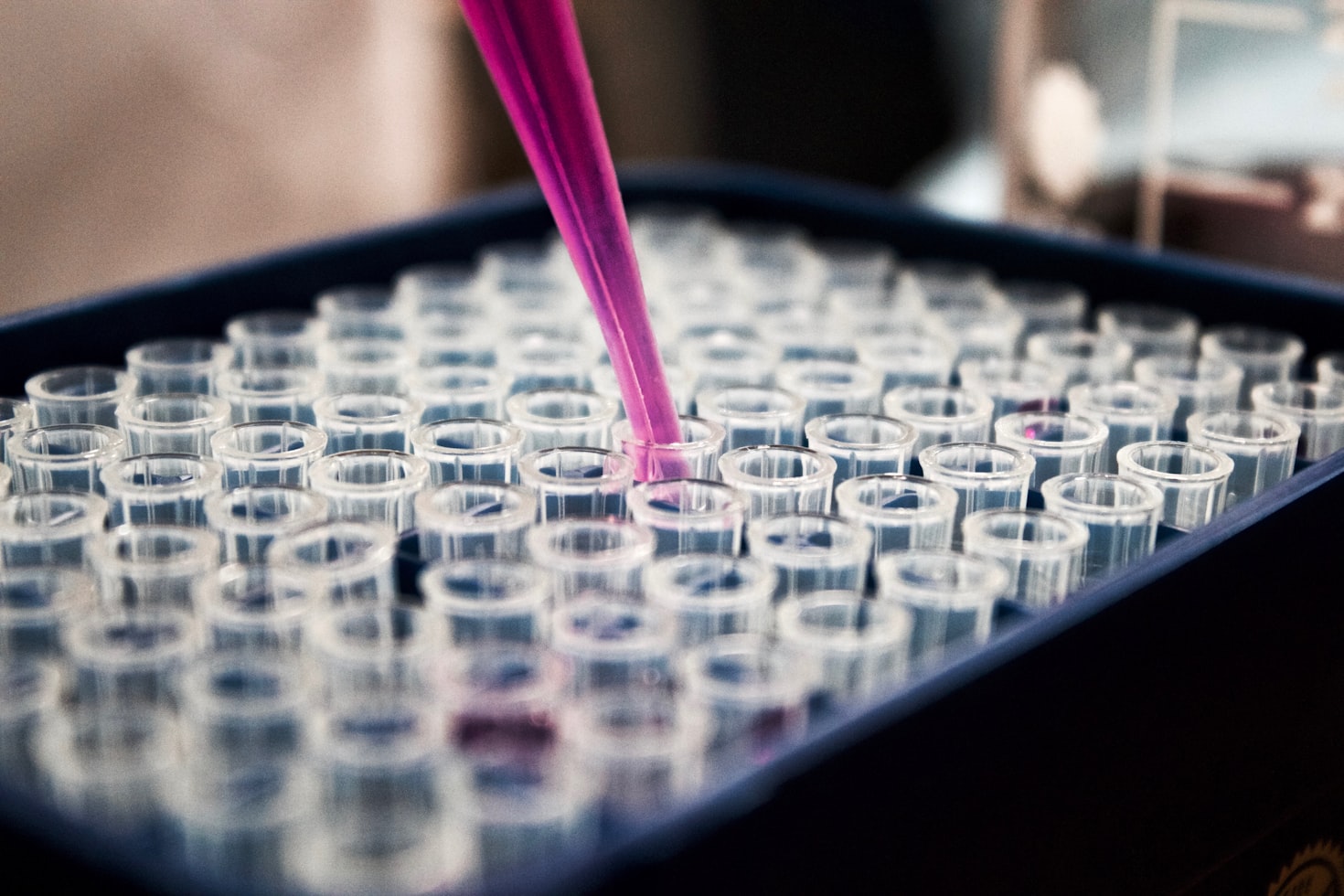
Modern NMR spectrometer used in materials research
Why is this a game-changer for TiO₂?
- Element-Specific: It can focus exclusively on the oxygen or titanium atoms at the active sites.
- Local Probe: It reveals the structure and bonding right around the atom, not just the average picture.
- Non-Destructive: It doesn't damage the sample, allowing scientists to study the real, working material.
Interactive NMR Spectrum
Explore how different oxygen environments in TiO₂ produce distinct NMR signals:
A Deep Dive: The Experiment That Mapped a Water-Splitting Site
One of the most critical questions in photocatalysis is: how does water first attach to and get split on the TiO₂ surface? A landmark ssNMR experiment provided a stunningly clear answer.
Objective
To identify the precise atomic structure of the first layer of water molecules bound to the active sites on the surface of TiO₂ nanoparticles.
Methodology: A Step-by-Step Sleuthing
The researchers used ¹⁷O ssNMR on TiO₂ samples where the oxygen atoms were "labeled" with the rare, NMR-visible isotope Oxygen-17.
Sample Preparation
TiO₂ nanoparticles were synthesized with water enriched in ¹⁷O. This ensures that all the oxygen atoms in the material and the water it later absorbs will be visible to the NMR "camera."
Controlled Environment
The sample was carefully treated under different conditions—dry, exposed to a little water vapor, and exposed to a lot—to track how the water interacts.
Data Acquisition
The sample was placed in a very powerful magnet (often several stories tall!). Pulses of radio waves were fired at it, and the sophisticated NMR spectrometer "listened" for the faint returning signals from the ¹⁷O nuclei.
Signal Decoding
The complex returning signals were processed and translated into a spectrum—a graph showing peaks at specific chemical shifts, each corresponding to a different type of oxygen environment.
Results and Analysis: The "Smoking Gun" Spectra
The results were striking. The ssNMR spectra revealed not one, but several distinct oxygen signals.
- A peak for the bulk TiO₂ lattice oxygen.
- A new peak appearing only when water was present, identified as terminal Ti-OH (a hydroxyl group bound to one titanium atom).
- Another new peak identified as bridging Ti-OH-Ti (a hydroxyl group bridging two titanium atoms).
| Oxygen Environment | Chemical Shift (ppm) | Interpretation |
|---|---|---|
| Bulk TiO₂ (Ti-O-Ti) | ~ 600 | Oxygen atoms deep within the crystal lattice. |
| Terminal Hydroxyl (Ti-OH) | ~ 30 | A water molecule has dissociated, attaching an -OH to a single surface titanium site. |
| Bridging Hydroxyl (Ti-OH-Ti) | ~ 0 | A dissociated water molecule bridges two titanium atoms, a key step in breaking apart. |
The presence of both terminal and bridging hydroxyl groups was the "smoking gun." It proved that water doesn't just stick to the surface as a whole molecule; it immediately dissociates (splits into -OH and -H) upon binding to specific titanium active sites. This precise mapping of the very first step of the reaction was a monumental achievement.
| NMR Observation | Implication for Photocatalysis |
|---|---|
| Detection of specific hydroxyl groups | Confirms the mechanism of water adsorption and dissociation. |
| Shift in peak position upon light exposure | Shows how the electronic structure of the active site changes when energized. |
| Different spectra for doped vs. pure TiO₂ | Reveals how dopant atoms create new, more efficient active sites. |
The Scientist's Toolkit: Cracking the Case with ssNMR
To conduct these atomic-scale detective stories, scientists rely on a specialized toolkit.
| Tool / Reagent | Function in the Experiment |
|---|---|
| High-Field NMR Magnet | Creates the powerful, stable magnetic field (e.g., 16-23 Tesla) needed to separate and amplify the tiny nuclear signals. |
| Magic-Angle Spinning (MAS) Probe | Spins the sample at a "magic" angle (54.74°) at thousands of times per second to average out interactions that blur the signals, creating sharp, readable peaks. |
| ¹⁷O-Enriched Water | The isotopic label. By incorporating this rare oxygen isotope into the catalyst and water molecules, it makes otherwise "NMR-invisible" oxygen atoms bright and detectable. |
| Cross-Polarization (CP) | A clever technique that transfers magnetization from abundant nuclei (like ¹H) to rare ones (like ¹⁷O), dramatically boosting the signal strength and reducing experiment time. |
| Computational Modeling (DFT) | Not a physical tool, but a crucial partner. Scientists use quantum calculations to predict the NMR fingerprint of a proposed structure, then match it to the experimental data to confirm its identity. |
Explore the NMR Toolkit
Creates the powerful, stable magnetic field (e.g., 16-23 Tesla) needed to separate and amplify the tiny nuclear signals. Modern NMR magnets use superconducting materials cooled with liquid helium to maintain their magnetic fields.
Conclusion: A Clearer Picture for a Brighter Future
Solid-state NMR has moved from a peripheral technique to a central pillar in the quest to understand TiO₂ photocatalysis. By serving as a direct atomic-scale probe, it has transformed our picture of active sites from a vague concept into a detailed, structural map. It has unequivocally shown how water molecules split, how dopants alter the electronic landscape, and where pollutants likely attach to be destroyed.
This fundamental knowledge is not just academic. It provides a blueprint for materials chemists to rationally design the next generation of photocatalysts—materials that are more efficient, work under visible sunlight, and are tailored for specific tasks like large-scale hydrogen production or targeted environmental cleanup. By listening to the faint whispers of atomic nuclei, ssNMR is helping to turn the dream of a sun-powered, clean future into a tangible reality.
The silent NMR revolution continues, with researchers now applying these techniques to even more complex catalytic systems, promising further breakthroughs in sustainable energy and environmental technologies.
Key Takeaways
- ssNMR reveals atomic-level details of TiO₂ active sites
- Water dissociates immediately on TiO₂ surfaces
- Different hydroxyl groups have distinct NMR signatures
- This knowledge enables rational catalyst design
- Applications in clean energy and environmental remediation
Potential Applications of Advanced TiO₂ Photocatalysts
*Percentage indicates current research and development progress