Correlating Surface Characterization with Electronic Transport Data: Techniques and Applications in Drug Development and Material Science
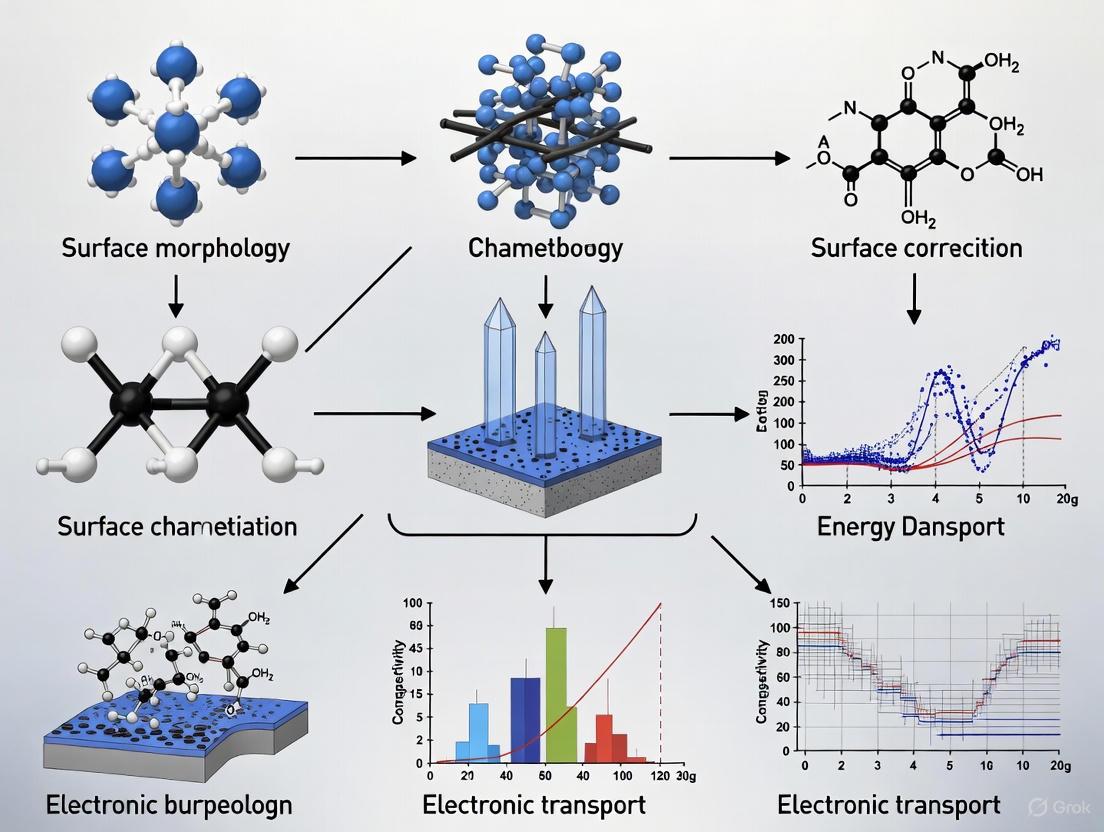
This article provides a comprehensive overview of the critical relationship between surface properties and electronic transport behavior in materials, with a special focus on applications in drug development and nanomedicine.
Correlating Surface Characterization with Electronic Transport Data: Techniques and Applications in Drug Development and Material Science
Abstract
This article provides a comprehensive overview of the critical relationship between surface properties and electronic transport behavior in materials, with a special focus on applications in drug development and nanomedicine. It explores foundational concepts by defining key surface and transport parameters and explaining their theoretical interconnection. The piece details cutting-edge characterization methodologies, including Surface Plasmon Resonance (SPR), Scanning Photoelectron Microscopy (SPEM), and computational tools like SeeBand and ElecTra for data analysis. It further addresses common challenges in data correlation and optimization strategies, supported by troubleshooting guidelines. Finally, the article presents validation frameworks through comparative case studies of nanomaterials and organic electronic devices, offering researchers and drug development professionals a validated roadmap for leveraging surface-transport correlations to enhance material performance and therapeutic efficacy.
The Essential Link: Understanding Surface Properties and Electronic Transport Fundamentals
The performance of materials in applications ranging from electrocatalysis to thermoelectrics is fundamentally governed by their surface characteristics. The composition, charge, and morphology of a material's surface layer dictate its interactions with the environment and directly influence electronic transport phenomena. For researchers in drug development and materials science, understanding these surface properties provides critical insights into material behavior and functionality. For instance, in electrocatalysis, the presence of platinum step edges dominates catalytic activity, as these undercoordinated sites exhibit distinct electronic structure and charge storage behavior compared to flat terraces [1]. Similarly, in thermoelectric materials, surface chemistry and morphology influence charge carrier scattering and energy conversion efficiency [2]. This guide provides a comparative analysis of characterization techniques for these three key surface characteristics, with experimental data and methodologies to help researchers select the optimal approaches for their specific research needs.
Comparative Analysis of Surface Characterization Techniques
Composition Analysis Techniques
Table 1: Comparison of Surface Composition Characterization Techniques
| Technique | Principle | Depth Resolution | Lateral Resolution | Key Applications | Limitations |
|---|---|---|---|---|---|
| X-ray Photoelectron Spectroscopy (XPS) | Measures kinetic energy of photoelectrons emitted from surface | 2-10 nm | 3-10 µm | Elemental composition, chemical state, empirical formula [3] [4] | Requires ultra-high vacuum; limited spatial resolution |
| Auger Electron Spectroscopy (AES) | Analyzes kinetic energy of Auger electrons from electron beam excitation | 2-10 nm | <10 nm | Elemental mapping, depth profiling, thin film analysis [4] | Can cause damage to sensitive materials; quantitative analysis challenging |
| Energy Dispersive X-ray Spectroscopy (EDS) | Detects characteristic X-rays emitted from electron-excited sample | 1-2 µm | ~1 µm | Rapid elemental analysis, mapping in SEM/TEM [5] | Limited to heavier elements; semi-quantitative without standards |
Surface Charge Characterization Techniques
Table 2: Comparison of Surface Charge Characterization Techniques
| Technique | Principle | Measured Parameters | Key Applications | Limitations |
|---|---|---|---|---|
| Triboelectric Charging Analysis | Measures charge transfer between contacting materials | Work function, charge density, charge dissipation rates [3] | Powder flowability, surface chemistry changes, formulation development | Highly sensitive to environmental conditions |
| Zeta Potential Measurement | Analyzes electrophoretic mobility of particles in dispersion | Surface charge, electrostatic potential at slipping plane [4] | Colloidal stability, protein adsorption, drug delivery system design | Requires liquid medium; interpretation complex for non-spherical particles |
| Kelvin Probe Force Microscopy (KPFM) | Measures contact potential difference between tip and sample | Surface potential, work function with nanoscale resolution [1] | Corrosion studies, semiconductor characterization, biomaterial interfaces | Limited to conductive samples; sensitive to environmental vibrations |
Surface Morphology Characterization Techniques
Table 3: Comparison of Surface Morphology Characterization Techniques
| Technique | Principle | Resolution | Key Applications | Limitations |
|---|---|---|---|---|
| Atomic Force Microscopy (AFM) | Measures forces between sharp tip and sample surface | Sub-nanometer vertical, ~1 nm lateral | Surface roughness, step edges, molecular arrangement [1] | Limited scan area; tip convolution effects |
| Scanning Electron Microscopy (SEM) | Focused electron beam scans sample surface | 1-20 nm | Particle morphology, surface topography, fracture analysis [5] | Requires conductive coating for non-conductive samples |
| Transmission Electron Microscopy (TEM) | High-energy electrons transmitted through thin sample | Atomic resolution (∼0.1 nm) | Nanostructure analysis, crystallography, defect analysis [5] [4] | Extensive sample preparation; very thin samples required |
Experimental Protocols for Integrated Surface Characterization
Protocol 1: Correlating Surface Chemistry with Electronic Transport
Objective: To investigate the relationship between surface chemistry and electronic transport properties in metallic powders under varying environmental conditions.
Materials and Reagents:
- Gas-atomized aluminum powders (AlSi10Mg and AlSi9Cu3)
- Environmental chamber with humidity control (20-60% RH)
- Triboelectric electrometer
- X-ray photoelectron spectrometer (XPS)
- Four-point probe resistivity measurement system
Methodology:
- Condition powder samples at specific relative humidity levels (as received, 20%, 40%, 60% RH) for 24 hours [3]
- Perform triboelectric charging measurements using a standardized methodology with controlled contact materials
- Analyze surface chemical composition via XPS with monochromatic Al Kα radiation (1486.6 eV)
- Deconvolute XPS peaks to identify chemical species (metallic, oxide, hydroxide components)
- Measure powder resistivity using four-point probe method under identical humidity conditions
- Correlate triboelectric charging behavior with surface hydroxide formation and resistivity changes
Expected Results: Higher specific surface area promotes moisture adsorption and surface hydroxylation, leading to increased charge dissipation (up to 51% reduction in charge density) and altered electronic transport properties [3].
Protocol 2: Nanoscale Surface Morphology and Charge Storage Analysis
Objective: To resolve site-specific structure, charge distribution, and electrostatics at nanostructured electrode-electrolyte interfaces.
Materials and Reagents:
- Platinum single crystals with controlled step densities
- Electrochemical cell with reference and counter electrodes
- Ab initio molecular dynamics (AIMD) simulation package
- Atomic force microscopy with electrochemical capability (EC-AFM)
- Potentiostat for controlled electrode potential application
Methodology:
- Prepare Pt surfaces with defined (111) terraces and (111)×(111) and (111)×(100) step edges [1]
- Perform ab initio molecular dynamics under controlled electrode potentials
- Analyze spatially resolved macroscopic potential profiles using Poisson equation solutions
- Calculate differential capacitance from potential-dependent chemisorption of water molecules
- Determine d-band center and projected density of states at terrace versus edge atoms
- Validate computational results with in situ electrochemical scanning tunneling microscopy
Expected Results: Step edges accumulate excess positive charge and exhibit locally elevated electrostatic potential compared to terraces, creating greater barriers for electron accumulation and enhancing catalytic activity [1].
Workflow: Integrated Surface Characterization
The Scientist's Toolkit: Essential Research Reagents and Materials
Table 4: Essential Research Reagents and Materials for Surface Characterization
| Category | Specific Items | Function/Application | Key Considerations |
|---|---|---|---|
| Reference Materials | AlSi10Mg, AlSi9Cu3 powders [3] | Benchmarking triboelectric response | Controlled particle size distribution essential |
| Electrode Materials | Platinum single crystals with (111) terraces [1] | Model electrocatalyst systems | Step edge density must be quantified |
| Characterization Substrates | Highly Ordered Pyrolytic Graphite (HOPG) | AFM calibration and sample support | Atomically flat terraces for resolution testing |
| Environmental Control | Humidity control chambers (20-60% RH) [3] | Simulating processing/storage conditions | Precise RH control critical for reproducibility |
| Software Tools | SeeBand analysis package [2] | Electronic transport data fitting | Neural-network assisted for high-throughput processing |
| Simulation Packages | Ab initio molecular dynamics (AIMD) codes [1] | Modeling electrified interfaces | Electrode potential control capability essential |
Case Studies: Surface Characterization in Electronic Transport Research
Case Study 1: Checkerboard Lattice Electronic Structure
Background: The search for topological flat bands in quantum materials requires precise characterization of both surface structure and electronic properties.
Methods: Single crystals of Zr₂CuSb₃ were synthesized using solution growth method and characterized via X-ray diffraction. Electronic structure was measured using angle-resolved photoemission spectroscopy (ARPES) with photons from 60-150 eV. Electrical transport properties were measured using four-probe method in a Physical Properties Measurement System (PPMS) [6].
Key Findings: The material exhibited metallic behavior with electron-dominated carriers. ARPES revealed multiple electron pockets and significant kz broadening due to large c-axis and low dispersion features. Density functional theory calculations helped disentangle contributions from different high-symmetry planes, providing comprehensive electronic behavior characterization [6].
Implications: This multi-technique approach demonstrates how surface-sensitive measurements (ARPES) combined with bulk transport measurements and computational modeling provide complete picture of electronic behavior in quantum materials.
Case Study 2: Correlating Surface Chemistry with Charge Storage
Background: Understanding how surface morphology controls charge storage at electrified interfaces is crucial for fuel cell and electrolyzer development.
Methods: Researchers developed large-scale atomistic models of Pt-electrolyte interfaces incorporating (111)×(111) and (111)×(100) step edges. Ab initio molecular dynamics under controlled electrode potentials enabled potential-dependent analysis of water adsorption and charge redistribution [1].
Key Findings: Differential capacitance near the potential of zero charge arises primarily from potential-dependent chemisorption of water on flat terraces. Step edges are saturated with chemisorbed water even below potential of zero charge and accumulate excess positive charge with locally elevated electrostatic potential [1].
Implications: The electrostatic asymmetry creates greater barriers for electron accumulation at step sites, explaining their enhanced catalytic activity and providing design principles for nanostructured electrocatalysts.
Advanced Data Analysis: Linking Surface and Electronic Properties
The SeeBand tool exemplifies the powerful integration of surface and electronic characterization data. This software package uses Boltzmann transport formalism to extract microscopic electronic band structure parameters from macroscopic transport measurements [2]. By simultaneously fitting temperature-dependent Seebeck coefficient, resistivity, and Hall coefficient data, researchers can derive fundamental parameters including reduced chemical potential, scattering prefactor, and effective mass. The neural-network-assisted least-squares fitting algorithm enables high-throughput processing of large datasets, facilitating the discovery of correlations between surface characteristics and electronic transport behavior.
The comparative analysis presented in this guide demonstrates that strategic selection of surface characterization techniques must align with specific research goals and material systems. For composition analysis, XPS provides unparalleled chemical state information but requires complementary techniques like EDS for elemental mapping. Surface charge characterization benefits from combining triboelectric methods for powder systems with zeta potential for dispersions and KPFM for nanoscale mapping. Morphology analysis requires correlative approaches pairing high-resolution techniques like TEM with statistically representative methods like SEM.
The most powerful insights emerge from integrated approaches that combine multiple characterization methods with electronic transport measurements and computational modeling. As demonstrated in the case studies, this multi-faceted strategy enables researchers to establish quantitative structure-property relationships essential for rational materials design in applications ranging from drug development to energy conversion technologies.
Understanding the core electronic transport parameters—conductivity, Seebeck coefficient, and charge carrier mobility—is fundamental to advancing modern electronics and energy technologies. These parameters collectively determine the performance of materials in applications ranging from microprocessors and sensors to thermoelectric generators. A significant research focus lies in correlating these macroscopic transport properties with microscopic surface and structural characteristics. Advanced characterization techniques, combined with theoretical modeling, are revealing how nanoscale domain interactions, interfacial defects, and structural anisotropy dictate overall electronic behavior. This guide provides a comparative analysis of these parameters across material classes, details key experimental protocols for their measurement, and visualizes the fundamental relationships connecting surface characterization with electronic transport data.
Comparative Analysis of Electronic Transport Parameters
The electronic transport properties of materials are highly dependent on their composition, structure, and dimensionality. The following section provides a quantitative comparison and discussion of these properties across several key material classes.
Table 1: Electronic Transport Parameters for Selected Materials
| Material Class | Material | Conductivity (σ) | Seebeck Coefficient (S) | Mobility (μ) | Key Observation/Context |
|---|---|---|---|---|---|
| Organic Thermoelectrics | Doped Conjugated Polymers (e.g., P3HT, PBTTT) | Varies with doping (10-1 – 104 S/m) | Soft upper limit of ~200 μV/K at max power factor [7] | Low, disorder-limited | Universal S-σ relation up to maximum power factor; performance dictated by renormalized Gaussian DOS [7] |
| 2D Semiconductors | Monolayer SnNCl | Anisotropic (Higher along crystal axis a) | N/A | 635.73 cm² V⁻¹ s⁻¹ (electron, direction a) [8] | Pronounced electronic anisotropy; high on/off ratio (~110) in a-direction [8] |
| 2D Electrodes | Graphene | Very High (>106 S/m) | N/A | >200,000 cm² V⁻¹ s⁻¹ (theoretical) [8] | Mobility is highly sensitive to surface defects; D'-band FWHM in Raman spectra is a key indicator [9] |
| Layered Quantum Materials | 1T-TaS2 | Varies dramatically with phase (Insulating C to Metallic NC) | Shows kinks at phase transitions [10] | N/A | Transport properties mediated by 3D charge density wave (CDW) domain stacking and correlations [10] |
| Warm Dense Matter | Aluminum (at 500 eV) | Calculated via first-principles mDFT [11] | N/A | N/A | Traditional transport models (e.g., Spitzer) show significant deviation from first-principles results in this regime [11] |
Key Trends and Material-Specific Insights
Organic Thermoelectrics: In doped conjugated polymers, a fundamental trade-off exists between the Seebeck coefficient (S) and electrical conductivity (σ). Research has identified a universal framework where the S–σ relationship follows a power law up to the maximum power factor (PFmax), with a soft upper limit for S of approximately 200 μV/K at PFmax. This behavior is driven by charge transport in a "renormalized Gaussian density of states," where interactions with ionized dopants modify the energy landscape seen by charge carriers [7].
Two-Dimensional and Layered Materials:
- SnNCl: This 2D material exhibits extreme electronic anisotropy. Its electron mobility is significantly higher along the crystallographic a-direction (635.73 cm² V⁻¹ s⁻¹) compared to the b-direction. This intrinsic anisotropy translates directly to device performance, with a simulated on/off current ratio of ~110 in the a-direction versus only ~5 in the b-direction under bias [8].
- Graphene: The exceptional mobility of graphene is highly susceptible to surface defects. A machine learning framework has demonstrated that the full width at half maximum (FWHM) of the D' band in Raman spectroscopy is the most critical feature correlating with decreased field-effect mobility, enabling non-invasive spatial mapping of device performance [9].
- 1T-TaS2: This material serves as a paradigm for the role of electronic domains. Its transport properties, including the Seebeck coefficient and resistivity, are directly mediated by the three-dimensional evolution and stacking of charge density wave (CDW) domains. Phase transitions are marked by anomalies in CDW correlation lengths and stacking faults, linking nanoscale structure to macroscopic electronic behavior [10].
Experimental Protocols for Measurement and Correlation
Accurately measuring transport parameters and linking them to material structure requires precise methodologies.
Measuring Electronic Transport Properties
Seebeck Coefficient and Electrical Conductivity: For thin-film organic semiconductors, samples are typically spin-coated onto substrates with pre-patterned electrodes. The Seebeck coefficient (S) is measured by applying a controlled temperature gradient (ΔT) across the film and measuring the resulting thermovoltage (ΔV), such that S = -ΔV / ΔT. Simultaneously, the electrical conductivity (σ) is determined via a separate two- or four-probe measurement of electrical resistance on the same sample. These measurements are performed as a function of doping level, which is controlled by immersion in dopant solutions (e.g., FeCl3 in acetonitrile) of varying concentrations [7].
Charge Carrier Mobility using SCLC: The mobility of charge carriers (electrons or holes) can be characterized using the space-charge-limited current (SCLC) method. Electron-only or hole-only devices are fabricated with appropriate charge-injecting contacts. The current-density versus voltage (J-V) characteristics are measured, and the mobility is extracted by fitting the data in the SCLC region to the Mott-Gurney law: J = (9/8)εrε0μ(V2/d3), where εr is the relative permittivity, ε0 is the vacuum permittivity, μ is the mobility, V is the applied voltage, and d is the film thickness [12].
Correlating Surface/Structure with Transport Data
Raman-ML Correlation for Graphene: A robust protocol for correlating surface defects with mobility involves acquiring Raman spectral maps across the surface of a graphene field-effect transistor (GFET). Key parameters (intensity, position, FWHM) of the D, G, D', and 2D bands are extracted. These features are used to train a neural network regression model to predict field-effect mobility and the charge-neutral Dirac point. Feature importance analysis then identifies which spectral characteristics (e.g., D'-band FWHM) are most strongly correlated with device performance [9].
X-ray Diffraction (XRD) for Domain Analysis: To probe how 3D electronic domains affect transport in bulk materials like 1T-TaS2, temperature-dependent X-ray diffraction (XRD) and reciprocal space mapping (RSM) are employed. This technique measures the positions, intensities, and shapes of CDW superlattice peaks. The peak width is inversely related to the CDW domain correlation length in real space, allowing researchers to track the evolution of domain sizes and stacking order across phase transitions and directly link these structural changes to anomalies in resistivity and Seebeck coefficient [10].
The following diagram illustrates the logical workflow for correlating surface and structural characterization with electronic transport data, integrating the key experimental protocols discussed above.
The Scientist's Toolkit: Essential Research Reagents and Materials
This section details key materials and computational methods essential for research in electronic transport and its correlation with material structure.
Table 2: Essential Research Reagents and Materials
| Item | Function/Description | Example Use Case |
|---|---|---|
| Conjugated Polymers | Semiconducting organic materials (e.g., P3HT, PBTTT) that can be doped to tune conductivity. | Primary active material in organic thermoelectric generators and solar cells [7] [12]. |
| Molecular Dopants | Small molecules (e.g., FeCl3) that donate or accept electrons to increase charge carrier concentration. | Used in solution or vapor phase to precisely control the doping level of organic semiconductors [7]. |
| Polymeric Acceptors (PAs) | Polymer-based electron-accepting materials used in bulk-heterojunction films. | Form robust, well-connected electron transport networks in organic solar cells, enhancing stability [12]. |
| Monolayer SnNCl | A 2D semiconductor from the FeOCl family with high anisotropic electron mobility. | Candidate for high-performance, flexible nanoelectronic devices and transistors [8]. |
| GFETs (Graphene FETs) | Transistors using graphene as the channel material, ideal for studying defect-property relationships. | Model system for correlating Raman spectral features (e.g., D' band) with field-effect mobility [9]. |
| First-Principles Codes (DFT, mDFT) | Computational software for ab initio calculation of electronic structure and transport properties. | Predicting carrier mobility in 2D materials and conductivities in extreme conditions (e.g., warm dense matter) [8] [11]. |
| Kinetic Monte Carlo (kMC) | A computational simulation technique for modeling charge transport in disordered systems over long timescales. | Modeling the trade-off between Seebeck coefficient and conductivity in doped organic semiconductors [7]. |
The systematic comparison of conductivity, Seebeck coefficient, and mobility reveals distinct transport paradigms across material classes. Universal scaling laws and practical upper limits govern organic thermoelectrics, while pronounced anisotropy and strong domain-wall interactions define the electronic landscape of layered and 2D materials. The progression of research in this field is increasingly reliant on the tight integration of advanced experimental characterization—such as Raman mapping and temperature-dependent XRD—with multi-scale theoretical modeling, from first-principles calculations to kinetic Monte Carlo simulations. This synergistic approach, which directly correlates surface and structural descriptors with macroscopic electronic outputs, provides a powerful toolkit for uncovering fundamental transport mechanisms and guides the rational design of next-generation electronic and energy conversion materials.
Surface states are electronic states found exclusively at the material surface, forming due to the sharp transition from the periodic potential of the bulk crystal to the vacuum level [13]. These states arise from the termination of the crystal lattice, which creates a weakened potential at the surface, allowing new electronic states to form that differ significantly from bulk states [13]. The existence of surface states creates a critical interface between the material and its environment, governing fundamental electronic interactions and charge carrier movement in nanoscale materials.
Surface states can be broadly categorized into Shockley states and Tamm states. Shockley states arise from solutions to the Schrödinger equation within the nearly free electron approximation for clean surfaces, while Tamm states are calculated using tight-binding models and often resemble localized atomic orbitals at the surface [13]. A particularly significant class are topological surface states, which occur at interfaces between materials with different topological invariants and display unique properties like linear Dirac-like dispersion and protection from backscattering due to time reversal symmetry [13]. In topological insulators (TIs), these surface states demonstrate remarkable resilience against disorder and play a dominant role in charge transport, especially when bulk states are suppressed [14].
Table: Fundamental Types of Surface States in Materials
| Surface State Type | Formation Mechanism | Key Characteristics | Material Systems |
|---|---|---|---|
| Shockley States | Crystal termination in nearly-free electron approximation | Exponentially decaying Bloch waves into bulk | Normal metals, narrow-gap semiconductors |
| Tamm States | Tight-binding model with localized orbitals | Resemble atomic/molecular orbitals at surface | Transition metals, wide-gap semiconductors |
| Topological Surface States | Band inversion with strong spin-orbital coupling | Linear Dirac dispersion, time-reversal symmetry protection | Bi₂Se₃ family, Sn-BSTS crystals |
| Metallic Surface States | Quantum size effect in ultrathin films | Metallic conductivity despite bulk semiconductor behavior | Bismuth films <100 nm thickness |
Comparative Analysis of Surface-State-Dominated Material Systems
Topological Insulators (Tetradymites)
In tetradymite topological insulators like Sn-doped Bi₁.₁Sb₀.₉Te₂S (Sn-BSTS), surface states demonstrate exceptional properties when bulk conductivity is suppressed. Research reveals record-high carrier mobility exceeding 20,000 cm²/Vs at low temperatures (<50 K) in samples where bulk states are eliminated from the Fermi level [14]. The characteristic fingerprint of these high-mobility surface carriers includes a steep low-field magnetoresistance and strong Hall effect nonlinearity below 1 Tesla [14]. A key discovery is that mobility in these systems is magnetic-field-dependent, decreasing with increasing field strength, necessitating revised models to explain transport phenomena [14].
The unique protection mechanism in topological insulators—spin-momentum locking—theoretically prevents backscattering, enabling high mobility. However, practical mobilities are limited by scattering mechanisms including small-angle phonon scattering and static interface disorder [14]. When bulk states coexist with surface states at the Fermi level, additional scattering between bulk and surface states further reduces mobility, highlighting the dual role of bulk states in both screening disorder potential and enabling detrimental scattering pathways [14].
Bismuth Thin Films
In bismuth thin films, surface states manifest dramatically as metallic conduction in films thinner than 100 nm, despite bismuth's bulk semimetallic character [15]. This thickness-dependent transition occurs due to the increasing dominance of metallic surface states over bulk transport as dimension decreases. Angle-resolved photoemission spectroscopy (ARPES) measurements have directly confirmed these metallic surface states in bismuth films [15].
Bismuth's transport properties are highly sensitive to in-plane deformations due to its small indirect energy overlap between valence and conduction bands (~40 meV) and small direct band gap at the L-point of the Brillouin zone (~15 meV) [15]. Experimental studies show that compression increases charge carrier concentration while tension decreases it, though interestingly, metallic surface states remain relatively weakly affected by mechanical deformations compared to bulk states [15]. This differential response enables researchers to disentangle surface and bulk contributions to conductivity.
Quantum Dot Solids
In quantum dot (QD) solids, charge transport occurs primarily through hopping mechanisms between neighboring QDs, fundamentally governed by surface chemistry and ligand interactions [16] [17]. Research reveals that charge hopping involves deformation of the QD surface, specifically the chemical bonds between surface metal atoms (e.g., lead in PbS QDs) and surfactant molecules [16]. This creates a direct link between surface vibrations and charge transport efficiency.
A critical finding is that doped QDs intended to improve charge transport can be converted into carrier traps through unintentional oxidation or reduction, particularly problematic for smaller-sized QDs [16]. This trapping phenomenon significantly reduces charge-carrier mobilities. Optimal transport requires careful selection of doped QDs with smaller sizes and wider bandgaps compared to intrinsic QDs in the matrix to provide smoother transport paths and avoid trap formation [16].
Table: Comparative Performance of Surface-State-Dominated Transport Systems
| Material System | Dominant Transport Mechanism | Reported Mobility/Signature | Key Influencing Factors | Temperature Dependence |
|---|---|---|---|---|
| Tetradymite TIs (Sn-BSTS) | Dirac surface state conduction | >20,000 cm²/Vs (below 50 K) | Bulk state suppression, magnetic field | Surface-dominated below 100 K |
| Bismuth Thin Films | Mixed bulk/surface conduction | Metallic surface states (<100 nm) | Film thickness, mechanical deformation | Metallic transition below 100 nm |
| Quantum Dot Solids | Hopping transport | Strongly ligand-dependent | Surface chemistry, doping, QD size | Variable based on ligand structure |
Experimental Methodologies for Characterizing Surface-State Transport
Magnetotransport Measurements
Magnetotransport characterization provides crucial insights into surface state behavior through measurements of resistivity and Hall effect under magnetic fields. The standard protocol involves:
Sample Preparation: For topological insulators, bulk crystals or exfoliated flakes are fabricated into Hall bar mesas using electron-beam lithography and ion beam etching to enable precise measurement of conductivity tensor components [14]. Contacts are typically created using e-beam evaporated Ti/Al with lift-off techniques [14].
Measurement Protocol: Magnetic field sweeps from positive to negative values (typically ±1 T to ±9 T) at controlled rates (e.g., 0.1 T/min) while measuring longitudinal resistivity (ρₓₓ) and Hall resistivity (ρₓᵧ) [14]. Data is symmetrized (for magnetoresistance) and antisymmetrized (for Hall effect) to compensate for contact misalignment.
Two-Liquid Model Analysis: Experimental data is analyzed using parallel conductive channel models summing Drude conductivity tensors:
ρ̂⁻¹ = σ̂ = Σ [nᵢeμᵢ/(1+(μᵢB)²)] · [(1, -μᵢB), (μᵢB, 1)]
where nᵢ is carrier density, μᵢ is mobility, and B is magnetic field [14]. This model helps disentangle multiple carrier contributions.
Temperature-Dependent Transport Analysis
The SeeBand computational framework represents an advanced approach for extracting microscopic parameters from temperature-dependent transport data using Boltzmann transport theory [2]. This method enables:
Simultaneous Fitting of Seebeck coefficient, electrical resistivity, and Hall coefficient temperature dependencies within a unified theoretical framework based on Boltzmann transport formalism and parabolic band approximation [2].
Neural-Network-Assisted Optimization that rapidly processes large datasets by leveraging efficient Fermi integral computations (up to 10⁶ evaluations per second) to determine fundamental parameters including reduced chemical potential (η), scattering prefactor (τ̃), and effective mass (m) [2].
High-Throughput Capability demonstrated through analysis of ~1000 datasets of half-Heusler compounds, enabling statistical understanding of parameter distributions across material systems [2].
Deformation Engineering Approaches
Strain-dependent transport measurements enable probing of surface state sensitivity to mechanical deformation using methodology applied to bismuth films:
Substrate Selection: Utilizing substrates with different thermal expansion coefficients (silicon with oxidized surface, mica, CaF₂) to create predetermined tensile or compressive deformations in deposited films due to CTE mismatch [15].
Structural Validation: X-ray diffraction (XRD) measurements confirm deformation presence and sign through shift analysis of diffraction reflexes [15].
Hysteresis Testing: Temperature cycling (77-300 K) without hysteresis confirms absence of mechanical stress relaxation or additional defect formation during measurements [15].
Two-Band Modeling: Experimental data interpretation within two-band model framework to extract carrier mobilities and concentrations for both surface and bulk contributions [15].
The Researcher's Toolkit: Essential Materials and Reagents
Table: Essential Research Reagents and Materials for Surface State Transport Studies
| Reagent/Material | Function/Application | Specific Examples | Key Considerations |
|---|---|---|---|
| Sn-BSTS Crystals | Model TI with suppressed bulk conduction | Sn₀.₀₂Bi₁.₀₈Sb₀.₉Te₂S | Fermi level within bulk gap (<100 K) [14] |
| Bismuth Targets | Thin film deposition for surface state studies | High-purity (99.999%) Bi | Trigonal axis orientation perpendicular to substrate [15] |
| QD Synthesis Precursors | Fabrication of quantum dot solids | Lead oleate, sulfur precursors | Surface ligand chemistry control [16] |
| Substrate Materials | Strain engineering in thin films | Oxidized silicon, mica, CaF₂ | Different CTEs for controlled deformation [15] |
| Ligand Exchange Solutions | QD surface passivation | Shorter-chain thiols, halides | Replacement of oleic acid for enhanced transport [16] |
The investigation of surface states as governors of charge carrier movement reveals fundamental insights across diverse material systems. In topological insulators, achieving maximum surface state mobility requires complete suppression of bulk states at the Fermi level, enabling mobilities exceeding 20,000 cm²/Vs [14]. In bismuth thin films, metallic surface states dominate at nanoscale thicknesses (<100 nm), exhibiting distinct responses to mechanical deformation compared to bulk channels [15]. In quantum dot solids, surface chemistry and ligand interactions fundamentally determine hopping transport efficiency, with strategic doping and surface engineering required to minimize carrier trapping [16].
These common themes highlight surface states as both a challenge and opportunity for advanced electronic materials development. The experimental methodologies reviewed—particularly advanced magnetotransport analysis coupled with computational approaches like SeeBand [2]—provide researchers with powerful tools to disentangle complex surface and bulk contributions. As material synthesis advances enable increasingly precise surface control, the fundamental understanding of surface-state-governed transport will continue to drive innovations in quantum computing, energy harvesting, and next-generation electronic devices.
The Critical Role of Surface-to-Bulk Ratio in Nanostructured Materials
In nanostructured materials, the surface-to-bulk ratio represents a fundamental scaling parameter that dictates a remarkable shift in physical, chemical, and electronic properties. As material dimensions decrease to the nanoscale (typically 1-100 nanometers), the proportion of atoms located at the surface increases dramatically relative to those in the bulk interior. This geometric relationship transitions from a minor consideration in bulk materials to a dominant factor governing nanomaterial behavior. The surface-to-bulk ratio is quantified as the surface area divided by the volume, scaling inversely with size—as dimensions shrink, this ratio increases exponentially [18]. This review examines how this critical ratio influences material performance across applications, with particular emphasis on correlating surface characterization with electronic transport data, a crucial intersection for developing advanced materials for energy, electronics, and biomedical applications.
This geometric relationship has profound implications, transforming nanomaterials from mere miniature versions of bulk materials into substances with fundamentally distinct properties. When a material is fragmented into nanometer-scale pieces, its composition remains unchanged, but the surface area increases dramatically. For example, breaking down a 1 m³ cube into 1 nm³ fragments increases the total surface area by a factor of one billion [18]. This massive surface expansion creates a materials paradigm where surface phenomena dominate over bulk properties, leading to unprecedented control over material functionality.
Fundamental Principles and Quantitative Relationships
The Mathematical Foundation of Surface-to-Bulk Ratio
The surface-to-bulk ratio follows precise mathematical relationships based on geometry. For a spherical nanoparticle with radius r, the surface area (A) equals 4πr², while the volume (V) equals (4/3)πr³. The surface-to-bulk ratio (A/V) therefore simplifies to 3/r, demonstrating an inverse relationship with size [19]. This inverse proportionality means that as the radius decreases, the ratio increases dramatically. Similar relationships hold for other geometries, though with different constants, maintaining the same inverse relationship with characteristic dimension.
This mathematical foundation explains why nanoscale materials behave so differently from their bulk counterparts. In bulk materials, the surface constitutes a negligible fraction of the total mass, and bulk cohesive forces dominate material behavior. At the nanoscale, however, the increasing surface-to-bulk ratio means surface energies and unsaturated bonds become dominant factors. This transition represents what some theorists describe as a "dialectical inversion" where surface decohesion overtakes bulk cohesion as the primary determinant of material behavior [20].
Experimental Visualization of Surface-to-Bulk Effects
Table 1: Quantitative Demonstration of Size-Dependent Surface-to-Bulk Ratio
| Cube Size | Number of Cubes | Total Volume (cm³) | Total Surface Area (cm²) | Surface-to-Bulk Ratio (cm⁻¹) |
|---|---|---|---|---|
| 3 cm side | 1 | 27 | 54 | 2 |
| 1 cm side | 27 | 27 | 162 | 6 |
| 1 nm side | 10²⁷ | 1 m³ | 6×10⁹ m² | 6×10⁹ |
Simple educational experiments using cubes effectively demonstrate this concept. When a large cube (3cm side) is disassembled into 27 smaller cubes (1cm side), the total volume remains constant (27cm³), but the total surface area increases from 54cm² to 162cm², tripling the surface-to-bulk ratio [18]. This visually illustrates the fundamental principle that reducing particle size increases the surface area available for interactions, with profound implications for reactivity, dissolution kinetics, and catalytic activity.
These geometric relationships have measurable consequences in material behavior. Experiments with rock sugar demonstrate that smaller crystals with higher surface-to-bulk ratios dissolve more rapidly in water due to greater surface exposure to solvent molecules [18]. Similar principles apply to melting points, catalytic activity, and electrical transport phenomena, making surface-to-bulk ratio a critical design parameter for nanostructured materials.
Surface-to-Bulk Ratio in Electronic Transport Phenomena
Correlated Insulators and Metallic Surface States
In strongly correlated electron systems, the surface-to-bulk ratio creates intriguing electronic transport phenomena that diverge from bulk behavior. Research on the strongly correlated insulator FeSb₂ has revealed that at temperatures below approximately 5K, electrical transport undergoes a significant transition from bulk-dominated to surface-dominated conduction [21]. This transition manifests as a low-temperature resistance plateau, contrasting with the expected logarithmic increase in resistivity typical of Kondo insulators at low temperatures.
This crossover from bulk to surface dominance produces distinctive signatures in electrical transport measurements. Local and nonlocal transport measurements in FeSb₂ show a divergence that delineates between bulk and surface conduction pathways [21]. The emergence of metallic surface states occurs alongside a dramatic reduction in the Hall coefficient (R_H), suggesting a shift in charge carrier dynamics as surface states begin to dominate electronic transport. Similar phenomena have been observed in topological Kondo insulator candidates like SmB₆, indicating this may be a general characteristic of correlated insulators with high surface-to-bulk ratios.
Angular-Dependent Magnetoresistance Studies
Angular-dependent magnetoresistance (ADMR) measurements provide further evidence of surface state formation in correlated insulators. In FeSb₂ samples with large surface-to-bulk ratios, ADMR profiles evolve significantly as temperatures decrease into the surface-dominated regime (T ≤ 3K) [21]. While at higher temperatures (T ≥ 15K) the magnetoresistance exhibits almost isotropic rotational symmetry characteristic of simple bulk conduction, at lower temperatures within the resistance plateau region, the rotational magnetoconductance profiles develop pronounced anisotropy.
These angular rotation studies of magnetotransport show signatures of the transition from bulk- to surface-dominated conduction over the same temperature interval where local/nonlocal transport divergence occurs [21]. The similar evolution observed in both FeSb₂ and SmB₆ suggests common microscopic mechanisms related to surface state formation. For materials with sufficiently high surface-to-bulk ratios, these metallic surface states can completely dominate low-temperature electronic transport, overriding the characteristic insulating behavior of the bulk material.
Table 2: Electronic Transport Signatures of Surface vs. Bulk Dominance in Correlated Insulators
| Transport Characteristic | Bulk-Dominated Conduction | Surface-Dominated Conduction |
|---|---|---|
| Temperature dependence | Logaritmic increase as T→0 | Low-temperature plateau |
| Hall coefficient (R_H) | Steep peak at low temperatures | Dramatic reduction |
| Magnetoresistance symmetry | Isotropic rotational symmetry | Pronounced anisotropy |
| Band structure | Doubly gapped Arrhenius activation | Metallic surface state formation |
| Typical occurrence | Macroscopic crystals, high temperatures | Nanostructures, T ⪅ 5K |
Experimental Protocols for Surface and Transport Characterization
Synthesis and Structural Characterization Methods
The investigation of surface-to-bulk effects requires precise nanomaterial synthesis coupled with comprehensive characterization. Common synthesis approaches include chemical vapor deposition (CVD) for high-quality nanomaterial deposition, sol-gel methods for nanoparticle formation through solution-gel transitions, and ball milling as a mechanical approach for achieving nanoscale particles through grinding [19]. For electronic transport studies, materials like FeSb₂ are typically grown by chemical vapor transport (CVT) from high-purity starting elements (99.995% Fe and 99.999% Sb) to ensure crystalline quality and minimal impurity effects [21].
Structural characterization employs multiple complementary techniques. Field Emission Scanning Electron Microscopy (FESEM) provides topographical information about nanostructures, while Transmission Electron Microscopy (TEM) reveals internal structural details. X-ray diffraction (XRD) analyzes crystalline structure, and composition analysis techniques including X-ray Photoelectron Spectroscopy (XPS), Energy Dispersive X-ray Spectroscopy (EDS), and Auger Electron Spectroscopy (AES) provide elemental and chemical state information [22]. These combined approaches establish the relationship between synthesis conditions, nanoscale structure, and resulting surface-to-bulk ratios.
Electronic Transport Measurement Protocols
Electrical transport measurements for surface-to-bulk ratio studies require specialized configurations that can distinguish between bulk and surface contributions. Standard approaches include:
Local and Nonlocal Transport Measurements: Samples are typically contacted with 25μm diameter gold wires using silver paint thinned with 2-butoxyethyl acetate to obtain suitable consistency with low contact resistance. Some connections may be spot-welded for improved stability. Combined lead and contact resistances should measure approximately 1Ω at room temperature [21]. Four-point measurements eliminate lead resistance contributions for accurate resistivity determination.
Temperature-Dependent Transport: Measurements are performed over a temperature range of 1.7-300K using a Physical Properties Measurement System (PPMS). Cooling through the characteristic transition temperature (typically 4-5K for materials like FeSb₂) reveals the crossover from bulk to surface-dominated conduction manifested as a resistance plateau [21].
Angular-Dependent Magnetoresistance (ADMR): Samples with large surface-to-bulk ratios are selected for ADMR studies in applied magnetic fields up to 14T. The field is rotated through various angles with θ=0° corresponding to field applied normal to the two largest parallel faces. This configuration maximizes sensitivity to surface state contributions [21].
Hall Effect Measurements: Temperature-dependent Hall coefficient measurements complement resistivity data, showing characteristic reductions coinciding with the emergence of surface-dominated transport.
Research Reagent Solutions and Essential Materials
Table 3: Essential Research Materials for Surface and Transport Studies
| Material/Reagent | Function/Application | Specification Requirements |
|---|---|---|
| FeSb₂ crystals | Model correlated insulator for surface state studies | CVT-grown from 99.995% Fe, 99.999% Sb |
| Gold wire | Electrical contacts for transport measurements | 25μm diameter, high-purity (≥99.99%) |
| Silver paint | Electrical connection formation | DuPont 4929N, thinned with 2-butoxyethyl acetate |
| Rock sugar crystals | Dissolution kinetics demonstration | Millimeter-sized crystals for visual experiments |
| Metal precursors | Oxide spinel synthesis | Transition metal salts (Mn, Co, Ni, Fe) |
| Carbon molecular sieves | Pore structure studies | Anthracite-derived with controlled porosity |
Implications for Biomedical Applications and Drug Delivery
The high surface-to-bulk ratio of nanomaterials has profound implications for biomedical applications, particularly in drug delivery and diagnostic imaging. The large surface area of nanoparticles allows for the attachment of drugs, targeting ligands, and imaging agents, which enhances treatment effectiveness while reducing side effects [19]. Nanoparticles can be engineered to deliver drugs to specific tissues or cells, improving bioavailability and therapeutic efficacy. Furthermore, the high surface area enables controlled drug release over extended periods, optimizing treatment protocols.
In diagnostic imaging, nanoparticles serve as contrast agents in techniques including magnetic resonance imaging (MRI), computed tomography (CT), and optical imaging [19]. The ability to modify surface properties allows for better targeting of specific tissues or disease markers, improving diagnostic precision. However, the high surface reactivity that enables these applications also presents challenges for biomedical use, including potential toxicity and complex nano-bio interfacial characteristics that must be thoroughly characterized before clinical application [22].
Advanced characterization techniques are essential for understanding these complex nano-bio interactions. Dynamic Light Scattering (DLS) determines nanoparticle size distribution in physiological solutions, while Scanning Probe Microscopy (SPM) and Near-field Scanning Optical Microscopy (NSOM) provide high-resolution topological and optical information [22]. Confocal microscopy enables visualization of nanoparticle interactions with cellular structures, critical for understanding biological activity and potential toxicity.
The critical role of surface-to-bulk ratio in nanostructured materials represents a fundamental paradigm shift in materials design across applications from electronics to medicine. The geometric imperative of increasing surface dominance at the nanoscale creates materials with properties qualitatively different from their bulk counterparts. In electronic applications, this enables novel phenomena like metallic surface states on correlated insulators. In biomedical applications, it enables targeted drug delivery and enhanced diagnostic imaging.
Future research directions will likely focus on precise control of surface chemistry and topology to further enhance desirable properties while mitigating challenges like nanotoxicity. The continued development of advanced characterization techniques, particularly those correlating surface structure with electronic transport and biological activity, will enable more rational design of nanomaterials optimized for specific applications. As our understanding of surface-to-bulk relationships deepens, so too will our ability to engineer materials with precisely tailored functionalities for energy, electronic, and biomedical applications.
Advanced Tools and Techniques: Measuring and Correlating Surface and Transport Data
In the pursuit of advanced materials and biosensors, the correlation between surface characteristics and electronic transport properties has become a central thesis in modern research. The performance of nanoscale devices—from chemiresistive gas sensors to quantum well structures—is profoundly governed by their surface and interface properties. With the reduction of active elements to the nanoscale, the surface-to-bulk ratio increases dramatically, making surface phenomena the dominant factor influencing electron transport, sensitivity, and overall device functionality. This guide objectively compares three cornerstone surface analysis techniques—Surface Plasmon Resonance (SPR), X-ray Photoelectron Spectroscopy (XPS), and Scanning Electron Microscopy (SEM)—for real-time, label-free detection. We focus on their operational principles, performance metrics in correlating surface chemistry with electronic output, and detailed experimental protocols, providing a framework for selecting the appropriate technique for specific research needs in material science and drug development.
Technique Comparison at a Glance
The following table summarizes the core capabilities and performance data of SPR, XPS, and SEM, highlighting their roles in label-free detection and surface-to-transport correlation studies.
Table 1: Comparative analysis of SPR, XPS, and SEM for real-time, label-free detection.
| Feature | Surface Plasmon Resonance (SPR) | X-ray Photoelectron Spectroscopy (XPS) | Scanning Electron Microscopy (SEM) |
|---|---|---|---|
| Primary Function | Label-free biomolecular interaction analysis [23] | Surface chemical state and composition analysis [24] | High-resolution surface topography and morphology imaging |
| Real-Time Capability | Yes (continuous data, every 0.1s) [23] | Yes (in operando setups) [24] | No (typically static imaging) |
| Label-Free | Yes [23] | Yes (inherently) | Yes (inherently) |
| Key Measured Parameters | Binding kinetics (kon, koff), Affinity (KD), Concentration [23] | Elemental identity, Chemical state, Stoichiometry [24] | Topography, Morphology, Elemental composition (with EDS) |
| Spatial Resolution | ~Microns (diffraction-limited) | ~80-100 nm (SPEM mode) [24] | Nanometers (sub-nm possible) [25] |
| Information Depth | ~200-300 nm (evanescent field) | ~1-10 nm (high surface sensitivity) [24] | Microns (depends on beam energy and sample) |
| Typical Experimental Data | Sensorgrams (Response vs. Time) [23] | Core-level spectra (Intensity vs. Binding Energy) [24] | 2D Micrographs |
| Direct Correlation with Electronic Transport | Indirect (via mass/refractive index) | Direct (simultaneous conductance measurement possible) [24] | Indirect (inferred via morphology) [25] |
Experimental Protocols and Methodologies
Surface Plasmon Resonance (SPR) for Biomolecular Interaction Analysis
SPR measures biomolecular interactions in real-time by detecting changes in the refractive index at a sensor surface, without the need for labels [23].
- Sensor Chip Functionalization: A gold-coated glass sensor chip is first derivatized with a capture molecule. Common chemistries include amine coupling (using EDC/NHS to form covalent amide bonds), thiol bonding, or capture of biotinylated ligands via a streptavidin layer [23]. For controlled orientation, site-specific immobilization strategies are employed. A recent method for G-protein-coupled receptors (GPCRs) like the β2-adrenoceptor uses Sortase A-mediated transpeptidation to immobilize the receptor via a specific terminal sequence, resulting in higher activity compared to random crosslinking [26].
- Ligand Immobilization: The ligand of interest (e.g., an antibody, receptor, or DNA strand) is immobilized onto the functionalized surface. The surface is then often blocked with an inert protein like Bovine Serum Albumin (BSA) to minimize non-specific binding [27].
- Analyte Binding and Regeneration: Solutions containing the analyte are injected over the sensor surface at a controlled flow rate. The association phase is monitored in real-time. Subsequently, buffer is injected to monitor the dissociation phase. Bound analyte is often removed using a mild acidic or basic regeneration solution, allowing for multiple analysis cycles on the same surface [23].
- Data Collection and Analysis: The SPR angle shift is recorded as a function of time, producing a sensorgram. Data is typically collected every 0.1 seconds. Kinetic parameters (association rate kon, dissociation rate koff) and the equilibrium dissociation constant (KD) are derived by fitting the sensorgram data to appropriate binding models (e.g., 1:1 Langmuir binding) [23].
X-ray Photoelectron Spectroscopy (XPS) for Nanodevice Surface Chemistry
XPS probes the elemental composition and chemical state of surfaces by measuring the kinetic energy of electrons ejected by an X-ray source.
- Operando SPEM-on-Device Setup: To correlate surface chemistry with electronic transport, a Scanning Photoelectron Microscope (SPEM) can be integrated with a functional nanodevice. A model system involves a SnO2 nanowire chemiresistor deposited on a NIST microhotplate platform. This platform allows for simultaneous electrical characterization and XPS analysis under controlled atmospheres and elevated temperatures [24].
- Simultaneous Measurement: The sample is illuminated with a focused X-ray beam (~100 nm spot size). While photoelectrons are collected to generate Sn 3d or O 1s core-level spectra, the electrical conductance of the nanowire is simultaneously recorded. Changes in the chemical state (e.g., reduction of SnO2 in reactive gases) are directly correlated with changes in device resistance [24].
- Spectra Deconvolution: The collected XPS spectra are deconvoluted into their constituent peaks. For example, the Sn 3d5/2 peak can be fitted to quantify the relative amounts of Sn4+ and Sn2+ states. A decrease in the Sn4+/Sn2+ ratio observed via XPS can be directly linked to an increase in nanowire conductance, testing the receptor and transduction mechanism of the sensor [24].
Scanning Electron Microscopy (SEM) for Surface Morphology and Quantum Transport
SEM provides high-resolution images of a sample's surface morphology by scanning it with a focused electron beam and detecting secondary or backscattered electrons.
- Sample Preparation and Imaging: A sample, such as a near-surface InAs quantum well heterostructure, is mounted on a standard SEM stub. The surface is typically coated with a thin conductive layer (e.g., gold or carbon) to prevent charging. Low-energy high-resolution imaging is performed to capture the surface crosshatch pattern resulting from strain relaxation during crystal growth [25].
- Image Processing and Machine Learning Analysis: The raw SEM or Atomic Force Microscopy (AFM) images are processed to extract quantitative parameters defining the crosshatch pattern. This involves:
- Rotation and Alignment: Aligning the crosshatch pattern along crystal directions [25].
- De-noising and Thresholding: Applying filters to enhance the signal-to-noise ratio and using thresholding algorithms to isolate the crosshatch "valleys" and "peaks" [25].
- Waveform Parameter Extraction: For 1D analysis, the average crosshatch wavelength (λ) and amplitude (ε) are extracted from the images [25].
- Correlation with Electronic Transport: The extracted morphological parameters are used as input for a machine learning model. This model is trained to predict the electronic transport properties (e.g., electron mean free path, mobility) of the underlying quantum well, establishing a direct correlation between surface morphology and electronic performance without the need for cryogenic transport measurements for every sample [25].
Visualizing Workflows and Data Correlation
The following diagrams illustrate the key experimental workflows and the logical process of correlating surface data with electronic properties.
Workflow for Correlating Surface Morphology and Electronic Transport
Diagram 1: ML links surface morphology to electron transport.
Operando SPEM-on-Device Measurement Setup
Diagram 2: Operando setup for direct surface-transport correlation.
Essential Research Reagent Solutions
Successful surface analysis and biosensing require specific materials and reagents. The following table details key solutions used in the featured experiments.
Table 2: Key reagents and materials for surface analysis experiments.
| Research Reagent/Material | Function in Experiment | Example Application |
|---|---|---|
| NIST Microhotplate (μhp) Platform | A versatile sample platform enabling simultaneous operando XPS analysis and electrical transport measurements at elevated temperatures [24]. | Correlating SnO2 nanowire surface chemistry with conductance [24]. |
| Sortase A Enzyme | Mediates site-specific, covalent immobilization of proteins on sensor surfaces, preserving protein activity and enabling uniform orientation [26]. | Immobilizing β2-adrenoceptor on SPR gold chips for precise binding studies [26]. |
| 1-Pyrenebutyric Acid N-hydroxysuccinimide Ester (PBASE) | A heterobifunctional linker; the pyrene group π-π stacks onto graphene surfaces, while the NHS ester reacts with amine groups on antibodies [27]. | Bio-functionalizing graphene-coated fiber-optic SPR probes for pathogen detection [27]. |
| Magnetron Sputtering System | A physical vapor deposition technique used to coat substrates with thin, uniform metallic films crucial for SPR and XPS analysis [27]. | Depositing ~50 nm gold layer on fiber optic cores to create FO-SPR probes [27]. |
| 11-Mercaptoundecanoic Acid (11-MUA) | Forms a self-assembled monolayer (SAM) on gold surfaces, presenting carboxyl groups for subsequent EDC/NHS coupling of ligands [27]. | Traditional functionalization of gold SPR sensor chips for ligand immobilization [27]. |
SPR, XPS, and SEM are powerful, label-free workhorses for surface analysis, each providing unique and complementary insights. The choice of technique depends critically on the research question. SPR is unparalleled for quantifying the kinetics of biomolecular interactions in real-time. XPS, especially in advanced operando setups like SPEM-on-device, is uniquely powerful for directly correlating the chemical state of a nanomaterial's surface with its electronic transport properties. SEM provides essential high-resolution morphological data, which, when processed with modern machine learning algorithms, can also be strongly linked to electronic performance. The ongoing integration of these techniques with AI, microhotplate platforms, and site-specific bio-functionalization promises to further deepen our understanding of the fundamental relationship between surface properties and device function, accelerating innovation in drug development and nanotechnology.
The performance of semiconductor materials in modern electronics, from drug development sensors to energy-harvesting devices, is dictated by their charge transport properties. Accurate characterization of these properties provides indispensable feedback for material synthesis, enabling the correlation of microscopic structure with macroscopic electronic function. This guide focuses on two principal measurement techniques: the Hall effect, a cornerstone for measuring bulk carrier concentration and type, and Space-Charge-Limited Current (SCLC) analysis, a powerful method for probing charge carrier mobility and trap states in semi-insulating materials. While the Hall effect leverages magnetic fields to deflect charge carriers, SCLC analyses the current flow under high electric fields in trap-free, insulating materials. The choice between these methods is not merely procedural but strategic, as each provides a distinct window into a material's electronic soul, linking synthesis conditions and structural properties directly to device performance [28] [29].
Comparative Analysis of Measurement Techniques
The following table provides a direct, objective comparison of the primary electrical transport measurement methods, highlighting their distinct operational principles, key outputs, and ideal application scenarios. This comparison includes the Hall effect and SCLC, alongside other common techniques for context.
Table 1: Comprehensive Comparison of Electronic Transport Measurement Methods
| Method | Primary Measured Parameters | Key Outputs & Metrics | Sample/Device Requirements | Advantages | Limitations/Challenges |
|---|---|---|---|---|---|
| Hall Effect [30] [28] [31] | Hall voltage under a perpendicular magnetic field | Carrier type (n/p), carrier density, Hall mobility, resistivity | Samples with customized shape (e.g., Hall bar); ohmic contacts | Direct measurement of carrier concentration and type; bulk property measurement; wide measurement range [30]. | Sensitive to side effects like thermal voltage; requires magnetic field; complex error sources from multiple measurements [30]. |
| Space-Charge-Limited Current (SCLC) [32] [28] | Current-voltage (J-V) characteristics in a diode structure | Charge carrier mobility, density of trap states, Fermi level position, trap energy distribution | "Hole-only" or "electron-only" devices with charge-blocking contacts; trap-free, low-conductivity materials [32]. | Does not require a magnetic field; can probe deep-level trap states and Fermi level shifts [32]. | Requires ohmic contacts and low intrinsic conductivity; analysis can be inaccurate with leaky devices or intrinsic doping; sensitive to ionic processes in some materials (e.g., perovskites) [32] [28]. |
| Field-Effect Transistor (FET) [28] | Source-drain current modulated by a gate voltage | Field-effect mobility, carrier type (n/p/ambipolar), threshold voltage, on/off ratio | High-crystallinity samples; fabricated transistor structure with a dielectric layer | Measures charge transport in the in-plane direction; identifies carrier type [28]. | Mobility is constrained to a thin interface layer and is highly sensitive to interfacial morphology and grain size; values can be orders of magnitude higher than those from bulk techniques like ToF [28]. |
| Time-of-Flight (ToF) [28] | Transient current from photo-generated carriers | Charge carrier mobility for electrons and holes individually | Relatively thick films (>500 nm); requires light illumination | Can individually measure electron and hole mobilities and identify different trap states [28]. | Requires thick films to ensure carriers traverse the depletion region; complex structure and high cost [30]. |
| Time-Resolved Terahertz Spectroscopy (TRTS) [29] | Terahertz conductivity after ultrafast optical excitation | Complex conductivity, carrier mobility, carrier concentration | No electrical contacts needed; can be applied to single nanocrystals and films | Non-contact measurement; probes inherent intra-grain mobility without the influence of contact resistance or grain boundaries [29]. | Requires sophisticated and expensive ultrafast laser systems; data interpretation can be complex. |
Quantitative data showcases the performance variations between these methods. For instance, a study on tin(II) sulfide (SnS) single crystals reported Hall mobilities of up to 90 cm²/V·s for holes [29]. In contrast, an advanced SCLC study on methylammonium lead bromide (MAPbBr₃) and methylammonium lead iodide (MAPbI₃) single crystals quantified a significant increase in microscopic mobility under illumination, revealing distinct transport mechanisms between the two perovskites [32]. Furthermore, a novel Hall effect measurement system, which introduced reverse-magnetic-field reciprocity, demonstrated a drastic improvement by shortening measurement time to 1/5 of conventional systems and reducing the standard deviation of voltage measurements [30].
Experimental Protocols and Methodologies
Hall Effect Measurement
The Hall effect measurement is predicated on the deflection of charge carriers (electrons or holes) by a magnetic field, generating a measurable transverse voltage. Recent innovations have optimized this classic technique for higher accuracy and speed.
Detailed Protocol:
- Sample Preparation and Mounting: A thin, flat sample (e.g., a wafer or epitaxial layer) is patterned into a symmetrical geometry, typically a Hall bar with six contacts, to facilitate accurate voltage probe placement. The sample is then mounted on a non-conducting substrate and placed between the poles of an electromagnet, ensuring its surface is perpendicular to the impending magnetic field [30] [33].
- Establishing Electrical and Magnetic Fields: A constant current (I) is applied along the sample's longitudinal axis using a high-impedance constant current source. A stable, perpendicular magnetic field (B~z~) is applied using an electromagnet. The model DXWD-50 electromagnet, for example, can achieve a maximum continuous current of 6.4A [30].
- Voltage Measurement and Polarity Reversal: The transverse (Hall) voltage (U~Hall~) is measured using a high-impedance voltmeter or lock-in amplifier. To eliminate significant offset voltages caused by thermoelectric effects and misaligned contacts, the measurement is repeated with the magnetic field reversed and the current direction flipped. A modern improvement, reverse-magnetic-field reciprocity (RMFR), streamlines this process. Instead of physically flipping the magnetic field, the positions of the current source and voltmeter are switched in the measurement sequence, achieving the same error-elimination effect but reducing the measurement time to 1/5 of the conventional method and minimizing thermal voltage accumulation [30].
- Data Analysis and Parameter Extraction: The carrier concentration (n) and Hall mobility (μ~H~) are calculated using the following fundamental equations, where d is the sample thickness and e is the elementary charge [30]:
- Carrier Concentration: (n = \frac{1}{e \cdot RH} ), derived from the Hall Coefficient: ( RH = \frac{U{Hall} \cdot d}{I \cdot Bz} )
- Hall Mobility: ( μH = RH \cdot σ ), where σ is the electrical conductivity.
For materials with multiple types of charge carriers, the mobility spectrum analysis algorithm is used. This algorithm processes conductivity tensor data measured at various magnetic field strengths to compute a spectrum of mobilities present in the material, thereby enhancing the resolution for identifying different carrier species. An improved algorithm introduced the partition function K multiplied by the probability P as an additional constraint, boosting peak resolution and anti-interference ability by two orders of magnitude [30].
Space-Charge-Limited Current (SCLC) Measurement
The SCLC method analyzes the current flow in a material where the charge injection from contacts is so high that the space charge of the injected carriers themselves limits the current. This regime is highly sensitive to the presence of trap states within the bandgap.
Detailed Protocol:
- Device Fabrication: A sandwich-like structure is fabricated, typically "hole-only" or "electron-only," to study one type of carrier. This is achieved by using electrodes that form ohmic contacts for the desired carrier while blocking the other. For example, a Carbon/Perovskite/Carbon structure is commonly used for hole-only measurements in perovskite single crystals [32]. The sample must be a low-conductivity material to ensure that the injected space charge dominates the current.
- Current-Voltage (J-V) Characterization: The current density (J) is measured as a function of the applied DC voltage (V) across the device. The measurement should be performed with a voltage sweep slow enough to allow for the stabilization of ionic effects, which are prominent in materials like halide perovskites [32].
- Region Identification and Advanced Modeling: The resulting J-V curve is plotted on a log-log scale to identify distinct regions, each revealing specific material properties. The Advanced SCLC (A-SCLC) model moves beyond simple tangent fitting to provide a more nuanced analysis [32]:
- Ohmic Region (Low Voltage): The slope of the log(J) vs. log(V) plot is 1. Current is proportional to the intrinsic free carrier density: ( J = e \mu0 pf \frac{V}{L} ), where μ~0~ is the microscopic mobility, p~f~ is the free carrier density, and L is the sample thickness.
- Trap-Filling Region (Intermediate Voltage): The slope increases dramatically (m > 2, often much higher) as injected carriers fill trap states. The voltage at the onset of this sharp rise, the trap-filling limit (V~TFL~), is used to calculate the density of trap states: ( N{traps} = \frac{2 \epsilon0 \epsilonr V{TFL}}{e L^2} ).
- Child's Law / Mott-Gurney Region (High Voltage): Once all traps are filled, the slope returns to 2. In this "trap-free" SCLC regime, the current is described by the Mott-Gurney law: ( J = \frac{9}{8} \epsilon0 \epsilonr \mu_{SCLC} \frac{V^2}{L^3} ), from which the SCLC mobility (μ~SCLC~) can be extracted. The A-SCLC model further refines this by quantifying the fraction of free to total charge carriers (Θ = p~f~/p~s~) and the inverse logarithmic slope (γ = 1/m) to map the trap filling and Fermi level shift across the semiconductor bandgap under applied bias [32].
Workflow and Signaling Pathways
The following diagrams illustrate the logical sequence of operations for both the Hall effect and SCLC measurement techniques, highlighting the critical decision points and analytical outcomes.
Hall Effect Measurement Workflow
SCLC Measurement & Analysis Pathway
Essential Research Reagent Solutions and Materials
Successful execution of these measurement techniques relies on a suite of specialized instruments and materials. The following table details the key components of a research toolkit for electronic transport studies.
Table 2: Essential Research Toolkit for Electronic Transport Measurements
| Tool/Instrument | Primary Function | Key Considerations for Selection |
|---|---|---|
| Lock-in Amplifier (e.g., MFLI) [33] | Measures small AC voltages (like Hall voltage) with high signal-to-noise ratio by rejecting out-of-phase noise. | Look for multiple demodulators, built-in analog adders for DC/AC bias mixing, and API support for automated sweeps. |
| Constant Current Source & High-Impedance Voltmeter [30] [33] | Provides a stable, known current for the sample and measures the resulting voltage drops without loading the circuit. | High accuracy and stability are critical. Often integrated into source-measure units or sophisticated parameter analyzers. |
| Electromagnet System [30] | Generates a stable, uniform, and perpendicular magnetic field essential for the Hall effect. | Specifications like maximum field strength, pole gap spacing, and continuous working time are key (e.g., DXWD-50 model). |
| Physical Properties Measurement System (PPMS) [6] | An integrated cryogenic platform that provides controlled environments (temperature, magnetic field) for precise transport measurements. | Essential for studying temperature-dependent behavior (e.g., resistivity, Hall coefficient) from room temperature down to cryogenic ranges. |
| Hall Bar Lithography Masks | Defines the standard six-contact geometry on the sample for accurate Hall and resistivity measurements. | Design precision is critical for minimizing measurement errors due to contact misalignment. |
| Charge-Blocking Electrode Materials (e.g., Au, Carbon, ITO/PEDOT:PSS) [32] | Used to fabricate "hole-only" or "electron-only" devices for SCLC measurements by selectively injecting one type of carrier. | Work function alignment with the semiconductor's energy levels is necessary to form ohmic contacts for the desired carrier type. |
The strategic selection between Hall effect and SCLC measurements is fundamental for advancing materials science, particularly in the context of correlating surface characterization with electronic data. The Hall effect stands out for its direct, quantitative determination of carrier density and type, serving as a robust metric for bulk material quality. In contrast, SCLC measurements offer an unparalleled probe into the density and impact of trap states, providing critical insights for improving material purity and electronic homogeneity. As research pushes toward increasingly complex materials, such as hybrid perovskites and 2D systems, the integration of data from these and other techniques—including non-contact terahertz spectroscopy and computational tools like SeeBand for analyzing Seebeck and Hall data—will be crucial [29] [2]. This multi-faceted analytical approach enables researchers to build comprehensive structure-property relationships, ultimately accelerating the development of next-generation electronic and optoelectronic devices.
The quest for new functional materials, crucial for advancements in energy conversion, electronics, and pharmaceuticals, is increasingly powered by computational methods that bridge scales from atomic structure to macroscopic properties. A central challenge in this endeavor is correlating fundamental surface and atomic characterization with resultant electronic transport behavior. High-throughput computational screening, coupled with specialized electronic transport tools, has emerged as a paradigm to address this challenge, enabling the rapid prediction and analysis of material properties before costly synthesis. Within this landscape, BoltzTraP and SeeBand represent two significant computational approaches that serve distinct yet complementary roles. This guide provides an objective comparison of these tools, framing them within a broader high-throughput screening workflow designed to connect material characterization with transport data, thereby offering researchers a clear pathway for material discovery and optimization.
Tool Comparison: BoltzTraP vs. SeeBand
The following table provides a direct comparison of the core characteristics of BoltzTraP and SeeBand, two pivotal tools in computational materials research.
Table 1: Comparative analysis of BoltzTraP and SeeBand
| Feature | BoltzTraP | SeeBand |
|---|---|---|
| Core Function | Calculates electronic transport coefficients from first-principles band structures [34]. | Extracts microscopic material parameters by fitting experimental transport data [35] [36]. |
| Theoretical Foundation | Boltzmann transport equation under constant relaxation time approximation (RTA) [34]. | Boltzmann transport theory, integrated with real-time fitting algorithms [35]. |
| Primary Input | Electronic band structure (e.g., from DFT codes like VASP, WIEN2k) [34] [37]. | Experimental measurements of Seebeck coefficient ((S)), resistivity ((\rho)), and Hall coefficient ((R_H)) [35]. |
| Primary Output | Conductivity ((\sigma)), Seebeck coefficient ((S)), electronic thermal conductivity ((\kappa_{el})), effective mass [34]. | Electronic band structure (EBS) model parameters, microscopic material parameters, and scattering rates [35] [36]. |
| Throughput Paradigm | High-throughput calculation of properties for thousands of materials in databases [34]. | High-throughput analysis and fitting of large experimental or computational datasets [35]. |
| Typical Workflow Stage | Property Prediction: Used for initial screening and prediction of transport properties from atomic structure. | Parameter Extraction & Validation: Used for interpreting experimental data and refining theoretical models. |
Experimental Protocols and Workflows
High-Throughput Workflow for Electronic Transport Characterization
The following diagram illustrates a generalized high-throughput workflow integrating computational prediction with experimental validation, showcasing the roles of different tools and platforms.
Detailed Methodologies for Key Tools
BoltzTraP Calculation Protocol
The BoltzTraP code employs a specific methodology for calculating transport properties [34]:
- Band Structure Interpolation: The first step involves taking a pre-calculated electronic band structure from a Density Functional Theory (DFT) code. BoltzTraP interpolates this band structure using a Fourier expansion with star functions that maintain the space group symmetry of the crystal.
- Transport Coefficient Calculation: The interpolated bands allow for the calculation of the transport distribution: [ \sigma{\alpha\beta}(\epsilon) = \frac{1}{N} \sum{i,\mathbf{k}} \sigma{\alpha\beta}(i, \mathbf{k}) \delta(\epsilon - \epsilon{i,\mathbf{k}}) ] where the sum is over all bands (i) and k-points, (e) is the electron charge, (\tau) is the relaxation time, and (v) is the group velocity [34].
- Energy Integration: The transport coefficients for a given temperature (T) and chemical potential (\mu) are computed by integrating over energy. For example, the electrical conductivity tensor is: [ \sigma{\alpha\beta}(T; \mu) = \frac{1}{\Omega} \int \sigma{\alpha\beta}(\epsilon) \left[ -\frac{\partial f\mu(T; \epsilon)}{\partial \epsilon} \right] d\epsilon ] where (f\mu) is the Fermi-Dirac distribution and (\Omega) is the unit cell volume [34].
- Constant Relaxation Time Approximation (RTA): A key aspect of the standard BoltzTraP approach is the assumption of a constant relaxation time ((\tau)). This means the output transport coefficients are scaled by (\tau), which must be determined separately (e.g., from experiment or other calculations) to obtain absolute values [34].
SeeBand Fitting Protocol
SeeBand operates in an inverse manner, deriving band structure parameters from measured data [35]:
- Data Input: The user provides experimental data for a single sample, typically the temperature-dependent Seebeck coefficient (S(T)), electrical resistivity (\rho(T)), and Hall coefficient (R_H(T)).
- Model Selection: An appropriate electronic band structure (EBS) model is selected. SeeBand allows for real-time comparison between the model and the experimental data.
- Neural-Network Assisted Initial Guess: A neural network is employed to provide an intelligent initial guess for the microscopic material parameters (e.g., band gaps, effective masses, band depths, scattering exponents) [35] [36]. This significantly accelerates the fitting process.
- Efficient Fitting Routine: An optimization algorithm fits the selected EBS model to the input data by adjusting the microscopic parameters. The tool is designed for high efficiency, enabling the processing of large datasets.
- Output: The primary outputs are the fitted parameters of the EBS model, which provide a microscopic interpretation of the macroscopic transport measurements. This can be used to validate or refine first-principles calculations.
Ion-Transport Screening Protocol (SPSE Platform)
For properties like ionic conductivity, relevant for battery materials, the Screening Platform for Solid Electrolytes (SPSE) uses a hierarchical workflow [38] [39]:
- Preliminary Screening (Geometric Analysis): Crystal structures are analyzed using Voronoi decomposition (CAVD program) to identify potential ion migration paths and bottlenecks by comparing the radii of mobile ions with interstitial sites and passageways. This step takes only seconds per structure.
- Empirical Energy Calculation (BVSE Method): The Bond Valence Site Energy (BVSE) method is used to rapidly simulate the ion migration pathway and its associated energy profile, providing an estimate of the activation energy barrier.
- Accurate NEB Calculation: Promising candidates from the empirical screening are passed to the computationally expensive first-principles nudged elastic band (FP-NEB) method. The paths from the BVSE calculation are used to automatically generate images for the FP-NEB calculation, which provides an accurate migration barrier [39].
Performance and Application Data
Database Scale and Tool Performance
The integration of these tools into high-throughput frameworks has led to the creation of extensive databases, enabling large-scale materials discovery.
Table 2: Database scale and screening performance of different platforms
| Database / Platform | Primary Focus | Number of Materials | Key Screening Outputs | Notable Discovery/Application |
|---|---|---|---|---|
| Materials Project (BoltzTraP) [34] | Electronic Transport | ~48,000 inorganic materials | (\sigma/\tau), (S), (\kappa_{el}/\tau), effective mass | General database for thermoelectrics, transparent conductors. |
| MatHub-2d [40] | 2D Material Transport | ~1,900 2D materials | Carrier mobility, band structure, elastic properties | 19 high-mobility ((>10^3) cm²/V·s) 2D semiconductors (e.g., BX, ZO₂). |
| SPSE [39] | Solid Electrolyte Ion Transport | 91,763 structures (Li, Na, etc.) | Ion migration paths, activation energies | High-throughput identification of fast ion conductors. |
| SeeBand [35] | Fitting Transport Data | High-throughput analysis of datasets | Band structure parameters, scattering rates | Direct derivation of EBS from a single sample's (S(T)), (\rho(T)), (R_H(T)). |
Representative Thermoelectric Performance Data
The following table compiles theoretical performance data for selected materials investigated using these computational protocols, demonstrating the predictive power of the approach.
Table 3: Computed thermoelectric properties of selected materials from research literature
| Material | Type | Calculation Method | Temperature (K) | Seebeck ((S), µV/K) | ZT (max) | Key Application |
|---|---|---|---|---|---|---|
| XNiH₃ (X=Li) [37] | Perovskite Hydride | DFT (WIEN2k) + BoltzTraP | 800 | n-type (negative) | 0.09 (LiNiH₃) | Hydrogen Storage & Thermoelectrics |
| Sn₂Sb₂ [41] | 2D Monolayer | DFT + BoltzTraP & Phonon | 900 | Not Specified | 0.81 (electrons, x-dir) | Thermoelectric Energy Conversion |
| BX (X=P, As, Sb) [40] | 2D Monolayer | High-Throughput DFT + BoltzTraP | 300 | Not Specified | High mobility (>10³ cm²/V·s) | High-Mobility Semiconductor Devices |
The Scientist's Toolkit: Essential Research Reagents and Solutions
In computational materials science, the "reagents" are the software tools, databases, and algorithms that form the foundation of the research. The following table details key components of the modern computational toolkit for electronic transport research.
Table 4: Essential computational tools and databases for high-throughput electronic transport research
| Tool / Resource | Type | Primary Function | Role in the Workflow |
|---|---|---|---|
| DFT Codes (VASP, WIEN2k) | Software | Calculate electronic band structure and density of states. | Provides the fundamental quantum mechanical input for property prediction tools like BoltzTraP [37] [41]. |
| BoltzTraP [34] | Software | Calculate semi-classical electronic transport coefficients. | The core engine for high-throughput prediction of transport properties from first principles [34]. |
| SeeBand [35] [36] | Software | Fit band structure models to experimental transport data. | Bridges the gap between measurement and theory by extracting microscopic parameters from experimental data [35]. |
| Materials Project [34] | Database | Repository of computed properties for inorganic compounds. | Source of initial crystal structures and pre-computed data for high-throughput screening [34] [39]. |
| C2DB [41] | Database | Repository of computed properties for 2D materials. | Source of specific 2D material structures and properties for targeted screening [41]. |
| SPSE Platform [39] | Integrated Platform | Hierarchical screening for solid electrolytes. | Automates the workflow from structure → ion path identification → activation energy calculation [39]. |
| FP-NEB Method [39] | Algorithm | Calculate accurate energy barriers for ion migration. | The "gold standard" for final validation of ion transport properties within platforms like SPSE [39]. |
| Constant Relaxation Time (τ) | Approximation | Simplifies the scattering term in Boltzmann transport equation. | A key assumption in standard BoltzTraP calculations; required to convert computed (\sigma/\tau) to absolute conductivity [34]. |
The quest to understand dynamic processes at interfaces is central to advancing fields ranging from heterogeneous catalysis to energy storage. Operando and in-situ characterization techniques have revolutionized this pursuit by enabling real-time observation of surface phenomena under realistic working conditions, thereby directly correlating a material's surface chemistry with its mass and charge transport properties [42]. While in-situ techniques involve studying materials in their reactive environment, operando characterization goes a step further by simultaneously measuring both the material's structural/chemical properties and its functional performance metrics [43]. This powerful combination provides a window into dynamic processes that traditional ex-situ methods cannot capture—catalyst restructuring during reaction, electrode degradation in batteries, or transient species formation at electrochemical interfaces [42] [44]. By bridging the gap between idealized laboratory conditions and real-world applications, these methodologies are transforming our fundamental understanding of surface-transport relationships and accelerating the development of next-generation materials and devices.
Comparative Analysis of Characterization Techniques
The following table summarizes the primary operando and in-situ techniques used for correlating surface chemistry with transport phenomena, along with their key applications and limitations.
Table 1: Core Operando and In-Situ Characterization Techniques
| Technique | Key Applications | Spatial/Temporal Resolution | Key Transport Insights | Primary Limitations |
|---|---|---|---|---|
| In-situ XPS [43] | Chemical state analysis, surface composition changes | Surface-sensitive (1-20 nm); time resolution varies with technique | Electron transfer processes, surface oxidation states | UHV requirements traditionally, though NAP-XPS helps; limited probing depth |
| In-situ STM [42] | Surface topography, atomic structure, adatom diffusion | Atomic-scale spatial; variable temporal depending on process | Diffusion kinetics, surface restructuring dynamics | Requires conductive samples; complex under liquid/gas environments |
| In-situ XAS [43] | Local electronic structure, oxidation states, coordination geometry | Element-specific, bulk-sensitive; quick-scanning enables faster measurements | Electronic transport properties, charge transfer mechanisms | Limited spatial resolution in standard implementations; data interpretation complexity |
| Operando EIS [45] | Charge transfer resistance, mass transport limitations | Macroscopic; frequency-dependent with time resolution ~seconds | Ion/electron transport resistances, interface kinetics | Deconvolution of overlapping processes challenging; model-dependent interpretation |
| Operando Raman/IR [46] | Molecular identification, reaction intermediates, surface species | Diffraction-limited spatial; temporal resolution milliseconds-seconds | Reaction pathway elucidation, intermediate transport | Signal interference from environment; surface selection rules may limit detection |
| Electrochemical Mass Spectrometry [46] | Reaction product identification, faradaic efficiency | Macroscopic; time resolution ~seconds for gaseous products | Product transport, reaction selectivity | Limited to volatile products; complex reactor design requirements |
Experimental Methodologies for Surface-Transport Correlation
Reactor Design for Operando Analysis
A critical component of successful operando studies is the design of specialized reactors that enable simultaneous characterization and performance measurement while maintaining relevant operating conditions [46]. Effective reactor design must balance the requirements of the characterization technique with the need to maintain realistic transport phenomena. For electrochemical systems, this often involves integrating optical windows for spectroscopy, beam-transparent sections for X-ray techniques, and pervaporation membranes for mass spectrometry coupling [46]. A significant challenge lies in minimizing the mismatch between characterization conditions and real-world operation—for instance, many operando reactors employ batch operation with planar electrodes, while practical systems often use flow configurations with porous electrodes that dramatically alter mass transport characteristics [46]. Innovative designs are emerging that enable characterization in zero-gap configurations and at commercially relevant current densities, such as modifying end plates with beam-transparent windows for X-ray access while maintaining industrially relevant cell architectures [46].
Multi-Modal Correlation Approaches
Establishing robust links between surface chemistry and transport properties typically requires integrating multiple complementary techniques. A powerful example comes from fuel cell research, where researchers developed a time and space resolved multi-field characterization approach combining electrochemical impedance spectroscopy with temperature and current density mapping [45]. This methodology revealed how hydrogen starvation in specific regions of an industrial-scale fuel cell led to localized performance degradation, directly linking transport limitations to operational failure [45]. Similarly, in CO₂ electrolysis, combining X-ray radiography with visible light imaging has enabled quantitative mapping of liquid saturation in gas diffusion electrodes, correlating water transport patterns with CO₂ transport limitations and product selectivity changes [47]. These multi-modal approaches often require sophisticated data correlation methods, including synchronized data acquisition and development of quantitative models to translate characterization signals into transport parameters.
Table 2: Essential Research Reagents and Materials for Operando Studies
| Material/Reagent | Function in Experimental Setup | Key Considerations |
|---|---|---|
| Ion-Exchange Membranes (e.g., Nafion) [45] [47] | Separates electrode compartments while allowing selective ion transport | Thickness, conductivity, stability under operational conditions |
| Gas Diffusion Layers [47] | Enables gaseous reactant transport to catalyst layer while managing liquid byproducts | Porosity, hydrophobicity, electrical conductivity |
| Reference Electrodes (e.g., Ag/AgCl, RHE) [46] | Provides stable potential reference in three-electrode configurations | Compatibility with electrolyte, temperature stability, placement geometry |
| Synchrotron-Compatible Cells [43] | Specialized reactors allowing X-ray access while maintaining operational conditions | Window material (e.g., Kapton, silicon nitride), path length, flow distribution |
| Isotope-Labeled Reactants (e.g., ¹³CO₂, D₂O) [46] | Enables tracking of reaction pathways and intermediate species | Cost, purity, safe handling procedures |
| Monochromated X-ray Sources [43] | Provides tunable, high-brightness X-rays for spectroscopy and scattering | Energy resolution, flux, spot size for spatial resolution |
Protocol for Operando Fuel Cell Multi-Field Characterization
The following workflow visualizes a comprehensive approach for correlating surface chemistry with transport properties in energy conversion devices, integrating multiple techniques:
Diagram 1: Multi-field Operando Analysis Workflow
Step-by-Step Procedure:
Instrumented Cell Fabrication: Integrate measurement sensors directly into the fuel cell or electrolyzer architecture. For the fuel cell study cited [45], this involved embedding a test board parallel to the flow fields to enable spatial mapping of key parameters without structural modification that would alter transport phenomena.
Synchronized Multi-Field Data Acquisition: Simultaneously collect electrochemical impedance spectra (0.1 Hz - 1 kHz), local current density, and temperature distribution across the active area during operation under varying load conditions [45]. Maintain precise synchronization between all measurement systems.
Dynamic Perturbation Protocol: Implement controlled load cycles to observe system response under transient conditions. Monitor how multi-field distributions evolve during loading-down and loading-up processes to identify hysteretic behavior [45].
Data Processing and Correlation: Convert raw measurement signals to quantitative field distributions. For EIS data, use equivalent circuit modeling or distribution of relaxation times analysis to separate charge transfer from mass transport resistances [45].
Transport Limitation Identification: Correlate localized performance loss with specific transport phenomena. In the referenced study [45], this revealed hydrogen starvation at the outlet region due to excessive consumption during loading-down.
Validation with Complementary Techniques: Confirm interpretations with additional characterization. This may include post-operation microscopy of membrane electrode assemblies or correlation with synchrot-based studies under similar conditions.
Case Studies: Successes and Methodological Insights
Probing Water Management in CO₂ Electrolysis
Effective water management is crucial for stable CO₂ electrolysis, as liquid water can block CO₂ transport pathways to catalytic sites. Researchers employed simultaneous X-ray radiography and visible light imaging to quantitatively map water distribution dynamics during operation [47]. The experimental methodology involved:
- Cell Design: Utilizing carbon flow plates to minimize X-ray absorption while maintaining functionality [47]
- Quantitative Image Analysis: Converting transmission images to liquid saturation maps using Lambert-Beer's law, accounting for component porosity [47]
- Flux Calculation: Deriving liquid flux vectors from temporal saturation changes to quantify water transport rates [47]
This approach revealed that water preferentially accumulates under the flow field ribs in the cathode, with breakthrough to gas channels occurring at higher current densities. The quantitative flux analysis provided unprecedented insight into how operational parameters influence flooding patterns, directly correlating water transport with CO₂ transport limitations and the observed shift toward hydrogen evolution at high currents [47].
Monitoring Catalyst Dynamics in Water Electrolysis
Surface reconstruction of electrocatalysts during operation profoundly impacts both surface chemistry and charge transport. In-situ studies have revealed that catalysts often undergo dynamic transformation under operational potentials, forming the true active species [44]. For example:
- Transition Metal Phosphides: Cobalt phosphide (CoP) nanoparticles undergo oxidation during oxygen evolution reaction (OER), forming surface hydroxides/oxides while phosphide ions dissolve into the electrolyte [44]
- IrO₂ Surface Reconstruction: Creates increased active site density and enhances Ir-O bond covalency, improving engagement with oxygen intermediates but potentially leading to dissolution under prolonged high-potential operation [44]
These reconstruction processes significantly alter both the surface chemistry and charge transport properties, highlighting the critical importance of real-time characterization rather than relying solely on pre- and post-operation analysis.
Implementation Challenges and Best Practices
Technical Limitations and Mitigation Strategies
The implementation of operando and in-situ techniques presents several significant technical challenges that researchers must address to obtain reliable data:
Spatial Resolution vs. Representative Sampling: High-spatial-resolution techniques like STM provide atomic-scale information but may not capture heterogeneous phenomena across practical materials [42]. Strategy: Correlate with macro-scale techniques and examine multiple representative regions.
Mass Transport Discrepancies: As highlighted in [46], operando reactors often have different transport characteristics than optimized operational devices. Strategy: Approach reactor design holistically, considering both characterization requirements and representative transport phenomena, and explicitly acknowledge limitations in interpretation.
Temporal Resolution Limitations: Many characterization techniques lack the time resolution to capture transient intermediates or rapid surface dynamics [42]. Strategy: Employ multi-modal approaches where faster techniques capture dynamics while slower techniques provide detailed chemical information.
Data Interpretation and Validation Framework
Robust interpretation of operando and in-situ data requires careful validation to avoid common pitfalls:
Control Experiments: Always perform measurements without reactants and/or catalysts to identify signals originating from cell components or environment [46]
Isotope Labeling: Use isotopic tracers (e.g., ¹⁸O, ¹³C, D) to confirm reaction intermediates and pathways [46]
Multi-Technique Correlation: Cross-validate findings across complementary techniques to overcome limitations of individual methods [42] [46]
-The following diagram illustrates the iterative process for validating correlations between surface chemistry and transport properties:
Diagram 2: Validation Workflow for Surface-Transport Correlations
Future Directions and Concluding Perspectives
The field of operando and in-situ characterization continues to evolve rapidly, with several emerging trends poised to enhance our ability to correlate surface chemistry with transport phenomena. The integration of multi-modal approaches is increasingly becoming standard practice, combining complementary techniques to overcome individual limitations [46] [43]. Likewise, the development of more sophisticated reactor designs that better mimic real-world conditions while maintaining characterization capability will bridge the gap between fundamental insight and practical application [46]. Emerging opportunities in machine learning-assisted data analysis promise to extract more subtle correlations from complex datasets, potentially identifying patterns that escape conventional analysis methods [46].
The correlation of surface chemistry with transport properties through operando and in-situ characterization has fundamentally transformed materials research across energy storage, catalysis, and beyond. By enabling direct observation of dynamic interfaces under working conditions, these methodologies have displaced static models of surfaces with a more nuanced understanding of adaptive interfaces that evolve in response to their environment. As these techniques continue to mature and become more accessible, they will undoubtedly play an increasingly central role in guiding the rational design of next-generation materials and devices with optimized surface-transport relationships.
Solving Practical Challenges: Strategies for Robust Data Correlation and System Optimization
Identifying and Mitigating Common Pitfalls in Data Interpretation
In the field of material science, particularly in electronic transport research, correlating surface characterization with bulk transport properties presents significant data interpretation challenges. The complex relationship between a material's surface chemistry and its macroscopic electronic behavior requires sophisticated analytical approaches to avoid common pitfalls that can compromise research validity. As experimental techniques generate increasingly complex datasets, researchers must navigate potential errors in design, measurement, and interpretation to draw meaningful conclusions about structure-property relationships.
This guide examines these challenges through the lens of electronic transport data research, providing a framework for identifying and mitigating common analytical errors. By comparing different methodological approaches and their associated pitfalls, we aim to equip researchers with strategies for enhancing the reliability of their interpretations when correlating surface characterization with electronic transport measurements.
Common Data Interpretation Pitfalls: Identification and Impact
Taxonomy of Common Analytical Errors
Table 1: Common Data Interpretation Pitfalls in Electronic Transport Research
| Pitfall Category | Specific Manifestation in Transport Research | Potential Impact on Conclusions | Frequency in Literature |
|---|---|---|---|
| Measurement Error & Misclassification [48] | Incorrect Hall coefficient measurement due to surface oxide layers [49] | Mischaracterization of carrier type and density | Common |
| Inadequate Sample Size [48] | Insufficient measurements for statistical significance in transport property distributions | Overfitting of theoretical models to limited data [48] | Very Common |
| Oversimplification [50] | Assuming single parabolic band model for complex multi-band materials [2] | Inaccurate prediction of thermoelectric performance | Extremely Common |
| Data Dredging [48] | Testing multiple transport models without correction for multiple comparisons | False identification of significant correlations | Common |
| Ignoring Clustered Data [48] | Treating repeated measurements on same sample as independent observations | Overly precise estimates of confidence intervals | Very Common |
| Context Neglect [50] | Interpreting transport data without considering synthesis method and surface chemistry [49] | Incorrect attribution of performance to bulk vs. surface effects | Common |
| Dichotomania [48] | Categorizing materials as "metallic" or "semiconducting" based on arbitrary resistivity thresholds | Loss of information about transition regions [51] | Common |
The Impact of Methodological Choices on Data Interpretation
Experimental design decisions profoundly influence data interpretation outcomes. The synthesis route for functional materials like Bi₂Te₃ significantly affects surface chemistry, which in turn dramatically alters electronic transport properties. Studies comparing hydrothermal and thermolysis synthesis routes have revealed eight-fold differences in electrical conductivity stemming from variations in surface oxide content, yet researchers frequently overlook these methodological details when interpreting transport data [49].
Similarly, the analytical framework chosen for interpreting transport measurements can determine whether subtle but physically significant phenomena are detected or obscured. Research on the insulator-metal transition in Co-doped FeS₂ single crystals demonstrates that conventional single-band models often fail to capture complex transport behaviors near critical transitions, leading to incomplete physical understanding [51]. Advanced tools like SeeBand, which employs neural-network-assisted fitting routines and multi-band models, can mitigate these oversimplification pitfalls by enabling more nuanced analysis of temperature-dependent transport properties [2].
Experimental Protocols: Methodologies for Robust Data Generation
Surface Characterization and Electronic Transport Measurement
Protocol 1: Correlating Surface Chemistry with Electronic Transport Properties
- Objective: Systematically investigate the influence of surface chemistry on electronic transport properties in semiconductor materials.
- Synthesis Variations:
- Prepare samples via hydrothermal (aqueous) and thermolysis (oil-based) routes [49]
- Maintain identical precursor ratios and reaction temperatures across methods
- Control nanoparticle size and morphology through capping agents and reaction kinetics
- Surface Characterization:
- Perform X-ray photoelectron spectroscopy (XPS) to quantify surface oxide content [49]
- Conduct scanning electron microscopy (SEM) to verify consistent morphological properties
- Implement X-ray diffraction (XRD) to confirm phase purity and crystallographic structure
- Electronic Transport Measurement:
- Fabricate thick films via electrophoretic deposition (EPD) for consistent measurement geometry [49]
- Measure temperature-dependent electrical conductivity (4-400K) using four-probe method
- Determine Seebeck coefficient using differential technique
- Characterize Hall coefficients for carrier concentration and mobility assessment
- Data Correlation:
- Construct Arrhenius plots of electrical conductivity for activation energy determination
- Apply effective medium theory to correlate surface oxide content with Seebeck coefficient magnitude [49]
- Model charge transport through oxide barriers using appropriate transport formalism
Advanced Electronic Transport Data Analysis
Protocol 2: Multi-Parameter Electronic Transport Analysis Using SeeBand
- Objective: Extract microscopic material parameters by comprehensive analysis of temperature-dependent thermoelectric transport properties.
- Experimental Data Collection:
- Measure temperature-dependent Seebeck coefficient (50-400K) using steady-state technique
- Determine electrical resistivity (4-400K) with four-probe method ensuring low contact resistance
- Characterize Hall coefficient (10-400K) with van der Pauw geometry under magnetic fields (0-2T)
- Theoretical Framework:
- Analysis Protocol:
- Input complete temperature-dependent datasets (S, ρ, RH) into SeeBand framework [2]
- Employ neural-network-assisted parameter guessing for initial value estimation
- Conduct simultaneous least-squares fitting of all transport properties
- Extract fundamental parameters: reduced chemical potential (η), scattering prefactor (τ̃), effective mass (m*), and band gap (Eg)
- Validate model with statistical goodness-of-fit metrics and residual analysis
- Pitfall Mitigation:
- Avoid single-band assumption for materials showing bipolar transport
- Account for multiple scattering mechanisms through appropriate Σ(E) parametrization
- Validate extracted parameters against complementary characterization techniques
Visualization of Pitfalls and Mitigation Strategies
The Scientist's Toolkit: Essential Research Reagent Solutions
Table 2: Research Reagent Solutions for Electronic Transport Studies
| Reagent/Material | Function in Research | Application Example | Impact on Data Quality |
|---|---|---|---|
| SeeBand Software [2] | Neural-network-assisted fitting of transport data | Extracting band parameters from temperature-dependent S, ρ, and RH measurements [2] | Enables high-throughput analysis with reduced oversimplification |
| Electrophoretic Deposition (EPD) [49] | Fabrication of consistent thick films from nanoparticles | Creating uniform measurement samples for transport property comparison [49] | Reduces geometric artifacts in transport measurements |
| CoS₂-Based Contact Scheme [51] | Reliable electrical contacts for low-temperature transport | Probing bulk electronic properties in challenging materials like pyrite FeS₂ [51] | Minimizes contact resistance artifacts in resistivity measurements |
| XPS Surface Analysis [49] | Quantitative surface chemistry characterization | Correlating oxide content with electronic transport properties in Bi₂Te₃ [49] | Enables distinction between surface and bulk transport effects |
| Boltzmann Transport Formalism [2] | Theoretical framework for transport property calculation | Linking microscopic band structure to macroscopic transport measurements [2] | Provides physical basis for parameter extraction rather than phenomenological fitting |
The accurate interpretation of electronic transport data requires careful attention to methodological details, awareness of common analytical pitfalls, and implementation of appropriate mitigation strategies. Surface chemistry, often overlooked in transport studies, can dramatically influence measured properties, as demonstrated by the eight-fold conductivity differences between hydrothermally- and thermolysis-synthesized Bi₂Te₃ [49]. Similarly, advanced analytical tools like SeeBand, which employ multi-band models and neural-network-assisted fitting, can address the prevalent oversimplification of complex transport behavior [2].
By adopting the systematic approaches outlined in this guide—including robust experimental protocols, comprehensive surface characterization, appropriate theoretical frameworks, and awareness of common statistical pitfalls—researchers can significantly enhance the reliability of their data interpretations. These practices are particularly crucial in the field of electronic transport, where accurate structure-property relationships enable the rational design of next-generation materials for thermoelectric, electronic, and energy applications.
Optimizing Surface Functionalization for Enhanced Charge Transport Connectivity
The performance of functional materials in applications ranging from energy storage to organic electronics and nanomedicine is fundamentally governed by their charge transport properties. Charge transport connectivity—the efficient percolation of charge carriers through a material network—has emerged as a critical factor determining device efficiency and stability. Surface functionalization represents a powerful strategy for engineering this connectivity by modifying interfacial properties that govern charge transfer processes. This review examines recent advances in optimizing surface functionalization strategies across material classes, focusing on their profound impact on electronic transport behavior. By correlating specific surface characterization data with quantitative transport measurements, we establish design principles for next-generation materials with enhanced charge transport capabilities.
The fundamental challenge in materials science lies in bridging the gap between nanoscale surface modifications and macroscopic electronic performance. While surface functionalization has long been recognized for its ability to alter chemical compatibility and stability, its direct role in modulating charge transport pathways is only now being fully quantified. This review synthesizes findings from diverse material systems—including MXenes, organic semiconductors, and nanoparticles—to establish universal relationships between surface engineering approaches and their resultant effects on charge transport connectivity.
Comparative Analysis of Surface Functionalization Strategies
Table 1: Surface Functionalization Approaches and Their Impact on Charge Transport
| Material System | Functionalization Method | Key Parameters Modified | Transport Property Enhancement | Quantitative Performance Metrics |
|---|---|---|---|---|
| Ti2C MXenes [52] | Termination with –F, –O, –Cl, –OH | Work function (2.13–6.30 eV), quantum capacitance | Electronic state density near Fermi level, charge carrier density | Ti2C(OH)2 achieved highest integrated quantum capacitance (1084.7 µF/cm2) |
| Organic Solar Cells [12] | Polymer acceptor integration | Electron transport network connectivity, percolation threshold | Electron mobility, degradation resistance | Polymer-based devices maintained high electron mobility (~10-4 cm2 V-1 s-1) even with 20 wt.% polystyrene impurities |
| Nanoparticles [53] [54] | Covalent modification, polymer wrapping | Surface charge magnitude, colloidal stability | Electrostatic adsorption capacity, biomolecule loading | Amine-functionalized surfaces increased binding of negatively charged biomolecules by 3-5x |
| MXenes Energy Storage [55] | Intercalation engineering, heteroatom doping | Interlayer spacing, conductivity, active sites | Ion diffusion kinetics, charge storage capacity | Mn2+ intercalation expanded V2CTx interlayer spacing from 0.73 nm to 0.95 nm, achieving 530 mAh·g-1 capacity |
Experimental Protocols for Characterizing Functionalization Effects
Electron Transport Connectivity Measurements in Organic Solar Cells
The connectivity of electron transport networks in organic solar cells (OSCs) can be quantified through space-charge-limited current (SCLC) measurements in electron-only devices [12]. This protocol evaluates how surface functionalization and material structure affect charge percolation pathways:
Device Fabrication:
- Prepare electron-only devices with structure ITO/ZnO/Active-layer/Ca/Ag
- Blend donor polymer (PM6) with acceptors of varying molecular sizes (small molecule Y6, oligomer QM1, polymer PY-V-γ)
- Spin-coat active layers with controlled thickness of 100-150 nm
- Thermally evaporate Ca (20 nm) and Ag (100 nm) electrodes under high vacuum
Composition Variation Testing:
- Systematically vary donor:acceptor (D:A) weight ratios from 10:90 to 90:10
- Introduce polystyrene (PS) insulators as impurities (0-20 wt.%) to simulate degradation
- Measure current density-voltage (J-V) characteristics for each composition
- Extract electron mobility using SCLC model: J = (9/8)ε0εrμ(V2/d3)
- Identify percolation thresholds where continuous transport pathways form
Stability Assessment:
- Conduct light soaking tests under simulated AM1.5G illumination
- Monitor electron mobility degradation over 100-500 hours
- Correlate connectivity with device performance retention
This methodology revealed that polymeric acceptors maintain electron mobility under adverse conditions (high impurity content, imbalanced D:A ratios) due to superior transport network connectivity [12].
Work Function and Quantum Capacitance Measurement in MXenes
The electronic structure modification of MXenes via surface termination can be characterized through combined theoretical and experimental approaches:
Computational Analysis [52]:
- Employ density functional theory (DFT) with van der Waals corrections
- Use hybrid functionals for validation of electronic structure calculations
- Calculate density of states near Fermi level for different terminations (-F, -O, -Cl, -OH)
- Determine work function from vacuum level to Fermi energy
- Compute quantum capacitance using Cq(E) = e2∫D(E)(-∂f/∂E)dE
Experimental Validation:
- Synthesize Ti2C MXenes with controlled termination via selective etching
- Characterize surface composition using X-ray photoelectron spectroscopy (XPS)
- Measure electrochemical impedance spectroscopy for capacitance validation
- Perform Kelvin probe force microscopy for work function mapping
This protocol established that Ti2C(OH)2 exhibits the highest integrated quantum capacitance (1084.7 µF/cm2) due to enhanced orbital hybridization and extended state availability [52].
Interrelationship Between Surface Modification and Transport Properties
The relationship between surface functionalization and charge transport connectivity follows a systematic pathway where specific surface modifications induce quantifiable changes in electronic properties, ultimately governing macroscopic transport behavior. As illustrated in the diagram, surface engineering strategies directly modulate fundamental properties including work function, band structure, interlayer spacing, and surface charge density. These property modifications collectively determine critical transport parameters such as network connectivity, charge carrier mobility, quantum capacitance, and operational stability.
For MXenes, surface termination with specific functional groups (-O, -F, -OH, -Cl) directly modulates the work function across an exceptionally wide range (2.13-6.30 eV) [52]. This dramatic tunability originates from termination-induced changes in the electronic density of states near the Fermi level. The significantly enhanced quantum capacitance observed in Ti(2)C(OH)(2) (1084.7 µF/cm(^2)) demonstrates how surface engineering can optimize charge storage capabilities through enhanced orbital hybridization and increased state availability across the electrochemical potential window.
In organic solar cells, the integration of polymeric acceptors establishes superior electron transport connectivity compared to small molecular acceptors [12]. The extended conjugated backbones of polymers create robust percolation pathways that maintain electron mobility under challenging conditions, including reduced acceptor ratios and high impurity content. This connectivity advantage manifests quantitatively as lower percolation thresholds and smoother electron mobility variation under impurity doping, highlighting the critical role of molecular architecture in transport network robustness.
Research Reagent Solutions for Transport-Optimized Functionalization
Table 2: Essential Research Reagents for Surface Functionalization and Transport Studies
| Reagent/Category | Function in Surface Functionalization | Application in Transport Studies | Key Performance Metrics |
|---|---|---|---|
| (3-aminopropyl)triethoxysilane (APTES) | Covalent surface amine functionalization | Positive charge introduction for enhanced electrostatic adsorption | Zeta potential shift to positive values, increased biomolecule loading capacity [53] [54] |
| Polyethyleneimine (PEI) | Cationic polymer coating for surface charge modification | Electron transport layer, interface engineering | Enhanced adsorption of negatively charged biomolecules, improved colloidal stability [53] |
| Dimethyl sulfoxide (DMSO) | MXene intercalation and delamination agent | Interlayer spacing expansion for enhanced ion transport | Increased c-lattice parameter from 19.5 Å to 26.8 Å, facilitated exfoliation [55] |
| Poly(acrylic acid) (PAA) | Anionic polymer for negative surface charge | Binding layer for cationic species, steric stabilization | pH-responsive charge modulation, enhanced binding to cationic antibiotics [54] |
| Metal ions (K+, Na+, Mn2+) | Intercalation agents for layered materials | Interlayer spacing control, structural stabilization | Mn2+ intercalation expanded V2CTx spacing from 0.73 nm to 0.95 nm [55] |
| Polystyrene (PS) Insulators | Impurity simulation for stability testing | Electron transport degradation studies | Quantified tolerance thresholds (polymer systems maintained function with 20 wt.% PS) [12] |
Advanced Characterization and Data Analysis Frameworks
Correlating surface functionalization with charge transport properties requires sophisticated characterization methodologies and analytical frameworks. The SeeBand computational tool represents a significant advancement in this domain, enabling researchers to extract microscopic material parameters by fitting temperature-dependent thermoelectric transport properties using Boltzmann transport theory [2]. This approach facilitates direct derivation of electronic band structure parameters from experimental transport measurements, creating an essential bridge between surface characterization and electronic performance.
The SeeBand algorithm employs a neural-network-assisted least-squares fitting routine that concurrently analyzes temperature-dependent electrical conductivity, Seebeck coefficient, and Hall coefficient data [2]. Based on Boltzmann transport formalism and parabolic band approximation, the code computes generalized transport coefficients through Fermi integrals, significantly enhancing computational efficiency. This enables high-throughput processing of large datasets, as demonstrated by the analysis of approximately 1000 half-Heusler compound datasets from the Starrydata2 database.
For surface-functionalized materials, this analytical framework allows researchers to quantify how specific surface modifications alter fundamental parameters including effective mass, scattering prefactor, and reduced chemical potential. By linking these microscopic parameters to macroscopic transport properties, researchers can establish quantitative structure-property relationships that guide the optimization of surface functionalization strategies for enhanced charge transport connectivity.
The strategic optimization of surface functionalization represents a powerful paradigm for enhancing charge transport connectivity across diverse material systems. The experimental data and comparative analyses presented herein demonstrate that targeted surface engineering—whether through chemical termination, polymer integration, intercalation, or covalent modification—systematically modulates fundamental electronic properties that govern charge transport behavior. The emergence of sophisticated characterization tools and analytical frameworks now enables researchers to establish quantitative correlations between surface chemistry and electronic performance, accelerating the development of next-generation materials with tailored transport properties. As these structure-property relationships become increasingly precise, surface functionalization will continue to serve as a critical enabling technology for advanced applications in energy storage, organic electronics, and nanomedicine.
Improving Tolerance to Impurities and Compositional Variations
The pursuit of advanced materials with consistent performance necessitates a deep understanding of how impurities and compositional variations affect their fundamental properties. This relationship is particularly critical in electronic materials, where minute deviations can drastically alter conduction mechanisms and overall functionality. The ability to tolerate such variations is not merely a materials processing concern but a fundamental property that can be designed and optimized. This guide explores the frameworks for quantifying impurity tolerance and the advanced characterization techniques that link microscopic material composition to macroscopic electronic transport properties. By comparing different methodological approaches, we provide researchers with the tools to objectively evaluate and improve material stability in the face of compositional fluctuations, thereby enhancing the reliability and performance of materials in applications ranging from thermoelectrics to lightweight structural alloys.
Theoretical Frameworks for Quantifying Impurity Tolerance
The CIM Metric: A Universal Indicator for Metallic Systems
The Content of Impurity for Maximum tolerance (CIM) parameter provides a quantitative foundation for comparing impurity tolerance across different material systems. Defined as the maximum content of an impurity that can be added to a pure element before it no longer crystallizes and instead vitrifies (as measured under sputtering conditions), CIM serves as a practical metric for evaluating solid solution stability. This parameter establishes a standardized basis for comparing tolerance across different impurity-element combinations, moving beyond qualitative assessments to quantitative measurement. The determination of CIM values using high-throughput combinatorial methods enables rapid mapping of tolerance thresholds for practically important impurity-element combinations, providing critical data for materials design and selection, particularly in recycling scenarios where impurity control is challenging [56].
Phase Diagram Calculations and Tolerance Limits
For magnesium alloys and similar metallic systems, impurity tolerance is fundamentally governed by phase precipitation behavior. The tolerance limit of iron impurity in magnesium alloys, for instance, is determined by the precipitation of Fe-rich phases during solidification. Computational thermodynamics enables prediction of these thresholds through phase diagram calculations. In Mg-Al-Fe-Mn systems, calculations reveal that during non-equilibrium cooling, magnesium melt containing Fe below the tolerance limit solidifies to a single α-Mg phase with Fe in supersaturated solid solution, whereas higher Fe concentrations lead to precipitation of separate Fe-rich intermetallic phases that act as efficient cathodes and dramatically accelerate corrosion [57].
The critical Fe/Mn weight ratio observed in magnesium alloys exemplifies how tolerance limits can be modified through alloying design. This ratio represents a threshold where corrosion rates increase non-linearly—typically ranging from 0.010 to 0.032 depending on alloy type. Below this ratio, Mn addition promotes the formation of relatively passive Al₈Mn₅ phases that incorporate Fe impurities, while above this ratio, cathodic Fe-rich phases precipitate and severely degrade corrosion resistance. This threshold behavior explains why the tolerance limit of Fe in pure magnesium is approximately 170-180 weight ppm, while in Mn-containing alloys it becomes dependent on the Fe/Mn ratio rather than absolute Fe content [57].
Advanced Characterization of Electronic Transport Properties
The SeeBand Framework: Bridging Microscopic Parameters and Macroscopic Properties
SeeBand represents a transformative approach for analyzing how compositional variations affect electronic transport by extracting microscopic material parameters from macroscopic measurements. This interactive tool employs Boltzmann transport theory within a parabolic band approximation to fit temperature-dependent thermoelectric transport properties, including the Seebeck coefficient, electrical resistivity, and Hall coefficient. The software's neural-network-assisted least-squares fitting algorithm enables high-throughput processing of large datasets, making it particularly valuable for analyzing compositional variations across multiple samples [2].
The theoretical foundation of SeeBand centers on solving generalized transport coefficients Lα(μ,T) through Fermi integrals, which describe the relationship between electronic band structure and measurable transport properties:
where Σ(E) represents the transport distribution function that incorporates both electronic band structure and scattering processes. This approach allows researchers to extract fundamental parameters including reduced chemical potential (η), scattering prefactor (τ̃), and effective mass (m) from experimental transport measurements, providing direct insight into how impurities and compositional changes affect electronic behavior [2].
Surface Chemistry Analysis for Electronic Transport Property Correlations
The connection between synthetic routes, surface chemistry, and electronic transport properties has been clearly demonstrated in bismuth telluride (Bi₂Te₃) systems. Comparative studies of hydrothermal and thermolysis synthesis routes reveal significant differences in surface oxide content that dramatically impact electrical conductivity. X-ray photoelectron spectroscopy (XPS) analysis shows that hydrothermal Bi₂Te₃ contains higher metal oxide content, forming a resistive layer that lowers electrical conductivity by approximately 8 times compared to thermolysis-synthesized material. The activation energy for conduction, derived from Arrhenius plots of electrical conductivity, is higher for hydrothermal Bi₂Te₃, consistent with its more substantial oxide barrier content [49].
Electrophoretic deposition (EPD) has emerged as a powerful platform for evaluating how surface chemistry affects electronic transport, enabling the formation of thick films from colloidal suspensions of pre-made nanoparticles. This approach directly exposes differences in electronic transport related to nanoparticle surface chemistry, providing a methodology for evaluating morphology, size, and surface chemistry dependence of electronic transport across a wide range of materials [49].
Comparative Data Analysis
Table 1: Impurity Tolerance Metrics Across Material Systems
| Material System | Tolerance Metric | Typical Values | Critical Threshold Behavior | Primary Characterization Techniques |
|---|---|---|---|---|
| Magnesium Alloys | Fe/Mn Weight Ratio | 0.010-0.032 [57] | Non-linear increase in corrosion rate above threshold | Phase diagram calculation, Corrosion testing, SKPFM |
| Pure Magnesium | Fe Content (weight ppm) | 170-180 ppm [57] | Precipitation of Fe-rich phases above threshold | Microstructural analysis, Corrosion testing |
| General Metals & Alloys | CIM Parameter | System-dependent [56] | Transition from crystallization to vitrification | High-throughput combinatorial methods |
| Thermoelectric Materials | Reduced Chemical Potential (η) | Composition-dependent [2] | Determines Seebeck coefficient and conductivity | Temperature-dependent transport measurements |
Table 2: Electronic Transport Analysis Techniques
| Technique | Key Measured Parameters | Extracted Microstructural Parameters | Throughput Capacity | Material Systems |
|---|---|---|---|---|
| SeeBand Analysis | S(T), ρ(T), R_H(T) [2] | η, τ̃, m, E_g [2] | High (∼1000 datasets) [2] | Semiconductors, Semimetals, Thermoelectrics |
| Surface Chemistry-Transport Correlation | σ, S, Activation Energy [49] | Oxide content, Barrier height | Medium | Nanoparticle-based materials |
| Two-Parabolic-Band (2PB) Model | Weighted S, ρ, R_H [2] | Band convergence parameters, Scattering ratios | High | Multi-band materials |
Table 3: Experimental Databases for Material Properties and Impurity Effects
| Database/Study | Material System | Key Parameters Compiled | Dataset Size | Access |
|---|---|---|---|---|
| Ti-Alloys Compilation [58] | Titanium Alloys | Elastic modulus, Strength, Hardness, Oxygen content, Grain size | 282 distinct alloys [58] | Open platform (Zenodo) |
| Starrydata2 [2] | Thermoelectric Materials | S(T), ρ(T), R_H(T) | 51,985 samples [2] | Open web database |
| FRP Reinforcement [59] | Fiber Reinforced Polymers | Compressive strength, Modulus, Statistical distributions | n = 95 tests + literature database [59] | Research publication |
Experimental Protocols and Methodologies
Protocol 1: Electronic Transport Analysis via SeeBand
The SeeBand software provides a standardized methodology for extracting microscopic electronic parameters from macroscopic transport measurements:
Data Input: Input temperature-dependent measurements of Seebeck coefficient (S(T)), electrical resistivity (ρ(T)), and Hall coefficient (R_H(T)) in standardized formats.
Model Selection: Choose appropriate transport model based on material system:
- Single Parabolic Band Model: Suitable for simple semiconductors with dominant carrier type
- Two Parabolic Band (2PB) Model: Essential for materials with bipolar transport or multiple band convergence [2]
Parameter Fitting: Utilize neural-network-assisted least-squares fitting to determine fundamental parameters:
- Reduced chemical potential: η = μ/(k_B T)
- Scattering prefactor: τ̃
- Effective mass: m
- Band gap: E_g (for 2PB model) [2]
Validation: Compare fitted parameters with theoretical predictions and assess goodness-of-fit across multiple transport properties simultaneously.
The efficiency of SeeBand enables high-throughput analysis of large datasets, as demonstrated by its application to approximately 1000 datasets of half-Heusler compounds from the Starrydata2 database [2].
Protocol 2: Impurity Tolerance Assessment in Metallic Alloys
For systematic evaluation of impurity tolerance in metallic systems:
Controlled Alloy Preparation:
- Utilize high-purity starting materials
- Introduce controlled impurities through master alloys (e.g., Al-5wt% Fe for Mg alloys)
- Document casting parameters including temperature and cooling rates [57]
Phase Stability Analysis:
- Calculate phase diagrams using computational thermodynamics (e.g., Pandat software with PanMg database)
- Identify critical phase boundaries and precipitation thresholds [57]
Correlation with Electrochemical Properties:
- Conduct corrosion testing in standardized environments (e.g., 3.5wt% NaCl solution for Mg alloys)
- Measure corrosion rates and identify critical thresholds where performance degrades non-linearly
- Characterize micro-galvanic coupling through techniques like SKPFM [57]
Research Workflow and Material Property Relationships
The following diagram illustrates the integrated experimental and computational workflow for correlating impurity tolerance with electronic transport properties:
The Scientist's Toolkit: Essential Research Reagents and Materials
Table 4: Essential Research Reagents and Materials for Impurity-Transport Studies
| Category | Specific Items | Function/Purpose | Application Examples |
|---|---|---|---|
| Computational Tools | SeeBand Software [2] | Extraction of microscopic parameters from transport data | Thermoelectric material optimization |
| Pandat Software with PanMg Database [57] | Phase diagram calculation and precipitation prediction | Mg alloy impurity tolerance design | |
| Characterization Equipment | X-ray Photoelectron Spectroscopy (XPS) [49] | Surface chemistry analysis and oxide quantification | Correlation of surface states with electronic transport |
| Scanning Kelvin Probe Force Microscopy (SKPFM) [57] | Nanoscale potential mapping of intermetallic phases | Identification of micro-galvanic couples in alloys | |
| Synthesis Materials | High-Purity Master Alloys (e.g., Al-5wt% Fe) [57] | Controlled introduction of specific impurities | Systematic tolerance limit studies |
| Chopped Strand Mat E-glass Fiber [60] | Reinforcement for composite studies | Model system for interface-dominated transport | |
| Experimental Platforms | Electrophoretic Deposition (EPD) System [49] | Fabrication of thick films from nanoparticle suspensions | Surface chemistry-transport correlation studies |
| High-Throughput Combinatorial Systems [56] | Rapid screening of multiple compositions | Efficient CIM parameter determination |
This comparison guide demonstrates that improving tolerance to impurities and compositional variations requires an integrated approach combining advanced characterization, computational modeling, and systematic experimental validation. The CIM parameter and phase-based tolerance criteria provide quantitative frameworks for impurity management, while tools like SeeBand enable deep extraction of microscopic parameters from macroscopic electronic transport measurements. The comparative data presented reveals common patterns across material systems, particularly the prevalence of non-linear threshold behaviors where small compositional changes trigger significant property alterations. By adopting the standardized protocols and workflows outlined herein, researchers can more effectively correlate surface and compositional characteristics with electronic transport data, accelerating the development of next-generation materials with enhanced tolerance to compositional variations. This approach is particularly valuable for applications in sustainable materials development, where increased utilization of recycled feedstocks with inherent impurity variations demands more robust material systems.
Leveraging Neural-Network-Assisted Fitting for High-Throughput Data Analysis
The increasing volume of experimental data in materials science and drug discovery necessitates advanced analysis tools that can rapidly extract meaningful parameters. Artificial Neural Networks (ANNs) have emerged as powerful tools for parameter estimation in high-throughput screening (HTS) environments, enabling researchers to efficiently process large datasets where traditional fitting methods may be too slow or prone to convergence issues [61] [2] [62]. These learning-based fitting approaches are particularly valuable for analyzing complex systems with nonlinear relationships between experimental measurements and underlying material or molecular properties.
Within the specific context of correlating surface characterization with electronic transport data, ANNs offer the potential to establish robust structure-property relationships by directly linking microscopic features to macroscopic observables. This capability is transforming research approaches in fields ranging from thermoelectric material optimization to pharmaceutical compound screening, allowing scientists to rapidly identify promising candidates from vast experimental libraries [61] [2].
Comparative Analysis of ANN Applications Across Research Domains
The implementation of neural-network-assisted fitting varies significantly across research domains, with each application optimizing network architecture and training protocols for specific data types and analysis goals. The table below provides a comparative overview of ANN applications across multiple scientific fields:
Table 1: Comparative Analysis of Neural-Network-Assisted Fitting Across Domains
| Research Domain | Primary ANN Application | Key Input Parameters | Performance Highlights | Reference |
|---|---|---|---|---|
| Pharmaceutical HTS | Active compound recovery | 16 physico-chemical features | 10-fold gain in active to non-active compound ratio; 1/3 active compounds recovered | [61] |
| Electronic Transport Analysis | Electronic band structure parameter extraction | Seebeck coefficient, resistivity, Hall coefficient | Enables high-throughput processing of >1000 datasets; links EBS with transport data | [2] |
| Biomass Energy Estimation | Higher heating value prediction | Fixed carbon, volatile matter, ash content | Accurate HHV estimation from proximate analysis data | [63] |
| CO₂ Capture Optimization | CO₂ loading prediction in amine solvents | Temperature, CO₂ partial pressure, MDEA/PZ concentration | R² of 0.967 with [30 20 12] neuron architecture using logsig activation | [64] |
| Microstructural MRI | White matter parameter estimation | Relaxation-diffusion MRI data | Vastly accelerated parameter estimation; susceptible to protocol degeneracy | [62] |
Experimental Protocols in Neural-Network-Assisted Analysis
Protocol 1: Drug Discovery via High-Throughput Screening
Objective: Recover active compounds from large chemical libraries using ANN-based classification of HTS data [61].
Methodology:
- Data Preparation: Compile HTS data from methionine aminopeptridases inhibition study with 43,347 compounds (1,347 active, 42,000 non-active)
- Feature Selection: Calculate 16 physicochemical properties per compound (molecular weight, ClogP, molar reactivity, surface area, volume descriptors, bond counts, etc.)
- Data Partitioning: Split data into development (50%) and test (50%) sets; further divide development set equally into training and validation subsets
- ANN Configuration: Implement back-propagation ANN with:
- 16 input neurons (matching feature count)
- 2 output neurons (active/inactive classification)
- 1-3 hidden layers with sigmoid activation functions
- Mean squared error convergence criterion ≤10⁻⁴
- Training: Train multiple ANNs with same data but different random weight initializations
- Validation: Combine predictions from multiple ANNs to enhance active-to-non-active compound ratio (RA/N)
Key Parameters: Principal Components derived from physicochemical features; winner-take-all classification scheme; RA/N improvement as primary performance metric [61].
Protocol 2: Electronic Transport Data Analysis with SeeBand
Objective: Extract microscopic electronic band structure parameters from temperature-dependent transport measurements [2].
Methodology:
- Data Collection: Acquire temperature-dependent measurements of:
- Seebeck coefficient (thermoelectric voltage per temperature difference)
- Electrical resistivity (resistance to current flow)
- Hall coefficient (charge carrier characterization)
- Theoretical Framework: Apply Boltzmann transport theory with parabolic band approximation
- ANN Implementation: Utilize neural-network-assisted least-squares fitting algorithm that:
- Concurrently handles multiple transport properties
- Optimizes computation of Fermi integrals (>10⁶ evaluations/second)
- Employs efficient numerical framework for rapid processing
- Parameter Extraction: Determine fundamental band structure parameters:
- Reduced chemical potential (η)
- Scattering prefactor (τ̃)
- Effective mass (m)
- Bandgap energy (E_g) for multi-band systems
- High-Throughput Processing: Apply automated fitting to large datasets (demonstrated on ~1000 half-Heusler compounds)
Key Parameters: Fermi integrals as core mathematical framework; single-parabolic-band and two-parabolic-band models; temperature-dependent transport coefficients [2].
Protocol 3: Microstructural MRI Parameter Estimation
Objective: Accelerate parameter estimation for white matter microstructure models from relaxation-diffusion MRI data [62].
Methodology:
- Data Acquisition: Implement optimized relaxation-diffusion correlation protocols with tensor-valued diffusion encoding
- Model Definition: Apply multi-compartment microstructure model with:
- Component-specific transverse relaxation times (T₂)
- Apparent microscopic diffusion tensors (D)
- Orientation distribution functions
- ANN Training: Generate training data spanning parameter space, acknowledging computational challenges with high-dimensional models
- Performance Evaluation: Assess accuracy and sensitivity of ANN estimates compared to conventional least-squares solvers
- Protocol Optimization: Test ANN performance with both optimal and sub-optimal acquisition protocols to evaluate robustness
Key Parameters: Spherical harmonic coefficients for microstructural kernel and orientation distribution function; axisymmetric diffusion tensors; echo time and diffusion encoding tensor as experimental variables [62].
Essential Research Reagent Solutions
Table 2: Key Research Reagents and Computational Tools for ANN-Assisted Analysis
| Reagent/Tool | Function/Application | Implementation Example | |
|---|---|---|---|
| MATLAB | ANN development platform | Provides programming environment and functions for network design and training | [63] |
| Boltzmann Transport Formalism | Theoretical foundation for electronic transport | Basis for SeeBand code analyzing Seebeck coefficient, resistivity, and Hall coefficient | [2] |
| Principal Component Analysis | Feature space optimization | Reduces 16 physicochemical descriptors for compound activity classification | [61] |
| Levenberg-Marquardt Algorithm | Network training optimization | Superior training function for CO₂ loading prediction (highest R²) | [64] |
| Sigmoidal Activation Functions | Nonlinear network transformations | Tansig and logsig provide more accurate predictions than linear functions | [64] |
| Tensor-Valued Diffusion Encoding | MRI protocol enhancement | Reduces degeneracy in microstructure parameter estimation | [62] |
Workflow Visualization of ANN-Assisted Analysis
The following diagram illustrates the generalized workflow for neural-network-assisted fitting in high-throughput data analysis:
Generalized Workflow for ANN-Assisted Fitting
Performance Considerations and Limitations
While neural-network-assisted fitting provides significant advantages for high-throughput analysis, several important limitations must be considered:
- Training Data Requirements: Generating comprehensive training data becomes increasingly challenging with high-dimensional models, as sampling each parameter combination requires mp samples for p parameters at m steps [62]
- Protocol Dependence: ANN performance remains dependent on acquisition protocol quality; sub-optimal protocols can still lead to degeneracy issues where multiple parameter sets describe data equally well [62]
- Architecture Optimization: Network performance varies significantly with architecture choices; for CO₂ loading prediction, optimal configurations required [25 18 10] neurons for MDEA and [30 20 12] for MDEA/PZ solvents [64]
- Computational Trade-offs: While ANNs dramatically accelerate parameter estimation once trained, the training process itself can be computationally intensive, particularly for complex models with many parameters [61] [62]
Neural-network-assisted fitting represents a transformative approach for high-throughput data analysis across multiple scientific domains. When implemented with appropriate experimental protocols and optimal network architectures, ANNs can significantly accelerate parameter estimation while maintaining robust performance. The continued refinement of these methodologies promises to enhance our ability to extract meaningful microscopic parameters from macroscopic experimental data, particularly in the critical area of correlating surface characterization with electronic transport properties.
For researchers implementing these techniques, careful attention to training data comprehensiveness, network architecture optimization, and experimental protocol design remains essential for maximizing the potential of ANN-assisted analysis in high-throughput research environments.
Proving the Connection: Validation Frameworks and Comparative Material Analysis
In semiconductor nanostructures, the high surface-to-volume ratio means surface properties critically determine device performance. For SnO2 nanowire chemiresistors, a model system in gas sensing, the correlation between surface chemistry and electronic transport is fundamental to their function. This guide examines how surface composition, contamination, and intentional modification dictate conductivity, framing this analysis within the broader research objective of correlating surface characterization with electronic transport data.
Surface Chemistry Fundamentals and Its Impact on Conductivity
The operation of SnO2 nanowire chemiresistors relies on changes in electrical conductivity upon gas adsorption. This transduction mechanism is governed entirely by surface chemistry.
- Receptor Function: The surface acts as the receptor, where target gas molecules are recognized and adsorbed.
- Transducer Function: The adsorbed molecules alter surface states, leading to a measurable change (transduction) in the nanowire's electrical resistance [24] [65].
The surface-to-volume ratio is paramount. In SnO2 nanowires, approximately 30% of atoms are localized at the surface, making the electronic transport properties exceptionally sensitive to the surface condition [66]. Key surface chemical factors influencing conductivity include:
- Oxygen Vacancies: Act as n-dopants and primary adsorption sites.
- Surface Stoichiometry: The [O]/[Sn] ratio directly affects charge carrier concentration.
- Chemical Contaminants: Carbon species can block active sites.
- Functional Groups: Hydroxyl, carbonyl, and carboxyl groups influence surface reactions [67].
- Intentional Modifications: Noble metal decoration or self-assembled monolayers (SAMs) introduce new catalytic or recognition properties [65] [68].
Key Surface Chemistry Factors and Experimental Data
Oxygen Vacancies and Non-Stoichiometry
Oxygen vacancies are crucial n-type dopants in SnO2. Their concentration directly influences the baseline conductivity and sensing performance.
Table 1: Impact of Surface Stoichiometry and Treatment on SnO2 Nanowires
| Surface Condition | [O]/[Sn] Ratio | [C]/[Sn] Ratio | Key Findings on Conductivity |
|---|---|---|---|
| As-prepared, air-exposed [66] | 1.55 ± 0.05 | 2.30 ± 0.05 | Non-stoichiometric, high C contamination; high baseline conductivity |
| After Thermal Desorption [66] | 1.75 ± 0.05 | Nearly 0 | Near-stoichiometric, clean surface; modified conductivity and improved sensing reliability |
| Laser-Irradiated [69] | Reduced (Increased Vo) | N/R | Engineered oxygen vacancies enhance NO2 adsorption, significantly improving sensitivity and response |
Surface Functionalization for Selectivity
Surface chemistry can be deliberately tuned using Self-Assembled Monolayers (SAMs) to impart chemical recognition-driven selectivity.
- SAM Mechanism: Different chemical moieties (e.g., -CH3, -COOH) in SAM molecules selectively interact with specific target gas molecules based on chemical affinity [65].
- Experimental Findings: SAM-treated SnO2 NWs showed distinct selectivity patterns corresponding to the functional group. Molecular dynamics simulations confirmed the selective sensing mechanism is driven by differential interaction strengths between SAM moieties and gas molecules [65].
- Additional Benefits: SAMs can act as a passivation layer, lowering the base resistance and optimal operating temperatures of the sensors [65].
Noble Metal Decoration
Decorating SnO2 surfaces with noble metal nanoparticles like Palladium (Pd) dramatically enhances sensor performance, particularly for H2.
- Catalytic Effect: Pd nanoparticles facilitate the dissociation of H2 molecules through a "spillover effect," increasing the number of reactive species interacting with the SnO2 surface [68].
- Electronic Sensitization: The formation of a Schottky barrier at the Pd-SnO2 interface alters the electronic structure, and changes in this barrier upon H2 exposure lead to large resistance changes [68].
- Performance Data: A sensor with Pd-decorated SnO2 nanofilm on a silicon nanowire (SiNW) substrate demonstrated a fast response time of 9 seconds to 1.5% H2 and a low detection limit of 1 ppm [68].
Experimental Protocols for Correlation Studies
Operando Photoelectron Spectromicroscopy
This advanced protocol directly correlates surface chemical state with conductance changes in a working device.
- Primary Setup: A SPEM-on-device setup integrates scanning photoelectron microscopy (SPEM) with a NIST microhotplate platform [24].
- Core Components:
- X-ray Spectromicroscopy: Provides ~100 nm spatial resolution and ~200 meV spectral resolution to map surface chemistry.
- Microhotplate Device: Allows precise control of temperature and gaseous environment.
- Integrated Electrodes: Enable simultaneous electrical conductance measurements.
- Workflow:
- A single SnO2 nanowire is wired onto the microhotplate device.
- The device is operated under controlled gas atmospheres and temperatures.
- SPEM collects X-ray photoelectron spectroscopy (XPS) data, revealing the chemical state (e.g., Sn oxidation state) of the nanowire surface.
- Conductance is measured concurrently.
- Data is correlated post-experiment to link specific chemical state alterations (e.g., reduction) to observed conductance changes [24].
Surface Functionalization with SAMs
This protocol details modifying SnO2 NW surfaces to engineer selectivity [65].
- SAM Preparation: Functional molecules with chosen head (phosphonic acid) and tail (desired moiety) groups are prepared.
- Immobilization: SnO2 NW-based sensors are immersed in a solution containing the SAM molecules, allowing the phosphonic acid groups to covalently bind to the oxide surface.
- Characterization: The successful binding is confirmed using techniques like infrared spectroscopy, thermogravimetric analysis, and XPS.
- Gas Sensing Testing: The functionalized sensors are tested against various gases under controlled conditions (e.g., temperature, concentration) to establish new selectivity profiles.
Thermal Desorption and Surface Cleaning
This protocol addresses the effect of surface contaminants [66].
- Initial Characterization: Air-exposed SnO2 nanowires are first analyzed by XPS to determine initial stoichiometry and carbon contamination levels.
- Thermal Processing: The sample undergoes a thermal physical desorption (TPD) cycle in vacuum, with a controlled heating ramp.
- In-Situ Monitoring: A residual gas analyzer monitors desorbing species during heating.
- Post-Process Characterization: XPS is repeated to quantify changes in the [O]/[Sn] ratio and the removal of carbon contaminants.
Visualization of Experimental Concepts and Workflows
Operando SPEM-on-Device Correlation Workflow
Surface Chemistry Modifications and Their Electronic Effects
The Scientist's Toolkit: Key Research Reagents and Materials
Table 2: Essential Materials for SnO2 Nanowire Chemiresistor Research
| Material / Reagent | Function in Research | Specific Example from Literature |
|---|---|---|
| NIST Microhotplate | A versatile platform for operando studies, allowing simultaneous heating, electrical probing, and characterization under controlled environments [24]. | Used as the device substrate in SPEM-on-device experiments to correlate surface chemistry and conductance [24]. |
| Phosphonic Acid-based SAMs | Molecules for surface functionalization; the phosphonic acid head group binds to the oxide surface, while the functional tail group (e.g., -CH₃, -COOH) imparts chemical selectivity [65]. | Employed to tune the selectivity of SnO2 NW sensors by matching the chemical affinity of the tail group with target gas molecules [65]. |
| Palladium (Pd) Target | Source material for electron beam evaporation to decorate SnO2 surfaces with catalytic Pd nanoparticles [68]. | Used to create Pd-decorated SnO₂ nanofilms, enhancing H₂ sensing via the spillover effect and Schottky barrier formation [68]. |
| Silver (Ag) Nanolayer | Serves as a catalyst for the Vapor-Phase Deposition (VPD) of SnO₂ nanowires and for the Metal-assisted Chemical Etching (MaCE) of Silicon [66] [68]. | A 5 nm Ag layer promoted the nucleation and growth of SnO₂ nanowires on a Si substrate [66]. |
| Thermal Desorption System | An apparatus for surface cleaning and activation, consisting of a vacuum chamber, heater, and residual gas analyzer [66]. | Used to remove carbon contamination from air-exposed SnO₂ nanowires, restoring a near-stoichiometric surface and altering electronic properties [66]. |
This case study demonstrates that the performance of SnO2 nanowire chemiresistors cannot be understood by examining electronic transport in isolation. The surface chemistry—governed by oxygen vacancies, contaminants, and intentional modifications—is the dominant factor controlling conductivity. Advanced operando techniques like SPEM-on-device provide a direct metrological pathway to correlate surface characterization with electronic transport data. This correlation is fundamental for the rational design of next-generation nanodevices with tailored sensitivity and selectivity, underscoring a critical principle in nanoscience: for low-dimensional systems, the surface is not merely an interface; it is the core of the device's function.
In the pursuit of advancing the commercialization of organic electronic devices, particularly organic solar cells (OSCs) and components for drug delivery systems, long-term operational stability emerges as a paramount challenge. A critical yet often underemphasized factor governing device stability is the connectivity of the electron transport network within the active layer [70]. This article provides a comparative analysis of polymer acceptors and small molecule acceptors (SMAs), focusing on their inherent ability to form robust charge transport pathways. For researchers and scientists, understanding the correlation between the molecular architecture of these acceptors, the resulting surface characterization of the blend morphology, and electronic transport data is crucial for designing next-generation stable organic electronic devices [70] [71].
Quantitative Comparison of Transport Properties
The performance and stability of acceptor materials can be quantitatively evaluated through key electronic and morphological metrics. The data below summarize critical differences identified in recent studies.
Table 1: Key Parameter Comparison Between Acceptor Types
| Parameter | Small Molecule Acceptor (e.g., Y6) | Oligomer Acceptor (e.g., QM1) | Polymer Acceptor (e.g., PY-V-γ) |
|---|---|---|---|
| Percolation Threshold | Highest acceptor content required [70] | Intermediate [70] | Lowest acceptor content required [70] |
| Electron Mobility Tolerance (20 wt% PS impurity) | Reduced to ~4 × 10⁻⁵ cm² V⁻¹ s⁻¹ [70] | Maintained at ~1.1 × 10⁻⁴ cm² V⁻¹ s⁻¹ [70] | Smoothest variation; highest maintained mobility [70] |
| Typical PCE in OSCs | >18% (High) [72] | N/A | ~17.24% (Binary all-PSCs) [72] |
| Molecular Topology Influence | High crystallinity, prone to diffusion [73] | N/A | Chain entanglement stabilizes morphology [74] [71] |
| Primary Stability Limitation | Thermodynamic relaxation & SMA diffusion [73] | N/A | Balancing miscibility with charge transport [72] |
Table 2: Impact of Acceptor Structure on Stability and Performance
| Acceptor Class | Molecular Architecture | Morphological Stability | Electron Transport Network |
|---|---|---|---|
| Small Molecule | Discrete, crystalline molecules [73] | Low; prone to phase separation & burn-in loss [73] | Fragile; susceptible to localized interruption [70] |
| Tethered/Dimeric SMA | Two SMAs linked via a spacer [73] | High; elevated Tg suppresses relaxation [73] | More robust than SMA; intramolecular coupling [73] |
| Polymer Acceptor (PSMA) | Polymerized SMA building blocks [72] | High; superior thermal and opto-stability [71] [72] | 3D interconnected network; resilient to local degradation [70] |
Experimental Protocols for Characterizing Transport Stability
To obtain the comparative data presented, researchers employ several standardized experimental protocols. These methodologies are essential for correlating nanoscale morphology with macroscopic electronic properties.
Space-Charge-Limited Current (SCLC) Mobility Measurements
- Objective: To measure the electron mobility of an active layer blend and its tolerance to degradation proxies.
- Methodology: Electron-only devices are fabricated with a structure such as ITO/ZnO/Active Layer/PFN-Br/Ag [70]. The current density–voltage (J–V) characteristics are measured in the dark. The electron mobility (μₑ) is calculated by fitting the J–V curve to the SCLC model, described by the equation: ( J = \frac{9}{8} \epsilonr \epsilon0 \mu{e} \frac{V^2}{L^3} ) where ( \epsilonr ) is the relative permittivity, ( \epsilon_0 ) is the vacuum permittivity, V is the applied voltage, and L is the film thickness [70].
- Application: This method is used to determine percolation thresholds by measuring mobility across different donor:acceptor (D:A) ratios and to assess impurity tolerance by introducing insulating polymers like polystyrene (PS) into the blend [70].
Percolation Threshold Analysis
- Objective: To identify the minimum acceptor content required to form a continuous, percolating pathway for electron transport.
- Methodology: Electron mobilities are measured via the SCLC method for a series of films with varying acceptor weight fractions (e.g., from 20% to 80%). The logarithm of electron mobility is plotted against the acceptor content. The percolation threshold is identified as the intersection point between the region of sharp mobility increase (formation of pathways) and the region of gradual mobility rise [70].
Light Soaking and Thermal Stability Tests
- Objective: To evaluate the operational stability of the electron transport network under accelerated aging conditions.
- Methodology: Devices are subjected to continuous light illumination (e.g., AM 1.5G spectrum) or elevated temperatures (e.g., >85°C) over extended periods. The evolution of key parameters like electron mobility and power conversion efficiency (PCE) is monitored over time [70] [74]. SDPA-OSCs, for instance, have demonstrated 84% efficiency retention after 72 hours at 150°C [74].
Stability Mechanisms and Molecular Design
The superior transport network stability of polymer acceptors originates from fundamental differences in their molecular structure and its impact on nanoscale morphology.
The diagram above illustrates the logical relationship between molecular design and macroscopic stability. Polymer acceptors, particularly Polymerized Small Molecule Acceptors (PSMAs), form a robust 3D network through chain entanglement and covalent connectivity [71] [72]. This structure results in a lower percolation threshold and ensures that electron transport can be maintained even if localized segments of the film degrade or impurities are introduced, as the long-chain polymers provide multiple alternative pathways [70]. In contrast, the transport network in SMA-based films is more fragile and susceptible to interruption at grain boundaries or points of defect formation [70].
Advanced molecular design strategies further enhance stability. Tethered Small Molecule Acceptors (TSMAs) demonstrate that linking SMA units via flexible spacers can significantly increase the glass transition temperature (Tg), thereby suppressing the thermodynamic relaxation that leads to burn-in degradation [73]. Furthermore, modifying the π-bridge linker in PSMAs, for instance by incorporating fluorinated thiophene, can optimize phase separation with the donor polymer and enhance electron affinity, leading to improved charge transport and reduced recombination [72].
The Scientist's Toolkit: Essential Research Reagents and Materials
Table 3: Key Research Reagents and Materials for Transport Studies
| Material/Reagent | Function in Research | Application Example |
|---|---|---|
| Polystyrene (PS) | Insulating polymer additive to simulate impurity doping and test network resilience [70]. | Evaluating electron mobility tolerance in SCLC devices [70]. |
| PM6 Polymer | A widely used high-performance polymer donor for bulk-heterojunction devices [70] [72]. | Forming the active layer with acceptors like Y6, PY-V-γ, or PY-IT for OSC studies [70] [72]. |
| PY-IT & PY-IT2F | Benchmark and fluorinated π-bridge PSMAs for all-polymer solar cells [72]. | Studying the effect of π-bridge fluorination on energy levels, miscibility, and electron mobility [72]. |
| Tethered SMAs (TDY-α/β) | Dimeric acceptors with tailored geometry to study structure-property relationships [73]. | Investigating the correlation between molecular topology, Tg, aggregation behavior, and device operating stability [73]. |
| π-Bridge Linkers (e.g., Thiophene) | Connecting SMA building blocks during PSMA synthesis; tuning physicochemical properties [72]. | Modifying the backbone of polymer acceptors to optimize absorption, energy levels, and molecular packing [72]. |
Benchmarking Against Computational Databases and Ab Initio Predictions
Benchmarking computational methods against reliable databases and ab initio predictions is a cornerstone of modern scientific research, ensuring the reliability and accuracy of computational tools. In fields ranging from genomics to materials science, the performance of predictive algorithms must be rigorously evaluated against standardized benchmarks to validate their effectiveness and identify areas for improvement. This guide provides an objective comparison of prominent methodologies, focusing on their application in correlating surface characterization with electronic transport data—a critical research area for developing next-generation technologies in energy harvesting, quantum computing, and drug development. By examining experimental protocols, performance metrics, and essential research tools, this document serves as a comprehensive resource for researchers and scientists engaged in computational material science and electronics.
Performance Comparison of Computational Tools and Databases
The landscape of computational tools for data analysis and prediction is diverse, with solutions tailored to specific scientific challenges. The table below provides a comparative overview of selected platforms, highlighting their primary functions, methodologies, and applicability to electronic transport and related research.
Table 1: Comparison of Computational Databases and Prediction Tools
| Tool/Database Name | Primary Function | Methodology/Approach | Key Performance Metrics | Applicability to Transport Research |
|---|---|---|---|---|
| SeeBand [2] [75] | Electronic transport data analysis | Boltzmann transport theory; parabolic band approximation; neural-network-assisted fitting | High-throughput processing; extracts EBS parameters from S, ρ, and RH data | Directly analyzes thermoelectric transport properties (Seebeck, resistivity, Hall coefficient) |
| G3PO [76] | Benchmark for gene prediction programs | Curated set of real eukaryotic genes from 147 organisms | Sensitivity/specificity at nucleotide, exon, and gene level | Not directly applicable; serves as a model for benchmark design in other fields |
| Starrydata2 [2] | Open web database for thermoelectric data | Aggregates experimental data from thousands of scientific papers | Contains data from 51,985 samples and 8,956 papers (as of May 2024) | Primary source of experimental transport data for validation and analysis |
| Ab Initio Gene Finders [77] | Predict exon-intron structures of eukaryotic genes | Statistical models (HMMs, SVMs) combining signal and content sensors | Accuracy challenged by incomplete genome assemblies and complex gene structures | Not applicable; exemplifies the ab initio prediction concept |
| Molecular Dynamics (MD) [78] | Compute transport properties (D, η, κ*) | Equilibrium Molecular Dynamics (EMD); Green-Kubo and Einstein methods | Models seen/unseen data over wide density/temperature ranges; validated against published data | Generates reference data for self-diffusivity, viscosity, thermal conductivity |
For researchers focusing on electronic transport, SeeBand stands out for its specialized design, directly linking microscopic band structure parameters to macroscopic measurable properties like the Seebeck coefficient and electrical resistivity [2]. Its high efficiency and neural-network-assisted fitting make it particularly suitable for analyzing large datasets, such as those found in the Starrydata2 database [2]. In contrast, tools like the G3PO benchmark and ab initio gene finders, while not directly relevant for transport physics, exemplify the rigorous methodology required to construct effective benchmarks and evaluate predictive algorithms in complex data environments [77] [76].
Experimental Protocols for Benchmarking and Validation
A critical step in benchmarking is the use of well-defined experimental protocols to generate reliable data for validating computational models. The following workflows are essential for obtaining high-quality results.
Protocol for Electronic Transport Measurement in Thin Films
This protocol outlines the procedure for characterizing the correlation between morphology and electronic transport properties, as exemplified in studies of Au/Co/Au/Si wedge ultra-thin films [79].
- Sample Preparation: Fabricate a wedge-shaped thin film sample (e.g., Au/Co/Au/Si) using a deposition technique such as Ion Beam Sputtering (IBS). The wedge design allows for the continuous study of property evolution as a function of thickness in a single deposition run, eliminating inter-sample variability [79].
- Structural and Morphological Characterization:
- Electronic Transport Characterization:
- Measure Electrical Resistivity (ρ) as a function of film thickness, typically using a four-probe method to minimize contact resistance errors. Record the decrease in resistivity with increasing film thickness, which is linked to enhanced charge carrier mobility [79].
- Measure the Seebeck Coefficient (S) to determine the thermoelectric power and dominant charge carrier type (electrons or holes). The Seebeck coefficient is inversely proportional to the charge carrier concentration [79].
- Data Correlation: Correlate the morphological data (e.g., roughness, grain structure from AFM) with the electronic transport data (e.g., resistivity, Seebeck coefficient) to establish structure-property relationships. For instance, observe how island-type grain growth and increased roughness at specific thicknesses affect carrier mobility and concentration [79].
Protocol for Electron Transport in Gas Detectors
This methodology provides a comprehensive framework for measuring electron transport and electroluminescence parameters in gaseous detectors, which is crucial for validating simulations [80].
- Gas Mixture Preparation: Prepare the desired gas mixture (e.g., Xenon with molecular additives like CO(2), CH(4), or CF(_4) at sub-percent concentrations). Use a Residual Gas Analyzer (RGA) for real-time, precise monitoring of gas concentrations [80].
- Detector Operation with Driftless GPSC: Utilize a driftless Gas Proportional Scintillation Counter (dGPSC). This setup eliminates the electron drift region, allowing radiation to be absorbed directly within the scintillation region, which simplifies the analysis of electroluminescence signals [80].
- Waveform Acquisition and Analysis: Irradiate the detector with a known X-ray source (e.g., 5.9 keV) and record the resulting scintillation light waveforms using photosensors. Analyze these waveforms to extract key parameters [80]:
- Drift Velocity: Determined from electron drift time.
- Longitudinal Diffusion: Measured from the spread of the electron cloud.
- Attachment Coefficient: Quantified by analyzing electron loss over distance.
- Scintillation Probability (SP): Calculated as the ratio of detectable VUV photons to the number of excited atoms.
- Model Validation: Compare the measured parameters, such as electron drift velocity and diffusion coefficients, with predictions from simulation tools like Magboltz to validate the computational models [80].
Workflow for BenchmarkingAb InitioGene Predictors
While from a different field, this protocol is a gold standard for benchmarking ab initio computational methods and can serve as a template for other domains [76].
- Benchmark Construction (G3PO): Curate a high-quality benchmark dataset of confirmed reference genes from diverse organisms. The set should encompass a wide range of challenges, such as varying gene lengths, exon numbers, and GC content [76].
- Genomic Sequence Preparation: For each reference gene, extract the corresponding genomic DNA sequence, including flanking regions (e.g., 150 to 10,000 nucleotides upstream and downstream), to simulate a realistic genome annotation environment [76].
- Execution of Predictions: Run the selected battery of ab initio prediction programs (e.g., Genscan, GlimmerHMM, GeneID, Snap, Augustus) on the prepared genomic sequences [76].
- Performance Evaluation: Compare the gene models predicted by the programs against the reference benchmark. Quantify performance using standard metrics at multiple levels [76]:
- Nucleotide Level: Sensitivity and specificity.
- Exon Level: Sensitivity and specificity for exact exon matches.
- Gene Level: The percentage of genes predicted with 100% accuracy.
The following diagram illustrates the logical workflow for designing and executing a robust benchmark study, integrating the principles from the protocols above.
Essential Research Reagents and Materials
Successful experimentation in transport research and benchmarking relies on a suite of specialized reagents, materials, and software. The table below details key components of the researcher's toolkit.
Table 2: Essential Research Reagent Solutions and Materials
| Item Name | Function/Application | Key Characteristics | Example Use-Case |
|---|---|---|---|
| Wedge-Shaped Thin Film [79] | Study thickness-dependent properties | Enables continuous property measurement across a single sample | Investigating the transition from semiconducting to metallic behavior in Au/Co/Au layers [79] |
| Molecular Additives (CO₂, CH₄, CF₄) [80] | Doping agent for noble gases | Reduces electron diffusion via inelastic collisions; modifies scintillation probability and attachment | Optimizing position resolution in gaseous Xenon TPCs for rare-event detection [80] |
| Paramagnetic Tracer (CuSO₄) [81] | Tracer for NMRI visualization in porous media | Allows 3D concentration mapping in saturated porous media | Visualizing and benchmarking 3D variable-density flow and transport models [81] |
| Hot Getters (SAES St-707) [80] | Gas purifier in closed-loop systems | Maintains high gas purity by removing impurities | Ensuring purity of xenon gas mixtures in detector experiments to preserve electroluminescence yield [80] |
| Residual Gas Analyzer (RGA) [80] | Real-time gas concentration monitor | Mass spectrometer for precise measurement of low-concentration additives | Calibrating and verifying sub-percent concentrations of molecular dopants in xenon gas [80] |
| Mie Fluid Database [78] | Reference data for transport properties | Comprehensive database of D, η, κ* from MD simulations for Mie potential | Training and testing machine learning models for transport property prediction [78] |
| Boltzmann Transport Code [2] | Linking band structure to transport properties | Theoretical framework for analyzing Seebeck, resistivity, and Hall data | Extracting microscopic band parameters (e.g., effective mass) from experimental transport data [2] |
The rigorous benchmarking of computational tools and ab initio methods against standardized databases and experimental protocols is fundamental to advancing research in surface characterization and electronic transport. This guide has objectively compared the performance of various methodologies, highlighting specialized tools like SeeBand for transport analysis and established benchmarks like G3PO as models for evaluation. The detailed experimental protocols provide a clear roadmap for generating high-quality validation data, whether for solid-state thin films or gaseous detector systems. Furthermore, the outlined research toolkit underscores the importance of specialized materials and software in conducting these sophisticated analyses. By adhering to such structured benchmarking practices, researchers can ensure the reliability of their computational models, leading to more informed and targeted material design for future technologies.
Surface Plasmon Resonance (SPR) technology has emerged as a cornerstone technique for real-time, label-free detection of biomolecular interactions, making it particularly valuable for analyzing nanoparticle-binding affinity and kinetics. This optical phenomenon occurs when light interacts with a thin metal film under specific conditions, exciting surface plasmons and enabling detection of refractive index changes near the metal surface as molecules bind [82] [83]. The technology's ability to provide quantitative analysis without requiring labels or secondary detection methods has made it indispensable in life sciences research, drug discovery, and material science [83].
For researchers investigating the correlation between surface characterization and electronic transport data, SPR offers unique advantages. The technology enables direct measurement of binding kinetics (association and dissociation rates), affinity constants (KD), and concentration analysis without molecular labels that could alter natural interaction properties [84] [85]. This capability is especially crucial for nanoparticle studies, where surface properties fundamentally influence binding behavior and functional characteristics. The real-time monitoring capacity of SPR provides continuous observation of binding events as they occur, allowing researchers to capture transient interactions that might be missed by endpoint assays [86]. This comprehensive dynamic profile is essential for understanding the complex interplay between surface characteristics and binding functionality in nanoscale systems.
Methodological Approaches for Nanoparticle-Binding Analysis
Conventional SPR Implementation
Traditional SPR systems typically utilize the Kretschmann prism configuration to generate surface plasmons on thin gold films where molecular interactions occur [84] [87]. In standard practice, researchers immobilize a binding partner (typically a receptor protein) on the sensor surface, then flow the analyte (nanoparticles or molecules of interest) across this surface while monitoring binding events in real-time [88]. The immobilization process often involves chemical activation of the sensor surface carboxyl groups using NHS/EDC mixtures, followed by coupling of receptor proteins and final blocking with ethanolamine hydrochloride to achieve stable baseline stabilization [88]. This approach typically achieves immobilization levels of approximately 2500 response units (RU), which proves adequate for most affinity assays [88].
The binding data analysis relies on fitting sensorgram data to interaction models, yielding kinetic parameters including association rate (ka), dissociation rate (kd), and equilibrium dissociation constant (KD) [88] [87]. For nanoparticle-binding studies, special consideration must be given to mass transport effects, as the relatively large size of nanoparticles can influence observed kinetics. Advanced mathematical approaches, including the Generalized Integral Transform Technique (GITT) and Markov Chain Monte Carlo (MCMC) methods, have been developed to more accurately analyze biomolecular interactions in SPR biosensors by solving the convective-diffusive-reaction equations that describe these systems [87].
Advanced SPR Techniques
Recent technological advances have significantly enhanced SPR capabilities for nanoparticle studies. Plasmonic Scattering Microscopy (PSM) enables single-molecule imaging without gold nanoparticle labeling, maintaining the wide dynamic range of ensemble SPR while distinguishing specific and non-specific binding through analysis of individual binding events and molecular mass differences [84]. This approach allows researchers to differentiate bound proteins with varying molecular weights and reveal distinct binding behaviors, providing unprecedented resolution for complex nanoparticle interactions [84].
Electrochemical SPR (EC-SPR) represents another innovative approach that combines electrochemical reactions with SPR measurements, particularly beneficial for detecting small molecules with minimal refractive index changes [89]. In this methodology, electron transfer reactions change the charge state of electron mediators, altering the number of charge-compensating ions and resulting in measurable refractive index changes [89]. For challenging sensor surfaces with non-uniform characteristics, advanced data processing techniques like Karhunen-Loeve (KL) conversion efficiently aggregate feature displacements in SPR curves dispersed through multiple angles, maximizing information extraction [89].
Table 1: Comparison of SPR Methodological Approaches
| Method | Key Features | Best Applications | Limitations |
|---|---|---|---|
| Conventional SPR | Label-free, real-time monitoring, kinetic parameters | Protein-ligand interactions, antibody characterization | Mass transport limitations for large particles |
| Plasmonic Scattering Microscopy | Single-molecule detection, mass-based differentiation | Complex media analysis, specific vs. non-specific binding discrimination | Technical complexity, specialized equipment |
| Electrochemical SPR | Enhanced sensitivity for small molecules, combined electrochemical detection | Small molecule detection, redox-active systems | Requires specialized sensor surfaces |
| SPOC Technology | High-density on-chip protein libraries, cost-efficient | High-throughput screening, kinetic evaluation of therapeutics | Limited to compatible fusion systems |
Quantitative Comparison of SPR Performance
The performance of SPR systems in characterizing nanoparticle-binding interactions can be evaluated through multiple quantitative parameters. Affinity measurements typically report equilibrium dissociation constants (KD), with modern SPR systems capable of detecting interactions across a broad range from nM to μM concentrations [88]. For instance, in studies of synthetic cannabinoids binding to CB1 receptors, SPR measured KD values ranging from 1.571 × 10⁻⁶ M for high-affinity binder FUB-AKB-48 to 4.346 × 10⁻⁵ M for lower-affinity JWH-018 [88]. These values demonstrated excellent correlation with results obtained from traditional methods, validating SPR reliability for quantitative affinity assessment [88].
Kinetic parameter analysis reveals substantial interaction diversity, with association rates (ka) and dissociation rates (kd) providing mechanistic insights beyond simple affinity measurements. SPR technology enables researchers to distinguish between interactions with fast binding/fast dissociation kinetics versus those with slower, more sustained binding characteristics [88] [86]. This differentiation is particularly valuable for nanoparticle studies where binding duration impacts functional outcomes in therapeutic and diagnostic applications.
The sensitivity and detection limits of SPR systems continue to improve with technological advancements. Single-molecule approaches can now detect individual protein binding events, while EC-SPR methods achieve detection limits as low as 0.7 μM for H₂O₂ and 5 μM for glutamate despite the challenges presented by small molecules [84] [89]. This sensitivity enables researchers to study weakly interacting systems that were previously inaccessible to analysis.
Table 2: Quantitative Performance Metrics of SPR Technologies
| Performance Parameter | Typical Range | Application Example | Experimental Conditions |
|---|---|---|---|
| Affinity (KD) | 1.571 × 10⁻⁶ M to 4.346 × 10⁻⁵ M | Synthetic cannabinoids to CB1 receptor [88] | CB1 receptor immobilized on CM5 chip, 2500 RU |
| Detection Limit | 0.7 μM for H₂O₂, 5 μM for glutamate [89] | Small molecule detection via EC-SPR | Osmium polymer/HRP modified electrode, KL conversion analysis |
| Throughput Capacity | ~864 protein ligand spots (SPOC) [86] | High-throughput screening with LSAXT Carterra instrument | IVTT protein synthesis on biosensor chips |
| Molecular Weight Range | 385 kDa to 2300 kDa proteins [84] | Single protein detection via PSM | Bare gold surface, specific binding behavior analysis |
Experimental Protocols for Nanoparticle-Binding Studies
Receptor Immobilization and Surface Preparation
The foundation of successful SPR analysis lies in proper surface preparation and receptor immobilization. For nanoparticle-binding studies, the CM5 sensor chip is commonly activated with a mixture of NHS/EDC to generate reactive esters for amine coupling [88]. The receptor protein (typically at 10-100 μg/mL in sodium acetate buffer pH 4.0-5.5) is then injected over the activated surface, achieving immobilization levels of 2000-5000 RU depending on the specific application requirements [88]. Remaining reactive groups are blocked effectively using ethanolamine hydrochloride, achieving stable baseline stabilization while minimizing non-specific binding interactions [88]. For specialized applications involving complex samples, additional surface blocking with bovine serum albumin (BSA) may be employed to prevent non-specific binding [84].
Alternative immobilization strategies include the SPOC (sensor-integrated proteome on chip) approach, which leverages in vitro transcription and translation (IVTT) on proprietary Protein NanoFactory systems to synthesize proteins of interest directly onto SPR biosensors [86]. This method enables cost-efficient production of high-density protein libraries, with demonstrated capacity for up to ~864 protein ligand spots in custom LSAXT Carterra instruments—a significant increase from standard 384-spot commercial configurations [86].
Binding Measurement and Data Acquisition
For binding measurements, nanoparticles or analytes of interest are serially diluted in running buffer (typically HBS-EP: 10 mM HEPES, 150 mM NaCl, 3 mM EDTA, 0.005% surfactant P20, pH 7.4) across a concentration range spanning at least two orders of magnitude. These solutions are injected over the sensor surface using a flow rate of 30-50 μL/min to ensure adequate mass transport while maintaining laminar flow conditions [88] [87]. The association phase typically lasts 2-5 minutes, followed by dissociation monitoring for 5-10 minutes in running buffer alone.
Data processing employs sophisticated algorithms to extract kinetic parameters from the binding sensorgrams. Biacore T200 Evaluation Software or equivalent platforms globally fit the concentration series to interaction models, calculating ka, kd, and KD values [88]. For complex systems with significant mass transport effects, advanced computational approaches including the Generalized Integral Transform Technique (GITT) solve the convective-diffusive-reaction equations, while Markov Chain Monte Carlo (MCMC) methods provide robust estimation of kinetic constants with confidence intervals [87]. These mathematical approaches have been validated against experimental data, including SARS-CoV-2 spike protein binding to ACE2 receptors, demonstrating their reliability for characterizing biomolecular interactions [87].
Specific versus Non-Specific Binding Discrimination
A critical challenge in nanoparticle-binding studies is differentiating specific binding to the target receptor from non-specific adsorption to the sensor surface. Advanced SPR approaches address this challenge through single-molecule imaging that distinguishes specific and non-specific binding processes by quantifying both the mass and binding dynamics of individual bound analyte molecules [84]. Specifically bound molecules typically demonstrate stable interactions with prolonged surface retention, while non-specifically bound particles exhibit transient binding and rapid unbinding behavior [84].
This discrimination capability is particularly valuable when working with complex media such as serum, where multiple components could potentially interact with the sensor surface. By analyzing the distinct binding behaviors at the individual molecule level, researchers can accurately identify true binding events even in challenging sample matrices, significantly enhancing data reliability for nanoparticle studies in biologically relevant conditions [84].
Research Reagent Solutions for SPR Experiments
Successful SPR experiments require carefully selected reagents and materials optimized for biomolecular interaction studies. The following essential components represent the core toolkit for researchers conducting nanoparticle-binding affinity and kinetics analysis:
Table 3: Essential Research Reagents for SPR Nanoparticle-Binding Studies
| Reagent/Material | Function | Application Example |
|---|---|---|
| CM5 Sensor Chip | Carboxymethylated dextran matrix for ligand immobilization | Amine coupling of CB1 receptor proteins [88] |
| NHS/EDC Mixture | Activates carboxyl groups on sensor surface for covalent coupling | Standard amine coupling protocol [88] |
| Ethanolamine HCl | Blocks remaining activated groups after immobilization | Surface deactivation post-receptor coupling [88] |
| HBS-EP Buffer | Running buffer with surfactant to minimize non-specific binding | Standard binding experiments [88] |
| Osminum Polymer with HRP | Electron mediator for EC-SPR applications | H₂O₂ and glutamate detection [89] |
| Ag/AgCl Ink | Reference electrode formation for EC-SPR | Electrochemical cell completion [89] |
| HaloTag Fusion System | Protein capture domain for SPOC technology | High-density protein array production [86] |
| Bovine Serum Albumin | Blocking agent to reduce non-specific binding | Surface passivation for single-molecule studies [84] |
SPR technology provides researchers with a versatile platform for comprehensive characterization of nanoparticle-binding interactions, offering unique capabilities for real-time, label-free analysis of binding affinity and kinetics. The continuous technological innovations in SPR methodologies—from single-molecule detection to electrochemical enhancement and high-throughput array systems—continue to expand application possibilities while improving data quality and reliability [84] [86] [89].
For scientists investigating correlations between surface characterization and electronic transport data, SPR offers particularly valuable analytical synergies. The technology directly connects binding functionality with surface properties, enabling researchers to establish structure-activity relationships that inform nanoparticle design and optimization [88]. The demonstrated ability of SPR to differentiate subtle structural influences on binding affinity, such as the enhanced CB1 receptor affinity of indazole-based synthetic cannabinoids compared to their indole counterparts or the affinity improvement from p-fluorophenyl head groups relative to 5-fluoropentyl [88], highlights its sensitivity for detailed structure-function analysis.
As SPR technology continues evolving, emerging trends including AI-driven data analysis, enhanced device miniaturization, and expanded multiplexing capabilities promise to further strengthen its position as a cornerstone analytical technique in nanobiotechnology research [90] [83]. These advancements will likely make SPR increasingly accessible across diverse research environments while expanding its applications in material science, nanotechnology, and surface chemistry beyond traditional life sciences domains [83].
Conclusion
The systematic correlation of surface characterization with electronic transport data emerges as a powerful paradigm, essential for advancing both material science and drug development. This synthesis confirms that surface properties—including chemistry, charge, and morphology—are decisive in controlling charge transport mechanisms, connectivity, and overall device stability. The integration of sophisticated experimental tools like SPR and SPEM with robust computational models provides an unprecedented ability to predict and optimize material performance. For biomedical research, this correlation is revolutionizing the design of nanoparticle-based therapeutics and diagnostics by enabling precise control over their behavior in biological systems. Future progress hinges on developing more integrated operando platforms, expanding high-throughput computational databases, and creating standardized validation protocols to bridge the gap between laboratory research and clinical application. Embracing these correlated approaches will undoubtedly accelerate the development of next-generation materials and targeted therapies with enhanced efficacy and reliability.
References
- 1. Surface Morphology Controls Charge Storage at the ... [https://arxiv.org/html/2510.12176]
- 2. SeeBand: a highly efficient, interactive tool for analyzing ... [https://www.nature.com/articles/s41524-025-01645-y]
- 3. Surface chemistry analysis of aluminum powders through ... [https://www.sciencedirect.com/science/article/abs/pii/S0032591025010319]
- 4. Surface Characterization - Overview [https://www.malvernpanalytical.com/en/products/measurement-type/surface-characterization]
- 5. Advanced Materials Characterization 2025 [https://mrl.illinois.edu/events/conferences-and-workshops/advanced-materials-characterization-2025]
- 6. Investigating the Electrical Transport Properties and ... [https://arxiv.org/html/2508.18135v1]
- 7. A universal soft upper limit to the Seebeck coefficient in ... [https://www.sciencedirect.com/science/article/abs/pii/S2542435125003216]
- 8. Electronic transport and interface properties of FeOCl-type ... [https://www.sciencedirect.com/science/article/abs/pii/S2468023025007813]
- 9. Surface Defect–Mobility Correlation in Graphene FETs ... [https://www.sciencedirect.com/science/article/pii/S2468023025018000]
- 10. Three-dimensional electronic domain correlations in 1T-TaS2 [https://arxiv.org/html/2508.17839v1]
- 11. Thermal and Electrical Conductivities of Aluminum Up to ... [https://arxiv.org/html/2510.10112v1]
- 12. Revealing electron transport connectivity as an important ... [https://www.nature.com/articles/s41467-025-60599-3]
- 13. Surface states [https://en.wikipedia.org/wiki/Surface_states]
- 14. High and magnetic-field-dependent surface carriers ... [https://arxiv.org/html/2511.07992v1]
- 15. Effect of surface states and in-plane deformation on ... [https://www.sciencedirect.com/science/article/abs/pii/S0169433224009887]
- 16. Theoretical framework for charge transport in QD solids [https://link.springer.com/article/10.1557/mrs.2020.287]
- 17. Theoretical framework for charge transport in QD solids [https://www.cambridge.org/core/journals/mrs-bulletin/article/theoretical-framework-for-charge-transport-in-qd-solids/A9392FA13CE3AF1BC5B91D38C98DD4CB]
- 18. Visualization of the High Surface-to-Volume Ratio ... [https://pmc.ncbi.nlm.nih.gov/articles/PMC11328123/]
- 19. Nanomaterials: Surface Area to Volume Ratio [https://www.omicsonline.org/open-access/nanomaterials-surface-area-to-volume-ratio-jmsn-1000159-135592.html]
- 20. Surface-to-Volume Ratio and the Emergence of Nanomaterial ... [https://quantumdialectics.blog/2025/09/04/surface-to-volume-ratio-and-the-emergence-of-nanomaterial-properties-a-quantum-dialectical-analysis/]
- 21. Electrical transport signatures of metallic surface state ... [https://arxiv.org/html/2403.04550v1]
- 22. Advanced characterization techniques for nanostructured ... [https://www.sciencedirect.com/science/article/pii/S2542504823000180]
- 23. Real-time and Label-free Bio-sensing of Molecular ... [https://pmc.ncbi.nlm.nih.gov/articles/PMC3529553/]
- 24. Correlating the surface chemistry and transport in SnO2 ... [https://www.sciencedirect.com/science/article/abs/pii/S036820482300083X]
- 25. Machine learning analysis of structural data to predict ... [https://arxiv.org/html/2409.17321v2]
- 26. In situ cleavage-based sortase A-mediated site-specific ... [https://pubmed.ncbi.nlm.nih.gov/40228458/]
- 27. A Point-of-Care Testing Device Utilizing Graphene ... [https://www.mdpi.com/2079-6374/13/12/1029]
- 28. Insights into charge carrier dynamics in organo-metal halide ... [https://pubs.rsc.org/en/content/articlehtml/2017/cs/c6cs00942e]
- 29. Contact and Non-Contact Measurement of Electronic ... [https://pmc.ncbi.nlm.nih.gov/articles/PMC6348888/]
- 30. Semiconductor electrical parameter measurement based ... [https://www.sciencedirect.com/science/article/abs/pii/S0263224124011424]
- 31. Time-Dependent Charge Carrier Transport with Hall Effect ... [https://www.mdpi.com/2079-4991/12/24/4414]
- 32. Advanced space-charge-limited current model for ... [https://www.nature.com/articles/s42005-025-02202-1]
- 33. Transport Measurements [https://www.zhinst.com/en/applications/nanotechnology-materials-science/transport-measurements]
- 34. An ab initio electronic transport database for inorganic ... [https://www.nature.com/articles/sdata201785]
- 35. [2409.06261] SeeBand: A highly efficient, interactive tool ... [https://arxiv.org/abs/2409.06261]
- 36. SeeBand: a highly efficient, interactive tool for analyzing ... [https://www.scixplorer.org/abs/2025npjCM..11..171P/abstract]
- 37. First-principles DFT and BoltzTraP investigation of ... [https://www.sciencedirect.com/science/article/pii/S2949821X25001656]
- 38. - High platform for solid electrolytes combining... throughput screening [https://pubmed.ncbi.nlm.nih.gov/32439922/]
- 39. - High platform for solid electrolytes combining... throughput screening [https://www.nature.com/articles/s41597-020-0474-y?error=cookies_not_supported&code=ee85836c-9c41-4a33-a5d9-1dcba9e6735a]
- 40. MatHub-2d: A database for transport in 2D materials and... [https://link.springer.com/article/10.1007/s40843-022-2401-3]
- 41. First-principles investigation of thermoelectric transport in the ... [https://pmc.ncbi.nlm.nih.gov/articles/PMC12624001/]
- 42. - In and situ techniques - operando ... surface characterization Surface [https://fiveable.me/surface-science/unit-15/in-situ-operando-surface-characterization-techniques/study-guide/2nb7suDhyFB2F9nc]
- 43. Latest advances in in and situ X-ray-based techniques for... operando [https://pubs.rsc.org/en/content/articlehtml/2024/ta/d4ta03068k]
- 44. In Situ Characterization Method to Reveal the Surface ... [https://pmc.ncbi.nlm.nih.gov/articles/PMC12196425/]
- 45. Operando characterization of the internal multi-fields ... [https://www.sciencedirect.com/science/article/abs/pii/S2095495625009349]
- 46. Best practices for in-situ and operando techniques within ... [https://www.nature.com/articles/s41467-025-57563-6]
- 47. Operando analysis of water transport in zero-gap CO 2 ... [https://pubs.rsc.org/en/content/articlehtml/2025/ya/d5ya00111k]
- 48. A Very Short List of Common Pitfalls in Research Design, ... [https://journals.stfm.org/primer/2022/van-smeden-2022-0059/]
- 49. A comparative study on the surface chemistry and ... [https://www.sciencedirect.com/science/article/pii/S0927775723019829]
- 50. Unveiling the Flaws of Data-Based Decision-Making in 2025 [https://techyknow.com/data-based-decision-making-pitfalls-2025/]
- 51. Data for Electronic transport across the insulator-metal transition ... [https://experts.umn.edu/en/datasets/data-for-electronic-transport-across-the-insulator-metal-transiti/]
- 52. Impact of Surface Functionalization on the Electronic and ... [https://chemrxiv.org/engage/chemrxiv/article-details/681b1b28927d1c2e665947de]
- 53. Surface Functionalization of Nanoparticles for Enhanced ... [https://www.mdpi.com/1420-3049/30/15/3206]
- 54. Surface Functionalization of Nanoparticles for Enhanced ... [https://pmc.ncbi.nlm.nih.gov/articles/PMC12348736/]
- 55. Progress in Surface and Interface Modification Strategies of ... [https://www.mdpi.com/1996-1944/18/15/3576]
- 56. A general indicator for the tolerance to impurities of metals ... [https://www.sciencedirect.com/science/article/pii/S2589152924000346]
- 57. Impurity control and corrosion resistance of magnesium– ... [https://www.sciencedirect.com/science/article/abs/pii/S0010938X13003478]
- 58. A compilation of experimental data on the mechanical ... [https://www.nature.com/articles/s41597-022-01283-9]
- 59. Experimental and statistical investigations of the material ... [https://www.sciencedirect.com/science/article/pii/S0950061823045038]
- 60. Comparative studies of experimental and numerical ... [https://pmc.ncbi.nlm.nih.gov/articles/PMC8144005/]
- 61. Artificial Neural Network Based Analysis of High ... [https://pmc.ncbi.nlm.nih.gov/articles/PMC4080791/]
- 62. Neural networks for parameter estimation in microstructural MRI [https://pmc.ncbi.nlm.nih.gov/articles/PMC9651573/]
- 63. Fitting performance of artificial neural networks and ... [https://www.sciencedirect.com/science/article/abs/pii/S0016236116302162]
- 64. Comparative analysis of artificial neural network (ANN) ... [https://www.sciencedirect.com/science/article/abs/pii/S0016236123022810]
- 65. Chemical-recognition-driven selectivity of SnO2-nanowire- ... [https://www.sciencedirect.com/science/article/abs/pii/S1748013221001900]
- 66. Surface chemistry of SnO2 nanowires on Ag-catalyst- ... [https://pmc.ncbi.nlm.nih.gov/articles/PMC3913376/]
- 67. Systematic study of the correlation between surface ... [https://www.sciencedirect.com/science/article/abs/pii/S0008622317304761]
- 68. Pd-Decorated SnO2 Nanofilm Integrated on Silicon ... [https://www.mdpi.com/1424-8220/25/3/655]
- 69. Laser-engineered oxygen vacancies for improving the NO2 ... [https://pubs.rsc.org/en/content/articlelanding/2019/ta/c9ta06578d]
- 70. Revealing electron transport connectivity as an important ... [https://pmc.ncbi.nlm.nih.gov/articles/PMC12267530/]
- 71. Recent advances of polymer acceptors for efficient all-polymer ... [https://pubs.rsc.org/en/content/articlehtml/2025/cc/d5cc02880a?page=search]
- 72. High performance polymerized small molecule acceptor by ... [https://www.nature.com/articles/s41467-022-32964-z]
- 73. Geometry design of tethered small-molecule acceptor ... [https://www.nature.com/articles/s41467-023-38673-5]
- 74. Research Progress in Small-Molecule Donor-Polymer ... [https://www.sciencedirect.com/science/article/abs/pii/S1566119925001314]
- 75. SeeBand: A highly efficient, interactive tool for analyzing ... [https://arxiv.org/html/2409.06261v2]
- 76. A benchmark study of ab initio gene prediction methods in ... [https://bmcgenomics.biomedcentral.com/articles/10.1186/s12864-020-6707-9]
- 77. Computational methods for ab initio and comparative gene ... [https://pubmed.ncbi.nlm.nih.gov/20221925/]
- 78. Simulation and Data-Driven Modeling of the Transport ... [https://pmc.ncbi.nlm.nih.gov/articles/PMC10801693/]
- 79. Correlation between morphology and transport properties ... [https://www.sciencedirect.com/science/article/abs/pii/S092145262400190X]
- 80. Experimental characterization of electron transport and ... [https://www.frontiersin.org/journals/detector-science-and-technology/articles/10.3389/fdest.2025.1614781/full]
- 81. Three-dimensional physical benchmark experiments to test ... [https://www.sciencedirect.com/science/article/abs/pii/S0022169403004815]
- 82. Surface plasmon resonance technology: Recent advances ... [https://www.sciencedirect.com/science/article/pii/S0165993623001668]
- 83. Surface Plasmon Resonance ( SPR ) System Market Analysis- Industry... [https://markwideresearch.com/surface-plasmon-resonance-spr-system-market/]
- 84. Quantification of single protein binding kinetics in complex ... [https://pmc.ncbi.nlm.nih.gov/articles/PMC8046548/]
- 85. Biosensor binding data and its applicability to the ... [https://pmc.ncbi.nlm.nih.gov/articles/PMC5418478/]
- 86. Real-Time SPR Biosensing to Detect and Characterize ... [https://pmc.ncbi.nlm.nih.gov/articles/PMC12190930/]
- 87. Analysis of binding kinetics and mass transport in SPR ... [https://www.sciencedirect.com/science/article/abs/pii/S0010482525014829]
- 88. Surface Plasmon Resonance (SPR) for the Binding ... [https://www.mdpi.com/1422-0067/26/8/3692]
- 89. Data Processing of SPR Curve Data to Maximize the ... [https://www.mdpi.com/2079-6374/12/8/615]
- 90. Top Surface Plasmon Resonance Technology ( SPR ) Companies... [https://www.linkedin.com/pulse/top-surface-plasmon-resonance-technology-spr-companies-md9ne]