Correcting for Surface Effects in Electronic Property Analysis: From Fundamentals to Biomedical Applications
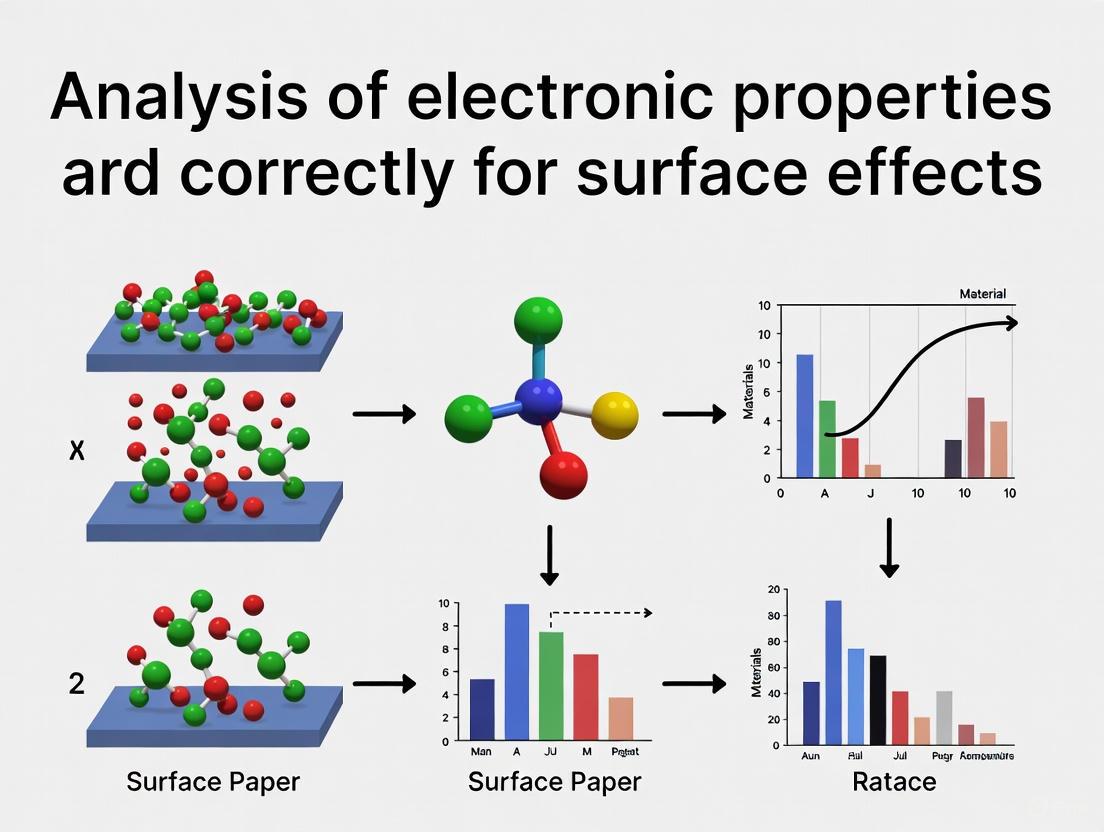
This article provides a comprehensive guide for researchers and drug development professionals on addressing the critical challenge of surface effects in electronic property analysis.
Correcting for Surface Effects in Electronic Property Analysis: From Fundamentals to Biomedical Applications
Abstract
This article provides a comprehensive guide for researchers and drug development professionals on addressing the critical challenge of surface effects in electronic property analysis. Surface phenomena, where atomic and molecular behavior at interfaces differs markedly from bulk material, can significantly skew analytical results, impacting everything from catalyst design to drug nanocrystal stability. We explore the foundational principles governing these effects, detail advanced characterization and computational correction methodologies, and present robust troubleshooting and validation protocols. By synthesizing insights from cutting-edge surface science, this resource aims to equip scientists with the knowledge to achieve reliable, surface-effect-corrected data, thereby enhancing the accuracy of material design and therapeutic agent development.
Understanding Surface Effects: Why Interfaces Dictate Electronic Properties
The Critical Role of Surfaces in Modern Materials and Biomedicine
Troubleshooting Guides and FAQs
Frequently Asked Questions
Q1: Why does my computational model fail to accurately predict electronic band gaps in nanoscale materials? A1: This is a classic manifestation of the band gap problem, where finite-size effects in small simulation cells cause significant inaccuracies. Standard methods like Density Functional Theory (DFT) often underestimate band gaps. To correct this, use advanced methods like Equation-of-Motion Coupled-Cluster (EOM-CC) for ionization potentials and electron affinities, which better handle electronic correlation. Perform calculations on multiple increasing system sizes and extrapolate the results to the thermodynamic limit to correct for finite-size errors [1].
Q2: My surface analysis shows inconsistent protein adsorption data. What could be wrong? A2: Inconsistent protein data often arises from incomplete surface characterization. Protein adhesion is highly sensitive to surface composition, structure, and orientation. Move beyond single-technique analysis (like XPS alone) and employ a complementary, multi-technique approach. For comprehensive data, combine XPS with Secondary Ion Mass Spectrometry (SIMS) and Atomic Force Microscopy (AFM). This helps determine not just the amount of protein, but also its conformation, orientation, and spatial distribution, which are critical for biological performance [2].
Q3: How can I effectively model surface effects that deviate from bulk material properties? A3: Use a Predictor-Corrector method. First, the regular Cauchy-Born method models the bulk material response. Then, a localized corrector is applied to a thin boundary layer at the surface. This computationally efficient hybrid approach separates the bulk problem from the surface correction, capturing essential surface effects that are missed by bulk-property methods alone [3].
Q4: What are the best practices for preparing biological samples for surface analysis in ultra-high vacuum (UHV)? A4: Biological samples require special preparation to withstand UHV conditions without degrading. Two key protocols are:
- Trehalose Coating: Immobilize the sample by applying a trehalose sugar coating, which preserves its structure in vacuum [2].
- Frozen-Hydrated Analysis: Rapidly freeze the sample to maintain its hydration state and native structure during analysis [2]. Always use validated experimental protocols for sample handling to ensure data reliability.
Troubleshooting Common Experimental Issues
| Problem | Likely Cause | Solution |
|---|---|---|
| Underestimated electronic Band Gaps [1] | Finite-size effects in small simulation cells; limitations of DFT. | Use EOM-CC method; calculate properties for increasing cell sizes and extrapolate to the thermodynamic limit. |
| Inconsistent protein adsorption results [2] | Incomplete surface characterization; unknown protein conformation/orientation. | Adopt a multi-technique approach (e.g., XPS + SIMS + QCM-D). Use radiolabeling to calibrate and quantify adsorbed amounts. |
| Failure to capture surface-specific material behavior [3] | Model only accounts for bulk properties (e.g., standard Cauchy-Born method). | Implement a Predictor-Corrector method to apply a localized surface correction over a boundary layer. |
| Poor sample integrity in UHV [2] | Dehydration or structural degradation of biological samples. | Apply trehalose coating or use frozen-hydrated analysis techniques. |
Experimental Protocols & Methodologies
Protocol 1: Multi-technique Characterization of a Protein-Adsorbed Surface
Objective: To comprehensively characterize the type, amount, conformation, and distribution of proteins adsorbed onto a biomaterial surface.
Materials:
- Sample with adsorbed protein layer.
- X-ray Photoelectron Spectroscopy (XPS) instrument.
- Time-of-Flight Secondary Ion Mass Spectrometry (ToF-SIMS) instrument.
- Quartz Crystal Microbalance with Dissipation (QCM-D).
- Radiolabeled (e.g., ¹²⁵I) proteins (optional, for quantification).
Method:
- Quantification with QCM-D: Measure the frequency and energy dissipation shifts in real-time to determine the adsorbed mass and viscoelastic properties of the protein layer [2].
- Elemental & Thickness Analysis with XPS:
- Analyze the surface atomic composition (C, N, O).
- Use angle-dependent XPS to create a depth profile and calculate the protein layer thickness [2].
- For absolute calibration, correlate XPS nitrogen signal with the amount of protein measured using ¹²⁵I radiolabeling (the "gold standard" for quantification) [2].
- Molecular Characterization with ToF-SIMS:
- Obtain the molecular fingerprint of the surface.
- Use the unique secondary ion fragments from amino acids to identify the specific proteins present and potentially infer conformational changes [2].
- Data Integration: Correlate data from all techniques to build a comprehensive model of the proteinated surface.
Protocol 2: Correcting Finite-Size Effects in Electronic Property Calculations
Objective: To compute accurate ionization potentials and electron affinities for a periodic system, converging to the thermodynamic limit (TDL).
Materials:
- High-performance computing (HPC) cluster.
- Computational chemistry software with IP/EA-EOM-CCSD capability.
- Model system (e.g., a chain of trans-Polyacetylene).
Method:
- System Setup: Create a series of simulation cells (supercells) of the same material with progressively larger sizes [1].
- Energy Calculation: For each cell size, compute the quasi-particle energies—specifically the Ionization Potential (IP) and Electron Affinity (EA)—using the IP- and EA-EOM-CCSD methods [1].
- Analysis of Convergence:
- Calculate the electronic correlation structure factor for each system size to understand the scaling behavior [1].
- Plot the calculated IP and EA against the inverse of the system size.
- Extrapolation: Observe the convergence trend. Extrapolate the data points to where the system size approaches infinity (1/size → 0) to obtain the predicted value at the TDL [1].
Electronic Property Correction Workflow
The Scientist's Toolkit: Research Reagent Solutions
Key Surface Characterization Techniques
| Technique | Primary Function | Key Application in Surface Science |
|---|---|---|
| XPS (ESCA) [2] [4] | Measures elemental surface composition and chemical states. | Determining thickness and elemental makeup of protein films; surface chemistry of biomaterials. |
| ToF-SIMS [2] | Provides molecular fingerprint and imaging of surfaces. | Identifying specific surface-bound proteins and biomolecules via unique fragment patterns. |
| AFM [2] | Maps surface topography and mechanical properties at nanoscale. | Imaging surface roughness and spatial distribution of biological species. |
| QCM-D [2] | Measures adsorbed mass and viscoelastic properties in real-time. | Monitoring kinetics of protein adsorption and cell attachment. |
| EOM-CCSD [1] | High-accuracy quantum method for electron attachment/removal energies. | Calculating electronic Band Gaps, Ionization Potentials, and Electron Affinities free from finite-size errors. |
Comparison of Surface Analysis Techniques
Table 1: Capabilities of different surface analysis techniques for characterizing protein adsorption.
| Technique | Information Depth | Detects Conformation? | Quantitative? | Real-time? |
|---|---|---|---|---|
| XPS [2] | ~10 nm | No | Yes (with calibration) | No |
| SIMS [2] | ~1-2 nm | Indirectly (via fragments) | Semi-quantitative | No |
| QCM-D [2] | Whole adlayer | No (infers viscoelasticity) | Yes (mass) | Yes |
| Radiolabeling [2] | Whole adlayer | No | Yes (Gold Standard) | No |
Convergence Data for Electronic Calculations
Table 2: Example convergence behavior of electronic properties for a model system (e.g., trans-Polyacetylene) with increasing system size.
| System Size (Atoms) | 1/Size | Ionization Potential (eV) | Electron Affinity (eV) | Band Gap (eV) |
|---|---|---|---|---|
| 50 | 0.020 | 8.15 | 0.85 | 7.30 |
| 100 | 0.010 | 8.05 | 0.95 | 7.10 |
| 200 | 0.005 | 7.98 | 1.02 | 6.96 |
| TDL (Extrapolated) | 0 | 7.92 | 1.08 | 6.84 |
Multitechnique Surface Characterization
Frequently Asked Questions (FAQs)
FAQ 1: Why do my experimental adsorption enthalpies disagree with my computational predictions, and how can I resolve this? Disagreements often stem from inaccuracies in predicting the correct adsorption configuration or from the inherent limitations of common computational methods like Density Functional Theory (DFT). Inaccurate density functional approximations (DFAs) can incorrectly identify a metastable configuration as the most stable one or fortuitously match experimental enthalpy for the wrong structure [5].
- Solution: Employ a more accurate, automated computational framework like autoSKZCAM, which leverages correlated wavefunction theory (cWFT) and coupled cluster theory (CCSD(T)) [5]. This framework partitions the adsorption enthalpy into contributions addressed by accurate techniques, providing results that closely match experiment. Always computationally screen multiple adsorption configurations to ensure the identified global minimum is correct [5].
FAQ 2: My aged microplastics are adsorbing more pollutants than expected. How can I reduce their adsorption capacity? Increased adsorption on aged microplastics is typically due to the formation of oxygen-containing functional groups (OCFGs) during aging, which increase surface electronegativity and hydrophilicity [6].
- Solution: Implement a surface deoxygenation process. Using an electron beam combined with strong oxidants (e.g., H₂O₂ or K₂S₂O₈) can efficiently age microplastics while subsequently removing OCFGs. This process transforms carbonyl groups to hydroxyl groups and ultimately achieves deoxygenation, significantly reducing the adsorption capacity of the aged material [6].
FAQ 3: How can I detect trace, weakly-bound surface contaminants that are invisible to conventional techniques? Conventional techniques like XPS or TEM may lack spatial resolution, require high-energy probes that can alter the sample, or be insufficiently sensitive to submonolayer, physisorbed contaminants [7].
- Solution: Use Scanning Helium Microscopy (SHeM). This technique uses a low-energy beam of neutral helium atoms, making it non-destructive and highly sensitive to the top atomic layer. It detects contaminants by measuring the loss of diffraction contrast or specular reflectivity, allowing you to quantify atomic-scale disorder from trace adsorbates like adventitious carbon across large sample areas [7].
FAQ 4: How do surface hydroxyl defects influence the electronic properties of my metal oxide films? Hydroxyl (-OH) groups are common surface defects that can significantly alter electronic properties. For instance, on NiO(100) surfaces, the presence and density of -OH groups can directly engineer the system's band gap and modulate its behavior from p-type to n-type [8].
- Solution: Control the synthesis conditions and post-treatment environment that influence hydroxylation. Use theoretical methods like DFT+U to model the impact of different -OH coverages and configurations on your specific material system. Precise control over these surface defects is key to tailoring materials for applications like sensors or solar cells [8].
Troubleshooting Guides
Issue 1: Resolving Debates on Molecular Adsorption Configurations
Inaccurate identification of an adsorbate's stable configuration on a surface leads to incorrect interpretation of experimental data and faulty mechanistic models.
Investigation Protocol:
- System Preparation: Select a representative cluster model of the ionic surface (e.g., MgO(001)) and place it in an embedding environment of point charges to represent long-range interactions [5].
- Configuration Sampling: Generate multiple plausible adsorption configurations (e.g., for NO on MgO, consider upright, bent, hollow, and dimer structures) [5].
- Energy Calculation: Use the autoSKZCAM framework to compute the adsorption enthalpy (Hads) for each configuration. This framework uses a multilevel embedding approach to apply CCSD(T)-quality accuracy at a manageable computational cost [5].
- Validation: Compare the Hads of the most stable configuration identified computationally with experimental values from techniques like Temperature-Programmed Desorption (TPD) or Fourier-Transform Infrared Spectroscopy (FTIR) [5].
Expected Outcomes:
- The configuration with the most negative Hads is the true stable structure.
- Agreement between the computed Hads of this stable configuration and experiment validates the model.
- For example, this protocol correctly identifies the covalently bonded cis-(NO)₂ dimer as the most stable configuration for NO on MgO(001), resolving long-standing debates [5].
Essential Research Reagent Solutions:
| Research Reagent | Function in Experiment |
|---|---|
| autoSKZCAM Framework | Open-source computational framework for achieving accurate adsorption enthalpies and identifying stable configurations on ionic surfaces [5]. |
| Cluster Model of Ionic Surface | A finite cluster (e.g., of MgO or TiO₂) that serves as the central unit for high-level quantum chemical calculations of adsorption [5]. |
| Point Charge Embedding | An array of point charges surrounding the cluster model to simulate the electrostatic potential of the extended crystalline surface [5]. |
Issue 2: Quantifying Atomic-Scale Surface Contamination
Undetected submonolayer surface contaminants cause poor reproducibility in device performance and unreliable experimental measurements, particularly for 2D materials.
Investigation Protocol:
- Sample Mounting: Load the material (e.g., a 2D MoS₂ flake) into a Scanning Helium Microscopy (SHeM) system under ultra-high vacuum (UHV) conditions [7].
- Initial Measurement: Perform a helium atom micro-diffraction (HAMD) measurement on a clean, annealed sample area to establish a baseline with sharp Bragg diffraction peaks [7].
- In-situ Contamination Monitoring: Track the specular helium reflectivity intensity over time at a fixed location without further sample treatment. The decay in intensity quantifies the re-adsorption of contaminants [7].
- Spatial Mapping: Acquire SHeM micrographs across different sample regions (e.g., flat terraces vs. near edges) to map variations in contamination susceptibility [7].
- Validation (Optional): Correlate SHeM findings with XPS analysis to confirm the chemical identity of the adsorbates (e.g., adventitious carbon) [7].
Expected Outcomes:
- A clean, crystalline surface will show high specular reflectivity and clear diffraction patterns.
- A contaminated surface will show diffusely scattered helium and a loss of diffraction contrast.
- The rate of reflectivity decay provides a quantitative measure of re-contamination over time [7].
Workflow for Surface Contamination Quantification
Issue 3: Controlling Adsorption Capacity of Materials Through Surface Engineering
The need to optimize a material's surface to either enhance its adsorption performance for environmental remediation or deliberately reduce it to mitigate environmental hazards.
Experimental Protocol for Reducing Adsorption (e.g., Microplastics):
- Material Preparation: Obtain pristine microplastic particles (e.g., Polyethylene powder) [6].
- Aging & Deoxygenation Treatment:
- Suspend the microplastics in an aqueous solution with a strong oxidant (e.g., H₂O₂ or K₂S₂O₈).
- Irradiate the mixture using an electron beam accelerator. This creates a strong oxidative environment that ages the material and removes OCFGs [6].
- Post-Treatment Analysis:
- Morphology: Use Scanning Electron Microscopy (SEM) to observe surface fragmentation and pore formation.
- Surface Chemistry: Analyze via FTIR to calculate the Carbonyl Index (CI) and track the decrease in OCFGs.
- Adsorption Test: Measure the adsorption capacity of the treated material for a target pollutant (e.g., Tetracycline) and compare it to pristine and conventionally aged samples [6].
Expected Outcomes:
- A significant reduction in the adsorption capacity of the treated microplastics (e.g., from 1.29 mg/g to 0.76 mg/g for Tetracycline on PE with E-beam/H₂O₂) [6].
- Characteristic changes in surface morphology and a decrease in CI and O/C ratio, confirming surface deoxygenation [6].
Quantitative Data on Adsorption Performance:
| Material System | Target Pollutant | Key Performance Metric | Experimental Conditions |
|---|---|---|---|
| Aged PE (E-beam/H₂O₂) | Tetracycline | Adsorption capacity: 0.76 mg/g [6] | Electron beam with H₂O₂ oxidant [6] |
| Aged PE (E-beam/K₂S₂O₈) | Tetracycline | Adsorption capacity: 0.98 mg/g [6] | Electron beam with K₂S₂O₈ oxidant [6] |
| Pristine PE | Tetracycline | Adsorption capacity: 1.29 mg/g [6] | Control measurement [6] |
| LDH/Graphene | Sulfamethoxazole | ~142 molecules adsorbed at 70 ps [9] | Molecular Dynamics (ReaxFF) simulation [9] |
| LDH/g-C₃N₄ | Sulfamethoxazole | ~120 molecules adsorbed at 70 ps [9] | Molecular Dynamics (ReaxFF) simulation [9] |
How Surface Effects Skew Electronic Property Measurements
Frequently Asked Questions
FAQ 1: What are the most common surface effects that distort electronic measurements? The most common surface effects include the presence of adsorbed atoms or molecules (such as hydrogen, fluorine, or hydroxyl groups), surface reconstruction (atoms rearranging into new positions), and the creation of surface states that lead to band bending. These effects can alter the work function, change the bandgap, and switch the conductive type (e.g., from p-type to n-type) of a material [10] [8].
FAQ 2: How can I confirm that my electronic property measurement is skewed by a surface effect? A key indicator is a discrepancy between your measured data and established theoretical values or results obtained from bulk single crystals. For instance, if you measure a bandgap that is significantly smaller than the known bulk value, or if you observe unexpected conductive behavior, surface effects like contamination or defects are likely the cause. Surface-sensitive techniques like X-ray photoelectron spectroscopy (XPS) can help identify surface chemical states and contaminants [8].
FAQ 3: What are the best practices for surface preparation to minimize measurement errors? For accurate measurements, surfaces should be prepared and characterized under controlled ultra-high vacuum (UHV) conditions when possible. For ionic materials, using an electron counting model can help predict stable surface structures. Surface functionalization—the controlled adsorption of atoms like H or F—can also be used intentionally to modulate electronic properties, but this must be done in a known and quantified manner [5] [11].
FAQ 4: My DFT calculations don't match my experimental results. Could surface effects be the reason? Yes, this is a common challenge. Standard Density Functional Theory (DFT) with common exchange-correlation functionals can be inconsistent and may inaccurately predict surface structures and adsorption enthalpies. For greater accuracy, especially with ionic materials, using a framework that applies correlated wavefunction theory (cWFT) like CCSD(T) is recommended, as it provides benchmark-quality results that can better match experiments [5].
Troubleshooting Guides
Issue 1: Inconsistent Bandgap Measurements
Problem: Measured bandgap values vary between experiments or differ significantly from theoretical bulk values. Solution:
- Identify Surface Defects: Use techniques like scanning tunneling microscopy (STM) and Fourier-transform infrared spectroscopy (FTIR) to characterize surface defects and adsorbed species. Even common -OH groups can drastically reduce the measured bandgap [8].
- Control the Environment: Perform synthesis and measurement in controlled atmospheres to prevent unintended surface adsorption. The oxygen partial pressure during preparation, for example, can determine whether NiO exhibits p-type or n-type character [8].
- Apply Advanced Theory: Use hybrid functional (HSE06) DFT calculations or multilevel embedding approaches (e.g., the autoSKZCAM framework) to better understand and predict the impact of specific surface terminations and adsorbates on the electronic structure [12] [5].
Issue 2: Incorrect Identification of Adsorption Configuration
Problem: The predicted most stable geometry of a molecule on a surface does not align with experimental data. Solution:
- Sample Multiple Configurations: Do not rely on a single predicted structure. Use an automated computational framework to inexpensively compare the adsorption enthalpies (Hads) of multiple configurations [5].
- Validate with Correlated Wavefunction Theory: Assess DFT-predicted configurations with a higher-accuracy method like CCSD(T). DFT can sometimes fortuitously match experimental Hads for a metastable configuration, leading to misidentification of the true stable structure [5].
- Cross-Check with Multiple Experiments: Compare computational predictions with a combination of experimental techniques, such as temperature-programmed desorption (TPD), electron paramagnetic resonance (EPR), and Fourier-transform infrared spectroscopy (FTIR) [5].
Issue 3: Unintentional Surface Functionalization
Problem: Surface contamination during handling or from the ambient environment alters electronic properties. Solution:
- Implement In-Situ Cleaning: Use methods like argon sputtering and annealing in UHV to clean single-crystal surfaces before measurement [10].
- Characterize Surface Chemistry: Employ XPS to detect the presence of common contaminants like carbon or oxygen and to identify the chemical state of surface atoms [8].
- Functionalize Intentionally: If ambient adsorption is unavoidable, consider using intentional, controlled surface functionalization (e.g., hydrogenation or fluorination) to create a stable, well-defined surface. This can transform an unpredictable problem into a known variable [12].
Issue 4: Misinterpretation of Surface Conductivity Type
Problem: A material shows unexpected p-type or n-type behavior. Solution:
- Analyze Surface Stoichiometry: Use element-specific techniques like XPS to determine if the surface composition is stoichiometric. A non-stoichiometric surface, or one with specific defects (like -OH groups on Ni sites), can change the conductive type [8].
- Model Defect Pairs: When simulating surfaces with defects, ensure that defects are introduced in pairs to evenly perturb the material's magnetic sub-lattices. A single defect can break symmetry and give a misleading picture of the electronic structure [8].
Table 1: Common surface effects and their impact on electronic properties.
| Surface Effect | Impact on Electronic Properties | Corrective Methodology |
|---|---|---|
| Adsorbed Atoms/Molecules [12] [8] | Can modify bandgap width and type (direct/indirect); can induce metal-to-semiconductor transitions or change conductive type (p- to n-type). | Controlled surface functionalization; UHV preparation and measurement; temperature-programmed desorption (TPD). |
| Surface Reconstruction [10] [11] | Alters surface states and band bending; can overshadow bulk properties in devices. | Use of electron counting models to predict stable surfaces; characterization with low-energy electron diffraction (LEED). |
| Surface Defects (e.g., -OH groups) [8] | Can significantly reduce the bandgap (e.g., from ~4 eV to ~3.4 eV in NiO) and influence conductive type. | Synthesis parameter control (e.g., growth temperature, oxygen pressure); surface analysis with XPS and FTIR. |
| Broken Bonds / Dangling Bonds [10] [11] | Create localized surface states within the bandgap, leading to charge trapping and band bending. | Passivation of dangling bonds via intentional adsorption or formation of stable reconstructed surfaces. |
Table 2: Recommended computational methods for surface effect analysis.
| Computational Method | Best Use Case | Advantages | Limitations |
|---|---|---|---|
| DFT+U [8] | Transition metal oxides (e.g., NiO) where standard DFT fails to describe strong electron correlations. | Improved description of band gaps over standard DFT; reasonable computational cost. | Requires empirical selection of the U parameter; not systematically improvable. |
| Hybrid Functional (HSE06) [12] | Predicting accurate band structures and bandgaps of semiconductors and insulators. | More accurate bandgaps than standard DFT; widely used for electronic property prediction. | Computationally more expensive than standard DFT. |
| Correlated Wavefunction Theory (e.g., CCSD(T)) / autoSKZCAM framework [5] | Benchmarking and achieving high-accuracy adsorption enthalpies and configurations on ionic surfaces. | Considered the "gold standard"; highly accurate and systematically improvable; automated frameworks now reduce cost and user effort. | Traditionally very high computational cost, though new frameworks are making it more accessible. |
Experimental Protocols
Protocol 1: Modulating Electronic Properties via Surface Functionalization
This protocol is based on first-principles DFT calculations used to study the functionalization of the 2D material TH-BP with H and F atoms [12].
- Model Construction: Build the atomic structure of the pristine material (e.g., TH-BP). Define a unit cell and create a slab model with a sufficient vacuum layer (e.g., >14 Å) to prevent interactions between periodic images.
- Surface Modification: Create new structural models by adding H or F atoms to specific adsorption sites on the material's surface at varying coverage rates (e.g., 1/8, 1/4, 1/2, and full monolayer).
- Electronic Structure Calculation:
- Software: Use a computational simulation package like VASP.
- Method: Employ first-principles DFT.
- Functional: Select the Heyd-Scuseria-Ernzerhof hybrid functional (HSE06) for more accurate bandgap prediction.
- Parameters: Use the Projector Augmented Wave (PAW) pseudopotential method. Sample the Brillouin zone with an appropriate k-point grid (e.g., 8×6×1 Monkhorst-Pack grid).
- Analysis: Calculate the electronic band structure and density of states for each model. Compare the bandgap, bandgap type (direct/indirect), and effective mass of carriers before and after functionalization.
Protocol 2: Quantifying Molecular Adsorption on Ionic Surfaces
This protocol uses the automated autoSKZCAM framework to achieve CCSD(T)-level accuracy for adsorption enthalpies [5].
- System Selection: Choose the ionic surface (e.g., MgO(001), rutile TiO2(110)) and the adsorbate molecule (e.g., CO, NO, H2O, CO2).
- Configuration Sampling: Generate multiple initial adsorption configurations (e.g., on top of a cation, in a bridge site, in a hollow site). For molecules, consider different orientations (e.g., upright, bent, tilted, parallel).
- Multilevel Calculation:
- The framework automatically partitions the adsorption enthalpy into different contributions.
- It uses cost-effective methods for long-range interactions and high-accuracy correlated wavefunction theory (CCSD(T)) for the localized adsorbate-surface interaction.
- Validation: The calculated adsorption enthalpy (Hads) for the most stable configuration is compared with experimental data from techniques like temperature-programmed desorption (TPD). The framework identifies the true stable configuration as the one with the most negative Hads that is consistent with experiment.
The Scientist's Toolkit
Table 3: Key research reagents and materials for surface science studies.
| Item | Function in Experiment |
|---|---|
| High-Purity Single Crystal Substrates (e.g., MgO(001), NiO(100)) [5] [8] | Provides a well-defined, atomically flat template for studying intrinsic surface properties and adsorption. |
| Molecular Beam Epitaxy (MBE) System [11] | Allows for the atomic-layer-by-layer growth of pristine thin films and controlled creation of specific surface terminations in ultra-high vacuum. |
| Density Functional Theory (DFT) Code (e.g., VASP) [12] | The computational workhorse for predicting and explaining surface structures, electronic properties, and adsorption geometries. |
| Correlated Wavefunction Theory (cWFT) Framework (e.g., autoSKZCAM) [5] | Provides benchmark-quality, highly accurate data on adsorption energies and surface chemistry for ionic materials. |
| Hydrogen/Fluorination Precursor Gases [12] | Used for intentional surface functionalization to systematically modulate a material's electronic structure from semiconducting to metallic. |
Workflow and Signaling Diagrams
Surface Effect Troubleshooting Workflow
Surface Impact on Electronic Properties
FAQs: Understanding Surface-Induced Aggregation
Q1: What is surface-induced aggregation and why is it a critical issue for therapeutic monoclonal antibodies (mAbs)?
Surface-induced aggregation refers to the undesired formation of protein clusters triggered by the interaction of mAbs with various surfaces they contact during production, storage, and transportation. This is a critical issue because aggregates can compromise the safety and efficacy of the final therapeutic product. They may provoke immunogenic responses in patients, reduce the active drug available for treatment, and lead to product failure, posing significant risks to patient safety and substantial financial losses for manufacturers [13] [14] [15].
Q2: Which material surfaces are most likely to cause mAb aggregation?
Research indicates that the propensity for aggregation is highly dependent on the surface chemistry of the contacting material. Studies on antibodies COE-3 and COE-7 showed different behaviors on silicon dioxide (SiO₂), titanium dioxide (TiO₂), and stainless steel (SS). Specifically, COE-7 initially formed hydrated, viscoelastic layers on SiO₂ and TiO₂, which underwent structural "collapse" and compaction over time, indicating surface-induced conformational changes. In contrast, both antibodies formed compact and stable layers on stainless steel with minimal structural alteration [13]. Surfaces at the air-water interface are also particularly aggregation-prone [14].
Q3: How effective are surfactant-based mitigation strategies, such as polysorbate 20 (PS20), in high-concentration mAb formulations?
Surfactant effectiveness is concentration-dependent. For low-concentration mAb solutions (e.g., 10 mg/mL), surfactants like PS20 above their critical micelle concentration (CMC) can dominate the interface and effectively reduce particle formation. However, for high-concentration formulations (e.g., 170 mg/mL), co-adsorption of proteins and surfactants occurs at the interface. In these cases, even surfactant levels above the CMC may not mitigate subvisible particle formation, highlighting that the surfactant-to-mAb ratio is a critical formulation parameter [14].
Q4: What advanced computational tools are available to predict mAb aggregation propensity?
A novel AI-MD-Molecular surface curvature modeling platform can predict aggregation rates from the amino acid sequence with high reliability (correlation coefficient r=0.91 with experimental data). The platform's scientific novelty lies in using the local geometrical surface curvature of proteins, derived from molecular dynamics (MD) simulations, as a core feature for stability analysis. This approach combines curvature data with hydrophobicity to construct predictive features for machine learning models [16].
Troubleshooting Guide: Common Experimental Issues & Solutions
| Problem | Potential Root Cause | Recommended Solution |
|---|---|---|
| Unexpected particle formation during storage | Interaction with primary container closure (e.g., silicone oil, glass) | Pre-screen container materials; consider alternative coatings; optimize surfactant type and concentration [14] [15]. |
| Rising aggregate levels after purification | Shear or surface-induced denaturation during filtration/chromatography | Utilize mixed-mode chromatography (e.g., POROS Caprylate resin) in flow-through mode for robust aggregate removal [17] [15]. |
| Inconsistent aggregation between development and manufacturing scales | Differences in material contact surfaces (e.g., stainless steel vs. single-use bioprocess bags) | Conduct compatibility studies with all process-contact surfaces early in development; implement material quality controls [13]. |
| Surfactant fails to prevent aggregation | Incorrect surfactant-to-protein ratio, particularly in high-concentration formulations | Re-evaluate surfactant concentration to ensure an effective ratio for the specific mAb concentration; it may need to exceed standard CMC-based calculations [14]. |
Experimental Protocols for Analysis & Mitigation
Protocol 1: Quantifying Adsorption Dynamics and Layer Properties Using QCM-D and Neutron Reflection
This protocol characterizes the real-time adsorption behavior and structural changes of mAbs on different surfaces, providing insights into initial aggregation triggers [13].
Key Materials:
- Instrumentation: Quartz Crystal Microbalance with Dissipation monitoring (QCM-D), Neutron Reflection (NR), Spectroscopic Ellipsometry (SE).
- Surfaces: Silicon dioxide (SiO₂), Titanium dioxide (TiO₂), Stainless steel (SS).
- Samples: Purified monoclonal antibody solution in a relevant buffer.
Methodology:
- Substrate Preparation: Clean and prepare the chosen material substrates (SiO₂, TiO₂, SS) to ensure a consistent, contaminant-free surface.
- Baseline Establishment: Introduce the buffer solution into the QCM-D/NR instrument and flow over the substrate until a stable baseline for frequency (Δf) and energy dissipation (ΔD) is achieved.
- Antibody Adsorption: Replace the buffer flow with the mAb solution and monitor for a minimum of 12 hours. QCM-D tracks mass changes (from Δf) and viscoelastic properties (from ΔD) of the adsorbed layer in real-time.
- Rinsing & Equilibrium: Revert to buffer flow to remove any loosely bound protein and observe the stabilization of the signal, indicating a stable adsorbed layer.
- Data Analysis: Analyze Δf and ΔD to determine the mass, thickness, hydration, and structural rigidity (e.g., "collapse") of the formed antibody layer. NR provides complementary data on the layer structure and density at the sub-nanometer scale.
Protocol 2: High-Throughput Screening for Purification Condition Optimization
This protocol uses a Design of Experiments (DoE) approach in a 96-well format to rapidly identify optimal chromatographic conditions for removing aggregates while maximizing monomer recovery [17].
Key Materials:
- Resin: Mixed-mode chromatography resin (e.g., POROS Caprylate).
- Equipment: 96-well filter plates, microplate centrifuge, multichannel pipettes, plate reader (A280 measurement), HPLC-SEC system.
- Buffers: Screening buffers at various pH levels (e.g., sodium acetate, sodium citrate) and salt concentrations.
Methodology:
- Plate Preparation: Dispense a fixed volume of resin (e.g., 10 µL) into each well of a 96-well filter plate.
- Equilibration: Centrifuge and wash the resin in each well three times with 190 µL of the different screening buffers, covering a range of pH and salt concentrations.
- Sample Loading: Load a fixed volume and mass of the mAb solution (with a known initial aggregate level) into each well. Target specific load densities (e.g., 100-200 mg mAb per mL of resin).
- Incubation: Shake the plate to allow the mAb to interact with the resin.
- Flow-Through Collection: Centrifuge the plate to collect the flow-through (purified mAb) in a deep-well plate.
- Analysis:
- Determine protein concentration in the flow-through by A280 measurement.
- Analyze monomer purity and aggregate levels using HPLC-SEC.
- DoE Analysis: Plot the results (e.g., monomer recovery vs. aggregate removal) against pH and salt concentration to identify the optimal operational window.
Workflow and Mechanism Diagrams
Diagram: AI-MD Platform for Predicting Aggregation
This diagram illustrates the integrated computational workflow for predicting monoclonal antibody aggregation propensity from its amino acid sequence [16].
Diagram: Surface-Induced mAb Aggregation Mechanism
This diagram visualizes the mechanism of surface-induced aggregation at a hydrophobic interface (e.g., air-water), a common challenge in bioprocessing [14] [15].
Research Reagent Solutions
The following table details key materials and technologies used to study and mitigate surface-induced aggregation, as cited in the research.
| Research Reagent / Technology | Function & Application |
|---|---|
| Quartz Crystal Microbalance with Dissipation (QCM-D) | Label-free technique to monitor antibody mass adsorption and viscoelastic property changes on surfaces in real-time [13]. |
| Neutron Reflection (NR) | Provides high-resolution data on the structure and composition of thin protein layers adsorbed on a surface [13]. |
| Polysorbate 20 (PS20) | Non-ionic surfactant used to compete with mAbs for interfaces (e.g., air-water), preventing adsorption and aggregation. Effectiveness depends on mAb concentration [14]. |
| POROS Caprylate Mixed-Mode Resin | Chromatography resin combining hydrophobic and cation-exchange interactions. Used in flow-through mode to effectively remove aggregates and host cell proteins (HCPs) during downstream purification [17]. |
| AI-MD-Molecular Surface Curvature Platform | Computational platform combining AI, molecular dynamics, and surface geometry analysis to predict aggregation propensity from an mAb's sequence [16]. |
| autoSKZCAM Framework | An open-source computational framework using correlated wavefunction theory to accurately predict molecular adsorption enthalpies on material surfaces, aiding in surface chemistry analysis [5]. |
The Dominance of Surface Properties in Nanomaterials and 2D Materials
FAQs on Surface Properties and Electronic Characterization
FAQ 1: Why do surface properties become dominant in low-dimensional nanomaterials like 2D materials? In nanomaterials, the surface-to-volume ratio increases dramatically as dimensions shrink. In 2D materials, which are atomically thin sheets, this ratio is extremely high, meaning a vast majority of atoms are located at the surface. These surface atoms have unsaturated bonds and different coordination environments compared to bulk atoms, leading to unique electronic states that govern the material's overall behavior. Properties such as high anisotropy, effective surface area, mechanical strength, plasmonic behavior, and electron confinement are all direct consequences of this surface dominance [18].
FAQ 2: What common pitfalls occur when characterizing electronic properties like work function and energy levels? A major pitfall is assuming that analysis methods developed for classical, bulk semiconductors are directly applicable to nanomaterials and perovskites. For work function and energy levels measured by techniques like Ultraviolet Photoelectron Spectroscopy (UPS), a significant risk is the huge variation in reported values depending on the method used to analyze the band edge [19]. Furthermore, surface properties such as atomic termination, surface structure, and adsorbates can drastically alter these measurements. For instance, the work function of La₃Te₄ slabs in one study was found to be highly sensitive to whether the surface was Te-rich or La-rich [20].
FAQ 3: How does surface contamination affect electronic property measurements? Real surfaces are often contaminated with adsorbed gases and assorted compound layers, which form an atomically sharp interface between the condensed-phase and gas-phase atoms [10]. These contaminants can act as surface states, trapping electrons or holes and leading to phenomena like band bending in semiconductors. This can severely impact the accuracy of measurements for doping density, defect density, and energy levels. Proper surface cleaning protocols are therefore essential prior to characterization [21].
FAQ 4: What is the relationship between surface structure, surface dipole, and work function? The work function is directly proportional to the electronic dipole density at the surface. This surface dipole arises from the asymmetry of charge at the material-vacuum interface. Changes in the atomic surface structure, growth direction, and surface termination (e.g., Te-rich vs. La-rich) directly alter this surface dipole, which in turn modifies the work function. This is a key consideration for interfaces in nanocomposites, as the jump in work function between materials impacts electronic transport [20].
Troubleshooting Guides for Experimental Challenges
Challenge 1: Inconsistent Work Function Measurements
Problem: Measurements of a material's work function show high variability between research groups or experimental runs. Solution:
- Control Surface Termination: The work function depends critically on the atomic composition of the surface layer. For example, on III-V semiconductor surfaces, the (111) surface can terminate entirely with either Group V or Group III atoms, leading to vastly different electronic activity [10]. Consistently preparing and verifying the same surface termination is crucial.
- Minimize Adsorbate Effects: Adsorbed species can induce significant changes in the surface electronic structure. Conduct measurements under ultra-high vacuum conditions and use in-situ cleaning methods (e.g., thermal annealing, argon sputtering) to ensure a clean surface [22].
- Standardize Analysis Method: For techniques like UPS, consistently apply the same method for determining the secondary electron cutoff and valence band edge to ensure results are comparable [19].
Table 1: Factors Affecting Work Function and Correction Strategies
| Factor | Impact on Work Function | Troubleshooting Action |
|---|---|---|
| Surface Termination | Different atomic terminations (e.g., La-rich vs. Te-rich) can change the value significantly [20]. | Use low-energy electron diffraction (LEED) or XPS to confirm surface structure and composition. |
| Surface Reconstruction | Atomic rearrangement at the surface alters the surface dipole and work function [10]. | Characterize under conditions relevant to your application (e.g., in operando for devices). |
| Adsorbed Contaminants | Can form dipoles that either increase or decrease the work function [10]. | Implement rigorous ultra-high vacuum (UHV) protocols and in-situ surface cleaning. |
| Analysis Method (for UPS) | The chosen method to locate the band edge leads to huge variations in reported values [19]. | Adopt a consistent, well-documented analysis methodology across all experiments. |
Challenge 2: Erroneous Defect Density and Charge-Carrier Lifetime from Transient Measurements
Problem: Transient photoluminescence (tr-PL) decays are non-exponential, leading to unreliable extraction of charge-carrier lifetimes and defect densities. Solution:
- Avoid Over-Simplified Models: Do not force-fit non-exponential decays with a single exponential model. The decay is often a superposition of multiple processes, including charge trapping/detrapping, recombination, and charge transfer to other layers [19].
- Account for Ionic Motion: In materials like halide perovskites, ion motion can dominate the transient response, making the measured decay time uncorrelated with the electronic charge-carrier lifetime [19].
- Use Complementary Techniques: Correlate tr-PL results with other methods, such as voltage-dependent photoluminescence on complete devices, to better discriminate between recombination and charge transfer events [19].
Challenge 3: Uncontrolled Surface Effects in Catalysis and Chemisorption
Problem: The chemisorption energy of reactants on catalyst surfaces does not follow predicted trends from bulk electronic descriptors. Solution:
- Go Beyond the d-Band Center Model: Classical models that only consider the d-band center of the clean surface can be inadequate for complex alloys. The adsorbate itself induces changes in the adsorption site, which interacts with the chemical environment, leading to a second-order response in chemisorption energy [22].
- Consider Surface Perturbation: Account for the fact that the adsorbate significantly perturbs the electronic states of the surface atoms, not just the other way around. Models that incorporate this mutual interaction provide more accurate predictions [22].
Experimental Protocols for Key Surface-Sensitive Measurements
Protocol: Work Function Measurement via Kelvin Probe Force Microscopy (KPFM)
Objective: To map the local work function of a nanomaterial surface with high spatial resolution.
- Sample Preparation: Deposit the nanomaterial (e.g., a 2D flake) on an electrically conducting substrate. Ensure the sample is clean and dry.
- Probe Selection: Use a conductive AFM probe (e.g., Pt/Ir-coated silicon tip) with a known and stable work function.
- Measurement Setup: Place the sample in the AFM/KPFM system. Set the instrument to two-pass mode (also known as lift mode).
- Topography Scan: In the first pass, use tapping mode to obtain the surface topography.
- Potential Scan: In the second pass, the tip lifts to a predetermined height (e.g., 10-50 nm) above the surface and follows the topography. An AC voltage is applied to the tip, and a feedback loop nullifies the electrostatic force by applying a DC bias (the contact potential difference, CPD).
- Data Analysis: The work function of the sample (Φsample) is calculated as Φsample = Φtip - CPD, where Φtip is the work function of the probe. Calibrate the probe using a reference sample like highly oriented pyrolytic graphite (HOPG) or freshly cleaved gold.
KPFM Two-Pass Measurement
Protocol: Surface Cleaning via Solvent and RCA Method
Objective: To obtain a clean, reproducible surface on metal oxide substrates (e.g., ITO) for electronic device fabrication.
- Solvent Cleaning:
- Ultrasonicate the substrate in a beaker containing a 2% (v/v) solution of a surfactant like Triton X-100 in ultrapure water for 10-15 minutes.
- Rinse the substrate thoroughly with copious amounts of ultrapure water.
- Ultrasonicate the substrate sequentially in ultrapure water and ethanol for at least 10 minutes each.
- Dry the substrate with a stream of dry nitrogen gas [21].
- RCA Cleaning (Optional, for deeper cleaning):
- Prepare the RCA solution: a 1:1:5 mixture of NH₄OH (28-30%) / H₂O₂ (30%) / H₂O.
- Heat the solution to 80 ± 5 °C.
- Immerse the solvent-cleaned substrate in the heated RCA solution for 30 minutes.
- Remove the substrate and rinse thoroughly with ultrapure water.
- Dry with a stream of nitrogen gas [21].
Table 2: Key Reagents for Surface Cleaning and Characterization
| Research Reagent | Function/Brief Explanation |
|---|---|
| Triton X-100 | A non-ionic surfactant used in initial solvent cleaning to dissolve and remove organic contaminants from surfaces [21]. |
| Isopropanol (IPA) | A high-purity solvent effective at dissolving site-blocking contaminants without causing surface roughening or microstructural damage [21]. |
| RCA Solution (NH₄OH/H₂O₂/H₂O) | A standard cleaning mixture that oxidizes and removes trace organic and metallic contaminants from surfaces, leaving a hydrophilic termination [21]. |
| Conductive AFM Probe (Pt/Ir) | A nanoscale probe for KPFM that interacts electrostatically with the sample surface to measure local contact potential difference (CPD) [19]. |
Advanced Theoretical Corrections for Surface Effects
To correct for surface effects in electronic property analysis, advanced modeling that goes beyond traditional approaches is required.
Correcting Chemisorption Energy Calculations
- For Chemisorption on Alloys: The simple d-band center model is often insufficient. A more robust model incorporates the first and second moments of the d-band and, crucially, accounts for how the adsorbate perturbs the electronic states of the surface atoms. This adsorbate-induced change interacts with the chemical environment, leading to a more accurate prediction of chemisorption energies on multi-metallic systems [22].
- For Work Function Calculation: First-principles electronic structure calculations (e.g., Density Functional Theory) can be used to compute the surface dipole and work function of slab models. The key is to ensure the model accurately represents the surface termination and structure, as the work function is directly proportional to the electronic dipole density at the surface [20].
Analytical Techniques and Correction Methodologies for Reliable Data
Technical Support Center
Troubleshooting Guides
Guide 1: Addressing Surface Charging on Insulating Samples
Surface charging on insulating materials is a frequent issue that compromises data quality by distorting peak shapes and causing energy shifts [23] [24].
- Problem: Poor spectral quality, broad or shifted peaks, and unstable analysis on insulating samples like ceramics, polymers, or oxides.
- Solution: Implement a low-energy electron flood gun for charge compensation. This neutralizes the positive charge buildup by supplying low-energy electrons to the surface [24]. For XPS, this is often sufficient. For AES, which uses an electron primary beam, additional strategies are required due to more severe charging [23].
- Alternative Sample Preparation: For AES on insulators, creative mounting can minimize charging. Use small samples mounted on a conductive indium substrate, a fine copper grid, or a masked area to provide a local path to ground [23].
Guide 2: Identifying and Mitigating Ion Beam Artefacts in Depth Profiling
Ion beam etching, commonly used for depth profiling, can significantly alter the original sample chemistry and morphology [25].
- Problem: Ion-induced atomic mixing, preferential sputtering of certain elements, and surface roughening lead to distorted depth profiles and inaccurate chemical state information [25].
- Solution: For organic materials and inorganic interfaces, consider switching from monoatomic argon ion (Ar+) beams to gas cluster ion beams (GCIB). Cluster ions (e.g., Ar2000+) cause less damage and provide better depth resolution for delicate structures by dissipating energy across many atoms [25].
- Verification: Correlate results with non-destructive depth-profiling techniques like Angle-Resolved XPS (AR-XPS) where possible to confirm findings [25].
Guide 3: Correcting Z-Axis Distortion in TOF-SIMS 3D Imaging
When performing 3D imaging on contoured samples like intact cells, stacking the acquired depth profiling images creates flat planes that do not conform to the sample's curved surface, leading to a distorted 3D rendering [26].
- Problem: 3D renderings of contoured samples (e.g., biological cells) are geometrically inaccurate along the z-axis, complicating the interpretation of internal structures [26].
- Solution: Use a computational depth correction strategy. This method uses the total ion count (TIC) images collected during the depth profile to create a 3D model of the sample's surface morphology at the time each image was acquired [26].
- Workflow: The TIC images are aligned and processed to create a height map. This map is then used to adjust the z-position and height of each voxel in the 3D image, producing a more accurate representation of the structure, such as endoplasmic reticulum-plasma membrane junctions in cells [26].
Frequently Asked Questions (FAQs)
FAQ 1: How do I choose between XPS and AES for analyzing a surface contaminant? The choice depends on the contaminant's size, the substrate's electrical conductivity, and the required information [24] [27].
- Choose XPS/ESCA if:
- Choose AES if:
FAQ 2: My XPS peaks for a catalyst sample are complex and overlapping. How can I improve my peak fitting? Complex peak structures are common in catalytic materials like Ni/Al₂O₇, where multiple oxidation states and metal-support interactions exist [28]. Avoid common errors in peak fitting by following these steps:
- Use a Proper Background: Apply a Tougaard or Shirley background to account for inelastically scattered electrons, rather than a simple linear background [29].
- Respect Chemistry: Use scientifically justified peak shapes and doublets (e.g., fixed spin-orbit splitting and area ratios). Do not over-fit the data with an excessive number of peaks [29].
- Consult Reference Materials: Compare your spectra with standard databases of known materials to identify the correct chemical states [29] [28]. For instance, reference spectra can help distinguish NiO from nickel aluminate spinel [28].
FAQ 3: Why can't I use my CsI sample for high-mass calibration in TOF-SIMS? Although CsI produces large, clean cluster ions that seem ideal for mass calibration, they exhibit apparent mass shifts that make them unreliable as mass standards [30]. This is due to the initial kinetic energy possessed by the secondary cluster ions when they are emitted. Since the time-of-flight mass calculation assumes near-zero initial kinetic energy, this energy causes an apparent shift in the measured mass [30]. The effect is dependent on cluster size and cannot be corrected by standard calibration routines. Use other standards, such as iridium cluster carbonyl complexes, for high-mass calibration [30].
FAQ 4: What is the best method to identify an unknown organic contamination on a surface? The optimal technique depends on the size and thickness of the contamination [27].
- For contaminations >1 µm thick and >30 µm in size, use Fourier-Transform Infrared Spectroscopy (FTIR). FTIR libraries can help identify organic compounds like polypropylene [27].
- For contaminations >1 µm thick but <30 µm in size, use Raman spectroscopy [27].
- For the analysis of very thin organic films or when you need to identify specific molecular fragments, use Time-of-Flight Secondary Ion Mass Spectrometry (TOF-SIMS). TOF-SIMS is highly sensitive to surface organics and can detect elements starting from Hydrogen [27].
Technique Comparison & Selection
Table 1: Key Characteristics of Core Surface Analysis Techniques
| Technique | Primary Probe | Information Obtained | Lateral Resolution | Analysis Depth | Key Strengths | Key Limitations |
|---|---|---|---|---|---|---|
| XPS/ESCA | X-rays [24] | Elemental composition, chemical state, electronic structure [28] [24] | >10 µm [27] | ~10 nm [28] | Excellent chemical state information; good for insulators [24] | Lower spatial resolution; can cause charging on some insulators [24] |
| AES | Electrons [24] | Elemental composition, elemental mapping [23] | ~5 nm - 10 µm [23] [27] | ~3-10 nm [23] | High spatial resolution and mapping capability [23] | Severe charging on insulators; more complex quantification [23] [24] |
| TOF-SIMS | Ions [26] | Molecular structure, elemental & organic surface mapping, depth profiling [26] [27] | <1 µm [26] | <5 nm (per layer) [26] | High sensitivity for organics & trace elements; molecular information [27] | Complex spectra; destructive with depth profiling; matrix effects [26] |
Table 2: Research Reagent Solutions for Surface Analysis
| Item | Function / Description | Application Example |
|---|---|---|
| Conductive Indium Substrate | A malleable and conductive mounting medium for small insulating samples. | Minimizes charging during AES analysis of small mineral or ceramic particles [23]. |
| Argon Gas Cluster Ion Beam (GCIB) | A source of large, polyatomic argon ions (e.g., Ar2000+) for sputtering. | Provides high-resolution, low-damage depth profiling of organic materials and delicate interfaces in XPS and SIMS [25]. |
| Charge Neutralization Flood Gun | A source of low-energy electrons used to neutralize positive charge buildup on sample surfaces. | Essential for obtaining high-quality XPS spectra from insulating materials like polymers or oxides [24]. |
| Certified Reference Materials | Standards with known composition and chemical state used for instrument calibration and data validation. | Critical for accurate peak identification and quantification; e.g., using a standard to confirm the binding energy of Ni 2p in NiO vs. Ni [29] [28]. |
Experimental Protocols
Protocol 1: Analyzing the Electronic Properties of a Ni/Al₂O₃ Catalyst via XPS
This protocol outlines the methodology for using XPS to probe metal-support interactions and electronic structure in a supported metal catalyst [28].
- Sample Preparation: Dip-coat an alumina monolith support, followed by impregnation with a nickel salt solution (e.g., Ni(NO₃)₂) and calcination in air at 600°C to form the catalyst [28].
- Data Collection:
- Acquire a survey spectrum (0-1100 eV) to identify all elements present on the catalyst surface.
- Collect high-resolution regional spectra for Ni 2p, Al 2p, and O 1s core levels. Use a pass energy that provides a good compromise between signal intensity and energy resolution.
- Acquire the valence band spectrum to investigate electronic structure changes near the Fermi level [28].
- Data Analysis:
- Quantification: Calculate atomic concentrations from peak areas using instrument sensitivity factors.
- Chemical State Analysis: Fit the high-resolution Ni 2p spectrum with multiple components representing different chemical states (e.g., Ni⁰, Ni²⁺ in NiO, Ni²⁺ in NiAl₂O₄). Use standard peak doublet constraints and validated reference spectra [28].
- Electronic Effects: Analyze the O 1s and Al 2p peaks for binding energy shifts that indicate an increase in electron density around the support atoms due to the presence of Ni [28].
Protocol 2: TOF-SIMS 3D Analysis of a Cell with Depth Correction
This protocol describes the steps for acquiring and correcting a 3D TOF-SIMS dataset on a biological cell to accurately visualize internal structures [26].
- Sample Preparation: Culture and prepare cells on a clean silicon substrate. For specific targeting, label organelles with a chemical stain (e.g., an ER-Tracker that contains characteristic fluorine atoms) [26].
- TOF-SIMS Depth Profiling:
- Define the analysis area (e.g., 70 µm × 70 µm) on the cell.
- Begin a cyclic process at the cell surface: a. Acquire a secondary ion image using a pulsed primary ion beam (e.g., Bi₃⁺⁺). b. Sputter and remove a thin layer of material from the entire analysis area using a sputter ion beam (e.g., 5 keV Ar₂,₀₀₀⁺).
- Repeat until the desired depth (e.g., ~40 nm) is reached, collecting hundreds of image planes [26].
- Data Processing and Depth Correction:
- Alignment: Align all the Total Ion Count (TIC) images in the stack to correct for any lateral drift.
- Model Morphology: Use the TIC intensity at each pixel across the image stack to create a 3D model of the cell's surface morphology for each sputter cycle.
- Voxel Adjustment: Use these morphology models to shift the voxels in the 3D TOF-SIMS image (e.g., for the F⁻ ion representing the ER) to their correct z-position and height above the substrate [26].
Workflow Visualizations
Diagram 1: Surface Analysis Technique Selection
Diagram 2: XPS Catalyst Analysis Workflow
Frequently Asked Questions (FAQs)
General Technique Questions
Q1: What is the primary advantage of HAXPES over conventional XPS for studying buried interfaces? HAXPES uses higher energy X-rays (e.g., Ga Kα at 9.25 keV) compared to conventional XPS (e.g., Al Kα at 1.49 keV). This significantly increases the photoelectron kinetic energy and escape depth, allowing the technique to probe bulk-like materials and interfaces buried beneath surface layers. The sampling depth can be increased from approximately 10 nm with conventional XPS to over 50 nm with Ga Kα HAXPES, and information can even be extracted from depths of up to several hundred nanometers through inelastic background analysis [31] [32].
Q2: How does NAP-XPS differ from conventional XPS? NAP-XPS, or Near Ambient Pressure XPS, allows for the characterization of samples under gaseous environments at pressures up to 100 mbar. This is achieved using specially designed differentially pumped analyzers. This capability enables operando studies of materials under conditions similar to their actual working environments, which is crucial for applications in catalysis, electrochemistry, and environmental science [33].
Q3: When should I use a cluster ion source instead of a monatomic ion source for depth profiling? The choice of ion source is critical to minimize sample damage during depth profiling:
- Use monatomic Ar+ ion guns primarily for depth profiling inorganic materials [34].
- Use Gas Cluster Ion Beam (GCIB) sources for depth profiling organic materials and polymers, as monatomic ions cause severe chemical damage to these materials [34].
- Use C60 cluster ion sources for materials with a mixed organic-inorganic matrix, as they can reduce chemical damage and differential sputtering artifacts compared to monatomic ions [34].
Troubleshooting Experimental Issues
Q4: I am getting a very weak photoelectron signal with my HAXPES measurement. What could be the cause? Weak signal intensity in HAXPES can arise from several factors:
- Low Photoionization Cross-Section: The probability of photoemission (cross-section) for some light elements can be up to three orders of magnitude lower at 9 keV compared to 1.5 keV [31]. Check calculated relative sensitivity factors (RSFs) for your elements of interest.
- Instrument Calibration: Ensure the X-ray source is aligned and the analyzer is properly tuned. The use of a high-flux source (like a metal-jet source) is critical to overcome inherently low cross-sections [31] [32].
- Sample Charging: For insulating samples, use a low-energy electron flood source to neutralize surface charge [31].
Q5: How can I verify the depth profiling information obtained from sputtering is accurate? Ion beam sputtering (with monatomic or cluster sources) can create altered surface layers through damage and preferential sputtering [31]. HAXPES itself can be used to validate these results because it is sensitive to the material below the surface damage layer. By comparing the HAXPES composition from a non-sputtered area with the composition measured by depth profiling after sputtering, you can assess the extent of sputter-induced artifacts [31].
Q6: My XPS/HAXPES data has a complex background. How should I handle it for quantification? The inelastic background in photoelectron spectra contains valuable depth information. For buried interfaces, modeling the inelastic background is not just a subtraction exercise but a source of data. Specialized background modeling can be used to extract chemical information from layers buried at depths up to 20 times the photoelectron inelastic mean free path, far beyond the depth from which sharp photoelectron peaks are detected [31]. Avoid using simple linear background subtraction for quantifying buried layers [29].
Technical Specifications & Methodologies
Key Research Reagent Solutions
The following table details essential components and their functions in a typical HAXPES instrument setup.
Table 1: Essential Components and Functions in a HAXPES Instrument
| Component Name | Type / Specification | Primary Function |
|---|---|---|
| Ga Kα Metal Jet X-ray Source [31] | High-energy lab source (9.25 keV) | Generates high-energy photons to excite core-level electrons, enabling probe of buried interfaces. |
| EW4000 Energy Analyzer [31] | High-transmission electron spectrometer | Measures kinetic energy of photoelectrons with high sensitivity up to 12 keV. |
| Argon GCIB Ion Source [31] [34] | Gas Cluster Ion Beam (e.g., 20 kV) | Provides depth profiling capability for organic materials with minimal chemical damage. |
| C60 Ion Source [34] | Cluster Ion Beam | Provides depth profiling for mixed organic-inorganic materials, reducing damage. |
| Monatomic Ar+ Ion Gun [31] [34] | Standard ion source (e.g., 5 kV) | Provides depth profiling capability for inorganic materials. |
| Al Kα X-ray Source [31] | Traditional lab source (1.49 keV) | Provides complementary surface-sensitive XPS measurements on the same instrument. |
| Relative Sensitivity Factors (RSFs) [31] | Ga Kα Library | Enables accurate quantification of elemental composition, accounting for energy-dependent cross-sections. |
Quantitative Data for HAXPES
Table 2: Comparison of Key Parameters Between Conventional XPS and HAXPES
| Parameter | Conventional XPS (Al Kα) | Lab-Based HAXPES (Ga Kα) | Notes & References |
|---|---|---|---|
| Photon Energy | 1.486 keV [31] | 9.252 keV [31] | Higher energy enables higher kinetic energy photoelectrons. |
| Typical Max Sampling Depth (Elastic) | ~10 nm [31] | ~51 nm [31] | Sampling depth defined as 3 × inelastic mean free path (IMFP). |
| Max Info Depth (Inelastic Background) | Limited | Up to ~20 × IMFP (hundreds of nm) [31] | Information from deeply buried layers via background analysis. |
| X-ray Flux | Reference | ~1000x higher than conventional [32] | Compensates for lower photoionization cross-sections. |
| Spatial Resolution | < 5 µm (e.g., PHI Genesis) [34] | ~50 µm [31] [32] | Micro-focused beam for small feature analysis. |
Experimental Protocol: Angle-Resolved HAXPES Depth Profiling
This protocol is adapted from the methodology described in the search results for obtaining non-destructive depth profiles using a ScientaOmicron HAXPES spectrometer [31].
1. Sample Preparation:
- Ensure the sample is clean, dry, and compatible with ultra-high vacuum (UHV).
- Mount the sample securely on an appropriate holder, ensuring good electrical contact to prevent charging. For insulating samples, plan to use the electron flood source.
2. Instrument Setup:
- Insert the sample into the analysis chamber (base pressure ~1×10⁻¹⁰ mbar).
- Locate the analysis area using the available imaging capabilities (e.g., optical microscope or X-ray induced secondary electron imaging).
- Select the Ga Kα (9.25 keV) X-ray source. The high flux from the metal-jet source is crucial for acquiring data in a reasonable time.
3. Data Acquisition:
- Angular Mode Selection: Engage the angle-resolved mode of the EW4000 analyzer (e.g., AR45, AR56, or AR60). This mode allows photoelectrons emitted at different angles relative to the surface normal to be detected simultaneously on a 2D detector.
- Spectral Collection: Acquire core-level spectra for the elements of interest (e.g., Au 3d for reference, or specific element peaks from your sample). The data will be collected as a function of photoemission angle.
4. Data Processing and Depth Profiling:
- Angle to Depth Conversion: Extract spectra at different emission angles (ϑ) from the 2D data set. The sampling depth (dS) at each angle is given by the formula:
dS = 3λi cosϑwhere λi is the inelastic mean free path of the photoelectron [31]. - Quantification: Use calculated Relative Sensitivity Factors (RSFs) specific to Ga Kα radiation to convert peak areas into atomic concentrations at each effective sampling depth [31].
- Background Modeling: For layers beyond the elastic sampling depth, use inelastic background modeling techniques to extract chemical information from deeply buried interfaces [31].
Experimental Workflow Visualization
The following diagram illustrates the logical workflow for a HAXPES experiment, from sample preparation to data interpretation, specifically for investigating buried interfaces.
Troubleshooting Common Computational Issues
Frequently Asked Questions
Q1: My DFT calculation for a surface model does not converge. What could be the issue?
Calculation convergence issues in surface models often stem from an incorrect initial electronic state description or an insufficient integration grid. First, verify your initial density guess using the VECTORS directive; employing project can provide a better starting point from a similar system [35]. For metallic or low-bandgap surfaces, use the CGMIN or RABUCK convergence algorithms, which are more robust for such systems [35]. Ensure your integration grid is set to at least fine for increased accuracy in numerical integration, which is critical for surface properties [35].
Q2: My calculated band gap for a pentagonal nanoribbon is significantly lower than expected. How can I correct this?
This is a known limitation of standard GGA functionals (like PBE), which tend to underestimate band gaps [36]. For more accurate electronic properties, employ a hybrid functional (e.g., PBE0) which incorporates a portion of exact Hartree-Fock exchange [37]. For the definitive calculation of band gaps in low-dimensional materials like penta-graphene nanoribbons, consider using more advanced methods like the hyper-GGA PSTS functional or performing a single-shot GW calculation on top of a DFT calculation, as these provide a more accurate description of quasi-particle energies [37] [38].
Q3: How can I account for van der Waals forces in my surface adsorption study?
Standard DFT functionals often poorly describe dispersion forces. To correct for this, you can augment your functional with an empirical dispersion correction. NWChem supports this via the DISP and XDM (exchange-hole dipole moment) directives [35]. For example, adding DISP to your PBE input will include a dispersion correction, which is crucial for modeling physisorption on surfaces [35].
Q4: The energy of my surface system is unrealistically high due to spurious interactions between periodic images. How do I mitigate this?
This is a classic surface effect in periodic calculations. To correct for it, you must ensure your vacuum layer is sufficiently large (typically >15 Å) to decouple periodic images. Furthermore, use the TOLERANCES directive to adjust the Coulomb interaction cutoff (radius) and the accCoul parameter for more accurate long-range electrostatics [35].
Q5: My molecular dynamics simulation on a surface requires reactive force fields. Are there alternatives to expensive ab initio MD? Yes, new methods are being developed to incorporate reactivity into traditional force fields. A recent approach modifies harmonic force fields to allow for bond dissociation and formation, providing a path to simulate surface reactions on larger scales without the full cost of ab initio molecular dynamics [38].
Common Error Messages and Solutions
| Error / Symptom | Likely Cause | Solution |
|---|---|---|
| SCF convergence failure | Poor initial guess, metastable states, or insufficient basis. | Use VECTORS swap to change orbital occupations; apply DIIS or damping [35]. |
| "Grid too coarse" warning | Inaccurate numerical integration of XC potential. | Set GRID to fine or xfine [35]. |
| Unphysical charges/spin | Inadequate treatment of strong electron correlation. | Use MULLIKEN to analyze population; switch to a functional with 100% exact exchange (e.g., MCY) for problematic cases [37] [35]. |
| Inaccurate surface states | Self-interaction error in standard functionals. | Employ asymptotically corrected potentials like LB94 or CS00 [35]. |
| High memory/disk usage | Large basis sets or default direct integration. | Use the SEMIDIRECT directive with specified memsize and filesize or the INCORE option [35]. |
Experimental Protocols for Surface Property Analysis
Protocol 1: Benchmarking Electronic Properties of 2D Materials
Aim: To accurately calculate the band gap and density of states for a 2D material like penta-graphene, correcting for the known underestimation by standard DFT [36].
Methodology:
- Geometry Optimization: First, optimize the unit cell structure of the 2D material using a GGA functional (e.g.,
PBE) with a medium integration grid [36] [35]. - Single-Point Energy Calculations: Using the optimized geometry, perform a series of single-point energy calculations with progressively higher levels of theory:
- Analysis: For each calculation, extract the band structure, density of states (DOS), and projected DOS (PDOS) to identify the contribution of different atomic orbitals (especially sp²-hybridized atoms) to the band edges [36].
Key Considerations:
- Basis Set: Use a polarized triple-zeta basis set (e.g., def2-TZVP) for all atoms [36].
- k-points: A dense k-point mesh (e.g., 15x15x1 for a 2D system) is critical for accurate Brillouin zone sampling [36].
Protocol 2: Simulating Surface Adsorption with Non-Covalent Interactions
Aim: To study the adsorption energy and geometry of a molecule on a solid surface, accurately describing both covalent and non-covalent interactions.
Methodology:
- Surface Model: Build a periodic slab model of the surface with a sufficient number of layers and a large vacuum space.
- Adsorbate Placement: Place the adsorbate molecule at several plausible sites on the surface.
- Structure Optimization: Optimize the geometry of each adsorption configuration using a GGA functional (e.g.,
PBE) augmented with a dispersion correction (DISP) [35]. - Energy Calculation: Perform a single-point energy calculation on the optimized structure using a hybrid functional (e.g.,
PBE0) with dispersion correction for a more reliable energy [37]. - Energy Decomposition: Analyze the interaction by calculating the adsorption energy ((E{ads})) as (E{ads} = E{total} - (E{surface} + E{molecule})), where (E{total}) is the energy of the combined system.
Key Considerations:
- Bottom Layers: Fix the coordinates of the bottom one or two layers of the slab to mimic the bulk material.
- Convergence: Test the adsorption energy with respect to slab thickness and k-point sampling to ensure results are converged.
Research Reagent Solutions
The following table details key computational "reagents" – the core methodological components and software tools used in advanced electronic structure calculations for surface science.
| Research Reagent | Function / Description | Application Context |
|---|---|---|
| Kohn-Sham DFT | Indirect approach to kinetic energy; uses a fictitious system of non-interacting electrons [37] [39]. | The standard workhorse for initial geometry optimizations and property calculations of large surface systems. |
| Exchange-Correlation (XC) Functional | A model that approximates the quantum mechanical exchange and correlation effects; the primary source of error and correction in DFT [37]. | Choosing the right functional (e.g., PBE for structures, PBE0 for band gaps) is critical for accuracy. |
| Auxiliary Basis Sets (CD, XC) | Gaussian basis sets used to fit the charge density (CD) and/or exchange-correlation (XC) potential, dramatically speeding up calculations [35]. | Essential for making DFT calculations on large surface models computationally feasible. |
| Non-Equilibrium Green's Function (NEGF) | A formalism for modeling quantum transport in non-equilibrium systems, often coupled with DFT [36]. | Used to calculate electronic transport properties of nanoribbons and molecules attached to electrodes. |
| Hyper-GGA Functionals (B05, PSTS) | Fourth-rung functionals that use the exact-exchange energy density as a variable, improving the description of strong non-dynamic correlation [37]. | Correcting for severe self-interaction error and accurately modeling challenging surface reactions. |
| Machine-Learned Density Matrices | A machine-learning approach to represent electronic structures via the one-electron reduced density matrix, reducing computational cost [38]. | Promising technique for accelerating high-level calculations on very large surface systems. |
Workflow Visualization
DFT to Wavefunction Correction Workflow
Surface Effect Correction Pathways
Universal Physically-Based Correction Models (e.g., for Topographic Effects)
Troubleshooting Guide & FAQs
Frequently Asked Questions
Q1: My physically-based model produces overcorrected, unnaturally bright values in deep shadow areas. What is the cause? This is a common challenge where models fail to account for the complex irradiance in shadows. The UTC framework addresses this by integrating image-derived spatial information to optimize spectral direct irradiance ratios and implementing targeted processing along shadow boundaries to mitigate DEM-induced errors [40]. The PSC method explicitly handles cast shadow regions by using a lightweight image simulator to estimate illumination distribution, leading to superior performance in these areas compared to traditional methods [41].
Q2: Why does my model perform poorly when applied to data from a different satellite sensor? Many models are calibrated for a single satellite platform. The Universal Topographic Correction (UTC) framework is specifically designed for seamless integration with multiple high-resolution satellite and airborne datasets (e.g., Landsat 9, Sentinel-2, SPOT, PlanetScope), enhancing its transferability across diverse datasets [40]. Ensure your model's physical parameters are not empirically tuned to a specific sensor's characteristics.
Q3: What is a major advantage of physically-based models over semi-empirical methods? Physically-based models, grounded in radiative transfer theory, have parameters with explicit mathematical and physical meanings. This avoids the dependency on scene-specific empirical parameters that can lead to overcorrection or inconsistent performance across different conditions [40]. They provide a more generalized and reliable solution.
Q4: I lack accurate atmospheric data for my study area. Can I still use a physically-based model?
Yes. Newer frameworks like the UTC are designed to require no external atmospheric inputs, making them applicable in complex terrains where such data are often unavailable [40]. Similarly, the PSC method estimates key atmospheric parameters like the diffuse skylight component (Skyl) through a self-supervised approach using image information, eliminating the need for ancillary atmospheric data [41].
Performance Data Comparison
The table below summarizes quantitative performance data for various topographic correction methods, demonstrating the effectiveness of newer physically-based models.
Table 1: Comparative Performance of Topographic Correction Methods
| Correction Method | Type | Key Feature | Performance (MAD in NIR band) | Notable Strength |
|---|---|---|---|---|
| UTC (Universal Topographic Correction) [40] | Physically-based | Integrates spectral simulations & spatial info | 0.0103 | Superior in shadowed areas; multi-sensor applicability |
| C-Correction (C) [40] | Semi-empirical | Uses empirical 'c' factor | 0.0179 | Established, relatively simple |
| Statistical-Empirical (SE) [40] | Semi-empirical | Statistical modeling | 0.0311 | - |
| SCS + C [40] | Semi-empirical | Combines sun-canopy-sensor & 'c' factor geometry | 0.0362 | - |
| PSC Method [41] | Physically-based | Image simulator for illumination | Superior physical consistency & outlier percentage | Excellent in cast shadow correction and high sun zenith angles |
Detailed Experimental Protocol
Protocol: Topographic Correction using a Physics-Based Framework (e.g., UTC or PSC)
This protocol outlines the general workflow for applying a modern physically-based topographic correction model to an optical satellite image.
1. Prerequisite Data Collection:
- Satellite Imagery: Obtain an atmospherically corrected surface reflectance product (e.g., Landsat Level-2, Sentinel-2 L2A).
- Digital Elevation Model (DEM): Acquire a high-resolution DEM aligned with the satellite image, such as ASTER GDEM. Accuracy is critical [42].
- Solar and Viewing Geometry: Calculate or obtain the solar zenith/azimuth angles and sensor view zenith/azimuth angles for each pixel [42].
2. Pre-processing and Illumination Conditioning:
- Illumination Map Calculation: Compute the solar incidence angle (cosγi) for each pixel using the slope (β), aspect (φn), solar zenith (θs), and solar azimuth (φs) angles with the formula [43]:
cosγi = cosβ cosθs + sinβ sinθs cos(φn − φs) - Shadow Detection: Delineate cast shadow and faintly illuminated regions using the DEM and solar geometry.
3. Model Application and Reflectance Retrieval:
- Framework Execution: Input the surface reflectance, DEM, and angle files into the chosen model (e.g., UTC, PSC).
- In the UTC framework, the model integrates radiative transfer simulations and image-derived information to optimize spectral direct irradiance ratios [40].
- In the PSC method, a lightweight image simulator is inverted to estimate the illumination distribution (
Skylfactor) from the image itself. The terrain reflectance (ρt) is then corrected to horizontal reflectance (ρh) using the estimated irradiance components [41].
- BRDF Consideration: For models that account for non-Lambertian surfaces, incorporate BRDF parameters. This can be done by grouping pixels based on NDVI thresholds and applying averaged MODIS BRDF products for each group [42].
4. Post-processing and Validation:
- Outlier Check: Examine the corrected image for statistical outliers or invalid values.
- Quantitative Evaluation:
- Calculate the correlation coefficient between the corrected reflectance (e.g., in the NIR band) and the illumination condition (cosγi). A successful correction will show a significant reduction in this correlation [43] [42].
- Compare the coefficient of variation (CV) within homogeneous land cover classes before and after correction; a reduction indicates decreased topographic noise [43].
Research Reagent Solutions
The table below lists essential "reagents" or data tools required for implementing physically-based topographic correction models.
Table 2: Essential Research Reagents for Topographic Correction
| Research Reagent | Function / Role | Examples & Notes |
|---|---|---|
| High-Resolution DEM | Models the terrain's slope and aspect to compute local illumination angles (cosγi). | ASTER GDEM [42]. Accuracy is paramount. |
| BRDF Parameters | Accounts for the non-Lambertian reflectance of real-world surfaces, correcting for anisotropy. | MODIS BRDF product (MCD43A1) [42]. Can be grouped by NDVI. |
| Atmospheric Parameters | Characterizes the atmospheric state to separate direct and diffuse solar irradiance. | Can be derived internally in modern models (UTC, PSC) [40] [41]. |
| Radiative Transfer Model | Physically simulates the interaction of light with the atmosphere and surface. | Used for generating training data or as a reference (e.g., 3D RTM) [40]. |
| Image Simulator | Generates synthetic imagery under various topographic and illumination conditions for model training and inversion. | Key component of the PSC method [41]. |
Drug nanocrystals are crystalline particles of active pharmaceutical ingredients (APIs) with dimensions in the nanometer range, typically below 1000 nm [44] [45]. They are composed of 100% drug material without any carrier matrix, and are primarily developed to overcome the solubility and bioavailability challenges of poorly water-soluble drugs (BCS Class II and IV) [45]. The reduction of particle size to the nanoscale results in a significant increase in surface area-to-volume ratio, which dramatically enhances the dissolution rate and saturation solubility of the drug based on the Noyes-Whitney and Kelvin equations [44].
Surface engineering involves the strategic modification of nanocrystal surfaces using various stabilizers and functional ligands to improve their stability, targeting capability, and interaction with biological systems [46] [47]. This engineering is crucial because the surface properties determine the physicochemical behavior of nanocrystals, including their hydrophilicity/hydrophobicity, zeta potential, dispersibility, and cellular associations [47]. Proper surface design enables nanocrystals to overcome physiological barriers and reach their target sites efficiently, making them versatile platforms for targeted drug delivery across various administration routes [48].
Troubleshooting Guide: Common Experimental Challenges and Solutions
Researchers often encounter specific challenges when working with nanocrystals. The table below outlines common problems, their root causes, and practical solutions.
Table 1: Troubleshooting Guide for Nanocrystal Experiments
| Problem | Root Cause | Solution |
|---|---|---|
| Particle Aggregation & Physical Instability [44] | High surface energy; Inadequate or wrong type of stabilizer; Ostwald ripening due to supersaturation. | Use skin-friendly, non-ionic stabilizers (e.g., poloxamers, polysorbates) for steric stabilization [44]. Add protective colloids to prevent recrystallization and ensure a narrow particle size distribution to minimize Ostwald ripening [44]. |
| Poor Long-Term Stability in Suspension [44] | Thermodynamic instability of supersaturated state; Recrystallization of dissolved API. | Implement lyophilization (freeze-drying) to convert the nanosuspension into a solid powder, thereby significantly enhancing long-term stability [44]. |
| Low Drug Loading or Yield [45] | Inefficient production technique; Drug loss during processing. | Optimize the preparation method selection based on drug properties. Consider combination methods (e.g., nano-edge) for higher efficiency and yield [45]. |
| Inconsistent Cellular Uptake or Targeting [48] [47] | Uncontrolled surface properties; Non-specific protein adsorption; Failure to bypass physiological barriers. | Employ surface modification with functional ligands (e.g., peptides, antibodies) for active targeting [48]. Engineer surface charge and hydrophilicity using coatings like PEG to reduce non-specific interactions and improve circulation time [47]. |
| Rapid Clearance & Poor Bioavailability [48] | Recognition by the immune system; Inability to cross biological barriers (e.g., GI tract, Blood-Brain Barrier). | Modify nanocrystal size, surface charge, and properties to exploit specific transport pathways (e.g., Receptor-Mediated Transcytosis for BBB) [48]. Use stabilizers and excipients that enhance GI retention and permeability [48]. |
Frequently Asked Questions (FAQs)
Q1: What are the primary advantages of using nanocrystals over other nano-formulations like liposomes or polymeric nanoparticles?
Nanocrystals offer a key advantage of 100% drug loading, as they are pure API without a carrier material. This eliminates concerns about carrier-related toxicity and allows for the administration of a higher dose of the active compound in a smaller volume. They also provide enhanced solubility and dissolution velocity, leading to improved bioavailability [45] [48].
Q2: Why is surface stabilization critical for nanocrystal formulations, and what types of stabilizers are commonly used?
Nanocrystals have high surface energy, making them susceptible to aggregation to reduce their energy state. Stabilizers are essential to prevent this. There are two main mechanisms:
- Electrostatic Stabilization: Achieved with ionic surfactants, which create a high zeta potential and charge repulsion between particles.
- Steric Stabilization: Achieved with non-ionic surfactants or polymers (e.g., poloxamers, PVP), which create a physical barrier around the particles [44]. For dermal applications, skin-friendly non-ionic stabilizers are preferred [44].
Q3: How can surface engineering help nanocrystals cross challenging biological barriers like the Blood-Brain Barrier (BBB)?
The BBB is highly selective. Surface engineering allows nanocrystals to be modified with specific ligands that can exploit the BBB's natural transport pathways. This includes Receptor-Mediated Transcytosis (RMT), where ligands on the nanocrystal surface bind to receptors on the endothelial cells, facilitating transport into the brain [48].
Q4: What are the main methods for preparing drug nanocrystals?
Preparation methods are broadly classified into:
- Top-Down: Breaking down large drug particles using mechanical energy (e.g., High-Pressure Homogenization, Media Milling/Bead Milling) [44] [48].
- Bottom-Up: Building nanoparticles by precipitating them from a drug solution (e.g., Precipitation) [48].
- Combination Methods: Hybrid approaches like "nano-edge" that combine top-down and bottom-up principles for better efficiency [48].
Q5: What critical parameters must be characterized for a successful nanocrystal formulation?
Key characterization parameters include:
- Particle Size & Size Distribution (PDI): Crucial for dissolution, stability, and biological fate.
- Zeta Potential: Indicates the physical stability of the suspension.
- Crystalline State: Determines the solubility and stability; often analyzed via XRD.
- Surface Morphology: Assessed by techniques like SEM or TEM [44] [48].
Experimental Protocols & Methodologies
Protocol: Preparation of Nanocrystals via Media Milling
Principle: This top-down method uses fine milling media (beads) to break down macroscopic drug particles into nanocrystals through shear forces and collision.
Materials:
- Active Pharmaceutical Ingredient (API)
- Stabilizer solution (e.g., 1-2% w/v Poloxamer 188 or PVP in purified water)
- Milling beads (e.g., zirconium oxide or cross-linked polystyrene beads, 0.1-0.5 mm diameter)
- Bead mill
Procedure:
- Dispersion: Disperse the coarse drug powder in the stabilizer solution to form a pre-suspension.
- Loading: Charge the milling chamber with the milling beads (typically filling 50-70% of the volume) and add the drug pre-suspension.
- Milling: Mill the suspension at a high stirring rate for several hours to days. The milling time depends on the hardness of the drug and the desired final particle size.
- Separation: After milling, separate the nanocrystal suspension from the beads using a sieve or filter.
- Characterization: Analyze the nanosuspension for particle size, PDI, and zeta potential [44] [48].
Protocol: Surface Functionalization for Targeted Delivery
Principle: Ligands are attached to the surface of pre-formed nanocrystals to enable active targeting to specific cells or tissues.
Materials:
- Pre-formed nanocrystal suspension
- Functional ligand (e.g., folic acid, peptide, antibody)
- Coupling agent (if needed, e.g., EDC/NHS for carboxyl-amine coupling)
- Purification device (e.g., dialysis membrane, ultrafiltration unit)
Procedure:
- Activation: If the stabilizer on the nanocrystal surface has functional groups (e.g., carboxyl), activate them with a coupling agent.
- Conjugation: Add the ligand solution to the activated nanocrystal suspension under gentle stirring. Allow the reaction to proceed for a defined period at a controlled temperature and pH.
- Purification: Purify the functionalized nanocrystals from unreacted ligands and byproducts using dialysis or centrifugation.
- Verification: Confirm successful conjugation using techniques such as FTIR, X-ray Photoelectron Spectroscopy (XPS), or by measuring a change in zeta potential [46] [47].
Diagram 1: Workflow for producing and functionalizing drug nanocrystals.
The Scientist's Toolkit: Essential Research Reagents & Materials
The following table lists key materials and their functions essential for developing and analyzing surface-engineered nanocrystals.
Table 2: Essential Research Reagents for Nanocrystal Development
| Reagent/Material | Function/Purpose | Examples |
|---|---|---|
| Stabilizers (Surfactants/Polymers) [44] | Prevent aggregation via steric or electrostatic stabilization; critical for physical stability. | Poloxamer 188, Polysorbate 80, Polyvinylpyrrolidone (PVP), Cellulose derivatives (HPMC). |
| Functional Ligands [46] [48] | Enable active targeting to specific cells (e.g., cancer) or facilitate transport across biological barriers (e.g., BBB). | Folic acid, Peptides (e.g., RGD), Transferrin, Antibodies or their fragments. |
| Coupling Agents [47] | Facilitate the chemical conjugation of ligands to the stabilizer coating on the nanocrystal surface. | EDC (1-Ethyl-3-(3-dimethylaminopropyl)carbodiimide), NHS (N-Hydroxysuccinimide). |
| Solvents & Anti-solvents [48] | Used in bottom-up precipitation methods; the drug is dissolved in a solvent and then precipitated by mixing with an anti-solvent. | Acetone, Ethanol, Water, Methylene Chloride (with caution). |
| Milling Media [44] | Inert beads used in top-down media milling to impart mechanical energy and break down drug particles. | Zirconium oxide beads, Cross-linked polystyrene beads. |
| Cryoprotectants [44] | Protect nanocrystals from damage during lyophilization (freeze-drying) to create a stable solid powder. | Trehalose, Mannitol, Sucrose. |
Connecting Surface Engineering to Electronic Property Analysis
The surface engineering of nanocrystals directly influences their electronic surface properties, such as surface charge (zeta potential) and work function, which are critical for their performance and analysis. In the context of a thesis on correcting for surface effects in electronic property analysis, nanocrystals present a unique model system.
The zeta potential, a key indicator of colloidal stability, is a direct manifestation of surface electronic properties. As outlined in the troubleshooting guide, a high zeta potential (achieved with ionic stabilizers) provides electrostatic stabilization [44]. Furthermore, surface modifications, such as alloying or ligand adsorption, can significantly alter electronic properties like work function, as seen in the case of cesium on tungsten, which reduces the work function from 4.5 to 1.4 eV and dramatically enhances electron emission phenomena [21]. This principle is analogous to engineering nanocrystal surfaces with specific ligands to modify their interfacial energy and interaction with biological membranes.
Accurate measurement of these properties requires careful surface characterization to avoid artifacts. Techniques like Power Spectral Density (PSD) and Autocorrelation Function (ACF) can be used to analyze surface topography and detect measurement errors, such as high-frequency noise, which is crucial for obtaining reliable data on surface texture and, by extension, properties influenced by topography like surface energy and charge distribution [49].
Diagram 2: The interrelationship between surface modification, properties, and analysis.
Solving Common Problems and Optimizing Surface Analysis Protocols
Mitigating Sample Preparation Artifacts in Readily-Oxidized Materials
Troubleshooting Guides
Q1: How can I prevent heat-induced microstructural changes when sectioning my oxidation-prone metal sample?
Heat generated during cutting can alter the microstructure of readily-oxidized materials, leading to phase changes, thermal stress, and even liquefaction of low-melting-point components.
Solutions:
- Apply Coolant: Use a continuous, precise flow of coolant at the cutting interface. Water-based coolants are generally effective, while oil-based variants can prevent oxidation of reactive metals [50].
- Optimize Feed Rate: Adopt a slower, controlled feed rate to allow heat to dissipate gradually [50].
- Select Appropriate Parameters: Choose cutting speed and load parameters specifically suited to the material's properties. Consider sacrificial cutting for materials with very low heat tolerance [50].
- Secure Clamping: Use well-designed fixtures to hold the workpiece uniformly, preventing vibration and chatter marks that can generate additional stress. Position clamps away from the area of interest [50].
Q2: Why do I see scratches on my polished sample, and how can I remove them?
Persistent scratches can be mistaken for genuine microstructural features like cracks and obscure critical details, leading to inaccurate analysis.
Common Causes & Solutions:
- Cause: Skipped Grit Sizes. Abrupt jumps in abrasive grit sizes leave deep scratches that subsequent steps cannot remove [51].
- Solution: Always follow a sequential grinding and polishing progression (e.g., 120 → 240 → 400 → 600 grit) without skipping steps [51].
- Cause: Contaminated Polishing Materials. Worn or contaminated cloths and media reintroduce large abrasive particles [51].
- Solution: Replace polishing cloths regularly and use fresh diamond suspension or compound. Clean the specimen meticulously between each step to prevent cross-contamination [51].
- Cause: Ineffective Final Polishing.
- Solution: For a final, deformation-free surface, use vibratory polishing. This technique uses low-amplitude oscillations to gently remove material through micro-cutting, which is especially valuable for multi-phase materials [50].
Q3: My sample shows "edge rounding" and "smearing" of soft phases. What went wrong?
Edge rounding compromises the integrity of microstructural relationships at the sample's periphery, while smearing of soft phases obscures true phase boundaries.
Common Causes & Solutions:
- Cause: Excessive Polishing Force or Speed. High pressure or speed during polishing can deform and smear soft phases over the surface [51].
- Solution: Reduce mechanical pressure, especially during final polishing stages. Use low to moderate force [51].
- Cause: Inappropriate Polishing Cloths. Using soft cloths too early in the process can cause relief and rounding [51].
- Solution: Begin the polishing sequence with harder cloths (e.g., woven nylon) and only use softer cloths (e.g., synthetic suede) for the final steps [51].
- Cause: Poor Mounting Technique. A mounting medium that shrinks excessively or provides poor adhesion fails to support the sample's edges [50] [51].
- Solution: Use a slow-curing epoxy resin with minimal shrinkage (0.5-1%) for excellent edge retention and adhesion [50].
Experimental Protocols
Protocol: Flash Electropolishing for Removing FIB Artifacts
Focused Ion Beam (FIB) preparation, while precise, can introduce subsurface artifacts like black spots (vacancy clusters), dislocations, and amorphous layers in metallic samples. Flash Electropolishing (FEP) has been proven effective in removing these artifacts from FIB-prepared lamellae of Fe-Cr alloys and pure Fe, producing samples comparable to traditionally jet-polished ones [52].
Detailed Methodology:
- Sample: Start with a TEM lamella prepared via FIB.
- Setup: Utilize an electropolishing apparatus with a suitable electrolyte and a power supply capable of delivering controlled, short-duration pulses.
- Key Parameters: The success of FEP relies on the proper choice of parameters, including voltage, pulse duration, and electrolyte composition. These must be optimized for the specific material, as demonstrated for Fe-Cr alloys [52].
- Process: Briefly immerse the FIB lamella in the electrolyte and apply the optimized electrical parameters. The process quickly and selectively removes a thin surface layer.
- Outcome: This removal effectively strips away the FIB-damaged surface and subsurface material, eliminating artifacts like moiré fringes and surface dislocations, thereby revealing the true microstructure for accurate TEM or DCI-STEM analysis [52].
Protocol: Vacuum Impregnation for Mounting Porous or Friable Samples
Porous or readily-oxidized materials can trap polishing abrasives and solvents, leading to contamination and poor analysis. Vacuum impregnation ensures the mounting medium fully infiltrates all pores, providing superior support and edge retention.
Detailed Methodology:
- Place the sample in a mounting cup.
- Prepare the resin, typically a low-viscosity epoxy, and mix thoroughly to minimize air bubbles [50].
- Pour the resin slowly along the side of the cup to avoid trapping air.
- Place the cup in a vacuum impregnation system.
- Apply a vacuum (typically 15-30 inHg) to evacuate air from both the mounting resin and the pores of the specimen.
- Release the vacuum to allow the resin to be driven deep into the specimen's pores.
- Cure the mount according to the resin manufacturer's instructions.
Data Presentation
Table 1: Troubleshooting Common Artifacts in Readily-Oxidized Materials
| Artifact Observed | Primary Cause | Recommended Solution | Preventive Measure |
|---|---|---|---|
| Heat-Affected Zone | High temperature during sectioning [50] | Re-section with increased coolant flow and reduced feed rate [50] | Use a coolant and optimize cutting parameters from the start [50] |
| Persistent Scratches | Skipped grit sizes; contaminated media [51] | Return to a coarser grit and follow a full sequential polishing program [51] | Follow a strict abrasive progression; clean sample and replace media between steps [51] |
| Edge Rounding | Excessive polishing force; soft polishing cloth; poor mounting [51] | Re-mount with a low-shrinkage epoxy; repolish with harder cloths and less pressure [50] [51] | Use hard mounting resins and cloths in initial polishing stages; apply moderate force [51] |
| Smearing of Soft Phases | High pressure or speed during polishing [51] | Repolish with lower pressure and consider vibratory polishing for the final step [50] [51] | Use a stepped polishing protocol, ending with low-pressure steps on appropriate cloths [51] |
| Subsurface FIB Damage | Ion beam-induced artifacts (e.g., black spots, dislocations) [52] | Apply flash electropolishing (FEP) to the FIB lamella [52] | Where possible, use FEP as a standard final step after FIB preparation for critical analysis [52] |
Table 2: Research Reagent Solutions for Sample Preparation
| Reagent / Material | Function & Application | Key Considerations |
|---|---|---|
| Low-Shrinkage Epoxy Resin | Cold mounting medium for superior edge retention and infiltration of porous samples [50]. | Ideal for heat-sensitive, porous, or readily-oxidized materials; longer curing time (6-24 hours) [50]. |
| Diamond Polishing Suspensions | Final surface finishing in sequential steps (e.g., 9 µm → 6 µm → 3 µm → 1 µm) [50]. | Used with appropriate lubricants on dedicated cloths for each grit size to prevent contamination [51]. |
| Silicon Carbide (SiC) Paper | Initial grinding to remove sectioning damage and create a planar surface [50]. | Use a sequence of decreasing grit sizes (e.g., P240 → P400 → P600 → P800) with thorough cleaning between steps [50] [51]. |
| Colloidal Silica | Final polishing suspension (~0.05–0.02 µm) for a deformation-free, mirror-like surface [50]. | Provides a chemical-mechanical polishing action; excellent for removing fine scratches and preparing samples for high-magnification analysis [50]. |
Workflow Visualization
Sample Preparation Workflow
FAQs
Q: Why is my material particularly susceptible to artifacts during preparation?
Readily-oxidized materials are often reactive and may have microstructures with phases of varying hardness. This makes them vulnerable to heat-induced phase changes during sectioning, preferential etching or smearing of soft phases during polishing, and poor edge retention if mounted incorrectly. The inherent reactivity also means that improper coolants or exposure to air during preparation can introduce oxide layers that are not part of the true microstructure.
Q: Which surface characterization technique is best for verifying that my sample is artifact-free?
No single technique provides the complete picture. A combination is often most effective:
- Scanning Electron Microscopy (SEM): Excellent for initial assessment of surface topography, scratches, and edge rounding at high resolution [53].
- X-ray Photoelectron Spectroscopy (XPS): Highly surface-sensitive (analysis depth ~10 nm), making it ideal for detecting and characterizing very thin surface oxidation layers or contaminants that may have been introduced during preparation [54].
- Transmission Electron Microscopy (TEM): Provides atomic-scale imaging to identify subsurface artifacts like the black spots or dislocations caused by FIB preparation [52]. Using complementary techniques like SEM and XPS allows you to correlate surface morphology with surface chemistry, ensuring your analysis is based on the true material properties and not preparation artifacts [53].
FAQs on XPS Peak Fitting and Surface Analysis
What are the most common errors in XPS peak fitting and how can I avoid them?
Common errors include using an inappropriate background, over-fitting the data with too many peaks, using incorrect peak shapes, and ignoring spin-orbit splitting. These errors can be avoided by using physically justified backgrounds (e.g., Shirley for conductors), applying chemical knowledge to constrain the number of peaks, using proper doublets for p, d, and f peaks, and referencing reliable standard spectra [29] [55].
How does surface contamination impact XPS analysis and electronic property measurements?
Surface contamination, such as adventitious carbon or silicone oils, forms layers typically 3–8 nm thick, directly within the analysis depth of XPS. This alters the measured elemental composition, masks the true chemical states of the underlying material, and can significantly impact the analysis of surface electronic properties like work function and band bending by introducing foreign elements and chemical states [56] [57].
Why is my peak fit statistically good but chemically unreasonable?
A good statistical fit (e.g., low Chi-Square) does not guarantee chemical accuracy. This often occurs when fitting parameters, such as full width at half maximum (FWHM), are not constrained by chemical reality. For instance, fitting an O (1s) spectrum with multiple peaks having an FWHM of 1.0 eV may fit well, but is inaccurate as O (1s) peaks in compounds typically have FWHMs of 1.5-1.8 eV [55].
What is the proper way to handle spin-orbit doublets in XPS?
Peaks from p, d, or f orbitals split into spin-orbit doublets (e.g., 2p₃/₂ and 2p₁/₂). These must be fitted as pairs with a fixed area ratio and a fixed energy separation. For example, the Si (2p) doublet has an energy separation of approximately 0.6 eV. Using single peaks for these components is a common but incorrect practice [55].
Troubleshooting Guides
Guide 1: Diagnosing and Correcting Poor Peak Fits
The table below outlines common symptoms, their causes, and corrective actions for poor peak fits.
| Symptom | Potential Cause | Corrective Action |
|---|---|---|
| Peaks have FWHM that is too narrow or too wide compared to standards [55] | Incorrect peak shape or unrealistic width constraint. | Consult databases for typical FWHM values (e.g., 1.0-1.6 eV for many compounds, 1.5-1.8 eV for O 1s). Use consistent, justified FWHM constraints. |
| Poor fit in the peak tails or baseline [55] | Incorrect background selection. | Use a Shirley background for conductive samples. Re-evaluate background choice for insulating samples. |
| Too many peaks used to fit a simple system [55] | Over-fitting the data. | Apply chemical knowledge. A native silicon oxide does not require 5 different oxide peaks; start with 1-2 components [55]. |
| Inconsistent spin-orbit doublet ratios [55] | Incorrect application of doublet constraints. | Constrain doublet area ratios (e.g., 2:1 for Ti 2p) and energy separation based on established values [55]. |
| Fit is chemically impossible (e.g., unexpected elements) [56] | Surface contamination from handling or environment. | Re-prepare sample with clean techniques, use solvents carefully, and analyze with clean tools to avoid hydrocarbon/Silicone oil contamination [56] [57]. |
Guide 2: A Protocol for Robust XPS Peak Fitting
This step-by-step protocol helps ensure chemically meaningful results.
- Sample Preparation and Handling: Before analysis, ensure your sample is properly prepared and handled. Use clean tweezers and avoid touching the analysis area with anything, including gloves, to prevent contamination from hydrocarbons, silicones, and salts [57].
- Initial Survey and Background Selection: Collect a survey spectrum to identify all elements present. Choose an appropriate background type. A Shirley background is often used for conductive samples, while a linear background may be suitable for others [55].
- Identify Chemical States: Use your knowledge of the material and existing literature to determine the likely chemical states. For polymers, known empirical ratios of chemical states should be used as a constraint [55].
- Apply Peak Shapes and Doublets: Use a mix of Gaussian and Lorentzian functions (e.g., 80:20 ratio is common). For p, d, and f peaks, use spin-orbit doublets with correct energy separation and area ratios [55].
- Constrain the Fit: Apply reasonable constraints to FWHM (typically 1.0-1.6 eV for chemical compounds) and peak positions based on chemical shifts. Avoid over-fitting; the model should be as simple as possible while representing the chemistry [29] [55].
- Validate and Report: Ensure the final fit is chemically and physically reasonable. Report all instrument parameters, background type, peak shapes, constraints used, and FWHM values to ensure reproducibility [29] [58].
Experimental Protocols for Reliable Analysis
Protocol 1: Quantifying Surface Contamination via XPS
Objective: To detect and quantify common surface contaminants like adventitious carbon and silicone oils.
Methodology:
- Sample Loading: Load the sample into the XPS instrument using clean, solvent-rinsed tweezers, taking care to only contact the edges. Minimize air exposure time [57].
- Data Acquisition: Acquire high-resolution spectra of the C 1s, O 1s, and Si 2p regions. Use a pass energy of 20-50 eV for high spectral resolution.
- Peak Fitting: Fit the high-resolution spectra.
- Quantification: Use the relative sensitivity factor (RSF) method to calculate the atomic concentration of carbon, oxygen, and silicon. A high carbon signal and the presence of silicon are indicators of contamination [56] [59].
Protocol 2: Correcting for Band Bending in Semiconductor Surfaces
Objective: To account for the effect of surface contamination on measured core-level positions and band bending.
Methodology:
- Reference Positioning: For semiconductors, surface states and contamination can cause band bending, shifting all core-level peaks. Use a reliable internal reference. A common practice is to reference the adventitious carbon C 1s peak to 284.8 eV, but be aware this can introduce error if the carbon layer is inconsistent [10].
- Measure Work Function: The work function (ϕ) is a key surface electronic property. It can be measured using ultraviolet photoelectron spectroscopy (UPS), which is often a companion technique to XPS. Changes in ϕ indicate surface contamination or oxidation [10].
- Sputter Cleaning: Use a low-energy ion sputter gun to gently remove surface contamination. Monitor the C 1s and O 1s signals to track the cleaning progress. Re-measure the core-level peaks after cleaning to see the "true" position without contaminant-induced band bending [56].
- Data Interpretation: Interpret the shifts in core-level binding energies before and after cleaning in the context of the change in work function to deconvolute chemical shifts from band bending effects [10].
The Scientist's Toolkit: Essential Materials & Reagents
The table below lists key items used in the preparation and analysis of samples for XPS to ensure clean, reliable surfaces.
| Item Name | Function / Explanation |
|---|---|
| Solvent-Cleaned Tweezers | For handling samples without transferring contaminants from hands or dirty tools to the critical analysis surface [57]. |
| Adventitious Carbon Reference | A layer of hydrocarbons that inevitably forms on surfaces exposed to air; its C 1s peak is often used for charge referencing at 284.8 eV [56]. |
| Shirley Background | A type of inelastic background subtraction method integrated into XPS software that is particularly appropriate for conductive and semi-conductive samples [55]. |
| Ion Sputter Gun | An integrated source of ions (e.g., Ar+) used for gently cleaning surfaces by removing thin layers of contamination within the XPS vacuum chamber [56]. |
| Spin-Orbit Doublet Constraints | Software-enforced rules that define the fixed area ratio and energy separation between two peaks in a doublet (e.g., 2p₃/₂ and 2p₁/₂), which is critical for accurate fitting [55]. |
Table 1: Common XPS Peak Fitting Errors and Corrections
| Error Category | Incorrect Practice | Recommended Practice |
|---|---|---|
| Background | Using a linear background for a conductive metal sample [55]. | Use a Shirley background for conductors. |
| Over-fitting | Using 5 peaks to fit an O 1s spectrum of native silicon oxide [55]. | Use 1-2 peaks unless chemistry justifies more. |
| Peak Shape | Using symmetric peaks for a conductive sample [55]. | Apply asymmetry to main peaks in metals. |
| Spin-Orbit Splitting | Fitting Si (2p) oxide components with single peaks [55]. | Fit all p, d, f peaks as doublets with constraints. |
| FWHM | Using a fixed, narrow FWHM (e.g., 1.0 eV) for all peaks in a compound [55]. | Allow FWHM to vary reasonably (e.g., 1.0-1.6 eV) between chemical states. |
Table 2: Quantitative Impact of Surface Contamination
| Contaminant Type | Typical Thickness | Key XPS Signatures | Impact on Electronic Properties |
|---|---|---|---|
| Adventitious Carbon | 3-8 nm [56] | C 1s peak at ~284.8 eV (C-C/C-H) [56]. | Alters work function measurement; can cause charging on insulators [10] [57]. |
| Silicone Oils | Monolayer to several nm [56] | Si 2p at ~102-103 eV; C 1s with small SiO-C component [56]. | Creates a low-surface-energy layer, affecting interface electronic structure [56]. |
| Soluble Salts | Variable | Na 1s, Cl 2p, K 2p, S 2p peaks [56]. | Can create ionic conduction paths and alter local surface potential. |
Workflow and Conceptual Diagrams
The following diagrams illustrate the peak-fitting workflow and the effect of contamination on surface analysis.
XPS Peak Fitting Workflow
Surface Contamination Impact
Diagnostic Guide: Identifying Adhesion and Aggregation Artifacts
The following table outlines the core characteristics that differentiate surface adhesion from bulk aggregation, which is critical for accurate interpretation of electronic property data.
| Feature | Surface Adhesion Artifact | Bulk Aggregation |
|---|---|---|
| Primary Cause | Chemical interaction with functionalized surfaces [12] | Thermal stress causing partial domain unfolding [60] |
| Impact on Electronic Properties | Modifies band structure (e.g., semiconductor to metal transition) [12] | Alters solution rheology and light scattering properties [61] |
| Key Observables | Changes in bandgap width and carrier effective mass [12] | Exponential growth in scattered light intensity; increased solution viscosity [60] |
| Typical Kinetics | Instantaneous upon surface functionalization [12] | Two-phase kinetics: initial fast phase followed by hours of exponential growth [60] |
| Effective Characterization Techniques | First-principles calculations (DFT) of electronic band structure [12] | Dynamic Light Scattering (DLS); Size-Exclusion Chromatography (SEC) [60] |
Experimental Workflow for Artifact Diagnosis
The diagram below illustrates a systematic workflow to diagnose the root cause of observed experimental anomalies.
Frequently Asked Questions (FAQs)
What is the fundamental electronic mechanism by which surface adhesion alters my measurements?
Surface adsorption, such as hydrogenation or fluorination, causes a transformation of originally sp2 hybridized atoms into sp3 hybridized ones. This breaks double bonds, eliminates π bonds, and removes the energy bands contributed by those π bonds, leading to direct changes in the band structure. This can manifest as a transition between semiconductor and metallic characteristics, or a shift from an indirect to a direct bandgap [12].
I suspect bulk aggregation in my protein sample. What kinetic signature should I look for?
For a model IgG1 antibody system under thermal stress, aggregation kinetics consistently show a distinct two-phase pattern when monitored via light scattering:
- An initial fast phase, where the scattered intensity rapidly doubles.
- A subsequent slow phase, involving several hours of exponential growth in the scattered intensity. This is the opposite of a lag-time behavior and is characteristic of a coagulation mechanism where smaller aggregates fuse to form larger ones [60].
My experiment failed. What is a systematic, step-by-step approach to find the cause?
A general troubleshooting methodology can be applied broadly across experiments [62]:
- Identify the Problem: Clearly define what went wrong without presuming the cause.
- List All Possible Explanations: Consider all components, reagents, and procedural steps.
- Collect the Data: Review your controls, reagent storage conditions, and procedural notes.
- Eliminate Explanations: Rule out causes based on the data you've collected.
- Check with Experimentation: Design tests for the remaining possible causes, changing only one variable at a time.
- Identify the Cause: Conclude the root cause and plan how to fix it for future experiments.
How can I experimentally distinguish between a surface adhesion effect and a bulk aggregation effect?
The most direct way is to use orthogonal techniques that probe different material properties:
- For Surface Adhesion: Employ computational methods like Density Functional Theory (DFT) to model the changes in electronic band structure after surface functionalization [12].
- For Bulk Aggregation: Use solution-based techniques like Dynamic Light Scattering (DLS) to monitor the increase in hydrodynamic radius over time, or Size-Exclusion Chromatography (SEC) to separate and quantify aggregate populations [60].
The Scientist's Toolkit: Key Research Reagent Solutions
This table details essential materials and their functions for experiments in this field.
| Reagent / Material | Primary Function | Key Considerations |
|---|---|---|
| H/F Atoms for Functionalization | Modulates electronic band structure and carrier mobility of 2D materials [12] | Adsorption rate critically determines electronic properties (e.g., metal vs. semiconductor) [12]. |
| Sypro Orange Fluorescent Probe | Acts as an external reporter of protein thermal stability [60] | Intensity increase indicates exposure of hydrophobic patches due to unfolding [60]. |
| Monoclonal IgG1 Antibody | Model multidomain protein for studying aggregation pathways [60] | The CH2 domain is often the least stable and can unfold transiently, priming the molecule for aggregation [60]. |
| Tween 80 | A common surfactant used to suppress protein aggregation and stabilize formulations [60] | Can interfere with coagulation mechanisms by creating a kinetic barrier to aggregate fusion. |
Experimental Pathway for Surface Functionalization
The diagram below outlines a key protocol for modulating material properties through surface functionalization, a process that can introduce adhesion artifacts if not properly controlled.
Strategies for Reliable Adsorption Enthalpy Measurements
Within the broader context of a thesis on correcting for surface effects in electronic property analysis, the accurate determination of adsorption enthalpy (( \Delta H_{ads} )) is a cornerstone for reliable research. This parameter, which quantifies the heat released or absorbed during adsorption, is crucial for screening materials in applications ranging from gas storage and carbon capture to heterogeneous catalysis [63] [5]. This technical support guide addresses common challenges and provides troubleshooting advice for researchers seeking to obtain robust and accurate adsorption enthalpy measurements, with a particular focus on mitigating surface-related inaccuracies.
Frequently Asked Questions (FAQs)
1. Why is achieving accurate adsorption enthalpy values so challenging, and how do surface effects contribute to this? Accurate prediction of adsorption enthalpy is difficult because the interaction strength is highly sensitive to the local chemical environment on the surface. In computational studies, the common use of Density Functional Theory (DFT) with standard exchange-correlation functionals can lead to inconsistent results. For instance, some functionals may work well for physisorption but severely overestimate the bond strength in chemisorption, or vice versa [5] [64]. This inaccuracy can stem from an inadequate description of van der Waals forces or local covalent bonding at the surface. Experimentally, challenges include the need for high-precision equipment and the difficulty in converting measured excess adsorption to absolute adsorption, which is required for thermodynamic calculations [65].
2. My computational results for adsorption enthalpy do not agree with experimental data. What could be the source of this discrepancy? Discrepancies often arise from two main sources: an incorrect identification of the stable adsorption configuration or limitations of the computational method itself. Different density functionals can predict multiple "stable" adsorption geometries, sometimes fortuitously matching experimental enthalpies for a metastable configuration [5]. For example, for NO on MgO(001), several adsorption configurations proposed by various DFT studies all seemed plausible, while a higher-level method identified only one as truly stable [5]. Ensuring you are using a sufficiently accurate computational framework and thoroughly sampling potential adsorption sites is critical.
3. Are there faster computational methods for screening adsorption enthalpy in large databases of materials? Yes, novel algorithms are being developed to speed up calculations for high-throughput screening. One such method is Rapid Adsorption Enthalpy Surface Sampling (RAESS), which reduces the computational cost by changing the sampling space from the entire 3D porous volume to a 2D surface. This approach can be more than two orders of magnitude faster than the standard Widom insertion method while maintaining an acceptable level of error [66]. This is particularly valuable for screening databases containing hundreds of thousands of nanoporous structures, such as the CoRE MOF database.
4. What are some minimalist experimental strategies for measuring adsorption enthalpy? A minimalist experimental strategy using a Quartz Crystal Microbalance (QCM) has been demonstrated for measuring CO₂ adsorption enthalpy on Metal-Organic Frameworks (MOFs). This method involves obtaining gas adsorption isotherms at two different temperatures using a QCM sensor and then calculating the enthalpy of adsorption using the Clausius-Clapeyron relation [67]. This approach is reported to be a low-cost, easy-to-use alternative to large commercial adsorption instruments, with errors between 5.4% and 6.8% compared to standard methods [67].
Troubleshooting Guides
Issue: Inconsistent or Physically Unrealistic Enthalpy of Adsorption Values
| Possible Cause | Diagnostic Steps | Recommended Solution |
|---|---|---|
| Incorrect identification of the most stable adsorption configuration. | Compare the adsorption energy of multiple candidate configurations (e.g., on-top, bridge, hollow sites). Check literature for spectroscopic evidence of the bonding geometry. | Use an automated, multi-level computational framework (e.g., autoSKZCAM) that applies correlated wavefunction theory to correctly identify the stable configuration [5]. |
| Inadequate consideration of long-range van der Waals (vdW) interactions in simulations. | Test different exchange-correlation functionals (e.g., compare PBE, which neglects long-range vdW, to a functional like SCAN+rVV10). | Use a more advanced density functional that seamlessly includes intermediate and long-range vdW interactions, such as SCAN+rVV10 [68]. |
| Assumption that the adsorbed phase volume equals the pore volume. | Fit excess adsorption isotherms with a model (e.g., Ono-Kondo) that independently estimates the adsorbed film volume. | Do not assume the adsorbed film fills the entire pore. Use a model-based estimation for the adsorbed film volume, which is often significantly smaller than the pore volume, to correctly convert excess adsorption to absolute adsorption [65]. |
| Slow convergence of random sampling in computational Henry constant calculation. | Monitor the convergence of the Henry constant or enthalpy value as the number of random insertions (e.g., in Widom insertion) increases. | Implement a biased sampling method like the Rapid Adsorption Enthalpy Surface Sampling (RAESS) algorithm, which focuses sampling on the most relevant regions near the pore surface to speed up convergence [66]. |
Issue: Low Throughput in Computational Screening of Materials
| Possible Cause | Diagnostic Steps | Recommended Solution |
|---|---|---|
| Standard Monte Carlo methods (e.g., Widom insertion) are computationally expensive. | Profile the computation time per structure in your screening pipeline. | Replace the 3D volumetric sampling with a 2D surface sampling algorithm (RAESS), which has been shown to dramatically reduce computation time with minimal accuracy loss [66]. |
| High computational cost of high-accuracy methods (e.g., CCSD(T)). | Assess the scaling of computational cost with system size for your chosen method. | Adopt a multi-level "divide-and-conquer" framework. Use a highly accurate method like CCSD(T) for small cluster models to correct the local bond strength, combined with periodic DFT to capture band structure effects, achieving high accuracy at a lower cost [5] [64]. |
Experimental Protocols for Key Methods
Protocol: QCM-based Enthalpy of Adsorption Measurement
This protocol outlines a minimalist strategy for determining the adsorption enthalpy of gases like CO₂ on porous materials using a Quartz Crystal Microbalance [67].
- Sensor Preparation: Clean the QCM electrode with acetone, ethanol, and deionized water. Drop-cast a suspension of the adsorbent material (e.g., MOF) in deionized water onto the electrode and dry to form a sensitive film.
- Isotherm Measurement: Install the functionalized QCM sensor in a sealed, temperature-controlled chamber.
- Data Collection: For a given temperature (T₁), evacuate the chamber and inject known volumes/partial pressures of the adsorbate gas (e.g., CO₂). Record the resonance frequency shift of the QCM sensor, which correlates to the mass of adsorbed gas.
- Desorption Cycle: Evacuate the chamber to desorb the gas and return the sensor frequency to its initial value.
- Repeat at Second Temperature: Change the chamber temperature to a new value (T₂) and repeat steps 3 and 4 to obtain a second adsorption isotherm.
- Data Analysis: Use the Clausius-Clapeyron relation on the two isotherms (at T₁ and T₂) to calculate the isosteric enthalpy of adsorption.
Protocol: Determining Hydrogen Enthalpy of Adsorption on Activated Carbon at Room Temperature
This protocol details a method to reliably determine the enthalpy of adsorption for weakly-adsorbing gases like hydrogen, addressing the challenge of converting excess adsorption to absolute adsorption [65].
- Isotherm Measurement: Use a large-volume sample vessel (e.g., 5.3 L) to obtain high-precision excess adsorption isotherms at two near-room temperatures (e.g., 273 K and 296 K).
- Model Fitting: Fit the excess adsorption isotherms to an Ono-Kondo model. Use a fixed point for the saturation film density of the adsorbate (for hydrogen, estimated at 100 ± 20 g/L) as a constraint in the fitting process to estimate the volume of the adsorbed film.
- Conversion to Absolute Adsorption: Use the estimated adsorbed film volume from step 2 to convert the experimentally measured excess adsorption isotherms into absolute adsorption isotherms.
- Enthalpy Calculation: Apply the Clausius-Clapeyron equation to the two absolute adsorption isotherms to calculate the enthalpy of adsorption.
Essential Research Reagent Solutions
The table below lists key materials and computational tools referenced in the search results for adsorption enthalpy studies.
| Item Name | Function/Description | Example Use Case |
|---|---|---|
| autoSKZCAM Framework | An open-source computational framework that uses multilevel embedding to apply correlated wavefunction theory to ionic surfaces [5]. | Achieving CCSD(T)-quality predictions of adsorption enthalpy and resolving debates on stable adsorption configurations [5]. |
| RAESS Algorithm | An algorithm for Rapid Adsorption Enthalpy Surface Sampling that speeds up calculation by sampling a 2D surface instead of 3D volume [66]. | High-throughput computational screening of nanoporous materials in large databases like CoRE MOF 2019 [66]. |
| Quartz Crystal Microbalance (QCM) | A highly sensitive mass sensor that measures frequency shifts due to gas adsorption on a coated crystal [67]. | A minimalist experimental setup for obtaining gas adsorption isotherms at different temperatures to extract enthalpy [67]. |
| SCAN+rVV10 Functional | A advanced meta-generalized gradient approximation density functional with a nonlocal van der Waals correction [68]. | Accurately describing surface energies and work functions of metals, improving the reliability of adsorption energy calculations on metallic surfaces [68]. |
| UFF (Universal Force Field) | A set of Lennard-Jones parameters used to model van der Waals interactions in molecular simulations [66]. | Modeling guest-host interactions in force-field-based screening of adsorption properties in porous materials [66]. |
Workflow and Relationship Visualizations
Adsorption Enthalpy Measurement Workflow
Multi-level Computational Framework
Optimizing Surface Modification for Electron Microscopy Analysis
Frequently Asked Questions (FAQs)
Q1: Why is surface modification important for analyzing electronic properties? Surface modification techniques, such as nitrogen doping, are crucial for enhancing material properties and correcting for surface effects. For instance, modifying activated carbon surfaces through nitrogen doping and KOH activation significantly improves carbon dioxide adsorption performance by creating nitrogen sites that play a more significant role in adsorption than surface area and porosity alone [69]. Understanding and controlling surface termination is equally vital for semiconductor materials, as it profoundly influences electronic structure, work function, and ultimately, functional properties like photocatalytic activity [70].
Q2: My TEM image is distorted or cannot be focused. What could be wrong? This common issue can have several causes [71]:
- Contaminated specimen holder: On low magnification, image distortion is often evident near the limits of the grid.
- Contaminated grid or specimen: Distortion is noticeable near grid bars or contamination.
- Severe astigmatism: The image requires proper stigmation.
- Microscope misalignment: The instrument may be grossly out of alignment.
Q3: I am experiencing image drift during acquisition. How can I fix it? Image drift is typically caused by specimen instability [71]:
- Solution 1: Continue to irradiate the specimen until the movement stops.
- Solution 2: Remove the specimen and apply a carbon coat using a vacuum evaporator. If the grid bars also appear to drift, the microscope specimen holder itself may be grossly contaminated and require professional cleaning.
Q4: There is no electron beam. What should I check? If this occurs right after inserting a specimen, ensure the specimen is fully inserted and that no grid bar is obstructing the beam [71]. Other common causes include an objective aperture obscuring the beam, the magnification being set too high, or, in the worst case, a blown filament.
Troubleshooting Guides
Condenser Aperture and Lens Issues
- Problem: Condenser image does not expand and contract concentrically [71].
- Cause 1: Condenser aperture is misaligned.
- Fix: Re-align and center the filament image.
- Cause 2: Condenser lens has astigmatism.
- Fix: Adjust the stigmation of the lens using the "C-2 Stigm" controls for the greatest clarity of the filament image's shadow detail.
Image Astigmatism
- Problem: Image cannot be stigmated using the objective stigmator [71].
- Cause 1: Objective aperture is not centered or is contaminated.
- Fix: Center the objective aperture. If astigmatism persists, the aperture hole may be contaminated and require checking or replacement.
- Cause 2: Condenser issues.
- Fix: Verify the condenser aperture is correctly aligned and the condenser lens is properly stigmated.
- Cause 3: Persistent problems.
- Fix: Contact electron microscopy lab personnel.
Beam Intensity Problems
- Problem: The beam is too dim [71].
- Cause 1: Filament saturation and position.
- Fix: Check the filament saturation and gun alignment, especially after changes to the accelerating voltage.
- Cause 2: Condenser aperture is too small.
- Fix: Replace it with a larger aperture and ensure it is centered.
- Cause 3: Gun bias is too low.
- Fix: Adjust the gun bias upward, then re-center the filament and re-saturate.
Experimental Protocols for Surface Modification
Protocol: Nitrogen Doping and KOH Activation of Activated Carbon
This methodology details the surface modification of carbon to enhance its gas adsorption properties, a key technique for correcting surface effects in environmental applications [69].
- 1. Primary Material: Coconut shell-derived activated carbon (AC).
- 2. Nitrogen Doping via Ammonia Treatment:
- Place the AC in a tube furnace.
- Heat-treat under a flow of ammonia (NH₃) gas.
- Temperature Range: 700°C to 900°C (with 800°C found to be optimal for nitrogen content).
- 3. KOH Activation:
- Create a mixture of potassium hydroxide (KOH) and AC.
- Heat the mixture at 800°C in an inert atmosphere.
- 4. Combined Modification (KOH-N-AC):
- For a synergistic effect, first perform KOH activation (step 3) followed by the ammonia heat treatment at 800°C.
- 5. Characterization:
- Surface Area & Porosity: Analyze using the Brunauer-Emmett-Teller (BET) method.
- Morphology: Examine using Scanning Electron Microscopy (SEM).
- Chemical Bonding & Composition: Use X-ray Photoelectron Spectroscopy (XPS) to determine nitrogen content and bonding.
- Crystallinity: Assess with Raman spectroscopy.
The workflow for this protocol is illustrated below:
Quantitative Results of Surface Modification
Table 1: Effect of Surface Modification on Nitrogen Content and CO₂ Adsorption Performance [69]
| Material | NH₃ Treatment Temperature (°C) | Nitrogen Content (at%) | CO₂ Adsorption Improvement |
|---|---|---|---|
| AC (Original) | - | 0 | Baseline |
| N-AC700 | 700 | 3.23 | Not Specified |
| N-AC800 | 800 | 4.84 | 26.24% |
| N-AC900 | 900 | 3.40 | Not Specified |
| KOH-N-AC800 | 800 (after KOH) | 5.43 | 33.66% |
The Scientist's Toolkit: Research Reagent Solutions
Table 2: Essential Materials for Electron Microscopy and Surface Science
| Item | Function / Application | Key Considerations |
|---|---|---|
| Copper TEM Grids [72] | Standard support for samples in Transmission Electron Microscopy. | Non-ferromagnetic, but can be reactive with some samples. |
| Silicon Nitride TEM Grids/Windows [72] | Versatile support for material and biological samples; essential for liquid-phase TEM. | Provides a robust, inert membrane. Allows cells to be grown directly on the substrate. |
| Gold & Platinum Grids [72] | Support for samples where reactivity is a concern. | Available as 'holey' films, useful for resolution checks. Inert. |
| Holey/Lacey Carbon Films [72] | Films placed on rigid grids to provide additional support for very small or flexible samples. | Prevents samples from falling through grid holes and reduces strain. |
| Nitrogen Doping Precursor (Ammonia, NH₃) [69] | Used to incorporate nitrogen into carbon structures, modifying surface chemistry. | Enhances surface activity for applications like gas adsorption. Heat treatment temperature critical. |
| KOH (Potassium Hydroxide) [69] | Chemical activating agent used to increase surface area and porosity of carbon materials. | Creates a synergistic effect when combined with nitrogen doping. |
Connecting Surface Structure to Electronic Properties
Advanced computational frameworks are essential for understanding atomic-level surface processes. These methods can resolve debates about molecular adsorption configurations on material surfaces by providing accurate adsorption enthalpies, which are critical for applications in catalysis and gas storage [5]. The relationship between surface modification, characterization, and electronic property analysis is a critical pathway in materials research, as shown below:
For semiconductor materials like β-Ag₂MoO₄, controlling the specific atomic layer at the surface (termination) is a powerful design strategy. DFT thermodynamic calculations show that different surface terminations have distinct work functions, allowing researchers to modulate functional properties like photocatalytic activity by selecting thermodynamically stable terminations under specific growth conditions [70]. This approach provides a solid foundation for engineering the intrinsic structural and electronic characteristics of future materials.
Benchmarking and Validating Corrected Electronic Property Data
In the precise world of computational chemistry, particularly in electronic property analysis and drug discovery, achieving chemically accurate results is paramount. Correlated Wavefunction Theory (WFT) provides the theoretical foundation for this precision. These ab initio methods systematically account for the electron correlation energy missing in simpler Hartree-Fock calculations, where the neglect of instantaneous electron-electron interactions can lead to significant errors in predicting molecular properties and binding energies [73]. For research focused on correcting surface effects—such as those in III-V semiconductors or complex biomolecular systems—WFT offers a benchmark to validate more approximate methods like Density Functional Theory (DFT) [74].
The core challenge in electronic structure calculation is the many-body problem. While the Schrödinger equation defines the system, exact solutions are infeasible for molecular systems. WFT methods, such as Multireference Configuration Interaction (MRCI) and Complete Active Space Perturbation Theory (CASPT2), provide a systematic pathway toward a numerically exact solution, establishing a "ground truth" against which the performance of faster, more approximate methods can be measured and refined [75] [73]. This technical support center provides the essential guidance for researchers to implement these powerful benchmarks effectively.
Troubleshooting Guides and FAQs
Frequently Asked Questions
Q1: What is the fundamental difference between single-reference and multireference wavefunction theories, and when is each appropriate?
A1: Single-reference methods like MP2 or CCSD(T) start from a single Slater determinant (e.g., a closed-shell Hartree-Fock wavefunction). They are excellent for systems where this single configuration is a good approximation of the true electronic state [75]. Multireference methods like CASPT2 or MRCI are essential when the wavefunction is inherently composed of multiple configurations, such as in diradical systems, excited states, transition metal complexes, and bond-breaking processes [75] [76]. Using a single-reference method for a multireference problem can result in severe errors in predicted energies and properties.
Q2: Our CASPT2 calculations on a transition metal complex are converging very slowly or not at all. What are the primary factors to check?
A2: Slow convergence in CASPT2 often originates from the active space definition and the treatment of the embedding potential.
- Active Space Selection: The choice of active space is critical. An improperly sized active space can lead to intruder states, disrupting convergence. For open-shell transition metals, ensure the active space properly accommodates the metal d-orbitals and relevant ligand orbitals [76].
- Orbital Freezing: For systems with complex embedding, implement an orbital-occupation-freezing technique. This improves the convergence of optimized effective potential calculations, which are key to determining a stable embedding potential [76].
Q3: In WFT-in-DFT embedding calculations for surface effects, what is the impact of using a restricted vs. unrestricted open-shell formalism?
A3: The choice of formalism directly impacts accuracy by controlling spin contamination. For open-shell systems, restricted open-shell WFT-in-DFT embedding generally provides better accuracy than its unrestricted counterpart. The unrestricted formalism can suffer from significant spin contamination, which introduces error into the calculated properties, such as spin-splitting energies in transition metal complexes. The restricted formalism removes this contamination, leading to more reliable benchmarks [76].
Q4: What are the practical system size limits for full MRCI and CASPT2 calculations, and how can they be extended?
A4: Traditional MRCI is limited in the number of correlated electrons and reference configurations, making it suitable primarily for small molecules [75]. CASPT2 can handle larger systems. The limiting factor is often the storage and processing of two-electron integrals.
- Cholesky Decomposition: This technique dramatically extends the accessible system size by approximating the two-electron integral matrix. It speeds up calculations by orders of magnitude and allows for the use of larger basis sets, with the accuracy controlled by a single decomposition threshold parameter [75].
- Hybrid Approaches: For very large systems like proteins, a full WFT treatment is not feasible. In these cases, QM/MM or WFT-in-DFT embedding strategies are used, where the chemically relevant region (e.g., an active site) is treated with high-level WFT, and the surroundings are handled with a less expensive method [76] [73].
Troubleshooting Common Computational Issues
Problem: Inaccurate Dispersion Interactions in DFT
- Symptoms: DFT calculations with standard functionals significantly underestimate binding energies in van der Waals complexes or dispersion-dominated pockets in proteins.
- Benchmark Solution: Use MRCI or CASPT2 to generate a benchmark dissociation curve. The results will show that WFT methods correctly capture dispersion interactions, eliminating errors inherent in conventional exchange-correlation functionals. This curve serves as the ground truth for validating empirical dispersion corrections (e.g., -D3) in DFT [76].
Problem: Large Errors in Spin-Splitting Energies for Transition Metals
- Symptoms: DFT predictions for the energy difference between high-spin and low-spin states of a transition metal complex (e.g., hexaaquairon(II)) are highly dependent on the chosen functional and deviate from experimental data.
- Benchmark Solution: Perform a WFT-in-DFT embedding calculation. Treat only the single transition metal atom with a high-level WFT method (like CASPT2), while the surrounding ligands are described with DFT. This approach eliminates the majority of the DFT functional dependence and provides a more reliable benchmark for the spin-splitting energy [76].
Problem: Electron Correlation Error in Reaction Barrier Heights
- Symptoms: Calculated activation energies for chemical reactions, particularly in enzymology or photochemistry, are inaccurate.
- Benchmark Solution: Employ a multistate CASPT2 approach. This method is capable of accurately modeling the transition state region and can simultaneously handle several interacting electronic states, which is crucial for correct barrier prediction and for studying photochemical reactions where potential energy surfaces cross [75].
Quantitative Data and Method Comparisons
Benchmarking Data for Method Selection
Table 1: Accuracy and Performance of Correlated Wavefunction Methods. This table compares key WFT methods based on typical error ranges and computational cost, providing a guide for selecting an appropriate benchmark.
| Method | Typical System Size (Atoms) | Relative Energy Error (kcal/mol) | Key Application Area | Primary Limitation |
|---|---|---|---|---|
| CASPT2 | 10-50 (core region) | ~1-3 [75] | Excited states, spectroscopy, reaction pathways [75] | No analytical gradients; requires careful active space selection [75] |
| MRCI | <20 | <0.1 [76] | Highly accurate potential energy surfaces for small molecules [75] | Severe scaling with electrons and reference space [75] |
| WFT-in-DFT Embedding | >100 (full system) | ~0.1 (vs. full WFT) [76] | Eliminating DFT functional dependence in localized regions [76] | Complexity of generating spin-dependent embedding potentials [76] |
Essential Research Reagents and Computational Tools
Table 2: Research Reagent Solutions for Correlated Wavefunction Studies. This list details essential software and computational resources for performing benchmark-quality calculations.
| Tool / Reagent | Type | Primary Function | Relevance to Benchmarking |
|---|---|---|---|
| MOLCAS/OpenMolcas | Software Package | Multiconfigurational quantum chemistry (CASSCF, CASPT2, RASSI) [75] | Primary platform for accurate treatment of degenerate states, excited states, and multireference problems [75]. |
| Cholesky Decomposition | Algorithmic Technique | Approximate two-electron integrals [75] | Extends the size of systems that can be treated with WFT by reducing disk and memory requirements [75]. |
| Gaussian Basis Sets | Computational Basis | Mathematical functions to represent molecular orbitals | High-quality basis sets (e.g., correlation-consistent) are crucial for converging results to the complete basis set limit. |
| QM/MM | Hybrid Methodology | Combines QM (WFT/DFT) with Molecular Mechanics [73] | Enables application of WFT benchmarks to large biological systems like enzyme active sites [73]. |
| Columbus | Software Package | High-level MRCI calculations [75] | Provides highly accurate MRCI wavefunctions and energies for small-to-medium systems [75]. |
Experimental Protocols and Workflows
Protocol: WFT-in-DFT Embedding for a Transition Metal Complex
This protocol details how to set up a WFT-in-DFT embedding calculation to benchmark the spin-splitting energy in a complex like hexaaquairon(II), correcting for errors arising from the surrounding environment [76].
Objective: To accurately compute the low-spin/high-spin splitting energy (∆E~HL~) by treating the transition metal center with WFT and the ligand environment with DFT.
Required Tools: A quantum chemistry package capable of WFT-in-DFT embedding (e.g., a modified version of MOLCAS or other research codes). The specific steps below are generalized.
Procedure:
- System Preparation:
- Obtain the initial geometry of the complex (e.g., [Fe(H~2~O)~6~]^2+^).
- Partition the system: designate the Iron (Fe) atom as the WFT region and the six water ligands as the DFT region.
DFT Calculation on the Entire System:
- Perform a converged DFT calculation (e.g., using a GGA functional) on the full complex.
- This provides the initial electron density and Kohn-Sham orbitals for the embedding procedure. Output: Total DFT density, Orbitals.
Generate the Embedding Potential:
- Construct a spin-dependent embedding potential from the DFT total density. This potential accounts for the electrostatic and exchange-correlation effects of the DFT environment on the WFT region.
- For open-shell systems, use the restricted open-shell orbital formulation to minimize spin contamination [76].
- Apply the orbital-occupation-freezing technique to ensure stable convergence of the optimized effective potential [76]. Output: Embedding potential (v_emb).
WFT Calculation in the Embedded Potential:
- For the high-spin state (e.g., quintet for Fe^2+^), perform a CASSCF/CASPT2 calculation on the Fe atom, with the Hamiltonian now including the embedding potential (v_emb).
- Repeat the WFT calculation for the low-spin state (e.g., singlet for Fe^2+^).
- The active space for the Fe atom should include the relevant valence d-orbitals and electrons. Output: Embedded WFT energy for high-spin (E_HL) and low-spin (E_LL) states.
Energy Difference Calculation:
- Compute the spin-splitting energy as ∆E~HL~ = EHL - ELL.
- This value, derived primarily from the WFT treatment of the metal center, serves as your benchmark, largely free of the DFT functional dependence that plagues full-DFT calculations [76].
Workflow Diagram: Establishing a Computational Benchmark
The following diagram illustrates the logical workflow for establishing a WFT method as a benchmark to correct for errors in more approximate models like DFT.
Diagram 1: Workflow for establishing a computational benchmark using Correlated Wavefunction Theory. The process begins with a calculation using an approximate method (red), identifies discrepancies, and uses high-level WFT (blue) to establish a ground truth, leading to an improved model (green).
Protocol: Correcting Dispersion Interactions with MRCI
This protocol uses MRCI to generate a benchmark potential energy surface for a dispersion-bound complex, such as the ethylene-propylene dimer [76].
Objective: To compute a highly accurate dissociation curve for a van der Waals complex, which can be used to validate and correct the performance of DFT functionals.
Required Tools: A high-level MRCI code, such as the one available in MOLCAS or the COLUMBUS system [75].
Procedure:
- Geometry Scan:
- Define a reaction coordinate as the distance between the centers of mass of the two monomers (ethylene and propylene).
- Generate a series of input geometries by varying this distance, from the equilibrium structure out to a fully separated state.
MRCI Calculation:
- For each geometry in the scan, perform a high-level MRCI calculation. It is common to use a Multireference Singles and Doubles CI (MRSDCI).
- The reference space for the MRCI should be generated from a prior CASSCF calculation to ensure important configurations are included.
- For ultimate accuracy, a size-consistency correction like the Davidson correction (+Q) is often applied. Output: MRCI(+Q) energy at each geometry point.
Benchmark Curve Generation:
- Plot the MRCI energy against the intermolecular distance to create the benchmark dissociation curve.
- As demonstrated in research, this WFT-in-DFT embedding approach can reproduce full CCSD(T) results to within 0.1 kcal/mol at all distances, effectively eliminating the dispersion errors of standard DFT functionals [76]. Output: Benchmark Potential Energy Surface.
Validation and Correction:
- Calculate the dissociation curve using various DFT functionals.
- Compare the DFT curves to the MRCI benchmark. The differences quantitatively reveal the functional's error in modeling dispersion forces.
- Use this data to parametrize or validate empirical dispersion corrections for use in future DFT studies of similar systems.
Comparative Analysis of Density Functional Theory (DFT) Performance
Frequently Asked Questions (FAQs)
Q1: My DFT calculations for a transition metal system (e.g., a porphyrin) are giving unrealistic spin states or binding energies. What is the most common cause and how can I address this?
A1: The most common cause is the selection of an inappropriate exchange-correlation (XC) functional. Functionals with a high percentage of exact exchange (including range-separated and double-hybrid functionals) can lead to catastrophic failures for transition metal complexes [77]. For such systems, semilocal functionals (GGAs or meta-GGAs) or global hybrid functionals with a low percentage of exact exchange are generally more reliable [77]. Modern meta-GGAs like r2SCAN, revM06-L, and M06-L have been identified as some of the best-performing for transition metal chemistry [77].
Q2: My DFT-computed lattice parameters for solid-state materials are significantly inaccurate. How can I improve the agreement with experimental data?
A2: The error in lattice parameters is highly functional-dependent. Studies benchmarking various XC functionals have found that PBEsol and vdW-DF-C09 achieve the highest accuracy, with mean absolute relative errors below 1% for oxides [78]. In contrast, PBE tends to overestimate and LDA to underestimate lattice constants [78]. For solid-state systems, selecting a functional like PBEsol, which is designed for solids, can dramatically improve results.
Q3: The self-consistent field (SCF) procedure in my calculation will not converge. What steps can I take to fix this?
A3: SCF convergence can be difficult for systems with metallic character or complex electronic structures. Several strategies can be employed [79]:
- Use a hybrid algorithm: Combine Direct Inversion in the Iterative Subspace (DIIS) with augmented DIIS (ADIIS).
- Apply level shifting: A level shift of around 0.1 Hartree can help stabilize convergence.
- Tighten integral tolerances: Use a tight integral tolerance (e.g., 10⁻¹⁴) to improve the accuracy of each SCF step.
Q4: My calculated band gaps for semiconductors are much smaller than experimental values. Is this expected, and how can I correct it?
A4: Yes, this is a well-known limitation of conventional DFT functionals like LDA and GGA, which typically underestimate band gaps [80] [81]. To improve accuracy, you can use:
- Hybrid functionals (e.g., HSE06), which mix in a portion of exact exchange and yield more accurate band gaps [81].
- The DFT+U approach, which adds a Hubbard correction term for treating strongly correlated electrons [80].
- More advanced methods like the GW approximation, though these come with a significantly higher computational cost [80].
Q5: Why do my computed free energies and thermochemical predictions seem unreliable?
A5: Common errors in thermochemistry often stem from two sources [79]:
- Low-frequency vibrations: Quasi-translational or quasi-rotational modes can artificially inflate entropy corrections. Applying a correction (e.g., raising all non-transition-state modes below 100 cm⁻¹ to 100 cm⁻¹) is recommended.
- Neglected symmetry numbers: High-symmetry molecules have lower entropy. For accurate ∆G values, the symmetry number of all species must be accounted for, which is often overlooked.
Q6: My DFT+U calculation fails or produces unphysical results. What should I check?
A6: When troubleshooting DFT+U [82]:
- Verify pseudopotential compatibility: Ensure your element is recognized for Hubbard corrections and that the
Hubbard_Uparameter is assigned to the correct atomic species in your input. - Check the occupation matrix: If occupations look wrong (e.g., >1), try changing the
U_projection_type(e.g., tonorm_atomic). - Be cautious with geometry: Large U values can over-elongate bonds. For consistent results, consider a structural-consistent procedure where U is recalculated on the relaxed DFT+U geometry.
Troubleshooting Common DFT Errors
Integration Grid Errors
Problem: Modern, sophisticated functionals—especially meta-GGAs (like the M06 family and SCAN) and many B97-based functionals—are highly sensitive to the integration grid used to evaluate the XC functional. Using a default grid that is too small can lead to significant errors in energies and gradients, and these errors can even change with molecular orientation, destroying rotational invariance [79].
Solution: Avoid small, default grids like SG-1. For reliable results, especially with modern functionals and for free energy calculations, use a dense integration grid such as a pruned (99,590) grid [79].
Selection of the Exchange-Correlation Functional
Problem: The choice of XC functional is the largest source of error in most DFT calculations. Using an inappropriate functional for your specific system or property can lead to qualitatively incorrect results [77] [78].
Solution: Consult benchmark studies for your class of materials or chemical problem. The table below summarizes the performance of various functionals for different applications, based on the literature.
Table 1: Recommended XC Functionals for Different Applications
| Application Area | Recommended Functionals | Performance and Rationale | Key References |
|---|---|---|---|
| Transition Metal Complexes (Spin States, Binding Energies) | r2SCAN, revM06-L, M06-L, HCTH families | Best compromise between general accuracy and performance for porphyrin chemistry; low exact exchange is key. | [77] |
| Solid-State Lattice Parameters | PBEsol, vdW-DF-C09 | Lowest mean absolute error (~0.8-1.0%) for binary and ternary oxides. | [78] |
| Band Gaps of Semiconductors | HSE06, PBE0 | Hybrid functionals provide significantly more accurate band gaps than standard GGA (PBE) or LDA. | [81] |
| General Purpose / Organic Molecules | B3LYP, ωB97XD | B3LYP is a widely used and tested hybrid functional; ωB97XD includes empirical dispersion corrections. | [83] [84] |
Accounting for Weak Interactions
Problem: Standard LDA and GGA functionals do not describe long-range van der Waals (vdW) dispersion forces, which are critical in molecular crystals, layered materials, and adsorption phenomena [81].
Solution: Employ methods that explicitly include vdW corrections.
- Empirical Corrections: Use methods like DFT-D3 or DFT-D4, which add a pairwise dispersion correction to the standard DFT energy [81].
- vdW-Inclusive Functionals: Select functionals like the vdW-DF family (e.g., vdW-DF-C09) that are designed to handle non-local correlation [78].
Diagram: Systematic Approach to Troubleshooting DFT Calculations
The Scientist's Toolkit: Essential Computational Reagents
Table 2: Key Software and Methodologies for DFT Studies of Surface Effects
| Tool Category | Specific Examples | Function and Application |
|---|---|---|
| DFT Software Codes | VASP, Quantum ESPRESSO, Gaussian, CASTEP | Software packages that implement DFT algorithms, using either plane-wave or atomic-orbital basis sets to solve the Kohn-Sham equations [80]. |
| Exchange-Correlation Functionals | PBE, PBEsol, HSE06, SCAN/r2SCAN, B3LYP | The core "ingredient" that approximates quantum mechanical exchange and correlation effects; choice dictates accuracy for a given property [78] [84]. |
| Dispersion Corrections | DFT-D3, DFT-D4 | Add-ons that empirically account for van der Waals forces, crucial for describing adsorption on surfaces and interaction between layers [81]. |
| Hubbard +U Correction | DFT+U | A corrective term for systems with strongly localized electrons (e.g., transition metal d-orbitals), improving descriptions of electron correlation [80] [82]. |
| Basis Sets | 6-311++G(d,p), plane-wave cutoff, PAW pseudopotentials | Mathematical sets of functions used to construct electron orbitals. The type and quality (e.g., including polarization/diffusion functions) affect the result [83]. |
| Analysis Techniques | Bader (AIM), DOS/PDOS, NCI plots, Nudged Elastic Band (NEB) | Post-processing methods to extract chemical insight, such as atomic charges, electronic structure, non-covalent interactions, and reaction pathways [83]. |
Resolving Debates on Adsorption Configurations with Validated Data
Troubleshooting Guide: Common Adsorption Analysis Challenges
This guide addresses frequent issues researchers encounter when analyzing adsorption configurations and their electronic properties.
How can I determine if adsorption energy calculations are affected by insufficient k-point sampling?
Problem: Calculated adsorption energies show systematic errors, potentially due to poorly converged k-point sampling in DFT calculations, leading to debates about the true adsorption configuration.
Solution:
- Diagnosis: Perform a k-point convergence test. Calculate the energy for a system at multiple k-point densities (e.g., using k-point densities corresponding to K = 20, 30, 40 Å⁻¹).
- Correction: If re-running full relaxations is too costly, a single-point energy correction can be applied. Calculate the energy difference between the initial and final frames of a trajectory using both the original and a higher k-point density. Apply the average of these two errors to correct all frames in the trajectory. This can reduce convergence errors by an order of magnitude at a fraction of the computational cost [85].
- Prevention: For future calculations, avoid using a fixed 1×1×1 k-point grid. Instead, set the number of k-points to ⌈K/a⌉×⌈K/b⌉×⌈K/c⌉ for a unit cell of size a×b×c, using a sufficiently large k-point density K (e.g., ~40 Å⁻¹) [85].
Why do my adsorption energies seem inconsistent when comparing empty and adsorbate-loaded framework structures?
Problem: The energy of the empty framework reference state may be incorrect because the presence of an adsorbate can induce structural deformations that lead to a more stable empty framework configuration upon re-relaxation.
Solution:
- Always re-relax the empty framework structure after removing the adsorbate from the adsorbate-loaded configuration. Use this re-relaxed empty framework energy, rather than the original empty framework, to compute molecular adsorption energies. This ensures the energy reference corresponds to the true ground state of the empty system [85].
How can I distinguish between physisorption and chemisorption in experimental data?
Problem: Uncertainty in the nature of the adsorbate-adsorbent bond type leads to debates about the dominant adsorption mechanism.
Solution: Analyze the thermodynamic parameters and bonding characteristics. The table below summarizes key differences:
Table: Distinguishing Physisorption and Chemisorption
| Characteristic | Physisorption | Chemisorption |
|---|---|---|
| Bonding Forces | Weak van der Waals forces [86] | Strong chemical bonds [86] |
| Enthalpy Range | 5–40 kJ/mol (low) [86] | 40–800 kJ/mol (high) [86] |
| Reversibility | Generally reversible [86] | Often irreversible [86] |
| Example ΔG | -2.27 to -8.12 kJ/mol (Phenol/AC) [86] | -31.6 to -39.5 kJ/mol (Inhibitors on metal) [87] |
What should I do if I suspect my adsorbent material has structural inaccuracies?
Problem: Adsorption capacity or selectivity predictions are unreliable, potentially due to underlying structural inaccuracies in the computational model of the porous material.
Solution:
- Validation: Use validation tools like MOFChecker to screen for common structural errors, including net charges inconsistent with stoichiometry and unrealistic metal oxidation states [85].
- Interpretation: Be aware that the validity of semi-empirical checks for DFT-relaxed, charge-neutral structures is sometimes debated. Consider providing both filtered and unfiltered datasets to allow users to assess the impact of these checks on their conclusions [85].
Problem: Computational and experimental results conflict regarding which surface sites are preferentially occupied by adsorbates.
Solution:
- Consider surface reconstruction. The severed covalent bonds at semiconductor surfaces create uncompensated charge and electric fields. Surface atoms often shift position to lower the electrostatic energy, a process known as reconstruction, which can significantly alter the reactivity and preferred adsorption sites of different surface terminations [10].
- For III-V semiconductors, remember that distinct surfaces can arise (e.g., (111) surfaces consisting entirely of either Group III or Group V atoms). These surfaces have different electronic activities and etching behaviors, leading to varied epitaxial phenomena [10].
Experimental Protocols & Data
Adsorption Isotherm Analysis Protocol
This methodology is used to quantify adsorption capacity and model adsorbate-adsorbent interactions.
Workflow Diagram: Adsorption Isotherm Analysis
Key Calculations:
- Adsorption Capacity:
qₑ = (C₀ - Cₑ) * V / mwhere C₀ is initial concentration, Cₑ is equilibrium concentration, V is solution volume, and m is adsorbent mass [87]. - Langmuir Isotherm:
qₑ = (qₘₐₓ * Kₗ * Cₑ) / (1 + Kₗ * Cₑ)assumes monolayer adsorption on a homogeneous surface with identical sites [86] [87]. - Freundlich Isotherm:
qₑ = K_f * Cₑ^(1/n)is an empirical model for heterogeneous surfaces [86].
Table: Experimental Adsorption Data for Hydroquinone on Carbonate Rock [87]
| Temperature (°C) | Adsorption Capacity (mg/g-rock) | Gibbs Free Energy, ΔG (J/mol) | Enthalpy, ΔH (J/mol) | Entropy, ΔS (J/mol·K) |
|---|---|---|---|---|
| 25 | 45.2 | -8,335 | -6,494 | 6.47 |
| 90 | 34.2 | -8,737 | -6,494 | 6.47 |
Validating Computational Adsorption Data Protocol
This procedure ensures the reliability of computational datasets used for training machine learning models or screening materials.
Workflow Diagram: Computational Data Validation
The Scientist's Toolkit: Research Reagent Solutions
Table: Essential Materials for Adsorption Experiments
| Reagent/Material | Function & Application | Key Characteristics |
|---|---|---|
| Carbonate Rock (Calcite) [87] | Model adsorbent for geological studies and enhanced oil recovery research. | High calcium carbonate content (>95%), reactive with acids, porous structure. |
| Hydroquinone (HQ) [87] | Effective cross-linker adsorbate for studying temperature-dependent adsorption. | Molecular formula C₆H₆(OH)₂, >98% purity, high water solubility. |
| Ion Exchange/Chelate Resins [88] | Adsorbents for heavy metal ion (HMI) removal from wastewater. | Polystyrene or polypropylene skeletons, functionalized with specific groups (e.g., N-methyl-D-glucamine). |
| Metal-Organic Frameworks (MOFs) [85] | Tunable, high-surface-area adsorbents for gas separation and direct air capture. | Modular porous materials, often containing open metal sites, high chemical diversity. |
| Self-Assembled Monolayers (SAMs) [89] | Tunable surfaces for biosensor design and studying probe density effects. | Alkanethiols on gold substrates; tail groups (CH₃, OH, COO⁻) control surface properties. |
| Activated Carbon [86] | Standard porous adsorbent for removing organic compounds from solutions. | High surface area, tunable surface chemistry, used in water and air purification. |
Frequently Asked Questions
What are the most critical steps to ensure my computational adsorption data is reliable for resolving configuration debates?
First, validate the chemical integrity of your structure files using tools like MOFChecker. Second, ensure your k-point sampling is sufficiently converged; systematic errors here can directly impact predicted adsorption energies and the relative stability of different configurations. Finally, always re-relax your empty framework after adsorbate removal to establish a correct energy baseline, as adsorbates can stabilize frameworks into lower-energy states [85].
How does surface reconstruction impact adsorption configuration predictions on semiconductors?
Surface reconstruction significantly alters the template upon which adsorption occurs. When covalent bonds are severed at a semiconductor surface, the resulting uncompensated charge and electric fields drive atoms to new equilibrium positions. This changes the physical and electronic landscape, including the location and energy of surface states, which in turn dictates preferred adsorption sites and binding strengths. A configuration predicted on an ideal, non-reconstructed surface may not be relevant for the real, reconstructed surface [10].
My machine learning model for adsorption is performing poorly. What features are most important to include?
Beyond common structural features (e.g., surface area, pore size), incorporate chemical properties derived from molecular simulations, such as charges and orbital characteristics. For heavy metal adsorption on resins, key features include the atomic ratios O/C and (O+N)/C, which indicate polarity and hydrophilicity, as well as solution pH and the properties of the heavy metal ions themselves. Using distance correlation analysis for feature selection can significantly improve model accuracy [88].
Why is it crucial to account for framework flexibility when screening adsorbents like MOFs?
Assuming a rigid framework is a common simplification that can lead to misleading conclusions. Many frameworks undergo local deformation when interacting with adsorbates. Using a rigid framework might cause you to overlook materials where the synergy between adsorbate binding and framework relaxation creates a particularly stable configuration. This effect is critical for identifying materials with high selectivity, as the energy penalty for a non-ideal framework deformation can make certain adsorption pathways unfavorable [85].
Cross-Platform Validation of Topographic Correction Methods
Troubleshooting Guides and FAQs
Frequently Asked Questions
Q1: My topographic correction method fails in cast shadow regions. What is the cause and solution? Traditional semi-empirical methods like C correction (CC) and Sun-Canopy-Sensor with C-factor (SCSC) often fail in cast shadow areas because they do not accurately model the complex illumination conditions [41]. The Physically-consistent Simulation-based Correction (PSC) method is specifically designed to handle these regions by explicitly estimating the illumination distribution, including in cast shadows [41].
Q2: Why does my corrected imagery show over-correction in areas with faint illumination (low cosβ values)? Over-correction in faintly illuminated areas is a known limitation of methods like the simple Cosine correction and Path Length Correction (PLC), particularly when the sun zenith angle is high [41]. The Modified Minnaert (MM) and Gamma methods incorporate empirical rules or additive terms in their denominators to mitigate this effect [90]. The PSC method addresses this by using a self-supervised approach to estimate the skylight component (diffuse irradiance), which dominates in poorly illuminated areas [41].
Q3: Which topographic correction method performs best across different sensors and geographic regions? No single method is superior in all cases. However, the Modified Minnaert (MM) approach frequently ranks highly across various sensors and regions [90]. The newer PSC method also demonstrates superior and consistent performance in terms of physical consistency and outlier percentage across different sun zenith angles and illumination conditions [41]. The best choice can depend on your specific sensor, terrain, and available data (TOA vs. surface reflectance).
Q4: How does the choice between Top-of-Atmosphere (TOA) and surface reflectance data impact my correction? Methods can be applied to either, but consistency is crucial. The C correction is often applied directly to TOA reflectance for simplicity [90]. In contrast, the Gamma and Modified Minnaert methods are typically applied to surface reflectance data after atmospheric correction [90]. Using a method on the incorrect data type can introduce errors.
Q5: What is a key metric to evaluate the success of a topographic correction? A common quantitative metric is the Coefficient of Variation (CV) within a specific land cover class. A successful correction reduces the standard deviation of reflectance within the class, leading to a lower CV. This indicates that the topographically-induced brightness variations have been minimized [90].
Table 1: Comparison of Topographic Correction Methods
| Method | Principle | Key Inputs | Best For | Known Limitations |
|---|---|---|---|---|
| C Correction (CC) [90] | Semi-empirical; adds empirical constant c to denominator to account for diffuse light |
DEM, Sun angles, TOA Reflectance | General use where atmospheric data is unavailable; simple application | Poor performance in cast shadows [41]; over-correction in low illumination [41] |
| Sun-Canopy-Sensor + C (SCSC) [41] | Semi-empirical; considers canopy geometry and adds c factor |
DEM, Sun angles | Forested and vegetated mountainous areas | Fails in cast shadow regions [41] |
| Gamma Correction [90] | Physical; accounts for sensor view geometry in addition to solar geometry | DEM, Sun angles, Surface Reflectance, Sensor view angles | Scenes with significant off-nadir sensor viewing | Can show poor performance in faintly illuminated regions [90] |
| Modified Minnaert (MM) [90] | Semi-empirical; uses exponent K and empirical rules for different cover types |
DEM, Sun angles, Surface Reflectance | Diverse terrains and land covers; often a top performer [90] | Requires land cover type knowledge for rule application |
| Path Length Correction (PLC) [41] | Physical; normalizes path length for BRDF variations from canopy structure | DEM, Sun angles, Canopy structure | Vegetated canopies over rugged terrain | Fails for faint illumination and high sun zenith angles [41] |
| Physical & Simulation-based (PSC) [41] | Physically-based; uses image simulator to estimate illumination distribution | DEM, Sun angles, Surface Reflectance | High physical consistency; correction of cast shadows; robust across conditions [41] | More complex implementation; relies on accurate simulation |
Table 2: Typical Performance Metrics (Coefficient of Variation %)
| Sensor | Region | Land Cover | Uncorrected CV | C-Correction CV | Gamma CV | Modified Minnaert CV |
|---|---|---|---|---|---|---|
| SPOT-5 (May) [90] | Switzerland | Coniferous Forest | ~25% | ~12% | ~15% | ~10% |
| SPOT-5 (May) [90] | Switzerland | Deciduous/Agri. | ~30% | ~15% | ~18% | ~12% |
| Landsat 5 TM [90] | Israel | Semi-arid | Information not specified in search results | Information not specified in search results | Information not specified in search results | Information not specified in search results |
Detailed Experimental Protocols
Protocol 1: Applying the C Correction Method
The C correction is a widely used semi-empirical method suitable for Top-of-Atmosphere (TOA) reflectance data.
- Input Data Preparation: You will need a radiometrically calibrated image converted to TOA reflectance and a co-registered Digital Elevation Model (DEM) [90].
- Calculate Illumination Angle (cos β): For each pixel, compute the cosine of the local solar illumination angle (β) using the formula:
cosβ = cosθs * cosθn + sinθs * sinθn * cos(φs - φn)whereθsis the solar zenith angle,θnis the terrain slope,φsis the solar azimuth, andφnis the topographic aspect [90]. - Derive Empirical C Factor: For the spectral band being processed, perform a linear regression between the pixel reflectances (
ρT) and their correspondingcosβvalues. The C factor for that band is calculated asc = a / b, whereais the intercept andbis the slope of the regression line [90]. - Apply Correction: Calculate the corrected horizontal reflectance (
ρH) for each pixel using the formula:ρH = ρT * (cosθs + c) / (cosβ + c)[90]. - Validation: Evaluate the correction by comparing the Coefficient of Variation (CV) within homogeneous land cover classes before and after processing [90].
Protocol 2: Applying the Physical & Simulation-based Correction (PSC)
The PSC method is a more advanced, physically consistent approach designed for surface reflectance data.
- Input Data Preparation: You will need an atmospherically corrected surface reflectance image ("terrain reflectance") and a high-resolution DEM [41].
- Construct Lightweight Simulator: A forward image simulator is established to model the relationship between the horizontal reflectance, illumination conditions, and the observed terrain reflectance over rugged terrain [41].
- Estimate Skylight (Diffuse) Fraction: A key step is the self-supervised estimation of the skylight component (
Skyl), which represents the proportion of diffuse irradiance. This is achieved by leveraging the empirical relationship between the image-basedcfactor and the actual illumination distribution, using the simulator to model this connection [41]. - Calculate Total Illumination: The total illumination for each pixel is computed as a combination of the direct solar beam (a function of
cosβ) and the estimated diffuse skylight [41]. - Invert Simulator for Correction: Using the estimated illumination distribution, the physical simulator is inverted to retrieve the "horizontal reflectance" from the observed "terrain reflectance," thereby removing the topographic effect [41].
- Validation: The method should be validated for physical consistency, its effectiveness in correcting cast shadows, and the percentage of outliers, typically using simulated data with known ground truth for rigorous assessment [41].
Workflow and Methodology Diagrams
Topographic Correction General Workflow
Comparison of Method Philosophies
The Scientist's Toolkit: Essential Research Reagents & Materials
Table 3: Key Materials and Data for Topographic Correction Experiments
| Item | Function in Research |
|---|---|
| Digital Elevation Model (DEM) | Provides the essential topographic data (slope and aspect) to model the local illumination angle (cosβ), which is the primary driver of topographic effect [41] [90]. |
| Satellite Imagery (Landsat, Sentinel-2, SPOT) | The primary data source for analysis. Can be used at Top-of-Atmosphere (TOA) reflectance or, for more advanced methods, as atmospherically corrected surface reflectance [41] [90]. |
| Surface Reflectance Product | Imagery that has been processed to remove atmospheric effects, providing a more accurate representation of the surface's reflectivity, which is required for methods like Gamma and PSC [41] [90]. |
| Image Simulation Tool | Used in advanced physical methods (e.g., PSC) to model the radiative transfer process over rugged terrain and invert the observed signal to retrieve corrected reflectance [41]. |
| Land Cover Classification Map | Used to stratify the analysis and validation of correction performance, ensuring that reflectance variations are due to topography and not different cover types [90]. |
Inter-laboratory Reproducibility and Standards in Surface Analysis
Surface analysis techniques are fundamental to advancements in biochemistry, material science, and pharmaceutical development. The reproducibility of these analyses across different laboratories is a critical benchmark for scientific validity and reliability. Inconsistent results can delay drug development, invalidate research findings, and undermine confidence in new materials. This guide addresses common challenges in surface analysis experiments, providing targeted troubleshooting advice to help researchers achieve robust, reproducible results. The content is framed within the broader context of correcting for surface effects, a common source of variability in the analysis of electronic and functional properties of materials and biological systems.
Troubleshooting Guide: Surface Analysis
Surface Plasmon Resonance (SPR)
SPR is a powerful label-free technique for studying biomolecular interactions. The following table summarizes common issues and their solutions.
Table 1: SPR Troubleshooting Guide
| Issue | Probable Cause | Solution |
|---|---|---|
| Baseline Drift | Improperly degassed buffer, leaks in the fluidic system, or contaminated buffer [91]. | Degas buffer thoroughly, check the fluidic system for leaks, use fresh buffer, and optimize flow rate and temperature settings [91]. |
| No Signal Change | Low analyte concentration, low ligand immobilization level, or inactive ligand [91]. | Verify analyte concentration and ligand activity, increase ligand immobilization density, and check ligand functionality and orientation [91]. |
| Non-Specific Binding | Analyte binding to the sensor surface itself rather than just the target ligand [91] [92]. | Block the surface with a suitable agent (e.g., BSA), use a different sensor chip type, or add surfactants (e.g., PEG) to the running buffer [91] [92]. |
| Incomplete Regeneration | Bound analyte is not completely removed between runs, causing carryover effects [91]. | Optimize regeneration conditions (pH, ionic strength, buffer composition), increase regeneration time or flow rate [91]. Test different solutions like glycine pH 2, NaOH, or NaCl with glycerol [92]. |
| Negative Binding Signal | Buffer mismatch or the analyte binding more strongly to the reference surface [92]. | Ensure buffer compatibility, test analyte binding to different reference surfaces (e.g., BSA), and employ strategies to reduce non-specific binding [92]. |
Flow Cytometry (MEASURE Assay)
The MEASURE assay is a flow-cytometry-based method to quantify antigen surface expression on intact bacteria.
Table 2: MEASURE Assay Performance Across Laboratories
| Performance Metric | Result | Significance |
|---|---|---|
| Interlaboratory Agreement | >97% agreement across 3 laboratories (Pfizer, UKHSA, CDC) in classifying 42 MenB strains above or below the key MFI threshold of 1000 [93] [94]. | Demonstrates the method is highly robust and transferable between different labs and operators. |
| Precision Criterion | All three laboratories met the precision criteria of ≤30% total relative standard deviation [93] [94]. | Shows that the assay produces consistent results within each laboratory over time. |
| Practical Implication | A predetermined cutoff (MFI 1000) for predicting bacterial susceptibility to vaccine-induced antibodies can be reliably applied to data generated by different labs [94]. | Enables standardized data interpretation and supports regulatory and development decisions. |
Frequently Asked Questions (FAQs)
Q1: What are the most critical factors for achieving reproducibility in surface analysis across different labs? The most critical factors are the use of standardized protocols and robust positive controls. For instance, the MEASURE assay achieved >97% interlaboratory reproducibility by transferring a validated protocol and using a predefined, meaningful cutoff value (MFI 1000) for data interpretation [93] [94]. Furthermore, instrument calibration and careful control of environmental conditions are essential [91].
Q2: How can surface geometry and roughness be accounted for in analysis? Surface geometry significantly impacts measurements like effective emissivity and electronic properties [95]. To correct for these effects, you can use digital surface models (DSM) to calculate geometric metrics like the Sky View Factor (SVF) and integrate them with 3D thermo-radiative models to simulate the total incident radiation more accurately [95]. For electronic properties, DFT calculations can model how different surface terminations influence properties like work function [70].
Q3: Why is my SPR baseline noisy or drifting? A noisy or drifting baseline is often caused by environmental or buffer issues. Ensure the instrument is placed in a stable environment free from vibrations and temperature fluctuations. Use properly degassed and filtered running buffer to eliminate bubbles and contaminants. Also, check for leaks in the fluidic system and ensure the instrument is properly grounded to minimize electrical noise [91].
Q4: What can I do if my nanoparticle characterization is inconsistent? Nanoparticles are dynamic and can change based on their environment, leading to characterization "surprises" [96]. Ensure complete characterization by using a combination of surface analysis techniques (e.g., XPS, SEM, dynamic light scattering) and rigorously report synthesis conditions, storage environment, and any surface coatings or functionalization. Adherence to emerging standards and best practices for nanomaterial handling is crucial [96] [97].
Experimental Protocols & Workflows
Standard Operating Procedure for an SPR Binding Experiment
The following diagram outlines the key steps and decision points in a typical SPR experiment.
Title: SPR Experimental Workflow
Protocol Steps:
- Surface Preparation: A sensor chip is functionalized, and the ligand is immobilized onto it covalently or via capture.
- Blocking: The surface is treated with a blocking agent like BSA or ethanolamine to minimize non-specific binding [91] [92].
- Baseline Stabilization: Running buffer is flowed over the surface until a stable baseline is achieved. Instability requires troubleshooting (e.g., degassing buffer, checking for leaks) [91].
- Analyte Injection: The analyte is injected over the ligand surface, and the binding response is recorded in real-time.
- Regeneration: A solution (e.g., low pH, high salt) is injected to remove bound analyte without damaging the ligand. This step must be optimized and validated for completeness [91] [92].
- Data Analysis: The sensorgram data is fitted to appropriate binding models to extract kinetic and affinity constants (ka, kd, KD).
Quality Control Workflow for Inter-Laboratory Studies
Ensuring consistency across multiple sites requires a rigorous quality control process.
Title: Multi-Lab QC Workflow
Protocol Steps (based on the MEASURE assay validation [94]):
- Protocol Development: A core lab develops and refines a detailed, step-by-step Standard Operating Procedure (SOP).
- Centralized Training: Personnel from all participating laboratories are trained together to ensure consistent technique and understanding.
- Control Distribution: Centralized preparation and distribution of key reagents, controls, and a common test panel (e.g., the 42 diverse MenB strains) to all labs.
- Parallel Testing: All labs perform the assay on the common test panel using the standardized protocol and reagents.
- Data Analysis and QC Check: A central team analyzes the data to check if each lab meets pre-defined precision criteria (e.g., ≤30% RSD) and if there is high inter-laboratory agreement (e.g., >97% in strain classification) [93] [94]. If criteria are not met, the process iterates after troubleshooting.
- Full Study Execution: Once QC criteria are satisfied, the full study is initiated.
The Scientist's Toolkit: Essential Research Reagents & Materials
Table 3: Key Reagents and Materials for Surface Analysis Experiments
| Item | Function in Experiment |
|---|---|
| BSA (Bovine Serum Albumin) | A common blocking agent used to coat unused binding sites on sensor surfaces or assay plates to minimize non-specific binding of analytes [91] [92]. |
| Sensor Chips (e.g., CM5, Gold) | The solid support for immobilizing ligands in SPR. Different chip types (differing in surface chemistry) are chosen based on the ligand and coupling chemistry required [92]. |
| Regeneration Buffers | Low pH (e.g., 10 mM Glycine, pH 2.0), high salt (e.g., 2 M NaCl), or mild basic (e.g., 10 mM NaOH) solutions used to dissociate bound analyte from the ligand without permanently damaging the sensor surface [91] [92]. |
| Degassed Buffer | Running buffer that has been treated to remove dissolved air, which is critical for preventing bubble formation in the microfluidic system of SPR instruments, a common cause of baseline noise and drift [91]. |
| Reference Controls | Surfaces without the specific ligand (e.g., a blank flow cell or a surface coated with BSA) used to measure and subtract signals arising from non-specific binding, bulk refractive index shift, and other system artifacts [92]. |
Conclusion
Correcting for surface effects is not merely a procedural step but a fundamental requirement for accurate electronic property analysis in biomedical and materials research. A holistic approach—combining foundational knowledge of surface phenomena, robust methodological application of characterization and computational tools, diligent troubleshooting of artifacts, and rigorous validation against benchmark data—is essential. The future of this field lies in the development of more automated, black-box computational frameworks like autoSKZCAM that deliver high accuracy at accessible costs, and the broader adoption of standardized protocols to ensure data reliability. For biomedical research, this translates to more predictable drug nanocrystal behavior, optimized surface-engineered drug delivery systems, and ultimately, more effective therapeutic interventions. The ongoing miniaturization of devices and the rise of complex nanomaterials will only amplify the importance of mastering surface effect corrections.
References
- 1. Advanced Methods in Materials Science for Electronic Properties [https://scisimple.com/en/articles/2025-06-13-advanced-methods-in-materials-science-for-electronic-properties--a98mjd8]
- 2. Biomedical surface analysis: Evolution and future directions ... [https://pmc.ncbi.nlm.nih.gov/articles/PMC5403738/]
- 3. [1605.05750v1] Analysis of a Predictor- Corrector for... Method [https://arxiv.org/abs/1605.05750v1]
- 4. Chapter 8 Characterization of biomaterial surfaces [https://www.sciencedirect.com/science/article/abs/pii/1054880793900498]
- 5. An accurate and efficient framework for modelling the ... [https://www.nature.com/articles/s41557-025-01884-y]
- 6. A novel pathway to reduce pollutant adsorption on aged ... [https://www.sciencedirect.com/science/article/abs/pii/S0301479725015683]
- 7. Characterising Atomic-Scale Surface Disorder on 2D ... [https://arxiv.org/html/2511.00770v1]
- 8. OH surface defects on the electronic and structural properties ... [https://pubs.rsc.org/en/content/articlehtml/2025/dt/d4dt03340j]
- 9. The Electronic Properties and Adsorption Performance of ... [https://www.mdpi.com/1422-0067/25/23/12730]
- 10. Surface Electronic Property - an overview [https://www.sciencedirect.com/topics/materials-science/surface-electronic-property]
- 11. Science At The Surface [https://mseg.udel.edu/news/science-at-the-surface/]
- 12. The modulation of electronic properties and mechanism ... [https://www.sciencedirect.com/science/article/abs/pii/S1369800125003348]
- 13. Insights from QCM-D and neutron reflection [https://www.sciencedirect.com/science/article/pii/S0021979725024026]
- 14. Correlating Surface Activity with Interface-Induced ... [https://pubmed.ncbi.nlm.nih.gov/38385557/]
- 15. Antibody Aggregate Removal by Multimodal Chromatography [https://pmc.ncbi.nlm.nih.gov/articles/PMC12156806/]
- 16. Prediction of aggregation in monoclonal antibodies from ... [https://www.nature.com/articles/s41598-025-13527-w]
- 17. Overcome Aggregation and HCP Challenges in Antibody ... [https://www.technologynetworks.com/analysis/application-notes/overcome-aggregation-and-hcp-challenges-in-antibody-production-405750]
- 18. Two-dimensional nanomaterials: A critical review of recent ... [https://www.sciencedirect.com/science/article/pii/S1359835X22005437]
- 19. Challenges and opportunities for the characterization of ... [https://pubs.rsc.org/en/content/articlehtml/2025/sc/d5sc00504c]
- 20. Effect of the Surface Structure and Atomic Termination on ... [https://www.sciencedirect.com/science/article/abs/pii/S0022369725004585]
- 21. Surface Electronic Property - an overview [https://www.sciencedirect.com/topics/chemistry/surface-electronic-property]
- 22. Electronic structure factors and the importance of ... [https://www.nature.com/articles/s41524-022-00846-z]
- 23. Auger Electron Spectroscopy [https://serc.carleton.edu/msu_nanotech/methods/aes.html]
- 24. Find the Contaminant by Perturbing the Surface: XPS and ... [https://www.rdworldonline.com/find-the-contaminant-by-perturbing-the-surface-xps-and-auger-part-1/]
- 25. Evaluation methods for XPS depth profiling; A review [https://www.sciencedirect.com/science/article/pii/S2666523925001825]
- 26. Depth Correction of TOF-SIMS Depth Profiling Images ... [https://pmc.ncbi.nlm.nih.gov/articles/PMC12467685/]
- 27. How to Select the Right Surface Analysis Tools to Identify ... [https://www.istgroup.com/en/tech_20180829/]
- 28. XPS analysis of chemical homogeneity and surface ... [https://www.sciencedirect.com/science/article/abs/pii/S0360319925054734]
- 29. Avoiding common errors in X-ray photoelectron ... [https://www.sciencedirect.com/science/article/pii/S266652392300168X]
- 30. Mass shift in the mass spectra of TOF-SIMS and ... [https://www.sciencedirect.com/science/article/abs/pii/S1387380611004684]
- 31. Characterization of buried interfaces using Ga Kα hard X-ray ... [https://pubs.rsc.org/en/content/articlehtml/2022/fd/d2fd00021k]
- 32. Hard X-ray Photoelectron Spectroscopy (HAXPES) [https://research.manchester.ac.uk/en/equipments/hard-x-ray-photoelectron-spectroscopy-haxpes/]
- 33. NAP XPS Systems - Pressures up to 100 mbar [https://www.specs-group.com/specsgroup/knowledge/applications/productlines/detail/nap-xps-systems/]
- 34. PHI Genesis (XPS) Surface Analysis Instrument [https://www.phi.com/surface-analysis-equipment/genesis.html]
- 35. Density Functional Theory (DFT) - NWChem [https://nwchemgit.github.io/Density-Functional-Theory-for-Molecules.html]
- 36. A comparison study of the structural, electronic and ... [https://www.sciencedirect.com/science/article/abs/pii/S235249282200767X]
- 37. 4.3 Density Functional Theory [https://manual.q-chem.com/4.3/sect-DFT.html]
- 38. Methodological developments in electronic structure theory ... [https://www.nature.com/collections/jcajjcahfd]
- 39. An Introduction to Density Functional Theory without ... [https://webpages.scu.edu/ftp/grotjahn-lab/dft/]
- 40. A universal physically-based topographic correction ... [https://ui.adsabs.harvard.edu/abs/2025JPRS..227..459M/abstract]
- 41. Integrating physical model and image simulations to ... [https://www.sciencedirect.com/science/article/abs/pii/S0924271624001783]
- 42. An Improved Physics-Based Model for Topographic ... [https://www.mdpi.com/2072-4292/7/5/6296]
- 43. Multi-criteria evaluation of topographic correction methods [https://www.sciencedirect.com/science/article/abs/pii/S0034425716302590]
- 44. Challenges, Unmet Needs, and Future Directions for ... [https://pmc.ncbi.nlm.nih.gov/articles/PMC12348241/]
- 45. Engineered Nanocrystals for Poorly Soluble Drug Delivery [https://www.ijpsonline.com/articles/engineered-nanocrystals-for-poorly-soluble-drug-delivery-a-review-5482.html]
- 46. Drug nanocrystals: Surface engineering and its ... [https://www.sciencedirect.com/science/article/pii/S2589004224024106]
- 47. Surface engineering of nanoparticles for therapeutic ... [https://www.nature.com/articles/pj201440]
- 48. Overcoming Physiological Barriers: Nanocrystal ... [https://www.dovepress.com/strategies-to-enhance-nanocrystal-formulations-for-overcoming-physiolo-peer-reviewed-fulltext-article-IJN]
- 49. Selection of Methods of Surface Texture Characterisation ... [https://pmc.ncbi.nlm.nih.gov/articles/PMC8840507/]
- 50. Metallographic Sample Preparation: Expert Guide to ... [https://www.metkon.com/metallographic-sample-preparation/]
- 51. Troubleshooting Metallographic Sample Preparation Issues [https://betadiamond.com/blogs/mastering-sample-preparation/troubleshooting-common-issues-in-metallographic-sample-preparation?srsltid=AfmBOooR4b-JMvB84zbolvgow-fhlM7QWhVdHQuCs4Sb4h9XbjQQNaTM]
- 52. Understanding and removing FIB artifacts in metallic TEM ... [https://www.sciencedirect.com/science/article/pii/S0022311525000133]
- 53. 1.4 Overview of surface characterization techniques [https://fiveable.me/surface-science/unit-1/overview-surface-characterization-techniques/study-guide/5w7inNkub26N2kAS]
- 54. Surface Analysis Using X-ray Photoelectron Spectroscopy [https://www.thermofisher.com/us/en/home/materials-science/surface-analysis/technology.html]
- 55. Bad Peak-fits Explained - The XPS Library [https://xpslibrary.com/bad-peak-fits-explained/?srsltid=AfmBOopCWAL_aZQBQJKVTx6ss2z5WfgHSXxwDzvgKUnGqkVjOH8Tqqk4]
- 56. Surface Contamination - Avada Classic Shop [https://xpsanalysis.com/surface-contamination-2/]
- 57. Surface Analysis Tools for Characterizing Biological ... [https://pmc.ncbi.nlm.nih.gov/articles/PMC7337324/]
- 58. Surface Analysis Spotlight: Curve Fitting in XPS [https://www.phi.com/news-and-articles/spotlight_curvefitting.html]
- 59. Quantitative Analysis of trace levels of surface ... [https://www.nist.gov/publications/quantitative-analysis-trace-levels-surface-contamination-x-ray-photoelectron]
- 60. A coagulation mechanism governs aggregation of a model ... [https://pmc.ncbi.nlm.nih.gov/articles/PMC2865720/]
- 61. Protein aggregation, particle formation, characterization & ... [https://www.sciencedirect.com/science/article/pii/S135902941400096X]
- 62. How to be a Better Troubleshooter in Your Laboratory [https://www.goldbio.com/blogs/articles/how-to-be-a-better-troubleshooter?srsltid=AfmBOorfaFyOsF3Zpn0PuGVYjiAEhAoRYvW4B7eC0m17hjdDHJvg-BZ0]
- 63. Enthalpy of Adsorption - an overview [https://www.sciencedirect.com/topics/chemistry/enthalpy-of-adsorption]
- 64. Adsorption energies on transition metal surfaces [https://www.nature.com/articles/s41467-022-34507-y]
- 65. Determination of the enthalpy of adsorption of hydrogen in ... [https://www.sciencedirect.com/science/article/abs/pii/S0360319920313495]
- 66. Rapid adsorption enthalpy surface sampling (RAESS) to ... [https://pmc.ncbi.nlm.nih.gov/articles/PMC9931060/]
- 67. A Minimalist Strategy to Extract Adsorption Enthalpy [https://www.mdpi.com/2079-4991/12/22/4035]
- 68. Properties of real metallic surfaces: Effects of density ... [https://pmc.ncbi.nlm.nih.gov/articles/PMC5676929/]
- 69. JRM | Surface of Activated Carbon by Nitrogen Doping... Modification [https://www.techscience.com/jrm/v13n11/64537]
- 70. Mapping and characterization of the surface structure and ... [https://www.sciencedirect.com/science/article/abs/pii/S2468023024016857]
- 71. TROUBLE-SHOOTING [https://www.ou.edu/research/electron/bmz5364/trouble.html]
- 72. What Are Electron Grids Made From? Microscopy [https://www.azonano.com/article.aspx?ArticleID=6718]
- 73. Quantum Mechanics in Drug Discovery: A Comprehensive ... [https://www.mdpi.com/1422-0067/26/13/6325]
- 74. Review Surface modification of III–V semiconductors [https://www.sciencedirect.com/science/article/abs/pii/S0079681601000600]
- 75. Introduction to MOLCAS [https://www.molcas.org/introduction.html]
- 76. Density functional theory embedding for correlated ... [https://ui.adsabs.harvard.edu/abs/2012JChPh.137v4113G/abstract]
- 77. Comparison of the Performance of Density Functional ... [https://pmc.ncbi.nlm.nih.gov/articles/PMC10146789/]
- 78. Putting error bars on density functional theory [https://www.nature.com/articles/s41598-024-69194-w]
- 79. Common Errors in Density-Functional Theory - Rowan Scientific [https://rowansci.com/blog/dft-errors]
- 80. A review on the use of DFT for the prediction of the properties ... [https://pmc.ncbi.nlm.nih.gov/articles/PMC9037996/]
- 81. Density functional theory studies of electronic and optical ... [https://www.sciencedirect.com/science/article/abs/pii/S0927025625004811]
- 82. Troubleshooting common problems with DFT+U [http://hjkgrp.mit.edu/tutorials/2011-09-13-troubleshooting-common-problems-dftu/]
- 83. A DFT study for volatile gas adsorption of surface ... [https://www.nature.com/articles/s41598-025-13907-2]
- 84. Density functional theory methods applied to ... [https://pubs.rsc.org/en/content/articlehtml/2024/cp/d4cp00266k]
- 85. The Open DAC 2025 Dataset for Sorbent Discovery in ... [https://arxiv.org/html/2508.03162v1]
- 86. Understanding Adsorption: Theories, Techniques, and ... [https://www.intechopen.com/chapters/1209166]
- 87. Experimental study and modeling adsorption behavior of a ... [https://www.nature.com/articles/s41598-025-05564-2]
- 88. Machine learning-assisted adsorption capacity prediction ... [https://www.sciencedirect.com/science/article/abs/pii/S1383586625016168]
- 89. Modeling Effects of Surface Properties and Probe Density for ... [https://pmc.ncbi.nlm.nih.gov/articles/PMC8283776/]
- 90. Comparison of Topographic Correction Methods [https://www.mdpi.com/2072-4292/1/3/184]
- 91. Surface Plasmon Resonance (SPR) Troubleshooting Guide [https://knowledge.kactusbio.com/trouble-shooting-guide-for-surface-plasmon-resonance-spr]
- 92. Surface Plasmon Resonance Troubleshooting - SPR ... [https://bitesizebio.com/31665/spr-instrument-troubleshooting-surface-plasmon-resonance-assay-technology/]
- 93. Interlaboratory study to assess precision and ... [https://pubmed.ncbi.nlm.nih.gov/40517645/]
- 94. Interlaboratory study to assess precision and ... [https://www.sciencedirect.com/science/article/pii/S0732889325002433]
- 95. Correction for the Impact of the Surface Characteristics on ... [https://www.mdpi.com/2072-4292/10/5/746]
- 96. Surface characterization of nanomaterials and nanoparticles [https://pmc.ncbi.nlm.nih.gov/articles/PMC3869349/]
- 97. Surface technology - NPL [https://www.npl.co.uk/research/surface-technology]