Beyond Insulation: Advanced Ligand Engineering Strategies for High-Performance Perovskite Quantum Dots in Biomedicine
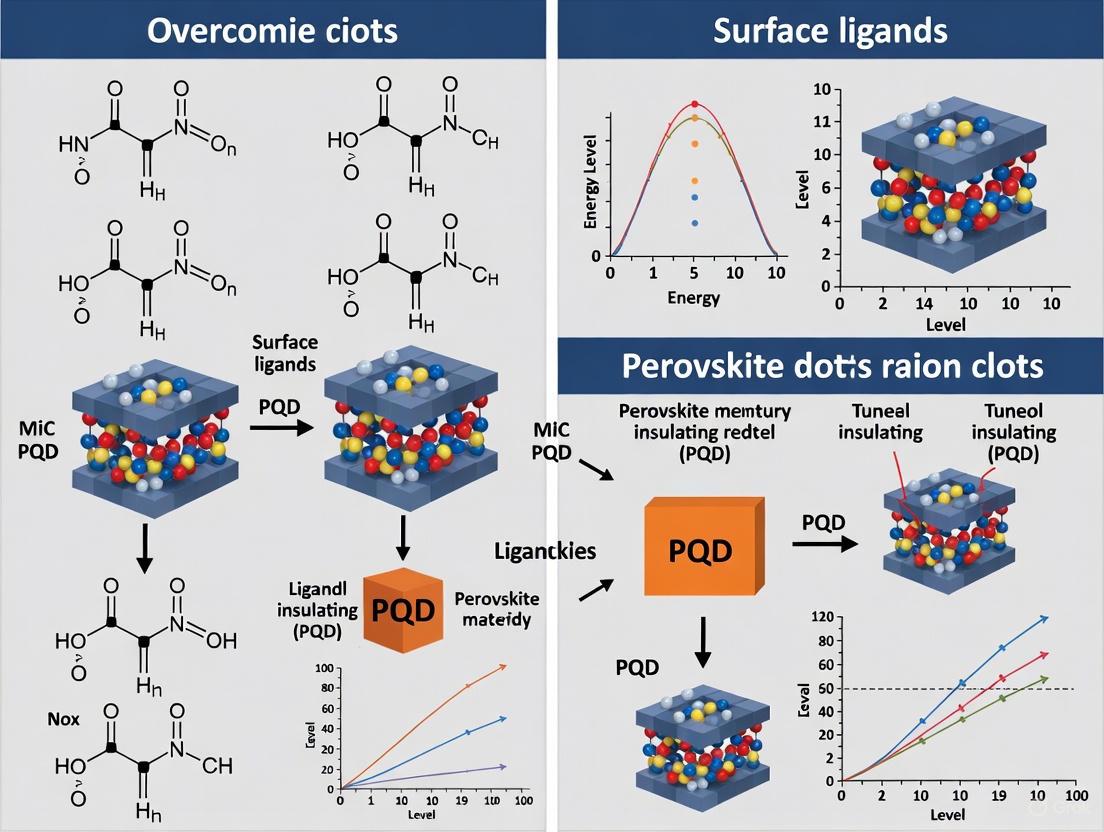
The inherent insulating nature of surface ligands on Perovskite Quantum Dots (PQDs) presents a significant bottleneck for their application in sensitive biomedical devices, limiting charge transfer and diagnostic sensitivity.
Beyond Insulation: Advanced Ligand Engineering Strategies for High-Performance Perovskite Quantum Dots in Biomedicine
Abstract
The inherent insulating nature of surface ligands on Perovskite Quantum Dots (PQDs) presents a significant bottleneck for their application in sensitive biomedical devices, limiting charge transfer and diagnostic sensitivity. This article provides a comprehensive analysis of innovative surface chemistry strategies designed to overcome this challenge. We explore the foundational principles of PQD instability and ligand dynamics, detail cutting-edge methodological advances in ligand exchange and surface engineering, and offer troubleshooting insights for optimizing film conductivity and stability. Furthermore, we validate these approaches through a comparative review of recent breakthroughs that enhance photoluminescence quantum yield and facilitate femtomolar-level biomarker detection, outlining a clear pathway for integrating high-performance PQDs into next-generation bioimaging and diagnostic platforms.
The Insulating Ligand Problem: Understanding Surface Chemistry and Stability Challenges in PQDs
Troubleshooting Guides
Poor Charge Transport in PQD Solar Cells
Problem: Low power conversion efficiency in perovskite quantum dot (PQD) solar cells due to insufficient charge carrier mobility.
Explanation: The dynamically bound pristine long-chain oleate (OA⁻) ligands on the PQD surface are inefficiently substituted during standard ester antisolvent rinsing under ambient conditions. This results in a low density of conductive capping ligands, creating a high tunneling barrier between QDs and leaving extensive surface vacancy defects that trap charge carriers [1].
Solution: Implement an Alkali-Augmented Antisolvent Hydrolysis (AAAH) strategy.
- Method: Create an alkaline environment by adding potassium hydroxide (KOH) to methyl benzoate (MeBz) antisolvent for interlayer rinsing of PQD solids [1].
- Mechanism: The alkaline environment renders ester hydrolysis thermodynamically spontaneous and lowers the reaction activation energy by approximately 9-fold, facilitating rapid substitution of insulating oleate ligands with conductive hydrolyzed counterparts [1].
- Outcome: This treatment can load up to twice the conventional amount of conductive ligands, leading to fewer trap-states, homogeneous orientations, and minimal particle agglomerations in the light-absorbing layer [1].
Quantum Dot Aggregation During Processing
Problem: QDs aggregate during film deposition or storage, leading to non-uniform films and defective charge transport pathways.
Explanation: The native ligands OA and OAm provide colloidal stability in solution but can desorb or provide insufficient steric hindrance during processing, especially when using polar solvents. This destabilizes the QD surfaces, causing irreversible aggregation [2] [3].
Solution: Employ a mixed-ligand engineering strategy to fine-tune surface energy and steric stabilization.
- Method: Synthesize QDs using different combinations of carboxylic acids and amines. For example, combine branched octanoic acid (OcA) with long-chain oleylamine (OAm) [3].
- Mechanism: The branched nature of OcA and OAm enhances steric stabilization. This combination results in higher surface energy (theoretically up to 2.14 eV for CsPbBr₃ QDs), which reduces particle migration and aggregation during solvent evaporation [3].
- Outcome: Superior dispersibility and optimized inkjet printability, effectively suppressing the "coffee ring effect" and enabling the fabrication of high-quality, uniform QD patterns on flexible substrates [3].
Low Photoluminescence Quantum Yield (PLQY) and Stability
Problem: Synthesized QDs exhibit low PLQY and degrade under thermal stress, indicating a high density of non-radiative recombination traps.
Explanation: The binding energy of OA/OAm ligands to the QD surface is composition-dependent. Weaker binding fails to effectively passivate surface defects, which act as traps. Furthermore, these ligands can desorb under thermal stress, leading to rapid degradation [4].
Solution: Select A-site cation compositions and ligand systems that maximize ligand binding energy.
- Method: For CsₓFA₁₋ₓPbI₃ PQDs, FA-rich QDs with appropriate ligands exhibit stronger ligand binding energy [4].
- Mechanism: Stronger ligand binding ensures robust surface passivation and improves thermal tolerance. The degradation pathway shifts; FA-rich QDs with higher ligand binding energy directly decompose into PbI₂ at higher temperatures, whereas Cs-rich QDs with weaker ligand binding undergo a detrimental phase transition at lower temperatures [4].
- Outcome: Improved PLQY and enhanced thermal stability of the QDs, which is critical for device operation and longevity [4].
Frequently Asked Questions (FAQs)
Q1: Why are oleic acid and oleylamine so commonly used in QD synthesis if they hinder charge transport?
A1: OA and OAm are excellent ligands for the colloidal synthesis of QDs. They effectively control nucleation and growth, resulting in monodisperse QDs with high crystallinity and excellent solution stability [5]. Their shortcomings are primarily related to solid-state electronic properties. Therefore, the common strategy is to use OA/OAm for high-quality synthesis and then perform a post-synthetic ligand exchange to replace them with shorter or more conductive ligands for device integration [1] [6].
Q2: Besides shorter ligands, what are alternative ligand strategies to improve charge transport?
A2: Research is exploring "active" ligands that do more than just reduce distance:
- Redox-Active Ligands: Ligands like ferrocene carboxylate introduce electronic states that provide an additional pathway for charge transport via a self-exchange chain reaction, complementing direct hopping between QDs [6].
- Dipole-Modifying Ligands: Ligands such as 4-fluorophenethylammonium iodide (FPEAI) can tune the interfacial energy level alignment at the QD/charge transport layer interface. This increases the interfacial energy gap, which can lead to a higher open-circuit voltage (VOC) in solar cells [7].
Q3: My ligand-exchanged QD film has become insoluble and aggregated. What went wrong?
A3: This is a common challenge. If the new ligands are too short or polar, they can drastically reduce the interparticle repulsion, causing QDs to aggregate and precipitate. The key is to:
- Control Solvent Polarity: Use solvents with appropriate polarity to balance ligand solubility and QD stability.
- Optimize Ligand Concentration: Ensure sufficient ligand coverage to prevent direct QD-QD fusion.
- Consider Sequential Processing: Techniques like liquid-state ligand exchange allow for the creation of stable, concentrated inks with conductive ligands before film deposition [1].
The table below summarizes key experimental data from recent studies on mitigating the charge transport issues caused by native ligands.
Table 1: Quantitative Data on Ligand Engineering Strategies for Improved Charge Transport
| Ligand System / Strategy | Material System | Key Performance Metric | Result | Reference |
|---|---|---|---|---|
| Alkaline Treatment (KOH+MeBz) | FA₀.₄₇Cs₀.₅₃PbI₃ PQDs | Solar Cell Certified PCE | 18.30% (highest for hybrid PQDSCs at time of publication) | [1] |
| Mixed Ligand (OcA/OAm) | CsPbBr₃ QDs | Photoluminescence Quantum Yield (PLQY) | 92% | [3] |
| Redox Ligand (FcCOO⁻) | ZnO QDs | Charge Transport Mechanism | Enabled long-range transport via self-exchange in addition to QD hopping | [6] |
| Dipole Ligand (FPEAI) | MAPbI₃/C₆₀ | Interfacial Energy Gap | Increased from 1.19 eV (PEAI) to 1.50 eV | [7] |
Table 2: Essential Research Reagent Solutions for Ligand Engineering
| Reagent Category | Example Compounds | Primary Function | Considerations |
|---|---|---|---|
| Short-Chain Ligands | Acetate (Ac⁻), Octanoic Acid (OcA), Octylamine (OcAm) | Reduce interparticle distance, lower tunneling barrier for hopping. | May compromise colloidal stability; requires careful solvent selection [1] [3]. |
| Redox-Active Ligands | Ferrocene carboxylate (FcCOO⁻) | Provide active sites for charge transport via self-exchange reactions. | Introduces an alternative charge pathway; kinetics depend on ligand coverage [6]. |
| Dipole-Modifying Ligands | 4-fluorophenethylammonium iodide (FPEAI) | Modulate energy level alignment at interfaces to improve VOC. | Directly impacts interfacial energetics rather than bulk conductivity [7]. |
| Alkaline Additives | Potassium Hydroxide (KOH) | Catalyze hydrolysis of ester antisolvents to generate conductive ligands in situ. | Must be carefully regulated to avoid damaging the ionic perovskite core [1]. |
Conceptual Diagrams
Troubleshooting Guides
Table 1: Common Experimental Challenges and Solutions in PQD Surface Engineering
| Problem Phenomenon | Root Cause | Diagnostic Method | Recommended Solution |
|---|---|---|---|
| Reduced Photoluminescence Quantum Yield (PLQY) | Surface defects from detached ligands acting as non-radiative recombination centers [8] [9] | Photoluminescence (PL) spectroscopy, PL lifetime measurements [8] | Implement hybrid passivation with ligands like DDAB combined with inorganic SiO₂ coating [8]. |
| Poor Charge Transport in Films | Insulating nature of long-chain alkyl ligands (e.g., OA, OAm) creating barriers between PQDs [9] [10] | Electrical conductivity measurement, Film morphology analysis (TEM) [10] | Perform solid-state ligand exchange with short-chain conductive ligands (e.g., acetate, benzoate) or conjugated polymers [1] [10]. |
| Rapid Degradation under Ambient Conditions | Ligand detachment during purification/exposure, allowing moisture and oxygen ingress [8] [9] | Long-term stability testing under controlled humidity/temperature [8] | Apply a dense inorganic shell (e.g., SiO₂ from TEOS) to encapsulate and protect surface-passivated PQDs [8]. |
| Phase Instability & Halide Migration | Low formation energy for halide vacancies and surface defects promoting ion migration [9] | Temperature-dependent PL analysis, X-ray Diffraction (XRD) [8] | Employ pseudohalogen ligands or metal doping to strengthen the lattice and suppress ion migration [11]. |
| Low Power Conversion Efficiency (PCE) in Solar Cells | Inefficient charge extraction due to surface traps and poor inter-dot coupling [1] | Current-Voltage (J-V) characterization, Trap-density measurement [1] | Use an alkaline-augmented antisolvent hydrolysis (AAAH) strategy with KOH/MeBz to enrich conductive capping [1]. |
Table 2: Quantitative Impact of Advanced Stabilization Strategies
| Stabilization Method | Key Reagent/Parameter | Performance Improvement | Stability Outcome |
|---|---|---|---|
| Organic-Inorganic Hybrid Passivation [8] | DDAB (10 mg) + SiO₂ (from TEOS) | PLQY enhancement; PCE increase from 14.48% to 14.85% in solar cells [8] | Retained >90% initial solar cell efficiency after 8 hours [8] |
| Alkaline-Augmented Antisolvent Hydrolysis (AAAH) [1] | Methyl Benzoate (MeBz) + KOH | Certified PCE of 18.3% in PQD solar cells [1] | Improved storage and operational stability [1] |
| Conjugated Polymer Ligands [10] | Th-BDT or O-BDT polymers | PCE increased to >15% from a baseline of 12.7% [10] | >85% initial efficiency retained after 850 hours [10] |
| Pseudohalogen Surface Treatment [11] | DDASCN (organic pseudohalide) | Suppressed halide migration, enhanced film conductivity [11] | Improved operational stability of red PeLEDs [11] |
Frequently Asked Questions (FAQs)
Q1: Why are the native ligands like oleic acid (OA) and oleylamine (OAm) problematic for PQD optoelectronics?
These standard long-chain ligands create two major issues: Insulating Nature and Weak Binding. Their long alkyl chains act as insulating barriers, severely hampering charge transport between PQDs in a film [9] [10]. Furthermore, their "kinked" molecular structure due to cis-configured double bonds leads to low surface packing density, making them dynamically bound and prone to detach during purification or upon exposure to ambient stimuli. This detachment leaves behind unprotected surfaces and defects [8] [9].
Q2: What is the fundamental mechanism behind ion migration and defect formation in PQDs?
The primary mechanism involves two interconnected processes:
- Ligand Dissociation: Weakly bound ligands detach from the PQD surface, creating surface vacancies and defects [9].
- Halide Vacancy Formation: The perovskite lattice has low ion migration energy, particularly for halide ions. This allows halide vacancies to form easily and migrate through the lattice, especially when surface defects are present [9]. These processes are accelerated by external stimuli like heat, light, and moisture, leading to irreversible structural degradation.
Q3: How does ligand exchange with short-chain molecules like acetates or benzoates improve performance?
Short-chain ligands like acetate (Ac⁻) or benzoate hydrolyzed from ester antisolvents (e.g., MeOAc, MeBz) provide a dual advantage. They possess a stronger binding affinity to the PQD surface metal sites (e.g., Pb²⁺), which improves stability. More importantly, their shorter chain length reduces the inter-particle distance in PQD films. This closer packing dramatically enhances electronic coupling and charge transport between adjacent PQDs, which is crucial for efficient solar cells and LEDs [1].
Q4: Our PQD films show good initial photoluminescence but degrade rapidly during device fabrication. What strategies can prevent this?
This is a common issue when subsequent solution-processing steps damage the PQD layer. Strategies include:
- Robust Surface Capping: Use a combination of strong-binding organic ligands (e.g., DDAB, pseudohalides) and a protective inorganic shell (e.g., SiO₂) to create a resilient barrier before further processing [8] [11].
- Cross-linking: Introduce cross-linkable ligands that can be polymerized via light or heat to form a stable, networked layer that resists detachment [9].
- Solid-State Ligand Exchange: Perform ligand exchange on pre-deposited solid films rather than in solution, which offers better morphological control [12].
Experimental Protocols
Protocol 1: Hybrid Organic-Inorganic Passivation for Enhanced Stability
This protocol is adapted from the synthesis of stable Cs₃Bi₂Br₉/DDAB/SiO₂ PQDs [8].
Materials:
- Precursor salts: CsBr, BiBr₃
- Solvents: Dimethyl sulfoxide (DMSO), anhydrous ethanol
- Ligands: Oleic Acid (OA), Oleylamine (OAm), Didodecyldimethylammonium Bromide (DDAB)
- Inorganic shell precursor: Tetraethyl orthosilicate (TEOS)
Methodology:
- PQD Synthesis: Dissolve CsBr and BiBr₃ in DMSO with OA and OAm as initial capping ligands. Use an antisolvent (e.g., ethanol) to precipitate the Cs₃Bi₂Br₉ PQDs.
- Organic Passivation: Re-disperse the purified PQDs in a solvent and add DDAB. The DDA⁺ cations have a strong affinity for halide anions, effectively passivating surface defects and enhancing the PLQY [8].
- Inorganic Encapsulation: Add TEOS to the DDAB-treated PQD solution under controlled conditions to hydrolyze and form a dense, amorphous SiO₂ shell around each PQD. This shell provides a robust physical barrier against environmental stimuli [8].
- Characterization: Use Transmission Electron Microscopy (TEM) to confirm core-shell morphology. Monitor optical properties and environmental stability via UV-Vis/PL spectroscopy and long-term PLQY tracking under ambient conditions.
Protocol 2: Alkaline-Augmented Antisolvent Hydrolysis (AAAH) for Conductive Capping
This protocol describes the process to achieve high ligand surface coverage with conductive short-chain ligands [1].
Materials:
- Ester Antisolvent: Methyl Benzoate (MeBz)
- Alkali Source: Potassium Hydroxide (KOH)
- PQD Solid Films: FA₀.₄₇Cs₀.₅₃PbI₃ PQDs deposited via layer-by-layer spin-coating.
Methodology:
- Solution Preparation: Add a carefully regulated amount of KOH to the MeBz antisolvent to create an alkaline environment.
- Interlayer Rinsing: After depositing each layer of PQDs, rinse the film with the KOH/MeBz solution. The alkaline environment facilitates the rapid hydrolysis of MeBz into conductive benzoate ligands and makes this reaction thermodynamically spontaneous [1].
- Ligand Exchange: The generated benzoate ligands instantly substitute the pristine, insulating oleate (OA⁻) ligands on the PQD surface. This process results in up to twice the conventional amount of conductive capping, passivating defects and enhancing inter-dot charge transport [1].
- Post-Treatment: After achieving the desired film thickness, a final post-treatment with short cationic ligands (e.g., FAI in 2-pentanol) can be applied to exchange the A-site cations for further performance enhancement [1].
Research Reagent Solutions
Table 3: Essential Reagents for PQD Surface Engineering
| Reagent Name | Function/Brief Explanation | Key Application |
|---|---|---|
| Didodecyldimethylammonium Bromide (DDAB) | Organic passivator; strong affinity for halide anions, improves surface coverage and PLQY [8]. | Enhancing environmental stability and optical properties of PQDs. |
| Tetraethyl Orthosilicate (TEOS) | Precursor for inorganic SiO₂ shell; forms a dense, amorphous protective layer [8]. | Encapsulating PQDs to shield against moisture, oxygen, and heat. |
| Methyl Benzoate (MeBz) | Ester antisolvent; hydrolyzes into conductive benzoate ligands for X-site exchange [1]. | Replacing long-chain OA ligands in film deposition to boost conductivity. |
| Conjugated Polymers (e.g., Th-BDT) | Dual-function ligand; provides defect passivation and enhances charge transport via π-π stacking [10]. | Simultaneously improving film stability and charge carrier mobility. |
| Potassium Hydroxide (KOH) | Alkali additive; catalyzes ester hydrolysis in antisolvent, enabling rapid ligand exchange [1]. | Used in AAAH strategy to enrich conductive ligand capping on PQDs. |
Visualized Workflows
Surface Degradation and Stabilization in Perovskite Quantum Dots
Experimental Workflow for PQD Film Processing and Passivation
Frequently Asked Questions
What is the fundamental issue with native insulating ligands on PQDs? Native long-chain insulating ligands, such as oleic acid (OA) and oleylamine (OAm), are essential for stabilizing colloidal PQDs during synthesis. However, their highly dynamic binding nature and long insulating carbon chains create a significant physical barrier between quantum dots. This barrier drastically reduces inter-dot charge carrier mobility and facilitates non-radiative recombination at surface defects, leading to reduced photoluminescence quantum yield (PLQY) in films and lower device efficiency [13] [14] [15].
What are the primary symptoms of insufficient ligand passivation? Researchers can identify inadequate ligand passivation through several experimental observations:
- Low Photoluminescence Quantum Yield (PLQY): A significant drop in PLQY from solution to solid film indicates rampant non-radiative recombination at surface traps [13] [15].
- Poor Charge Transport: Measured as low conductivity in the PQD film, this results in high turn-on voltages in LEDs and reduced fill factor in solar cells [15] [1].
- Short Photoluminescence Lifetime: Time-resolved photoluminescence (TR-PL) shows a short decay time, confirming the presence of unpassivated surface defects that quench excitons [13] [15].
Which ligand engineering strategies can mitigate these issues? Advanced strategies focus on replacing native ligands with shorter or more tightly bound molecules:
- Short Conductive Ligands: Replacing long OA/OAm with short ligands like acetate or formate reduces inter-dot distance, enhancing film conductivity [1].
- Bidentate Ligands: Molecules like formamidine thiocyanate (FASCN) can bind to the PQD surface with two atoms, offering a binding energy several times higher than native ligands, which minimizes ligand desorption and ensures robust passivation [15].
- Multifunctional Treatments: Strategies like bilateral affinity ligands (e.g., Ag-TOP) can simultaneously passivate metal site defects and improve surface halide stability [13].
Quantitative Data: Ligand Engineering Impact on PQD Performance
The following table summarizes performance metrics achieved by different ligand engineering strategies, highlighting the direct correlation between surface treatment and enhanced optoelectronic properties.
| Ligand Engineering Strategy | Performance Metric | Control / Baseline Value | Treated / Improved Value | Reference |
|---|---|---|---|---|
| Ag-TOP (Bilateral Affinity) | PLQY | ~50% | 93.7% | [13] |
| LED External Quantum Efficiency (EQE) | Not Specified | 9.43% | [13] | |
| LED Luminance | Not Specified | 3820 cd cm⁻² | [13] | |
| Formamidine Thiocyanate (FASCN) | Binding Energy (Calculated) | OA: -0.22 eV, OAm: -0.18 eV | -0.91 eV | [15] |
| Film Conductivity | Baseline | 8x higher | [15] | |
| NIR-LED EQE | ~11.5% (Control) | ~23% (Champion) | [15] | |
| Alkaline-Augmented Hydrolysis (MeBz+KOH) | Solar Cell Certified PCE | Conventional Ester Rinsing | 18.3% (Champion) | [1] |
Experimental Protocol: Post-Synthesis Ligand Exchange with FASCN
This protocol details the treatment of FAPbI₃ PQDs with Formamidine Thiocyanate (FASCN) to achieve high surface coverage and performance in near-infrared light-emitting diodes (NIR-LEDs), as reported in the research [15].
1. Principle FASCN is a bidentate liquid ligand. Its short carbon chain (length <3) minimizes insulating effects, while its sulfur and nitrogen atoms form a tight, coordinated bond with uncoordinated lead atoms (Pb²⁺) on the PQD surface. This results in full surface coverage, effective defect passivation, and enhanced charge transport.
2. Materials
- PQD Solution: Pre-synthesized FAPbI₃ quantum dots capped with oleic acid (OA) and oleylammonium (OAm+).
- Ligand Solution: Formamidine thiocyanate (FASCN).
- Solvent: Anhydrous toluene or hexane.
- Equipment: Centrifuge, vortex mixer, and nitrogen glovebox.
3. Procedure
- Step 1: Precipitate the pristine FAPbI₃ PQDs by adding a non-solvent (e.g., methyl acetate) to the crude solution, followed by centrifugation.
- Step 2: Re-disperse the PQD pellet in a small volume of anhydrous toluene to create a concentrated stock solution.
- Step 3: Add the FASCN ligand solution directly to the PQD stock solution. The typical concentration of FASCN should be optimized but is often used in excess to ensure complete exchange.
- Step 4: Vortex the mixture vigorously to ensure homogeneous interaction and let it react for 5-10 minutes.
- Step 5: Precipitate the ligand-exchanged PQDs by adding a non-solvent, then centrifuge to remove the supernatant containing displaced OA/OAm ligands and excess FASCN.
- Step 6: Re-disperse the final, treated PQDs in an appropriate solvent (e.g., octane) for film deposition.
4. Validation
- Photoluminescence Quantum Yield (PLQY): Measure the PLQY of the solution and resulting films. A significant increase confirms effective trap passivation [15].
- Time-Resolved Photoluminescence (TR-PL): A prolonged PL lifetime indicates reduced non-radiative recombination pathways [15].
- X-ray Photoelectron Spectroscopy (XPS): A shift in the Pb 4f peak to higher binding energy confirms successful coordination of FASCN with the Pb²⁺ on the PQD surface [15].
The Scientist's Toolkit: Key Research Reagents
This table lists essential reagents used in advanced ligand engineering for overcoming the insulating nature of surface ligands.
| Reagent / Material | Function in Ligand Engineering |
|---|---|
| Formamidine Thiocyanate (FASCN) | A bidentate liquid ligand that provides tight binding and full surface coverage, dramatically improving conductivity and PLQY [15]. |
| Silver-Trioctylphosphine (Ag-TOP) | A bilateral affinity ligand that passivates surface defects and stabilizes bromide ions, enhancing optical properties and device performance [13]. |
| Methyl Benzoate (MeBz) with KOH | An ester antisolvent used in an alkaline environment to facilitate rapid hydrolysis and substitution of insulating ligands with short conductive benzoate ligands [1]. |
| Di-dodecyl dimethyl ammonium bromide (DDAB) | A common short halide alkyl ligand used in early ligand exchange processes to diminish the insulating effect from long-chain ligands [13]. |
Logic of Ligand Engineering for Enhanced Optoelectronic Properties
The diagram below illustrates the cause-effect relationships and strategic interventions in ligand engineering.
Workflow for Developing a Ligand-Engineered PQD Film
This workflow outlines the key steps and decision points for preparing a high-quality PQD film via ligand exchange.
Technical FAQ: Addressing Core Challenges
FAQ 1: Why do my perovskite quantum dot (PQD) films have poor electrical conductivity even after solid-state ligand exchange?
The poor conductivity often stems from a fundamental trade-off. Long-chain insulating ligands (e.g., oleic acid/OA and oleylamine/OAm) are essential for colloidal stability and preventing aggregation during synthesis [16] [17]. However, their insulating nature creates a barrier that blocks efficient charge transport between individual QDs in a film [17]. While ligand exchange processes replace these long-chain ligands with shorter ones to improve charge mobility, this process can be inefficient. Incomplete exchange leaves residual insulating ligands, and the process itself can create new surface defects that trap charges, degrading both performance and environmental resilience [18].
FAQ 2: How can I improve the stability of my PQD films against moisture without compromising their luminescence?
The key is targeted surface passivation that does not inhibit charge transport. Strategies include:
- Ligand Engineering: Exchanging dynamically bound, insulating ligands (OA/OAm) with shorter, conjugated ligands or multidentate ligands that bind more strongly to the PQD surface [12] [16] [17]. For example, using conjugated ligands like 3-phenyl-2-propen-1-amine (PPA) provides a pathway for electron cloud overlapping, enhancing conductivity while maintaining stability [17].
- Structural Integration: Incorporating dimensionally engineered organic semiconductors, such as 3D star-shaped molecules, can form a robust, hydrophobic barrier around the PQDs. This passivates surface defects and physically prevents moisture ingress, thereby enhancing environmental resilience without sacrificing, and sometimes even improving, photoluminescence quantum yield (PLQY) [18].
FAQ 3: My PQD solution aggregates during purification. How can I prevent this?
Aggregation during purification is typically caused by the detachment of surface ligands. A modified synthesis protocol like the Split-Ligand Mediated Re-Precipitation (Split-LMRP) method can significantly enhance colloidal stability [19]. This technique involves separately dissolving rich oleic acid (OA) and amine ligands. OA acts both as a stabilizer and to control the polarity of the nucleation environment, allowing for a more stable precipitation and purification process. This method enables purification under ambient conditions and helps maintain colloidal integrity by preventing excessive ligand loss [19].
Troubleshooting Guides & Experimental Protocols
Troubleshooting Common Experimental Setbacks
Table 1: Troubleshooting Guide for PQD Experiments
| Problem | Potential Cause | Solution | Underlying Principle |
|---|---|---|---|
| Low PLQY in films | High surface defect density from inefficient ligand exchange or ligand loss [16]. | Implement post-synthesis passivation with strongly-binding ligands (e.g., thiols like AET) [16] or incorporate a passivating organic semiconductor [18]. | Heals surface traps (vacancies) that cause non-radiative recombination, directly linking colloidal integrity to optoelectronic performance. |
| Poor film conductivity | Insulating barrier from long-chain ligands (OA/OAm) [17]. | Perform ligand exchange with conjugated short-chain ligands (e.g., PPA) [17] or short-chain ionic ligands (e.g., acetate) [18]. | Reduces inter-dot distance and enables electron wavefunction delocalization, boosting charge mobility while trying to retain stability. |
| Rapid degradation in ambient | Surface defects act as entry points for moisture and oxygen; weak ligand binding [16] [18]. | Apply cross-linking ligands or embed PQDs in a stabilizing matrix (e.g., a 3D star-shaped molecule like Star-TrCN) [16] [18]. | Creates a physical hydrophobic barrier and strengthens the surface ligand shell, enhancing environmental resilience. |
| Phase instability (CsPbI₃) | Transformation from photoactive cubic (α) to non-photoactive orthorhombic (δ) phase [18]. | Use surface engineering to induce strain or passivate surface vacancies that trigger phase transition [18]. | Surface ligands and passivators stabilize the high-energy cubic phase at the nanoscale. |
Detailed Experimental Protocols
Protocol 1: Ligand Exchange with Conjugated Molecules for Enhanced Charge Transport [17]
This protocol outlines the exchange of native insulating ligands with conjugated 3-phenyl-2-propen-1-amine (PPA) to improve charge mobility.
- Step 1 – Synthesis: Synthesize MAPbBr₃ QDs using standard hot-injection or LARP methods with OA and OAm as initial capping ligands.
- Step 2 – Ligand Exchange: Add a controlled molar excess of PPA ligand directly to the purified PQD solution. Stir the mixture for a specific duration (e.g., 1-2 hours) to allow the dynamic binding equilibrium to favor the new, conjugated ligand.
- Step 3 – Purification: Precipitate the PPA-capped QDs by adding a non-solvent (e.g., methyl acetate or toluene/acetonitrile mixture). Recover the QDs via centrifugation and re-disperse them in an appropriate solvent for film fabrication.
- Key Validation: The success of the exchange can be confirmed through Fourier-Transform Infrared Spectroscopy (FTIR) showing the new binding modes, and a significant increase in the conductivity and carrier mobility of the resultant film, as measured by space-charge-limited current (SCLC) analysis [17].
Protocol 2: Enhancing Stability via Hybrid PQD-Organic Semiconductor Films [18]
This protocol describes the incorporation of a 3D star-shaped organic semiconductor (Star-TrCN) to improve both stability and device performance.
- Step 1 – PQD Synthesis: Prepare a solution of CsPbI₃ PQDs using the standard hot-injection method, followed by purification to remove excess precursors and ligands.
- Step 2 – Hybrid Solution Preparation: Dissolve the synthesized Star-TrCN molecule in a solvent compatible with the PQD solution (e.g., chlorobenzene). Blend this solution with the purified PQD dispersion at an optimized ratio.
- Step 3 – Film Fabrication: Spin-coat the hybrid Star-TrCN:PQD solution onto the target substrate (e.g., an electron transport layer). Anneal at a mild temperature (e.g., 70-90°C) to remove residual solvent.
- Key Validation: The robust chemical interaction between Star-TrCN and the PQD surface can be demonstrated by theoretical modeling (DFT) and X-ray Photoelectron Spectroscopy (XPS). The enhanced cubic-phase stability is confirmed by X-ray Diffraction (XRD) tracking over time under ambient humidity (20-30% RH) [18].
Research Reagent Solutions
Table 2: Essential Materials for PQD Surface Engineering
| Reagent Name | Function / Role | Key Consideration |
|---|---|---|
| Oleic Acid (OA) / Oleylamine (OAm) | Standard long-chain ligands for colloidal synthesis; control nucleation and growth [19] [18]. | Provide initial colloidal integrity but are insulating and dynamically bound, creating a trilemma with mobility and stability [16]. |
| 3-phenyl-2-propen-1-amine (PPA) | Conjugated short-chain ligand for ligand exchange [17]. | Improves charge mobility via electron delocalization while maintaining solubility/stability. Addresses the insulating ligand problem directly. |
| 2-aminoethanethiol (AET) | Short-chain, bidentate ligand for post-synthesis defect passivation [16]. | Strong Pb-S binding heals surface defects, improving PLQY and environmental resilience against water and UV light. |
| Star-TrCN | 3D star-shaped organic semiconductor for hybrid films [18]. | Passivates surface defects, provides a hydrophobic barrier for environmental resilience, and creates a cascade energy band for improved charge extraction. |
| Sodium Acetate (NaOAc) | Short-chain ionic ligand for solid-state ligand exchange [18]. | Replaces long-chain ligands to enhance inter-dot coupling and charge mobility in films. Risk of introducing defects if not optimized. |
Visualizing Strategies and Workflows
The Stability Trilemma in PQDs
Diagram 1: The PQD Stability Trilemma and Solutions Map
Surface Ligand Engineering Workflow
Diagram 2: Surface Ligand Engineering Pathways
Engineering Conductive Surfaces: Cutting-Edge Ligand Exchange and Functionalization Techniques
Workflow Diagram
Sequential Multiligand Exchange Process
Troubleshooting Guides
Common Experimental Issues and Solutions
Table 1: Troubleshooting Common Ligand Exchange Problems
| Problem | Possible Causes | Solutions & Verification Methods |
|---|---|---|
| Poor ligand exchange efficiency | Insufficient antisolvent polarity; inadequate rinsing time; low humidity for ester hydrolysis | Use MeOAc or MeBz antisolvents; optimize rinsing duration (typically 30-60s); consider alkaline-augmented hydrolysis [1] |
| PQD degradation during purification | Excessive antisolvent polarity; harsh mechanical forces; ligand detachment creating defects | Use moderate polarity esters (MeOAc, MeBz); minimize centrifugation force/time; employ low steric hindrance ligands (e.g., OTAI) to reduce detachment [20] |
| Low thin-film conductivity | Residual long-chain ligands; large inter-dot spacing; incomplete surface passivation | Implement sequential multiligand exchange with MPA/FAI; confirm ~85% ligand removal via 1H NMR; use short-chain conductive ligands [21] [22] |
| Phase instability | Surface defects from ligand loss; incomplete coordination of Pb²⁺ ions | Ensure proper passivation with hybrid MPA/FAI ligands; create rich halogen environment with OTAI; reduce surface defects [20] |
| Film cracking or poor morphology | Rapid antisolvent evaporation; excessive ligand removal causing aggregation | Control rinsing and drying conditions; optimize antisolvent volume (e.g., 1-5 mL MeOAc); achieve dense packing without cracks [22] |
Advanced Optimization Strategies
Table 2: Performance Enhancement Techniques
| Technique | Implementation | Expected Outcome |
|---|---|---|
| Alkali-Augmented Antisolvent Hydrolysis (AAAH) | Add KOH to methyl benzoate (MeBz) antisolvent [1] | ~2x increase in conductive ligands; higher PCE (certified 18.3%); improved stability |
| Low Steric Hindrance (LSH) Ligands | Use octylammonium iodide (OTAI) instead of oleylamine [20] | 73% higher PLQY after purification; reduced ligand detachment; better device performance |
| Hybrid Anionic/Cationic Exchange | Sequential treatment with MPA (anionic) then FAI (cationic) [21] [22] | 28% PCE improvement; reduced hysteresis; enhanced JSC by ~2 mA cm⁻² |
| Controlled Equilibration Kinetics | Overnight equilibration after simultaneous DFe/SA addition [23] | Improved reproducibility (50% duplicates within 10% RSD); better ligand quantification |
Experimental Protocols
Core Methodology: Sequential Solid-State Multiligand Exchange
Synthesis of FAPbI3 Colloidal Quantum Dots
- Prepare PbI₂ solution: Dissolve 0.1 mmol PbI₂ in 2 mL anhydrous ACN with 200 μL OA and 20 μL OctAm
- Prepare FAI solution: Mix 0.08 mmol FAI with 40 μL OA, 6 μL OctAm, and 0.5 mL ACN
- Add FAI solution dropwise to PbI₂ solution with continuous stirring
- Inject mixture into preheated toluene (10 mL, 70°C) under rapid stirring
- Quench immediately in ice/water bath
- Collect precipitate via ultracentrifugation at 9000 rpm for 15 minutes
- Redisperse in hexane (1 mL) and centrifuge at 6000 rpm for 10 minutes to remove aggregates [22]
Liquid Purification Process
- Add methyl acetate (MeOAc) to colloidal solution in varying volumes (1, 3, or 5 mL)
- Centrifuge at 6000 rpm for 15 minutes
- Discard supernatant containing residual precursors and free ligands
- Redisperse sediment in chloroform (1 mL)
- Centrifuge at 4000 rpm for 5 minutes to remove large particles
- Confirm ~85% ligand removal via 1H NMR spectroscopy [22]
Sequential Solid-State Multiligand Exchange
- Prepare exchange solution: 3-mercaptopropionic acid (MPA) and formamidinium iodide (FAI) in MeOAc
- Apply exchange solution to spin-coated PQD films
- Execute sequential exchange: First replace long-chain OctAm and OA with short-chain MPA
- Follow with FAI passivation to complete the multiligand exchange
- Characterize via 1H NMR to confirm surface passivation with MPA and FAI [21] [22]
Alkaline-Augmented Antisolvent Hydrolysis Protocol
Enhanced Ester Hydrolysis for Improved Ligand Exchange
- Select methyl benzoate (MeBz) as antisolvent for its suitable polarity
- Establish alkaline environment with potassium hydroxide (KOH)
- Add KOH to MeBz antisolvent for interlayer rinsing of PQD solids
- Utilize alkaline conditions to render ester hydrolysis thermodynamically spontaneous
- Achieve approximately 9-fold reduction in reaction activation energy
- Substitute pristine insulating oleate ligands with hydrolyzed conductive counterparts
- Obtain up to double the conventional amount of conductive ligands [1]
Research Reagent Solutions
Table 3: Essential Materials for Sequential Multiligand Exchange
| Category | Specific Reagents | Function & Application Notes |
|---|---|---|
| Perovskite Precursors | Lead iodide (PbI₂, 99.9%); Formamidinium iodide (FAI, 99.9%) | Core PQD synthesis; ensures high purity and optimal crystal formation [22] |
| Long-Chain Ligands | Oleic acid (OA); Octylamine (OctAm) | Initial surface stabilization during synthesis; provide colloidal stability but limit conductivity [21] [22] |
| Short-Chain Exchange Ligands | 3-Mercaptopropionic acid (MPA); Formamidinium iodide (FAI) | Replace long-chain insulators; improve inter-dot charge transport; MPA binds as X-type ligand [21] [22] |
| Solvents & Antisolvents | Methyl acetate (MeOAc); Methyl benzoate (MeBz); Toluene; Acetonitrile (ACN) | MeOAc/MeBz facilitate ligand exchange and purification; ACN and toluene for synthesis [22] [1] |
| Alkaline Enhancers | Potassium hydroxide (KOH) | Accelerates ester hydrolysis in AAAH strategy; enables spontaneous ligand substitution [1] |
| Device Fabrication | SnO₂ colloidal precursor; Spiro-OMeTAD; Li-TFSI; 4-tert-butylpyridine (TBP) | Electron and hole transport layers for complete solar cell devices [22] |
Frequently Asked Questions
Methodology Optimization
Q: What is the optimal MeOAc volume for liquid purification, and how does it affect ligand removal? A: The research tested 1, 3, and 5 mL MeOAc volumes (labeled LP1, LP3, LP5). While all volumes achieved approximately 85% ligand removal confirmed by 1H NMR, intermediate volumes (3 mL) typically provide the best balance between effective ligand removal and preservation of PQD structural integrity. Excessive antisolvent may cause unnecessary ligand detachment leading to surface defects [22].
Q: Why use a sequential approach rather than simultaneous multiligand exchange? A: Sequential exchange allows controlled replacement of different ligand types. The demonstrated process first addresses the anionic ligands (replacing OA with MPA) followed by cationic ligands (replacing OctAm with FAI). This stepwise approach prevents uncontrolled ligand stripping and ensures proper surface passivation at each step, reducing defect formation and improving final film quality [21] [22].
Q: How does the alkaline treatment enhance ester hydrolysis for ligand exchange? A: The alkaline environment (achieved with KOH) addresses both thermodynamic and kinetic limitations. Theoretically, it renders ester hydrolysis thermodynamically spontaneous and lowers the reaction activation energy by approximately 9-fold. Practically, this enables rapid substitution of pristine insulating oleate ligands with up to twice the conventional amount of hydrolyzed conductive counterparts during interlayer rinsing [1].
Problem Resolution
Q: How can I prevent PQD aggregation during the purification process? A: Employ low steric hindrance ligands like those provided by octylammonium iodide (OTAI). These short-chain ligands (8 carbon atoms) have a smaller "force-receiving area" compared to conventional oleylamine (18 carbon atoms), making them less likely to desorb during purification. This approach maintained a 73% higher photoluminescence quantum yield after purification compared to control QDs [20].
Q: What characterization methods confirm successful ligand exchange? A: 1H NMR spectroscopy is the primary technique for quantifying ligand removal (~85%) and confirming surface passivation with new ligands. Additional verification methods include: photoluminescence spectroscopy (to assess defect reduction), electrochemical impedance spectroscopy (to measure improved conductivity), UV-Vis spectroscopy, and TEM for morphological analysis [21] [22].
Q: How can I improve reproducibility in ligand exchange experiments? A: The competitive ligand exchange approach used in metallurgical studies demonstrates that overnight equilibration after simultaneous addition of competing ligands improves reproducibility, with 50% of duplicate analyses agreeing within 10% relative standard deviation. Controlling equilibration kinetics and using standardized quantification methods like ProMCC software also enhance reproducibility [23].
Performance & Applications
Q: What performance improvements can I expect from successful multiligand exchange? A: The sequential multiligand exchange with MPA/FAI delivers approximately 28% improvement in power conversion efficiency, enhanced current density by ~2 mA cm⁻², reduced hysteresis, and improved operational stability. These improvements stem from reduced inter-dot spacing, enhanced thin-film conductivity, and minimized vacancy-assisted ion migration [21] [22].
Q: Is this approach applicable to other perovskite compositions beyond FAPbI₃? A: Yes, the alkaline treatment strategy has demonstrated broad compatibility with diverse PQD compositions, including CsPbI₃ and mixed-cation systems like FA₀.₄₇Cs₀.₅₃PbI₃. The fundamental principles of replacing long-chain insulating ligands with short-chain conductors apply across different perovskite quantum dot systems [1].
Perovskite Quantum Dots (PQDs) hold great promise for next-generation photovoltaics due to their tunable bandgap, high light absorption coefficients, and defect tolerance [1]. However, their surfaces are typically capped with long-chain insulating ligands like oleate (OA⁻) and oleylammonium (OAm⁺), which severely impede charge transfer between adjacent QDs, compromising the performance of solar cells [14]. The Alkali-Augmented Antisolvent Hydrolysis (AAAH) strategy is a transformative thermodynamic approach designed to overcome this fundamental limitation. By creating an alkaline environment, this method facilitates the rapid and extensive substitution of insulating ligands with dense, conductive capping, leading to record-breaking photovoltaic efficiency [1] [24].
The Scientist's Toolkit: Essential Research Reagents
The table below details the key materials and their functions for implementing the AAAH strategy.
| Reagent/Material | Function in AAAH Strategy |
|---|---|
| Methyl Benzoate (MeBz) | Preferred antisolvent of moderate polarity; its hydrolyzed product (benzoate) provides robust binding to the PQD surface for superior charge transfer [1]. |
| Potassium Hydroxide (KOH) | Alkaline source that creates the necessary environment to render ester hydrolysis thermodynamically spontaneous and lower the reaction activation energy [1]. |
| FA₀.₄₇Cs₀.₅₃PbI₃ PQDs | Representative hybrid A-site lead iodide perovskite quantum dots used as the light-absorbing material [1]. |
| Oleate (OA⁻)/Oleylammonium (OAm⁺) | Pristine long-chain insulating ligands that are replaced during the AAAH process [1]. |
Experimental Protocol: Implementing the AAAH Strategy
This section provides a detailed methodology for applying the AAAH strategy to fabricate PQD solar cell light-absorbing layers.
1. PQD Solid Film Deposition:
- Begin by spin-coating a layer of synthesized hybrid FA₀.₄₇Cs₀.₅₃PbI₃ PQDs (capped with pristine OA⁻ and OAm⁺ ligands) onto your substrate to form an "as-cast" solid film [1].
2. Alkali-Augmented Antisolvent Rinsing:
- Prepare the antisolvent solution by coupling methyl benzoate (MeBz) with a carefully regulated concentration of potassium hydroxide (KOH). The KOH establishes the critical alkaline environment [1].
- Rinse the as-cast PQD solid film with the KOH/MeBz solution under ambient conditions (approximately 30% relative humidity). This step initiates the hydrolysis of the ester antisolvent, generating short-chain conductive ligands in situ which rapidly substitute the insulating OA⁻ ligands [1].
3. Layer-by-Layer Assembly:
- Repeat the deposition and alkaline antisolvent rinsing steps in a layer-by-layer fashion until the desired film thickness is achieved. Each rinsing step ensures the removal of pristine ligands and the establishment of a conductive capping on the newly deposited layer [1].
Troubleshooting Guide & FAQs
Q1: During the antisolvent rinsing step, my PQD film completely dissolves or degrades. What is the likely cause?
- A: This is often caused by using an antisolvent with excessive polarity. Esters like methyl formate (MeFo) or ethyl formate (EtFo), or sulfonate-based esters, are too aggressive and disrupt the ionic perovskite core [1].
- Solution: Use an antisolvent with moderate polarity, such as methyl benzoate (MeBz) or methyl acetate (MeOAc), which effectively remove ligands without attacking the perovskite structure [1].
Q2: My final device efficiency is low, and characterization suggests poor charge transport. Has the ligand exchange been ineffective?
- A: This is the core problem AAAH is designed to solve. Conventional neat ester rinsing often only removes pristine OA⁻ ligands without sufficiently replacing them, creating surface vacancy defects that trap charge carriers [1].
- Solution:
- Verify Alkaline Environment: Ensure the KOH is properly dissolved and mixed in the MeBz antisolvent to create the essential alkaline conditions.
- Confirm Humidity: The hydrolysis reaction requires ambient moisture. Perform the rinsing step at a relative humidity of around 30% [1].
- Characterize the Output: A successful AAAH treatment should result in a film with fewer trap-states, homogeneous crystallographic orientations, and minimal particle agglomerations, leading to a certified efficiency approaching 18.3% [1] [24].
Q3: Why is methyl benzoate (MeBz) the preferred antisolvent in this protocol over the more common methyl acetate (MeOAc)?
- A: The hydrolyzed product of MeBz (benzoate) offers superior binding to the PQD surface compared to the acetate from MeOAc. This robust binding provides a more durable conductive capping, which enhances charge transfer and overall device stability [1].
Q4: The AAAH process seems to focus on anionic (X-site) ligand exchange. How are the cationic (A-site) ligands managed?
- A: The AAAH strategy specifically targets the exchange of pristine anionic OA⁻ ligands on the X-site. A subsequent post-treatment step is typically required to substitute the pristine OAm⁺ ligands on the A-site. This is often done using protic solvents like 2-pentanol (2-PeOH) as the medium for cationic salt solutions (e.g., FAI, CsOAc) to mediate efficient A-site ligand exchange [1].
AAAH Workflow and Ligand Exchange Diagrams
The following diagrams illustrate the core experimental workflow and the chemical process of the AAAH strategy.
The implementation of the AAAH strategy leads to a significant leap in device performance, as summarized below.
| Performance Metric | Value Achieved with AAAH | Context & Significance |
|---|---|---|
| Certified Power Conversion Efficiency (PCE) | 18.30% [1] [24] | Highest certified efficiency reported for perovskite quantum dot solar cells. |
| Best Lab PCE | 18.37% [1] | Champion device efficiency measured in the laboratory. |
| Steady-State Efficiency | 17.85% [1] [24] | Stabilized power output under continuous illumination. |
| Average PCE (over 20 devices) | 17.68% [1] | Demonstrates high reproducibility of the method. |
| Large-Area (1 cm²) Champion PCE | 15.60% [24] | Highlights the promising scalability of the AAAH strategy. |
Perovskite Quantum Dots (PQDs) are at the forefront of next-generation optoelectronic materials due to their excellent properties, including tunable bandgaps and high photoluminescence quantum yields. However, their performance is inherently limited by the insulating nature of the long-chain organic ligands (e.g., oleic acid and oleylamine) used in their synthesis. These ligands create charge transport barriers in quantum dot films, severely hindering the efficiency of devices like solar cells and light-emitting diodes (QLEDs). This technical support center is dedicated to overcoming this challenge through the application of advanced short-chain ligands, providing researchers with practical troubleshooting guides and detailed protocols to integrate these solutions into their experimental workflows.
Core Ligand Profiles and Quantitative Performance
The following table summarizes the key short-chain ligands, their distinct roles in mitigating the insulating ligand problem, and their documented impact on device performance.
| Ligand Name | Chemical Profile | Primary Function & Mechanism | Key Performance Improvements |
|---|---|---|---|
| Mercaptopropionic Acid (3-MPA) [25] [26] | Bifunctional organosulfur compound (HSCH₂CH₂CO₂H) with thiol (-SH) and carboxylic acid (-COOH) groups. | Surface Anchor & Passivation: Thiol group binds strongly to PQD surface (via Pb-S bonds); carboxylic acid can passivate surface defects or facilitate further functionalization. | Enhanced stability of QD dispersions; used in sensor applications for selective ion detection (e.g., Cr(III)) [26]. |
| Formamidinium Iodide (FAI) [27] | CH(NH₂)₂⁺ I⁻ - A cationic component for the perovskite "A-site". |
Perovskite Stabilizer & Bandgap Tuner: Stabilizes the photoactive black phase (α-FAPbI₃) and achieves a narrower, more ideal bandgap (~1.48 eV) than MAPbI₃. | Certified PSC efficiencies now exceed 25% [27]. Improved thermal stability and charge-carrier mobility compared to MA-based counterparts [27]. |
| Methyl Benzoate (MeBz) Derivatives [1] | Ester compound that hydrolyzes into benzoate ligands. | Conductive Capping Agent: Serves as an antisolvent that hydrolyzes to replace insulating oleate ligands with short, conductive benzoate ligands, enhancing inter-dot charge transfer. | A certified quantum dot solar cell (QDSC) efficiency of 18.3% [1]. Improved film quality with fewer traps and minimal agglomeration [1]. |
| Conjugated Ligands (e.g., PPABr) [28] | Short-chain amines with conjugated backbones (e.g., 3-phenyl-2-propen-1-amine bromide). | Carrier Transport Booster: The delocalized π-electron system and π-π stacking between ligands create efficient pathways for charge transport across the QD film. | QLEDs achieved an External Quantum Efficiency (EQE) of 18.67%, which could be further elevated to 23.88% with advanced light extraction structures [28]. |
Troubleshooting Guides and FAQs
FAQ 1: Why are my PQD films still highly resistive after ligand exchange with short-chain molecules?
Potential Cause: Incomplete ligand exchange or re-adsorption of insulating ligands.
- Solution: Implement a competitive rinsing strategy. When using methyl benzoate antisolvent, create an alkaline environment (e.g., with KOH) to facilitate rapid and spontaneous hydrolysis of the ester. This "Alkali-Augmented Antisolvent Hydrolysis" (AAAH) strategy can double the amount of conductive ligands capping the PQD surface compared to using neat ester antisolvents [1].
- Prevention: Ensure your antisolvent is free of contaminants and has suitable polarity. MeBz and MeOAc are preferred due to their moderate polarity, which prevents perovskite core degradation while effectively removing OA [1].
FAQ 2: How can I improve the charge transport in my QLED devices without sacrificing photoluminescence?
Potential Cause: Imbalanced carrier injection and transport within the device.
- Solution: Utilize functionalized short-chain conjugated ligands like 4-CH3 PPABr. The delocalized electron cloud along the conjugated backbone enhances carrier mobility through π-π stacking, while the short chain length reduces insulating effects. This approach can significantly boost device efficiency with only a minimal change in PLQY [28].
- Experimental Tip: To tailor transport, select conjugated ligands with specific substituents. Electron-donating groups (e.g., -CH₃) can enhance hole transport, while electron-withdrawing groups (e.g., -F) can improve electron transport [28].
FAQ 3: My FAPbI3 films are converting to the non-perovskite yellow phase. How can I stabilize the black phase?
Potential Cause: The photoactive black α-FAPbI3 phase is metastable at room temperature.
- Solution A (Compositional Engineering): Introduce a small percentage of cesium (Cs⁺) or methylammonium (MA⁺) cations into the A-site to form a mixed-cation perovskite (e.g., FA₀.₄₇Cs₀.₅₃PbI₃), which entropically stabilizes the black phase [1] [27].
- Solution B (Nanoconfinement): Leverage quantum dot structures. The high surface energy and strain in nanoscale crystals can inherently stabilize the α-FAPbI3 phase. Ensure your synthesis yields monodisperse PQDs with sizes around or below the exciton Bohr radius [29].
Detailed Experimental Protocols
This protocol describes the interlayer rinsing of PQD solid films to replace pristine insulating oleate ligands with conductive benzoate ligands.
- Objective: To achieve a dense, conductive capping on PQD surfaces, leading to enhanced charge transport in the assembled film.
- Materials:
- PQD solid film (e.g., FA₀.₄₇Cs₀.₅₃PbI₃) deposited on a substrate.
- Methyl Benzoate (MeBz) antisolvent.
- Potassium Hydroxide (KOH).
- Step-by-Step Procedure:
- Prepare Alkaline Antisolvent: Add a carefully regulated amount of KOH to the methyl benzoate antisolvent. The alkalinity must be optimized to promote hydrolysis without damaging the PQDs.
- Rinse PQD Film: Immediately after spin-coating a layer of PQDs, pipette the alkaline methyl benzoate antisolvent onto the film surface. Ensure complete and uniform coverage.
- Incubate and React: Allow the antisolvent to sit on the film for a short, controlled time (typically 20-40 seconds). During this time, the alkaline environment facilitates the hydrolysis of MeBz, generating benzoate ions that substitute the pristine oleate ligands.
- Spin-dry: Spin the substrate at high speed to remove the antisolvent and any displaced ligand residues.
- Repeat: Repeat the spin-coating and rinsing steps for each subsequent layer in the layer-by-layer deposition until the desired film thickness is achieved.
- Troubleshooting Notes:
- Film Dissolution: If the film dissolves, the antisolvent polarity is too high, or the rinsing time is too long. Confirm the use of esters with moderate polarity like MeBz [1].
- Ineffective Exchange: If conductivity does not improve, the KOH concentration may be too low, or the ambient humidity might be insufficient to drive hydrolysis. The AAAH strategy is designed to overcome these kinetic and thermodynamic barriers [1].
This protocol outlines the post-treatment of synthesized CsPbBr₃ QDs to exchange long-chain ligands with short conjugated amines for improved carrier transport in QLEDs.
- Objective: To enhance the carrier mobility of the QD film by introducing conjugated ligands that facilitate charge transport via π-π stacking.
- Materials:
- Synthesized CsPbBr₃ QDs in non-polar solvent (e.g., hexane or toluene).
- Conjugated ligand solution (e.g., 4-CH3 PPABr or 4-F PPABr) in a polar solvent (e.g., 2-PeOH).
- Centrifuge and tubes.
- Step-by-Step Procedure:
- Precipitate QDs: Add a polar antisolvent (like ethanol or acetone) to the QD solution and centrifuge to precipitate the QDs. Discard the supernatant containing excess original ligands.
- Redisperse and Mix: Redisperse the QD pellet in a small volume of non-polar solvent. In a separate tube, prepare a solution of the conjugated ligand (e.g., 5 mg in 1 mL of 2-pentanol).
- Initiate Ligand Exchange: Combine the QD solution with the conjugated ligand solution. Vortex or stir the mixture for a period (e.g., 1-2 minutes) to allow the dynamic exchange of OAm⁺ with the short-chain conjugated ammonium cation.
- Purify: Add a non-solvent to trigger precipitation of the ligand-exchanged QDs. Centrifuge and discard the supernatant.
- Final Dispersion: Redisperse the final QD pellet in an appropriate solvent for film deposition (e.g., octane for spin-coating).
- Troubleshooting Notes:
- Aggregation: If the QDs aggregate heavily after exchange, the ligand concentration may be too low, or the purification may be too harsh. The conjugated ligands with rigid backbones can help maintain colloidal stability [28].
- PLQY Drop: A slight drop is possible, but a significant decrease indicates overly aggressive exchange or surface degradation. Optimize the ligand concentration and reaction time.
The Scientist's Toolkit: Essential Research Reagents
| Research Reagent | Function & Explanation | Key References |
|---|---|---|
| Methyl Benzoate (MeBz) | Hydrolyzable Antisolvent: A key ester-based antisolvent for interlayer rinsing. Hydrolyzes to form benzoate ions, which replace insulating oleate ligands on the PQD surface, boosting conductivity [1]. | [1] |
| Potassium Hydroxide (KOH) | Alkalinity Catalyst: Used to create an alkaline environment during antisolvent rinsing, which dramatically enhances the hydrolysis rate and spontaneity of esters like methyl benzoate [1]. | [1] |
| 3-Phenyl-2-propen-1-amine Bromide (PPABr) | Conjugated Short Ligand: A short-chain, conjugated ligand. Its delocalized π-system enhances carrier transport between QDs via π-π stacking, directly addressing the insulating ligand problem in QLEDs [28]. | [28] |
| Formamidinium Iodide (FAI) | Narrow-Bandgap A-Site Cation: The cationic precursor for forming FAPbI₃, which has a more ideal bandgap (~1.48 eV) and better thermal stability than MAPbI₃, making it superior for high-efficiency solar cells [27]. | [27] |
| Cesium Lead Halide (CsPbX₃) QDs | Base PQD Material: The foundational, all-inorganic PQD system. Serves as a stable platform for subsequent A-site cation exchange (e.g., with FAI) to create hybrid PQDs with tailored properties [1] [28]. | [1] [28] |
Process Visualization Diagrams
Diagram 1: Conductive Capping Process
Diagram Title: Conductive Capping via Alkali-Augmented Ligand Exchange
Diagram 2: Charge Transport Enhancement
Diagram Title: Charge Transport Enhancement via Conjugated Ligands
In the development of biomedical-grade perovskite quantum dots (PQDs), surface ligands are indispensable for stabilizing the nanocrystal core and determining its biological interactions. However, the long-chain, insulating ligands (e.g., oleic acid and oleylamine) used in standard PQD synthesis present a significant challenge. While they ensure colloidal stability, their insulating nature severely impedes charge transfer and functional performance, which is critical for applications like biosensing and bioimaging. Furthermore, their dynamic binding character leads to easy detachment, causing nanoparticle aggregation and potential toxicity, thereby hindering clinical translation. Ligand engineering—the strategic modification of these surface molecules—is thus essential to overcome these limitations. This technical support center outlines the core protocols for in-situ and post-synthesis ligand engineering, providing researchers with clear guidelines to navigate this complex landscape.
Core Concepts: Ligand Engineering Pathways
Ligand engineering strategies can be fundamentally categorized into two approaches, each with distinct advantages and challenges.
- In-situ Ligand Engineering: This approach involves introducing functional ligands directly during the synthesis of the PQDs. The ligands become incorporated as the nanocrystal forms.
- Post-Synthesis Ligand Engineering: This approach involves modifying the ligand shell after the PQDs have been synthesized and purified. This typically occurs through a ligand exchange process, where original insulating ligands are replaced with more desirable ones.
The following diagram illustrates the logical workflow for selecting and implementing these strategies.
Experimental Protocols
This section provides detailed methodologies for implementing the two main ligand engineering pathways.
Detailed Protocol: In-situ Ligand Engineering
The in-situ approach focuses on incorporating improved ligands directly during the hot-injection or ligand-assisted re-precipitation (LARP) synthesis of PQDs [14]. This method aims to produce PQDs with a more stable and inherently functional surface.
Key Workflow for In-Situ Ligand Engineering:
Step-by-Step Methodology:
Precursor and Ligand Preparation:
- Prepare standard perovskite precursors (e.g., lead iodide and cesium carbonate) in suitable solvents.
- Select and add alternative ligands to the precursor mixtures. Common choices include:
Synthesis Execution:
- Proceed with the standard hot-injection or LARP method. The functional ligands will compete with and partially replace the standard OA/OAm molecules during crystal growth, becoming directly incorporated into the evolving ligand shell.
Purification and Isolation:
- Upon synthesis completion, purify the PQDs using anti-solvents like methyl acetate or butanol to remove excess reactants and unbound ligands [9].
- Isolate the PQDs via centrifugation and re-disperse them in an appropriate solvent for storage or further use.
Troubleshooting FAQ:
- Q: The PQDs precipitate immediately after synthesis. What went wrong?
- A: This indicates poor colloidal stability. The new ligands may not be providing sufficient steric hindrance. Ensure the ligands have appropriate anchoring groups (e.g., -COOH, -NH₂, -SH) and consider adjusting the ligand-to-precursor ratio to optimize surface coverage.
Detailed Protocol: Post-Synthesis Ligand Exchange
Post-synthesis ligand exchange is a powerful and widely used strategy to replace the native long-chain insulating ligands with shorter, conductive, or more biocompatible ones after the PQDs have been synthesized [14].
Key Workflow for Post-Synthesis Ligand Exchange:
Step-by-Step Methodology:
PQD and Exchange Solution Preparation:
- Synthesize and purify standard OA/OAm-capped PQDs (e.g., CsPbI₃) to create a clean starting material.
- Prepare the ligand exchange solution. This typically involves dissolving the new, short-chain ligands in a solvent. A key advanced method is the Alkali-Augmented Antisolvent Hydrolysis (AAAH) [1]:
- Ligand Source: Use an ester like methyl benzoate (MeBz) as the antisolvent.
- Alkaline Environment: Add a mild base like potassium hydroxide (KOH) to the MeBz. This facilitates the rapid hydrolysis of the ester into conductive benzoate ligands, making the substitution of pristine OA ligands thermodynamically spontaneous.
Ligand Exchange Reaction:
- For solid-state film exchange, rinse the spin-coated PQD film with the prepared exchange solution (e.g., MeBz with KOH).
- For solution-phase exchange, incubate the PQD dispersion with the exchange solution for a designated time, often with stirring.
Purification:
- After exchange, purify the PQDs to remove the displaced OA/OAm ligands and reaction by-products. This often involves repeated precipitation and centrifugation steps.
Troubleshooting FAQ:
- Q: The PQDs lose their luminescence or degrade during the exchange process. Why?
- A: This is often due to the polar solvent damaging the ionic perovskite core [14]. The use of ester-based antisolvents like methyl benzoate, which have neither protonicity nor nucleophilicity, can help preserve the PQD structure [1]. Always ensure the solvent and reaction conditions are mild enough to maintain PQD integrity.
- Q: The ligand exchange seems incomplete, and device performance is poor.
- A: Incomplete exchange is common with neat ester antisolvents. The AAAH strategy, which uses an alkaline environment to boost hydrolysis and ligand substitution, can achieve a near 2-fold increase in the amount of conductive ligands capping the PQD surface, leading to significantly improved charge transport [1].
The Scientist's Toolkit: Research Reagent Solutions
The following table catalogs key reagents used in the ligand engineering of biomedical PQDs, along with their critical functions.
Table 1: Essential Reagents for PQD Ligand Engineering
| Reagent Name | Function in Protocol | Key Property / Rationale for Use |
|---|---|---|
| Oleic Acid (OA) / Oleylamine (OAm) | Standard pristine ligands used in initial synthesis. | Provide colloidal stability during synthesis but are highly insulating and dynamically bound [9] [14]. |
| Methyl Benzoate (MeBz) | Antisolvent for post-synthesis rinsing of PQD solid films. | Moderate polarity preserves PQD structure; hydrolyzes into conductive benzoate ligands [1]. |
| Potassium Hydroxide (KOH) | Additive to ester antisolvents (e.g., MeBz). | Creates an alkaline environment that dramatically accelerates ester hydrolysis into target ligands [1]. |
| 2-Aminoethanethiol (AET) | Bi-functional ligand for in-situ or post-synthesis exchange. | Thiol group has strong affinity for Pb²⁺, forming a dense passivation layer that improves stability [9]. |
| Formamidinium Iodide (FAI) | Cationic ligand for A-site post-treatment. | Substitutes OAm⁺; enhances electronic coupling between PQDs and passivates surface defects [14]. |
| Methyl Acetate (MeOAc) | Standard polar antisolvent for purification and ligand exchange. | Hydrolyzes weakly into acetate ligands; can be used for initial ligand removal but is less effective than alkaline-augmented methods [1] [9]. |
Decision Support: Comparing Ligand Engineering Strategies
Selecting the appropriate ligand engineering strategy depends on the specific requirements of the target biomedical application. The table below provides a direct comparison to guide this decision.
Table 2: In-situ vs. Post-Synthesis Ligand Engineering Comparison
| Parameter | In-situ Engineering | Post-Synthesis Engineering |
|---|---|---|
| Primary Objective | Achieve a homogeneous, stable ligand shell directly from synthesis. | Maximize ligand substitution efficiency to create a highly conductive shell. |
| Typical Ligands Used | Short-chain acids/amines, bi-functional passivating ligands [9] [14]. | Conductive anions (e.g., benzoate), cationic salts (e.g., FAI), dense passivators (e.g., AET) [1] [14]. |
| Impact on Conductivity | Moderate improvement. | Can achieve high improvement via near-complete replacement of insulators [1]. |
| Structural Integrity | High, as no harsh post-treatment is required. | At risk; polar solvents during exchange can damage the ionic PQD core [14]. |
| Process Complexity | Lower; integrated into a single synthesis step. | Higher; requires additional steps and careful control of exchange conditions. |
| Best Suited For | Applications prioritizing high stability and simplified workflow. | Applications where maximizing charge transport and performance is critical. |
Advanced Topic: Application-Oriented Ligand Design
Moving beyond basic conductivity, the ultimate goal for biomedical PQDs is to engineer ligands that confer advanced functionality and biocompatibility.
- Biocompatibility and Toxicity Reduction: A primary strategy is the development of carbon-based QDs and the use of hydrophilic ligands to improve water solubility and reduce toxicity concerns associated with heavy metal cores [30]. Ligand engineering is key to making PQDs safer for in vivo applications.
- Targeting and Specificity: For drug delivery or specific imaging, ligands can be engineered to include functional groups (e.g., peptides, antibodies) that actively target specific cell types or biomarkers [31]. This transforms the PQD from a simple probe into a targeted theranostic agent.
By integrating these protocols and principles, researchers can systematically overcome the challenge of insulating ligands and advance the development of high-performance, biomedical-grade perovskite quantum dots.
Perovskite Quantum Dots (PQDs) have emerged as a revolutionary class of materials for optoelectronic applications, including biosensing and bioimaging. Their superior photophysical properties—such as near-unity photoluminescence quantum yield, tunable emission, and high extinction coefficients—make them ideal fluorescent probes for visualizing biological processes and detecting biomarkers [32]. However, a significant inherent obstacle impedes their performance: the insulating nature of their native surface ligands.
Colloidal PQDs are typically capped with long-chain organic ligands like oleic acid (OA) and oleylamine (OAm). These ligands are essential for stabilizing the nanocrystals during synthesis and preventing aggregation. Unfortunately, they also act as insulating barriers, severely impeding charge transfer and inter-particle electronic coupling [14] [12]. This compromised charge carrier mobility results in diminished signal intensity and slower response times, which is detrimental for applications requiring high sensitivity and speed, such as detecting low-abundance biomarkers or real-time cellular imaging. Consequently, overcoming this insulating capping is a central theme in advancing PQD-based biomedical technologies. The following sections provide a technical troubleshooting guide to help researchers diagnose, address, and overcome these challenges in their experiments.
Troubleshooting Guide: Common Issues and Solutions
FAQ 1: Why does my PQD-based biosensor exhibit low signal-to-noise ratio and poor sensitivity?
- Problem: The primary culprit is often the residual long-chain insulating ligands (e.g., OA/OAm) on the PQD surface. These ligands create a physical barrier that hinders efficient charge or energy transfer between the PQD and the target analyte, leading to a weak signal.
- Solution: Implement a ligand exchange strategy to replace insulating ligands with shorter, conductive ones.
- Recommended Protocol (Alkali-Augmented Antisolvent Hydrolysis):
- Prepare your PQD solid film via spin-coating.
- For the interlayer rinsing step, use a methyl benzoate (MeBz) antisolvent containing a small, optimized concentration of Potassium Hydroxide (KOH). The alkaline environment drastically accelerates the hydrolysis of the ester into conductive benzoate ligands and facilitates the substitution of the pristine insulating oleate ligands [1].
- This treatment can load up to twice the conventional amount of conductive ligands, leading to fewer trap-states, minimal particle agglomeration, and significantly enhanced charge transport [1].
- Recommended Protocol (Alkali-Augmented Antisolvent Hydrolysis):
FAQ 2: How can I prevent my PQD probes from aggregating or decomposing in aqueous biological media?
- Problem: Ligand exchange with short ligands can destabilize the PQDs, making them susceptible to aggregation, ion release, and rapid degradation when exposed to water or polar solvents found in biological buffers.
- Solution: Employ a surface passivation and encapsulation approach.
- Recommended Protocol (Silica Coating):
- After conducting ligand exchange to ensure conductivity, grow a dense, conformal SiO₂ layer around each PQD.
- This inorganic shell effectively mitigates water permeation and prevents the release of toxic Pb²⁺ ions, ensuring long-term stability and biocompatibility [32].
- The silica coating also provides a chemically inert surface that can be further functionalized with biomolecules (e.g., antibodies, peptides) for targeted biosensing and bioimaging [32].
- Recommended Protocol (Silica Coating):
FAQ 3: My PQD bioimaging agent shows reduced fluorescence quantum yield after surface modification. What went wrong?
- Problem: The ligand exchange process can create surface defects (e.g., lead or halide vacancies) that act as non-radiative recombination centers, quenching the photoluminescence.
- Solution: Combine conductive ligand exchange with defect passivation.
- Action: After the initial ligand exchange with short-chain ligands, introduce specific passivating molecules. Formamidinium iodide (FAI), cesium acetate (CsAc), or guanidinium thiocyanate have been shown to effectively passivate surface defects, prolong charge carrier lifetime, and recover high photoluminescence quantum yield [14].
Performance Data and Material Comparisons
The table below summarizes quantitative data on how different ligand engineering strategies impact key performance metrics for PQDs in optoelectronic devices, which directly correlate with biosensing and bioimaging performance.
Table 1: Impact of Ligand Engineering Strategies on PQD Performance Metrics
| Strategy | Key Reagents | Reported Power Conversion Efficiency (PCE) in Solar Cells | Key Improvements Relevant to Biosensing/Bioimaging |
|---|---|---|---|
| In-situ Ligand Engineering | Various alternative ligands during synthesis | N/A (Focus on synthesis) | Improved colloidal stability and initial optoelectronic properties [14]. |
| Conventional Ester Rinsing | Methyl Acetate (MeOAc) | Up to ~16.6% (for context) | Partial replacement of insulating ligands; moderate conductivity improvement [14] [1]. |
| Post-Synthesis Ligand Exchange | Formamidinium Iodide / Cesium Acetate | ~16.6% (certified) | Enhanced dot-to-dot electronic coupling and prolonged charge carrier lifetime [14]. |
| Alkali-Augmented Antisolvent Hydrolysis | Methyl Benzoate (MeBz) + KOH | 18.3% (certified) | Fewer trap-states, homogeneous film, superior conductive capping, and enhanced charge extraction [1]. |
Table 2: Research Reagent Toolkit for Enhancing PQD Conductivity and Stability
| Reagent Category | Example Reagents | Primary Function | Considerations for Bio-Applications |
|---|---|---|---|
| Conductive Anionic Ligands | Acetate (from MeOAc), Benzoate (from MeBz) | Replace insulating OA; enhance inter-particle charge transport [1]. | Short chains improve conductivity but may reduce stability in water. |
| Conductive Cationic Ligands | Formamidinium (FA+), Phenethylammonium (PEA+) | Replace insulating OAm+; improve A-site surface coverage and charge transport [14] [1]. | Can stabilize the perovskite lattice structure. |
| Passivation Agents | Guanidinium Thiocyanate | Passivate surface defects to reduce charge recombination and boost PL intensity [14]. | Crucial for maintaining high fluorescence in imaging. |
| Encapsulation Agents | SiO₂ precursors (e.g., Tetraethyl orthosilicate) | Form a protective shell to ensure stability and biocompatibility in aqueous media [32]. | Essential for any in vitro or in vivo application. |
| Alkaline Additives | Potassium Hydroxide (KOH) | Catalyze ester hydrolysis during ligand exchange, maximizing conductive ligand loading [1]. | Concentration must be optimized to avoid degrading the perovskite core. |
Experimental Protocol: Alkali-Augmented Antisolvent Hydrolysis for Conductive PQD Films
This protocol is adapted from recent high-impact research to create highly conductive and stable PQD films ideal for device integration [1].
Objective: To effectively replace pristine long-chain insulating ligands (OA/OAm) with short, conductive benzoate ligands on FA₀.₄₇Cs₀.₅₃PbI₃ PQD surfaces.
Materials:
- Synthesized FA₀.₄₇Cs₀.₅₃PbI₃ PQDs in toluene (~25 mg/mL)
- Methyl Benzoate (MeBz)
- Potassium Hydroxide (KOH) pellets
- Anhydrous ethanol
- Substrates (e.g., glass, ITO)
Procedure:
- PQD Film Deposition: Spin-coat the PQD colloidal solution onto a pre-cleaned substrate to form an "as-cast" solid film.
- Prepare Alkaline Antisolvent: Dissolve a precise, low concentration of KOH (e.g., 0.2 mg/mL) into neat MeBz. The solution must be prepared fresh and used immediately to prevent absorption of atmospheric CO₂.
- Interlayer Rinsing: While the PQD film is still wet, dynamically rinse it by dripping the KOH/MeBz solution onto the spinning film. This step facilitates the rapid hydrolysis of MeBz and the substitution of OA⁻ with benzoate.
- Annealing: Gently anneal the rinsed film on a hotplate at ~70°C for 5-10 minutes to remove residual solvent.
- Layer Buildup: Repeat steps 1-4 for 4-8 cycles to build a PQD film of the desired thickness.
- (Optional) Cationic Exchange: Perform a final post-treatment with a solution of short cationic ligands (e.g., FAI in 2-pentanol) to replace the remaining OAm⁺ ligands, further enhancing electronic coupling [1].
The workflow and mechanism of this key protocol are illustrated below.
The journey to translate the extraordinary optical properties of PQDs into commercially viable biosensing and bioimaging platforms hinges on the precise engineering of their surface chemistry. As detailed in this technical guide, the insulating nature of native ligands is a manageable challenge, not a dead end. By strategically employing advanced ligand exchange protocols like alkali-augmented hydrolysis and combining them with robust encapsulation techniques, researchers can unlock the full potential of PQDs. This enables the creation of highly conductive, stable, and bright probes that meet the stringent demands of ultrasensitive biomedical applications. Future research will continue to refine these strategies, focusing on developing ever-more selective and biocompatible surface chemistries to bring PQD-based diagnostics and imaging agents to the forefront of medical technology.
Optimizing Performance and Stability: Practical Solutions for Common Ligand Engineering Hurdles
Troubleshooting Guides & FAQs
FAQ 1: Why are my perovskite quantum dot (PQD) films highly insulating, and how can I improve charge transport?
Answer: The insulating nature typically originates from the pristine long-chain organic ligands (e.g., oleate, oleylamine) used in synthesis that separate individual QDs, hindering electron transport [33] [1]. To address this, implement a ligand exchange (L-E) strategy to replace long-chain insulating ligands with compact, conductive counterparts [33]. This process shortens interparticle distance, enhances electronic coupling, and improves charge carrier mobility. For best results, perform L-E in an alkaline environment to thermodynamically and kinetically facilitate ester antisolvent hydrolysis, promoting more efficient substitution of insulating ligands with conductive capping agents [1].
FAQ 2: How can I effectively passivate surface defects and reduce vacancies in PQD films?
Answer: Several advanced strategies have proven effective:
- In Situ Epitaxial Passivation: Integrate core-shell PQDs during film fabrication. The epitaxial compatibility between the quantum dot shell and host perovskite matrix passivates grain boundaries and surface defects, suppressing non-radiative recombination [34].
- Alkali-Augmented Antisolvent Hydrolysis (AAAH): Use antisolvents like methyl benzoate (MeBz) in an alkaline environment (e.g., with KOH) during interlayer rinsing. This enhances hydrolysis, spontaneously generating short conductive ligands that replace pristine insulating oleate ligands, reducing surface vacancy defects [1].
- In Situ Fluorination Treatment: For chalcogenide QDs, use additives like benzene carbonyl fluoride (BF), which decomposes to release HF gas. This peels off oxide traps and passivates dangling bonds in real-time, accelerating charge extraction and hindering recombination [35].
FAQ 3: My PQD devices suffer from poor stability. What passivation methods can enhance operational lifetime?
Answer: Core-shell nanostructures are highly effective for improving stability [36] [34]. Encapsulating a photoactive core within a wider-bandgap shell suppresses non-radiative surface recombination and protects the core from environmental factors like moisture and oxygen. Devices passivated with in-situ integrated core-shell PQDs have demonstrated superior longevity, retaining over 92% of initial performance after 900 hours under ambient conditions compared to ~80% for control devices [34].
Table 1: Performance Outcomes of Defect Passivation Strategies in Photovoltaic Devices
| Passivation Strategy | Device Type | Key Performance Metric | Control Device Performance | Passivated Device Performance | Citation |
|---|---|---|---|---|---|
| In Situ Epitaxial Core-Shell PQDs | Perovskite Solar Cell (PSC) | Power Conversion Efficiency (PCE) | 19.2% | 22.85% | [34] |
| In Situ Epitaxial Core-Shell PQDs | PSC | Open-Circuit Voltage (Voc) | 1.120 V | 1.137 V | [34] |
| Alkali-Augmented Antisolvent Hydrolysis (AAAH) | Hybrid PQD Solar Cell | Certified PCE | ~10-17% (Previous reports) | 18.3% (Certified, record for hybrid) | [1] |
| Ligand Exchange with 9-ACA on LnNPs | NIR-II Light-Emitting Diode (LED) | External Quantum Efficiency (EQE) | Not Applicable | >0.6% (Peak in NIR-II) | [37] |
Table 2: Comparison of Defect Passivation Mechanisms
| Passivation Strategy | Mechanistic Principle | Primary Defects Targeted | Key Advantage |
|---|---|---|---|
| Ligand Exchange | Replacement of long-chain insulating ligands with compact conductive ligands [33] [1]. | Surface vacancies, Traps from insulating organics | Dramatically improves inter-particle charge transport. |
| In Situ Epitaxial Passivation | Lattice-matched growth of core-shell PQDs at grain boundaries [34]. | Grain boundary and surface defects | Superior chemical compatibility and interfacial adhesion with host matrix. |
| Alkali-Augmented Hydrolysis | Enhanced ester hydrolysis in alkaline environment for efficient ligand substitution [1]. | Surface anion vacancies (X-site) | Achieves dense conductive capping, reducing traps and agglomeration. |
| Triplet Energy Transfer | Using organic molecule triplets to electrically excite insulating nanoparticles [37]. | Energy transfer barriers | Enables electrical excitation of otherwise insulating, highly stable materials. |
| In Situ Fluorination | Real-time removal of oxide traps and dangling bonds via released HF [35]. | Oxide traps, Dangling bonds | Accelerates charge extraction and reduces charge recombination. |
Experimental Protocols
Protocol 1: Ligand-Exchange-Assisted Nano-Printing of NC Assemblies
This protocol enables layer-by-layer printing of functional nanocrystal (NC) structures with enhanced conductivity [33].
- Ink Preparation: Prepare colloidal NC inks (e.g., Ag, PbS) with long-chain capping ligands (oleic acid/OA or oleylamine/OLAM) dispersed in a non-polar solvent like dodecane.
- Electrohydrodynamic Printing (EHDP): Use a home-built EHD printer to deposit NC inks onto a substrate. Utilize pulsed voltages to eject ink droplets, moving the stage to pattern lines or structures.
- In Situ Ligand Exchange: After printing, immediately cover the NC structures with a solution containing compact ligand reagents (e.g., NH4SCN for metal NCs; EDT, TBAI, or PbI2 for semiconductor NCs) for 30-120 seconds.
- Rinsing and Drying: Rinse the treated structures thoroughly with an appropriate polar solvent to remove ligand exchange byproducts and residual reagents. Allow the film to dry.
- Iteration: Repeat steps 2-4 for layer-by-layer assembly of multi-material, multi-layer devices.
Protocol 2: In Situ Epitaxial PQD Passivation for Solar Cells
This protocol integrates core-shell PQDs during the antisolvent step of perovskite film formation to passivate grain boundaries [34].
- Core-Shell PQD Synthesis:
- Core Precursor: Dissolve MABr and PbBr2 in DMF, adding oleylamine and oleic acid.
- Shell Precursor: Dissolve tetraoctylammonium bromide (t-OABr) and PbBr2 in DMF.
- Growth: Rapidly inject the core precursor into heated toluene (60°C). Subsequently, inject a controlled amount of shell precursor to form MAPbBr3@tetra-OAPbBr3 core-shell PQDs.
- Purification: Centrifuge the solution, discard the precipitate, and re-centrifuge the supernatant with isopropanol. Finally, redisperse the purified PQDs in chlorobenzene.
- Solar Cell Fabrication with PQD Integration:
- Deposit a compact TiO2 layer on a cleaned FTO substrate via spray pyrolysis.
- Spin-coat a mesoporous TiO2 layer and anneal.
- Deposit the perovskite layer (e.g., using a precursor solution of PbI2, FAI, PbBr2, MACl, MABr in DMF:DMSO) via a two-step spin-coating process.
- Critical Antisolvent Step: During the final seconds of the spin-coating, introduce 200 µL of the core-shell PQD solution (in chlorobenzene, typically at 15 mg/mL optimal concentration) as the antisolvent.
- Anneal the film at 100°C for 10 min, then at 150°C for 10 min.
- Complete the device by depositing the hole transport layer (e.g., Spiro-OMeTAD) and metal electrodes.
Protocol 3: Alkali-Augmented Antisolvent Hydrolysis (AAAH) for PQD Solids
This protocol enhances conductive capping on PQD surfaces during film processing [1].
- PQD Film Deposition: Spin-coat hybrid FA0.47Cs0.53PbI3 PQD colloids (synthesized via cation exchange) into an initial solid film.
- Alkaline Antisolvent Preparation: Add a regulated amount of potassium hydroxide (KOH) to methyl benzoate (MeBz) antisolvent to create an alkaline environment.
- Interlayer Rinsing: Rinse the as-cast PQD solid film with the KOH/MeBz antisolvent solution under ambient conditions (~30% relative humidity). This facilitates rapid hydrolysis and ligand substitution.
- Layer-by-Layer Assembly: Repeat the spin-coating and alkaline antisolvent rinsing steps to build the light-absorbing layer to the desired thickness.
- Post-Treatment: After achieving the final layer, perform a solid-state ligand exchange using a solution of short cationic ligands (e.g., FAI, PEAI) in 2-pentanol to substitute pristine A-site cations, further enhancing electronic coupling.
The Scientist's Toolkit: Research Reagent Solutions
Table 3: Essential Reagents for Defect Passivation and Ligand Engineering
| Reagent Name | Chemical Function | Role in Passivation/Mitigation |
|---|---|---|
| Oleic Acid (OA) / Oleylamine (OLAM) | Long-chain carboxylic acid/amine | Primal insulating capping ligands in NC synthesis; require exchange for device application [33] [1]. |
| Ethanedithiol (EDT) | Bidentate compact thiol ligand | Replaces long-chain OA ligands on semiconductor NCs (e.g., PbS), shortens inter-dot distance, boosts conductivity [33]. |
| Tetrabutylammonium Iodide (TBAI) | Halide salt source | Provides compact iodide (I⁻) anions for X-site ligand exchange, passivating lead-related traps and improving charge transport [33]. |
| 9-Anthracenecarboxylic Acid (9-ACA) | Aromatic carboxylic acid | Replaces OA on lanthanide nanoparticles; its triplet excitons transfer energy to Ln³⁺ ions, enabling electroluminescence [37]. |
| Methyl Benzoate (MeBz) | Ester-based antisolvent | Hydrolyzes to benzoate anions under alkaline conditions, replacing OA ligands with robust, conductive capping on PQDs [1]. |
| Potassium Hydroxide (KOH) | Strong base | Creates an alkaline environment to catalyze ester hydrolysis in antisolvents, making ligand exchange more spontaneous and complete [1]. |
| Benzene Carbonyl Fluoride (BF) | Fluorine-containing compound | Decomposes to release HF gas in situ, etching oxide layers and passivating dangling bonds on chalcogenide QDs [35]. |
Workflow and Pathway Visualizations
Diagram 1: Workflow for Advanced Passivation Strategies
Diagram 2: Ligand Exchange Process for Conductive Capping
Perovskite quantum dots (PQDs) are promising nanomaterials for optoelectronic applications, but their inherent insulating surface ligands pose a significant challenge. These long-chain organic ligands (e.g., oleate/OA⁻ and oleylammonium/OAm⁺) dynamically bind to the PQD surface, creating large inter-dot distances that impede charge transport and promote undesirable aggregation during film processing. This technical support guide addresses specific experimental issues in controlling inter-dot spacing and film morphology to overcome these limitations.
Troubleshooting Guides & FAQs
FAQ 1: Why does my PQD solid film show low conductivity and extensive aggregation after ligand exchange?
Answer: This common issue typically stems from inefficient replacement of pristine insulating ligands during the antisolvent rinsing process. Conventional neat ester antisolvents like methyl acetate (MeOAc) hydrolyze inefficiently under ambient conditions, predominantly removing the original oleate ligands without adequately substituting them with shorter conductive counterparts [1]. This creates extensive surface vacancy defects that destabilize the PQD surfaces, leading to aggregation as inter-particle space decreases during subsequent processing steps [1].
Solution: Implement an Alkaline-Augmented Antisolvent Hydrolysis (AAAH) strategy:
- Create an alkaline environment using potassium hydroxide (KOH) coupled with methyl benzoate (MeBz) antisolvent during interlayer rinsing of PQD solids [1]
- This environment renders ester hydrolysis thermodynamically spontaneous and lowers the reaction activation energy by approximately 9-fold [1]
- The process facilitates rapid substitution of pristine insulating oleate ligands with up to twice the conventional amount of hydrolyzed conductive counterparts [1]
FAQ 2: How can I achieve homogeneous PQD bulk homojunction films without phase separation?
Answer: Phase separation and aggregation in blend films typically result from poor colloidal stability and miscibility of differently doped PQD inks. Conventional ligand-exchange methods for p-type PQD inks often cause surface defects due to steric hindrance of doping ligands, preventing comprehensive surface coverage and creating unstable blend inks [38].
Solution: Employ a Cascade Surface Modification (CSM) strategy:
- Begin with surface halogenation of PQDs with lead halide anions to create n-type PQD inks with initial sufficient passivation [38]
- Reprogram the halogen-rich PQD surface with specifically selected thiol ligands to create p-type PQDs [38]
- Select ligands with functional groups (e.g., NH₂ in cysteamine/CTA) that enable full miscibility in blend solvents like butylamine (BTA) by balancing hydrogen bond strengths [38]
FAQ 3: Why do my PQD films develop cracks and exhibit poor charge transport after processing?
Answer: Crack formation often results from excessive ligand removal without adequate surface repassivation, leading to PQD fusion and uncontrolled aggregation. Additionally, weak binding of exchanged ligands (e.g., acetate from MeOAc) to the PQD surface fails to provide durable capping, destabilizing the nanocrystals during processing [1].
Solution: Optimize the ligand selection and exchange protocol:
- Prefer methyl benzoate over methyl acetate as an antisolvent, as its hydrolyzed benzoate ligands demonstrate superior binding to PQD surfaces [1]
- Ensure the alkaline treatment concentration is carefully regulated to prevent damaging the perovskite crystal structure while achieving sufficient ligand exchange [1]
- For all-inorganic PQDs, consider metal salt treatments (e.g., Cd²⁺, Zn²⁺, In³⁺ salts with non-coordinating anions) that provide effective surface passivation while maintaining colloidal stability [39]
Experimental Protocols & Methodologies
Protocol 1: Alkaline-Augmented Antisolvent Hydrolysis (AAAH) for Interlayer Rinsing
Purpose: To efficiently exchange long-chain insulating ligands with short conductive ligands during layer-by-layer deposition of PQD solid films.
Materials Required:
- Hybrid FA₀.₄₇Cs₀.₅₃PbI₃ PQDs (or similar composition) dispersed in non-polar solvent [1]
- Methyl benzoate (MeBz) antisolvent [1]
- Potassium hydroxide (KOH) solution for creating alkaline environment [1]
- Ambient conditions with controlled relative humidity (~30%) [1]
Procedure:
- Spin-coat the PQD colloids into an initial solid film ("as-cast" film) on your substrate.
- Prepare the alkaline antisolvent solution by adding KOH to MeBz at optimized concentration.
- Rinse the PQD solid film by dropping the alkaline MeBz solution onto the spinning substrate.
- Allow atmospheric moisture to facilitate hydrolysis, generating short conductive ligands that replace pristine OA⁻ ligands.
- Repeat steps 1-4 for subsequent layers in the layer-by-layer deposition until desired thickness is achieved.
- Characterize the resulting film: FTIR to confirm ligand exchange, absorption/PL spectroscopy to verify optical properties, and SEM to assess morphology.
Expected Outcomes:
- Fewer trap-states and homogeneous crystallographic orientations [1]
- Minimal particle agglomerations and denser packing without visible cracks [1]
- Up to 2-fold increase in conductive ligand capping compared to conventional methods [1]
Protocol 2: Cascade Surface Modification (CSM) for Stable p-n Blend Inks
Purpose: To create stable, miscible n-type and p-type PQD inks for homogeneous bulk homojunction films.
Materials Required:
- PQDs capped with oleic acid and dispersed in octane [38]
- Lead halide salts (e.g., PbI₂) for initial halogenation [38]
- Bifunctional thiol ligands (1-thioglycerol/TG, 2-mercaptoethanol/ME, cysteamine/CTA) [38]
- Dimethylformamide (DMF) and butylamine (BTA) solvents [38]
Procedure:
- Initial Halogenation: Treat oleate-capped PQDs with lead halide anions to create n-type PQD inks, transferring them to DMF for stable colloid formation.
- Surface Reprogramming: Reprogram the halogen-rich PQD surface with selected thiol ligands to create p-type PQDs.
- Ink Stability Optimization: Select thiol ligands based on functional group hydrogen bonding capacity with the blend solvent (BTA). Cysteamine (CTA) with NH₂ group typically provides optimal stability.
- Blend Preparation: Combine n-type and p-type inks in BTA solvent, monitoring absorption spectra over time to confirm colloidal stability.
- Film Fabrication: Deposit the blend ink via spin-coating or other solution-processing methods.
Expected Outcomes:
- Stable colloidal blend inks without precipitation or aggregation [38]
- Homogeneous bulk homojunction films with 1.5x increase in carrier diffusion length [38]
- Threefold higher PLQY (18%) compared to prior solution-phase ligand exchange methods (6%) [38]
Table 1: Performance Comparison of PQD Aggregation Prevention Strategies
| Strategy | Ligand Exchange Efficiency | Film Morphology | Optical Properties | Device Performance |
|---|---|---|---|---|
| Conventional Neat Ester Rinsing (e.g., MeOAc) | Low: Primarily removes OA⁻ without sufficient substitution [1] | Extensive aggregation; rough morphology [1] | High trap-state density; compromised PL [1] | Low PCE; poor stability [1] |
| Alkaline-Augmented Antisolvent Hydrolysis (AAAH) | High: Up to 2x conventional conductive ligands [1] | Minimal agglomeration; homogeneous orientation [1] | Fewer trap-states; enhanced charge transfer [1] | Certified 18.3% PCE in solar cells [1] |
| Cascade Surface Modification (CSM) | Complete: Full surface passivation achieved [38] | Homogeneous bulk homojunction; no phase separation [38] | PLQY 18% (vs 6% for conventional); extended carrier lifetime [38] | 13.3% PCE in CQD solar cells (record) [38] |
Table 2: Antisolvent Properties and Performance for PQD Film Processing
| Antisolvent | Polarity | Hydrolysis Efficiency | PQD Film Integrity | Ligand Binding Strength |
|---|---|---|---|---|
| Methyl Methanesulfonate (MMS) | High | - | Instant perovskite degradation [1] | - |
| Methyl Formate (MeFo) | High | - | PQD degradation and film cracking [1] | - |
| Methyl Acetate (MeOAc) | Moderate | Low in neat conditions [1] | Preserved structure [1] | Weak [1] |
| Methyl Benzoate (MeBz) | Moderate | High with alkaline augmentation [1] | Dense packing without cracks [1] | Superior [1] |
| Ethyl Cinnamate (EtCa) | Lower | - | Rough, porous morphology [1] | - |
Research Reagent Solutions
Table 3: Essential Materials for Controlling PQD Inter-Dot Spacing and Film Morphology
| Reagent Category | Specific Examples | Function | Key Considerations |
|---|---|---|---|
| Antisolvents | Methyl benzoate (MeBz), Methyl acetate (MeOAc), Ethyl acetate (EtOAc) [1] | Facilitate ligand exchange during interlayer rinsing; hydrolyze to generate short conductive ligands | Moderate polarity esters preserve PQD structure; hydrolysis efficiency varies |
| Alkaline Additives | Potassium hydroxide (KOH) [1] | Enhance ester hydrolysis thermodynamics and kinetics | Concentration must be optimized to avoid PQD degradation |
| Short Conductive Ligands | Benzoate (from MeBz hydrolysis), Acetate (from MeOAc hydrolysis) [1] | Replace long-chain insulating ligands; reduce inter-dot spacing | Binding strength to PQD surface critical for durability |
| Metal Salts for All-Inorganic PQDs | In(NO₃)₃, Zn²⁺, Cd²⁺ salts with non-coordinating anions (NO₃⁻, BF₄⁻, OTf⁻) [39] | Strip organic ligands and passivate Lewis basic sites | Maintain high PLQY while enabling charge transport |
| Bifunctional Thiol Ligands for CSM | 1-thioglycerol (TG), 2-mercaptoethanol (ME), cysteamine (CTA) [38] | Reprogram PQD surface for controlled doping and solubility | Functional group determines colloidal stability in blend solvents |
Visualization of Experimental Workflows
Alkaline-Augmented Antisolvent Hydrolysis Workflow
Cascade Surface Modification Workflow
PQD Aggregation: Problem vs Solution Pathways
Frequently Asked Questions (FAQs)
Q1: Why is there a fundamental trade-off between ligand binding strength and solvent compatibility in PQDs? The trade-off exists because strongly-bound, insulating ligands (e.g., long-chain oleic acid and oleylamine) that provide excellent passivation and colloidal stability are inherently hydrophobic [40] [41]. Conversely, polar solvents necessary for photolithography—such as propylene glycol monomethyl ether acetate (PGMEA)—tend to strip these dynamic ligands from the PQD surface, creating defects that quench photoluminescence and cause aggregation [40] [1]. Achieving compatibility requires moving from a single-ligand system to a multi-component strategy that decouples the functions of robust passivation and solubility.
Q2: What are the primary degradation pathways when PQDs are exposed to incompatible solvents? The primary pathways are:
- Ligand Detachment: Polar solvents desorb the native insulating ligands, creating under-coordinated lead and halide ions on the surface. These sites act as trap states for charge carriers, leading to non-radiative recombination and a drop in photoluminescence quantum yield (PLQY) [41] [1].
- Ionic Dissolution: Highly polar solvents can directly dissolve the ionic perovskite crystal lattice, leading to irreversible degradation and complete loss of structure and emission [41].
- Aggregation and Fusion: Once ligands are removed, the PQDs lose their steric protection, leading to aggregation and eventual fusion into bulk crystals, which compromises the quantum confinement effect [4].
Q3: How can I strengthen ligand binding to the PQD surface to prevent detachment? Strategies to enhance binding include:
- Using Multidentate Ligands: Ligands with multiple coordinating groups (e.g., acetylacetonate) can chelate to surface ions, creating a more stable complex compared to monodentate ligands [40].
- Employing Conjugated Molecular Backbones: Aromatic ligands like benzamide can engage in π-π interactions with the perovskite surface, providing an additional binding mechanism beyond coordinate covalent bonds [40].
- Leveraging Stronger Ligand Types: X-type ligands (anionic, e.g., carboxylates) and L-type ligands (neutral, e.g., phosphines, thiols) can be selected for their higher binding affinity to specific surface sites compared to traditional oleates [41].
Q4: What is a "dual-ligand synergistic passivation engineering" strategy? This advanced approach uses two different ligands that work together to address multiple challenges simultaneously. For example, one ligand (e.g., europium acetylacetonate, Eu(acac)₃) can be designed to compensate for bulk lattice defects and stabilize the internal crystal structure, while a second ligand (e.g., benzamide) is used for surface passivation. This creates a gradient core-shell structure that synergistically suppresses non-radiative recombination, leading to record-high PLQY (98.56%) and improved solvent resistance [40].
Troubleshooting Guides
Problem: Poor Photoluminescence Quantum Yield (PLQY) after Dispersion in Solvent
Potential Causes and Solutions:
| Cause | Diagnostic Check | Solution |
|---|---|---|
| Ligand Desorption | Compare FTIR spectra before and after solvent exposure for loss of ligand vibrational peaks [40]. | Implement a dual-ligand strategy with stronger-binding ligands like benzamide or acetylacetonate derivatives [40]. |
| Surface Defect Formation | Perform time-resolved photoluminescence (TRPL); a shortened lifetime indicates increased non-radiative recombination from traps [40]. | Perform post-synthesis ligand exchange with short, conductive ligands (e.g., formate, acetate) via an alkaline-augmented hydrolysis process [1]. |
| PQD Aggregation | Observe a redshift in absorption onset and emission peak; check TEM for increased particle size and loss of monocrystallinity [4]. | Ensure the new ligand blend offers sufficient steric hindrance. Optimize the ligand-to-PQD ratio during synthesis [41]. |
Problem: PQD Film Degradation or Poor Morphology during Photolithographic Processing
Potential Causes and Solutions:
| Cause | Diagnostic Check | Solution |
|---|---|---|
| Incompatibility with PGMEA | PQDs aggregate or precipitate when mixed with PGMEA or SU-8 photoresist [40]. | Engineer surface with short, conjugated ligands (e.g., benzamide) for compatibility. Replace traditional long-chain OA/OAm [40]. |
| Insufficient Ligand Density | Film becomes hazy or cracked after spin-coating. XPS shows low carbon content, indicating poor surface coverage [1]. | Use the Alkali-Augmented Antisolvent Hydrolysis (AAAH) strategy with methyl benzoate (MeBz) and KOH to double the density of conductive surface ligands [1]. |
| Degradation from Process Chemicals | PL quenches after exposure to developer or other chemicals in the photolithography sequence. | Form a protective matrix around PQDs. For example, use zwitterionic polymers as combined ligands and matrices that can be cross-linked for stability [41]. |
Problem: Inefficient Charge Transport in PQD-Based Solar Cells
Potential Causes and Solutions:
| Cause | Diagnostic Check | Solution |
|---|---|---|
| Insulating Ligand Shell | High open-circuit voltage deficit and low fill factor in device J-V curves. Low mobility measured in space-charge-limited-current (SCLC) devices [1]. | Replace long-chain oleate ligands with short, conductive ligands like acetate or benzoate via solid-state ligand exchange using ester antisolvents [1]. |
| Poor Inter-Dot Coupling | TEM shows large inter-particle spacing. Low current output from device [1]. | Apply post-treatment with short cationic ligands (e.g., formamidinium iodide) to further reduce inter-dot distance and improve electronic coupling [1]. |
| Ester Antisolvent Inefficiency | Neat methyl acetate (MeOAc) rinsing fails to replace a sufficient amount of oleate ligands, as confirmed by NMR [1]. | Employ the AAAH strategy: Use MeBz antisolvent with added KOH to make ester hydrolysis spontaneous and rapid, ensuring near-complete ligand substitution [1]. |
Experimental Protocols
Protocol 1: Dual-Ligand Synergistic Passivation for High PLQY and Solvent Compatibility
This protocol outlines the incorporation of Eu(acac)₃ and benzamide for bulk and surface defect passivation [40].
Research Reagent Solutions:
| Reagent | Function / Explanation |
|---|---|
| Europium acetylacetonate (Eu(acac)₃) | Compensates for Pb²⁺ vacancies in the bulk lattice; the acac group also assists in surface passivation. |
| Benzamide | A short, conjugated ligand that passivates surface halide vacancies via its amide group and enhances binding via π-π interactions. |
| Propylene Glycol Monomethyl Ether Acetate (PGMEA) | A standard polar photolithography solvent used to test and achieve solvent compatibility. |
| Tetraoctylammonium Bromide (TOAB) | Serves as a surface capping ligand and halide source during the initial synthesis. |
Methodology:
- Synthesis of Eu-doped PbBr₂ Precursor: Dissolve PbBr₂ (1 mmol), TOAB (2 mmol), and varying molar ratios of Eu(acac)₃ (e.g., 0, 0.1, 0.2, 0.3 mmol) in a suitable solvent (e.g., toluene) and stir vigorously [40].
- Quantum Dot Formation: Under inert atmosphere and controlled temperature, rapidly inject a pre-prepared Cs-octanoate precursor into the above PbBr₂/Eu(acac)₃ solution. Allow the reaction to proceed for a few seconds before cooling in an ice bath.
- Ligand Exchange with Benzamide: Purify the crude solution to remove excess precursors. Re-disperse the PQD pellet in a solution containing benzamide (e.g., 0.05 M in toluene) and stir for several hours to allow for surface ligand exchange.
- Purification and Dispersion: Precipitate and centrifuge the PQDs. The final product can be dispersed in a non-polar solvent like toluene or, critically, in PGMEA for photolithography applications.
Protocol 2: Alkali-Augmented Antisolvent Hydrolysis (AAAH) for Conductive Capping
This protocol describes a post-synthesis treatment to replace insulating oleate ligands with conductive benzoate ligands, enhancing charge transport for photovoltaics [1].
Research Reagent Solutions:
| Reagent | Function / Explanation |
|---|---|
| Methyl Benzoate (MeBz) | Ester antisolvent. Hydrolyzes to form conductive benzoate ligands that bind strongly to the PQD surface. |
| Potassium Hydroxide (KOH) | Creates an alkaline environment, making the hydrolysis of MeBz thermodynamically spontaneous and kinetically faster. |
| FA₀.₄₇Cs₀.₅₃PbI₃ PQDs | Hybrid A-site PQDs with suitable bandgap for solar cells. |
| 2-Pentanol (2-PeOH) | A protic solvent with moderate polarity, ideal for dissolving cationic ligand salts for subsequent A-site treatment [1]. |
Methodology:
- Prepare Alkaline Antisolvent: Add a carefully regulated amount of KOH (e.g., 0.2 M) to methyl benzoate. The alkalinity must be optimized to avoid degrading the perovskite core.
- Layer-by-Layer Film Deposition: Spin-coat a layer of PQD solid film (e.g., FA₀.₄₇Cs₀.₅₃PbI₃) onto a substrate.
- Interlayer Rinsing: Immediately after deposition, rinse the film with the KOH/MeBz antisolvent. This step rapidly hydrolyzes MeBz, generating benzoate ions that replace the pristine oleate ligands on the PQD surface.
- Repeat and Post-Treat: Repeat steps 2-3 to build the desired film thickness. A final post-treatment with a solution of short cationic ligands (e.g., FAI in 2-PeOH) can be applied to exchange the A-site ammonium ligands, further improving charge transport [1].
Table 1: Performance of Different Ligand Engineering Strategies
| Strategy / Ligand System | Key Performance Metric (PLQY) | Key Performance Metric (PCE for Solar Cells) | Solvent Compatibility (PGMEA) | Reference |
|---|---|---|---|---|
| Dual-Ligand (Eu(acac)₃ & Benzamide) | 98.56% | N/A (for LEDs) | Excellent (enabled 20.7 μm photolithography) | [40] |
| Alkali-Augmented Hydrolysis (MeBz & KOH) | N/R | 18.3% (Certified) | Implied (stable film formation) | [1] |
| Traditional OA/OAm ligands | High initially, but drops significantly | Low (< 11%) | Poor (aggregation & PL loss) | [40] [1] |
Table 2: Impact of A-site Cation and Ligand Binding on Thermal Stability [4]
| PQD Composition | Dominant Thermal Degradation Pathway | Ligand Binding Energy Insight |
|---|---|---|
| Cs-rich (e.g., CsPbI₃) | Phase transition from black γ-phase to yellow δ-phase. | Lower ligand binding energy calculated by DFT. |
| FA-rich (e.g., FAPbI₃) | Direct decomposition into PbI₂. | Higher ligand binding energy, leading to slightly better thermal stability. |
Troubleshooting Common PQD Manufacturing and Purification Issues
Q1: My perovskite quantum dot (PQD) films have poor charge transport properties, leading to low device efficiency. How can I improve inter-dot electronic coupling?
A: Poor charge transport is frequently caused by the insulating nature of long-chain ligands like oleic acid (OA) and oleylamine (OAm) used in synthesis. To address this:
- Implement an Alkaline-Augmented Antisolvent Rinsing (AAAH) Strategy: During the layer-by-layer film deposition, use an antisolvent like methyl benzoate (MeBz) that has been coupled with a mild base such as potassium hydroxide (KOH). The alkaline environment facilitates the rapid hydrolysis of the ester antisolvent, generating short conductive ligands that effectively replace the pristine long-chain OA ligands. This results in a denser conductive capping on the PQD surface, which reduces trap-states, minimizes particle agglomeration, and significantly improves charge transfer between adjacent PQDs [1].
- Employ a Cascade Surface Modification (CSM): This two-step method provides superior control over doping and surface passivation. First, halogenate the CQD surfaces with lead halide anions to create n-type inks. Second, reprogram the surface with short thiol-based ligands (e.g., cysteamine-CTA) to create p-type inks. This strategy ensures complete surface passivation and results in CQD inks that are fully miscible, enabling the fabrication of bulk homojunction films with longer carrier diffusion lengths [38].
Q2: I am experiencing inconsistent results and poor reproducibility in my PQD film quality. What steps can I take to improve process reliability?
A: Reproducibility issues often stem from uncontrolled ligand exchange and film formation processes. Key strategies include:
- Standardize Antisolvent Polarity and Rinsing Parameters: The polarity of the ester antisolvent used for interlayer rinsing is critical. Esters with excessive polarity (e.g., methyl formate) can degrade the perovskite core, while those with low polarity are ineffective. Standardize the use of esters with moderate polarity, such as MeBz or MeOAc, and control environmental conditions like relative humidity during rinsing to ensure consistent ligand substitution [1].
- Adopt Binary-Size PQD Mixing for Homogeneous Films: Films made from a single PQD size can pack loosely, creating voids and heterogeneous charge transport paths. To foster dense packing, use a mixture of two PQDs of different sizes (e.g., 10 nm and 14 nm). This binary-disperse approach allows smaller dots to fill the voids between larger dots, increasing the packing density of the film. Denser films exhibit suppressed trap-assisted recombination, longer carrier lifetime, and more uniform and reproducible performance [42].
- Enhance Monitoring and Record Keeping: Maintain detailed records of synthesis and purification parameters. Systematically monitor key metrics such as the Silt Density Index (SDI) of feed water and Normalised Permeate Flow (NPF) to identify patterns and catch problems at early, reversible stages [43].
Q3: My PQD solutions and films are unstable under thermal stress. How can I enhance their thermal tolerance?
A: Thermal degradation is influenced by both the A-site cation composition and the surface ligand binding energy.
- Optimize A-site Composition and Ligand Selection: Studies show that FA-rich PQDs (e.g., FAPbI₃) with higher ligand binding energy can exhibit better thermal stability than Cs-rich PQDs (e.g., CsPbI₃), which tend to undergo a phase transition at elevated temperatures. The binding energy of ligands to the PQD surface is stronger for FA-rich compositions. Therefore, selecting an A-site cation mixture with stronger ligand binding can improve thermal resilience [4].
- Apply Defect-Passivating Ligands: Use ligands like Didodecyldimethylammonium bromide (DDAB) to passivate surface defects such as halide vacancies and under-coordinated lead ions. DDAB treatment not only improves photoluminescence quantum yield and exciton lifetime by suppressing non-radiative recombination pathways but also enhances the overall stability of the PQDs [44].
Q4: During purification, my PQDs aggregate or lose their optical properties. How can I prevent this?
A: Purification-induced aggregation often occurs due to ligand loss or destabilization of the colloidal suspension.
- Utilize Reprogrammable Surface Ligands: The Cascade Surface Modification (CSM) strategy is designed to prevent this issue. The initial halogenation step provides a robust initial passivation, and the subsequent ligand reprogramming uses molecules with functional groups (e.g., -NH₂ from cysteamine) that promote stability in the chosen solvent (e.g., butylamine), preventing aggregation and precipitation during ink blending and film formation [38].
- Control the Purification Environment: When using antisolvent purification or rinsing, ensure the process does not strip away all surface ligands. The AAAH strategy, for example, is designed to substitute ligands rather than just remove them, ensuring the PQD surface remains capped and stable throughout the process [1].
Experimental Protocols for Key Reproducibility Strategies
Protocol 1: Alkaline-Augmented Antisolvent Hydrolysis (AAAH) for Interlayer Rinsing
This protocol enhances conductive capping on PQD surfaces during film deposition [1].
- PQD Solid Film Deposition: Spin-coat the as-synthesized PQD colloid (e.g., FA₀.₄₇Cs₀.₅₃PbI₃) onto your substrate to form a solid film.
- Preparation of Alkaline Antisolvent: Add a carefully regulated concentration of potassium hydroxide (KOH) to methyl benzoate (MeBz) antisolvent. The exact concentration should be optimized to ensure effective ligand exchange without damaging the perovskite crystal structure.
- Interlayer Rinsing: Immediately after spin-coating, rinse the PQD solid film with the KOH/MeBz antisolvent under ambient conditions (e.g., ~30% relative humidity).
- Drying: Allow the rinsed film to dry completely.
- Repetition: Repeat steps 1-4 for each subsequent layer until the desired film thickness is achieved.
Protocol 2: Cascade Surface Modification (CSM) for Stable n-type and p-type Inks
This protocol creates stably passivated, miscible CQD inks for bulk homojunction devices [38].
- Starting Material: Begin with CQDs (e.g., PbS) capped with oleic acid and dispersed in octane.
- Step 1 - Surface Halogenation (n-type ink):
- Treat the CQDs with a lead halide anion solution (e.g., PbI₃⁻) to halogenate the surface.
- Transfer the halogenated CQDs to dimethylformamide (DMF) to form a stable n-type colloidal ink.
- Step 2 - Surface Reprogramming (p-type ink):
- Reprogram the surface of the halogenated CQDs by adding a solution of short bifunctional thiol ligands.
- For optimal colloidal stability in solvents like butylamine, select ligands with terminal amine groups (-NH₂), such as cysteamine (CTA). The thiol group (-SH) binds strongly to the CQD surface, while the amine group provides good solubility and prevents aggregation.
- This step yields a stable p-type CQD ink.
Protocol 3: Binary-Size Mixing for Dense PQD Films
This protocol improves the packing density of PQD films to enhance charge transport [42].
- Synthesis of Two PQD Sizes: Synthesize two batches of CsPbI₃ PQDs of distinct sizes (e.g., ~10 nm and ~14 nm) by varying the hot-injection temperature during synthesis.
- Preparation of Mixed Solution: Create a blended solution by mixing the two PQD dispersions in an optimal number ratio. Research indicates a ratio of 0.64 (14 nm QDs) to 0.36 (10 nm QDs) can achieve maximum packing density.
- Film Deposition: Spin-coat the blended PQD solution onto the substrate using a standardized procedure (e.g., 70 mg/mL concentration, 1000 rpm for 10 s followed by 2000 rpm for 7 s) to form a homogeneous, densely packed binary-disperse film.
Table 1: Performance Comparison of Ligand Engineering Strategies
| Strategy | Key Reagent(s) | Reported Key Outcome | Key Metric Improvement |
|---|---|---|---|
| Alkaline-Augmented Antisolvent [1] | KOH + Methyl Benzoate | Enhanced conductive capping, fewer trap-states | Certified PCE: 18.3% (PQD solar cell) |
| Cascade Surface Modification [38] | Lead Halide Anions + Cysteamine (Thiol) | Creation of stable n & p-type inks, longer diffusion length | PCE: 13.3% (CQD solar cell); Carrier diffusion length: 1.5x increase |
| Binary-Size Mixing [42] | 10 nm & 14 nm CsPbI₃ PQDs | Increased film packing density, suppressed recombination | PCE: 14.42%; Packing volume fraction: 37.1% |
| Surface Passivation [44] | Didodecyldimethylammonium bromide (DDAB) | Suppressed non-radiative recombination, enhanced charge transfer | Increased PL lifetime & association constant (Kₐₚₚ) with quinones |
Table 2: Troubleshooting Guide for Common PQD Issues
| Problem | Potential Cause | Recommended Solution |
|---|---|---|
| Poor charge transport in films | Insulating long-chain ligands (OA/OAm) | Implement Alkaline-Augmented Antisolvent Rinsing [1] or Cascade Surface Modification [38]. |
| Low reproducibility in film quality | Uncontrolled ligand exchange; loose, heterogeneous packing | Standardize antisolvent polarity; Adopt binary-size PQD mixing [42]; Improve monitoring [43]. |
| Thermal degradation of PQDs | Weak ligand binding energy; A-site composition | Optimize A-site cation towards FA-rich compositions; Apply defect-passivating ligands like DDAB [4] [44]. |
| Aggregation during purification | Ligand loss; poor colloidal stability | Use CSM with reprogrammable ligands (e.g., CTA) for stable inks [38]. |
Experimental Workflow and Pathway Diagrams
Alkaline-Augmented Antisolvent Hydrolysis
Cascade Surface Modification
Research Reagent Solutions
Table 3: Essential Reagents for PQD Ligand Engineering
| Reagent | Function in Scalability & Reproducibility |
|---|---|
| Methyl Benzoate (MeBz) | An ester antisolvent of moderate polarity used in interlayer rinsing. It hydrolyzes into conductive benzoate ligands that replace insulating oleate ligands on the PQD surface [1]. |
| Potassium Hydroxide (KOH) | Used to create an alkaline environment in the antisolvent, which makes ester hydrolysis thermodynamically spontaneous and lowers the activation energy, enabling rapid ligand exchange [1]. |
| Cysteamine (CTA) | A short bifunctional thiol ligand (HS-CH₂-CH₂-NH₂) used in cascade surface modification. The thiol binds strongly to the CQD surface, while the amine group provides colloidal stability in polar solvents, enabling creation of p-type inks [38]. |
| Didodecyldimethylammonium Bromide (DDAB) | A surface passivating ligand. Its bromide ions help fill halide vacancies, and the ammonium group passivates under-coordinated lead sites, reducing trap states and improving charge transfer efficiency [44]. |
| Lead Halide Salts (e.g., PbI₂) | Used for surface halogenation in the CSM process to create a robust initial passivation layer and facilitate the subsequent binding of thiol ligands, leading to n-type CQD inks [38]. |
Benchmarking Success: Validating Ligand Strategies through Efficiency Gains and Biomedical Applications
Troubleshooting Guides
FAQ 1: Why does my Perovskite Quantum Dot (PQD) solar cell have low current density (JSC)?
Problem: Low current density (JSC) in PQD solar cells is primarily caused by the insulating nature of long-chain ligands used in synthesis, which hinders inter-dot charge transport.
Solution: Implement a solid-state multiligand exchange strategy to replace long-chain insulating ligands with shorter, conductive ones.
- Root Cause: Long-chain ligands like oleic acid (OA) and oleylamine (OAm) create large inter-dot spacing and act as insulating barriers, reducing charge carrier mobility and separation [21] [22] [1].
- Diagnostic Steps:
- Use
1H NMRto confirm the presence and quantity of long-chain ligands on purified PQDs [21] [22]. - Perform
Electrochemical Impedance Spectroscopy (EIS)to measure the thin-film series resistance; high resistance indicates poor inter-dot conductivity [22]. - Analyze
Photoluminescence (PL) Quenchingin solid films. High PL intensity in films suggests poor charge transfer between PQDs due to insulating ligands [45].
- Use
- Resolution Protocol: A sequential solid-state ligand exchange process.
- Step 1 (Liquid Purification): Purify synthesized PQDs using methyl acetate (MeOAc) as an antisolvent. This removes excess precursors and a portion of the long-chain ligands [22].
- Step 2 (Solid-State Ligand Exchange): Disperse the ligand-exchange solution (e.g., 3-mercaptopropionic acid (MPA) and formamidinium iodide (FAI) in MeOAc) onto the solid PQD film during spin-coating. This replaces remaining long-chain ligands with shorter ones (e.g., MPA and FAI) [21] [22].
- Verification Metrics: A successful exchange is confirmed by:
FAQ 2: How can I improve the Power Conversion Efficiency (PCE) of my PQD solar cell?
Problem: Low PCE is a combined result of low JSC, low fill factor (FF), and open-circuit voltage (VOC) deficits, often stemming from surface defects and inefficient charge extraction caused by ligands.
Solution: Employ advanced ligand engineering and surface passivation to simultaneously boost JSC, VOC, and FF.
- Root Cause: Inefficient ligand exchange leaves behind surface defects (vacancies) that act as trap states, promoting non-radiative recombination and reducing both VOC and JSC [46] [16] [1].
- Diagnostic Steps:
- Measure
Steady-State Power Conversion Efficiency (PCE)to establish a baseline. - Use
Transient Photovoltage (TPV)to assess carrier lifetime; short lifetimes indicate high trap-assisted recombination. - Analyze
PLQYof the solid film; low PLQY suggests significant non-radiative recombination at trap states [16].
- Measure
- Resolution Protocol: Adopt an Alkali-Augmented Antisolvent Hydrolysis (AAAH) strategy for superior surface capping [1].
- Step 1: Use methyl benzoate (MeBz) as the antisolvent during interlayer rinsing of PQD solid films. MeBz hydrolyzes to benzoate, which has stronger binding to the PQD surface than acetate from MeOAc [1].
- Step 2: Introduce an alkaline environment (e.g., with Potassium Hydroxide, KOH) to the antisolvent. This makes the ester hydrolysis thermodynamically spontaneous and lowers the reaction activation energy, promoting rapid and complete substitution of insulating oleate ligands with conductive benzoate ligands [1].
- Verification Metrics:
FAQ 3: What experimental steps can reduce current-voltage (J-V) hysteresis in my devices?
Problem: Hysteresis in PQD solar cells arises from ion migration and charge trapping/detrapping at defect sites, often exacerbated by poor surface passivation.
Solution: Mitigate ion migration and defects through hybrid ligand passivation that creates a dense, stable surface layer.
- Root Cause: Surface defects and vacancies facilitate ion migration under an electric field, which screens the internal field and causes hysteresis [21] [22].
- Diagnostic Steps:
- Perform
J-Vmeasurements with different voltage scan rates and directions (reverse vs. forward). A strong dependence of the PCE on scan direction indicates significant hysteresis. - Use
EISto detect ion migration, often visible as a low-frequency feature in the Nyquist plot.
- Perform
- Resolution Protocol: Use a hybrid short-ligand system for comprehensive passivation.
- Procedure: As in the multiligand exchange (FAQ 1), use a solution containing both anionic (e.g., MPA) and cationic (e.g., FAI) ligands. The MPA thiol group binds strongly to undercoordinated Pb²⁺ sites on the PQD surface, while FAI fills A-site vacancies. This dual action suppresses the formation of vacancies that assist ion migration [21] [22].
- Verification Metrics:
Performance Metrics Table
The following table summarizes quantitative improvements achievable through advanced ligand engineering strategies, as reported in recent literature.
Table 1: Quantitative Performance Metrics from Ligand Engineering Strategies
| Strategy | PQD Material | Key Metric Improvement | Reported Value | Reference/Context |
|---|---|---|---|---|
| Sequential Multiligand Exchange | FAPbI₃ | PCE Increase | ~28% improvement | [21] [22] |
| JSC Increase | ~2 mA cm⁻² | [22] | ||
| Hysteresis | Reduced | [22] | ||
| Alkali-Augmented Antisolvent Hydrolysis (AAAH) | FA₀.₄₇Cs₀.₅₃PbI₃ | Certified PCE | 18.3% | [1] |
| Average PCE | 17.68% (over 20 devices) | [1] | ||
| Steady-State PCE | 17.85% | [1] | ||
| Short Ligand Passivation | CsPbI₃ | PLQY Improvement | 22% → 51% (with AET ligand) | [16] |
Experimental Protocols
Protocol 1: Sequential Solid-State Multiligand Exchange for FAPbI₃ PQDs
This protocol outlines the synthesis, purification, and ligand exchange process to create conductive FAPbI₃ PQD films [22].
Workflow Diagram: Sequential Ligand Exchange Process
Materials:
- Lead(II) iodide (PbI₂, 99.9%)
- Formamidinium Iodide (FAI, 99.9%)
- Oleic Acid (OA, 97%)
- Octylamine (OctAm, 99%)
- Acetonitrile (ACN, anhydrous, 99.8%)
- Toluene (anhydrous, 99.8%)
- Methyl Acetate (MeOAc, 99.5%)
- 3-Mercaptopropionic Acid (MPA, 90%)
- Chloroform (CL, 95%)
Step-by-Step Procedure:
- Synthesis of FAPbI₃ PQDs (Unpurified):
a. Dissolve
0.1 mmol (0.045 g) of PbI₂in2 mL of ACNwith200 μL OAand20 μL OctAm. Stir until clear. b. In a separate vial, dissolve0.08 mmol (0.0137 g) of FAIin0.5 mL of ACNwith40 μL OAand6 μL OctAm. c. Add the FAI solution dropwise to the PbI₂ solution under continuous stirring. d. Inject the resulting mixture into10 mL of preheated toluene (70°C)under rapid stirring. e. Immediately quench the reaction in an ice/water bath. f. Centrifuge the solution at9000 rpm for 15 minutes. Discard the supernatant. The precipitate is the unpurified PQDs (UP-PQDs).
Liquid Purification: a. Redisperse the UP-PQD precipitate in
1 mL of hexane. b. Add a purification antisolvent (e.g.,1-5 mL of MeOAc). c. Centrifuge at6000 rpm for 15 minutes. Discard the supernatant. d. Redisperse the final purified pellet in1 mL of chloroformfor film deposition. These are the liquid-purified PQDs (LP-PQDs).Solid-State Multiligand Exchange: a. Spin-coat the LP-PQD solution onto your substrate to form a solid film. b. During the spin-coating process, dynamically dispense a ligand-exchange solution (e.g.,
MPA and FAI dissolved in MeOAc) onto the rotating film. c. Repeat the spin-coating and ligand exchange steps to build a multilayer film.
Protocol 2: Alkali-Augmented Antisolvent Hydrolysis (AAAH) Rinsing
This protocol describes the interlayer rinsing step to enhance conductive capping during layer-by-layer film deposition [1].
Workflow Diagram: AAAH for Conductive Capping
Materials:
- Purified PQD solid film (e.g., FA₀.₄₇Cs₀.₅₃PbI₃)
- Methyl Benzoate (MeBz)
- Potassium Hydroxide (KOH)
Step-by-Step Procedure:
- Prepare AAAH Rinsing Solution: Add a controlled amount of
KOHtoMeBzantisolvent to create an alkaline environment. The concentration of KOH must be optimized to enhance hydrolysis without damaging the perovskite core [1]. - Layer-by-Layer Film Assembly:
a. Spin-coat a layer of PQDs to form a solid film.
b. While the film is still on the spin coater, rinse it with the prepared
AAAH solution (MeBz + KOH). c. The alkaline environment facilitates the rapid hydrolysis of MeBz into benzoate ions, which efficiently replace the pristine insulating oleate (OA⁻) ligands on the PQD surface. d. Repeat steps a-c for each subsequent layer until the desired film thickness is achieved. - Post-treatment: After the final layer is deposited, a post-treatment with cationic ligand salts (e.g., FAI in 2-pentanol) can be applied to exchange the OAm⁺ ligands on the A-site [1].
Research Reagent Solutions
Table 2: Essential Reagents for Ligand Engineering in PQD Photovoltaics
| Reagent Name | Function / Role | Technical Explanation |
|---|---|---|
| Oleic Acid (OA) / Oleylamine (OAm) | Synthesis Ligands | Long-chain surfactants used during synthesis to control nucleation, growth, and stabilization of PQDs in colloidal solution. They are inherently insulating [22] [16]. |
| Methyl Acetate (MeOAc) | Purification Antisolvent | A polar antisolvent used to precipitate PQDs from solution. It initiates the removal of excess OA/OAm and can hydrolyze to acetate for partial ligand exchange [22] [1]. |
| 3-Mercaptopropionic Acid (MPA) | Short Conductive Ligand | A short-chain ligand with a thiol (-SH) group that binds strongly to undercoordinated Pb²⁺ sites on the PQD surface, passivating defects and reducing inter-dot spacing [21] [22]. |
| Formamidinium Iodide (FAI) | Cationic Salt / A-site Ligand | Used in solid-state exchange to fill A-site cation vacancies, suppressing iodide vacancy formation and ion migration, thereby improving stability and reducing hysteresis [21] [22]. |
| Methyl Benzoate (MeBz) | Advanced Antisolvent | An ester antisolvent that hydrolyzes to benzoate. Benzoate has a higher binding affinity to the PQD surface than acetate, leading to more robust and conductive capping [1]. |
| Potassium Hydroxide (KOH) | Alkaline Catalyst | Used in the AAAH strategy to create an alkaline environment that dramatically enhances the kinetics and spontaneity of ester hydrolysis, enabling near-complete ligand exchange [1]. |
Perovskite Quantum Dots (PQDs) hold great promise for next-generation photovoltaics due to their tunable bandgap, high light absorption coefficients, and defect tolerance [1]. However, their performance is severely limited by the inherent insulating nature of the pristine long-chain ligands used in their synthesis, such as oleate (OA⁻) and oleylammonium (OAm⁺) [1] [47]. These ligands are essential for stabilizing colloidal PQDs during synthesis but create a significant charge transfer barrier between adjacent quantum dots in a solid film, compromising the device's conductivity and final efficiency [1] [24]. This case study examines the breakthrough Alkali-Augmented Antisolvent Hydrolysis (AAAH) strategy that overcame this bottleneck, enabling a certified 18.3% power conversion efficiency (PCE) in PQD solar cells (PQDSCs) and setting a new benchmark for conductive capping [1] [48] [24].
Experimental Protocol: The Alkali-Augmented Antisolvent Hydrolysis (AAAH) Strategy
The following section details the core methodology that led to the record efficiency.
Detailed Step-by-Step Workflow
The AAAH strategy is implemented during the layer-by-layer deposition of the PQD light-absorbing film. The procedure below is adapted from the champion device fabrication [1]:
- PQD Film Deposition: Spin-coat a layer of hybrid
FA0.47Cs0.53PbI3PQDs (average size ~12.5 nm) from a colloidal solution onto a substrate (e.g., ITO/SnO₂). - Alkaline Antisolvent Preparation: Prepare the antisolvent rinsing solution by adding a tailored amount of potassium hydroxide (KOH) to methyl benzoate (MeBz). The alkalinity must be carefully optimized to ensure effective ligand exchange without degrading the perovskite core.
- Interlayer Rinsing: Immediately after spin-coating, rinse the PQD solid film with the KOH/MeBz solution. This step is performed under ambient conditions (relative humidity ~30%).
- Function: The antisolvent rapidly removes the dynamically bound, pristine insulating oleate ligands.
- Key Reaction: The alkaline environment catalyzes the hydrolysis of the ester antisolvent (MeBz). This reaction generates benzoate ligands in situ.
- Ligand Exchange: The generated short-chain benzoate ligands immediately substitute the pristine long-chain oleate ligands on the X-site of the PQD surface.
- Solvent Removal: The residual antisolvent is rapidly evaporated, leaving a solid PQD film capped with conductive ligands.
- Repetition: Repeat steps 1-4 to build the film to the desired thickness.
- A-site Ligand Exchange (Optional): After achieving the final thickness, a post-treatment with a protic solvent (e.g., 2-pentanol) containing short cationic ligands (e.g., formamidinium, FA⁺) can be applied to exchange the original OAm⁺ ligands on the A-site, further enhancing electronic coupling [1].
Workflow Diagram: AAAH for Conductive Capping
The diagram below illustrates the ligand exchange process during the interlayer rinsing step.
Core Research Reagent Solutions
The table below catalogues the key materials used in the AAAH strategy and their critical functions in overcoming the insulating ligand problem [1].
| Reagent | Function & Rationale |
|---|---|
| Methyl Benzoate (MeBz) | An ester antisolvent of moderate polarity. Its hydrolysis generates benzoate anions, which are short-chain, conductive ligands that bind robustly to the PQD surface, enabling efficient charge transfer. |
| Potassium Hydroxide (KOH) | Creates the essential alkaline environment. It acts as a catalyst, rendering ester hydrolysis thermodynamically spontaneous and lowering the reaction activation energy by ~9-fold. |
| FA({0.47})Cs({0.53})PbI(_3) PQDs | The light-absorbing active material. The hybrid A-site composition offers a suitable Goldschmidt tolerance factor, long exciton lifetimes, and a tailorable lattice structure. |
| 2-Pentanol (2-PeOH) | A protic solvent with moderate polarity. It is the ideal medium for dissolving cationic salt (e.g., FAI) for the subsequent A-site ligand exchange, mediating efficient substitution of OAm⁺. |
Troubleshooting Guide: FAQs on Conductive Capping
Q1: During interlayer rinsing, my PQD film completely dissolves or degrades. What is the cause and how can I prevent this?
- Cause: The polarity of your antisolvent is too high. Esters with excessive polarity, such as methyl formate (MeFo) or ethyl formate (EtFo), attack and disrupt the ionic perovskite crystal lattice [1].
- Solution:
- Select an antisolvent with moderate polarity. Methyl benzoate (MeBz), methyl acetate (MeOAc), and ethyl acetate (EtOAc) have been proven to preserve PQD structural integrity [1].
- Avoid sulfonate-based esters like methyl methanesulfonate (MMS), which cause instantaneous and complete degradation of the perovskite core [1].
- Ensure your antisolvent is water-free before adding the alkaline compound to prevent premature hydrolysis.
Q2: My device performance is poor, with low fill factor and open-circuit voltage, suggesting inefficient charge transport even after ligand exchange. What might be wrong?
- Cause 1: Incomplete Ligand Exchange. Relying on neat ester antisolvents (without the alkaline catalyst) leads to inadequate hydrolysis. This results in the mere dissociation of pristine OA⁻ ligands without sufficient replacement by conductive ones, creating extensive surface vacancy defects that trap carriers [1].
- Solution: Implement the AAAH strategy. The alkaline environment is crucial to ensure rapid and complete substitution of insulating ligands with conductive ones. Theoretical calculations confirm this environment makes the hydrolysis reaction spontaneous and kinetically favorable [1].
- Cause 2: Weakly Bound Conductive Ligands. Using an antisolvent like MeOAc, which hydrolyzes to acetate (Ac⁻), may result in ligands with weak binding affinity to the PQD surface, failing to provide a durable conductive capping [1].
- Solution: Use methyl benzoate (MeBz). The benzoate ligands derived from its hydrolysis have been shown to provide superior binding and charge transfer properties on the PQD surface compared to acetate [1].
Q3: How do I optimize the alkalinity of the antisolvent rinsing solution?
- Guideline: The concentration of KOH must be carefully "tailored" [1].
- If the KOH concentration is too low, the hydrolysis reaction will be inefficient, similar to using a neat ester solvent.
- If the KOH concentration is too high, it risks degrading the perovskite crystal structure due to the harsh basic conditions.
- Solution: Perform a screening experiment where you fabricate devices with a range of KOH concentrations in MeBz. Characterize the resulting films using FTIR (to confirm ligand exchange) and XRD (to verify perovskite crystal structure integrity). The optimal concentration is the one that maximizes ligand exchange without inducing phase degradation or film cracking.
Q4: The PQD films after treatment are rough and show particle agglomeration. How can I achieve homogeneous films?
- Cause: Agglomeration occurs if the removed pristine X-site anionic ligands are not effectively replenished by alternatives during rinsing. This destabilizes the PQD surfaces, and the particles aggregate during subsequent processing [1].
- Solution: Ensure the ligand exchange during the antisolvent rinsing step is sufficient and rapid. The AAAH strategy facilitates the substitution with up to twice the conventional amount of conductive ligands, creating a dense and integral capping layer that prevents uncontrolled aggregation and leads to homogeneous orientations and minimal agglomerations [1].
The following table summarizes the key performance metrics achieved by the champion device employing the AAAH strategy, compared to conventional methods [1] [24].
| Performance Metric | AAAH-Treated PQDSC | Conventional Neat Ester Rinsing | Notes |
|---|---|---|---|
| Certified PCE | 18.30% | Not Reported | For a 0.036 cm² device, the highest among published reports at the time. |
| Champion PCE | 18.37% | ~16% (previously reported highest) | [24] |
| Steady-State PCE | 17.85% | Not Reported | |
| Average PCE | 17.68% (over 20 devices) | Not Reported | Demonstrates excellent reproducibility. |
| PCE for 1 cm² device | 15.60% | Not Reported | Highlights promising scalability. |
| Ligand Exchange Efficacy | Up to 2x conventional amount of conductive ligands | Baseline | Directly addresses the insulating ligand problem. |
Decision Guide: Troubleshooting Common Scenarios
Use the flowchart below to diagnose and resolve common experimental problems related to conductive capping.
Frequently Asked Questions (FAQs)
Q1: Why is ligand engineering necessary in Perovskite Quantum Dot (PQD) research? The inherent insulating nature of commonly used pristine ligands like oleic acid (OA) and oleylamine (OAm) presents a major challenge. Their long alkyl chains impede charge transfer between adjacent PQDs, limiting device performance. Furthermore, their dynamic binding nature and bent molecular structure lead to low packing density, causing ligand detachment and subsequent PQD degradation. Ligand engineering aims to replace these with shorter, more conductive, and more robustly bound ligands to enhance both performance and stability [9] [14].
Q2: What are the key performance differences between conductive (e.g., MPA/FAI) and insulating (OA/OAm) ligand pairs? The performance differences are primarily rooted in ligand length, binding strength, and electronic properties. The table below summarizes the key comparative metrics.
Table: Comparative Performance of Ligand Pairs in PQDs
| Performance Metric | Insulating Ligand Pair (OA/OAm) | Conductive Ligand Pair (MPA/FAI) |
|---|---|---|
| Ligand Length | Long alkyl chains (C18) [9] | Short alkyl chains [14] |
| Electrical Property | Insulating [14] | Conductive [14] |
| Inter-Dot Charge Transport | Poor, high resistance [14] | Enhanced, reduced resistance [14] |
| Ligand Packing Density | Low due to steric hindrance [9] | High [9] |
| Structural Stability | Poor; ligands easily detach [9] | Improved; stronger binding and crosslinking [9] |
| Common Role | Standard synthesis ligands [9] | A-site cationic (FAI) and X-site anionic (MPA) exchange [14] |
Q3: What issues might I encounter during the ligand exchange process from OA/OAm to MPA/FAI? A common issue is the aggregation of PQDs during the exchange or subsequent purification steps. This occurs because the removal of pristine OA- ligands creates surface vacancies if not promptly and completely replenished by the new conductive ligands [1]. Another challenge is the potential degradation of the ionic perovskite core when using polar solvents during the exchange process, which must be carefully selected to balance ligand solubility and PQD integrity [14].
Troubleshooting Guides
Problem: Low Power Conversion Efficiency (PCE) in PQD Solar Cells after Ligand Exchange
Potential Causes and Solutions:
Cause 1: Incomplete Replacement of Insulating Ligands The original long-chain OA/OAm ligands may not have been fully displaced, leaving an insulating barrier that hinders charge extraction.
- Solution: Implement a repeated or longer-duration ligand-exchange process. Characterize the PQD surface pre- and post-exchange using Fourier-Transform Infrared Spectroscopy (FTIR) to confirm the disappearance of OA/OAm signatures and the appearance of new ligand peaks [14].
Cause 2: Introduction of Defects during Ligand Exchange The dynamic binding and detachment of ligands can create surface vacancy defects that trap charge carriers, increasing non-radiative recombination.
- Solution: Employ a mixed-ligand system or post-treatment passivation strategy. For example, treatments with formamidinium iodide (FAI) or guanidinium thiocyanate have been shown to passivate surface defects and prolong charge carrier lifetime [14].
Cause 3: Poor Electronic Coupling in PQD Solid Film Even with conductive ligands, the film morphology may not be optimal for charge transport.
- Solution: Optimize the film deposition process. Using a polar solvent like 2-pentanol for ligand salt dissolution can mediate more efficient A-site cation exchange, leading to a denser and more homogenous film with enhanced electronic coupling [1].
Problem: Poor Structural Stability of PQDs Post-Ligand Exchange
Potential Causes and Solutions:
Cause 1: Weak Binding of New Ligands The newly introduced ligands may not form a strong, stable bond with the PQD surface (Pb²⁺ ions), making them susceptible to detachment.
- Solution: Select ligands with stronger coordinating functional groups. For instance, ligands with thiolate groups (e.g., 2-aminoethanethiol, AET) have a much stronger affinity for Pb²⁺ compared to carboxylates from OA, forming a dense and stable passivation layer that protects against moisture and UV light [9].
Cause 2: Aggregation of PQDs during Purification The common purification process with polar solvents can strip away ligands, causing PQDs to agglomerate and lose their structural integrity.
- Solution: Introduce a crosslinking strategy. Using crosslinkable ligands that can form a robust network between adjacent PQDs via light or heat can significantly inhibit ligand dissociation and nanoparticle aggregation, thereby enhancing stability [9].
Experimental Protocol: Ligand Exchange from OA/OAm to MPA/FAI
This protocol outlines a general method for replacing insulating OA/OAm ligands with conductive MPA/FAI pairs, suitable for post-synthesis treatment of CsPbI3 PQDs.
Materials (Research Reagent Solutions):
- PQD Solution: CsPbI3 PQDs synthesized with OA and OAm ligands.
- Precipitation Solvent: Methyl acetate (MeOAc) or similar ester antisolvent [1].
- Ligand Exchange Solution: Formamidinium Iodide (FAI) in 2-pentanol (e.g., 10 mg/mL). Function: Exchanges pristine OAm+ ligands on the A-site of the PQD surface [1] [14].
- Ligand Exchange Solution: Mercaptopropionic Acid (MPA) in a mild solvent. Function: Exchanges pristine OA- ligands on the X-site of the PQD surface [14].
- Dispersion Solvent: Toluene or hexane. Function: Re-disperses the purified PQD solids after ligand exchange.
Procedure:
Precipitation and Washing:
- Transfer the as-synthesized PQD solution to a centrifuge tube.
- Add a excess of methyl acetate (MeOAc) as an antisolvent to precipitate the PQDs.
- Centrifuge the mixture at high speed (e.g., 8,000 rpm for 5 minutes). Discard the supernatant containing excess ligands and reaction by-products.
- Repeat this washing step once more to ensure the removal of loosely bound OA/OAm ligands.
A-site Ligand Exchange (with FAI):
- Re-disperse the purified PQD pellet in the FAI/2-pentanol solution.
- Vortex the mixture vigorously and let it react for a specific duration (e.g., 5-15 minutes). The solution may become translucent.
- Precipitate the PQDs by adding methyl acetate and centrifuge.
X-site Ligand Exchange (with MPA):
- Re-disperse the pellet from the previous step in the MPA solution.
- Allow the reaction to proceed for a set time. The alkaline treatment strategy can be applied here to facilitate hydrolysis and substitution if using ester-based precursors [1].
- Precipitate and centrifuge once more.
Final Purification and Storage:
- Wash the final pellet with a small amount of clean methyl acetate to remove residual exchange salts.
- Centrifuge and discard the supernatant.
- Re-disperse the final ligand-exchanged PQDs in an anhydrous non-polar solvent like toluene or hexane.
- Store in an inert atmosphere (e.g., N2 glovebox) for further use.
Workflow and Signaling Pathway Visualization
The following diagram illustrates the experimental workflow for the ligand exchange process and its impact on the electronic structure of the PQD solid.
Diagram Title: Ligand Exchange Workflow and Electronic Outcome
Troubleshooting Guide: FAQs for PQD Surface Engineering and Biomedical Assay Development
This guide addresses common challenges researchers face when developing highly sensitive diagnostic assays and high-contrast bioimaging techniques, with a focus on overcoming the insulating nature of surface ligands in perovskite quantum dots (PQDs).
FAQ 1: How can I improve the conductive capping on my PQDs to enhance signal in imaging applications?
Issue: The native long-chain insulating ligands (e.g., oleate, OA-) on synthesized PQDs create a barrier to charge transfer, leading to poor conductivity, signal quenching, and low performance in devices like photodetectors or imaging sensors.
Solution: Implement a ligand exchange strategy to replace insulating ligands with shorter, conductive counterparts.
- Alkali-Augmented Antisolvent Hydrolysis (AAAH): Create an alkaline environment during the antisolvent rinsing step of PQD solid films. This method uses esters like methyl benzoate (MeBz) and an alkali like potassium hydroxide (KOH) to facilitate rapid hydrolysis, generating short conductive ligands that effectively displace the pristine insulating oleate ligands. This results in a ~2-fold increase in the number of conductive surface ligands. [1]
- Bidentate Liquid Ligand Treatment: Use a short, bidentate ligand like Formamidine thiocyanate (FASCN). Its liquid state avoids the need for high-polarity solvents, and its strong binding to the PQD surface prevents desorption. This treatment can lead to an eightfold increase in film conductivity and a near-doubling of exciton binding energy, significantly improving charge transport. [15]
Troubleshooting Tips:
- PQD Degradation: If your PQD structure degrades during ligand exchange, the antisolvent polarity may be too high. Screen esters of moderate polarity like MeBz or MeOAc. [1]
- Incomplete Ligand Exchange: Confirm the successful removal of original ligands and binding of new ones using Fourier-Transform Infrared (FTIR) spectroscopy to track the disappearance of C-H vibrational peaks from long-chain organics. [39]
FAQ 2: My diagnostic assay lacks the required femtomolar sensitivity. How can I enhance it?
Issue: Standard immunoassays (e.g., ELISA) are insufficient for detecting ultralow concentrations of biomarkers, missing early disease signals.
Solution: Employ a digital detection method that counts individual biomarker molecules.
- Microbubbling Digital Assay: This platform provides single-molecule sensitivity for protein detection (e.g., SARS-CoV-2 Nucleocapsid protein). [49]
- Principle: Magnetic beads and platinum nanoparticles (PtNPs) form a sandwich complex with the target antigen.
- Signal Generation: Individual complexes are isolated in microwells. PtNPs catalyze the breakdown of H2O2, generating oxygen microbubbles.
- Detection & Quantification: A smartphone camera captures images of the bubbles, and a computer vision algorithm counts them. Each bubble corresponds to a single target molecule. [49]
- Exponentially Amplified Rolling Circle Amplification with CRISPR-Cas12a: For nucleic acid detection (e.g., microRNAs), this one-pot isothermal assay combines enzymatic amplification with the specificity of CRISPR, achieving single-digit femtomolar sensitivity and single-nucleotide specificity. [50]
Troubleshooting Tips:
- High Background in Microbubbling Assay: Ensure thorough washing steps to remove catalytic enzymes (like catalase) present in the sample matrix (e.g., nasopharyngeal swabs) that can cause nonspecific bubble formation. [49]
- Assay Specificity: For the microbubbling assay, screen antibody pairs to identify the combination that provides the highest analytical sensitivity and specificity towards your target, minimizing cross-reactivity. [49]
FAQ 3: My PQD-based films have high trap-state density and poor stability after ligand exchange. What can I do?
Issue: Inefficient ligand exchange or weak binding of new ligands creates unpassivated surface sites (e.g., uncoordinated Pb²⁺), which act as trap states, quench luminescence, and reduce stability.
Solution: Utilize ligands that provide full surface coverage and strong binding.
- Metal Salt Surface Treatment: Treat PQDs with metal salts (e.g., Cd²⁺, Zn²⁺, In³⁺) containing non-coordinating anions (e.g., NO₃⁻, BF₄⁻). The metal cations bind to unpassivated Lewis basic sites on the NC surface, effectively neutralizing trap states. This method can yield intensely luminescent all-inorganic NCs (ILANs) with photoluminescence quantum yields (PLQYs) exceeding 90% for red-emitting dots. [39]
- Bidentate Ligand Strategy: As in FAQ 1, use a bidentate ligand like FASCN. Its dual binding points (via S and N atoms) provide a fourfold higher binding energy than oleate ligands, preventing ligand loss and ensuring durable passivation. This results in improved thermal and humidity stability. [15]
Troubleshooting Tips:
- Ligand Desorption: To prevent ligands from desorbing during film processing, select ligands with high binding energy, as confirmed by density functional theory (DFT) calculations. [15]
- Quantifying Passivation: Use time-resolved photoluminescence (TRPL) to measure carrier lifetime. A prolonged lifetime indicates successful trap passivation. X-ray photoelectron spectroscopy (XPS) can confirm the passivation of ion vacancies (e.g., Iodine) by observing shifts in core-level peaks. [15]
Experimental Protocols for Key Techniques
Objective: To replace organic surface ligands with inorganic metal cations, reducing surface traps and enhancing luminescence.
Materials:
- CdSe/ZnS NCs (or other core-shell QDs) in non-polar solvent (e.g., hexane).
- Metal salt (e.g., In(NO₃)₃, Zn(BF₄)₂).
- Dimethylformamide (DMF).
- Toluene.
- Centrifuge.
Method:
- Prepare a two-phase mixture: Add the NC hexane solution to a DMF solution containing the metal salt.
- Ligand Exchange: Vigorously stir the mixture until all NCs transfer from the hexane (top) phase to the DMF (bottom) phase.
- Purification: Add toluene to the DMF phase to precipitate the ILANs.
- Isolation: Separate the ILANs via centrifugation and re-disperse in a polar solvent like DMF.
- Validation: Confirm organic ligand removal using FTIR (loss of C-H stretches) and 1H NMR (disappearance of broad ligand peaks).
Objective: To detect and quantify protein antigens at femtomolar concentrations.
Materials:
- Capture antibody-conjugated magnetic beads.
- Biotinylated detection antibody.
- Avidin-coated platinum nanoparticles (PtNPs).
- Microbubbling Chip (microwell array).
- Hydrogen peroxide (H₂O₂) solution.
- Smartphone with camera and mobile microscope attachment.
- Computer vision/ML algorithm for image analysis.
Method:
- Sample Preparation: Lyse the sample (e.g., nasopharyngeal swab eluent) to release the target antigen.
- Sandwich Complex Formation: Incubate the sample with magnetic beads and PtNPs to form bead-antigen-PtNP immunocomplexes.
- Washing: Magnetically separate and wash the complexes to remove unbound components.
- Digital Dispersion: With a magnet, pull the complexes into the microwells of the Microbubbling Chip, aiming for one complex per well.
- Signal Generation: Introduce H₂O₂. PtNPs in positive wells catalyze O₂ bubble formation.
- Imaging & Analysis: Capture images with the smartphone. Use the algorithm to count bubbles and quantify the target concentration.
Table 1: Performance of Surface Ligand Engineering Strategies for PQDs
| Strategy | Key Reagent | Key Performance Metrics | Effect on Trap States & Conductivity |
|---|---|---|---|
| Alkali-Augmented Antisolvent Hydrolysis [1] | Methyl Benzoate (MeBz), KOH | Certified solar cell efficiency: 18.3%; ~2x conventional ligand amount | Fewer trap-states; improved charge transport in light-absorbing layers |
| Bidentate Liquid Ligand [15] | Formamidine thiocyanate (FASCN) | Film conductivity: 3.95 × 10⁻⁷ S/m (8x control); Exciton Binding Energy: 76.3 meV (2x control) | Tight binding suppresses ligand loss; full surface coverage passivates traps |
| Metal Salt Treatment [39] | In(NO₃)₃, Cd(NO₃)₂ | PLQY: 97% (Red CdSe/ZnS), 80% (Green), 72% (Blue) in DMF | Metal cations bind Lewis basic sites, boosting radiative recombination |
Table 2: Performance of Ultra-Sensitive Diagnostic Assays
| Assay Technique | Target | Limit of Detection (LOD) | Key Feature |
|---|---|---|---|
| Microbubbling Digital Assay [49] | SARS-CoV-2 Nucleocapsid Protein | 0.5 pg/mL (10.6 fM) or 4000 copies/mL virus | Digital quantitation; smartphone readout; Positive Agreement: 97% vs. PCR |
| Rolling Circle Amplification + CRISPR-Cas12a [50] | microRNA (miRNA) | Single-digit femtomolar | Single-nucleotide specificity; one-pot isothermal protocol |
Research Reagent Solutions
Table 3: Essential Reagents for PQD Surface Engineering and Ultra-Sensing
| Reagent | Function | Application Context |
|---|---|---|
| Methyl Benzoate (MeBz) | Ester antisolvent that hydrolyzes into short, conductive benzoate ligands for surface capping. [1] | Alkali-Augmented Antisolvent Hydrolysis (AAAH) for PQD solar cells. |
| Formamidine Thiocyanate (FASCN) | Short, bidentate liquid ligand for strong-binding, full-coverage surface passivation. [15] | Enhancing conductivity and stability of PQD films for LEDs and sensors. |
| Metal Salts (e.g., In(NO₃)₃) | Source of inorganic cations (In³⁺) to displace organic ligands and passivate surface traps. [39] | Creating intensely luminescent all-inorganic nanocrystals (ILANs). |
| Platinum Nanoparticles (PtNPs) | Catalyst for H₂O₂ breakdown, generating detectable oxygen microbubbles. [49] | Signal generation in the Microbubbling Digital Assay. |
| CRISPR-Cas12a Enzyme | Nucleic acid cleavage enzyme activated by specific target recognition, providing detection specificity. [50] | One-pot, isothermal amplification assays for miRNA. |
Signaling Pathway and Experimental Workflow Diagrams
PQD Surface Passivation for Enhanced Conductivity
Microbubbling Digital Assay Workflow
Conclusion
The strategic engineering of perovskite quantum dot surfaces marks a pivotal shift from simply stabilizing nanocrystals to actively transforming them into powerful, conductive components for biomedical devices. By moving beyond traditional insulating ligands to advanced multiligand exchange and alkaline-treatment strategies, researchers can now simultaneously address the historical trade-offs between stability, efficiency, and charge transport. The validated improvements in power conversion efficiency and diagnostic sensitivity underscore the immense potential of these approaches. Future research must focus on the clinical translation of these engineered PQDs, prioritizing the development of universally biocompatible ligand systems, establishing rigorous in vivo safety profiles, and creating standardized protocols for manufacturing. The integration of these high-performance PQDs with intelligent platforms, such as AI-driven diagnostics, promises to usher in a new era of precision medicine, enabling earlier disease detection and more effective therapeutic monitoring.
References
- 1. Enriching conductive capping by alkaline treatment of ... [https://www.nature.com/articles/s41467-025-63618-5]
- 2. Quantum Dots Support—Troubleshooting [https://www.thermofisher.com/us/en/home/technical-resources/technical-reference-library/cell-analysis-support-center/quantum-dots-support/quantum-dots-support-troubleshooting.html]
- 3. Controlling Surface Energy of CsPbBr 3 QDs via Ligand ... [https://www.sciencedirect.com/science/article/abs/pii/S0927775725017376]
- 4. Thermal tolerance of perovskite quantum dots dependent ... [https://www.nature.com/articles/s41467-023-37943-6]
- 5. Charge transport in functional ligand capped nanocrystals ... [https://www.sciencedirect.com/science/article/abs/pii/S2211285525007104]
- 6. Long-Range Charge Transport via Redox Ligands in ... [https://pmc.ncbi.nlm.nih.gov/articles/PMC9798906/]
- 7. Article Tuning interfacial energetics with surface ligands to ... [https://www.sciencedirect.com/science/article/pii/S2666386423004733]
- 8. Synergistic defect passivation in lead-free perovskite ... [https://www.sciencedirect.com/science/article/abs/pii/S1010603025006598]
- 9. How to improve the structural stabilities of halide perovskite ... [https://pmc.ncbi.nlm.nih.gov/articles/PMC10821855/]
- 10. Conjugated Polymer‐Driven Compact Crystal Packing and ... [https://pmc.ncbi.nlm.nih.gov/articles/PMC12490187/]
- 11. Perovskite Quantum Dots (PQDs) [https://www.perovskite-info.com/perovskite-quantum-dots-pqds]
- 12. Surface Chemistry Engineering of Perovskite Quantum Dots [https://pubmed.ncbi.nlm.nih.gov/34643300/]
- 13. High luminescence and external quantum efficiency in ... [https://www.sciencedirect.com/science/article/abs/pii/S1385894721004605]
- 14. Ligand engineering of perovskite quantum dots for efficient ... [https://www.sciencedirect.com/science/article/abs/pii/S2095495622000730]
- 15. Liquid bidentate ligand for full ligand coverage towards ... [https://www.nature.com/articles/s41377-024-01704-x]
- 16. How to improve the structural stabilities of halide perovskite quantum dots: review of various strategies to enhance the structural stabilities of halide perovskite quantum dots | Nano Convergence | Full Text [https://nanoconvergencejournal.springeropen.com/articles/10.1186/s40580-024-00412-x]
- 17. Charge Transport between Coupling Colloidal Perovskite ... [https://pubmed.ncbi.nlm.nih.gov/29573090/]
- 18. High-Performance Perovskite Quantum Dot Solar Cells Enabled by... [https://link.springer.com/article/10.1007/s40820-022-00946-x]
- 19. Enhanced colloidal stability of perovskite quantum dots via ... [https://www.sciencedirect.com/science/article/abs/pii/S1226086X20301696]
- 20. Lowing surface steric hindrance of strongly-confined ... [https://www.sciencedirect.com/science/article/abs/pii/S1385894724022861]
- 21. Sequential solid-state multiligand exchange of FAPbI3 ... [https://pubs.rsc.org/en/content/articlelanding/2025/tc/d5tc00040h]
- 22. Sequential solid-state multiligand exchange of FAPbI 3 ... [https://pubs.rsc.org/en/content/articlehtml/2025/tc/d5tc00040h]
- 23. Recommendations for best practice for iron speciation by ... [https://www.sciencedirect.com/science/article/abs/pii/S0304420323001445]
- 24. Perovskite quantum dot solar cell achieves record ... [https://www.pv-magazine.com/2025/10/08/perovskite-quantum-dot-solar-cell-achieves-record-breaking-efficiency-of-18-3/]
- 25. 3-Mercaptopropionic acid [https://en.wikipedia.org/wiki/3-Mercaptopropionic_acid]
- 26. Selective colorimetric and electrochemical detections of Cr ... [https://www.sciencedirect.com/science/article/abs/pii/S0003267021000982]
- 27. Development of formamidinium lead iodide-based perovskite ... [https://pubs.rsc.org/en/content/articlehtml/2022/sc/d1sc04769h]
- 28. Boosting carrier transport via functionalized short-chain ... [https://www.sciencedirect.com/science/article/abs/pii/S1385894724090879]
- 29. Operando spectroscopic characterization of formamidinium ... [https://www.sciencedirect.com/science/article/abs/pii/S1386142523014646]
- 30. Current Advances in the Biomedical Applications of ... [https://pmc.ncbi.nlm.nih.gov/articles/PMC10454335/]
- 31. Surface engineering of nanoparticles for therapeutic ... [https://www.nature.com/articles/pj201440]
- 32. Ultrastable Perovskite Quantum Dots for Enhanced ... [https://acs.figshare.com/collections/Ultrastable_Perovskite_Quantum_Dots_for_Enhanced_Bioimaging/8146720]
- 33. Ligand-exchange-assisted printing of colloidal ... [https://www.nature.com/articles/s41467-025-64596-4]
- 34. In Situ Epitaxial Quantum Dot Passivation Enables Highly ... [https://pmc.ncbi.nlm.nih.gov/articles/PMC12250851/]
- 35. Defect passivation engineering of chalcogenide quantum ... [https://pubs.rsc.org/en/content/articlelanding/2025/nr/d4nr04410j]
- 36. Passivation strategies for mitigating defect challenges in ... [https://www.sciencedirect.com/science/article/pii/S2542435123000399]
- 37. Triplets electrically turn on insulating lanthanide-doped ... [https://www.nature.com/articles/s41586-025-09601-y]
- 38. Cascade surface modification of colloidal quantum dot inks ... [https://www.nature.com/articles/s41467-019-13437-2]
- 39. Surface passivation of intensely luminescent all-inorganic ... [https://www.nature.com/articles/s41467-022-35702-7]
- 40. Interface–bulk defect engineering via dual ligands for ... [https://www.sciencedirect.com/science/article/abs/pii/S1385894725094288]
- 41. Ligand Engineering of Inorganic Lead Halide Perovskite ... [https://pmc.ncbi.nlm.nih.gov/articles/PMC11280295/]
- 42. Fostering the Dense Packing of Halide Perovskite ... [https://pmc.ncbi.nlm.nih.gov/articles/PMC10604077/]
- 43. The 5 Most Common Problems In Water Treatment [https://www.membracon.co.uk/blog/5-common-problems-water-treatment/]
- 44. Unveiling DDAB-driven surface passivation and charge ... [https://www.sciencedirect.com/science/article/abs/pii/S1369800125006389]
- 45. Perovskite Quantum Dots in Solar Cells - PMC [https://pmc.ncbi.nlm.nih.gov/articles/PMC8895128/]
- 46. CsPbI₃ Quantum Dots for Photovoltaic Applications ... [https://www.sciencedirect.com/science/article/abs/pii/S0925838825053897]
- 47. Ligand Engineering of Inorganic Lead Halide Perovskite ... [https://www.mdpi.com/2079-4991/14/14/1201]
- 48. Enriching conductive capping by alkaline treatment of ... [https://pubmed.ncbi.nlm.nih.gov/41022725/]
- 49. Femtomolar SARS-CoV-2 Antigen Detection Using ... [https://pmc.ncbi.nlm.nih.gov/articles/PMC8010739/]
- 50. A highly sensitive and robust one-pot assay for the ... [https://www.nature.com/articles/s41551-023-01043-z]