Advanced Techniques for Measuring Electron Transport in Self-Assembled Monolayers
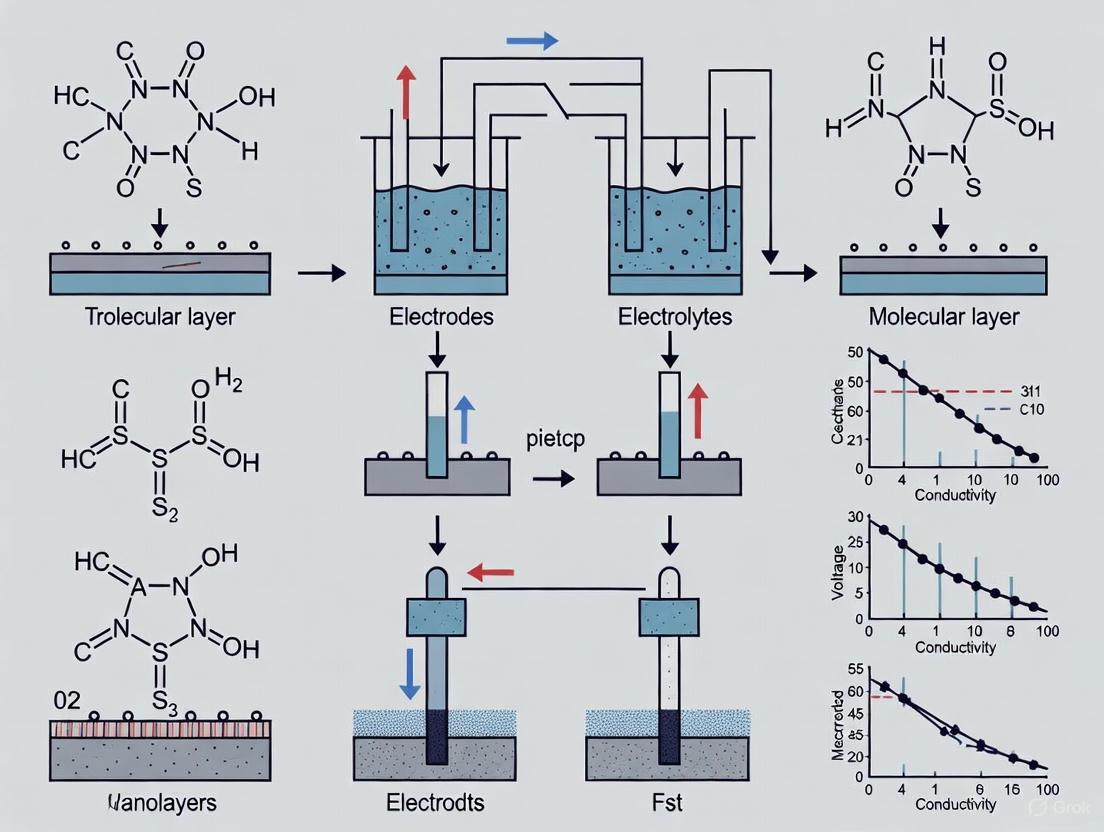
This comprehensive review explores the foundational principles, methodological approaches, and validation strategies for characterizing electron transport mechanisms in self-assembled monolayers (SAMs).
Advanced Techniques for Measuring Electron Transport in Self-Assembled Monolayers
Abstract
This comprehensive review explores the foundational principles, methodological approaches, and validation strategies for characterizing electron transport mechanisms in self-assembled monolayers (SAMs). Covering both historical context and cutting-edge developments, we examine experimental junction architectures, temperature-dependent transport measurements, and comparative analysis techniques essential for researchers investigating molecular-scale electronics. The article provides critical insights into troubleshooting measurement inconsistencies and optimizing SAM molecular design for enhanced charge transport efficiency in applications ranging from organic solar cells to molecular devices.
Fundamental Principles of Electron Transport in Molecular Assemblies
Theoretical Framework and Fundamental Charge Transport Mechanisms
Self-assembled monolayers (SAMs) are highly ordered molecular assemblies that form spontaneously on specific surfaces when exposed to active precursor molecules, creating a robust organic interface with the substrate. These molecular-scale architectures have emerged as fundamental building blocks in molecular electronics, serving as precisely controllable conduits for charge and energy transport between inorganic and organic phases. The electron transport through SAMs occurs via two primary theoretical regimes that dominate under different experimental conditions, governed by both molecular structure and interfacial dynamics.
The non-adiabatic electron transfer (NAET) regime predominates in thicker SAMs (typically with alkyl chains n > 10), where electron transport follows an exponential distance dependence as predicted by Marcus semiclassical theory integrated with the density of states of metal electrodes [1]. In this tunneling-dominated regime, the electron transfer rate at zero overpotential (k⁰NA) can be approximated as k⁰NA = (Δ/ħ)erfc(λ/4λkBT), where Δ represents the protein-electrode coupling that decays exponentially with distance (β ≈ 1 Å⁻¹), λ is the reorganization energy, and erfc denotes the complementary error function [1]. Conversely, the frictionally controlled electron transfer (FCET) regime operates in thinner SAMs, exhibiting a distance-independent electron transfer rate that demonstrates an empirical viscosity dependence (k⁰ET ∝ η^(-γ), where γ is an experimental parameter) and increased activation parameters [1]. Recent theoretical developments by Matyushov have successfully reconciled these regimes by incorporating the effects of interfacial water structure and its impact on dielectric properties and solvation dynamics at the SAM-electrode interface.
The electron transport characteristics of SAM-based molecular conductors are profoundly influenced by their molecular architecture, which typically consists of three key components: (1) an anchoring group (e.g., thiol, silane, or phosphonic acid) that provides robust chemical bonding to the substrate surface; (2) a linking group (alkyl chain, phenyl rings, or conjugated systems) that determines the primary electron transport pathway; and (3) a terminal/head group that interfaces with the opposite contact or environment and can be functionally tuned for specific applications [2] [3]. The molecular orientation and packing density, controlled by interactions between these components, critically determine the efficiency of charge transport through the molecular backbone, with recent studies demonstrating that balanced rigidity and flexibility in these components optimizes both structural integrity and charge transport capability [2].
Quantitative Electron Transport Properties of SAM Systems
Table 1: Experimental Electron Transport Times Through Aromatic Molecular Bridges on Gold Surfaces
| Molecular Structure | Chain Length ( aromatic rings) | Transport Time ( femtoseconds) | Measurement Technique | System Configuration |
|---|---|---|---|---|
| Methyl 4-mercapto benzoate (MP) | 1 | 2.8 ± 0.4 | Resonant Auger Electron Spectroscopy with Core-Hole Clock (RAES-CHC) | Condensed Au Nanoparticle Film |
| Methyl 4′-mercapto (1,1′-biphenyl)-4-carboxylate (MBP) | 2 | 4.2 ± 0.4 | Resonant Auger Electron Spectroscopy with Core-Hole Clock (RAES-CHC) | Condensed Au Nanoparticle Film |
| Methyl 4-mercapto benzoate (MP) | 1 | 2.8 | Resonant Auger Electron Spectroscopy with Core-Hole Clock (RAES-CHC) | Flat Au Monolayer Film |
| Methyl 4′-mercapto (1,1′-biphenyl)-4-carboxylate (MBP) | 2 | 4.3 | Resonant Auger Electron Spectroscopy with Core-Hole Clock (RAES-CHC) | Flat Au Monolayer Film |
Table 2: Interfacial Thermal Conductance (ITC) of SAM-Modified Interfaces
| SAM System | Interface Composition | Interfacial Thermal Conductance (ITC) | Enhancement vs. Pristine Interface | Measurement/Method |
|---|---|---|---|---|
| 3-chloropropyl trimethoxysilane | Si-Polystyrene (PS) | 507.02% improvement | 507.02% | Molecular Simulations |
| Triptycene-TH (tripodal) | Water/SAM/Au | Baseline ITR | Reference | Time-Domain Thermoreflectance (TDTR) |
| Triptycene-OH (hydrophilic) | Water/SAM/Au | Reduced ITR vs. TH | Improved (decreased ITR) | Time-Domain Thermoreflectance (TDTR) |
| Triptycene-TEG (hydrophilic) | Water/SAM/Au | Reduced ITR vs. TH | Improved (decreased ITR) | Time-Domain Thermoreflectance (TDTR) |
| High-Performance End Groups | Au-SAM-Water | >150 MW/(m²K) | N/A | Nonequilibrium Molecular Dynamics (NEMD) |
Table 3: Performance Metrics of SAM-Based Electronic and Optoelectronic Devices
| SAM Material | Device Application | Key Performance Metrics | Terminal/Head Group | Linking Group |
|---|---|---|---|---|
| (4-(diphenylamino)phenyl)phosphonic acid (PATPA) | Perovskite Solar Cell (PSC) Hole Selective Layer | PCE: 26.21% (0.0715 cm²), 24.49% (1 cm²), VOC: 1.186 V, JSC: 25.85 mA cm⁻², FF: 85.52% | Triphenylamine (semi-flexible) | Phenyl (rigid) |
| 4-(10-bromo-7H-benzo[c]carbazol-7-yl)butyl)phosphonic acid (BCB-Br) | Red Quantum Dot LED (QLED) Hole Injection Layer | EQE: 23.3%, Turn-on Voltage: 1.73 V, Power Efficiency: 47.0 lm/W, Current Efficiency: 30.4 cd/A | Brominated benzocarbazole | Butyl (flexible) |
| (4-(9H-carbazol-9-yl)phenyl)phosphonic acid (PhpPACz) | Perovskite Solar Cell (PSC) Hole Selective Layer | Lower performance vs. PATPA | Carbazole (rigid) | Phenyl (rigid) |
| (4-(diphenylamino)phenethyl)phosphonic acid (2PATPA) | Perovskite Solar Cell (PSC) Hole Selective Layer | Lower performance vs. PATPA | Triphenylamine (semi-flexible) | Alkyl (flexible) |
Quantitative studies of electron transport through SAMs reveal clear structure-property relationships that govern their performance as molecular conductors. As demonstrated in Table 1, electron transport times through aromatic molecular bridges on gold surfaces exhibit a strong dependence on molecular chain length, with longer conjugated systems showing increased transport times due to the additional distance electrons must traverse [4]. The remarkable consistency between transport times measured in condensed nanoparticle films and flat monolayer films (2.8 fs for MP and 4.2-4.3 fs for MBP across both systems) provides compelling evidence that electron transport follows the through-bond mechanism rather than being dominated by inter-molecular interactions or cross-surface hopping [4]. This fundamental insight confirms that molecular design principles established for flat substrates can be effectively extrapolated to nanoparticle-based systems, significantly expanding the potential applications of SAM-based molecular conductors.
The thermal transport properties summarized in Table 2 highlight another critical aspect of SAM performance in electronic applications. The dramatic 507% enhancement in interfacial thermal conductance achieved with 3-chloropropyl trimethoxysilane SAMs at silicon-polystyrene interfaces demonstrates the profound impact of molecular bridging on heat dissipation in nanoscale devices [5]. Systematic studies of triptycene-based tripodal SAMs with varying terminal groups reveal that hydrophilic functionalities (OH, TEG) reduce interfacial thermal resistance (ITR) compared to hydrophobic references, emphasizing the importance of terminal group chemistry in modulating thermal transport [6]. Furthermore, recent high-throughput screening has identified SAM end groups capable of achieving exceptional interfacial thermal conductance exceeding 150 MW/(m²K) at gold-water interfaces, with performance strongly correlated with Coulombic interactions between polar terminal groups and water molecules rather than traditional van der Waals interactions [7].
The device performance metrics compiled in Table 3 illustrate how strategic molecular engineering of SAM components translates to enhanced functionality in optoelectronic applications. The superior power conversion efficiency (26.21%) achieved with PATPA in perovskite solar cells highlights the advantage of combining rigid phenyl linking groups with semi-flexible triphenylamine head groups, which enables optimal molecular packing density while maintaining appropriate conformational freedom for interface stabilization [2]. Similarly, the exceptional quantum dot LED performance achieved with BCB-Br SAMs (23.3% EQE) demonstrates how asymmetric conjugation extension and bromination of carbazole cores can strategically modulate dipole moments and interfacial energy level alignment for enhanced hole injection [3]. These examples underscore the critical importance of balancing molecular rigidity and flexibility across anchoring, linking, and terminal groups to optimize both charge transport and interfacial compatibility in SAM-based electronic devices.
Experimental Protocols for SAM Electron Transport Characterization
Protocol: Resonant Auger Electron Spectroscopy with Core-Hole Clock (RAES-CHC) for Ultrafast Electron Transport Measurement
Purpose: To determine ultrafast electron transport times through aromatic molecules on metal nanoparticle surfaces with femtosecond resolution.
Materials and Equipment:
- Aromatic thiol molecules (e.g., methyl 4-mercapto benzoate, methyl 4′-mercapto (1,1′-biphenyl)-4-carboxylate)
- Gold nanoparticles (7 nm average size, synthesized by pulsed laser ablation in liquid)
- Gold substrates for flat SAM formation
- Synchrotron radiation facility with soft X-ray capabilities (e.g., HiSOR BL-13)
- Hemispherical electron analyzer (e.g., Omicron EA125)
- Ultra-high vacuum chamber (∼10⁻⁸ Pa)
- Time-of-flight mass spectrometer for ion yield measurements
Procedure:
- SAM Formation on Flat Substrates:
- Prepare flat SAMs using conventional immersion method with 1 mM thiol solution in ethanol
- Immerse clean Au substrates for 24 hours at room temperature
- Rinse thoroughly with pure ethanol and dry under nitrogen stream
Condensed Nanoparticle Film Preparation:
- Synthesize AuNPs (7 nm) via pulsed laser ablation in liquid [4]
- Mix AuNP colloidal solution with 1 mM aromatic thiol solution
- Incubate for 24 hours to allow SAM formation on nanoparticle surfaces
- Remove residual solute molecules by centrifugation and redispersion in pure solvent
- Drop purified solution onto Au substrates and allow to dry forming condensed NP films
Soft X-ray Spectroscopy Measurements:
- Perform NEXAFS spectroscopy by measuring drain currents from sample and upstream Au mesh
- Conduct XPS measurements with hemispherical analyzer at 0° emission angle, slit width 1 mm
- Calibrate electron binding energy to 84.0 eV for Au 4f₇/₂ peak
- Perform RAES measurements with slit width 4 mm at 0° emission angle
Core-Hole Clock Analysis:
- Measure resonant Auger spectra following core excitation
- Analyze participator and spectator decay channels
- Determine electron transport time from relative intensities of different decay features
- Subtract inelastic scattering components for accurate transport time calculation
Data Analysis:
- Electron transport time (τ) is determined using the relationship: τ = τₕK/(1 - K), where τₕ is the core-hole lifetime and K is the probability that the excited electron remains in the originally excited orbital
- Compare transport times between NP films and flat films to identify transport mechanism (through-bond vs. cross-surface)
- Analyze chain length dependence to determine distance scaling relationship
Protocol: Time-Domain Thermoreflectance (TDTR) for Interfacial Thermal Resistance Measurement
Purpose: To quantify interfacial thermal resistance (ITR) at water/SAM/Au interfaces with high precision.
Materials and Equipment:
- Tripodal triptycene derivatives (TH, TOH, TOC12, TTEG) with thiol anchoring groups
- LBC3N substrates (low thermal effusivity)
- DC magnetron sputtering system for metal deposition
- Pump-probe laser system (λ = 1550 nm, pulse duration = 0.5 ps)
- Lock-in amplifier referenced to 200 kHz modulation
- X-ray photoelectron spectrometer for SAM characterization
- Atomic force microscope for surface topography
Procedure:
- Substrate Preparation:
- Ultrasonically clean LBC3N substrates in ethanol for 10 minutes
- UV-ozone clean for 5 minutes
- Ultrasonically clean in pure water for 10 minutes and dry
- Deposit Mo film (19.5 nm) by DC magnetron sputtering at 100 W, 1 Pa Ar pressure
- Deposit Au film (80 nm) under same sputtering conditions
SAM Formation:
- Synthesize tripodal triptycene derivatives with specific terminal groups
- Form SAMs on Au/Mo/LBC3N substrates by immersion in 0.1 mM solution for 24 hours
- Rinse thoroughly with solvent and dry under nitrogen
- Characterize SAM quality by XPS and AFM
TDTR Measurements:
- Modulate pump laser beam at 200 kHz with optical power of 12 mW
- Irradiate pump beam at Mo film from LBC3N side
- Detect thermoreflectance signal with probe beam
- Measure phase and amplitude of thermoreflectance response as function of delay time
Thermal Model Fitting:
- Fit experimental data to multilayer thermal model
- Extract interfacial thermal conductance (G = 1/ITR) through iterative fitting
- Verify model uniqueness through sensitivity analysis
Data Interpretation:
- Lower ITR values indicate more efficient thermal transport across interface
- Compare ITR for different terminal groups to establish structure-property relationships
- Correlate ITR with work of adhesion and interfacial potential energy from complementary EMD simulations
Electron Transport Pathways and Experimental Workflows
The electron transport pathways in SAM-based molecular conductors involve complex interactions between molecular components, electrode surfaces, and the external environment. As illustrated in the diagram, electrons typically flow from the metal electrode through the anchoring group, along the molecular backbone of the linking group, to the terminal head group which interfaces with the external environment. The specific transport mechanism depends critically on SAM thickness and molecular structure, with non-adiabatic electron transfer (quantum tunneling) dominating in thicker SAMs and frictionally controlled electron transfer becoming predominant in thinner monolayers [1]. This mechanistic transition reflects the changing balance between direct electrode-wavefunction coupling and environmental damping effects as the molecular bridge length decreases.
The through-bond electron transport mechanism has been conclusively demonstrated through comparative studies of electron transport times in flat SAMs versus nanoparticle assemblies. Recent RAES-CHC experiments show nearly identical transport times for equivalent molecular structures in both configurations (2.8 fs for single aromatic rings and 4.2-4.3 fs for biphenyl systems), providing definitive evidence that electron transport occurs primarily through the molecular backbone rather than between adjacent molecules or through space [4]. This fundamental understanding validates the molecular design approach of engineering SAM components for optimal orbital alignment and conjugation along the primary molecular axis to enhance charge transport efficiency in molecular electronic devices.
Research Reagent Solutions for SAM Electron Transport Studies
Table 4: Essential Research Reagents for SAM-Based Molecular Conductor Studies
| Reagent Category | Specific Examples | Function/Purpose | Key Characteristics |
|---|---|---|---|
| Anchoring Groups | Thiols (-SH), Phosphonic acids, Silanes | Surface binding to metals, metal oxides, semiconductors | Strong covalent bonding, specific surface affinity, determines SAM stability |
| Linking Groups | Alkyl chains (CH₂)ₙ, Phenyl rings, Conjugated systems, Biphenyl units | Molecular backbone for electron transport, determines transport distance and mechanism | Controls electron tunneling efficiency, molecular packing density, and conformational flexibility |
| Terminal/Head Groups | -CH₃, -OH, -NH₂, Carbazole, Triphenylamine, Brominated aromatics | Interface with environment, energy level alignment, functionality | Modifies work function, governs interfacial interactions, determines charge injection efficiency |
| Nanoparticle Cores | Gold nanoparticles (7 nm), Silver nanoparticles, Semiconductor QDs | Conductive substrates for SAM formation, plasmonic enhancement | High surface area-to-volume ratio, tunable optoelectronic properties |
| Substrates | Au(111), ITO, Silicon wafers, LBC3N (low thermal effusivity) | Support for SAM formation, electrode fabrication | Surface flatness, crystal structure, thermal and electrical properties |
| Characterization Tools | Synchrotron radiation sources, Hemispherical electron analyzers, TDTR systems | Electron transport measurement, thermal characterization | Elemental specificity, ultrafast time resolution, interfacial sensitivity |
The research reagents summarized in Table 4 represent the essential toolkit for designing, fabricating, and characterizing SAM-based molecular conductors. The anchoring groups provide the critical interface between molecular and inorganic components, with phosphonic acid derivatives demonstrating particular robustness on oxide surfaces with binding energies reaching -2.61 eV as calculated by DFT methods [2]. The linking groups serve as the primary molecular highways for electron transport, where the strategic balance between rigidity and flexibility determines both charge transport efficiency and structural integrity. Recent studies demonstrate that rigid phenyl linking groups in PATPA enable denser molecular packing and enhanced charge transport compared to flexible alkyl chains in 2PATPA, while semi-flexible triphenylamine head groups provide optimal stress dissipation at the perovskite interface [2].
Advanced characterization tools have become indispensable for probing the ultrafast electron dynamics in SAM-based conductors. Synchrotron-based techniques like resonant Auger electron spectroscopy with the core-hole clock approach provide unprecedented femtosecond temporal resolution for measuring electron transport times through molecular bridges [4]. Complementary thermal transport characterization using time-domain thermoreflectance enables precise quantification of interfacial thermal conductance, revealing how specific terminal groups and molecular structures facilitate or impede heat dissipation at nanoscale interfaces [6]. These advanced methodologies collectively provide the multidimensional characterization capability necessary to establish robust structure-property relationships in SAM-based molecular conductors.
Advanced Experimental Workflow for SAM Electron Transport Analysis
The comprehensive experimental workflow for SAM electron transport analysis integrates multiple fabrication, characterization, and testing stages to establish complete structure-property relationships. The process begins with rational molecular design of SAM components, where anchoring groups are selected for optimal surface binding, linking groups are engineered for efficient electron transport, and terminal groups are designed for specific interfacial functionality [2] [3]. SAM formation through controlled immersion processes is followed by rigorous structural characterization using XPS, NEXAFS, and AFM to verify molecular orientation, packing density, and chemical composition [4] [6].
Parallel electron transport and thermal transport analyses provide complementary insights into the fundamental charge and energy transfer processes in SAM-based conductors. The RAES-CHC approach offers unprecedented femtosecond resolution of electron transport times through specific molecular pathways, while TDTR measurements quantify interfacial thermal conductance with precision essential for thermal management in nanoscale devices [4] [6]. Integration of these molecular conductors into functional devices (perovskite solar cells, QLEDs, molecular junctions) provides the ultimate validation of their performance characteristics and enables correlation of fundamental transport parameters with practical device metrics [2] [3]. This comprehensive approach enables researchers to establish robust molecular design principles for next-generation SAM-based molecular conductors with tailored electronic, thermal, and interfacial properties.
The study of electron transport through molecular-scale structures, particularly self-assembled monolayers (SAMs), is fundamental to advancing molecular electronics and nanoscale devices. Two primary mechanisms govern this transport: tunneling and ohmic behavior. Tunneling represents a quantum mechanical phenomenon where electrons traverse classically forbidden energy barriers, while ohmic transport follows classical laws with current proportional to voltage. Understanding the transition between these regimes is critical for designing molecular electronic devices with tailored properties. These mechanisms exhibit distinct characteristics in their current-voltage relationships, length dependence, and temperature response, enabling researchers to identify dominant transport pathways in molecular junctions. This document provides detailed application notes and experimental protocols for differentiating these mechanisms within SAM-based systems, framed within the broader context of electron transport measurement techniques research.
Theoretical Foundations and Key Differentiators
Fundamental Transport Equations
The two transport mechanisms are mathematically described by fundamentally different equations, allowing for clear experimental differentiation.
Quantum Tunneling follows an exponential decay relationship with molecular length, described by:
[ J = J0(V)e^{-\beta d} = J0(V)10^{-\beta d/2.303} ]
where (J) is current density (A/cm²), (J_0) is a pre-exponential factor, (\beta) is the tunneling decay coefficient (Å⁻¹), and (d) is the molecular wire length (Å) [8].
Ohmic Behavior obeys the classical linear relationship:
[ I = V/R ]
where (I) is current, (V) is voltage, and (R) is resistance, which may have minimal length dependence compared to tunneling systems.
Characteristic Parameters and Experimental Signatures
Table: Key Differentiating Characteristics Between Transport Mechanisms
| Parameter | Tunneling Regime | Ohmic Regime |
|---|---|---|
| Current-Voltage (I-V) Relationship | Non-linear | Linear |
| Length Dependence | Exponential decay ((e^{-\beta d})) | Weak or no dependence |
| Temperature Dependence | Weak | Strong (activated transport) |
| Decay Coefficient ((\beta)) | 0.2-1.2 Å⁻¹ [8] | Not applicable |
| Dominant Carriers | Tunneling electrons | Thermal carriers |
The tunneling decay coefficient (\beta) is particularly informative, with lower values (0.1-0.4 Å⁻¹) indicating efficient "molecular conductor" behavior and higher values (0.8-1.2 Å⁻¹) characteristic of "molecular insulators" [8]. Recent research demonstrates that (\beta) can be dramatically tuned through terminal-atom substitution in alkanethiol SAMs (Ag-S(CH₂)ₙX//EGaIn junctions), reducing from 0.75 to 0.25 Å⁻¹ by changing X from H to I, effectively turning molecular insulators into conductors without altering the molecular backbone [8].
Experimental Protocols for Transport Measurement
Protocol 1: Characterizing Tunneling Transport in SAMs
Objective: Measure the tunneling decay coefficient ((\beta)) and current-voltage characteristics across SAMs of varying lengths.
Materials and Equipment:
- Molecular Junction Platform: Ag-S(CH₂)ₙX//EGaIn junctions (n = 10, 12, 14, 16, 18; X = H, F, Cl, Br, I) [8]
- Source Meter: Precision semiconductor parameter analyzer for I-V characterization
- Impedance Analyzer: For dielectric constant ((\varepsilon_r)) measurement
- Vibration Isolation Table: Essential for stable molecular junction formation
- Environmental Chamber: For temperature control studies
Procedure:
- Substrate Preparation:
- Evaporate 100nm Ag films onto cleaned Si/SiO₂ wafers
- Form SAMs by immersing substrates in 1mM ethanolic solutions of HS(CH₂)ₙX (n=10-18) for 24-48 hours
- Rinse thoroughly with ethanol and dry under N₂ stream
Junction Formation:
- Employ EGaIn (eutectic Ga-In alloy) top contacts using conical tips with 300-500 µm² contact area [8]
- Apply minimal pressure to ensure molecular-dominated junctions without short circuits
Electrical Characterization:
- Sweep voltage from -1.0V to +1.0V in 0.05V increments
- Record current values at each voltage point
- Perform minimum 20 measurements per SAM length and terminal group
Data Analysis:
- Extract J(V) at fixed voltage (typically 0.5V) for each length
- Plot ln(J) versus molecular length (d)
- Calculate (\beta) from slope: (\beta = -2.303 \times \text{slope})
- Determine (\varepsilon_r) from impedance measurements
Expected Outcomes: Exponential current decay with molecular length with (\beta) values ranging from 0.25-0.75 Å⁻¹ depending on terminal atom [8].
Protocol 2: Distinguishing Ohmic versus Tunneling Behavior
Objective: Systematically differentiate between ohmic and tunneling transport through temperature-dependent and length-dependent measurements.
Materials and Equipment:
- Four-Point Probe Station: For accurate resistance measurements
- Cryogenic System: Temperature range 77K-400K
- SAM Libraries: Systematic variation in molecular length and conjugation
- Metallization Equipment: For top contact deposition
Procedure:
- Temperature-Dependent I-V Measurements:
- Measure I-V characteristics from 77K to 400K in 25K increments
- Fit data to linear (ohmic) and non-linear (tunneling) models
- Calculate activation energy from Arrhenius plots for suspected ohmic contacts
Length-Dependence Studies:
- Measure current density for molecular series with increasing length (C8-C18)
- Plot log(J) versus length at fixed voltage and temperature
- Calculate (\beta) values from slopes
Transition Detection:
- Identify ohmic-to-tunneling transitions through bias voltage sweeps
- Monitor for linear-to-exponential transitions in I-V curves
- Characterize breakdown voltages for each transport regime
Validation Criteria:
- Tunneling Dominance: Weak temperature dependence, exponential length decay
- Ohmic Dominance: Strong temperature dependence, linear I-V characteristics
- Mixed Behavior: Intermediate characteristics requiring additional analysis
Research Reagent Solutions and Essential Materials
Table: Essential Research Materials for SAM Transport Studies
| Material/Reagent | Function/Application | Key Characteristics |
|---|---|---|
| Alkanethiols HS(CH₂)ₙX | SAM backbone formation | n=8-18; X=H, F, Cl, Br, I for β modulation [8] |
| EGaIn (Eutectic Ga-In) | Non-reactive top electrode | Forms stable conical tips; minimal SAM penetration [8] |
| Gold/Silver Substrates | Bottom electrode | Template for SAM organization; (111) orientation preferred |
| Electrochemical Cells | Impedance characterization | Measures dielectric constant (εᵣ) of SAM junctions [8] |
| Transition Metal Electrodes | Enhanced coupling interfaces | Pd, Pt for strong molecular coupling [8] |
Data Analysis and Interpretation Framework
Quantitative Analysis of Tunneling Parameters
The tunneling decay coefficient (\beta) provides crucial information about transport efficiency. Recent research reveals that (\beta) correlates with the static dielectric constant ((\varepsilonr)) of the molecular junction, following (\beta \propto 1/\sqrt{\varepsilonr}) [8]. This relationship explains why highly polarizable terminal atoms (e.g., I versus H) reduce (\beta) values, as they increase the effective dielectric constant of the junction.
Table: Experimental Parameters for Tunneling in SAM Junctions
| System | Length Range (n) | (\beta) (Å⁻¹) | Dielectric Constant ((\varepsilon_r)) | Terminal Atom Effect |
|---|---|---|---|---|
| S(CH₂)ₙH | 10-18 | 0.75 | ~2.5 (est.) | Reference system |
| S(CH₂)ₙF | 10-18 | 0.65 | ~2.8 (est.) | Moderate reduction |
| S(CH₂)ₙCl | 10-18 | 0.45 | ~5.5 (est.) | Significant reduction |
| S(CH₂)ₙBr | 10-18 | 0.35 | ~6.5 (est.) | Strong reduction |
| S(CH₂)ₙI | 10-18 | 0.25 | ~7.5 (measured) [8] | Maximum reduction |
Interpretation of Transition Behavior
Analysis of transition regions between tunneling and ohmic behavior requires careful consideration of:
Potential Drop Profiles: Density-functional theory reveals highly localized, X-dependent potential drops at the S(CH₂)ₙX//electrode interface that modify tunneling barrier shape [8].
Contact Resistance Effects: Impedance measurements show 5-times reduced contact resistance with X = I compared to X = H [8].
Barrier Height Modifications: Terminal atoms affect HOMO-LUMO gaps and tunneling-barrier heights, contributing to (\beta) reduction beyond dielectric effects alone.
Visualization of Transport Concepts and Workflows
Tunneling versus Ohmic Identification Workflow
Fundamental Transport Mechanism Characteristics
Advanced Considerations and Applications
The ability to tune electron transport mechanisms in SAMs has significant implications for molecular electronics, sensing platforms, and organic optoelectronic devices [9]. Interface engineering using SAMs has been particularly valuable in organic field-effect transistors (OFETs), where the electrode-molecule interface fundamentally governs device performance [9].
For researchers extending these protocols to novel systems, key considerations include:
Electrode Materials Selection: Transition metals (Pd, Pt) provide stronger coupling than noble metals (Au, Ag), potentially transitioning systems from tunneling to ohmic dominance [8].
Molecular Design Principles: Beyond terminal atom effects, backbone conjugation, dipole moments, and orbital alignment provide additional control over transport mechanisms.
Environmental Factors: Controlled atmosphere measurements are essential as oxygen and moisture significantly impact molecular conductivity.
Statistical Validation: The stochastic nature of molecular junction formation necessitates large dataset acquisition (N≥20) for reliable parameter extraction.
These protocols provide a foundation for systematic investigation of electron transport mechanisms in SAM-based molecular junctions, enabling researchers to correlate molecular structure with electronic function for both fundamental studies and device applications.
Historical Development of Molecular Electronics Concepts
The field of molecular electronics represents a paradigm shift in the fabrication of electronic components, moving away from traditional top-down lithography toward a bottom-up approach that uses molecular building blocks [10]. This interdisciplinary area, spanning physics, chemistry, and materials science, aims to extend Moore's Law beyond the foreseen limits of conventional silicon integrated circuits by creating electronic components from single molecules or nanoscale collections of molecules [10]. This application note traces the historical development of molecular electronics concepts, with particular emphasis on the context of self-assembled monolayer (SAM) electron transport measurement techniques, providing researchers with detailed protocols and foundational knowledge for advancing this promising field.
Historical Foundations and Key Milestones
The conceptual origins of molecular electronics date back to the mid-20th century, with several theoretical breakthroughs establishing the fundamental principles that would guide experimental research for decades to follow.
Early Theoretical Contributions (1940s-1960s)
The seminal ideas for molecular electronics emerged from theories of molecular conduction advanced in the late 1940s by Robert S. Mulliken and Albert Szent-Györgyi [11]. Mulliken developed the concept of donor-acceptor charge transfer complexes, while Szent-Györgyi explored the possibility that proteins might not be insulators as previously assumed [11]. These foundational ideas were followed by Forrest L. Feynman's influential 1959 lecture "There's Plenty of Room at the Bottom," which called for chemists, engineers, and physicists to collaborate in building structures from the molecular level upward [11]. The first explicit mention of molecular electronics in a technological context came from German physicist Arthur von Hippel in 1956, who coined the term "molecular engineering" to describe this bottom-up approach to electronics development [10].
Foundational Theoretical Proposals (1970s)
The breakthrough that established molecular electronics as a distinct field of research came in 1974 with the publication of "Molecular Rectifiers" by Aviram and Ratner [12] [10]. In this seminal paper, they presented theoretical calculations demonstrating that a modified charge-transfer molecule with donor and acceptor groups separated by a non-conjugated spacer (D-σ-A structure) could facilitate electron transfer predominantly in one direction, effectively functioning as a semiconductor diode [13] [10]. This proposal laid the theoretical groundwork for using single molecules as electronic components and inspired decades of subsequent research. Throughout the 1970s, the visionary work of Forrest L. Carter at the U.S. Naval Research Laboratories further expanded the conceptual framework, introducing designs for molecular wires, switches, and complex molecular logic elements [11].
Experimental Validation and Expansion (1980s-2000s)
The period from the 1980s through the 2000s witnessed significant experimental advances that transformed molecular electronics from theoretical concept to experimental discipline. The development of scanning tunneling microscopy (STM) in the 1980s provided researchers with a powerful tool for imaging and manipulating individual molecules on conductive surfaces with atomic resolution [13]. This was followed in 1997 by Reed et al.'s groundbreaking experimental measurement of electron transport through individual molecules, providing crucial experimental validation of the field's central premise [12]. The emergence and refinement of self-assembled monolayers as a versatile platform for studying electron transfer kinetics further accelerated progress in the field [14]. The following timeline summarizes these key historical developments:
Table: Historical Development of Molecular Electronics
| Time Period | Key Development | Principal Contributors | Significance |
|---|---|---|---|
| Late 1940s | Donor-Acceptor Charge Transfer Theory | Mulliken & Szent-Györgyi | Early theoretical foundation for molecular conduction |
| 1956 | Molecular Engineering Concept | von Hippel | First explicit mention of molecular electronics |
| 1959 | "There's Plenty of Room at the Bottom" Lecture | Feynman | Vision for bottom-up nanotechnology |
| 1974 | Molecular Rectifier Proposal | Aviram & Ratner | Theoretical foundation for molecular diodes |
| 1970s | Molecular Wires, Switches & Logic Elements | Carter | Expanded molecular electronics conceptual framework |
| 1980s | Scanning Tunneling Microscopy (STM) | Binnig & Rohrer | Enabled imaging/manipulation of single molecules |
| 1997 | Experimental Measurement of Single-Molecule Transport | Reed et al. | Crucial experimental validation of molecular conduction |
Fundamental Concepts in Molecular Electronics
The development of molecular electronics has introduced several key concepts that differentiate it from conventional electronics and provide the theoretical framework for understanding electron transport at the molecular scale.
Molecular Electronic Components
Molecular electronics aims to replicate the functions of conventional electronic components using single molecules or molecular assemblies:
Molecular Rectifiers: As proposed by Aviram and Ratner, these molecules exhibit asymmetric electron transport characteristics, typically featuring donor-spacer-acceptor (D-σ-A) structures that facilitate preferential current flow in one direction [13]. The theoretical foundation relies on different energy level alignments for the donor and acceptor groups relative to electrode Fermi levels.
Molecular Wires: These linear molecules or polymers efficiently transport charge over nanoscale distances through conjugated π-systems that allow electron delocalization along the molecular backbone [13]. Examples include oligophenylenevinylenes (OPVs), oligophenyleneethynylenes (OPEs), and specially designed DNA sequences [13].
Molecular Switches: These molecules can reversibly change their state or conformation in response to external stimuli such as electric fields, light, or pH changes [13]. This state change alters the molecule's electrical conductivity, enabling switching behavior. Common examples include photochromic molecules (spiropyrans, diarylethenes) and redox-active molecules (tetrathiafulvalene, ferrocene) [13].
Self-Assembled Monolayers in Molecular Electronics
Self-assembled monolayers (SAMs) have emerged as a crucial platform for molecular electronics research and applications. SAMs are ordered molecular assemblies that spontaneously form on solid surfaces through chemisorption, typically consisting of three key components [13]:
- Head group: Binds specifically to the substrate surface (e.g., thiols for gold, silanes for silicon oxide)
- Spacer: Determines molecular packing and orientation (e.g., alkyl or conjugated chains)
- Functional end group: Determines surface properties and functionality
SAMs provide a versatile platform for creating functional interfaces in electronic devices, allowing researchers to tailor surface properties including wettability, friction, and biocompatibility [13]. In molecular electronics specifically, SAMs enable the systematic study of electron transfer kinetics by positioning redox centers at fixed distances from electrodes using well-defined molecular bridges [14].
Experimental Techniques for Electron Transport Measurement in SAMs
The reliable measurement of electron transport through self-assembled monolayers presents significant experimental challenges due to the nanoscale dimensions of the systems under investigation. Several sophisticated techniques have been developed to address these challenges.
Conducting Atomic Force Microscopy (CAFM)
Conducting atomic force microscopy enables electronic transport measurements through SAMs by utilizing a metal-coated AFM tip that forms one side of a metal-SAMs-metal junction [15]. This technique provides key advantages for SAM characterization:
- Direct Junction Formation: Unlike STM, the CAFM probe establishes direct contact with the sample, eliminating vacuum tunneling effects and ensuring the applied voltage drops fully across the molecular layer [15]
- Force Control: The tip-loading force can be precisely controlled, although this force can deform molecular layers, particularly those with flexible backbones [15]
- Ambient Operation: Measurements can be performed at room temperature and ambient conditions, unlike some techniques that require cryogenic environments [15]
Experimental Protocol: CAFM Measurement of Alkanethiol SAMs
Table: Key Research Reagents for CAFM SAM Measurements
| Reagent/Material | Specifications | Function in Experiment |
|---|---|---|
| Gold Substrate | Au(250 nm)/Cr(3 nm)/glass | Provides well-defined surface for SAM formation |
| Alkanethiol Molecules | CH₃(CH₂)ₙSH (n=7,11,15) | Forms insulating SAM matrix for transport studies |
| OPE-based Molecules | Thioacetyl end-group, conjugated backbone | Creates conductive pathways for comparison |
| Ethanol Solvent | Anhydrous, ≥99.9% purity | Medium for SAM formation solution |
| Nitrogen Atmosphere | Oxygen level <20 ppm | Prevents oxidation during SAM formation |
SAM Formation:
- Prepare ~5 mM solution of alkanethiol (e.g., octanethiol, dodecanethiol, hexadecanethiol) in 10 mL ethanol
- For conjugated molecules, prepare ~1 mM solution of OPE-based molecules with thioacetyl end-group
- Deposit solution on Au surface in nitrogen-filled glovebox (oxygen <20 ppm) for 24 hours
- Rinse thoroughly with ethanol and dry under nitrogen stream
CAFM Measurement:
- Use metal-coated AFM tip (e.g., Pt/Ir coating) with known spring constant
- Approach sample surface under feedback control in contact mode
- Apply precise loading force (typically 5-20 nN) to establish molecular contact
- Acquire current-voltage (I-V) characteristics over -1.0 to 1.0 V range
- Repeat measurements at multiple locations to ensure statistical significance
Data Analysis:
- Fit I-V curves with Simmons tunneling model: J = (e²/2πh)(β/d)²V exp(-2βd√(2mφ/ħ²))
- Extract electronic transport parameters: barrier height (ΦB) and tunneling decay coefficient (β)
- Compare conductance values for different molecular lengths and structures
- Assess the effect of tip-loading force on junction stability and conduction
Electrochemical Techniques for Redox-Active SAMs
Electrochemical methods provide powerful alternatives for investigating electron transfer kinetics in redox-active SAMs, offering insights into fundamental parameters described by Marcus theory [14]. These techniques exploit the predictable relationship between electron transfer rate (kET) and key variables including Gibbs free energy (ΔG), reorganization energy (λ), and electronic coupling between donor and acceptor (HAB) [14].
Experimental Protocol: Electrochemical Characterization of Ferrocene-Alkanethiol SAMs
Table: Electrochemical Techniques for SAM Electron Transfer Kinetics
| Technique | Key Measurable Parameters | Advantages | Limitations |
|---|---|---|---|
| Cyclic Voltammetry (CV) | kET, surface coverage (Γ), redox potential (E⁰) | Widely available instrumentation, rich thermodynamic information | Less sensitive to kinetic heterogeneity |
| Alternating Current Voltammetry (ACV) | kET, interfacial capacitance | Enhanced sensitivity for fast kinetics, minimal charging current | Complex data interpretation |
| Chronoamperometry (CA) | kET, diffusion coefficients | Direct time-domain measurement, good for slow kinetics | Sensitive to charging currents |
| Electrochemical Impedance Spectroscopy (EIS) | kET, charge transfer resistance, capacitance | Broad frequency range, detailed interface characterization | Complex modeling required |
SAM Formation with Redox Centers:
- Prepare ferrocene-alkanethiol molecules (Fc(CH₂)ₙSH) with varying chain lengths (n=5-18)
- Form mixed SAMs using diluent alkanethiols (e.g., CH₃(CH₂)ₙSH) to isolate redox centers
- Use degassed, filtered buffers to prevent bubble formation during measurements
- Determine surface coverage (Γ) from CV measurements using Equation: iₚ = (n²F²/4RT)νASURΓ
Electrochemical Measurements:
- Utilize three-electrode cell: SAM-working electrode, reference electrode, counter electrode
- Perform CV at multiple scan rates (0.01-10 V/s) to determine kET from peak separation
- Conduct ACV measurements with small amplitude (10 mV) over frequency range 10-1000 Hz
- Perform EIS from 0.1 Hz to 100 kHz at formal potential of redox couple
- Use chronoamperometry with potential steps between oxidizing and reducing potentials
Data Analysis:
- Analyze CV data using Laviron method for surface-bound species
- Extract kET from ACV using Nicholson method for quasi-reversible systems
- Fit EIS data to Randles equivalent circuit to determine charge transfer resistance
- Construct Tafel plots from chronoamperometry data to determine heterogeneous electron transfer rates
Advanced Applications and Current Research Directions
The historical development of molecular electronics concepts has enabled diverse applications across electronic devices, with self-assembled monolayers playing increasingly important roles in advanced device architectures.
SAMs in Organic Field-Effect Transistors (OFETs)
Self-assembled monolayers serve multiple critical functions in optimizing OFET performance through interface engineering:
- Interface Modification: SAMs modify interfaces between OFET components including source/drain electrodes, gate dielectric, and organic semiconductor layers [16]
- Charge Transport Enhancement: SAMs create well-ordered interfaces that improve charge carrier mobility by reducing charge trap sites [16]
- Morphology Control: SAMs improve organic semiconductor morphology and grain size, leading to enhanced device performance [16]
In specific OFET configurations, SAM-functionalized source and drain electrodes establish efficient charge injection between the organic semiconductor and electrodes by simultaneously tuning semiconductor morphology, metal electrode work function, and charge carrier transmission across the injection barrier [16].
SAMs in Light-Emitting Diodes and Solar Cells
The application of SAMs has produced significant advances in optoelectronic devices:
LED Efficiency Enhancement: SAMs introduced at various interfaces within LED devices enhance charge injection and transport, reducing operating voltage while improving efficiency and stability [16]. SAM-modified ITO electrodes can replace both hole injection and hole transport layers, simplifying device structure [16].
Solar Cell Performance: In polymer solar cells, SAMs improve interfacial properties by adjusting electrode work function to match active layer energy levels [16]. SAMs passivate surface states and defects at electrode interfaces, reducing charge recombination sites and enhancing charge collection efficiency [16]. Specific SAMs like 2PACz have demonstrated power conversion efficiencies exceeding 18% in polymer solar cells while significantly improving operational stability compared to conventional materials [16].
The historical development of molecular electronics represents a remarkable convergence of chemical synthesis, physical measurement, and theoretical modeling. From the early theoretical proposals of Aviram and Ratner to the sophisticated experimental techniques available today, the field has matured into a robust discipline with promising applications across electronics and optoelectronics. Self-assembled monolayers have emerged as a particularly versatile platform for both fundamental charge transport studies and practical device applications, enabling precise control over molecular orientation and interface properties. As research continues to address challenges in reproducible molecular-scale contacts and operational stability, the concepts and protocols outlined in this application note provide researchers with the foundational knowledge necessary to advance toward the ultimate goal of functional molecular-scale electronic circuits.
The Donor-Bridge-Acceptor (D-B-A) paradigm provides a fundamental framework for understanding and controlling electron transfer (ET) processes at the molecular level. In these supramolecular systems, an electron donor (D) and acceptor (A) are spatially organized through a molecular bridge (B), enabling the systematic study of photoinduced charge separation [17]. This architecture is structurally covalent but functionally supramolecular, maintaining the properties of individual components while creating new functionalities essential for advanced molecular devices [17]. For research on self-assembled monolayer (SAM) electron transport measurements, the D-B-A concept offers crucial insights into interface design, molecular-level charge extraction, and the relationship between molecular structure and ET efficiency. Recent studies demonstrate that SAM-based hole transport layers forming robust interfaces with active layers can significantly enhance thermal stability in organic solar cells, highlighting the practical importance of controlled interfacial electron transfer [18].
Fundamental Electron Transfer Principles in D-B-A Systems
Photoinduced Charge Separation Mechanisms
In D-B-A systems, photoinduced electron transfer occurs through two primary pathways:
Oxidative Quenching Pathway: Photoexcitation of the donor leads to electron transfer to the acceptor [17]:
D-B-A + hν → D*-B-A → D⁺-B-A⁻Reductive Quenching Pathway: Photoexcitation of the acceptor enables electron transfer from the donor [17]:
D-B-A + hν → D-B-A* → D⁺-B-A⁻
The Gibbs free energy (ΔG⁰) for oxidative electron transfer can be estimated using redox properties of the components and the excited state energy [17]:
ΔG⁰ = e(E*ₒₓ - Eᵣₑd) + W
where E*ₒₓ is the oxidation potential of the excited donor, Eᵣₑd is the reduction potential of the acceptor, and W represents work terms.
The Superexchange Mechanism and Electronic Coupling
The superexchange mechanism enables electron transfer over distances that would otherwise be prohibitively long by utilizing the bridge molecular orbitals as virtual intermediates [17]. Two virtual states facilitate this coupling in oxidative PET:
- D⁺-B⁻-A: The bridge is virtually reduced by the excited donor
- D-B⁺-A⁻: The bridge is virtually oxidized by the acceptor
The electronic coupling matrix element (H_PET^CS) for charge separation via superexchange is expressed as [17]:
where Hie and Hfe represent electronic coupling between initial/final states and virtual states, and ΔEe and ΔEh* represent the energy differences.
Table 1: Key Parameters Controlling Electron Transfer Rates in D-B-A Systems
| Parameter | Symbol | Description | Experimental Determination |
|---|---|---|---|
| Electronic Coupling | H_ET | Measure of interaction between donor and acceptor electronic states | Calculated via DFT; affects exponential distance dependence |
| Reorganization Energy | λ | Energy required to reorganize molecular geometry and solvent orientation during ET | Calculated from potential energy surfaces; sum of λN (nuclear) and λS (solvent) |
| Driving Force | ΔG⁰ | Free energy change of electron transfer reaction | Determined from electrochemical potentials and excited state energy |
| Electronic Coupling Element | H_RP | Electronic interaction between reactant and product states | Calculated using TDC, FDPB, or DFT methods |
Factors Governing Electron Transfer Rates
The rate constant for electron transfer (k_ET) follows from Fermi's Golden Rule [19] [17]:
where FCWD represents the Franck-Condon weighted density of states, encompassing nuclear and solvent reorganization effects.
For nonadiabatic reactions with weak electronic coupling, this simplifies to the Marcus equation [19]:
The reorganization energy (λ = λS + λN) includes both solvent (λS) and nuclear (λN) components, significantly impacting ET rates [19]. Computational methods now enable accurate prediction of these parameters from first principles, facilitating D-B-A system design without exhaustive synthesis [19].
Computational Methods for D-B-A System Characterization
Calculating Key Electron Transfer Parameters
Modern computational chemistry provides powerful tools for predicting D-B-A system performance:
- Nuclear Reorganization Energy (λ_N): Calculated by optimizing molecular geometries in neutral and charged states, then computing energy differences using a four-point approach [19]
- Electronic Coupling Elements: Determined using Transition Density Cube (TDC) method for accurate calculation of Coulombic interactions between donor and acceptor moieties [19] [17]
- Solvent Reorganization Energy (λ_S): Estimated using Finite Difference Poisson-Boltzmann (FDPB) methods incorporating solvent dielectric properties [19]
Density Functional Theory Applications
Density Functional Theory (DFT) and Time-Dependent DFT (TD-DFT) enable [20] [21]:
- Prediction of electronic structures and density of states near Fermi level
- Calculation of electronic coupling matrix elements
- Optimization of molecular geometries in ground and excited states
- Simulation of vibrational modes involved in electron transfer
Recent studies on graphene-family nanomaterials demonstrate how DFT calculations can rationalize experimental ET rate trends by incorporating defects and dopants into electronic structure models [21].
Experimental Protocols for Electron Transfer Measurement
Ultrafast Spectroscopic Techniques
Protocol 1: Femtosecond Transient Absorption (fs-TA) Spectroscopy for Charge Separation Dynamics
Sample Preparation: Prepare D-B-A compounds in appropriate solvents at optimal concentrations (typically 0.1-1.0 mM) to ensure sufficient signal while minimizing aggregation.
Instrument Setup: Utilize a femtosecond laser system with pump and probe beams. For stilbene-based D-B-A systems, common pump wavelengths range from 400-500 nm [20].
Data Collection:
- Record fs-TA spectra at delay times from 100 fs to several nanoseconds
- Monitor characteristic absorption bands of charge-separated states (e.g., radical cations/anions)
- Collect data for D-B-A system and individual components (D, B, A) as controls
Data Analysis:
- Global fitting of decay-associated spectra
- Target analysis to resolve species-associated spectra
- Extract time constants for charge separation and recombination
In aminostilbene D-B-A systems, this approach has revealed charge separation components of ~5-23 ps, with significant quenching of excited states in the presence of electron acceptors [20].
Protocol 2: Time-Resolved Infrared (TRIR) Spectroscopy for Structural Dynamics
Sample Preparation: Use solvents with minimal IR absorption in regions of interest. Utilize isotope labeling (e.g., ¹³C) to enhance specific vibrational signals.
Probe Selection: Monitor bridge-localized vibrations (e.g., ν(C≡C) at ~2100 cm⁻¹ for Pt-acetylide bridges) and acceptor vibrations (e.g., ν(C=O) at ~1700 cm⁻¹ for imide acceptors) [22].
Data Interpretation: Correlate frequency shifts with electron density changes to track electron transfer in real time.
TRIR studies on Pt(ii) acetylide-bridged D-B-A systems have revealed the critical role of bridge vibrations in mediating photoinduced electron transfer, with acetylide modes strongly contributing to the reaction coordinate [22].
Electrochemical Characterization Methods
Protocol 3: Scanning Electrochemical Microscopy (SECM) for Heterogeneous ET Kinetics
Electrode Preparation: Fabricate graphene-family nanomaterial (GFN) electrodes with controlled defect densities. For SAM-based measurements, ensure uniform monolayer formation on ITO substrates [18] [21].
SECM Operation: Operate in feedback mode using standard redox mediators (e.g., [Fe(CN)₆]³⁻/⁴⁻ or ferrocene methanol) [21].
Kinetic Analysis: Approach curve analysis to extract standard ET rate constants (k⁰). Compare basal plane vs. edge plane activity.
Surface Characterization: Correlate ET kinetics with surface properties using co-located spectroscopy and DFT calculations of density of states [21].
Table 2: Experimental Techniques for Electron Transfer Analysis in D-B-A Systems
| Technique | Time Resolution | Key Measured Parameters | Applications in D-B-A Research |
|---|---|---|---|
| Femtosecond Transient Absorption | 100 fs - 1 ns | Charge separation/recombination rates, excited state dynamics | Tracking electron flow through molecular bridges |
| Time-Resolved Infrared (TRIR) | 200 fs - 100 ps | Structural changes during ET, vibrational frequencies | Probing bridge vibrational mediation of ET |
| Fluorescence Upconversion | 100 fs - 1 ns | Fluorescence quenching, intersystem crossing | Monitoring sub-ps processes competing with ET |
| Scanning Electrochemical Microscopy (SECM) | Steady-state | Heterogeneous ET rates, surface electroactivity | Mapping nanoscale ET variations at SAM interfaces |
| Spectroelectrochemistry | ms-s | Redox potentials, absorption spectra of redox states | Determining driving force for ET |
Advanced Applications in SAM-Modified Interfaces
SAMs as Functional Bridges in D-B-A Systems
Self-assembled monolayers serve as ideal platforms for implementing D-B-A concepts in device architectures:
- Molecular Hole-Transport Layers: Carbazole-based SAMs (e.g., MeO-2PACz, 2PACz) form efficient hole-selective contacts in perovskite solar cells and quantum dot photodetectors [18] [23] [24]
- Interface Engineering: SAMs modify electrode work functions and create robust interfaces with active layers, enhancing charge extraction while reducing recombination [18] [23]
- Defect Passivation: SAM molecules passivate surface defects, improving device performance and stability [23] [24]
Recent studies demonstrate that in-situ SAM formation during perovskite crystallization creates denser, more homogeneous monolayers than conventional spin-coating, significantly enhancing hole extraction efficiency in single-crystal perovskite solar cells [23].
Thermal Stability and Interfacial Robustness
Comparative studies between SAM and PEDOT:PSS hole transport layers reveal:
- Enhanced Thermal Stability: SAM-based HTLs maintain interface integrity after thermal annealing at 65°C, while PEDOT:PSS interfaces degrade [18]
- Improved Adhesion: Depth-profile XPS shows SAM/active layer interfaces form closer physical contact upon annealing, while PEDOT:PSS undergoes phase separation [18]
- Interfacial Energy Optimization: Contact angle measurements show SAM/active layer systems achieve optimal interfacial energy after thermal treatment [18]
The Scientist's Toolkit: Essential Research Reagents and Materials
Table 3: Key Research Reagents for D-B-A and SAM Electron Transport Studies
| Reagent/Material | Function | Example Applications | Key Properties |
|---|---|---|---|
| Carbazole-based SAMs (MeO-2PACz, 2PACz) | Hole-transport layer, interface modifier | Perovskite solar cells, quantum dot photodetectors | Favorable energy alignment, defect passivation [18] [23] [24] |
| Pt(ii) trans-acetylide bridges | Molecular bridge for directional ET | Model D-B-A systems for fundamental ET studies | Directional electron transfer, vibrational mediation [22] |
| Naphthalene Diimide (NDI) Acceptors | Strong electron acceptor | D-B-A systems with low-lying charge-separated states | High electron affinity, distinct spectral signatures [22] |
| Phenothiazine (PTZ) Donors | Electron donor with stable radical cation | Donor component in D-B-A triads | Stable oxidation, distinct spectroscopic features [22] |
| Graphene-family Nanomaterials | Electrode materials with tunable ET kinetics | Fundamental electrochemistry studies | Defect-dependent electroactivity, tunable DOS [21] |
Visualization of D-B-A Electron Transfer Concepts
Electron Transfer Mechanisms in D-B-A Systems
Experimental Workflow for SAM-Based Electron Transport Measurement
Emerging Trends and Future Directions
Recent advances in D-B-A research highlight several promising directions:
- Vibrational Control of Electron Transfer: Bridge-localized vibrations can mediate and control ET rates, enabling external manipulation of charge separation efficiency [22]
- Defect-Engineered Interfaces: Strategic introduction of topological defects and dopants in electrode materials tunes electronic structure and enhances ET kinetics [21]
- In-situ SAM Formation: Novel deposition strategies during crystal growth create denser, more uniform monolayers for improved charge extraction [23]
- Counter-Intuitive Acceptor Effects: Stronger electron acceptors can paradoxically decrease charge transfer rates while increasing charge-separated state lifetimes, highlighting complex distance and driving force dependencies [22]
These developments in the D-B-A paradigm continue to inform the design of SAM-based electron transport layers, enabling more efficient and stable molecular electronic devices through fundamental understanding of electron transfer processes at hybrid interfaces.
Critical Factors Influencing Electron Transfer Rates Through Molecular Bridges
Electron transfer (ET) through molecular bridges is a fundamental process in chemistry, biology, and materials science, governing function in systems ranging from photosynthetic complexes to molecular electronic devices and energy conversion technologies. [25] A comprehensive understanding of the factors that influence ET rates is therefore essential for the rational design of functional molecular systems. This Application Note synthesizes current knowledge on the critical parameters controlling ET kinetics through molecular bridges, with a specific focus on systems relevant to self-assembled monolayer (SAM)-based electron transport measurements. We provide a structured overview of key factors, detailed experimental protocols for their investigation, and essential resources for the researcher's toolkit, aiming to establish a standardized approach for characterizing and optimizing electron transfer in molecular systems.
Critical Factors and Quantitative Data
The rate of electron transfer through a molecular bridge, often expressed as ( k{ET} = k{ET}^0 \exp(-\beta r{DA}) ) for tunneling mechanisms (where ( r{DA} ) is the donor-acceptor distance and ( \beta ) is the distance decay constant), is governed by a complex interplay of electronic and structural parameters. [25] The table below summarizes the primary factors and their quantitative impacts on ET rates.
Table 1: Critical Factors Influencing Electron Transfer Rates Through Molecular Bridges
| Factor | Impact on ET Rate | Representative Values/Relationship | Key References |
|---|---|---|---|
| Bridge Length (( r_{DA} )) | Exponential decrease for coherent tunneling (( k{ET} \propto e^{-\beta r{DA}} )); shallower decay for hopping. | (\beta) values: ~0.4 Å⁻¹ (conjugated phenyl) to ~1.65 Å⁻¹ (water). | [25] [26] |
| Bridge Energetics & Conjugation | Conjugated bridges enhance electronic coupling; energy alignment with D/A is critical. | Low ( \beta ), efficient superexchange or band-like transport. Saturated spacers (e.g., cyclohexane) act as passive insulators. | [25] |
| Electronic Coupling (( H_{DA} )) | Quadratic dependence in non-adiabatic regime (( k{ET} \propto H{DA}^2 )). | Determined by bridge properties and D/A-B energy alignment. | [25] [26] |
| Reorganization Energy (( \lambda )) | Gaussian dependence per Marcus theory; optimal rate at ( -\Delta G^\circ = \lambda ). | (\lambda = \lambdai + \lambdao); (\lambdao) increases with ( r{DA} ) and solvent polarity. | [26] |
| Driving Force (( -\Delta G^\circ )) | Marcus inverted region at high driving forces. | Can lead to unusual, non-monotonic distance dependence. | [26] |
| Anchoring Group | Modulates electrode-molecule coupling, energy level alignment, and SAM packing. | Conductance changes of 2.5 orders of magnitude reported with different anchors (e.g., -SH, -NH₂, -CN). | [27] |
| Molecular Structure & Flexibility | Rigid, planar structures improve packing and coupling; flexibility can enable conformational gating. | TPA head group (semi-flexible) improves perovskite crystal quality vs. rigid carbazole. | [2] |
The interaction of these factors can sometimes lead to counter-intuitive behaviors. For instance, under conditions of high driving force ((-\Delta G^\circ > \lambda)), the opposing distance dependences of the electronic coupling ((H{DA}), which decreases with distance) and the outer-sphere reorganization energy ((\lambdao), which increases with distance) can produce a regime where the ET rate increases with increasing donor-acceptor distance before eventually decreasing. [26]
Experimental Protocols for Investigating ET Rates
A synergistic theoretical-experimental approach is crucial for unraveling complex interfacial electron transfer kinetics, as these events are influenced by a combination of classical and quantum factors. [28] The following protocols outline key methodologies.
Protocol: Electrochemical Investigation of Intramolecular ET in D-B-A Systems
This protocol characterizes ET in freely diffusing Donor-Bridge-Acceptor (D-B-A) molecules using electrochemical methods. [25]
Workflow Overview: The experimental workflow for this protocol is summarized in the following diagram:
Diagram Title: Workflow for Electrochemical ET Measurement in D-B-A Systems
Key Materials & Setup:
- Electrochemical Cell: Standard three-electrode setup (Working, Reference, Counter electrodes).
- Analyte: Purified D-B-A molecule dissolved in appropriate solvent/electrolyte system.
- Instrumentation: Potentiostat capable of cyclic voltammetry (CV) and transient methods (e.g., scanning electrochemical microscopy (SECM)).
- Model Compounds: Reference molecules containing only the donor or acceptor moiety to determine formal potentials.
Step-by-Step Procedure:
- Solution Preparation: Prepare a degassed solution of the D-B-A molecule (~1 mM) in a suitable solvent (e.g., DMF, CH₃CN) with supporting electrolyte (0.1 M TBAPF₆).
- Formal Potential Determination:
- Perform CV on the D-B-A molecule and on model compounds.
- Under reversibility conditions, identify the half-wave potentials for the donor oxidation ((E{1/2}^D)) and acceptor reduction ((E{1/2}^A)).
- Calculate the driving force as ( \Delta G^\circ = F(E^\circD - E^\circA) ).
- ET Rate Constant Determination:
- Employ transient techniques such as SECM to measure the rate of intramolecular ET following a potential pulse.
- Analyze the current transient to extract the first-order rate constant, ( k_{ET} ).
- Mechanistic Analysis:
- Synthesize and test a homologous series of D-B-A molecules with systematically varying bridge length (( r{DA} )).
- Plot ( \ln(k{ET}) ) vs. ( r{DA} ) to determine the distance decay constant, ( \beta ).
- Analyze the dependence of ( k{ET} ) on the driving force (( \Delta G^\circ )) and temperature to estimate the reorganization energy (( \lambda )).
Protocol: Single-Molecule Excited-State Spectroscopy via Controlled Charge Injection
This protocol uses atomic force microscopy (AFM) on insulating substrates to probe ET and excited states at the single-molecule level. [29]
Workflow Overview: The core sequence for charge-state manipulation and readout is as follows:
Diagram Title: Single-Molecule Charge-State Spectroscopy Cycle
Key Materials & Setup:
- Substrate: Ag(111) single crystal coated with a thick (>20 monolayers) NaCl film for electronic decoupling.
- Molecules: Pentacene or PTCDA, deposited via thermal evaporation.
- Instrumentation: Ultra-high vacuum (UHV) AFM/STM with a conductive tip (e.g., PtIr), capable of applying voltage pulses to the substrate (gate).
Step-by-Step Procedure:
- Sample Preparation: Grow a thick NaCl film on a clean Ag(111) substrate in UHV. Deposit target molecules onto the cold substrate.
- Pulse Sequence Definition:
- Set Pulse: Apply a specific gate voltage ((V{set})) to prepare the molecule in a defined charge state (e.g., the positively charged ground state, D₀⁺).
- Sweep Pulse: Apply a sweep voltage pulse ((V{sweep})) of varying amplitude and duration. This pulse brings different electronic states (e.g., S₀, T₁, D₁⁺) into resonance, allowing transitions via single-electron tunneling.
- Read-out Pulse: Apply a voltage corresponding to the charge-degeneracy point between two states (e.g., S₀ and D₀⁺).
- State Read-out:
- At the read-out voltage, detect the resulting charge state of the molecule by measuring the electrostatic force acting on the AFM tip.
- The Franck-Condon blockade prevents immediate tunneling, allowing the charge state to be stable for readout.
- Spectral Reconstruction:
- Repeat the pulse sequence thousands of times for each (V{sweep}) value.
- Plot the population of the resulting charge states as a function of (V{sweep}).
- Thresholds in the population curve correspond to the energies of the molecule's low-lying electronic states (singlets, triplets, trions) relative to the charged ground state, enabling the construction of a detailed energy level diagram.
Protocol: Characterizing SAM-Based Molecular Junction Transport
This protocol measures charge transport rates and dielectric properties across large-area SAMs to investigate the role of anchoring groups and molecular structure. [27]
Key Materials & Setup:
- Bottom Electrode: Template-stripped or evaporated gold film.
- SAM Formation: Molecular solutions (e.g., X-(C₆H₄)ₙ-H in ethanol) for self-assembly, with varying anchoring groups (X = -SH, -NH₂, -CN, -Pyr, -NO₂).
- Top Electrode: Eutectic GaIn (EGaIn) alloy tip or evaporated metal contact, forming a GaOₓ layer upon exposure to air.
- Instrumentation: Source measure unit for current-voltage (I-V) characterization and impedance analyzer for impedance spectroscopy.
Step-by-Step Procedure:
- SAM Fabrication: Immerse clean gold substrates in ~1 mM solutions of the target molecules for 24-48 hours to form dense, well-ordered SAMs. Rinse and dry thoroughly.
- Current-Voltage (I-V) Measurement:
- Form a junction using an EGaIn tip or by thermal evaporation of a top electrode.
- Record I-V curves for multiple junctions (typically 50-100) to ensure statistical significance.
- Fit the data to appropriate transport models (e.g., coherent tunneling for short SAMs) to extract the zero-bias resistance or current density.
- Impedance Spectroscopy:
- Perform measurements over a frequency range (e.g., 1 Hz to 1 MHz) at low AC bias.
- Fit the resulting spectra to an equivalent circuit model (e.g., a series combination of contact resistance, Rc, and SAM resistance, RSAM, with a constant phase element).
- Extract the relative dielectric constant (( \epsilonr )) of the SAM from the fitted capacitance.
- Data Correlation:
- Correlate the measured charge transport rates (from I-V) with the extracted parameters (Rc, RSAM, ( \epsilonr ), and HOMO/LUMO energies).
- Analyze how different anchoring groups (X) influence these parameters and the overall junction conductance.
The Scientist's Toolkit: Research Reagent Solutions
Table 2: Essential Materials for Electron Transfer Studies in Molecular Bridges
| Category/Reagent | Function/Description | Example Applications |
|---|---|---|
| Bridge Components | ||
| Saturated Spacers (e.g., cyclohexanediyl) | Acts as a passive, electronically decoupled spacer to study pure distance dependence. | Baseline studies for β-value determination. [25] |
| Conjugated Bridges (e.g., oligophenylenes, polyynes) | Mediates strong electronic coupling between donor and acceptor; enables superexchange or hopping. | Enhancing electronic communication in D-B-A systems. [25] |
| Peptide Bridges | Biological bridges allowing study of ET through complex, hydrogen-bonded structures with conformational flexibility. | Mimicking biological ET, studying effects of secondary structure. [25] |
| Anchoring Groups | ||
| Phosphonic Acid (e.g., in 2PACz, MeO-2PACz) | Forms robust bonds with metal oxide substrates (e.g., ITO), used in hole-selective layers. | Improving performance and stability in perovskite solar cells and photodetectors. [2] [24] |
| Thiol (-SH), Amine (-NH₂), Cyano (-CN) | Forms SAMs on gold electrodes; different groups tune energy level alignment and coupling strength. | Investigating the role of electrode-molecule contact in molecular junction conductance. [27] |
| Experimental Platforms | ||
| Freely Diffusing D-B-A Systems | Allows study of intrinsic intramolecular ET without complications from surfaces or interfaces. | Electrochemical determination of driving force and distance dependence. [25] |
| SAM-based Junctions | Provides a well-defined, monomolecular layer for studying interfacial and through-molecule charge transport. | Large-area junction studies (e.g., EGaIn); device integration. [2] [27] |
| Thick Insulating Films (e.g., NaCl on Ag(111)) | Decouples molecules electronically from a metal substrate, enabling manipulation of single charge states. | Single-molecule spectroscopy and excited-state mapping with AFM. [29] |
Experimental Junction Architectures and Measurement Approaches
Metal-Molecule-Metal (MIM) Junction Fabrication Strategies
Metal-Molecule-Metal (MIM) junctions, in which a monolayer of molecules is sandwiched between two metal electrodes, serve as fundamental testbeds for investigating molecular-scale electron transport. These structures are pivotal for advancing molecular electronics, enabling the study of quantum phenomena, charge transport mechanisms, and the development of novel electronic components. Among various molecular systems, self-assembled monolayers (SAMs) have emerged as a premier material class for constructing MIM junctions due to their propensity to form highly ordered, dense, and stable films on metal surfaces with precise thickness control at the sub-nanometer level. This document details the fabrication, characterization, and functional performance of SAM-based MIM junctions, providing application notes and protocols for researchers in the field.
The efficacy of SAMs in electronic devices is demonstrated by their rapid adoption in high-performance optoelectronic systems. For instance, in perovskite solar cells, SAM-based hole transport layers have enabled power conversion efficiencies exceeding 26% [30], rivaling traditional technologies. Similarly, in quantum dot photodetectors, SAMs have been integral to achieving specific detectivity values as high as 1.64 × 10^12 Jones [24]. These successes underscore the critical importance of robust and reproducible fabrication strategies for SAM-based MIM junctions, which are the focus of this application note.
SAM-Based MIM Junction Fabrication Methods
Molecular Design and Self-Assembly Principles
The formation of a high-quality SAM for MIM junctions relies on molecules with three key regions:
- A head group that chemisorbs onto the substrate (e.g., phosphonic acid, thiol).
- A backbone chain that dictates the molecular packing and order via van der Waals interactions.
- A terminal group that defines the outer surface property and interfaces with the top electrode.
Phosphonic acid-based SAMs, such as MeO-2PACz and 2PACz, have shown exceptional performance as hole-transport layers, offering favorable energy level alignment, high transparency, and minimal material consumption [18] [31]. The self-assembly process is thermodynamically driven, leading to spontaneous organization into ordered films, often with thicknesses of less than 1 nm [31] [30].
Bottom Electrode Functionalization
The most common method for creating the molecular layer is the solution-phase deposition onto the bottom metal electrode.
Protocol: Solution-Phase Self-Assembly of Carbazole-Based SAMs (e.g., MeO-2PACz) [18] [23]
- Substrate Preparation: Clean an ITO-coated glass substrate (or a thin film of evaporated metal like Au or Ag) sequentially in ultrasonic baths of Hellmanex solution, deionized water, acetone, and ethanol for 15 minutes each. Dry under a stream of nitrogen or inert gas.
- Oxygen Plasma Treatment: Treat the substrate with oxygen plasma for 10-15 minutes to remove organic residues and enhance the surface density of hydroxyl groups, which is crucial for phosphonic acid anchoring.
- SAM Solution Preparation: Prepare a fresh solution of the SAM molecule (e.g., MeO-2PACz) in a high-purity, anhydrous solvent such as ethanol or isopropanol. Typical concentrations range from 0.1 to 0.5 mM.
- Deposition: Immerse the clean, dry substrate into the SAM solution. Incubate for a period ranging from 1 to 24 hours at room temperature or elevated temperatures (e.g., 60-70°C) to promote dense packing.
- Rinsing and Drying: Remove the substrate from the solution and rinse thoroughly with pure solvent to remove physisorbed molecules. Dry under a stream of nitrogen or inert gas.
- Post-Annealing (Optional): Anneal the SAM-functionalized substrate on a hotplate at a mild temperature (e.g., 65-100°C for 10-30 minutes) in air or an inert atmosphere. This step has been shown to improve molecular ordering and enhance the robustness of the SAM/active layer interface [18].
Top Electrode Deposition
The deposition of the top electrode without damaging the delicate SAM layer is a critical step. Thermal evaporation under high vacuum is the standard method.
Protocol: Top Electrode Evaporation [24] [32]
- Load Lock Transfer: Place the SAM-functionalized substrate into a high-vacuum thermal evaporation system (pressure < 5 × 10^(-6) Torr).
- Shadow Mask Alignment: Carefully align a shadow mask to define the top electrode's geometry and active junction area.
- Thermal Evaporation: Evaporate the top electrode material (e.g., Au, Ag, Cu, or Al) at a controlled, slow deposition rate (0.1 - 1.0 Å/s). A slow initial rate is crucial to prevent hot metal atoms from penetrating or damaging the SAM.
- Thickness Monitoring: Use a quartz crystal microbalance to monitor the deposited metal thickness, typically ranging from 50 to 150 nm, to form a continuous, conductive film.
Table 1: Common Materials for MIM Junction Fabrication
| Component | Material Options | Key Functions & Properties |
|---|---|---|
| Bottom Electrode | ITO, Au, Ag | Provides a conductive, smooth surface for SAM anchoring. ITO is transparent for optoelectronics. |
| SAM Molecules | MeO-2PACz, 2PACz | Forms the active molecular layer; enables charge transport and interface engineering. |
| Top Electrode | Au, Ag, Cu, Al | Completes the MIM structure; must be deposited gently to avoid SAM damage. |
| Solvents | Anhydrous Ethanol, Isopropanol | High-purity solvent for SAM solution preparation to prevent contamination. |
Characterization and Performance Metrics
Structural and Interfacial Characterization
A multi-technique approach is essential to correlate MIM junction performance with SAM structure and interface quality.
- X-ray Photoelectron Spectroscopy (XPS): Provides chemical state information and elemental composition. Depth-profile XPS can reveal interfacial mixing or diffusion between the SAM, active layer, and electrodes. For example, studies on MeO-2PACz/active layer interfaces showed a well-defined interface with minimal intermixing, which became even sharper after thermal annealing [18].
- Contact Angle Goniometry: Measures surface wettability to infer SAM quality, packing density, and terminal group functionality. Changes in contact angle can indicate successful functionalization or contamination.
- Raman Spectroscopy & EDS: Used to confirm the presence and uniformity of the SAM layer and to analyze the interface after mechanical or electrical tests [18].
- Peeling Test: A quantitative method to evaluate the mechanical adhesion strength at the SAM/active layer interface. A universal testing machine is used with adhesive tape to measure the force required for delamination. Annealed MeO-2PACz has demonstrated superior adhesion compared to PEDOT:PSS, with the active layer remaining fully adhered after testing [18].
Electronic Transport Measurement
The current-density voltage (J-V) characteristics are the primary source of electronic transport data for MIM junctions. The Simmons model is frequently employed to analyze the tunneling current through a rectangular barrier, described by Equation 1 [32]:
I = (Ae²)/(2πht²) [ (φ - V/2) exp(-K√(φ - V/2)) - (φ + V/2) exp(-K√(φ + V/2)) ]
Where:
Iis the currentAis the junction areaeis the electron chargehis Planck's constanttis the barrier thickness (SAM length)φis the barrier heightVis the applied voltageK = 4πt√(2m_e e)/h
Fitting J-V data to this model yields the effective barrier height and thickness, providing insight into the charge transport mechanism.
Table 2: Key Performance Metrics from Recent SAM-Based Electronic Devices
| Device Type | SAM Material | Key Metric | Reported Value | Function of SAM in MIM Junction |
|---|---|---|---|---|
| Organic Solar Cell [18] | MeO-2PACz | Interfacial Adhesion | Robust, non-peeling after annealing | Enhances mechanical and thermal stability of the interface. |
| Quantum Dot Photodetector [24] | 2PACz | External Quantum Efficiency (@1200 nm) | 53% | Improves hole extraction, blocks electrons. |
| Quantum Dot Photodetector [24] | MeO-2PACz | Dark Current Density | 220 nA/cm² | Passivates surface defects, reduces leakage current. |
| Single-Crystal Perovskite Solar Cell [23] | MeO-2PACz | Power Conversion Efficiency (PCE) | 24.32% (Champion device) | Facilitates hole extraction, passivates interface defects. |
Advanced Fabrication Strategy: In-Situ Self-Assembly
A significant innovation in SAM formation is the in-situ self-assembly technique, which improves SAM coverage and homogeneity. This method is particularly useful for coating complex surfaces or within confined geometries.
Protocol: In-Situ Self-Assembly During Crystallization [23]
- Asymmetric Substrate Stack Preparation: One substrate (e.g., ITO) is coated with a SAM (e.g., MeO-2PACz) using the standard solution process. A second, opposing substrate is left uncoated.
- Space-Confined Crystallization: The two substrates are assembled into an asymmetric stack with a controlled gap. The precursor solution for the active material (e.g., perovskite) is injected into the gap.
- In-Situ Migration and Crystallization: During the subsequent crystallization process (e.g., via inverse temperature crystallization), SAM molecules desorb from the initially coated substrate and migrate through the solution to re-adsorb onto the initially bare substrate.
- Result: This process results in a denser and more homogeneous SAM coating on the target substrate than conventional spin-coating, leading to enhanced hole extraction and reduced interface recombination in the final device [23].
The following workflow diagram illustrates the key steps and decision points in fabricating a robust SAM-based MIM junction.
The Scientist's Toolkit: Essential Research Reagents and Materials
Table 3: Essential Research Reagent Solutions for SAM-Based MIM Junctions
| Reagent/Material | Function/Application | Example Specifications & Notes |
|---|---|---|
| MeO-2PACz ([2-(3,6-dimethoxy-9H-carbazol-9-yl)ethyl]phosphonic acid) | High-performance SAM for hole transport. | Typical solution conc.: 0.1-0.5 mM in anhydrous ethanol. Improves thermal stability and reduces dark current [18] [24]. |
| 2PACz ([2-(9H-carbazol-9-yl)ethyl]phosphonic acid) | High-performance SAM for hole transport. | Typical solution conc.: 0.1-0.5 mM in anhydrous ethanol. Boosts external quantum efficiency in photodetectors [24]. |
| Indium Tin Oxide (ITO) Substrates | Transparent bottom electrode. | Sheet resistance: 5-20 Ω/sq. Requires rigorous cleaning and O₂ plasma treatment for optimal SAM binding. |
| Anhydrous Ethanol | Solvent for SAM solution preparation. | Purity: ≥99.9%, water content <0.005%. Essential for preventing SAM molecule hydrolysis and aggregation. |
| Adhesive Tape (e.g., 3M) | For mechanical peeling tests of interfacial adhesion. | Quantitative analysis requires a universal testing machine [18]. |
| C60 / Bathocuproine (BCP) | Electron transport layer / Hole blocker. | Used in device stacks above the SAM layer to complete the functional device [23]. |
The fabrication of high-performance Metal-Molecule-Metal junctions hinges on the precise formation and integration of self-assembled monolayers. Key strategies include the selection of appropriate SAM molecules (e.g., carbazole-based phosphonic acids), meticulous surface preparation, controlled deposition (both ex-situ and advanced in-situ methods), and gentle top electrode evaporation. The provided protocols for fabrication, characterization using peeling tests and XPS, and electronic analysis using the Simmons model offer a comprehensive toolkit for researchers. As demonstrated by their success in cutting-edge solar cells and photodetectors, SAM-based MIM junctions are a powerful platform for advancing the fundamental understanding and application of molecular-scale electronics.
Hg-Based Electrode Systems for Conformal Molecular Contacts
The pursuit of reliable metal–molecule–metal junctions is a fundamental challenge in the field of molecular electronics. Hg-based electrodes have emerged as a superior platform for establishing conformal molecular contacts with self-assembled monolayers (SAMs), enabling precise investigation of electron transport mechanisms [33]. The compliant nature of liquid mercury allows it to adapt to the topography of a monolayer without causing damage, forming a well-defined, non-invasive electrical contact that is crucial for reproducible and meaningful measurements [33] [14]. This application note details the experimental protocols and provides key quantitative data for implementing these systems in research focused on electron transport through organic molecules.
Research Reagent Solutions
The table below lists the essential materials required for fabricating and characterizing Hg-based molecular junctions.
Table 1: Key Research Reagents and Materials
| Reagent/Material | Function/Description | Key Considerations |
|---|---|---|
| Hg/Hg₂SO₄ Reference Electrode [34] | Provides a stable reference potential in chloride-free or acidic environments. | Potential: ~ +0.615 V vs. SHE. Ideal for chloride-containing electrolytes [34]. |
| Hg/HgO Reference Electrode [34] | Provides a stable reference potential in alkaline environments. | Potential: ~ +0.098 V vs. SHE. Essential for studies in basic media [34]. |
| Alkanethiols (e.g., CH₃(CH₂)ₙSH) [15] [14] | Forms insulating SAMs on Au electrodes; used to study tunneling transport and as a diluent matrix. | Molecular length (n) controls the tunneling distance; methyl-terminated for passive studies [15]. |
| 1,8-Nonadiyne [35] | A bifunctional molecule for forming SAMs on silicon with a distal alkyne for top-contact bonding. | Passivates Si(111) surfaces and provides a terminal alkyne for stable Au tip contact [35]. |
| Oligo(phenylene ethynylene) (OPE) [15] | A conjugated molecular wire with a rigid backbone for studying conductance in "molecular wires". | Thioacetyl-protected end-group (SAc) for SAM formation; rigid structure resists mechanical deformation [15]. |
| Ferrocene-derived Thiols [14] | A redox-active molecule (e.g., Fc(CH₂)ₙSH) for investigating electron transfer kinetics in SAMs. | The alkyl chain spacer (n) controls the distance between the redox center and the electrode [14]. |
| Gold Substrates [15] [14] | Serves as the bottom electrode for SAM formation. | Typically Au(250 nm)/Cr(3 nm) on glass or silicon; provides a smooth, template-free surface for SAMs [15]. |
Experimental Protocols & Data
Protocol: Forming a Hg-SAM//SAM-Hg Symmetrical Junction
This protocol creates a junction where two identical SAM-covered mercury drops are brought into contact [33].
- SAM Formation on Hg: Apply a drop of mercury to the end of a metallic wire (e.g., Pt or Au). Immerse this Hg drop in a ~1-5 mM ethanolic solution of the desired thiol molecule (e.g., alkanethiol or OPE-based molecule) for a period of 1-24 hours inside a nitrogen-filled glovebox (O₂ < 20 ppm) [33] [15].
- Junction Assembly: Mount two independently controlled Hg drops, each functionalized with the same SAM, on a stable staging apparatus. Precisely align the drops under a microscope.
- Establishing Contact: Slowly move the drops toward each other until they make gentle contact. The compliant nature of Hg forms a conformal interface between the two SAMs without penetrating or damaging them.
- Electrical Measurement: Connect the wires supporting the Hg drops to a sourcemeter or potentiostat. Perform current-voltage (I-V) measurements by sweeping the voltage between the two electrodes and recording the current response [33].
Protocol: Forming an Asymmetric Hg-SAM//SAM-Au Junction
This protocol is used to study the electron transport properties of a specific SAM on a solid substrate using a Hg top contact [33].
- Prepare the Solid-Supported SAM: Immerse a freshly prepared gold substrate (see Table 1) in a ~1 mM ethanolic solution of the molecule under study for 12-24 hours to form a dense, well-ordered SAM [15]. Rinse thoroughly with ethanol and dry under a nitrogen stream.
- Assemble the Junction: Position a single SAM-coated Hg drop above the solid-supported SAM. Use a micromanipulator to lower the Hg drop until it makes conformal contact with the monolayer.
- Measure I-V Characteristics: Apply a voltage bias to the Hg electrode while the Au substrate is grounded (or vice-versa). Sweep the voltage, typically between -1.0 V and +1.0 V, and record the resulting current [33] [15].
Data Interpretation and Key Parameters
The electrical data from these junctions provide insights into the conduction mechanism. For saturated molecules like alkanethiols, non-Ohmic behavior is expected, with charge transport occurring via quantum mechanical tunneling [33] [15]. The current density (J) decays exponentially with the distance (d) between electrodes: ( J \propto e^{-\beta d} ), where β is the attenuation factor [33].
Table 2: Experimentally Determined Tunneling Attenuation Factors (β) [33]
| Molecular Bridge Structure | Attenuation Factor (β, Å⁻¹) | Transport Characteristic |
|---|---|---|
| Alkanethiols (e.g., CH₃(CH₂)ₙSH) | 0.87 ± 0.1 | Strongly decaying current with distance; typical for insulating SAMs. |
| Oligophenylene Thiols | 0.61 ± 0.1 | Lower attenuation due to conjugated π-system; more "wire-like". |
| Benzylic Thiols | 0.67 ± 0.1 | Intermediate attenuation. |
For redox-active SAMs (e.g., with ferrocene), electrochemical techniques like cyclic voltammetry (CV) are used to determine the electron transfer rate constant (kET), which also decays exponentially with the number of methylene units in the alkyl spacer [14].
Table 3: Electron Transfer Rates (kET) for Ferrocene-Alkanethiol SAMs [14]
Number of Alkyl Spacer Atoms (n) |
kET (s⁻¹) |
Measurement Method |
|---|---|---|
| 5 | 1.6 × 10⁷ | ILIT |
| 9 | 1.3 × 10⁵ | ILIT |
| 11 | 1.2 × 10⁴ | ILIT |
| 16 | 28 | CV |
Advanced Application: Single-Molecule Contacts on Silicon
The Hg-based junction principle can be extended to silicon substrates, bridging molecular electronics with mainstream semiconductor technology [35].
- Silicon Functionalization: Passivate a hydrogen-terminated n-type Si(111) surface via hydrosilylation with a molecule like 1,8-nonadiyne. This forms a monolayer that protects the silicon from oxidation and presents a distal alkyne group for bonding [35].
- Top Contact Formation: Use a gold scanning tunneling microscopy (STM) tip as the top electrode. Under ambient conditions, the tip is brought into proximity with the functionalized silicon surface.
- Single-Molecule Junction Formation: Employ the "blinking" STM break-junction approach. A molecule with high affinity for gold (e.g., via the terminal alkyne) bridges the gap between the Si substrate and the Au tip, evidenced by a sudden jump in current [35].
- Characterization: Perform current-voltage (I-V) measurements during the bridge formation. Using low-doped silicon electrodes, this metal/molecule/semiconductor approach can yield single-molecule diodes with remarkably high current rectification ratios exceeding 4,000 [35].
Temperature-Dependent Current-Voltage (I-V,T) Characterization
Temperature-Dependent Current-Voltage (I-V,T) characterization serves as a powerful analytical technique for investigating charge transport mechanisms in molecular-scale electronic systems. Within the specific context of self-assembled monolayers (SAMs), this methodology provides critical insights into the relationship between molecular structure, thermal energy, and electron transfer efficiency. SAMs, which are highly ordered molecular assemblies that form spontaneously on substrates, have emerged as fundamental building blocks in molecular electronics, organic photovoltaics, and biosensing interfaces due to their ability to fine-tune surface properties and electronic interactions at the nanoscale [36]. The integration of temperature-dependent electrical measurements allows researchers to deconvolute complex transport phenomena, identify dominant conduction mechanisms, and correlate molecular structure with electronic function—information essential for rational design of next-generation electronic devices.
The fundamental principle underlying I-V,T characterization involves measuring current response as a function of both applied bias voltage and sample temperature. This two-parameter sweep reveals characteristic signatures of different transport regimes—including direct tunneling, Fowler-Nordheim tunneling, hopping conduction, and thermally-activated transport—each exhibiting distinct temperature and voltage dependencies. For SAM-based structures, where electronic interaction occurs through precisely engineered molecular bridges, understanding these transport mechanisms provides the foundation for optimizing device performance across operational temperature ranges.
Theoretical Background
Electron Transport Mechanisms in SAMs
The electronic behavior of self-assembled monolayers is governed by several competing transport mechanisms that exhibit characteristic temperature dependencies:
- Direct Tunneling: This mechanism dominates at low temperatures and moderate bias voltages, where electrons traverse the molecular barrier without thermal assistance. The current exhibits weak temperature dependence but follows an exponential relationship with both molecular length and applied voltage [36].
- Thermally-Assisted Hopping: At elevated temperatures, charge carriers may gain sufficient thermal energy to hop between localized states along the molecular backbone. This process displays a strong temperature dependence typically following an Arrhenius relationship, where conductivity increases exponentially with temperature.
- Thermionic Emission: Over larger energy barriers, carriers may be thermally excited over the barrier rather than tunneling through it. This mechanism becomes significant at higher temperatures and produces a characteristic temperature-dependent current that varies with barrier height.
The dominance of a particular mechanism depends on multiple factors including molecular length, conjugation, end-group chemistry, and the strength of the molecule-electrode contact. I-V,T measurements systematically characterize these transitions by probing the conductance across a temperature gradient.
Molecular Structure-Property Relationships
The electronic performance of SAMs is intrinsically linked to their molecular architecture, which typically consists of three key components:
- Anchoring Groups: These moieties (e.g., thiols, phosphonic acids) provide robust chemical bonding to the substrate surface, establishing the primary electronic contact. Phosphonic acid anchors have demonstrated particular stability on oxide surfaces with binding energies calculated in the range of -2.35 to -2.61 eV [36].
- Linking Groups: The molecular backbone connecting anchor and head groups significantly influences electronic coupling. Recent studies comparing flexible alkyl chains versus rigid phenyl linkers have revealed that conjugated, rigid structures enhance orbital overlap and charge transport efficiency [36].
- Head Groups: Terminal functional groups (e.g., triphenylamine, carbazole) dictate interfacial interactions and energy level alignment. Semi-flexible head groups like triphenylamine (TPA) enable optimal molecular packing while providing structural adaptability that reduces interfacial defect densities [36].
Table 1: Key Molecular Components and Their Electronic Functions in SAMs
| Molecular Component | Representative Examples | Electronic Function | Impact on Transport |
|---|---|---|---|
| Anchoring Group | Thiol, Phosphonic acid | Surface binding | Contact resistance, Stability |
| Linking Group | Alkyl chain, Phenyl ring | Molecular backbone | Tunneling decay, Conjugation |
| Head Group | Carbazole, Triphenylamine | Interfacial interaction | Energy level alignment |
Experimental Protocols
SAM Formation and Characterization
Substrate Preparation and SAM Deposition
- Materials: Ultra-flat gold substrates (111 texture) or ITO-coated glass; absolute ethanol or toluene (anhydrous grade); SAM precursor compounds (e.g., PATPA, PhpPACz) [36].
- Procedure:
- Clean substrates via UV-ozone treatment for 20-30 minutes followed by oxygen plasma etching (100 W, 5-10 minutes) to remove organic contaminants and activate the surface.
- Prepare SAM solution (0.1-1.0 mM) in degassed, anhydrous ethanol under nitrogen atmosphere to prevent oxidation.
- Immerse substrates in SAM solution for 12-48 hours at room temperature to allow complete self-assembly.
- Rinse thoroughly with pure solvent to remove physisorbed molecules and dry under nitrogen stream.
- Anneal at 60-80°C under vacuum for 2-4 hours to improve molecular ordering and packing density.
Quality Assessment Techniques
- X-ray Photoelectron Spectroscopy (XPS): Verify monolayer formation and chemical composition through characteristic binding energy shifts. For phosphonic acid SAMs on ITO, monitor the P 2p peak at ~133 eV and C-P bond at 286.3 eV in the C 1s region [36].
- Contact Angle Goniometry: Measure static water contact angles to confirm surface functionalization (typically 60-80° for moderately polar SAMs).
- Ellipsometry: Determine monolayer thickness and compare with theoretical molecular lengths to assess molecular orientation and packing.
I-V,T Measurement Methodology
Measurement System Configuration
- Platform: Cryogenic probe station with temperature range of 77-500 K, equipped with micromanipulated shielded probes (tungsten or gold-plated tips).
- Instrumentation: Semiconductor parameter analyzer (e.g., Keysight B1500A) with low-current option (sensitivity to 0.1 fA).
- Environmental Control: High-vacuum environment (<10⁻⁶ Torr) to prevent surface condensation and minimize current leakage.
- Calibration: System should be calibrated using standard resistors and temperature sensors prior to SAM measurements.
Measurement Protocol
- Mount SAM-functionalized substrate on temperature-controlled stage using conductive epoxy.
- Establish four-point probe configuration if possible, otherwise ensure two-probe measurement with proper compensation for series resistance.
- Begin measurements at lowest temperature (typically 77 K) and allow thermal equilibration (15-20 minutes) at each setpoint.
- For each temperature, sweep bias voltage from -Vₘₐₓ to +Vₘₐₓ (typically ±1V for molecular junctions) with appropriate step size (0.01-0.05V).
- Record minimum 100 data points per I-V curve with sufficient integration time (100-500 ms) to reduce noise.
- Repeat measurements across temperature range (77K, 100K, 150K, 200K, 250K, 300K, 350K, 400K) with multiple cycles to ensure reproducibility.
- Perform control measurements on bare substrates to quantify background currents.
Thermal Transport Considerations
For comprehensive characterization, complementary thermal measurements provide valuable insights into the relationship between electronic and thermal transport:
- Nonequilibrium Molecular Dynamics (NEMD): Simulate interfacial thermal conductance using established force fields. Calculations have revealed that SAMs with highly polar end groups can achieve interfacial thermal conductance (ITC) values exceeding 150 MW/(m²K) due to strong Coulombic interactions with adjacent layers [7].
- Spectral Coupling Analysis: Compute vibrational density of states overlap between SAM terminal groups and contacting materials to understand phonon-mediated heat transfer, which correlates with electronic transport behavior [7] [37].
Data Analysis and Interpretation
Quantitative Parameter Extraction
I-V,T datasets enable extraction of several key electronic parameters:
- Activation Energy (Eₐ): Determine from Arrhenius plots (ln(I) vs. 1/T) at fixed bias voltages. Typical SAM systems exhibit Eₐ values ranging from 0.1-0.5 eV depending on molecular length and conjugation.
- Barrier Height (Φᴃ): Calculate from temperature-dependent Richardson plots for Schottky emission-dominated transport.
- Attenuation Factor (β): Characterize the distance dependence of charge transport from length-dependent studies using the relationship: β = -d(lnJ)/dL, where typical β values for alkanethiols are ~0.8-1.0 Å⁻¹ while conjugated systems may reach 0.1-0.4 Å⁻¹.
Table 2: Characteristic Electronic Parameters for Different SAM Types
| SAM Material | Transport Mechanism | Activation Energy (eV) | Remarks |
|---|---|---|---|
| Alkanethiols (C8-C18) | Direct tunneling (low T), Hopping (high T) | 0.3-0.5 | Strong length dependence |
| Conjugated aromatics | Thermally-assisted tunneling | 0.1-0.3 | Moderate length dependence |
| Mixed SAMs | Variable-range hopping | 0.2-0.4 | Defect-mediated transport |
Thermal Effects on Interface Energetics
Temperature variations directly impact interfacial energy level alignment through several mechanisms:
- Thermal Expansion: Changes in molecular dimensions and packing density with temperature alter tunneling distances and electronic coupling.
- Electron-Phonon Coupling: Increasing temperature enhances phonon scattering, which can dominate the temperature dependence in well-coupled systems [38].
- Polarization Effects: Dielectric constant variations with temperature modify image charge effects and barrier shapes.
Research Reagent Solutions
Table 3: Essential Materials for SAM-based I-V,T Characterization
| Material/Reagent | Specifications | Function | Example Sources |
|---|---|---|---|
| Gold substrates | <111> texture, RMS roughness <1 nm | Electronic contact substrate | Sigma-Aldrich, Georg Albert PVD |
| ITO-coated glass | Sheet resistance 10-20 Ω/sq, optical grade | Transparent electrode for optoelectronic characterization | Delta Technologies |
| SAM precursors | >95% purity, e.g., (4-(diphenylamino)phenyl)phosphonic acid (PATPA) | Molecular electronic component | Custom synthesis [36] |
| Anhydrous solvents | Ethanol, toluene, >99.8%, oxygen-free | SAM deposition medium | Sigma-Aldrich |
| Measurement cells | Shielded, temperature-controlled probe station | I-V,T characterization environment | Lake Shore, Janis Research |
Experimental Workflow Visualization
Diagram 1: Experimental workflow for comprehensive SAM I-V,T characterization
Advanced Applications and Case Studies
SAM Structure-Transport Correlations
Recent investigations have systematically explored how molecular architecture influences temperature-dependent transport:
- Flexible vs. Rigid Linking Groups: Comparative studies of PATPA (rigid phenyl linker) versus 2PATPA (flexible alkyl linker) demonstrated that rigid, conjugated linkers promote denser molecular packing and enhanced charge transport efficiency, evidenced by higher current densities across all temperatures [36].
- Head Group Flexibility: SAMs featuring semi-flexible triphenylamine (TPA) head groups outperform rigid carbazole-based analogs (PhpPACz) due to improved stress dissipation at interfaces and reduced defect densities, resulting in more reproducible I-V characteristics with lower hysteresis across temperature cycles [36].
Thermal Transport Correlations
Complementary thermal characterization provides crucial insights for interpreting electronic behavior:
- Hydrophilic vs. Hydrophobic SAMs: NEMD simulations reveal distinct thermal transport behaviors—hydrophobic SAMs exhibit strong temperature dependence of interfacial thermal conductance (280-340 K range), while hydrophilic SAMs show minimal temperature variation [37].
- Interfacial Water Structure: Radial distribution function analysis indicates that temperature-dependent thermal transport correlates strongly with the number of water molecules surrounding SAM terminal groups, highlighting the interplay between molecular structure, interfacial ordering, and energy transport [37].
Diagram 2: Interrelationship between SAM structure, electronic/thermal properties, and I-V,T characteristics
Troubleshooting and Technical Considerations
Common Experimental Challenges
- Non-Linear Background Currents: Address through proper shielding, careful grounding, and subtraction of bare substrate measurements.
- Temperature Instability: Ensure sufficient equilibration time (15-20 minutes) at each temperature setpoint and monitor with independent temperature sensors.
- SAM Degradation: Limit maximum measurement temperature based on SAM thermal stability (typically <400K for organic monolayers) and perform sequential measurements from low to high temperature to minimize thermal stress.
Data Validation Protocols
- Hysteresis Assessment: Compare forward and reverse voltage sweeps to identify capacitive effects or slow charge trapping.
- Reproducibility Testing: Perform multiple thermal cycles to distinguish reversible temperature effects from irreversible degradation.
- Statistical Significance: Collect data from multiple devices (minimum 3-5 identical junctions) to account for sample-to-sample variation.
Temperature-Dependent Current-Voltage characterization represents an essential methodology for advancing our understanding of charge transport in self-assembled monolayer systems. The integrated protocol outlined herein—combining carefully controlled SAM fabrication, comprehensive temperature-dependent electrical measurements, and sophisticated data analysis—enables researchers to establish crucial structure-function relationships that guide molecular design. Recent advances in SAM architecture, particularly the strategic balance between molecular rigidity and flexibility in linking and head groups, have demonstrated significant improvements in both electronic and thermal transport properties [36]. These developments, coupled with emerging high-throughput screening approaches [7], promise to accelerate the discovery and optimization of SAM materials for next-generation electronic, energy conversion, and sensing applications.
Space-Charge Limited Current (SCLC) Measurements for Mobility Assessment
Space-Charge Limited Current (SCLC) measurements represent a fundamental electrical characterization technique used to extract key charge-transport parameters in semiconducting materials. This method describes a current regime in semiconductors where injected charges dominate over thermally generated carriers [39]. The technique has gained widespread adoption within the organic and metal-halide perovskite optoelectronics communities as a tool for estimating charge-carrier mobilities, defect characteristics, and injection properties that critically influence the performance of solar cells and light-emitting diodes [40].
The appeal of SCLC measurements lies in their apparent simplicity and the ability to selectively probe either electron or hole transport through careful design of single-carrier devices [40]. When integrated into research on self-assembled monolayers (SAMs) for electron transport measurement, SCLC provides a robust framework for evaluating how molecularly engineered interfaces impact charge injection and transport dynamics in advanced optoelectronic devices.
Theoretical Foundation of SCLC
Basic Principles and Equations
The theoretical foundation of SCLC analysis rests upon the Mott-Gurney law, which describes the ideal space-charge-limited current in a trap-free semiconductor with ohmic contacts [39]. The fundamental Mott-Gurney equation is expressed as:
$$J=\frac{9}{8}\mu \varepsilon0 \varepsilonr \frac{V^2}{L^3}$$
where J is the current density, μ is the charge-carrier mobility, ε₀ is the vacuum permittivity, εᵣ is the relative permittivity of the semiconductor, V is the applied voltage, and L is the thickness of the semiconducting layer [39] [40].
This equation predicts a quadratic dependence of current on voltage (J ∝ V²) in the space-charge-limited regime, providing a straightforward relationship for extracting mobility values from measured current-voltage characteristics. However, this idealized model relies on several critical assumptions: (i) negligible intrinsic charge-carrier concentration (no doping), (ii) ohmic contacts with no injection barriers, (iii) no traps or energetically disordered states, and (iv) current composed only of drift (diffusion neglected) [39].
Operational Regimes in SCLC
In practical measurements, the current-voltage characteristics of single-carrier devices typically exhibit three distinct operational regimes, each with specific analytical implications:
Ohmic Regime: At low applied voltages, the current depends linearly on voltage (J ∝ V) as the density of injected carriers remains below the background charge concentration [39] [41]. This regime is governed by Ohm's law: $J=e{\mu }_{0}{p{{\rm{f}}}}\,\frac{V}{L}$, where e is the elementary charge, μ₀ is the microscopic mobility, and pₕ is the concentration of free charge carriers [41].
Trap-Filling Regime: At intermediate voltages, injected carriers begin to occupy trap states within the semiconductor, resulting in a steep increase in current with voltage [41]. The current in this regime follows a power-law behavior (J ∝ Vᵐ, where m > 2), with the exact exponent dependent on the energy distribution of trap states [42].
Child's Law Regime: At higher voltages after trap filling is complete, the current again follows the Mott-Gurney square-law dependence (J ∝ V²), allowing for direct extraction of charge carrier mobility [39] [41].
Table 1: Characteristic Regimes in SCLC Measurements
| Regime | Current-Voltage Relationship | Governing Physics |
|---|---|---|
| Ohmic | J ∝ V | Linear response dominated by intrinsic carriers |
| Trap-Filling | J ∝ Vᵐ (m > 2) | Injection and filling of trap states |
| Child's Law (Mott-Gurney) | J ∝ V² | Space-charge-limited flow in trap-free material |
Experimental Protocols for SCLC Measurements
Device Fabrication Requirements
Accurate SCLC measurements require carefully designed single-carrier devices (SCDs) that facilitate exclusive transport of either electrons or holes. These devices typically employ a sandwich-type architecture with the semiconducting layer positioned between two selective contacts [40].
For electron-only devices, the electrode work functions must be carefully matched to the conduction band edge of the semiconductor to ensure ohmic electron injection while blocking hole transport. A typical structure employs ITO/ZnO/active-layer/PFN-Br/Ag, where the ZnO and PFN-Br layers serve as electron-selective contacts [43].
For hole-only devices, electrodes are aligned with the valence band edge to facilitate hole injection while blocking electrons. A representative structure uses ITO/PEDOT:PSS/active-layer/MoO₃/Ag, with PEDOT:PSS and MoO₃ acting as hole-selective layers [43].
The semiconductor layer thickness typically ranges from 100-500 nm, with precise measurement of this dimension being critical for accurate mobility calculations [43] [42]. The active area of devices is typically defined by electrode overlap and should be precisely measured for accurate current density calculation.
Measurement Methodology
The following protocol outlines the standard procedure for SCLC measurements:
Device preconditioning: For materials with significant ionic conduction (e.g., perovskites), apply a prebias voltage ($V_{pre}$ = 1-2 V) for a sufficient duration (typically 60 seconds) to direct mobile ions toward interfaces before measurement [42].
Current-voltage characterization: Using a source measure unit (e.g., Keithley 2400), sweep the voltage while measuring current under dark conditions in an inert atmosphere (e.g., nitrogen glovebox) [43]. The voltage sweep should cover a range sufficient to observe all operational regimes, typically from 0 V to several volts.
Scan rate optimization: Employ a rapid forward scan rate (e.g., 0.5 V/s) following prebias to minimize disruption to ion distributions established during preconditioning [42]. For conventional semiconductors without significant ionic conduction, slower scan rates (0.1-1 V/s) are typically employed.
Temperature variation: Perform measurements at multiple temperatures (e.g., 200-400 K) to elucidate trapping effects and distinguish between different conduction mechanisms [40].
Thickness series: Characterize devices with varying active layer thicknesses to verify space-charge-limited behavior and identify possible injection limitations [40].
The following workflow diagram illustrates the key steps in the SCLC measurement protocol:
Critical Considerations for Accurate SCLC Analysis
Material-Specific Challenges
The application of SCLC analysis presents unique challenges depending on the material system under investigation:
Organic Semiconductors: Traditional SCLC theory generally applies to organic semiconductors, though careful attention must be paid to field-dependent mobility and the presence of exponential or Gaussian trap distributions [39] [40].
Metal-Halide Perovskites: These materials exhibit mixed ionic-electronic conduction that significantly complicates SCLC analysis [42] [44] [45]. Mobile ions can screen the electric field, modify the apparent dielectric constant, and create hysteresis in current-voltage characteristics [45]. The relative permittivity in perovskites demonstrates strong frequency dependence, varying by up to two orders of magnitude between high-frequency (∼65) and low-frequency (∼5700) measurements [45].
Self-Assembled Monolayer (SAM) Systems: When characterizing SAM-based electron transport layers, particular attention must be paid to interface quality, molecular orientation, and monolayer coverage, as these factors significantly impact charge injection efficiency [30].
Analytical Limitations and Validation
Several critical limitations must be addressed when interpreting SCLC measurements:
Injection Barriers: Non-ohmic contacts with significant injection barriers can distort current-voltage characteristics, leading to underestimation of mobility values [39] [40]. The presence of injection limitations is often revealed through thickness-dependent studies.
Trap States: Real semiconductors contain various trap states that significantly alter SCLC behavior. Analytical models must account for trap distributions to avoid erroneous mobility extraction [39] [41].
Multilayer Device Complications: In devices incorporating charge-transport layers (CTLs), SCLC response may be dominated by the transport layers rather than the semiconductor of interest [42]. Recent studies reveal that mobility values extracted from multilayer perovskite devices often reflect the CTL mobility rather than the perovskite mobility itself [42].
Reproducibility Concerns: Interlaboratory studies have demonstrated that mobility values extracted from nominally identical organic semiconductor devices can vary by more than one order of magnitude, with electrode quality and film thickness variation representing the largest sources of discrepancy [46].
Table 2: Key Parameters for SCLC Analysis of Different Material Systems
| Parameter | Organic Semiconductors | Metal-Halide Perovskites | SAM-Based Systems |
|---|---|---|---|
| Typical Mobility Range | 10⁻⁵ - 10⁻² cm²/V·s [39] | 10⁻¹⁰ - 10⁻⁶ m²/V·s [45] | Highly thickness-dependent |
| Relative Permittivity | 3-5 [39] | 65-5700 (frequency-dependent) [45] | Molecular structure dependent |
| Dominant Challenges | Energetic disorder, traps | Ionic conduction, hysteresis [44] | Interface quality, molecular packing |
| Recommended Validation | Thickness series, temperature study [40] | Prebias rapid scanning [42], temperature study | Molecular coverage characterization |
Advanced SCLC Models and Analysis Techniques
Beyond the Mott-Gurney Law
For more accurate parameter extraction, several advanced SCLC models have been developed:
Advanced SCLC (A-SCLC) Model: This approach enables determination of energetic distributions of charge carrier mobilities, trapped state density, and Fermi level position using voltage- and energy-dependent analysis [41]. The model employs parameters Θ (fraction of free to total charge carriers) and γ (inverse logarithmic slope) to identify different regions of J-V curves [41].
Drift-Diffusion Simulations: Physics-based numerical modeling incorporating charge transition levels and ionic dynamics provides a more robust framework for interpreting SCLC measurements in complex material systems [42]. These simulations can account for mixed ionic-electronic conduction, interface effects, and non-uniform field distributions.
Thickness-Dependent Analysis: Systematic variation of device thickness represents a powerful strategy for distinguishing between bulk-limited and injection-limited conduction mechanisms [40]. Ideal SCLC behavior demonstrates the characteristic J ∝ 1/L³ thickness dependence predicted by the Mott-Gurney law.
Protocol for Reliable Mobility Extraction
To enhance the reliability of SCLC measurements, the following analytical protocol is recommended:
Multiple Thickness Analysis: Fabricate and characterize devices with at least three different active layer thicknesses to confirm the J ∝ 1/L³ dependence characteristic of space-charge-limited conduction [40].
Temperature-Dependent Studies: Perform measurements across a temperature range (e.g., 200-400 K) to activate different transport mechanisms and identify trap states with varying activation energies [40].
Consistency Check: Validate analytical models by comparing extracted parameters with known values or through self-consistency checks using drift-diffusion simulations [39].
Hysteresis Analysis: For perovskite and other ionic materials, compare forward and reverse voltage scans to identify ionic contributions to current-voltage characteristics [45].
The following diagram illustrates the decision process for selecting appropriate SCLC analysis methods:
Research Reagent Solutions for SCLC Measurements
Table 3: Essential Materials for SCLC Device Fabrication and Characterization
| Category | Specific Examples | Function/Purpose |
|---|---|---|
| Electrode Materials | ITO (Indium Tin Oxide), Ag (Silver), Au (Gold) | Provide electrical contact with appropriate work function |
| Electron Transport Layers | ZnO, C₆₀, PFN-Br, TPBi | Facilitate electron injection/block holes |
| Hole Transport Layers | PEDOT:PSS, MoO₃, NiOₓ, PTAA | Facilitate hole injection/block electrons |
| SAM Materials | Me-4PACz, 4PABCz, NA | Molecularly engineered interfaces for charge extraction [30] |
| Characterization Equipment | Keithley 2400 SMU, Probe Station, Environmental Chamber | Precise electrical measurement under controlled conditions |
| Simulation Software | Setfos, Custom Drift-Diffusion Codes | Validate analytical models and extract parameters [39] [42] |
Space-Charge Limited Current measurements provide powerful insights into charge transport properties of semiconducting materials relevant for advanced optoelectronic applications. When properly implemented with attention to material-specific considerations, device design requirements, and analytical limitations, SCLC techniques yield valuable information about charge carrier mobility, trap states, and injection efficiencies. For self-assembled monolayer systems in particular, SCLC measurements offer a pathway to correlate molecular-scale interface engineering with macroscopic charge transport properties, enabling rational design of more efficient and stable electronic devices.
Inclusion Junctions for Studying Redox-Active Molecular Systems
In the pursuit of molecular-scale electronic devices, the study of electron transport through organized molecular structures has emerged as a critical field of research. This Application Note details the use of inclusion junctions, specifically solid-state molecular junctions incorporating redox-active molecules, for investigating electron transfer processes. These junctions provide a well-defined platform for probing the electronic function of molecular components, a central theme in thesis research on self-assembled monolayer (SAM) electron transport measurement techniques. Redox-active molecules are particularly advantageous as they provide accessible energy levels close to the Fermi energy of conventional electrodes, enabling electronic functions such as rectification, conductance switching, and transistor action at the molecular scale [47]. Unlike charge transfer in wet electrochemical environments, redox processes in solid-state junctions occur without counterions or solvent molecules to stabilize charge, making the junction architecture itself paramount [47]. This document provides a detailed framework for constructing and characterizing these junctions, with a focus on practical protocols and standardized reporting to ensure reproducible results within the research community.
Theoretical Foundations and Key Parameters
The electron transport through a molecular junction is governed by the interplay between the molecular energy levels and the Fermi level of the electrodes. The mechanism can transition from off-resonant tunneling to resonant tunneling as the molecular orbital (HOMO or LUMO) enters the conduction window defined by the applied bias voltage [47].
Two primary charge transport mechanisms are operative in solid-state redox-junctions:
- Coherent Tunneling: In this mechanism, electrons tunnel through the molecular barrier without exchanging energy with the molecule. It is dominant in the weak coupling regime and is often described by models such as the Simmons equation [47].
- Incoherent Tunneling (Hopping): When the molecule-electrode coupling is weak, charge carriers can interact strongly with the molecule, leading to a formal redox reaction. This mechanism is described by Marcus theory, which accounts for the structural reorganization energy, λ, associated with the electron transfer event [47].
Table 1: Key Electronic Transport Parameters in Molecular Junctions
| Parameter | Symbol | Description | Impact on Conductance |
|---|---|---|---|
| Tunneling Barrier Height | δEME | Energy offset between molecular orbital (HOMO/LUMO) and electrode Fermi level [47] | Lower barrier height increases conductance |
| Tunneling Decay Coefficient | β | Describes the exponential decay of current with molecular length; a lower β indicates a better molecular conductor [47] | Lower β value results in less distance-dependent conductance loss |
| Molecular Coupling Strength | Γ | Broadening of molecular energy levels due to interaction with electrodes; determines if transport is coherent or incoherent [47] | Strong coupling favors coherent tunneling; weak coupling allows for incoherent hopping |
| Reorganization Energy | λ | Energy cost for structural changes in the molecule and its environment during electron transfer [14] | Lower reorganization energy typically leads to higher electron transfer rates |
Experimental Protocols
Junction Formation and Sample Preparation
This protocol outlines the formation of a self-assembled monolayer (SAM) on a gold substrate for subsequent top-contact deposition via conducting Atomic Force Microscopy (CAFM).
Materials:
- Substrate: Gold-coated wafer (e.g., Au(250 nm)/Cr(3 nm)/glass) [15].
- Molecular Solution: ~1 mM solution of the target redox-active molecule (e.g., Oligo(phenylene ethynylene) derivative) with thioacetyl (SAc) end-group in ethanol [15].
- Control Solution: ~5 mM solution of alkanethiol (e.g., CH₃(CH₂)₁₁SH) in ethanol [15].
- Environment: Nitrogen-filled glovebox with oxygen level < 20 ppm [15].
Procedure:
- Substrate Cleaning: Clean the gold substrate in a piranha solution (Caution: Highly corrosive), rinse thoroughly with ethanol, and dry under a stream of nitrogen.
- SAM Deposition: Immerse the clean substrate in the molecular solution inside the glovebox. Allow the monolayer to self-assemble for 24 hours [15].
- Sample Removal: After deposition, remove the sample from the solution and rinse it copiously with pure ethanol to remove any physisorbed molecules.
- Drying: Dry the sample under a gentle stream of nitrogen gas.
Electronic Characterization via Conducting Atomic Force Microscopy (CAFM)
CAFM is used to form a metal-SAMs-metal junction and measure its current-voltage (I-V) characteristics.
Materials:
- Equipment: Conducting Atomic Force Microscope with a gold-coated AFM tip.
- Sample: Prepared SAM on gold substrate from Protocol 3.1.
Procedure:
- Tip Preparation: Ensure the gold-coated AFM tip is clean and undamaged.
- Junction Formation: Position the CAFM probe over a clean, flat area of the SAM. Engage the tip with the surface using a controlled loading force (e.g., 10 nN). The applied force must be kept low and consistent, as increased force can deform the molecular layer and alter junction properties [15].
- I-V Measurement: Apply a voltage sweep (e.g., from -1.0 V to +1.0 V) and simultaneously measure the current response. For statistical significance, repeat this measurement at multiple different locations on the SAM surface.
- Data Analysis:
- Fit the obtained I-V curves to an appropriate transport model, such as the Simmons model for tunneling, to extract parameters like the tunneling decay coefficient (β) and barrier height (ΦB) [15].
- Compare the conductance of redox-active molecules with control molecules (e.g., alkanethiols) to isolate the effect of the redox center.
The following workflow summarizes the key experimental steps for junction formation and characterization:
Electrochemical Interrogation of Redox-Active SAMs
For SAMs characterized in an electrochemical environment, cyclic voltammetry (CV) is a standard technique for determining electron transfer kinetics.
Materials:
- Equipment: Potentiostat and a standard three-electrode cell (working electrode: SAM on gold, counter electrode: platinum wire, reference electrode: e.g., Ag/AgCl).
- Electrolyte: A suitable electrolyte solution (e.g., 0.1 M LiClO₄ in acetonitrile) [14].
Procedure:
- Cell Assembly: Place the SAM-functionalized working electrode into the electrochemical cell containing the electrolyte solution.
- Cyclic Voltammetry: Record cyclic voltammograms at multiple scan rates (e.g., from 0.1 V/s to 10 V/s) over a potential window that encompasses the formal potential (E⁰) of the redox species.
- Data Analysis:
- Surface Coverage (Γ): Determine Γ from the slope of the plot of peak current (ip) versus scan rate (ν), according to the equation: ( ip = \frac{n^2F^2}{4RT} \nu A{SUR} \Gamma ) [14].
- Electron Transfer Rate (kET): Calculate the rate constant at different overpotentials (η) using ( ks(η) = ip/Q ), where Q is the charge obtained by integrating the voltammetric peak. A Tafel plot (η vs. log ks(η)) can then be used to extract kET [14].
The Scientist's Toolkit: Essential Research Reagents and Materials
The following table catalogues key materials and their functions for constructing and analyzing redox-active molecular junctions.
Table 2: Essential Research Reagent Solutions for Redox-Active Junction Studies
| Category | Item / Reagent | Function / Rationale | Example Specifications |
|---|---|---|---|
| Electrode Materials | Gold Substrate | Provides a stable, well-defined surface for SAM formation via Au-S chemistry [15]. | Au(250 nm)/Cr(3 nm)/glass [15] |
| Gold-coated AFM Tip | Forms the top, nanoscale contact in a CAFM junction [15]. | Conductive diamond-coated or metal-coated silicon tip | |
| Molecular Components | Redox-Active Molecules | Core functional element; provides accessible energy levels for electron transport [47]. | Ru(dppe)₂-containing cycles, Ferrocene-alkane thiols [48] [14] |
| Alkanethiols | Control molecules and diluents; provide well-understood tunneling behavior for comparison [14]. | CH₃(CH₂)nSH (n=8-17) [15] | |
| Solvents & Chemicals | Anhydrous Ethanol | Solvent for SAM deposition; anhydrous to prevent oxidation [15]. | ≥99.9%, in nitrogen glovebox [15] |
| Electrolyte Salts | Conducting medium for electrochemical measurements [14]. | 0.1 M LiClO₄ in acetonitrile [14] |
Data Interpretation and Advanced Considerations
Quantum Interference in Molecular Architectures
Beyond simple molecular bridges, the physical structure of the molecular backbone can profoundly influence conductance. Recent studies on cyclic, redox-active molecules, such as those containing Ru(1,2-bis(diphenylphosphino)ethane)₂, have demonstrated that quantum interference (QI) effects can be controlled by molecular design [48]. Theoretical calculations suggest that cyclic derivatives can exhibit higher conductance compared to their linear counterparts due to constructive QI. Furthermore, the nature of the anchor groups can control the molecular orientation within the junction, which in turn modulates the conductance magnitude and QI behavior [48]. This presents a sophisticated chemical strategy for tuning electronic function.
Force and Environmental Control
The mechanical stability of the junction is a critical, often overlooked, parameter. CAFM studies have shown that the tip-loading force dramatically influences molecular junction properties. Molecules with a rigid backbone (e.g., OPE-based structures) are more resistant to applied loading forces than molecules with flexible backbones (e.g., alkanethiols) [15]. Deformation under high force can create additional charge flow paths and change the contact junction area, leading to artifactual readings. Therefore, it is imperative to use minimal and consistent loading forces and to report these values.
The logical relationships between molecular design, experimental conditions, and the resulting electronic function are summarized below:
Addressing Measurement Challenges and Performance Optimization
Experimental variability presents a significant challenge in the research and development of self-assembled monolayer (SAM)-based electronic devices. Precise electron transport measurements are crucial for evaluating device performance, yet results can be substantially influenced by factors ranging from molecular structure to processing conditions. This Application Note systematically identifies key sources of variability in SAM electron transport experiments and provides detailed protocols for minimizing their impact, enabling researchers to achieve more reproducible and reliable data across perovskite solar cells, organic light-emitting diodes, and molecular spintronic devices.
Molecular Structure and Packing Density
The structural configuration of SAM molecules significantly influences charge transport efficiency and experimental reproducibility. Research demonstrates that the strategic combination of flexible head groups with rigid linking groups in SAM design achieves superior energy level alignment, improved charge extraction, and enhanced transport efficiency. Specifically, (4-(diphenylamino)phenyl)phosphonic acid (PATPA), featuring a rigid phenyl linking group and semi-flexible triphenylamine (TPA) head group, enables denser molecular packing and achieves power conversion efficiencies of 26.21% in small-area perovskite solar cells, substantially higher than comparable materials [2].
Ab initio molecular dynamics simulations reveal that SAM molecules with flexible alkyl chains, such as 2PATPA, arrange in distorted, nearly parallel configurations with substrates, whereas molecules with rigid phenyl linking groups adopt more consistent tilted orientations on indium tin oxide surfaces. This structural consistency directly correlates with improved experimental reproducibility [2].
Substrate Interface Quality and SAM Deposition
The interface between SAMs and substrates introduces another significant source of variability. X-ray photoelectron spectroscopy studies confirm strong interactions between phosphonic acid anchoring groups and ITO substrates, with calculated binding energies of -2.35 eV to -2.61 eV depending on molecular structure. The quality of this interface directly affects hole extraction efficiency and overall device performance [2].
Building-block-selective deposition techniques have emerged as a solution for enhancing interface polarity in solution-processed thin-film transistors. This approach enables functional SAMs with electron-donating and electron-withdrawing tail groups to be deposited specifically onto target areas, minimizing non-specific binding that contributes to experimental variability [49].
Thermal Processing Conditions
Thermal annealing parameters significantly impact SAM organization and subsequent charge transport properties. Systematic investigation of annealing temperatures between 80-120°C reveals a pronounced effect on molecular orientation and device performance. Optimal annealing at 100°C produces a maximum luminous intensity of 32,290 cd/m² in organic light-emitting diodes, more than double the performance without SAM treatment [50].
The vertical dipole moment orientation factors (Θv) of NPB molecules exhibit a clear dependence on SAM annealing temperature, decreasing from 0.141 to 0.069 as temperatures increase from 80°C to 120°C. This molecular reorganization directly influences hole injection efficiency and represents a critical control parameter for experimental consistency [50].
Table 1: Impact of SAM Annealing Temperature on Molecular Orientation and Device Performance
| Annealing Temperature (°C) | Vertical Dipole Moment (Θv) | Maximum Luminance (cd/m²) | Root Mean Square Roughness (Rq) |
|---|---|---|---|
| 80 | 0.141 | - | - |
| 90 | 0.118 | - | - |
| 100 | 0.104 | 32,290 | Lowest value |
| 110 | 0.095 | - | - |
| 120 | 0.069 | - | - |
| No SAM | 0.112 | 15,350 | Higher than optimized SAM |
Electron Transport Network Connectivity
The connectivity of electron transport networks represents a crucial factor influencing measurement variability, particularly in organic solar cells. Studies comparing small molecular acceptors, oligomers, and polymeric acceptors reveal substantial differences in percolation thresholds and impurity tolerance. Polymer acceptor-based systems demonstrate lower percolation thresholds and maintain higher electron mobilities (≈10⁻⁴ cm² V⁻¹ s⁻¹) under reduced acceptor ratios or impurity doping, indicating more robust transport networks less susceptible to experimental variability [51].
The refined Su-Schrieffer-Heeger tight-binding model confirms that establishing effective electron transport connectivity requires an electron transfer integral larger than 0.05 eV. This connectivity remains stable even with increasing intermolecular distances, providing a quantitative benchmark for evaluating SAM-based systems [51].
Table 2: Electron Transport Properties of Different Acceptor Systems
| Acceptor Type | Percolation Threshold | Electron Mobility (cm² V⁻¹ s⁻¹) | Tolerance to 20 wt.% Polystyrene |
|---|---|---|---|
| Small Molecular (Y6) | Highest | 2.1 × 10⁻⁴ (pristine) | Reduced to 4 × 10⁻⁵ |
| Oligomer (QM1) | Intermediate | - | Maintained at 1.1 × 10⁻⁴ |
| Polymer (PY-V-γ) | Lowest | ≈10⁻⁴ | Minimal mobility reduction |
Experimental Protocols for Reproducible SAM Electron Transport Measurements
Protocol: SAM Formation and Substrate Functionalization
Materials:
- Substrates (ITO-coated glass, 15 Ω/sq)
- SAM solution: (4-(diphenylamino)phenyl)phosphonic acid (PATPA) or (4-(3,6-dimethyl-9H-carbazole-9-yl)butyl)phosphonic acid (Me-4PACz) in chloroform (1 mg/mL)
- Oxygen plasma cleaner
- Precision hotplate for thermal annealing
- Spin coater
- Nitrogen glovebox for inert atmosphere processing
Procedure:
- Substrate Pre-treatment: Subject ITO substrates to oxygen plasma treatment for 10 minutes to enhance surface hydrophilicity and remove organic contaminants [50].
- SAM Solution Preparation: Dissolve SAM molecules in chloroform at 1 mg/mL concentration. Sonicate for 15 minutes to ensure complete dissolution.
- Spin-coating: Deposit SAM solution onto pre-treated substrates at 5000 rpm for 30 seconds in a controlled atmosphere (relative humidity < 30%).
- Thermal Annealing: Transfer substrates to a precision hotplate and anneal at 100°C for 10 minutes. Optimize temperature based on specific SAM material.
- Quality Verification: Characterize SAM quality through water contact angle measurements, X-ray photoelectron spectroscopy for elemental composition, and atomic force microscopy for surface morphology.
Protocol: Optimization of Thermal Annealing Conditions
Materials:
- SAM-functionalized substrates
- Precision hotplate with temperature calibration certificate
- Atomic force microscope
- Angle-dependent fluorescence spectroscopy system
Procedure:
- Temperature Gradient: Divide SAM-functionalized substrates into groups (e.g., 80°C, 90°C, 100°C, 110°C, 120°C).
- Annealing Process: Anneal each substrate group at the designated temperature for 10 minutes on a calibrated hotplate.
- Surface Morphology Analysis: Acquire AFM images of each sample to determine root mean square roughness (Rq). Optimal annealing typically produces the lowest Rq value [50].
- Molecular Orientation Measurement: Use angle-dependent fluorescence spectroscopy to determine the vertical dipole moment orientation factor (Θv) of subsequent transport layers.
- Performance Correlation: Fabricate complete devices and correlate annealing parameters with device performance metrics to establish optimal processing conditions.
Protocol: Electron Transport Measurement with Space-Charge-Limited Current Method
Materials:
- Electron-only device structure: ITO/SAM/Active Layer/Electron Transport Layer/Cathode
- Keithley 2400 source measure unit
- Environmental-controlled probe station
- MATLAB or Python for data analysis
Procedure:
- Device Fabrication: Prepare electron-only devices with structure appropriate for your SAM system.
- Current-Voltage Measurement: Sweep voltage from 0 to appropriate maximum (typically 5-10V) while measuring current density.
- Data Analysis: Fit J-V characteristics to the space-charge-limited current model:
- In trap-free SCLC region: J = (9/8)ε₀εᵣμ(V²/d³)
- Where ε₀ is vacuum permittivity, εᵣ is relative permittivity, μ is mobility, V is voltage, and d is active layer thickness
- Mobility Extraction: Calculate electron mobility from the slope of J vs. V² plot in the SCLC region.
- Statistical Analysis: Perform measurements on multiple devices (minimum n=5) to account for device-to-device variability.
The Scientist's Toolkit: Research Reagent Solutions
Table 3: Essential Materials for SAM Electron Transport Research
| Material/Reagent | Function | Application Example |
|---|---|---|
| PATPA | SAM with rigid phenyl linker and semi-flexible TPA head group for enhanced packing | Hole selective layer in perovskite solar cells [2] |
| Me-4PACz | Carbazole-based SAM for interface modification | Hole injection layer in OLEDs [50] |
| Polymeric Acceptors (PY-V-γ) | Enhanced electron transport connectivity and network robustness | Active layer in organic solar cells [51] |
| (4-(9H-carbazol-9-yl)phenyl)phosphonic acid (PhpPACz) | Reference SAM with planar carbazole head group and stiff phenyl linker | Comparative studies in interface engineering [2] |
| Oxygen plasma | Substrate surface activation and cleaning | Pre-treatment for ITO substrates [50] |
| Polystyrene insulator | Controlled impurity for tolerance testing | Electron transport robustness evaluation [51] |
Workflow Visualization
Diagram 1: Comprehensive workflow for reproducible SAM electron transport measurements, highlighting critical control points for variability minimization.
Diagram 2: Key factors influencing experimental variability in SAM electron transport studies and their path to reliable measurements.
Molecular Design Strategies for Enhanced Charge Transport
The performance of modern organic and hybrid electronic devices—including organic solar cells (OSCs), perovskite solar cells (PSCs), and organic field-effect transistors (OFETs)—is fundamentally governed by the efficiency of charge transport within their active materials and across their interfaces. Molecular design strategies serve as a powerful tool for engineering materials with enhanced charge carrier mobility, optimized energy level alignment, and improved interfacial properties. Within the broader context of self-assembled monolayer (SAM) research, precise molecular engineering enables the creation of highly ordered, functional interfaces that facilitate efficient charge extraction and transport, which are critical for advancing device performance and stability. This document outlines key molecular design principles, supported by quantitative data and detailed experimental protocols, to guide researchers in developing next-generation charge transport materials.
Core Molecular Design Strategies
The strategic design of molecules for enhanced charge transport focuses on two primary aspects: improving charge transport within the semiconductor layer itself and optimizing charge injection at the interfaces with electrodes. The most effective strategies are summarized below.
- Extending π-Conjugation: Expanding the conjugated system within a molecule's backbone enhances orbital delocalization, facilitating intramolecular charge transport. For instance, extending the π-system in isoindigo-based molecules from II-C6 to benzothienoisoindigo (BTII-C6) significantly increased hole transport mobility (μh) from (7.1 \times 10^{-4}) to (0.095\ cm^{2} V^{-1} s^{-1}) [52].
- Incorporating Donor-Acceptor Structures: The integration of electron-donating and electron-withdrawing groups within a single molecule backbone can optimize the intramolecular electron cloud distribution and energy levels, promoting charge separation and transport [52].
- Enhancing Molecular Planarity: A more planar molecular backbone improves π-orbital overlap between adjacent units, reducing the energy barrier for charge transfer along the molecule. This is often achieved by reducing steric hindrance or introducing rigid, fused-ring systems [52].
- Promoting Strong Intermolecular Aggregation: Facilitating strong π-π interactions between molecules leads to well-ordered, closely packed structures in the solid state. This close packing reduces the distance between molecules, thereby enhancing intermolecular charge hopping [52].
- Strategic Functionalization: Attaching specific functional groups, such as electron-donating groups (-OCH3, -NH2) or electron-withdrawing groups (-NO2, -Br), can systematically modulate a molecule's electronic properties. This allows for precise tuning of frontier molecular orbital energy levels (HOMO/LUMO) to achieve better energy alignment with adjacent layers and electrodes, enabling Ohmic contact for efficient charge injection [53] [54].
- Employing Anchoring Groups for SAMs: For self-assembled monolayers used as hole-transport layers (HTLs), the choice of anchoring group (e.g., phosphonic acid, carboxylic acid) is critical for robust binding to metal oxide substrates like ITO. This creates a stable, ordered foundation that modulates the electrode's work function and provides a template for subsequent layer deposition [31] [30].
The following table summarizes the performance impact of key molecular design strategies, as demonstrated in recent research.
Table 1: Quantitative Impact of Molecular Design Strategies on Charge Transport Properties
| Strategy | Material System | Key Modification | Performance Outcome | Reference |
|---|---|---|---|---|
| Extending π-Conjugation | Isoindigo-based molecules | Extension from II-C6 to BTII-C6 | Hole mobility (μh) increased from (7.1 \times 10^{-4}) to (0.095\ cm^{2} V^{-1} s^{-1}) | [52] |
| Strategic Functionalization | Phenazine-based HTMs | Incorporating electron-donating groups (-NH2, -OCH3) | Suppressed trap-assisted recombination, prolonged charge separation | [54] |
| SAM Anchoring & Functionalization | Carbazole-based SAM (MeO-2PACz) | Phosphonic acid anchor & methoxy-functionalized carbazole | Forms a robust HTL interface, enhancing thermal stability in OSCs | [18] |
| Molecular Planarity & Conformation | π-extended TTF (exTTF) | Electric-field-driven transition from bent to planar conformation | Giant current rectification ratio up to (5.0 \times 10^{4}) | [55] |
| Donor-Acceptor Optimization | Conjugated polymers (Azulene-IDT) | π-extension in repeating unit (P(AzIDTT-PhC6)) | Hole mobility increased to (0.46\ cm^{2} V^{-1} s^{-1}) vs. (0.12\ cm^{2} V^{-1} s^{-1}) for less conjugated analog | [52] |
Workflow for Molecular Engineering of SAM-Based Charge Transport Layers
The process of designing and implementing an effective SAM-based hole transport layer involves a sequence of logical steps, from initial molecular design to final device integration and testing, as visualized below.
Diagram Title: Workflow for Engineering SAM-Based Transport Layers
Experimental Protocols for Characterization and Measurement
To reliably evaluate the efficacy of molecular design strategies, a suite of characterization techniques is essential. The following protocols detail key experiments for assessing monolayer formation, electronic structure, and charge transport performance.
Protocol: Peeling Test for Interfacial Adhesion Assessment
Purpose: To quantitatively evaluate the mechanical adhesion and robustness of the interface between a hole-transport layer (HTL) and the active layer [18].
Principle: This test measures the force required to delaminate the active layer from the HTL using a standardized adhesive, providing a direct comparison of interfacial stability between different HTL systems (e.g., SAMs vs. PEDOT:PSS).
Materials:
- Universal Testing Machine
- 3M adhesive tape (or equivalent standardized pressure-sensitive tape)
- Sample substrates with deposited HTL and active layer
- Solvents for substrate cleaning (e.g., ethanol, acetone)
Procedure:
- Sample Preparation: Fabricate devices on appropriate substrates (e.g., ITO). Deposit the HTL (e.g., MeO-2PACz SAM or PEDOT:PSS) followed by the active layer (e.g., PM6:Y6 blend for OSCs) using standard methods (spin-coating, etc.).
- Tape Application: Cut a defined length of 3M adhesive tape and firmly apply it over the active layer surface. Use a standardized roller to ensure uniform pressure and contact, eliminating air bubbles.
- Detachment: Mount the sample in the universal testing machine. Clamp the free end of the tape and initiate the test. The machine will peel the tape at a constant speed (e.g., 90° angle, specific mm/min rate).
- Data Collection: Record the force required to peel the tape as a function of displacement.
- Post-Test Analysis:
- Visual Inspection: Photograph the sample surface to identify areas where the active layer was removed.
- UV-Vis Spectroscopy: Measure the absorption spectrum of the sample before and after peeling. A significant decrease in absorption indicates removal of the active layer.
- Supplementary Characterization (Optional): Use techniques like Raman imaging or Energy-Dispersive X-Ray Spectroscopy (EDS) to confirm whether only the active layer or both the active layer and HTL were removed.
Interpretation: Stronger adhesion is indicated by a higher peeling force and minimal change in the UV-Vis spectrum after testing. For example, annealed MeO-2PACz/PM6:Y6 interfaces have shown negligible change in absorption post-peeling, indicating superior robustness compared to PEDOT:PSS [18].
Protocol: Depth-Profile X-ray Photoelectron Spectroscopy (XPS)
Purpose: To probe the chemical composition and interfacial morphology at the buried interface between the HTL and the active layer with nanoscale depth resolution [18].
Principle: XPS with sequential argon (Ar+) sputtering cycles allows for the gradual etching of the material, revealing the elemental composition as a function of depth. Tracking specific elemental signals (e.g., F for the active layer, P for the SAM, S for PEDOT:PSS) maps out the interfacial width and mixing.
Materials:
- XPS system with a monochromatic Al Kα X-ray source
- Integrated argon ion sputtering gun
- High-vacuum environment
Procedure:
- Sample Preparation: Introduce the sample (e.g., ITO/HTL/Active Layer) into the XPS vacuum chamber.
- Initial Surface Analysis: Acquire a wide-scan survey spectrum and high-resolution spectra of relevant core levels (e.g., F 1s, P 2p, S 2p, C 1s, In 3d) from the surface without sputtering.
- Sputter Etching: Program the instrument for a series of short Ar+ ion sputtering cycles. The ion energy and etch time per cycle should be calibrated to remove a known, small thickness (e.g., 1-5 nm per cycle).
- Cyclical Measurement: After each sputtering cycle, acquire the same set of high-resolution core-level spectra.
- Data Processing: Plot the normalized intensity or atomic percentage of key elements (e.g., F, P, S) as a function of sputtering time or estimated depth.
Interpretation: A sharp, well-defined interface shows minimal overlap between the elemental signals of the HTL and the active layer. A broad "mixed region" indicates interfacial diffusion or interpenetration. For instance, depth-profile XPS revealed that thermal annealing reduces the mixed region in PEDOT:PSS/PM6:Y6 interfaces while promoting closer contact in MeO-2PACz/PM6:Y6 interfaces [18].
Protocol: Space-Charge Limited Current (SCLC) Mobility Measurement
Purpose: To determine the charge carrier mobility (for holes or electrons) in a semiconductor material or across a specific interface.
Principle: In a single-carrier device, at high voltages, the current is limited by the space charge of the injected carriers. The mobility can be extracted by fitting the current-density vs. voltage (J-V) data to the Mott-Gurney law for space-charge-limited current.
Materials:
- Device configuration: ITO/HTL or ETL/Semiconductor Layer/Metal Electrode (e.g., Ag for holes, Al for electrons)
- Semiconductor parameter analyzer (Keithley 2400/4200)
- Dark box to exclude light
Procedure:
- Device Fabrication: Fabricate an electron-only or hole-only device structure. To isolate the charge transport properties of the HTL/semiconductor interface, a simplified structure such as ITO/HTL/PM6/Ag can be used, replacing the bulk heterojunction with a pure donor layer [18].
- J-V Measurement: Connect the device to the parameter analyzer. In a dark environment, apply a voltage sweep from 0 V to a high voltage (e.g., 5-10 V, ensuring the SCLC regime is reached). Measure the resulting current.
- Data Analysis: Plot the J-V curve on a log-log scale. The SCLC region typically exhibits a quadratic dependence (J ∝ V²). Fit the data in this region to the Mott-Gurney equation:
( J = \frac{9}{8} \epsilonr \epsilon0 \mu \frac{V^2}{d^3} )
where:
- ( J ) is the current density,
- ( \epsilonr ) is the relative dielectric constant of the semiconductor,
- ( \epsilon0 ) is the vacuum permittivity,
- ( \mu ) is the charge carrier mobility,
- ( V ) is the applied voltage,
- ( d ) is the thickness of the semiconductor layer.
Interpretation: The hole mobility (μh) value extracted from the fit quantifies the efficiency of charge transport through the material or across the interface being tested. This allows for direct comparison of mobility between different molecular designs.
The Scientist's Toolkit: Essential Research Reagents and Materials
Successful research in molecular design for charge transport relies on a set of key materials and reagents. The following table catalogs essential components used in the studies cited within this document.
Table 2: Key Research Reagents and Materials for Charge Transport Studies
| Reagent/Material | Function/Application | Molecular Structure / Key Features |
|---|---|---|
| MeO-2PACz ([2-(3,6-Dimethoxy-9H-carbazol-9-yl)ethyl]phosphonic acid) | A benchmark carbazole-based SAM used as a hole-transport layer (HTL) in OSCs and PSCs. | Phosphonic acid anchor, methoxy-functionalized carbazole head group. Favors vertical molecular orientation on ITO. [18] [23] |
| Spiro-OMeTAD | A benchmark small molecule hole-transport material (HTM) for conventional (n-i-p) PSCs. | Spiro-conjugated core, requires hygroscopic dopants (Li-TFSI) for sufficient conductivity, which can compromise stability. [53] [30] |
| PTAA (Poly[bis(4-phenyl)(2,4,6-trimethylphenyl)amine]) | A polymeric HTM used in inverted (p-i-n) PSCs. | High hole mobility, but suffers from high cost and hydrophobicity that can impede perovskite wetting. [31] [30] |
| exTTF derivatives (π-extended Tetrathiafulvalene) | Molecular switch core for creating giant current rectification in molecular junctions. | Undergoes a redox-coupled conformational change from a bent, cross-conjugated state to a planar, fully conjugated state under bias. [55] |
| Phenazine Derivatives | Core structure for novel dopant-free HTMs with integrated passivation functionality. | The 1,10-phenanthroline (Phen) skeleton provides anchoring capability; electronic properties are tuned via -NH2, -OCH3, -NO2, or -Br substituents. [54] |
The strategic molecular engineering of materials, particularly self-assembled monolayers, provides a powerful pathway to overcoming critical bottlenecks in charge transport and interfacial stability in advanced electronic devices. The design strategies outlined herein—including the rational selection of anchoring groups, the extension of π-conjugation, and the strategic incorporation of functional groups—enable precise control over energy levels, molecular packing, and interfacial adhesion. The accompanying experimental protocols provide a framework for rigorously characterizing these materials and their performance. As research progresses, the integration of these principles with high-throughput computational screening and machine learning will further accelerate the discovery and development of next-generation charge transport materials, pushing the boundaries of efficiency and stability in organic and perovskite optoelectronics.
Balancing Rigidity and Flexibility in SAM Molecular Architecture
The strategic balance between molecular rigidity and flexibility is a cornerstone in the design of advanced self-assembled monolayers (SAMs) for optoelectronic and energy applications. An optimal design must simultaneously achieve several competing objectives: dense molecular packing for efficient charge transport, sufficient structural adaptability to relieve interfacial stress, and effective defect passivation at the substrate interface. The molecular architecture of a typical SAM is composed of three distinct components: an anchoring group that ensures stable adhesion to the substrate, a linking group (or backbone) that connects the anchor to the functional head, and a head group that interfaces with the subsequent functional layer and governs properties like charge extraction and surface energy [2] [30]. The interplay between the rigidity of the linking group and the flexibility of the head group is critical for optimizing overall device performance.
Rigid, often conjugated linking groups, such as phenyl rings, promote strong intermolecular π-π interactions, enhance charge transport efficiency, and facilitate the formation of densely packed, ordered monolayers [2] [56]. Conversely, the incorporation of semi-flexible head groups, such as triphenylamine (TPA), allows for molecular tilting and twisting, which helps dissipate interfacial stress and can improve the crystallinity of subsequently deposited layers, such as perovskites in solar cells [2]. This nuanced balance prevents the drawbacks of overly rigid structures, which may lead to brittle interfaces, and overly flexible ones, which can result in disordered, insulating films.
Quantitative Data: Performance of Engineered SAM Molecules
The impact of molecular design on device performance is quantifiable. The following tables summarize key data from recent studies on SAM molecules engineered with different rigidity-flexibility balances, particularly in the context of perovskite solar cells (PSCs).
Table 1: Comparative Performance of SAMs in Perovskite Solar Cells
| SAM Molecule | Linking Group (Rigidity) | Head Group (Flexibility) | Power Conversion Efficiency (PCE) | Key Metrics (VOC, JSC, FF) |
|---|---|---|---|---|
| PATPA[(4-(diphenylamino)phenyl)phosphonic acid] | Rigid (Phenyl) | Semi-flexible (Triphenylamine) | 26.21% (0.0715 cm²)24.49% (1 cm²) [2] | VOC: 1.186 VJSC: 25.85 mA cm⁻²FF: 85.52% [2] |
| Me-PhpPACz | Rigid (Phenylene) | Rigid (Carbazole) | 26.17% [56] | FF: 86.79% [56] |
| Bz-PhpPACz[(4-(7H-dibenzo[c,g]carbazol-7-yl)phenyl)phosphonic acid] | Rigid (Phenylene) | π-Expanded Carbazole | 26.39% (0.0715 cm²)25.21% (99.12 mm²) [57] | Certified stable efficiency [57] |
| 2PATPA[(4-(diphenylamino)phenethyl)phosphonic acid] | Flexible (Alkyl) | Semi-flexible (Triphenylamine) | Lower than PATPA [2] | Lower charge transport efficiency [2] |
Table 2: Molecular Properties and Characterization Data
| SAM Molecule | Binding Energy to ITO (DFT) | Molecular Dipole Moment | Interfacial Thermal Conductance (ITC) | Key Characterizations |
|---|---|---|---|---|
| PATPA | -2.61 eV [2] | 2.80 D [2] | Not Reported | AIMD: Tilted orientation on ITO [2] |
| Bz-PhpPACz | Not Reported | Not Reported | Not Reported | Single Crystal: π-π stacking ~3.409 Å [57] |
| PhpPACz | -2.35 eV [2] | Not Reported | Not Reported | AIMD: Vertical orientation on ITO [2] |
| 2PATPA | -2.43 eV [2] | 1.31 D [2] | Not Reported | AIMD: Distorted, near-parallel orientation [2] |
| Hydrophilic End Groups (Model Study) | Not Applicable | Not Applicable | >150 MW/(m²K) [7] | Strong Coulombic interactions with water [7] |
Experimental Protocols: Synthesis, Deposition, and Characterization
SAM Synthesis and Molecular Design
The synthesis of complex SAM molecules like PATPA and Bz-PhpPACz involves multi-step organic synthesis protocols, which are detailed in the supplementary information of respective research articles [2] [57]. A key strategy is the rational design of the head group. For instance, replacing a planar carbazole head with a semi-flexible triphenylamine (TPA) unit introduces rotational freedom, which aids in stress dissipation at the interface [2]. Another approach is π-expansion of the head group, as seen in Bz-PhpPACz, where extending the conjugation of the carbazole enhances intermolecular π-π interactions, promoting the formation of ordered bilayers [57]. Furthermore, the linker group engineering is critical. Replacing a flexible alkyl chain (as in 2PATPA) with a rigid, conjugated phenyl ring (as in PATPA) significantly increases the molecular dipole moment and improves charge transport [2] [56].
Substrate Preparation and SAM Deposition
- Substrate Cleaning: ITO or FTO glass substrates are sequentially ultrasonicated in detergent, deionized water, acetone, and ethanol, typically for 15-20 minutes each [6]. The substrates are then treated with UV-ozone or oxygen plasma for 15-30 minutes to create a clean, hydrophilic surface rich in hydroxyl groups [6] [57].
- SAM Solution Preparation: Precise concentrations are crucial. The SAM molecules (e.g., PATPA, Bz-PhpPACz) are dissolved in an appropriate solvent, such as anhydrous ethanol or isopropanol. The optimal concentration must be determined empirically; for Bz-PhpPACz, a concentration of 2.8 mM was found to be ideal for forming an ordered bilayer without rinsing [57].
- Film Formation: The SAM solution is deposited onto the clean substrate via spin-coating (e.g., at 3000 rpm for 30 seconds) or by immersion (incubation for 12-24 hours at room temperature) [6] [57].
- Post-treatment: For monolayer SAMs, the substrate is typically rinsed thoroughly with a pure solvent (e.g., isopropanol) to remove physisorbed molecules and then dried under a nitrogen stream [2] [6]. For bilayer formation, as with Bz-PhpPACz, the rinsing step may be omitted when using an optimized concentration [57].
Key Characterization Techniques and Workflows
A combination of spectroscopic, computational, and microscopic techniques is essential for validating SAM quality, molecular orientation, and electronic properties.
Diagram 1: Experimental Workflow for SAM Characterization. This workflow outlines the key steps and techniques used in the comprehensive analysis of self-assembled monolayers.
The characterization phase involves several critical techniques:
- X-ray Photoelectron Spectroscopy (XPS): This technique confirms the chemical bonding of the SAM to the substrate. For SAMs on ITO, a shift in the Sn 3d peaks to higher binding energies indicates successful binding. The presence of a distinct C–P peak in the C 1s region at 286.3 eV provides definitive evidence of molecules anchored onto the ITO surface [2]. XPS is also used to estimate film thickness [4] [6].
- Near-Edge X-Ray Absorption Fine Structure (NEXAFS) Spectroscopy: This angle-dependent technique provides insights into the electronic structure and molecular orientation of the SAMs on the surface [4].
- Ab Initio Molecular Dynamics (AIMD) Simulations: These simulations are used to investigate the dynamic behavior and stable configurations of SAM molecules on the substrate surface. For example, AIMD revealed that PATPA with a rigid phenyl linker adopts a tilted orientation on ITO, while a molecule with a flexible alkyl chain (2PATPA) arranges in a distorted, nearly parallel configuration [2].
- Time-Domain Thermoreflectance (TDTR): This is a primary experimental method for measuring interfacial thermal resistance (ITR) or conductance at water/SAM/Au interfaces [6]. A pump laser beam is modulated and irradiated onto the metal film, and the thermal response is measured to determine ITC/ITR values.
The Scientist's Toolkit: Essential Research Reagents and Materials
Table 3: Key Research Reagent Solutions for SAM Electron Transport Studies
| Item Name | Function / Application | Key Characteristics & Examples |
|---|---|---|
| Tripodal Triptycene Derivatives (e.g., TH, TOH) [6] | Model SAM system for thermal transport studies. | Provides highly ordered, dense adsorption on Au(111) with uniform orientation, enabling intrinsic ITR evaluation. |
| Conjugated SAM Molecules (e.g., PATPA [2], Me-PhpPACz [56]) | High-performance hole-selective layers in PSCs. | Feature rigid phenyl/phenylene linkers for enhanced charge transport and dipole moment. |
| π-Expanded Carbazole SAMs (e.g., Bz-PhpPACz) [57] | Formation of ordered, hydrophilic bilayers for large-area PSCs. | Possess enhanced intermolecular π-π interactions, facilitating bilayer self-assembly. |
| Aromatic Thiols on AuNPs (e.g., MP, MBP) [4] | Model system for studying ultrafast electron transport in nanoparticle films. | Used in condensed NP films for RAES-CHC measurements to determine electron transport times. |
| Polar End Group Fragments (from ZINC database) [7] | High-throughput screening for SAMs with high interfacial thermal conductance (ITC). | Fragments with high polarity induce strong Coulombic interactions with water, boosting ITC. |
The strategic integration of rigid and flexible elements within a single SAM molecule is a powerful paradigm for advancing material interfaces in energy devices. The data and protocols outlined herein provide a framework for the rational design of SAMs, demonstrating that a rigid conjugated linker coupled with a semi-flexible or π-expanded head group yields optimal results for charge transport, defect passivation, and large-area processing. As research progresses, the combination of high-throughput screening, machine learning, and targeted molecular synthesis will continue to refine this balance, pushing the boundaries of efficiency and stability in SAM-based devices.
Anchoring Group Selection for Improved Interface Stability
In molecular electronics and organic semiconductors, the interfaces between molecules and electrodes or transport layers critically determine device performance and longevity. The strategic selection of anchoring groups—molecular termini that form the primary chemical link to surfaces—is a powerful method for engineering these interfaces. These groups dictate the electronic coupling, energy level alignment, and mechanical stability of the junction. For electron transport measurements, the choice of anchor influences the fundamental conductance mechanism, contact resistance, and the robustness of the device under operational stress. This application note synthesizes current research to provide structured protocols and data for selecting anchoring groups to enhance interface stability, with a specific focus on applications in self-assembled monolayer (SAM)-based electron transport measurement techniques.
Quantitative Comparison of Anchoring Groups
The properties of common anchoring groups vary significantly, influencing their suitability for different experimental goals, such as maximizing conductance versus achieving superior mechanical stability. The data below provides a comparative overview to guide selection.
Table 1: Electronic and Mechanical Properties of Common Anchoring Groups on Gold
| Anchoring Group | Conductance Trend (Single Molecule) | Junction Formation Probability | Mechanical Stability (Lifetime) | Binding Nature |
|---|---|---|---|---|
| Thiol (-SH) | High [58] [59] | High [58] | High [59] | Covalent Bond |
| Methyl Sulfide (-SMe) | Moderate [59] | Lower than Thiol/Pyridine [58] | Short-lived [59] | Covalent (Weaker than Thiol) |
| Pyridine (-Pyr) | Moderate to Low [58] [59] | Highest [58] | High [59] | Coordinate Bond |
| Amine (-NH₂) | Moderate [59] | Moderate [58] | Variable (Lower than Thiol/Pyridine) [59] | Coordinate Bond |
| Carboxylic Acid (-COOH) | Low [60] | Not Specified | Not Specified | Hydrogen Bonding/Coordination |
Table 2: Key Parameters for Single-Molecule Junction Characterization
| Parameter | Thiol (-SH) | Pyridine (-Pyr) | Amine (-NH₂) |
|---|---|---|---|
| Electronic Coupling (Γ) | High [59] | Lower than Thiol [59] | Lower than Thiol [59] |
| Injection Barrier (ε₀) | Favorable Level Alignment [59] | Subject to Fermi-Level Pinning in SAMs [58] | Less Favorable than Thiol [59] |
| Binding Energy | High [60] | High [60] | Moderate [60] |
| Work Function Modification | Reduces Electrode Work Function [60] | Tunes Work Function [60] | Tunes Work Function [60] |
Experimental Protocols for Characterization
A comprehensive characterization of interfaces with different anchoring groups requires a multi-faceted approach to decipher their electrical and mechanical properties.
Protocol 1: Mechanically Controlled Break Junction (MCBJ) for Conductance and Stability Measurement
The MCBJ technique is a standard method for statistically investigating the conductance and mechanical stability of single-molecule junctions.
- Objective: To measure the electrical conductance and mechanical stability of single-molecule junctions formed with different anchoring groups.
- Materials & Reagents:
- Procedure:
- Sample Preparation: Mount the MCBJ sample in a three-point bending mechanism. A piezo actuator controls the nanoscale separation of the gold electrodes [59].
- Molecular Deposition: Deposit 2 µL of the molecular solution onto the freshly broken gold nano-electrode [59].
- Conductance-Distance Measurement:
- Separate the electrodes at a constant speed (e.g., 5 nm/s) while applying a low bias voltage (e.g., 0.1 V) and recording the current.
- Break the junction until conductance falls below a set threshold (e.g., 20G₀) and then reform it until conductance reaches a high value (e.g., 40G₀). Repeat this process thousands of times to build statistics [59].
- Construct a 1D or 2D conductance histogram from the collected traces. The conductance value of the junction is identified from a peak in the histogram, and the breaking distance is correlated with the molecular length [59].
- Current-Voltage (I-V) Characterization:
- At a slow electrode separation speed (e.g., 0.01 nm/s), sweep the bias voltage over a wider range (e.g., -0.7 V to +0.7 V) once the conductance is in the molecular regime (< 0.1G₀) [59].
- Fit the I-V curves with a single-level model to extract the energy offset (ε₀) of the dominant transport orbital and the electronic coupling (Γ) [59].
- Lifetime (Self-Breaking) Measurement:
- Stretch the junction until a stable molecular junction is formed (conductance ~10G₀). Apply a constant bias (e.g., 0.1 V) and record the current as a function of time without feedback.
- The lifetime is defined as the time from junction formation until it spontaneously ruptures (conductance drops below a threshold, e.g., 2×10⁻⁷G₀) [59].
Protocol 2: Characterizing Collective Effects in Self-Assembled Monolayers (SAMs)
The behavior of molecules in densely packed SAMs can differ significantly from single-molecule junctions due to collective electrostatic effects [58].
- Objective: To evaluate how molecular packing density in a SAM affects the energy level alignment and transport properties.
- Materials & Reagents:
- Substrate: Atomically flat Au(111) substrate.
- SAM Solution: A solution of the molecule with the target anchoring group at an appropriate concentration for self-assembly (e.g., 0.1-1 mM).
- Procedure:
- SAM Formation: Immerse the gold substrate in the molecular solution for a defined period (typically 24-72 hours) to allow for the formation of a densely packed, well-ordered monolayer [58].
- Density Control: To model lower packing densities, use periodically repeated unit cells with increasing lateral dimensions, effectively reducing the number of molecules per unit area (e.g., Θ = 1, 1/2, 1/4, ... 1/16) [58].
- Theoretical Analysis (DFT+NEGF):
- Geometry Optimization: Use Density Functional Theory (DFT) to optimize the structure of the SAM-based junction at full packing density, including the innermost gold layers [58].
- Electronic Structure & Transport: Employ DFT in combination with the Non-Equilibrium Green's Function (NEGF) formalism to calculate the electronic structure and coherent transport properties. The zero-bias transmission function, ( T(E) ), is used to compute current-voltage characteristics within the Landauer-Büttiker formalism [58].
- Analysis: Compare the level alignment (HOMO/LUMO positions relative to the Fermi level) and I-V characteristics for different anchoring groups (e.g., thiol, pyridine) across various packing densities. Observe collective effects such as Fermi-level pinning in pyridine-docked systems at high densities [58].
Protocol 3: Enhancing Thermal Transport at SAM-Modified Interfaces
Beyond electronic properties, anchoring groups can significantly influence interfacial thermal conductance, which is crucial for device stability.
- Objective: To screen SAM end groups for high interfacial thermal conductance (ITC) at solid-water interfaces.
- Materials & Reagents:
- End Group Library: A candidate dataset of molecular fragments (e.g., 1000 structures from the ZINC database) [7].
- Procedure:
- Descriptor Calculation: For a subset of candidates, use molecular dynamics (MD) simulations to calculate two key physical indicators:
- Machine Learning (ML) Screening: Train ML models on the calculated descriptors to predict the indicators for the remaining candidates in the library [7].
- Synthetic Accessibility (SA) Filter: Filter the top candidates based on their SA score (target SA < 3) to prioritize experimentally feasible molecules [7].
- NEMD Validation: Perform full Nonequilibrium Molecular Dynamics (NEMD) simulations on the final candidate list to directly compute the ITC and confirm performance. Highly polar end groups that generate strong Coulombic interactions with water typically yield the highest ITC [7].
The Scientist's Toolkit: Essential Research Reagents and Materials
Table 3: Key Reagents and Materials for Interface Stability Research
| Item Name | Function/Application | Key Considerations |
|---|---|---|
| Tour-Wire Type Molecules | Molecular backbone for junction studies; e.g., 1,2-bis(2-phenylethynyl)benzene [58] | Provides a well-defined, rigid π-conjugated path for electron transport. |
| OPE3 (Oligo(phenylene ethynylene)) | A standard model compound for single-molecule electronics [59] | Allows for direct comparison of anchoring group effects with a consistent molecular core. |
| MeO-2PACz SAM | A carbazole-based hole transport layer with a phosphonic acid anchor [23] [61] | Used in perovskite solar cells to modify work function and enhance hole extraction and adhesion. |
| Au(111) Substrates | Standard atomically flat gold substrate for SAM formation and junction studies [58] | Provides a well-defined, reproducible surface for fundamental studies. |
| Tetrabutylammonium Hydroxide (TBAH) | Deprotecting agent for acetyl-protected thiols (SAc) [59] | Essential for activating thiol anchoring groups in situ before junction formation. |
Workflow and Signaling Pathways
The strategic selection of an anchoring group initiates a cascade of interfacial effects that ultimately determine the performance and stability of a molecular junction. The following diagram synthesizes the key relationships and experimental pathways discussed in this note.
Anchoring Group Selection and Its Consequences. This diagram illustrates the logical pathway from the initial selection of an anchoring group to the final application performance. The choice of anchor directly determines fundamental interface properties (center), which are quantified through specific experimental protocols (dashed box). These properties dictate measurable experimental outputs (right), which collectively enable enhanced performance in real-world applications (bottom). The diagram highlights that no single anchor optimizes all properties, requiring a balanced selection based on the primary application need, such as maximum conductance (favoring thiols) or superior mechanical stability and formation probability (favoring pyridines).
Optimizing Molecular Packing Density and Crystalline Order
The performance of organic electronic and photovoltaic devices is intrinsically linked to the structural order of their active components. This Application Note details protocols for optimizing and characterizing molecular packing density and crystalline order in self-assembled monolayers (SAMs), which serve as critical charge transport layers. We present a quantitative framework for assessing interfacial stability and molecular orientation, providing researchers with methodologies to enhance the efficiency and thermal resilience of devices such as organic and perovskite solar cells.
In the context of electron transport measurement techniques, the molecular architecture of self-assembled monolayers dictates key performance parameters, including charge carrier mobility, interfacial energy alignment, and operational stability. Molecular packing density refers to the number of active molecules per unit area at an interface, directly influencing charge transport pathways. Crystalline order describes the degree of long-range periodicity in molecular arrangement, which minimizes charge trapping at defects.
Recent studies on SAM-based Hole Transport Layers (HTLs) highlight their superiority in forming stable interfaces compared to traditional materials like PEDOT:PSS. For instance, SAMs can form well-defined, robust interfaces with the active layer, leading to enhanced thermal stability in organic solar cells [18]. Furthermore, innovative deposition strategies, such as in-situ self-assembly during perovskite crystallization, can yield denser and more homogeneous SAM coatings, significantly improving hole extraction efficiency in single-crystal perovskite solar cells [23]. Optimizing these structural parameters is therefore paramount for advancing device performance.
Quantitative Assessment of Interfacial Order and Stability
Quantitative data is essential for comparing the performance of different molecular systems and processing conditions. The following table summarizes key metrics for two common hole transport layers, a SAM (MeO-2PACz) and PEDOT:PSS, in contact with a PM6:Y6 active layer, before and after thermal annealing [18].
Table 1: Quantitative Interfacial Parameters for SAM and PEDOT:PSS HTLs
| Sample | Condition | Flory-Huggins Interaction Parameter (χ) | Interfacial Energy, γ (mN/m) | Interfacial Adhesion |
|---|---|---|---|---|
| PEDOT:PSS/PM6:Y6 | As-cast | 48.7 | 29.0 | Poor (Complete delamination) |
| After Annealing | 21.0 | 38.5 | Poor (Complete delamination) | |
| MeO-2PACz/PM6:Y6 | As-cast | 5.3 | 55.3 | Moderate (Partial detachment) |
| After Annealing | 6.8 | 13.3 | Excellent (Fully intact) |
The data demonstrates that thermal annealing induces contrasting effects in the two systems. The significant reduction in interfacial energy (γ) for the MeO-2PACz/PM6:Y6 interface after annealing is consistent with stronger thermodynamic favorability and adhesion, as confirmed by mechanical peeling tests [18]. This robust interface is critical for the long-term durability of devices under operational thermal stress.
Experimental Protocols
Protocol 1: Preparing Self-Assembled Monolayers on Gold Substrates
This protocol is adapted from established procedures for preparing highly ordered SAMs of thiols on gold substrates [62].
3.1.1 Reagents and Equipment
- Gold-coated substrates (with a chromium or titanium adhesion layer)
- Thiol compound (e.g., alkane thiol, carbazole-based thiol)
- 200 proof ethanol
- Calibrated micropipettes
- Clean glass or polypropylene containers (e.g., scintillation vials)
- Tweezers for sample handling
- Sonicator
- Source of dry nitrogen gas
- Parafilm
- Petri dishes for storage
3.1.2 Procedure
- Solution Preparation: Calculate the required volume of a 1–5 mM thiol solution in ethanol. For a typical 1 mM solution, dissolve the appropriate mass of thiol in 200 proof ethanol. For thiols with amine or carboxy terminal groups, adjust the pH with concentrated HCl (for carboxy, to pH ~2) or triethylamine (for amine, to pH ~12) to ensure optimal assembly.
- Substrate Cleaning: Immerse the gold substrates in clean solvent. While piranha solution (a 3:7 v/v mixture of 30% H₂O₂ and concentrated H₂SO₄) is highly effective for cleaning glassware, it must be handled with extreme caution as it reacts violently with organic materials. Rinse all containers, tweezers, and other tools with solvent 2-3 times to minimize contamination.
- Self-Assembly: Immerse the clean gold substrate in the prepared thiol solution. Seal the container, backfill the headspace with dry nitrogen gas to prevent oxidation, and wrap the cap with Parafilm. Allow the self-assembly to proceed for 24–48 hours at room temperature.
- Termination and Rinsing:
- Remove the substrate from the solution using clean tweezers.
- Rinse the sample thoroughly with a steady stream of fresh ethanol for 10–15 seconds.
- Dry the substrate with a gentle stream of dry nitrogen gas.
- For a final clean, place the sample in a container of fresh ethanol and sonicate for 1–3 minutes. Remove, rinse again with ethanol, and dry with nitrogen.
- Sample Storage: Store the prepared SAMs in a clean Petri dish under a nitrogen atmosphere. For long-term storage, keep the Petri dishes in a sealed jar backfilled with nitrogen. Use the SAMs as soon as possible to minimize surface oxidation.
Protocol 2: Measuring SAM Packing Density via Chronocoulometry
The reductive desorption method can sometimes yield physically unreasonable molecular areas. The following chronocoulometry method provides a more reliable measurement of packing density [63].
3.2.1 Principle This method determines the charge number per adsorbed molecule and the packing density (area per molecule) by measuring the charge density at the SAM-covered electrode. It requires two measurement series: one on a Langmuir-Blodgett (LB) monolayer to determine charge numbers per molecule, and another on the self-assembled monolayer to calculate the packing density using those charge numbers.
3.2.2 Procedure
- LB Monolayer Measurement (Calibration Series):
- Transfer a monolayer of the thiolipid (e.g., DPTL) from the air-solution interface to a gold electrode using the Langmuir-Blodgett technique.
- Using chronocoulometry, measure the charge density at the LB monolayer-covered electrode. This series allows for the determination of the charge numbers per adsorbed molecule.
- SAM Measurement (Application Series):
- Prepare a self-assembled monolayer of the same molecule on a gold electrode following Protocol 1.
- Measure the charge density at the SAM-covered electrode using the same chronocoulometry settings.
- Calculation:
- Use the charge numbers per molecule determined from the LB series to calculate the packing density (area per molecule) of the SAM from the charge density data obtained in the SAM series. This method has been shown to yield molecular areas about 20% larger than those from a van der Waals model, which is physically reasonable, unlike some results from the reductive desorption method [63].
Workflow for SAM Optimization and Characterization
The following diagram illustrates the integrated workflow from SAM preparation to final characterization, correlating each step with the relevant analytical technique.
The Scientist's Toolkit: Research Reagent Solutions
Table 2: Essential Materials for SAM Formation and Characterization
| Reagent/Material | Function & Importance | Examples & Notes |
|---|---|---|
| Gold Substrates | Provides a smooth, chemically defined surface for thiolate bond formation, enabling highly ordered SAMs. | Must have a Cr or Ti adhesion layer to prevent gold delamination during sonication [62]. |
| Functionalized Thiols | The active molecules forming the SAM; their structure defines the monolayer's surface and electronic properties. | MeO-2PACz for HTLs [18] [23]; alkane thiols for fundamental studies. |
| Anhydrous Ethanol | High-purity solvent for thiol solution preparation; minimizes contaminants that disrupt monolayer order. | 200 proof ethanol is recommended; elevated copper levels can disrupt assembly [62]. |
| Inert Atmosphere (N₂) | Prevents oxidation of thiols and the gold surface during assembly and storage, which degrades SAM quality. | Backfill sealed containers during assembly and for storage [62]. |
| Chronocoulometry Setup | Enables accurate measurement of SAM packing density, a critical parameter for charge transport. | Preferable to reductive desorption for providing physically reasonable molecular areas [63]. |
The precise control of molecular packing density and crystalline order in SAMs is a cornerstone for developing high-performance electronic devices. The protocols and quantitative assessment methods detailed herein—ranging from meticulous SAM preparation and reliable packing density measurement to interfacial energy analysis—provide a robust framework for researchers. Adhering to these guidelines enables the rational design of SAM-based interfaces with optimized charge transport properties and enhanced thermal stability, thereby accelerating progress in organic and perovskite photovoltaics.
Comparative Analysis and Validation of Transport Mechanisms
Direct Tunneling Evidence in Alkanethiol SAMs
This application note details the experimental methodologies and key evidence for establishing direct tunneling as the dominant electron transport mechanism in self-assembled monolayers (SAMs) of alkanethiols. Within the broader research on electron transport measurement techniques in SAMs, confirming the conduction mechanism is fundamental to designing and interpreting experiments in molecular electronics. Alkanethiol SAMs, formed by chemisorption of alkanethiol molecules (CH3(CH2)n-1SH) on gold substrates, serve as a benchmark system due to their robust and well-characterized nature [64] [65]. This protocol provides researchers with a framework to validate direct tunneling through temperature-dependent current-voltage (I-V-T) measurements and inelastic electron tunneling spectroscopy (IETS).
Experimental Evidence for Direct Tunneling
The identification of direct tunneling rests upon two principal pillars: the characteristic temperature independence of the current and the specific spectroscopic signatures of molecular vibrations. The quantitative evidence is summarized in the table below.
Table 1: Key Experimental Evidence for Direct Tunneling in Alkanethiol SAMs
| Evidence Type | Key Observation | Quantitative Result | Interpretation |
|---|---|---|---|
| Temperature Dependence [65] [66] | Temperature-independent electron transport for biases below the barrier height. | Current unchanged across a temperature range (e.g., from 4K to 300K [65]). | Rules out thermally activated mechanisms (e.g., thermionic or hopping conduction). |
| Barrier Characterization [65] [66] | Fitting I-V data with a direct tunneling model (modified rectangular barrier). | Barrier height, ΦB = 1.39 - 1.42 eV; Non-ideal barrier factor, α = 0.65 [65] [66]. | Consistent with direct tunneling through an alkanethiol SAM as a potential barrier. |
| Length Dependence [65] [66] | Exponential decay of tunneling current with molecular length. | Zero-field decay coefficient, β0 = 0.79 ± 0.01 Å⁻¹ [65] [66]. | Characteristic of tunneling transport through a molecular barrier. |
| Inelastic Electron Tunneling Spectroscopy (IETS) [64] [65] | Peaks in the second harmonic (d²I/dV²) signal at specific vibrational energies. | Peaks at ~30, 60, 90, 140, and 180 meV, corresponding to molecular vibrational modes [65]. | Confirms electrons tunnel through the molecular framework and interact with its vibrations. |
Detailed Experimental Protocols
Protocol A: Temperature-Dependent I-V-T Measurements
This protocol is designed to unambiguously distinguish direct tunneling from other conduction mechanisms by leveraging its fundamental temperature independence.
Workflow Overview:
Materials and Reagents:
- High-resistivity Silicon Wafer with low-stress Si₃N₄ film [65].
- Alkanethiols: e.g., Hexanethiol (C6), Octanethiol (C8), Decanethiol (C10) [65] [67].
- Gold (Au) source for thermal or electron-beam evaporation.
- Solvents: Absolute ethanol or hexane for alkanethiol solutions.
Procedure:
- Device Fabrication:
- Use a silicon wafer with a low-stress Si₃N₄ film as the supporting substrate [65].
- Deposit a thin (e.g., 10-30 nm) bottom Au electrode via thermal evaporation onto the substrate.
- SAM Formation:
- Prepare a dilute (e.g., 1-10 mM) solution of the alkanethiol in degassed ethanol.
- Immerse the Au-coated substrate into the alkanethiol solution for a period (typically 12-24 hours) to allow for the formation of a dense, well-ordered SAM [64].
- Remove the substrate from the solution and rinse thoroughly with pure ethanol to remove physisorbed molecules. Dry under a stream of inert gas (e.g., N₂).
- Top Electrode Integration:
- For a cross-wire junction, carefully place an evaporated Au nanowire as the top electrode, ensuring it contacts the SAM [65].
- Alternatively, for a more flexible and surface-sensitive approach, use a conductive Atomic Force Microscopy (cAFM) probe as the top electrode in a probe/SAM/Au junction [67].
- I-V-T Measurement:
- Place the fabricated device in a variable-temperature cryostat.
- At each stabilized temperature (e.g., 4 K, 50 K, 100 K, 200 K, 300 K), sweep the bias voltage across a defined range (e.g., -1.0 V to +1.0 V) while measuring the resulting current.
- Data Analysis:
- Plot the I-V curves for different temperatures on the same graph.
- Key Validation: The I-V curves for biases below the barrier height (typically |V| < 1 V) should overlap and show no significant variation with temperature [65] [66]. This temperature independence is the hallmark of direct tunneling.
- Fit the I-V data with a direct tunneling model (e.g., a modified rectangular barrier model) to extract parameters like the barrier height (ΦB) and the decay coefficient (β).
Protocol B: Inelastic Electron Tunneling Spectroscopy (IETS)
IETS provides spectroscopic evidence of direct tunneling by detecting the excitation of molecular vibrations, confirming that electrons are traversing the molecular framework.
Workflow Overview:
Materials and Reagents:
- Scanning Tunneling Microscope (STM) or conductive Atomic Force Microscope (cAFM) with a stable, low-noise platform.
- Metal probe tips: Pt/Ir STM tips or conductive diamond-coated AFM tips.
- Alkanethiol SAMs on an atomically flat Au(111) substrate, prepared as described in Protocol A, Step 2.
Procedure:
- Junction Preparation:
- Form a tunneling junction using an STM or cAFM tip positioned over a well-prepared alkanethiol SAM on a flat Au substrate [64].
- Cryogenic Cooling:
- Perform measurements at liquid helium temperatures (e.g., 4 K) to minimize thermal broadening of vibrational peaks, which is essential for achieving high spectral resolution [65].
- Lock-in Detection:
- Apply a small AC voltage modulation (e.g., 1-10 mV, typically at a frequency of a few kHz) superimposed on the DC bias voltage.
- Use a lock-in amplifier to detect the second harmonic (d²I/dV²) of the current response, which is directly proportional to the IETS signal.
- Spectrum Acquisition:
- Sweep the DC bias voltage from low to high (e.g., 0 to 500 mV) while recording the d²I/dV² signal.
- Peaks in the resulting spectrum correspond to biases where electrons have just enough energy to inelastically excite a molecular vibration.
- Data Analysis and Validation:
- Identify the voltage positions of the peaks. Convert bias voltage to energy (meV) using the relationship E (meV) = V (mV).
- Assign the observed peaks to specific molecular vibrational modes by comparing with reference data from techniques like High-Resolution Electron Energy Loss Spectroscopy (HREELS) or Infrared Absorption Spectroscopy (IRAS) [64] [65]. For alkanethiols, characteristic peaks include C–C stretches (~130 meV), CH₂ rocking (~89 meV), and CH₃ deformation modes (~171-180 meV) [64].
- The clear presence of these molecule-specific vibrational signatures confirms that tunneling electrons are interacting with the molecular layer, providing definitive evidence against transport through voids or pinholes.
The Scientist's Toolkit: Essential Research Reagents & Materials
Table 2: Key Reagents and Materials for Investigating Electron Transport in Alkanethiol SAMs
| Item | Function/Description | Critical Application Notes |
|---|---|---|
| Template-Stripped Gold (AuTS) | Provides an ultra-flat, single-crystalline-like Au surface for forming highly ordered SAMs with minimal defects. | Essential for achieving uniform tunneling characteristics across the monolayer [67]. |
| Alkanethiol Homologues (CH₃(CH₂)ₙ₋₁SH) | The molecular component under study; forms the tunneling barrier. Chain length 'n' varies the barrier width. | Enables the study of length-dependent tunneling decay (β) [65] [67]. |
| Conductive AFM (cAFM) Probe | Acts as a nanoscale, positionable top electrode for I-V-T and IETS measurements on SAMs. | Allows for correlation of local mechanical properties (Young's modulus) with electrical behavior [67]. |
| Liquid Helium Cryostat | Cools the sample to liquid helium temperatures (4 K). | Mandatory for IETS to reduce thermal broadening and for performing definitive I-V-T measurements [64] [65]. |
| Lock-in Amplifier | Detects small AC signals (d²I/dV²) by rejecting noise, enabling IETS measurement. | Crucial for resolving the small changes in conductance due to inelastic tunneling events [65]. |
Interface engineering plays a pivotal role in the performance of thin-film optoelectronic devices, including organic solar cells (OSCs) and perovskite solar cells (PSCs). The charge transport layer (CTL), situated between the active layer and the electrode, is critical for efficient charge carrier extraction and minimizing recombination losses. For years, traditional materials like poly(3,4-ethylenedioxythiophene):polystyrene sulfonate (PEDOT:PSS) have dominated as hole-transport layers (HTLs). However, the emergence of self-assembled monolayers (SAMs) as ultra-thin CTLs presents a paradigm shift in interfacial design. This article provides a comparative analysis of SAMs and traditional transport layers, focusing on their performance, stability, and processing, framed within the context of advanced electron transport measurement techniques.
Fundamental Properties and Working Mechanisms
Traditional Transport Layers
Traditional CTLs are typically several tens of nanometers thick and function as bulk heterojunction layers.
- PEDOT:PSS: This conductive polymer complex is the most common traditional HTL. Its success stems from its high electrical conductivity, suitable work function (~5.0 eV) for hole extraction, high visible-light transparency, and ability to form smooth films that improve the wettability of subsequent layers [68]. However, it is hygroscopic and acidic, which can lead to corrosion of the underlying transparent electrode (e.g., ITO) and degradation of the active layer, ultimately compromising device longevity [18] [68].
- Metal Oxides: Inorganic materials like NiOₓ and ZnO are also widely used as HTLs and electron transport layers (ETLs), respectively. They offer high hole mobility and good chemical stability [69]. A significant drawback is that they often require high-temperature processing, and their surfaces can be rough, impeding optimal interfacial contact with the active layer [30].
Self-Assembled Monolayers (SAMs)
SAMs are ordered, densely packed molecular films, typically just one molecule thick, that spontaneously form on a substrate via chemisorption [70]. A SAM molecule is composed of three key components [69] [2]:
- Anchoring Group: Binds the molecule covalently to the substrate. Phosphonic acid (PA) is widely used due to its strong and stable binding with metal oxide surfaces [69] [2].
- Linker/Spacer Group: A connecting unit (e.g., alkyl chain or phenyl ring) that influences molecular packing and charge transport.
- Head Group: The terminal moiety that interfaces with the overlying active layer. Its chemical nature determines the surface energy and electronic coupling. Common head groups include carbazole and triphenylamine (TPA) derivatives [69] [2].
The working mechanism of SAM-based HTLs involves the formation of a permanent dipole moment at the interface. This dipole effectively modifies the work function of the underlying electrode, creating favorable energy level alignment for efficient, selective hole extraction while blocking electrons [69] [70]. Furthermore, SAMs can passivate surface defects on the electrode, reducing charge recombination [24].
Comparative Performance Analysis
Quantitative Performance Metrics
Table 1: Comparative performance of SAM-based and traditional HTLs in different solar cell technologies.
| Device Type | HTL Material | PCE (%) | VOC (V) | JSC (mA/cm²) | FF (%) | Key Stability Findings | Ref. |
|---|---|---|---|---|---|---|---|
| Organic Solar Cell (OSC) | PEDOT:PSS | <19.5 | — | — | — | Interfacial instability; poor thermal adhesion | [18] |
| MeO-2PACz (SAM) | >19.5 | — | — | — | Robust interface after thermal annealing; PM6:Y6 layer intact | [18] | |
| Perovskite Solar Cell (PSC) | PEDOT:PSS | 16.33 | — | — | — | ~80% initial PCE after 72 hours | [68] |
| Br-2PACz (SAM) | 19.51 | — | — | — | ~80% initial PCE after 230 hours | [68] | |
| Perovskite Solar Cell (PSC) | PTAA / Polymer | ~26.4 | — | — | — | — | [30] |
| PATPA (SAM) | 26.21 | 1.186 | 25.85 | 85.52 | — | [2] |
Direct Comparative Analysis
Table 2: Direct comparison of key characteristics between SAMs and PEDOT:PSS HTLs.
| Characteristic | PEDOT:PSS | Self-Assembled Monolayers (SAMs) | |
|---|---|---|---|
| Thickness | Tens of nanometers | Molecular scale (a few nanometers) | [68] |
| Interface Tunability | Fixed work function, limited tunability | Highly tunable work function and surface energy via molecular design | [69] [68] |
| Electrical Conductivity | High inherent conductivity | Not inherently conductive; modifies electrode work function | [68] |
| Optical Properties | Highly transparent | Essentially transparent (ultra-thin) | [68] |
| Acidity / Hygroscopicity | Acidic and hygroscopic | Non-acidic, hydrophobic | [68] |
| Interfacial Stability | Can degrade underlying layers; weak adhesion | Robust interfaces; strong adhesion post-annealing | [18] [68] |
| Processability | Simple solution processing (spin-coating) | More complex processing (requires careful substrate preparation) | [68] |
| Scalability | More established for large-area fabrication | Challenges in large-area, uniform deposition | [68] |
Experimental Protocols for Interface Characterization
Robust experimental characterization is essential for understanding the performance differences between SAM and traditional CTLs. The following protocols are critical for a comparative analysis.
Protocol: Interfacial Adhesion Peeling Test
This test quantitatively assesses the mechanical robustness of the HTL/active layer interface [18].
Workflow Diagram:
Detailed Methodology:
- Sample Preparation: Fabricate devices with the structure
Glass/ITO/HTL/Active Layer. The HTL under test can be PEDOT:PSS (e.g., spin-coated at 5000 rpm and annealed) or a SAM (e.g., MeO-2PACz, deposited via immersion or spin-coating from a dilute solution) [18]. - Tape Application: Apply a standardized adhesive tape (e.g., 3M) uniformly onto the active layer surface and apply firm, consistent pressure.
- Controlled Detachment: Use a universal testing machine to detach the tape at a fixed angle (e.g., 90°) and a constant speed (e.g., 10 mm/min). This provides quantitative data on the force required for detachment [18].
- Post-Test Analysis:
- UV-Vis Spectroscopy: Measure the absorption spectrum of the sample before and after peeling. A significant decrease indicates removal of the active layer.
- Raman Imaging / EDS: Use these techniques to determine if the peeling removed only the active layer or both the active layer and the HTL. For example, tracking the sulfur signal from PEDOT:PSS or the phosphorus signal from a phosphonic-acid-based SAM can identify the location of failure [18].
Expected Outcome: Studies show that while PEDOT:PSS/PM6:Y6 interfaces fail completely, SAM-based interfaces like MeO-2PACz/PM6:Y6 show significantly improved adhesion, especially after thermal annealing, with the active layer remaining fully adhered [18].
Protocol: Depth-Profile X-ray Photoelectron Spectroscopy (XPS)
This technique probes the chemical composition and intermixing at the buried interface between the HTL and the active layer at the molecular level [18].
Detailed Methodology:
- Sample Fabrication: Prepare samples identical to those used in devices.
- Sputter Etching and Data Acquisition: Place the sample in the XPS chamber. Use an ion gun (e.g., Ar⁺) to sputter-etch the surface, gradually removing material. After each etching cycle, acquire high-resolution XPS spectra for key elements.
- Elemental Tracking:
- For a PEDOT:PSS/PM6:Y6 interface, track F 1s (from Y6 acceptor) and S 2p (from PSS).
- For a MeO-2PACz/PM6:Y6 interface, track F 1s and P 2p (from the SAM's phosphonic acid group).
- Also monitor signals from the substrate (e.g., In 3d from ITO) to check for diffusion [18].
- Data Analysis: Plot the atomic concentration of these key elements versus sputter time/depth. The width of the region where signals from both layers overlap indicates the degree of interfacial mixing or interpenetration.
Expected Outcome: Depth-profile XPS reveals that PEDOT:PSS forms a partially mixed interface with the active layer (~20 nm) in the as-cast state, which phase-separates upon thermal annealing. In contrast, SAMs like MeO-2PACz form a sharp, well-defined interface that develops closer physical contact after annealing, explaining the enhanced electrical and mechanical properties [18].
Charge Carrier Mobility Measurement via SCLC
The space-charge limited current (SCLC) method is used to measure the charge carrier mobility of a material, which can be used to evaluate the impact of the HTL on charge transport.
Detailed Methodology:
- Device Fabrication: Use a single-carrier device structure. For hole mobility, fabricate
ITO/HTL/Active Layer/Metal(e.g., Ag) devices, where the active layer is a hole-dominated material (e.g., PM6 polymer only, to eliminate effects from the donor/acceptor interface) [18]. - J-V Measurement: Measure the current-density versus voltage (J-V) characteristics of the device in the dark.
- Data Fitting: Analyze the resulting J-V curve using the SCLC model, given by the Mott-Gurney law: ( J = \frac{9}{8} \epsilonr \epsilon0 \mu \frac{V^2}{L^3} ) where ( J ) is the current density, ( \epsilonr ) is the relative permittivity of the material, ( \epsilon0 ) is the vacuum permittivity, ( \mu ) is the hole mobility, ( V ) is the applied voltage, and ( L ) is the film thickness. The hole mobility (( \mu_h )) is extracted from the slope of the ( J ) vs. ( V^2 ) plot in the SCLC region.
Application: This protocol allows for the direct comparison of hole extraction efficiency facilitated by different HTLs. It can demonstrate that a well-designed SAM HTL does not compromise, and can even enhance, charge carrier transport compared to a traditional HTL like PEDOT:PSS [18].
The Scientist's Toolkit: Key Research Reagents & Materials
Table 3: Essential materials and reagents for research on SAM and traditional transport layers.
| Item | Function/Description | Example Materials |
|---|---|---|
| SAM Molecules | Forms the ultra-thin hole-transport layer. | MeO-2PACz, 2PACz, Br-2PACz, PhpPACz, PATPA [18] [2] [68] |
| Traditional HTLs | Benchmark bulk hole-transport layer. | PEDOT:PSS (e.g., AI 4083 or Clevios variants) [68] |
| Anchoring Group | Determines binding strength to the substrate. | Phosphonic Acid (PA), Carboxylic Acid (CA), Cyanoacetic Acid (CAA) [69] |
| Head Group | Determines interfacial electronic properties and surface energy. | Carbazole, Triphenylamine (TPA), Phenothiazine [69] [2] |
| Transparent Conductive Oxide (TCO) Substrate | The electrode onto which the HTL is deposited. | Indium Tin Oxide (ITO), Fluorine-doped Tin Oxide (FTO) [69] |
| Active Layer Materials | The light-absorbing layer in the device. | OSCs: PM6:Y6 blend; PSCs: Cs₀.₀₅(MA₀.₁₇FA₀.₈₃)₀.₉₅Pb(I₀.₈₃Br₀.₁₇)₃ [18] [69] |
| Solvents for SAM Deposition | Used to prepare dilute solutions for SAM formation. | Ethanol, 2-Propanol, anhydrous solvents for optimal quality [18] |
The transition from traditional transport layers to SAM-based interfaces represents a significant advancement in optoelectronic device engineering. While materials like PEDOT:PSS offer simplicity and high conductivity, their inherent instability issues pose a challenge for durable devices. SAMs, with their molecular-level precision, provide unparalleled control over interfacial properties, leading to enhanced thermal stability, superior energy level alignment, and robust, hydrophobic interfaces. Although challenges in processing and scalability remain, the compelling performance metrics and improved device longevity make SAMs a cornerstone technology for the future of high-performance, stable solar cells and other optoelectronic devices.
Interfacial Stability Assessment Through Peeling Tests and XPS Analysis
The integrity of interfaces in multilayer functional materials is a critical determinant of performance and longevity in applications ranging from energy storage to optoelectronics. This Application Note provides a detailed framework for assessing interfacial stability through the synergistic application of mechanical peeling tests and X-ray photoelectron spectroscopy (XPS) analysis. Within the broader context of self-assembled monolayer (SAM) electron transport measurement techniques research, this protocol enables researchers to quantitatively evaluate both the adhesive strength and chemical state of interfaces, particularly in SAM-modified electrodes and transport layers. The combined methodology offers unparalleled insights into failure mechanisms, interfacial degradation processes, and structure-property relationships essential for advancing materials design in electronic devices, batteries, and photovoltaic systems.
Quantitative Comparison of Interfacial Properties
Table 1: Comparative Interfacial Properties from Peeling Tests Across Material Systems
| Material System | Test Method | Peeling Strength | Failure Mode | Environmental Condition | Key Finding |
|---|---|---|---|---|---|
| Graphite/Unidirectional CF Composite Electrode [71] | 180° peeling test | Higher than woven CF | Cohesive failure | Dry vs. electrolyte immersed | Significant strength reduction after electrolyte immersion |
| Graphite/Woven CF Composite Electrode [71] | 180° peeling test | Lower than unidirectional CF | Cohesive failure | Dry vs. electrolyte immersed | More pronounced load fluctuations during crack propagation |
| Commercial Cu-based Graphite Electrode [71] | 180° peeling test | Lower than CF-based electrodes | Interfacial failure | Dry vs. electrolyte immersed | Stable strength under both dry and wet conditions |
| PEDOT:PSS/PM6:Y6 (as-cast) [18] | Tape peel test | Complete detachment | Interfacial failure | As-cast | Poor initial adhesion |
| MeO-2PACz/PM6:Y6 (as-cast) [18] | Tape peel test | Significant detachment | Mixed failure | As-cast | Moderate initial adhesion |
| MeO-2PACz/PM6:Y6 (annealed) [18] | Tape peel test | No detachment | No failure | Annealed at 65°C | Excellent adhesion after thermal treatment |
Table 2: XPS-Derived Interfacial Parameters for SAM-Based Systems
| SAM Material System | Condition | Interfacial Energy (mN/m) | Flory-Huggins Parameter (χ) | Mixed Region Thickness | Key Chemical Finding |
|---|---|---|---|---|---|
| PEDOT:PSS/PM6:Y6 [18] | As-cast | 29.0 | 48.7 | ~20 nm | Initial interfacial interpenetration |
| PEDOT:PSS/PM6:Y6 [18] | Annealed | 38.5 | 21.0 | ~5 nm | Phase separation after annealing |
| MeO-2PACz/PM6:Y6 [18] | As-cast | 55.3 | 5.3 | No measurable overlap | Well-defined initial interface |
| MeO-2PACz/PM6:Y6 [18] | Annealed | 13.3 | 6.8 | Slight interfacial overlap | Closer physical contact after annealing |
| PATPA on ITO [2] | As-prepared | N/A | N/A | N/A | Strong binding energy (-2.61 eV) to ITO |
| PhpPACz on ITO [2] | As-prepared | N/A | N/A | N/A | Moderate binding energy (-2.35 eV) to ITO |
Experimental Protocols
180° Peeling Test for Quantitative Adhesion Assessment
Purpose and Scope
This protocol describes the standardized procedure for evaluating interfacial adhesion strength between functional layers using a 180° peeling test, adapted from established methods for composite structural electrodes and SAM-based electronic devices [71] [18]. The method is particularly suitable for assessing graphite/carbon fiber composite electrodes, SAM/active layer interfaces in photovoltaics, and multilayer electronic devices.
Equipment and Materials
- Universal testing machine with 10-100 N load capacity
- Sample mounting fixtures for 180° peel configuration
- 25 mm wide pressure-sensitive adhesive tape (3M type recommended)
- Flat, rigid substrates (ITO-coated glass, metal foils, or composite materials)
- Environmental chamber (optional, for controlled humidity/temperature)
- Sample cutter for precise dimensioning
Procedure
Sample Preparation
- Prepare substrates: Clean ITO glass with sequential sonication in detergent, deionized water, acetone, and isopropanol (15 minutes each) [18].
- Apply SAM coating: Immerse substrates in 0.5-1.0 mM SAM solution (e.g., MeO-2PACz, 2PACz) in ethanol for 12-24 hours [18] [24].
- Deposit functional layers: Spin-coat or blade-coat active materials (e.g., PM6:Y6 blend for OSCs, graphite slurry for electrodes) to desired thickness [71] [18].
- Cure/anneal layers: Follow optimized thermal treatment protocols (e.g., 65°C for 12 hours for SAM-based OSCs) [18].
Test Configuration
- Cut samples to 25 mm width × 100 mm length.
- Attach pressure-sensitive adhesive tape to the free end of the functional layer.
- Mount sample in tensile fixture with 180° peeling geometry.
- Ensure peeling arm is properly aligned to maintain constant angle.
Testing Parameters
- Set crosshead speed: 10-50 mm/min (consistent across comparative studies).
- Set data acquisition rate: ≥10 Hz for capturing peel force fluctuations.
- Environmental conditions: Record temperature and humidity; for electrolyte studies, implement immersion cells [71].
- Test duration: Continue until steady-state peeling is achieved (typically 50-100 mm displacement).
Data Analysis
- Calculate peeling strength: Average load during steady-state region divided by sample width.
- Analyze load fluctuations: Standard deviation of peel force indicates cohesive vs. adhesive failure [71].
- Identify failure mode: Visual and microscopic inspection of separated surfaces.
XPS Analysis of Interfacial Chemistry
Purpose and Scope
This protocol details XPS procedures for characterizing interfacial composition, chemical states, and element distribution in multilayer structures, with particular emphasis on SAM-based interfaces and battery electrodes [18] [72] [2].
Equipment and Materials
- XPS system with monochromatic Al Kα source (1486.6 eV)
- Ultra-high vacuum chamber (base pressure <1×10⁻⁹ mbar)
- Charge neutralization system (low-energy electron flood gun)
- Ion beam etching source (for depth profiling)
- Conductive sample holders and double-sided adhesive tapes
- Reference samples for energy calibration (Au, Ag, Cu)
Procedure
Sample Preparation
- Prepare samples identically to peeling test specimens.
- For buried interface analysis: Perform mechanical peeling then immediately transfer fragments to XPS.
- Control contamination: Minimize air exposure; use glove box or transfer vessel when possible.
- Sample sizing: Prepare fragments ≥3×3 mm for analysis [73].
Instrument Setup
Data Acquisition
- Survey spectra: Acquire with 160 eV pass energy, 1 eV step size [73].
- High-resolution regions: Acquire with 20 eV pass energy, 0.1 eV step size [18].
- Depth profiling: Use argon ion beam etching (4 kV, 140 μA) with sequential XPS analysis [73].
- Dose control: Minimize X-ray exposure to prevent radiation damage, especially to organic materials [74].
Data Analysis
- Charge correction: Reference adventitious carbon C 1s peak to 284.8 eV [72].
- Peak fitting: Use Shirley or Tougaard background subtraction; apply appropriate Gaussian-Lorentzian line shapes [72].
- Quantification: Apply relative sensitivity factors provided by instrument manufacturer.
- Chemical state identification: Compare binding energies with established databases.
Workflow Visualization
The Scientist's Toolkit: Essential Research Reagents and Materials
Table 3: Key Research Reagent Solutions for Interfacial Stability Studies
| Category | Specific Examples | Function/Application | Key Characteristics |
|---|---|---|---|
| SAM Molecules | MeO-2PACz, 2PACz [18] [24] | Hole transport layer formation | Phosphonic acid anchoring, carbazole head group |
| PATPA, PhpPACz [2] | Interface engineering in PSCs | Balanced rigidity-flexibility, enhanced packing density | |
| Electrode Materials | Unidirectional carbon fiber [71] | Current collector substrate | High strength, anisotropic conductivity |
| Woven carbon fiber [71] | Current collector substrate | Balanced mechanical properties | |
| Active Materials | Graphite composites [71] | Anode active material | Energy storage + load bearing capacity |
| PM6:Y6 blend [18] | Organic photovoltaic layer | Bulk heterojunction donor-acceptor system | |
| Characterization Tools | XPS with ion etching [72] [73] | Depth profiling interface chemistry | Elemental/chemical state analysis ~5 nm depth |
| Universal testing machine [71] [18] | Peel strength measurement | 180° configuration, controlled displacement | |
| Substrates | ITO-coated glass [18] [2] | Transparent conductive substrate | SAM binding capability, optical transparency |
The integrated application of peeling tests and XPS analysis provides a comprehensive methodology for assessing interfacial stability in advanced material systems. The protocols outlined in this document enable researchers to quantitatively correlate mechanical adhesion properties with chemical interfacial characteristics, offering critical insights for optimizing SAM-based electron transport layers, composite electrodes, and multilayer functional materials. Through standardized implementation of these techniques, the research community can advance the development of more durable and efficient electronic, energy storage, and conversion devices with precisely engineered interfaces.
Advanced characterization techniques are fundamental to the progress of research on self-assembled monolayers (SAMs) and their application in electron transport layers for next-generation photovoltaics. The performance of SAM-engineered interfaces in devices like organic solar cells (OSCs) and perovskite solar cells (PSCs) is governed by their chemical composition, molecular ordering, and electronic properties. This article details the synergistic application of three powerful analytical techniques—Energy Dispersive X-ray Spectroscopy (EDS), Grazing-Incidence Wide-Angle X-Ray Scattering (GIWAXS), and Time-Resolved Photoluminescence (TRPL)—to provide a comprehensive validation of SAM-based structures. We present standardized protocols and application notes to guide researchers in employing this multi-faceted characterization approach.
The following table summarizes the core function, key output, and primary application of each technique in the context of SAM and electron transport layer analysis.
Table 1: Summary of Core Characterization Techniques
| Technique | Core Function | Key Output Parameters | Primary Application in SAM/ETL Research |
|---|---|---|---|
| EDS | Elemental identification and quantification | Elemental composition, spatial distribution maps | Verifying SAM presence and uniformity on a substrate [75]. |
| GIWAXS | Probing molecular crystal structure and orientation | Crystallinity, π-π stacking distance, molecular orientation (e.g., face-on/edge-on) [76] | Assessing the impact of the ETL on the nanomorphology of the overlying organic bulk heterojunction [76]. |
| TRPL | Measuring charge carrier dynamics | Carrier lifetime, recombination rates (radiative & non-radiative) [77] [78] | Evaluating charge extraction efficiency and interfacial recombination at SAM/active layer interfaces [79]. |
Detailed Experimental Protocols
Energy Dispersive X-Ray Spectroscopy (EDS)
1. Objective: To confirm the successful deposition and elemental homogeneity of a SAM, such as a 2PACz/PyCA-3F co-adsorbed layer, on a substrate like ITO [75].
2. Materials & Reagents:
- Sample: SAM-coated substrate (e.g., ITO/2PACz/PyCA-3F).
- Control: Bare substrate (e.g., pristine ITO).
- Equipment: Scanning Electron Microscope (SEM) equipped with an EDS detector.
3. Procedure: 1. Sample Mounting: Secure the SAM-coated substrate and the control substrate on an SEM stub using conductive tape to ensure electrical grounding. 2. Carbon Coating: Apply a thin, conductive carbon layer to the sample surface using a carbon coater to prevent charging effects during analysis. 3. Instrument Setup: Insert the sample into the SEM chamber and evacuate. Set the accelerating voltage to 10-20 kV to efficiently excite characteristic X-rays from the elements of interest (e.g., P from 2PACz, F from PyCA-3F). 4. Data Acquisition: - Identify a representative area on the sample surface at a suitable magnification (e.g., 5,000x). - Acquire an EDS spectrum from this area to identify all present elements. - For elemental mapping, select the characteristic X-ray lines for key elements (e.g., P-Kα, F-Kα, In-Lα from the ITO substrate). Scan the electron beam across the selected area to generate spatial distribution maps for each element. 5. Data Analysis: - Compare the EDS spectrum of the SAM-coated sample with the control spectrum. The presence of phosphorus (P) and a stronger fluorine (F) signal confirms the successful deposition of the co-adsorbed SAM [75]. - Analyze the elemental maps to assess the uniformity of the P and F signals, which indicates a homogeneous SAM coverage.
Grazing-Incidence Wide-Angle X-Ray Scattering (GIWAXS)
1. Objective: To determine the molecular crystal conformation and orientation of a donor:acceptor bulk heterojunction (BHJ) film deposited on a SAM-modified electron transport layer [76].
2. Materials & Reagents:
- Sample: Full layer stack (e.g., Glass/ITO/ZnO/TiO₂-BHJ or Glass/ITO/SAM-HTL/BHJ).
- Equipment: Synchrotron-based or laboratory X-ray source capable of GIWAXS.
- Software: Data analysis software (e.g., MATLAB-based toolboxes) for processing 2D scattering patterns.
3. Procedure: 1. Sample Preparation: Fabricate samples on flat, smooth substrates. Include variations to be compared (e.g., different ETLs or SAM modifications). 2. Measurement: - Align the sample stage so the X-ray beam strikes the surface at a grazing incidence angle (typically between 0.1° and 0.9°). This angle is chosen to enhance the signal from the thin film while minimizing substrate scattering [76]. - Use a 2D detector to collect the scattered X-rays over a sufficient exposure time to achieve a good signal-to-noise ratio. - For depth-dependent analysis, repeat measurements at multiple incidence angles. 3. Data Analysis: - Integrate the 2D scattering pattern along the azimuthal angle to produce 1D line cuts (in-plane and out-of-plane). - Identify diffraction peaks corresponding to the crystallographic planes of the donor and acceptor materials. - Determine the molecular orientation by analyzing the azimuthal intensity distribution of the π-π stacking peak. A preferential "face-on" orientation, where the π-stacking direction is normal to the substrate, is often desirable for efficient charge transport to the electrodes [76].
Time-Resolved Photoluminescence (TRPL)
1. Objective: To quantify the charge carrier lifetime and recombination dynamics in a semiconductor film (e.g., perovskite or organic BHJ) to infer the quality of charge extraction at a SAM-modified interface [79] [78].
2. Materials & Reagents:
- Sample: Thin-film semiconductor on a substrate with and without the SAM interface layer.
- Equipment: Pulsed laser (e.g., picosecond diode laser), time-resolved single-photon detector (e.g., SPAD, PMT, or SNSPD), and time-correlated single-photon counting (TCSPC) electronics [77] [79].
- Software: Software for fitting decay curves (e.g., commercial instrument software or custom scripts).
3. Procedure: 1. Experimental Setup: - Focus the pulsed laser beam (excitation source) onto the sample. A beam splitter can be used to direct a portion of the light to a photodiode to generate the synchronization ("start") trigger. - Collect the photoluminescence (PL) emitted from the sample using optics and direct it to the single-photon detector, which generates the "stop" signal. - Use a time-to-digital converter (TDC) to record the time difference between the "start" and "stop" signals for millions of photon events [77]. 2. Data Acquisition: - For each sample, collect photon events until a sufficient histogram is built up to represent the PL decay curve. - Ensure the instrument response function (IRF) is measured for subsequent data deconvolution. 3. Data Analysis: - Fit the decay curve to a single or multi-exponential model. A common model is: ( I(t) = \sum Ai \exp(-t/\taui) ), where ( Ai ) and ( \taui ) are the amplitude and lifetime of the i-th decay component. - Calculate the average carrier lifetime. A longer average lifetime generally indicates reduced trap-assisted non-radiative recombination, often resulting from effective passivation by the SAM [79]. - Use advanced analysis like Bayesian inference to extract further parameters like carrier mobility and surface recombination velocities from the TRPL data [78].
Research Reagent Solutions
The following table lists essential materials and their functions for the featured experiments.
Table 2: Key Research Reagents and Materials
| Material/Reagent | Function/Application | Example in Context |
|---|---|---|
| Phosphonic Acid-based SAMs (e.g., 2PACz) | Forms a hole-selective contact on ITO substrates; the phosphonic acid group anchors to the metal oxide surface [70] [75]. | Used as a hole transport layer (HTL) in inverted perovskite and organic solar cells [75]. |
| Co-adsorbent Molecules (e.g., PyCA-3F) | Reduces aggregation of SAM molecules, leading to a smoother, more uniform interface and enhanced electronic properties [75]. | Co-adsorbed with 2PACz to create a superior HTL, improving device performance and stability [75]. |
| Metal Oxide ETLs (e.g., ZnO, TiO₂) | Serves as an electron-selective layer in inverted device architectures [76]. | A bilayer of ZnO/TiO₂ can be used to optimize the crystallinity of the overlying organic active layer [76]. |
| Non-Fullerene Acceptors (e.g., IEICO-4F) | Acts as the electron-accepting material in the bulk heterojunction, paired with a polymer donor [76]. | The PTB7-Th:IEICO-4F blend is a model system for studying ETL/BHJ interfaces [76]. |
Workflow and Logical Relationships
The diagram below illustrates the logical sequence and interrelationships between the three characterization techniques in a typical materials development cycle.
Figure 1: The complementary roles of EDS, GIWAXS, and TRPL in validating SAM/ETL properties. EDS first confirms the physical presence and uniformity of the layer. GIWAXS then probes the nanoscale structural order induced by this layer. Finally, TRPL quantifies the resulting electronic performance, closing the loop from fabrication to functional validation.
The experimental workflow for performing these characterizations, from sample preparation to data interpretation, is outlined below.
Figure 2: A sequential workflow for the multi-technique validation of self-assembled monolayers and electron transport layers, from initial sample preparation to final data synthesis.
Benchmarking SAM Performance in Functional Devices
Self-assembled monolayers (SAMs) have emerged as transformative interfacial materials in advanced optoelectronic devices, offering exceptional capabilities for interface engineering, defect passivation, and charge transport modulation. These ultra-thin organic layers, typically formed by the spontaneous organization of functionalized molecules on substrates, provide significant advantages over traditional charge transport layers, including precise energy level alignment, minimal material consumption, and superior optical transparency. The performance of SAM-based devices is critically dependent on both the molecular structure of the SAM components and the processing conditions employed during device fabrication. This application note provides a comprehensive framework for benchmarking SAM performance across functional devices, with particular emphasis on quantitative evaluation metrics, standardized experimental protocols, and structure-property relationships that govern device efficiency and operational stability.
Within perovskite solar cells (PSCs), organic solar cells (OSCs), and quantum dot photodetectors, SAMs primarily function as hole-selective layers, electron-blocking layers, and interfacial adhesion promoters. The benchmarking procedures outlined herein enable direct comparison between different SAM materials and established transport layers, providing researchers with validated methodologies for assessing technological advancement. Recent studies have demonstrated that SAM-based devices can achieve power conversion efficiencies (PCEs) exceeding 26% in small-area PSCs and exhibit significantly enhanced thermal stability compared to conventional materials like PEDOT:PSS [18] [23] [2]. This document establishes standardized protocols for quantifying these performance parameters across diverse device architectures.
Performance Benchmarking of SAM-Based Devices
Quantitative Performance Metrics Across Device Architectures
Comprehensive benchmarking requires the systematic evaluation of SAM performance across multiple device platforms. The following table summarizes key performance metrics achieved by prominent SAM molecules in various optoelectronic devices, providing reference values for comparative analysis.
Table 1: Performance benchmarks of SAM-based functional devices
| Device Type | SAM Material | Key Performance Metrics | Reference System | Performance Advantage |
|---|---|---|---|---|
| Perovskite Solar Cell | PATPA | PCE: 26.21% (0.0715 cm²), VOC: 1.186 V, JSC: 25.85 mA/cm², FF: 85.52% [2] | Conventional HTLs | Enhanced charge extraction, reduced non-radiative recombination |
| Perovskite Solar Cell | MeO-2PACz | PCE: 24.32% (SC-PSC) [23] | Polycrystalline PSCs | Superior interfacial adhesion, single-crystal compatibility |
| Organic Solar Cell | MeO-2PACz | Enhanced thermal stability; maintained interface integrity after 12h at 65°C [18] | PEDOT:PSS | Robust interface formation, improved interfacial adhesion |
| Quantum Dot Photodetector | 2PACz | EQE: 53% at 1200 nm [24] | Unmodified NiOx | Improved hole injection, defect passivation |
| Quantum Dot Photodetector | MeO-2PACz | Dark current: 220 nA/cm², Detectivity: 1.64×10¹² Jones [24] | Commercial SWIR detectors | Effective electron blocking, reduced noise |
Interfacial Stability and Adhesion Metrics
Beyond initial efficiency metrics, the long-term operational stability of SAM-based interfaces represents a critical benchmarking parameter. Thermal stability assessments conducted through controlled peeling tests demonstrate that SAM-based interfaces maintain structural integrity under thermal stress where conventional materials fail. Specifically, MeO-2PACz/active layer interfaces showed negligible detachment after thermal annealing at 65°C for 12 hours, while PEDOT:PSS-based interfaces completely delaminated under identical conditions [18]. This enhanced thermal resilience translates directly to improved device lifetime and reliability in operational environments.
The Flory-Huggins interaction parameter (χ) and interfacial energy (γ) provide quantitative measures of interfacial compatibility, with lower values indicating thermodynamically favorable interfaces. For MeO-2PACz/PM6:Y6 interfaces, thermal annealing reduces γ from 55.3 mN/m to 13.3 mN/m with only a slight increase in χ from 5.3 to 6.8, confirming the formation of a highly stable interface after thermal treatment [18]. In contrast, PEDOT:PSS/PM6:Y6 interfaces exhibit higher initial γ (29.0 mN/m) and significant χ (48.7), indicating inherently less compatible interfaces despite moderate improvement after annealing (χ = 21.0, γ = 38.5 mN/m).
Experimental Protocols for SAM Characterization
SAM Deposition and Processing Workflow
The following protocol details the standardized procedure for SAM deposition on indium tin oxide (ITO) substrates, a critical process step for ensuring reproducible monolayer formation and optimal device performance.
Protocol 1: SAM Deposition on ITO Substrates
Substrate Preparation: Begin with ultrasonic cleaning of ITO substrates in sequential baths of deionized water, acetone, and isopropanol (15 minutes each). Perform oxygen plasma treatment (100-200 W, 5-10 minutes) to enhance surface hydrophilicity. Verify successful cleaning by measuring water contact angle (<10° indicates properly activated surface).
SAM Solution Preparation: Prepare fresh SAM solution by dissolving carbazole-based molecules (MeO-2PACz, 2PACz, or derivatives) in anhydrous ethanol at concentrations ranging from 0.1-1.0 mM. Filter the solution through a 0.2 μm PTFE syringe filter to remove particulates.
Deposition Process:
- Spin-coating Method: Deposit SAM solution onto clean ITO substrates at 3000 rpm for 30 seconds. This method enables rapid processing and is suitable for most device applications.
- Immersion Method: For maximum monolayer coverage, immerse clean ITO substrates in SAM solution for 12-24 hours at room temperature. This approach is preferred for fundamental studies requiring optimal molecular packing.
Post-deposition Processing: Rinse substrates thoroughly with pure ethanol to remove physisorbed molecules. Dry samples under a gentle nitrogen stream followed by thermal annealing on a hotplate at 100°C for 10 minutes to enhance molecular ordering and substrate attachment.
Interface Adhesion Assessment Protocol
The mechanical robustness of SAM/active layer interfaces represents a critical performance differentiator. The following protocol details the peeling test methodology for quantitative adhesion assessment.
Protocol 2: Peeling Test for Interface Adhesion Assessment
Sample Preparation: Fabricate test structures by depositing active layer materials (e.g., PM6:Y6 blend for OSCs or perovskite for PSCs) onto SAM-functionalized substrates using standard device fabrication processes. Include reference samples with conventional transport layers (e.g., PEDOT:PSS) for comparative analysis.
Thermal Treatment: Subject samples to controlled thermal annealing at relevant operating temperatures (e.g., 65°C for 12 hours) in an inert atmosphere. This conditioning step accelerates interface evolution and reveals stability differences between SAM and conventional interfaces.
Tape Application and Detachment: Apply 3M adhesive tape to the active layer surface with uniform pressure. Mount samples in a universal testing machine and perform 90° peel tests at a constant crosshead speed of 10 mm/min. Measure peel force during detachment and visually inspect surfaces post-test.
Quantitative Analysis:
- UV-Vis Spectroscopy: Record absorption spectra before and after peeling tests. Minimal spectral changes indicate maintained active layer adhesion.
- Interfacial Energy Calculation: Determine interfacial energy (γ) and Flory-Huggins parameter (χ) from contact angle measurements using the Owens-Wendt method.
- Surface Characterization: Employ Raman imaging and energy-dispersive X-ray spectroscopy (EDS) to identify delamination locations and confirm whether failure occurs at the SAM/active layer interface or within adjacent layers.
Charge Transport Characterization Protocol
Accurate measurement of charge transport properties across SAM-based interfaces requires specialized device structures and characterization techniques.
Protocol 3: Space-Charge Limited Current (SCLC) Measurements for Hole Mobility
Device Fabrication: Prepare hole-only devices with structure ITO/SAM/PM6/Ag. Optimize PM6 layer thickness (typically 50-100 nm) by adjusting solution concentration to balance exciton recombination and charge extraction efficiency. Use a PM6 solution concentration of 0.5 mg/mL in chlorobenzene for optimal film formation.
Current-Voltage Measurement: Sweep voltage from 0 to 5V in dark conditions and record current density. Ensure ohmic contact formation between the electrode and transport layers by verifying linear J-V characteristics at low voltages.
Data Analysis: Fit the obtained J-V curves to the Mott-Gurney law for SCLC regime: J = (9/8)εε₀μ(V²/d³), where J is current density, ε is dielectric constant, ε₀ is vacuum permittivity, μ is hole mobility, V is applied voltage, and d is active layer thickness. Extract hole mobility from the slope of J-V² plot in the quadratic region.
Comparative Assessment: Compare hole mobility values for different SAM molecules and reference systems. Note that thermal annealing of MeO-2PACz-based devices at 65°C for 12 hours maintains hole mobility (4.39×10⁻⁴ cm²/V·s vs. 4.16×10⁻⁴ cm²/V·s for as-cast films), demonstrating interface stability [18].
Molecular Structure-Performance Relationships
SAM Molecular Engineering Principles
The performance of SAM-based devices is intrinsically linked to molecular structure, with specific design principles governing interfacial and electronic properties. The relationship between molecular architecture and device functionality can be visualized through the following conceptual diagram.
Anchoring Group Optimization: Phosphonic acid groups provide superior binding affinity to metal oxide substrates compared to alternative anchoring moieties. X-ray photoelectron spectroscopy (XPS) confirms strong binding energies of -2.35 eV to -2.61 eV for carbazole-based SAMs on ITO, ensuring stable substrate attachment under processing conditions [2].
Linking Group Engineering: The choice between flexible alkyl chains and rigid phenyl groups significantly impacts charge transport efficiency and molecular packing density. Phenyl linking groups in PATPA demonstrate enhanced molecular dipole moments (2.80 Debye vs. 1.31 Debye for alkyl-linked 2PATPA), promoting stronger interfacial dipole formation and improved charge separation [2].
Head Group Design: Semi-flexible head groups like triphenylamine (TPA) enable optimal balance between molecular packing density and structural adaptability. Compared to rigid carbazole units, TPA head groups facilitate stress dissipation within the perovskite layer, resulting in improved crystalline quality and reduced interfacial defect density [2].
Performance Comparison of SAM Structural Variants
The following table systematically compares the performance characteristics of different SAM molecular structures, highlighting the impact of specific structural modifications on device metrics.
Table 2: Molecular structure-performance relationships for SAM-based hole transport layers
| SAM Material | Structural Features | Binding Energy (eV) | Molecular Dipole (Debye) | Key Performance Attributes |
|---|---|---|---|---|
| PATPA | Rigid phenyl linking group, semi-flexible TPA head group | -2.61 [2] | 2.80 [2] | Champion PCE (26.21%), optimal molecular packing, enhanced charge transport |
| PhpPACz | Rigid phenyl linking group, rigid carbazole head group | -2.35 [2] | N/R | Compact molecular arrangement, increased interfacial stress |
| 2PATPA | Flexible alkyl linking group, semi-flexible TPA head group | -2.43 [2] | 1.31 [2] | Reduced molecular density, compromised charge transport |
| MeO-2PACz | Alkyl linking group, methoxy-carbazole head group | N/R | N/R | Superior thermal stability, robust interface formation [18] |
| 2PACz | Alkyl linking group, carbazole head group | N/R | N/R | Enhanced quantum efficiency in photodetectors (53% EQE) [24] |
Research Reagent Solutions
Successful implementation of the benchmarking protocols requires specific materials and characterization tools. The following table details essential research reagents and their functions in SAM-based device fabrication and analysis.
Table 3: Essential research reagents for SAM-based device fabrication and characterization
| Reagent/Material | Function/Application | Specifications/Notes |
|---|---|---|
| ITO-coated glass substrates | Transparent conductive substrate for device fabrication | Sheet resistance: 10-15 Ω/sq, surface roughness < 5 nm |
| MeO-2PACz | SAM hole transport layer for OSCs and PSCs | [2-(3,6-dimethoxy-9H-carbazol-9-yl)ethyl]phosphonic acid, purity > 99% |
| 2PACz | SAM for quantum dot photodetectors | [2-(9H-carbazol-9-yl)ethyl]phosphonic acid, enhances EQE |
| PATPA | High-performance SAM for PSCs | (4-(diphenylamino)phenyl)phosphonic acid, rigid linker design |
| Anhydrous ethanol | Solvent for SAM solution preparation | Water content < 0.005%, stored with molecular sieves |
| PM6 polymer | Donor material for organic solar cell active layers | Used in SCLC mobility measurements |
| Y6 non-fullerene acceptor | Acceptor material for organic solar cells | Forms bulk heterojunction with PM6 donor |
| FA₀.₆MA₀.₄PbI₃ perovskite | Active layer for single-crystal perovskite solar cells | Formamidinium/methylammonium lead triiodide |
| Oxygen plasma system | Substrate surface activation | Parameters: 100-200 W, 5-10 min treatment time |
| Universal testing machine | Peeling test instrumentation | 90° peel configuration, 10 mm/min crosshead speed |
| UV-Vis spectrophotometer | Film adhesion assessment | Spectral range: 300-1000 nm, measures before/after peeling |
Conclusion
The measurement of electron transport through self-assembled monolayers has evolved from fundamental charge transfer studies to sophisticated characterization of functional molecular devices. Through systematic comparison of experimental approaches, we identify direct tunneling as the dominant mechanism in saturated molecular systems, while conjugated architectures enable enhanced charge transport efficiency. The development of reliable junction fabrication methods and standardized characterization protocols remains essential for advancing molecular electronics. Future directions include designing SAMs with tailored energy level alignment, improving interfacial stability in operational devices, and developing high-throughput screening methods for molecular conductor performance. These advances will accelerate the integration of SAM-based components in organic photovoltaics, biosensors, and molecular-scale electronic devices.
References
- 1. SAM-modified electrodes for understanding and ... [https://www.sciencedirect.com/science/article/abs/pii/S2451910324000425]
- 2. Flexibility meets rigidity: a self-assembled monolayer ... [https://www.nature.com/articles/s41467-025-62388-4]
- 3. Molecular engineering on hole injection self-assembled ... [http://www.the-innovation.org/article/doi/10.59717/j.xinn-mater.2025.100151]
- 4. Comparative study of electron transport through aromatic ... [https://pubs.rsc.org/en/content/articlehtml/2025/cp/d4cp03556a]
- 5. Molecular self-assembled monolayers anomalously ... [https://pubs.rsc.org/en/content/articlelanding/2022/nr/d2nr04936h]
- 6. Chain and End Group Effects of Self-Assembled ... [https://pmc.ncbi.nlm.nih.gov/articles/PMC12269071/]
- 7. High-efficiency design of self-assembled monolayers for ... [https://www.sciencedirect.com/science/article/pii/S0017931025011500?dgcid=rss_sd_all]
- 8. A single atom change turns insulating saturated wires into ... [https://pmc.ncbi.nlm.nih.gov/articles/PMC8187423/]
- 9. Recent progress of interface self-assembled monolayers ... [https://www.sciencedirect.com/science/article/pii/S2949881324000015]
- 10. Molecular electronics [https://en.wikipedia.org/wiki/Molecular_electronics]
- 11. An overview of the first half-century of molecular electronics [https://pubmed.ncbi.nlm.nih.gov/14976006/]
- 12. A brief history of molecular electronics [https://www.nature.com/articles/nnano.2013.110]
- 13. 1.1 Historical development and key milestones [https://fiveable.me/molecular-electronics/unit-1/historical-development-key-milestones/study-guide/U2EwIWYyRtT5aBDx]
- 14. Electrochemistry of redox-active self-assembled monolayers [https://pmc.ncbi.nlm.nih.gov/articles/PMC2885823/]
- 15. Electronic transport and tip-loading force effect in self ... [https://www.sciencedirect.com/science/article/abs/pii/S0927775705008952]
- 16. Self-Assembled Monolayers in Electronic Devices [https://www.ossila.com/pages/self-assembled-monolayers-in-electronic-devices]
- 17. Fundaments of Electron Transfer in D-B-A Supramolecular ... [https://encyclopedia.pub/entry/23597]
- 18. A self-assembled monolayer as a hole-transport layer forming ... [https://pubs.rsc.org/en/content/articlehtml/2025/ta/d5ta02572a]
- 19. Computational methods for electron-transfer systems [https://www.sciencedirect.com/science/article/pii/S1389556703000273]
- 20. Elucidation of the intrinsic and diffusion-driven electron ... [https://pubs.rsc.org/en/content/articlelanding/2025/cp/d5cp03053f]
- 21. Perspectives on electron transfer kinetics across graphene ... [https://www.nature.com/articles/s41598-025-04357-x]
- 22. A stronger acceptor decreases the rates of charge transfer [https://pmc.ncbi.nlm.nih.gov/articles/PMC10599469/]
- 23. In-situ self-assembly of hole transport monolayer during ... [https://www.nature.com/articles/s41467-025-62393-7]
- 24. Self-assembled monolayer-modified hole transport layers ... [https://www.sciopen.com/article/10.26599/NR.2025.94907796]
- 25. Electrochemically induced electron transfer through ... [https://www.sciencedirect.com/science/article/abs/pii/S2451910321000144]
- 26. Unusual distance dependences of electron transfer rates [https://pubs.rsc.org/en/content/articlehtml/2016/cp/c6cp03124b]
- 27. Influence of anchoring group on charge transport across self ... [https://pubs.rsc.org/en/content/articlehtml/2025/nh/d5nh00347d]
- 28. Theoretical-experimental synergy towards better ... [https://www.sciencedirect.com/science/article/pii/S245191032200093X]
- 29. Controlled single-electron transfer enables time-resolved ... [https://www.nature.com/articles/s41565-024-01791-2]
- 30. A Comprehensive Review of Self-Assembled Monolayers ... [https://www.mdpi.com/1996-1073/18/10/2577]
- 31. Organic self-assembled monolayers as hole transport layer ... [https://www.sciencedirect.com/science/article/abs/pii/S2352492825018525]
- 32. Analysis of Josephson Junction Barrier Variation [https://arxiv.org/html/2502.13072v3]
- 33. A versatile experimental approach for understanding ... [https://www.sciencedirect.com/science/article/abs/pii/S0301010402004457]
- 34. Reference Electrodes for Precise Electrochemical Control [https://www.sciencegears.com.au/reference-electrodes]
- 35. Single-molecule electrical contacts on silicon electrodes ... [https://www.nature.com/articles/ncomms15056]
- 36. Flexibility meets rigidity: a self-assembled monolayer ... [https://pmc.ncbi.nlm.nih.gov/articles/PMC12307864/]
- 37. Mechanism of temperature dependent thermal transport ... [https://tohoku.elsevierpure.com/en/publications/mechanism-of-temperature-dependent-thermal-transport-across-the-i/]
- 38. Phason-driven temperature-dependent transport in moiré ... [https://arxiv.org/html/2511.01691v1]
- 39. Space Charge Limited Current (SCLC) for Mobility in ... [https://www.fluxim.com/research-blogs/charge-carrier-mobility-measurement-techniques]
- 40. On the importance of varying device thickness and ... [https://www.frontiersin.org/journals/electronic-materials/articles/10.3389/femat.2024.1396521/full]
- 41. Advanced space-charge-limited current model for ... [https://www.nature.com/articles/s42005-025-02202-1]
- 42. A Drift-Diffusion Simulation Including Charge Transition ... [https://pmc.ncbi.nlm.nih.gov/articles/PMC12368726/]
- 43. Space-Charge-Limited Current (SCLC) Measurement [https://bio-protocol.org/exchange/minidetail?id=8296414&type=30]
- 44. - Space - Charge : A Problematic... Limited Current Measurements [https://pubmed.ncbi.nlm.nih.gov/39316763/]
- 45. Space-charge-limited electron and hole currents in hybrid ... [https://www.nature.com/articles/s41467-020-17868-0]
- 46. Towards reliable charge-mobility benchmark ... [https://www.sciencedirect.com/science/article/pii/S1566119914000469]
- 47. Functional Redox‐Active Molecular Tunnel Junctions - PMC [https://pmc.ncbi.nlm.nih.gov/articles/PMC7756406/]
- 48. Controlling quantum interference patterns in redox-active ... [https://www.sciencedirect.com/science/article/pii/S0022328X24003632]
- 49. Building-block-selective deposition of self-assembled ... [https://pubs.rsc.org/en/content/articlehtml/2025/tc/d5tc02062j]
- 50. Enhancing OLED Performance by Optimizing the Hole ... [https://pmc.ncbi.nlm.nih.gov/articles/PMC11857390/]
- 51. Revealing electron transport connectivity as an important ... [https://www.nature.com/articles/s41467-025-60599-3]
- 52. Molecular Design Concept for Enhancement Charge ... [https://www.mdpi.com/1996-1944/16/20/6645]
- 53. Molecular tuning and strategic functionalization of dopant ... [https://pubs.rsc.org/en/content/articlelanding/2025/ta/d5ta04837k]
- 54. Long-Lived Charge Separation Enabled by Molecular ... [https://pubmed.ncbi.nlm.nih.gov/40249291/]
- 55. Large current rectification inside symmetric molecular ... [https://www.sciencedirect.com/science/article/abs/pii/S245192942500289X]
- 56. Conjugated linker-boosted self-assembled monolayer ... [https://www.sciencedirect.com/science/article/pii/S2542435124002332]
- 57. Self-assembled materials with an ordered hydrophilic ... [https://www.nature.com/articles/s41467-024-55523-0]
- 58. Impact of Anchoring Groups on Ballistic Transport: Single ... [https://pmc.ncbi.nlm.nih.gov/articles/PMC4568541/]
- 59. Electrical properties and mechanical stability of anchoring ... [https://pmc.ncbi.nlm.nih.gov/articles/PMC4578406/]
- 60. 5.2 Anchoring groups and molecule-electrode interfaces [https://fiveable.me/molecular-electronics/unit-5/anchoring-groups-molecule-electrode-interfaces/study-guide/WuhDe3DC6oqPjOkE]
- 61. Unveiling enhanced hole transfer mechanism in perovskite ... [https://pubs.rsc.org/en/content/articlehtml/2025/ta/d5ta01185j]
- 62. Preparing Self-Assembled Monolayers [https://www.sigmaaldrich.com/US/en/technical-documents/protocol/materials-science-and-engineering/organic-electronics/preparing-self-assembled?srsltid=AfmBOopswAOJmzovZkyyNU-bVaMfrlKzwMoN2VyzIgBhMidi9JuyhLuR]
- 63. New method to measure packing densities of self ... [https://pubmed.ncbi.nlm.nih.gov/16732685/]
- 64. Inelastic electron tunneling process for alkanethiol self- ... [https://www.sciencedirect.com/science/article/abs/pii/S0079681612000263]
- 65. Electronic transport in self-assembled alkanethiol ... [https://www.sciencedirect.com/science/article/abs/pii/S1386947703002972]
- 66. Mechanism of electron conduction in self-assembled ... [https://pubmed.ncbi.nlm.nih.gov/14976007/]
- 67. Enhancing the Pressure-Sensitive Electrical Conductance ... [https://pmc.ncbi.nlm.nih.gov/articles/PMC11622190/]
- 68. Self-Assembled Monolayers vs PEDOT:PSS [https://www.ossila.com/pages/self-assembled-monolayers-vs-pedot-pss]
- 69. Self-Assembled Monolayer-Based Hole-Transporting ... [https://pmc.ncbi.nlm.nih.gov/articles/PMC10818599/]
- 70. Advances in self-assembled monolayer-engineered organic ... [https://pubs.rsc.org/en/content/articlehtml/2025/el/d5el00016e]
- 71. 180° interfacial peeling test study on the ... [https://www.sciencedirect.com/science/article/abs/pii/S0143749625001861]
- 72. XPS-based multi-technique analyses for comprehensive ... [https://pubs.rsc.org/en/content/articlehtml/2021/qm/d1qm00969a]
- 73. IBE-XPS investigation of the gilded layer from the Eastern ... [https://www.nature.com/articles/s40494-025-01799-4]
- 74. Electron spectroscopy xps Publications [https://www.weizmann.ac.il/ChemicalResearchSupport/units/electron-spectroscopy-xps/publications]
- 75. Co-adsorbed self-assembled monolayer enables high ... [https://www.nature.com/articles/s41467-024-51760-5]
- 76. Impact of the bilayer electron transport layer in the donor ... [https://www.sciencedirect.com/science/article/abs/pii/S016943322203197X]
- 77. Time-Resolved Photoluminescence (TRPL) [https://www.swabianinstruments.com/applications/time-resolved-photoluminescence/]
- 78. Machine learning for enhanced semiconductor ... [https://www.sciencedirect.com/science/article/pii/S2542435122004202]
- 79. Time-Resolved Photoluminescence (TRPL) [https://www.picoquant.com/applications/category/materials-science/time-resolved-photoluminescence]