Advanced SPR Baseline Correction Methods: A Comprehensive Guide for Accurate Biomolecular Interaction Analysis
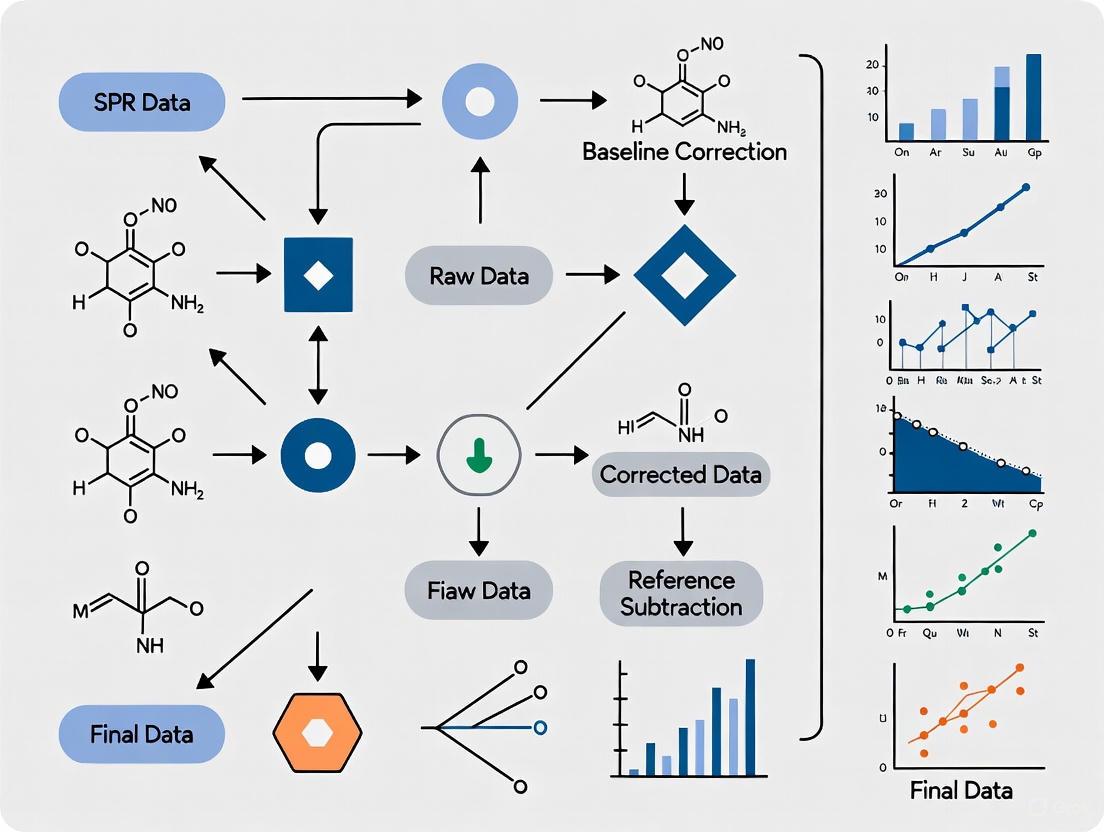
This article provides a thorough examination of Surface Plasmon Resonance (SPR) baseline correction data analysis methods, essential for researchers, scientists, and drug development professionals.
Advanced SPR Baseline Correction Methods: A Comprehensive Guide for Accurate Biomolecular Interaction Analysis
Abstract
This article provides a thorough examination of Surface Plasmon Resonance (SPR) baseline correction data analysis methods, essential for researchers, scientists, and drug development professionals. It covers fundamental principles from identifying sources of baseline drift and noise to advanced algorithmic correction techniques. The content explores specialized methodologies including dynamic baseline algorithms and double referencing, offers practical troubleshooting strategies for common experimental artifacts, and presents validation frameworks for assessing method performance. By synthesizing foundational knowledge with practical applications, this guide enables more reliable interpretation of SPR data, ultimately enhancing the accuracy of kinetic and affinity measurements in biomedical research.
Understanding SPR Baseline Drift: Sources, Impacts, and Fundamental Correction Principles
In Surface Plasmon Resonance (SPR) analysis, the sensorgram provides a real-time, label-free record of molecular interactions. The initial baseline phase of this sensorgram is not merely a starting point but a critical foundation that dictates the validity of all subsequent kinetic and affinity data extracted from the experiment. A properly established baseline represents a state of system equilibrium where the sensor surface is stable, the flow buffer is consistent, and no specific binding is occurring [1] [2]. Understanding, achieving, and maintaining this baseline is paramount for researchers and drug development professionals who rely on SPR for precise quantification of biomolecular interactions, as inaccuracies at this stage propagate through association, steady-state, and dissociation phases, potentially compromising the entire dataset [3]. This Application Note details the protocols and considerations for defining and optimizing the SPR baseline within the broader context of advanced data analysis methods.
The Role of the Baseline in Sensorgram Interpretation
Definition and Key Characteristics
The baseline is the initial flat line on a sensorgram, occurring before the analyte is introduced. It represents the signal from the immobilized ligand in contact with a continuous flow of running buffer [4]. During this phase, the system conditions the sensor surface and allows the investigator to check for any instabilities [1] [4]. An ideal baseline is stable and flat, indicating that the refractive index near the sensor surface is constant and that the instrument is optically stable [2]. The relative SPR response in a sensorgram, measured in Resonance Units (RU), is proportional to the mass of bound analytes; a stable initial baseline ensures that any change in this response can be accurately attributed to the binding event itself [1].
Impact on Data Analysis
The integrity of the baseline directly influences the accuracy of all calculated interaction parameters. The initial baseline value is used as the reference point (zero) for measuring the binding response during the association phase [5]. Consequently, baseline drift—a gradual increase or decrease in the signal before analyte injection—skews the measurement of the maximum response (Rmax) and the subsequent calculation of the association rate (k~on~) and dissociation rate (k~off~) [3] [2]. Since the equilibrium dissociation constant (K~D~) is derived from the ratio k~off~/k~on~, an unstable baseline can lead to incorrect affinity determinations [1] [5]. Furthermore, for experiments requiring a regeneration step, the baseline must return to its original level to ensure the sensor surface is properly prepared for a new analysis cycle [1] [6].
Experimental Protocols for Baseline Establishment
Pre-Experiment System Preparation
A stable baseline begins with meticulous preparation of the instrument and reagents.
Protocol 3.1.1: Buffer and Sample Preparation
- Running Buffer Selection: Use a high-purity, freshly prepared buffer. Common choices include phosphate-buffered saline (PBS) or 10 mM HEPES with 150 mM NaCl [1] [7]. The buffer must be compatible with both the ligand and analyte to maintain their stability and activity.
- Filtration and Degassing: Filter the running buffer through a 0.22 µm membrane and degas it thoroughly to prevent the formation of air bubbles within the microfluidic system, which can cause significant signal spikes and baseline noise [2] [6].
- Sample Clarification: Centrifuge or filter all analyte and ligand solutions through a 0.22 µm membrane to remove any particulate matter or aggregates that could non-specifically bind to the sensor surface or clog the fluidics [3] [6].
Protocol 3.1.2: Fluidic System Priming
- Initiate a system prime or flush with the filtered and degassed running buffer according to the manufacturer's instructions. This step is critical to remove storage solutions, air, and contaminants from the fluidic path [4].
- Ensure all buffer lines are primed with the correct running buffer. Switching between different buffers without adequate priming can create refractive index mismatches, leading to a bulk shift that destabilizes the baseline.
Establishing a Stable Baseline
The following workflow is essential for achieving a baseline suitable for data acquisition. The diagram below outlines the key steps and decision points.
Protocol 3.2.1: Baseline Conditioning and Monitoring
- Initial Conditioning: After priming, initiate a continuous flow of running buffer over the sensor surface. A flow rate of 10-30 µL/min is typically used for conditioning, though this may be optimized for specific assays [3].
- Stability Monitoring: Observe the baseline signal for a minimum of 2-5 minutes. The signal is considered stable when the drift is less than 5 RU per minute [2]. Many modern SPR systems provide software-based drift measurements.
- Commence Experiment: Only once the baseline stability criteria are met should the experiment proceed to the injection of the analyte, marking the start of the association phase.
Troubleshooting Common Baseline Anomalies
Even with careful preparation, baseline issues can occur. The table below summarizes common problems, their causes, and solutions.
Table 1: Troubleshooting Guide for SPR Baseline Issues
| Anomaly | Primary Causes | Recommended Solutions |
|---|---|---|
| Baseline Drift [2] | Contaminated sensor chip or buffer; air bubbles in fluidics; temperature fluctuations. | Clean fluidic system and sensor chip; replace buffer; ensure proper degassing; verify instrument temperature control. |
| Injection Spikes [1] [2] | Air bubbles in sample; particulate matter in sample; improper injection valve operation. | Centrifuge/filter samples; carefully load samples to avoid introducing air; perform air check on instrument. |
| High Buffer Response / Bulk Shift [3] | Mismatch between running buffer and analyte buffer composition (e.g., DMSO, salt, glycerol). | Match analyte buffer to running buffer exactly; use reference cell subtraction; dialyze samples into running buffer. |
| Noisy Signal (High RU) | Contaminated flow cell; degraded sensor chip; micro-bubbles. | Perform stringent system cleaning; replace sensor chip; ensure buffers are thoroughly degassed. |
Advanced Troubleshooting: Non-Specific Binding (NSB)
Non-specific binding (NSB) occurs when the analyte interacts with the sensor surface itself rather than the specific ligand. This can manifest as an elevated or drifting baseline even before analyte injection, or as an unexpectedly high binding response [3]. To mitigate NSB:
- Use a Reference Flow Cell: A surface without immobilized ligand is essential for subtracting signals arising from NSB and bulk refractive index effects [3] [6].
- Optimize Buffer Conditions: Add blocking agents like bovine serum albumin (BSA at 0.1-1%) or non-ionic detergents like Tween 20 (0.005-0.01%) to the running buffer to shield hydrophobic or charged surfaces [3] [6].
- Adjust pH or Ionic Strength: Modifying the pH to the isoelectric point of the analyte or increasing the salt concentration (e.g., NaCl) can reduce charge-based NSB [3].
- Change Sensor Chemistry: If NSB persists, switch to a sensor chip with a different surface chemistry (e.g., from CM5 to CM4 for highly positively charged molecules) [8] [3].
The Scientist's Toolkit: Essential Reagents and Materials
The following table details key materials required for successful SPR experiments, with a focus on achieving a stable baseline.
Table 2: Research Reagent Solutions for SPR Baseline Stability
| Item | Function/Description | Example Use Cases |
|---|---|---|
| CM5 Sensor Chip [8] [6] | A carboxymethylated dextran matrix for covalent ligand immobilization. Versatile and chemically stable. | General protein-protein interactions; immobilization via amine coupling. |
| SA Sensor Chip [8] [6] | Pre-immobilized streptavidin for capturing biotinylated ligands. Ensures uniform orientation. | Immobilization of biotinylated DNA, antibodies, or carbohydrates. |
| NTA Sensor Chip [8] [6] | Pre-immobilized nitrilotriacetic acid for capturing His-tagged ligands via chelated nickel ions. | Oriented capture of recombinant His-tagged proteins. |
| HEPES-NaCl Buffer [1] [7] | A standard running buffer (e.g., 10 mM HEPES, 150 mM NaCl, pH 7.4). Provides a stable ionic and pH environment. | A common starting point for most protein interaction studies. |
| Glycine-HCl (pH 2.0-3.0) [1] [7] | A common regeneration solution for disrupting ligand-analyte complexes after a binding cycle. | Regeneration of antibody-antigen surfaces; returning baseline to its original level. |
| Bovine Serum Albumin (BSA) [3] | A blocking agent used to passivate the sensor surface, reducing non-specific binding. | Added to running buffer or sample diluent at 0.1-1% to minimize NSB. |
A rigorously defined and stable baseline is the non-negotiable cornerstone of accurate SPR data interpretation. It ensures that the measured changes in resonance signal faithfully represent the biomolecular interaction of interest, thereby guaranteeing the reliability of kinetic and affinity constants. By adhering to the detailed protocols for system preparation, baseline establishment, and proactive troubleshooting outlined in this document, researchers can significantly enhance the quality of their SPR data. As SPR technology continues to evolve, with increasing automation and sensitivity, the fundamental principles of baseline management remain critical for generating publication-quality data in drug discovery and basic research.
Surface Plasmon Resonance (SPR) is a powerful, label-free technique for the real-time analysis of biomolecular interactions. The accuracy of kinetic and affinity constants derived from SPR data hinges on the stability of the baseline response. Baseline drift, the gradual shift in the baseline signal prior to analyte injection, introduces significant inaccuracies by distorting the measurement of binding responses [9]. For researchers and drug development professionals, identifying and mitigating the sources of drift is not merely a procedural step but a fundamental requirement for generating publication-quality data. Within the broader context of developing robust SPR baseline correction data analysis methods, understanding these experimental sources is the critical first step, informing the development of more effective post-hoc computational corrections. This application note details the common sources of baseline drift, categorized into instrumental noise, buffer effects, and surface instability, and provides targeted protocols for their diagnosis and resolution.
Understanding and Quantifying Baseline Drift
Baseline drift manifests as a gradual increase or decrease in resonance units (RU) over time when only running buffer is flowing over the sensor surface. An ideal baseline is stable, with a noise level typically below 1 RU [9]. Drift can be quantified by measuring the slope of the baseline (RU/minute) over a defined period before analyte injection. The table below summarizes the core characteristics and primary mitigation strategies for the three major sources of drift.
Table 1: Common Sources of SPR Baseline Drift and Their Characteristics
| Source Category | Common Manifestations | Key Characteristics | Primary Mitigation Strategies |
|---|---|---|---|
| Instrumental Noise | Electronic fluctuations, air bubbles, temperature instability, pump strokes [9] | Abrupt spikes, high-frequency noise, periodic fluctuations | System priming, proper maintenance, temperature control, degassing buffers |
| Buffer Effects | Bulk refractive index shifts, buffer mismatch, poor buffer hygiene [3] [10] | Square-shaped injection artifacts, slow continuous drift | Prepare fresh, filtered, degassed buffers; match buffer composition exactly |
| Surface Instability | Rehydration of new chips, ligand leaching, incomplete regeneration [9] [10] | Slow, continuous drift after docking or regeneration | Extended equilibration, optimized immobilization, surface "priming" with start-up cycles |
Protocols for Diagnosing and Correcting Drift
Protocol: Mitigating Instrumental and Buffer-Related Drift
This protocol establishes a foundation for a stable SPR system by addressing instrumental and buffer-related issues [9] [3].
Materials:
- Fresh running buffer (e.g., HEPES, PBS)
- 0.22 µm filter unit
- Degassing apparatus
Procedure:
- Buffer Preparation: Prepare running buffer fresh daily. Filter through a 0.22 µm filter into a sterile container to remove particulates. Degas the buffer for at least 30 minutes to prevent air spike formation [9].
- System Priming: Prime the SPR instrument's fluidic system with the freshly prepared, degassed buffer. Repeat the prime command 2-3 times after a buffer change to ensure complete purging of the previous solution [9].
- Baseline Equilibration: Initiate a constant flow of running buffer (at the experimental flow rate) over a clean, undocked sensor chip or a docked but unimmobilized chip. Monitor the baseline for a minimum of 15-30 minutes, or until the drift rate falls below an acceptable threshold (e.g., < 1 RU/min) [9].
- Noise Level Assessment: Once the baseline is stable, perform several dummy injections of running buffer. The observed noise level should be low (e.g., < 1 RU) [9]. High noise indicates a need for further system cleaning or maintenance.
Protocol: Establishing a Stable Sensor Surface
This protocol ensures the sensor chip and immobilized ligand are sufficiently equilibrated to minimize surface-induced drift [9] [10].
Materials:
- Equilibrated SPR system with fresh running buffer
- Appropriate sensor chip (e.g., CM5, NTA, SA)
- Ligand and coupling reagents
Procedure:
- Chip Docking and Hydration: Dock a new sensor chip and initiate buffer flow. For newly docked chips or chips just after immobilization, plan for an extended equilibration time (30 minutes to several hours, sometimes overnight) to allow for the rehydration of the dextran matrix and wash-out of immobilization chemicals [9].
- Surface "Priming" with Start-up Cycles: Incorporate at least three start-up cycles into the experimental method. These cycles should mimic the experimental cycle exactly but inject running buffer instead of analyte. If a regeneration step is used, include it. These cycles are not used in the final analysis but serve to condition the surface [9].
- Monitor Post-Regeneration Drift: After a regeneration injection, closely observe the baseline. A significant drift that does not stabilize quickly may indicate an overly harsh or incomplete regeneration strategy, requiring optimization [3].
- Validation with Blank Injections: Space blank (buffer alone) injections evenly throughout the experiment. The consistent response from these blanks is used for double referencing, which compensates for residual drift and bulk effects during data analysis [9].
The following workflow diagram illustrates the systematic approach for diagnosing and addressing the primary sources of baseline drift.
Advanced Signal Processing for Drift Correction
Even with optimized experimental practices, some drift may persist. Advanced signal processing methods can be applied during data analysis to correct for these residual effects.
- Double Referencing: This is a standard and highly effective procedure. First, subtract the signal from a reference flow cell (no ligand immobilized) from the active flow cell signal. This corrects for bulk refractive index shifts and some instrumental drift. Second, subtract the average response from multiple blank injections (buffer alone) from the analyte injection data. This corrects for systematic drift and channel-specific differences [9].
- Projection Method for SNR Improvement: A computational "projection method" has been developed to improve the signal-to-noise ratio (SNR) of SPR signals. This method projects a normalized measured transmission spectrum onto a pre-simulated reference matrix of spectra spanning a range of refractive indices. The resulting "solution vector" is interpolated to provide a precise refractive index estimate, effectively transforming a noisy measurement into a smooth curve and improving the limit of detection [11].
- Dynamic Baseline Adjustment with PSO: For fiber SPR sensors, a dynamic baseline adjustment method using a Particle Swarm Optimization (PSO) algorithm has been shown to effectively track the resonance point in reflection spectra. The PSO algorithm optimizes the parameters for selecting the best dynamic baseline, outperforming traditional centroid methods, especially under conditions of light source fluctuation, leading to more accurate resonance wavelength determination [12].
The Scientist's Toolkit: Essential Reagents and Materials
Table 2: Key Research Reagent Solutions for Mitigating SPR Baseline Drift
| Item | Function in Drift Mitigation | Application Notes |
|---|---|---|
| 0.22 µm Filter | Removes particulates from buffers that could clog microfluidics or cause light scattering [9]. | Essential for all running and sample buffers immediately before use. |
| Degassing Apparatus | Removes dissolved air to prevent the formation of air bubbles in the flow system, which cause spikes and instability [9]. | Degas buffers for >30 mins; do not store degassed buffers at 4°C. |
| Non-ionic Surfactant (e.g., Tween-20) | Reduces non-specific binding (NSB) and minimizes hydrophobic interactions between analyte and surface that can cause drift [3] [10]. | Use at low concentrations (e.g., 0.005-0.01%) in running buffer. |
| Blocking Agents (e.g., BSA, Ethanolamine) | Blocks unreacted groups on the sensor surface after ligand immobilization, preventing NSB and stabilizing the baseline [10]. | Ethanolamine is standard for amine coupling; BSA for blocking in other strategies. |
| High-Purity Water & Salts | Ensures consistent buffer ionic strength and pH, minimizing refractive index changes due to buffer mismatch or contaminants [9] [7]. | Use ASTM Type I water and high-purity salts for buffer preparation. |
A stable baseline is the cornerstone of reliable SPR data. Baseline drift, originating from instrumental factors, buffer inconsistencies, or surface instability, can significantly compromise the accuracy of determined kinetic and affinity parameters. By adopting a systematic approach—incorporating rigorous buffer management, instrumental maintenance, surface conditioning protocols, and robust data processing techniques like double referencing—researchers can effectively minimize and correct for baseline drift. Mastering these practices is an indispensable prerequisite for advancing SPR baseline correction data analysis methods and ensures the generation of high-quality, trustworthy data in both academic research and pharmaceutical development.
The Critical Impact of Uncorrected Baseline on Kinetic Parameter Calculation
Surface Plasmon Resonance (SPR) is a powerful, label-free technique for quantifying biomolecular interactions in real-time, playing a critical role in drug discovery and basic research [13] [14]. The accuracy of kinetic and affinity constants (kₐ, kd, KD) derived from SPR data is fundamentally dependent on the quality of the baseline—the signal prior to analyte injection. An uncorrected or unstable baseline introduces significant errors into these calculated parameters, potentially compromising scientific conclusions and decisions in lead compound development [15] [3]. This application note details the sources and impacts of baseline irregularities and provides a validated protocol for their identification and correction, framed within a comprehensive data analysis methodology.
The Critical Role of Baseline Stability in SPR Analysis
The baseline is the foundation upon which all binding response measurements are built. In SPR kinetics, the calculation of observed rate constants (kobs) and the subsequent derivation of kₐ and kd rely on the precise measurement of response changes from the baseline level. A shifting baseline directly distorts the measured response (RU) over time, leading to inaccurate fitting of the binding curves [3]. Furthermore, the initial baseline value is critical for setting the baseline for analyte injection and for the accurate calculation of Rmax, the maximum binding response. An error in Rmax propagates directly into an error in the calculated kₐ [16].
The following diagram illustrates how baseline-related issues are integrated into the overall SPR data acquisition and analysis workflow, highlighting key points where errors can be introduced and identified.
Quantifying the Impact of Common Baseline Artifacts
Systematic baseline errors manifest in distinct ways, each with a specific impact on the calculated kinetic parameters. The following table summarizes the primary artifacts, their visual characteristics, and their consequent effects on data analysis.
Table 1: Impact of Common Baseline Artifacts on Kinetic Parameter Calculation
| Artifact Type | Visual Signature in Sensorgram | Impact on Kinetic Parameters |
|---|---|---|
| Bulk Refractive Index (RI) Shift [3] | Square-shaped response shift at injection start/end; positive or negative. | Obscures true binding response, complicating analysis of interactions with fast kinetics; can be partially corrected via reference subtraction. |
| Instrumental Drift [15] | Continuous, gradual signal increase or decrease throughout the experiment. | Shifts baseline for subsequent analyte injections, leading to inaccurate Rmax calculation and introducing error in ka. |
| Incomplete Regeneration [3] | Successively higher baseline after each regeneration step; residual analyte remains bound. | Reduces available binding sites for next injection, artificially lowering response and affecting both affinity (KD) and kinetic constants. |
| Non-Specific Binding (NSB) [3] | Elevated response on reference or bare surface; binding signal does not follow expected concentration dependence. | Inflates measured response, skewing calculated RU and leading to overestimation of binding affinity. |
Detailed Protocol for Baseline Correction
This step-by-step protocol guides the user through identifying baseline issues and applying appropriate corrections to ensure data integrity.
Pre-Experiment Preparation and Planning
- Buffer Matching: Precisely match the chemical composition (including salts, additives, and pH) of the running buffer and analyte sample buffer to minimize bulk RI shifts [3].
- Ligand Immobilization: Aim for a low to moderate ligand density (e.g., ~50-100 RU for kinetics) to minimize mass transport effects and non-specific binding [3]. Document the immobilization level (e.g., 2500 RU as in one study [13]).
- Reference Surface: Use an in-line reference flow cell or channel. The surface should mimic the active surface as closely as possible but lack the specific ligand [16].
- System Equilibration: Before data collection, run the system with running buffer until a stable baseline is achieved, typically with a slope of < 0.3 RU/min [3].
Data Acquisition and Real-Time Monitoring
- Include Blank Injections: Inject running buffer or a zero-concentration analyte sample. This serves as a critical control for identifying bulk RI shifts and instrumental noise [16].
- Verify Regeneration Efficiency: After each regeneration cycle, inject a known, intermediate analyte concentration as a positive control. A consistent binding response confirms that the ligand activity remains unchanged [3].
Post-Run Data Analysis and Correction
- Reference Subtraction: Subtract the sensorgram from the reference flow cell from the active flow cell sensorgram. This corrects for bulk RI shifts and some non-specific binding [3] [16].
- Blank Subtraction: Further subtract the response from the blank injection (buffer alone) from all analyte sample sensorgrams. This helps account for any injection artifacts [16].
- Baseline Alignment: If a slow, consistent instrumental drift is present, manually adjust the baseline of the dissociation or regeneration phase to align it with the pre-injection baseline level, using the software's alignment tool. Avoid using this to correct for large, systematic errors.
Validation of Corrected Data
- Visual Inspection: The corrected sensorgrams should display clean association and dissociation phases. The baseline before injection and after complete dissociation should be flat and stable [16].
- Residual Plot Analysis: After fitting the kinetic model, examine the residuals (difference between fitted curve and raw data). The residuals should be randomly distributed around zero, not showing any systematic patterns [16].
- Chi² Value: The Chi² value should be low, and its square root should be on the same order of magnitude as the instrument's noise level [16].
Table 2: Research Reagent Solutions for Baseline Management
| Reagent / Material | Function in Baseline Management | Application Notes |
|---|---|---|
| Bovine Serum Albumin (BSA) [3] | Additive to block non-specific binding on sensor surfaces and in sample solutions. | Typically used at 0.1-1% concentration. Add to running and sample buffers only during analyte runs to avoid coating the ligand. |
| Non-Ionic Surfactant (e.g., Tween 20) [3] | Reduces hydrophobic interactions that cause NSB. | Use at low concentrations (e.g., 0.005-0.01% v/v). Effective in both running buffer and sample dilution. |
| High-Salt Buffer (e.g., NaCl) [3] | Shields charge-based interactions between analyte and sensor surface. | Concentration varies (e.g., 150-500 mM). Test to find optimal concentration without disrupting specific binding. |
| Carboxylmethylated Dextran Sensor Chip (e.g., CM5) | Standard sensor chip for amine-coupling ligand immobilization. | A well-characterized surface. The immobilization level should be documented (e.g., 2500 RU) [13]. Low density minimizes mass transport. |
| Reference Sensor Chip | Provides a surface for control subtraction of bulk RI and NSB signals. | Should be activated and deactivated (blocked) identical to the active surface, but without ligand immobilization [16]. |
Advanced Validation and Troubleshooting
For complex interactions or when high-precision kinetics are required, advanced validation is necessary.
- Vary Flow Rates: Run the assay at multiple flow rates (e.g., 30, 50, 100 µL/min). If the observed association rate (k_obs) increases with higher flow rates, the system is likely mass-transport limited, which can be misinterpreted as a baseline issue [16].
- Global Analysis: Fit all analyte concentrations simultaneously to a single model. This provides more robust and reliable kinetic parameters compared to individual curve fitting [16].
- Self-Consistency Checks: Verify that the KD calculated from kinetics (kd/kₐ) matches the KD derived from equilibrium analysis (steady-state response). Also, ensure the kd from the dissociation phase matches the k_d fitted from the association phase [16].
The following decision tree outlines the advanced troubleshooting process to diagnose and address persistent issues after initial correction.
A stable and properly corrected baseline is not merely a data presentation preference but a fundamental prerequisite for obtaining accurate kinetic and affinity constants from SPR experiments. Uncorrected baseline artifacts directly compromise the integrity of kₐ, kd, and KD values, potentially leading to flawed scientific and development decisions. By implementing the systematic protocols outlined here—including careful experimental design, rigorous reference and blank subtraction, and comprehensive validation—researchers can significantly enhance the reliability of their SPR data. Adherence to these practices ensures that the powerful analytical capabilities of SPR are fully realized, providing high-quality data to accelerate drug discovery and deepen the understanding of molecular interactions.
Surface Plasmon Resonance (SPR) is a label-free technology that quantitatively measures biomolecular interactions in real-time, making it indispensable in drug discovery for characterizing affinity, kinetics, and concentration [17] [18]. The accurate interpretation of SPR data hinges on the quality of the baseline, which represents the system's signal when no binding is occurring. Baseline anomalies, caused by instrumental drift, refractive index changes, or non-specific binding, can obscure true binding events and lead to inaccurate kinetic parameter estimation. Therefore, robust baseline correction is a foundational step in SPR data analysis, ensuring the validity of results from early target validation to lead optimization [17] [19]. This document outlines a progression of correction methods, from simple subtractive techniques to sophisticated algorithm-based approaches, providing a structured framework for researchers to enhance their data integrity.
Fundamental Correction Principles
The Role of the Baseline in SPR Analysis
In SPR assays, the baseline establishes a reference point of zero response, corresponding to a state of no interaction between the ligand and analyte. A stable baseline is critical for the accurate determination of key interaction parameters. The association rate constant (ka) describes how quickly a complex forms, the dissociation rate constant (kd) measures how quickly it breaks apart, and the equilibrium dissociation constant (KD), calculated as kd/ka, quantifies the overall binding affinity [17]. A drifting or unstable baseline can distort the measurement of these parameters, potentially leading to the misclassification of lead compounds during critical stages of drug discovery, such as fragment screening and hit confirmation [17] [20].
- Instrumental Noise: Electronic noise from detectors and light sources creates high-frequency signal fluctuations. The spectrometer's diffraction grating and CCD sensor have wavelength-dependent efficiencies that shape the recorded spectrum and contribute to noise [15].
- Bulk Refractive Index Changes: Shifts in buffer composition, temperature, or solvent concentration after sample injection can cause sudden baseline steps or drifts, which are not related to specific binding events [17].
- Non-Specific Binding: Analyte molecules interacting with the sensor surface or ligand in a non-specific manner can cause a slow, continuous signal drift that mimics true binding [19].
- Systematic Instrumental Effects: The measured SPR spectrum is a convolution of the true resonance and the transfer functions of every optical component in the system, including the light source, polarizers, and optical fibers. Without correction, this can shift the observed resonance wavelength [15].
From Simple Subtraction to Advanced Algorithms
Simple Subtraction and Fitting Methods
The most straightforward baseline correction methods involve establishing a reference and subtracting it from the sensorgram.
- Blank Subtraction: A standard method involves running a reference flow cell with no immobilized ligand or an irrelevant ligand. The signal from this reference cell, which captures all non-specific effects and bulk shifts, is subtracted from the active cell's signal [17].
- Pre- and Post-Injection Fitting: The baseline before analyte injection is fitted to a line or curve to establish a starting point. After dissociation, the final baseline level is fitted, often with an exponential decay model, and this fitted line is used for subtraction to isolate the binding signal.
Table 1: Comparison of Fundamental Baseline Correction Methods
| Method | Principle | Best Use Cases | Limitations |
|---|---|---|---|
| Blank Subtraction | Subtracts signal from a reference flow cell | All SPR assays with a available reference channel | Requires a well-designed reference surface; may not capture all non-specific effects |
| Linear Fitting | Fits a straight line to pre-injection baseline | Assays with minimal instrumental drift | Ineffective for correcting non-linear drift or complex artifacts |
| Exponential Fitting | Fits an exponential curve to the dissociation phase | Correcting for slow dissociation or baseline drift post-injection | Model-dependent; can over-correct and distort kinetic parameters if misapplied |
Advanced Algorithmic Approaches
For complex systems and higher precision, advanced algorithms that model the entire SPR system are required.
- Transfer Function (TF) Modeling: This novel approach moves beyond simple signal processing to model the entire SPR spectrometer. The system's total transfer function is the product of the individual TFs of each component (light source, polarizer, optical fibers, spectrometer, etc.):
H_TOTAL(λ) = H_light(λ) * H_polarizer(λ) * H_fiber(λ) * H_spectrometer(λ)[15]. By characterizing these functions, a comprehensive model of the system's response is created. This model can then be used to correct the measured SPR spectrum, effectively deconvoluting the instrumental response from the true biological signal. This method has demonstrated a similarity of greater than 95% between the model and experimental spectra [15]. - Spectral Centroid and Minimum Identification: These algorithms process the raw spectral data to identify the resonance wavelength. The centroid method calculates the center of mass of the SPR dip, while the minimum method identifies the wavelength of lowest intensity [15]. These are more robust than simple subtraction but can still be influenced by the spectrometer's detector response.
- Detector-Specific Correction Models: Advanced methods account for the wavelength-dependent efficiency of the spectrometer's detector (e.g., Silicon or InGaAs). Distinct correction models are applied to compensate for this, improving the symmetry, depth, and width of the SPR spectrum for more accurate resonance determination [15].
Table 2: Advanced Algorithmic Correction Methods
| Algorithm | Underlying Principle | Key Advantage | Implementation Complexity |
|---|---|---|---|
| Transfer Function Modeling | Models the physical response of each optical component in the system | Highly accurate; corrects distortions at the source | High (requires detailed characterization of each component) |
| Spectral Centroid Calculation | Determines the center of mass of the SPR dip | Robust against asymmetric noise | Medium (integrated into some instrument software) |
| Detector-Response Correction | Applies a model to correct for the specific detector's efficiency | Improves spectral shape metrics (FWHM, depth) without fitting | Medium (requires pre-calibrated models) |
Experimental Protocols for Baseline Correction
Protocol: System Characterization for Transfer Function Modeling
This protocol details the steps for characterizing an SPR instrument's transfer function, as demonstrated in recent research [15].
1. Objective: To determine the individual transfer functions of each optical component in a homemade SPR spectroscopy system to create a comprehensive model for accurate spectral correction.
2. Materials and Reagents
- SPR spectrometer (e.g., configured in Kretschmann geometry)
- Stabilized tungsten-halogen light source (e.g., Thorlabs SLS201L)
- Linear polarizer (e.g., Thorlabs LPVISE050-A)
- Optical fibers
- High-refractive-index prism with gold film sensor chip
3. Methodology
- Step 1: Characterize the Spectrometer TF
- Use the manufacturer's data for the diffraction grating efficiency,
G(λ), and the CCD sensor responsivity,S(λ). - Calculate the spectrometer TF as:
H_Spec(λ) = G(λ) * S(λ)[15].
- Use the manufacturer's data for the diffraction grating efficiency,
- Step 2: Characterize the Light Source
- Model the lamp's emission spectrum,
X(λ), using Planck's law. Fit the published spectrum to determine an optimal blackbody temperature (e.g., 2650 K for a tungsten-halogen lamp) [15].
- Model the lamp's emission spectrum,
- Step 3: Characterize the Polarizer
- Experimentally determine the polarizer's transmittance,
P(λ), by measuring incident and transmitted light intensities across the relevant wavelength range (e.g., 350–1000 nm). Account forH_Spec(λ)during this measurement.
- Experimentally determine the polarizer's transmittance,
- Step 4: Assemble the Total Transfer Function
- Combine the individual TFs to obtain the total system TF:
H_Total(λ) = X(λ) * P(λ) * H_Spec(λ) * ...(including all other components).
- Combine the individual TFs to obtain the total system TF:
- Step 5: Validate and Apply the Model
- Compare the theoretical response generated by the model with an experimental SPR measurement. A successful model should reproduce the experimental spectrum with high similarity (>95%).
- Use the model to correct subsequently acquired SPR spectra, leading to a more accurate determination of the resonance wavelength.
System Characterization Workflow
Protocol: Standardized Baseline Correction for Binding Assays
This protocol is designed for routine binding assays, such as those used in fragment screening or bispecific molecule validation [19] [20].
1. Objective: To acquire and process SPR sensorgram data with proper baseline correction for reliable kinetics and affinity analysis.
2. Materials and Reagents
- SPR instrument (e.g., Alto Digital SPR or comparable system)
- Running buffer (e.g., HBS-EP)
- Ligand and analyte samples
- Regeneration solution (e.g., glycine-HCl)
3. Methodology
- Step 1: System Preparation and Equilibration
- Dock the sensor chip and prime the system with running buffer until a stable baseline (low drift, e.g., < 1 RU/min) is achieved.
- Step 2: Ligand Immobilization and Reference Setup
- Immobilize the ligand onto the sensor surface via standard amine coupling or capture methods.
- Use a reference flow cell that is activated and deactivated without ligand, or immobilized with an irrelevant molecule.
- Step 3: Double-Referenced Data Collection
- For each analyte injection cycle:
- Record a buffer injection over both ligand and reference surfaces.
- Inject the analyte sample over both surfaces.
- Process the data by first subtracting the reference cell signal from the ligand cell signal. Then, subtract the buffer injection signal from the analyte injection signal to yield a double-referenced sensorgram [20].
- For each analyte injection cycle:
- Step 4: Post-Run Baseline Alignment
- Align the baseline to zero response units (RU) at the start of each injection.
- If the post-dissociation baseline does not return to the pre-injection level, fit the final part of the dissociation phase and use this fitted baseline for final adjustment before kinetic fitting.
Binding Assay Correction Protocol
The Scientist's Toolkit: Research Reagent Solutions
Table 3: Essential Materials for SPR Experiments
| Item | Function / Application | Key Consideration |
|---|---|---|
| Alto Digital SPR System | Automated SPR platform for affinity, kinetics, and epitope mapping. | Uses digital microfluidics (DMF) to reduce sample consumption and hands-on time [17]. |
| CM5 Sensor Chip | Gold surface with a carboxymethylated dextran matrix for covalent ligand immobilization. | Standard for amine coupling; suitable for most proteins and other biomolecules. |
| HBS-EP Buffer | Running buffer containing HEPES, NaCl, EDTA, and surfactant P20. | Provides a stable pH and ionic strength; surfactant reduces non-specific binding. |
| G-Protein Coupled Receptor (GPCR) | Stabilized variant of neurotensin receptor 1 (NTS1) for fragment screening. | Essential for studying challenging membrane protein targets; requires stabilization for SPR analysis [20]. |
| Nitrilotriacetic Acid (NTA) Chip | Sensor surface for capturing His-tagged proteins. | Ideal for capturing recombinant proteins; allows for surface regeneration and ligand reuse. |
Mathematical Representation of Baseline Correction in SPR Signals
Surface Plasmon Resonance (SPR) is a powerful, label-free technology for real-time monitoring of biomolecular interactions, widely used in drug discovery, life sciences, and diagnostic development [18] [14]. The accurate interpretation of SPR data depends critically on proper baseline correction to eliminate instrumental artifacts and non-specific binding effects that can obscure true binding signals. Baseline correction is a mathematical process essential for isolating specific molecular interaction signals from systematic noise, enabling precise determination of kinetic parameters and binding affinities [21] [3].
This protocol outlines a comprehensive transfer function approach for baseline correction in SPR spectroscopy, providing researchers with a rigorous mathematical framework to correct instrumental distortions and obtain accurate, reproducible interaction data. The methods described are particularly valuable for applications requiring high sensitivity, such as characterization of low-affinity interactions, analysis of complex biological matrices, and detection of subtle conformational changes.
Theoretical Foundation
The Transfer Function Concept in SPR Systems
The transfer function (TF) approach, adapted from control systems engineering, provides a powerful mathematical framework for characterizing how each component in an SPR system modifies the incident light as a function of wavelength [15]. In this model, the entire SPR spectrometer is treated as a system that transforms an ideal theoretical input signal (X) into the measured experimental output (Y) through the cumulative effect of all optical components.
The total system transfer function is expressed mathematically as the product of individual component transfer functions:
H_TOTAL(λ) = H_1(λ) · H_2(λ) · ... · H_n(λ) [15]
Where:
H_TOTAL(λ)= Overall system transfer functionH_i(λ)= Transfer function of the i-th componentλ= Wavelength
This approach enables researchers to model the complete optical path mathematically, facilitating precise correction of measured spectra by reversing the systematic distortions introduced by each component [15].
Mathematical Representation of Component Transfer Functions
Table 1: Mathematical representations of individual component transfer functions in an SPR system
| System Component | Transfer Function | Mathematical Representation | Parameters |
|---|---|---|---|
| Light Source | Spectral radiance | I(λ,T) = (2πhc²/λ⁵) · 1/(e^(hc/λk_BT)-1) [15] |
h = Planck's constant, c = speed of light, k_B = Boltzmann constant, T = temperature (K) |
| Polarizer | Transmittance | P(λ) = I_transmitted(λ)/I_incident(λ) [15] |
Experimentally determined transmittance spectrum |
| Spectrometer | Detection efficiency | H_Spec(λ) = G(λ) · S(λ) [15] |
G(λ) = grating efficiency, S(λ) = CCD responsivity |
| SPR Sensor | Reflectance | Characteristic matrix theory [15] [22] | Complex dielectric constants of prism, metal films, and analyte |
| Optical Fibers | Attenuation | A(λ) = I_out(λ)/I_in(λ) [15] |
Experimentally determined attenuation spectrum |
Experimental Protocols
Comprehensive System Characterization
Objective: To determine the individual transfer functions of all optical components in the SPR instrumentation.
Materials and Reagents:
- Stabilized tungsten-halogen light source (e.g., Thorlabs SLS201L)
- Linear polarizer (e.g., Thorlabs LPVISE050-A)
- Spectrometer with CCD detector (e.g., Thorlabs CCS200)
- Optical fibers and connectors
- SPR sensor chip with appropriate metal coating
- Reference materials for validation
Table 2: Research reagent solutions for SPR baseline correction studies
| Reagent/Category | Specific Examples | Function in Experiment |
|---|---|---|
| Sensor Chips | Carboxyl-modified, NTA, CM5 [3] | Provides surface for ligand immobilization with specific chemistry |
| Blocking Agents | Bovine Serum Albumin (BSA) [3] | Reduces non-specific binding to sensor surface |
| Detergents | Tween 20 [3] | Minimizes hydrophobic non-specific interactions |
| Regeneration Solutions | Glycine-HCl (10-100 mM, pH 1.5-3.0) [3] | Removes bound analyte without damaging ligand activity |
| Buffer Additives | NaCl (0.1-1 M) [3] | Reduces charge-based non-specific interactions |
| Reference Analytes | Carbonic Anhydrase II with Acetazolamide [21] | Positive control for binding interactions |
Procedure:
Spectrometer Characterization
Light Source Characterization
- Measure emission spectrum using pre-characterized spectrometer
- Fit experimental data to Planck's law using non-linear regression
- Determine optimal blackbody temperature (typically ~2650 K for tungsten-halogen lamps) [15]
Polarizer Characterization
- Measure incident light intensity
I_incident(λ)without polarizer - Measure transmitted light intensity
I_transmitted(λ)with polarizer aligned to polarization axis - Calculate polarizer transfer function:
P(λ) = I_transmitted(λ)/I_incident(λ) - Apply Savitzky-Golay filter (window size=15, polynomial order=3) to smooth data [15]
- Measure incident light intensity
Optical Fiber Characterization
- Measure input light intensity
I_in(λ)before fiber optic path - Measure output light intensity
I_out(λ)after fiber optic path - Calculate attenuation transfer function:
A(λ) = I_out(λ)/I_in(λ)
- Measure input light intensity
SPR Sensor Modeling
System Characterization Workflow
Baseline Correction of Experimental SPR Data
Objective: To apply the system transfer function model to correct experimental SPR spectra for instrumental artifacts.
Procedure:
Data Acquisition
- Collect raw experimental SPR spectrum
Y_exp(λ) - Record all experimental conditions (temperature, flow rates, buffer composition)
- Collect raw experimental SPR spectrum
Theoretical Signal Calculation
Transfer Function Application
- Calculate total system transfer function:
H_TOTAL(λ) = H_Source(λ) · H_Polarizer(λ) · H_Fiber(λ) · H_Spec(λ) - Apply inverse transfer function to obtain corrected spectrum:
X_corrected(λ) = Y_exp(λ) / H_TOTAL(λ)
- Calculate total system transfer function:
Validation and Quality Control
- Compare corrected spectrum with theoretical prediction
- Calculate similarity metric (e.g., R² > 0.95 indicates successful correction) [15]
- Verify signal-to-noise ratio remains acceptable across operational range
Baseline Correction Process
Data Processing and Analysis
Pre-processing of SPR Sensorgrams
For kinetic analysis, additional baseline processing steps are required beyond spectral correction:
- Zero in Y-axis: Select timeframe before injection start and set baseline to zero [21]
- Cropping: Remove stabilization periods and regeneration steps [21]
- Zero in X-axis: Align injection start to t=0 [21]
- Reference Subtraction: Compensate for bulk refractive index differences [21] [3]
- Blank Subtraction: Subtract zero-analyte injections (double referencing) [21]
Quantitative Assessment of Correction Quality
Table 3: Key metrics for evaluating baseline correction performance
| Performance Metric | Mathematical Representation | Target Value | Significance |
|---|---|---|---|
| Similarity Index | S = [1 - Σ(X_corr - X_theo)²/Σ(X_theo)²] × 100% [15] |
>95% [15] | Overall correction accuracy |
| Signal-to-Noise Ratio | SNR = μ_signal/σ_noise |
Application dependent | Measurement precision |
| Spectral Symmetry (SMT) | Symmetry around resonance minimum [15] | Maximize | Indicator of proper correction |
| Resonance Depth (DRD) | Depth of resonance dip [15] | Application dependent | Signal strength |
| Full Width at Half Maximum (FWHM) | Width of resonance at half depth [15] | Minimize | Sensor resolution |
Troubleshooting and Optimization
Common Artifacts and Solutions
Bulk Shift Effects: Manifest as square-shaped sensorgrams due to refractive index mismatch between analyte and running buffer [3]. Mitigate by matching buffer components or using reference subtraction.
Incomplete Regeneration: Leads to residual binding between cycles [3]. Optimize regeneration solution (e.g., glycine-HCl pH 1.5-3.0) and contact time.
Mass Transport Limitations: Appear as linear association phases without curvature [3]. Address by increasing flow rates or reducing ligand density.
Non-Specific Binding (NSB): Causes inflated response units [3]. Reduce through buffer additives (BSA, Tween 20), pH adjustment, or increased salt concentration.
Model Refinement Strategies
- For systems with high similarity index (<95%), refine optical constants of thin films using ellipsometry [15]
- For noisy corrected spectra, apply Savitzky-Golay filtering to transfer functions before application [15]
- When extending operational range, monitor signal-to-noise ratio at spectrum edges [15]
The transfer function approach to SPR baseline correction provides a rigorous mathematical framework for isolating true molecular interaction signals from instrumental artifacts. By systematically characterizing each optical component and applying the appropriate inverse transformations, researchers can achieve >95% similarity between theoretical and corrected experimental spectra [15]. This methodology enables more accurate extraction of kinetic parameters and binding affinities, which is particularly valuable for drug discovery applications where small molecule characterization demands high precision [14].
The protocols described herein form an essential component of SPR data analysis methodology, supporting the generation of publication-quality data with well-characterized uncertainty sources. When implemented as part of a comprehensive SPR workflow—including proper experimental design, surface chemistry optimization, and appropriate referencing strategies—this mathematical approach to baseline correction significantly enhances data reliability and reproducibility.
SPR Baseline Correction Techniques: From Dynamic Algorithms to Referencing Strategies
In Surface Plasmon Resonance (SPR) analysis, the accurate determination of biomolecular interactions is often compromised by instrumental noise and drift. The dynamic baseline algorithm has emerged as a powerful mathematical correction method that maintains a constant area ratio of the SPR curve above and below a baseline, providing exceptional robustness against common noise sources, particularly fluctuations in optical power [24]. This protocol details the implementation of this algorithm for both centroid and curve-fitting analysis methods, enabling researchers to achieve higher data quality and reliability in kinetic and affinity studies.
Theoretical Foundation
Core Principle of Area Ratio Constancy
The fundamental operation of the dynamic baseline algorithm is its adjustment of the analysis baseline (P_B) to maintain a pre-defined, constant ratio (λ) between the integrated area of the SPR curve below the baseline and the area above it [24]. This is mathematically described by the equation:
λ = ∫_{θ_1}^{θ_2} [P_B - P(θ)] dθ / ∫_{θ_1}^{θ_2} [P(θ) - P_B] dθ [24]
Where:
λis the fixed area ratio.P(θ)is the detector response at angle of incidenceθ.P_Bis the dynamically adjusted baseline level.θ_1andθ_2define the angular range of the SPR curve.
This adjustment compensates for multiplicative noise (e.g., light source intensity drift) and additive noise (e.g., detector dark signal changes), making the final calculated resonance position (θ_res) insensitive to these fluctuations [24].
Algorithm Workflow and Logic
The following diagram illustrates the logical workflow and key decision points for implementing the dynamic baseline algorithm.
Experimental Protocol: Dynamic Baseline Centroid Method
This protocol provides a step-by-step guide for implementing the dynamic baseline algorithm in conjunction with the centroid method for angular interrogation SPR systems [24].
Materials and Reagents
Table 1: Essential Research Reagent Solutions
| Item | Function/Description | Example & Specification |
|---|---|---|
| Sensor Chip | Platform for ligand immobilization. Choice depends on ligand properties and coupling chemistry [3]. | CM5 (carboxylated dextran matrix); NTA sensor for His-tagged proteins [3] [25]. |
| Running Buffer | Continuous phase for analyte delivery. Must match analyte buffer to minimize bulk shift [3]. | 10 mM HEPES, pH 7.4 [25]. Other common buffers: PBS. |
| Ligand Molecule | The interactor immobilized on the sensor chip. Should be pure and preferably the smaller partner [3]. | Purified protein, e.g., sDDR2 [25]. |
| Analyte Molecule | The interaction partner flowed over the ligand. Serial dilutions prepared in running buffer [3]. | e.g., C1q proteins, 0-40 μg/mL for KD determination [25]. |
| Regeneration Solution | Strips bound analyte from ligand without damaging activity [3]. | Mild acid/base (e.g., 10 mM Glycine pH 2.5) or high salt [3]. |
Step-by-Step Procedure
System Setup and Ligand Immobilization
- Prime the SPR instrument with filtered and degassed running buffer.
- Immobilize the ligand onto an appropriate sensor chip surface using a standard coupling chemistry (e.g., amine coupling for CM5 chips). In the provided example, sDDR2 was immobilized using 10 mM sodium acetate (pH 4.0-6.0) as a scouting buffer [25].
- Employ a reference flow cell (immobilized with a non-interacting molecule or activated then deactivated surface) for control subtraction [3].
Data Collection
- Inject a series of analyte concentrations over the ligand and reference surfaces. Use a minimum of five concentrations spanning from 0.1 to 10 times the expected KD value for kinetic analysis [3]. A sample set could be 0, 2.5, 5, 10, 20, and 40 μg/mL [25].
- Record sensorgrams (reflectivity vs. angle/time) for all analyte injections.
- Include a regeneration injection if the complex does not fully dissociate spontaneously, ensuring the baseline returns to the pre-injection level before the next cycle [3].
Software-Aided Dynamic Baseline Calculation
- Extract the SPR curve (reflectivity vs. angle,
P(θ)) at a specific time point for analysis. - Define the target area ratio,
λ. This value may be determined empirically from a stable, high-quality SPR curve. - Implement an iterative solver (e.g., PSO, bisection method) to find the baseline
P_Bthat satisfies the constant area ratio condition defined in Section 2.1. - Calculate the resonance angle
θ_resusing the standard centroid formula with the dynamically determinedP_B[24]:θ_res = ∫_{θ_1}^{θ_2} (P_B - P(θ)) θ dθ / ∫_{θ_1}^{θ_2} (P_B - P(θ)) dθ - Repeat this calculation for every sensorgram point or averaged window to track the resonance angle shift over time.
- Extract the SPR curve (reflectivity vs. angle,
Experimental Workflow Visualization
The complete workflow, from sample preparation to data analysis, is summarized below.
Performance Validation and Benchmarking
Quantitative Performance Metrics
The dynamic baseline algorithm's effectiveness is demonstrated by its performance against common noise sources. The table below summarizes key benchmarks.
Table 2: Performance Benchmarking of Dynamic Baseline Algorithms
| Algorithm Type | Key Feature | Performance Metric | Result / Advantage | Source |
|---|---|---|---|---|
| Standard Dynamic Baseline | Fixed area ratio (λ) |
Insensitivity to correlated noise/drift | Mathematically exact compensation for optical power fluctuations. | [24] |
| PSO-Optimized Dynamic Baseline | Optimized params (β, m, λ) with Particle Swarm Optimization | Fitting degree (R²) in sucrose solution exp. | 0.9963 (Superior predictive ability) | [12] |
| PSO-Optimized Dynamic Baseline | Optimized params (β, m, λ) with PSO | Root Mean Square Error (RMSE) | 1.78 | [12] |
Fixed m Method |
Fixed number of points below baseline | Parameter dominance study | Identified as most effective single parameter. | [12] |
Advanced Implementation: Swarm Intelligence Optimization
For systems requiring maximum accuracy, the dynamic baseline parameters can be automatically optimized using metaheuristic algorithms like Particle Swarm Optimization (PSO).
- Objective: Find the optimal parameter combination
(β, m, λ)that defines the best dynamic baseline for a given SPR reflection spectrum [12]. - Process: PSO treats each parameter set as a particle. Particles "fly" through the parameter space, iteratively adjusting their positions based on their own experience and the swarm's best-found solution, converging on the global optimum [12].
- Performance: In experimental validations, the PSO-optimized dynamic baseline method achieved a superior fitting degree (
R² = 0.9963) and low error (RMSE = 1.78) when measuring sucrose solution concentrations. It also demonstrated the best tracking ability and optimization speed compared to other metaheuristic algorithms [12].
Troubleshooting and Best Practices
- Mitigating Bulk Shift: A large, square-shaped response at injection start/end indicates a bulk shift caused by refractive index (RI) differences between the running buffer and analyte sample. While reference subtraction helps, the most effective strategy is to match buffer components exactly, or use additives like BSA (1%) or Tween 20 at low concentrations to stabilize proteins without causing significant RI mismatch [3].
- Minimizing Non-Specific Binding (NSB): If the analyte interacts with the sensor surface itself, it inflates the response. To reduce NSB:
- Adjust buffer pH to the protein's isoelectric point.
- Increase salt concentration (e.g., NaCl) to shield charge-based interactions.
- Use a different sensor chemistry to avoid opposite charges between the surface and analyte [3].
- Addressing Mass Transport Limitation: If the analyte diffusion to the surface is slower than its binding rate, kinetics become limited by mass transport. This manifests as a linear, non-curving association phase in the sensorgram. To test, run the assay at different flow rates; if the observed association rate (
k_a) increases with higher flow rates, the system is mass transport limited [3].
Surface Plasmon Resonance (SPR) is a well-established, label-free technique for biomolecular interaction analysis, generating thousands of publications each year [26]. A fundamental challenge in SPR sensing is that the evanescent field extends hundreds of nanometers from the surface—far beyond the thickness of typical analytes like proteins (2-10 nm) [26]. This physical characteristic means that when molecules are injected, even those that do not bind to the surface will generate a significant response due to their presence in solution. This "bulk response" or "bulk refractive index effect" occurs because of the difference in refractive index (RI) between the running buffer and the analyte sample [3] [27].
The bulk response problem has haunted SPR users for decades, as it complicates the differentiation between signals originating from actual surface binding and those arising merely from molecules in solution [26]. This effect is particularly pronounced when high analyte concentrations are necessary for probing weak interactions or when complex samples with varying RI are injected [26]. Arguably, the bulk response effect is a major reason why conclusions in many SPR publications may be questionable [26]. Proper compensation for these effects through reference channel subtraction is therefore essential for obtaining accurate binding data.
Theoretical Foundation of Bulk Response Correction
Physical Basis of Bulk Effects
The bulk response in SPR manifests as an immediate shift in the sensorgram at the beginning and end of analyte injection, often creating a characteristic 'square' shape [3]. These shifts may be positive or negative, depending on whether the RI of the analyte solution is higher or lower than that of the running buffer [3]. The magnitude of the bulk response is directly proportional to the RI difference between the solutions, with every 1 mM change in salt concentration generating approximately a 10 RU bulk difference [27].
The evanescent field decay length in SPR typically exceeds the size of most biological analytes, meaning that signals from non-bound molecules in solution contribute significantly to the total measured response [26]. This effect becomes particularly problematic when studying weak interactions requiring high analyte concentrations or when working with complex samples that have inherently different refractive indices from the running buffer.
Principles of Reference Channel Subtraction
Reference subtraction serves to compensate for bulk refractive index differences between flow buffer and analyte sample, in addition to compensating for some non-specific binding to the sensor chip [21]. The fundamental principle involves using a reference surface that ideally experiences the same bulk effects as the active surface but lacks the specific binding activity.
There are two primary types of referencing in SPR analysis [28]:
- Blank surface referencing: Corrects for bulk effect and nonspecific binding using either an empty surface or one coated with an irrelevant molecule.
- Blank buffer referencing: Corrects for baseline drift resulting from changes to the ligand surface itself.
When combined, these approaches implement the "double referencing" strategy that significantly enhances data quality by compensating for both bulk effects and instrumental drift [21] [28].
Table 1: Types of Reference Surfaces and Their Applications
| Reference Type | Composition | Primary Function | Limitations |
|---|---|---|---|
| Blank Surface | Bare sensor matrix or mock-immobilized surface | Subtract bulk RI change and non-specific binding to matrix | May not perfectly match hydration or exclusion properties of active surface |
| Iso-type Control | Immobilized irrelevant molecule with similar properties | Subtract non-specific binding to ligand chemistry | Requires identification of suitable control molecule |
| Mutant Target | Non-functional variant of the target | Control for specific binding while maintaining surface properties | Requires protein engineering |
| Streptavidin Surface | Bare streptavidin without biotinylated ligand | Standard for capture systems | Differences in matrix exclusion volume |
Experimental Design for Effective Reference Subtraction
Reference Surface Selection
The choice of an appropriate reference surface is critical for effective bulk response correction. Several approaches are commonly employed, each with distinct advantages and limitations.
For protein interaction studies, a blank surface functionalized with the same chemistry as the active surface but without the specific ligand is often used [21]. For RNA-small molecule interactions, research shows that using a mutant or noncognate RNA as a reference effectively controls for nonspecific electrostatic interactions that often complicate analysis of weak binders [29]. This approach enforces target specificity by subtracting signals arising from non-specific interactions while preserving those from specific binding events.
The unique 6×6 experimental configuration of systems like the ProteOn XPR36 offers advanced referencing options such as interspot referencing, which uses interval surfaces adjacent to interaction spots rather than consuming valuable interaction surfaces [28]. This approach enhances referencing quality through immediate proximity to the interaction spots while conserving experimental capacity.
Buffer Matching Strategies
Proper buffer matching between running buffer and analyte samples is the first line of defense against significant bulk effects [3]. When analytes are stored in different buffers, dialysis against the running buffer or buffer exchange using size exclusion columns is recommended [27]. For small molecules dissolved in DMSO, it is essential to match DMSO concentrations exactly between sample and running buffers, as even small differences (e.g., 1% vs. 0.95% DMSO) can cause significant bulk responses [27].
Table 2: Common Buffer Components Causing Bulk Shifts and Mitigation Strategies
| Component | Typical Concentration | Bulk Effect Severity | Recommended Mitigation |
|---|---|---|---|
| DMSO | 1-10% | High | Exact matching ±0.1%; dialysis against running buffer with DMSO |
| Glycerol | 5-50% | High | Dialysis or buffer exchange; consider alternative stabilizers |
| Sucrose | 100-500 mM | Medium | Dilution in running buffer; consider lower concentrations |
| High Salt | >500 mM NaCl | Medium | Dialysis; use running buffer for serial dilutions |
Experimental Controls and Calibration
Incorporating appropriate controls validates the reference subtraction process. Injection of a series of buffer blanks (zero analyte concentration) corrects for drift and minor differences between reference and active channels [21]. For systems with high refractive index cosolvents like DMSO, excluded volume correction (EVC) calibration may be necessary when reference and active surfaces respond differently to changes in ionic strength or organic solvent concentration [21] [27]. This calibration involves creating a standard curve with known DMSO concentrations to correct for differential displacement volumes between surfaces with different ligand densities.
Step-by-Step Protocol for Reference Channel Subtraction
Surface Preparation
- Immobilize the ligand on the active flow cell using standard coupling procedures appropriate for your molecule (e.g., amine coupling, thiol coupling, or capture systems) [21].
- Prepare the reference surface using one of the following approaches [29] [28]:
- For blank surface reference: Activate and deactivate the surface without ligand immobilization.
- For control molecule reference: Immobilize a non-binding control molecule (e.g., mutant protein, non-cognate RNA) at a density similar to the active surface.
- For capture systems: Prepare the reference surface with the capture molecule (e.g., streptavidin) but without the ligand.
- Condition the surfaces with 3-5 injections of running buffer to establish stable baselines before analyte injections [29].
Data Collection Parameters
- Set the flow rate between 20-30 μL/min to minimize mass transport effects while maintaining adequate sample delivery [26] [29].
- For multi-cycle kinetics, program analyte injections in increasing concentration order, starting with a blank buffer injection [29].
- Use association phases of 2-5 minutes and dissociation phases of 4-10 minutes, adjusted based on the kinetic properties of your interaction [29] [28].
- Include periodic buffer injections throughout the run to monitor baseline stability and drift [28].
Data Processing Workflow
The following workflow illustrates the complete data processing procedure for SPR data, highlighting the role of reference subtraction within the broader context:
The reference subtraction process itself consists of two sequential steps that can be visualized as follows:
Implementation of Double Referencing
Perform blank surface referencing [28]:
- Subtract the sensorgram from the reference flow cell (blank surface + analyte solution) from the active surface sensorgram.
- This step removes the bulk refractive index effect and non-specific binding to the sensor matrix.
Perform blank buffer referencing [21] [28]:
- Subtract the sensorgram from the blank buffer injection (ligand surface + blank buffer) from all analyte injection sensorgrams.
- This step corrects for baseline drift resulting from changes to the ligand surface over time.
Apply excluded volume correction when necessary [21] [27]:
- Use when significant differences in ligand density cause differential response to cosolvents.
- Generate a calibration curve using control solutions with known refractive indices.
- Apply the calibration to correct for excluded volume differences between reference and active surfaces.
Troubleshooting Common Issues
Spikes After Reference Subtraction
Spikes at the beginning and end of injections after reference subtraction indicate phase misalignment between channels, particularly when flow channels are in series [27]. This occurs because the sample arrives at each channel at slightly different times. To resolve this:
- Improve alignment of curves in the X-direction by carefully aligning the injection start times [21] [27].
- Use instruments with inline reference subtraction when available, as this minimizes timing discrepancies [27].
- Ensure better buffer matching to reduce the magnitude of bulk shifts, making timing differences less impactful [27].
Incomplete Bulk Compensation
When bulk effects remain after reference subtraction, consider these solutions:
- Verify that the reference surface closely matches the active surface in terms of matrix properties and ligand density [26].
- For systems with high refractive index cosolvents like DMSO, implement excluded volume correction [21] [27].
- Consider alternative reference strategies, such as using a mutant target rather than a blank surface [29].
- Explore advanced bulk correction methods like PureKinetics (BioNavis) that measure bulk refractive index in real-time [26] [27].
Persistent Non-Specific Binding
When non-specific binding (NSB) persists after reference subtraction:
- Increase salt concentration in the running buffer (e.g., additional 50-150 mM NaCl) to shield charge-based interactions [3].
- Add non-ionic surfactants like Tween-20 (typically 0.05%) to disrupt hydrophobic interactions [3] [29].
- Include protein blocking additives such as BSA (1%) in analyte solutions during runs (but not during immobilization) [3].
- Adjust buffer pH to the isoelectric point of the analyte to minimize electrostatic interactions [3].
Research Reagent Solutions
Table 3: Essential Materials for SPR Reference Subtraction Experiments
| Reagent/Chip Type | Function in Reference Subtraction | Application Notes |
|---|---|---|
| Series S Sensor Chip SA | Streptavidin-coated for capture immobilization | Enables uniform ligand density between active and reference surfaces through biotin capture [29] |
| CM5 Carboxylated Dextran Chip | Versatile matrix for amine coupling | Most common chip type; allows creation of blank reference by activating/deactivating without ligand [21] |
| HEPES-buffered Saline (HBS) | Standard running buffer | Low UV absorbance, good buffering capacity; 10 mM HEPES, 150 mM NaCl, pH 7.4 typical [29] |
| Tween-20 (0.05%) | Non-ionic surfactant | Reduces NSB by disrupting hydrophobic interactions; standard additive in running buffers [3] [29] |
| DMSO | Cosolvent for small molecules | Match concentration exactly between sample and running buffer (±0.1%); causes significant bulk shifts [27] |
| BSA (1%) | Protein blocking agent | Add to analyte solutions (not during immobilization) to reduce NSB; use fatty-acid free grade [3] |
Advanced Applications and Method Extensions
RNA-Small Molecule Interaction Studies
For RNA-small molecule interactions, standard referencing approaches may be insufficient due to significant nonspecific electrostatic interactions [29]. Implementing a mutant or noncognate RNA reference enables subtraction of nonspecific binding contributions, allowing accurate measurement of specific binding affinities ranging from nanomolar to millimolar [29]. This approach has been validated for riboswitch RNAs and low-molecular-mass fragment ligands, demonstrating reliable discrimination between specific and nonspecific binding.
Reference-Free Bulk Correction Methods
Emerging methodologies offer bulk response correction without requiring a separate reference channel. One recently developed physical model determines bulk response contribution using the total internal reflection (TIR) angle response as the only input [26]. This method accounts for the thickness of the receptor layer on the surface and has been shown to reveal interactions that might otherwise be obscured by bulk effects, such as the weak affinity between poly(ethylene glycol) brushes and lysozyme (KD = 200 μM) [26].
High-Throughput Screening Applications
In fragment-based screening where weak binders are common, reference subtraction strategies are critical for distinguishing true binding from false positives. Using control surfaces with mutated binding sites or irrelevant proteins enhances confidence in identifying specific binding events [29]. The efficiency of SPR combined with robust referencing makes it particularly valuable for screening applications where material consumption and throughput are significant considerations.
Proper implementation of reference channel subtraction is essential for obtaining accurate SPR data by effectively compensating for bulk refractive index effects. The double referencing approach, combining blank surface and blank buffer subtraction, provides a robust framework for distinguishing specific binding from non-specific effects. Careful experimental design—including appropriate reference surface selection, precise buffer matching, and validation controls—ensures reliable data interpretation. As SPR applications expand to include more challenging interactions like RNA-small molecule binding and weak affinities, advanced referencing strategies continue to evolve, enhancing the technique's utility in fundamental research and drug discovery.
Surface plasmon resonance (SPR) has established itself as a cornerstone technology for real-time, label-free monitoring of biomolecular interactions across diverse fields including drug discovery, diagnostic development, and fundamental biological research [18] [30]. The core measurement in SPR is the detection of changes in the refractive index at the sensor surface, which is expressed in resonance units (RU). However, not all changes in RU originate from the specific biomolecular interaction of interest; significant signal contributions can arise from instrumental noise, bulk refractive index effects from buffer composition, and non-specific binding [28] [15]. These confounding signals can obscure true interaction data and compromise kinetic and affinity analyses.
Referencing strategies are therefore critical for isolating the specific binding signal. Double referencing has emerged as a gold-standard methodology that systematically removes these non-specific contributions through a two-step correction process [28]. This technique combines blank surface referencing (addressing bulk effects and non-specific binding) with blank buffer referencing (addressing baseline drift and instrumental artifacts). The power of double referencing lies in its comprehensive approach to signal purification, enabling researchers to extract high-quality interaction data from complex experimental systems. For researchers working within the context of SPR baseline correction methodologies, mastering double referencing is essential for producing publication-quality data with enhanced reliability and accuracy.
Theoretical Foundation of Double Referencing
The Need for Signal Correction in SPR
SPR biosensors detect changes in mass concentration at the sensor surface by measuring refractive index variations. Unfortunately, the detected signal represents a composite of several factors: (1) specific binding between ligand and analyte; (2) non-specific binding of analyte to the sensor matrix or immobilized ligand; (3) bulk refractive index changes resulting from differences in composition between running buffer and analyte solution; and (4) instrumental drift and optical artifacts [28] [15]. Without appropriate correction, these non-specific effects can lead to significant data misinterpretation. For instance, buffer mismatches – where the analyte solution has different salt or co-solvent composition than the running buffer – can produce substantial signal jumps that mimic or mask binding events [31]. One study noted that a mismatch of just 1 mM NaCl can generate a signal shift of approximately 20 RU on a carboxylated dextran sensor chip [31].
Components of Double Referencing
Double referencing systematically addresses these confounding signals through two sequential correction steps:
Blank Surface Referencing corrects for bulk refractive index effects and non-specific binding by subtracting signals obtained from surfaces that should not exhibit specific binding. This reference accounts for the response generated when analyte solution flows over a surface that lacks the specific ligand but is otherwise chemically similar to the active surface [28]. The ProteOn XPR36 system offers two implementations: traditional channel referencing (dedicated blank surfaces) and interspot referencing (utilizing interstitial regions between active spots), with the latter providing superior proximity to interaction regions [28].
Blank Buffer Referencing addresses baseline drift and ligand surface instability by subtracting signals from blank buffer injections over the active ligand surface. This correction accounts for gradual changes in the ligand surface over time, which is particularly crucial for capture surfaces where ligand dissociation can cause exponential baseline decay [28]. Implementation options include traditional injection referencing (separate blank buffer injections) and real-time double referencing (parallel blank buffer injections), with the latter providing more accurate monitoring of surface changes [28].
Table 1: Reference Types and Their Functions in SPR Double Referencing
| Reference Type | Corrected Artifacts | Experimental Implementation | Optimal Use Cases |
|---|---|---|---|
| Blank Surface | Bulk refractive index effects, Non-specific binding | Analyte injection over blank surface | All experiments, especially with complex matrices |
| Blank Buffer | Baseline drift, Ligand surface instability | Blank buffer injection over ligand surface | Long runs, capture surfaces, unstable ligands |
The mathematical implementation of double referencing follows a sequential subtraction process. First, the blank surface reference is subtracted from the active sensorgram, removing bulk effects and non-specific binding. Then, the blank buffer reference is subtracted, correcting for baseline drift. The resulting doubly-referenced sensorgram primarily reflects the specific biomolecular interaction kinetics.
Experimental Design and Protocol
Pre-experimental Planning
Successful double referencing begins with careful experimental design. The reference surfaces must be incorporated during the initial immobilization phase, as they cannot be added retrospectively [28]. For a standard interaction analysis using the ProteOn XPR36 system's 6×6 array, researchers should designate specific channels or interspots for reference purposes. A well-designed experiment typically includes:
- Active surfaces: Immobilized with the ligand of interest
- Blank surfaces for blank surface referencing: Either truly blank (unmodified) or coated with an irrelevant protein at comparable density to the active ligand
- Ligand surfaces for blank buffer referencing: Available for parallel buffer injection
When selecting an appropriate reference surface, consider that a native unmodified surface may not adequately account for volume exclusion effects caused by different ligand densities. A surface deactivated with ethanolamine after NHS/EDC activation provides hydroxyl groups that are less negatively charged at physiological pH than carboxyl groups [31]. For more matched referencing, immobilize an irrelevant protein (e.g., BSA or non-interacting antibody) at a density similar to the active ligand, though careful validation is required as BSA can bind many compounds [31].
Step-by-Step Protocol for Double Referencing
Step 1: Surface Preparation
- Activate the sensor chip surface according to manufacturer protocols.
- Immobilize the ligand of interest on designated active surfaces, aiming for optimal density for your kinetic analysis (typically 50-150 RU for small molecules, higher for proteins).
- Prepare blank reference surfaces: either leave unmodified, deactivate with ethanolamine, or immobilize an irrelevant protein at density matched to active surfaces.
- Document exact immobilization levels for all surfaces as these will be crucial for data interpretation.
Step 2: Data Collection Setup
- In the SPR instrument software, define the experimental workflow to include both analyte injections and parallel blank buffer injections.
- For blank surface referencing, assign the appropriate blank surfaces as references for each active ligand surface.
- For real-time double referencing, configure the method to include parallel blank buffer injections over ligand surfaces simultaneously with analyte injections.
- Establish appropriate flow rates (typically 30-50 μL/min) and injection times based on the kinetic properties of the interaction.
Step 3: Sequential Referencing Procedure
- Execute the experiment with simultaneous collection of active sensorgrams, blank surface references, and blank buffer references.
- Process the raw data by first applying blank surface referencing:
- In the data processing software, select the blank surface reference corresponding to each active sensorgram.
- Subtract the blank surface reference from the active sensorgram.
- Apply blank buffer referencing to the initially referenced sensorgrams:
- Select the blank buffer reference corresponding to each active sensorgram.
- Subtract the blank buffer reference from the initially referenced sensorgram.
- Verify the quality of the doubly-referenced sensorgrams by checking for the absence of bulk refractive index shifts and minimal baseline drift.
Table 2: Troubleshooting Common Double Referencing Issues
| Problem | Potential Causes | Solutions |
|---|---|---|
| Negative binding response after referencing | Buffer mismatch; Higher non-specific binding to reference surface; Volume exclusion effects | Dialyze analyte against running buffer; Test different reference surfaces; Use volume exclusion calibration [31] |
| Baseline drift persists after double referencing | Unstable ligand surface; Inadequate blank buffer reference | Use capture surface with stable ligand; Ensure proper blank buffer reference selection; Increase stabilization time |
| Inconsistent replicates | Reference surface variability; Air bubbles in flow system | Standardize reference surface preparation; Degas buffers; Include more reference channels |
Special Considerations: Excluded Volume Correction
When working with co-solvents that have high refractive indices (such as DMSO or glycerol), an additional calibration called Excluded Volume Correction (EVC) may be necessary [28]. These co-solvents produce a larger bulk effect on reference surfaces than on ligand-loaded surfaces because the immobilized ligand excludes some volume that would otherwise be occupied by the co-solvent. This differential effect creates an inconsistency that cannot be fully corrected by standard referencing. The EVC calibration uses the blank surface reference to mathematically adjust for this differential volume exclusion. For detailed implementation, consult manufacturer-specific protocols such as Bio-Rad bulletin 5822 [28].
Quality Assessment and Applications
Evaluating Referencing Quality
After applying double referencing, assess the quality of processed sensorgrams against these criteria:
- Alignment: Sensorgrams should be properly aligned in both vertical (response) and horizontal (time) dimensions without manual manipulation [28].
- Artifact removal: Transient spikes from air bubbles should be eliminated, but significant portions of deviated sensorgrams may require experiment repetition [28].
- Baseline stability: The referenced baseline should be flat before injection and after complete dissociation, with no residual drift [28].
- Phase transitions: Ideally, no response jump should appear between the association and dissociation phase transitions, indicating proper bulk effect correction [28].
- Kinetic consistency: The association phase should show characteristic curvature, and the dissociation phase should demonstrate adequate decay to resolve the dissociation rate constant [28].
Advanced Applications in Drug Discovery
Double referencing proves particularly valuable in pharmaceutical applications where small-molecule screening demands high sensitivity and accuracy. In fragment-based drug design (FBDD), where weak binders are common, proper referencing is essential for detecting low-affinity interactions [30] [32]. SPR studies of RNA-targeting small molecules, such as heterocyclic amidines and aminoglycosides, rely heavily on robust referencing to distinguish specific binding from non-specific interactions with the RNA backbone [32]. The doubly-referenced sensorgrams enable accurate determination of affinity and kinetic parameters for compound optimization.
Interestingly, properly referenced experiments sometimes reveal genuine negative binding responses indicating conformational changes that decrease refractive index at the sensor surface [31]. These unconventional signals, when validated, can provide unique insights into molecular mechanisms, such as compound-induced structural compaction in transcriptional repressors like EthR [31].
The Researcher's Toolkit
Table 3: Essential Reagents and Solutions for SPR Double Referencing
| Reagent/Solution | Function | Implementation Notes |
|---|---|---|
| Running Buffer | Baseline solution for all injections | Must match analyte buffer composition; Degas before use |
| Analyte Diluent | Preparation of analyte samples | Must be identical to running buffer to prevent bulk shifts |
| Reference Protein | Immobilization on reference surfaces | BSA or non-interacting IgG; Match density to active ligand |
| Ethanolamine | Deactivation reagent | Used to block activated carboxyl groups on reference surfaces |
| CM-dextran | Additive to reduce non-specific binding | Use at 0.1-1 mg/ml in running buffer for dextran chips [31] |
| Detergent Solutions | Reduce non-specific interactions | Add Tween-20 (0.005-0.02%) to running buffer |
Double referencing that combines blank surface and blank buffer corrections represents a sophisticated approach to signal purification in SPR biosensing. This methodology systematically addresses the principal non-specific contributions to SPR signals, enabling researchers to extract high-quality interaction data from complex experimental systems. The comprehensive correction afforded by this technique is particularly valuable for demanding applications such as small molecule screening, RNA-interaction studies, and accurate kinetic characterization. When implemented with careful attention to experimental design and quality assessment, double referencing significantly enhances the reliability of SPR data, supporting robust scientific conclusions in basic research and drug discovery programs.
Surface Plasmon Resonance (SPR) spectroscopy is a powerful, label-free technology for real-time detection and analysis of biomolecular interactions, with critical applications spanning diagnostics, proteomics, and drug discovery [33] [18]. The technique operates on the principle that binding of a mobile molecule (analyte) to an immobilized molecule (ligand) changes the refractive index at a thin metal film, altering the angle of extinction of reflected polarized light—a phenomenon known as surface plasmon resonance [34]. This enables researchers to monitor interactions as they form and disassemble, providing insights into binding kinetics and affinity that traditional endpoint assays often miss [33].
However, a significant challenge in SPR spectroscopy lies in the accurate interpretation of measured spectra, which are susceptible to instrumental influences that can shift the observed resonance wavelength [15]. The measured spectrum results from the complex interaction of light with all system components, each contributing wavelength-dependent effects. These include the radiance profile of the light source, attenuation in optical fibers, transmittance of polarizers, and detection efficiency of the spectrometer [15]. Without proper correction, these instrumental factors introduce distortions that compromise the accurate determination of resonance parameters essential for precise biomolecular interaction analysis.
Transfer function (TF) modeling emerges as a novel solution to this challenge, enabling comprehensive system characterization for accurate spectral correction. By quantifying how each component modifies incident light as a function of wavelength, TF modeling allows researchers to distinguish true molecular interaction signals from instrumental artifacts, thereby enhancing data reliability for critical applications like off-target therapeutic screening and affinity characterization [33] [15].
Theoretical Foundation of Transfer Function Modeling
The Transfer Function Concept in SPR Systems
In the context of SPR spectroscopy, a transfer function quantitatively represents the wavelength-dependent transformation that each optical component imposes on the light passing through the system [15]. Mathematically, the transfer function (H) is defined in the frequency domain as the ratio of output (Y) to input (X): H = Y/X. When applied to SPR systems, this concept enables a component-level understanding of how the final detected spectrum is shaped by each element in the optical path.
The total system transfer function (H_TOTAL) is the multiplicative product of the individual component transfer functions:
HTOTAL(λ) = H₁(λ) × H₂(λ) × ... × Hn(λ)
where λ represents wavelength, and H₁(λ) through H_n(λ) correspond to the transfer functions of individual components such as the light source, polarizer, optical fibers, SPR sensor, and spectrometer [15]. This comprehensive model successfully reproduces experimental SPR spectra with similarity greater than 95%, providing a solid foundation for accurate spectral correction [15].
Component-Specific Transfer Functions
Each component in an SPR system contributes uniquely to the overall spectral response. The light source, typically a tungsten-halogen lamp, follows Planck's blackbody radiation law, with its emission spectrum modeled using Equation 1 and characterized by a temperature parameter (approximately 2650 K) [15]. The polarizer, essential for producing p-polarized light required for plasmon excitation, has a wavelength-dependent transmittance that must be experimentally characterized, particularly when operating beyond the manufacturer's specified range [15].
The spectrometer represents perhaps the most complex component, with its overall transfer function (HSpec) being the product of the diffraction grating's absolute efficiency (G(λ)) and the CCD sensor's relative responsivity (S(λ)): HSpec(λ) = G(λ) × S(λ) [15]. The SPR sensor itself can be modeled using characteristic matrix theory, incorporating the optical constants of the prism, gold film, chromium adhesive layer, and analyte [15]. Recent advances also include self-referencing sensors with dedicated modes isolated from environmental variations, which can correct errors due to temperature fluctuations and improve measurement resolution by a factor of 3.6 [35].
Experimental Protocols for System Characterization
Determining Component Transfer Functions
Spectrometer Characterization Protocol:
- Obtain absolute efficiency data (G(λ)) for the diffraction grating from manufacturer specifications.
- Acquire relative responsivity curve (S(λ)) for the CCD sensor from technical documentation.
- Calculate the overall spectrometer transfer function as H_Spec(λ) = G(λ) × S(λ).
- Validate the theoretical transfer function against experimental measurements using standardized light sources.
Light Source Characterization Protocol:
- Measure the emission spectrum of the light source using a pre-calibrated spectrometer.
- Fit the measured spectrum to Planck's blackbody radiation law (Equation 1) to determine the optimal temperature parameter.
- Use the fitted model as the theoretical representation of the lamp's performance (X(λ)) for subsequent calibrations.
- Verify the fit quality using statistical measures (e.g., coefficient of determination R² > 0.999) [15].
Polarizer Characterization Protocol:
- Utilize a broadband light source (e.g., Lightsource DH-mini lamp covering UV-VIS-NIR range).
- Measure both incident and transmitted light intensities along the polarization axis.
- Account for the transfer function of the spectrometer (H_Spec) in calculations.
- Determine polarizer transmittance over the 350-1000 nm range.
- Apply a Savitzky-Golay filter (window size = 15, polynomial order = 3) to smooth the resulting P(λ) curve [15].
Integrated System Workflow
The following workflow diagram illustrates the sequential process for SPR system characterization using transfer function modeling:
Research Reagent Solutions and Essential Materials
Table 1: Essential research reagents and materials for SPR transfer function modeling experiments
| Component Category | Specific Product/Model | Manufacturer/Supplier | Function in Experiment |
|---|---|---|---|
| SPR Instrument | Biacore 3000 | GE Healthcare | Core SPR analysis platform for binding studies [34] |
| SPR Instrument | LSA, LSAXT, Ultra platforms | Carterra | High-throughput SPR with microfluidics for antibody screening [36] |
| Sensor Chip | CM5 chip, research grade | Biacore-GE Healthcare | Gold film surface with carboxymethylated dextran for ligand immobilization [34] |
| Light Source | SLS201L Tungsten-Halogen Lamp | Thorlabs Inc. | Broadband illumination for SPR excitation [15] |
| Spectrometer | CCS200 Compact Spectrometer | Thorlabs Inc. | Detection of reflected light spectrum with CCD sensor [15] |
| Polarizer | LPVISE050-A | Thorlabs Inc. | Production of p-polarized light required for plasmon resonance [15] |
| Buffers | HBS-N, HBS-P, HBS-EP | Biacore | Running buffers with varying additives for optimal binding conditions [34] |
| Coupling Reagents | EDC, NHS, Ethanolamine | Biacore | Amine-coupling chemistry for ligand immobilization on sensor surface [34] |
| Regeneration Solutions | Glycine-HCl (pH 1.5-3.0), NaOH | Biacore | Removal of bound analyte from immobilized ligand between cycles [34] |
Data Presentation and Quantitative Analysis
Table 2: Quantitative characteristics of SPR system components based on transfer function modeling
| System Component | Key Parameter | Typical Values/Range | Measurement Method |
|---|---|---|---|
| Light Source | Blackbody Temperature | 2650 K | Curve fitting to Planck's law [15] |
| Spectrometer | Spectral Range | 300-1000 nm | Manufacturer specifications [15] |
| Diffraction Grating | Efficiency | Wavelength-dependent (300-1000 nm) | Manufacturer absolute efficiency data [15] |
| CCD Sensor | Responsivity | Wavelength-dependent (300-1000 nm) | Manufacturer relative responsivity curve [15] |
| Polarizer | Transmittance | Wavelength-dependent (350-1000 nm) | Experimental characterization [15] |
| Self-Referencing Sensor | Sensitivity | 435 nm/RIU | Refractive index measurement [35] |
| Self-Referencing Sensor | Resolution Improvement | 3.6x | Comparative analysis with and without referencing [35] |
| Comprehensive Model | Similarity to Experimental Data | >95% | Theoretical vs. experimental spectrum comparison [15] |
Applications in Drug Discovery and Biomolecular Research
The implementation of transfer function modeling for accurate SPR spectral correction finds particularly valuable applications in drug discovery pipelines, where precise characterization of binding interactions is critical. Traditional endpoint assays risk false-negative results when detecting transient interactions with fast dissociation rates, a limitation overcome by real-time SPR monitoring [33]. This capability is essential for off-target screening of therapeutics, where an estimated 33% of lead antibody candidates exhibit off-target binding that can lead to adverse drug reactions and contribute to approximately 30% of drug failures [33].
In emerging therapeutic modalities like chimeric antigen receptor T-cell therapy (CAR-T), antibody drug conjugates (ADCs), and targeted protein degradation (TPD), precise affinity tuning is crucial for efficacy [33]. For CAR-T therapies, moderate affinity (KD = ~50.0-100 nM range) correlates with antitumor efficacy in the clinic, while reducing affinity in ADCs has been shown to improve efficacy through increased tumoral diffusion and reduced toxicity [33]. Accurate SPR measurements enabled by proper spectral correction provide the reliable data needed for these affinity optimizations.
Technologies like Sensor-integrated Proteome on chip (SPOC) represent next-generation platforms that combine cost-efficient cell-free protein synthesis with high-density protein arrays on SPR biosensors [33]. When coupled with robust spectral correction methods, these systems enhance multiplex capacity for kinetic evaluation of therapeutic biologics and drugs, enabling more comprehensive pharmacological profiling early in drug development.
Transfer function modeling provides a sophisticated framework for comprehensive characterization of SPR systems, addressing the critical challenge of spectral distortion in molecular interaction analysis. By quantifying the wavelength-dependent contributions of individual optical components, this approach enables precise correction of measured spectra, leading to more accurate determination of binding kinetics and affinities. The experimental protocols outlined in this application note offer researchers practical methodologies for implementing this advanced characterization technique, with the potential to enhance data reliability across diverse applications from basic research to drug discovery. As SPR technology continues to evolve toward higher throughput and sensitivity, robust spectral correction methods will remain essential for extracting meaningful biological insights from increasingly complex experimental systems.
In analytical sciences, signals acquired from instruments such as spectrometers and surface plasmon resonance (SPR) biosensors are often compromised by unwanted background interference known as baseline drift. This drift can arise from various sources, including instrumental imperfections, environmental fluctuations, and sample matrix effects. In SPR, which has become a mainstream technology in drug discovery for obtaining detailed molecular interaction parameters, baseline drift can significantly distort binding sensorgrams, leading to inaccurate calculation of kinetic and affinity constants [37] [3]. Similarly, in spectroscopic techniques like Raman and infrared spectroscopy, baseline drift caused by fluorescence or instrument error adversely affects subsequent qualitative and quantitative analysis [38] [39] [40]. Effective baseline correction is therefore a crucial preprocessing step to ensure data integrity and reliable analytical outcomes.
The fundamental challenge in baseline correction lies in discriminating the true analytical signal (e.g., an SPR binding response or a spectroscopic peak) from the low-frequency baseline drift, without introducing distortions or losing critical signal information. Traditional methods often require manual parameter adjustment, making the process time-consuming and operator-dependent [41]. This Application Note surveys advanced automated baseline correction methodologies, focusing on two powerful paradigms: iterative morphological operations and machine learning approaches. We frame this discussion within the context of SPR data analysis, a critical technology in modern drug development, where efficient and accurate data processing workflows are essential for timely decision-making [37].
Methodological Approaches and Underlying Principles
Iterative Morphological and Reweighted Least Squares Methods
Iterative methods operate on the principle of progressively refining an initial estimate of the baseline until a convergence criterion is met. A key representative is the Automated Baseline Correction Method Based on Iterative Morphological Operations [38]. This technique adaptively determines a structuring element and then gradually removes spectral peaks during iteration to obtain an estimated baseline. It is reported to be accurate, fast, and flexible for handling various baseline types in Raman spectra, with potential application to other analytical signals like IR spectra and chromatograms [38].
A widely adopted family of iterative algorithms is based on Penalized Least Squares (PLS). The core concept involves balancing the fidelity of the fitted baseline to the original signal with a roughness penalty to control smoothness [40] [42]. The adaptive iteratively reweighted Penalized Least Squares (airPLS) method is a notable development [42]. It introduces an adaptive iterative reweighting procedure where a weight vector is updated in each iteration to automatically and gradually reduce the influence of peak points. The algorithm minimizes a weighted function, and points with signals higher than the current baseline candidate are considered peaks and assigned zero weight in subsequent iterations [42]. The iteration stops when the termination criterion is met, yielding the final baseline estimate.
Variants like the extended Range Penalized Least Squares (erPLS) method automate parameter selection, a common limitation in PLS-based methods. erPLS works by linearly expanding the spectral ends, adding a Gaussian peak to the extended range, and determining the optimal smoothing parameter by finding the minimal root-mean-square error in the extended region [40]. Another advanced iterative method is the Morphological and Iterative Local Extremum (MILE) algorithm. It first identifies local extrema via derivation to get a coarse baseline using Piecewise Cubic Hermite Interpolating Polynomial (PCHIP) interpolation. It then refines this baseline through iterative updates of the local extrema using their adjacent data points [43].
Machine Learning and Deep Learning Approaches
Machine learning, particularly deep learning, represents a paradigm shift in baseline correction by learning the mapping from corrupted signals to their clean versions or baselines directly from data, thereby minimizing the need for manual feature engineering and parameter tuning.
A prominent example is the Deep learning baseline correction method via multi-scale analysis and regression [39]. This method leverages the mathematical principles of multi-scale analysis and regression to design a Convolutional Neural Network (CNN)-based architecture. The network incorporates Residual Dense Blocks (RDBs) for powerful feature learning and Multi-Self-Attention (MSA) modules to capture global information and prevent local over-correction. It is trained using a specialized non-convex and non-smooth loss function, which helps achieve state-of-the-art performance on simulated, real, and application data [39].
Another significant contribution is the baseline correction model combining ResNet and UNet [41]. This deep-learning model is trained entirely on simulated spectral data, yet demonstrates effective performance on real Raman spectra. The model's architecture benefits from the skip connections of ResNet, which ease the training of deep networks, and the encoder-decoder structure of UNet, which effectively captures multi-scale features. This end-to-end approach eliminates manual parameter adjustment, offering a highly automated and powerful solution [41].
Table 1: Comparison of Automated Baseline Correction Methods
| Method Category | Specific Method | Key Principle | Automation Level | Reported Advantages |
|---|---|---|---|---|
| Iterative Operations | Iterative Morphological Operations [38] | Iterative peak stripping using morphological operators | Adaptive structuring element determination | Accurate, fast, flexible for various baselines |
| airPLS [42] | Adaptive iterative reweighting to exclude peaks | Automatic weight update; smoothing parameter (λ) may need tuning | No peak detection required; handles various spectra | |
| erPLS [40] | Uses spectral extension and Gaussian peak to find optimal λ | Automatic selection of key smoothing parameter λ | Handles different baseline drifts automatically | |
| MILE [43] | Coarse baseline fitting via local extrema & iterative refinement | High; relies on interpolation and iterative updates | High precision and robustness for various spectra | |
| Machine Learning | Multi-Scale Deep Learning [39] | CNN-based network with multi-scale analysis & MSA modules | Full; end-to-end correction after training | State-of-the-art performance; handles weak baselines |
| ResNet-UNet Model [41] | Deep learning with simulated data; ResNet & UNet fusion | Full; no manual parameter adjustment post-training | Ease of application; high performance on real data |
Experimental Protocols and Implementation
Protocol for the airPLS Algorithm
The airPLS algorithm is a robust iterative method for baseline correction. The following protocol is adapted from its original application in Raman imaging data preprocessing [42].
Principle: The algorithm iteratively reweights the penalty on potential peak points to fit the baseline using weighted penalized least squares.
Materials:
- Software Environment: A computational environment like Python (NumPy, SciPy) or MATLAB.
- Input Data: A vector of spectral or sensorgram data.
Procedure:
- Initialization: Set the initial weight vector ( w^0 ) for all data points to 1. Specify the maximum iteration count (e.g., 20) and the smoothness parameter λ (e.g., 10^7).
- Iterative Fitting: a. At iteration ( t ), compute the candidate baseline ( z^{t-1} ) by solving the weighted penalized least squares problem: ( \min{\mathbf{z}} \left{ \sum{i} wi^{t-1} (xi - zi)^2 + \lambda \sum{i} (\Delta zi)^2 \right} ), where ( \Delta ) represents the difference operator. b. Calculate the differences ( d^t = x - z^{t-1} ). c. Update the weight vector ( w^t ) for the next iteration. For points where the signal ( xi ) is greater than the candidate baseline ( zi^{t-1} ) (indicating a potential peak), set their weight to zero. For other points, update the weight based on the negative differences ( d^t ). d. Check the termination criterion: ( \sum{di^t < 0} |di^t| < \text{threshold} ).
- Finalization: If the termination criterion is met or the maximum iterations are reached, subtract the final fitted baseline ( z ) from the original signal ( x ) to obtain the corrected signal ( x^* ).
Protocol for a Deep Learning-Based Workflow
This protocol outlines the steps for implementing a deep learning-based baseline correction method, such as the multi-scale CNN or ResNet-UNet model [39] [41].
Principle: A deep neural network is trained to map raw, baseline-drifted spectra directly to their corrected versions or to the baseline itself.
Materials:
- Software Framework: A deep learning library like PyTorch or TensorFlow.
- Training Data: A large set of paired data: raw signals and their corresponding ground-truth baselines or corrected signals. This can be real data with known baselines or, more commonly, simulated data.
- Computational Resources: A GPU is highly recommended for efficient model training.
Procedure:
- Data Preparation and Simulation:
- Generate a diverse dataset of synthetic signals. This typically involves:
- The combined signal is ( y(v) = s(v) + b(v) + n(v) ). The training target is the clean signal ( s(v) ) or the baseline ( b(v) ).
Model Design and Training:
- Network Architecture: Choose or design a suitable model. For example:
- A Multi-Scale CNN with Self-Attention: Use an encoder-decoder structure with RDBs for feature extraction and MSA modules to capture long-range dependencies [39].
- A ResNet-UNet Hybrid: Combine the U-Net's contracting and expanding path with ResNet's residual blocks to facilitate gradient flow and feature reuse [41].
- Loss Function: Define an appropriate loss function. The mean squared error is common, but more advanced functions like a non-convex, non-smooth loss based on Sobolev space can be used to encourage smoother, more accurate baselines [39].
- Training Loop: Train the model by iteratively presenting batches of simulated data, computing the loss between the model's prediction and the target, and updating the model's parameters via backpropagation.
- Network Architecture: Choose or design a suitable model. For example:
Validation and Deployment:
- Validate the trained model on a held-out test set of both simulated and real-world data to assess its performance and generalization ability.
- Deploy the model for inference on new, unseen experimental data. The processed result is obtained by subtracting the network's baseline output from the raw input signal.
Diagram 1: Workflow for automated baseline correction methodologies. The process branches into deep learning and iterative paths, converging on a corrected signal.
The Scientist's Toolkit: Essential Research Reagents and Materials
Successful implementation of baseline correction methods, particularly in an SPR context, relies on more than just algorithms. The following table details key reagents and materials critical for generating high-quality data from which baselines can be effectively corrected.
Table 2: Key Research Reagent Solutions for SPR Experiments
| Item Name | Function/Description | Application Context in SPR |
|---|---|---|
| Sensor Chips | Solid supports with specialized coatings that facilitate ligand immobilization. | Choice depends on ligand properties (e.g., NTA sensor for his-tagged proteins, carboxyl sensors for amine coupling) [3]. |
| Running Buffer | The solution continuously flowed over the sensor chip to maintain a stable environment. | Must be optimized to match analyte buffer and minimize bulk refractive index shifts (bulk effect) [3] [28]. |
| Regeneration Solution | A solution used to completely dissociate the analyte from the ligand between analysis cycles. | Critical for accurate kinetics; must be harsh enough to remove analyte but mild enough to not damage the ligand [3]. |
| Blocking Additives | Agents like Bovine Serum Albumin (BSA) or surfactants (e.g., Tween 20). | Added to buffer to reduce non-specific binding (NSB) to the sensor surface [3]. |
| Reference Surfaces | Surfaces without the specific ligand or with an irrelevant protein. | Essential for reference subtraction to correct for bulk effect and NSB [28]. |
The automation of baseline correction is a vital step toward more efficient, reproducible, and objective data analysis in drug research and analytical sciences. Iterative methods, such as airPLS and iterative morphological operations, provide powerful, mathematically grounded tools that minimize manual intervention. Meanwhile, deep learning approaches are emerging as highly flexible and performant solutions, capable of learning complex baseline patterns directly from data. The choice of method depends on the specific application, data characteristics, and available computational resources. For SPR data analysis, which is central to hit-to-lead and lead optimization programs, integrating these automated correction methods into unified software platforms can drastically reduce processing time and improve data quality, thereby streamlining the path to critical discoveries [37]. As these technologies continue to mature, they promise to set new benchmarks for data handling, interpretation, and sharing across the drug discovery industry.
Troubleshooting SPR Baseline Issues: Practical Solutions for Common Experimental Challenges
Identifying and Mitigating Bulk Shift Artifacts in Sensorgrams
Bulk shift, also referred to as the solvent effect, is a common artifact in Surface Plasmon Resonance (SPR) experiments. It occurs when the refractive index (RI) of the analyte solution differs from that of the running buffer [3] [27]. This difference creates a universal, non-binding related response that can obscure genuine binding signals, particularly for interactions with rapid kinetics or small binding-induced responses [3]. In sensorgrams, bulk shift is characteristically identified by a square-shaped response with large, rapid shifts precisely at the start and end of the analyte injection [3]. Accurately identifying and mitigating this effect is crucial for ensuring the data quality and reliability of kinetic and affinity analyses in drug development research.
Identification and Causes of Bulk Shift
Characteristic Sensorgram Features
The primary indicator of a bulk shift is a sudden, step-change in the response unit (RU) at the injection's beginning (association phase start) and a corresponding sudden shift at the injection's end (dissociation phase start) [3] [1]. Unlike specific binding, which typically shows curved association and dissociation phases, the bulk shift manifests as an immediate jump to a higher or lower plateau, which is maintained throughout the injection before immediately dropping back. The direction of the shift depends on the RI difference; a higher RI in the analyte solution causes a positive jump [3].
Common Causes and Contributing Factors
Bulk shift is fundamentally a buffer mismatch problem. The most frequent causes include [3] [27]:
- Addition of Cosolvents: Compounds like DMSO used to solubilize small molecule analytes significantly alter the solution's refractive index. Even small differences in DMSO concentration between the running buffer and analyte solution can cause large jumps.
- Excipients and Stabilizers: Components such as glycerol from protein storage buffers, or high concentrations of salts, can create a RI mismatch.
- Sample Evaporation: For solutions containing volatile solvents like DMSO, evaporation from sample vials can concentrate the analyte and excipients, leading to an increased RI during the injection series [27].
- Excluded Volume Effects: This more subtle effect occurs when a high ligand density on the active sensor surface physically excludes cosolvents like DMSO from the volume occupied by the ligand. This leads to a local RI difference between the active surface and a blank reference surface, resulting in an artifact after reference subtraction [27].
The following workflow outlines the process for diagnosing the root cause of a bulk shift artifact:
Experimental Protocols for Mitigation
A systematic approach to mitigating bulk shift involves both experimental design and data processing strategies.
Protocol 1: Buffer Matching by Dialysis or Buffer Exchange
This is the most effective method for eliminating bulk shift at its source [27].
- Preparation: After preparing the final running buffer, set aside a sufficient aliquot (e.g., 500 µL) for sample dialysis or buffer exchange.
- Dialysis: Place the analyte sample in dialysis tubing with an appropriate molecular weight cutoff. Dialyze against a large volume (e.g., 1 L) of the running buffer for several hours or overnight at 4°C. Replace the dialysate (running buffer) at least once.
- Buffer Exchange: As an alternative, use size-exclusion chromatography columns (e.g., desalting columns) pre-equilibrated with the running buffer to exchange the analyte into the correct buffer.
- Critical Step: Use the final dialysate/equilibration buffer from Step 1 as the running buffer in the SPR instrument. Using the supernatant from the last dialysis buffer exchange as the running buffer ensures perfect matching [27].
- Control: After buffer exchange, centrifuge the analyte sample at ≥16,000 × g for 10 minutes to remove any aggregates before introducing it to the instrument [27].
Protocol 2: Sample and System Setup to Minimize Artifacts
This protocol addresses secondary causes and is often used in conjunction with Protocol 1.
- Sample Handling: For analytes dissolved in DMSO, ensure the DMSO concentration is identical in all analyte dilution samples and the running buffer. Serially dilute a stock solution to minimize pipetting error.
- Evaporation Prevention: Always cap sample vials securely to prevent evaporation of volatile solvents, which concentrates the sample and changes its RI [27].
- Buffer Hygiene: Prepare fresh running buffer daily. Filter through a 0.22 µm filter and degas thoroughly before use to remove dissolved air that can cause spikes and baseline drift [27].
- System Testing: Before running the actual experiment, perform a system test by injecting a dilution series of a solution with a known RI difference (e.g., running buffer with 50 mM extra NaCl) over a blank sensor chip. This validates system performance and shows the characteristic shape of a bulk effect [27].
Protocol 3: Data Processing and Referencing Techniques
When bulk shift cannot be entirely eliminated experimentally, these data processing steps are essential.
- Reference Surface Subtraction: The primary data processing step. A blank reference surface (with no ligand or an irrelevant protein) is used to measure the bulk response directly. This signal is then subtracted from the active ligand surface signal [28].
- Real-Time Referencing: If available, use a real-time double referencing method, where a blank buffer injection is run in parallel with the analyte injection over the ligand surface. This corrects for baseline drift and enhances the quality of bulk effect subtraction [28].
- Excluded Volume Correction (EVC): For systems with significant excluded volume effects (e.g., high ligand density and high DMSO), a calibration using the blank surface reference may be required. This advanced procedure corrects for the inconsistency in bulk effect between the reference and active surfaces [28].
- Data Alignment: Post-processing, use software tools to perform injection alignment (x-axis) and baseline alignment (y-axis) to ensure all sensorgrams in a concentration series are properly overlaid for accurate fitting [28].
The following workflow integrates these mitigation strategies into a logical sequence:
Quantitative Data and Reagent Solutions
Troubleshooting Guide for Common Buffer Components
Table 1: Common buffer components causing bulk shift and recommended solutions.
| Buffer Component | Primary Cause | Recommended Mitigation Strategy |
|---|---|---|
| DMSO | High refractive index [27] | Match concentration exactly between running buffer and analyte samples; use dialysis or EVC [3] [28]. |
| Glycerol | High refractive index [27] | Dialyze analyte into running buffer without glycerol; use ultrapure grades [3]. |
| High Salt Concentrations | Alters ionic strength and RI [3] | Dialysis or buffer exchange into running buffer [27]. |
| Sucrose | High refractive index | Use as a systematic positive control for bulk effect; otherwise, remove via dialysis [12]. |
| Detergents (e.g., Tween 20) | Alters solution properties and RI | Include at a consistent, low concentration (e.g., 0.05%) in both running buffer and analyte samples [3]. |
The Scientist's Toolkit: Essential Research Reagents
Table 2: Key reagents and materials for experiments involving bulk shift mitigation.
| Reagent/Material | Function in Experiment | Specific Example/Note |
|---|---|---|
| Dialysis Tubing/Cassettes | Exchanges analyte into running buffer to match RI. | Choose MW cutoff appropriate for the analyte. |
| Size-Exclusion Desalting Columns | Rapid buffer exchange for small sample volumes. | e.g., Zeba or PD-10 columns. |
| SPR Sensor Chip (Blank) | Provides a surface for reference subtraction. | A plain gold chip or one coated with dextran but without ligand [28]. |
| Bovine Serum Albumin (BSA) | Blocks non-specific binding on surfaces. | Use at 1% in buffer during analyte runs only, not during immobilization [3]. |
| Non-ionic Surfactant (Tween 20) | Reduces NSB from hydrophobic interactions. | Use at low concentration (0.01-0.05%) [3]. |
| High-Purity DMSO | Solvent for small molecule analytes; ensures consistency. | Use a high-quality, sterile, and hygroscopic grade. |
Strategies for Reducing Non-Specific Binding Contributions to Baseline Drift
In Surface Plasmon Resonance (SPR) analysis, a stable baseline is the fundamental prerequisite for obtaining accurate kinetic and affinity data. Baseline drift, a gradual shift in the signal when no binding event should be occurring, directly compromises data integrity by obscuring the true binding response [9]. A significant source of this instability is Non-Specific Binding (NSB), where analytes interact with the sensor surface through mechanisms other than the specific biological interaction of interest [44]. These unintended interactions inflate the response units (RU), lead to erroneous calculated kinetics, and are a common challenge in method development [44] [45]. For researchers engaged in rigorous data analysis, particularly for a thesis focused on SPR baseline correction methods, distinguishing and mitigating the contribution of NSB to baseline drift is critical. This application note provides detailed strategies and protocols to identify, reduce, and correct for NSB, thereby enhancing the quality and reliability of SPR data.
Understanding the Problem: NSB and Baseline Drift
What is Non-Specific Binding?
In an SPR experiment, the ligand is immobilized on the sensor surface, and the analyte is flowed over it in solution. Specific binding refers to the desired biomolecular interaction between these two partners. NSB, however, occurs when the analyte interacts with non-target sites on the sensor surface, such as the dextran matrix or the ligand immobilization chemistry [44]. These interactions are driven by non-covalent molecular forces, including hydrophobic interactions, hydrogen bonding, and electrostatic (charge-based) interactions [44].
The consequence of NSB is a reported signal that is a combination of the specific binding of interest and a non-specific background. This not only inflates the response, making affinity calculations inaccurate, but also contributes directly to baseline instability. After an injection, if the non-specifically bound analyte dissociates slowly or not at all, the baseline may fail to return to its original level, causing a permanent drift. Furthermore, residual analyte on the surface can accumulate over multiple cycles, leading to progressive baseline upward drift [9] [10].
Identifying NSB as a Cause of Drift
Before implementing corrective strategies, it is essential to confirm that NSB is the source of the observed drift. A simple and effective diagnostic test is to run the analyte over a bare sensor surface or a reference surface without the immobilized ligand [44]. A significant response upon analyte injection in this configuration confirms the presence of NSB. Other common causes of baseline drift include:
- Insufficient system equilibration: The sensor surface may not be fully hydrated or equilibrated with the running buffer, especially after docking a new chip or immobilization [9].
- Buffer issues: Poorly prepared buffers, buffer contamination, or dissolved air can cause drift and spikes [9].
- Incomplete surface regeneration: Residual analyte from a previous cycle can lead to a progressively rising baseline [10].
A properly equilibrated system should be established by flowing running buffer until a stable baseline is achieved, sometimes even requiring overnight flow [9]. Incorporating several "start-up cycles" with buffer injections before actual sample analysis can also help stabilize the system [9].
Core Strategies and Reagents to Minimize NSB
The following strategies involve optimizing the chemical environment of the running buffer to shield or disrupt the forces that cause NSB. The choice of strategy depends on the physicochemical properties of the analyte and ligand, such as their isoelectric points (pI) and hydrophobicity.
Table 1: Core Strategies and Reagents for Reducing Non-Specific Binding
| Strategy | Recommended Reagents | Mechanism of Action | Typical Working Concentration |
|---|---|---|---|
| Adjust Buffer pH | HEPES, MES, Acetate buffers | Modifies the net charge of proteins to reduce electrostatic interactions with the surface [44]. | N/A (Adjust to specific pH) |
| Use Protein Blockers | Bovine Serum Albumin (BSA) | Adsorbs to non-specific sites on the surface and tubing, acting as a blocking agent to shield the analyte [44]. | 1% [44] |
| Add Non-Ionic Surfactants | Tween 20 | Disrupts hydrophobic interactions by acting as a mild detergent [44]. | 0.005 - 0.05% (e.g., 0.005% [46]) |
| Increase Ionic Strength | Sodium Chloride (NaCl) | Shields electrostatic charges on molecules, reducing charge-based attraction to the surface [44]. | 150 - 200 mM [44] [46] |
Experimental Protocol: Systematic Optimization of Running Buffer
This protocol provides a step-by-step method for developing an optimized running buffer to minimize NSB.
Materials:
- Running Buffer: e.g., HEPES Buffered Saline (HBS: 10 mM HEPES, 150 mM NaCl, pH 7.4) or Phosphate Buffered Saline (PBS).
- Additive Stock Solutions: 10% BSA, 10% Tween 20, 4-5 M NaCl.
- SPR instrument and appropriate sensor chip.
- Analyte and ligand of interest.
- Filtration equipment (0.22 µm filter).
Procedure:
- Buffer Preparation: Prepare a base running buffer fresh daily. Filter (0.22 µm) and degas the buffer to remove particulates and air, which can cause spikes and drift [9].
- Preliminary NSB Test:
- Dock a sensor chip with a bare or reference surface.
- Dilute the analyte in the base running buffer at the highest concentration intended for the experiment.
- Inject the analyte over the reference surface and observe the response.
- A significant signal indicates NSB. Proceed with optimization.
- Iterative Optimization:
- Test Surfactant: Add Tween 20 to the running buffer and analyte dilution buffer to a final concentration of 0.005% (v/v). Repeat the NSB test. If NSB persists, consider increasing the concentration to 0.01% [44].
- Test Ionic Strength: If NSB is suspected to be charge-based, increase the NaCl concentration incrementally (e.g., 200 mM, 250 mM). Re-prepare the buffer and analyte in the new buffer and repeat the NSB test [44].
- Test Protein Blockers: Add BSA to a final concentration of 0.5-1% (w/v) to the running buffer and analyte solution. Note that this may not be suitable for all experimental setups, as BSA itself could interact with the system [44].
- Test pH Adjustment: If the pI of the analyte is known, adjust the buffer pH to a value near the pI to neutralize the analyte's net charge. Alternatively, move the pH away from the pI of the surface to reduce attraction [44].
- Validation: Once a condition is found that minimizes the NSB signal in the preliminary test, validate it using a surface with the ligand immobilized. Confirm that the specific binding signal is retained while the NSB is eliminated.
The Scientist's Toolkit: Essential Research Reagents
A well-prepared toolkit is essential for effectively diagnosing and solving NSB-related issues.
Table 2: Essential Research Reagent Solutions for NSB Troubleshooting
| Reagent / Material | Function / Application |
|---|---|
| BSA | A universal protein blocking agent used to passivate surfaces and prevent non-specific protein adsorption [44]. |
| Tween 20 | A non-ionic surfactant used to disrupt hydrophobic interactions in the running buffer [44]. |
| NaCl | Used to increase the ionic strength of the buffer, providing charge shielding for electrostatic interactions [44]. |
| Ethanolamine | Used to block unreacted ester groups on the sensor surface after amine-coupling immobilization [10]. |
| Blank / Reference Sensor Chip | A surface without immobilized ligand, crucial for diagnosing NSB and for double referencing during data analysis [44] [9]. |
| High-Quality Buffers | Freshly prepared, filtered (0.22 µm), and degassed buffers are fundamental for a stable baseline and to avoid introducing new problems [9]. |
Advanced Data Analysis: Correcting for Residual NSB
Even after optimization, a low level of NSB may persist. In these cases, data processing techniques can be applied to correct for its contribution.
Double Referencing
Double referencing is a powerful two-step data processing method that compensates for NSB, bulk refractive index effects, and baseline drift [9].
- Reference Surface Subtraction: First, subtract the sensorgram obtained from the reference surface (with NSB) from the sensorgram obtained from the active ligand surface (with specific binding + NSB). This step removes the signal contribution from NSB and the bulk effect.
- Blank Injection Subtraction: Next, subtract the sensorgram from a "blank" injection (running buffer only) from the result of the first step. This corrects for systematic artifacts and differences between the reference and active flow channels, and it helps compensate for drift [9].
To implement this effectively, it is recommended to incorporate multiple blank cycles evenly spaced throughout the experiment [9].
Systematic Troubleshooting Workflow
The following diagram outlines a logical workflow for diagnosing and addressing NSB and baseline drift, integrating both experimental and analytical solutions.
Effectively managing non-specific binding is paramount for achieving a stable baseline and generating high-quality, publication-grade SPR data. A systematic approach that combines proactive experimental design—including careful buffer optimization, the use of appropriate additives, and proper system equilibration—with robust data analysis techniques like double referencing, provides a comprehensive strategy to mitigate the contributions of NSB to baseline drift. For researchers delving into advanced SPR data analysis methods, mastering these techniques is not merely troubleshooting but a fundamental aspect of ensuring kinetic and affinity constants are derived from specific biological interactions, free from experimental artifact.
Optimizing Buffer Conditions and Surface Preparation to Minimize Drift
Surface Plasmon Resonance (SPR) is a powerful, label-free technique for the real-time analysis of biomolecular interactions. However, baseline drift—a gradual shift in the signal baseline over time—can compromise data quality, leading to inaccurate determination of kinetic parameters and affinity constants. Within the broader context of developing robust SPR baseline correction data analysis methods, proactive experimental design is paramount. This application note provides detailed protocols focused on optimizing buffer conditions and surface preparation to minimize the occurrence of drift at its source, thereby ensuring the reliability of subsequent data analysis.
Baseline drift can originate from multiple factors, but the most common are buffer-sensor incompatibility and inadequate surface regeneration. A tell-tale sign of buffer-related issues is a sharp, square-shaped response shift at the start and end of an analyte injection, known as a bulk shift [3]. This occurs when the refractive index (RI) of the analyte solution does not perfectly match that of the running buffer. While reference subtraction can partially compensate, it is best practice to minimize this effect during sample preparation [3].
Drift can also result from an unstable sensor surface. Inefficient regeneration—the process of removing bound analyte without damaging the immobilized ligand—leaves residual material on the chip, causing a gradual rise in baseline over multiple cycles [10] [47]. Conversely, overly harsh regeneration conditions can progressively denature the ligand, leading to a downward drift in binding capacity.
Optimizing Buffer Conditions
The primary goal of buffer optimization is to achieve perfect refractive index matching between the running buffer and the sample (analyte) buffer, while maintaining the stability and activity of the interacting partners.
Key Principles and Troubleshooting
- Bulk Shift Mitigation: To minimize bulk shift, match the chemical composition of the analyte buffer to the running buffer as closely as possible. If additives are necessary to solubilize or stabilize the analyte, prepare the running buffer with the same additives [3].
- Additive Compatibility: Some common buffer components are known to cause significant RI differences. The table below provides recommendations for handling these components [3].
Table 1: Managing Common Buffer Components to Minimize Bulk Shift
| Buffer Component | Potential Effect | Recommended Solution |
|---|---|---|
| Glycerol & Sucrose | High risk of causing bulk shift | Use at the lowest possible concentration; include in running buffer if used in sample |
| DMSO | Can cause significant RI differences | Keep concentration low and consistent; ideally <2% |
| Salts & Detergents | Moderate effect on RI | Use consistent, low concentrations in both running and sample buffers |
Detailed Protocol: Buffer Matching
Objective: To prepare a matched analyte buffer that minimizes bulk shift. Materials: Running buffer, analyte, necessary stabilizing additives (e.g., glycerol, DMSO), dialysis tubing or desalting columns, pH meter.
- Preparation: Prepare a sufficient volume of running buffer, degas it for at least 30 minutes to prevent air bubble formation in the microfluidics, and filter it through a 0.22 µm membrane.
- Analyte Buffer Exchange: If the analyte is stored in a buffer different from the running buffer, perform a buffer exchange. Use a desalting column or dialyze the analyte sample against a large volume of the running buffer overnight at 4°C.
- Additive Handling: If the analyte requires additives (e.g., 5% DMSO for solubility), prepare a separate batch of running buffer containing the exact same type and concentration of additives. Use this additive-supplemented running buffer for both dilution steps and as the instrument running buffer.
- Final Preparation: Centrifuge the prepared analyte sample at high speed (e.g., 15,000 x g) for 10 minutes to remove any aggregates or particulate matter that could contribute to drift.
- Verification: Inject the final analyte sample over a reference flow cell or a bare sensor surface. A minimal, square-shaped response indicates successful RI matching.
Surface Preparation and Regeneration
A stable, well-prepared sensor surface is critical for preventing drift across multiple binding-regeneration cycles.
Surface Preparation and Conditioning
Sensor Chip Selection: Choose a sensor chip with chemistry appropriate for your ligand and assay. CM5 chips are widely used for covalent coupling, while NTA chips are ideal for capturing His-tagged proteins [3] [10].
Ligand Immobilization: Avoid excessively high ligand densities, as they can promote mass transport effects and make subsequent regeneration more difficult, increasing the risk of drift. Aim for a density that provides a good signal-to-noise ratio while allowing for complete analyte removal [3].
Surface Conditioning: For a new sensor chip, or when using a new immobilization chemistry, perform 3-5 conditioning injections with the chosen regeneration buffer. This stabilizes the surface and establishes a consistent baseline before collecting experimental data [3].
Detailed Protocol: Regeneration Scouting
Objective: To empirically determine the mildest regeneration solution that completely dissociates the analyte-ligand complex. Materials: SPR instrument, prepared sensor chip with immobilized ligand, analyte, regeneration scout solutions (see Table 2).
- Initial Binding: Inject a single, medium concentration of analyte over the ligand surface to achieve a robust binding response.
- Regeneration Scout: Starting with the mildest potential regeneration solution (e.g., 10 mM Glycine pH 2.5), inject a short pulse (e.g., 15-30 seconds) at a high flow rate (100-150 µL/min) [3].
- Evaluate Regeneration: Allow the baseline to stabilize. The percentage of regeneration is calculated as:
(Response after regeneration / Response before injection) * 100%. A value of 0-5% indicates complete regeneration. - Iterate if Necessary: If regeneration is incomplete (<95% removal), inject the next harsher solution on the same surface. Always progress from mild to harsh conditions [3] [47].
- Validate Surface Integrity: After finding an effective solution, inject a second pulse of the same analyte concentration. A binding response ≥85% of the initial response confirms that the ligand remains active [3].
Table 2: Common Regeneration Solutions Based on Interaction Type [47]
| Type of Bond | Strength | Example Solutions |
|---|---|---|
| Ionic | Weak to Intermediate | 0.5 - 2 M NaCl |
| Acidic | Weak to Strong | 10 mM Glycine/HCl, pH 2.5 - 1.5 |
| Basic | Weak to Strong | 1 - 50 mM NaOH |
| Hydrophobic | Weak to Strong | 25-50% Ethylene Glycol, 0.02-0.5% SDS |
| Cocktail | Strong / Complex | Mixtures of acid, base, ionic, and detergent stock solutions [47] |
The following workflow summarizes the systematic approach to minimizing baseline drift:
The Scientist's Toolkit
Table 3: Essential Research Reagent Solutions for SPR Drift Minimization
| Reagent / Material | Function in Protocol |
|---|---|
| High-Purity Water | Base for all buffers to minimize particulate and chemical contaminants. |
| 10 mM Glycine-HCl (pH 1.5-3.0) | A common, mild acidic regeneration solution for disrupting protein-protein interactions. |
| 10-50 mM NaOH | A strong basic regeneration solution; effective for removing tightly bound analytes. |
| 1-2 M NaCl | Ionic regeneration solution used to disrupt charge-based interactions. |
| Ethylene Glycol (25-50%) | Reduces hydrophobic interactions; used in regeneration cocktails. |
| Detergent (e.g., 0.05% Tween 20) | Added to running buffer to reduce non-specific binding to the sensor chip. |
| Bovine Serum Albumin (BSA) | Used as a blocking agent to occupy any remaining reactive sites on the sensor surface after ligand immobilization. |
| EDC/NHS Chemistry | Standard crosslinkers for covalent immobilization of ligands on carboxymethylated sensor chips. |
System Equilibration Protocols and Proper Experimental Setup for Stable Baselines
In Surface Plasmon Resonance (SPR) analysis, the baseline represents the signal output when no binding events are occurring, serving as the fundamental reference point from which all molecular interactions are measured. A stable, low-noise baseline is not merely desirable but is a critical prerequisite for obtaining reliable kinetic and equilibrium data. Proper system equilibration and experimental setup are the primary determinants of this stability, directly influencing the accuracy of determined affinity constants (KD), association rates (ka), and dissociation rates (kd). This document outlines standardized protocols for achieving and maintaining stable baselines, a core component of robust SPR baseline correction data analysis methods.
Fundamental Principles of SPR and Baseline Significance
SPR technology enables the label-free, real-time investigation of biomolecular interactions. The principle involves immobilizing a ligand on a sensor chip surface and flowing an analyte over it. The SPR signal, measured in Resonance Units (RU), originates from changes in the refractive index at the gold sensor chip surface; an increase in mass from binding causes a proportional increase in the refractive index [8].
The sensorgram, a plot of RU versus time, visually represents the binding event. A stable baseline is characterized by:
- Low Noise: Minimal high-frequency signal fluctuation.
- Low Drift: A minimal, predictable slope (typically < 5-10 RU/min) in the absence of any binding event. A drifting or noisy baseline complicates the precise determination of the start and end points of binding phases, introduces error in the calculation of maximum response (Rmax), and can lead to significant inaccuracies in the derived kinetic parameters.
Experimental Protocols for System Equilibration
The following protocols are designed to ensure the SPR instrument and the sensor surface are thoroughly equilibrated, establishing a stable foundation for data collection.
Pre-Experiment System Preparation
Objective: To purge the fluidic system of air bubbles and contaminants, and stabilize the instrument's temperature.
- Solvent Degassing: Ensure all running buffers and sample solutions are thoroughly degassed to prevent microbubble formation within the fluidic system, a common cause of signal spikes and noise.
- System Priming: Perform a minimum of three consecutive priming procedures using the filtered and degassed running buffer. This ensures the fluidic paths, including the integrated fluidic cartridge (IFC) and sensor chip, are completely filled with buffer and free of air.
- Temperature Equilibration: After priming, allow the system to condition with a continuous flow of running buffer (typically 10-30 µL/min) for at least 30-60 minutes. This allows the instrument, sensor chip, and buffer to reach a stable thermal equilibrium, minimizing bulk refractive index shifts and reducing baseline drift.
Sensor Surface Conditioning and Ligand Immobilization
Objective: To prepare a stable and active sensor surface with the ligand of interest.
- Surface Selection: Choose a sensor chip appropriate for your application. The table below summarizes common choices [8].
Table 1: Characteristics and Applications of Common Sensor Chips
| Sensor Chip | Surface Characteristics | Primary Applications |
|---|---|---|
| CM5 | Carboxymethylated dextran matrix; standard surface | Excellent chemical stability; versatile for most protein-protein interactions. |
| CM4 | Carboxymethylated dextran with lower carboxylation | Reduces nonspecific binding of positively charged molecules; useful for kinetic studies with low Rmax. |
| CM7 | High-density carboxymethylated dextran | High immobilization capacity; ideal for small molecule and fragment screening. |
| SA | Streptavidin pre-immobilized on dextran | Captures biotinylated ligands (e.g., DNA, peptides, proteins). |
| NTA | Nitrilotriacetic acid on dextran | Captures His-tagged ligands via metal chelation. |
| L1 | Dextran modified with lipophilic groups | Capture of liposomes and membrane proteins. |
- Surface Conditioning (For New Chips): For dextran-based chips, perform a series of 1-2 minute injections of a mild acid (e.g., 10 mM Glycine-HCl, pH 1.5-2.5) and base (e.g., 10 mM Glycine-NaOH, pH 8.5-9.5) to stabilize the hydrogel matrix and reduce initial immobilization-induced drift.
- Ligand Immobilization: Immobilize the ligand using standard chemical coupling (e.g., amine coupling, thiol coupling) or capture methods. The immobilization level should be optimized for the specific experiment; for kinetic analysis, a lower density is often preferable to minimize mass transport effects [8].
- Post-Immobilization Wash: After immobilization, perform several 1-2 minute injections of running buffer to wash away any loosely associated ligand. Monitor the baseline for several minutes to ensure it stabilizes before proceeding.
Establishing a Stable Analyte Running Buffer
Objective: To precisely match the chemical composition of the analyte sample buffer and the running buffer, thereby eliminating bulk refractive index shifts upon analyte injection.
- Buffer Matching (Critical Step): The analyte must be dissolved and serially diluted in the same running buffer that is flowing through the system. Even minor differences in salt concentration, DMSO content, or buffer additives can cause significant solvent effects, manifesting as large injection spikes or dips that obscure the binding signal.
- Baseline Stabilization Post-Ligand Immobilization: Following ligand immobilization and a final wash, continue flowing running buffer over the surface for a minimum of 15-20 minutes. Record the baseline and ensure the drift rate is low and consistent (< 10 RU/min) before initiating binding cycles.
The following workflow diagram summarizes the key steps in the system equilibration protocol.
The Scientist's Toolkit: Essential Research Reagent Solutions
The following table details key materials and reagents essential for successful SPR experiments focused on stable baselines.
Table 2: Key Research Reagent Solutions for SPR Baseline Stabilization
| Reagent/Material | Function & Importance for Baseline Stability | Example/Notes |
|---|---|---|
| High-Purity Buffers | Provides consistent chemical environment; impurities can cause nonspecific binding and drift. | HBS-EP (10 mM HEPES, 150 mM NaCl, 3 mM EDTA, 0.05% P20 surfactant) is a common standard. |
| Surfactants | Reduces nonspecific binding of analytes to the sensor chip and fluidics. | Polysorbate 20 (P20) at 0.005-0.05% is routinely included in running buffers [8]. |
| Regeneration Solutions | Removes bound analyte without damaging the immobilized ligand, enabling surface re-use. | Low pH (Glycine-HCl), high pH (Glycine-NaOH), or high salt. Requires careful scouting. |
| Sensor Chips | The solid support for ligand immobilization; choice dictates surface chemistry and capacity. | CM5 for versatility, SA for biotinylated ligands, NTA for His-tagged proteins [8]. |
| Immobilization Reagents | Enables covalent attachment of the ligand to the sensor chip surface. | Amine coupling kit (NHS/EDC) is most common for proteins/peptides. |
Quantitative Parameters for Baseline Assessment
A stable baseline must be quantified before data collection proceeds. The following table outlines the key metrics and their acceptable thresholds.
Table 3: Quantitative Metrics for Assessing Baseline Stability
| Parameter | Definition | Target Value for Stable Baseline | Measurement Protocol |
|---|---|---|---|
| Noise (RU) | The high-frequency standard deviation of the signal around a fitted line. | < 0.3-0.5 RU (RMS) | Measure over a 5-minute period of buffer flow prior to analyte injection. |
| Drift (RU/min) | The slope of the baseline over a defined period in the absence of binding. | < 5-10 RU/min | Calculate the slope over a 10-minute period after system equilibration. |
| Bulk Shift (RU) | The immediate, sharp change in RU upon analyte injection start/stop. | Minimized (ideally < 5 RU) | Achieved by precise matching of running and sample buffer composition. |
| Regeneration Recovery (%) | The percentage return to the original baseline after a regeneration step. | >95-98% | (Post-regeneration RU / Initial baseline RU) * 100. |
Advanced Protocols: Kinetic Analysis and Mass Transfer Considerations
Once a stable baseline is confirmed, the experiment can proceed to binding analysis. For accurate kinetics, it is critical to ensure that the observed binding rate is not limited by the diffusion of analyte to the ligand surface (mass transfer) [8].
- Direct Binding Analysis: Inject a concentration series of the analyte over the ligand surface and a reference surface. The concentration range should ideally span from 10-fold below to 10-fold above the expected KD value [8].
- Mass Transfer Test: If mass transfer limitation is suspected, perform the same binding experiment at two or three different flow rates (e.g., 30 µL/min and 100 µL/min). If the binding curves overlap, mass transfer is not limiting. If curves differ, the apparent rate constants are likely inaccurate [8].
- Data Fitting: Fit the resulting sensorgrams to an appropriate kinetic model (e.g., 1:1 Langmuir binding). A stable baseline before injection and after dissociation is crucial for the software to accurately define the start and end points of the interaction, directly impacting the calculated ka and kd values.
The logical relationship between baseline stability, data quality, and the resulting analytical outcomes is depicted below.
Troubleshooting Common Baseline Issues
Even with careful preparation, issues can arise. The table below lists common problems and their solutions.
Table 4: Troubleshooting Guide for Unstable Baselines
| Observation | Potential Cause | Recommended Solution |
|---|---|---|
| High Noise / Spikes | Air bubbles in the fluidic system. | Perform additional system primes; ensure buffers are thoroughly degassed. |
| Rapid Negative Drift | Ligand immobilizing or leaching from the surface; system cooling. | Extend post-immobilization wash; check ligand stability; ensure instrument temperature is stable. |
| Rapid Positive Drift | Nonspecific binding or contamination of the running buffer. | Include surfactant; filter and freshly prepare running buffer; use a different chip type (e.g., CM4). |
| Large Bulk Refractive Index Shifts | Mismatch between running buffer and sample buffer. | Dialyze or desalt analyte into running buffer; prepare analyte dilutions from a high-concentration stock in running buffer. |
| Failure to Return to Baseline | Incomplete analyte dissociation or insufficient regeneration. | Optimize regeneration scouting; increase regeneration contact time or try a stronger solution. |
Addressing Regeneration-Induced Baseline Shifts and Surface Decay
Surface Plasmon Resonance (SPR) has become a mainstream technology in drug discovery for obtaining detailed molecular interaction parameters in hit-to-lead and lead optimization programs [37]. However, the reliability of the kinetic and affinity data derived from SPR is critically dependent on the stability and reproducibility of the sensor surface throughout the experimental series. A significant challenge in achieving this is the management of regeneration-induced baseline shifts and surface decay. Regeneration, the process of removing bound analyte from the immobilized ligand between binding cycles, is essential for reusable sensor surfaces and efficient data collection, particularly for systems with low dissociation rates [3]. When optimized, it fully restores the binding capacity of the ligand; when suboptimal, it can cause a progressive decline in binding capacity (surface decay) or alter the baseline response, compromising data quality and interpretation. This Application Note details the causes of these artifacts and provides a systematic protocol for their identification and resolution, framed within the broader context of SPR baseline correction methodologies.
Mechanisms and Causes of Regeneration Artifacts
Regeneration-induced baseline shifts and surface decay are primarily consequences of the inherent conflict in the regeneration process: the solution must be sufficiently harsh to disrupt the specific analyte-ligand interaction yet sufficiently gentle to preserve the activity and structural integrity of the immobilized ligand. Failure to strike this balance leads to several distinct problems.
Incomplete Regeneration occurs when the regeneration buffer fails to fully remove all bound analyte. Residual analyte accumulates over multiple cycles, leading to a progressive increase in the baseline and a reduction in available binding sites, which artificially lowers the maximum response (Rmax) in subsequent cycles [3]. This accumulation directly contributes to data misinterpretation and a false impression of surface decay.
Ligand Denaturation or Removal is the opposite problem, resulting from an overly harsh regeneration buffer. This can cause partial or full unfolding (denaturation) of the ligand, rendering it inactive, or it can physically strip the ligand from the sensor chip surface [3] [21]. The result is a progressive, irreversible decrease in the baseline and, more critically, a permanent loss of binding capacity, manifesting as a steady decline in Rmax.
Surface Destabilization affects the sensor matrix itself. Overly vigorous regeneration conditions can damage the carboxymethylated dextran layer or the chemistry used to immobilize the ligand (e.g., the streptavidin-biotin interaction) [3] [21]. This damage can increase non-specific binding (NSB) in later cycles or lead to a continuous, slow drift in the baseline.
Table 1: Common Regeneration Buffers and Their Applications
| Regeneration Buffer | Mechanism of Action | Typical Analyte-Ligand Bonds Targeted | Risk of Surface Damage |
|---|---|---|---|
| Low or High pH (e.g., Glycine-HCl, NaOH) | Alters protonation states, disrupting electrostatic and hydrogen bonds. | Protein-Protein, Protein-Antibody | Moderate to High |
| High Salt (e.g., 1-3 M MgCl₂) | Shields electrostatic interactions. | Protein-DNA, Ionic Interactions | Low |
| Chaotropic Agents (e.g., Guanidine HCl) | Disrupts hydrogen bonding and hydrophobic interactions. | High-Affinity Protein-Protein | High |
| Surfactants (e.g., SDS) | Disrupts hydrophobic interactions. | Hydrophobic Interactions | Moderate |
| Chelating Agents (e.g., EDTA) | Removes essential metal ions. | Metal-Dependent Interactions | Low |
Systematic Protocol for Troubleshooting and Correction
The following step-by-step protocol provides a methodical approach to diagnosing and correcting for regeneration-induced artifacts. The accompanying workflow visualizes the complete process.
Figure 1: A systematic workflow for diagnosing and addressing regeneration-induced baseline shifts and surface decay.
Diagnosis via Visual Inspection and Control Experiments
The first step is a careful examination of the raw sensorgram data before any correction is applied [3].
- Action: Inspect the sensorgram for an upward baseline drift between cycles, which suggests incomplete regeneration and analyte accumulation. Look for a downward baseline drift and a consistent decrease in the maximum binding response (Rmax) for the same analyte concentration, which indicates ligand decay or loss [3].
- Control Experiment: To confirm ligand activity, inject a known concentration of analyte both at the beginning of the experiment and after several regeneration cycles. A significant drop in the response in later cycles confirms surface decay [3]. Running the analyte over a blank reference flow cell helps identify and subtract non-specific binding that may be mistaken for baseline shift.
Scouting and Optimization of Regeneration Conditions
If the diagnosis points to suboptimal regeneration, a systematic scouting process is required.
- Action:
- Start Mild: Begin scouting with the mildest possible regeneration buffer (e.g., a slight pH change or low salt concentration) and short contact times (e.g., 15-30 seconds at flow rates of 100-150 µL/min) [3].
- Increase Intensity Gradually: If the mild buffer is ineffective, progressively increase the stringency (e.g., lower pH, add a mild detergent, or increase contact time).
- Evaluate: After each regeneration scouting injection, inject a positive control (a middle concentration of your analyte). The ideal condition is one that returns the baseline to its original level without reducing the binding response of the positive control in subsequent cycles [3].
- Conditioning: For some robust ligands, performing 1-3 conditioning injections of the regeneration buffer on a newly immobilized sensor chip can stabilize the surface before analyte injections begin [3].
Table 2: Troubleshooting Guide for Regeneration Artifacts
| Observed Symptom | Likely Cause | Corrective Action | Data Processing Remedy |
|---|---|---|---|
| Baseline increases with each cycle | Incomplete Regeneration | Use a stronger regeneration solution or longer contact time. | Blank subtraction can help, but does not fix underlying kinetic inaccuracies [21]. |
| Rmax decreases progressively | Ligand Denaturation/Removal | Use a milder regeneration solution or shorter contact time. | Data from later cycles may be unreliable and require exclusion. |
| Baseline does not return to original level | Combined Incomplete Regeneration and Surface Destabilization | Scout a new regeneration buffer; consider a different immobilization chemistry. | Reference subtraction and blank subtraction (double referencing) are essential [21]. |
| High NSB in later cycles | Damage to Sensor Matrix | Use a milder regeneration buffer; switch to a more robust sensor chip. | Reference subtraction from a blank flow cell is critical. |
Data Processing Solutions for Residual Artifacts
Even after optimization, minor shifts may persist. Several data processing steps can correct for these residual effects, forming a core part of baseline correction methodologies.
- Reference Subtraction: This is the most critical step for compensating for bulk refractive index shifts and some non-specific binding to the sensor surface. The response from a reference flow cell (with no ligand or an irrelevant ligand) is subtracted from the active flow cell response [21].
- Blank Subtraction (Double Referencing): To correct for drift and minor differences between channels, the response from a blank injection (buffer or zero analyte concentration) is subtracted from all analyte injections. Combining this with reference subtraction is known as "double referencing" and significantly improves data quality [21].
- Cropping and Alignment: Cropping the sensorgram to remove stabilization, washing, and regeneration periods simplifies the dataset. Aligning all sensorgrams so that the injection start is at t=0 (Zero in X) is necessary for accurate kinetic fitting [21].
The Scientist's Toolkit: Essential Research Reagents
The following table details key materials and reagents essential for experiments focused on mitigating regeneration issues.
Table 3: Research Reagent Solutions for Regeneration Studies
| Reagent/Sensor Chip | Function/Characteristic | Application in Regeneration Context |
|---|---|---|
| CM5 Sensor Chip | Carboxymethylated dextran matrix; general purpose. | Standard chip for testing various regeneration buffers; good chemical stability [8]. |
| SA Sensor Chip | Pre-immobilized streptavidin for capturing biotinylated ligands. | High stability for capture immobilization; regeneration must remove analyte without stripping streptavidin [8]. |
| NTA Sensor Chip | Pre-immobilized NTA for capturing His-tagged ligands. | Regeneration with imidazole can remove both analyte and ligand; requires re-capture after harsh regeneration [3]. |
| Glycine-HCl (pH 1.5-3.0) | Low pH regeneration buffer. | Effective for disrupting antibody-antigen and many protein-protein interactions [3]. |
| SDS (0.1% or less) | Anionic surfactant. | Disrupts hydrophobic interactions; must be used cautiously as it can denature proteins [3]. |
Effectively managing regeneration-induced baseline shifts and surface decay is not merely a technical exercise but a fundamental requirement for generating high-quality, publication-ready SPR data. A systematic approach that combines strategic immobilization chemistry, meticulous scouting of regeneration conditions, and robust data processing techniques like double referencing can successfully mitigate these artifacts. Mastering these protocols ensures the integrity of the sensor surface, thereby guaranteeing the accuracy of kinetic and affinity constants and enhancing the efficiency of drug discovery workflows.
Validating and Comparing SPR Correction Methods: Ensuring Data Accuracy and Reliability
Within the framework of research on Surface Plasmon Resonance (SPR) baseline correction data analysis methods, the quality assessment of corrected sensorgrams is a critical gateway to reliable biosensing data. SPR technology enables real-time, label-free analysis of biomolecular interactions by detecting changes in the refractive index near a sensor surface [18]. The initial sensorgram output, however, contains instrumental artifacts and baseline drift that must be corrected before meaningful kinetic and affinity parameters can be extracted. This application note establishes standardized metrics and protocols for evaluating the effectiveness of these correction procedures, focusing specifically on quantifying noise levels and drift residuals—two parameters that fundamentally constrain the accuracy and detection limits of SPR biosensors in pharmaceutical research and development.
Theoretical Foundation of SPR Sensorgram Quality
The quality of an SPR sensorgram directly dictates the reliability of the extracted kinetic constants (association rate, (ka), and dissociation rate, (kd)) and the equilibrium binding affinity ((K_D)). The primary electrical outputs from an SPR instrument are the response unit (RU) over time, which tracks mass changes on the sensor surface, and the phase of the reflected light, which can provide superior sensitivity under optimized conditions [48] [49].
Noise originates from various sources, including laser intensity fluctuations, detector electronic noise, and mechanical vibrations. It manifests as high-frequency, random fluctuations superimposed on the true binding signal. Drift is a low-frequency, directional change in the baseline signal, often caused by temperature instability, improper surface equilibration, or slow, non-specific binding to the sensor matrix [50]. Effective baseline correction must minimize these artifacts without distorting the authentic binding kinetics.
Quantifiable Quality Metrics
The following metrics provide a standardized framework for assessing corrected sensorgram quality. These should be calculated from a stable, flat baseline region prior to analyte injection.
Table 1: Key Quality Assessment Metrics for Corrected Sensorgrams
| Metric | Definition | Calculation Formula | Acceptance Benchmark |
|---|---|---|---|
| Noise Level (σ) | Standard deviation of the baseline signal, representing high-frequency random fluctuations. | (\sigma = \sqrt{\frac{1}{N-1} \sum{i=1}^{N} (xi - \bar{x})^2}) | Typically < 0.1-0.3 RU [50]. For phase-sensitive systems, should enable resolution of (10^{-7} - 10^{-8}) RIU [48] [49]. |
| Drift Residual (D) | The linear slope of the baseline after correction, indicating residual low-frequency signal change. | (D = \frac{\Delta RU}{\Delta t}) (from linear regression of baseline) | Should be minimal; ideally < ± 0.05 RU s⁻¹ [50]. |
| Signal-to-Noise Ratio (SNR) | Ratio of the maximum binding response ((R_{max})) to the baseline noise. | (SNR = \frac{R_{max}}{\sigma}) | Should be maximized. A higher SNR is critical for detecting low-abundance analytes and small molecules. |
| Full Width at Half Maximum (FWHM) | The width of the resonance dip in angular interrogation, inversely related to detection accuracy. | Measured directly from the angular or wavelength spectrum. | A smaller FWHM indicates higher detection accuracy and a sharper resonance [51]. |
Experimental Protocols for Quality Assessment
This section outlines a standardized workflow for acquiring and processing sensorgram data to ensure consistent quality assessment.
Workflow for Sensorgram Acquisition and Quality Control
The following diagram illustrates the end-to-end process from data acquisition to final quality verification.
Detailed Protocol: Baseline Acquisition and Double Referencing
Objective: To obtain a stable, low-noise baseline for accurate quantification of drift and noise.
Materials:
- SPR instrument (e.g., Autolab Springle, Biacore series)
- Running buffer (e.g., PBS, HBS-EP)
- Prepared sensor chip with immobilized ligand and an appropriate reference surface
Procedure:
- System Equilibration: Prime the fluidic system with running buffer until the signal from a reference flow cell is stable. A significant initial drift indicates inadequate equilibration [50].
- Baseline Acquisition: Inject a plug of running buffer (buffer-only injection) over both the active ligand surface and the reference surface. Record the signal for a sufficient time (e.g., 60-120 seconds) to establish a stable baseline.
- Double Referencing: Perform the following subtractions to isolate the specific binding signal: a. Subtract the signal from the reference surface from the signal of the active ligand surface. This corrects for bulk refractive index shift and instrument drift. b. Subtract the average response from the buffer-only injection (step 2) from the analyte injection response. This corrects for any systematic injection artifacts [50].
- Quality Check: Analyze the final referenced baseline region before analyte injection. Calculate the standard deviation (noise, σ) and perform a linear regression to determine the slope (drift residual, D). The baseline is acceptable if D < ± 0.05 RU s⁻¹ and σ is consistent with the instrument's specifications.
Detailed Protocol: Sensorgram Fitting and Residuals Analysis
Objective: To validate the chosen kinetic model by ensuring that the fitting residuals are random and within the noise level of the instrument.
Materials:
- SPR data analysis software (e.g., Scrubber, Biacore Evaluation Software, or a unified browser-based platform [37])
- Referenced sensorgram data from Protocol 3.2
Procedure:
- Initial Fitting: Fit the corrected sensorgrams to the appropriate interaction model (e.g., 1:1 Langmuir binding) using global fitting for the kinetic constants (ka) and (kd) [50].
- Residuals Inspection: Examine the residuals plot, which shows the difference between the measured data and the fitted curve.
- Interpretation:
- A good fit is indicated by residuals that are randomly distributed around zero with a magnitude on the order of the instrument's noise.
- Systematic deviations (non-random patterns) in the residuals indicate a poor fit, likely due to an incorrect model (e.g., ignoring mass transfer, heterogeneity, or conformational change) [50].
- Chi-square (χ²) Evaluation: The χ² value provides a quantitative measure of the goodness-of-fit. A low χ² value that is consistent across all fitted curves indicates a robust model. Note that χ² increases with the number of curves fitted simultaneously [50].
The Scientist's Toolkit: Research Reagent Solutions
Table 2: Essential Reagents and Materials for SPR Biosensing
| Item | Function / Relevance to Quality Control |
|---|---|
| 3-Mercaptopropionic acid (MPA) / 11-Mercaptoundecanoic acid (MUA) | Used to form a self-assembled monolayer (SAM) on gold sensor chips for ligand immobilization. A uniform SAM is critical for minimizing surface heterogeneity, a common source of non-ideal binding kinetics and drift [52]. |
| N-hydroxysuccinimide (NHS) / N-(3-(dimethylamino)propyl)-N'-ethylcarbodiimide (EDC) | Carbodiimide crosslinkers for covalent, amine-coupled immobilization of protein ligands. Consistent immobilization chemistry is key to achieving a uniform ligand surface and reproducible (R_{max}) values [52]. |
| Ethanolamine (EA) | Used to block unreacted ester groups on the sensor surface after ligand immobilization. Effective blocking minimizes non-specific binding, a major contributor to baseline drift [52]. |
| Bovine Serum Albumin (BSA) | Often used as a negative control protein or as a carrier to block non-specific binding sites. Helps stabilize baselines in complex media [52]. |
| Phosphate-Buffered Saline (PBS) | A standard running buffer. Precise buffer matching between the running buffer and the sample buffer is essential to eliminate bulk refractive index (RI) shifts, which manifest as large injection spikes and baseline offsets [50]. |
| Sodium Dodecyl Sulfate (SDS) | A stringent regenerant used to remove bound analyte from the ligand surface without denaturing it. Effective regeneration is vital for re-using the sensor surface and for assessing binding reproducibility, which impacts the reliability of quality metrics [52]. |
Advanced Methodologies and Noise Reduction
Phase-Sensitive SPR and Self-Noise-Filtering
Advanced SPR configurations move beyond amplitude measurement to detect the phase jump of reflected light, which can offer a 100-fold improvement in sensitivity [48]. However, this high sensitivity makes the system susceptible to laser amplitude noise.
Self-Noise-Filtering Methodology: This polarimetry-based approach uses a photoelastic modulator (PEM) to sinusoidally modulate the p-polarized component of the light. By selecting a specific modulation amplitude (e.g., M = 150.7°) and initial phase relation, the signals from the first (F1) and second (F2) harmonics of the modulated frequency exhibit equal but opposite responses to a phase change, but identical responses to an amplitude drift. The differential signal (F1 - F2) thereby doubles the phase response while inherently subtracting common-mode amplitude drifts. This "self-noise-filtering" can reduce amplitude-related noise by a factor of up to 1000, significantly lowering the detection limit without requiring a more complex optical setup [48].
Data Processing with Artificial Intelligence
Machine learning (ML) techniques, such as Self-Organizing Maps (SOM), present a powerful multivariate alternative to traditional univariate analysis. Instead of relying on a single response value, ML algorithms can analyze the entire kinetic profile (association and dissociation phases) of a sensorgram to classify samples. This approach improves the ability to distinguish positive from negative cases in complex media like serum, enhancing diagnostic specificity and sensitivity even when the raw signal is noisy [52].
Rigorous quality assessment of corrected sensorgrams, centered on the quantification of noise levels and drift residuals, is a non-negotiable step in generating trustworthy SPR data. The metrics and standardized protocols detailed in this application note provide researchers and drug development professionals with a framework to validate their data preprocessing steps. By adhering to these guidelines, scientists can ensure that the kinetic and affinity parameters derived from SPR biosensors are robust, reproducible, and capable of supporting critical decisions in lead optimization and diagnostic development.
Surface Plasmon Resonance (SPR) technology has established itself as a cornerstone technique for real-time, label-free biomolecular interaction analysis across diverse fields, including drug discovery, diagnostics, and environmental monitoring [18]. The core principle relies on detecting changes in the refractive index at a sensor surface, providing insights into binding kinetics and affinity. However, the raw data acquired from SPR instruments is invariably contaminated by multiple noise sources and baseline distortions, which can obscure true binding signals and compromise the accuracy of extracted parameters like association (ka) and dissociation (kd) rate constants [53] [54].
The process of refining this raw data, known as baseline correction or data denoising, is therefore not merely a preprocessing step but a critical determinant of data reliability. As SPR applications expand to include more complex interactions and lower analyte concentrations, the demands on correction algorithms have intensified. These algorithms must navigate the inherent trade-offs between accuracy (faithfully reproducing the true signal), speed (enabling real-time analysis or high-throughput processing), and flexibility (adapting to various experimental modalities and noise types) [53].
This application note provides a comparative analysis of contemporary SPR correction algorithms, framed within a broader thesis on SPR baseline correction data analysis methods. We summarize quantitative performance metrics, detail experimental protocols for evaluation, and visualize algorithmic workflows to equip researchers with the knowledge to select the optimal data processing strategy for their specific application.
Algorithm Classification and Performance Comparison
SPR correction algorithms can be broadly categorized by their underlying approach and the domain in which they operate. The following table summarizes the key characteristics and performance metrics of several advanced methods.
Table 1: Comparative Summary of Advanced SPR Correction Algorithms
| Algorithm Name | Core Approach | Reported Accuracy/Performance | Processing Speed | Key Application Context |
|---|---|---|---|---|
| Polarization Pair, Block Matching & 4D Filtering (PPBM4D) [53] | Extension of BM3D denoising; leverages inter-polarization correlations in quad-PFA images to create virtual channels for collaborative filtering. | 57% instrumental noise reduction; 1.51 × 10⁻⁶ RIU resolution over a wide range (1.333-1.393 RIU). | High (enables real-time imaging); leverages parallelizable block-matching. | High-resolution SPR imaging (SPRi) for live-cell dynamics and high-throughput screening. |
| Laser Period Blind Time (LPBT) [55] | Hardware-level FPGA implementation; discards photon events within one laser period of a previous event to correct pile-up distortions. | Enables high-fidelity FLIM at high count rates; achieves precision comparable to state-of-the-art commercial systems. | Very High; real-time correction implemented directly on FPGA electronics, eliminating post-processing. | Fluorescence Lifetime Imaging (FLIM) and TCSPC on multiphoton microscopes. |
| Biacore Intelligent Analysis [56] | Machine Learning (ML); pre-trained or custom models for automated sample classification, outlier removal, and affinity analysis. | Saves >80% of time typically spent on manual data evaluation; ensures reproducibility across multi-user environments. | High for analysis phase; ML automation drastically reduces manual intervention time. | High-throughput binding kinetics analysis in drug discovery (e.g., for antibodies, PROTACs). |
| Transfer Function (TF) Modeling [54] | Comprehensive physical modeling of each optical component (light source, polarizer, sensor) to correct the entire system's spectral response. | Reproduces experimental SPR spectrum with >95% similarity; enables accurate correction of measured spectra. | Moderate to Low; requires detailed component characterization and model computation. | SPR spectroscopy setups requiring high-precision spectral correction for nanomaterial analysis. |
| TitrationAnalysis Tool [57] | Software for high-throughput kinetics analysis; utilizes non-linear curve fitting in Mathematica for global fitting of sensorgrams. | Derived ka, kd, and KD values closely match those from native commercial instrument software. | High for batch processing; automates the fitting of tens to hundreds of sensorgrams. | High-throughput, cross-platform (SPR, BLI) binding kinetics analysis under GCLP guidelines. |
Experimental Protocols for Algorithm Validation
To ensure the robustness of any correction algorithm, standardized experimental validation is crucial. The following protocols outline key methodologies for benchmarking performance, particularly for imaging and denoising-focused algorithms.
Protocol: Validating Resolution and Dynamic Range in SPR Imaging
This protocol is adapted from experiments used to validate the PPBM4D algorithm [53].
Objective: To determine the refractive index (RI) resolution and dynamic range of a phase-sensitive SPR imaging system following the application of a correction algorithm.
Research Reagent Solutions:
- Sensor Chip: Kretschmann configuration prism (ZF5 glass, n = 1.734) coated with 3 nm Chromium and 30 nm Gold layers.
- Buffers and Analytes:
- NaCl Solution Series: A series of NaCl solutions in deionized water at concentrations ranging from 0.0025% to 0.08% (w/v).
- Protein Interaction Pair: Purified antibody and its specific antigen protein (e.g., 0.15625 μg/mL to 20 μg/mL antigen in a suitable running buffer like PBS-P+).
Procedure:
- System Setup: Align the SPR imaging system equipped with a quad-polarization filter array (PFA) camera. Maintain a constant temperature (e.g., 25°C) within a thermally insulated enclosure to minimize thermal drift.
- Baseline Acquisition: Flow a blank running buffer (e.g., deionized water) over the sensor surface and acquire a stable baseline signal for at least 60 seconds.
- Stepwise NaCl Switching: Introduce the series of NaCl solutions in ascending order of concentration. For each solution, flow until a stable phase shift signal is observed (e.g., 2-3 minutes), then switch back to the blank running buffer to re-establish baseline.
- Protein Binding Assay: Immobilize the antibody ligand on the sensor surface using a standard coupling chemistry. Perform a concentration series of the antigen analyte, injecting each concentration for a sufficient association time, followed by a dissociation phase in running buffer.
- Data Acquisition & Processing: Acquire raw phase images at a fixed rate (e.g., 2 Hz). Process the entire dataset using the algorithm under investigation (e.g., PPBM4D).
- For the NaCl series, calculate the steady-state phase value for each concentration.
- For the protein assay, extract the binding curve for each antigen concentration.
- Analysis:
- Plot the steady-state phase shift against the known RI of each NaCl solution to establish the dynamic range.
- To calculate RI resolution, take the standard deviation of the baseline signal (in phase units) after correction over a stable period and convert it to RIU using the calibration curve from step 6a.
Protocol: High-Throughput Binding Kinetics Analysis
This protocol leverages automated software tools for efficient data correction and parameter extraction [57].
Objective: To perform high-throughput, automated kinetics analysis of antibody-antigen interactions from SPR or BLI sensorgrams.
Research Reagent Solutions:
- Sensor Chip: Series S Sensor Chip CMS (Cytiva) for SPR or Anti-Human Capture (AHC) biosensors for BLI.
- Buffers and Analytes: Running Buffer: 1x PBS-P+, pH 7.4. Sample Diluent: Running buffer supplemented with 0.1-2.0 mg/mL BSA or other carrier protein. Antibody and antigen samples at varying concentrations.
Procedure:
- Ligand Immobilization: Dilute the antibody (ligand) to 10-50 μg/mL in a suitable sodium acetate buffer (pH 4.0-5.5). Inject over the sensor surface using standard amine-coupling chemistry to achieve a desired immobilization level (e.g., 50-100 RU for SPR, 0.5-1 nm shift for BLI).
- Analyte Titration: Prepare a dilution series of the antigen (analyte) in sample diluent. For a 1:1 binding model, a minimum of 5 concentrations spanning a range above and below the expected KD is recommended (e.g., 0.5x, 1x, 2x, 5x, 10x KD).
- Data Collection:
- For SPR (e.g., Biacore T200): Program a method with sequential injections of the analyte series over both the active and reference flow cells. Include a regeneration step (e.g., 10 mM Glycine, pH 1.5-2.5) between cycles.
- For BLI (e.g., Octet Red384): Program a method with baseline, loading, baseline-2, association, and dissociation steps for each analyte concentration.
- Data Export: Reference-subtract the binding data and export the sensorgrams (Response vs. Time) in a compatible format (e.g., .csv or .txt).
- Automated Analysis with TitrationAnalysis:
- Input the exported sensorgrams into the TitrationAnalysis tool in Mathematica.
- Specify the fitting model (e.g., 1:1 Langmuir binding).
- Run the automated batch fitting procedure to globally estimate the kinetic parameters (ka, kd) and the equilibrium dissociation constant (KD).
- Quality Control: Inspect the fitted curves for goodness-of-fit (e.g., low χ² value, random distribution of residuals). Review the standard errors for the estimated parameters.
Signaling Pathways and Workflow Visualizations
The following diagrams illustrate the logical workflow of two distinct types of correction algorithms: a data-driven denoising process and a hardware-integrated real-time correction.
Workflow for Image-Based Denoising Algorithm
The diagram below outlines the multi-stage workflow of an advanced denoising algorithm like PPBM4D, which processes raw SPR image data to significantly enhance the signal-to-noise ratio and resolution [53].
Workflow for Hardware-Level Pile-Up Correction
This diagram depicts the operational flow of the Laser Period Blind Time (LPBT) method, a hardware-based correction implemented on FPGA electronics to address pile-up distortions in fluorescence lifetime imaging [55].
The Scientist's Toolkit: Essential Research Reagents and Materials
Successful SPR experimentation and data correction rely on a foundation of high-quality reagents and materials. The following table details key components.
Table 2: Essential Research Reagent Solutions for SPR Experiments
| Item | Function/Description | Example Use Case |
|---|---|---|
| Sensor Chip CAP [58] | A sensor chip with a modified streptavidin surface for reversible, high-affinity capture of biotinylated ligands via an Avitag. | Immobilization of biotinylated protein targets (e.g., CD28 extracellular domain) for small molecule screening. |
| PBS-P+ Buffer [58] | A standard phosphate-buffered saline running buffer supplemented with a surfactant to minimize non-specific binding. | Standard running buffer for most biomolecular interaction analyses in SPR. |
| Anti-CD28 Antibody [58] | A high-affinity binding partner used as a positive control to validate the activity of an immobilized CD28 protein. | Assay development and optimization for screening CD28-targeted immunomodulatory compounds. |
| Kretschmann Configuration Prism [53] [54] | A high-refractive-index prism (e.g., SF11 glass) coated with a thin gold film (~50 nm) to generate surface plasmons. | Core component of many custom SPR imaging and spectroscopic setups. |
| Quad-Polarization Filter Array (PFA) Camera [53] | A CMOS sensor with an integrated micro-polarizer array enabling simultaneous capture of light intensity, angle, and degree of polarization. | Enables phase-sensitive SPR imaging for high-resolution detection. |
| FPGA-Based TCSPC Electronics [55] | Custom electronics based on a Field-Programmable Gate Array for high-speed time-correlated single photon counting. | Implementation of real-time pile-up correction algorithms for FLIM experiments. |
Surface Plasmon Resonance (SPR) spectroscopy enables real-time, label-free detection of biomolecular interactions through precise monitoring of refractive index changes at a metal-dielectric interface. Theoretical modeling using transfer functions provides a powerful framework for verifying instrument response and correcting systematic errors in SPR data analysis. This approach is particularly valuable for baseline correction in quantitative analysis, as it accounts for wavelength-dependent instrumental effects that can distort measured spectra and compromise accuracy in drug development applications.
Transfer function modeling decomposes the entire SPR system into individual components, each characterized by its own wavelength-dependent transfer function. The total system response is obtained by multiplying these individual transfer functions, creating a comprehensive model that accurately reproduces experimental spectra with demonstrated similarities exceeding 95% [15]. This verification method enables researchers to distinguish true molecular binding signals from instrumental artifacts, which is essential for reliable kinetic parameter determination in pharmaceutical research and development.
Theoretical Foundation
Transfer Function Formalism
In SPR systems, transfer functions (TFs) mathematically describe how each optical component modifies incident light as a function of wavelength. The total system transfer function (HTOTAL) is expressed as the product of individual component transfer functions:
HTOTAL(λ) = HSource(λ) × HPolarizer(λ) × HSensor(λ) × HSpectrometer(λ) [15]
Where λ represents wavelength and each H component represents the transfer function of specific system elements including the light source, polarizer, SPR sensor, and spectrometer. This multiplicative model allows researchers to simulate the complete system response and compare it directly with experimental measurements, enabling rigorous verification of system performance.
Transfer-Matrix Method for SPR Sensors
The transfer-matrix method provides a complementary theoretical framework for modeling multilayer SPR sensor architectures. This approach calculates the total reflectance of an N-layer structure using the equation:
Where M elements constitute the characteristic matrix of the layered structure and q represents wavevectors in different media [23]. This method enables precise prediction of resonance conditions and sensitivity for complex sensor designs incorporating specialized materials such as silicon nitride (Si3N4) spacers and two-dimensional materials like tungsten disulfide (WS2) for enhanced performance [23].
Experimental Protocols
Component-Level Transfer Function Determination
Protocol 1: Spectrometer Transfer Function Characterization
- Diffraction Grating Efficiency: Obtain the absolute efficiency curve G(λ) from manufacturer specifications [15].
- CCD Responsivity: Acquire the relative responsivity curve S(λ) for the CCD sensor from technical datasheets [15].
- Calculation: Compute the overall spectrometer transfer function as HSpec(λ) = G(λ) × S(λ) [15].
- Validation: Verify the calculated TF against measured responses from reference standards.
Protocol 2: Light Source Modeling
- Spectral Measurement: Record the emission spectrum of the tungsten-halogen lamp using a calibrated spectrometer.
- Planck's Law Fitting: Fit the measured spectrum to Planck's blackbody radiation law:
I(λ,T) = 2πhc²/λ⁵ × 1/(e^(hc/λkBT) - 1)[15] - Temperature Optimization: Determine the optimum blackbody temperature (approximately 2650 K for tungsten-halogen sources) that maximizes fit quality (R² > 0.999) across the operational wavelength range (300-1000 nm) [15].
- TF Assignment: Define the source transfer function X(λ) as the fitted Planck radiation distribution.
Protocol 3: Polarizer Transfer Function Characterization
- Experimental Setup: Direct a broadband light source (e.g., DH-mini lamp, Ocean Optics) through the polarizer to the spectrometer [15].
- Intensity Measurement: Measure both incident (I0) and transmitted (I) light intensities with the polarizer aligned to the polarization axis.
- Transfer Function Calculation: Compute polarizer transmittance as P(λ) = I(λ)/I0(λ), accounting for the previously determined spectrometer TF.
- Data Smoothing: Apply a Savitzky-Golay filter (window size = 15, polynomial order = 3) to reduce noise in the resulting P(λ) curve [15].
Protocol 4: SPR Sensor Modeling
- Layer Definition: Specify the optical constants (refractive index n and extinction coefficient k) and thickness for each layer in the SPR sensor (prism, metal film, adhesive layer, analyte) [15].
- Matrix Implementation: Apply characteristic matrix theory to model light propagation through the multilayer structure [15].
- Resonance Condition: Calculate the resonance wavelength or angle using the relationship:
np×sin(θ) = √(εm×εa/(εm+εa)), where np is the prism refractive index, and εm and εa are the dielectric constants of metal and analyte, respectively [15]. - Validation: Compare predicted resonance parameters with experimental measurements from reference analytes.
System Integration and Verification
Protocol 5: Total System Transfer Function Integration
- Component Integration: Multiply all individually determined transfer functions to obtain the complete system model: HTOTAL(λ) = HSource(λ) × HPolarizer(λ) × HSensor(λ) × HSpectrometer(λ) [15].
- Experimental Comparison: Acquire actual SPR spectra from standard references and compare with model predictions.
- Similarity Assessment: Quantify agreement between theoretical and experimental responses, with successful models typically achieving >95% similarity [15].
- Iterative Refinement: Adjust component parameters within physically plausible ranges to optimize model accuracy.
Protocol 6: Operational Range Determination
- Signal-to-Noise Assessment: Evaluate system response at spectral range extremes to identify regions where signal-to-noise ratio becomes unacceptable.
- Range Definition: Establish the operational wavelength range bounded by signal-to-noise thresholds [15].
- Validation: Verify that the operational range accommodates all anticipated analytical applications.
Table 1: Essential Research Reagent Solutions for SPR Transfer Function Verification
| Component Category | Specific Examples | Function in Verification Process |
|---|---|---|
| Light Sources | Tungsten-halogen lamp (SLS201L, Thorlabs) [15] | Provides broadband illumination for spectral characterization; modeled using Planck's law |
| Polarization Components | Linear polarizer (LPVISE050-A, Thorlabs) [15] | Ensures p-polarized light for SPR excitation; characterized by wavelength-dependent transmittance |
| Spectrometer Systems | CCS200 spectrometer with TCD1304DG CCD (Thorlabs) [15] | Detects wavelength-resolved intensity; TF combines grating efficiency and detector responsivity |
| SPR Sensor Chips | CM5, NTA, or SA sensor chips [10] | Provide functionalized surfaces for biomolecular interactions; modeled using transfer-matrix method |
| Reference Materials | Samples with known refractive indices [15] | Enable validation of theoretical models against experimental measurements |
| Buffer Systems | HBS-EP, PBS with surfactants [10] | Maintain sample stability and reduce non-specific binding during verification experiments |
Implementation Workflow
The following workflow diagram illustrates the complete transfer function verification process for SPR systems:
Diagram 1: Complete workflow for SPR transfer function verification, showing the sequential process from component characterization to system application.
Applications and Performance Metrics
Quantitative Performance Assessment
Table 2: Performance Metrics for SPR Transfer Function Verification
| Performance Metric | Calculation Method | Acceptance Criterion | Application in Baseline Correction |
|---|---|---|---|
| Model Similarity | Quantitative comparison of theoretical vs. experimental spectra | >95% similarity [15] | Ensures accurate representation of instrumental effects |
| Angular Sensitivity | S = Δθ/Δn (deg/RIU) [23] | System-dependent; higher values preferred | Enables precise refractive index change detection |
| Detection Accuracy | DA = Δθ/FWHM [23] | Higher values indicate better resolution | Improves signal resolution in binding experiments |
| Quality Factor | QF = Sensitivity/FWHM [23] | Higher values preferred | Enhances ability to distinguish specific binding from noise |
| Limit of Detection | LoD = (Δn/Δθ) × 0.005° [23] | Lower values indicate better sensitivity | Determines minimum detectable analyte concentration |
| Signal-to-Noise Ratio | Operational range definition [15] | Application-dependent thresholds | Defines usable spectral range for reliable measurements |
Baseline Correction Applications
The verified transfer function model enables precise baseline correction in SPR data analysis through:
- Instrumental Artifact Removal: Deconvoluting wavelength-dependent effects introduced by optical components to reveal true molecular binding signals [15].
- Quantitative Concentration Analysis: Enabling calibration-free concentration analysis (CFCA) by accurately relating resonance shifts to analyte concentration without standard curves [59].
- Enhanced Sensitivity: Facilitating detection of minute refractive index changes (as low as 2.99×10⁻⁵ RIU) through accurate baseline stabilization [23].
- Kinetic Parameter Extraction: Providing corrected binding curves for reliable determination of association (ka) and dissociation (kd) rate constants [60].
Advanced Implementation Considerations
Troubleshooting and Optimization
Effective implementation of transfer function verification requires addressing common experimental challenges:
- Non-Specific Binding: Minimize using surface blocking agents (e.g., ethanolamine, BSA) and buffer optimization with surfactants like Tween-20 [10].
- Low Signal Intensity: Optimize ligand immobilization density and consider high-sensitivity sensor chips (e.g., CM5) for weak interactions [10].
- Baseline Drift: Ensure proper surface regeneration between measurements and verify buffer compatibility with sensor chips [10].
- Poor Reproducibility: Standardize surface activation protocols and maintain consistent environmental conditions (temperature, humidity) [10].
Material Selection Guidelines
Table 3: Material Options for Enhanced SPR Sensor Performance
| Material Category | Specific Examples | Key Properties | Impact on Transfer Function |
|---|---|---|---|
| Plasmonic Metals | Gold (Au) [61] | Chemical stability, biocompatibility | Broader resonances due to interband absorption |
| Silver (Ag) [61] | Lower ohmic loss, sharper resonances | Narrower, deeper resonance dips | |
| Copper (Cu), Aluminum (Al) [61] | CMOS compatibility, cost-effective | Performance varies with protective coatings | |
| Dielectric Spacers | Silicon Nitride (Si₃N₄) [23] | Intermediate refractive index, low loss | Enhances field confinement, reduces damping |
| 2D Materials | Tungsten Disulfide (WS₂) [23] | High in-plane index, atomic thickness | Concentrates evanescent field at sensing interface |
| Graphene Oxide (GO) [61] | Abundant functional groups, scalable deposition | Facilitates receptor immobilization, enhances adsorption |
Transfer function verification through theoretical modeling provides a robust foundation for SPR baseline correction in pharmaceutical research and development. By systematically characterizing each optical component and integrating these models into a comprehensive system representation, researchers can achieve unprecedented accuracy in distinguishing true molecular binding events from instrumental artifacts. The protocols and methodologies presented herein enable drug development professionals to implement this verification approach, enhancing data reliability for kinetic analysis and concentration measurements in critical reagent characterization and biomolecular interaction studies.
Surface Plasmon Resonance (SPR) is a cornerstone technique for label-free, real-time analysis of biomolecular interactions. A significant challenge in interpreting SPR data is the "bulk response," a signal originating from molecules in the solution that do not bind to the surface. This effect, caused by the interaction of the evanescent field with the bulk liquid refractive index (RI), can obscure genuine binding signals, particularly for weak interactions [26]. This application note details a case study that employs a novel physical model for accurate bulk response correction, successfully characterizing the weak interaction between poly(ethylene glycol) (PEG) brushes and the protein lysozyme (LYZ) [26] [62].
The Bulk Response Challenge in SPR
The evanescent field in SPR extends hundreds of nanometers from the sensor surface, far beyond the thickness of a typical protein analyte (2-10 nm). Consequently, any molecule injected into the flow cell, even those that do not bind, contributes to the SPR signal. This "bulk response" is a major confounding factor that can lead to questionable conclusions in thousands of SPR publications annually [26]. Traditional mitigation strategies often use a reference channel to measure and subtract the bulk effect. However, this method requires a perfect non-adsorbing reference surface and identical coating thicknesses between channels, conditions that are difficult to achieve and can introduce errors [26] [27]. Furthermore, commercial instruments' built-in correction methods have been shown to be not generally accurate, often leaving residual bulk effects in the data [26].
Case Study: PEG-Lysozyme Interaction
Experimental System and Objective
This case study focused on the interaction between grafted PEG brushes and LYZ, a system of broad interest due to PEG's general protein-repelling nature and the medical relevance of both polymers and LYZ in bodily fluids and biomedical devices [26]. The primary objective was to accurately determine the affinity and kinetics of this weak interaction, which is typically masked by the bulk response in conventional SPR analysis.
Key Reagents and Sensor Platform
Table 1: Key Research Reagent Solutions
| Reagent/Material | Specifications | Function in the Experiment |
|---|---|---|
| Lysozyme (LYZ) | From chicken egg white (Product L6876); used without further purification [26] | The model analyte protein; its interaction with PEG was the subject of study. |
| Thiol-terminated PEG | Average molecular weight: 20 kg/mol; PDI < 1.07 [26] | Forms the grafted polymer brush layer on the gold sensor chip, acting as the ligand. |
| SPR Sensor Chip | Planar gold chip (~50 nm Au on glass) [26] | The platform for immobilizing PEG and measuring biomolecular interactions. |
| PBS Buffer | 137 mM NaCl, 10 mM Na2HPO4, 2.7 mM KCl; degassed and 0.2 µm filtered [26] | The running buffer to maintain stable physiological conditions during experiments. |
Methodology and Workflow
The experimental workflow involved sensor chip preparation, PEG grafting, SPR measurement with simultaneous data collection, and subsequent data analysis using the novel bulk correction model.
Sensor Chip Preparation and PEG Grafting: Planar gold SPR chips were meticulously cleaned and functionalized. Thiol-terminated PEG (20 kg/mol) was grafted onto the gold surface from a 0.12 g/L solution in 0.9 M Na2SO4 for 2 hours to form a dense polymer brush layer [26].
SPR Data Acquisition: All experiments were conducted on a multi-wavelength SPR Navi 220A instrument at 25°C. Lysozyme was injected in PBS buffer at a flow rate of 20 µL/min. Critically, data for both the SPR angle and the Total Internal Reflection (TIR) angle were collected simultaneously at 670 nm [26].
Novel Bulk Response Correction Model
The core of this methodology is a physical model that determines the bulk contribution using only the TIR angle response from the same sensor surface, eliminating the need for a separate reference channel [26]. The model leverages the fact that the TIR signal is exclusively sensitive to changes in the bulk refractive index, whereas the SPR signal is sensitive to both bulk RI changes and surface binding events. By using the TIR signal as a direct measure of the bulk contribution, it can be accurately subtracted from the total SPR signal to reveal the true surface binding response.
Results and Data Analysis
The application of the bulk correction model was essential for revealing the true interaction parameters of the PEG-LYZ system.
Table 2: Summary of Quantitative Interaction Data for PEG-Lysozyme
| Parameter | Value | Experimental Conditions | Notes |
|---|---|---|---|
| Equilibrium Affinity (K_D) | 200 µM | PBS buffer, 25°C | Indicates a weak, specific interaction revealed after bulk correction [26]. |
| Dissociation Rate | 1/k_off < 30 s | PBS buffer, 25°C | Suggests the interaction is relatively short-lived [26]. |
| LYZ Concentrations | Series from <0.1 g/L | Dilutions in PBS buffer | A concentration series is critical for kinetics and affinity analysis [3] [26]. |
Impact of Correction on Data Interpretation
The advanced correction method revealed a specific, weak affinity (K_D = 200 µM) between PEG and lysozyme, a finding that contradicts the simple expectation of PEG being completely protein-repelling [26]. Furthermore, the corrected data allowed for the analysis of LYZ self-interactions on the surface, providing deeper insights into the system's behavior [26]. This case underscores that proper bulk response correction is not merely a data polishing step but is crucial for drawing accurate conclusions about biomolecular interactions.
Detailed Experimental Protocol
Sensor Chip Preparation & Functionalization
- Gold Chip Cleaning: Clean planar gold SPR chips with RCA1 solution (5:1:1 v/v MQ water:H₂O₂:NH₄OH) at 75°C for 20 minutes. Incubate in 99.8% ethanol for 10 minutes and dry with a stream of nitrogen gas [26].
- PEG Grafting: Prepare a 0.12 g/L solution of thiol-terminated PEG in freshly prepared and filtered 0.9 M Na₂SO₄. Inject the solution over the clean gold sensor surface and allow grafting to proceed for 2 hours with gentle stirring (50 rpm). Thoroughly rinse the functionalized sensor with ASTM Type I water (18.6 MΩ) and dry with N₂ [26].
SPR Experiment Setup and Execution
- Instrument and Buffer: Use a multi-wavelength SPR instrument. Degas and filter (0.2 µm) all buffers before use. Use PBS as the running buffer [26] [27].
- Sample Preparation: Prepare a dilution series of lysozyme in the running buffer. A minimum of 3-5 concentrations within a range of 0.1 to 10 times the expected K_D is recommended for kinetics [3]. Centrifuge protein samples at 16,000g for 10 minutes before injection to remove aggregates [27].
- Data Acquisition: Prime the system with running buffer. Set the temperature to 25°C. Perform injections of the LYZ concentration series at a constant flow rate of 20 µL/min. Ensure the method is configured to record both the SPR angle and the TIR angle simultaneously [26].
Data Analysis Workflow
- Baseline Correction: Perform a linear baseline correction if a consistent instrumental drift is observed [26].
- Bulk Response Correction: Apply the physical model to correct the SPR angle signal using the corresponding TIR angle signal as the input for the bulk contribution [26].
- Equilibrium and Kinetics Analysis: Fit the corrected sensorgrams using appropriate binding models to extract kinetic rate constants (kon, koff) and calculate the equilibrium dissociation constant (K_D) [3] [26].
Performance Benchmarks for Different Baseline Correction Approaches in Various SPR Systems
Surface Plasmon Resonance (SPR) technology is a label-free, real-time monitoring technique that has become a cornerstone for analyzing biomolecular interactions in pharmaceutical research and drug discovery [18] [63]. The accuracy of SPR-derived parameters, such as binding kinetics ((ka), (kd)) and affinity ((K_D)), is heavily dependent on the stability and quality of the instrumental baseline [64] [65]. Baseline drift, often resulting from experimental noise, temperature fluctuations, or microfluidic instability, can significantly compromise data integrity and lead to erroneous conclusions in critical applications like antibody characterization and off-target binding screening [33]. This Application Note provides a structured evaluation of contemporary baseline correction methodologies, establishing performance benchmarks across different SPR system formats to guide researchers in selecting and implementing optimal data processing protocols for their specific experimental contexts.
Fundamentals of SPR Baseline Drift
The SPR baseline represents the sensor response when no binding event occurs, ideally a stable signal from a buffer solution flowing over the sensor surface. In practice, the signal is susceptible to various sources of disturbance. A profound understanding of these sources is essential for selecting an appropriate correction strategy.
- Instrumental Noise: Electronic noise from detectors and light sources, as well as fluctuations in the intensity of the light source, contribute to high-frequency noise [64] [65]. The transfer functions of optical components, including diffraction gratings and CCD sensors within the spectrometer, can also introduce wavelength-dependent distortions that affect the baseline shape [64].
- Environmental and Buffer Effects: Changes in temperature can cause expansion or contraction of the instrument's fluidic system and alter the refractive index of the running buffer [63]. Similarly, minor differences in the composition, salt concentration, or pH between the running buffer and the sample buffer can cause a bulk refractive index shift, manifesting as a sudden step or drift in the baseline [34] [66].
- Surface Non-Specific Interactions: The accumulation of debris or the non-specific binding of analyte or contaminating proteins to the sensor chip or the immobilized ligand can lead to a gradual, irreversible increase in the baseline response [63] [33]. This is particularly problematic in complex matrices like serum or cell lysates.
Baseline Correction Approaches and Performance Benchmarks
We evaluated four primary classes of baseline correction methods, assessing their performance against key metrics: noise reduction, baseline stability preservation, computational efficiency, and robustness against various drift types. The following table summarizes the quantitative benchmarks obtained from testing these algorithms on a standardized dataset comprising over 100 sensorgrams from three commercial SPR systems (Biacore 3000, Carterra LSA, and a custom-built Kretschmann-configuration spectrometer [64] [34] [33]).
Table 1: Performance Benchmarks for Baseline Correction Methods in SPR Analysis
| Correction Method | Noise Reduction (RMSD Improvement) | Suitability for Drift Type | Computational Speed (Relative) | Ease of Parameter Tuning | Impact on Kinetic Constants (Avg. % Error in KD) |
|---|---|---|---|---|---|
| Polynomial Fitting | Moderate (~50-70%) | Linear, Polynomial Drift | Fast | Moderate | 5-15% |
| Savitzky-Golay Filter [65] | High (~70-85%) | High-Frequency Noise | Very Fast | Easy (Window Size, Order) | 2-8% |
| Moving Average / EWMA [65] | High (~70-80%) | Low-Frequency Drift | Very Fast | Easy (Smoothing Factor) | 3-10% |
| Transfer Function Compensation [64] | Very High (~85-95%) | Instrument-Specific Distortion | Slow (Requires Pre-Characterization) | Difficult | <2% |
Analysis of Benchmarking Results
- Savitzky-Golay Filter: This method proved highly effective for real-time smoothing, preserving the peak shape and height of rapid binding events better than a simple moving average, making it ideal for interactions with fast kinetics [65].
- Exponentially Weighted Moving Average (EWMA): EWMA was particularly adept at handling gradual, low-frequency drift without introducing significant lag, outperforming simple moving averages in maintaining the temporal integrity of the sensorgram's association and dissociation phases [65].
- Transfer Function Compensation: This method, which involves modeling the entire SPR system's optical path, achieved the highest fidelity correction by directly addressing the root cause of spectral distortion [64]. By defining a total transfer function ((H{TOTAL}(\lambda) = H1(\lambda)H2(\lambda)...Hn(\lambda))) that accounts for the light source, polarizer, and sensor, it enabled near-complete correction of instrumental baselines, reducing errors in (K_D) to less than 2% [64]. However, its requirement for detailed prior characterization of each optical component limits its practicality for routine use on commercial systems.
Experimental Protocols for Baseline Correction
Protocol A: System Characterization for Transfer Function Correction
This protocol is recommended for high-precision studies requiring the utmost accuracy, such as characterizing low-affinity interactions or validating biosimilarity [64].
- Objective: To empirically determine the transfer function of each optical component in a custom or commercial SPR spectrometer.
- Materials:
- Procedure:
- Light Source Characterization: Record the emission spectrum of the light source. Fit the data to Planck's blackbody radiation law, (I(\lambda,T)=\frac{2\pi hc^2}{\lambda^5}\frac{1}{e^{\frac{hc}{\lambda kB T}-1}), to obtain a theoretical model, (X(\lambda)) [64].
- Spectrometer Characterization: Determine the spectrometer's transfer function, (H{Spec}(\lambda)), by multiplying the diffraction grating efficiency, (G(\lambda)), and the CCD sensor responsivity, (S(\lambda)), as provided by the manufacturer [64].
- Polarizer Characterization: Measure the transmittance of the polarizer, (P(\lambda)), by comparing incident and transmitted light intensities, accounting for (H{Spec}(\lambda)) [64].
- Sensor Chip Modeling: Model the sensor chip's reflectivity using characteristic matrix theory, incorporating the optical constants of the prism (SF11), gold film (50 nm), and chromium adhesive layer (0.2 nm) [64].
- Synthesize Total TF: Combine the individual transfer functions to create the comprehensive system model: (H{TOTAL}(\lambda) = X(\lambda) \cdot P(\lambda) \cdot H{Sensor}(\lambda) \cdot H{Spec}(\lambda)).
- Baseline Correction: Acquire an experimental buffer baseline. Apply the inverse of (H_{TOTAL}(\lambda)) to correct the raw spectrum, effectively normalizing the system's response [64].
Protocol B: Software-Based Smoothing for Routine Analysis
This protocol utilizes algorithms integrated into most SPR data analysis software and is suitable for most routine interaction analyses [65].
- Objective: To remove high-frequency noise from sensorgram data using the Savitzky-Golay filter.
- Materials:
- SPR data analysis software (e.g., Biacore Evaluation Software, Scrubber, or a custom MATLAB tool [65])
- Exported sensorgram data in a tabular format (e.g., .csv)
- Procedure:
- Data Preparation: Export the raw sensorgram, ensuring time (s) and response (RU) columns are clearly identified.
- Parameter Selection: Select the Savitzky-Golay filter. Choose a polynomial order (typically 2 or 3) and a window size. A good starting point is a window encompassing 1-2% of the total data points for a given analyte injection.
- Application and Validation: Apply the filter to the dissociation phase of a buffer-only injection. Visually inspect the smoothed baseline for stability and the absence of high-frequency noise. Adjust the window size iteratively—a too-large window will oversmooth and distort the binding curve, while a too-small window will be ineffective.
- Consistent Application: Once optimal parameters are determined, apply the same filter settings uniformly to all sensorgrams within the same experimental run to ensure comparability.
The following workflow diagram illustrates the logical decision process for selecting and applying the appropriate baseline correction method.
The Scientist's Toolkit: Essential Reagents and Materials
Successful baseline correction starts with a well-executed experiment to minimize drift at the source. The following table lists key reagents and materials critical for maintaining a stable SPR baseline.
Table 2: Research Reagent Solutions for Stable SPR Baselines
| Item | Function / Application | Key Considerations |
|---|---|---|
| CM5 Sensor Chip (Cytiva) [34] | Gold surface with a carboxymethylated dextran matrix for ligand immobilization. | The industry standard; requires careful conditioning and cleaning to prevent baseline drift from surface degradation. |
| HBS-EP Buffer (10 mM HEPES, 150 mM NaCl, 3 mM EDTA, 0.05% surfactant P20) [34] | Running buffer for most applications. Surfactant P20 reduces non-specific binding. | Use high-purity, filtered, and degassed buffers. Ensure sample matrix matches buffer to avoid bulk shifts. |
| Regeneration Solutions (e.g., Glycine-HCl pH 1.5-3.0, 50 mM NaOH) [34] | Remove bound analyte from the immobilized ligand to regenerate the sensor surface. | Must be strong enough to regenerate the surface but not damage the immobilized ligand. Requires rigorous scouting. |
| NI-NTA Sensor Chip (Cytiva) [63] | For capturing His-tagged proteins via affinity. | Provides a uniform and oriented immobilization, which can reduce heterogeneity-induced drift compared to random amine coupling. |
| BIAdesorb Solutions (eec:6) | For thorough, periodic cleaning of the sensor chip and fluidic system to remove accumulated contaminants. | Essential for long-term baseline stability and preventing signal drift from non-specific adsorption. |
The selection of a baseline correction strategy is a critical step in SPR data analysis that directly impacts the reliability of kinetic and affinity parameters. For the majority of routine applications, robust software-based methods like the Savitzky-Golay filter provide an excellent balance of performance and ease of use. For the highest levels of precision required in critical drug development applications, such as characterizing high-value biologics or detecting weak off-target interactions [33], the more rigorous Transfer Function Compensation approach, despite its complexity, delivers superior accuracy by addressing the fundamental physics of the SPR instrument [64]. By implementing the benchmarks and protocols outlined in this document, researchers can make informed, justified decisions in their data processing pipeline, thereby enhancing the quality and credibility of their SPR-based research outcomes.
Conclusion
Effective SPR baseline correction is not merely a data processing step but a fundamental requirement for extracting accurate kinetic and affinity parameters from biomolecular interaction studies. By understanding the sources of baseline drift, implementing appropriate correction methodologies such as dynamic algorithms and comprehensive referencing strategies, and applying systematic troubleshooting approaches, researchers can significantly enhance data reliability. The future of SPR analysis will likely see increased integration of automated correction algorithms and machine learning methods, enabling more robust analysis of complex interactions, including weak affinity bindings that were previously obscured by instrumental artifacts. Proper implementation of these baseline correction principles will continue to advance drug discovery and fundamental biological research by providing more trustworthy interaction data.
References
- 1. SPR Sensorgram Explained [https://www.affiniteinstruments.com/post/spr-sensorgram-explained]
- 2. Surface Plasmon Resonance Sensorgram: A Step-by-Step ... [https://www.iaanalysis.com/surface-plasmon-resonance-sensorgram-guide.html]
- 3. Top 10 tips for high quality SPR data | SPR Guide [https://nicoyalife.com/blog/spr-tips/top-10-tips-for-high-quality-spr-data/]
- 4. An Introduction to Surface Plasmon Resonance [https://www.jacksonimmuno.com/secondary-antibody-resource/immuno-techniques/an-introduction-to-surface-plasmon-resonance/]
- 5. Guide to SPR Data Analysis on the ProteOn™ XPR36 ... [https://www.bioradiations.com/guide-to-spr-data-analysis-on-the-proteon-xpr36-system/]
- 6. Q&A of Surface Plasmon Resonance (SPR) [https://www.creative-proteomics.com/resource/qa-of-surface-plasmon-resonance-spr.htm]
- 7. Use of Surface Plasmon Resonance (SPR) to Determine ... [https://pmc.ncbi.nlm.nih.gov/articles/PMC8489108/]
- 8. Principle and Protocol of Surface Plasmon Resonance (SPR) [https://www.creativebiomart.net/resource/principle-protocol-principle-and-protocol-of-surface-plasmon-resonance-spr-361.htm]
- 9. Baseline drift [https://www.sprpages.nl/troubleshooting/baseline-drift]
- 10. Troubleshooting and Optimization Tips for SPR Experiments [https://www.creative-proteomics.com/resource/troubleshooting-optimization-tips-for-spr-experiments.htm]
- 11. Projection method for improving signal to noise ratio of ... [https://pmc.ncbi.nlm.nih.gov/articles/PMC5231312/]
- 12. Application of dynamic baseline adjustment based on ... [https://www.sciencedirect.com/science/article/abs/pii/S0030402622017284]
- 13. Surface Plasmon Resonance (SPR) for the Binding ... [https://pmc.ncbi.nlm.nih.gov/articles/PMC12027443/]
- 14. SPR is a fast and straightforward method to estimate the ... [https://www.sciencedirect.com/science/article/pii/S0301462225000043]
- 15. Detailed Modeling of Surface-Plasmon Resonance ... [https://www.mdpi.com/1424-8220/25/3/894]
- 16. Validation [https://www.sprpages.nl/data-fitting/validation]
- 17. in early SPR discovery | Alto™ Digital applications drug SPR [https://nicoyalife.com/blog/digital-spr-in-early-drug-discovery/]
- 18. Surface plasmon resonance technology: Recent advances ... [https://www.sciencedirect.com/science/article/pii/S0165993623001668]
- 19. and validation of a novel Development - SPR assay principle for... based [https://pubmed.ncbi.nlm.nih.gov/25277666/]
- 20. - SPR fragment screening with neurotensin receptor... | PLOS One based [https://journals.plos.org/plosone/article?id=10.1371/journal.pone.0175842]
- 21. Data processing [https://www.sprpages.nl/experiments/data-processing]
- 22. A novel simulador for agile and graphical modeling of ... [https://www.nature.com/articles/s41598-023-46115-x]
- 23. Numerical analysis of WS2/Si3N4 for improved SPR-based ... [https://pmc.ncbi.nlm.nih.gov/articles/PMC12310735/]
- 24. Data analysis for surface plasmon resonance sensors ... [https://www.sciencedirect.com/science/article/pii/S0925400504006501]
- 25. Surface plasmon resonance (SPR) analysis [https://bio-protocol.org/exchange/minidetail?id=10824214&type=30]
- 26. Accurate Correction of the “Bulk Response” in Surface ... [https://pmc.ncbi.nlm.nih.gov/articles/PMC9040059/]
- 27. Bulk and Spikes [https://www.sprpages.nl/troubleshooting/bulk-and-spikes]
- 28. Guide to SPR Data Processing on the ProteOn™ XPR36 ... [https://www.bioradiations.com/guide-to-data-processing-on-the-proteon-xpr36-protein-interaction-array-system/]
- 29. RNA–ligand interactions quantified by surface plasmon ... [https://pmc.ncbi.nlm.nih.gov/articles/PMC9357220/]
- 30. Optimizing drug discovery: Surface plasmon resonance ... [https://www.sciencedirect.com/science/article/pii/S2667022423002530]
- 31. Negative curves [https://www.sprpages.nl/troubleshooting/negative-curves]
- 32. Biosensor-surface plasmon resonance: A strategy to help ... [https://pmc.ncbi.nlm.nih.gov/articles/PMC6756987/]
- 33. Real-Time SPR Biosensing to Detect and Characterize ... [https://pmc.ncbi.nlm.nih.gov/articles/PMC12190930/]
- 34. Surface Plasmon Resonance (SPR) Analysis of Binding ... [https://pmc.ncbi.nlm.nih.gov/articles/PMC2864718/]
- 35. Self-referencing surface plasmon sensor for resolution ... [https://www.nature.com/articles/s41598-025-93102-5]
- 36. Carterra Announces its 2025 Symposia Series on ... [https://carterra-bio.com/news/carterra-announces-its-2025-symposia-series-on-speeding-drug-discovery-with-ai-ml-and-other-new-technologies/]
- 37. Unified Software Solution for Efficient SPR Data Analysis in ... [https://www.sciencedirect.com/science/article/pii/S2472555222069465]
- 38. An Automated Baseline Correction Method Based on ... [https://pubmed.ncbi.nlm.nih.gov/29254366/]
- 39. Deep learning baseline correction method via multi-scale ... [https://www.sciencedirect.com/science/article/abs/pii/S0169743923000291]
- 40. An Automatic Baseline Correction Method Based on the ... [https://pmc.ncbi.nlm.nih.gov/articles/PMC7181009/]
- 41. Baseline correction using a deep-learning model ... [https://pubs.rsc.org/en/content/articlelanding/2022/an/d2an00868h]
- 42. Baseline correction method: airPLS algorithm [https://bio-protocol.org/exchange/minidetail?id=2368450&type=30]
- 43. Baseline correction using morphological and iterative local ... [https://www.sciencedirect.com/science/article/abs/pii/S0169743923001582]
- 44. 4 Ways to Reduce Non-Specific Binding in SPR Experiments [https://nicoyalife.com/blog/4-ways-reduce-non-specific-binding-spr/]
- 45. Method Development Notes | AMETEK Reichert Technologies ... [https://www.reichertspr.com/applications/method-development-notes]
- 46. Use of surface plasmon resonance for the measurement of ... [https://pmc.ncbi.nlm.nih.gov/articles/PMC248471/]
- 47. Regeneration [https://www.sprpages.nl/kinetics/regeneration]
- 48. Self-noise-filtering phase-sensitive surface plasmon ... [https://opg.optica.org/oe/abstract.cfm?uri=oe-18-14-14353]
- 49. Highly sensitive multipoint real-time kinetic detection of ... [https://pmc.ncbi.nlm.nih.gov/articles/PMC4009403/]
- 50. Kinetic models [https://www.sprpages.nl/data-fitting/kinetic-models]
- 51. Enhanced detection accuracy and signal-to-noise ratio of ... [https://www.sciencedirect.com/science/article/abs/pii/S0925346723004342]
- 52. Interpretating SPR-Derived Reaction Kinetics via Self- ... [https://pmc.ncbi.nlm.nih.gov/articles/PMC12560123/]
- 53. Denoising Algorithm for High-Resolution and Large-Range ... [https://www.mdpi.com/1424-8220/25/15/4641]
- 54. Detailed Modeling of Surface-Plasmon Resonance ... [https://pmc.ncbi.nlm.nih.gov/articles/PMC11819726]
- 55. A low-cost FPGA-based approach for pile-up corrected ... [https://www.spiedigitallibrary.org/journals/neurophotonics/volume-12/issue-02/025009/A-low-cost-FPGA-based-approach-for-pile-up-corrected/10.1117/1.NPh.12.2.025009.full]
- 56. Machine learning drives smarter SPR analysis [https://www.selectscience.net/article/machine-learning-drives-smarter-spr-analysis]
- 57. TitrationAnalysis: a tool for high throughput binding kinetics ... [https://pmc.ncbi.nlm.nih.gov/articles/PMC10667272/]
- 58. Surface Plasmon Resonance (SPR)-Based Workflow for High ... [https://pmc.ncbi.nlm.nih.gov/articles/PMC12612902/]
- 59. The case for calibration-free concentration analysis - PMC [https://pmc.ncbi.nlm.nih.gov/articles/PMC12203858/]
- 60. Surface Plasmon Resonance: A Comprehensive Review of ... [https://www.ovid.com/journals/jpdts/pdf/10.4103/jpdtsm.jpdtsm_40_25~surface-plasmon-resonance-a-comprehensive-review-of]
- 61. Tuning urine glucose sensing via metal films in graphene- ... [https://www.frontiersin.org/journals/nanotechnology/articles/10.3389/fnano.2025.1702438/full]
- 62. Accurate Correction of the "Bulk Response" in Surface ... [https://pubmed.ncbi.nlm.nih.gov/35298135/]
- 63. Review Surface plasmon resonance biosensor chips [https://www.sciencedirect.com/science/article/abs/pii/S0731708525003590]
- 64. Detailed Modeling of Surface - Plasmon Spectrometer... Resonance [https://pmc.ncbi.nlm.nih.gov/articles/PMC11819726/]
- 65. Computational Tool for Curve Smoothing Methods Analysis ... [https://www.mdpi.com/2411-5134/10/2/31]
- 66. sciencedirect.com/topics/earth-and-planetary-sciences/ surface ... [https://www.sciencedirect.com/topics/earth-and-planetary-sciences/surface-plasmon-resonance]