Advanced Passivation Strategies for CsPbBr3 Quantum Dots: Enhancing Performance and Stability for Optoelectronic Applications
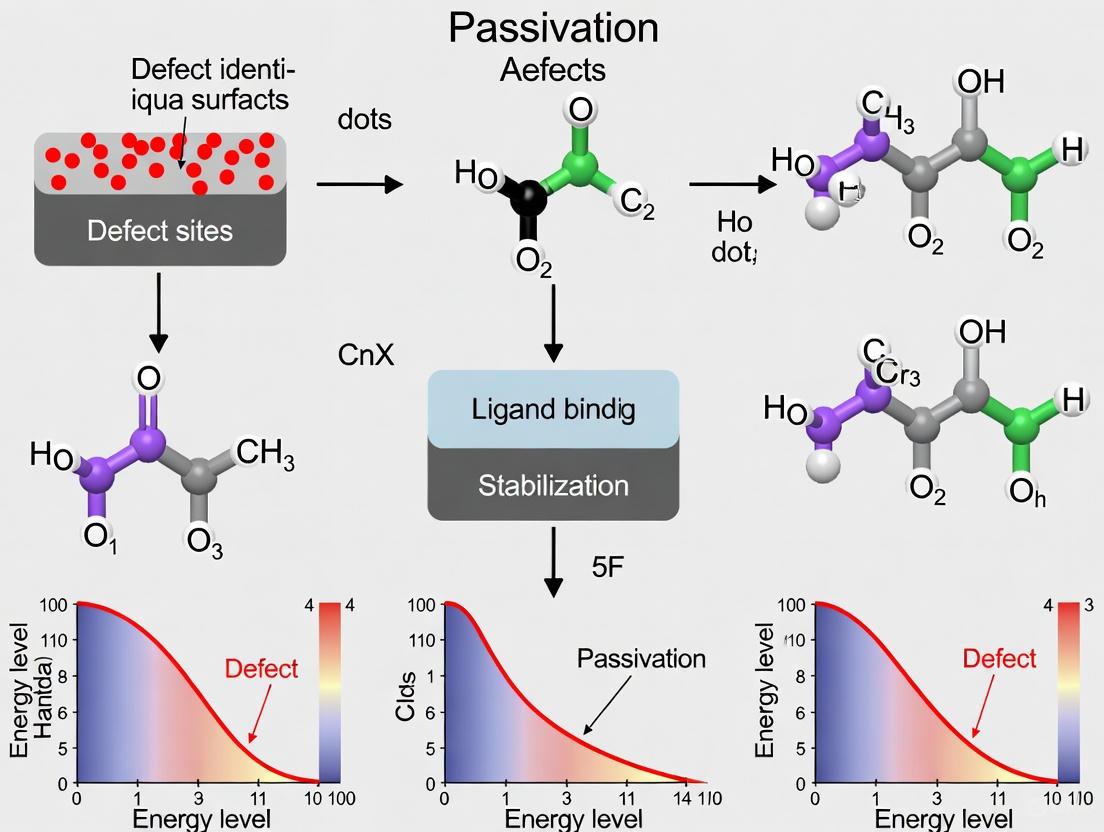
This article comprehensively reviews the latest strategies for passivating surface defects in CsPbBr3 quantum dots (QDs), a leading material for next-generation optoelectronics.
Advanced Passivation Strategies for CsPbBr3 Quantum Dots: Enhancing Performance and Stability for Optoelectronic Applications
Abstract
This article comprehensively reviews the latest strategies for passivating surface defects in CsPbBr3 quantum dots (QDs), a leading material for next-generation optoelectronics. We explore the fundamental origins of non-radiative recombination, present a detailed methodology of chemical and structural passivation techniques—including ligand engineering, cation substitution, and heterostructure formation—and provide troubleshooting guidelines for optimizing photoluminescence quantum yield, charge transport, and operational stability. By comparing the performance outcomes of various approaches, this work serves as an essential resource for researchers and scientists developing high-efficiency, stable perovskite QD-based devices such as light-emitting diodes, lasers, and optical communication systems.
Understanding Surface Defects in CsPbBr3 Quantum Dots: Origins and Impacts on Optoelectronic Properties
FAQs: Understanding Surface Defects in CsPbBr₃ QDs
1. What are the primary types of surface defects in CsPbBr₃ Quantum Dots? The two most common and detrimental surface defects are uncoordinated lead atoms (Pb²⁺) and halide vacancies (V˅Br⁻). These defects act as trapping states for charge carriers, leading to non-radiative recombination, which reduces photoluminescence quantum yield (PLQY) and compromises the performance of optoelectronic devices [1] [2].
2. How do halide vacancies (V˅Br⁻) negatively impact my QDs? Halide vacancies are labile and facilitate ion migration within the perovskite lattice. This leads to:
- Deep trap states: These states capture excitons and cause them to recombine without emitting light [3] [4].
- Instability: Accelerated degradation under heat, light, or electrical stress [1].
- Luminescence quenching: A significant drop in the brightness and efficiency of the QDs [2].
3. What causes uncoordinated Pb²⁺ sites to form? Uncoordinated Pb²⁺ sites occur when the native capping ligands (like oleic acid) desorb from the QD surface. This is often due to the highly dynamic and weak bonding between these traditional long-chain ligands and the perovskite crystal structure, especially during purification or long-term storage [1].
4. Why is my CsPbBr₃ QD solution losing its luminescence over time? A primary reason is the progressive loss of surface passivation. As ligands detach, unpassivated Pb²⁺ sites and halide vacancies are exposed, increasing non-radiative recombination pathways. Furthermore, bromide ions can be lost to the environment, exacerbating the problem of halide vacancies [1] [5].
5. Can these defects be completely eliminated? While it is challenging to eliminate all defects, they can be effectively passivated. Passivation involves using chemical agents or structural engineering to "heal" these defect sites, tying up the uncoordinated bonds and filling the vacancies, thereby restoring the optoelectronic quality of the QDs [2] [6].
Troubleshooting Guides & Experimental Protocols
Guide 1: Addressing Low Photoluminescence Quantum Yield (PLQY)
Symptom: Newly synthesized or purified CsPbBr₃ QDs exhibit a lower-than-expected PLQY.
Potential Causes & Solutions:
Cause: Inadequate surface passivation due to weak, dynamic ligands like OA/OAm.
- Solution: Implement a dual-ligand passivation strategy.
- Protocol: Replace a portion of the oleic acid with stronger coordinating ligands. As demonstrated in one study, a combination of homophthalic acid (HA, a bidentate ligand) and 2-bromoethanesulphonic acid sodium salt (SBES) can be highly effective [1].
- Synthesize CsPb(Br/I)₃ QDs via the hot-injection method.
- Use HA and SBES as co-passivators along with oleylamine (OAm).
- The bidentate structure of HA strongly binds to uncoordinated Pb²⁺, while the sulfonate group from SBES also coordinates with Pb²⁺. Simultaneously, the Br⁻ from SBES fills bromide vacancies [1].
- Expected Outcome: This synergistic passivation can increase the PLQY to 71% and significantly enhance stability at high temperature and humidity [1].
Cause: High density of halide vacancies.
- Solution: Introduce halide-rich additives or use halide-containing ligands.
- Protocol: Dope the QDs with formamidinium (FA) cations to promote Br-enrichment.
- Synthesize Cs₁₋ₓFAₓPbBr₃ QDs with an optimal FA content (e.g., x=0.04).
- The FA cations form hydrogen bonds and ionic interactions with Br⁻ ions, leading to Br-enrichment in the perovskite framework and a reduction in V˅Br⁻ defects [3].
- Expected Outcome: PLQY can increase from 76.8% (undoped) to 85.1% (FA-doped) [3].
Guide 2: Mitigating Poor Thermal and Operational Stability
Symptom: QDs degrade rapidly under elevated temperatures or during operation in an LED device, losing luminescence and changing color.
Potential Causes & Solutions:
Cause: Ligand desorption at high temperatures.
- Solution: Employ inorganic ligand passivation and core-shell engineering.
- Protocol: Perform a ZnF₂ post-treatment on the CsPbBr₃ QDs.
- Synthesize CsPbBr₃ QDs via ligand-assisted reprecipitation.
- Inject a solution of ZnF₂ inorganic ligand and stir.
- Purify the resulting QDs via centrifugation.
- This treatment forms a dual-shell structure: a CsPbBr₃:F inner shell and a zinc-rich outer shell. The inner shell suppresses thermal degradation, and both shells mitigate surface defects [6].
- Expected Outcome: The QDs maintain their optical properties and crystallinity even after heating at 120°C for 60 minutes, achieve a near-unity PLQY (97%), and show a 24-fold enhancement in LED device lifespan [6].
Cause: Ion migration exacerbated by surface defects.
- Solution: Passivate with metal cations.
- Protocol: Incorporate gallium (Ga³⁺) cations during or after synthesis.
- Introduce Ga cations (e.g., 40% molar ratio) to the precursor solution or post-synthetically treat the QDs.
- The Ga cations bind to the QD surface, passivating defect sites and improving crystalline quality [7].
- Expected Outcome: The PLQY of CsPbBr₃ QDs can be increased from 60.2% to 86.7%, and the resulting LEDs exhibit a maximum brightness over two times higher than devices made from pristine QDs [7].
The following table summarizes key quantitative improvements achieved by various defect passivation strategies for CsPbBr₃-based QDs.
Table 1: Efficacy of Different Defect Passivation Strategies
| Passivation Strategy | Key Reagents | Defect Targeted | Reported PLQY Improvement | Key Stability Outcome |
|---|---|---|---|---|
| Dual-Ligand Passivation [1] | Homophthalic Acid (HA), 2-Bromoethanesulphonic acid sodium salt (SBES) | Uncoordinated Pb²⁺, V˅Br⁻ | Up to 71% | Stable after 90 days storage; stable at 80°C/80% humidity |
| Cation Doping [7] | Gallium (Ga³⁺) cations | Surface defects (general) | 60.2% → 86.7% | Enhanced operational stability in LEDs |
| Dual-Shell Engineering [6] | Zinc Fluoride (ZnF₂) | Uncoordinated Pb²⁺, V˅Br⁻, Thermal degradation | Up to 97% (near-unity) | Stable at 120°C for 60 min; 24x LED lifespan |
| FA Cation Doping [3] | Formamidinium (FA⁺) | V˅Br⁻ | 76.8% → 85.1% | Improved performance in LED devices |
The Scientist's Toolkit: Key Research Reagent Solutions
Table 2: Essential Reagents for Passivating CsPbBr₃ QD Surface Defects
| Reagent | Function | Mechanism of Action |
|---|---|---|
| Homophthalic Acid (HA) [1] | Bidentate Carboxylic Acid Ligand | Strongly chelates to uncoordinated Pb²⁺ sites via its two carboxylate groups, providing more stable passivation than monodentate OA. |
| 2-Bromoethanesulphonic acid sodium salt (SBES) [1] | Multi-functional Halide Equivalent | The sulfonate group coordinates with Pb²⁺, while the Br⁻ ion fills bromide vacancies (V˅Br⁻). |
| Gallium (Ga³⁺) Cations [7] | Cationic Passivator | Binds to the QD surface, suppressing defect states and improving crystalline quality, thereby enhancing radiative recombination. |
| Zinc Fluoride (ZnF₂) [6] | Inorganic Shell Precursor | Forms a dual protective shell (CsPbBr₃:F and Zn-rich shell) that suppresses halide vacancy formation and inhibits thermal degradation. |
| Formamidinium (FA⁺) Iodide/Salt [3] | A-site Cation Dopant | Its hydrogen bonding with Br⁻ ions leads to Br-enrichment in the lattice, reducing V˅Br⁻ defects. |
Experimental Workflow Visualization
The following diagram illustrates a generalized workflow for synthesizing and passivating CsPbBr₃ QDs, integrating the strategies discussed above.
How Defects Promote Non-Radiative Recombination and Quench Luminescence
Inorganic cesium lead bromide (CsPbBr3) quantum dots (QDs) represent a transformative class of semiconductor nanomaterials with exceptional optoelectronic properties, including high photoluminescence quantum yield (PLQY), narrow emission linewidths, and tunable bandgaps [8] [9]. These characteristics make them exceptionally promising for applications in light-emitting diodes (LEDs), solar cells, lasers, and advanced sensing platforms [10]. However, their exceptional performance is critically limited by a fundamental issue: surface defects.
The ionic crystal nature and high surface-to-volume ratio of perovskite QDs make them highly susceptible to the formation of surface defects, such as halide vacancies and under-coordinated Pb²⁺ ions [8] [11]. These defects create electronic trap states within the bandgap, which act as efficient centers for non-radiative recombination. In this process, photogenerated electrons and holes recombine without emitting light, releasing their energy as heat (phonons) instead. This phenomenon directly quenches luminescence, reduces PLQY, and accelerates the degradation of the nanocrystals, posing a significant bottleneck for their commercial application [8] [7]. This guide explores the mechanisms of defect-induced quenching and provides actionable, experimentally-validated passivation strategies for researchers.
Fundamental FAQs: Unraveling the Defect-Recombination Relationship
Q1: What are the primary types of defects in CsPbBr3 QDs and how do they form?
The most common and detrimental defects in CsPbBr3 QDs are ionic defects arising from their inherently low lattice formation energy and ionic character [12]. The primary defects include:
- Bromine (Br) Vacancies (V˅Br): These are the most prevalent defects due to the high mobility and relatively weak binding of halide ions. They create shallow trap states [11].
- Under-coordinated Lead (Pb) Ions: These occur when Pb²⁺ ions on the crystal surface are not fully bonded to the surrounding bromine lattice. They act as deep trap states and are potent centers for non-radiative recombination [11] [7]. These defects form readily during synthesis and are exacerbated by exposure to external environmental stimuli such as heat, light, oxygen, and moisture [8].
Q2: What is the atomic-level mechanism by which defects quench photoluminescence?
Defects introduce electronic energy levels within the forbidden bandgap of the semiconductor. When an electron in the conduction band is captured by one of these "trap states," it cannot directly recombine with a hole in the valence band to emit a photon (radiative recombination). Instead, it undergoes a multi-step non-radiative recombination process, releasing its excess energy through vibrational modes (phonons) of the crystal lattice, which manifests as heat [9]. This process effectively "steals" the energy that would otherwise produce light, leading to the observed quenching of luminescence and a decrease in the measured PLQY.
Q3: How can I experimentally confirm that non-radiative recombination is the main cause of low PLQY in my samples?
A combination of steady-state and time-resolved spectroscopic techniques is used to diagnose non-radiative recombination:
- Time-Resolved Photoluminescence (TRPL): A shortened average carrier lifetime (τ_avg) is a direct indicator of dominant non-radiative pathways. Passivated samples with reduced defects show significantly prolonged lifetimes [11]. For instance, one study showed carrier lifetimes in CsPbBr3 films increased from 2.77 ns to 7.90 ns after effective passivation [11].
- Femtosecond Transient Absorption Spectroscopy (fs-TAS): This technique can directly track the cooling and trapping dynamics of photoexcited carriers, revealing the presence and density of tail states associated with defects [9].
The following diagram illustrates the core electronic processes governing luminescence quenching and the diagnostic experimental techniques.
Troubleshooting Guide: Experimentally Observed Problems and Solutions
Problem: Rapid Luminescence Quenching Under Ambient Conditions
Observation: Your CsPbBr3 QD solution or film loses fluorescence intensity within hours or days when stored in air. Root Cause: Susceptibility to environmental factors like moisture (H₂O) and oxygen (O₂) due to the ionic nature of the perovskite lattice and lack of physical isolation [8]. Solution: Hollow Silica (H-SiO₂) Encapsulation
- Principle: Physical isolation of QDs within a rigid, chemically inert, and transparent shell [8].
- Experimental Protocol (H-SiO₂ Coating):
- Synthesize Hollow Silica Microspheres via a template method using trisodium citrate in an ammonia-ethanol solution, followed by the slow addition of ethyl orthosilicate (TEOS) as the silica precursor [8].
- Grow CsPbBr3 QDs Inside H-SiO₂ using a simple sol-gel method in an aqueous solution. The QDs nucleate and attach to the interior of the hollow shell, maximizing encapsulation protection [8].
- Validated Performance:
- Retains 70% of initial fluorescence intensity after heating at 140 °C.
- Maintains 91.4% of its initial fluorescence quantum efficiency after 4 days in a humid environment [8].
Problem: Low Photoluminescence Quantum Yield (PLQY) in As-Synthesized QDs
Observation: Freshly synthesized QDs have a PLQY below the theoretical maximum (<90%), indicating abundant intrinsic surface defects. Root Cause: Presence of under-coordinated Pb²⁺ ions and halide vacancies on the QD surface acting as non-radiative recombination centers [7]. Solution: Surface Passivation with Gallium (Ga³⁺) Cations
- Principle: Gallium cations (Ga³⁺) bind to the QD surface, effectively compensating for under-coordinated Pb²⁺ sites and suppressing trap states [7].
- Experimental Protocol (Ga³⁺ Passivation):
- Validated Performance:
Problem: Luminescence Instability Under Light/Irradiation
Observation: QD films or devices undergo severe photoluminescence quenching under continuous illumination. Root Cause: Light-induced ion migration and accelerated defect formation, often leading to phase segregation in mixed-halide compositions [11]. Solution: Perovskite QD-Based Bulk Passivation
- Principle: Using CsPbBr3 QDs themselves as a passivator for polycrystalline perovskite films. Upon annealing, ions from the QDs diffuse into the film to fill vacancies, while the hydrophobic ligands self-assemble on surfaces and grain boundaries [11].
- Experimental Protocol (QD-Based Film Passivation):
- Disperse synthesized CsPbBr3 QDs in hexane (concentration: ~20 mg/mL) to create an anti-solvent solution [11].
- During the spin-coating of your perovskite precursor solution (e.g., CsPbIBr₂ for solar cells), use the QD-containing solution as the anti-solvent.
- Post-anneal the deposited film (e.g., at 150°C for inorganic perovskites) to facilitate the integration and passivation effect [11].
- Validated Performance:
- Suppresses light-induced phase segregation in mixed-halide perovskites.
- Improved the power conversion efficiency (PCE) of CsPbIBr₂ solar cells from 8.7% to 11.1% [11].
Quantitative Comparison of Passivation Strategies
The table below summarizes key performance metrics for the defect passivation methods discussed, providing a benchmark for experimental planning.
Table 1: Performance Comparison of CsPbBr3 QD Defect Passivation Strategies
| Passivation Strategy | Key Reagent/ Material | Reported PLQY Improvement | Enhanced Stability Performance | Best For Applications |
|---|---|---|---|---|
| Hollow Silica Encapsulation [8] | Hollow SiO₂ microspheres | High retention of initial efficiency | 91.4% QE after 4 days in humidity; 70% intensity at 140°C | Harsh environments, anti-counterfeiting inks, displays |
| Gallium Cation Passivation [7] | Gallium Bromide (GaBr₃) | 60.2% → 86.7% | Enhanced operational stability in LED devices | High-brightness LEDs, light-emitting devices |
| Polymer Encapsulation (EVA-TPR) [12] | Ethylene Vinyl Acetate-Terpene Phenol | Improved optical stability | Enhanced physical & optical stability in composite films | Flexible optics, stable composite films & coatings |
| QD-Based Bulk Film Passivation [11] | CsPbBr3 QDs in hexane | Significant PL intensity increase | Suppressed phase segregation under light | Efficient and stable solar cells, mixed-halide perovskites |
The Scientist's Toolkit: Essential Research Reagents for Defect Passivation
Table 2: Key Reagents for Passivating CsPbBr3 Quantum Dots
| Reagent / Material | Function / Role in Passivation | Key Experimental Consideration |
|---|---|---|
| Gallium Bromide (GaBr₃) [7] | Passivates under-coordinated Pb²⁺ surface defects via cation exchange. | Optimal concentration found at ~40% Ga³⁺ relative to Pb²⁺. |
| Hollow Silica (H-SiO₂) [8] | Provides a physical barrier against H₂O and O₂, confining QDs in a rigid matrix. | Synthesized via a template method; allows large-scale aqueous synthesis. |
| Lithium Bis(trifluoromethanesulfonyl)imide (LiTFSI) [13] | Passivates interface defects (e.g., oxygen vacancies in SnO₂ ETL) and improves energy level alignment. | Used in modifying the electron transport layer to reduce non-radiative recombination at interfaces. |
| Ethylene Vinyl Acetate-Terpene Phenol (EVA-TPR) [12] | A copolymer that encapsulates QDs, enhancing physical and optical stability. | Highly transparent, inexpensive, and processable via simple solvent dispersion and mild heating. |
| Oleic Acid / Oleylamine Ligands [9] [11] | Standard organic ligands for QD synthesis and surface coordination; prevent aggregation. | Ligand stability is crucial; dynamic binding can lead to desorption and defect formation. |
Advanced Workflow: Integrating Passivation into QD Synthesis and Processing
The following diagram outlines a comprehensive experimental workflow, integrating synthesis with the subsequent passivation strategies detailed in this guide.
Linking Surface Defects to Reduced Charge Carrier Mobility and Device Efficiency
Troubleshooting Guide: Common Experimental Issues & Solutions
FAQ 1: Why do my CsPbBr3 QD-based LEDs have low efficiency (EQE) and brightness?
Problem: Low External Quantum Efficiency (EQE) and luminance in light-emitting diodes (LEDs) are primarily caused by non-radiative recombination at surface defects, which wastes energy as heat instead of light.
Solutions:
- Implement Ligand Exchange: Replace long-chain insulating ligands (like oleylamine/OAm) with shorter, more conductive passivating ligands. For example, using 3,3-diphenylpropylamine (DPPA) has been shown to passivate defects and improve carrier transport, leading to a device with an EQE of 5.04% and luminance of 2,037 cd m⁻² at 460 nm [14]. Similarly, passivation with 2-phenethylammonium bromide (PEABr) can significantly suppress non-radiative recombination, resulting in a maximum current efficiency of 32.69 cd A⁻¹ and an EQE of 9.67% [15].
- Apply a Core-Shell Structure: A dual-shell structure formed by ZnF₂ post-treatment (creating a CsPbBr₃:F inner shell and a zinc-rich outer shell) can effectively suppress thermal degradation and mitigate surface defects. This approach led to a near-unity Photoluminescence Quantum Yield (PLQY) and a 24-fold enhancement in device lifespan for electroluminescent LEDs [6].
FAQ 2: How can I improve the poor charge carrier transport in my CsPbBr3 QD films?
Problem: Charge carrier mobility is often hindered by two factors: the presence of long, insulating organic ligands on the QD surface, and energy level misalignment at the interface with charge transport layers.
Solutions:
- Use Short-Chain Ligands: As mentioned above, short-chain ligands like DPPA and PEABr not only passivate defects but also enhance the electronic coupling between QDs, facilitating better charge transport through the film [14] [15].
- Modify the Interface: Introduce an ionic liquid (e.g., BMIMPF₆) into the hole transport layer (HTL). This treatment optimizes the interfacial energy alignment and suppresses non-radiative losses, ensuring holes can be injected into the QD layer more efficiently [14].
- Functionalize with Electronic Ligands: Grafting ferrocene carboxylic acid (FCA) onto CsPbBr₃ QDs creates a microelectric field that disrupts surface barrier energy and facilitates electron transfer, thereby boosting charge transfer dynamics [16].
FAQ 3: What can I do to prevent the thermal degradation of my CsPbBr3 QDs during device operation?
Problem: CsPbBr₃ QDs are susceptible to thermal degradation at elevated temperatures (>100°C), leading to a loss of luminescence and structural integrity, which is a critical barrier for commercial applications.
Solutions:
- Employ Inorganic Shell Engineering: The ZnF₂-induced dual-shell strategy provides exceptional thermal stability. QDs treated this way maintained their optical properties and crystallinity even after heating at 120°C for 60 minutes [6].
- Utilize Polymer Encapsulation: Embedding QDs in a robust polymer matrix like Polymethyl methacrylate (PMMA) can shield them from environmental stress. One study achieved a PLQY increase from 60.2% to 90.1% and significantly improved stability with optimal PMMA encapsulation [17].
- Select Ligands with High Binding Energy: The thermal degradation mechanism is linked to ligand binding energy. Research on CsₓFA₁₋ₓPbI₃ QDs shows that formulations with higher ligand binding energy exhibit better thermal stability [18].
FAQ 4: How can I achieve reproducible synthesis of ultrasmall, deep-blue emitting CsPbBr3 QDs?
Problem: Conventional methods struggle to produce monodisperse, ultrasmall CsPbBr₃ QDs with strong quantum confinement needed for pure-blue emission, often leading to uncontrolled growth and aggregation.
Solutions:
- Adopt a Spatial-Confinement Strategy: Use a metal-organic framework (MOF) like Cs-doped ZIF-8 as a template. The porous structure of ZIF-8 confines crystal growth, enabling the synthesis of monodisperse QDs as small as 1.9 nm with tunable deep-blue emission (435-515 nm) without the stability issues associated with chloride doping [14].
- Precisely Control Synthesis Temperature: The size of CsPbBr₃ QDs can be directly controlled by varying the hot-injection temperature (e.g., between 130°C and 190°C), which in turn governs the quantum confinement effect and the resulting emission wavelength [9].
The following table summarizes key performance metrics achieved by different passivation strategies as reported in the literature.
Table 1: Performance Metrics of Defect-Passivated CsPbBr3 Quantum Dots and Devices
| Passivation Strategy | Material/Method Used | Key Performance Improvement | Citation |
|---|---|---|---|
| Short-Chain Ligand Exchange | 3,3-Diphenylpropylamine (DPPA) | EQE: 5.04%; Luminance: 2,037 cd m⁻² (at 460 nm) [14] | [14] |
| Short-Chain Ligand Exchange | 2-Phenethylammonium Bromide (PEABr) | Current Efficiency: 32.69 cd A⁻¹; EQE: 9.67% (3.88x improvement) [15] | [15] |
| Dual-Shell Engineering | ZnF₂ Post-Treatment | PLQY: ~97%; Device Lifespan: 24x enhancement [6] | [6] |
| Ligand Exchange & Interface Engineering | DPPA & Ionic Liquid in HTL | PLQY increased from 60.2% to 90.1% (with optimal PMMA encapsulation) [17] | [17] |
| Spatial-Confinement Synthesis | Cs-doped ZIF-8 MOF | Achieved ultrasmall (1.9 nm) QDs with pure-blue emission tunable down to 435 nm [14] | [14] |
Experimental Protocols for Key Passivation Techniques
Protocol 1: Short-Chain Ligand Passivation with PEABr
This protocol is adapted from methods used to achieve high-efficiency LEDs [15] [17].
- Synthesize CsPbBr₃ QDs: Prepare standard CsPbBr₃ QDs using the ligand-assisted reprecipitation (LARP) method at room temperature. A typical precursor solution contains PbBr₂ and CsBr dissolved in DMF, with OA and OAm as initial capping ligands.
- Prepare PEABr Solution: Dissolve PEABr powder in a solvent like ethyl acetate, often with a small amount of OA, and ultrasonicate to obtain a clear solution.
- Perform Ligand Exchange: Add the PEABr solution directly to the synthesized CsPbBr₃ QD solution. The molar ratio of PEABr to the original OAm ligand should be optimized (e.g., 25%, 50%, 75%, 100%).
- Stirring and Purification: Stir the mixture for a set period to allow the ligand exchange to occur. Purify the passivated QDs by centrifugation and redispersion in a non-polar solvent like toluene to remove excess ligands and reaction byproducts.
Protocol 2: Dual-Shell Passivation via ZnF₂ Post-Treatment
This protocol is based on a strategy to achieve exceptional thermal stability [6].
- Synthesize CsPbBr₃ QDs: Synthesize QDs using a standard room-temperature method (e.g., involving Pb²⁺ precursor, Cs-oleate, and ligands like didodecyldimethylammonium bromide/DDAB).
- Introduce ZnF₂: After the QD synthesis is complete, inject a solution of ZnF₂ inorganic ligands into the QD reaction mixture under stirring.
- Stirring and Formation: Continue stirring to allow the post-treatment reaction to proceed. During this step, the dual-shell structure forms: a CsPbBr₃:F inner shell and a zinc-rich outer shell.
- Purification: Centrifuge the solution to purify the dual-shell QDs, removing unreacted precursors and ligands.
Visualization of Defect Passivation Workflows
Defect Formation and Passivation Pathways in CsPbBr3 QDs
Experimental Workflow for High-Efficiency QD-LED Fabrication
The Scientist's Toolkit: Key Research Reagent Solutions
Table 2: Essential Reagents for Passivating CsPbBr3 Quantum Dots
| Reagent / Material | Function / Role in Passivation | Key Benefit / Outcome |
|---|---|---|
| DPPA (3,3-Diphenylpropylamine) | Short-chain ligand for surface defect passivation and carrier transport enhancement [14]. | Reduces surface defects, improves charge transport, enables high-efficiency pure-blue LEDs [14]. |
| PEABr (2-Phenethylammonium Bromide) | Short-chain ammonium salt ligand for passivating Br⁻ vacancies and improving film morphology [15] [17]. | Suppresses non-radiative recombination, reduces film roughness, significantly boosts LED EQE [15]. |
| ZnF₂ (Zinc Fluoride) | Inorganic ligand for forming a dual-shell (CsPbBr₃:F + Zn-rich) structure [6]. | Suppresses thermal degradation, achieves near-unity PLQY, dramatically enhances device operational stability [6]. |
| FCA (Ferrocene Carboxylic Acid) | Electron-rich ligand for modulating exciton dissociation and charge transfer [16]. | Reduces surface energy barriers, facilitates multi-exciton dissociation, enhances charge transfer for photocatalysis [16]. |
| PMMA (Polymethyl Methacrylate) | Polymer for encapsulating and shielding QDs from the environment [17]. | Significantly improves air/thermal stability and increases PLQY through physical protection [17]. |
| Ionic Liquids (e.g., BMIMPF₆) | Additive for the hole transport layer to optimize energy level alignment [14]. | Suppresses interfacial non-radiative losses, improves hole injection efficiency into the QD layer [14]. |
Core Mechanism: Understanding Emission Line-Broadening
What is the primary cause of emission line-broadening in CsPbBr₃ quantum dots (QDs) at room temperature? Emission line-broadening in CsPbBr₃ QDs is primarily governed by the coupling of excitons (bound electron-hole pairs) to low-energy surface phonons (atomic vibrations at the QD surface). This interaction is a dominant homogeneous broadening mechanism, meaning it affects individual QDs, not just ensembles. [19]
How does quantum confinement influence this coupling? Research demonstrates a strong size dependence: smaller QDs with stronger quantum confinement exhibit broader photoluminescence (PL) linewidths. This occurs because the reduced physical dimensions enhance the coupling of the excitonic transition to surface-located phonon modes. [19]
What quantitative evidence supports this mechanism? Single QD spectroscopy and ab-initio molecular dynamics (AIMD) simulations reveal the direct relationship between QD size and linewidth. The table below summarizes key experimental findings for differently sized CsPbBr₃ QDs. [19]
Table 1: Emission Linewidth vs. Quantum Dot Size
| QD Edge Length (nm) | Emission Peak Energy (eV) | PL Linewidth, FWHM (meV) |
|---|---|---|
| ~6 (and smaller) | ~2.6 and higher | ~70 - 120 |
| 7 | ~2.5 | ~90 |
| 14 | ~2.3 | ~70 |
FWHM: Full Width at Half Maximum
Troubleshooting Guide & FAQs
Symptom: Excessive Emission Line-Broadening
FAQ: My synthesized CsPbBr₃ QDs have a much broader emission linewidth than reported in literature. What could be the cause? Excessive broadening often points to unresolved surface defects that enhance exciton-phonon coupling. Inhomogeneous broadening from a significant size distribution can also contribute. The following troubleshooting table guides you through diagnosis and solutions. [19] [20] [14]
Table 2: Troubleshooting Excessive Line-Broadening
| Problem | Recommended Experiments/Analysis | Potential Solution |
|---|---|---|
| High surface defect density leading to strong coupling to surface phonons | Time-resolved PL (TRPL): Short lifetime and non-exponential decay. Temp-dependent PL: Increased linewidth at higher temps. [19] | Surface passivation: Employ short-chain ligands like 3,3-diphenylpropylamine (DPPA) or perfluoroglutaric acid (PFGA) to bind to and pacify surface trap sites. [20] [14] |
| Uncontrolled QD growth resulting in large size distribution (inhomogeneous broadening) | Ensemble vs. Single QD spectroscopy: If ensemble linewidth is much larger than single QD, size distribution is likely too broad. TEM analysis: Direct size imaging. [19] | Spatially confined synthesis: Use a metal-organic framework (e.g., ZIF-8) as a template to control nucleation and growth, yielding monodisperse QDs. [14] |
| Insufficient quantum confinement for target blue/deep-blue emission | UV-Vis absorption spectroscopy: Check for a distinct first excitonic peak. TEM: Confirm QD size is sufficiently small (<~4 nm for deep-blue). [20] [14] | Molecular etching: Use agents like diphenylalanine (FF) to gently etch larger QDs down to ultra-small sizes (< 3 nm) with robust deep-blue emission. [20] |
FAQ: After surface passivation, my QDs aggregate and lose colloidal stability. How can I prevent this? This is a common issue when replacing long-chain insulating ligands (e.g., oleylamine) with shorter, more conductive ones. To mitigate aggregation:
- Gradual ligand exchange: Perform the exchange in a controlled, step-wise manner rather than a single step.
- Mixed-ligand systems: Consider using a mixture of short-chain and stabilizing long-chain ligands.
- Post-exchange purification: Optimize centrifugation speeds and antisolvent choices to avoid destabilizing the QD dispersion. [14]
Symptom: Instability of Deep-Blue Emitting QDs
FAQ: My deep-blue emitting CsPbBr₃ QDs are unstable, and their emission red-shifts or quenches over time. What should I do? Ultra-small QDs for deep-blue emission have a very high surface-to-volume ratio, making them inherently more susceptible to surface defects and degradation.
- Root Cause: The high surface energy leads to dynamic surface reconstruction, ligand loss, and oxidation.
- Solution: Implement the surface passivation strategies outlined in Table 2. The use of robust passivating ligands like PFGA can effectively overcome surface defects induced by ligand detachment and improve stability against environmental factors. [20]
Key Experimental Protocols
Protocol 1: Surface Passivation via Ligand Exchange for Reduced Linewidth
This protocol details the surface passivation of CsPbBr₃ QDs using short-chain ligands to suppress exciton-surface phonon coupling. [20] [14]
- Synthesis: Synthesize CsPbBr₃ QDs using your standard hot-injection or ligand-assisted reprecipitation (LARP) method.
- Purification: Purify the crude solution by centrifugation and redispersion in an anhydrous solvent like toluene or octane to remove excess precursors and ligands.
- Ligand Exchange:
- Prepare a separate solution containing the passivating ligand (e.g., DPPA or PFGA) in a compatible solvent (e.g., DMF or acetonitrile).
- Slowly add the ligand solution to the purified QD dispersion under vigorous stirring.
- Allow the reaction to proceed for a predetermined time (e.g., 1-2 hours) at room temperature or mild heating.
- Purification: Precipitate the passivated QDs by adding an antisolvent (e.g., ethyl acetate). Recover the QDs via centrifugation and redisperse them in the desired solvent for film formation or further characterization.
- Validation: Characterize the success of passivation by measuring:
- PL Linewidth (FWHM): A significant reduction indicates successful suppression of exciton-phonon coupling.
- Photoluminescence Quantum Yield (PLQY): An increase confirms a reduction in non-radiative recombination channels.
- FTIR Spectroscopy: To verify the binding of the new ligands to the QD surface.
Protocol 2: Single Quantum Dot Spectroscopy for Homogeneous Linewidth Measurement
This protocol is used to disentangle homogeneous (intrinsic) broadening from inhomogeneous (size distribution) broadening. [19]
- Sample Preparation: Create a sparse film of QDs to ensure isolation of individual emitters.
- Dilute the QD solution significantly with a non-solvent polymer matrix (e.g., polystyrene).
- Spin-coat the mixture onto a clean glass coverslip to form a thin film with well-separated QDs.
- Microscopy Setup: Use a home-built or commercial micro-PL setup.
- Excitation: A laser source focused to a diffraction-limited spot via a high-numerical-aperture (NA) objective.
- Detection: The emitted light from a single QD is collected through the same objective, passed through a spectrometer, and detected with a sensitive camera (e.g., CCD or EMCCD).
- Data Acquisition:
- Scan the sample stage to locate isolated, bright single QDs.
- Acquire PL spectra of individual QDs with high signal-to-noise ratio.
- Measure the FWHM of the emission peak from a single QD. This value represents the homogeneous linewidth, primarily governed by exciton-phonon coupling at room temperature.
Mechanism & Workflow Visualization
The following diagram illustrates the core mechanism of line-broadening and the logical workflow for its mitigation through surface passivation.
Diagram: Surface Passivation Reduces Line-Broadening
Research Reagent Solutions
This table lists key materials used in advanced synthesis and passivation strategies for achieving narrow emission linewidths in CsPbBr₃ QDs. [20] [14]
Table 3: Essential Reagents for Surface Defect Passivation
| Reagent Name | Function / Role in Passivation |
|---|---|
| 3,3-Diphenylpropylamine (DPPA) | Short-chain organic ligand used in surface ligand exchange. Passivates surface defects (e.g., Pb²⁺ vacancies), improves carrier transport, and enhances PLQY. [14] |
| Perfluoroglutaric Acid (PFGA) | Passivating ligand that effectively binds to the QD surface, overcoming defects induced by ligand detachment and reducing non-radiative recombination. [20] |
| Diphenylalanine (FF) | Molecular etchant used to strip atomic layers from larger QDs, creating ultra-small QDs with enhanced quantum confinement and deep-blue emission. [20] |
| Zeolitic Imidazolate Framework-8 (ZIF-8) | A metal-organic framework (MOF) used as a spatial confinement matrix. It limits nanocrystal growth, enabling precise size control and monodisperse, ultra-small QDs. [14] |
The Critical Challenge of Defect Regeneration During QD Film Assembly
Frequently Asked Questions (FAQs)
1. Why do my CsPbBr3 quantum dot (QD) films lose photoluminescence (PL) during the assembly process, even when using high-quality QDs? This is a classic symptom of defect regeneration. During solvent evaporation and film formation, surface ligands like oleic acid and oleylamine can detach due to their highly dynamic binding nature [21]. This creates a high density of surface defects, such as uncoordinated Pb²⁺ atoms and bromide vacancies, which act as non-radiative recombination centers, quenching the PL [21] [2].
2. What is "bilateral interfacial passivation" and why is it more effective than passivating just one side of the QD film? Bilateral interfacial passivation involves depositing a layer of passivating molecules at both the bottom and top interfaces of the perovskite QD film [21]. Defects at both interfaces with charge transport layers can capture charge carriers and cause non-radiative losses. Passivating only one side leaves the other vulnerable. Research shows that bilateral passivation drastically improves device efficiency and stability compared to unilateral methods, leading to a significant jump in external quantum efficiency (EQE) from 7.7% to 18.7% [21].
3. Can I achieve pure blue emission from CsPbBr3 QDs without using mixed halides? Yes, by leveraging strong quantum confinement. You can synthesize ultrasmall, monodisperse CsPbBr3 QDs with sizes down to ~1.9 nm. This method avoids the halide phase separation common in mixed-halide systems, enabling stable, deep-blue emission at 460 nm [14].
4. Are there synthesis methods that can inherently reduce defect regeneration? Yes, spatially confined synthesis strategies are highly effective. For example, using a cesium-doped metal-organic framework (Cs-ZIF-8) as both a Cs source and a growth template restricts nanocrystal growth and prevents overgrowth and aggregation, resulting in ultrasmall QDs with high stability and emission purity [14].
Troubleshooting Guides
Problem 1: Significant Drop in Photoluminescence Quantum Yield (PLQY) from Solution to Solid Film
| Observation | Possible Cause | Recommended Solution |
|---|---|---|
| PLQY of QD solution is >85%, but drops sharply in thin films [21]. | Ligand loss and defect regeneration during solvent evaporation and film formation [21]. | Implement a bilateral passivation strategy. After depositing the QD film, evaporate a layer of organic passivation molecules (e.g., TSPO1) on both the top and bottom interfaces of the film [21]. |
| Film exhibits low PL intensity and non-uniform morphology. | Rapid, uncontrolled crystallization and Ostwald ripening during film formation. | Employ a spatially confined growth approach using a metal-organic framework (e.g., ZIF-8) to control QD size and suppress aggregation [14]. |
| Ineffective native ligands (OA/OAm) providing incomplete surface coverage. | Perform post-synthesis ligand exchange with short-chain ligands like 3,3-Diphenylpropylamine (DPPA) or tetraoctylammonium bromide (TOAB) for a more stable and compact ligand shell [14] [22]. |
Problem 2: Poor Performance and Stability of Blue-Emitting CsPbBr3 LEDs
| Observation | Possible Cause | Recommended Solution |
|---|---|---|
| Inability to achieve pure-blue emission (<465 nm); emission is greenish. | Weak quantum confinement due to QDs that are too large [14]. | Utilize the spatial-confinement approach with Cs-ZIF-8 to synthesize ultrasmall QDs (~1.9 nm) for deep-blue emission [14]. |
| Device efficiency and color stability degrade rapidly under operation. | Halide phase separation in mixed-halide systems and interface-induced defects [14] [2]. | 1. Use pure CsPbBr3 with strong confinement instead of mixed halides [14].2. Modulate interfaces with a quasi-organic mixed ionic-electronic conductor layer to improve energy alignment and suppress non-radiative losses [14]. |
| High defect density in blue-emitting QD films. | High surface-to-volume ratio of ultrasmall QDs amplifies the impact of surface defects [14]. | Apply surface engineering with dual ligands. For example, passivate with a combination of PbBr₂ and TOAB, which has been shown to achieve a high PLQY of 96.6% in films [22]. |
Problem 3: Inefficient Charge Injection and Transport in QD Light-Emitting Diodes (QLEDs)
| Observation | Possible Cause | Recommended Solution |
|---|---|---|
| Low device efficiency (EQE, current efficiency) despite bright QD films. | Interfacial defects between the QD layer and charge transport layers (CTLs) hindering carrier injection and promoting non-radiative recombination [21]. | Apply the bilateral interfacial passivation strategy with molecules like TSPO1. This passivates defects at both interfaces, improving carrier injection and boosting EQE [21]. |
| Imbalanced charge injection leads to efficiency roll-off at high currents. | Energy level misalignment at the QD/CTL interfaces. | Introduce an ionic liquid (e.g., BMIMPF₆) into the hole transport layer. This optimizes the interfacial energy alignment and improves hole injection [14]. |
The following table summarizes key performance metrics achieved by different defect mitigation strategies reported in recent literature.
| Passivation Strategy | Material/Reagent Used | Key Performance Improvement | Reference |
|---|---|---|---|
| Bilateral Interfacial Passivation | TSPO1 molecule | EQE increased from 7.7% to 18.7%; Current efficiency: 75 cd A⁻¹; Operational lifetime (T50): 15.8 h (20x improvement) [21]. | [21] |
| Spatial-Confinement Synthesis | Cs-ZIF-8 MOF matrix | Pure-blue PeLEDs: EQE of 5.04%; Luminance of 2,037 cd m⁻² at 460 nm; Enables deep-blue emission without halide mixing [14]. | [14] |
| Dual-Ligand Passivation | PbBr₂ & TOAB | PLQY of 96.6% for CsPbBr₃ QD film; Low ASE threshold of 12.6 µJ/cm² [22]. | [22] |
| Heterostructure Passivation | p-MSB Nanoplates | PLQY of heterostructure thin film increased by 200%; EQE of 9.67% for green-emitting LEDs [23]. | [23] |
Experimental Protocols
Protocol 1: Bilateral Interfacial Passivation for QLEDs
This protocol is adapted from a study that achieved an EQE of 18.7% [21].
- Substrate Preparation: Clean and treat the ITO/glass substrate with oxygen plasma.
- Deposit Hole Transport Layer (HTL): Spin-coat a layer of PEDOT:PSS onto the ITO substrate and anneal.
- First Passivation Layer: Thermally evaporate a thin layer (e.g., 2-5 nm) of the passivation molecule (e.g., TSPO1) directly onto the HTL.
- QD Film Deposition: Spin-coat the CsPbBr3 QD solution onto the passivated HTL to form the emissive layer.
- Second Passivation Layer: Thermally evaporate another layer of the passivation molecule (e.g., TSPO1) on top of the QD film.
- Complete Device Fabrication: Deposit the electron transport layer (e.g., TPBi) and the metal electrode (e.g., Al) by thermal evaporation.
Protocol 2: Spatially Confined Synthesis of Ultrasmall CsPbBr3 QDs
This protocol describes the synthesis of deep-blue emitting QDs using a MOF template [14].
- Synthesize Cs-ZIF-8:
- Combine zinc nitrate hexahydrate and 2-methylimidazole in methanol.
- Add cesium acetate to the mixture to incorporate Cs ions into the framework.
- Recover the resulting Cs-ZIF-8 crystals by centrifugation and dry.
- Prepare Precursor Solutions:
- Prepare a PbBr2 precursor in DMF with oleic acid (OA) and oleylamine (OAm).
- Prepare a Cs-ZIF-8 precursor by dispersing the synthesized Cs-ZIF-8 in a solvent.
- Synthesize CsPbBr3 QDs via LARP:
- Mix the PbBr2 precursor with a non-solvent (e.g., a hexane/isopropanol mixture).
- Quickly inject the Cs-ZIF-8 precursor into the mixture under vigorous stirring at room temperature.
- The Cs ions are released from the MOF pores, reacting with PbBr2 within the confined space to form ultrasmall, monodisperse QDs.
- Purification: Centrifuge the reaction solution to remove unreacted precursors and large aggregates. Re-disperse the QD precipitate in toluene for further use.
Research Reagent Solutions
The table below lists key reagents used in the advanced passivation strategies discussed.
| Reagent Name | Function | Key Benefit |
|---|---|---|
| TSPO1 (Diphenylphosphine oxide-4-(triphenylsilyl)phenyl) | Bilateral interfacial passivator [21]. | The P=O group has a strong interaction with uncoordinated Pb²⁺, effectively pacifying trap states and blocking ion migration [21]. |
| Cs-ZIF-8 | Spatial confinement matrix and cesium source [14]. | The porous framework restricts nanocrystal growth, enabling precise size control for pure-blue emitters and preventing aggregation [14]. |
| DPPA (3,3-Diphenylpropylamine) | Short-chain surface ligand [14]. | Improves carrier transport by reducing insulating ligand barrier and effectively passivates surface defects [14]. |
| PbBr₂ & TOAB Dual Ligands | Post-synthesis surface passivators [22]. | PbBr₂ compensates for Pb²⁺ vacancies, while TOAB provides Br⁻ ions to fill halide vacancies, yielding high PLQY films [22]. |
| p-MSB Nanoplates | Component for 0D-2D heterostructures [23]. | Facilitates electron transfer, significantly boosting PLQY, while its hydrophobicity enhances film stability against moisture [23]. |
| Ionic Liquid (e.g., BMIMPF₆) | Additive for hole transport layer [14]. | Modulates interfacial energy alignment, improves hole injection efficiency, and suppresses non-radiative losses at the interface [14]. |
Workflow: Bilateral Passivation Strategy
The following diagram illustrates the key steps and logical relationship of the bilateral passivation process for constructing high-performance QLEDs.
A Practical Guide to Surface Passivation Techniques: From Ligand Engineering to Core-Shell Structures
Troubleshooting Guides and FAQs
Frequently Asked Questions
Q1: My CsPbBr3 quantum dot (QD) films show poor surface coverage and a "coffee ring" effect during inkjet printing. What ligand strategy can mitigate this?
- Answer: The coffee ring effect, caused by uneven solute migration during droplet drying, can be suppressed by engineering the QD surface energy with specific short-chain ligand combinations.
- Recommended Solution: Utilize a mixed-ligand system of octanoic acid (OcA) and oleylamine (OAm). The branched nature of these ligands provides enhanced steric stabilization, adjusts surface tension, and reduces particle aggregation during solvent evaporation [24].
- Experimental Protocol:
- Synthesize CsPbBr3 QDs via the hot-injection method using your chosen ligand combination (e.g., OcA/OAm) [24].
- Purify the QDs to remove excess unbound ligands.
- Formulate the printing ink by dispersing the QDs in a suitable solvent. Characterize the ink's Ohnesorge number to ensure optimal jetting characteristics [24].
- Expected Outcome: This ligand combination has been shown to achieve a high photoluminescence quantum yield (PLQY) of 92% and enables the printing of high-fidelity patterns with uniform film morphology on flexible substrates [24].
Q2: How can I simultaneously improve the photoluminescence quantum yield (PLQY) and environmental stability of my CsPbBr3 QDs?
- Answer: A dual-action strategy combining chemical surface passivation with rigid matrix encapsulation is highly effective.
- Recommended Solution: Employ a sulfonic acid-based surfactant (SB3-18) for surface passivation, combined with encapsulation within a mesoporous silica (MS) matrix. The SB3-18 coordinates with unpassivated Pb²⁺ sites to suppress surface defects, while the silica matrix forms a dense protective barrier [25].
- Experimental Protocol:
- Fully grind CsBr, PbBr₂, and mesoporous silica in a mortar until homogeneous.
- Add the SB3-18 passivator to the mixture.
- Calcinate the mixture in a muffle furnace at 650 °C for 1-2 hours. This high-temperature step triggers pore collapse in the silica, encapsulating the QDs [25].
- Expected Outcome: This synergistic approach raised the PLQY from 49.59% to 58.27%. The composite retained 95.1% of its initial PL intensity after water-resistance tests and 92.9% after light radiation aging, demonstrating exceptional stability [25].
Q3: For optoelectronic devices like QLEDs, my CsPbBr3 QD-based devices suffer from inefficient carrier transport. How can ligand engineering help?
- Answer: Long, insulating native ligands hinder charge transport. Exchanging them with short, conductive ligands is crucial.
- Recommended Solution: Post-synthetic treatment with 2-phenethylammonium bromide (PEABr), a short carbon chain ligand. This passivates Br⁻ vacancies and improves the film morphology [15].
- Experimental Protocol:
- Synthesize CsPbBr3 QDs using standard methods (e.g., with oleic acid/oleylamine).
- Perform a ligand exchange process by introducing PEABr to the QD solution.
- Purify the treated QDs and deposit them as a thin film.
- Expected Outcome: PEABr treatment can boost the PLQY of the QD film to 78.64% and drastically reduce surface roughness from 3.61 nm to 1.38 nm. This leads to highly efficient QLED devices, with one study reporting a 3.88-fold increase in current efficiency compared to control devices [15].
Q4: Can zwitterionic ligands be used for applications beyond display technologies, such as photocatalysis?
- Answer: Yes, zwitterionic ligands are highly versatile. For example, they can be engineered to modify the surface charge of QDs, which is beneficial for photocatalysis.
- Recommended Solution: Implement a post-synthetic ligand exchange using zwitterionic sulfobetaine (ZSB) ligands. These ligands passivate surface defects and can induce a negative surface potential on the QDs, facilitating better electron transfer to a co-catalyst [26].
- Experimental Protocol:
- Synthesize and purify CsPbBr3 QDs, removing excess native ligands.
- Redisperse the QDs in toluene and add ZSB powder.
- Vigorously stir the mixture at room temperature to allow ligand exchange.
- Purify the ZSB-capped QDs for subsequent integration into photocatalytic systems, such as with Pt-TiO₂ [26].
- Expected Outcome: ZSB capping enhances PLQY and photostability. More importantly, it creates a kinetically favorable band alignment at the heterojunction with the co-catalyst, leading to a threefold increase in electron transfer rates and significantly enhanced H₂ production rates under visible light [26].
The table below summarizes key performance metrics for different ligand strategies as reported in the literature.
Table 1: Performance Comparison of Ligand Strategies for CsPbBr3 QDs
| Ligand Strategy | Key Function | Reported PLQY | Key Stability/Performance Metric | Primary Application |
|---|---|---|---|---|
| SB3-18 / Mesoporous Silica [25] | Defect passivation & rigid encapsulation | 58.27% (up from 49.59%) | Retains 95.1% PL after water exposure | Wide color gamut displays |
| OcA / OAm Ligands [24] | Surface energy control & steric stabilization | 92% | Suppresses coffee ring effect; enables high-resolution printing | Inkjet-printed flexible displays |
| PEABr Ligand [15] | Bromine vacancy passivation & morphology control | 78.64% | Film roughness reduced to 1.38 nm; QLED efficiency increased 3.88-fold | Electroluminescent QLEDs |
| Zwitterionic Sulfobetaine (ZSB) [26] | Defect passivation & surface charge modulation | Enhanced (vs. native ligands) | 3x higher electron transfer rate for H₂ production | Photocatalysis |
| Designer Phospholipid (PEA) [27] | Lattice-matched zwitterionic binding | >96% | High colloidal integrity for months; ~94% average ON fraction | High-purity emitters, single-photon sources |
Experimental Protocols
Protocol 1: High-Temperature Solid-State Synthesis for SB3-18/MS Composites [25]
- Objective: To create highly stable and efficient CsPbBr3 QD composites via synergistic surface passivation and matrix encapsulation.
- Materials: CsBr, PbBr₂, mesoporous silica (MS), SB3-18 surfactant, agate mortar, muffle furnace.
- Procedure:
- Weigh CsBr and PbBr₂ in a 1:1 molar ratio. Weigh MS so that the mass ratio of
(CsBr + PbBr₂) : MSis 1:3. - Combine the precursors and MS in an agate mortar and grind thoroughly until a homogeneous mixture is achieved.
- Add a controlled amount of the SB3-18 sulfonic acid surfactant to the mixture and continue grinding.
- Transfer the mixture to an alumina crucible and calcinate in a muffle furnace at 650 °C for 1 hour under an air atmosphere.
- After the furnace cools to room temperature, collect the final solid product for characterization and application.
- Weigh CsBr and PbBr₂ in a 1:1 molar ratio. Weigh MS so that the mass ratio of
Protocol 2: Post-Synthetic Ligand Exchange with Zwitterionic Sulfobetaine (ZSB) [26]
- Objective: To replace native long-chain ligands with ZSB ligands for enhanced charge transfer and photocatalytic performance.
- Materials: Synthesized CsPbBr3 QDs (washed), toluene, ZSB ligand powder, methyl acetate, stirring equipment, centrifuge.
- Procedure:
- QD Preparation: Synthesize CsPbBr3 QDs via the hot-injection method. Wash the as-synthesized QDs with methyl acetate (anti-solvent) and centrifuge to remove excess oleic acid and oleylamine. This step is critical for creating binding sites for new ligands.
- Ligand Exchange: Redisperse the washed QD pellet in toluene at a concentration of ~3 mg/mL. Add ZSB powder directly to this QD solution.
- Reaction: Vigorously stir the mixture at room temperature for several hours to allow the ZSB ligands to exchange with the remaining native ligands on the QD surface.
- Purification: Purify the ZSB-capped QDs by centrifugation and redispersion to remove any unbound ligands. The resulting QDs can be used for film formation or dispersed in solvents for photocatalytic ink formulation.
Research Reagent Solutions
Table 2: Essential Materials for Ligand Engineering Experiments
| Reagent / Material | Function / Role | Key Consideration |
|---|---|---|
| Sulfonic Acid Surfactant (SB3-18) [25] | Surface passivator that coordinates with unsaturated Pb²⁺ ions to suppress trap states. | Effective in high-temperature solid-state synthesis. |
| Mesoporous Silica (MS) [25] | A rigid template that collapses at high temperature to form a protective matrix around QDs. | Provides a physical barrier against moisture and oxygen. |
| Short-Chain Ligands (OcA, OAm, PEABr) [24] [15] | Modulate surface energy and improve charge transport by reducing insulating ligand layer thickness. | Short chains (e.g., PEABr) reduce film roughness and current leakage in devices [15]. |
| Zwitterionic Ligands (ZSB, Phospholipids) [26] [27] | Provide strong, charge-neutral surface binding, passivating defects while allowing good charge/energy transfer. | The head group structure (e.g., primary ammonium vs. quaternary) is critical for geometric fit on the NC surface [27]. |
| Trioctylphosphine Oxide (TOPO) [27] | A coordinating solvent/ligand used in room-temperature synthesis, later displaced by target ligands. | Serves as a weakly bound initial ligand for post-synthetic exchange. |
Experimental Workflow and Mechanism Visualization
The following diagram illustrates a generalized workflow for applying ligand engineering strategies to enhance CsPbBr3 QD performance, integrating the solutions discussed in this guide.
Diagram 1: Ligand Engineering Workflow for CsPbBr3 QD Optimization.
The mechanism by which zwitterionic ligands, such as designer phospholipids, bind to the QD surface is key to their performance. The following diagram details this atomistic binding mode.
Diagram 2: Atomistic Binding Mechanism of a Zwitterionic Ligand.
All-inorganic CsPbBr₃ perovskite quantum dots (QDs) are promising materials for next-generation optoelectronics, from light-emitting diodes (LEDs) to photodetectors. However, their high surface-to-volume ratio makes them particularly susceptible to surface defects, which act as charge traps that degrade performance. These defects, often stemming from lead and bromine vacancies, cause significant reductions in photoluminescence quantum yield (PLQY) and accelerate the degradation of the nanocrystals. Cationic passivation has emerged as a powerful strategy to heal these atomic-scale imperfections. This technique involves incorporating metal cations to suppress non-radiative recombination and improve the intrinsic stability of the QDs, forming the foundation for more reliable and efficient devices.
Key Mechanisms: How Cationic Passivation Works
The incorporation of foreign metal cations, such as gallium (Ga³⁺), addresses the root causes of instability and poor optoelectronic performance in CsPbBr₃ QDs.
- Surface Defect Passivation: The primary mechanism involves the interaction of the introduced cations with the labile surface of the QDs. Research shows that Ga³⁺ cations effectively passivate surface defects, which are non-radiative recombination centers. This passivation directly enhances the radiative recombination of charge carriers [7].
- Crystalline Quality Improvement: The incorporation of gallium cations has been linked to an improvement in the overall crystalline quality of the CsPbBr₃ QDs. This suggests that the cations integrate into the surface structure, promoting a more ordered and less defective crystal lattice [7].
- Stoichiometry and Ligand Management: A related strategy for healing surfaces involves post-synthetic treatment with lead bromide (PbBr₂) and alkylammonium bromides (e.g., didodecyldimethylammonium bromide). This treatment repairs surface lead and bromine vacancies and restores the protective ligand shell, which is crucial for colloidal stability. This combined approach has been shown to recover PLQYs to values exceeding 95% [28].
The following diagram illustrates the core mechanism of how introduced cations heal surface defects on a quantum dot.
The Scientist's Toolkit: Essential Research Reagents
Successful cationic passivation requires a specific set of chemical reagents. The table below details key materials and their functions in a typical experimental workflow for passivating CsPbBr₃ QDs.
Table 1: Key Reagents for Cationic Passivation of CsPbBr₃ Quantum Dots
| Reagent | Function/Role in Passivation | Experimental Consideration |
|---|---|---|
| Gallium Precursors (e.g., Gallium nitrate hydrate) | Source of Ga³⁺ cations for surface defect passivation; improves crystallinity and enhances radiative recombination [7]. | Incorporated during synthesis or via post-synthetic treatment; concentration must be optimized. |
| Lead Bromide (PbBr₂) | Replenishes lead and bromide ions at the surface; repairs vacancies and helps restore the integrity of the PbBr₆ octahedra [28]. | Used in post-synthetic treatments; often combined with ammonium bromides for synergistic effect. |
| Alkylammonium Bromides (e.g., Didodecyldimethylammonium Bromide - DDAB) | Provides halide ions and bulky organic cations; helps maintain charge balance and colloidal stability via steric repulsion [28]. | Critical for forming a stable ligand shell and preventing QD aggregation. |
| Cesium Oleate / Cesium Carbonate | Standard precursor for the cesium component in hot-injection synthesis of CsPbBr₃ QDs. | Forms the A-site cation of the perovskite lattice (ABX₃). |
| Guanidinium Bromide (GABr) | An organic cation passivator; its highly symmetrical structure can passivate defects at the surface and grain boundaries, forming a stable bromine-rich surface [29]. | Can be introduced in-situ during synthesis; improves environmental stability. |
Experimental Protocols & Data
Gallium Cation Passivation Protocol
The following workflow details a method for passivating CsPbBr₃ QDs with gallium cations, based on published research [7].
Detailed Methodology:
- QD Synthesis: Synthesize CsPbBr₃ QDs using the standard hot-injection method. This typically involves preparing a cesium oleate precursor and injecting it into a hot (150-200 °C) solution containing lead bromide (PbBr₂) and ligands (e.g., oleic acid and oleylamine) in a non-polar solvent [29].
- Gallium Incorporation: Introduce the gallium precursor (e.g., gallium nitrate hydrate) into the perovskite precursor solution during the hot-injection process. The Ga³⁺ cations are incorporated into the QD surface during crystal growth.
- Purification: Isolate the passivated QDs through centrifugation. Wash the pellet with a non-solvent (e.g., ethyl acetate or methyl acetate) to remove unreacted precursors and excess ligands.
- Characterization: Characterize the optical properties of the passivated QDs. Key metrics include:
- Photoluminescence Quantum Yield (PLQY): Measure the efficiency of light emission.
- UV-Vis Spectroscopy: Analyze absorption onset and QD concentration.
- X-ray Diffraction (XRD): Confirm crystal structure and phase purity.
Quantitative Outcomes of Passivation Strategies
The effectiveness of cationic passivation is quantified through key performance metrics. The table below summarizes the improvements achieved by different strategies as reported in the literature.
Table 2: Performance Outcomes of Different Passivation Strategies for CsPbBr₃ QDs
| Passivation Strategy | Reported Photoluminescence Quantum Yield (PLQY) | Key Improvement / Outcome | Source |
|---|---|---|---|
| Pristine (Unpassivated) CsPbBr₃ QDs | ~60% | Baseline performance | [7] |
| Ga³⁺ Cation Passivation | ~87% | Enhanced radiative recombination and carrier mobility; LED max. brightness: 11,777 cd/m² [7]. | [7] |
| PbBr₂ + DDAB Treatment | 95-98% | Nearly complete surface trap healing; excellent colloidal durability survives multiple washing cycles [28]. | [28] |
| In-situ Guanidinium Bromide (GABr) | Not Specified | Improved environmental stability and crystallinity; formation of a stable bromine-rich surface [29]. | [29] |
Frequently Asked Questions (FAQs) & Troubleshooting
Q1: I incorporated gallium cations, but my PLQY decreased instead of improving. What could have gone wrong?
- Cause: The most likely cause is an incorrect concentration of the gallium precursor. An excess of dopant can create new defects or distort the crystal lattice, acting as new non-radiative recombination centers.
- Solution: Perform a doping series experiment. Systematically vary the molar ratio of the gallium precursor to PbBr₂ (e.g., from 5% to 40%) to identify the optimal concentration that maximizes PLQY for your specific synthetic setup [7].
Q2: My passivated QDs are aggregating and losing colloidal stability during purification. How can I prevent this?
- Cause: Aggregation indicates an incomplete or damaged ligand shell. The passivation process or subsequent washing may have stripped the protective organic ligands.
- Solution: Ensure a robust ligand environment by using a combination of passivators. Introduce alkylammonium bromides (e.g., DDAB) alongside your metal cation. The bulky organic chains provide steric repulsion that keeps QDs dispersed. A post-synthetic treatment with PbBr₂ and DDAB has been shown to greatly improve colloidal durability [28].
Q3: The emission from my Ga³⁺-passivated QD-based LED degrades rapidly during operation. What can I do to improve stability?
- Cause: Operational instability is complex, but can be linked to residual surface defects or ion migration under an electric field.
- Solution: Beyond initial passivation, focus on device structure and encapsulation. The Ga³⁺ passivation itself has been shown to enhance operational stability relative to pristine devices [7]. Ensure efficient charge transport layers in your LED to prevent charge accumulation at the QD layer. Finally, hermetically seal the finished device to protect it from oxygen and moisture.
Q4: Are there alternatives to gallium for cationic passivation?
- Answer: Yes, the principle of cationic passivation extends to other ions. Research has explored trivalent cations like Gd³⁺ and Sc³⁺ for passivating other metal oxides, where they help inactivate oxygen vacancies [30]. In perovskite QDs, various B-site metal ions including alkaline-earth metals (Sr²⁺), transition metals (Zn²⁺, Mn²⁺), and rare-earth metals have been investigated for improving stability and optical properties [29]. The choice of cation depends on its ionic radius, charge, and how it integrates into or interacts with the host lattice.
In the research of CsPbBr₃ quantum dots (QDs), achieving high photoluminescence quantum yield (PLQY) and operational stability is paramount for applications in LEDs, solar cells, and lasers. A primary obstacle is the presence of surface defects, particularly bromine vacancies, which act as trap states for charge carriers. These traps promote non-radiative recombination, significantly reducing the efficiency and stability of the nanocrystals [7] [31]. This technical support center provides targeted guidance for researchers employing anionic treatments with PbBr₂ and ammonium bromide salts to passivate these critical defects, a strategy grounded in the broader thesis of enhancing optoelectronic properties through surface engineering.
Frequently Asked Questions
Q1: Why are bromine vacancies a major concern in CsPbBr₃ QDs? Bromine vacancies are inherent surface defects that create shallow trap states. These states capture excited charge carriers (electrons and holes) and facilitate non-radiative recombination, a process that wastes energy as heat instead of light. This results in a lower PLQY, reduced charge carrier lifetimes, and can diminish the performance and stability of final devices [31].
Q2: What is the fundamental mechanism behind using bromide salts for passivation? The treatment functions by providing a source of bromide ions (Br⁻) to fill the vacant bromine lattice sites on the surface of the CsPbBr₃ QDs. This surface binding reduces the density of trap states by completing the crystal lattice, which in turn suppresses non-radiative recombination pathways and enhances radiative recombination, leading to brighter and more efficient light emission [31].
Q3: My treatment has caused a drop in PLQY or particle aggregation. What went wrong? A drop in PLQY or observable aggregation often points to two common issues:
- Excessive Ion Concentration: An overly high concentration of the bromide salt can lead to surface etching or damage of the QDs, creating new defects instead of healing existing ones.
- Polar Solvent Incompatibility: CsPbBr₃ QDs are sensitive to polar environments. Using a treatment solvent that is too polar can strip the native insulating ligands (like oleic acid and oleylamine), destabilizing the colloidal suspension and causing aggregation or precipitation.
Q4: How can I conclusively confirm that bromine vacancies have been passivated? Passivation success is verified through a combination of optical and structural characterization techniques. Key indicators include a significant increase in absolute PLQY and a lengthening of the average photoluminescence (PL) lifetime, both suggesting reduced non-radiative recombination. Advanced techniques like X-ray photoelectron spectroscopy (XPS) can detect changes in surface composition, while elemental analysis via techniques such as energy-dispersive X-ray spectroscopy (EDS) can track an increased Br:Pb ratio post-treatment [31].
Troubleshooting Guide
| Problem | Possible Cause | Solution |
|---|---|---|
| Decreased PLQY after treatment | Surface etching from excessive bromide ion concentration. | Titrate the treatment solution to find the optimal, lower concentration. |
| QD Aggregation or Precipitation | Colloidal destabilization from polar solvents or violent mixing. | Use milder solvents, ensure slow, dropwise addition with gentle stirring. |
| No Improvement in PLQY | Incomplete passivation; wrong binding chemistry. | Verify reagent freshness, explore alternative ammonium salts (e.g., didodecyldimethylammonium bromide). |
| Worsened Stability vs. Air/Moisture | Ligand stripping during treatment. | Consider a post-treatment ligand exchange step to restore a protective surface layer. |
Experimental Protocols & Data Interpretation
Protocol 1: Direct Solution-Phase Treatment with PbBr₂
This method aims to provide both Pb²⁺ and Br⁻ ions, which may help in passivating lead-related sites while also filling bromine vacancies.
- Stock Solution Preparation: Dissolve a precise amount of PbBr₂ (e.g., 10 mM) in a compatible solvent such as dimethyl sulfoxide (DMSO) or a DMSO/octane mixture. Gently heat and sonicate to ensure complete dissolution.
- QD Solution Preparation: Standardize the concentration of your purified CsPbBr₃ QDs in a non-polar solvent like hexane or toluene to an optical density (OD) at the first excitonic peak.
- Treatment Procedure: Under an inert atmosphere and with vigorous stirring, add the PbBr₂ stock solution to the QD solution dropwise. The typical recommended molar ratio of PbBr₂:QDs is 10:1 to 100:1.
- Reaction and Purification: Allow the reaction to proceed for 1-5 minutes. Subsequently, precipitate the treated QDs by adding an anti-solvent (e.g., ethyl acetate or methyl acetate) and centrifuge. Redisperse the pellet in a clean non-polar solvent for characterization.
Protocol 2: Ligand-Assisted Surface Treatment with Ammonium Bromide
This approach utilizes ammonium bromide salts, where the ammonium cation can assist with surface binding and the bromide anion fills the vacancies.
- Salt Solution Preparation: Dissolve an ammonium bromide salt (e.g., didodecyldimethylammonium bromide or tetraoctylammonium bromide) in a minimal volume of a moderately polar solvent that is miscible with the QD dispersion, such as toluene or chloroform.
- QD Solution Preparation: Standardize the CsPbBr₃ QD concentration as in Protocol 1.
- Treatment Procedure: Add the ammonium bromide solution to the QDs dropwise with stirring. A typical molar ratio of ammonium bromide:QDs is 50:1 to 500:1.
- Incubation and Purification: Let the mixture incubate for 10-30 minutes at room temperature. Purify the QDs via centrifugation and redispersion.
Expected Quantitative Outcomes
The table below summarizes the typical performance enhancements observed in successfully passivated CsPbBr₃ QDs.
| Performance Metric | Pre-Treatment (Typical Range) | Post-Treatment (Expected Outcome) | Reference Method |
|---|---|---|---|
| Absolute PLQY | ~60% | Increase to >85% - near-unity [7] [31] | Integrating sphere measurement [31] |
| Average PL Lifetime (τ_avg) | < 10 ns | Significant increase to >20 ns [32] | Time-resolved photoluminescence (TRPL) [32] |
| FWHM (Full Width at Half Maximum) | ~20 nm | Slight narrowing, improved color purity | Photoluminescence (PL) spectroscopy |
| Stability (PLQY retention) | < 50% after 7 days | > 80% after 7 days [33] | Under constant illumination/ambient conditions |
The Scientist's Toolkit: Research Reagent Solutions
| Reagent / Material | Function in Experiment |
|---|---|
| Cesium Oleate | Cesium precursor for CsPbBr₃ QD synthesis [32] |
| Lead Bromide (PbBr₂) | Lead and bromide precursor; source of Br⁻ ions for vacancy filling [32] |
| Ammonium Bromide Salts | Source of Br⁻ ions for passivation; ammonium group aids surface binding [31] |
| Oleic Acid (OA) / Oleylamine (OLA) | Surface ligands to control growth and provide colloidal stability [32] |
| Octadecene (ODE) | High-booint solvent for high-temperature synthesis [32] |
| Urea-Ammonium Thiocyanate (UAT) | Ionic liquid for advanced thiocyanate-based surface treatment [31] |
Experimental Workflow and Defect Passivation Mechanism
The following diagrams illustrate the procedural workflow and the atomic-scale mechanism of defect passivation.
Experimental Workflow for Anionic Treatment
Atomic Mechanism of Bromine Vacancy Passivation
All-inorganic cesium lead bromine perovskite quantum dots (CsPbBr3 QDs) represent an emerging class of semiconductor nanomaterials with exceptional optoelectronic properties, including high photoluminescence quantum yields (PLQY), tunable narrow-band emission, and superior defect tolerance. These characteristics make them promising candidates for various technological applications, including light-emitting diodes (QLEDs), wide color gamut displays, and photodetectors. However, the practical deployment of CsPbBr3 QDs is fundamentally limited by their inherent environmental instability. The defect-rich surfaces of CsPbBr3 QDs, arising from an intrinsically soft lattice and low defect formation energy, are highly susceptible to degradation triggered by moisture, elevated temperature, and oxygen, leading to accelerated material breakdown and rapid performance decline. Surface lead defects, particularly unpassivated Pb2+ sites and bromine vacancies, aggravate non-radiative recombination, which results in diminished PLQY and poor luminescence stability. The CsPbBr3@CsPb2Br5 core-shell heterostructure approach has emerged as a transformative strategy to overcome these limitations through synergistic physical encapsulation and chemical passivation.
Research Reagent Solutions
Table 1: Essential Research Reagents for CsPbBr3@CsPb2Br5 Composite Synthesis
| Reagent Name | Chemical Function | Role in Composite Formation |
|---|---|---|
| Lead Bromide (PbBr₂) | Lead and bromine source | Primary precursor for CsPbBr3 crystal formation; excess amounts drive peritectic reaction for shell formation |
| Cesium Carbonate (Cs₂CO₃) | Cesium source | Forms Cs-oleate precursor for perovskite synthesis |
| Oleic Acid (OA) | Surface ligand | Coordinates with Pb²⁺ sites; assists in crystal growth stabilization |
| Oleylamine (OAm) | Surface ligand | Enhances solubility and controls crystal growth dynamics |
| 1-Octadecene (ODE) | Non-polar solvent | High-boiling point solvent for hot-injection synthesis |
| Zinc Bromide (ZnBr₂) | Additive/passivator | Provides Br-rich environment; passivates bromine vacancies [34] [35] |
| Dodecylbenzenesulfonic Acid (DBSA) | Sulfonic acid surfactant | Coordinates with unpassivated Pb²⁺ sites; suppresses Ostwald ripening [35] |
Experimental Protocol: Pseudo-Peritectic Method for Core-Shell Construction
The pseudo-peritectic method represents a significant advancement for achieving water-resistant, monodispersed, and stably luminescent CsPbBr3@CsPb2Br5 nanocrystals. This method essentially creates a peritectic reaction in solutions, mimicking the solid-state phase transformation observed in the CsBr-PbBr2 phase diagram where CsPb2Br5 is the peritectic product of CsPbBr3 and PbBr2 [36].
Step-by-Step Synthesis Procedure
CsPbBr3 Core Synthesis: Synthesize CsPbBr3 nanocrystals using the standard solvothermal method. Specifically, prepare a Cs-oleate precursor by dissolving Cs₂CO₃ (0.4 g) in a mixture of OA (5 mL) and ODE (15 mL) with vacuum drying at 120°C for 1 hour followed by heating under N₂ protection to 140°C until complete dissolution. Simultaneously, prepare the lead precursor by mixing ODE (10 mL), PbBr₂ (0.138 g), oleylamine (2 mL), and OA (2 mL) in a separate flask with vacuum drying at 120°C for 1 hour. Inject the Cs-oleate precursor into the lead precursor solution at elevated temperature (typically 140-180°C) to initiate rapid nucleation and growth of CsPbBr3 QDs [36] [37].
PbBr2 Solution Preparation: Dissolve additional PbBr₂ in a mixture of coordinating solvents (e.g., ODE, OA, OAm) at elevated temperature to create a reactive Pb²⁺ source for the peritectic reaction.
Core-Shell Formation: Inject the pre-synthesized CsPbBr3 nanocrystals into the PbBr₂ solution. The peritectic reaction between CsPbBr3 and PbBr₂ occurs in the solution according to the equation: CsPbBr₃ + PbBr₂ ⇔ CsPb₂Br₅ [36].
Reaction Control: Maintain the reaction at temperatures between 140-180°C for specific durations (typically 1-2 hours) to control the thickness and uniformity of the CsPb2Br5 shell. The transformation follows a "Survival of the Fittest" mechanism where smaller or defective crystals dissolve while more stable structures grow [36].
Purification and Collection: Purify the resulting CsPbBr3@CsPb2Br5 nanocrystals by adding anti-solvents (such as acetone or hexane) followed by centrifugation. Redisperse the final product in non-polar solvents like toluene or hexane for further characterization and application.
Synthesis Workflow for CsPbBr3@CsPb2Br5 Core-Shell Nanocrystals
Mechanism of Defect Passivation in Core-Shell Structures
The CsPbBr3@CsPb2Br5 core-shell architecture enhances stability and optical properties through multiple synergistic mechanisms. The structural relationship between these phases creates a unique passivation scheme that addresses the fundamental instability issues of CsPbBr3 QDs.
Defect Passivation Mechanism in Core-Shell Heterostructures
The CsPb2Br5 phase features a two-dimensional structure with [Pb₂Br₅]⁻ layers spaced by Cs⁺ cations, which creates a stable encapsulation barrier around the CsPbBr3 core. This layered structure effectively blocks the ingress of water and oxygen, significantly enhancing environmental stability. Research demonstrates that the CsPb2Br5 shell substantially reduces surface defects and non-radiative recombination pathways, leading to remarkable improvements in photoluminescence quantum yield—reaching up to 70% even after 72 hours of water exposure [36]. The heterostructure effectively creates a type-I band alignment, where the CsPb2Br5 shell (with a wider bandgap of ~3.87 eV) confines charge carriers within the CsPbBr3 core, reducing surface recombination and enhancing radiative efficiency [38].
Characterization and Performance Metrics
Table 2: Optical Performance Comparison of CsPbBr3 Structures
| Parameter | Bare CsPbBr3 QDs | CsPbBr3@CsPb2Br5 Core-Shell | Measurement Conditions |
|---|---|---|---|
| PLQY Initial | 49.59% [25] | 58.27-70% [25] [36] | As synthesized |
| PLQY Retention in Water | Significant degradation | 70% after 72 hours [36] | Ambient conditions |
| Thermal Stability | ~15% emission remaining at 160°C | ~85% emission retained (298K to 433K) [39] | Temperature-dependent PL |
| Photostability | Rapid degradation under UV | 65% intensity retention (365 nm, 40 mW/cm², 80 min) [35] | Continuous UV irradiation |
| Emission Tunability | 499-506 nm [39] | Blue-shift possible with size control | Size-dependent quantum confinement |
Troubleshooting Guide: Frequently Asked Questions
Q1: Why does my CsPbBr3@CsPb2Br5 synthesis result in incomplete shell formation or heterogeneous structures?
A: Incomplete shell formation typically stems from incorrect PbBr₂ to CsPbBr3 ratio or suboptimal reaction kinetics. Ensure precise stoichiometric control based on the peritectic reaction equation: CsPbBr₃ + PbBr₂ ⇔ CsPb₂Br₅. The optimal PbBr₂:CsPbBr3 ratio typically falls between 1:1 to 2:1 molar ratio [36]. Additionally, ensure the CsPbBr3 cores are monodisperse before shell growth, as heterogeneous core sizes lead to non-uniform shell thickness. Implement gradual heating ramps (2-5°C per minute) during the shell growth phase to promote controlled heterogeneous nucleation rather than homogeneous nucleation of separate CsPb2Br5 crystals.
Q2: How can I confirm successful core-shell formation versus a simple mixture of CsPbBr3 and CsPb2Br5 phases?
A: Multiple characterization techniques provide conclusive evidence of core-shell formation:
- TEM with HRTEM: Look for lattice fringe differences between core and shell regions with distinct interplanar spacing (CsPbBr3: ~0.58 nm for (100) plane; CsPb2Br5: ~0.83 nm for (002) plane) [36].
- XRD Analysis: Observe peak shifts and preferential orientation growth along the c-axis for CsPb2Br5, indicated by the dominant peak at 2θ = 11.7° related to the (002) plane [38].
- Elemental Mapping: Using STEM-EDS, confirm the uniform distribution of Cs, Pb, and Br elements across the structure with potentially higher Br intensity in shell regions.
- Optical Spectroscopy: Monitor for absorption edge shifts and PL emission stability improvements characteristic of effective passivation.
Q3: My core-shell structures show poor quantum yield compared to reported values. What might be causing this?
A: Suboptimal PLQY typically indicates insufficient surface passivation or interface defects. Several factors may contribute:
- Incomplete surface coverage: Optimize the PbBr2 concentration and reaction time to ensure complete shell formation without excessive thickness that might inhibit charge injection.
- Ligand displacement: During shell growth, native ligands (OA/OAm) may detach, creating new surface traps. Consider adding supplemental ligands (such as DBSA-ZnBr₂ complexes) that coordinate strongly with Pb²⁺ sites and suppress surface trap states [35].
- Interface defects: Poor lattice matching between core and shell creates strain-induced defects. Slower shell growth rates (lower temperature or diluted precursors) can improve lattice accommodation.
- Phase impurities: Non-peritectic byproducts act as quenching centers. Purification optimization with appropriate solvent/anti-solvent combinations can remove these impurities.
Q4: How can I control the shell thickness precisely for optimal performance?
A: Shell thickness control requires meticulous optimization of several parameters:
- Precursor concentration: Higher PbBr₂ concentrations generally yield thicker shells, but excessive amounts lead to independent CsPb2Br5 crystal formation.
- Reaction temperature: Moderate temperatures (140-160°C) promote controlled growth, while higher temperatures accelerate reaction kinetics, potentially causing irregular shell thickness.
- Injection rate: Slow, dropwise addition of core solutions into shell precursors promotes uniform shell growth compared to rapid injection.
- Growth time: Monitor temporal evolution of optical properties; PL blue-shift indicates thickness increase due to wavefunction penetration into the wider bandgap CsPb2Br5 shell.
Q5: What storage conditions are recommended for maintaining the stability of CsPbBr3@CsPb2Br5 nanocrystals?
A: The core-shell structure significantly enhances stability, but proper storage remains essential:
- Solvent environment: Store in anhydrous non-polar solvents (toluene, hexane) with minimal oxygen content under inert atmosphere (N₂ glove box).
- Ligand stabilization: Maintain adequate ligand concentration (OA/OAm, ~1-2% v/v) in storage solutions to prevent ligand desorption over time.
- Light exposure: Store in dark conditions to prevent photo-oxidation, despite improved photostability of core-shell structures.
- Temperature: Room temperature storage is typically adequate, though 4°C can further slow aging processes. Avoid freezing-thawing cycles that might promote aggregation.
Application Performance in Optoelectronic Devices
The CsPbBr3@CsPb2Br5 core-shell architecture demonstrates exceptional performance in practical device applications. In display technologies, white LEDs incorporating these structures achieve remarkable color gamut coverage reaching 125.3% of NTSC and 93.6% of Rec. 2020 standard, significantly outperforming conventional phosphor-based devices [25]. For photodetector applications, the dual-phase CsPbBr3-CsPb2Br5 heterostructures create type-I band alignment that reduces charge carrier recombination, enabling photodetectors with over three orders of magnitude difference between photocurrent and dark current [38]. The significantly enhanced operational stability of core-shell structures extends the device lifetime, with QLEDs demonstrating operational lifetime (T50@100 cd m⁻²) extending from 20 hours to 241 hours compared to bare CsPbBr3 QDs [34].
Defects at the interfaces of quantum dot (QD) films are a critical challenge in the development of high-performance optoelectronic devices. These defects, which naturally form during the QD film assembly process, act as centers for non-radiative recombination, severely limiting device efficiency and operational stability [21]. This technical guide focuses on the implementation of bilateral interfacial passivation—a strategy that simultaneously addresses defects at both the top and bottom surfaces of the perovskite QD film. By applying this method, researchers have achieved remarkable improvements, including an increase in maximum external quantum efficiency (EQE) from 7.7% to 18.7% and a 20-fold enhancement in operational lifetime for perovskite quantum dot light-emitting diodes (QLEDs) [21]. The following sections provide detailed experimental protocols, troubleshooting guidance, and material recommendations to facilitate the successful adoption of this technique in research on CsPbBr₃ quantum dots.
Experimental Protocols & Methodologies
Bilateral Passivation with Organic Molecules
This protocol details the process of evaporating organic passivation molecules on both interfaces of a CsPbBr₃ QD film, using diphenylphosphine oxide-4-(triphenylsilyl)phenyl (TSPO1) as a representative molecule [21].
- Key Reagents: CsPbBr₃ QD solution; TSPO1 (or alternative phosphine oxide/passivation molecules); standard solvent (e.g., toluene)
- Equipment: Spin coater, thermal evaporator
Procedure:
- Substrate Preparation: Begin with a prepared substrate (e.g., ITO-coated glass with a deposited hole-injection layer).
- Bottom Interface Passivation: Deposit a thin layer of the passivation molecule (e.g., TSPO1) onto the substrate using thermal evaporation before spin-coating the QD layer.
- QD Film Deposition: Spin-coat the CsPbBr₃ QD solution onto the passivated substrate to form the emissive film.
- Top Interface Passivation: Evaporate a second layer of the passivation molecule directly onto the surface of the solidified QD film.
- Device Completion: Proceed with the deposition of subsequent charge transport layers and the top electrode to complete the device structure.
Mechanism Insight: The P=O functional group in TSPO1 strongly interacts with uncoordinated Pb²⁺ ions on the QD surface. Density functional theory (DFT) calculations confirm this interaction passivates defect sites, eliminates trap states within the bandgap, and suppresses non-radiative recombination [21].
Bilateral Modification with Perovskite Nanocrystals
This method utilizes CsPbBr₃ nanocrystals (CN) as a modifier for both the electron transport layer (ETL) and the top surface of a perovskite film, improving interface quality and the built-in electric field [40].
- Key Reagents: Room-temperature synthesized CsPbBr₃ nanocrystals (CN); SnO₂ colloidal solution; perovskite precursor solution (e.g., MAPbI₃); toluene (TL)
- Equipment: Spin coater
Procedure:
- CN Bottom Modification:
- Synthesize CsPbBr₃ nanocrystals (≈10 nm) using a one-step injection method at room temperature [40].
- Disperse the CN in toluene to create a suspension.
- Spin-coat the CN suspension directly onto the cleaned SnO₂ ETL. Optimize the number of coating cycles (e.g., 2-4 times) to achieve uniform coverage without aggregation [40].
- Perovskite Film Deposition: Deposit the main perovskite (e.g., MAPbI₃) layer onto the CN-modified ETL via spin-coating.
- CN Top Modification:
- During the spin-coating of the perovskite layer, use an antisolvent containing dispersed CN to induce gradational incorporation of CN at the upper part of the film [40].
- Device Completion: Continue with the deposition of the hole transport layer and electrode.
Mechanism Insight: Bottom CN acts as seed crystals to promote seed-mediated growth of the perovskite, reducing interfacial defects. Top CN incorporation passivates surface defects and modifies the Fermi level, enhancing the built-in electric field for improved charge carrier separation and transport [40].
Troubleshooting Guides & FAQs
Frequently Asked Questions
Q1: Why is bilateral passivation necessary when my colloidal QDs already have a high PLQY? A: High photoluminescence quantum yield (PLQY) in solution indicates good initial QD quality. However, the film-forming process inevitably introduces massive new defects at the interfaces between QDs and between the QD layer and charge transport layers. These interfacial defects dominate non-radiative recombination in the solid state. Bilateral passivation specifically targets these newly formed interface defects, which are not addressed by initial QD synthesis [21].
Q2: Can I use other passivation molecules besides TSPO1? A: Yes. The bilateral passivation strategy demonstrates universality. Researchers have successfully applied various organic molecules containing functional groups that can coordinate with under-coordinated Pb²⁺ ions on the QD surface. The key is selecting molecules with strong binding affinity, such as those with phosphine oxide groups [21]. Other short-chain ligands like 2-phenethylammonium bromide (PEABr) have also proven effective for surface passivation in CsPbBr₃ QDs [15].
Q3: What is the most critical parameter to control during the evaporation of the passivation layer? A: The uniformity and thickness of the evaporated layer are paramount. An excessively thick layer may impede charge injection, while a non-uniform layer creates inhomogeneous passivation and current pathways. Precisely calibrate the evaporation rate and use a quartz crystal microbalance to monitor thickness in real-time.
Q4: After bilateral passivation, my device efficiency is still low. Where should I look? A: Focus on these potential issues:
- Charge Injection Balance: Even with reduced defects, imbalanced electron and hole injection can cause low efficiency. Verify the energy level alignment of all transport layers.
- QD Film Quality: Ensure the underlying QD film is uniform, pinhole-free, and has high coverage. Passivation cannot fix fundamental morphological problems.
- Passivation Layer Integrity: Check for damage or dissolution of the top passivation layer during the deposition of subsequent layers.
Common Experimental Issues
- Problem: Inconsistent results between device batches.
- Solution: Standardize the aging and storage conditions of your QD solutions. Implement strict atmospheric control (e.g., in a nitrogen glovebox) during the entire film deposition and passivation process to prevent environmental degradation [41].
- Problem: No significant improvement in device efficiency after bilateral passivation.
- Solution: Verify the effectiveness of your passivation first by measuring the PLQY and lifetime of the passivated QD film before completing the device. If the film PLQY does not increase substantially, the passivation process itself may be ineffective [21].
- Problem: Reduced charge injection or increased driving voltage after passivation.
- Solution: The passivation layer might be too thick, creating an energy barrier. Optimize the thickness of the passivation layer, ensuring it is thin enough to allow carrier tunneling while still providing effective defect passivation.
The following tables summarize key performance metrics and material functions related to bilateral interfacial passivation, as reported in the literature.
Table 1: Performance Metrics of Bilateral Passivation in Perovskite QLEDs [21]
| Performance Parameter | Control Device | Bilaterally Passivated Device | Improvement Factor |
|---|---|---|---|
| Maximum EQE | 7.7% | 18.7% | ~2.4x |
| Current Efficiency | 20 cd A⁻¹ | 75 cd A⁻¹ | ~3.75x |
| QD Film PLQY | 43% | 79% | ~1.8x |
| Operational Lifetime (T₅₀) | 0.8 h | 15.8 h | ~20x |
Table 2: Key Research Reagent Solutions for Bilateral Passivation
| Reagent / Material | Function / Role | Key Characteristics & Examples |
|---|---|---|
| Phosphine Oxide Molecules (e.g., TSPO1) | Bilateral Passivator: Passivates interface defects via strong P=O→Pb²⁺ coordination. | Strong binding to Pb; reduces trap states; evaporated as thin layers [21]. |
| CsPbBr₃ Nanocrystals (CN) | Bilateral Modifier: Improves interface quality and built-in electric field. | Seed crystal for bottom growth; top surface modifier; enhances carrier separation [40]. |
| Short-Chain Ligands (e.g., PEABr) | Surface Passivator: Passivates Br⁻ vacancies and improves film morphology. | Higher binding affinity than long-chain ligands; reduces surface roughness [15]. |
| Al₂O₃ | Encapsulation Layer: Protects QDs from moisture/oxygen via Atomic Layer Deposition. | Inorganic barrier; improves thermal and environmental stability [41]. |
The Scientist's Toolkit
Essential Materials and Reagents
- Passivation Molecules (TSPO1 and analogs): Small organic molecules with functional groups (e.g., phosphine oxide) that chemically bind to surface defects.
- CsPbBr₃ Quantum Dots: The core emissive material, synthesized via hot-injection or ligand-assisted re-precipitation (LARP) methods.
- CsPbBr₃ Nanocrystals (CN): Used as a bilateral modifier, synthesized at room temperature for simplicity and compatibility [40].
- Short-Chain Ligands (e.g., PEABr): Used for post-synthesis ligand exchange or treatment to further enhance the surface properties of the QDs [15].
- Atomic Layer Deposition (ALD) Precursors (e.g., TMA/H₂O): For depositing conformal, protective inorganic encapsulation layers like Al₂O₃ to ensure long-term device stability [41].
Advanced Techniques & Synergistic Strategies
For researchers aiming to achieve state-of-the-art device performance, combining bilateral passivation with other advanced strategies can yield synergistic benefits.
- Ligand Engineering for Enhanced Passivation: Post-synthesis treatment of CsPbBr₃ QDs with short-carbon-chain ligands like PEABr can directly passivate Br⁻ vacancies. This approach has been shown to increase the current efficiency of QLEDs by 3.88-fold and improve the surface roughness of the QD film [15].
- Atomic Layer Deposition (ALD) for Encapsulation: After bilateral passivation, growing a thin, conformal layer of Al₂O₃ via ALD on the completed device can provide a robust barrier against moisture and oxygen ingress. This technique significantly enhances device reliability under harsh aging conditions, including high temperature and humidity [41].
- Precursor Engineering for Reproducibility: Utilizing high-purity cesium precursors combined with short-branched-chain ligands (e.g., acetate and 2-hexyldecanoic acid) during QD synthesis can drastically improve batch-to-batch reproducibility and initial PLQY, providing a superior starting point for subsequent bilateral passivation [42].
Optimizing Passivation Protocols: Solving Stability Issues and Enhancing Performance Metrics
Frequently Asked Questions (FAQs)
Q1: What are the fundamental surface defects in CsPbBr3 QDs that passivation aims to address? The primary surface defects in CsPbBr3 QDs are bromide (Br⁻) vacancies and under-coordinated Pb²⁺ atoms [15] [11] [43]. These defects act as traps for charge carriers, leading to non-radiative recombination, which reduces photoluminescence quantum yield (PLQY) and compromises device performance [7].
Q2: Why does excessive passivator concentration sometimes cause photoluminescence quenching? Excessive passivator concentration can lead to aggregation-induced quenching or the formation of a dense, insulating layer around the QDs [15]. This layer can disrupt energy transfer and hinder charge carrier injection in electroluminescent devices [15]. Furthermore, an imbalance in the charge of the ligand shell can destabilize the colloidal solution.
Q3: How can I quickly assess if my CsPbBr3 QD sample has optimal passivation? The most direct method is to measure the Photoluminescence Quantum Yield (PLQY). A high PLQY (often >80-90% in optimized samples) indicates effective suppression of non-radiative recombination [44] [42]. Additionally, time-resolved photoluminescence (TRPL) showing a longer average carrier lifetime signifies reduced defect-assisted recombination [11] [43].
Q4: Beyond PLQY, what other metrics indicate good colloidal stability after passivation? Monitor the absorption and emission spectra over time. A shift in the peak wavelength or broadening of the full-width-at-half-maximum (FWHM) suggests Ostwald ripening or QD aggregation [43]. A stable, narrow FWHM and constant CIE color coordinates indicate robust colloidal stability [43].
Q5: Can I combine different passivation strategies? Yes, synergistic passivation is a highly effective advanced strategy [45]. For instance, combining K+ ion doping to fill A-site cation vacancies with long-chain ligands like DDAB to provide steric hindrance has been shown to enhance both optical properties and thermal stability simultaneously [45].
Troubleshooting Guides
Problem: Low Photoluminescence Quantum Yield (PLQY) After Passivation
Potential Causes and Solutions:
- Cause 1: Insufficient Passivator Concentration. The surface defects are not fully covered.
- Cause 2: Aggregation Due to Over-Passivation. Excess ligands are causing the QDs to aggregate, leading to quenching.
- Cause 3: Inappropriate Ligand Binding Strength. The ligands are not binding strongly enough to the QD surface.
Problem: Poor Colloidal Stability (Precipitation or Spectral Shift)
Potential Causes and Solutions:
- Cause 1: Ligand Desorption. Dynamic equilibrium causes ligands to detach, exposing defects and reducing steric repulsion.
- Cause 2: Ionic Imbalance. The passivation strategy disrupts the surface charge balance.
- Solution: When using ionic passivators like K+, ensure the halide counterion (e.g., Br⁻ from KBr) is also present to help fill halide vacancies and maintain charge neutrality [45].
- Cause 3: Incompatible Solvent System. The solvent can strip ligands from the QD surface.
- Solution: Ensure the solvent is non-polar (e.g., toluene, hexane) and that the ligand alkyl chains are compatible. Avoid solvents that compete for surface binding sites.
Key Experimental Protocols & Data
This is a common, accessible method for synthesizing and passivating CsPbBr3 QDs.
- Precursor Preparation: Dissolve PbBr₂ in a mixture of dimethylformamide (DMF), propionic acid (PA), and oleylamine (OAM) to form the Pb precursor. Prepare the Cs precursor by dissolving Cs₂CO₃ in PA.
- Nanocrystal Formation: Quickly inject the Pb precursor into a hexane/isopropanol mixture containing the Cs precursor under vigorous stirring. The immediate formation of a green-emitting colloid indicates QD precipitation.
- Centrifugation: Centrifuge the crude solution at 6000 rpm for 4 minutes to remove unreacted precursors. Re-disperse the precipitate in toluene.
- Ligand Passivation (Post-treatment): Prepare a separate passivation solution of PbBr₂ and tetraoctylammonium bromide (TOAB) in toluene. Add this solution to the purified QDs and stir. The PbBr₂ provides a Pb-rich environment to reduce Br⁻ vacancies, while TOAB provides halides and steric ligands [44].
- Purification: The final solution can be centrifuged again to remove any large aggregates, and the supernatant containing passivated QDs is collected for use.
Quantitative Data from Literature
Table 1: Performance of Different Passivation Strategies for CsPbBr3 QDs.
| Passivation Strategy | Key Reagents | Optimal Concentration / Condition | Reported PLQY | Key Improvement |
|---|---|---|---|---|
| Cationic Doping [7] | Gallium (Ga³⁺) | 40% Ga³⁺ | 86.7% (from 60.2%) | Enhanced carrier mobility and LED brightness (11,777 cd m⁻²) |
| Synergistic Passivation [45] | K⁺ & DDAB | K⁺ and DDAB co-addition | 84.9% (from 72.3%) | Superior thermal stability (95% PL retained at 80°C) |
| Short-Chain Ligand [15] | PEABr | Post-treatment | 78.64% | Improved film morphology (roughness: 1.38 nm vs 3.61 nm) and LED efficiency |
| Acid-Assisted Ligand Exchange [43] | HBr & S-TBP | Proton-assisted stripping | 96% (from 19%) | Deep-blue emission (461 nm), narrow FWHM (13 nm), Rec.2020 standard |
| Dual-Ligand LARP [44] | PbBr₂ & TOAB | Post-treatment | 96.6% | Low ASE threshold (12.6 μJ/cm²), facile room-temperature synthesis |
| Precursor Engineering [42] | Acetate & 2-HA | In precursor recipe | 99% | High reproducibility, low ASE threshold (0.54 μJ/cm²) |
Table 2: The Researcher's Toolkit - Essential Reagents for Passivation.
| Reagent / Material | Function / Role in Passivation | Key Consideration |
|---|---|---|
| Lead Bromide (PbBr₂) | Provides a Pb-rich environment to suppress the formation of Br⁻ vacancies [44]. | High purity (≥99.999%) is critical to avoid unintended impurities [44]. |
| Tetraoctylammonium Bromide (TOAB) | Source of halide (Br⁻) to fill vacancies; ammonium group coordinates with Pb; long alkyl chains provide steric stability [44]. | A common quaternary ammonium salt for room-temperature synthesis. |
| Oleic Acid (OA) / Oleylamine (OAM) | Standard long-chain ligands for initial synthesis; coordinate with surface atoms [9]. | Dynamic binding leads to easy desorption; often replaced by stronger ligands for better stability [43]. |
| 2-Phenethylammonium Bromide (PEABr) | Short-chain ligand that effectively passivates Br⁻ vacancies without forming an insulating layer, improving charge injection [15]. | The phenethyl group provides improved stability compared to alkyl chains. |
| Didodecyldimethylammonium Bromide (DDAB) | Provides halide ions and bulky, long-chain ligands that create a strong steric barrier against QD aggregation [45]. | Excellent for synergistic strategies with metal ions. |
| Potassium Chloride (KCl) / KBr | Source of K⁺ ions to fill A-site (Cs⁺) vacancies, reducing lattice strain and defect density [45]. | Ionic radius of K⁺ is smaller than Cs⁺, optimizing the tolerance factor. |
| Thio-tributylphosphine (S-TBP) | The sulfur and phosphine groups create a stable Pb-S-P coordination bond with the QD surface, with high adsorption energy for robust passivation [43]. | Used in advanced acid-assisted ligand exchange strategies. |
Workflow and Mechanism Diagrams
Passivation Optimization Workflow
Passivation Mechanisms for Surface Defects
Strategies for Defect Suppression in QD Solid Films for Device Integration
This technical support center provides targeted troubleshooting guidance for researchers working on the passivation of surface defects in CsPbBr3 quantum dot (QD) solid films. Efficient optoelectronic devices, such as light-emitting diodes (LEDs) and solar cells, require QD films with minimal defect-mediated non-radiative recombination. This resource addresses common experimental challenges encountered during surface and interface passivation, offering practical solutions and detailed protocols based on current literature to enhance the optical and electrical properties of your films for successful device integration.
Troubleshooting Guides
Issue 1: Poor Photoluminescence Quantum Yield (PLQY) in QD Solid Films
You have synthesized high-quality colloidal CsPbBr3 QDs with a high PLQY, but the quantum yield plummets after film formation.
| Error | Cause | Solution |
|---|---|---|
| Sharp drop in PLQY after film assembly | Regeneration of surface defects (e.g., bromide vacancies, uncoordinated Pb atoms) during solvent evaporation and ligand loss [15] [21]. | Implement a bilateral interfacial passivation strategy. Evaporate an organic phosphine oxide molecule (e.g., TSPO1) onto both the top and bottom interfaces of the QD film after deposition [21]. |
| Low PLQY and poor charge transport | Inefficient initial ligand exchange leaving long, insulating organic ligands (e.g., oleate) that hinder carrier transport between QDs [46]. | Perform an accelerated solution-phase ligand exchange. Use a highly concentrated QD solution to maximize ligand contact, rapidly replacing long ligands with short metal-halide ligands (e.g., PbI₂/PbBr₂) within seconds [46]. |
| Low PLQY in ultra-small QDs for blue emission | High surface-to-volume ratio introduces a high density of surface trap states [14]. | Employ a short-chain ligand passivation. After synthesis, treat QDs with short-chain ligands like 3,3-diphenylpropylamine (DPPA) to reduce surface defects and improve charge transport [14]. |
Issue 2: Inefficient Charge Transport in QD Films
Your QD film exhibits poor electrical characteristics, leading to high leakage current and low power conversion efficiency in solar cells or low current efficiency in LEDs.
| Error | Cause | Solution |
|---|---|---|
| High current leakage, low fill factor | Poor QD film morphology with high surface roughness, leading to inefficient electron injection and current leakage pathways [15]. | Incorporate a short carbon chain ligand (PEABr) during film processing. PEABr passivates Br⁻ vacancies and improves film morphology, reducing surface roughness from 3.61 nm to 1.38 nm [15]. |
| Low open-circuit voltage (Voc) | Sub-bandgap trap states introduced during a slow ligand exchange process, allowing solvent exposure to etch the QD surface [46]. | Optimize the ligand exchange kinetics. Use the accelerated exchange protocol with high QD concentration to minimize surface etching, resulting in a higher Voc (0.670 V vs. 0.650 V in control) [46]. |
| Imbalanced charge injection in QLEDs | Interfacial defects between the QD layer and charge transport layers (CTLs) cause non-radiative recombination [21]. | Apply a bilateral passivation layer. A TSPO1 layer at both QD/CTL interfaces suppresses trap states and balances charge injection, boosting maximum external quantum efficiency (EQE) to 18.7% [21]. |
Issue 3: Poor Stability of QD Films and Devices
Your CsPbBr3 QD films or devices degrade quickly under ambient conditions, in operation, or when exposed to moisture.
| Error | Cause | Solution |
|---|---|---|
| Rapid degradation under ambient conditions | The inherent susceptibility of CsPbBr3 QDs to environmental factors like moisture and oxygen [47]. | Encapsulate QDs within a metal-organic framework (MOF). Use a robust MOF (e.g., UiO-66) as a microporous host to spatially confine and protect QDs, significantly enhancing environmental stability and maintaining luminescence for over 30 months [47]. |
| Short operational lifetime of QLEDs | Defects at the interfaces provide channels for ion migration, accelerating device degradation [21]. | Use stable passivating molecules with strong binding. Employ ligands with phosphine oxide groups (e.g., TSPO1) that have a stronger bond order (0.2) with Pb atoms, preventing ligand loss and suppressing ion migration [21]. |
Frequently Asked Questions (FAQs)
Q1: What are the most common types of defects in CsPbBr3 QD solids, and how do they impact device performance?
The most common defects are ionic vacancies, particularly bromide (Br⁻) vacancies and uncoordinated Pb²⁺ atoms at the QD surface [15] [21]. These defects create deep-level trap states within the bandgap, which act as centers for non-radiative recombination. This process dissipates excited state energy as heat instead of light, severely degrading key performance metrics: it lowers photoluminescence quantum yield (PLQY), reduces the open-circuit voltage (Voc) of solar cells, and diminishes the external quantum efficiency (EQE) and stability of light-emitting diodes (QLEDs) [15] [46] [21].
Q2: Why does the photoluminescence (PL) of my colloidal QDs drop when I form a solid film, and how can I prevent it?
The PL drop occurs because the film-forming process (solvent evaporation, heating, or subsequent layer deposition) often causes ligand loss or displacement, regenerating surface defects that were previously passivated in solution [21]. To prevent this, focus on post-deposition surface treatments. The most effective strategies include:
- Bilateral Interfacial Passivation: Depositing a thin layer of passivating molecules (e.g., TSPO1) on both the top and bottom surfaces of the QD film to pacify interfacial defects [21].
- Short-Chain Ligand Treatment: Replacing or supplementing native long-chain ligands with short-chain ones (e.g., PEABr, DPPA) after deposition, which improves passivation density and charge transport simultaneously [15] [14].
Q3: How does the ligand exchange process itself introduce defects, and how can I optimize it?
A slow, kinetically mismatched ligand exchange allows the polar solvent (e.g., DMF) prolonged contact with the QD surface, which can etch the surface and create unpassivated sites [46]. You can optimize it by accelerating the exchange dynamics. Use a highly concentrated QD solution during the phase transfer and ligand exchange. This maximizes the collision frequency between incoming ligands and QD surfaces, completing the exchange in seconds instead of minutes, thereby minimizing surface exposure and defect formation [46].
Q4: What strategies can I use to achieve stable pure-blue emitting CsPbBr3 QD films?
Achieving stable blue emission requires a dual approach: size control and effective surface passivation.
- Size Control via Spatial Confinement: Use a metal-organic framework (e.g., Cs-ZIF-8) as a template to synthesize ultrasmall (<2 nm), monodisperse CsPbBr3 QDs. The pores restrict growth, enabling strong quantum confinement for pure-blue emission without phase separation issues [14].
- Enhanced Surface Passivation: After synthesis, passivate these ultrasmall QDs with short-chain ligands like DPPA to manage their high surface-to-volume ratio and suppress surface traps [14].
Q5: For a beginner in this field, what is one of the most straightforward yet effective passivation methods to try?
One of the most straightforward and highly effective methods is post-synthesis treatment with 2-phenethylammonium bromide (PEABr). This short carbon chain ligand is easy to handle and implement. Simply treating your CsPbBr3 QD film with a PEABr solution can effectively passivate Br⁻ vacancies, leading to a significant boost in PLQY (up to 78.64%) and a smoother film morphology, which translates directly to improved device performance [15].
Experimental Protocols & Data
Detailed Methodologies
- QD Film Deposition: Spin-coat a layer of CsPbBr3 QDs onto your substrate (e.g., the hole transport layer).
- Bottom Interface Passivation: Prior to QD deposition, thermally evaporate a thin layer (e.g., 1-5 nm) of the passivation molecule (e.g., TSPO1) onto the substrate.
- Top Interface Passivation: After QD film deposition, thermally evaporate a second layer of the same passivation molecule directly onto the QD film.
- Device Completion: Proceed with the deposition of the remaining charge transport layers and electrodes. This method has been shown to increase EQE from 7.7% to 18.7% and enhance operational lifetime by 20-fold.
- Preparation: Synthesize oleate-capped PbS or CsPbBr3 QDs and disperse in octane. Prepare the exchange solution: 0.1 M PbI₂, 0.02 M PbBr₂, and 0.04 M NH₄Ac in DMF.
- Concentrate QD Solution: Use a highly concentrated QD solution (e.g., 40 mg/mL) instead of a dilute one.
- Rapid Mixing: Add the concentrated QD solution to the exchange solution. Vigorously vortex or shake the mixture for a short duration (on the order of seconds).
- Phase Transfer: Allow the mixture to separate; the QDs, now capped with short halide ligands, will transfer to the DMF phase. Centrifuge and re-disperse the QDs as needed. This protocol reduces trap states, yielding a higher PLQY (32% vs 22%) and improved solar cell efficiency (12.1% vs 11.0%).
Table 1: Performance Metrics of Defect Suppression Strategies
| Passivation Strategy | Key Reagent | Reported PLQY | Reported EQE/Other | Key Improvement |
|---|---|---|---|---|
| Short-chain Ligand Treatment [15] | PEABr | 78.64% | 9.67% (QLED EQE) | 3.88x higher EQE than control; film roughness reduced to 1.38 nm |
| Bilateral Interfacial Passivation [21] | TSPO1 | 79% (film) | 18.7% (QLED EQE) | EQE increased from 7.7% to 18.7%; 20x longer operational lifetime |
| Accelerated Solution Exchange [46] | PbI₂/PbBr₂ | 32% (film) | 0.670 V (Solar cell Voc) | Voc increased from 0.650 V; PCE of 12.1% |
| MOF Encapsulation [47] | UiO-66 | - | - | Luminescence stability >30 months in ambient air; several hours in water |
| Spatially Confined Synthesis [14] | DPPA / ZIF-8 | - | 5.04% (Blue QLED EQE @ 460 nm) | Enabled pure-blue emission via quantum confinement |
Research Reagent Solutions
Table 2: Essential Materials for Defect Suppression Experiments
| Reagent / Material | Function in Defect Suppression | Example Application |
|---|---|---|
| PEABr (2-Phenethylammonium Bromide) | Short carbon chain ligand; passivates Br⁻ vacancies and improves film morphology [15]. | Surface treatment of CsPbBr3 QD films for green QLEDs. |
| TSPO1 (Diphenylphosphine Oxide-4-(triphenylsilyl)phenyl) | Phosphine oxide-based molecule; strongly coordinates with uncoordinated Pb²⁺ at interfaces via P=O group [21]. | Bilateral interfacial passivation in high-performance QLEDs. |
| DPPA (3,3-Diphenylpropylamine) | Short-chain ligand; reduces surface defects and enhances carrier transport in ultrasmall QDs [14]. | Ligand exchange for pure-blue emitting CsPbBr3 QDs. |
| ZIF-8 / UiO-66 (MOFs) | Metal-Organic Frameworks; provide spatial confinement for QD growth, isolating them from moisture and oxygen [14] [47]. | In-situ synthesis of stable, ultrasmall CsPbBr3 QDs. |
| Lead Halides (PbI₂, PbBr₂) | Inorganic ligands; replace long insulating ligands to create dense, conductive QD solids [46]. | Solution-phase ligand exchange for solar cells and photodetectors. |
Workflow and Strategy Diagrams
Preventing Ligand Desorption and Defect Regeneration Under Electrical Stress
Troubleshooting Guide: Common Issues and Solutions
| Problem Phenomenon | Potential Root Cause | Recommended Solution | Key References |
|---|---|---|---|
| Rapid PLQY drop during device operation. | Ligand desorption under electric field/current, leading to exposed surface defects and non-radiative recombination. | Employ dual-passivation with sulfonic acid-based surfactant (SB3-18) and mesoporous silica (MS) matrix for synergistic effect. [25] | [25] |
| Reduced maximum brightness and efficiency roll-off in PeLEDs. | Defect regeneration from unpassivated Pb²⁺ sites, aggravating non-radiative recombination. | Introduce gallium (Ga³⁺) cations to coordinate with unpassivated Pb²⁺ sites, suppressing trap states. [7] | [7] |
| Poor water/oxygen resistance and fast device degradation. | Incomplete surface coverage and weak ligand binding, allowing environmental stressors to attack the QD core. | Anchor QDs on amino-functionalized 3D layered double hydroxide (A3D-LDH) for enhanced anchoring and isolation effect. [48] | [48] |
| Low PLQY in as-synthesized QDs before electrical stress. | High initial defect density from uncoordinated Pb-Br pairs, making QDs vulnerable to subsequent stress. | Perform post-synthesis passivation with PbBr₂ and Tetraoctylammonium Bromide (TOAB) ligands at room temperature. [44] | [44] |
| Ion migration and phase segregation under electrical bias. | Ionic character of perovskite lattice and presence of deep traps facilitating ion movement. | Form Ruddlesden-Popper (RP) phases/faults via ligand engineering (e.g., n-octylammonium iodide) to suppress ion migration. [49] | [49] |
Frequently Asked Questions (FAQs)
Q1: Why does ligand desorption occur under electrical stress, and what are its consequences? Electrical stress, particularly the high current density in operational devices like LEDs, generates localized heat and strong electric fields. This can weaken the bond between the dynamic surface ligands and the QD core, causing desorption. The consequences are twofold: First, it creates unpassivated surface sites (e.g., uncoordinated Pb²⁺), which act as trap states, increasing non-radiative recombination and reducing PLQY. Second, it compromises the colloidal and structural integrity of the QDs, making them more susceptible to degradation from moisture, oxygen, and heat, ultimately leading to device failure. [25] [50]
Q2: Beyond surface ligands, what matrix-based strategies can prevent defect regeneration? Encapsulating QDs within a robust inorganic matrix provides a physical barrier against the environment, complementing chemical passivation. Effective strategies include:
- Mesoporous Silica (MS) Encapsulation: High-temperature sintering of MS templates causes pore collapse, forming a dense, protective silica matrix around the QDs that blocks water/oxygen ingress. [25]
- Chalcogenide Glass Encapsulation: Embedding CsPbBr³ QDs in Ge₂S₃ chalcogenide glass creates a composite with excellent photothermal stability and high optical nonlinearity, ideal for high-power applications. [51]
- Layered Double Hydroxide (LDH) Scaffolds: Using a hierarchical 3D LDH structure provides an "isolation effect" that physically separates QDs, preventing aggregation and defect regeneration. [48]
Q3: How can I quantify the improvement in stability from a new passivation strategy? Key quantitative metrics to track include:
- Photoluminescence Quantum Yield (PLQY): Measure initial PLQY and track its retention over time under operating conditions. High-performance passivation can achieve initial PLQY >80% and retain >90% after stability tests. [25] [48] [7]
- Water/Light/Heat Resistance Tests: Monitor the PL intensity retention after exposing samples to moisture, continuous light irradiation, or elevated temperatures for specific durations. For example, superior composites retain >95% of initial PL after water resistance tests. [25]
- Operational Stability of Devices: For LEDs, measure the half-lifetime (T₅₀) under constant current density. Effective passivation can more than double the device's operational stability. [7]
Experimental Protocols for Key Passivation Strategies
Protocol 1: Dual-Action Passivation with SB3-18 and Mesoporous Silica
This protocol describes a solid-state synthesis for creating highly stable CsPbBr₃-SB3–18/MS composites. [25]
- Precursor Preparation: Weigh CsBr and PbBr₂ in a 1:1 molar ratio. Separately, weigh mesoporous silica (MS) so that the mass ratio of
(CsBr + PbBr₂) : MS = 1 : 3. - Grinding: Combine the precursors and MS in an agate mortar. Grind thoroughly until a homogeneous mixture is achieved.
- High-Temperature Calcination: Transfer the mixture to a crucible and calcinate in a muffle furnace at 650 °C for 2 hours under an air atmosphere. This step facilitates the diffusion of precursors into the MS pores, QD nucleation, and the collapse of the silica pores to form a dense matrix.
- Passivator Integration: After calcination and cooling, disperse the obtained composite in a toluene solution containing the sulfonic acid-based surfactant SB3-18. The SO₃⁻ groups of SB3-18 will coordinate with the unpassivated Pb²⁺ sites on the QD surface.
- Washing & Drying: Centrifuge the dispersion, collect the precipitate, and dry it to obtain the final CsPbBr₃-SB3–18/MS composite.
Protocol 2: Room-Temperature Ligand Passivation with PbBr₂ and TOAB
This low-cost, air-environment protocol significantly enhances the PLQY of CsPbBr₃ QDs. [44]
- Synthesize CsPbBr₃ QDs: Use the standard Ligand-Assisted Reprecipitation (LARP) method at room temperature in open air. Centrifuge the resulting QD suspension to remove unreacted precursors and re-disperse the precipitate in toluene.
- Prepare Passivation Solution: Dissolve 0.11 mmol PbBr₂ and 0.2 mmol Tetraoctylammonium Bromide (TOAB) in 100 µL of toluene. The PbBr₂ provides Pb²⁺ to fill lead vacancies, while TOAB provides Br⁻ ions to fill bromine vacancies.
- Ligand Exchange/Passivation: Add the passivation solution to the original CsPbBr₃ QDs toluene solution. Stir to allow the new ligands to exchange with the original, less stable ones and passivate surface defects.
- Collection: The resulting (PbBr₂ + TOAB)-treated CsPbBr₃ QDs solution is ready for further characterization or device fabrication.
Workflow and Mechanism Diagrams
Defect Passivation Mechanisms
This diagram illustrates the coordinated mechanisms that prevent ligand desorption and defect regeneration.
Experimental Selection Workflow
This flowchart guides researchers in selecting the most appropriate passivation strategy based on their specific stability challenges and experimental constraints.
Research Reagent Solutions Toolkit
| Reagent / Material | Function / Role | Application Notes |
|---|---|---|
| SB3-18 Surfactant (Sulfonic acid-based) | Chemical passivator coordinates with uncoordinated Pb²⁺ sites on the QD surface, suppressing surface trap states. [25] | Use in conjunction with a mesoporous silica matrix for a synergistic dual-action approach. [25] |
| Gallium Bromide (GaBr₃) | Source of Ga³⁺ cations for defect passivation. Ga³⁺ ions effectively passivate surface defects, leading to a significant boost in PLQY and LED performance. [7] | An optimal doping concentration of ~40% Ga³⁺ has been reported to maximize PLQY enhancement. [7] |
| Tetraoctylammonium Bromide (TOAB) | Halide-rich passivator supplies Br⁻ ions to fill bromine vacancies, reducing halide-related defect density. [44] | Most effective when used in combination with PbBr₂ for dual surface passivation of both Pb and Br sites. [44] |
| Lead Bromide (PbBr₂) | Lead-rich passivator provides Pb²⁺ ions to fill lead vacancies, mitigating non-radiative recombination centers. [44] | Employ as part of a post-synthesis treatment strategy. [44] |
| Mesoporous Silica (MS) | Inorganic encapsulation matrix. High-temperature sintering causes pore collapse, forming a dense, protective barrier against water and oxygen. [25] | Provides excellent physical encapsulation but requires supplementary chemical passivation for best results. [25] |
| Aminated 3D Layered Double Hydroxide (A3D-LDH) | Functionalized scaffold. The amino groups provide a strong anchoring effect for QDs, while the 3D structure offers an isolation effect to prevent aggregation. [48] | Synthesized via a soft-template method followed by functionalization with APTES. [48] |
| n-Octylammonium Iodide (NOAI) | Organic ammonium salt used to induce the formation of Ruddlesden-Popper (RP) phases/faults and for anion exchange. RPFs can enhance stability and suppress ion migration. [49] | Enables tuning of electroluminescence through bromine-iodine exchange. [49] |
The exceptional optoelectronic properties of CsPbBr₃ quantum dots (QDs), including their high photoluminescence quantum yield (PLQY) and color-tunable narrow-band emission, make them outstanding candidates for next-generation displays and lighting technologies [15]. However, their practical deployment is severely hampered by surface defects—primarily uncoordinated Pb²⁺ ions and halide vacancies—that act as non-radiative recombination centers, degrading both efficiency and stability [25]. While numerous passivation strategies have been developed, single-approach methods often provide incomplete solutions. Synergistic passivation emerges as a powerful paradigm, systematically combining multiple complementary techniques to simultaneously address different types of defects and degradation pathways, thereby achieving performance metrics unattainable through individual methods alone.
This technical resource center provides a comprehensive framework for implementing synergistic passivation strategies in experimental settings, offering detailed protocols, troubleshooting guidance, and quantitative performance comparisons to assist researchers in optimizing their CsPbBr₃ QD systems.
Core Concepts: Mechanisms of Synergistic Passivation
Synergistic passivation in CsPbBr₃ QDs typically involves the coordinated application of two or more of the following approaches:
- Chemical Passivation: Employing organic molecules or inorganic cations to directly coordinate with surface defects, primarily targeting uncoordinated Pb²⁺ ions and halide vacancies [15] [52] [7].
- Physical Encapsulation: Surrounding QDs with robust, inert matrices (e.g., silica, polymers) to create a physical barrier against environmental stressors like moisture and oxygen [25] [53].
- Interfacial Engineering: Modifying the interfaces between the QD layer and charge transport layers in devices to improve carrier injection and reduce non-radiative recombination at these critical junctions [21].
- Energy-Level Optimization: Using passivating agents that also modify the surface electronic structure to facilitate better charge carrier transport and extraction in devices [54].
The synergy arises from the complementary nature of these mechanisms. For instance, a chemical passivator can heal intrinsic surface defects, while a physical matrix prevents the ingress of moisture that could create new defects, resulting in both high initial performance and long-term stability.
Research Reagent Solutions: A Toolkit for Synergistic Passivation
The table below catalogs key reagents used in advanced synergistic passivation strategies as identified from recent literature.
Table 1: Essential Reagents for Synergistic Passivation of CsPbBr₃ Quantum Dots
| Reagent Name | Function/Mechanism | Key Outcome(s) |
|---|---|---|
| SB3-18 Sulfonic Surfactant [25] | Chemical Passivation: SO₃⁻ group coordinates with uncoordinated Pb²⁺. | PLQY increased to 58.27%; enhanced water resistance. |
| MPTES (Thiol Ligand) [53] | Chemical Passivation: Thiol group (-SH) strongly binds to Pb²⁺. | PLQY of ~82.9%; >5x higher stability in water. |
| Mesoporous Silica (MS) [25] [53] | Physical Encapsulation: High-temp sintering creates dense protective matrix. | Blocks moisture/oxygen penetration; inhibits defect formation. |
| TSPO1 Phosphine Oxide [21] | Bilateral Interfacial Passivation: P=O group binds Pb²⁺ at QD/CTL interfaces. | QD film PLQY increased from 43% to 79%; max. EQE of 18.7% in QLED. |
| PEABr (Short Carbon Chain Ligand) [15] | Chemical Passivation & Morphology Control: Passivates Br⁻ vacancies and improves film quality. | PLQY of 78.64%; reduced film roughness; 3.88x higher EQE in QLED. |
| Gallium (Ga³⁺) Cations [7] | Inorganic Cation Passivation: Incorporates into QD surface to passivate defects. | PLQY increased from 60.2% to 86.7%; 2x higher LED brightness. |
| p-MSB Nanoplates [23] | Matrix Encapsulation & Energy Transfer: Forms 0D-2D heterostructure; improves stability and PL via electron transfer. | PLQY of heterostructure film increased by 200%; enhanced moisture/thermal stability. |
Experimental Protocols & Workflows
This section provides detailed methodologies for implementing two distinct, high-performing synergistic passivation strategies.
Protocol 1: Combined Chemical Passivation and Silica Matrix Encapsulation
This protocol leverages the synergistic effect of a sulfonic surfactant (SB3-18) and a mesoporous silica (MS) matrix to achieve high PLQY and exceptional stability [25].
- Step 1 – Precursor Preparation: Weigh CsBr and PbBr₂ in a 1:1 molar ratio. Separately, weigh mesoporous silica (MS) such that the mass ratio of
(CsBr + PbBr₂) : MS = 1 : 3. - Step 2 – Grinding and Mixing: Combine the precursors and MS in an agate mortar. Grind thoroughly until a homogeneous mixture is obtained.
- Step 3 – Incorporation of Passivator: Add the SB3-18 sulfonic surfactant to the mixture. The SO₃⁻ group will coordinate with Pb²⁺ during the subsequent calcination step.
- Step 4 – High-Temperature Calcination: Transfer the mixture to a furnace and calcinate at 650 °C. At this temperature:
- The CsPbBr₃ QDs nucleate and grow within the mesoporous channels.
- The MS template softens, and its pores collapse, forming a dense, hermetic silica matrix that encapsulates the QDs.
- Step 5 – Product Collection: After the furnace cools, the resulting solid is the passivated and encapsulated
CsPbBr₃-SB3–18/MS composite.
The following workflow diagram illustrates this integrated process:
Protocol 2: In-Situ Thiol Passivation with Core-Shell Structure
This protocol details a dual-defect passivation strategy using a thiol ligand (MPTES) and an in-situ formed SiO₂ shell for high structural stability and optical properties [53].
- Step 1 – Modified Synthesis Timing: Inject (3-Mercaptopropyl)triethoxysilane (MPTES) into the reaction mixture immediately before the injection of the Cs-oleate precursor. This precise timing is critical to suppress by-products (like PbS or Cs₄PbBr₆) and ensure effective surface passivation.
- Step 2 – Dual-Function Reaction:
- The thiol group (-SH) from MPTES effectively passivates uncoordinated Pb²⁺ defects on the growing CsPbBr₃ QD surface.
- The silyl ether groups of MPTES undergo a hydrolysis reaction, forming a protective SiO₂ shell around the QDs.
- Step 3 – Formation of Core-Shell M–CsPbBr₃ QDs: The process yields core–shell quantum dots where the SiO₂ shell inhibits defect formation by preventing moisture penetration, working synergistically with the thiol-based surface passivation.
Performance Metrics: Quantitative Data Comparison
The efficacy of synergistic strategies is best demonstrated by direct comparison of key performance indicators, as summarized in the table below.
Table 2: Quantitative Performance Comparison of Synergistic Passivation Strategies
| Synergistic Strategy | Key Passivation Components | PLQY Improvement | Device Performance | Stability Enhancement |
|---|---|---|---|---|
| Ligand + Matrix [25] | SB3-18 + Mesoporous Silica | From 49.59% → 58.27% | N/A (Material focus) | Retained 95.1% PL after water resistance test; 92.9% after light radiation aging. |
| Thiol + Core-Shell [53] | MPTES (Thiol) + SiO₂ Shell | From ~65.3% → ~82.9% | N/A (Material focus) | >5x higher structural stability in DI water vs. pristine QDs. |
| Bilateral Interface [21] | TSPO1 (on top/bottom of QD film) | QD Film: 43% → 79% | Max. EQE of 18.7% (vs. 7.7% control); Current Efficiency: 75 cd A⁻¹. | Operational lifetime (T₅₀) increased 20-fold, to 15.8 hours. |
| Short Ligand [15] | PEABr (for film morphology) | Up to 78.64% | Max. Current Efficiency: 32.69 cd A⁻¹; EQE: 9.67% (3.88x control). | Film roughness reduced from 3.61 nm to 1.38 nm. |
| Cation Doping [7] | Gallium (Ga³⁺) Cations | From 60.2% → 86.7% | Max. Brightness: 11,777 cd m⁻² (2x higher). | Enhanced operational stability. |
Troubleshooting Guide & FAQs
This section addresses common experimental challenges encountered when working with CsPbBr₃ QDs and implementing passivation strategies.
FAQ 1: My passivated QDs still show low PLQY after encapsulation. What could be the issue?
- Potential Cause 1: Aggressive Processing Conditions. High-temperature sintering used in matrix encapsulation (e.g., with mesoporous silica) can sometimes induce nanocrystal agglomeration and create new surface defects, counteracting the benefits of passivation [25].
- Solution: Optimize the thermal budget (temperature and duration) of the sintering process. Consider a two-stage heating profile to facilitate controlled QD formation and matrix densification.
- Potential Cause 2: Incomplete Surface Coverage by the Passivator. The initial chemical passivation step might be incomplete, leaving a high density of traps that non-radiative recombination dominates.
- Solution: Prior to encapsulation, ensure thorough purification and re-dispersion of your QDs. Characterize the PLQY of the QDs in solution before film formation or encapsulation to isolate the source of the problem [21].
- Potential Cause 3: Energy Transfer to the Matrix. If the encapsulating matrix is not perfectly inert, energy transfer from the QDs to the matrix can occur, reducing the observed PLQY.
- Solution: Select matrix materials with a wide bandgap to prevent unwanted energy transfer. Verify the optical properties of the matrix material itself.
FAQ 2: After bilateral interfacial passivation, my QLED efficiency is still low. Where should I look?
- Potential Cause 1: Imbalanced Charge Injection. Passivation can dramatically improve luminescence but can also alter charge transport. If the passivation layer excessively blocks one type of carrier (electrons or holes), it can create an imbalance, leading to increased non-radiative recombination at the interface rather than radiative recombination in the QD layer [21].
- Solution: Fine-tune the thickness of the evaporated passivation layers (e.g., TSPO1). Use electronic measurements like space-charge-limited current (SCLC) to characterize the electron and hole mobilities in your device stack.
- Potential Cause 2: Defect Regeneration During Layer Deposition. The solvents used for depositing subsequent charge transport layers can potentially strip the labile surface ligands on the QDs, regenerating defects [21].
- Solution: Employ orthogonal solvents for depositing upper layers. Alternatively, use thermal evaporation for depositing both the passivation and charge transport layers to avoid solvent damage.
FAQ 3: How can I confirm that my synergistic passivation strategy is working as intended?
- Characterization Toolkit:
- Optical Properties: Measure PLQY and time-resolved photoluminescence (TRPL). A higher PLQY and a longer average PL lifetime indicate successful suppression of non-radiative recombination pathways [15] [25].
- Trap State Density: Use the space-charge-limited-current (SCLC) method on electron-only or hole-only devices to quantify the trap density before and after passivation [21]. A significant reduction confirms effective defect passivation.
- Chemical Analysis: Techniques like X-ray photoelectron spectroscopy (XPS) can verify the chemical coordination between the passivator (e.g., S from MPTES, P=O from TSPO1) and the Pb²⁺ ions on the QD surface [53] [21].
- Morphology and Stability: Atomic force microscopy (AFM) can show reduced surface roughness [15], while stability tests under humidity, heat, or continuous illumination can quantitatively demonstrate enhanced robustness [25].
The path to high-performance and stable CsPbBr₃ QD optoelectronics lies in moving beyond single-method passivation. The experimental protocols, data, and troubleshooting guidance provided here underscore that synergistic passivation—the rational combination of chemical, physical, and interfacial strategies—is not merely additive but multiplicative in its benefits. By simultaneously healing intrinsic defects, shielding against environmental attack, and optimizing charge injection, researchers can unlock the full potential of these remarkable materials, paving the way for their successful integration into commercial displays, lighting, and other quantum dot-based technologies.
Adapting Passivation Methods for Room-Temperature and Ambient Air Synthesis
Frequently Asked Questions (FAQs)
FAQ 1: Why should I adapt my synthesis for room-temperature and ambient air conditions? Room-temperature (RT) synthesis, particularly in air, offers a low-cost and more accessible pathway for research and potential mass preparation of CsPbBr3 QDs, eliminating the need for complex equipment like Schlenk lines or inert gas atmospheres [55]. While some traditional hot-injection methods yield high-quality QDs, RT synthesis in air has been successfully demonstrated to produce QDs with excellent optical properties and stability, making it a valuable and practical approach [55] [56].
FAQ 2: My RT-synthesized QDs have low photoluminescence quantum yield (PLQY). How can I improve this? Low PLQY is often a sign of a high density of surface defects that cause non-radiative recombination. The solution is effective surface passivation. Multiple strategies have proven successful at room temperature:
- Ligand Engineering: Using ligands like didodecyldimethylammonium bromide (DDAB) can provide tight binding to the QD surface, effectively passivating defects and achieving near-unity PLQY [55].
- Ion Passivation: Introducing metal cations, such as Gallium (Ga³⁺), during synthesis can passivate surface sites. One study increased PLQY from 60.2% to 86.7% using this method [7].
- Composite Formation: Creating heterostructures with organic molecules like p-MSB can facilitate electron transfer and defect passivation, radically enhancing the PLQY of thin films [23].
FAQ 3: How can I protect my CsPbBr3 QDs from moisture and heat during and after synthesis? Improving stability involves creating a protective barrier around the QDs.
- Surface Coating: A one-pot RT synthesis of CsPbBr3 QDs coated with a silica (SiO2) shell has been shown to significantly enhance stability. The SiO2-coated QDs maintained 84% of their initial PL intensity after 80 minutes at 60°C, compared to only 24% for uncoated QDs [57].
- Hydrophobic Ligands/Matrices: Employing hydrophobic molecules like 2-n-octyl-1-dodecanol or forming heterostructures with p-MSB nanoplates can shield the QDs from water vapor, greatly improving moisture and thermal stability [56] [23].
- Long-Term Passive Passivation: Remarkably, prolonged exposure to ambient air can sometimes lead to a self-passivation effect. One study found that over four years, a protective layer of PbBr(OH) formed on CsPbBr3 QDs in glass, which increased the PLQY from 20% to 93% [58].
Troubleshooting Guides
Problem: Poor Phase Stability (Transition from cubic to orthorhombic)
- Potential Cause: The ionic crystal structure of CsPbBr3 is inherently unstable under ambient conditions, especially with fluctuating humidity.
- Solution:
- Control Surface Chemistry: Using molecular bromine (Br2) as a halide precursor can help create a bromide-rich surface passivated with oleylammonium ions, leading to unprecedented phase stability in air for up to 60 days [59].
- Employ a Protective Matrix: Encapsulating the QDs within a stable glass matrix can physically prevent phase degradation by isolating them from environmental factors [58].
Problem: Inconsistent QD Morphology (e.g., irregular size and shape)
- Potential Cause: Uncontrolled ligand dynamics and reaction kinetics at room temperature.
- Solution:
- Optimize Ligand Ratios: Utilize a dual-ligand system. The ratio and chain length of ligands like DDAB and various organic acids (e.g., octanoic acid, nonanoic acid) can be fine-tuned to controllably synthesize nanorods, nanowires, or nanocubes at RT [55].
- Ensure Precursor Purity: Use high-purity precursors (e.g., PbBr2 ≥ 99.99%) to minimize unintended nucleation and growth [57].
Problem: Low Stability in QD Thin Films
- Potential Cause: Agglomeration of nanocrystals and increased surface defect density during film formation.
- Solution:
- Construct Type-II Heterostructures: Form 0D-2D heterostructures by nucleating CsPbBr3 QDs on organic nanoplates like p-MSB. This strategy enhances PLQY and provides excellent stability in the final solid film [23].
- Post-Synthesis Treatment: Explore mild surface treatments with passivating molecules that can infiltrate the film and bind to surface defects.
Experimental Protocols for Key Passivation Methods
This protocol describes the synthesis of CsPbBr3@SiO2 core-shell QDs for enhanced thermal and environmental stability.
Key Reagent Solutions:
- Lead Bromide (PbBr2): High-purity (≥99.99%) lead precursor.
- Oleic Acid (OA) & Oleylamine (OAm): Common ligands for colloidal synthesis; used here in a specific ratio (OA:OAm = 3:1).
- Tetraethyl orthosilicate (TEOS): Precursor for the silica (SiO2) shell.
Methodology:
- Precursor Preparation: Dissolve PbBr2 in a mixture of OA and OAm (3:1 ratio) to form the lead precursor solution.
- QD Nucleation: Inject the cesium precursor (e.g., cesium oleate) into the lead precursor solution under vigorous stirring at room temperature. The CsPbBr3 QDs will form immediately.
- Silica Coating: Introduce TEOS into the reaction mixture. The hydrolysis and condensation of TEOS at the QD surface will form a protective silica shell.
- Purification: Precipitate the QDs using a non-solvent (e.g., acetone or ethyl acetate) and isolate them via centrifugation. Re-disperse the purified QDs in a non-polar solvent like toluene or hexane.
This protocol uses DDAB as a co-ligand to achieve high PLQY and morphology control in air.
Key Reagent Solutions:
- Didodecyldimethylammonium Bromide (DDAB): The quaternary ammonium salt used for surface passivation.
- Organic Acids: Acids like butyric, hexanoic, or octanoic acid, which act as co-ligands and influence morphology.
- Toluene: Used as the non-polar solvent medium.
Methodology:
- Solution Preparation: Dissolve DDAB and your chosen organic acid in toluene.
- Reprecipitation Synthesis: Swiftly inject the Cs-Pb-Br precursor solutions (prepared separately) into the ligand-containing toluene solution under stirring in open air at room temperature.
- Morphology Control: Vary the amount of DDAB and the chain length of the organic acid to control the resulting morphology (nanocubes, nanorods, etc.).
- Purification: The resulting PNCs can be purified by centrifugation and are ready for use.
This method incorporates gallium ions to passivate surface defects, improving performance in LEDs.
Key Reagent Solutions:
- Gallium Precursor: A gallium salt soluble in the reaction medium.
- Standard Perovskite Precursors: Cs2CO3, PbBr2, OA, and OAm.
Methodology:
- Modified Synthesis: Introduce the gallium cation precursor (e.g., 40% molar ratio relative to Pb) during the standard synthesis of CsPbBr3 QDs.
- Growth: Allow the Ga-doped CsPbBr3 QDs to grow at the designated temperature.
- Purification: Purify the QDs via centrifugation to remove unreacted precursors and ligands.
Quantitative Data Comparison of Passivation Methods
The following table summarizes key performance metrics for different passivation strategies discussed in the search results, providing a direct comparison of their effectiveness.
Table 1: Comparison of Passivation Methods for CsPbBr3 QDs Synthesized at Room Temperature or for Room-Temperature Applications
| Passivation Method | Reported PLQY | Key Stability Improvement | Key Application Demonstrated | Citation |
|---|---|---|---|---|
| SiO2 Coating | 71.6% | Maintained 84% PL after 80 min at 60°C | Reduced threshold for Amplified Spontaneous Emission | [57] |
| DDAB Passivation | Near-unity (~100%) | High stability against water and air; maintained bright fluorescence after 20 days in water | White LED with ideal color coordinates | [55] |
| Gallium (Ga³⁺) Cation Passivation | 86.7% (from 60.2%) | Enhanced operational stability of LED device | Bright perovskite LED (11,777 cd m⁻²) | [7] |
| 2-n-octyl-1-dodecanol Modification | Not Specified | Maintained 65% PL at 90°C (4.6x improvement) | General stability enhancement | [56] |
| p-MSB Heterostructure | 200% increase in film PLQY | Enhanced humidity and thermal stability | Green LED with 9.67% EQE | [23] |
| Long-Term Air Passivation (PbBr(OH)) | 93% (increased from 20%) | Stable over four years of air exposure | Solid-state lighting and photonic devices | [58] |
Visualization of Passivation Strategies
The following diagram illustrates the core defect passivation mechanisms and their functional benefits, as identified in the research.
Diagram 1: Mechanisms and functional benefits of different passivation strategies for CsPbBr3 QDs.
The Scientist's Toolkit: Key Research Reagents
Table 2: Essential Reagents for Room-Temperature Passivation of CsPbBr3 QDs
| Reagent / Material | Function / Role in Passivation | Example from Context |
|---|---|---|
| Didodecyldimethylammonium Bromide (DDAB) | Quaternary ammonium salt providing strong ionic binding to surface; passivates anionic defects. | Primary passivation ligand for near-unity PLQY [55]. |
| Tetraethyl orthosilicate (TEOS) | Precursor for forming an inert silica (SiO2) shell that acts as a physical barrier. | Creates a protective SiO2 coating around QDs [57]. |
| Gallium Salts (e.g., Ga(III)) | Cations that bind to surface sites, suppressing defect formation and non-radiative recombination. | Ga³⁺ passivation boosts PLQY and LED performance [7]. |
| 2-n-octyl-1-dodecanol | Hydrophobic ligand that forms a protective layer, shielding QDs from water vapor. | Significantly improves thermal stability of QDs [56]. |
| 1,4-bis(4-methylstyryl)benzene (p-MSB) | Organic nanoplate that forms a type-II heterostructure, facilitating charge transfer and passivation. | Used to create 0D-2D heterostructures for bright, stable films [23]. |
| Molecular Bromine (Br2) | Halide precursor that enables bromide-rich surface termination and ammonium passivation. | Achieves long-term cubic phase stability in air [59]. |
Quantifying Passivation Efficacy: Performance Benchmarks and Comparative Analysis
For researchers developing optoelectronic devices, the photoluminescence quantum yield (PLQY) of CsPbBr₃ quantum dots (QDs) is a paramount metric, directly determining the ultimate efficiency of light-emitting diodes (LEDs), solar cells, and lasers. [11] Achieving high PLQY is intrinsically linked to the management of surface defects. These defects, primarily under-coordinated Pb²⁺ ions and bromine vacancies (V˅Br), act as traps that promote non-radiative recombination of charge carriers, severely quenching luminescence and impairing device performance. [60] [15] [11]
This technical resource is framed within a broader thesis on passivating these surface defects in CsPbBr₃ QD research. It consolidates cutting-edge, practical strategies that have demonstrated remarkable success in elevating PLQY from moderate levels (~60%) to exceptional values exceeding 96%. [60] The following sections provide detailed experimental protocols, troubleshooting guides, and reagent information to empower scientists in replicating and advancing these high-yield syntheses.
Experimental Protocols & Methodologies
This section outlines specific, proven methodologies for enhancing the PLQY of CsPbBr₃ QDs through various surface passivation strategies.
Passivation with Organic Sulfate (PPA₂SO₄) for Blue-Emitting NPLs
This protocol is designed for the synthesis of pure blue-emitting CsPbBr₃ nanoplates (NPLs) with ultra-high PLQY, ideal for wide color-gamut displays. [60]
- Primary Goal: To achieve high PLQY and stability in blue-emitting CsPbBr₃ NPLs via coordination with sulfate ions.
- Synthesis Workflow: The following diagram illustrates the key stages of the synthesis and passivation process.
- Key Reagents:
- PPA₂SO₄ (Phenylpropylammonium Sulfate): Acts as the multifunctional passivator. The sulfate group (SO₄²⁻) strongly coordinates with the CsPbBr₃ surface.
- Detailed Procedure:
- Synthesize blue-emitting CsPbBr₃ NPLs using a standard low-temperature injection or hot-injection method.
- Introduce the PPA₂SO₄ precursor into the reaction mixture or post-synthetically treat the purified NPLs.
- The SO₄²⁻ ions from PPA₂SO₄ form strong bonds with surface atoms, effectively passivating bromine vacancies (V˅Br) and under-coordinated Pb²⁺ sites. This suppresses non-radiative recombination pathways. [60]
- Purify the passivated NPLs via centrifugation and re-dispersion in a non-polar solvent.
- Expected Outcomes:
Passivation with Short-Chain Ligands (n-Amylamine, ALA)
This method focuses on replacing traditional long-chain ligands with shorter, more stable alternatives to improve charge transport and reduce surface defects. [61]
- Primary Goal: To enhance air/thermal stability and PLQY by using short-chain n-amylamine (ALA) instead of oleylamine (OLA).
- Synthesis Workflow: The diagram below contrasts the traditional and improved ligand exchange processes.
- Key Reagents:
- n-Amylamine (ALA): A short-chain amine (5 carbons) that replaces oleylamine (long-chain, 18 carbons).
- Oleic Acid (OA): Co-ligand used synergistically with ALA.
- Detailed Procedure:
- Prepare the cesium oleate precursor and PbBr₂ precursor in octadecene (ODE) and OA.
- Instead of OLA, use ALA as the primary amine ligand in a modified hot-injection method. [61]
- Inject the cesium precursor into the hot PbBr₂/ALA/OA precursor solution to initiate QD growth.
- Rapidly cool the reaction mixture after growth and purify the QDs by centrifugation.
- Expected Outcomes:
Passivation with Short Carbon Chain Ligands (PEABr) for QLEDs
This protocol is optimized for creating high-quality films for electroluminescent devices like QLEDs. [15]
- Primary Goal: To passivate Br⁻ vacancies and improve film morphology for efficient QLEDs.
- Key Reagents:
- 2-Phenethylammonium Bromide (PEABr): A short, aromatic ammonium salt ligand.
- Detailed Procedure:
- Synthesize CsPbBr₃ QDs using a standard method.
- Post-synthetically treat the purified QD film or dispersion with a solution of PEABr.
- The PEABr interacts with the QD surface, filling Br⁻ vacancies and adjusting the surface energy to improve film formation.
- Spin-coat the treated QD solution to form a smooth, compact film. [15]
- Expected Outcomes:
Troubleshooting Guide & FAQs
This section addresses common challenges researchers face when working to improve the PLQY of CsPbBr₃ QDs.
Q1: My synthesized CsPbBr₃ QDs have a low PLQY (<60%) and poor stability in air. What are the most likely causes?
- A: This is typically caused by a high density of surface defects. The primary culprits are:
- Bromine Vacancies (V˅Br): The most common defect, acting as efficient non-radiative recombination centers. [60]
- Unpassivated Pb²⁺ Sites: Under-coordinated lead ions on the surface create trap states. [11]
- Weak Long-Chain Ligands: Ligands like oleylamine (OLA) have dynamic binding and can detach during purification, creating defects. [61]
- Solution: Implement a robust passivation strategy. Consider switching to short-chain ligands like n-amylamine (ALA) for more stable coordination or using specific passivators like PPA₂SO₄ that target bromine vacancies. [60] [61]
Q2: After passivation, my QDs have high PLQY in solution, but it plummets when processed into a solid film. How can I prevent this?
- A: The PLQY drop in films is often due to:
- Aggregation-Induced Quenching: QDs pack closely, enabling energy transfer to quenching sites.
- Loss of Ligands During Film Formation: Solvent evaporation can strip away ligands, re-exposing defects. [60]
- Poor Film Morphology: Inhomogeneous films with pinholes and voids create scattering and non-radiative pathways. [15]
- Solution:
- Use ligands that bind strongly to the QD surface (e.g., multidentate ligands like sulfates). [60]
- Employ short-chain ligands (e.g., PEABr) that improve inter-dot charge transport while maintaining passivation and, crucially, reduce film roughness. [15]
- Optimize the film processing conditions (spin speed, solvent environment) to facilitate uniform packing.
Q3: How can I accurately measure the PLQY of my samples to reliably track improvement?
- A: The most reliable method for solid films and solutions is the absolute method using an integrating sphere. [62] [63]
- Principle: The sample is placed inside a sphere coated with a highly reflective material (e.g., BaSO₄). The total emitted light and absorbed light are measured directly, allowing for calculation of the quantum yield without a reference standard. [63]
- Best Practice: Ensure your samples are not too concentrated to avoid "inner filter" effects, where the sample re-absorbs its own emitted light. [64] Commercial systems like the Hamamatsu Quantaurus-QY are designed for this purpose. [62]
The Scientist's Toolkit: Essential Research Reagents
The following table lists key reagents used in the advanced passivation strategies discussed in this guide.
| Research Reagent | Chemical Function | Role in Passivation | Key Outcome |
|---|---|---|---|
| PPA₂SO₄(Phenylpropylammonium Sulfate) | Multifunctional organic sulfate; SO₄²⁻ is a strong coordinating ion. | Passivates bromine vacancies (V˅Br) via strong ionic coordination, suppressing non-radiative recombination. | PLQY up to 96% in blue-emitting NPLs; enhanced UV stability. [60] |
| n-Amylamine (ALA) | Short-chain (C5) aliphatic amine. | Replaces long-chain OLA; forms a more stable bond, reducing surface defects and improving charge transport. | PLQY of 91.3%; superior air and thermal stability. [61] |
| PEABr(2-Phenethylammonium Bromide) | Short-chain aromatic ammonium salt. | Provides Br⁻ to fill vacancies; passivates surfaces and improves film morphology by reducing roughness. | Film PLQY of 78.6%; enables high-efficiency QLEDs. [15] |
| Oleic Acid (OA) | Long-chain carboxylic acid. | Standard co-ligand; controls growth and passivates Pb²⁺ sites. Synergistic with amines. | Essential for monodisperse QD synthesis; used in most protocols. [61] |
The table below quantitatively compares the outcomes of the different passivation methods detailed in this guide, providing a clear overview of their effectiveness.
| Passivation Strategy | Reported PLQY | Emission Wavelength | Key Stability Metric |
|---|---|---|---|
| PPA₂SO₄ (for NPLs) [60] | 96% | 461 nm (Blue) | Retains 89% PL after 15h UV irradiation. |
| n-Amylamine (ALA) [61] | 91.3% | 519 nm (Green) | Retains 44% PL after 72h in air (vs. 25% for OLA-QDs). |
| PEABr (for QLED films) [15] | 78.6% (Film) | 516 nm (Green) | Film roughness reduced to 1.38 nm; QLED operates for 15h with 11% brightness loss. |
| Control (Oleylamine - OLA) [61] | 70.4% | ~519 nm (Green) | Retains only 25% PL after 72h in air. |
Frequently Asked Questions (FAQs)
Q1: What is the primary origin of emission linewidth broadening in CsPbBr3 quantum dots (QDs)? Recent studies demonstrate that the primary source of emission line broadening is the coupling of excitons to low-energy surface phonons. As QD size decreases, the increased surface-to-volume ratio strengthens this coupling, leading to broader linewidths. Surface defects and incomplete passivation exacerbate this effect by providing additional non-radiative recombination pathways and spectral diffusion [19].
Q2: How can I stabilize the surface of CsPbBr3 QDs to reduce their emission linewidth? Employing ligands that form strong, multi-dentate bonds with the perovskite surface is highly effective. Strategies include:
- Short-Chain Ligands: Replacing long-chain oleylamine (OLA) with short-chain n-amylamine (ALA) enhances passivation, increasing photoluminescence quantum yield (PLQY) from ~70% to over 90% and improving stability [61].
- Acid-Assisted Ligand Exchange: Using hydrohalic acids (e.g., HBr) to strip weakly bound long-chain ligands, followed by treatment with strongly-binding ligands like thio-tributylphosphine (S-TBP), can achieve near-unity PLQY and narrow emission [43].
- Zwitterionic Ligands: In situ formation of zwitterionic ligands creates a bidentate anchor (via ammonium and carboxylate groups) to the QD surface, significantly improving colloidal and optical stability [65].
Q3: My perovskite QD films show redshifted and broadened emission after processing. What is the cause? This is typically caused by the directional fusion of QDs due to the loss of surface ligands during solution processing. Conventional long-chain ligands like oleic acid and oleylamine have weak, dynamic binding and easily desorb, allowing QDs to stack and merge. This reduces quantum confinement and leads to emission redshifting and broadening [43].
Q4: Besides ligand engineering, what other strategies can enhance the stability and narrow the emission of QD films? A synergistic approach combining chemical passivation with physical encapsulation is highly effective.
- Matrix Encapsulation: Embedding passivated QDs within a rigid matrix like mesoporous silica (MS) or poly(methyl methacrylate) (PMMA) creates a physical barrier against moisture, oxygen, and heat. This strategy has been shown to help composites retain over 95% of their initial PL intensity after stability tests [25] [66].
- Dual-Action Strategies: Simultaneously using a sulfonic acid-based surfactant (e.g., SB3-18) to passivate Pb²⁺ sites and a silica matrix for encapsulation has been demonstrated to enhance both PLQY and environmental stability significantly [25].
Troubleshooting Guide
Table 1: Common Experimental Challenges and Solutions
| Symptom | Possible Cause | Recommended Solution |
|---|---|---|
| Low Photoluminescence Quantum Yield (PLQY) | High density of surface defects (e.g., Pb²⁺ and Br⁻ vacancies). | Introduce short-chain or zwitterionic ligands (e.g., ALA, PEABr) that strongly coordinate with surface atoms [61] [15] [65]. |
| Broadened & Redshifted Ensemble Emission | Significant inhomogeneous broadening from QD size variation; QD fusion in films. | Implement precise size-selective precipitation; employ acid-assisted ligand exchange to prevent fusion during film formation [43] [19]. |
| Rapid PL Degradation in Air | Poor colloidal stability due to weak ligand binding; attack by moisture/oxygen. | Perform post-synthesis passivation with robust ligands; encapsulate QDs in a silica or polymer matrix (PMMA) [25] [66]. |
| High Threshold for Amplified Spontaneous Emission (ASE) | Non-radiative recombination at surface defects quenching optical gain. | Passivate surface traps with tailored ligands (e.g., S-TBP); embed QDs in a PMMA waveguide structure to reduce the ASE threshold [43] [66]. |
| Unstable Electroluminescence in LEDs | Current leakage due to poor film morphology; ion migration from defects. | Use ligands like PEABr that passivate defects and improve film smoothness, reducing surface roughness from 3.61 nm to 1.38 nm [15]. |
Key Experimental Data & Protocols
Table 2: Quantitative Performance of Various Passivation Strategies
| Passivation Strategy | Key Reagent(s) | Emission Peak (nm) | FWHM (meV) | PLQY (%) | Key Improvement |
|---|---|---|---|---|---|
| Short-Chain Ligand [61] | n-Amylamine (ALA) | ~519 | N/R | 91.3% | Enhanced air/thermal stability vs. OLA. |
| Acid-Assisted Ligand Exchange [43] | HBr + S-TBP | 461 | ~65 (13 nm) | 96% | Record narrow FWHM for deep-blue NPLs. |
| Zwitterionic Ligand [65] | 8-bromooctanoic acid | N/R | N/R | N/R | Excellent colloidal stability in DCM. |
| Sulfonic Acid Surfactant + Silica [25] | SB3-18 + MS | N/R | N/R | 58.27% | Retained >95% PL after water/light stress. |
| Short Carbon Chain Ligand for QLED [15] | PEABr | 516 | N/R | 78.64% | EQE of 9.67%, 3.88x higher than control. |
| Surface Phonon Management [19] | Zwitterionic ligands | N/R | 35 - 65 | N/R | Record-narrow single-dot linewidth at room temperature. |
Experimental Protocol 1: Acid-Assisted Ligand Passivation for Deep-Blue Emitting Nanoplatelets (NPLs) This protocol is adapted from a study achieving a record EQE for deep-blue CsPbBr3 NPL-based LEDs [43].
- Synthesis: Synthesize CsPbBr3 NPLs using a standard hot-injection method with OA and OAm as initial capping ligands.
- Acid Etching: Introduce a controlled amount of hydrobromic acid (HBr) during the nucleation stage. The protons (H⁺) assist in stripping the weakly bound long-chain OA/OAm ligands.
- Anion Supplement: The bromide ions (Br⁻) from HBr fill bromine vacancy defects on the freshly exposed NPL surface.
- Ligand Exchange: Immediately introduce thio-tributylphosphine (S-TBP) into the reaction mixture. The S-TBP forms stable Pb-S-P coordination bonds with the high-energy surface sites, with a calculated adsorption energy of -1.13 eV.
- Purification: Purify the passivated NPLs via standard centrifugation and re-dispersion cycles. Expected Outcome: NPLs with an emission peak at 461 nm, a FWHM of 13 nm (~65 meV), and a PLQY of up to 96%.
Experimental Protocol 2: In Situ Zwitterionic Ligand Passivation for Enhanced Colloidal Stability This protocol describes a one-pot synthesis for creating stable CsPbBr3 QDs [65].
- Precursor Preparation: Prepare a mixture of standard precursors (PbBr₂, Cs-oleate) in octadecene (ODE).
- Zwitterion Formation: Add 8-bromooctanoic acid (BOA) as an extra bromide source and ligand precursor. During the incubation period at high temperature, BOA reacts with oleylamine (OLAm) via an SN2 reaction, forming a zwitterionic ligand in situ.
- Nucleation and Growth: Inject the Cs-precursor to initiate QD nucleation and growth. The zwitterionic ligand, featuring both dialkylammonium and carboxylate moieties, directly passivates the growing QD surface in a bidentate mode.
- Purification: Centrifuge the reaction mixture. The resulting QDs will be insoluble in nonpolar hexane due to the strong surface binding of the zwitterions. Wash the pellet with hexane to remove impurities, then re-disperse in a more polar solvent like dichloromethane (DCM). Expected Outcome: CsPbBr3 QDs with exceptional colloidal stability in DCM, even under ambient conditions, due to a robust organic shell of bidentate zwitterionic ligands.
Visualization of Strategies and Workflows
Diagram 1: Surface Passivation Mechanisms
This diagram illustrates the molecular-level interactions of different passivation strategies with the CsPbBr3 QD surface.
Diagram 2: Experimental Workflow for Ultra-Narrow Linewidth
This flowchart outlines a generalized experimental pathway for achieving narrow emission linewidths in CsPbBr3 QDs.
The Scientist's Toolkit: Essential Research Reagents
Table 3: Key Reagents for Surface Passivation of CsPbBr3 QDs
| Reagent Category | Example Compounds | Function & Mechanism |
|---|---|---|
| Short-Chain Ligands | n-Amylamine (ALA), 2-Phenethylammonium Bromide (PEABr) | Replace dynamic long-chain ligands; enhance charge transport and defect passivation via stronger coordination and reduced steric hindrance [61] [15]. |
| Acid & Coordination Ligands | Hydrobromic Acid (HBr), Thio-tributylphosphine (S-TBP) | HBr removes weak ligands and fills Br⁻ vacancies; S-TBP forms stable Pb-S-P bonds for superior surface pacification [43]. |
| Zwitterionic Ligands | In situ formed from 8-Bromooctanoic Acid (BOA) & Oleylamine | Provide bidentate binding to the QD surface via both ammonium and carboxylate groups, creating a highly stable organic shell [65]. |
| Surface Active Surfactants | Sulfonic acid-based surfactants (e.g., SB3-18) | Coordinate with unpassivated Pb²⁺ sites to suppress surface trap states and reduce non-radiative recombination [25]. |
| Encapsulation Matrices | Mesoporous Silica (MS), Poly(methyl methacrylate) (PMMA) | Form a dense protective barrier around QDs, shielding them from environmental stressors like moisture and oxygen [25] [66]. |
This technical support guide addresses common experimental challenges in optimizing CsPbBr₃ perovskite quantum dots (QDs) for light-emitting and lasing applications. Surface defects on these QDs act as non-radiative recombination centers, severely limiting key performance metrics such as photoluminescence quantum yield (PLQY), external quantum efficiency (EQE) in LEDs, and the threshold for amplified spontaneous emission (ASE). The following sections provide targeted troubleshooting advice and methodologies, grounded in recent research, to help you effectively passivate these defects and enhance your device performance.
Frequently Asked Questions (FAQs)
Q1: My CsPbBr₃ QD-based LEDs have low efficiency (EQE). What is the most direct way to improve this?
A: Low EQE is frequently caused by non-radiative recombination at surface defects, particularly bromine (Br⁻) vacancies. A highly effective strategy is surface passivation with short-chain ligands.
- Root Cause: Unpassivated Br⁻ vacancies and uncoordinated Pb²⁺ sites create trap states that quench luminescence and hinder charge injection.
- Solution: Incorporate short-chain ligands like 2-phenethylammonium bromide (PEABr). This dual-functional ligand provides Br⁻ ions to fill vacancies and its ammonium group coordinates with the QD surface.
- Expected Outcome: One study using PEABr passivation reported a dramatic 3.88-fold increase in EQE (from ~2.5% to 9.67%) and a boost in current efficiency to 32.69 cd A⁻¹. The PLQY of the QD film increased to 78.64% [15].
Q2: I am working on deep-blue emitting devices. My CsPbBr₃ nanoplatelets (NPLs) suffer from poor color purity and low PLQY. How can I fix this?
A: Blue-emitting NPLs are highly susceptible to surface defects and fusion, which cause emission redshifts and efficiency loss.
- Root Cause: Conventional long-chain ligands (e.g., oleylamine, oleic acid) bind weakly, leading to ligand loss, NPL stacking, and increased surface defects.
- Solution: Implement an acid-assisted ligand exchange strategy. Treat NPLs with hydrobromic acid (HBr) to protonate and strip long-chain ligands, followed by passivation with a strongly-binding ligand like thio-tributylphosphine (S-TBP).
- Expected Outcome: This method has been shown to produce deep-blue emission at 461 nm with a narrow FWHM of 13 nm and a near-unity PLQY of 96%. Devices achieved a record EQE of 6.81% for CsPbBr₃ NPL-based LEDs, meeting Rec.2020 blue standards [43].
Q3: The lasing threshold of my CsPbBr₃ QD film is too high. How can I reduce it?
A: High ASE thresholds are often linked to non-radiative Auger recombination and trapping at surface defects.
- Root Cause: Surface defects act as traps for charge carriers, promoting non-radiative Auger recombination that competes with optical gain.
- Solution: Use a combination of a short-branched-chain ligand and a dual-functional precursor. Replace oleic acid with 2-hexyldecanoic acid (2-HA) and use acetate (AcO⁻) in the cesium precursor.
- Expected Outcome: Research demonstrates this approach suppresses Auger recombination and passivates dangling bonds, leading to a 70% reduction in ASE threshold—from 1.8 μJ·cm⁻² to 0.54 μJ·cm⁻²—while achieving a high PLQY of 99% [42].
Q4: My perovskite QD films are unstable. Their performance degrades quickly during device operation. What can I do?
A: Rapid degradation is typically due to the desorption of surface ligands and attack by environmental factors like moisture and oxygen.
- Root Cause: Weakly bound organic ligands detach easily, exposing the QD surface and accelerating degradation.
- Solution: Employ a synergistic passivation and encapsulation strategy. Chemically passivate the QD surface with a sulfonic acid-based surfactant like SB3-18, and physically encapsulate the QDs within a mesoporous silica (MS) matrix.
- Expected Outcome: This dual approach significantly enhances stability. One study showed CsPbBr₃-SB3–18/MS composites retained 95.1% of their PL intensity after water resistance testing and 92.9% after light radiation aging, while the PLQY was elevated to 58.27% [25].
Research Reagent Solutions
The table below lists key reagents used in advanced passivation strategies for CsPbBr₃ QDs.
| Reagent Name | Function/Benefit | Application Context |
|---|---|---|
| PEABr (2-Phenethylammonium Bromide) | Short-chain ligand; passivates Br⁻ vacancies, improves film morphology, enhances charge injection [15]. | Green Electroluminescent LEDs (QLEDs) [15] [67]. |
| S-TBP (Thio-tributylphosphine) | Forms strong Pb-S-P bonds; stabilizes surface, suppresses non-radiative recombination [43]. | Deep-blue Emitting Nanoplatelets (NPLs) [43]. |
| PPA₂SO₄ (Organic Sulfate) | Multidentate ligand; sulfate group coordinates with surface, passivating VBr defects [60]. | Blue-Emitting Devices & Wide-Gamut Displays [60]. |
| SB3-18 (Sulfonic Acid Surfactant) | Coordinates with unpassivated Pb²⁺ sites; suppresses surface trap states [25]. | Stable Composite Materials for Displays [25]. |
| 2-HA / AcO⁻ (2-Hexyldecanoic Acid / Acetate) | Short-branched ligand & precursor; enhances binding affinity, passivates defects, suppresses Auger recombination [42]. | Low-Threshold Lasers (Amplified Spontaneous Emission) [42]. |
| DDAB (Didodecyldimethylammonium Bromide) | Source of Br⁻ ions; shorter chain enhances surface passivation and charge transfer [68]. | Photodetectors (QPDs) [68]. |
Experimental Protocols
Protocol 1: Surface Passivation with Short-Chain Aromatic Ligands (e.g., PEABr)
Objective: To enhance the EQE of CsPbBr₃ QD-based LEDs by suppressing non-radiative recombination via surface passivation [15] [67].
Materials: Synthesized CsPbBr₃ QDs, Toluene, 2-Phenethylammonium Bromide (PEABr).
Procedure:
- QDs Synthesis: Synthesize CsPbBr₃ QDs using a standard hot-injection or ligand-assisted reprecipitation (LARP) method.
- Ligand Exchange: Dissolve the purified QDs in toluene. Prepare a separate toluene solution containing PEABr.
- Mixing and Reaction: Add the PEABr solution dropwise to the QD solution under vigorous stirring. The typical optimization process involves testing a range of molar ratios of PEABr to QDs.
- Incubation: Allow the reaction mixture to stir for a predetermined period (e.g., 30-60 minutes) to facilitate ligand exchange.
- Purification: Precipitate the passivated QDs by adding an anti-solvent (e.g., ethyl acetate or acetone), followed by centrifugation. Redisperse the purified QD pellet in an appropriate solvent for film deposition.
- Device Fabrication: Spin-coat the passivated QD solution onto the device substrates to form the emission layer and complete the LED stack (e.g., ITO/PEDOT:PSS/PVK/QDs/TPBi/LiF/Al).
Protocol 2: Acid-Assisted Ligand Exchange for Deep-Blue Nanoplatelets (NPLs)
Objective: To achieve efficient and spectrally stable deep-blue emission from CsPbBr₃ NPLs [43].
Materials: CsPbBr₃ NPLs (synthesized via hot-injection), n-Hexane, Hydrobromic Acid (HBr, in acetic acid), Thio-tributylphosphine (S-TBP).
Procedure:
- NPLs Synthesis: Synthesize three-monolayer-thick CsPbBr₃ NPLs using a thermal injection method with OA and OAm as initial capping ligands.
- Acid Etching: Precipitate and purify the raw NPLs. Redisperse them in n-hexane. Add a controlled amount of HBr solution to the NPL dispersion under stirring. This step protonates and removes the native long-chain ligands.
- Re-passivation: Immediately introduce S-TBP to the reaction mixture. The S-TBP ligands will bind to the newly exposed surface sites, forming stable Pb-S-P coordination bonds.
- Purification: Precipitate the target NPLs, remove the supernatant, and redisperse them in anhydrous solvent for film formation. This process is typically conducted in an inert atmosphere.
- Characterization: Use UV-Vis and PL spectroscopy to confirm the deep-blue emission (~461 nm), narrow FWHM (~13 nm), and high PLQY. Fabricate PeLEDs to evaluate electroluminescence performance.
Table 1: Quantitative impact of different passivation strategies on CsPbBr₃ QD/NPL device performance.
| Passivation Strategy | Material Form | Key Performance Improvement | Citation |
|---|---|---|---|
| PEABr Treatment | QD Film | PLQY: 78.64%EQE: 9.67% (3.88x increase)Current Efficiency: 32.69 cd A⁻¹ | [15] |
| Acid-Assisted S-TBP | Nanoplatelet | PLQY: 96%EQE: 6.81%Emission: 461 nm, FWHM 13 nm | [43] |
| PPA₂SO₄ Modification | Nanoplatelet | PLQY: 96%Stability: 89% PL after 15h UV | [60] |
| 2-HA / AcO⁻ System | QD Film | PLQY: 99%ASE Threshold: 0.54 μJ·cm⁻² (70% reduction) | [42] |
| SB3-18/MS Encapsulation | QD Composite | PLQY: 58.27%Stability: >95% PL after aging tests | [25] |
Troubleshooting Workflow and Defect Dynamics
The following diagram illustrates the logical relationship between surface defects, the implemented passivation strategies, and the resulting improvements in device performance metrics.
Frequently Asked Questions (FAQs)
Q1: Why is passivation critical for CsPbBr3 Quantum Dots in light-emitting applications? CsPbBr3 QDs suffer from intrinsic surface defects, particularly bromide (Br) vacancies. These defects act as non-radiative recombination centers, meaning they dissipate energy as heat instead of light. This leads to low photoluminescence quantum yield (PLQY), limits the efficiency of light-emitting diodes (QLEDs), and accelerates device degradation. Effective passivation fills these vacancies, suppressing non-radiative recombination and significantly improving both performance and operational stability [69] [2] [15].
Q2: What are the primary mechanisms by which passivation improves device lifetime? Passivation enhances device lifetime through two main mechanisms:
- Defect Annihilation: Passivators directly bond with unsaturated lead atoms at Br vacancy sites, eliminating trap states that cause non-radiative energy loss and material decomposition [69] [15].
- Environmental Shielding: Many passivation strategies, especially encapsulation, create a physical barrier that protects the sensitive perovskite core from moisture, oxygen, and heat, which are key factors in operational decay [70] [66].
Q3: My QLEDs have high current density but low luminance. What might be the issue? This symptom often points to inefficient carrier injection and severe non-radiative recombination at the QD surface. The long-chain insulating ligands (e.g., oleic acid, oleylamine) used in synthesis can hinder charge transport. A solution is to employ ligand exchange or additive strategies with short-chain molecules (e.g., PEABr) or inorganic salts (e.g., ZnBr2) that simultaneously passivate defects and improve charge injection, thereby converting more electrical energy into light [34] [15].
Troubleshooting Common Experimental Problems
| Problem | Possible Cause | Solution |
|---|---|---|
| Low PLQY after passivation | Incomplete passivation; unsuitable passivator concentration; damage to QD core during process. | Optimize passivator concentration; use milder processing conditions (e.g., lower spin-coating speed, less polar solvent for post-treatment) [69] [9]. |
| Poor film quality (pinholes, roughness) | Aggregation of QDs during film formation; inefficient ligand exchange causing disorder. | Introduce short-chain ligands like PEABr to improve QD packing and film morphology. This has been shown to reduce surface roughness from 3.61 nm to 1.38 nm [15]. |
| Rapid degradation under electrical bias | Residual defects acting as degradation nucleation points; inefficient charge injection leading to Joule heating. | Implement a combined passivation strategy that addresses both anion vacancies (e.g., with Br-rich salts like ZnBr2) and cation sites (e.g., with metal ions like Ga³⁺) for more robust stability [34] [7]. |
Quantitative Performance Data of Passivation Strategies
The following table summarizes the performance enhancements achieved by various passivation strategies for CsPbBr3 QDs and related QLEDs, as reported in the literature.
Table 1: Quantitative Enhancement from Passivation Strategies
| Passivation Strategy | Key Performance Metric | Control Device | Passivated Device | Reference |
|---|---|---|---|---|
| PEABr (Phenethylammonium Bromide) | External Quantum Efficiency (EQE) | ~1.0% | ~6.85% | [69] |
| Maximum Luminance (cd m⁻²) | ~1,300 | ~13,000 | [69] | |
| PEABr (Phenethylammonium Bromide) | EQE | ~2.5% | 9.67% | [15] |
| Current Efficiency (cd A⁻¹) | Not Specified | 32.69 | [15] | |
| ZnBr₂ Antisolvent | Maximum Luminance (cd m⁻²) | ~21,000 | 104,126 | [34] |
| Operational Lifetime (T₅₀ @100 cd m⁻²) | 20 hours | 241 hours | [34] | |
| Gallium (Ga³⁺) Cation | PLQY | 60.2% | 86.7% | [7] |
| Maximum Luminance (cd m⁻²) | ~5,000 | 11,777 | [7] | |
| In-situ growth on Kaolin | PLQY | 76.25% | 95.56% | [70] |
| Water Stability (PL Intensity after 40 days) | Significant drop | Basically unchanged | [70] | |
| PMMA Encapsulation | ASE Threshold | Baseline | Reduced to ~83% | [66] |
Detailed Experimental Protocols
Protocol 1: Short-Chain Ligand (PEABr) Passivation via Spin-Coating
This method passivates Br⁻ vacancies and improves film morphology [69] [15].
- Solution Preparation: Dissolve phenethylammonium bromide (PEABr) in a polar solvent, typically 2-propanol (IPA), to create a passivation solution with a specific concentration (e.g., 5 mg/mL).
- Film Fabrication: Spin-coat a film of CsPbBr3 QDs onto your desired substrate (e.g., ITO/PEDOT:PSS).
- Passivation Treatment: While the QD film is still wet, dynamically spin-coat the PEABr/IPA solution directly onto it.
- Post-treatment: Anneal the film at a mild temperature (e.g., 70°C for 10 minutes) to remove residual solvent and complete the ligand binding process. The PEA⁺ cations will replace some of the long-chain insulating ligands and fill Br⁻ vacancies.
Protocol 2: Inorganic Salt (ZnBr₂) Assisted Antisolvent Purification
This strategy uses a polar antisolvent to remove insulating ligands and provide a Br-rich environment for defect passivation simultaneously [34].
- Antisolvent Modification: Add an inorganic bromide salt, such as ZnBr₂, into a conventional antisolvent (e.g., methyl acetate). The ZnBr₂ increases the solvent's polarity and provides a source of Br⁻ ions.
- QD Purification: Add this modified antisolvent to the colloidal CsPbBr3 QD solution. This triggers aggregation and precipitation of the QDs.
- Washing and Centrifugation: Centrifuge the mixture to obtain a QD pellet. The process strips away a portion of the long-chain ligands (reported reduction of ~17%) while the ZnBr₂ in the environment suppresses the formation of new Br vacancies that would otherwise occur under such polar conditions.
- Redispersion: Redisperse the purified and passivated QD pellet in a non-polar solvent (e.g., octane) for future film fabrication.
Protocol 3: Polymer (PMMA) Encapsulation for Stability
This method physically protects the QD film from environmental factors [66].
- Polymer Solution: Prepare a solution of poly(methyl methacrylate) (PMMA) in toluene (e.g., 25 mg/mL).
- QD Film Preparation: Fabricate a CsPbBr3 QD film on a glass substrate via spin-coating.
- Encapsulation: Spin-coat the PMMA solution directly on top of the QD film at a high speed (e.g., 6500 rpm for 30 seconds) to form a thin, transparent protective layer.
- Curing: Allow the PMMA/PQD film to dry in ambient air. For a waveguide structure, the process can be repeated by first coating a PMMA layer on the substrate, then the QDs, and then a top PMMA layer.
Workflow Visualization
The Scientist's Toolkit: Research Reagent Solutions
Table 2: Essential Reagents for CsPbBr3 QD Passivation
| Reagent | Function/Benefit | Key Reference |
|---|---|---|
| Phenethylammonium Bromide (PEABr) | Short-chain ligand; passivates Br⁻ vacancies, improves film morphology, and reduces refractive index for better light outcoupling. | [69] [15] |
| Zinc Bromide (ZnBr₂) | Inorganic salt; provides Br-rich environment during processing, suppressing vacancy formation and reducing defect density. | [34] |
| Gallium Bromide (GaBr₃) | Source of Ga³⁺ cations; passivates surface defects by substituting into the crystal lattice, enhancing PLQY and carrier mobility. | [7] |
| Poly(methyl methacrylate) (PMMA) | Polymer matrix; encapsulates QDs, providing a robust barrier against moisture, oxygen, and heat, thereby greatly enhancing stability. | [66] |
| Kaolin Nanosheets | Natural clay mineral; serves as a template for in-situ QD growth, providing exceptional stability against water, heat, and UV light. | [70] |
| Tetraoctylammonium Bromide (TOAB) | Halide-rich ligand; used in conjunction with PbBr₂ for dual-ligand passivation at room temperature, achieving very high PLQY (>95%). | [44] |
Comparative Analysis of Ligand, Cation, and Core-Shell Passivation Strategies
All-inorganic CsPbBr3 quantum dots (QDs) have emerged as a revolutionary semiconductor material for next-generation optoelectronic devices, including light-emitting diodes (LEDs), lasers, and displays, due to their exceptional properties such as high photoluminescence quantum yield (PLQY), narrow emission linewidth, and wide color gamut [71] [32] [72]. However, the exceptional optical properties of these QDs are intrinsically limited by surface defects. The high surface-to-volume ratio of ultra-small QDs, particularly those in the strong quantum confinement regime (size <5 nm) required for blue/cyan emission, leads to a high density of surface defects, primarily lead (Pb²⁺) and bromide (Br⁻) vacancies [71] [73]. These vacancies act as non-radiative recombination centers, trapping charge carriers and dissipating their energy as heat instead of light. This results in lower PLQY, reduced stability against environmental factors like moisture, heat, and light, and ultimately, diminished performance and lifetime of optoelectronic devices [71] [15] [72]. Consequently, developing effective passivation strategies to suppress these non-radiative losses is a central theme in perovskite QD research. This article provides a comparative analysis of three primary passivation strategies—ligand engineering, cation substitution, and core/shell structures—framed within the context of defect suppression, and offers a technical knowledge base for researchers tackling these challenges.
Surface passivation aims to bind to the unsaturated atoms on the QD surface, eliminating trap states and enhancing both luminescence efficiency and material stability. The table below summarizes the key performance outcomes of the different passivation strategies discussed in this article.
Table 1: Comparative Performance of Passivation Strategies for CsPbBr3 QDs
| Passivation Strategy | Specific Method | Reported PLQY | Key Performance Outcomes | Primary Defects Addressed |
|---|---|---|---|---|
| Ligand Engineering | Trioctylphosphine (TOP) [71] | 97.9% | Near-unity PLQY; Improved color stability in blue LEDs (483 nm); Luminance of 328 cd/m² | Pb²⁺ vacancies |
| Tetraoctylammonium Bromide (TOAB) & PbBr₂ [22] | 96.6% | Low amplified spontaneous emission (ASE) threshold (12.6 µJ/cm²) | Br⁻ vacancies | |
| 2-Phenethylammonium Bromide (PEABr) [15] | 78.64% | 3.88-fold increase in LED EQE (9.67%); Reduced film roughness (1.38 nm) | Br⁻ vacancies | |
| Cation Substitution | Gallium (Ga³⁺) Cations [7] | 86.7% | >2x LED brightness (11,777 cd/m²); Enhanced operational stability | Surface Pb²⁺ and Br⁻ vacancies |
| Zinc Bromide (ZnBr₂) [74] | 96.4% | High stability; Minimal PL loss after 30 days storage or UV exposure; Cyan emission (480 nm) | Pb²⁺ and Br⁻ vacancies | |
| Core/Shell & Encapsulation | PMMA Polymer Encapsulation [22] | N/P | Lower ASE threshold (3.6 µJ/cm²); Enhanced environmental stability | Surface and environmental protection |
| Inorganic FB@CsPbBr3/PMMA [75] | 70.96% | High stability (68.1% initial intensity after 3000 min); Wide color gamut for WLEDs | Surface and environmental protection |
The following workflow diagram illustrates the decision-making process for selecting a passivation strategy based on primary research objectives.
Detailed Passivation Methodologies
Ligand Engineering Passivation
Ligand engineering involves the use of organic molecules that coordinate with the surface atoms of the QDs, effectively pacifying dangling bonds and reducing defect states.
Experimental Protocol: Lewis Base Trioctylphosphine (TOP) Passivation [71]
- Synthesis of Blue-Emitting CsPbBr3 QDs: CsPbBr₃ QDs are synthesized via the hot-injection method. Cesium oleate precursor is rapidly injected into a reaction flask containing PbBr₂ dissolved in 1-octadecene (ODE) with oleylamine (OAm) and oleic acid (OA) as ligands at a low temperature of 80 °C. This low temperature is critical for obtaining ultra-small QDs (<5 nm) for blue emission via strong quantum confinement.
- Purification: The crude solution is centrifuged with methyl acetate to precipitate the QDs. The supernatant is discarded, and the pellet is redispersed in n-octane.
- TOP Treatment: A specific volume of TOP (e.g., 50 µL) is added to the purified QD solution. The mixture is stirred at room temperature for a period to allow the phosphine groups in TOP to coordinate with the unsaturated Pb²⁺ sites on the QD surface.
- Characterization: The successful passivation is confirmed by measuring the increase in PLQY (achieving up to 97.9%) and observing sustained PL intensity over time compared to pristine QDs.
Experimental Protocol: Short-Chain Ligand (PEABr) Passivation [15]
- QD Film Formation: A film is prepared by spin-coating a solution of synthesized CsPbBr₃ QDs onto a substrate.
- Post-Treatment: A solution of PEABr in isopropanol is dynamically spin-coated onto the freshly prepared QD film.
- Mechanism and Outcome: The short-chain PEA⁺ cation and Br⁻ anion from the ligand effectively passivate surface defects and vacancies. This treatment also improves the film morphology, reducing surface roughness from 3.61 nm to 1.38 nm, which is crucial for efficient charge injection in LEDs and leads to a significant boost in electroluminescence efficiency.
Cation Substitution Passivation
This strategy introduces foreign metal cations into the precursor solution or for post-synthetic treatment, which incorporate into the QD surface or subsurface layers, reducing the formation energy of vacancies.
Experimental Protocol: Gallium (Ga³⁺) Cation Passivation [7]
- Modified Synthesis: A gallium precursor (e.g., GaCl₃) is introduced into the standard hot-injection synthesis protocol for CsPbBr₃ QDs alongside the PbBr₂ precursor.
- Incorporation and Passivation: The Ga³⁺ cations partially incorporate into the perovskite lattice, likely at the surface or subsurface. They passivate lead and bromide vacancies, improving the crystalline quality of the QDs.
- Characterization: The optimal sample with 40% Ga cation incorporation showed an increase in PLQY from 60.2% (pristine) to 86.7%. The corresponding QLEDs exhibited a maximum brightness of 11,777 cd m⁻², more than double that of the pristine device.
Experimental Protocol: Zinc Bromide (ZnBr₂) Passivation [74]
- Precursor Modification: ZnBr₂ is added directly into the precursor solution used for synthesizing cyan-emitting CsPbBr₃ QDs.
- Dual-Ion Passivation: The Zn²⁺ cations help passivate Br⁻ vacancies, while the additional Br⁻ ions from ZnBr₂ passivate Pb²⁺ vacancies. This synergistic effect creates a more robust surface.
- Characterization: This treatment boosted the PLQY from 53.6% to 96.4% at 480 nm (cyan emission). The Zn²⁺-treated QDs exhibited exceptional stability, with minimal decrease in PL intensity after 30 days of ambient storage or prolonged UV light exposure.
Core/Shell and Encapsulation Strategies
This approach focuses on creating a physical barrier around the CsPbBr₃ QDs to protect them from the environment, and can also provide surface passivation.
Experimental Protocol: In-situ Passivation and Encapsulation with FB and PMMA [75]
- In-situ Growth on FB Template: CsPbBr₃ QDs are synthesized in situ using a hot-injection method with an inorganic transparent host material (FB, FIREBIRD) acting as a template. The QDs deposit on the surface and within the pores of the FB.
- Polymer Encapsulation: The resulting FB@CsPbBr₃ composite is then coated with a poly(methyl methacrylate) (PMMA) solution to form a FB@CsPbBr₃/PMMA composite.
- Outcome: This dual-layer protection provides hydrophobic and thermal insulation. The composite retained 68.1% of its initial PL intensity after 3000 minutes, demonstrating superior stability against moisture, heat, and light irradiation.
Experimental Protocol: PMMA Matrix Encapsulation for Lasers [22]
- QD-PMMA Composite Formation: The synthesized and passivated (PbBr₂ + TOAB) CsPbBr₃ QDs are mixed with a PMMA solution in toluene.
- Film Fabrication: The QDs-PMMA mixture is spin-coated onto a substrate (e.g., a distributed feedback, DFB, grating) to form a stable composite film.
- Outcome: The PMMA matrix physically protects the QDs from the atmosphere and suppresses non-radiative recombination. This resulted in a significantly lower amplified spontaneous emission (ASE) threshold of 3.6 µJ/cm², which was 28.6% of the value for the non-encapsulated QD film.
The Scientist's Toolkit: Essential Research Reagents
Table 2: Key Reagents for CsPbBr3 QD Passivation Research
| Reagent / Material | Function in Experiment | Key Passivation Role |
|---|---|---|
| Trioctylphosphine (TOP) | Lewis base ligand for post-synthetic treatment [71] | Coordinates with unsaturated Pb²⁺ sites; pacifies Pb²⁺ vacancies. |
| Tetraoctylammonium Bromide (TOAB) | Co-passivation ligand in LARP method [22] | Provides halide ions to passivate Pb²⁺ vacancies; ammonium group can interact with surface. |
| 2-Phenethylammonium Bromide (PEABr) | Short-chain ligand for film post-treatment [15] | Passivates Br⁻ vacancies; improves film morphology and charge injection. |
| Zinc Bromide (ZnBr₂) | Additive in precursor solution [74] | Zn²⁺ and Br⁻ ions synergistically passivate Pb²⁺ and Br⁻ vacancies. |
| Gallium Salts (e.g., GaCl₃) | Cationic dopant in synthesis [7] | Ga³⁺ cations incorporate into surface/subsurface, pacifying vacancy defects. |
| Poly(methyl methacrylate) (PMMA) | Polymer for matrix encapsulation [75] [22] | Provides a physical barrier against H₂O, O₂; enhances thermal and photostability. |
| Inorganic Host (FB) | Mesoporous template for in-situ growth [75] | Provides a rigid, stable scaffold for QD growth and confinement. |
Troubleshooting Guides and FAQs
FAQ 1: My CsPbBr3 QDs achieve a high PLQY in solution but suffer significant drops in efficiency when processed into solid films for LED devices. What is the main cause and how can it be mitigated?
- Answer: This is a common issue often attributed to the loss of surface ligands during the film formation process (e.g., during spin-coating and subsequent solvent evaporation), which re-exposes defect sites. Additionally, aggregation of QDs in the film can create new non-radiative pathways.
- Solution: Implement a post-synthetic ligand treatment with strongly binding ligands. Using short-chain ligands like PEABr has proven effective [15]. These ligands can be dynamically spin-coated onto the pre-formed QD film, effectively re-passivating the surface without disrupting the film. This approach not only recovers PLQY but also improves film smoothness, leading to a demonstrated 3.88-fold increase in LED external quantum efficiency.
FAQ 2: For blue/cyan emitting devices, mixed-halide (Br/Cl) QDs suffer from spectral instability (phase separation). What are the alternative passivation-focused strategies?
- Answer: Phase separation under electrical bias is a critical failure mode for mixed-halide perovskites. The alternative is to use pure-bromide CsPbBr3 QDs and achieve blue/cyan emission through the strong quantum confinement effect in ultra-small QDs (<5 nm) [71] [74].
- Solution: The challenge then shifts to passivating the abundant surface defects in these small QDs. A highly effective method is the Lewis base TOP treatment [71] or ZnBr₂ incorporation [74]. These strategies specifically target the high-density defects in small QDs, achieving near-unity PLQY (e.g., 97.9% with TOP) and, crucially, excellent color stability during device operation without halide migration.
FAQ 3: My perovskite QD films and devices are unstable under ambient storage, UV light, or operational heating. What encapsulation strategies are most effective?
- Answer: Instability under environmental stressors is a major hurdle. While ligand and cation passivation improve intrinsic stability, a robust physical barrier is often required for long-term operation.
- Solution: Dual passivation and encapsulation is the most robust approach. Research shows that embedding QDs in a polymer matrix like PMMA significantly enhances stability [75] [22]. For even greater resilience, an inorganic scaffold (e.g., FB) can be used for in-situ growth of QDs, followed by polymer coating (e.g., FB@CsPbBr3/PMMA). This composite structure provides both hydrophobic and thermal insulation, maintaining over 68% of initial PL intensity after 3000 minutes of testing [75].
FAQ 4: The hot-injection synthesis for high-quality QDs requires an inert atmosphere and high temperature. Are there effective passivation methods for QDs synthesized in air at room temperature?
- Answer: Yes, the Ligand-Assisted Reprecipitation (LARP) method at room temperature and in air is a viable, low-cost alternative.
- Solution: Even for room-temperature synthesized QDs, post-passivation is critical. A protocol using a combination of PbBr2 and TOAB as passivants has been shown to be highly effective [22]. This dual-ligand treatment passivates halide vacancies and significantly improves surface quality, yielding CsPbBr3 QDs with a PLQY as high as 96.6% and excellent optoelectronic properties suitable for low-threshold lasers.
Conclusion
The strategic passivation of surface defects in CsPbBr3 quantum dots has proven transformative, enabling unprecedented performance in optoelectronic devices. Key takeaways include the superiority of strong-binding ligands like PEABr and phosphine oxides, the efficacy of cationic passivation with elements like gallium, and the robust stability offered by core-shell structures and bilateral interfacial strategies. These approaches collectively address the fundamental challenges of non-radiative recombination and defect-induced degradation. Future directions should focus on developing universal, scalable passivation protocols, exploring novel synergistic passivators, and extending these strategies to mixed-halide and lead-free perovskite compositions. The continued refinement of defect passivation will be paramount in realizing the full commercial potential of perovskite QDs in high-performance displays, lighting, communication technologies, and biomedical imaging systems.
References
- 1. Synergistic passivation of high stability CsPb(Br/I)3 ... [https://www.sciencedirect.com/science/article/abs/pii/S0022231323004416]
- 2. Passivation strategies for mitigating defect challenges in ... [https://www.sciencedirect.com/science/article/pii/S2542435123000399]
- 3. Self-defect-passivation by Br-enrichment in FA-doped Cs1 ... [https://www.nature.com/articles/s41598-020-71666-8]
- 4. Atomistic Mechanism of Defect Self-Passivation in Metal ... [https://pubmed.ncbi.nlm.nih.gov/40931881/]
- 5. Transmission Electron Microscopy Peeled Surface Defect ... [https://pmc.ncbi.nlm.nih.gov/articles/PMC10489022/]
- 6. Inhibited thermal degradation of CsPbBr 3 perovskite ... [https://www.sciencedirect.com/science/article/abs/pii/S0021979725017412]
- 7. Effective defect passivation of CsPbBr 3 quantum dots ... [https://pubs.rsc.org/en/content/articlelanding/2021/tc/d1tc01077h]
- 8. Hollow silica coated CsPbBr3 quantum dots facilitate large- ... [https://www.sciencedirect.com/science/article/abs/pii/S0169433225018215]
- 9. Quantum size effect and surface defect passivation in ... [https://www.sciencedirect.com/science/article/abs/pii/S092583882031197X]
- 10. Pioneering perovskite quantum dot nanosensors for heavy ... [https://pubs.rsc.org/en/content/articlehtml/2025/ra/d5ra06200d?page=search]
- 11. Quantum Dot Passivation of Halide Perovskite Films with ... [https://pmc.ncbi.nlm.nih.gov/articles/PMC8805552/]
- 12. Encapsulated Passivation of Perovskite Quantum Dot ... [https://www.mdpi.com/2073-4352/11/4/419]
- 13. Optimizing the perovskite/SnO 2 interface: Defect ... [https://www.sciencedirect.com/science/article/pii/S0378775325017628]
- 14. Spatially confined synthesis of CsPbBr3 quantum dots for ... [https://www.sciencedirect.com/science/article/abs/pii/S259023852500459X]
- 15. Surface passivation strategies for CsPbBr 3 quantum dots ... [https://pubs.rsc.org/en/content/articlelanding/2025/dt/d4dt02705a]
- 16. Boosting exciton dissociation and charge transfer in ... [https://pmc.ncbi.nlm.nih.gov/articles/PMC10907266/]
- 17. Improvement of the Stability and Optical Properties of ... [https://www.mdpi.com/2079-4991/13/16/2372]
- 18. Thermal tolerance of perovskite quantum dots dependent ... [https://www.nature.com/articles/s41467-023-37943-6]
- 19. Ultra-narrow room-temperature emission from single ... [https://www.nature.com/articles/s41467-022-30016-0]
- 20. Stable deep blue photoluminescence from CsPbBr 3 ... [https://www.sciopen.com/article/10.26599/NR.2025.94907792]
- 21. A bilateral interfacial passivation strategy promoting ... [https://www.nature.com/articles/s41467-020-17633-3]
- 22. High-performance all-inorganic CsPbBr 3 quantum dots ... [https://opg.optica.org/oe/abstract.cfm?uri=oe-31-1-301]
- 23. A Novel Strategy for the Synthesis of High Stability of ... [https://pmc.ncbi.nlm.nih.gov/articles/PMC10574592/]
- 24. Controlling Surface Energy of CsPbBr 3 QDs via Ligand ... [https://www.sciencedirect.com/science/article/abs/pii/S0927775725017376]
- 25. Synergistic surface passivation and matrix encapsulation of ... [https://www.sciencedirect.com/science/article/abs/pii/S0925838825059675]
- 26. Monodentate binding of zwitterionic ligands for boosting ... [https://www.sciencedirect.com/science/article/abs/pii/S1385894723068596]
- 27. Designer phospholipid capping ligands for soft metal ... [https://www.nature.com/articles/s41586-023-06932-6]
- 28. Rationalizing and Controlling the Surface Structure ... [https://pmc.ncbi.nlm.nih.gov/articles/PMC6333230/]
- 29. In-situ guanidinium bromide passivation treatment of ... [https://www.sciencedirect.com/science/article/abs/pii/S016943322101062X]
- 30. Growth of gallium cerium oxide passivation layer on 4H- ... [https://www.sciencedirect.com/science/article/abs/pii/S0272884223031954]
- 31. Liquid–Liquid Interface-Based Thiocyanate Surface Treatment ... [https://pmc.ncbi.nlm.nih.gov/articles/PMC12159974/]
- 32. Quantum size effect and surface defect passivation in size ... [https://www.sciencedirect.com/science/article/pii/S092583882031197X]
- 33. Multi-source cation/anion doping towards efficient carbon ... [https://www.sciencedirect.com/science/article/abs/pii/S0927024820305158]
- 34. Polarization-passivation synergistic antisolvent strategy for ... [https://pubs.rsc.org/en/content/articlelanding/2025/tc/d5tc02911b]
- 35. In situ synthesis of ultra-small CsPbBr 3 quantum dots ... [https://www.sciencedirect.com/science/article/abs/pii/S1385894725056177]
- 36. Preparation of surface modified CsPbBr 3 @CsPb 2 Br 5 ... [https://www.sciencedirect.com/science/article/abs/pii/S0022231321002702]
- 37. Synthesis of Size-Adjustable CsPbBr3 Perovskite Quantum ... [https://pmc.ncbi.nlm.nih.gov/articles/PMC11012633/]
- 38. Spray-coated CsPbBr 3 /CsPb 2 Br 5 thin film photodetectors ... [https://pubs.rsc.org/en/content/articlehtml/2025/tc/d5tc00346f]
- 39. Photoluminescence properties and device application of ... [https://www.sciencedirect.com/science/article/abs/pii/S002554081734374X]
- 40. CsPbBr3 Nanocrystal Induced Bilateral Interface ... [https://pmc.ncbi.nlm.nih.gov/articles/PMC8564463/]
- 41. High-Reliability Perovskite Quantum Dots Using Atomic ... [https://pmc.ncbi.nlm.nih.gov/articles/PMC9736641/]
- 42. High-quality perovskite quantum dots with excellent ... [https://www.light-am.com/article/doi/10.37188/lam.2025.012]
- 43. Efficient deep-blue LEDs based on colloidal CsPbBr 3 ... [https://www.nature.com/articles/s41377-025-02019-1]
- 44. High-performance all-inorganic CsPbBr 3 quantum dots ... [https://opg.optica.org/oe/fulltext.cfm?uri=oe-31-1-301]
- 45. Synergistic chemical-field passivation via K+ induced for ... [https://www.sciencedirect.com/science/article/abs/pii/S0925346725007530]
- 46. Accelerated solution-phase exchanges minimize defects in ... [https://www.sciencedirect.com/science/article/abs/pii/S2211285519305762]
- 47. Achieving long-term water stability and strong exciton–ph... [https://www.degruyterbrill.com/document/doi/10.1515/nanoph-2025-0059/html?lang=en&srsltid=AfmBOorsYaGcqZdR_b7KRQ0Gx43H0yh_WuLpu07j-IDzIEaHstYny2Gn]
- 48. Enhanced stability of CsPbBr3 Quantum Dots by anchoring ... [https://www.sciencedirect.com/science/article/abs/pii/S138589472102057X]
- 49. Atomically Precise Ruddlesden–Popper Faults Induced ... [https://pmc.ncbi.nlm.nih.gov/articles/PMC12574628/]
- 50. Extending the defect tolerance of halide perovskite ... [https://www.nature.com/articles/s41467-024-52377-4]
- 51. Superior nonlinear optical performance of CsPbBr 3 all- ... [https://opg.optica.org/oe/fulltext.cfm?uri=oe-33-8-17312]
- 52. Synergistic passivation with multi-dentate 2,6- ... [https://pubs.rsc.org/en/content/articlelanding/2023/tc/d3tc02414h]
- 53. Exploring optimal in situ fabrication conditions to realize ... [https://pubs.rsc.org/en/content/articlelanding/2025/nr/d4nr04890c]
- 54. Synergistic defect passivation and energy-level ... [https://www.sciencedirect.com/science/article/abs/pii/S1385894725065337]
- 55. Room-temperature quaternary alkylammonium passivation ... [https://www.sciencedirect.com/science/article/abs/pii/S1385894721009372]
- 56. Stability and spectroscopic analysis of CsPbBr3 quantum ... [https://pubs.rsc.org/en/content/articlelanding/2023/ay/d3ay00542a]
- 57. Room temperature synthesis of stable silica-coated ... [https://opg.optica.org/prj/abstract.cfm?uri=prj-8-10-1605]
- 58. Four years of air exposure: Passive surface chemical ... [https://www.sciencedirect.com/science/article/abs/pii/S1385894725053513]
- 59. Long-term ambient air-stable cubic CsPbBr 3 perovskite ... [https://pubs.rsc.org/en/content/articlehtml/2019/na/c9na00486f]
- 60. Surface passivation of CsPbBr₃ nanoplates via ... [https://www.sciencedirect.com/science/article/abs/pii/S2211285525006056]
- 61. CsPbBr3 perovskite quantum dots with enhanced stability ... [https://www.sciencedirect.com/science/article/abs/pii/S0022231325003734]
- 62. Establishment of absolute photoluminescence (PL) ... [https://www.hamamatsu.com/jp/en/applications/evaluation-of-luminescent-materials/case-study/establishment-of-absolute-photoluminescence-quantum-yield-measurement-method-and-research-on-organic-optoelectronics.html]
- 63. A budget-friendly integrating sphere for reliable quantum ... [https://www.sciencedirect.com/science/article/pii/S2949822825005751]
- 64. A practical guide to measuring and reporting photophysical data [https://pubs.rsc.org/en/content/articlehtml/2025/dt/d5dt02095f]
- 65. In Situ Formation of Zwitterionic Ligands [https://pmc.ncbi.nlm.nih.gov/articles/PMC9185741/]
- 66. Enhancement of Light Amplification of CsPbBr3 Perovskite ... [https://pmc.ncbi.nlm.nih.gov/articles/PMC8348694/]
- 67. Organic shell engineering of CsPbBr 3 perovskite quantum ... [https://pubs.rsc.org/en/content/articlehtml/2025/ta/d5ta00046g]
- 68. High detectivity and linear dynamic range in green light ... [https://www.sciencedirect.com/science/article/pii/S2590123025007704]
- 69. Tailoring the refractive index and surface defects of CsPbBr ... [https://www.sciencedirect.com/science/article/abs/pii/S1385894721022646]
- 70. Enhanced the stability of perovskite quantum dots CsPbBr ... [https://www.sciencedirect.com/science/article/abs/pii/S0925838823005169]
- 71. Near unity quantum yield of strongly-confined blue-emitting ... [https://www.sciencedirect.com/science/article/pii/S0925838825032347]
- 72. A comprehensive review of core/shell nanostructures of lead ... [https://pubs.rsc.org/es-co/content/articlehtml/2025/ta/d5ta03459k]
- 73. Effect of cation vacancy on lattice and luminescence ... [https://www.sciencedirect.com/science/article/pii/S0272884221032533]
- 74. Efficient and stable cyan-emitting CsPbBr3 quantum dots ... [https://ui.adsabs.harvard.edu/abs/2024CEG....26.3726L/abstract]
- 75. Ultrastable FB@CsPbBr3/PMMA composites based on in- ... [https://www.sciencedirect.com/science/article/abs/pii/S0022231323002430]