A Robust SCF Convergence Protocol for Metallic and Small-Bandgap Systems
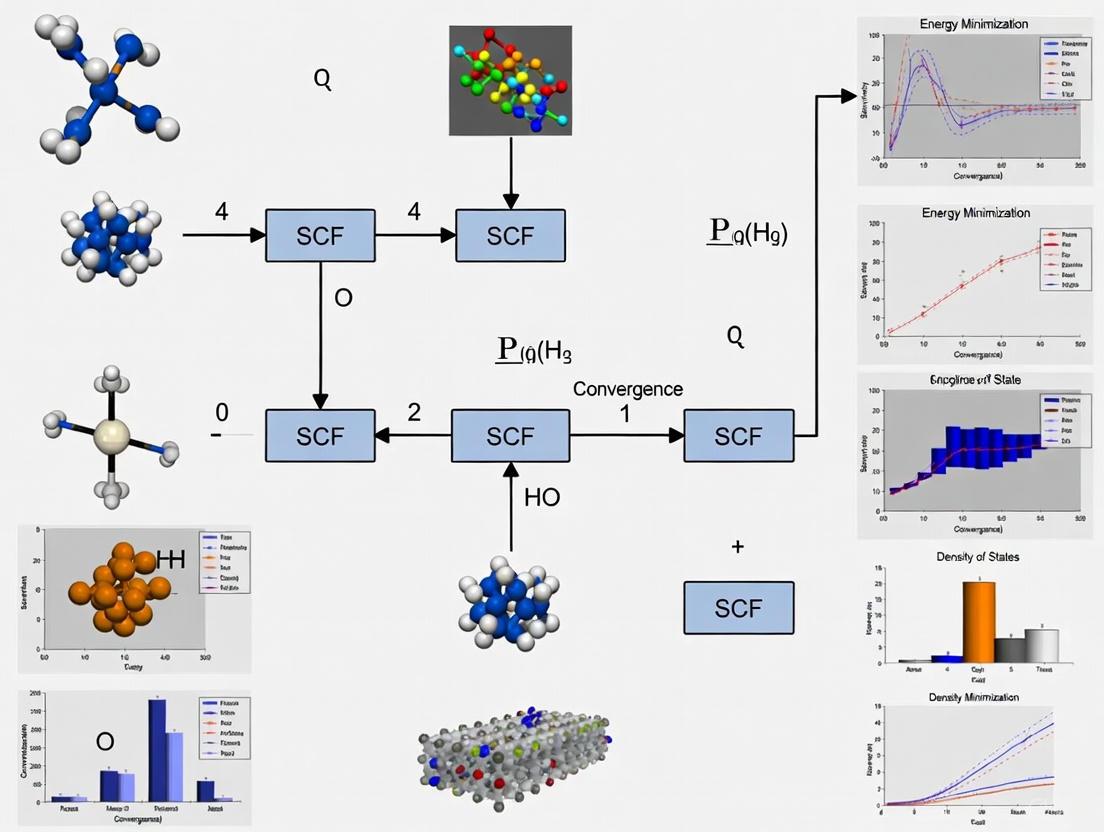
Achieving self-consistent field (SCF) convergence in metallic and small-bandgap systems presents significant challenges for first-principles calculations, often leading to unstable solutions and incorrect electronic properties.
A Robust SCF Convergence Protocol for Metallic and Small-Bandgap Systems
Abstract
Achieving self-consistent field (SCF) convergence in metallic and small-bandgap systems presents significant challenges for first-principles calculations, often leading to unstable solutions and incorrect electronic properties. This article provides a comprehensive, step-by-step protocol grounded in recent computational studies to address these issues. We cover foundational concepts explaining convergence difficulties in such systems, methodological strategies including advanced mixing schemes and finite electronic temperature, practical troubleshooting techniques for wavefunction instabilities, and validation methods to ensure physical results. This guide is designed to help computational researchers and material scientists efficiently obtain reliable SCF convergence, accelerating the discovery and development of advanced functional materials.
Understanding the SCF Convergence Challenge in Metals and Small-Gap Systems
Accurately predicting the fundamental band gap of semiconductors and insulators remains one of the most significant challenges in density functional theory (DFT). The fundamental band gap is defined as the energy difference between the ionization potential (IP) and the electron affinity (EA) of an N-electron system (EBG = IPN - EA_N) [1]. In practical solid-state calculations, this corresponds to the energy required to create a separated electron-hole pair that can move independently through the material. Traditional Kohn-Sham (KS) DFT, while successful for ground-state properties, systematically underestimates band gaps, often by more than 1 eV for semilocal functionals [2] [1]. This deficiency stems from both the inherent limitations of approximate exchange-correlation functionals and the fundamental electronic structure of systems with small or vanishing gaps, such as metallic systems that are particularly challenging for self-consistent field (SCF) convergence.
The generalized Kohn-Sham (gKS) approach provides a theoretical framework that helps mitigate these issues by incorporating non-local potential operators, typically through hybrid functionals that mix a portion of Hartree-Fock exchange with DFT exchange. For metallic systems with small band gaps, the SCF convergence problems are exacerbated by the presence of many near-degenerate states around the Fermi level, leading to charge sloshing and oscillatory behavior during the iterative solution of the KS equations [3] [4]. Understanding the relationship between KS and gKS theories, and their practical implementation for systems with challenging electronic structures, is therefore essential for accurate material property predictions.
Theoretical Foundation: KS and gKS Formalisms
The Kohn-Sham Band Gap Problem
In exact KS-DFT, the fundamental band gap should equal the difference between the lowest unoccupied and highest occupied Kohn-Sham eigenvalues, plus a derivative discontinuity term that accounts for the discontinuous change in the exchange-correlation potential as the electron number crosses an integer value [5]. However, with local and semilocal functionals (LDA, GGA), this derivative discontinuity is absent, leading to a systematic underestimation of band gaps. For metallic systems or those with small gaps, this theoretical limitation combines with practical SCF convergence difficulties, creating a dual challenge for computational materials scientists.
The KS eigenvalue gap often approximates the optical band gap (the energy of the first allowed excitation) rather than the fundamental gap, as it neglects excitonic effects—the attractive interaction between the excited electron and the hole it leaves behind [5]. In molecules, the difference between fundamental and optical gaps can be 2-3 eV, while in inorganic semiconductors it is typically smaller but still significant for accurate property prediction [1].
Generalized Kohn-Sham Theory
The gKS framework addresses some limitations of traditional KS-DFT by employing a non-multiplicative potential operator, typically through hybrid functionals that incorporate exact Hartree-Fock exchange. This approach partially restores the derivative discontinuity and improves band gap predictions. The theoretical foundation of gKS theory lies in constructing a generalized Hamiltonian where the exchange-correlation potential is replaced by a non-local operator, enabling a more accurate description of quasiparticle energies without the need for expensive post-DFT corrections like GW methods [5].
Functionals like HSE06 (Heyd-Scuseria-Ernzerhof) and mBJ (modified Becke-Johnson) have demonstrated significant improvements for band gap prediction, with mean absolute errors of approximately 0.4 eV compared to experimental values [2] [1]. The mBJ functional, a meta-GGA functional, achieves this improvement without the computational cost of hybrid functionals, making it particularly valuable for large systems or high-throughput screening.
Table 1: Comparison of Electronic Structure Methods for Band Gap Prediction
| Method | Theoretical Class | Band Gap Accuracy (MAE) | Computational Cost | Key Applications |
|---|---|---|---|---|
| LDA/GGA | KS-DFT | >1.0 eV [1] | Low | Ground-state properties, geometry optimization |
| mBJ | Meta-GGA | ~0.4 eV [2] | Moderate | Band structure of solids |
| HSE06 | Hybrid (gKS) | ~0.4 eV [2] | High | Semiconductors, defect properties |
| G₀W₀-PPA | Many-Body Perturbation | Moderate improvement over DFT [2] | Very High | Single-shot quasiparticle corrections |
| QP G₀W₀ | Many-Body Perturbation | Significant improvement [2] | Very High | Accurate band structures |
| QSGW | Self-Consistent Many-Body | High accuracy [2] | Extreme | Benchmark calculations |
| QSGW^ | Many-Body with Vertex Corrections | Highest accuracy [2] | Extreme | Flagging questionable experiments |
| bt-PNO-STEOM-CCSD | Wavefunction Theory | <0.2 eV [1] | Extreme | Small systems, benchmark studies |
Computational Protocols for Band Gap Prediction
SCF Convergence Strategies for Metallic and Small-Gap Systems
Metallic systems and those with small band gaps present significant challenges for SCF convergence due to the high density of states near the Fermi level, leading to charge sloshing and oscillatory behavior during iterations. The following protocol outlines systematic approaches to address these challenges:
Protocol 1: SCF Convergence for Challenging Metallic Systems
Initial System Assessment
Conservative SCF Parameters
Alternative SCF Accelerators
- Implement the MultiSecant method as a cost-effective alternative to DIIS:
SCF
Method MultiSecant
[3] - Consider the LISTi method for potentially reduced SCF cycles:
DIIS
Variant LISTi    ! Invoke the LISTi method
[3] - For particularly difficult cases, employ the Augmented Roothaan-Hall (ARH) method, which directly minimizes the total energy using a preconditioned conjugate-gradient approach [4]
- Implement the MultiSecant method as a cost-effective alternative to DIIS:
Finite Electronic Temperature
- Apply smearing to occupations to facilitate convergence:
Occupation
Smearing Fermi 0.01   ! Finite electronic temperature in Hartree
[3] [6] - Use automation to decrease smearing during geometry optimization:
GeometryOptimization
EngineAutomations
   Gradient variable=Convergence%ElectronicTemperature InitialValue=0.01 FinalValue=0.001 HighGradient=0.1 LowGradient=1.0e-3
End
[3]
- Apply smearing to occupations to facilitate convergence:
Advanced Strategies
- For geometry optimizations, employ adaptive convergence criteria:
GeometryOptimization
EngineAutomations
   Iteration variable=Convergence%Criterion InitialValue=1.0e-3 FinalValue=1.0e-6 FirstIteration=0 LastIteration=10
   Iteration variable=SCF%Iterations InitialValue=30 FinalValue=300 FirstIteration=0 LastIteration=10
End
[3] - Start with a minimal basis set (e.g., SZ) for initial convergence, then restart with larger basis sets [3]
- Increase numerical accuracy settings if many iterations occur after the HALFWAY message [3]
- For geometry optimizations, employ adaptive convergence criteria:
Figure 1: SCF Convergence Troubleshooting Workflow for Metallic and Small-Gap Systems
Band Structure and Band Gap Calculation Protocol
Protocol 2: Accurate Band Gap Determination
Convergence Tests
- Perform k-point convergence tests to minimize finite-size errors, particularly important for metallic systems [3] [6]
- For hybrid functional calculations, address the divergence at G=0 using appropriate treatments (e.g.,
exxdiv='vcut_sph'in PySCF) [6] - Converge basis set quality, considering the trade-off between computational cost and accuracy
Band Gap Extraction Methods
- Interpolation Method: Uses k-space integration to determine Fermi level and occupations, providing the gap printed in output files [3]
- Band Structure Method: Calculates bands along high-symmetry paths with dense k-point sampling, potentially more accurate but assumes critical points lie on the chosen path [3]
- Validate consistency between density of states (DOS) and band structure plots by ensuring k-space quality and energy grid convergence [3]
Methodological Hierarchy for Accuracy
Table 2: Band Gap Calculation Methods and Performance
| Method Category | Specific Methods | Band Gap Error | Computational Cost | Recommended Use |
|---|---|---|---|---|
| Standard DFT | LDA, PBE, PBEsol | Severe underestimation (40-50%) [1] | Low | Preliminary screening, large systems |
| Improved DFT | mBJ, SCAN | Moderate underestimation (10-20%) [1] | Low-Medium | Standard solid-state calculations |
| Hybrid DFT | HSE06, PBE0 | Good accuracy (MAE ~0.4 eV) [2] | High | Accurate materials design |
| GW Methods | G₀W₀@PBE, G₀W₀@LDA | Varies with starting point [2] | Very High | Benchmark calculations |
| Self-Consistent GW | QSGW, QSGW^ | Highest accuracy [2] | Extreme | Method development, validation |
| Wavefunction Methods | bt-PNO-STEOM-CCSD | Excellent accuracy (<0.2 eV) [1] | Extreme | Small systems, benchmarks |
Advanced Methodologies Beyond Conventional DFT
Many-Body Perturbation Theory: The GW Approximation
The GW approximation to many-body perturbation theory has emerged as a more accurate approach for band gap prediction, though at significantly higher computational cost. Recent systematic benchmarks reveal important insights into its performance [2]:
- G₀W₀ with plasmon-pole approximation (PPA) offers only marginal improvement over the best DFT functionals, despite higher computational requirements
- Full-frequency quasiparticle G₀W₀ dramatically improves predictions, nearly matching the accuracy of more sophisticated methods
- Quasiparticle self-consistent GW (QSGW) removes starting-point dependence but systematically overestimates experimental gaps by approximately 15%
- QSGW with vertex corrections (QSGW^) eliminates this overestimation, producing sufficiently accurate results to identify questionable experimental measurements
The implementation of these methods varies significantly between computational packages. All-electron implementations using linear muffin-tin orbital (LMTO) basis sets, as in the Questaal code, provide different trade-offs compared to plane-wave pseudopotential implementations common in codes like Quantum ESPRESSO and Yambo [2].
Wavefunction-Based Methods for Benchmark Accuracy
For the highest accuracy in band gap prediction, wavefunction-based methods offer an alternative pathway, particularly for embedded cluster models of solid-state systems [1]:
- Back-transformed Pair Natural Orbital Similarity Transformed Equation of Motion Coupled-Cluster (bt-PNO-STEOM-CCSD) achieves remarkable accuracy with errors below 0.2 eV compared to experiment
- These methods are computationally demanding but provide crucial benchmark data for validating more efficient approaches
- Local correlation techniques and embedded cluster models make these methods applicable to solid-state systems by treating long-range electrostatics and polarization effects
Figure 2: Hierarchy of GW Methods for Band Gap Accuracy
Table 3: Research Reagent Solutions for Band Structure Calculations
| Tool/Resource | Function/Purpose | Implementation Examples |
|---|---|---|
| Hybrid Functionals | Incorporate exact exchange to improve band gaps | HSE06, PBE0, B3LYP [2] [1] |
| Meta-GGA Functionals | Improve gaps with kinetic energy density dependence | mBJ, SCAN [2] [1] |
| GW Codes | Many-body perturbation theory for quasiparticle energies | Yambo, Questaal [2] |
| Wavefunction Codes | High-accuracy correlation methods for benchmarks | bt-PNO-STEOM-CCSD [1] |
| SCF Accelerators | Stabilize convergence for metallic/small-gap systems | DIIS, MultiSecant, LISTi, ARH [3] [4] |
| Smearing Methods | Facilitate SCF convergence with fractional occupations | Fermi-Dirac, Gaussian [3] [6] |
| Density Fitting | Reduce computational cost of exchange integrals | FFTDF, GDF [6] |
| Periodic Boundary Codes | Solid-state calculations with plane wave or localized basis sets | Quantum ESPRESSO, CP2K, PySCF [2] [6] [7] |
The fundamental band gap problem in DFT represents both a theoretical challenge and a practical limitation for materials discovery and design. While traditional KS-DFT with local and semilocal functionals systematically underestimates band gaps, the gKS approach with hybrid functionals provides significant improvements at increased computational cost. For metallic systems and those with small band gaps, SCF convergence challenges further complicate accurate property prediction, requiring specialized protocols and computational strategies.
The emerging hierarchy of methods, from improved density functionals to many-body perturbation theory and wavefunction-based approaches, offers a pathway to increasingly accurate band gap predictions, with the most sophisticated methods now capable of identifying questionable experimental measurements. Future developments in algorithmic efficiency, reduced-scaling implementations, and machine-learning accelerated electronic structure theory will further bridge the gap between computational affordability and predictive accuracy, ultimately enabling reliable high-throughput screening of functional materials for electronic and optoelectronic applications.
For researchers focusing on metallic systems with small band gaps, the combination of robust SCF convergence protocols, careful method selection based on target accuracy and available resources, and systematic validation against experimental or high-level computational benchmarks remains essential for generating reliable computational results in materials design and discovery.
In the realm of computational materials science, achieving self-consistent field (SCF) convergence is a fundamental prerequisite for obtaining reliable results from quantum mechanical calculations. However, systems characterized by metallic behavior or narrow band gaps present significant challenges, often leading to persistent convergence failures. These problems are particularly pronounced in materials containing transition metals, where localized d-orbitals introduce substantial instabilities into the SCF process. This application note examines the root causes of these convergence difficulties, primarily stemming from d-orbital electronic instabilities, and provides detailed protocols for overcoming them within the context of research on SCF convergence protocols for metallic and small bandgap systems.
The presence of d-orbitals significantly complicates the electronic structure landscape. Their localized nature leads to complex density of states profiles with sharp features near the Fermi level, while strong electron correlation effects and the tendency toward magnetic ordering create multiple competing ground states that challenge standard SCF algorithms. Furthermore, in narrow-gap semiconductors and metallic systems, the near-degeneracy of occupied and unoccupied states results in exceptionally sensitive occupation numbers that oscillate between SCF cycles. These factors collectively create a challenging environment for achieving SCF convergence, requiring specialized approaches beyond standard protocols.
The Fundamental Challenge: d-Orbital Electronic Instabilities
Transition metal d-orbitals exhibit several distinctive electronic properties that directly contribute to SCF convergence difficulties in metallic and narrow-gap systems.
Localized States and Complex Density of States
Unlike the more delocalized s- and p-orbitals, d-orbitals are spatially confined, leading to high density of states (DOS) peaks near the Fermi energy. In metallic systems and narrow-gap semiconductors, these sharp DOS features create a landscape where small changes in potential cause significant redistribution of electron density, destabilizing the SCF cycle. For instance, in GdNiSb—a narrow-gap semiconductor with an indirect band gap of 0.38 eV—the occupied 3d Ni states create intense peaks in the DOS from -2 to 0 eV [8]. Under pressure-induced cell volume reduction, band broadening and delocalization of these Ni 3d states drive a semiconductor-to-metal transition, further complicating convergence [8].
Near-Degeneracies and Occupation Swapping
The combination of narrow band gaps and d-orbital complexity creates systems with numerous near-degenerate states. In standard SCF procedures, this leads to occupation number swapping, where the highest occupied molecular orbital (HOMO) and lowest unoccupied molecular orbital (LUMO) continually change order between iterations, preventing convergence [9]. This problem is particularly acute in systems with multiple degenerate or near-degenerate states at the Fermi level [9]. The SCF procedure can result in band/orbital reordering between iterations, leading to oscillations and poor convergence [9].
Table 1: Primary Electronic Sources of SCF Instability in d-Orbital Systems
| Electronic Feature | Impact on SCF Convergence | Representative Material |
|---|---|---|
| Localized d-states near Fermi level | Sharp DOS peaks cause large density changes with small potential shifts | GdNiSb (Ni 3d states) [8] |
| Near-degenerate states | HOMO-LUMO swapping and occupation oscillations | Chromium dimer [10] |
| Competing magnetic ground states | Multiple local minima in energy landscape | Antiferromagnetic Fe systems [10] |
| Small or closed band gaps | High sensitivity to occupation smearing | Black phosphorus (0.3-1.66 eV gap) [11] |
Experimental Observations and Case Studies
Documented Convergence Failures
Real-world calculations demonstrate the severe convergence challenges posed by d-orbital systems:
HSE06 + Noncollinear Magnetism + Antiferromagnetism: A system with 4 Fe atoms in an up-down-up-down configuration presented extreme convergence difficulties, requiring approximately 160 SCF steps with carefully tuned mixing parameters [10]. The combination of hybrid functionals (HSE06), noncollinear magnetism, and antiferromagnetic ordering created a "perfect storm" of convergence challenges.
Metallic Systems with Elongated Cells: A metallic system in a 5.8 × 5.0 × ~70 ų cell exhibited severe convergence problems despite simple spin-paired character [10]. The extremely non-cubic cell geometry ill-conditions the charge-mixing problem, exacerbating d-orbital instabilities.
Single Ni Atom Calculations: Even isolated Ni atoms with magnetic moments set by Hund's rules demonstrated remarkable resistance to convergence, struggling to achieve density errors below 10⁻²‧⁴ without extreme smearing (0.5 eV) [10].
Structural and Compositional Influences
The convergence characteristics of d-orbital systems are further modulated by structural factors:
Dimensionality: 2D materials like transition metal dichalcogenides (TMDCs) exhibit strong layer-dependent band gaps [11]. For example, black phosphorus shows band gaps ranging from 1.66 eV (monolayer) to 0.30 eV (bulk) [11], with convergence behavior changing correspondingly.
Hybrid Interfaces: Heterojunction systems like C₀.₅/(BN)₀.₅ nanotubes combine materials with different electronic character, creating complex interfacial electronic structures that challenge SCF convergence [12].
Diagram 1: Relationship map of d-orbital instabilities and SCF convergence challenges. The diagram traces how fundamental electronic features, structural factors, and calculation conditions collectively contribute to convergence failures, and how targeted protocol solutions address these specific failure modes.
Computational Protocols for Enhanced SCF Convergence
Advanced SCF Algorithm Configuration
Building upon the understanding of d-orbital instabilities, the following protocols provide systematic approaches to achieve SCF convergence in challenging systems.
Protocol 1: Conservative Density Mixing for Magnetic d-Electron Systems
Application Context: Strongly correlated systems with antiferromagnetic ordering, noncollinear magnetism, or competing magnetic states.
Detailed Procedure:
- Reduce Mixing Parameters: Decrease mixing amplitudes significantly from defaults:
- Enable Smearing: Apply moderate smearing (Methfessel-Paxton order 1,
SIGMA = 0.2 eV) to stabilize occupation numbers [10] - Solver Selection: Use Davidson diagonalization (
ALGO = Fast) for improved stability [10] - Iteration Budget: Allow sufficient cycles (≥150) for slow but stable convergence [10]
Validation Metrics: Consistent total energy changes < 10⁻⁵ eV/atom between consecutive cycles, stable magnetic moments, and absence of charge density oscillations.
Protocol 2: Direct Optimization as SCF Alternative
Application Context: Systems with multiple degenerate states at Fermi level or persistent HOMO-LUMO swapping.
Theoretical Basis: Direct minimization of free energy with respect to both orbitals and occupation numbers, bypassing SCF instabilities [9].
Detailed Procedure:
- Parameterization: Simultaneously parameterize eigenfunctions and occupation matrix [9]
- Constrained Optimization: Apply physical constraints (Pauli principle, charge conservation) through mathematical parameterization [9]
- Gradient Descent: Minimize free energy using gradient-based methods on unconstrained transformed problem [9]
- Self-Diagonalization: Allow Hamiltonian to naturally diagonalize at convergence points [9]
Implementation Note: This approach has been successfully implemented in JAX for aluminum and silicon systems, producing band structures consistent with conventional SCF [9].
Protocol 3: System-Specific Mixing Strategies
Application Context: Problem-specific convergence issues requiring tailored mixing approaches.
Detailed Procedure:
- For Elongated Cells: Apply extremely conservative mixing (
Mixing = 0.05) with fixed DIIS dimensions (DiMix = 0.1) [3] - MultiSecant Method: As cost-free alternative to DIIS:
- LIST Method: For difficult cases where cost per iteration is secondary to cycle reduction:
- Two-Stage Calculation: Converge initially with minimal basis (SZ), then restart with full basis using preliminary orbitals [3]
Finite-Temperature and Automation Protocols
Protocol 4: Adaptive Finite Electronic Temperature
Application Context: Initial geometry optimization stages where precise energies are secondary to stable convergence.
Detailed Procedure:
- Define Temperature Gradient: Implement automated electronic temperature reduction during optimization:
- Progressive Tightening: Relax SCF criteria initially (
1.0e-3), tightening to1.0e-6over first 10 iterations [3] - Iteration Scaling: Increase SCF iteration limit from 30 to 300 during same period [3]
Rationale: Finite temperature (0.01 Hartree ≈ 315K) stabilizes occupation numbers in early optimization stages when forces are large, while final configurations achieve ground-state accuracy (0.001 Hartree ≈ 31.5K) [3].
Table 2: Protocol Selection Guide for Specific d-Orbital Challenges
| System Characteristic | Recommended Primary Protocol | Supplementary Approaches |
|---|---|---|
| Antiferromagnetic coupling | Protocol 1 (Conservative Mixing) | Protocol 4 (Adaptive Temperature) |
| Metallic with elongated cell | Protocol 3 (System-Specific Mixing) | Increase k-point sampling |
| Persistent HOMO-LUMO swapping | Protocol 2 (Direct Optimization) | Protocol 4 (Adaptive Temperature) |
| Hybrid functional calculations | Protocol 1 (Conservative Mixing) | Two-stage SZ→full basis [3] |
| Geometry optimization early stages | Protocol 4 (Adaptive Temperature) | Protocol 3 (LIST method) |
The Scientist's Toolkit: Research Reagent Solutions
Table 3: Essential Computational Tools for Metallic/Narrow-Gap SCF Convergence
| Tool / Software | Specific Function | Application Context |
|---|---|---|
| Molpro DFT Codes | DF-HF, DF-RHF, DF-UHF with density fitting |
Accelerated HF calculations for large systems [13] |
| VASP | AMIX, AMIX_MAG, BMIX, BMIX_MAG parameters |
Fine-controlled charge/spin density mixing [10] |
| SCF Automation Scripts | Adaptive ElectronicTemperature and Convergence%Criterion |
Hands-off geometry optimization progression [3] |
| JAX Direct Optimization | Free energy minimization with self-diagonalization | SCF-free solution for degenerate systems [9] |
| Quantum ESPRESSO | local-TF charge-density mixing |
Specialized mixing for elongated cells [10] |
Diagram 2: Workflow for systematic SCF convergence in problematic d-orbital systems. The decision pathway guides researchers from initial problem assessment through protocol selection, implementation, and validation, with a feedback loop for parameter adjustment when convergence fails initially.
Metallic and narrow-gap systems with d-orbital instabilities represent a significant challenge for SCF convergence in computational materials science. The fundamental issues stem from the localized nature of d-electrons, which create sharp density of states features, complex magnetic behavior, and near-degenerate states that lead to occupation number oscillations. Through the detailed protocols presented here—including conservative mixing for magnetic systems, direct optimization approaches, adaptive temperature schemes, and system-specific mixing strategies—researchers can methodically address these convergence challenges. The provided workflow and decision framework offer a systematic approach for selecting and implementing appropriate strategies based on specific system characteristics, enabling more reliable and efficient computation of these problematic but scientifically important materials systems.
The accurate prediction of electronic structure using ab initio methods remains a significant challenge in computational materials science, particularly for systems with strong electron correlation, metallic character, or small band gaps. These challenging systems, including transition metal oxides (TMOs) and Heusler alloys, exhibit unique properties that are highly sensitive to the chosen computational methodology. The self-consistent field (SCF) convergence process for such systems requires specialized protocols to avoid convergence to unphysical excited states and to ensure accurate description of ground-state electronic properties.
This application note examines the specific challenges associated with electronic structure calculations for metallic systems with small band gaps, drawing insights from recent studies on TMOs and Heusler alloys. We provide structured protocols for managing SCF convergence challenges, quantitative comparisons of methodological performance, and visualization of computational workflows to guide researchers in selecting appropriate strategies for their systems of interest.
Computational Challenges in Transition Metal Oxides
Transition metal oxides represent a particularly challenging class of materials due to the presence of strongly correlated d-electrons, which can lead to multiple local minima in the electronic energy landscape. Recent research on one-dimensional TMO chains (VO, CrO, MnO, FeO, CoO, and NiO) has demonstrated that standard density functional theory (DFT) approaches face significant wavefunction instability issues [14]. With the exception of MnO chains, these systems frequently cause SCF calculations to converge to excited states rather than the true ground state, complicating the accurate prediction of electronic and magnetic properties [14].
The self-interaction error inherent in standard DFT functionals presents a fundamental challenge for TMOs. This error manifests as an underestimation of band gaps and inaccurate description of electronic energy levels, particularly for localized d-orbitals [14] [15]. For complex oxides like Co$3$O$4$, which exhibits multiple experimental band gaps (approximately 1.5 eV, 2.1 eV, and possibly higher), standard DFT approaches fail to capture the intricate electronic excitations arising from strong correlation effects [15].
Table 1: Band Gap Challenges in Co$_3$O$_4$
| Band Gap Energy | Character | Computational Challenge |
|---|---|---|
| ~1.5 eV | Ligand field transitions within tetrahedral Co(II) sites | Standard DFT underestimates gap |
| ~2.1 eV | Mixed ligand field and metal-to-metal charge transfer | Requires multi-reference methods |
| Higher energy gap | Ligand-to-metal charge transfer (O 2p → Co(II)-3d) | Hybrid functionals or GW approximation needed |
For bulk Co$3$O$4$, the embedded cluster approach combined with wavefunction-based methods has proven successful in accurately predicting all three experimentally observed band gap energies [15]. Complete active space self-consistent field (CASSCF) methods with second-order N-electron valence perturbation theory (NEVPT2) provide access to accurate predictions by explicitly treating strong electron correlation effects that enable low-energy optical excitations [15].
Methodological Approaches for Heusler Alloys
Heusler alloys represent another challenging system where electronic structure calculations require careful methodological consideration. These intermetallic compounds exhibit diverse electronic behaviors, including semiconducting, metallic, and half-metallic characteristics, often with small band gaps that complicate SCF convergence.
Recent studies on Pt-based half-Heusler alloys (PtYZ with Y = V, Nb, Ta and Z = Al, Ga, In) have demonstrated that these systems preferentially crystallize in the type-III structure and satisfy the 18-valence-electron rule for semiconducting behavior [16]. However, the accurate prediction of their electronic properties depends significantly on the choice of exchange-correlation functional. The HSE06 hybrid functional significantly refines the electronic description, yielding band gaps from 0.05 to 1.0 eV and revealing a clear trend of increasing d-orbital delocalization from 3d (V) to 5d (Ta) elements [16].
Table 2: Electronic Properties of Selected Heusler Alloys
| Material | Functional | Band Gap (eV) | Character | Reference |
|---|---|---|---|---|
| LiBeP | TB-mBJ | 1.82 | Indirect | [17] |
| LiBeAs | TB-mBJ | 1.66 | Indirect | [17] |
| TiAgAl | PBE-GGA | 0.18 | Narrow gap semiconductor | [18] |
| TiAgGa | PBE-GGA | 0.19 | Narrow gap semiconductor | [18] |
| TiAgIn | PBE-GGA | 0.08 | Narrow gap semiconductor | [18] |
| HfRhSb | GGA/TB-mBJ | Varies | Indirect gap semiconductor | [19] |
| HfRhAs | GGA/TB-mBJ | Varies | Direct gap semiconductor | [19] |
The Trans-Blaha modified Becke-Johnson (TB-mBJ) potential has emerged as a computationally efficient alternative to hybrid functionals for Heusler alloys, providing improved band gap estimates comparable to experimental values without the significant computational cost of hybrid functional calculations [17]. This approach has been successfully applied to LiBeZ (Z = P, As) systems, revealing indirect band gaps of 1.82 eV and 1.66 eV, respectively, ideal for optoelectronic applications [17].
For systems with more pronounced correlation effects, the DFT+U approach with self-consistent determination of the Hubbard U parameter provides improved descriptions. Linear response theory within density functional perturbation theory (DFPT) allows for system-specific determination of U parameters, essential for accurate electronic structure prediction [14].
SCF Convergence Protocols for Challenging Systems
Protocol for Systems with Multiple Local Minima
Systems with strong electronic correlations, such as transition metal oxides, frequently exhibit multiple local minima in the electronic energy landscape. The following protocol addresses the SCF convergence challenges in such systems:
Initialization with Multiple Starting Potentials
- Generate different initial density guesses: atomic densities, superposition of atomic potentials, and fragmented configurations
- For magnetic systems, test both ferromagnetic and antiferromagnetic initial spin configurations
- For 1D TMO chains, this approach has been essential for identifying the true ground state [14]
Occupancy Band Smearing
- Apply Methfessel-Paxton or Marzari-Vanderbilt smearing during initial SCF steps
- Use smearing widths of 0.01-0.05 eV for small-gap systems
- Gradually reduce smearing width in subsequent iterations
Mixing Parameter Optimization
- Implement Kerker or Thomas-Fermi screening for metallic systems
- Use adaptive mixing parameters with Anderson or Pulay mixing schemes
- For difficult cases, implement charge density mixing with optimal mixing parameters (10-30%)
Convergence Validation
- Confirm consistency across multiple initial configurations
- Verify stability through additional SCF cycles after apparent convergence
- Check for absence of imaginary frequencies in phonon spectrum for structural stability [17]
Advanced Electronic Structure Methods Protocol
For systems where standard DFT fails to capture essential electronic correlations, implement this protocol for advanced electronic structure methods:
DFT+U with Self-Consistent U Parameter
- Determine Hubbard U parameter using linear response theory [14]
- Perform density functional perturbation theory (DFPT) calculations for U estimation
- Validate U parameter sensitivity by testing U ± 1 eV values
Hybrid Functional Calculations
- Employ HSE06 functional for improved band gap prediction [16]
- Use PBE0 for molecular systems or smaller periodic structures
- Implement optimized screening parameters for specific materials classes
Wavefunction-Based Embedded Cluster Methods
- For strongly correlated systems like Co$3$O$4$, use embedded cluster approaches [15]
- Apply CASSCF/NEVPT2 methods for multireference character systems
- Use electrostatic embedding to represent bulk environment
Validation Against Experimental Proxies
- Compare predicted band structures with photoemission spectroscopy data
- Validate magnetic properties against experimental magnetic moments
- Confirm mechanical stability through elastic constants calculation [19]
Visualization of Computational Workflows
Computational Strategy Selection: Workflow for selecting appropriate electronic structure methods based on system type and specific challenges.
The Scientist's Toolkit: Research Reagent Solutions
Table 3: Computational Tools for Electronic Structure Calculations
| Tool/Software | Methodology | Application | Considerations |
|---|---|---|---|
| CP2K [7] | GPW/GAPW, hybrid DFT, MP2 | Molecular and condensed phase systems | Efficient Gaussian and plane wave basis |
| Quantum ESPRESSO [14] | Plane-wave pseudopotentials, DFPT | Periodic systems, U parameter calculation | Pseudopotential quality critical |
| WIEN2k [19] [20] | FP-LAPW, TB-mBJ | Accurate electronic structure, optical properties | All-electron, computationally demanding |
| FHI-aims [14] | Numeric atom-centered orbitals | All-electron calculations for molecules/solids | Tight-tier basis sets for accuracy |
| PySCF [14] | Python-based quantum chemistry | Wavefunction methods, embedded clusters | Flexibility for method development |
The accurate computational description of challenging systems like transition metal oxides and Heusler alloys requires careful methodological selection and specialized SCF convergence protocols. The key lessons from recent studies indicate that systems with strong electron correlations necessitate beyond-DFT approaches, including DFT+U with self-consistent U parameters, hybrid functionals, and embedded cluster wavefunction methods. For metallic and small band gap systems, specialized SCF protocols with multiple initializations and optimized mixing parameters are essential to avoid convergence to unphysical states.
Future methodology development should focus on improving computational efficiency of advanced electronic structure methods while maintaining accuracy, particularly for high-throughput materials discovery. The integration of machine learning potentials with explicit electronic structure treatments may provide a path forward for simulating complex systems with both accuracy and computational feasibility.
The Role of Self-Interaction Error and the Need for Beyond-Standard-DFT Approaches
Self-Interaction Error (SIE) represents a fundamental limitation in approximate forms of Density Functional Theory (DFT). In exact DFT, the energy contribution from each electron's interaction with itself would be perfectly canceled, but this cancellation is incomplete in practical functionals such as the Generalized Gradient Approximation (GGA) and meta-GGA. This error becomes particularly pronounced in systems with localized d- and f-electrons, including many transition metal oxides and metallic systems with small band gaps [21]. SIE manifests as an unrealistic stabilization of delocalized electronic states, leading to predictable inaccuracies in predicted band gaps, magnetic moments, and oxidation energies [21].
The presence of SIE has direct and severe consequences for Self-Consistent Field (SCF) convergence, especially in metallic and small-gap systems. The SCF procedure's iterative nature relies on achieving a consistent electronic configuration, but SIE can create multiple near-degenerate states that compete during the optimization process. This results in phenomena such as "charge sloshing," where electrons oscillate between different configurations without settling on a consistent solution [22]. In systems with small HOMO-LUMO gaps, even minor errors in the Kohn-Sham potential can cause large distortions in electron density, creating a feedback loop that prevents convergence [22]. These challenges necessitate specialized approaches that go beyond standard DFT to achieve both accuracy and reliability in electronic structure calculations.
Theoretical Foundation: Linking SIE to SCF Convergence Challenges
Physical Origins of SCF Convergence Failure
SCF convergence failures in metallic and small-gap systems often have physical rather than purely numerical origins. The primary physical mechanism involves the relationship between the HOMO-LUMO gap and the system's polarizability. As the HOMO-LUMO gap shrinks, the polarizability increases dramatically, making the electron density exceptionally sensitive to small errors in the Kohn-Sham potential [22]. In such cases, a slightly erroneous potential can produce large density distortions, which in turn generate even more erroneous potentials in subsequent iterations—creating a diverging feedback loop.
Another common physical scenario occurs when the HOMO-LUMO gap becomes excessively small, leading to oscillating orbital occupation numbers during SCF iterations [22]. An electron may occupy one orbital in iteration N, causing a Fock matrix shift that makes a different orbital more favorable in iteration N+1, which then reverses the situation in iteration N+2. This oscillation prevents the system from settling into a consistent electronic configuration. These physical origins of convergence failure explain why simply increasing the maximum number of iterations or tightening convergence criteria often proves ineffective without addressing the underlying electronic structure issues [22].
Limitations of Standard DFT Functionals
Standard semi-local functionals like PBE-GGA suffer from significant SIE, which disproportionately affects transition metal compounds and metallic systems. While meta-GGA functionals such as r²SCAN fulfill more exact constraints and reduce SIE magnitude compared to GGA, they still retain substantial self-interaction error [21]. This residual error particularly impacts predictions of band gaps, magnetic moments, and oxidation energies in strongly correlated systems. The failure of these standard functionals to completely eliminate SIE necessitates the development of more advanced electronic structure methods that can handle the unique challenges posed by metallic and small-gap systems.
Table 1: Quantitative Errors in O₂ Binding for Different DFT Approximations
| Functional Type | Representative Functional | O₂ Binding Error (eV/O₂) |
|---|---|---|
| Local Density/GGA Approximations | PBE, LDA | -2.2 to -1.0 |
| Meta-GGA | r²SCAN | -0.3 |
| Hybrid/Advanced Methods | r²SCAN10@r²SCANX | <0.03 |
Beyond-Standard-DFT Methodologies
Hybrid Functionals and Fractional Exact Exchange
Hybrid functionals incorporate a fraction of exact Hartree-Fock exchange into the DFT exchange-correlation functional, providing a direct mechanism for reducing SIE. The global hybrid approach replaces a specific portion (X%) of semi-local exchange with Hartree-Fock exchange throughout the system. For the r²SCAN functional, hybrid versions termed r²SCANX incorporate X% of exact exchange, which significantly improves the description of electronic properties in transition metal oxides [21].
A more sophisticated approach, termed r²SCANᵧ@r²SCANₓ, utilizes different fractions of exact exchange for determining the electronic density (X) and for evaluating the energy (Y) [21]. This separation simultaneously addresses both functional-driven and density-driven errors, offering superior performance for challenging systems. For instance, r²SCAN10@r²SCAN50 has demonstrated exceptional accuracy for oxidation energies and magnetic moments, while r²SCAN10@r²SCAN provides improved band gap predictions [21].
The computational advantage of this dual-fraction approach is substantial. Since the more computationally expensive hybrid functional (with higher exact exchange percentage) is only needed for the final single-point energy evaluation—not for the self-consistent iterations or geometry optimization—the method can be 10-300 times faster than performing the entire calculation with a global hybrid functional [21]. This makes it particularly valuable for high-throughput materials discovery where computational efficiency is crucial.
DFT+U and Empirical Corrections
The DFT+U method introduces an empirical on-site Hubbard U parameter to correct the excessive delocalization of d- and f-electrons caused by SIE. This approach penalizes fractional occupation of localized orbitals, effectively creating a more pronounced energy gap and stabilizing the SCF procedure. While DFT+U can significantly improve predictions for specific material classes, it suffers from transferability issues—the optimal U value depends on the specific material, oxidation state, and even the property being calculated [21]. Different U values may be needed to accurately reproduce oxidation energies versus band gaps versus magnetic moments for the same material [21].
Parameter determination strategies for U include:
- Linear Response Theory: Calculating U from first principles using the response of occupation numbers to potential shifts [21]
- Empirical Fitting: Adjusting U to match experimental data such as formation energies or band gaps
- Machine Learning Approaches: Predicting material-specific U parameters using trained models [21]
Despite its limitations, DFT+U remains valuable for specific applications where hybrid functionals would be computationally prohibitive, particularly in large-scale systems or molecular dynamics simulations.
Advanced SCF Convergence Algorithms
Specialized SCF algorithms can overcome convergence challenges in difficult systems without modifying the physical approximation of the functional. The Trust Radius Augmented Hessian (TRAH) method represents a robust second-order convergence approach that automatically activates when standard DIIS-based methods struggle [23]. TRAH is particularly effective for open-shell transition metal complexes and other challenging cases.
The Augmented Roothaan-Hall (ARH) method provides another alternative, directly minimizing the total energy as a function of the density matrix using a preconditioned conjugate-gradient method with a trust-radius approach [4]. ARH can converge systems where traditional DIIS fails, though at increased computational cost.
For particularly pathological cases, a combination of DIIS with enhanced settings can improve stability:
- Increasing DIIS expansion vectors (N=15-40 instead of default N=10) [4] [23]
- Implementing more aggressive density damping through the
SlowConvorVerySlowConvkeywords [23] - Reducing the Fock matrix rebuild frequency (
directresetfreq) to minimize numerical noise [23] - Applying level shifting to artificially separate occupied and virtual states [4]
Experimental Protocols and Application Notes
Protocol 1: Hybrid Functional Calculation with r²SCANᵧ@r²SCANₓ
Purpose: To accurately compute electronic, magnetic, and thermochemical properties of transition metal oxides while mitigating SIE and ensuring SCF convergence.
Materials and Computational Setup:
- Electronic Structure Code: ADF, ORCA, or VASP with r²SCAN functional capability
- Basis Set: Appropriate polarized triple-zeta basis sets for all elements
- Integration Grid: Increased grid density (Grid4 in ORCA, Accurate in ADF)
- SCF Convergence Criteria: TightSCF settings (TolE 1e-8, TolRMSP 5e-9)
Procedure:
- Initial Geometry Optimization:
- Perform preliminary optimization using standard r²SCAN functional
- Use
SlowConvkeyword if convergence issues emerge - Verify reasonable bond lengths and angles to prevent numerical issues
Self-Consistent Calculation with r²SCANₓ:
- Execute SCF calculation with lower exact exchange percentage (X=0-50) for density
- Apply DIIS with enhanced settings (N=25, Cyc=30) if oscillations occur
- Consider electron smearing (0.1-0.3 eV) for metallic systems
Single-Point Energy Evaluation with r²SCANᵧ:
- Utilize the converged density from step 2
- Perform non-self-consistent calculation with higher exact exchange (Y=10 for band gaps, Y=50 for oxidation energies)
- Compute final energies and properties
Validation:
- Compare predicted band gaps with experimental values or G₀W₀ references
- Verify magnetic moments against experimental measurements
- Check oxidation energy trends across related compounds
Protocol 2: SCF Convergence Enhancement for Metallic Systems
Purpose: To achieve SCF convergence in metallic and small-gap systems where standard algorithms fail.
Materials and Computational Setup:
- Software: ORCA 5.0+ (for TRAH capability) or equivalent
- Prerequisites: Reasonable initial geometry and appropriate spin multiplicity
Procedure:
- Initial SCF Attempt:
- Use default DIIS/SOSCF settings with increased MaxIter (250-500)
- Monitor convergence behavior (oscillating, diverging, or trailing)
TRAH Activation and Tuning:
- Enable AutoTRAH with modified thresholds if automatic activation fails:
- For direct control, use
!TRAHkeyword
Alternative Algorithm Selection:
- Implement KDIIS with SOSCF for faster convergence in some cases
- Use
!NoSOSCFif SOSCF produces unstable steps - Delay SOSCF start with reduced SOSCFStart (0.00033) for transition metal complexes
Parameter Optimization for Pathological Cases:
- Apply extreme damping with
!VerySlowConv - Increase DIIS history (DIISMaxEq 15-40)
- Reduce directresetfreq (1-5) to minimize numerical noise
- Implement level shifting (0.1-0.5 Hartree) to stabilize initial cycles
- Apply extreme damping with
Troubleshooting:
- If oscillations persist: increase mixing parameter (0.015-0.09) and DIIS expansion vectors
- If convergence is slow but stable: enable SOSCF with earlier startup
- For persistent failures: try converging a closed-shell oxidized state first, then use orbitals as initial guess
Table 2: SCF Algorithm Selection Guide for Different Symptom Patterns
| SCF Behavior | Probable Cause | Recommended Algorithm | Key Parameters |
|---|---|---|---|
| Large energy oscillations (>10⁻³ Ha) | Small HOMO-LUMO gap, charge sloshing | TRAH with level shifting | LevelShift 0.3, AutoTRAH true |
| Steady but slow convergence | Well-behaved but stiff system | KDIIS + SOSCF | SOSCFStart 0.00033 |
| Convergence trailing near solution | DIIS extrapolation issues | DIIS with expanded history | DIISMaxEq 25, Cyc 30 |
| Unstable steps with SOSCF | Poor Hessian approximation | DIIS with damping | !NoSOSCF, SlowConv |
| Numerical noise issues | Grid inaccuracies, linear dependence | Increased integration accuracy | directresetfreq 1, Grid5 |
Protocol 3: System Preparation and Initial Guess Generation
Purpose: To generate robust initial guesses and proper system setup to prevent SCF convergence problems.
Procedure:
- Geometry Validation:
- Verify realistic bond lengths and angles (check units: Å vs Bohr)
- Ensure no artificial high symmetry that enforces degeneracy
- Check for unphysical close contacts that cause linear dependence
Initial Guess Generation:
- Use atomic potential superposition or PModel guess as default
- For difficult cases: perform preliminary calculation with simpler functional (BP86/def2-SVP)
- Read orbitals from previous calculation using
! MORead - For open-shell systems: try converging corresponding closed-shell cation/anion first
Basis Set and Numerical Settings:
- Check for basis set linear dependence, especially with diffuse functions
- Increase integration grid size if SCF oscillations appear grid-related
- Use appropriate auxiliary basis sets for RI approximations
Table 3: Research Reagent Solutions for Beyond-Standard-DFT Calculations
| Tool Category | Specific Examples | Function and Application |
|---|---|---|
| Software Packages | ADF, ORCA, VASP, Quantum ESPRESSO | Provides implementation of advanced functionals and SCF algorithms |
| Hybrid Functionals | r²SCANX, HSE06, PBE0 | Reduces self-interaction error through exact exchange mixing |
| SCF Convergers | TRAH, ARH, KDIIS, DIIS | Specialized algorithms for difficult convergence cases |
| Basis Sets | def2-TZVP, aug-cc-pVTZ, PAW pseudopotentials | Balanced accuracy/efficiency for metallic and molecular systems |
| Post-Processing Tools | VESTA, ChemCraft, Jmol | Visualization and analysis of electronic structure results |
The interplay between Self-Interaction Error and SCF convergence challenges represents a critical frontier in electronic structure theory, particularly for metallic systems and transition metal compounds. The beyond-standard-DFT approaches outlined here—including hybrid functionals with dual exact-exchange fractions, advanced SCF algorithms like TRAH and ARH, and systematic convergence protocols—provide powerful strategies to overcome these limitations. As computational methods continue to evolve, the integration of machine learning techniques for parameter prediction and the development of more sophisticated non-empirical functionals promise to further enhance the accuracy and reliability of quantum chemical calculations for the most challenging molecular and materials systems.
Methodological Strategies for Robust SCF Convergence
Within materials science and computational drug development, accurately simulating metallic and small bandgap systems presents a significant challenge for quantum chemical methods. The self-consistent field (SCF) procedure, fundamental to Kohn-Sham density functional theory (DFT) calculations, relies on an iterative algorithm to find electronic structure configurations. For systems with vanishing HOMO-LUMO gaps, such as metals, or those with nearly degenerate electronic levels, this iterative process often becomes unstable or fails to converge entirely [4]. These convergence problems are particularly prevalent in systems containing d- and f-elements with localized open-shell configurations, transition state structures with dissociating bonds, and in systems with non-cubic simulation cells or unusual spin configurations [4] [10].
The choice of exchange-correlation functional profoundly influences both the accuracy of results and the likelihood of achieving SCF convergence. Standard Generalized Gradient Approximation (GGA) functionals, while computationally efficient, often struggle with the complex electronic structure of metallic and strongly correlated systems. More sophisticated meta-GGA and hybrid functionals can provide superior accuracy but introduce additional computational complexity that can exacerbate convergence difficulties. The DFT+U approach offers a targeted solution for strongly correlated electrons but requires careful parameter selection. This application note provides a structured framework for functional selection and SCF protocol implementation specifically designed for challenging metallic and small bandgap systems in research and drug development applications.
Functional Classes: Characteristics and Convergence Profiles
Comparative Analysis of Functional Types
Table 1: Comparison of DFT Functional Classes for Metallic and Small Bandgap Systems
| Functional Class | Key Examples | Computational Cost | Convergence Behavior | Typical Applications |
|---|---|---|---|---|
| GGA | PBE, BLYP | Low | Generally robust but can struggle with metallic states | Metallic bulk systems, preliminary screening |
| Meta-GGA | SCAN, M06-L | Moderate | Often problematic; sensitive to integration grids [24] | Accurate bulk properties, materials with intermediate correlation |
| Hybrid | HSE06, B3LYP | High | Challenging for metals; requires specialized techniques [10] | Band gaps, excited states, quantitative accuracy |
| DFT+U | PBE+U, SCAN+U | Low to Moderate | Similar to base functional but with improved stability for localized states | Strongly correlated systems, transition metal oxides |
GGA and Meta-GGA Functionals
GGA functionals, which incorporate both the local electron density and its gradient, represent the workhorse of solid-state calculations. For metallic systems, the Perdew-Burke-Ernzerhof (PBE) functional has demonstrated particular utility, offering a balanced compromise between accuracy and computational efficiency. However, standard GGAs suffer from well-known limitations, including the self-interaction error and inadequate description of strongly correlated systems, which can manifest as incorrect electronic structures or convergence difficulties in SCF procedures [4].
Meta-GGA functionals introduce the kinetic energy density or other electronic information as additional variables, providing improved accuracy for diverse material properties. The SCAN (Strongly Constrained and Appropriately Normed) functional and its variants, such as r²SCAN, have shown excellent performance for both molecules and solids. However, meta-GGAs present significant SCF convergence challenges, particularly for the Minnesota family (e.g., M06-L) which are known to be "quite difficult to converge" compared to their GGA counterparts [10] [24]. These functionals also exhibit heightened sensitivity to numerical integration grids, necessitating higher-quality grids (e.g., 99,590 points) compared to simpler GGAs [24].
Hybrid Functionals and DFT+U
Hybrid functionals incorporate a fraction of exact Hartree-Fock exchange, substantially improving the description of many electronic properties but increasing computational cost, particularly for periodic systems. For metallic and small bandgap systems, the nonlocal nature of exact exchange introduces additional challenges for SCF convergence. The HSE06 functional, which screens long-range exact exchange, has become a standard choice for solid-state applications, though its convergence can be problematic, especially when combined with noncollinear magnetism and antiferromagnetism [10].
The DFT+U approach introduces a Hubbard-type term to better describe localized electrons in specific orbitals (typically d or f states), effectively mitigating the self-interaction error for strongly correlated systems. While DFT+U utilizes the same SCF machinery as its base functional, the improved description of localization often enhances convergence behavior for transition metal compounds and other correlated materials. The selection of the U parameter, however, requires careful consideration, either through first-principles calculations or empirical fitting to experimental data.
SCF Convergence Fundamentals and Challenges
Convergence Criteria and Tolerance Selection
Achieving SCF convergence requires satisfying specific numerical thresholds that determine when successive iterations have produced sufficiently similar solutions. Different computational packages implement various convergence criteria, with tighter thresholds requiring more iterations but potentially yielding more accurate results. ORCA, for example, offers predefined convergence settings from "Sloppy" to "Extreme," with the "Tight" preset often recommended for transition metal complexes [25].
Table 2: SCF Convergence Criteria for ORCA (Selected Presets) [25]
| Criterion | Loose | Medium | Tight | VeryTight |
|---|---|---|---|---|
| TolE (Energy Change) | 1e-5 | 1e-6 | 1e-8 | 1e-9 |
| TolRMSP (RMS Density) | 1e-4 | 1e-6 | 5e-9 | 1e-9 |
| TolMaxP (Max Density) | 1e-3 | 1e-5 | 1e-7 | 1e-8 |
| TolErr (DIIS Error) | 5e-4 | 1e-5 | 5e-7 | 1e-8 |
The convergence mode (ConvCheckMode in ORCA) determines how these criteria are applied. The default ConvCheckMode=2 provides a balanced approach by checking both the total energy change and the one-electron energy change, while ConvCheckMode=0 requires all criteria to be satisfied for convergence [25]. For metallic systems with small bandgaps, tighter tolerances are generally recommended, particularly for properties sensitive to the electronic structure details.
Common Convergence Problems in Metallic Systems
Metallic systems present distinctive challenges for SCF convergence due to their vanishing band gap and continuous density of states at the Fermi level. The phenomenon of "charge sloshing" – large, oscillating changes in electron density between iterations – is particularly prevalent in metals and can prevent convergence [26]. This issue is exacerbated in systems with non-cubic cell geometries, where extreme lattice vector ratios ill-condition the charge mixing problem [10].
Additional complications arise in open-shell metallic systems, particularly those with noncollinear magnetic arrangements or antiferromagnetic ordering. One reported case involving HSE06 calculations on an antiferromagnetic system with noncollinear magnetism required approximately 160 SCF steps with carefully tuned mixing parameters to achieve convergence [10]. Systems containing transition metals with localized d-orbitals often exhibit multiple local minima with similar energies, further complicating the convergence to the ground state.
Practical Protocols for SCF Convergence
Protocol 1: Metallic Systems with GGA Functionals
For metallic systems employing GGA functionals, the following protocol has demonstrated effectiveness:
Initial Setup: Select an appropriate smearing method (Fermi-Dirac or Gaussian) with an electronic temperature of 300-500 K. This helps fractionalize occupation numbers around the Fermi level, dampening charge sloshing [26]. In CP2K, this is implemented as:
Mixing Parameters: Employ reciprocal-space mixing with reduced aggression. For example, in CP2K, use Broyden mixing with α = 0.1 and β = 1.5 [26]. In ADF, reduced mixing values (e.g., 0.015) with increased DIIS expansion vectors (N=25) enhance stability [4].
Diagonalization: Use standard diagonalization rather than Orbital Transformation (OT) methods, as OT cannot accommodate fractional occupations [26]. Include additional unoccupied orbitals (
ADDED_MOSin CP2K) to ensure adequate states for smearing.Convergence Thresholds: Set
EPS_SCFto 1.0E-6 to 1.0E-7 for sufficient precision without excessive computational cost [26].
Protocol 2: Open-Shell Transition Metal Systems
Systems containing open-shell transition metals require special consideration for both spin treatment and convergence acceleration:
Spin Configuration: Verify the correct spin multiplicity and consider unrestricted calculations. For antiferromagnetic systems, explicitly set the initial spin configuration rather than relying on automatic detection [10].
SCF Acceleration: Implement a conservative DIIS approach with increased initial cycles before acceleration begins. In ADF, settings such as
Cyc = 30(increased from default 5) provide more equilibration before aggressive acceleration [4].Magnetic Mixing: For noncollinear magnetic systems, employ separate mixing parameters for charge and spin densities. One reported successful configuration used
AMIX = 0.01,BMIX = 1e-5,AMIX_MAG = 0.01, andBMIX_MAG = 1e-5in VASP [10].Algorithm Selection: Consider using the Davidson diagonalizer (
ALGO=Fastin VASP) for improved convergence behavior in difficult magnetic systems [10].
Protocol 3: Hybrid Functionals for Small Bandgap Semiconductors
Small bandgap semiconductors benefit from hybrid functionals but present significant convergence challenges:
Exact Exchange Treatment: For periodic systems, use screened exchange (HSE06) to reduce computational cost and improve convergence. In PySCF, address the divergence at G=0 with appropriate methods such as
exxdiv='vcut_sph'for spherical truncation [6].Initial Guess: Utilize restarted wavefunctions from previous GGA calculations to provide a better starting point for hybrid functional SCF cycles [4].
Convergence Acceleration: Employ a combination of DIIS and ADIIS (Augmented DIIS) with level shifting (e.g., 0.1 Hartree) to overcome initial oscillations [24].
Stepwise Refinement: For extremely challenging systems, consider a two-step approach: converge initially with a small exact exchange fraction, then gradually increase to the target value while restarting from each intermediate solution.
The Scientist's Toolkit: Essential Computational Reagents
Table 3: Research Reagent Solutions for SCF Convergence
| Tool/Parameter | Function | Typical Values | Application Context |
|---|---|---|---|
| Fermi-Dirac Smearing | Fractional occupation of states near Fermi level | 300-500 K electronic temperature | Metallic systems, small bandgap semiconductors |
| Broyden Mixing | Density mixing algorithm for charge sloshing | α = 0.1, β = 1.5, NBROYDEN = 8 [26] | Metals, elongated cells |
| DIIS Parameters | Convergence acceleration | N = 25 (expansion vectors), Cyc = 30 (start) [4] | Problematic open-shell systems |
| Level Shifting | Artificial raising of virtual orbital energies | 0.1-0.5 Hartree [24] | Initial convergence difficulties |
| Enhanced Integration Grids | Numerical integration accuracy | (99,590) points [24] | meta-GGA functionals, sensitive properties |
| Added Unoccupied Orbitals | Provide states for smearing and improved variational flexibility | 10-50% of occupied orbitals [26] | Metallic systems, hybrid calculations |
Advanced Techniques and Troubleshooting
Addressing Persistent Convergence Failures
When standard convergence protocols fail, advanced techniques may be necessary:
Density Matrix Purification: For methods directly minimizing the density matrix (such as the ARH method in ADF), purification algorithms can ensure N-representability and improve convergence [4].
Stepwise Smearing Reduction: Begin with substantial electron smearing (e.g., 0.5 eV) to achieve initial convergence, then gradually reduce the smearing width in restarted calculations until the target value is reached [4] [10].
Alternative Solvers: For particularly stubborn cases, consider switching to different SCF convergence algorithms such as MESA, LISTi, or EDIIS, which may exhibit different convergence characteristics for specific system types [4].
Stability Analysis: Perform SCF stability checks after apparent convergence to verify that the solution represents a true minimum rather than a saddle point. In PySCF, this is available via the
stability()method [6].
System-Specific Considerations
Different material classes require tailored approaches:
Non-Cubic Cells: For systems with highly anisotropic lattice parameters, reduced mixing parameters (β = 0.01) are often necessary, despite slower convergence [10].
Magnetic Systems: Antiferromagnetic ordering, particularly when combined with noncollinear magnetism and hybrid functionals, represents one of the most challenging cases. Separate mixing parameters for charge and spin densities with significantly reduced values (0.01) may be required [10].
Molecular Systems: For molecular systems with metallic character, such as metal clusters, ensure sufficient basis set flexibility and consider using all-electron basis sets rather than pseudopotentials for improved description of valence states.
Achieving robust SCF convergence for metallic and small bandgap systems requires a systematic approach combining appropriate functional selection with carefully tuned computational parameters. GGA functionals provide the most straightforward convergence path for metals but may lack the accuracy required for quantitative predictions. Meta-GGA and hybrid functionals offer improved accuracy at the cost of increased computational complexity and convergence challenges. The DFT+U approach bridges this gap for strongly correlated systems.
The protocols presented here emphasize the importance of electron smearing for metallic systems, conservative mixing parameters for anisotropic and magnetic systems, and specialized exact exchange treatment for hybrid functional calculations. By implementing these structured approaches and utilizing the provided "toolkit" of computational reagents, researchers can significantly enhance the reliability and efficiency of their DFT calculations for challenging materials systems, ultimately accelerating materials discovery and development in both research and industrial applications.
Self-Consistent Field (SCF) methods are fundamental for solving electronic structure problems within Hartree-Fock and Density Functional Theory (DFT). The core challenge lies in their iterative nature, which can lead to convergence difficulties, especially for specific classes of chemical systems. Metallic systems and those with very small HOMO-LUMO gaps are particularly problematic because they exhibit long-wavelength charge sloshing, where charge density oscillates between iterations without settling to a solution [27]. Similarly, open-shell transition metal complexes and systems with dissociating bonds frequently encounter convergence failures [4].
The convergence process is highly dependent on the algorithms used to mix the Fock or density matrices from successive iterations. Advanced mixing schemes like Direct Inversion in the Iterative Subspace (DIIS), its variants, and multi-secant methods (e.g., Broyden) are critical for accelerating and stabilizing convergence. The choice of method is not one-size-fits-all; it must be tailored to the electronic structure of the system under investigation. This note provides a detailed comparison of these methods and protocols for their application, with a special focus on challenging metallic systems with small band gaps.
Technical Comparison of Mixing Schemes
A variety of SCF convergence acceleration techniques have been developed, each with its own strengths, weaknesses, and optimal application domains. The following table provides a structured comparison of the key methods.
Table 1: Comparison of Advanced SCF Convergence Acceleration Methods.
| Method | Core Principle | Advantages | Limitations | Ideal for Systems With |
|---|---|---|---|---|
| CDIIS/EDIIS | Combines commutator-DIIS (minimizing the DIIS error vector) with energy-DIIS (minimizing a quadratic approximation of the energy) [27] [28]. | Often regarded as the best choice for Gaussian basis sets; generally outperforms other DIIS family methods for many cases [28]. | Can fail for metallic clusters and systems with vanishing HOMO-LUMO gaps due to uncontrolled charge sloshing [27]. | Small molecules, insulators, systems with a reasonable HOMO-LUMO gap [27]. |
| KDIIS | A variant of DIIS that works in the space of orbital rotations. | Can enable faster convergence than other SCF procedures, especially when combined with SOSCF [23]. | Performance can be system-dependent; may not be the default in all codes. | General systems as an alternative to standard DIIS. |
| LIST | Linear-expansion shooting techniques for generating new trial density matrices [28]. | An alternative approach to DIIS. | Generally found to be less effective than a correctly implemented EDIIS+DIIS method [28]. | Systems where DIIS is struggling, though it may not be the top performer. |
| MESA (MultiSecant) | Generalization of Broyden's methods; uses a history of previous steps to build an approximate inverse Jacobian [4]. | Efficient use of historical information; can be robust for difficult cases. | Requires careful parameterization (e.g., history length); implementation-specific. | Difficult systems like open-shell transition metals; a viable alternative when DIIS fails [4]. |
| ARH | Directly minimizes the total energy using a preconditioned conjugate-gradient method with a trust-radius [4]. | Robust and reliable; considered a viable alternative for difficult systems where other accelerators fail. | Computationally more expensive than DIIS-based methods [4]. | Pathological cases where standard DIIS and other accelerators are unsuccessful [4]. |
| Kerker-preconditioned DIIS | Uses a simple model for the charge response to damp long-wavelength charge oscillations, akin to methods in plane-wave codes [27]. | Dramatically improves convergence for metallic systems with small band gaps where standard DIIS fails [27]. | Computational cost is similar to previous DIIS methods [27]. | Metallic clusters, systems with narrow or zero HOMO-LUMO gaps (e.g., Ru₄(CO), Pt₁₃, Pt₅₅) [27]. |
| Orbital Transformation (OT) | Minimizes energy using, e.g., conjugate gradients, avoiding diagonalization; can use DIIS as a minimizer [29]. | Fast and guaranteed to find a minimum with good preconditioning; no expensive diagonalizations. | Poor convergence for metallic systems; sensitive to preconditioning [29]. | Non-metallic systems where robust convergence is needed. |
Decision Workflow for Method Selection
Selecting the appropriate SCF algorithm and mixing scheme depends on the electronic properties of the system. The following workflow diagram outlines a logical decision process based on system characteristics.
Experimental Protocols
Protocol 1: Kerker-Preconditioned DIIS for Metallic Systems
This protocol is designed for systems with small or vanishing HOMO-LUMO gaps, such as metal clusters (e.g., Pt₁₃, Pt₅₅) [27].
Key Reagents & Computational Setup:
- Software: Modified Gaussian 09 or other code supporting Kerker-like preconditioning in Gaussian basis sets [27].
- System: Metallic clusters or systems with a narrow HOMO-LUMO gap.
- Smearing: Fermi-Dirac distribution for electrons to simulate a finite electron temperature [27].
Procedure:
- Initialization: Start from a standard initial guess (e.g., superposition of atomic densities).
- SCF Cycle: For each iteration
i, compute the Fock matrixF_iand density matrixP_i. - Error Calculation: Calculate the commutator-based error vector,
R_i = [F_i, P_i]. - Kerker Correction: Apply a correction to the DIIS procedure that damps the long-range charge response. This acts as an orbital-dependent damping factor [27].
- DIIS Extrapolation: Form a linear combination of previous Fock matrices,
F = ∑α_j F_j, using the corrected error vectors to determine the coefficientsα_jthat minimize the error. - Density Update: Diagonalize the extrapolated Fock matrix
Fto generate a new density matrixP_{i+1}using the Fermi-Dirac distribution for orbital occupation [27]. - Convergence Check: Repeat steps 2-6 until the desired convergence in energy and density is achieved (e.g.,
ΔE < 1e-6a.u., RMS density change <1e-8).
Troubleshooting:
- Non-convergence: If convergence fails, increase the strength of the damping in the Kerker correction or reduce the mixing weight of the new Fock matrix.
- Slow convergence: The computational cost is similar to previous DIIS methods, but if iterations are slow, ensure the Fermi-Dirac smearing parameter is appropriately set [27].
Protocol 2: Handling Pathological Open-Shell Systems in ORCA
This protocol addresses highly challenging systems, such as large iron-sulfur clusters or open-shell transition metal complexes, where standard methods fail [23].
Key Reagents & Computational Setup:
- Software: ORCA (version 5.0 or higher) [23].
- System: Pathological open-shell systems (e.g., Fe-S clusters, TM complexes).
- Keywords:
SlowConv,VerySlowConv.
Procedure:
- Initial Guess: Use a converged wavefunction from a simpler method (e.g., BP86/def2-SVP) via
! MORead[23]. - SCF Settings: Employ a highly stable, damped SCF procedure with a large DIIS history.
- Fallback Algorithm: If the default DIIS struggles, the Trust Radius Augmented Hessian (TRAH) method will activate automatically in ORCA 5+. To manually control TRAH:
- Alternative Accelerators: If DIIS/TRAH are inefficient, try multi-secant methods like Broyden mixing or the LIST algorithm, if available [4] [28].
Troubleshooting:
- TRAH is slow: Disable TRAH with
! NoTrahand rely on the robust DIIS settings above [23]. - SCF oscillations: Increase damping by using
! VerySlowConvor further reduce the DIIS mixing weight.
Protocol 3: ΔSCF for Excited States with Hybrid Functionals in VASP
This protocol outlines the procedure for performing ΔSCF calculations to study excited-state properties of defects in solids using hybrid functionals, which are prone to convergence issues and orbital reordering [30].
Key Reagents & Computational Setup:
- Software: VASP.5.4.4 (or patched version). Note: VASP 6.x versions may have issues with this specific protocol [30].
- System: Defects in semiconductors/insulators (e.g., SiV⁰ in diamond).
Procedure:
- INCAR Settings: Use the following critical tags to control the SCF and prevent orbital reordering.
- Initial Wavefunction: Do not start from scratch. Restart the ΔSCF calculation from a pre-converged PBE wavefunction for better stability [30].
- Monitoring: Carefully check the final orbital occupations and electronic structure to ensure the calculation has converged to the intended excited state and not a different one [30].
Troubleshooting:
- Convergence to wrong state: This is a major pitfall. Verify orbital orderings and occupations. If occurring, try restarting from a different initial wavefunction or slightly altering the occupation constraints [30].
- Non-convergence: Experiment with charge mixing schemes and the
TIMEparameter. The patch from Lindvall et al. for VASP.5.4.4 can resolve some of these issues [30].
The Scientist's Toolkit
Table 2: Essential Computational Reagents for SCF Convergence.
| Tool / Parameter | Function / Purpose | Example Values / Settings |
|---|---|---|
| Mixing Weight | Controls the fraction of the new Fock/Density matrix used in the next SCF guess. Lower values damp oscillations. | Default: 0.2; Difficult systems: 0.015 [4] |
| DIIS History (N) | Number of previous Fock matrices used for extrapolation. A larger history can stabilize convergence. | Default: 10; Difficult systems: 15-40 [4] [23] |
| Electronic Temperature / Smearing | Smears orbital occupations around the Fermi level, crucial for metals and small-gap systems. | Fermi-Dirac, 300-700 K [27] [31] |
| Level Shift | Artificially raises the energy of virtual orbitals to facilitate occupation of HOMO, aiding convergence. | Shift of 0.1 Hartree [23] |
| Preconditioner (CP2K/OT) | Improves the condition of the optimization problem, dramatically speeding up convergence. | FULL_ALL with ENERGY_GAP 0.001 [29] |
| SCF Convergence Criteria | Defines the thresholds for energy and density changes to consider the calculation converged. | TolE 1e-8, TolMaxP 1e-7 (TightSCF) [25] |
Implementing a Finite Electronic Temperature to Stabilize Initial Convergence
Self-Consistent Field (SCF) convergence presents a significant challenge in the electronic structure calculation of metallic systems and those with small band gaps. These systems are prone to charge sloshing and oscillations in the electron density between nearly degenerate states, which can prevent the SCF procedure from reaching a stationary solution [4]. This protocol outlines the implementation of a finite electronic temperature, a technique that stabilizes the initial SCF convergence by allowing fractional orbital occupations.
The core principle involves applying a smearing function to the orbital occupations around the Fermi level. This creates a smoother transition between occupied and virtual states, effectively damping the oscillations in the electron density that plague systems with a high density of states at the Fermi level [32]. While this technique introduces a non-zero electronic entropy, the total energy can be corrected to approximate the ground-state result. This approach is particularly vital within the broader context of developing robust SCF protocols for metallic and small bandgap systems in materials science and computational chemistry.
Theoretical Foundation
The Role of Smearing in SCF Convergence
In standard zero-temperature SCF formulations, orbitals are rigidly occupied according to the Aufbau principle (integer occupations of 1 or 0). For metals and small-gap systems, this can lead to instability because the Fermi surface is a sharp boundary, and small changes in the potential can cause large, oscillatory shifts in electron occupation between successive SCF iterations—a phenomenon known as "charge sloshing" [32].
Introducing a finite electronic temperature, ( T_{el} ), addresses this by replacing the step-function occupation at the Fermi level with a smooth, continuous distribution governed by a smearing function (e.g., Fermi-Dirac). The electronic free energy, ( A ), is then minimized instead of the internal energy, ( E ):
[ A = E - T_{el}S ]
where ( S ) is the electronic entropy. The smearing function distributes electrons over multiple near-degenerate electronic levels, which is particularly helpful to overcome convergence issues in systems exhibiting many such levels [4]. While this alters the total energy, the value of the smearing parameter (electronic temperature) should be kept as low as possible to minimize the deviation from the true ground-state energy [4].
Comparison of Common Smearing Functions
Different smearing functions can be employed, each with slightly different properties. The most common functions and their key characteristics are summarized in Table 1.
Table 1: Common Smearing Functions and Their Characteristics
| Smearing Function | Mathematical Form | Key Characteristics | Typical Use Cases |
|---|---|---|---|
| Fermi-Dirac [32] [6] | ( f(\epsilon) = \frac{1}{1 + \exp\left(\frac{\epsilon - \mu}{kB T{el}}\right)} ) | Physically motivated; directly related to finite-T statistics. | General metallic systems; most ab initio packages. |
| Gaussian [6] | ( f(\epsilon) \propto \exp\left(-\frac{(\epsilon - \mu)^2}{2\sigma^2}\right) ) | Broader tails; can be easier to integrate numerically. | Alternative to Fermi-Dirac; sometimes used in plane-wave codes. |
| Methfessel-Paxton | (Not covered in search results) | Designed to exactly integrate number of electrons; minimizes free energy error. | High-precision calculations in solids where charge neutrality is critical. |
Implementation Protocols
Workflow for Implementation
The general workflow for implementing and utilizing finite electronic temperature in an SCF calculation is outlined in the diagram below. This process guides the user from initial system assessment to the final, corrected ground-state energy.
Core Protocol: Basic Single-Point Calculation
This protocol details the steps for a single-point energy calculation on a metallic system, using a finite electronic temperature to achieve initial SCF convergence.
Objective: To obtain a converged electron density and a corrected ground-state energy estimate for a metallic system (e.g., a palladium slab) using finite electronic temperature.
Materials/Software:
- Electronic Structure Code: CP2K, PySCF, ORCA, or ADF/AMS capable of finite-temperature smearing.
- System Preparation: A reasonable initial geometry of the metallic system.
- Basis Set & Pseudopotentials: Appropriate for the element(s) under study.
Procedure:
- System Identification: Confirm the system is metallic or has a very small band gap, which is the primary indicator for needing this technique [4] [32].
- Input File Modification: In the SCF section of your input file, activate the smearing option and set an initial electronic temperature (
kT). The value is typically provided in Hartree (e.g.,0.01 Ha ≈ 315 K). In CP2K, this is done within the&SMEARsection [32]: In PySCF, smearing is added as an add-on [6]: - Auxiliary Settings: Ensure other parameters are compatible. For metallic systems, it is often necessary to include extra unoccupied orbitals (
ADDED_MOSin CP2K,aux_basisin other codes) to accommodate the smeared electrons [32]. - Execution: Run the SCF calculation. Monitor the output for convergence. The finite temperature should dampen oscillations and lead to a stable convergence history.
- Energy Correction: After convergence, extract the total electronic energy (
E_tot) and the entropic contribution (-T*S). The corrected ground-state energy approximation is given byE_corrected = E_tot + (T*S)or, as in PySCF's output, the zero-temperature energy is(E_tot + E_free)/2, whereE_freeis the free energy [6].
Advanced Protocol: Automated Temperature Ramp in Geometry Optimization
For challenging calculations like geometry optimizations of metallic systems, a fixed smearing can be inefficient or inaccurate. This protocol uses an automated ramp of the electronic temperature and SCF convergence criteria.
Objective: To efficiently converge a geometry optimization for a complex system (e.g., a molecule on a metal slab) by starting with aggressive smearing and loose convergence, and finishing with minimal smearing and tight convergence.
Materials/Software: As in Protocol 3.2, with a code that supports in-job parameter automation (e.g., AMS/BAND).
Procedure:
- Define Automation Rules: In the geometry optimization input block, specify rules that tie the electronic temperature (
kT) and SCF convergence criterion to the optimization progress. This can be based on the gradient magnitude or the optimization step number [3]. - Input Configuration (Example for AMS/BAND):
This configuration does the following [3]:
- Sets
kTto 0.01 Ha when the geometry gradient is large (>0.1), and lowers it to 0.001 Ha once the geometry is refined (<0.001). - Simultaneously tightens the SCF energy convergence criterion from 1e-3 to 1e-6 over the first 10 optimization steps.
- Sets
- Execution and Monitoring: Run the geometry optimization. The output should show the electronic temperature and SCF criteria changing as defined, leading to faster initial steps and a more accurate final structure.
Case Study: Gold Bulk Cell Optimization
A practical example from the CP2K user community illustrates the effectiveness of this approach.
- Problem: A researcher struggled to achieve SCF convergence during a cell optimization of bulk gold (Au), a classic metal, at 0 K [32].
- Initial Failure: Attempts with standard settings, including varying mixing schemes and k-points, failed to produce convergence in the inner SCF loop [32].
- Solution Implemented:
- Result: The calculation converged rapidly and robustly in just 10 SCF cycles [32]. This demonstrates that even for a "static run," a modest, non-zero electronic temperature is essential for convergence, after which the energy can be appropriately corrected.
The Scientist's Toolkit
Table 2: Essential Computational Reagents for Finite-T SCF
| Reagent / Software Feature | Function / Description | Example Usage |
|---|---|---|
| Fermi-Dirac Smearing | Smears electronic occupations using finite-T statistics, damping charge sloshing. | Primary method for metallic systems. |
| Electronic Temperature (kT) | Control parameter determining the width of occupation smearing. | Start with 0.001-0.01 Ha (~300-3000 K); reduce for final accuracy. |
| Added Unoccupied Orbitals | Provides a sufficient number of virtual states to accommodate smeared electrons. | ADDED_MOS in CP2K; ensuring an adequate virtual orbital space in all codes. |
| Broyden/Pulay Mixing | Advanced density/Potential mixing algorithms that work synergistically with smearing. | METHOD BROYDEN_MIXING in CP2K; DIIS in Q-Chem/PySCF [32]. |
| Automation Framework | Allows key parameters (kT, SCF tolerance) to change automatically during a multi-step calculation. | EngineAutomations in AMS/BAND for geometry optimization [3]. |
Troubleshooting and Data Interpretation
Common Issues
- Failure to Converge Even with Smearing: If convergence is not achieved, consider using a more conservative (lower) mixing parameter in conjunction with smearing [4] [3]. For example, reducing the
SCF%Mixingvalue to 0.05 can enhance stability. Also, verify the number of unoccupied orbitals is sufficient. - Large Deviation from Expected Ground-State Energy: This is caused by an excessively high
kTvalue. The solution is to use a multi-step restart procedure: use the converged density from a calculation with a highkTas the initial guess for a new calculation with a lowerkTvalue, repeating untilkTis negligible and the energy is stable [4]. - Physical Meaning of Output Energies: It is critical to distinguish between the different energy values output by the code.
- Total Energy (Etot): The calculated electronic energy (internal energy).
- Entropic Term (-T*S): The energy penalty due to electronic disorder.
- Free Energy (A = Etot - TS): The quantity being minimized in the finite-T calculation.
- Corrected Energy (Ecorrected ≈ Etot + TS): The best approximation of the ground-state (0 K) energy, often reported as the "zero-temperature energy" [6].
Quantitative Guidance for Parameters
Table 3: Recommended Parameter Ranges for Different Systems
| System Type | Initial kT (Hartree) | Final kT (Hartree) | Added MOS | Key SCF Settings |
|---|---|---|---|---|
| Simple Metals (e.g., Na, Au) | 0.01 - 0.02 | 0.001 - 0.0 | 50 - 200 | Standard mixing (α=0.2-0.3) [32]. |
| Transition Metals (e.g., Pd, Fe) | 0.005 - 0.01 | 0.0005 - 0.0 | 100 - 300 | More conservative mixing (α=0.05-0.1) may be needed [3]. |
| Narrow-Gap Semiconductors | 0.001 - 0.005 | 0.0001 - 0.0 | 50 - 150 | Standard mixing often sufficient. |
| Warm Dense Matter [33] | 0.1 - 10.0 | (Not applicable) | Significant | Specialized methods (e.g., FT-CCSD) are an active research area [33]. |
Calculating reliable electronic structures for metallic and small-bandgap systems presents significant challenges in density functional theory (DFT) simulations. The inherent difficulties with self-consistent field (SCF) convergence in these materials necessitate robust protocols for basis set and k-point selection. This application note establishes detailed protocols for achieving controlled convergence, balancing computational cost with the accuracy required for meaningful research outcomes. The methodologies presented here are particularly crucial for drug development researchers investigating metallic nanoparticles or catalytic surfaces where electronic structure precision直接影响 interaction mechanisms.
Theoretical Foundation
Basis Set Selection: Plane Waves vs. Atomic Orbitals
The choice between plane wave and numerical atomic orbital basis sets fundamentally influences convergence behavior and computational resource requirements.
Plane Wave Basis Sets: Utilize a kinetic energy cutoff (E_cut) to determine basis size, offering systematic improvability and straightforward convergence testing [34]. They are particularly well-suited for periodic systems and typically require pseudopotentials to represent core electrons efficiently. However, they may require higher cutoffs to achieve accuracy comparable to atomic-orbital methods, sometimes leading to calculations "limited to STO-3G-like minimal-basis accuracy due to insufficient cutoffs" [34].
Numerical Atomic Orbitals (NAOs): Employ atom-centered functions that provide excellent qualitative results with fewer basis functions, making them computationally efficient for geometry optimizations [34]. They are less susceptible to basis set superposition error than Gaussian-type orbitals and allow for all-electron calculations. However, they require careful selection of polarization functions (e.g., d and f functions) to properly describe symmetry breaking in molecules and crystals, with triple-zeta bases often necessary for converged results [34].
k-Point Convergence in Metallic Systems
Metallic and small-bandgap systems exhibit particularly slow convergence with k-point sampling due to the discontinuous nature of the Fermi distribution. The high density of states at the Fermi level requires exceptionally dense k-point grids to accurately represent the Brillouin zone integration. Unlike insulators, where coarser grids may suffice, metals typically require specialized convergence protocols addressing the challenges of Fermi surface sampling.
Quantitative Convergence Criteria
SCF Convergence Thresholds
Table 1: Recommended SCF Convergence Thresholds for Metallic Systems
| Convergence Parameter | Standard Accuracy | High Accuracy | Description |
|---|---|---|---|
| TolE (Energy Change) | 1×10⁻⁶ Eh | 1×10⁻⁸ Eh | Energy change between cycles |
| TolRMSP (Density RMS) | 1×10⁻⁶ e | 5×10⁻⁹ e | Root-mean-square density change |
| TolMaxP (Max Density) | 1×10⁻⁵ e | 1×10⁻⁷ e | Maximum density matrix change |
| TolErr (DIIS Error) | 1×10⁻⁵ | 5×10⁻⁷ | DIIS convergence criterion |
| Electronic Temperature | 100-500 K | 50-100 K | Smearing width for metallic systems |
These thresholds are adapted from ORCA documentation [25] and optimized for metallic systems. The "Standard Accuracy" values are suitable for initial geometry scans, while "High Accuracy" is recommended for final property calculations.
k-Point Convergence Targets
Table 2: k-Point Convergence Criteria for Different System Types
| System Dimensionality | Initial Sampling | Convergence Threshold | Target Property |
|---|---|---|---|
| 3D Bulk Metal | 8×8×8 Γ-centered | ΔE < 0.1 mEh/atom | Total Energy |
| 2D Metallic Surface | 12×12×1 Monkhorst-Pack | ΔE < 0.2 mEh/atom | Surface Energy |
| 1D Metallic Chain | 16×1×1 Γ-centered | ΔFermi level < 10 meV | Electronic Structure |
| Metallic Nanoparticle | 6×6×6 Γ-centered | ΔHOMO-LUMO < 20 meV | Density of States |
For k-point convergence, the general workflow involves progressively increasing the k-point grid density until the target property (typically total energy) changes by less than a specified threshold between subsequent calculations [35].
Experimental Protocols
Basis Set Convergence Protocol
Figure 1: Basis set convergence workflow for plane wave and atomic orbital approaches.
Plane Wave Basis Convergence
Initial Setup: Begin with a moderate kinetic energy cutoff (E_cut) typically 20-30% higher than the maximum recommended cutoff for your pseudopotentials.
Convergence Testing: Perform a series of single-point energy calculations while progressively increasing E_cut by 10-20% at each step.
Convergence Criterion: The basis set is considered converged when the total energy change between successive E_cut values is less than 1 mEh per atom.
Validation: Verify convergence on a property relevant to your research, such as forces for geometry optimization or band structure for electronic properties.
Atomic Orbital Basis Convergence
Basis Selection: Start with a double-zeta basis including polarization functions (DZP).
Systematic Enhancement: Progress to triple-zeta with double polarization (TZDP) and potentially larger basis sets.
Convergence Monitoring: Track total energy changes as in the plane wave approach, with particular attention to properties sensitive to basis set completeness.
Basis Set Superposition Error (BSSE): For molecular systems, apply counterpoise corrections if BSSE is a concern.
Research indicates that different computational approaches should yield similar results when properly converged, though a published comparison showing this agreement for the PBE functional appeared in Science as recently as 2016, highlighting the non-trivial nature of such comparisons [34].
k-Point Convergence Protocol for Metallic Systems
Figure 2: k-point convergence protocol with special considerations for metallic systems.
Initial Grid Selection: Begin with a moderate Γ-centered k-point grid. For metallic systems, initial grids should be denser than for insulating systems.
Progressive Refinement: Systematically increase the k-point density, maintaining the same generation scheme (Monkhorst-Pack vs. Γ-centered).
Convergence Monitoring: Track total energy changes between successive calculations. The convergence threshold should be tighter for metals (0.1 mEh/atom) compared to insulators.
Metals-Specific Validation: Examine the density of states at the Fermi level to ensure smooth, well-converged behavior without spurious oscillations.
Symmetry Considerations: Use appropriate symmetry reduction to minimize computational cost while maintaining accuracy.
As demonstrated in convergence studies, the k-point density should be increased until "the desired convergence precision threshold has been reached," typically indicated by minimal energy changes between grid refinements [35].
Integrated SCF Convergence Protocol for Challenging Systems
For metallic and small-bandgap systems with difficult SCF convergence:
Initialization: Use a moderate smearing width (0.1-0.3 eV) for metallic systems to improve initial convergence.
Mixing Parameters: Employ aggressive density mixing (high mixing parameters) initially, then refine.
DIIS Acceleration: Implement direct inversion in iterative subspace (DIIS) to accelerate convergence, potentially with histogram-based damping for pathological cases.
Stepwise Refinement: Begin with looser convergence criteria (TolE = 1×10⁻⁵) for initial cycles, then tighten to final values.
Stability Analysis: Perform SCF stability checks to ensure the solution represents a true minimum on the orbital rotation surface [25].
The Scientist's Toolkit
Computational Software Solutions
Table 3: Software Tools for Basis Set and k-Point Convergence
| Software | Basis Set Type | Key Features | Best Application |
|---|---|---|---|
| Quantum ESPRESSO | Plane Waves | Automated convergence workflows | Periodic systems, metals |
| VASP | Plane Waves | Efficient k-point generation | Materials science, surfaces |
| ORCA | Atomic Orbitals | Extensive basis set libraries | Molecular systems, clusters |
| SIESTA | Numerical AOs | Linear-scaling methods | Large systems, nanomaterials |
| ABINIT | Plane Waves | Multibinit capabilities | Complex materials, properties |
Research Reagent Solutions
Table 4: Essential Computational Tools and Their Functions
| Tool/Reagent | Function | Application Notes |
|---|---|---|
| Norm-Conserving Pseudopotentials | Replace core electrons | Balance accuracy and computational cost |
| PAW Pseudopotentials | More accurate core representation | Recommended for transition metals |
| Smearing Functions | Improve metallic convergence | Methfessel-Paxton for metals |
| DIIS Algorithm | Accelerate SCF convergence | Essential for difficult systems |
| Hybrid Functionals | Improve band gap accuracy | HSE06 for reduced computational cost |
Application to Metallic and Small-Bandgap Systems
The convergence protocols outlined above require specific modifications for metallic and small-bandgap systems:
Special Considerations for Metals
k-Point Density: Metallic systems typically require 1.5-2× denser k-point grids than insulating systems of similar complexity due to the sharp Fermi surface.
Smearing Techniques: Employ appropriate smearing (Methfessel-Paxton, Fermi-Dirac) to accelerate SCF convergence, with careful extrapolation to zero smearing for final properties.
DOS Convergence: Pay particular attention to convergence of the density of states at the Fermi level, which influences many electronic and thermal properties.
Small-Bandgap Systems
Band Gap Sensitivity: Small band gaps (<0.5 eV) show heightened sensitivity to both basis set and k-point sampling, requiring more stringent convergence criteria.
Functional Dependence: Recognize that different functionals (LDA, GGA, meta-GGA, hybrid) may exhibit varying convergence behaviors, with hybrid functionals often requiring more careful treatment.
Recent benchmarks comparing many-body perturbation theory with DFT for band gaps highlight the importance of method selection, with GW methods providing superior accuracy but at increased computational cost [2].
Robust protocols for basis set and k-point convergence are essential for obtaining reliable results in metallic and small-bandgap systems. The methodologies outlined in this application note provide a systematic approach to balancing computational cost with accuracy requirements. By implementing these structured convergence tests and validation procedures, researchers can ensure the reliability of their computational findings while making efficient use of valuable computational resources. This is particularly crucial in drug development applications where metallic nanoparticles or catalytic surfaces may be employed, as accurate electronic structure calculations directly impact the understanding of interaction mechanisms and reaction pathways.
Geometry optimization in metallic systems with small bandgaps presents significant challenges due to their unique electronic structure characteristics. These systems often exhibit slow convergence, require high computational accuracy, and demand specialized protocols to achieve reliable results. The presence of a small bandgap, or its absence in pure metals, leads to particular difficulties in the self-consistent field (SCF) convergence and subsequent geometry optimization processes. This application note details automated workflows and parameter adaptation strategies specifically designed to address these challenges, enabling researchers to obtain accurate and efficient geometry optimizations for metallic systems. We present comprehensive protocols, experimental methodologies, and quantitative comparisons to guide researchers in implementing these advanced techniques within their computational workflows.
Challenges in Metallic Systems with Small Bandgaps
Metallic systems with small bandgaps exhibit several distinctive characteristics that complicate traditional geometry optimization approaches. The high density of states at the Fermi level and the presence of nearly degenerate orbitals create inherent instability in SCF calculations. These systems often demonstrate strongly oscillatory behavior during optimization cycles, where energy and forces fail to converge monotonically. The small energy differences between electronic states make these systems particularly sensitive to numerical approximations and basis set choices.
When the HOMO-LUMO gap becomes comparable to changes in molecular orbital energies between geometries, the electronic structure can change significantly between optimization steps, leading to non-convergence [36]. This problem is especially pronounced in transition metal complexes and intermetallic compounds where d-electron states create complex potential energy surfaces. Additionally, the delocalized nature of electron density in metallic systems necessitates careful handling of electrostatic interactions and requires specialized density functional approximations.
Automated Parameter Adaptation Strategies
Dynamic Convergence Control
Implementing adaptive convergence criteria throughout the optimization process is essential for managing computational efficiency and accuracy. The following automated workflow enables dynamic parameter adjustment based on optimization progress:
Figure 1: Dynamic convergence control workflow for metallic systems. This automation adjusts electronic temperature and SCF criteria based on optimization progress.
This approach utilizes gradient-based triggers to modify computational parameters throughout the optimization process. When gradients are large (typically > 0.1), indicating an early optimization stage far from equilibrium, the protocol applies higher electronic temperatures (0.01 Ha) and looser SCF convergence (10⁻³) to maintain stability. At intermediate gradients (0.1 to 0.001), parameters are tightened to balance accuracy and efficiency. Finally, when nearing convergence (gradients < 0.001), the protocol applies tight SCF criteria (10⁻⁶) and reduced electronic temperature (0.001 Ha) to achieve high accuracy [3].
SCF Convergence Optimization
Robust SCF convergence is foundational to successful geometry optimization in metallic systems. The following strategies can be automated within optimization workflows:
Table 1: SCF Convergence Protocol Components
| Component | Standard Setting | Enhanced Setting | Application Context |
|---|---|---|---|
| Mixing Parameter | 0.2 | 0.05 | Problematic metallic systems [3] |
| DIIS Dimension | Adaptive | Fixed (Dimix=0.1) | Oscillatory convergence [3] |
| SCF Method | DIIS | MultiSecant | All metallic systems [3] |
| Degenerate Handling | Standard | Enhanced | Small bandgap systems [3] |
| Fallback Protocol | None | LIST method | When primary method fails [3] |
Implementation of these SCF protocols requires careful sequencing. The automated workflow should begin with standard DIIS methods but include monitoring for oscillation patterns. When oscillation is detected, the system should automatically switch to more conservative mixing parameters (0.05) and potentially implement the MultiSecant method which provides comparable cost to DIIS with improved stability [3]. For particularly challenging cases, the LIST method variant LISTi can be employed despite its increased computational cost per iteration, as it may reduce total SCF cycles required.
Basis Set and Relativistic Effects Management
Basis set selection and relativistic treatments significantly impact geometry optimization in metallic systems containing heavy elements:
Figure 2: Basis set and relativistic effect troubleshooting workflow. This protocol addresses common geometry optimization problems in heavy metallic elements.
The appearance of unphysically short bond lengths often indicates basis set problems, particularly when using Pauli relativistic methods. The automated workflow should detect this condition and preferentially switch to ZORA relativistic treatment, which avoids the variational collapse issues associated with Pauli methods [36]. For systems exhibiting linear dependence errors, basis set confinement should be automatically applied to reduce the range of diffuse basis functions, particularly for highly coordinated atoms in metallic clusters [3].
Quantitative Data and Performance Metrics
Optimization Parameter Tables
Table 2: Geometry Optimization Convergence Criteria for Metallic Systems
| Convergence Type | Loose Criteria | Standard Criteria | Tight Criteria | Application |
|---|---|---|---|---|
| Energy Change | 5.0×10⁻⁵ Ha | 1.0×10⁻⁵ Ha | 1.0×10⁻⁶ Ha | Early optimization |
| Maximum Gradient | 4.5×10⁻³ Ha/bohr | 3.0×10⁻⁴ Ha/bohr | 1.0×10⁻⁴ Ha/bohr | Mid optimization |
| RMS Gradient | 3.0×10⁻³ Ha/bohr | 1.8×10⁻⁴ Ha/bohr | 6.7×10⁻⁵ Ha/bohr | Final convergence |
| Maximum Displacement | 6.0×10⁻³ bohr | 4.0×10⁻⁴ bohr | 1.8×10⁻⁴ bohr | Lattice optimization |
| RMS Displacement | 4.0×10⁻³ bohr | 2.0×10⁻⁴ bohr | 1.2×10⁻⁴ bohr | Bulk systems |
Table 3: SCF Convergence Parameters for Small Bandgap Systems
| Parameter | Stability Focused | Balanced | Accuracy Focused | Effect on Performance |
|---|---|---|---|---|
| Initial kT | 0.015 Ha | 0.01 Ha | 0.005 Ha | Higher values aid convergence |
| SCF Criterion | 1.0×10⁻³ | 1.0×10⁻⁵ | 1.0×10⁻⁷ | Tighter increases iterations |
| Max SCF Cycles | 50 | 200 | 500 | Prevents early termination |
| DIIS Buffer Size | 10 | 15 | 20 | Larger may improve stability |
| Mixing Factor | 0.05 | 0.15 | 0.30 | Lower improves stability |
Experimental Protocols
Comprehensive Geometry Optimization Protocol for Metallic Systems
This protocol provides a step-by-step methodology for implementing automated parameter adaptation during geometry optimization of metallic systems with small bandgaps.
Initial System Setup and Pre-Optimization
Coordinate Validation
- Inspect initial geometry for unphysical bond lengths or angles
- Verify coordination environments match expected chemical structure
- For Z-matrices, check dihedral angles for proper stereochemistry [37]
Electronic Structure Preliminary Assessment
- Perform single-point energy calculation with moderate settings
- Verify correct spin polarization and ground state identification
- Calculate initial HOMO-LUMO gap to assess potential convergence issues
- If gap < 0.05 eV, trigger small-bandgap protocol [36]
Basis Set and Pseudopotential Selection
- Select appropriate basis sets for metallic elements (e.g., TZ2P quality)
- Apply "Good" numerical quality settings for improved integration accuracy
- Implement exact density calculation for improved XC-potential accuracy [36]
Automated Optimization with Adaptive Parameters
Initial Optimization Phase (Gradient > 0.1)
- Set electronic temperature kT = 0.01 Ha
- Apply SCF convergence criterion of 1.0×10⁻³
- Use conservative DIIS settings (Dimix = 0.1)
- Enable degenerate state handling [3]
Intermediate Optimization Phase (0.1 > Gradient > 0.001)
- Reduce electronic temperature to kT = 0.005 Ha
- Tighten SCF convergence to 1.0×10⁻⁵
- Increase maximum SCF iterations to 200
- Monitor for oscillatory behavior
Final Convergence Phase (Gradient < 0.001)
- Apply minimal electronic temperature kT = 0.001 Ha
- Set tight SCF convergence to 1.0×10⁻⁶
- Use exact density evaluation for final forces
- Implement "gau_tight" geometry convergence criteria [37]
Fallback Strategies for Problematic Systems
SCF Convergence Failure
- Switch to MultiSecant SCF method
- If unsuccessful, implement LIST method (LISTi variant)
- Increase numerical integration accuracy (NumericalQuality Good)
- Enhance Becke grid quality for heavy elements [3]
Geometry Oscillation
- Reduce optimization step size
- Switch to delocalized internal coordinates
- Apply trust radius control
- Implement step-size damping
Linear Dependence Issues
- Apply basis set confinement to diffuse functions
- Remove nearly linearly dependent basis functions
- For slab systems, use confinement only on inner layers [3]
Validation and Analysis Protocol
Convergence Verification
- Confirm energy change < 1.0×10⁻⁶ Ha over last 5 cycles
- Verify maximum force component < 1.0×10⁻⁴ Ha/bohr
- Check RMS force < 6.7×10⁻⁵ Ha/bohr
- Validate maximum displacement < 1.8×10⁻⁴ bohr
Result Validation
- Compare optimized geometry with experimental data if available
- Perform vibrational frequency analysis to confirm minimum
- Verify electronic structure stability via population analysis
- Check for absence of imaginary frequencies (except translations/rotations)
The Scientist's Toolkit
Table 4: Essential Research Reagent Solutions for Metallic System Calculations
| Tool/Reagent | Function | Application Notes | Implementation Example |
|---|---|---|---|
| CP2K Quickstep Module | DFT, HF, hybrid-DFT with GPW/GAPW methods | Enables all-electron and pseudopotential calculations with mixed Gaussian and plane wave basis sets [7] | &FORCE_EVAL METHOD=Quickstep |
| GPW Method | Gaussian and Plane Wave approach | Unifies efficiency of localized basis with simplicity of plane waves for periodic systems [7] | &METHOD GPW |
| MultiSecant SCF | Advanced SCF convergence | Provides stability comparable to DIIS with improved convergence [3] | SCF%Method MultiSecant |
| LIST Method | Alternative SCF algorithm | Higher cost per iteration but may reduce total cycles [3] | Diis%Variant LISTi |
| Automated kT Control | Electronic temperature management | Prevents oscillation in metallic systems [3] | Convergence%ElectronicTemperature |
| ZORA Relativistic Method | Scalar relativistic treatment | Avoids variational collapse in heavy elements [36] | RELATIVISTIC ZORA |
| Basis Set Confinement | Controls diffuse function range | Resolves linear dependency issues [3] | BASIS%Confinement |
| Exact Density Evaluation | Improved XC-potential accuracy | Enhances force accuracy at 2-3x computational cost [36] | ExactDensity |
Automated parameter adaptation during geometry optimization provides essential capabilities for addressing the unique challenges presented by metallic systems with small bandgaps. The strategies outlined in this application note—including dynamic convergence control, SCF optimization techniques, and specialized basis set management—enable robust and efficient geometry optimization for these challenging systems. By implementing these automated workflows, researchers can significantly improve the reliability of their computational results while maintaining computational efficiency. The protocols and methodologies presented here can be directly implemented in CP2K and other electronic structure packages, providing practical solutions for cutting-edge computational materials research.
Troubleshooting and Optimizing Problematic Calculations
Identifying and Escaping Unstable SCF Convergence States
The self-consistent field (SCF) method is the fundamental algorithm for solving electronic structure configurations within density functional theory (DFT) and Hartree-Fock calculations [4]. This iterative procedure can be notoriously difficult to converge for specific classes of chemical systems, particularly those exhibiting metallic character or small bandgaps [4]. In metallic and small-gap systems, the presence of many near-degenerate electronic levels around the Fermi energy creates a flat energy landscape where traditional SCF algorithms struggle to find a stable minimum [4]. These convergence problems most frequently manifest in systems with very small HOMO-LUMO gaps, materials containing d- and f-elements with localized open-shell configurations, and transition state structures with dissociating bonds [4].
The fundamental challenge arises from the electronic structure itself. Systems with vanishing or small band gaps exhibit high density of states near the Fermi level, leading to rapid oscillations between electronic configurations during SCF iterations. In transition metal complexes and metallic systems, this problem is exacerbated by the presence of localized d-orbitals that contribute to strong electron correlation effects [25]. As noted in SCF convergence guidelines, "SCF convergence is a pressing problem in any electronic structure package because the total execution time increases linearly with the number of iterations" [25]. For researchers investigating metallic systems or materials with small bandgaps, such as the LiBeZ (Z = P, As) half-Heusler alloys with band gaps of 1.66-1.82 eV [17] or doped 4H-SiC with reduced band gaps of 0.24-1.21 eV [38], developing robust protocols for identifying and escaping unstable SCF convergence states is essential for obtaining reliable results.
Diagnostic Framework: Identifying Unstable SCF States
Primary Indicators of Convergence Instability
Recognizing the signatures of unstable SCF convergence is the critical first step in remediation. Several key indicators signal that an SCF calculation is experiencing convergence difficulties rather than simply proceeding slowly:
Oscillatory Energy Behavior: The total energy exhibits regular oscillations between two or more values without damping, indicating the SCF procedure is cycling between electronic configurations rather than approaching a stationary point. This pattern suggests the algorithm cannot locate a stable minimum on the electronic energy surface [4].
Persistently High DIIS Error: The Direct Inversion in the Iterative Subspace (DIIS) error remains consistently above the convergence threshold (typically 10^-5 a.u. for single-point energies) without showing a decreasing trend. In Q-Chem, the DIIS error is measured by the maximum error rather than the RMS error, providing a more reliable convergence criterion [39].
Charge/Spin Oscillations: The electron density distribution or spin populations exhibit periodic variations between iterations, particularly problematic in open-shell transition metal systems where symmetry breaking can occur [25]. In unrestricted calculations, pathological cases may exhibit exact cancellation of alpha and beta error vector components, giving a false convergence signal [39].
Slow Divergence: The total energy progressively increases over multiple iterations, indicating the SCF procedure is moving away from the solution rather than toward it. This behavior often occurs when overly aggressive mixing parameters are used in difficult cases [4].
Advanced Diagnostic Procedures
For persistent convergence issues, more sophisticated diagnostic approaches are necessary to characterize the nature of the instability:
SCF Stability Analysis: This procedure determines whether the converged solution represents a true local minimum on the surface of orbital rotations. Particularly important for open-shell singlets, stability analysis can identify whether a broken-symmetry solution exists [25]. In ORCA, the SCF stability analysis may help achieve solutions for challenging cases like open-shell singlets [25].
Error Vector Analysis: Examining the components of the DIIS error vector (e = FPS - SPF) can reveal which orbital interactions are contributing most significantly to convergence difficulties [39]. For systems with symmetry breaking, setting DIISSEPARATEERRVEC = TRUE in Q-Chem prevents false convergence detection from error vector cancellation [39].
Density Matrix Idempotency Monitoring: Tracking the degree to which the density matrix violates idempotency (P = PSP) provides insight into how far the calculation is from a physically meaningful solution. Large deviations indicate significant convergence problems [39].
Table 1: Diagnostic Indicators of Unstable SCF Convergence
| Indicator | Manifestation | Typical Systems | Significance Level |
|---|---|---|---|
| Energy Oscillations | Regular energy fluctuations > 0.1 mHa | Metallic systems, small-gap semiconductors | High - Immediate action required |
| High DIIS Error | Persistent error > 10^-4 a.u. after 30+ cycles | Transition metal complexes | High - Algorithm adjustment needed |
| Charge Fluctuations | Mulliken/Lowdin populations vary > 5% | Open-shell systems, dissociating bonds | Medium - Monitoring required |
| Slow Divergence | Energy increases gradually over 10+ cycles | Systems with near-degenerate states | Critical - Immediate intervention |
| Spin Contamination | 〈S²〉 deviation > 10% from expected | Radical species, transition metals | Medium-High - Investigation needed |
Methodological Protocols for Resolving Unstable SCF Convergence
Systematic Workflow for SCF Convergence Recovery
Implementing a structured approach to addressing SCF convergence problems significantly increases the likelihood of successful recovery. The following workflow provides a systematic protocol:
Figure 1: Systematic workflow for identifying and resolving unstable SCF convergence states. The protocol progresses through diagnostic, initial guess refinement, algorithm adjustment, and advanced technique stages with verification checkpoints.
Initial Guess Optimization Strategies
The initial electron density guess profoundly influences SCF convergence behavior. For problematic metallic and small-gap systems, several strategies can generate improved starting points:
Fragment/Atomic Superposition: Constructing the initial density from superimposed atomic densities or molecular fragments often provides a more physical starting point than default atomic orbital initialization. This approach is particularly effective for complex systems with distinct functional groups or heteroatoms [4].
Converged Structure Restart: Using the electronic structure from a previously converged calculation of a similar geometry as the initial guess. As noted in SCF guidelines, "a moderately (but not fully) converged electronic structure from, say, an SCF iteration conducted previously, likely represents a better initial guess already" [4]. This approach is especially effective during geometry optimization where successive points share similar electronic structures.
Modified Hamiltonian Guess: Employing alternative Hamiltonians such as the Generalized Wolfsberg-Helmholtz (GWH) method for initial orbital generation, particularly beneficial for transition metal systems and restricted open-shell calculations [39].
SCF Algorithm Selection and Parameter Optimization
Selecting the appropriate SCF algorithm and tuning its parameters is crucial for achieving convergence in challenging systems:
Algorithm Sequencing: Implementing hybrid approaches that begin with robust but potentially slower algorithms before switching to more aggressive methods. Q-Chem recommends DIISGDM (using DIIS initially then switching to geometric direct minimization) as a fallback when standard DIIS fails [39]. The option DIISDM uses DIIS initially, switching to direct minimizer for later iterations [39].
Geometric Direct Minimization (GDM): Employing GDM as a robust alternative to DIIS, particularly for restricted open-shell calculations. GDM properly accounts for the hyperspherical geometry of orbital rotation space, making it both efficient and robust [39]. According to Q-Chem documentation, "GDM is a good alternative to DIIS for SCF jobs that exhibit convergence difficulties with DIIS" [39].
DIIS Parameter Tuning: Adjusting DIIS parameters for problematic cases [4]:
- Reduce mixing parameters (0.015-0.05) for increased stability
- Increase DIIS subspace size (up to 25 vectors) for better extrapolation
- Delay DIIS onset (20-30 initial cycles) for initial equilibration
Table 2: SCF Algorithm Selection Guide for Challenging Systems
| System Type | Recommended Algorithm | Key Parameters | Fallback Options | Expected Iterations |
|---|---|---|---|---|
| Metallic/Small-gap | DIIS_GDM | DIIS subspace=20, Mixing=0.1 | GDM, Electron Smearing | 60-100+ |
| Open-shell Transition Metal | GDM | Max cycles=100, TolE=1e-7 | ADIIS, RCA_DIIS | 80-120 |
| Restricted Open-shell | GDM (default) | TolE=3e-7, TolRMSP=1e-7 | DIIS with careful monitoring | 70-100 |
| Near-Degenerate States | DIIS with smearing | Smearing=0.001-0.005 Ha | DIIS_GDM, Level shifting | 50-90 |
| Radical/Diradical | MOM with DIIS | MOM iterations=10-20 | RCA, GDM | 60-110 |
Advanced Convergence Techniques
For persistently difficult cases, several advanced techniques can overcome convergence barriers:
Electron Smearing: Applying a finite electron temperature through fractional occupation numbers (0.001-0.005 Ha) to distribute electrons over near-degenerate levels. This technique is particularly helpful for metallic systems and those with small band gaps [4]. The smearing parameter should be kept as low as possible and progressively reduced through multiple restarts [4].
Level Shifting: Artificially raising the energy of unoccupied orbitals to improve convergence stability. This approach should be used cautiously as it produces incorrect virtual orbital energies and properties dependent on them [4].
Damping and Mixing Optimization: Reducing the Fock matrix mixing parameter to 0.015-0.05 for increased stability in problematic cases [4]. More aggressive mixing (0.2-0.3) can be applied once the calculation is nearer convergence.
Maximum Overlap Method (MOM): Employing MOM to maintain orbital continuity and prevent oscillating occupancy patterns, particularly useful for exploring excited states or avoiding collapse to the ground state [39].
Research Reagent Solutions: Computational Tools for SCF Convergence
Table 3: Essential Computational Tools for SCF Convergence Research
| Tool/Category | Representative Examples | Primary Function | Application Context |
|---|---|---|---|
| SCF Algorithms | DIIS, GDM, ADIIS, RCA, MOM | Core SCF convergence | All electronic structure calculations |
| Convergence Accelerators | DIIS, EDIIS, LIST, MESA | SCF convergence acceleration | Problematic systems with oscillations |
| Initial Guess Methods | Atomic superposition, fragment guess, core Hamiltonian | Improved starting density | Transition metals, open-shell systems |
| Electronic Structure Codes | Q-Chem, ORCA, ADF, CASTEP, ABINIT | DFT/HF implementation | Specific functionality varies by code |
| Convergence Diagnostics | DIIS error analysis, stability analysis, density matrix monitoring | Identify convergence problems | All systems, particularly difficult cases |
| Smearing Methods | Fermi-Dirac, Gaussian, Methfessel-Paxton | Occupancy broadening | Metallic systems, small-gap semiconductors |
Application to Metallic and Small-Bandgap Systems: Case Studies
Half-Heusler Alloys (LiBeP and LiBeAs)
The LiBeZ (Z = P, As) half-Heusler alloys represent ideal case studies for SCF convergence challenges in small-gap systems. These materials exhibit indirect band gaps of 1.82 eV (LiBeP) and 1.66 eV (LiBeAs), placing them in the small-gap semiconductor category that often presents convergence difficulties [17]. First-principles investigations of these systems required careful SCF convergence protocols employing the TB-mBJ exchange-correlation functional for accurate band gap prediction [17]. Successful convergence was achieved using iterative SCF techniques with an energy convergence criterion of 10^-4 Ry, demonstrating the need for tight convergence thresholds in small-gap systems [17].
For such materials, the recommended protocol includes:
- Using the PBE functional for initial convergence followed by hybrid or mBJ functionals for final calculation
- Implementing GDM or DIISGDM algorithms with increased SCF cycles (MAXSCF_CYCLES = 100+)
- Applying moderate electron smearing (0.001-0.003 Ha) during initial convergence stages
- Utilizing geometric information from phonon dispersion curves to verify dynamic stability [17]
Doped 4H-SiC Systems
Doped silicon carbide systems illustrate the convergence challenges associated with tuning electronic properties through impurity introduction. First-principles studies of N-doped and Al-doped 4H-SiC show significantly reduced band gaps (0.24 eV and 1.21 eV respectively) compared to pristine 4H-SiC (2.11 eV) [38]. These narrowed gaps create near-degenerate states that challenge conventional SCF algorithms.
Successful SCF convergence in these systems employed [38]:
- SCF convergence experiments within the Quantum ESPRESSO package
- Formation energy calculations to verify thermodynamic stability of doped configurations
- Projected density of states (PDOS) analysis to confirm non-magnetic behavior
- K-point sampling optimization to balance computational cost and accuracy
Magnetic Topological Insulators
Two-dimensional magnetic topological insulators like transition-metal-doped GaBiCl2 monolayers present exceptional SCF convergence challenges due to their complex electronic structure combining magnetism, spin-orbit coupling, and topological phases [40]. These systems require careful treatment of electron correlation and magnetic interactions.
The successful protocol for Mo-doped GaBiCl2 included [40]:
- Spin-polarized calculations with convergence criterion of ΔE < 1.0 × 10^-10 Ha between consecutive iterations
- Structural optimization using BFGS method with force convergence below 5.0 × 10^-5 Ha Bohr^-1
- Brillouin zone sampling with 8 × 8 × 1 k-point grid with shift
- Simultaneous convergence of charge density and magnetic moments
- SOC inclusion only after achieving stable convergence in spin-polarized calculations
Developing robust protocols for identifying and escaping unstable SCF convergence states is essential for reliable computational research on metallic and small-bandgap systems. The methodologies presented here provide a systematic framework for addressing convergence challenges through proper diagnostic procedures, algorithmic selection, parameter optimization, and advanced techniques. Implementation of these protocols enables researchers to overcome one of the most persistent challenges in computational materials science and quantum chemistry, particularly for advanced materials with complex electronic structures such as half-Heusler alloys, doped semiconductors, and magnetic topological insulators. As computational investigations increasingly target systems with strong electron correlation and metallic character, these SCF convergence strategies will remain essential tools for producing physically meaningful and numerically stable results.
Achieving self-consistent field (SCF) convergence in metallic and small-bandgap systems presents significant challenges due to nearly degenerate energy levels around the Fermi level, which lead to instability in the iterative optimization process [4] [41]. This application note details specialized protocols for parameter tuning—focusing on mixing schemes, DIIS subspace dimensions, and convergence criteria—to enable robust and efficient SCF convergence in such problematic cases. The methodologies herein are designed for researchers and computational scientists working on metallic clusters, organometallic complexes, and other systems with vanishing HOMO-LUMO gaps.
In systems with zero or small HOMO-LUMO gaps, such as metals, the SCF procedure can exhibit very slow convergence or outright failure [41]. This occurs because the energetic ordering of molecular orbitals can switch during SCF optimization, creating discontinuities. Standard algorithms like Direct Inversion in the Iterative Subspace (DIIS) may oscillate or diverge when the initial density matrix guess is too far from the solution or when level degeneracies prevent stable convergence.
Parameter Tuning Strategies and Data Presentation
DIIS Parameter Optimization
The DIIS algorithm can be stabilized for difficult systems by adjusting its key parameters. The table below summarizes optimal settings for small-gap systems, compiled from multiple sources [4] [42].
Table 1: DIIS Parameter Settings for Enhanced SCF Convergence Stability
| Parameter | Standard Default | Recommended for Small-Gap Systems | Functional Impact |
|---|---|---|---|
| DIIS Subspace Size (N) | 10 [4] | 15-25 [4] | Larger subspace increases stability but uses more memory |
| DIIS Start Cycle (Cyc) | 5 [4] | 20-30 [4] | More initial damping cycles before aggressive acceleration |
| Mixing Parameter | 0.2 [4] | 0.01-0.1 [4] | Lower value stabilizes iteration; reduces oscillations |
| Mixing Weight (First Cycle) | 0.2 [4] | 0.05-0.1 [4] | Gentle initial mixing for better stability |
| DIIS Variant | DIIS | CDIIS (Commutator DIIS) [42] | CDIIS often converges faster but may be sensitive to numerical noise |
Convergence Criteria and Electronic Temperature
Adjusting convergence criteria and employing fractional occupation techniques are crucial for metallic systems. The following table presents key parameters for small-gap convergence.
Table 2: Convergence and Electron Smearing Parameters for Metallic Systems
| Parameter | Typical Value | Small-Gap Recommendation | Notes |
|---|---|---|---|
| SCF Energy Criterion | ~10⁻⁵–10⁻⁶ Hartree [43] | System-dependent scaling [43] | Use stricter criteria for property calculations |
| Electronic Temperature (kT) | 0 Ha [41] | 0.001–0.01 Ha [41] | Smears occupation around Fermi level |
| FON_NORB (pFON) | 4 [41] | Number of valence orbitals [41] | Orbitals above/below Fermi level with fractional occupancy |
| FONTSTART | 1000 K [41] | 300–1000 K [41] | Initial electronic temperature |
| FONETHRESH | 4 [41] | 5–6 [41] | Freeze occupations when DIIS error < 10⁻ⁿ |
Experimental Protocols
Protocol 1: Stabilized DIIS for Problematic Metallic Systems
This protocol provides a step-by-step methodology for implementing a stabilized DIIS approach.
Research Reagent Solutions:
- Computational Engine: ADF, Q-Chem, or CP2K with DIIS capabilities
- Basis Set: Appropriate for metallic systems (e.g., DZVP-MOLOPT-SR-GTH) [42]
- Pseudopotential: GTH pseudopotentials for solid-state calculations [42]
- Initial Guess: From atomic densities or moderately converged previous calculation [4]
Procedure:
- Initial Setup: Begin with a single-point energy calculation using standard parameters to confirm SCF convergence failure.
- Parameter Adjustment: Implement the following parameter set in the SCF input block:
- Execution: Run the calculation with increased SCF iteration limit (e.g., 300 cycles).
- Monitoring: Check for stable reduction of SCF error without large oscillations. If convergence remains problematic, proceed to Protocol 2.
Protocol 2: Pseudo-Fractional Occupation Number (pFON) Method
For systems where DIIS stabilization alone fails, the pFON method introduces fractional occupation numbers to address the fundamental small-gap challenge [41].
Research Reagent Solutions:
- Software: Q-Chem 5.2 or later with OCCUPATIONS key support
- Method: Density Functional Theory with appropriate functional for metals (e.g., PBE)
- Basis Set/Pseudopotential: Consistent with metallic system requirements
Procedure:
- pFON Activation: In the SCF input block, set
OCCUPATIONS = 2to activate pseudo-fractional occupation numbers [41]. - Temperature Parameters:
- Convergence Control: Set
FON_E_THRESH = 5to freeze occupation numbers once the DIIS error reaches 10⁻⁵ [41]. - Cooling Method: For systems cooling from high temperature, set
FON_T_METHOD = 2(constant decrement) withFON_T_SCALE = 50[41]. - Execution and Validation: Run the calculation and verify that the final energy corresponds to the desired electronic temperature.
SCF Convergence Workflow for Small-Gap Systems
Successful SCF convergence for metallic and small-gap systems requires a strategic approach to parameter tuning. Key elements include stabilizing the DIIS procedure through increased subspace dimensions and reduced mixing parameters, implementing fractional occupation number methods to address near-degeneracies at the Fermi level, and carefully adjusting convergence criteria to balance computational efficiency with accuracy. The protocols outlined herein provide researchers with a systematic methodology for tackling challenging SCF convergence problems in quantum chemical simulations of metallic systems.
Addressing Linear Dependency in Basis Sets via Confinement
In the broader context of developing self-consistent field (SCF) convergence protocols for metallic systems with small band gaps, addressing numerical instability is paramount. Linear dependency within basis sets represents a fundamental challenge, particularly as researchers employ larger, more diffuse basis sets in pursuit of higher accuracy. This dependency arises when the set of basis functions becomes over-complete, meaning that at least one function can be expressed as a linear combination of the others. In mathematical terms, this occurs when the overlap matrix of the normalized Bloch basis possesses eigenvalues that are very close to or equal to zero [3]. The problem is particularly acute for systems with high coordination numbers and metallic systems where the electronic structure demands a robust basis for accurate description [3].
The primary source of linear dependency is the inclusion of diffuse basis functions, which exhibit significant overlap in spatial regions [3] [44]. As basis sets grow larger—especially those augmented with multiple diffuse functions for studying anions, excited states, or delocalized metallic systems—the risk of linear dependencies increases substantially. This numerical instability manifests during SCF procedures as erratic convergence behavior, failure to converge, or outright computational termination [45] [44]. For metallic systems with small band gaps, where electronic states are densely packed near the Fermi level, these convergence challenges are exacerbated, demanding specialized protocols to maintain computational tractability while preserving physical accuracy.
Detection and Diagnostic Methods
Quantitative Diagnostic Criteria
Identifying linear dependency requires monitoring specific numerical indicators during electronic structure calculations. The most reliable diagnostic involves diagonalizing the overlap matrix of the Bloch basis functions for each k-point separately [3]. The eigenvalues of this matrix provide a quantitative measure of basis set independence, with very small eigenvalues indicating near-linear dependencies. Most electronic structure packages, including Q-Chem, automatically perform this check by comparing these eigenvalues against a predefined threshold [44].
The BASIS_LIN_DEP_THRESH parameter in Q-Chem controls the sensitivity of this detection, with the default value of 6 corresponding to a threshold of 10⁻⁶ [44]. When eigenvalues fall below this threshold, the basis is considered numerically linearly dependent, and the calculation typically aborts or projects out the near-degeneracies. In CP2K calculations, similar dependency checks occur, with the program reporting when the smallest eigenvalue of the overlap matrix fails to meet the default criterion [3].
Observational Indicators in SCF Calculations
Beyond formal diagnostic checks, several computational behaviors can signal emerging linear dependency issues:
- Erratic SCF Convergence: The self-consistent field procedure exhibits oscillatory behavior or fails to converge despite conservative mixing schemes [3] [44].
- SCF Convergence Deterioration with Basis Set Size: Calculations that converge reliably with smaller basis sets (e.g., DZVP or TZVP) fail when moving to larger basis sets (e.g., QZV2P or QZV3P), as observed in CP2K benchmarks [45].
- Precision Sensitivity: SCF convergence problems that respond to increased numerical precision settings or grid quality improvements [3].
For researchers investigating metallic systems with small band gaps, these indicators should trigger explicit linear dependency diagnostics, as standard SCF convergence protocols may prove insufficient without addressing the underlying basis set issues.
Confinement as a Remedial Strategy
Theoretical Basis of Confinement
Confinement addresses linear dependency by reducing the spatial extent of diffuse basis functions, particularly those contributing most significantly to the over-complete representation. This approach effectively applies a radial constraint to atomic orbitals, preventing excessive overlap between functions centered on different atoms [3]. The physical rationale stems from recognizing that in condensed matter systems—especially metallic clusters and extended bulk systems—the diffuseness of basis functions is often unnecessary for accurately describing the electronic structure in regions far from atomic centers.
In mathematical terms, confinement modifies the primitive Gaussian functions (g_k(\mathbf{r})) in the atomic orbital expansion:
[\varphij(\mathbf{r}) = \sumk d{kj} \, gk(\mathbf{r}) \rightarrow \varphij^{\text{confined}}(\mathbf{r}) = \sumk d{kj} \, gk(\mathbf{r}) \cdot f{\text{confine}}(|\mathbf{r}-\mathbf{R}A|)]
where (f{\text{confine}}) is a confining function that decays sufficiently rapidly beyond a specified radius from the atomic center (\mathbf{R}A) [3]. This technique directly counteracts the primary source of linear dependency by reducing the mutual overlap between basis functions centered on different atoms, particularly in high-coordination environments characteristic of metallic systems.
Strategic Implementation in Complex Systems
For heterogeneous systems such as surfaces, interfaces, or nanoparticles, a selective confinement strategy proves most effective. As recommended in the SCM BAND documentation, "in a slab you could consider to use confinement only in the inner layers, and to use the normal basis to the surface layers" [3]. This hybrid approach preserves the accurate description of surface states and vacuum decay properties while eliminating linear dependencies in the bulk-like regions where diffuse functions are unnecessary.
This strategy is particularly relevant for metallic nanoparticles and clusters, where surface effects dominate electronic properties but inner atoms constitute the majority of the system. By applying confinement selectively to interior atoms, researchers maintain accuracy for the frontier orbitals most relevant to chemical reactivity and optical properties while ensuring numerical stability for the entire calculation.
Table 1: Confinement Strategies for Different System Types
| System Type | Confinement Approach | Rationale |
|---|---|---|
| Bulk Metals | Uniform confinement to all atoms | Interior-like environment throughout; no surface-specific effects needed |
| Metallic Slabs/Surfaces | Confinement applied only to inner layers | Preserves accurate surface wavefunction decay into vacuum while stabilizing bulk regions |
| Metallic Nanoparticles | Confinement applied to core atoms only | Maintains accuracy for surface states critical to catalytic and optical properties |
| Mixed Metal-Organic Systems | Confinement applied to metal basis sets only | Organic ligands often require diffuse functions for accurate charge transfer description |
Experimental Protocols
Protocol 1: Basis Set Confinement in CP2K for Metallic Systems
Purpose: To eliminate linear dependencies in CP2K calculations of metallic systems with small band gaps through strategic confinement of diffuse basis functions.
Materials and Computational Environment:
- Software: CP2K version 9.0 or later [7]
- Basis Sets: MOLOPT-type basis sets preferred for condensed phases [45]
- Pseudopotentials: GTH pseudopotentials matching the selected basis set
- System-Specific Considerations: For transition metals, use modified basis sets with controlled diffuseness
Procedure:
- Initial System Setup: Construct the metallic system with appropriate periodic boundary conditions. Begin with a moderately-sized basis set (TZVP or TZV2P) to establish baseline behavior [45].
Linear Dependency Assessment:
Confinement Parameter Determination:
- Identify the most diffuse functions in the basis set by examining basis set exponents.
- Apply confinement radii starting at 6.0 Å for transition metals and 8.0 Å for main group metals, adjusted based on system dimensions.
Progressive Confinement Implementation:
Validation Calculations:
Production Calculations: Proceed with the confined basis set for geometry optimizations, molecular dynamics, or electronic property calculations.
Troubleshooting:
- If linear dependencies persist, gradually decrease confinement radii in 0.5 Å increments.
- If electronic structure becomes distorted, increase confinement radii or apply confinement more selectively.
- For persistent SCF issues, combine confinement with conservative mixing parameters (Mixing = 0.05) and finite electronic temperature (0.001-0.01 Hartree) [3].
Protocol 2: Multi-Method Approach for Challenging Systems
Purpose: To address severe linear dependency issues in metallic systems with small band gaps through a comprehensive strategy combining confinement with other stabilization techniques.
Materials:
- Software: CP2K or BAND with advanced SCF diagnostics
- Supplementary Tools: Basis set analysis utilities (e.g., Molden, GaussView) for visualizing orbital diffuseness
Procedure:
- Preliminary Stabilization:
- Begin with a smaller basis set (SZ or DZVP) to generate an initial density guess [3].
- Use this converged density as a restart for larger basis set calculations.
Conservative SCF Settings:
Precision Enhancement:
Progressive Basis Set Expansion:
- Systematically increase basis set size while applying appropriate confinement at each stage.
- Monitor overlap condition numbers to detect emerging linear dependencies before they cause SCF failure.
Convergence Automation:
- Implement geometry-dependent electronic temperature (
Convergence%ElectronicTemperature) and SCF criteria [3]. - Use looser convergence criteria during initial geometry optimization steps, tightening as the geometry approaches convergence.
- Implement geometry-dependent electronic temperature (
Validation Metrics:
- Total energy changes < 1.0 mHa after confinement implementation
- Band structure preservation, particularly near the Fermi level
- Density of states features maintained, especially for d-bands in transition metals
- Forces and structural parameters unchanged within methodological uncertainty
The Scientist's Toolkit
Table 2: Essential Research Reagent Solutions for Addressing Linear Dependency
| Tool/Reagent | Function | Application Notes |
|---|---|---|
| MOLOPT Basis Sets | Optimized for numerical stability with controlled condition numbers | Preferred for condensed phase systems; available up to TZV2P level [45] |
| Confinement Radius Parameters | Controls spatial extent of basis functions | Start with 6-8 Å for metals; adjust based on system size and coordination [3] |
| BASISLINDEP_THRESH | Controls sensitivity for linear dependency detection | Default 10⁻⁶; increase to 10⁻⁵ for problematic systems [44] |
| Conservative Mixing Parameters | Stabilizes SCF convergence | Mixing = 0.05; DiMix = 0.1 for problematic cases [3] |
| MultiSecant & LISTi Solvers | Alternative SCF convergence algorithms | Can improve convergence when DIIS fails due to numerical issues [3] |
| Preconditioners (FULL_KINETIC) | Improves SCF convergence robustness | Alternative to FULLSINGLEINVERSE for challenging systems [45] |
Workflow Integration and Decision Pathways
The following diagram illustrates the integrated workflow for addressing linear dependency in metallic systems research, combining confinement strategies with complementary approaches:
Within the overarching research objective of establishing robust SCF convergence protocols for metallic systems with small band gaps, addressing linear dependency via confinement represents a critical methodological component. The strategic application of confinement radii to diffuse basis functions, particularly when implemented selectively based on chemical environment, enables researchers to overcome fundamental numerical limitations while preserving physical accuracy. As basis set demands grow increasingly ambitious for capturing subtle electronic effects in complex metallic systems, these confinement strategies will remain essential tools in the computational chemist's arsenal, providing the numerical stability required for reliable prediction of electronic, catalytic, and optical properties in technologically relevant materials.
Step-by-Step Workflow for Systems with Multiple Local Minima
Self-Consistent Field (SCF) convergence in metallic systems with small band gaps presents a significant challenge in computational chemistry and materials science. These systems are often characterized by near-degenerate electronic states, leading to multiple local minima on the energy landscape. This complexity necessitates specialized protocols to navigate the potential energy surface effectively and locate the physically meaningful solution. The presence of multiple minima is particularly prevalent in open-shell transition metal complexes and systems with strong electron correlation effects, where the choice of initial guess and convergence algorithm profoundly impacts the final result [25] [46].
Within the broader thesis on SCF convergence protocols for metallic systems with small band gaps, this application note provides a detailed, practical workflow for researchers confronting multiple local minima. The protocol integrates robust initial guess generation, systematic convergence acceleration, and rigorous stability analysis to ensure convergence to a stable, physically relevant solution. The methodologies outlined are specifically tailored to address the peculiarities of metallic and small band gap systems, where standard SCF procedures often fail or converge to unphysical stationary points.
Theoretical Background and Key Concepts
The Multiple Minima Problem in SCF Theory
The SCF procedure solves the nonlinear quantum mechanical equations iteratively to find a consistent set of orbitals and energies. For systems with metallic character or small band gaps, the orbital energy spectrum often contains near-degeneracies. This near-degeneracy creates a complex energy landscape with multiple local minima, corresponding to different orbital occupations and spin couplings [46]. Each minimum represents a self-consistent solution, but only one (or a few) may be physically meaningful.
The challenge is twofold: first, achieving any form of SCF convergence can be difficult, and second, ensuring that the converged solution represents the global minimum or at least a physically relevant local minimum. Traditional Fock matrix diagonalization methods can oscillate between different solutions or converge to saddle points rather than true minima. This is particularly problematic for open-shell systems where each orbital can be an eigenfunction of a different Fock operator [46].
Stability Analysis Fundamentals
SCF stability analysis formally evaluates the electronic Hessian (second derivative matrix) with respect to orbital rotations at the converged SCF solution [47]. The eigenvalues of this Hessian provide critical information about the nature of the stationary point:
- Positive eigenvalues: Indicate a true local minimum
- Negative eigenvalues: Reveal a saddle point, suggesting the existence of a lower-energy solution [47]
This analysis can be performed in different spaces: restricted Hartree-Fock/Kohn-Sham (RHF/RKS) in the space of unrestricted (UHF/UKS), or UHF/UKS in the space of UHF/UKS. The detection of negative eigenvalues provides a mathematical foundation for suspecting multiple minima and guides the search for more stable solutions.
Research Reagents and Computational Tools
Table 1: Essential Computational Tools for SCF Convergence Studies
| Tool Category | Specific Examples | Function in Workflow |
|---|---|---|
| Electronic Structure Packages | ORCA [25] [47] | Primary computational engine for SCF, stability analysis, and geometry optimization |
| Wavefunction Analysis Tools | Multiwfn, ChemCraft | Orbital visualization, density analysis, and stability diagnosis |
| Local Correlation Methods | DLPNO-CCSD(T), bt-PNO-STEOM-CCSD [1] | High-accuracy reference calculations for benchmarking |
| Band Structure Methods | HSE06, mBJ, GW [48] | Specialized functionals for accurate band gap prediction in solids |
| Geometry Manipulation | ASE, matscipy [49] | Structure preparation, modification, and high-throughput workflows |
Step-by-Step Workflow Protocol
Initial System Preparation and Preliminary Calculations
Geometry Optimization: Begin with a well-converged geometry optimization using a moderate functional (e.g., PBE or B3LYP) and basis set. For metallic systems, ensure the k-point sampling is sufficient to converge the total energy.
Initial Wavefunction Guess: Generate multiple initial guesses:
- HCore Guess: Uses the core Hamiltonian, often sufficient for simple systems [47]
- Atomic Guess: Constructs molecular orbitals from atomic orbitals
- Fragmented Guess: For complex systems, generate guesses from molecular fragments
- Stable Solution Guess: Use orbitals from a previously converged stable calculation of a similar system via
MORead[47]
Preliminary Single-Point Calculation: Perform an initial SCF calculation with moderate convergence criteria (!MediumSCF or !StrongSCF) to establish baseline behavior and identify obvious convergence issues [25].
SCF Convergence Acceleration Strategies
Table 2: SCF Convergence Parameters for Challenging Systems
| Parameter | Standard Value | Tight Convergence | Function |
|---|---|---|---|
| TolE | 1e-6 (Medium) | 1e-8 (Tight) [25] | Energy change tolerance |
| TolRMSP | 1e-6 (Medium) | 5e-9 (Tight) [25] | RMS density change tolerance |
| TolMaxP | 1e-5 (Medium) | 1e-7 (Tight) [25] | Maximum density change tolerance |
| TolErr | 1e-5 (Medium) | 5e-7 (Tight) [25] | DIIS error tolerance |
| MaxIter | 100-200 | 500+ | Maximum SCF iterations |
| Algorithm | DIIS [25] | GDM [46] | Convergence acceleration method |
Convergence Algorithm Selection:
- For standard cases: Use Direct Inversion of the Iterative Subspace (DIIS)
- For difficult cases: Implement Geometric Direct Minimization (GDM) [46] or similar quasi-Newton approaches that explicitly minimize the energy with respect to orbital rotations
- For open-shell systems: Consider specialized algorithms like CSF-GDM for low-spin restricted open-shell Hartree-Fock [46]
Convergence Criteria Specification: Apply tighter than normal thresholds, particularly for the density change (TolRMSP, TolMaxP) and DIIS error (TolErr), as metallic systems often require more stringent convergence [25].
Diagram 1: SCF Convergence and Stability Workflow. This diagram illustrates the iterative process of generating initial guesses, performing SCF calculations, and verifying stability until a physically meaningful solution is found.
SCF Stability Analysis Protocol
Stability Analysis Execution: After SCF convergence, perform a formal stability analysis:
Results Interpretation:
- If all eigenvalues are positive: The solution is a local minimum
- If negative eigenvalues exist: The solution is unstable, and a lower-energy solution likely exists [47]
Following Up Unstable Solutions: For unstable solutions:
Advanced Techniques for Persistent Problems
Alternative SCF Formalisms: If restricted methods prove unstable:
- Switch to unrestricted formalism (UHF/UKS) to allow spin polarization
- Consider broken symmetry approaches for antiferromagnetic coupling
- Implement specialized open-shell methods like low-spin ROHF for specific spin couplings [46]
High-Accuracy Validation: For critically important systems:
Expected Outcomes and Interpretation
Successful Workflow Completion
A successfully executed workflow should yield:
- An SCF solution that meets tight convergence criteria
- Formal stability analysis confirming the solution is a local minimum
- Physical plausibility of molecular orbitals, spin densities, and electronic properties
- Consistency across multiple initial guesses and methods
Troubleshooting Common Issues
Table 3: Troubleshooting Guide for SCF Convergence Problems
| Problem | Possible Causes | Solutions |
|---|---|---|
| SCF oscillations | Near-degeneracies, poor initial guess | Use damping, switch to GDM, improve guess |
| Convergence to saddle point | Multiple minima landscape | Perform stability analysis, use different guess |
| False convergence | Too loose criteria | Tighten TolE, TolRMSP, TolMaxP [25] |
| Spin contamination | Inappropriate open-shell method | Use restricted open-shell, purify spin |
Applications to Metallic and Small Band Gap Systems
The protocol outlined above is particularly crucial for metallic systems and semiconductors with small band gaps. These materials exhibit characteristic challenges:
Metallic Systems: The absence of a band gap leads to continuous density of states at the Fermi level, creating inherent instability in the SCF procedure. Special consideration must be given to Brillouin zone sampling and smearing techniques.
Small Band Gap Semiconductors: Systems with band gaps below 1 eV often display multiple competing phases with similar energies. The bt-PNO-STEOM-CCSD method has shown particular accuracy for these systems, achieving errors below 0.2 eV compared to experiment [1].
Transition Metal Complexes: Open-shell d-electron configurations lead to complex potential energy surfaces with multiple minima corresponding to different spin states and ligand field splittings. The CSF-GDM approach provides robust convergence for these challenging cases [46].
This application note provides a comprehensive protocol for addressing the challenge of multiple local minima in SCF calculations of metallic and small band gap systems. The integrated approach combining careful initial guess generation, systematic convergence acceleration, rigorous stability analysis, and high-accuracy validation represents a robust workflow for obtaining physically meaningful results.
The key advancement presented is the shift from simply achieving SCF convergence to ensuring convergence to a stable, physically relevant minimum. This is particularly crucial for computational screening of materials and automated workflows, where human intervention in diagnosing problematic cases is limited.
Future developments in this area will likely focus on automated exploration of multiple minima landscapes and machine learning approaches to predict optimal initial guesses based on system characteristics. The integration of these advanced protocols with high-throughput computational screening will accelerate the discovery and optimization of functional materials with metallic and small band gap characteristics.
Improving Numerical Accuracy in Integrations and Density Fits
Achieving numerical accuracy in electronic structure calculations is a cornerstone of reliable computational research, particularly within the broader scope of developing a robust Self-Consistent Field (SCF) convergence protocol for metallic systems with small bandgaps. These systems present unique challenges, including pronounced charge density delocalization, slow SCF convergence, and high sensitivity to numerical approximations in the treatment of exchange and correlation. The precision of numerical integrations and density fitting schemes directly impacts the accuracy of key properties such as total energies, atomic forces, and electronic band structures. This application note details established protocols and provides a curated toolkit designed to help researchers systematically control and enhance numerical precision in density functional theory (DFT) and Hartree-Fock (HF) calculations, with a specific focus on applications for metallic and narrow-gap systems.
Quantitative Data and Comparative Analysis
Density Fitting Quality Settings
Table 1: Standard Quality Levels for Zlm Density Fitting and Their Associated Parameters. This table synthesizes the standard quality levels available for the ZlmFit density fitting scheme, which approximates the electron density using radial spline functions and real spherical harmonics. The "Default Value" indicates the typical setting for a standard calculation, while "Remarks" provide context for application-specific use [50] [51].
| Quality Level | Default Value | LMargin (Typical) | DensityThreshold (Typical) | Remarks |
|---|---|---|---|---|
Auto |
Yes | - | - | Uses the quality defined in NumericalQuality [50]. |
Basic |
- | - | - | Fastest, lowest accuracy; suitable for initial scans. |
Normal |
Yes | - | - | A good compromise between speed and accuracy for many systems. |
Good |
- | - | - | Recommended for production-level calculations. |
VeryGood |
- | - | - | For high-accuracy requirements. |
Excellent |
- | - | - | Highest accuracy, most computationally expensive. |
SCF Convergence Algorithms
Table 2: Overview of SCF Convergence Algorithms and Their Key Characteristics. Different algorithms offer varying balances of robustness, speed, and memory footprint. The choice of algorithm is often critical for difficult-to-converge systems like metals [3] [39].
| Algorithm | Primary Mechanism | Typical Cost per Iteration | Robustness | Key Input Parameters |
|---|---|---|---|---|
| DIIS | Extrapolation using error vectors from previous iterations [39]. | Low | High (for well-behaved systems) | DIIS%Dimix, DIIS_SUBSPACE_SIZE [3] [39]. |
| MultiSecant | Multi-secant root-finding [3]. | Low (comparable to DIIS) | High | Parameters in MultiSecantConfig block [3]. |
| LIST/LISTi | Minimization using past iterations and gradients [3]. | Higher than DIIS | Very High | Diis Variant LISTi [3]. |
| GDM | Geometric direct minimization in orbital space [39]. | Moderate | Very High | Convergence thresholds, step size [39]. |
Experimental Protocols
Protocol 1: Systematic Improvement of SCF Convergence
This protocol outlines a step-by-step procedure for tackling SCF convergence problems, which are common in metallic and small-gap systems.
Workflow 1: A sequential protocol for diagnosing and resolving SCF convergence issues.
Procedure:
- Implement Conservative Mixing Parameters: Begin by reducing the aggressiveness of the SCF mixing. In the
SCFblock, setMixing 0.05. In theDIISblock, setDiMix 0.1and consider settingAdaptable falseto disable automatic adjustments that can sometimes destabilize convergence [3]. - Increase Base Numerical Accuracy: Set the
NumericalQualitytoGoodorVeryGood. This globally tightens thresholds for integration grids and other numerical procedures. Specifically, an insufficient quality of the density fit can be a root cause of convergence problems; increasingZlmFit%Qualitycan resolve this [3] [50]. For periodic systems, ensure the k-space sampling (KSpace%Quality) is sufficient, as using only one k-point can cause problems [3]. - Change the SCF Algorithm: If DIIS fails, switch to an alternative algorithm. The MultiSecant method is a robust first alternative as it comes at no extra cost per cycle. This is done with
SCF Method MultiSecant[3]. For even more robustness at a higher computational cost per iteration, the LISTi method can be invoked withDiis Variant LISTi[3]. - Apply Finite Electronic Temperature: For metals and small-gap systems, smearing the orbital occupations is often essential. Use the
Convergence%ElectronicTemperaturekeyword to set a finite temperature (e.g., 0.01 Hartree, ~3000 K). This helps to stabilize convergence by allowing partial occupation of states around the Fermi level [3]. The temperature can be automated to decrease as a geometry optimization proceeds [3]. - Employ Advanced Strategies: If the above steps fail, perform an initial SCF calculation with a minimal basis set (e.g., SZ), which is often easier to converge. Then, restart the calculation with the target larger basis set using the previous density or orbitals as the initial guess [3]. For systems with heavy elements, using no frozen core (
None) can sometimes improve convergence, though at increased computational cost [3].
Protocol 2: High-Accuracy Density Fitting and Integration
This protocol focuses on maximizing the accuracy of the Coulomb potential and exchange-correlation potential, which is critical for calculating sensitive properties like weak interaction energies or band structures.
Workflow 2: A protocol for configuring high-accuracy density fitting and numerical integration.
Procedure:
- Configure High-Quality Density Fitting: In the
ZlmFitblock, explicitly setQuality Excellentto use the highest-quality fitting basis. This minimizes the error in the fitted electron density and the resulting Coulomb (Hartree) potential [50] [51]. The fit error integral, printed in the output file, should be significantly lower than1e-4times the number of atoms [51]. - Use Exact Density for XC Potential: By default, many codes use the fitted density to compute the exchange-correlation (XC) potential. For the highest accuracy, particularly for properties like van der Waals interactions or virtual orbitals (e.g., in TDDFT), use the
EXACTDENSITYkeyword. This forces the code to use the true, unfitted density for the XC potential, making the calculation more time-consuming but significantly more accurate [51]. - Refine Numerical Integration Grids: The accuracy of the XC potential also depends on the numerical integration grid. Increase the number of radial points (e.g.,
RadialDefaults NR 10000) and/or use a denser Becke angular grid. This is especially important for systems containing heavy elements [3]. SettingNumericalQuality Goodoften automatically handles these parameters appropriately. - Implement Multi-Resolution Fitting (Optional): For large systems, a global
Excellentfit may be prohibitively expensive. TheQualityPerRegionoption within theZlmFitblock allows you to apply a high fitting quality (e.g.,Excellent) only to atoms in a specific, chemically relevant region (e.g., an active site), while using a lower quality (e.g.,Normal) for the environment, thus optimizing the trade-off between accuracy and cost [50].
The Scientist's Toolkit
Table 3: Essential Computational Parameters and Their Functions. This table lists key input options, primarily from the BAND and ADF codes, that act as "research reagents" for tuning numerical accuracy [3] [50] [51].
| Research Reagent | Function / Purpose | Example Usage Context |
|---|---|---|
| ZlmFit Quality | Controls the precision of the density fitting for the Coulomb potential. Higher quality reduces fit error [50] [51]. | Essential for all calculations; use Good or VeryGood for publication-grade results. |
| EXACTDENSITY | Forces the use of the true electron density instead of the fitted density for the XC potential [51]. | Critical for TDDFT, weak interactions (vdW, H-bond), and geometry optimizations of delicate systems like DNA pairs. |
| NumericalQuality | A global keyword that sets default qualities for integration grids, density fitting, and other numerical procedures [3]. | A convenient way to quickly set a consistent level of numerical precision across the entire calculation. |
| SCF%Mixing / DIIS%Dimix | Controls the mixing parameter of the electron density or Fock matrix between SCF cycles. Lower values are more conservative [3]. | The primary tool for stabilizing SCF convergence in difficult metallic or open-shell systems. |
| Convergence%ElectronicTemperature | Applies a finite electronic temperature (smearing) to fractional occupy orbitals near the Fermi level [3]. | Necessary for converging SCF calculations on metals and small-gap semiconductors. |
| RadialDefaults NR | Increases the number of radial points in the atom-centered integration grids [3]. | Used to improve the precision of the electron density, potentials, and thus gradients for geometry optimization. |
Validating and Comparing Computational Results
Accurate electronic structure calculations are fundamental for predicting material properties and enabling computational materials discovery. For metallic systems and those with small band gaps, achieving self-consistent field (SCF) convergence presents significant challenges, often requiring specialized protocols [4]. These systems, characterized by very small HOMO-LUMO gaps, localized open-shell d- and f-elements, and dissociating bonds, frequently exhibit charge sloshing and convergence to unphysical metallic states [4] [52]. Within this context, benchmarking against high-level quantum chemical methods becomes essential for validating more computationally efficient approaches.
This application note focuses on benchmarking two prominent electronic structure methods: coupled cluster (CC) theory, particularly CCSD(T) as a gold standard, and the GW approximation from many-body perturbation theory. We provide detailed protocols for employing these methods as benchmarking references, complete with quantitative performance comparisons and workflow visualizations specifically adapted for challenging metallic and small-gap systems.
Theoretical Background and Benchmarking Context
The Coupled Cluster Hierarchy and GW Approximation
Coupled cluster theory provides a systematically improvable hierarchy for calculating correlation energy, with CCSD(T) often regarded as the "gold standard" for molecular systems [53]. Recent developments have introduced more efficient approximations, such as Distinguishable Cluster (DC) methods including DC-CCSDT and SVD-DC-CCSDT, which aim to reproduce post-CCSD(T) results at a lower computational cost [53].
The GW approximation addresses a key limitation of standard Kohn-Sham Density Functional Theory (DFT): the systematic underestimation of band gaps in semiconductors and insulators [2]. This error is particularly pronounced in strongly correlated compounds with localized d and f shells, where mean-field descriptions often fail [54]. The GW method exists in several flavors with varying cost and accuracy: single-shot G₀W₀, quasiparticle self-consistent GW (QSGW), and QSGW with vertex corrections (QSGŴ) [2].
The Critical Role of SCF Convergence in Benchmarking
For metallic and small-gap systems, obtaining a reliable starting point for CC or GW calculations requires careful SCF convergence. Standard algorithms often fail for systems with:
- Vanishing HOMO-LUMO gaps leading to charge sloshing [4]
- Open-shell d- and f-element configurations causing strong fluctuations [4] [23]
- Convergence to incorrect metallic states in inherently insulating systems [52]
Specialized techniques such as electron smearing, density mixing, and advanced DIIS settings are often prerequisite to obtaining valid reference data for benchmarking studies [4] [26].
Quantitative Benchmarking Data
Table 1: Accuracy of GW Methods for Band Gap Prediction (472 Materials) [2]
| Method | Mean Absolute Error (eV) | Key Characteristics | Computational Cost |
|---|---|---|---|
| G₀W₀-PPA | ~0.3 (marginal gain over best DFT) | Plasmon-pole approximation; starting point dependent | Moderate |
| QP G₀W₀ | Significant improvement over G₀W₀-PPA | Full-frequency integration | High |
| QSGW | ~15% systematic overestimation | Removes starting-point bias | Very High |
| QSGŴ | Highest accuracy | Includes vertex corrections | Highest |
| HSE06 (DFT) | ~0.3 | Best-performing hybrid functional | Low-Moderate |
| mBJ (DFT) | ~0.3 | Best-performing meta-GGA functional | Low |
Table 2: Performance of Coupled Cluster Methods for Non-Covalent Interactions (A24 Dataset) [53] [55]
| Method | Accuracy Relative to CCSDT(Q) | Computational Scaling | Recommended Use |
|---|---|---|---|
| CCSD(T) | Reference for molecular systems | N⁷ | Gold standard for molecules |
| DC-CCSDT | Outperforms CCSDT and CCSD(T) | Lower than CCSDT | Post-CCSD(T) corrections |
| SVD-DC-CCSDT | Comparable to DC-CCSDT with (T) correction | Lower than DC-CCSDT | Large systems with high accuracy |
| GW@PBE0 | 0.13 eV less accurate than EOM-CCSD for IP/EA | Lower than CCSD(T) | Extended transition-metal systems |
Table 3: SCF Convergence Accelerators for Metallic/Small-Gap Systems
| Method | Key Parameters | Applicable Systems | Effect on Results |
|---|---|---|---|
| Fermi-Dirac Smearing | Electronic temperature: 300-1000 K [26] | Metallic systems, small-gap semiconductors | Alters total energy; keep parameter low |
| DIIS with Damping | Mixing=0.015-0.2; N=25; Cyc=30 [4] | Open-shell TM complexes, fluctuating systems | Minimal alteration |
| Broyden Mixing | Alpha=0.1; Beta=1.5; NBroy=8 [26] | Charge sloshing in periodic systems | Minimal alteration |
| Level Shifting | Shift=0.1-0.5 Hartree [4] [52] | Problematic insulating systems | Affects virtual orbital properties |
Detailed Experimental Protocols
Protocol 1: GW Band Gap Benchmarking for Periodic Systems
Purpose: To calculate fundamental band gaps of solids with accuracy comparable to or exceeding experimental values.
Workflow Overview:
- DFT Starting Calculation: Perform a converged DFT calculation with appropriate functional (PBE or LDA recommended) [2].
GW Variant Selection: Choose appropriate GW flavor based on accuracy needs and computational resources:
Basis Set Considerations:
Validation: Compare with experimental data where available; for new materials, consistency across multiple GW variants indicates reliability [2].
Protocol 2: Coupled Cluster Benchmarking for Molecular Systems
Purpose: To obtain reference-quality interaction energies or spectroscopic properties for benchmarking lower-level methods.
Workflow Overview:
- System Preparation:
- Geometry Optimization: Pre-optimize at DFT level with medium-sized basis set.
- Basis Set Selection: Use correlation-consistent basis sets (cc-pVXZ) with appropriate augmentation for non-covalent interactions.
SCF Convergence for Reference:
CCSD(T) Reference Calculation:
- Perform CCSD(T) with largest feasible basis set.
- For properties: Use EOM-CCSD for ionization potentials and electron affinities [55].
Lower-Cost Alternatives:
Protocol 3: SCF Convergence Protocol for Metallic/Small-Gap Systems
Purpose: To achieve stable SCF convergence for systems prone to charge sloshing or incorrect metallic state convergence.
Workflow Overview:
- Initial Assessment:
SCF Algorithm Selection:
Convergence Accelerators:
Monitoring and Validation:
- Track evolution of SCF error and density changes.
- Validate converged state against physical expectations (e.g., insulating vs metallic) [52].
The Scientist's Toolkit: Research Reagent Solutions
Table 4: Essential Computational Tools for Electronic Structure Benchmarking
| Tool/Code | Primary Function | Key Features for Benchmarking | System Specialization |
|---|---|---|---|
| Quantum ESPRESSO [2] | Plane-wave DFT/GW | G₀W₀ with PPA; pseudopotential-based | Periodic solids; surfaces |
| ORCA [23] | Molecular quantum chemistry | CCSD(T), EOM-CCSD, DC-CCSDT implementations | Molecules; transition metal complexes |
| CRYSTAL [52] | Periodic local-basis calculation | Hybrid functionals; SCF controls for insulators | Periodic insulating systems |
| CP2K [26] | Solid-state and molecular DFT | Quickstep GPW method; smearing for metals | Metallic systems; interfaces |
| Questaal [2] | All-electron GW | QPG₀W₀, QSGW, QSGŴ implementations | Accurate band structure prediction |
| ADF [4] | Density functional theory | SCF convergence accelerators (MESA, LISTi) | Transition metal compounds |
Benchmarking against high-level CC and GW methods remains essential for validating computational approaches for metallic and small-gap systems. The protocols outlined here provide structured pathways for obtaining reliable reference data and implementing efficient alternatives. As quantum computing methods emerge for materials simulation [54], the importance of robust classical benchmarks only increases. By integrating careful SCF convergence protocols with appropriate high-level benchmarking, researchers can significantly enhance the reliability of electronic structure predictions for challenging systems across materials science and molecular physics.
Accurate determination of electronic structure is fundamental in the research and development of novel materials, including those for advanced pharmaceutical applications. For metallic systems with small bandgaps, achieving a validated electronic structure presents significant challenges due to the delicate nature of their electronic states near the Fermi level. This application note details a comprehensive framework for validating computational results through the complementary use of band structure and density of states (DOS) analyses, with particular emphasis on addressing systems where self-consistent field (SCF) convergence is difficult to achieve.
The electronic band structure of a solid describes the range of energy levels that electrons may occupy, as well as the forbidden energy ranges known as band gaps [56]. Closely related, the density of states function g(E) quantifies the number of electronic states per unit volume per unit energy [56]. For metallic systems with small bandgaps, these properties require careful computational treatment and multiple validation approaches to ensure physical accuracy, particularly as these systems are prone to convergence difficulties and methodological errors.
Theoretical Foundations
Electronic Band Structure Fundamentals
In solid-state physics, electronic bands form when atoms assemble into a crystalline lattice. As N identical atoms approach each other, their atomic orbitals overlap and hybridize, splitting discrete energy levels into N closely-spaced levels [56]. Since N is typically ~10²² in macroscopic solids, these levels form continuous energy bands [56]. The outermost valence electrons form the valence band, while the next available band is termed the conduction band.
Band gaps—forbidden energy ranges—arise from the finite widths of these energy bands and their incomplete coverage of the energy spectrum [56]. In semiconductors and insulators, the Fermi level resides within this band gap, while in metals it lies within an energy band. Small-bandgap systems represent the boundary between these regimes, presenting particular challenges for computational characterization.
Band structures are characterized as either direct or indirect band gaps [56]:
- Direct band gap: The lowest-energy state above the band gap has the same k-vector as the highest-energy state beneath the band gap
- Indirect band gap: The closest states above and beneath the band gap have different k-vector values
Density of States (DOS) Analysis
The density of states provides a complementary perspective to band structure by quantifying how many electronic states exist at each energy level [57]. While band structure describes energy as a function of crystal momentum (E vs. k), DOS integrates this information across the Brillouin zone. Key features accessible through DOS analysis include [57]:
- Analytical E vs. k dispersion relations near band edges
- Effective mass of charge carriers
- Van Hove singularities (critical points where the derivative of DOS vanishes)
- Effective dimensionality of electronic behavior
For energies within a band gap, g(E) = 0, providing a direct computational signature of insulating behavior [56]. In metallic systems, the DOS at the Fermi level governs many electronic and transport properties.
Computational Methodologies
Band Gap Prediction Methods
Accurate prediction of band gaps, particularly for small-gap systems, remains methodologically challenging. Different computational approaches yield varying levels of accuracy:
Table 1: Comparison of Band Gap Prediction Methods
| Method | Theoretical Foundation | Accuracy (MAE) | Computational Cost | Applicability to Metallic Systems |
|---|---|---|---|---|
| LDA/GGA DFT | Semi-local density functionals | >1.0 eV [1] | Low | Poor, severe band gap underestimation |
| Global Hybrid (B3LYP, PBE0) | Hartree-Fock/DFT mixing | ~0.4 eV [1] | Moderate | Moderate, but may over-delocalize |
| Screened Hybrid (HSE) | Short-range HF exchange | ~0.4 eV [1] | Moderate-High | Good for small-gap systems |
| GW Approximation | Many-body perturbation theory | ~0.4 eV [1] | High | Good, but computationally demanding |
| bt-PNO-STEOM-CCSD | Wavefunction theory, local correlation | <0.2 eV [1] | Very High | Excellent, "gold standard" accuracy |
As shown in Table 1, traditional density functional theory (DFT) with local (LDA) or semi-local (GGA) functionals severely underestimates band gaps, typically by more than 1 eV [1]. Hybrid functionals (global like B3LYP and PBE0, or range-separated like HSE) improve accuracy but still exhibit mean absolute errors around 0.4 eV [1]. For the highest accuracy, wave-function-based methods like the back-transformed Pair Natural Orbital Similarity Transformed Equation of Motion Coupled-Cluster (bt-PNO-STEOM-CCSD) approach can achieve errors below 0.2 eV compared to experiment [1].
SCF Convergence Protocols for Metallic Systems
Self-consistent field (SCF) convergence presents particular challenges for metallic systems with small bandgaps due to the dense distribution of states near the Fermi level. Multiple algorithmic strategies exist to address these difficulties:
Table 2: SCF Convergence Algorithms and Applications
| Algorithm | Mechanism | Strengths | Recommended Use Cases |
|---|---|---|---|
| DIIS (Direct Inversion in Iterative Subspace) | Extrapolation using error vectors from previous iterations [39] | Fast convergence for well-behaved systems | Default for most systems; tends to find global minima [39] |
| ADIIS (Accelerated DIIS) | Combines DIIS with energy stabilization [39] | Improved stability over DIIS | Alternative when DIIS oscillates |
| GDM (Geometric Direct Minimization) | Steps in orbital rotation space with proper geometric treatment [39] | High robustness, only slightly less efficient than DIIS | Fallback when DIIS fails; restricted open-shell calculations [39] |
| RCA (Relaxed Constraint Algorithm) | Guarantees energy decrease at each step [39] | Monotonic energy convergence | Pathological cases where DIIS diverges |
For difficult metallic systems, a hybrid approach often proves most effective: beginning with DIIS to approach the solution basin, then switching to GDM for final convergence [39]. The maximum overlap method (MOM) can prevent oscillatory occupation of states near the Fermi level, a common issue in metallic systems [39].
Convergence criteria must be established with consideration for the desired precision:
Table 3: SCF Convergence Thresholds for Different Precision Levels
| Criterion | Loose | Medium | Tight | Extreme |
|---|---|---|---|---|
| Energy Change (TolE) | 1e-5 [25] | 1e-6 [25] | 1e-8 [25] | 1e-14 [25] |
| RMS Density Change (TolRMSP) | 1e-4 [25] | 1e-6 [25] | 5e-9 [25] | 1e-14 [25] |
| Maximum Density Change (TolMaxP) | 1e-3 [25] | 1e-5 [25] | 1e-7 [25] | 1e-14 [25] |
| DIIS Error (TolErr) | 5e-4 [25] | 1e-5 [25] | 5e-7 [25] | 1e-14 [25] |
In SIESTA, convergence can be monitored through either the density matrix (DM) or Hamiltonian (H) tolerance, with Hamiltonian mixing typically providing better results [58]. The modern mixing methods (Pulay or Broyden) with appropriate history (typically 5-8 steps) significantly accelerate convergence compared to simple linear mixing [58].
Integrated Validation Workflow
The following workflow provides a systematic protocol for validating electronic structure calculations through complementary band structure and DOS analysis:
Workflow for Electronic Structure Validation
Band Structure Analysis Protocol
Band Gap Characterization:
- Identify the valence band maximum (VBM) and conduction band minimum (CBM) in the Brillouin zone
- Classify as direct or indirect band gap based on k-vector alignment [56]
- For metallic systems, identify band crossings at the Fermi level
Effective Mass Extraction:
- Fit parabolic curves to band edges: E(k) ≈ E₀ + ħ²k²/2m*
- Calculate effective mass tensor components from curvature: [m*]⁻¹ = (1/ħ²)∂²E/∂kᵢ∂kⱼ
- Compare with experimental values where available
Fermi Surface Mapping:
- Identify all k-points where bands cross the Fermi level
- Construct constant-energy surface at E = E_F [56]
- Analyze connectivity and topology for transport properties
Density of States Analysis Protocol
Projected DOS Decomposition:
- Calculate total DOS and atom-projected DOS (PDOS)
- Decompose further by angular momentum (s, p, d, f projections)
- Identify orbital contributions to states near the Fermi level
Van Hove Singularity Identification:
- Locate critical points in the DOS where d(g(E))/dE → 0 [57]
- Classify as M₀, M₁, M₂, or M₃ based on dimensionality and curvature
- Correlate with features in optical and transport properties
Integrated DOS Analysis:
- Calculate carrier concentrations via integration up to E_F
- Determine band filling in metallic systems
- Estimate effective dimensionality from DOS profile [57]
Cross-Validation Metrics
Band Gap Consistency:
Fermi Level Alignment:
- Fermi level should align in both analyses
- Metallic systems should show non-zero DOS at E_F
- Insulating systems should show vanishing DOS throughout gap region
Band Width Correlation:
- Band widths in band structure should match DOS energy spans
- Band centers should align with DOS peak positions
- Effective masses should correlate with DOS curvatures
The Scientist's Toolkit
Table 4: Essential Computational Tools for Electronic Structure Validation
| Tool/Resource | Function | Application Notes |
|---|---|---|
| Wavefunction-Based Codes (bt-PNO-STEOM-CCSD) | High-accuracy band gap prediction [1] | Use for benchmark calculations; computational cost limits system size |
| Hybrid DFT Functionals (HSE, PBE0) | Balanced accuracy/efficiency for band gaps [1] | Recommended for production calculations on moderate-sized systems |
| SCF Convergence Algorithms (DIIS, GDM, ADIIS) | Achieving self-consistency in difficult systems [39] | Implement hybrid DIIS/GDM approach for metallic small-gap systems |
| Density of States Analysis Tools | Identifying Van Hove singularities, effective dimensionality [57] | Use broad k-point meshes for accurate DOS; Gaussian broadening ~0.1-0.2 eV |
| Band Structure Visualization | Direct/indirect gap identification [56] | Calculate along high-symmetry paths; compare with experimental ARPES |
| SCF Threshold Parameters (TolE, TolRMSP, TolMaxP) | Controlling convergence precision [25] | Tighten criteria progressively; ensure integral accuracy matches SCF tolerance |
Validating electronic structure through complementary band structure and density of states analyses provides a robust framework for computational materials research, particularly for challenging metallic systems with small bandgaps. The integrated workflow presented here enables researchers to identify and resolve discrepancies between different computational probes of electronic structure. By implementing appropriate SCF convergence protocols, selecting methodological approaches matched to the system characteristics, and systematically comparing results across multiple analysis techniques, scientists can achieve reliable electronic structure predictions that form a solid foundation for materials design and drug development applications.
In computational materials science, accurately predicting the relative stability of different magnetic orderings, particularly antiferromagnetic (AFM) and ferromagnetic (FM) states, is crucial for designing novel magnetic materials with tailored properties. This challenge is particularly pronounced in metallic systems with small bandgaps, where the delicate energy balance between magnetic configurations demands highly precise computational protocols. The self-consistent field (SCF) convergence process becomes critically important in these systems, as standard approaches often struggle to distinguish between nearly degenerate states. This application note establishes a robust framework for comparing AFM and FM ordering energies within computational models, drawing upon recent research advances and methodological refinements to ensure physically meaningful results.
The significance of this work extends to multiple applications, including the development of magnetocaloric materials for solid-state refrigeration, spintronic devices relying on precise magnetic switching, and magnetic memory elements requiring stable ordered states. As recent studies on substituted FeRh compounds have demonstrated, even minor compositional changes can dramatically alter magnetic phase transitions, with Mn substitution reducing the AFM-FM transition temperature to approximately 285 K while maintaining a significant magnetocaloric effect [59]. Such materials exemplify the delicate energy balances that must be captured through reliable computational protocols.
Theoretical Background
Magnetic Ordering in Quantum Calculations
In computational chemistry and solid-state physics, magnetic ordering is typically described through the electron spin degree of freedom in the Hamiltonian. The fundamental distinction between restricted and unrestricted calculations forms the foundation for modeling different magnetic states:
- Spin-restricted calculations: These enforce identical spatial orbitals for both spin-alpha and spin-beta electrons, preventing proper description of systems with unpaired electrons or complex magnetic ordering [60].
- Spin-unrestricted calculations: These allow different spatial orbitals for different spin orientations, enabling the description of both FM and AFM states through appropriate spin polarization patterns [60].
For AFM versus FM energy comparisons, the unrestricted approach is essential, as it permits the spatial separation of spin densities that characterizes antiferromagnetic ordering. However, this increased flexibility comes with computational costs—unrestricted calculations roughly double the computational effort compared to their restricted counterparts [60].
Challenges in Metallic and Small Bandgap Systems
Metallic systems with small bandgaps present particular challenges for SCF convergence and accurate energy comparisons:
- Near-degeneracy effects: The small energy differences between magnetic orderings (often meV scale) require exceptionally well-converged calculations.
- Delocalized states: Metallic systems exhibit electron delocalization that complicates spin density assignment.
- SCF instabilities: The SCF procedure may oscillate between states or converge to excited states rather than the true ground state [60].
- Symmetry breaking: Proper description of AFM states often requires symmetry-breaking solutions that may be difficult to stabilize computationally.
Table 1: Key Challenges in Magnetic Ordering Calculations for Metallic Systems
| Challenge | Impact on Calculation | Manifestation |
|---|---|---|
| Near-degeneracy | Small energy differences easily obscured | Incorrect magnetic ground state assignment |
| Metallic delocalization | Poor spin density localization | Blurred distinction between AFM/FM states |
| SCF instability | Convergence to excited states | Non-physical magnetic solutions |
| Symmetry requirements | Artificial degeneracies or splittings | Failure to model AFM ordering properly |
Computational Methodology
Electronic Configuration Specification
Accurately comparing AFM and FM states requires precise control over the electronic configuration. As noted in the ADF documentation, failure to properly specify these parameters may result in the SCF procedure converging to an excited state or failing to converge entirely [60]. The key electronic structure parameters include:
- Spin polarization: Defined as the difference between the number of spin-alpha and spin-beta electrons. For FM states, this represents the net magnetization, while for AFM states, the net spin polarization should be zero despite the spatial alternation of spins [60].
- Occupations: Direct control over orbital occupations may be necessary to achieve the desired magnetic state, particularly when the Aufbau principle alone leads to incorrect orbital filling.
- Convergence criteria: Tighter thresholds are required for metallic systems due to the small energy differences between magnetic orderings.
Restricted Open-Shell Method
For high-spin open-shell systems, the restricted open-shell (ROSCF) method provides an alternative approach that maintains identical spatial orbitals for both spins while allowing different occupation numbers. This method ensures the wavefunction is an eigenfunction of both Sz and S2 operators, providing proper spin symmetry [60]. The implementation requires:
- Integer occupation numbers
- Positive spin polarization
- Specific ROSCF keyword activation
Example implementation in ADF:
This approach is particularly valuable for FM systems where spin contamination might otherwise be problematic [60].
Experimental Protocols
SCF Convergence Protocol for Magnetic Systems
Achieving reliable SCF convergence for magnetic ordering comparisons requires a systematic approach, particularly for challenging metallic systems with small bandgaps. The following protocol ensures robust convergence:
Step 1: System Preparation and Initialization
- Begin with a well-converged non-magnetic or ferromagnetic initial guess
- For AFM states, employ fragment approaches or symmetry-broken initial guesses
- Ensure appropriate basis set selection for metallic systems
Step 2: Magnetic Parameter Specification
- Explicitly define
SpinPolarizationfor FM states - For AFM states, use
UNRESTRICTEDFRAGMENTSorFRAGOCCUPATIONSto define alternating spin patterns - Set
Occupationskeyword when specific orbital filling is required
Step 3: SCF Procedure Optimization
- Implement damping or mixing techniques to address charge sloshing in metallic systems
- Consider density mixing parameters between 0.1-0.3 for improved convergence
- Utilize the
MODIFYSTARTPOTENTIALkeyword to break spin symmetry when necessary
Step 4: Convergence Validation
- Verify that total energy changes are below threshold (typically 10-6 Hartree)
- Confirm spin density stabilization
- Check expectation value of S2 operator for unrestricted calculations
AFM vs. FM Energy Comparison Protocol
The core comparison between antiferromagnetic and ferromagnetic states requires careful attention to numerical precision and systematic error control:
Step 1: Consistent Calculation Setup
- Use identical atomic coordinates and lattice parameters for both magnetic states
- Maintain consistent numerical settings (integration accuracy, basis sets, relativistic treatment)
- Ensure equivalent k-point sampling and Brillouin zone integration
Step 2: Parallel State Optimization
- Conduct separate SCF procedures for AFM and FM states
- Allow each state to reach its optimal charge and spin distribution
- Avoid biasing one state through inappropriate initial guesses
Step 3: Energy Extraction and Comparison
- Extract total energies after full SCF convergence
- Compute energy difference: ΔE = EAFM - EFM
- Negative ΔE indicates AFM preference; positive ΔE indicates FM preference
Step 4: Validation and Error Analysis
- Perform multiple calculations with slightly different initial conditions to check stability
- Verify that spin densities match expected magnetic ordering
- Calculate spin contamination metrics where applicable
Case Study: Mn-Substituted FeRh
Experimental Context and Significance
Recent experimental work on Mn-substituted FeRh provides an excellent validation case for computational magnetic ordering studies. FeRh undergoes a first-order antiferromagnetic to ferromagnetic phase transition around 350 K in its stoichiometric form, with this transition temperature being highly tunable through elemental substitution [59]. Specifically, Mn substitution at approximately 1.2% for Fe in Fe49Rh51 decreases the transition temperature to around 285 K, bringing it near room temperature for potential applications [59].
This system exhibits complex magnetic behavior, with the majority of sample volume (≈90%) transforming with a thermal hysteresis of ≈10 K, while a small fraction exhibits hysteresis extending over 150 K or 90 kOe [59]. The presence of both major and minor hysteresis components highlights the complexity of magnetic phase competition in this system. The associated magnetocaloric effect shows an isothermal entropy change (ΔSth) of 14 J/kg-K and an adiabatic temperature change (ΔTad) of -7 K for a 50 kOe field change, comparable to the best performing FeRh compositions [59].
Table 2: Experimental Magnetic Properties of Mn-Substituted FeRh
| Property | Value | Measurement Conditions | Significance |
|---|---|---|---|
| Transition Temperature | 285 K | Low field (500 Oe) | Reduced from 350 K in pure FeRh |
| Thermal Hysteresis | 10 K (main volume) | During warming/cooling cycle | Characteristic of first-order transition |
| Extended Hysteresis | >150 K (minor volume) | Wide field/temperature range | Indicates kinetic limitations in minority phase |
| Entropy Change (ΔSth) | 14 J/kg-K | ΔH = 50 kOe | Competitive magnetocaloric performance |
| Temperature Change (ΔTad) | -7 K | ΔH = 50 kOe | Significant cooling potential |
Computational Modeling Approach
For computational studies of Mn-substituted FeRh, the following specific protocol is recommended:
Structural Modeling
- Employ the CsCl-type structure (Pm-3m space group) characteristic of FeRh
- Model Mn substitution at Fe sites with appropriate supercell sizes
- Use experimental lattice parameters (a ≈ 2.99-3.00 Å) as starting point
Electronic Structure Parameters
- Implement spin-unrestricted DFT with appropriate exchange-correlation functional
- Include spin-orbit coupling for accurate magnetic anisotropy
- Use
Symmetry NOSYMwithSpinOrbitMagnetizationkeywords for spin-orbit coupled calculations [60]
Magnetic State Initialization
- For AFM state: Use alternating spin pattern on Fe/Mn sites
- For FM state: Use parallel spin alignment
- Consider
SpinOrbitMagnetizationwithPerRegiondirectives for complex spin textures [60]
Convergence Assurance
- Employ extended SCF cycles (100+ iterations) due to metallic character
- Use temperature smearing (0.01-0.03 Ha) for improved metallic convergence
- Verify consistency across multiple k-point meshes
The Scientist's Toolkit
Table 3: Essential Research Reagents and Computational Tools for Magnetic Ordering Studies
| Item | Function | Application Notes |
|---|---|---|
| ADF Software Suite | DFT calculation with advanced magnetic features | Provides specialized keywords for magnetic systems [60] |
| CRYSTAL Code | Periodic boundary condition calculations | Offers SCF convergence tools for solid-state systems [61] |
| Unrestricted Fragments | Building blocks for complex magnetic structures | Enables AFM state construction through fragment assembly [60] |
| Spin-Orbit Coupling Module | Relativistic effects on magnetic anisotropy | Essential for accurate MAE calculations in heavy elements [60] |
| Modified Start Potential | SCF convergence acceleration | Helps escape local minima in magnetic configuration space [60] |
| Magnetocaloric Characterization | Experimental validation of magnetic transitions | Provides entropy/temperature changes for comparison [59] |
Data Analysis and Interpretation
Quantitative Comparison Framework
When comparing AFM and FM states, several key metrics beyond total energy must be considered:
- Energy difference per atom: Normalize by number of atoms for system size independence
- Spin density distributions: Visualize to confirm intended magnetic ordering
- Magnetic moments per site: Compare with experimental values where available
- Density of states (DOS): Analyze majority and minority spin channels separately
- Band structures: Examine k-dependent behavior in reciprocal space
For the FeRh system, computational studies should aim to reproduce the experimentally observed delicate balance between AFM and FM states, with the energy difference being small enough that minor perturbations (temperature, composition, external field) can switch the magnetic ordering.
Troubleshooting Common Issues
Failure to Achieve AFM State
- Problem: System consistently converges to FM regardless of initial conditions
- Solution: Use
UNRESTRICTEDFRAGMENTSwith predefined antiferromagnetic fragments - Alternative: Apply constraint techniques during initial SCF cycles
SCF Oscillations in Metallic Systems
- Problem: Charge sloshing prevents convergence
- Solution: Implement stronger density mixing (0.1-0.2) or damping
- Alternative: Use temperature smearing or Fermi surface broadening
Unphysical Spin Contamination
- Problem: S2 expectation value significantly deviates from expected value
- Solution: Consider restricted open-shell (ROSCF) approach if applicable [60]
- Alternative: Verify appropriateness of unrestricted treatment for the system
Inconsistent Energy Differences
- Problem: ΔE values vary significantly with computational parameters
- Solution: Tighten convergence criteria and verify k-point convergence
- Alternative: Perform calculations at multiple lattice parameters to account for spurious effects
The reliable comparison of antiferromagnetic and ferromagnetic ordering energies represents a significant challenge in computational materials science, particularly for metallic systems with small bandgaps where energy differences are minimal. The protocols outlined in this application note provide a systematic approach to address this challenge, emphasizing robust SCF convergence, careful parameter selection, and thorough validation procedures.
The case study of Mn-substituted FeRh illustrates both the challenges and opportunities in this domain, showing how subtle compositional changes can dramatically alter magnetic behavior while maintaining significant functional properties like the magnetocaloric effect. As computational methods continue to evolve, particularly with improved treatments of electron correlation and relativistic effects, the precision of magnetic energy comparisons will further increase, enabling more accurate predictions of magnetic materials design.
Future directions in this field include the development of more sophisticated constrained DFT approaches for complex magnetic orderings, machine learning acceleration of SCF convergence, and improved exchange-correlation functionals specifically optimized for magnetic systems. By adhering to the rigorous protocols outlined here, researchers can ensure meaningful computational contributions to the expanding field of magnetic materials science.
Accurately predicting electronic properties like band gaps and effective masses is fundamental to the computational design of functional materials, especially for metallic and small-bandgap systems. These properties are sensitive to the chosen computational methodology, and their physical realism serves as a critical benchmark for the underlying electronic structure model. This document provides application notes and detailed protocols for assessing these properties, framed within a broader research context focused on achieving robust Self-Consistent Field (SCF) convergence for challenging metallic and small-bandgap systems. The guidance synthesizes established troubleshooting techniques with advanced methodologies to help researchers obtain reliable and experimentally comparable results [3] [6] [7].
Theoretical Background and Key Concepts
The electronic band structure of a material describes the allowed energy states for electrons and is foundational for understanding its electrical and optical properties. The band gap, defined as the energy difference between the top of the valence band (TOVB) and the bottom of the conduction band (BOCB), is a primary determinant of whether a material is a metal, semiconductor, or insulator [3]. In computational studies, it is crucial to distinguish between the fundamental (quasi-particle) gap and the optical gap, the latter of which is influenced by excitonic effects. For systems with small or zero band gaps, the effective mass of charge carriers, derived from the curvature of the band structure, becomes a key metric for predicting carrier mobility and conductivity.
The accuracy of these computed properties is intrinsically linked to the quality of the SCF procedure. The SCF cycle aims to find a converged solution to the Kohn-Sham equations in Density Functional Theory (DFT) or similar equations in other electronic structure methods. As highlighted in troubleshooting guides, "Some systems are more difficult to converge than others," with metallic and small-gap systems often presenting significant challenges due to their dense electronic states near the Fermi level [3]. Failure to achieve a well-converged SCF solution can lead to unphysical distortions in the computed density of states (DOS), band structure, and derived properties. Furthermore, the choice of basis set, k-point sampling, and treatment of exchange-correlation all have a profound impact on the physical realism of the results [3] [6] [7].
Computational Protocols
SCF Convergence for Challenging Systems
Achieving SCF convergence in metallic and small-bandgap systems requires careful parameter selection. The following protocol outlines a stepwise approach to troubleshoot and stabilize the SCF cycle.
Materials and Software Requirements:
- Software: A computational chemistry package with periodic boundary condition support (e.g., CP2K, PySCF, VASP, Quantum ESPRESSO).
- Input Files: A preliminary input file with the system's geometry, initial basis set, and pseudopotential specifications.
Step-by-Step Procedure:
- Initialization with Conservative Parameters:
- Begin with a reduced mixing parameter (e.g.,
SCF%Mixing 0.05) and a conservative DIIS dimension (e.g.,DIIS%DiMix 0.1). These settings help prevent large oscillations in the early stages of the SCF cycle [3]. - For pure DFT calculations, consider initializing the SCF with a coarser basis set (e.g., SZ), which can be more robust. The converged density from this calculation can then be used to restart an SCF with the target larger basis set [3].
- Begin with a reduced mixing parameter (e.g.,
Advanced SCF Algorithm Selection:
Employing Smearing and Finite Electronic Temperature:
- To improve convergence in metallic systems or during geometry optimization, introduce a finite electronic temperature via smearing. This assigns fractional occupations to states near the Fermi level, smoothing the density of states.
- In PySCF, this can be implemented as [6]:
- Note that the total energy must be corrected to the zero-smearing limit. The free energy (
kmf.e_free) and entropy (kmf.entropy) are printed to facilitate this [6].
Automating Parameter Relaxation during Geometry Optimization:
- When performing geometry optimization on a difficult system, it is efficient to start with loose SCF criteria and a higher electronic temperature, tightening them as the geometry approaches convergence.
- The following automation example, applicable in the AMS/BAND engine, illustrates this strategy [3]:
Band Structure and Density of States (DOS) Calculation
A converged SCF solution provides the ground-state electron density used for subsequent non-self-consistent field (NSCF) calculations to compute the band structure and DOS.
Procedure:
- Converged Density: Ensure the SCF calculation is fully converged using the protocol in Section 3.1.
- Band Structure Path:
- Select a high-symmetry path through the Brillouin Zone (e.g., Γ-K-M-Γ for hexagonal systems). Tools like SeeK-path can assist in generating this path.
- Perform an NSCF calculation on this dense k-point path to obtain the eigenvalues needed for the band structure plot.
- Density of States:
- Perform a separate NSCF calculation on a dense, uniform k-point mesh (e.g., 12x12x12) to obtain a well-converged DOS.
- The energy grid for the DOS can be refined using the
DOS%DeltaEkeyword for higher resolution [3].
Troubleshooting Discrepancies:
- If the band structure does not align with features in the DOS, the primary suspect is typically insufficient k-point sampling for the DOS calculation. Improve the
KSpace%Qualityparameter and ensure the DOS energy grid is sufficiently fine [3]. - The band gap printed in output files is often from k-space integration, while the band structure plot is along a specific path. The most accurate band gap is usually determined from the band structure calculation, as it can use a much denser k-point sampling along the path, provided the path contains both the valence band maximum and conduction band minimum [3].
Band Gap Engineering and External Perturbations
The band structure is not a fixed property and can be tuned by various external parameters, which also serve as tests for physical realism. The sensitivity of 2D materials to these perturbations is particularly pronounced, but the concepts apply broadly [11].
Key Engineering Strategies:
- Strain Engineering: Applying tensile or compressive biaxial or uniaxial strain can significantly alter band gaps, potentially inducing direct-to-indirect transitions or even semiconductor-to-metal transitions.
- Electric Field Control: The application of a perpendicular electric field in low-dimensional systems can modulate band gaps via the Stark effect, offering a pathway for tunable optoelectronic devices.
- Dielectric Environment: For 2D materials, the substrate or surrounding environment can screen Coulomb interactions, leading to notable renormalization of both quasi-particle and optical band gaps.
- Doping and Alloying: Chemical doping or the creation of alloys (e.g., Mo({1-x})W(x)S(_2)) allows for continuous tuning of band gaps between the end-member values [11].
Table 1: Bandgap Engineering Techniques and Their Impact on 2D Materials
| Technique | Physical Principle | Typical Tunability | Key Considerations |
|---|---|---|---|
| Layer Number Control | Quantum confinement & interlayer coupling | >1 eV (e.g., Black P) | Can cause direct-to-indirect bandgap transitions. |
| Heterostructuring | Band alignment & moiré potentials | Wide range | Stacking sequence and twist angle are critical. |
| Strain Engineering | Modification of crystal field & bond lengths | ~100s meV/% strain | Can induce anisotropic effective mass changes. |
| Electric Field | Stark effect & charge redistribution | ~100s meV/(V/nm) | Requires a broken symmetry, effective in gated devices. |
| Alloying | Chemical composition variation | Continuous across alloy range | Disorder and phase segregation can be limiting factors. |
Data Analysis and Validation
Calculating and Interpreting Effective Masses
The effective mass ((m^*)) is a critical parameter for charge transport. It is calculated from the curvature of the band structure at a band extremum (for carriers) or the Fermi surface (for metals).
Calculation Protocol:
- Band Structure: Obtain the electronic band structure (E(\mathbf{k})) along high-symmetry directions from a converged calculation.
- Curvature Estimation: For a parabolic band near an extremum, the effective mass tensor is given by ( [m^{*}]{ij}^{-1} = \frac{1}{\hbar^2} \frac{\partial^2 E(\mathbf{k})}{\partial ki \partial k_j} ).
- Finite Difference Method: A practical approach is to fit the band energies near the point of interest (e.g., the Γ point for the conduction band minimum) to a parabolic function. For a 1D cut, ( m^* = \hbar^2 / \left( \frac{\partial^2 E}{\partial k^2} \right) ).
Validation:
- Compare computed effective masses with experimental values from cyclotron resonance or Shubnikov–de Haas oscillations.
- Assess the physical reasonableness: anomalously small or negative effective masses may indicate an unconverged SCF, an inadequate basis set, or an inappropriate exchange-correlation functional.
Assessing Physical Realism of Spectral Properties
Density of States (DOS):
- Check for Expected Features: Validate the presence of core levels, valence bands, and conduction bands at expected energy separations. For heavy elements, ensure the frozen core approximation is disabled if core states are of interest, and adjust
BandStructure%EnergyBelowFermito a large value (e.g., 10000) to visualize deep core levels [3]. - Band Gap: Compare the computed band gap with experimental optical absorption or photoemission spectra. Be aware that standard DFT functionals (like LDA and GGA) systematically underestimate band gaps.
Band Structure:
- Direct/Indirect Nature: Correctly identify whether the material has a direct or indirect band gap based on the k-point locations of the band edges.
- Dispersion: The overall shape and width of the bands should be physically plausible. Flat bands indicate localized electrons, while highly dispersive bands indicate delocalized, conductive electrons.
Table 2: Troubleshooting Guide for Unphysical Results
| Symptom | Potential Cause | Corrective Action |
|---|---|---|
| SCF does not converge | Aggressive mixing, bad precision, small k-point set | Decrease SCF%Mixing, increase NumericalAccuracy, use more k-points, try MultiSecant/DIIS methods [3]. |
| Band structure does not match DOS | Different k-point sampling quality for band and DOS calculations | Converge DOS with a better KSpace%Quality parameter; use a finer energy grid with DOS%DeltaE [3]. |
| Negative phonon frequencies | Non-equilibrium geometry, too large finite-difference step, general inaccuracy | Re-converge geometry; reduce step size in phonon calculation; improve numerical accuracy [3]. |
| Unphysically small band gap | Inadequate functional (e.g., LDA/GGA), SCF not converged | Use hybrid functional (e.g., HSE) or GW method; ensure full SCF convergence [6] [7] [11]. |
| Missing core levels in DOS | Frozen core is active, energy window too small | Set frozen core to 'None'; increase BandStructure%EnergyBelowFermi [3]. |
Visualization and Workflows
The following diagrams map the logical workflows for the primary protocols discussed in this document.
The Scientist's Toolkit: Research Reagent Solutions
This section details the essential computational "reagents" and tools required for the experiments and analyses described in these protocols.
Table 3: Essential Computational Tools and Methods
| Tool / Method | Function | Application Notes |
|---|---|---|
| Plane-Wave DFT Code (e.g., CP2K, PySCF) | Performs SCF calculation to solve for the ground state electron density. | CP2K's GPW method combines Gaussian basis efficiency with plane-wave simplicity [7]. |
| Hybrid Functionals (e.g., HSE) | Mixes Hartree-Fock exchange with DFT to improve band gap prediction. | More computationally expensive than GGA; finite-size corrections critical in periodic systems [6]. |
| GW Approximation | Computes quasi-particle energies for highly accurate band gaps. | Considered a gold standard; very computationally demanding; often starts from a DFT solution [7]. |
| Smearing Function (Fermi, Gaussian) | Smears occupations near Fermi level to aid SCF convergence in metals/small-gap systems. | Introduces electronic entropy; energy must be corrected to zero-smearing limit [6]. |
| Density Fitting (GDF, FFTDF) | Approximates electron repulsion integrals to speed up calculation. | GDF is economical but has larger errors; FFTDF (default in PySCF) is more precise [6]. |
Efficient Convergence of Quasiparticle Energies for Accurate Band Gaps
Accurate prediction of electronic band gaps is crucial for the development of advanced materials in electronics, photovoltaics, and catalysis. While Kohn-Sham Density Functional Theory (KS-DFT) provides a computationally efficient framework for ground-state properties, it notoriously underestimates band gaps in semiconductors and insulators. The GW approximation, a many-body perturbation theory approach, has emerged as the state-of-the-art method for computing quasiparticle energies and predicting accurate band gaps. However, achieving efficient convergence of these quasiparticle energies presents significant challenges, particularly for systems with small band gaps, metallic characteristics, or complex electronic structures.
This application note provides detailed protocols for converging GW calculations, framed within the broader context of Self-Consistent Field (SCF) convergence strategies for metallic and small-bandgap systems. We synthesize recent methodological advances with practical implementation guidance to help researchers navigate the complex parameter space of GW calculations while maintaining computational feasibility.
Theoretical Background and Convergence Challenges
The GW Approximation and Quasiparticle Energies
The GW method approximates the electron self-energy (Σ) as the product of the single-particle Green's function (G) and the dynamically screened Coulomb interaction (W). In its simplest one-shot form (G₀W₀), quasiparticle energies are obtained through first-order perturbation theory starting from KS-DFT eigenvalues [62]:
[ \epsilon{n\mathbf{k}}^{\mathrm{QP}} = \epsilon{n\mathbf{k}}^{\mathrm{KS}} + Z{n\mathbf{k}} \langle n\mathbf{k} | \Sigma(\epsilon{n\mathbf{k}}^{\mathrm{KS}}) - V_{xc}^{\mathrm{KS}} | n\mathbf{k} \rangle ]
where (Z{n\mathbf{k}}) is the renormalization factor, Σ is the self-energy operator, and (V{xc}^{\mathrm{KS}}) is the KS exchange-correlation potential [62].
The computational complexity of standard plane-wave G₀W₀ calculations scales as (O(N^4)) with system size and (O(N_{\mathbf{k}}^2)) with k-point sampling, creating significant convergence challenges [62]. Recent algorithmic developments, including the space-time method using Gaussian basis sets, have improved computational efficiency while maintaining accuracy [63].
Special Considerations for Metallic and Small-Gap Systems
Systems with small or vanishing band gaps present particular challenges for both SCF and GW convergence:
- SCF Instability: Small HOMO-LUMO gaps can lead to charge sloshing and oscillatory behavior during SCF iterations [64].
- Slow Convergence: The Brillouin zone sampling and empty-state summations in GW require more careful treatment for metallic systems.
- Fractional Occupations: Smearing techniques are often necessary to stabilize SCF convergence but require careful control to avoid unphysical results [6].
Table 1: Key Convergence Parameters in GW Calculations
| Parameter Category | Specific Parameters | Effect on Convergence | Computational Cost |
|---|---|---|---|
| Basis Set Size | Gaussian basis functions, plane-wave cutoff | Directly affects accuracy of wavefunction representation | Increases with larger basis |
| k-point Sampling | k-point grid density | Critical for metallic systems; affects BZ integration | Scales as (O(N_{\mathbf{k}}^2)) in GW |
| Empty-State Summation | Number of empty states (N₆) | Slow convergence; can be mitigated by techniques like Bruneval-Gonze [62] | Significant contribution to cost |
| Dielectric Matrix | Energy cutoff (G({}_{\text{cut}})), frequency grid | Affects screened Coulomb interaction W | Major bottleneck in plane-wave codes |
Research Reagent Solutions: Computational Tools for GW Calculations
Table 2: Essential Computational Tools for GW Calculations
| Tool Category | Representative Software | Key Features | Basis Set Type |
|---|---|---|---|
| Plane-Wave Codes | BerkeleyGW [62], VASP [63] | High accuracy for periodic systems; extensive convergence parameters | Plane waves |
| Gaussian Basis Codes | PySCF [6], CP2K [7] | Efficient for molecules/nanostructures; lower prefactor | Gaussian-type orbitals |
| Mixed Basis Approaches | CP2K/Quickstep (GPW method) [7] | Combines Gaussian efficiency with plane-wave simplicity | Mixed Gaussian/plane waves |
| All-Electron Codes | CP2K/GAPW [7] | No pseudopotential approximation; core-level spectroscopy | Gaussian/augmented plane waves |
Comprehensive GW Convergence Protocol
Foundational SCF Convergence for Starting Point
A well-converged SCF calculation providing the initial KS wavefunctions is essential for successful GW calculations. For challenging metallic and small-gap systems:
SCF Acceleration Techniques:
- Implement the MESA (Multiple Eigenvalue Shifting Algorithm) method, which combines multiple acceleration techniques (ADIIS, fDIIS, LISTb, LISTf, LISTi, and SDIIS) and allows disabling of less effective components for specific systems [65].
- Apply LIST (Linear-Expansion Shooting Technique) methods (LISTi, LISTb, LISTf) which have demonstrated superior convergence for difficult systems compared to traditional DIIS [4].
- Use conservative mixing parameters (0.05 instead of default 0.2) and increased DIIS expansion vectors (up to 25) for enhanced stability [3].
Finite Electronic Temperature:
- Employ Fermi-Dirac or Gaussian smearing with carefully controlled widths (σ = 0.01-0.10 eV) to facilitate convergence in metallic systems [6].
- Implement automated workflows that reduce smearing parameters as the geometry optimization progresses [3]:
Advanced SCF Diagnostics:
- Perform SCF stability analysis to verify the solution represents a true minimum on the orbital rotation surface [25].
- Monitor the HOMO-LUMO gap evolution during iterations as an indicator of potential convergence issues [64].
Systematic GW Parameter Convergence Strategy
The following workflow provides a robust methodology for converging GW calculations, based on analysis of over 7000 GW calculations across 70 diverse materials [62]:
Key Protocol Steps:
K-point Convergence:
- Begin with a coarse k-point grid (e.g., 2×2×2) for initial parameter testing [62].
- Systematically increase grid density until quasiparticle energies change by less than 0.01-0.05 eV.
- For 2D materials, use denser sampling in the in-plane directions.
Empty-State Convergence:
- Implement the Bruneval-Gonze method to accelerate convergence with respect to the number of empty states (N₆) [62].
- Monitor the band gap as a function of N₆; typically require changes < 0.05 eV for convergence.
Basis Set and Cutoff Convergence:
- For Gaussian basis sets: Test multiple basis set qualities (SZ, DZP, TZP, QZP) and monitor band gap stability [63].
- For plane-wave codes: Converge the dielectric matrix cutoff (G({}_{\text{cut}})) independently from the DFT plane-wave cutoff.
- Recent research indicates practical independence between k-point convergence and dielectric matrix parameterization, allowing these to be converged separately for efficiency [62].
Dielectric Matrix and Frequency Grid:
- Implement a "cheap first, expensive later" coordinate search for the interdependent parameters in the screened Coulomb interaction W [62].
- Use a non-uniform frequency grid with denser sampling at low frequencies for better resolution of plasmon features.
Table 3: Quantitative Convergence Criteria for GW Parameters
| Parameter | Typical Range | Convergence Criterion | Effect on Band Gap |
|---|---|---|---|
| k-points | 2×2×2 to 12×12×12 | ΔE({}_{\text{gap}}) < 0.05 eV | Strong, system-dependent |
| Empty States N₆ | 100 - 2000 bands | ΔE({}_{\text{gap}}) < 0.05 eV | Can be > 1 eV if insufficient |
| Dielectric Cutoff G({}_{\text{cut}}) | 1 - 10×DFT cutoff | ΔE({}_{\text{gap}}) < 0.03 eV | Typically 0.1-0.5 eV |
| Frequency Points | 10 - 100 points | ΔE({}_{\text{gap}}) < 0.02 eV | Usually < 0.1 eV |
Advanced Techniques for Challenging Systems
Spin-Orbit Coupling (SOC):
- Include SOC via Gaussian dual-space pseudopotentials for heavy elements, with perturbative corrections to quasiparticle energies [63].
- Converge SOC effects separately from other parameters, as they particularly affect valence band maxima in materials containing heavy elements.
Lattice Summation for Low-Dimensional Materials:
- For 2D materials and nanostructures, employ lattice summation over neighbor cells for both density response and self-energy [63].
- This approach enables accurate treatment of systems with small unit cells without requiring excessively large supercells.
Hybrid Basis Set Approaches:
- Utilize the Gaussian and Plane Wave (GPW) method in CP2K, which combines the efficiency of localized basis sets with the simplicity of plane waves for periodic systems [7].
- The GPW method expresses KS orbitals as linear combinations of Gaussian functions while expanding the electron density in plane waves, enabling efficient computation of the Hartree potential via FFT [7].
Validation and Performance Metrics
Benchmarking Against Established Databases
Validate converged GW calculations against reference data for well-studied systems:
- For monolayer TMDCs (MoS₂, WS₂, MoSe₂, WSe₂), band gaps should agree within 50 meV with plane-wave reference calculations [63].
- For bulk semiconductors (Si, GaAs, ZnO), deviations from experimental band gaps should typically be < 0.1-0.2 eV with proper convergence.
- Monitor quasiparticle band structure continuity and absence of unphysical discontinuities.
Computational Performance Optimization
Recent implementations demonstrate significant performance improvements:
- Gaussian basis set GW algorithms can compute band structures for 2D materials in less than two days on a laptop (Intel i5, 192 GB RAM) or under 30 minutes using 1024 cores [63].
- The space-time method with lattice summation enables treatment of systems with nearly 1000 atoms in the unit cell [63].
- Memory usage can be optimized by setting appropriate storage modes (e.g.,
Kmiostoragemode=1for fully distributed storage) to handle large temporary matrices [3].
Troubleshooting Common Convergence Issues
SCF Convergence Failures in Precursor Calculations:
- Problem: Small HOMO-LUMO gap causing charge sloshing.
- Solution: Implement finite electronic temperature smearing and conservative mixing parameters [3] [4].
- Advanced approach: Use the ARH (Augmented Roothaan-Hall) method as a robust but computationally expensive alternative when standard accelerators fail [4].
Slow GW Convergence with Empty States:
- Problem: Band gap shows slow convergence with number of empty states.
- Solution: Employ the Bruneval-Gonze method to dramatically reduce the required number of empty states [62].
Disk Space Limitations:
- Problem: Temporary matrices exceed available scratch space.
- Solution: Use
Programmer Kmiostoragemode=1for fully distributed storage and increase computational nodes to distribute storage load [3].
Linear Dependency in Basis Sets:
- Problem: Dependent basis error in Gaussian basis calculations.
- Solution: Apply confinement to reduce diffuseness of basis functions or remove problematic basis functions [3].
- Alternative: Use Cholesky orthogonalization to eliminate linear dependencies [6].
Efficient convergence of quasiparticle energies in GW calculations requires a systematic approach that addresses both the initial SCF convergence and the specific parameter dependencies of the GW method itself. The protocols outlined in this application note provide a robust framework for achieving accurate band gaps across a wide range of materials, with special considerations for metallic and small-gap systems that present the greatest convergence challenges.
By implementing the structured workflow, parameter convergence strategy, and troubleshooting guidelines detailed herein, researchers can significantly accelerate both high-throughput materials screening and high-precision single-system studies. The integration of recent methodological advances—including Gaussian basis implementations with lattice summation, improved empty-state convergence techniques, and efficient parameter convergence strategies—enables computationally feasible GW calculations while maintaining the accuracy required for predictive materials design.
As GW methodologies continue to evolve toward better scaling algorithms and more efficient implementations, the fundamental convergence principles established in this protocol will remain essential for maximizing the reliability and reproducibility of quasiparticle band structure calculations across the research community.
Conclusion
Achieving robust SCF convergence in metallic and small-bandgap systems requires a multifaceted approach that combines theoretical understanding with practical methodological adjustments. The key takeaways are the critical importance of selecting appropriate functionals and convergence algorithms, the utility of finite-temperature and automated workflows for initial stabilization, and the necessity of rigorous validation against higher-level theories and experimental data. Future efforts should focus on developing more automated and intelligent convergence protocols, integrating machine learning for parameter prediction, and creating standardized benchmarks for these challenging systems. Mastering these techniques is pivotal for accelerating the computational design and discovery of next-generation materials, from complex oxides for sensing to novel Heusler alloys for energy applications.
References
- 1. Accurate Band Gap Predictions of Semiconductors in the ... [https://pmc.ncbi.nlm.nih.gov/articles/PMC6750750/]
- 2. A systematic benchmark for band gaps of solids [https://arxiv.org/html/2508.05247v1]
- 3. Troubleshooting — BAND 2025.1 documentation - SCM [https://www.scm.com/doc/BAND/Troubleshooting/Trouble_Shooting.html]
- 4. SCF Convergence Guidelines for ADF - SCM [https://www.scm.com/doc/ADF/Rec_problems_questions/SCF.html]
- 5. Question on generalised Kohn-Sham "band gap" [https://mattermodeling.stackexchange.com/questions/9684/question-on-generalised-kohn-sham-band-gap]
- 6. SCF and DFT methods [https://pyscf.org/user/pbc/scf.html]
- 7. The CP2K Program Package Made Simple [https://arxiv.org/html/2508.15559]
- 8. Narrow gap semiconductor to metal transition in GdNiSb ... [https://www.sciencedirect.com/science/article/abs/pii/S0272884224042597]
- 9. A Direct Optimization Approach for Solid-State Density ... [https://arxiv.org/html/2411.05033v1]
- 10. Difficult cases for converging Kohn-Sham SCF calculations [https://mattermodeling.stackexchange.com/questions/495/difficult-cases-for-converging-kohn-sham-scf-calculations]
- 11. Bandgap engineering of two-dimensional semiconductor ... [https://www.nature.com/articles/s41699-020-00162-4]
- 12. The structural stability, electronic properties regulation and ... [https://www.sciencedirect.com/science/article/pii/S2405844023065908]
- 13. The SCF program [https://www.molpro.net/manual/doku.php?id=the_scf_program]
- 14. 1D transition metal oxide chains as a challenging model for ... [https://arxiv.org/html/2506.00187v2]
- 15. Revisiting the band gap problem in bulk Co 3 O 4 and its ... [https://pubs.rsc.org/en/content/articlehtml/2025/cp/d5cp01735a]
- 16. Unveiling the role of 3d, 4d, and 5d transition metals in Pt- ... [https://link.springer.com/article/10.1140/epjb/s10051-025-01085-z]
- 17. First-principles investigation of bandgap engineering and ... [https://www.nature.com/articles/s41598-025-14470-6]
- 18. An ab initio study on semiconducting half Heusler alloys ... [https://www.sciencedirect.com/science/article/abs/pii/S1369800124011478]
- 19. First principles study on electronic properties and ... [https://www.sciencedirect.com/science/article/abs/pii/S0022024821004437]
- 20. Mechanical, structural, electronic, magnetic, and ... [https://www.nature.com/articles/s41598-024-82354-2]
- 21. Reducing Self-Interaction Error in Transition-Metal Oxides ... [https://arxiv.org/html/2506.20635v1]
- 22. What are the physical reasons if the SCF doesn't converge? [https://mattermodeling.stackexchange.com/questions/8635/what-are-the-physical-reasons-if-the-scf-doesnt-converge]
- 23. SCF Convergence Issues - ORCA Input Library [https://sites.google.com/site/orcainputlibrary/scf-convergence-issues]
- 24. Common Errors in Density-Functional Theory - Rowan Scientific [https://rowansci.com/blog/dft-errors]
- 25. 7.7. SCF Convergence - ORCA 6.0 Manual [https://www.faccts.de/docs/orca/6.0/manual/contents/detailed/scfconv.html]
- 26. convergence of SCF calculations for metallic systems in ... [https://groups.google.com/g/cp2k/c/OQczYEVvpME]
- 27. Improving DIIS convergence for metallic systems using ... [https://www.sciencedirect.com/science/article/abs/pii/S0009261415004911]
- 28. of self-consistent field Comparison acceleration... convergence [https://pubmed.ncbi.nlm.nih.gov/22894335/]
- 29. OT — CP2K documentation [https://manual.cp2k.org/trunk/CP2K_INPUT/FORCE_EVAL/DFT/SCF/DIAGONALIZATION/OT.html]
- 30. ΔSCF in VASP for excited-state defect computations [https://arxiv.org/html/2505.04748v1]
- 31. About the improvement in scf-convergence. [https://www.openmx-square.org/forum/patio.cgi?mode=view&no=2991]
- 32. Struggling to get SCF Convergence in Cell_Opt run [https://groups.google.com/g/cp2k/c/AYpCRHhC5mE]
- 33. [2004.01729] Finite-temperature coupled cluster: Efficient ... [https://arxiv.org/abs/2004.01729]
- 34. Comparing calculations in plane wave and atomic orbital ... [https://mattermodeling.stackexchange.com/questions/3549/comparing-calculations-in-plane-wave-and-atomic-orbital-bases-for-the-same-funct]
- 35. k-point convergence [https://docs.mat3ra.com/tutorials/dft/addons/kpt-convergence/]
- 36. Geometry Optimization troubleshooting — ADF 2025.1 ... - SCM [https://www.scm.com/doc/ADF/Rec_problems_questions/Geometry_Optimization.html]
- 37. Could Not Converge Geometry Optimization | by Sulstice [https://sharifsuliman.medium.com/could-not-converge-geometry-optimization-a56eefec311f]
- 38. Wide Bandgap Monthly Insights - October 2025 [https://www.powerelectronicsnews.com/wide-bandgap-monthly-insights-october-2025/]
- 39. 4.5 Converging SCF Calculations [https://manual.q-chem.com/5.1/sect-convergence.html]
- 40. First-principles study of transition-metal doped GaBiCl 2 ... [https://pubs.rsc.org/en/content/articlehtml/2025/ma/d5ma00951k]
- 41. 4.5.10 Small-Gap Systems‣ 4.5 Converging SCF Calculations ‣ Chapter 4 Self-Consistent Field Ground-State Methods ‣ Q-Chem 5.2 User’s Manual [https://manual.q-chem.com/5.2/Ch4.S5.SS10.html]
- 42. DIIS Tutorial - Green [https://green-phys.org/docs/tutorials/diis/]
- 43. Self Consistent Field (SCF) — BAND 2025.1 documentation [https://www.scm.com/doc/BAND/Accuracy_and_Efficiency/SCF.html]
- 44. 8.3.1 Customization‣ 8.3 Basis Set Symbolic ... [https://manual.q-chem.com/5.3/Ch8.S3.SS1.html]
- 45. SCF convergence problem with large basis sets [https://groups.google.com/g/cp2k/c/6JDb5uy5r0M]
- 46. Geometric direct minimization for low-spin restricted open- ... [https://arxiv.org/html/2507.23127v1]
- 47. 7.11. SCF Stability Analysis - ORCA 6.0 Manual [https://www.faccts.de/docs/orca/6.0/manual/contents/detailed/stabilityanalysis.html]
- 48. [2211.14644] A benchmark of first-principles methods for ... [https://arxiv.org/abs/2211.14644]
- 49. libAtoms/matscipy: Materials science with Python at the ... [https://github.com/libAtoms/matscipy]
- 50. Density Fitting — BAND 2025.1 documentation - SCM [https://www.scm.com/doc/BAND/Accuracy_and_Efficiency/Density_Fitting.html]
- 51. Density fitting — ADF 2025.1 documentation - SCM [https://www.scm.com/doc/ADF/Input/Density_fitting.html]
- 52. SCF Convergence to Metallic State in Inorganic Systems [https://forum.crystalsolutions.eu/topic/166/scf-convergence-to-metallic-state-in-inorganic-systems]
- 53. Benchmarking distinguishable cluster methods to platinum ... [https://arxiv.org/abs/2505.08483]
- 54. Computing band gaps of periodic materials via sample- ... [https://arxiv.org/html/2503.10901v1]
- 55. Cluster Theory for 3d Transition Metals [https://chemrxiv.org/engage/chemrxiv/article-details/68e2c48e5dd091524f001b44]
- 56. Electronic band structure [https://en.wikipedia.org/wiki/Electronic_band_structure]
- 57. How to analyse a density of states [https://www.sciencedirect.com/science/article/pii/S277294942200002X]
- 58. The self-consistent-field cycle — Siesta Documentation [https://docs.siesta-project.org/projects/siesta/en/school-2023/tutorials/basic/scf-convergence/]
- 59. Effect of Mn substitution on first order antiferromagnetic ... [https://www.sciencedirect.com/science/article/abs/pii/S0304885325004494]
- 60. Electronic Configuration — ADF 2025.1 documentation - SCM [https://www.scm.com/doc/ADF/Input/Electronic_Configuration.html]
- 61. SCF Convergence Tools - CRYSTAL tutorials [https://tutorials.crystalsolutions.eu/tutorial.html?td=SCF_conv&tf=conv_tut]
- 62. A robust, simple, and efficient convergence workflow for ... [https://www.nature.com/articles/s41524-024-01311-9]
- 63. Efficient GW band structure calculations using Gaussian ... [https://arxiv.org/html/2507.18411v2]
- 64. density functional theory - DFT warn: LUMO = HOMO [https://mattermodeling.stackexchange.com/questions/13485/dft-warn-lumo-homo]
- 65. SCF — ADF 2025.1 documentation - SCM [https://www.scm.com/doc/ADF/Input/SCF.html]