Surface Chemical Analysis: Principles, Techniques, and Applications in Biomedical Research
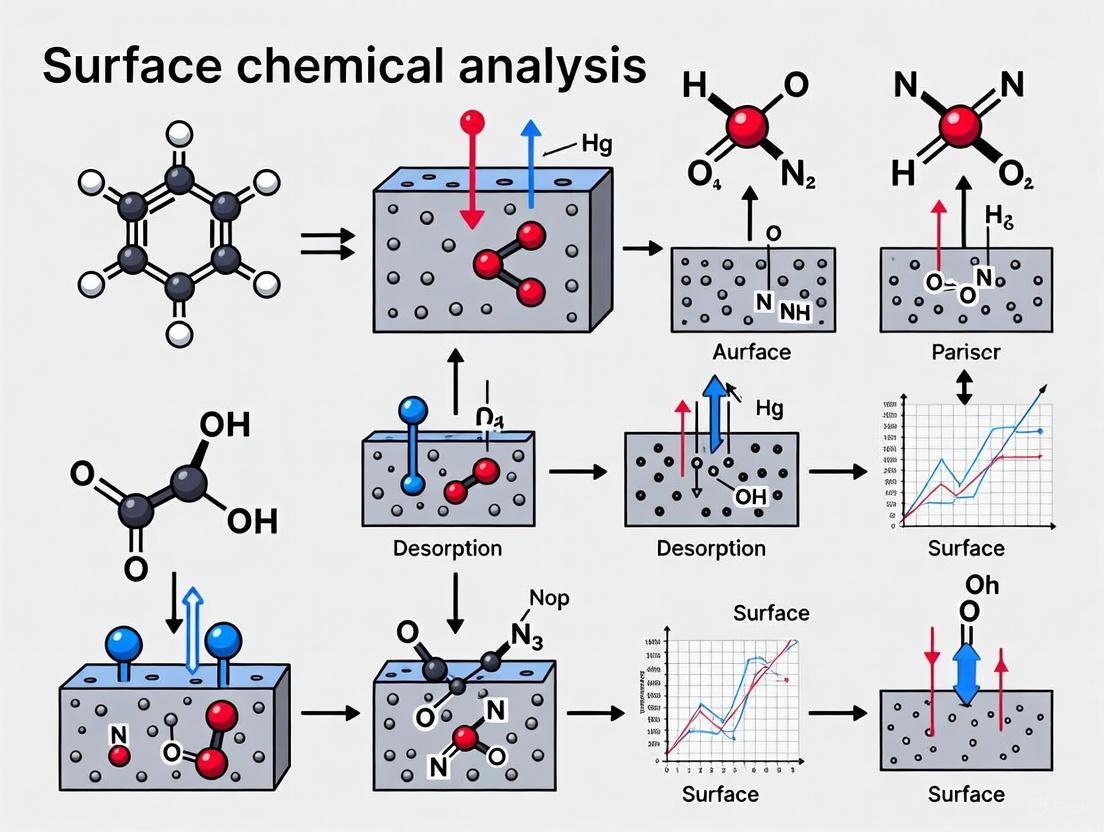
This article provides a comprehensive overview of the fundamental principles of surface chemical analysis, a critical field for understanding material properties at the nanoscale.
Surface Chemical Analysis: Principles, Techniques, and Applications in Biomedical Research
Abstract
This article provides a comprehensive overview of the fundamental principles of surface chemical analysis, a critical field for understanding material properties at the nanoscale. Tailored for researchers, scientists, and drug development professionals, it explores the core concepts that make surfaces—the outermost layer of atoms—dictate material behavior in applications from drug delivery to biosensors. We detail the operation of key techniques like XPS, AES, and TOF-SIMS, address common characterization challenges for complex materials like nanoparticles, and present frameworks for method validation and optimization to ensure reliable, reproducible data. By synthesizing foundational knowledge with practical troubleshooting and current applications, this guide serves as an essential resource for leveraging surface analysis to advance biomedical innovation and ensure product quality.
Why Surfaces Rule: Core Principles and Impact on Material Behavior
Surface chemical analysis is defined as the spatial and temporal characterization of the molecular composition, structure, and dynamics of any given sample. The ultimate goal of this field is to both understand and control complex chemical processes, which is essential to the future development of many fields of science, from materials development to drug discovery [1]. The surface represents a critical interface where key interactions determine material performance, biological activity, and chemical reactivity. This technical guide examines the core principles, methodologies, and applications of surface analysis, framed within the broader context of basic principles governing surface chemical analysis research.
At present, imaging lies at the heart of many advances in our high-technology world. For example, microscopic imaging experiments have played a key role in the development of organic material devices used in electronics. Chemical imaging is also critical to understanding diseases such as Alzheimer's, where it provides the ability to determine molecular structure, cell structure, and communication non-destructively [1]. The ability to visualize chemical events in space and time enables researchers to probe interfacial phenomena with unprecedented detail.
Core Principles of Surface Analysis
The Concept of the Surface Interface
In analytical chemistry, the "surface" refers to the outermost atomic or molecular layers of a material where unique chemical and physical properties emerge. These properties often differ significantly from the bulk material beneath, creating an interface where critical interactions occur. Surface analysis aims to characterize these top layers, typically ranging from sub-monolayer coverage to several microns in thickness.
A fundamental challenge in surface science is that complete characterization of a complex material requires information not only on the surface or in bulk chemical components, but also on stereometric features such as size, distance, and homogeneity in three-dimensional space [1]. This multidimensional requirement drives the development of increasingly sophisticated analytical techniques.
Key Physical Principles Governing Surface Interactions
Several physical principles form the foundation of surface analysis techniques:
- Capillary Action: The fundamental principle behind liquid penetrant testing, allowing penetrants to enter surface discontinuities and later re-emerge for detection [2]
- Plasmonic Enhancement: The mechanism underlying surface-enhanced Raman spectroscopy (SERS) where noble metal nanomaterials dramatically amplify Raman scattered light from molecules on their surface [3]
- Quantum Tunneling: The physical basis for scanning tunneling microscopy (STM) that enables atomic-scale surface imaging
- Photoelectric Effect: Essential for X-ray photoelectron spectroscopy (XPS), providing elemental and chemical state information
Each of these principles is exploited by specific analytical techniques to extract different types of information about surface characteristics and interactions.
Essential Surface Analysis Techniques
Spectroscopic Methods
Surface-Enhanced Raman Spectroscopy (SERS)
Surface-enhanced Raman spectroscopy (SERS) is a vibrational spectroscopic technique that exploits the plasmonic and chemical properties of nanomaterials to dramatically amplify the intensity of Raman scattered light from molecules present on the surface of these materials [3]. Since its discovery 50 years ago, SERS has grown from a niche technique to one in the mainstream of academic research, finding applications in detecting chemical targets in samples ranging from bacteria to batteries [3].
The essential components of a quantitative SERS experiment include: (1) the enhancing substrate material, (2) the Raman instrument, and (3) the processed data used to establish a calibration curve [3]. As shown in Figure 1, a laser irradiates an enhancing substrate material to generate enhanced Raman scattering signals of chemical species on the substrate at various concentrations.
Table 1: Analytical Figures of Merit in SERS Quantitation
| Figure of Merit | Description | Considerations in SERS |
|---|---|---|
| Precision | Typically expressed as relative standard deviation (RSD) of signal intensity | Subject to variances from instrument, substrate, and sample matrix |
| Accuracy | Closeness of measured value to true value | Affected by substrate-analyte interactions and calibration model |
| Limit of Detection (LOD) | Lowest concentration detectable | Can reach single-molecule level under ideal conditions |
| Limit of Quantitation (LOQ) | Lowest concentration quantifiable | Determined from calibration curve with acceptable precision and accuracy |
| Quantitation Range | Concentration range over which reliable measurements can be made | Limited by saturation of enhancing sites at higher concentrations |
SERS offers significant advantages over established techniques like GC-MS, including potential for cheaper, faster, and portable analysis while maintaining sensitivity and molecular specificity [3]. This makes SERS particularly valuable for challenging analytical problems such as bedside diagnostics and in-field forensic analysis [3].
X-ray Photoelectron Spectroscopy (XPS)
XPS is a quantitative technique that measures elemental composition, empirical formula, chemical state, and electronic state of elements within the surface (typically top 1-10 nm). When combined with other techniques, XPS provides comprehensive surface characterization.
Microscopic and Imaging Methods
Atomic Force Microscopy (AFM)
Atomic force microscopy (AFM) is a cutting-edge scanning probe microscopy technique which enables the visualization of surfaces with atomic or nanometer-scale resolution [4]. Its operational principle lies in measuring the force interactions between a minuscule probe tip and the sample surface.
AFM images serve as graphical representations of physical parameters captured on a surface. Essentially, they comprise a matrix of data points, each representing the measured value of an associated physical parameter. When multiple physical parameters are simultaneously measured, the resulting "multi-channel images" contain one image layer per physical property measured [4].
Table 2: Primary AFM Image Analysis Techniques
| Technique | Measured Parameters | Applications |
|---|---|---|
| Topographic Analysis | Surface roughness, step height | Material surface characterization |
| Particle Analysis | Size, shape, distribution of particles/grains | Nanoparticle characterization, grain analysis |
| Nanomechanical Properties | Stiffness, elasticity, adhesion | Material properties at nanoscale |
| Phase Analysis | Surface potential | Material composition mapping |
| Force Curve Analysis | Chemical composition, molecular interactions | Biological systems, material interfaces |
AFM processing has significant impact on image quality. Key processing steps include leveling or flattening to correct unevenness caused by the scanning process, lateral calibration to correct image distortions, and noise filtering to eliminate unwanted noise through spatial filters, Fourier transforms, and other techniques [4].
Advanced Chemical Imaging Approaches
A very important goal for chemical imaging is to understand and control complex chemical processes, which ultimately requires the ability to perform multimodal or multitechnique imaging across all length and time scales [1]. Multitechnique image correlation allows for extending lateral and vertical spatial characterization of chemical phases. This approach improves spatial resolution by utilizing techniques with nanometer resolution to enhance data from techniques with micrometer resolution [1].
Examples of powerful technique combinations include:
- Combining SERS and nanoscale scanning probe techniques: Tip-enhanced SERS experiments combine high SERS enhancement factors and highly confined probed volumes with nanoscale-controlled scanning [1]
- Combining X-rays, electrons, and scanning probe microscopies: Integrating these three techniques enables investigation of the chemical (X-ray, infrared, or Raman), structural (EM), and topographic (SPM) nature of samples [1]
Data fusion techniques combine data from multiple methods to perform inferences that may not be possible from a single technique, forming a new image containing more interpretable information [1].
Experimental Protocols and Methodologies
Quantitative SERS Analysis Protocol
Principle: SERS quantitation relies on measuring the enhanced Raman signal intensity of an analyte at various concentrations to establish a calibration curve for unknown samples [3].
Materials:
- Enhancing substrate (aggregated Ag or Au colloids recommended for non-specialists) [3]
- Raman instrument with appropriate laser wavelength
- Internal standard compounds
- Calibration standards of known concentration
Procedure:
- Substrate Preparation: Prepare colloidal Ag or Au nanoparticles according to established protocols. Aggregate if necessary using salts or polymers to create "hot spots" [3].
- Analyte Adsorption: Incubate substrate with analyte solutions of varying concentrations for optimized dwell time to ensure consistent adsorption.
- Signal Acquisition: Acquire Raman spectra using consistent instrument parameters (laser power, integration time, number accumulations).
- Data Processing:
- Select a characteristic analyte Raman band
- Measure band height (preferred over area for reduced interference)
- Normalize using internal standard if available
- Calibration: Plot normalized signal intensity versus concentration to generate calibration curve.
- Quantitation: Apply calibration model to unknown samples and calculate concentration.
Critical Considerations:
- Since plasmonic enhancement falls off steeply with distance, substrate-analyte interactions are critical in determining successful SERS detection [3]
- SERS quantitation is subject to numerous sources of variance associated with the instrument, enhancing substrate, and sample matrix
- Use internal standards to minimize variances and improve quantification accuracy [3]
- The precision of SERS measurements is often indicated by quoting the standard deviation of the signal, but it is the standard deviation in the recovered concentration which is most useful [3]
AFM Surface Characterization Protocol
Principle: AFM measures surface topography and properties by scanning a sharp tip across the surface while monitoring tip-sample interactions [4].
Materials:
- AFM with appropriate operation mode (contact, tapping, non-contact)
- Rigid, flat sample substrates
- Calibration standards with known dimensions
Procedure:
- Sample Preparation: Mount sample securely on substrate. Ensure surface cleanliness using appropriate solvents or plasma treatment.
- Probe Selection: Choose appropriate cantilever based on required resolution and sample properties (soft, hard, adhesive).
- Instrument Setup:
- Engage laser alignment on cantilever
- Set appropriate scan parameters (size, resolution, scan rate)
- Select operation mode based on sample characteristics
- Image Acquisition: Perform multiple scans at different locations for representative sampling.
- Image Processing [4]:
- Apply leveling/flattening to correct scanning artifacts
- Perform lateral calibration using reference standards
- Apply noise filtering if necessary (low-pass or median filters)
- Quantitative Analysis:
- Perform topographic analysis for roughness parameters
- Conduct particle analysis for size/shape distributions
- Extract nanomechanical properties if force volume mode used
Critical Considerations:
- AFM image processing has significant impact on final results and must be consistently applied [4]
- Vibration isolation is critical for high-resolution imaging
- Tip condition dramatically affects image quality; replace worn tips
- Multiple locations should be measured to ensure representative sampling
Liquid Penetrant Surface Defect Analysis
Principle: The basic principle of liquid penetrant testing (PT) is capillary action, which allows the penetrant to enter the opening of the defect, remain there when the liquid is removed from the material surface, and then re-emerge on the surface on application of a developer [2].
Materials:
- Color contrast or fluorescent penetrant
- Developer (aqueous, non-aqueous, or dry)
- Cleaning solvents and materials
- UV light source (for fluorescent method)
Procedure:
- Surface Pre-cleaning: Remove all contaminants (oil, grease, dirt) from test surface.
- Penetrant Application: Apply penetrant by dipping, brushing, or spraying.
- Dwell Time: Allow penetrant to remain on surface for specified time (typically 5-30 minutes depending on material and defect type) [2].
- Excess Penetrant Removal:
- For water-washable: Spray with water (<50 psi, <43°C)
- For post-emulsifying: Apply emulsifier followed by water spray
- For solvent-removable: Wipe with lint-free cloth moistened with solvent
- Developer Application: Apply thin, uniform developer layer by spraying, brushing, or dipping.
- Inspection: Examine under appropriate lighting (1000 lux for color contrast; UV light for fluorescent).
Critical Considerations:
- The choice and application of the method for removal of surface excess penetrant has the greatest effect on process effectiveness [2]
- Over-removal can extract penetrant from defects; under-removal creates excessive background
- Temperature should be maintained between 10-50°C throughout testing
- Developing time is critical for indication formation
Visualization of Surface Analysis Techniques
Workflow for Multimodal Surface Characterization
Diagram 1: Multimodal surface analysis workflow
SERS Quantitative Analysis Process
Diagram 2: SERS quantitative analysis process
The Scientist's Toolkit: Essential Research Reagents and Materials
Table 3: Essential Research Reagents for Surface Analysis
| Reagent/Material | Function | Application Notes |
|---|---|---|
| Ag/Au Colloidal Nanoparticles | SERS enhancing substrate | Aggregated colloids provide robust performance for non-specialists [3] |
| Internal Standards (Isotopic or Structural Analogs) | Signal normalization in SERS | Minimizes variances from instrument, substrate, and sample matrix [3] |
| Color Contrast Penetrants | Surface defect detection | Deep red penetrant against white developer background [2] |
| Fluorescent Penetrants | High-sensitivity defect detection | Requires UV light examination; more sensitive than color contrast [2] |
| Emulsifiers | Penetrant removal control | Used in post-emulsifying method to control removal process [2] |
| AFM Cantilevers | Surface topography probing | Choice depends on required resolution and sample properties [4] |
| Calibration Gratings | AFM dimensional calibration | Reference standards with known feature sizes [4] |
| Developer Solutions | Penetrant visualization | Draws penetrant from defects via blotting action; forms uniform white coating [2] |
Applications in Drug Development and Materials Research
Surface analysis techniques play a critical role in pharmaceutical development and materials characterization. The Surface and Trace Chemical Analysis Group at NIST supports safety, security, and forensics with projects ranging from developing contraband screening technologies to nuclear particle analysis and forensics [5]. Specific applications include:
- Drug Analysis and Opioids Detection: Research focuses on measurement challenges associated with detection and analysis of synthetic opioids and novel psychoactive substances [5]. Ion mobility spectrometry (IMS) is employed as a robust technique capable of differentiating a wide range of drug molecules [5].
- Personalized Medicine Development: Additive manufacturing technologies (3D printing and precision drop-on-demand deposition) enable rapid production of customizable drug formulations, requiring precise surface characterization for quality control [5].
- Illicit Narcotics Detection: IMS and other trace detection methods are being optimized for screening of illicit substances, with methods developed for evaluating spectrometers for trace detection of fentanyl and fentanyl-related substances [5].
- Nanoparticle Drug Delivery Systems: AFM and SERS characterize the size, shape, distribution, and surface chemistry of nanoparticles essential for drug delivery applications.
Future Perspectives and Challenges
The future of surface chemical analysis research lies in advancing multimodal imaging capabilities and addressing current limitations. For SERS, current challenges include moving the technique from specialist use to mainstream analytical applications [3]. Promising developments include:
- Digital SERS and AI-Assisted Data Processing: Advanced computational methods to improve quantification accuracy and reliability [3]
- Multifunctional Substrates: Smart substrates with tailored surface properties for specific analytical challenges [3]
- Standardization and Protocols: Development of standardized methods to improve reproducibility across laboratories
- Miniaturization and Portability: Development of field-portable instruments for real-world analysis outside research labs
For chemical imaging broadly, a grand challenge is to achieve multimodal imaging across all length and time scales, requiring advances in computational capabilities, data fusion techniques, and instrument integration [1]. As these technologies mature, surface analysis will continue to provide critical insights into the interface where crucial interactions occur, driving innovations in drug development, materials science, and analytical chemistry.
The ability to visualize chemistry at surfaces and interfaces represents one of the most powerful capabilities in modern analytical science, enabling researchers to understand and ultimately control complex chemical processes across diverse applications from fundamental research to real-world problem solving.
The surface-to-volume ratio (SA:V) is a fundamental geometric principle describing the relationship between an object's surface area and its volume. As objects decrease in size, their surface area becomes increasingly dominant over their volume. This ratio has profound implications across physics, chemistry, and biology, but its effects become most dramatic and technologically significant at the nanoscale (1-100 nanometers) [6] [7]. For scientists conducting surface chemical analysis, understanding SA:V is not merely an academic exercise but a core principle that dictates material reactivity, stability, and functionality. Nanomaterials exhibit unique properties that differ significantly from their bulk counterparts primarily due to two factors: surface effects, which dominate as SA:V increases, and quantum effects, which become apparent when particle size approaches the quantum confinement regime [8]. This whitepaper examines the theoretical foundation of SA:V, its direct impact on nanomaterial properties, and the critical analytical techniques required to characterize these effects within research and drug development contexts.
The mathematical relationship for a spherical object illustrates this concept clearly, where surface area (SA = 4πr²) increases with the square of the radius, while volume (V = 4/3πr³) increases with the cube of the radius. Consequently, the SA/V ratio for a sphere equates to 3/r, demonstrating an inverse relationship between size and SA:V [6]. This means that as the radius of a particle decreases, its SA/V ratio increases dramatically. For example, a nanoparticle with a 10 nm radius has an SA/V ratio 1000 times greater than a 1 cm particle of the same material [7]. This exponential increase in surface area relative to volume fundamentally alters how nanomaterials interact with their environment.
Theoretical Foundation: The Mathematical Principles of SA:V
The surface-to-volume ratio follows distinct scaling laws that predict how properties change with size. These relationships are described by the power law SA = aVᵇ, where 'b' represents the scaling factor [9]. When b = 1, surface area scales isometrically with volume (constant SA/V). When b = ⅔, surface area follows geometric scaling, where SA/V decreases as size increases—the characteristic relationship for perfect spheres [9]. At the nanoscale, this mathematical relationship dictates that a significantly larger proportion of atoms or molecules reside on the surface compared to the interior. For example, while a macroscopic cube of material might have less than 0.1% of its atoms on the surface, a 3 nm nanoparticle can have over 50% of its atoms exposed to the environment [8]. This fundamental shift in atomic distribution creates the driving force for novel nanoscale behaviors.
Table 1: Surface Area to Volume Ratio for Spherical Particles of Different Sizes
| Particle Radius | Surface Area | Volume | SA:V Ratio | Comparative Example |
|---|---|---|---|---|
| 1 cm | 12.6 cm² | 4.2 cm³ | 3 cm⁻¹ | Sugar cube |
| 1 mm | 12.6 mm² | 4.2 mm³ | 3 mm⁻¹ | Grain of sand |
| 100 nm | 1.26 × 10⁻¹³ m² | 4.2 × 10⁻¹⁸ m³ | 3 × 10⁷ m⁻¹ | Virus particle |
| 10 nm | 1.26 × 10⁻¹⁴ m² | 4.2 × 10⁻²¹ m³ | 3 × 10⁸ m⁻¹ | Protein complex |
| 1 nm | 1.26 × 10⁻¹⁵ m² | 4.2 × 10⁻²⁴ m³ | 3 × 10⁹ m⁻¹ | Molecular cluster |
The dimensional classification of nanomaterials further influences their SA:V characteristics. Zero-dimensional nanomaterials (0-D), such as quantum dots and fullerenes, have all three dimensions in the nanoscale and exhibit the highest SA:V ratios. One-dimensional nanomaterials (1-D), including nanotubes and nanorods, have one dimension outside the nanoscale. Two-dimensional nanomaterials (2-D), such as nanosheets and nanofilms, have two dimensions outside the nanoscale. Each classification presents distinct surface area profiles that influence their application in sensing, catalysis, and drug delivery platforms [8].
Impact of High SA:V on Nanomaterial Properties
Enhanced Chemical Reactivity and Catalytic Activity
The dramatically increased surface area of nanomaterials provides a greater number of active sites for chemical reactions, making them exceptionally efficient catalysts [7]. This property is exploited in applications ranging from industrial chemical processing to environmental remediation. For example, platinum nanoparticles show significantly higher catalytic activity in reactions like N₂O decomposition compared to bulk platinum, with their reactivity directly dependent on the number of atoms in the cluster [8]. The large surface area of nanomaterials also enhances their capacity for adsorption, making them ideal for water purification systems where they can interact with and break down toxic substances more efficiently than bulk materials [7]. This enhanced reactivity stems from the higher surface energy of nanomaterials, where surface atoms have fewer direct neighbors and thus higher unsaturated bonds, driving them to interact more readily with surrounding species [8].
Modified Thermal and Mechanical Properties
Nanomaterials exhibit unique thermal behaviors distinct from bulk materials, primarily due to their high SA:V ratio. The melting point of nanomaterials decreases significantly as particle size reduces, following the Gibbs-Thomson equation. For instance, 2.5 nm gold nanoparticles melt at temperatures approximately 407°C lower than bulk gold [8]. Mechanically, nanomaterials often demonstrate increased strength, hardness, and elasticity due to the increased surface area facilitating stronger interactions between surface atoms and molecules. Carbon nanotubes, with their exceptionally high surface areas, exhibit remarkable tensile strength and are incorporated into composites for aerospace engineering and biomedical devices [7]. These properties directly result from the high fraction of surface atoms, which experience different force environments compared to interior atoms.
Unique Optical and Electronic Characteristics
The optical and electrical properties of nanomaterials are profoundly influenced by their high SA:V ratio, often in conjunction with quantum confinement effects. For example, quantum dots exhibit size-tunable light absorption and emission properties dependent on their surface chemistry and structure [7]. The ancient Lycurgus Cup, which contains 50-100 nm Au and Ag nanoparticles, demonstrates this principle through its unusual optical properties—appearing green in reflected light but red in transmitted light due to surface plasmon resonance [8]. Electrically, some non-magnetic bulk materials like palladium, platinum, and gold become magnetic at the nanoscale, while the electrical conductivity of nanomaterials can be significantly altered due to their increased surface area and quantum effects [7] [8].
Table 2: Comparison of Properties Between Bulk and Nanoscale Materials
| Property | Bulk Material Behavior | Nanoscale Material Behavior | Primary Factor |
|---|---|---|---|
| Chemical Reactivity | Moderate to low | Significantly enhanced | High SA:V providing more active sites |
| Melting Point | Fixed, size-independent | Decreases with reducing size | Surface energy effects |
| Mechanical Strength | Standard for material | Often significantly increased | Surface atom interactions |
| Optical Behavior | Consistent, predictable | Size-dependent, tunable | Surface plasmons & quantum effects |
| Catalytic Efficiency | Moderate, non-specific | Highly efficient, selective | High SA:V and surface structure |
Analytical Methodologies for Characterizing SA:V Effects
Experimental Protocol: Quantifying Cell Surface Area Using Suspended Microchannel Resonator (SMR)
Objective: To measure the scaling relationship between cell size and surface area in proliferating mammalian cells by quantifying cell surface components as a proxy for surface area.
Principle: This approach couples single-cell buoyant mass measurements via SMR with fluorescence detection of surface-labeled components, enabling high-throughput analysis (approximately 30,000 cells/hour) of SA:V relationships in near-spherical cells [9].
Methodology Details:
- Cell Preparation: Culture suspension mammalian cell lines (e.g., L1210, BaF3, THP-1) maintaining near-spherical shape. Exclude dead cells from analysis using viability markers.
- Surface Protein Labeling: Incubate live cells with cell-impermeable, amine-reactive fluorescent dye (e.g., NHS-ester conjugates) on ice for 10 minutes to prevent membrane internalization. Validate surface-specificity using microscopy controls.
- Mass and Fluorescence Measurement: Introduce labeled cells into SMR system which measures buoyant mass (accurate proxy for cell volume) simultaneously with photomultiplier tube (PMT)-based fluorescence detection of surface labels.
- Data Analysis: Plot fluorescence intensity (proxy for surface area) against buoyant mass (proxy for volume) for single cells. Fit data to power law (SA = aVᵇ) to determine scaling factor 'b'. A value of b ≈ 1 indicates isometric scaling (constant SA/V), while b ≈ ⅔ indicates geometric scaling (decreasing SA/V) [9].
Validation: The protocol was validated using spherical polystyrene beads with volume-labeling (scaling factor 0.99 ± 0.06) versus surface-labeling (scaling factor 0.58 ± 0.01), confirming the system's sensitivity to distinguish different scaling modes even over small size ranges [9].
Experimental Protocol: Analyzing SA:V Impact on Composite Material Properties
Objective: To determine the correlation between particle surface-to-volume ratio and the effective elastic properties of particulate composites.
Principle: Composite materials with particles of different shapes but identical composition will exhibit different mechanical properties based on the SA:V ratio of the reinforcing particles, particularly when particles are stiffer than the matrix [10].
Methodology Details:
- Particle Shape Modeling: Create digital models of particles with varying shapes (polyhedral, undulated, spherical) using analytical functions including spherical harmonics and Goursat's surface to systematically vary SA:V while controlling for other factors.
- Finite Element Analysis (FEA): Incorporate modeled particles into composite material simulations. Calculate effective elastic properties, particularly Young's moduli, using FEA under standardized boundary conditions.
- Comparative Analysis: Compare FEA results with mean-field homogenization methods (Mori-Tanaka, Lielens) for validation. Correlate effective Young's moduli with calculated SA:V ratios for each particle shape.
- Parameter Isolation: Study the specific effects of surface curvature and edge sharpness on SA:V and resulting mechanical properties by comparing particles of similar shapes with controlled geometric variations [10].
Key Finding: The effective Young's moduli of particulate composites increase with the SA:V ratio of the particles in cases where particles are stiffer than the matrix material, demonstrating how nanoscale geometry directly influences macroscopic material properties [10].
The Scientist's Toolkit: Essential Reagents and Materials
Table 3: Key Research Reagent Solutions for Nanomaterial SA:V Studies
| Reagent/Material | Function in Research | Application Context |
|---|---|---|
| Cell-impermeable amine-reactive dyes (NHS-ester conjugates) | Selective labeling of surface proteins without internalization | Quantifying cell surface area as proxy for SA:V in biological systems [9] |
| Maleimide-based fluorescent labels | Labeling surface protein thiol groups via alternative chemistry | Validation of surface protein scaling relationships [9] |
| Carrageenan | Induction of controlled inflammation in tissue cage models | Studying effect of SA:V on drug pharmacokinetics in confined spaces [11] |
| Silicon tubing tissue cages | Creating controlled SA/V environments for pharmacokinetic studies | Modeling drug movement in subcutaneous spaces with defined geometry [11] |
| Sol-gel precursors (e.g., tetraethyl orthosilicate) | Producing nanomaterials with controlled porosity and surface characteristics | Fabrication of nanostructured films and coatings for sensing applications [7] |
| Stabilizing ligands (e.g., thiols, polymers) | Preventing nanoparticle aggregation by reducing surface energy | Maintaining high SA:V in nanoparticle suspensions for catalytic applications [8] |
| κ-Carrageenan | Inflammatory agent for tissue cage models | Studying the effect of inflammation on drug pharmacokinetics in different SA/V environments [11] |
Implications for Surface Chemical Analysis Research
The high SA:V ratio of nanomaterials presents both opportunities and challenges for surface chemical analysis. From an analytical perspective, the increased surface area enhances sensitivity in detection systems but also amplifies potential interference from surface contamination. Research has demonstrated that nanomaterials with high surface areas react at much faster rates than monolithic materials, which must be accounted for when designing analytical protocols [6]. In pharmaceutical development, the relationship between SA:V and extraction processes must be carefully considered, as the concentration of extractables from plastic components has a complex relationship with SA/V that depends on the partition coefficient between plastic and solvent (Kp/l) [12].
For drug development professionals, the SA:V principle directly impacts delivery system design. Nanoparticles with high SA:V ratios provide greater surface area for functionalization with targeting ligands and larger capacity for drug loading per mass unit [7] [8]. The constant SA:V ratio observed in proliferating mammalian cells, maintained through plasma membrane folding, ensures sufficient plasma membrane area for critical functions including cell division, nutrient uptake, and deformation across varying cell sizes—an important consideration for cellular uptake of nanotherapeutics [9]. Understanding these relationships enables researchers to design more efficient drug carriers with optimized release profiles and targeting capabilities.
The surface-to-volume ratio represents a fundamental principle governing the unique behavior of nanoscale materials, with far-reaching implications for surface chemical analysis research and pharmaceutical development. As materials approach the nanoscale, their dramatically increased SA:V ratio drives enhanced chemical reactivity, modified thermal and mechanical properties, and unique optical and electronic behaviors. These characteristics directly enable innovative applications in drug delivery, catalysis, sensing, and materials science. For researchers and drug development professionals, understanding and controlling SA:V effects is essential for designing effective nanomaterial-based systems. The analytical methodologies outlined—from SMR-based biological measurements to FEA of composite materials—provide the necessary tools to quantify and leverage these relationships. As nanotechnology continues to evolve, the precise characterization and strategic utilization of surface-to-volume relationships will remain central to advancing both basic research and applied technologies across scientific disciplines.
Surface properties dictate the performance and applicability of materials across a vast range of scientific and industrial fields, from medical devices and drug delivery systems to catalysts and semiconductors. The interactions that occur at the interface between a material and its environment are governed by a set of fundamental surface characteristics. Among these, adhesion, reactivity, and biocompatibility are three critical properties that determine the success of a material in its intended application. Adhesion describes the ability of a surface to form bonds with other surfaces, a property essential for coatings, adhesives, and composite materials. Reactivity refers to a surface's propensity to participate in chemical reactions, which is paramount for catalysts, sensors, and energy storage devices. Biocompatibility defines how a material interacts with biological systems, a non-negotiable requirement for implantable medical devices, drug delivery platforms, and tissue engineering scaffolds. This whitepaper provides an in-depth technical examination of these core surface properties, framed within the context of surface chemical analysis research. It synthesizes current research findings, detailed experimental methodologies, and emerging characterization techniques to serve as a comprehensive resource for researchers and drug development professionals navigating the complex landscape of surface science.
Surface Adhesion
Fundamental Mechanisms and Influencing Factors
Surface adhesion is the state in which two surfaces are held together by interfacial forces. These forces can arise from a variety of mechanisms, each dominant under different conditions and material combinations.
The primary mechanisms of adhesion include:
- Chemical Bonding: The formation of strong covalent, ionic, or coordination bonds across the interface. For instance, mussel-inspired adhesives utilize catechol groups to form robust covalent and coordination bonds with various substrates, even in wet conditions [13].
- Physical Interlocking: Mechanical entanglement at the microscale and nanoscale, where an adhesive penetrates surface irregularities of a substrate.
- Electrostatic Forces: Attraction between oppositely charged surfaces, often significant in polymeric and biological systems.
- Van der Waals Forces: Ubiquitous, though relatively weak, attractive forces between all atoms and molecules that contribute to adhesion, especially in dry conditions and at the nanoscale [14].
A critical, yet often overlooked, factor in adhesion is surface topography. Research from the multi-laboratory Surface-Topography Challenge has demonstrated that the common practice of characterizing roughness with a single parameter, such as Ra (arithmetic average roughness), is fundamentally insufficient [15] [16]. Different measurement techniques can yield Ra values varying by a factor of one million for the same surface, as each technique probes different scale ranges. A comprehensive understanding of adhesion requires topography characterization across multiple scales, as roughness at different wavelengths can profoundly influence the true contact area and mechanical interlocking potential [16] [17].
Quantitative Analysis of Adhesive Performance
The following table summarizes quantitative adhesion performance data from a recent study on additively manufactured ceramic-reinforced resins with varying content of a zwitterionic polymer (2-methacryloyloxyethyl phosphorylcholine or MPC) [18] [19].
Table 1: Effect of Zwitterionic Polymer (MPC) Content on Resin Properties [18] [19]
| Property | CRN (0 wt% MPC) | CRM1 (1.1 wt% MPC) | CRM2 (2.2 wt% MPC) | CRM3 (3.3 wt% MPC) |
|---|---|---|---|---|
| Surface Roughness, Ra (μm) | ~0.050 (Reference) | 0.045 ± 0.004 | 0.046 ± 0.004 | 0.055 ± 0.009 |
| Flexural Strength (MPa) | 121.47 ± 12.53 | 131.42 ± 8.93 | 123.16 ± 10.12 | 93.54 ± 16.81 |
| Vickers Hardness (HV) | Highest | High | High | Significantly Lower |
| Contact Angle (°) | Reference | Data Not Specified | Significantly Higher | Significantly Lower |
| S. mutans Adhesion | Baseline | Data Not Specified | Significantly Reduced | Significantly Reduced |
The data illustrates a non-linear relationship between adhesive component concentration and macroscopic properties. The CRM2 formulation (2.2 wt% MPC) achieved an optimal balance, maintaining structural integrity (flexural strength and hardness) while significantly reducing microbial adhesion [18] [19].
Experimental Protocol: Microfluidic Assessment of Adhesion by Surface Display (MAPS-D)
The MAPS-D technique is a novel, semi-quantitative method for evaluating peptide adhesion to polymeric substrates like polystyrene (PS) and poly(methyl methacrylate) (PMMA) [20].
Workflow Overview:
Diagram 1: MAPS-D experimental workflow.
Detailed Methodology:
- Library Cloning: A library of random 15-mer peptides is generated and expressed on the surface of Escherichia coli using an autodisplay/autotransporter system. The construct includes an N-terminal His-tag for display confirmation, the variable peptide region, a (GS)(_{10}) spacer, and the autotransporter protein embedded in the cell's outer membrane [20].
- Cell Culture and Peptide Display: Individual bacterial cells, each displaying a single peptide variant, are cultured. Surface display is confirmed via the His-tag epitope, obviating the need for expensive peptide synthesis and purification [20].
- Microfluidic Assembly: A suspension of the peptide-displaying cells is introduced into a commercial microfluidic chip (e.g., from Ibidi) placed on the substrate of interest (PS or PMMA). Cells are allowed to settle and adhere under static conditions [20].
- Controlled Flow Application: A controlled flow of buffer is applied at defined rates (e.g., 0.5, 1.0, 2.0, and 4.0 mL/min) using a syringe pump. This generates shear forces that challenge the adhesion of the cells [20].
- Imaging and Quantification: The number of cells remaining adherent after each flow rate is quantified using microscopy. A "releasing force" can be estimated from the relationship between cell retention and flow rate [20].
- Data Analysis: Peptides displayed by cells that resist detachment at higher flow rates are identified as strong adhesives. This enables high-throughput down-selection from large libraries for further, more precise testing [20].
Research Reagent Solutions for Adhesion Studies
Table 2: Key Reagents and Materials for Adhesion Research
| Item | Function/Description | Example Application |
|---|---|---|
| Zwitterionic Monomer (MPC) | Imparts protein-repellent and anti-fouling properties. | Reducing microbial adhesion on dental resins [18] [19]. |
| Urethane Dimethacrylate (UDMA) | A common monomer providing mechanical strength in photopolymerizable resins. | Matrix component in additively manufactured resins [19]. |
| Silicate-based Composite Filler | Inorganic filler used to reinforce composite materials. | 60 wt% filler in AM ceramic-reinforced resins [18] [19]. |
| Autodisplay Plasmid Vector | Genetic construct for expressing peptides on the surface of E. coli. | Enables cell surface display for MAPS-D assay [20]. |
| Microfluidic Chips (Ibidi) | Pre-fabricated channels for fluid manipulation at small scales. | Platform for applying controlled shear forces in adhesion assays [20]. |
Surface Reactivity
Principles and Kinetic Analysis
Surface reactivity refers to the free energy change and activation energy associated with chemical reactions occurring at a material's surface. It is intrinsically linked to the density and arrangement of atoms at the surface, which often differ from the bulk material, creating active sites for catalysis, corrosion, or gas sensing.
Key factors governing surface reactivity include:
- Surface Energy: The excess energy at the surface of a material compared to its bulk. Higher surface energy generally correlates with greater reactivity.
- Crystallographic Plane: Different atomic arrangements on various crystal facets exhibit distinct reactivities.
- Defect Sites: Steps, kinks, and vacancies on surfaces are often highly reactive centers.
- Electronic Structure: The local density of states and work function of a surface influence its ability to donate or accept electrons during reactions.
Operando studies, such as time-resolved infrared and X-ray spectroscopy, are powerful techniques for probing surface reactions in real-time. For instance, these methods have been used to study the CO oxidation and NO reduction mechanisms on well-defined Rh(111) surfaces, providing direct insight into intermediate species and reaction pathways [21].
Quantitative Analysis of Reactive Surface Performance
The following table summarizes performance data for selected reactive surfaces from recent literature, highlighting their application in catalysis and environmental remediation.
Table 3: Performance Metrics of Selected Reactive Surfaces
| Material / System | Application | Key Performance Metric | Result |
|---|---|---|---|
| Mn(II)-doped γ-Fe₂O₃ with Oxygen Vacancies [21] | Sulfite activation for antibiotic abatement | Iohexol abatement rate | Rapid and efficient degradation |
| Polypyrrole-Co₃O₄ Composite [21] | Zn-ion capacitor | Electrochemical performance (specific capacitance, cycling stability) | Superior performance (Synergistic effect) |
| PtFeCoNiMoY High-Entropy Alloy [21] | Oxygen evolution/reduction reaction (OER/ORR) | Bifunctional catalytic activity | Efficient performance in Zn-air batteries |
| S-scheme TiO₂/CuInS₂ Heterojunction [21] | Photocatalysis | Charge separation efficiency | Enhanced and sustainable photocatalytic activity |
Experimental Protocol: Nanoindentation for Surface Adhesion and Energy Measurement
Nanoindentation is an advanced technique that can be adapted to measure adhesion forces and calculate the Surface Free Energy (SFE), a key parameter influencing reactivity and wettability [14].
Workflow Overview:
Diagram 2: Nanoindentation adhesion measurement.
Detailed Methodology:
- System Setup: A nanoindenter equipped with a high-force-resolution sensor (e.g., capable of sub-µN resolution) and a spherical tip (e.g., 105 µm radius sapphire) is required. Displacement control is essential for accurate data [14].
- Environmental Control: Relative humidity must be rigorously controlled (<5% recommended) using a dry nitrogen purge or an environmental chamber to prevent capillary forces from confounding measurements [14].
- Approach and Contact: The tip approaches the surface at a very low velocity (e.g., 10 nm/s) with a minimal trigger force (e.g., 0.1 µN) to define initial contact and avoid plastic deformation [14].
- Loading and Dwell: A small load is applied to a shallow target depth (e.g., 20 nm). A brief dwell period (e.g., 3 s) allows for force relaxation and system stabilization [14].
- Unloading and Pull-off: The tip is retracted. The force-displacement curve is recorded, with particular attention to the "pull-off force" (F(_c)), the maximum negative force required to separate the tip from the surface [14].
- Data Analysis and SFE Calculation: The measured pull-off force is used to calculate the SFE (γ(s)) using contact mechanics models. The Johnson-Kendall-Roberts (JKR) model is used for compliant materials with large adhesion, while the Derjaguin-Muller-Toporov (DMT) model is more suitable for stiff materials with smaller contact radii [14].
- JKR Model: ( Fc = - \frac{3}{2} \pi R W{12} ) where ( W{12} = 2 \sqrt{\gammas \gammat} ) (for identical surfaces)
- DMT Model: ( Fc = - 2 \pi R W{12} ) Here, R is the tip radius, and γ(_t) is the known SFE of the tip material [14].
Surface Biocompatibility
Fundamentals and Regulatory Framework
Biocompatibility is defined as the ability of a material to perform with an appropriate host response in a specific application. It is not an intrinsic property but a dynamic interplay between the material and the biological environment. Key aspects include cytotoxicity, genotoxicity, sensitization, and hemocompatibility.
The evaluation of biocompatibility for medical devices is internationally standardized by ISO 10993-1:2025, "Biological evaluation of medical devices - Part 1: Evaluation and testing within a risk management process" [22]. The 2025 update represents a significant evolution, fully integrating the biological evaluation process into a risk management framework aligned with ISO 14971 (Risk Management for Medical Devices) [22].
Essential new concepts in ISO 10993-1:2025 include:
- Biological Risk Estimation: Requires estimating biological risk based on the severity of harm and the probability of its occurrence, moving beyond a simple checklist of tests [22].
- Reasonably Foreseeable Misuse: Manufacturers must now consider how a device might be used outside its intended instructions for use (e.g., use for longer than intended) and incorporate these scenarios into the risk assessment [22].
- Total Exposure Period: The calculation of contact duration has been refined. For devices with multiple exposures, the "total exposure period" is the number of calendar days from the first to the last use, where any contact within a day counts as a full "contact day" [22].
Quantitative Analysis of Biocompatible Surface Performance
The following table summarizes key findings from a study on the biocompatibility and biological properties of additively manufactured resins, demonstrating how surface composition can be engineered to enhance performance.
Table 4: Biological Performance of AM Ceramic-Reinforced Resins with Varying MPC [18] [19]
| Biological Property | CRN (0 wt% MPC) | CRM1 (1.1 wt% MPC) | CRM2 (2.2 wt% MPC) | CRM3 (3.3 wt% MPC) |
|---|---|---|---|---|
| S. mutans Adhesion | Baseline (High) | Intermediate | Significantly Reduced (P<.001) | Significantly Reduced (P<.001) |
| S. gordonii Adhesion | Baseline (High) | Intermediate | Significantly Reduced (P<.001) | Significantly Reduced (P<.001) |
| Cytotoxicity | Non-cytotoxic | Non-cytotoxic | Non-cytotoxic | Non-cytotoxic |
| Cell Viability | Biocompatible | Biocompatible | Biocompatible | Biocompatible |
The data confirms that the incorporation of MPC significantly reduces microbial adhesion without inducing cytotoxicity, a crucial balance for preventing biofilm formation on medical devices without harming host tissues [18] [19].
Experimental Protocol: Biological Evaluation within a Risk Management Framework
The modern approach to biological safety, as mandated by ISO 10993-1:2025, is a structured, knowledge-driven process integrated within a risk management system [22].
Workflow Overview:
Diagram 3: Biocompatibility risk management process.
Detailed Methodology:
- Material and Intended Use Characterization: Gather comprehensive information on the device's materials of manufacture, including chemical composition, leachables, and processing aids. Define the intended use and, critically, any reasonably foreseeable misuse. Determine the nature and duration of body contact (e.g., skin, blood, bone) and the total exposure period based on single or multiple uses [22].
- Identify Biological Hazards: Based on the characterization, identify potential biological hazards (e.g., cytotoxicity, sensitization) that the device may present [22].
- Estimate Biological Risk: For each identified hazard, estimate the biological risk. This involves qualitatively or quantitatively assessing both the severity of the potential harm and the probability of its occurrence [22].
- Evaluate and Control Risk: Determine if the estimated risks are acceptable. If a risk is deemed unacceptable, implement risk control measures (e.g., material change, design modification, protective packaging). Re-evaluate the risk after implementing controls [22].
- Generate Biological Evaluation Report (BER): Compile a comprehensive report that documents the entire evaluation process, provides the rationale for all decisions, and concludes on the overall biological safety of the device [22].
- Post-Market Surveillance: Establish and maintain a system to collect and review production and post-market information. This data is used to verify the original risk assessment and identify any previously unanticipated biological harms [22].
The interplay between surface adhesion, reactivity, and biocompatibility forms the cornerstone of advanced material design for scientific and medical applications. As research advances, it is evident that a holistic, multi-scale approach is essential. The properties of a surface cannot be reduced to a single number or considered in isolation; understanding requires characterization from the atomic scale to the macroscopic level, often under realistic environmental conditions. The integration of novel high-throughput screening methods, such as MAPS-D, with precise techniques like nanoindentation and operando spectroscopy, provides a powerful toolkit for accelerating the development of next-generation materials. Furthermore, the evolving regulatory landscape, exemplified by the risk-management-centric ISO 10993-1:2025 standard, underscores that the successful implementation of a material, particularly in the medical field, depends not only on its intrinsic performance but also on a thorough and proactive understanding of its interactions within a complex biological system. Future progress will rely on continued interdisciplinary collaboration, leveraging insights from biology, chemistry, materials science, and engineering to precisely tailor surface properties for the challenges of drug delivery, implantable devices, and sustainable technologies.
In the realm of materials science, chemistry, and drug development, the outermost surface of a material—typically the top 1-10 nanometers—governs critical characteristics such as chemical activity, adhesion, wetness, electrical properties, corrosion resistance, and biocompatibility [23]. This extreme surface sensitivity means that the chemical structure of the first few atomic layers fundamentally determines how a material interacts with its environment [23]. Surface analysis techniques have thus become indispensable for research and development (R&D) and quality management across numerous industrial and scientific research fields, enabling precise characterization of elemental composition and chemical states that exist only within this shallow surface region [23].
Achieving a comprehensive understanding of sample surfaces requires the strategic deployment of specialized analytical techniques, primarily conducted under ultra-high vacuum (UHV) conditions to preserve surface purity and ensure accurate results [24]. These techniques provide insights not possible with bulk analysis methods, allowing researchers to correlate surface properties with material performance—a crucial capability when developing new functional materials or troubleshooting contamination issues that can compromise product quality, particularly in semiconductor manufacturing and biomedical applications [23].
Fundamental Principles of Surface-Sensitive Analysis
The Photoelectric Effect and Electron Spectroscopy
The foundational principle underlying many surface analysis techniques is the photoelectric effect, which forms the basis of X-ray photoelectron spectroscopy (XPS). When a material is irradiated with X-rays, electrons are ejected from the sample surface. The kinetic energy of these photoelectrons is measured and related to their binding energy through the fundamental equation:
Ebinding = Ephoton - (E_kinetic + ϕ)
where Ebinding represents the electron binding energy relative to the sample Fermi level, Ephoton is the energy of the incident X-ray photons, E_kinetic is the measured kinetic energy of the electron, and ϕ is the work function of the spectrometer [25]. This relationship enables the identification of elements present within the material and their chemical states, as each element produces a characteristic set of XPS peaks corresponding to its electron configuration (e.g., 1s, 2s, 2p, 3s) [25].
Surface Sensitivity and Information Depth
The exceptional surface sensitivity of techniques like XPS stems from the short inelastic mean free path of electrons in solids—the distance an electron can travel through a material without losing energy. This limited escape depth means that only electrons originating from the very topmost layers (typically 5-10 nm or 50-60 atoms) can exit the surface and be detected by the instrument [25]. This shallow sampling depth makes XPS and related techniques uniquely capable of analyzing the chemical composition of the outermost surface while being essentially blind to the bulk material beneath.
To maintain this surface sensitivity and prevent contamination or interference from gas molecules, surface analysis is typically conducted under ultra-high vacuum (UHV) conditions with pressures at least one billionth that of atmospheric pressure [23]. This environment ensures that the surface remains clean during analysis and reduces gas phase interference, which is particularly crucial for experiments utilizing ion-based techniques [24].
Major Surface Analysis Techniques
X-Ray Photoelectron Spectroscopy (XPS)
XPS stands as one of the most widely employed surface analysis techniques due to its versatility and quantitative capabilities. It can identify all elements except hydrogen and helium when using laboratory X-ray sources, with detection limits in the parts per thousand range under standard conditions, though parts per million (ppm) sensitivity is achievable with extended collection times or when elements are concentrated at the top surface [25].
The quantitative accuracy of XPS is excellent for homogeneous solid-state materials, with atomic percent values calculated from major XPS peaks typically accurate to 90-95% of their true value under optimal conditions [25]. Weaker signals with intensities 10-20% of the strongest peak show reduced accuracy at 60-80% of the true value, depending on the signal-to-noise ratio achieved through signal averaging [25].
Table 1: Technical Capabilities of X-Ray Photoelectron Spectroscopy (XPS)
| Parameter | Capability Range | Details and Considerations |
|---|---|---|
| Information Depth | 5-10 nm [25] | Measures the very topmost 50-60 atoms of any surface |
| Detection Limits | 0.1-1.0% atomic percent (1000-100 ppm) [25] | Can reach ppm levels with long collection times and surface concentration |
| Spatial Resolution | 10-200 μm for conventional; ~200 nm for imaging XPS with synchrotron sources [25] | Small-area XPS (SAXPS) used for analyzing small features like particles or blemishes [26] |
| Analysis Area | 1-5 mm for monochromatic beams; 10-50 mm for non-monochromatic [25] | Larger samples can be moved laterally to analyze wider areas |
| Quantitative Accuracy | 90-95% for major peaks; 60-80% for weaker signals [25] | Requires correction with relative sensitivity factors (RSFs) and normalization |
| Sample Types | Inorganic compounds, metal alloys, polymers, catalysts, glasses, ceramics, biomaterials, medical implants [25] | Hydrated samples can be analyzed by freezing and sublimating ice layers |
Auger Electron Spectroscopy (AES)
Auger Electron Spectroscopy (AES) employs a focused electron beam to excite the sample and analyzes the resulting Auger electrons emitted from the surface. The Auger process occurs when an atom relaxes after electron emission, with an electron from another orbital filling the shell vacancy and the excess energy causing the emission of another electron [26]. AES provides both elemental and some chemical state information, complementing XPS data with superior spatial resolution due to the ability to focus the electron beam to a very small spot size [26] [23]. This high spatial resolution makes AES particularly valuable for analyzing metal and semiconductor surfaces and for identifying microscopic foreign substances on surfaces [23].
Time-of-Flight Secondary Ion Mass Spectrometry (TOF-SIMS)
TOF-SIMS represents an extremely surface-sensitive technique that uses high-speed primary ions to bombard the sample surface, then analyzes the secondary ions emitted using time-of-flight mass spectrometry. This approach provides exceptional surface sensitivity and can obtain organic compound molecular mass information along with high-sensitivity inorganic element analysis [23]. Historically used for analyzing surface metallic contamination and organic materials in semiconductors and display materials, TOF-SIMS has expanded to include analysis of organic matter distribution and segregation on organic material surfaces [23].
Table 2: Comparison of Major Surface Analysis Techniques
| Technique | Primary Excitation | Detected Signal | Key Strengths | Common Applications |
|---|---|---|---|---|
| XPS [23] | X-rays | Photoelectrons | Quantitative elemental & chemical state analysis; works with organic/inorganic materials | Surface composition, chemical bonding, oxidation states, thin films |
| AES [26] [23] | Electron beam | Auger electrons | High spatial resolution; elemental & some chemical information | Metal/semiconductor surfaces, micro-level foreign substances, thin films |
| TOF-SIMS [23] | Primary ions | Secondary ions | Extreme surface sensitivity; molecular mass information; high sensitivity | Organic material distribution, surface contamination, segregation studies |
Advanced Methodological Approaches
Depth Profiling
Depth profiling represents a powerful extension of surface analysis that enables researchers to measure compositional changes as a function of depth beneath the original surface. This technique involves the controlled removal of material using an ion beam, followed by data collection at each etching step, producing a high-resolution composition profile from the surface to the bulk material [26]. Depth profiling is particularly valuable for studying phenomena like corrosion, surface oxidation, and the chemistry of material interfaces [26].
Two primary approaches are employed for depth profiling. Traditional monatomic ion sources work well for hard materials, while newer gas cluster ion sources enable the analysis of several classes of soft materials that were previously inaccessible to XPS depth profiling [26]. Modern ion sources, such as the differentially pumped caesium ion gun (IG5C), can achieve depth resolution as fine as 2 nanometers, providing exceptional precision for analyzing thin surface layers formed through deposition or corrosion processes [24].
Complementary Surface Analysis Techniques
Several specialized techniques complement the major surface analysis methods to provide a more comprehensive understanding of surface properties:
Angle-Resolved XPS (ARXPS): By collecting photoelectrons at varying emission angles, this technique enables electron detection from different depths, providing valuable insights into the thickness and composition of ultra-thin films without the need for ion etching [26].
Small-Area XPS (SAXPS): This approach maximizes the detected signal from specific small features on a solid surface (such as particles or surface blemishes) while minimizing contributions from the surrounding area [26].
Ion Scattering Spectroscopy (ISS): Also known as Low-Energy Ion Scattering (LEIS), this highly surface-sensitive technique probes the elemental composition of specifically the first atomic layer of a surface, making it valuable for studying surface segregation and layer growth [26].
Reflected Electron Energy Loss Spectroscopy (REELS): This technique probes the electronic structure of materials at the surface by measuring energy losses in incident electrons resulting from electronic transitions in the sample, allowing measurement of properties like electronic band gaps [26].
Experimental Protocols and Methodologies
Sample Preparation and Handling Protocols
Proper sample preparation is critical for obtaining reliable surface analysis results. Samples must be carefully handled to avoid contamination from fingerprints, dust, or environmental exposure. Solid samples should be mounted using appropriate holders that minimize contact with the analysis area. For insulating samples, charge compensation strategies must be implemented to counteract the accumulation of positive surface charge that significantly impacts XPS spectra [26]. This typically involves supplying electrons from an external source to neutralize the surface charge and maintain the surface in a nearly neutral state [26].
For hydrated materials like hydrogels and biological samples, a specialized protocol involving rapid freezing in an ultrapure environment followed by controlled sublimation of ice layers can preserve the native state while making the sample compatible with UHV conditions [25]. This approach allows researchers to analyze materials that would otherwise be incompatible with vacuum-based techniques.
Standard Analytical Workflow
A comprehensive surface analysis follows a systematic workflow:
Sample Introduction: Transfer the sample into the UHV chamber using a load-lock system to maintain vacuum integrity in the main analysis chamber.
Preliminary Survey: Conduct a broad survey scan (typically 1-20 minutes) to identify all detectable elements present on the surface [25].
High-Resolution Analysis: Perform detailed high-resolution scans (1-15 minutes per region of interest) to reveal chemical state differences with sufficient signal-to-noise ratio, often requiring multiple sweeps of the region [25].
Spatial Analysis: Employ either XPS mapping (serial acquisition) or parallel imaging to understand the distribution of chemistries across a surface, locate contamination boundaries, or examine thickness variations of ultra-thin coatings [26].
Depth Profiling (if required): When subsurface information is needed, initiate depth profiling using ion beam etching with simultaneous analysis, which may require 1-4 hours depending on the depth and number of elements monitored [25].
Data Interpretation: Quantify results using relative sensitivity factors, account for peak overlaps, and interpret chemical states based on binding energy shifts and spectral features.
The Scientist's Toolkit: Essential Research Reagents and Materials
Table 3: Essential Equipment and Materials for Surface Analysis
| Tool/Component | Function and Application | Key Specifications |
|---|---|---|
| Monochromatic X-ray Source [25] | Provides focused X-ray excitation for high-resolution XPS analysis | Al Kα (1486.7 eV) or Mg Kα (1253.7 eV); eliminates Bremsstrahlung background |
| Ion Guns for Depth Profiling [24] | Controlled surface etching for depth profile analysis; sputter cleaning | Gas cluster ion sources for soft materials; spot sizes from <30 μm to >1mm |
| Charge Neutralization System [26] | Compensates for surface charging on insulating samples | Low-energy electron flood gun; precise control for stable analysis |
| UHV Analysis Chamber [23] | Maintains pristine surface conditions during analysis | Pressure <10⁻⁷ Pa; minimizes surface contamination and gas interference |
| Electron Energy Analyzer [25] | Measures kinetic energy of emitted electrons with high precision | Hemispherical analyzer for high energy resolution; multi-channel detection |
Technical Considerations and Limitations
Analytical Constraints and Challenges
Surface analysis techniques face several important limitations that researchers must consider when designing experiments and interpreting results. Sample degradation during analysis represents a significant concern for certain material classes, particularly polymers, catalysts, highly oxygenated compounds, and fine organics [25]. The degradation mechanism depends on the material's sensitivity to specific X-ray wavelengths, the total radiation dose, surface temperature, and vacuum level. Non-monochromatic X-ray sources produce significant Bremsstrahlung X-rays (1-15 keV) and heat (100-200°C) that can accelerate degradation, while monochromatized sources minimize these effects [25].
The inherent trade-off between spatial resolution, analytical sensitivity, and analysis time presents another important consideration. While XPS offers excellent chemical information, its spatial resolution is limited compared to techniques like AES. Achieving high signal-to-noise ratios for weak signals or low-concentration elements requires extended acquisition times, potentially leading to sample degradation or impractical analysis durations [25].
Detection Limitations and Quantitative Considerations
Detection limits in surface analysis vary significantly depending on the element of interest and the sample matrix. Elements with high photoelectron cross sections (typically heavier elements) generally exhibit better detection limits. However, the background signal level increases with both the atomic number of matrix constituents and binding energy due to secondary emitted electrons [25]. This matrix dependence means that detection limits can range from 1 ppm for favorable cases (such as gold on silicon) to much higher limits for less favorable combinations (such as silicon on gold) [25].
Quantitative precision—the ability to reproduce measurements—depends on multiple factors including instrumental stability, sample homogeneity, and data processing methods. While relative quantification between similar samples typically shows good precision, absolute quantification requires certified standard samples and careful attention to reference materials and measurement conditions [25].
Application in Research and Industry
Surface analysis techniques find application across diverse scientific and industrial fields. In semiconductor manufacturing, these methods help identify minimal contamination that could compromise device performance [23]. In biomedical applications, surface analysis characterizes the chemical properties of medical implants and biomaterials that directly interact with biological systems [25]. Catalysis research relies heavily on surface analysis to understand the chemical states and distribution of active sites on catalyst surfaces [25].
The development of new materials with enhanced surface properties—such as improved corrosion resistance, tailored wetting behavior, or specific biocompatibility—depends fundamentally on the ability to characterize and understand surface chemistry at the nanometer scale. As materials science continues to push toward more complex and functionalized surfaces, the role of sophisticated surface analysis techniques becomes increasingly critical for both fundamental research and industrial application.
The Analyst's Toolkit: Techniques, Applications, and Real-World Case Studies
X-Ray Photoelectron Spectroscopy (XPS) is a quantitative, surface-sensitive analytical technique that measures the elemental composition, empirical formula, and chemical state of elements within the top 1–10 nm of a material [27]. This technical guide details its fundamental principles, methodologies, and applications, framed within the broader context of surface chemical analysis research.
XPS, also known as Electron Spectroscopy for Chemical Analysis (ESCA), is based on the photoelectric effect [25]. When a solid surface is irradiated with soft X-rays, photons are absorbed by atoms, ejecting core-level electrons called photoelectrons. The kinetic energy (KE) of these ejected electrons is measured by the instrument, and their binding energy (BE) is calculated using the fundamental equation [25]:
- Ebinding = Ephoton - (Ekinetic + ϕ)
where Ebinding is the electron binding energy, Ephoton is the energy of the X-ray photons, and ϕ is the work function of the spectrometer [25]. Since the binding energy is characteristic of each element and its chemical environment, XPS provides both elemental identification and chemical state information [25] [27].
The strong interaction between electrons and matter limits the escape depth of photoelectrons without energy loss, making XPS highly surface-sensitive, typically probing the top 5–10 nm (approximately 50–60 atomic layers) [25] [27]. This surface selectivity, combined with its quantitative capabilities, makes XPS invaluable for understanding surface-driven processes such as corrosion, catalysis, and adhesion [28].
Quantitative Analysis in XPS
The conversion of relative XPS peak intensities into atomic concentrations is the foundation of quantification. For homogeneous bulk materials, accuracy is fundamentally limited by the subtraction of the inelastically scattered electron background and the accurate knowledge of the intrinsic photoelectron signal's spectral distribution [29].
The Quantification Workflow
Quantification relies on correcting raw XPS signal intensities with Relative Sensitivity Factors (RSFs) to calculate atomic percentages [25]. The process can be broken down into several stages, as visualized below.
Relative Sensitivity Factors (RSFs)
There are two primary approaches to determining RSFs:
- Theoretical RSFs (t-RSF): Calculated using photoemission cross-sections (σ) [29].
- Empirical RSFs (e-RSF): Derived from measurements of standard samples [29].
A key perspective in the field is that, when performed correctly, there is no significant disagreement between these two approaches, contradicting earlier claims of serious discrepancies [29].
Accuracy, Precision, and Detection Limits
The quantitative performance of XPS can be summarized as follows:
Table 1: Quantitative Accuracy and Detection Limits in XPS
| Aspect | Typical Performance | Notes and Influencing Factors |
|---|---|---|
| Accuracy (Major Peaks) | 90–95% of true value [25] | Applies to strong signals used for atomic percent calculations. |
| Accuracy (Weaker Peaks) | 60–80% of true value [25] | Peaks with 10–20% intensity of the strongest peak. |
| Precision | High [29] | Essential for monitoring small changes in composition or film thickness. |
| Routine Detection Limits | 0.1–1.0 atomic % (1000–10000 ppm) [25] | Varies with element and matrix. |
| Best Detection Limits | ~1 ppm [25] | Achievable under optimal conditions (e.g., high cross-section, low background). |
| Material Dependency | Varies significantly [29] | Best for polymers with first-row elements (±4%); more challenging for transition metal oxides (±20%). |
Quantitative accuracy is influenced by multiple parameters, including signal-to-noise ratio, accuracy of relative sensitivity factors, surface volume homogeneity, and correction for the energy dependence of the electron mean free path [25].
Experimental Methodologies and Protocols
A range of experimental modalities extends the core XPS technique to address specific analytical challenges.
Small Area XPS (SAXPS) or Selected Area XPS
- Purpose: To analyze small features on a solid surface, such as particles or surface blemishes [30] [27].
- Protocol: The instrument is configured to maximize the detected signal from a specific, small area (down to ~10 µm diameter) while minimizing the contribution from the surrounding region [30] [28].
- Application: Locating and analyzing specific regions of interest before performing detailed spectroscopy or imaging [28].
XPS Imaging
XPS imaging reveals the distribution of chemistries across a surface. There are two primary acquisition methods [30] [27]:
- Serial Acquisition (Mapping): The X-ray beam is scanned across the sample surface, collecting a spectrum at each pixel.
- Parallel Acquisition (Parallel Imaging): The entire field of view is illuminated, and a position-sensitive detector simultaneously collects spatially resolved electrons. This is the preferred mode as it allows faster acquisition and minimizes sample damage [28].
Advanced Imaging Protocol: Quantitative chemical state imaging involves acquiring a multi-spectral data set—a stack of images incremented in energy (e.g., 256 x 256 pixels, 850 energy steps) [28]. Multivariate analytical techniques, such as Principal Component Analysis (PCA) or the Non-linear Iterative Partial Least Squares (NIPALS) algorithm, are then used to reduce noise and the dimensionality of the data, enabling the generation of quantitative chemical state maps [28].
XPS Depth Profiling
- Purpose: To determine the composition as a function of depth from the surface, useful for studying interfaces, thin films, corrosion, and oxidation [30] [27].
- Protocol: Material is controllably sputtered away using an ion beam. The process alternates between brief ion etching cycles and XPS data collection, building a composition profile from the surface to the bulk [30].
- Advanced Development: The use of gas cluster ion sources (e.g., Ar clusters) has dramatically reduced sputtering artifacts, enabling the depth profiling of soft materials (polymers, organics) previously inaccessible to this technique [30] [27].
Angle-Resolved XPS (ARXPS)
- Purpose: To gain depth composition information non-destructively for ultra-thin films (typically < 10 nm) [30].
- Protocol: XPS spectra are collected at varying electron emission angles. Grazing emission angles are more surface-sensitive, while normal angles probe deeper into the sample [30].
- Application: Determining the thickness and composition of ultra-thin films [30] [27].
Data Processing and Advanced Workflows
The journey from raw data to chemical insight involves a multi-step workflow, particularly for imaging data sets.
This workflow allows for the classification of image pixels based on chemistry, which guides the application of curve-fitting models. The validity of the fit is checked across the entire image using a figure of merit, ensuring robust quantitative results [28].
The Scientist's Toolkit: Essential Research Reagents and Materials
Table 2: Key Research Reagent Solutions and Instrumental Components
| Item | Function / Purpose |
|---|---|
| Al Kα / Mg Kα X-ray Source | Standard laboratory X-ray sources for generating photoelectrons. Al Kα = 1486.7 eV; Mg Kα = 1253.7 eV [25] [29]. |
| Mono-chromated X-ray Source | Produces a narrow, focused X-ray beam, improving energy resolution and reducing Bremsstrahlung radiation that causes sample damage [25]. |
| Charge Compensation (Flood Gun) | Neutralizes positive charge buildup on electrically insulating samples (e.g., polymers, ceramics) by supplying low-energy electrons, ensuring accurate spectral data [30] [27]. |
| MAGCIS/Dual-Mode Ion Source | Provides both monatomic ions and gas cluster ions for depth profiling, enabling analysis of hard and soft materials on a single instrument [30] [27]. |
| Magnetic Immersion Lens / Spherical Mirror Analyser | Key components in modern instruments for focusing and energy-filtering photoelectrons, enabling high spatial resolution and sensitivity in parallel imaging [28]. |
| CasaXPS Software | A leading commercial software package for processing, quantifying, and curve-fitting XPS data, including advanced imaging data sets [28]. |
| Relative Sensitivity Factor (RSF) Library | A database of sensitivity factors, either theoretical or empirical, required to convert raw peak areas into atomic concentrations [25] [29]. |
| UHV-Compatible Sample Holders | For securely mounting and transferring samples (mm to cm scale) into the ultra-high vacuum (UHV) environment of the XPS instrument without breaking vacuum [25]. |
XPS has matured into a powerful technique for quantitative surface chemistry, capable of providing both elemental and chemical state information from the topmost nanometres of a material. While theoretical foundations are well-established, achieving high quantitative accuracy requires careful attention to experimental protocols, data processing, and an understanding of the technique's inherent limitations, particularly for complex material systems. Future developments in instrumentation, such as increased spatial resolution and sensitivity, coupled with advances in multivariate data analysis, will further solidify the role of XPS as an indispensable tool in surface science.
Characterization of Engineered Nanoparticles and Drug Delivery Systems
The efficacy and safety of nanoparticle-based drug delivery systems are fundamentally governed by their physicochemical characteristics and interactions with biological environments [31]. Surface properties, in particular, dictate nanoparticle stability, cellular uptake, biodistribution, and targeting precision [31]. Within the broader context of surface chemical analysis research, a comprehensive understanding of nanoparticle characterization is paramount for rational design and optimization of nanomedicines. This technical guide provides an in-depth examination of core principles and methodologies for characterizing engineered nanoparticles, with emphasis on critical quality attributes that influence performance in therapeutic applications.
Critical Quality Attributes of Nanoparticles
Fundamental Physicochemical Properties
The biological behavior of nanoparticles is predominantly determined by a set of fundamental physicochemical properties that must be carefully characterized.
Particle Size and Distribution: Nanoparticle size influences circulation half-life, tissue penetration, and cellular internalization mechanisms [31]. Particles between 10-100 nm typically exhibit favorable tissue penetration and reduced clearance by the reticuloendothelial system, while particles smaller than 10 nm may undergo rapid renal clearance [31]. Size distribution polydispersity affects dose consistency and therapeutic reproducibility.
Surface Charge: Measured as zeta potential, surface charge determines nanoparticle interactions with biological membranes and proteins [31]. Positively charged particles often demonstrate enhanced cellular uptake but may exhibit higher toxicity and opsonization rates. Neutral or negatively charged surfaces typically reduce protein adsorption and prolong circulation time.
Surface Hydrophobicity: Hydrophobic surfaces tend to promote protein adsorption and opsonization, leading to rapid clearance by the mononuclear phagocyte system [31]. Hydrophilic surfaces generally improve dispersion stability and circulation time. Surface hydrophobicity also influences drug loading capacity, particularly for hydrophobic therapeutics.
Functional Groups and Surface Chemistry: The presence of specific functional groups (e.g., hydroxyl, carboxyl, amine) modulates surface reactivity, conjugation capacity, and biological interactions [31]. Surface chemistry determines the potential for further functionalization with targeting ligands, polymers, or other modifiers.
Advanced Surface Characteristics
Beyond fundamental properties, several advanced surface characteristics require characterization for precision nanomedicine development.
Ligand Density and Orientation: For targeted delivery systems, the surface density of targeting ligands (antibodies, peptides, aptamers) directly influences binding avidity and specificity [31]. Ligand orientation affects receptor engagement efficiency.
Surface Rugosity and Topography: Nanoscale surface roughness influences protein adsorption patterns and cellular interactions. Atomic force microscopy provides topographical mapping at nanometer resolution.
Stealth Coating Integrity: The surface coverage and conformation of stealth polymers (e.g., PEG) determine the ability to evade immune recognition [31]. Incomplete surface coverage can compromise the stealth effect and accelerate clearance.
Characterization Techniques: Principles and Methodologies
Spectroscopic Techniques
Spectroscopic methods provide information about elemental composition, molecular structure, and surface functionality.
Table 1: Spectroscopic Techniques for Nanoparticle Characterization
| Technique | Principal Information | Sample Requirements | Key Limitations |
|---|---|---|---|
| FTIR Spectroscopy | Surface composition, ligand binding, functional groups | Solid or liquid samples, minimal preparation | Limited surface sensitivity; matrix interference possible |
| XPS (X-ray Photoelectron Spectroscopy) | Elemental composition, oxidation states, ligand binding (surface-sensitive) | Ultra-high vacuum compatible samples | Semi-quantitative; limited to surface (~10 nm depth) |
| NMR Spectroscopy | Ligand density and arrangement, electronic core structure, atomic composition | Liquid dispersions or dissolved samples | Sensitivity limitations for low-concentration analytes |
| UV-Vis Spectroscopy | Optical properties, concentration, agglomeration state, size hints | Dilute dispersions in transparent solvents | Mainly for metallic nanoparticles; indirect size measurement |
| PL Spectroscopy | Optical properties related to structural features, defects, size, composition | Fluorescent nanoparticles in dispersion | Limited to fluorescent or luminescent materials |
Experimental Protocol: FTIR Analysis of Surface Functionalization
Sample Preparation:
- Prepare nanoparticle pellet via centrifugation (15,000 × g, 15 minutes)
- Wash twice with appropriate solvent to remove unbound ligands
- Dry under vacuum overnight to remove residual solvent
- Mix dried nanoparticles with potassium bromide (1:100 ratio) and press into transparent pellet
Instrumentation Parameters:
- Resolution: 4 cm⁻¹
- Scan range: 4000-400 cm⁻¹
- Scan number: 64 accumulations
- Reference: Pure KBr pellet
Data Analysis:
- Identify characteristic absorption bands for functional groups (e.g., C=O stretch at 1650-1750 cm⁻¹, N-H bend at 1500-1600 cm⁻¹)
- Compare spectra before and after surface modification to confirm functionalization
- Use peak integration for semi-quantitative analysis of surface group density
Microscopy Techniques
Microscopy provides direct visualization of nanoparticle morphology, size, and distribution.
Table 2: Microscopy Techniques for Nanoparticle Characterization
| Technique | Resolution | Principal Information | Sample Preparation |
|---|---|---|---|
| Transmission Electron Microscopy (TEM) | ≤0.2 nm | Size, shape, aggregation state, crystal structure | Thin samples on grids, often with negative staining |
| High-Resolution TEM (HRTEM) | ≤0.1 nm | Crystal structure, defects, lattice fringes | Ultra-thin samples, specialized grids |
| Scanning TEM (STEM) | ≤0.2 nm | Morphology, crystal structure, elemental composition | Similar to TEM, with high stability requirements |
| Cryo-TEM | ≤0.3 nm | Native state morphology, aggregation pathways | Vitrified samples in cryogenic conditions |
| Atomic Force Microscopy (AFM) | ~1 nm | Surface topography, mechanical properties | Flat substrates, minimal sample preparation |
Experimental Protocol: TEM Sample Preparation and Imaging
Sample Preparation:
- Dilute nanoparticle dispersion to appropriate concentration (typically 0.1-1 mg/mL)
- Apply 10 μL aliquot to Formvar/carbon-coated copper grid (300 mesh)
- Allow adsorption for 1-5 minutes
- Wick away excess liquid with filter paper
- For negative staining: Apply 10 μL of 1-2% uranyl acetate solution for 30 seconds, then wick away
- Air dry completely before imaging
Imaging Parameters:
- Acceleration voltage: 80-200 kV (depending on sample)
- Magnification: 20,000-200,000×
- Defocus value: -1 to -2 μm for contrast optimization
- Use low-dose mode for radiation-sensitive samples
Image Analysis:
- Capture images from multiple grid squares for representative sampling
- Measure particle diameter for 200+ particles using image analysis software (e.g., ImageJ)
- Calculate mean size, standard deviation, and polydispersity index
- Perform statistical analysis (Gaussian or log-normal distribution fitting)
Size and Surface Charge Analysis
Hydrodynamic size and surface charge are critical parameters determined by light scattering and electrokinetic measurements.
Experimental Protocol: Dynamic Light Scattering (DLS) and Zeta Potential
Sample Preparation:
- Filter all buffers through 0.22 μm membrane filters
- Dilute nanoparticle dispersion to appropriate concentration (0.1-1 mg/mL) in desired buffer
- Centrifuge if necessary to remove large aggregates (2,000 × g, 5 minutes)
- Equilibrate samples to measurement temperature (typically 25°C)
DLS Measurements:
- Instrument: Malvern Zetasizer Nano or equivalent
- Measurement angle: 173° (backscatter)
- Temperature equilibration: 2 minutes
- Number of measurements: 3-12 runs per sample
- Measurement duration: Automatic (10-100 seconds)
- Analysis model: General purpose or multiple narrow modes
Zeta Potential Measurements:
- Use appropriate folded capillary cell
- Applied voltage: Automatic optimization (typically 40-150 V)
- Measurement position: Default or determined by slow field reversal
- Number of measurements: 3-12 runs with automatic counting
- Henry function: Smoluchowski approximation
Data Interpretation:
- Report hydrodynamic diameter (Z-average), polydispersity index (PDI), and intensity size distribution
- For zeta potential, report mean value and standard deviation
- Consider buffer ionic strength and pH effects on measurements
Advanced and Specialized Techniques
Table 3: Advanced Characterization Techniques for Nanoparticles
| Technique | Principal Information | Applications in Drug Delivery |
|---|---|---|
| XRD | Crystal structure, composition, crystalline size | Polymorph characterization, crystallinity effects on drug release |
| SAXS | Particle size, size distribution, growth kinetics | Size analysis in native state, in-situ monitoring |
| BET Surface Area Analysis | Specific surface area, pore size distribution | Correlation of surface area with drug loading capacity |
| TGA | Mass and composition of stabilizers, decomposition profile | Quantification of organic coating, thermal stability |
| NTA | Size distribution and concentration in dispersion | Quantitative concentration measurement, aggregation assessment |
| ICP-MS | Elemental composition, quantification of drug loading | Precise quantification of encapsulated drugs, biodistribution studies |
Quantitative Biodistribution and Pharmacokinetics
Understanding nanoparticle tissue distribution is essential for evaluating targeting efficiency and potential off-target effects.
Table 4: Nanoparticle Biodistribution Coefficients Across Tissues (%ID/g)
| Tissue | Mean NBC | Range | Key Influencing Factors |
|---|---|---|---|
| Liver | 17.56 | 5.2-35.8 | Size, surface charge, stealth coating |
| Spleen | 12.1 | 3.8-24.5 | Size, surface rigidity, opsonization |
| Tumor | 3.4 | 0.5-15.2 | Targeting ligands, EPR effect, size |
| Kidneys | 3.1 | 0.8-8.5 | Size (sub-10 nm particles filtered) |
| Lungs | 2.8 | 0.7-12.3 | Surface charge, aggregation tendency |
| Brain | 0.3 | 0.05-2.1 | Surface functionalization, BBB penetration |
Data adapted from quantitative analysis of 2018 nanoparticle pharmacokinetic datasets [32]. NBC = Nanoparticle Biodistribution Coefficient expressed as percentage injected dose per gram tissue (%ID/g).
Experimental Workflows and Signaling Pathways
The characterization of nanoparticles follows logical workflows that ensure comprehensive assessment of critical quality attributes.
Diagram 1: Comprehensive nanoparticle characterization workflow illustrating the relationship between property categories and analytical techniques.
The Scientist's Toolkit: Essential Research Reagents and Materials
Table 5: Essential Research Reagent Solutions for Nanoparticle Characterization
| Reagent/Material | Function | Application Examples |
|---|---|---|
| Formvar/Carbon-Coated Grids | TEM sample support | High-resolution imaging, size distribution analysis |
| Uranyl Acetate | Negative stain for TEM | Enhanced contrast for biological samples or polymer nanoparticles |
| Phosphate Buffered Saline (PBS) | Physiological dispersion medium | DLS and zeta potential measurements under physiological conditions |
| Potassium Bromide (KBr) | IR-transparent matrix | FTIR sample preparation for solid nanoparticles |
| Size Standard Nanoparticles | Calibration reference | Instrument calibration for DLS, NTA, and SEM |
| Dialysis Membranes | Sample purification | Removal of unencapsulated drugs or free ligands |
| Filter Membranes (0.22 μm) | Buffer sterilization | Removal of particulate contaminants from buffers |
| Centrifugal Filters | Sample concentration | Preparation of concentrated dispersions for analysis |
Comprehensive characterization of engineered nanoparticles requires a multidisciplinary approach integrating multiple analytical techniques. The correlation of physicochemical properties with biological performance enables rational design of drug delivery systems with enhanced therapeutic efficacy. As nanomedicine advances toward precision applications, characterization methodologies must evolve to address increasing complexity in nanoparticle design, including multifunctional systems and combination therapies. Standardized characterization protocols and orthogonal method verification will be essential for clinical translation and regulatory approval of nanoparticle-based therapeutics.
Surface Analysis in Biosensor Development and Paper-Based Diagnostics
The performance of any biosensor is fundamentally governed by the intricate properties of the surface at the interface between the biological recognition element and the physicochemical transducer. Surface analysis encompasses the suite of techniques and methodologies used to characterize and engineer this interface to optimize biosensor function. In essence, a biosensor is an analytical device that integrates a biological recognition element with a transducer to convert a biological event into a measurable signal [33]. The sensitivity, specificity, and stability of this device are critically dependent on the careful preparation and modification of the sensor surface. This principle holds true across the diverse landscape of biosensors, from sophisticated laboratory instruments to portable, disposable point-of-care (POC) devices.
The growing demand for decentralized diagnostics, particularly in resource-constrained settings, has driven the development of paper-based analytical devices (μPADs). These devices leverage the inherent properties of paper—its capillarity, biocompatibility, and low cost—to create microfluidic platforms for chemical analysis [34] [35]. For these paper-based systems, surface analysis and modification extend to the functionalization of the cellulose matrix itself, enabling the immobilization of reagents and biomolecules to create the sensing zones. This technical guide explores the core principles of surface analysis within the context of modern biosensor development, with a specific focus on its application in both traditional sensor platforms and emerging paper-based diagnostics, providing researchers and drug development professionals with a foundational framework for their investigative work.
Core Principles of Surface Analysis for Biosensing
The primary objective of surface analysis in biosensor development is to create a well-defined, reproducible, and stable interface that maximizes the activity of the biological recognition element while facilitating efficient signal transduction. This involves a series of critical steps, from initial surface pretreatment to the final immobilization of biorecognition molecules.
Surface Pretreatment and Cleaning
A crucial first step for many solid-state sensors, especially electrochemical platforms, is surface pretreatment. This process removes contaminants and oxides, thereby activating the surface for subsequent modification and ensuring experimental reproducibility. For gold screen-printed electrodes (SPEs), a common platform due to their ease of functionalization, electrochemical polishing in sulfuric acid is a standard pretreatment method [36].
Experimental Protocol: Electrochemical Polishing of Gold Screen-Printed Electrodes
- Objective: To clean and activate the gold working electrode surface of a Metrohm BT220 SPE.
- Materials: Metrohm BT220 Gold SPE, 0.5 M H₂SO₄ solution, potentiostat (e.g., PalmSens4), DI water, N₂ gas.
- Method:
- Visually inspect the SPE for any scratches or defects.
- Rinse the electrode surface with 4 mL of DI water to remove particulate dust and dry with a gentle stream of N₂ gas for 10 seconds.
- Pipette 100 μL of 0.5 M H₂SO₄ to cover all three electrode surfaces (working, counter, reference) on the SPE.
- Allow the acid to sit on the surface for 5 minutes.
- Using a potentiostat, run Cyclic Voltammetry (CV) by scanning the potential from 0.0 V to a positive vertex potential (between +1.1 V and +1.3 V) and back. The scan rate can vary from 0.1 V/s to 0.3 V/s.
- Repeat the CV cycle for a predetermined number of scans. Research indicates that the number of cycles should be set to ensure all electrodes reach the same gold reduction peak current, which is a key indicator of a reproducible surface state [36].
- After the final cycle, carefully remove the H₂SO₄ droplet using a Kimwipe without touching the electrode surface.
- Rinse again with 4 mL of DI water and dry with N₂ gas.
- Key Analysis: The stability and effectiveness of the pretreatment can be monitored by measuring the electrode's capacitance and electroactive surface area using techniques like Electrochemical Capacitance Spectroscopy (ECS) or by integrating the charge under the gold reduction peak in the CV [36].
Immobilization of Biorecognition Elements
The method of attaching biological elements (antibodies, enzymes, DNA, etc.) to the transducer surface is a cornerstone of biosensor development. The chosen immobilization strategy must preserve the biological activity of the element while providing a stable, oriented configuration.
- Physical Adsorption: A simple method relying on non-covalent interactions (e.g., hydrophobic, ionic). While straightforward, it can lead to random orientation and leaching of the biomolecule.
- Covalent Attachment: Provides a stable, irreversible bond. Surfaces are often functionalized with reactive groups (e.g., -COOH on CM5 chips) that can be activated by reagents like EDC (1-ethyl-3-(3-dimethylaminopropyl) carbodiimide hydrochloride) and NHS (N-hydroxysuccinimide) to form amide bonds with primary amines on proteins [37].
- Affinity-Based Immobilization: Utilizes high-affinity pairs like biotin-streptavidin. A biotinylated biomolecule can be tightly and uniformly captured on a streptavidin-functionalized surface.
- Self-Assembled Monolayers (SAMs): Particularly for gold surfaces, alkanethiols spontaneously form highly ordered monolayers. These SAMs can be engineered with terminal functional groups (-OH, -COOH, -NH₂) for subsequent covalent immobilization of biomolecules, creating a well-defined and stable interface [36].
Table 1: Common Immobilization Techniques in Biosensor Development
| Technique | Mechanism | Advantages | Disadvantages |
|---|---|---|---|
| Physical Adsorption | Non-covalent interactions (van der Waals, ionic) | Simple, fast, no chemical modification required | Random orientation, potential for desorption and denaturation |
| Covalent Attachment | Formation of covalent bonds (e.g., amide, ether) | Stable, irreversible linkage, controlled density | Requires activated surfaces, can reduce bioactivity |
| Avidin-Biotin | High-affinity non-covalent interaction | Strong binding, oriented immobilization | Requires biotinylation of the biomolecule |
| Self-Assembled Monolayers (SAMs) | Spontaneous assembly on specific surfaces (e.g., Au, Si) | Highly ordered, tunable surface chemistry | Limited to compatible substrates (e.g., gold) |
Surface Analysis in Paper-Based Diagnostics
In paper-based diagnostics, the "surface" is the three-dimensional, porous network of cellulose fibers. Surface analysis and modification in this context focus on creating defined hydrophilic-hydrophobic barriers and functionalizing the cellulose with biomolecules or reagents to enable specific assays.
Fabrication of Microfluidic Channels
The creation of hydrophobic barriers defines the microfluidic channels that guide liquid flow via capillary action. The resolution and properties of these barriers depend on the fabrication technique.
- Wax Printing: A popular method where a solid ink printer deposits wax patterns onto paper. Heating melts the wax, which penetrates through the paper, creating a hydrophobic barrier [34] [35].
- Photolithography: The original method for fabricating µPADs. Paper is impregnated with a photoresist polymer (e.g., SU-8) and exposed to UV light through a photomask. The unexposed regions are washed away, leaving a polymer barrier that defines the hydrophilic channels [34] [35].
- Inkjet Etching: A subtractive method where a printer deposits a solvent that dissolves a pre-coated hydrophobic polymer (e.g., alkyl ketene dimer) in specific areas, rendering them hydrophilic [34].
Table 2: Comparison of Fabrication Methods for Paper-Based Analytical Devices
| Fabrication Method | Resolution | Advantages | Limitations |
|---|---|---|---|
| Wax Printing | Low to Moderate | Fast, simple, cost-effective for prototyping, suitable for mass production | Requires a specialized wax printer, not resistant to high temperatures [34] |
| Photolithography | High | Creates sharp, well-defined barriers | Requires expensive instruments and reagents (photoresist, UV light), involves complex steps, can make paper brittle [34] |
| Inkjet Printing | Moderate | Rapid, scalable fabrication, capable of depositing reagents | Requires a customized printer, may need a heating step for curing [34] |
| Laser Cutting | Moderate | Simple, no chemicals required, good for device assembly | Requires a laser cutter/engraver and graphics software [34] |
Functionalization of Paper Surfaces
To impart sensing capabilities, the cellulose surface of µPADs must be modified with biorecognition elements or chemical reagents. This often involves leveraging the hydroxyl groups on cellulose for chemical conjugation.
Experimental Protocol: Covalent Immobilization on Cellulose Paper
- Objective: To covalently attach a biomolecule (e.g., an antibody) to a paper matrix for use in an immunoassay.
- Materials: Whatman chromatography paper, antibody solution, phosphate-buffered saline (PBS), EDC, NHS, ethanolamine blocking solution.
- Method:
- Fabricate the desired µPAD pattern using a method like wax printing.
- Activate the carboxylic acid groups on the paper (which can be introduced via oxidation or by using pre-functionalized paper) by applying a solution containing EDC and NHS for a set period.
- Rinse the paper with a buffer (e.g., PBS) to remove excess activating agents.
- Apply the antibody solution (in a buffer with a pH around 7-8) to the sensing zone. Incubate in a humid chamber to allow covalent amide bond formation between the activated paper and amine groups on the antibody.
- Rinse thoroughly to remove non-specifically bound antibodies.
- Block any remaining activated sites and prevent non-specific binding by applying a blocking agent like ethanolamine or bovine serum albumin (BSA).
- Advanced Method: An alternative strategy involves grafting a poly(GMA-co-EDMA) monolith onto cellulose paper, which provides a high-density of epoxy groups for efficient covalent immobilization of biomolecules, significantly enhancing assay performance [38].
Experimental Protocols and Data Analysis
This section provides a detailed methodological deep dive into two representative techniques: developing a surface plasmon resonance (SPR) biosensor and fabricating a wax-printed paper-based analytical device.
Protocol: Developing an SPR Biosensor for Small Molecule Detection
SPR is a powerful label-free optical technique for real-time monitoring of biomolecular interactions. The following protocol is adapted from a study detecting chloramphenicol (CAP) in blood samples [37].
- Objective: To develop an SPR biosensor for the quantitative detection of a small molecule drug in a complex biological matrix.
Materials: Biacore T200 SPR system (or equivalent), CM5 sensor chip, CAP antibody, EDC, NHS, ethanolamine-HCl, HBS-EP running buffer, CAP standard, phosphate-buffered saline (PBS), dimethyl sulfoxide (DMSO).
Methodology:
- Antibody Immobilization: a. Surface Activation: Dock the CM5 chip and prime the system with HBS-EP buffer. Inject a 1:1 mixture of EDC and NHS over the target flow cell (e.g., FC2) for 7 minutes to activate the carboxylated dextran surface. b. Antibody Coupling: Dilute the CAP antibody to 50-100 μg/mL in 10 mM sodium acetate buffer (pH 4.0-5.5). Inject the antibody solution over the activated surface for 10 minutes. Flow cell 1 can be activated and deactivated without antibody to serve as a reference cell. c. Blocking: Inject ethanolamine-HCl for 7 minutes to deactivate any remaining activated ester groups.
- Binding Assay and Calibration: a. Prepare a series of CAP standards in PBS with 5% DMSO, covering a concentration range (e.g., 0.1 ng/mL to 50 ng/mL). b. Inject each standard over both the reference and detection flow cells for 120 seconds at a flow rate of 30 μL/min, followed by a dissociation phase of 300 seconds. c. The SPR response (in Resonance Units, RU) is recorded in real-time. The response from the reference flow cell is subtracted from the detection flow cell to account for bulk refractive index changes and non-specific binding.
- Data Analysis: a. Plot the corrected response at equilibrium (or at a fixed time during association) against the CAP concentration to generate a calibration curve. b. The Limit of Detection (LOD) can be calculated as the concentration corresponding to the mean response of the blank plus three standard deviations. c. In the cited study, the SPR biosensor for CAP achieved a detection range of 0.1–50 ng/mL and an LOD of 0.099 ± 0.023 ng/mL, demonstrating high sensitivity suitable for therapeutic drug monitoring [37].
The following workflow diagram illustrates the key steps in the SPR biosensor development process:
Protocol: Fabrication of a Wax-Printed μPAD
This protocol outlines the creation of a simple paper-based device for colorimetric assays.
- Objective: To fabricate a microfluidic paper-based analytical device (μPAD) using wax printing.
Materials: Whatman No. 1 chromatography paper, wax printer (e.g., Xerox ColorQube), hotplate or oven, design software (e.g., Adobe Illustrator).
Methodology:
- Design: Create the desired channel pattern (e.g., a central sample inlet with multiple detection zones) using the design software. The design should consist of black lines on a white background, where the black lines represent the wax barriers.
- Printing: Print the design onto the surface of the chromatography paper using the wax printer.
- Heating: Place the printed paper on a hotplate preheated to ~150°C for 1-2 minutes. Alternatively, an oven can be used. The heat melts the wax, which diffuses through the thickness of the paper, creating complete hydrophobic barriers.
- Cooling: Allow the device to cool to room temperature. The wax will re-solidify, forming a permanent hydrophobic barrier.
- Reagent Deposition: Apply specific assay reagents (e.g., enzymes, chromogenic substrates) to the defined hydrophilic detection zones. This can be done by pipetting small volumes and allowing them to dry.
- Assay: Introduce the liquid sample (e.g., urine, serum, water) to the sample inlet. The sample wicks through the hydrophilic channels via capillary action, reaches the detection zones, and reacts with the pre-deposited reagents to produce a color change that can be quantified, often using a smartphone camera [34] [38].
The Scientist's Toolkit: Essential Research Reagents and Materials
Successful biosensor development relies on a suite of specialized materials and reagents. The table below catalogs key items for the experiments featured in this guide.
Table 3: Research Reagent Solutions for Featured Experiments
| Item Name | Function/Application | Example Experiment |
|---|---|---|
| CM5 Sensor Chip | A gold surface with a covalently bound carboxymethylated dextran matrix that facilitates the immobilization of biomolecules via amine coupling. | SPR Biosensor for small molecules [37] |
| EDC & NHS | Cross-linking agents used to activate carboxyl groups on surfaces for covalent coupling to primary amines on proteins or other biomolecules. | SPR Antibody Immobilization; Covalent attachment on cellulose [37] |
| Screen-Printed Electrodes (SPEs) | Disposable, planar electrodes (working, counter, reference on a single strip) that enable miniaturized and portable electrochemical detection. | Electrochemical Biosensor Pretreatment [36] |
| Chromatography Paper | A high-purity cellulose paper with uniform porosity, serving as the substrate for microfluidic channels and sensing zones. | Fabrication of μPADs [34] |
| Wax Ink | A solid ink used to create hydrophobic barriers on paper substrates through printing and heating, defining microfluidic channels. | Wax-Printing Fabrication of μPADs [34] [35] |
| HBS-EP Buffer | A standard running buffer for SPR systems, containing a surfactant to minimize non-specific binding. | SPR Binding Assays [37] |
| Alkanethiols | Molecules that form self-assembled monolayers (SAMs) on gold surfaces, providing a tunable platform for subsequent biomolecule attachment. | Functionalization of Gold SPEs [36] |
Surface analysis is not a peripheral consideration but a central discipline in the development of robust and high-performance biosensors. From the meticulous electrochemical polishing of a gold electrode to the strategic patterning and chemical functionalization of a paper matrix, the methods used to prepare and characterize the sensor interface directly dictate the analytical outcome. The principles and protocols outlined in this guide—spanning SPR biosensors, electrochemical platforms, and paper-based microfluidics—provide a foundational toolkit for researchers. As the field advances, the integration of new nanomaterials, sophisticated fabrication techniques like 3D printing, and intelligent data analysis powered by machine learning will further elevate the importance of precise surface engineering [38] [35]. The continued refinement of these surface analysis techniques is paramount for realizing the full potential of biosensors in personalized medicine, environmental monitoring, and global health diagnostics.
Beyond the Basics: Solving Common Problems and Enhancing Data Quality
Overcoming Challenges in Nanoparticle Characterization
Nanoparticles possess unique physicochemical properties that make them transformative across diverse fields, from drug delivery to electronics. These properties are predominantly governed by surface characteristics, making their precise analysis a cornerstone of nanotechnology research and development. Surface chemical analysis provides critical insights into nanoparticle behavior, functionality, and safety. However, accurate characterization presents significant challenges due to the complex nature of nanoscale materials and their dynamic interactions with biological environments. The central thesis of this field is that a profound understanding of surface chemistry is not merely supportive but fundamental to the rational design, effective application, and safe implementation of nanoparticle technologies. This guide details the prevailing challenges, advanced methodologies, and standardized protocols essential for robust nanoparticle characterization within this foundational framework.
Principal Characterization Challenges
The path to reliable nanoparticle characterization is fraught with obstacles rooted in their intrinsic properties and the limitations of analytical techniques.
Limitations of Ensemble-Averaging Techniques
Traditional characterization tools often rely on indirect, bulk solution quantification methods. These techniques provide ensemble-average data, obscuring the significant heterogeneity inherent in nanoparticle populations [39]. This averaging effect masks variations in individual nanoparticle drug/gene content and surface modifications, which can drastically influence therapeutic outcomes, including cellular uptake, biodistribution, and efficacy [39]. The inability to detect this heterogeneity poses a major challenge for achieving batch-to-batch consistency, a critical requirement for clinical translation.
Complexity of Surface Chemistry Analysis
The surface of a nanoparticle is its primary interface with the environment, controlling solubility, stability, and interactions. Despite the availability of standardized methods for determining particle size, well-established protocols for quantifying surface chemistry remain scarce [40]. This gap is critical because the surface chemistry dictates functionality and safety. For instance, the formation of a protein corona (PC)—a layer of adsorbed biomolecules upon exposure to biological fluids—can completely alter the nanoparticle's biological identity, affecting its targeting capability, cellular uptake, and toxicity profile [41]. Characterizing this dynamic, multi-component interface is a formidable challenge.
Reproducibility and Standardization Hurdles
The lack of standardized measurement methods for nanoparticle surfaces hinders the comparison of data across different laboratories and the establishment of universal quality control metrics [40]. Experimental protocols for studying phenomena like the protein corona often fail to replicate in vivo conditions, such as the shear forces encountered in the bloodstream, leading to results that may not translate to biological systems [41]. This lack of harmonization compromises the reproducibility and reliability of characterization data, which is essential for industrial production and regulatory approval.
Advanced Methodologies for Overcoming Challenges
Emerging technologies are now providing solutions to these long-standing problems by offering unprecedented resolution and detail.
Single-Nanoparticle Resolution Technologies
Single-molecule analysis technologies have emerged as a powerful alternative to ensemble-averaging methods. These techniques provide rich information on heterogeneity and stochastic variations between nanoparticle batches [39]. They enable the direct quantification of therapeutic loading efficiency and targeted moiety coating efficiency with single-nanoparticle resolution. This allows researchers to identify sub-populations within a sample, ensuring that the majority of nanoparticles possess the desired characteristics for their intended application, thereby de-risking the development process.
Integrated Protocols for Complex Interfaces
For characterizing the protein corona, integrated protocols have been developed that cover isolation, characterization, proteomics analysis, and glyco-profiling [41]. These comprehensive workflows are crucial for a proper hazard assessment of engineered nanoparticles. The protocols include methods for isolating nanoparticle-protein corona complexes from various biological media (e.g., simulated lung fluid, gastric fluid, blood plasma) and characterizing the protein and glycan components. This holistic approach is vital for understanding the nano-bio interactions that determine biological fate.
Standardized and Validated Measurement Methods
International efforts are underway to develop and validate simple, cost-effective, and standardized analytical methods. Initiatives like the SMURFnano project focus on creating standardized measurement methods, reference materials, and international interlaboratory comparisons [40]. The goal is to establish international standards (e.g., ISO and CEN) that increase confidence in products containing nanoparticles and ensure their safe use worldwide. These standards are crucial for both quality control in industrial production and research on next-generation, safer nanomaterials.
Table 1: Advanced Characterization Techniques and Their Applications
| Technique Category | Specific Technology | Key Measurable Parameters | Primary Advantage |
|---|---|---|---|
| Single-Particle Analysis | Nanopore, Nanosensor | Therapeutic payload per particle, coating heterogeneity [39] | Reveals population heterogeneity masked by ensemble methods |
| Surface Analysis | X-ray Photoelectron Spectroscopy (XPS) | Elemental composition, chemical state of surface [40] | Provides direct information on surface chemistry |
| Protein Corona Analysis | Proteomics, Glyco-profiling | Protein identity, abundance, glycan components [41] | Elucidates biological identity and interaction potential |
| Isolation Methods | Magnetic Isolation | Separation of NP-PC complexes from unbound proteins [41] | Enables specific analysis of the hard corona |
Experimental Protocols and Workflows
A detailed, standardized protocol is essential for obtaining reproducible and meaningful characterization data, particularly for the protein corona.
Protocol for Protein Corona Isolation and Characterization
The following workflow is critical for assessing nano-bio interactions relevant to drug development and safety.
A. Isolation of Nanoparticle-Protein Corona Complexes
- Magnetic Isolation: For superparamagnetic nanoparticles, this method involves incubating the NPs with the chosen biological fluid (e.g., blood plasma, simulated lung fluid) under optimized conditions of temperature, time, and agitation. Subsequently, a magnet is used to pull down the NP-PC complexes, and the supernatant containing unbound proteins is removed [41].
- General Isolation: For non-magnetic nanoparticles, methods like centrifugation, size-exclusion chromatography, or filtration are employed to separate the NP-PC complexes from the free proteins. The key is to perform the isolation under conditions that preserve the "hard corona" – the layer of proteins with high affinity to the particle surface [41].
B. Physicochemical Characterization of NP-PC Complexes
- Hydrodynamic Size and Zeta Potential: Use dynamic light scattering (DLS) and laser Doppler electrophoresis to measure changes in the nanoparticle's size and surface charge upon corona formation. This indicates protein adsorption and colloidal stability.
- Advanced Characterization: Employ electron microscopy (TEM, SEM) for direct visualization of the core particle and, in some cases, the corona layer. Techniques like X-ray Photoelectron Spectroscopy (XPS) can analyze the elemental composition of the surface post-corona formation [41] [40].
C. Proteomic and Glycan Analysis
- Sample Preparation: The isolated corona is digested with a protease (e.g., trypsin) to break down proteins into peptides.
- LC-MS/MS Analysis: The peptides are separated by liquid chromatography and identified by tandem mass spectrometry. This allows for the identification and quantification of the proteins present in the corona.
- Glyco-profiling: Analyze the glycan components adsorbed to the nanoparticle surface, which can significantly influence in vivo localization and immune response [41].
The following workflow diagram illustrates this multi-step process:
The Scientist's Toolkit: Essential Research Reagents and Materials
Successful characterization requires a suite of carefully selected reagents and materials. The table below details key components for a typical protein corona study.
Table 2: Essential Research Reagents and Materials for Protein Corona Studies
| Item Name | Function / Rationale | Examples / Specific Types |
|---|---|---|
| Biological Fluids | Mimics in vivo exposure route; forms the corona. | Human blood plasma or serum, simulated lung fluid (SLF), simulated gastric/intestinal fluids (SGF/SIF) [41]. |
| Nanoparticle Standards | Reference materials for method validation and calibration. | Certified reference materials for size, surface charge, and specific surface chemistry [40]. |
| Isolation Kits/Reagents | Separate NP-PC complexes from unbound proteins. | Centrifugal filters, size-exclusion chromatography columns, magnetic separation beads (for magnetic NPs) [41]. |
| Digestion Enzymes | Breaks down corona proteins for mass spectrometry. | Trypsin, for proteolytic digestion into peptides [41]. |
| Buffers & Salts | Maintain physiological pH and ionic strength during incubation. | Phosphate-buffered saline (PBS), Tris-buffered saline (TBS). |
The path to overcoming challenges in nanoparticle characterization is being paved by a shift from bulk, indirect measurements to single-particle analysis, the development of integrated protocols for complex interfaces like the protein corona, and a concerted global effort toward standardization. These advancements are not merely technical improvements; they are fundamental to validating the basic principles of surface chemical analysis research. By adopting these sophisticated methodologies and standardized protocols, researchers and drug development professionals can achieve the rigorous characterization required to ensure the efficacy, consistency, and safety of nanoparticle-based products, thereby accelerating their successful translation from the laboratory to the clinic.
Ensuring Reliability: Method Validation, Standardization, and Technique Selection
In surface chemical analysis and pharmaceutical research, the reliability of analytical data is paramount. Analytical method validation provides the documented evidence that a developed analytical procedure is fit for its intended purpose, ensuring the consistency, reliability, and accuracy of generated data [42]. This process is not merely a regulatory formality but a fundamental scientific requirement that underpins research integrity and product quality [43].
The International Council for Harmonisation (ICH) guidelines, particularly ICH Q2(R2), provide the globally recognized framework for validating analytical procedures [42]. While multiple parameters are assessed during validation, four cornerstones form the foundation of a robust analytical method: Specificity, Accuracy, Precision, and Robustness. These parameters collectively demonstrate that a method can correctly identify (specificity) and quantify (accuracy) the target analyte with consistent reliability (precision) while withstanding minor but inevitable variations in analytical conditions (robustness) [44] [45] [46].
This technical guide explores these critical validation parameters in depth, providing researchers and drug development professionals with both theoretical foundations and practical implementation protocols aligned with current regulatory standards and best practices.
Specificity
Theoretical Foundation
Specificity refers to the ability of an analytical method to unequivocally assess the analyte in the presence of other components that may be expected to be present in the sample matrix [46] [42]. This includes impurities, degradants, metabolites, or excipients. A perfectly specific method produces a response for only the target analyte, without interference from other substances [45].
The terms specificity and selectivity are often used interchangeably, though a distinction is sometimes made. Specificity often implies the method's ability to detect only a single analyte, while selectivity describes the capability to distinguish and quantify multiple analytes within a complex mixture [46]. In chromatographic systems, specificity is typically demonstrated by the resolution of peaks, ensuring the analyte peak is baseline separated from potential interferents.
Experimental Protocols
The validation of specificity requires challenging the method with samples containing all potential interferents likely to be encountered during routine analysis [46]. The specific experimental approach varies based on the analytical technique:
For chromatographic methods (HPLC, UHPLC, GC): Inject samples containing the analyte alone and in combination with potential interferents (impurities, degradants, matrix components). Demonstrate that the analyte peak is pure and baseline separated from all other peaks [47] [48]. Peak purity tests using diode array detectors or mass spectrometers provide conclusive evidence of specificity.
For spectroscopic methods (UV-Vis, IR): Compare spectra of pure analyte with samples containing potential interferents. Demonstrate that the analyte's spectral signature is distinct and unaffected by the presence of other components.
For methods with detection capabilities (MS): Use multiple reaction monitoring (MRM) transitions to confirm analyte identity based on molecular mass and specific fragmentation patterns, which minimizes matrix interferences [48] [49].
A method is considered specific if the analytical response for the analyte is unaffected by the presence of other components and can be clearly distinguished from all potential interferents.
Figure 1. Specificity Assessment Workflow. This diagram outlines the decision process for evaluating method specificity through comparative analysis.
Application in Surface Water Analysis
In environmental analysis, such as monitoring pharmaceutical contaminants in surface water, specificity is crucial due to complex sample matrices. A validated UHPLC-MS/MS method for detecting carbamazepine, caffeine, and ibuprofen must demonstrate no interference from numerous other organic compounds present in water samples [48]. This is achieved through MRM transitions that provide specific fragmentation patterns for each analyte, confirming identity even at trace concentrations.
Accuracy
Theoretical Foundation
Accuracy expresses the closeness of agreement between the measured value obtained by the analytical method and the value that is accepted as either a conventional true value or an accepted reference value [45] [42]. It is sometimes referred to as "trueness" and is typically expressed as percent recovery of a known amount of analyte [46].
Accuracy is not the same as precision; a method can be precise (producing consistent results) but inaccurate (consistently different from the true value). Systematic errors, or bias, affect accuracy, while random errors affect precision. In pharmaceutical analysis, accuracy is crucial as it directly impacts dosage determinations and product quality assessments.
Experimental Protocols
Accuracy is validated by analyzing samples of known concentration and comparing the measured results with the theoretical or known values [45] [46]. The standard approach involves:
Preparation of samples with known analyte concentrations: Typically, a minimum of three concentration levels covering the specified range (e.g., 50%, 100%, 150% of target concentration) with multiple replicates (at least 3) at each level [46].
Analysis using the validated method: The prepared samples are analyzed according to the method procedure.
Calculation of recovery: For each concentration level, percent recovery is calculated using the formula:
Recovery (%) = (Measured Concentration / Known Concentration) × 100
The mean recovery and relative standard deviation are then determined for each level.
Acceptance criteria for accuracy depend on the sample type and analytical technique but generally fall within 80-110% recovery for pharmaceutical compounds [46]. Tighter ranges may be required for specific applications.
Table 1: Accuracy Recovery Evaluation Guidelines
| Recovery Level | Interpretation | Recommended Action |
|---|---|---|
| <70% | Unacceptable recovery | Investigate extraction inefficiency or method issues |
| 70-80% | Marginal recovery | Consider method optimization |
| 80-110% | Generally acceptable range | Method likely suitable |
| 110-120% | High recovery | Check for matrix interference |
| >120% | Unacceptable recovery | Evaluate calibration issues or specific interference |
Application in Pharmaceutical Analysis
In the development of an RP-HPLC method for favipiravir quantification using Analytical Quality by Design (AQbD), accuracy was demonstrated through recovery studies at multiple concentration levels. The method showed excellent accuracy with RSD values <2%, well within acceptable limits for pharmaceutical quality control [47].
Precision
Theoretical Foundation
Precision expresses the closeness of agreement between a series of measurements obtained from multiple sampling of the same homogeneous sample under prescribed conditions [45] [42]. It measures the random error of the method and is usually expressed as relative standard deviation (RSD) or coefficient of variation (CV).
Precision is evaluated at three levels:
- Repeatability (intra-assay precision): Precision under the same operating conditions over a short interval of time.
- Intermediate precision: Precision within the same laboratory on different days, with different analysts, or different equipment.
- Reproducibility (ruggedness): Precision between different laboratories, typically assessed during method transfer [46] [42].
Experimental Protocols
Repeatability Assessment
- Analyze a minimum of 6-10 determinations at 100% of the test concentration [46].
- Alternatively, analyze multiple samples at three different concentration levels (low, medium, high) covering the specified range with a minimum of 3 replicates at each level.
- Calculate the mean, standard deviation, and relative standard deviation (RSD) for the measurements.
- Acceptance criteria: Typically RSD <2% for HPLC methods, though this may vary based on method type and analyte concentration [47].
Intermediate Precision Assessment
- Demonstrate that the method produces comparable results when performed by different analysts, on different instruments, or on different days in the same laboratory.
- Design the experiment to incorporate variations in analysts, equipment, and days while maintaining all other method parameters constant.
- Statistical analysis (e.g., ANOVA) is often used to compare the results and determine if significant differences exist between the varying conditions.
Reproducibility Assessment
- Conducted when transferring methods between laboratories.
- Multiple laboratories analyze identical samples using the same protocol.
- Results are compared using statistical methods to quantify inter-laboratory variability.
Table 2: Precision Evaluation Parameters and Criteria
| Precision Level | Experimental Design | Typical Acceptance Criteria | Assessment Frequency |
|---|---|---|---|
| Repeatability | 6-10 replicates at 100% or multiple levels | RSD <2% for HPLC | Each validation run |
| Intermediate Precision | Different analysts, instruments, days | RSD <2-3% for HPLC | During method validation |
| Reproducibility | Multiple laboratories | Statistically comparable results | Method transfer |
Application in Environmental Monitoring
In the validation of a UHPLC-MS/MS method for trace pharmaceutical analysis in water, precision was demonstrated with RSD values <5.0% across all target analytes (carbamazepine, caffeine, and ibuprofen), meeting acceptance criteria for environmental monitoring where complex matrices often present greater analytical challenges [48].
Robustness
Theoretical Foundation
Robustness measures the capacity of an analytical procedure to remain unaffected by small, deliberate variations in method parameters [45] [42]. It provides an indication of the method's reliability during normal usage and helps establish system suitability parameters and analytical control strategies.
A robust method is less likely to fail during routine use due to minor fluctuations in environmental conditions, reagent quality, or instrument performance. Evaluating robustness early in method development, particularly when applying Quality by Design (QbD) principles, allows for the design of methods with built-in resilience to expected variations [50].
Experimental Protocols
Robustness is tested by deliberately introducing small changes to method parameters and evaluating their impact on method performance [45] [46]. The typical approach includes:
Identification of critical method parameters: These may include pH of mobile phase, mobile phase composition, flow rate, column temperature, detection wavelength, etc. Risk assessment tools can help identify which parameters are most likely to affect method performance.
Experimental design: A systematic approach, such as Design of Experiments (DoE), is employed to efficiently evaluate multiple parameters and their interactions. In traditional approaches, one parameter at a time is varied while keeping others constant.
Variation of parameters: Method parameters are varied within a realistic range (e.g., flow rate ±0.1 mL/min, temperature ±2°C, mobile phase composition ±2-5%).
Evaluation of effects: The impact of variations on critical method attributes (resolution, tailing factor, theoretical plates, retention time, etc.) is measured.
Establishment of system suitability criteria: Based on robustness testing, appropriate system suitability tests and acceptance criteria are established to ensure the method performs as intended during routine use.
Figure 2. Robustness Testing Methodology. This workflow demonstrates the systematic approach to evaluating method robustness through parameter variation.
Application with Quality by Design
The AQbD approach to developing an RP-HPLC method for favipiravir quantification incorporated robustness testing during method development rather than as a final validation step [47]. Through risk assessment and experimental design, high-risk factors (solvent ratio, buffer pH, column type) were identified and systematically studied to establish a method operable design region (MODR), resulting in a method with built-in robustness.
The Scientist's Toolkit: Essential Research Reagent Solutions
Successful method validation requires appropriate selection and use of research reagents and materials. The following table outlines key solutions and their functions in analytical method development and validation.
Table 3: Essential Research Reagent Solutions for Analytical Method Validation
| Reagent/Material | Function in Validation | Application Examples |
|---|---|---|
| Certified Reference Materials | Establish accuracy and calibrate instruments; provide known purity compounds for recovery studies | Pharmaceutical standards (USP, EP); environmental certified standards |
| High-purity solvents and reagents | Mobile phase preparation; sample extraction; minimize background interference | HPLC-grade acetonitrile, methanol; MS-grade solvents for LC-MS |
| Buffers and pH adjusters | Control mobile phase pH; critical for reproducibility and robustness | Phosphate buffers; ammonium acetate/format for MS; trifluoroacetic acid |
| Derivatization reagents | Enhance detection sensitivity or selectivity for certain analytes | Dansyl chloride for amines; BSTFA for GC analysis of polar compounds |
| Internal standards | Correct for variability in sample preparation and analysis; improve precision | Stable isotope-labeled analogs in LC-MS/MS; structurally similar compounds |
| Matrix modifiers | Simulate sample matrix for validation studies; evaluate specificity | Blank plasma for bioanalytical methods; synthetic environmental matrices |
| System suitability test mixtures | Verify chromatographic system performance before validation experiments | USP resolution mixtures; tailing factor reference standards |
Integrated Validation in Practice: Case Examples
Pharmaceutical Application
The development and validation of an isocratic RP-HPLC method for favipiravir quantification exemplifies the integrated application of all four key parameters [47]. Specificity was demonstrated through peak purity and resolution from potential impurities; accuracy showed recovery within acceptable ranges; precision achieved RSD <2%; and robustness was built into the method through AQbD approaches, including risk assessment and experimental design to establish a method operable design region.
Environmental Analytical Application
In the validation of a green UHPLC-MS/MS method for trace pharmaceutical monitoring in water, all key parameters were addressed according to ICH Q2(R2) guidelines [48]. Specificity was achieved through MRM transitions; linearity demonstrated correlation coefficients ≥0.999; precision showed RSD <5.0%; accuracy displayed recovery rates of 77-160% (acceptable for trace environmental analysis); and robustness was inherent in the method's short analysis time and minimal sample preparation.
The four key validation parameters—specificity, accuracy, precision, and robustness—form an interdependent framework that ensures analytical methods generate reliable, meaningful data. Specificity guarantees the method measures the intended analyte; accuracy confirms it measures correctly; precision verifies it measures consistently; and robustness ensures it measures reliably under normal variations.
As the pharmaceutical and environmental monitoring fields evolve, with increasing emphasis on Quality by Design, lifecycle management, and sustainability, these fundamental validation parameters remain constant [50] [42]. The recent updates to ICH guidelines (Q2[R2] and Q14) modernize the approach to validation but maintain the scientific principles underlying these key parameters [42].
For researchers in surface chemical analysis and drug development, thorough understanding and application of these validation parameters provides not only regulatory compliance but, more importantly, scientific confidence in the data driving critical decisions about product quality and environmental safety.
Surface chemical analysis is a fundamental pillar of modern materials science, chemistry, and drug development research. The composition and chemical state of a material's outermost layers—typically the first 1-10 nanometers—often dictate its properties, performance, and behavior in real-world applications. Understanding these surface characteristics is crucial for developing new catalysts, optimizing battery materials, engineering biocompatible medical implants, and formulating effective pharmaceutical products. Among the numerous analytical techniques available, X-ray Photoelectron Spectroscopy (XPS), Time-of-Flight Secondary Ion Mass Spectrometry (ToF-SIMS), and Auger Electron Spectroscopy (AES) have emerged as three powerful and complementary surface analysis tools. Each technique operates on different physical principles, offering unique strengths and limitations regarding sensitivity, spatial resolution, chemical information, and destructiveness.
The selection of an appropriate surface analysis technique is not trivial; it requires careful consideration of the specific research questions, the nature of the sample, and the type of information required. An inappropriate choice can lead to incomplete data, misinterpretation of results, or even sample damage. This whitepaper provides a comprehensive comparative analysis of XPS, ToF-SIMS, and AES, framed within the context of basic principles of surface chemical analysis research. It is designed to equip researchers, scientists, and drug development professionals with the knowledge needed to make an informed decision when selecting a technique for their specific applications. By presenting core principles, technical specifications, and practical experimental protocols, this guide aims to bridge the gap between theoretical knowledge and practical application in surface science.
Core Principles and Instrumentation
X-ray Photoelectron Spectroscopy (XPS)
X-ray Photoelectron Spectroscopy (XPS), also known as Electron Spectroscopy for Chemical Analysis (ESCA), is a quantitative technique that measures the elemental composition, empirical formula, chemical state, and electronic state of the elements within a material [51]. The fundamental principle of XPS is based on the photoelectric effect. When a material is irradiated with X-rays of a known energy, photons are absorbed by atoms in the sample, leading to the ejection of core-level electrons (photoelectrons) [51]. The kinetic energy (KE) of these ejected photoelectrons is measured by a sophisticated electron energy analyzer. The binding energy (BE) of the electron, which is characteristic of the element and its chemical environment, is then calculated using the relationship:
KE = hν - BE - φ
where hν is the energy of the incident X-ray photon, and φ is the work function of the spectrometer [51]. Since binding energies are sensitive to the chemical environment, XPS can distinguish different oxidation states and chemical functionalities, such as differentiating between C-C, C-O, and C=O bonds in organic materials [51].
A typical XPS instrument requires ultra-high vacuum (UHV) conditions (typically 10⁻⁹ to 10⁻¹⁰ mbar) to ensure that the emitted photoelectrons can travel to the detector without colliding with gas molecules [51]. The key components of an XPS system include:
- X-ray Source: Typically uses Al Kα (1486.6 eV) or Mg Kα (1253.6 eV) anodes to generate the incident X-rays.
- Electron Energy Analyzer: A hemispherical or cylindrical sector analyzer that measures the kinetic energy of the photoelectrons.
- Detector: Counts the number of photoelectrons at each kinetic energy, often using a channeltron or multichannel plate.
- Sample Stage: Holds and allows for precise positioning of the sample, sometimes including heating, cooling, or electrical biasing capabilities [51].
Time-of-Flight Secondary Ion Mass Spectrometry (ToF-SIMS)
Time-of-Flight Secondary Ion Mass Spectrometry (ToF-SIMS) is an extremely surface-sensitive technique (analysis depth of 1-2 nm) that provides elemental, isotopic, and molecular information from the outermost monolayer of a solid surface [52] [53]. In ToF-SIMS, a pulsed primary ion beam (e.g., Bi₃⁺, C₆₀⁺) bombards the sample surface, causing the ejection (sputtering) of neutral atoms, atomic clusters, and molecular fragments from the surface. A small fraction of these ejected particles are ionized, forming secondary ions (both positive and negative) [52]. These secondary ions are then accelerated into a time-of-flight (ToF) mass analyzer. Their mass-to-charge ratio (m/z) is determined by measuring the time it takes for them to travel a fixed distance; lighter ions reach the detector faster than heavier ones [52].
A key advantage of the ToF analyzer is its ability to simultaneously detect all masses with high mass resolution (m/Δm > 10,000) and high sensitivity (down to parts-per-million or even parts-per-billion for some elements) [52] [53]. ToF-SIMS operates in two main modes:
- Static SIMS: Uses a low primary ion dose to ensure that the analysis is confined to the top monolayer, preserving molecular information and making it a essentially non-destructive technique for surface characterization.
- Dynamic SIMS: Uses a higher primary ion dose to continuously sputter the surface, allowing for depth profiling and 3D chemical imaging. Recent advancements also include in situ liquid ToF-SIMS, which enables the investigation of liquid surfaces and air-liquid interfacial chemistry [52].
Auger Electron Spectroscopy (AES)
Auger Electron Spectroscopy (AES) is a primarily elemental analysis technique that is highly valued for its exceptional spatial resolution. The Auger process involves three steps: (1) a high-energy electron beam (typically 3-25 keV) ionizes an atom by ejecting a core-level electron; (2) an electron from a higher energy level falls to fill the core vacancy; and (3) the energy released from this transition causes the ejection of a third electron, known as an Auger electron [54]. The kinetic energy of this Auger electron is characteristic of the element from which it was emitted and is independent of the incident beam energy.
The instrumentation for AES shares similarities with both XPS and SEM. Key components include:
- Electron Gun: A focused field emission (FE) electron source that can be focused to a very small spot size (down to 5 nm or less), enabling high-resolution spatial mapping and analysis of microscopic features [54].
- Electron Analyzer: Typically a Cylindrical Mirror Analyzer (CMA) that measures the kinetic energy of the Auger electrons.
- Ion Gun: Used for sputtering the surface to clean contaminants or perform depth profiling.
- Charge Compensation Mechanism: For analyzing insulating samples, a low-speed argon ion beam is used to neutralize the negative charge built up from the incident electron beam [54].
Like XPS, AES requires UHV conditions to avoid scattering of the emitted Auger electrons.
Comparative Technical Specifications
The following tables summarize the key technical parameters and capabilities of XPS, ToF-SIMS, and AES to facilitate direct comparison.
Table 1: Fundamental Characteristics and Analytical Capabilities
| Parameter | XPS | ToF-SIMS | AES |
|---|---|---|---|
| Primary Probe | X-ray photons (Al Kα, Mg Kα) | Pulsed primary ions (Biₙ, C₆₀, etc.) | Focused electron beam (3-25 keV) |
| Detected Signal | Photoelectrons | Secondary ions | Auger electrons |
| Information Depth | 1-10 nm | 1-2 nm (static); up to µm (profiling) | 2-5 nm (for metals) |
| Spatial Resolution | 10-100 µm (3-10 µm with microprobe) | < 100 nm (imaging), nm-scale (depth) | < 5 nm |
| Destructive? | Essentially non-destructive | Destructive in dynamic/depth profiling mode | Destructive with sputtering |
| Chemical Information | Excellent (chemical states, oxidation states, functional groups) | Excellent (molecular structure, fragments, isotopes) | Limited (some chemical state info for select elements) |
Table 2: Analytical Performance and Sample Considerations
| Parameter | XPS | ToF-SIMS | AES |
|---|---|---|---|
| Detection Limit | 0.1 - 1.0 at% | ppm to ppb | 0.1 - 1.0 at% |
| Quantitative Ability | Excellent (with sensitivity factors) | Semi-quantitative (matrix effects are strong) | Good (with standards) |
| Mass Resolution | Not Applicable | > 10,000 (m/Δm) | Not Applicable |
| Sample Environment | UHV (10⁻⁹ to 10⁻¹⁰ mbar) | UHV | UHV |
| Sample Types | Solids, powders, thin films; insulating samples are fine | Solids, powders, tissues; insulators can be challenging | Primarily conductors & semiconductors; insulators require charge compensation |
| Key Strength | Quantitative chemical state analysis | Ultra-high sensitivity & molecular speciation | Extreme spatial resolution & micro-analysis |
Experimental Protocols and Methodologies
Sample Preparation Guidelines
Proper sample preparation is critical for obtaining reliable and meaningful data in surface analysis.
XPS Sample Preparation: Samples must be stable under ultra-high vacuum. Solids and powders are commonly mounted on double-sided adhesive tape or pressed into indium foil. Powders can also be dusted onto a sticky substrate. For insulating samples, a flood gun is used for charge compensation. The key is to ensure the sample is clean, dry, and representative of the surface to be studied. The ubiquitous presence of adventitious carbon contamination on air-exposed surfaces is often used as a charge reference by setting the C 1s peak to 284.8 eV, though this practice requires careful interpretation [55].
ToF-SIMS Sample Preparation: Depends heavily on the application. For solid samples, similar mounting to XPS is used. For biological tissues (e.g., plant or animal cells), samples may require freezing, cryo-sectioning, and freeze-drying [52]. In environmental analysis of aerosols or particles, they are often collected on specific substrates like filters or silicon wafers [52]. A critical consideration is minimizing any surface contamination, as ToF-SIMS is exquisitely sensitive to the outermost monolayer.
AES Sample Preparation: Samples must be electrically conductive to avoid charging under the electron beam. Non-conductive materials require special handling, such as depositing a thin metal coating (which can obscure the analysis) or using a specialized charge compensation system with low-energy argon ions [54]. Samples should also be meticulously cleaned to remove surface contaminants that could interfere with the analysis.
Standard Operational Workflow
The following diagram illustrates the generalized decision-making workflow for selecting and applying these surface analysis techniques.
Data Analysis and Interpretation
XPS Data Analysis: Data interpretation involves identifying elements from their characteristic binding energies, quantifying atomic concentrations from peak areas with sensitivity factors, and determining chemical states from chemical shifts in binding energy. For example, a shift of ~2-3 eV in the Si 2p peak can distinguish Si⁰ (elemental silicon) from Si⁴⁺ (in SiO₂). Sophisticated peak fitting is used to deconvolve overlapping peaks from different chemical environments.
ToF-SIMS Data Analysis: Spectral interpretation is complex due to the high mass resolution and the presence of molecular fragments, adducts, and isotopes. Data analysis relies heavily on database matching and multivariate statistical techniques like Principal Component Analysis (PCA) to identify patterns and differences between samples [52] [53]. New software tools incorporating machine learning are emerging to automatically generate reports explaining chemical differences, greatly aiding less experienced users [53].
AES Data Analysis: Interpretation focuses on identifying elements from their characteristic Auger peak energies and shapes. Depth profiling is achieved by alternating between sputtering with an ion gun and AES analysis. Quantitative analysis is possible but requires standard reference materials due to matrix effects that influence Auger electron yields.
Application Case Studies in Research
Battery Cathode Development (XPS & ToF-SIMS)
In the development of next-generation lithium metal batteries, high-voltage cathode materials like lithium cobalt oxide (LCO) degrade due to unstable electrode-electrolyte interfaces and transition metal dissolution. To address this, researchers engineer surface coatings to form stabilized interfaces. A combination of XPS and ToF-SIMS was used to understand how these coatings improve performance [56]. XPS provided quantitative analysis of the chemical states of cobalt, oxygen, and the elements in the coating, confirming the formation of a protective layer and identifying its composition. ToF-SIMS, with its high spatial resolution and superb sensitivity, was then used to create 3D chemical images, revealing the uniform distribution of the coating and visualizing the interfacial layer between the cathode particles and the electrolyte, which is crucial for long-term cycling stability [56].
Environmental Analysis of Aerosols (ToF-SIMS)
Understanding the surface composition and reactivity of atmospheric aerosol particles is critical for climate science and air quality research. ToF-SIMS has become a versatile tool in this field. It has been used to investigate the surface chemical composition, organic films, and heterogeneous reactions on individual aerosol particles [52]. Furthermore, by coupling ToF-SIMS with a System for Analysis at the Liquid-Vacuum Interface (SALVI), researchers can now study air-liquid interfacial chemistry in real-time, providing insights into the chemical transformation of volatile organic compounds (VOCs) on aerosol surfaces, a process important for particle growth and formation [52].
Microelectronic Contamination Analysis (AES)
In the microelectronics industry, identifying sub-micrometer contaminants that cause device failure is paramount. Due to its exceptional spatial resolution (< 10 nm), AES is the ideal technique for this task. For instance, a failed device might show a tiny speck of foreign material on a metal contact pad. Using the finely focused electron beam, an AES spectrum can be acquired from that specific speck. The resulting elemental composition can quickly identify the contaminant (e.g., a chlorine-rich salt or a silicon-rich particle), allowing engineers to trace back the source of the contamination in the fabrication process. The ability to perform high-resolution depth profiling also allows AES to analyze the thickness and composition of thin films and multilayer structures used in semiconductor devices.
Essential Research Reagent Solutions
The following table lists key materials and reagents commonly used in surface analysis experiments.
Table 3: Key Research Reagents and Materials for Surface Analysis
| Reagent/Material | Primary Function | Application Context |
|---|---|---|
| Indium Foil | Ductile substrate for mounting powder samples | XPS, ToF-SIMS: Provides a clean, conductive backing for powders to prevent charging and ensure good electrical contact. |
| Silicon Wafer | Ultra-clean, flat substrate | ToF-SIMS, AES: Used for collecting environmental particles (aerosols, microplastics) or for preparing thin film samples. |
| Adventitious Carbon | In-situ binding energy reference | XPS: The ubiquitous hydrocarbon layer on air-exposed surfaces is used to calibrate the binding energy scale (typically C 1s set to 284.8 eV). |
| Gold (Au) & Silver (Ag) Foils | Calibration standards | XPS, AES: Used for energy scale calibration and spectrometer function checks. Au 4f₇/₂ at 84.0 eV is a common standard. |
| Buckminsterfullerene (C₆₀) | Primary ion source | ToF-SIMS: C₆₀⁺ ion beams cause less subsurface damage and enhance the yield of large molecular ions, beneficial for organic analysis. |
| Argon (Ar) Gas | Sputtering source | XPS, ToF-SIMS, AES: Used in ion guns for sample cleaning, depth profiling, and (in AES) for charge neutralization on insulators. |
| Standard Reference Materials | Quantification and method validation | All Techniques: Certified materials (e.g., pure elements, alloys with known composition) are essential for accurate quantitative analysis. |
XPS, ToF-SIMS, and AES are powerful techniques that form the cornerstone of modern surface chemical analysis. The optimal choice is dictated by the specific analytical question. XPS is the preferred technique for quantitative elemental composition and definitive chemical state information. ToF-SIMS is unrivaled for its ultra-high sensitivity, molecular speciation capabilities, and isotopic analysis. AES provides the highest spatial resolution for elemental analysis and is ideal for micro- and nano-scale characterization of conductors and semiconductors.
Critically, these techniques are highly complementary. A comprehensive surface analysis strategy often involves using a combination of these tools. For example, XPS can provide a quantitative overview of the surface chemistry, while ToF-SIMS can identify trace contaminants and AES can pinpoint their location at the nanoscale. As these technologies continue to evolve, trends such as the integration of machine learning for data analysis [53], the development of in-situ liquid cells [52], and improved spatial resolution will further empower researchers to solve complex challenges in drug development, advanced materials, and environmental science.
Conclusion
Surface chemical analysis is an indispensable discipline for biomedical and clinical research, providing the foundational knowledge required to understand and engineer materials at the most critical interface—their surface. The principles and techniques discussed are vital for developing safer, more effective nanoparticles for drug delivery, creating sensitive and reliable diagnostic platforms, and ensuring the quality and performance of medical devices. The future of the field points toward greater integration of techniques for correlative analysis, the development of more robust and standardized protocols to enhance data reproducibility, and the application of these powerful tools to emerging challenges in personalized medicine and complex biological systems. By mastering both the foundational principles and advanced applications outlined here, researchers can continue to push the boundaries of innovation in drug development and biomedical science.
References
- 1. Committee Findings and Recommendations - NCBI [https://www.ncbi.nlm.nih.gov/books/NBK61762/]
- 2. Color Contrast Penetrant - an overview [https://www.sciencedirect.com/topics/engineering/color-contrast-penetrant]
- 3. A practical approach to quantitative analytical surface ... [https://pubs.rsc.org/en/content/articlehtml/2025/cs/d4cs00861h]
- 4. AFM image analysis: a comprehensive guide [https://www.digitalsurf.com/blog/demystifying-afm-image-analysis-a-comprehensive-guide/]
- 5. Surface and Trace Chemical Analysis Group [https://www.nist.gov/mml/mmsd/surface-and-trace-chemical-analysis-group]
- 6. Surface-area-to-volume ratio [https://en.wikipedia.org/wiki/Surface-area-to-volume_ratio]
- 7. Nanomaterials: Surface Area to Volume Ratio [https://www.omicsonline.org/open-access/nanomaterials-surface-area-to-volume-ratio-jmsn-1000159-135592.html]
- 8. Nanoparticle classification, physicochemical properties ... [https://jnanobiotechnology.biomedcentral.com/articles/10.1186/s12951-022-01477-8]
- 9. Plasma membrane folding enables constant surface area ... [https://pmc.ncbi.nlm.nih.gov/articles/PMC11244959/]
- 10. Correlation between surface-to-volume ratio of the particle ... [https://www.sciencedirect.com/science/article/pii/S0020768324000155]
- 11. The Surface Area to Volume Ratio Changes ... - PubMed Central [https://pmc.ncbi.nlm.nih.gov/articles/PMC9284023/]
- 12. Proper Accounting for Surface Area to Solution Volume Ratios ... [https://journal.pda.org/content/early/2017/02/13/pdajpst.2016.007195]
- 13. Role of chemistry in nature-inspired skin adhesives [https://pubs.rsc.org/en/content/articlehtml/2025/sc/d5sc01777g]
- 14. Adhesion Measurement via Nanoindentation [https://nanoindentation.oxinst.com/learning/view/article/adhesion-measurement-via-nanoindentation]
- 15. The Challenge to Define True Surface Topography [https://news.engineering.pitt.edu/the-challenge-to-define-true-surface-topography/]
- 16. ARCNL helps redefine how we measure roughness in ... [https://arcnl.nl/news/arcnl-helps-redefine-how-we-measure-roughness-in-worldwide-surface-topography-challenge]
- 17. Surface roughness and its measurement methods [https://www.sciencedirect.com/science/article/pii/S2666845925000285]
- 18. Effect of zwitterionic polymer content [https://pubmed.ncbi.nlm.nih.gov/39984406/]
- 19. Physical properties, microbial adhesion, and ... [https://www.sciencedirect.com/science/article/abs/pii/S0022391325000939]
- 20. a novel method for evaluating peptide adhesion to polystyrene ... [https://pubs.rsc.org/en/content/articlehtml/2025/ra/d5ra02983j?page=search]
- 21. Applied Surface Science | Vol 687, 1 April 2025 [https://www.sciencedirect.com/journal/applied-surface-science/vol/687/suppl/C]
- 22. ISO 10993-1:2025 Updates —Top 10 Biological Evaluation ... [https://namsa.com/resources/blog/iso-10993-12025top-10-biological-evaluation-essentials-in-the-update/]
- 23. Techniques:What is Surface Analysis? l ULVAC-PHI, Inc. [https://www.ulvac-phi.com/en/surface-analysis/analysis/]
- 24. Depth Profiling for UHV Surface Analysis Applications [https://www.hidenanalytical.com/blog/depth-profiling-uhv-surface-analysis-applications/]
- 25. X-ray photoelectron spectroscopy - Wikipedia [https://en.wikipedia.org/wiki/X-ray_photoelectron_spectroscopy]
- 26. Surface Analysis | Techniques | Thermo Fisher Scientific - US [https://www.thermofisher.com/us/en/home/materials-science/xps-technology/multi-technique-workflow.html]
- 27. X-Ray Photoelectron Spectroscopy | Learning Center [https://www.thermofisher.com/pm/en/home/materials-science/learning-center/surface-analysis.html.html]
- 28. Quantitative surface chemical microscopy by X-ray ... [https://www.spectroscopyeurope.com/article/quantitative-surface-chemical-microscopy-x-ray-photoelectron-spectroscopy]
- 29. Quantification by XPS – A Perspective [https://xpslibrary.com/quantification-atoms-2/?srsltid=AfmBOoo4a48w8-lzqd1XhYYLNqYf0X8glJ_aQirDxPYIanMkPfhOhrEl]
- 30. Surface Analysis | Techniques | Thermo Fisher Scientific - US [https://www.thermofisher.com/us/en/home/materials-science/surface-analysis/techniques.html]
- 31. Frontiers | Recent advances in surface decoration of nanoparticles in drug delivery [https://www.frontiersin.org/journals/nanotechnology/articles/10.3389/fnano.2024.1456939/full]
- 32. Nanoparticle biodistribution coefficients: A quantitative ... [https://www.sciencedirect.com/science/article/pii/S0169409X23000236]
- 33. A Closer Look at Biosensors: A Practical Tutorial for ... [https://www.spectroscopyonline.com/view/a-closer-look-at-biosensors-a-practical-tutorial-for-spectroscopists]
- 34. Paper-based analytical devices for clinical diagnosis [https://pmc.ncbi.nlm.nih.gov/articles/PMC5529145/]
- 35. Advancements and challenges in microfluidic paper-based ... [https://www.frontiersin.org/journals/lab-on-a-chip-technologies/articles/10.3389/frlct.2024.1467423/full]
- 36. Surface analysis of Metrohm BT220 screen-printed ... [https://www.frontiersin.org/journals/chemistry/articles/10.3389/fchem.2025.1602365/full]
- 37. Development of a surface plasmon resonance biosensor ... [https://pmc.ncbi.nlm.nih.gov/articles/PMC9805936/]
- 38. Introduction to 'Paper-Based Point-of-Care Diagnostics' [https://pubs.rsc.org/en/content/articlehtml/2025/sd/d5sd90031j]
- 39. Current and Near-Future Technologies to Quantify ... [https://pubmed.ncbi.nlm.nih.gov/40281721/]
- 40. BAM develops new standards for the surface analysis ... [https://sciencebusiness.net/network-updates/bam-develops-new-standards-surface-analysis-nanoparticles]
- 41. Protocols for isolation and characterization of nanoparticle ... [https://pmc.ncbi.nlm.nih.gov/articles/PMC11301017/]
- 42. ICH and FDA Guidelines for Analytical Method Validation [https://www.labmanager.com/ich-and-fda-guidelines-for-analytical-method-validation-34252]
- 43. The Hidden Risks in Analytical Method Validation - [https://pharmuni.com/2025/05/16/the-hidden-risks-in-analytical-method-validation/]
- 44. Key Parameters for Analytical Method Validation in Pharma [https://www.linkedin.com/posts/manoj-k-more-a12540293_analytical-method-validation-2025-updates-activity-7374711263710392320--2bA]
- 45. The 6 Key Aspects of Analytical Method Validation [https://www.elementlabsolutions.com/uk/chromatography-blog/post/6-key-aspects-of-analytical-method-validation]
- 46. Key Parameters for Analytical Method Validation [https://altabrisagroup.com/analytical-method-validation-parameters/]
- 47. Development and validation of a novel isocratic RP-HPLC ... [https://www.sciencedirect.com/science/article/pii/S092809872500274X]
- 48. Development and validation of a green/blue UHPLC-MS ... [https://www.nature.com/articles/s41598-025-15614-4]
- 49. Development and validation of an integrated UHPLC-MS/MS ... [https://pubs.rsc.org/en/content/articlehtml/2025/an/d5an00415b]
- 50. 2025 Trends In Pharmaceutical Analytical Methods ... [https://agnopharma.com/blog/trends-in-pharmaceutical-analytical-methods-development-validation/]
- 51. 6.1 Principles of X-ray photoelectron spectroscopy (XPS) [https://fiveable.me/surface-science/unit-6/principles-x-ray-photoelectron-spectroscopy-xps/study-guide/jEFZma8rLKoEiXrI]
- 52. Recent advances of ToF-SIMS for environmental analysis ... [https://www.sciencedirect.com/science/article/abs/pii/S0003267025008062]
- 53. New Software Tool Generates Data Analysis for Complex ... [https://www.pnnl.gov/publications/new-software-tool-generates-data-analysis-complex-tof-sims]
- 54. Techniques:What is AES? l ULVAC-PHI, Inc. [https://www.ulvac-phi.com/en/surface-analysis/aes/]
- 55. X-ray photoelectron spectroscopy: Towards reliable ... [https://www.sciencedirect.com/science/article/pii/S0079642519300738]
- 56. How XPS and TOF-SIMS Advanced Chemical Imaging ... [https://www.phi.com/news-and-articles/how-xps-and-tof-sims-advanced-chemical-imaging-uncovers-stabilizing-effects-of-engineered-particle-bettery-cathodes.html]