SPR System Equilibration: A Complete Protocol for Reliable Biomolecular Interaction Data
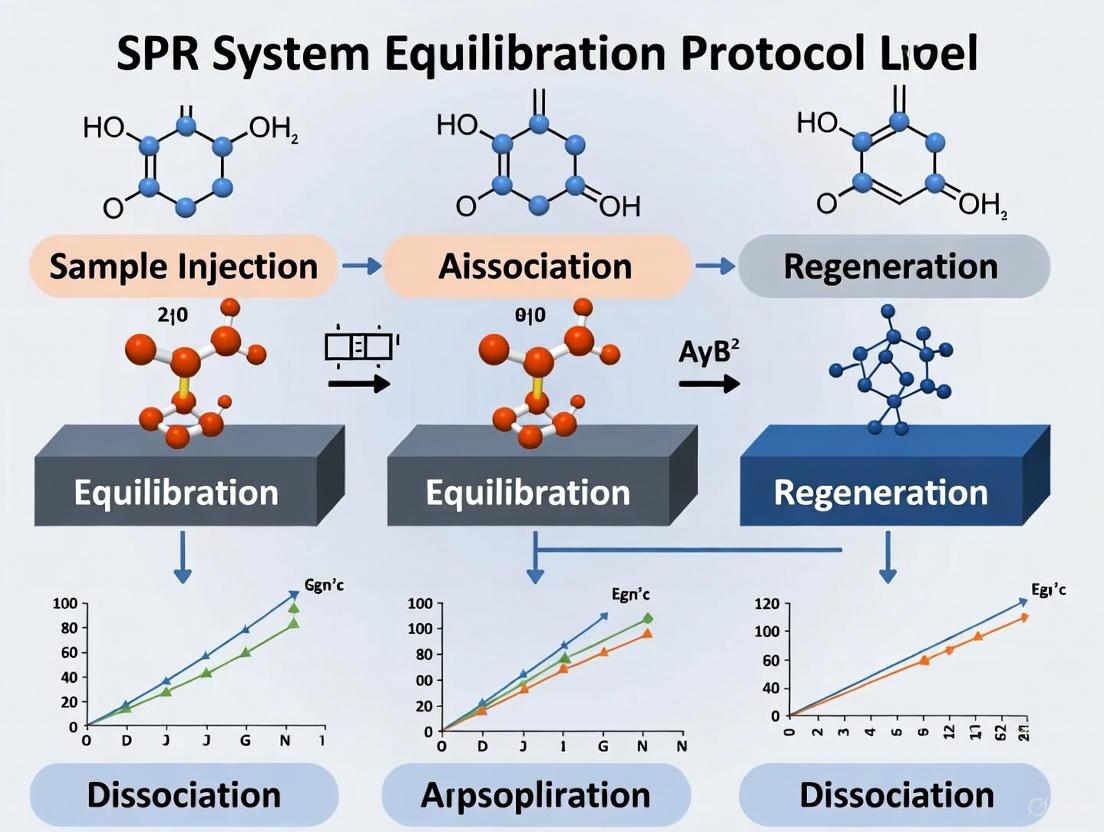
This article provides a comprehensive guide to Surface Plasmon Resonance (SPR) system equilibration, a critical yet often overlooked step for obtaining reliable, publication-quality binding data.
SPR System Equilibration: A Complete Protocol for Reliable Biomolecular Interaction Data
Abstract
This article provides a comprehensive guide to Surface Plasmon Resonance (SPR) system equilibration, a critical yet often overlooked step for obtaining reliable, publication-quality binding data. Tailored for researchers, scientists, and drug development professionals, it covers the foundational principles of why equilibration is essential, delivers a step-by-step methodological protocol, addresses common troubleshooting scenarios, and validates the approach by comparing outcomes with suboptimal practices. Mastering this protocol minimizes baseline drift, reduces false positives/negatives, and ensures kinetic and affinity measurements are accurate and reproducible, thereby accelerating drug discovery and biophysical characterization.
Why SPR Equilibration is Fundamental for Reliable Data
In Surface Plasmon Resonance (SPR) biosensor technology, system equilibration is a critical preparatory phase that extends far beyond initial instrument startup. It encompasses the processes required to achieve a stable, noise-free baseline signal from both the sensor surface and the fluidic system prior to initiating binding experiments. Proper equilibration is foundational for obtaining reliable, high-quality data on molecular interactions, as it ensures that subsequent signal changes accurately reflect analyte-ligand binding events rather than system artifacts [1]. For researchers and drug development professionals, a robust equilibration protocol is not optional but a prerequisite for generating kinetically and thermodynamically valid binding parameters, which are essential for informed decision-making in lead optimization and screening pipelines [1] [2].
The necessity of thorough equilibration stems from the extreme sensitivity of SPR, which detects minute changes in refractive index at the sensor surface. An inadequately equilibrated system can introduce significant signal drift, obscuring genuine binding events and compromising the accuracy of calculated rate and affinity constants [3]. This document outlines a comprehensive framework for SPR system equilibration, providing detailed protocols to ensure data integrity across diverse experimental applications.
Core Principles and Quantitative Benchmarks
Defining Equilibration Success Criteria
Successful system equilibration is quantitatively defined by the achievement of a stable baseline, typically characterized by a signal drift of less than 5-10 Resonance Units (RU) per minute [3]. For high-sensitivity experiments, a more stringent target of < 2 RU/min is recommended. The baseline should demonstrate minimal high-frequency noise, with a root-mean-square (RMS) noise level typically below 0.3-0.5 RU [1]. Visually, a properly equilibrated baseline appears as a flat, straight line when signal is plotted against time, with no observable downward or upward trends before the injection of any analyte.
Key Parameters and Performance Standards
Table 1: Quantitative Benchmarks for SPR System Equilibration
| Parameter | Acceptance Criterion | Measurement Method | Impact on Data Quality |
|---|---|---|---|
| Signal Drift Rate | < 5-10 RU/min (Standard)< 2 RU/min (High-Sensitivity) | Slope of signal vs. time plot over 3-5 minutes | High drift inflates calculated response, affects ka/kd accuracy |
| Baseline Noise (RMS) | < 0.5 RU | Statistical analysis of signal over 60 seconds | Excessive noise obscures small-molecule binding events and initial binding rates |
| Buffer Blank Injection | Response < 10-15 RU, flat sensogram | Inject running buffer, analyze binding response | Significant response indicates carryover, non-specific binding, or inadequate equilibration |
| Temperature Stability | ±0.05°C | System sensor reading | Temperature fluctuations cause refractive index changes and signal drift |
| Flow Rate Stability | ±1% of set point | System calibration | Flow variations cause binding rate inaccuracies and mass transport effects |
Experimental Protocols for System Equilibration
Comprehensive Pre-Experiment Equilibration Protocol
This protocol details the steps for achieving system equilibration before any experimental run, typically requiring 30-60 minutes to complete.
Materials Required:
- HBS-EP buffer: 0.01 M HEPES, 0.15 M NaCl, 3 mM EDTA, 0.005% v/v surfactant P20, pH 7.4 [3]
- HBS-N buffer: 0.01 M HEPES, 0.15 M NaCl, pH 7.4 [3]
- BIAdesorb Solution I (0.5% SDS) and Solution II (50 mM glycine-NaOH, pH 9.5) [3]
- Sterile, filtered running buffer (same as to be used in experiment, 0.22 µm filter)
- Sensor chip (e.g., CM5, L1, HPA)
Procedure:
- System Priming: Perform a minimum of three consecutive priming steps using sterile, filtered running buffer. For the final prime, use the exact buffer that will serve as the running buffer in the experiment.
- Sensor Chip Conditioning: If using a new sensor chip or switching application types, execute a conditioning procedure. For a CM5 chip, inject two 1-minute pulses of each: 50 mM NaOH, 10 mM HCl, and 0.5% SDS, at a flow rate of 50-100 µL/min [3].
- Initial Baseline Stabilization: Place the instrument in run mode and monitor the baseline signal for all flow cells for 10-15 minutes. The signal should be monitored in real-time using the instrument's software.
- Buffer Blank Injection Test: Program a series of short injections (60-120 seconds) of running buffer over all active flow cells, using the same flow rate and duration as planned for analyte injections. Analyze the resulting sensograms for any significant deviation from baseline.
- Final Baseline Acquisition: After successful buffer blank injection, allow the system to stabilize for an additional 10-20 minutes. Continuously monitor the drift rate until it consistently remains below the predetermined threshold (e.g., 5 RU/min).
Post-Immobilization Equilibration Protocol
Following ligand immobilization, a separate equilibration procedure is required to stabilize the modified surface.
Procedure:
- Post-Coupling Wash: After the final immobilization step (e.g., ethanolamine block), maintain a continuous flow of running buffer for at least 15-30 minutes.
- Multiple Short Injections: Execute 5-10 short injections (30 seconds) of running buffer over the newly derivatized surface. This helps to remove loosely associated ligand and stabilize the surface.
- Stability Assessment: Monitor the baseline after the final running buffer injection. The baseline should return to within 5 RU of the pre-injection level. If a significant shift is observed, continue buffer flow until stability is achieved.
- Ligand Activity Check (Optional but Recommended): For quality control, perform a single injection of a known positive control analyte at a concentration expected to give a moderate response (50-100 RU). This verifies that the immobilized ligand is active and the surface is properly equilibrated.
Integrated SPR Equilibration Workflow
The following diagram illustrates the complete decision-making process for SPR system equilibration, integrating both general system and post-immobilization procedures.
Research Reagent Solutions for Equilibration
Table 2: Essential Materials for SPR System Equilibration
| Reagent/Chip Type | Primary Function in Equilibration | Application Notes |
|---|---|---|
| HBS-EP Buffer [3] | Standard running buffer; surfactant P20 minimizes non-specific binding | Use for system priming and baseline stabilization; standard for protein-protein interactions |
| HBS-N Buffer [3] | Running buffer without surfactant | Alternative for lipid-protein studies where surfactants disrupt lipid surfaces [2] |
| CM5 Sensor Chip [3] | General-purpose carboxymethyl dextran surface | Requires conditioning with 50 mM NaOH, 10 mM HCl for equilibration |
| L1 Sensor Chip [2] | Hydrophobic surface for capturing lipid vesicles | Requires specific lipid coating protocols; avoid detergents in buffers |
| BIAdesorb Solution I [3] | 0.5% SDS for system cleaning | Removes residual protein and lipid contaminants during priming |
| BIAdesorb Solution II [3] | 50 mM glycine-NaOH (pH 9.5) for system cleaning | Completes cleaning cycle after Solution I |
| NaOH (10-50 mM) [2] [3] | Surface regeneration and conditioning | Standard for removing residual analyte; concentration varies by application |
| Glycine-HCl (10 mM, pH 1.5-3.0) [3] | Low-pH surface regeneration | Alternative regeneration solution for sensitive protein surfaces |
Troubleshooting Common Equilibration Issues
Problem: Persistent High Baseline Drift
Potential Causes and Solutions:
- Air bubbles in fluidic system: Execute additional prime commands. Degas all buffers thoroughly before use.
- Temperature instability: Verify instrument temperature control is active and setpoint is stable. Allow additional time for thermal equilibration, especially after cartridge insertion.
- Buffer mismatch: Ensure the running buffer used for priming matches the experimental buffer exactly in composition, pH, and salt concentration.
- Contaminated system: Perform an intensive clean with BIAdesorb solutions I and II according to manufacturer protocols [3].
Problem: Excessive Noise in Baseline
Potential Causes and Solutions:
- Particulate contamination: Filter all buffers through 0.22 µm filters immediately before use. Centrifuge protein samples if necessary.
- Flow cell blockage: Inspect sensor chip surface for debris. If present, replace chip and restart equilibration.
- Electrical interference: Ensure proper instrument grounding and separation from high-frequency electrical equipment.
Problem: Significant Response in Buffer Blank Injection
Potential Causes and Solutions:
- Carryover from previous injections: Implement more rigorous wash steps between injections in the method. Increase surfactant concentration in running buffer if compatible with experiment.
- Non-specific binding to surface: Include a non-specific binding reducer such as carboxymethyl dextran or BSA in the running buffer [3]. Consider switching to a different sensor chip type with higher resistance to non-specific binding.
Advanced Considerations for Specific Applications
Equilibration for Lipid-Protein Interaction Studies
When working with lipid surfaces on L1 chips, equilibration protocols require modification. Detergents must be excluded from all buffers as they destabilize lipid surfaces [2]. After lipid vesicle coating, the surface must be stabilized with multiple injections of 0.1 M NaOH, followed by an extended equilibration period with detergent-free buffer (typically 30-60 minutes) [2]. System cleaning must be performed more frequently (every 2-3 days) when running detergent-free buffers to prevent protein accumulation in fluidic lines.
Equilibration for Small Molecule Screening
For fragment-based screening where small binding responses (<10 RU) are expected, enhanced equilibration stringency is necessary. Aim for baseline drift <2 RU/min and RMS noise <0.3 RU. Include additional buffer blank injections during method development to establish a stable response profile. Temperature control is particularly critical, as minor fluctuations disproportionately affect small signals.
By adhering to these comprehensive equilibration protocols, researchers ensure that their SPR systems generate data reflecting true molecular interactions rather than system artifacts, thereby enhancing the reliability of kinetic and affinity constants used in critical drug development decisions.
The Critical Link Between Stable Baselines and Accurate Kinetic Parameters (ka, kd, KD)
Surface Plasmon Resonance (SPR) has emerged as a preeminent technique for label-free, real-time analysis of biomolecular interactions, enabling precise determination of kinetic parameters crucial for drug discovery and development. The accuracy of these parameters—association rate (k~a~), dissociation rate (k~d~), and equilibrium dissociation constant (K~D~)—heavily depends on establishing and maintaining stable baselines throughout SPR experiments. Proper system equilibration represents a fundamental prerequisite for obtaining reliable kinetic data, as it minimizes instrumental drift, ensures consistent refractive index matching, and provides a stable foundation for measuring binding events. Within the context of biomolecular interaction analysis (BIA), the critical importance of stable baselines cannot be overstated, as they directly impact the quality of sensorgrams and the accuracy of derived kinetic constants [4].
The growing appreciation for optimizing drug-binding kinetics has intensified the need for robust SPR methodologies capable of accurately characterizing both high-affinity drug candidates and rapidly dissociating, low-affinity hits encountered early in discovery pipelines [5]. While advanced data analysis approaches, including artificial intelligence and self-organizing maps, show promise for enhancing SPR data interpretation [6], these sophisticated methods remain dependent on high-quality experimental data originating from properly equilibrated systems. This application note establishes comprehensive protocols for SPR system equilibration, detailed methodologies for kinetic parameter determination, and practical strategies for troubleshooting common baseline instability issues, providing researchers with a standardized framework for obtaining pharmacologically relevant kinetic parameters.
Theoretical Foundations
Kinetic Parameters in Biomolecular Interactions
Biomolecular interactions follow principles of mass action kinetics, where the binding event between a ligand (L) and analyte (A) can be represented as:
\boxed{L + A \underset{kd}{\overset{ka}{\rightleftharpoons}} LA}
The association rate constant (k~a~) quantifies how rapidly the complex forms, typically expressed in M⁻¹s⁻¹, while the dissociation rate constant (k~d~) describes how quickly the complex dissociates, measured in s⁻¹. The equilibrium dissociation constant (K~D~), calculated as k~d~/k~a~, represents the analyte concentration at which half the ligand binding sites are occupied at equilibrium [7] [4]. These kinetic parameters provide critical insights into molecular mechanism and therapeutic potential, with prolonged target residence time (slow k~d~) increasingly recognized as a key determinant of drug efficacy and duration of action [5].
The Role of Stable Baselines in Parameter Accuracy
Stable baselines serve as the fundamental reference point from which all binding responses are measured in SPR experiments. Baseline instability introduces systematic errors that propagate through data analysis, ultimately compromising kinetic parameter accuracy. Several critical aspects of SPR data interpretation depend directly on baseline stability:
- Accurate R~max~ Determination: The maximum response theoretically achievable when all ligand binding sites are occupied must be precisely determined for reliable kinetic fitting. Baseline drift distorts R~max~ estimation, leading to erroneous calculations of binding stoichiometry and affinity [7].
- Preise Initial Binding Rates: The early association phase, crucial for determining k~a~, requires a stable starting baseline for correct quantification of initial binding velocities.
- Reliable Dissociation Profiles: Accurate characterization of k~d~ depends on undisturbed dissociation phases, where a stable baseline ensures proper quantification of complex decay without confounding drift artifacts.
- Meaningful Reference Subtraction: Double referencing methodologies, essential for isolating specific binding signals, assume minimal baseline variation between sample and reference flow cells [7].
Table 1: Impact of Baseline Instability on Kinetic Parameters
| Baseline Issue | Effect on k~a~ | Effect on k~d~ | Effect on K~D~ | Mechanism |
|---|---|---|---|---|
| Positive Drift | Overestimation | Underestimation | Underestimation | Artificial increase in response during association and artificial persistence during dissociation |
| Negative Drift | Underestimation | Overestimation | Overestimation | Artificial decrease in response during association and artificial decay during dissociation |
| High-Frequency Noise | Reduced precision | Reduced precision | Reduced precision | Increased uncertainty in curve fitting, particularly during initial association and late dissociation |
| Baseline Steps | Systematic error | Systematic error | Systematic error | Incorrect reference point establishment for binding phases |
Experimental Design and Equilibration Protocols
Pre-Experimental System Preparation
Comprehensive system preparation establishes the foundation for stable baselines and accurate kinetic parameter determination. The following protocol must be rigorously implemented prior to kinetic characterization experiments:
Sensor Chip Functionalization:
- Surface Cleaning: Initialize with consecutive 2-minute injections of 0.1% SDS, 10 mM glycine-HCl (pH 2.0), and 50 mM NaOH at flow rates ≥50 μL/min [8].
- Surface Activation: For amine coupling, inject a 7-minute pulse of EDC/NHS (1:1 mixture, 0.4 M/0.1 M) at 10 μL/min.
- Ligand Immobilization: Dilute ligand to appropriate concentration in suitable immobilization buffer (typically sodium acetate, pH 4.0-5.5) and inject until desired immobilization level achieved. For CD28 studies, immobilization at 50 μg/mL achieved optimal response levels of approximately 1750 RU [8].
- Surface Blocking: Deactivate remaining active esters with 7-minute injection of 1 M ethanolamine-HCl (pH 8.5).
- Surface Washing: Implement three consecutive 1-minute injections of regeneration solution appropriate for the interaction (e.g., 10 mM glycine pH 2.0 for antibodies) to remove non-covalently attached ligand.
Buffer System Equilibration:
- Buffer Matching: Ensure running buffer and sample buffer are identical in composition, including salt concentration, pH, and additive content. Supplement both with equivalent DMSO concentrations (typically ≤2%) when testing small molecules [8].
- Degassing: Thoroughly degas all buffers using vacuum degassing or sonication under vacuum to prevent bubble formation during experiments.
- Temperature Equilibration: Allow all buffers and samples to reach instrument temperature prior to experimentation (minimum 30 minutes at room temperature).
- System Priming: Prime the fluidic system with at least three volumes of running buffer before establishing a baseline.
Table 2: Optimal Immobilization Conditions for Various Ligand Types
| Ligand Type | Recommended Immobilization Level (RU) | Sensor Chip | Coupling Chemistry | Flow Rate (μL/min) |
|---|---|---|---|---|
| Small Molecules (<500 Da) | 50-200 | CM5 | Amine | 10 |
| Antibodies | 5,000-10,000 | CM5 | Amine | 10 |
| Membrane Proteins | 2,000-5,000 | CAP | Capture | 5 |
| Peptides | 500-2,000 | CM5 | Amine | 10 |
| Multiepitope Proteins (e.g., PQ20) | 1,000-3,000 | CM5 | Amine | 10 |
Comprehensive System Equilibration Protocol
Achieving system equilibration requires methodical implementation of the following steps:
Initial Baseline Establishment:
- Flow running buffer at experimental flow rate (typically 30 μL/min) for minimum 60 minutes.
- Monitor baseline stability, requiring <0.5 RU drift over 10-minute period for kinetic experiments.
- If instability persists, extend equilibration time in 30-minute increments until stability criterion met.
Solvent Correction Calibration:
- Prepare running buffer with varying DMSO concentrations (1.5%, 2.0%, 2.5%) when screening small molecule libraries.
- Inject each solvent calibration solution for 60 seconds at 30 μL/min.
- Verify response returns to baseline between injections with <1 RU deviation.
- Generate solvent calibration curve to correct for DMSO refractive index effects [8].
Ligand Surface Conditioning:
- Implement 3-5 regeneration cycles using optimized regeneration solution.
- Monitor baseline stability after each regeneration, requiring <1 RU deviation from initial baseline.
- For CD28 protein surfaces, validate stability with control antibody injections (2 μg/mL) showing <5% variation in binding response across cycles [8].
Reference Surface Normalization:
- Ensure reference surface exhibits minimal non-specific binding (<1% of ligand surface response).
- Validate reference surface performance with analyte injection at highest test concentration.
The following workflow diagram illustrates the critical steps in establishing a properly equilibrated SPR system:
Data Acquisition and Analysis Methodologies
High-Quality Sensorgram Acquisition
Acquiring sensorgrams suitable for robust kinetic analysis requires careful experimental design:
Association Phase Parameters:
- Injection Volume: Utilize sufficient volume to achieve ≥95% saturation for highest analyte concentration.
- Flow Rate: Employ flow rates ≥30 μL/min to minimize mass transport limitations [7] [4].
- Data Collection Frequency: Acquire data at minimum 5 Hz frequency to adequately capture rapid binding events, particularly for low-affinity interactions with k~off~ ≥10 minute⁻¹ [5].
Dissociation Phase Parameters:
- Dissociation Time: Allow sufficient dissociation time (typically ≥10 × 1/k~d~) for reliable dissociation rate determination.
- Baseline Re-establishment: Confirm return to within 1 RU of pre-injection baseline before subsequent analyte injections.
Concentration Series Design:
- Range: Employ analyte concentrations spanning 0.1 × K~D~ to 10 × K~D~ for comprehensive characterization.
- Replication: Include duplicate injections at minimum, with triplicate recommended for low-affinity interactions.
Kinetic Analysis Workflow
The following workflow ensures systematic approach to kinetic parameter determination:
- Reference Subtraction: Subtract reference flow cell responses to eliminate bulk refractive index effects and non-specific binding.
- Double Referencing: Further subtract buffer injection responses from analyte sensorgrams to remove systematic artifacts [7].
- Model Selection: Initiate analysis with simplest 1:1 binding model before progressing to more complex interaction models.
- Global Fitting: Simultaneously fit association and dissociation phases across all analyte concentrations to determine k~a~ and k~d~ [7].
- Parameter Validation: Verify that fitted R~max~ values align with theoretical predictions based on immobilization level and molecular weights.
Table 3: Troubleshooting Guide for Common Kinetic Analysis Issues
| Problem | Potential Causes | Solutions | Impact on Parameters |
|---|---|---|---|
| Poor Curve Fitting | Incorrect model, Mass transport limitation | Test alternative models, Increase flow rate | Inaccurate k~a~ and k~d~ |
| R~max~ Mismatch | Incorrect molecular weight, Partial activity | Verify protein characterization, Calculate theoretical R~max~ | Incorrect stoichiometry and K~D~ |
| High Chi² Values | Noisy data, Model inadequacy | Increase data smoothing, Test complex models | Reduced confidence in all parameters |
| Inconsistent Replicates | Air bubbles, Surface instability | Extend equilibration, Degas buffers | Poor reproducibility |
| Drifting Baselines | Temperature fluctuations, Buffer mismatch | Improve temperature control, Verify buffer matching | Systematic errors in k~d~ |
The relationship between data quality, model selection, and parameter accuracy is illustrated below:
Advanced Applications and Case Studies
High-Throughput Screening of Small Molecule Inhibitors
The SPR-based workflow for identifying CD28-targeted small molecules demonstrates the critical importance of stable baselines in high-throughput screening environments. Key methodological considerations included:
Library Design: A 1056-compound subset from the Enamine Discovery Diversity Set was selected for its enrichment in chemotypes designed to engage GPCR-like and protein-protein interaction interfaces, making it particularly suitable for targeting the challenging CD28 costimulatory receptor [8].
Primary Screening Parameters:
- Format: 384-well plate configuration
- Compound Concentration: 100 μM in assay buffer supplemented with 2% DMSO
- Binding Metrics: Compounds evaluated based on level of occupancy (LO), binding response, and dissociation kinetics
- Hit Identification: 12 primary hits identified (1.14% hit rate) from initial screening
Dose-Response Confirmation: Follow-up dose-response SPR screening confirmed micromolar-range affinities for three compounds, with the top hit (DDS5) selected for comprehensive characterization [8].
Orthogonal Validation: Competitive ELISA confirmed DDS5 functionally inhibited CD28-CD80 interaction, validating the biological relevance of SPR-derived hits [8].
AI-Enhanced Kinetic Analysis for Diagnostic Applications
Integration of artificial intelligence, particularly self-organizing maps (SOMs), represents an advanced approach for extracting maximal information from SPR sensorgrams. The serodiagnosis of canine visceral leishmaniasis (CVL) demonstrates this methodology:
Bioreceptor Design: Employed PQ20, a multiepitope chimeric protein containing 20 B- and T-cell epitopes from Leishmania chagasi immunodominant proteins, providing enhanced sensitivity and specificity compared to crude antigens [6].
Kinetic Mechanism: Analysis suggested two immunodominant epitopes of PQ20 through its reaction with polyclonal antibodies, exhibiting high initial association rates (k~a1~ = 2.4 × 10⁵ L mol⁻¹ s⁻¹; k~d1~ = 5.5 × 10⁻⁴ L mol⁻¹ s⁻¹) [6].
SOM Clustering: Projection of high-dimensional SPR data onto topology-preserving 2D maps enabled efficient classification of infected versus healthy patients, with higher specificity achieved at shorter reaction times (100 s) in accordance with kinetic evaluation [6].
Diagnostic Performance: Integration of multiepitope bioreceptors with AI-driven analysis achieved 5.1 nmol L⁻¹ detection limit and improved sensitivity/specificity compared to univariate analysis, enabling rapid CVL surveillance in less than 15 minutes total analysis time [6].
The Scientist's Toolkit: Essential Research Reagents
Table 4: Key Reagent Solutions for SPR Kinetic Studies
| Reagent/Chemical | Supplier Examples | Function in SPR Experiments | Application Notes |
|---|---|---|---|
| Sensor Chip CAP | Cytiva | Reversible capture of biotinylated molecules | Enables chip regeneration and repeated use; ideal for membrane proteins [8] |
| PBS-P+ Buffer | Cytiva (#28995084) | Running buffer with surfactant additives | Minimizes non-specific binding; compatible with ≤2% DMSO [8] |
| Enamine DDS Library | Enamine | Diverse small molecule screening collection | Enriched for GPCR and PPI interface engagement; 1056-compound subset [8] |
| CD28 Extracellular Domain | Multiple | Target ligand for immobilization | Residues Asn19-Pro152; glycosylated, disulfide-linked homodimer [8] |
| Anti-CD28 Antibody | Multiple | Positive control for binding validation | Reported IC~50~ ≈ 50 ng/mL in cell-based assays [8] |
| PQ20 Multiepitope Protein | Custom synthesis | Biorecognition element for infectious disease | Contains 20 B- and T-cell epitopes; engineered for Leishmania detection [6] |
| 3-Mercaptopropionic Acid (MPA) | Sigma-Aldrich | Self-assembled monolayer formation | Creates functionalized gold surfaces for ligand immobilization [6] |
| NHS/EDC Coupling Kit | Sigma-Aldrich | Amine coupling chemistry | Standard method for covalent ligand immobilization on carboxylated surfaces [6] |
Establishing and maintaining stable baselines through comprehensive system equilibration represents a fundamental prerequisite for obtaining accurate kinetic parameters from SPR biosensors. The protocols outlined in this application note provide researchers with a standardized framework for achieving the baseline stability necessary for reliable determination of k~a~, k~d~, and K~D~ values. As drug discovery programs increasingly prioritize kinetic parameter optimization alongside traditional affinity measurements, robust SPR methodologies become increasingly vital for establishing meaningful structure-kinetic relationships. The integration of advanced analysis approaches, including artificial intelligence and multiepitope bioreceptors, further enhances the information content derived from properly executed SPR experiments. By adhering to these equilibration protocols and data analysis methodologies, researchers can ensure the kinetic parameters driving critical drug discovery decisions rest upon the firm foundation of stable, well-characterized SPR systems.
Surface Plasmon Resonance (SPR) is a powerful, label-free technology for the real-time analysis of biomolecular interactions, playing a critical role in drug development, particularly in kinetic characterization and quality control of biologics [9] [10]. The accuracy of these measurements is exceptionally vulnerable to the stability of the instrumental baseline, making proper system equilibration a foundational step in any SPR experiment. Inadequate equilibration manifests primarily as baseline drift—a continuous upward or downward movement of the signal when only running buffer is present—and other signal artifacts that can compromise data integrity [11]. Within the context of advanced research, such as monitoring critical quality attributes of monoclonal antibodies (e.g., glycosylation) or studying subtle oligomeric transitions in proteins, even minor drift can lead to significant errors in the interpretation of interaction kinetics and affinities [12] [9]. This application note, framed within a broader thesis on SPR equilibration protocols, details the consequences of poor equilibration and provides validated methods to achieve a stable system, ensuring the generation of reliable, publication-quality data.
The Critical Role of Equilibration in SPR
Equilibration is the process of flowing running buffer over the sensor surface until the system reaches a state of physical and chemical stability, reflected by a flat, low-noise baseline. Baseline drift is typically a sign of non-optimally equilibrated sensor surfaces [11]. This instability often occurs after docking a new sensor chip, following an immobilization procedure, or after a change in the running buffer. The causes are multifaceted, including the rehydration of the sensor surface, wash-out of chemicals from immobilization, and the adjustment of the immobilized ligand to the flow buffer [11].
The consequences of analyzing data from a drifting system are severe. Kinetic rate constants (ka and kd) and the equilibrium dissociation constant (KD) can be significantly miscalculated. For instance, an upward drift can be mistaken for ongoing binding, leading to an overestimation of the association rate (ka) or response at equilibrium (Req). Conversely, a downward drift during the dissociation phase can be misinterpreted as faster dissociation, inflating the kd value. In quality control applications, such as the analysis of antibody glycosylation using FcγRII receptors, drift can obscure the subtle binding differences used to quantify attributes like core fucosylation and terminal galactosylation, leading to incorrect batch quality assessments [9].
Quantitative Impact of Equilibration on Data Quality
The following table summarizes key parameters affected by inadequate equilibration and the typical stability targets for a well-equilibrated system.
Table 1: Data Quality Parameters and Equilibration Targets
| Parameter | Impact of Inadequate Equilibration | Stability Target for Well-Equilibrated System |
|---|---|---|
| Baseline Drift Rate | High, continuous signal change masks true binding signals [11]. | < 0.5 RU/min over a 10-15 minute period with constant buffer flow [11]. |
| Overall Noise Level | Increased high-frequency noise, reducing data precision and confidence in fitting [11]. | < 1 RU (peak-to-peak) during buffer injections [11]. |
| Steady-State Response (Req) | Drift prevents a true plateau from being reached, leading to incorrect KD calculation from steady-state analysis [13]. | Variation of < 2% during the plateau phase of a saturated injection. |
| Kinetic Constants (ka, kd) | Alters the shape of the sensorgram, leading to systematic errors in derived kinetic parameters [11]. | Fitted parameters should be independent of the duration of the pre-injection baseline. |
Achieving these targets requires a systematic approach to system preparation. The equilibration time can vary dramatically, from minutes to several hours, depending on the sensor chip type, the immobilized ligand, and the history of the system (e.g., after cleaning or buffer change) [11]. In our research, systems requiring analysis of small molecules (< 1 kDa) or using high-capacity chips (e.g., CM7) consistently necessitated longer equilibration times, often exceeding 60 minutes, to achieve the sub-1 RU/min drift rate essential for detecting low-response signals.
Experimental Protocols for Optimal Equilibration
Protocol: System Startup and Initial Equilibration
This protocol is designed to stabilize the SPR instrument and fluidics system prior to any experimental run.
- Buffer Preparation: Prepare at least 2 liters of running buffer fresh on the day of use. Use high-purity, HPLC-grade solvents and reagents to prevent contamination [11] [14]. Filter the buffer through a 0.22 µm membrane filter and degas it thoroughly to prevent air spikes in the sensorgram [11].
- System Priming: Prime the entire fluidic path with the freshly prepared, filtered, and degassed running buffer. If the system was previously stored in a different buffer or sanitizing solution, perform at least three to five priming cycles to ensure complete buffer exchange.
- Initial Baseline Monitoring: Initiate a continuous flow of running buffer at the experimental flow rate (e.g., 30 µL/min). Monitor the baseline response for a minimum of 15-30 minutes.
- Stability Check: If a steady downward or upward drift is observed, continue flowing buffer. The system is considered initially equilibrated when the drift rate falls below 5 RU/min. Proceed to the startup cycles protocol.
Protocol: Incorporating Startup and Blank Cycles
This protocol uses the experimental method itself to finalize the equilibration of the sensor surface and account for system-specific artifacts [11].
- Method Setup: Program the full experimental cycle, including all association, dissociation, and regeneration steps.
- Add Startup Cycles: At the beginning of the method, incorporate at least three "start-up" cycles [11]. These are identical to sample cycles but inject running buffer instead of analyte. Execute any planned regeneration steps in these cycles. The responses from these cycles should be excluded from final data analysis and not used as blanks.
- Add Blank Cycles: Intersperse blank injections (running buffer alone) evenly throughout the experimental run. It is recommended to include one blank cycle for every five to six analyte cycles and to end the experiment with a blank cycle [11].
- Purpose: These cycles "prime" the sensor surface, stabilize the system after the first few regeneration steps, and provide essential data for the double referencing procedure during data analysis.
Workflow: Comprehensive SPR Equilibration
Research Reagent Solutions
The following table lists essential materials and reagents critical for successful SPR equilibration and experimentation.
Table 2: Key Research Reagents for SPR Equilibration and Assay Development
| Reagent/Material | Function & Importance | Specific Example / Note |
|---|---|---|
| HBS-EP+ Buffer | A standard running buffer; provides consistent pH and ionic strength, and surfactant P20 minimizes non-specific binding [9]. | 10 mM HEPES pH 7.4, 150 mM NaCl, 3 mM EDTA, 0.005% v/v P20 [9]. |
| Sensor Chips | The solid support for ligand immobilization. Choice depends on immobilization chemistry (covalent vs. capture). | CM5 (dextran matrix for amine coupling), Series S (high capacity), NTA (for His-tagged capture) [13]. |
| Regeneration Solutions | Removes tightly bound analyte from the ligand to regenerate the surface without damaging it. | 2 M NaCl (mild), 10 mM Glycine pH 2.0 (acidic), 10-100 mM NaOH (harsh). Must be empirically determined [13]. |
| Coupling Reagents | Enables covalent immobilization of ligands to the sensor chip surface. | NHS/EDC chemistry for activating carboxyl groups on CM5 chips [9]. |
| Protein A | An affinity capture ligand used to uniformly orient antibodies via their Fc region for analysis [9]. | Essential for assays quantifying mAbs or characterizing Fc-mediated interactions like glycosylation [9]. |
Troubleshooting Baseline Drift and Artifacts
Despite best efforts, drift can persist. The following flowchart guides the systematic diagnosis and resolution of common equilibration issues.
The most common sources of drift, as identified in our thesis research, are:
- Poor Buffer Hygiene: Using buffer stored for too long, or failing to filter and degas, introduces chemical and particulate contaminants that cause drift [11].
- Insufficient Surface Equilibration: After immobilization, the surface requires time to swell and settle. This process can be slow for dense hydrogels or certain ligands [11].
- Carryover from Regeneration: Incomplete removal of a harsh regeneration solution can create a slow, decaying drift as the running buffer re-equilibrates the surface pH.
Advanced Application: Equilibration for Glycosylation Analysis
In a recent application, our integrated SPR assay for simultaneous quantification and glycosylation characterization of monoclonal antibodies in crude bioreactor samples demanded exceptional baseline stability [9]. The assay involves:
- Capturing mAbs from a crude sample on a Protein A surface.
- Injecting FcγRIIA or FcγRIIB to characterize terminal galactosylation and core fucosylation via kinetic analysis.
Even minor drift after the capture phase could significantly alter the calculated binding response during the receptor injection phase, leading to misclassification of the glycan profile. By implementing the protocols above—particularly extended initial equilibration and the use of multiple, evenly spaced blank cycles—we achieved the required stability. This allowed us to reliably detect differences in receptor binding affinity directly attributable to specific glycosylation patterns, enabling at-line monitoring of this critical quality attribute.
A rigorous and systematic approach to SPR system equilibration is not merely a preliminary step but a critical determinant of data fidelity. The consequences of inadequate equilibration—namely baseline drift and associated signal artifacts—propagate through data analysis, rendering kinetic and affinity constants unreliable. The protocols and troubleshooting guides presented here, validated through our research on advanced biosensor applications, provide a clear framework for researchers to achieve a stable baseline. Adherence to these practices in buffer preparation, system startup, and experimental design, coupled with the powerful data refinement technique of double referencing, is essential for producing robust, reproducible, and high-quality SPR data that can confidently inform drug development decisions.
How a Properly Equilibrated System Enhances Data Reproducibility
Surface Plasmon Resonance (SPR) is a powerful, label-free technique for the real-time analysis of biomolecular interactions, providing critical data on binding kinetics and affinity. The reliability of this data is fundamentally dependent on the stability of the instrumental baseline, which is achieved through comprehensive system equilibration. This application note details a standardized protocol for proper SPR system equilibration, demonstrating how this critical step minimizes experimental drift and variability, thereby enhancing the reproducibility and reliability of binding data essential for drug discovery and basic research.
In SPR technology, the interaction between a mobile analyte and an immobilized ligand is monitored in real-time as a change in the refractive index at a sensor chip surface, measured in Resonance Units (RU) [2] [15]. A properly equilibrated system is one where the instrument's fluidics and detection system have been stabilized to the specific running buffer and temperature conditions of the experiment, resulting in a flat, stable baseline. The absence of proper equilibration leads to baseline drift, a continuous upward or downward trend in the signal when no binding is occurring. This drift can obscure the true binding signal, compromise the accuracy of calculated kinetic constants (ka and kd), and ultimately undermine data reproducibility [16].
For researchers in drug development, where decisions are made based on precise affinity measurements (KD), ensuring the system is fully equilibrated is not optional—it is a prerequisite for generating trustworthy data [17].
The Impact of System Equilibration on Data Quality
A stable baseline is the foundation for accurate SPR data interpretation. The following table summarizes the quantitative benchmarks for a properly equilibrated system and the consequences of neglecting this step.
Table 1: Quantitative Benchmarks for a Properly Equilibrated SPR System
| Parameter | Well-Equilibrated System | Poorly Equilibrated System | Impact on Data |
|---|---|---|---|
| Baseline Drift | < ± 0.3 RU/minute [16] | > ± 0.3 RU/minute | Obscures real binding events; complicates kinetic analysis. |
| Buffer Injection Response | < 5 RU [16] | > 5 RU | Introduces noise and systematic error into sensorgrams. |
| Ligand Surface Stability | Stable response over multiple regeneration cycles [16] | Drifting Rmax and changing binding kinetics | Prevents meaningful comparison between analyte cycles. |
| Reproducibility | High repeatability of sample responses [18] | Low repeatability between identical injections | Undermines confidence in kinetic constants and affinities. |
Detailed Equilibration Protocol
This protocol is designed to stabilize the SPR instrument, sensor chip, and ligand surface prior to quantitative binding analysis.
Pre-Equilibration: System and Surface Preparation
- Instrument Priming: After a system startup or cleaning procedure, prime the instrument's fluidic system (Integrated Fluidic Cartridge - IFC) with the designated running buffer (e.g., HBS-EP or PBS with 0.05% Tween-20) to remove storage solutions and air bubbles [19] [18].
- Ligand Immobilization: Immobilize the ligand onto the sensor chip surface using standard amine-coupling or capture chemistry according to manufacturer protocols [3] [15].
- Buffer Matching: Ensure that the running buffer and all analyte samples are perfectly matched in composition (including buffer salts, pH, ionic strength, detergent, and DMSO concentration) to prevent bulk effects, which cause large refractive index shifts [16] [19].
Core Equilibration and Stabilization Steps
Once the ligand is immobilized, the critical equilibration process begins. The workflow below outlines the key steps to achieve a stable system.
- Surface Equilibration to Flow Buffer: Following immobilization, wash the ligand surface extensively with the flow buffer until the baseline is stable. This removes any residual chemicals from the coupling process [16].
- Baseline Stability Check: With the flow buffer passing over all flow channels, observe the baseline. A properly equilibrated system should exhibit minimal drift (< ± 0.3 RU/min) [16].
- Stabilization via Simulated Experiment Cycles: Subject the ligand surface to a series of 4-5 buffer-only injections and regeneration solution injections. This process "conditions" the surface and the fluidics, stabilizing the ligand and the system's response.
- Stability Assessment: After these cycles, the binding response and the baseline should return to the pre-injection level consistently. If the Rmax (maximum binding capacity) drifts or the baseline fails to stabilize, the surface is not yet stable, and further conditioning or troubleshooting is required [16].
Key Reagent Solutions for Equilibration and Binding Studies
The following materials are essential for successful SPR equilibration and experimentation.
Table 2: Essential Research Reagent Solutions for SPR Equilibration
| Reagent / Material | Function & Role in Equilibration | Example |
|---|---|---|
| Running Buffer | The continuous phase for the experiment; perfect buffer matching is critical to prevent bulk shifts and ensure a stable baseline. | HBS-EP, PBS with 0.05% Tween-20 [3] [19] |
| Regeneration Solution | Removes bound analyte from the immobilized ligand without denaturing it, allowing for surface re-use and testing stability. | 10 mM Glycine, pH 1.5-2.5; 50 mM NaOH [3] [16] |
| Ligand | The molecule immobilized on the sensor chip; its stability through multiple regeneration cycles is key to a long-lived surface. | Affinity-purified protein, peptide [3] |
| System Cleaner | Used for periodic instrument cleaning to prevent protein buildup in the fluidics, a common source of baseline drift and high buffer injections. | BIAdesorb solutions 1 & 2 [3] [19] |
| Non-Specific Binding (NSB) Reducer | Added to the running buffer or sample to reduce nonspecific binding to the sensor chip or ligand, improving data quality. | Surfactant P20, Carboxymethyl dextran, BSA [3] [18] |
A properly equilibrated SPR system is the cornerstone of reproducible biomolecular interaction data. By adhering to the detailed protocol outlined herein—emphasizing buffer matching, thorough surface washing, and systematic stabilization cycles—researchers can achieve the stable baseline necessary to collect high-quality, reliable kinetic and affinity data. Integrating these equilibration practices as a standard operating procedure ensures data integrity across experiments and laboratories, ultimately accelerating research and development in pharmaceuticals and life sciences.
A Step-by-Step SPR System Equilibration and Buffer Matching Protocol
Proper system pre-equilibration is a critical prerequisite for generating robust and reliable Surface Plasmon Resonance (SPR) data. This protocol details the essential preparatory steps—focusing on the sensor chip, running buffer, and fluidic system—to establish a stable baseline and minimize experimental artifacts. Within the broader thesis on SPR equilibration protocols, this document establishes the foundational practices that ensure subsequent kinetic and affinity analyses are performed under optimal conditions, thereby enhancing data quality and reproducibility for researchers and drug development professionals [20] [21].
The Scientist's Toolkit: Essential Research Reagents
The following table lists key materials and reagents required for the pre-equilibration and setup of a typical SPR experiment.
Table 1: Key Reagents for SPR System Pre-Equilibration
| Reagent Name | Function and Key Characteristics |
|---|---|
| Running Buffer | Creates the continuous flow phase; should match analyte storage buffer to minimize refractive index differences [21]. Common examples are HEPES-KCl or PBS [13]. |
| Preconditioning Solutions | Conditions the sensor chip surface to ensure stability and remove preservatives. Examples include 1 M NaCl/10 mM NaOH for amine sensors and 50 mM EDTA for HTC sensors [22]. |
| L1 Sensor Chip | A specialized chip with a lipophilic surface designed for the capture of lipid vesicles or nanodiscs, crucial for membrane-protein interaction studies [21]. |
| CM5 Sensor Chip | A versatile, carboxymethylated dextran chip used for covalent immobilization of ligands via amine-coupling chemistry [13]. |
| Desorb Solutions | For stringent system cleaning. Solution 1 is 0.5% (w/v) SDS, and Solution 2 is 50 mM glycine-NaOH, pH 9.5 [21]. |
| Regeneration Solutions | Removes tightly bound analyte from the immobilized ligand between analysis cycles. Specificity depends on the interaction; 10 mM Glycine (pH 2.0) is a common acidic option [13]. |
| NaOH (50 mM) | Used for basic cleaning cycles and as a component of some preconditioning and desorb procedures [21]. |
| CHAPS Detergent (20 mM) | A zwitterionic detergent used for cleaning and solubilization; must be sterile-filtered [21]. |
Pre-Equilibration Workflow
The pre-equilibration process is a sequential workflow that ensures the instrument, sensor chip, and biochemical environment are optimally prepared. The following diagram outlines the primary stages and their key decision points.
Detailed Experimental Protocols
Sensor Chip Preconditioning
Preconditioning stabilizes the sensor surface, removes immobilization-blocking preservatives, and equilibrates it with the running buffer, which is critical for achieving a low-drift baseline [22].
Table 2: Preconditioning Methods by Sensor Chip Type
| Sensor Chip Type | Preconditioning Protocol | Purpose and Notes |
|---|---|---|
| Amine/ HCA | Multiple cycles of elution buffer (1 M NaCl, 10 mM NaOH) and 100 mM HCl. Solutions are addressed to all spots and then individual spots. | Removes chemical preservatives and stabilizes the dextran matrix. Prevents bubble formation during experiments [22]. |
| BTC | Multiple cycles of elution buffer (1 M NaCl, 10 mM NaOH) and running buffer. | Prepares the surface for specific capture chemistry. Using running buffer helps equilibrate the surface to the final experimental conditions [22]. |
| HTC | Multiple cycles of 50 mM EDTA and running buffer. | EDTA chelates metal ions, preparing the surface for immobilization. Follow with running buffer to re-equilibrate [22]. |
| Pro-AG | Multiple cycles of a regeneration solution (e.g., 10 mM Glycine, pH 1.5) and running buffer. | Conditions the surface by simulating regeneration steps, ensuring ligand stability before the actual experiment begins [22]. |
Methodology:
- Dock the experimental sensor chip after completing system cleaning.
- Prime the system with your degassed, filtered running buffer.
- Initiate the preconditioning method specific to your sensor chip type as outlined in Table 2. The instrument will automatically perform the cycles of solution injections.
- Post-conditioning prime. After the method finishes, perform a final prime with running buffer to ensure the system and surface are fully equilibrated.
- Monitor the baseline. Allow the system to run at a continuous, low flow rate until a stable baseline is achieved, which can take several hours. A stable baseline indicates the surface is fully equilibrated [21].
Running Buffer Preparation and Equilibration
The running buffer serves as the liquid phase for analyte delivery and its composition must be optimized to ensure ligand stability, minimize non-specific binding, and prevent bulk refractive index (RI) shifts [20] [13].
Key Buffer Criteria:
- Composition Matching: The running buffer should ideally be identical to the analyte storage buffer to prevent bulk shift artifacts caused by RI differences [21]. For analytes stored in DMSO, the running buffer must contain the same final concentration of DMSO [13].
- Low Ionic Strength for Pre-concentration: When using carboxyl-based chips (e.g., CM5) and planning amine coupling, a low ionic strength buffer (e.g., 10 mM) is required for the pre-concentration step, as high salt masks the charges necessary for electrostatic attraction of the ligand [23].
- Additives to Minimize Non-Specific Binding (NSB): To address NSB, include additives like BSA (typically 1%) to block hydrophobic surfaces, non-ionic surfactants (e.g., Tween 20), or increased salt concentration (e.g., NaCl) to shield charge-based interactions [20].
Methodology:
- Select an appropriate buffer (e.g., HEPES, PBS, or acetate) based on the required pH and compatibility with your biomolecules [13].
- Filter the buffer using a 0.2 µm filter to remove particulates.
- Degas the buffer thoroughly to prevent air bubble formation during the experiment, which can disrupt the SPR signal and damage the fluidic system.
- Equilibrate the entire system by priming the fluidic system with the prepared running buffer and allowing it to flow over the preconditioned sensor chip until a stable baseline is achieved.
System Priming and Cleaning
Priming replaces all liquids in the fluidic path with the fresh, filtered, and degassed running buffer, which is essential for removing air bubbles and stabilizing the baseline. A cleaning step is recommended if the instrument has been idle or when switching buffer systems [21].
Methodology:
- Dock a maintenance chip. Use a dedicated or blank sensor chip to avoid exposing an expensive experimental chip to harsh cleaning solutions.
- Execute a Desorb procedure. Using the instrument's software, run a desorb protocol with solutions like 0.5% SDS (Solution 1) followed by 50 mM glycine-NaOH, pH 9.5 (Solution 2) [21].
- Execute a Sanitize procedure. Follow the desorb with a sanitize step using a 10% bleach solution to ensure biological contaminants are removed [21].
- Prime with running buffer. After cleaning, flush the system extensively with your degassed experimental running buffer to remove all traces of cleaning solutions.
- Dock the experimental chip. Once the system is clean and primed, dock your preconditioned experimental sensor chip and perform a final prime to establish equilibrium.
In Surface Plasmon Resonance (SPR) research, obtaining a stable baseline is not merely a preliminary step but a fundamental prerequisite for generating reliable, publication-quality binding data. The equilibration state of the SPR system directly dictates the signal-to-noise ratio and determines the accuracy of subsequent kinetic and affinity calculations (Stebians et al., 2019) [13]. Baseline instability, manifesting as drift, is frequently an indicator of a system that has not reached complete thermodynamic and chemical equilibrium with its environment. This protocol addresses this critical challenge by establishing a standardized, evidence-based procedure for achieving system stability through controlled overnight buffer flow, thereby providing a solid experimental foundation for all subsequent interactions analyses.
Theoretical Foundation: Understanding Baseline Drift
Primary Causes of Instability
Baseline drift in SPR systems is a phenomenon primarily driven by the gradual equilibration of the sensor surface and the fluidic path with the running buffer. This process is influenced by several physical and chemical factors:
- Surface Rehydration and Conditioning: Newly docked sensor chips or recently immobilized surfaces require extensive hydration to swell the dextran matrix (in the case of CM5 chips) and leach out preservatives or residual chemicals from the immobilization procedure. This rehydration process can cause significant refractive index changes at the sensor surface, observed as baseline drift [11].
- Temperature and Buffer Equilibration: A discrepancy between the temperature of the stored buffer, the instrument, and the laboratory environment creates thermal gradients. As these gradients dissipate, they induce minute but detectable changes in the refractive index of the buffer flowing through the system. Furthermore, buffers stored at 4°C contain higher levels of dissolved air, which can form microbubbles as the buffer warms, creating spikes and instability [11].
- Chemical Equilibration: The sensor surface ligand, particularly proteins, undergoes a period of adjustment to the pH, ionic strength, and chemical composition of the running buffer. This adjustment can involve subtle conformational changes or the release of loosely bound molecules, both of which contribute to drift until a steady state is achieved.
Impact on Data Quality
A drifting baseline directly compromises data integrity by introducing uncertainty in the response unit (RU) measurements. For kinetic analysis, where precise determination of association and dissociation rates is critical, an unstable baseline can lead to significant errors in the calculation of rate constants (ka and kd) and the equilibrium dissociation constant (KD) [13]. In severe cases, low-level binding events may become indistinguishable from background noise, rendering the data unusable.
Core Protocol: Overnight Equilibration
Principle and Rationale
The strategic implementation of overnight buffer flow leverages extended time to complete the slow physicochemical equilibration processes that are impractical to accomplish during a typical working day. This procedure ensures that the sensor surface, the running buffer, and the instrument fluidics are in a state of maximal stability before the introduction of precious analyte samples.
Materials and Reagents
Table 1: Essential Research Reagent Solutions
| Item | Specification/Function |
|---|---|
| Running Buffer | Must be matched to the biological system; e.g., HEPES, Tris, or PBS buffers. Must be 0.22 µm filtered and degassed immediately before use [13] [11]. |
| Organic Solvents | For system cleaning and preparation; e.g., Isopropanol [24]. |
| Detergent Solution | A mild solution (e.g., with a drop of detergent in hot water) for cleaning detector flow cells, if contamination is suspected [24]. |
Step-by-Step Procedure
Buffer Preparation (Day 1, Evening):
- Prepare a fresh batch of running buffer (e.g., 2 liters is recommended for extended use). The buffer composition should reflect the natural conditions of the biomolecular interaction under study, including the correct pH and necessary ions or co-factors (e.g., Mg²⁺ and ATP for proteins like Sec18/NSF) [13].
- Filter the buffer through a 0.22 µm filter to remove particulate matter.
- Degas the buffer thoroughly for at least 30-45 minutes to prevent the formation of air bubbles during the extended run, which create spikes in the sensorgram [11].
System Priming and Chip Docking:
- Prime the SPR instrument with the freshly prepared and degassed running buffer at least three times to ensure the fluidic path is entirely purged of previous solutions and is saturated with the new buffer.
- Dock the sensor chip (either a new chip or one with already immobilized ligand) following the manufacturer's guidelines.
Initiating Overnight Equilibration:
- In the instrument software, set a simple method that continuously flows the running buffer over the sensor surface.
- The flow rate should be set to the standard rate intended for the actual analyte binding experiments (commonly 10-50 µL/min).
- Initiate the method and allow the buffer to flow continuously overnight. A typical duration is 12-16 hours.
Stability Verification (Day 2, Morning):
- Upon returning, visually inspect the real-time sensorgram. The baseline should appear as a flat, stable line. The acceptable drift rate is typically less than 5 RU over a 5-10 minute period.
- To quantitatively assess stability, perform several dummy injections of running buffer (using the same injection parameters planned for the experiment). A stable system will show minimal deviation from the baseline during these blank injections [11].
The following workflow summarizes the key steps of the overnight equilibration protocol:
Complementary Best Practices for Baseline Stability
System Preparation and Start-Up Cycles
Before commencing the overnight run or the main experiment, incorporate several system conditioning steps:
- Start-Up Cycles: Program at least three start-up cycles at the beginning of your experimental method. These are cycles identical to your analyte injection cycles but inject only running buffer. Perform any regeneration steps as well. These cycles "prime" the surface, exposing it to the minor perturbations of injection and regeneration, leading to a more robustly stabilized surface for actual data collection. These cycles should be excluded from final data analysis [11].
- Blank Injections: Throughout the experimental run, intersperse blank injections (buffer alone) evenly among the analyte injections. These blanks are crucial for the data processing technique of double referencing, which helps compensate for residual bulk refractive index effects, drift, and differences between flow channels [11].
Advanced Troubleshooting for Persistent Drift
Table 2: Troubleshooting Guide for Baseline Instability
| Observed Problem | Potential Root Cause | Recommended Solution |
|---|---|---|
| Significant drift after overnight flow | Sensor surface or fluidics not fully equilibrated; Contaminated flow cell. | Extend equilibration time. Flush system with a cleaning solution (e.g., 50:50 isopropanol/water or, if severe, 30% v/v phosphoric acid followed by extensive water wash) [24]. |
| Regular, periodic oscillations in baseline | Pump pulsation; Cycling of a peripheral device (e.g., degasser, air conditioner). | Check pump and pulse damper. Insulate tubing from column outlet to detector. Bypass degasser temporarily to check if it is the source [24]. |
| Sudden spikes or jumps | Air bubbles in the detector flow cell or buffer; Particulate matter. | Ensure thorough degassing of all buffers. Flush system with a wetting solvent like isopropanol. Re-filter buffers [11] [24]. |
| High general noise level | Old or failing UV lamp; Contaminated flow cell; Electronic interference. | Check lamp usage hours. Clean the flow cell. Ensure proper grounding of the instrument [24]. |
Data Processing: Mitigating Residual Instability
Even with meticulous preparation, some experiments may exhibit minor residual drift. In such cases, data processing techniques are essential for refining the data.
- Double Referencing: This is the standard and highly effective method for compensating for bulk effects and minor drift. It involves two steps:
- Subtract the signal from a reference flow cell (with no ligand or an irrelevant ligand) from the signal of the active flow cell. This removes the majority of the bulk refractive index shift and system-related drift.
- Further subtract the average response from multiple blank injections (buffer alone) from the analyte injections. This step corrects for any remaining differences between the reference and active surfaces [11].
- Advanced Processing: For challenging systems, such as Electrochemical SPR (EC-SPR) where the SPR curve shape itself changes, more advanced data processing methods like Karhunen-Loeve (KL) conversion can be employed. This technique processes the entire SPR curve rather than just tracking the minimum angle, efficiently aggregating feature displacements dispersed across multiple angles to maximize data extraction [25].
The "overnight buffer flow" protocol is not an admission of methodological inefficiency but a strategic investment in data quality and reproducibility. By systematically addressing the root causes of baseline drift—surface rehydration, thermal disequilibrium, and chemical adjustment—this procedure establishes a stable foundation essential for accurate determination of binding affinities and kinetics. When combined with robust system preparation, strategic start-up cycles, and diligent data processing via double referencing, researchers can achieve the level of experimental rigor required for reliable and conclusive SPR analysis in drug development and basic research.
The Role of Multiple Buffer Injections and Surface Pre-Conditioning
Surface Plasmon Resonance (SPR) is a powerful, label-free technology for the real-time analysis of biomolecular interactions, playing a critical role in drug discovery, biochemistry, and diagnostic development [15] [26]. The quality and reproducibility of SPR data are fundamentally dependent on the proper preparation and equilibration of the sensor chip surface. Inadequate surface conditioning can lead to high baseline drift, poor immobilization efficiency, and non-specific binding, ultimately compromising kinetic and affinity measurements.
This application note details rigorous protocols for surface pre-conditioning and pre-concentration, procedures designed to ensure the sensor surface is stable, reproducible, and optimally prepared for ligand immobilization and subsequent analyte binding studies. These steps are essential for researchers aiming to generate high-quality, publication-grade data, particularly when working with challenging samples such as small molecules or membrane proteins [27] [28].
Key Concepts and Definitions
Surface Pre-Conditioning
Surface pre-conditioning involves a series of multiple buffer injections over a newly docked sensor chip to stabilize the surface matrix and eliminate air bubbles. This process equilibrates the sensor surface, preventing experimental artifacts and ensuring a stable baseline, which is crucial for accurate kinetic analysis [22].
Pre-Concentration
Pre-concentration is a strategic step used with carboxyl-group-based sensor chips (e.g., CM5, CM4) to enhance the efficiency of ligand immobilization. It involves diluting the protein in a low-ionic-strength buffer at a pH slightly below its isoelectric point (pI). This creates a positive charge on the protein, which is electrostatically attracted to the negatively charged dextran matrix, resulting in a high local concentration of the ligand at the sensor surface prior to covalent coupling [23] [22].
Table 1: Comparison of Key Pre-Treatment Concepts in SPR
| Concept | Primary Goal | Key Mechanism | Applicable Sensor Chips |
|---|---|---|---|
| Pre-Conditioning | Stabilize baseline & surface | Multiple buffer injections to equilibrate matrix | All types |
| Pre-Concentration | Enhance immobilization efficiency | Electrostatic attraction between ligand and surface | Carboxyl-group based (e.g., CM5, CM4, CM3) |
Experimental Protocols
Protocol for Sensor Surface Pre-Conditioning
Pre-conditioning methods are specific to the sensor chip chemistry. The following steps are adapted from manufacturer recommendations [22].
- Dock a new sensor chip in the instrument according to the manufacturer's instructions.
- Select the appropriate pre-conditioning method from the instrument software based on your sensor chip type.
- Run the method, which typically involves repetitive injections of specific solutions over all flow cells. The solutions and cycles vary by sensor chip type.
Table 2: Recommended Pre-Conditioning Methods by Sensor Chip Type
| Sensor Chip Type | Surface Chemistry | Recommended Pre-Conditioning Solutions | Notes |
|---|---|---|---|
| Amine / HCA | Carboxylated | Cycles of 1 M NaCl, 10 mM NaOH and 100 mM HCl | Prepares surface for amine coupling |
| BTC | - | Cycles of 1 M NaCl, 10 mM NaOH and running buffer | - |
| HTC | - | Cycles of 50 mM EDTA and running buffer | - |
| Pro-AG | - | Cycles of regeneration solution (e.g., 10 mM Glycine, pH 1.5) and running buffer | Conditions surface for capture-based assays |
Protocol for Pre-Concentration Optimization
This protocol is used to determine the optimal pH for immobilizing a protein ligand onto a carboxylated sensor chip [23] [22].
- Determine the pI of your target protein using theoretical calculation software or literature.
- Prepare a range of low-ionic-strength buffers (e.g., 10 mM acetate, formate) differing by 0.5 pH units, spanning from pH 3.0 to one unit below the protein's pI. A general rule is:
- pI 3.5–5.5: Use buffers 0.5 pH units below pI.
- pI 5.5–7.0: Use buffers 1.0 pH unit below pI.
- pI >7.0: Use pH 6.0 or lower [23].
- Dilute the ligand to a concentration of 5-25 µg/mL in each of the different pH buffers.
- Inject each sample over the non-activated sensor chip surface using the instrument's "pre-concentration" or "scouting" function.
- Monitor the response: A large, positive spike in the signal indicates successful electrostatic pre-concentration.
- Select the optimal buffer: Choose the buffer that provides a strong pre-concentration signal at the highest possible pH to maintain protein stability and activity. Avoid pH values below 3.0 as they can damage the dextran matrix [23].
Workflow for SPR System Equilibration
The following diagram illustrates the logical workflow integrating both pre-conditioning and pre-concentration into a complete SPR immobilization protocol.
The Scientist's Toolkit: Essential Reagents and Materials
Successful pre-conditioning and immobilization require carefully prepared reagents. The following table lists key solutions and their functions [23].
Table 3: Essential Research Reagent Solutions for SPR Pre-Treatment
| Reagent / Solution | Composition / Preparation Example | Primary Function in Protocol |
|---|---|---|
| Running Buffer | 10 mM HEPES, 150 mM NaCl, 3.4 mM EDTA, 0.005% surfactant P20, pH 7.4 [23] | Continuous flow buffer for baseline stabilization and sample injection. |
| Acetate Buffer (0.5 M) | Dissolve 2.05 g sodium acetate (Mr 82.03) in 50 mL H₂O; use 10 mM for dilutions [23] | Low-ionic-strength buffer for pre-concentration scouting and ligand dilution. |
| Formate Buffer (0.5 M) | Dissolve 1.7 g sodium formate (Mr 68.01) in 50 mL H₂O; use 10 mM for dilutions [23] | Alternative low-ionic-strength buffer for pre-concentration. |
| EDC Solution (0.4 M) | Dissolve 750 mg EDC (Mr 191.7) in 10.0 mL H₂O. Aliquot and store at -20°C. [23] | Activates carboxyl groups on the sensor surface for covalent coupling. |
| NHS Solution (0.1 M) | Dissolve 115 mg NHS (Mr 115.09) in 10.0 mL H₂O. Aliquot and store at -20°C. [23] | Stabilizes the activated ester intermediate, improving immobilization efficiency. |
| Ethanolamine (1 M, pH 8.5) | Dissolve 611 mg ethanolamine-HCl in 10.0 mL H₂O and adjust pH to 8.5. Aliquot and store at -20°C. [23] | Blocks remaining activated ester groups after immobilization. |
| Regeneration Scouting Solutions | Acids (e.g., 10-100 mM Glycine-HCl, pH 1.5-3.0), alkalis (e.g., 10 mM NaOH), high salt, detergents (e.g., 0.01-0.5% SDS) [29] | Used to identify conditions that fully remove analyte while preserving ligand activity. |
Troubleshooting and Quality Control
Even with optimized protocols, challenges can arise. The following points address common issues and quality control measures.
- Low Pre-Concentration Signal: Confirm the buffer pH is below the protein's pI and that the ionic strength is low (e.g., 10 mM). Use a more concentrated ligand stock solution to avoid altering the coupling buffer's pH and salt concentration [23].
- High Baseline Drift After Pre-Conditioning: Ensure the system has been thoroughly primed with running buffer and that all solutions are degassed. Repeat the pre-conditioning cycle if necessary [22].
- Assessing Surface Quality: For advanced applications, particularly with L1 chips used for lipid membranes, the shape of the SPR reflectivity curve itself can be analyzed quantitatively to monitor surface degradation over multiple regeneration cycles [27].
- Regeneration Optimization: The ideal regeneration buffer completely removes bound analyte without damaging the immobilized ligand. Start with mild conditions and progressively increase intensity. Monitor the baseline and binding response after regeneration; a stable baseline and consistent analyte binding indicate successful regeneration [29].
Within the broader context of Surface Plasmon Resonance (SPR) system equilibration protocols, the precise matching of running and sample buffer compositions represents a foundational prerequisite for acquiring high-quality, kinetic data. Bulk shifts, also referred to as solvent effects, are signal artifacts caused by differences in the refractive index (RI) between the analyte sample and the running buffer [20]. These artifacts manifest as characteristic square-shaped jumps in the sensorgram at the very beginning and end of analyte injection, potentially obscuring genuine binding events, particularly for interactions with fast kinetics or small molecules [30] [20]. This application note details the critical procedures for buffer matching, providing a standardized protocol to eliminate these distortions and ensure data integrity in drug discovery and basic research.
Understanding the Bulk Shift Phenomenon
A bulk shift occurs when the composition of the injected analyte sample is not perfectly matched to the running buffer flowing through the SPR instrument. Since SPR is a mass-sensitive optical technique that measures changes in refractive index, any difference in buffer composition is detected as a change in signal [13]. This effect is distinct from and independent of the specific binding between the analyte and the immobilized ligand.
The resultant sensorgram shows an immediate, sharp increase in Response Units (RU) at the injection start, a sustained plateau during injection, and an immediate, sharp decrease at the injection end [20]. While this artifact can sometimes be partially compensated for by reference surface subtraction, the correction is often imperfect. Furthermore, for systems with rapid binding kinetics, it becomes nearly impossible to distinguish the true binding signal from the bulk effect [20]. Therefore, proactive matching of buffer compositions is the most reliable and recommended solution.
Essential Reagents and Materials
Table 1: Key Research Reagent Solutions for SPR Buffer Matching
| Reagent/Solution | Function & Importance in Buffer Matching |
|---|---|
| Running Buffer [31] | The continuous phase carrying the analyte. Common formulations include HBS-PE, TBS-P, or PBS-P, often supplemented with detergents (e.g., 0.01% P20). It establishes the baseline refractive index. |
| Dialysis System [30] | A primary method for exchanging the analyte into the running buffer, ensuring perfect compositional matching and eliminating bulk shifts. |
| Size Exclusion Columns [30] | An alternative, rapid method for buffer exchange of small analyte volumes into the running buffer. |
| Bovine Serum Albumin (BSA) [31] | An additive (e.g., 0.1%) to running buffer to minimize non-specific adsorption of analyte to vials and instrument tubing. |
| Detergents (e.g., Tween 20, P20) [20] [31] | Non-ionic surfactants added to the running buffer to suppress hydrophobic non-specific binding. Concentrations may be adjusted up to 0.1%. |
| High-Salt Solutions (e.g., NaCl) [20] [31] | Used to increase ionic strength (e.g., up to 250 mM) in the running buffer to suppress charge-based non-specific interactions. |
Core Protocol for Buffer Matching and Equilibration
This protocol outlines the steps for preparing matched running and sample buffers to prevent bulk shifts.
Preparation of Running Buffer
- Formulate Buffer: Prepare the running buffer according to your experimental needs. Standard buffers like HBS-PE (10 mM HEPES pH 7.4, 150 mM NaCl, 3.4 mM EDTA, 0.01% P20) are a common starting point [31].
- Fresh Preparation: Ideally, prepare buffers fresh daily to prevent microbial growth or chemical degradation. Avoid topping off old buffer with new buffer [30].
- Filtration and Degassing: Filter the buffer through a 0.22 µm filter to remove particulates. Subsequently, degas the buffer thoroughly to prevent the formation of micro-bubbles in the fluidics, which can cause spikes and drift [30] [31]. Note that buffers stored at 4°C will contain more dissolved gas and require degassing after warming.
- Additives: At this stage, add any necessary stabilizing agents or detergents like BSA or Tween 20 to the running buffer [31].
Matching the Analyte Sample Buffer
- Dialysis: This is the gold-standard method. Reconstitute or dialyze the analyte directly against the final, degassed running buffer. Use the buffer from the final dialysis exchange as the sample dilution buffer [30].
- Buffer Exchange: For smaller volumes, use size exclusion columns (e.g., desalting columns) to rapidly exchange the analyte into the running buffer [30].
- Handling Volatile Components: For analytes requiring organic solvents like DMSO:
- Dialyze the analyte against running buffer containing the precise required DMSO concentration.
- Use the dialysis buffer as the running buffer and for any further dilutions [30].
- Always cap sample vials to prevent evaporation, which concentrates the analyte and changes the solvent composition, leading to bulk shifts [30].
System Equilibration and Testing
- Inject Buffer Blanks: After system startup and priming, perform several injections of running buffer over both active and reference surfaces. The sensorgram should be flat with no observable drift or jumps [30].
- Calibration Injection Series: To test system performance and buffer matching, create a calibration series. Prepare a dilution series of a solution with a known RI difference, such as running buffer with 50 mM extra NaCl, in a serial dilution (e.g., 50, 25, 12.5, 6.3, 3.1, 1.6, 0.8, 0 mM) [30].
- Perform Test Run: Inject the series from low to high concentration over a plain gold or dextran chip. Monitor the sensorgrams for smooth transitions and a steady state. The final running buffer injection confirms no carry-over [30].
Quantitative Assessment of Bulk Effects
Understanding the magnitude of response caused by common buffer mismatches is crucial for diagnostics. The following table quantifies the bulk response from typical offenders.
Table 2: Quantitative Impact of Common Buffer Components on SPR Response
| Buffer Component / Condition | Quantifiable Impact on SPR Response | Recommended Mitigation Strategy |
|---|---|---|
| DMSO Concentration Differences [30] | Even small differences in DMSO concentration cause large jumps in the sensorgram. | Precisely match DMSO percentage between running buffer and all samples; cap vials. |
| Salt Concentration (NaCl) [30] | A change of 1 mM NaCl produces ~10 RU bulk difference. 50 mM extra NaCl yields >550 RU. | Dialyze or use buffer exchange into running buffer. Use calibration plot if unmatched [30]. |
| Glycerol & Storage Solutions [30] | High refractive index solutions cause significant buffer jumps obscuring kinetics. | Dialyze analyte into running buffer prior to experiment to remove glycerol and storage components. |
| Analyte Evaporation [30] | Concentrates analyte and solvent, increasing refractive index and causing positive bulk shift. | Always cap sample vials securely during preparation and while in the instrument autosampler. |
Advanced Troubleshooting and Artifact Identification
Even with careful preparation, artifacts may occur. This section aids in diagnosing common issues.
Table 3: Troubleshooting Common SPR Artifacts Related to Buffer and Fluidics
| Observed Artifact | Potential Cause | Solution |
|---|---|---|
| Sharp spikes at injection start/end after reference subtraction [30] | Flow channels in series cause slight "out-of-phase" arrival of sample with large bulk effects. | Realign sensorgrams during data processing; use instruments with inline reference subtraction. |
| Sudden, large spikes in sensorgram [30] | Air bubbles forming in flow channels, especially at low flow rates (<10 µL/min) or high temperatures. | Ensure buffers are thoroughly degassed; use higher flow rates to flush system between cycles. |
| Spikes or drift during injection [30] | Pump refill cycles causing momentary flow stoppage and pressure changes. | Delay washing steps to avoid dissociation phase; place report points away from pump events. |
| Carry-over between injections [30] | Residual analyte from a previous injection, often from high salt or viscous solutions. | Implement additional wash steps in the method between analyte injections. |
| Dropping response during analyte injection [30] | Sample dispersion, where the sample mixes with running buffer, lowering effective concentration. | Use instrument's air bubble separation feature; optimize injection routine. |
Matching running and sample buffer composition is not merely a suggestion but a critical step in any rigorous SPR equilibration protocol. By systematically applying the procedures outlined—preparing fresh, degassed running buffer, using dialysis or buffer exchange for the analyte, and employing a calibration series to validate the system—researchers can effectively eliminate bulk shift artifacts. This disciplined approach ensures that the resulting sensorgrams accurately reflect the true kinetics and affinity of the biomolecular interaction under investigation, thereby enhancing the reliability of data in drug discovery and basic research.
Surface Plasmon Resonance (SPR) has established itself as a powerful, label-free technique for studying biomolecular interactions in real-time, providing invaluable insights into kinetics, affinity, and specificity. Achieving reliable and reproducible data, however, demands meticulous experimental preparation, with system equilibration standing as a foundational prerequisite often overlooked in standardized protocols. Proper equilibration establishes a stable baseline, minimizes signal drift, and ensures that observed binding events reflect true molecular interactions rather than systemic artifacts. Within the broader context of SPR methodology research, this application note details a practical workflow for integrating comprehensive equilibration procedures into standard SPR experimental setups, providing researchers and drug development professionals with a standardized framework to enhance data quality and experimental reliability.
The necessity of rigorous equilibration stems from the exceptional sensitivity of SPR instruments to minor environmental fluctuations. Inadequate equilibration often manifests as baseline drift or instability, directly compromising the accuracy of kinetic measurements and affinity calculations. This protocol addresses this critical gap by defining a systematic approach to achieve system stability through buffer compatibility assessment, sensor chip conditioning, and instrumental calibration, thereby reducing experimental variability and improving inter-laboratory reproducibility.
Theoretical Foundation: Equilibration Principles in SPR
The Physicochemical Basis for Equilibration
SPR detection operates on the principle of measuring changes in the refractive index at the surface of a sensor chip. The propagation constant of the generated surface plasmon polariton is highly sensitive to the dielectric properties of the interface, which are influenced by temperature, buffer ionic strength, and chemical composition [32]. Equilibration is the process of bringing all these variables to a steady state, ensuring that the sensor surface and fluidic path are in complete chemical and thermal equilibrium with the running buffer before data collection begins.
When a new buffer is introduced, differences in composition between the stored buffer, the chip storage solution, and the running buffer can create a refractive index gradient. This gradient causes a drifting baseline as the system slowly reaches equilibrium. Furthermore, sensor chips, particularly those with hydrogel-based surfaces like carboxymethylated dextran (CM5), require hydration and ionic stabilization. A poorly equilibrated dextran matrix can swell or contract slowly, creating a shifting baseline that mimics a slow binding event or obscures the detection of one [33].
Impact on Data Integrity
The consequences of insufficient equilibration are not merely cosmetic; they directly impact the extraction of kinetic parameters. A drifting baseline can lead to inaccurate determination of association (ka) and dissociation (kd) rate constants. For instance, a downward drift can cause an overestimation of the dissociation rate, while an upward drift can mask a slow dissociation phase. In the context of drug discovery, particularly for G protein-coupled receptors (GPCRs) where accurate kinetics are crucial for candidate selection, such errors can have significant downstream consequences [34]. The integration of a robust equilibration protocol is, therefore, non-negotiable for high-quality, publication-grade SPR data.
Integrated Equilibration and Experimental Workflow
The following workflow incorporates equilibration as a core, non-negotiable component of the standard SPR experimental procedure. The diagram below illustrates the integrated process, highlighting decision points and key equilibration checkpoints.
Figure 1. Integrated SPR Experimental Workflow with Equilibration Checkpoints. This flowchart outlines the key steps in a standard SPR protocol, with embedded decision points (diamonds) to verify baseline stability at critical junctures before proceeding.
Pre-Experimental Setup and Reagent Preparation
Research Reagent Solutions
The foundation of a stable SPR experiment lies in the quality and consistency of the reagents used. The table below details the essential materials and their specific functions in the context of ensuring proper system equilibration.
Table 1: Key Research Reagents for SPR Equilibration and Experimentation
| Reagent/Material | Function and Importance in Equilibration |
|---|---|
| High-Purity Running Buffer (e.g., HBS-EP+) | Establishes a consistent ionic strength and pH; contains additives like surfactants to minimize non-specific binding. Its consistent preparation is critical for baseline stability [33]. |
| Sensor Chips (e.g., CM5, NTA, SA) | The functionalized surface where interactions occur. Different chemistries (dextran, nitrilotriacetic acid, streptavidin) have specific equilibration and conditioning requirements [33]. |
| Regeneration Solution (e.g., Glycine pH 1.5-3.0) | Removes bound analyte without damaging the immobilized ligand. Its precise composition and contact time must be optimized to prevent baseline drift over multiple cycles [33]. |
| Blocking Agents (e.g., Ethanolamine, BSA) | Used to deactivate and block unused active groups on the sensor surface after ligand immobilization, which is vital to prevent non-specific binding and subsequent baseline drift [33]. |
| EDC/NHS Crosslinkers | Used for covalent immobilization of ligands on certain chip types. Fresh preparation is required to ensure efficient coupling, which affects surface stability [33]. |
Buffer and Sample Preparation Protocol
Objective: To prepare and qualify running buffer and analyte samples to ensure compatibility and prevent system clogs or air bubble formation.
- Buffer Formulation: Prepare the running buffer, typically HBS-EP (10 mM HEPES, 150 mM NaCl, 3 mM EDTA, 0.05% v/v Surfactant P20), pH 7.4, using high-purity water (≥18 MΩ·cm). Precisely adjust the pH at the temperature the experiment will be conducted.
- Degassing and Filtration: Filter the buffer through a 0.22 µm filter into a clean vessel. Degas the buffer for 20-30 minutes under vacuum with gentle stirring immediately before use. This step is critical to prevent the formation of air bubbles in the microfluidics during the experiment, which cause major baseline spikes and instability.
- Sample Clarification: Centrifuge analyte samples at high speed (e.g., 14,000-16,000 × g) for 10 minutes or filter using a 0.22 µm centrifugal filter to remove any protein aggregates or particulate matter that could clog the microfluidic system or cause non-specific binding.
Step-by-Step Equilibration and Experimental Protocol
System Priming and Initial Equilibration
Objective: To thoroughly flush the entire fluidic path with the running buffer, removing storage solutions and air, and to achieve a stable initial baseline.
- Instrument Prime: Prime the SPR instrument according to the manufacturer's instructions using the degassed and filtered running buffer. Ensure that all bubbles are purged from the system.
- Dock Sensor Chip: Carefully dock a new sensor chip, ensuring no particles or droplets are on the gold surface or the docking interface.
- Initial Baseline Monitor: Initiate a continuous flow of running buffer (e.g., 10-30 µL/min) over all flow cells. Monitor the baseline signal for a minimum of 15-30 minutes.
- Stability Criterion: The baseline is considered stable when the drift is less than < 5 Response Units (RU) per minute over a 5-minute period. Record the final baseline RU value.
Sensor Chip Surface Conditioning
Objective: To hydrate and stabilize the sensor chip surface, particularly for hydrogel-based chips, and to remove any loosely bound contaminants.
- Conditioning Injections: Program a series of short injections (1-2 minutes) of a mildly stringent buffer (e.g., 10-50 mM glycine pH 9.5, followed by a brief pulse of 0.05% SDS, and then a regeneration solution if known for the ligand type). Follow each injection with an extensive wash with running buffer.
- Post-Conditioning Equilibration: After the final conditioning wash, continue the continuous flow of running buffer.
- Stability Check: Monitor the baseline until it returns to and stabilizes near the initial recorded value, meeting the same drift criterion of < 5 RU/min. This may take 10-20 minutes. Failure to achieve stability may indicate a contaminated chip or buffer.
Ligand Immobilization and Final Surface Equilibration
Objective: To immobilize the ligand and achieve a perfectly stable baseline specific to the prepared surface before analyte injection.
- Ligand Immobilization: Immobilize the ligand using the chosen method (e.g., amine coupling, capture). Pre-concentrate the ligand appropriately for covalent coupling to ensure optimal surface density and minimize mass transport effects [33].
- Post-Immobilization Blocking: For covalent coupling, deactivate any remaining active esters with a 5-7 minute injection of 1 M ethanolamine hydrochloride.
- Final Equilibration Phase: Resume a continuous flow of running buffer over the immobilized surface.
- Extended Monitoring: Actively monitor the baseline for a minimum of 15-20 minutes post-immobilization. This extended equilibration is critical for the surface to adjust after chemical modification and for the dextran matrix (if present) to reach a new equilibrium.
- Stability Criterion: Confirm that the baseline drift is again < 5 RU/min. A larger, slow drift often observed after immobilization must be allowed to subside completely.
Table 2: Quantitative Baseline Stability Criteria for Equilibration Checkpoints
| Experimental Phase | Maximum Allowable Drift (RU/min) | Minimum Monitoring Duration | Corrective Action if Unstable |
|---|---|---|---|
| System Priming | < 5 RU/min | 15-30 minutes | Re-prime system, check for bubbles, use fresh buffer. |
| Post-Conditioning | < 5 RU/min | 10-20 minutes | Repeat conditioning cycle or replace sensor chip. |
| Post-Immobilization | < 5 RU/min | 15-20 minutes | Extend equilibration time; ensure running buffer is identical to immobilization/dilution buffer. |
| Between Analyte Cycles | < 2 RU/min | 3-5 minutes | Optimize regeneration script; ensure complete analyte dissociation and surface washing. |
Troubleshooting and Data Validation
Even with a standardized protocol, issues can arise. The following decision diagram guides the systematic troubleshooting of a persistently unstable baseline.
Figure 2. Baseline Instability Troubleshooting Guide. A step-by-step logical approach to diagnosing and resolving the most common causes of baseline drift in SPR experiments.
Data Quality Assessment
Once equilibration is achieved and the experiment is completed, validate the data quality against the following criteria, which serve as indicators of a well-equilibrated system:
- Flat Pre-Injection Baseline: The signal for at least 30-60 seconds immediately before each analyte injection should be virtually flat, with minimal slope.
- Stable Baseline Post-Regeneration: The signal should return to the original baseline level after each regeneration step, with no upward or downward trend across multiple cycles.
- Low Signal Noise: The high-frequency noise on the baseline should be low, typically less than 0.5-1 RU peak-to-peak, indicating a clean, stable detection system.
Integrating a rigorous, multi-stage equilibration protocol is not an optional prelude but a core component of any robust SPR experiment. The workflow detailed in this application note—emphasizing buffer preparation, systematic chip conditioning, and defined stability checkpoints—provides a structured framework to mitigate baseline drift at its source. By adopting this standardized approach, researchers can significantly enhance the reliability of kinetic and affinity data, reduce experimental waste from failed runs, and bolster confidence in results, thereby advancing the role of SPR as a cornerstone technique in biomolecular interaction analysis and drug discovery.
Diagnosing and Resolving Common SPR Equilibration Problems
Within the broader research on optimal Surface Plasmon Resonance (SPR) equilibration protocols, persistent baseline drift remains a significant challenge that can compromise data integrity, leading to erroneous kinetic and affinity calculations. A stable baseline is the foundational prerequisite for generating publication-quality SPR data, as it ensures that observed response unit (RU) changes are attributable to specific biomolecular interactions rather than system artifacts. This application note details the common causes of baseline drift and provides validated, detailed protocols for its diagnosis and correction, framed within the context of a systematic equilibration procedure. By implementing these corrective actions, researchers can significantly enhance the reliability of their interaction data.
Understanding the Causes of Baseline Drift
Baseline drift is characterized by a gradual, unintended shift in the SPR signal when no analyte is being injected. It can manifest as an upward or downward trend, preventing accurate measurement of binding responses. Based on systematic troubleshooting, the primary causes can be categorized as follows [11] [33] [35]:
- System Inequilibration: This is the most frequent culprit. Drift often occurs directly after docking a new sensor chip, immobilizing a ligand, or changing the running buffer. The system requires time to adjust to the new surface and buffer conditions, a process involving the rehydration of the sensor surface and the wash-out of chemicals from the immobilization procedure [11].
- Buffer-Related Issues: Changing to a running buffer that is not properly degassed can introduce air bubbles, causing spikes and drift. Furthermore, inconsistencies between the running buffer and the sample buffer (e.g., in salt concentration, pH, or additives) can lead to refractive index mismatches and drift. Poor buffer hygiene, such as using old buffer or adding fresh buffer to old stock, can also introduce contaminants [11] [33].
- Surface Regeneration Problems: Inefficient or overly harsh regeneration can damage the ligand or leave residual analyte on the surface. This alters the surface properties, leading to instability and drift in subsequent cycles [33] [36].
- Start-Up Effects: After a period of flow standstill, initiating fluid flow can cause a temporary drift as the system stabilizes to the new pressure and flow conditions. This is particularly noticeable with certain sensor surfaces [11].
Table 1: Summary of Common Drift Causes and Their Symptomatic Signatures
| Primary Cause | Typical Symptom | Supporting Observation |
|---|---|---|
| System Inequilibration [11] | Continuous drift after chip docking or buffer change. | Drift eventually levels out after prolonged buffer flow (5-30 minutes or overnight). |
| Buffer Mismatch [35] | Drift accompanied by bulk refractive index shifts at injection start/end. | "Square-shaped" injection artifacts; low shifts (<10 RU) are easily compensated, but larger ones cause drift. |
| Poor Regeneration [33] | Drift observed in cycles following a regeneration step. | Incomplete analyte removal or visible damage to the ligand activity upon repeated regeneration. |
| Start-Up Drift [11] | A sharp drift immediately after initiating flow, which stabilizes over time. | Most pronounced at the very beginning of a series of injections after the instrument has been idle. |
Diagnostic and Corrective Action Protocol
The following step-by-step protocol is designed to diagnose the source of persistent drift and implement effective corrective measures.
Pre-Experimental System Equilibration
Objective: To ensure the SPR instrument, sensor chip, and running buffer are fully stabilized before commencing analyte injections.
Materials:
- Fresh Running Buffer: Prepared daily, 0.22 µM filtered and degassed [11].
- Appropriate Sensor Chip: Selected based on ligand properties [20].
Procedure:
- Buffer Preparation: Prepare at least 2 liters of fresh running buffer. Filter through a 0.22 µM filter and degas thoroughly. If a detergent is required, add it after the degassing step to prevent foam formation [11].
- System Priming: Prime the fluidic system with the new running buffer at least three times to ensure complete replacement of the previous buffer [11] [33].
- Initial Stabilization: Dock the sensor chip and initiate a continuous flow of running buffer at the experimental flow rate. Monitor the baseline signal.
- If significant drift is observed, continue flowing buffer until the baseline stabilizes. This may take 5–30 minutes, but for severely unstable systems, equilibration overnight may be necessary [11].
- Start-Up Cycles and Blank Injections: Program the method to include at least three start-up cycles. These cycles should mimic the experimental cycle but inject running buffer instead of analyte. If a regeneration step is used, include it. Follow this with several blank (buffer) injections spaced evenly throughout the experiment. Do not use start-up cycles for data analysis; their purpose is to "prime" the surface and fluidics [11].
Diagnostic Routine for Drift Source Identification
Objective: To pinpoint the specific cause of drift in a non-experimental context.
Materials:
- High Salt Solution (e.g., 0.5 M NaCl in running buffer) [35].
Procedure:
- Baseline Noise Level Test: With a fully equilibrated system, perform several consecutive injections of running buffer. Observe the average baseline response and the noise level. The noise should be low (e.g., < 1 RU) and the baseline flat after injection [36].
- Carry-Over and Dispersion Test:
- Inject the 0.5 M NaCl solution. A sharp rise and fall with a flat steady-state indicates a healthy fluidic system.
- Immediately follow with a running buffer injection. The signal should return to baseline and produce an almost flat line. A failure to do so indicates problems with needle washing or sample dispersion, which can contribute to drift [35].
- Regeneration Stress Test: If drift is suspected to follow regeneration, perform several cycles of analyte binding followed by the candidate regeneration solution. Monitor the baseline before each new analyte injection for consistent drift patterns that indicate surface damage or incomplete regeneration [33] [36].
The logical workflow for diagnosing persistent baseline drift is summarized in the following diagram:
Diagram 1: Diagnostic workflow for identifying the root cause of baseline drift.
Corrective Actions and Optimization
Based on the diagnostic outcome, implement the following specific corrective actions.
For System/Buffer Inequilibration [11] [35]:
- Action: Always prepare fresh, filtered, and degassed buffers on the day of use. After a buffer change, prime the system multiple times. For persistent drift, flow running buffer overnight or until the baseline is stable (drift < 10⁻⁴ °/min) [11] [37].
- Prevention: Incorporate "dummy injections" of running buffer at the start of an experiment to stabilize the system. Use double referencing by subtracting both a reference channel and blank injections to compensate for residual drift and bulk effects [11].
For Poor Regeneration [33] [20] [36]:
- Action: Scout for an optimal regeneration solution. Start with mild conditions (e.g., low pH or high salt for short contact times) and gradually increase stringency only if needed. The goal is complete analyte removal with minimal impact on ligand activity.
- Validation: After regeneration, include sufficient washing and equilibration time in the method to allow the baseline to restabilize before the next injection cycle. A positive control injection can verify that ligand activity remains unchanged [20].
For Start-Up Effects [11]:
- Action: If a flow standstill is unavoidable, initiate flow and allow the system to stabilize for 5-30 minutes before the first analyte injection. A short buffer injection with a five-minute dissociation period can also help stabilize the baseline.
The Scientist's Toolkit: Key Reagent Solutions
The following reagents are essential for implementing the protocols described above and for maintaining a stable SPR system.
Table 2: Essential Research Reagents for SPR Drift Management
| Reagent / Material | Function / Purpose | Protocol Example & Notes |
|---|---|---|
| HEPES Buffered Saline (HBS) [36] | A common running buffer for biomolecular interactions. Provides stable pH and ionic strength. | Used as the running buffer and for sample dilution in model experiments. Must be degassed. |
| EDTA Solution [36] | A mild regeneration agent for metal-dependent interactions. | Used as a 3 mM solution for 5 seconds to regenerate a surface after zinc ion injection. |
| Ethanolamine [36] | A blocking agent. Deactivates unused active ester groups on the sensor surface after covalent immobilization. | Injected for 7 minutes at 1 M concentration, pH 8.0, to block the surface and reduce non-specific binding. |
| NaCl Solution (0.5 M) [35] | A diagnostic tool for checking fluidic system health and carry-over. | Injected to verify sharp, square response curves, indicating no sample dispersion or carry-over. |
| High-Salt / Low-pH Buffers [20] | Common regeneration solutions to disrupt analyte-ligand binding. | Examples: 10 mM Glycine-HCl (pH 2.0-3.0), 1-3 M MgCl₂. Contact time and concentration must be optimized. |
Persistent baseline drift is a solvable problem that hinges on a rigorous, systematic approach to system equilibration. The core thesis of this research is that a proactive and preventative protocol, emphasizing fresh buffer preparation, thorough system priming, and strategic use of start-up cycles, is vastly more effective than attempting to correct data post-acquisition. By diligently applying the diagnostic and corrective protocols outlined in this document, researchers can establish a rock-solid experimental foundation, thereby ensuring that the rich kinetic and affinity data generated by SPR technology is both accurate and reliable.
Within the broader research on Surface Plasmon Resonance (SPR) system equilibration, the occurrence of sudden spikes or signal drops presents a significant challenge to data integrity. These artifacts, primarily caused by carry-over and sample dispersion, can obscure true binding kinetics and lead to erroneous interpretation of biomolecular interactions [30] [35]. Proper diagnosis and resolution of these issues are fundamental to establishing a robust equilibration protocol, ensuring that the observed sensorgrams accurately reflect molecular binding events rather than system-induced artifacts. This application note details the identification and resolution of these issues through targeted experimental protocols.
Recognizing the Symptoms and Their Impact
Symptom Identification and Differentiation
Sudden artifacts in sensorgrams can be distinguished by their characteristic appearance and timing, as outlined in Table 1.
Table 1: Differentiating Common Sudden Artifacts in SPR Sensorgrams
| Symptom | Typical Appearance | Primary Timing | Likely Causes |
|---|---|---|---|
| Carry-over | Sudden buffer jumps or spikes [30] [35] | Beginning of analyte injection [30] | Incomplete washing between injections of sticky or high-concentration samples [30] [35]. |
| Sample Dispersion | Dropping response during the analyte injection [35] | During the analyte injection phase | Sample mixing with running buffer, leading to a lower effective analyte concentration [35]. |
| Pump Spikes | Small, abrupt spikes [30] | During pump refill or washing sequences | Flow stoppage and pressure changes when the system refills pumps [30]. |
| Air Bubbles | Sharp, large spikes [30] | Random, often at low flow rates or high temperatures | Formation of air bubbles in flow channels from improperly degassed buffers [30]. |
Consequences for Data Analysis
Artifacts like carry-over and dispersion compromise the accuracy of kinetic and affinity measurements. Spikes at the start of an injection can interfere with the critical early association phase, while a dropping signal during injection invalidates the assumption of a constant analyte concentration for steady-state or kinetic analysis [35]. Analyzing such suboptimal sensorgrams leads to unreliable results and wasted experimental time [30].
Protocol 1: Diagnosing and Resolving Carry-Over
Background and Principle
Carry-over occurs when residual analyte from a previous injection is unintentionally introduced into the flow system, causing a sudden buffer jump or spike at the start of the next injection [30] [35]. This is particularly prevalent with high salt or high viscosity solutions [30] [35]. The protocol below is designed to confirm and eliminate this issue.
Experimental Workflow for Carry-Over Resolution
The following diagram illustrates the systematic workflow for diagnosing and addressing carry-over.
Step-by-Step Procedure
- Symptom Recognition: Note the presence of sudden jumps or spikes precisely at the beginning of an analyte injection [30] [35].
- Diagnostic Test: a. Perform a standard analyte injection. b. Follow it with an injection of running buffer alone. c. Observe the sensorgram of the buffer injection. A non-flat line or spike indicates contamination from the previous sample [35].
- Solution Implementation: a. Modify Method: Add one or two extra wash steps between sample injections in the instrument method [30] [18]. b. For Sticky Samples: If the analyte is prone to non-specific binding, implement three or more wash steps [18]. c. Verify: Re-run the diagnostic test to confirm the elimination of carry-over spikes.
Protocol 2: Diagnosing and Resolving Sample Dispersion
Background and Principle
Sample dispersion manifests as a dropping response during the injection phase because the sample plug mixes with the running buffer within the tubing, resulting in a lower effective analyte concentration reaching the sensor surface than intended [35]. This invalidates kinetic analysis.
Experimental Workflow for Sample Dispersion Resolution
The diagram below maps the process for troubleshooting sample dispersion.
Step-by-Step Procedure
- Symptom Recognition: Identify a consistently decreasing signal during the analyte injection phase, rather than a steady rise or stable steady state [35].
- Diagnostic Test: a. Prepare a solution of 0.5 M NaCl in your running buffer [35]. b. Inject a large volume of this solution at a high flow rate. c. Assess the resulting sensorgram. It should show a sharp rise and fall with a flat steady-state region. A dropping steady-state signal confirms sample dispersion [35].
- Solution Implementation: a. Utilize System Features: Most SPR instruments have specialized routines to introduce an air bubble between the running buffer and the sample plug to prevent mixing. Activate this function [35]. b. Verify: Re-run the NaCl test to confirm a sharp, stable injection profile.
The Scientist's Toolkit: Essential Reagents and Materials
Table 2: Key Research Reagent Solutions for Troubleshooting
| Item | Function & Application |
|---|---|
| High-Salt Solution (e.g., 0.5 M NaCl) | Used in diagnostic injection tests to create a large bulk refractive index shift. A clean, sharp sensorgram indicates a well-functioning injection system, while a dropping signal indicates dispersion [35]. |
| Filtered & Degassed Running Buffer | Freshly prepared buffer, filtered through a 0.22 µm filter and degassed, is fundamental. It prevents air-spikes and clogging in the microfluidics, forming the baseline for all experiments [11] [30]. |
| Detergents (e.g., Tween-20) | Added to the running buffer to reduce non-specific binding of analytes to the tubing and sensor chip, thereby minimizing carry-over and baseline noise [18]. |
| Size-Exclusion Columns | Used for buffer exchange of small analyte volumes to precisely match the running buffer composition, minimizing bulk refractive index shifts that can cause spikes after reference subtraction [30]. |
Integrated Prevention Strategy
A proactive approach to experimental setup can prevent the occurrence of these artifacts. Key strategies include:
- Buffer Matching: Always dialyze the analyte into the running buffer or use buffer exchange columns to minimize bulk refractive index differences [30].
- System Equilibration: After a buffer change, prime the system thoroughly and flow buffer until the baseline is stable to prevent pump strokes and waviness that can contribute to signal instability [11].
- Sample Preparation: Centrifuge protein samples at high speed (e.g., 16,000× g) before use to remove aggregates that can cause clogging or non-specific binding [30].
- Routine System Testing: Periodically perform the NaCl and buffer injection tests described above to monitor the health of the fluidics and injection system [30] [35].
Carry-over and sample dispersion are common yet addressable challenges in SPR biosensing. By integrating the diagnostic protocols and preventive strategies outlined in this application note into standard equilibration procedures, researchers can significantly enhance data quality and reliability. A rigorous and proactive approach to system maintenance and experimental design is the most effective safeguard against these disruptive artifacts.
Non-specific binding (NSB) presents a significant challenge in Surface Plasmon Resonance (SPR) experiments, directly affecting the accuracy and reliability of kinetic data [38]. NSB occurs when analytes interact with the sensor surface or other non-target molecules through non-covalent molecular forces such as hydrophobic interactions, hydrogen bonding, or Van der Waals interactions, rather than through specific recognition sites [38] [39]. These unintended interactions inflate response units (RU), leading to erroneous calculations of binding affinity and kinetics [38]. Within the broader context of SPR system equilibration protocols, optimizing buffer composition with specific additives represents a critical strategy for minimizing NSB artifacts and ensuring high-quality data generation for researchers and drug development professionals.
Understanding Non-Specific Binding in SPR
In SPR experiments, the system typically consists of a ligand immobilized on the sensor surface and a solubilized analyte flowed over this surface [38]. The specific interaction between these molecules produces a measurable change in the refractive index. However, NSB can occur due to multiple factors, including the properties of the sensor surface coating, the chemistry used for ligand immobilization, conformational changes in the ligand during immobilization, or the presence of impurities in the sample [38] [39]. The buffer composition—including its pH, ionic strength, and additives—plays a crucial role in modulating these non-specific interactions by altering the electrostatic and hydrophobic properties of both the analyte and the sensor surface [38] [33].
Buffer Additives for Reducing NSB
Several buffer additives have proven effective in minimizing NSB in SPR experiments. The selection of appropriate additives depends on the specific characteristics of the analyte and ligand, including their isoelectric points, charge distribution, and hydrophobicity [38] [40]. The table below summarizes the primary categories of additives used to combat NSB.
Table 1: Buffer Additives for Minimizing Non-Specific Binding in SPR
| Additive Category | Specific Examples | Mechanism of Action | Typical Working Concentration | Primary Use Case |
|---|---|---|---|---|
| Protein Blockers | Bovine Serum Albumin (BSA), Casein [38] [33] [39] | Shields analyte from non-specific interactions with charged surfaces and tubing; occupies active sites on sensor chip [38] [39] | BSA commonly at 1% [38] | Preventing non-specific protein-protein interactions and surface adsorption |
| Non-ionic Surfactants | Tween 20 [38] [33] | Disrupts hydrophobic interactions between analyte and sensor surface [38] | Low concentrations (e.g., 0.005-0.05%) [33] | NSB due to hydrophobic interactions |
| Salts | Sodium Chloride (NaCl) [38] [40] | Shields charged molecules via ionic strength, reducing electrostatic interactions [38] | Varying concentrations (e.g., 150-200 mM) [38] | NSB primarily caused by charge-based interactions |
| Chaotropic Agents | Not specified in results | Disrupts hydrogen bonding and electrostatic interactions | Varies by agent and application | Severe NSB in complex samples |
Protein Blocking Additives
Protein-based blocking agents like Bovine Serum Albumin (BSA) are a first-line defense against NSB when using protein analytes [38]. BSA is a globular protein composed of domains with varying charge densities. When added to the buffer and sample solution, it surrounds the analyte, creating a protective shield that prevents non-specific protein-protein interactions and interactions with charged surfaces, glass, or plastic [38]. This action also reduces analyte loss to the system's tubing and containers. While a concentration of 1% BSA is commonly used, optimal concentration may vary and should be determined experimentally [38].
Non-Ionic Surfactants
Non-ionic surfactants such as Tween 20 are highly effective at mitigating NSB caused by hydrophobic interactions [38] [33]. These mild detergents work by disrupting the hydrophobic forces that drive the analyte to adhere non-specifically to the sensor surface. Similar to BSA, Tween 20 is also beneficial for preventing the analyte from binding to the hydrophobic surfaces of tubing and sample containers [38]. It is typically used at low concentrations to avoid denaturing the biomolecules of interest.
Salt Additives
The addition of salts, particularly NaCl, can significantly reduce charge-based NSB [38] [40]. In systems where the analyte and sensor surface carry opposite net charges, electrostatic attraction can cause substantial NSB. Increasing the ionic strength of the buffer with salts produces a shielding effect, neutralizing these attractive forces and allowing only the specific binding of interest to occur [38]. An application note referenced in the search results demonstrated a clear reduction in the NSB of a charged rabbit IgG analyte with the addition of 200 mM NaCl to the running buffer [38].
Experimental Protocols for Additive Optimization
Preliminary NSB Assessment
Before optimizing with additives, it is crucial to determine the baseline level of NSB.
- Sensor Chip: Use a bare sensor chip without any immobilized ligand.
- Analyte Solution: Prepare the analyte in your standard running buffer.
- SPR Run: Flow the analyte solution over the bare sensor surface using standard flow rates and contact times.
- Data Analysis: Measure the response (RU). A significant signal indicates a substantial level of NSB that requires optimization [38] [40].
Additive Screening and Titration Protocol
Once NSB is confirmed, a systematic approach to introducing additives is necessary.
- Additive Stock Solutions: Prepare stock solutions of the selected additives (e.g., 10% BSA, 10% Tween 20, 2M NaCl).
- Buffer Preparation: Supplement the running buffer with a single additive or a combination. Start with the typical concentrations listed in Table 1.
- Sample Preparation: Dilute the analyte in the new, additive-supplemented running buffer.
- Control Experiment: Repeat the NSB assessment protocol using the new buffers.
- Titration: If the initial concentration is ineffective, titrate the additive (e.g., test NaCl at 50, 100, 150, and 200 mM) while monitoring for both NSB reduction and any potential detrimental effects on specific binding signal.
- Specific Binding Validation: After identifying a condition that minimizes NSB, confirm that it does not abolish the specific binding interaction by running the analyte over a channel with the ligand immobilized.
The following workflow outlines the logical decision process for diagnosing and resolving non-specific binding:
The Scientist's Toolkit: Essential Research Reagents
Successful optimization of SPR buffer conditions requires a set of key reagents. The following table details these essential materials and their functions in minimizing NSB.
Table 2: Essential Reagent Solutions for Minimizing NSB in SPR
| Reagent | Function/Application | Key Considerations |
|---|---|---|
| Bovine Serum Albumin (BSA) | Protein blocking additive; shields analyte from non-specific interactions with surfaces and tubing [38]. | Use a high-purity grade. Typical concentration is 0.5-1%, but requires optimization. |
| Tween 20 | Non-ionic surfactant; disrupts hydrophobic interactions between analyte and sensor surface [38] [33]. | Use low concentrations (e.g., 0.005-0.05%) to avoid protein denaturation. |
| Sodium Chloride (NaCl) | Salt additive; reduces charge-based NSB by shielding electrostatic interactions [38] [40]. | Concentration must be optimized; high salt may affect specific binding or protein solubility. |
| Casein | Protein blocking agent; alternative to BSA for occupying active sites on the sensor chip [33] [39]. | Can be effective for certain protein types where BSA is less optimal. |
| Ethanolamine | Common blocking agent for quenching active ester groups after NHS/EDC coupling in immobilization [33]. | Used as a post-immobilization quenching step rather than a buffer additive. |
| CMD Sensor Chips | Carboxymethylated dextran chips (e.g., CM5); standard for covalent immobilization with minimal inherent NSB [33]. | Surface chemistry should be matched to the immobilization strategy and ligand properties. |
The strategic use of buffer additives is a cornerstone of robust SPR experimental design, directly contributing to the integrity of kinetic and affinity data. By first diagnosing NSB and then systematically applying knowledge of molecular properties to select appropriate additives—such as BSA for general blocking, Tween 20 for hydrophobic interactions, and NaCl for electrostatic interactions—researchers can effectively suppress non-specific signals. This optimization, framed within a comprehensive system equilibration protocol, ensures that the measured responses accurately reflect the specific biomolecular interactions of interest, thereby enhancing the reliability of findings in basic research and drug development.
Within the broader context of establishing robust Surface Plasmon Resonance (SPR) system equilibration protocols, ensuring fluidics integrity is a critical prerequisite for generating high-quality, reproducible data. Fluidics anomalies—including obstructions, leaks, or valve failures—can introduce significant noise, cause unstable baselines, and generate erroneous binding responses, ultimately compromising experimental outcomes [41]. This application note details a targeted diagnostic strategy employing sodium chloride (NaCl) injection tests to proactively identify and characterize common fluidics sub-assemblies in SPR systems. The protocol leverages the well-understood bulk refractive index shift induced by NaCl solutions to assess the functional status of microvalves, microchannels, and the overall fluidic path in a label-free, non-destructive manner [41]. By integrating this diagnostic assay into routine system equilibration and quality control procedures, researchers can enhance operational reliability and data fidelity in drug discovery and development workflows.
Principle of the Diagnostic Method
The NaCl injection test is a non-invasive diagnostic method that capitalizes on the definitive bulk refractive index (RI) change produced by introducing a solution of known NaCl concentration into the SPR flow cell.
- Fundamental Mechanism: SPR sensors transduce changes in the local refractive index at the surface of a thin gold film into a quantifiable signal response [42] [43]. A transition from running buffer to a NaCl solution of different concentration induces an immediate and reliable shift in the bulk RI of the solution passing over the sensor surface.
- Expected Signal: This RI change manifests as a rapid, step-like change in the SPR response signal (often in Resonance Units, RU). In a properly functioning, air-bubble-free fluidics system, this signal transition should be sharp, reproducible, and return precisely to the original baseline upon re-introduction of the running buffer [41].
- Diagnostic Power: Deviations from this ideal signal profile—such as slow response times, signal plateaus, failure to return to baseline, or inconsistent replicate injections—serve as direct indicators of specific fluidics pathologies. The methodology is particularly effective for validating the performance of integrated pneumatic microvalves, which are essential for directing sample and reagent flow in modern, automated SPR platforms [41].
Experimental Protocol
Research Reagent Solutions
The following key materials are required to execute the fluidics diagnostic test.
Table 1: Essential Research Reagents and Materials
| Item | Function & Specification |
|---|---|
| SPR Instrument | Platform with integrated microfluidics and pneumatic control valves [41]. |
| Running Buffer | Standard buffer (e.g., HBS-EP, 1X PBS). Must be filtered and degassed. |
| NaCl Stock Solution | 1.0 M NaCl prepared in the running buffer. Filtered (0.22 µm) and degassed. |
| Sensor Chip | A clean, bare gold chip or one with a non-reactive dextran surface. |
| Control Software | Instrument software for programming injection sequences and monitoring signal. |
Step-by-Step Procedure
Step 1: System Priming and Initial Equilibration
- Install the sensor chip and prime the entire fluidic path with filtered, degassed running buffer.
- Allow the system to equilibrate until a stable baseline signal (e.g., <±0.5 RU drift over 5 minutes) is achieved. Record the baseline RU level.
Step 2: Preparation of NaCl Test Solutions
- Prepare a series of NaCl solutions in the running buffer. A typical series includes 0, 50, 100, 250, and 500 mM NaCl.
- These solutions can be aliquoted into microtubes or a 96-well microplate compatible with the instrument's autosampler.
Step 3: Programming the Injection Sequence
- Program an automated method in the instrument control software with the following parameters:
- Contact Time: 60 seconds
- Flow Rate: 30 µL/min (or a standard rate for your assay)
- Dissociation Time: 120 seconds (to monitor return to baseline)
- For systems with array chips and multiple microvalves, program a sequence that directs the NaCl solution to each specific flow channel individually [41].
Step 4: Executing the Test and Data Acquisition
- Initiate the automated run. The instrument will sequentially draw from the different NaCl solutions.
- For comprehensive valve testing, the sequence should involve actuating specific microvalves with a control pressure (e.g., 0.3 MPa, a validated closing pressure for PDMS valves [41]) to switch between buffer and NaCl flows.
- The software will record real-time sensorgrams for all active flow cells/channels.
Step 5: System Rinsing and Storage
- Upon test completion, flush the system extensively with running buffer followed by purified water to prevent salt crystal formation.
- Follow standard instrument shutdown procedures.
Data Collection and Key Performance Indicators (KPIs)
The following quantitative and qualitative data should be extracted from the resulting sensorgrams for comparison against system performance specifications.
Table 2: Key Performance Indicators (KPIs) for Fluidics Diagnostics
| KPI | Measurement Method | Acceptable Criterion | Indication of Failure |
|---|---|---|---|
| Response Time | Time for signal to shift from 10% to 90% of max plateau upon NaCl injection. | Sharp, rapid transition. | Clogged or restricted flow path. |
| Signal Plateau | The maximum steady-state RU value reached during NaCl injection. | Should be highly reproducible and linear with NaCl concentration. | Inconsistent delivery, air bubbles. |
| Baseline Return | The final baseline RU value after switching back to buffer, compared to initial baseline. | Return to within ±1-2 RU of original baseline. | Stiction in valves, surface fouling, leaching. |
| Valve Seal Quality | Observation of signal cross-talk between adjacent channels when one is closed. | No signal change in closed/adjacent channels. | Incomplete valve closure or leak [41]. |
| Signal Noise | Standard deviation of the signal during the baseline and plateau phases. | Low, stable noise profile. | Air in the system, pump pulsations, contamination. |
Data Interpretation and Troubleshooting
The diagnostic workflow below outlines a systematic approach for interpreting sensorgram data to pinpoint specific fluidics issues.
Case Study: Microvalve Performance Validation
As demonstrated in an experimental study on an SPR array chip, coordinated operation of multiple microvalves is essential for regulating the sequential flow of samples and reagents [41]. The functionality of these pneumatic microvalves was verified using a conductance method.
- Implementation: In the referenced study, microvalves were designed with a 100 µm thick PDMS membrane and could be fully closed at a control pressure of 0.3 MPa [41].
- Diagnostic Outcome: The successful use of these microvalves to control the injection of different NaCl solutions and the subsequent observation of distinct phase change curves in different regions of the SPR chip confirmed the valves' reliability and suitability for SPR array sensing [41].
- Protocol Integration: This validates the use of the NaCl test not just for the primary flow path, but for characterizing the performance of the complex valve networks that enable high-throughput screening in modern SPR systems.
Integration into System Equilibration Protocol
Integrating the NaCl injection test as a standard practice within a comprehensive SPR system equilibration routine ensures fluidics integrity before critical experiments begin. The sequence of operations is outlined below.
The NaCl injection test provides a simple, powerful, and information-rich strategy for diagnosing fluidics issues in SPR systems. By quantifying key performance indicators such as response time, baseline return, and valve seal quality, researchers can move from subjective observations to objective, data-driven maintenance decisions. Integrating this diagnostic protocol into standard equilibration procedures, as part of a broader thesis on SPR system validation, significantly enhances operational reliability. This proactive approach to system quality control minimizes experimental downtime and safeguards the integrity of high-value binding data in critical drug discovery and development pipelines.
Surface Plasmon Resonance (SPR) is a powerful, label-free technology for monitoring biomolecular interactions in real time. A critical, yet often overlooked, step in ensuring the generation of robust and reproducible SPR data is proper system equilibration, particularly during extended experimental runs. This application note details the protocols for recognizing scenarios that necessitate system re-equilibration and provides a standardized methodology to stabilize the SPR system. Adherence to these guidelines within a broader equilibration protocol framework is essential for maintaining ligand activity, minimizing baseline drift, and ensuring data reliability in critical applications such as drug discovery and diagnostic development.
SPR biosensors have become indispensable in pharmaceutical and academic research for their ability to provide real-time, label-free analysis of binding kinetics and affinities [17]. The principle of SPR involves measuring changes in the refractive index at a sensor surface, where one interactant (ligand) is immobilized and the other (analyte) is flowed over it in solution [32] [13]. The reliability of the resulting data—including the association (ka) and dissociation (kd) rate constants, and the equilibrium dissociation constant (KD)—is profoundly sensitive to the stability of the experimental conditions.
System equilibration establishes a stable baseline, which is the foundation for accurate measurement of response units (RU) during analyte binding and dissociation. In long runs, factors such as buffer mismatch, gradual ligand degradation, or microfluidic system instability can compromise this baseline. Failure to recognize and correct for these instabilities through re-equilibration introduces significant artifacts, leading to inaccurate kinetic calculations. This note provides researchers with clear criteria for identifying the need for re-equilibration and a detailed protocol to execute it effectively.
Recognizing the Need for Re-equilibration
Before and during any SPR experiment, monitoring system parameters is crucial. The following signs indicate that the system requires additional stabilization or re-equilibration.
Key Indicators of System Instability
- Excessive Baseline Drift: A stable baseline is critical for data integrity. The baseline drift should be monitored by running flow buffer over all channels before introducing analyte. Excessive drift is defined as a change greater than ± 0.3 RU per minute [16]. A consistently rising or falling baseline suggests the system has not reached equilibrium, often due to temperature fluctuations, buffer mismatch, or an improperly conditioned sensor chip.
- High Response from Buffer Injections: Injecting flow buffer over the ligand surface should yield a minimal response (typically less than 5 RU) [16]. Responses significantly higher than this indicate bulk refractive index differences between the running buffer and the buffer in the sample loop/system, a common issue that requires buffer re-equilibration.
- Changing Analyte Binding Performance in Initial Cycles: Even after immobilization, the ligand surface may not be fully stabilized. Subjecting the surface to several cycles of analyte injection and regeneration is a key equilibration step. If the analyte binding response (RU) or the shape of the sensorgram is not reproducible over the first 3-5 cycles, it indicates the surface is still stabilizing [16]. Proceeding with data collection before reproducibility is achieved will compromise kinetic data.
- Evidence of Incomplete Regeneration: During method development, if the baseline does not return to its pre-injection level after regeneration, it suggests that the analyte-ligand complex was not fully dissociated. In long runs, this can lead to a progressively rising baseline and a reduction in available active ligand sites for subsequent injections, skewing affinity and kinetic measurements [20].
Table 1: Troubleshooting Guide for System Instability
| Observed Problem | Potential Causes | Recommended Re-equilibration Action |
|---|---|---|
| Excessive baseline drift | Temperature instability, buffer mismatch, leaching ligand | Ensure thermal equilibration; match running and sample buffer exactly; perform additional buffer priming cycles. |
| High buffer injection response | Bulk refractive index mismatch | Pre-equilibrate sample in running buffer via dialysis or buffer exchange; include more buffer injections for double referencing. |
| Irreproducible binding in initial cycles | Unstable ligand surface | Perform 4-5 initial "priming" cycles of analyte injection and regeneration to condition the surface before formal data collection [16]. |
| Incomplete regeneration | Overly mild regeneration conditions | Re-optimize regeneration buffer (e.g., lower pH, higher salt, add surfactants) to ensure complete analyte removal without damaging the ligand [20]. |
Experimental Protocol for System Equilibration
This protocol outlines a systematic approach to initial system equilibration and provides guidance for re-equilibration during long runs.
Materials and Reagents
Table 2: Research Reagent Solutions for SPR Equilibration
| Reagent/Buffer | Composition / Example | Function in Protocol |
|---|---|---|
| Running Buffer | e.g., HEPES Buffered Saline (HBS): 10 mM HEPES, pH 7.4, 150 mM NaCl [13]. | Mimics the physiological environment; serves as the continuous flow buffer for baseline establishment and analyte dilution. |
| Regeneration Buffer | e.g., 10 mM Glycine-HCl, pH 2.0-2.5; or 2-4 M NaCl [20] [16]. | Strips bound analyte from the immobilized ligand between analysis cycles to regenerate the binding surface. |
| System Priming Solution | Manufacturer-recommended solution (e.g., 50% glycerol, 0.5% surfactant) or desorbing solution. | Removes any non-covalently bound contaminants from the microfluidic system (IFC). |
| Ligand Immobilization Reagents | NHS/EDC mixture for surface activation; Ethanolamine-HCl for blocking (for amine coupling) [44]. | For covalently attaching the ligand to the sensor chip surface in a functional orientation. |
Step-by-Step Procedure
Part A: Pre-Experiment System Preparation
- System Prime and Clean: Initiate the SPR instrument according to the manufacturer's instructions. Execute a system prime and a desorb procedure using a recommended cleaning solution. This ensures the integrated fluidic cartridge (IFC) and tubing are free of particulates and contaminants that could cause drift or blockages.
- Buffer Equilibration: Place the degassed running buffer in the instrument. Execute several start-up priming cycles with the running buffer alone to fully displace any storage solution and equilibrate the entire fluidic path and the sensor chip with the running buffer. This may take 30-60 minutes.
- Ligand Surface Equilibration: After immobilizing the ligand to the sensor chip, the surface must be washed with the flow buffer until a stable baseline is achieved [16]. This removes any residual chemicals from the coupling process (e.g., NHS, EDC).
Part B: Surface Conditioning and In-Run Re-equilibration
- Stabilization Cycles: Condition the newly immobilized ligand surface by performing 4 to 5 initial cycles of analyte injection followed by regeneration [16]. This step is crucial for stabilizing the ligand surface and provides valuable information on the reproducibility of the interaction. Do not collect formal data during these initial cycles.
- Baseline Verification: Before starting the formal experiment, ensure the baseline is flat and stable, with drift < ± 0.3 RU/min. Inject running buffer and verify the response is < 5 RU [16].
- Monitoring During Long Runs: For experiments lasting several hours, periodically inject a buffer blank or a control analyte sample. A significant deviation in the response of this control from its expected value indicates system drift or surface fouling, necessitating a pause for re-equilibration.
- Re-equilibration Procedure:
- Pause the experimental run.
- Wash the system with 2-3 volumes of running buffer.
- If a persistent baseline shift is observed, perform 1-2 injections of a mild regeneration solution to clean the surface without damaging the ligand.
- Re-establish a stable baseline by flowing running buffer.
- Re-run the control analyte sample to verify that the system response has returned to its original state before resuming the main experiment.
The logical workflow for the entire process, from system preparation to data acquisition, is summarized in the diagram below.
Data Analysis and Validation
Proper equilibration is validated both qualitatively through sensorgram inspection and quantitatively through data analysis.
- Qualitative Sensorgram Inspection: A well-equilibrated system produces sensorgrams with a flat, stable baseline before analyte injection. The association and dissociation phases should be smooth, and the signal should return to the original baseline after regeneration. Artifacts like steady baseline ramping or inconsistent regeneration are clear signs of poor equilibration.
- Quantitative Data Quality Metrics: The most critical quantitative metric is the baseline drift rate, which must be < ± 0.3 RU/min [16]. Furthermore, when replicate analyte concentrations are injected, the calculated kinetic constants (ka, kd) and affinity (KD) should be highly reproducible. A high chi-squared (χ²) value or large residuals from the fitting model can often indicate underlying instability that was not corrected during equilibration.
A rigorous and vigilant approach to system equilibration is not merely a preliminary step but a continuous requirement throughout an SPR experiment. By recognizing the key indicators of instability—excessive baseline drift, high buffer responses, and inconsistent binding profiles—researchers can proactively maintain system integrity. The protocols outlined herein for initial stabilization and in-run re-equilibration provide a framework for generating high-quality, reliable SPR data. Incorporating these practices into a standard operating procedure is essential for advancing research in drug discovery, biologics characterization, and diagnostic development.
Validating Equilibration Success: From Data Quality to Drug Discovery Impact
Surface Plasmon Resonance (SPR) is a label-free optical technique used to measure molecular interactions in real time by detecting changes in the refractive index on a sensor chip surface [19]. The concept of a stable and equilibrated system is fundamental to generating reliable, reproducible binding data. System equilibration encompasses both the instrumental state, demonstrated by a stable baseline in running buffer, and the biochemical environment, where the immobilized ligand is properly presented and the analyte is delivered under consistent flow conditions. Without proper equilibration, kinetic and affinity measurements are compromised, leading to inaccurate determination of binding constants. This application note details the key quantitative metrics and protocols for establishing a fully equilibrated SPR system, framed within the context of rigorous pre-experimental validation.
Key Quantitative Metrics for System Equilibration
A stable SPR system is quantified through specific, measurable parameters. The following metrics must be satisfied before initiating binding experiments.
Baseline Stability Metrics
The baseline signal is the SPR response when only running buffer flows over the sensor surface. Its stability is the primary indicator of instrumental and environmental equilibrium.
Table 1: Baseline Stability Metrics and Tolerance Limits
| Metric | Ideal Value / Tolerance | Measurement Protocol |
|---|---|---|
| Baseline Noise (RMS) | < 0.1 RU (Root Mean Square) [19] | Measure over a minimum of 3 minutes with constant buffer flow. |
| Baseline Drift | < 1.0 RU per minute [19] | Monitor the slope of the baseline over a 5-10 minute period at the intended experimental temperature. |
| DMSO Signal Shift | < 10 RU per 1% DMSO [13] | Perform a solvent correction curve by injecting running buffer with a range of DMSO concentrations matching those in sample plates. |
Ligand Immobilization and Surface Metrics
The quality and stability of the immobilized ligand layer are critical for a equilibrated biochemical surface.
Table 2: Ligand Immobilization and Surface Metrics
| Metric | Description & Target Value | Rationale |
|---|---|---|
| Immobilization Level (RL) | Target response units (RU) are ligand- and experiment-dependent. | Optimized to achieve a sufficient maximum response (Rmax) for the analyte while minimizing mass transport effects [8] [13]. |
| Theoretical Rmax | Calculated as: (RL × MWAnalyte × Valency) / MWLigand [13]. | For a 50 kDa ligand immobilized at 1750 RU and a 500 Da analyte, Rmax} is ~18 RU [8]. Ensures detectable signal for small molecules. |
| Surface Stability | Post-immobilization/conditioning baseline returns to stable drift and noise levels (Table 1). | Indicates a non-shedding, stable surface ready for data collection. |
Experimental Protocols for Equilibration
Protocol 1: System and Baseline Equilibration
This protocol ensures the instrument and fluidics are stabilized.
- Prime the Fluidic System: Use a minimum of three priming cycles with a degassed, filtered running buffer (e.g., 1x PBS-P+ with 0.05% Tween 20) [19]. This removes air bubbles and equilibrates the microfluidics.
- Temperature Equilibration: Set the instrument and autosampler to the desired experimental temperature (e.g., 25°C). Allow the system to thermally equilibrate for at least 30 minutes after the temperature is reached.
- Establish Baseline: Initiate a continuous flow of running buffer over a clean, non-derivatized sensor chip surface. A standard flow rate of 10-30 µL/min is suitable for this step.
- Measure Stability Parameters: Monitor the baseline for a minimum of 10 minutes. Quantify the baseline drift (RU/min) and noise (RMS RU). The system is considered equilibrated only when the values meet the criteria outlined in Table 1.
- Solvent Correction Calibration: If using DMSO, inject a series of running buffers containing incremental percentages of DMSO (e.g., 0.5%, 1.0%, 1.5%, 2.0%) to generate a standard curve for automatic solvent correction during the assay [13].
Protocol 2: Ligand Surface Preparation and Validation
This protocol covers the preparation of a stable, functional sensor surface.
- Surface Selection: Choose an appropriate sensor chip. For oriented capture, a Sensor Chip CAP is recommended for biotinylated ligands, while a Ni-NTA chip is suitable for His-tagged proteins [8] [13].
- Ligand Immobilization:
- For capture coupling: Inject the capturing molecule (e.g., streptavidin for CAP chip, anti-His antibody for NTA chip) and cross-link it if necessary for stability [13].
- Dilute the target ligand in HBS-EP or PBS-P+ buffer. The optimal concentration for capture must be determined by scouting; a range of 10-50 µg/mL is a typical starting point [8].
- Inject the ligand solution for a controlled time to achieve the desired immobilization level (RL). Calculate the theoretical Rmax for your analyte(s) (Table 2).
- Surface Conditioning: After immobilization, perform 3-5 rapid injections of a mild regeneration solution (e.g., 2 M NaCl, 10 mM Glycine pH 2.0, or a solution matching the future regeneration conditions) [13]. This removes loosely associated ligand and stabilizes the surface.
- Surface Validation: Confirm surface stability by establishing a new baseline in running buffer. The post-conditioning baseline must demonstrate low drift and noise (< 1 RU/min and < 0.1 RU RMS, respectively). A final injection of a known positive control analyte can verify ligand activity and the calculated Rmax.
The Scientist's Toolkit: Essential Research Reagents
Table 3: Key Research Reagent Solutions for SPR Equilibration
| Reagent / Material | Function in Equilibration Protocol | Example & Notes |
|---|---|---|
| Running Buffer | Establishes a consistent chemical environment; used for dilution, priming, and continuous flow. | 1x PBS-P+ or HBS-EP+, often supplemented with 0.05% Tween 20 to prevent non-specific binding [8] [19]. |
| Sensor Chips | Provides the solid support for ligand immobilization. | Sensor Chip CAP: For reversible, oriented capture of biotinylated ligands [8]. CM5: For covalent amine coupling [13]. Ni-NTA: For capturing His-tagged proteins [13]. |
| Regeneration Solutions | Removes bound analyte between cycles without damaging the immobilized ligand; used for surface conditioning. | Mild (2 M NaCl) to harsh (10-100 mM Glycine/HCl, pH 1.5-3.0) [13]. Must be empirically determined for each ligand-analyte pair. |
| Solvent Control | Matches the organic solvent concentration in analyte samples to the running buffer to prevent refractive index artifacts. | Dimethyl Sulfoxide (DMSO), typically at a final concentration of 1-2% (v/v) [8] [13]. |
| Positive Control | Validates the activity and responsiveness of the prepared ligand surface after equilibration. | A known binder with characterized affinity, such as an anti-target antibody [8]. |
Workflow and Signaling Diagrams
Within the context of broader research on Surface Plasmon Resonance (SPR) protocols, proper system equilibration is not merely a preliminary step but a fundamental prerequisite for generating reliable, publication-quality data. SPR biosensors, which detect real-time biomolecular interactions through changes in refractive index, are exceptionally sensitive to physical and chemical instabilities at the sensor surface [32] [45]. A failure to achieve a stable baseline manifests as baseline drift in sensorgrams—a persistent increase or decrease in the response signal over time—which can distort the measurement of binding kinetics and affinities, leading to erroneous biological interpretations [11] [46]. This case study systematically contrasts the characteristics and analytical outcomes of sensorgrams from properly and poorly equilibrated SPR systems, providing a framework for diagnosing, troubleshooting, and validating data integrity.
The Critical Role of System Equilibration
System equilibration establishes a stable baseline, defined as a minimal change in response units (RU) over time when only the running buffer flows over the sensor surface. A stable baseline signifies that the sensor chip, instrument fluidics, and running buffer have reached physical and chemical equilibrium [11].
- Causes of Poor Equilibration: Baseline drift is frequently a sign of a non-optimally equilibrated sensor surface [11]. Common causes include:
- Sensor Chip Rehydration: Newly docked sensor chips, or those recently modified with a ligand, require time to rehydrate fully and wash out chemicals used during immobilization [11].
- Buffer Incompatibility: A change in running buffer composition necessitates thorough priming to eliminate mixing with the previous buffer, which causes "waviness" in the baseline [11].
- Start-up Effects: After a period of flow stagnation, initiating fluid flow can cause a temporary drift that levels out over 5–30 minutes, depending on the sensor type and immobilized ligand [11].
- Impact on Data Analysis: Modern analysis software, including high-throughput tools like TitrationAnalysis, fits sensorgram data to kinetic models [47]. An unstable baseline introduces a non-random component to the residuals (the difference between the fitted model and the raw data), compromising the accuracy of estimated rate constants (ka, kd) and the equilibrium dissociation constant (KD) [48] [46]. Furthermore, failure to demonstrate equilibration is a widespread issue in the biosensor literature, casting doubt on the reliability of many reported affinities [46].
Comparative Analysis: Properly vs. Poorly Equilibrated Sensorgrams
The differences between a well-executed and a flawed experiment are immediately visible in the sensorgrams and quantifiable in the resulting data.
Visual Sensorgram Characteristics
Table 1: Visual characteristics of properly and poorly equilibrated sensorgrams.
| Feature | Properly Equilibrated System | Poorly Equilibrated System |
|---|---|---|
| Baseline Stability | A flat, stable baseline before analyte injection. Minimal long-term drift [16]. | A noticeable upward or downward slope in the baseline before, during, and after injections [11] [49]. |
| Buffer Injection Profile | Buffer injections yield a low, consistent response (e.g., < 5 RU) and return to the original baseline, showing minimal system-derived noise [16]. | Buffer injections may show excessive "buffer jump" responses, and the signal does not return to the pre-injection baseline level [49]. |
| Analyte Binding Curve | The association and dissociation phases follow a clean exponential shape, consistent with a kinetic-limited interaction [49]. | The binding curves may appear distorted, with a "wobbly" or "drifting" appearance that obscures the true exponential shape [49]. |
| Noise Level | Low overall noise level (e.g., < 1 RU), allowing for precise measurement of small binding events [11]. | High noise level and potential for spikes, making it difficult to distinguish specific signal from artifacts [11] [49]. |
Quantitative Performance Metrics
The visual differences translate into concrete numerical metrics that define data quality.
Table 2: Quantitative metrics for evaluating system equilibration.
| Metric | Acceptable Range (Properly Equilibrated) | Problematic Range (Poorly Equilibrated) | Measurement Protocol |
|---|---|---|---|
| Baseline Drift Rate | < ± 0.3 RU/min [16] | > ± 0.3 RU/min | Measure the slope of the baseline response over at least 10 minutes before any analyte injection. |
| Buffer Injection Response | < 5 RU [16] | > 5 RU | Inject running buffer and measure the magnitude of the response shift. |
| Overall Noise Level | < 1 RU [11] | > 1 RU | Observe the standard deviation of the baseline signal after system equilibration. |
Experimental Protocol for System Equilibration
The following detailed protocol is designed to achieve a stable, low-drift baseline, ensuring the integrity of subsequent binding experiments.
Reagent and Buffer Preparation
- Fresh Buffers: Prepare running buffer fresh daily. Filter (0.22 µm) and degas 2 liters of buffer to remove particulates and dissolved air, which can create spikes in the sensorgram. Store in clean, sterile bottles at room temperature. Avoid adding fresh buffer to old stock [11].
- Detergent Addition: To avoid foam formation, add appropriate detergents (e.g., 0.05% Tween 20) to the buffer after the filtering and degassing steps [11].
System Priming and Startup
- Prime the System: After a buffer change or system startup, prime the fluidic system multiple times with the new, degassed running buffer to completely replace the old solution [11] [16].
- Flow Buffer for Stabilization: Flow running buffer over the sensor surfaces at the experimental flow rate until a stable baseline is confirmed. For new or recently immobilized chips, this may require equilibration overnight to address rehydration and chemical wash-out [11].
Incorporating Startup and Blank Cycles
A robust experimental method includes cycles to stabilize the system and account for drift.
- Start-up Cycles: Program at least three initial "dummy" cycles that mimic the experimental cycle but inject running buffer instead of analyte. If a regeneration step is used, include it. These cycles "prime" the surface and stabilize the system; their data should be excluded from final analysis [11].
- Blank Injections: Space blank (buffer alone) injections evenly throughout the experiment, approximately one blank every five to six analyte cycles, concluding with a final blank. This provides the necessary data for double referencing, a procedure that subtracts signal from a reference surface and the blank injections to correct for bulk effects and drift [11] [16].
The following workflow diagram summarizes the key steps in this protocol:
The Scientist's Toolkit: Essential Research Reagents and Materials
Table 3: Key reagents and materials for SPR equilibration and experimentation.
| Item | Function / Purpose | Specification / Notes |
|---|---|---|
| Running Buffer | The liquid medium that carries the analyte; its composition defines the chemical environment for the interaction. | Use high-purity reagents. Must be filtered (0.22 µm) and degassed before use to prevent spikes and air bubbles [11]. |
| Sensor Chip | The solid support with a thin gold film that acts as the optical transducer and platform for ligand immobilization. | Gold is standard for its chemical stability and suitability for thiol chemistry [45]. Types include CM5 (carboxylated dextran) and L1 (lipophilic). |
| Degassing Unit | Removes dissolved air from buffers to prevent the formation of air spikes in the microfluidics. | An in-line degasser or a vacuum degassing station is essential [11]. |
| Detergent (e.g., Tween 20) | A non-ionic surfactant that reduces non-specific binding to the sensor surface and fluidic tubing. | Typically used at 0.005-0.05% (v/v). Add after filtering and degassing to prevent foam [11]. |
| Regeneration Solution | A solution that breaks the analyte-ligand complex without damaging the immobilized ligand, allowing surface re-use. | Must be determined empirically (e.g., low pH like 10 mM Glycine pH 1.5-2.5, high salt, or specific chelators) [16]. |
| 11-Mercaptoundecanoic Acid (11-MUA) | A thiol-based linker that forms a self-assembled monolayer (SAM) on the gold sensor surface for subsequent ligand coupling. | Provides a carboxyl terminal group for EDC/NHS chemistry to immobilize proteins/antibodies [45]. |
Achieving a properly equilibrated SPR system is a critical, non-negotiable step that distinguishes robust, interpretable data from potentially flawed results. As demonstrated, sensorgrams from a stable system are characterized by a flat baseline, low noise, and clean exponential binding curves, enabling accurate quantification of kinetic and affinity parameters. In contrast, a poorly equilibrated system produces sensorgrams with drift and distortion that can invalidate sophisticated data analysis. By adhering to the detailed protocols outlined—including the preparation of fresh buffers, thorough system priming, and the strategic use of start-up and blank cycles—researchers can ensure their SPR data is of the highest quality, thereby providing a solid foundation for sound scientific conclusions in drug development and basic research.
The Critical Role of Robust Equilibration in High-Throughput SPR (HT-SPR) and Drug Screening
Surface Plasmon Resonance (SPR) has evolved from a low-throughput biophysical technique into a powerful high-throughput (HT) tool essential for modern drug discovery. High-Throughput SPR (HT-SPR) systems, such as the Carterra LSA instrument capable of simultaneously measuring 384 interactions, have revolutionized the screening phase by enabling rapid characterization of binding affinity and kinetics for hundreds of candidates in a single experiment [50]. This accelerated throughput, however, places increased demands on experimental robustness, making proper system equilibration a critical determinant of data quality and reliability. Equilibration ensures that the SPR instrument, sensor surface, and all analyte solutions have reached a stable, reproducible state before data collection begins, minimizing artifacts that could compromise the integrity of binding parameters such as the association rate constant (kon), dissociation rate constant (koff), and equilibrium dissociation constant (KD).
For drug discovery professionals, the implications of inadequate equilibration are significant. It can lead to false positives or negatives in fragment-based screening campaigns, where detecting low-affinity interactions (KD in the μM to mM range) is common [51]. It can also distort the kinetic parameters that are crucial for candidate selection, particularly for challenging target classes like G Protein-Coupled Receptors (GPCRs), whose instability outside their native membrane environment necessitates meticulous experimental conditions [34]. This application note details the protocols and considerations essential for achieving robust equilibration in HT-SPR, providing a framework for generating high-quality, reproducible data to drive informed drug discovery decisions.
Key Principles of SPR Equilibration
The Impact of Mass Transport and Buffer Matching
Robust equilibration in SPR is fundamentally about achieving a state where the observed binding responses are solely reflective of the biomolecular interaction of interest, and not of instrumental or environmental artifacts. Two physical principles are paramount: mass transport and buffer matching.
Mass transport limitations occur when the rate at which analyte molecules diffuse to the sensor surface is slower than the rate of their binding to the immobilized ligand. This results in sensorgrams where the association phase is artificially slowed, leading to underestimated kon values. In a high-throughput setting, where samples may be in crude formats like culture supernatants, this risk is heightened [50]. Proper system equilibration, including adequate mixing and flow rate optimization, is vital to minimize these effects. Preliminary experiments injecting the same analyte at different flow rates (e.g., 5 μL/min and 30 μL/min) can confirm the absence of mass transport effects [52].
Buffer matching is another critical aspect of equilibration. Any difference in composition (e.g., ionic strength, pH, or co-solvent concentration) between the running buffer and the sample buffer will create a refractive index change upon injection, manifesting as a large bulk refractive index shift or "buffer spike" in the sensorgram. This can obscure the initial association phase and complicate data fitting. This is particularly crucial when working with small molecules often dissolved in DMSO; the running buffer and all analyte solutions must contain the same percentage of DMSO to prevent significant distortions in response [13]. Furthermore, for proteins requiring specific conformations, the buffer must contain necessary ions and small molecules, such as ATP and magnesium for Sec18 (NSF) to maintain its functional hexameric structure [13].
Consequences of Poor Equilibration
- Inaccurate Kinetic Constants: Poor buffer matching and mass transport effects distort the determination of kon and koff.
- Compromised Affinity Measurements: An incorrect KD (calculated as koff/kon) can misdirect structure-activity relationship (SAR) campaigns.
- Reduced Data Reproducibility: Insufficient stabilization of temperature and flow hydraulics leads to high inter- and intra-assay variability.
- Failed Screening Campaigns: In HT fragment screens, where response levels for small molecules (<200 Da) are low, poor equilibration can obscure genuine low-affinity binders or create false signals [51].
Essential Reagents and Materials for HT-SPR Equilibration
The following table catalogs the key reagents and materials required to execute robust HT-SPR equilibration protocols, particularly for membrane protein targets like GPCRs.
Table 1: Research Reagent Solutions for HT-SPR Experiments
| Item | Function & Importance in Equilibration |
|---|---|
| HEPES, Tris, or PBS Buffered Saline | Serves as the running buffer; must be precisely matched in all sample dilutions to prevent bulk refractive index shifts [13] [52]. |
| Dimethyl Sulfoxide (DMSO) | A common solvent for small molecules and fragments. Concentration must be standardized and matched (often 1-2%) across all samples and running buffer to prevent artifacts [51] [52]. |
| L1 Sensor Chip | A dextran chip with lipophilic anchors. Essential for capturing lipid membranes (vesicles, nanodiscs) to study membrane protein targets in a native-like environment, aiding complex equilibration [52] [34]. |
| NTA or CM5 Sensor Chip | For immobilization via His-tag or amine-coupling, respectively. The NTA chip requires conditioning with NiCl₂ and equilibration with running buffer before ligand capture [13]. |
| Lipid Vesicles / Nanodiscs | Membrane mimetics used to stabilize GPCRs and other membrane proteins during immobilization, helping to maintain native conformation and ligand-binding activity throughout the experiment [13] [34]. |
| Regeneration Solutions | Critical for re-equilibrating the surface between analyte injections. Common solutions include 2 M NaCl, 350 mM EDTA (for NTA chips), or 10 mM Glycine pH 2.0. Must be optimized to fully remove analyte without damaging the ligand [13]. |
| Reference Ligand | A compound with well-characterized binding parameters (e.g., ZM 241385 for the A2A receptor). Used to validate that the system is properly equilibrated and functioning correctly [51]. |
Detailed HT-SPR Equilibration and Screening Protocol
This protocol outlines a systematic workflow for establishing a robustly equilibrated HT-SPR system, from initial setup to data acquisition, for a fragment screen against a GPCR target.
Pre-Experimental Planning and Surface Design
- Buffer Preparation: Prepare a sufficient volume of running buffer (e.g., 10 mM HEPES, 150 mM NaCl, pH 7.4) for the entire screen. If using DMSO, add the required volume to the running buffer to achieve the final desired concentration (e.g., 1% v/v). Filter and degas all buffers to prevent air bubble formation in the microfluidics.
- Ligand Immobilization Strategy: Select an immobilization method that preserves ligand activity and facilitates equilibration.
- For GPCRs, use a capture-based method on an L1 chip. Deposit lipid vesicles or nanodiscs containing the receptor to create a stable, native-like surface [34].
- For soluble proteins like antibodies, immobilize via anti-Fc or His-tag capture on a protein A or NTA chip. This provides a uniform orientation [13] [50].
- Establish a Reference Surface: Create a negative control surface on a separate flow cell by immobilizing a non-interacting protein, empty nanodiscs, or a related but non-target receptor. This surface is used for double-referencing during data analysis to subtract bulk refractive index shifts and non-specific binding signals.
Instrument and System Equilibration Procedure
- Instrument Priming: Prime the instrument (e.g., Biacore S200 or Carterra LSA) at least three times with the final, filtered, and degassed running buffer. This ensures the entire fluidic path is equilibrated to the correct buffer composition and is free of air bubbles or contaminants.
- Surface Conditioning and Stabilization:
- For a new sensor chip, follow the manufacturer's conditioning procedure.
- For an already immobilized surface, perform 3-5 "start-up" injections of a mild regeneration solution. This conditions the surface and stabilizes the baseline.
- Continue flowing running buffer until a stable baseline is achieved, typically indicated by a drift of less than 0.5-1.0 RU per minute. This may take 30-60 minutes and is a non-negotiable step.
- Solvent Calibration Curve: To precisely correct for DMSO effects, perform a solvent correction calibration. Inject a series of running buffer samples containing a gradient of DMSO concentrations (e.g., 0.5%, 0.95%, 1.0%, 1.05%, 1.5%) over both the active and reference surfaces. The instrument's software uses this data to create a correction curve for subsequent analyte injections.
Experimental Workflow and Data Acquisition
The following diagram illustrates the high-throughput workflow that relies on the foundational equilibration steps detailed above.
Diagram 1: High-Throughput SPR Screening Workflow
- Positive Control Injection: Before screening fragments, inject a known binder (reference ligand) at a single concentration over both the active and reference surfaces. A reproducible binding response and a stable return to baseline after regeneration confirm that the system is properly equilibrated and the surface is active.
- Fragment Screening Execution: Following the workflow in Diagram 1, initiate the screen. Fragments are typically injected at a single high concentration (e.g., 50-100 μM) in a randomized order to avoid systematic bias [51]. Use a flow rate that minimizes mass transport limitations (e.g., 30 μL/min) and an association time long enough to approach equilibrium for medium-affinity binders (e.g., 60-180 s).
- Regeneration and Surface Re-equilibration: After each analyte injection, apply a regeneration solution that completely removes the bound analyte without damaging the immobilized ligand. Immediately after regeneration, allow the running buffer to flow until the baseline re-stabilizes. This re-equilibration step is critical between every injection in a HT cycle.
Data Analysis and Quality Control in HT-SPR
Quantitative Data from HT-SPR Screens
In a well-equilibrated system, HT-SPR can generate robust quantitative data from large libraries. The following table summarizes example affinity ranges measurable for different analyte types, highlighting the sensitivity of the technique.
Table 2: Representative Binding Affinities Measured by SPR
| Analyte Type | Target | Measured KD | Experimental Context |
|---|---|---|---|
| Fragment (Allopurinol) | A2A Receptor | 77 μM | Screen of 656 fragments against wild-type GPCR [51]. |
| Fragment (Caffeine) | A2A Receptor | 5.51 μM | Validation of SPR for detecting low-affinity, low-mass binders [51]. |
| Control Antagonist (ZM 241385) | A2A Receptor | 286 pM | High-affinity control used for assay validation [51]. |
| Antibody Mutants | Mouse PD-1 | >100-fold increase vs. wild-type | High-throughput mutational scanning of an antibody using the BreviA system [50]. |
Troubleshooting Common Equilibration-Related Issues
- High Baseline Drift: This indicates the system is not equilibrated. Causes include temperature fluctuations, contaminated buffers, or an unstable sensor surface. Ensure thorough degassing, use fresh filtered buffers, and allow more time for baseline stabilization.
- Large Bulk Refractive Index Shifts: This is almost always due to buffer mismatch. Verify that the DMSO concentration and all salt/buffer components are identical between the running buffer and sample solutions.
- Irreproducible Binding Responses: If replicate injections of the same analyte yield different responses, the surface may not be regenerating completely or may be deteriorating. Re-optimize the regeneration solution and ensure the immobilized ligand is stable over the course of the experiment.
- Unexpectedly Slow Kinetics: This can be a sign of mass transport limitation. Test by increasing the flow rate. If the binding response increases with flow rate, the data is mass-transport limited, and conditions must be adjusted (e.g., lower ligand density, higher flow rate).
Robust equilibration is not a mere preliminary step but the foundational practice that underpins the success of any HT-SPR screening campaign. By meticulously addressing buffer matching, mass transport, and system stability, researchers can generate high-quality, kinetically resolved data for hundreds of compounds, as demonstrated in screens of fragment libraries and antibody mutants [51] [50]. This is especially critical for therapeutically relevant but challenging targets like GPCRs, where maintaining target integrity is paramount [34]. Adherence to the detailed protocols for pre-experimental planning, instrument equilibration, and quality control outlined in this document will empower drug discovery scientists to leverage the full potential of HT-SPR, transforming it into a reliable, data-rich engine for driving candidate selection and optimization.
How Proper Equilibration Reduces False-Negatives in Off-Target Binding Studies
Surface plasmon resonance (SPR) biosensing provides a powerful, label-free method for monitoring biomolecular interactions in real time. A significant advantage over traditional endpoint assays is its enhanced ability to detect transient interactions with fast dissociation rates, thereby reducing false-negative results in critical applications like off-target binding studies. This application note details how proper SPR system equilibration is fundamental to achieving this improved sensitivity. We provide validated protocols for establishing a stable baseline, which is crucial for obtaining accurate kinetic and equilibrium binding data essential for drug discovery and development.
The detection of biomolecular interactions is fundamental to diagnostics, proteomics, and drug discovery. Traditional endpoint assays, which rely on a single measurement after incubation and wash steps, carry a high risk of false-negative results when investigating interactions with fast kinetics. These transient interactions may form and dissociate rapidly, leaving no trace for detection after the washing procedures required by endpoint methods [53]. This limitation is critical in drug discovery, where an estimated 30% of drug failures are attributed to undetected off-target interactions leading to dose-limiting toxicity [53].
Surface Plasmon Resonance (SPR) technology addresses this gap by enabling label-free, real-time monitoring of interactions as they form and disassemble [53] [54]. The reliability of SPR data, however, is profoundly dependent on proper system equilibration, which establishes a stable refractive index baseline from which binding events are measured. Inadequate equilibration can mask weak, transient interactions—precisely the off-target bindings that are crucial to identify—leading to false negatives and compromising the early-phase drug development process.
Theoretical Foundation: Equilibration and SPR Signal Integrity
The Role of Equilibration in SPR Biosensing
In SPR systems, a stable baseline signifies that the solvent environment on the sensor chip surface has reached a state of minimal fluctuation. This is a prerequisite for accurate measurement for two key reasons:
- Signal-to-Noise Ratio: A drifting baseline increases high-frequency noise, which can obscure the small response changes (Response Units, RU) generated by low-abundance analytes or weak, transient binding events.
- Quantitative Accuracy: The accurate determination of kinetic parameters (association rate,
ka, and dissociation rate,kd) and the equilibrium dissociation constant (KD) relies on a precise baseline from which the binding response initiates and to which it ultimately returns [55].
Consequences of Inadequate Equilibration
Skipping or shortening the equilibration step introduces systematic errors:
- False-Negatives: Small but significant binding responses may be lost in a noisy or drifting baseline, causing critical weak off-target interactions to be missed.
- Inaccurate Kinetics: A sloping baseline makes it impossible to define the true start and end points of a binding event, leading to incorrect calculations of
kaandkd[13].
The following diagram illustrates the logical pathway of how proper equilibration mitigates false-negative outcomes in off-target screening.
Experimental Protocols
Protocol: SPR System Equilibration for Stable Baseline
This protocol ensures the SPR instrument and sensor chip are properly equilibrated to minimize baseline drift before analyte injection.
Materials:
- SPR Instrument (e.g., Biacore series, Carterra LSA)
- Running Buffer: Select an appropriate buffer (e.g., HEPES, PBS, or Tris). The buffer must be filtered (0.22 µm) and degassed prior to use [13].
- Sensor Chip: Prepared with immobilized ligand or a blank surface for reference.
- Analytes: Purified and in the same running buffer.
Procedure:
- Buffer Preparation: Prepare a sufficient volume (>500 mL) of running buffer. Filter and degas to prevent air bubble formation in the microfluidics during the run.
- System Priming: Prime the SPR instrument's fluidic system with the running buffer according to the manufacturer's instructions. Ensure all air bubbles are purged.
- Sensor Chip Installation: Install the prepared sensor chip into the instrument.
- Initial Equilibration: Initiate a continuous flow of running buffer over all flow cells at the intended operational flow rate (e.g., 30 µL/min). Monitor the baseline signal in real-time.
- Baseline Stability Check: The baseline is considered stable when the drift is less than < 5 RU/min over a period of 5-10 minutes. Significant drift indicates insufficient equilibration or buffer mismatch.
- Analyte Buffer Matching (Critical): Ensure that all analyte samples are prepared in the identical running buffer used for system equilibration. Any difference in composition (e.g., salt concentration, DMSO percentage) will cause a bulk shift upon injection, disrupting the baseline [13].
- Commence Experiment: Once a stable baseline is confirmed, proceed with analyte injections.
Protocol: Equilibrium Analysis for Steady-State Affinity (KD) Determination
This protocol outlines how to perform an equilibrium analysis to determine the KD after proper system equilibration.
Materials:
- SPR system with stable baseline (from Protocol 3.1).
- A minimum of a two-fold dilution series of the analyte, comprising at least 5-8 different concentrations.
Procedure:
- Injection Series: Inject each analyte concentration over the ligand surface. The injection time must be long enough for the response to reach a steady state (equilibrium) at each concentration [56].
- Regeneration (Optional): If the ligand-analyte complex is stable, a regeneration step using a mild or acidic buffer (e.g., 10 mM Glycine pH 2.0) may be required to remove bound analyte between injections [13]. If the dissociation is fast, regeneration may not be necessary.
- Data Collection: Record the sensorgrams for all analyte concentrations.
- Steady-State Response: For each sensorgram, measure the response unit (RU) at the steady-state plateau.
- Plot and Fit: Plot the steady-state response (Req) against the analyte concentration ([A]). Fit the data to a 1:1 Langmuir binding isotherm (see Section 4.1) to determine the
KDvalue.
Data Analysis and Interpretation
Quantitative Analysis of Binding Parameters
The following equations are central to analyzing SPR data obtained from a properly equilibrated system.
Equation 1: Calculating Equilibrium Dissociation Constant (KD) from Kinetic Rates
KD = kd / ka
Where ka is the association rate constant (M⁻¹s⁻¹) and kd is the dissociation rate constant (s⁻¹) [13].
Equation 2: Steady-State Analysis for Direct KD Determination
Req = (Rmax * [A]) / (KD + [A])
Where Req is the response at equilibrium, Rmax is the maximum binding capacity, and [A] is the analyte concentration [56]. This is used for equilibrium analysis.
Structured Data Presentation
The tables below summarize key experimental parameters and outcomes from SPR-based off-target screening.
Table 1: Key Experimental Parameters for SPR Equilibration and Screening
| Parameter | Optimal Condition | Impact on False-Negatives |
|---|---|---|
| Baseline Stability | Drift < 5 RU/min | Ensures small, transient binding events are detectable above noise [53]. |
| Buffer Matching | Analyte in running buffer | Prevents bulk shift artifacts that can obscure real binding signals. |
| Association Time | Sufficient to reach steady state for equilibrium analysis | Allows detection of slow-binding analytes; insufficient time misses binders [56]. |
| Flow Rate | 20-50 µL/min (instrument dependent) | Optimizes mass transport; too high may prevent binding, too low increases run time. |
Table 2: Representative SPR Data for Off-Target Screening of a Lead Therapeutic
| Putative Off-Target | Binding Response (RU) | ka (M⁻¹s⁻¹) | kd (s⁻¹) | KD (nM) | Risk Assessment |
|---|---|---|---|---|---|
| Kinase A | 125 | 1.2 x 10⁵ | 0.15 | 1250 | Medium (Weak, Transient) |
| GPCR B | 0 | N/D | N/D | N/D | Negative |
| Ion Channel C | 85 | 5.5 x 10⁴ | 0.01 | 180 | High (Moderate Affinity) |
| Protease D | 25 | 3.0 x 10⁵ | 10.0 | 33,000 | Low (Very Fast Dissociation) |
The Scientist's Toolkit: Research Reagent Solutions
Successful SPR experiments rely on specific reagents and materials for immobilization and detection.
Table 3: Essential Materials for SPR-Based Off-Target Screening
| Item | Function | Example & Notes |
|---|---|---|
| CM5 Sensor Chip | Gold sensor surface with a carboxymethylated dextran matrix for covalent ligand immobilization. | Standard chip for amine coupling (NHS/EDC chemistry) [54]. |
| NTA Sensor Chip | Surface functionalized with nitrilotriacetic acid for capturing His-tagged ligands. | Provides oriented immobilization for proteins with a polyhistidine tag [54] [13]. |
| Streptavidin (SA) Chip | Surface coated with streptavidin for capturing biotinylated ligands. | Ideal for high-affinity, oriented capture of biotinylated proteins or VLPs [57]. |
| HaloTag Ligand | Amine-terminated ligand for covalent protein capture. | Used in technologies like SPOC for in-situ capture of HaloTag fusion proteins [53]. |
| Membrane Scaffold Protein (MSP) | Forms nanodiscs to incorporate membrane proteins for analysis. | Enables study of membrane protein off-targets in a near-native lipid environment [13]. |
| Regeneration Buffers | Removes tightly bound analyte from the ligand to regenerate the chip surface. | Examples: 2 M NaCl (mild), 10 mM Glycine pH 2.0 (acidic). Must be optimized per ligand [13]. |
Proper SPR system equilibration is not a mere preliminary step but a critical determinant of data quality and reliability in off-target binding studies. By establishing a stable baseline through meticulous buffer preparation and matching, researchers can significantly enhance the sensitivity of their assays. This protocol directly reduces the incidence of false negatives, particularly for weak and transient interactions that are often missed by endpoint methods. Adopting these rigorous equilibration practices ensures more comprehensive secondary pharmacological profiling, ultimately contributing to the development of safer and more effective therapeutics with reduced risk of late-stage failure due to undetected off-target toxicity.
Surface Plasmon Resonance (SPR) has become an indispensable tool in modern drug discovery and biomolecular interaction analysis, enabling researchers to monitor binding events in real-time without the need for labels [42]. The technology functions by detecting changes in the refractive index at the surface of a biosensor, typically a thin gold film, when molecular binding occurs [32] [42]. This allows for the simultaneous determination of both kinetic rate constants (association and dissociation) and equilibrium binding affinity [26]. The primary benefit of SPR lies in its ability to provide rich interaction data that reveals not just if molecules interact, but how they associate and dissociate over time [42].
As SPR technology evolves toward high-throughput platforms (HT-SPR) that generate massive datasets for artificial intelligence (AI) applications, the importance of rigorous system equilibration has never been more critical [42]. Proper equilibration establishes a stable baseline—the fundamental reference point from which all binding-induced changes are measured. In AI-powered research, where models require vast amounts of high-quality, consistent data to generate accurate predictions, inadequately equilibrated systems introduce noise and artifacts that can compromise data integrity and lead to erroneous conclusions. This application note details comprehensive equilibration protocols designed to ensure data quality sufficient for robust AI analysis in SPR-based research.
Fundamental Principles of SPR Sensing
Physical Basis of Signal Detection
SPR biosensors operate on the principle of exciting surface plasmons—collective oscillations of free electrons—at the interface between a metal (typically gold) and a dielectric medium [32]. When polarized light strikes a gold film under conditions of total internal reflection at a specific angle (the resonance angle), it generates an evanescent wave that excites surface plasmons, creating an electric field that extends approximately 300 nm from the sensor surface [32] [42]. This phenomenon is exquisitely sensitive to changes in refractive index at the surface-liquid interface, enabling detection of biomolecular binding events as they occur in real time [42]. The resulting changes in resonance angle provide a quantitative measure of mass concentration at the sensor surface, allowing researchers to monitor binding interactions without labels [26].
From Sensorgram to Kinetic Parameters
A typical SPR sensorgram plots response units (RU) against time and displays several characteristic phases: initial baseline establishment, association phase upon analyte injection, and dissociation phase when analyte solution is replaced with buffer [26]. The baseline represents the stabilized signal before analyte injection and serves as the critical reference point for all subsequent binding measurements. The quality of this baseline directly impacts the accuracy of derived kinetic parameters, including the association rate constant (kₐ), dissociation rate constant (kₑ), and equilibrium dissociation constant (K({}_{\text{D}})) [26]. For AI and machine learning applications that may process hundreds of sensorgrams automatically, consistent baselines across all experiments are essential for generating reliable, comparable datasets.
Comprehensive Equilibration Protocol
Pre-Experimental System Preparation
| Step | Procedure | Duration | Acceptance Criteria |
|---|---|---|---|
| System Startup | Power on instrument, liquid handling system, and degasser. | 60 minutes | Stable temperature reading (±0.1°C). |
| Surface Selection | Choose appropriate sensor chip (e.g., CM dextran, streptavidin). | — | Compatible with immobilization chemistry. |
| Docking & Priming | Dock sensor chip, prime system with running buffer. | 15 minutes | No air bubbles in fluidic path. |
| Surface Conditioning | Inject 10 mM glycine (pH 2.0-3.0) for 1 minute at 10 μL/min. | 5 minutes | Stable baseline post-conditioning. |
| Baseline Stabilization | Flow running buffer at operational flow rate. | 30-60 minutes | Drift <0.3 RU/min over 10 minutes. |
Quantitative Equilibration Standards
Table 2: Equilibration Quality Assessment Metrics
| Parameter | Optimal Performance | Acceptable Range | Unacceptable |
|---|---|---|---|
| Baseline Drift | <0.2 RU/minute | 0.2-0.5 RU/minute | >0.5 RU/minute |
| Noise Level | <0.05 RU | 0.05-0.1 RU | >0.1 RU |
| Blank Injection | <1.0 RU deviation | 1.0-2.0 RU deviation | >2.0 RU deviation |
| Temperature Stability | ±0.01°C | ±0.1°C | >±0.1°C |
| Buffer Consistency | <0.5 RU difference | 0.5-1.0 RU difference | >1.0 RU difference |
Running Buffer Optimization and Compatibility
The selection and preparation of running buffer significantly impacts equilibration quality and binding measurements. Key considerations include:
- pH and Ionic Strength: Optimize to match physiological conditions while minimizing non-specific binding. Standard buffers include HBS-EP (10 mM HEPES, 150 mM NaCl, 3 mM EDTA, 0.05% surfactant P20, pH 7.4) or PBS with 0.05% Tween 20.
- Additives: Include surfactant (0.005-0.05% P20) to reduce non-specific binding; DMSO (<3%) for small molecule solubility when needed.
- Consistency: Use the same buffer batch throughout experiments; degas thoroughly to prevent air bubble formation.
- Ligand-Analyte Compatibility: Ensure buffer supports ligand activity and does not promote aggregation; for kinetic studies, use the same buffer for dilution and running phases.
Essential Research Reagent Solutions
Table 3: Critical Reagents for SPR Equilibration and Analysis
| Reagent | Function | Application Notes |
|---|---|---|
| Sensor Chip CM5 | Carboxymethylated dextran surface for covalent immobilization | Standard choice for amine coupling; suitable for most ligands. |
| Sensor Chip SA | Streptavidin-coated surface for biotinylated capture | Ideal for capturing biotinylated DNA, proteins, or carbohydrates [26]. |
| HBS-EP Buffer | Standard running buffer (HEPES buffered saline with EDTA and P20) | Provides consistent pH and ionic strength; surfactant reduces non-specific binding. |
| Glycine-HCl (10 mM, pH 2.0) | Surface regeneration solution | Removes bound analyte without damaging immobilized ligand. |
| Ethanolamine-HCl (1 M, pH 8.5) | Amine coupling blocking agent | Deactivates unreacted NHS esters after ligand immobilization. |
| NHS/EDC Mixture | Amine coupling activation reagents | Activates carboxyl groups on CM dextran surfaces for ligand attachment. |
Experimental Workflow for Equilibrated SPR Analysis
SPR Equilibration and Experimental Workflow
Impact of Equilibration on Data Quality and AI Applications
Consequences of Inadequate Equilibration
Insufficient system equilibration manifests in several data quality issues that directly impact analytical outcomes:
- Elevated Baseline Drift: Misrepresents slow binding events and complicates steady-state affinity calculations.
- Increased Noise: Obscures weak binding signals and reduces accuracy of kinetic parameter estimation.
- Buffer Artifacts: Creates injection peaks that can be misinterpreted as binding events, particularly problematic for AI pattern recognition.
- Temperature Instability: Alters binding kinetics and affinity measurements, introducing systematic errors across datasets.
Equilibration Requirements for AI-Powered Analysis
High-throughput SPR (HT-SPR) generates massive datasets essential for training AI models in drug discovery [42]. These applications demand exceptional data quality and consistency:
- Standardization: Uniform equilibration protocols across all sensor chips enable comparable data for machine learning.
- Metadata Documentation: Comprehensive recording of equilibration parameters (duration, drift rates, buffer composition) provides essential context for AI interpretation.
- Quality Thresholds: Implementation of automated quality checks ensures only properly equilibrated data proceeds to analysis.
- Data Richness: HT-SPR enables 100 times the data in 10% of the time with 1% of the sample, making proper equilibration essential for leveraging this scale [42].
Advanced Equilibration Troubleshooting Guide
Advanced Equilibration Troubleshooting Guide
Proper SPR system equilibration transcends traditional good laboratory practice to become an essential prerequisite for reliable AI-powered data analysis. As high-throughput SPR platforms generate increasingly complex datasets for machine learning applications, the establishment of stable, reproducible baselines through rigorous equilibration protocols ensures the generation of high-quality data necessary for accurate model training and prediction [42]. The protocols detailed in this application note provide a comprehensive framework for achieving the level of system stability required to leverage the full potential of AI in biomolecular interaction analysis, ultimately accelerating therapeutic discovery and development while reducing clinical attrition through more precise characterization of drug candidates.
Conclusion
A meticulously executed SPR system equilibration protocol is not a mere preliminary step but the foundation of reliable, high-quality biomolecular interaction data. As demonstrated, proper equilibration directly prevents common artifacts like baseline drift, ensures the accuracy of kinetic and affinity measurements, and is indispensable for sensitive applications like off-target screening in drug discovery. The future of SPR, particularly in high-throughput and AI-driven workflows, demands even greater rigor in system preparation. By adopting the comprehensive protocols and troubleshooting strategies outlined here, researchers can significantly enhance data integrity, improve reproducibility, and confidently generate results that accelerate therapeutic development and fundamental biological insights.
References
- 1. Protein–Ligand Interactions Using SPR | SpringerLink Systems [https://link.springer.com/protocol/10.1007/978-1-62703-398-5_6]
- 2. Surface plasmon resonance: a useful technique for cell ... [https://pmc.ncbi.nlm.nih.gov/articles/PMC3608497/]
- 3. Surface Plasmon Resonance (SPR) Analysis of Binding ... [https://pmc.ncbi.nlm.nih.gov/articles/PMC2864718/]
- 4. Comparison of methods for quantitative biomolecular ... [https://pmc.ncbi.nlm.nih.gov/articles/PMC8748344/]
- 5. Articles Investigating the Influence of Tracer Kinetics on ... [https://www.sciencedirect.com/science/article/abs/pii/S0026895X24009404]
- 6. Interpretating SPR-Derived Reaction Kinetics via Self ... [https://pmc.ncbi.nlm.nih.gov/articles/PMC12560123/]
- 7. Kinetic models [https://www.sprpages.nl/data-fitting/kinetic-models]
- 8. Surface Plasmon Resonance (SPR)-Based Workflow for High ... [https://pmc.ncbi.nlm.nih.gov/articles/PMC12612902/]
- 9. A Surface Plasmon Resonance‐Based Integrated Assay for ... [https://pmc.ncbi.nlm.nih.gov/articles/PMC12417749/]
- 10. Surface plasmon resonance technology: Recent advances ... [https://www.sciencedirect.com/science/article/pii/S0165993623001668]
- 11. Baseline drift [https://www.sprpages.nl/troubleshooting/baseline-drift]
- 12. Surface plasmon resonance unveils diffusion fingerprints of ... [https://www.sciencedirect.com/science/article/pii/S095656632500956X]
- 13. Use of Surface Plasmon Resonance (SPR) to Determine ... [https://pmc.ncbi.nlm.nih.gov/articles/PMC8489108/]
- 14. 9 Factors contributing to HPLC baseline drift [https://www.linkedin.com/pulse/9-factors-contributing-hplc-baseline-drift-chaoying-emily-ye-tszzc]
- 15. Principle and Protocol of Surface Plasmon Resonance (SPR) [https://www.creativebiomart.net/resource/principle-protocol-principle-and-protocol-of-surface-plasmon-resonance-spr-361.htm]
- 16. The Experiment [https://www.sprpages.nl/experiments/the-experiment]
- 17. Optimizing drug discovery: Surface plasmon resonance ... [https://www.sciencedirect.com/science/article/pii/S2667022423002530]
- 18. Tips for Your Surface Plasmon Resonance Experiments [https://bitesizebio.com/31306/surface-plasmon-resonance-experiment-tips/]
- 19. Surface Plasmon Resonance (SPR) [https://cmi.hms.harvard.edu/surface-plasmon-resonance]
- 20. Top 10 tips for high quality SPR data | SPR Guide [https://nicoyalife.com/blog/spr-tips/top-10-tips-for-high-quality-spr-data/]
- 21. Using Surface Plasmon Resonance to Quantitatively ... [https://pmc.ncbi.nlm.nih.gov/articles/PMC5964981/]
- 22. 4 – Precondition and Preconcentration - Bruker Daltonics SPR [https://support.brukerspr.com/4-precondition-and-preconcentration/]
- 23. pre-concentration [https://www.sprpages.nl/immobilization/pre-concentration]
- 24. never get a stable baseline [http://www.chromforum.org/viewtopic.php?t=23496]
- 25. Data Processing of SPR Curve Data to Maximize the ... [https://www.mdpi.com/2079-6374/12/8/615]
- 26. Quantitative Analysis of Small Molecule–Nucleic Acid ... [https://pmc.ncbi.nlm.nih.gov/articles/PMC2993496/]
- 27. Quality assessment of SPR sensor chips; case study on L1 ... [https://www.sciencedirect.com/science/article/abs/pii/S0956566313000481]
- 28. High Sensitivity Sensors for Your Toughest SPR Applications [https://nicoyalife.com/blog/high-sensitivity-sensors-4x-data-quality/]
- 29. Master the Art of Regeneration in SPR Experiments [https://nicoyalife.com/blog/regeneration-buffer-spr-experiment/]
- 30. Bulk and Spikes [https://www.sprpages.nl/troubleshooting/bulk-and-spikes]
- 31. Experiments [https://www.sprpages.nl/experiments]
- 32. Advancements in surface plasmon resonance sensors for real ... [https://pubs.rsc.org/en/content/articlehtml/2025/tc/d4tc04890c]
- 33. Troubleshooting and Optimization Tips for SPR Experiments [https://www.creative-proteomics.com/resource/troubleshooting-optimization-tips-for-spr-experiments.htm]
- 34. Latest surface plasmon resonance advances for G protein- ... [https://www.sciencedirect.com/science/article/pii/S2095177925001984]
- 35. Troubleshooting [https://www.sprpages.nl/troubleshooting]
- 36. How low did you go? [https://www.sprpages.nl/all-blog-posts?view=article&id=113&catid=21]
- 37. Accurate Correction of the “Bulk Response” in Surface ... [https://pmc.ncbi.nlm.nih.gov/articles/PMC9040059/]
- 38. 4 Ways to Reduce Non-Specific Binding in SPR Experiments [https://nicoyalife.com/blog/4-ways-reduce-non-specific-binding-spr/]
- 39. Understanding and Controlling Non-Specific Binding in ... [https://www.amerigoscientific.com/resource-understanding-and-controlling-non-specific-binding-in-spr-experiments.html?srsltid=AfmBOoqRQ8WGGKWNmkvEIXWXdBpJ41wrSEo4THMRgHhZDjdNsJKQpGfe]
- 40. 4 Ways To Reduce Non-specific Binding in Surface Plasmon ... [https://general-lab-solutions.dksh.com.sg/4-ways-to-reduce-non-specific-binding-in-surface-plasmon-resonance-experiments/]
- 41. Experimental Study on SPR Array Sensing Chip Integrated ... [https://www.mdpi.com/1424-8220/24/8/2540]
- 42. SPR Explained: Accelerating Modern Drug Discovery [https://www.labmanager.com/spr-explained-accelerating-modern-drug-discovery-33890]
- 43. Surface Plasmon Resonance: A Comprehensive Review of ... [https://www.ovid.com/journals/jpdts/pdf/10.4103/jpdtsm.jpdtsm_40_25~surface-plasmon-resonance-a-comprehensive-review-of]
- 44. Surface Plasmon Resonance (SPR) for the Binding ... [https://www.mdpi.com/1422-0067/26/8/3692]
- 45. Strategies for Surface Design in Surface Plasmon ... [https://pmc.ncbi.nlm.nih.gov/articles/PMC10136606/]
- 46. How to measure and evaluate binding affinities - PMC [https://pmc.ncbi.nlm.nih.gov/articles/PMC7452723/]
- 47. TitrationAnalysis: a tool for high throughput binding kinetics ... [https://pmc.ncbi.nlm.nih.gov/articles/PMC10667272/]
- 48. Reliable Strategy for Analysis of Complex Biosensor Data [https://pmc.ncbi.nlm.nih.gov/articles/PMC6150654/]
- 49. Exponential [https://www.sprpages.nl/sensorgrams/exponential]
- 50. High-throughput analysis system of interaction kinetics for ... [https://www.nature.com/articles/s41598-023-46756-y]
- 51. Surface Plasmon Resonance Screening to Identify Active and ... [https://pmc.ncbi.nlm.nih.gov/articles/PMC9290005/]
- 52. Quantitative analysis of molecular partition towards lipid ... [https://www.nature.com/articles/srep45647]
- 53. Real-Time SPR Biosensing to Detect and Characterize ... [https://pmc.ncbi.nlm.nih.gov/articles/PMC12190930/]
- 54. Review Surface plasmon resonance biosensor chips [https://www.sciencedirect.com/science/article/abs/pii/S0731708525003590]
- 55. Determination of Rate and Equilibrium Binding Constants ... [https://www.sciencedirect.com/science/article/pii/S0003269783713552]
- 56. Equilibrium analysis [https://www.sprpages.nl/data-fitting/kinetic-models/equilibrium-analysis]
- 57. Surface Plasmon Resonance (SPR) Analysis Services [https://kactusbio.com/pages/surface-plasmon-resonance-spr-services?srsltid=AfmBOorY--QKZS2IbKtk5RpUJv91jByQorK-mkcbdHeSkTRJOurDnboL]