In-Situ Surface Passivation of Perovskite Quantum Dots: Techniques, Mechanisms, and Applications in Nanomedicine
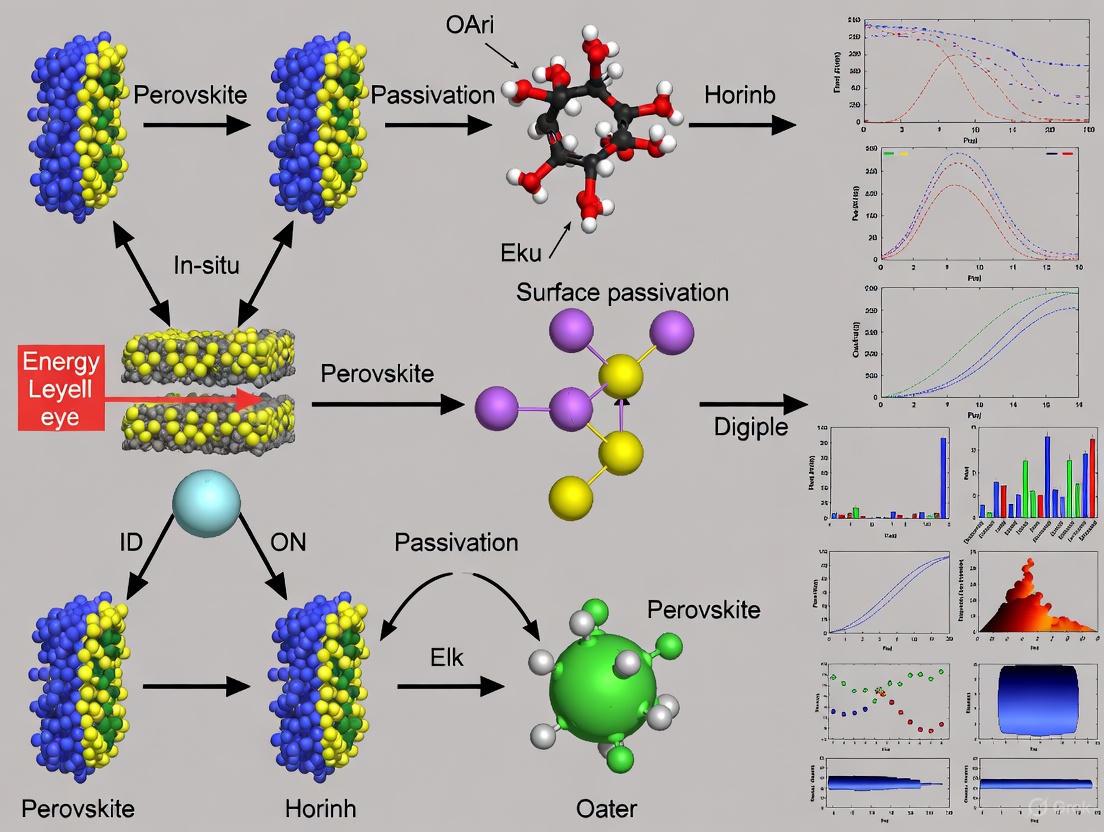
This article provides a comprehensive analysis of in-situ surface passivation strategies for perovskite quantum dots (PQDs), a critical technology for enhancing their optoelectronic properties and stability.
In-Situ Surface Passivation of Perovskite Quantum Dots: Techniques, Mechanisms, and Applications in Nanomedicine
Abstract
This article provides a comprehensive analysis of in-situ surface passivation strategies for perovskite quantum dots (PQDs), a critical technology for enhancing their optoelectronic properties and stability. Aimed at researchers and scientists in materials science and drug development, we explore the foundational principles of surface defects and the necessity of passivation. The review details advanced methodological approaches, including ligand engineering, pseudohalide treatment, and epitaxial growth, highlighting their application in creating highly efficient and stable PQDs. We further address common troubleshooting and optimization challenges, such as ligand lability and halide migration, and present rigorous validation techniques for assessing passivation efficacy. Finally, we discuss the transformative potential of well-passivated PQDs in biomedical applications, including biosensing, targeted drug delivery, and bio-imaging.
Unraveling the Need for Passivation: Surface Defects and Stability Challenges in Perovskite Quantum Dots
Inorganic halide perovskite quantum dots (IHPQDs), such as CsPbX₃ (X = Cl, Br, I), have emerged as pivotal materials for next-generation optoelectronic technologies due to their tunable optical properties, high photoluminescence quantum yields (PLQY), and defect-tolerant structures. [1] Despite their promising characteristics, the performance and stability of perovskite QDs are intrinsically limited by non-radiative recombination pathways originating from surface defects. These defects arise from the ultrahigh surface-area-to-volume ratio characteristic of quantum-confined nanostructures, where surface atoms constitute a significant fraction of the total material. [2]
The "soft" ionic nature of perovskite materials creates a dynamic surface equilibrium where ligands are constantly binding and detaching, leading to the formation of surface defects such as halide vacancies and under-coordinated lead atoms. [2] These defects create trap states within the bandgap that facilitate non-radiative recombination, whereby excited charge carriers relax without emitting photons, dissipating energy as heat instead. This process significantly reduces the internal quantum efficiency of light-emitting devices and contributes to accelerated degradation under operational conditions. [3] Understanding and mitigating these surface defects through advanced passivation strategies is therefore essential for realizing the full potential of perovskite QDs in optoelectronic applications.
Mechanisms of Non-Radiative Recombination at Surface Defects
Atomic Origin of Surface Defects
Surface defects in perovskite QDs primarily manifest as ionic vacancies and unpassivated surface sites. In lead halide perovskites, the most prevalent and detrimental defects are halide vacancies (particularly bromine vacancies in CsPbBr₃) which create shallow trap states that serve as efficient centers for non-radiative recombination. [3] These vacancies occur when the ionic lattice terminates abruptly at the QD surface, leaving under-coordinated atoms that disrupt the periodic potential of the crystal structure.
The problem is particularly pronounced on specific crystal facets. For instance, in PbS CQDs, non-polar <100> facets with S/Pb dual-terminations present a particular challenge for conventional passivation strategies that effectively passivate polar <111> facets with Pb atom-only termination. [4] Similarly, in CsPbBr₃ QDs, labile surface lattices and strong quantum confinement exacerbate the scale of exciton-surface lattice interactions, making the optical properties of small QDs especially prone to surface defect effects. [5]
Defect-Induced Photophysical Processes
Surface defect states introduce intermediate energy levels within the bandgap that dramatically alter the recombination dynamics of photogenerated charge carriers. The presence of these trap states enables several deleterious processes:
- Trap-Assisted Non-Radiative Recombination: Charge carriers are captured by defect states and recombine without photon emission, reducing PLQY and overall device efficiency. [3]
- Quantum Dot Photoionization: Surface defects trap photogenerated charge carriers, leaving the QD charged and enabling non-radiative Auger recombination for subsequently generated excitons. [5]
- Photoluminescence Blinking: The charging and discharging of QDs due to defect-mediated trapping and detrapping of carriers lead to stochastic intermittency in emission (blinking), a significant barrier for quantum light source applications. [5]
- Photodarkening: Photo-illumination can create additional defect states and induce surface ligand detachment, leading to irreversible degradation of optical properties over time. [5]
Table 1: Major Surface Defect Types and Their Impacts in Perovskite Quantum Dots
| Defect Type | Atomic Structure | Impact on Optoelectronic Properties | Preferred Passivation Approach |
|---|---|---|---|
| Halide Vacancies (VBr, VI) | Missing halide ions in crystal lattice | Creates shallow trap states; facilitates non-radiative recombination; reduces PLQY | Halide-rich ligands (PEABr, DDABr) [3] |
| Under-coordinated Pb atoms | Pb ions with incomplete coordination sphere | Acts as electron traps; promotes non-radiative decay | Lead-binding ligands (OA, OAm) [6] |
| Surface disorder | Amorphous regions at QD surface | Increases surface energy; enhances ion migration | Epitaxial ligand coverage [5] |
Advanced Surface Passivation Strategies
In Situ 2D Perovskite-like Ligand Passivation
A robust approach for passivating large and small-sized PbS quantum dots utilizes 2D neat perovskite (BA)₂PbI₄ as a surface engineering agent through an in situ solution-phase ligand-exchange strategy. [4] This treatment forms a thin shell of BA⁺ and I⁻ ions on the QD surface, enabling strong inward coordination that effectively reduces surface defect density, particularly on challenging non-polar <100> facets.
The methodology involves:
- QD Synthesis and Preparation: PbS CQDs with specific bandgaps (1.0 eV for large dots, 1.3 eV for small dots) are synthesized using standard colloidal methods.
- Ligand Exchange Solution Preparation: (BA)₂PbI₄ is prepared by reacting butylammonium iodide with lead iodide in a 2:1 molar ratio in dimethylformamide (DMF).
- In Situ Treatment: The PbS CQD solution is mixed with the (BA)₂PbI₄ solution at controlled stoichiometries and stirred for 6-12 hours at 60-80°C to allow complete ligand exchange.
- Purification: Treated QDs are purified via precipitation with antisolvents (typically toluene or hexane) and centrifugation at 6000-8000 rpm for 5-10 minutes.
This approach achieves impressive performance enhancements, with infrared solar cells employing (BA)₂PbI₄-capped large-sized PbS CQDs achieving power conversion efficiencies of 8.65%, while small-sized counterparts reach 13.1% PCE. [4]
Ligand Tail Engineering with π-π Stacking
For CsPbBr₃ QDs, a transformative strategy focuses on engineering ligand tails to promote attractive intermolecular interactions in the solid state. [5] Using phenethylammonium (PEA) ligands with low-steric tails enables π-π stacking that promotes the formation of a nearly epitaxial ligand layer, significantly reducing QD surface energy.
The experimental protocol comprises:
- Initial Surface Treatment: CsPbBr₃ QDs are first treated with n-butylammonium bromide (NBABr) to passivate halide vacancies.
- Ligand Exchange: Treated QDs are immersed in a saturated phenethylammonium bromide (PEABr) solution in a 3:1 solvent mixture of hexane and octane.
- Thermal Annealing: The mixture is heated to 70-80°C for 10-30 minutes to enhance ligand binding and promote inter-ligand ordering.
- Solid-State Fabrication: QDs are deposited onto substrates via spin-coating or drop-casting for device integration.
Density functional theory (DFT) calculations confirm that PEA-covered CsPbBr₃ surfaces reach minimum free energy when fully covered, with intermolecular π-π interactions driving near-epitaxial surface passivation. [5] Single QDs processed with this method exhibit nearly non-blinking emission with high single-photon purity (~98%) and extraordinary photostability, maintaining performance over 12 hours of continuous laser irradiation.
In Situ Epitaxial Quantum Dot Passivation
Core-shell structured perovskite QDs composed of methylammonium lead bromide (MAPbBr₃) cores and tetraoctylammonium lead bromide (tetra-OAPbBr₃) shells can be integrated during antisolvent-assisted crystallization of perovskite films for solar cell applications. [7] [8]
The detailed synthesis protocol:
- Core Precursor Preparation: 0.16 mmol methylammonium bromide (MABr) and 0.2 mmol lead(II) bromide (PbBr₂) are dissolved in 5 mL dimethylformamide (DMF) with 50 µL oleylamine and 0.5 mL oleic acid.
- Shell Precursor Solution: 0.16 mmol tetraoctylammonium bromide (t-OABr) is dissolved in 5 mL DMF following the same protocol.
- Nanoparticle Growth: 5 mL toluene is heated to 60°C in an oil bath, then 250 µL core precursor is rapidly injected.
- Shell Formation: A controlled amount of t-OABr-PbBr₃ precursor is injected, initiating core-shell structure formation (indicated by green coloration).
- Purification: After 5 minutes reaction, solution is centrifuged at 6000 rpm for 10 minutes, precipitate discarded, supernatant collected and recentrifuged with isopropanol at 15,000 rpm for 10 minutes.
This approach enables epitaxial compatibility between PQDs and the host perovskite matrix, effectively passivating grain boundaries and surface defects. [8] At optimal concentration (15 mg/mL), modified perovskite solar cells demonstrate remarkable PCE enhancement from 19.2% to 22.85%, with improved open-circuit voltage, short-circuit current density, and fill factor. [7]
Table 2: Performance Metrics of Advanced Surface Passivation Strategies
| Passivation Strategy | Material System | Performance Improvement | Stability Enhancement |
|---|---|---|---|
| 2D Perovskite-like Ligands | PbS CQDs (1.0 eV bg) | PCE: 8.65% in infrared photovoltaics [4] | Excellent ambient stability (hydrophobic BA+-rich surface) [4] |
| π-π Stacking Ligands | CsPbBr₃ QDs | Near non-blinking emission (>98% purity) [5] | 12 hours continuous operation; saturated excitation stability [5] |
| In Situ Epitaxial QD Passivation | MAPbBr₃@tetra-OAPbBr³ core-shell | PSC PCE: 19.2% → 22.85%; Voc: 1.120V → 1.137V [7] | >92% PCE retention after 900 h (vs. ~80% control) [7] |
| PEABr Treatment | CsPbBr₃ QD films | PLQY: 78.64%; Avg. PL lifetime: 45.71 ns [3] | Reduced surface roughness: 3.61 nm → 1.38 nm [3] |
Visualization of Surface Passivation Mechanisms
The Scientist's Toolkit: Essential Research Reagents
Table 3: Key Reagents for Surface Passivation of Perovskite QDs
| Reagent/Material | Chemical Function | Application Protocol | Impact on Surface Defects |
|---|---|---|---|
| Phenethylammonium Bromide (PEABr) | Halide vacancy passivation; π-π stacking | Post-synthetic treatment of CsPbBr₃ QDs; saturation in hexane/octane [5] [3] | Suppresses non-radiative recombination; enables near-non-blinking emission [5] |
| Butylammonium-based 2D Perovskites | Facet-selective passivation | In situ ligand exchange during QD synthesis [4] | Passivates challenging non-polar <100> facets; reduces trap density [4] |
| Oleylamine (OAm) | Binding to QD surfaces; defect passivation | Used during synthesis with optimized [OA]/[OAm] ratios [6] | Significantly improves PLQY by passivating surface defects [6] |
| Oleic Acid (OA) | Colloidal stability enhancement | Co-ligand with OAm during QD synthesis [6] | Improves QD stability without direct binding to surface [6] |
| Tetraoctylammonium Bromide (t-OABr) | Shell formation for core-shell structures | Secondary injection after core QD formation [7] [8] | Creates epitaxial shells that suppress non-radiative surface recombination [7] |
| Methylammonium Bromide (MABr) | Core perovskite formation | Primary precursor in core-shell QD synthesis [8] | Forms high-quality core structures for subsequent passivation [8] |
The strategic engineering of surface chemistry represents a cornerstone in overcoming the fundamental challenge of non-radiative recombination in perovskite quantum dots. The advanced passivation methodologies detailed in this application note—ranging from in situ 2D perovskite-like ligands and π-π stacking phenethylammonium treatments to epitaxial core-shell quantum dot integration—demonstrate that rational surface design can effectively suppress defect-mediated recombination pathways.
Future developments in this field will likely focus on multifunctional ligand systems that simultaneously address halide vacancies, under-coordinated metal sites, and interfacial energy alignment while providing enhanced environmental stability. The integration of computational screening methods, including density functional theory and machine learning approaches, will accelerate the discovery of novel passivation molecules tailored to specific perovskite compositions and crystal facets. [2] Additionally, the development of green synthesis protocols utilizing environmentally benign solvents and ligands will be essential for sustainable commercialization of perovskite QD technologies. [1] As these surface engineering strategies mature, they will unlock the full potential of perovskite quantum dots for high-performance optoelectronic devices, including displays, lighting, photovoltaics, and quantum light sources.
The journey of perovskite quantum dots (PQDs) from laboratory curiosities to commercial applications is significantly hampered by inherent instability issues. A primary source of this instability is the dynamic and labile nature of the surface-capping ligands, such as oleic acid (OA) and oleylamine (OAm), which are essential for colloidal stability and defect passivation. These ligands readily desorb from the QD surface during processing, film formation, or device operation, leading to the regeneration of surface defects, accelerated non-radiative recombination, and rapid degradation in the presence of environmental stressors like moisture. This Application Note examines the fundamental challenge of labile ligands and details advanced protocols, including bilateral interfacial passivation and the use of multi-anchoring binding molecules, to achieve robust in-situ surface passivation. The quantitative data and methodologies presented herein provide a roadmap for researchers to enhance the operational lifetime and efficiency of PQD-based optoelectronic devices.
Perovskite quantum dots, particularly lead halide perovskites (e.g., CsPbX₃, where X = Cl, Br, I), have garnered significant attention for their exceptional optoelectronic properties, including high photoluminescence quantum yield (PLQY), tunable bandgaps, and narrow emission linewidths. However, their path to commercialization is fraught with challenges, predominantly centered on poor long-term stability. A critical, often overlooked, factor is the role of surface ligands.
These ligands, typically long-chain organic molecules like OA and OAm, perform a dual function: they passivate undercoordinated surface atoms (e.g., Pb²⁺ ions) to suppress non-radiative recombination, and they stabilize the colloidal suspension during synthesis. Unfortunately, the binding of these conventional ligands is often weak and non-specific. During post-synthesis processing—such as purification, film deposition, or thermal annealing—these ligands can readily detach or be displaced. This ligand lability results in:
- Defect Regeneration: The exposure of undercoordinated ions creates trap states that quench luminescence and reduce efficiency [9].
- Surface Reactivity: The newly exposed, ionic surface becomes highly susceptible to attack by ambient moisture and oxygen [10].
- Particle Aggregation: The loss of steric hindrance leads to QD aggregation, degrading film morphology and charge transport [11].
Consequently, developing strategies to anchor ligands more firmly to the QD surface is a cornerstone of modern perovskite research, aiming to convert these labile binding sites into stable, robust interfaces.
Quantitative Data on Ligand Impact and Passivation Efficacy
The following tables summarize quantitative findings from recent studies, highlighting the profound impact of ligand management on device performance and stability.
Table 1: Impact of Ligand Ratios on Double Perovskite QD Properties
| Ligand Ratio [OA]/[OAm] | Photoluminescence Quantum Yield (PLQY) | Key Findings |
|---|---|---|
| 4 | ~25% | Lower emission efficiency, suboptimal passivation |
| 1 | ~55% | Highest PLQY; balanced passivation and stability |
| 0.25 | ~30% | Reduced PLQY; insufficient OA impacts colloidal stability |
Source: Adapted from [11]. The study on Cs₂NaInCl₆ QDs found that only OAm was directly bound to the QD surface, responsible for defect passivation, while OA played a critical role in overall stability.
Table 2: Performance Enhancement from Advanced Passivation Strategies
| Passivation Strategy | Device Type | Key Performance Metric | Control Device | Passivated Device | Stability Improvement |
|---|---|---|---|---|---|
| Bilateral Interface (TSPO1) [9] | Green QLED | External Quantum Efficiency (EQE) | 7.7% | 18.7% | T₅₀ from 0.8h to 15.8h |
| Multi-site Sb(SU)₂Cl₃ [12] | Perovskite Solar Cell | Power Conversion Efficiency (PCE) | ~23% (baseline) | 25.03% | T₈₀: 23,325 h (dark storage) |
| Core-Shell PQDs [13] | Perovskite Solar Cell | Power Conversion Efficiency (PCE) | 19.2% | 22.85% | >92% PCE retained after 900h |
Experimental Protocols for Advanced Surface Passivation
This section provides detailed methodologies for implementing two of the most promising strategies to overcome ligand lability.
Protocol: Bilateral Interfacial Passivation for QLEDs
This protocol, based on the work in [9], describes the passivation of both the top and bottom interfaces of a CsPbBr₃ QD film in a quantum dot light-emitting diode (QLED) structure.
- Objective: To suppress defect regeneration at the critical interfaces between the QD layer and the charge transport layers, thereby enhancing efficiency and operational stability.
Materials:
- Synthesized CsPbBr₃ QDs in non-polar solvent (e.g., hexane, octane).
- Passivation molecule solution: e.g., TSPO1 (diphenylphosphine oxide-4-(triphenylsilyl)phenyl) in anhydrous ethanol or isopropanol (0.5-2 mg/mL).
- Electron transport layer (ETL) materials (e.g., ZnO nanoparticles).
- Hole transport layer (HTL) materials (e.g., TFB, Poly-TPD).
- Pre-patterned ITO/glass substrates.
Procedure:
- Substrate Preparation: Clean ITO/glass substrates sequentially with detergent, deionized water, acetone, and isopropanol via sonication for 15 minutes each. Treat with UV-ozone plasma for 15-20 minutes.
- ETL Deposition: Spin-coat the ZnO nanoparticle solution onto the ITO substrate at 3000-4000 rpm for 30 s. Anneal at 100-120°C for 10-30 minutes in air.
- First (Bottom) Passivation Layer:
- Transfer the substrate into a nitrogen-filled glovebox.
- Deposit the TSPO1 solution onto the ZnO layer via spin-coating (3000-4000 rpm, 30 s) or thermal evaporation (1-2 Å/s to a thickness of 1-3 nm).
- QD Film Deposition:
- Spin-coat the CsPbBr₃ QD solution (e.g., 20-30 mg/mL in octane) onto the prepared substrate at 1500-2500 rpm for 20-30 s. This forms the emissive layer.
- Second (Top) Passivation Layer:
- Immediately after QD deposition, deposit the TSPO1 solution again using the same parameters as in Step 3, forming the top passivation layer.
- HTL and Electrode Completion:
- Spin-coat the HTL solution (e.g., TFB in toluene) onto the passivated QD film.
- Complete the device by thermally evaporating a MoO₃/Au or Ag anode.
- Key Considerations: The P=O group in TSPO1 has a strong binding affinity with undercoordinated Pb²⁺ on the QD surface, forming a stable complex that reduces trap states. The bilateral approach ensures both charge injection interfaces are optimized.
Protocol: In-Situ Integration of Core-Shell Perovskite Quantum Dots
This protocol, adapted from [13], involves the use of core-shell PQDs as additives during the antisolvent step of perovskite film fabrication for solar cells.
- Objective: To leverage epitaxially matched PQDs for grain boundary and surface defect passivation, improving photovoltaic performance and ambient stability.
Materials:
- Core-Shell PQDs: Pre-synthesized MAPbBr₃@tetra-OAPbBr₃ PQDs dispersed in chlorobenzene (CB) at various concentrations (e.g., 3-30 mg/mL).
- Perovskite Precursor Solution: (e.g., 1.6 M PbI₂, 1.51 M FAI, 0.04 M PbBr₂, 0.33 M MACl, 0.04 M MABr in 1 mL of DMF:DMSO (8:1 v/v)).
- Substrate: FTO/c-TiO₂/mp-TiO₂.
- Antisolvent: Chlorobenzene (CB).
Procedure:
- PQD Synthesis (Brief):
- Synthesize MAPbBr₃ core QDs by injecting a precursor solution into hot toluene.
- Subsequently, inject a shell precursor (tetraoctylammonium bromide-PbBr₃) to form the core-shell structure.
- Purify via centrifugation and redisperse in CB to create a stable stock solution [13].
- Perovskite Film Fabrication with PQDs:
- Spin-coat the perovskite precursor solution onto the mp-TiO₂ substrate using a two-step program (e.g., 1000 rpm for 10 s, then 4000 rpm for 30 s).
- During the final 5-10 seconds of the second spin-coating step, dynamically drop-cast 200 µL of the PQD/CB antisolvent solution onto the spinning film.
- Immediately after spinning, anneal the film on a hotplate at 100°C for 10 min, followed by 150°C for 10-20 min.
- Device Completion: Continue with the standard deposition of the hole transport layer (e.g., Spiro-OMeTAD) and metal electrode (e.g., Au).
- PQD Synthesis (Brief):
- Key Considerations: The optimal concentration of PQDs is critical. At 15 mg/mL, the core-shell PQDs embed at grain boundaries, providing a lattice-matched passivation layer that inhibits ion migration and non-radiative recombination without impeding charge transport.
The Scientist's Toolkit: Essential Research Reagents
Table 3: Key Reagents for In-Situ Passivation Research
| Reagent / Material | Chemical Formula / Example | Primary Function in Passivation |
|---|---|---|
| Oleylamine (OAm) | C₁₈H₃₅NH₂ | A common ligand; binds to QD surface, passivating defects and providing colloidal stability [11]. |
| Oleic Acid (OA) | C₁₇H₃₃COOH | A common ligand; often works synergistically with OAm. Critical for maintaining solution stability of QDs [11]. |
| Phosphine Oxide Molecules | TSPO1 | Multi-dentate passivator; P=O group strongly coordinates with undercoordinated Pb²⁺, reducing trap states at interfaces [9]. |
| Inorganic Perovskite QDs | CsPbBr₃, CsPbI₃ | The core material of study; their ionic surface is prone to defect formation and ligand loss [9]. |
| Antimony-Based Complex | Sb(SU)₂Cl₃ | Multi-anchoring ligand; binds via Se and Cl atoms to multiple adjacent sites on the perovskite lattice, enabling superior stability [12]. |
| Core-Shell PQDs | MAPbBr₃@tetra-OAPbBr₃ | Additive passivator; the shell provides a protective, epitaxial layer that passivates the core and enhances environmental stability [13]. |
Visualization of Passivation Strategies
The following diagrams, generated using DOT language, illustrate the logical relationships and mechanisms of the key passivation strategies discussed.
Diagram 1: From Problem to Solution. This workflow outlines the root cause of QD instability and logically connects it to three advanced research strategies aimed at mitigating the issue.
Diagram 2: Ligand Binding Modes and Outcomes. This diagram contrasts weak, single-site binding by traditional ligands with strong, multi-site or specific-interaction binding by advanced passivators, and their corresponding results on QD surface state.
The performance of quantum dot (QD)-based optoelectronic devices is intrinsically limited by surface defects that act as charge trapping sites, facilitating non-radiative recombination and degrading both efficiency and stability. In-situ passivation, defined as the integration of defect-passivating agents during QD synthesis or film formation, presents a transformative strategy to overcome these limitations. Unlike conventional ex-situ methods where passivation occurs after QD synthesis, in-situ approaches enable more uniform and thermodynamically favorable binding to nascent crystal surfaces, leading to superior defect suppression and enhanced material robustness [13] [14]. This Application Note delineates advanced protocols and provides a critical analysis of in-situ passivation techniques for perovskite and other QD systems, contextualized within a broader research framework aimed at achieving high-performance, industrially viable devices.
Experimental Approaches & Protocols
This section details specific methodologies for implementing in-situ passivation across different QD material systems.
In-Situ 2D Perovskite-like Ligand Exchange for PbS QDs
This protocol describes the formation of a robust 2D perovskite-like ligand shell on PbS CQDs during solution-phase ligand exchange, significantly enhancing passivation of non-polar facets and environmental stability [15].
- Primary Objective: To replace native oleic acid (OA) ligands with (BA)₂PbI₄ in situ, forming a thin shell of butylammonium (BA⁺) and iodide (I⁻) ions that passivate challenging non-polar <100> facets on PbS QDs.
- Materials:
- PbS-OA CQDs: Synthesized via hot-injection method, with exciton peaks at 933 nm (~1.3 eV) or 1180 nm (~1.0 eV) in n-octane [15].
- Lead Iodide (PbI₂): Serves as the lead and iodide source for the 2D perovskite ligand.
- n-Butylammonium Iodide (n-BAI): Provides the bulky organic cation for the 2D perovskite structure.
- Ammonium Acetate: Acts as a colloidal stabilizer during the ligand exchange process.
- Dimethylformamide (DMF): Polar solvent for the ligand exchange.
- Step-by-Step Procedure:
- Precursor Preparation: Disperse a stoichiometric mixture of PbI₂, n-BAI, and a small amount of ammonium acetate in DMF solvent. This forms the 2D perovskite precursor solution [15].
- Ligand Exchange: Inject the precursor solution into the PbS-OA CQD solution in n-octane. Vigorous stirring is required.
- Phase Transfer: The exchange process will cause the QDs to transfer from the non-polar n-octane phase to the polar DMF phase, indicating successful ligand replacement. The resulting QDs are denoted as PbS-(BA)₂PbI₄.
- Purification: Isolate the passivated QDs via centrifugation and redisperse in an appropriate solvent for film deposition.
- Critical Technical Notes: This method is versatile for both large- (1.0 eV) and small-bandgap (1.3 eV) PbS CQDs. The hydrophobic BA⁺-rich surface confers excellent ambient stability [15].
In-Situ Epitaxial Passivation with Core-Shell Perovskite QDs
This protocol involves the incorporation of pre-synthesized core-shell perovskite QDs during the antisolvent step of perovskite film formation, enabling epitaxial passivation of grain boundaries and surface defects [13].
- Primary Objective: To embed MAPbBr₃@tetra-OAPbBr₃ core-shell PQDs into a bulk perovskite film during crystallization, passivating defects and suppressing non-radiative recombination.
- Materials:
- Core-Shell PQDs: Methylammonium lead bromide (MAPbBr₃) cores encapsulated by a shell of tetraoctylammonium lead bromide (tetra-OAPbBr₃), synthesized via colloidal synthesis and dispersed in chlorobenzene (CB) [13].
- Perovskite Precursor Solution: e.g., containing PbI₂, FAI, PbBr₂, MACl, MABr in a DMF:DMSO solvent mixture.
- Antisolvent: Chlorobenzene (CB).
- Step-by-Step Procedure:
- PQD Synthesis: Synthesize core-shell PQDs by first injecting a MAPbBr₃ core precursor into heated toluene, followed by a controlled injection of the tetra-OAPbBr₃ shell precursor. Purify via centrifugation and redisperse in CB at a specific concentration (e.g., 15 mg/mL) [13].
- Film Fabrication: Deposit the perovskite precursor solution onto the substrate via a two-step spin-coating process (e.g., 2000 rpm for 10 s, then 6000 rpm for 30 s).
- In-Situ Integration: During the final seconds of the spin-coating process (e.g., last 18 s), introduce 200 µL of the PQD-CB solution as the antisolvent.
- Annealing: Thermally anneal the film to induce crystallization (e.g., 100°C for 10 min, then 150°C for 10 min). The core-shell PQDs become integrated at grain boundaries and surfaces during this process [13].
- Critical Technical Notes: The optimal concentration of PQDs is critical; 15 mg/mL was found to be effective. The epitaxial compatibility between the PQD shell and the host perovskite matrix is key to effective passivation.
Dual-Stage In-Situ Etching and Passivation for InP QDs
This protocol outlines a synthesis strategy for indium phosphide (InP) QDs that combines in-situ etching for defect removal with simultaneous surface passivation, achieving high photoluminescence quantum yield [14].
- Primary Objective: To synthesize high-performance green-emissive InP QDs by using an etchant during nucleation and shelling stages to achieve atomic-level defect passivation while preventing excessive etching.
- Materials:
- Zinc Fluoride (ZnF₂): Acts as the etchant during nucleation and shelling stages.
- Tri-n-octylphosphine (TOP): Serves as a ligand for nucleation control.
- Shell Precursors: For the growth of ZnSeS/ZnS multilayer shells.
- Carboxylic acid–thiol bifunctional ligands: For advanced surface modification post-synthesis.
- Step-by-Step Procedure:
- Nucleation with Etching: Conduct the nucleation of magic-sized InP clusters in the presence of ZnF₂ etchant and TOP ligands. The etchant removes surface oxides and defective layers, while TOP ligands control growth and suppress excessive etching [14].
- Shell Growth with Etching: Continue the use of ZnF₂ during the subsequent shell growth stages (ZnSeS/ZnS). This promotes a coherent interface and further passivates surface defects.
- Interfacial Engineering: A thin ZnSe interfacial layer is integrated to improve lattice matching between the InP core and the wider-bandgap ZnS shell.
- Surface Ligand Exchange: Perform a final surface modification with bifunctional ligands to enhance charge transport properties for device integration [14].
- Critical Technical Notes: The "etching–optical properties–surface passivation interdependence" must be carefully balanced. This approach effectively addresses long-standing challenges in controlling defects during InP QD synthesis.
Performance Data & Comparative Analysis
The following tables summarize the quantitative performance enhancements achieved by the in-situ passivation techniques detailed above.
Table 1: Photovoltaic performance of PbS QD solar cells with in-situ 2D perovskite-like ligand passivation. [15]
| QD Type (Bandgap) | Passivation Ligand | Power Conversion Efficiency (PCE) | Open-Circuit Voltage (VOC) | Short-Circuit Current Density (JSC) | Noted Stability Improvement |
|---|---|---|---|---|---|
| Large-sized (1.0 eV) | (BA)₂PbI₄ | 8.65% | Data Not Provided | Data Not Provided | Excellent ambient stability |
| Large-sized (1.0 eV) | Control (PbI₂) | < 8.65% | Data Not Provided | Data Not Provided | Lower stability |
| Small-sized (1.3 eV) | (BA)₂PbI₄ | 13.1% | Data Not Provided | Data Not Provided | Significant thermal stability |
| Small-sized (1.3 eV) | Control (PbI₂) | 11.3% | Data Not Provided | Data Not Provided | Lower thermal stability |
Table 2: Performance enhancement of perovskite solar cells via in-situ epitaxial passivation with core-shell PQDs. [13]
| Device Parameter | Control Device | PQD-Passivated Device | Relative Enhancement |
|---|---|---|---|
| Power Conversion Efficiency (PCE) | 19.2% | 22.85% | +19.0% |
| Open-Circuit Voltage (VOC) | 1.120 V | 1.137 V | +17 mV |
| Short-Circuit Current Density (JSC) | 24.5 mA/cm² | 26.1 mA/cm² | +1.6 mA/cm² |
| Fill Factor (FF) | 70.1% | 77.0% | +6.9% (absolute) |
| Stability (PCE retention after 900h) | ~80% | >92% | Significantly improved |
Table 3: Optical performance of InP-based QDs synthesized via in-situ etching and passivation. [14]
| Parameter | Performance Metric |
|---|---|
| Photoluminescence Quantum Yield (PLQY) | 93% |
| Emission Linewidth (FWHM) | 36 nm |
| Maximum External Quantum Efficiency (in QLED) | 4.6% |
| Peak Maximum Luminance (in QLED) | >13,000 cd/m² |
Visualization of Workflows
The following diagrams illustrate the logical progression and key components of the described in-situ passivation strategies.
In-Situ Passivation Workflow
Core-Shell PQD Passivation Mechanism
The Scientist's Toolkit: Essential Reagents & Materials
Table 4: Key research reagents for in-situ passivation strategies.
| Reagent/Material | Function in In-Situ Passivation | Exemplary Application |
|---|---|---|
| n-Butylammonium Iodide (n-BAI) | Spacer cation for forming 2D perovskite ligands; confers hydrophobicity and stability [15]. | 2D perovskite-like ligand for PbS QDs [15]. |
| Tetraoctylammonium Bromide (t-OABr) | Forms a wider-bandgap, hydrophobic shell around PQD cores, enhancing stability and passivation [13]. | Core-shell PQDs for epitaxial passivation [13]. |
| Zinc Fluoride (ZnF₂) | In-situ etchant that removes surface oxides and defective layers while providing Zn²⁺ for surface coordination [14]. | Dual-stage etching and passivation of InP QDs [14]. |
| Tri-n-octylphosphine (TOP) | Ligand that controls nucleation and growth, preventing excessive etching during synthesis [14]. | Nucleation control in InP QD synthesis [14]. |
| Ammonium Acetate | Colloidal stabilizer that assists in maintaining dispersion during ligand exchange processes [15]. | Solution-phase ligand exchange for PbS QDs [15]. |
In the advancement of perovskite quantum dot (PQD) research, particularly for in-situ surface passivation strategies, a multifaceted analytical approach is paramount. The performance and stability of these nanomaterials are critically dependent on their surface chemistry, where ligands and passivating molecules interact with the ionic crystal structure. This application note details the synergistic use of Fourier Transform Infrared (FTIR) spectroscopy, Nuclear Magnetic Resonance (NMR) spectroscopy, and Density Functional Theory (DFT) calculations to provide a comprehensive picture of surface interactions, ligand binding efficacy, and electronic structure modification. Framed within a broader thesis on in-situ passivation, these protocols offer researchers a robust toolkit for validating and refining surface engineering approaches in PQDs.
FTIR Spectroscopy: Probing Surface Ligand Binding
Fourier Transform Infrared (FTIR) spectroscopy is a fundamental technique for identifying the chemical functional groups present on the PQD surface and characterizing the nature of their binding to the inorganic crystal lattice.
Application Protocol and Data Interpretation
Experimental Workflow:
- Sample Preparation: Prepare purified and dried PQD powder (e.g., CsPbI3 or MAPbBr3). For transmission mode, homogenously mix ~1 mg of PQD powder with 100 mg of potassium bromide (KBr) and press into a pellet. For attenuated total reflectance (ATR) mode, a small amount of pure PQD powder or film can be directly placed on the crystal.
- Data Acquisition: Acquire FTIR spectra in the range of 4000–400 cm⁻¹ with a resolution of 4 cm⁻¹. Collect and subtract a background spectrum of the empty KBr pellet or clean ATR crystal.
- Data Analysis: Identify characteristic vibrational modes of common ligands (e.g., oleic acid (OA), oleylamine (OAm)) and new passivating molecules. Key shifts in peak position or intensity compared to the free ligand indicate surface binding.
Table 1: Key FTIR Signatures for Common Perovskite Quantum Dot Ligands
| Functional Group / Ligand | Characteristic FTIR Peaks (cm⁻¹) | Interpretation of Surface Binding |
|---|---|---|
| Oleic Acid (OA) | C=O stretch: ~1710 (free acid) ~1500-1650 (carboxylate) | Shift from ~1710 to lower wavenumbers indicates deprotonation and coordination to Pb²⁺ sites [16] [17]. |
| Oleylamine (OAm) | N-H stretch: ~3300-3500 C-N stretch: ~1000-1200 | Broadening or weakening of N-H stretch suggests interaction with the perovskite surface [17]. |
| BODIPY-OH | C-O stretch, B-F stretch | Changes in intensity and position confirm ligand exchange and binding [17]. |
| TMeOPPO-p | P=O stretch: ~1100-1200 | Shift in P=O stretch confirms coordination with uncoordinated Pb²⁺ [18]. |
Key Findings from Literature
FTIR is crucial for verifying successful ligand exchange or passivation. For instance, in MAPbBr3 QDs passivated with BODIPY-OH dye molecules, FTIR confirmed the successful binding of the new ligand to the QD surface [17]. Similarly, after treating CsPbI3 QDs with the conjugated molecule PCBM, the significant reduction in C-H stretching modes (~2851 and 2921 cm⁻¹) confirmed the effective removal of long-chain native oleate ligands, which is a critical step for enhancing charge transport in photovoltaic devices [19].
NMR Spectroscopy: Unveiling the Local Electronic Environment
Nuclear Magnetic Resonance (NMR) spectroscopy provides atomic-level insights into the local electronic structure and dynamics of atoms within the PQD, offering a unique ground-state perspective that complements optical spectroscopy.
Application Protocol and Data Interpretation
Experimental Workflow:
- Sample Preparation: Dissolve 5-10 mg of purified PQDs in 0.6 mL of deuterated solvent (e.g., CDCl3, toluene-d8). Ensure the sample is fully dissolved and homogeneous.
- Data Acquisition: Conduct 1H NMR to study organic ligand surface coverage and dynamics. For direct analysis of the perovskite lattice, acquire 207Pb or 133Cs NMR spectra, which may require specialized probes due to low sensitivity.
- Data Analysis: For 1H NMR, compare chemical shifts and peak broadening with free ligand spectra. For 207Pb NMR, the chemical shift is highly sensitive to the local electronic density and structural confinement.
Table 2: NMR Nuclei and Their Utility in Perovskite Quantum Dot Analysis
| Nucleus | Information Revealed | Example Experimental Observation |
|---|---|---|
| 1H | Ligand surface coverage, dynamics, and binding. | Presence of specific peaks (e.g., from -OCH3 at δ 3.81) confirms the incorporation of passivating molecules like TMeOPPO-p on the QD surface [18]. |
| 31P | Direct detection of phosphorous-containing passivators. | A signal in 31P NMR of purified QDs confirms the presence of TMeOPPO-p, proving its interaction with the surface [18]. |
| 207Pb | Local electronic structure, quantum confinement effects, dynamic disorder. | Size-dependent chemical shift in CsPbBr3; suppression of this shift in hybrid MAPbBr3 at room temperature due to dynamic disorder from organic cations [20]. |
Key Findings from Literature
NMR challenges conventional assumptions about PQDs. While optical spectroscopy shows a blueshift with decreasing QD size due to quantum confinement, 207Pb NMR reveals that the local electronic structure at the Pb nucleus in hybrid perovskites (MAPbBr3, FAPbBr3) does not follow this trend at room temperature. This is attributed to dynamic disorder from the fluctuating organic cations, which masks the confinement effect. This effect is reversed when the cation motion is frozen at low temperatures, highlighting the power of NMR to decouple dynamic and quantum effects [20].
DFT Calculations: Predicting and Rationalizing Surface Interactions
Density Functional Theory (DFT) calculations provide a theoretical foundation for interpreting experimental data, allowing researchers to predict binding energies, electronic structures, and the efficacy of passivating molecules at an atomic level.
Computational Protocol
Workflow for Surface Passivation Studies:
- Model Construction: Build a slab model of the relevant PQD surface facet (e.g., (100), (111)) or a cluster model representing the QD surface site.
- Geometry Optimization: Optimize the structure of the bare surface and the surface with adsorbed passivating molecules to find the most stable configuration.
- Property Calculation:
- Calculate the projected density of states (PDOS) to identify the presence and origin of trap states (e.g., from uncoordinated Pb²⁺) and their passivation.
- Compute the binding energy (Eb) of the ligand to the surface: ( Eb = E{[PQD+Ligand]} - (E{[PQD]} + E{[Ligand]}) ).
- Analyze charge transfer and electronic density difference maps.
Key Findings from Literature
DFT is instrumental in rational ligand design. For example, calculations on the lattice-matched anchor TMeOPPO-p showed that its P=O and -OCH3 groups, with an interatomic distance of 6.5 Å, perfectly match the lattice spacing of CsPbI3 QDs. The PDOS analysis demonstrated that this multi-site anchoring completely eliminated the trap states associated with uncoordinated Pb²⁺, whereas single-site anchors only partially mitigated them [18]. In another study, DFT calculations revealed that the binding energy of oleylamine and oleic acid ligands to the surface of FA-rich CsxFA1-xPbI3 PQDs was stronger than to Cs-rich ones, directly explaining the composition-dependent thermal stability observed experimentally [21].
The Integrated Workflow: A Case Study on Lattice-Matched Anchoring
The true power of these techniques is realized when they are used in concert. The development of the TMeOPPO-p passivator provides an excellent case study.
Diagram: The integrated workflow for developing and validating surface passivation strategies for perovskite quantum dots, combining DFT design with experimental synthesis and characterization.
- DFT-Guided Design: The molecule TMeOPPO-p was designed with a interatomic distance of 6.5 Å between its binding oxygen atoms to match the CsPbI3 lattice spacing. PDOS calculations predicted the elimination of trap states via multi-site anchoring [18].
- FTIR and NMR Verification: Experimental FTIR showed a shift in the P=O stretch, confirming coordination. 1H and 31P NMR spectra directly verified the presence of TMeOPPO-p on the purified QD surface, proving successful passivation [18].
- Performance Outcome: This targeted passivation yielded CsPbI3 QDs with a near-unity photoluminescence quantum yield (PLQY) of 97% and enabled light-emitting diodes with an external quantum efficiency of up to 27% [18].
Research Reagent Solutions
Table 3: Essential Materials for In-Situ Surface Passivation Studies
| Reagent / Material | Function / Role | Example from Literature |
|---|---|---|
| Oleic Acid (OA) / Oleylamine (OAm) | Standard long-chain ligands for colloidal synthesis and stabilization. | Used in the initial LARP synthesis of CsPbBr3 and MAPbBr3 QDs [16] [17]. |
| Tris(4-methoxyphenyl)phosphine Oxide (TMeOPPO-p) | Lattice-matched multi-site anchor for defect passivation. | Passivated uncoordinated Pb²⁺ in CsPbI3 QDs, boosting PLQY and device efficiency [18]. |
| Phenyl-C61-butyric acid methyl ester (PCBM) | Fullerene derivative for surface passivation and charge transport. | Integrated into CsPbI3 QD films to passivate defects and enhance charge extraction in solar cells [19]. |
| BODIPY-OH | Short-chain dye ligand for photocatalytic applications. | Used to passivate MAPbBr3 QDs, enabling efficient carrier separation and singlet oxygen generation [17]. |
| (BA)2PbI4 (2D Perovskite) | Robust ionic ligand for surface engineering. | Employed for in-situ ligand exchange on PbS QDs, improving passivation and ambient stability [4]. |
| Core-Shell PQDs (e.g., MAPbBr3@Tetra-OAPbBr3) | Epitaxial passivator for bulk films. | Added during perovskite solar cell fabrication to passivate grain boundaries and suppress non-radiative recombination [7]. |
The integration of FTIR, NMR, and DFT calculations forms a powerful, self-validating toolkit for advancing in-situ surface passivation in perovskite quantum dots. FTIR provides quick verification of chemical binding, NMR offers unparalleled insight into the local ground-state electronic structure and ligand dynamics, and DFT allows for the predictive design and theoretical understanding of passivating molecules. By applying these techniques in a synergistic manner, as demonstrated in the integrated workflow, researchers can move beyond trial-and-error approaches and rationally develop high-performance and stable perovskite quantum dot materials for optoelectronic devices, photocatalysis, and beyond.
Advanced Passivation Techniques: From Ligand Engineering to Epitaxial Growth
The pursuit of high-performance and stable optoelectronic devices based on colloidal quantum dots (CQDs) has been hampered by insufficient surface passivation, particularly on non-polar crystal facets prevalent in larger-sized nanocrystals. Traditional short-chain ligands like lead iodide (PbI₂) provide inadequate coverage and suffer from weak ionic nature, leaving devices vulnerable to environmental degradation and surface defect-mediated performance losses [4]. The emergence of 2D perovskite-like ligands represents a paradigm shift in surface engineering strategies, offering a robust, versatile solution for comprehensive facet passivation.
These advanced ligands form a thin, coherent shell around quantum dots through in-situ solution-phase ligand-exchange strategies. Unlike conventional ligands that struggle with non-polar facets, 2D perovskite-like ligands enable strong inward coordination that effectively reduces surface defect density while preventing CQD aggregation and fusion [4]. This approach leverages the structural integrity and hydrophobic properties of layered perovskite materials to create a protective barrier that enhances both performance and environmental stability. The resulting core-shell architecture combines the excellent optoelectronic properties of quantum dots with the stability of 2D perovskite materials, opening new possibilities for infrared photovoltaics, light-emitting diodes, and other quantum-dot-based technologies.
Performance Data and Comparative Analysis
Quantitative assessments demonstrate the significant advantages of 2D perovskite-like ligands across various material systems and device configurations. The following table summarizes key performance metrics achieved through this passivation strategy.
Table 1: Performance Comparison of Quantum Dot Devices with Different Ligand Strategies
| Material System | Ligand Type | Key Performance Metrics | Stability Assessment |
|---|---|---|---|
| Large-sized PbS CQDs (1.0 eV bandgap) | (BA)₂PbI₄ (2D perovskite) | PCE: 8.65% [4] | Excellent ambient stability (hydrophobic BA⁺-rich surface) [4] |
| Small-sized PbS CQDs (1.3 eV bandgap) | (BA)₂PbI₄ (2D perovskite) | PCE: 13.1% [4] | Significantly enhanced thermal stability [4] |
| Small-sized PbS CQDs (1.3 eV bandgap) | PbI₂ (control) | PCE: 11.3% [4] | Lower stability compared to 2D perovskite analogues [4] |
| CsPbBr₃ QDs | Phenethylammonium (PEA) with π-π stacking | Near-non-blinking single photon emission (~98% purity) [5] | Extraordinary photostability (12 hours continuous operation) [5] |
| Quasi-2D Perovskite LEDs | PPT ligand (conjugated) | EQE: 26.3% (average 22.9%) [22] | Half-life: ~220 hours (0.1 mA/cm²), 2.8 hours (12 mA/cm²) [22] |
The performance benefits extend beyond efficiency metrics to fundamental material properties. Ligands with attractive intermolecular interactions between low-steric ligand tails, such as π-π stacking in phenethylammonium (PEA) ligands, promote the formation of a nearly epitaxial ligand layer that significantly reduces quantum dot surface energy [5]. This structural arrangement enables remarkable photostability, with single CsPbBr₃ quantum dots maintaining nearly non-blinking photoluminescence emissions even under continuous laser irradiation for 12 hours [5].
Table 2: Impact of Ligand Structural Features on Passivation Efficacy
| Ligand Feature | Impact on Passivation | Experimental Evidence |
|---|---|---|
| π-conjugation length | Suppresses ion transport and phase disproportionation [22] | Narrowed phase distribution in quasi-2D perovskite films [22] |
| Cross-sectional area | Controls lattice distortions and structural stability [22] | Enhanced radiative recombination efficiencies [22] |
| Nitrogen content | Dominant driver of structural distortions in 2D perovskites [23] | Machine learning prediction with 92.6% accuracy [23] |
| Hydrophobic moieties | Enhances ambient stability through moisture resistance [4] | BA⁺-rich surfaces maintaining performance in environmental conditions [4] |
Experimental Protocols
In-situ Solution-Phase Ligand Exchange for PbS CQDs
Principle: This protocol describes the formation of a thin shell of BA⁺ and I⁻ ions on PbS CQD surfaces via in-situ solution-phase ligand exchange, enabling strong inward coordination that effectively reduces surface defect density [4].
Materials:
- PbS CQDs: Synthesized with oleic acid ligands, bandgap tuned to 1.0 eV (large-sized) or 1.3 eV (small-sized) for infrared photovoltaics [4]
- (BA)₂PbI₄ precursor: Butylammonium iodide (BAI) and PbI₂ in appropriate stoichiometric ratio
- Solvents: Dimethylformamide (DMF), octane, and acetone (anhydrous grades)
- Substrates: Glass/ITO substrates for film deposition
Procedure:
- Prepare PbS CQD stock solution: Disperse PbS CQDs in octane at concentration of 20-30 mg/mL
- Synthesize (BA)₂PbI₄ ligand solution: Dissolve BAI and PbI₂ in DMF at 50°C with molar ratio 2:1, concentration 0.05-0.1 M
- Execute ligand exchange:
- Mix PbS CQD solution with (BA)₂PbI₄ solution at volume ratio 1:2
- Stir vigorously for 5-10 minutes at room temperature to facilitate complete ligand exchange
- Precipitate and purify:
- Add acetone (anti-solvent) at 2:1 volume ratio to precipitate exchanged CQDs
- Centrifuge at 8000 rpm for 5 minutes and discard supernatant
- Redisperse and process:
- Redisperse purified CQDs in appropriate solvent for film deposition
- Spin-coat onto substrates at 2000-3000 rpm for 30-60 seconds
- Anneal and characterize:
- Thermal anneal at 70-90°C for 10 minutes to remove residual solvent
- Characterize film quality, optical properties, and device performance
Troubleshooting:
- Aggregation issues: Optimize ligand concentration and mixing time
- Incomplete exchange: Ensure stoichiometric balance between native and new ligands
- Film non-uniformity: Adjust spin-coating parameters and solvent composition
Solid-State Ligand Engineering for Non-Blinking Perovskite QDs
Principle: This protocol utilizes attractive intermolecular interactions (π-π stacking) between low-steric ligand tails to promote formation of nearly epitaxial ligand layers that significantly reduce QD surface energy, enabling non-blinking single photon emission with high photostability [5].
Materials:
- CsPbBr₃ QDs: Synthesized via hot-injection method, size below exciton Bohr diameter for strong quantum confinement [5]
- Phenethylammonium bromide (PEABr): Purified by recrystallization before use
- n-butylammonium bromide (NBABr): For initial surface treatment
- Solvents: Toluene, hexane, and acetonitrile (anhydrous)
Procedure:
- Initial QD preparation:
- Synthesize CsPbBr₃ QDs with standard oleic acid/oleylamine ligands
- Purify by precipitation/redispersion cycle three times
- Primary ligand exchange:
- Treat QDs with excess NBABr in toluene at 50°C for 1 hour
- Precipitate with acetonitrile, centrifuge, and collect exchanged QDs
- Secondary PEA treatment:
- Immerse NBABr-treated QDs in saturated PEABr solution
- Heat at 60-70°C for 30 minutes to promote ligand tail stacking
- Solid-state immobilization:
- Deposit QDs on substrate by spin-coating or drop-casting
- Mild thermal treatment (50-60°C) to enhance inter-ligand π-π stacking
- Photostability assessment:
- Characterize single QD photoluminescence under continuous excitation
- Monitor blinking statistics and photodarkening resistance
Validation Metrics:
- Blinking suppression: Near-non-blinking behavior with >95% ON-time fraction [5]
- Photostability: Stable emission for >12 hours continuous operation [5]
- Single photon purity: ~98% purity in single photon emission [5]
Diagram 1: In-situ 2D Perovskite Ligand Exchange Workflow. This diagram illustrates the sequential process of replacing native ligands with 2D perovskite-like ligands to achieve comprehensive facet passivation and enhanced material properties [4].
The Scientist's Toolkit: Essential Research Reagents
Table 3: Key Research Reagent Solutions for 2D Perovskite-like Ligand Studies
| Reagent Solution | Composition | Function & Mechanism | Application Notes |
|---|---|---|---|
| Butylammonium-based 2D Perovskite Precursor | (BA)₂PbI₄ in DMF or DMSO | Forms robust passivation shell on polar and non-polar facets [4] | Optimal for PbS CQDs in infrared photovoltaics [4] |
| π-Stacking Ligand Solution | Phenethylammonium bromide (PEABr) in toluene | Promotes epitaxial ligand coverage via π-π interactions [5] | Essential for non-blinking CsPbBr₃ QDs; requires thermal annealing [5] |
| Conjugated Ligand Systems | PPT or PPT' ligands with extended π-systems | Suppresses phase disproportionation in quasi-2D perovskites [22] | Enables narrow phase distribution in PeLEDs [22] |
| Anti-solvent QD Dispersion | CdSe/ZnS QDs in toluene | Enhances stability via electric field redistribution [24] | Used in LARP process for PeLEDs; 15 mg/mL concentration [24] |
| Machine Learning Screening Library | Curated dataset of 15 ligand descriptors | Predicts 2D perovskite formation with 92.6% accuracy [23] | Identifies nitrogen content as key distortion driver [23] |
Mechanism and Signaling Pathways
The exceptional passivation efficacy of 2D perovskite-like ligands stems from multifaceted mechanisms operating at both molecular and macroscopic scales. At the fundamental level, directional noncovalent interactions between ligand moieties drive self-assembly into coherent, epitaxial-like layers on quantum dot surfaces [25]. For aromatic ligands like phenethylammonium (PEA), π-π stacking between adjacent ligand tails creates attractive intermolecular forces that significantly reduce surface energy and enhance binding stability [5]. Density functional theory (DFT) calculations confirm that ligand systems with attractive tail interactions achieve minimum surface energy at full coverage, unlike bulky aliphatic ligands where complete passivation is energetically forbidden [5].
The passivation mechanism proceeds through three coordinated pathways:
Facet-Selective Coordination: The 2D perovskite ligands exhibit strong inward coordination particularly on challenging non-polar <100> facets that exhibit S/Pb dual-terminations, which are prevalent in larger-sized CQDs and inadequately passivated by conventional ligands [4].
Ion Migration Suppression: Extended π-conjugation and increased cross-sectional area in designed ligand structures dramatically suppress ion transport by raising activation energy barriers for halide migration. Molecular dynamics simulations reveal that conjugated ligands like PPT and PPT' require twice the free energy for I⁻ diffusion compared to conventional BA ligands [22].
Phase Distribution Control: In quasi-2D perovskite systems, tailored ligand structures kinetically inhibit phase disproportionation by modulating interlayer diffusion barriers, enabling narrow n-phase distributions that enhance radiative recombination efficiencies and emission color purity [22].
Diagram 2: Multi-pathway Mechanism of 2D Perovskite Ligand Passivation. This diagram illustrates how 2D perovskite-like ligands simultaneously address multiple degradation pathways through comprehensive surface passivation [4] [5] [22].
The structural parameters of organic ligands precisely control their passivation functionality through well-defined relationships. Machine learning analyses of 15 ligand descriptors have established that nitrogen content serves as the dominant driver of structural distortions in 2D perovskites, while hydrogen bonding and π-conjugation provide counterbalancing stabilization effects [23]. Increasing nitrogen atoms in ligand structures systematically reduces octahedral X-M-X angles while enhancing lattice distortions, enabling predictive design of passivation ligands with tailored optoelectronic properties [23].
Application Scope and Versatility
The 2D perovskite-like ligand strategy demonstrates remarkable versatility across diverse material systems and device architectures. In infrared photovoltaics, the approach enables high-performance PbS CQD solar cells with tunable bandgaps, achieving champion power conversion efficiencies of 13.1% for small-sized CQDs (1.3 eV bandgap) and 8.65% for large-sized CQDs (1.0 eV bandgap) [4]. The hydrophobic nature of BA⁺-rich surfaces confers excellent ambient stability, addressing a critical limitation of previous passivation strategies [4].
In light-emitting applications, ligand engineering enables unprecedented control over phase distribution in quasi-2D perovskite LEDs. Conjugated ligands with extended π-systems and tailored cross-sectional areas (PPT, PPT') suppress phase disproportionation, yielding devices with narrow emission profiles and exceptional external quantum efficiencies up to 26.3% [22]. The enhanced phase stability translates to improved operational lifetimes, with half-lives of approximately 220 hours at low current densities [22].
For quantum light sources, phenethylammonium ligands with optimized π-π stacking create nearly non-blinking CsPbBr₃ quantum dots with single-photon emission purity of ~98% [5]. The extraordinary photostability enables continuous operation for 12 hours under saturated excitation conditions, permitting detailed studies of size-dependent exciton radiative rates and emission linewidths at the single-particle level [5].
The ligand strategy further extends to nanowire architectures, where directional noncovalent interactions guide 1D anisotropic growth within the 2D crystal plane [25]. This bottom-up assembly approach yields quantum-well nanowires with robust exciton-photon coupling (Rabi splitting energies up to 700 meV) and enhanced lasing performance compared to exfoliated crystals [25].
Concluding Remarks
The development of 2D perovskite-like ligands represents a significant advancement in quantum dot surface engineering, transitioning from partial facet passivation to comprehensive interfacial control. The multi-faceted mechanism—combining facet-specific coordination, ion migration suppression, and phase distribution control—enables simultaneous enhancement of optoelectronic performance and environmental stability across diverse device platforms.
The integration of machine learning frameworks with experimental validation accelerates the discovery of optimized ligand structures, establishing quantitative correlations between molecular descriptors and functional properties [23]. This data-driven approach, combined with fundamental insights into intermolecular interactions and crystallization kinetics, provides a robust foundation for rational design of next-generation passivation materials.
As research progresses, the expanding library of 2D perovskite-like ligands promises to unlock new frontiers in quantum dot technology, from stable infrared photovoltaics to quantum light sources and neuromorphic computing elements. The precise control over surface chemistry and interface properties demonstrated by these advanced ligand systems establishes a versatile platform for developing high-performance, solution-processable optoelectronics with tailored functionality.
In the pursuit of high-performance and stable perovskite quantum dot (PeQD) optoelectronics, in-situ surface passivation has emerged as a critical frontier in materials engineering. The intrinsic ionic nature of metal halide perovskites facilitates remarkable optoelectronic properties but also predisposes them to halide ion migration, a primary degradation pathway that severely limits device longevity and performance under operational conditions. This phenomenon is particularly pronounced in mixed-halide systems, such as CsPb(Br/I)₃, which are essential for achieving pure red emission as specified by the Rec. 2020 display standard [26].
Pseudohalide ions, particularly thiocyanate (SCN⁻), have recently demonstrated exceptional capabilities in suppressing this ion migration through robust surface coordination. Unlike conventional organic ligands that often exhibit weak binding and thermal instability, SCN⁻ ligands provide dual-coordination sites (sulfur and nitrogen) that strongly chelate undercoordinated Pb²⁺ sites on the PeQD surface [26]. This passivation mechanism not only reduces surface defect densities but also directly inhibits the vacancy-mediated migration of halide ions, thereby enhancing both operational stability and optoelectronic performance. This Application Note details the protocols and mechanistic insights for implementing SCN⁻-based pseudohalide passivation in PeQD systems, providing a framework for advancing in-situ passivation strategies within perovskite research.
Mechanism of Action
The efficacy of SCN⁻ pseudohalide ligands in stabilizing PeQDs stems from their multifaceted interaction with the perovskite surface, which simultaneously addresses several key degradation pathways.
Chemical Bonding and Defect Passivation
Thiocyanate ions (SCN⁻) function as X-site substitutes in the perovskite lattice, binding strongly to undercoordinated Pb²⁺ surface sites. This interaction is characterized by a dual-coordination capability through both sulfur and nitrogen atoms, creating a more stable and energetically favorable surface complex compared to monodentate organic ligands [26]. Density functional theory (DFT) calculations reveal that this strong chemisorption effectively fills halide vacancy sites, which are the primary channels for ion migration [26] [27]. The passivation mechanism reduces the formation energy of critical defects while eliminating mid-gap trap states that facilitate non-radiative recombination, thereby significantly enhancing photoluminescence quantum yield (PLQY) [26].
Suppression of Halide Migration
Halide ion migration in mixed-halide perovskites occurs via a vacancy-mediated mechanism under electric fields and illumination. The introduction of SCN⁻ ligands directly competes with this process through two complementary actions:
- Steric Blocking: The physical presence of strongly-bound SCN⁻ ions at surface vacancy sites reduces the available pathways for halide ion movement.
- Energetic Stabilization: The strong Pb-SCN bond reinforces the surface lattice structure, increasing the activation energy required for halide ion displacement and subsequent migration [26].
This suppression is critically important for maintaining spectral stability in mixed-halide PeLEDs, preventing the formation of iodide- and bromide-rich domains that lead to undesirable emission broadening and peak shifts [26].
Table 1: Key Performance Metrics of SCN⁻-Passivated PeQDs vs. Non-Passivated Controls
| Performance Parameter | SCN⁻-Passivated PeQDs | Pristine (Non-Passivated) PeQDs | Improvement Factor |
|---|---|---|---|
| Peak External Quantum Efficiency (EQE) | 22.1% [26] | Not Reported | Significant |
| Luminance (cd/m²) | 31,000 [26] | Not Reported | Significant |
| Operational Lifetime (T₅₀) | 1020 min [26] | ~204 min (estimated) | 5-fold [26] |
| Photoluminescence Quantum Yield (PLQY) | Significantly Enhanced [26] | Baseline | Substantial |
| Spectral Stability | Excellent [26] | Poor due to halide segregation | Drastic Improvement |
Experimental Protocols
This section provides detailed methodologies for implementing pseudohalide passivation in PeQD synthesis and device fabrication, specifically adapted from the pioneering work on mixed-halide CsPb(Br/I)₃ systems [26].
In-Situ Etching and Passivation of CsPb(Br/I)₃ Quantum Dots
Principle: A post-synthesis treatment strategy simultaneously removes lead-rich surface defects and passivates the PeQD surface using pseudohalogen inorganic ligands dissolved in acetonitrile [26].
Materials:
- Precursor Salts: Cesium carbonate (Cs₂CO₃, 99.9%), lead iodide (PbI₂, 99.99%), lead bromide (PbBr₂, 99.99%)
- Solvents: 1-octadecene (ODE, 90%), oleic acid (OA, 90%), oleylamine (OLA, 80–90%), methyl acetate, ethyl acetate, acetonitrile
- Passivation Agents: Potassium thiocyanate (KSCN), Guanidinium thiocyanate (GASCN)
- Inert Atmosphere: Nitrogen or Argon gas
Procedure:
- PeQD Synthesis: Synthesize CsPbI₂Br QDs using a standard hot-injection method.
- Dissolve Cs₂CO₃ in OA and ODE at 120°C under nitrogen to form a Cs-oleate precursor.
- In a separate flask, dissolve PbI₂ and PbBr₂ in ODE, OA, and OLA at 120°C.
- Rapidly inject the Cs-oleate precursor into the lead salt solution at 170°C and react for 10 seconds.
- Cool the reaction mixture in an ice-water bath and precipitate the QDs by adding methyl acetate, followed by centrifugation at 8000 rpm for 5 minutes [26].
- In-Situ Etching and Passivation:
- Re-disperse the purified PeQD precipitate in 5 mL of toluene.
- Prepare the passivation solution by dissolving KSCN or GASCN in acetonitrile (concentration range: 1-5 mg/mL).
- Add the passivation solution dropwise to the PeQD dispersion under vigorous stirring.
- Continue stirring for 20-30 minutes at room temperature to allow complete ligand exchange and surface reconstruction.
- Purify the passivated PeQDs by adding ethyl acetate and centrifuging at 8000 rpm for 5 minutes. Discard the supernatant and re-disperse the passivated QDs in non-polar solvents (e.g., octane, toluene) for film deposition [26].
Critical Steps and Troubleshooting:
- Solvent Choice: Acetonitrile is critical as it is non-coordinating and of low polarity, which gently etches lead-rich defects without damaging the QD core—unlike stronger coordinating solvents like DMF or DMSO [26].
- Ligand Concentration: Optimize the concentration of KSCN/GASCN to achieve maximum PLQY enhancement without inducing QD aggregation or dissolution.
- Reaction Time: Monitor the reaction time carefully; prolonged exposure to acetonitrile may degrade QD quality.
Bilateral Interfacial Passivation in QLED Devices
Principle: Enhance device performance and stability by passivating defect-rich interfaces between the QD layer and charge transport layers (CTLs) in a light-emitting diode (LED) structure [9].
Materials:
- Passivated PeQDs (from Protocol 3.1)
- Charge Transport Materials: PTAA (hole-injection layer), TiO₂ (electron-transport layer)
- Passivation Molecule: Diphenylphosphine oxide-4-(triphenylsilyl)phenyl (TSPO1) or similar phosphine oxide-based ligands [9].
Procedure:
- Device Fabrication:
- Pattern ITO-coated glass substrates and clean sequentially with detergent, deionized water, acetone, and isopropanol.
- Deposit a hole-injection layer (e.g., PTAA) by spin-coating.
- Bottom Interface Passivation: Evaporate a thin layer (~5 nm) of TSPO1 molecules onto the PTAA layer under high vacuum [9].
- Spin-coat the film of passivated PeQDs (from Protocol 3.1) onto the TSPO1 layer.
- Top Interface Passivation: Evaporate a second layer of TSPO1 molecules directly onto the QD film [9].
- Complete the device by depositing an electron-transport layer (e.g., TiO₂) and a metal cathode (e.g., Al) via thermal evaporation.
- Characterization:
- Perform current-density-voltage (J-V) measurements to determine key device parameters (EQE, luminance).
- Assess operational stability by tracking luminance decay over time under constant current bias.
Data Analysis and Validation
Rigorous characterization is essential to confirm the effectiveness of pseudohalide passivation.
Structural and Optical Characterization
- Transmission Electron Microscopy (TEM): Confirm uniform QD morphology, monodisperse size distribution, and high crystallinity with clear lattice fringes post-passivation [26].
- X-ray Diffraction (XRD): Analyze phase purity and identify any lattice contraction or expansion due to SCN⁻ incorporation [26].
- Photoluminescence Quantum Yield (PLQY): Measure using an integrating sphere. SCN⁻ passivation typically results in a substantial increase in PLQY (e.g., from <50% to >80%) due to reduced non-radiative recombination [26] [9].
- Photoluminescence (PL) Lifetime: Perform time-resolved PL measurements. Passivated QDs exhibit a longer average PL lifetime, indicating suppressed trap-assisted recombination [3].
Device Performance Metrics
- Electroluminescence (EL) Spectra: Monitor EL spectral stability under constant current driving. Passivated devices show negligible peak shift or broadening, confirming suppressed halide segregation [26].
- External Quantum Efficiency (EQE): Characterize LED performance. Record significant improvements in peak EQE and luminance for passivated devices, as detailed in Table 1 [26].
- Operational Stability: Measure the device lifetime (T₅₀, time to 50% initial luminance) under constant current density. SCN⁻-passivated PeLEDs demonstrate a fivefold enhancement in T₅₀ compared to pristine devices (1020 min vs. ~204 min) [26].
Table 2: Essential Research Reagent Solutions for Pseudohalide Passivation
| Reagent / Material | Function / Role | Key Characteristics & Considerations |
|---|---|---|
| Potassium Thiocyanate (KSCN) | Inorganic pseudohalide passivator | Provides SCN⁻ anions; strong dual-site (S, N) coordination to Pb²⁺; enhances PLQY and stability [26]. |
| Guanidinium Thiocyanate (GASCN) | Organic cation pseudohalide passivator | Provides SCN⁻; GUA⁺ cation may offer additional lattice stabilization; often used with KSCN [26]. |
| Acetonitrile (Solvent) | Medium for etching & passivation | Non-coordinating, low polarity; selectively etches lead-rich defects without QD dissolution [26]. |
| Diphenylphosphine Oxide (TSPO1) | Bilateral interfacial passivator | Evaporable molecule; P=O group strongly binds surface Pb²⁺; reduces interfacial non-radiative recombination [9]. |
| Phenethylammonium Bromide (PEABr) | Short-chain surface ligand | Passivates Br⁻ vacancies; improves film morphology and conductivity; reduces current leakage [3]. |
The Scientist's Toolkit
The implementation of SCN⁻ pseudohalide passivation represents a significant advancement in the in-situ surface engineering of perovskite quantum dots. By leveraging the strong, dual-coordination chemistry of thiocyanate ligands, researchers can effectively suppress the detrimental halide ion migration that plagues mixed-halide perovskites. The protocols outlined herein—encompassing synthesis, passivation, and device integration—provide a robust framework for achieving PeQD films and devices with markedly enhanced optoelectronic performance and operational stability. As the field progresses, the principles of targeted defect passivation established by SCN⁻ ligands will continue to inform the development of next-generation perovskite materials for a wide range of optoelectronic applications.
In-situ epitaxial quantum dot passivation represents a cutting-edge strategy for enhancing the performance and durability of perovskite solar cells (PSCs). This approach involves the integration of core-shell structured perovskite quantum dots (PQDs) directly during the fabrication process of the perovskite active layer [8] [13]. The epitaxial compatibility between these PQDs and the host perovskite matrix enables effective passivation of grain boundaries and surface defects, which are primary sites for non-radiative recombination and degradation initiation [8]. The core-shell architecture typically consists of a photoactive core (e.g., methylammonium lead bromide - MAPbBr3) encapsulated by a protective shell (e.g., tetraoctylammonium lead bromide - tetra-OAPbBr3), which synergistically suppresses charge recombination while enhancing environmental stability [8] [7].
The in-situ integration differentiates this approach from conventional ex situ methods where pre-synthesized QDs are applied to the perovskite surface. By incorporating PQDs during the antisolvent-assisted crystallization step, they become embedded within the evolving perovskite matrix, creating coherent interfaces and strong interfacial bonding [8] [13]. This integration mechanism facilitates more efficient charge transport and significantly reduces ion migration, addressing two critical challenges in perovskite photovoltaics. Research demonstrates that this advanced passivation strategy enables remarkable improvements in both power conversion efficiency and operational lifetime, positioning it as a promising development for next-generation perovskite optoelectronics [8].
Performance Data and Quantitative Analysis
The implementation of in-situ epitaxial quantum dot passivation yields substantial improvements across multiple photovoltaic parameters. The following table summarizes key performance enhancements achieved through this approach in perovskite solar cells:
Table 1: Photovoltaic performance parameters of PSCs with and without core-shell PQD passivation
| Performance Parameter | Control Device | PQD-Passivated Device | Improvement | Citation |
|---|---|---|---|---|
| Power Conversion Efficiency (PCE) | 19.2% | 22.85% | +19.0% | [8] [7] [13] |
| Open-Circuit Voltage (Voc) | 1.120 V | 1.137 V | +0.017 V | [8] [13] |
| Short-Circuit Current Density (Jsc) | 24.5 mA/cm² | 26.1 mA/cm² | +1.6 mA/cm² | [8] [13] |
| Fill Factor (FF) | 70.1% | 77.0% | +6.9% | [8] [13] |
| Stability (PCE retention after 900h) | ~80% | >92% | +12% | [8] [7] |
The enhancement in photovoltaic performance originates from fundamental improvements in the material properties. Devices incorporating core-shell PQDs exhibit reduced trap-state density and prolonged carrier recombination lifetimes, indicating effective suppression of non-radiative recombination pathways [28]. Spectral response analysis via incident photon-to-current efficiency (IPCE) reveals enhanced photoresponse across the 400-750 nm wavelength range, contributing to the increased Jsc [8] [13].
Beyond conventional lead-based perovskites, passivation strategies applied to lead-free alternatives also demonstrate significant benefits. For instance, Cs₃Bi₂Br₉ PQDs passivated with didodecyldimethylammonium bromide (DDAB) and SiO₂ coating show remarkable stability retention, maintaining over 90% of their initial efficiency after 8 hours under ambient conditions [29]. This highlights the broad applicability of surface passivation approaches across different perovskite compositions.
Experimental Protocols
Synthesis of Core-Shell Perovskite Quantum Dots
Objective: To synthesize MAPbBr₃@tetra-OAPbBr₃ core-shell PQDs for in-situ passivation of perovskite solar cells [8] [13].
Materials:
- Methylammonium bromide (MABr, 80 wt%)
- Lead(II) bromide (PbBr₂)
- Tetraoctylammonium bromide (t-OABr, 20 wt%)
- Dimethylformamide (DMF)
- Oleylamine
- Oleic acid
- Toluene
- Isopropanol
- Chlorobenzene
Procedure:
- Core Precursor Preparation: Dissolve 0.16 mmol MABr and 0.2 mmol PbBr₂ in 5 mL DMF under continuous stirring. Add 50 μL oleylamine and 0.5 mL oleic acid to form the final core precursor solution [8] [13].
- Shell Precursor Preparation: Dissolve 0.16 mmol t-OABr in 5 mL DMF following the same protocol used for the core precursor solution [8] [13].
- Quantum Dot Synthesis: Heat 5 mL toluene to 60°C in an oil bath under continuous stirring. Rapidly inject 250 μL of the core precursor solution into the heated toluene, initiating the formation of MAPbBr₃ nanoparticles [8] [13].
- Shell Formation: Inject a controlled amount of the t-OABr-PbBr₃ precursor solution into the reaction mixture. The development of core-shell nanoparticles is indicated by the emergence of a green color. Allow the reaction to proceed for 5 minutes [8] [13].
- Purification: Transfer the solution to a centrifuge tube. Centrifuge at 6000 rpm for 10 minutes, discard the precipitate, and collect the supernatant. Perform additional centrifugation with isopropanol at 15,000 rpm for 10 minutes [8] [13].
- Storage: Redisperse the final precipitate in chlorobenzene to ensure nanoparticle stability for subsequent applications [8] [13].
Quality Control: The successful formation of core-shell PQDs can be verified through optical characterization (photoluminescence emission peak), structural analysis (XRD), and morphological assessment (TEM) [8].
Fabrication of PQD-Passivated Perovskite Solar Cells
Objective: To integrate core-shell PQDs during the fabrication of perovskite solar cells for in-situ passivation [8] [13].
Materials:
- Fluorine-doped tin oxide (FTO) substrates
- TiO₂ paste (18NRT)
- PbI₂, FAI, PbBr₂, MACl, MABr
- Dimethylformamide (DMF), dimethyl sulfoxide (DMSO)
- Chlorobenzene
- Spiro-OMeTAD
Procedure:
- Substrate Preparation: Clean FTO substrates sequentially in soap solution, distilled water, ethanol, and acetone using an ultrasonic bath. Treat cleaned substrates in a UV-ozone cleaner for 15 minutes [8] [13].
- Electron Transport Layer Deposition:
- Perovskite Active Layer with PQD Integration:
- Prepare perovskite precursor solution by dissolving 1.6 M PbI₂, 1.51 M FAI, 0.04 M PbBr₂, 0.33 M MACl, and 0.04 M MABr in 1 mL of DMF:DMSO (8:1 volume ratio) [8] [13].
- Deposit perovskite film using a two-step spin-coating process: 2000 rpm for 10 seconds, followed by 6000 rpm for 30 seconds.
- During the final 18 seconds of spinning, introduce 200 μL of PQDs (dispersed in chlorobenzene at optimal concentration of 15 mg/mL) as an antisolvent [8] [13].
- Anneal films sequentially at 100°C for 10 minutes and 150°C for 10 minutes in a dry air atmosphere to facilitate crystallization [8] [13].
- Hole Transport Layer and Electrode Deposition:
- Deposit Spiro-OMeTAD as the hole transport layer via spin-coating.
- Complete device fabrication by thermal evaporation of metal electrodes [8].
Optimization Notes: The concentration of PQDs in the antisolvent requires systematic optimization. The optimal performance was observed at 15 mg/mL, with deviations resulting in reduced device efficiency [8].
Research Reagent Solutions
Table 2: Essential research reagents for in-situ epitaxial quantum dot passivation
| Reagent/Chemical | Function/Application | Research Significance |
|---|---|---|
| Methylammonium Bromide (MABr) | Core component of perovskite quantum dots | Forms photoactive core of PQDs for defect passivation [8] [13] |
| Tetraoctylammonium Bromide (t-OABr) | Shell precursor for core-shell PQDs | Creates protective shell enhancing stability [8] [13] |
| Didodecyldimethylammonium Bromide (DDAB) | Surface passivation ligand | Passivates surface defects in lead-free PQDs; enhances PLQY [29] |
| Tetraethyl Orthosilicate (TEOS) | Inorganic coating precursor | Forms SiO₂ protective layer improving environmental stability [29] |
| 2-Phenethylammonium Bromide (PEABr) | Short-chain passivation ligand | Reduces surface roughness and eliminates nonradiative recombination [3] |
| Oleic Acid/Oleylamine | Surface ligands during synthesis | Control nanocrystal growth and provide initial surface stabilization [8] [29] |
Workflow and Mechanism Diagrams
Figure 1: Experimental workflow for PSCs with in-situ PQD passivation
The diagram illustrates the integrated fabrication process for perovskite solar cells incorporating in-situ epitaxial quantum dot passivation. The core-shell PQD synthesis (red nodes) occurs separately before being integrated during the antisolvent step of perovskite film deposition. The critical passivation step (green node) occurs when the PQDs in chlorobenzene are introduced as an antisolvent during spin-coating, enabling their epitaxial incorporation at grain boundaries and interfaces [8] [13]. Subsequent thermal annealing facilitates crystallization of the perovskite matrix around the PQDs, establishing coherent interfaces that enhance both performance and stability [8].
The mechanism of passivation operates through multiple pathways: (1) defect passivation at grain boundaries where PQDs incorporate, reducing non-radiative recombination centers; (2) ion migration suppression through optimized crystal interfaces; and (3) environmental protection via the core-shell architecture that impedes moisture and oxygen penetration [8] [28] [13]. This multifaceted protection strategy results in the significant improvements in efficiency and stability documented in the performance data.
The pursuit of high-performance and stable optoelectronic devices based on perovskite quantum dots (PQDs) represents a central theme in modern materials science. A significant challenge in this field is the degradation of device performance caused by defects that form on the surfaces of the QD film during device fabrication and operation. These defects act as non-radiative recombination centers, reducing photoluminescence quantum yield (PLQY) and overall device efficiency. While passivation—the process of chemically neutralizing these defects—is a well-established strategy, conventional methods often focus on a single interface. This application note details the bilateral interfacial passivation strategy, a more advanced approach that simultaneously passivates both the top and bottom surfaces of the perovskite QD film. Framed within a broader thesis on in-situ surface passivation, this methodology is critical for fabricating devices that combine high efficiency with exceptional operational stability, pushing the boundaries of what is possible in PQD-based applications such as light-emitting diodes (QLEDs) and solar cells (PSCs) [9] [30].
The Rationale for Bilateral Passivation
Perovskite QD films are inherently prone to defect formation. During the film assembly process, solvent evaporation and the dynamic nature of surface ligands can lead to a high density of "dangling bonds" and uncoordinated atoms (e.g., lead or halide vacancies). These defects are not limited to a single surface; they are reproduced at both the bottom interface (typically in contact with a hole transport layer, HTL) and the top interface (in contact with an electron transport layer, ETL). When integrated into a sandwich-structured device, these interfacial defects severely impact performance by [9]:
- Impeding charge injection and transport from the charge transport layers into the QD film.
- Capturing charge carriers (electrons and holes), promoting non-radiative recombination where energy is lost as heat instead of light.
- Acting as channels for ion migration, which accelerates device degradation under operational stresses.
Unilateral passivation (treating only one interface) leaves the other interface vulnerable, creating a bottleneck for performance. The bilateral passivation strategy acknowledges that both interfaces are critical. By applying passivating molecules to both the top and bottom of the QD film, this approach creates a more robust and defect-free environment, leading to superior charge balance, enhanced radiative recombination, and dramatically improved device longevity [9].
Diagram: Defect-Mediated Recombination vs. Bilateral Passivation
Experimental Protocols
Core Bilateral Passivation Protocol with TSPO1
This protocol outlines the process of passivating a film of CsPbBr₃ QDs using the evaporable organic molecule diphenylphosphine oxide-4-(triphenylsilyl)phenyl (TSPO1), which has been shown to be highly effective [9].
Principle: The phosphine oxide (P=O) group in TSPO1 strongly coordinates with uncoordinated Pb²⁺ ions on the QD surface. This interaction passivates defect sites, eliminating trap states within the bandgap and suppressing non-radiative recombination.
Materials:
- Substrate: ITO-coated glass with a pre-deposited hole transport layer (e.g., TFB or Poly-TPD).
- QD Solution: Colloidal CsPbBr₃ QDs in a non-polar solvent (e.g., octane, toluene) at a typical concentration of 20-30 mg/mL.
- Passivation Molecule: TSPO1 (or alternative molecules, see Section 3.2).
- Solvents: High-purity anhydrous solvents for cleaning (e.g., acetone, isopropanol).
Procedure:
- Substrate Preparation: Clean the HTL-coated ITO substrate sequentially in an ultrasonic bath with acetone, isopropanol, and deionized water (10 min each). Perform a 15-minute UV-ozone treatment to improve wettability and remove organic residues.
- Bottom Interface Passivation Layer Deposition: Load the cleaned substrate into a thermal evaporation chamber. Thermally evaporate a thin layer (typically 1-5 nm) of TSPO1 directly onto the HTL under high vacuum (~10⁻⁶ Torr). This creates the first passivation layer.
- QD Film Deposition: Immediately transfer the substrate with the bottom TSPO1 layer into a nitrogen-filled glovebox. Deposit the CsPbBr₃ QD film via spin-coating (e.g., 2500-3500 rpm for 30-60 s). Anneal the film on a hotplate at 60-80°C for 10-15 minutes to remove residual solvent.
- Top Interface Passivation Layer Deposition: Return the substrate with the QD film to the thermal evaporation chamber. Evaporate a second, symmetric layer (1-5 nm) of TSPO1 directly onto the top surface of the QD film.
- Device Completion: Proceed with the deposition of the electron transport layer (e.g., ZnMgO nanoparticles) and the top metal electrode (e.g., Al or Ag) to complete the QLED device stack.
Alternative Passivation Molecules and Methods
The bilateral strategy is versatile and can be implemented with various passivation agents. The table below summarizes key alternatives.
Table: Research Reagent Solutions for Bilateral Passivation
| Reagent / Material | Chemical Class / Type | Function in Passivation | Compatible Deposition Method |
|---|---|---|---|
| TSPO1 [9] | Phosphine oxide derivative | Pb-defect passivation: P=O group coordinates strongly with undercoordinated Pb²⁺ ions on QD surface, reducing trap states. | Thermal Evaporation |
| Alcohol Solvents (MeOH, EtOH, IPA) [31] | Short-chain alcohol | Surface hydroxyl removal: Removes adsorbed -OH groups from metal oxide charge transport layers (e.g., ZnMgO), reducing charge traps and dipole moments. | Spin-coating / Rinsing |
| Core-Shell PQDs (MAPbBr₃@tetra-OAPbBr₃) [13] | Perovskite quantum dot | In-situ epitaxial passivation: Introduced during perovskite film processing to passivate grain boundaries and surface defects of the host perovskite layer from within. | Anti-solvent treatment |
| Benzotriazole (BTA) [32] | Heterocyclic organic compound | Metal ion coordination: Nitrogen atoms form protective complexes with metal ions (e.g., Cu⁺), inhibiting corrosion; can be adapted for interface stabilization. | Solution immersion |
Data Presentation and Performance Metrics
The efficacy of bilateral passivation is quantitatively demonstrated by comparing the performance of control devices (unpassivated or unilaterally passivated) against bilaterally passivated devices. The data below, derived from a study using TSPO1, clearly shows the profound impact of this strategy [9].
Table: Quantitative Performance Comparison of Passivation Strategies in CsPbBr₃ QLEDs
| Device Parameter | Control Device | Unilaterally Passivated Device | Bilaterally Passivated Device (with TSPO1) |
|---|---|---|---|
| Film PLQY (%) | 43% | ~60% (estimated) | 79% |
| Maximum Current Efficiency (cd A⁻¹) | 20 | ~45 (estimated) | 75 |
| Maximum External Quantum Efficiency (EQE, %) | 7.7% | ~14% (estimated) | 18.7% |
| Operational Lifetime, T₅₀ (hours) | 0.8 h | ~5 h (estimated) | 15.8 h |
Key Interpretations:
- Efficiency Gains: The dramatic increase in Film PLQY directly confirms the reduction of non-radiative recombination centers. This translates directly into the >2x improvement in current efficiency and EQE for the bilaterally passivated device.
- Stability Enhancement: The 20-fold increase in operational lifetime (T₅₀, the time for luminance to drop to 50% of its initial value) is a critical result. It demonstrates that bilateral passivation not only improves initial performance but also confers exceptional operational stability, a key requirement for commercial applications.
Workflow and Mechanism Visualization
The entire process, from substrate preparation to the final operational device, can be summarized in the following experimental workflow. This diagram integrates the core protocol with the key characterization steps that validate the success of the passivation.
Diagram: Bilateral Passivation Workflow
Troubleshooting and Best Practices
- Incomplete Coverage in Evaporation: Ensure the thermal evaporation is performed in a stable, high vacuum to achieve a uniform, pinhole-free passivation layer. Use a slow, controlled deposition rate (e.g., 0.1-0.3 Å/s).
- QD Film Damage: Handle the QD film carefully between processing steps. Minimize exposure to ambient air and moisture after the top passivation layer is deposited.
- Optimizing Thickness: The optimal thickness of the passivation layer (e.g., TSPO1) is a critical parameter. It must be thick enough to provide complete coverage but not so thick that it impedes charge injection. A systematic thickness series (e.g., 1, 3, 5 nm) should be conducted for any new material or device architecture.
- Material Compatibility: Verify the energy level alignment of the passivation material with the adjacent charge transport layers. An improperly aligned passivant can create a energy barrier, hindering charge injection and negating the benefits of defect passivation.
The bilateral interfacial passivation strategy moves beyond simplistic surface treatments to address a fundamental challenge in PQD optoelectronics: ubiquitous interfacial defects. By deliberately engineering both the top and bottom interfaces of the QD film with suitable passivating molecules, researchers can unlock a new tier of device performance. The protocol detailed here, centered on TSPO1, provides a clear roadmap for implementing this strategy, resulting in devices with significantly enhanced efficiency and operational stability. Integrating this approach with the broader framework of in-situ passivation research paves the way for the development of next-generation, commercially viable perovskite quantum dot technologies.
Lead halide perovskite quantum dots (PQDs) represent a revolutionary class of optoelectronic materials distinguished by their exceptional properties, including tunable bandgaps, high absorption coefficients, and photoluminescence quantum yields (PLQYs) approaching unity [33]. These characteristics position PQDs as compelling alternatives to conventional Cd-based and In-based quantum dots for applications spanning photovoltaics, light-emitting diodes (LEDs), and advanced biosensing [33] [34]. However, the practical deployment of PQDs is severely constrained by their inherent structural lability and susceptibility to degradation under environmental stressors such as moisture, oxygen, and heat [33] [8]. These instabilities originate from the dynamic and defect-prone surfaces of the nanocrystals, where undercoordinated Pb²⁺ ions and halide vacancies act as non-radiative recombination centers, quenching photoluminescence and accelerating degradation [33] [12] [35].
Conventional monodentate ligands, like oleic acid (OA) and oleylamine (OLA), which are ubiquitous in PQD synthesis, provide insufficient passivation due to their weak binding affinity. These ligands are readily desorbed during purification or aging, leading to surface defect formation and colloidal instability [35] [36] [37]. To address these limitations, the field has increasingly turned to multidentate and zwitterionic ligands. These advanced ligand architectures offer multiple binding sites, enabling a stronger, more resilient attachment to the PQD surface. This review, framed within a broader thesis on in-situ surface passivation, details the strategic application of these ligands, providing experimental protocols and a reagent toolkit to guide researchers in enhancing the performance and stability of perovskite quantum dots.
Ligand Binding Mechanisms and Strategic Advantages
The Limitation of Monodentate Ligands
Traditional monodentate ligands bind to the perovskite surface through a single coordinative bond—for example, a carboxylic acid group from OA to an undercoordinated Pb²⁺ ion. This binding mode is labile, and the dense, insulating ligand layer they form can impede charge transport between adjacent QDs, limiting device performance [36] [37].
Multidentate Ligand Strategy
Multidentate ligands feature two or more functional groups that can simultaneously coordinate to surface sites. This chelate effect results in a dramatic increase in binding affinity and thermodynamic stability compared to monodentate analogs [36].
- Enhanced Binding Energy: The adsorption energy decreases (becomes more negative) as the number of binding sites increases, indicating a more stable ligand-surface complex [12]. For instance, a quadruple-site binding configuration can be significantly more stable than a single-site one.
- Deep Trap Passivation: By coordinating multiple undercoordinated Pb²⁺ ions or filling multiple halide vacancies, multidentate ligands can effectively passivate a broader range of deep-level traps [12].
- Reduced Interparticle Spacing: Short-chain multidentate ligands can replace bulky long-chain ligands, decreasing the distance between QDs and facilitating improved charge transport in solid-state films [36].
Zwitterionic Ligand Strategy
Zwitterionic ligands possess both cationic and anionic moieties within the same molecule, creating a permanent dipole moment. This unique structure enables a dual interaction with the perovskite surface [38] [37].
- Anionic Group Coordination: The anionic component (e.g., phosphate, carboxylate) coordinates with undercoordinated Pb²⁺ ions on the surface [37].
- Cationic Group Interaction: The cationic component (e.g., ammonium) interacts with the anionic lattice sites (halide ions) or occupies A-site cation vacancies [37].
- Charge Neutrality: Unlike cationic or anionic surfactants, zwitterions are charge-neutral, which mitigates adverse ionic metathesis reactions that can dissolve the NC core [37].
- Electrostatic Compensation: The twin functionalities provide simultaneous Lewis base coordination and electrostatic compensation of surface charges, leading to superior defect passivation [38].
Table 1: Comparison of Ligand Binding Strategies
| Ligand Type | Binding Mechanism | Key Advantages | Representative Examples |
|---|---|---|---|
| Monodentate | Single-point coordination | Synthetic simplicity, widely available | Oleic acid (OA), Oleylamine (OLA) |
| Multidentate | Multi-point coordination (chelate effect) | Stronger binding, reduced defect density, improved stability | Sb(SU)₂Cl₃ complex, Succinic Acid (SA), EDTA [12] [36] |
| Zwitterionic | Dual ionic interaction (anion + cation) | Charge-neutral binding, enhanced PLQY, improved charge transport, water stability | Amino acids (Ala, Phe, Trp, Cys), Designer phospholipids (PEA) [38] [37] |
Application Notes & Experimental Protocols
Protocol 1: In-Situ Passivation with Amino Acid Zwitterionic Ligands
This protocol describes the integration of natural amino acids during the synthesis of Formamidinium Lead Bromide (FAPbBr₃) QDs, achieving a PLQY of up to 87.2% [38].
Research Reagent Solutions:
- Lead Acetate (Pb(CH₃COO)₂·3H₂O): Pb²⁺ source for the perovskite lattice.
- Formamidinium Acetate (FAAc): A-site cation source.
- Oleylammonium Bromide (OAmBr): Halide source and co-ligand.
- Amino Acid Ligands (e.g., Alanine, Phenylalanine, Tryptophan, Cysteine): Zwitterionic passivators; side chains tune steric and electronic properties.
- n-Octane & Oleic Acid: Solvent system and stabilizing agent.
Detailed Methodology:
- Precursor Preparation: In a glass vial, sequentially add 0.0781 g FAAc (0.75 mmol), 0.0759 g Pb(CH₃COO)₂·3H₂O (0.2 mmol), 0.2090 g OAmBr (0.6 mmol), and the selected amino acid ligand (e.g., 0.0169 g Phenylalanine, 0.1 mmol) using a 1:2 molar ratio of ligand-to-Pb²⁺. Finally, add 2 mL oleic acid and 8 mL n-octane [38].
- Ultrasonic-Assisted Synthesis: Place the reaction flask in an ice-water bath. Use a tip-mounted ultrasonicator to process the mixture at 750 W for 7 minutes, operating in a pulsed mode (3 s on, 2 s off) to control temperature. The solution color will change from colorless to yellow-green, indicating QD formation [38].
- Purification:
- Centrifuge the crude product at 2000× g for 3 minutes. Discard the precipitate containing unreacted precursors.
- Add ethyl acetate to the supernatant at a 3:1 volume ratio (ethyl acetate:supernatant) to induce flocculation.
- Centrifuge at 9000× g for 5 minutes to collect the precipitate.
- Redisperse the pellet in n-hexane and add ethyl acetate again (3:1 ratio) for a second centrifugation at 9000× g for 5 minutes.
- The final precipitate is dispersed in 2 mL of n-hexane and centrifuged at 2000× g for 3 minutes to remove aggregates. The resulting supernatant is the purified FAPbBr₃ QD solution [38].
Diagram 1: Workflow for in-situ amino acid-passivated FAPbBr₃ QD synthesis.
Protocol 2: Post-Synthetic Ligand Exchange with Multidentate Carboxylic Acids
This protocol outlines the replacement of native OA ligands with bidentate succinic acid (SA) to enhance water stability and facilitate bioconjugation [36].
Research Reagent Solutions:
- Oleic Acid-Capped CsPbBr₃ QDs: Starting material, synthesized via standard hot-injection or LARP methods.
- Succinic Acid (SA): A short-chain bidentate ligand; two carboxylic acid groups provide strong chelating binding to the QD surface.
- N-Hydroxysuccinimide (NHS): Activates carboxyl groups on the QD surface for covalent coupling to biomolecules.
- Toluene & Ethyl Acetate: Solvents for ligand exchange and purification.
Detailed Methodology:
- Ligand Exchange Reaction:
- Purify the pristine OA-capped CsPbBr₃ QDs via standard centrifugation.
- Redisperse the QD pellet in toluene to create a stable stock solution.
- Add a toluene solution of succinic acid (SA) to the QD solution. The typical molar ratio of SA to QDs should be optimized (e.g., a large excess may be used to drive the exchange equilibrium).
- Stir the mixture for a predetermined period (e.g., 1-2 hours) to allow for the ligand exchange process [36].
- Purification of SA-Capped QDs:
- Precipitate the QDs by adding a non-solvent (e.g., ethyl acetate).
- Centrifuge the mixture and carefully discard the supernatant, which contains displaced OA and excess SA.
- Redisperse the pellet in a suitable solvent for subsequent use [36].
- Activation for Bioconjugation (Optional):
- To the water-dispersed SA-QDs, add an aqueous solution of NHS under mild stirring.
- The reaction forms an NHS ester on the QD surface, activating the carboxyl groups for nucleophilic attack by primary amines present in proteins (e.g., Bovine Serum Albumin) or other biomolecules, forming a stable amide bond [36].
Protocol 3: Integration of a Multidentate Antimony Complex for Surface Passivation
This protocol employs the multidentate ligand Sb(SU)₂Cl₃ to achieve exceptional stability in perovskite solar cells, demonstrating the versatility of this approach beyond QDs [12].
Research Reagent Solutions:
- Antimony Chloride (SbCl₃) & N,N-Dimethylselenourea (SU): Precursors for synthesizing the Sb(SU)₂Cl₃ complex.
- Perovskite Precursor Solution: For fabricating the active layer of solar cells.
Detailed Methodology:
- Synthesis of Sb(SU)₂Cl₃ Complex:
- React SbCl₃ with N,N-Dimethylselenourea in a 1:2 molar ratio in dichloromethane solvent, following established procedures [12].
- Film Fabrication with Passivator:
- Incorporate the synthesized Sb(SU)₂Cl₃ complex as an additive into the two-step processed perovskite precursor solution.
- Proceed with standard film deposition techniques (e.g., spin-coating). The complex binds to the perovskite surface via a quadruple-site mechanism (2 Se and 2 Cl atoms), passivating undercoordinated Pb²⁺ sites and suppressing defect formation [12].
Table 2: Performance Metrics of Passivated Perovskite Materials
| Material & Application | Ligand / Passivation Strategy | Key Performance Metrics | Stability Outcomes |
|---|---|---|---|
| FAPbBr₃ QDs for LEDs [38] | Amino Acids (Zwitterionic) | PLQY: 87.2%; Device EQE: 5.6%; Luminance: >9000 cd/m² | N/A |
| CsPbBr₃ QDs for Biosensing [36] | Succinic Acid → NHS Ester (Multidentate) | Enabled bioconjugation; BSA detection limit: 51.47 nM | Enhanced water stability |
| Perovskite Solar Cells [12] | Sb(SU)₂Cl₃ Complex (Multidentate) | PCE: 25.03%; (Fully air-processed) | T₈₀ lifetime: 23,325 h (dark storage) |
| FAPbBr₃ NCs [37] | Designer Phospholipids (Zwitterionic) | PLQY: >96%; Single-particle ON fraction: 94% | Colloidal stability for months |
| CsPbBr₃@SiOx@SIS composites [33] | [Bmim]N(CN)₂ IL + Dual Shell | PLQY: 92.10% | Enhanced thermal/water resistance |
The Scientist's Toolkit: Essential Research Reagents
Table 3: Key Reagent Solutions for Ligand Passivation Experiments
| Reagent / Material | Function / Role | Example & Notes |
|---|---|---|
| Short-Chain Multidentate Ligands | Provide strong, chelating surface binding; reduce inter-dot distance. | Succinic Acid (SA), Ethylenediaminetetraacetic acid (EDTA) [36]. |
| Zwitterionic Small Molecules | Offer dual ionic passivation; improve charge transport; low-cost. | Natural Amino Acids (Ala, Phe, Trp, Cys) [38]. |
| Designer Phospholipids | Provide highly customizable, charge-neutral surface passivation. | Phosphoethanolamine (PEA) with primary ammonium moiety [37]. |
| Ionic Liquids (ILs) | Passivate specific defects during synthesis; modulate crystallization. | [Bmim]N(CN)₂ (passivates Pb-defects & Br⁻ vacancies) [33]. |
| Functionalized Quantum Dots | Act as additives to modify film morphology and redistribute electric fields. | CdSe/ZnS core-shell QDs in anti-solvent [24]. |
| Cross-linkable Encapsulants | Form a protective barrier around the core QD, enhancing environmental stability. | Organosilicon (SiOx) and block copolymers (e.g., SIS) [33]. |
The strategic implementation of multidentate and zwitterionic ligands represents a paradigm shift in the surface chemistry of perovskite quantum dots. Moving beyond the limitations of traditional monodentate ligands, these advanced molecular designs enable stronger binding, deeper defect passivation, and unprecedented stability by leveraging the chelate effect and synergistic ionic interactions. The experimental protocols and reagent toolkit provided here offer a practical roadmap for researchers to incorporate these strategies into their in-situ and post-synthetic passivation workflows. As the field progresses, the rational design of next-generation ligands—particularly those that are lead-free and biocompatible—will be crucial for unlocking the full commercial potential of perovskite quantum dots in optoelectronics, biosensing, and beyond.
Overcoming Practical Hurdles: Tackling Ligand Lability and Phase Segregation
The surface chemistry of perovskite quantum dots (PQDs) represents a critical frontier in nanomaterials research, governing the fundamental trade-offs between defect passivation, environmental stability, and charge transport efficiency. Ligands—organic molecules bound to the PQD surface—serve as dynamic interfaces that simultaneously stabilize the ionic crystal structure and mediate electronic interactions between neighboring dots. The optimization of ligand ratios and compositions has emerged as a decisive factor in overcoming the intrinsic limitations of PQDs, particularly their susceptibility to environmental degradation and inefficient charge injection. Within the broader context of in-situ surface passivation research, strategic ligand engineering enables unprecedented control over PQD morphology, stoichiometry, and interfacial properties, thereby unlocking enhanced performance across optoelectronic applications including photovoltaics and light-emitting diodes (LEDs).
The central challenge lies in the competing requirements of effective surface passivation versus efficient charge transport. While longer alkyl chain ligands provide superior colloidal stability and defect passivation, their insulating characteristics severely hinder charge carrier mobility. Conversely, shorter conductive ligands facilitate improved charge transport but often at the expense of reduced stability and incomplete surface coverage. This application note synthesizes recent advances in ligand optimization strategies, providing structured protocols and analytical frameworks for achieving the delicate balance required for high-performance PQD devices.
Theoretical Foundations: Ligand-PQD Interaction Mechanisms
Surface Bonding Dynamics and Defect Passivation
The surface of perovskite quantum dots presents heterogeneous binding environments where ligands interact with under-coordinated lead atoms and halide vacancies. Traditional oleic acid (OA) and oleylamine (OAm) ligands exhibit dynamic binding characteristics that render them susceptible to dissociation during purification and film formation processes, leading to surface defects that act as non-radiative recombination centers [39]. The ionic nature of perovskite crystals necessitates ligands with optimized binding energies to ensure robust surface attachment while maintaining crystal integrity.
Advanced ligand designs incorporate functional groups with enhanced coordination capabilities. Bidentate molecules such as 2-(1H-pyrazol-1-yl)pyridine (PZPY) demonstrate superior passivation efficacy through chelation effects, where two electron-donating nitrogen atoms simultaneously coordinate with uncoordinated Pb²⁺ ions, reducing surface energy and inhibiting quantum dot ripening [39]. Similarly, lattice-matched anchoring molecules like tris(4-methoxyphenyl)phosphine oxide (TMeOPPO-p) employ precisely spaced functional groups (P=O and -OCH₃) with interatomic distances matching the PQD lattice parameter (6.5 Å), enabling multi-site binding that effectively eliminates trap states near the conduction band minimum [18].
Charge Transport Modulation via Ligand Design
The electronic coupling between adjacent PQDs fundamentally depends on the length, conformation, and electronic structure of the interconnecting ligand shells. Long-chain aliphatic ligands (e.g., OA, OAm) create significant potential barriers to charge carrier tunneling, limiting device performance despite excellent passivation. Strategic ligand engineering addresses this challenge through multiple approaches:
Conjugated systems introduce π-electron delocalization that enhances wavefunction overlap between neighboring dots. Incorporating aromatic moieties at the ligand terminus, as demonstrated with AmdBr-C2Ph and AmdBr-C4Ph ligands, reduces interfacial energy barriers and facilitates carrier injection into electroluminescent devices [40]. Molecular length optimization balances steric protection with electronic coupling; shorter ligands reduce inter-dot spacing but require careful design to maintain stability, as implemented with acetate (Ac⁻) ligands hydrolyzed from methyl acetate antisolvents [41].
Table 1: Ligand Components and Their Functional Roles in PQD Systems
| Ligand Component | Representative Examples | Primary Function | Impact on PQD Properties |
|---|---|---|---|
| Binding Head Group | Amidimum [40], PZPY [39], Phosphine Oxide [18] | Coordinate with surface atoms; Passivate defects | Determines binding strength and defect passivation efficiency |
| Spacer/Tail | Short alkyl chains (C2, C4) [40], Aromatic groups [40] | Control inter-dot spacing; Modulate electronic coupling | Influences charge transport and colloidal stability |
| Counter Anion | Bromide (Br⁻) [40], Acetate (Ac⁻) [41] | Compensate halide vacancies; Enhance surface stoichiometry | Reduces halide vacancy defects; Improves photoluminescence quantum yield |
| Multi-site Anchors | TMeOPPO-p [18] | Lattice-matched multi-site binding | Eliminates trap states; Stabilizes crystal structure |
Quantitative Performance Analysis of Ligand Optimization Strategies
Recent research has demonstrated dramatic improvements in PQD device performance through advanced ligand engineering approaches. The following table summarizes key quantitative metrics achieved through specific ligand strategies, providing benchmarks for researchers in the field.
Table 2: Performance Metrics of Advanced Ligand Strategies in PQD Devices
| Ligand Strategy | PQD System | Application | Key Performance Metrics | Reference |
|---|---|---|---|---|
| 2D Perovskite-like Ligands (BA)₂PbI₄ | PbS CQDs (1.0 eV) | Photovoltaics | PCE: 8.65%; Excellent ambient stability | [15] |
| 2D Perovskite-like Ligands (BA)₂PbI₄ | PbS CQDs (1.3 eV) | Photovoltaics | PCE: 13.1%; Enhanced thermal stability vs PbI₂-capped (11.3%) | [15] |
| Bidentate Molecules PZPY | CsPbI₃ QDs | LEDs | EQE: 26.0%; Operating half-life: 10,587 hours | [39] |
| Lattice-matched Anchors TMeOPPO-p | CsPbI₃ QDs | LEDs | EQE: 27%; Operating half-life: >23,000 hours; PLQY: 97% | [18] |
| Alkaline-enhanced Ester Hydrolysis (KOH+MeBz) | FA₀.₄₇Cs₀.₅₃PbI₃ QDs | Photovoltaics | Certified PCE: 18.3%; Average PCE: 17.68% (20 devices) | [41] |
| Ionic Liquid Treatment [BMIM]OTF | CsPbBr₃ QDs | LEDs | EQE: 20.94% (vs 7.57% control); Response time: 700 ns; T₅₀: 131.87 h | [42] |
| Tailored Amidinum Ligands AmdBr-C2Ph | FAPbBr₃ NCs | LEDs | EQE: 17.6%; 2.3× enhancement vs control | [40] |
Experimental Protocols: Ligand Optimization Methodologies
In-situ Solution-Phase Ligand Exchange with 2D Perovskite-like Ligands
Principle: This protocol describes the formation of a thin (BA)₂PbI₄ shell on PbS colloidal quantum dots (CQDs) via solution-phase ligand exchange, providing robust passivation of non-polar <100> facets prevalent in larger CQDs while offering enhanced moisture resistance through hydrophobic BA⁺ cations [15].
Materials:
- Lead iodide (PbI₂, 99.99%)
- n-butylammonium iodide (n-BAI, ≥99.5%)
- Ammonium acetate (NH₄Ac, ≥98%)
- N,N-Dimethylformamide (DMF, anhydrous, 99.8%)
- n-Octane (anhydrous, 99%)
- Oleic acid-capped PbS CQDs (synthesized via hot-injection method)
Procedure:
- Prepare the 2D perovskite precursor by dissolving PbI₂ (0.2 mmol), n-BAI (0.4 mmol), and NH₄Ac (0.1 mmol) in 5 mL DMF under continuous stirring at 60°C until fully dissolved.
- Concentrate the PbS-OA CQD solution in n-octane to 10 mg/mL via rotary evaporation.
- In a nitrogen-filled glovebox, combine the PbS-OA solution (5 mL) with the precursor solution (2 mL) in a 20 mL vial.
- Stir the biphasic mixture vigorously at 60°C for 2 hours to facilitate phase transfer and ligand exchange.
- Separate the polar DMF phase containing (BA)₂PbI₄-capped PbS CQDs using a separation funnel.
- Purify the exchanged CQDs by adding 10 mL methyl acetate as antisolvent, followed by centrifugation at 8000 rpm for 5 minutes.
- Redisperse the precipitate in 3 mL butylamine for further device fabrication.
Quality Control:
- Confirm complete ligand exchange via FT-IR spectroscopy (disappearance of C=O stretch at 1710 cm⁻¹).
- Verify phase transfer efficiency (≥90% CQDs transferred to polar phase).
- Measure photoluminescence quantum yield (PLQY) before and after exchange (target: ≥5% improvement).
Alkaline-Augmented Antisolvent Hydrolysis for Conductive Capping
Principle: This protocol creates an alkaline environment during antisolvent rinsing to enhance ester hydrolysis kinetics, enabling efficient substitution of pristine insulating oleate ligands with conductive hydrolyzed counterparts for improved charge transport in photovoltaic devices [41].
Materials:
- Methyl benzoate (MeBz, 99.8%)
- Potassium hydroxide (KOH, semiconductor grade)
- 2-Pentanol (2-PeOH, anhydrous, 99.9%)
- Formamidinium iodide (FAI, ≥99.99%)
- Lead iodide (PbI₂, 99.999%)
- Oleylammonium iodide (OAmI, synthesized from oleylamine and HI)
Procedure:
- Prepare alkaline methyl benzoate antisolvent by dissolving KOH (15 mM) in MeBz under vigorous stirring for 1 hour, followed by filtration through a 0.22 μm PTFE filter.
- Fabricate PQD solid films via layer-by-layer deposition: a. Spin-coat PQD solution (20 mg/mL in octane) at 2000 rpm for 30 seconds. b. Immediately after spinning, rinse with 200 μL alkaline MeBz antisolvent during the final 10 seconds of spin-coating. c. Anneal at 70°C for 1 minute.
- Repeat step 2 until desired film thickness is achieved (typically 5-7 layers).
- Perform A-site ligand exchange by treating the film with OAmI solution (2 mg/mL in 2-PeOH) via spin-coating at 3000 rpm for 20 seconds.
- Anneal the completed film at 80°C for 10 minutes.
Critical Parameters:
- Relative humidity: 25-35% (ambient conditions)
- KOH concentration: 10-20 mM in MeBz (optimized at 15 mM)
- Antisolvent volume: 200 μL per layer
- Rinsing time: 10 seconds during spin-coating
Validation Metrics:
- FT-IR analysis showing reduced C-H stretching intensity (2700-3000 cm⁻¹)
- XPS confirming increased carbon-to-lead ratio (target: 2× conventional amount)
- Trap density measurement via space-charge-limited current (target: <5×10¹⁵ cm⁻³)
Bidentate Molecule Treatment for Ripening Control
Principle: This protocol utilizes bidentate molecules (PZPY) to strongly coordinate with uncoordinated Pb²⁺ sites on CsPbI₃ QD surfaces, inhibiting Oswald ripening and defect formation while maintaining high luminescence efficiency [39].
Materials:
- 2-(1H-pyrazol-1-yl)pyridine (PZPY, 98%)
- Toluene (anhydrous, 99.8%)
- Methyl acetate (MeOAc, anhydrous, 99.5%)
- CsPbI₃ QDs (synthesized via hot-injection method)
Procedure:
- Synthesize CsPbI₃ QDs via standard hot-injection method with OA/OAm ligands.
- Prepare PZPY solution (10 mM) in anhydrous toluene.
- Add PZPY solution (1 mL) directly to CsPbI₃ QD colloidal solution (10 mL, 5 mg/mL) under stirring.
- Stir the mixture at room temperature for 2 hours.
- Precipitate QDs by adding MeOAc (10 mL) followed by centrifugation at 8000 rpm for 5 minutes.
- Redisperse the precipitate in octane (5 mg/mL) for further characterization or device fabrication.
Characterization:
- Aberration-corrected STEM to verify morphology preservation
- PLQY measurement (target: ≥94%)
- Stability assessment via PL retention after 7 days storage (target: ≥90% initial intensity)
The Scientist's Toolkit: Essential Research Reagents
Table 3: Key Research Reagents for PQD Ligand Optimization
| Reagent Category | Specific Examples | Function | Application Notes |
|---|---|---|---|
| Precursor Salts | PbI₂, PbBr₂, Cs₂CO₃, FAI, MABr | PQD core formation | Determines composition and optical properties |
| Conventional Ligands | Oleic acid (OA), Oleylamine (OAm) | Initial stabilization | Dynamic binding requires replacement for optimal performance |
| Short-Chain Ligands | Acetate (from MeOAc) [41], Butylamine (BA) [15] | Enhance charge transport | Often introduced via antisolvent engineering |
| Multi-dentate Passivators | PZPY [39], TMeOPPO-p [18] | Defect passivation and ripening control | Strong coordination inhibits degradation |
| Antisolvents | Methyl acetate, Methyl benzoate [41], Chlorobenzene | Ligand exchange and purification | Polarity must balance ligand removal and PQD stability |
| Additives | [BMIM]OTF [42], Ammonium acetate [15] | Crystallization control and defect healing | Modulate nucleation kinetics and passivate interfaces |
| Alkaline Additives | KOH [41] | Enhance ester hydrolysis | Critical for efficient ligand exchange in antisolvent rinsing |
Ligand-PQD Interaction Workflow
The following diagram illustrates the strategic workflow for ligand selection and optimization based on target application requirements, highlighting the decision pathways for balancing competing performance parameters.
Molecular Binding Mechanisms
This diagram illustrates the structural relationships and binding configurations of advanced ligand designs with perovskite quantum dot surfaces, highlighting the critical role of molecular geometry in passivation efficacy.
The optimization of ligand ratios in perovskite quantum dots represents a sophisticated balancing act between competing material properties, where strategic molecular design directly determines device performance and operational stability. The protocols and data presented in this application note demonstrate that comprehensive ligand engineering—encompassing binding group selection, molecular geometry optimization, and processing condition control—enables simultaneous improvement in passivation quality, environmental stability, and charge transport efficiency.
Future research directions will likely focus on dynamic ligand systems that adapt their configuration under operational conditions, multi-component ligand ensembles with specialized functions, and computationally-guided molecular design for precise lattice matching. The integration of in-situ characterization techniques will further illuminate the fundamental relationships between ligand structure and PQD performance, accelerating the development of next-generation optoelectronic devices with tailored specifications for emerging applications. As the field progresses, standardized protocols for ligand optimization and characterization will become increasingly important for enabling reproducible, high-performance PQD technologies across research laboratories and industrial settings.
Preventing Halide Segregation in Mixed-Halide QDs for Pure Color Emission
Mixed-halide perovskite quantum dots (QDs), particularly those with compositions such as CsPb(BrₓI₁₋ₓ)₃, have emerged as promising semiconductor materials for next-generation optoelectronic devices due to their precisely tunable bandgaps, which can be engineered to cover the entire visible spectrum [43] [44]. This bandgap tenability makes them exceptionally suitable for applications requiring specific emission colors, such as pure-red light-emitting diodes (LEDs) and tandem solar cells [45] [44]. However, the practical implementation of these materials has been significantly hampered by a phenomenon known as photoinduced halide segregation, wherein the initially homogeneous distribution of halogen anions (I⁻ and Br⁻) becomes unstable under illumination, leading to the formation of iodide-rich (I-rich) and bromide-rich (Br-rich) domains [43] [46].
This phase separation manifests optically as a dynamic shift in the photoluminescence (PL) emission wavelength, typically observed as a progression from the initial, designed emission color toward a red-shifted spectrum as I-rich domains (with a narrower bandgap) become dominant radiative recombination centers [45] [46]. The underlying mechanisms are complex and are influenced by several interrelated factors, including the ionic nature of the perovskite lattice, the presence of surface and grain boundary defects, and localized strain induced by photoexcited charge carriers [43] [44] [46]. This instability presents a critical barrier to the commercial viability of mixed-halide perovskite QDs in optoelectronic devices, where color purity and long-term operational stability are paramount. Consequently, developing robust strategies to suppress halide segregation is a central focus in perovskite QD research. This application note details several effective, experimentally-validated protocols centered on in-situ surface passivation to mitigate this issue and enable the realization of high-performance, stable devices.
Mechanisms and Quantitative Analysis of Halide Segregation
A comprehensive understanding of halide segregation mechanisms is essential for developing effective suppression strategies. The process is primarily driven by photoexcitation and facilitated by the high mobility of halide ions within the soft perovskite lattice [46]. Spatially-resolved imaging techniques, such as photoluminescence (PL) mapping, have revealed that halide segregation often initiates at grain boundaries and regions with high defect densities, which provide low-energy pathways for ion migration [46]. Upon illumination, iodide ions (I⁻), which have a lower oxidation potential than bromide ions (Br⁻), are preferentially oxidized. This creates localized concentration gradients of halide vacancies, particularly iodine vacancies (V_I), driving the migration of ions and ultimately leading to the nucleation and growth of separate I-rich and Br-rich phases [45] [43].
From a thermodynamic perspective, the free energy of the mixed-halide system under illumination can be described by the following relation [44]:
ΔG_light(X_Br, T) = ΔG_dark(X_Br, T) + (4/3)πr³ * Δg_s(X_Br)
Here, ΔG_dark is the free energy in the dark, which is typically negative, favoring a homogeneous mixed state. The additional term Δg_s represents the strain energy induced by photoexcited polarons (localized lattice distortions around charge carriers). When this strain energy becomes sufficiently large, it can make ΔG_light positive, thereby thermodynamically favoring phase separation [44]. This model also highlights the critical influence of QD size (r); smaller nanocrystals, with their higher surface-to-volume ratio and different interfacial energies, can exhibit a significantly increased energy barrier for nucleation of segregated phases, thus enhancing stability [44].
Table 1: Key Factors Influencing Halide Segregation and Experimental Observations
| Factor | Impact on Segregation | Experimental Evidence |
|---|---|---|
| Halide Composition | Intermediate Br/I ratios (e.g., ~0.5) are most susceptible [43]. | Severe PL redshift in CsPbI₂Br; more stable in I-rich (x<0.3) or Br-rich extremes [44]. |
| Illumination Intensity | Higher intensities accelerate the phase separation kinetics [45] [44]. | Phase separation occurs within minutes at 0.3 W/cm² [44]. |
| Grain Boundaries & Defects | Act as nucleation sites for I-rich phases due to lower activation energy for ion migration [46]. | PL mapping shows segregation begins at grain boundaries before propagating into grain interiors [46]. |
| Nanocrystal Size | Smaller nanocrystals resist segregation due to higher nucleation barriers [44]. | ~7.5 nm CsPb(BrₓI₁₋ₓ)₃ QDs confined in a matrix show no PL shift after 5 hours of illumination [44]. |
| A-Site Cation | Inorganic Cs⁺ offers better thermal stability than organic cations (MA⁺, FA⁺) [43]. | Cs-based all-inorganic perovskites are a common model system for studying segregation [43]. |
The following diagram illustrates the thermodynamic and kinetic processes driving halide segregation under illumination, based on the described model and experimental observations.
Diagram: Sequential process of photoinduced halide segregation leading to emission red-shift.
Protocols for Suppressing Halide Segregation via In-Situ Passivation
Protocol 1: In-Situ 2D Perovskite-like Ligand Passivation
This protocol describes a solution-phase ligand exchange process to form a robust 2D perovskite-like shell on the surface of PbS QDs, effectively passivating surface defects and suppressing halide segregation and QD aggregation [15]. The method is versatile for both large-sized (1.0 eV bandgap) and small-sized (1.3 eV bandgap) QDs.
Materials:
- Precursor QDs: Oleic-acid (OA) capped PbS CQDs in n-octane.
- 2D Perovskite Precursor: Lead iodide (PbI₂), n-butylammonium iodide (n-BAI).
- Stabilizer: Ammonium acetate.
- Solvents: N,N-Dimethylformamide (DMF).
Procedure:
- Precursor Solution Preparation: Disperse a stoichiometric mixture of PbI₂, n-BAI, and a small amount of ammonium acetate in DMF solvent. Ammonium acetate acts as a colloidal stabilizer during the subsequent ligand exchange [15].
- Ligand Exchange: Inject the prepared 2D perovskite precursor solution into the PbS-OA QD solution in n-octane. Vigorously stir the mixture to facilitate the phase transfer.
- Reaction and Purification: Allow the reaction to proceed, during which the native OA ligands are displaced, and neat 2D-perovskite-like (BA)₂PbI₄ ligands form in situ on the PbS QD surface. The QDs will transfer from the non-polar n-octane phase to the polar DMF phase, indicating successful ligand exchange.
- Collection: Separate the DMF phase containing the passivated PbS-(BA)₂PbI₄ QDs. The QDs can be purified as needed and redispersed in an appropriate solvent for film deposition [15].
Key Parameters for Success:
- The (BA)₂PbI₄ shell is particularly effective for passivating non-polar <100> facets prevalent in larger QDs, which are typically challenging to stabilize [15].
- The hydrophobic BA⁺-rich surface contributes to enhanced ambient stability.
Protocol 2: Polymer Encapsulation for Defect Passivation
This protocol utilizes a cyclic olefin copolymer (COC) to encapsulate mixed-halide perovskite nanocrystals (PNCs), thereby passivating surface defects and increasing the activation energy for halide ion migration [45].
Materials:
- Target Material: CsPbI₂Br PNCs or thin films.
- Polymer: Cyclic olefin copolymer (COC).
- Substrate: Standard glass substrates for spin-coating.
Procedure:
- Sample Preparation: Synthesize CsPbI₂Br PNCs or deposit thin films onto clean glass substrates using standard spin-coating techniques.
- Encapsulation: Deposit the COC polymer onto the surface of the PNCs or thin films via spin-coating from a suitable solution.
- Characterization of Passivation Effect:
- Perform X-ray diffraction (XRD) to confirm the preservation of the cubic perovskite structure and check for the presence of PbI₂ impurities, which indicate incomplete passivation [45].
- Conduct time-dependent PL measurements under continuous illumination (e.g., 405 nm laser, 3180 W cm⁻²) to monitor the stability of the emission peak. Effective encapsulation will show a massive suppression of the green emission (~510 nm) associated with phase-separated Br-rich domains [45].
Mechanistic Insight: The COC polymer passivates uncoordinated Pb²⁺ sites on the PNC surface, reducing the concentration of halide vacancies (e.g., V_I). By increasing the formation energy of these vacancies, the driving force for ion migration is significantly reduced, which in turn suppresses halide separation [45].
Protocol 3: Endotaxial Matrix Confinement
This strategy stabilizes mixed-halide perovskites by spatially confining them within a wider-bandgap endotaxial matrix, such as Cs₄Pb(BrₓI₁₋ₓ)₆, which dramatically increases the energy barrier for phase separation [44].
Materials:
- Precursors: PbBr₂/PbI₂ and CsBr/CsI for dual-source thermal evaporation.
- Substrate: Glass.
Procedure:
- Film Deposition: Use dual-source thermal evaporation to co-evaporate solid precursors PbBr₂/PbI₂ and CsBr/CsI onto glass substrates.
- Forming the Host-Guest Structure: Intentionally use a Cs-rich precursor stoichiometry (Pb/Cs < 1:1). Upon thermal annealing, this results in a composite film where nanocrystals of CsPb(BrₓI₁₋ₓ)₃ are embedded within a Cs₄Pb(BrₓI₁₋ₓ)₆ matrix [44].
- Characterization:
- Use high-resolution TEM to confirm the microstructure, which should show ~7.5 nm perovskite nanocrystals embedded in the matrix with clear Moiré fringes [44].
- Perform PL stability tests under intensive illumination (e.g., 0.3 W cm⁻² for 5 hours). A stable PL peak position indicates successful suppression of phase separation across the entire Br/I ratio spectrum [44].
Key Parameters for Success: The size of the confined nanocrystals and the cohesive energy at the host-guest interface are critical parameters for achieving high photo-stability [44].
The Scientist's Toolkit: Essential Reagents and Materials
Table 2: Key Research Reagent Solutions for In-Situ Passivation
| Reagent/Material | Function/Role | Application Example |
|---|---|---|
| n-Butylammonium Iodide (n-BAI) | Spacer cation precursor for forming 2D perovskite ligands [15]. | In-situ formation of (BA)₂PbI₄ shell on PbS QDs for facet passivation [15]. |
| Cyclic Olefin Copolymer (COC) | Hydrophobic insulating polymer for encapsulation and defect passivation [45]. | Suppressing ion migration and phase separation in CsPbI₂Br PNCs [45]. |
| Cs₄Pb(BrₓI₁₋ₓ)₆ Matrix | Wide-bandgap endotaxial host for spatial confinement of mixed-halide phases [44]. | Stabilizing tuned bandgaps of CsPb(BrₓI₁₋ₓ)₃ QDs under high illumination [44]. |
| Ammonium Acetate | Colloidal stabilizer assisting in ligand exchange processes [15]. | Preventing aggregation during solution-phase ligand exchange with PbS QDs [15]. |
| Tri-n-octylphosphine (TOP) | Ligand for nucleation control and surface passivation in III-V QDs [14]. | Used in synthesis of InP QDs to control etching and passivate surfaces [14]. |
Performance Data and Comparison of Passivation Strategies
The efficacy of different passivation strategies is quantitatively assessed through key optoelectronic metrics and stability tests. The following table summarizes performance data from the cited protocols, providing a comparative overview.
Table 3: Quantitative Performance Comparison of Halide Segregation Suppression Strategies
| Passivation Strategy | Material System | Key Performance Metric | Control Device Performance | Passivated Device Performance |
|---|---|---|---|---|
| 2D Perovskite Ligand [15] | PbS CQDs (1.3 eV) Solar Cell | Power Conversion Efficiency (PCE) | 11.3% (PbI₂-capped) | 13.1% (Champion) |
| 2D Perovskite Ligand [15] | PbS CQDs (1.0 eV) Solar Cell | Power Conversion Efficiency (PCE) | Not specified | 8.65% |
| Polymer Encapsulation [45] | CsPbI₂Br PNCs | Phase Stability under Illumination | Severe phase separation (green emission at 510 nm) after 10-30 min [45]. | Substantial suppression of green emission; stable pure-red emission at 615 nm [45]. |
| Endotaxial Confinement [44] | CsPb(BrₓI₁₋ₓ)₃ QDs | PL Stability (Illumination: 0.3 W/cm²) | PL redshift in ~10 min [44]. | No PL shift after 5 hours of illumination [44]. |
| Core-Shell PQDs [8] | MAPbBr₃@tetra-OAPbBr₃ in PSCs | PCE & Stability (PSCs) | PCE: 19.2%; Stability: ~80% of initial PCE after 900 h [8]. | PCE: 22.85%; Stability: >92% of initial PCE after 900 h [8]. |
The experimental workflow for developing and validating a passivation strategy, from material synthesis to device testing, is outlined below.
Diagram: Experimental workflow for developing passivated mixed-halide QDs and validating their performance.
The protocols detailed in this application note demonstrate that in-situ surface passivation is a powerful and multifaceted approach for mitigating the critical challenge of halide segregation in mixed-halide perovskite QDs. Strategies such as applying 2D perovskite-like ligands, polymetric encapsulation, and endotaxial matrix confinement address the root causes of instability—surface defects, halide vacancy migration, and lattice strain—through both kinetic and thermodynamic mechanisms. The resulting enhancements in material and device performance, including record power conversion efficiencies for solar cells and significantly improved operational stability for light-emitting diodes, underscore the potential of these methods. Integrating these advanced passivation techniques paves the way for the realization of high-performance, commercially viable optoelectronic devices that leverage the full-spectrum bandgap tunability of mixed-halide perovskite QDs while maintaining the color purity and longevity essential for practical applications.
In the field of perovskite quantum dot (PQD) research, post-synthesis treatments are critical for achieving optimal optoelectronic properties through effective surface passivation. However, the inherent ionic fragility of perovskite lattices presents a significant challenge when employing solvents for ligand exchange and purification. The delicate balance between removing insulating native ligands and maintaining PQD structural integrity requires precise solvent selection and processing conditions. Conventional solvent systems often lead to uncontrolled ligand stripping, surface defect formation, and quantum dot aggregation, ultimately compromising the performance and stability of PQD-based devices. This application note outlines strategic approaches and detailed protocols to minimize solvent-induced damage while maximizing passivation effectiveness during post-synthesis treatment of PQDs, with particular focus on in-situ surface passivation methodologies.
Strategic Approaches for Solvent Compatibility
Alkaline-Augmented Antisolvent Hydrolysis
Recent advances demonstrate that creating alkaline environments during antisolvent rinsing can significantly enhance solvent compatibility while promoting effective ligand exchange. The hydrolysis of ester-based antisolvents, crucial for generating short-chain conductive ligands from insulating precursors, faces both thermodynamic and kinetic barriers under ambient conditions. Research shows that introducing alkaline compounds such as potassium hydroxide (KOH) renders ester hydrolysis thermodynamically spontaneous and lowers the reaction activation energy by approximately 9-fold [41]. This approach enables rapid substitution of pristine insulating oleate ligands with up to twice the conventional amount of hydrolyzed conductive counterparts, forming a more integral conductive capping on PQD surfaces without compromising structural integrity.
Core-Shell Quantum Dot Architectures
The implementation of core-shell structures during in-situ passivation provides an effective barrier against solvent-mediated degradation. Studies utilizing methylammonium lead bromide (MAPbBr3) cores with tetraoctylammonium lead bromide (tetra-OAPbBr3) shells demonstrate that epitaxial compatibility between PQDs and the host perovskite matrix enables effective passivation of grain boundaries and surface defects while withstanding solvent processing conditions [8]. This approach suppresses non-radiative recombination and facilitates more efficient charge transport, with modified perovskite solar cells demonstrating a remarkable increase in power conversion efficiency (PCE) from 19.2% to 22.85% at optimal PQD concentrations [8].
Deep Eutectic Solvent-Mediated Ligand Engineering
Deep eutectic solvents (DES) prepared from caprolactam and acetamide have emerged as promising organic ligands that simultaneously passivate surface defects and enhance solvent compatibility. DES-modified PQDs exhibit stronger binding via a unique hydrogen-bonding network, resulting in a significant increase in fluorescence intensity from 2852 a.u. to 6675 a.u. (representing a 144% enhancement) [47]. The enhanced binding affinity improves resistance to solvent-induced dissociation during processing, with DES-modified PQDs retaining 50% of their initial fluorescence intensity after 5 days of ambient storage [47].
Experimental Protocols
Alkaline-Augmented Antisolvent Rinsing Protocol
- Objective: To effectively exchange pristine long-chain insulating ligands with short conductive counterparts while preserving PQD structural integrity.
- Materials Required:
- Methyl benzoate (MeBz) antisolvent
- Potassium hydroxide (KOH)
- FA0.47Cs0.53PbI3 PQD solid films
- Inert atmosphere glovebox (RH <30%)
- Procedure:
- Prepare alkaline methyl benzoate solution by dissolving KOH at a concentration of 15-25 mM in neat MeBz under continuous stirring for 30 minutes.
- Filter the solution through a 0.22 μm PTFE syringe filter to remove particulate matter.
- Spin-coat PQD colloids onto substrates at 2000 rpm for 30 seconds to form solid films.
- Immediately after film deposition, rinse the PQD solid film with the alkaline MeBz solution using a static dispensing method (500 μL per cm²).
- Allow the antisolvent to reside on the film for 15-20 seconds before spinning dry at 3000 rpm for 30 seconds.
- Repeat steps 3-5 for subsequent layers until desired film thickness is achieved.
- Perform post-treatment with cationic ligand salts dissolved in 2-pentanol to complete the A-site ligand exchange [41].
In-Situ Core-Shell PQD Passivation Protocol
- Objective: To integrate core-shell structured PQDs during antisolvent-assisted crystallization for enhanced solvent stability.
- Materials Required:
- MAPbBr3@tetra-OAPbBr3 core-shell PQDs (15 mg/mL in chlorobenzene)
- Chlorobenzene antisolvent
- Perovskite precursor solution (1.6 M PbI2, 1.51 M FAI, 0.04 M PbBr2, 0.33 M MACl, 0.04 M MABr in DMF:DMSO)
- FTO substrates with compact and mesoporous TiO2 layers
- Procedure:
- Synthesize MAPbBr3@tetra-OAPbBr3 core-shell PQDs using a colloidal synthesis method as detailed in Section 3.3.
- Deposit the perovskite precursor solution via spin-coating at 4000 rpm for 30 seconds.
- During the spin-coating process, 5 seconds before the end of the program, introduce the core-shell PQD solution mixed with chlorobenzene antisolvent in a 1:3 volume ratio.
- Anneal the film at 100°C for 60 minutes to facilitate crystallization and in-situ integration.
- Characterize the passivated films, which typically demonstrate increased open-circuit voltage (Voc) from 1.120 V to 1.137 V and short-circuit current density (Jsc) from 24.5 mA/cm² to 26.1 mA/cm² [8].
Core-Shell PQD Synthesis Protocol
- Objective: To synthesize core-shell perovskite quantum dots for integration during post-treatment processes.
- Materials Required:
- Methylammonium bromide (MABr, 0.16 mmol)
- Lead(II) bromide (PbBr2, 0.2 mmol)
- Tetraoctylammonium bromide (t-OABr, 0.16 mmol)
- Dimethylformamide (DMF), toluene, isopropanol
- Oleylamine (50 μL), oleic acid (0.5 mL)
- Procedure:
- Prepare core precursor by dissolving MABr and PbBr2 in 5 mL DMF with oleylamine and oleic acid additives.
- Prepare shell precursor by dissolving t-OABr in 5 mL DMF following the same protocol.
- Heat 5 mL toluene to 60°C in an oil bath under continuous stirring.
- Rapidly inject 250 μL of core precursor solution into heated toluene.
- Immediately inject controlled amount of t-OABr-PbBr3 precursor solution into reaction mixture.
- Allow reaction to proceed for 5 minutes until green color emerges.
- Centrifuge at 6000 rpm for 10 minutes, discard precipitate and collect supernatant.
- Perform secondary centrifugation with isopropanol at 15000 rpm for 10 minutes.
- Redisperse final precipitate in chlorobenzene for subsequent applications [8].
Table 1: Performance Comparison of Solvent Compatibility Strategies
| Treatment Method | Efficiency Gain | Stability Improvement | Key Parameters | Optimal Concentration |
|---|---|---|---|---|
| Alkaline-Augmented Antisolvent Hydrolysis [41] | Certified PCE: 18.3%; Steady-state: 17.85% | Enhanced storage and operational stability | KOH concentration: 15-25 mM in MeBz | Ester antisolvent with 15-25 mM alkalinity |
| Core-Shell PQD Passivation [8] | PCE increase: 19.2% to 22.85%; Voc: 1.120V to 1.137V; Jsc: 24.5 to 26.1 mA/cm² | >92% PCE retention after 900 h | Fill factor: 70.1% to 77% | 15 mg/mL in chlorobenzene |
| Deep Eutectic Solvent Ligand Engineering [47] | PL intensity: 2852 to 6675 a.u. (144% enhancement); PLQY: 18.7% to 31.85% | 50% initial fluorescence after 5 days | Maximum luminance: 79,430 cd/m² | DES as ligand in synthesis |
Table 2: Solvent Compatibility Assessment for Antisolvent Rinsing
| Antisolvent | Polarity | PQD Integrity | Ligand Exchange Efficiency | Recommended Application |
|---|---|---|---|---|
| Methyl methanesulfonate (MMS) | High | Complete degradation | N/A | Not recommended |
| Methyl formate (MeFo) | High | Degradation and film cracking | N/A | Not recommended |
| Methyl acetate (MeOAc) | Moderate | Preserved structure | Moderate | Standard rinsing with alkaline augmentation |
| Methyl benzoate (MeBz) | Moderate | Preserved structure, denser packing | High (2× conventional amount) | Preferred with alkaline augmentation |
| Ethyl acetate (EtOAc) | Moderate | Preserved structure | Moderate | Standard rinsing |
| Ethyl cinnamate (EtCa) | Lower | Rough, porous morphology | Low | Not recommended |
The Scientist's Toolkit: Research Reagent Solutions
Table 3: Essential Materials for Solvent-Compatible PQD Processing
| Reagent | Function | Application Notes |
|---|---|---|
| Methyl benzoate (MeBz) | Ester antisolvent with suitable polarity | Enables uniform coverage and rapid evaporation; hydrolyzes to conductive ligands [41] |
| Potassium hydroxide (KOH) | Alkaline catalyst for ester hydrolysis | Lowers activation energy by ~9-fold; enables spontaneous hydrolysis [41] |
| Tetraoctylammonium bromide (t-OABr) | Shell precursor for core-shell structures | Forms epitaxially compatible shells on MAPbBr3 cores [8] |
| Deep eutectic solvent (caprolactam/acetamide) | Hydrogen-bonding ligand | Enhances binding affinity and fluorescence intensity (144% increase) [47] |
| 2-Pentanol (2-PeOH) | Protic solvent for cationic ligand salts | Ideal solvent with moderate polarity for A-site ligand exchange [41] |
| BODIPY-OH molecules | Short-chain conjugated ligands | Facilitates carrier transport; enhances singlet oxygen generation for antibacterial applications [17] |
Visualization of Experimental Workflows
Diagram 1: Comprehensive Workflow for Solvent-Compatible PQD Treatment
Diagram 2: Alkaline-Augmented Ester Hydrolysis Mechanism
The pursuit of high-performance optoelectronic devices based on metal halide perovskites and quantum dots (QDs) consistently encounters a fundamental challenge: the trade-off between effective defect passivation and preserved electrical conductivity. Defect passivation strategies are essential for mitigating non-radiative recombination and enhancing device efficiency and stability. However, conventional passivation agents often introduce insulating layers that impede charge carrier transport, limiting device performance, particularly fill factor and current density. This Application Note examines advanced strategies and provides detailed protocols for achieving simultaneous defect mitigation and conductivity enhancement in perovskite quantum dot films, with a focus on in-situ surface passivation approaches critical for developing next-generation optoelectronic devices.
Quantitative Performance of Passivation Strategies
The table below summarizes key performance metrics achieved by various advanced passivation strategies documented in recent literature, demonstrating how each approach addresses the passivation-conductivity trade-off.
Table 1: Quantitative Performance Metrics of Advanced Passivation Strategies
| Passivation Strategy | Material System | Device Type | Efficiency Gain | Conductivity/FF Improvement | Stability Enhancement |
|---|---|---|---|---|---|
| Core-shell PQD Integration [13] | MAPbBr₃@tetra-OAPbBr₃ QDs | PSC | PCE: 19.2% → 22.85% | Jsc: 24.5 → 26.1 mA/cm²; FF: 70.1% → 77% | >92% PCE retention after 900 h |
| Binary Synergistical Post-Treatment [48] | tBBAI + PPAI blended salts | PSC | Certified PCE: 26.0% | Enhanced hole extraction and transport | 81% initial PCE after 450 h MPP |
| Ionic Liquid Treatment [42] | [BMIM]OTF with CsPbBr₃ QDs | PeLED | EQE: 7.57% → 20.94% | Reduced rise time by 75%; Enhanced injection | T₅₀: 8.62 h → 131.87 h |
| Mn²⁺-doped QD Passivation [49] | CsPbCl₃:Mn²⁺ QDs | PSC | PCE: 21.3% → 22.8% | Jsc: 25.4 mA/cm²; Improved band alignment | 88% PCE retention after 500 h |
| In-situ Iodide Passivation [50] | HI-modified CsPbI₃ QDs | QD Solar Cell | PCE: 14.07% → 15.72% | Reduced trap density; Enhanced transport | Improved storage stability |
Experimental Protocols
Protocol 1: In-Situ Integration of Core-Shell Perovskite Quantum Dots
This protocol describes the incorporation of core-shell structured perovskite quantum dots during the antisolvent-assisted crystallization of perovskite solar cells, based on methodology demonstrating significant improvements in both efficiency and stability [13].
Materials Required:
- Methylammonium lead bromide (MAPbBr₃) core precursor solution
- Tetraoctylammonium lead bromide (tetra-OAPbBr₃) shell precursor solution
- Perovskite precursor solution (1.6 M PbI₂, 1.51 M FAI, 0.04 M PbBr₂, 0.33 M MACl, 0.04 M MABr in DMF:DMSO 8:1)
- Chlorobenzene (antisolvent)
- FTO substrates with compact TiO₂ and mesoporous TiO₂ layers
Procedure:
- Core-Shell PQD Synthesis:
- Prepare core precursor by dissolving 0.16 mmol MABr and 0.2 mmol PbBr₂ in 5 mL DMF with 50 µL oleylamine and 0.5 mL oleic acid
- Prepare shell precursor by dissolving 0.16 mmol tetra-OABr in 5 mL DMF following same protocol
- Heat 5 mL toluene to 60°C under stirring
- Rapidly inject 250 µL core precursor into heated toluene to form MAPbBr₃ nanoparticles
- Inject controlled amount of shell precursor to form core-shell structure (indicated by green color)
- Purify via centrifugation at 6000 rpm for 10 min, then at 15,000 rpm with isopropanol
- Redisperse final precipitate in chlorobenzene at varying concentrations (3-30 mg/mL)
- Device Fabrication with PQD Integration:
- Deposit perovskite film using two-step spin-coating: 2000 rpm for 10 s, then 6000 rpm for 30 s
- During final 18 s of spinning, introduce 200 µL of PQD-chlorobenzene solution (optimal concentration: 15 mg/mL) as antisolvent
- Anneal films at 100°C for 10 min followed by 150°C for 10 min in dry air
- Complete device with Spiro-OMeTAD, MoO₃, and electrode deposition
Key Parameters for Success:
- Optimal PQD concentration: 15 mg/mL in chlorobenzene
- Precise timing of antisolvent introduction during spin-coating
- Controlled annealing conditions to ensure proper crystallization
Protocol 2: Binary Synergistical Post-Treatment for Surface Passivation
This protocol describes a binary passivation approach that enhances both defect passivation and charge transport through optimized molecular packing and energy level alignment [48].
Materials Required:
- 4-tert-butyl-benzylammonium iodide (tBBAI)
- Phenylpropylammonium iodide (PPAI)
- Isopropanol (IPA)
- RbCl-doped FAPbI₃ perovskite films
Procedure:
- Passivation Solution Preparation:
- Prepare binary solution by blending tBBAI and PPAI in IPA
- Optimized ratio: 1:1 (w/w) tBBAI:PPAI
- Dissolve completely to form homogeneous solution
Film Treatment:
- Spin-coat binary solution onto perovskite film at 3000 rpm for 30 s
- Apply without subsequent annealing step
- Ensure complete surface coverage without dissolving underlying perovskite
Characterization Validation:
- Verify passivation layer formation via GIXRD (characteristic peak at 4.55°)
- Confirm improved molecular packing via GIWAXS
- Validate defect reduction through TRPL and XPS measurements
Key Parameters for Success:
- Maintain exact 1:1 ratio of tBBAI:PPAI for optimal molecular packing
- Avoid annealing after passivation to prevent layer disruption
- Ensure complete dissolution of salts in IPA before application
Mechanisms and Pathways
The following diagram illustrates the fundamental trade-off and solution pathways for balancing passivation efficacy and electrical conductivity in perovskite quantum dot films.
Diagram 1: Passivation-Conductivity Trade-off Solution Pathways
The diagram illustrates how specific problems created by the passivation-conductivity trade-off are addressed by advanced strategies, leading to multiple improved device outcomes. The core mechanisms enabling these improvements include:
Enhanced Crystallinity and Molecular Packing: Binary passivation systems demonstrate improved crystallinity of the passivation layer itself, with more ordered molecular packing that facilitates charge transport while maintaining defect passivation functionality [48].
Epitaxial Strain Engineering: Core-shell quantum dot structures with compatible crystal parameters enable lattice-matched interfaces that reduce interfacial defects while maintaining efficient charge transport pathways through the material [13].
Ion Migration and Doping: Incorporation of dopant ions (e.g., Mn²⁺) and halide ions (e.g., I⁻) through quantum dot passivators enables bulk defect passivation while improving electrical conductivity through improved band alignment and reduced trap-assisted recombination [49] [50].
Field Redistribution: Strategically placed quantum dot monolayers can modify electrical field distribution across devices, suppressing ion migration while enhancing charge injection efficiency [51].
The Scientist's Toolkit: Essential Research Reagents
Table 2: Key Reagents for Advanced Passivation Strategies
| Reagent/Material | Function/Application | Key Considerations |
|---|---|---|
| Tetraoctylammonium Bromide (tetra-OABr) [13] | Shell precursor for core-shell PQDs | Enhotes stability; reduces surface defects |
| 4-tert-butyl-benzylammonium iodide (tBBAI) [48] | Binary passivation component | Optimizes molecular packing with PPAI |
| Phenylpropylammonium iodide (PPAI) [48] | Binary passivation component | Enhances hole extraction and transport |
| 1-Butyl-3-methylimidazolium Trifluoromethanesulfonate ([BMIM]OTF) [42] | Ionic liquid for QD crystallization control | Reduces defect states; improves injection |
| Mn²⁺-doped CsPbCl₃ QDs [49] | Multifunctional passivation source | Provides Mn²⁺, Cs⁺, and Cl⁻ for bulk and surface passivation |
| Hydroiodic Acid (HI) [50] | In-situ iodide passivation source | Converts PbI₂ to [PbIm]²⁻; reduces iodine vacancies |
| Methylammonium Lead Bromide (MAPbBr₃) [13] | Core material for PQDs | Epitaxial compatibility with host perovskite |
| Oleic Acid/Oleylamine [13] [50] | Surface ligands for QD synthesis | Requires partial removal for charge transport |
The strategic approaches outlined in this Application Note demonstrate that the traditional trade-off between passivation efficacy and electrical conductivity can be effectively managed through innovative materials design and processing techniques. The core principles emerging from recent research include utilizing conductive passivation layers, designing epitaxial core-shell structures, implementing binary synergistic systems, and employing ion migration-based strategies. The protocols provided offer practical methodologies for implementing these approaches, enabling researchers to advance the development of high-performance perovskite quantum dot devices with combined excellence in both efficiency and stability.
Quantifying Success: Performance Metrics and Comparative Analysis of Passivation Strategies
The exceptional optoelectronic properties of perovskite quantum dots (PQDs), including high photoluminescence quantum yield (PLQY), narrow emission linewidths (FWHM), and tunable absorption, have established them as leading candidates for next-generation photonic devices. However, their inherent instability and defect-mediated non-radiative recombination remain significant barriers to commercial application. In-situ surface passivation has emerged as a transformative strategy for mitigating these deficiencies by directly addressing surface defects during synthesis or film formation. This Application Note provides a systematic framework for benchmarking the key optical performance metrics of PQDs—PLQY, FWHM, and absorption profiles—within the context of advanced in-situ passivation methodologies. We present quantitative data, detailed experimental protocols, and standardized characterization workflows to enable researchers to accurately evaluate and compare the efficacy of passivation strategies, thereby accelerating the development of high-performance perovskite-based optoelectronics.
Quantitative Benchmarking of Optical Performance
The following tables consolidate performance data for various in-situ passivation strategies applied to perovskite quantum dots and thin films, providing a reference for benchmarking.
Table 1: Benchmarking PLQY and FWHM of Passivated Perovskite Emitters
| Material System | Passivation Strategy | PLQY (%) | FWHM (nm) | Emission Wavelength | Application Context |
|---|---|---|---|---|---|
| CsPb(Br/I)₃ PeQDs [26] | KSCN/GASCN pseudohalide etching & passivation | High (Specific value not listed) | Information Missing | 640 nm (Pure red) | Pure-red PeLEDs |
| CsPbBr₃ QDs [52] | AcO⁻ & 2-HA ligand engineering | 99% | 22 nm | 512 nm (Green) | Light-Emitting Diodes |
| Thermally Evaporated Blue Perovskite [53] | BUPH1 molecular passivation | 16.2% | 18.3 nm | 472 nm (Pure blue) | Pure-blue PeLEDs |
| MAPbBr₃@tetra-OAPbBr₃ PQDs [13] | Core-shell in-situ epitaxial passivation | Information Missing | Information Missing | Information Missing | Perovskite Solar Cells |
Table 2: Performance Outcomes of Passivation in Functional Devices
| Device Type | Passivation Strategy | Key Performance Metric | Stability Outcome |
|---|---|---|---|
| Pure-red PeLED [26] | KSCN/GASCN pseudohalide | 22.1% EQE | T₅₀: 1020 min (5x improvement) |
| Perovskite Solar Cell [13] | Core-shell PQDs (15 mg/mL) | 22.85% PCE (vs. 19.2% control) | >92% PCE retention after 900 h |
| Infrared Photovoltaic [15] | (BA)₂PbI₄ 2D perovskite ligand | 13.1% PCE (1.3 eV-bandgap CQDs) | Enhanced ambient & thermal stability |
Experimental Protocols for In-Situ Passivation and Characterization
Protocol 1: In-Situ Molecular Passivation for Thermally Evaporated Perovskites
This protocol outlines the procedure for passivating pure blue perovskite films during thermal evaporation using the BUPH1 molecule, adapted from [53].
- Primary Objective: To achieve high-efficiency, spectrally stable pure-blue perovskite light-emitting diodes (PeLEDs) via in-situ defect passivation.
Materials and Reagents:
- Precursor Sources: PbBr₂ (99.99%), CsCl (99.9%), CsBr (99.9%).
- Passivation Molecule: BUPH1 (4,7-di(9H-carbazol-9-yl)-1,10-phenanthroline).
- Substrate: Patterned ITO/glass substrates.
- Solvent: Not applicable (vacuum deposition).
Step-by-Step Procedure:
- System Setup: Load PbBr₂, CsCl, CsBr, and BUPH1 into separate, temperature-controlled evaporation crucibles. Pump the thermal evaporation chamber to a high vacuum (< 3.0 × 10⁻⁶ Torr).
- Co-evaporation: Simultaneously thermally co-evaporate all four sources. Use calibrated deposition rates: PbBr₂ at 0.5 Å/s, CsCl at 0.65 Å/s, CsBr at 0.3 Å/s, and BUPH1 at an optimized rate.
- Film Formation: The bidentate phenanthroline core of BUPH1 coordinates with under-coordinated Pb²⁺ ions in the growing perovskite film, passivating halide vacancies in situ.
- Device Fabrication: Complete the PeLED device by sequentially depositing hole-transporting and electron-transporting layers, followed by metal electrode evaporation.
Characterization and Benchmarking:
- PLQY Measurement: Use an integrating sphere coupled to a calibrated spectrometer to determine the absolute PLQY of the film. The passivated film should show a significant increase (e.g., from 7.9% to 16.2% [53]).
- Spectral Analysis: Acquire photoluminescence (PL) and electroluminescence (EL) spectra. The passivated film should exhibit a narrow FWHM (e.g., 18.3 nm [53]) and stable emission peak under electrical bias.
- Surface Morphology: Perform Atomic Force Microscopy (AFM) to analyze film uniformity and roughness improvement due to passivation.
Protocol 2: Pseudohalide Passivation for Mixed-Halide PeQDs
This protocol details a post-synthesis treatment for mixed-halide PeQDs using pseudohalide ligands to achieve high-performance pure-red LEDs, based on [26].
- Primary Objective: To simultaneously etch lead-rich surfaces and passivate defects in CsPb(Br/I)₃ PeQDs, suppressing halide migration and non-radiative recombination.
Materials and Reagents:
- Synthesized CsPbI₂Br PeQDs in non-polar solvent (e.g., n-octane).
- Potassium Thiocyanate (KSCN) or Guanidinium Thiocyanate (GASCN).
- Acetonitrile (ACN).
- Methyl acetate and Ethyl acetate (for purification).
Step-by-Step Procedure:
- PeQD Synthesis: Synthesize CsPbI₂Br PeQDs using a standard hot-injection method.
- Ligand Solution Preparation: Dissolve KSCN or GASCN in acetonitrile to create a concentrated stock solution.
- In-Situ Etching & Passivation: Add the ligand solution dropwise to the PeQD solution under vigorous stirring. Acetonitrile acts as a mild etchant for lead-rich defects, while SCN⁻ ions strongly coordinate with exposed Pb²⁺ sites.
- Purification: Precipitate the passivated PeQDs by adding methyl acetate or ethyl acetate, followed by centrifugation. Redisperse the pellet in a suitable solvent for film formation.
- Device Fabrication: Spin-coat the purified PeQD ink onto substrates and complete the PeLED architecture with appropriate charge-transport layers.
Characterization and Benchmarking:
- PLQY Enhancement: Measure PLQY before and after treatment. The protocol should yield a significant increase, contributing to high EQE devices (e.g., 22.1% [26]).
- Stability Testing: Subject PeQD films to constant UV illumination or thermal stress while monitoring PL intensity over time. Passivated QDs should show superior stability (e.g., 5-fold lifetime improvement [26]).
- FTIR / XPS Analysis: Use Fourier-Transform Infrared Spectroscopy (FTIR) or X-ray Photoelectron Spectroscopy (XPS) to confirm the successful binding of SCN⁻ ligands to the PeQD surface.
Protocol 3: Ligand-Engineered Synthesis for High-Reproducibility CsPbBr₃ QDs
This protocol describes a synthesis method for highly reproducible and efficient CsPbBr₃ QDs through cesium precursor optimization and advanced ligand engineering, as per [52].
- Primary Objective: To overcome batch-to-batch inconsistencies and achieve near-unity PLQY in CsPbBr₃ QDs by ensuring complete precursor conversion and effective surface passivation.
Materials and Reagents:
- Cesium Carbonate (Cs₂CO₃).
- 2-hexyldecanoic acid (2-HA).
- Acetate salt (e.g., lead acetate or cesium acetate).
- Oleic Acid (OA), Oleylamine (OLA), and 1-Octadecene (ODE).
Step-by-Step Procedure:
- Cesium Precursor Preparation: React Cs₂CO₃ with 2-HA and acetate in ODE. The acetate anion (AcO⁻) acts as a dual-functional agent, improving the purity of the cesium precursor to 98.59% and serving as a surface ligand.
- QD Synthesis: Using a standard hot-injection method, inject the purified cesium precursor into a heated solution of PbBr₂ in ODE with coordinating ligands (OA/OA).
- Surface Passivation: The combined action of AcO⁻ and the strongly-bound 2-HA ligand passivates dangling bonds and suppresses Auger recombination during growth.
- Purification and Isolation: Cool the reaction mixture and purify the QDs by centrifugation with anti-solvents.
Characterization and Benchmarking:
- PLQY Measurement: Employ an integrating sphere to confirm the ultra-high PLQY (e.g., 99% [52]).
- Spectral Linewidth: Analyze the PL spectrum to verify a narrow, symmetric emission profile with a small FWHM (e.g., 22 nm [52]).
- Reproducibility Assessment: Record the PL peak position and FWHM across multiple synthesis batches (e.g., >5 batches) to quantify the reduction in batch-to-batch variance. Low relative standard deviations in size distribution and PLQY confirm success.
Workflow Visualization
The following diagram illustrates the logical progression and decision points in the experimental workflow for developing and benchmarking in-situ passivation strategies for perovskite quantum dots.
The Scientist's Toolkit: Essential Research Reagents
Successful implementation of in-situ passivation strategies relies on a set of key reagents, each designed to address specific surface defect types.
Table 3: Key Reagents for In-Situ Passivation of Perovskite Quantum Dots
| Reagent / Material | Chemical Function | Application Context | Key Outcome / Rationale |
|---|---|---|---|
| BUPH1 Molecule [53] | Bidentate ligand (phenanthroline core) coordinates under-coordinated Pb²⁺. | Thermally evaporated blue PeLEDs. | Passivates halide vacancies; improves spectral stability and PLQY. |
| Thiocyanate Salts (KSCN/GASCN) [26] | Pseudohalide ligand; S and N atoms strongly bind to Pb²⁺. | Solution-processed mixed-halide PeQDs for red LEDs. | Suppresses halide migration and non-radiative recombination; enables high EQE. |
| Acetate (AcO⁻) & 2-Hexyldecanoic Acid (2-HA) [52] | Dual-functional ligand system; AcO⁻ passivates, 2-HA provides strong binding. | Colloidal synthesis of CsPbBr₃ QDs. | Achieves near-unity PLQY and excellent batch-to-batch reproducibility. |
| Core-Shell PQDs (MAPbBr₃@tetra-OAPbBr₃) [13] | Epitaxial shell passivates the core PQD surface. | Integrated into bulk perovskite films for photovoltaics. | Reduces non-radiative recombination at grain boundaries; enhances PCE and device stability. |
| 2D Perovskite Ligand ((BA)₂PbI₄) [15] | Forms a thin shell of BA⁺ and I⁻ on QD surface. | Surface engineering of PbS CQDs for photovoltaics. | Stabilizes non-polar facets; reduces defect density and improves ambient stability. |
The integration of perovskite quantum dots (PQDs) into optoelectronic devices represents a frontier in materials science, offering unparalleled potential for enhancing performance in solar cells and light-emitting diodes (LEDs). The core thesis of this research hinges on the application of in-situ surface passivation strategies for PQDs, a critical intervention for mitigating intrinsic defect states that compromise device efficiency and operational stability. This document establishes rigorous application notes and protocols for the device-level validation of these advanced materials, providing a standardized framework for researchers and scientists engaged in the development of robust perovskite-based technologies.
Efficiency and Stability Metrics in Perovskite Optoelectronics
The performance of perovskite solar cells (PSCs) and LEDs is quantified through a set of key metrics that inform on both their initial performance and long-term viability.
Key Performance Indicators for Solar Cells
For photovoltaic devices, the power conversion efficiency (PCE) is the primary figure of merit. Recent progress has been meteoric, with PSC efficiencies now exceeding 26% for single-junction cells [54]. However, efficiency alone is an insufficient metric. Stability, often measured as the time required for a device to retain 80% of its initial PCE (T80), is an equally critical parameter. The maximum stability reported for PSCs to date is approximately 10,000 hours, which remains low compared to crystalline silicon technology [55]. A significant statistical analysis of over 2,200 aging curves revealed a compelling correlation: higher-efficiency PSCs are statistically more likely to exhibit superior stability, with every 1% absolute increase in maximum PCE corresponding to a ~1.5% reduction in relative PCE loss after 150 hours of operation [56].
Table 1: Key Performance Metrics for State-of-the-Art Perovskite Solar Cells
| Performance Metric | Typical Range/Value | Context & Notes |
|---|---|---|
| Power Conversion Efficiency (PCE) | >26% (Single-junction) | Rapid progress, now competitive with established technologies [54]. |
| T80 Stability (under continuous illumination) | Up to 4,500 hours | The time to retain 80% of initial PCE; best-in-class reports for encapsulated cells under ISOS-L protocols [54]. |
| Stabilized PCE (η₁₀₀₀) | Varies | Efficiency as a percentage of initial PCE after 1,000 hours; used for shorter-duration tests [57]. |
| Correlation (PCE vs. Stability) | ~1.5% rel. loss reduction per 1% PCE increase | Statistical trend from large dataset; higher efficiency often predicts lower degradation rate [56]. |
Key Performance Indicators for LEDs
While the search results provided a stronger focus on solar cells, the principles of device-level validation for LEDs share common ground, particularly concerning the critical impact of surface passivation. For micro-LEDs and quantum-dot LEDs, key metrics include external quantum efficiency (EQE), luminous efficacy, and operational lifetime (often defined as the time to 50% luminance decay, L50). Passivation strategies are crucial for mitigating non-radiative recombination at surface defects, especially on sidewalls, which becomes increasingly detrimental as device size decreases. For instance, atomic layer deposition (ALD) of Al₂O₃ on green micro-scaled LEDs has been shown to reduce reverse leakage current by 23% and improve EQE by over 10% [58]. Furthermore, core-shell PQD architectures effectively suppress Auger recombination, leading to lower lasing thresholds and improved performance under high carrier injection [59].
Standardized Stability Testing Protocols
To ensure comparability and reproducibility across laboratories, adherence to internationally recognized testing protocols is non-negotiable. The International Summit on Organic Photovoltaic Stability (ISOS) protocols have been widely adopted for assessing perovskite solar cells [57] [54].
The ISOS framework offers a modular approach to stability testing, allowing researchers to isolate the impact of different environmental stressors.
Table 2: Core ISOS Stability Testing Protocols for Perovskite Solar Cells
| Protocol | Primary Stressors | Purpose & Degradation Mechanisms Probed |
|---|---|---|
| ISOS-D (Dark Storage) | Temperature, Humidity, Ambient Atmosphere | Tests shelf-life; tolerance to oxygen, moisture, and atmospheric components in the dark [57]. |
| ISOS-L (Light Soaking) | Continuous Illumination, Temperature | Accelerates ion migration, defect dynamics, and phase segregation under operational light conditions [57] [54]. |
| ISOS-O (Outdoor) | Real-world weather conditions | Provides a realistic assessment of device lifetime in a field environment [57]. |
| ISOS-LT (Light-Thermal) | Cyclic Light, Temperature, Humidity | Investigates the influence of cycling weather conditions, often more detrimental than constant stress [57]. |
| ISOS-LC (Light-Dark Cycling) | Cyclic Illumination | Reveals "fatigue" behavior and metastabilities related to ion migration and reversible reactions [57]. |
| ISOS-V (Electrical Bias) | Electrical Bias (in dark) | Stimulates ion migration and charge accumulation; negative bias mimics a shaded cell in a module [57]. |
Best Practices in Stability Measurement
- Maximum Power Point Tracking (MPPT): For operational aging tests, MPPT is the gold standard as it holds the device at its most efficient operating voltage, simulating real-world conditions [56] [60].
- Control Environment: For intrinsic stability assessment (ISOS-I), tests should be performed in an inert atmosphere (e.g., N₂) without encapsulation to isolate device degradation from environmental effects [57].
- Document Preconditioning: The history of a sample, including its storage and light-exposure conditions, can significantly impact its stability performance and must be documented [57].
- Report Light Source: The spectrum and irradiance of the light source used for testing can alter degradation dynamics and must be specified [57].
Figure 1: Workflow for standardized stability validation of perovskite optoelectronic devices, incorporating ISOS protocols and key performance metrics.
Advanced Surface Passivation Strategies
The central thesis of in-situ surface passivation is directly addressed by several innovative material strategies that have demonstrated significant improvements in both device efficiency and stability.
In-situ 2D Perovskite-like Ligands for Quantum Dots
A robust approach involves the in-situ formation of 2D perovskite-like ligands on lead sulfide (PbS) quantum dots. This strategy uses ligands such as (BA)₂PbI₄ (butylammonium lead iodide) to form a thin shell of BA⁺ and I⁻ ions on the CQD surface during a solution-phase ligand-exchange process. This shell provides strong inward coordination, particularly on challenging non-polar <100> facets, effectively reducing surface defect density and preventing CQD aggregation [15]. This passivation method has yielded an impressive 8.65% PCE for infrared solar cells using large-bandgap PbS CQDs and a champion 13.1% PCE for small-bandgap CQDs, coupled with excellent ambient and thermal stability [15].
In-situ Epitaxial Quantum Dot Passivation
For bulk perovskite films, a powerful strategy is the in-situ integration of core-shell perovskite quantum dots during the antisolvent-assisted crystallization step. For example, MAPbBr₃@tetra-OAPbBr₃ PQDs, when introduced during the antisolvent step, embed themselves at grain boundaries and surfaces. The epitaxial compatibility between the PQDs and the host perovskite matrix enables effective passivation of grain boundaries and surface defects, suppressing non-radiative recombination [13]. This method has boosted the PCE of PSCs from 19.2% to 22.85% and enabled the devices to retain >92% of their initial PCE after 900 hours under ambient conditions [13].
High-Quality Quantum Dot Synthesis and Passivation
The foundational quality of the QDs themselves is paramount. Advances in synthesis, such as using a novel cesium precursor with dual-functional acetate (AcO⁻) and short-branched-chain ligand (2-HA), have led to CsPbBr₃ QDs with a photoluminescence quantum yield (PLQY) of 99% and excellent batch-to-batch reproducibility [59]. The AcO⁻ acts as a surface ligand to passivate dangling bonds, while the 2-HA suppresses biexciton Auger recombination, which is critical for LED and laser performance [59].
Table 3: Experimental Results from Featured Passivation Strategies
| Passivation Strategy | Material System | Efficiency Gain (PCE) | Stability Improvement |
|---|---|---|---|
| 2D Perovskite Ligand [15] | PbS CQD Solar Cell | Champion: 13.1% (vs. 11.3% control) | Excellent ambient and thermal stability reported |
| In-situ Epitaxial PQD [13] | Perovskite Solar Cell | 22.85% (vs. 19.2% control) | >92% PCE retained after 900 h (ambient) |
| Core-Shell PQD Synthesis [59] | CsPbBr₃ QDs (for LEDs/Lasers) | PLQY: 99% | 70% reduction in ASE threshold (to 0.54 μJ·cm⁻²) |
Detailed Experimental Protocols
Objective: To cap synthesized PbS-OA (oleic acid) CQDs with a 2D perovskite-like (BA)₂PbI₄ ligand shell to enhance passivation and stability.
Materials:
- PbS-OA CQDs in n-octane.
- Lead iodide (PbI₂), n-butylammonium iodide (n-BAI), ammonium acetate.
- Dimethylformamide (DMF).
Procedure:
- Precursor Preparation: Disperse a stoichiometric mixture of PbI₂, n-BAI, and a small amount of ammonium acetate in DMF to form the 2D perovskite precursor solution.
- Ligand Exchange: Inject the precursor solution into the PbS-OA CQD solution. Mix thoroughly.
- Phase Transfer: The polar (BA)₂PbI₄ ligands will displace the native OA ligands, causing the CQDs to transfer from the non-polar n-octane phase to the polar DMF phase. This indicates successful ligand exchange.
- Purification: Isolate the exchanged CQDs via centrifugation and redisperse in an appropriate solvent for device fabrication.
Validation: Fabricate infrared photovoltaic devices and measure PCE and operational stability under MPPT.
Objective: To evaluate the operational stability of a complete solar cell or LED device under continuous illumination.
Materials:
- Encapsulated or unencapsulated device.
- Solar simulator (or appropriate LED driver).
- Environmental chamber (optional, for temperature control).
- Source meter unit with MPPT capability.
Procedure:
- Baseline Characterization: Record a current-voltage (J-V) curve for the device to determine initial PCE and extract parameters (JSC, VOC, FF).
- Setup: Place the device under a solar simulator providing 1 Sun (100 mW/cm²) equivalent illumination. If specified, use a UV filter.
- Stress Application: Maintain the device at a constant temperature (e.g., room temperature, 45°C, or 65°C). Track the device at its maximum power point (MPP) continuously using a source meter.
- Periodic Monitoring: The source meter should log the stabilized power output over time. Periodically interrupt MPPT to record full J-V curves (e.g., every 24-100 hours).
- Duration: Continue the test for a predetermined duration (e.g., 1000 hours) or until the device performance degrades to 80% of its initial value (T80).
- Data Analysis: Plot normalized PCE versus time. Calculate T80 or report the relative PCE loss after a fixed duration (e.g., ΔPCE, rel after 150 h [56]).
Objective: To incorporate MAPbBr₃@tetra-OAPbBr₃ core-shell PQDs into a perovskite active layer for defect passivation.
Materials:
- Core-shell PQDs dispersed in chlorobenzene (at optimized concentration, e.g., 15 mg/mL).
- Perovskite precursor solution (e.g., containing PbI₂, FAI, MABr, MACl in DMF:DMSO).
Procedure:
- Device Substrate: Prepare a cleaned FTO/glass substrate with deposited electron transport layers (e.g., compact and mesoporous TiO₂).
- Film Deposition: Deposit the perovskite precursor solution via a two-step spin-coating process (e.g., 2000 rpm for 10 s, then 6000 rpm for 30 s).
- Antisolvent Treatment: During the final 10-18 seconds of the second spin-coating step, dynamically dispense 200 µL of the PQD solution in chlorobenzene onto the spinning film as an antisolvent.
- Annealing: Thermally anneal the film (e.g., 100°C for 10 min, then 150°C for 10 min) to crystallize the perovskite and integrate the PQDs.
- Complete Device: Proceed to deposit the hole transport layer and metal electrodes to complete the solar cell.
Validation: Characterize the completed devices via J-V measurements, IPCE, and long-term MPPT stability tracking.
The Scientist's Toolkit: Essential Research Reagents & Materials
Table 4: Key Reagent Solutions for In-situ Passivation of Perovskite Quantum Dots
| Research Reagent / Material | Function in Experiment | Application Context |
|---|---|---|
| Butylammonium Iodide (BAI) | Spacer cation for forming 2D perovskite ligand shells; provides hydrophobic passivation. | In-situ ligand exchange for PbS and perovskite QDs to enhance stability [15]. |
| Lead Iodide (PbI₂) | Lead and halide source for perovskite precursor solutions and ligand shells. | Universal precursor for perovskite and QD synthesis; used in most passivation strategies [15] [13]. |
| Core-Shell PQDs (e.g., MAPbBr₃@tetra-OAPbBr₃) | Pre-synthesized, defect-engineered additives for grain boundary and interface passivation. | Integrated during antisolvent step of perovskite film fabrication to suppress non-radiative recombination [13]. |
| Acetate Salts (e.g., CsOAc) | Dual-functional precursor; enhances conversion purity and acts as a surface passivating ligand. | Synthesis of high-quality, reproducible CsPbX₃ QDs with high PLQY and low defect density [59]. |
| Chlorobenzene / Antisolvents | Used to induce rapid crystallization of perovskite films and as a vehicle for delivering PQDs. | Critical for the one-step deposition method and in-situ integration of passivating agents [13]. |
Figure 2: Logical pathway illustrating how different in-situ surface passivation strategies address core material challenges to ultimately boost device-level efficiency and stability.
In the rapidly advancing field of perovskite quantum dot (QD) research, surface passivation stands as a critical determinant of both performance and stability. Defect states on QD surfaces induce non-radiative recombination, reducing photoluminescence quantum yield, accelerating charge carrier recombination, and ultimately diminishing the efficiency of optoelectronic devices. This application note provides a comparative analysis of three distinct passivation strategies—conventional PbI₂, emerging 2D perovskite ligands, and innovative pseudohalides—framed within the context of in-situ surface passivation for perovskite quantum dots. Each approach offers unique mechanisms and advantages, from PbI₂'s well-established coordination chemistry to 2D perovskite ligands' robust facet stabilization and pseudohalides' sophisticated supramolecular interactions. We present systematically structured data, detailed experimental protocols, and visual workflows to guide researchers in selecting and implementing optimal passivation strategies for their specific applications, particularly in infrared photovoltaics where PbS CQDs demonstrate significant potential.
Fundamental Properties and Passivation Mechanisms
Lead Iodide (PbI₂): The Conventional Passivant
Lead iodide serves as a foundational passivation material in quantum dot optoelectronics, with its electronic properties exhibiting unique thickness dependence. Monolayer PbI₂ possesses an indirect bandgap of approximately 1.95 eV, transitioning to a direct bandgap of about 1.54 eV in bulkier, seven-layer structures [61]. This crossover occurs due to interlayer interactions and iodine orbital hybridization that shifts the valence band maximum to the Γ-point [61]. Structurally, monolayer PbI₂ adapts a 1-H phase when epitaxially aligned on graphene, with Pb and I atoms forming a trigonal-prismatic coordination that enhances commensuration with the underlying lattice [62]. The Pb–Pb distance in this configuration measures approximately 1.027 nm [62].
Table 1: Fundamental Properties of PbI₂
| Property | Monolayer | Multilayer (7L) | Measurement Technique |
|---|---|---|---|
| Bandgap Type | Indirect | Direct | ARPES, DFT [61] |
| Bandgap Value | ~1.95 eV | ~1.54 eV | ARPES, DFT [61] |
| Crystal Structure | 1-H phase | 2H polytype | ADF-STEM [62] |
| Pb-Pb Distance | 1.027 nm | N/R | ADF-STEM [62] |
| Characteristic | Point vacancy migration, self-healing | Stacked layers with van der Waals forces | ADF-STEM [62] |
As a passivant, PbI₂ effectively coordinates with polar (111) facets of PbS CQDs, where lead atom termination dominates [15]. This coordination neutralizes surface states and reduces trap-assisted recombination. However, its passivation capability becomes limited on non-polar (100) facets prevalent in larger-sized CQDs, which exhibit dual termination of S and Pb atoms [15]. This limitation, combined with PbI₂'s weak ionic nature that renders it vulnerable to environmental degradation, has motivated the development of more robust passivation strategies.
2D Perovskite Ligands: Structurally Robust Alternatives
Two-dimensional perovskites, typically with the general formula A₂PbI₄ where A is a bulky organic ammonium cation, introduce a layered architecture that enhances passivation stability. Butylammonium (BA⁺)-based (BA)₂PbI₄ has demonstrated particular effectiveness as a passivation ligand for PbS CQDs [15]. The mechanism involves BA⁺ and I⁻ ions forming a thin shell on the QD surface, enabling strong inward coordination that effectively reduces surface defect states [15].
This approach addresses the fundamental limitation of conventional PbI₂ by providing superior passivation of challenging non-polar (100) facets [15]. The organic cations in the 2D structure create a hydrophobic barrier that significantly improves moisture resistance, while the layered architecture inhibits ion migration—a common degradation pathway in perovskite materials [15]. The enhanced stability is coupled with maintained charge transport capabilities, as the organic layers facilitate out-of-plane carrier mobility when designed with electroactive components [63].
Pseudohalides: Supramolecular Design Approach
Pseudohalides represent an innovative passivation strategy leveraging supramolecular chemistry principles. Trifluoroacetate (TFA⁻) has emerged as a particularly effective pseudohalide anion, providing strong binding to iodide vacancies (V_I) through non-covalent interactions [64]. The passivation mechanism involves hydrogen bonding and dispersion interactions that effectively neutralize defect states [64].
When combined with aromatic 3,3-diphenylpropylammonium (DPA⁺) cations, a dual-ion passivation system emerges that additionally exploits non-covalent dispersion and hydrophobic interactions [64]. This comprehensive approach not only minimizes non-radiative recombination centers but also addresses local chemical inhomogeneities and induces preferentially oriented growth of perovskite crystals [64]. The supramolecular design principles enable targeted defect passivation while maintaining favorable electronic properties of the host material.
Quantitative Performance Comparison
The effectiveness of each passivation strategy can be quantitatively evaluated through photovoltaic performance metrics, providing objective criteria for comparative analysis.
Table 2: Performance Comparison of Passivation Strategies in PbS CQD Solar Cells
| Passivation Strategy | CQD Bandgap | PCE (%) | VOC (V) | Stability | Key Advantage |
|---|---|---|---|---|---|
| PbI₂ (Conventional) | 1.3 eV | 11.3 [15] | N/R | Moderate | Established protocol |
| 2D Perovskite (BA)₂PbI₄ | 1.0 eV | 8.65 [15] | N/R | Excellent | Non-polar facet passivation |
| 2D Perovskite (BA)₂PbI₄ | 1.3 eV | 13.1 [15] | N/R | Excellent | Versatility |
| Pseudohalide (DPA-TFA) | Perovskite film | 25.63 [64] | 1.191 [64] | High | Non-covalent interactions |
| Pseudohalide Mini-Modules | Perovskite film | 20.88 (64 cm²) [64] | N/R | High | Scalability |
Performance data reveals distinct strengths for each passivation approach. 2D perovskite ligands demonstrate exceptional versatility, achieving high efficiency across different QD size regimes while providing enhanced stability [15]. Pseudohalides achieve remarkable voltage outputs (1.191 V) and maintain performance in large-area modules, indicating excellent scalability potential [64]. Conventional PbI₂, while less performant than the emerging strategies, remains relevant due to its straightforward implementation and respectable performance in standard configurations.
Experimental Protocols
PbI₂ Passivation Protocol
Materials: PbI₂ powder (99.99%), dimethylformamide (DMF, anhydrous), n-octane, oleic acid-capped PbS CQDs, ammonium acetate.
Procedure:
- Prepare PbI₂ precursor solution by dissolving PbI₂ in DMF at a concentration of 50 mg/mL.
- Add ammonium acetate (10 mg/mL) to the precursor solution as a colloidal stabilizer.
- Combine PbS-OA CQD solution in n-octane (25 mg/mL) with the PbI₂ precursor solution in a 1:1 volume ratio.
- Stir the mixture for 60 seconds to allow phase transfer and ligand exchange.
- Centrifuge the solution at 4000 rpm for 5 minutes to separate the passivated CQDs.
- Redisperse the pellet in DMF for further processing and device fabrication [15].
2D Perovskite Ligand Exchange Protocol
Materials: PbI₂ powder (99.99%), n-butylammonium iodide (n-BAI, >99.5%), dimethylformamide (DMF, anhydrous), n-octane, oleic acid-capped PbS CQDs, ammonium acetate.
Procedure:
- Prepare the 2D perovskite precursor by dissolving PbI₂, n-BAI, and ammonium acetate in DMF at a 1:2:0.5 molar ratio.
- Combine PbS-OA CQD solution in n-octane (25 mg/mL) with the precursor solution in a 1:1 volume ratio.
- Vigorously stir the mixture for 60 seconds to facilitate phase transfer and in-situ formation of (BA)₂PbI₄ ligands.
- Observe successful phase transfer indicated by CQDs migrating to the polar DMF phase.
- Centrifuge at 4000 rpm for 5 minutes and discard the supernatant.
- Redisperse the passivated CQDs in DMF for ink formulation and device fabrication [15].
Pseudohalide Supramolecular Passivation Protocol
Materials: Trifluoroacetate salt (e.g., DPA-TFA), dimethyl sulfoxide (DMSO, anhydrous), isopropanol, perovskite precursor solution.
Procedure:
- Prepare the pseudohalide passivation solution by dissolving DPA-TFA in isopropanol at a concentration of 1 mg/mL.
- Deposit the perovskite active layer using standard fabrication techniques.
- Spin-coat the pseudohalide solution onto the perovskite film at 3000 rpm for 30 seconds.
- Anneal the film at 100°C for 10 minutes to facilitate non-covalent interaction with defect sites.
- The TFA⁻ anions bind to iodide vacancies via hydrogen bonding and dispersion interactions.
- The DPA⁺ cations provide additional dispersion interactions and hydrophobic protection [64].
Research Reagent Solutions
Table 3: Essential Research Reagents for Surface Passivation Studies
| Reagent | Function | Application Example |
|---|---|---|
| PbI₂ Powder | Conventional passivation source | Coordinates polar (111) facets of PbS CQDs [15] |
| n-BAI | Organic cation source for 2D perovskites | Forms (BA)₂PbI₄ with PbI₂ for robust surface passivation [15] |
| DPA-TFA | Dual-ion pseudohalide passivator | Provides non-covalent defect passivation [64] |
| Ammonium Acetate | Colloidal stabilizer | Assists colloidal stabilization during ligand exchange [15] |
| Anhydrous DMF | Polar solvent for precursor preparation | Dissolves metal halides for ligand exchange processes [15] |
Workflow and Mechanism Diagrams
Passivation Mechanism Comparison
2D Perovskite Ligand Exchange Workflow
This comparative analysis demonstrates that while conventional PbI₂ passivation provides a foundational approach with established protocols, both 2D perovskite ligands and pseudohalides offer significant advantages in specific application scenarios. The selection of an optimal passivation strategy should consider the dominant facet chemistry of the quantum dots, environmental stability requirements, and target device architecture.
2D perovskite ligands excel in scenarios requiring robust passivation of challenging non-polar facets and enhanced environmental stability, particularly for larger CQDs where (100) facets dominate [15]. Their demonstrated versatility across different QD size regimes makes them particularly valuable for infrared photovoltaics. Pseudohalides show exceptional promise for high-performance devices where voltage output and scalability are prioritized, with their supramolecular design enabling precise defect neutralization through non-covalent interactions [64].
Future research directions should explore hybrid approaches that combine the strengths of multiple passivation strategies, such as incorporating pseudohalide concepts into 2D perovskite architectures. Additionally, further investigation into the long-term stability and scalability of these approaches will be essential for commercial translation. The systematic comparison provided in this application note offers a foundation for researchers to make informed decisions in developing advanced passivation strategies for perovskite quantum dot applications.
The application of metal halide perovskite quantum dots (PQDs) in optoelectronic devices such as light-emitting diodes (LEDs) and solar cells is primarily constrained by their long-term stability under thermal, ambient, and operational conditions. The high surface-area-to-volume ratio of PQDs makes them highly susceptible to surface defects, which act as non-radiative recombination centers and degradation initiation points [65]. In-situ surface passivation—a process of defect mitigation integrated directly into the material synthesis or film fabrication process—has emerged as a cornerstone strategy for enhancing stability. This application note provides a standardized framework for assessing the long-term stability of in-situ passivated PQDs, consolidating quantitative data and detailed experimental protocols to guide researchers in developing robust, commercially viable materials.
The efficacy of passivation strategies is quantitatively evaluated through key metrics, including photoluminescence quantum yield (PLQY) retention, phase stability, and device operational lifetime. The table below summarizes stability data for various in-situ passivation strategies reported in recent literature.
Table 1: Quantitative Stability Data of Passivated Perovskite Quantum Dots and Devices
| Passivation Strategy | Stability Test Condition | Key Performance Metric | Initial Value | Aged Value & Retention | Citation |
|---|---|---|---|---|---|
| Water-Assisted Surface Evolution (CsPbBr₃ PQD Glass) | Ambient air exposure, 4 years | PLQY | ~20% | ~93% (>465% of initial) | [66] |
| Bilateral Interfacial Passivation (TSPO1 in CsPbBr₃ QLED) | Operational stability (QLED) | T₅₀ Operational Lifetime | 0.8 hours | 15.8 hours (≈ 20x improvement) | [9] |
| In-situ Surface Reconstruction (CsPbBr₃–Cs₄PbBr₆ NCs) | Ambient storage, 120 days | PLQY | >90% | >81% (>90% retention) | [67] |
| Core-Shell PQD Passivation (MAPbBr₃@tetra-OAPbBr₃ in PSCs) | Ambient conditions, 900 hours | Power Conversion Efficiency (PCE) | 22.85% | ~21.0% (>92% retention) | [13] |
| Sodium Heptafluorobutyrate (SHF) Passivation (PSCs) | 85°C aging, 1,800 hours | PCE | ~27% | ~24.8% (92% retention) | [68] |
| Short Carbon Chain Ligand (PEABr on CsPbBr₃ QDs) | N/A (Focus on LED efficiency) | External Quantum Efficiency (EQE) of LED | 2.5% (control) | 9.67% (passivated) | [3] |
Experimental Protocols for Stability Assessment
Thermal Stability Assessment
Thermal stress testing evaluates the intrinsic robustness of the PQDs and the strength of the passivant binding.
- Procedure:
- Sample Preparation: Deposit a thin film of passivated PQDs onto a predefined substrate (e.g., glass, quartz, or the intended device stack). Use an unpassivated control sample from the same batch for comparison.
- Thermal Aging: Place samples on a hotplate inside a nitrogen-filled glovebox to eliminate ambient effects. Subject samples to elevated temperatures (e.g., 85°C or 120°C) for a predetermined period (e.g., 1800 hours at 85°C or 1 hour at 120°C) [68] [67].
- In-situ Characterization (Optional): For mechanistic studies, use in-situ techniques such as:
- In-situ X-ray Diffraction (XRD): Monitor phase transitions (e.g., from black γ-phase to yellow δ-phase in Cs-rich PQDs) or decomposition to PbI₂ in FA-rich PQDs as a function of temperature [21].
- In-situ Photoluminescence (PL): Track changes in PL intensity and peak position to study electron–phonon coupling and exciton dissociation [21].
- Post-Test Analysis: After thermal aging, measure the PLQY, film morphology (via SEM/AFM), and crystallinity (via XRD) to quantify degradation.
Ambient Stability Assessment
This protocol assesses PQD resilience to atmospheric components, primarily oxygen and moisture.
- Procedure:
- Baseline Measurement: Characterize the initial optical properties (PLQY, absorption) and structural properties (XRD) of the fresh PQD film.
- Controlled Aging: Store the samples under ambient laboratory conditions (e.g., 25°C, 40-60% relative humidity). For accelerated testing, samples can be stored in an environmental chamber with controlled humidity and temperature [67].
- Long-Term Monitoring: Periodically re-measure the PLQY and other properties over extended durations (e.g., 120 days or even 4 years) [67] [66]. Note that some systems, like CsPbBr₃ PQD glass, may show improved performance over time due to passive chemical engineering, such as the formation of a protective PbBr(OH) nano-phase [66].
- Data Interpretation: Plot the normalized PLQY or PCE against time to determine the degradation rate and half-life.
Operational Lifetime of Devices
This test evaluates stability under working conditions, which is critical for commercial applications.
- Procedure:
- Device Fabrication: Fabric full optoelectronic devices (e.g., QLEDs or PSCs) incorporating the passivated PQDs as the emissive or active layer.
- Continuous Operation: Operate the devices at a constant current density (for LEDs) or under continuous 1-sun illumination at the maximum power point (for solar cells) [9] [68].
- Real-Time Monitoring: Track the key device metrics over time:
- Post-Mortem Analysis: After testing, characterize the aged devices to identify failure mechanisms, such as ion migration, electrode degradation, or passivant loss.
Visualization of Stability Assessment Workflows
The following diagrams illustrate the logical workflow for stability assessment and the mechanism of passivation.
Figure 1: Overall workflow for assessing PQD stability across different stress conditions.
Figure 2: Mechanism of how in-situ surface passivation mitigates defects to improve stability.
The Scientist's Toolkit: Key Reagents and Materials
The table below lists essential materials used in the featured in-situ passivation strategies for enhancing PQD stability.
Table 2: Key Research Reagent Solutions for In-Situ Passivation
| Reagent/Material | Function in Passivation | Example Application & Effect |
|---|---|---|
| Imide Derivatives (e.g., Caffeine) | Surface ligand that coordinates with under-coordinated Pb²⁺ ions via carbonyl oxygen, eliminating trap states [65]. | Improved optical properties and thermal stability of PQDs; enabled LEDs with a wide color gamut [65]. |
| Phosphine Oxide Ligands (e.g., TSPO1) | Bilateral interfacial passivant with strong P=O→Pb coordination, suppressing defect regeneration and ion migration [9]. | Increased QLED EQE from 7.7% to 18.7% and operational lifetime by 20x (0.8 h to 15.8 h) [9]. |
| Short-Chain Ligands (e.g., PEABr) | Passivates Br⁻ vacancies and improves QD film morphology by reducing surface roughness [3]. | Enhanced PLQY to 78.64% and LED EQE to 9.67%, a 3.88-fold improvement over control [3]. |
| Core-Shell PQDs (e.g., MAPbBr₃@tetra-OAPbBr₃) | In-situ epitaxial passivation; the wide-bandgap shell confines carriers and protects the core from the environment [13]. | Boosted PSC PCE from 19.2% to 22.85% and retained >92% efficiency after 900 h in ambient [13]. |
| Metal Salts (e.g., Sodium Heptafluorobutyrate - SHF) | Functionalizes the perovskite surface; carboxylate head passivates defects, fluorinated tail forms a hydrophobic ion shield [68]. | Achieved record PSC stability: ~0% PCE loss after 1200 h of operation and 92% retention after 1800 h at 85°C [68]. |
| Cs₄PbBr₆ Matrix | In-situ generated during synthesis to etch and reconstruct the surface of CsPbBr₃ QDs, removing defect sites [67]. | Achieved high PLQY (>90%) for blue-emitting QDs with superior colloidal and thermal stability over 120 days [67]. |
Conclusion
In-situ surface passivation has emerged as a pivotal strategy to unlock the full potential of perovskite quantum dots, directly addressing their core challenges of defect-mediated recombination and environmental instability. The synergy of advanced techniques—such as 2D perovskite-like ligands, pseudohalide treatment, and in-situ epitaxial growth—enables unprecedented control over surface chemistry, leading to dramatic improvements in photoluminescence quantum yield, device efficiency, and operational lifetime. For biomedical and clinical research, these advancements pave the way for a new generation of PQD-based tools. The enhanced stability and tunable optics of passivated PQDs make them ideal candidates for highly sensitive biosensors, targeted drug delivery systems with traceable nanocarriers, and stable, high-resolution bio-imaging probes. Future research should focus on developing biocompatible and water-stable passivation ligands, understanding the long-term fate of PQDs in biological systems, and integrating these optimized nanomaterials into multiplexed diagnostic and therapeutic platforms.
References
- 1. Advancing Inorganic Halide Perovskite Quantum Dots [https://www.sciencedirect.com/science/article/pii/S1872204025001884]
- 2. Surface chemistry-engineered perovskite quantum dot ... [https://pubs.rsc.org/en/content/articlelanding/2025/cs/d4cs01107d]
- 3. Surface passivation strategies for CsPbBr 3 quantum dots ... [https://pubs.rsc.org/en/content/articlelanding/2025/dt/d4dt02705a]
- 4. In situ 2D-perovskite-like ligands offer versatile passivation ... [https://pubs.rsc.org/en/content/articlelanding/2025/el/d5el00135h]
- 5. Towards non-blinking and photostable perovskite quantum ... [https://www.nature.com/articles/s41467-024-55619-7]
- 6. Classifying the Role of Surface Ligands on the Passivation ... [https://pmc.ncbi.nlm.nih.gov/articles/PMC10892567/]
- 7. In Situ Epitaxial Quantum Dot Passivation Enables Highly ... [https://pubmed.ncbi.nlm.nih.gov/40648685/]
- 8. In Situ Epitaxial Quantum Dot Passivation Enables Highly ... [https://www.mdpi.com/2079-4991/15/13/978]
- 9. A bilateral interfacial passivation strategy promoting ... [https://www.nature.com/articles/s41467-020-17633-3]
- 10. The current state of the art in internal additive materials and ... [https://www.sciencedirect.com/science/article/pii/S2405844022031668]
- 11. Classifying the Role of Surface Ligands on the Passivation ... [https://www.mdpi.com/2079-4991/14/4/376]
- 12. Enhanced coordination interaction with multi-site binding ... [https://www.nature.com/articles/s41467-025-61563-x]
- 13. In Situ Epitaxial Quantum Dot Passivation Enables Highly ... [https://pmc.ncbi.nlm.nih.gov/articles/PMC12250851/]
- 14. In-situ etching assisted synthesis of high performance ... [https://www.sciopen.com/article/10.26599/NR.2025.94907735]
- 15. In situ 2D-perovskite-like ligands offer versatile passivation of ... [https://pubs.rsc.org/en/content/articlehtml/2025/el/d5el00135h]
- 16. Structural and optical analysis of all inorganic CsPbBr 3 ... [https://www.sciencedirect.com/science/article/abs/pii/S2214785324000403]
- 17. In situ ligand passivated organic–inorganic hybrid ... [https://www.sciencedirect.com/science/article/abs/pii/S0021979725005314]
- 18. Lattice-matched molecular-anchor design for high ... [https://www.nature.com/articles/s41467-025-63684-9]
- 19. Flexible and efficient perovskite quantum dot solar cells via ... [https://pmc.ncbi.nlm.nih.gov/articles/PMC7817685/]
- 20. Local Electronic Structure in Lead Halide Perovskite ... [https://pubmed.ncbi.nlm.nih.gov/41266284/]
- 21. Thermal tolerance of perovskite quantum dots dependent ... [https://www.nature.com/articles/s41467-023-37943-6]
- 22. Suppressing phase disproportionation in quasi-2D ... [https://www.nature.com/articles/s41467-023-36118-7]
- 23. Machine learning-driven ligand engineering decodes and ... [https://www.sciencedirect.com/science/article/abs/pii/S2590238525005259]
- 24. Quantum dots enhanced stability of in-situ fabricated ... [https://pmc.ncbi.nlm.nih.gov/articles/PMC11955023/]
- 25. Two-dimensional organic-inorganic hybrid perovskite ... [https://pmc.ncbi.nlm.nih.gov/articles/PMC11950231/]
- 26. Enhancing pure red perovskite LEDs via In-Situ etching ... [https://www.sciencedirect.com/science/article/abs/pii/S2352940725003142]
- 27. The dynamic adsorption affinity of ligands is a surrogate for ... [https://pmc.ncbi.nlm.nih.gov/articles/PMC10918106/]
- 28. Quantum Dots Supply Bulk- and Surface-Passivation ... [https://www.sciencedirect.com/science/article/pii/S254243511930217X]
- 29. Synergistic defect passivation in lead-free perovskite ... [https://www.sciencedirect.com/science/article/abs/pii/S1010603025006598]
- 30. Review article Perovskite quantum dots: What's next? [https://www.sciencedirect.com/science/article/pii/S2949821X24000577]
- 31. Surface passivation engineering for stable optoelectronic ... [https://nanoconvergencejournal.springeropen.com/articles/10.1186/s40580-025-00493-2]
- 32. Establishing a pre-passivation method to improve the ... [https://www.nature.com/articles/s41529-025-00674-8]
- 33. A novel double surface modulation strategy for the ... [https://www.sciencedirect.com/science/article/abs/pii/S0925838825063273]
- 34. Next-Generation Biosensing with Perovskite Quantum Dots [https://www.sciencedirect.com/science/article/pii/S1872204025001860]
- 35. Recent advances in the synthesis and passivation of pure ... [https://pubs.rsc.org/en/content/articlehtml/2025/nr/d5nr01215e]
- 36. Multidentate ligand approach for conjugation of perovskite ... [https://www.sciencedirect.com/science/article/abs/pii/S0021979721009620]
- 37. Designer phospholipid capping ligands for soft metal ... [https://www.nature.com/articles/s41586-023-06932-6]
- 38. Rational Design of Amino Acid-Modified Halide Perovskites ... [https://pmc.ncbi.nlm.nih.gov/articles/PMC12608446/]
- 39. Molecule-induced ripening control in perovskite quantum ... [https://pmc.ncbi.nlm.nih.gov/articles/PMC11908481/]
- 40. Tailored ligand design enabling comprehensive passivation of ... [https://pubs.rsc.org/en/content/articlehtml/2025/tc/d5tc01455g]
- 41. Enriching conductive capping by alkaline treatment of ... [https://www.nature.com/articles/s41467-025-63618-5]
- 42. Nanosecond response perovskite quantum dot light ... [https://www.nature.com/articles/s41377-025-01959-y]
- 43. Phase segregation in inorganic mixed-halide perovskites [https://opg.optica.org/prj/abstract.cfm?uri=prj-8-11-A56]
- 44. Suppressed phase separation of mixed-halide perovskites ... [https://www.nature.com/articles/s41467-019-08610-6]
- 45. Inhibiting the Appearance of Green Emission in Mixed ... [https://pmc.ncbi.nlm.nih.gov/articles/PMC11450971/]
- 46. Halide Segregation in Mixed Halide Perovskites [https://www.mdpi.com/2079-9292/11/5/700]
- 47. Deep eutectic solvent-mediated ligand engineering for ... [https://www.sciencedirect.com/science/article/pii/S2590123025028142]
- 48. Enhanced charge carrier transport and defects mitigation of ... [https://www.nature.com/articles/s41467-024-52925-y]
- 49. Realizing efficient and stable hybrid perovskite solar cells ... [https://www.sciencedirect.com/science/article/abs/pii/S2468606924002983]
- 50. In Situ Iodide Passivation Toward Efficient CsPbI 3 ... [https://link.springer.com/article/10.1007/s40820-023-01134-1]
- 51. Article Quantum dots enhanced stability of in-situ fabricated ... [https://www.sciencedirect.com/science/article/pii/S2667325822003442]
- 52. High-quality perovskite quantum dots with excellent ... [https://www.light-am.com/en/article/doi/10.37188/lam.2025.012]
- 53. In situ molecular passivation for improved performance and ... [https://pubs.rsc.org/en/content/articlehtml/2025/im/d5im00134j]
- 54. Stability and reliability of perovskite photovoltaics: Are we ... [https://pmc.ncbi.nlm.nih.gov/articles/PMC11985620/]
- 55. Perovskite solar cell's efficiency, stability and scalability [https://www.sciencedirect.com/science/article/pii/S2589299123000241]
- 56. Stability follows efficiency based on the analysis of a large ... [https://www.nature.com/articles/s41467-023-40585-3]
- 57. ISOS Protocols for Perovskite Solar Cell Stability Testing [https://www.fluxim.com/research-blogs/isos-protocols-stability-perovskite-solar-cells]
- 58. Micro-LED Quality Validation - XRAY [https://xray.greyb.com/micro-leds/testing-of-micro-led-components]
- 59. High-quality perovskite quantum dots with excellent ... [https://www.light-am.com/article/doi/10.37188/lam.2025.012]
- 60. The Real-World Reliability of Perovskite Solar Cells [https://www.azom.com/article.aspx?ArticleID=24178]
- 61. Imaging the indirect-to-direct band-gap crossover in PbI 2 [https://arxiv.org/html/2506.08791v1]
- 62. Atomic structure and defect dynamics of monolayer lead ... [https://www.nature.com/articles/s41467-020-14481-z]
- 63. Tailoring Interlayer Charge Transfer Dynamics in 2D ... - PMC [https://pmc.ncbi.nlm.nih.gov/articles/PMC10557141/]
- 64. Supramolecular design principles in pseudohalides for ... [https://www.sciencedirect.com/science/article/pii/S2542435124002472]
- 65. Highly effective surface defect passivation of perovskite ... [https://www.sciencedirect.com/science/article/pii/S2238785422005804]
- 66. Four years of air exposure: Passive surface chemical ... [https://www.sciencedirect.com/science/article/abs/pii/S1385894725053513]
- 67. Highly Emissive Blue Quantum Dots with Superior Thermal ... [https://pmc.ncbi.nlm.nih.gov/articles/PMC8844471/]
- 68. Stabilizing high-efficiency perovskite solar cells via ... [https://www.nature.com/articles/s41566-025-01791-1]