Decoding SPR Sensorgrams: A Comprehensive Guide to Shapes, Drift, and Data Integrity for Drug Development
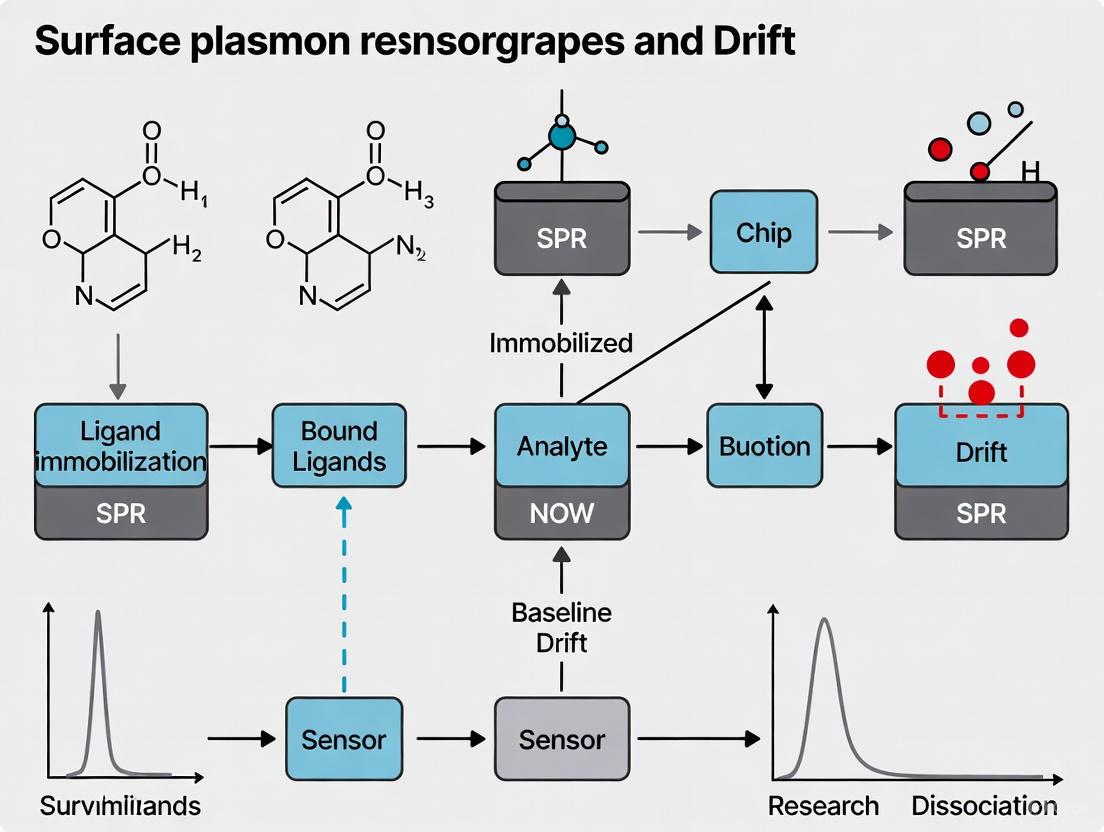
This article provides researchers, scientists, and drug development professionals with a complete framework for interpreting Surface Plasmon Resonance (SPR) sensorgrams.
Decoding SPR Sensorgrams: A Comprehensive Guide to Shapes, Drift, and Data Integrity for Drug Development
Abstract
This article provides researchers, scientists, and drug development professionals with a complete framework for interpreting Surface Plasmon Resonance (SPR) sensorgrams. It covers the foundational principles of ideal and non-ideal binding curves, outlines methodological best practices for robust assay design and kinetic analysis, and offers a systematic troubleshooting guide for common artifacts like baseline drift and mass transport limitation. Furthermore, it explores advanced validation techniques and compares SPR's advantages to endpoint assays, emphasizing its critical role in reducing false negatives in off-target screening and enabling precise affinity tuning for modern therapeutics.
Reading the Signals: Deconstructing Ideal and Complex SPR Sensorgram Shapes
Surface Plasmon Resonance (SPR) is a label-free optical biosensing technique that enables researchers to monitor molecular interactions—such as antibody-antigen binding—in real-time [1]. The primary output of an SPR experiment is the sensorgram, a plot of the SPR response against time that provides a visual representation of the entire binding event [2]. For researchers investigating binding kinetics and affinity, a profound understanding of the sensorgram's phases—Baseline, Association, Dissociation, and Regeneration—is paramount. This guide deconstructs the anatomy of a sensorgram within the context of SPR shape and drift research, providing scientists with the knowledge to acquire and interpret high-quality data.
The Core Phases of a Sensorgram
A sensorgram reveals the lifecycle of a molecular interaction, from initial binding to final dissociation. The following diagram illustrates the five sequential phases that form the foundation of SPR analysis.
Baseline: The Foundation of Measurement
The baseline is the initial flat line representing the system's state before analyte injection, where only the running buffer flows over the sensor surface [2] [3]. A stable baseline is the cornerstone of reliable data, as any drift or instability indicates system anomalies that require attention [2] [4]. In drift research, proper baseline establishment involves flowing running buffer to condition the sensor surface and ensure system equilibrium, which may require extended runtime or overnight buffer flow for optimal stabilization [4].
Association: The Binding Event
The association phase begins at time t=0 with the injection of the analyte over the ligand-immobilized surface [1]. This phase is characterized by an increase in Response Units (RU) as complexes form [3]. The shape of the association curve is ideally a single exponential, from which the association rate constant (kₐ or kₒₙ) can be determined [2] [5]. The association rate is governed by both the mass transfer of analyte from bulk solution to the surface and the intrinsic kinetics of the binding reaction itself [3].
Steady-State: Binding Equilibrium
The steady-state phase occurs when the binding reaction reaches equilibrium, characterized by a plateau in the sensorgram where the rates of association and dissociation are equal [2] [1]. This plateau represents the point where the amount of analyte associating with the ligand equals the amount dissociating [1]. The response level at steady-state is dependent on the analyte concentration and the binding affinity (K_D) [6].
Dissociation: Complex Breakdown
The dissociation phase initiates when analyte injection stops and is replaced by buffer flow, causing a decrease in RU as analyte-ligand complexes dissociate [2] [3]. The dissociation phase ideally follows a single exponential decay, from which the dissociation rate constant (kd or koff) can be determined [5] [3]. The dissociation rate is particularly important for therapeutic antibodies, as a slower off-rate often correlates with longer target engagement and improved efficacy.
Regeneration: Surface Resetting
The regeneration phase employs a solution (often low pH, like glycine) to disrupt remaining analyte-ligand interactions, restoring the signal to the original baseline and preparing the surface for subsequent analysis cycles [2] [1]. Effective regeneration completely removes bound analyte without damaging ligand functionality, which may require optimization of buffer composition, contact time, and flow rate [6].
Quantitative Data Extraction from Sensorgrams
SPR sensorgrams provide rich quantitative information on binding kinetics and affinity. The following table summarizes the key parameters derived from sensorgram analysis.
Table 1: Key Kinetic and Affinity Parameters from SPR Analysis
| Parameter | Symbol | Units | Definition | Derived From |
|---|---|---|---|---|
| Association Rate Constant | kₐ or kₒₙ | M⁻¹s⁻¹ | Measures how quickly analyte binds to ligand | Association phase [2] |
| Dissociation Rate Constant | kd or koff | s⁻¹ | Measures how quickly analyte unbinds from ligand | Dissociation phase [2] |
| Equilibrium Dissociation Constant | K_D | M | Analyte concentration at which half the ligand is bound; measure of affinity | KD = kd/kₐ [2] |
| Steady-State Response | R_eq | RU | Response at binding equilibrium | Steady-state phase [5] |
Essential Reagents and Materials for SPR Experiments
Successful SPR experiments require careful selection of reagents and materials. The following table outlines core components of the "Researcher's Toolkit" for robust SPR analysis.
Table 2: Essential Research Reagent Solutions for SPR Experiments
| Reagent/Material | Function/Purpose | Examples/Notes |
|---|---|---|
| Running Buffer | Maintains consistent pH and ionic strength during analysis | Phosphate-buffered saline (PBS), HEPES-NaCl [2] |
| Regeneration Solution | Removes bound analyte without damaging the ligand | Low pH buffers (e.g., glycine) [2]; optimized for specific interaction [6] |
| Sensor Chips | Provide surface for ligand immobilization | Dextran-based; variety of chemistries (carboxyl, NTA) for different ligands [6] [1] |
| Chemical Coupling Reagents | Covalently immobilize ligands to sensor surface | NHS/EDC chemistry for carboxyl-based sensors [7] |
| Blocking Agents | Reduce non-specific binding to sensor surface | Ethanolamine hydrochloride after covalent coupling [7] |
| Additives for NSB Reduction | Minimize non-specific interactions | BSA (1%), non-ionic surfactants (Tween 20) [6] |
Methodologies for High-Quality Sensorgram Acquisition
Experimental Design Considerations
Robust experimental design begins with determining which binding partner to immobilize as the ligand and which to use as the analyte in solution. Key factors include: size (smaller partner typically immobilized to maximize signal), purity (purest partner often immobilized to minimize non-specific binding when using covalent coupling), number of binding sites (multivalent partners typically immobilized to avoid avidity effects), and tags (tagged partners facilitate oriented immobilization) [6]. For kinetic analysis, a minimum of 3-5 analyte concentrations spanning 0.1-10 times the expected K_D value is recommended to ensure evenly spaced curves in the sensorgram [6].
Critical Steps for Minimizing Drift and Artefacts
Baseline drift research has identified several protocols to enhance data quality. Proper system equilibration through sufficient buffer priming and multiple "dummy injections" of running buffer at experiment start significantly reduces drift [4]. Buffer matching between running buffer and sample buffer minimizes bulk refractive index shifts [6]. Implementing double referencing—subtracting both a reference surface signal and blank buffer injections—compensates for drift, bulk effects, and channel differences [4]. Surface regeneration optimization ensures complete analyte removal while maintaining ligand activity through systematic testing of regeneration solutions from mild to harsh conditions [6].
Advanced Applications and Troubleshooting
Specialized SPR Applications
SPR technology has evolved to address complex biological questions beyond simple 1:1 binding interactions. Recent innovations include glycosylation profiling, where SPR was used to quantify terminal galactosylation and core fucosylation of monoclonal antibodies—critical quality attributes affecting therapeutic efficacy [7]. Cell-avidity measurements represent another advancement, with novel SPR imaging instruments enabling quantification of cell-antibody avidity across continuous ligand density gradients, identifying "tipping points" where cells remain bound under defined shear flow [8].
Quality Assessment and Troubleshooting Guide
Recognizing ideal and non-ideal sensorgram features is essential for robust data interpretation. The following diagram outlines a systematic approach for sensorgram quality assessment.
When sensorgrams exhibit poor quality, systematic troubleshooting is essential. For mass transport limitations (evidenced by linear rather than curved association phases), solutions include lowering ligand density or increasing flow rate [5] [6]. Non-specific binding (identified using control surfaces) can be addressed by adjusting buffer pH, adding protein blockers like BSA, incorporating non-ionic surfactants like Tween 20, or increasing salt concentration [6]. Incomplete regeneration requires optimization of regeneration buffer strength and contact time to balance complete analyte removal with ligand integrity preservation [6].
The SPR sensorgram provides a comprehensive view of molecular interactions, with each phase—baseline, association, steady-state, dissociation, and regeneration—offering unique insights into binding behavior. Mastery of sensorgram interpretation, coupled with rigorous experimental design and troubleshooting protocols, enables researchers to extract high-quality kinetic and affinity data. As SPR technology continues to evolve, applications in glycosylation profiling, cell-avidity measurements, and real-time bioprocess monitoring demonstrate its expanding role in drug development and biotherapeutic characterization.
This technical guide provides an in-depth examination of the simple exponential binding profile, the fundamental model for ideal biomolecular interactions in Surface Plasmon Resonance (SPR). A simple exponential binding profile signifies a reversible, 1:1 interaction between a ligand and an analyte, undisturbed by mass transport limitations, non-specific binding, or instrument artifacts [5]. We detail the mathematical foundation, quantitative characteristics, and experimental protocols essential for generating and validating these curves, framing the discussion within broader research on SPR sensorgram interpretation. For researchers and drug development professionals, mastering this ideal profile is the critical first step in robust kinetic and affinity analysis.
In SPR biosensing, a sensorgram provides a real-time, label-free record of biomolecular interactions. The response, measured in Resonance Units (RU), is proportional to the mass concentration of bound analyte at the sensor surface [2] [9]. A high-quality sensorgram is foundational for accurate determination of kinetic parameters (association rate constant, k_a, and dissociation rate constant, k_d) and the equilibrium dissociation constant (K_D).
A simple exponential binding profile represents the theoretically ideal and simplest interaction mechanism: a single analyte (A) binding to a single immobilized ligand (L) in a homogeneous population, forming a complex (LA) [5]. The curve shape is a direct visual indicator of data quality. Deviations from this perfect exponential shape often signify more complex interactions (e.g., heterogeneity, conformational change) or experimental artifacts (e.g., drift, mass transport limitation), which must be identified and addressed before reliable quantitative analysis can proceed [5].
Mathematical Foundation of Exponential Binding
The binding profile for a 1:1 interaction is described by a first-order kinetic model, resulting in a characteristic exponential curve. The integrated rate equation governing the association phase is a single exponential function [5]:
R_t = R_eq (1 - e^{-((k_a * C) + k_d)(t - t_0)}) + R_0
Where:
R_tis the SPR response at timet.R_eqis the maximum response at equilibrium for a given analyte concentration.k_ais the association rate constant (in M⁻¹s⁻¹).k_dis the dissociation rate constant (in s⁻¹).Cis the analyte concentration (in Molar).t_0is the start time of the injection.
Similarly, the dissociation phase, which begins when the analyte solution is replaced with buffer, is described by a single exponential decay [5] [2]:
R_t = R_0 e^{-k_d(t - t_0)}
Here, R_0 is the response at the start of the dissociation phase. The dissociation curve's shape depends solely on the dissociation rate constant k_d [5]. The equilibrium dissociation constant K_D is derived from the ratio of the rate constants: K_D = k_d / k_a [5] [2].
Visual and Quantitative Characteristics of the Perfect Curve
A perfect exponential binding profile exhibits distinct visual and numerical characteristics across all phases of a sensorgram.
Phases of an Ideal Sensorgram
The following diagram illustrates the five phases of an ideal SPR sensorgram and the key parameters influencing curve quality at each stage.
Quantitative Parameters for a Simple Exponential Profile
Table 1: Key Quantitative Metrics for an Ideal Exponential Binding Curve
| Parameter | Description | Ideal Characteristic | Impact on Data Quality |
|---|---|---|---|
| Baseline Stability | The flatness of the signal before analyte injection. | No drift, spikes, or significant noise [5] [2]. | A drifting baseline introduces error in R_0, affecting all calculated parameters. |
| Association Curve Fit | How well the association phase fits a 1:1 binding model. | A smooth, single exponential rise; R^2 > 0.99 for the fit [5]. |
A non-exponential rise suggests a complex binding mechanism or mass transfer effects [5]. |
| Steady-State (Req) | The equilibrium response level for a given analyte concentration. | A clear, flat plateau is reached for higher analyte concentrations [2]. | Essential for accurate equilibrium analysis and K_D calculation. |
| Dissociation Curve Fit | How well the dissociation phase fits a single exponential decay. | A smooth, single exponential decay; observing at least a 10% signal decrease is recommended for accurate k_d [10]. |
A non-exponential decay suggests multiple populations of complexes or rebinding. |
| Regeneration Efficiency | The return to the original baseline after regeneration. | Complete return to within a few RU of the initial baseline [2]. | Ensures a consistent active ligand surface for subsequent cycles. |
Experimental Protocol for Achieving Exponential Profiles
Achieving a perfect exponential curve requires meticulous experimental design and execution. The following protocols are critical.
Surface Preparation and Ligand Immobilization
- Sensor Chip Selection: Choose a chip compatible with your ligand and experimental goals. CM5 chips with a carboxymethylated dextran matrix are versatile for most applications, while CM4 (lower charge) can reduce non-specific binding, and CM3 (shorter dextran) is better for large analytes [9].
- Ligand Immobilization: The ligand must be pure and homogenous. Prior to immobilization, perform pH scouting to determine the optimal pH and ligand concentration for efficient and stable coupling [9]. A uniform, properly oriented ligand surface is crucial for a single class of binding sites.
Analyte Series Design
- Concentration Range: The analyte concentration series is critical. It should span from 10-fold below to 10-fold above the expected
K_Dto adequately define both the association and dissociation phases [9]. - Replication: Include replicate injections, preferably at a mid-range concentration, to assess data reproducibility and experimental noise.
Running the Experiment
- Flow Rate: Use a sufficiently high flow rate (e.g., > 30 µL/min) to minimize mass transport limitation, where the binding reaction is faster than the diffusion of analyte to the surface, which can create an initial linear rather than curved association phase [5].
- Dissociation Time: Program dissociation phases to be long enough to observe a significant decrease in signal (at least 10%) for an accurate determination of the dissociation rate constant
k_d[10]. - Buffer Matching: Ensure the running buffer and analyte sample buffer are identical to prevent "buffer jumps," which cause spikes at the beginning and end of injections [5].
Regeneration Scouting
A rigorous regeneration scouting process is required to identify conditions that fully remove bound analyte without damaging the immobilized ligand.
- Procedure: Inject a high concentration of analyte to achieve a high response level, then inject short pulses of regeneration solutions (e.g., low pH glycine, high salt) [9].
- Success Criterion: The response must return to the original baseline. The same regeneration efficacy must be achievable over multiple cycles without a loss of ligand activity [2] [9].
The Scientist's Toolkit: Essential Research Reagents and Materials
Table 2: Key Reagents and Materials for SPR Experiments Featuring Exponential Profiles
| Item | Function / Role | Considerations for Optimal Performance |
|---|---|---|
| Sensor Chips (e.g., CM5, SA, NTA) | Platform for covalent immobilization or capture of the ligand. | Choice affects ligand activity, orientation, and non-specific binding. CM5 is the standard versatile chip [9]. |
| Running Buffer (e.g., PBS, HEPES-NaCl) | The continuous flow buffer that establishes the baseline and serves as the solvent for analyte dilutions. | Must be matched in the analyte sample to prevent bulk shifts; should be degassed to prevent air bubbles [2]. |
| Regeneration Solution (e.g., Glycine-HCl) | A solution that breaks the ligand-analyte complex without denaturing the ligand, resetting the surface. | Must be optimized for each specific interaction; common choices are low pH (10-100 mM glycine, pH 1.5-3.0) or high salt [2] [9]. |
| Ligand & Analyte | The interacting molecules of interest. | Require high purity and stability. Ligand should be homogenous for a single exponential profile. |
| SPR Instrument | The platform for real-time, label-free detection of the interaction. | Instruments like the P4SPR or Biacore systems detect refractive index changes and plot sensorgrams in real-time [2]. |
Data Analysis and Model Fitting
Global Fitting to a 1:1 Model
The gold standard for analyzing simple exponential data is global fitting to a 1:1 binding model. In this approach, the sensorgrams from all analyte concentrations are fitted simultaneously to a single set of k_a and k_d values [10]. This greatly increases the reliability of the extracted parameters compared to fitting each curve individually.
Quality Control of the Fit
A perfect exponential profile will fit the 1:1 model seamlessly.
- Visual Inspection: The fitted lines (calculated curves) should overlay perfectly on the raw data for both the association and dissociation phases across all concentrations [10].
- Residuals Plot: The residuals (difference between raw data and fitted curve) should be small and randomly distributed around zero. A structured pattern in the residuals (e.g., a systematic deviation) is a clear sign that the 1:1 model is inadequate and the interaction is more complex [10].
The simple exponential binding profile is the hallmark of a well-executed SPR experiment for a 1:1 biomolecular interaction. Its characteristic shape is not merely aesthetically pleasing but is a direct reflection of sound experimental design, proper reagent quality, and a homogenous binding mechanism. By adhering to the detailed protocols and quality criteria outlined in this guide, researchers can generate robust, publication-quality data, forming a solid foundation for kinetic and affinity analysis in drug discovery and basic research. Recognizing this perfect curve is the first and most critical step in differentiating high-quality data from the "rubbish" that, as noted by Myszka and Rich, unfortunately permeates the literature [5].
In Surface Plasmon Resonance (SPR) analysis, ideal binding sensorgrams exhibit characteristic exponential curves, reflecting the true kinetics of a biomolecular interaction. However, when the diffusion of analyte from the bulk solution to the sensor surface becomes slower than its intrinsic rate of binding, the system becomes mass transport limited (MTL). This phenomenon distorts the sensorgram, most notably producing a deceptively linear association phase that masks the true kinetic constants. This guide provides researchers with the theoretical framework, diagnostic methodologies, and experimental protocols to accurately identify and mitigate mass transport limitations, ensuring the derivation of reliable kinetic data.
Surface Plasmon Resonance is a powerful, label-free technique for studying biomolecular interactions in real-time. The primary data output is a sensorgram, a plot of response units (RU) against time, which records the association and dissociation of an analyte with an immobilized ligand [11].
The Ideal Pseudo-First Order Binding Model
Under ideal conditions, where binding is not obstructed by physical barriers, a 1:1 bimolecular interaction follows a pseudo-first order kinetic model. The binding progress is described by a single-exponential approach to equilibrium [12]. The differential rate equation is:
dS/dt = kₐ * C * (Sₘₐₓ - S) - kₑ * S
where S is the response at time t, kₐ is the association rate constant, C is the analyte concentration, Sₘₐₓ is the maximum binding capacity, and kₑ is the dissociation rate constant [12]. The integrated rate equation results in the characteristic exponential curve shape for both association and dissociation phases [5].
The Mass Transport Limitation (MTL) Effect
Mass transport limitation arises when the rate at which analyte molecules diffuse through the flow boundary layer to the sensor surface is slower than the intrinsic rate at which they can bind to the ligand [12]. When this happens, a depletion zone forms near the surface, and the observed binding rate reflects the diffusion process rather than the chemical interaction kinetics. This is a common source of artifact in SPR data that, if unaccounted for, leads to significant errors in the calculated kinetic constants [6].
Visual and Experimental Identification of MTL
Recognizing MTL is the first critical step in data validation. The following sections detail the key diagnostic features and tests.
Sensorgram Shape Analysis
The most immediate indicator of MTL is the visual shape of the sensorgram's association phase.
- Ideal Association: A curved, exponential shape as binding sites are filled and the net rate of association decreases [5].
- MTL-Limited Association: A linear or quasi-linear rise during the initial association phase. This linearity indicates a constant rate of analyte arriving at the surface, which is the hallmark of a diffusion-controlled process [5] [6].
Table 1: Key Characteristics of Ideal vs. MTL-Limited Sensorgrams
| Feature | Ideal Kinetic Control | Mass Transport Limitation |
|---|---|---|
| Association Shape | Curved, exponential | Linear, lacking curvature |
| Primary Rate Driver | Molecular interaction (kₐ) | Analyte diffusion |
| Analyte Concentration at Surface | Equal to bulk concentration | Depleted relative to bulk |
| Dependence on Flow Rate | Insignificant | Significant; binding rate increases with flow rate |
Diagnostic Experimental Protocols
The following experimental protocols provide definitive confirmation of MTL.
Protocol 1: Flow Rate Variation Experiment
This is the most robust method for diagnosing MTL [6].
- Procedure: Prepare a single analyte concentration and inject it over the ligand surface at multiple flow rates (e.g., 10, 30, 50, and 100 µL/min) while keeping all other parameters constant.
- Data Analysis: Fit the data from each flow rate to a 1:1 binding model and extract the observed association rate constant (kₐₒbₛ).
- Interpretation: A significant increase in kₐₒbₛ with increasing flow rate is a definitive signature of mass transport limitation. Under kinetic control, the kₐ should be independent of flow rate.
Protocol 2: Global Fitting Model Comparison
This method uses software-based analysis to diagnose MTL.
- Procedure: Collect a full concentration series of analyte and globally fit the sensorgrams.
- Data Analysis: Fit the dataset using two different models: the standard 1:1 Langmuir model and a 1:1 Langmuir model with mass transport correction [6].
- Interpretation: A dramatically improved fit with the mass-transport-corrected model, especially in the early association phase, strongly indicates the presence of MTL. The software will also fit a mass transport coefficient (kₘ), providing a quantitative measure of the effect.
The logical workflow for diagnosing and addressing MTL is summarized in the diagram below.
Mitigation Strategies and Experimental Design
Once MTL is identified, researchers can employ several strategies to minimize its impact and obtain accurate kinetics.
Key Experimental Adjustments
- Reduce Ligand Density: This is the most effective strategy. A lower density of immobilized ligand (lower Rₘₐₓ) reduces the demand for analyte, minimizing surface depletion and allowing the bulk concentration to be maintained [6]. Aim for the lowest ligand density that provides an acceptable signal-to-noise ratio.
- Increase Flow Rate: A higher flow rate thins the stagnant diffusion layer, thereby enhancing the rate of analyte supply to the surface [6]. While the flow rate experiment is a diagnostic tool, routinely using higher flow rates during data collection can help avoid MTL.
- Optimize Analyte Diffusivity: While often a fixed property, factors such as buffer viscosity and temperature can influence diffusion. Using lower viscosity buffers and ensuring proper system temperature can slightly improve mass transport.
Table 2: Summary of Mitigation Strategies for Mass Transport Limitation
| Strategy | Mechanism of Action | Practical Implementation |
|---|---|---|
| Reduce Ligand Density | Lowers analyte consumption rate, preventing surface depletion | Immobilize ligand to achieve a lower Rₘₐₓ; test a range of densities. |
| Increase Flow Rate | Thins the boundary layer, enhancing analyte delivery | Use flow rates ≥ 50 µL/min during data collection for kinetics. |
| Use a Mass Transport Corrected Model | Accounts for diffusion mathematically in data fitting | Use in software analysis after confirming MTL is unavoidable. |
The Scientist's Toolkit: Essential Reagents and Materials
The following table details key reagents and materials used in SPR experiments, particularly those focused on mitigating artifacts like MTL.
Table 3: Research Reagent Solutions for SPR Experiments
| Reagent / Material | Function / Purpose | Application Notes |
|---|---|---|
| Carboxyl-Modified Sensor Chip (e.g., CM5) | Versatile surface for covalent immobilization of ligands via amine coupling. | Standard for many applications; requires pre-concentration for efficient coupling [6]. |
| Capture Sensor Chips (e.g., NTA, Protein A) | Immobilizes ligand via a high-affinity tag (His-tag, Fc region). | Ensures oriented immobilization, which can maximize activity and help mitigate MTL [6]. |
| HBS-EP Buffer | Standard running buffer (HEPES, NaCl, EDTA, surfactant P20). | Provides a consistent, low-nonspecific-binding environment [7]. |
| Non-ionic Surfactant (e.g., Tween 20) | Reduces non-specific binding (NSB) by disrupting hydrophobic interactions. | Commonly used at concentrations of 0.005%-0.05% in running buffer and samples [6]. |
| Bovine Serum Albumin (BSA) | Protein-based blocking agent to reduce NSB. | Used as a buffer additive (e.g., 1%) to shield the analyte from non-specific surface interactions [6]. |
| Regeneration Solutions (e.g., Glycine pH 1.5-3.0) | Strips bound analyte from the ligand surface between analysis cycles. | Critical for re-using the sensor surface; must be harsh enough to remove analyte but mild enough to preserve ligand activity [6]. |
Accurately identifying the linear association phase characteristic of mass transport limitation is a fundamental skill in SPR data analysis. By moving "beyond the ideal" exponential model, researchers can avoid the pitfall of misinterpreting diffusion-limited data for slow kinetics. Through a combination of visual inspection, systematic diagnostic experiments like flow rate variation, and strategic experimental design—primarily through lower ligand density—the confounding effects of mass transport can be identified, mitigated, or properly accounted for. This rigorous approach ensures that the derived kinetic constants (kₐ, kₑ, and KD) truly reflect the biomolecular interaction of interest, thereby strengthening the scientific conclusions drawn from SPR data.
Recognizing Biphasic Binding Responses and Their Implications
Biphasic binding responses, characterized by their distinctive non-monophasic sensorgrams, represent a significant challenge and opportunity in the analysis of biomolecular interactions. Within the context of Surface Plasmon Resonance (SPR) research, these complex binding profiles often indicate sophisticated binding mechanisms beyond simple 1:1 interactions, including bivalent analyte binding, conformational selection, or induced-fit mechanisms. This technical guide examines the identification, interpretation, and implications of biphasic responses for researchers and drug development professionals. Through detailed methodologies, quantitative data analysis, and visual workflows, we provide a comprehensive framework for distinguishing biphasic binding from experimental artifacts and extracting meaningful biological insights from these complex interactions, ultimately enhancing drug discovery pipelines and therapeutic optimization.
Biphasic binding responses manifest as complex, non-asymptotic sensorgram curves that cannot be described by a single exponential function, indicating the presence of multiple binding events or conformational changes occurring simultaneously or sequentially during molecular interactions. Unlike simple 1:1 binding that follows a monophasic association and dissociation profile, biphasic responses reveal themselves through distinctive curvature changes during either association, dissociation, or both phases of an SPR experiment. The significance of these responses lies in their ability to unveil complex binding mechanisms that are often masked by oversimplified kinetic models, including bivalent interactions, heterogeneous ligand binding, or substrate-mediated conformational changes that are critical for understanding biological function and therapeutic intervention [5].
Within the broader context of SPR sensorgram interpretation, recognizing true biphasic responses requires careful discrimination from experimental artifacts such as baseline drift, mass transport limitations, or nonspecific binding. Baseline drift, characterized by a continuous upward or downward trend in the baseline response when no binding should be occurring, often stems from insufficient equilibration of sensor surfaces, buffer mismatches, or temperature fluctuations [4]. Similarly, partially mass-transport limited curves may mimic biphasic association phases due to faster binding kinetics relative to analyte diffusion rates toward the ligand surface [5]. Distinguishing these artifacts from genuine biphasic binding mechanisms is essential for accurate data interpretation and prevents misinterpretation that could lead to erroneous conclusions about molecular interaction mechanisms.
The therapeutic implications of biphasic responses extend beyond SPR analysis into broader pharmacological contexts, where biphasic dose-response relationships, also known as hormesis, demonstrate beneficial effects at low concentrations and toxic effects at higher doses. This phenomenon is increasingly recognized in natural product research and drug discovery, where compounds like Brosimine B from Brosimum acutifolium exhibit neuroprotective effects at low concentrations (10 µM) but cytotoxic effects at higher concentrations (>10 µM) [13]. Such dose-dependent activity switches present both challenges and opportunities for therapeutic optimization, necessitating robust analytical frameworks for their identification and characterization.
Fundamentals of Biphasic Response Recognition
Visual Characteristics of Biphasic Sensorgrams
Biphasic sensorgrams display distinctive visual characteristics that deviate fundamentally from the classic monophasic shapes of simple 1:1 binding interactions. During the association phase, rather than a smooth curve approaching equilibrium, biphasic responses typically exhibit an initial rapid binding phase followed by a slower secondary binding event, creating a distinctive "kinked" or "curved" appearance that cannot be fitted with a single exponential function. The dissociation phase similarly shows complex behavior, often characterized by an initial rapid release of analyte followed by a slower dissociation phase, indicating the presence of multiple complexes with different stability profiles [5]. These visual signatures immediately alert experienced researchers to the presence of underlying complexity in the binding mechanism that requires more sophisticated analysis than simple kinetic models.
The recognition of these patterns is further complicated by the fact that, as noted in the SPR literature, "biphasic responses are said to consist of a fast and slow interaction. And because a biphasic response can be described equally well by different models it is virtually impossible to solve the interaction mechanism by modelling alone" [5]. This fundamental challenge underscores the importance of integrating experimental design, control experiments, and complementary techniques to validate mechanistic interpretations derived solely from sensorgram shapes. Researchers must therefore approach biphasic sensorgrams with both rigorous analytical methods and appropriate skepticism, recognizing that multiple underlying mechanisms may produce visually similar binding profiles.
Distinguishing Biphasic Binding from Experimental Artifacts
Proper identification of true biphasic binding requires careful discrimination from common experimental artifacts that can mimic complex binding patterns. Baseline drift, often resulting from insufficient system equilibration or temperature fluctuations, creates a continuous upward or downward trend in response units that can be mistaken for slow binding events [4]. Mass transport limitations, occurring when binding kinetics exceed analyte diffusion rates to the sensor surface, produce an initial linear association phase that may resemble the first phase of a biphasic response [5]. Other artifacts include bulk refractive index changes from buffer mismatches, nonspecific binding to the sensor surface or matrix, and instrument-related issues such as air bubbles or pressure fluctuations during injections.
Table 1: Key Characteristics Differentiating True Biphasic Binding from Common Artifacts
| Feature | True Biphasic Binding | Mass Transport Limitation | Baseline Drift | Nonspecific Binding |
|---|---|---|---|---|
| Association Shape | Distinct curvature change, two apparent rates | Initial linear phase, then curvature | Continuous linear drift across phases | Often rapid, non-saturating binding |
| Dissociation Shape | Multiple dissociation rates, incomplete return to baseline | Often monophasic but may be incomplete | Drift continues during dissociation | Often incomplete, irregular return |
| Concentration Dependence | Pattern consistent across concentrations | More prominent at high analyte concentrations/immobilization levels | Independent of analyte concentration | Often non-saturable, linear with concentration |
| Impact of Flow Rate | Pattern largely unchanged | Diminished at higher flow rates | Unaffected | May decrease with higher flow rates |
| Reference Surface Response | No significant binding | No significant binding | Similar drift pattern | Significant binding often observed |
To minimize these artifacts, researchers should employ rigorous experimental practices including extensive system equilibration with running buffer, proper surface preparation with matched reference surfaces, routine instrument maintenance and cleaning, double referencing procedures, and careful buffer matching between samples and running buffers [4]. Additionally, testing multiple flow rates can help identify mass transport effects, while varying immobilization levels distinguishes true complex binding from avidity effects. These controls are essential prerequisites for confident interpretation of biphasic responses as genuine biological phenomena rather than experimental artifacts.
Analytical Approaches for Biphasic Response Characterization
Kinetic Modeling of Complex Binding Mechanisms
The analysis of biphasic responses requires advanced kinetic modeling approaches that extend beyond the standard 1:1 binding model. The bivalent analyte model represents one well-characterized mechanism for generating biphasic responses, where a single analyte molecule containing two binding sites interacts with immobilized ligands through a two-step process: initial binding at one site followed by subsequent binding at the second site. This mechanism is described by coupled non-linear differential equations that capture the complex interplay between the two binding events [14]. For a bivalent analyte (A) binding to a ligand (L), the mechanism can be represented as:
- A + L ⇌ AL₁ (rate constants kₐ₁ and k_d₁)
- AL₁ + L ⇌ AL₂ (rate constants kₐ₂ and k_d₂)
where AL₁ represents the analyte-ligand complex with one binding site occupied, and AL₂ represents the complex with both binding sites occupied. The corresponding rate equations for the complexes X₁ ([AL₁]) and X₂ ([AL₂]) are:
- dX₁/dt = 2kₐ₁C(B₀ - X₁ - 2X₂) - k_d₁X₁ - dX₂/dt
- dX₂/dt = kₐ₂X₁(B₀ - X₁ - 2X₂) - 2k_d₂X₂
where C is the analyte concentration and B₀ is the initial ligand concentration [14].
Other common mechanisms producing biphasic responses include the heterogeneous ligand model, where multiple independent populations of ligands with different affinities are present on the sensor surface, and the two-state conformational change model, where binding induces a conformational shift in the complex that alters its stability. Each mechanism imposes distinct constraints on the relationship between observed rate constants and analyte concentration, providing a theoretical framework for discriminating between potential models based on experimental data [14]. Global fitting procedures that simultaneously analyze sensorgrams across multiple analyte concentrations are essential for reliably distinguishing between these mechanisms, as they leverage the concentration-dependent behavior of the system to constrain parameter estimation and validate model assumptions.
The "Optimal Concentration" Method for Bivalent Analyte Identification
A particularly insightful approach for identifying bivalent analyte mechanisms involves exploiting the unique "optimal concentration" (C₀) signature inherent to this model. For bivalent binding systems, there exists a specific analyte concentration (C₀ = k_d₁/2kₐ₁) where the rate equation for the total complex (Y = X₁ + X₂) becomes independent of X₂, reducing to a linear differential equation with a single exponential solution [14]. At this optimal concentration, the binding profile simplifies to:
Y(t) = B₀/2(1 - e^{-4kₐ₁C₀t})
This produces a perfect monophasic association curve, even though the underlying mechanism remains bivalent. Experimentally, this signature manifests as a minimum in the fitting error when individual association curves across a concentration series are fitted to a single exponential model [14]. The presence of this optimal concentration provides a distinctive fingerprint for bivalent analyte mechanisms that differentiates them from other biphasic models such as heterogeneous ligand or conformational selection mechanisms.
Table 2: Quantitative Parameters for Biphasic Response Analysis in Bivalent Binding
| Parameter | Symbol | Determination Method | Biological Significance |
|---|---|---|---|
| Optimal Concentration | C₀ | Analyte concentration where single exponential fitting error is minimized | C₀ = k_d₁/2kₐ₁; identifies bivalent mechanism signature |
| First Association Rate Constant | kₐ₁ | Determined from fitting at C₀ | Measures initial binding event rate |
| First Dissociation Rate Constant | k_d₁ | Determined from fitting at C₀ | Measures stability of initial complex |
| First Equilibrium Dissociation Constant | KD₁ | k_d₁/kₐ₁ | Affinity of initial binding event |
| Hormetic Peak Response Concentration | - | Computational modeling of inverted U-shaped curve | Biologically optimal concentration for therapeutic effect |
| Hormetic Zone Width | σ | Width of concentration window showing beneficial effects | Therapeutic window for biphasic dose-response compounds |
The practical implementation of this method involves several key steps. First, researchers must collect association and dissociation data across a broad concentration range of analyte. Next, they individually fit the association phase of each sensorgram to a single exponential function and calculate the corresponding fitting error. By plotting these fitting errors against analyte concentration, the presence of a clear minimum identifies the optimal concentration C₀. Once identified, the binding parameters for the first step (kₐ₁ and k_d₁) can be determined from the simplified kinetic behavior at C₀, providing a foundation for more comprehensive analysis of the complete bivalent mechanism [14]. This approach exemplifies how strategic experimental design can leverage inherent system properties to simplify the analysis of complex binding mechanisms.
Experimental Protocols for Biphasic Response Investigation
SPR Experimental Workflow for Biphasic Response Analysis
Diagram 1: Experimental workflow for comprehensive biphasic response analysis
A robust experimental protocol for investigating biphasic responses begins with extensive system equilibration to minimize baseline drift, followed by careful immobilization of the ligand to an appropriate sensor chip surface. For protein ligands, standard amine coupling chemistry provides a reliable immobilization method, with immobilization levels optimized to avoid mass transport limitations while maintaining sufficient signal-to-noise ratio. A critical step involves preparing a properly matched reference surface to account for nonspecific binding and bulk refractive index effects [14] [11]. The analyte should then be injected across a broad concentration series, typically spanning at least two orders of magnitude, to capture the complete concentration-dependent behavior of the interaction. For bivalent systems, this range should strategically bracket the anticipated optimal concentration C₀ to enable its identification through subsequent analysis.
During data collection, researchers should employ multi-cycle kinetics with sufficient dissociation times to observe complex dissociation patterns and incorporate regular blank injections for double referencing. The use of start-up cycles with buffer injections before actual sample measurements helps stabilize the system and establishes a stable baseline [4]. If regeneration is required between cycles, conditions should be carefully optimized to completely remove bound analyte without damaging the immobilized ligand, with consistent regeneration performance verified across multiple cycles. Throughout the experiment, monitoring baseline stability, noise levels, and shape consistency across replicate injections provides quality control indicators that help distinguish true biphasic binding from experimental artifacts [5] [4].
Computational and Statistical Analysis Methods
Computational analysis of biphasic responses begins with qualitative assessment of sensorgram shapes across the concentration series, noting distinctive curvature changes during association and dissociation phases. For potential bivalent mechanisms, the optimal concentration method provides a powerful analytical approach, as previously described. More generally, global fitting of the complete dataset to multiple potential binding models allows statistical comparison of goodness-of-fit and helps identify the most plausible mechanism [14]. For model discrimination, the corrected Akaike Information Criterion (AICc) or Bayesian Information Criterion (BIC) provide robust metrics that balance goodness-of-fit against model complexity, helping prevent overparameterization.
For hormetic biphasic dose-responses, computational modeling using inverted U-shaped functions characterizes the concentration window of beneficial effects. As demonstrated in Brosimine B research, such modeling can determine the peak response concentration (10.2 µM in that study) and hormetic zone width (σ = 6.5 µM), providing quantitative parameters for optimizing therapeutic applications [13]. Residual analysis represents another critical analytical step, as systematic deviations between fitted curves and experimental data may indicate an incorrect binding model or the presence of unrecognized artifacts. Throughout the analysis process, researchers should maintain healthy skepticism, recognizing that excellent fitting quality alone does not guarantee correct mechanism identification, and that complementary experimental approaches are often necessary to validate mechanistic conclusions [14].
Research Reagent Solutions for Biphasic Response Studies
Table 3: Essential Research Reagents and Materials for Biphasic Binding Studies
| Reagent/Material | Function | Application Notes |
|---|---|---|
| CM5 Sensor Chip | Gold surface with carboxymethylated dextran matrix for ligand immobilization | Standard for amine coupling; suitable for most protein ligands [14] |
| Recombinant Ezrin Protein | Model ligand for bivalent binding studies | Used in demonstration of bivalent analyte mechanism with anti-ezrin antibody [14] |
| Anti-Ezrin Monoclonal Antibody | Model bivalent analyte | IgG1 antibody with two Fab portions; demonstrates characteristic biphasic binding [14] |
| Brosimine B | Natural product with biphasic dose-response | Flavonoid from Brosimum acutifolium; shows hormetic effects (neuroprotection at 10 µM) [13] |
| Curcumin | Sensitizing agent in combination therapy | Enhances chemosensitivity, inhibits stem cells, modulates microenvironment in biphasic drug delivery [15] |
| Temozolomide (TMZ) | Chemotherapeutic agent in combination therapy | Partner drug with curcumin in biphasic release system for glioma treatment [15] |
| PLGA Nanoparticles | Sustained-release drug carrier | Enables second phase of biphasic drug release in responsive delivery systems [15] |
| ROS-Sensitive Thermo-Sensitive Gel | Dual-responsive drug delivery matrix | Provides both rapid and sustained release phases in advanced drug delivery systems [15] |
The investigation of biphasic responses requires specialized reagents and materials tailored to specific experimental goals. For basic research on bivalent binding mechanisms, model systems like the ezrin/anti-ezrin antibody interaction provide well-characterized exemplars for method development and validation [14]. For therapeutic applications exploiting biphasic dose-responses, natural products like Brosimine B offer promising starting points for drug development, with defined concentration windows for beneficial versus toxic effects [13]. Advanced drug delivery systems implementing biphasic release profiles utilize responsive materials like reactive oxygen species (ROS)-sensitive thermo-sensitive gels that enable complex release kinetics impossible with conventional formulations [15].
The selection of appropriate ligand immobilization methods represents another critical reagent consideration. While amine coupling provides a general approach for protein ligands, specialized capture methods such as antibody-mediated capture or streptavidin-biotin interactions may preserve better ligand functionality and more homogeneous orientation, potentially reducing heterogeneous binding artifacts that could mimic biphasic responses. Similarly, the choice of running buffer significantly impacts data quality, with careful pH and ionic strength optimization improving binding specificity and reducing nonspecific interactions. Additives such as detergents (e.g., 0.005% P20) help minimize surface adsorption artifacts, while carrier proteins like BSA may stabilize dilute analyte solutions, though their potential interactions with the ligand must be carefully controlled [5] [4].
Implications for Drug Discovery and Therapeutic Development
Biphasic Dose-Response Relationships in Pharmacology
Biphasic dose-response relationships, commonly known as hormesis, represent a fundamental phenomenon in pharmacology where compounds exhibit beneficial effects at low concentrations and toxic effects at higher doses. This pattern challenges traditional monotonic dose-response assumptions and necessitates specialized experimental designs to characterize therapeutic windows accurately. The natural product Brosimine B exemplifies this phenomenon, demonstrating significant enhancement of cell viability and reduced reactive oxygen species production at 10 µM, while inducing cytotoxicity at concentrations above 10 µM [13]. Such biphasic profiles require researchers to identify not just the minimum effective dose, but the optimal concentration that maximizes benefit while minimizing toxicity, fundamentally changing the approach to lead optimization and therapeutic dosing.
The mechanisms underlying biphasic dose-responses often involve competing biological pathways that dominate at different concentration thresholds. At low concentrations, protective stress response pathways may be activated, enhancing cellular resilience, while at higher concentrations, these protective mechanisms become overwhelmed and direct toxic effects predominate [16]. From a drug discovery perspective, these disruptions in bioactivity driven by dose present both challenges and opportunities. While they complicate predictive modeling and require more comprehensive concentration-response profiling, they also offer the potential for safer therapeutics with built-in safeguards against overdosing and opportunities for targeting multiple biological processes through concentration-dependent effect modulation [16].
Biphasic Drug Delivery Systems
Beyond naturally occurring biphasic responses, engineered biphasic drug delivery systems represent an emerging therapeutic strategy that deliberately creates precisely controlled multiphasic release profiles. These systems typically combine an initial rapid release phase to quickly establish therapeutic concentrations, followed by a sustained release phase to maintain effective drug levels over extended periods. For example, advanced postoperative in situ drug delivery systems for glioma treatment utilize reactive oxygen species-sensitive and thermo-sensitive gels that simultaneously carry free temozolomide, free curcumin, and drug-loaded PLGA nanoparticles to achieve this "rapid release + sustained release" biphasic profile [15].
Such sophisticated delivery systems address fundamental pharmacological challenges, particularly for diseases requiring immediate therapeutic intervention followed by long-term management. In the glioma application, the initial rapid release phase immediately targets residual tumor cells after surgical resection, while the sustained release phase provides continuous suppression of cancer stem cells and modulation of the tumor microenvironment over weeks [15]. This approach has demonstrated remarkable efficacy in preclinical models, extending median survival time in rats to 57 days—three times longer than control groups—while reducing systemic toxicity [15]. The success of these systems highlights how understanding and engineering biphasic profiles, whether in binding responses or drug release kinetics, can translate into significant therapeutic advances across multiple disease areas.
Diagram 2: From biphasic binding recognition to therapeutic applications
The recognition and interpretation of biphasic binding responses represents a critical advanced skill in molecular interaction analysis with far-reaching implications for basic research and therapeutic development. Through strategic experimental design, rigorous artifact exclusion, and appropriate mechanistic modeling, researchers can extract valuable biological insights from these complex binding profiles that would be missed by conventional monophasic analysis. The integration of computational approaches, particularly for identifying mechanism-specific signatures like the optimal concentration in bivalent binding, enables more reliable discrimination between alternative mechanisms underlying biphasic responses.
Looking forward, the growing recognition of biphasic phenomena across biological scales—from molecular interactions to cellular signaling to organismal responses—suggests that these complex patterns represent fundamental biological principles rather than exceptions to simpler rules. As drug discovery increasingly embraces complex therapeutic modalities including multi-specific antibodies, combination therapies, and engineered delivery systems, the analytical frameworks developed for understanding biphasic binding responses will become increasingly essential for optimizing therapeutic efficacy and safety. By moving beyond oversimplified binding models and embracing the complexity inherent in biological systems, researchers can unlock new opportunities for therapeutic intervention that leverage rather than ignore the sophisticated dynamics of molecular interactions.
Surface Plasmon Resonance (SPR) is a powerful analytical technique that enables the real-time study of molecular interactions, providing critical insights into binding kinetics, affinity, and specificity. At the heart of SPR data analysis lies the sensorgram, a dynamic plot that visually captures the entire interaction lifecycle between a ligand immobilized on a sensor surface and an analyte in solution. The accurate interpretation of sensorgrams is fundamental to extracting meaningful biological data, particularly in drug development where precise measurement of binding parameters can significantly impact candidate selection and optimization.
However, sensorgram data is frequently complicated by the presence of experimental artifacts that can obscure true binding signals and lead to erroneous conclusions. Among the most prevalent of these artifacts are buffer jumps, spikes, and baseline drift. These phenomena arise from various physical and technical sources unrelated to the specific biomolecular interaction of interest. Buffer jumps manifest as abrupt shifts in response units at injection boundaries, spikes appear as sudden, narrow deviations from the expected curve, and baseline drift represents a gradual change in the baseline signal over time. For researchers and scientists, the ability to correctly identify, troubleshoot, and mitigate these artifacts is essential for ensuring data integrity and generating reliable kinetic parameters.
This technical guide provides a comprehensive examination of these common artifact shapes, framed within the broader context of SPR sensorgram interpretation and quality assessment. By understanding the underlying causes and implementing systematic troubleshooting protocols, researchers can significantly improve the quality of their SPR data and enhance the robustness of their scientific conclusions.
Understanding Buffer Jumps
Definition and Causes
Buffer jumps, also referred to as bulk shifts, are abrupt, step-like changes in the SPR response observed at the beginning and end of analyte injection. These artifacts occur when the refractive index of the running buffer and the analyte solution are not perfectly matched. The SPR signal responds to changes in mass at the sensor surface, but it is also exquisitely sensitive to changes in the composition of the solution passing over it. Even minor differences in buffer composition—such as salt concentration, pH, or the presence of additives like DMSO or glycerol—can produce significant refractive index mismatches, resulting in noticeable jumps in the sensorgram [17].
The fundamental cause of buffer jumps is a bulk refractive index effect, where the solution properties themselves, rather than binding events, dominate the SPR signal. This effect is particularly pronounced when analytes are stored or prepared in formulations different from the running buffer. For instance, compounds dissolved in DMSO or proteins stored in glycerol present a high refractive index compared to standard aqueous running buffers, creating substantial buffer jumps that can obscure the kinetic data of interest [17]. Similarly, evaporation of solvent from analyte solutions can concentrate solutes, exacerbating refractive index differences during injection.
Identification and Impact
Buffer jumps are visually characterized by an immediate upward deflection of the sensorgram at the start of injection, followed by an immediate downward deflection at the end of injection, often returning the signal close to the original baseline. The shape typically shows sharp transitions rather than gradual curves. In systems with inline reference subtraction, the magnitude of these jumps may be reduced, but imperfect matching between reference and active surfaces can leave residual artifacts [17].
The primary impact of buffer jumps is the obscuration of early association and late dissociation phases, which are critical for accurate kinetic analysis. A significant buffer jump at the injection start can mask the initial binding kinetics, making it difficult to determine the true association rate constant (k~a~). Similarly, a jump at the injection end can interfere with the early dissociation phase, compromising the accurate determination of the dissociation rate constant (k~d~). When uncompensated, these effects can lead to incorrect fitting of binding models and ultimately result in inaccurate calculation of the equilibrium dissociation constant (K~D~) [17].
Table: Characteristics and Impact of Buffer Jumps
| Feature | Description | Impact on Data Analysis |
|---|---|---|
| Visual Appearance | Sharp, step-like change at injection start/end | Obscures true binding signal at critical transition points |
| Primary Cause | Refractive index mismatch between running buffer and analyte solution | Masks early association and late dissociation kinetics |
| Common Scenarios | DMSO solutions, glycerol stocks, unequal salt concentrations | Interferes with accurate determination of k~a~ and k~d~ |
| Compensation Methods | Reference surface subtraction, dialysis, buffer exchange | Requires proper experimental design and surface referencing |
Experimental Solutions and Protocols
Buffer Matching Protocol: The most effective approach to minimize buffer jumps is precise buffer matching. For analytes stored in different formulations, perform buffer exchange into the running buffer using size exclusion columns (e.g., desalting columns) or dialysis. For small molecules requiring DMSO for solubility, prepare running buffer containing the same DMSO concentration as the analyte solutions. Even small differences in DMSO concentration (e.g., 0.1%) can produce significant jumps, so meticulous preparation is essential [17]. Always cap sample vials to prevent evaporation during experiments, as solvent evaporation concentrates solutes and increases refractive index mismatches.
System Testing and Calibration: Implement a routine testing protocol to characterize system response to buffer mismatches. Prepare a dilution series of a solution with known refractive index difference (e.g., running buffer with 50 mM extra NaCl) and inject from low to high concentration. This calibration provides insight into how your specific instrument responds to buffer variations and helps establish acceptable mismatch tolerances. The expected response is approximately 10 RU per 1 mM salt concentration difference [17].
Advanced Compensation Techniques: For instruments equipped with inline reference subtraction or multi-parametric SPR capabilities, utilize these features to compensate for bulk effects in real-time. These systems measure the bulk refractive index directly and can mathematically separate it from specific binding signals. For traditional SPR systems, ensure proper experimental design with an appropriate reference surface that closely matches the active surface in composition and properties [17].
Investigating Spikes
Origins and Characteristics
Spikes in SPR sensorgrams are sudden, narrow deviations from the expected signal that can occur at various points during an experiment. Unlike buffer jumps, which are systematic shifts related to solution composition, spikes typically result from transient disturbances in the fluidic system or detection apparatus. The most common origins include air bubbles traversing the flow cells, pressure fluctuations from pump refill cycles, electrical interference, or particulate matter in the fluid path [17].
The visual characteristics of spikes depend on their underlying cause. Air bubbles typically produce sharp, irregular signal deflections that may persist for several seconds as the bubble passes through the detection area. Pump refill spikes occur at predictable intervals corresponding to pump cycle times and often appear as symmetrical, brief deviations. Carry-over spikes manifest at the beginning of injections when residual material from previous samples contaminates the current injection. Each type has distinct temporal patterns and shapes that can aid in diagnosis [17].
Impact on Data Quality
The impact of spikes on data quality varies with their timing, magnitude, and frequency. Spikes occurring during critical kinetic phases (association or dissociation) are particularly problematic as they can distort the binding curve and interfere with kinetic fitting algorithms. Even small spikes can significantly impact the calculated rate constants when they occur during the initial association phase, where the slope of the curve is used to determine the association rate. Similarly, spikes during dissociation can alter the apparent dissociation rate constant [17].
Beyond direct distortion of binding curves, spikes can indicate underlying system maintenance issues that may lead to more severe problems if unaddressed. For example, persistent air bubbles may suggest deteriorating degasser performance or buffer preparation issues, while increasing pump spikes might indicate impending pump failure. Thus, spike investigation serves both immediate data quality concerns and longer-term instrument maintenance needs.
Table: Troubleshooting Guide for Common Spike Types
| Spike Type | Identifying Features | Primary Causes | Recommended Solutions |
|---|---|---|---|
| Air Bubble Spikes | Sharp, irregular deflections; often random timing | Insufficiently degassed buffers; temperature changes; low flow rates | Thoroughly degass buffers; increase flow rates temporarily; system priming |
| Pump Refill Spikes | Regular, periodic occurrences; predictable timing | Pump refill cycles causing momentary flow stoppage | Adjust method timing to avoid critical phases during refills; instrument maintenance |
| Carry-over Spikes | Occur at injection start; inconsistent shape | Incomplete washing between samples; viscous solutions | Implement extra wash steps; use needle washing routines; avoid high salt concentrations |
| Electrical Spikes | Very sharp, instantaneous; often affect multiple channels | Electrical interference; grounding issues; static discharge | Check instrument grounding; ensure stable power supply; proper environmental controls |
Methodological Solutions
Buffer Degassing Protocol: To minimize air bubble formation, always degas buffers thoroughly before use. Standard protocol involves filtering (0.22 µm) and degassing buffers daily. For optimal results, prepare 2 liters of buffer, filter, then degas. Store in clean, sterile bottles at room temperature rather than 4°C, as colder buffers contain more dissolved air that can form bubbles when warmed. Just before use, transfer an aliquot to a new clean bottle and degas again. Adding detergents after filtering and degassing can help prevent bubble formation, but avoid foam formation [17] [4].
Flow System Maintenance: Implement regular fluidic system maintenance to prevent spike artifacts. For systems with programmable wash steps, incorporate extra washing between injections, particularly when using high salt or viscous solutions. At low flow rates (< 10 µL/min), air bubbles have more time to grow and adhere to surfaces, so consider periodic high-flow flushes between measurement cycles to dislodge any accumulating bubbles. For persistent bubble issues, perform a systematic inspection of the fluidic path for microscopic cracks or worn seals that might be introducing air [17].
Experimental Design Adjustments: Modify experimental methods to minimize spike impact. Schedule pump refill operations during regeneration or equilibration phases rather than during data collection periods. Use air segments appropriately to separate samples from running buffer, but ensure consistent implementation to prevent introducing additional artifacts. When spikes are unavoidable due to system limitations, employ data exclusion protocols in analysis software to omit severely affected regions from kinetic fitting, though this should be a last resort rather than a routine practice [17].
Managing Baseline Drift
Understanding Drift Phenomena
Baseline drift refers to a gradual increase or decrease in the SPR signal over time, unrelated to specific binding events. Unlike spikes or jumps, which are abrupt, drift represents a slow signal instability that can compromise long experiments and affect the accuracy of equilibrium measurements. Drift can be positive (upward) or negative (downward) and varies in rate from almost imperceptible to severe enough to render data unusable [3] [4].
The causes of baseline drift are diverse, including inadequate surface equilibration, temperature fluctuations, buffer evaporation, contamination accumulation, or gradual surface deterioration. Immediately after docking a new sensor chip or immobilizing a ligand, some drift is normal as the surface hydrates and chemicals from immobilization procedures wash out. However, persistent drift during experimental cycles indicates underlying problems that require intervention [4]. Temperature changes are particularly problematic as the refractive index is highly temperature-sensitive, making precise thermostat control essential for stable baselines.
Diagnostic Approaches
Diagnosing baseline drift requires systematic observation of when and how drift occurs. Start-up drift is common when initiating flow after a period of stagnation and typically levels out within 5-30 minutes. Continuous drift throughout an experiment suggests insufficient equilibration or buffer-related issues. Progressive drift that worsens over multiple cycles may indicate accumulation of contaminants or gradual surface degradation. Channel-specific drift that differs between reference and active surfaces often results from different immobilization levels or ligand properties [4].
To quantify drift, monitor the baseline during buffer-only injections and calculate the rate of change in RU per minute. For most applications, drift rates should be less than 1-2 RU per minute for reliable data collection. Higher rates necessitate troubleshooting before proceeding with valuable samples. The noise level of the instrument should also be assessed during this diagnostic phase, with typical noise levels under 1 RU for well-maintained systems [4].
Stabilization Strategies
System Equilibration Protocol: Proper equilibration is the most effective strategy against baseline drift. After docking a chip or changing buffers, prime the system multiple times with running buffer and then allow continuous flow until stabilization. This process may require 30 minutes to several hours, or even overnight for some surfaces. Monitor the baseline until the drift rate falls within acceptable limits before starting experiments. Incorporate at least three start-up cycles in your method, using buffer instead of analyte, to "prime" the surface and identify stabilization issues before collecting experimental data [4].
Buffer Management: Maintain strict buffer hygiene to prevent drift. Prepare fresh buffers daily, filter (0.22 µm), and degas before use. Avoid adding fresh buffer to old stocks, as microbial growth or chemical degradation can cause instability. Store buffers in clean, sterile bottles at room temperature to minimize dissolved gas variations. When changing buffers, always prime the system extensively to complete removal of the previous buffer, as mixing different buffers can create refractive index gradients that manifest as drift [4].
Data Processing Techniques: When physical stabilization reaches its limits, employ double referencing in data processing to compensate for residual drift. This mathematical approach first subtracts the reference channel signal from the active channel, correcting for bulk effects and systematic drift. Then, blank injections (buffer alone) are subtracted to compensate for differences between reference and active channels. For optimal results, space blank injections evenly throughout the experiment, approximately one blank every five to six analyte cycles, and include one at the end [4].
The Scientist's Toolkit: Essential Research Reagents and Materials
Table: Key Research Reagent Solutions for SPR Artifact Management
| Reagent/Material | Function | Application Notes |
|---|---|---|
| High-Purity Buffer Components | Provides consistent refractive index baseline | Use HPLC-grade salts and ultra-pure water; prepare fresh daily |
| 0.22 µm Filters | Removes particulate matter that causes spikes | Filter all buffers and samples; use low-protein-binding membranes for sensitive proteins |
| Degassing Apparatus | Removes dissolved air to prevent bubble formation | Use in-line degassers or vacuum chambers; essential for high-temperature work |
| Size Exclusion Columns | Buffer exchange for analyte/buffer matching | Ideal for transferring analytes from storage to running buffer |
| Regeneration Solutions | Removes bound analyte without damaging ligand | Low-pH glycine (10-100 mM) common; concentration depends on interaction strength |
| Sensor Chips | Platform for ligand immobilization | Choice of surface chemistry (CM5, gold, nitrilotriacetic acid) depends on application |
| Detergents | Reduces non-specific binding | Add after filtering/degassing to prevent foam; Tween-20 common at 0.005-0.01% |
Comprehensive Experimental Workflow for Artifact Minimization
The following diagram illustrates a systematic experimental workflow for preventing and addressing common SPR artifacts throughout an experiment:
Systematic Workflow for Artifact Management
Buffer jumps, spikes, and baseline drift represent three fundamental categories of SPR artifacts that every researcher must master for robust data generation. Each artifact has distinct visual signatures, underlying causes, and mitigation strategies. Buffer jumps stem from refractive index mismatches and require careful buffer matching and reference subtraction techniques. Spikes originate from transient disturbances in the fluidic system and demand proper degassing and system maintenance. Baseline drift reflects gradual system instabilities and necessitates comprehensive equilibration protocols and appropriate data processing methods.
Successful SPR experimentation requires integrating artifact management throughout the entire workflow—from buffer preparation and system equilibration to data analysis and interpretation. The implementation of systematic quality control measures, including regular system tests with standard solutions and meticulous documentation of artifact occurrences, enables researchers to distinguish true binding events from experimental noise with greater confidence. As SPR technology continues to evolve with advancements like multi-parametric SPR and improved referencing capabilities, the fundamental principles of artifact recognition and management remain essential for extracting meaningful biological insights from these powerful analytical tools.
From Theory to Practice: Designing SPR Assays for Reliable Kinetic and Affinity Data
In Surface Plasmon Resonance (SPR) research, the strategic selection and preparation of the ligand—the molecule immobilized on the sensor surface—is a fundamental determinant of data quality and biological relevance. The ligand's properties directly influence the shape, drift, and interpretation of sensorgrams, forming the basis for accurate kinetic and affinity calculations [18]. Strategic ligand selection encompasses careful consideration of molecular size, purity, structural valency, and immobilization tags, each parameter contributing significantly to the success of biomolecular interaction analysis.
This technical guide examines how these core ligand characteristics influence SPR experimental outcomes within the broader context of sensorgram interpretation. Imperfect ligand selection or immobilization often manifests as problematic sensorgram features including excessive bulk refractive index shifts, non-specific binding, unstable baselines, and complex binding curves that deviate from expected kinetic models [18] [19]. By establishing rigorous criteria for ligand evaluation prior to immobilization, researchers can mitigate these artifacts, thereby generating more reliable data for drug discovery, diagnostic development, and basic research into interaction networks [20] [21].
Core Principles of Ligand Selection
Molecular Size and Mass Considerations
The molecular mass ratio between the immobilized ligand and the flowing analyte profoundly impacts SPR signal magnitude and data quality. SPR responses are mass-based, with the maximum theoretical response (Rmax) calculable using the formula:
Responsemax = (ResponseLigand × MassAnalyte × ValencyLigand) / MassLigand [18]
This relationship presents particular challenges for small molecule screening, where large mass disparities can yield weak signals. For instance, a 100 kDa protein ligand binding a 100 Da small molecule requires approximately 100,000 response units (RU) of immobilized ligand to achieve an Rmax of 100 RU—a density often exceeding sensor surface capacity and leading to macromolecular crowding [18]. Table 1 outlines strategic approaches to address common mass-related challenges.
Table 1: Strategic Approaches to Mass-Related SPR Challenges
| Scenario | Challenge | Strategic Solution | Considerations |
|---|---|---|---|
| Small molecule analyte (< 1 kDa) | Low signal-to-noise ratio; difficult kinetic measurement | Use ligand fragments containing binding site; increase ligand density with specialized chips (e.g., CM7) | Maintains binding functionality while improving signal; requires validation of fragment activity [18] |
| Large ligand (> 100 kDa) | Steric hindrance; mass transport limitations | Utilize oriented immobilization via tags; employ hydrogel-based sensor chips (e.g., Series S) | Tag placement must not obscure binding sites; hydrogel maintains native conformation [21] [19] |
| Multivalent systems | Complex binding curves; avidity effects | Analyze binding site valency in Rmax calculation; consider monovalent ligand constructs |
Accurate valency assessment is critical for correct Rmax estimation and data interpretation [18] |
Ligand Purity and Conformational Integrity
Ligand purity is paramount for generating interpretable sensorgrams. Contaminants compete for immobilization sites, create heterogeneous surfaces, and contribute to non-specific binding and baseline drift [18]. Beyond chemical purity, conformational integrity ensures the ligand maintains its native, active state throughout immobilization and analysis. Cell-free expressed proteins captured directly on biosensors have demonstrated the importance of preserving conformational states for accurate interaction profiling, particularly for transient interactions with fast dissociation rates [20].
Protein ligands purified under non-denaturing conditions typically exhibit higher activity and more reproducible binding characteristics. The choice of running buffer should preserve biological relevance by maintaining appropriate pH and including essential ions that stabilize native conformations [18]. For example, Sec18 (NSF) hexamerization requires ATP and magnesium in the running buffer to maintain functional quaternary structure during SPR analysis [18].
Valency and Binding Site Accessibility
Valency—the number of potential analyte binding sites per ligand molecule—directly influences observed binding stoichiometry and affinity. Multivalent ligands (e.g., antibodies, pentameric toxins) can introduce avidity effects where multiple simultaneous interactions slow observed dissociation rates, complicating extraction of intrinsic kinetic parameters [18] [19].
Binding site accessibility is equally critical and is influenced by both innate ligand structure and chosen immobilization strategy. A study on Shiga toxin detection demonstrated that oriented antibody immobilization via Protein G improved paratope accessibility, achieving a 2.3-fold higher binding affinity (KD = 16 nM) compared to random covalent attachment (KD = 37 nM) [19]. This oriented approach maintained 63% of native binding efficiency versus only 27% for the non-oriented method, highlighting how strategic immobilization preserves functional valency [19].
Immobilization Strategies and Tag Selection
The method of attaching the ligand to the sensor surface significantly impacts binding capacity, activity, and stability. Selection should be guided by the ligand's structural properties and the desired experimental outcomes.
Covalent Immobilization Methods
Direct covalent attachment, typically via amine coupling to carboxymethylated dextran surfaces (e.g., CM5 chips), activates surface carboxyl groups with EDC/NHS chemistry to form stable amide bonds with ligand primary amines [18] [19]. While this approach provides stable, high-density immobilization, it often creates heterogeneous attachment orientations that may sterically block binding sites or distort ligand conformation [18] [19]. The required chemical activation and blocking steps also introduce more variables that can contribute to baseline disturbances.
Tag-Mediated Capture Techniques
Tag-based capture methods offer oriented immobilization by exploiting specific interactions between genetic fusion tags and surface-immobilized capture agents. Table 2 compares common tag-based strategies that promote uniform orientation and preserve binding functionality.
Table 2: Comparison of Tag-Mediated Immobilization Strategies
| Tag System | Sensor Chip | Mechanism | Advantages | Considerations |
|---|---|---|---|---|
| Polyhistidine (6x-His) | Ni-NTA (Nitrilotriacetic acid) | Coordinate chemistry with nickel ions | Mild, oriented immobilization; regeneration with EDTA | Moderate affinity; metal ion leakage can cause baseline drift [18] |
| Biotin | Streptavidin | High-affinity non-covalent interaction (KD ~ 10⁻¹⁵ M) | Very stable; excellent orientation | Potential for biotin contamination in samples [18] |
| Fc region | Protein A/G | Specific Fc region binding | Ideal for antibodies; optimal paratope orientation | Protein A/G affinity varies by antibody species/isotype [7] [19] |
| HaloTag | Chloroalkane-coated | Covalent conjugation to synthetic ligand | Very stable; defined 1:1 stoichiometry | Requires genetic fusion; tag size may interfere with some ligands [20] |
Strategic Selection Workflow
The following diagram illustrates the decision pathway for selecting an appropriate immobilization strategy based on ligand properties and experimental goals:
Ligand Immobilization Strategy Selection Workflow
Experimental Protocols for Ligand Evaluation
Protocol: Protein G-Mediated Antibody Orientation
This protocol, adapted from Shiga toxin detection research [19], details oriented antibody immobilization to maximize antigen-binding capacity:
- Surface Preparation: Clean SPR gold chip with piranha solution (3:1 v/v H₂SO₄:H₂O₂; caution: highly corrosive), followed by thorough rinsing with deionized water and absolute ethanol.
- SAM Formation: Incubate chip overnight in 1 mM 11-mercaptoundecanoic acid (11-MUA) in ethanol to form carboxyl-terminated self-assembled monolayer (SAM).
- Surface Activation: Inject fresh mixture of 400 mM EDC and 100 mM NHS for 300 seconds to activate carboxyl groups.
- Protein G Immobilization: Flow Protein G (25 µg/mL in 10 mM acetate buffer, pH 4.5) over activated surface for 900 seconds.
- Remaining Site Blocking: Treat surface with 1 M ethanolamine-HCl (pH 8.5) for 600 seconds to block residual active esters.
- Antibody Capture: Introduce anti-target antibodies (40 µg/mL in running buffer) to form oriented antibody/Protein G complexes via Fc-specific binding.
- Surface Regeneration: Apply regeneration buffer (15 mM NaOH with 0.2% SDS) for 120 seconds to remove non-specifically bound antibodies.
This method significantly enhanced Shiga toxin detection, achieving a 2.9-fold lower detection limit (9.8 ng/mL) compared to random covalent immobilization [19].
Protocol: HaloTag Ligand Capture for Cell-Free Expressed Proteins
The Sensor-Integrated Proteome on Chip (SPOC) platform leverages HaloTag fusion for high-density protein capture [20]:
- Surface Functionalization: Coat glass or biosensor slides with amine-terminated HaloTag ligand (1.0 mg/mL in coupling buffer).
- Quenching/Blocking: Incubate functionalized slides in SuperBlock solution for ≥30 minutes at room temperature with rocking.
- Cell-Free Protein Synthesis: Assemble nanowell slide containing HaloTag fusion protein ORFs with capture slide using Protein NanoFactory system.
- In Situ Protein Expression: Inject HeLa in vitro transcription/translation (IVTT) cell-free extract into flow chamber.
- Simultaneous Expression/Capture: Incubate at 30°C for ≥2 hours for concurrent protein synthesis and covalent capture via HaloTag-chloroalkane conjugation.
- Surface Washing: Rinse thoroughly with PBST (PBS + 0.2% Tween-20) to remove non-specifically bound material.
This approach enables multiplexed analysis with up to 864 protein ligand spots and maintains proteins in conformational states suitable for detecting transient interactions [20].
The Scientist's Toolkit: Research Reagent Solutions
Table 3: Essential Reagents for SPR Ligand Immobilization and Analysis
| Reagent / Material | Function | Example Applications | Key Considerations |
|---|---|---|---|
| CM5 Sensor Chip (carboxymethylated dextran) | Covalent immobilization matrix | Amine coupling of proteins, antibodies | Versatile but can cause heterogeneous orientation [18] |
| Ni-NTA Sensor Chip | Captures polyhistidine-tagged ligands | Immobilization of recombinant His-tagged proteins | Requires nickel regeneration; avoid reducing agents [18] |
| Protein A/G | Fc-directed antibody capture | Oriented immobilization of antibodies | Species/isotype specificity varies; mild regeneration [7] [19] |
| HaloTag Ligand | Covalent capture of HaloTag fusion proteins | Cell-free expressed protein arrays | Extremely stable; 1:1 stoichiometry [20] |
| EDC/NHS (N-(3-dimethylaminopropyl)-N'-ethylcarbodiimide/N-hydroxysuccinimide) | Activates carboxyl groups for amine coupling | Covalent attachment to CM5 and other carboxylated surfaces | Fresh preparation required; reacts with all primary amines [18] [19] |
| 11-Mercaptoundecanoic acid (11-MUA) | Forms carboxyl-terminated self-assembled monolayer on gold | Custom surface functionalization | Requires gold surfaces; overnight incubation [19] |
| Ethanolamine-HCl | Blocks residual activated esters after coupling | Standard step in covalent immobilization | Concentration and pH critical (typically 1 M, pH 8.5) [19] |
Impact on Sensorgram Interpretation
Proper ligand selection directly influences sensorgram quality and interpretability. Well-chosen and properly immobilized ligands produce clean sensorgrams with stable baselines, minimal non-specific binding, and binding curves that fit standard kinetic models [18]. Conversely, poor ligand choices manifest as drift, bulk effects, and complex binding curves.
Sensorgram drift—gradual baseline signal increase or decrease—often results from improperly blocked surfaces, ligand instability, or slow ligand dissociation from capture surfaces [18]. For example, weakly captured His-tagged proteins may leach from Ni-NTA surfaces, causing gradual signal decay. Bulk refractive index shifts occur when the analyte buffer differs from the running buffer, but can be exacerbated by highly charged or hydrophobic ligand surfaces that non-specifically concentrate solutes [18].
The SPOC platform demonstrates how optimized ligand presentation enables detection of transient interactions with fast dissociation rates that might be missed by endpoint assays [20]. Similarly, proper antibody orientation through Protein G not only improves affinity measurements but also yields cleaner dissociation phases in sensorgrams, enabling more accurate off-rate calculations [19].
Strategic ligand selection based on size, purity, valency, and appropriate tagging is not merely a preliminary step but a cornerstone of robust SPR experimentation. These factors collectively determine the functional capacity of sensor surfaces and directly impact data reliability. The integration of proper ligand assessment with optimized immobilization strategies—whether covalent, tag-mediated, or bioaffinity-based—enables researchers to minimize artifacts and extract meaningful biological insights from sensorgram data.
As SPR technology evolves toward higher-throughput formats and more diverse applications—from drug discovery to clinical diagnostics [7] [21] [22]—the principles of strategic ligand selection remain fundamental. Continuing attention to these foundational elements will support the generation of high-quality interaction data essential for understanding complex biological systems and developing novel therapeutics.
Choosing the Right Sensor Chip and Immobilization Chemistry
The selection of an appropriate sensor chip and immobilization strategy is a critical first step in Surface Plasmon Resonance (SPR) experimental design, forming the very foundation upon which quality data is built. This decision directly influences the sensitivity, specificity, and overall kinetic output of an assay. More specifically, the physical and chemical properties of the sensor surface profoundly impact the characteristics of the resulting sensorgram, including the shape of the association and dissociation curves, the extent of baseline drift, and the level of non-specific binding [23] [24]. A poorly chosen chip or chemistry can lead to artifacts such as mass-transport limitation, analyte rebinding, or steric hindrance, which can obscure the true kinetic constants of the interaction [23]. Therefore, a deep understanding of the available options is essential for any researcher, especially within the context of rigorous sensorgram interpretation and drift research. This guide provides a detailed technical framework to navigate these choices, ensuring the generation of robust and reliable data for researchers and drug development professionals.
Sensor Chip Fundamentals: Planar vs. 3D Surfaces
At its core, an SPR biosensor chip is a glass substrate coated with a thin layer of gold. This gold surface is functionalized with an immobilization matrix, which is anchored via an adhesive linker layer [24]. The nature of this matrix is the primary differentiator between chip types and dictates their application.
Planar (2D) Sensor Chips
Description and Chemistry: Planar chips, also referred to as 2D chips, feature surfaces consisting of parallel single-chain molecules, typically forming a self-assembled monolayer (SAM) [23]. The surface backbone often incorporates polyethylene glycol to minimize non-specific binding, with a percentage of terminal residues bearing functional groups like COOH for ligand attachment [23]. The matrix is very thin, often cited as being approximately 2 nm thick, keeping the ligand and analyte in close proximity to the sensor surface [25].
Applications and Impact on Sensorgrams:
- Ideal For: Studying interactions between two large molecules, such as protein-protein interactions, antibody-protein interactions, and protein-carbohydrate interactions [23].
- Sensorgram Advantages: The low binding capacity and minimal crowding reduce the risk of analyte re-binding during the dissociation phase, leading to cleaner dissociation curves that more accurately represent the true off-rate [23].
- Limitations: Their low binding capacity makes them less suitable for detecting small molecules, as the signal response may be too low for accurate kinetic analysis [23].
Hydrogel (3D) Sensor Chips
Description and Chemistry: The most common 3D chips use a hydrogel polymer, such as carboxymethylated dextran, which forms a flexible, brush-like structure extending 100–200 nm from the surface [23] [24]. This matrix is about 100-fold thicker than a planar surface, creating a significantly larger surface area for ligand immobilization [23].
Applications and Impact on Sensorgrams:
- Ideal For: Binding small analytes to large, immobilized targets, making them the gold standard for small molecule drug discovery [23]. They provide a "solution-like" environment for the ligand and exhibit low non-specific binding [23].
- Sensorgram Considerations: The high binding capacity can lead to issues if the ligand density is not carefully optimized. Over-crowding can cause steric hindrance, distorting association curves, and can also promote analyte re-binding, which artificially slows the observed dissociation rate [23]. This can be misinterpreted as a higher-affinity interaction.
Table 1: Comparison of Planar (2D) and Hydrogel (3D) Sensor Chips
| Feature | Planar (2D) Chips | Hydrogel (3D) Chips |
|---|---|---|
| Surface Structure | Self-assembled monolayer (SAM) | Carboxymethyl dextran polymer |
| Matrix Thickness | ~2 nm [25] | 50 - 150 nm [25] |
| Binding Capacity | Low | High (~100x greater than planar) [23] |
| Best For | Large molecule interactions (e.g., protein-protein) | Small molecule analytes & general purpose [23] |
| Impact on Dissociation | Reduced analyte re-binding | Potential for analyte re-binding if crowded [23] |
Immobilization Chemistry: Covalent Coupling vs. Affinity Capture
Once the sensor chip is selected, the method for attaching the ligand (the immobilized molecule) must be chosen. The goal is to immobilize the ligand in a stable manner while maintaining its native conformation and activity. The two primary methods are covalent coupling and affinity capture.
Covalent Coupling
Covalent coupling involves forming a permanent chemical bond between the ligand and the functionalized sensor surface [24].
- Amine Coupling: This is the most common covalent method. It utilizes free primary amine groups (e.g., from lysine residues) on the ligand's surface. The chip's carboxylated matrix is activated with a mixture of EDC and NHS to form reactive NHS esters, which then couple with the ligand's amines [24] [19].
- Advantages: Produces a very stable surface with low ligand consumption, as the same ligand surface is used for many analyte injections [24].
- Disadvantages: The orientation of the ligand is random, which can block the active site for some molecules. The coupling process or the regeneration solution used between cycles can also denature the ligand [24].
Affinity Capture
Affinity capture relies on a high-affinity interaction between a surface-immobilized capture molecule and a tag on the ligand [24]. This method is renowned for providing a specific and oriented presentation of the ligand.
- Protein A/G/L for Antibodies: These bacterial proteins bind specifically to the Fc region of antibodies, ensuring the antigen-binding domains (Fab) are oriented away from the surface and fully accessible. A study on Shiga toxin detection demonstrated that Protein G-mediated orientation dramatically improved performance, yielding a 2.3-fold higher binding affinity and a 2.9-fold lower detection limit compared to random covalent attachment [19].
- Streptavidin/Biotin: This is an extremely high-affinity interaction used to capture biotinylated ligands. It results in a very stable surface, nearly equivalent to covalent coupling [24].
- NTA for His-Tagged Proteins: Nitrilotriacetic acid (NTA) chips charged with nickel ions are used to capture proteins containing a polyhistidine (His) tag. This surface can be regenerated with a chelating agent like EDTA [24] [26].
Table 2: Comparison of Ligand Immobilization Methods
| Method | Principle | Pros | Cons | Impact on Sensorgram Quality |
|---|---|---|---|---|
| Amine Coupling | Covalent bond via ligand's amine groups [24] | Stable surface; low ligand consumption [24] | Random orientation; risk of ligand denaturation [24] | Potential for low activity & heterogeneous binding sites can complicate kinetic fitting |
| Thiol Coupling | Covalent bond via ligand's sulfhydryl groups [24] | More specific orientation possible | Not all ligands have thiols | More homogeneous binding can lead to cleaner kinetic data |
| Protein A/G Capture | Affinity capture of antibody Fc region [19] | Controlled orientation; high activity [19] | Requires fresh ligand for each cycle [24] | Improved binding response and more reliable kinetics due to correct orientation [19] |
| Streptavidin/Biotin | Affinity capture of biotinylated ligand [24] | Very stable; oriented immobilization [24] | Requires biotinylation of ligand | High stability minimizes baseline drift between cycles |
| NTA/His-Tag | Metal affinity capture of His-tagged ligand [26] | Gentle; easy regeneration [24] | Decaying surface; metal ions can cause NSB [24] | Baseline drift can occur if the His-tagged ligand dissociates from the NTA surface |
Diagram 1: Immobilization chemistry selection logic.
Experimental Protocols for Key Immobilization Methods
The following protocols provide detailed methodologies for establishing robust and reproducible sensor surfaces.
Protocol: Standard Amine Coupling on a Carboxymethyl Dextran Chip (e.g., CM5, CDH)
This protocol is adapted from standard procedures used in SPR and detailed in research articles [19].
Research Reagent Solutions:
- Activation Solution: 400 mM EDC (N-(3-dimethylaminopropyl)-N'-ethylcarbodiimide hydrochloride) and 100 mM NHS (N-hydroxysuccinimide) mixed fresh in water [19].
- Ligand Solution: The ligand diluted in a low-salt, low-pH coupling buffer (e.g., 10 mM sodium acetate, pH 4.5) to ensure a positive charge for electrostatic pre-concentration.
- Deactivation Solution: 1 M ethanolamine-HCl, pH 8.5 [19].
- Running Buffer: For example, HBS-EP (10 mM HEPES, 150 mM NaCl, 3 mM EDTA, 0.005% v/v surfactant P20, pH 7.4) [7].
Step-by-Step Procedure:
- Surface Conditioning: Dock the sensor chip and prime the system with running buffer until a stable baseline is achieved.
- Activation: Inject the EDC/NHS activation solution for 5-7 minutes (e.g., 300 s) to activate the carboxyl groups on the dextran matrix, forming reactive NHS esters [19].
- Ligand Immobilization: Inject the ligand solution for 7-15 minutes (e.g., 900 s). The ligand covalently couples to the activated esters via its primary amines [19].
- Deactivation: Inject the ethanolamine solution for 7-10 minutes (e.g., 600 s) to block any remaining NHS esters [19].
- Washing and Stability: Wash with running buffer and observe the baseline. A stable baseline with a minimal drop in response units (RU) indicates successful and stable immobilization.
Protocol: Oriented Antibody Immobilization Using Protein G
This protocol, derived from a study on Shiga toxin detection, highlights the performance benefits of oriented immobilization [19].
Research Reagent Solutions:
- Protein G Solution: 25 µg/mL Protein G in acetate buffer (pH 4.5) [19].
- Antibody Solution: Anti-target antibody (e.g., 40 µg/mL) in a suitable buffer like HBS-EP.
- Activation/Deactivation Solutions: Same as for amine coupling (EDC/NHS, ethanolamine).
Step-by-Step Procedure:
- Protein G Immobilization: Perform a standard amine coupling procedure (Steps 1-4 from Protocol 4.1) using the Protein G solution as the "ligand." This creates a Protein G-functionalized surface.
- Antibody Capture: Inject the antibody solution for a set time (e.g., 5-10 minutes). The Protein G will specifically capture the antibody via its Fc region, ensuring a uniform orientation with the antigen-binding sites facing outward [19].
- Surface Ready: The surface is now ready for analyte binding experiments. Note that the antibody ligand is not covalently bound and will be removed during regeneration, requiring fresh capture for each analysis cycle.
The Scientist's Toolkit: Essential Reagents and Materials
The following table details key reagents and materials essential for preparing and running SPR immobilization experiments.
Table 3: Research Reagent Solutions for Sensor Chip Functionalization
| Reagent/Material | Function/Application | Key Considerations |
|---|---|---|
| EDC & NHS | Activates carboxylated surfaces for amine coupling [19] | Must be prepared fresh for optimal activation efficiency |
| Ethanolamine | Blocks unused ester groups after coupling [19] | Standard solution is 1 M, pH 8.5 |
| Sodium Acetate Buffer | Low-pH coupling buffer for ligand pre-concentration | pH must be below ligand's pI for electrostatic attraction |
| Protein A, G, or L | For oriented capture of antibody ligands [19] | Choice depends on antibody species and subclass |
| NTA Sensor Chip | For capturing His-tagged proteins [26] | Requires charging with Ni²⁺ ions prior to use |
| Streptavidin Sensor Chip | For capturing biotinylated ligands [25] | Provides nearly irreversible binding |
| HBS-EP Buffer | Common running buffer; minimizes non-specific binding [7] | Surfactant P20 reduces bulk effects and NSB |
| Regeneration Solutions | Removes bound analyte while preserving ligand activity | Must be optimized for each interaction (e.g., low pH, high salt) |
Integrated Strategy for Sensorgram Optimization and Drift Control
Choosing the right chip and chemistry is an integrated strategy to minimize artifacts and ensure data integrity. The following workflow synthesizes these concepts to guide researchers from initial characterisation to final selection, with a focus on optimizing sensorgram quality.
Diagram 2: Experimental workflow for surface design.
To effectively control sensorgram drift and shape, consider these advanced tactics:
- Ligand Density Optimization: The amount of immobilized ligand (response in RU) is a critical parameter. For kinetic experiments, using a low ligand density is often recommended to minimize mass transport effects and analyte rebinding, which can distort dissociation phase shapes [23]. A starting point is to aim for an analyte binding response of 50-100 RU [23].
- Surface Regeneration Scouting: A harsh regeneration scouting cycle is essential. Inject a series of different regeneration solutions (e.g., low pH, high salt, mild detergent) to find the mildest condition that fully removes the analyte without causing a decaying baseline (indicative of ligand loss). This preserves the surface for multiple cycles and minimizes drift.
- Reference Surface Subtraction: Always use a reference flow cell or channel. This surface should be subjected to the same activation and blocking steps as the ligand surface but without the ligand. Subtracting the reference signal from the ligand signal automatically corrects for bulk refractive index shifts, injection noise, and drift, resulting in a cleaner sensorgram [19].
The path to acquiring high-quality, interpretable SPR data is paved with informed decisions at the initial stages of experimental design. The choice between a planar or hydrogel sensor chip and the selection of a covalent or capture-based immobilization chemistry are not mere technicalities; they are fundamental parameters that directly dictate the characteristics of the sensorgram and the reliability of the derived kinetic constants. By aligning the properties of the interacting molecules with the physical and chemical attributes of the sensor surface—and by rigorously optimizing immobilization levels—researchers can effectively minimize artifacts like non-specific binding, mass transport, and baseline drift. This systematic approach ensures that the resulting sensorgrams are a true reflection of the biomolecular interaction under study, thereby strengthening the conclusions drawn in drug discovery, diagnostic development, and basic research.
Designing a Robust Analyte Concentration Series for Kinetics and Affinity
Surface Plasmon Resonance (SPR) has established itself as a powerful technology for the real-time, label-free analysis of biomolecular interactions, providing critical insights into both binding kinetics and affinity [27] [28]. At the heart of any robust SPR experiment lies the careful design of the analyte concentration series, a factor that directly determines the reliability and accuracy of the derived kinetic parameters (association rate, kₐ; dissociation rate, kd) and the equilibrium dissociation constant (KD) [18] [29]. The shape of the sensorgram—the real-time binding curve generated during an SPR experiment—serves as a direct visual representation of the interaction dynamics. However, these sensorgram shapes are susceptible to distortion from various sources of drift and experimental artifacts, making the strategic design of the concentration series a fundamental prerequisite for obtaining meaningful data [29].
This guide provides an in-depth technical framework for designing analyte concentration series, specifically contextualized within broader research on interpreting sensorgram shapes and mitigating drift. For researchers and drug development professionals, mastering these principles is essential for generating publication-quality binding data that can withstand rigorous scientific scrutiny. A well-planned concentration series not only enables accurate parameter estimation but also provides internal validation of the binding model, helping to distinguish simple 1:1 interactions from more complex binding mechanisms [29].
Theoretical Foundations: Linking Concentration to Sensorgram Output
Fundamental SPR Principles and Mass-Based Response
SPR technology operates on the principle of detecting changes in the refractive index occurring at the surface of a sensor chip, which are quantitatively reported as Resonance Units (RU) [18] [28]. These changes are proportional to the mass of analyte bound to the immobilized ligand, making SPR a mass-sensitive detection technique [18]. The relationship between the molecular masses of the interaction partners and the maximum expected response (R_max) is crucial for experimental design and is calculated as follows [18]:
Responsemax = (ResponseLigand × MassAnalyte) / MassLigand
This formula becomes particularly critical when studying interactions between partners of significantly different sizes, such as a small molecule drug binding to a large protein target. For kinetic measurements, a maximum response of approximately 100 RU is generally preferred [18]. Understanding this mass-response relationship is the first step in designing a concentration series, as it determines the appropriate level of ligand immobilization and helps predict the expected signal range for analyte binding.
Kinetic Parameters and Their Relationship to Concentration
The binding interaction between an analyte (A) and a ligand (B) follows the simple model: A + B ⇌ AB. The association phase, when analyte is flowed over the ligand, is characterized by the association rate constant (kₐ), while the dissociation phase, when buffer is flowed, is governed by the dissociation rate constant (kd) [29]. The ratio kd/kₐ yields the equilibrium dissociation constant (K_D), a critical measure of binding affinity [18].
During the association phase, the observed binding rate (kobs) at a given analyte concentration [A] is defined by: kobs = kₐ[A] + kd. This linear relationship between kobs and analyte concentration is fundamental to kinetic analysis [29]. Consequently, the concentration series must span a sufficient range to accurately define this relationship, enabling the determination of both kₐ (from the slope) and k_d (from the y-intercept).
Table 1: Key Kinetic Parameters and Their Interpretation in SPR Analysis
| Parameter | Symbol | Definition | Interpretation |
|---|---|---|---|
| Association Rate Constant | kₐ | Rate of complex formation | Higher values indicate faster binding |
| Dissociation Rate Constant | k_d | Rate of complex breakdown | Lower values indicate more stable complexes |
| Equilibrium Dissociation Constant | K_D | k_d/kₐ | Lower values indicate higher affinity |
| Observed Rate Constant | k_obs | kₐ[A] + k_d | Concentration-dependent binding rate |
Experimental Design: Strategic Concentration Series Planning
Determining the Optimal Concentration Range
A robust concentration series should bracket the expected KD value to adequately define both the association and dissociation phases of the interaction. The ideal series typically includes a minimum of five concentrations prepared through serial dilution, spanning from below to well above the anticipated KD value [30]. As a general guideline, the concentration range should extend from approximately 0.1 × KD to 10 × KD [29]. This ensures that the data captures the full binding profile—from the initial linear binding region at low concentrations where the response is directly proportional to concentration, to the saturation region at high concentrations where the binding sites are fully occupied and R_max can be accurately determined.
For interactions with unknown affinity, preliminary scouting experiments using a broad concentration range (e.g., 1 nM to 1 μM) are recommended to estimate the approximate K_D before performing detailed kinetic analysis. Including a zero-concentration analyte sample (buffer only) is essential for reference subtraction and for confirming the absence of nonspecific binding responses [29].
Addressing Mass Transport Limitations and Signal Considerations
In SPR experiments, especially those involving high-affinity interactions or rapidly associating molecules, the binding rate may be limited by the diffusion of analyte to the sensor surface rather than the intrinsic interaction kinetics—a phenomenon known as mass transport limitation [29]. To minimize this effect and ensure that the measured rates reflect the true molecular interaction, several strategies can be employed during concentration series design:
- Use lower ligand densities to reduce the number of available binding sites [29]
- Employ higher flow rates (typically 30-100 μL/min) to enhance analyte delivery to the surface [29]
- Include a sample with a very high analyte concentration to confirm that mass transport is not rate-limiting
Additionally, the maximum response (Rmax) should be theoretically calculated during experimental design to ensure adequate signal-to-noise ratios while avoiding signal saturation at the highest analyte concentrations. For reliable kinetic analysis, the Rmax should ideally be below 100 RU to prevent steric hindurance and rebinding effects [18].
Table 2: Recommended Concentration Series Design for Different Affinity Ranges
| Expected K_D | Minimum Concentration | Maximum Concentration | Number of Points | Dilution Factor |
|---|---|---|---|---|
| Low pM Affinity | 0.1 × K_D (pM) | 10 × K_D (pM) | 5-7 | 3-4 fold |
| nM Range Affinity | 0.1 × K_D (nM) | 10 × K_D (nM) | 5-7 | 3-4 fold |
| μM Range Affinity | 0.2 × K_D (μM) | 20 × K_D (μM) | 5-7 | 3-4 fold |
| Unknown Affinity | 0.1 nM | 1 μM | 7-9 | 10-fold (scouting) |
Practical Implementation: Methodologies and Protocols
Sample Preparation and Buffer Considerations
Consistent sample preparation is paramount for obtaining reliable concentration series data. All analyte dilutions should be prepared in running buffer matched exactly to the continuous flow buffer to minimize refractive index (bulk) effects [18] [29]. For small molecule analytes dissolved in organic solvents such as DMSO, the percentage of organic solvent must be carefully controlled and matched across all samples and the running buffer [18]. As a general practice, the final DMSO concentration should be kept as low as possible (typically ≤1%) and must be identical in all solutions to prevent buffer mismatch artifacts.
The running buffer composition should reflect physiologically relevant conditions, including appropriate pH, ionic strength, and essential cofactors that maintain protein stability and functionality [18]. For proteins requiring specific ligands or nucleotides for structural integrity (e.g., Sec18/NSF requiring ATP and magnesium), these components must be included in both the running buffer and analyte dilution buffers [18].
Sample Preparation Workflow: This diagram illustrates the critical parameters in buffer preparation and analyte dilution that influence data quality in SPR concentration series experiments, highlighting how proper control of these factors leads to reliable data while mismatches cause artifacts.
Multi-Cycle Kinetics vs. Single-Cycle Kinetics Approaches
Two primary experimental methods exist for collecting kinetic data with concentration series: Multi-Cycle Kinetics (MCK) and Single-Cycle Kinetics (SCK). The choice between these approaches significantly impacts how the concentration series is administered and has important implications for data quality and experimental efficiency [30].
In Multi-Cycle Kinetics, each analyte concentration is injected in a separate cycle, followed by a dissociation phase and surface regeneration before the next concentration is tested [30]. This traditional approach provides multiple independent binding curves for each concentration, facilitating quality control and easier diagnosis of fitting issues. However, MCK requires effective regeneration conditions that completely remove bound analyte without damaging the immobilized ligand, which can sometimes be challenging to develop [30].
In Single-Cycle Kinetics, increasing concentrations of analyte are injected sequentially over the ligand surface without regeneration between injections [30]. The highest concentration is followed by an extended dissociation phase. SCK offers significant advantages for systems where regeneration is difficult or potentially damaging to the ligand functionality, and it reduces total analysis time by eliminating repeated regeneration steps [30]. However, SCK provides only a single dissociation phase for fitting, which may limit the ability to diagnose complex binding behavior.
Table 3: Comparison of Multi-Cycle vs. Single-Cycle Kinetic Methods
| Parameter | Multi-Cycle Kinetics (MCK) | Single-Cycle Kinetics (SCK) |
|---|---|---|
| Throughput | Lower | Higher |
| Sample Consumption | Higher | Lower |
| Ligand Stability | Requires rigorous regeneration | Minimal regeneration needed |
| Data Quality Assessment | Multiple curves for diagnosis | Single curve per concentration |
| Best For | Interactions with stable regeneration conditions | Fragile ligands or limited sample |
Data Analysis and Quality Control
Kinetic Modeling and Fitting Approaches
The analysis of concentration series data begins with fitting the sensorgrams to an appropriate kinetic model. The 1:1 Langmuir binding model represents the simplest and most widely used starting point for analysis [29]. However, researchers must be vigilant for signs of more complex binding behavior, such as conformational change or heterogeneous binding, which may require more advanced models.
A robust fitting strategy employs global analysis, where all concentrations in the series are fitted simultaneously to a single set of kinetic parameters (kₐ and kd) [29]. In this approach, kₐ and kd are fitted globally across all curves, while parameters such as the bulk refractive index (RI) component are fitted locally for each individual curve [29]. The R_max should typically be fitted globally for a single ligand-analyte pair, as it represents a fundamental property of the interaction determined by the molecular masses and immobilization level [29].
Critical steps in the fitting process include:
- Performing reference subtraction to remove nonspecific binding and bulk effects [29]
- Examining residuals to assess the quality of the fit [29]
- Calculating the chi-squared (χ²) value as a measure of goodness-of-fit [29]
- Comparing fitted R_max values with theoretically predicted values [18]
Diagnostic Indicators of Proper Concentration Series Design
Well-designed concentration series produce sensorgrams with characteristic features that indicate high-quality data. These include:
- Concentration-dependent association rates showing progressively faster binding with increasing analyte concentration
- Consistent dissociation phases across concentrations when normalized for response level
- Adequate curve separation between consecutive concentrations in the series
- Clear approach to saturation at the highest concentrations, allowing accurate R_max determination
- Stable baseline before each injection, indicating proper surface regeneration (for MCK) or stability (for SCK)
Potential issues with concentration series design manifest as: insufficient curve spread (concentrations too close together), failure to reach saturation (maximum concentration too low), or poor definition of the initial binding rate (lowest concentrations too high). These issues can be identified through visual inspection of the sensorgrams and confirmed through poor fitting statistics.
Sensorgram Quality Indicators: This decision diagram outlines key visual indicators in sensorgram shapes that distinguish quality data from problematic data in SPR concentration series experiments.
Advanced Applications and Special Cases
Competitive Binding Assays for Small Molecule Analysis
For interactions involving very small molecules (<200 Da), direct kinetic measurement may be challenging due to the low response generated by the small mass change upon binding [31]. In such cases, competitive binding assays provide an effective alternative for determining affinity constants [31]. These assays employ a known third-party binder (C) that interacts with the primary target (A), while the molecule of interest (B) competes for the same binding site [31].
Two main formats exist for competitive assays:
- Solution competition: The third-party binder (C) is immobilized on the sensor surface, while the primary target (A) and molecule of interest (B) are in solution [31]
- Surface competition: The primary target (A) is immobilized on the sensor surface, while the molecule of interest (B) and third-party binder (C) are in solution [31]
In both formats, titration of the competing molecule (B) results in decreased binding response, from which the inhibition constant (Ki) can be derived [31]. The concentration series for the competitor should be designed to span the expected Ki value, typically using 3-5 concentrations of the competitor molecule in combination with a fixed concentration of the primary interactants [31].
Immobilization Strategies to Minimize Drift and Heterogeneity
The method of ligand immobilization significantly impacts data quality, particularly regarding baseline drift and binding heterogeneity. Non-oriented covalent immobilization (e.g., standard amine coupling) can result in heterogeneous attachment and partial ligand inactivation, manifesting as irregular sensorgram shapes and drifting baselines [18] [32].
Oriented immobilization strategies significantly improve data quality by presenting ligands in a uniform conformation. These include:
- Tag-based capture (His-tag, biotin-streptavidin) for controlled orientation [18]
- Antibody-mediated capture for specific Fc-directed immobilization [32]
- Complex-mediated immobilization where the ligand is captured while bound to its analyte, protecting the binding site during immobilization [32]
These oriented approaches typically yield more reproducible binding data, lower baseline drift, and higher functional activity of the immobilized ligand, ultimately leading to more reliable determination of kinetic parameters from concentration series data [32].
The Scientist's Toolkit: Essential Research Reagents
Table 4: Key Reagent Solutions for SPR Concentration Series Experiments
| Reagent/Solution | Function | Application Notes |
|---|---|---|
| CM5 Sensor Chip | Carboxymethylated dextran surface for covalent immobilization | Versatile; suitable for amine coupling of proteins [18] |
| NTA Sensor Chip | Nickel-charged surface for His-tag capture | Enables oriented immobilization; requires NiCl₂ charging [18] |
| HEPES Buffered Saline | Common running buffer | Physiological pH; compatible with most proteins [18] |
| Glycine-HCl (pH 2.0-3.0) | Regeneration solution | Acidic conditions disrupt many interactions; concentration varies [18] |
| EDTA Solution | Stripping agent for NTA surfaces | Chelates nickel to remove His-tagged ligands [18] |
| DMSO | Solvent for small molecules | Must be matched in all solutions; keep concentration low (≤1%) [18] |
Designing a robust analyte concentration series represents a critical foundation for obtaining reliable kinetic and affinity data from SPR experiments. By carefully considering the concentration range, spacing, and experimental format (MCK vs. SCK) in the context of the specific molecular interaction being studied, researchers can generate high-quality data that accurately reflects the underlying biology. Attention to buffer matching, immobilization strategy, and appropriate controls further enhances data quality and minimizes artifacts related to sensorgram shape and drift. As SPR technology continues to evolve, with emerging applications in drug discovery and diagnostic development [27] [28], the principles outlined in this guide will remain essential for researchers seeking to extract meaningful and reproducible binding parameters from their SPR experiments.
Surface Plasmon Resonance (SPR) technology stands as a gold standard technique in biophysical interaction analysis, enabling real-time, label-free monitoring of molecular binding events. [33] [34] The quantification of interaction kinetics and affinity through parameters such as the association rate constant (ka), dissociation rate constant (kd), and equilibrium dissociation constant (KD) provides critical insights into molecular mechanisms in drug development, biomarker discovery, and basic research. [35] These parameters are directly extracted from the sensorgram—the real-time binding curve generated during SPR experiments. [33] A profound understanding of sensorgram shapes and the ability to account for common artifacts such as baseline drift are fundamental to obtaining accurate and reliable kinetic parameters. [33] [36] This guide provides a comprehensive, step-by-step framework for calculating these essential parameters, with particular emphasis on interpreting sensorgram morphology within the broader context of advanced SPR research.
Theoretical Foundation: The Law of Mass Action in SPR
The 1:1 Binding Model
The fundamental principle underlying most SPR kinetic analysis is the 1:1 binding model, which describes a bimolecular interaction where one analyte molecule (A) binds to a single, specific site on a ligand molecule (L) to form a complex (LA). [36] This interaction is governed by the law of mass action and can be represented by the following reaction equation:
[ A + L \rightleftharpoons LA ]
The model operates under several critical assumptions: binding sites are equivalent and independent; the interaction is reversible without chemical modification of either partner; and the flow in the measurement cell is sufficient to maintain a constant analyte concentration at the sensor surface, preventing mass transport limitations from dominating the observed binding kinetics. [36]
Defining the Key Parameters ka, kd, and KD
The kinetics and affinity of this interaction are characterized by three primary parameters:
- Association Rate Constant (ka): Expressed in M⁻¹s⁻¹, this constant quantifies the rate at which the analyte and ligand form a complex. A higher ka indicates faster complex formation. [33] [35]
- Dissociation Rate Constant (kd): Expressed in s⁻¹, this constant quantifies the rate at which the complex breaks down into its individual components. A lower kd indicates a more stable complex with a longer half-life. [33] [35]
- Equilibrium Dissociation Constant (KD): Expressed in molar units (M), this is the ratio kd/ka and represents the analyte concentration required to occupy half of the available binding sites on the ligand at equilibrium. A lower KD value signifies a higher binding affinity between the interacting partners. [35]
Table 1: Key Kinetic Parameters and Their Significance
| Parameter | Symbol | Units | Interpretation |
|---|---|---|---|
| Association Rate Constant | ka | M⁻¹s⁻¹ | Speed of complex formation |
| Dissociation Rate Constant | kd | s⁻¹ | Stability of the complex |
| Equilibrium Dissociation Constant | KD | M | Overall binding affinity |
The Mathematical Framework for Parameter Extraction
Differential Rate Equations
The interaction between the immobilized ligand (L) and the flowing analyte (A) follows pseudo-first-order kinetics under the condition that the analyte is in significant excess. The formation of the complex (LA) over time is described by the following differential equation:
[ \frac{d[LA]}{dt} = ka[A][L] - kd[LA] ]
In SPR systems, the concentration of the complex [LA] is directly proportional to the measured response (R) in Response Units (RU). The concentration of free ligand [L] is calculated as the difference between the maximum possible response (Rmax) and the current response (R), i.e., [L] ∝ (Rmax - R). [36] Incorporating these relationships transforms the equation into a form used for fitting the sensorgram data:
[ \frac{dR}{dt} = ka C (R{max} - R) - k_d R ]
Calculating Parameters from the Sensorgram
The extraction of ka and kd relies on non-linear regression analysis of the sensorgram data using the equations above. [36] However, the affinity (KD) can be determined through two primary methods:
Kinetic Method: The KD is calculated from the ratio of the rate constants obtained from the fitting process: [ KD = \frac{kd}{k_a} ] This is the most common method for obtaining KD and provides additional kinetic information. [35]
Steady-State (Equilibrium) Method: When the association phase is sufficiently long for the response to reach a plateau (equilibrium) at each analyte concentration, the steady-state response (Req) can be plotted against the analyte concentration (C). The resulting binding isotherm is fit to a Langmuir adsorption model to derive KD: [ R{eq} = \frac{R{max} \times C}{K_D + C} ] This method is particularly useful for interactions where kinetic rates are too fast or too slow to measure accurately. [35]
A Step-by-Step Computational Workflow
The process of extracting ka, kd, and KD from raw SPR data involves a structured sequence of steps, from experimental design to data fitting. The following workflow outlines this critical path.
Pre-processing and Quality Control of Sensorgrams
Before fitting, raw sensorgram data must be pre-processed to ensure accuracy.
- Double Referencing: This is a crucial step to eliminate systematic noise. First, the signal from a reference flow cell (with no ligand or an irrelevant ligand) is subtracted from the ligand flow cell signal. Second, the signal from a blank injection (buffer alone) is also subtracted. [36] This process removes instrument noise, bulk refractive index shifts, and non-specific binding contributions.
- Assessing Baseline Stability: A stable baseline before analyte injection is critical. A drifting baseline, as illustrated in Figure 7 of the search results, can indicate an unstable chip surface or insufficient buffer equilibration. [33] If significant drift is present and cannot be eliminated experimentally, it may be necessary to incorporate a drift term into the fitting model. [36]
- Sensorgram Shape Evaluation: Visually inspect the curves. A well-behaved interaction following the 1:1 model should show association curves that are exponential (curved, not linear) and dissociation curves that are also exponential. [33] Linear association curves may indicate mass transfer limitation, while complex dissociation curves may suggest heterogeneous binding. [33]
Global Fitting of Kinetic Data
To obtain robust and reliable kinetic constants, the industry best practice is to use global fitting. [33]
- Principle: In global fitting, a single set of kinetic parameters (ka and kd) is applied to fit all sensorgram curves (from all analyte concentrations) simultaneously. The Rmax parameter can also be set as a global parameter, assuming the binding capacity of the chip surface remains constant across cycles. [33]
- Advantage over Local Fitting: While local fitting (fitting each concentration curve independently) might produce a closer visual fit to each individual curve, it allows for variation in the reported ka and kd values across concentrations. Global fitting forces the algorithm to find the single set of ka and kd values that best describes the entire dataset, resulting in more statistically meaningful and reliable parameters. [33]
- Software Implementation: Modern SPR analysis software (e.g., from Biacore/Bio-Rad or Bruker) has global fitting as the default or a standard option. The user selects the model (e.g., 1:1 binding) and the software performs the iterative non-linear regression to find the best-fit global parameters.
Accounting for Drift and Other Artifacts
Baseline drift is a common phenomenon in SPR data, often caused by insufficient instrument equilibration, buffer changes, or the effects of regeneration solutions. [36]
- Prevention: The best strategy is to prevent drift by allowing extra equilibration time after immobilization and between experimental cycles, and by including sufficient wash steps after regeneration. [36]
- Correction in Data Analysis: If drift persists, it can be accounted for during data fitting. This is typically done by adding a linear drift term (in RU/s) to the fitting model. [36] This term compensates for a steadily increasing or decreasing baseline, ensuring that the kinetic constants are not skewed by this artifact. It is critical to base the drift correction on the baseline drift observed before the analyte injection begins.
Interpreting Sensorgram Shapes and Troubleshooting Fits
The shape of the sensorgram is a rich source of diagnostic information. Recognizing characteristic shapes is essential for selecting the correct model and identifying potential experimental issues.
Table 2: Sensorgram Shapes and Their Diagnostic Significance
| Sensorgram Shape | Description | Potential Interpretation | Corrective Actions |
|---|---|---|---|
| Ideal 1:1 Binding | Association phase with clear exponential curvature; dissociation phase that returns to baseline. [33] | A simple, homogeneous bimolecular interaction. | Proceed with standard 1:1 model. |
| Mass Transfer Limited | Association phase is linear instead of curved; dissociation may be slow with "rebinding". [33] | Analyte binding is faster than its diffusion to the surface. | Reduce ligand density; increase analyte flow rate. [33] |
| Biphasic Binding | Association and/or dissociation phases cannot be fit by a single exponential curve. [33] | Ligand heterogeneity (e.g., impurity, multiple conformations, or binding sites). | Improve ligand purity; consider a more complex model (e.g., heterogeneous ligand). |
| Fast Dissociation | Dissociation phase is very rapid, dropping to baseline almost instantly. | Low affinity, transient interaction. | Use a higher ligand density to improve Rmax; consider steady-state analysis. |
| Slow Dissociation / Irreversible | Dissociation phase is flat and does not return to baseline. | Very high affinity or effectively irreversible binding. | Extend dissociation time significantly; use more stringent regeneration conditions. |
| Abnormal Curves (e.g., "Spikes", "Dips") | Sharp, unexpected peaks or troughs in the signal. [33] | Analyte aggregation, precipitation, or air bubbles. [33] | Centrifuge samples; filter buffers; ensure proper instrument maintenance. [33] |
Essential Reagents and Materials for SPR Kinetics
A successful SPR kinetics experiment requires careful selection of reagents and consumables.
Table 3: Research Reagent Solutions for SPR Kinetics
| Item | Function / Description | Example Products / Notes |
|---|---|---|
| Sensor Chip | Platform for ligand immobilization. Choice depends on ligand properties and immobilization chemistry. [34] [18] | CM5 (carboxymethylated dextran for amine coupling), NTA (for His-tagged capture), SA (streptavidin for biotinylated capture). |
| Running Buffer | Continuous buffer for dissolving analyte and maintaining system stability. | HBS-EP (10 mM HEPES, 150 mM NaCl, 3 mM EDTA, 0.005% surfactant P20, pH 7.4) is a common choice. [34] Must match sample buffer. |
| Amine-Coupling Kit | Reagents for covalent immobilization of ligands via primary amines. [34] | Contains EDC (1-ethyl-3-(3-dimethylaminopropyl)carbodiimide), NHS (N-hydroxysuccinimide), and ethanolamine-HCl for blocking. |
| Regeneration Solution | Solution to dissociate bound analyte and regenerate the ligand surface without damaging it. [35] | 10-100 mM glycine-HCl (pH 1.5-3.0) or 10-50 mM NaOH. Must be optimized for each interaction. [34] [35] |
| Ligand & Analyte | The interacting molecules. Ligand is immobilized; analyte is in solution. | Proteins, antibodies, nucleic acids, small molecules. Require high purity and known concentration. |
| Software | For instrument control, data collection, and data analysis. | Biacore Evaluation Software, Sierra Analytics Software. Used for global fitting and parameter extraction. |
Advanced Considerations and Best Practices
Statistical Validation of Fitted Parameters
After fitting, it is imperative to assess the quality of the fit and the reliability of the reported parameters. SPR analysis software provides several key statistical metrics for this purpose: [33]
- Chi-Squared (χ²): A measure of the goodness-of-fit. A low χ² value (relative to the response level) indicates that the fitted model closely matches the experimental data. A high χ² suggests a poor fit, potentially due to an incorrect model or noisy data.
- Standard Error (SE): This reflects the certainty of each fitted parameter (ka, kd, Rmax). A small standard error relative to the parameter value indicates high confidence in the result.
- Residuals Plot: The difference between the experimental data and the fitted curve should be randomly distributed around zero. A non-random pattern in the residuals is a clear sign of a poor model fit.
Working with Challenging Molecular Systems
- Small Molecule Binding: When the analyte is a small molecule, the mass change upon binding is small, leading to a low signal-to-noise ratio. To maximize the response (Rmax), it is often necessary to immobilize a high level of ligand. Specialized high-capacity chips (e.g., CM7) are designed for this purpose. [18]
- Membrane Proteins: Studying membrane proteins requires maintaining their native lipid environment for functionality. Innovative strategies, such as capturing the target protein within a lipid nanodisc which is then specifically immobilized on the sensor chip, can enable robust kinetic analysis of these challenging targets. [37]
By meticulously following this structured guide—from rigorous experimental design and data pre-processing to informed model selection, global fitting, and statistical validation—researchers can confidently extract accurate and meaningful kinetic parameters from their SPR sensorgrams, even in the presence of complex artifacts like drift.
Surface Plasmon Resonance (SPR) has emerged as a gold-standard technique for directly measuring protein-protein interactions in real-time, providing critical insights that endpoint assays frequently miss. Unlike traditional methods that risk false-negative results for transient interactions with fast kinetics, SPR monitors interactions as they form and disassemble, capturing the full dynamic range of biomolecular binding events [20]. This capability is particularly vital in drug discovery, where an estimated 33% of lead antibody candidates exhibit off-target binding, often contributing to adverse drug reactions and late-stage therapeutic failures [20]. The core strength of SPR lies in its label-free detection and ability to extract crucial kinetic parameters—association rate (kₐ), dissociation rate (kₑ), and equilibrium dissociation constant (KD)—from sensorgram data in a single experiment [38].
The interpretation of SPR sensorgrams is foundational to understanding interaction kinetics. An idealized sensorgram features five distinct phases: baseline establishment, association phase where binding occurs, equilibrium plateau, dissociation phase initiated by buffer flow, and finally regeneration to prepare the surface for subsequent analysis [38]. Each phase contains quantifiable information about the binding event. The shape of the association curve reveals mass transport limitations, while the dissociation curve profile provides insights into complex stability. Sensorgram drift, a gradual baseline shift, can indicate inadequate surface stabilization or non-specific binding and must be accounted for during data analysis to ensure accurate parameter extraction [6]. This technical whitepaper examines recent case studies implementing SPR for advanced protein interaction screening, with particular emphasis on sensorgram interpretation within biopharmaceutical development contexts.
Case Studies in Biopharmaceutical Development
Case Study 1: Glycosylation Profiling of Monoclonal Antibodies
Background and Significance: The critical importance of monoclonal antibody (mAb) glycosylation patterns represents a paramount case study in real-time protein interaction screening. As the most widely used family of biologics, mAbs must have their glycosylation profiles closely monitored since glycosylation profoundly impacts therapeutic efficacy and safety, making it a Critical Quality Attribute (CQA) [7]. Specifically, terminal galactosylation and core fucosylation significantly influence mAb function—afucosylated N-glycans strengthen interaction with FcγRIIIA receptors, enhancing antibody-dependent cell-mediated cytotoxicity (ADCC), while terminal galactosylation promotes complement-dependent cytotoxicity (CDC) [7].
Experimental Protocol: Researchers developed an integrated SPR assay to simultaneously quantify and characterize glycosylation of mAbs in crude cell culture samples, enabling at-line bioreactor analysis [7]. The methodology proceeded as follows:
- Surface Preparation: Protein A was immobilized on SPR sensor chips via standard amine coupling chemistry to capture IgG antibodies through their Fc regions [7].
- Sample Injection: Crude IgG samples were injected over the protein A-functionalized surface under mass transport limitations for quantification [7].
- In-situ Purification: Running buffer was flowed to wash away impurities from captured mAbs, effectively purifying samples directly on the biosensor [7].
- Receptor Interaction Analysis: FcγRII receptors were injected to interact with captured mAbs, with binding kinetics revealing galactosylation and fucosylation levels [7].
- Data Analysis: Sensorgram data from both capture and receptor binding phases were analyzed to determine concentration and glycosylation profiles simultaneously [7].
Key Findings and Sensorgram Analysis: This approach successfully quantified terminal galactosylation and core fucosylation of IgG lots directly from culture samples [7]. The sensorgrams demonstrated characteristic binding profiles that differentiated glycoforms based on their receptor interaction kinetics. By harnessing the specificity of FcγRIIA and FcγRIIB as terminal-galactose and core-fucose discriminating receptors, researchers could monitor batch-to-batch consistency and biosimilar equivalency in accordance with Quality by Design (QbD) and Process Analytical Technology (PAT) principles [7]. This case exemplifies how SPR sensorgram analysis extends beyond simple affinity measurements to monitor critical post-translational modifications during biomanufacturing.
Case Study 2: Off-Target Binding Screening for Therapeutic Antibodies
Background and Significance: Off-target binding represents a significant challenge in therapeutic antibody development, contributing to approximately 30% of drug failures due to dose-limiting toxicity [20]. Traditional endpoint screening methods often fail to detect transient interactions with fast dissociation rates, creating dangerous false negatives in safety profiling.
Experimental Protocol: A comparative study leveraged cell-free expressed proteins captured on SPR biosensors to evaluate off-target binding using real-time detection versus fluorescence endpoint assays [20]:
- Biosensor Preparation: Plasmid DNA for HaloTag fusion proteins was printed into nanowells and cell-free extract was injected using proprietary Protein NanoFactory systems for in situ protein synthesis directly onto biosensors [20].
- Antibody Screening: Two commercial anti-HaloTag antibodies with different kinetic profiles were flowed over the biosensor surface [20].
- Real-Time Monitoring: SPR continuously monitored antibody binding to the HaloTag fusion proteins without wash steps [20].
- Endpoint Comparison: Parallel fluorescence assays were performed with identical reagents following traditional wash and incubation protocols [20].
Key Findings and Sensorgram Analysis: The real-time SPR detection demonstrated that both antibodies effectively bound to the HaloTag fusion proteins, while the fluorescence endpoint assay yielded false-negative results for one antibody due to its fast dissociation kinetics [20]. Analysis of the sensorgrams revealed dramatically different kₑ values between the antibodies, explaining why the traditional method failed—the bound complexes dissociated during wash steps before detection. This case underscores how SPR sensorgram analysis captures transient interactions that escape endpoint detection methods, highlighting its critical role in comprehensive secondary pharmacological profiling for improved therapeutic safety [20].
Case Study 3: Avidity Measurements for Cell-Antibody Interactions
Background and Significance: Avidity—the accumulated binding strength from multiple simultaneous interactions—has emerged as a critical parameter in antibody design, yet most analytical instruments measure only affinity [8]. A novel SPR imaging approach was developed to quantify cell-antibody avidity using continuous antibody density gradients.
Experimental Protocol: The CellVysion SPR imager implemented a unique methodology for avidity assessment [8]:
- Gradient Generation: A continuous antibody density gradient was created on hydrogel-coated SPR sensor surfaces through controlled flow dynamics [8].
- Cell Injection: Cell suspensions (5 × 10⁶ cells/mL) were injected and allowed to sediment onto the antibody gradient [8].
- Shear Force Application: Defined shear flows were applied in increasing steps from 1 to 80 μL/s [8].
- Tipping Point Determination: The specific ligand density (in μRIUs) where cells remained bound under shear flow was identified as the "tipping point"—characteristic of the antibody-cell pair avidity [8].
Key Findings and Sensorgram Analysis: This approach successfully quantified avidity across different antibody-cell line combinations, with the tipping point shifting predictably with increasing shear force and reflecting both receptor density and monovalent affinity per cell [8]. The SPR imaging data demonstrated that at zero antibody density, cells were not retained under shear flow, confirming binding specificity along the continuous gradient. This case illustrates how advanced SPR implementations with specialized fluidics can extract complex binding parameters like avidity that conventional systems cannot measure, providing deeper insights into therapeutic antibody function in physiologically relevant contexts.
Table 1: Quantitative Data from Featured Case Studies
| Case Study | Key Kinetic Parameters | Affinity Constants | Detection Limits | Significance |
|---|---|---|---|---|
| Glycosylation Profiling [7] | FcγRII binding kinetics correlated with glycoform levels | Not specified | Enabled monitoring of CQAs in crude samples | PAT implementation for consistent mAb quality |
| Off-Target Screening [20] | Fast kₑ values identified (≥0.1 s⁻¹) | KD values for transient interactions | Identified interactions missed by endpoint assays | Reduced false negatives in safety profiling |
| Cell-Antibody Avidity [8] | Tipping point measured in μRIUs under shear flow | Avidity, not affinity, quantified | Single-cell binding resolution | Critical for cell-targeting therapeutic optimization |
| SARS-CoV-2 Detection [39] | kₐ = (1.2±0.1)×10⁶ M⁻¹s⁻¹, kₑ = (0.68±0.05)×10⁻³ s⁻¹ | KD = 22±2 pM for S-protein | LOD = ~10 pM for S-protein | Clinical relevance for direct viral detection |
Experimental Methodologies and Technical Protocols
SPR Assay Design Fundamentals
Successful SPR experimentation requires meticulous planning and design. The initial critical step involves designating which binding partner will serve as the immobilized ligand versus the flowing analyte. Several factors inform this decision: smaller binding partners make better ligands for signal maximization; the purest partner should be immobilized when using carboxyl coupling; multivalent binding partners are typically better suited as ligands to avoid artificially low affinity measurements; and existing tags can facilitate oriented immobilization [6]. Following ligand selection, appropriate sensor chip chemistry must be chosen based on immobilization strategy—options include carboxyl sensors for amine coupling, NTA sensors for his-tagged proteins, streptavidin sensors for biotinylated ligands, and pre-immobilized protein A/G for antibody capture [6].
Analyte dilution series preparation requires particular attention to ensure reliable kinetic data. For kinetics analysis, a minimum of 3-5 concentrations spanning 0.1-10 times the expected KD value should be used, generating evenly spaced sensorgram curves [6]. When steady state is reached rapidly, affinity analysis with 8-10 analyte concentrations provides sufficient data for response versus concentration plotting and KD determination [6]. Serial dilution is recommended to minimize pipetting errors. Proper controls are essential, with reference channel subtraction compensating for bulk refractive index differences and discriminating specific from non-specific binding [6].
Advanced Surface Functionalization Techniques
Recent advances in surface functionalization have significantly enhanced SPR sensitivity and specificity. A groundbreaking approach for SARS-CoV-2 protein detection employed 1 nm thick carbon nanomembranes (CNMs) as a novel biorecognition platform [39]. The hierarchical functionalization protocol proceeds as follows:
- Self-Assembled Monolayer Formation: 4'-nitro-[1,1']-biphenyl-4-thiol (NBPT) SAM is formed on gold-coated SPR sensors [39].
- CNM Conversion: Low-energy electron irradiation converts NBPT SAM to amino-terminated CNM (NH₂-CNM) [39].
- Linker Attachment: Azidoacetyl chloride is grafted to amino groups, creating azide-terminated CNM (N₃-CNM) [39].
- Antibody Functionalization: SARS-CoV-2 antibodies are modified with dibenzocyclooctyne (DBCO) linkers via NHS ester chemistry [39].
- Click Chemistry Immobilization: DBCO-antibodies are covalently attached to N₃-CNM surfaces via copper-free click chemistry [39].
- Surface Passivation: Casein blocking solution is applied to reduce non-specific protein adsorption [39].
This sophisticated functionalization strategy achieved exceptional sensitivity for SARS-CoV-2 detection, with KD = 22±2 pM for spike protein and limit of detection (LOD) of ~10 pM, demonstrating clinical relevance for direct viral detection without amplification [39]. The CNM-functionalized sensors exhibited excellent repeatability, reproducibility, and storage stability exceeding one year at 4°C [39].
Troubleshooting Common SPR Artifacts
High-quality SPR data requires identification and mitigation of common artifacts. Bulk shift (solvent effect), evidenced by square-shaped sensorgram responses at injection start/end, arises from refractive index differences between analyte solution and running buffer [6]. While reference subtraction can partially compensate, optimal practice matches buffer components between analyte and running solutions, avoiding high concentrations of DMSO, glycerol, or sugars that exacerbate this effect [6].
Incomplete regeneration leaves analyte bound between cycles, distorting kinetic measurements. Effective regeneration employs solutions different from running buffer with short contact times (100-150 μL/min flow rates) to strip analyte while preserving ligand activity [6]. Common regeneration buffers include glycine-HCl (pH 1.5-3.0) for antibody-antigen complexes, NaOH for high stability complexes, and imidazole for his-tagged ligands [6]. Scouting experiments should progress from mild to harsh conditions to identify the minimal effective regeneration strength.
Non-specific binding (NSB) inflates response units and skews calculations. Mitigation strategies include adjusting buffer pH to protein isoelectric points, adding protein blocking additives (BSA at 1%), incorporating non-ionic surfactants (Tween 20), increasing salt concentration to shield charge-based interactions, or changing sensor chemistry to avoid opposite charges between surface and analyte [6]. When NSB represents <10% of total signal, reference subtraction during data processing provides adequate correction.
Mass transport limitations occur when analyte diffusion to the surface is slower than the association rate, linearizing the association phase [6]. Identification involves flow rate experiments—decreasing ka at lower flow rates indicates mass transport limitation. Remediation strategies include increased flow rates, lower ligand density, or using the mass transport correction model during data fitting [6].
Table 2: Research Reagent Solutions for SPR Experiments
| Reagent/Chemistry | Function | Application Context |
|---|---|---|
| Protein A | IgG Fc region capture | Immobilization of antibodies for orientation control [7] |
| Carbon Nanomembranes (CNMs) | 2D molecular substrate | Enhanced sensitivity and stable antibody immobilization [39] |
| HaloTag Fusion System | Uniform capture domain | High-density protein arrays for multiplexed screening [20] |
| DBCO-Azide Chemistry | Copper-free click chemistry | Covalent immobilization with orientation control [39] |
| Casein Blocking Solution | Non-specific binding reduction | Surface passivation for complex samples [39] |
| HC200M Strep Sensor | Streptavidin-functionalized hydrogel | Low non-specific binding for biotinylated ligands [8] |
| NTA Sensor Chip | Ni²⁺ chelation chemistry | Reversible capture of his-tagged proteins [6] |
Technical Considerations for Sensorgram Interpretation
Advanced Data Analysis and Quality Control
Extracting meaningful biological insights from SPR sensorgrams requires sophisticated analysis approaches and rigorous quality control. The sensorgram's association phase should exhibit characteristic curvature as binding sites become occupied, while the dissociation phase should follow first-order decay kinetics for simple 1:1 interactions [38] [6]. Significant deviations from these profiles indicate complex binding behavior or artifacts requiring investigation. For reliable kinetic analysis, the χ² value should be low (typically <10% of Rmax), residuals should be randomly distributed, and calculated parameters should demonstrate minimal correlation in covariance plots [6].
For interactions reaching steady state rapidly, equilibrium analysis plotting response versus concentration often provides more reliable affinity constants than kinetic fitting [6]. The reported KD should fall within the concentration range tested, ideally between the lowest and highest analyte concentrations used. If KD exceeds half the maximum concentration, the experiment should be repeated with higher analyte concentrations [6]. Global fitting across multiple concentrations and injections provides more robust parameters than individual curve fitting.
Specialized SPR Configurations and Applications
Beyond conventional protein-protein interaction analysis, specialized SPR configurations address unique research challenges. SPR imaging (SPRi) enables parallel monitoring of multiple interactions across array surfaces, dramatically increasing throughput [8]. The CellVysion system exemplifies this approach, simultaneously characterizing cell binding across continuous antibody gradients while applying controlled shear forces [8]. Multiparametric SPR operating at multiple wavelengths (670 nm, 785 nm, 980 nm) independently extracts refractive index and thickness of adsorbed layers, providing structural information alongside binding kinetics [39].
Sensor-Integrated Proteome on Chip (SPOC) technology represents a next-generation approach, coupling cell-free protein synthesis directly on SPR biosensors with real-time screening [20]. This system achieves exceptionally high multiplexing capacity—approximately 864 protein ligand spots, a 2.2-fold increase over standard commercial instruments—enabling comprehensive interaction profiling while maintaining the kinetic detail essential for detecting transient off-target binding [20].
Surface Plasmon Resonance has evolved from a specialized affinity measurement tool to a comprehensive platform for real-time protein interaction screening with critical applications across basic research and biopharmaceutical development. The case studies examined herein demonstrate SPR's unique capacity to characterize complex binding phenomena—from glycoform-specific receptor interactions and transient off-target binding to cellular avidity measurements—that directly impact therapeutic efficacy and safety. As SPR technologies continue advancing with innovations like molecular carbon nanomembranes, multiparametric detection, and integrated on-chip proteome synthesis, researchers gain increasingly powerful capabilities to decipher the dynamic interactomes underlying biological function and dysfunction. Within the framework of sensorgram analysis, attention to experimental design, surface chemistry optimization, and artifact identification remains fundamental to extracting biologically meaningful data from these sophisticated instruments.
Visualizations
Solving Sensorgram Anomalies: A Systematic Guide to Troubleshooting Drift and Shape Artifacts
Surface Plasmon Resonance (SPR) is a powerful, label-free technique for studying biomolecular interactions in real-time, providing critical data on binding kinetics, affinity, and concentration [2]. The sensorgram, which plots the SPR response against time, is the primary source of this information, with its quality being paramount for accurate analysis [2]. A stable baseline—the signal recorded while only the running buffer flows over the sensor surface—is the fundamental foundation of a high-quality sensorgram [4] [6].
Baseline drift, the instability of this signal in the absence of analyte, is a common yet challenging problem that can compromise data integrity, leading to erroneous kinetic parameters and affinity constants [4]. For researchers engaged in critical drug development work, such as fragment-based drug discovery, even minor drift can obscure the weak signals typical of small molecule interactions, potentially causing valuable leads to be overlooked [40]. This technical guide, framed within a broader thesis on understanding SPR sensorgram artifacts, provides an in-depth analysis of drift causes and details robust, step-by-step protocols for its diagnosis and correction, serving the needs of researchers, scientists, and drug development professionals.
Understanding and Diagnosing Baseline Drift
The Critical Role of a Stable Baseline
The baseline phase of a sensorgram represents the system at equilibrium, where the instrument's response should only reflect the refractive index of the running buffer flowing over the stabilized sensor surface [2]. A perfectly flat baseline indicates that the system is thermally equilibrated, thoroughly cleansed of contaminants, and free from air bubbles, thereby ensuring that any subsequent change in response units (RU) can be confidently attributed to the binding event between the analyte and the immobilized ligand [4] [6]. Diagnosing the root cause of drift is the essential first step toward its remediation.
Common Causes of Baseline Drift
The sources of baseline drift can be categorized into issues related to the sensor surface, buffer composition, fluidic system, and environmental factors. The table below summarizes these common causes and their characteristic signatures in the sensorgram.
Table 1: Common Causes and Characteristics of Baseline Drift
| Category | Specific Cause | Characteristic Sensorgram Signature |
|---|---|---|
| Sensor Surface | Improper equilibration/rehydration after docking or immobilization [4] | Gradual, often long-term, downward or upward drift. |
| Carry-over from incomplete regeneration [41] [42] | Successive baselines do not return to the original starting point. | |
| Buffer & Solutions | Improperly degassed buffers [41] [42] | Sudden spikes (micro-bubbles) or general instability. |
| Buffer mismatch or poor buffer hygiene [4] [6] | "Wave" pattern or a step-drift after buffer changes or injections. | |
| Fluidic System | Small air bubbles in flow channels [41] | Abrupt, large spikes and/or sustained noisy drift. |
| Leaks in the fluidic system [42] | Unstable, noisy signal with a general downward trend. | |
| Start-up flow changes [4] | A short-term (5-30 min) drift that levels out after flow initiation. | |
| Environmental | Temperature fluctuations [42] | A slow, often cyclical, drift correlated with room temperature changes. |
The following diagram illustrates a systematic workflow for diagnosing the root cause of baseline drift based on the observed sensorgram signature.
Diagram 1: Diagnostic workflow for baseline drift.
Experimental Protocols for Correction and Cleaning
A systematic approach to mitigating baseline drift involves both preventative measures and active correction protocols. The following sections provide detailed methodologies.
Buffer Preparation and System Equilibration
The quality of the running buffer and the thoroughness of system equilibration are the most critical factors in achieving a stable baseline.
Protocol 1: Preparation of Optimal Running Buffer
- Fresh Buffer Preparation: Prepare a new batch of buffer (e.g., 2 liters) daily to prevent microbial growth or chemical degradation [4].
- Filtration: Filter the buffer through a 0.22 µM filter to remove any particulate matter that could cause clogging or spikes [4] [42].
- Degassing: Degas the filtered buffer thoroughly using an in-line degasser or by sonication under vacuum. This is essential to prevent the formation of micro-bubbles, especially at higher temperatures (e.g., 37°C) or low flow rates [41] [42].
- Additive Introduction: After degassing, add detergents (e.g., Tween 20) or blocking agents like BSA to minimize non-specific binding. Adding them post-degassing prevents foam formation [4] [6].
Protocol 2: System Priming and Equilibration
- Post-Buffer Change Prime: Always perform a prime command after changing the running buffer to ensure the previous buffer is completely purged from the system. Failure to do so results in buffer mixing and a "waviness pump stroke" in the baseline [4].
- Start-Up Cycles: After docking a new sensor chip or after immobilization, incorporate at least three start-up cycles into the experimental method. These cycles should be identical to analyte cycles but inject only running buffer (and regeneration solution if used). Their purpose is to "prime" the surface and stabilize the system; they should not be used in the final analysis [4].
- Overnight Equilibration: For newly immobilized sensor surfaces, which require rehydration and wash-out of immobilization chemicals, flowing running buffer overnight is often necessary to achieve a perfectly stable baseline [4].
- Pre-Run Baseline Check: Before injecting the first sample, flow the running buffer at the experimental flow rate until a stable baseline is obtained (typically 5-30 minutes). If this is not possible, a short buffer injection followed by a five-minute dissociation period can help stabilize the baseline [4].
Cleaning and Maintenance Protocols
Regular cleaning is essential to remove accumulated contaminants from the fluidic path and sensor surface that contribute to drift and noise.
Protocol 3: System Cleaning for 'Wave' Curves and Contamination This protocol is recommended when buffer injections produce a 'wave'-shaped curve, indicating a need for system cleaning [41].
- Initial Prime: Prime the system with fresh, degassed running buffer to determine if better equilibration resolves the issue.
- Intensive Cleaning: If the waviness persists, perform a intensive cleaning procedure using a commercial desorb and sanitize solution (e.g., a series of NaOH and glycine solutions). Follow the instrument manufacturer's specific guidelines.
- Post-Cleaning Equilibration: After the cleaning cycle, prime the system extensively with running buffer and allow it to equilibrate. Ensure the pumps are full of liquid without any air bubbles [41].
Protocol 4: Addressing Carry-Over and Sample Dispersion Incomplete regeneration or high-viscosity samples can lead to carry-over, where material from one injection contaminates the next.
- Optimize Regeneration: Scout for the optimal regeneration solution that completely removes bound analyte without damaging the ligand. Start with mild conditions and progressively increase stringency. Common solutions include low pH (glycine-HCl), high pH, high salt, or surfactants [42] [6].
- Enhanced Wash Sequence: After injecting viscous samples or harsh regeneration solutions, implement an enhanced wash sequence [41]:
Extracleancommand (if available).Transfera large volume (e.g., 450 µl) of flow buffer.Washall IFC channels thoroughly.
Data Processing: Double Referencing
Even with optimal experimental practices, minor residual drift can occur. Double referencing is a data processing technique that compensates for this, as well as for bulk refractive index effects.
- Reference Channel Subtraction: First, subtract the signal from a reference flow cell (ideally coated with a non-interacting surface) from the signal of the active flow cell. This compensates for the majority of the bulk effect and systemic drift [4] [43].
- Blank Injection Subtraction: Second, subtract the response from blank injections (running buffer injected instead of analyte) that are spaced evenly throughout the experiment. This step compensates for any remaining differences between the reference and active channels and further corrects for drift [4].
Table 2: Key Reagent Solutions for Drift Prevention and Correction
| Reagent / Material | Function / Purpose | Key Protocol Details |
|---|---|---|
| 0.22 µM Filtered Buffer | Removes particulates that cause spikes and clogging. | Prepare fresh daily; filter before degassing [4]. |
| Degassed Buffer | Prevents formation of air bubbles in the fluidic system. | Use an in-line degasser or sonicate under vacuum [41] [42]. |
| Desorb/Sanitize Solution | Intensive cleaning of the instrument's fluidic path. | Use when 'wave' curves persist; follow manufacturer instructions [41]. |
| Regeneration Buffers | Removes bound analyte between cycles to prevent carry-over. | Examples: Glycine-HCl (low pH), NaOH (high pH). Optimize for each interaction [6]. |
| Non-ionic Surfactant | Reduces non-specific binding on sensor surfaces. | Add Tween 20 (e.g., 0.05%) to running buffer after degassing [6]. |
Baseline drift in SPR is a multifaceted challenge, but its successful diagnosis and correction are achievable through a rigorous and systematic approach. As detailed in this guide, the core principles involve meticulous buffer preparation, thorough system equilibration, proactive sensor surface management, and the strategic use of data processing techniques like double referencing. For researchers focused on elucidating precise binding mechanisms in drug development, mastering these protocols is not merely a technical exercise but a fundamental requirement for generating publication-quality, reliable data. A stable baseline is the bedrock upon which accurate kinetic and affinity analysis is built, ensuring that the rich information contained within the SPR sensorgram is fully and correctly interpreted.
Mitigating Bulk Shift (Solvent Effect) by Matching Buffer Composition
Bulk shift, also referred to as solvent effect, is a common artifact in Surface Plasmon Resonance (SPR) experiments that occurs when a difference exists between the refractive index (RI) of the analyte solution and the running buffer [6] [44]. This RI mismatch creates a distinctive 'square' shape in the sensorgram, characterized by large, rapid response changes at both the start and end of the analyte injection [6] [44]. While this effect does not alter the inherent kinetics of the binding partners, it significantly complicates data interpretation by obscuring small binding-induced responses and making it difficult to differentiate genuine rapid kinetics from the high refractive index background [6].
Understanding and correcting for bulk shift is fundamental to rigorous SPR sensorgram analysis. Within the broader context of SPR artifact research, mitigating bulk effects represents a critical step toward achieving high-quality, publication-ready binding data [44]. This technical guide provides researchers with comprehensive methodologies for identifying, addressing, and preventing bulk shift through careful buffer matching and experimental design.
Identifying Bulk Shift and Its Impact on Data Quality
Visual Characteristics of Bulk Shift
The most immediate indicator of bulk shift is the visual appearance of the sensorgram. Unlike a typical binding curve with smooth exponential association and dissociation phases, a sensorgram affected by bulk shift displays an abrupt, square-wave-like response [44]. The signal sharply rises to a plateau at the injection's start and drops just as sharply when the injection ends [6]. This pattern reflects an instantaneous change in the bulk refractive index at the sensor surface, rather than a biomolecular binding event.
Consequences for Kinetic and Affinity Analysis
The primary risk of bulk shift is its potential to inflate response units (RU) and distort the calculated kinetic parameters. For interactions with rapid kinetics or when studying small molecules, the binding-induced signal can be virtually indistinguishable from the bulk effect background [6] [44]. Even when using reference subtraction for correction, the compensation may be incomplete, leading to residual artifacts in the final analyzed data [6]. Therefore, proactive prevention through buffer matching is superior to post-hoc correction.
Root Causes and Systematic Mitigation Strategies
Bulk shift originates from compositional differences between the running buffer flowing through the system and the buffer in which the analyte is prepared [6]. Even minor variations in solute concentration can alter the solution's refractive index enough to produce a detectable signal.
The following diagram illustrates the decision-making workflow for diagnosing the root cause of a bulk shift and selecting the appropriate mitigation strategy.
Strategies for Buffer Matching
The most effective strategy for mitigating bulk shift is to precisely match the chemical composition of the running buffer and the analyte buffer [6]. This involves using the same batch of running buffer for both system equilibration and analyte dilution. For critical applications, the analyte stock solution should be dialyzed into the running buffer or buffer-exchanged using desalting columns to ensure perfect compositional matching [6].
When certain additives essential for analyte stability or solubility must be included in the analyte buffer, they should also be added to the running buffer at the exact same concentration. Common examples include DMSO, glycerol, and detergents. If adding these components to the running buffer is impractical, the resulting bulk shift must be carefully accounted for via reference channel subtraction, though this correction may not always be perfect [6].
Addressing Common Problematic Components
Table 1: Common Buffer Components Causing Bulk Shift and Recommended Mitigation Strategies
| Component | Typical Role | Bulk Shift Risk | Recommended Solution |
|---|---|---|---|
| DMSO | Solubilizing hydrophobic compounds | High | Match concentration exactly in running buffer; keep concentration as low as possible (e.g., ≤1%) [6]. |
| Glycerol | Protein stabilizer | High | Dialyze analyte into running buffer to remove glycerol; or match concentration exactly [6]. |
| High Salt | Maintaining ionic strength | Medium | Use running buffer for analyte dilution; ensure salt types and concentrations match perfectly. |
| Sugars | Stabilizer or osmolyte | Medium | Match concentration in running buffer if essential; otherwise, remove via buffer exchange [6]. |
| Detergents | Solubilizing membrane proteins | Low to Medium | Use at concentrations above CMC in both running and analyte buffers; use the same batch [6]. |
Experimental Protocols for Bulk Shift Mitigation
Protocol 1: Standard Buffer Matching via Dialysis
This protocol is the gold standard for eliminating bulk shift caused by differences in small molecule composition.
- Prepare Running Buffer: Prepare a sufficient volume (e.g., 2 liters) of running buffer for the entire experiment [4]. Filter (0.22 µm) and degas the buffer to remove particulates and air bubbles that can cause spikes and noise in the sensorgram [4].
- Dialyze Analyte Stock: Place the analyte stock solution into dialysis tubing with an appropriate molecular weight cutoff. Dialyze against a large volume (e.g., 500x sample volume) of the running buffer for several hours or overnight at 4°C with gentle stirring.
- Prepare Analyte Dilutions: Using the dialyzed analyte stock, prepare the serial dilution series for the kinetic or affinity analysis using the running buffer as the diluent.
- System Equilibration: Prime the SPR instrument with the running buffer and allow the baseline to stabilize. Incorporating several "start-up cycles" with buffer injections is recommended to fully equilibrate the system before collecting data [4].
Protocol 2: Handling Essential Unmatchable Additives
When an additive in the analyte buffer cannot be included in the running buffer (e.g., due to cost or incompatibility), a combination of reference subtraction and careful experimental design is required.
- Document Concentrations: Precisely record the type and concentration of all additives in the analyte buffer.
- Include Reference Surface: Use a sensor chip with a reference flow cell that lacks the immobilized ligand but is otherwise chemically similar.
- Inject Blank Buffers: Include injections of analyte buffer (lacking the analyte) over both the active and reference surfaces. These "blanks" are crucial for double referencing [4].
- Perform Double Referencing: During data analysis, first subtract the response from the reference flow cell from the active flow cell. Then, subtract the response from the blank injection (buffer alone) from the analyte injection response. This double-referencing procedure helps compensate for bulk effects and drift [4].
The Scientist's Toolkit: Essential Reagents and Materials
Table 2: Key Research Reagent Solutions for Bulk Shift Mitigation
| Reagent/Material | Function in Experiment | Specific Role in Mitigating Bulk Shift |
|---|---|---|
| Running Buffer (e.g., PBS, HEPES-NaCl) | Provides the liquid environment for the interaction [2]. | Serves as the RI baseline; used for analyte dilution and dialysis to ensure perfect compositional matching. |
| Dialysis Tubing or Desalting Columns | Buffer exchange of analyte sample. | Removes small molecules, salts, and stabilizers from the analyte stock that cause RI mismatches. |
| Analytical Grade Water & Salts | Preparation of high-purity buffers. | Ensures buffer consistency and prevents RI noise from contaminants or inaccurate concentrations. |
| 0.22 µm Filter | Sterilization and clarification of buffers. | Removes particulates that can scatter light and cause spikes and noise, complicating artifact identification [4]. |
| Reference Sensor Chip | Provides a surface for control measurements. | Allows for reference subtraction to correct for residual bulk effects and non-specific binding [6] [44]. |
Integration with Broader SPR Artifact Management
Mitigating bulk shift is one component of a comprehensive approach to obtaining high-quality SPR data. Researchers should be vigilant for other common artifacts, such as non-specific binding (NSB), mass transport limitations, and baseline drift [6] [44]. A stable, clean baseline is a prerequisite for accurately identifying a bulk shift; significant baseline drift can mask or be confused with other artifacts [4].
Effective bulk shift mitigation also simplifies the diagnosis of other issues. A sensorgram free from bulk artifacts makes it easier to identify the characteristic linear association phase of mass transport limitation or the signal inflation caused by NSB [6] [44]. Therefore, a systematic experimental workflow that begins with careful buffer preparation and matching establishes a solid foundation for reliable kinetic and affinity analysis.
Strategies to Eliminate Non-Specific Binding (NSB) on Sensor Surfaces
Non-specific binding (NSB) represents a fundamental challenge in surface-based biosensing technologies, including Surface Plasmon Resonance (SPR). NSB occurs when analyte molecules interact with the sensor surface through mechanisms not related to the specific biological interaction of interest, leading to increased background signal, reduced assay sensitivity, and potentially erroneous data interpretation [45]. In SPR experiments, which measure biomolecular interactions in real-time through changes in refractive index at a sensor surface, NSB directly compromises the accuracy of kinetic and affinity calculations by inflating the measured response units (RU) [45] [46]. The molecular forces driving NSB include hydrophobic interactions, hydrogen bonding, Van der Waals forces, and charge-based electrostatic interactions [45] [47]. These non-specific interactions can originate from various factors, including the biomolecular coating on the sensor surface, the chemistry used for ligand immobilization, conformational changes of the immobilized ligand, or the intrinsic properties of the analyte itself [45].
The impact of NSB extends beyond basic research into critical applications including pharmaceutical development, clinical diagnostics, and biomolecular characterization. In drug discovery, NSB can lead to inaccurate quantification of binding kinetics and affinity, potentially misdirecting lead optimization efforts [48]. For clinical applications such as detection of serum antibodies in transplant patients, NSB from complex biological matrices can obscure specific signals, rendering accurate measurement impossible without effective countermeasures [46]. Understanding and mitigating NSB is therefore not merely a technical refinement but an essential requirement for generating reliable biosensing data across multiple domains.
Fundamental Mechanisms of Non-Specific Binding
Molecular Origins of NSB
Non-specific binding stems from various molecular interactions between analyte molecules and the sensor surface. Hydrophobic interactions occur when non-polar regions on proteins or other biomolecules adhere to hydrophobic surfaces on the sensor chip. These interactions are particularly prevalent in aqueous environments where hydrophobic associations are energetically favorable [45] [47]. Electrostatic or charge-based interactions arise when positively charged analyte molecules are attracted to negatively charged sensor surfaces, or vice versa. The sensor surface chemistry often contains charged groups that can interact non-specifically with oppositely charged regions on biomolecules [45]. Hydrogen bonding can form between hydrogen donors and acceptors on the sensor surface and complementary groups on biomolecules. Additionally, Van der Waals forces contribute to NSB through transient dipole-induced dipole interactions [45].
The susceptibility of a system to NSB depends on multiple factors, including the physicochemical properties of the analyte and ligand, buffer composition, surface chemistry, and experimental conditions. Analytes with high isoelectric points (pI) are more prone to NSB on negatively charged surfaces, while hydrophobic proteins may show significant NSB on certain sensor coatings [45] [47]. In complex biological samples such as serum, plasma, or cell lysates, the diversity of components substantially increases NSB potential through multiple simultaneous interaction mechanisms [46].
Impact on Sensorgram Data Quality
NSB manifests characteristically in SPR sensorgrams, affecting both data interpretation and the reliability of derived kinetic parameters. Unlike specific binding, which typically displays saturable binding curves and well-defined association and dissociation phases, NSB often presents as continuously increasing signals that lack clear plateau regions [46]. This effect is particularly pronounced when analyzing complex samples where multiple components can bind non-specifically.
When NSB occurs, the measured sensorgram represents a composite signal comprising both specific binding and non-specific components. Failure to account for this composite signal leads to significant errors in calculating association rate constants (ka), dissociation rate constants (kd), and equilibrium dissociation constants (KD) [45] [46]. In severe cases, NSB can completely obscure the specific signal, making accurate data interpretation impossible. For concentration measurements using calibration-free concentration analysis (CFCA), NSB introduces substantial errors by overestimating the active analyte concentration [46].
Sensorgram drift, another common challenge in SPR experiments, can be exacerbated by NSB. While specific binding typically reaches equilibrium, continuous NSB can cause persistent baseline drift, complicating both data collection and analysis. This drift reflects the ongoing accumulation of non-specifically bound material throughout the experiment [45] [46].
Strategic Approaches to Minimize NSB
Buffer Composition and Additive Strategies
Optimizing buffer composition represents the most straightforward and widely implemented approach to reduce NSB. The strategic inclusion of specific additives can effectively block common NSB mechanisms without interfering with specific molecular interactions.
Table 1: Buffer Additives for NSB Reduction
| Additive | Concentration Range | Mechanism of Action | Primary Applications |
|---|---|---|---|
| BSA | 0.1-1% (w/v) | Blocks hydrophobic and charged surfaces via its mixed charge distribution and hydrophobic domains | General protein blocking; prevention of surface and tubing adherence [45] [47] |
| Tween 20 | 0.005-0.1% (v/v) | Disrupts hydrophobic interactions through mild detergent action | Reducing hydrophobic-based NSB; preventing analyte loss to system components [45] [47] [49] |
| NaCl | 50-500 mM | Shields electrostatic interactions by increasing ionic strength | Reducing charge-based NSB; particularly effective for positively charged analytes [45] [47] |
| CM-dextran | ~1 mg/mL | Competes for binding sites on carboxymethyl dextran surfaces | Specific to dextran-based sensor chips; charge shielding [49] |
| PEG | ~1 mg/mL | Forms hydrophilic barrier that reduces protein adsorption | Planar COOH sensor chips; creates low-fouling surface [49] |
Bovine serum albumin (BSA) functions as a versatile blocking agent due to its mixed charge distribution and the presence of both hydrophilic and hydrophobic domains. This composition allows BSA to interact with diverse surface types, effectively "shielding" the analyte from non-specific interactions [45] [47]. Non-ionic surfactants like Tween 20 operate by disrupting hydrophobic interactions through their amphiphilic structure, with the hydrophilic head groups oriented toward the aqueous solution and hydrophobic tails interacting with non-polar surfaces [45]. Ionic additives such as NaCl provide charge shielding by decreasing the Debye length, effectively reducing the range of electrostatic interactions that contribute to NSB [45] [47].
pH Optimization Strategies
Buffer pH significantly influences NSB by determining the net charge of both the analyte and sensor surface. Operating at a pH where the analyte carries a net positive charge while the sensor surface is negatively charged (common with carboxylated surfaces) promotes electrostatic NSB [45] [47]. Adjusting the buffer pH to approach the isoelectric point (pI) of the analyte can minimize its net charge, thereby reducing charge-based interactions. Alternatively, selecting a pH where both analyte and surface carry similar charges can create electrostatic repulsion that discourages NSB [45].
Implementation requires preliminary knowledge of the pI values for both interaction partners. For proteins, theoretical pI values can be calculated from amino acid sequence, while empirical determination may be necessary for modified proteins or complex analytes. When working with pH-sensitive interactions, minimal adjustment from physiological pH may be necessary to preserve biological activity while still reducing NSB [45] [47].
Surface Chemistry and Immobilization Methods
Strategic selection of surface chemistry and immobilization methodology provides a fundamental approach to NSB reduction. Different sensor chips offer distinct surface properties that can be matched to specific experimental requirements.
Table 2: Surface Chemistry Selection Guide for NSB Reduction
| Surface Type | Immobilization Chemistry | Advantages for NSB Reduction | Limitations |
|---|---|---|---|
| Planar surfaces | Direct adsorption or thin coating | Minimal matrix effects; reduced entrapment | Lower binding capacity; limited modification options [49] |
| Dextran-based | Amine, thiol, or covalent coupling | 3D structure increases binding capacity | Prone to hydrophobic and charge interactions; can trap molecules [49] |
| Capture surfaces | Tag-specific (His, biotin, Fc) | Oriented immobilization; preserves activity | Additional tagging requirements; potential for tag-based NSB [46] [49] |
| Specialty low-NSB | Pre-blocked with proprietary coatings | Optimized for specific sample types | Higher cost; limited availability [50] |
Amine coupling, the most common immobilization method, presents NSB challenges due to the random orientation of immobilized ligands and the potential for charge-based interactions from remaining carboxyl groups [49]. Alternative approaches include thiol coupling for targets containing free cysteine residues, which often provides more controlled orientation [49]. Capture methods using tags such as biotin-streptavidin or His-Ni-NTA allow oriented immobilization, which frequently reduces NSB by presenting the ligand in its native conformation while shielding non-functional regions [46] [49]. For particularly challenging applications, switching from dextran-based sensors to planar surfaces can reduce NSB by minimizing the surface area available for non-specific interactions [49].
Experimental Design and Reference Subtraction Methods
Sophisticated experimental design can effectively compensate for residual NSB that persists after optimization of buffer composition and surface chemistry. The core principle involves measuring NSB under conditions as similar as possible to the specific binding measurement, then subtracting this non-specific component from the total signal [46].
A particularly effective approach for complex samples involves using a "non-cognate target" reference surface. This method, demonstrated successfully for measuring anti-HLA antibodies in patient sera, involves capturing a structurally similar but non-binding target on the same surface as the specific target [46]. By ensuring nearly identical NSB on both surfaces, simple subtraction reveals the specific binding component. This method's robustness has been validated even with strong NSB, provided the reference target is sufficiently similar to the specific target to generate equivalent NSB [46].
Traditional reference surfaces often use underivatized sensor chips or chips blocked without ligand immobilization. However, these may not adequately replicate the NSB characteristics of the active surface, particularly when the immobilized ligand itself contributes to NSB. Superior alternatives include immobilizing an irrelevant protein with similar physicochemical properties or using a mutated form of the target that lacks binding activity [46]. For capture-based immobilization, reference surfaces should contain the capture system without the specific ligand [46].
Advanced Techniques for Complex Samples
Handling Serum and Complex Biological Fluids
Analysis of complex biological samples such as serum, plasma, or cell culture supernatants presents exceptional NSB challenges due to their high protein content and molecular diversity. Traditional NSB reduction methods often prove insufficient for these applications, requiring specialized approaches [46].
Sample pretreatment strategies include dialysis to remove small molecules, IgG purification to isolate antibodies, or dilution to reduce interfering components [46]. While these treatments reduce NSB, they rarely eliminate it completely and may potentially remove the analyte of interest or alter its activity [46]. For serum samples containing anti-HLA antibodies, a capture-based method using an anti-B2m anchor with careful reference surface selection has demonstrated success in eliminating NSB contribution to accurately determine active antibody concentration and affinity constants, even at concentrations as low as 0.5-1 nM [46].
The critical innovation in this approach involves capturing first a non-cognate target and then the specific target on the same flow cell in separate binding cycles, with careful adjustment to ensure similar NSB levels in both situations [46]. This method effectively removes NSB contribution even when it varies significantly between individual serum samples, a common challenge in clinical applications [46].
Regeneration Strategies for NSB Control
Effective regeneration between analysis cycles is essential for reliable SPR data, particularly when NSB is present. Regeneration removes bound analyte while preserving ligand activity for subsequent measurements. Poorly chosen regeneration conditions can either fail to remove NSB components or denature the immobilized ligand, progressively reducing binding capacity [49].
Regeneration solutions generally fall into three categories: acidic (e.g., glycine-HCl pH 2.0-3.0), basic (e.g., NaOH, NaCl pH 8.5-10), and ionic (e.g., high salt, chaotropic agents) [49]. Selection depends on the nature of the specific interaction and the stability of the immobilized ligand. The optimal regeneration solution completely removes all bound material while maintaining full ligand activity across multiple cycles.
For sensitive ligands, adding stabilizers such as glycerol (5-10%) to regeneration solutions can significantly preserve activity [49]. For instance, using 10 mM glycine pH 2.0 with 10% glycerol has demonstrated complete regeneration while maintaining full antibody activity, whereas the same solution without glycerol caused progressive activity loss [49]. When regeneration proves particularly challenging, alternative approaches include injecting analyte concentrations from low to high without regeneration, or using a single injection with an internally generated concentration gradient [49].
Experimental Protocols for NSB Assessment and Mitigation
Preliminary NSB Evaluation Protocol
Before implementing specific NSB reduction strategies, systematic evaluation of NSB levels under initial experimental conditions is essential. This protocol provides a standardized approach for NSB assessment:
Surface Preparation: Prepare a sensor chip with immobilized ligand according to standard protocols for your chosen immobilization chemistry. Simultaneously, prepare a reference surface using the same protocol but without ligand immobilization [45] [47].
Baseline Establishment: Equilibrate both surfaces with running buffer until stable baselines are achieved (typical drift < 0.5 RU/min) [45].
Analyte Injection: Inject your analyte at multiple concentrations across the expected experimental range over both specific and reference surfaces. Use the same contact time and flow rate planned for actual experiments [45] [47].
NSB Quantification: Measure the response on both surfaces during association and dissociation phases. Calculate the NSB ratio as (Response on reference surface)/(Response on specific surface) [46].
Acceptance Criteria: For reliable kinetics, NSB should typically represent <10% of the specific signal at saturating analyte concentrations. Higher ratios require implementation of NSB reduction strategies [45] [47].
This evaluation should be performed with the same buffer composition and sample matrix planned for final experiments, as both significantly influence NSB levels.
Systematic NSB Optimization Protocol
When significant NSB is detected, implement this sequential optimization protocol:
Phase 1: Buffer Optimization
- Start with a standard buffer (e.g., HBS-EP: 10 mM HEPES, 150 mM NaCl, 3 mM EDTA, 0.05% surfactant P20, pH 7.4).
- Systematically test additives:
- Adjust pH in 0.5-unit increments within ±1.5 units of the analyte pI [45].
- Evaluate each condition using the NSB assessment protocol above.
Phase 2: Surface Chemistry Optimization
- If buffer optimization alone proves insufficient, evaluate alternative sensor chips:
- Immobilize ligand using alternative chemistry (thiol coupling for cysteine-containing proteins) [49].
- Implement reference surface strategies using non-cognate targets when available [46].
Phase 3: Sample Modification
- For complex samples, implement pretreatment: dilution, dialysis, or affinity purification [46].
- Add the same NSB-reducing additives to sample solution as in running buffer.
- For extreme cases, consider the non-cognate target method with careful matching of reference and specific surfaces [46].
Quality Control and Validation Measures
After implementing NSB reduction strategies, validate assay performance using these quality control measures:
Dose-Response Linearity: Test analyte across a concentration series. Specific binding should show saturable binding isotherms, while NSB often appears linear or non-saturable [46].
Regeneration Consistency: Monitor binding levels after multiple regeneration cycles. A decline >10% suggests ligand degradation requiring milder regeneration conditions [49].
Reference Subtraction Accuracy: Verify that buffer injections after reference subtraction produce flat baselines with minimal deviation [46].
Kinetic Consistency: Derived kinetic parameters should be independent of analyte concentration and immobilization level within reasonable ranges [46].
The Scientist's Toolkit: Essential Reagents and Materials
Table 3: Research Reagent Solutions for NSB Reduction
| Reagent/Material | Supplier Examples | Specific Function | Application Notes |
|---|---|---|---|
| BSA (Fraction V) | Sigma-Aldrich, Thermo Fisher | General blocking agent for diverse surfaces | Use at 0.1-1% in buffer; ensure compatibility with detection system [45] [47] |
| Tween 20 | Sigma-Aldrich, Bio-Rad | Disruption of hydrophobic interactions | Critical for preventing analyte loss to tubing; effective at 0.005-0.1% [45] [47] [49] |
| CM5 Sensor Chip | Cytiva | Standard dextran matrix for covalent immobilization | High capacity but prone to NSB; requires optimization [49] |
| SA Sensor Chip | Cytiva | Streptavidin-coated for capture of biotinylated ligands | Excellent for oriented immobilization; reduced NSB for properly tagged molecules [46] |
| HEPES Buffer | Various | Standard physiological pH buffer | Good buffering capacity at pH 7.0-7.5; minimal interference with interactions [45] |
| NTA Sensor Chip | Cytiva | Ni2+-charged surface for His-tag capture | Oriented immobilization; reversible capture; requires histidine in running buffer [46] |
| Glycerol | Sigma-Aldrich, Thermo Fisher | Stabilizer in regeneration solutions | Preserves ligand activity during harsh regeneration; use at 5-10% [49] |
Effective management of non-specific binding represents an essential component of robust sensor surface experimentation, particularly in SPR applications where accurate kinetic and affinity measurements are paramount. Successful NSB reduction requires a systematic approach beginning with thorough characterization of the specific interaction system, followed by sequential implementation of buffer optimization, surface chemistry selection, and experimental design strategies. The most effective approaches often combine multiple methods, such as using buffer additives in conjunction with carefully designed reference surfaces.
For routine applications, simple buffer modifications including pH adjustment, additive implementation, and ionic strength optimization frequently provide sufficient NSB reduction. However, complex samples such as serum require more sophisticated approaches, with the non-cognate target method representing a particularly powerful solution for challenging matrices. Implementation of these strategies enables researchers to overcome the fundamental challenge of NSB, thereby unlocking the full potential of biosensing technologies across basic research, drug discovery, and clinical diagnostics applications.
This technical guide examines a critical challenge in Surface Plasmon Resonance (SPR) analysis: achieving complete surface regeneration without compromising the activity and integrity of the immobilized ligand. Effective regeneration is fundamental to generating high-quality, reproducible binding data and for the re-use of precious sensor chips.
The Regeneration Imperative in SPR Analysis
In SPR biosensing, regeneration is the process of removing tightly bound analyte from the immobilized ligand on the sensor surface after a binding cycle, restoring the baseline to prepare for the next sample injection. [2] [1] Achieving complete regeneration is crucial for several reasons. Incomplete analyte removal leads to carryover, which artificially inflates binding responses in subsequent cycles and compromises the accuracy of kinetic and affinity calculations. Furthermore, effective regeneration enables the same sensor surface to be re-used for dozens, or even hundreds, of analyte injections, making SPR analysis more cost-effective and efficient, especially during high-throughput screening. [1]
The central challenge lies in the "regeneration paradox": the conditions required to disrupt the strong, specific interactions between the ligand and analyte are often harsh enough to also denature, inactivate, or permanently remove the ligand itself. [2] Finding a regeneration solution that is strong enough to remove all analyte but gentle enough to preserve ligand integrity requires a systematic and optimized approach. Failure to balance these competing demands results in signal drift, reduced binding capacity over multiple cycles, and ultimately, unreliable data.
Quantitative Analysis of Regeneration Conditions
The following table summarizes the properties, advantages, and limitations of common regeneration agents used in SPR. Selecting the right agent is the first step in designing an effective regeneration protocol.
Table 1: Common Regeneration Agents and Their Properties
| Regeneration Agent | Typical Working Concentration | Mechanism of Action | Key Advantages | Key Limitations / Risks |
|---|---|---|---|---|
| Low pH Glycine | 10-100 mM, pH 1.5-3.0 | Disrupts polar interactions, protonates acidic residues | Highly effective for many antibody-antigen interactions | Can denature sensitive proteins; may require neutralization |
| High pH Buffer | 10-50 mM, pH 8.5-11.0 | Deprotonates basic residues, disrupts hydrogen bonding | Effective for some high-affinity interactions | Risk of hydrolyzing ester linkages or denaturing alkali-sensitive ligands |
| High Ionic Strength | 1-4 M MgCl₂, NaCl, or KCl | Shields electrostatic interactions | Relatively gentle; good for disrupting salt bridges | Ineffective for high-affinity interactions dominated by hydrophobic forces |
| Chaotropic Agents | 1-6 M Guanidine HCl, 2-8 M Urea | Disrupts hydrogen bonding and hydrophobic interactions | Very potent; can break stubborn complexes | High risk of permanently denaturing the immobilized ligand |
| Surfactants | 0.1-1% SDS, Tween-20 | Disrupts hydrophobic interactions, solubilizes proteins | Effective for membrane proteins or hydrophobic patches | SDS is very harsh and difficult to wash off, often destroying the surface |
Beyond the choice of agent, the execution of the regeneration step is critical. The following protocol provides a general methodology for scouting and evaluating regeneration conditions.
Table 2: Experimental Protocol for Scouting Regeneration Conditions
| Step | Action | Key Parameters & Considerations |
|---|---|---|
| 1. Initial Scouting | Inject a series of different regeneration solutions for a short contact time (e.g., 15-60 seconds). | Test a wide range of pH, ionic strength, and chaotropes. Use a multi-channel SPR system if available for parallel testing. |
| 2. Efficacy Assessment | Inject a known concentration of analyte and measure the binding response. | Compare the response to the initial cycle. A response >100% suggests carryover; a response <100% suggests ligand damage. |
| 3. Stability Assessment | Repeat the bind-regenerate cycle 3-5 times with the candidate solution. | Monitor the baseline and maximum binding response for drift. A stable baseline and binding level indicate a robust regeneration. |
| 4. Kinetic Verification | Perform a full kinetic analysis with multiple analyte concentrations using the optimized regeneration step. | Compare the derived kinetic constants (kon, koff, KD) to literature values or a control surface. Significant deviations indicate a problem. |
A Strategic Workflow for Regeneration Optimization
Systematic optimization is key to resolving the conflict between analyte removal and ligand preservation. The following diagram visualizes a strategic decision-making workflow for developing a robust regeneration protocol.
The Scientist's Toolkit: Essential Reagents for SPR Regeneration
Successful regeneration relies on a suite of reliable reagents and materials. The table below details the core components of an SPR researcher's toolkit for tackling regeneration challenges.
Table 3: Research Reagent Solutions for SPR Regeneration
| Reagent / Material | Function / Purpose | Specific Examples & Notes |
|---|---|---|
| Low pH Buffers | Protonates acidic amino acids, disrupting hydrogen bonds and electrostatic interactions. | Glycine-HCl (pH 1.5-3.0), Citrate, Phosphoric Acid. Note: Always neutralize with running buffer post-injection to protect fluidics and ligand. |
| High pH Buffers | Deprotonates basic amino acids like Lysine and Arginine. | Glycine-NaOH (pH 8.5-11.0), Tris, Sodium Bicarbonate. |
| Salts (High Ionic Strength) | Shields electrostatic interactions (salt bridges). | 1-4 M Magnesium Chloride (MgCl₂), Sodium Chloride (NaCl). MgCl₂ is often more effective due to its divalent nature. |
| Chaotropic Agents | Disrupts the native structure of water, weakening hydrophobic interactions and hydrogen bonding. | Guanidine Hydrochloride (1-6 M), Urea (2-8 M). Use sparingly and with short contact times. |
| Surfactants | Solubilizes proteins and disrupts hydrophobic interactions. | SDS (0.01-0.1%), Tween-20 (0.1-1%). Warning: SDS is highly denaturing and can be difficult to rinse from the system. |
| Regeneration Enhancers | Additives that boost the efficacy of primary regeneration agents. | EDTA (to chelate metal ions in metal-dependent interactions), Ethylene Glycol (to reduce hydrophobic interactions). |
| Sensor Chips | The solid support with a gold film and chemical matrix for ligand immobilization. | CM5 (carboxymethylated dextran), NTA (for His-tagged capture), SA (Streptavidin). Hydrogel-based sensors can reduce non-specific binding. [8] |
Advanced Strategies for Intractable Regeneration Challenges
When standard scouting fails, advanced strategies are required. For interactions of exceptionally high affinity (KD in the pM range), complete regeneration with full ligand recovery may be impossible. In these cases, an affinity capture approach is recommended. Instead of covalently immobilizing the ligand, a low molecular weight capture molecule (e.g., Streptavidin for biotinylated ligands, Protein A for antibodies) is immobilized. [7] The ligand is then captured before each analyte injection. The entire ligand-analyte complex is then stripped off during regeneration, and a fresh batch of ligand is captured for the next cycle. This sacrifices some stability for guaranteed activity and consistency across cycles.
Another powerful technique is the use of pulsed or multi-step regenerations. Instead of one long injection of a harsh agent, several short pulses can be more effective and cause less damage. Alternatively, a two-step regeneration can be used: a mild agent to remove the bulk of the analyte, followed by a slightly stronger "polishing" step to remove any residual material, minimizing the exposure of the ligand to the harshest conditions.
Achieving complete regeneration while maintaining ligand integrity is a cornerstone of robust and reliable SPR analysis. It is not a one-size-fits-all process but requires a deep understanding of the molecular interaction at hand and a systematic, empirical approach to optimization. By leveraging strategic workflows, a comprehensive toolkit of reagents, and advanced methods for the most challenging interactions, researchers can overcome this central dilemma. A well-optimized regeneration protocol ensures high-quality data, maximizes sensor chip longevity, and is an indispensable component of any rigorous SPR-based research program in drug discovery and biologics characterization.
Identifying and Addressing Mass Transport Limitations in Fast Kinetics
Mass transport limitation (MTL) is a pervasive challenge in Surface Plasmon Resonance (SPR) biosensing that occurs when the rate of analyte binding to an immobilized ligand surpasses the rate of analyte diffusion from the bulk solution to the sensor surface. This phenomenon distorts binding curves, leading to inaccurate quantification of kinetic parameters, particularly for interactions with fast binding rates. This technical guide examines the theoretical foundations of MTL, provides methodologies for its identification and mitigation, and presents advanced computational and experimental approaches for MTL correction. Within the broader context of SPR sensorgram interpretation research, understanding MTL is fundamental for distinguishing transport-limited artifacts from true binding kinetics, thereby enabling more reliable characterization of molecular interactions in drug development.
In SPR biosensing, the accurate determination of binding kinetics (association rate constant, k_a, and dissociation rate constant, k_d) is paramount for assessing molecular affinity and specificity. The ideal scenario assumes that the concentration of analyte at the sensor surface is identical to its concentration in the bulk solution. However, this condition is violated under MTL, where rapid analyte depletion at the surface creates a concentration gradient [5]. The observed binding rate becomes governed not by the intrinsic interaction kinetics but by the slower diffusion process, thereby skewing the sensorgram shape and resulting in underestimated k_a values [51].
The impact of MTL is most pronounced in systems with high ligand density, high analyte binding affinity, and fast association kinetics. For researchers investigating fast interactions, such as those common in antibody-antigen binding, failing to account for MTL can lead to significant errors in data interpretation and misguided conclusions about a molecule's binding characteristics [51] [5].
Theoretical Foundations and Mathematical Modeling
The mass transport process in an SPR flow cell can be mathematically described by a system of convective-diffusive equations coupled with a surface binding reaction.
Governing Equations
The core model involves a partial differential equation for analyte transport paired with an ordinary differential equation for the surface reaction [51].
Analyte Transport Equation: This equation describes the spatio-temporal distribution of the analyte concentration,
C(x,y,z,t), in the flow cell:∂C/∂t = D∇²C - v⋅∇CwhereDis the diffusion coefficient of the analyte, andvis the flow velocity vector.Surface Binding Reaction: The formation of the complex
B(t)(in Resonance Units, RU) at the surface is governed by the bimolecular interaction:dB/dt = k_a * C_surface * (R_max - B) - k_d * Bwherek_aandk_dare the intrinsic association and dissociation rate constants,R_maxis the maximum binding capacity, andC_surfaceis the analyte concentration at the sensor surface, which is coupled to the bulk concentration via the boundary condition.Boundary Condition at the Sensor Surface: A flux balance links the transport and reaction models:
D * (∂C/∂z)|_{surface} = k_a * C_surface * (R_max - B) - k_d * BThis condition states that the rate of analyte arrival at the surface via diffusion equals the rate of its consumption by the binding reaction.
Solving the Direct and Inverse Problems
Addressing MTL requires solving both the "direct" problem (predicting the sensorgram given known kinetic parameters) and the more challenging "inverse" problem (extracting true kinetic parameters from a transport-affected sensorgram).
- Direct Problem Solution with GITT: The Generalized Integral Transform Technique (GITT) is a hybrid numerical-analytical approach that has been successfully applied to solve the nonlinear system of PDEs describing mass transport in SPR. This method provides accurately controlled solutions for the spatio-temporal concentration distributions and the resulting sensorgram [51].
- Inverse Problem Solution with MCMC: The Markov Chain Monte Carlo (MCMC) method within a Bayesian framework is a robust tool for estimating the true kinetic constants (
k_a,k_d) from experimental data, even when significant MTL is present. It characterizes the posterior distribution of the model parameters, providing estimates with defined confidence intervals [51].
Identifying Mass Transport Limitation in Sensorgrams
Recognizing the signature of MTL in sensorgrams is the first critical step for researchers. The following diagram illustrates the core concepts and relationships in identifying MTL.
Figure 1: Logical relationships in MTL identification, showing key causes, symptoms, and effects.
Visual Inspection of Sensorgram Shapes
A hallmark of MTL is a sensorgram association phase that appears linear, rather than the characteristic curved, exponential shape of a kinetically controlled interaction [5]. This "straight-line" binding profile occurs because the binding rate is initially constant and limited by the arrival of new analyte molecules at the surface, not by the reaction itself. During dissociation, MTL can also cause an artifact where analyte molecules that dissociate from the ligand are rapidly re-captured before they can diffuse away, leading to an apparently slower dissociation rate [5].
Diagnostic Experimental Tests
Flow Rate Dependence Test: Inject the same analyte concentration at multiple flow rates (e.g., 10, 30, and 100 µL/min). If the observed association rate increases significantly with higher flow rates, it indicates that the system is under MTL influence. In a kinetically controlled regime, the association rate should be largely independent of flow rate.
Ligand Density Dependence Test: Immobilize the ligand at different densities and analyze the binding of a fixed analyte concentration. A significant increase in the observed k_a with decreasing ligand density is a strong indicator of MTL. Under ideal kinetics, k_a should remain constant across different ligand densities.
Quantitative Assessment and Parameter Ranges
The degree of MTL can be assessed by the dimensionless Damköhler number (Da), which represents the ratio of the reaction rate to the mass transport rate: Da = (k_a * R_max) / k_m, where k_m is the mass transfer coefficient. A Da >> 1 signifies significant MTL.
Table 1: Key Parameters Influencing Mass Transport Limitation
| Parameter | Typical Range | Impact on MTL | Experimental Control |
|---|---|---|---|
Ligand Density (R_max) |
< 50 RU for fast kinetics | Increases MTL linearly with higher density | Use lower immobilization levels; aim for < 50 RU for fast kinetics |
| Flow Rate | 10-100 µL/min | Decreases MTL with higher rates | Use flow rates ≥ 30 µL/min to enhance convective transport |
Analyte Affinity (K_D) |
pM to µM | Increases MTL for high affinity (low K_D) |
Be particularly cautious with sub-nanomolar interactions |
Diffusion Coefficient (D) |
~10⁻¹⁰ m²/s for proteins | Increases MTL for larger molecules (lower D) |
Account for molecular size; larger molecules diffuse more slowly |
Table 2: Comparison of Kinetic Analysis Methods Under MTL Conditions
| Method | Principle | Advantages | Limitations with MTL |
|---|---|---|---|
| 1:1 Langmuir Model | Assumes direct bimolecular binding | Simple, robust for ideal data | Fails severely; underestimates k_a, provides inaccurate K_D |
| Two-Compartment Model | Models diffusion through a stagnant layer | Accounts for MTL explicitly | Increases number of fitted parameters; requires high-quality data |
| CFD Numerical Simulation | Finite-element modeling of full flow cell | High accuracy; models true geometry | Computationally intensive; requires expert knowledge |
| GITT/MCMC Framework [51] | Hybrid analytical-numerical solution with Bayesian inference | Robust parameter estimation with confidence intervals | Complex implementation; integrated computational pipeline required |
Experimental Protocols for Mitigating MTL
Protocol 1: Optimizing Surface and Flow Conditions
This protocol aims to minimize MTL through careful experimental design.
Ligand Immobilization:
- Use amine coupling or other suitable chemistry to immobilize the ligand.
- Target a low surface density (
R_max). For fast kinetic interactions, aim forR_max < 50 RU[5]. - Confirm the immobilization level via the RU response after the immobilization and blocking steps.
System Setup:
- Set the instrument temperature to a constant value (e.g., 25°C).
- Use a high flow rate (≥ 30 µL/min) during the analyte injection phase to maximize convective transport [51].
- Ensure all buffers are freshly prepared, filtered, and properly degassed to prevent air bubbles.
Data Collection:
- Perform serial dilutions of the analyte in running buffer.
- Inject analyte concentrations spanning a range from well below to above the expected
K_D. - Include a blank (buffer-only) injection for double-referencing.
Protocol 2: Advanced Computational Correction
For cases where MTL cannot be fully avoided experimentally, this protocol outlines a computational correction using the GITT and MCMC methods [51].
Input Preparation:
- Collect sensorgram data from experiments with varying analyte concentrations.
- Compile known or estimated system parameters: flow cell dimensions, flow rate, and an approximate value for the analyte's diffusion coefficient (
D).
Direct Problem Solution with GITT:
- Apply the Generalized Integral Transform Technique to solve the convective-diffusive-reaction system.
- The PDEs are transformed into a system of coupled ordinary differential equations (ODEs) via integral transformation.
- Truncate the eigenfunction expansion to a finite number of terms (
N_C) and solve the ODE system numerically (e.g., using the FORTRAN subroutine DIVPAG from the IMSL Library) to obtain the simulated sensorgram.
Inverse Problem Solution with MCMC:
- Within a Bayesian framework, define the posterior distribution of the kinetic parameters
P(k_a, k_d | Data). - Use an MCMC algorithm (e.g., Metropolis-Hastings) to draw samples from this posterior distribution.
- Initialize a Markov chain and run it for a sufficient number of iterations to ensure convergence.
- Monitor acceptance rates and use convergence diagnostics (e.g., Gelman-Rubin statistic).
- The mean or median of the sampled posterior distribution provides the robust estimate for
k_aandk_d, with the credibility intervals (e.g., 99%) providing the uncertainty.
- Within a Bayesian framework, define the posterior distribution of the kinetic parameters
The following workflow diagram illustrates the sequential steps of this advanced computational protocol.
Figure 2: Workflow for advanced computational correction of MTL using GITT and MCMC.
The Scientist's Toolkit: Research Reagent Solutions
Table 3: Essential Reagents and Materials for MTL Studies
| Item | Function/Description | Example/Citation |
|---|---|---|
| SPR Instrument | Platform for real-time, label-free binding kinetics analysis. | Biacore systems (e.g., T200, 8K) [51]; Carterra LSA for high-throughput [52] |
| Sensor Chips | Solid support with a gold film for ligand immobilization. | CM5 (carboxymethylated dextran) chips; CNM (Carbon Nanomembrane)-functionalized chips for enhanced sensitivity [39] |
| Coupling Reagents | Chemicals to activate the sensor surface and covalently immobilize the ligand. | N-ethyl-N'-(3-dimethylaminopropyl)carbodiimide (EDC), N-hydroxysuccinimide (NHS) |
| Running Buffer | The buffer used as the continuous mobile phase. | HBS-EP (10 mM HEPES, 150 mM NaCl, 3 mM EDTA, 0.05% surfactant P20, pH 7.4) |
| Regeneration Solution | A solution that dissociates bound analyte without damaging the ligand. | Low pH glycine (10-100 mM, pH 1.5-3.0) [3] |
| Blocking Agents | Used to passivate unused reactive groups on the sensor surface to minimize non-specific binding. | Casein, found to be highly effective in CNM-functionalized sensors [39] |
| Azide-Terminated Linkers | Enables controlled, covalent immobilization of ligands via click chemistry, improving orientation and stability. | Azide-functionalized Carbon Nanomembranes (N3-CNM) [39] |
Mass transport limitation presents a significant challenge in the accurate determination of fast kinetics using SPR biosensors. Its effects, characterized by distorted sensorgram shapes and underestimated association rates, can be profound. A multi-faceted approach is essential for robust research: initial experimental strategies to minimize MTL through optimized surface chemistries and fluidics must be employed. When MTL is unavoidable, advanced computational frameworks combining robust solvers for the direct problem like GITT with sophisticated parameter estimation techniques like MCMC offer a powerful pathway to extract true kinetic constants. As SPR technology continues to evolve, integrating these experimental and computational best practices is fundamental for advancing reliable kinetic characterization in drug development and basic research.
Ensuring Data Confidence: Validation, Advanced Analysis, and Comparative Advantages of SPR
Surface Plasmon Resonance (SPR) has established itself as a gold-standard technique in life science research and drug discovery for its ability to provide real-time, label-free analysis of biomolecular interactions. However, the accuracy of the kinetic and affinity data it generates is profoundly dependent on the experimental design, particularly the implementation of robust controls. Without proper controls, the integrity of SPR data is compromised by confounding factors such as non-specific binding (NSB), bulk refractive index shifts, and instrument drift. This guide details the critical controls—reference channels and specificity tests—that are essential for validating SPR sensorgram data, with a specific focus on interpreting complex sensorgram shapes and mitigating the effects of drift.
The Necessity of Controls in SPR
The fundamental principle of SPR involves detecting changes in the refractive index at a sensor surface, reported in Response Units (RU). While this is a powerful method for monitoring binding events, not all changes in RU are due to the specific interaction of interest.
Non-specific binding (NSB) occurs when the analyte interacts with the sensor surface or immobilized ligand through forces other than the targeted biological interaction, such as hydrophobic interactions, hydrogen bonding, or electrostatic forces [45]. NSB can inflate the measured RU, leading to erroneous calculations of association ((ka)) and dissociation ((kd)) rates, and consequently, the equilibrium dissociation constant ((K_D)) [45]. The risk of false-negative results in traditional endpoint assays underscores the value of SPR's real-time capabilities, but this advantage is nullified if controls for specificity are not in place [20].
Furthermore, signal drift—a gradual change in the baseline signal over time—can arise from factors like temperature instability, improper buffer equilibration, or gradual changes in the sensor surface. Drift can obscure the true dissociation phase and complicate data interpretation. Finally, changes in buffer composition between the sample and running buffer can cause a bulk refractive index shift, manifesting as a large, sharp spike in the sensorgram at the start and end of an injection, which is not related to binding.
Well-designed controls are therefore not optional but are fundamental to distinguishing specific biological events from these experimental artifacts.
The Reference Channel: A Primary Control
The reference channel is the first line of defense against non-specific signals and is a standard feature in modern SPR instrumentation.
Function and Principle
A reference channel on the sensor chip is typically prepared in the same way as the active ligand channel but without immobilizing the specific ligand. This is achieved by immobilizing an irrelevant protein, a denatured version of the ligand, or by performing a "blank" immobilization with a mock coupling reaction followed by blocking [7]. During an experiment, the analyte is injected over both the active and reference surfaces simultaneously. The signal from the reference channel, which contains all non-specific contributions (bulk shift, NSB, drift), is subtracted in real-time from the signal of the active channel.
Table 1: Strategies for Preparing a Reference Surface
| Method | Description | Use Case |
|---|---|---|
| Blank Surface | A surface that is activated and then blocked without any ligand immobilization. | General purpose; controls for bulk shift and non-specific binding to the matrix. |
| Irrelevant Protein | Immobilization of a protein (e.g., BSA) that does not interact with the analyte. | Controls for protein-protein non-specific interactions. |
| Ligand Spotting | Using a dedicated spot on the sensor chip with no ligand, while other spots are functionalized. | High-throughput systems like the Carterra LSAXT, allowing for on-chip referencing [20]. |
Experimental Protocol
- Surface Preparation: Activate both the sample and reference flow cells (or spots) using standard amine-coupling chemistry (e.g., EDC/NHS).
- Ligand Immobilization: Immobilize your ligand of interest in the sample flow cell.
- Reference Preparation: For the reference flow cell, inject and immobilize an irrelevant protein at a comparable density to the ligand, or simply block the activated surface with ethanolamine.
- Data Acquisition: When injecting the analyte, configure the instrument to measure the signal from both the active and reference channels.
- Data Processing: Use the software's double-referencing function. This involves subtracting the reference channel signal from the active channel signal, and then further subtracting the average signal from a buffer injection before the analyte injection.
Specificity Tests: Confirming the Biological Signal
While the reference channel corrects for general non-specific effects, additional experiments are required to confirm that the observed binding is indeed the specific interaction of interest.
Competitive Inhibition
This is the most definitive test for specificity. It involves pre-incubating the analyte with a known inhibitor or the soluble form of the immobilized ligand before injecting the mixture over the sensor surface.
- Expected Outcome: A significant reduction, or complete abolition, of the binding response in the active channel, while the non-specific signals in the reference channel remain unchanged, confirms that the binding is specific. This method was effectively used in a 2025 study to demonstrate that a truncated CCL27 mutant acted as a CCR10 antagonist by blocking cell migration to the wild-type chemokine [53].
Ligand / Analyte Mutation
Altering the binding interface of either the ligand or analyte through site-directed mutagenesis and observing the effect on binding provides molecular-level evidence for specificity. For instance, N-terminal mutagenesis of chemokines CCL27 and CCL28 has been used to delineate their specific interactions with receptors CCR10 and CCR3 [53]. A single amino acid change that abrogates binding strongly supports a specific interaction.
Orthogonal Methods
Correlating SPR data with results from other techniques, such as immunofluorescence or functional cell-based assays, strengthens the validity of the findings. A 2025 study highlighted the limitations of an immunofluorescent endpoint assay, which failed to detect a transient interaction between an antibody and its antigen that was readily observable by real-time SPR [20]. This discrepancy underscores the importance of using complementary methods to avoid false negatives.
A Practical Workflow for Control Implementation
The following diagram illustrates a logical workflow for integrating these controls into an SPR experiment to ensure data integrity.
The Scientist's Toolkit: Essential Reagents for SPR Controls
Successful SPR experiments require a suite of reagents to prepare surfaces, manage non-specific binding, and validate interactions.
Table 2: Key Research Reagent Solutions for SPR Controls
| Reagent / Solution | Function in SPR Controls | Example Usage |
|---|---|---|
| BSA (Bovine Serum Albumin) | A protein blocking additive used to minimize NSB by shielding the analyte from non-specific interactions with charged surfaces and tubing [45]. | Typically used at 1% concentration in buffer and sample solutions. |
| Tween 20 | A non-ionic surfactant that disrupts hydrophobic interactions between the analyte and sensor surface, reducing NSB [45]. | Added at low concentrations (e.g., 0.05%) to running buffer. |
| NaCl | High salt concentration produces a shielding effect that reduces charge-based non-specific interactions [45]. | Adding 200 mM NaCl to running buffer can significantly suppress NSB of charged analytes like IgG. |
| Protein A | Used to capture antibodies (via Fc region) on the sensor surface in a defined orientation. Serves as a highly specific capture ligand for quantification and glycosylation assays [7]. | Immobilized on the sensor surface to capture mAbs from crude samples for subsequent analysis. |
| HaloTag Ligand | Enables in-situ capture and purification of HaloTag fusion proteins directly onto biosensor slides, used in SPOC technology [20]. | Coated on sensor surfaces to create a uniform platform for capturing cell-free expressed protein libraries. |
| Fcγ Receptors (e.g., FcγRIIA/B) | Act as specificity probes for characterizing glycosylation (e.g., core fucosylation, terminal galactosylation) of therapeutic antibodies captured on the surface [7]. | Injected over captured mAbs to determine critical quality attributes based on binding kinetics. |
Connecting Controls to Sensorgram Shape and Drift
Implementing the controls described above is directly relevant to the user's research on sensorgram shapes and drift.
Deconvoluting Sensorgram Shapes: A sensorgram is a rich source of information, but its shape can be complex. The initial spike is often a bulk shift, which is effectively removed by the reference channel. Asymmetrical association phases or a failure to return to baseline can indicate NSB or drift. Specificity tests like competitive inhibition help determine if an unusual shape is a property of the specific interaction or an artifact. For example, sensorgram comparison is a powerful tool where the binding profile (the "kinetic fingerprint") of a sample is compared to a standard using a similarity score, allowing for activity assessment at a single concentration [54]. This method relies heavily on a controlled system to be effective.
Mitigating Drift: Drift is observable as a slowly rising or falling baseline during the equilibrium or dissociation phase. A well-prepared reference channel is critical for identifying true drift. If both the active and reference channels show identical drift, the issue is likely systemic (e.g., temperature fluctuation). Furthermore, the strategies to reduce NSB—such as optimizing buffer pH, adding BSA, or increasing salt concentration—also serve to stabilize the baseline and minimize one of the potential causes of drift [45]. Ensuring thorough buffer equilibration for all samples is another simple but vital step to prevent drift caused by refractive index mismatches.
In Surface Plasmon Resonance biosensing, the path to reliable and publication-quality data is paved with rigorous controls. The reference channel and specificity tests are not merely supplementary but are foundational to the experimental process. They are the key to unlocking the true potential of SPR technology, transforming raw sensorgram data—with all its inherent complexities of shape and drift—into confident, biologically meaningful insights on kinetics and affinity. As SPR continues to evolve with higher-throughput applications like SPOC [20] and more complex analytes like bispecific antibodies [54], the principles of robust control implementation will remain the bedrock of scientific rigor in biomolecular interaction analysis.
In Surface Plasmon Resonance (SPR) analysis, the sensorgram provides a real-time, label-free record of biomolecular interactions. However, the raw data is only the beginning; the true challenge lies in accurately interpreting this data through kinetic modeling. Validating the curve fitting process is not a mere formality but a critical step to ensure that the reported kinetic constants (ka, kd) and the equilibrium dissociation constant (KD) are a reliable and biologically relevant reflection of the interaction under study. Within the broader context of understanding SPR sensorgram shapes and drift research, robust validation separates high-quality data from overly simplistic or erroneous interpretations, ensuring that conclusions about binding mechanisms are sound.
Core Principles of Sensorgram Validation
The validation process is a multi-faceted approach that involves inspecting both the raw data and the fitted model's output. A valid fit is characterized by a model that accurately describes the data across all phases of the interaction and all analyte concentrations, yielding parameters that are both statistically sound and biologically plausible.
Table 1: Key Inspection Criteria for Fit Validation
| Validation Aspect | What to Look For | Indicators of a Problem |
|---|---|---|
| Residuals Plot | Random scatter within a narrow, horizontal band around zero [55]. | Systematic patterns (e.g., U-shapes, slopes) in the residuals [55]. |
| Kinetic Constants | ka and kd within the instrument's detectable range; kd should show at least 5% dissociation from the start value [55]. | kd < 1x10⁻⁵ s⁻¹ with insufficient dissociation time; ka/kd outside instrument specifications [55]. |
| Calculated Rmax | A value that is sensible given the ligand density and molecular weights [55]. | Fitted Rmax is vastly higher than the response levels in the sensorgrams [55]. |
| Parameter Consistency | KD from kinetics (kd/ka) matches KD from steady-state (equilibrium) analysis [55]. | Significant discrepancy between kinetically- and steady-state-derived KD values [55]. |
| Global Analysis | Fitted curves closely match data for all concentrations simultaneously; residuals are low and random [55]. | Consistent deviations at specific concentrations or in certain phases of the binding cycle. |
The foundation of validation is visual inspection. The fitted curve should closely follow the actual sensorgram data across the association, dissociation, and baseline regions [55]. Any persistent deviation suggests the model is inadequate.
More telling than the curve itself is the residuals plot, which shows the difference between the raw data and the fitted curve. Ideal residuals are randomly scattered within a narrow band, reflecting the instrument's inherent noise. Systematic deviations in the residuals—such as a U-shape during association or a slope during dissociation—are clear evidence that the model is failing to capture the true interaction mechanism [55].
Beyond the visual output, the numerical results must be scrutinized. The calculated kinetic rate constants (ka, kd) must fall within the technical limits of the SPR instrument being used [55]. Furthermore, the dissociation rate constant must be sufficiently defined by the data; if dissociation is extremely slow (kd < 1x10⁻⁵ s⁻¹), the dissociation phase must be monitored for at least 90 minutes to achieve a reliable fit [55]. The calculated maximum response (Rmax) should also be biologically sensible. A fitted Rmax that is dramatically higher than the observed responses is a strong indicator of an incorrect model or a flawed experimental setup [55].
Finally, self-consistency is a powerful validator. The affinity constant (KD) derived from the ratio of the kinetic constants (kd/ka) should be consistent with the KD value obtained from an independent steady-state analysis of the equilibrium response levels [55]. A significant discrepancy between these two values points to a problem with the kinetic model or the data.
Methodologies for Experimental Validation
When the initial fit is unsatisfactory, instead of "model surfing" by arbitrarily trying different equations, a rigorous approach involves designing specific experiments to probe the nature of the interaction and identify the correct model.
Table 2: Experimental Strategies for Model Discrimination
| Experimental Variable | Protocol Variation | Information Gained |
|---|---|---|
| Ligand Density | Immobilize the ligand at several different densities (e.g., low, medium, high RUs) [55]. | Identifies mass transfer limitations and ligand heterogeneity. |
| Flow Rate | Perform experiments at multiple flow rates (e.g., 30 µL/min and 100 µL/min) [55]. | Confirms or rules out mass transfer effects on the observed kinetics. |
| Analyte Concentration | Use a concentration series spanning 0.1x to 10x the KD, injected in random order [55]. | Checks for concentration-dependent artifacts and carryover. |
| Contact Time | Vary the injection time for a high concentration of analyte [55]. | Helps discriminate between dependent and independent binding events. |
| Ligand/Analyte Role | Switch the immobilization strategy (immobilize the "analyte" and flow the "ligand") [55]. | For a 1:1 interaction, kinetics should be similar; deviations reveal avidity or surface effects. |
| Buffer & Temperature | Change buffer ionic strength/pH or run experiments at different temperatures [55]. | Reveals electrostatic contributions to binding and provides thermodynamic insights. |
A primary strategy is to vary the ligand immobilization level. Mass transfer limitation, where the rate of analyte diffusion to the surface becomes the limiting step, often manifests as a dependence of the fitted rate constants on ligand density. Testing multiple, lower densities can minimize this effect and reveal the true intrinsic kinetics [55].
Similarly, varying the flow rate can diagnose mass transfer. If an increase in flow rate leads to an increase in the observed association rate, mass transfer is influencing the binding. Using high flow rates (≥ 30 µL/min) is generally recommended to reduce the diffusion layer thickness and improve data quality [55].
The design of the concentration series is also critical. For kinetic analysis, concentrations should bracket the KD value and be injected in a randomized order to avoid confounding time-dependent drift with concentration-dependent binding [55]. Including a blank (buffer) injection and using a well-matched reference surface are essential controls for subtracting bulk refractive index shifts and non-specific binding signals.
For complex interactions, more advanced experiments are necessary. Varying the analyte contact time can help unravel conformational change models or other multi-state reactions. Furthermore, a powerful validation test is to switch the roles of the ligand and analyte. For a simple 1:1 interaction, the binding kinetics should be similar regardless of which molecule is immobilized. Significant differences often indicate that the immobilization process has altered the binding properties or that avidity effects are present [55].
Diagram 1: Model validation workflow.
A Scientist's Toolkit: Essential Reagents and Materials
Successful SPR kinetics and validation require specific, high-quality materials. The following table details key reagents and their critical functions in preparing for and conducting these experiments.
Table 3: Key Research Reagent Solutions for SPR Kinetics
| Item | Function / Purpose | Example Protocol & Notes |
|---|---|---|
| Sensor Chips | Provides the gold surface for ligand immobilization. Choice depends on application (e.g., CMS for amine coupling, L1 for liposome capture) [56] [57]. | The L1 chip is used for capturing intact lipid vesicles, essential for studying protein-lipid interactions [56]. |
| Coupling Reagents | Activates surface carboxyl groups for covalent ligand immobilization via amine coupling. | A fresh mixture of EDC (400 mM) and NHS (100 mM) is injected over the surface for 7 minutes to activate the chip [19]. |
| Regeneration Solution | Removes bound analyte without damaging the immobilized ligand, enabling surface re-use. | Solutions like 10-50 mM NaOH, glycine buffer at low pH, or specific reagents like 15 mM NaOH with 0.2% SDS are used for 1-2 minutes [56] [19]. |
| Running Buffer | The solution used to flow through the instrument; defines the chemical environment for the interaction. | Must be detergent-free when working with lipid vesicles. HEPES-KCl (10 mM HEPES, 150 mM KCl, pH 7.4) is a common choice [56]. |
| Lipids for Vesicles | Used to create a membrane-like environment on specific sensor chips (e.g., L1). | High-purity lipids (e.g., POPC, POPE) are mixed in organic solvent, dried, resuspended in buffer, and extruded through a 0.1 µm filter to form large unilamellar vesicles (LUVs) [56]. |
| Protein G | Used for oriented antibody immobilization, significantly improving antigen-binding efficiency. | Protein G is first covalently immobilized, followed by antibody capture via its Fc region. This method can improve LOD and KD compared to random coupling [19]. |
Data Analysis Workflows: From Single-Cycle to Multi-Cycle Kinetics
The two primary experimental methods for collecting kinetic data are Multi-Cycle Kinetics (MCK) and Single-Cycle Kinetics (SCK). The choice between them impacts both the experiment and the validation process.
In Multi-Cycle Kinetics (MCK), each analyte concentration is injected in a separate cycle, followed by a dissociation phase and a regeneration step. This method provides a full dissociation curve for every concentration, which is invaluable for diagnosing fitting issues. The main disadvantage is the need for regeneration, which can sometimes damage the ligand over multiple cycles [30].
In Single-Cycle Kinetics (SCK), increasing concentrations of analyte are injected sequentially over the ligand surface without regeneration or dissociation between them. A final, long dissociation phase is recorded after the highest concentration. SCK is faster and preserves the ligand surface, making it ideal for ligands that are difficult to regenerate. However, it provides only one dissociation curve, which contains less information for diagnosing complex dissociation behavior [30].
From a validation perspective, MCK is more robust for novel interactions because the multiple, complete sensorgrams make it easier to identify and isolate artifacts (e.g., a failed regeneration or a poor injection). For SCK, validation is more dependent on the quality of a single, continuous experiment, though some platforms allow for the exclusion of compromised droplet segments during analysis [30].
Diagram 2: MCK vs. SCK workflow comparison.
Validating kinetic models in SPR is an integral part of the scientific process, ensuring that the sophisticated data captured by the instrument is translated into accurate and meaningful biological knowledge. By systematically inspecting residuals and fitted parameters, designing experiments to challenge the model, and understanding the strengths and weaknesses of different data collection methods, researchers can confidently assign kinetic constants to their interactions. This rigorous approach to validation is fundamental to advancing research in drug development, biologics characterization, and basic molecular biology, turning qualitative sensorgram shapes into quantitative, reliable insights.
In drug discovery, secondary pharmacological profiling for off-target interactions is not merely an academic exercise—it is a regulatory requirement with profound implications for patient safety and therapeutic efficacy. Approximately 75% of adverse drug reactions (ADRs) stem from dose-limiting toxicity primarily caused by drugs interacting with off-target biomolecules, a problem contributing to an estimated 30% of drug failures [20]. Small molecule drugs are estimated to interact with a minimum of ~6–11 unintended targets in the human body, while even for therapeutic modalities considered less promiscuous like antibodies, investigations have identified that 33% of lead candidates exhibit off-target binding [20].
Traditional endpoint assays have formed the backbone of off-target screening for decades, but they suffer from a critical limitation: the risk of false-negative results when detecting interactions with fast kinetics. These transient interactions may form yet dissociate rapidly before detection can occur, creating dangerous blind spots in safety profiling [58]. This technical guide explores how real-time detection technologies, particularly surface plasmon resonance (SPR), overcome these limitations by monitoring interactions as they form and disassemble, thereby reducing false negatives in critical off-target screening applications.
Fundamental Limitations of Endpoint Assays
How Endpoint Assays Work and Where They Fail
Endpoint assays, including enzyme-linked immunosorbent assays (ELISAs), operate on a simple principle: a single measurement is taken after a series of incubations and reagent wash steps. These assays rely on the bound complex to remain stable throughout multiple washing and secondary incubation steps for successful detection [20]. The fundamental weakness of this approach lies in its inability to capture the dynamic nature of molecular interactions.
Biomolecular interactions are not static events but rather equilibrium reactions driven by a dynamic balance between rates of association (k~a~) and dissociation (k~d~) [20]. For interactions characterized by fast dissociation rates, the bound complex may disassemble during wash steps, leading to false-negative results regardless of the interaction's biological significance.
The ELISA False-Negative Problem
While ELISAs offer high sensitivity for detecting high-affinity interactions, they systematically fail to characterize low-affinity interactions that are nonetheless scientifically and clinically relevant. As the ELISA signal is based on protein-target binding affinity, low-affinity activity typically results in a weak signal that can be misinterpreted [59].
The consequences of this limitation are demonstrated in a study comparing SPR and ELISA for detecting anti-drug antibodies (ADAs). SPR detection identified a positivity rate of 4%, compared to only 0.3% by ELISA, with SPR consistently showing higher sensitivity in detecting these clinically significant low-affinity interactions [59].
Table 1: Core Differences Between SPR and Endpoint Assays
| Parameter | SPR (Real-Time) | Endpoint Assays (e.g., ELISA) |
|---|---|---|
| Detection Method | Label-free, measures refractive index changes | Requires labeled antibodies and substrates |
| Kinetic Data | Provides association (k~a~) and dissociation (k~d~) rates | Provides only endpoint binding amount |
| Measurement Time | Real-time monitoring | Single timepoint after washes |
| Low-Affinity Interaction Detection | Excellent - measures transient interactions | Poor - disrupted by wash steps |
| False-Negative Risk | Low | High for fast-dissociating interactions |
| Experiment Length | Short (hours) | Long (often >1 day) |
| Hands-on Time | Minimal after setup | Extensive |
The SPR Advantage: Real-Time Detection and Kinetic Profiling
Fundamentals of SPR Biosensing
Surface Plasmon Resonance (SPR) is an optical technique that detects molecular interactions in real-time and without labels by measuring changes in the refractive index at a metal surface [2]. In a typical SPR experiment, one binding partner (the ligand) is immobilized on a sensor surface, while the other (the analyte) is flowed over the surface in solution [34]. When binding occurs, the resulting change in mass at the sensor surface alters the refractive index, producing a measurable signal [2].
The primary output of an SPR experiment is a sensorgram - a plot of response (in Resonance Units, RU) versus time that provides a visual representation of the entire binding event [2]. A typical sensorgram consists of five distinct phases: baseline, association, steady-state, dissociation, and regeneration [2].
How SPR Overcomes the Endpoint Assay Limitation
The fundamental advantage of SPR lies in its ability to monitor binding events as they occur, eliminating the wash steps that disrupt transient complexes in endpoint assays. This capability is particularly valuable for detecting fast dissociation rate binding interactions that are easily missed by traditional methods [58].
SPR provides direct access to kinetic parameters - the association rate (k~on~) and dissociation rate (k~off~) - which can be used to calculate the equilibrium dissociation constant (K~D~) and bound complex half-life (t~1/2~) [20]. This kinetic information is crucial for understanding the temporal dynamics of drug-target interactions, especially for therapeutic modalities where precise affinity tuning is critical for efficacy, such as in chimeric antigen receptor T-cell therapy (CAR-T), antibody drug conjugates (ADCs), and targeted protein degradation (TPD) [20].
Experimental Evidence: Case Study in Off-Target Screening
SPOC Technology and Experimental Design
A recent groundbreaking study published in 2025 leveraged sensor-integrated proteome on chip (SPOC) technology to directly compare endpoint fluorescence assays with real-time SPR detection [20]. The researchers utilized cell-free expressed proteins captured on either glass or SPR biosensors and employed two different commercial antibodies with variable off-rates that both target HaloTag antigens as a model system [58].
The SPOC platform leverages in vitro transcription and translation (IVTT) on proprietary Protein NanoFactory systems to synthesize various proteins of interest fused to a common HaloTag domain, which are then captured in situ onto chloroalkane-coated SPR biosensor slides [20]. This approach enables high-density protein production directly onto SPR biosensors for cost-efficient and high-throughput real-time analyte screening [20].
Results: Endpoint vs. Real-Time Detection
The fluorescence endpoint assay yielded disparate binding results between the two anti-HaloTag antibodies when screening for successful capture of the IVTT protein spots on glass slide substrate [20]. This suggested that only one antibody was effectively binding to the HaloTag fusion proteins.
In contrast, real-time screening by SPR demonstrated that both antibodies were similarly capable of binding to the HaloTag fusion proteins present on the biosensor surface [20]. The researchers concluded that the different kinetic profiles exhibited by these two antibodies resulted in biased, false-negative binding results when screening using the traditional fluorescent endpoint assay [20]. The antibody that appeared non-functional in the endpoint assay actually exhibited fast binding kinetics that led to complex dissociation during wash steps, before detection could occur.
Table 2: Key Research Reagent Solutions for SPOC SPR Experiments
| Reagent/Material | Function in Experiment | Source Example |
|---|---|---|
| HaloTag Fusion Proteins | Cell-free expressed protein ligands for immobilization | DNASU Plasmid Repository |
| Anti-HaloTag Antibodies | Model analytes with varying kinetic profiles | Proteintech; Promega |
| HeLa IVTT Cell-Free Extract | Protein synthesis system for on-chip production | ThermoFisher |
| CM5 Sensor Chip | Carboxymethylated dextran surface for immobilization | Biacore-GE Healthcare |
| HEPES Buffered Saline (HBS) | Standard running buffer for SPR experiments | Biacore |
| Amine Coupling Reagents | (EDC, NHS) for ligand immobilization | Biacore |
Practical Considerations: Sensorgram Quality and Drift Management
Recognizing and Troubleshooting Sensorgram Disturbances
High-quality SPR data requires proper experimental conditions and the ability to recognize artifacts that can compromise data interpretation. Common disturbances in sensorgrams include drift, spikes, and bulk refractive index effects [41].
Baseline drift is typically a sign of non-optimally equilibrated sensor surfaces, often seen directly after docking a new sensor chip or after immobilization procedures [4]. This phenomenon frequently results from rehydration of the surface and wash-out of chemicals used during immobilization, or the adjustment of the bound ligand to the flow buffer [4].
Spikes often appear at the beginning and end of injections after reference subtraction, caused by slight phase differences between flow channels in series [41]. The 'wave' curve phenomenon, where buffer injection produces a wavy sensorgram, can indicate that the system requires cleaning or better equilibration [41].
Mitigation Strategies for Quality SPR Data
Table 3: Troubleshooting Common SPR Sensorgram Issues
| Problem | Possible Causes | Recommended Solutions |
|---|---|---|
| Baseline Drift | Non-equilibrated surfaces; Buffer mismatch; Air bubbles | Equilibrate overnight after immobilization; Prime after buffer changes; Use degassed buffers [4] |
| Spikes at Injection Start/End | Phase differences between reference and active channels | Use inline reference subtraction; Ensure uniform sample plugs [41] |
| Wave-Form Curves | Poor system equilibration; Need for cleaning | Prime system; Clean with desorb and sanitize solution; Ensure pumps are bubble-free [41] |
| Carry-Over Effects | High viscosity samples; Regeneration solutions | Extra wash steps; Special cleaning sequences between runs [41] |
To minimize baseline drift and other artifacts, several proven strategies should be implemented:
- Buffer Management: Prepare fresh buffers daily, 0.22 µM filtered and degassed before use. Store in clean sterile bottles at room temperature [4].
- System Equilibration: After immobilization, flow running buffer overnight to equilibrate surfaces. For ongoing experiments, prime the system after each buffer change and wait for a stable baseline [4].
- Start-up Cycles: Incorporate at least three start-up cycles in experimental methods that mimic analyte cycles but inject buffer instead of sample [4].
- Double Referencing: Subtract both a reference surface and blank injections to compensate for drift, bulk effect, and channel differences [4].
Implications for Drug Discovery and Development
The ability of SPR to detect transient interactions has profound implications for pharmaceutical development. In secondary pharmacological profiling, SPR can identify off-target interactions that might be missed by endpoint methods, potentially flagging problematic compounds earlier in the development process [58].
The technology is particularly valuable for the development of emerging therapeutic modalities where affinity tuning is critical. In CAR-T therapies, for instance, moderate affinity (K~D~ = ~50.0-100 nM range) correlates with antitumor efficacy [20]. For antibody-drug conjugates (ADCs), reducing target affinity has been successfully employed to improve efficacy by increasing tumoral diffusion and reducing on-target, off-site toxicity [20].
The 2025 Martelly study demonstrates that integrating real-time biosensing like SPR into off-target screening workflows provides a more comprehensive interaction profile, enabling better decisions about therapeutic specificity and potential toxicity risks [20]. This approach helps address the concerning statistic that approximately 30% of drug failures are attributable to off-target toxicity [20].
The comparison between SPR and endpoint assays reveals a fundamental shift in how we detect and characterize biomolecular interactions. While endpoint assays like ELISA remain valuable for certain applications, their inherent limitations in detecting transient interactions create unacceptable risks in critical areas like off-target toxicity screening.
SPR technology, with its real-time, label-free detection capabilities, provides a solution to the false-negative problem by capturing the dynamic nature of molecular interactions. The technology's ability to measure both high- and low-affinity interactions, provide detailed kinetic parameters, and detect fast-dissociating complexes makes it indispensable for modern drug discovery.
As the pharmaceutical industry continues to develop more targeted therapies with narrower therapeutic windows, the importance of comprehensive off-target screening will only increase. Technologies like SPOC that enhance the multiplex capacity and efficiency of SPR screening promise to further improve our ability to identify potentially problematic compounds earlier in the development process, ultimately leading to safer and more effective therapeutics.
Integrating AI and Machine Learning for Enhanced Sensorgram Analysis and Diagnostics
Surface Plasmon Resonance (SPR) has established itself as a cornerstone technology for studying molecular interactions in real-time, providing critical insights into binding kinetics, affinity, and specificity across diverse fields including drug development, clinical diagnostics, and environmental monitoring [3]. At the heart of SPR analysis lies the sensorgram – a dynamic plot that visually captures the entire interaction lifecycle between a ligand immobilized on a sensor surface and an analyte in solution [3]. Despite their powerful analytical capabilities, SPR sensorgrams present significant interpretation challenges, including signal drift, non-specific binding, bulk refractive index effects, and complex kinetics that often deviate from ideal models [6] [60].
The integration of Artificial Intelligence (AI) and Machine Learning (ML) represents a paradigm shift in sensorgram analysis, offering sophisticated tools to overcome these traditional limitations [61] [62]. AI technologies bring unprecedented capabilities in processing complex data, enhancing signal interpretation, and overcoming nonlinear interference and measurement range restrictions [61]. The fusion of AI with SPR sensing creates a powerful synergy that enhances analytical precision, enables high-throughput processing, and unlocks deeper insights from complex binding data that might otherwise remain hidden through conventional analysis methods [62] [63].
Fundamentals of SPR Sensorgram Analysis
The Anatomy of a Sensorgram
A typical sensorgram consists of five distinct phases that collectively describe the binding interaction, each with characteristic features that AI algorithms can learn to recognize and interpret [2]:
Baseline: The initial stage where only the running buffer flows over the sensor surface. A stable, flat baseline is crucial for accurate measurements and serves as the reference point for all subsequent binding responses. Instability in this phase may indicate system contamination or technical issues requiring attention [3] [2].
Association: This phase begins with the injection of the analyte over the ligand-functionalized surface. The resulting binding curve shows an increase in Response Units (RU), ideally following a single exponential curve. The shape of this curve is governed by both the binding kinetics and mass transport phenomena [3] [2].
Steady State: Also called equilibrium, this occurs when the rate of complex formation equals the rate of dissociation, resulting in a plateau in the sensorgram. The response level at this plateau (R~eq~) depends on the analyte concentration, number of available ligand binding sites, and the equilibrium dissociation constant (K~D~) [60].
Dissociation: Initiated by replacing the analyte solution with buffer, this phase manifests as a downward curve as analyte molecules dissociate from the ligand. The dissociation rate provides critical information about complex stability [3] [2].
Regeneration: A crucial preparatory step for the next analysis cycle, this phase uses specific buffer conditions to remove bound analyte without damaging the immobilized ligand. Complete regeneration is essential for maintaining surface functionality across multiple binding cycles [3] [2].
Key Kinetic and Affinity Parameters
The primary goal of sensorgram analysis is to extract quantitative parameters that characterize the molecular interaction, with AI algorithms significantly enhancing the accuracy and reliability of these determinations [62]:
- Association Rate Constant (k~a~): Measures how quickly the analyte binds to the ligand (units: M⁻¹s⁻¹)
- Dissociation Rate Constant (k~d~): Measures how quickly the analyte unbinds from the ligand (units: s⁻¹)
- Equilibrium Dissociation Constant (K~D~): Represents binding affinity, calculated as K~D~ = k~d~/k~a~ (units: M) [3] [2]
Table 1: Fundamental Parameters Derived from SPR Sensorgram Analysis
| Parameter | Symbol | Units | Interpretation |
|---|---|---|---|
| Association Rate Constant | k~a~ | M⁻¹s⁻¹ | Speed of complex formation |
| Dissociation Rate Constant | k~d~ | s⁻¹ | Stability of the complex |
| Equilibrium Dissociation Constant | K~D~ | M | Binding affinity; lower values indicate tighter binding |
| Maximal Response | R~max~ | RU | Theoretical response at full ligand saturation |
| Equilibrium Response | R~eq~ | RU | Measured response at steady state |
Challenges in Traditional Sensorgram Analysis
Data Quality and Artifact Challenges
Conventional SPR analysis confronts several persistent challenges that can compromise data interpretation and reliability, many of which are particularly well-suited to AI-driven solutions [6]:
Baseline Drift: A gradual increase or decrease in the baseline signal not caused by specific binding events. Sources include residual analytes or impurities on the sensor surface, contaminants in buffers, bubbles in the fluid system, temperature fluctuations affecting refractive index, and evaporation or degradation of running buffer [3].
Non-Specific Binding (NSB): Occurs when analytes interact with the sensor surface or matrix through non-targeted mechanisms rather than binding specifically to the ligand. NSB inflates response signals and skews kinetic calculations, potentially leading to erroneous conclusions about binding affinity and specificity [6].
Bulk Refractive Index Effects: Also called "bulk shift" or "solvent effect," this manifests as a square-shaped response at injection start and end points due to differences between the refractive index of the analyte solution and running buffer. While reference subtraction can partially compensate, significant bulk effects can obscure true binding signals, particularly for interactions with rapid kinetics [6].
Mass Transport Limitations: Occur when the diffusion rate of analyte from bulk solution to the sensor surface is slower than the association rate constant. This phenomenon produces association phases that appear more linear than the expected exponential shape and is more prevalent with fast binding reactions, low analyte concentrations, poorly diffusing analytes, and lower flow rates [3] [6].
Kinetic Analysis Complexities
Beyond artifact-related challenges, several inherent complexities in binding interactions present difficulties for traditional analysis methods [60]:
Heterogeneous Binding: Many biological interactions deviate from simple 1:1 binding models due to multiple binding sites, conformational changes, or surface heterogeneity.
Slow Dissociation Kinetics: Interactions with very slow off-rates require impractically long dissociation phases to accurately characterize, often leading to incomplete data for reliable k~d~ determination.
Fast Association Kinetics: Extremely rapid binding events may approach the temporal resolution limits of conventional SPR instruments, making accurate k~a~ measurement challenging.
Low Signal-to-Noise Ratios: Interactions involving small molecules or low-density immobilization can produce minimal response signals that are difficult to distinguish from background noise.
AI and Machine Learning Approaches for Sensorgram Analysis
Machine Learning Algorithm Selection
The successful application of AI to sensorgram analysis requires careful algorithm selection based on the specific analytical task and data characteristics [62]:
Table 2: Machine Learning Algorithms for Sensorgram Analysis
| Algorithm Category | Specific Algorithms | Best-Suited Applications | Advantages | Limitations |
|---|---|---|---|---|
| Supervised Learning | Support Vector Machines (SVM), Artificial Neural Networks (ANN) | Classification of binding types, quantitative kinetics prediction | High accuracy with sufficient training data, ability to model complex nonlinear relationships | Requires large labeled datasets for training |
| Deep Learning | Convolutional Neural Networks (CNN), Recurrent Neural Networks (RNN) | Pattern recognition in complex sensorgrams, noise reduction, feature extraction | Automatic feature learning, exceptional performance with large datasets | Computationally intensive, "black box" interpretation challenges |
| Unsupervised Learning | k-means Clustering, Principal Component Analysis (PCA) | Anomaly detection, data quality assessment, identifying experimental outliers | No need for labeled training data, reveals hidden patterns in data | Less predictive power for kinetic parameter estimation |
| Hybrid Approaches | Multiple algorithm ensembles | Comprehensive sensorgram analysis pipelines | Leverages strengths of different algorithms, improved robustness | Increased implementation complexity |
Specific AI Applications in Sensorgram Analysis
AI and ML technologies provide targeted solutions for specific analytical challenges in SPR biosensing [62]:
Signal Classification and Binding Event Identification: ML algorithms can automatically categorize binding events by type (specific, non-specific, mass-transport limited) and quality (ideal, questionable, unacceptable). For instance, Support Vector Machines (SVM) trained on historical sensorgram data can rapidly classify new interactions, streamlining data preprocessing and quality control [62].
Noise Reduction and Signal Enhancement: Deep learning approaches, particularly Convolutional Neural Networks (CNN) and Recurrent Neural Networks (RNN), excel at distinguishing true binding signals from various noise sources. These algorithms can be trained to recognize and filter common noise patterns while preserving legitimate kinetic information, significantly improving signal quality, especially for low-abundance analytes [62].
Anomaly Detection and Quality Control: Unsupervised learning methods such as clustering algorithms can identify sensorgrams that deviate from expected patterns due to experimental artifacts or system malfunctions. This capability enables real-time quality assessment and early detection of technical problems that might compromise data integrity [62].
Predictive Kinetics and Affinity Estimation: Advanced neural networks can extract kinetic parameters directly from sensorgram data, often with greater accuracy and robustness than conventional curve-fitting approaches, particularly for complex binding models or suboptimal data quality [61] [62].
The following diagram illustrates the comprehensive workflow for AI-enhanced SPR data analysis:
AI-Enhanced Diagnostic Applications
The integration of AI with SPR sensing extends beyond basic binding analysis to enable advanced diagnostic applications with clinical relevance [63]:
Disease Biomarker Detection: AI-enhanced SPR platforms demonstrate exceptional capability in detecting low-abundance disease biomarkers from complex biological samples. For exosome analysis – an emerging liquid biopsy approach – ML algorithms can process complex SPR data to identify disease-specific signatures with clinical-grade sensitivity and specificity [63].
Multiplexed Assay Interpretation: SPR imaging and array-based formats generate massive, multidimensional data sets that are ideally suited to AI analysis. Machine learning can simultaneously process multiple binding signals, identify correlated patterns across different biomarkers, and integrate this information to generate comprehensive diagnostic profiles [63].
Real-Time Monitoring and Alert Systems: For continuous monitoring applications, AI algorithms can process streaming SPR data to detect significant changes in binding patterns that may indicate clinically relevant events, enabling timely interventions in therapeutic monitoring or environmental surveillance [61].
Experimental Implementation and Protocols
Researcher's Toolkit: Essential Materials and Reagents
Successful implementation of AI-enhanced SPR analysis requires both proper experimental setup and appropriate computational resources:
Table 3: Research Reagent Solutions for AI-SPR Integration
| Category | Specific Items | Function/Purpose | AI Integration Relevance |
|---|---|---|---|
| Sensor Chips | Carboxyl-modified, NTA, SA chips | Ligand immobilization with controlled orientation and density | Consistent surface chemistry enables standardized data for ML training |
| Buffer Components | HEPES-NaCl, PBS, surfactant additives | Maintain optimal binding conditions, reduce non-specific binding | Buffer standardization minimizes variance for more reliable AI analysis |
| Regeneration Solutions | Glycine (low pH), high salt buffers | Remove bound analyte between cycles without damaging ligand | Proper regeneration ensures consistent surface behavior across cycles |
| Quality Control Standards | Reference analytes with known kinetics | System calibration and performance validation | Essential for generating ground-truth data to train and validate ML models |
| Data Processing Tools | Python with scikit-learn, TensorFlow | Implement ML algorithms for sensorgram analysis | Open-source frameworks facilitate custom AI solution development |
Protocol for AI-Enhanced Sensorgram Analysis
Implementing a robust AI-enhanced SPR analysis workflow involves multiple critical steps to ensure reliable and interpretable results:
Data Acquisition and Preprocessing
- Collect sensorgram data using appropriate analyte concentration ranges (typically 0.1-10 × K~D~) with proper reference subtraction [6] [60]
- Apply baseline correction to establish consistent starting points across all binding curves
- Normalize response signals to account for variations in ligand density across different flow cells or sensor chips
- Segment sensorgrams into distinct phases (association, dissociation) for targeted analysis
Feature Engineering and Selection
- Extract kinetic features from association phases (initial slope, curvature, steady-state level)
- Quantify dissociation characteristics (initial dissociation rate, percent dissociation, residual binding)
- Calculate descriptive statistics for each binding curve (mean, variance, autocorrelation)
- Apply dimensionality reduction techniques (PCA) to identify most informative features for ML algorithms
Model Training and Validation
- Partition data into training, validation, and test sets using temporal splits to avoid overfitting
- Train selected ML algorithms (CNN, RNN, SVM) using labeled sensorgram data
- Implement cross-validation strategies to assess model generalization performance
- Establish performance metrics relevant to the analytical task (classification accuracy, mean squared error for kinetic parameters)
Interpretation and Diagnostic Integration
- Apply SHAP (SHapley Additive exPlanations) or LIME (Local Interpretable Model-agnostic Explanations) to interpret ML model decisions
- Integrate kinetic parameters with complementary biological data for comprehensive diagnostic assessment
- Generate confidence estimates for model predictions to support clinical decision-making
The following diagram illustrates the experimental workflow for acquiring and preparing SPR data for AI analysis:
Future Perspectives and Emerging Applications
The integration of AI with SPR sensing continues to evolve, with several promising directions emerging that will likely shape future research and clinical applications [61] [63] [64]:
Explainable AI (XAI) for Biosensing: As AI systems play increasingly important roles in diagnostic decision-making, developing interpretable models that provide transparent reasoning becomes crucial. Explainable AI approaches are particularly valuable in clinical settings where understanding the basis for diagnostic conclusions is essential for physician acceptance and regulatory approval [63].
Edge Computing for Point-of-Care Applications: The miniaturization of SPR instrumentation combined with optimized AI algorithms capable of running on mobile hardware will enable sophisticated diagnostic capabilities in resource-limited settings. Smartphone-integrated SPR systems with onboard AI analysis represent a particularly promising direction for decentralized healthcare monitoring [61].
Multi-Modal Data Integration: Future systems will increasingly combine SPR data with complementary information from other analytical techniques (SERS, electrochemical sensing, fluorescence) processed through sophisticated AI frameworks capable of data fusion. This integrated approach provides a more comprehensive analytical picture than any single technique alone [63].
Automated Experimental Design: Advanced AI systems will not only analyze SPR data but also actively guide experimental design by recommending optimal analyte concentrations, contact times, and regeneration conditions based on real-time analysis of ongoing experiments, significantly accelerating method development [62].
Cross-Domain Knowledge Transfer: Pre-trained AI models from other domains (image analysis, natural language processing) adapted to SPR biosensing through transfer learning techniques will reduce the labeled data requirements for developing robust analytical models, making AI-enhanced SPR more accessible to research laboratories with limited datasets [62].
The continued maturation of AI-enhanced SPR analysis promises to transform how researchers extract meaningful biological insights from molecular interaction data, accelerating drug discovery, improving diagnostic accuracy, and enabling new applications in personalized medicine and environmental monitoring. As these technologies evolve, they will increasingly bridge the gap between complex biophysical measurements and clinically actionable information, ultimately enhancing their impact on human health and scientific understanding.
The Evolving Role of SPR in Characterizing Next-Generation Therapeutics (CAR-T, ADCs, TPD)
The development of next-generation therapeutic modalities—including chimeric antigen receptor T-cell (CAR-T) therapies, antibody-drug conjugates (ADCs), and targeted protein degradation (TPD) strategies—represents a paradigm shift in modern pharmacotherapy. Unlike conventional small molecules, these complex biologics and bifunctional agents require sophisticated analytical techniques for proper characterization. Surface Plasmon Resonance (SPR) has emerged as a critical technology in this landscape, providing real-time, label-free analysis of binding interactions that is essential for optimizing therapeutic efficacy and safety [27] [48]. SPR's capacity to monitor molecular interactions as they form and disassemble offers significant advantages over traditional endpoint assays, which can yield false-negative results for interactions with fast dissociation kinetics [20]. This technical guide examines the evolving applications of SPR biosensing in characterizing these advanced therapeutics, with particular emphasis on interpreting sensorgram data and addressing experimental challenges such as baseline drift.
The critical importance of kinetic characterization is particularly evident in these therapeutic classes. For CAR-T therapies, where moderate affinity (KD = ~50.0-100 nM range) of the antigen-binding domain correlates with clinical antitumor efficacy, precise measurement of binding kinetics is indispensable [20]. Similarly, ADCs require careful affinity optimization to balance tumoral diffusion and on-target, off-site toxicity [20]. In the TPD field, including Proteolysis-Targeting Chimeras (PROTACs) and Molecular Glue Degraders (MGDs), the formation of productive ternary complexes depends on precisely tuned binding dynamics that can be quantified effectively using SPR [20] [65].
SPR Fundamentals: Sensorgram Interpretation and Drift Analysis
Core Principles of SPR Biosensing
Surface Plasmon Resonance technology enables real-time monitoring of biomolecular interactions without requiring labels [27] [48]. The technique functions by detecting changes in the refractive index at a sensor surface, typically a thin gold film, where one interactant (the ligand) is immobilized and the other (the analyte) is introduced in solution [3]. As interactions occur, the accumulated mass at the surface alters the refractive index, producing a measurable signal expressed in resonance units (RU) [3]. This detection mechanism provides unprecedented insight into the dynamics of molecular binding events, making SPR particularly valuable for characterizing the complex interactions underlying next-generation therapeutics.
Decoding the Sensorgram: A Phase-by-Phase Analysis
A sensorgram graphically represents the entire interaction lifecycle through four distinct phases, each providing critical information about the binding event:
Baseline Phase: This initial flat line establishes system stability before analyte introduction. A stable baseline is crucial for accurate measurements, and deviations may indicate contamination, air bubbles, or improper system equilibration [3]. Techniques for stabilizing the baseline include proper buffer preparation, system priming, and incorporating start-up cycles [4].
Association Phase: When analyte injection begins, binding to the immobilized ligand causes an increase in RU, forming a characteristic binding curve. The shape of this curve reveals information about association rate constants (ka) and potential mass transport limitations [3]. A steep curve indicates rapid binding, while a gradual curve suggests slower complex formation.
Dissociation Phase: After analyte injection stops, buffer flow resumes and bound analyte dissociates from the ligand, causing a decrease in RU. The dissociation rate constant (kd) derived from this phase reflects complex stability [3]. Incomplete dissociation may necessitate regeneration steps.
Regeneration Phase: This optional phase employs specific buffer conditions to remove residual analyte without damaging the immobilized ligand, resetting the sensor surface for subsequent analysis cycles [3]. Effective regeneration is critical for multi-cycle kinetics experiments.
Addressing Sensorgram Drift: Identification and Resolution
Baseline drift—a gradual increase or decrease in the baseline signal not caused by specific binding—presents a common challenge in SPR experiments that can compromise data quality. The table below outlines primary drift sources and their corresponding solutions:
| Drift Category | Root Causes | Recommended Solutions |
|---|---|---|
| Surface-Related Drift | Insufficient equilibration of new sensor chips; wash-out of immobilization chemicals; ligand adjustment to flow buffer [4]. | Flow running buffer overnight for surface equilibration; incorporate start-up cycles with buffer injections [4]. |
| Buffer-Related Drift | Contaminated or old buffers; dissolved air; improper degassing; mixing of different buffers [4] [3]. | Prepare fresh buffers daily; filter (0.22 µm) and degas before use; prime system after buffer changes [4]. |
| System-Related Drift | Pressure differences; temperature fluctuations; air bubbles in fluidic system [4] [3]. | Clean fluid system; ensure stable temperature control; perform routine maintenance on instrument components [4]. |
| Experimental Drift | Inadequate dissociation time between injections; differences between reference and active surfaces [4]. | Implement double referencing; include regular blank cycles; allow sufficient dissociation time [4]. |
Advanced experimental design incorporates double referencing procedures to compensate for drift, bulk effects, and channel differences. This involves subtracting both a reference surface and blank injections from the active channel data, significantly improving data quality [4].
Experimental Design for Next-Generation Therapeutics
Kinetic Method Selection: Multi-Cycle vs. Single-Cycle Kinetics
SPR experiments for kinetic analysis typically follow one of two primary methodologies, each with distinct advantages for characterizing complex therapeutics:
Multi-Cycle Kinetics (MCK): This traditional approach employs alternating cycles of analyte injections and surface regeneration, generating individual sensorgrams for each analyte concentration [30]. MCK is particularly valuable for interactions with complex binding kinetics as it provides multiple binding curves for easier diagnosis of underlying phenomena. The method also facilitates buffer blank subtraction to correct for baseline drift and allows exclusion of poor-quality injections during data analysis [30].
Single-Cycle Kinetics (SCK): This method sequentially injects increasing analyte concentrations without dissociation or regeneration steps between concentrations, followed by a single extended dissociation phase after the highest concentration [30]. SCK significantly reduces analysis time and minimizes regeneration steps, making it ideal for characterizing therapeutics where ligand surfaces are difficult to regenerate or where regeneration may inactivate the ligand [30]. This approach is particularly valuable for captured ligands in TPD research.
The emerging methodology of single-sequence kinetics (SSK), enabled by digital microfluidics platforms, provides enhanced flexibility by allowing droplet-level control and mitigation of compromised data segments within a run [30].
Surface Functionalization Strategies
Advanced surface chemistry is crucial for sensitive SPR analysis of next-generation therapeutics. Recent innovations include the use of molecular 2D materials such as 1 nm thick carbon nanomembranes (CNMs) terminated with azide linkers (N3-CNM) that enable covalent antibody immobilization through copper-free click chemistry [66]. This approach significantly enhances sensitivity and specificity, achieving remarkably low detection limits—as demonstrated in SARS-CoV-2 protein detection with LODs of ~190 pM for N-protein and ~10 pM for S-protein [66]. Such sensitive platforms are directly applicable to characterizing low-abundance therapeutic targets.
Application to Specific Therapeutic Modalities
CAR-T Cell Therapies
SPR characterization plays a critical role in optimizing CAR-T cell therapies by precisely measuring the affinity between the antigen-binding domain of the CAR and its target antigen. Contrary to traditional therapeutic antibodies where higher affinity is typically desirable, CAR-T therapies demonstrate a distinct affinity-efficacy relationship [20]. SPR studies have revealed that moderate affinity (KD = ~50.0-100 nM range) in the antigen-binding domain correlates with superior antitumor efficacy in clinical settings [20]. This counterintuitive relationship likely stems from the fact that moderate affinity allows for better tissue penetration and prevents premature T-cell exhaustion. SPR enables researchers to systematically fine-tune this parameter during CAR development, ensuring optimal therapeutic performance.
Antibody-Drug Conjugates (ADCs)
For ADCs, SPR provides multifaceted characterization capabilities that address several critical quality attributes:
Glycosylation Profiling: An integrated SPR assay enables simultaneous quantification and glycosylation characterization of monoclonal antibodies in crude samples [7]. The method leverages the specific interaction between biosensor surface-bound protein A and the Fc region of mAbs to quantify IgG samples under mass transport limitations [7]. Subsequent injection of FcγRII receptors allows kinetic recording that elucidates terminal galactosylation and core fucosylation levels—two critical glycosylation modifications that significantly impact ADC efficacy [7].
Affinity Optimization: Reducing target binding affinity has emerged as a viable strategy to improve ADC efficacy by enhancing tumoral diffusion while reducing on-target, off-site toxicity [20]. SPR enables precise measurement of these affinity modifications and their impact on binding kinetics.
The table below summarizes key SPR applications for ADC characterization:
| Characterization Target | SPR Application | Significance for ADC Function |
|---|---|---|
| Binding Affinity (KD) | Direct measurement of ka and kd between ADC and target antigen [20]. | Influences tumor penetration and target engagement; lower affinity can improve efficacy [20]. |
| FcγR Interactions | Kinetics between captured mAbs and injected FcγRII receptors [7]. | Affects immune effector functions; core fucosylation levels impact ADCC [7]. |
| Glycosylation Patterns | Quantification of terminal galactosylation via FcγRIIA binding kinetics [7]. | Impacts complement-dependent cytotoxicity (CDC); critical quality attribute [7]. |
Targeted Protein Degradation (PROTACs and Molecular Glue Degraders)
SPR technology faces its most complex application in characterizing TPD therapeutics, particularly PROTACs and MGDs, which operate through sophisticated ternary complex formation:
Ternary Complex Analysis: Unlike conventional inhibitors, PROTACs function by inducing ternary complex formation between a target protein and an E3 ubiquitin ligase, leading to ubiquitination and subsequent proteasomal degradation of the target [20] [65]. SPR is uniquely positioned to characterize the kinetics of this three-component system, providing critical insights into the efficiency of ternary complex formation.
Affinity Considerations: TPD therapies require precise affinity tuning to optimize efficacy. Excessively high affinity of TPD molecules can shift binding dynamics toward non-functional binary interactions and away from productive ternary complex formation, contributing to the well-recognized "hook effect" [20]. SPR enables detailed characterization of these binding dynamics.
MGD Characterization: Molecular Glue Degraders, typically smaller and more drug-like than PROTACs, induce novel protein-protein interactions between E3 ligases and target proteins [65]. SPR facilitates studying these induced interactions, which are often challenging to predict and characterize using conventional methods.
The following diagram illustrates the SPR characterization workflow for TPD therapeutics:
Advanced SPR Applications in Biopharmaceutical Development
High-Throughput Off-Target Screening
SPR technology has become indispensable for comprehensive off-target screening during therapeutic development. Traditional endpoint approaches risk false-negative results for interactions with fast kinetics, whereas SPR's real-time monitoring reduces this risk by detecting transient interactions that may form but rapidly dissociate [20]. This capability is particularly critical for next-generation therapeutics, where an estimated 33% of lead antibody candidates exhibit off-target binding [20]. The sensor-integrated proteome on chip (SPOC) platform represents a significant advancement in this area, leveraging in vitro transcription and translation (IVTT) for high-density protein production directly onto SPR biosensors, enabling cost-efficient and high-throughput real-time screening of approximately 864 protein ligand spots [20].
Real-Time Bioprocess Monitoring
SPR's label-free detection capability and minimal sample requirements make it valuable for real-time bioprocess monitoring and quality assurance in biomanufacturing [7]. The technology can be harnessed to bioreactors to quantify IgG concentration during production while simultaneously characterizing critical glycosylation attributes directly from crude cell-culture samples [7]. This integrated approach aligns with Quality by Design (QbD) and Process Analytical Technology (PAT) frameworks advocated by regulatory agencies, enabling real-time measurement of Critical Process Parameters (CPP) linked to Critical Quality Attributes (CQAs) [7].
The Scientist's Toolkit: Essential Research Reagents
Successful SPR characterization of next-generation therapeutics requires carefully selected reagents and materials. The following table outlines key components for establishing robust SPR assays:
| Research Reagent | Function in SPR Analysis | Application Example |
|---|---|---|
| Carbon Nanomembranes (CNMs) | ~1 nm thick 2D biorecognition platform for covalent antibody immobilization [66]. | Enhances sensitivity for low-abundance target detection; achieves LOD of ~10 pM for SARS-CoV-2 S-protein [66]. |
| HaloTag Fusion Systems | Common capture domain for in situ capture purification of cell-free expressed proteins [20]. | SPOC arrays for high-throughput off-target screening; enables ~864-plex protein ligand spots [20]. |
| Recombinant E3 Ligases (CRBN, VHL) | Key components for characterizing PROTAC-induced ternary complex formation [65]. | Studying ubiquitination machinery in TPD therapeutics; enables screening of novel degraders [65]. |
| Fcγ Receptor Proteins (FcγRIIA/B) | Discriminating receptors for IgG glycan characterization [7]. | Elucidating terminal galactosylation and core fucosylation levels on therapeutic antibodies [7]. |
| Casein Blocking Agent | Surface passivation to reduce non-specific protein adsorption [66]. | Minimizes background signal in crude sample analysis; most effective blocking agent identified [66]. |
SPR technology has evolved from a specialized binding assay to an indispensable platform for characterizing next-generation therapeutics. Its capacity to provide real-time, label-free kinetic data addresses unique challenges presented by CAR-T therapies, ADCs, and TPD strategies, enabling researchers to optimize critical parameters such as affinity, specificity, and complex formation efficiency. As these therapeutic modalities continue to advance, SPR methodologies will similarly progress through enhanced surface functionalization strategies, improved throughput capabilities, and more sophisticated data analysis approaches.
The integration of SPR with other analytical techniques, including mass spectrometry and computational modeling, will further strengthen its role in comprehensive therapeutic characterization. Additionally, the ongoing development of novel SPR platforms utilizing digital microfluidics and multiparametric detection schemes promises to expand the technology's applications in both basic research and biopharmaceutical quality control [30] [66]. As therapeutic strategies grow increasingly complex, SPR biosensing will remain at the forefront of ensuring their efficacy, safety, and successful translation to clinical application.
Conclusion
Mastering the interpretation of SPR sensorgram shapes and the mitigation of drift is fundamental to generating high-quality, reliable data in biomedical research and drug discovery. A solid foundational understanding allows for the correct identification of ideal exponential curves and common artifacts. When combined with rigorous methodological design and systematic troubleshooting, researchers can confidently extract accurate kinetic and affinity constants. The validation of this data, especially when leveraging SPR's unique real-time capabilities over endpoint assays, is crucial for critical applications like off-target profiling and the development of advanced therapeutics where precise affinity tuning is paramount. Future directions point toward the increased integration of AI for data analysis, the development of more sensitive and multiplexed biosensors, and the expanded use of SPR in point-of-care diagnostics, solidifying its indispensable role in the pharmaceutical and clinical landscape.
References
- 1. An Introduction to Surface Plasmon Resonance [https://www.jacksonimmuno.com/secondary-antibody-resource/immuno-techniques/an-introduction-to-surface-plasmon-resonance/]
- 2. SPR Sensorgram Explained [https://www.affiniteinstruments.com/post/spr-sensorgram-explained]
- 3. Surface Plasmon Resonance Sensorgram: A Step-by-Step ... [https://www.iaanalysis.com/surface-plasmon-resonance-sensorgram-guide.html]
- 4. Baseline drift [https://www.sprpages.nl/troubleshooting/baseline-drift]
- 5. Exponential [https://www.sprpages.nl/sensorgrams/exponential]
- 6. Top 10 tips for high quality SPR data | SPR Guide [https://nicoyalife.com/blog/spr-tips/top-10-tips-for-high-quality-spr-data/]
- 7. A Surface Plasmon Resonance‐Based Integrated Assay for ... [https://pmc.ncbi.nlm.nih.gov/articles/PMC12417749/]
- 8. A New Approach to Examine Cell–Antibody Avidity with ... [https://www.mdpi.com/2079-6374/15/9/559]
- 9. Principle and Protocol of Surface Plasmon Resonance (SPR) [https://www.creativebiomart.net/resource/principle-protocol-principle-and-protocol-of-surface-plasmon-resonance-spr-361.htm]
- 10. Tips for Users Series - #6 - Data Analysis Part 2 [https://www.reichertspr.com/insights/blog-posts/tips-for-users-series---6---data-analysis-part-2]
- 11. Biacore Data Analysis and Interpretation [https://www.creative-proteomics.com/resource/biacore-data-generation-analysis.htm]
- 12. The Role of Mass Transport Limitation and Surface ... [https://pmc.ncbi.nlm.nih.gov/articles/PMC4134667/]
- 13. Brosimine B and the biphasic dose-response: insights into ... [https://www.frontiersin.org/journals/pharmacology/articles/10.3389/fphar.2025.1558726/full]
- 14. Note: Model identification and analysis of bivalent analyte surface plasmon resonance data - PMC [https://pmc.ncbi.nlm.nih.gov/articles/PMC4617740/]
- 15. A postoperative in situ drug delivery system based on biphasic ... [https://pmc.ncbi.nlm.nih.gov/articles/PMC12552640/]
- 16. Disruptions in bioactivity driven by dose: a challenge for ... [https://www.sciencedirect.com/science/article/pii/S1359644625001850]
- 17. Bulk and Spikes [https://www.sprpages.nl/troubleshooting/bulk-and-spikes]
- 18. Use of Surface Plasmon Resonance (SPR) to Determine ... [https://pmc.ncbi.nlm.nih.gov/articles/PMC8489108/]
- 19. Enhancing Shiga toxin detection using surface plasmon ... [https://www.nature.com/articles/s41598-025-01686-9]
- 20. Real-Time SPR Biosensing to Detect and Characterize ... [https://pmc.ncbi.nlm.nih.gov/articles/PMC12190930/]
- 21. SPR Explained: Accelerating Modern Drug Discovery [https://www.labmanager.com/spr-explained-accelerating-modern-drug-discovery-33890]
- 22. Surface Plasmon Resonance Market YoY Growth Rate, ... [https://www.coherentmarketinsights.com/market-insight/surface-plasmon-resonance-market-3283]
- 23. Choosing the Right Sensor Chip - Surface Plasmon Resonance [https://www.reichertspr.com/insights/blog-posts/choosing-the-right-sensor-chip]
- 24. Explained: Sensor Chips for Surface Plasmon Resonance ... [https://bitesizebio.com/34644/biosensor-chips-surface-plasmon-resonance/]
- 25. Octet® SPR Sensor Chips and Consumables [https://www.sartorius.com/en/products/surface-plasmon-resonance/spr-sensor-chips-consumables]
- 26. Choosing the Right Biacore Sensor Chips for Your SPR ... [https://www.creative-proteomics.com/resource/choosing-biacore-sensor-chips.htm]
- 27. Surface plasmon resonance technology: Recent advances ... [https://www.sciencedirect.com/science/article/pii/S0165993623001668]
- 28. Surface Plasmon Resonance Aptasensors: Emerging ... [https://www.mdpi.com/2079-6374/15/6/359]
- 29. Kinetic models [https://www.sprpages.nl/data-fitting/kinetic-models]
- 30. Two common methods for kinetic analysis with SPR [https://nicoyalife.com/blog/analyzing-binding-kinetics-mck-sck/]
- 31. The ABC's of Competitive Binding Assays with SPR [https://nicoyalife.com/blog/competitive-binding-assays-with-spr/]
- 32. Surface Plasmon Resonance kinetic analysis of the ... [https://pmc.ncbi.nlm.nih.gov/articles/PMC5988565/]
- 33. SPR数据分析综述 [https://cn.bio-protocol.org/mv2/e1011022]
- 34. Surface Plasmon Resonance (SPR) Analysis of Binding ... [https://pmc.ncbi.nlm.nih.gov/articles/PMC2864718/]
- 35. SPR技术简介及在抗体药物药学研究中的应用| 奕安济世 - HJB [https://www.hjbbio.com/ch/MedicineDet/id-34.html]
- 36. One-To-One kinetics [https://www.sprpages.nl/data-fitting/kinetic-models/one-to-one]
- 37. SPR 实验笔记:从原理到实操,解锁天然产物筛选、靶点验证 ... [https://blog.csdn.net/specally/article/details/153827496]
- 38. Surface Plasmon Resonance for Protein-Protein Interactions [https://www.affiniteinstruments.com/post/surface-plasmon-resonance-for-protein-protein-interactions]
- 39. Highly sensitive and label-free detection of SARS-CoV-2 ... [https://www.nature.com/articles/s41598-025-16342-5]
- 40. Surface Plasmon Resonance biosensor analysis as a ... [https://www.sciencedirect.com/science/article/pii/S1740674910000521]
- 41. Avoiding disturbances in sensorgrams [https://www.sprpages.nl/best-results/disturbances]
- 42. Surface Plasmon Resonance (SPR) Troubleshooting Guide [https://knowledge.kactusbio.com/trouble-shooting-guide-for-surface-plasmon-resonance-spr]
- 43. Accurate Correction of the “Bulk Response” in Surface ... [https://pmc.ncbi.nlm.nih.gov/articles/PMC9040059/]
- 44. Technical Guide: Expert Tips on Publishing Your SPR Data [https://nicoyalife.com/blog/publishing-spr-data/]
- 45. 4 Ways to Reduce Non-Specific Binding in SPR Experiments [https://nicoyalife.com/blog/4-ways-reduce-non-specific-binding-spr/]
- 46. Overcoming non-specific binding to measure the active ... [https://www.sciencedirect.com/science/article/abs/pii/S0956566318304433]
- 47. 4 Ways To Reduce Non-specific Binding in Surface ... [https://www.technologynetworks.com/drug-discovery/news/4-ways-to-reduce-nonspecific-binding-in-surface-plasmon-resonance-experiments-184611]
- 48. Optimizing drug discovery: Surface plasmon resonance ... [https://www.sciencedirect.com/science/article/pii/S2667022423002530]
- 49. Biggest Challenges Encountered When Doing SPR Experiments [https://www.drugdiscoverytrends.com/biggest-challenges-encountered-when-doing-spr-experiments/]
- 50. Non-Specific Adsorption Reduction Methods in Biosensing [https://www.semanticscholar.org/paper/Non-Specific-Adsorption-Reduction-Methods-in-Lichtenberg-Ling/498c19ce009e78ec3a6f75ba09e8b3c7be162139]
- 51. Analysis of binding kinetics and mass transport in SPR ... [https://www.sciencedirect.com/science/article/abs/pii/S0010482525014829]
- 52. High-throughput analysis system of interaction kinetics for ... [https://www.nature.com/articles/s41598-023-46756-y]
- 53. Rules of engagement: Determinants of chemokine receptor ... [https://pmc.ncbi.nlm.nih.gov/articles/PMC12556802/]
- 54. Sensorgram comparison in SPR allows single ... [https://www.sciencedirect.com/science/article/abs/pii/S0731708517330637]
- 55. Validation [https://www.sprpages.nl/data-fitting/validation]
- 56. Using Surface Plasmon Resonance to Quantitatively ... [https://pmc.ncbi.nlm.nih.gov/articles/PMC5964981/]
- 57. Surface Plasmon Resonance (SPR) for the Binding ... [https://www.mdpi.com/1422-0067/26/8/3692]
- 58. Real-Time SPR Biosensing to Detect and Characterize Fast ... [https://pubmed.ncbi.nlm.nih.gov/40563522/]
- 59. SPR vs ELISA | Comparing techniques for biomolecular ... [https://nicoyalife.com/blog/spr-vs-elisa-comparing-techniques-for-biomolecular-detection/]
- 60. A Curve [https://www.sprpages.nl/sensorgrams/a-curve]
- 61. 综述:人工智能技术与FBG和SPR传感器集成在环境健康监测 ... [https://www.ebiotrade.com/newsf/2025-10/20251026001745573.htm]
- 62. 用机器学习推进生物传感器 [https://blog.csdn.net/zzqingyun/article/details/137277110]
- 63. 等离激元外泌体传感进展-器件集成策略与人工智能辅助诊断 [https://www.exosomemed.com/17822.html]
- 64. 综述:基于共振的光学式气体传感器研究进展- 市场总揽 [https://www.mems.me/mems/overview_202507/13502.html]
- 65. PROTACs and MGDs role in drug discovery [https://www.news-medical.net/whitepaper/20250915/What-makes-PROTACs-and-MGDs-game-changers-in-drug-discovery.aspx]
- 66. Highly sensitive and label-free detection of SARS-CoV-2 ... [https://pmc.ncbi.nlm.nih.gov/articles/PMC12378216/]